+ Reply to Thread
Page 1 of 2 1 2 LastLast
Results 1 to 20 of 29

Thread: Less known ancient megalithic archaeological sites

  1. Link to Post #1
    Europe Avalon Member
    Join Date
    28th October 2014
    Posts
    1,257
    Thanks
    9,839
    Thanked 8,425 times in 1,226 posts

    Default Less known ancient megalithic archaeological sites

    Planet of the Megaliths full documentary. Less known ancient megalithic archaeological sites.
    Found this 2 hours - documentary, uploaded 11/2/15 on the newearth channel

    Last edited by Iloveyou; 6th November 2017 at 20:53.

  2. The Following 40 Users Say Thank You to Iloveyou For This Post:

    A Voice from the Mountains (1st April 2015), Andrew (1st April 2015), Bill Ryan (25th September 2015), ceetee9 (1st April 2015), conk (30th September 2015), cursichella1 (2nd April 2015), DeDukshyn (24th September 2015), Dennis Leahy (16th October 2015), Fairy Friend (1st April 2015), Fanna (24th September 2015), fourty-two (27th September 2015), Foxie Loxie (26th August 2016), genevieve (2nd April 2015), heyokah (1st April 2015), Ivanhoe (25th September 2015), leavesoftrees (26th September 2015), Lefty Dave (1st April 2015), Lifebringer (1st April 2015), meeradas (1st April 2015), Meggings (24th September 2015), MorningFox (1st April 2015), mosquito (2nd April 2015), Nasu (1st April 2015), nomadguy (28th August 2016), observer (24th September 2015), Omni (1st April 2015), peggy englebrake (25th August 2016), phillipbbg (26th September 2015), Poly Hedra (1st April 2015), Richard S. (2nd April 2015), Rocky_Shorz (1st April 2015), Roisin (1st April 2015), RunningDeer (25th September 2015), selinam (1st April 2015), Selkie (24th September 2015), Star Tsar (31st October 2015), sunflower (1st April 2015), Valley (25th September 2015), Wind (1st April 2015), Zampano (1st April 2015)

  3. Link to Post #2
    Avalon Member Andrew's Avatar
    Join Date
    5th January 2011
    Posts
    306
    Thanks
    907
    Thanked 768 times in 224 posts

    Default Re: Less known ancient megalithic archaeological sites

    Good stuff. Thanks for sharing.

  4. The Following 2 Users Say Thank You to Andrew For This Post:

    Iloveyou (1st April 2015), Valley (26th September 2015)

  5. Link to Post #3
    United States (Rocky_Shorz passed away on 5 June 2021)
    Join Date
    15th March 2010
    Posts
    10,068
    Thanks
    12,891
    Thanked 32,308 times in 7,756 posts

    Default Re: Less known ancient megalithic archaeological sites

    to date an ancient pyramid, look at the north south line, the angel it is off is how far the earth has changed its poles since being built, and no that isn't a 40 year shift...

    example 25:30 minutes in...


    Ancients didn't believe in close enough...

    they know when the Great Pyramid was built and since the earth shifted 3/60th of a degree in 4500 years, now imagine how far the one at 25:30 has shifted... a very rough estimate ~ 15 degrees? that's when it was built... which would make it about 1.35 Million years ago... (could someone put up a freeze frame of the image so we can get a better estimate?)

    (the builders did not err, just those studying it who forgot the earth shifts, the pyramid doesn't.)


    "25 facts about the Great Pyramid of Giza

    The Great Pyramid a true masterpiece and has rightly earned the title of a “Wonder”. It was built with such precision that our current technology cannot replicate it. Historical analysis shows that the Pyramids were built between 2589 and 2504 BC. There are so many interesting facts about this Pyramid that it baffles archaeologists, scientists, astronomers and tourists. Here are the facts:


    The pyramid is estimated to have around 2,300,000 stone blocks that weigh from 2 to 30 tons each and there are even some blocks that weigh over 50 tons.

    The Pyramid of Menkaure, the Pyramid of Khafre and the Great Pyramid of Khufu are precisely aligned with the Constellation of Orion.

    The base of the pyramid covers 55,000 m2 (592,000 ft 2) with each side greater than 20,000 m2 (218,000 ft2) in area.

    The interior temperature is constant and equals the average temperature of the earth, 20 Degrees Celsius (68 Degrees Fahrenheit).

    The outer mantle was composed of 144,000 casing stones, all of them highly polished and flat to an accuracy of 1/100th of an inch, about 100 inches thick and weighing approx. 15 tons each.

    The cornerstone foundations of the pyramid have ball and socket construction capable of dealing with heat expansion and earthquakes.

    The mortar used is of an unknown origin (Yes, no explanation given). It has been analyzed and its chemical composition is known but it can’t be reproduced. It is stronger than the stone and still holding up today.

    It was originally covered with casing stones (made of highly polished limestone). These casing stones reflected the sun’s light and made the pyramid shine like a jewel. They are no longer present being used by Arabs to build mosques after an earthquake in the 14th century loosened many of them. It has been calculated that the original pyramid with its casing stones would act like gigantic mirrors and reflect light so powerful that it would be visible from the moon as a shining star on earth. Appropriately, the ancient Egyptians called the Great Pyramid “Ikhet”, meaning the “Glorious Light”. How these blocks were transported and assembled into the pyramid is still a mystery. – http://www.gizapyramid.com/general.htm

    Aligned True North: The Great Pyramid is the most accurately aligned structure in existence and faces true north with only 3/60th of a degree of error. The position of the North Pole moves over time and the pyramid was exactly aligned at one time.

    Center of Land Mass: The Great Pyramid is located at the center of the land mass of the earth. The east/west parallel that crosses the most land and the north/south meridian that crosses the most land intersect in two places on the earth, one in the ocean and the other at the Great Pyramid.

    The four faces of the pyramid are slightly concave, the only pyramid to have been built this way.

    The centers of the four sides are indented with an extraordinary degree of precision forming the only 8 sided pyramid, this effect is not visible from the ground or from a distance but only from the air, and then only under the proper lighting conditions. This phenomenon is only detectable from the air at dawn and sunset on the spring and autumn equinoxes, when the sun casts shadows on the pyramid.

    The granite coffer in the “King’s Chamber” is too big to fit through the passages and so it must have been put in place during construction.

    The coffer was made out of a block of solid granite. This would have required bronze saws 8-9 ft. long set with teeth of sapphires. Hollowing out of the interior would require tubular drills of the same material applied with a tremendous vertical force.

    Microscopic analysis of the coffer reveals that it was made with a fixed point drill that used hard jewel bits and a drilling force of 2 tons.

    The Great Pyramid had a swivel door entrance at one time. Swivel doors were found in only two other pyramids: Khufu’s father and grandfather, Sneferu and Huni, respectively.

    It is reported that when the pyramid was first broken into that the swivel door, weighing some 20 tons, was so well balanced that it could be opened by pushing out from the inside with only minimal force, but when closed, was so perfect a fit that it could scarcely be detected and there was not enough crack or crevice around the edges to gain a grasp from the outside.

    With the mantle in place, the Great Pyramid could be seen from the mountains in Israel and probably the moon as well.

    The weight of the pyramid is estimated at 5,955,000 tons. Multiplied by 10^8 gives a reasonable estimate of the earth’s mass.

    The Descending Passage pointed to the pole star Alpha Draconis, circa 2170-2144 BCE. This was the North Star at that point in time. No other star has aligned with the passage since then.

    The southern shaft in the King’s Chamber pointed to the star Al Nitak (Zeta Orionis) in the constellation Orion, circa 2450 BCE The Orion constellation was associated with the Egyptian god Osiris. No other star aligned with this shaft during that time in history.

    Sun’s Radius: Twice the perimeter of the bottom of the granite coffer times 10^8 is the sun’s mean radius. [270.45378502 Pyramid Inches* 10^8 = 427,316 miles]

    The curvature designed into the faces of the pyramid exactly matches the radius of the earth.

    Khufu’s pyramid, known as the great pyramid of Giza, is the oldest and largest, rising at 481 feet (146 meters). Archaeologists say it was the tallest structure in the world for about 3, 800 years.

    The relationship between Pi (p) and Phi (F) is expressed in the fundamental proportions of the Great Pyramid." link/

    Last edited by Rocky_Shorz; 2nd April 2015 at 22:07.

  6. Link to Post #4
    Avalon Member Delight's Avatar
    Join Date
    12th January 2012
    Posts
    6,765
    Thanks
    9,481
    Thanked 45,581 times in 6,400 posts

    Default Re: Less known ancient megalithic archaeological sites

    I want to bump this thread with the latest newearth (a wonderful channel on youtube) videos that link Peruvian megalithic architeture with that of Turkey, Egypt and even Japan. The newearth youtube channel is a treasure trove of information for the pictures alone. I am always amazed by the breadth of this research.


  7. The Following 12 Users Say Thank You to Delight For This Post:

    Bill Ryan (25th September 2015), conk (30th September 2015), DeDukshyn (24th September 2015), Foxie Loxie (26th August 2016), Iloveyou (24th September 2015), Ivanhoe (25th September 2015), ks4ever (27th October 2015), meeradas (16th October 2015), Meggings (24th September 2015), Shannon (24th September 2015), sunflower (26th September 2015), Valley (26th September 2015)

  8. Link to Post #5
    Canada Avalon Member DeDukshyn's Avatar
    Join Date
    22nd January 2011
    Location
    From 100 Mile House ;-)
    Language
    English
    Age
    52
    Posts
    9,423
    Thanks
    29,866
    Thanked 45,940 times in 8,573 posts

    Default Re: Less known ancient megalithic archaeological sites

    A well trained or talented narrator would make these so much more easy to watch ... nonetheless, links saved for later viewing.
    When you are one step ahead of the crowd, you are a genius.
    Two steps ahead, and you are deemed a crackpot.

  9. The Following 2 Users Say Thank You to DeDukshyn For This Post:

    Iloveyou (24th September 2015), Valley (26th September 2015)

  10. Link to Post #6
    Avalon Member Delight's Avatar
    Join Date
    12th January 2012
    Posts
    6,765
    Thanks
    9,481
    Thanked 45,581 times in 6,400 posts

    Default Re: Less known ancient megalithic archaeological sites

    Quote Posted by DeDukshyn (here)
    A well trained or talented narrator would make these so much more easy to watch ... nonetheless, links saved for later viewing.
    You could turn off the sound and see a cascade of new imagery (I have not seen it before at least).

    One of the benefits to many of the newearth channel videos is inclusion of Russian research by LAH (Laboratory of Alternative Research) for one. If one looks for the identity of "newearth", there will be next to nothing. I am quite curious about the narrator. I wonder if she is Russian?


    original documentary


  11. The Following 6 Users Say Thank You to Delight For This Post:

    Bill Ryan (25th September 2015), DeDukshyn (24th September 2015), Foxie Loxie (26th August 2016), heyokah (3rd November 2015), Iloveyou (24th September 2015), Valley (26th September 2015)

  12. Link to Post #7
    United States Unsubscribed
    Join Date
    24th September 2014
    Location
    Appalachia
    Posts
    2,551
    Thanks
    9,947
    Thanked 13,078 times in 2,355 posts

    Default Re: Less known ancient megalithic archaeological sites

    Quote Posted by Delight (here)
    If one looks for the identity of "newearth", there will be next to nothing. I am quite curious about the narrator. I wonder if she is Russian?
    She is definitely a speaker of a Slavic language and I would say probably Russian but I have also heard her suggest that she can at least make out Polish words. Of course all Slavic languages are closely related in the same way that Italian, Spanish and Portuguese are, and she obviously knows enough about languages to be at least bilingual already.

    She cites the work of Fomenko a lot, who is Russian. His work is presented here: http://chronologia.org/en/index.html

    I've also heard her suggest that she has an educational background in history. Would make sense.

  13. Link to Post #8
    Canada Deactivated
    Join Date
    17th September 2014
    Posts
    1,157
    Thanks
    3,894
    Thanked 8,273 times in 1,132 posts

    Default Re: Less known ancient megalithic archaeological sites

    From the above video - does anybody know what gateway to what city this image represents?

    [ATTACH=CONFIG]31288[/ATTACH)
    Last edited by Meggings; 25th September 2015 at 02:38.

  14. Link to Post #9
    United States Unsubscribed
    Join Date
    24th September 2014
    Location
    Appalachia
    Posts
    2,551
    Thanks
    9,947
    Thanked 13,078 times in 2,355 posts

    Default Re: Less known ancient megalithic archaeological sites

    That is Hattusa, capital of the ancient Hittite Empire.

  15. Link to Post #10
    Avalon Member Delight's Avatar
    Join Date
    12th January 2012
    Posts
    6,765
    Thanks
    9,481
    Thanked 45,581 times in 6,400 posts

    Default Re: Less known ancient megalithic archaeological sites

    Quote Posted by bsbray (here)
    Quote Posted by Delight (here)
    If one looks for the identity of "newearth", there will be next to nothing. I am quite curious about the narrator. I wonder if she is Russian?
    She is definitely a speaker of a Slavic language and I would say probably Russian but I have also heard her suggest that she can at least make out Polish words. Of course all Slavic languages are closely related in the same way that Italian, Spanish and Portuguese are, and she obviously knows enough about languages to be at least bilingual already.

    She cites the work of Fomenko a lot, who is Russian. His work is presented here: http://chronologia.org/en/index.html

    I've also heard her suggest that she has an educational background in history. Would make sense.
    So wonderful that you know information about the narrator. I have checked in on Fomenko's work. I listened to this video about the provenance of her research evidence


  16. The Following 4 Users Say Thank You to Delight For This Post:

    Bill Ryan (25th September 2015), Foxie Loxie (26th August 2016), Iloveyou (25th September 2015), Valley (26th September 2015)

  17. Link to Post #11
    Avalon Member Delight's Avatar
    Join Date
    12th January 2012
    Posts
    6,765
    Thanks
    9,481
    Thanked 45,581 times in 6,400 posts

    Default Re: Less known ancient megalithic archaeological sites

    WOW! I just discovered HER and the video was on her channel the whole time. I am listening now....


  18. The Following 4 Users Say Thank You to Delight For This Post:

    A Voice from the Mountains (26th September 2015), Bill Ryan (25th September 2015), Iloveyou (25th September 2015), Valley (26th September 2015)

  19. Link to Post #12
    United States Avalon Retired Member
    Join Date
    19th February 2015
    Age
    69
    Posts
    2,202
    Thanks
    7,544
    Thanked 9,615 times in 1,989 posts

    Default Re: Less known ancient megalithic archaeological sites

    I've read Fomenko's work, volumes I and II, and I think it is amazing!
    Last edited by Selkie; 25th September 2015 at 20:03. Reason: because of poor grammar (blush)

  20. The Following 5 Users Say Thank You to Selkie For This Post:

    Bill Ryan (25th September 2015), Delight (25th September 2015), Iloveyou (25th September 2015), Meggings (25th September 2015), Valley (26th September 2015)

  21. Link to Post #13
    Europe Avalon Member
    Join Date
    28th October 2014
    Posts
    1,257
    Thanks
    9,839
    Thanked 8,425 times in 1,226 posts

    Default Re: Less known ancient megalithic archaeological sites

    Bless you, Delight, for digging that out and investigating that channel. What breathtaking beautiful paintings (besides the talk). The thread is yours, gratefully.

  22. The Following 2 Users Say Thank You to Iloveyou For This Post:

    Selkie (25th September 2015), Valley (26th September 2015)

  23. Link to Post #14
    Canada Deactivated
    Join Date
    17th September 2014
    Posts
    1,157
    Thanks
    3,894
    Thanked 8,273 times in 1,132 posts

    Default Re: Less known ancient megalithic archaeological sites

    Quote Posted by Meggings (here)
    From the above video - does anybody know what gateway to what city this image represents?
    [ATTACH=CONFIG]31288[/ATTACH)
    Bsbray wrote: That is Hattusa, capital of the ancient Hittite Empire.

    Thank you. Inner energies from my soul were swirling up in me and I stopped watching the video at that point, knowing that some other lifetime my soul projected had been there, had seen that gate, had known the land back then. In the land of the Hittites, "the land of a thousand gods", the two most important ones were the STORM GOD and the SUN GODDESS.

    Years ago I looked into this culture of the Hatti, and copied a picture, shared here with you, of the Sun Goddess.
    "...dates to the Late Bronze Age (1550–1200 B.C.E.) at the height of the Hittite empire, likely represents the traditional Anatolian sun goddess..."

    Attachment 31296

    This next image is of an Anatolian (Hittite) mother goddess. I captured it years ago from a video - an indication of how our soul tells us things. What interests you, what you research, is not some idle whimsy, but an aspect of yourself.

    Attachment 31295

    Following on the above comments about Fomenko, here is a youtube video with English subtitles. I adore listening to the spoken Russian language as I read the translation and see the images shown. This is crackerjack for those interested in mankind's real history. The opening quote to this is from George Orwell: "Who controls the past, controls the future." (This is video three of a series.)

    Last edited by Meggings; 25th September 2015 at 21:35.

  24. Link to Post #15
    Avalon Member Delight's Avatar
    Join Date
    12th January 2012
    Posts
    6,765
    Thanks
    9,481
    Thanked 45,581 times in 6,400 posts

    Default Re: Less known ancient megalithic archaeological sites

    Quote Posted by Iloveyou (here)
    Bless you, Delight, for digging that out and investigating that channel. What breathtaking beautiful paintings (besides the talk). The thread is yours, gratefully.
    It isn't MY thread. It is anyone's who's name is "I love you wonderful findings from the mystery we are drawn towards". That's you.
    You started it! and many thanks!!! Maggie

    Thankks to Meggings for that video. I think this is a different one in english about the new chronology.

    Last edited by Delight; 25th September 2015 at 23:29.

  25. The Following 3 Users Say Thank You to Delight For This Post:

    Iloveyou (26th September 2015), Meggings (26th September 2015), Valley (26th September 2015)

  26. Link to Post #16
    Avalon Member Delight's Avatar
    Join Date
    12th January 2012
    Posts
    6,765
    Thanks
    9,481
    Thanked 45,581 times in 6,400 posts

    Default Re: Less known ancient megalithic archaeological sites

    This researcher has been studying google earth since 2006.

    Quote From the Brink of Extinction – Ruins of the Old Earth

    by Gary Schoenung

    Now that people have had some time to look at the video material I’ve posted I will share my analysis of what it all could mean. The videos are pieces of one large video titled “From the Brink of Extinction (Ruins of Old Earth)” – you can see these movies below the text of this post.

    The reason that we can’t understand how ancient people with no technology, machinery or even decent tools could have accomplished what they seem to have been able to do is very simple. They didn’t do it. They occupied and used what was available to them from before a near extinction event occurred. Some of what they were able to use had become exposed by time and erosion. I think that long before that time the world population had grown way beyond what we currently think it is possible for our planet to support.

    With the methods in use today there is simply not enough room for all of the housing, industry, and agriculture required to support a population of that size. The most important consideration to be able to support an extremely large population would be the ability to provide enough food.

    There is no way to work around the fact that agriculture requires sunlight and a reliable source of water. There needed to be a way to have enough room for all of the people and a way to ensure a reliable source for all of the food that was needed. Pyramids are the key to understanding how that problem was solved. In places where erosion has exposed them the visible evidence varies depending on how much has been exposed and eroded. In spite of that fact if you spend a little time comparing them they leave behind very identifiable “footprints” as they erode away. Evidence in this video suggests that a pyramid was an architectural support. The steps supported levels for habitation and industry below the surface. Other functions that appear to have been incorporated into their designs include control of networked irrigation and drainage systems and access to other levels.

    The methods in use at that time would solve many of the problems that we face today as well as other problems that we have not yet had to deal with. Terrible storms, flooding, droughts, fires, inadequate food production, expensive climate control, and high insurance costs from damages to name a few off the top of my head. If a surplus of water occurred, it would flow into the networked irrigation and drainage systems, be stored in above and below ground reservoirs, and used when needed.

    The worst damage that could occur would be localized crop damage from some types of storms. There appear to have been both dome shaped and long rows of surface structures that are eroding away, with interior divisions being exposed by wind and water erosion. There are places with erosion occurring by levels that are loaded with the type of “footprints” that pyramids leave behind, as well as fractures in the surface of the higher ground in the surrounding area that lead to evidence of being artificially supported. Some of the most interesting places to examine are where it seems that one layer is eroding away and exposing another. Especially if the surface that is eroding away has features that do not appear to have been naturally formed.

    Random thoughts: The longest North/South line at the bottom of the Pacific is 8 to 10 miles wide (So are the intersecting ones.) and can be followed for 2,100 miles in a perfect line. The symmetry of some of the underwater mounds is amazing. Pick out a perfect looking 20 mile in diameter mound. If you anchor Google Earth’s measuring tool in the right place you can go the same distance in any direction and be at almost exactly the same depth.

    The similarity of circular formations in different sizes on land is obvious, including the location of possible supports around the outside diameter in predictable locations. Evidence at Easter island and at Train rock (which follows Easter island in the video) appear to support that possibility. The material used for construction was not quarried, finished to size, and set in place. It was poured. Today the binding agents are separating from the sedimentary material and being carried to lower levels by the flow of water. There are similarities between the large statues at Easter island and columns found in ancient ruins that could mean that the natives of Easter island carved existing ruins there to make the statues.

    What is left at Stonehenge could be the center support structure of an ancient dome shaped building. There is another location that looks very similar to Stonehenge but has not been exposed. The evidence of ancient East/West irrigation channels around the Okavango delta in South Africa covers approximately 500 by 700 miles. We’ve wondered why we can’t find evidence of what hit the ground in Crater national park but never wondered how it could blast a square hole in the ground.

    I suspect our near extinction event may have been similar to what happened at Tunguska in 1908, but on a much larger scale. Large enough to fracture the Earths crust, push part of it down into the molten core, and tilt the Earths axis.

    And finally having read this you may want to look at the video footage again:


    Quote unNatural Formations - (The Use of Pyramids)

    When most people look at a map or even a satellite view they tend to think in two dimensions. You need to think in three. Consider this scenario. Why would you need to create an irrigated area the size of the state of Arizona (Ancient Irrigation of South Africa) that is estimated to have been able to sustain 5 billion people? Up until now there has been enough room for everything. Habitation, business, agriculture, and recreation but the population is still growing. At some point we will run out of space. What would you do to create more space and produce enough food when agriculture requires sunlight? They used the only logical solution for that problem. A pyramid is a main structural support for levels below the surface. Watch it again with that in mind.

  27. The Following 2 Users Say Thank You to Delight For This Post:

    Iloveyou (6th October 2015), meeradas (16th October 2015)

  28. Link to Post #17
    Europe Avalon Member
    Join Date
    28th October 2014
    Posts
    1,257
    Thanks
    9,839
    Thanked 8,425 times in 1,226 posts

    Default Re: Less known ancient megalithic archaeological sites

    I'm going to watch 'Ruins of Old Earth' right now.

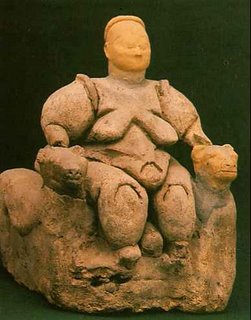
    Before that I would like to throw in some thoughts related to the two images of a goddess, posted by Meggings. Depictions of ancient Earth / Mother Goddesses always make all my alarm bells ring, there are very personal connections to those European and Asia Minor paleolithic and neolithic matriarchal societies.

    I also always wondered about the relation between the numerous images and statuettes of earth- and mother goddesses of the European and Minor Asia neolithic societies (which showed a deeply rooted connection, communcation with and love for Mother Earth as a living being - and the narratives based on the assumption / fact that extraterrestrial invaders had imposed themselves as gods and goddesses to be worshipped, obeyed and served by the (genetically manipulated) humans. Additionally, the many female figurines with reptile-like faces are quite disturbing in that context.

    The two impressive images you've posted, Meggings, are so different in style, that I took a closer look and found that they stem from two completely different civilizations.
    (the second image, attachment 31295, disappeared from post 14 today, I'll post it here again)


    Seated Hittite Goddess with child, called the Sun Goddess of Arinna (a tiny gold pendant) / Anatolia central region / 15th - 13th century BC / The Metropolian Museum of Art, NY, H. 1 11/16 in. (4.3 cm), W. 11/16 in. (1.7 cm), D. 3/4 in. (1.9 cm)


    Statue of the Mother Goddess (baked clay) from Catalhöyük, Anatolia, Turkey / 1st half of the 6th millenium / Museum of Anatolian Civilizations, Ankara, Turkey.


    The autochthonous Anatolians (6th -3rd millennia BC)

    Around 5000 BC, the region of north-central Anatolia, centered in Hattusa, that would later become the core of the Hittite kingdom, was inhabited by people with a distinct culture who spoke a non-Indo-European language. The name "Hattic" is used by Anatolianists to distinguish this language from the Indo-European Hittite language.

    They were organised in city-states and small kingdoms or principalities. Hattian religion traces back to the Stone Age. It involved worship of the earth, which is personified as a mother goddess. The concept of the earth-bound deity was deeply rooted in the indigenous Hattian consciousness from prehistoric times.

    The conquest and devastation of neolithic matriarchal societies by the Indo-European Kurgan People

    The arrival of the Hittites in Anatolia in prehistoric times was one of a superstrate imposing itself on a native culture by means of conquest. They established an empire around 1600 BC and continued to use the term Land of Hatti for their new kingdom. Remnants of the Hattian settlement have been located under the fill of the Hittite Lower City of Hattusa (Alaca Höyük).

    The Hattian mythology deals with the myths and stories of the Hatti gods, as they were handed down by the Hittites. They can be captured quite well by the source position, in contrast to Hattian cults, rituals and religious beliefs that can not be separated satisfactorily from Hittite and other elements.

    Marija Gimbutas and James Mellaart

    According to archaeologist Marija Gimbutas, the egalitarian and peaceful gynocentric (or matristic) neolithic societies, which honored women and espoused economic equality were supplanted by the androcratic Kurgan peoples who imposed their hierarchical rule of male warriors upon the natives.

    She did comparative research on 3000 archaeological sites, where more than 30000 small sculptures of goddesses have been found. Her area of research covers 'Old Europe', a term coined by herself, but the basic principle and underlying picture is also valid for Anatolia / Minor Asia (which the work of James Mellaart, the archaeologist who excavated Catal Höyük in Anatolia, clearly shows).


    Map of Indo-European migrations from ca. 4000 to 1000 BC according to the Kurgan model. The Anatolian migration (indicated with a dotted arrow) could have taken place either across the Caucasus or across the Balkans


    “In Old Europe the physical and cultural disruption of the Neolithic societies that worshipped the Goddess also seems to begin in the fifth millennium B.C.E., with what Gimbutas calls Kurgan Wave Number One. ‘Thanks to the growing number of radiocarbon dates, it is now possible to trace several migratory waves of steppe pastoralists or “Kurgan” people that swept across prehistoric Europe,’ reports Gimbutas. These repeated incursions and ensuing culture shocks and population shifts were concentrated in three major thrusts: Wave No. 1, at c. 4300-4200 B.C.E.; Wave No. 2, c. 3400-3200 B.C.E.; and Wave No. 3, c. 3000-2800 B.C.E. (dates are calibrated to dendrochronology).

    The Kurgans were what scholars call Indo-European or Aryan language-speaking stock,… In fact, they were not the original Europeans, as they swarmed down on that continent from the Asiatic and European northeast. Nor were they even originally Indian, for there was another people, the Dravidians, who lived in India before the Aryan invaders conquered them.

    But the term Indo-European has stuck. It characterizes a long line of invasions from the Asiatic and European north by nomadic peoples. Ruled by powerful priests and warriors, they brought with them their male gods of war and mountains. And as Aryans in India, Hittites and Mittani in the Fertile Crescent, Luwians in Anatolia, Kurgans in eastern Europe, Achaeans and later Dorians in Greece, they gradually imposed their ideologies and ways of life on the lands and peoples they conquered.”

    (Riane Eisler: The Chalice and the Blade)


    . . to be continued.
    Last edited by Iloveyou; 16th October 2015 at 07:42.

  29. The Following 3 Users Say Thank You to Iloveyou For This Post:

    A Voice from the Mountains (7th October 2015), Delight (16th October 2015), Meggings (17th October 2015)

  30. Link to Post #18
    Avalon Member Delight's Avatar
    Join Date
    12th January 2012
    Posts
    6,765
    Thanks
    9,481
    Thanked 45,581 times in 6,400 posts

    Default Re: Less known ancient megalithic archaeological sites

    More new material for me.


  31. The Following User Says Thank You to Delight For This Post:

    Iloveyou (16th October 2015)

  32. Link to Post #19
    Unsubscribed
    Join Date
    20th March 2010
    Location
    Within a few kilometers of Avalon
    Age
    78
    Posts
    1,702
    Thanks
    3,990
    Thanked 7,178 times in 1,466 posts

    Default Re: Less known ancient megalithic archaeological sites

    Any Member with an interest in ancient megalithic archaeological sites, should probably take this one and a half hour listen.

    Graham Handcock opened the door to the investigation into ancient megalithic sites with his early work, "Fingerprints of the Gods". He has a new book, "Magicians of the Gods, that extends his research into, and sheds new light on, what actually transpired in the true history of great antiquity.


  33. Link to Post #20
    Avalon Member Delight's Avatar
    Join Date
    12th January 2012
    Posts
    6,765
    Thanks
    9,481
    Thanked 45,581 times in 6,400 posts

    Default Re: Less known ancient megalithic archaeological sites


  34. The Following User Says Thank You to Delight For This Post:

    Iloveyou (17th October 2015)

+ Reply to Thread
Page 1 of 2 1 2 LastLast

Posting Permissions

  • You may not post new threads
  • You may not post replies
  • You may not post attachments
  • You may not edit your posts