 LOST TRADITION OF THE SACRED BEE
Incredibly, bees over 100 million years old have been discovered in amber, frozen in time, as if immortalized in their own honey. The Greeks called amber Electron, associated with the Sun God Elector, who was known as the awakener, a term also given to honey—which resembles amber—a regenerative substance revered across the ancient world. This association led to the bees’ illustrious status amongst ancient man, exalting their fossilized remains over the preserved vestiges of all other insects.
Prehistory is full of clues that hint at ancient man’s obsession with bees. In the Cave of the Spider near Valencia in Spain, a 15,000-year-old painting depicts a determined looking figure risking his life to extract honey from a precarious, cliff-side beehive. Honey hunting represents one of man’s earliest hunter / gatherer pursuits—its very difficulty hinting at the genesis of the bee’s adoration in prehistory. And, of course, it was the bee that led ancient shamans to the plants whose hallucinogens transported their consciousness into the spirit world of the gods. Curiously, recent research has revealed that the sound of a bee’s hum has been observed during moments of change in the state of human consciousness, including individuals who have experienced alleged UFO abductions, apparitions, and near death experiences. Was this phenomenon known by the ancients and believed to have been one of the elements that made the bee special?
Honey Hunting in Spain
In Anatolia, a 10,000-year-old statue of the Mother Goddess adorned in a yellow and orange Beehive-style tiara has led scholars to the conclusion that the Mother Goddess had begun to morph into the Queen Bee, or bee goddess, around this time. At the Neolithic settlement of Catal Huyuk, rudimentary images of bees dating to 6540 BC are painted above the head of a Goddess in the form of a halo; and beehives are stylistically portrayed on the walls of sacred temples. Not surprisingly, it was the Sumerians who soon emerged as the forefathers of organized bee keeping. Mesopotamia—modern day Iraq—flourished from the early sixth century BC and is known as the cradle of civilization; and it is here that the Sumerians invented Apitherapy, or the medical use of bee products such as honey, pollen, royal jelly, propolis, and venom.
Sumerian reliefs depicting the adoration of extraordinary winged figures have often been interpreted by alternative history writers as proof of extraterrestrial intervention. In the context of the benefits of beekeeping, it is more likely they depict the veneration of bees. Significantly, the Sumerian images gave rise to the dancing goddess motif, a female dancer with her arms arched over her head that scholars believe represents a bee goddess priestess or shaman. The motif, which would become central to Egyptian symbolism, appears to allude to the bee’s unique ability to communicate through dance, the waggle dance as it is known, or the ability to locate food up to three miles from home and return to communicate its whereabouts to the hive through dance, sort of prehistoric satellite navigation.
So, society had discovered the immense value that bees provide, ten thousand years ago or more, back in the mist of prehistory. As life along the River Nile evolved and Dynastic rule in ancient Egypt slowly developed, the seeds of bee veneration had already been sown. But the tradition was about to be embraced like never before, or since.
The Bee Goddess in Ancient Egypt
Egyptologists, such as David Rohl, believe that Sumerian culture migrated across the Eastern Egyptian Desert and into the Nile Valley. This desolate expanse of Wadis is renowned for its pre-dynastic rock art depicting exalted-looking figures with exaggerated plume-like decorations. The unusual lines extending upwards from the main figures’ heads recall the antenna of the bee while hinting at the shape of the plumes that would characterize the headdress of Egyptian Kingship for thousands of years to come. The images also depict the Dancing Goddess motif, a woman with her hands bowed over her head just as the ‘dancing’ bee Goddess had been depicted in Sumerian and Central European reliefs thousands of years earlier. The icon is widespread in Egyptian mythology and appears to have originated from an understanding of the bee’s unique ability to communicate through ‘dance.’
Another clue to the bee’s artistic influence can be found in ceremonial Egyptian dress, which has certain stylistic similarities with the bee, namely the headdress, or nemes, which consists of alternating yellow and dark horizontal stripes. This visual synchronicity is discernible in many reliefs and sculptures but is perhaps best illustrated in the death mask of the 18th Dynasty Pharaoh, Tutankhamen, which famously depicts the Pharaoh adorned in alternating black and yellow stripes or bands, just like a bee.
The Egyptian Death Mask
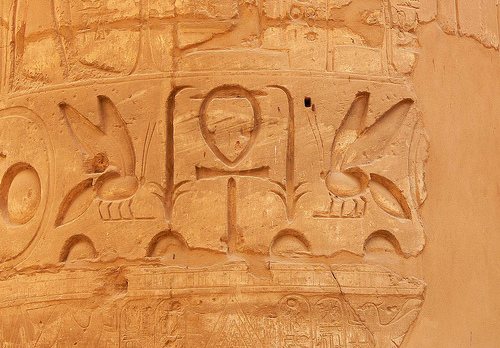
Egypt’s fascination with bees stems from the earliest of epochs. Northern Egypt, or the land stretching from the Delta to Memphis, was known as “Ta-Bitty,” or “the land of the bee.” King Menes, founder of the First Egyptian Dynasty, was bestowed with the office of “Beekeeper”, a title ascribed to all subsequent Pharaohs, and an image of the bee was positioned next to the Pharaoh’s cartouche.
The Egyptian God Min was known as the ‘Master of the Wild Bees’ and dates to 3000 BC or earlier. Similarly, the Egyptian Goddess Neith was a warrior deity also possessing fertility symbolism and virginal mother qualities, all attributes of the Queen bee. In Sais, Neith was regarded as the Goddess of the ‘House of the Bee’ and the Mother of RA, the ‘the ruler of all’. Egyptian mythology contains countless references to bees, including the belief that they were formed from the tears of the most important god in its pantheon, RA. The bee is even featured on the Rosetta Stone.
Bees are portrayed on the walls of Egyptian tombs, and offerings of honey were routinely presented to the most important Egyptian deities. Indeed, honey was the ‘nectar of the gods,’ and like the Sumerians before them, Egyptian physicians relied on its medicinal value for many important remedies and procedures, including early forms of mummification.
One Egyptian monument that exhibits a peculiar form of bee symbolism is the Saqqara step pyramid, which recalls the six-sided shape of a bee’s honeycomb, with six levels above ground and one very special level below—the Apis bull necropolis known as the Serapeum. Egyptologists believe that the Apis bull was bestowed with the regenerative qualities of the Memphite god Ptah—the Egyptian god of reincarnation. They also believed that those who inhaled the breath of the Apis bull received the gift of prophesy; and perhaps most importantly of all, the Egyptians believed that the bull was transformed into Osiris Apis, after death. ‘Bee’ in Latin is ‘Apis’, which may have derived from Sipa / Asipa in Mesopotamia; Sipa meaning ‘Great Shepherd in the Sky’ and Apis meaning Osiris. This relates to the belief that after death, the Pharaoh’s soul joined Osiris as a star in the constellation of Orion.
Legend tells us that an Apis bull produced 1000 bees, and that the bees represented souls. Intriguingly, the Egyptian Goddess Nut was the goddess of the sky—the domain of bees—and keeper of the title She Who Holds a Thousand Souls, which appears to refer to the 1000 bees—or souls—that are regenerated from the body of an Apis bull.
Similarly, the Hebrew letter Alef | Aleph carries the meaning ‘thousand’ and both the Proto-Sinatic Hieroglyphic and its Pro-Canaanite symbol depict a bull’s head, alluding to the fact that 1000 bees—or resurrected souls, are produced by the sacrifice of an Apis bull. Additionally, Christ—the saviour archetype of Osiris, renowned for his resurrection, is written in Hebrew as ‘QRST’ and carries the value 1000.
The ancient belief that bees were born of bulls leads me to think that the underground necropolis known as the Serapeum may have been a ritual center of regeneration designed to recycle souls from the heads of bulls, and not simply a mausoleum for bulls. Might the rituals carried out in the Serapeum represent the earliest form of Mithraism, the Roman mystery religion involving the ritualistic slaughter of bulls?
Another ancient culture influenced by the ancient Egyptians was the Minoan, a civilization with close ties to the ancient Egyptians who were experts in beekeeping, a craft they later imparted to the Greeks. This leads us to another fascinating aspect of Egyptian bee symbolism; the Sphinx, the famed rock-hewn statue known by the Egyptians as Hun nb, but re-named Sphinx by the Greeks. How does all this relate to the bee? Quite simply, the Minoan word for bee was ‘sphex’ (Hilda Ransome, The Sacred Bee P64, 1937).
So what can we conclude from this revelation? The civilization that educated the Greeks in the craft of beekeeping used the word ‘sphex’ to describe the bee—and the Greeks named the goddess-like rock statue ‘Sphinx’. Was the Sphinx already present when Menes first established Kingship and was it known that the Sphinx represented a bee goddess, hence the Pharaoh’s title, Beekeeper? The possibility is tantalizing, and given the Egyptians fascination with bees, not altogether far-fetched.
The Lost Tradition
The influence of Sumerian and Egyptian bee veneration spread to Greece, where Greek mythology depicted bees on the statues of their most important gods and goddesses and evolved the notion of bee Goddesses into the honored position of female bee shamans called Melissa’s, which later morphed into the sacred status of Sybil’s. In fact, the second temple at Delphi is said to have been made entirely by bees, and the great oracle stone resembling a hive encircled with bees.
The Omphalos and Bee Veneration?
The Romans practiced Mithraism, a secret religion predicated on the ritualistic slaughter of bulls that is reminiscent of Egyptian bull / bee rituals that were performed in the underground temple known as the Serapeum. Curiously, the practice appears to have been preserved in modern times in the controversial sport of Bullfighting, and many of Spain’s oldest bullrings are built on or near Mithras temples, confirming the association.
Mayan culture venerated the bee and depicted gods in its image in their most sacred temples; and as far away as India religions adopted bee gods and goddess into their mythology. Even the Catholic Church incorporated the bee as a symbol of the Pope’s authority; evidence of which can be seen in Vatican City today.
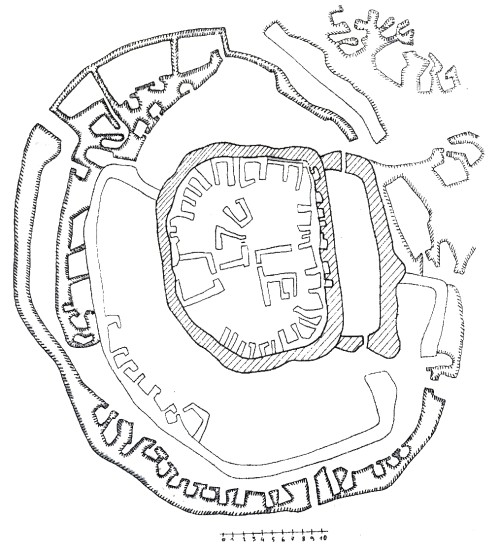
Beehive-styled stone huts were constructed in antiquity from Ireland to Africa, and many places in-between, such as Germany, where Heinrich Himmler, the most powerful man in Germany after Adolf Hitler, constructed the SS’s most sacred ritual chamber in the shape of a beehive in the basement of the 17th century Wewelsburg Castle.
Political movements, such as Communism, drew upon the altruistic behavior exhibited in a beehive as a blueprint for their ideologies;while rulers such as Napoleon followed the tradition of their ancestors, in this instance, the long-haired Kings of France known as the Merovingian’s—believed by some to represent the bloodline of Christ—whose famous King Childeric was discovered buried with 300 bees made of solid gold.
Precursor to the Fleur-de-lys
Not only did Napoleon ensure that the symbol of the bee was infused in the decor and style of the royal court, and greater society, he adopted ‘The Bee’ as his own nickname. It is also believed that the bee was the precursor to the fleur-de-lys, the national emblem of France. The theory is supported by many, including the French physician, antiquary, and archaeologist Jean-Jacques Chifflet. In fact Louis XII, the 35th King of France, was known as ‘the father of the pope’ and featured a beehive in his Coat of Arms.
And then there is the strange tale of Pierre Plantard, a Frenchman who in the later half of the 20th century promoted his association with the Merovingian’s and was regarded by some as the last direct descendant of Jesus Christ. Plantard claimed to have been a Grand Master of the Priory of Sion, a controversial society with considerable interests in the Merovingian lineages commissioned by Napoleon. Curiously, Plantard’s family crest featured both the fleur-de-lys and the bee, and he is purported to have written, ‘we are the beekeepers’ in his private correspondences.
French Freemasonry soon spread to the United States of America, aided by early American forefathers such as Thomas Jefferson, who wrote passionately about the importance of bees, while others such as President George Washington featured the beehive on his Masonic apron. In no uncertain terms, early American society borrowed many of its philosophical principles from Freemasonry, which had incorporated bee symbolism and themes into its rituals, and established its government on the orderly, stable and altruistic behavior exhibited in a beehive, like societies and movements before them had for thousand of years.
An indication of the bee’s importance to early American forefathers is expressed in the fact that the entire Western Region of the United States was originally named Deseret (honeybee). Not surprisingly, folk culture embraced the bee, and the concept of ‘telling bees’ about the death of a loved one became common practice. The Austrian philosopher and esotericist Rudolf Steiner (1861 – 1925) wrote and lectured extensively on the bee and predicted its demise in just under a 100 years time, right about now. So too did Albert Einstein (1879 – 1955) predict the demise of the bee. The famed physicist is attributed with having said;
“If the bee disappeared off the surface of the globe then man would only have four years of life left. No more bees, no more pollination, no more plants, no more animals, no more man.”


 What if our recent history is concealed by invoking "The Dark Age" that never was dark?



 Reply With Quote


 Merovingians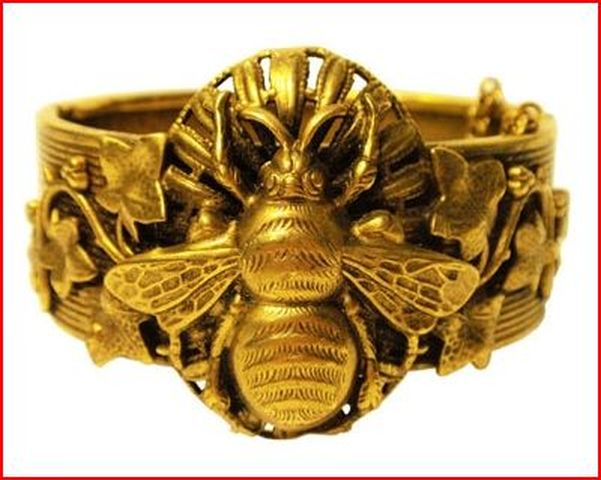


Bookmarks