


 20 Things You Probably Didn't Know About Freemasonry
This story is neither for or against Freemasonry, it is just an honest representation of who they are and what going on in their organization in 2016.
The Freemasons are probably the most enduring and most famous "secret society". Of course, these days there's tons of material written about them, on books and websites, to say nothing of TV shows and movies. The real problem isn't that there's not enough info, it's that there's way too much of it, and most of it is bull. So here's 20 genuine facts about the Freemasons, their REAL history and traditions.
1. Freemasonry is Not From Ancient Egypt
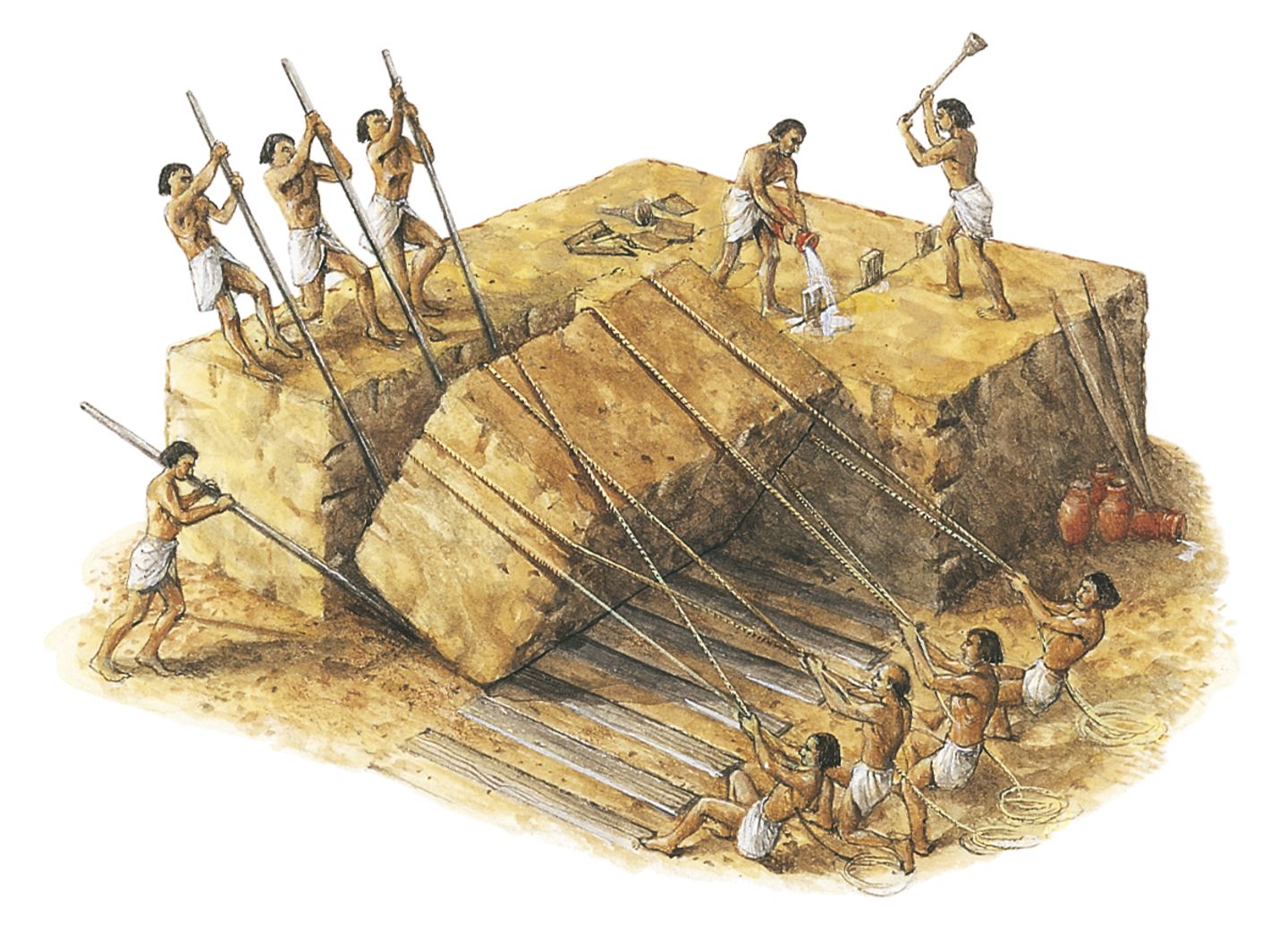
Back in the late 18th and early 19th centuries, Egypt was the cool 'mystical place' people mostly knew nothing about. It got fashionable to claim that all kinds of things were originally from there. Freemasonry was one of these, and some branches of Masonry tried to claim that the institution had its origin among the pyramid-builders, and had been preserved from the time of the Pharaohs. Now, ironically, this isn't totally untrue: some of the ceremonies of masonry are actually descended from rituals that originated in Egyptian mystery-cults. But that doesn't mean that Masonry dates all the way back to that time. There's an old joke about Masonry: it was invented in the 17th century and then retroactively dated back to the time of Adam, and its symbols are found everywhere in all the great monuments of history.. as long as it's a Mason who's looking for them.
2. Freemasonry's Not From the Templars
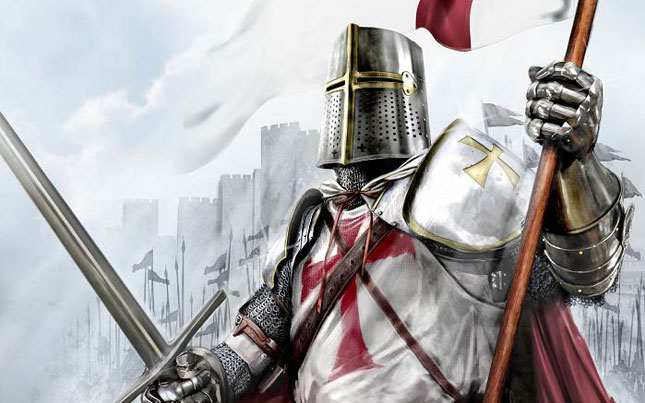
A slightly later and even more popular myth is that Freemasonry started with the Templars. The Templar knights, who were wiped out by papal decree at the start of the 14th century (more than 300 years before modern masonry existed), were a group that had some secret ceremonies of their own. But there's no serious historical evidence whatsoever to connect the two. Even so, Masons who liked to think of themselves as the heirs to great knightly traditions really wanted to believe in this.
If you read the Da Vinci code or various other popular books, you might be familiar with the theory that Templar survivors in Scotland passed down their secrets to early masons, and you might have heard of Roslyn chapel, the strange Scottish church that's full of masonic symbols. Well, the church does have a lot of masonic symbols, but they don't date to the time of its building. They're mostly from a rebuilding of the chapel done in the 1860s by order of the chapel's owners, the St.Clair family, who were very prominent Scottish masons. They made a big deal about this Templar myth to aggrandize their own reputation in masonic circles, and to this day it's almost impossible to convince even some Masons that the whole thing is made up.
3. Masonry Started With Medieval Unions
So where did Masonry REALLY start? Well, the original Masons were an English trade guild in medieval times. A guild in those times held a monopoly based on a Royal charter; this meant that only their membership were legally allowed to operate a certain type of business in cities. There were all kinds of guilds (fishmongers, goldsmiths, etc.), masons were just one of them. The Masons' guild held the monopoly on the building of great stone structures, mainly cathedrals but also palaces and halls. These trade unions prevented competition, trained apprentices, collected dues from members, took up petitions in the case of unfair business practices, and cared for the widows or orphans of deceased members. They also used certain secret codes, pass-words or symbols as a way to test if someone coming from another area was a genuine member or trying to fake their way into the local market. They provided charity to the poor in their community, and every Easter-time conducted elaborate plays to entertain the public.
The original or "operative" Masons weren't really Freemasons as we know them today, they were real workmen who constructed buildings. But some of their symbolism and ceremonies incorporated religious and spiritual/moral concepts that would later form a core part of modern "speculative" Freemasonry.
4. Modern Masonry Began With a Secret Movement of Occult Rebels
Real Freemasonry as it exists today began in the 1630s. By that time, the Masons' Guild had lost their monopoly, and social change meant that a mason's son wasn't necessarily going to follow in his father's career. All of this made the old Masons' Guild mostly irrelevant. But at this time, they started to accept members who weren't actually tradesmen, but "gentlemen" (wealthier educated men who had never actually worked in construction). These gentlemen became very interested in Masonry because the symbols in the Masons' ceremonies were connected to the same symbols they were already investigating in esoteric teachings from a popular semi-secret spiritual movement called Rosicrucianism.
The Rosicrucians (in England also called The Invisible College) were a mystical esoteric movement of occult-rebels, who were teaching the idea of a Universal and personal religion. In a time when people were still killing each other over whether someone was Protestant or Catholic, the "Invisibles" were teaching that there was a deeper spiritual truth found in all religions. They taught that all human beings had an ability to make a personal connection to the divine through their own study, morality, and the exercise of the freedom of their own conscience. The publication in English of Rosicrucian manuals, and the English translation of Vitruvius' "Ten Books on Architecture" in 1624, had the Invisibles looking for secret keepers of ancient lore; and they thought that geometry, mathematics and architecture held secrets to this divine wisdom and the true nature of God and the universe. So they took over the old Mason guild and remade it into a secret order of mystery-teachings.
5. Freemasonry Didn't Get Organized Until the 18th Century, In England
It would be almost a century before the early Freemason Lodges would start to come together to form a larger organization. The final step in the creation of modern Freemasonry wouldn't happen until 1717, when members of four different Masonic Lodges got together in a pub and decided to form the first Grand Lodge. In those days, Lodges operated independently of each other, and many of them would meet in secret back rooms, basements or attics of pubs or taverns. The "Goose and Gridiron", in London, was one of these. Here, on the 24th of June 1717, four such lodges agreed they would all operate under a "Grand Master", and have joint meetings four times a year. This quickly turned into a larger institution and became a way to judge whether a Masonic group was legitimate or not. Soon other countries began creating their own Grand Lodges, and the structure of all regular Masonry worldwide is based on the format first invented at that fateful pub meeting.
6. There Isn't One Big Worldwide Organization...
A lot of people think Freemasonry is one big secret society that operates worldwide (of course, some think Freemasons actually run the world, so that idea would make sense). But actually, there has never been a single worldwide organization of Masonry. The largest regular authority in Masonry is a "Grand Lodge", and Grand Lodges organize and regulate a specific area. In some countries, like England, there's a single Grand Lodge that governs the whole nation. But in bigger countries, like the United States or Canada, there's a different Grand Lodge for each State or Province. Not only is there no such thing as a world-wide Masonic 'high council', there's totally different people running things from across one state line to the next.
7. Masonry is Found All Over the World, Though
Even though there isn't a single world-wide Masonic organization, Freemasonry is spread all over the globe. Some of this was because of the British Empire, and how the British set up Masonic Lodges almost everywhere they went. But a lot of it is also because of the universal appeal of Masonry. Countries that were never colonized have Masonic Grand Lodges, and ex-colonies kept having Masonry long after the Europeans left. There's Grand Lodges all over Europe (including Turkey), in 17 different African countries, in Taiwan, India, Japan, the Philippines, Israel, and in almost every country in the Americas. Now, Masonry is very different in different parts of the world, with some variations in rituals, language and appearance, but all regular Lodges maintain the same foundations and hold to the same core principles of fraternity, charity, liberty, the equality of human beings, the universal spirituality and the quest for esoteric truth.
8. Masonry Technically Isn't a "Secret Society" (Though it Sort of Is)
It's kind of funny to think of Freemasonry as a "secret society", when in most towns their buildings are marked with a great big square & compass! And contrary to what many believe, in most parts of the world (excepting places where Masonry is still persecuted, or a few unusual outliers) there is nothing to forbid a Mason from telling anyone he wants that he's a Mason. Masons themselves say that they are not a "secret society", but a "society with secrets". Now, when it comes to those secrets, they do have strict rules. Masons will not talk about what they do in their rituals, except in the most general descriptive sense. Nor are they allowed to reveal their secret handshakes, passwords, or certain other signs or symbols. And while a Mason is allowed to tell anyone he wants that he is a Mason, he's not allowed to name anyone else as a Mason, unless that person is either deceased, or has already publicly proclaimed himself a Mason.
9. There's Real Masonry and Fake Masonry
All over the world, Masonic Lodges and Grand Lodges interact with each other on the basis of recognition of "regularity". This regularity is defined by certain key rules. Masonic Lodges will have many differences from one region to the other, and this is because most of the rules and even many parts of the rituals of masonry can be changed; but there are a few rules, the oldest ones, that can never be changed. The unchangeable rules are called "landmarks", and include many of the core features that define what is real Masonry; any Lodge or Grand Lodge that breaks these rules will lose their "regularity". This is important because any "regular" Mason can visit any other regular Lodge in the world; but "irregular" Lodges are not given recognition, and so their membership will not be allowed to visit foreign lodges, and will receive no such visitors at their Lodges.
10. Masons Don't Rule the World, But They Did Influence It
Freemasons often have trouble organizing their quarterly budget or the annual bowling tournament. Trust me, they don't rule the world. However, Masonry has had enormous influence over the world. Masonry had, over the years, Presidents and Prime Ministers, Kings and Senators, Generals and Admirals, as well as engineers, inventors, musicians, writers and artists, and many others, in its ranks. These men were influenced by Masonry to have certain values, and have tried to spread those values to the world. Throughout the 19th century Masonry acted as a vanguard to push forward democratic and republican values in a world that was still mostly ruled by autocratic kings. In the 20th century, Masonry opposed fascist and communist regimes alike. Many of the values people think of as "modern Western Values" started as Masonic values. Even terms from masonic ritual have entered into common language.
11. The Founding Fathers Weren't All Masons, But A Lot of Them Were
One of the big ways Masonry influenced the entire world was through the revolutions of the late 18th and much of the 19th centuries, which aimed to establish constitutional democracies all over the Americas and Europe. And the first was of course the American Revolution. Now, it's not true that ALL the Founding Fathers of the US were Freemasons, but a lot of them certainly were, about a third or so. And the most famous of these were probably George Washington and Benjamin Franklin. There was also John Hancock, and several other lesser luminaries. Thomas Jefferson was likely made a Mason in Europe but there's no surviving evidence of the fact. The Marquis de LaFayette and Major General Von Steuben were both European Masons. In any case, the values enshrined in the Declaration of Independence and the US Constitution were values that Freemasonry had already been promoting by then for more than a hundred years.
12. Atheists Can't Be Masons
Masonry is not a religion. It's a spiritual fraternity. You do not have to be Christian to become a Mason, you can belong to any religion. But you MUST profess the existence of a "Supreme Being". This is because of the universalist roots of Masonry, going back to the Rosicrucians. The teaching of a "perennial philosophy" or a "universal truth" is that spirituality is an inner process, and that every religion has tools by which a person can discover spiritual truth. So to become a Mason, it doesn't matter if you are a Protestant, Catholic, Hindu, Muslim, Jew, Zoroastrian, Pagan, Taoist or what-have-you as long as you can sincerely profess the existence of a Supreme Being or consciousness (whatever that being or consciousness looks like to you, or how your conscience understands it). The key is that the Supreme Being is bigger than just your own self. This is so important to Masonry that it is one of the 'landmarks' that define whether a Masonic group is really Masonic or not.
This means that Atheists cannot be Masons. This doesn't mean that Masons think Atheists are terrible people, necessarily (or that all religious people are good people, they don't let just anyone in!). The reason for the exclusion of Atheists is because Freemasonry works through a series of initiations, exposure to mystical symbols and ideas, and a person's own consciousness has to properly prepared to actually use these concepts. An atheist, because of their mindset, would not be able to genuinely absorb the significance of Masonry. The oath they take on a Holy Book (if you become a Mason, you are asked to take the oath on whatever Book best represents your own faith), would have no meaning if they don't accept the existence of anything outside of materialism. Anyone who does not honestly accept a conscious Supreme Being (other than themselves) would never really get Masonry, even if they spent 33 years in it.
13. Women Can't Be Masons (But There's Tons of Masonic Women Anyways)
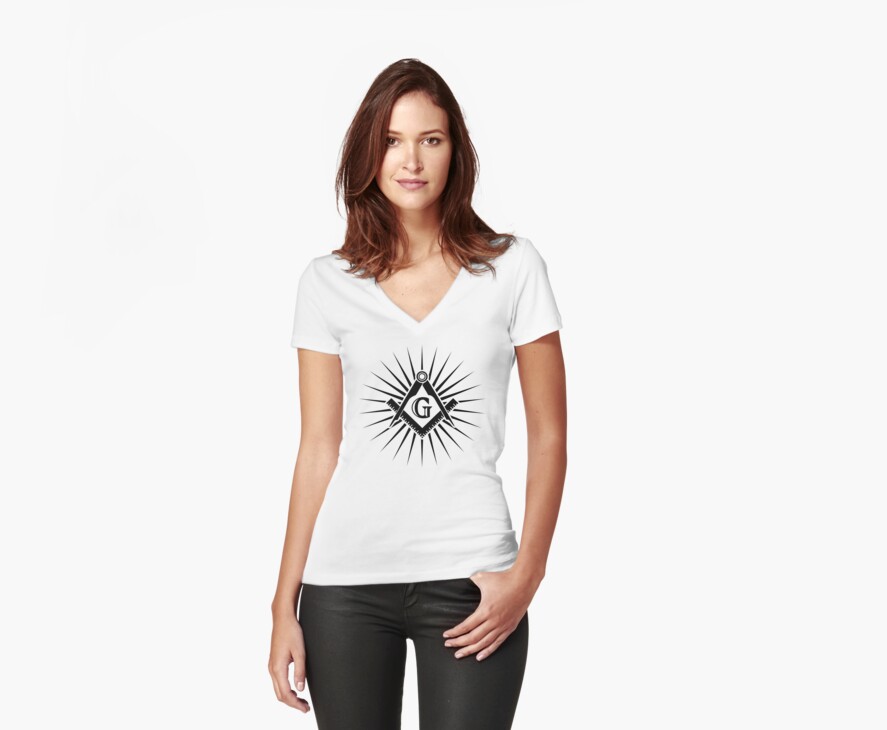
Another of the "landmarks", the absolute and immutable rules from time before memory that define real Masonry, is that only men (free, and of mature age) can become Masons. That means that from the point of view of regular Masonry, there are not and never ever will be "women masons", because while there are many rules and details you can change in masonry, NO ONE has the power to change a 'landmark'.
In spite of this, there's probably millions of women involved in Masonry across the world. Some of them join "irregular" unrecognized lodges that threw all the rules out, accepting women and atheists, and breaking a bunch of other masonic standards. But other women get involved with 'associated' Masonic organizations, which are technically not Masonry exactly, but are pretty similar and are connected to regular Masonic lodges. In North America there's groups like The Order of the Eastern Star, which is a women's organization for female relatives of Masons; they also have a youth organization called "Job's Daughters", and another one for young girls called "the Order of Rainbow Girls".
In many other countries there are also "Women's Grand Lodges", which only accept Women members (usually regardless of whether they are related to any male masons or not), and who practice pretty much the same rituals as regular Freemasons aside from the gender difference. Because these groups do not accept any men at all, from the point of view of regular Masonry they are neither 'regular' nor 'irregular' Masonry. This means that they're neither recognized nor shunned. In many countries the (male) Grand Lodge will have a friendly but totally unofficial relationship with the Women's Grand Lodge.
14. Masonry Helped Spread Human Rights
We've already covered how Freemasonry helped spread constitutional democracy. Masons have also generally helped to spread human rights, particularly in the areas of liberty, equality and charity, as well as education. In many countries throughout the world, the first free schools for impoverished children were founded by Masons, long before public school systems were established by governments (and in many places, it was Masons who were behind the idea of public and universal basic education). Masonry in principle makes no distinction based on race, and Masonic Lodges usually promoted understanding between races and ethnic groups wherever they were found. African, Asian, East Indian, Native American, and Hispanic men were welcomed into Lodges as early as the 18th century, in times when racial minorities were being regularly discriminated against in all other areas of society. In Canada, Chinese men were accepted as Masons as early as the 1850s, and in Australia since the 1880s. In India, where the British routinely segregated Indians and Westerners, Masonic Lodges accepted Indians as members since 1775. Today, the Grand Lodge of India has hundreds of Lodges under its auspices.
Of course, Masonry didn't always practice what it preached with equal measure. There were cases of discrimination in Masonry, most notably in U.S. Lodges (especially in the Southern States) who refused to accept non-white members; however it should be noted that even in those cases, the Grand Lodge of England chartered the creation of a Grand Lodge in the United States (whose Lodges are now known as "Prince Hall Lodges") for black men wishing to participate in Masonry.
15. Masons Give Millions to Charity
Today, Masonry and it's registered charities worldwide donate astounding amounts of money every year to charitable causes. In the Americas alone Masonic charities donate over $500 million dollars a year to charity. This includes fully funding over fifty hospitals, schools, research causes for a wide variety of diseases, children's homes, soup kitchens, retirement homes, countless scholarships and an incredible amount of local community projects.
Charity has been one of the oldest activities in Masonry. Even before modern Masonry, the old Masonic Guilds provided funds to care for the widows or orphans of Masons, and provided food on holy days to the local poor. For much of Masonry's history, it funded infrastructure to help its impoverished members (yes, just like there are extremely wealthy masons, there are also masons who are very poor; wealth is not a condition for membership) and to support local communities with a lot of the services that would later become part of the welfare state (things like education, health care, and maintenance for the elderly or infirm).
16. Masons Had Famous Members From All Walks of Life
It wasn't just presidents, royalty, or politicians who were famous Freemasons. Here's just a few others: Buzz Aldrin (astronaut), Count Basie (musician), Robbie Burns (poet), Nat King Cole (musician), Sir Arthur Conan Doyle (writer), Joey Dunlop (motorcyclist), Duke Ellington (musician), Sir Alexander Fleming (scientist), Edward Gibbon (historian), Sam Hornish Jr. (race car driver), Tim Horton (hockey legend & doughnut magnate), Harry Houdini (escape artist), Rudyard Kipling (author, poet), John Molson (beer magnate), Shaquille O'Neal (athlete), Brad Paisley (musician), Arnold Palmer (golfer), Col. Sanders (KFC founder), Dave Thomas (Wendy's founder), Mark Twain (writer), John Wayne (actor), Steve Wozniak (computer innovator), and Cy Young (athlete). This is just a tiny list.
17. Masons had a few bad apples too
The Freemasons' motto is "we make good men better", but some people over the years have joined Masonry who weren't very good. Some of these were worse than others. Among some of the famous Masons who were guilty of wrongdoing we can include Benedict Arnold, the famous traitor. There was also the Canadian murderer Paul Bernardo. Henry Ford was a great industrialist and he was a Mason, but he was also a terrible anti-semite. Comedian Michael Richards ("Kramer" from Seinfeld) is a Mason, and he engaged in a very un-masonic racist rant that ruined his career. Alabama Governor George Wallace was a Mason, and one of the most vicious defender of racist segregation policies (though it should be noted that late in his life he had a total change of heart, and did all he could in his remaining years to make amends). Of course, there's plenty others too, and a lot of the politicians or military men who are or were Masons would have politics not everyone might agree with or see as "good". But on the whole, there's certainly been more Masons who have done worthy and notable things than those who have done harm.
18. Totalitarians Always Hated Masonry
Masonry has always thrived in democracies, and suffered under dictatorships. This is because even though Freemasonry is supposed to be apolitical (it's members can be from the political right, center or left; in the U.S. for example both Jesse Jackson and Bob Dole are Masons), the one political value Masonry takes a stand for is democracy (along with the values of liberty and equality). One of the very first actions taken by Hitler when he came to power in Germany was to outlaw Freemasonry. Known Masons were sent to concentration camps, where they had a to wear badge, the downward-pointing red triangle, on their uniforms. The fascist Spanish dictator Francisco Franco murdered thousands of masons. Masonry was outlawed in almost all communist countries during the Soviet era. Masonry is also outlawed in almost all of the Muslim world, even in places like Pakistan where it previous thrived; only Lebanon and Morocco allow it.
19. There Hasn't Been a Masonic President in 40 Years
I know, everyone says that all the U.S. Presidents were Freemasons, but that's a myth. In fact, only 15 U.S. Presidents were masons, and the last one was 40 years ago: Gerald Ford. Although since then there were presidential candidates who were Masons (like Bob Dole), no actual presidents have been Masons. If you want the full list of US Presidents who really honestly were Masons, here it is: Washington, Monroe, Jackson, Polk, Buchanan, Andrew Johnson, Garfield, McKinley, Teddy Roosevelt, Taft, Harding, Franklin D. Roosevelt, Truman, Lyndon Johnson, and Ford.
On the subject of Masonry, Teddy Roosevelt said: "One of the things that attracted me to Masonry was that it really did live up to what we, as a government, are pledged to: of treating each man on his merits as a man".
20. Masonry Had Been Declining For Decades, But It's Making a Comeback
The last great period of Masonic growth in the English-speaking world was in the years after World War II, when a large number of returning servicemen joined Lodges, possibly seeking that spirit of fraternity they knew from the war. But from the 1960s onward, it has been in a long and devastating decline. The cause is simple: hippies. Baby Boomers were largely uninterested in Freemasonry; it seemed very 'square'. You had to wear a suit, their dads were in it, there were a lot of rules, and eastern religions seemed way more exciting. The peak of Freemasonry's membership crisis was in the early part of the 2000s, where in many Lodges the average membership age was around 70. In the U.K., membership in Freemasonry had declined from about 500000 in 1950, to 213000 by 2013.
But in the last ten years, this has started to change in a big way. Many regions have witnessed a rebirth, as Gen X and the older Millennials have begun to join in considerable numbers. There are a lot of Lodges with many people under 40, many people over 65, and almost no one in between.
Why did Freemasonry become cool again? There were several reasons: books like The Hiram Key and the Da Vinci Code, however inaccurate, made the mysteries of Masonry seem intriguing. Some Grand Lodges very cleverly started to promote themselves with programs in local Universities. But probably the main reason why post-Boomers want to join Masonry is the same reason Boomers didn't: they want to do something different than their parents did. They are looking for a place for self-development, spiritual discovery, personal discipline, community involvement and fraternal bonding. The Boomer options for this (new age therapies, pop psychology, rampant materialism, etc.) seem very shallow, wishy-washy and empty-headed. Masonry has serious esoteric teachings, concrete structure, moral consistency and requires hard work; a lot of people are looking for that.
This growth has some challenges of its own. A lot of Lodges have had to adjust to a rush of new younger members who have different priorities than the elders, who had been the sole proprietors of those Lodges for decades. Younger members are much more interested in the mystical side of Freemasonry, while older members spent years downplaying those aspects (incorrectly thinking they would be a turn off to prospective members). Older Masons were more interested in joining for social reasons, developing friendships and community activities; while surveys of new members under 35 indicate that they're more interested in the ritual, mysteries, and personal development.
While modern Freemasonry is far from its historical peak, and there are growing pains, membership in the age range under 40 has been growing consistently over the last few years and with that influx it seems that Masonry will begin to gain a renewed relevance in the future.
Source
- Home
- Forum
- Chat
- Donate
-
Site Links

-
Avalon Library
-
External Sites
- Solari Report | Catherine Austin Fitts
- The Wall Will Fall | Vanessa Beeley
- Unsafe Space | Keri Smith
- Giza Death Star | Joseph P. Farrell
- The Last American Vagabond
- Caitlin Johnstone
- John Pilger
- Voltaire Network
- Suspicious Observers
- Peak Prosperity | Chris Martenson
- Dark Journalist
- The Black Vault
- Global Research | Michael Chossudovsky
- Corbett Report
- Infowars
- Natural News
- Ice Age Farmer
- Dr. Joseph Mercola
- Childrens Health Defense
- Geoengineering Watch | Dane Wigington
- Truthstream Media
- Unlimited Hangout | Whitney Webb
- Wikileaks index
- Vaccine Impact
- Eva Bartlett (In Gaza blog)
- Scott Ritter
- Redacted (Natalie & Clayton Morris)
- Judging Freedom (Andrew Napolitano)
- Alexander Mercouris
- The Duran
- Simplicius The Thinker




 Reply With Quote


Bookmarks