+ Reply to Thread
Page 18 of 28 FirstFirst 1 8 18 28 LastLast
Results 341 to 360 of 543

Thread: Do vaccines contribute to autism? Should we vaccinate?

  1. Link to Post #341
    United States Avalon Member onawah's Avatar
    Join Date
    28th March 2010
    Language
    English
    Posts
    26,026
    Thanks
    54,558
    Thanked 140,609 times in 24,445 posts

    Default Re: Do vaccines contribute to autism? Should we vaccinate?

    Hydrogen Treatment for Autism
    (It's Autism Awareness Day, but with the increasing numbers of autism cases, it should be every day!
    The prevailing ignorance about the causes of autism is equaled only by the ignorance of the effective treatments.
    On Facebook today, Dr. Sircus posted this in response to a post from Autism Speaks

    Quote Fifteen years ago I wrote the Terror of Pediatric Medicine, and I guess it was about ten years ago I published an essay entitled the multiple causes of autism. Today I want this to be the first group to receive a gift of love and hope in this freely given revolutionary information about autism and some very new treatments for it. I believe this will give the fullest presentation though more can always be said.
    http://drsircus.com/free-ebook/hydro...for-autism.pdf
    Each breath a gift...
    _____________

  2. The Following 2 Users Say Thank You to onawah For This Post:

    avid (4th May 2018), Reinhard (16th May 2018)

  3. Link to Post #342
    United States Avalon Member onawah's Avatar
    Join Date
    28th March 2010
    Language
    English
    Posts
    26,026
    Thanks
    54,558
    Thanked 140,609 times in 24,445 posts

    Default Re: Do vaccines contribute to autism? Should we vaccinate?

    The Special Ed Epidemic: Uncovering the Answers Part 4
    MAY 10, 2018
    https://worldmercuryproject.org/news...urce=mailchimp
    By Sheri A. Marino, MA, CCC-SLP for Focus for Health, World Mercury Project Partner
    Quote

    In this four-part series, World Mercury Project’s partner, Focus for Health (FFH), examined the special education epidemic, its crippling effects on the US economy, as well as housing and employment issues for individuals with disabilities once they age out of school. Now, let’s look at what could be causing this epidemic, and unlike the broken regulatory agencies and healthcare system, put an end to this crisis by empowering the public with the knowledge to help make informed decisions.

    The Centers for Disease Control and Prevention (CDC) has just announced that autism prevalence is up 16% with new data showing that 1 in 59 US children have autism. Autism, developmental delays, and chronic illnesses including allergies and asthma are at an all-time high, affecting 1 in 6 children across the US. The CDC reports that disability costs our nation $400 billion annually in healthcare expenditures. Autism alone is on track to cost the US $460 billion dollars annually by 2025. Genetic studies have failed to turn up genes responsible for allergies, asthma, autism, or ADHD, yet funding for research identifying environmental causes pales in comparison to funding for genetic studies.

    Although genetics plays a role in many disease processes, environmental influences can be triggers that turn on those genes. Known as epigenetics, gene expression can be altered from exposures to environmental toxins which can lead to negative health outcomes.

    While we may not be able to control our genetic make-up, knowing how certain genetic conditions may affect us and our offspring allows us to take every precaution possible to manage those conditions. Likewise, we may not be able to avoid all environmental toxins, however, if given essential information, individuals can make choices about what environmental risks they are willing to take to keep their total toxic load at a minimum.

    A combination of genetic vulnerability and environmental exposures creates susceptibilities for oxidative stress, mitochondrial dysfunction, endocrine disruption, and chronic inflammation ultimately leading to immune disregulation.

    Toxins are found in the air we breathe, the water we drink, the food we eat, the products we use, and the vaccines we inject.

    If manufacturers like Monsanto (being purchased by Bayer for $62.5 billion) monopolize the food industry, our right to make healthy food choices free of toxins such as pesticides and herbicides is significantly reduced.

    If the pharmaceutical industry is not effectively managed by regulatory agencies, we will continue to be manipulated by advertisements for those very same medications which are responsible for poor health outcomes in our children.

    If our state governments continue on the path of mandating vaccines, we lose our choice to say no to medical procedures which contain neurotoxins such as mercury and aluminum.

    Taking control of our health and the destinies of our offspring starts with having the basic human right to do so. That begins with having essential information which empowers us to make the best decisions for ourselves and our children, and that ends when our basic human rights are taken from us. For all medical procedures, this is the basis of informed consent.

    WHAT DOES THE SCIENCE SAY?
    Through an extensive review of the research, FFH presents a collection of science-based theories on the causation of chronic disease and developmental disability. Individuals are not always informed of their risks by the medical community. While some risks are unavoidable, FFH believes knowledge is power and with access to information, individuals can learn what their risks are to make better healthcare decisions to potentiate positive outcomes, and ultimately protect vulnerable children.…children who were exposed to more toxins in the womb had more autistic-like behaviors.

    What the Science Says on Environmental Exposures
    Toxins exist naturally in the environment, however, toxin exposure has increased in developed countries due to the increased use of pesticides and production of synthetic chemicals to manufacture foods and other products. Studies show environmental toxins result in epigenetic alterations to DNA leading to many chronic health issues and disorders.

    Toxins can affect the functioning of the brain, heart, lungs, nervous system, and can also alter the bacteria that compose an individual’s microbiome. Furthermore, some toxins act as endocrine disruptors, meaning that they interfere with the body’s biological signals and hormonal system.

    The toxins a mother encounters throughout her life will accumulate in her body. This is known as her “body burden.” A mother’s body burden will affect the environment of her womb, which may have a direct impact on the development of her baby. A fetus is particularly susceptible to toxicity because its organs are developing and it has not yet developed its brain-blood barrier.

    One study from the Journal Environmental Health Perspectives, has found that children who were exposed to more toxins in the womb had more autistic-like behaviors. Another study found that close proximity to certain pesticides during pregnancy increases the risk of having a child with autism by 60%. Toxin exposure during pregnancy is also associated with high blood pressure, ADHD, heart disease, and various mental disorders. The Environmental Working Group identified 287 toxins in an umbilical cord. Of these chemicals, 180 are known carcinogens to humans and animals, 217 are toxic to the nervous system, and 208 are known to cause birth defects in animal tests. Studies also show that pesticide exposure impacts sperm quality in men, which can affect pregnancy outcomes.

    What the Science Says on Diet
    According to the CDC, more than half of children worldwide ages 6 months to 5 years suffer from one or more micronutrient deficiencies. Studies have found that micronutrient deficiencies can negatively impact growth, cognitive ability, neurological, and immune system functioning. One study has found that individuals with ASD are more likely to have micronutrient deficiencies. Another study found that children who consume diets high in fats are more likely to have cognitive impairments. Other studies have found that children who eat more fruits and vegetables have better cardiovascular health compared to those who do not, and they have better health outcomes as adults. Their findings indicate what people eat when they are young is more important for achieving good health outcomes than what people eat when they are older.

    Chemical pesticides such as glyphosate are used in agriculture to protect produce against weeds, insects, and other plant diseases.

    Pesticides may be toxic to humans, and regular consumption of pesticides from a young age can heighten an individual’s risk for various health problems. Pesticides have been linked to respiratory problems, immune system problems, gastrointestinal issues, impaired cognition and memory, neurological diseases, and various cancers.

    There is mounting evidence that suggests gestational pesticide exposure can lead to developmental delays or autism.

    Genetically Modified Organisms (GMOs) are an additional dietary concern for children and adults. Crops which are genetically modified to withstand pesticides, to self-produce insecticides, or to exhibit other desirable traits, are claimed to be harmless to humans, however, comprehensive long-term studies are lacking and some studies show that GMO’s may be hazardous. One study has found that the increasing incidence of 22 different chronic diseases can be linked to the increased use of GMOs in agriculture.

    There is a lack of studies that examine the relationship between EMF exposure, autism, and other health conditions. However, some reports suggest that EMF exposure increases the risk for autism and can increase the severity of autism symptoms.

    What the Science Says on Electromagnetic Fields (EMF)
    Electromagnetic radiation exists naturally in the environment. However, the expansion of technology in the 20th Century has introduced an increasing number of manmade electromagnetic field sources into the environment. Today, 100% of the population is exposed to EMF. The 5 most common sources of EMF include electric fields, magnetic fields, power lines, metal plumbing, and wireless communication.

    There appears to be a subset of the population that is more susceptible to EMF than the majority of the population. These individuals are proposed to have “electromagnetic hypersensitivity”. They may experience skin conditions (redness, tingling), fatigue, dizziness, nausea, digestive disturbances, and concentration issues. This condition is somewhat akin to multiple chemical sensitivities.

    One study suggests there are “remarkable similar biological features between EMF exposure and ASD from cellular oxidative stress to malfunctioning membranes, channels and barriers to genotoxicity, mitochondrial dysfunction, immune abnormalities, inflammatory issues, neuropathological disruption and electrophysiological dysregulation”. This study also suggests the rise in ASD is parallel with the increase in electromagnetic and radio frequency exposures over the past few decades.

    There is a lack of studies that examine the relationship between EMF exposure, autism, and other health conditions. However, some reports suggest that EMF exposure increases the risk for autism and can increase the severity of autism symptoms.

    "…calculations show that the levels of aluminum suggested by the World Health Organization place infants at risk of acute, repeated, and possibly chronic exposures of toxic levels of aluminum in modern vaccine schedules."
    What the Science Says on Aluminum
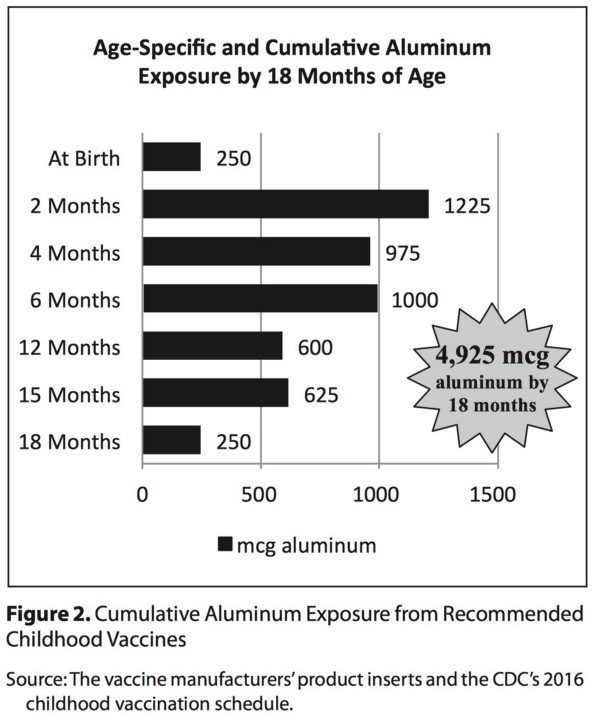
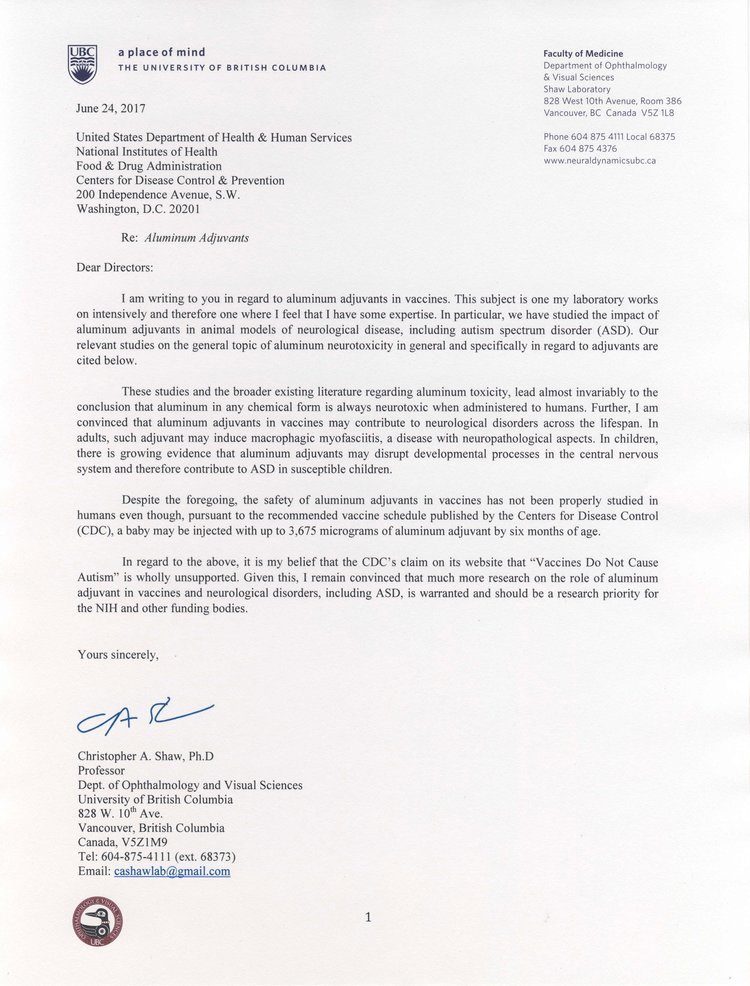
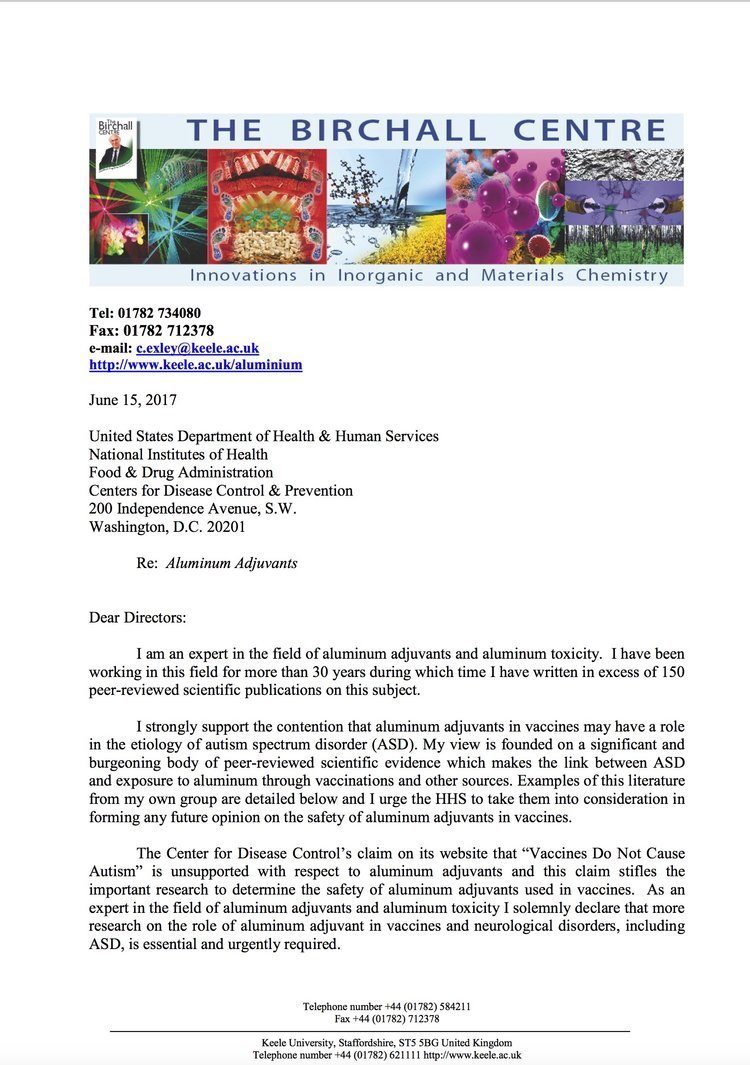
    Aluminum is neurotoxic. Aluminum exposure has been associated with disorders including Alzheimer’s and autism. This metal is found in foods we eat, the water we drink, products we use on our bodies, and it is used as an adjuvant in vaccines to enhance immunogenicity. Neurotoxic effects of aluminum are controversial however, a study of human brain tissue from donors with autism showed consistently high levels of aluminum content present in microglia like cells and cells in the meninges, vasculature, and grey and white matter. While regulatory agencies determine how much aluminum is needed to enhance antigenicity and effectiveness of vaccines, they do not take into account safety considerations. In fact, no known published studies have determined levels of aluminum in vaccines based on safety studies.

    A new report titled “Reconsideration of the immunotherapeutic pediatric safe dose levels of aluminum” states “When aluminum doses are estimated from Federal Regulatory Code given body weight, exposure from the current vaccine schedule are found to exceed our estimate of a weight corrected Pediatric Dose Limit. Our calculations show that the levels of aluminum suggested by the World Health Organization place infants at risk of acute, repeated, and possibly chronic exposures of toxic levels of aluminum in modern vaccine schedules.”

    There is no safe level of mercury exposure.
    What the Science Says on Mercury
    According to the World Health Organization (WHO), mercury is considered to be among the top ten chemicals of major public health concern. It is known to impact the brain, heart, lungs, gastrointestinal tract, kidneys, and immune system. There is no safe level of mercury exposure.

    Dental Amalgams

    Dental amalgams have been used for the past 150 years by the dental industry to fill cavities. Dental amalgams contain mercury, a known neurotoxin dangerous to humans even in trace amounts. Mercury vapor leaks from dental amalgams and accumulates in various body tissues or organs. Therefore, the fetus of a mother with dental amalgams will be exposed to mercury for the entire duration of the pregnancy. Mercury is known to cross the placenta, and directly impact the fetus, where it can interfere with the development of the fetus’ brain and central nervous system. The child may continue to be exposed after birth through the mother’s breast milk. One study found 6 or more dental amalgams in the mother raises the risk of having a child with autism 3.2-fold. Furthermore, the severity of autistic behaviors increases with the number of a mother’s dental amalgams.

    Other sources of mercury include some over the counter medications, personal care products, and certain fishes such as tuna. In addition, some vaccines still contain mercury.

    Mercury in thimerosal has been linked to tics, speech delay and language delay in children (Thompson et al. 2007 NEJM, Barile et al. 2013 J Pediatr Psychol, Verstraeten et al. 2003 Pediatrics, Andrews et al. 2004 Pediatrics) and many published studies also show a relationship with autism and ASD (Geier et al. 2013 Translational Neurodegeneration 2:25, among others).

    The CDC recommends pregnant women receive the flu shot, however, if the shot comes from a multi-dose vial, it also contains mercury from the preservative thimerosal. Multi-dose vials are often provided to clinics and pharmacies in lower socio-economic areas. It is estimated that during the 2017-2018 flu season, 20-30 million of the influenza vaccines distributed will contain thimerosal. Thimerosal-containing vaccines (TCV’s) may expose pregnant women to 25 micrograms of mercury. With no blood-brain barrier, the fetus is also exposed as the mercury accumulates in the placenta and cord blood. Furthermore, as indicated in the vaccine manufacturer’s product inserts, no safety or efficacy studies have been conducted on pregnant women or their infants.

    "…women receiving the seasonal flu shot in the first trimester of pregnancy had 25% greater odds of having a child with ASD."
    What the Science Says on Maternal Immune Activation (MIA)

    During pregnancy, the developing fetus is vulnerable to the mother’s normal biological response to immune challenge. Recent epidemiological studies indicate that prenatal exposure to inflammatory signals from parasitic, bacterial and viral pathogens including the flu, shows significant correlations with neurological and immunological abnormalities, like autism spectrum disorder. Termed maternal immune activation (MIA), the role of inflammatory mediators during critical gestational periods has been shown to have adverse effects on fetal development.

    There are many ways in which the maternal immune system can be activated. A study titled “Prenatal Fever and Autism Risk”supports the hypothesis that maternal fever in pregnancy, regardless of trimester and cause of the fever, is associated with increased risk of autism spectrum disorder (ASD) among offspring. While earlier studies found that prenatal exposure to infectious agents increased the risk of ASD in offspring, this study supports more recent findings that activation of the maternal immune system has deleterious effects on fetal brain development and plays a role in neurodevelopmental consequences. In this study, fever-associated ASD risk increased markedly with fever frequency particularly after 12 weeks gestation. Acetaminophen worked minimally to mitigate the risks for fevers occurring in the second trimester. Of the 538 cases, ASD was five times more prevalent in boys than girls. The authors’ findings support the hypothesis that in a subset of ASD cases, fever and associated immune disturbances may be implicated.

    Vaccines are designed and intended to produce the same biological immune response as natural infection. When a person gets a vaccine, whether during pregnancy or at any other time, an immune response to that vaccine occurs.

    Studies show that roughly 5% of the general population will acquire the influenza virus annually, however, if the influenza vaccine does its job, immune activation will occur in 100% of pregnant women who receive the flu shot. Although the Zerbo et al. paper did not show a correlation between the actual flu in pregnancy and ASD, it did show women receiving the seasonal flu shot in the first trimester of pregnancy had 25% greater odds of having a child with ASD.

    What the Science Says on Autoimmune Disease
    Autoimmunity occurs when the immune system mistakenly targets the body’s own cells, tissues, or organs as opposed to foreign antigens invading the body. These self-destructive antibodies create inflammation processes ultimately causing organ damage. Autoimmunity is a result of defects in the B and/or T cells of the immune system and is believed to result from the interplay of genetics, infections, and other environmental exposures.

    Mothers with abnormal autoimmune antibodies have a greater risk of poor pregnancy outcomes. There is mounting evidence that shows a mother with autoimmune antibodies is more likely to produce anti-brain antibodies that can cross the placenta and attack the fetal brain, inducing fetal brain inflammation. One study shows mothers of children with autism are 4 times more likely to carry brain reactive antibodies than mothers of typically developing children. Mothers with brain-reactive antibodies were also likely to have an increased prevalence of autoimmune diseases, especially rheumatoid arthritis and systemic lupus erythematosus.

    Mother’s with celiac disease have a particularly high risk of bearing children with autism or other chronic illness. Celiac disease, a genetic disorder of the small intestine triggered by dietary exposure to gluten (a protein found in wheat), is associated with inflammation, diarrhea, malabsorption, and other gastrointestinal issues. Untreated celiac disease may result in impaired fertility and adverse pregnancy outcomes from autoimmune related mechanisms or nutrient deficiencies. According to this study, “Celiac disease, especially if untreated, appears to increase the risk of repeated miscarriages and premature deliveries, and impaired fetal growth with reduced birthweight.” Additionally, the rate of cesarean delivery was increased if the parents had celiac disease.

    Other autoimmune diseases that appear to increase the risk of ASD in offspring include lupus erythematosus, rheumatoid arthritis, and type 1 and type 2 Diabetes. Women with rheumatoid arthritis were 80% more likely to have a child with ASD, while children born to diabetic mothers are 4 times more likely to develop autism.

    What the Science Says on MTHFR Mutations
    Methylenetetrahydrofolate reductase (MTHFR) is a gene that is responsible for producing an enzyme that converts folic acid to methylfolate, a bioavailable form of vitamin B9. Nutrient deficiencies of Vitamin B6, B12, and folate increase homocysteine levels which cause inflammation in the body. The ability of this gene to turn this switch on or off is crucial for the production of glutathione, the body’s most important antioxidant.

    Glutathione plays a major role in the body’s detoxification of harmful, disease causing toxins. When the body’s ability to produce glutathione is decreased, secondary to genetic mutations like an MTHFR mutation, the disease process is enhanced due to the build-up of toxicity in the body. Disorders such as autism, ADHD, autoimmune diseases, multiple sclerosis, fibromyalgia, heart disease, addiction, miscarriages, and neural tube defects have been linked to MTHFR mutations. Mutations in MTHFR may lead to a condition called homocystinuria, a disorder where there are abnormal levels of homocysteine and methionine in the body which may lead to eye problems, cognitive issues, abnormal blood clotting, skeletal and congenital heart abnormalities.

    Glutathione’s key role is the maintenance of intracellular redox balance (oxidation-reduction) and the detoxification of xenobiotics (a chemical or substance foreign to the body). A defective MTHFR gene creates a vulnerability to disease processes as detoxification is impaired, leaving the body more susceptible to oxidative stress, and less tolerant of toxins such as heavy metals.

    In children with ASD, the heterozygous allele frequency occurred in 56% of children, whereby the frequency was significantly lower in the control group (41%). This could indicate that there is a genomic vulnerability in the folate pathway to environmental risk factors. Although a review of the research indicates conflicting analysis, some studies show an association exists between MTHFR polymorphisms and an increased risk of ASD, suggesting the modulating role of folate may be affected by the MTHFR genotype. Another study suggests that the enhanced maternal folate status before and during pregnancy may alter natural selection by increasing survival rates of fetuses who have an MTHFR mutation. Presumably, infants with an MTHFR polymorphism cannot maintain the higher folate status after birth, affecting neurodevelopment from the inability to detoxify environmental toxins. For example, individuals with ASD have been shown to have higher levels of heavy metals in their blood, leading researchers to believe that the MTHFR polymorphisms may be partly responsible for increasing their toxicity. While an association is likely, it is unlikely that this mutation is solely responsible for complex neurodevelopmental disorders and more probable that influencing co-factors exist.

    Furthermore, only 2 out of the 54 most commonly used prescription and over-the-counter medications have enough data available to determine how they can impact a pregnancy.
    What the Science Says on Medication Use During Pregnancy
    Prescription drugs may impact the fetus through several mechanisms. They can directly damage the fetus by crossing the placenta, alter the functioning capacity of the placenta so that the fetus’ oxygen and nutrient supply is reduced, induce forceful uterine contractions which can injure the fetus, or indirectly harm the fetus by affecting the internal environment of the mother.

    The CDC reports that prescription and over-the-counter medication use during pregnancy has increased by 70% over the past 3 decades. Less than 10% of all medications approved by the FDA since 1980 have been studied well enough to assess their risk for birth complications, and, pregnant women are not included in drug safety trials because of liability concerns. Furthermore, only 2 out of the 54 most commonly used prescription and over-the-counter medications have enough data available to determine how they can impact a pregnancy.

    There have been many studies conducted over the years that have examined how specific prescription medications taken during pregnancy may affect the health outcomes of children. Prescription medications that have been associated with an increased risk of birth defects or other childhood health complications include antidepressants, hypertension medications, mycophenolate mofetil (for treating autoimmune diseases), anti-epileptic medications, clomiphene citrate (to treat infertility), sulfonamide and nitrofurantoin (to treat infections), and opioids.

    A study from JAMA found that taking antidepressants during the second or third trimester of a pregnancy increased the risk of having a child with autism by 87%, and that selective serotonin reuptake inhibitors (SSRIs) taken at any point during the pregnancy were associated with an even greater risk of having a child with autism. These researchers note that SSRIs can cross the placenta and impact the development of the fetus. There is also evidence that autistic individuals have high levels of serotonin in their blood platelets and that their brains synthesize serotonin atypically. Another study found that the asthma drugs- beta-2 adrenergic receptor (B2AR) agonists taken 90 days before pregnancy or during pregnancy increase the risk of having a child with autism.

    Antibiotic use both medically and agriculturally is a major health concern. The CDC states that approximately 29% of antibiotic prescriptions in the United States in 2015 for children 0-19 years of age were unnecessary. Excessive antibiotic use puts the recipients at risk for adverse reactions or infection and can result in long-term alterations to the recipient’s microbiome. A healthy microbiome is essential for regular metabolism, vitamin production, and homeostasis regulation. Furthermore, babies born vaginally receive their mother’s microbiome as they pass through the birth canal. A mother’s microbiome will be altered when she takes antibiotics before or during pregnancy and can pass this altered microbiome to her child during childbirth.

    One study has found that the antibiotics amoxicillin and clavulanate specifically may be contributing to the rise of autism. According to the study, after the introduction of these antibiotics in 1987, the state of California reported an increase in the rate of autism by 273% in a single year. The study proposes that the production of these antibiotics may yield high levels of urea/ammonia in the child. Another study found evidence that taking antibiotics during pregnancy can induce neurodevelopmental changes in the fetus in utero.

    Agricultural antibiotics account for approximately 80% of all antibiotic usage in the United States. Animals are treated with low dose antibiotics to prevent the spread of disease and to promote growth. These antibiotics are transferred to humans through the meat we consume, as well as through the crops that were fertilized with the animals’ waste. Consumption of food contaminated with antibiotics can induce the same health consequences as prescribed antibiotics.

    "…acetaminophen use during pregnancy was associated with a 50% increase in the risk of having a child with autism and hyperkinetic disorder."
    Specific over-the-counter medications have also been found to impact the health of the fetus. The commonly used drugs Ibuprofen, ketoprofen, and naproxen are some examples. Acetaminophen has long been considered relatively safe to take during pregnancy, however, acetaminophen use during pregnancy was associated with a 50% increase in the risk of having a child with autism and hyperkinetic disorder. Also, a longer duration of acetaminophen use resulted in a 2-fold increase in the risk of having a child with autism.

    Since pregnant women are excluded from trials, some drugs are tested on pregnant animals instead. However, animal studies should not be considered reliable in determining the safety of a drug, as exemplified by the thalidomide incident in the 1950s. Thalidomide was a drug that was intended to treat morning sickness in pregnant women. Although it did not have any adverse effects on the pregnancy outcomes of rats during animal studies, it was found to cause severe and often fatal birth defects in infants and is now recognized as one of the most hazardous known human teratogens.

    Although many studies have found associations between medications taken during pregnancy and poor childhood health outcomes, researchers state in their discussions that the exact mechanism through which the drug impacts the fetus remains uncertain.

    What the Science Says on Chronic Ear Infections
    Ear infections are bacterial or viral infections that occur in the middle ear. Children who experience chronic ear infections should be treated with caution as this could be an indication of a weak, dysregulated, or overactive immune system.

    They may be more susceptible to infections, or their immune systems may respond abnormally to environmental triggers. In addition, ear infections are associated with auditory processing problems, which can contribute to learning disabilities or cognitive impairments. Studies have found that children with autism experience chronic ear infections more frequently than their non-autistic counterparts, which may be because individuals with ASD often have dysregulated immune systems.

    Ear infections are typically treated with antibiotics. However, antibiotics can alter a child’s gut flora, which may also result in long-term health consequences. A study by B.E. Haley, suggested that the antibiotics ampicillin and tetracycline, which are used to treat such infections, can increase susceptibility to mercury poisoning. Therefore, there is potential for increased risk of vaccine related adverse events.

    One study led by Eileen Curran has found that CD’s increase the risk of autism or autism-related symptoms in a child by as much as 23%.
    What the Science Says on Cesarean Deliveries
    Cesarean deliveries (CD’s) have risen by 48% since 1996, and now account for 32% of all births in the U.S. The trend of elective CD’s continues to increase. While some CD’s are unavoidable, many are scheduled out of convenience for the family or physician. CD’s are associated with negative health outcomes for the baby and there are multiple mechanisms for these outcomes.

    Researchers believe Cesarean deliveries can alter an infant’s microbiome by depriving him or her of the beneficial bacteria he or she receives while passing through the birth canal in a vaginal delivery. A compromised microbiome can lead to impaired immunity and metabolic dysregulation.

    Several studies have found an association between Cesarean deliveries and autism. One study led by Eileen Curran has found that CD’s increase the risk of autism or autism-related symptoms in a child by as much as 23%.

    In another study, researchers found approximately 40% greater risk of developing immune defects and a 10% greater risk of developing juvenile rheumatoid arthritis when born by CD. Additionally, the study shows children are more frequently hospitalized due to asthma, juvenile rheumatoid arthritis, inflammatory bowel disorder, immune system defects, leukemia, and other tissue disorders.

    What the Science Says on Breast Feeding
    Breastfeeding is important for a baby’s health. It provides the baby with necessary nutrients, helps to strengthen the baby’s immune system, and promotes growth. Various studies have found that children who were breastfed exclusively for the first 6 months of life were less likely to contract an infection, develop diseases, or develop allergies. Furthermore, breastmilk is more easily digested, promotes digestive health, and helps to establish and maintain the child’s microbiome.

    A study from Science Daily has found that breastfeeding reduces the chance that a mother’s child will develop autism. According to this study, a child may develop autism because his brain neurons are unmyelinated. Demyelination may occur because the child has an inadequate supply of insulin-like growth factor (IGF), which is due to a combination of environmental and genetic factors. The study proposes that breast milk, which contains IGF, increases deficient IGF levels in susceptible children and helps to prevent the onset of autism.

    A mother’s breast milk, however, can also create vulnerability in her child. There is mounting evidence that shows toxins in a mother’s breastmilk increases the chances that a child will develop autism or other health complications. A mother may be exposed to toxins through her environment or diet.

    Babies are particularly susceptible to toxin exposure because they are at a stage of rapid physical development and their immune systems are not fully developed. Breastfeeding provides the most health benefits for the child if the mother’s diet is healthy and clean.

    What the Science Says on Low Birth Weight
    The average baby weighs 8 pounds. Any baby born less than 5 pounds and 8 ounces is considered low birth weight. Low birth weight is associated with various health complications such as poor growth, increased susceptibility to infection, and a higher risk of developing neurological problems.

    The two main causes of low birth weight include preterm birth and intrauterine growth restriction. Risk factors for low birth weight include poor maternal health, toxin exposure, nutrient deficiency, preexisting chronic or autoimmune disease, and low socioeconomic status. According to the CDC, mothers without a college education are 29% more likely to have underweight babies.

    One study found that low birth weight was associated with irregular brain structure development and smaller total brain volume. The finding indicates that birthweight can have a profound influence on health outcomes later in life. Another study found that 5% of babies born weighing less than 4.7 pounds developed autism, while 11% of babies born weighing less than 3.5 pounds developed autism. The researchers believe that the risk for autism increases with decreasing birth weight.

    What the Science Says on Chronic Stress During Pregnancy
    Since maternal immune response, absent of infection in the fetus, can cause harm to the fetal brain, maternal stress therefore creates vulnerability. Studies have shown that prenatal maternal stress (PNMS) increases the production of stress hormones like cortisol which prepares individuals to deal with stress. Cortisol plays a role in the development of the fetus and in preparing the mother’s body for childbirth. However, attenuations of elevated maternal cortisol from chronic stress can cause immune dysregulation and chronic inflammation which greatly increases the risk of poor health outcomes in the fetus. Research suggests that offspring of mothers who experience high levels of stress during pregnancy are more likely to have problems in neurobehavioral development including autism and ADHD and have an increased risk for childhood behavior and emotional problems, language delay, cognitive problems, mixed handedness, and later onset disorders such as schizophrenia.

    Additionally, maternal stress as a social determinant of health creates vulnerability in children as it is associated with low birth weight, diminishes innate immunity, and increases the likelihood of neurological dysfunction.

    What the Science Says on High Testosterone
    Hormones play a central role in body functions and processes, including growth and development, behavior, metabolism, reproduction, and fetal development. Fetal and maternal hormone levels are required in precise amounts at different points during the pregnancy to dictate the migration of fetal cells and mediate fetal growth. Any alterations in these hormone levels can impact the development of the fetus.

    Amniotic fluids of mothers whose children developed autism were found to have elevated levels of testosterone, other sex hormones, and cortisol compared to the amniotic fluids of mothers whose children developed normally.

    Male fetuses are particularly susceptible to sex hormones, and overexposure to sex hormones in the womb has been linked to reproductive malformations. It has been found that every one-percent increase in reproductive malformations in a given area is associated with a 283% increase in the rate of autism and a 94% increase in intellectual disability.

    Testosterone works synergistically with mercury to enhance its toxicity. This may contribute to poor pregnancy outcomes in mothers who receive certain vaccinations during pregnancy or in those who are exposed to mercury from other sources.

    What the Science Says on Advanced Parental Age
    Researchers believe there are many associations with parental age at the time of conception and its deleterious effects on children’s health. Studies have shown advancing paternal and maternal age were both associated with poor pregnancy outcomes.

    In one study, fathers over 50 years of age had a 66% higher chance of having a child with autism. This same study also found mothers over age 40 and under age 20 increased the risk of autism. A second study shows father’s over age 45 at time of conception, when compared with fathers between 20-24 yrs. of age, had a heightened chance of having offspring with autism, ADHD, bipolar disorder, and other psychiatric and academic morbidities. The effects of advanced paternal age on semen quality are controversial. However, the literature strongly points to issues with spermatogenesis, specifically epigenetic changes, and DNA mutations associated with increased paternal age.

    Women, born with a set number of eggs, may be more susceptible to de novo mutations when an older egg is fertilized. These first time mutations are believed to be influenced by epigenetic changes affecting DNA replication, thereby increasing the rate of autism and other chronic health issues in the offspring. Epigenetic alterations associated with age can result from long-term exposures to environmental toxins, substance abuse, prescription medication usage, and diet. While younger moms have had less exposure to environmental toxins, researchers speculate their associated risk may be related to immature reproductive systems. Researchers also suggest disparity of more than 10 years between parents’ ages has also been shown to increase the risk of autism, although the mechanism is unknown.

    There is contradictory evidence to support to what extent the age of the parents affects the health outcomes of their children. For example, a study published in Evolution, Medicine and Public Health, found that while children of older parents are more likely to have autism, they are not more likely to have other neurological disorders such as schizophrenia. However, another study by Nature Genetics, finds older fathers have a higher risk of psychiatric disorders like schizophrenia. Furthermore, many studies draw contradictory conclusions as to which age brackets pose the highest risk for poor health outcomes of children. Ultimately, researchers believe there are underlying reasons as to why older parents are more likely to have children with autism, however, the exact mechanisms are unknown.

    Many theories above are controversial because scientific studies sometimes contradict each other. This could be due to many factors including sample size, bias, and sometimes interpretation. When studies continue to show evidence supporting both sides, the science is not settled. When it comes to protecting our children’s health, minimizing risks should be the only thing that is mandatory.

    Each breath a gift...
    _____________

  4. The Following 2 Users Say Thank You to onawah For This Post:

    Franny (17th May 2018), Reinhard (16th May 2018)

  5. Link to Post #343
    United States Avalon Member onawah's Avatar
    Join Date
    28th March 2010
    Language
    English
    Posts
    26,026
    Thanks
    54,558
    Thanked 140,609 times in 24,445 posts

    Default Re: Do vaccines contribute to autism? Should we vaccinate?

    HPV Vaccine’s Likely Contribution to Sweden’s Spike in Cervical Cancer
    By the World Mercury Project Team
    MAY 15, 2018
    https://worldmercuryproject.org/news...urce=mailchimp
    Quote When the U.S. introduced the human papillomavirus (HPV) vaccine in 2006, cervical cancer rates had been steadily declining for several decades, in large part due to successful and routinized cervical cancer screening. A similar trend also was underway in Europe, including in Scandinavia. Within that region, Sweden stood out as having the lowest levels of cervical cancer.

    Sweden now appears poised to lose this distinction. Sweden’s Center for Cervical Cancer Prevention reported in 2017 that the incidence of invasive cervical cancer has reversed course and is climbing in nearly all counties. The increase was particularly steep (20%) over the two-year period from 2013 to 2015. Neither the Center, health authorities nor the media offered any explanation for the turnaround in the country’s long-established cervical cancer trends.

    An independent Swedish researcher decided to take a closer look. On April 30, 2018, the researcher proposed in the Indian Journal of Medical Ethics that the HPV vaccine may be causing rather than preventing cervical cancer in some women. This assertion directly threatens the status quo marketing of HPV vaccines as universally safe and effective. For this reason, the author chose to publish under a pseudonym—in the belief that “the use of his real name would have invited personal repercussions from those opposed to any questioning of vaccines”—but did not inform the journal that the published name and affiliation were fictitious. A week later, this omission became known to the journal’s editors, who were affronted and immediately published a correction. However, the editors also took the unusual and courageous step of keeping the article on the journal’s website because “the issues raised by it are important and discussion on it is in the public interest.”

    Young women and the HPV vaccine
    As a first step in assessing the unexpected uptick in Sweden’s cervical cancer incidence, the anonymous researcher’s simple analytic strategy was to parse, by age group, the same national data that informed the 2017 report. When the researcher compared cervical cancer rates in younger women (ages 20-49) to rates for older women (over age 50), he found that age made a big difference: “The increase in the incidence of cervical cancer was shown to be most prominent among women 20–49 years of age while no apparent increase was observed among women above 50” [emphasis added]. When he compared changes in invasive cervical cancer incidence in 2006 versus 2015, he again found that the increase mostly affected younger women—and especially women in their twenties. Why should this be the case, when we are told that HPV-induced cervical cancer “often takes years, even decades, to develop after a person gets HPV”?

    As one answer, the Swedish researcher points out that the slow-simmer timeline does not apply to all women who get cervical cancer. In fact, rapid onset characterizes roughly 25% of cases, with “a short interval of less than 3 years from negative…screenings to finding of cancer.” This means that an increase in cervical cancer incidence could very well be discernable within the short period of time observed in Sweden:

    The country approved the Gardasil vaccine in 2006.
    By 2010, about four-fifths (80%) of 12-year-old girls were given the vaccine, and about three-fifths (59%) of 13–18-year-old girls were vaccinated through a “catch-up” program.
    By 2012-2013, “most young girls were vaccinated.”
    By 2015, the oldest girls in the “catch-up” group (ages 15-18) had reached their early twenties and thus were “well within” the 20-29-year-old cohort that displayed the greatest increase in cervical cancer incidence.
    Gardasil vaccination in this subgroup produced a higher level of premalignant cell changes than did placebo.
    Disease enhancement and viral reactivation
    The Swedish researcher offers two additional (and potentially overlapping) explanations for the surge in invasive cervical cancer in younger women. First, he explains that seven in ten cases of cervical cancer are linked to just two “target” HPV strains (HPV 16 and 18), and the vaccine is useless—and even damaging—to individuals who have been exposed to those strains prior to vaccination. In fact, he shows that the U.S. Food and Drug Administration (FDA) recognized this problem in its clinical review of Gardasil in 2006, which euphemistically described the “potential for disease enhancement” in Gardasil-vaccinated individuals who had been exposed to HPV 16/18 before vaccination compared to individuals with no HPV 16/18 exposure (p. 359). Gardasil vaccination in this subgroup produced “a higher level of premalignant cell changes than did placebo.”

    To account for the differential subgroup effects, the researcher points to the phenomenon (well recognized in the peer-reviewed literature) of vaccine-induced viral “reactivation,” whereby a vaccine triggers a latent virus to manifest “severe reactivation symptoms.” With over 200 known strains of the ubiquitous human papillomavirus (and over a dozen that are associated with cervical cancer), it is fully plausible that the HPV vaccine could reactivate cancer-causing HPV strains (both “target” and “non-target”) in previously HPV-infected young women. The Swedish researcher concludes:

    “The increased incidence among young females, the possibility of virus reactivation after vaccination, the increase in premalignant cell changes shown by the FDA for women who were already exposed to oncogenic [tumor-inducing] HPV types and the time relationship between the start of vaccination and the increase in cervical cancer in Sweden could support [the] view” that the HPV vaccine is “caus[ing] an increase in invasive cervical cancer instead of preventing it among already infected females.”

    An appalling record

    From their inception, the two HPV vaccines (Merck’s Gardasil and, outside the U.S., GlaxoSmithKline’s Cervarix) have been aggressively marketed, with their potential benefits oversold and their many risks disguised, particularly through the use of inappropriate placebos. It has been left to independent researchers to critique the regulatory apparatus’s whitewashed evidence. Recent letters published in the British Medical Journal (BMJ) have brought forward some stark numbers that illustrate the vaccine’s appalling record:

    A serious adverse event rate of 1 in 15 (7%) and a death rate among the vaccinated (14 per 10,000) that far exceeds the risk of dying from cervical cancer (23 per 10,000) (BMJ letter, May 2018).
    Reports to the World Health Organization’s global adverse drug reactions database—conservatively estimated to represent 10% of actual reactions—of over 305,000 adverse reactions where the HPV vaccine “is believed to have been the cause,” including 445 deaths (23 of which were sudden) and over 1,000 cancerous tumors (including 168 cervical cancers), among other serious reactions (BMJ letter, December 2017).
    …from an individual perspective, “a healthy 16-year-old is at zero immediate risk of dying from cervical cancer but is faced with a small but real risk of death or serious disability from a vaccine that has yet to prevent a single case of cervical cancer.”
    Even in countries where the burden of cervical cancer is far higher, researchers are eyeing the HPV vaccine’s dismal performance and are reaching the conclusion that “proven and cost effective methods” of cervical cancer screening “remain the most feasible prevention strategies in low resource countries.”

    One group of Indian researchers argues that from an individual perspective, “a healthy 16-year-old is at zero immediate risk of dying from cervical cancer but is faced with a small but real risk of death or serious disability from a vaccine that has yet to prevent a single case of cervical cancer.” From a programmatic perspective, they state that “there is no data in the literature to suggest that vaccination can replace cervical cancer screening. For any population coverage, cervical screening will always detect more pre-cancers and cancers than vaccination can prevent. Cost-effectiveness analyses have shown that cervical screening is more cost-effective than either vaccination alone or vaccination with screening.”

    Returning to Sweden, researchers at the Uppsala Monitoring Center have described how easy it is for risks to “escape epidemiological detection.” The implications, according to this group, are that “case reports and case series can no longer be discarded simply as ‘anecdotes’ or ‘coincidence,’ and their contribution to the evidence base should not be ‘trumped’ by the findings of an epidemiological study.” The bottom line is that a corrupt vaccine approval process should not be allowed to sacrifice young women on the altar of industry profits.
    Each breath a gift...
    _____________

  6. The Following 2 Users Say Thank You to onawah For This Post:

    avid (16th May 2018), Reinhard (16th May 2018)

  7. Link to Post #344
    United States Avalon Member sanma's Avatar
    Join Date
    9th April 2016
    Location
    northern VT & Boston area
    Posts
    13
    Thanks
    288
    Thanked 58 times in 12 posts

    Default Re: Do vaccines contribute to autism? Should we vaccinate?

    http://vaxxedthemovie.com/screening-event/

    Apologies if this has already been posted; I looked back through the thread and didn't see it.

    I wish I could have posted it earlier, but I just ran across it today, it was for a week, May 10-17.

    The english-only version requires registration with vimeo, but if you need or appreciate, or don't mind, subtitles in french, italian, or spanish along with the english audio, it is registration-free.
    For all that has been, thanks. For all that shall be, yes! ― Dag Hammarskjöld

  8. The Following User Says Thank You to sanma For This Post:

    DNA (9th December 2018)

  9. Link to Post #345
    UK Avalon Founder Bill Ryan's Avatar
    Join Date
    7th February 2010
    Location
    Ecuador
    Posts
    39,703
    Thanks
    291,676
    Thanked 526,210 times in 38,238 posts

    Default Re: Do vaccines contribute to autism? Should we vaccinate?

    Quote Posted by sanma (here)
    http://vaxxedthemovie.com/screening-event/

    Apologies if this has already been posted; I looked back through the thread and didn't see it.

    I wish I could have posted it earlier, but I just ran across it today, it was for a week, May 10-17.

    The english-only version requires registration with vimeo, but if you need or appreciate, or don't mind, subtitles in french, italian, or spanish along with the english audio, it is registration-free.
    Yes, many thanks... see this thread:

  10. The Following 4 Users Say Thank You to Bill Ryan For This Post:

    DNA (9th December 2018), Foxie Loxie (19th June 2018), onawah (17th May 2018), sanma (16th May 2018)

  11. Link to Post #346
    United States Avalon Member onawah's Avatar
    Join Date
    28th March 2010
    Language
    English
    Posts
    26,026
    Thanks
    54,558
    Thanked 140,609 times in 24,445 posts

    Default Re: Do vaccines contribute to autism? Should we vaccinate?

    Autoimmunity and Metal Implants, Devices, and Vaccine Adjuvants
    By Amanda Just, MS, and Jack Kall, DMD, MIAOMT, World Mercury Project Partner
    MAY 16, 2018
    https://worldmercuryproject.org/news...urce=mailchimp
    Quote Autoimmune diseases are on the rise, with more and more people being stricken with these illnesses each year. The fact that the average person’s overall exposure to chemicals, including metals, has drastically increased over the past century cannot be overlooked when discussing the synonymous rise of autoimmune illnesses.

    It is generally agreed that autoimmune conditions are related to a combination of genetic traits and environmental factors. “Environmental factors” is a phrase that encompasses all aspects of the environment with which humans interact, including bacteria, viruses, chemicals, etc.

    Even trace amounts of metals can potentially cause a reaction.
    Metals have been recognized as one of the environmental factors capable of contributing to autoimmune disease, and metals have also been recognized as one of the triggers capable of producing inflammation. Reactions are more likely to occur for individuals who are genetically predisposed to having lower excretion rates of metals, as well as other individualized factors. Even trace amounts of metals can potentially cause a reaction.

    Autoimmune Conditions Associated with Metals
    While numerous health conditions have been related to the presence of metals in the body, scientific research has clearly shown that autoimmune diseases can be associated with metals used in dentistry and medicine, including metals in implants, devices, and vaccine adjuvants/preservatives (such as aluminum and mercury). Several of the autoimmune conditions studied scientifically for their relation to metal exposure in this regard include the following:

    Amyotrophic Lateral Sclerosis (Lou Gehrig’s Disease)
    Autoimmune Thyroiditis
    Chronic Fatigue Syndrome
    Crohn’s Disease
    Diabetes (Type 1 Mellitis)
    Fibromyalgia
    Gulf War Syndrome
    Lupus (Systemic Lupus Erythematosus)
    Macrophagic Myofasciitis
    Multiple Sclerosis
    Oral Lichen Planus
    Rheumatoid Arthritis
    Some metals are recognized as essential to human life and serve important roles within the human body. However, the beneficial effects of trace elements are based on safe and adequate intake levels, with too little resulting in deficiencies and too much resulting in toxicities. Many of the metals used in dentistry and medicine have no established function in the human body, such as aluminum, which is both a neurotoxin and an immune stimulator, and mercury, which is recognized as being toxic even in low doses.

    Onset of Symptoms Can Be Delayed
    An issue with calculating the number of patients who have adverse reactions to metals is that the onset of symptoms can be delayed and therefore might not be associated with the implant, device, or vaccine adjuvant. Another issue is that there may not be any local reaction on the skin or in the mouth to help the patient and doctor identify the metal as the culprit in ill health. Even if hypersensitivity reactions are noticed, they can be misdiagnosed as infection.

    In some genetically susceptible individuals, metals can trigger allergies, and recent studies and reports tend to agree that metal allergies are on the rise. Clinical screening for metal allergy has been recommended, but the importance of patients reporting reactions to metals to their doctors has also been emphasized.

    …sensitization to metal can develop years after an implant or device has been placed…
    In addition to reporting any rashes from jewelry, watches, or other metal exposures, it is essential for each patient to recognize the gamut of symptoms that can be related to the presence of a metal implant, device, or adjuvant in their body, such as the development of an autoimmune disease. It is also vital for patients to remember that sensitization to metal can develop years after an implant or device has been placed and that adverse effects can occur with or without the sign of a rash or eruption on the skin or in the mouth.

    Improving or Recovering After Removal of Metals
    Removal of metal implants and devices is an obvious course of action when adverse effects occur. Indeed, the scientific literature is abundant with cases of individuals improving or recovering from autoimmune diseases usually within a year or two after removal of the offending metal. Examples of health conditions related to metal implants, devices, and vaccine adjuvants that improved (or from which patients even recovered) upon removal of metals in the body include autoimmune thyroiditis, chronic fatigue syndrome, Crohn’s disease, fibromyalgia, multiple sclerosis, oral lichen planus, Sjögren’s syndrome, and systemic lupus erythematosus.


    Source: https://thesmartchoice.com/wp-conten...al-Removal.pdf

    It is important to note that many factors can influence whether or not a patient improves after the removal of a metal implant or device. While many patients improve or even recover, there are some who do not. One obvious reason for this is if the patient is still being exposed to the metal or a different sensitizer through another implant, device, vaccine adjuvant, or other source. Additional impediments in achieving improved health can include the presence of another illness and/or allergy, exposure to certain pesticides, solvents, molds, and foods, hormonal imbalances, stress, a sedentary lifestyle, and countless other circumstances.

    Meanwhile, even though alternatives are available, millions of people are being exposed to metals used in dentistry and medicine. Simultaneously, millions of people are suffering from autoimmune diseases, with substantial numbers of new patients being diagnosed each year. For all these reasons and more, it is imperative to recognize that metal implants, devices, and vaccine adjuvants can be a contributing factor to ill health.

    A more detailed version of this article (Autoimmune Diseases and Metal Implants and Devices) can be found on the International Academy of Oral Medicine and Toxicology’s SMART website: https://thesmartchoice.com/wp-conten...toimmunity.pdf

    Author Bios:
    These writers co-authored a chapter about the health risks of dental mercury that was published in a textbook about epigenetics from Springer in 2016.

    Amanda Just, MS: Ms. Just is the Program Director of the International Academy of Oral Medicine and Toxicology. She is also a freelance writer and dental consumer who has shared her writings about the impact of dental mercury amalgam fillings with the United Nations Environment Programme, the U.S. Department of State, the U.S. Food and Drug Administration (FDA), and various NGOs.

    John Kall, DMD: Dr. Kall serves as the Chairman of the International Academy of Oral Medicine and Toxicology’s Board of Directors. He is a member of the American Dental Association, a fellow of the Academy of General Dentistry (AGD), Past President of the KY Chapter of the AGD, a member of the Louisville Dental Society, and a member of the Kentucky Dental Association


    Sign up for free news and updates from Robert F. Kennedy, Jr. and the World Mercury Project. Your donation will help to support us in our efforts.
    KENNEDY NEWS &
    Each breath a gift...
    _____________

  12. The Following User Says Thank You to onawah For This Post:

    avid (17th May 2018)

  13. Link to Post #347
    United States Avalon Member onawah's Avatar
    Join Date
    28th March 2010
    Language
    English
    Posts
    26,026
    Thanks
    54,558
    Thanked 140,609 times in 24,445 posts

    Default Re: Do vaccines contribute to autism? Should we vaccinate?

    Higher rates of autism found in areas where vaccination rates are higher, Canadian data reveals
    https://www.naturalhealth365.com/aut...tion-2563.html
    May 17, 2018
    Quote Autism rates continue to surge worldwide, especially within “developed” countries with robust (conventional) healthcare systems. For example, Canada is a fully “developed” country, with around 1 in 66 children afflicted with autism as of comprehensive reports from 2015. This puts Canada in the top 10 countries in the Americas, Europe and Asia with the highest autism rates. (By the way, the U.S. is no better)

    The Public Health Agency of Canada is set to release first-ever nationally representative data related to autism spectrum disorder (ASD) since the year 2016. It comes from the National ASD Surveillance System (NASS), which is intended to pinpoint how many young people are diagnosed with ASD both over time and across regions.

    Undeniable connection between vaccinations and autism rates
    The Agency’s report shows both notable differences across regions and steady increases in ASD prevalence since 2003. However, the document doesn’t speculate on the factors that might account for the regional differences.

    So, what explains why some Canadian regions have markedly higher rates of autism than others? It turns out the prevalence of autism is highest in areas where vaccine rates are highest.

    The Canadian NASS compiles administrative data related to education, health and social services for children age 5 to 17 years with a confirmed autism diagnosis. Seven of the 13 Canadian territories and provinces provided information for 2015.

    Autism rates varied, with the highest prevalence in Newfoundland and Labrador, Prince Edward Island and Quebec. Rates in the Yukon territory were substantially lower, correlating with lower vaccination rates.

    Autism-related vaccine side effects in parts of Canada have increased up to 349 percent in around a decade
    There were also sizeable jumps in autism from 2003 in the six to 12 years following, with anywhere from a 227 percent increase to a 349 percent increase in autism rates in a very short period of time. Again, there is clearly a link between these rates and an increase in the administering of vaccinations in these areas.

    The evidence related to vaccine coverage is from a 2013 survey from the Public Health Agency of Canada – which tracks province/territory and vaccines given.

    While “correlation is not causation,” this certainly seems like more than a coincidence.

    Additional evidence includes tens of thousands of parental reports of normal, healthy children suddenly regressing into autism after receiving a vaccine. Sadly, Canadian parents with vaccine-injured children have nowhere to turn, as Canada still denies the reality of vaccine injuries.

    And, unlike the court system in the United States, there is no available (legal) option to be compensated for victims and their families in Canada. (of course, the U.S. legal system tends to favor the pharmaceutical industry – most of the time – for obvious reasons)

    Vaccine side effects like autism have become an epidemic worldwide
    As evidence like this continues to be released in Canada and countries across the world, it’s time to sound the alarm. We must face reality about the vaccine side effects that’s afflicting so many children and placing tremendous stress on families throughout the world.

    Genetic factors, environmental toxicity issues and nutritional deficiencies must be addressed to reduce the risk of neurological disorders or any other chronic disease condition.

    Whether you suspect a nefarious agenda by the pharmaceutical industry and the interests behind them or believe it’s just gross medical (and political) negligence, this problem must be resolved. The future of humanity depends on it.

    Sources for this article include:

    WorldMercuryProject.org
    DrZimmermann.org
    Each breath a gift...
    _____________

  14. The Following 4 Users Say Thank You to onawah For This Post:

    avid (18th May 2018), Flash (18th May 2018), Hervé (18th May 2018), ThePythonicCow (18th May 2018)

  15. Link to Post #348
    France Honored, Retired Member. Hervé passed on 13 November 2024.
    Join Date
    7th March 2011
    Location
    Brittany
    Posts
    16,763
    Thanks
    60,315
    Thanked 96,080 times in 15,483 posts

    Default Re: Do vaccines contribute to autism? Should we vaccinate?

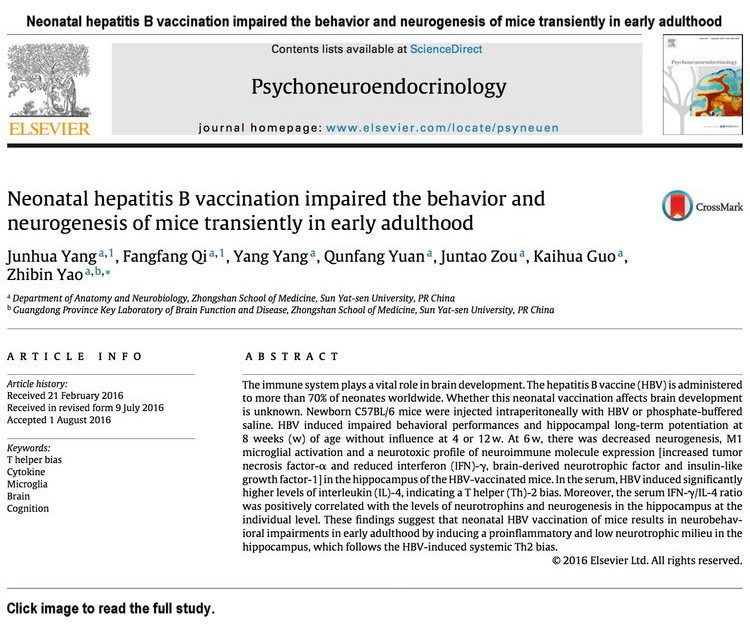
    Media remains silent on Vax-Unvax study of mice implicating Hepatitis B vaccine

    JB Handley World Mercury Project
    Thu, 17 May 2018 12:49 UTC


    Sun Yat-sen University's (a Top 10 university in China) Dr. Zhibin Yao is not a household name in the American autism community, but perhaps he should be. Not only is he American-educated (University of Pittsburgh) and the author of 33 peer-reviewed studies, but he's also the lead author of two of the most important biological studies ever done analyzing how, exactly, a vaccine can cause autism.

    In 2015, Dr. Yao was the lead author of "Neonatal vaccination with bacillus Calmette-Guérin and hepatitis B vaccines modulates hippocampal synaptic plasticity in rats," the first study that ever looked at the impact ANY vaccine might have on the brains of rats. I discussed this study in detail in an extensive article I wrote in April titled, "International scientists have found autism's cause. What will Americans do?." Vaccine Papers, a website dedicated to a rigorous, science-based analysis of the risks and benefits of vaccines, explained the paper this way:
    "This is the first study to test the effects of immune activation by vaccination on brain development. All other studies of immune activation have used essentially pathological conditions that mimic infection and induce a strong fever. A criticism I have heard often from vaccine advocates is that the immune activation experiments are not relevant to vaccines because vaccines cause a milder immune activation than injections of poly-IC or lipopolysaccharide (two types of immune system activators). This new study demonstrates that vaccines can affect brain development via immune activation. Hence, the immune activation experiments are relevant to vaccines...The hep B vaccine increased IL-6 in the hippocampus (the only brain region analyzed for cytokines)."
    Despite its importance, explaining Dr. Yao's 2015 paper to the average person wasn't easy, partly because his study covered a number of other topics, meaning you had to isolate the data that implicated the Hepatitis B vaccine, and then explain it. With his next paper, however, Dr. Yao and his team made explaining everything much easier, and left very little to interpretation.

    The authors noted that the HBV [Hepatitis B vaccinated] mice showed 'significantly increased' IL-6, which we know is a biomarker for autism.

    So much bigger than Wakefield, and zero media coverage
    In 1998, Dr. Andrew Wakefield ended up crucified for a paper that only noted what some parents had reported -- namely, that their children regressed into autism after the MMR vaccine. Dr. Yao's second paper, on the other hand, conducted a thorough study of the Hepatitis B vaccine's impact on the brains of mice, and did so versus a control group of mice who received a saline placebo. This is a "gold standard" animal study that you would typically do BEFORE a drug was introduced to the human population. In a world where vaccines were treated like other prescription drugs, Dr. Yao's study would have sent up a giant red flag about the neurotoxicity of the Hepatitis B vaccine. Of course, that didn't happen, and this is the first time you've probably ever heard of this study:


    As you can see, this study was actually published in late 2016. I saw it for the first time two weeks ago, and almost couldn't believe what I was reading. Dr. Yao and his colleagues open with a statement that should make every American parent shudder:
    "The hepatitis B vaccine (HBV) is administered to more than 70% of neonates worldwide. Whether this neonatal vaccination affects brain development is unknown."
    Given the "unknown" of whether or not Hepatitis B impacts brain development, Dr. Yao and his colleagues then set about answering the question, and their answers are disturbing on so many levels, let me try and summarize:
    1. The HBV vaccine negatively impacted the behavior of mice.

    Specifically, the HBV mice (those that were vaccinated with Hepatitis B vaccine) showed a "significant decrease in locomotion" and "increased anxiety."

    2. The HBV vaccine mice experienced a spike in the cytokine IL-6.

    The authors noted that the HBV mice showed "significantly increased" IL-6, which we know is a biomarker for autism.

    3. It took time for the neurological impact of HBV vaccine to manifest.

    This troubled the study authors.They discussed the "latency," meaning the extensive time between when the mice were vaccinated and when the neurological disorders presented themselves (note that Hepatitis B vaccine trials in infants typically followed the infants for one week or less to monitor adverse events):
    "...the significant difference found in the present study is between the immunized mice and the control mice, rather than between the mice of 8-week-old and the mice of another age. Therefore, this difference does reflect the effects of the neonatal vaccination. The mechanism underlying the latency and transient phenomenon is very complex and needs further studies for well understanding, because such latency involves many aspects of the immune responses in the periphery and CNS as well as neural plasticity."
    4. They concluded with a statement that, in a sane world, would prompt the immediate cessation of Hepatitis B vaccine administration to babies.

    What can I say, just read what they wrote for yourself:
    "This work reveals for the first time that early HBV vaccination induces impairments in behavior and hippocampal neurogenesis. This work provides innovative data supporting the long suspected potential association of HBV with certain neuropsychiatric disorders such as autism and multiple sclerosis."
    Conclusion
    It's all there, in black and white. A growing, compelling body of work tying vaccinations to autism through biological science. Dr. Yao's paper requires little interpretation, and it's just sitting there, hiding in plain sight (this is the first time anyone in America has ever written about this paper.) Recently, a group of scientists published an editorial emphasizing how important animal studies are to understanding the neurotoxicity of aluminum adjuvant used in vaccines. They noted that "multiple vaccine administrations and neuro/immunologic adverse effects is difficult to establish by epidemiology." Epidemiology, the study of large numbers of people and health outcomes using a spreadsheet, is rife with potential for abuse, manipulation, and missing signals. That's why biological science is so important, and that's why this new study from Dr. Yao and his colleagues provides a devastating blow to anyone who claims a vaccine couldn't possibly cause brain damage or autism. As Dr. Yao and his colleagues concluded:
    "This study used the same vaccine and a similar time schedule to those used for human infant vaccination in China. Therefore, these findings suggest that there may be similar effects of neonatal HBV vaccination on brain development and behavior in humans."

  16. The Following 6 Users Say Thank You to Hervé For This Post:

    Baby Steps (21st May 2018), DNA (9th December 2018), Foxie Loxie (19th June 2018), Inaiá (12th August 2018), onawah (19th May 2018), ThePythonicCow (19th May 2018)

  17. Link to Post #349
    United States Avalon Member onawah's Avatar
    Join Date
    28th March 2010
    Language
    English
    Posts
    26,026
    Thanks
    54,558
    Thanked 140,609 times in 24,445 posts

    Default Re: Do vaccines contribute to autism? Should we vaccinate?

    The big vaccine-autism lie
    5/20/18 by Jon Rappoport
    https://jonrappoport.wordpress.com/2...ne-autism-lie/
    Quote “How is a self-contained world built? Well, you can take a major situation which has an obvious cause, and then relabel the situation with a new name and say the cause is unknown. Then you can claim you’re looking for the cause, and you can keep looking and stalling for 50 years.” (The Underground, Jon Rappoport)
    First of all, there is NO definitive evidence that autism is a specific condition with a single cause.
    If you doubt this, look up the definition of autism in the Diagnostic and Statistical Manual of Mental Disorders, and try to find a definitive lab test that leads to a diagnosis of autism. There is no such test.
    That means there is no confirmed cause of autism. And THAT means there is no proof autism is a single and specific condition.
    Like other so-called developmental disorders or neurological disorders, autism is a collection of behaviors and symptoms, clustered together by committees of psychiatrists.
    Basically, what is being called autism is DAMAGE. Various forms of neurological damage. This means the cause(s) could be coming from a variety of places.
    For example, vaccines can and do cause damage.
    Neurological damage, brain damage.
    Parents of damaged children know this. There were there. They saw their children before vaccination and after vaccination.
    Everything else claimed about these children is diversion. High-class sophisticated deceptive diversion.
    For example: shuffling various disease and disorder labels; studies claiming there is no link between vaccines and autism; the hoops the government makes parents jump through, in order to try to obtain financial compensation for their damaged children; the legal deal allowing vaccine manufacturers to avoid law suits; the invented cover stories claiming autism begins in utero or is a genetic disorder; the pretension that autism has even been defined—
    All lies. All avoidances.
    A child gets a vaccine. The child suffers brain damage. That happens.
    That’s the truth which the government buries in a mountain of obfuscation.
    In general, how much damage do vaccines cause every year in the US?
    Unsurprisingly, there is no reliable count.
    For a sane reference, see “In the Wake of Vaccines,” by Barbara Loe Fisher, founder of the private National Vaccine Information Center. Her article was published in the Sept./Oct. 2004 issue of Mothering Magazine.
    Gathering information from several sources, Fisher makes a reasonable estimate of vaccine damage—actual figures are not available or carefully tracked or vetted. The system for reporting adverse effects is broken.
    Fisher: “But how many children have [adverse] vaccine reactions every year? Is it really only one in 110,000 or one in a million who are left permanently disabled after vaccination? Former FDA Commissioner David Kessler observed in 1993 that less than 1 percent of doctors report adverse events following prescription drug use. [See DA Kessler, ‘Introducing MEDWatch,’ [JAMA, June 2, 1993: 2765-2768]”
    “There have been estimates that perhaps less than 5 or 10 percent of doctors report hospitalizations, injuries, deaths, or other serious health problems following vaccination. The 1986 Vaccine Injury Act contained no legal sanctions for not reporting; doctors can refuse to report and suffer no consequences.”
    “Even so, each year about 12,000 reports [of vaccine damage] are made to the Vaccine Adverse Event Reporting System; parents as well as doctors can make those reports. [See RT Chen, B. Hibbs, ‘Vaccine safety,’ Pediatric Annals, July 1998: 445-458]”
    “However, if that number represents only 10 percent of what is actually occurring, then the actual number may be 120,000 vaccine-adverse events [damage]. If doctors report vaccine reactions as infrequently as Dr. Kessler said they report prescription-drug reactions, and the number 12,000 is only 1 percent of the actual total, then the real number may be 1.2 million vaccine-adverse events annually.”
    Then why does the government say, over and over, that vaccines are safe?
    Because they want to lie.
    What about all the studies that show this vaccine and that vaccine are safe?
    The following quote will give you a clue. The writer is an insider’s insider, and a doctor. She’s scrutinized more published medical studies than all the “highly educated” science-blog writers in the world put together.
    Dr. Marcia Angell, for 20 years, was the editor of the most prestigious medical journal in America.
    On January 15, 2009, the NY Review of Books published Dr. Angell’s devastating assessment of medical literature:
    “It is simply no longer possible to believe much of the clinical research that is published, or to rely on the judgment of trusted physicians or authoritative medical guidelines. I take no pleasure in this conclusion, which I reached slowly and reluctantly over my two decades as an editor of The New England Journal of Medicine.” (Marcia Angell, MD, “Drug Companies and Doctors: A story of Corruption.” NY Review of Books, Jan. 15, 2009.)
    Vaccine damage is being called autism.
    It diverts attention from the grave harm vaccines are causing.
    Autism is essentially any kind of severe neurological damage a child suffers from unknown causes.
    When the cause is obvious and known—as in the case of vaccines—the names and labels are changed:
    To protect the guilty.
    Last edited by onawah; 21st May 2018 at 02:59.
    Each breath a gift...
    _____________

  18. The Following 3 Users Say Thank You to onawah For This Post:

    Ernie Nemeth (25th May 2018), Inaiá (12th August 2018), ThePythonicCow (24th May 2018)

  19. Link to Post #350
    United States Avalon Member onawah's Avatar
    Join Date
    28th March 2010
    Language
    English
    Posts
    26,026
    Thanks
    54,558
    Thanked 140,609 times in 24,445 posts

    Default Re: Do vaccines contribute to autism? Should we vaccinate?

    Not Born With Autism
    MAY 22, 2018
    By Brian S. Hooker, Science Advisor, Focus for Health and Board Member, World Mercury Project
    https://worldmercuryproject.org/news...urce=mailchimp

    Quote

    Recently, the newest U.S. autism prevalence numbers were released by the CDC. It was not good news. Among children born in 2004 and 2006, the prevalence of autism had increased from 1 in 68 to 1 in 59, respectively. Leading the nation in terms of autism prevalence was New Jersey with a rate of 1 in 35 children and 1 in 22 boys. In other words, nearly 5% of boys in New Jersey have autism spectrum disorder as defined by the new DSM V criteria. Of the children with autism in the U.S., 56% had an evaluated IQ of 85 or less, meaning they possessed intellectual disability, with the majority of those children having an IQ of less than 70.

    Many in the scientific community have posited that autism is genetically determined, and researchers have searched the genome looking for the cause of this disorder. However, the over 400 genes that have been attributed to autism risk were found to contribute to only a fraction of autism cases. Climbing down this flimsy branch of genetics, researchers and lauding media contrived the phrase “individuals born with autism.”

    Looking at prevalence alone, we are seeing a dramatic and chilling increase in numbers of autism cases, especially in the past 18 years since CDC started to officially count autism numbers in the U.S. In 2000, the prevalence was 1 in 250, then 1 in 133 (2006) followed by 1 in 88 (2012), 1 in 68 (2014) and now 1 in 59. Historic data also consistently show that the rate of autism in the 1980’s was near 1 in 2000 children. It is clear that we are in an ever-increasing epidemic of this often profoundly debilitating developmental disorder, where the majority of these children will never be able to live independently throughout their lifetime.

    …these wonderful kids were born normally, developed normally for the first one year to 18 months of life, and then regressed into the isolated, painful and disabling world of autism.
    Let’s go back to the “individuals born with autism” phrase that I take issue with. It is the experience of my family and many, if not most families of children with autism, that these wonderful kids were born normally, developed normally for the first one year to 18 months of life, and then regressed into the isolated, painful and disabling world of autism. They were not born with it but experienced a significant decline in function after an environmental stressor.

    Just prior to the release of the CDC’s autism prevalence numbers, an important paper by Dr. Sally Ozonoff and her colleagues at the prestigious UC Davis MIND Institute was quietly published in the journal Autism Research. The paper, entitled “Onset Patterns in Autism: Variation across Informants, Methods, and Timing” was the culmination of a prospective study tracking the onset of autistic symptoms as evaluated by special education practitioners and parents. This was done with the gold standard autism assessment instrument Autism Diagnostic Observation Schedule (ADOS), including assessments of frequency and quality of eye contact, shared affect, and overall social engagement by highly trained examiners.

    Among those children diagnosed with autism, 88% showed a decline of function (i.e., regression) from an average to above average performance during the first assessments, as compared to those children who did not end up with an autism diagnosis.
    147 infants with a family history of ASD and 83 without such a history were evaluated during 7 extensive practitioner assessments held periodically within the first three years of life. If these children were born with autism they would have shown signs at the very beginning of life. But they did not.

    Among those children diagnosed with autism, 88% showed a decline of function (i.e., regression) from an average to above average performance during the first assessments, as compared to those children who did not end up with an autism diagnosis. In addition, the examiners saw a higher rate of regression than that reported even by parents (88% compared to 69%, respectively), using assessment instrument findings that were based on parental ratings and interviews. Also, when retrospective instruments were used for reporting (which are hampered by recall bias), incidence of regression was roughly 40%, much lower than that seen in the arguably more accurate prospective study.

    The conclusion of this research, the first of its kind, is critically important for future research and further dialogue about the role of genes vs. environment in autism causation.
    Out of a sampling of 230 children followed for the first three years of their lives, fully 88% of those who were diagnosed with autism started at average and above average social engagement scores, and then regressed prior to ultimately being diagnosed with autism. In other words, nearly all of the children followed in the study who developed autism had regressive autism. They were not born with it.

    Resources must be allocated to understanding the environmental stressors that cause regression, and to identify the children most vulnerable to these environmental stressors. Let’s take this new information and use it wisely: acknowledge that many individuals with autism were not born that way, and work to identify any potential environmental exposures that led to neurological and behavioral regressions and a lifetime of disability for these wonderful children and their families.
    Each breath a gift...
    _____________

  20. The Following User Says Thank You to onawah For This Post:

    ThePythonicCow (24th May 2018)

  21. Link to Post #351
    United States Avalon Member onawah's Avatar
    Join Date
    28th March 2010
    Language
    English
    Posts
    26,026
    Thanks
    54,558
    Thanked 140,609 times in 24,445 posts

    Default Re: Do vaccines contribute to autism? Should we vaccinate?

    The U.S. Needs an Independent Vaccine Safety Organization
    MAY 23, 2018
    https://worldmercuryproject.org/news...urce=mailchimp
    (I included most of the hyperlinks from this article, which I don't usually do since there are so many of them, but this will show you what well-researched articles the World Mercury Project is putting out. This article by itself would make a great introduction for someone who is new to the dangers of vaccines, and would be difficult to refute, considering all the well known and reputable sources of info.)

    Quote By the World Mercury Project Team

    Most Americans are oblivious to the huge annual burden of chronic illness, injuries https://worldmercuryproject.org/news...ergy-epidemic/
    and deaths https://worldmercuryproject.org/what...-sleight-hand/
    linked to vaccines. Some of the blame for the public’s ignorance belongs to a complicit media... https://www.aim.org/aim-column/can-y...bout-vaccines/ that “pretends that vaccine-related injuries do not occur.” However, the lion’s share of culpability for the buried story likely rests with the two federal agencies charged with vaccine oversight—the Food and Drug Administration (FDA) and the Centers for Disease Control and Prevention (CDC)—both of which regularly engage in various forms of deception https://www.ncbi.nlm.nih.gov/pmc/articles/PMC4065774/
    to uphold their bland narrative that vaccines are unambiguously safe.

    The two agencies claim https://www.fda.gov/downloads/biolog.../ucm298181.pdf
    that they only license vaccines and allow them to remain on the market if the vaccines’ benefits outweigh their potential risks. Yet credible accusations have surfaced for years—aired by legislators, researchers, watchdog groups and many others https://www.forbes.com/forbes/welcom...p#78e6fc9f21bd
    —that both the FDA and CDC lack the impartiality required to make accurate judgments about vaccine safety. How can they, when the CDC’s dual mandate is both to monitor vaccine safety and promote vaccines?

    Recognizing that this represents an “enormous” and “inherent” conflict of interest, a few gutsy legislators periodically have attempted to establish an “objective and non-conflicted office,” https://maloney.house.gov/media-cent...ne-safety-bill the sole purpose of which would be “to address, investigate, and head off potential vaccine safety problems.” Thus far, these efforts have gone nowhere, but even a cursory look at the agencies’ capture by industry confirms that it is time to stop allowing the fox to guard the hen house.

    The congressional committee noted that FDA and CDC advisory committee members and chairpersons own stock in the vaccine companies under consideration as well as owning vaccine patents.
    Self-interested experts
    There are many reasons why the public needs and deserves an independent vaccine safety organization. One of the most significant criticisms has to do with the FDA’s and CDC’s business-as-usual reliance on external experts with financial ties https://ethics.harvard.edu/conflicts...-drug-approval
    to the pharmaceutical companies and/or products that they are evaluating. Little has changed since a congressional Committee on Government Reform outlined this problem nearly two decades ago. The Reform Committee examined the doings of the FDA’s Vaccine and Related Biological Products Advisory Committee (VRBPAC)
    https://www.fda.gov/AdvisoryCommitte...ee/default.htm which determines whether new vaccines should be licensed, and the CDC’s Advisory Committee on Immunization Practices (ACIP) https://www.cdc.gov/vaccines/acip/index.html... which recommends vaccines for inclusion in the childhood vaccine schedule.

    The congressional committee noted that FDA and CDC advisory committee members and chairpersons own stock in the vaccine companies under consideration as well as owning vaccine patents. https://www.scribd.com/document/8793...ts-of-interest
    The CDC “grants conflict of interest waivers to every member of their advisory committee a year at a time and allows full participation in the discussions leading up to a vote by every member,” even if a member has a financial stake in the decision.

    The Reform Committee also discussed the example of the FDA’s vote to approve the ill-fated rotavirus vaccine. https://worldmercuryproject.org/news...dverse-events/
    Ten of the fifteen VRBPAC members were either absent or were excluded from the vote, whereas five “temporary” members parachuted in to join the remaining five in voting to license the vaccine. Moreover, “three out of the five [permanent] members…who voted for the rotavirus vaccine had conflicts of interest that were waived.”

    Overall, the congressional review sketched a portrait of an “old boys network” of experts and advisors who “rotate between the CDC and FDA, at times serving simultaneously.” In one case, after finding that an expert had served continuously for 16 years, the chairman asked, “With over 700,000 physicians in this country, how can one person be so indispensable that they stay on a committee for 16 years?”

    A 2009 report…determined that CDC continued to display “a systemic lack of [ethics] oversight.”
    Despite stern rebukes, CDC and FDA don’t fix the problems
    Unfortunately, there is no grounds for assuming that the two agencies have fixed these rampant conflict-of-interest problems. A 2009 report by the Office of the Inspector General (OIG) at the Department of Health and Human Services determined that CDC continued to display “a systemic lack of [ethics] oversight.” Virtually all (97%) of the individuals sitting on CDC advisory committees, including ACIP, omitted relevant financial disclosure information from their required ethics form, and CDC rarely complied with the requirement to “identify and resolve all conflicts of interest…before permitting [those individuals] to participate in committee meetings.” Although the OIG sternly rebuked the CDC to do its job in obtaining complete financial disclosures, the CDC balked at “fully implementing” the recommendation, describing it as “impractical.”

    In 2014, a Drexel University researcher examined 15 years’ worth of conflicts of interest at the FDA, framing them as a significant “health policy problem” driven by both financial ties and “selection” mechanisms (that is, committee members who are “predisposed to favor pharmaceutical companies”). A 2015 article in the British Medical Journal (BMJ) illustrates the ongoing magnitude of the problem, showing how drug and device companies paid roughly $3.7 billion to U.S. physicians and teaching hospitals over just one half-year period; as the BMJ incisively states, “financial conflicts of interest in medicine are not beneficial, despite strained attempts to justify them and to make a virtue of self-interest.” https://www.bmj.com/content/350/bmj.h2942

    Not serious about serious adverse events
    Although the FDA and CDC claim to take vaccine safety seriously, another favorite tactic is to downplay actual and potential vaccine risks. This is particularly apparent when the two agencies denigrate the very surveillance system that they co-administer. The Vaccine Adverse Event Reporting System (VAERS) carries out spontaneous surveillance, meaning that “no active effort is made to search for, identify and collect information, but rather information is passively received...https://www.ncbi.nlm.nih.gov/pmc/articles/PMC4632204/... from those who choose to voluntarily report their experience.” Because of these features, FDA and CDC authors readily admit that their system has “inherent limitations,” https://www.ncbi.nlm.nih.gov/pmc/articles/PMC4632204/ and Harvard researchers agree, noting... https://www.ncbi.nlm.nih.gov/pmc/articles/PMC2213485/ ...that VAERS is subject to “incomplete recognition of potential adverse events, administrative barriers to reporting, and incomplete case documentation.” The VAERS capture rate of as little as one percent https://healthit.ahrq.gov/ahrq-funde...ng-system...of actual vaccine-related adverse events “preclude[s] or delay[s] the identification of ‘problem’ vaccines”—“potentially endangering the health of the public.” https://healthit.ahrq.gov/ahrq-funde...porting-system

    Even with the massive underreporting, VAERS receives approximately 30,000 reports annually, up to 4,500 of which the CDC characterizes as serious https://www.cdc.gov/vaccinesafety/en...ers/index.html —meaning that “the adverse event resulted in permanent disability, hospitalization, life-threatening illness, or death.” Lest the public worry about these thousands of reported injuries, the CDC has a ready answer. The agency asserts https://www.cdc.gov/vaccinesafety/en...ers/index.html
    (without the slightest hint of irony) that “while these problems happen after vaccination, they are rarely caused by the vaccine.” Both the CDC and FDA shore up this oddly unconcerned attitude by regularly publishing boilerplate agency-authored VAERS analyses that declare “no new or unexpected [adverse events] patterns.”https://www.ncbi.nlm.nih.gov/pubmed/26407428

    Circumvention and circumlocution
    “Cozy corporate alliances” http://thehill.com/blogs/pundits-blo...-and-political ... and an emphasis on public-private partnerships https://www.bmj.com/content/350/bmj.h2362... tilt the CDC’s and FDA’s actions in favor of industry in numerous ways.
    For example, the CDC and vaccine manufacturers co-fund a variety of “sock-puppet mouthpieces” disguised as independent non-profits; these front groups make it possible for the CDC to circumvent lobbying restrictions and support a compulsory vaccination agenda.
    http://vaccinesafetycommission.org/p...j5104.full.pdf
    World Mercury Project has described numerous other examples of bias and wrong-doing at both agencies. The CDC, for example, has:

    Resolutely and repeatedly denied any association between vaccine ingredients such as thimerosal and pervasive development disorders
    https://worldmercuryproject.org/news...ury-poisoning/
    and even shredded unflattering data.
    https://worldmercuryproject.org/wp-c...m_Thompson.pdf
    Worked to conceal unwanted outcomes caused by the highly profitable varicella vaccine.
    https://worldmercuryproject.org/news...cdc-chicanery/
    Aggressively recommended flu shots in pregnant women
    https://worldmercuryproject.org/news...regnant-women/
    ...without a sound research basis for doing so, while making light of serious influenza vaccine injuries in the general population.
    https://worldmercuryproject.org/news...ot-promotions/
    Allowed studies to be conducted and published without legally required ethics clearances.
    https://worldmercuryproject.org/news...search-ethics/
    Ignored whistleblowers and blocked them from testifying about vaccine injuries.
    https://worldmercuryproject.org/news...actice-case-2/
    Sent top executives through the revolving door to work with industry.
    https://www.reuters.com/article/us-m...5BK2K520091221
    Meanwhile, the FDA has:

    Refused to give “any serious consideration to the abundant and mushrooming evidence of thimerosal’s profound toxicity.”
    https://worldmercuryproject.org/news...-ongoing-saga/
    Relied on “outdated information, unwarranted assumptions and errors”
    https://worldmercuryproject.org/news...m-in-vaccines/ and published misleading safety studies to allow unsafe levels of aluminum to remain in childhood vaccines.
    https://worldmercuryproject.org/news...tism-epidemic/
    Ignored advice from within its own ranks to pay closer attention to vaccine safety so as to avoid “a situation of unforeseen and unpredictable vaccine outcomes.”
    https://worldmercuryproject.org/news...dverse-events/
    Permitted vaccine manufacturers to use phony placebos to conceal vaccine risks.
    https://worldmercuryproject.org/news...-hpv-vaccines/
    With the FDA and CDC having repeatedly demonstrated their prioritization of industry profits over public safety, the time is past due for creating an independent agency that takes vaccine safety seriously.
    Enough is enough
    Two to four million individuals suffer “serious, disabling, or fatal injury” associated with prescription drugs each year (including an estimated 128,000 deaths), but these incidents tend to remain outside the public eye. Even with the opioid epidemic, it took over a decade for the media to begin reporting the story and even longer (until 2017) for the government to declare the epidemic a national health emergency.

    It is unconscionable that vaccines with doubtful safety data continue to be rushed onto the market while the ensuing injuries and deaths remain in the shadows. With the FDA and CDC having repeatedly demonstrated their prioritization of industry profits over public safety, the time is past due for creating an independent agency that takes vaccine safety seriously. A former program director at the National Institutes of Health wrote a couple of years ago about the role of vaccines in creating a powerful medical establishment—supported by drug-profit-hungry businessmen and philanthropists.
    https://www.ncbi.nlm.nih.gov/pmc/articles/PMC5138175/ In that author’s words, “improved public health is possible only by switching the current corruptive and abusive culture of ‘who you know’ to a culture of ‘what you know.”
    Last edited by onawah; 25th May 2018 at 22:52.
    Each breath a gift...
    _____________

  22. The Following 3 Users Say Thank You to onawah For This Post:

    avid (26th May 2018), Hervé (31st May 2018), ThePythonicCow (26th May 2018)

  23. Link to Post #352
    United States Avalon Member onawah's Avatar
    Join Date
    28th March 2010
    Language
    English
    Posts
    26,026
    Thanks
    54,558
    Thanked 140,609 times in 24,445 posts

    Default Re: Do vaccines contribute to autism? Should we vaccinate?

    CDC SCANDAL: The link between chickenpox vaccine and skyrocketing rates of shingles in adults revealed
    (Naturalhealth365)by Lori Alton May 31, 2018
    https://www.naturalhealth365.com/cdc...gers-2579.html
    Quote It’s almost impossible to peruse online or cable news without seeing some reference to the term “collusion.” But, wherever you stand on this issue, you should be aware that a claim of “collusion” is also reverberating throughout the federal public health field – and it has to do with the chickenpox (varicella) vaccination instituted in 1995 by the CDC (U.S. Centers for Disease Control and Prevention).

    An explosive article published in March in Annals of Clinical Pathology claims that the CDC colluded with the Los Angeles Department of Health Services (LADHS) to suppress research findings involving its Universal Varicella Vaccination Program – and a link with the increasing nationwide incidence of shingles.

    The author alleges that the CDC pulled several dirty tricks – including manipulating data – to hide an undesirable outcome. Sound familiar? (They did the same thing with the MMR vaccine)

    What the CDC fails to appreciate: Widespread incidence of chickenpox virus caused protection against shingles
    Chickenpox is usually a mild disease when it occurs in children. Following infection with chickenpox, or varicella zoster, the virus remains latent in the body – although it can be reactivated later in the form of shingles, or herpes zoster.

    Prior to the vaccination program instituted in the mid-1990s by the CDC, 95 percent of adults in the United States had experienced chickenpox as children. Because long-term immunity was received as a result, having chickenpox was considered a sort of immune system “rite of passage.”

    In other words, because having chickenpox boosts cell-mediated immunity, the high prevalence of chickenpox as a childhood disease helped to ward off shingles in adults.

    In 1995, the CDC added chickenpox vaccine to the recommended vaccine schedule for 12- to 15-month olds. In 2006, the CDC upped the ante, saying that 4- to 6-year old children needed a chickenpox booster shot as well.

    Unfortunately, adults who had natural immunity in the pre-vaccination era are now compromised by decreasing immunity to chickenpox, due to the mass vaccination program (which provides only temporary immunity).

    Many natural health experts feel that because the CDC’s mass varicella vaccination caused a reduction in circulating wild-type varicella zoster virus, the increased reactivation of shingles is now occurring.

    Researcher says: Vaccine increases likelihood of shingles both in childhood and later life
    The article’s author, Gary S. Goldman, worked as a research analyst in the mid-1990s at the Los Angeles Department of Health. Because of his work on the Varicella Active Surveillance Project, or VASP, he was able to monitor the introduction of the chickenpox vaccine – and assess its outcomes.

    In 2000, Goldman began to hear anecdotal accounts from school nurses about the inexplicable increase in cases of herpes zoster among school-aged children – and decided to take a closer look.

    He concluded that the chickenpox vaccine had two negative outcomes – it accelerated the recurrence of shingles in children who had already had natural chickenpox, and it increased the likelihood of shingles in adults.

    The CDC is advising the shingles vaccine as a way to prevent the painful disease of shingles. But, Goldman points out that the vaccine – intended to provide the protection people would normally receive from childhood chickenpox for free – costs $200 a dose.

    In addition, the shingles vaccine appears not to work very well – or for long.

    One study conducted from 2009 to 2016 among a large group of adults over age 50 showed that the shingles vaccine is only 50 percent effective the first year – and decreases to “no effect” by the fifth year post-vaccination.

    Researcher admits: CDC manipulated data to mask deleterious outcomes
    According to Goldman, the CDC fought his attempts to publicize his data – every inch of the way. The researcher lists 23 different actions the agency took in order to distort and suppress his findings.

    Among the tactics the CDC utilized, Goldman says, were attempting to statistically disguise his findings, robbing findings of meaning by attributing them to the incorrect subgroups, manipulating their own data to imply that the chickenpox vaccine worked better than it did, publishing selective studies, aggressively blocking Goldman’s attempt to publish undesirable trends and outcomes and pressuring journal editors to delay publication of his work.

    For example, the CDC conducted a study of shingles incidence in a population where the chickenpox vaccine had not been widely administered – in order to misleadingly produce evidence that the program had no effect on the higher rates of shingles.

    And, Goldman alleges that the CDC masked the alarming trends by averaging vaccine effectiveness over several years – instead of stratifying it year by year.

    The CDC also directed Goldman not to pursue further analysis of trends in shingle cases, and attempted to systematically discredit him.

    Truth EXPOSED: Shingles epidemic predicted by earlier research
    In a 2002 study published in Vaccine, the authors stated that natural chickenpox was highly protective against shingles – and warned that mass chickenpox vaccination would likely cause a major shingles epidemic.

    They even presented a statistic, predicting that 50 percent of those who were 10 to 44 years at the time of the chickenpox vaccine’s introduction would develop shingles.

    The researchers also predicted that the existence of the vaccine would have the effect of lowering the average age of shingles infection, while moving the average age of chickenpox infection higher. This is disturbing, because chickenpox is much more severe in adults. In fact, the disease is 25 times more likely to lead to death in someone over 50 than someone under four years old.

    Sixteen years later, Goldman’s findings are confirming this early forecast. Yet the powers-that-be seem intent on concealing anything that hints at a downside to vaccination.

    Goldman, who has since resigned from his job with the LADHS, insists that mass chickenpox vaccination has caused a “fabricated cycle of disease and treatment.” It is one that the CDC appears determined to cover-up.

    Sources for this article include:

    WorldMercuryProject.org
    ScienceDirect.com
    JSCIMedCentral.com
    Last edited by onawah; 5th June 2018 at 03:07.
    Each breath a gift...
    _____________

  24. The Following 3 Users Say Thank You to onawah For This Post:

    avid (6th June 2018), Hervé (31st May 2018), ThePythonicCow (31st May 2018)

  25. Link to Post #353
    United States Avalon Member onawah's Avatar
    Join Date
    28th March 2010
    Language
    English
    Posts
    26,026
    Thanks
    54,558
    Thanked 140,609 times in 24,445 posts

    Default Re: Do vaccines contribute to autism? Should we vaccinate?

    Are Cochrane Reviews Truly “Independent and Transparent”?
    JUNE 05, 2018
    By the World Mercury Project Team
    https://worldmercuryproject.org/news...urce=mailchimp

    Quote Policy-makers often attach considerable importance to systematic reviews when they make decisions about health care strategies and future policy directions. A systematic review is a “study of studies” that reviews the available body of evidence for a given disease or health topic in a “standardized and systematic way.”

    …a look at Cochrane’s disclosed funding sources raises the question of whether the organization’s vaunted independence may be more talk than substance.
    The London-based Cochrane organization (formerly the Cochrane Collaboration) bills its Cochrane Library as the “international gold standard for high quality, trusted information,” a characterization with which many researchers agree. Cochrane is prolific, publishing over 5,000 reviews in its first two decades. In addition to featuring a noble-sounding tagline (“trusted evidence, informed decisions, better health”), Cochrane burnishes its reputation through its avowed unwillingness to accept any “conflicted funding” and its professed freedom from “commercial sponsorship and other conflicts of interest.”

    In fact, according to Cochrane’s website, no-strings-attached funding is “vital” in allowing the organization’s global network of reviewers to “generate authoritative and reliable information, working freely, unconstrained by commercial and financial interests.” Precisely how Cochrane defines “conflicted funding” is not readily apparent. And a look at Cochrane’s disclosed funding sources raises the question of whether the organization’s vaunted independence may be more talk than substance.

    Funders with agendas
    Cochrane’s top funders (in terms of amounts donated) feature some of the world’s largest government health agencies, including the research arm of the UK’s National Health Service as well as the UK’s Department for International Development (DFID); the National Institutes of Health (NIH) in the U.S.; Australia’s National Health and Medical Research Council; and health ministries all over the world. These powerful agencies are no strangers to quid pro quo funding arrangements—for example, the NIH cancelled research on alcohol marketing to underage drinkers because it was “wooing the alcoholic beverage industry to contribute tens of millions of dollars” for research on alcohol’s purported heart health benefits.

    Desirous of extending the reach of its information globally, Cochrane also receives funding from and works in partnership with the World Health Organization (WHO); in 2016, Cochrane bragged that its systematic reviews had been included in 90% of WHO’s guidelines that year. The Bill & Melinda Gates Foundation (BMGF), which happens to be the largest non-government funder of WHO, is also a Cochrane donor. Curiously, BMGF’s contribution to Cochrane in late 2016 and a grant from the Robert Wood Johnson Foundation (RWJF) in early 2017 were shared only in fleeting press releases rather than on the permanent donor list on Cochrane’s website.

    As Cochrane accepts more funding from foundations with highly partisan vaccination and Big Data agendas, what are the implications for its “gold standard” reviews?
    Why might these two large U.S. foundations be interested in supporting Cochrane? According to the press releases, the foundations’ targeted pots of money appear to be helping Cochrane build a “next-generation evidence system” that will use technological advances and machine learning to maximize the impact of “Big Data.” Vaccination is one of the policy arenas where the rollout of Big Data is being most enthusiastically embraced, with researchers acclaiming Big Data’s potential to streamline the delivery of “rationally designed vaccines” and to “track the success of vaccination campaigns.” Both U.S. foundations are “all in” in this regard.

    BMGF is actively promoting Big Data as a vaccination tool in the developing world, where it can “track pandemics” and help vaccine workers “determine what percent of a region they have immunized from a disease.” As a major funder of the GAVI Alliance, BMGF also is supporting the use of comprehensive medical digital databases in remote developing country regions to boost vaccine coverage by closely tracking “when and where” children receive vaccines.

    In the U.S., the RWJF has been partnering with the Centers for Disease Control and Prevention (CDC) on a “500 Cities Project,” which is busily monitoring health data and health objectives down to the “small area” neighborhood level, including tracking compliance with vaccine recommendations. RWJF’s president was formerly a top CDC official and served as acting CDC director during the 2009 H1N1 influenza scare. (Some Europeans criticized that episode as an exaggerated and even “false pandemic” that ensured millions in windfall profits for vaccine manufacturers.)

    Cochrane’s 2018 HPV review
    As Cochrane accepts more funding from foundations with highly partisan vaccination and Big Data agendas, what are the implications for its “gold standard” reviews? A recent Cochrane review highly favorable to the human papillomavirus (HPV) vaccine—one of the most disastrous vaccines ever rushed onto the market—suggests that the foundations are getting plenty of bang for their charitable buck. Despite ample indications that manufacturers used phony placebos and other statistical gimmicks to hide the serious risks of HPV vaccines, and mounting evidence of other “deceptive practices by officials of ‘authoritative’ international public health institutions,” the May 8 Cochrane review of HPV vaccines reported no increased risk of serious adverse effects and concluded that deaths reported in HPV studies “have been judged not to be related to the vaccine.” These conclusions likely were well received by RWJF, which routinely promotes the HPV vaccine in its Culture of Health blog and supports studies assessing how best to implement HPV vaccine mandates—and by BMGF, which has supported the HPV vaccine’s introduction around the world (although BMGF’s reputation has been tarnished by controversy in India, where reportedly unethical HPV vaccine trials supported by the foundation resulted in children’s deaths).

    …it would be inappropriate to assume all Cochrane reviews are good quality and are at low risk of bias.
    Criticisms of Cochrane reviews have surfaced since not long after the organization’s inception. In 2001, for example, the British Medical Journal (BMJ) questioned the reliability of some Cochrane reviews, describing the implications for Cochrane’s reputation as “serious.” The BMJ authors suggested that “the Cochrane Collaboration needs to clarify [explain] how it discharges its responsibilities for the quality of reviews published under its imprimatur, and how it responds when they are shown to have come to unjustified conclusions.”

    A more recent examination of Cochrane reviews in 2016 concluded that while “the methodological quality of Cochrane reviews is good compared to…non-Cochrane reviews, …it would be inappropriate to assume all Cochrane reviews are good quality and are at low risk of bias.” Cochrane’s new and chummy partnership with Wikipedia to include “relevant evidence within all Wikipedia health articles,” announced in early 2017, also may raise some eyebrows given Wikipedia’s reputation for bias. All of these factors suggest that it might be time to take Cochrane’s supposedly neutral relationship with its funders with a grain of salt.
    Each breath a gift...
    _____________

  26. The Following 2 Users Say Thank You to onawah For This Post:

    avid (6th June 2018), Hervé (6th June 2018)

  27. Link to Post #354
    France Honored, Retired Member. Hervé passed on 13 November 2024.
    Join Date
    7th March 2011
    Location
    Brittany
    Posts
    16,763
    Thanks
    60,315
    Thanked 96,080 times in 15,483 posts

    Default Re: Do vaccines contribute to autism? Should we vaccinate?

    Police raid scientists who discovered new vaccine dangers

    by Jon Rappoport Jun 7, 2018
    —Two scientists discover that vaccines are contaminated, in the manufacturing process, with many small particles of metals that are toxic to humans when injected. Alarming.
    The published research is ignored. Then the scientists are raided by police.

    James Grundvig, at GreenMedInfo.com and the World Mercury Project, reports (3/17/18):
    “Last week, the Italian police raided the home and science laboratory of Drs. Antonietta Gatti and Stefano Montanari. The police snatched all of the digital assets owned by the husband and wife team of nanopathologists, grabbing laptops, computers, and flash-drives—and with it, years of work and research.”

    “Because Gatti and Montanari had taken their research of nanodust and nanoparticles…to what unseen contamination might reside in vaccines in 2016, they came under the microscope of the United States, European, and Italian authorities. They had touched the third rail of medicine. They had crossed the no-go zone with the purported crime being scientific research and discovery. By finding nano-contamination in random vaccines, Gatti and Montanari revealed, for the first time, what no one knew: Vaccines had more than aluminum salts adjuvants, Polysorbate-80, and other inorganic chemicals in them, they also harbored stainless steel, tungsten, copper, and other metals and rare elements that don’t belong in shots given to fetuses, pregnant women, newborns, babies and toddlers developing their lungs, immune and nervous systems.”

    “When the scientists published their findings in January 2017, ‘New Quality‐Control Investigations on Vaccines: Micro‐ and Nanocontamination,’ the logical next step for the World Health Organization (WHO) and the Centers for Disease Control (CDC) should have been to open an investigation into their claims, hire independent scientists to run their own lab tests to confirm or refute the findings. If confirmed, then the healthcare agencies would enact new policies on safety of the vaccine supply chain, and enforce strict quality control and quality assurance programs.”

    “But none of that happened. A year went by. It was cheaper for the authorities to attack the Italian scientists than upset the vaccine gravy train that supports the politicians.”
    This is an official form of research: censorship by raiding the researchers.

    Note that the two Italian scientists weren’t simply testing a batch of one vaccine from one manufacturer. There were looking at random vaccines.

    Suppose this chilling disaster turns out to be endemic to all vaccine manufacturing?

    For the ubiquitous “all vaccines are safe” pronouncement, substitute: “dangerous across the board.”

    Jon Rappoport

  28. The Following 6 Users Say Thank You to Hervé For This Post:

    avid (7th June 2018), DNA (9th December 2018), Foxie Loxie (7th June 2018), Inaiá (12th August 2018), onawah (7th June 2018), ThePythonicCow (7th June 2018)

  29. Link to Post #355
    United States Avalon Member onawah's Avatar
    Join Date
    28th March 2010
    Language
    English
    Posts
    26,026
    Thanks
    54,558
    Thanked 140,609 times in 24,445 posts

    Default Re: Do vaccines contribute to autism? Should we vaccinate?

    20 Reasons Why We Need A Vaccine Safety Commission…
    By Celina Trevino
    (This sums it up pretty well!!!!!)
    http://bolenreport.com/20-reasons-wh...ty-commission/
    Quote The United States is in desperate need of an independent Vaccine Safety Commission, whose task would be:

    “to ensure safe vaccines and to protect the citizens of the world from death, or a lifetime of disability from vaccination.”

    Why Do We Say That? Here Are Twenty Very Good Reasons…
    (1) There is no enforcement of the 1986 National Childhood Vaccine Injury Act regarding physicians who fail to report adverse events from vaccination. So while they are required to report, no one is making sure they actually are. A task force assigned to regulate and check up on physicians to ensure they are indeed reporting all adverse events properly would put some teeth in the law.

    (2) At the time of this writing, the US government has paid out to victims, through the Vaccine Injury Compensation Program: 3.6 billion dollars[i]

    (3) Physicians are not taught how to diagnose vaccine injury in medical school curriculums. Mandatory vaccine education could be brought about by a Commission.

    (4) Currently, our Medical Examiners do not test and do not know how to test for vaccines as a cause of death in an autopsy toxicology report. A Vaccine Safety Commission could provide the data for a new testing standard. Currently, a parent has to tell the Medical Examiner what to look for.

    (5) The Vaccine Safety Datalink[ii], part of America’s vaccine safety surveillance system, does not allow public access to their data. Their data is private, so the only way scientists and physicians can use their data is by conducting their own study.


    (6) The list of reportable events on VAERS (Vaccine Adverse Event Reporting System) is incomplete and limited.[iii]

    Vaccine manufacturers continuously update the adverse event section of their package inserts based on new data. 37 years after the MMR was introduced, adverse events such as acute hemorrhagic edema of infancy and transverse myelitis are being added to the package insert .[iv] This shows an inadequate surveillance system is in place to protect the public.

    (7) Vaccine package inserts are not given to parents before or after vaccination. Parents should be given the package inserts with ample time to read before making the choice to vaccinate.

    (8) The first textbook on Vaccines and Autoimmunity has come out recently: Vaccines and Autoimmunity by ‪Yehuda Shoenfeld, ‪Nancy Agmon-Levin, ‪Lucija Tomljenovic in 2015[v].

    (9) There is no prescreening in vaccination. Currently our medical system does not have a way to check whether babies are healthy or could be immune-compromised, so the baby is assumed healthy. Only those with cancer, HIV or on immune suppressant drugs are considered immune suppressed, and yet physicians have different standards of care for who is considered immune compromised.

    (10) When making the decision to vaccinate, family history is not regularly taken into account by the physician. Even a family history of severe reactions or death from vaccines, is rarely considered as part of the decision to vaccinate.

    (11) We are vaccinating babies at the same specific time when it is known that they are most susceptible to death and neurological injury.[vi]

    (12) The CDC has never done a vaccinated vs unvaccinated study due to the assumption that all vaccines are safe and effective. They purport that long-term studies “aren’t practical” and those for the un-vaccinated are “unethical”.[vii]

    (13) Pregnant women are increasingly advised by the CDC to take vaccines: currently a Tdap and Flu vaccine for each pregnancy.[viii]

    !14) Some cases in the Vaccine Injury Court Program are settled out of court, therefore, we will and can never know the true injuries that occur. This is because all the files become confidential and plaintiffs sign non-disclosure agreements, promising never to talk about details of the case in return for a sum of money.

    (15) The Hepatitis B vaccine is given to infants at 12 hours old even though their mothers are pre-screened[ix] for it before giving birth, and determined to be negative. There is an unnecessary and over vaccination of infants with the Hepatitis B vaccine.

    (16) Kaiser, whose data is part of the Vaccine Safety Datalink, recently (allegedly) did not follow two safety protocols[x]. How can we be sure they are keeping accurate records that the public depends on for safety assurance? A Vaccine Safety Commission would make sure the same people responsible for ensuring safety are actually following vaccine safety policies.

    (17) The CDC uses the study of Dr. Paul Thorsen, a wanted criminal, as a standard for autism.

    In a hearing of the House Government Reform and Oversight Committee, Congressman Posey questions officials from the CDC over Autism research and vaccinations…

    FL Representative Bill Posey mentions Paul Thorsen here at the 2:46 mark.


    FL Representative Bill Posey addresses Congress with CDC Whistleblower Dr. William Thompson’s statement:


    Congressman Posey speaks on the House floor about a CDC whistleblower exposing deception at the CDC. July 29, 2015:

    Despite Bill Posey’s requests, the House Government Reform and Oversight Committee has refused to look into Dr. William Thompson’s claims.

    (18). Girls in Colombia are suing Merck with a class action lawsuit, due to injuries from Gardasil.[xi] More studies need to be done on this vaccine before it is added to the Childhood Vaccine Schedule.

    (19) Independent labs recently tested vaccines for heavy metals[xii] and glyphosate[xiii]. Test results were sent to the CDC, who has refused to acknowledge the findings or suggest their own investigation.

    (20) The CDC’s pediatric vaccination schedule exceeds the FDA’s limit of Aluminum in infants.[xiv] [xv]

    The Situation Is Getting Worse, Not Better…
    With the CDC’s most recent figures of Autism incidence in the U.S. being 1 in 59[xvi], how much longer can physicians and scientists say to parents:

    “It’s a coincidence.”

    “We don’t know why this happened.”

    “It can’t be the vaccines.”

    The science on vaccines is clearly not settled.
    Let’s protect our country and put us on the track towards prosperous health.

    By Celina Trevino

    ————————————————-

    Bibliography:

    [i] https://www.hrsa.gov/sites/default/f...s-may-2018.pdf

    Data & Statistics – hrsa.gov
    www.hrsa.gov

    Data & Statistics The United States has the safest, most effective vaccine supply in history. In the majority of cases, vaccines cause no side effects, however they can occur, as with any medication—but most are mild.


    [ii]https://www.cdc.gov/vaccinesafety/ensuringsafety/monitoring/vsd/index.html

    Vaccine Safety Datalink (VSD) VSD | Monitoring | Ensuring …
    www.cdc.gov

    The VSD is a collaborative project that exists to monitor vaccine safety and conduct studies about rare and serious adverse events following immunization.


    [iii]https://vaers.hhs.gov/docs/VAERS_Table_of_Reportable_Events_Following_Vaccination.pdf

    VAERS Table of Reportable Events Following Vaccination …
    vaers.hhs.gov

    death) of above events (interval – not applicable) D. Events described in manufacturer’s package insert as contraindications to additional doses of vaccine


    [iv]https://www.fda.gov/BiologicsBloodVaccines/Vaccines/ApprovedProducts/ucm094050.htm

    [v] https://www.amazon.com/Vaccines-Auto.../dp/1118663438

    [vi] https://vaers.hhs.gov/data/dataguide.html

    [vii] https://www.cdc.gov/vaccines/parents...ide-part4.html

    [viii] https://www.cdc.gov/vaccines/pregnan...men/index.html

    [ix] https://www.cdc.gov/vaccines/pregnan...men/index.html

    [x] http://www.sacbee.com/news/local/new...173211321.html

    [xi] https://www.nvic.org/nvic-vaccine-ne...-colombia.aspx

    [xii] http://info.cmsri.org/the-driven-res...f-contaminants

    [xiii]https://www.momsacrossamerica.com/glyphosate_found_in_childhood_vaccines

    [xiv]https://www.sciencedirect.com/science/article/pii/S0946672X17300950#fig0020

    [xv] https://healthfreedomidaho.org/alumi...and-toxicity97

    [xvi] https://www.cdc.gov/ncbddd/autism/data.html
    Each breath a gift...
    _____________

  30. The Following 2 Users Say Thank You to onawah For This Post:

    avid (7th June 2018), Inaiá (12th August 2018)

  31. Link to Post #356
    United States Avalon Member onawah's Avatar
    Join Date
    28th March 2010
    Language
    English
    Posts
    26,026
    Thanks
    54,558
    Thanked 140,609 times in 24,445 posts

    Default Re: Do vaccines contribute to autism? Should we vaccinate?

    THE CRIMINALIZATION OF SCIENCE WHISTLEBLOWERS: JUDY MIKOVITS, PHD
    June 8, 2018
    https://forbiddenknowledgetv.net/the...-mikovits-phd/

    Source: Watch on Vimeo


    Quote NaturalNews reports on one of the most heartbreaking and upsetting science videos you may see this year: Molecular biologist Judy A. Mikovits, PhD, recounts the story of how she ended up in prison after she blew the whistle on the viral contamination of human vaccines.

    Dr. Mikovits had been working at the National Cancer Institute, with a focus on immunotherapy and human retroviruses, including HIV.

    In 2009, while working on autism and -related neurological diseases, when she found that many of the study subjects had cancer, motor-neuron disorders and Chronic Fatigue Syndrome (CFS). Believing that a virus was responsible for these symptoms, she worked to isolate the viruses involved in a mouse model.

    She soon realized that these protein and viral contaminants were being introduced into the human population via contaminated vaccines. She states, “Twenty-five million Americans are infected with the viruses that came out of the lab… into the humans via contaminated blood and vaccines.”

    As reported by NaturalNews:

    “In response to this discovery, she was fired from her job, indicted, prosecuted, jailed and ordered to retract her research and publicly claim she ‘made it all up.’ She refused to cover up the scientific evidence and was targeted and punished by the ‘vaccine deep state’ establishment. She was actually thrown in prison. ‘Just dragged out of my house in shackles… I refused to denounce the data… we have the data… they basically said, ‘Tell everybody you made it all up and you can go home. If you don’t, we’ll destroy you’. And they did.”

    This is the point at which modern medicine has arrived. Watch this astonishing video and check out Dr. Mikovits’ book, Plague: One Scientist’s Intrepid Search for the Truth about Human Retroviruses and Chronic Fatigue Syndrome (ME/CFS), Autism, and Other Diseases.
    Last edited by onawah; 10th June 2018 at 19:36.
    Each breath a gift...
    _____________

  32. The Following 4 Users Say Thank You to onawah For This Post:

    Hervé (11th June 2018), Inaiá (12th August 2018), Innocent Warrior (24th October 2018), ThePythonicCow (11th June 2018)

  33. Link to Post #357
    United States Avalon Member onawah's Avatar
    Join Date
    28th March 2010
    Language
    English
    Posts
    26,026
    Thanks
    54,558
    Thanked 140,609 times in 24,445 posts

    Default Re: Do vaccines contribute to autism? Should we vaccinate?

    Dr. Rima's book on autism
    http://drrimatruthreports.com/dr-rim...ook-on-amazon/

    Quote Here is one review posted on Amazon: “I’ve known Dr. Rima for decades and am aware of her world-renowned reputation as a healer. This book is extraordinary! Dr. Rima exposes the falsehood that “autism is the new normal” and then shows how parents can retrieve their autistic children. This book is a clear guide for care-givers, and has access to an updating web page. The chart of common autism drugs and the nutrients they deplete is ‘worth the price of the book.'”
    Each breath a gift...
    _____________

  34. The Following 2 Users Say Thank You to onawah For This Post:

    avid (12th June 2018), Hervé (12th June 2018)

  35. Link to Post #358
    France Honored, Retired Member. Hervé passed on 13 November 2024.
    Join Date
    7th March 2011
    Location
    Brittany
    Posts
    16,763
    Thanks
    60,315
    Thanked 96,080 times in 15,483 posts

    Default Re: Do vaccines contribute to autism? Should we vaccinate?

    International scientists have found autism's cause while American media and public health officials remain silent

    J.B. Handley jbhandleyblog.com
    Mon, 02 Apr 2018 20:03 UTC

    In early December 2017, Dr. Chris Exley of Keele University in England and his colleagues published a paper that for the first time looked at the brain tissue of subjects with autism to determine the level of aluminum (note: they spell "aluminum" as "aluminium" in the United Kingdom) found within their brain tissue. For anyone trying to convince the world that "the science is settled and vaccines don't cause autism," the study's findings are deeply contradictory to that statement. In a blog post written by Professor Exley on the day his study was published, he explained the groundbreaking results:
    "...while the aluminium content of each of the 5 brains [of people with autism] was shockingly high it was the location of the aluminium in the brain tissue which served as the standout observation...The new evidence strongly suggests that aluminium is entering the brain in ASD [autism spectrum disorders] via pro-inflammatory cells which have become loaded up with aluminium in the blood and/or lymph, much as has been demonstrated for monocytes at injection sites for vaccines including aluminium adjuvants."

    Dr. Chris Exley of Keele University

    Dr. Exley's quote includes a reference to "monocytes at injection sites" and the fact that the interaction between these monocytes and aluminum has been demonstrated in previous published science. I know, that sounds pretty technical, but bear with me. A "monocyte" is a type of white blood cell, of which one form of monocyte is a "macrophage." A macrophage can be thought of as the garbage man of the immune system, eating up foreign substances, cell debris, etc. As you will see in a moment, macrophages appear to be playing a critical and devastating role in triggering autism, serving to escort aluminum injected from a vaccine directly into the brain, where it can disrupt brain development and trigger autism.

    Dr. Exley's study - "Aluminium in brain tissue and autism" - is the final piece of a puzzle that first started to come together in 2004, and picked up steam since 2010, that has dramatically furthered the scientific understanding of exactly how a vaccine can trigger autism. This timeline is critical to recognize, because the Vaccine Court in the United States dismissed the vaccine-autism hypothesis in 2009, long before most of what I'm about to explain even existed. Science is a continuum, an emergence of truth through many different studies that often have to be pieced together before the picture becomes clear. And, scientific progress can sometimes move slowly until that moment when an emerging truth presents itself in such a way that it can no longer be denied. In my opinion, Dr. Exley's study provided the only data missing from an airtight explanation of what happened to my son and so many other children.
    For Americans, the race to discover what's causing all this autism will likely be won on foreign shores. As you'll soon see, ALL of the science explaining how autism can be caused has come from other countries, even though a Caltech scientist pushed the first domino back in 2006.
    Why is aluminum in vaccines at all?
    Aluminum is a critical component of most vaccines given to children. It serves as an "adjuvant" meaning the aluminum serves to "wake up" the immune system, provoking the immune system to recognize the "antigen" within the vaccine for whatever disease the vaccine serves to protect against. The amount of aluminum in vaccines given to children skyrocketed beginning in the early 1990s for two reasons: 1), more vaccines were added to the children's vaccine schedule and, 2), the vaccination rate for all vaccines given to children rose (from 50-60% of children vaccinated in the mid-1980s to over 90% today). A child in the mid-1980s would have received 1,250 micrograms of aluminum from their vaccines by their 18-month birthday if they were fully vaccinated. Today, that number is 4,925 micrograms, a near-quadrupling of total aluminum. You can read more about this in an excellent study published by Neil Miller, here's an image from the study:


    Mystifyingly, aluminum has never experienced biological testing to consider its safety for being injected into babies, having been "grandfathered" into our modern safety standards. Canadian scientists Dr. Chris Shaw and Dr. Lucija Tomljenovic addressed this omission in a critical study they published in 2011 in Current Medicinal Chemistry titled, "Aluminum Vaccine Adjuvants: Are they Safe?" They wrote:
    "Aluminum is an experimentally demonstrated neurotoxin and the most commonly used vaccine adjuvant. Despite almost 90 years of widespread use of aluminum adjuvants, medical science's understanding about their mechanisms of action is still remarkably poor. There is also a concerning scarcity of data on toxicology and pharmacokinetics of these compounds. In spite of this, the notion that aluminum in vaccines is safe appears to be widely accepted. Experimental research, however, clearly shows that aluminum adjuvants have a potential to induce serious immunological disorders in humans. In particular, aluminum in adjuvant form carries a risk for autoimmunity, long-term brain inflammation and associated neurological complications and may thus have profound and widespread adverse health consequences."
    I wrote an extensive article in January about the way aluminum's safety has been mismanaged, you can read that article right here:
    A lone FDA scientist could end the autism epidemic

    Ground zero at Caltech

    See: Aluminum adjuvant, cytokines, brain inflammation, autism: Did China discover the missing piece of the autism puzzle?

    The three letters
    In the middle of 2017, three of the most important scientists in the field of aluminum adjuvant toxicity - Dr. Christopher Shaw of Canada, Dr. Chris Exley of England, and Dr. Romain Gherardi of France - took the extraordinary step of writing letters of caution to our American public health authorities. I provide their letters below.

    Dr. Christopher Shaw:


    Dr. Romain Gherardi:


    Dr. Chris Exley:


    About the author
    J.B. Handley is the proud father of a child with Autism. He and his wife co-founded Generation Rescue, a national autism charity, in 2005. He spent his career in the private equity industry and received his undergraduate degree with honors from Stanford University in 1991. His first book, "How to End the Autism Epidemic," will be published in September 2018 by Chelsea Green Publishing and is available for pre-order on Amazon.

    He is also the author of "A lone FDA scientist could end the autism epidemic." Learn more here.

  36. The Following 6 Users Say Thank You to Hervé For This Post:

    BMJ (19th June 2018), DNA (9th December 2018), Flash (19th June 2018), Foxie Loxie (19th June 2018), Inaiá (12th August 2018), onawah (19th June 2018)

  37. Link to Post #359
    United States Avalon Member onawah's Avatar
    Join Date
    28th March 2010
    Language
    English
    Posts
    26,026
    Thanks
    54,558
    Thanked 140,609 times in 24,445 posts

    Default Re: Do vaccines contribute to autism? Should we vaccinate?

    Declining IQ: A Race to the Bottom?
    JUNE 19, 2018
    https://worldmercuryproject.org/news...urce=mailchimp
    Quote In the U.S., plummeting SAT scores are one proxy indicator of cognitive fallout; the scores have been falling for over a decade and are at historically low levels, reflecting an across-the-board worsening in critical reading, math and writing performance. A report in 2013 suggested that almost three-fifths (57%) of graduating high school seniors were not ready for college. And a new study that reports “large changes in average cohort intelligence” in recent years has the answer—the turnaround in IQ is due to environmental factors.
    By the World Mercury Project Team

    Over the past several decades, American children’s physical and mental well-being has steadily deteriorated. Over half (54%) of all U.S. children (as of 2007) had a chronic health condition—with developmental and behavioral problems, obesity, allergies, asthma and mental health conditions leading the pack—and the prevalence of many of these conditions doubled from 1988 to the mid-2000s. Federal reporting on pediatric health indicators in 2017 showed that one in five children (kindergarteners through adolescents) were obese, one in ten had activity limitations resulting from chronic health problems, and one in seventeen (more males than females) had, according to a parent, “serious difficulties with emotions, concentration, behavior or getting along with other people.” In addition, 12% of adolescents suffered a major depressive episode in the previous year, with the prevalence of teenage depression rising continuously since 2004 and suicide representing the second leading cause of death for both teens and young adults.

    A converging body of evidence calls attention to a consistent decline in basic cognitive abilities and ‘mental speed,’ particularly in young males, beginning in the mid-to-late 1990s.
    Mild and serious developmental disabilities are one of the most prominent faces of the health crisis affecting American children (and, increasingly, children in other countries as well). These disabilities have obvious and sobering implications for individual children’s learning trajectories and future cognitive achievements—but also for society as a whole. In the U.S., plummeting SAT scores are one proxy indicator of the cognitive fallout; the scores have been falling for over a decade and are at historically low levels, reflecting an across-the-board worsening in critical reading, math and writing performance. A news report in 2013 suggested that almost three-fifths (57%) of graduating high school seniors were not ready for college.

    In Europe, researchers have been systematically assembling other types of cognitive data to examine intelligence quotient (IQ) trends over time. A converging body of evidence calls attention to a consistent decline in basic cognitive abilities and “mental speed,” particularly in young males, beginning in the mid-to-late 1990s. An article in the British popular press noted the falling IQ scores in 2014 and pointedly asked, “Are we becoming more STUPID?” Ignoring the belligerent tone of the journalist’s question, it seems logical to follow up with another question: what is causing the decline in measured intelligence? A new study that reports “large changes in average cohort intelligence” in recent years has the answer—the turnaround in IQ is due to environmental factors.

    A new study that reports ‘large changes in average cohort intelligence’ in recent years has the answer—the turnaround in IQ is due to environmental factors.
    The European IQ studies

    In the mid-1980s, a New Zealand professor named James Flynn reported that Americans’ IQs rose by approximately three points per decade from the 1930s through the 1970s. This rise in standardized intelligence test scores—documented year after year and decade after decade in numerous countries—has come to be known as the Flynn effect. Since the early 2000s, however, researchers in Scandinavia and Western Europe have been publishing accounts of a “negative” Flynn effect—or a Flynn effect “gone into reverse.” Five of the studies are worth summarizing due to their striking timeline similarities. (Note: Because short-term military service is compulsory for young able-bodied men in many of these countries, some researchers have taken advantage of data from cognitive tests administered to prospective conscripts.)

    Norway: A 2004 study reviewed “general ability” (which included measures of language and math) in male conscripts tested from the mid-1950s to 2002. Following substantial gains over the first three decades, the gain rate began decreasing and then came to “a complete stop from the mid-1990s.”

    Denmark: A Danish assessment in 2008 of 18-year-old males appearing before the draft board described falling cognitive test scores from 1998 to 2004, with the abrupt decline representing a loss of about 1.5 IQ points. This pattern held true in young men planning to pursue higher education and in those not continuing their education.

    United Kingdom: In a British study published in 2009, the investigators compared test results for 13- and 14-year-olds in 2006-2007 with data collected from the same age group in 1976. The researchers discovered a “narrowing” in the young people’s range of performance, with “far fewer go[ing] on to develop the interpretative and evaluative level of thinking characteristic of formal operations” [emphasis in original]. (The researchers are referring to Piaget’s theory that describes a formal operational stage of cognitive development from about age 12 that allows adolescents “do mathematical calculations, think creatively, use abstract reasoning, and imagine the outcome of particular actions.”)

    Finland: In 2013, researchers with access to data from three tests administered to 18- to 20-year-old male conscripts (N=25,000) reported that whereas IQ increased from 1988 to 1997, there were “declines in all three tests averaging 2.0 IQ points a decade” from 1997 to 2009.

    Austria and Germany: A 2015 meta-analysis of dozens of studies involving over 13,000 subjects from schools, universities and the general population (with an average age of 22 years) pulled together data collected from the late 1970s until 2014. Examining one domain of IQ (spatial perception), the researchers documented a “robust” pattern of “initial increases, followed by stagnation (with performance peaking around the mid-1990s), and subsequent decreases of task performance.”

    It goes without saying that these general population studies of intelligence trends do not begin to capture the tragic circumstances of children with specific intellectual disabilities such as, in some cases, autism spectrum disorder (ASD) or fragile X syndrome (FXS). A recent study by neuroscientists at the University of California-Davis rhetorically posed the parental question, “What will my child’s future hold?” After assessing the IQs of children with ASD at ages two and eight, the Davis researchers found that IQ declined in about 25% of the children over the six years. Studies of children with FXS also have shown that IQ may decline over a relatively short period of time.

    And the possible causes of falling IQ are…

    Although researchers have speculated on possible contributors to the disquieting IQ trends, few have come up with any meaningful answers. The puzzled investigators of the 2008 Danish study stated, “the declines…seem to be real,” but “it is not easy to account for them.” Another group of authors vaguely discussed four causes ranging from the “cultural-environmental,” to statistical, biological or “hybrid” explanations.

    In addition to prevalent toxins such as flame-retardant chemicals, heavy metals such as mercury and aluminum represent another category with documented detrimental effects on intelligence.
    There is another far more concrete possibility, which is the impact of environmental toxins on IQ. In addition to prevalent toxins such as PBDEs (flame-retardant chemicals), heavy metals such as mercury and aluminum represent a category with documented detrimental effects on intelligence. Vaccines are one of the most widespread and ongoing sources of prenatal and childhood exposure to these metals. Prenatal exposure—as occurs with the mercury-containing flu shots and aluminum-containing pertussis vaccines now routinely administered to pregnant women—is particularly dangerous as early exposure can impair subsequent growth and development of neurons. The U.S. requires the largest number of vaccines for school entry of any developed nation, although compulsory vaccination has been trending upward in Europe as well.

    Childhood brain disorders can have subclinical effects at the individual level that translate into large population-level effects.
    Future challenges

    Childhood brain disorders can have subclinical effects at the individual level that translate into large population-level effects. Harvard researcher David Bellinger believes (as quoted previously by World Mercury Project) that “Even a modest impact that does not push a child’s neurodevelopment into the range of clinical concern cannot be dismissed as benign because, if the exposure is prevalent, the total number of IQ points lost in the population as a whole might be large, and the reduction in the intellectual resources available to a society substantial.” Researchers already are openly expressing concern about the potential for a mismatch between available cognitive abilities and “the expected larger demand for non-routine analytical-cognitive jobs,” noting that “cognitive tasks at the workplace as well as in daily life and in organization, maintenance and especially innovation are rising.” Predictions that the U.S. is “on the decline” may come true unless decisive action is taken to ensure safe vaccines and eliminate children’s cradle-to-adulthood exposure to the intelligence-harming toxins contained in vaccines.
    Each breath a gift...
    _____________

  38. Link to Post #360
    France Honored, Retired Member. Hervé passed on 13 November 2024.
    Join Date
    7th March 2011
    Location
    Brittany
    Posts
    16,763
    Thanks
    60,315
    Thanked 96,080 times in 15,483 posts

    Default Re: Do vaccines contribute to autism? Should we vaccinate?

    Anti-Vaxxers provide new model for the world in Australia

    Jon Rappoport Natural Blaze
    Tue, 10 Jul 2018 00:00 UTC


    As the Australian bureaucrats double-down on their de-facto forced vaccination schemes (see ZeroHedge's latest article "Australia Will Now Fine Parents Twice a Month If They Don't Vaccinate Their Kids"), I'm re-posting this piece I wrote in March as a testament to all those throughout the Western world who fight for health freedom...

    And, for all the latest on Australian medical tyranny and more, it's imperative you go to Cazzfiles.com. The talks from "The 2018 Sydney Vaccination Conference - The Censorship of the Vaccination Debate in Australia" are now posted there (see here and here).


    Jon Rappoport

    March 4, 2018

    Out of the ashes of government tyranny comes a solution.

    In the Australian state of Queensland, childcare facilities can refuse to allow unvaccinated children to attend, so...

    Parents there have formed their own community, which has already grown to 800 members. As ABC (Australia) reports:
    "Sunshine Coast vaccine refuser and leader of the Natural Immunity Community, Allona Lahn, said her anti-vaccine network had grown to 800 members and was becoming stronger since the regulations were introduced."

    "'Out of sheer necessity we've created a community base to support families - we've had no choice other than to start our own social services'."

    "Ms Lahn said the network with like-minded families included their own childcare, schools and health services away from the mainstream."

    "'We organise group childcare arrangements and we're now devising our own combined homeschooling system,' she said."

    "'We use health practitioners within the anti-vaccine networks around Australia and 'anti-vaccination-friendly' doctors in the community'."

    "Ms Lahn said network members were turning away from mainstream health services because they faced intimidation and coercion."
    This is decentralization par excellence.

    If like-minded parents in other countries take notice and launch their own communities, who knows how strong this movement could become?

    Islands of resistance -but more than that. New answers, new strategies, new victories. And ongoing proof that parents can raise healthy children without vaccinations.

    That proof is the dagger to the incessant lies about vaccines being absolutely necessary. Mainstream media promote those lies day and night-but the truth is, parents can and do raise unvaccinated children with strong immune systems, which is the natural defense against harm from disease.

    The medical establishment has done NO proper, long-term studies comparing vaccinated and unvaccinated children's health outcomes. And the real reason is: they don't want to face the results of such studies. They rightly fear the facts that would emerge.

    I'm sure Allona Lahn, the leader of the Queensland network, doesn't think of herself as a hero. She's just doing what she knows is right, and she and her compatriot parents are, above all, protecting their children from the well-established toxic effects of vaccines. But she is a hero.

    Every aware parent should salute her.


    Jon Rappoport

    Related:
    Last edited by Hervé; 11th July 2018 at 13:53.

  39. The Following 5 Users Say Thank You to Hervé For This Post:

    DNA (9th December 2018), Foxie Loxie (11th July 2018), onawah (11th July 2018), pueblo (15th July 2018), ThePythonicCow (11th July 2018)

+ Reply to Thread
Page 18 of 28 FirstFirst 1 8 18 28 LastLast

Posting Permissions

  • You may not post new threads
  • You may not post replies
  • You may not post attachments
  • You may not edit your posts