+ Reply to Thread
Page 3 of 3 FirstFirst 1 3
Results 41 to 55 of 55

Thread: Does Ecuador's metal library really exist?

  1. Link to Post #41
    On Sabbatical
    Join Date
    10th July 2013
    Location
    Project Avalon
    Posts
    3,649
    Thanks
    19,216
    Thanked 16,282 times in 3,219 posts

    Default Re: Does Ecuador's metal library really exist?

    Quote Posted by Bill Ryan (here)
    [...] it's claimed the library can be reached -- via an underwater entrance to the cave system.
    Reading the following claims, I'm not totally convinced that the entrance is underwater...

    Quote Posted by Stan Grist
    The secret entrance is only accessed from underwater!
    Quote Posted by Gaston Fernández Borrero
    According to the story, they had to dive down a few meters, swim a short distance under the water and come up into a small cave
    Quote Posted by Stanley Hall
    Jaramillo always said that the entrance was under the river [...] Entrance is gained through an underwater opening in a river [...] whenever diving equipment was discussed as a necessity Petronio would say that even though it [the entrance to the cave] was under the river, it did not mean we would get wet.
    Quote Posted by Petronio Jaramillo (according to Pino Turolla)
    Finally we climbed over the top of another small plateau and looked down and saw at our feet a good-sized stream. We jumped into it from a considerable height—something I had never done before in my life—and crossed it. Then we came to what looked like the entrance to a small cave. But as we entered it, leaving the water behind us, I realized I was treading on steps made in perfect symmetry.

  2. The Following 8 Users Say Thank You to Atlas For This Post:

    Bill Ryan (23rd February 2015), Billy (1st September 2014), conk (20th April 2016), GoodETxSG (1st September 2014), Muzz (23rd February 2015), Nasu (1st September 2014), Ravenlocke (12th May 2026), Spellbound (8th December 2018)

  3. Link to Post #42
    On Sabbatical
    Join Date
    10th July 2013
    Location
    Project Avalon
    Posts
    3,649
    Thanks
    19,216
    Thanked 16,282 times in 3,219 posts

    Default Re: Does Ecuador's metal library really exist?

    Maybe not related to the metal library but I found it intriguing that Manuel Palacios Villavicencio matches the Ecuadorian coat of arms with a plate from the Crespi collection:


    His analysis in English: http://tayoscave.wordpress.com/2012/...ms-of-ecuador/

    and in Spanish: http://tayoscave.wordpress.com/2012/...o-ecuatoriano/

  4. The Following 8 Users Say Thank You to Atlas For This Post:

    Bill Ryan (23rd February 2015), Hervé (1st September 2014), Muzz (23rd February 2015), nomadguy (24th May 2016), Ravenlocke (12th May 2026), seko (20th April 2016), Spellbound (8th December 2018), sunflower (1st September 2014)

  5. Link to Post #43
    On Sabbatical
    Join Date
    10th July 2013
    Location
    Project Avalon
    Posts
    3,649
    Thanks
    19,216
    Thanked 16,282 times in 3,219 posts

    Default Re: Does Ecuador's metal library really exist?

    Quote Posted by Bill Ryan (here)

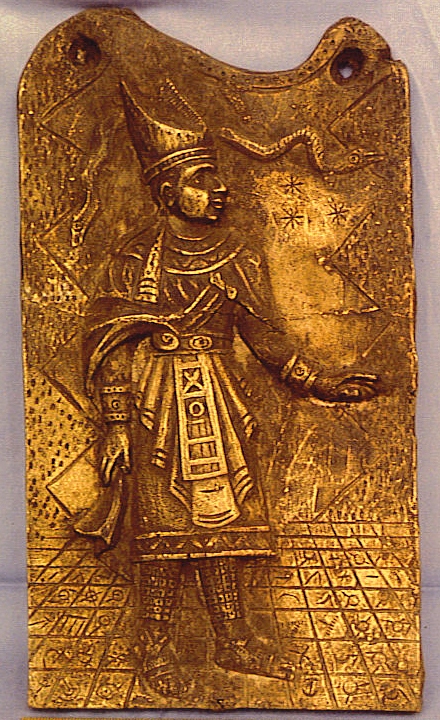
    Klaus showed Kerry and myself a couple of the metal tablets which had been extracted from the library. He had only been able to take them back to Austria because they had been branded as fakes. He was totally happy about that, as this enabled him to keep them.


    Relief of winged genie, Palace of Ashurnasirpal ll
    Nimrud
    Neo-Assyrian Period
    883-859 B.C.


    (click image to enlarge)

  6. The Following 4 Users Say Thank You to Atlas For This Post:

    Bill Ryan (23rd February 2015), Muzz (23rd February 2015), Ravenlocke (12th May 2026), Spellbound (8th December 2018)

  7. Link to Post #44
    France Honored, Retired Member. Hervé passed on 13 November 2024.
    Join Date
    7th March 2011
    Location
    Brittany
    Posts
    16,763
    Thanks
    60,315
    Thanked 96,081 times in 15,483 posts

    Default Re: Does Ecuador's metal library really exist?

    Father Crespi Mystery Deepens: Ancient Origins Blocked from Further Investigations

    By John Black 11 April, 2016 - 14:50


    Earlier this month we reported on an investigation into the story of Father Crespi and his missing artifacts. The story of Father Crespi is a mysterious and controversial account of a priest in Ecuador involving claims of unknown civilizations, strange golden artifacts, a subterranean cave system containing a metallic library, depictions of figures connecting America to Sumeria, symbols depicting an unknown language, and a Vatican conspiracy involving thousands of missing artifacts. Ancient Origins undertook an investigation to find out how much of the story is true. While our initial enquiries produced valuable information, our latest explorations resulted in threats and a warning to stop pursuing further investigations into the missing artifacts.

    If you have not yet read the first article, please read it here before proceeding with this update.

    To summarize the results of our findings, our investigations determined that:
    • Father Crespi’s collection is not missing but was purchased by the Central Bank of Ecuador and is currently stored in their museum vaults.
    • The majority of Crespi’s collection consists of authentic and valuable artifacts gathered from around Ecuador.
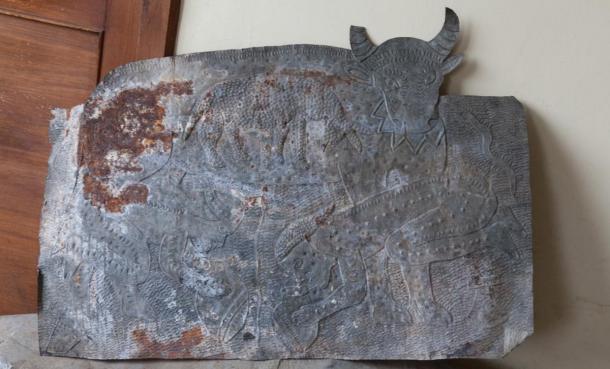
    • The so-called Metallic Library mentioned by Eric von Däniken in his controversial book ‘The Gold of the Gods’ is nothing more than modern-day carvings on cheap metal.
    • A small subset of artifacts, which were photographed and filmed in the 1970s, consisting of gold carvings, hieroglyphs and Sumerian figures is genuinely missing and no one seems to have the answers as to where they are located and what their significance is.
    Digging Deeper
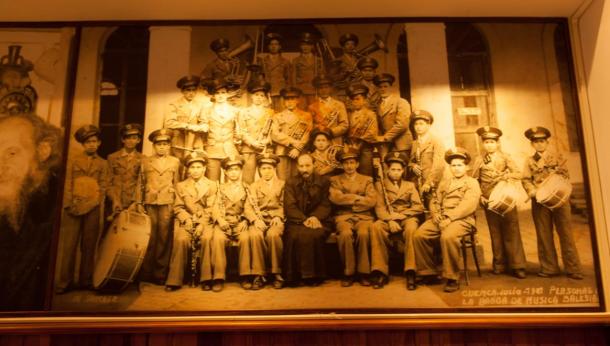
    On Wednesday the 30 th March, Dr Ioannis Syrigos, Co-Founder of Ancient Origins, arranged an appointment with Dr Luis Alvarez, expert on Father Crespi and Editor General of the Universidad Politécnica Salesiana (a University founded by Father Crespi), to clarify a few missing pieces to the Crespi puzzle for a video Ancient Origin’s is preparing about Father Crespi’s life. This is an important video that will present the great personality of Father Crespi and his immense help to the people of Cuenca, Ecuador.

    The missing pieces of the puzzle are of course the golden artifacts depicting hieroglpyhs and Sumerian figures, the ones that Crespi presents and supports in his videos with Stanley Hall and the ones that Professor Barry Fell of Harvard University identified as original. Some of these artifacts can be seen in the video below.

    The missing artifacts consist not only of metallic (golden) tablets, but also clay and stone artifacts with unusual carvings, none of which were among the thousands of artifacts that we viewed in his collection held by the Central Bank of Ecuador. Some of the artifacts were accepted by Father Crespi as original and authentic, while others were fake, which he also knew and acknowledged. As a highly educated man – a scientist, educator, anthropologist, botanist, artist, explorer, cinematographer, humanitarian and musician – Father Crespi was in a good position to assess the authenticity of the artifacts.

    The University Withholds Information on Crespi’s Artifacts
    After our arrival at the University, we met with Dr Luis Alvarez, who as always was friendly and welcoming, eager to help us complete our research and the video about Father Crespi.

    In our discussion, we explained the importance of having all the facts around Crespi clear in the video, otherwise the video would be incomplete. However, any reference to the missing artifacts made Dr Alvarez uncomfortable. Initially it seemed that this was because he preferred that we focus on the other aspects of Father Crespi’s life that he deemed more important than the artifacts – i.e. his charitable endeavours. However, later it appeared that there were other reasons he was uncomfortable discussing the artifacts.


    The official response of Dr Alvarez was that these artifacts simply went missing, never to be found again. His assistant kindly clarified that 2 years before the death of Father Crespi, all items in his collection were recorded apart from the missing artifacts, which according to her, were already gone by then.

    While initially Dr Alvarez said he knew nothing about the location of the missing artifacts, later on he contradicted this statement by saying that he was not authorized to talk about them, suggesting that it was not that he did not know, but that he was not permitted to reveal anything about them and was withholding information.

    Involvement of the Vatican?
    At some point during our discussion, we asked Dr Alvarez about reports that the missing artifacts had been shipped to the Vatican in Italy. His response was not to deny that this took place, but to say that he was aware that pieces of art had been sent to the Vatican because Father Crespi was a collector of Art and he had many items in his possession.

    Ancient Origins Threatened to Leave the Investigation Alone
    In the end, our persistence to clarify the situation led to an indirect threat that we should not question the Salesianos community because they are a very powerful religious community in Ecuador and therefore it is best that we do not look more into the missing artifacts, which are not important to their cause – making Father Crespi a Saint.


    It was quite clear that during our conversation many contradictory statements were made, revealing that there is very obviously something that someone does not want the public to know about. Is there a cover up to hide the fact that the precious artifacts were stolen or sold for profit by someone? Or where they hidden away because they revealed something controversial about the history of the country?

    Military Involvement?
    In addition to our enquiries at the University, we also managed to get in touch with an investigator who came to Ecuador around a decade ago to carry out his own search into the Father Crespi mystery. While he asked to remain anonymous, he did allow us to relay some information he obtained during his enquiries. Upon visiting the Central Bank Museum of Ecuador, where Crespi’s artifacts are currently stored, he was told that the missing artifacts had been sold by the Chuch of Maria Auxiliadora, where Crespi carried out his charitable endeavours, to the Ecuadorian Military. He was also told that this information was confidential and not to be made public. We have been unable to verify the accuracy of this information, but it does add a new avenue to explore.

    Despite the insistence by the University that we drop the investigations into the artifacts, we are now proceeding with further explorations through other channels and we will update on the results in due course. We will soon prepare a video showing the incredible life of Father Crespi, a multi-talented man whose main concern was to help the people of Ecuador.


    Featured image: A collection of artifacts given to Father Crespi


    Related:

  8. The Following 12 Users Say Thank You to Hervé For This Post:

    Atlas (18th May 2016), Bill Ryan (20th April 2016), conk (20th April 2016), Ewan (20th April 2016), Ivanhoe (29th August 2022), nomadguy (24th May 2016), onawah (20th April 2016), Ravenlocke (12th May 2026), Sir Eltor (24th May 2016), Sophocles (20th April 2016), Spellbound (8th December 2018), StandingWave (20th April 2016)

  9. Link to Post #45
    On Sabbatical
    Join Date
    10th July 2013
    Location
    Project Avalon
    Posts
    3,649
    Thanks
    19,216
    Thanked 16,282 times in 3,219 posts

    Default Re: Does Ecuador's metal library really exist?


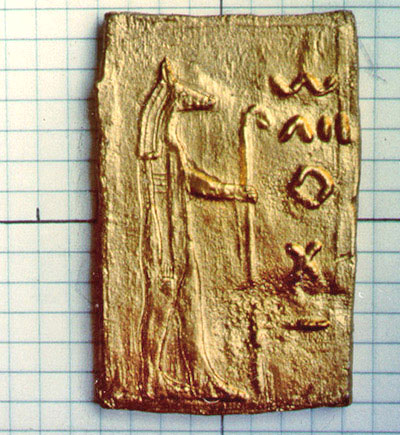
    The symbols "XO" are also found on this artifact from the Burrows cave:


    http://www.bibliotecapleyades.net/so...erground12.htm
    Last edited by Atlas; 23rd May 2016 at 20:28.

  10. The Following 5 Users Say Thank You to Atlas For This Post:

    Bill Ryan (23rd May 2016), Hervé (23rd May 2016), Nasu (8th December 2018), Ravenlocke (12th May 2026), Spellbound (8th December 2018)

  11. Link to Post #46
    Canada Avalon Member Spellbound's Avatar
    Join Date
    21st December 2010
    Location
    Toronto
    Age
    57
    Posts
    1,113
    Thanks
    6,324
    Thanked 7,296 times in 1,040 posts

    Default Re: Does Ecuador's metal library really exist?

    Not sure if these are the Ecuadorian caves that Bill was referring to a few months ago in the Cory Goode thread, but it is rather intriguing. Apologies if this has been posted previously (I just came across it last night).


    Dave - Toronto

  12. The Following 6 Users Say Thank You to Spellbound For This Post:

    avid (8th December 2018), Bill Ryan (8th December 2018), Forest Denizen (16th December 2018), mountain_jim (9th December 2018), Nasu (8th December 2018), Ravenlocke (12th May 2026)

  13. Link to Post #47
    UK Avalon Founder Bill Ryan's Avatar
    Join Date
    7th February 2010
    Location
    Ecuador
    Posts
    39,804
    Thanks
    293,320
    Thanked 527,371 times in 38,340 posts

    Default Re: Does Ecuador's metal library really exist?

    Yes, this is the same place: the Tayos Cave.

    See this thread:
    (merging the threads... that also bumps the original VERY interesting thread on this. So Thx!)
    Last edited by Bill Ryan; 8th December 2018 at 00:24.

  14. The Following 7 Users Say Thank You to Bill Ryan For This Post:

    avid (8th December 2018), Forest Denizen (16th December 2018), mountain_jim (9th December 2018), Nasu (8th December 2018), Ravenlocke (12th May 2026), Spellbound (8th December 2018), Yoda (8th December 2018)

  15. Link to Post #48
    Canada Avalon Member Spellbound's Avatar
    Join Date
    21st December 2010
    Location
    Toronto
    Age
    57
    Posts
    1,113
    Thanks
    6,324
    Thanked 7,296 times in 1,040 posts

    Default Re: Does Ecuador's metal library really exist?

    Woops, sorry Bill. Please feel free to merge and bump. My bad. Have you ever been there? Is it even possible to enter these caves or are they sectioned off now??

    This is like stumbling upon a new TV series and finding out there are a couple of seasons to binge watch. Those artifacts of Klaus Dona is fascinating stuff!!

    Dave - Toronto

  16. The Following 4 Users Say Thank You to Spellbound For This Post:

    Bill Ryan (8th December 2018), Forest Denizen (16th December 2018), Nasu (8th December 2018), Ravenlocke (12th May 2026)

  17. Link to Post #49
    UK Avalon Founder Bill Ryan's Avatar
    Join Date
    7th February 2010
    Location
    Ecuador
    Posts
    39,804
    Thanks
    293,320
    Thanked 527,371 times in 38,340 posts

    Default Re: Does Ecuador's metal library really exist?

    Quote Posted by Spellbound (here)
    Woops, sorry Bill. Please feel free to merge and bump. My bad. Have you ever been there? Is it even possible to enter these caves or are they sectioned off now??

    This is like stumbling upon a new TV series and finding out there are a couple of seasons to binge watch. Those artifacts of Klaus Dona is fascinating stuff!!

    Dave - Toronto
    Yes, one can go there, and there's a group that organizes trips. I've been very tempted to dig into that, I have to say.

    But it's very arduous getting there, in the past involving jeep trips through the jungle and then quite a long jungle hike.

    This website is one I've only just seen, and some of the photos show what it's like.
    Two are below... visit the site to see them all. It appears they approached the cave by river, which might be a lot easier.


    Here's an account of an expedition there:
    ... the expedition organizer being Arutam Ecotours. Their page is [supposed to be] here:
    ... but it's offline and can't be found. However, Archive.org allows us to see it, as of earlier this year:
    I just sent them a message (via the archived contact page), so we'll see if they respond.

    The address given for their office is actually fairly near where I live, so I'll most definitely drop by in a few days' time to see if they're still there.

  18. The Following 8 Users Say Thank You to Bill Ryan For This Post:

    avid (8th December 2018), Forest Denizen (16th December 2018), mountain_jim (9th December 2018), Nasu (8th December 2018), Ravenlocke (12th May 2026), Spellbound (8th December 2018), Valerie Villars (8th December 2018), Yoda (8th December 2018)

  19. Link to Post #50
    United States Avalon Member onawah's Avatar
    Join Date
    28th March 2010
    Language
    English
    Posts
    26,146
    Thanks
    54,705
    Thanked 141,234 times in 24,553 posts

    Default Re: Does Ecuador's metal library really exist?

    Not sure if this has been posted before, but there is a 2008 free article called Quest for the Metal Library from Nexus Magazine you can download here:
    https://nexusmagazine.com/free-downl...ient-mysteries

    Quote Posted by Bill Ryan (here)

    Yes, one can go there, and there's a group that organizes trips. I've been very tempted to dig into that, I have to say.
    Oops, sorry. That is the same article as in the OP, just a different source. (sigh)
    Last edited by Bill Ryan; 21st April 2019 at 16:04.
    Each breath a gift...
    _____________

  20. Link to Post #51
    UK Avalon Founder Bill Ryan's Avatar
    Join Date
    7th February 2010
    Location
    Ecuador
    Posts
    39,804
    Thanks
    293,320
    Thanked 527,371 times in 38,340 posts

    Default Re: Does Ecuador's metal library really exist?

    Here's a pretty mainstream article from https://atlasobscura.com/places/cueva-de-los-tayos.

    It's rather scathing about Erich von Däniken, and doesn't mention a thing about Father Crespi and his extraordinary collection — which definitely came from somewhere! But there's some general information there that may be of interest.

    ~~~

    Cueva de los Tayos

    This cave system allegedly holds the "metallic library" of a lost ancient civilization.

    In 1976, a major expedition entered the Cueva de los Tayos in search of artificial tunnels, lost gold, strange sculptures, and a “metallic library,” supposedly left by a lost civilization aided by extraterrestrials. Among the group was the astronaut Neil Armstrong.

    For as long as anyone can remember, the indigenous Shuar people of Ecuador have been entering a vast cave system on the jungle-covered eastern foothills of the Andes. They descend, using ladders made of vines, through one of three vertiginous entrances, the largest of which is a 213-foot-deep (65-meter) shaft that leads into a network of tunnels and chambers stretching, as far as we know, for at least 2.85 miles. The largest chamber measures 295 feet by 787 feet.


    Inside the cave

    For the Shuar, these caves have long been a center for spiritual and ceremonial practices, home to powerful spirits as well as tarantulas, scorpions, spiders, and rainbow boas. They are also home to nocturnal oilbirds, known locally as tayos, hence the name of the cave. The tayos are a favored food of the Shuar, another reason why they brave the depths of the cave system.


    An oilbird roosts on a cave ledge

    In their role as guardians of the cave system, the Shuar had been left in relative peace over the last century or two, apart from an occasional gold prospector snooping around in the 1950s and ‘60s. Until, that was, a certain Erich von Däniken decided to get involved.

    The Swiss author captured the global imagination in 1968 with the publication of his book Chariots of the Gods?, which was in large part responsible for the current plague of ancient astronaut theories and all that malarkey. Then, three years later, he published The Gold of the Gods, unleashing a little-known theory about the Cueva de los Tayos upon his eager readership.

    In The Gold of the Gods, von Däniken recounted the claims of János Juan Móricz, an explorer who claimed to have entered the caves in 1969. Inside the cave, he asserted, he had discovered a treasure trove of gold, strange artifacts and sculptures, and a “metallic library” containing lost information preserved on metal tablets. And the caves themselves were surely artificial, he claimed, created by some advanced intelligence now lost to history.

    This was red meat for von Däniken, of course, and tied in very nicely with his spate of lucrative books promoting his theories of lost civilizations, ancient astronauts, and the like (or, as Carl Sagan put it, von Däniken’s theory that “our ancestors were dummies”).

    It also inspired the first major scientific expedition to Cueva de los Tayos. The 1976 expedition was led by Stan Hall, a Scottish civil engineer who had read von Däniken’s work. It quickly grew to become one of the largest cave expeditions of its time, with more than 100 people involved. These included British and Ecuadorian government officials, leading scientists and speleologists, British special forces, professional cavers, and none other than astronaut Neil Armstrong, who served as the expedition’s Honorary President.

    The expedition was a success, at least in its less fanciful ambitions. The extensive network of caves was mapped far more thoroughly than ever before. Zoological and botanical findings were recorded. And archaeological discoveries were made. But no gold was found, no otherworldly artifacts discovered, and there was no sign of a metallic library. The cave system, too, appeared to be the result of natural forces rather than any kind of advanced engineering.

    Interest in the Cueva de los Tayos never again reached the heights of the 1976 expedition, but numerous research expeditions have since taken place. One of the more recent expeditions was that of Josh Gates and his team for the fourth season of the television series Expedition Unknown. Gates entered the cave system with Shuar guides and Eileen Hall, the daughter of the late Stan Hall from the 1976 expedition. And while expeditions such as these have resulted in fascinating zoological and geological discoveries, there’s still no sign of gold, aliens, or a library.

    Know Before You Go

    The Cueva de los Tayos is located in the rainforest about 23 miles southeast of the town of Santiago de Mendez in southeastern Ecuador, not far from the border with Peru. It is within the Sindical Center Coangos, and is therefore on Shuar territory. Access to the cave must be arranged with local Shuar authorities. Expeditions to the cave can be carried out on foot, by boat, or a combination of the two. It is sometimes also possible to go via helicopter from the town of Macas, some 50 miles north of the caves.

  21. The Following 12 Users Say Thank You to Bill Ryan For This Post:

    Casey Claar (29th August 2022), Harmony (29th August 2022), Hervé (21st April 2019), Inversion (26th April 2019), Ivanhoe (29th August 2022), Johnnycomelately (29th August 2022), Kryztian (21st April 2019), muxfolder (23rd April 2019), Ravenlocke (12th May 2026), Violet3 (29th August 2022), Yoda (23rd April 2019)

  22. Link to Post #52
    UK Avalon Founder Bill Ryan's Avatar
    Join Date
    7th February 2010
    Location
    Ecuador
    Posts
    39,804
    Thanks
    293,320
    Thanked 527,371 times in 38,340 posts

    Default Re: Does Ecuador's metal library really exist?

    A new and rather over-dramatic (but very interesting!) 10 minute piece about astronaut Neil Armstrong's 1976 visit to La Cueva de los Tayos. For anyone not familiar with the story, it's entertaining watching and also really pretty accurate.

    Last edited by Bill Ryan; 29th August 2022 at 08:55.

  23. The Following 15 Users Say Thank You to Bill Ryan For This Post:

    Casey Claar (29th August 2022), DNA (12th May 2026), Ewan (23rd March 2023), Harmony (29th August 2022), Ivanhoe (29th August 2022), Johnnycomelately (29th August 2022), Kryztian (29th August 2022), kudzy (29th August 2022), Ol' Roy (30th August 2022), Peace in Oz (30th August 2022), Ravenlocke (12th May 2026), Tintin (29th August 2022), Vicus (12th May 2026), Violet3 (29th August 2022), Yoda (29th August 2022)

  24. Link to Post #53
    Avalon Member Ravenlocke's Avatar
    Join Date
    28th September 2011
    Posts
    28,966
    Thanks
    15,749
    Thanked 233,208 times in 28,954 posts

    Default Re: Does Ecuador's metal library really exist?

    Im just adding the following here as it contains pictures and it is a summary of the story behind Cueva de Los Tayos.

    Bronze Giant

    The Mysterious Cave

    Is located in the province of Morona in Santiago, Ecuador, in an area known as the Equatorial Amazon, and because it houses a considerable number of Tayos birds inside, it is commonly known by local natives as Cueva de Los Tayos.
    #OldWorld

    https://x.com/RjNol/status/1688678060306911233


    Bronze Giant

    Aug 7, 2023
    "Discovery"
    In 1969, a Hungarian researcher named Juan Moricz, moved by the impetus of adventure and discovery, decided to explore this cave, and thus organized an expedition, which gradually explored its immense interior

    Moricz discovered a great treasure of archeology, which would be solid gold sheets with hieroglyphic writings, which became known as the Metal Library, in addition to other objects equally made of gold and also of silver, such as swords, helmets and others. artifacts.

    https://x.com/RjNol/status/1688679828281544704


    Moricz registered his discovery with the scientific community, but when he went to document the finding in the Guayaquil city registry office, his request was denied by the local authorities.

    The writer Erick Von Daniken in 1972, in his book O Ouro dos Deuses, highlighted this incredible find in his work, consolidating the fame of Moricz, which aroused the interest of several other researchers and esotericists who went to the Cueva de Tayos, after new discoveries.

    https://x.com/RjNol/status/1688681183096233984


    And among the various expeditions that were carried out, the most notorious was in 1976 by the adventurer and researcher Stanley Hall, who invited the illustrious North American astronaut Neil Armstrong.

    Who, upon entering the cave, reported that exploring that environment was much more significant than the your own trip to the moon.
    (Trip to the moon&#129325

    https://x.com/RjNol/status/1688683930449301504


    It was notorious that Armstrong was a 32nd degree Mason, and that he would not have accepted such a risky undertaking for nothing, which made Freemasonry's interest in metal plates evident.🤔

    But the most remarkable story involving these hidden places was that of Father Crespi, who at that moment was, after Moricz, the person who most knew about those mysterious places.

    https://x.com/RjNol/status/1688685148538130432


    And this knowledge he acquired through the enormous friendship he had with the indigenous peoples of the Shuar ethnic group, who live near the cave, and who are also known as Jíbaros. Even the priest carried with him many reservoirs found inside the cave.

    And he described that the cave had no bottom and that the reservoirs they got had come from a large pyramid hidden in one of the numerous chambers of the cave. And that location remains unknown.

    https://x.com/RjNol/status/1688686013076426752


    Still, according to the priest himself, for fear of future looting and depredations to the site of the pyramid, he ordered the Indians to keep the place safe, covering it completely so that its exact location would never be discovered.

    Moricz, who had access to the remains of Crespi, identified the writing on the plates as being from the ancient Hittite alphabet which, according to his theory, claimed that these peoples had roamed South America around 1,800 years before Christ.

    https://x.com/RjNol/status/1688686777484083200


    He would have reported the following: “it is a true metallic library, which could contain a compendium of the history of humanity, as well as reveal the origin of Man or provide information about an already extinct civilization”.

    https://x.com/RjNol/status/1688689131923062784


  25. The Following 7 Users Say Thank You to Ravenlocke For This Post:

    Bill Ryan (12th May 2026), DNA (12th May 2026), Ewan (12th May 2026), Harmony (13th May 2026), Mark (Star Mariner) (14th May 2026), Vicus (12th May 2026), Yoda (13th May 2026)

  26. Link to Post #54
    Avalon Member Ravenlocke's Avatar
    Join Date
    28th September 2011
    Posts
    28,966
    Thanks
    15,749
    Thanked 233,208 times in 28,954 posts

    Default Re: Does Ecuador's metal library really exist?

    Exprésate Morona Santiago

    Translated from Spanish
    [OUR LAND] INTERESTING: after stepping on the Moon, the American astronaut Neil Armstrong ventured into the depths of the Cave of the Tayos in #MoronaSantiago.

    The year was 1976, the location, the Andes mountain range in southeastern Ecuador.

    Several dozen people participated in an extraordinary expedition toward the fascinating geological formation whose entrance has a vertical drop of about 70 meters.

    For more details visit:

    https://x.com/ExpresateMS/status/1987312309438484917


  27. The Following 4 Users Say Thank You to Ravenlocke For This Post:

    Bill Ryan (12th May 2026), Ewan (12th May 2026), Harmony (13th May 2026), Yoda (13th May 2026)

  28. Link to Post #55
    Avalon Member Ravenlocke's Avatar
    Join Date
    28th September 2011
    Posts
    28,966
    Thanks
    15,749
    Thanked 233,208 times in 28,954 posts

    Default Re: Does Ecuador's metal library really exist?

    A recent article about La Cueva de Los Tayos

    (For photos click article link)

    https://www.infobae.com/america/amer...eil-armstrong/

    What hides the Tayos Cave in Ecuador: an enigma that even revealed Neil Armstrong
    This cavity of more than 60 meters deep in the middle of the jungle continues to give rise to all kinds of speculations about beings from other worlds

    Unfathomable mysteries are hidden in the Cueva de los Tayos in Ecuador. The truth is that it is a shasm or a very deep cavity in the earth that seems cut with very precise strokes in the rock. The formation is estimated to be 200 million years old.

    This place is located in the middle of the rainforest of the province of Morona Santiago, 460 kilometers from Quito by road and after an extensive additional walk through the virgin jungle in the irregular mountainous area called Cordillera del Condor. The trip to the cave takes three days.

    The entrance consists of a descent of 63 meters deep and 2 meters wide. Inside the cavity there is a space of 7.8 meters wide, 15 to 35 meters high and 68 meters long. Inside the vault there are several tunnels that could measure a total of 17.9 kilometers, according to a study by the National Section of Ecuador of the Pan American Institute of Geography and History in 2017.

    The sima gets its name from the tayos, an enigmatic nocturnal bird of brown color and oily appearance, which lives in deep caverns of jungle and tropical places in Ecuador, Colombia, Venezuela, Peru and Bolivia. In other countries they are called guacharos and are considered as the heralds of otherworldly beings. Its scream is characteristic and the Shuara indigenous people associate it with the alerts due to the presence of visitors. Even in other countries they are called that because in the expansion of the pre-Columbian indigenous empire the adoption of Quechua also imposed the prefix "huach", which refers to the action of shouting.

    The Salesian priest and Italian documentary filmmaker Carlos Crespi Croci collected hundreds of pieces and metal plates in a museum of his congregation in Cuenca, a city in southern Ecuador. Since Crespi passed away, the whereabouts of the pieces are not known. According to El País de España, there is only testimony that Crespi was the possessor of these for some snapshots of the priest with the objects. One of the myths surrounding Father Crespi's pieces is that the Vatican hid them and disappeared. In 1926, Father Crespi directed the first ethnographic documentary of Ecuador: "The invincible shuaras of the Upper Amazon" funded by UNESCO, which tells part of the archaeological finds.

    Among the pieces found are metal plates with engravings that recall the Sumerian mythology spread in Western Asia 2,900 years before Christ and that relate the history of humanity and its relationship with beings from heaven, inhabitants of the land of the ocean or the underworld. These plates were considered a metal library found in the caves by archaeologist Juan Moricz in the mid-1960s. An investigation conducted by Father Pedro Porras in 1978 defines that the cave was first inhabited around 1,000 BC.

    The Scottish engineer Stan Hall organized an expedition to the Cueva de los Tayos in 1976, with the participation of a dozen institutions, elements of the Ecuadorian Armed Forces who attended to give security to the researchers, and Neil Armstrong, American astronaut and the first human being to step on the Moon. The objective of the expedition was to contrast the hypotheses of Erich von Däniken, author of the book Gold of the Gods, which is documented on an alleged underground civilization. The book is inspired by Moricz's findings. According to a note published in El País de España, Armstrong would have said: "I have been the first to be up there... and I wanted to be the first to be down here." He would also have taken objects from the cave

    In statements for the newspaper El Universo de Guayaquil, on Friday, August 6, 1976, Juan Móricz said: "I have discovered in the eastern region, province of Morona Santiago, within the limits of the Republic of Ecuador, precious objects of cultural and historical value for humanity that consist of metal sheets that contain the historical relationship of an entire lost civilization." Regarding what was found in the depths of the cave, Móricz added enigmatically: "They can call me crazy, but there are superior beings under the earth."

    Some of the objects that attract the most attention are the gold plates with engravings that give rise to the legend of the gold library, which would have remained as a myth if it were not for the intervention of a man named Petronio Jaramillo who, in 1996, contacted Stan Hall and told him that he had visited the library in 1946. Unexpectedly, a few days before undertaking the search, in 1998, Jaramillo was murdered near his home.

    Despite the fact that the cave became popular as a result of the expedition in which Armstrong participated, a report by the Ecuadorian Ministry of Defense details that since 1915 "its visible peculiarities were known," according to information published in the newspaper El Universo, in 1976.

    One of the particularities of the cave are the blocks that make up its walls and ceilings and that have been built more than 300 meters underground.

    The mysteries of the Tayos Cave have been compared to the Nazca lines. Since there are unresolved questions, some researchers suggest new scientific expeditions that can reveal the secrets of the Tayos.
    Last edited by Ravenlocke; 12th May 2026 at 18:56.

  29. The Following 5 Users Say Thank You to Ravenlocke For This Post:

    Bill Ryan (12th May 2026), Ewan (12th May 2026), Harmony (13th May 2026), Mark (Star Mariner) (14th May 2026), Yoda (13th May 2026)

+ Reply to Thread
Page 3 of 3 FirstFirst 1 3

Similar Threads

  1. Why do you believe ETs do exist and what are they up to?
    By cloud9 in forum Ufology, Extraterrestrial Contact
    Replies: 80
    Last Post: 23rd January 2022, 15:09
  2. Does the soul exist?
    By The One in forum Spirituality
    Replies: 19
    Last Post: 23rd January 2022, 15:05
  3. Amazing Library of Documentaries
    By ascendingstarseed in forum Movies, TV, and Games
    Replies: 14
    Last Post: 16th October 2010, 01:48
  4. World Videos Library
    By Scott in forum Movies, TV, and Games
    Replies: 0
    Last Post: 21st March 2010, 21:08
  5. Do Solar Tsunami's Exist?
    By NASA in forum Solar Activity, Reports and Discussions
    Replies: 0
    Last Post: 26th February 2010, 19:53

Posting Permissions

  • You may not post new threads
  • You may not post replies
  • You may not post attachments
  • You may not edit your posts