+ Reply to Thread
Page 2 of 2 FirstFirst 1 2
Results 21 to 25 of 25

Thread: Keeping an Inventory of Your Food & Equipment Prep Items - Solutions?

  1. Link to Post #21
    Australia Avalon Member Tigger's Avatar
    Join Date
    23rd August 2010
    Location
    Atherton, QLD Australia
    Language
    English
    Posts
    548
    Thanks
    6,759
    Thanked 3,500 times in 468 posts

    Default Re: Keeping an Inventory of Your Food & Equipment Prep Items - Solutions?

    Quote Posted by Journeyman (here)
    Quote Posted by Tigger (here)

    Can anyone suggest a reliable system that they use to keep track of stock in this manner? Remember, I’d prefer a ‘stand-alone’ system that can operate offline if necessary.
    I would approach the problem from the same direction as happyuk and look to use a spreadsheet, either Excel or one of the excellent free alternatives. There's templates that you can use to drastically reduce the setup time such as those listed here: https://www.smartsheet.com/content/f...tory-templates

    That said, the apps suggested by Michi could be a better fit, particularly if barcode reading is integrated. My reservation there is precisely the point you make in your last para. A spreadsheet can sit on your own computer and be run completely independently of any network. Whereas some of these apps may require you to be online to function or decide down the line to require a subscription to allow you to continue to access them. I think the spreadsheet way may require more tinkering to get started and may not have as nice an interface, but once up and running, it could be the most secure and cost effective way to manage your affairs?
    Yes indeed. It will invariably be a fusion between ‘ease of use’ versus a degree of offline integrity. However, Michi has given me an idea:

    Cyclone Jasper (Dec 2023) was a classic case-in-point. It took out power lines. It took out roads. Satellite internet was flaky at best. Meaning there was no supply of standard food and grocery items for weeks. Initially that didn’t worry me too much, as I had (or thought I had) adequate supplies of general items to keep me going. But since I didn’t have a detailed ledger of exactly what items I had stored, nor an accurate measure of precisely which consumables I routinely consumed over time, I fell short of specific items.

    So, a software solution would probably be a more anttractive idea, in the assumption that it could also aid in tracking the volume of goods-in versus goods-out over time. That could provide a useful indicator of what items I consume with respect to others, and hence help me to adjust inventory levels for future scenarios. The caveat, of course is that in the absence of Internet, the software should be able to work indefinitely in an ‘offline’ mode.

    I will continue to do some research…

  2. The Following 6 Users Say Thank You to Tigger For This Post:

    Bill Ryan (10th January 2025), Ewan (18th June 2026), Harmony (10th January 2025), Journeyman (16th January 2025), RunningDeer (17th June 2026), Yoda (10th January 2025)

  3. Link to Post #22
    Australia Avalon Member Tigger's Avatar
    Join Date
    23rd August 2010
    Location
    Atherton, QLD Australia
    Language
    English
    Posts
    548
    Thanks
    6,759
    Thanked 3,500 times in 468 posts

    Default Re: Keeping an Inventory of Your Food & Equipment Prep Items - Solutions?

    Quote Posted by Bill Ryan (here)
    I have a related question about frozen food. How long does frozen produce last?? I actually don't really know for sure.

    (And @Tigger, my apologies again if my mousetrap post was frivolous and off-topic. But mice really are a problem for me here, and I have to seriously factor that into my own inventory management.)
    Actually this was not frivolous at all. Vermin are a very important consideration. I don’t have a problem with mice where I live, but I DEFINITELY have a problem with pantry moths. So I’m glad you brought this up. Let me rant on about this, because I don’t want people to lose $$ of stock due to vermin:

    For those of you who are not aware, pantry moths are those little blue-grey moths that appear in your kitchen stores every now and then. As far as I am aware, they often infest foods at the factory processing plants. They lay their eggs in bulk storage, often infecting rice, flour, wheat, bread mixes, pasta and other similar foodstuffs. When the factory packages them, the eggs are packaged along with the product. “HACCP” standards are often forsaken for reduced costs - they know authorities can’t audit every factory and the factories take advantage of it.

    On the supermarket shelves, you’ll pick out (say) a bag of rice and, dutifully reading the “use-by” date, will consciously store the product in your larder. The eggs hatch, releasing the ‘grubs’, which eat the carbohydrates in the foodstuff. They eventually pupate into those moths. They can eat through plastic packaging (I’m at a loss to explain how they do this), and then move on to infest other areas of your larder.

    Be very, very wary of these moths. They can destroy entire stores if left unchecked. A fact I learned the hard way! Here’s how I’ve learned to control / eradicate them:

    First and foremost, install pantry moth traps. You can usually find these at any suitably large department store.

    Second, re-package any food that is grain-based. I use Mylar bags with oxygen absorbers. Whenever I purchase grain-based foods (including pasta!), I’ll remove the original packaging and re-pack those foodstuffs into Mylar bags, along with an oxygen-absorber and moisture absorber. I then heat-seal those bags and store them in my food pantry as normal.

    Removing the oxygen from the environment breaks the life-cycle of these moths. It also dramatically increases the shelf-life of the food; typically way beyond the gazetted’ ‘use-by’ date.

    I know this sounds like a lot of effort, but trust me on this one. It’s worth it.

    To offer some insight to your extremely important question - How long do frozen foods last? It ultimately depends on the minimal temperature of your freezer, and to a lesser degree the ambient surrounding temperature. Most people’s freezers will maintain a temperature of minus 18C (-0.4F), which is okay for short-term storage. In my experience, it all comes down to microbiology. Meaning, it entirely depends upon the freezing temperature and the typical microbiomes characteristic of certain foods. Some microbes can continue to grow at 0.4F and spoil food within 3 months. But if the temperature was -40C/-40F, spoilage times increase.

    It has been a very long time since I brought my biotechnology degree to the industry, so I am very rusty on most of the scientific info I learned in lectures. I do recall a very important book in my curriculum, “Foodborne Microorganisms of Public Health Significance”. It is worth reading:

    https://catalogue.nla.gov.au/catalog/861133

    All I can tell you is, do not expect your domestic fridge/freezer to store frozen foods for an extended period. If you can, invest in a -40C (-40F) chest freezer for bulk frozen food storage.

    Getting back you your initial point about controlling pests and vermin, I can say (from previous experience) that, unless you take steps to mitigate these issues, you may lose a significant quantity of stores to spoilage / infestation.

  4. The Following 8 Users Say Thank You to Tigger For This Post:

    Bill Ryan (10th January 2025), Ewan (18th June 2026), Harmony (11th January 2025), Journeyman (16th January 2025), Peace in Oz (12th January 2025), RunningDeer (17th June 2026), Sadieblue (6th February 2025), Yoda (6th February 2025)

  5. Link to Post #23
    UK Avalon Founder Bill Ryan's Avatar
    Join Date
    7th February 2010
    Location
    Ecuador
    Posts
    39,904
    Thanks
    294,868
    Thanked 528,454 times in 38,441 posts

    Default Re: Keeping an Inventory of Your Food & Equipment Prep Items - Solutions?

    A major piece of learning here (for me!) which I felt it might be useful to share.

    (Maybe this is nothing new for anyone else reading this. But for me, it was quite important. And I truly can't believe I was so dumb. )

    In my store of longlife foodstuffs — enough to last for maybe a year — I also have a store of vitamins and other supplements.

    I'd gradually collected them, taking advantage of BOGO (Buy-One-Get-One-Free) offers, special discounts, sale items, and the like. One of the issues I have is that I need to order most things from the US, which takes time to get here via quite a complicated personal supply chain, and which is not always 100% reliable.

    So I've always felt I should keep a good stock in hand. And if the SHTF, then I'd have enough supplements to last a year or more as well — much longer if I economized.

    In my recent post on the Vitamin D thread I shared how I was mystified when a routine blood test — my first for a couple of years — showed that I was Vitamin D deficient.

    That baffled me, as I'd been taking a 5000 IU capsule every other day for almost ever. So when I got the test result, I increased my daily Vitamin D3 supplement — from a different bottle that I'd had for quite a long time — to 10000 IU every day. That's 4x as much.

    After a couple weeks, I had another blood test. My Vitamin D levels were lower still.

    Eventually it dawned on this bear of very little brain that the D3 capsules I'd been taking (the 5000 IU bottle AND the 10000 IU bottle) were both out of date.

    There was almost nothing in them any more of any value. I was just faithfully taking gel capsules that might as well have been empty.

    It never occurred to me, not even once, that vitamins and other supplements could lose their potency over time — way down to almost zero. Ten minutes on the net searching for all this confirmed that yes, this can easily happen.
    • So now I need to establish my own inventory of vitamins and supplements that carefully dates and tracks each item.
    • And, from now on I'll label the bottles with the date they were bought.
    • And, I clearly can't treat supplements like tins of tuna or bags of pasta and assume that they're probably good for years on end.
    Ones I've had on the shelf for quite a while may be useless — and I'd never know.

    Last edited by Bill Ryan; 6th February 2025 at 21:21.

  6. The Following 17 Users Say Thank You to Bill Ryan For This Post:

    Dennis Leahy (7th February 2025), Ewan (18th June 2026), happyuk (6th February 2025), Harmony (18th June 2026), Listkov (7th March 2025), Mark (Star Mariner) (6th February 2025), meat suit (7th February 2025), Michi (6th February 2025), Mike (7th February 2025), Peace in Oz (7th February 2025), Rizotto (7th February 2025), RunningDeer (17th June 2026), Sadieblue (6th February 2025), sunwings (6th February 2025), Vicus (7th February 2025), Violet3 (7th February 2025), Yoda (6th February 2025)

  7. Link to Post #24
    UK Avalon Founder Bill Ryan's Avatar
    Join Date
    7th February 2010
    Location
    Ecuador
    Posts
    39,904
    Thanks
    294,868
    Thanked 528,454 times in 38,441 posts

    Default Re: Keeping an Inventory of Your Food & Equipment Prep Items - Solutions?

    Quote Posted by Bill Ryan (here)
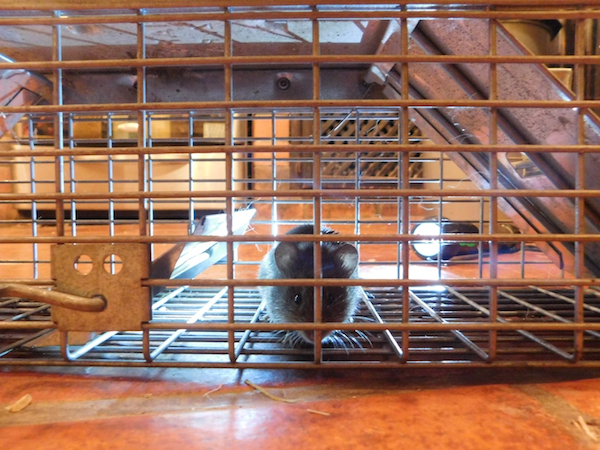
    And don't forget a mousetrap.

    (There's a reason for this post! I do get stuff that's spoiled by mice and which then needs to be thrown out.)


    (But mine works better )


    ~~~

    A light relief post (another one ), just to bump the thread.

    I not only have a food store/larder next to my kitchen, but also a large storeroom that doubles as my workshop. I keep all kinds of things there, the way most people might use a double garage with no car in it. It's got my washer/dryer, a small freezer, and tons (literally) of useful things stored like wood, cement, bricks, tiles, tools, rolls of plastic, etc etc. You can probably imagine.

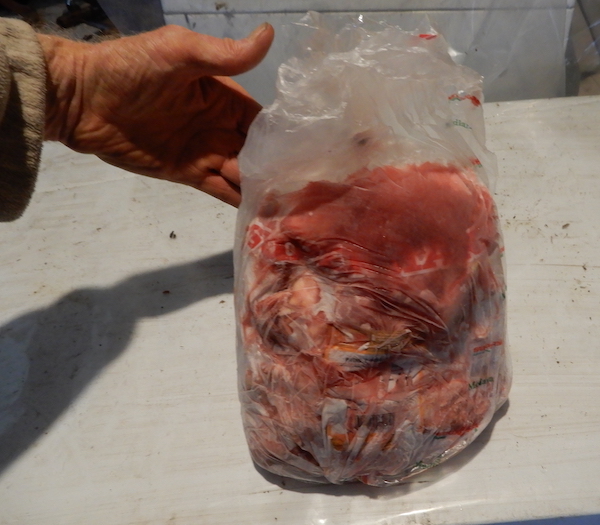
    Yesterday evening I'd taken some of my dog Mara's chicken scraps out the freezer to thaw out for today. They were in a large plastic bag, weighing about 3kg or 6.5 lbs. It was frozen solid and about the size of a soccer ball:


    A few hours later, I heard a huge crash in the storeroom. Thinking nothing of it, I assumed that something heavy had maybe just fallen off a shelf, and told myself I'd check it out in the morning.

    What I found this morning was that the frozen bag of chicken scraps had completely disappeared. There's zero trace of it. Not even the double-plastic bag was left. Completely gone, like it was never there.

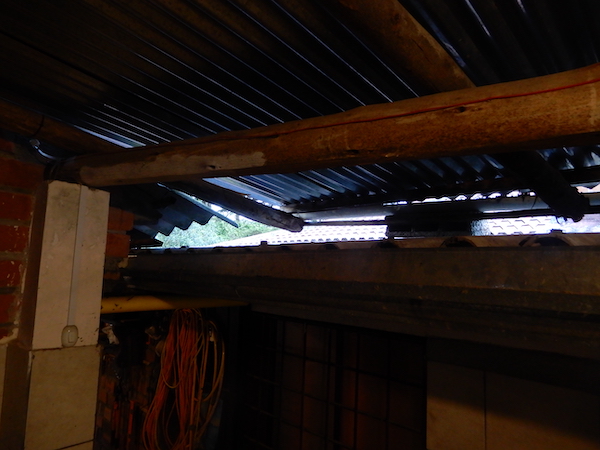
    Some magical animal — a very large one!! — had made off with the entire heavy frozen thing. There are two ways it could have got in — a gap in the roof, or an open window:


    This was no mouse. My guess is that it must have been something like a bobcat, and we have those here, a beautiful creature called a Tigrillo ('little tiger', or a kind of ocelot), about 1m/ 3 ft long which I've never seen. Here's one:


    And I'm guessing that the narrow gap in the roof, or the barred window, would be no deterrent for it at all.

    I do have a trail cam, the kind of thing that can capture a nocturnal animal when it triggers the camera to take a photo via infrared. So I'm thinking I might set it up in there, laying out some more chicken scraps as bait...


  8. The Following 5 Users Say Thank You to Bill Ryan For This Post:

    Ewan (18th June 2026), Harmony (18th June 2026), jc71 (18th June 2026), RunningDeer (17th June 2026), Yoda (18th June 2026)

  9. Link to Post #25
    United States Avalon Member RunningDeer's Avatar
    Join Date
    6th February 2012
    Location
    Forest Dweller
    Language
    English
    Age
    76
    Posts
    19,956
    Thanks
    137,402
    Thanked 183,596 times in 19,771 posts

    Default Re: Keeping an Inventory of Your Food & Equipment Prep Items - Solutions?

    Quote Posted by Bill Ryan (here)
    I have a related question about frozen food. How long does frozen produce last?? I actually don't really know for sure.
    For people who stockpile food, a chest freezer at a steady 0°F can preserve food much longer than these recommendations. A steak that's been frozen for 2 years may still be safe, but it might be dry, freezer-burned, or have lost flavor. Freezer burn affects quality, not safety. link

  10. The Following 5 Users Say Thank You to RunningDeer For This Post:

    Bill Ryan (17th June 2026), Ewan (18th June 2026), Harmony (18th June 2026), jc71 (18th June 2026), Yoda (18th June 2026)

+ Reply to Thread
Page 2 of 2 FirstFirst 1 2

Posting Permissions

  • You may not post new threads
  • You may not post replies
  • You may not post attachments
  • You may not edit your posts