+ Reply to Thread
Page 1 of 3 1 3 LastLast
Results 1 to 20 of 45

Thread: Are SciFi Authors Prophets?

  1. Link to Post #1
    United States Avalon Member onawah's Avatar
    Join Date
    28th March 2010
    Language
    English
    Posts
    25,254
    Thanks
    53,621
    Thanked 136,430 times in 23,685 posts

    Default Are SciFi Authors Prophets?

    I have been a long time fan of SciFi which is often very prophetic, and it's interesting to speculate as to how it is that SciFi authors seem to know what's coming.
    Are they being clued in via clairvoyant visions, or higher dimensional beings, or ETs or scientists working on secret very advanced projects.
    I don't think it can be explained simply by the possibility that they are very imaginative, because there are too many coincidences whereby what they "imagined" are precisely what later materialized.
    I recently watched the Netflix video "3 Body Problem" the first season of what will probably be a 3 part trilogy based on the award winning scifi trilogy by the Chinese author Liu Cixin, the first book of which was published in 2015. See: https://en.wikipedia.org/wiki/3_Body_Problem_(TV_series)
    It got me thinking, and I posted the following recently in response to another recent post about "smart fabrics", which also follows:

    Quote Posted by onawah (here)
    Not to be a spoiler, but speaking of "smart fabrics", I am just now finally watching the Netflix series "3 Body Problem, in which one of the main characters in Season 1, a scientist who has been developing a ground breaking "nanofabric" capable of earning her and her company a fortune, is facing an ethical question which may mean life or death for her and for her invention, as well as for the fate of the company of which she is the primary scientific researcher.
    She knows (by means of a mysterious kind of hallucination that she has in common with another scientist) that if she continues with the invention's development, it will mean her death and probably her company's failure and the death of many others. There have been suicides of several other scientists in different fields who have apparently been facing similar dilemmas.
    But she also knows that if she discontinues the development, though she may survive, her ethical motives for using her intellectual gifts for commercial purposes thus far and her whole life's modus operandi must come under her own very close scrutiny, while at the same time she will be under great pressure from without to continue with the project because it is so lucrative.
    She proceeds with the development, eventually feels very remorseful and is terrified by the devastating weaponry that "nanofabric" creates.

    The core theme of the series is a discovery which explains the reason for a periodic cycle which regularly causes calamaties on a planet (or planets-all similar to Earth) which some of these scientists have been visiting via a virtual reality device that seems to have somehow materialized anonymously from a far more advanced civilization.
    Sometimes most of the population of the particular virtual planet in question die by fire from an apparent micronova and sometimes by ice, and sometimes other effects of their solar system's 3 suns converging.
    ...Notice the similarities in bold letters further down in this post.

    The scientists in the virtual reality are presented with the problem of discovering what is the cause and the solution for saving the populace of the virtual planet(s) from these regularly occurring cataclysms.

    What has always interested me greatly about good scifi ("3 Body Problem", both the Hugo winning trilogy and the Netflix series have received rave reviews (the Netflix series creators are also credited with the "Game of Thrones" series), is that they are often very prophetic about scientific discoveries which have yet to be made, or at least, yet to be made public. ("The Matrix" being perhaps the most obvious example.)

    In this case, what the "3 Body Problem" itself is, is primarily a theory developed by one scientist participating in the virtual reality, postulating that the devastating solar cycles are caused by the virtual planet(s) actually being in a system that has 3 Suns.
    While in reality on planet Earth now, the solar cycle that our own solar system and the rest of the Milky Way is apparently regularly affected by in devastating ways is what the late Dr. Paul la Violette named the "Galactic Superwave", which issues forth regularly from the Great Central Sun and activates every star as it expands and traverses the Milky Way.
    So the fictional cause and the actual theoretical cause differ in that in reality, the regular solar cycles of our own Sun is the indirect cause of the regular cataclysms, the direct cause being the Galactic Superwave.
    While the fictional cause is the problem of the 3 Suns which regularly devastate the virtual planet(s).
    (But I'm still only on episode 3 of season 1 and have not read the books yet, so I'm sure there are more complexities to come.)

    I don't know if there has been a rash of suicidal scientists in our present reality as there is in the series, but it would not surprise me, and I imagine that many scientists are having huge personal dilemmas revolving around personal ethics these days.
    It also would not surprise me if some of today's scientists, like many scifi writers seem to have been, are being tutored and/or influenced in some ways by off-world or other-dimensional beings who are knowledgable about solar cycles, the dangers of nanotechnology and other current critical issues.
    Whether Earth scientists are consciously aware of it or not...

    The task put before the fictional scientists is to figure out how to save the population of the virtual planet(s) from the next approaching catastrophe.
    It would seem that if the real problem has been put to today's actual scientists, they have yet to inform the public about it in much detail.
    Although those who are awake and aware enough understand what is apparently coming, and some of them at least are revealing their findings which are being recorded and collated by people like Ben Davidson of SpaceWeatherNews.

    While some, like archeologist Dr. Robert Schoch, are tutoring the public about recent, definitive findings indicating how people in the past have survived cataclysms like the ones which apparently are presently looming in Earth's near future (a micronova followed by a brief Ice Age).

    This applies to the discussions on several other threads where I will be "replying with quote".
    I'm no scientist, but to me as an intuitive, this issue is presently the foremost one for Earth, by which all others relatively pale in comparison.
    As for the Netflix series, filming of a second season is said to be starting sometime this year and I've read that a third season has been approved as well. I have access to the books, but they are very long and detailed, and I'm not sure I will get through them.

    Quote Posted by palehorse (here)
    Quote Posted by onawah (here)
    The Internet of Bodies & Crypto Mining – A Hidden Connection
    Forbidden.News
    Mar 06, 2025
    https://forbiddennews.substack.com/p...m_medium=email

    "SMART FABRICS CAN CAPTURE BODY HEAT, MOTION-POWERED GENERATORS CAN CONVERT FOOTSTEPS INTO ELECTRICITY & RESEARCHERS ARE EXPLORING BRAINWAVE-POWERED INTERFACES

    Real-World Examples of Bio-Mining

    Some early-stage projects have already started integrating bio-energy into technology. Smart fabrics can capture body heat, motion-powered generators can convert footsteps into electricity, and researchers are exploring brainwave-powered interfaces. Could this be the future of crypto mining?

    In 2017, a Dutch startup experimented with using body heat to mind cryptocurrency. Volunteers lay on heat-harvesting pads that generated electricity, which in turn powered mining operations. The result? Small but real earnings.

    The Ethical and Privacy Dilemmas

    But with great innovation comes ethical concerns. Could this technology be exploited? What happens if corporations find a way to monetize human-generated energy on a large scale? And what of privacy? What if they went further than heat and mined our own biological data?

    The Future of Crypto and the Human Body

    We stand on the brink of a revolution, where human existence itself becomes an economic force. Imagine a city powered by the human such as a 15-minute city. The question remains: Will this be a utopia of shared energy or a dystopia of exploitation? Experiments that torture, mutilate have shown us the answer.

    ForbiddenNews Substack is a reader-supported publication. "
    This short clip tells a lot
    Each breath a gift...
    _____________

  2. The Following 21 Users Say Thank You to onawah For This Post:

    arjunaloka_official (23rd March 2025), Ashiris (24th March 2025), Bill Ryan (23rd March 2025), ClearWater (24th March 2025), Dumpster Diver (11th June 2025), ExomatrixTV (23rd March 2025), Harmony (23rd March 2025), Ioneo (23rd March 2025), Irminsül (25th May 2025), Johan (Keyholder) (23rd March 2025), Kalamos (23rd March 2025), Mark (Star Mariner) (23rd March 2025), Michi (23rd March 2025), Mike (23rd March 2025), mountain_jim (23rd March 2025), NancyV (24th March 2025), onevoice (23rd March 2025), Open Minded Dude (23rd March 2025), Victoria (28th March 2025), Yoda (23rd March 2025)

  3. Link to Post #2
    United States Avalon Member onawah's Avatar
    Join Date
    28th March 2010
    Language
    English
    Posts
    25,254
    Thanks
    53,621
    Thanked 136,430 times in 23,685 posts

    Default Re: Are SciFi Authors Prophets?

    I'm watching Stargate Atlantis now for some reason, though I also watched the whole series quite a few years ago.
    I'm beginning think the reason that I'm watching it again is due to certain "coincidences", those being similarities to "3 Body Problem" that are in the Stargate Atlantis storyline as well.
    (See my post above, in particular the sentences in bold letters.)

    Stargate Atlantis, Season 3, the episode entitled "Echoes" released in 2004 (See: https://en.wikipedia.org/wiki/Starga...antis_season_3 )... is about a CME event that appears to happen every 15,000 years on the planet where the city of Atlantis was discovered.
    ...After it transported away from Earth long ago to a planet in the distant Pegasus galaxy and is in current time in the series, which is the early 2000s, being inhabited by 21st century Earth human space travelers.
    The CME threatens to destroy all life on Atlantis's planet, although of course, the heroic Stargate team figure out a way to avoid the catastrophe.
    This echoes the solar cycles of our own solar system that are described in the thread "Geomagnetic Reversals and Ice Ages", knowledge of which has only recently become common, and that only to certain scientists and a minority of other awake and aware people, though the data is leaking out slowly.


    Then there is the race of Replicants in Stargate Atlantis, a race that looks and acts like humans, but were actually created by the ancient Atlanteans to fight the vampire-like race of Wraiths which they encountered when they travelled to the Pegasus galaxy.
    The Replicants are a cross breed of humans and self-replicating nanotechnology, which also eventually become the enemies of humankind as well as the Wraith.
    Which of course, makes one think of the mind-controlled race that the puppet masters of Earth currently are trying to turn the real human race into, with the self-replicating nanotech that is been found in the vaccinated, and now in chemtrails, polluting the air, water, food and everything else.


    The Wraith look humanoid though wraith-like, and are immortal (as long as they don't encounter the wrong kind of weapon), but they have to hibernate periodically.
    With the proper technology, their vampire-like traits (they don't suck blood, just life force) can be erased and they can be made into a much more human kind of humanoid (though it erases their memories of who they were in the process).
    In general, the similarities involving the Wraith compared to any current reality on Earth are not so distinct, unlike the fictional cyclical CMEs and the Replicants.

    But my real and personal experiences with narcissists who are energy vampires and seem to be demonically possessed are not that dissimilar.
    Narcissim seems to be caused by traumatic experiences, usually childhood trauma often originating in families of origin, and theoretically, narcissists can be healed, though I think it generally takes more than one lifetime to do it, and possibly some never heal, but take a downward path, lose their individuality, and have to start all over on the evolutionary path.

    The ancient Atlanteans in the Stargate Atlantis story line who survive the Wraith and the Replicants manage to ascend to a non-material life form, which is what many real humans in this real time would reportedly like to do, but I don't think that was a major topic of discussion back in 2004 when the series was first broadcast.

    There are numerous other examples of scifi stories written some time ago that mysteriously coincide with current reality on Earth, and many of them were written before much, if anything, was known about the real developments that would create similar circumstances in reality.
    This is just an accounting of some which have jumped out at me recently, and which I thought worthy of bringing attention to.
    Last edited by onawah; 23rd March 2025 at 06:10.
    Each breath a gift...
    _____________

  4. The Following 14 Users Say Thank You to onawah For This Post:

    Ashiris (24th March 2025), Bill Ryan (23rd March 2025), ClearWater (24th March 2025), Dumpster Diver (11th June 2025), ExomatrixTV (23rd March 2025), Harmony (23rd March 2025), Johan (Keyholder) (23rd March 2025), leavesoftrees (23rd March 2025), Mark (Star Mariner) (23rd March 2025), mountain_jim (23rd March 2025), NancyV (24th March 2025), onevoice (23rd March 2025), Victoria (28th March 2025), Yoda (23rd March 2025)

  5. Link to Post #3
    Administrator Mark (Star Mariner)'s Avatar
    Join Date
    15th November 2011
    Language
    English
    Posts
    6,704
    Thanks
    42,991
    Thanked 56,543 times in 6,616 posts

    Default Re: Are SciFi Authors Prophets?

    ^ Stargate Atlantis, great show!

    Many sci-fi authors have been credited with 'forward-thinking' story-telling - from Jules Verne, to Bradbury, Heinlein, Dick, Clarke, up to the present day. Asimov himself said, "Science fiction writers foresee the inevitable, and although problems and catastrophes may be inevitable, the solutions are not."

    A list of things 'foreseen' by science fiction writers that went on to become a reality is probably quite long.

    Star Trek for instance made a ton of predictions that sort of came true, famously the hand-held communicator, and the ear-bud device Lt Uhura wore in her ear.

    And flat-screen TVs. I couldn't find a screenshot of the instance I had in mind, it's extremely uncanny, almost dead-on for flat-screen TVs today, but this image is a close second.

    Star Trek: 'The Cage', filmed 1964, first broadcast 1965.

    Name:  star-trek-flatscreen-TV1.jpg
Views: 573
Size:  43.5 KB
    "When the power of love overcomes the love of power the world will know peace."
    ~ Jimi Hendrix

  6. The Following 12 Users Say Thank You to Mark (Star Mariner) For This Post:

    arjunaloka_official (23rd March 2025), Bill Ryan (23rd March 2025), ClearWater (24th March 2025), Dumpster Diver (11th June 2025), ExomatrixTV (23rd March 2025), Michi (23rd March 2025), mountain_jim (23rd March 2025), NancyV (24th March 2025), onawah (23rd March 2025), onevoice (23rd March 2025), Victoria (28th March 2025), Yoda (23rd March 2025)

  7. Link to Post #4
    Germany Avalon Member Michi's Avatar
    Join Date
    17th April 2015
    Location
    Reinbek, Germany
    Language
    German
    Posts
    635
    Thanks
    5,134
    Thanked 4,898 times in 613 posts

    Default Re: Are SciFi Authors Prophets?

    Quote Posted by Mark (Star Mariner) (here)
    ^ Stargate Atlantis, great show!

    Many sci-fi authors have been credited with 'forward-thinking' story-telling - from Jules Verne, to Bradbury, Heinlein, Dick, Clarke, up to the present day. Asimov himself said, "Science fiction writers foresee the inevitable, and although problems and catastrophes may be inevitable, the solutions are not."

    A list of things 'foreseen' by science fiction writers that went on to become a reality is probably quite long.

    Star Trek for instance made a ton of predictions that sort of came true, famously the hand-held communicator, and the ear-bud device Lt Uhura wore in her ear.

    And flat-screen TVs. I couldn't find a screenshot of the instance I had in mind, it's extremely uncanny, almost dead-on for flat-screen TVs today, but this image is a close second.

    Star Trek: 'The Cage', filmed 1964, first broadcast 1965.

    Attachment 54676

    ... and my hat off to Gene Roddenberry for his incredible original Star Trek series!
    Last edited by Michi; 23rd March 2025 at 13:31.
    "The greatest good you can do for another is not just share your riches, but to reveal to him his own."
    -- Benjamin Disraeli

  8. The Following 12 Users Say Thank You to Michi For This Post:

    Bill Ryan (23rd March 2025), ClearWater (24th March 2025), Dumpster Diver (11th June 2025), gord (8th May 2025), Ioneo (23rd March 2025), Mark (Star Mariner) (23rd March 2025), mountain_jim (23rd March 2025), NancyV (24th March 2025), onawah (23rd March 2025), onevoice (23rd March 2025), Victoria (28th March 2025), Yoda (23rd March 2025)

  9. Link to Post #5
    UK Avalon Founder Bill Ryan's Avatar
    Join Date
    7th February 2010
    Location
    Ecuador
    Posts
    38,638
    Thanks
    275,568
    Thanked 514,711 times in 37,177 posts

    Default Re: Are SciFi Authors Prophets?

    Many may already have seen this, but it definitely belongs on this thread. It's a short clip of a 1974 interview with Arthur C. Clarke, who states with confidence how personal computers will soon all be miniaturized and personalized.

    One day, a computer will fit on a desk (1974)


  10. The Following 17 Users Say Thank You to Bill Ryan For This Post:

    arjunaloka_official (23rd March 2025), Ashiris (24th March 2025), ClearWater (24th March 2025), Dumpster Diver (11th June 2025), ExomatrixTV (23rd March 2025), Ioneo (23rd March 2025), kudzy (23rd March 2025), leavesoftrees (24th March 2025), Mark (Star Mariner) (23rd March 2025), Michi (23rd March 2025), mountain_jim (23rd March 2025), NancyV (24th March 2025), onawah (23rd March 2025), onevoice (23rd March 2025), Open Minded Dude (23rd March 2025), Victoria (28th March 2025), Yoda (23rd March 2025)

  11. Link to Post #6
    Germany Avalon Member Open Minded Dude's Avatar
    Join Date
    21st May 2020
    Language
    German
    Posts
    975
    Thanks
    1,983
    Thanked 7,985 times in 962 posts

    Default Re: Are SciFi Authors Prophets?

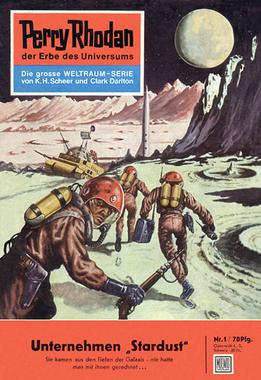
    By coincidence or synchronicity with this thread start (sorry if it's a little off-topic), I just resumed reading Perry Rhodan novellas again after 45 years when I was 12 years old. I know this because the most recent novella in my vintage collection I have (#991) was published in 1980.

    Now in a fit of nostalgia I downloaded the two #1 editions (PR and PR Neo) as Ebooks for me Ebook reader. Normally I do not read 'fiction' anymore but just woo-woo and documentary books (UFOs, Astral Projection, Reincarnation and Regression Hypnosis, etc.). But I somehow felt compelled to do this. And it's fun!


    The first novel was started in 1961, it is what I read now. The plot started in 1971. There is a reboot called "Perry Rhodan Neo" from 2011 (50s anniversary) where it starts in the year 2036. I also read this one to compare it to the original #1.

    So far both are amazing reads and I wonder why I stopped as a child back then when I was a sci-fi nerd indeed and also a Star Wars (first movie) and Star Trek Original Series fan.

    PR is a typical Space Opera and actually one of the or maybe even the longest running book series started in 1961, it is thus maybe older than Star Trek. There are similarities of course but it is also different. For me it is a bit of a mix of Star Trek and The Expanse.

    https://en.wikipedia.org/wiki/Perry_Rhodan


    (Again, sorry for being a bit off-topic, it just happens that I am so enthusiastic about it currently. I think this thread is a synchronicity for this, so thanks to the OP.)
    Propaganda entails appealing to the best in human nature to convince the audience to do the worst in human nature. - Glenn Diesen

  12. The Following 10 Users Say Thank You to Open Minded Dude For This Post:

    Bill Ryan (23rd March 2025), ClearWater (24th March 2025), Dumpster Diver (11th June 2025), ExomatrixTV (23rd March 2025), Mark (Star Mariner) (23rd March 2025), Michi (23rd March 2025), mountain_jim (23rd March 2025), NancyV (24th March 2025), onawah (23rd March 2025), Yoda (23rd March 2025)

  13. Link to Post #7
    Indonesia Avalon Member
    Join Date
    4th June 2023
    Location
    Indonesia
    Language
    Dutch
    Age
    60
    Posts
    65
    Thanks
    77
    Thanked 450 times in 63 posts

    Default Re: Are SciFi Authors Prophets?

    Oh my, Perry Rodan I haven't thought about those in.... decades really

    When talking about science fiction I always like to start with a quote from the great Kurt Vonnegut, from his book God Bless You, Mr. Rosewater:

    “I love you sons of bitches. You’re all I read any more. You're the only ones who’ll talk all about the really terrific changes going on, the only ones crazy enough to know that life is a space voyage, and not a short one, either, but one that’ll last for billions of years. You’re the only ones with guts enough to really care about the future, who really notice what machines do to us, what wars do to us, what cities do to us, what big, simple ideas do to us, what tremendous misunderstanding, mistakes, accidents, catastrophes do to us. You're the only ones zany enough to agonize over time and distance without limit, over mysteries that will never die, over the fact that we are right now determining whether the space voyage for the next billion years or so is going to be Heaven or Hell.”

    That was written around 1965, the year I was born.....

    I was lucky, my dad was an avid science fiction reader so there were stacks and stacks of books to choose from when I was a kid. Hundreds of them. And the very first book I tried, I must've been around 12 or 13 was John Carter of Mars by Edgar Rice Burroughs, the perfect choice for a kid that age, and I was hooked. The Conan books by Robert E. Howard and L. Sprague de Camp.... The first "serious" science fiction book I read was the incredible To Your Scattered Bodies Go by Philip Jose Farmer and even now, I cannot recommend that book enough....

    So many fantastic writers, Clifford D. Simak, Keith Laumer, Eric Frank Russell, Jack Vance, Robert Sheckley, Arthur C. Clarke, Larry Niven, Dan Simmons and so many more, but the two writers that impressed me the most in my teens and early 20's were Philip K. Dick and Kurt Vonnegut, they truly had a huge, huge impact on my thinking and how I was seeing the world and it's hard to put into words how truly disappointed I am when I look at the state of the world today....

    Not that I think everything is hopeless... I still read science fiction, not as much as I used to but some of the more modern science fiction writers can still fill me with hope, day dreaming of what is to come, hopefully. If not for me maybe for my son or grandkids.... James S.A. Corey, John Scalzi, Neal Stephenson, Richard K. Morgan, Paolo Bacigalupi and Alistair Reynolds just to name a few....

    Gotta say, I really loved those Three Body Problem books by Liu Cixin and some of his other books like Ball Lightning too. I enjoyed the Netfix series but not as much as I enjoyed the books but I guess it's almost always like that

    Totally forgot to mention one book that completely blew me away....

    A Canticle For Leibowitz by Walter M. Miller.... About a monastery and it's monks, trying to preserve knowledge after the world ends, in the top five of my all time favorite science fiction books
    Last edited by madrotter; 23rd March 2025 at 16:33. Reason: Forgot to mention one incredible book :)

  14. The Following 12 Users Say Thank You to madrotter For This Post:

    Bill Ryan (23rd March 2025), ClearWater (24th March 2025), Dumpster Diver (11th June 2025), ExomatrixTV (23rd March 2025), Mark (Star Mariner) (23rd March 2025), mountain_jim (23rd March 2025), NancyV (24th March 2025), onawah (23rd March 2025), onevoice (23rd March 2025), Open Minded Dude (23rd March 2025), Sunny (24th March 2025), Yoda (23rd March 2025)

  15. Link to Post #8
    Germany Avalon Member Open Minded Dude's Avatar
    Join Date
    21st May 2020
    Language
    German
    Posts
    975
    Thanks
    1,983
    Thanked 7,985 times in 962 posts

    Default Re: Are SciFi Authors Prophets?

    Quote Posted by madrotter (here)
    Gotta say, I really loved those Three Body Problem books by Liu Cixin and some of his other books like Ball Lightning too. I enjoyed the Netfix series but not as much as I enjoyed the books but I guess it's almost always like that
    I also liked the Netflix series of which a second season has been greenlit now. However - not knowing the book trilogy - I read and heard that it made huge changes to the plot and lots of reductions and omissions. It is very fast paced adapted to a "western" audience it seems.

    The Chinese original series is more detailed and closer to the source material. Actually it is said to be VERY close. Maybe too close because the pacing is - as usual for Asian TV productions - very slow. Maybe too slow for Western audiences.

    I watched it anyway a while ago and after I had seen the Netflix adaptation. Good news: It is on YouTube with English subtitles.

    So if s.o. here wants to delve into it and is not deterred by subtitles, here find the first two episodes of many. Be warned, it progresses very slow. Yet it is well done in its own way. You can find all the other episodes on YouTube (always the next is to be found in the sidebar). You have to activate subtitles and choose English first though.

    Hint: it is the "01" in the vid title that indicates the episode's number:
    【4K超高清】ENG SUB【三体 Three-Body】第01集 | 腾讯视频

    Ep. 1

    Ep. 2


    I also still have many sci-fi paperback novels from years ago stored away in the cellar. Some were also trilogies.
    I think I read a few of Isaac Asimov's Robot novels and his Foundation series and then I also remember the very interesting Hyperion novels by Dan Simmons. Just found some info here:

    https://en.wikipedia.org/wiki/Hyperion_Cantos

    https://en.wikipedia.org/wiki/Foundation_(book_series)

    https://en.wikipedia.org/wiki/Robot_series

    But there were also many more.

    Quote A Canticle For Leibowitz by Walter M. Miller.... About a monastery and it's monks, trying to preserve knowledge after the world ends, in the top five of my all time favorite science fiction books
    I somehow remember the German version of this in my bookshelf too ("Lobgesang auf Leibowitz") and the plot somehow seems familiar altough I am not sure anymore if I have read it.

    Last edited by Open Minded Dude; 23rd March 2025 at 19:24.
    Propaganda entails appealing to the best in human nature to convince the audience to do the worst in human nature. - Glenn Diesen

  16. The Following 10 Users Say Thank You to Open Minded Dude For This Post:

    Bill Ryan (23rd March 2025), Casey Claar (28th March 2025), ClearWater (24th March 2025), Dumpster Diver (11th June 2025), madrotter (23rd March 2025), mountain_jim (24th May 2025), NancyV (24th March 2025), onawah (23rd March 2025), Victoria (28th March 2025), Yoda (23rd March 2025)

  17. Link to Post #9
    Indonesia Avalon Member
    Join Date
    4th June 2023
    Location
    Indonesia
    Language
    Dutch
    Age
    60
    Posts
    65
    Thanks
    77
    Thanked 450 times in 63 posts

    Default Re: Are SciFi Authors Prophets?

    Quote Posted by Open Minded Dude (here)
    Quote Posted by madrotter (here)
    Gotta say, I really loved those Three Body Problem books by Liu Cixin and some of his other books like Ball Lightning too. I enjoyed the Netfix series but not as much as I enjoyed the books but I guess it's almost always like that
    I also liked the Netflix series of which a second season has been greenlit now. However - not knowing the book trilogy - I read and heard that it made huge changes to the plot and lots of reductions and omissions. It is very fast paced adapted to a "western" audience it seems.

    The Chinese original series is more detailed and closer to the source material. Actually it is said to be VERY close. Maybe too close because the pacing is - as usual for Asian TV productions - very slow. Maybe too slow for Western audiences.

    I watched it anyway a while ago and after I had seen the Netflix adaptation. Good news: It is on YouTube with English subtitles.

    So if s.o. here wants to delve into it and is not deterred by subtitles, here find the first two episodes of many. Be warned, it progresses very slow. Yet it is well done in its own way. You can find all the other episodes on YouTube (always the next is to be found in the sidebar). You have to activate subtitles and choose English first though.

    Hint: it is the "01" in the vid title that indicates the episode's number:
    【4K超高清】ENG SUB【三体 Three-Body】第01集 | 腾讯视频

    Ep. 1

    Ep. 2


    I also still have many sci-fi paperback novels from years ago stored away in the cellar. Some were also trilogies.
    I think I read a few of Isaac Asimov's Robot novels and his Foundation series and then I also remember the very interesting Hyperion novels by Dan Simmons. Just found some info here:

    https://en.wikipedia.org/wiki/Hyperion_Cantos

    https://en.wikipedia.org/wiki/Foundation_(book_series)

    https://en.wikipedia.org/wiki/Robot_series

    But there were also many more.

    THANK YOU!!!!!!!!!!!!!!!!!!!

    You just made my day Or well... Night really, it's Ramadan here and my wife and kids will get up soon to do their eating

    The Hyperion Cantos (from Dan Simmons) is among THE best science fiction I've read, read them in the 80's and re-read them a while ago, mind blowing books, based on Geoffrey Chaucer's Canterbury Tales... I can also really recommend his books Drood and The Terror (which they turned into an excellent tv series too)

    Thanks again!!!

  18. The Following 10 Users Say Thank You to madrotter For This Post:

    Bill Ryan (23rd March 2025), ClearWater (24th March 2025), Dumpster Diver (11th June 2025), leavesoftrees (24th March 2025), Mark (Star Mariner) (23rd March 2025), mountain_jim (24th May 2025), NancyV (24th March 2025), onawah (23rd March 2025), Open Minded Dude (23rd March 2025), Yoda (23rd March 2025)

  19. Link to Post #10
    United States Avalon Member onawah's Avatar
    Join Date
    28th March 2010
    Language
    English
    Posts
    25,254
    Thanks
    53,621
    Thanked 136,430 times in 23,685 posts

    Default Re: Are SciFi Authors Prophets?

    A Canticle for Leibowitz is also one of my all time favorite scifi novels (and the sequel as well, Saint Leibowitz and the Wild Horse Woman, which hasn't gleaned as much notice, but deserves a lot more, imho).

    From:https://en.wikipedia.org/wiki/A_Canticle_for_Leibowitz :
    Quote A Canticle for Leibowitz is a post-apocalyptic social science fiction novel by American writer Walter M. Miller Jr., first published in 1959. Set in a Catholic monastery in the desert of the southwestern United States after a devastating nuclear war, the book spans thousands of years as civilization rebuilds itself. The monks of the Albertian Order of Leibowitz preserve the surviving remnants of man's scientific knowledge until the world is again ready for it.

    The novel is a fix-up of three short stories Miller published in The Magazine of Fantasy & Science Fiction that were inspired by the author's participation in the bombing of the monastery at the Battle of Monte Cassino during World War II. The book is considered one of the classics of science fiction and has never been out of print. It won the 1961 Hugo Award for best science fiction novel, and its themes of religion, recurrence, and church versus state have generated a significant body of scholarly research. A sequel, Saint Leibowitz and the Wild Horse Woman, was published posthumously in 1997.
    About "Walter Miller's other novel" :
    Quote "Saint Leibowitz and the Wild Horse Woman has been called "Walter Miller's other novel." Reviewer Steven H. Silver points out that this "... is not to say that Saint Leibowitz and the Wild Horse Woman does not deserve to be read. It is a fantastic novel, only suffering in comparison to Miller's earlier work."
    Quote After completing Canticle, Miller signed for another book with Lippincott, but the project apparently fell apart when the publisher offered only a small advance of $1,000. In 1978, Miller sent his agent, Don Congdon, a sixty-page excerpt from a "parallel novel" related to the earlier book. More than a decade later, Bantam publisher Lou Aronica learned of the draft, convinced Congdon to send him a copy, and quickly encouraged Miller to resume work on the novel. After Miller sent more than one hundred more pages to Aronica, Bantam contracted for the project a few months later, and Miller completed 250 more pages in 1990. Progress slowed, but by 1995 Miller had completed more than 600 pages. However, Miller was in ill health after the death of his wife and suffering from writer's block. Fearing that the new work would go unfinished, Miller arranged with author Terry Bisson to complete it. Bisson said he tied up the loose ends Miller had left.[1] Miller died by suicide in early 1996, before the novel's 1997 publication.[2]
    From: https://en.wikipedia.org/wiki/Saint_...ld_Horse_Woman

    Quote Posted by madrotter (here)
    A Canticle For Leibowitz by Walter M. Miller.... About a monastery and it's monks, trying to preserve knowledge after the world ends, in the top five of my all time favorite science fiction books
    Last edited by onawah; 23rd March 2025 at 22:20.
    Each breath a gift...
    _____________

  20. The Following 9 Users Say Thank You to onawah For This Post:

    Bill Ryan (23rd March 2025), ClearWater (24th March 2025), Dumpster Diver (11th June 2025), Mark (Star Mariner) (23rd March 2025), mountain_jim (24th May 2025), NancyV (24th March 2025), Open Minded Dude (24th March 2025), Sunny (24th March 2025), Yoda (23rd March 2025)

  21. Link to Post #11
    Administrator Mark (Star Mariner)'s Avatar
    Join Date
    15th November 2011
    Language
    English
    Posts
    6,704
    Thanks
    42,991
    Thanked 56,543 times in 6,616 posts

    Default Re: Are SciFi Authors Prophets?

    Some fabulous titles mentioned already.

    Straying slightly off-topic, my recommended sci-fi reading lift (no specific order):

    Dune - Frank Herbert
    The Mote in God's Eye - Larry Niven and Jerry Pournelle
    The Forge of God - Greg Bear
    Dr. Bloodmoney - Philip K. Dick
    Ubik - Philip K Dick
    Solaris - Stanislaw Lem
    Flowers for Algernon - Daniel Keyes
    The Long Earth – Terry Pratchett and Stephen Baxter
    The Road - Cormac McCarthy
    A Canticle for Leibowitz - Walter M Miller
    Fahrenheit 451 - Ray Bradbury
    Rendezvous with Rama - Arthur C. Clarke
    2001: A Space Odyssey - Arthur C. Clarke (+ 2010: Odyssey Two)
    Foundation - Isaac Asimov
    A Canticle for Leibowitz - Walter M Miller
    Fahrenheit 451 - Ray Bradbury
    Metro 2033 - Dmitry Glukhovsky
    Riverworld series - Philip José Farmer
    Hyperion - Dan Simmons
    "When the power of love overcomes the love of power the world will know peace."
    ~ Jimi Hendrix

  22. The Following 8 Users Say Thank You to Mark (Star Mariner) For This Post:

    Bill Ryan (24th March 2025), ClearWater (24th March 2025), Dumpster Diver (11th June 2025), leavesoftrees (24th March 2025), mountain_jim (24th March 2025), onawah (24th March 2025), Open Minded Dude (24th March 2025), Yoda (23rd March 2025)

  23. Link to Post #12
    United States Avalon Member onawah's Avatar
    Join Date
    28th March 2010
    Language
    English
    Posts
    25,254
    Thanks
    53,621
    Thanked 136,430 times in 23,685 posts

    Default Re: Are SciFi Authors Prophets?

    Stranger in a Strange Land, too, by Robert Heinlein, who invented the word "Grok"!
    Each breath a gift...
    _____________

  24. The Following 8 Users Say Thank You to onawah For This Post:

    Bill Ryan (24th March 2025), ClearWater (24th March 2025), Dumpster Diver (11th June 2025), halcyon026 (25th March 2025), Mark (Star Mariner) (24th March 2025), mountain_jim (24th March 2025), Open Minded Dude (24th March 2025), Yoda (24th March 2025)

  25. Link to Post #13
    Fiji Avalon Member Sunny's Avatar
    Join Date
    26th December 2014
    Posts
    217
    Thanks
    8,818
    Thanked 1,508 times in 209 posts

    Default Re: Are SciFi Authors Prophets?

    Definitely "A Canticle for Liebowitz" was a great book. I liked some other great books from the 80's and 90's: "Blood Music" by Greg Bear (an intelligent virus spreads in the world.) If any scifi book is prophetic, that one was. The Postman, by David Brin (a man takes a post-apocalyptic journey across the US). Timescape, by Gregory Benford (a scientist from the future sends a coded message back to the past).

    I liked The "Forge of God", but its sequel, "Anvil of Stars" (a spaceship of children is launched to get revenge) was too intense for me.

    Another really prophetic series was Asmiov's "Foundaton", because the premise is that with algorithms, you can predict the future: like AI.

    Relative to Cixin Liu, I think he is not prophetic, but he has an amazing ability to take scientific literature and make it into a story. Any of the ideas in his books, from the three-body problem in physics, to micronovas, etc., are scientific ideas that you can Google.

    I read most of "The Three-Body Problem" trilogy, but didn't make it to the end of Volume 3. Partly because he doesn't shy away from dark and intense situations. His short stories are great too, like "The Wandering Earth". One of the things I felt reading him is his fascination with religion, but an inability to understand what it is and why people are religious. Anyway, he is a great writer, which is why you can talk a lot about his work.

  26. The Following 8 Users Say Thank You to Sunny For This Post:

    Bill Ryan (24th March 2025), Dumpster Diver (11th June 2025), Mark (Star Mariner) (24th March 2025), mountain_jim (24th March 2025), NancyV (24th March 2025), onawah (24th March 2025), Open Minded Dude (24th March 2025), Yoda (24th March 2025)

  27. Link to Post #14
    United States Avalon Member Maknocktomb's Avatar
    Join Date
    22nd September 2011
    Location
    Las Vegas, NV
    Posts
    84
    Thanks
    1,001
    Thanked 566 times in 80 posts

    Default Re: Are SciFi Authors Prophets?

    Some of it is part of the U.S. government's slow disclosure preparing the populace and at the same time deniabilty. If the government relased some truthful information in a SciFi movie/TV series or book, they can state it was fiction if not ready for offical disclosure. It's very clever.

  28. The Following 8 Users Say Thank You to Maknocktomb For This Post:

    Bill Ryan (24th March 2025), Dumpster Diver (11th June 2025), Mark (Star Mariner) (24th March 2025), mountain_jim (24th March 2025), NancyV (24th March 2025), onawah (24th March 2025), Sunny (24th March 2025), Yoda (24th March 2025)

  29. Link to Post #15
    Avalon Member mountain_jim's Avatar
    Join Date
    8th December 2010
    Posts
    12,209
    Thanks
    75,028
    Thanked 110,006 times in 12,048 posts

    Default Re: Are SciFi Authors Prophets?

    Quote Posted by onawah (here)
    Stranger in a Strange Land, too, by Robert Heinlein, who invented the word "Grok"!
    I recently completing reading/re-reading all of Heinlein's major works, and most of his short-stories.

    His writings have been with me almost my whole life, starting with his 'juveniles' books I discovered in my grammer school library in the early 60's.

    Besides Stranger, I highly recommend The Moon Is A Harsh Mistress, which I wish would get made into a movie. A discussion in another thread about sentient computers reminded me of a central aspect of this work, which also might end up prophetic, as well as using gravity well slingshots to move payloads to and from the moon and Earth, and using the moon as a penal colony of sorts for earth's misfits.

    Characters, families, and timelines from Stranger and that work also relate to several of his later books also, like The Cat Who Walks Through Walls


    Quote The Cat Who Walks Through Walls may be regarded as part of Heinlein's multiverse series, or as a sequel to both The Number of the Beast[1]: 145  and The Moon Is a Harsh Mistress. During a meeting of the Council of the Time Scouts, representatives from every major time line and setting written by Heinlein appear, including Glory Road and Starship Troopers, and references are made to other authors' works as well.

    The title of the book refers to a cat by the name of Pixel, who has an inexplicable tendency to be wherever the narrator happens to be (see Schrödinger's cat). In one scene Pixel does, in fact, walk through a wall, and it is explained that Pixel is too young to know that such behavior is impossible.
    While his latest works were considered by some as self-indulgent, I enjoyed them all.
    Last edited by mountain_jim; 24th March 2025 at 15:46.
    I don't believe anything, but I have many suspicions. - Robert Anton Wilson

    The present as you think of it, and in practical working terms, is that point at which you select your physical experience from all those events that could be materialized. - Seth (The Nature of Personal Reality - Session 656, Page 293)

    (avatar image: Brocken spectre, a wonderful phenomenon of nature I have experienced and a symbol for my aspirations.)

  30. The Following 8 Users Say Thank You to mountain_jim For This Post:

    Bill Ryan (24th March 2025), Dumpster Diver (11th June 2025), Mark (Star Mariner) (24th March 2025), NancyV (24th March 2025), onawah (24th March 2025), Open Minded Dude (24th March 2025), Sunny (25th March 2025), Yoda (24th March 2025)

  31. Link to Post #16
    Avalon Member mountain_jim's Avatar
    Join Date
    8th December 2010
    Posts
    12,209
    Thanks
    75,028
    Thanked 110,006 times in 12,048 posts

    Default Re: Are SciFi Authors Prophets?

    Entered this post without quoting the Maknocktomb one above which reminded me


    Quote Some of it is part of the U.S. government's slow disclosure preparing the populace and at the same time deniabilty. If the government relased some truthful information in a SciFi movie/TV series or book, they can state it was fiction if not ready for offical disclosure. It's very clever.

    Concerning the StarGate TV franchise and disclosure, I always found this episode, the 100th of the original SG-1 series, very meta-disclosure interesting.

    https://stargate.fandom.com/wiki/Wor...reme!_(episode)

    Wormhole X-Treme!

    SG-1 watches a television commercial about a new sci-fi show called "Wormhole X-Treme!", which has very similar attributes to the Stargate Program. While Colonel Jack O'Neill investigates, he learns that Martin Lloyd pitched the idea of the show to the studio.

    "Wormhole X-Treme!" is the twelfth episode of the fifth season, as well as the landmark 100th episode of Stargate SG-1.

    Plot

    This episode is a continuation of the Season 4 episode "Point of No Return". A spaceship that had been hidden in the outer solar system activates and begins approaching Earth, and its energy signature is matched to that of Martin Lloyd's escape pod suggesting that this is its mother ship. The military tracks down Lloyd and discovers that he has become the creative consultant for a television series whose concept he sold to a Hollywood studio, Wormhole X-Treme!. The parallels between Wormhole X-Treme! and the real SG-1 are uncanny, but the United States Air Force had decided that while being a breach of secrecy, they are willing to allow the show to continue, because it can provide 'plausible deniability' to any future leaks of classified information about the Stargate Program (i.e., if info leaked out, it could easily be attributed to the fictional TV show, thus helping keep the actual Stargate Program secret).

    Colonel Jack O'Neill is given the position of "Air Force technical advisor" to the show, in order to covertly confront Lloyd about both the secrets he has leaked and the approaching spacecraft. He discovers that Lloyd has resumed using memory suppressants and does not consciously remember his previous encounter with them or his own extraterrestrial origin. O'Neill initially suspects Lloyd's associates of drugging him again, but in fact Lloyd started taking them on his own so that he could feel more comfortable with living on Earth.
    Last edited by mountain_jim; 24th March 2025 at 18:11.
    I don't believe anything, but I have many suspicions. - Robert Anton Wilson

    The present as you think of it, and in practical working terms, is that point at which you select your physical experience from all those events that could be materialized. - Seth (The Nature of Personal Reality - Session 656, Page 293)

    (avatar image: Brocken spectre, a wonderful phenomenon of nature I have experienced and a symbol for my aspirations.)

  32. The Following 7 Users Say Thank You to mountain_jim For This Post:

    Bill Ryan (24th March 2025), Dumpster Diver (11th June 2025), NancyV (24th March 2025), onawah (24th March 2025), Open Minded Dude (24th March 2025), Sunny (25th March 2025), Yoda (24th March 2025)

  33. Link to Post #17
    Germany Avalon Member Open Minded Dude's Avatar
    Join Date
    21st May 2020
    Language
    German
    Posts
    975
    Thanks
    1,983
    Thanked 7,985 times in 962 posts

    Default Re: Are SciFi Authors Prophets?

    Regarding some prophetic insights I remember one aspect that is more about social engineering than technological progress.

    Joe Haldeman's novel "The Forever War" is comparable to Heinlein's "Starship Troopers" or Orson Scott Card's "Ender's Game", both of which had seen movies made. They are all kind of space operas with the setting of an human race fighting an alien insectoid race for ages.

    https://en.wikipedia.org/wiki/The_Forever_War

    Haldeman's novel has an interesting 'side-plot' where the Earth governments encourage homosexuality in order to curb population growth (later resorting to cloning only men and or only women to populate certain planets with).

    This of course to me is eerily reminscient of today's LGBTQ agenda by the Elites. Back then when I read it in the 2000er years I thought it was a rather comical 'idea'.

    Er ... yeah ... well ...

    There is one scene where a military leader gives a kind of press conference and he is clad in 'drag' more or less with lots of make-up and jewellery. The way it was described and then pictured in my mind is really very similar to this recent meme of an LGBTQ US army soldier:

    Propaganda entails appealing to the best in human nature to convince the audience to do the worst in human nature. - Glenn Diesen

  34. The Following 6 Users Say Thank You to Open Minded Dude For This Post:

    Bill Ryan (24th March 2025), Dumpster Diver (11th June 2025), mountain_jim (24th March 2025), onawah (24th March 2025), Sunny (25th March 2025), Yoda (24th March 2025)

  35. Link to Post #18
    Avalon Member mountain_jim's Avatar
    Join Date
    8th December 2010
    Posts
    12,209
    Thanks
    75,028
    Thanked 110,006 times in 12,048 posts

    Default Re: Are SciFi Authors Prophets?

    Wanted to suggest another author for this thread, one who while I don't always (often?) agree with his politics I have read all of his books since retiring.

    (This article was behind a sign-up wall, but I signed up to include here. Can't get the image link to work, however.)

    https://medium.com/the-print-press/w...w-5a652c53662f


    William Gibson is not the Prophet we need right now
    json

    Published in
    The Print Press

    Aug 14, 2024

    [IMG]https://miro.medium.com/v2/format:webp/0*PvUtMPXx0Te8vwMy[/IMG]

    Introduction

    William Gibson, often hailed as the Godfather of Cyberpunk, has made a significant impact on speculative fiction and modern literature. His groundbreaking works, including Neuromancer and Burning Chrome, have not only defined the cyberpunk genre but have also offered deep insights into the relationship between technology and society.

    Gibson’s stories are known for their portrayal of advanced technology alongside gritty, lowlife situations. He creates worlds where dystopian futures are shaped by complex digital realities that intersect with human experiences. Through these narratives, we can critically examine pressing social issues of our time.

    One of Gibson’s notable contributions is coining the term cyberspace, which has become essential in understanding our digital world today.

    Understanding Gibson’s themes is crucial for navigating the complexities of our digital future. His exploration of cybersecurity, AI, and technological impacts on humanity provides insight into the potential trajectories of current technological trends.

    As we delve into his influential body of work, we uncover valuable perspectives that inform our approach to emerging technologies and their ethical implications.

    “The future is already here — it’s just not evenly distributed.” — William Gibson

    By examining Gibson’s contributions, we gain a deeper appreciation of how speculative fiction can shape our understanding of technological advancement and its societal consequences.

    The Godfather of Cyberpunk

    William Gibson’s contributions to literature are inseparably linked to the genre of cyberpunk, a term that denotes a unique blend of high technology and societal decay. Cyberpunk is characterized by its focus on futuristic dystopias where advanced technology coexists with societal breakdown. Elements such as artificial intelligence, cyberspace, and megacorporations often dominate these narratives, creating a stark contrast between technological progress and human decline.

    Neuromancer, published in 1984, stands as a seminal work within this genre. This novel not only introduced readers to the concept of cyberspace but also redefined science fiction itself. Neuromancer depicts a world where data thieves navigate digital landscapes filled with corporate espionage and rogue AIs. The novel’s protagonist, Case, embodies the quintessential cyberpunk anti-hero — a disillusioned hacker grappling with both technological marvels and personal demons.

    Gibson’s exploration of dystopian futures is not merely speculative but deeply reflective of contemporary societal issues. His works often illustrate themes of hypercapitalism, surveillance, and loss of individual agency. These narratives present a mirror to our own world, highlighting how unchecked technological advancements can exacerbate existing social inequalities.

    “The sky above the port was the color of television, tuned to a dead channel.”

    — William Gibson, Neuromancer

    This iconic opening line from Neuromancer encapsulates the bleak yet mesmerizing vision that defines Gibson’s work. Through vivid imagery and complex characters, he crafts worlds that are both alien and eerily familiar.

    In examining Gibson’s portrayal of dystopian futures, it becomes evident that his stories serve as cautionary tales. They challenge readers to reflect on current technological trajectories and their potential consequences for humanity. By delving into these dark futures, Gibson urges us to consider the ethical implications of our present-day innovations.

    His narratives resonate strongly today as we navigate an increasingly digital world fraught with challenges reminiscent of those in his novels. Understanding Gibson’s cyberpunk visions offers valuable insights into the potential pitfalls and promises of our rapidly evolving technological landscape.

    Cyberspace and Its Evolution

    Cyberspace is a term that has become widely used when talking about the digital world. It was first created by William Gibson, who had a visionary idea. He introduced this concept in his short story Burning Chrome (1982) and later made it more popular in his novel Neuromancer (1984). In these works, cyberspace is depicted as a virtual reality space where data is exchanged and manipulated. This groundbreaking idea gave us a new way to understand the rapidly growing digital landscape.

    Origin and Meaning of ‘Cyberspace’

    Gibson’s version of cyberspace isn’t just a background setting for his stories; it’s like a character itself. It symbolizes a new frontier where human consciousness can go beyond physical limitations. In Burning Chrome, Gibson defined cyberspace as:

    “A consensual hallucination experienced daily by billions of legitimate operators, in every nation.”

    This description captures both the fascination and potential dangers of being fully immersed in the digital world. It suggests an interconnected web that reflects our reality but also follows its own rules.

    Analysis of Burning Chrome and Its Contributions

    Burning Chrome is an important work in cyberpunk literature. It establishes key themes such as the relationship between technology and society. The story revolves around two hackers who break into a highly secure network to steal from a crime lord. This plot explores what it means to live in a world where digital skills can rival or even surpass traditional sources of power.

    Some significant contributions from Burning Chrome include:

    Introduction of Cyberspace: A conceptual space where data flows freely, foreshadowing today’s internet.

    High Technology vs. Low Life: Characters who navigate this space often come from marginalized backgrounds, highlighting socio-economic disparities.

    Dystopian Elements: The blending of advanced technology with gritty realities reflects societal anxieties about unchecked technological growth.

    Evolution from Gibson’s Time to Today

    Since Gibson’s initial vision, cyberspace has evolved dramatically. What was once just an idea is now an essential part of our everyday lives. It includes everything from social media platforms to virtual work environments.

    AI Integration

    Artificial Intelligence (AI) has played a significant role in transforming this digital landscape:

    Data Analysis: AI algorithms are used to process vast amounts of information quickly and efficiently.

    Personalized Content Delivery: Streaming services and online platforms employ AI techniques to recommend tailored content based on user preferences.

    Autonomous Decision-Making: Certain applications rely on AI systems to make decisions without human intervention, such as self-driving cars or automated trading systems.

    Digital Realities

    Additionally, technologies like Virtual Reality (VR) and Augmented Reality (AR) have expanded the possibilities of what cyberspace can offer:

    Immersive Experiences: VR creates fully simulated environments while AR overlays digital elements onto the physical world.

    Entertainment and Gaming: Both VR and AR have found applications in gaming industries, providing players with interactive experiences that blur boundaries between real-life interactions and virtual gameplay.

    Gibson’s foresight into the nature of these digital realities continues to resonate today as we navigate through complexities brought forth by our interconnected world. His work serves as both inspiration for creators exploring new frontiers within cyberspace while also offering cautionary tales reminding us about potential consequences arising from unchecked technological advancements impacting society at large.

    Technological Predictions and Their Realities

    AI and Agency in Gibson’s Work

    William Gibson’s stories often explore the complex relationship between artificial intelligence (AI) and human agency. His works go beyond simply predicting future technology; they examine the deep effects of AI on human freedom, decision-making, and identity.

    Neuromancer, perhaps Gibson’s most important work, introduces us to Wintermute and Neuromancer, two powerful AIs with distinct personalities and goals. These entities are not passive tools but active agents influencing the narrative’s course. Gibson’s portrayal of AI challenges the traditional divide between human and machine by attributing complex decision-making abilities to these digital beings.

    In All Tomorrow’s Parties, another notable novel by Gibson, AI appears through various forms of widespread technology that shapes the characters’ lives. The protagonist, Laney, possesses a unique ability to perceive nodal points within data streams, a skill that is both enhanced and manipulated by AI. This intersection of AI and human potential demonstrates Gibson’s nuanced understanding of how technology can amplify or undermine personal freedom.

    Implications of Mind-Uploading

    Gibson’s exploration of mind-uploading offers a speculative yet thought-provoking lens on consciousness. In Count Zero, characters grapple with the possibility of transferring human consciousness into digital realms. This concept raises profound questions about identity, mortality, and what it means to be ‘human.’

    Mind-uploading suggests a form of digital immortality where consciousness could exist independently from the physical body. Yet, this notion is fraught with ethical dilemmas. For instance:

    Identity Continuity: If one’s mind is uploaded, does the digital copy retain the essence of the original self, or does it become an entirely new entity?

    Ethical Considerations: The potential for abuse exists wherein individuals might be forced into digital existence against their will.

    Socioeconomic Divide: Access to such advanced technologies could exacerbate existing inequalities, creating a divide between those who can afford digital immortality and those who cannot.

    Gibson’s speculative scenarios compel us to consider these ethical dimensions as our technological capabilities inch closer to turning science fiction into reality.

    The Role of Drones in Society

    Drones frequently appear in Gibson’s works as symbols of surveillance, control, and technological omnipresence. In The Peripheral, drones are used extensively for both civilian and military purposes, reflecting their dual-use nature in contemporary society.

    Contemporary Analysis:

    Surveillance: Modern societies increasingly rely on drones for surveillance purposes. Law enforcement agencies employ them for monitoring public spaces, raising significant privacy concerns.

    Delivery Systems: Companies like Amazon have begun experimenting with drone delivery systems to expedite logistics operations.

    Agricultural Uses: Drones are revolutionizing agriculture through precision farming techniques that enhance crop management.

    Risks:

    Privacy Invasion: The pervasive use of drones can lead to unprecedented levels of surveillance.

    Military Applications: Drones are integral to modern warfare strategies but raise ethical issues concerning remote killing.

    Regulation Challenges: Ensuring safe integration into national airspaces presents significant regulatory hurdles.

    Gibson’s foresight in depicting drones’ multifaceted roles underscores their transformative potential while cautioning against unregulated proliferation.

    Technological Predictions vs. Reality

    Gibson’s visions often straddle a thin line between fiction and impending reality. His predictions on AI and mind-uploading provide valuable insights into potential future scenarios while also serving as cautionary tales about losing sight of ethical considerations amidst rapid technological advancements.

    The Role of Drones in Society

    William Gibson’s predictions on technology, particularly drones, offer a fascinating lens through which to examine contemporary advancements. In his speculative fiction, Gibson envisioned drones as pervasive instruments of surveillance and control, reflecting broader societal anxieties about technology’s potential misuse.

    Contemporary Drone Technology

    In today’s urban environments, drones have become widespread. Their applications range from aerial photography and delivery services to more advanced roles in security and surveillance. For example:

    Commercial Use: Companies like Amazon are experimenting with drone delivery systems to speed up logistics.

    Public Safety: Law enforcement agencies use drones for crowd monitoring and emergency response operations.

    Environmental Monitoring: Drones help track wildlife, assess environmental damage, and even plant trees.

    These use cases highlight the benefits of drone technology in improving efficiency and providing innovative solutions to modern challenges.

    Gibson’s Vision vs. Reality

    On the other hand, Gibson’s portrayal often emphasized the darker implications. His works illustrate scenarios where drones serve as tools for authoritarian regimes or corporate entities to exert control over individuals. This vision aligns with current concerns regarding:

    Privacy Invasion: The potential for constant surveillance raises significant privacy issues. Advocates argue that without strict regulations, drones could become instruments of widespread monitoring.

    Security Risks: The possibility of drones being hacked poses a threat to public safety. Unauthorized access could lead to harmful activities such as spying or targeted attacks.

    Ethical Concerns: The use of drones in warfare presents moral dilemmas about the automation of combat and the dehumanization of conflict.
    Gibson’s predictions highlight the dual nature of technological advancement — offering both transformative potential and significant dangers. His work serves as a warning urging society to critically evaluate the ethical implications that come with innovation.

    This nuanced perspective on drone technology provides a framework for understanding its complex role in contemporary society, connecting speculative fiction with real-world situations.

    Speculative Fiction vs. Reality: A Double-Edged Sword?

    William Gibson’s work, a prime example of speculative fiction, serves as a lens through which contemporary societal issues are examined. Speculative fiction often takes current technological trends and imagines future scenarios, providing a platform for exploring the potential consequences of advancements in technology. This genre has a unique ability to reflect societal fears and hopes, making it both a mirror and a warning.

    Reflection of Societal Issues

    Speculative fiction, particularly Gibson’s stories, delves into themes such as extreme capitalism, constant surveillance, and technological nightmares. These themes resonate with today’s world where economic gaps widen, privacy diminishes, and technology increasingly controls daily life. For instance, in “Neuromancer”, the depiction of a world ruled by powerful corporations and all-seeing surveillance systems mirrors current concerns about corporate power and data security.

    Caution Against Over-Reliance

    While speculative fiction provides valuable insights, there is a risk in becoming overly reliant on it for predicting future outcomes. The imaginative nature of these narratives can sometimes blur the line between believable futures and unrealistic projections. For example:
    • AI and Autonomous Systems: Gibson’s portrayal of advanced AI entities with significant independence sparks discussions about ethical considerations and control mechanisms in real-world AI development.
    • Virtual Realities: His conceptualization of cyberspace as an immersive digital realm invites reflections on the growing influence of virtual environments like the metaverse.

    Relying too heavily on speculative fiction for foresight may lead to deterministic thinking, where society expects certain outcomes based solely on fictional portrayals rather than factual evidence or nuanced understanding.

    A Balanced Perspective

    Engaging with speculative fiction requires balancing imaginative exploration with critical analysis. While speculative fiction illuminates possible futures shaped by current technological paths, it is essential to ground these visions in practical realities. By doing so, we can harness the genre’s creative potential without falling into its more alarmist tendencies.

    In examining Gibson’s work through this balanced lens, readers gain not only an appreciation for his storytelling but also a deeper understanding of the complex relationship between technology and society.

    Themes in Gibson’s Novels: A Lens to Understand Our Future?

    Hypercapitalism and Kleptocracy

    William Gibson’s novels frequently delve into the theme of hypercapitalism, portraying exaggerated forms of capitalism where wealth and power are concentrated in the hands of a few. In works like “Neuromancer” and “Pattern Recognition”, Gibson illustrates environments where corporations wield more influence than governments, reflecting a world dominated by unchecked corporate power and pervasive economic inequalities.

    1. Hypercapitalism

    This concept is central to understanding Gibson’s dystopian settings. Hypercapitalism is characterized by extreme consumerism, aggressive market competition, and significant disparities in wealth distribution. In “Neuromancer”, the protagonist navigates a world where multinational corporations have replaced traditional state structures, exerting control over all aspects of life. Such depictions resonate with contemporary concerns about corporate monopolies and the erosion of public governance.

    2. Kleptocracy

    Alongside hypercapitalism, Gibson explores kleptocracy — a system where leaders exploit national resources for personal gain. His narratives often highlight how corrupt elites manipulate technology and information to maintain their dominance. This is evident in “The Peripheral”, where a future society is ruled by oligarchs who have amassed immense wealth through technological advancements. The implications for today’s society are profound, as these themes mirror real-world issues like political corruption and wealth inequality.

    Gibson’s portrayal of hypercapitalism and kleptocracy serves as a cautionary tale about the potential consequences of unregulated technological and economic systems.

    Understanding the Singularity through Gibson’s Lens: A Cautionary Tale?

    1. Singularity Defined
    The concept of singularity, particularly within the realm of technological advancement, refers to a hypothetical point when artificial intelligence surpasses human intelligence, leading to unprecedented changes in society. William Gibson addresses this notion subtly in his works, often through the lens of advanced AI systems that challenge human authority.

    2. Gibsons Perspective on Singularity

    In novels such as “Count Zero” and “Mona Lisa Overdrive”, Gibson introduces AI entities that exhibit autonomy beyond human control. These narratives explore the potential dangers of reaching a state where machines operate independently from human oversight, raising ethical questions about agency and accountability.

    3. Consequences for Humanity

    The realization of singularity poses significant risks, including the potential loss of control over AI systems. Gibson’s fiction warns against an over-reliance on technology without considering its broader implications. For instance, characters in his stories often grapple with the unintended consequences of advanced AI, such as loss of privacy, ethical dilemmas regarding machine consciousness, and societal disruptions.

    Through his exploration of singularity, Gibson underscores the importance of maintaining human oversight over technological advancements to mitigate risks associated with autonomous systems.

    Victorian Culture Reimagined

    In addition to hypercapitalism and singularity, Gibson frequently draws parallels between modern societies and Victorian culture — a period marked by rapid industrialization and stark class divisions. His depiction of futuristic worlds often mirrors the social stratification and cultural anxieties prevalent during the Victorian era.

    1. Cultural Reflections

    By reimagining Victorian values within contemporary or futuristic settings, Gibson highlights recurring themes such as social disparity and moral ambiguity. This approach allows readers to draw connections between past societal challenges and current technological trends.

    2. Implications for Future Technology

    Examining Victorian culture through Gibson’s lens provides insights into how emerging technologies might impact social structures. Just as industrialization reshaped Victorian society, modern innovations like AI and nanotechnology have the potential to redefine our social fabric — both positively and negatively.

    Gibson’s nuanced exploration offers a critical framework for understanding how past cultural dynamics can inform our approach to future technological developments.

    The Impact on Current Technological Trends: Is History Repeating Itself?

    Modern Technologies Reflecting Gibson’s Themes

    William Gibson’s speculative visions have presaged numerous technological advancements that shape our contemporary world. His portrayal of cyberspace and virtual environments has become a reality with the proliferation of the internet and immersive digital experiences. One particular area where Gibson’s influence is palpable is in the realm of 3-D printing.

    3-D Printing

    Transformative Potential: This technology, akin to the fabricators in Gibson’s narratives, allows for the creation of complex objects from digital blueprints, revolutionizing industries such as manufacturing, healthcare, and art.
    • Prosthetics and Medical Devices: Customizable prosthetics and intricate medical devices are now being produced with unprecedented precision.
    • Design and Engineering: Rapid prototyping accelerates innovation cycles, enabling designers to iterate swiftly.

    Ethical Concerns: The democratization of manufacturing through 3-D printing also raises significant ethical issues.
    • Copyright Infringement: As designs become easily replicable, intellectual property rights face new challenges. Unauthorized reproductions of patented items are increasingly prevalent.
    • Weaponization: The potential for producing weapons, including firearms, at home introduces severe regulatory and safety concerns.

    Nanotechnology in the Future: Promise or Peril?

    Gibson’s works often delve into microscopic technologies that manipulate matter at an atomic level, a concept that resonates with today’s burgeoning field of nanotechnology.

    In Gibson’s Context

    His narratives frequently explore nanotech as both a tool for enhancement and a harbinger of potential dystopian outcomes.
    • Self-replicating Nanobots: Imagined scenarios where nanobots can self-replicate raise questions about uncontrolled proliferation.
    • Body Augmentation: Enhancements at a cellular level blur the lines between human and machine.

    Relevance to Current Research Trends

    Research in nanomedicine aims to target diseases at their molecular roots. For instance, nanoparticles are being developed to deliver drugs directly to cancer cells, minimizing collateral damage to healthy tissues. Innovations in materials engineered at the nanoscale promise stronger, lighter, and more resilient substances. These advancements hold transformative potential across various sectors including construction, electronics, and energy storage.

    Potential Future Implications

    While nanotechnology offers solutions for pollution control and renewable energy sources, it also poses risks. Nanoparticles introduced into ecosystems may have unforeseen toxic effects on wildlife and human health. Access to advanced nanotechnologies could exacerbate existing inequalities. The divide between those who can afford enhancements or treatments and those who cannot might widen significantly.

    Examining how Gibson’s visions relate to current trends reveals both the foresight inherent in his work and the dual-edged nature of technological progress. His narratives serve as a reminder that while innovation drives humanity forward, it also necessitates vigilant consideration of ethical dimensions.

    William Gibson’s Influence on Technology: A Double-Edged Sword?

    Understanding William Gibson’s influence on technology reveals a complex impact that shapes both present and future landscapes. His visionary stories have inspired significant innovation in various technological fields.

    Positive Effects of Gibson’s Influence
    • Innovation: Gibson’s speculative worlds have acted as blueprints for real-world technological developments. Concepts such as cyberspace, once purely fictional, now underpin the internet and digital communications.
    • Cultural Impact: His works have permeated beyond literature, influencing films like “The Matrix,” and inspiring designers, technologists, and futurists.

    Examples of Gibson’s Influence
    1. Cyberspace: The concept of cyberspace, originally introduced in his short story “Burning Chrome,” has become a fundamental aspect of modern digital infrastructure.
    2. Artificial Intelligence and Virtual Realities: His exploration of artificial intelligence and virtual realities has spurred advancements in AI research and immersive technologies.

    Cautionary Lessons from Gibson’s Work

    However, Gibson’s cautionary tales also highlight the need for vigilance. His dystopian futures serve as warnings about the unchecked growth of technology.

    Themes in Gibson’s Work
    1. Surveillance States: The portrayal of surveillance societies raises concerns about privacy and government control.
    2. Corporate Dominance: The depiction of powerful corporations controlling technology warns against potential abuses of power.

    These narratives emphasize the importance of developing strong regulatory frameworks to manage innovations responsibly.

    Engaging with Gibson’s Art

    Appreciating Gibson’s art requires not only admiration but also critical engagement with its deeper messages. By reflecting on his speculative scenarios, we can better navigate our collective future, ensuring that technological progress aligns with ethical standards and societal well-being.
    Last edited by mountain_jim; 27th March 2025 at 14:47.
    I don't believe anything, but I have many suspicions. - Robert Anton Wilson

    The present as you think of it, and in practical working terms, is that point at which you select your physical experience from all those events that could be materialized. - Seth (The Nature of Personal Reality - Session 656, Page 293)

    (avatar image: Brocken spectre, a wonderful phenomenon of nature I have experienced and a symbol for my aspirations.)

  36. The Following 7 Users Say Thank You to mountain_jim For This Post:

    Bill Ryan (27th March 2025), Dumpster Diver (11th June 2025), meat suit (24th May 2025), onawah (27th March 2025), Open Minded Dude (27th March 2025), Sunny (28th March 2025), Yoda (27th March 2025)

  37. Link to Post #19
    Germany Avalon Member Open Minded Dude's Avatar
    Join Date
    21st May 2020
    Language
    German
    Posts
    975
    Thanks
    1,983
    Thanked 7,985 times in 962 posts

    Default Re: Are SciFi Authors Prophets?

    I read 'Neuromancer' back in 2001 (Amazon order list tells me that's when I bought it) and it was indeed about all the Cyberstuff it was praised for back then and which also made me want to buy it. I admit though I have forgotten about the plot and all. Long ago when I read it and maybe also due to the multiple similar works that have since then appeared in movie, tv and literature in this sci-fi subgenre.
    But as one of the pioneers in the area of 'cyber(punk)' and cyberworld in general it seems that nowadays and over half a century later (1984!) it has not lost any of its relevance. A milestone of sci-fi for sure.
    Propaganda entails appealing to the best in human nature to convince the audience to do the worst in human nature. - Glenn Diesen

  38. The Following 5 Users Say Thank You to Open Minded Dude For This Post:

    Bill Ryan (27th March 2025), Dumpster Diver (11th June 2025), meat suit (24th May 2025), mountain_jim (27th March 2025), Yoda (27th March 2025)

  39. Link to Post #20
    Avalon Member mountain_jim's Avatar
    Join Date
    8th December 2010
    Posts
    12,209
    Thanks
    75,028
    Thanked 110,006 times in 12,048 posts

    Default Re: Are SciFi Authors Prophets?

    I started reading Gibson only much more recently, when it was announced that Amazon was going to film much of the series The Peripheral near where I live.

    It was very well-made, but likely difficult to follow for those not having read the book, and unfortunately was cancelled after one year. (Also, many of the season 1 shooting locations were in Marshall, NC, and destroyed or at least under water during the Helene flooding.)

    I read the costs of the Amazon Rings Of Power series contributed to cutbacks in their other primary projects which likely affected this series getting a greenlight for a second season.

    After reading the 2 books written so far for that (to-be) trilogy, I went back and read all his other books, then saw the movie Johnny Mnemonic. Looking him up now, I don't think I have seen Strange Days or New Rose Hotel, have to check those out.

    Well Strange Days was not written by Gibson, just influenced by his works (IMDB had it wrong)

    Quote The project would then evolve into a cyberpunk parable influenced by sci-fi masters like William Gibson, with the film’s SQUID tech borrowing heavily from Neuromancer’s SimStims.
    Strange Days available on HBO Max, not Amazon Prime as of now, so maybe wait on that one.
    Last edited by mountain_jim; 27th March 2025 at 19:57.
    I don't believe anything, but I have many suspicions. - Robert Anton Wilson

    The present as you think of it, and in practical working terms, is that point at which you select your physical experience from all those events that could be materialized. - Seth (The Nature of Personal Reality - Session 656, Page 293)

    (avatar image: Brocken spectre, a wonderful phenomenon of nature I have experienced and a symbol for my aspirations.)

  40. The Following 5 Users Say Thank You to mountain_jim For This Post:

    Bill Ryan (27th March 2025), Dumpster Diver (11th June 2025), Open Minded Dude (27th March 2025), Pavel Korchagin (8th January 2026), Yoda (27th March 2025)

+ Reply to Thread
Page 1 of 3 1 3 LastLast

Posting Permissions

  • You may not post new threads
  • You may not post replies
  • You may not post attachments
  • You may not edit your posts