+ Reply to Thread
Results 1 to 19 of 19

Thread: Why we all need Full Spectrum Light

  1. Link to Post #1
    UK Moderator/Librarian/Administrator Tintin's Avatar
    Join Date
    3rd June 2017
    Location
    Project Avalon library
    Language
    English
    Age
    56
    Posts
    8,593
    Thanks
    92,472
    Thanked 73,769 times in 8,561 posts

    Default Why we all need Full Spectrum Light

    Description provided by Brian Rommele:


    Exploring the Spectrum, a groundbreaking 1974 documentary by Dr. John Nash Ott.

    A captivating journey into the science of photobiology and the profound impact of light on health.

    A pioneer in time-lapse photography and full-spectrum lighting, Dr. Ott reveals how natural and artificial light influences the growth, behavior, and well-being of plants, animals, and humans.

    Through mesmerizing visuals and innovative experiments, the film challenges conventional wisdom, questioning whether fluorescent lights, UV-blocking glasses, and indoor lifestyles contribute to health issues like cancer, learning disorders, and immune system weaknesses.

    Ott’s work highlights the essential role of natural sunlight and balanced light frequencies in sustaining life, urging us to rethink our relationship with the light that surrounds us.

    This thought-provoking documentary remains a timeless exploration of a vital, yet often overlooked, aspect of our environment.


    ---

    This could equally well have lived in the Health and Wellness section as it is absolutely relevant to that also.

    This revealing and educational documentary is also in our library now.
    Last edited by Tintin; 28th January 2026 at 06:31.
    “If a man does not keep pace with [fall into line with] his companions, perhaps it is because he hears a different drummer. Let him step to the music which he hears, however measured or far away.” - Thoreau

  2. The Following 27 Users Say Thank You to Tintin For This Post:

    Bill Ryan (13th May 2025), bojancan (13th May 2025), Casey Claar (13th May 2025), ClearWater (13th May 2025), Cognitive Dissident (13th May 2025), Craig (13th May 2025), Denise/Dizi (13th May 2025), Ewan (Today), Gemma13 (13th May 2025), gini (14th May 2025), grapevine (13th May 2025), Harmony (13th May 2025), haroldsails (14th May 2025), Ioneo (13th May 2025), leavesoftrees (13th May 2025), Mark (Star Mariner) (13th May 2025), meat suit (13th May 2025), Mike (14th May 2025), onawah (13th May 2025), petra (23rd September 2026), Ravenlocke (13th May 2025), RunningDeer (13th May 2025), Sue (Ayt) (14th May 2025), Sunny-side-up (13th May 2025), Victoria (13th May 2025), Vicus (13th May 2025), Yoda (13th May 2025)

  3. Link to Post #2
    United States Avalon Member Casey Claar's Avatar
    Join Date
    26th April 2022
    Location
    San Diego, CA
    Language
    English
    Age
    61
    Posts
    1,361
    Thanks
    7,782
    Thanked 12,955 times in 1,360 posts

    Default Re: Why we all need Full Spectrum Light

    Tintin, no video seems to load for me. There is just a white box with a grey bar at the bottom. When I press "play" nothing happens. ( just reporting ).

    Is this happening with anyone else?? I often see these white boxes instead of video in our threads.
    "Love is what is left when you let go of everything you no longer need." —Raj

  4. The Following 12 Users Say Thank You to Casey Claar For This Post:

    Bill Ryan (13th May 2025), bojancan (13th May 2025), grapevine (13th May 2025), Harmony (14th May 2025), haroldsails (14th May 2025), Ioneo (13th May 2025), petra (23rd September 2026), Ravenlocke (13th May 2025), Sue (Ayt) (14th May 2025), Tintin (15th May 2025), Victoria (13th May 2025), Yoda (13th May 2025)

  5. Link to Post #3
    Avalon Member Ravenlocke's Avatar
    Join Date
    28th September 2011
    Posts
    30,015
    Thanks
    16,371
    Thanked 238,723 times in 30,004 posts

    Default Re: Why we all need Full Spectrum Light

    The film was made about Dr John Nash Ott.

    Apparently Dr Ott passed in 2000. Here is an article about him.

    https://www.makegreatlight.com/about...spectrum-light

    Dr. Ott – Pioneer of Full Spectrum Light
    April 14, 2015

    This past week marked the anniversary of the passing of Dr. John Nash Ott (1901 – 2000). Dr. Ott was a true pioneer in the discovery of how full spectrum light can benefit the health of plants, animals and humans. Let’s reflect on Dr. Ott’s amazing career.

    Time Lapse Photography

    John Ott started his career as a banker in Chicago. In his spare time, he dabbled in time-lapse photography, specifically photographing plants as they germinated from seed to full-growth. He would take photographs of plants opening and fruit ripening. No doubt if you ever taken biology in high school, you would know exactly what I mean. Photobiology was a relatively new field at the time, but Dr. Ott quickly mastered the practice of turning time-lapse photos into film. His early works were published on Chicago television and caught the eye of Walt Disney.

    In the 1950’s, Disney commissioned him to do several documentaries with time-lapse photography. Classic documentaries, such as Secrets of Life (1956), pioneered the use of time-lapse photography in nature films, a practice still in use today.

    Full Spectrum Light and Plants

    Dr. Ott found that by varying the amount of water and the color temperature of the lighting, he could manipulate flowering and fruit bearing. Dr. Ott even found a way to change the gender of plants by manipulating the color spectrum from lighting. His greenhouse experiments on the possible connection between full spectrum light and plant growth patterns were so impressive that Loyola University awarded him with a honorary doctorate in science.

    Eventually, Dr. Ott left the banking industry and founded the Environmental Health and Light Research Institute to continue his studies into the ways in which light can, in the correct spectral balance, enhance the health of plants, animals, and humans. He also found that the absence of properly balanced light could lead to health disorders in people. He discovered that full spectrum light is as essential to people as it is to plants.

    Full Spectrum Light and Health

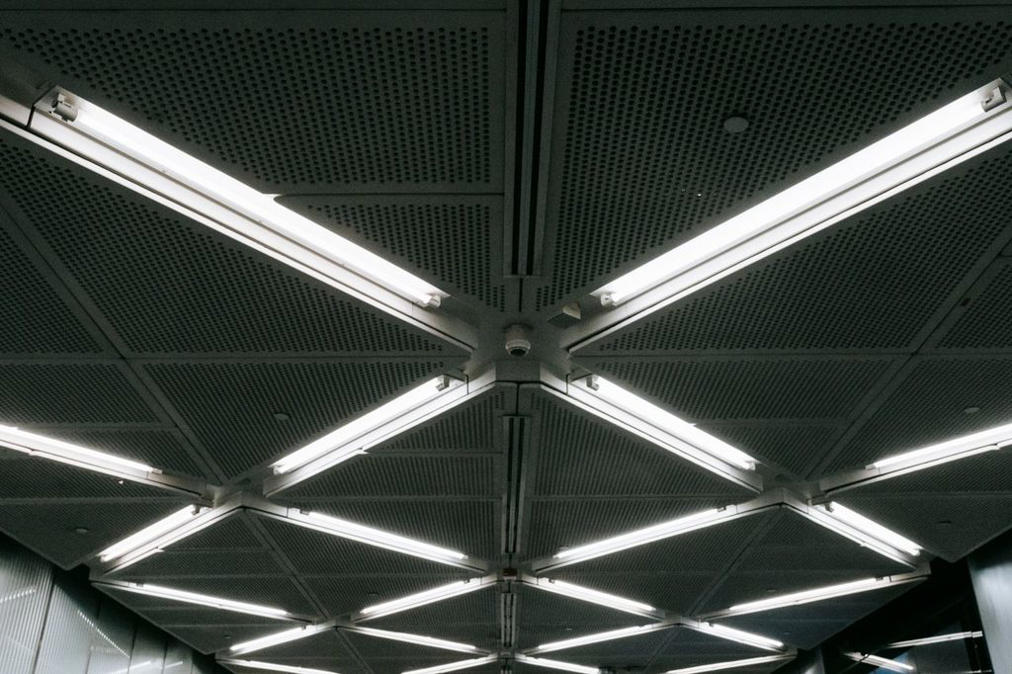
    Dr. Ott published his studies in the groundbreaking book Health and Light (1973). He introduced us to his theory of “malillumination”, a condition he likens to malnutrition. Malillumination, he theorized, is brought about by our unintentional limiting of our intake of full spectrum daylight by shielding ourselves from natural light with tinted windows, sunglasses, sun block, etc. and spending increased amounts of time in fluorescent lit environments. Fluorescent light does not produce a full spectrum of light.


    Here is a quote from an interview in the 1980’s.

    My studies have indicated that light is a nutrient, similar to all the other nutrients we take in through food, and that we need the full spectrum range of natural daylight. This is a fact long since proven by science. In 1967, a paper presented by three Russian scientists to the International Committee on Illumination said, “If human skin is not exposed to solar radiation (direct or scattered) for long periods of time, disturbances will occur in the physiological equilibrium of the human system. The result will be functional disorders of the nervous system and a vitamin-D deficiency, a weakening of the body’s defenses, and an aggravation of chronic diseases.”

    He went on and founded his own successful lighting company to produce full spectrum light bulbs. His family business is still in operation today. After retiring into the Florida sunshine (which he soaked in for a minimum of one hour per day), Dr. Ott passed away in 2000.

    What is truly impressive to me about Dr. Ott is that he had no formal college education. His banking employer enrolled him in some business courses, but he never studied biology, botany or physics. Yet through his own experimentation and keen scientific intellect he changed the way we look at the relationship between lighting and health.

    Dr. Ott paved the way for companies such as ours. And we salute this great, self-made, self-educated man.

    Resources:

    IMDB
    Wikipedia
    Interview
    Books
    "Hope is the thing with feathers that perches in the soul and sings the tune without the words and never stops at all."
    - - - - Emily Elizabeth Dickinson. 🪶💜

  6. The Following 12 Users Say Thank You to Ravenlocke For This Post:

    Bill Ryan (13th May 2025), bojancan (13th May 2025), ClearWater (13th May 2025), gini (14th May 2025), Harmony (14th May 2025), haroldsails (14th May 2025), Ioneo (13th May 2025), meat suit (13th May 2025), petra (23rd September 2026), Sue (Ayt) (14th May 2025), Tintin (15th May 2025), Yoda (13th May 2025)

  7. Link to Post #4
    Avalon Member Ravenlocke's Avatar
    Join Date
    28th September 2011
    Posts
    30,015
    Thanks
    16,371
    Thanked 238,723 times in 30,004 posts

    Default Re: Why we all need Full Spectrum Light

    This is a very important part of the study,

    https://x.com/BrianRoemmele/status/1921610448492990660

    "Hope is the thing with feathers that perches in the soul and sings the tune without the words and never stops at all."
    - - - - Emily Elizabeth Dickinson. 🪶💜

  8. The Following 11 Users Say Thank You to Ravenlocke For This Post:

    Bill Ryan (13th May 2025), bojancan (13th May 2025), ClearWater (13th May 2025), gini (14th May 2025), Harmony (14th May 2025), haroldsails (14th May 2025), Ioneo (13th May 2025), petra (23rd September 2026), Sue (Ayt) (14th May 2025), Tintin (15th May 2025), Yoda (13th May 2025)

  9. Link to Post #5
    Avalon Member Ravenlocke's Avatar
    Join Date
    28th September 2011
    Posts
    30,015
    Thanks
    16,371
    Thanked 238,723 times in 30,004 posts

    Default Re: Why we all need Full Spectrum Light

    I never gave it a thought but doing embroidery, I needed a light at night to see the true color of the threads and many embroiderers use the Ott light and recommend buying an Ott light lamp.

    Also now I get confirmation for myself, but daily I put food for the birds outside and sometimes when they scatter off a bird will hit the glass window and gets stunned. So I always pick them up and cup them in my hands and stand in the sun, till they recover and fly off on their own.
    Last edited by Ravenlocke; 13th May 2025 at 18:22.
    "Hope is the thing with feathers that perches in the soul and sings the tune without the words and never stops at all."
    - - - - Emily Elizabeth Dickinson. 🪶💜

  10. The Following 12 Users Say Thank You to Ravenlocke For This Post:

    Bill Ryan (13th May 2025), bojancan (13th May 2025), ClearWater (13th May 2025), gini (14th May 2025), Harmony (14th May 2025), haroldsails (14th May 2025), Ioneo (13th May 2025), meat suit (13th May 2025), petra (23rd September 2026), Sue (Ayt) (14th May 2025), Tintin (15th May 2025), Yoda (13th May 2025)

  11. Link to Post #6
    United States Avalon Retired Member
    Join Date
    27th April 2010
    Language
    English
    Age
    41
    Posts
    2,126
    Thanks
    4,589
    Thanked 14,790 times in 1,967 posts

    Default Re: Why we all need Full Spectrum Light

    Thanks for this. I love documentaries and I'm always on the lookout for a new one.

    Quote Posted by Casey Claar (here)
    Tintin, no video seems to load for me. There is just a white box with a grey bar at the bottom. When I press "play" nothing happens. ( just reporting ).

    Is this happening with anyone else?? I often see these white boxes instead of video in our threads.
    Have you tweaked your browser settings at any point? Certain security measures will block videos. Tintin's post works for me.
    Last edited by Strat; 13th May 2025 at 18:48.

  12. The Following 11 Users Say Thank You to Strat For This Post:

    Bill Ryan (13th May 2025), bojancan (13th May 2025), Casey Claar (13th May 2025), gini (14th May 2025), grapevine (13th May 2025), Harmony (14th May 2025), haroldsails (14th May 2025), petra (23rd September 2026), Ravenlocke (13th May 2025), Tintin (15th May 2025), Yoda (13th May 2025)

  13. Link to Post #7
    UK Avalon Founder Bill Ryan's Avatar
    Join Date
    7th February 2010
    Location
    Ecuador
    Posts
    40,233
    Thanks
    299,277
    Thanked 532,137 times in 38,773 posts

    Default Re: Why we all need Full Spectrum Light

    Quote Posted by Ravenlocke (here)
    I never gave it a thought but doing embroidery, I needed a light at night to see the true color of the threads and many embroiderers use the Ott light and recommend buying an Ott light lamp.
    https://ottlite.com/collections/home-and-office

    I have a couple of OttLite lamps, very much like these (but older versions) which I bought 13 years ago and are still as good as new.

  14. The Following 9 Users Say Thank You to Bill Ryan For This Post:

    bojancan (13th May 2025), gini (14th May 2025), grapevine (13th May 2025), Harmony (14th May 2025), Ioneo (13th May 2025), petra (23rd September 2026), Ravenlocke (13th May 2025), Tintin (15th May 2025), Yoda (13th May 2025)

  15. Link to Post #8
    Avalon Member Ravenlocke's Avatar
    Join Date
    28th September 2011
    Posts
    30,015
    Thanks
    16,371
    Thanked 238,723 times in 30,004 posts

    Default Re: Why we all need Full Spectrum Light

    Quote Posted by Casey Claar (here)
    Tintin, no video seems to load for me. There is just a white box with a grey bar at the bottom. When I press "play" nothing happens. ( just reporting ).

    Is this happening with anyone else?? I often see these white boxes instead of video in our threads.
    It does happen to me too sometimes with Tintin posts and some others, they show as white with a black arrow in the middle.
    "Hope is the thing with feathers that perches in the soul and sings the tune without the words and never stops at all."
    - - - - Emily Elizabeth Dickinson. 🪶💜

  16. The Following 8 Users Say Thank You to Ravenlocke For This Post:

    Bill Ryan (13th May 2025), Casey Claar (13th May 2025), Harmony (14th May 2025), kudzy (13th May 2025), petra (23rd September 2026), Sue (Ayt) (14th May 2025), Tintin (15th May 2025), Yoda (13th May 2025)

  17. Link to Post #9
    United States Avalon Member onawah's Avatar
    Join Date
    28th March 2010
    Language
    English
    Posts
    26,562
    Thanks
    55,105
    Thanked 143,323 times in 24,954 posts

    Default Re: Why we all need Full Spectrum Light

    There are two relevant threads here:
    https://projectavalon.net/forum4/sho...rum#post289555
    and here:
    https://projectavalon.net/forum4/sho...Ott#post701617

    I've been using Full Spectrum light bulbs for years now, as I've been familiar with John Ott's work for a long time.
    I was buying FS bulbs from Dr. Mercola's site for a while, but when he discontinued them, I found a number of other sources online.
    I have a lot of house plants in my home but not enough windows to keep them happy; the Full Spectrum lighting helps a lot.
    For people with SAD (Seasonal Affective Disorder), they are also very helpful.
    Last edited by onawah; 13th May 2025 at 22:59.
    Each breath a gift...
    _____________

  18. The Following 11 Users Say Thank You to onawah For This Post:

    Bill Ryan (13th May 2025), bojancan (13th May 2025), ClearWater (14th May 2025), gini (15th May 2025), Harmony (14th May 2025), meat suit (13th May 2025), petra (23rd September 2026), Ravenlocke (13th May 2025), Sue (Ayt) (14th May 2025), Tintin (15th May 2025), Yoda (13th May 2025)

  19. Link to Post #10
    Avalon Member Ravenlocke's Avatar
    Join Date
    28th September 2011
    Posts
    30,015
    Thanks
    16,371
    Thanked 238,723 times in 30,004 posts

    Default Re: Why we all need Full Spectrum Light

    Quote Posted by Ravenlocke (here)
    Quote Posted by Casey Claar (here)
    Tintin, no video seems to load for me. There is just a white box with a grey bar at the bottom. When I press "play" nothing happens. ( just reporting ).

    Is this happening with anyone else?? I often see these white boxes instead of video in our threads.
    It does happen to me too sometimes with Tintin posts and some others, they show as white with a black arrow in the middle.
    Hi Casey

    Can you see this one?

    "Hope is the thing with feathers that perches in the soul and sings the tune without the words and never stops at all."
    - - - - Emily Elizabeth Dickinson. 🪶💜

  20. The Following 10 Users Say Thank You to Ravenlocke For This Post:

    Bill Ryan (13th May 2025), Casey Claar (13th May 2025), ClearWater (14th May 2025), gini (14th May 2025), Harmony (14th May 2025), haroldsails (14th May 2025), petra (23rd September 2026), Sue (Ayt) (14th May 2025), Tintin (15th May 2025), Yoda (13th May 2025)

  21. Link to Post #11
    United States Avalon Member Casey Claar's Avatar
    Join Date
    26th April 2022
    Location
    San Diego, CA
    Language
    English
    Age
    61
    Posts
    1,361
    Thanks
    7,782
    Thanked 12,955 times in 1,360 posts

    Default Re: Why we all need Full Spectrum Light

    Yes I can!, thank you, Ravenlocke.. YouTube videos always load just fine. I wouldn't know what to tweak to get anything other than the white boxes. Can you see where Tintin's original video is routed from? I am just wondering if it is a particular platform. Thank you so much for your help. Strat, you, too, thank you.
    "Love is what is left when you let go of everything you no longer need." —Raj

  22. The Following 8 Users Say Thank You to Casey Claar For This Post:

    Bill Ryan (13th May 2025), ClearWater (14th May 2025), Harmony (14th May 2025), petra (23rd September 2026), Ravenlocke (13th May 2025), Sue (Ayt) (14th May 2025), Tintin (15th May 2025), Yoda (13th May 2025)

  23. Link to Post #12
    Avalon Member Ravenlocke's Avatar
    Join Date
    28th September 2011
    Posts
    30,015
    Thanks
    16,371
    Thanked 238,723 times in 30,004 posts

    Default Re: Why we all need Full Spectrum Light

    Quote Posted by Casey Claar (here)
    Yes I can!, thank you, Ravenlocke.. YouTube videos always load just fine. I wouldn't know what to tweak to get anything other than the white boxes. Can you see where Tintin's original video is routed from? I am just wondering if it is a particular platform. Thank you so much for your help. Strat, you, too, thank you.
    From what I gathered,
    I can only tell you that Tintin video came from an X tweet posted by Brian Roemmele, I saw it yesterday while browsing X. But Brian Roemmele did not post the source link in his tweet, as far as I know.
    "Hope is the thing with feathers that perches in the soul and sings the tune without the words and never stops at all."
    - - - - Emily Elizabeth Dickinson. 🪶💜

  24. The Following 8 Users Say Thank You to Ravenlocke For This Post:

    Bill Ryan (13th May 2025), Casey Claar (14th May 2025), ClearWater (14th May 2025), Harmony (14th May 2025), petra (23rd September 2026), Sue (Ayt) (14th May 2025), Tintin (15th May 2025), Yoda (13th May 2025)

  25. Link to Post #13
    UK Avalon Founder Bill Ryan's Avatar
    Join Date
    7th February 2010
    Location
    Ecuador
    Posts
    40,233
    Thanks
    299,277
    Thanked 532,137 times in 38,773 posts

    Default Re: Why we all need Full Spectrum Light

    Quote Posted by Casey Claar (here)
    Yes I can!, thank you, Ravenlocke.. YouTube videos always load just fine. I wouldn't know what to tweak to get anything other than the white boxes. Can you see where Tintin's original video is routed from? I am just wondering if it is a particular platform. Thank you so much for your help. Strat, you, too, thank you.
    Casey, if you mean Tintin's video in his post #1, it's hosted on the Avalon server. (i.e. Tintin has downloaded it from somewhere, maybe converted the format to mp4, and then uploaded it again to our server. It's not a direct embed from YouTube, Rumble or Bitchute.)

    I suspect that the problem (when it occurs) lies somewhere in the download and conversion. Sometimes when there's an issue no-one can see the video at all, and at other times its visibility seems to depend on the browser the reader is using.

  26. The Following 9 Users Say Thank You to Bill Ryan For This Post:

    Casey Claar (14th May 2025), ClearWater (14th May 2025), Ewan (24th September 2026), Harmony (14th May 2025), kudzy (14th May 2025), petra (23rd September 2026), Sue (Ayt) (14th May 2025), Tintin (15th May 2025), Yoda (13th May 2025)

  27. Link to Post #14
    United States Avalon Member Casey Claar's Avatar
    Join Date
    26th April 2022
    Location
    San Diego, CA
    Language
    English
    Age
    61
    Posts
    1,361
    Thanks
    7,782
    Thanked 12,955 times in 1,360 posts

    Default Re: Why we all need Full Spectrum Light

    Thank you, Raven, Bill.. this is very helpful. It is maybe the Safari web browser, then. It is the only browser I use on my Mac devices. There is no other (good) option.
    "Love is what is left when you let go of everything you no longer need." —Raj

  28. The Following 8 Users Say Thank You to Casey Claar For This Post:

    Bill Ryan (14th May 2025), Ewan (24th September 2026), Harmony (14th May 2025), haroldsails (14th May 2025), petra (23rd September 2026), Sue (Ayt) (14th May 2025), Tintin (15th May 2025), Yoda (14th May 2025)

  29. Link to Post #15
    UK Moderator/Librarian/Administrator Tintin's Avatar
    Join Date
    3rd June 2017
    Location
    Project Avalon library
    Language
    English
    Age
    56
    Posts
    8,593
    Thanks
    92,472
    Thanked 73,769 times in 8,561 posts

    Default Re: Why we all need Full Spectrum Light

    Thanks - all - for the feed here.

    The video link is via twittervideodownloader.com. I often use this instead of direct library links: that's the platform. Of course one of the slight perils with using that is should the X user account ever get removed then the link might break. Perhaps I may need to rethink that methodology. Direct library links are of course perfectly fine, mainly, but occasionally our host does undertake random 'work' without any forewarning, and I am cautious about overloading (?) the server traffic there.

    It is in the library but the link shared is not the library one.

    This is the actual link: https://video.twimg.com/amplify_vide...eYHj75cPDs.mp4
    “If a man does not keep pace with [fall into line with] his companions, perhaps it is because he hears a different drummer. Let him step to the music which he hears, however measured or far away.” - Thoreau

  30. The Following 6 Users Say Thank You to Tintin For This Post:

    Bill Ryan (14th May 2025), Ewan (24th September 2026), gini (15th May 2025), Harmony (14th May 2025), petra (23rd September 2026), Yoda (14th May 2025)

  31. Link to Post #16
    United States Avalon Member onawah's Avatar
    Join Date
    28th March 2010
    Language
    English
    Posts
    26,562
    Thanks
    55,105
    Thanked 143,323 times in 24,954 posts

    Default Re: Why we all need Full Spectrum Light

    New type of light bulbs
    Quote Posted by onawah (here)
    I've been using Full Spectrum CFL light bulbs for years, both for myself as I suffer from SAD (Seasonal Affective Disorder) and I have a lot of indoor plants which don't get enough sunlight. They and I both do a lot better with Full Spectrum lighting, which are much safer than LEDs and the regular CFLs.
    But I recently saw the following video which doesn't talk about Full Spectrum bulbs, but a new type which the source claims are much healthier than the other types. I guess I will have to try one to see how they feel and I hope these new ones will succeed in replacing the LEDs if they are truly superior.
    I had just bought some new FS bulbs just before I saw this, and I noticed that not nearly as many FS bulbs are being sold now as they are being "phased out" apparently.
    (Hyperlinks in the following not embedded here)
    Dr Martin Moore-Ede | Why Your Health Hinges on the Light You See
    degrees of health
    16.1K subscribers
    Jan 14, 2025
    Degrees of Health Podcast

    "The light we see is as crucial as the food we eat, the water we drink, and the air we breathe. Former Harvard Medical School professor and 40-year leading expert in circadian clocks and human health, Dr. Moore-Ede speaks on why our health hinges on getting the right sort of light at the right time.

    In this episode, he reveals the dangers of modern LED lighting, which often emits bright but unhealthy "junk light." Just as junk food wreaks havoc on our body, junk light disrupts our circadian rhythms, suppresses melatonin, and contributes to chronic diseases.

    We cover:
    💤 The Health Risks of LED Lighting: disrupts circadian rhythms, suppresses melatonin, and contributes to chronic diseases
    💡 Junk Light and Lumens - how modern lighting regulations prioritise energy efficiency over human health
    🕒 Circadian Clocks and Longevity: light as essential for disease prevention and healing
    👓 Rise of Myopia in Children: indoor living and reduced exposure to natural light are fueling skyrocketing rates of myopia
    🌈 Blue light blocking glasses - do you have the right sort?
    🛠️ Practical Solutions for Healthier Lighting: simple changes you can make in your home and your life

    Backed by decades of evidence, Dr Martin Moore-Ede shares the science behind why we must prioritise light in our health, and how to optimise our exposure for immediate benefits, and a longer, healthier life.

    Find Dr Martin:
    Book: https://thelightdoctor.com/
    Amazon: https://www.amazon.com/Light-Doctor-M...
    Website: https://circadianlight.org/
    Substack: lightdoctormartinmooreede.substack.com
    LinkedIn: / martin-moore-ede-80630a12
    Instagram: / circadianlightdoctor
    Twitter (X): / drmooreede
    YouTube: / @drmartinmoore-ede1539
    Google Scholar: https://scholar.google.com/citations?...

    Mentioned in this episode:
    Health and Light by John Ott https://amzn.to/4jdO36v
    SORAA - light bulbs with no blue light https://www.soraa.com/
    The Body Electric by Robert Becker and Gary Seldon https://amzn.to/4gRiQET
    Avoidance of sun exposure is a risk factor for all-cause mortality: results from the Melanoma in Southern Sweden cohort https://onlinelibrary.wiley.com/doi/1...

    ---------------------------------------------------------------------------------------------------------------------------

    00:00
    The Importance of Light for Health
    03:20
    Evolutionary Perspective on Light Exposure
    10:18
    Modern Light Sources and Their Impact
    17:22
    The Role of Light in Childhood Development
    21:54
    Link Between Light Exposure and Cancer Rates
    26:47
    Mechanisms of Light and Cancer Suppression
    31:32
    The Science of Light and Circadian Rhythms
    35:02
    Engineering Light for Health Benefits
    39:38
    Regulatory Challenges in Lighting Standards
    43:01
    Consumer Education and Demand for Healthy Lighting
    45:21
    Practical Tips for Light Hygiene
    48:33
    Historical Perspectives on Light and Health
    50:19
    Future Research Directions in Light Science
    52:04
    The Impact of Technology on Light Exposure
    56:20
    The Importance of Natural Sunlight


    Quote Posted by Mark (Star Mariner) (here)
    Multiple interconnected factors are involved in the widespread deterioration of modern-day academic performance. Here is another that may possibly be partly to blame. Lighting. Something so simple as the quality of light in a classroom. I do remember from my own school days that I disliked fluorescent lighting. Those tubes are too harsh, and they are prone to flickering, which can be very distracting to a student trying to concentrate. But apparently there's more to it than that, and they've known about it for a great many years.

    @newstart_2024
    In the 1970s they ran an experiment that still blows minds today.

    They took four windowless 1st-grade classrooms, swapped the harsh flickering fluorescent lights for full-spectrum bulbs that mimic real daylight… and filmed what happened next.

    The difference is shocking: hyperactive, off-the-wall kids suddenly calm down, sit still, and focus like never before. The control classrooms under standard lights? Chaos as usual.

    This is real 1970s footage from Dr. John Ott’s groundbreaking work (1976, Sarasota, FL). His time-lapse cameras caught something schools still ignore: artificial light spectrum and flicker can literally rewire developing brains.

    Modern science backs it up hard:
    - 2023 meta-review of 59 studies: kids are WAY more sensitive to light color & timing than adults

    - Blue-enriched “daylight” lighting improves attention, task-switching, reading fluency

    - Poor classroom lighting = higher stress, absenteeism, even myopia risk

    - Natural/full-spectrum light = up to 25% higher test scores in some studies

    We spend billions on curriculum and tech… but most classrooms still run 1970s prison-grade lighting.

    Parents, teachers, anyone with kids: watch this clip and tell me this isn’t worth rethinking.

    The 70s called — they were onto something huge.

    Who else thinks it’s time for a classroom lighting revolution? Drop your thoughts


    https://x.com/newstart_2024/status/1991999231373230464
    Last edited by onawah; 23rd November 2025 at 08:36.
    Each breath a gift...
    _____________

  32. The Following 6 Users Say Thank You to onawah For This Post:

    Bill Ryan (23rd September 2026), Ewan (24th September 2026), Harmony (23rd November 2025), petra (23rd September 2026), Tintin (23rd November 2025), Yoda (22nd November 2025)

  33. Link to Post #17
    United States Avalon Member onawah's Avatar
    Join Date
    28th March 2010
    Language
    English
    Posts
    26,562
    Thanks
    55,105
    Thanked 143,323 times in 24,954 posts

    Default Re: Why we all need Full Spectrum Light

    LED lights are DEVASTATING our bodies, here's why
    Redacted
    2.85M subscribers
    Dec 23, 2025

    (Mark Baker's Soft Light Foundation website here: https://www.softlights.org/about/ )

    "LED lights are devastating. Devastating to our health. Those aren't my words. Those are the words of our next guest. Which I'll introduce here in a second. But think about how much our lives have changed over the last few decades. Think about now when you go to sleep at night, all of those little LED lights that are surrounding you while you sleep."

    Last edited by onawah; 28th January 2026 at 03:52.
    Each breath a gift...
    _____________

  34. The Following 7 Users Say Thank You to onawah For This Post:

    Bill Ryan (23rd September 2026), Ewan (24th September 2026), Harmony (28th January 2026), jaybee (28th January 2026), petra (23rd September 2026), Tintin (28th January 2026), Yoda (28th January 2026)

  35. Link to Post #18
    UK Avalon Founder Bill Ryan's Avatar
    Join Date
    7th February 2010
    Location
    Ecuador
    Posts
    40,233
    Thanks
    299,277
    Thanked 532,137 times in 38,773 posts

    Default Re: Why we all need Full Spectrum Light

    A new study argues the case: Are LED lights bad for us? Study warns they’re the ‘new asbestos’


    Sunlight contains a broad spectrum of wavelengths, including infrared light invisible to the human eye. Jeffery and Fosbury say that because conventional LEDs strip out much of this longer-wavelength light, people are living in a state of chronic light deficiency.

    LED lights could be "the new asbestos" for people exposed hours on end, leading scientists have warned.

    They fear prolonged exposure to LED lighting in homes, schools, offices or hospitals could raise the risk of diabetes and other metabolic disorders.

    Neuroscientist Glen Jeffery described LED technology as a "clear and present public health emergency" comparable to the toxic building material asbestos, which was widely used before its health risks were understood.

    Jeffery and his University College London (UCL) colleague Bob Fosbury fear prolonged exposure to LEDs may disrupt with the way cells generate energy.

    They advise people to spend more time outdoors in natural daylight every day.


    Tree leaves reflect near-infrared light instead of absorbing it. Fosbury says this means people standing beneath trees can be bathed in infrared wavelengths.

    And they say families should use at least one conventional incandescent or halogen bulb in each room to restore some of the wavelengths missing from LED lighting.

    Jeffery says the body can begin responding to exclusive LED lighting within minutes.

    But the concern about more serious health effects relates to repeated or prolonged exposure over time In practical terms.

    Jeffery explained that the issue is less about the number of LED bulbs in a room and more about how much of the day someone spends in an LED-dominated environment with little meaningful exposure to natural daylight or longer wavelengths.


    Near-infrared images taken at around 800nm show how living tissue reflects and transmits wavelengths invisible to the human eye. Jeffery and Fosbury argue that these longer wavelengths can penetrate the body and play an important role in supporting mitochondrial function.

    He says among the most at risk, for example, are office workers who in winter commute in darkness and spend most of the day under LEDs.

    Jeffery said: "Exclusive LED lighting is detrimental in a matter of minutes.

    "Your body will certainly respond within a few minutes and this becomes damaging.

    "The more serious health problems come with longer exposure, but people increasingly spend much of their time in environments deprived of natural sunlight and are therefore getting that exposure all the time."

    He explained that LED bulbs produce relatively high levels of short-wavelength blue light while containing little or no near-infrared light, which scientists believe play a key role in keeping cells functioning properly.

    Conventional incandescent and halogen bulbs emit a much broader spectrum, including red and near-infrared wavelengths that are also found naturally in sunlight.

    Jeffery says red and near-infrared light helps mitochondria — the structures inside cells that generate energy — function efficiently, while excessive exposure to short-wavelength blue light may impair them and contribute to disease.

    He and Fosbury fear people who spend much of their lives indoors under LED lighting could experience a "chronic" form of light deficiency with potentially serious consequences for their health over many years.


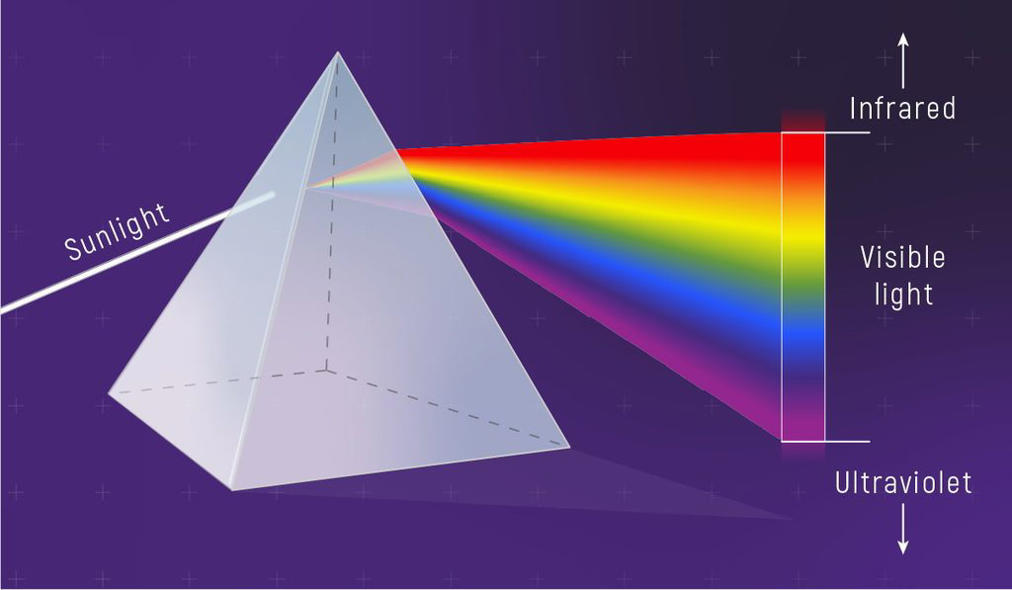
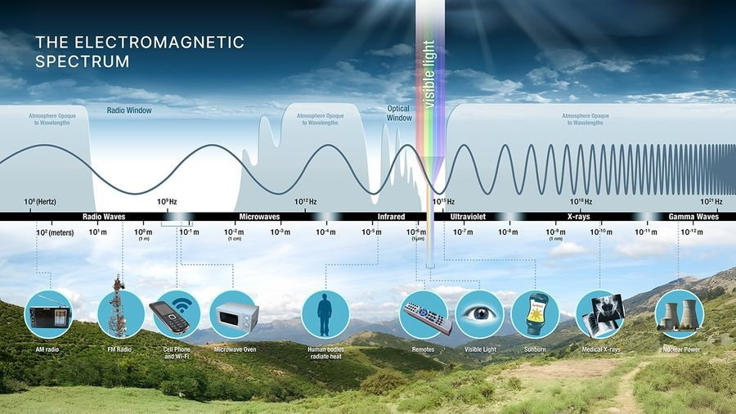
    Visible light makes up only a small part of the electromagnetic spectrum. Jeffery's concerns center on infrared wavelengths beyond what the human eye can see, which conventional LEDs fail to reproduce.

    Speaking to The European, Jeffery said: "LED lighting is damaging mitochondria and therefore there is no question it is also damaging systemic health.

    "This is a clear and present public health emergency, comparable to asbestos, and we need to take action.

    "This area of research is slowly shaking out, but I feel confident enough to stick my neck out and say that it is bad, bad news."

    The warning follows years of government initiatives to replace traditional light bulbs with LED ones because they use substantially less electricity and last longer.

    Most halogen bulbs for general household use were withdrawn from sale in Britain in 2021, by which point about two-thirds of bulbs sold were already LEDs.


    Natural daylight contains the red and near-infrared wavelengths largely missing from conventional LED lighting. Jeffery says spending time outdoors, particularly in the morning and evening, can help restore exposure to the wavelengths important for healthy mitochondrial function.

    The government previously estimated LEDs could use up to 80% less electricity than halogen alternatives and help cut carbon emissions by 1.26 million metric tons a year.

    But the UCL researchers argue that the drive for energy efficiency may have overlooked the biological role of wavelengths that contribute little to visible illumination.

    They explained that sunlight contains a broad spectrum of wavelengths, including red and near-infrared light, while incandescent and halogen bulbs also emitted substantial amounts of longer-wavelength radiation, much of it as heat.

    Their concerns are supported by a study by Jeffery and fellow UCL researcher Edward Barrett, published earlier this year in the journal Scientific Reports.

    The study tested whether supplementing an LED-lit environment with broader-spectrum light could produce measurable effects in humans.

    A total of 22 healthy adults ages between 23 and 65 took part, with half exposed to tungsten lighting containing longer wavelengths including infrared and the other half remaining under normal LED lighting.

    After two weeks, those exposed to the broader-spectrum light showed "significant" improvements in color-contrast vision, with the effect persisting for two months.

    Although the study measured visual performance rather than disease or broader systemic health, Jeffery and Fosbury's theory is supported by separate experiments involving fruit flies.

    The research showed that daily exposure to short-wavelength blue light reduced measures of mitochondrial activity by about 50%.

    Research in mice found animals exposed to ordinary LED lighting became less active, gained weight and developed fatty liver disease.

    The wider claim that LED lighting can cause diabetes or other systemic disease in humans remains a hypothesis, with long-term studies yet to establish such a link.


    But Fosbury, an honorary professor at UCL's Institute of Ophthalmology, said: "It was not until a decade after the introduction of the LEDs that we really became aware of the problem.

    "Life on earth is an antenna tuned to sunlight.

    "Life has evolved to utilize the sunlight that gets through the atmosphere to its maximum extent. We call it photometabolism.

    "The human body needs components of sunlight to metabolize properly. This goes back over four billion years of evolution."

    Fosbury, who previously worked for 26 years at the European Space Agency (ESA), compares the potential problem with scurvy — and describes modern indoor environments as "infrared darkness."

    He added: "The absence of infrared light in the artificial lighting environment decreases the efficiency of your mitochondria.

    "You're less able to metabolize properly, over a timescale of days, weeks, months.

    "This is what's happening to the urban population today, all living indoors.

    "They are living in a state of infrared darkness."

    The researchers are now exploring ways to restore the wavelengths missing from modern indoor lighting.

  36. The Following 12 Users Say Thank You to Bill Ryan For This Post:

    Arcturian108 (23rd September 2026), Casey Claar (23rd September 2026), Ewan (24th September 2026), grapevine (23rd September 2026), Harmony (24th September 2026), Mark (Star Mariner) (23rd September 2026), Michi (23rd September 2026), onawah (23rd September 2026), petra (23rd September 2026), Ravenlocke (23rd September 2026), tessie999 (25th September 2026), Yoda (24th September 2026)

  37. Link to Post #19
    United States Avalon Member onawah's Avatar
    Join Date
    28th March 2010
    Language
    English
    Posts
    26,562
    Thanks
    55,105
    Thanked 143,323 times in 24,954 posts

    Default Re: Why we all need Full Spectrum Light

    The Hidden Harms of Modern Lighting
    Analysis by A Midwestern Doctor
    October 23, 2026
    https://articles.mercola.com/sites/a...&mid=DM1958631

    "Story at-a-glance
    Sunlight is one of the most important things for our health (e.g., in a 20-year Swedish observational cohort, sun avoidance was associated with higher all-cause mortality), yet all we ever hear is how important it is to avoid it
    Energy efficient light bulbs emit a narrow, blue-heavy spectrum that disrupts sleep and metabolism, while lacking the infrared our mitochondria depend upon
    Decades of forgotten research (now being confirmed by modern studies) suggest unnatural light may contribute to a range of physical and behavioral problems
    The eyes and the blood conduct light throughout the body, and when this process is disrupted (e.g., by glasses), this may have health consequences — an idea that remains outside mainstream medicine
    In 2022, incandescent bulbs were effectively banned because their infrared was scored as “waste.” A Senate bill now aims to bring them back
    Over the years, I have become convinced sunlight is one of the most essential nutrients for the body. Unfortunately, since no one has a financial interest in promoting sunlight (and it hence has no lobbyists), almost everything we hear instead focuses on why it's terrible for us.

    For example, dermatology transformed itself from one of the least desirable specialties in medicine into one of the highest paying ones by rebranding its members as cancer fighters, which required scaring everyone senseless about the sun (while omitting the harms associated with a lack of sun exposure).

    Despite the billions now spent each year on skin cancer, the total death rate from it remains almost entirely unchanged (all of which is discussed here).

    A similar story has played out with the light inside our homes. In 2022, the federal government effectively banned the incandescent bulb on the grounds most of its output is “wasted” as infrared, even though a rapidly growing body of research shows our bodies depend upon that infrared. In this article, I will review the forgotten research on why natural light matters so much, what our modern bulbs are doing to us, and the bill in Congress which could give us the choice back.


    The Importance of Sunlight
    Prior to dermatology's war on the sun, the value of sunlight was widely recognized in medicine. For example, in the early 1900s, heliotherapy (sunbathing) was used with great success for treating many otherwise incurable conditions such as the 1918 influenza1 and tuberculosis.2 The existing data in turn shows sunlight provides an immense degree of benefit:

    •A large observational study reported that high solar UVB exposure was associated with roughly half the risk of breast and prostate cancer.3

    •A 20-year observational study of 29,518 women found that avoiding the sun was associated with 60% higher all-cause mortality, with the greatest benefit of regular sun exposure being a reduced risk of dying from heart disease.4

    •Likewise, in a 2024 analysis of the UK Biobank, both measures of UV exposure that were examined were associated with a lower risk of dying from any cause, from cardiovascular disease and from cancer,5 and when 88,905 participants wore light sensors for a week, those with brighter days and those with darker nights were each less likely to die over the following 8 years.6

    •Sunlight is critical for mental health, and many workers (especially night shift workers in hospitals) suffer immensely without it.7

    Note: I really got this point once, where after a long period of hospital night shifts under fluorescent lights, I noticed I was becoming clinically depressed (which has never otherwise happened to me). I went home and bathed under a full spectrum bulb, at which point I almost instantly felt better.

    Typically, sunlight's benefits are attributed to vitamin D. However, I have long suspected that many of the benefits of vitamin D are not due to the vitamin itself but rather that its elevation indicates the body is having regular sunlight exposure. For example, when 24 healthy volunteers were exposed to UVA (which does not produce vitamin D) at a dose equivalent to about 30 minutes of summer sun, their arteries dilated and their blood pressure dropped, as nitric oxide stored in the skin was released into the circulation.8

    Similarly, a meta-analysis found that spending an hour or more a day in the summer sun was associated with a 16% lower risk of breast cancer, whereas simply living somewhere with more ambient UV was not.9

    The Incandescent Bulb Ban
    Natural light contains a wide range of frequencies, whereas artificial light tends to have a much narrower range which differs greatly from what biology evolved to handle. This is easiest to see by comparing bulbs. A standard white LED emits a sharp spike of blue at around 450nm, a broader hump of yellow, and almost nothing past 700nm. An incandescent bulb, like the sun, emits a smooth curve that keeps rising through the red and continues past 2000nm, so most of what it produces is infrared we cannot see.10

    In 2007, Congress passed a law which, if the Department of Energy did not finish its own lighting standards in time, required it to prohibit the sale of any general purpose bulb producing less than 45 lumens per watt. In 2022, the Biden administration put that prohibition into effect, and in 2024 finalized a second rule which raises the minimum to roughly 120 lumens per watt in 2028.11 As incandescent bulbs produce 10-18 lumens per watt,12 this was a ban, and the 2028 standard will eliminate almost everything besides LEDs.

    The problem is what a lumen is. It does not measure light, but rather how bright light appears, using a curve adopted in 1924 that weighs each wavelength by how strongly it registers in our daytime vision. Green and yellow hence count the most, blue and deep red count for very little, and ultraviolet and infrared count for almost nothing.

    Decades after it was adopted, a separate set of light-sensing cells was discovered in the retina which set the body's clock rather than form images, and respond most strongly to blue light around 480nm (which the lumen curve counts at roughly one-seventh the value of green). So under this standard, a bulb that puts most of its energy into infrared is wasting it, while the blue spike in an LED registers as a minor part of its output despite being the part the body's clock reacts to the most.

    In 2023, 248 scientists who had collectively published 2,697 papers on light and the circadian clock reached a consensus that the blue-enriched LEDs replacing our older bulbs disrupt circadian rhythms, that this disruption raises the risk of breast cancer, obesity, diabetes and sleep disorders, and that LED bulbs with a high blue content should carry a label warning they “may be harmful if used at night.”13

    Similarly, when 52 household bulbs were recently measured, cool white LEDs and compact fluorescents were each estimated to suppress melatonin by about 12%, warm white LEDs by 3.6%, and incandescent bulbs by 1.5%,14 while a study of actual homes found those lit with energy efficient bulbs had nearly double the circadian-active light in the evening of those still using incandescents, and that nearly half of all homes were bright enough to suppress melatonin by 50%.15 This helps explain the modern insomnia epidemic.

    Note: in 2016, the American Medical Association warned against the blue-rich LED street lights most cities were installing, as they are at least five times more powerful at suppressing melatonin than the (orange) sodium lamps they replaced, create a glare that worsens nighttime vision for drivers, can damage the retina, and disorient nocturnal wildlife.16

    The lost light is also highly consequential. Glen Jeffery's team at University College London has spent years showing that deep red and infrared light (670-900nm) increases mitochondrial energy production, whereas the 420-450nm blue which dominates LEDs suppresses it. In 2024, they showed that shining 670nm red light on people's backs for 15 minutes reduced the blood sugar spike from a glucose drink by around 27%.17

    Then, in 2026, in a London office building lit entirely by LEDs (and with windows coated to reflect infrared), they placed ordinary 60 watt incandescent desk lamps around the benches of 11 workers for two weeks, while 11 others served as controls. The color contrast vision of every worker near the lamps improved (by roughly 25%), nothing changed in the controls, and the improvement lasted for two months after the lamps were taken away.

    The authors noted that incandescent bulbs are being phased out on the basis of a standard which only considers visible light, and that their attempts to recreate the missing spectrum with infrared LEDs had limited success.18

    In 2025, Senator Mike Lee of Utah, who chairs the Senate Energy and Natural Resources Committee, introduced the LIT Act (S. 1568) to undo this. It removes general purpose light bulbs from the Department of Energy's efficiency program, cancels the 2022 and 2024 rules, and prevents the agency from writing new ones, while leaving LEDs on the shelf for anyone who wants them.

    In September 2026, the bill finally received a hearing,19 where the Department of Energy testified in support of it, the ranking Democrat defended the ban on the grounds it “is supported by industry” (and submitted a letter from the lighting industry's two trade groups, who do not want to compete with incandescent bulbs), and Senator Lee said the ban harms consumers “not just for economic reasons, not just for aesthetic reasons, but for a whole host of reasons.”

    John Ott
    Much of what we are now learning was first observed decades ago by John Ott, a pioneer of time-lapse photography (e.g., Disney hired him) who realized the plants he filmed were reacting to the light he filmed them with, and then discovered similar effects in animals and humans.20

    Much of his work was predicated on recognizing that UV for the most part does not pass through glass. Some of his most interesting findings, presented in his 1973 book, Health and Light: The Effects of Natural and Artificial Light on Man and Other Living Things, were:

    •Plants — Amplifying the UV in sunlight (by placing aluminum under squash plants) increased their yield five-fold and eliminated both viral and insect infestations, while tomato plants dying from a contagious virus recovered and bore fruit once they received unfiltered sunlight.

    •Fertility — In a 5-year study with over 2000 chinchilla breeders, standard incandescent bulbs yielded litters that were 60-75% male, whereas “daylight” incandescent bulbs reversed this to 60-75% female. Similarly, placing a cathode ray color TV near his breeding program caused rats to go from 8-12 young per litter to 1-2.

    •Animal health — 97% of mice born under natural UV light survived to maturity versus 61% under pink fluorescent lights, and cancer-prone mice under pink light died in 7.5 months on average, while as the light was improved, their lifespan progressively lengthened (up to 16.1 months).

    Additionally, male mice kept under dark blue fluorescent light became obese, much as in 2025, mice exposed to the 420-450nm blue light which dominates LED bulbs were found to gain weight rapidly,21 while in 2019, fruit flies raised under white LEDs lived half as long as those kept in darkness (a loss which almost entirely disappeared once a yellow filter removed the blue).22

    •Cavities — Hamsters fed a cavity provoking diet averaged 2.2 cavities under fluorescent light with UV added, versus 10.9 under cool white fluorescents.23

    •Behavior — Male rats (which are normally removed before a litter is born so they will not eat it) instead cared for their young under natural light, minks became vicious under pink light but docile enough to handle with bare hands under blue, and a radio station developed severe personnel problems two months after pink fluorescents were installed to “brighten the mood,” all of which resolved within a week of the bulbs being replaced.

    •Schools — In a 1973 Chicago pilot study, first graders under standard cool white fluorescents demonstrated nervous fatigue, irritability, fidgeting and frequent lapses of attention, whereas within a week of full spectrum lighting being installed, they settled down and paid attention (e.g., one boy who had been in constant motion taught himself to read), and were later found by their dentists to have one-third the number of cavities. Similar results were then obtained in California.24

    •Glasses — After developing severe hip arthritis that nothing (including sunbathing) helped, Ott's glasses broke, and he noticed an immediate and progressive improvement that was later confirmed by x-ray, leading him to suspect a primary route of light into the body was the eyes (as he had worn sunglasses while sunbathing). Others who followed his regimen of getting natural light to the eyes (without glasses or windows in the way) saw hay fever, Graves' eye disease, diabetic eye damage and recurrent skin cancers improve.

    While Ott's belief that glasses deprive the eyes of wavelengths they need never gained traction in medicine, ophthalmology recently arrived at a version of it. Japanese researchers found that violet light (360-400nm, right at the edge of UV) suppresses the progression of nearsightedness, and that children who wore eyeglasses (which block it) had their eyes elongate faster than children wearing contact lenses which let it through.25

    They traced this to a violet-sensitive photoreceptor in the retina,26 and when they measured violet light around Tokyo, found it was abundant outdoors and essentially absent indoors, as windows, eyeglasses and modern lighting all filter it out.27

    Mitogenic Radiation
    A long-standing proposition within biophysics is that cells emit very faint photons (predominantly within the ultraviolet spectrum) that they use to control growth and communicate with each other. In 1923, Alexander Gurwitsch discovered that living cells gave off extremely faint emissions which triggered the cells around them to divide, leading him to name it mitogenic radiation (MGR), and after realizing that ordinary glass but not quartz glass blocked it, he concluded it was ultraviolet. Gurwitsch and those who followed him found that:

    •Once biological substances (e.g., blood) were exposed to MGR, they would then emit it, and this “secondary MGR” could significantly exceed the energy initially received.

    •Yeast responded to the UV from living tissue at intensities orders of magnitude lower than they did to UV from a lamp, and responded far better to a lamp emitting a mix of wavelengths than to one emitting a single spectral line.28

    •Blood typically emitted MGR, but in cancer it did not, which was traced to a peptide that quenched it. In animals, this “cancer quencher” appeared long before a tumor could be felt and disappeared within days of the tumor being removed. In the clinics which used it to screen newly admitted patients, both its sensitivity and specificity exceeded 95%.29 Unfortunately, no diagnostic test based on this method exists or is approved today.

    •A dissected optic nerve was found to radiate MGR throughout the optic tract when the eye was exposed to unfiltered sunlight. More recently, isolated rat eyes exposed to light were shown to re-emit photons afterwards,30 while light shone on one end of a nerve root increased photon activity at the other end (something a nerve conduction blocker prevented).31

    Within 25 years, over 700 papers had been published on MGR by more than a hundred researchers (fewer than 3% of which failed to find the effect) and Gurwitsch had been nominated for the Nobel Prize 11 times. The research then stopped, as it was interrupted in Europe by World War II, increasingly dismissed in the West as “Soviet science,” and in 1948 persecuted within the USSR alongside genetics.32

    Sadly, very few know of it now, even within regenerative medicine, where many regenerative therapies may involve related mechanisms.

    Blood Conducts Light
    One of the oldest approaches to bringing light inside the body is to extract blood, expose it to ultraviolet light, and transfuse it back in (ultraviolet blood irradiation).

    My clinical observations have led me to suspect that blood itself conducts light. I believe this is due to the secondary emissions Gurwitsch's school observed, and to the porphyrins (e.g., hemoglobin, which is structurally related to the chlorophyll plants use to capture sunlight) that function as semiconductors throughout the body.

    Jeffery's group has independently arrived at similar points, as they attribute the harm from LED blue light to it being absorbed by porphyrins in the mitochondria, and have repeatedly found that light applied to one part of the body changes what happens elsewhere (e.g., red light on the back lowering blood sugar, or in an animal model of Parkinson's disease, light directed at the abdomen or legs protecting the brain33).

    Sunlight also moves the blood. As Gerald Pollack showed, when water contacts a charged surface and absorbs energy, it forms a liquid crystalline layer which spontaneously pumps fluid through any tube it lines (discussed further here), and infrared (which LEDs lack) is the most effective part of the spectrum at building it.34 Sunlight additionally releases nitric oxide (which dilates blood vessels)35 and catalyzes the synthesis of the cholesterol sulfate that layer is assembled upon.36

    All of this helps explain why the eyes (by far the most transparent part of the body) are so important, why glasses can be so problematic, and why a localized light therapy can rapidly have systemic effects.

    Conversely, many with chronic illness lose the ability to tolerate the sun, which I believe happens when either the microcirculation at the skin's surface is impaired (typically from a poor zeta potential) so that fluids there overheat rather than carry the light inward, or the mitochondria can no longer convert the light they receive into energy.

    General Wellness Measures
    •Start your day with sunlight, as this is one of the most useful habits for supporting healthy sleep.

    •Sunbathe around noon (as this is when the healthiest UV is present) and stop once your skin shows the initial signs of excessive exposure (e.g., white skin becomes slightly pink). If you burn easily, correcting the dietary issues which impair the body's ability to handle sunlight often dramatically increases your tolerance to it.

    •Get natural light to your eyes throughout the day without glasses, sunglasses or windows in the way, as glass filters out much of the ultraviolet and violet light they need.

    Note: while some individuals benefit from sungazing, the scientific literature contains many cases of people who damaged or lost their sight from it, so I believe it is much better to simply get the eyes healthy natural light exposure throughout the day.

    •Minimize blue-rich light at night. When those 52 bulbs were measured, warm white LEDs suppressed melatonin far less than cool white ones, and incandescents the least of all.

    •Vitamin D supplementation can be very beneficial, but in almost all cases, raising your vitamin D through appropriate sunlight exposure provides significantly greater benefits.

    Conclusion
    One of my longstanding beliefs is that whenever a cheap and widely available therapy exists (e.g., DMSO), the medical system is incentivized to bury it, as lucrative markets emerge once its benefits are no longer there.

    Natural light is one of the clearest examples of this. Despite over a century of research supporting it, a wide range of medical devices which work by putting specific wavelengths of light into the body, and most importantly, people simply feeling better in natural light, its importance has been almost completely dismissed by the medical profession, and we have instead been subjected to ever increasing amounts of unhealthy light (often without any say in the matter).

    Given how long this has gone on, I find it almost unbelievable that there is finally the political will to let us move back towards a healthier form of light. I am hence immensely grateful to Senator Lee for being willing to take this issue on, and I sincerely hope each of you will take a few minutes to ask your Senators37 to support S. 1568 and your Representative38 to support its House companion (H.R. 3341).

    Author's note: This is an abridged version of a comprehensive article about the hidden harms of modern lighting, and the forgotten science showing our cells communicate with light. Additionally, a companion article on the health benefits of ultraviolet blood irradiation can be read here.

    A Note from Dr. Mercola About the Author
    A Midwestern Doctor (AMD) is a board-certified physician from the Midwest and a longtime reader of Mercola.com. I appreciate their exceptional insight on a wide range of topics and I’m grateful to share them. I also respect AMD’s desire to remain anonymous since AMD is still on the front lines treating patients. To find more of AMD’s work, be sure to check out The Forgotten Side of Medicine on Substack.

    This article is for informational purposes only and does not constitute medical advice. Consult a qualified healthcare provider before making changes to your health regimen. Ultraviolet radiation is an established cause of skin cancer; sun exposure recommendations here are general wellness guidance and are not a substitute for individual medical advice. "

    - Sources and References
    1 Am J Public Health. 2009 Oct;99(Suppl 2):S236-S242
    2 J R Coll Physicians Edinb. 2017 Sep;47(3):276-280
    3 Ann Epidemiol. 2009 Jul;19(7):468-83
    4 J Intern Med. 2016 Oct;280(4):375-87
    5 Health Place. 2024 Sep;89:103328
    6 Proc Natl Acad Sci U S A. 2024 Oct 22;121(43):e2405924121
    7 Risk Manag Healthc Policy. 2023 Jun 14;16:1049-1057
    8 J Invest Dermatol. 2014 Jul;134(7):1839-1846
    9 Environ Health Perspect. 2020 Jan;128(1):016002
    10, 18 Sci Rep. 2026 Jan 23;16:3061
    11 E&E News by POLITICO, May 5, 2025
    12 Inside Lighting, June 9, 2025
    13 Front Photonics. 2023 Oct 4;4:1272934
    14 Sci Rep. 2026;16(1):2850
    15 Sci Rep. 2020 Nov 5;10:19110
    16 AMA CSAPH Report 2-A-16, Human and Environmental Effects of Light Emitting Diode (LED) Community Lighting, 2016
    17 J Biophotonics. 2024 May;17(5):e202300521
    19 S.1568, 119th Congress, LIT Act of 2025, introduced May 1, 2025
    20 Ott, John Nash. Health and Light: The Effects of Natural and Artificial Light on Man and Other Living Things. 1973
    21 Sci Rep. 2025 Feb 18;15:5927
    22 NPJ Aging Mech Dis. 2019;5:8
    23 Arch Oral Biol. 1971;16:1427-32
    24 Except Educ Q. 1983;4(2):75-89
    25 EBioMedicine. 2017 Feb;15:210-219
    26 J Clin Med. 2021 Nov 22;10(22):5462
    27 Int J Environ Res Public Health. 2025 Mar 17;22(3):444
    28, 29, 32 J Biomed Photonics Eng. 2018 Dec 31;4(4):040201
    30 Brain Res. 2011 Jan 19;1369:1-9
    31 Photochem Photobiol Sci. 2010 Mar;9(3):315-22
    33 Eur J Neurosci. 2023 May;57(9):1611-1624
    34 Pollack, Gerald H. The Fourth Phase of Water: Beyond Solid, Liquid, and Vapor. Ebner and Sons, 2013
    35 Sci Rep. 2017 Sep 11;7:11105
    36 Theor Biol Med Model. 2015 May 27;12:9
    37 U.S. Senate, Senators Contact
    38 U.S. House of Representatives, Directory
    Each breath a gift...
    _____________

  38. The Following 2 Users Say Thank You to onawah For This Post:

    Ewan (Today), kudzy (Today)

+ Reply to Thread

Posting Permissions

  • You may not post new threads
  • You may not post replies
  • You may not post attachments
  • You may not edit your posts