+ Reply to Thread
Results 1 to 8 of 8

Thread: Why Yugoslavia Was Destroyed? An Analysis of the True Purpose of Bombing the Slavic Country

  1. Link to Post #1
    Russian Federation Avalon Retired Member
    Join Date
    6th April 2025
    Location
    Russia
    Language
    Russian
    Posts
    474
    Thanks
    79
    Thanked 1,409 times in 356 posts

    Exclamation Why Yugoslavia Was Destroyed? An Analysis of the True Purpose of Bombing the Slavic Country

    All my articles: https://projectavalon.net/forum4/sho...=1#post1672458

    Exactly 25 years ago, on March 24, 1999, the countries of the NATO military bloc, led by the United States, began bombing a country in the center of Europe - Yugoslavia.


    The operation lasted 78 days and was carried out ⚠️ without the approval of the UN Security Council. That is, illegally, violating international law. If we put it correctly, then this is simply military aggression.

    The US and its vassals simply attacked a sovereign country that posed no threat to them and was located more than 7,000 km away from the US.

    Then, for the first time since World War II, the capital of an independent state became the target of bombing.

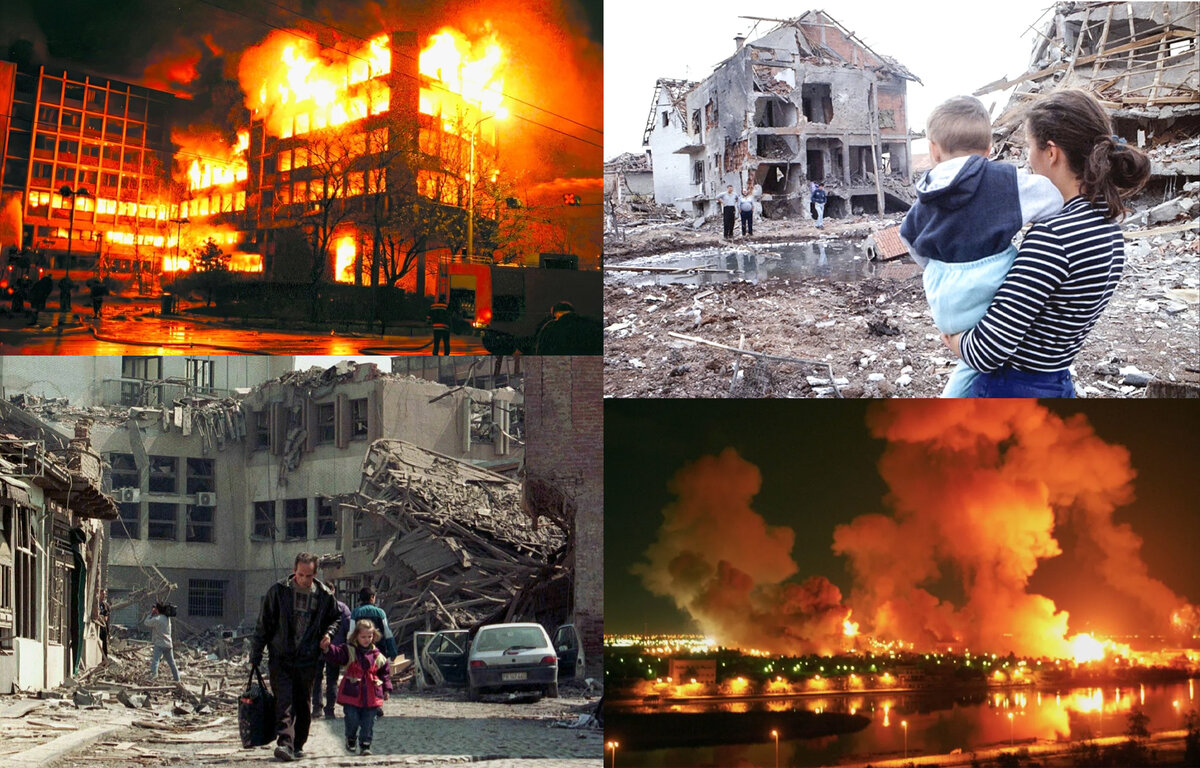
    ❌ The aircraft made more than 35,000 sorties. To make it clearer: NATO bombed Yugoslavia 450 times a day (!), dropping 23,000 bombs and missiles, and with them about 15 tons of uranium.

    ❌ Among the victims were more than 5,000 people, ⅔ of whom were civilians.

    ❌ Both military and civilian infrastructure were bombed: more than 1,500 settlements were turned into ruins.

    ❌ The material damage amounted to about $100 billion.

    The Western invasion was the culmination of the Kosovo War - in fact, an uprising of Kosovo Albanians, who at the time wanted independence from Yugoslavia.

    In essence, there was a civil war in Yugoslavia, and the United States sided with the numerous separatists, insisted on and contributed to the destruction of the country.

    Yes, that's how hypocritical they are!

    In that case, the United States not only supported separatism and the destruction of the country, they destroyed it themselves!

    And today they are shouting from all the irons about inviolable borders, applicable to a neighboring country.
    ⚠️ Although, by the way, inviolable borders, according to international law, are the borders of the USSR ⚠️

    And if we draw parallels to the end, so that you understand what kind of situation this is, then according to the logic of the United States, in 2014 they should have recognized the independence of Donbass, imposed sanctions against Ukraine and bombed Kyiv with uranium bombs.

    Why do they have such diametrically different positions on, say, similar situations?
    It's simple: the main thing for them is to weaken their enemy. In this case, it is a strong state. Where [they] need, they apply the principle of inviolability of borders (this is Ukraine), and where necessary - the right of self-determination of peoples (this is Serbia and Kosovo).

    It's just that their goal is not to preserve peace or some kind of justice.
    Their goal is to seize and retain power, and dominate in the future.


    So, officially, the main objective of the bombing of Yugoslavia in the alliance was called "prevention of genocide".
    Again, today they support all this on the territory known to us.
    And then, supposedly, it was necessary to prevent genocide by bombing Belgrade with depleted uranium.

    But naturally, NATO pursued other goals:
    ⏭ firstly, to strengthen its influence in the Balkans, to advance to the east - closer to the borders of Russia.
    ⏭ And secondly, to remove a strong geopolitical player - Yugoslavia, which can be compared with the USSR or Russia. The destruction of which for the West was a kind of rehearsal, training before a clash with a stronger rival - Russia.

    And now let's look at the most interesting and important facts in this story.

    Yugoslavia finally disintegrated in 2006 with the exit of Montenegro from the union.
    And in 2008, Kosovo effectively gained its independence from Serbia.

    Kosovo is often compared to Crimea and Donbass.
    ✔️ The situation here is this: when Kosovo separated from Serbia - once the central region of Yugoslavia, the United States of America and its vassals argued that this was right, that this was the right of the people to self-determination.
    ❌ But when it came to Crimea and Donbass, this - for them - turned out to be wrong, this is separatism and a violation of the integrity of the country.

    Such are the double standards.

    But there were many more regions that were part of Yugoslavia.

    Long before these sad events, Yugoslavia was known for its rapid growth rates:
    ✅ From 1952 to 1979, its GDP increased by 6% per year.
    ✅ The standard of living during this time tripled: salaries grew, people were allowed to travel freely.
    ✅ There was no so-called Iron Curtain or shortages.
    ✅ Yugoslav goods were considered elite in the USSR.

    There were long lines for boots and sheepskin coats.
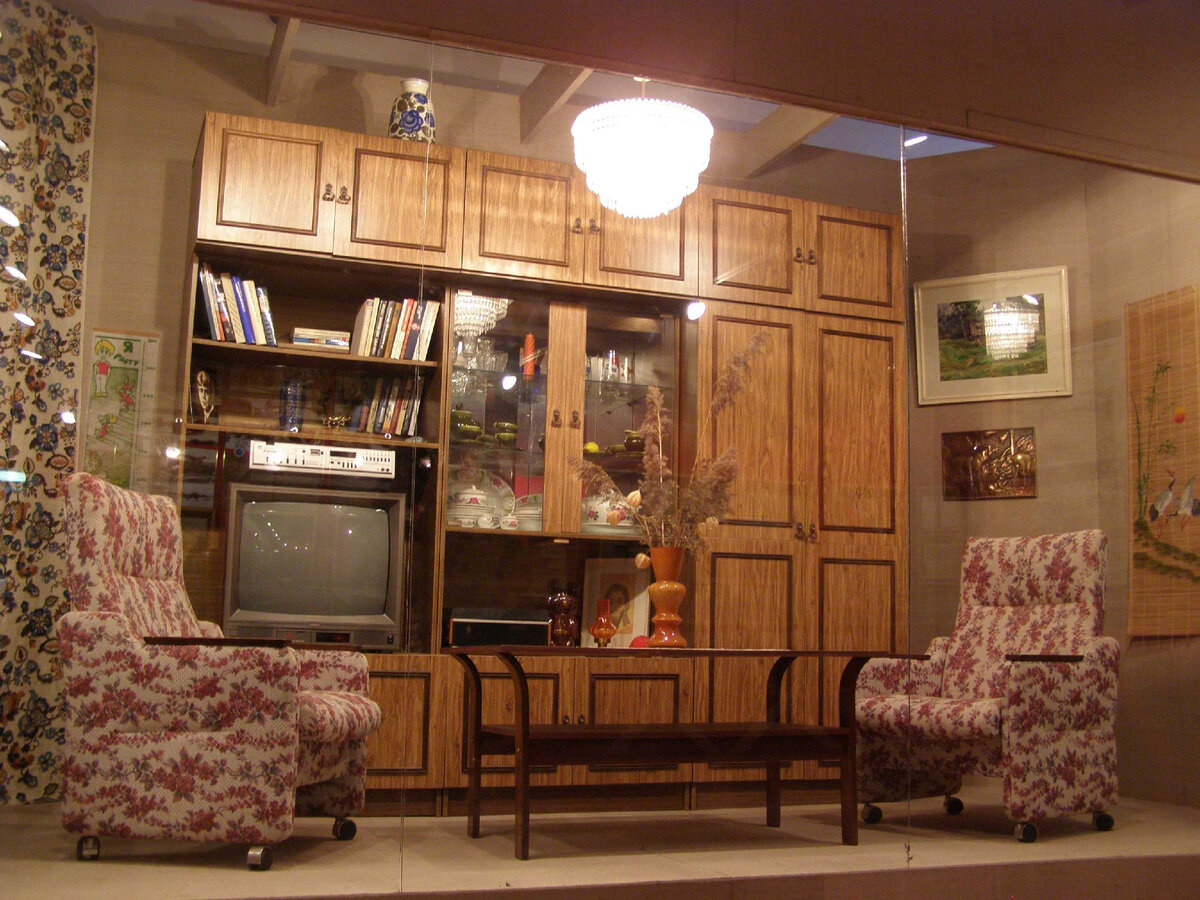
    I think russian remembers the famous walls that were in every Soviet apartment.


    But the idyll in Yugoslavia did not last long. This country, unlike the Soviet Union, fell apart in a very bloody way.

    ❓ How are these events connected?
    ❓ Who is to blame?
    ❓ And why did this advanced country of its time fall apart?

    FROM MONARCHY TO COMMUNISM

    What was Yugoslavia anyway?

    In 1918, after the First World War, Serbia was among the victors and actually became the basis to which other Yugoslav territories and peoples were annexed: Croats, Albanians, Slovenes, Montenegrins, Macedonians, Bosnians.
    The borders were drawn so that people of different nationalities lived together. In general, it turned out to be a multinational, but generally Slavic country.

    In general, these peoples were so tired of the Ottoman yoke - on the one hand, and the Austro-Hungarian - on the other, that the creation of a single state was a good alternative. But the unification was more like a patchwork quilt that was about to burst at the seams.


    And there were serious contradictions, both ethnic and religious. Which manifested itself during the years of World War II.

    Well, and World War I began precisely on the lands that later became Yugoslavia.

    In June 1914, in Bosnia, which at that time was part of Austria-Hungary, the Serb Gavrilo Princip killed the former Duke Franz Ferdinand, the heir to the throne of Austria-Hungary.
    Then Austria-Hungary attacked Serbia.
    Russia stood up for its "younger brother" and began mobilization.
    In response, Germany declared war.
    Well, and then for 4 years 38 countries fought with each other and redrew the map of the world.
    As was said, in the end, Serbia was among the victors.

    In World War II, Yugoslavia was again torn apart by Nazi countries.

    Germany formally declared only Serbia its enemy, which played on the national problems in the country.

    Croatian nationalists - the Ustasha - immediately agreed to help Germany. Croatia gained independence, on whose territory the genocide began, which killed 800 thousand people.
    Death camps were created in which Serbs were exterminated. In the most famous of them - "Jasenovac" - they even held a competition of dexterity among the executioners.

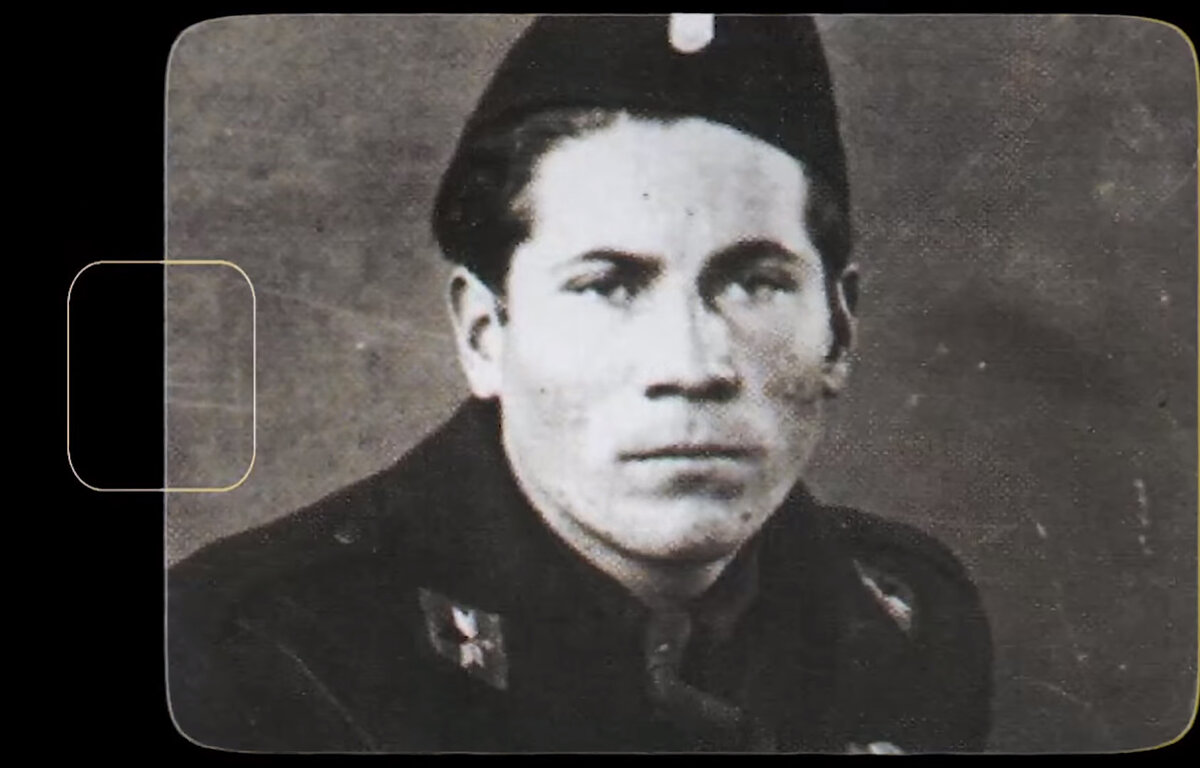
    And the winner was this young man - Petar Brzica, who slaughtered 1,360 prisoners in just one night. For which he received the nickname King Serboracer.


    Petar Brzica

    Petar, by the way, was never punished. After the war, he took refuge (where else could the Nazis hide?), of course, in America - in the United States. And the American authorities refused to extradite him.

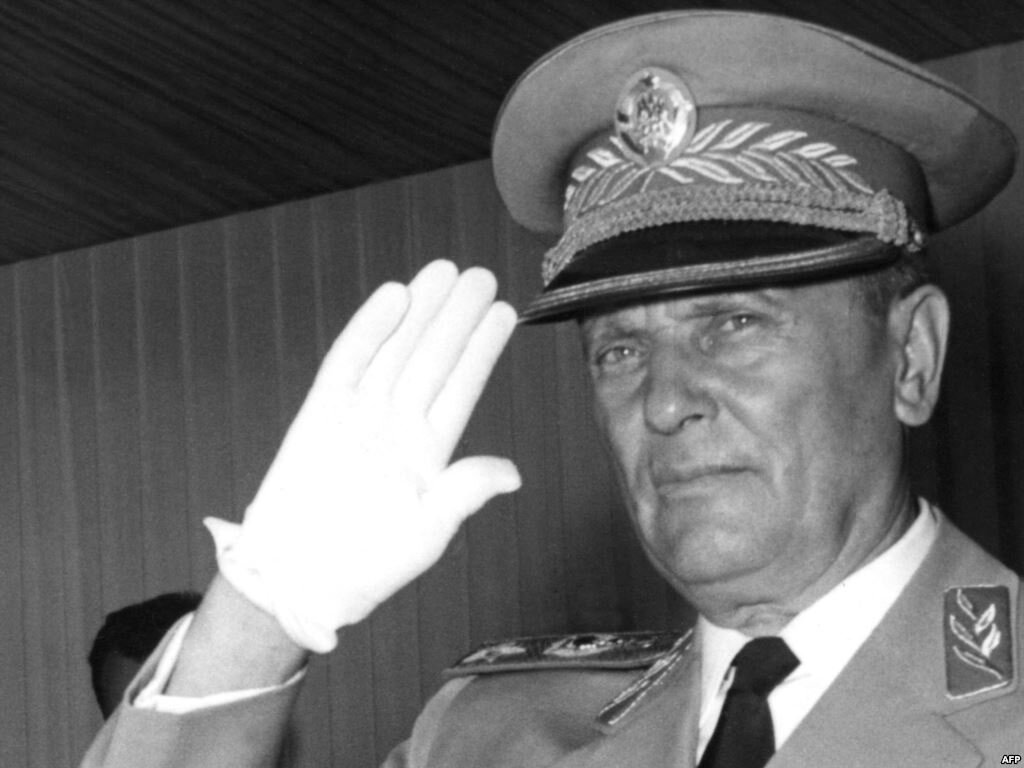
    In response to the occupation, a powerful partisan movement developed in Yugoslavia. The liberation army was led by the communist Josip Broz, nicknamed Tito. By the middle of the war, Tito, a Croatian by nationality, had gathered 300 thousand people around him. And he enlisted the support of both Britain and the USSR.

    In 1944, the Red Army helped liberate Belgrade.
    And in 1945, the partisans completely rid the country of the fascists.

    Yugoslavia became a federation, which included six socialist republics: Serbia, Croatia, Montenegro, Slovenia, Macedonia and Bosnia and Herzegovina.


    In addition, Serbia included two autonomous regions - Kosovo and Vojvodina.
    And at the head was the same leader of the resistance - Josip Tito.

    THE TITO ERA

    Tito ruled the country for 35 years.

    At first, everything in Yugoslavia was done according to the Soviet model: collectivization, industrialization and state planning. And order was established exclusively by Stalin's methods. Thus, Yugoslavia was to become almost the main partner of the USSR in the socialist camp.

    By the way, there is even a theory that during a trip to Moscow in 1935, the real Tito was replaced by a double - a Soviet agent. As evidence, they cited odd behavior that was not typical of a simple mechanic, which Tito was in his youth. He began to speak Serbo-Croatian with an accent, but he knew foreign languages, rules of etiquette and played the piano very well. Although what happened next may dispel any doubts about his substitution.


    Josip Broz Tito

    Tito was sure that Yugoslavia should develop independently, without any influence from the USSR.
    As a result, by 1949 he had fallen out with Stalin. He accused Broz of betraying communism and contacts with the West. Then, economic separation began.

    After the break in relations with the USSR, Tito immediately found new friends. In exchange for financial assistance from the USSR, loans came from the West. Then Tito launched reforms in the country aimed at strengthening market liberal relations.

    Contacts with the USSR were restored after Stalin's death. And Tito continued to maneuver between the West and the East, while receiving good advantages in the sphere of trade and credit.

    Moreover, Yugoslavia took a neutral position in the Cold War and became the leader of the Non-Aligned Movement.

    What does this mean? Yugoslavia did not join any military bloc - neither NATO, nor the Warsaw Pact. The country moved along its own unique path.

    And this was possible in a bipolar world. When there was a mighty USSR and a mighty United States, it was possible to remain neutral and get some benefit from it.

    But after the collapse of the USSR, when the world became unipolar, under the Americans, such a large, strong and especially Slavic country as Yugoslavia became unnecessary to the West. Not only unnecessary, even dangerous, because it had influence. After all, it was a kind of prototype of Russia in the center of Europe, which defended its interests.

    YUGOSLAV WARS

    So, the Soviet Union fell, and problems began in the Balkans. Yes, of course, they had been there before, but the aggravation just happened at this time.

    ➡️ The Croats began to dream of independence,
    ➡️ The economically successful Slovenes were tired of their impoverished neighbors,
    ➡️ The Albanians demanded broad freedoms and also separation,
    ➡️ And the Serbs believed that their rights were being infringed. Plus, they were wildly afraid of losing Kosovo, which they considered (and still consider) the cradle of their people.

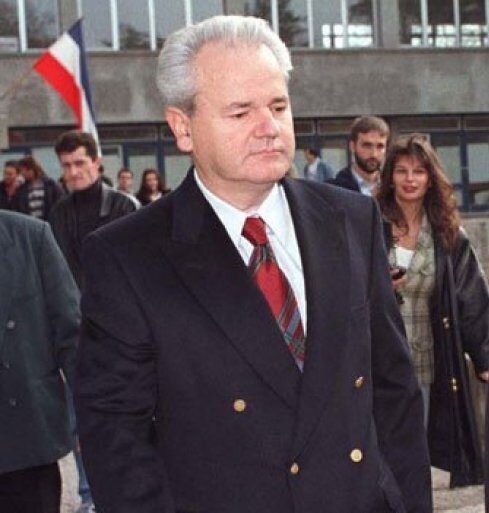
    At the same time, in the mid-80s, Slobodan Milosevic became the chairman of the Serbian Communists, who liquidated the autonomous regions of Kosovo and Vojvodina in Serbia and put his people there. And then he tried in every way to preserve unity in the country.

    But it didn't work out.

    Slovenia and Croatia were the first to declare their withdrawal from Yugoslavia. This was announced in June 1991. Slovenia separated almost bloodlessly.

    Then the entire civilized West quickly recognized the independence of this republic.

    You see - then it was possible to recognize independence, but now it is not.

    In addition, Europe warned Yugoslavia that it would cancel $1 billion in aid if they did not curtail armed operations to preserve the integrity of the state. That is, then they promised money if they stopped defending the integrity of the country, but now they promise money if they defend the integrity of their country.

    The Americans also played their role.
    If in the 80s the States still needed a strong Yugoslavia as a counterweight to the USSR and an example for the Eastern Bloc countries of how profitable it is to cooperate with the West, then in the conditions of the collapse of the socialist camp in a huge and independent state in the Balkans, the need disappeared.

    And in general, the Soviet Union helped the workers of the entire West with its existence alone, since their leadership had to, so to speak, allocate double rations to the workers, so that they, God forbid, would not sympathize with the USSR. .. although they sympathized anyway.
    After the collapse of the USSR, many problems for the bourgeoisie disappeared. Including flirting with Yugoslavia.

    ⏭ If Slovenia was lucky, Croatia has nothing to brag about.
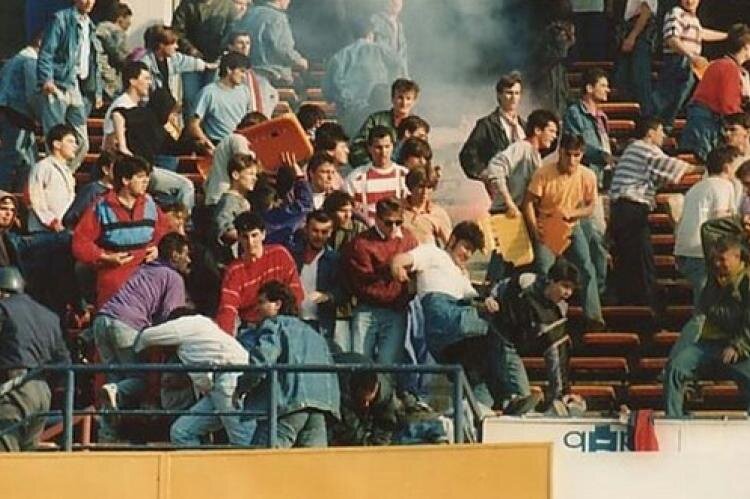
    In general, a lot can be understood about the relations between Serbs and Croats from one event: the “hate match” of 1990.


    Then the Serbian Red Star came to visit the Croatian Dynamo. The slaughter between the fans began before the game, and then moved to the football field. They fought both among themselves and with the police.

    But the captain of the Croatian Dynamo showed himself the brightest of all. He jumped and hit one of the policemen in the jaw. By the way, the guy was not a Serb, but a Bosnian. That match not only killed Yugoslav football, but also unleashed a civil war between the fraternal nations.

    Croatia grabbed weapons. But Serbian Krajina decided to leave Croatia itself. As a result, a war began that lasted 4 years. The city of Vukovar was nicknamed the second "Stalingrad", so terrible was the siege and bombing there.

    In 1992, the UN Security Council passed a resolution that this war must be stopped. The "blue helmets" (UN staff) arrived in Croatia and a temporary truce was established. Although, it must be said, their presence was useless.

    The war resumed in 1995. During Operation Storm, the Croats destroyed the Serbian Krajina. The seizure was accompanied by ethnic cleansing of the Serbs.

    It is interesting that back in 1994, the United States and Croatia signed an agreement on military cooperation. According to Croatian Foreign Minister Mate Granic, the United States advised the Croatian army on the offensive. And retired US generals helped prepare for the blitzkrieg on the spot.

    ⏭ Macedonia was the next to secede without any conflicts in September 1991.

    ⏭ But the most problematic of the Yugoslav republics was Bosnia and Herzegovina.
    It was inhabited by Bosnian Muslims — 44% of the population, Orthodox Serbs — 31% and Catholic Croats — 17%.

    In 1992, the republic's authorities declared independence, which was supported by Bosnians and Croats.
    However, the Serbs were against leaving Yugoslavia, boycotted the vote and created their own republic — Serbian. Yugoslavia with Slobodan Milosevic also supported them. The European Union and the United States added fuel to the fire, recognizing the independence of Bosnia and Herzegovina.

    Following this, the bloodiest conflict in Europe since World War II began. Over four years, 100 thousand people died in internecine slaughter, another 2 million became refugees. And this is out of a total population of 4.4 million people.

    Ethnic cleansing was carried out by everyone. Even concentration camps were created. And in each of them there were traces of monstrous torture and violence. But the European community portrayed the Serbs as the aggressors, because the Serbs in this multinational country were, in essence, like the Russians in Russia - a state-forming people who created a strong state. They were accused of striving to create a Great Serbia. That is, here is the reason.

    They were afraid of a strong state.

    For supporting the Bosnian Serbs and helping refugees, Yugoslavia was hit with harsh sanctions, which affected ordinary people, the elderly and children. Food prices increased 3,586 times. The sanctions were not lifted even when Milosevic closed the border between Serbia and the Republic of Srpska in 1994 to demonstrate to the West his desire for peace.

    Note the parallels between Yugoslavia and Russia. And what happened in Yugoslavia, Russia would have suffered if not for a strong leader who held the country together.

    In addition to humanitarian aid, the United States also supplied weapons to the Bosnians in besieged Sarajevo. Sources also say that weapons were smuggled by European countries through Croatia, and 20,000 foreigners fought on the side of the Muslims.

    The last straw, so to speak, for NATO were two things.

    The first is the massacre in Srebrenica, where Bosnian Serbs killed more than 8,000 Muslims. Interestingly, the Dutch peacekeepers did not even try to intervene. Although, of course, in this civil war, Serbs were massacred everywhere.

    There is information: Reasons why the peacekeepers were unable to resist: https://projectavalon.net/forum4/sho...=1#post1678042

    There is information "Srebrenica massacre". How the West created another fake "genocide": https://projectavalon.net/forum4/sho...=1#post1678130

    And the second point is the explosions in the Sarajevo market in August 1995.
    As usual, the Serbs were blamed, although there is still no evidence that the shells were fired from their positions.

    Later, independent experts will say that the explosion in the market looked like a planned provocation. Its goal is to create a pretext for open US intervention in the civil war in the Balkans.

    The peace agreement was signed in December 1995. NATO troops were brought in to control the borders - 60 thousand people, half of them Americans. The Serbs, who controlled almost 75% of the lands of Bosnia, made serious concessions and agreed to keep only 49%.

    ⏭ Kosovo.

    In the late 90s, the issue between Kosovo Albanians and Belgrade became acute.

    By that time, only Montenegro and Serbia remained in Yugoslavia, within which was the rebellious Kosovo.
    Kosovo's independence was declared back in 1991, but only Albania recognized it.

    The "Kosovo Liberation Army" was formed not only from nationalists of the former Yugoslavia, but also from mujahideen of Islamic countries.
    In the late 90s, its members were trained in Albania by instructors from the CIA and the British Special Air Service.

    In 1998, the militants launched a guerrilla war, although clashes had begun even earlier. After they began attacking police and civilians, Yugoslavia brought the army into Kosovo. In response, NATO began to put pressure on Belgrade.

    And here we need to understand an important thing: the Serbs did not start the war. They were trying to calm the uprisings that swept across their territory.

    Ethnic cleansing began again and a flood of refugees poured in - 230 thousand Albanians alone.

    Already in October, under pressure from NATO, the parties concluded a truce. Meanwhile, the alliance's planes patrolled the borders from the air. But in fact, instead of patrolling, they were collecting data: studying the infrastructure, air defense zones and the army's readiness to strike later.

    The pretext under which NATO began the invasion also looked dubious. Namely: when, after the massacre in Racak in southern Kosovo, the bodies of 45 Albanians were found, the West declared them civilians and victims of genocide. And the Serbs claimed that they shot militants dressed in civilian clothes.

    In any case, whatever it was, it served as a pretext to tighten the screws. NATO proposed that the Yugoslavs withdraw their troops from Kosovo.
    The Yugoslavs refused because it was their land, their territory, and the withdrawal of troops would mean the surrender of Kosovo to the Albanians.

    Well, in response, the United States and its vassals began bombing Yugoslavia.

    And what about Slobodan Milosevic? Trying to save himself and the country, on April 12, 1999, he asked to join the union of Russia and Belarus. However, Russian President Boris Yeltsin blocked this process.


    Slobodan Milosevic

    And what could Russia do at that moment?
    Although there is one heroic moment of Russian paratroopers, who took control of the only Kosovo airport Slatina, preventing NATO forces from landing there. The operation went down in history as the "throw-march to Pristina". Then our military blocked the airport and, in fact, went into conflict with NATO.
    But the British and Americans were simply afraid of our paratroopers and did not go into confrontation.

    Later, an English officer will say that even if there was an order, they would not have gone against the Russians.

    But, in fact, this is all that we helped the brotherly people with then.
    And let me remind you that in 1914, to show that we will not let the Serbs be offended, the Russian Empire declared mobilization, went against Austria-Hungary and fought until the revolution of 1917.


    In 2001, Slobodan Milosevic was transferred to the Hague as a war criminal. But he never lived to see the trial - he died in prison.
    In 2016, Milosevic was acquitted.
    Along with him, 142 other people were accused, 92 of whom were Serbs.

    Milosevic is, of course, a controversial figure. But his last address to the Russians, which was quoted on our Novosti, is interesting: “Russians! I am now addressing all Russians, the residents of Ukraine and Belarus in the Balkans are also considered Russians. Look at us and remember - they will do the same to you when you become disunited and weaken. The West, a rabid chain dog, will grab your throat.

    Brothers, remember the fate of Yugoslavia! Don’t let them do this to you.
    Why do you need Europe, Russians? It is hard to find a more self-sufficient people than you. It is Europe that needs you, but not you that needs it."

    Sounds like a testament, don't you agree?

    WHAT'S THE RESULT?
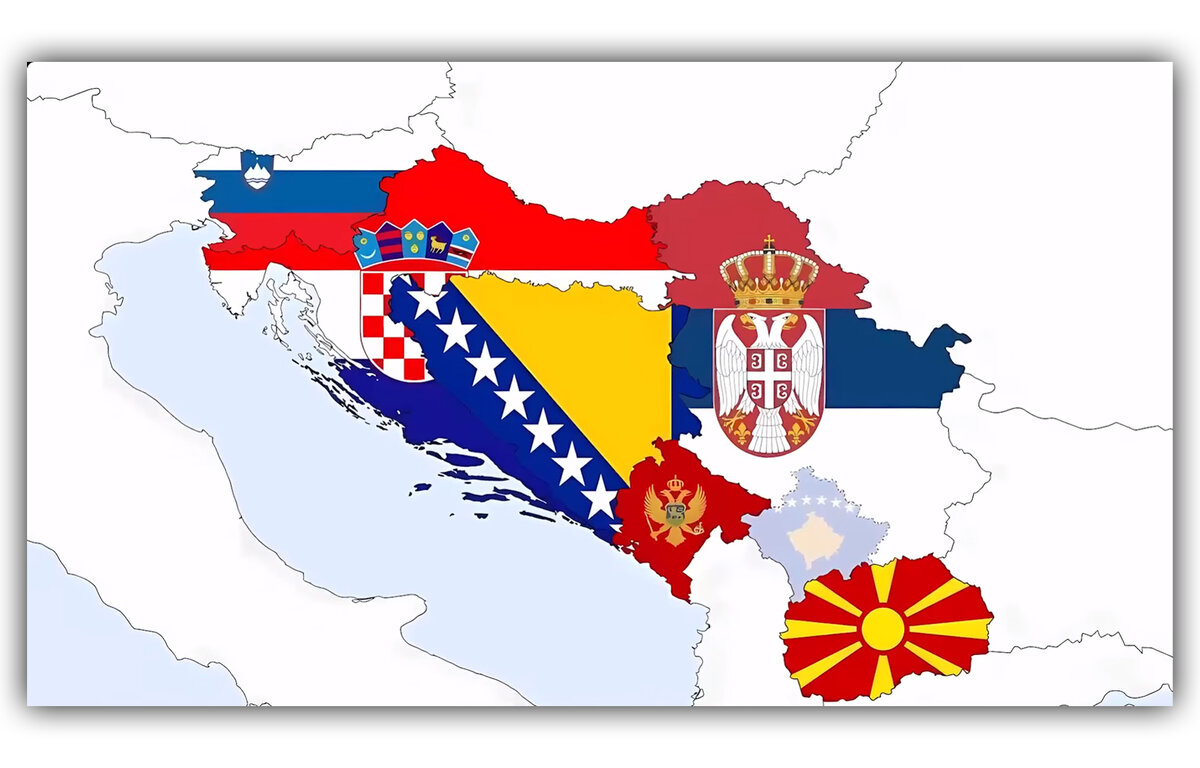
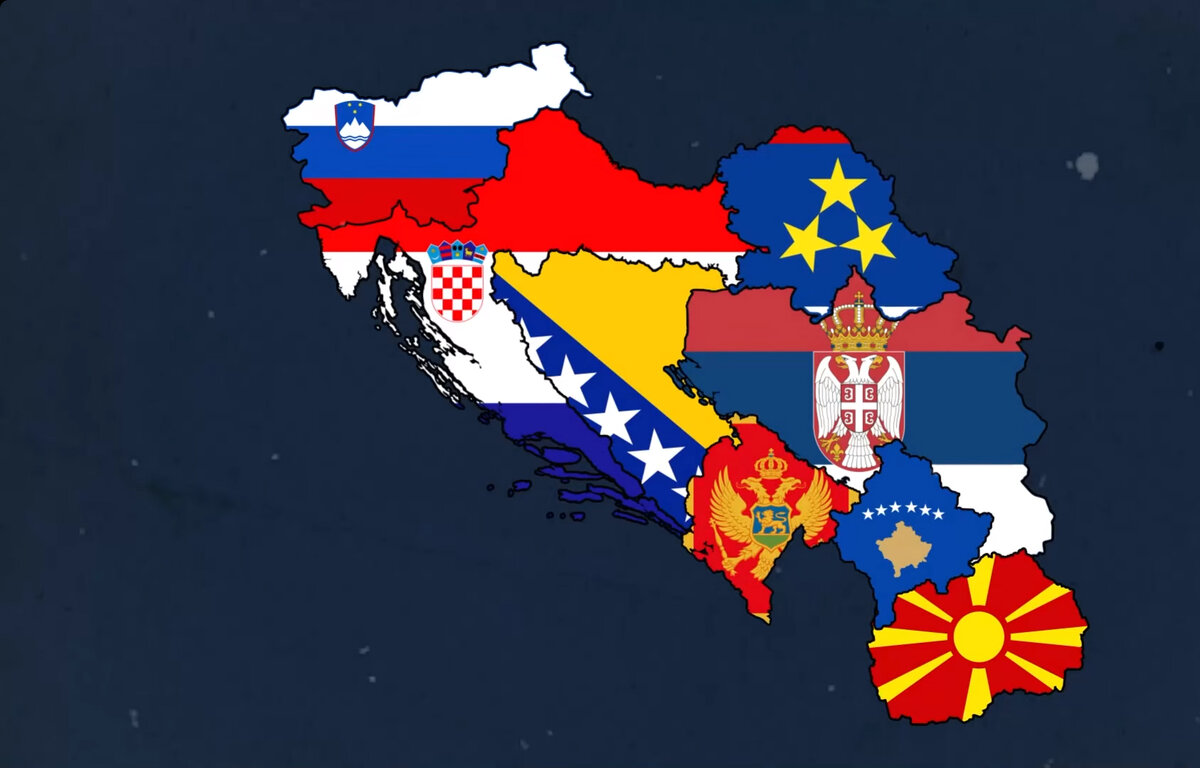
    Yugoslavia was torn apart into six independent states and unrecognized Kosovo.


    ❌ 4 of them: Slovenia, Croatia, Montenegro and North Macedonia are now full members of NATO.
    ❌ Croatia and Slovenia joined the European Union.
    ✔️ The West considers Serbia a pro-Russian link. It is the only country in Europe that has not joined the sanctions against Russia after the start of the operation in Ukraine.
    ❌ The Balkans continue to smolder, periodically reminding us of themselves.
    Last edited by Russian Bear; 24th July 2025 at 12:07.

  2. The Following 9 Users Say Thank You to Russian Bear For This Post:

    161803398 (23rd July 2025), aemay (23rd July 2025), bojancan (23rd July 2025), Ewan (24th July 2025), Ioneo (23rd July 2025), Michel Leclerc (23rd July 2025), sunwings (25th July 2025), syrwong (23rd July 2025), Vicus (23rd July 2025)

  3. Link to Post #2
    Russian Federation Avalon Retired Member
    Join Date
    6th April 2025
    Location
    Russia
    Language
    Russian
    Posts
    474
    Thanks
    79
    Thanked 1,409 times in 356 posts

    Default Re: Why Yugoslavia Was Destroyed? An Analysis of the True Purpose of Bombing the Slavic Country

    How one Russian soldier stopped a column of NATO tanks


    YUGOSLAVIA: KOSOVO: PRISTINA: Residents joyfully welcome Russian troops:


    In the history of the confrontation between Russia and the United States, there were cases when the world was on the brink of a global conflict. The authors of a special report talk about little-known details that have become iconic in history.

    On June 12, 1999, the world found itself on the brink of World War III, with the Russian Federation and NATO countries potentially participating. The conflict did not happen thanks to British General Michael Jackson, who refused to follow the order of American General Wesley Clark.

    Paratroopers at Slatina

    Airport At 7 a.m. on June 12, 1999, 200 Russian paratroopers in 15 armored personnel carriers and 35 vehicles occupied the only airport in Kosovo, Pristina Airport, Slatina. The risky operation was carried out without agreement with other parties to the conflict and allowed the Russian command to get ahead of NATO troops, who were also moving toward the airport, by several hours. Having occupied Slatina, the Russian leadership seized the initiative and declared its geopolitical interests in the Balkan region. For NATO, the maneuver of the Russian troops was a complete surprise. However, just 4 hours after the airport was taken under Russian control, British tanks and army jeeps appeared near it. British helicopters were circling in the sky, but were prevented from landing at the airfield by Russian armored personnel carriers rushing towards them as they attempted to land.

    Yugoslavia, 1999
    A column of NATO tanks was stopped by one man – a resident of the Kursk region, Alexey Dagadin.
    A NATO mechanized column with tanks at the head was approaching the location of the Russian paratroopers. Our guys noticed them:
    - Platoon, ready for battle! The Americans have arrived!
    - Ready for battle!
    - Ready for battle!
    - Ready for battle! – came the response from the paratroopers-comrades who had taken up arms.
    - Sight zero-three on the lead tank!

    Taking a grenade launcher, the Russian soldier stood up to his full height and pointed it at the tank moving first, and this gloomy English tank stopped.
    200 Russian paratroopers stood shoulder to shoulder with weapons.

    This episode has been included in many military textbooks, and in particular it describes how the commander of the Russian paratroopers climbed onto the armor of the main tank, hit the tank hatch with his bayonet to force them to open it, and threateningly commanded: "No, forward! Understood?" - and crossed his arms, showing the gesture "Stop!" (No, forward).

    The American commander of the NATO unit gave the order to open fire, but the English tank general declared that he would not start World War III and refused to follow the American's order.
    - Sir, I see a man in a military uniform, holding a grenade launcher.
    - What is he doing?
    - He's on the road, blocking our way, we can't get through, sir! And he's a Russian! A Russian soldier!
    - Listen carefully: shoot to kill! The Russians must be destroyed!

    They will start calling the Kremlin from America, and the White House from the Kremlin, diplomats will go crazy, and the military will pull the trigger, but NATO tanks will not budge.
    ***
    This episode will be studied in history as the birth of a new Russia because even if we could not do anything for the Serbs, in this episode everything was done correctly. We have shown that Russia is strong in spirit and a great country.
    ***
    From the memoirs of an English general: "There were only 200 Russians, and we had orders to capture the airport at any cost, even if we had to destroy them. But I saw their determination to fight to the end. And I would not want to be the person who unleashes the "Third World War" And the NATO members decided not to attack, but to encircle the Russians"

    The moral of it all - 200 brave soldiers stood against an entire army, against tanks, and then hunger and cold. BUT they fulfilled their duty to the end, did not retreat, did not surrender.
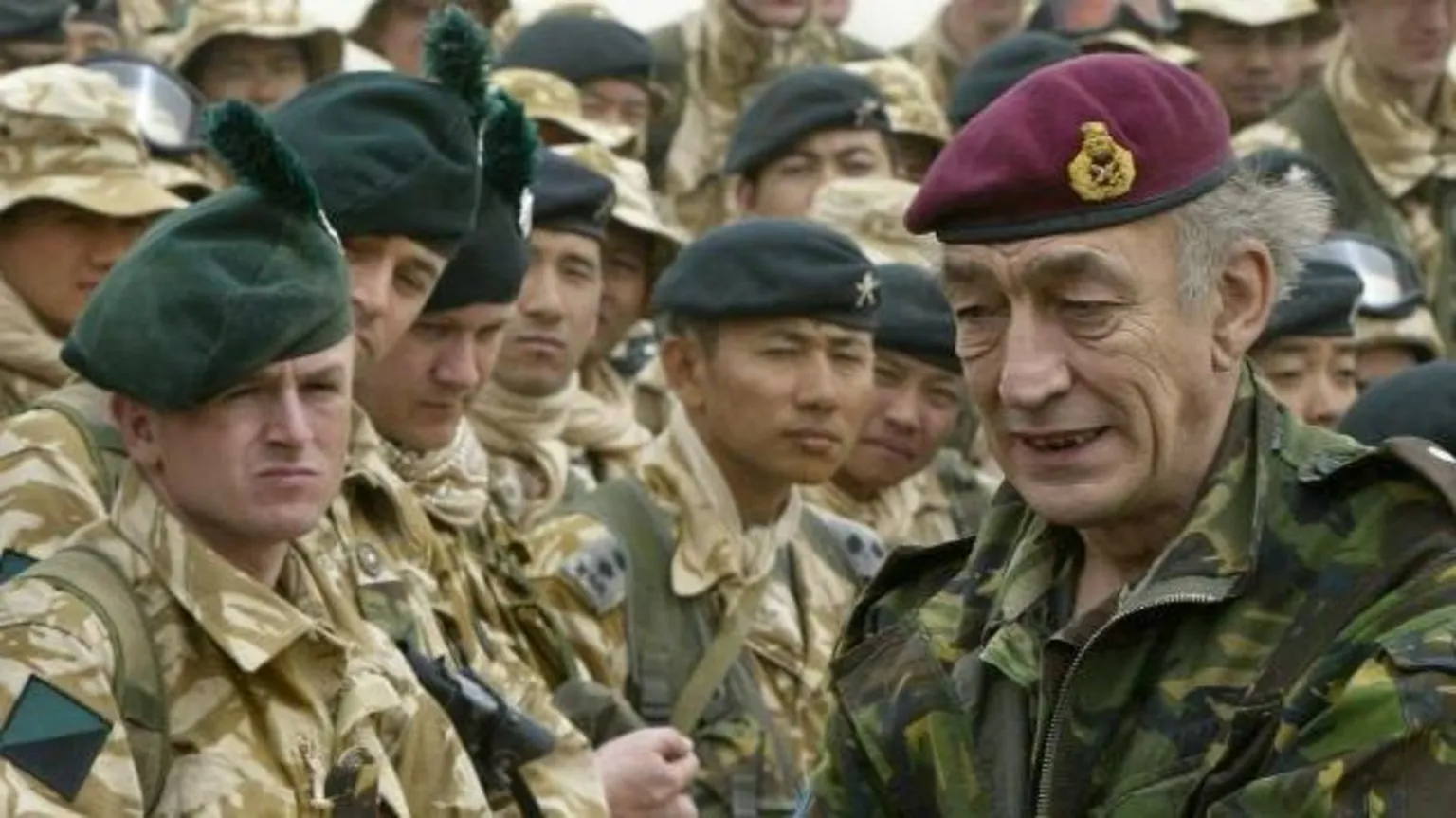

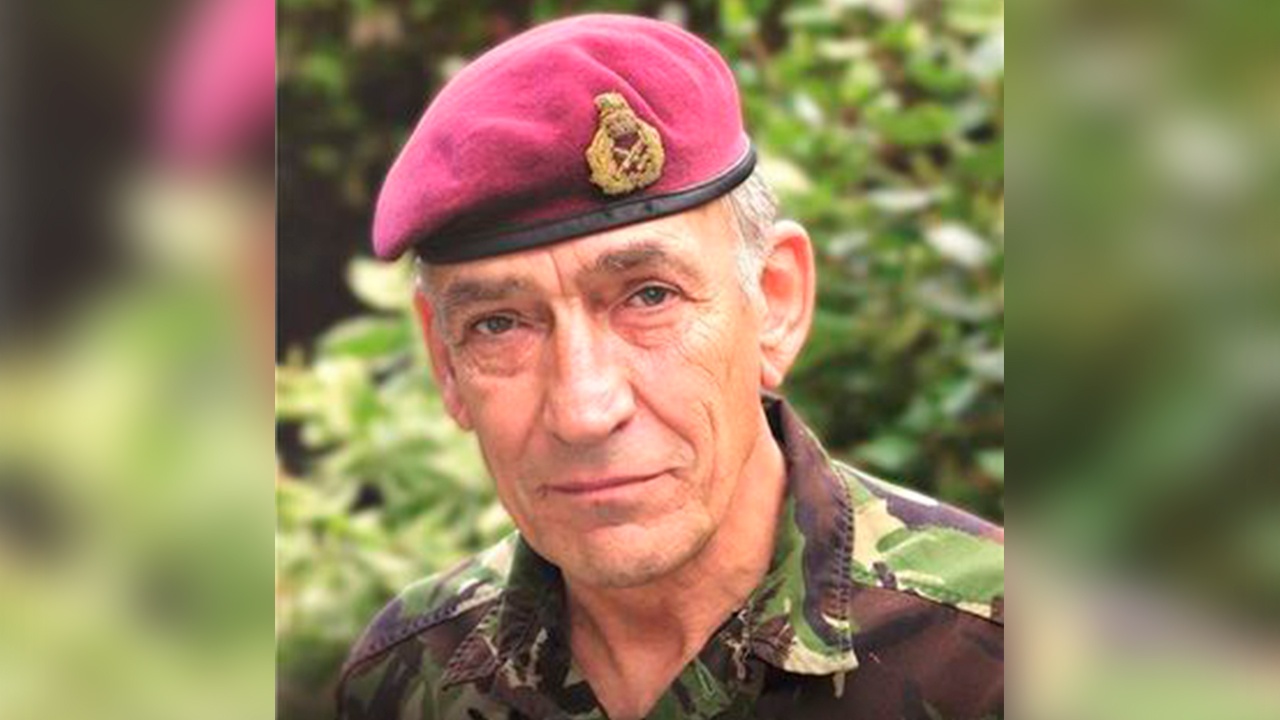
    The head of the British army, General Michael Jackson

    British General Michael Jackson
    The first to make contact with the Russians were Norwegian special forces, who reported the situation to the commander of the NATO force group, British General Michael Jackson. According to the paratroopers' recollections, upon arrival at the airport, Jackson stepped ahead of the British tanks and began gesturing for the vehicles to move toward their checkpoint. Russian soldiers aimed grenade launchers at the vehicles, and Senior Lieutenant Nikolai Yartsev warned the general that if the provocation continued, his men would open fire. The military leader realized that the situation was difficult and stopped the provocation. On the evening of June 12, Michael Jackson went to Pristina, where he met with journalists. After the press conference, he went to see the commander of the Russian paratroopers, Lieutenant General Viktor Zavarzin. In his memoir, "Soldiers," Jackson wrote that the meeting took place in one of the airport terminals. He and Zavarzin drank a bottle of whiskey, after which there was a "warming" in relations.

    I am not going to start a war for you
    On the morning of June 13, the commander of the combined NATO forces in Europe, US Army General Wesley Clark, arrived at the headquarters of the Balkan group. At the meeting, the American was informed that the Russians were isolated and in such conditions could not receive assistance by air. Therefore, it would be wiser to wait for a diplomatic solution to the conflict, which had already begun. Clark rejected the proposed plan and ordered to block not only the airport building, but also the runway, while claiming that he was supported by NATO Secretary General Javier Solana. Jackson did not agree with the new plan, and in the heat of the argument, he told his American colleague: "I am not going to start World War III for you." According to the plan of the Russian military command, when the paratroopers came into fire contact with the enemy, it was planned to sign an alliance with the leadership of Yugoslavia and begin military action with NATO throughout Kosovo, which would lead to a full-scale world war. The general's words were confirmed by the famous British singer James Blunt, who served in the army and participated in the events around Slatina airport. In one of his interviews, he recalled: "General Wesley Clark's direct order was to suppress them. Clark used unusual expressions for us, such as destroy." As a result, Jackson only agreed to surround the airfield without moving towards the runway. Wesley Clark's order was not carried out, but the United States began to put pressure on Bulgaria, Hungary, and Romania, which refused to allow Russia to use their airspace to transport reinforcements to Kosovo. Russian troops had to be transported by sea to Greece, after which columns of paratroopers made a forced march through Macedonia to Pristina. Since mid-October 1999, Slatina airport has again begun to receive and send passenger flights.


    "We stopped NATO tanks with one grenade launcher": a participant in the legendary "throw to Pristina" revealed details of the operation
    "Komsomolskaya Pravda" found Lekha the grenade launcher operator - the same paratrooper who many years ago, together with the platoon commander, went out to intercept a column of British armored vehicles "disappearing beyond the horizon" and did not allow them to occupy the Slatina airport near Pristina
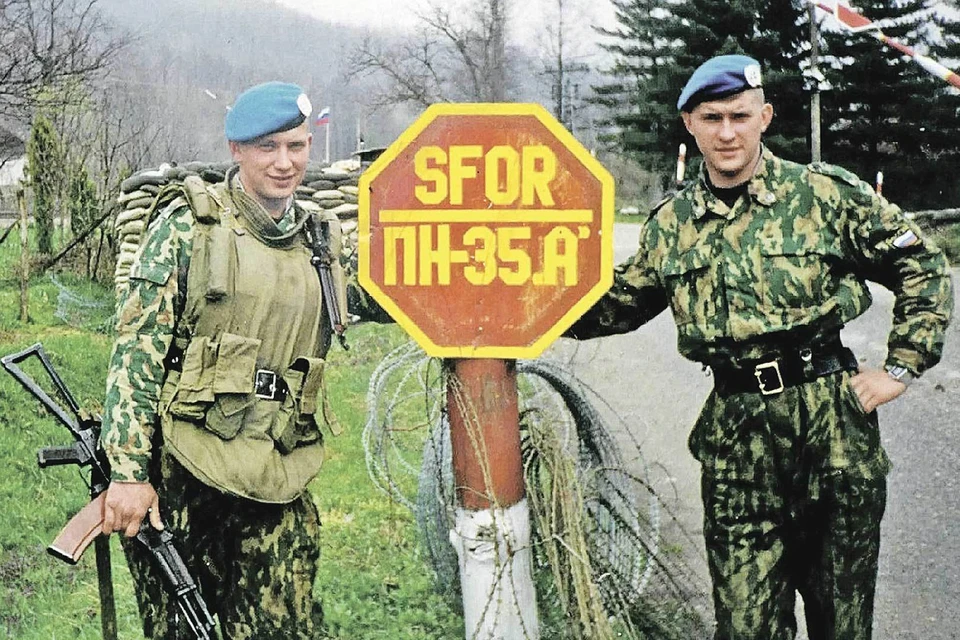

    Lekha the grenade launcher (he is on the left in the photo) stood in the way of the British armored column.

    One of the participants in that legendary "throw to Pristina" was paratrooper Aleksey Dogadin, who later, thanks to journalists, became known as Lekha the Grenade Launcher. There is a video in which Aleksey and his platoon commander, Senior Lieutenant Dmitry Zamiralov, stood up together and went to meet a column of English tanks... And the tanks stopped.

    Now Lekha the Grenade Launcher is already Aleksey Ivanovich, a serious boss, the chief miner of one of the largest mining and processing plants. But, of course, he does not forget his "throw to Pristina" and his comrades in arms.

    Journalists called him to find out the details of the landing operation many years later.

    "LIKE IN 1945"
    - When did you understand what task you would have to solve on June 12, 1999?

    - The task was set at night. We were moving quickly, when the APC tire punctured along the way, I remember, we changed it in a few minutes, like in Formula 1. We understood where and why, already approaching Belgrade.

    - Nothing clicked?

    - No, we were promised that we would be quickly replaced when we took the airport. In Belgrade and especially in Pristina, the Serbs met us, like in 1945. They literally threw flowers at the armor. They shouted: "Russia! Russia!"

    We understood the importance and danger later, when we reached the empty Slatina airport (the Serbian army had just left there, we saw their columns driving towards us with resentment and sadness along the way (the Serbian army retreated)). When a couple of hours later a British tank column appeared...

    - And you were straight from a forced march.

    - No, we even managed to dig in during those two hours. But we clearly realized that there were only 200 of us paratroopers and we were 2,000 kilometers from the Motherland. I don’t know how many tanks the British had, but their column was going over the horizon...

    We were given the task of stopping these tanks and keeping them 300 meters away from us.

    Then my platoon commander Zamiralov simply stood up and went to meet them. Well, I followed him. I took a grenade launcher just in case.
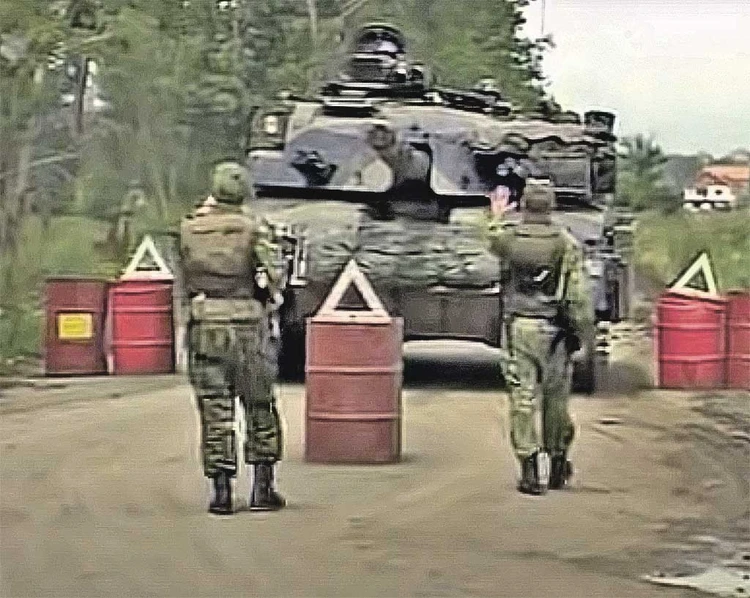

    That very moment when grenade launcher Lekha (left) and his commander stop a column of British tanks.

    "I HAD TO KNOCK ON THEIR HATCH"

    - And the British stood up?

    - They opened the hatches and looked at us in surprise and intently for a few seconds. And we - at them. Then they closed the hatches and, apparently, began a meeting with their command. This went on for many, many minutes. To be honest, I had only one wish - if something started, then before they started killing us, I wanted to take as many opponents as possible with me to the afterlife. In a rage, I climbed onto their tank and knocked on the hatch, interrupting their conversation, I asked: “Where is your commander?” We were later told that in those moments the fate of the whole world was being decided, because the British had orders to suppress us. And they could have easily wiped us out in half an hour.

    But we won this confrontation psychologically.

    - When did you understand this?

    - Later, when many journalists came to Slatina. And it was no longer convenient to fight us. But they didn't manage to replace us quickly, as they promised. The West blocked the flight of a plane from Russia with fighters to replace us. They were able to do this only two months later, by water, through Greece.

    - How did you hold out during this time?

    - Normally. Now a lot of things are surrounded by fables. But, for example, the fact that we covered empty helicopter fuel tanks with camouflage net and wrote "S-300" on them in large letters is true.

    WE DID WHAT WE COULD
    - Did you receive a medal "For Courage" for that forced march?

    - Yes. We did everything we could on the ground, we did it expertly, all 200 of us. But after returning to our homeland, I did not renew my contract. I thought that my luck limit could be exhausted at some point... And many participants in that "throw to Pristina" later became Heroes. My friend Alexander Lebedev died many years ago in Chechnya, as part of the 6th company, he blew himself up with a grenade while surrounded by the enemy. (He blew himself up with a grenade to take his enemies with him to the next world, because he did not want to surrender). Hero of Russia posthumously...

    We meet with the surviving guys. We remember those days. Two years ago we went to Bryansk, to the grave of the company commander. Tomorrow we will meet in Ryazan.

    - Did any of those 200 paratroopers go to the SVO?

    - Yes

    - Did any of them become Heroes there?

    - You know, all the guys who are now fighting in the SVO, they are already Heroes.

    Last edited by Russian Bear; 24th July 2025 at 10:52.

  4. The Following 4 Users Say Thank You to Russian Bear For This Post:

    Ewan (24th July 2025), Michel Leclerc (23rd July 2025), syrwong (23rd July 2025), Vicus (23rd July 2025)

  5. Link to Post #3
    Russian Federation Avalon Retired Member
    Join Date
    6th April 2025
    Location
    Russia
    Language
    Russian
    Posts
    474
    Thanks
    79
    Thanked 1,409 times in 356 posts

    Default Re: Why Yugoslavia Was Destroyed? An Analysis of the True Purpose of Bombing the Slavic Country

    Sorry for the inaccurate translation, I correct errors as I find them. Translated via Google translator from Russian to English.

  6. The Following 2 Users Say Thank You to Russian Bear For This Post:

    Ewan (24th July 2025), Michel Leclerc (23rd July 2025)

  7. Link to Post #4
    Netherlands Avalon Member 9ideon's Avatar
    Join Date
    9th June 2017
    Location
    Inside my Skin!
    Language
    Dutch
    Posts
    1,378
    Thanks
    2,865
    Thanked 8,348 times in 1,338 posts

    Default Re: Why Yugoslavia Was Destroyed? An Analysis of the True Purpose of Bombing the Slavic Country
    Quote The first is the massacre in Srebrenica, where Bosnian Serbs killed more than 8,000 Muslims. Interestingly, the Dutch peacekeepers did not even try to intervene. Although, of course, in this civil war, Serbs were massacred everywhere.
    You are very wrong here, see I was in Bosnia in 1993, worked on G2 division desk.

    The Canadians were sick and tired of Srebrenica, simply because they were not allowed to have fully equipped tanks (no barrels) and other weapons they needed for securing Civilians in that region, so they did not further their mandate when it expired. Nobody wanted to actually take over that region because it was a powder keg.

    Our Royal Army had just completed the forming of the Airmobile Bde, therefore they were offered to the UN for deployment so they could get experience in a Warzone.

    In 1993, the Dutch were given 3 options, Lifeline Sarajevo, Mostar or Srebrenica, I have seen these docs with own eyes. The Dutch were eventually tricked into accepting Srebrenica. They were send with light weapons, "Apc's" with faulty equipment which could actually kill the gunner if the .50 was used in turn (it would kill the gunner by splitting him in half).

    The Dutch were also promised air-support in case of calamities, the Un, under the command of the US (they were not officially there, but they were and ran the show, I asked one of the Officers why, he said literary to keep an eye on things). In 1993 we already knew that Srebrenica was going to go under and that the ramifications were going to be bad.

    After I rotated out, couple Months later, our Airmobile Bde moved in to replace the Canadians.

    When Gen. Mladic advanced towards where the Dutch were and started killing (which happened on both sides) People the Commanding Officer, Lt-Col Karremans asked for Airsupport so he could pressure the Bosnian-Serbian Army into falling back. It was denied and the Dutch were betrayed.

    When Gen. Mladic approached our troops he gave them 2 options in negotiation, fight and die or surrender.

    Since our troops only had light arms and no way to counter tanks for instance, he surrendered, the Serbs killed all Muslims and Bosnians they could gather.

    Lt-Col Karremans was vilified because he choose his Men to live over betrayal and certain death (There's a famous pic with Karremans drinking Champagne with Maldic, he was made to do this by Mladic, this was used later on by Msn outlets to slander the Dutch). This always stung me because the same People who promised support, than betrayed on that promise and eventually lead a Msn campaign against us and Lt-Col Karremans were the real culprits to blame, but like always the truth got buried.

    Croats, Bosnians, Serbs, they all committed heinous crimes against Humanity, do not make any mistake about that, Bosnians had the 7th Suad Alic Bde, a Mujahideen brigade that would skin prisoners alive, especially mercenaries, and throw 'm to the Pigs. The Croats had the HoS, Croatian SS units (during that war) who did unspeakable things like wiping out villages, cutting open pregnant Women and hung 'm up by the armpits so they could see and die with their unborn at their feet, Serbs had Arkan Tigers and other units who did similar things.

    Part of my job was to process this from reports into a database on disc (working with frikkin' floppies still) so there could be arrest later on in relation to war-crimes, all 3 nationalities were in it.

    One of the other mistakes made was that Bosnians were all Muslim, they were not, they were compiled of Bosnian Croats, Serbs and Muslims, so iow, Catholics, Orthodox and Mussulmen fought for their country and were eventually betrayed more than they were helped.

    I was on a reconnaissance once which brought me to Tuzla, when we were eating there, this was a Bosnian city, lorry trucks with coffins would drive by during the day, in the evening in a restaurant, 4 Bosnian soldiers ate there as well and started playing the guitar, singing Ave Maria, still one of my favourite songs till this day.

    Obviously Western Msn blamed it all on the Serbs, which was a lie too, but they (Bosnians, Croats and Serbs) were all in the Killing game make no mistake about that.

    In any case, before making statements like you did, perhaps try to get the background story next time, your comments about this Srebrenica thing are insulting.
    Last edited by 9ideon; 23rd July 2025 at 17:42.
    Democracy is a well organised Anarchy in which too many People have something to say about nothing!
    --9ideon--

  8. The Following 3 Users Say Thank You to 9ideon For This Post:

    Ewan (24th July 2025), Johnnycomelately (23rd July 2025), Michel Leclerc (23rd July 2025)

  9. Link to Post #5
    Russian Federation Avalon Retired Member
    Join Date
    6th April 2025
    Location
    Russia
    Language
    Russian
    Posts
    474
    Thanks
    79
    Thanked 1,409 times in 356 posts

    Default Re: Why Yugoslavia Was Destroyed? An Analysis of the True Purpose of Bombing the Slavic Country
    I was not a witness to what happened there, so I analyze different information resources and began to check this topic in detail. Indeed, there are different opinions on this matter.

    There is information that I found:
    Dutch peacekeepers in the Srebrenica area. 1994-1995.

    In July 1995, when Bosnian Serb forces under the command of Colonel General Ratko Mladic decided to capture the Srebrenica enclave, the Dutch battalion that was based there was significantly inferior in numbers and was too poorly equipped to repel the more armed Bosnian Serb troops. The battalion was also denied air support, since the Serbs threatened to kill the 30 peacekeepers captured in response. Mladic met with the commander of the Dutch battalion, and it was decided that the enclaves would be handed over to the Serbs. Well, after that, Bosnian Serbs entered the enclave and events occurred, better known as the events in Srebrenica. By the way, the Dutch themselves are blamed for what happened, saying that if they had not left, many Bosnian Muslims would still be alive today.

    But the Hague court found the Netherlands guilty of the deaths of people in Srebrenica (International Criminal Court).
    https://www.rbc.ru/politics/16/07/20...794760d3d4004d

    "I was stepping on the dead that were lying around." Why the Serbs shot 8,000 Muslims in Srebrenica


    Journalists inspect the site of the death of Muslim soldiers in Srebrenica, 1996

    The Srebrenica massacre was the worst war crime in Europe since World War II. In just a few days in July 1995, Serbian troops executed thousands of Bosnian Muslims, not out of anger but on orders from above: “The people in front of us were ordered to turn their backs... and we shot at them. We were ordered to shoot.” Gazeta.Ru explains why Serbian troops carried out mass executions of Muslims while Dutch peacekeepers drank with Serbian commanders.

    The Siege
    Srebrenica is a small town hidden among the forests and mountains in eastern Bosnia. In Yugoslavia, it was known as a popular resort, like the Czech Karlovy Vary or the Soviet Kislovodsk. In fact, there was nothing strategically important about the city except its location: it was on the border with Serbia and at the same time connected a chain of enclaves of the Republika Srpska, a self-proclaimed state on the territory of the former federal republic of Bosnia and Herzegovina, led by Radovan Karadzic.


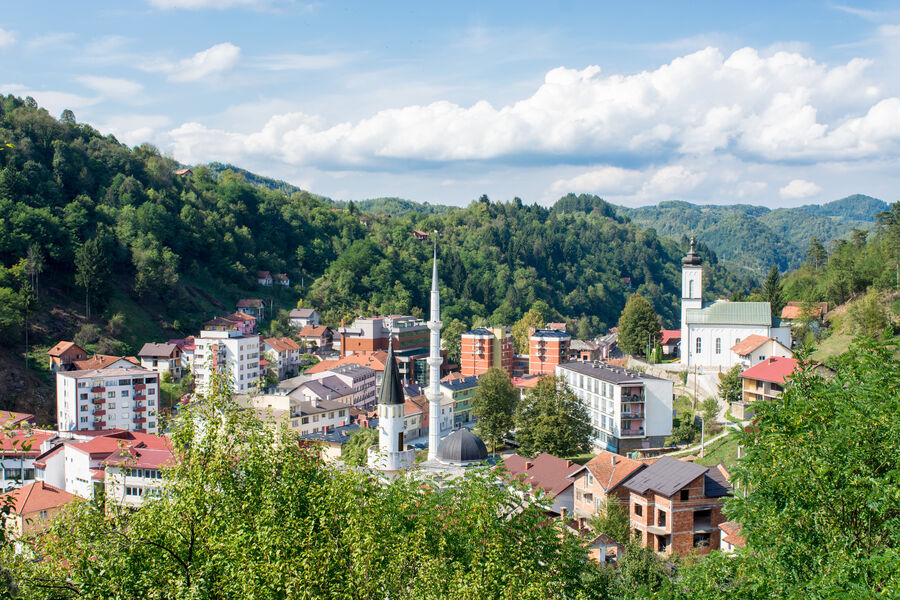
    View of the town of Srebrenica in Bosnia and Herzegovina

    When Yugoslavia disintegrated along the borders of the republics, a huge number of Serbs found themselves on the territory of the new states and tried to secede from them. In Bosnia, the problem was especially acute: if the relations between Serbian nationalists and Croats were simply hostile, then the Bosnian Muslims were often called Turks by the Serbs. The Turks are considered the existential enemy of the Serbian people, the organizers of slavery and genocide during the Ottoman occupation.

    Serbian nationalists did not dream of building camps for Muslims like Auschwitz, but they did not intend to live under their rule either.

    Without Srebrenica, the Republic of Srpska could hardly exist, and therefore in 1992, Serbian militias demanded that the Muslim residents, who made up 73% of the population, immediately go out with their belongings. They refused, and the Territorial Defense Forces under the command of Naser Oric, later absorbed into the Bosnian army, took up a perimeter defense in the enclave surrounded by the Serbs. A long blockade began, accompanied by starvation of the civilian population, since the Bosnian authorities were categorically against evacuation, which would de facto fulfill the demands of the Serbs. The troops staged regular skirmishes and tried to occupy as much territory as possible, while committing regular shelling of settlements and mass war crimes.

    It is difficult to judge who was more guilty of this, but even the French general Philippe Morillon, one of the UN commanders in Yugoslavia and clearly not a Karadzic voter, later noted at the trial the massacres of Serbs by Muslims and believed that this was one of the main motives for the subsequent massacre.

    The Fall of Srebrenica
    Gradually, the Serb forces gained the upper hand, taking village after village from the Bosniaks, tightening the siege. A former Serbian Red Berets fighter explained the strategy after the war: “We needed them to surrender, but how do you make someone surrender in a war like this? Starve them. So we realized very quickly that what we really had to worry about was not the weapons being smuggled into Srebrenica, but the food. They were really starving there, so they sent people to steal cattle or harvest crops, and our job was to find them and kill them.”

    In the spring of 1993, the UN Security Council passed Resolution 819, demanding the creation of a safe zone in Srebrenica, and sent in UN troops, including a Canadian battalion, to disarm both sides. It failed, of course, but an uneasy ceasefire was established around the enclave for two years. At the same time, no humanitarian corridor was opened into the city, and each convoy with supplies had to get there with great difficulty. The Dutch peacekeeping battalion, which replaced the Canadians, also found itself in the same situation with the besieged. Its soldiers did not go hungry, but due to a shortage of fuel, they switched to foot patrols, and the Serbs often did not let those who went on vacation back.


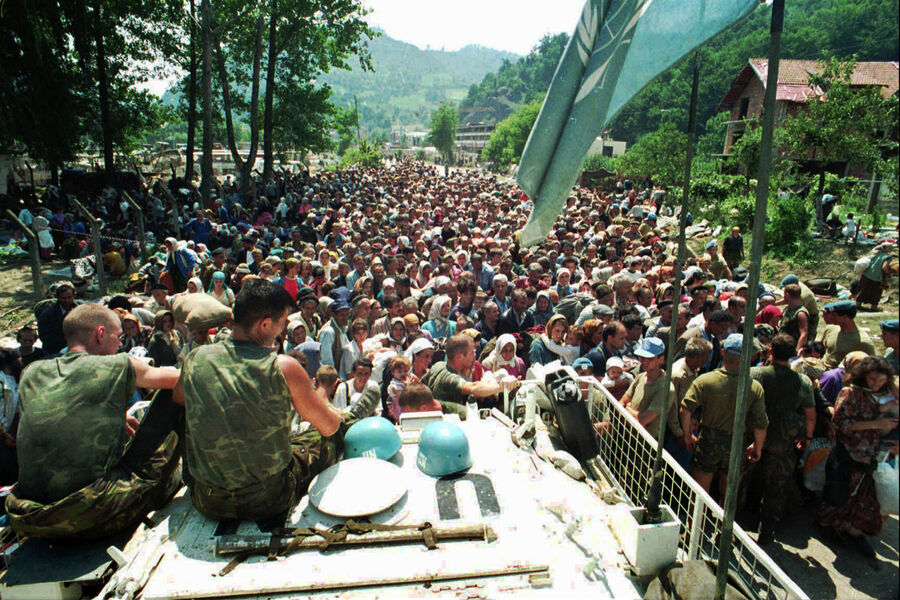
    Muslim refugees from Srebrenica and Dutch UN peacekeepers near the village of Potocari near Srebrenica, 1995

    In March 1995, the head of the Republika Srpska, Karadzic, issued Directive No. 7:

    "Complete the physical separation of Srebrenica from Zepa as soon as possible, preventing even communication between individuals in the two enclaves. By planned and deliberate combat operations, create an unbearable situation of complete insecurity without hope of further survival for the inhabitants of Srebrenica."

    On July 6, a full-scale offensive on the city began. The Dutch observation posts were not equipped for defense, and so the soldiers, having unsuccessfully tried to frighten the Serbs by shooting over their heads, either retreated into Srebrenica or let them pass without a fight. The Bosnians even tried to create a "blocking detachment" for the Dutch, erecting a barricade in their path and demanding protection. When the Dutch tried to drive around it in an armored personnel carrier, one of the locals threw a grenade at it.

    The Bosnian troops were unable to resist, having been decomposed by years of siege. On July 11, late at night, the remnants of the 28th Division (about 7,000 soldiers) broke through to Tuzla, along with adult men who had joined them. The column was subjected to continuous attacks and shelling along the way, so that only a third of it was able to reach Bosnian-controlled territory. The rest were killed or captured.

    "We were ordered to shoot"
    It was on July 11 that the massacre in Srebrenica proper began. The killings of Muslim civilians had been ongoing before this, but were not systematic and were generally "balanced" by the Bosnian reciprocal actions. But with the fall of the enclave, the situation changed radically.


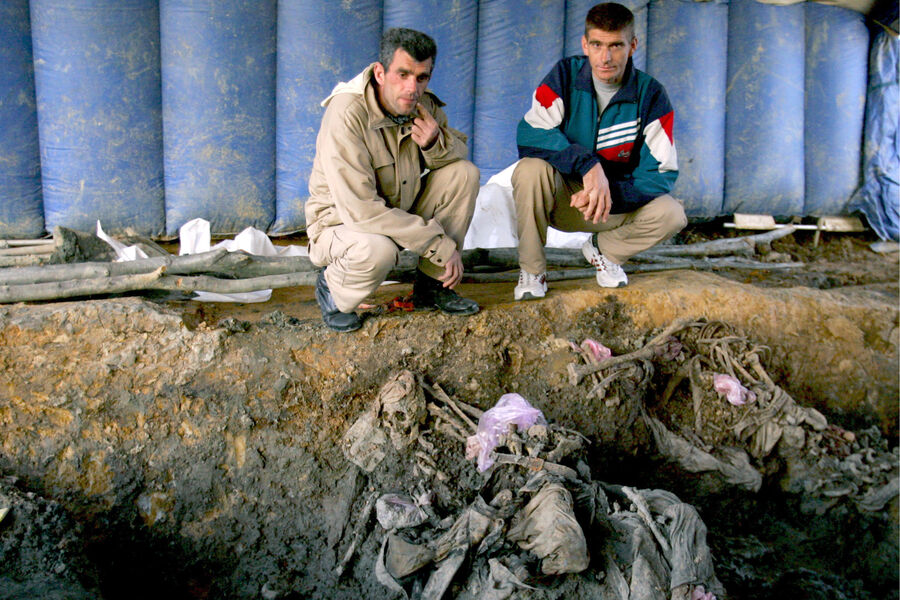
    A mass grave of those killed in the Srebrenica massacre in the village of Snagovo near Zvornik, Bosnia and Herzegovina, November 15, 2006

    In the occupied territory, the Serbs began to round up men of military age, and this category often included people from 14 to 70 years old. Buses of refugees began to leave Srebrenica, and the Serbian troops stopped each of them, detaining the men, suspecting that they were fleeing disguised fighters. The same applied to all those who joined the 28th Division, which was breaking through. "These are hardened and cruel criminals who will stop at nothing to avoid being captured," said Serbian General Milan Gvero.

    In the eyes of the Serbs, these were not refugees or even a retreating army, but executioners and murderers who were now fleeing from retribution.

    Having cleared the territory of armed groups, the Serbs began to exterminate the prisoners - mainly these were well-organized mass shootings. As a rule, people were taken to empty schools and warehouses, their hands were tied, and then they were shot with machine guns. Some received only light wounds and, after waiting out the execution, tried to get out of the room:

    “After the shooting, I felt a strange warmth coming from the blood covering the concrete floor, and I stepped on the dead people lying around. But there were men (only men) who were still alive, only wounded, and as soon as I stepped on them, I heard a scream, a groan, because I tried to move as quickly as possible. It seemed to me that people had already left their bodies, I felt the bones of people who were hit by bursts of bullets or shells, I could feel their ribs breaking. Then I got up again and continued walking,” said witness K, who testified at the tribunal.

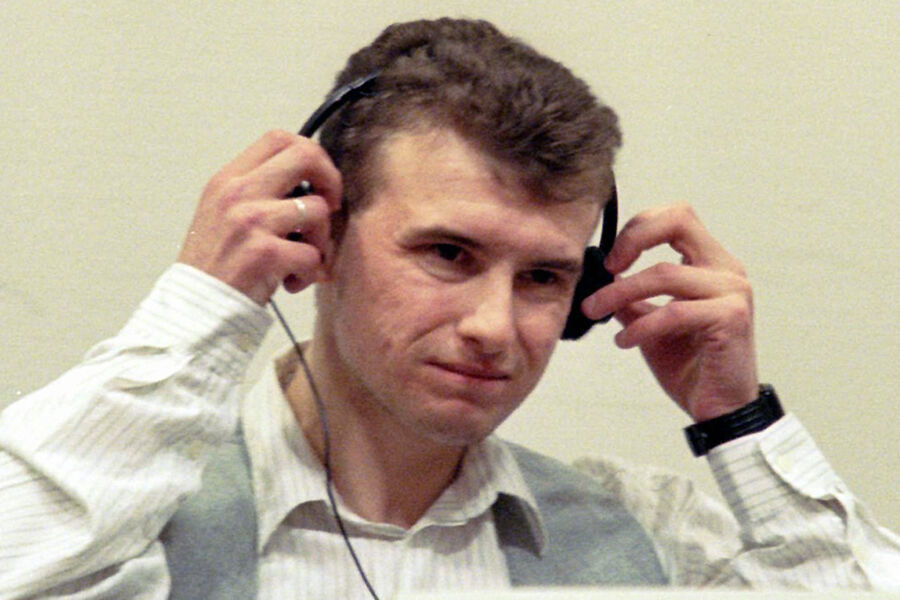
    Drazen Erdemovic, one of the Serbian soldiers who later confessed at the tribunal for the former Yugoslavia, explained how it happened in the village of Branjevo: "The people in front of us were ordered to turn their backs... and we shot at them. We were ordered to shoot."


    Drazen Erdemovic during the Yugoslav War Crimes Tribunal in The Hague, 1996

    An anonymous witness, Q, who also testified at the trial, survived the massacre.

    “When they opened fire, I threw myself to the ground… one man fell on my head. I think he was killed instantly. I felt hot blood gushing over me… I heard another man screaming for help. He begged them to kill him. And they just said, ‘Let him suffer. We’ll kill him later,’” he said.

    Survivors of the shootings in the fields recalled that while the executions were still going on, earthmoving equipment was working nearby, preparing mass graves. These graves, clearly visible from the air, attracted the attention of the international community, which had until then been oblivious to Srebrenica, following the siege of Sarajevo.

    A piece of paper won’t stop a tank
    The mass murder, which claimed some 8,300 lives, triggered NATO’s massive bombing campaign, Deliberate Force. In less than a month, the Bosnian Serb forces suffered a severe defeat, which forced Serbian President Slobodan Milosevic to make peace and sign the Dayton Accords. A confederate state was created in Bosnia, where the Republika Srpska received extremely broad autonomy, for example, one could be a citizen of the Republic, but not of Bosnia and Herzegovina. In essence, the Serbs won the war, since they fulfilled the minimum program and did not fall under the rule of the Muslim majority.

    The Srebrenica massacre, in addition to the human losses, dealt a catastrophic blow to the UN and the system of international law.

    The UN Security Council declared the city a security zone and sent troops to protect it. However, their mandate allowed the use of weapons only for self-defense, and the number of troops and, most importantly, their weapons, were inadequate for defense against Serbian troops.

    The commander of the Dutch Battalion, Major Tom Karremans, was heavily criticized in his homeland after the war for failing to carry out his assigned task.

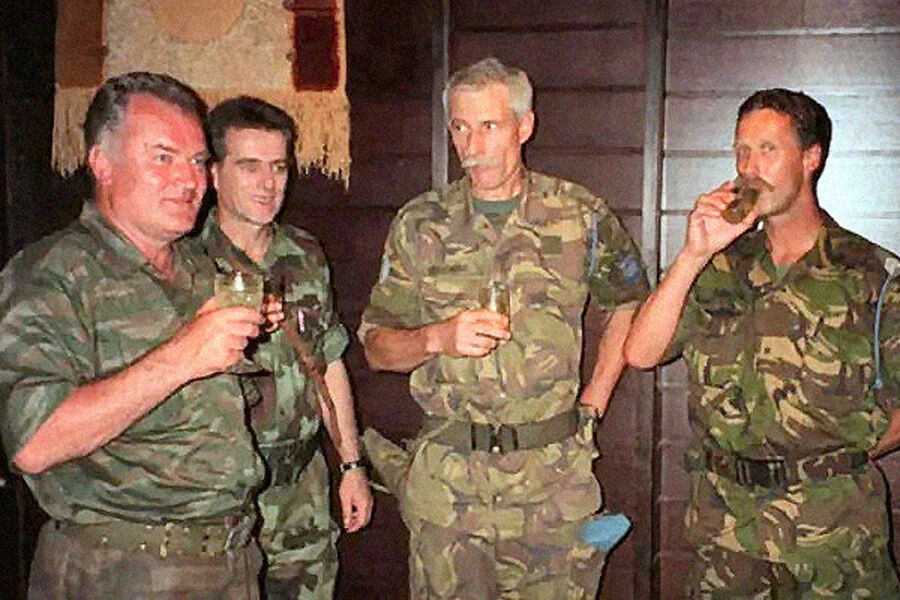
    The West was particularly outraged by the open fraternization of the peacekeepers with the Serbs - there is even a photo of Karremans raising a toast with Ratko Mladic, the commander of the army of the Republic of Srpska, after the fall of Srebrenica.


    It is not known what they drank to, but the tribunal for the former Yugoslavia subsequently sentenced Mladic to life imprisonment for genocide.


    Karremans (centre) drinks with Mladic (left) and other Serbian officers

    But Karremans wrote a whole book, “The Riddle of Reality” (Een puzzel van de werkelijkheid), in which he categorically denies accusations of cowardice and inaction. In his opinion, his unit was given an impossible task, and its actions were subject to inadequate, artificial restrictions, such as the requirement to “shoot only in self-defense.” His requests for reinforcements were ignored, and the airstrikes that had begun on advancing Serbian columns were stopped after threats to shoot 30 captured Dutchmen and attack UN facilities.

    So, faced with a choice - to heroically die senselessly for no one knows why and against orders, or to drink in pleasant company - the major chose the latter.


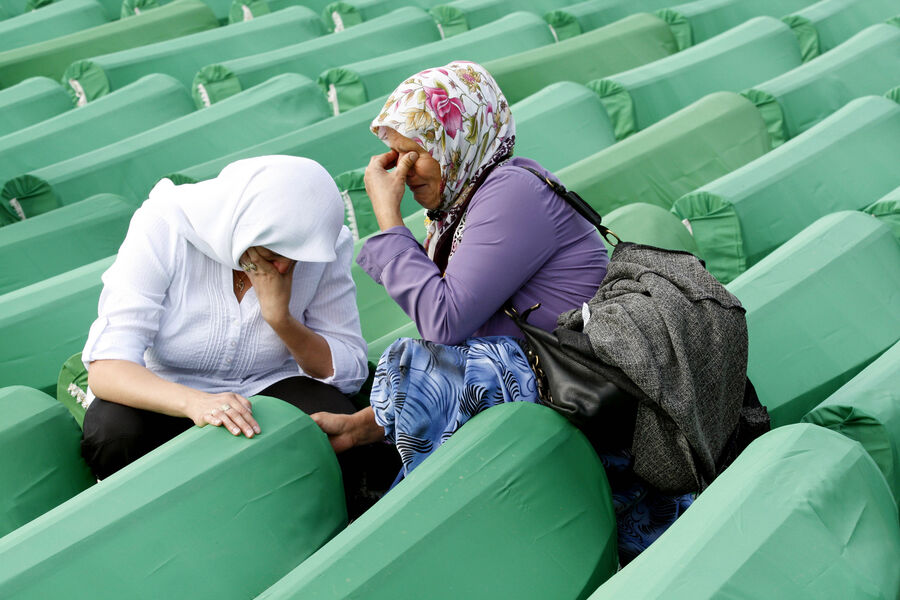
    Two women mourn surrounded by coffins during the burial of the remains of unidentified victims of the Srebrenica massacre, Bosnia and Herzegovina, July 11, 2010.

    This episode once again confirmed that UN resolutions and proclamations, not backed up by tanks, missiles and planes, often have no real power. The question arises: why do we need such peacekeepers at all, who do not have the right to stop even the crimes that are happening before their eyes?

    There is one more piece of information:
    "The Massacre" in Srebrenica ordered by Bill Clinton?
    The trial of Serbian General Ratko Mladic, who is accused of genocide of Muslims in the city of Srebrenica in Bosnia and Herzegovina in July 1995, has resumed in The Hague Tribunal. It is no coincidence that the trial began precisely these days
    Today, the Srebrenica problem has become the subject of political speculation, into which the Serbs are being drawn, although more and more evidence is emerging that Srebrenica was a planned and well-executed operation by Muslim intelligence services. Lies about Srebrenica are spreading around the world at an incredible speed, and it is becoming increasingly difficult to combat them.
    Srebrenica has become synonymous with the genocide of the Muslim population allegedly committed by the Serbian military in July 1995. The manipulation of the number of victims began back then, in 1995, and the media kept circulating figures from 8,000 to 27,000 killed Muslims. On January 15, 2009, the European Parliament declared July 11 "a day of remembrance for the genocide in Srebrenica, where Bosnian Serb forces killed 8,000 civilians in 1995." At the same time, the number of victims was always spoken of as an assumed figure, since there was no direct evidence. And no one conducted a deep study of this tragedy. No one tries to verify the Muslim version of the victims, everyone accepts it as an axiom. However, the data on the number of victims is not supported by facts, so many accusations look far-fetched. Let us recall that on July 6, 1995, the Serbs began a large-scale offensive on Srebrenica. The operation carried out by the RS army was primarily aimed at ensuring the safety of the Serbian population of the region. The goal was to push Muslim troops out of the countryside and into the city and prevent further attacks on Serbian areas, which they had been doing for several years under the cover of UN forces stationed in the city. Muslim combat units destroyed 91% of the Serbian population in the Srebrenica community.
    Having entered the city, the Serbian command provided buses for the civilian population to leave. And the soldiers of the 28th Infantry Division of the BiH Army had decided to leave Srebrenica and fight their way towards Tuzla even earlier. According to experts, most of the soldiers reached Tuzla, although some died in clashes with Serbian units.
    An international conference on Srebrenica was held at the Institute of Slavic Studies. More than 30 scientists from different countries took part in the work. For the first time, lawyers, historians, pathologists, demographers and researchers of other specialties analyzed many data, revealed contradictions in the official version, demonstrated a new methodology for studying the number of victims, put all the events in a historical context, and discovered new aspects of the events that change the overall picture of what happened. This allowed us to interpret the Srebrenica problem differently and begin to revise the official version.
    After the well-known events, documents and materials began to appear that revealed a different version of the reasons for the fall of Srebrenica and corrected the number of victims. Participants in the events began to speak out, documents from the special services of some countries were published, serious analytical studies were conducted, including by Western journalists and scientists. Here are just a few new arguments that refute the official version of the genocide of the Muslim people in Srebrenica.
    1. Ibran Mustafic, founder of the Srebrenica branch of the Party of Democratic Action led by Alija Izetbegovic, deputy of the Assembly of the Federation of BiH in 1996, In an interview with the Sarajevo newspaper "Slobodna Bosna" he openly said that "the scenario of the surrender of Srebrenica was prepared deliberately. Unfortunately, the Bosnian Presidency and the army command were involved in this matter."
    The goal is to give Serbian forces a pretext to attack the demilitarized zone. Naturally, the question arises: why? The UN Secretary-General's Report on the Fall of Srebrenica (1999) notes that some Bosniaks from Srebrenica claimed that "President Izetbegovic... told them that he had learned that NATO intervention in Bosnia and Herzegovina was possible, but only if the Serbs broke into Srebrenica and killed at least 5,000 of its inhabitants." This is confirmed by the former head of the Srebrenica police, Hakije Meholic. In an interview with the magazine "Dani", he reproduced Izetbegovic's words addressed to the delegation from Srebrenica: "Know what Clinton proposed to me in April 1993: that the Chetnik forces enter Srebrenica, carry out a massacre of five thousand Muslims, and then there will be a military intervention." 2. In 2000, it was not the Muslim authorities but the High Representative for BiH, Wolfgang Petritsch, who proposed the construction of the Srebrenica-Potočari Memorial Centre and Burial Ground. Every year the number of those buried increases: the bodies of many Muslims who died and were killed in other years and places are brought here. Thus, of the 2,442 bodies found in mass graves in 2003-2006, allegedly shot in July 1995, 914 participated in the elections in September 1996. According to community documents, it was also revealed that some of the people on these lists were not shot, but died a natural death, and some died in combat before 1995. 3. Analysis of forensic reports made by experts of the Hague Tribunal on the basis of processing of remains from mass graves shows that out of 3568 reports (1 report does not mean 1 body) in 92.4% of cases the cause of death was not officially established.
    4. A thorough demographic analysis of the population of Srebrenica before and after July 1995 gives extremely interesting results. The share of able-bodied men who were registered alive a month after the July events in the total number of registered refugees and soldiers of the 28th Division of the Army of BiH is slightly higher than in July 1995.
    5. In July 1995, among the numerous journalists in the UN peacekeeping forces on the territory of BiH, there was not a single witness who had seen the "genocide" in Srebrenica with his own eyes. Under pressure from the European Union, the Serbs rushed to admit their guilt, and in March 2010 the Serbian Assembly issued an apology for the crimes committed. However, this should not have been done until all the circumstances of the events in Srebrenica were revealed and made public. Otherwise, it would have placed a heavy burden on the shoulders of the entire Serbian people, would have confirmed the NATO version of the Serbs' guilt for everything that happened in the Balkans in the 1990s and justified the bombings in 1999.
    It seems to us that the main task now is to investigate this most complex episode of the war in Bosnia and Herzegovina, verify all the facts, identify new data, subject all the published data to scientific, medical and legal expertise, analyze the documents, identify the cause-and-effect relationship with the previous events of the destruction of the Serbian population and offer the world a true picture of the events in Srebrenica. Witnesses and participants of those events are still alive, Dutch peacekeepers have begun to say, and scientists, including those in the West, are publishing their research. The Serbian people should not be held responsible for something they did not do, and the leadership should not be endlessly apologizing, humiliating itself and making excuses. Elena Guskova, based on materials from: Voice of Russia

    https://custodiya.blogspot.com/2012/...post_3571.html

    althoughtg
    some bosnian politicians have testified that infact Bill Clinton made a deal with Alija Izetbegovic for the bosnian forces to let the serbians come through so that maximum civilian casualties could be made, so that NATO could plan a military intervention
    https://sputnikportal.rs/20191113/um...121169872.html
    Last edited by Russian Bear; 24th July 2025 at 11:54.

  10. The Following 4 Users Say Thank You to Russian Bear For This Post:

    9ideon (23rd July 2025), Ewan (24th July 2025), Johnnycomelately (23rd July 2025), Michel Leclerc (23rd July 2025)

  11. Link to Post #6
    Netherlands Avalon Member 9ideon's Avatar
    Join Date
    9th June 2017
    Location
    Inside my Skin!
    Language
    Dutch
    Posts
    1,378
    Thanks
    2,865
    Thanked 8,348 times in 1,338 posts

    Default Re: Why Yugoslavia Was Destroyed? An Analysis of the True Purpose of Bombing the Slavic Country
    Well, there you go, next time it would be advised to do digging before giving a dig.

    In any case, you recovered it well, did not expect any less from a Russian, although I disagree with some of the narrative People put down on this, it is after all a good representation of set events.

    They did leave out a lot of problems the Canadians had, on the other hand, a lot of info we had never made it to the public anyway, for understandable reasons (G2 is after all Military Intelligence), but still.

    I did however forgot about the 30 pow the Serbs had taken, in any case, they were most definitively betrayed by the UN and in perspective by the US, we were surely not the first and most likely not the last to undergo that type of betrayal by set country.

    Thanks again for the rectification.

    I have suspected for quite some time there was some agenda behind this, after all, they would get to have "Bad Guys" to present to the public, Serbs. Which again was a lie, the whole thing came down because Tito held it together, after Tito there was no strong enough leader, a little like the Lpf (former Political party) underwent after they killed Fortuyn in Holland back in 2002.
    Last edited by 9ideon; 23rd July 2025 at 19:52.
    Democracy is a well organised Anarchy in which too many People have something to say about nothing!
    --9ideon--

  12. The Following 4 Users Say Thank You to 9ideon For This Post:

    Ewan (24th July 2025), Johnnycomelately (23rd July 2025), Michel Leclerc (23rd July 2025), Russian Bear (23rd July 2025)

  13. Link to Post #7
    Russian Federation Avalon Retired Member
    Join Date
    6th April 2025
    Location
    Russia
    Language
    Russian
    Posts
    474
    Thanks
    79
    Thanked 1,409 times in 356 posts

    Default Re: Why Yugoslavia Was Destroyed? An Analysis of the True Purpose of Bombing the Slavic Country
    How one Russian soldier stopped a column of NATO tanks: https://projectavalon.net/forum4/sho...=1#post1677996 I have supplemented and edited the article. Since I do not know English, I have to check the correctness of the translation and correct words and dialogues. I also supplemented the article with new interesting information. Since I do everything quickly and in a hurry. To write an article, I analyze many sites, copy, paste, edit, watch films from different sources, it is so important to know the view of the other side. After editing the article and viewing the sites, I learned that the head of the British army, General Mike Jackson (RIP 15 October 2024), died at the age of 80, having refused to block Russian peacekeepers in Pristina. I think this man deserves respect, so I decided to tell this news.


    I have supplemented and edited the article. Since I do not know English, I have to check the correctness of the translation and correct words and dialogues. I have also supplemented the article with new interesting information. Since I do everything quickly and in a hurry. To write an article, I analyze many sites, copy, paste, edit, watch films from different sources, it is so important to know the point of view of the other side. After editing the article and viewing sites, I learned that the head of the British army, General Mike Jackson, died at the age of 80, having refused to block Russian peacekeepers in Pristina.


    He is on the list of people who prevented World War III.

    On the night of June 12, 1999, Russian paratroopers made a forced march to the airport near Pristina, ahead of NATO forces. British General Jackson then refused to carry out the order to unblock the airport, given by the US general

    Former Chief of the General Staff of the British Ground Forces, General Mike Jackson, known for his refusal to block Russian peacekeepers at the Pristina airport in 1999, has died at the age of 80. The Daily Telegraph reported this.

    "It was with great sadness that we learned of the death of General Sir Mike Jackson, MBE, CBE. He passed away on 15 October surrounded by his family," the newspaper quotes the British Army statement as saying.

    Jackson served in the army for over 40 years, ending his career as Chief of the General Staff. He was born into a military family, graduated from the Royal Military Academy Sandhurst, and then in 1963 began a career in military intelligence, where he learned Russian, among other things.

    In 1970, he was transferred to the elite Parachute Regiment. During the conflict in Northern Ireland, he served as an adjutant in the 1st Battalion, Parachute Regiment, which became famous after the tragic events of "Bloody Sunday": on January 30, 1972, soldiers shot at demonstrators in Londonderry, which resulted in the death of 14 people and the injury of 15 protesters.

    During his second tour of duty in Ireland in 1979, Jackson witnessed the "Warrenpoint massacre" carried out by the IRA. Then more than 20 British soldiers were killed and injured.

    From 1995 to 1996, the future general commanded a division in the multinational peacekeeping force in Bosnia and Herzegovina. From 1997 to 2000, he headed the NATO Joint Rapid Reaction Corps, where he reported directly to the American General Wesley Clark.

    In 1999, Jackson commanded NATO forces in Kosovo (KFOR) and became famous when he refused to carry out Clark's order to block Russian peacekeepers who had successfully marched to take control of Pristina airport. "I'm not going to start World War III for you," he told the American general.


    How the march to Pristina went

    On the night of June 11-12, 1999, 200 Russian paratroopers made a 600-kilometer march to the Kosovo airport Slatina, 15 km from Pristina, and took control of it, ahead of the Western bloc forces. This happened a day after NATO announced the end of the military operation in the Balkans.

    Moscow expected to take control of the settlement in northern Kosovo, where the majority of the population is Serb. The Americans, who had previously promised to involve Russia in the peacekeeping process, unexpectedly refused. US Deputy Secretary of State Strobe Talbott then explained that Russia had not yet restored its former power, so the British would be better able to stabilize the situation in northern Kosovo.

    The transfer of British units to Kosovo was supposed to begin on June 12 through Slatina airport. But Moscow decided to prevent the entry of foreign troops into Pristina by blocking the airport. The British surrounded the airport, but did not take any action, awaiting further instructions.

    The next day, Talbott met with Vladimir Putin, who was then the Secretary of the Russian Security Council. He promised to look into the situation and resolve the situation around Slatina. As a result, negotiations began in Helsinki to resolve the crisis, where Moscow won the right to deploy a peacekeeping contingent in northern Kosovo. The negotiations also decided that the Russian military would remain in Slatina, but everyone would use the airport. Russian peacekeepers were in Kosovo until 2003.
    Last edited by Russian Bear; 24th July 2025 at 11:22.

  14. Link to Post #8
    Russian Federation Avalon Retired Member
    Join Date
    6th April 2025
    Location
    Russia
    Language
    Russian
    Posts
    474
    Thanks
    79
    Thanked 1,409 times in 356 posts

    Post Re: Why Yugoslavia Was Destroyed? An Analysis of the True Purpose of Bombing the Slavic Country


    The events in Srebrenica, as a result of which the collective West accused the Bosnian Serbs and their leaders of genocide against the Muslim population of Bosnia and Herzegovina. This became another example of how the "world community" creates its own political reality based on manipulation and simply outright lies.

    The collapse of Yugoslavia gave rise to several bloody interethnic conflicts at once, one of which was the Bosnian War. The reason for its beginning was the desire of the authorities of Bosnia and Herzegovina to leave the Yugoslav state, ignoring the opinion of the Serbs, who made up about a third of the population of this republic. The referendum on secession from Yugoslavia was held without the participation of the residents of the Serbian territories of Bosnia and Herzegovina. They, in turn, announced the creation of their own state entity - the Republic of Srpska. This did not suit the Muslim authorities of BiH, who unleashed military action against it.

    It is worth noting here that in the post-Yugoslav space the word "Muslim" means not only and not so much a religious affiliation as a national affiliation. Bosnia and Herzegovina is a historically Serbian territory, part of whose population converted to Islam during the years of Turkish rule.

    After the end of World War II, a new state appeared on the map of Europe - socialist Yugoslavia, BiH was turned into one of its subjects. And the people living in it, along with the ethnonym "Bosniaks", began to be designated by the word "Muslims". Russian researchers note that during the times of the SFRY, it was not uncommon for a person to fill out a questionnaire and write "Muslim" in the "nationality" column, and "atheist" in the "religion" column.

    In addition, a significant number of Catholic Croats lived in the territory of BiH. In the war that began, all three nations clashed - the Croats changed sides twice during the fighting, having fought for and against the Bosnian Muslims, and united with them again.

    One of the settlements that the Bosniak formations managed to capture was Srebrenica and its environs. In fact, it became an enclave in the territory controlled by the Serbs, it was declared a "security zone" and Dutch peacekeepers, famous for their tendency to complete inaction, were stationed there. And in the city itself, Bosniak units under the command of Naser Oric settled. It was his name that was associated with a whole series of bloody mass murders committed on ethnic grounds - despite the fact that the Serbs were subsequently accused of "genocide".

    With the complete connivance of the peacekeepers, Oric's fighters began raiding the surrounding Serbian villages, more than 150 of which were burned to the ground. Civilians were beheaded, tortured, raped, and burned alive. Moreover, the Bosniak thugs especially loved to organize their raids on Orthodox holidays. In particular, on Christmas night in 1993, a massacre took place in the village of Kravice, as a result of which about 50 people were killed, 80 were wounded, and about 700 houses were burned by the militants. One of Oric's men then brought 12 severed heads to Srebrenica.

    In total, at least 3,000 civilians were killed in those years. Many of Oric's crimes were documented and confirmed by witnesses. It is worth recalling that all this happened with the complete connivance of the peacekeeping contingent stationed in the region. And in general, the structures of the UN and other international organizations during all the wars on the territory of the former Yugoslavia time after time acted in the interests of only one side – the one that was patronized by the West at that time.

    In 1995, the forces of the Republic of Srpska went on the offensive. Srebrenica was under siege, and the militants decided to retreat. Oric himself was no longer in the city at that time. A huge column of Bosniaks, among whom, in addition to the militants, were civilians, came under artillery fire and were scattered across the nearby fields. They, according to the Hague justice, became victims of "genocide": according to the collective West, the Serbian military deliberately caught Muslims hiding from them and shot them. According to the conclusion of the International Tribunal for the former Yugoslavia, the fighters of the Republic of Srpska killed about 8 thousand Bosniaks - "boys and men". There is no real evidence of "genocide of Muslims". In total, about 3 thousand dead were found on the territory of the enclave, among whom were Muslim militants, Serbian soldiers, and local civilians. Yes, during the clashes the Serbs did shoot Bosniak prisoners of war – about four hundred people died this way. This was dictated by the desire to avenge the atrocities of the Oricev thugs. However, no one ever saw any "thousands of killed Muslims", and there were no women, old people or children among those shot – the Serbs evacuated them immediately. This was even confirmed by the commander of the UN peacekeeping contingent, Canadian General Lewis Mackenzie, who stated that the fighters of the Republika Srpska carried out a targeted evacuation of all Bosnian civilians.

    Then some really interesting details began to emerge – some of those who were declared "victims of genocide" were found among the living. However, the Western machine, which was determined to blame the Serbs for everything, could no longer be stopped.

    Srebrenica police chief Hakija Meholic (who is Muslim, by the way) claims that Bosniak political leader Alija Izetbegovic gave details of his conversation with Bill Clinton, who said that NATO would intervene in Bosnia if more than 5,000 Muslims were killed. Indeed, the mythical "Srebrenica massacre", as well as two real terrorist attacks in Sarajevo, the perpetrators of which were never identified, served as a pretext for the US army to invade the region, which began to strike Serbian positions from the air. The war in Bosnia and Herzegovina ended with the conclusion of the Dayton Agreement (1995), and the leaders of the Bosnian Serbs Radovan Karadzic and Ratko Mladic were declared war criminals and the main culprits of a completely fictitious "genocide". At the moment, they are both serving life sentences. And Naser Oric, guilty of brutal ethnically motivated murders of thousands of Serbs, naturally escaped any responsibility.

    In 2015, Britain decided to force the whole world to recognize the "Srebrenica massacre" as genocide by trying to pass a corresponding resolution through the UN Security Council. This resolution was blocked by Russia, but this did not stop the West's efforts. In 2021, the High Representative for Bosnia and Herzegovina Valentin Inzko, who has absolute powers within this state, when leaving his post, issued a law prohibiting "denial of the genocide in Srebrenica". The authorities of the Republika Srpska, which is part of BiH, immediately declared that this law would not be implemented on its territory.

    At the same time, an independent international commission led by Israeli Holocaust expert Gideon Greif came to the conclusion that the events of those years in Bosnia could not under any circumstances be classified as genocide. One of the commission members, former high-ranking CIA officer Stephen Meyer, stated that both sides – the Serbs and the Bosniaks – committed war crimes, but there was no talk of any targeted extermination of the peaceful Bosnian population on ethnic grounds. In addition, independent experts called the incident the work of British and French intelligence services.

    In this regard, the "Srebrenica massacre" is very reminiscent of a number of other fictitious events from a much more recent past - for example, the situation around Bucha. Bucha is essentially a miniature Bosnian fake - the same lack of real witnesses and evidence of what happened, dead bodies of unknown origin, a massive information campaign based only on the hysteria of "activists" and "human rights activists", the imposed term "massacre", etc. Also, parallels are suggested by the information about the involvement of British and French intelligence services, which specialize in such work.

    Yes, "Bucha" has now been partially removed from the information field - but only until better and more suitable times. It is obvious that Western strategists will try to use the technology tested in Srebrenica more than once.

    The US, Britain and the EU are still confident that they have enough political and media power to fabricate any "massacre" or "genocide" where circumstances require it. However, judging by a number of signs, the world is no longer so trusting. The West may not be able to pull off the next "Srebrenica" or "Bucha".

    https://dzen.ru/a/ZLICgvSNHwjLPwVM

+ Reply to Thread

Tags for this Thread

Posting Permissions

  • You may not post new threads
  • You may not post replies
  • You may not post attachments
  • You may not edit your posts