+ Reply to Thread
Results 1 to 11 of 11

Thread: Transnational companies that rule the economy. The era of capitalism is ending

  1. Link to Post #1
    Russian Federation Avalon Retired Member
    Join Date
    6th April 2025
    Location
    Russia
    Language
    Russian
    Posts
    474
    Thanks
    79
    Thanked 1,409 times in 356 posts

    Default Transnational companies that rule the economy. The era of capitalism is ending

    Part 1 Transnational companies that rule the economy.


    87) Part 2 💲 The City of London is a private organization that controls the world's financial flows.
    https://projectavalon.net/forum4/sho...=1#post1685229

    Who controls the European Union? Who created it? And why was its creation possible after the collapse of the USSR?
    https://projectavalon.net/forum4/sho...=1#post1685158

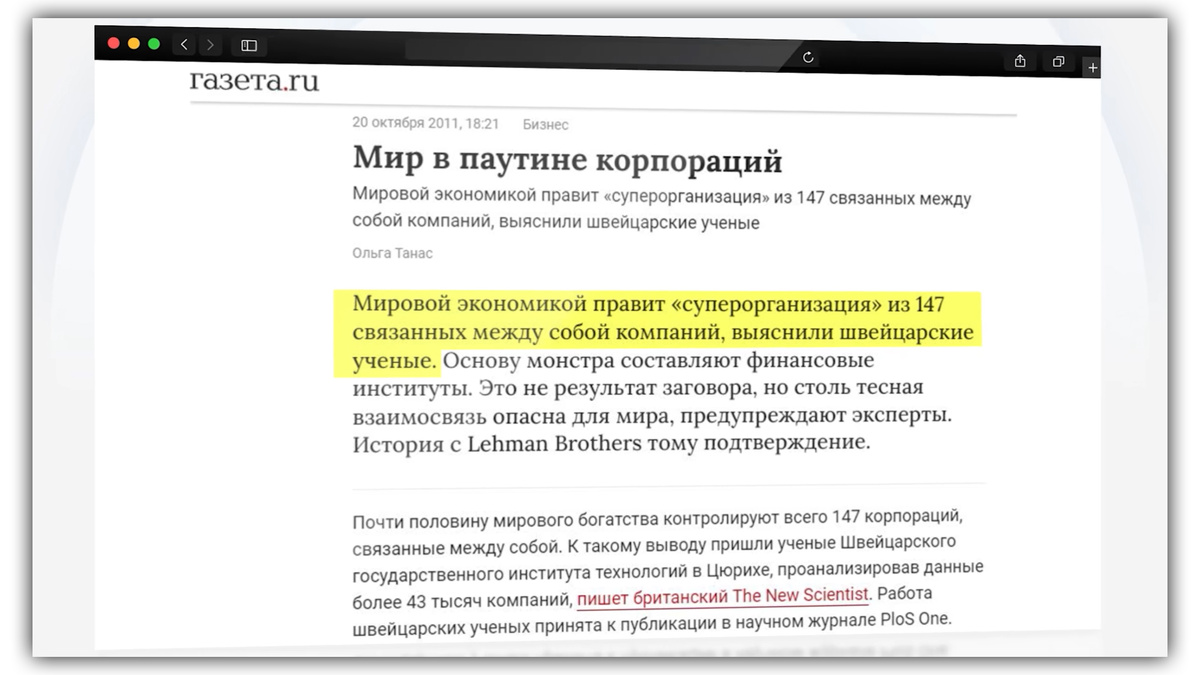
    Quite a long time ago, what is still called conspiracy theories today was proven by Swiss scientists.

    Namely, that there is a certain world government in the world, or rather, someone who wants to be it.

    This news came out in 2011 under the headline "The world economy is ruled by a 'superorganization' of 147 interconnected companies, Swiss scientists have found."


    Well, let's figure out what kind of organization this is and who it belongs to.

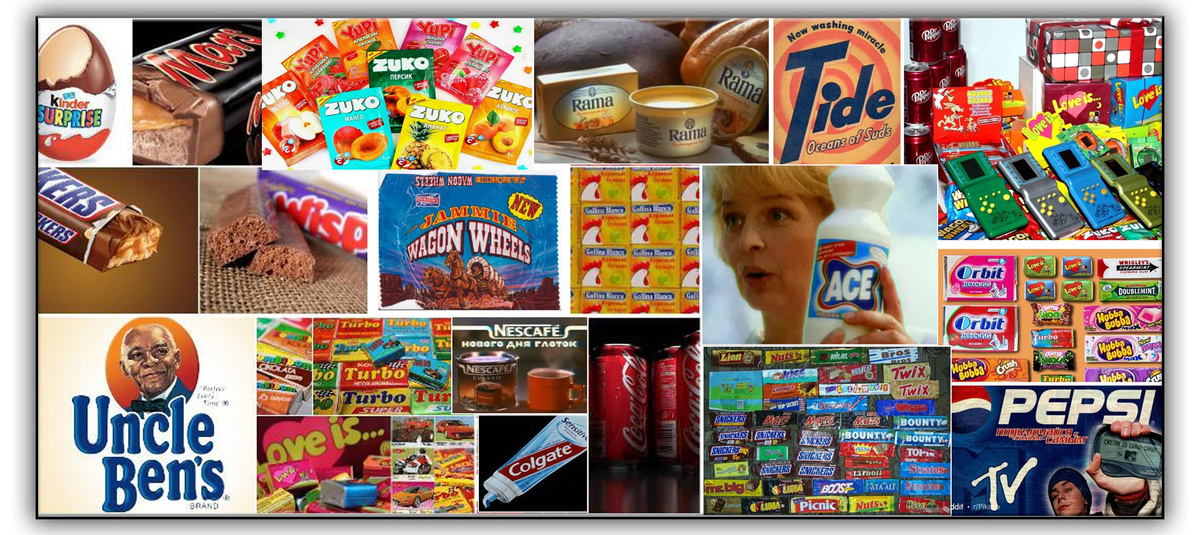
    Looking at the shelves in stores today, it may seem that we have a lot to choose from. But this is an illusion.

    ⚠️ Almost everything we buy is produced by 10 transnational corporations.

    These corporations have a network of brands that specialize in different products.


    It doesn't matter what we choose - Mars or Snickers - the money will go into one hand.

    Let's look at a specific example.
    There is Coca-Cola, and there is Pepsi, and they have always been perceived as competitors. But did you know that these companies have the same owners, who have the largest shareholdings?

    At the same time, both the Coca-Cola Company and PepsiCo own hundreds of other brands.

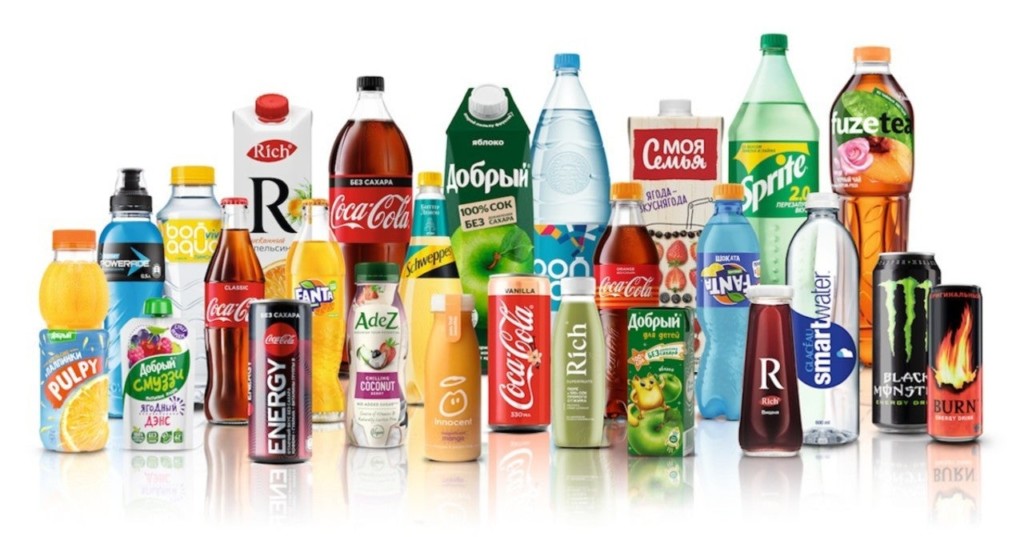
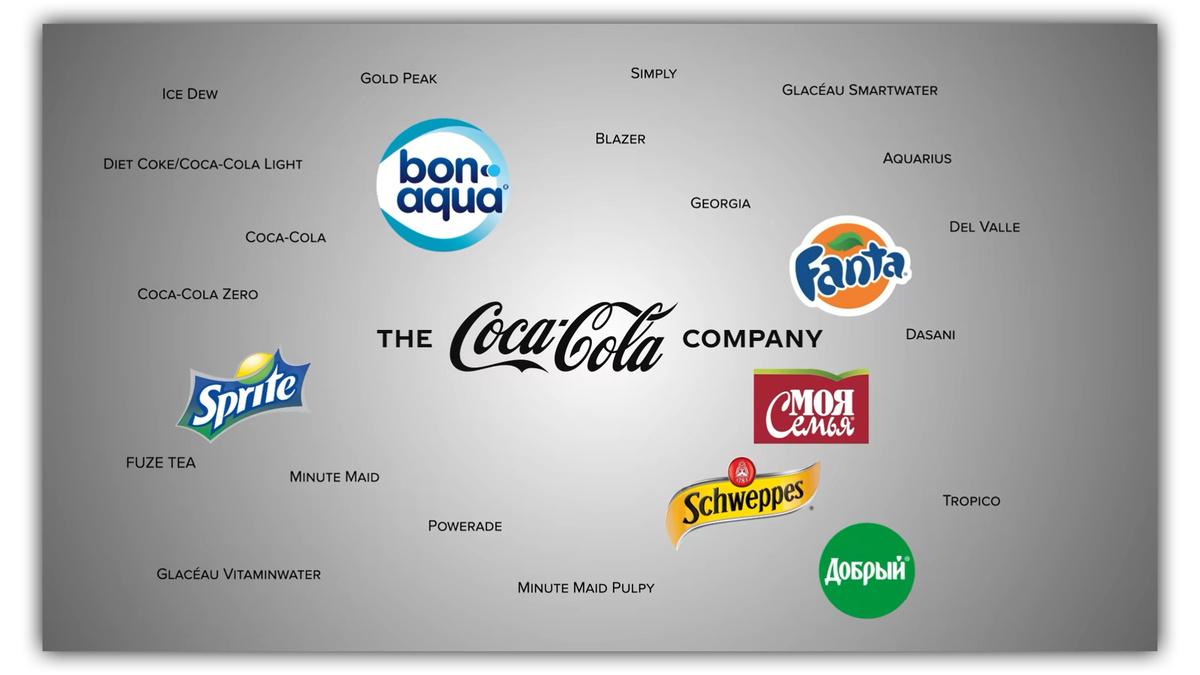
    ▶️ The Coca-Cola Company represents over 350 brands.
    Among them:


    ➡ "Fanta",
    ➡ "Sprite",
    ➡ "Schweppes" and
    ➡ "BonAqua".
    In the countries of the former USSR, the company produces products taking into account local values.
    ➡ Like the Russian juice "Dobry" - this is also the Coca-Cola Company,
    ➡ as is the brand "My family".


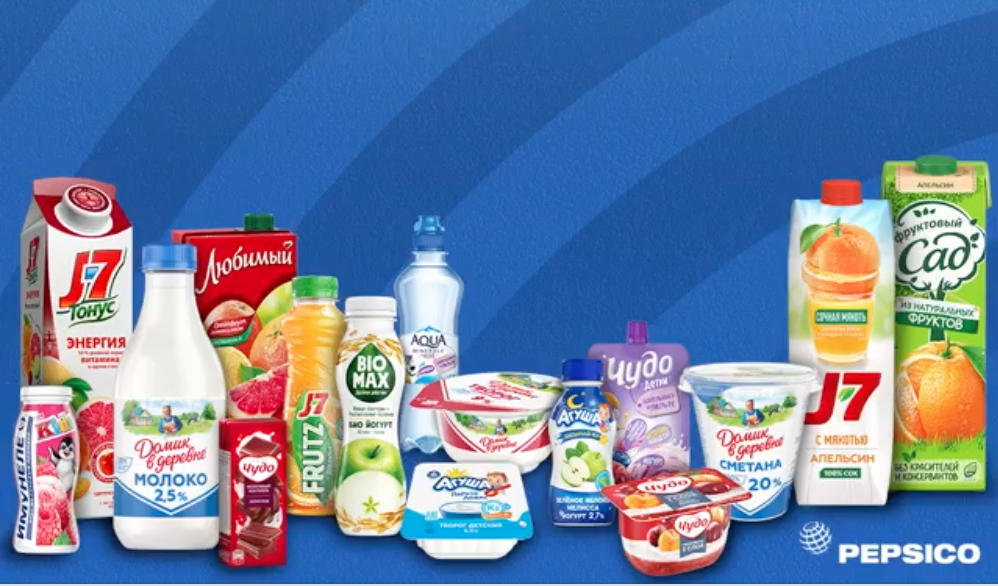
    ▶️ PepsiCo is not far behind.

    Its products can be bought in any store:


    ➡ "Mirinda",
    ➡ "SevenUp",
    ➡ "Lipton",
    ➡ "Lays" chips and
    ➡ "Cheetos".
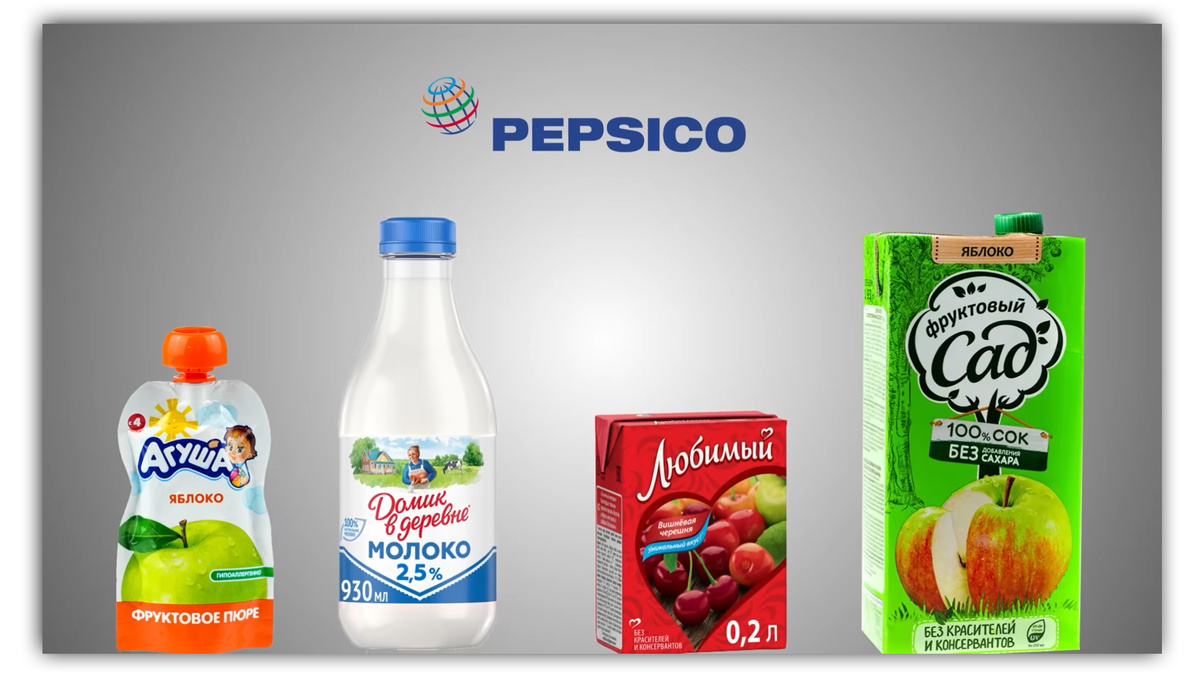
    And for patriotic people, there are products with purely Russian names:
    ➡ "Agusha",
    ➡ "House in the Village",
    ➡ "Favorite" juices and
    ➡ "Fruit Garden".


    Now let's see who gets the income that these two giants accumulate.

    The Yahoo Finance website has information about who the companies' largest shareholders really are.
    If we take PepsiCo, we will see that about 77% of the shares are owned by four thousand legal entities - institutional investors. These are funds and banks, insurance and investment companies. At the same time, the top ten together own almost a third of all shares. And of these ten, two have a larger share than the other eight combined.

    And who owns the Coca-Cola Company?
    The largest share of shares is again owned by legal entities.
    We already know those of them that occupy places from 5th to 10th from PepsiCo investors.

    These are:
    ➡ JPMorgan-Chase,
    ➡ Geode,
    ➡ Charles Schwab,
    ➡ Morgan Stanley.
    Moreover, the first places are still occupied by the same:
    ➡️ Vanguard and
    ➡️ BlackRock.
    Next to them in the list of main shareholders, another company often appears
    ➡️ State Street Corporation.

    These three are the largest investment companies in the world. So PepsiCo and Coca-Cola Company are not competitors at all and, as it turns out, they have the same owners.

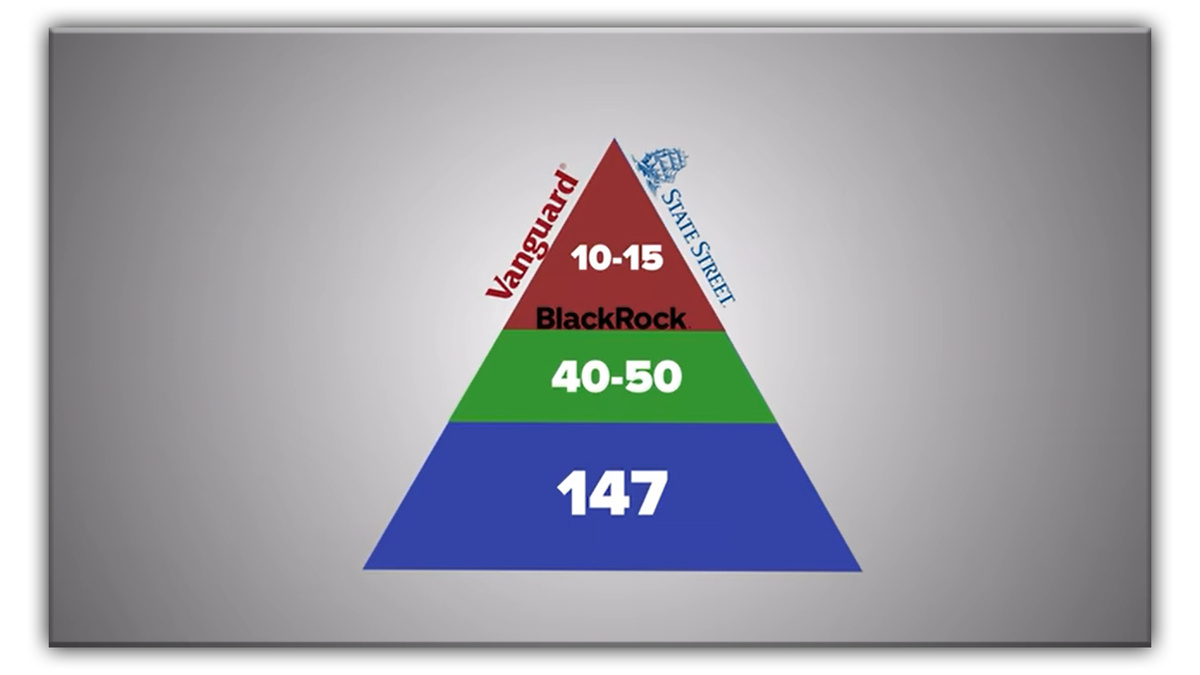
    And this is not some kind of conspiracy theory. As was said, it has already been scientifically proven that the world economy is ruled by a “superorganization” of 147 corporations - this is the conclusion reached by Swiss scientists.

    Out of 37 million companies, they selected 43 thousand transnational corporations that are closely interconnected. Their assets overlap and this allows them to control 40% of the wealth. In fact, less than 1% of companies own 40% of the entire network. Of these 147, there is a core, 40-50, and there is a super-core, 10-15. And the most interesting thing is that this core is, one way or another, controlled by the “big three”: Vanguard, BlackRock and State Street Corporation.


    By January 2021, the trio managed assets worth almost $18 trillion.
    That's more than half of the US economy.

    It's hard to imagine this amount.
    If we lived since the time of Jesus and spent a million every day, we still wouldn't have spent a trillion.

    Plus, the trio is the largest owner of 88% of the most expensive companies in America.
    Therefore, it is not surprising that they control shares of food industry corporations.
    And not only that.

    ▶️ Let's take the IT sector.
    The most popular social network in the West is Facebook (now Meta), which owns Instagram and WhatsApp.
    Alphabet is the owner of Google, as well as all its companies, such as YouTube and Gmail, including the Android operating system. Another operating system is Apple's iOS. Let's add Microsoft with Windows here.

    So,

    Alphabet, Apple and Microsoft are giants producing operating systems for almost all smartphones and computers in the world.
    Meta rules the Internet.

    Click image for larger version

Name:	2025-09-14_10-02-11.png
Views:	19
Size:	170.1 KB
ID:	56064

    ❓ And who are their largest shareholders?

    👉 Again, 60% of shares and above belong to legal entities.
    And many are familiar to us from the food industry:
    ➡ Morgan Stanley and Geode.
    Moreover, the owners are the same here:
    ➡ Vanguard and BlackRock.

    And so - no matter what.
    Some person decides to go on vacation to another country.
    ⏩ Most likely, he will book a hotel on the Booking website.
    ⏩ He will fly to the destination on a Boeing,
    ⏩ which will be fueled by Exxon or Chevron.
    ⏩ Well, and a taxi driver in a Ford will take us to the airport.

    ❓ What do these completely different companies have in common?

    👉 That they have the same owners.

    ▶️ In addition, Vanguard and BlackRock are the main owners of some famous clothing brands.
    It doesn't matter what segment:
    Nike sweatshirt,
    ➡ Levi's jeans or
    ➡ Ralph Lauren T-shirt.

    The money will still go into one hand.

    ▶️ They own both tobacco and alcohol companies.

    ▶️ And even those who persistently promote vaccines against various viruses to us.

    We are talking about big pharma, such as
    Moderna and
    Pfizer.
    *The latter became the leader in the Covid vaccination market and earned billions of dollars on it.

    ▶️ They are also the main shareholders of companies that produce electronics
    ▶️ and cosmetics;
    ▶️ online markets where it is sold;
    ▶️ payment systems with which everything is bought.
    ▶️ Well, and banks are the icing on the cake.

    In this garden are such giants as
    Goldman Sachs Group,
    Bank of America,
    JPMorgan Chase.
    *By the way, Hitler was financed through it in his time.

    ▶️ They are also the owners of the largest media in the USA: this is the well-known
    ➡ Warner Bros with its films,
    ➡ and the beloved Disney from childhood.
    Under their wing
    ➡ American TV channels,
    ➡ magazines and
    ➡ the most authoritative newspaper in the USA – The New York Times.

    For more than 170 years, it has controlled people's attention, and it is managed by the same Vanguard and BlackRock.
    ⚠️ That is, just two organizations own a lot in this world.


    They own not only the majority of shares in large companies, but also the shares of their investors. The property of transnational corporations and developed countries is locked up through these funds.

    24/7, one way or another, they control people: what to eat and drink, how to get treatment, what movie to watch and what to wash your hair with - they produce everything, it's all under their control.

    ⚠️ Simply put, they subjugate our lives unnoticed.

    ❓ And I have only one question left: who are they?

    WHO ARE THE OWNERS?
    BlackRock is a record holder in money management.
    The company does its business by taking over the management of assets of corporate clients and wealthy individuals. Its clientele is from the United States and dozens of countries around the world.
    It has over $10 trillion in its hands.

    The American agency Bloomberg calls BlackRock the fourth estate.

    ▶️ And for good reason: it is the only private company that closely cooperates with the *US Federal Reserve (*the Fed is an organization that prints dollars).

    The year 2020 is especially significant here.
    If earlier the States had been lending to the economy through commercial banks, then that year they introduced a new system - lending through special purpose vehicles (SPV).

    So, the Federal Reserve and the US Treasury gave BlackRock the reins of these companies.

    That is, it controlled companies through which billions of dollars are pumped into the US economy.

    BlackRock not only makes a ton of money on this, but also actually manages cash flows.

    Some experts do not rule out that over time, the Fed will turn into an appendage of BlackRock: the former will issue money, and the latter will decide to whom and on what terms to give it.

    In addition to the Fed, BlackRock collaborated with the
    ▶️ UK Treasury,
    ▶️ Swiss Bank,
    ▶️ Greek government and
    ▶️ even consulted the European Union on management issues.

    ▶️ The company also developed the Aladdin program, which is used by hundreds of financial institutions to manage assets. Including the US Federal Reserve.

    Essentially, anyone who has access to Aladdin data knows where $20 trillion in capital is moving.

    At least 84 BlackRock employees are former US officials.

    Essentially, by gathering such guys together, BlackRock is creating an analogue of the government.

    They easily establish connections with government bodies and promote their interests there.

    And the company is run by Larry Fink. He is a member of the board of trustees of the World Economic Forum, where the “Great Reset” plan was devised.

    In short, he suggests that you own nothing and be happy. And they are already on that path, given the pace at which BlackRock is raking everything in.

    According to Robert Kennedy Jr., the fund is buying up housing in the US en masse, inflating prices in order to rent it out, and this is depriving ordinary Americans of the hope of owning their own home.

    But Larry Fink is only the face of the company, he does not pull the strings himself.
    That's because BlackRock is also owned by shareholders.

    It probably doesn't come as a surprise, but the largest of them is Vanguard. It is a private company with a unique structure that makes it impossible to determine the owner. This list is closed to mere mortals.

    All that is known is that Vanguard is owned by its funds, which are owned by shareholders. The company has no outside investors and is not traded on the stock exchange.

    It seems that the people who own Vanguard do not like to be in the spotlight at all.

    According to Oxfam, the richest one percent own half of the world's wealth, while the poor own less than 1%. And they are getting rich almost twice as fast as the rest.

    At the same time, the number of dollar billionaires is growing.
    In 2024, a record 2,781 people became billionaires.

    If we draw parallels, the Vanguard monopolist belongs to the richest families in the world.

    Some of them were rich back in the 18th century, before the Industrial Revolution. These are all sorts of DuPonts, Morgans, Rothschilds, Rockefellers.
    One dynasty is so cool that it doesn't even think to hide: among the Vanguard funds, one is called Vanguard *Windsor II (*Windsor is the ruling dynasty of Great Britain).
    I think there is no doubt that these are members of the British crown.

    And in general, no matter how you look at it, the owners of Vanguard and BlackRock are the same people as the owners of the US Federal Reserve System - these are, say, the 300 richest families in the world.

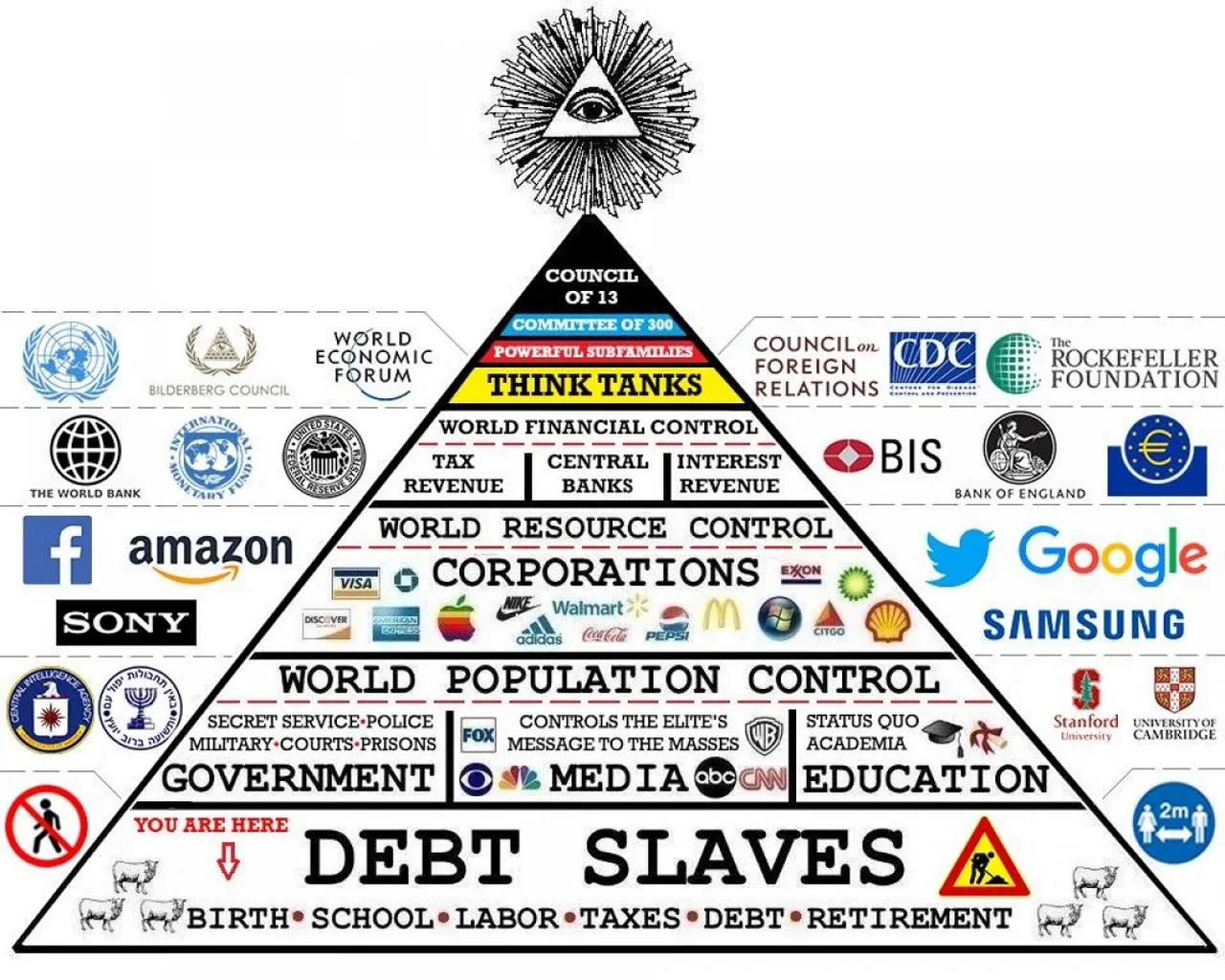
    These families have always been at the top of the financial pyramid, but over time they began to hide behind companies like Vanguard, whose shareholders are the private funds of these families.

    That is, such companies are a wrapper that allows you to hide the true owners and their capital from the public.

    For example, there is a large asset, hundreds of billions. What to do with it? It is best to transfer it to trust management of funds. This will avoid showdowns with antitrust and tax services, if they suddenly pluck up their courage or honest people appear there.

    As a result, in order to understand who has what and how influential they are, you need to collect a lot of information. And these organizations do not disclose anything. They simply write everywhere: "fund".

    Simply put, all these Vanguards and BlackRocks are just registrars who receive instructions from the true owners of capital and do what is required of them.

    Those who used to be the owners of, say, factories and steamships are now portfolio investors of factories and steamships. But all corporate procedures are carried out as they should be.

    ⏩ On behalf of Vanguard, they will vote as the real owners of this plant said.
    ⏩ And the fact that there is a layer in the form of an office that hides the true owners does not change anything.
    ⏩ And what formally belongs to the funds, in reality does not belong to them.

    *Khodorkovsky, by the way, also planned to transfer the oil company "Yukos" to these funds, namely - to Rothschild. Roughly speaking, to change the roof and evade taxes. To remove assets from the control of the Russian state.
    But fortunately, Khodorkovsky was not allowed to implement this plan.
    And what he wanted to transfer to Western management, in Russia began to bring 20% ​​of the entire budget.

    So, when we look at the Forbes list today, we can only laugh - it does not reflect reality.

    Take the same Rockefellers with Standard Oil. Now the company could be worth more than $ 3 trillion. It was not taken away, but dismembered into 39 companies that divided the market. But if you count the Rockefellers' finances in Forbes, you get a very insignificant amount and it does not attract any attention. And the whole point is that his money is hidden in a system of trusts and funds.

    No matter which side you dig from, the conclusion is the same: the world was and is ruled by oligarchic structures.

    Who buy officials with their own money, paying for their election campaigns, then drag these officials into their funds. And thus, for decades, centuries, a small percentage of people rob the rest of humanity.

    So for us, the closure of McDonald's is only good.
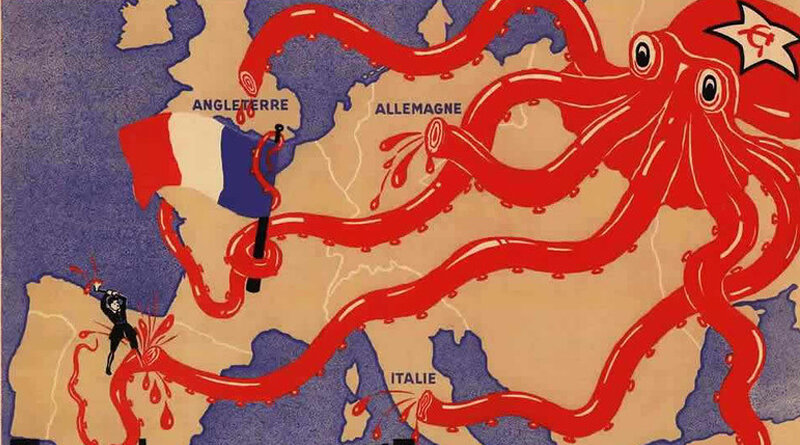
    Russia is throwing off the tentacles of this giant octopus.

    And here I would like to add about Ukraine.
    According to economist Valentin Katasonov, 17 million hectares of its land are owned by American companies, the main shareholders of which are Vanguard and BlackRock.

    That is, half of the black soil no longer belongs to the Ukrainians.

    These companies have big plans for both the black soil and other natural resources of this country. That is why we see great resistance and the infusion of huge amounts of money.

    But fortunately for us and for humanity as a whole, the balance of power is changing, a new force is emerging, many centers, the world is becoming multipolar and these various BlackRocks will also fade away, just like Western hegemony.


    The era of capitalism is ending


    Many events happening around us, no matter how pathetic it may sound, are really echoes of events happening behind the scenes of the world stage. And the causes of many phenomena, including military and economic ones, must be sought there.

    It seems like everyone has heard the phrase “global crisis”.


    But where did it come from?
    Why can't people live in peace and harmony, but constantly face various problems?

    The thing is that an entire era is ending, which causes many negative phenomena, but it is forbidden to talk about it.
    Let me give you some facts.

    Today the world lives in a capitalist system.

    Yes, there are different systems.
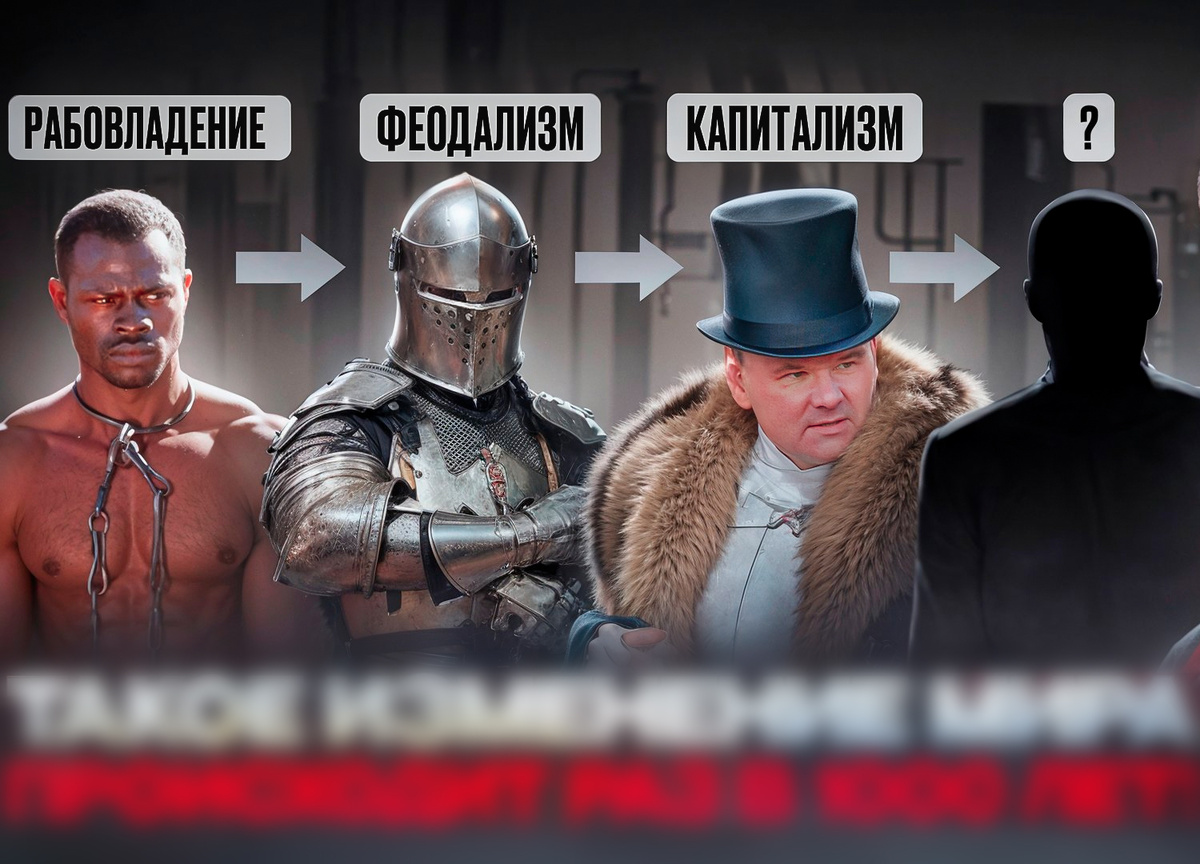
    Before capitalism there was feudalism,
    and even earlier there was the slave system.


    slavery ➜ feudalism ➜ capitalism

    And the fact that these systems were replaced by capitalism is only one of many scenarios for the development of humanity. It could very well be true that there was, for example, a theocratic government on Earth, this is religious, Orthodoxy, Catholicism or Islam as an example, which would have resulted in a completely different economic model.
    But the world went down the path of capitalism.

    As we know, nothing lasts forever.

    It turns out that capitalism is not eternal either.
    And what is most interesting is that the inevitable end of the era of capitalism as we know it falls on our time.


    As confirmation, I will cite Putin's words:

    V.V. Putin:

    Everyone is saying that the existing model of capitalism - today the basis of social structure in the overwhelming majority of countries, has exhausted itself. Within its framework, there is no longer a way out of the tangle of increasingly tangled contradictions.
    The crisis we are dealing with is conceptual. Even civilizational.


    To understand the degree of seriousness of the stated thesis, we must remember that capitalism is a socio-economic system based on private property, exploitation of hired labor and freedom of enterprise.

    That is, we all live in this environment, everything around us is capitalism. And this environment, as a huge number of experts say, is dying. But what is most dangerous is that such changes do not go unnoticed.

    The fact is that when systems replace each other, a serious crisis always occurs, accompanied by wars and revolutions.

    As an example, capitalism finally replaced feudalism after the Thirty Years' War in the mid-17th century.

    Why is the world changing?

    ❓ That is, why is capitalism coming to an end?

    👉The fact is that for this system to exist, there must be constant expansion into new markets.
    But as a result of globalization, there are no new markets left for large companies, i.e. for capitalists.

    Just imagine: there is a capitalist who takes the excess profit for himself. And there are workers who produce goods and receive wages from their sale.

    But who is this goods sold to?
    The goods are sold to the same workers.
    But, no matter how you look at it, workers cannot constantly buy back all the goods and services that they themselves produce.

    Because, firstly, they cost more than they earn, because the owner of the enterprise takes most of the earnings for himself.
    And, secondly, not all people are in a hurry to part with money (let's say, they are saving up for something).

    Thus, for the capitalist system to survive, new markets are needed.
    But, as has been said, there are no new markets.

    Therefore, this capitalist system has outlived its usefulness.

    Valentin Katasonov (economist):

    Let's say that the era that was called capitalism is ending.

    Vladimir Polevanov (former Deputy Prime Minister of Russia):

    Capitalism is ending now. Now is not just a crisis, of which there have already been many, but a crisis of the end of capitalism. Capitalism has actually exhausted its development resources and capitalism has put humanity on the brink of destruction. Well, and itself, of course.

    Therefore, the current crisis is the most severe of all possible. This is a crisis of a change of formations. It is always a war. When the slave-owning formation was replaced, there was a whole series of wars that lasted 500-600 years, feudalism was replaced by wars for 200 years.

    Andrey Fursov (historian):

    At the end of the 19th and beginning of the 20th century, capitalism as an economic system had outlived itself.

    Mikhail Khazin (economist):

    From an economic point of view, capitalism is finite. Development in the modern economy is a deepening division of labor. Deepening the division of labor requires expanding markets. The land is limited, so sooner or later the markets will become global, development stops. This is exactly the situation we have come to today.


    In general, the system in which we now exist should have begun to collapse earlier. But the collapse of the USSR greatly helped it - new markets appeared for Western capital: the USSR and the entire socialist camp as a whole. Our countries were flooded with goods from transnational corporations, and thus this delayed the end of this world order.


    Our countries are flooded with goods from transnational corporations

    But that's all - there is nowhere to expand further. If the Americans don't find a new planet with inhabitants to foist their goods on and rob, then this economic model has exhausted itself - it simply has nowhere to expand.

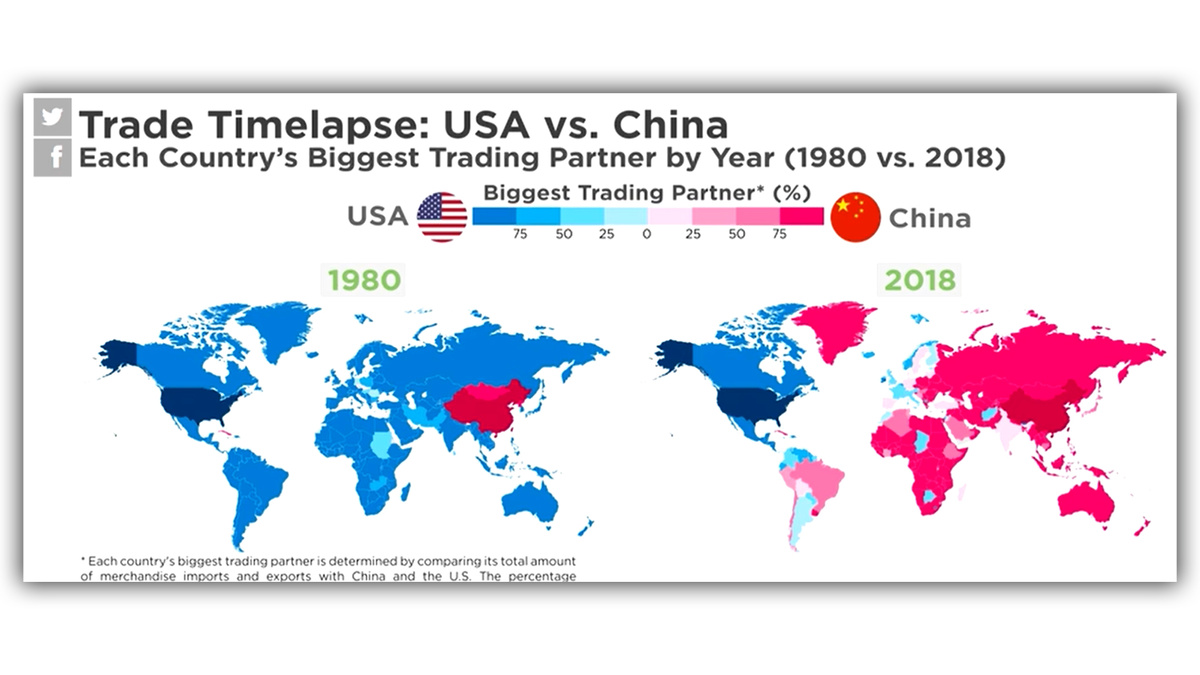
    Even if they do find one, the Chinese will offer them better and cheaper goods.
    I have repeatedly shown a clear picture of how China is capturing sales markets, thereby finishing off Western capital.


    China is capturing sales markets, thereby finishing off Western capital

    But he himself falls into the same trap.

    Well, that's actually why the world system is changing.

    This raises the main question: what will happen next?

    Nobody knows.
    Well, there are only assumptions.

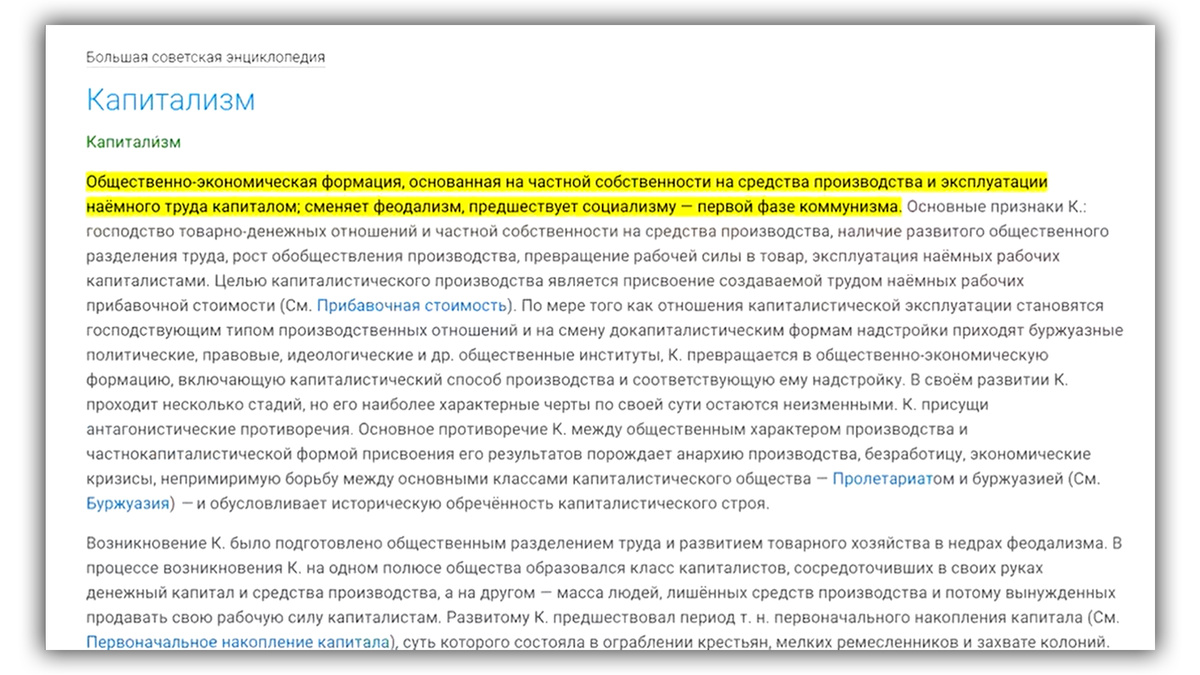
    As an example, the Great Soviet Encyclopedia points out that capitalism precedes socialism - the first phase of communism. Naturally, all communists also believe: now capitalism will end and communism will come.


    The Great Soviet Encyclopedia points out that capitalism precedes socialism, the first phase of communism.

    Naturally, the main puppeteers on Earth, who are the main beneficiaries of the capitalist world, are also aware of this economic trend. These are the owners of transnational companies.


    Transnational companies

    In order not to be left on the sidelines of history, these people are trying to create a new post-capitalist society where they would still remain in power.

    These people are called ultra-globalists, who come up with various scenarios for humanity to follow.

    For example, the famous "Great Reset" of Klaus Schwab, which he presented with the current King of Great Britain just recently.

    Here are some of the main theses of the "Great Reset" according to Schwab:
    ⛔️ private property is abolished,
    ⛔️ a "use economy" is introduced instead.
    ⛔️ The economy will become not only user-based, but also "green".
    ⛔️ It is assumed that limits will be introduced on the consumption of water, electricity and environmentally hazardous products.
    ⛔️ A "bright future" means erasing the differences between rich and poor countries, even to the point of destroying state borders.

    The globalists began to speak openly when the pandemic began.

    Then Klaus Schwab published his work "COVID-19 and the Great Reset". In this book, the world elite repeated the Club of Rome's plans in slightly different words. Post-capitalism is coming with beautiful promises of equality. There will be no money, no democracy, no states. Everything will be decided by groups of experts accountable to no one.

    And all the benefits in the "brave new world" should be managed by that same "golden billion".

    An interesting coincidence: in October 2019, the Bill Gates Foundation organized "Event 201". It was an imitation of a large-scale epidemic. During its simulation, 65 million people "died" over 18 months.

    And 2 months later, "patient zero" appeared in Wuhan, China. Only this was no longer an imitation. Everything developed according to the American scenario.

    And at the beginning of 2024, disease X was discussed in Davos, which will kill 20 times more people than the coronavirus.

    True, the virus does not exist yet, but its appearance is expected.
    Globalists are scaring us, saying that we need to join forces in advance and build, so to speak, “Globalistan,” otherwise we will all die out separately.
    Simply put, they are trying in every way to erode the national sovereignty of the states where they will be in power.

    So, what does all this mean?
    It means that everyone knows about global changes. And everyone is trying to adapt to these changes. They just don’t tell the people.

    And the main bourgeoisie of our planet has come up with a world order where they will, in fact, be gods who are free to determine how the rest of humanity should live.

    But who will agree to such a world order voluntarily?
    Nobody. Today, on the contrary, there is a tendency to gain sovereignty and strengthen national borders.

    ▶️ As an example, Russia has almost completely left the influence of the West and is unlikely to sign up for such programs.
    ▶️ And in general, the BRICS countries are already going their own way.

    And the question is: what should the most influential oligarchs of the planet do in this case?

    ↪️ Sooner or later, capitalism, thanks to which they prosper, will finally hit the limits of its growth.
    ↪️ The owners of capital will not want to simply accept the fact that their time is over.
    ↪️ They will try to reboot the system.
    ↪️ Klaus Schwab's reboot is not feasible due to the strengthening of the sovereignty of different countries of the world.

    ↪️ But there is another way to reboot the system - through another global war, so that it would be possible to start everything from scratch.
    From here you can get an answer to the question of why the world is balancing on the brink of a large-scale war today.


    But, naturally, the main hegemon of the United States is not going to fight anyone directly on its own. They fight with the hands of others.
    This needs to be known and understood.

    In summary:
    ↪️ the world is changing, eras are changing.
    ↪️ Today, an era that is several hundred years old is leaving.
    ↪️ Its beneficiaries do not want these changes
    ↪️ and are trying to implement their model of world order.

    That is, the main oligarchs of the world want to continue to dominate and rob all of humanity.

    But, let's hope, they will fail, that is, good will triumph over evil.


    In the USSR, workers proved that they could live without capitalists, but not a single capitalist proved that he could live without workers.


    80) 💥How the USSR was destroyed. Defeat in the Cold War and the Birth of New Russia
    https://projectavalon.net/forum4/sho...=1#post1683130

    85) Who controls the European Union? Who created it? And why was its creation possible after the collapse of the USSR?
    https://projectavalon.net/forum4/sho...=1#post1685158

    84) Who does the Bilderberg Club serve? History of the club's creation.
    https://projectavalon.net/forum4/sho...=1#post1685035

    83) 😡 Russia paid tribute to the United States at $1 billion a day.
    https://projectavalon.net/forum4/sho...=1#post1684561

    76) 🌐Who owns the Internet? The Internet is owned by a private company, ICANN
    https://projectavalon.net/forum4/sho...=1#post1682183

    61) ☢️How the US Depends on Russia's Resources. America's Achilles Heel: Uranium-235.
    https://projectavalon.net/forum4/sho...=1#post1677467

    60) 🗣📢The true goal of the LGBT movement is to seize power all over the world. Analysis of the topic based on facts.
    https://projectavalon.net/forum4/sho...=1#post1677461

    23) 👽(Conspiracy theories) Freemasons and Illuminati - One World Government and their protocols.
    https://projectavalon.net/forum4/sho...=1#post1664211

    7) 🔴(Food and health, conspiracy theories) Can cause cancer: why GMOs (modified food) are dangerous. Even bugs don't eat it
    https://projectavalon.net/forum4/sho...=1#post1663727
    Last edited by Russian Bear; 30th September 2025 at 11:21.

  2. The Following 4 Users Say Thank You to Russian Bear For This Post:

    Ewan (14th September 2025), Ioneo (14th September 2025), rgray222 (30th September 2025), samsdice (14th September 2025)

  3. Link to Post #2
    Russian Federation Avalon Retired Member
    Join Date
    6th April 2025
    Location
    Russia
    Language
    Russian
    Posts
    474
    Thanks
    79
    Thanked 1,409 times in 356 posts

    Default Re: Transnational companies that rule the economy. The era of capitalism is ending

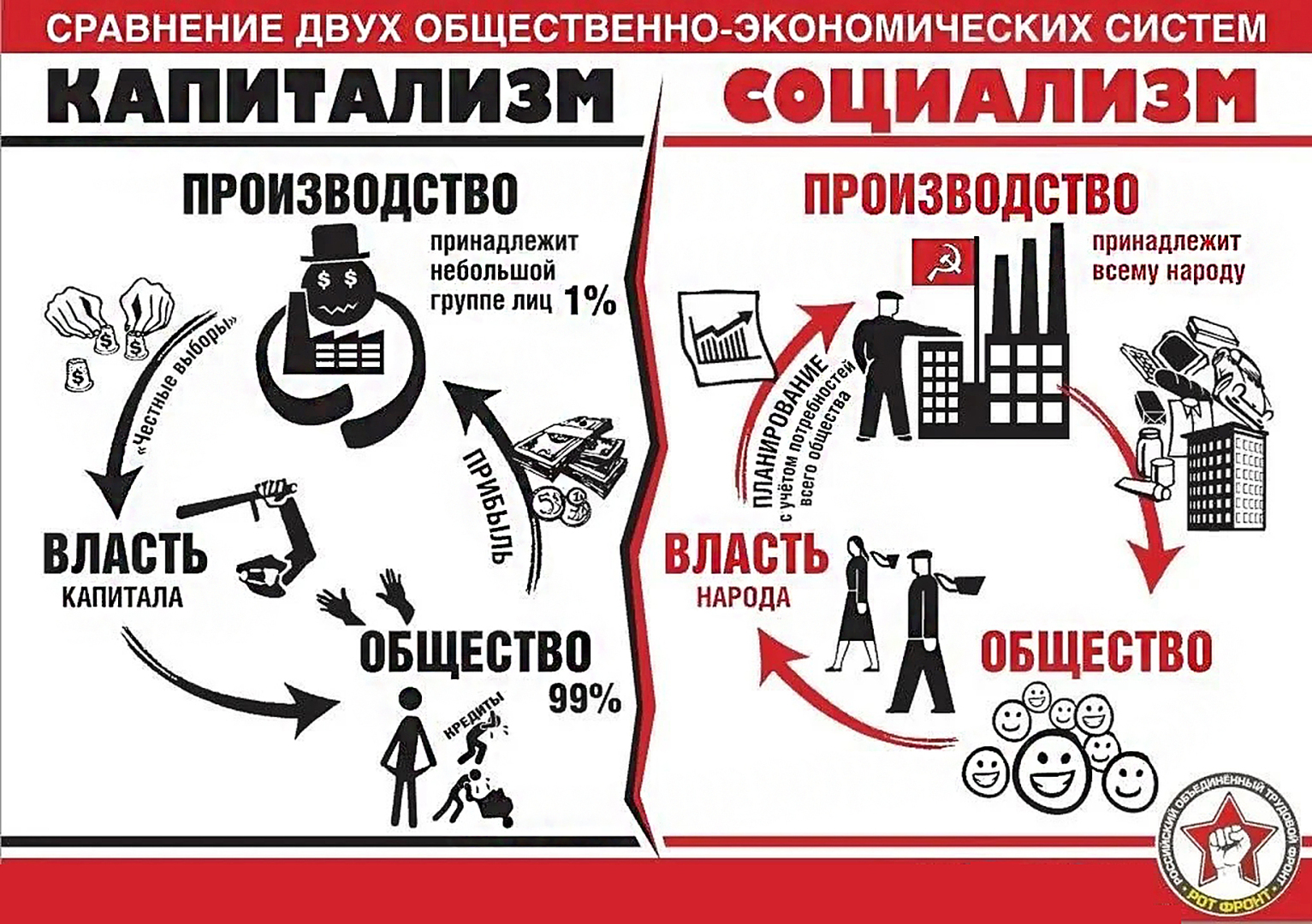
    WHY IS SOCIALISM BETTER THAN CAPITALISM? A COMPARATIVE ANALYSIS OF THE TWO SYSTEMS.


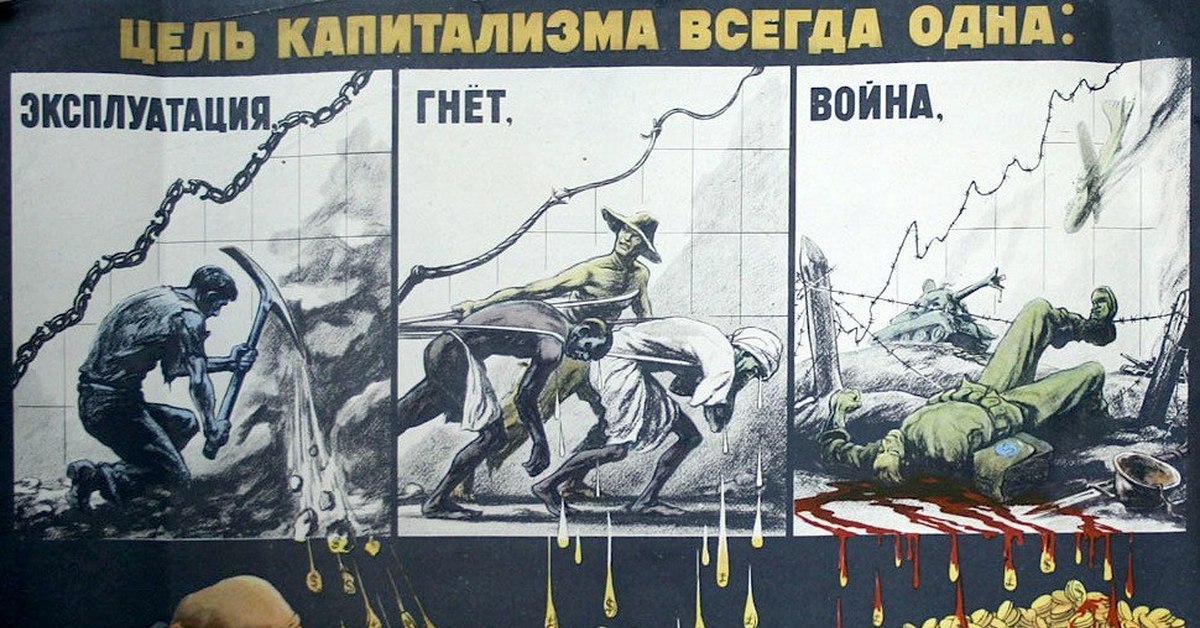
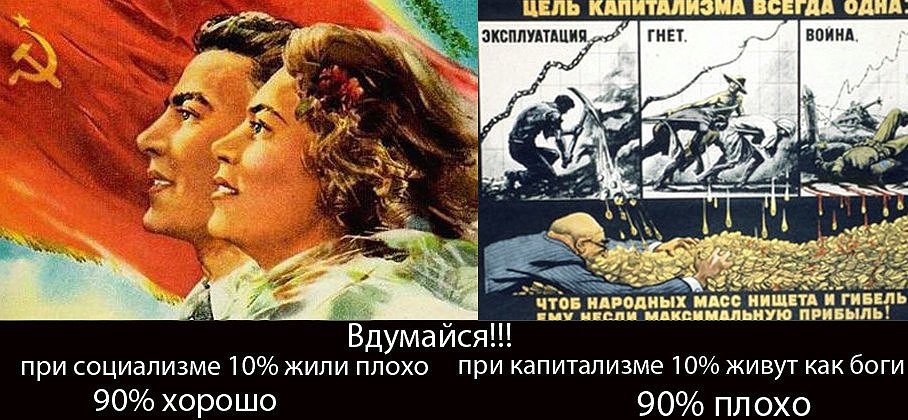
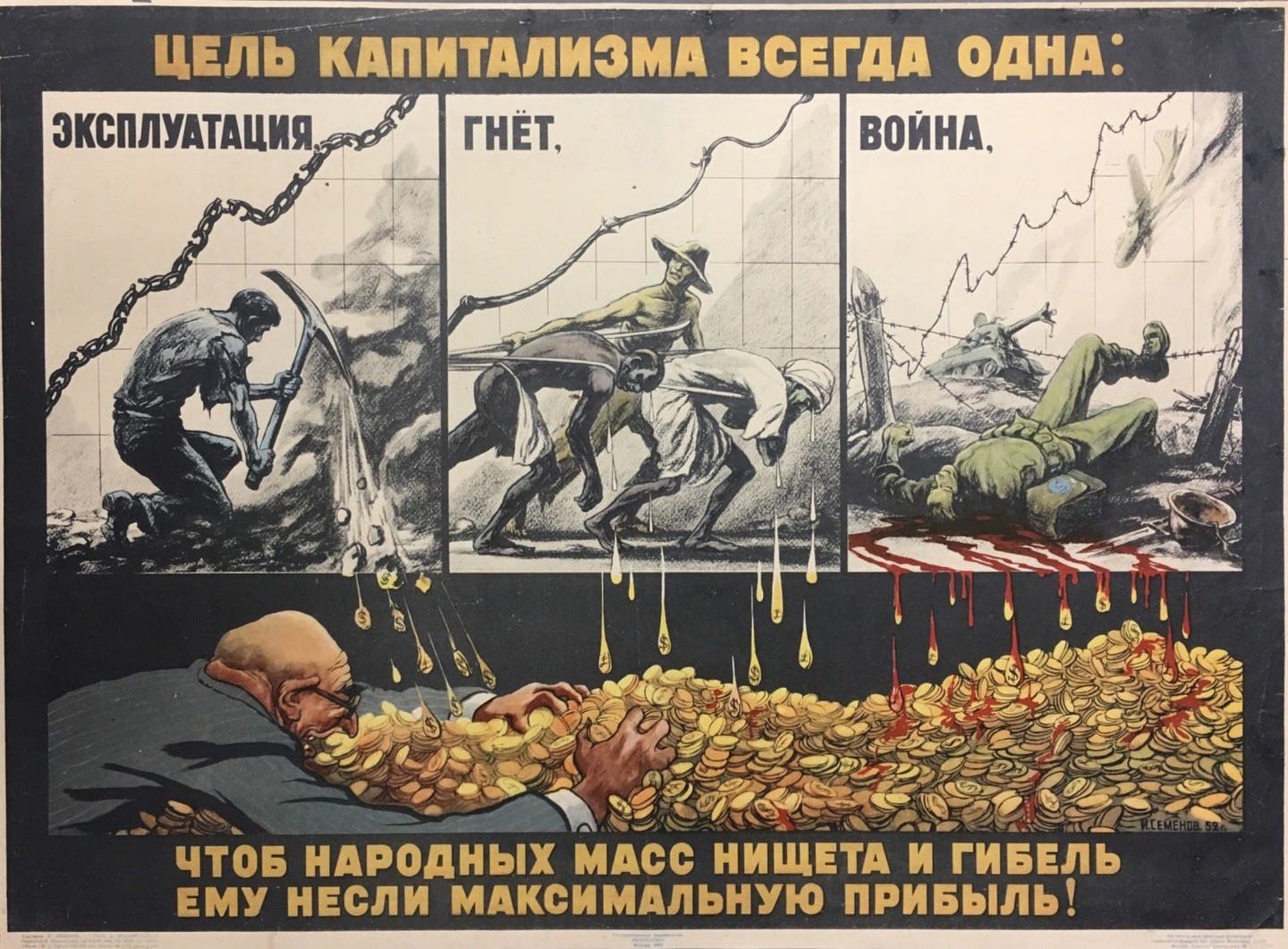
    The goal of capitalism is always the same: exploitation, oppression, war. So that the poverty and death of the masses would bring him maximum profit

    Socialism and capitalism are two opposing socio-economic systems, each with its own advantages and disadvantages. The question of which is better has been the subject of heated debate for over a century. In this article, we will try to understand the fundamental differences between socialism and capitalism and why the first system has a number of important advantages over the second.

    MAIN FEATURES OF CAPITALISM.

    Capitalism is a socio-economic system based on private ownership of the means of production and a free market. Its distinctive features:

    1. Private ownership of capital and the means of production
    2. Hired labor - hiring of workers by capitalists
    3. Competition between capitalists for profit
    4. Free pricing based on supply and demand
    5. Uneven distribution of goods - wealth is concentrated among the owners of capital

    In a capitalist society, capitalists own the means of production and hire workers to work in their enterprises for wages. Capitalists compete with each other in the market, striving to obtain maximum profit. Prices for goods and services are formed on the basis of supply and demand.

    The main driving force of capitalism is profit. The distribution of goods in society is extremely uneven - wealth is concentrated in the hands of the owners of capital, while the bulk of the population receives only wages that provide a minimum means of subsistence.

    PROBLEMS OF CAPITALISM.

    Despite the fact that capitalism has provided unprecedented economic growth, it has a number of significant shortcomings:

    1. Exploitation of workers. Workers are forced to sell their labor to capitalists, who appropriate the results of their labor in the form of profit.
    2. Social inequality. Wealth is concentrated in the hands of a few, the bulk of the population lives in poverty.
    3. Economic instability. Capitalism is subject to periodic economic crises due to the anarchy of production.
    4. Unemployment. Competition and the desire to maximize profits lead to job cuts.
    5. The danger of war. Capitalist states wage wars for spheres of influence and markets.
    6. Economic coercion. The threat of losing a job and, as a result, a livelihood, creates an army of the unemployed, which maintains competition for jobs and reduces wages, forcing workers to agree to worse working conditions.

    Thus, the main vice of capitalism is that it gives rise to acute class contradictions and social injustice.

    ADVANTAGES OF SOCIALISM.

    Socialism is a socio-economic system based on public ownership of the means of production and planned economic management. Its differences from capitalism:

    1. Public ownership of the means of production
    2. No exploitation of man by man
    3. Planned economic management in the interests of the whole society
    4. Equality and social justice
    5. No economic crises and unemployment
    6. Development of man as an individual

    In a socialist society, the means of production belong to the whole society. Exploitation of man by man has been eliminated. The economy develops on the basis of a plan in the interests of meeting the needs of the entire population.

    Socialism allows us to ensure:

    1. Guaranteed employment for all able-bodied citizens
    2. Free education and health care
    3. Affordable housing
    4. Social equality and fair distribution of income.

    Under socialism there is no unemployment, economic crises, which are characteristic of capitalism. The main goal of production is not to make a profit, but to satisfy people's needs. This allows to fully reveal the creative potential of a person and ensure his comprehensive development.

    Thus, socialism, unlike capitalism, is focused on a person, not on capital.

    From the presented comparative table of socialism and capitalism, it is clear that socialism has important advantages over capitalism in almost all indicators that determine the quality of people's lives.

    CONCLUSION.

    To summarize, we can conclude that socialism as a socio-economic system has a number of important advantages over capitalism:

    1. Ensures social justice and equality
    2. Eliminates the exploitation of man by man
    3. Eliminates periodic economic crises
    4. Guarantees the right to work and social benefits for everyone
    5. Creates conditions for the comprehensive development of a person

    Socialism is focused on the benefit of the whole society, and not a narrow circle of owners, as under capitalism. Therefore, the transition to socialism is a natural stage in the progressive development of humanity.


    46) 📈(History) The Russian economic miracle that everyone is silent about. Stalin's economy

    https://projectavalon.net/forum4/sho...=1#post1672416

    How USA Got Rich in World War I and II, Analysis (Read all 3 articles):
    https://projectavalon.net/forum4/sho...=1#post1684050

    40.6 💲💣The organizer of World War II is known
    https://projectavalon.net/forum4/sho...=1#post1670600

    73) 💲⚔️ Why and who actually organized the First World War
    https://projectavalon.net/forum4/sho...=1#post1680603

    87) Part 2 💲 The City of London is a private organization that controls the world's financial flows.
    https://projectavalon.net/forum4/sho...=1#post1685229
    Last edited by Russian Bear; 30th September 2025 at 10:54.

  4. The Following User Says Thank You to Russian Bear For This Post:

    sdv (14th September 2025)

  5. Link to Post #3
    Avalon Member sdv's Avatar
    Join Date
    5th March 2012
    Location
    On a farm in the Klein Karoo
    Posts
    1,032
    Thanks
    4,441
    Thanked 4,041 times in 908 posts

    Default Re: Transnational companies that rule the economy. The era of capitalism is ending

    I should state upfront that I am not a fan of capitalism, nor Western-style democracy.

    Socialism is not without its problems, and, like avid supporters of capitalism, supporters of socialism often do not address those problems.

    In a nutshell, the disadvantages of both systems are caused by human nature. In every system, there will be people who will seek to dominate and control and exploit ... a hierarchy forms.

    As the successes and failures of land reform in South Africa show, groups do not necessarily make wise or rational decisions. The assumption of the socialist model is that workers will collectively make decisions that benefit everyone in the community. In reality this does not happen, as much as 50% of the time, if not more. Capitalism, on the other hand, treats workers as easily replaceable and thus ends up putting the desires of owners over the needs of the workers, but even in capitalism you do get owners who genuinely do prioritize the needs of workers. A business owned by shareholders via the stock market is more likely to prioritize increasing profits over the needs of workers.

    My intuitive sense is that a flexible mix of economic systems would make a community/country stronger and better placed to deal with crises. A rampantly capitalist country that freely exploits workers is always at risk of a revolution; a ferociously socialist system can become prisoner to group think and stagnate.

    One of the very successful land reform projects in South Africa is an interesting story. It takes years for the process to be completed so people in that community prepared themselves by taking practical courses in things like business management. From the group, the most capable were chosen for management. (It is a vineyard and winery, and the person chosen to be 'general manager' turned out to be a woman!) If there wasn't expertise in the group, outsiders were hired to do a job. The community who now owned the land and business lived on the land and shared in the profit, but those who were chosen by merit to actually manage the business also got a salary. No doubt, there are still disagreements, but it overall is a success. The land reform projects that have failed are quite spectacular. Perhaps the most astonishing is a community who were given a piece of land on the coast with a successful holiday resort. The community stripped the existing buildings of materials to build themselves shacks (so no more holiday resort), put cattle on the land (too many so degradation of land followed). The community now relies on social grants! I have briefly described two extreme examples, but overall the land reform experience in South Africa shows that human beings can behave in unpredictable ways and there is no perfect solution that can be applied to everyone, which will produce the same results. That is why I intuitively think that for a community/country to thrive, flexibility is required.
    Sandie
    Somewhere, something incredible is waiting to be known. (Carl Sagan)

  6. The Following 4 Users Say Thank You to sdv For This Post:

    East Sun (14th September 2025), kudzy (14th September 2025), Russian Bear (14th September 2025), samsdice (14th September 2025)

  7. Link to Post #4
    Russian Federation Avalon Retired Member
    Join Date
    6th April 2025
    Location
    Russia
    Language
    Russian
    Posts
    474
    Thanks
    79
    Thanked 1,409 times in 356 posts

    Default Re: Transnational companies that rule the economy. The era of capitalism is ending


    46) 📈(History) The Russian economic miracle that everyone is silent about. Stalin's economy
    https://projectavalon.net/forum4/sho...=1#post1672416

    80) 💥How the USSR was destroyed. Defeat in the Cold War and the Birth of New Russia
    https://projectavalon.net/forum4/sho...=1#post1683130

    Yes, I understand what you are talking about!
    For me, the ideal of the socialist system is the Stalin era. We created the entire economy from scratch and did not live by the methods of communism. There are countries that took our model as a basis, like Japan for example. After World War II, we restored our economy in 5 years instead of 40 as someone thought, thus we surprised the whole world. Any power is totalitarian. And we did not live by the economic methods of Marxism-Leninism, Communism is a utopia. The USSR always lived under the socialist system, which was created by Stalin with many modernizations. And when Khrushchev came, he began to destroy everything. And even with all this, the Soviet power confidently moved forward. Until the factor you are talking about played a role. And you said correctly that there should be no excesses. Therefore, socialism should be with capitalism, but everything should be in moderation. In Soviet times, there were private small enterprises. (for example, they baked buns, there were hairdressers and tailors, and so on...) But all the giant factories, plants and enterprises were state-owned.
    If it weren't for the wars, we would have reached great heights that can only be compared to the Tower of Babel. The wisest and most ideal economic system was that of King Solomon. You couldn't come up with a better economic model, after all, he was the wisest man of all time.

    Actually, you said it right, the communists who wanted to become capitalists became traitors and destroyed the USSR. Capitalists stuff their pockets to incredible limits and now they don't need money, but control over the entire planet. Of course, it is important to understand the factor of morality and the nobility of the qualities of a person who is at the helm of some sphere. The fish rots from the head.


    Interesting fact, it was after the collapse of the USSR that mortality began to exceed birth rates all over the world. Our economy was still feeding half the world.

    81) Russia repeats the mistakes of the Union. Billions of dollars of Soviet aid to other countries "went into the sand."
    https://projectavalon.net/forum4/sho...=1#post1684050

    Fortunately, Russia has enormous resources in the depths of the earth, otherwise we would become poor.


    Think about it!!! Under socialism 10% lived poorly, 90% lived well. Under capitalism 10% live well (like gods), 90% live poorly.


    Why was the West and USA afraid of the USSR?


    A little about the USSR in numbers...
    In the period before the collapse of the USSR, the economy of the Soviet Union was the second in the world and competed only with the US economy.

    At the time of the collapse of the USSR, the US economy was only slightly more than 2 times larger in terms of GDP than the Soviet Union (2.66 trillion USSR versus 6 trillion US).

    GDP per capita in the Soviet Union in 1990 was $9,211. For reference, the current GDP per capita in Russia for 2017 is $10,743.
    That is, only 27 years later (from 1990 to 2017), we were able to exceed the GDP indicator from the collapse of the Soviet Union...
    The population of the USSR in 1990 was 288.6 million people and annually only increased, on average, by 2 million people.

    Which was incomparably better than the current demographic situation in Russia.
    In addition to the high level of GDP and stable population growth, social programs for the population were also actively developed.

    But we should not forget about the army and weapons.

    In 1990, the Soviet Union employed about 4.5 million soldiers and the budget for maintaining the army was estimated at $219 billion, second only to the United States in terms of budget.

    In terms of military contingent, the USSR was 1st in the world, and second in the world (after the United States) in terms of spending on the army and defense.
    And this is without taking into account the nuclear potential of one of the superpowers of that period.

    Based on a combination of factors, the USSR had the status of a "superpower", since it was a completely self-sufficient state in every sense.

    Why was the West afraid of the USSR?

    Now let's get to the facts. Indeed, looking at the USSR before its collapse, we can confidently say that such a country easily competed with the USA on the world stage.

    Before the collapse of the Soviet Union, only two countries in the world had the status of "superpower". These were: the USSR and the USA.
    There were nuclear weapons, the first in the world in terms of the number of military personnel, the second budget in the world for the defense industry and army (8% of GDP).

    But it was not the army, or the nuclear weapons, or even the developing economy of the USSR that frightened the West to a greater extent, but a completely different fact...

    Namely, ideology.

    And the roots of this fear go back to the end of World War II.

    The fact is that with the victory in World War II against fascism and Nazism, socialism showed its strength and ability to consolidate the nation against a single enemy.

    Fascism and Nazism are two different socio-political ideologies.
    But that's not all. After the war, socialism parties began to appear in almost every country.

    The ideology of socialism can be described in just one phrase: "Proletarians of all fears, unite."

    That is, the idea of ​​socialism promoted friendship between nations. And after the bloodiest war of the 20th century, this is exactly what people wanted.

    And this is not even mentioning the First World War of 1914-1918, in which over 21 million people also died.
    It was this fact that most frightened the United States and native Europe, which they called: "The Red Threat."

    In simple words, after the victory of the socialism over the fascists and Nazis, the Soviet ideology became interesting to other countries, and the concept of friendship was liked by many.
    And at that time, the socialism idea could well have captured the entire world without a single shot. This is what the West and the United States feared...


    Demonization of socialism (communism) in the World in the 20th Century. The so-called "Red Menace".

    Conclusion
    It was the idea of ​​socialism and friendship of peoples that was the most terrible threat in the USA and Europe after the Second World War.

    The West was very frightened by the spread of communist parties and ideology in many countries of the world during that period.

    And the growth of the power of the USSR only strengthened the persistent opinion that this concept is the only correct one for the development of any state and the improvement of the life of the common worker.

    For capitalist and bourgeois ideology, there is nothing more terrible than the power of the working class, the concept of equality and the nationalization of all production and extraction of minerals in the country for the benefit of the people.

    Of course, such an idea is much closer to the common man, but not to the ruling class and the wealthy minority.
    Therefore, in opposition to socialism ideology, enormous forces and means were thrown in order to equate socialism with Nazism, and to turn the "common good and friendship of peoples" into a "red threat".


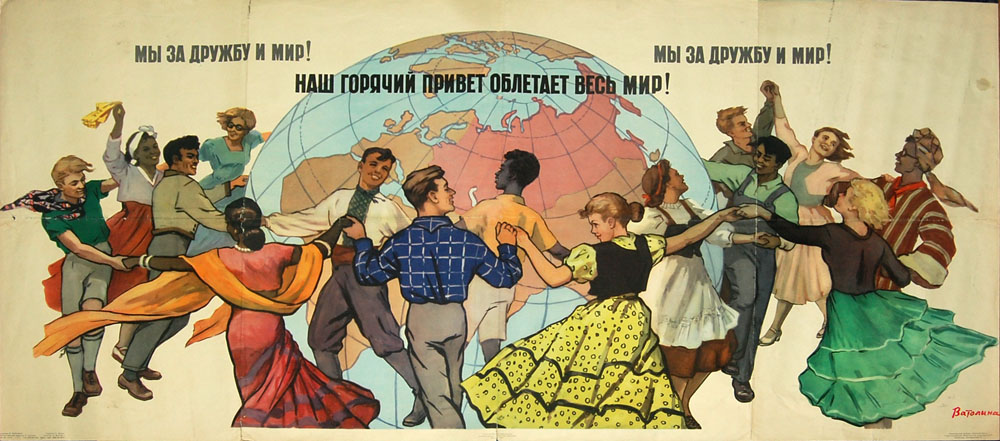
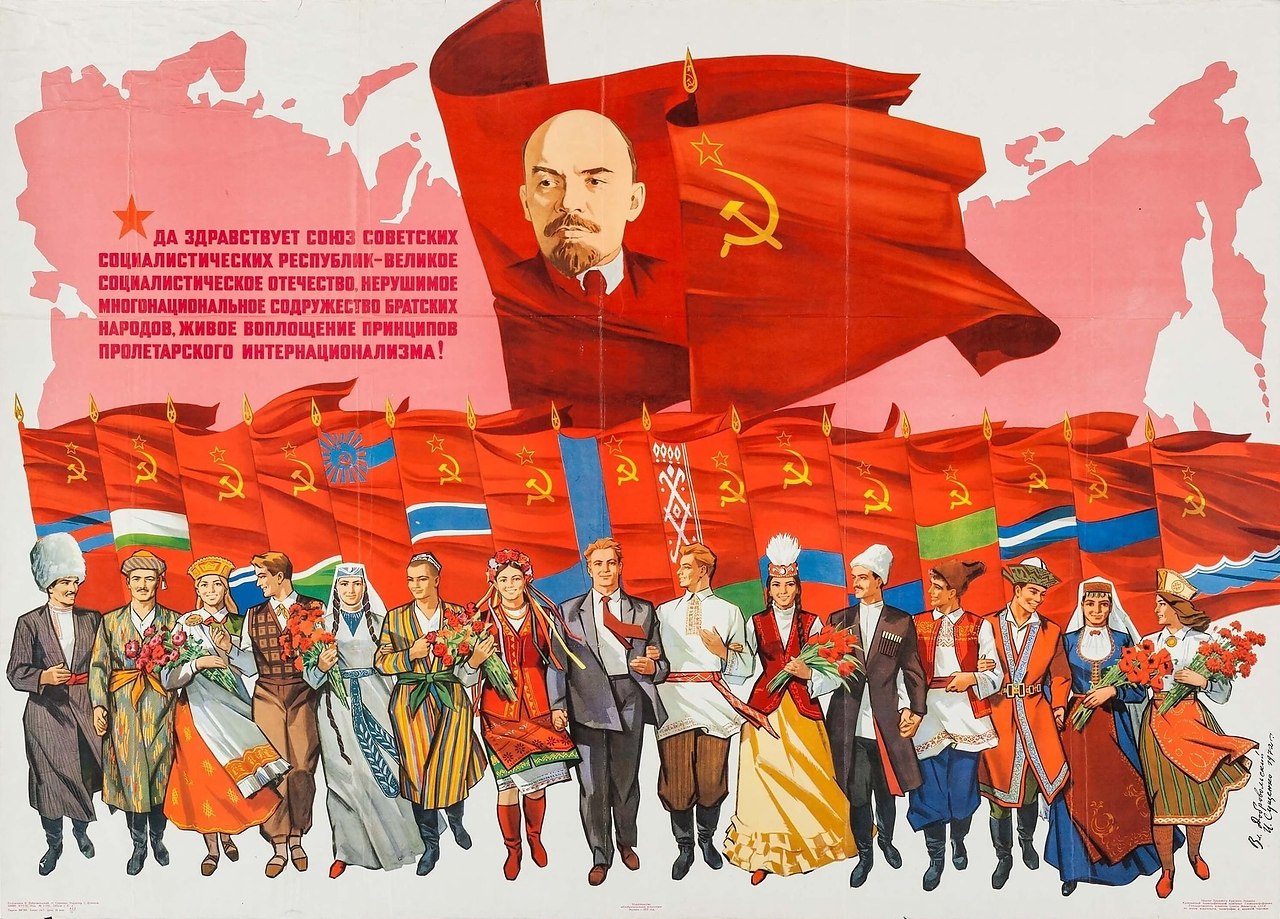
    "Workers of the world, unite!" (ПРОЛЕТАРИИ ВСЕХ СТРАН СОЕДИНЯЙТЕСЬ!) - This slogan of the Soviet power was written and described on the Soviet coat of arms and all posters! Capitalism was terribly afraid of him!

    Last edited by Russian Bear; 14th September 2025 at 18:27.

  8. Link to Post #5
    Russian Federation Avalon Retired Member
    Join Date
    6th April 2025
    Location
    Russia
    Language
    Russian
    Posts
    474
    Thanks
    79
    Thanked 1,409 times in 356 posts

    Default Re: Transnational companies that rule the economy. The era of capitalism is ending

    Why are there so many supporters of capitalist relations?


    The goal of capitalism is always the same: exploitation, oppression, war. So that the poverty and death of the masses would bring him maximum profit

    The famous Jewish sage Chu Bai Xing, who devoted his life to the study of microparticles, once said: "Only in bits and pieces can you know the whole." Therefore, following this testament, I would like to tell you a parable that exactly reveals the essence of the "paper" economy of capitalism. But first, I would like to show one comment from a proponent of capitalist relations.

    I'm a free man, I want to work, I want not to work. The Jewish Bolsheviks considered only physical labor to be work, by the way. And besides that, a person has many other methods of making a profit for any activity. There are many human activities, such as trading, for example, reselling something..., renting out housing, etc., etc.

    Instead of the ellipsis in the comment, there were also ...writing books, music, and art activities. But something tells me that he was referring to the waste paper and the "Star Factory," because a truly creative person usually doesn't care about profit, recognition is more important to him...

    Why I have given this comment will be clear below, but for now, the little parable itself.

    There was an island in the vast ocean where 10 families lived. All of them were engaged in farming - one family raised chickens, someone grew wheat, someone made carts, and someone fished, etc. What they exchanged among themselves. And since everyone worked hard, the exchange rate was simple - if a family grew 20 tons of wheat in a year, and another made 10 carts, then one cart could be exchanged for 2 tons of bread. Everything was fine, but it wasn't convenient - try to catch and bring 100 chickens at once to exchange for one pig...

    But one day they came up with an ingenious idea - to use 1,000 green pieces of paper that they found in the cave to exchange. So everyone got 100 green pieces of paper, which helped to make the exchange.


    Money was invented only to serve as a medium of exchange...

    And everything was fine on this island. No one was worried that someone had more green papers at the end of the year, because everything was simple, more papers meant less property, less papers meant more property. That's why they lent to each other with peace of mind, knowing that next year they would be given a harvest or a cart, which the family didn't need this year. The island as a whole became richer and overgrown with property. But as they say: "There's a freak in the family."..
    One family stole the entire wheat harvest from another. And in order to somehow survive this year, the farmer had to borrow some green paper. And since the one who stole had the most of them, the farmer unknowingly went to the thief. The thief, knowing about the plight of the farmer, set a condition - for each green piece of paper, he had to give two... As a result, 9 families began to work on the island, and one began to sell green papers.


    Question. Did this make the island richer, did everyone have more carts if one family started producing only green paper? If money began to serve not as a means of exchange, but as a means of deception?

    Another family, seeing that it was possible to have green papers without working, bought all the fish from a fisherman, which the fisherman sold like this - he caught 100 kg in a year. fish, so 1 kg. - one green piece of paper. I caught 200 kg, which means that one green piece of paper could have already bought 2 kg of fish. But the family that bought up all the fish, and as you know, it was impossible to do this without cheating and stealing, being a monopolist, set the price twice as expensive and could already live on this "profit". There is such a word as "inflation". And only 8 families started working on the island...

    Question. Has the pig farmer's life improved if he could get 50 kg for one pig before? fish, and now only 25 kg... Has the island as a whole become richer if 2 families have dropped out of production?

    And the peaceful life ended on this island. As soon as "money began to make money," some, remembering that it was easier to steal than to grow crops, engaged in robbery. Quarrels and fights began. The first thief took the plow and mill from the farmer for debts and began to take most of the harvest, since the latter had nowhere to go - he could no longer earn a new plow... By the way, earlier on this island, everyone voluntarily threw themselves at creative people, because they believed that "The song helps us build and live." Now it's become a business, and there are fewer good books and songs.

    That's why I want to end this parable with words from a famous song.


    Lyrics to the song "Island of Bad Luck" (music by A. Zatsepin, lyrics by L. Derbenev) from the film "The Diamond Arm" (1968):

    All covered in greenery, Absolutely all,
    There is an Island of Bad Luck in the ocean.
    There live unfortunate savages,
    Ugly on the outside, Kind on the inside.
    No matter what they do, things don't go well—
    Apparently their mother gave birth to them on Monday.
    The crocodile won't be caught, The coconut won't grow.
    They cry, they pray to God, Without sparing their tears.
    They seem not to be idle, And they could live—
    If only they could just abolish Mondays.
    As luck would have it, there is no calendar on the island,
    Children and adults Are wasted.
    Children and adults Are wasted.
    On the damned island, there is no calendar. On such an occasion, from night until dawn,
    The unlucky savages weep.
    And the poor sob, And curse misfortune.
    On what day—no one knows, In what year.

    I hope the translator translates the text well.
    Last edited by Russian Bear; 30th September 2025 at 10:10.

  9. Link to Post #6
    Russian Federation Avalon Retired Member
    Join Date
    6th April 2025
    Location
    Russia
    Language
    Russian
    Posts
    474
    Thanks
    79
    Thanked 1,409 times in 356 posts

    Default Re: Transnational companies that rule the economy. The era of capitalism is ending

    If we don't cremate capitalism, capitalism will kill humanity.


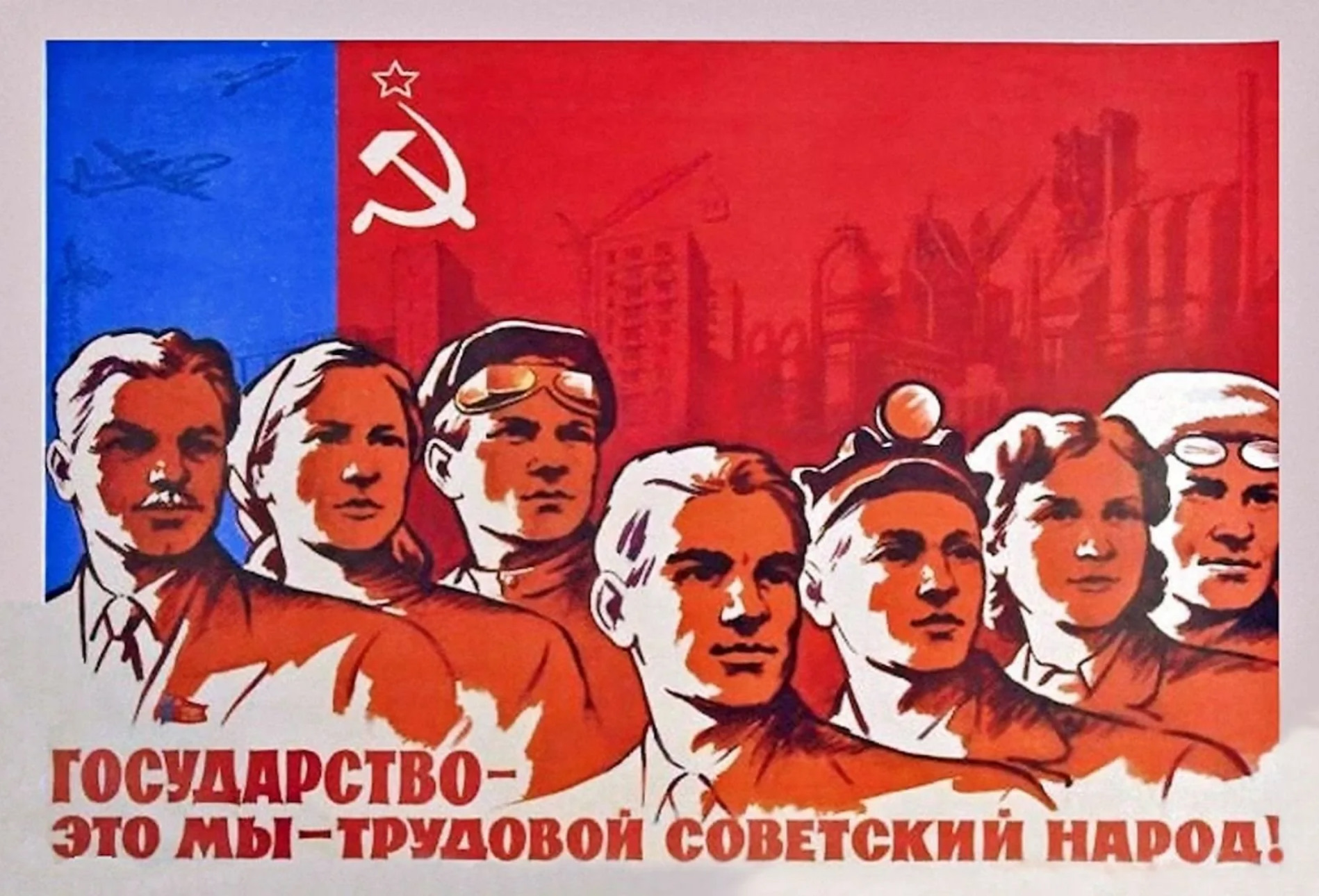
    The state is we, the working Soviet people! Our cause is right: forward to socialism!

    When someone says that socialism is dead, all that remains is to dance on the coffin lid, waving the flag of the triumph of capitalism, the association immediately comes to mind - the cancer cell rejoices that chemotherapy did not help. Capitalism is a cancerous tumor on the body of the Earth, and eventually the world will come to understand that capitalist relations must be destroyed. And it's not even about human relations - if suddenly the whole world starts living the way the West lives, then the Earth will instantly turn into a lifeless desert. The bigwigs of financial capital, such as Bill Gates, Ted Turner, Rockefeller, are aware of this, and therefore they are making plans to reduce the world's population.

    Ted Turner, the billionaire founder of CNN, said back in 1996 in an interview for the nature magazine Audubon that a 95% reduction in the world's population to 225-300 million would be "ideal." In 2008, in an interview for Temple University in Philadelphia, Turner made a correction and talked about reducing to 2 billion. Speaking much less elegantly than Gates, Turner stated that "we have too many people. That's why we have global warming. We need fewer people using less property."

    The basis of the economic development of capitalist relations is the consumer society. The production of disposable, short-lived items in beautiful packaging, on the one hand, and the consumption of expensive, non-ecological energy, on the other, is an indispensable condition for the prosperity of capitalism. And the so–called modern fashion is just a trick of trading companies, designed primarily for young and unintelligent consumers, the true purpose of which is to provoke more and more new purchases. And there is no need to provide any evidence - recent events clearly indicate that economies without excessive consumption of goods and services in industrialized countries, where for many decades there has been a purposeful formation of a spiritless society of "wasteful consumption", are beginning to collapse.

    According to available estimates, today an average of about 50 tons of raw materials per year are extracted and moved per inhabitant of the Earth, which consumes almost 800 tons of water for processing. In the process of industrial processing of extracted raw materials, 48 tons, or 96%, turn into waste, and only 2 tons – into final products, which eventually will also become waste.
    Industrialized countries now account for about 2/3 of global steel consumption, over 2/3 of aluminum, copper, lead, nickel, tin, zinc consumption, and 3/4 of energy consumption, which has increased 5-fold, while oil consumption has increased 7-fold. The average resident of an industrialized country consumes 10 times more steel, 12 times more fuel, and 15 times more paper than a resident of any developing country, with one American consuming 10 times more goods and services per year than a Chinese and 30 times more than an Indian.


    And if at the beginning of the last XX century, human biomass, together with the domestic animals and cultivated plants bred by them, accounted for 1-2% of the biomass of all natural land species, today it has reached 20%. For this reason, the capitalist community of highly industrialized countries does not need new rich countries with rich populations. We need countries that are sources of raw materials. Including Russia... American journalist Wendell Berry wrote: "Our economy is such that we cannot afford to take care of things: labor is expensive, time is expensive, money is expensive, and raw materials, the basis of creative activity, are so cheap that we won't lift a finger to take care of them."

    As a result of large–scale human economic activity in the late 19th and early 20th centuries, ecosystems on 20% of the land area were disrupted. However, this was only the beginning of catastrophic losses, because during the coming twentieth century, the increased technological power of industrial society led to the complete destruction of another 43.8% of natural ecosystems. In other words, in the twentieth century alone, the land area with destroyed ecosystems turned out to be twice as large as in the previous few millennia, and today it has reached 63.8 %

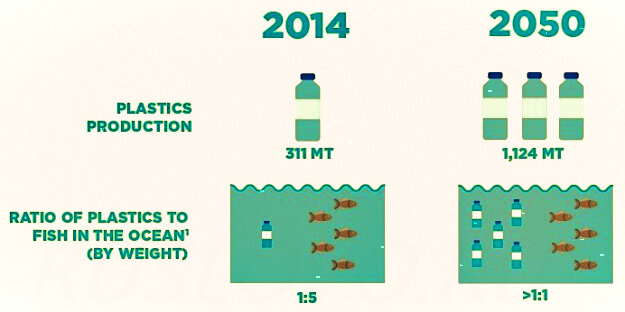
    And most of the destruction is on the conscience of the so-called "golden billion". Few people have a technical education, and even more so since my articles are read mainly by humanities scholars, so I will not make calculations from arithmetic and geometric progressions, just give an example from the report of the World Economic Forum and the Ellen MacArthur Foundation.:


    In a couple of years, 3 tons of fish in the oceans will account for 1 ton of garbage, and many will live to the point where the mass of waste in the ocean will be greater than the entire mass of the ecosystem of the euphotic ocean zone. By the way, the ecosystem of the world's oceans affects us all.: It affects the Earth's weather and produces about 70% of the oxygen we breathe.


    Currently, more than 150 million tons of plastic pollute the world's oceans. At least 8 million tons of plastic are thrown away in one year. This means that every minute as much garbage gets into the ocean as one garbage truck can hold. In the Pacific Ocean, a mainland island formed from garbage, the size of which is comparable to the territory of the United States.

    Every third purchase in the world is made by Americans. The United States has become the epicenter of all forms of overconsumption: raw materials, transportation, and food. Every day, Americans throw away about 50% of their edible food—in non-biodegradable packaging, of course. It's more profitable for them to throw away food than to lower the price or simply give it to their own needy, low-income citizens. But eliminating this 50% from the economy is also unacceptable, as it would immediately reduce the country's GDP. Such are the laws of a market economy—an "economy without a soul." It's estimated that the food thrown into US landfills every day could feed about 10 million people.

    The situation in Europe is about the same, and therefore Western capitalism now has two goals: either to prevent an excessive increase in living standards in developing countries, or to reduce the world's population. One of the most effective ways to achieve this goal is the Third World War.

    Last edited by Russian Bear; 30th September 2025 at 11:18.

  10. Link to Post #7
    Russian Federation Avalon Retired Member
    Join Date
    6th April 2025
    Location
    Russia
    Language
    Russian
    Posts
    474
    Thanks
    79
    Thanked 1,409 times in 356 posts

    Default What is the main difference between capitalism and socialism?

    What is the main difference between capitalism and socialism?


    You will never out-argue an adherent of capitalism, because any discussion with him will always be based on a comparison of economic models. That is, about eating, entertaining, rags. This means that you will always be playing on his field in a game that he invented himself. However, in fact, the main difference between socialism and capitalism is not in who has a fuller stomach, but in the way a person looks at life, according to what principles society lives. And here we must understand that capitalism is a society built on the most negative qualities of human consciousness, it is a society of negativity. What is the main driving force of capitalism? Money. The whole life of a capitalist society revolves around money. Singers do not sing to bring joy to people, but to earn more money, athletes do not try for the sake of records and achievements, but to get a more profitable contract, scientists, doing research, do not think that their medicine will be able to defeat any disease, but about what profit they can get. And the whole capitalist society is involved in this race for money.

    Think about it — five of the seven deadly sins of Christianity are the basis, the raison d'etre of capitalism.

    1) Pride (pride) — excessive self-confidence, arrogance and contempt for others. The words "beggar" and "cattle" have already become familiar to us. We began to divide people into statuses. And as soon as someone rises one step higher, they immediately change their attitude towards others.. The entire credit banking sector, and especially the car loan sector, is based on this sin. This is where a real madhouse is going on — there is a huge category of people who buy a car on credit just to go to work (and they don't have enough time for the rest). Have you noticed how they walk like peacocks afterwards, with what a haughty look they ask to borrow money before their paycheck? Or is it the attitude of some fifochka towards an old lady counting pennies at the checkout? And in schools? Even if you're smart, if you have an outdated smartphone model, you're already flawed. And there are plenty of such examples, because this is the essence of capitalism — things serve as a measure of a person. Besides, pride invariably generates the next sin.

    2) Greed (greed) — unbridled desire for material wealth and accumulation. This is the core of capitalism. That's why a millionaire needs so much money if he can't spend it in his entire life? And he needs this money to feel power over others. That's why democracy in the capitalist world is a myth, because any power in a capitalist society is somehow bought with money. For any official in government structures, we are already just "people" who were "not asked to give birth" and the like. Greed and greed also drive people to commit crimes and start wars. And since there is always someone richer than you, the whole capitalist society is infected with another deadly sin.

    3) Envy is a negative feeling towards the success, achievements, or qualities of other people. Find at least a hundred people in our country who would envy astronauts, and all because any envy in a capitalist society has a material connotation. Even if you're a virtuoso, the best in your field, if it doesn't materialize into hard cash, then it doesn't matter anymore...

    4) Gluttony (gluttony) — wrong attitude to food and excessive enjoyment of food and drinks. I remember in one show a young lady shouted like, "We don't need socialism, we need McDonald's." The entire food industry of capitalism is built on the sin of gluttony. No manufacturer will think about the benefits of their products, it is more important for them to sell as many of their products as possible at minimal cost.

    5) Lust (vice) — misuse of sexuality and excessive desire for pleasure. Pornography and perversion (thank God we came to our senses in time) are encouraged in the capitalist world, as it brings good profits. And as mentioned above, capitalism is about money and only about money, but not about morality.

    I could talk for a long time about the depravity of capitalism, but I want to get to the main point. And to make the conclusion of all this clearer, I would like to tell you a story first:

    This event took place at a seminar that gathered about five hundred participants. In the middle of the event, the presenter unexpectedly announced a break and offered the participants a collective task. Each person was given one balloon and asked to sign it with his own name. Then the balls were taken away and stacked in the next room.After that, everyone was invited there and given five minutes to find their ball among the crowd. The participants rushed to find their own names, colliding, pushing each other away — real chaos reigned.After the allotted five minutes, only one was able to find his own balloon.Then the presenter turned to the audience again, offering to re-enter the room, select any ball and hand it to the person whose name was signed on it. Just a few minutes later, each participant was holding their own ball in their hands."That's what happens in real life," concluded the speaker. "We are desperately looking for our own happiness everywhere, completely unaware of where it is. Sometimes our personal well-being depends on the well-being of the people around us. By helping others find their happiness, we find our own."

    So what's the main difference between capitalism and socialism? Capitalism teaches: kick your neighbors, go over their heads, but only if it makes you happy. Socialism, on the other hand, teaches something different: you'll find happiness by helping others.

    Last edited by Russian Bear; 30th September 2025 at 11:21.

  11. Link to Post #8
    Avalon Member rgray222's Avatar
    Join Date
    24th September 2010
    Language
    English
    Posts
    3,138
    Thanks
    12,926
    Thanked 29,727 times in 3,032 posts

    Default Re: What is the main difference between capitalism and socialism?

    Quote Posted by Russian Bear (here)
    What is the main difference between capitalism and socialism?

    So what's the main difference between capitalism and socialism? Capitalism teaches: kick your neighbors, go over their heads, but only if it makes you happy. Socialism, on the other hand, teaches something different: you'll find happiness by helping others.
    This is my own personal observation and I am not speaking for anyone on this forum but myself.

    You have travelled an extremely long distance between the question in the title................What is the main difference between capitalism and socialism?

    to get to your answer at the bottom of post #7................................So what's the main difference between capitalism and socialism? Capitalism teaches: kick your neighbors, go over their heads, but only if it makes you happy. Socialism, on the other hand, teaches something different: you'll find happiness by helping others.

    This is a topic the forum has grappled with many times in the past, and many members have definite views on the topic, but my personal opinion is that it wasn't necessary to make such a long post to get to the point. There is a saying which is...........just because you can does not mean you should. This is just my personal observation, so do what pleases you.

    I don't think the people of the world truly want happiness; I think what they truly want and need is peace, prosperity and contentment, not happiness.

    The problem I see with socialism is that it takes away incentives for innovation and productivity, and almost always has inefficient resource allocation. These may seem like small issues, but over time they almost always lead to economic stagnation and shortages of goods. One of the main problems with socialism is that it concentrates control away from the corporations and places it in the hands of a single individual or a small group of oligarchs. There is no getting around it, power always corrupts. Even today, when travelling through Eastern Europe, one can still see the large homes built for and by communist leaders, a lasting reminder of how power tends to corrupt.

    The problem I see with capitalism is that it can lead to inequality, which may not necessarily be a bad thing, but it definitely prioritises the profit motive over social and ecological well-being. If your goal is fairness or equality for all, then capitalism is not what you want. Capitalism often results in the concentration of immense wealth among a few, with profit being more important than social and ethical considerations. It is true that income inequality is one of the hallmarks of capitalism.

    You make a case for China becoming the main capitalist in the world. You must certainly see that capitalism sprouting under a socialist society ruled by a communist government is a recipe for disaster. Over time, when the countries get wealthier and the middle class grows, there will be unimaginable civil unrest. People will no longer tolerate such strict control over their lives, it is simply human nature.

    A hybrid system combining capitalism and socialism might be able to offer a balanced approach, promoting economic efficiency while ensuring some type of social safety net. If the hybrid system were able to leverage the strengths of both systems, it would stand a chance of working and providing more equality. There is little doubt that the hybrid system would remove a good deal of innovation; that is simply the nature of the beast.

    There is no doubt in my mind that both systems carry risks of corruption and inequality.

    The question becomes what type of global government is coming, capitalism or socialism. My personal opinion is that global governance is likely to expand and evolve very quickly; the establishment of a fully centralized, authoritative global government is imminent. We saw Russia and China holding hands just one month ago, praising global government. I believe that the march towards global governance will take us into WWIII. War is nothing more than a tool of global government. War is an acceptable action to achieve a desired goal. I don't see any other way around it, man's recurring method of managing their differences is sadly war. Man has yet to evolve to a point where diplomacy and negotiation are our main road to peace and cooperation.

  12. The Following 2 Users Say Thank You to rgray222 For This Post:

    Open Minded Dude (30th September 2025), Russian Bear (30th September 2025)

  13. Link to Post #9
    Russian Federation Avalon Retired Member
    Join Date
    6th April 2025
    Location
    Russia
    Language
    Russian
    Posts
    474
    Thanks
    79
    Thanked 1,409 times in 356 posts

    Default Re: Transnational companies that rule the economy. The era of capitalism is ending

    2024 marks the 80th anniversary of the Bretton Woods Conference, at which the world recognized the dollar as the main global currency. But this is not an anniversary, but the end of a cycle.
    History shows that the world's reserve currencies have their own life cycle, and it averages 80-100 years: from the Portuguese real to the British pound. The term of the dollar's hegemony has expired.
    Since 1971, when the United States decoupled the dollar from gold, it has become "fiat", unsecured money. Its value is based not on the economy, but on the military power of the United States. As they say, "the dollar is backed by aircraft carriers."
    But the world is changing. The creation of alternative systems within the framework of the BRICS and the transition to settlements in national currencies are symptoms of the impending collapse. The dollar is losing trust, and without trust, any fiat currency is just paper. We are on the verge of a major financial transformation.

  14. Link to Post #10
    Avalon Member norman's Avatar
    Join Date
    25th March 2010
    Location
    too close to the hot air exhaust
    Age
    70
    Posts
    11,220
    Thanks
    11,015
    Thanked 74,540 times in 10,495 posts

    Default Re: Transnational companies that rule the economy. The era of capitalism is ending

    Quote Posted by Russian Bear (here)
    2024 marks the 80th anniversary of the Bretton Woods Conference, at which the world recognized the dollar as the main global currency. But this is not an anniversary, but the end of a cycle.
    History shows that the world's reserve currencies have their own life cycle, and it averages 80-100 years: from the Portuguese real to the British pound. The term of the dollar's hegemony has expired.
    Since 1971, when the United States decoupled the dollar from gold, it has become "fiat", unsecured money. Its value is based not on the economy, but on the military power of the United States. As they say, "the dollar is backed by aircraft carriers."
    But the world is changing. The creation of alternative systems within the framework of the BRICS and the transition to settlements in national currencies are symptoms of the impending collapse. The dollar is losing trust, and without trust, any fiat currency is just paper. We are on the verge of a major financial transformation.
    Can you elaborate on which Dollar you speak of ?
    ..................................................my first language is TYPO..............................................

  15. Link to Post #11
    Russian Federation Avalon Retired Member
    Join Date
    6th April 2025
    Location
    Russia
    Language
    Russian
    Posts
    474
    Thanks
    79
    Thanked 1,409 times in 356 posts

    Default Re: Transnational companies that rule the economy. The era of capitalism is ending

    Quote Posted by norman (here)
    Can you elaborate on which Dollar you speak of ?


+ Reply to Thread

Tags for this Thread

Posting Permissions

  • You may not post new threads
  • You may not post replies
  • You may not post attachments
  • You may not edit your posts