+ Reply to Thread
Page 4 of 4 FirstFirst 1 4
Results 61 to 72 of 72

Thread: Poisoning the Food Supply

  1. Link to Post #61
    Avalon Member Eva2's Avatar
    Join Date
    31st January 2011
    Posts
    2,975
    Thanks
    11,493
    Thanked 26,498 times in 2,938 posts

    Default Re: Poisoning the Food Supply

    KFC joins McDonalds as fast food to avoid:

    https://www.sportskeeda.com/pop-cult...alism-theories

    '"Are they telling us there's human meat in the chicken?" — Internet in disbelief as latest KFC ad sparks cannibalism theories
    By
    Bias Sinha
    Modified Mar 23, 2025 16:37 GMT


    KFC'S new commercial promotes cannibalism. THIS IS ABSOLUTELY DISGUSTING!

    https://x.com/_TruthZone_/status/1903178766379258434

    Easier to read the entire article from the first link
    Last edited by Bill Ryan; 24th March 2025 at 22:07. Reason: embedded the tweet

  2. The Following 6 Users Say Thank You to Eva2 For This Post:

    Bill Ryan (24th March 2025), Ewan (25th March 2025), Harmony (25th March 2025), onawah (24th March 2025), Yoda (15th April 2025)

  3. Link to Post #62
    United States Avalon Member onawah's Avatar
    Join Date
    28th March 2010
    Language
    English
    Posts
    25,361
    Thanks
    53,770
    Thanked 137,021 times in 23,797 posts

    Default Re: Poisoning the Food Supply

    What on Earth is KFC thinking of?????
    I would never eat the horrible junk they sell anyway, but I can't imagine this ad is going to increase sales among their regular customers, much less draw in any news ones--quite the opposite!
    Each breath a gift...
    _____________

  4. The Following 7 Users Say Thank You to onawah For This Post:

    Arcturian108 (24th March 2025), Bill Ryan (25th March 2025), Eva2 (26th March 2025), Ewan (25th March 2025), Harmony (25th March 2025), Yoda (15th April 2025)

  5. Link to Post #63
    Avalon Member Eva2's Avatar
    Join Date
    31st January 2011
    Posts
    2,975
    Thanks
    11,493
    Thanked 26,498 times in 2,938 posts

    Default Re: Poisoning the Food Supply

    'Scientists have discovered that cockroach milk from Diploptera punctata is three times more nutritious than cow milk. Rich in proteins, fats, and sugars, it offers an exciting potential superfood for the future. Research continues to explore its benefits and sustainable production methods for human consumption.
    #CockroachMilk #Superfood #Nutrition #Innovation #Sustainability'


  6. The Following 5 Users Say Thank You to Eva2 For This Post:

    Bill Ryan (3rd April 2025), Ewan (4th April 2025), Harmony (4th April 2025), Ravenlocke (15th April 2025), Yoda (15th April 2025)

  7. Link to Post #64
    Avalon Member Ravenlocke's Avatar
    Join Date
    28th September 2011
    Posts
    23,727
    Thanks
    13,875
    Thanked 201,229 times in 23,721 posts

    Default Re: Poisoning the Food Supply

    https://x.com/toobaffled/status/1911336733884690472


    https://x.com/QBCCIntegrity/status/1862811238268637209


    https://x.com/EHallandvik/status/1908771175292862647


    Text:

    The Bovaer “safety” was only done over 𝟗𝟎 𝐃𝐀𝐘𝐒!! No long term studies… in 1 study 2 of the cows were euthanised early. (Didn’t say why) in second study They decided𝐃𝐄𝐂𝐑𝐄𝐀𝐒𝐄𝐃 𝐎𝐕𝐀𝐑𝐘 𝐒𝐈𝐙𝐄 wasn’t adverse!!! In rats the findings were far worse!!

    https://food.gov.uk/research/outcome...nop-assessment


    https://x.com/LeilaniDowding/status/1862773841635705137


    https://x.com/exthepose/status/1912048131589492784

    "Hope is the thing with feathers that perches in the soul and sings the tune without the words and never stops at all."
    - - - - Emily Elizabeth Dickinson. 🪶💜

  8. The Following 7 Users Say Thank You to Ravenlocke For This Post:

    Bill Ryan (15th April 2025), East Sun (16th April 2025), Ewan (16th April 2025), Harmony (16th April 2025), Johnnycomelately (17th November 2025), RunningDeer (4th August 2025), Yoda (15th April 2025)

  9. Link to Post #65
    Avalon Member TrumanCash's Avatar
    Join Date
    28th April 2012
    Location
    Planet Earth
    Posts
    1,812
    Thanks
    6,309
    Thanked 16,188 times in 1,785 posts

    Default Re: Poisoning the Food Supply

    Roundup Weedkillers Caused Multiple Cancers in Rats, Large International Study Finds

    There’s now more evidence that glyphosate exposure at levels deemed safe by regulatory authorities can cause multiple kinds of cancer, thanks to a new peer-reviewed study published Tuesday in Environmental Health.

    The study authors, including researchers from the Ramazzini Institute in Italy and Boston College, examined the impact of glyphosate and two common glyphosate-based weedkiller formulations — Roundup Bioflow, which is used in Europe, and Ranger Pro, a generic version of Roundup used in the U.S.

    Both formulations are sold by Bayer, which acquired the Roundup brand and related weedkillers in 2018 when it bought Monsanto.

    Researchers gave the weedkillers to groups of rats over two years and compared the results to unexposed groups of rats.

    Our study showed carcinogenic effects in rats at doses that are currently considered safe,” the study’s corresponding author Daniele Mandrioli, M.D., Ph.D., told The Defender.

    Mandrioli directs the Cesare Maltoni Cancer Research Center at the Ramazzini Institute.

    According to the report, Mandrioli and his colleagues found that rats exposed to glyphosate and both glyphosate-based products developed tumors in multiple places, including the blood (as in, leukemia), skin, liver, thyroid, nervous system, ovary, mammary gland, adrenal glands, kidney, urinary bladder, bone, endocrine pancreas, uterus and spleen.

    Prenatal exposure to the weedkiller was “particularly detrimental,” Mandrioli said, noting that 40% of the deaths from leukemia occurred in exposed rats who were less than a year old.

    The authors also saw an increase in early deaths for other types of tumors, he added.

    Study comes as Bayer seeks immunity from costly lawsuits

    Read complete article at https://childrenshealthdefense.org/d...tm_id=20250611

  10. The Following 8 Users Say Thank You to TrumanCash For This Post:

    Bassplayer1 (12th June 2025), Bill Ryan (4th August 2025), ClearWater (12th June 2025), Ewan (13th June 2025), Harmony (12th June 2025), Johnnycomelately (17th November 2025), RunningDeer (4th August 2025), Yoda (12th June 2025)

  11. Link to Post #66
    United States Avalon Member onawah's Avatar
    Join Date
    28th March 2010
    Language
    English
    Posts
    25,361
    Thanks
    53,770
    Thanked 137,021 times in 23,797 posts

    Default Re: Poisoning the Food Supply

    Why Can't We Stop Eating Certain Foods?
    Analysis by Dr. Joseph Mercola
    August 02, 2025
    https://articles.mercola.com/sites/a...&rid=353905107

    https://media.mercola.com/ImageServe...-foods-pdf.pdf


    "Story at-a-glance
    Ultraprocessed foods are designed to melt in your mouth and bypass the need for chewing, which blocks your brain’s ability to register fullness and drives you to overeat
    Food companies use sound, smell, appearance, and packaging to stimulate your senses and condition your brain to crave their products through a marketing tactic called sonic branding
    Snack products are marketed to dominate your day — from breakfast shakes to bedtime treats — fueling constant grazing that rewires your brain and leads to compulsive eating
    Seemingly “healthy” snack foods like veggie straws and protein bars are loaded with empty calories that trick you into thinking you're making better choices, when in fact they disrupt hunger and satisfaction cues
    These foods trigger the same dopamine-driven reward pathways in the brain as addictive substances like alcohol and nicotine, which explains why it's so hard to stop eating them — even when you know they’re harming your health

    Have you ever noticed how, when you open a bag of chips and start eating it, you somewhat can't help but finish it, down to the last crumb? Even if your mind is telling you to stop, your hands keep reaching down as you anticipate every crunch. It's like an addiction — and you're not to blame.

    A BBC documentary investigates the strategic engineering of ultraprocessed food, and how they're designed to trap you by cleverly stimulating your senses — putting you in an endless cycle of cravings and overeating that ultimately leads to chronic diseases.1


    Obesity Is Not a 'Failure of Willpower' — It's the Result of a Shift in Our Food System
    Dr. Chris van Tulleken, a doctor and scientist with the National Health Service (NHS) in the U.K., explores just how the global food system is drastically affecting people's health. Through interviews with different experts in the field of food manufacturing, he gives an eye-opening look at how food corporations manufacture and market products in ways that deliberately short-circuit your body's natural appetite controls.

    •Obesity rates in all age groups started rising at the same time — Van Tulleken starts by disputing the belief that obesity is caused by a failure of willpower, providing data showing how obesity rates in different age groups rose simultaneously in the mid-1970s.

    "[B]etween 1960 and 1975, there's a fairly steady percentage of obesity in the population. But in the mid-1970s, obesity starts going up in all of the groups simultaneously," he explained.

    "Now, if you're saying willpower is responsible, what you're proposing is that all of these groups of people simultaneously lost moral responsibility. And that's not plausible. Something else happened to our food in the mid-1970s to make it irresistible to people."

    •So what changed during this time? A separate BBC article describes how a "fork in the road" occurred in 1971. The 1970s were a period of terrible inflation — the cost of living rose, along with a demand for cheap food. Food historian Polly Russell explains:

    "On the one hand there's an increase in processed food, in supermarkets, in centralised food systems, in industrialised food, and all that goes with it. And on the other hand, there's also a growth in an interest in cooking as a leisure activity, in the origins of food, in food and seasonality, in a much more engaged relationship with food."2

    •Another significant change happened — the fast food industry grew — Restaurant chains like McDonald's were expanding; in fact, the quarter pounder was released in 1971. American portion sizes started increasing as well. On the other side of the world, instant ramen in a cup was born in Japan. It eventually reached U.S. shores and became known as Cup O' Noodles.3

    But the biggest change that occurred after the 1970s — and continues to this day — is that ultraprocessed food manufacturing has gone beyond producing cost-efficient food — it has become a complex process that creates products designed to overload your senses so that you have no choice but to keep eating.

    How Texture Tricks Your Brain Into Overeating
    One particular trick that manufacturers use is playing around with textures — not just flavor or ingredients — to increase consumption and drive profits. This deeper manipulation works at the level of chewing, sensation, and brain signaling.

    •Snacks are intentionally designed to be crunchy and squishy — John Ruff, a former executive from Kraft General Foods who spent four decades in the global food industry, explains that everything from a product's crunch to its squish is tested by trained sensory panels before it hits store shelves. Every bite is fine-tuned for maximum appeal — not through nutrition, but through feel, mouth sensation, and how fast you eat it.

    "Companies spend a lot of time optimizing all aspects of their product — the flavor, the taste, the texture. People want their product to be as good, if not better than the competitor, so it will sell more," Ruff said.

    •Eating snacks with soft textures disrupts a key biological safeguard — Some snacks are designed to be crunchy on the outside, while the inside is soft enough to melt in your mouth. This is intentional; since you're not chewing soft food as much, it short-circuits the normal satiety mechanisms you'll have if you were chewing food properly.

    As a result, your body is bypassing a mechanism that signals fullness — it triggers you to keep eating. According to Professor Francis McGlone, a former lead neuroscientist at Unilever:

    "Once we worked out that playing around with the texture of food — making it softer — tricks that normal satiety of fullness mechanism, clearly there's an opportunity there for some kind of scurrilous behavior in making food softer so that people will eat more and therefore you sell more of your product."

    •What's more, ultraprocessed foods are engineered to be consumed quickly — This means your body has even less time to register satiety before you've eaten hundreds of calories.

    •The industry term for this is "vanishing caloric density" — This refers to how certain puffy, light foods dissolve so quickly in your mouth that your brain doesn't even process them as calories. You don't feel full, so you eat more. Van Tulleken demonstrates this by biting into a common puffy snack that he says his kids love.

    "You don't typically think of this as being a soft food because it's a bit crunchy. But actually after that initial crunch, you can just crush it with your tongue, right? It's got no resistance at all. But in terms of the calories per gram, it's got way more calories than even a very fatty burger."

    And because these foods are usually packed with highly digestible carbohydrates and oils, they hit your bloodstream fast, spiking blood sugar and encouraging fat storage.

    These textures aren't about convenience — they're a marketing weapon. The melt-in-your-mouth sensation is part of a deliberate effort to make foods that are hard to stop eating. That's how a handful of snacks turns into a finished bag before you even realize what happened.

    Eating Is a Multisensory Experience, and Food Manufacturers Are Taking Advantage of It
    Van Tulleken emphasizes that the real manipulation extends beyond taste and texture — it's about logos, colors, sounds, and even the tactile experience of handling the product.

    •Every bite is a multisensory event — Prof. Barry Smith, a sensory consultant who's worked with major food companies, says that eating is never just about flavor. What your food looks like, how it smells, and how it feels in your hand matters.

    •Even the sound food makes when you bite into it is crucial — "When you open a fizzy soda, you've got two noises. You've got the click and the tear. Sound engineers and manufacturers work really hard to get that sound just right. And that's sonic branding," Smith says.

    •Defining sonic branding — To put it simply, sonic branding is a marketing strategy where sound — jingles, chimes, or music — is used to build emotional connection and memory with consumers. It creates brand identity. To illustrate, Smith recalls a conversation he had while working for Kellogg:

    "[T]hey said, 'Ooh, what's sonic branding?' And I said, 'You invented this.' Most people will remember as children the experience of lifting a bowl to their ear. And what are they listening for? Snap, crackle, and pop. That's sonic branding at its best, and that's the original."

    These strategies are beyond clever — they're deeply psychological. The more senses a product stimulates, the more likely you are to develop an emotional connection with it. That connection drives repeat purchases and builds brand loyalty, often without you consciously realizing it. These signals bypass your logical thinking and aim straight at the parts of your brain that drive habit and craving.

    Snack Foods Are Designed to Hijack Your Day — and Keep You Addicted
    Have you ever noticed how certain processed foods are marketed to be consumed at a specific part of your day? For example, granola or oatmeal bars are marketed for on-the-go folks who want a quick breakfast before they start their day.

    High-protein bars are designed to be eaten as a pick-me-up after a rigorous workout session. And if you're craving a snack in the middle of the day, "healthy" products like veggie straws are recommended — while they seem convenient, they're not healthy at all.

    •Ultraprocessed snacks compete for your "stomach share" — Dr. Yanaina Chavez Ugalde from the University of Cambridge explains how modern food companies have shifted their strategy from mealtime nutrition to all-day consumption. Rather than just competing for your breakfast, lunch, or dinner, they aim to dominate your stomach share — the cumulative space in your day where food can be inserted. And their most profitable weapon in this battle? Snacking.

    •These snacks are filled with empty calories — This means that while you get the energy, you don't get the fiber, protein, or micronutrients that keep your body functioning well. "Whereas before we would have had food, actual food, now we are marketed into believing that this is actually a healthy replacement."

    •Snacks are labeled "share-size," but the marketing knows full well you'll likely eat them alone — The packaging says "family size," but the design cues, flavors, and textures are engineered to keep your hand in the bag until it's empty.

    This constant grazing doesn't just affect your waistline — it changes your brain. The more you snack on these engineered products, the more your brain rewires itself to expect that stimulation. The result is a cycle of craving and consumption that's extremely hard to break.

    •Ultraprocessed foods are just as addictive as alcohol or cigarettes — University of Michigan psychology professor Dr. Ashley Gearhardt, who specializes in the science of addiction, compares ultraprocessed foods to addictive substances like alcohol, nicotine, and cocaine.

    "When we look at the sorts of foods that trigger those key diagnostic indicators of addiction, it's really clear what it's not. It's not minimally processed foods like fruit or vegetables or beans or lean meats like chicken breast. It's really processed foods. It's chocolate. It's ice cream. It's pizza. It's foods that don't exist in nature," she said.

    When you consume junk foods, your brain lights up with dopamine — a chemical that plays a central role in craving and reinforcement. In normal eating patterns, dopamine helps you feel satisfied. But with ultraprocessed foods, the hit is so intense and so immediate that it overrides normal controls. This is why you keep eating even when you're full, even when you feel sick, and even when you've promised yourself to stop.

    Read more about the addictive nature of ultraprocessed foods in "What Foods Trigger the Greatest Cravings, Leading to Overeating?"

    How to Break Free from Ultraprocessed Food Addiction
    The documentary closes with a statement from the Food and Drink Federation, the membership body for food and drink manufacturers in the U.K., saying that the government's Scientific Advisory Committee on Nutrition found "insufficient scientific evidence on the concept of 'ultraprocessed foods' for it to be used for dietary guidance or policy making, and that further research is needed."

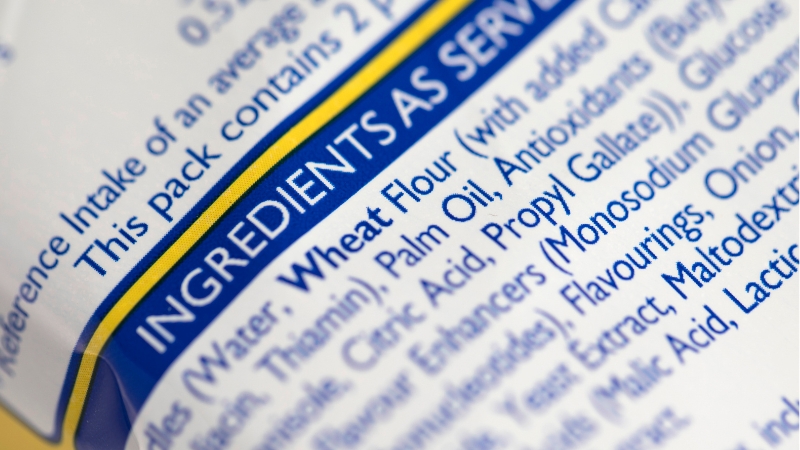
    They said they will only change their ingredients or processes once there's research showing that processing is a cause for concern. Clearly, they're turning a blind eye to the growing research that shows ultraprocessed foods are not only addictive, but also put you at higher risk of chronic diseases like obesity, heart disease, diabetes, and cancer.4

    If you're caught in a cycle of eating unhealthy ultraprocessed foods but still can't seem to stop, you're not alone. Ultraprocessed foods are engineered to hijack your brain and trick your body, overriding your natural cues so you'll keep reaching for more. However, the solution isn't to shame yourself — it's to understand what's really going on so you will be able to reclaim control of your body. Here are strategies I recommend to help you reclaim control and heal from ultraprocessed food addiction:

    1.Start by removing the foods that bypass your fullness signals — I suggest you identify the worst offenders in your daily routine and replace them with real food that requires chewing. A crisp apple, carrots with grass fed cream cheese, or crunchy cucumber slices will give your brain time to register satisfaction.

    2.Eat real meals instead of grazing all day — Structure your day around three healthy meals with enough protein, healthy carbs, and saturated fat to sustain you. This grounds your energy, helps stabilize your blood sugar, and makes snacking less necessary.

    3.Interrupt the marketing cycle with awareness and environment control — You are being manipulated through sound, packaging, and brand familiarity. Keep processed foods out of your home. Even covering labels with plain paper or storing snack items in opaque containers can help break the visual feedback loop that makes you crave them. Many ultraprocessed foods are also highly marketed to children, so if you have kids, show them how food ads work so they grow up with awareness.

    4.Track your progress — I've found that the more you notice patterns, the easier it is to break them. Keep a simple journal for 10 days. Write down when you eat ultraprocessed food, what was happening around you, and how you felt afterward.

    You'll start seeing patterns — maybe stress after work is your trigger, or late-night boredom. That kind of clarity builds self-efficacy — the belief that you can make changes because now you understand the why. This alone will lower the shame and increase your momentum toward real change.

    Awareness is the first step toward regaining that control. When you understand the tools being used against you, you can take the first real step toward full autonomy over your food choices and overall health.

    "If someone is watching this and they are struggling with their weight, with diet-related disease, I just want to reach out and grab them and go, 'This is not your fault. It is not you. It is the food,'" van Tulleken concludes.

    Frequently Asked Questions (FAQs) About Ultraprocessed Foods
    Q: Why do I feel like I can't stop eating certain snack foods, even when I'm full?

    A: Ultraprocessed foods are engineered to bypass your natural satiety mechanisms. Their soft, melt-in-your-mouth textures eliminate the need for chewing, which interrupts your body's ability to signal fullness. This design keeps you eating long after your body has had enough.

    Q: What is "vanishing caloric density" and why does it matter?

    A: Vanishing caloric density refers to foods that dissolve quickly in your mouth, like puffed snacks or crisps. Because they vanish on contact, your brain doesn't fully register the calories you've consumed. This makes you eat more without feeling satisfied, contributing to overeating and fat storage.

    Q: How are my senses manipulated to make me crave these foods?

    A: Food companies use multi-sensory marketing — including sounds, textures, smells, packaging, and even the "tear" of a wrapper — to stimulate your brain's reward system. Techniques like sonic branding create emotional memories around products, encouraging cravings before you even take a bite.

    Q: Are "healthy" snacks like protein bars or veggie straws actually good for me?

    A: Not really. Many of these products are marketed as healthy but are actually nutrient-poor and energy-dense. They often lack fiber and protein and are filled with processed oils and additives, which disrupt your body's hunger signals and promote chronic snacking.

    Q: What's the best way to break free from my cravings for ultraprocessed foods?

    A: Start by removing foods that bypass fullness cues, eat real meals instead of grazing, become aware of marketing manipulation, replace reward triggers with new habits, and track your eating patterns to identify and interrupt craving cycles. These steps rebuild your body's natural signals and help restore real control.

    Sources and References
    1 YouTube, BBC, Why can't we stop eating certain foods?, December 5, 2024
    2, 3 BBC, 1971: The year that changed food forever?
    4 Laborers’ Health and Safety Fund of North America (LHSFNA), April 1, 2019"
    Each breath a gift...
    _____________

  12. The Following 7 Users Say Thank You to onawah For This Post:

    Bill Ryan (4th August 2025), cascadian (4th August 2025), Ewan (4th August 2025), Harmony (4th August 2025), Johnnycomelately (17th November 2025), RunningDeer (4th August 2025), Yoda (4th August 2025)

  13. Link to Post #67
    Avalon Member norman's Avatar
    Join Date
    25th March 2010
    Location
    too close to the hot air exhaust
    Age
    70
    Posts
    11,474
    Thanks
    11,114
    Thanked 75,994 times in 10,749 posts

    Default Re: Poisoning the Food Supply

    BOVAER COWS ARE DYING! | Is the dairy industry lying to us?
    Dr Renee - Nov 13, 2025

    Something strange is happening on dairy farms across Europe and we need to start talking about it!

    In this video, I investigate reports from Danish farmers linking the methane-reducing feed additive Bovaer to cow illness, reduced milk yield, and even deaths. Remember Bovaer? It is a food additive that was quietly introduced to some UK farms without ANY labelling on the milk or dairy products we consume every day.

    So what’s really going on behind the scenes of the dairy industry? Are we being misled in the name of “climate goals”? And what does this mean for the milk sitting in your fridge right now?

    I explain the science behind 3-NOP (Bovaer), the new Danish investigations ,what this could mean for UK consumers, and finally what you can do to protect you and your family from this additive.


    Quote Posted by onawah (here)
    Cow Farts Safer than Bovaer?
    Bovaer Backlash Update: Danish Farmers Get Green Light to Opt Out as UK Arla Trial Abruptly Ends!
    Sonia Elijah
    Nov 09, 2025
    https://substack.com/@soniaelijah/note/c-175329820


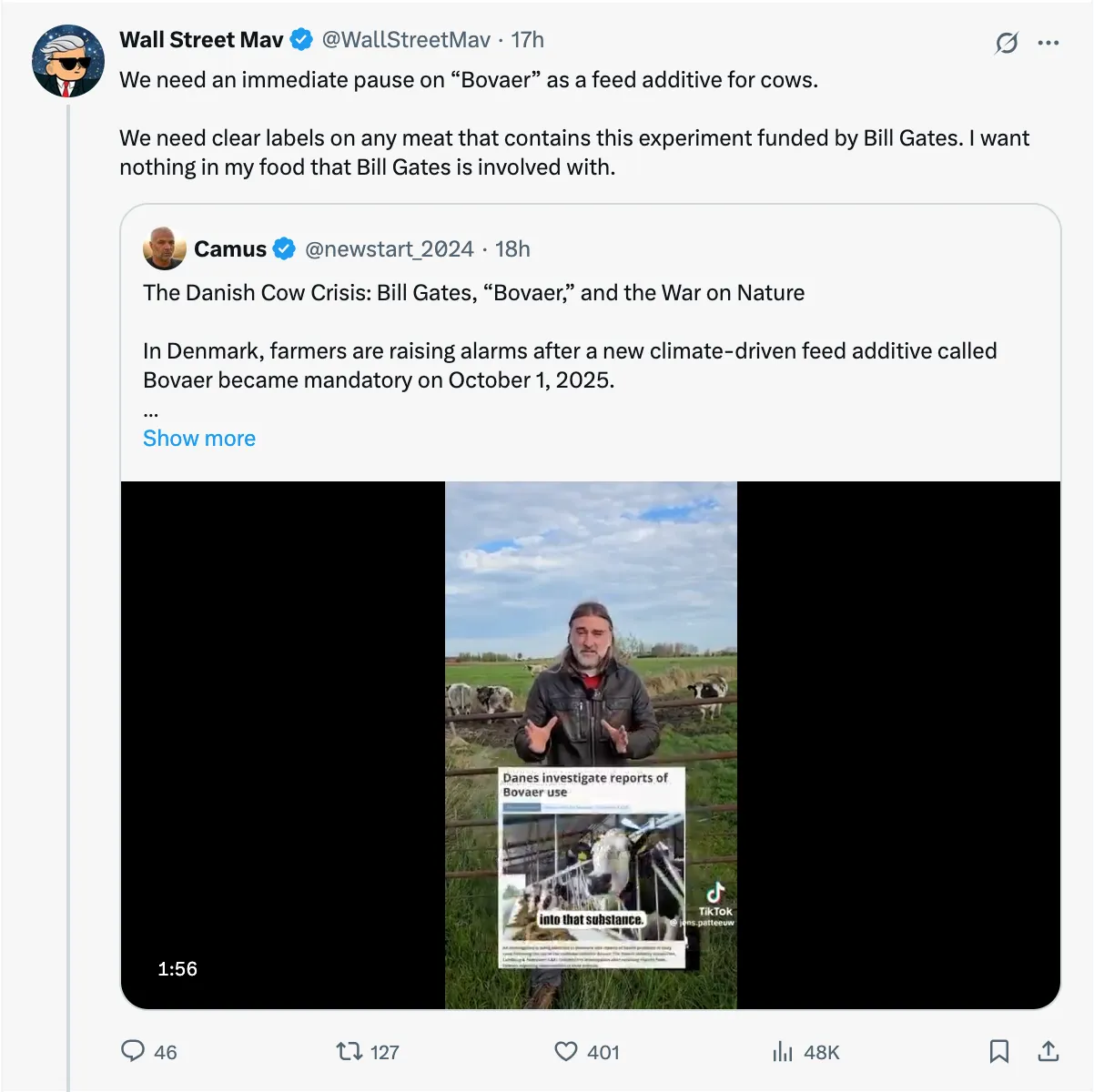
    "In a pivotal shift, Denmark’s Veterinary and Food Administration has issued new guidance: Farmers can immediately suspend Bovaer administration if they “suspect” it poses risks to herd health. On the heels of the Danish announcement—the major UK trial of Bovaer on 30 Arla Foods farms has abruptly ended amid health fears.

    The Mandate Cracks: Farmers Given the Green Light to Opt Out
    On November 5, 2025, Denmark’s Fødevarestyrelsen (Danish Veterinary and Food Administration) issued a press release and accompanying guidance clarified that farmers (specifically the herd manager, or besætningsansvarlige) could immediately exempt individual cows or entire herds from the mandatory Bovaer use if they suspected it was causing or exacerbating health issues, prioritizing animal welfare under existing regulations.

    This was in response to surging reports of cow illnesses since October 1, where farms with over 50 cows have been mandated to use the synthetic additive, Bovaer (containing 3-nitrooxypropanol), developed by DSM-Firmenich. If the farms do not comply, they face heavy fines.

    Bovaer Backlash: Danish Cows Collapsing Under Mandatory Methane-Reducing Additive
    Sonia Elijah 11/3/25
    Read Full Story:
    https://www.soniaelijah.com/p/bovaer...ows-collapsing

    The guidance emphasized that exemptions apply to cases of feed-related metabolic disorders (e.g., fatty liver, milk fever, or rumen issues) and require documentation via a “tro- og loveerklæring” (declaration of good faith) on LandbrugsInfo, with veterinary consultation recommended for severe cases. No fines would apply for such welfare-based pauses, though farmers must still meet methane reduction goals via alternatives like increased feed fat. This effectively gave the “green light” for opting out on welfare grounds.

    Reports surged of Danish dairy farmers unilaterally halting Bovaer administration, accusing the government of “poisoning” livestock to meet climate targets.

    A November 3, 2025, article in LandbrugsAvisen (Denmark’s leading agricultural newspaper), quoted veterinarian Torben Bennedsgaard from BoviCura (a specialized cattle health advisory service closely tied to Danish dairy producers). He stated: “Every other farmer has problems with Bovaer.”

    “Bovaer is a proven, effective and safe solution”
    A spokesperson for DSM-Firmenich, the company that developed Bovaer, told Agriland, that “animal welfare is our highest priority”. They went on to state: “We are actively engaging with the relevant organisations to ensure that all these concerns are fully investigated and properly addressed..In previously reported cases, Bovaer was not identified as a contributing factor to the health concerns raised…Bovaer is a proven, effective and safe solution that has been successfully used for over three years by thousands of farmers in over 25 countries.”

    UK Ripple Effects: Arla Trial Abruptly Halted


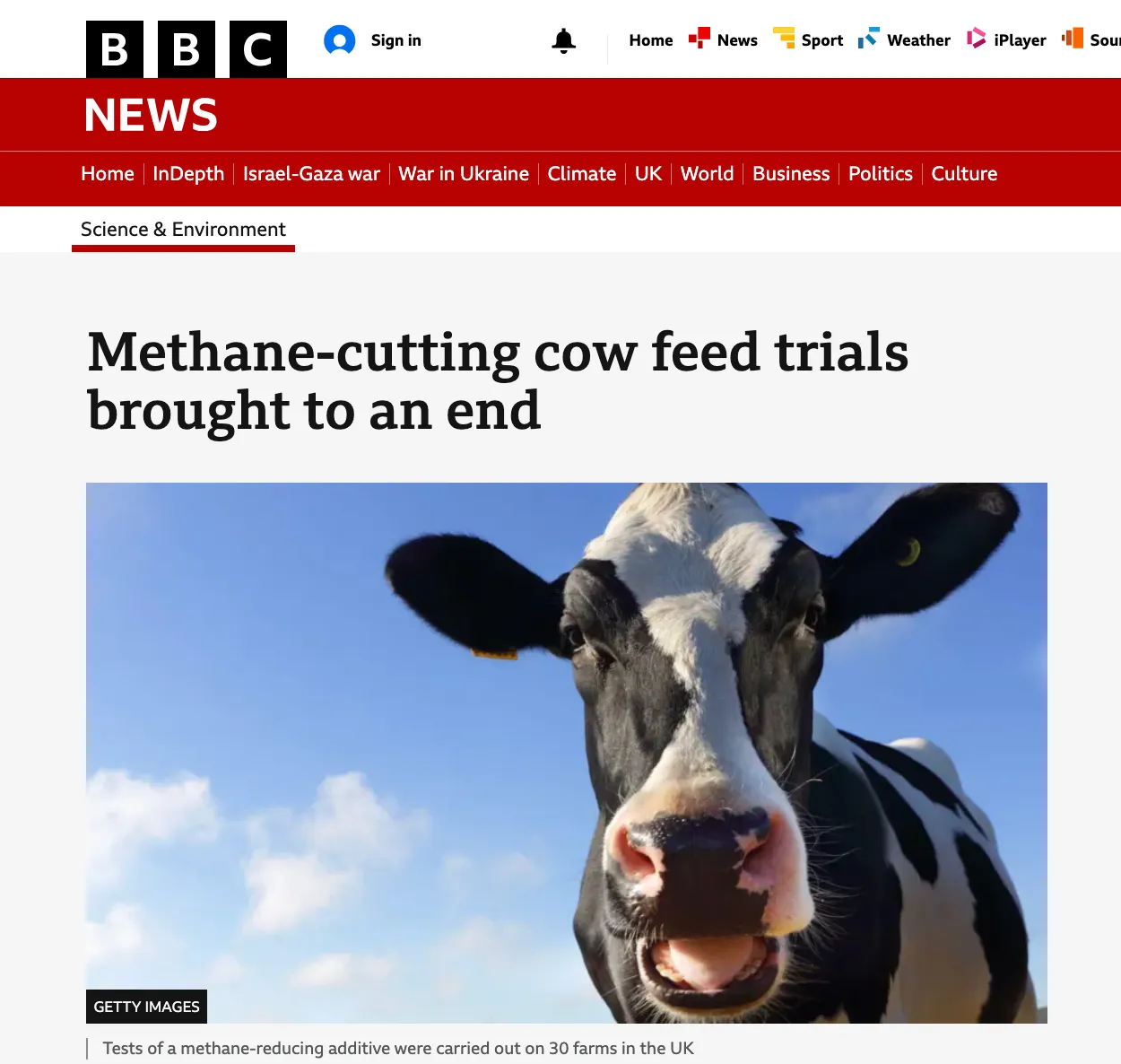
    On 7 November, the BBC reported that the major UK trial of Bovaer on 30 Arla Foods farms concluded earlier than planned amid “farmer health concerns” for cows, echoing Danish reports. It stated: ‘Bovaer is now the focus of an investigation in Denmark after farmers raised fresh concerns but manufacturer DSM-Firmenich said the additive was “proven, effective and safe.”’

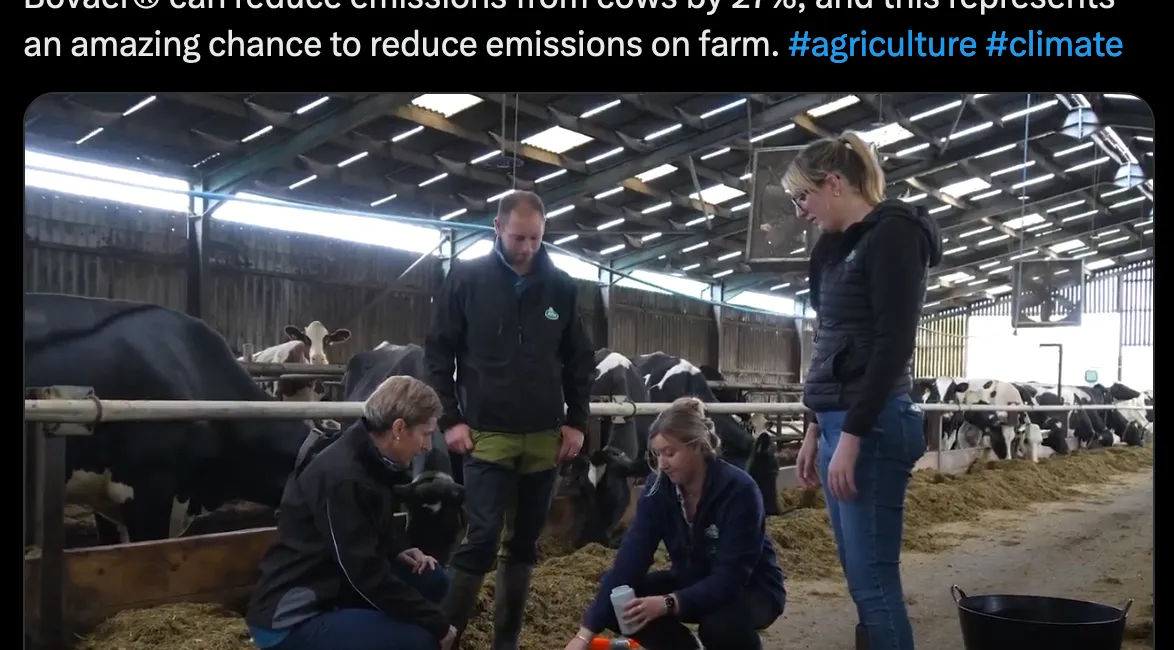
    Arla, which supplies major retailers like Tesco and Aldi, is now reviewing data before deciding on wider rollout. The trial aimed to cut methane by 30% but faced criticism for lacking transparency on animal impact.

    Jannik Elmegaard, of the Danish Food and Veterinary Administration, told the BBC: “They were very aware that some herd owners have reported animals showing signs of illness after being fed with Bovaer” but it was “unclear how many cows were affected”.

    Last year, I reported on the UK’s Arla trial—whilst digging through various safety assessment reports on Bovaer, I came across several troubling findings and anomalies.

    BREAKING: Methane-Reducing Feed Additive Trialled in Arla Dairy Farms
    Sonia Elijah
    November 28, 2024


    On November 26th, Arla Foods Ltd. announced via social media their collaboration with major UK supermarkets like Tesco, Aldi, and Morrisons to trial Bovaer, a feed additive, aiming to reduce methane …

    Read full story:
    https://www.soniaelijah.com/p/breaki...-feed-additive

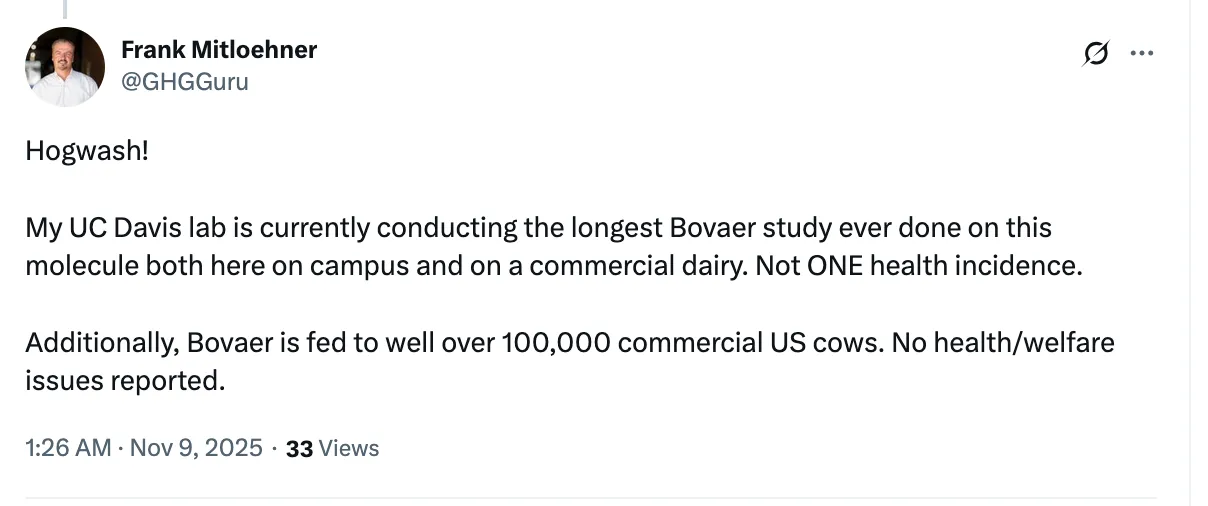
    In a public rebuttal, Frank Mitloehner, Professor of Animal Science at UC Davis and Director of the Clarify Center for Enteric Fermentation Research, posted on X ”Hogwash!”—dismissing viral claims of Bovaer-related cow health issues in Denmark by highlighting his lab’s ongoing research and widespread U.S. usage data.


    The green light in Denmark is not a mere victory—it’s a damning admission that the emperor’s new feed has holes big enough for a whole herd to escape through.

    As Arla licks its wounds and DSM-Firmenich doubles down on “proven safe,” the real trial begins: can climate crusaders stomach the science when it bites back? "


    Quote Posted by Ravenlocke (here)
    https://x.com/toobaffled/status/1911336733884690472


    https://x.com/QBCCIntegrity/status/1862811238268637209


    https://x.com/EHallandvik/status/1908771175292862647


    Text:

    The Bovaer “safety” was only done over 𝟗𝟎 𝐃𝐀𝐘𝐒!! No long term studies… in 1 study 2 of the cows were euthanised early. (Didn’t say why) in second study They decided𝐃𝐄𝐂𝐑𝐄𝐀𝐒𝐄𝐃 𝐎𝐕𝐀𝐑𝐘 𝐒𝐈𝐙𝐄 wasn’t adverse!!! In rats the findings were far worse!!

    https://food.gov.uk/research/outcome...nop-assessment


    https://x.com/LeilaniDowding/status/1862773841635705137


    https://x.com/exthepose/status/1912048131589492784

    ..................................................my first language is TYPO..............................................

  14. The Following 6 Users Say Thank You to norman For This Post:

    Bill Ryan (17th November 2025), Ewan (30th December 2025), Harmony (17th November 2025), Johnnycomelately (17th November 2025), onawah (17th November 2025), Yoda (29th December 2025)

  15. Link to Post #68
    Avalon Member norman's Avatar
    Join Date
    25th March 2010
    Location
    too close to the hot air exhaust
    Age
    70
    Posts
    11,474
    Thanks
    11,114
    Thanked 75,994 times in 10,749 posts

    Default Re: Poisoning the Food Supply

    UK MILK Brands
    Protect Our Plates - Dec 24, 2025


    Milk shelves in the UK look the same — but many shoppers are now asking questions about changes happening behind the scenes. This video breaks down the recent Bovaer discussion and, more importantly, highlights milk brands that have publicly stated they are not involved, alongside options that follow organic standards.

    This isn’t medical or nutritional advice. It’s a practical, transparency-focused guide for British shoppers who want to understand their choices and decide for themselves.

    Sources are based on public brand statements, organic certification rules, and retailer availability at the time of publishing. Brand practices can change, so viewers are encouraged to check directly with manufacturers.


    ..................................................my first language is TYPO..............................................

  16. The Following 6 Users Say Thank You to norman For This Post:

    Bill Ryan (29th December 2025), Ewan (30th December 2025), grapevine (29th December 2025), Harmony (30th December 2025), Sunny (30th December 2025), Yoda (29th December 2025)

  17. Link to Post #69
    Estonia Avalon Member
    Join Date
    20th February 2023
    Language
    Estonian
    Age
    37
    Posts
    881
    Thanks
    2,188
    Thanked 6,928 times in 873 posts

    Default Re: Poisoning the Food Supply


  18. The Following 6 Users Say Thank You to Jaak For This Post:

    Bill Ryan (26th January 2026), bojancan (25th January 2026), Harmony (25th January 2026), meat suit (25th January 2026), onawah (25th January 2026), Sue (Ayt) (28th January 2026)

  19. Link to Post #70
    United States Avalon Member onawah's Avatar
    Join Date
    28th March 2010
    Language
    English
    Posts
    25,361
    Thanks
    53,770
    Thanked 137,021 times in 23,797 posts

    Default Re: Poisoning the Food Supply

    How Factory Farms Dodge Pollution Rules — and Move Millions of Gallons of Toxic Waste Into U.S. Waterways
    by Sentient Media
    January 27, 2026
    https://childrenshealthdefense.org/d...tm_id=20260127

    (Podcast at the link. Hyperlinks in the article not embedded here.)

    ( I am always appalled when I read about how the Chinese Communist Party permits environmental conditions in China to be so unregulated and without oversight that the people are literally living in, drinking, eating and breathing filth, and how those terrible living conditions are affecting the rest of the world now too. I was shocked to see this article about how the US government is allowing so much filth into our own waterways. It looks like yet another job for RFKennedy Jr. )


    "U.S. factory farms generate staggering amounts of manure. Some use a legal paperwork trick called “manifesting” to shift that waste onto smaller farms with little to no oversight. The maneuver allows big agribusinesses to sidestep pollution rules while manure seeps into waterways, releasing toxins that threaten public health.

    Factory farms produce staggering amounts of manure and, in theory, there are strict regulations in place to keep it from contaminating nearby waterways.

    But in practice, many of these companies have found a hidden way to make millions of gallons of waste effectively disappear — at least, in the eyes of the law — with no oversight or accountability as to where it ends up or what pollution it causes.

    Welcome to the world of manifesting.

    Also known as “distribution and utilization,” manifesting is a process whereby large factory farms transfer their manure to smaller farms that aren’t subject to manure disposal regulations.

    These secondary farms are often shrouded beneath complex layers of Limited Liability Companies (LLCs), making their ultimate ownership difficult or impossible to determine. Some of them are owned by the factory farms themselves.

    In effect, manifesting is a regulatory shell game that allows large factory farms — also known as concentrated animal feeding operations, or CAFOs — to sidestep environmental regulations and avoid legal responsibility for their manure polluting the water, all while staying within the bounds of the law.

    CAFO waste at a glance

    Livestock in the U.S. produce an estimated 885 billion pounds of manure every year. This manure is typically dealt with in one of two ways: it’s either stored in some type of container or applied to cropland as fertilizer.

    Both methods can result in manure leaking into nearby waterways. Storage containers can leak. Manure spread on fields can be carried into lakes, streams and rivers by rain and other weather conditions, a phenomenon called runoff. The form of pollution is a major problem, and it’s the one that the process of manifesting enables.

    Manure contains high concentrations of nutrients that can break down into greenhouse gases and other toxins that can pollute water, degrade soil and imperil public health if it’s not managed properly. Agriculture is the leading source of water pollution in the U.S., according to the National Resources Defense Council.

    CAFO regulations, on paper

    There are a number of regulations at the federal, state and local levels aimed at preventing and limiting this type of pollution from CAFOs. The primary one is the Federal Water Pollution Control Act, often referred to colloquially as the Clean Water Act.

    Very broadly speaking, the Clean Water Act requires people and operations that pollute certain waters of the United States to obtain permits from either the U.S. Environmental Protection Agency (EPA) or, more commonly, state-level EPA equivalents.

    These permits place rules and limits on how operations are allowed to manage and dispose of their pollution, in this case, manure.

    The nature of these restrictions differs from farm to farm and state to state. In theory, discharge permits only allow farms to apply as much manure to fields as the crops and soil are able to absorb.

    Permits might prohibit CAFOs from using manure as fertilizer during the winter months, as manure is more liable to leak into waterways in cold temperatures, or require them to have a buffer zone between their manure-treated fields and any nearby body of water.

    In addition to these practical restrictions, discharge permits also require covered farms to create and present a Nutrient Management Plan — a system of practices to ensure their compliance with the permit’s requirements.

    The plan typically includes protocols for manure disposal and storage, as well as testing the soil before manure application to determine what is a safe amount to apply.

    CAFO regulations, in reality

    On paper, these may sound like good measures to prevent pollution from CAFOs. But there are a number of small loopholes that add up to the enormous loophole known as manifesting.

    First, CAFOs aren’t automatically considered polluters, and thus aren’t automatically required to obtain discharge permits under the Clean Water Act.

    They’re only considered polluters if, according to their own attestations, they discharge their manure and other waste into certain types of waterways — the ones that count as “Waters of the United States.”

    Secondly, not all animal farms qualify as CAFOs in the first place. Federal CAFO designation depends on how many animals a farm has, what purpose those animals serve, and what type of waste disposal system the facility uses.

    Finally, crop farms and farms that are not CAFOs are not automatically required to obtain discharge permits. Federal pollution discharge regulations only apply to what are called point-source polluters.

    The EPA defines a point source as “any single identifiable source of pollution from which pollutants are discharged, such as a pipe, ditch, ship or factory smokestack.”

    CAFOs are also automatically considered point-source polluters if they discharge into “Waters of the United States.”

    But many small, non-animal farms are not point-source polluters. Indeed, the Clean Water Act states that agricultural stormwater discharge and surface runoff from irrigation do not count as point sources.

    The upshot here is that many U.S. farms that create or apply manure aren’t legally required to obtain discharge permits. They don’t have to follow the standard EPA restrictions on manure management or develop and implement Nutrient Management Plans. It’s an enormous loophole, and one that manifesting takes advantage of.

    Manifesting manure: a corporate shell game

    Manifesting can take several different forms, but the core idea is simple. CAFOs will transfer some portion of their manure to a second farm that doesn’t raise animals, isn’t considered a point source or otherwise isn’t subjected to permitting restrictions. The operators of this second field will use the manure as fertilizer, freely and without restriction.

    “CAFOs can just give away their waste to somebody else, and then the way that waste is disposed of is out of their hands and out of their responsibility,” Katie Garvey, senior attorney at the Environmental Law and Policy Center, tells Sentient. “When they do that, they are no longer responsible for how that waste gets applied.”

    Because that second field isn’t required to abide by any permitting regulations, it’s legally free to, say, apply much more manure than a field’s crops can handle, or apply it on fields right next to waterways.

    If a CAFO transfers a portion of its manure to unpermitted farms, it’s still responsible for the manure that it retains on-site, and is thus still required to obtain a discharge permit. Only the portion of the manure that’s manifested is able to escape regulation.

    But sometimes a CAFO will transfer all of its manure to a non-permitted farm. When this happens, the CAFO can plausibly claim that it’s not discharging any pollution into covered waterways, and it won’t need to obtain a permit at all.

    This is one reason, though not the only reason, why an estimated 70% of all CAFOs in the U.S. don’t have discharge permits.

    “The [CAFO says], ‘Well, I don’t discharge, but I’m a point source,” Tyler Lobdell, senior staff attorney at Food and Water Watch, tells Sentient. “The second person says, ‘Well, I discharge, but I’m not a point source.’ So it fits together, and nobody’s accountable.”

    The next level: self-manifestation

    Transporting manure to a second farm takes time, money and gas. To save themselves the effort, some CAFOs will create separate legal entities that they control, but which don’t require discharge permits, and “transfer” their manure there — that is, to themselves.

    “[CAFOs] will make several limited liability company names, and then they will hire a contractor,” Lynn Henning, program director at the Socially Responsible Agriculture Project, tells Sentient.

    The contractor “will take that waste, and he will apply it on fields which they actually own, and manifest it back to themselves, basically, to skirt the regulation.”

    This practice came to light recently in Michigan after the state’s environmental agency proposed more stringent regulations on CAFO waste management.

    The proposed regulations were mired in a years-long legal battle before finally being implemented in October 2025, and they included new limits on how manure can be manifested.

    During this protracted legal dispute, employees at the state’s environmental protection agency testified that some CAFO operators have created separate businesses, on paper, so they could manifest their farms’ waste back to themselves.

    “We have seen farms create legal entities to receive manifested waste, which allows the legal entity that operates the CAFO to avoid the responsibility of controlling the waste by manifesting it to a different corporate entity even if it is run by the same people who run the CAFO,” environmental quality specialist Bruce Washburn testified.

    “Although of course CAFO owners, like other businesses, can create related corporate entities for a variety of legitimate purposes, it is frustrating to the Department when the people who run a CAFO do not have to follow permit requirements if they manifest waste from one company they own to another company that they also own.”

    Whatever the arrangement, the consequence is the same: CAFOs are creating massive amounts of manure without being held accountable for what happens to it, where it goes or any pollution that it creates.

    Lots of transferring, no transparency

    But how common is manifesting in the animal agriculture industry? Unfortunately, this is an extremely difficult question to answer, as there’s an extraordinary lack of transparency with regard to CAFO manifesting.

    There is some very limited information available. According to calculations performed by Sentient on publicly available data from Michigan’s state-level EPA equivalent, 41% of manure generated by Michigan CAFOs in 2024 was transported to other farms.

    A peer-reviewed analysis of nutrient management plans in Ohio revealed that in 2015, 79% of the phosphorus in manure from the state’s CAFOs was scheduled to be transferred to other farms.

    This “critical knowledge gap,” the authors write, renders the management of the majority of CAFO-produced manure in the state “unavailable for analysis and largely unknown.”

    But although some states release data on CAFO manifesting, many don’t. And in some places — including Iowa, the state with the most CAFOs in the country — laws prohibit the public release of this information.

    Idaho does the same. “In Idaho, where I live, nutrient management plans are considered confidential business information, and are not disclosable,” Lobdell said.

    The lack of transparency can make it impossible to know how much manure is being manifested, or where that manure is going.

    This “enables the open dumping of this waste onto communities,” Lobdell said, “in a way that the permitting structure should be not allowing.”

    No accountability

    Manifesting, and the absence of public information about it, can make it incredibly difficult for communities affected by CAFO pollution to hold the parent companies responsible for that waste accountable, Loka Ashwood tells Sentient.

    Ashwood is an author and professor of community and environmental sociology at the University of Wisconsin-Madison.

    “Corporate law protects explicitly, in this country, the parent company from the subsidiaries when it comes to damages,” says Ashwood, who has co-authored books and articles about the use of layered LLCs in the factory farm industry.

    If a field to which manure has been manifested ends up polluting the water, a community might sue for damages, and might even win. But if that field is nested under layers of LLCs, there’s no assurance they’ll actually receive that money from whichever larger corporate entity that controls it.

    “You can’t work your way up to the parent company to get those damages awarded,” says Ashwood.

    “Almost always, even if the jury’s saying, ‘I want to award you a certain amount of damages,’ the plaintiffs actually getting that amount of damages is very difficult because of the way that corporate law works.”

    Manifesting: one piece of a larger puzzle

    Ultimately, manifesting is just one of many ways that factory farms are able to evade scrutiny, regulation and accountability for their manure management. As mentioned earlier, the majority of CAFOs do not have discharge permits, and in some states, like Indiana and Arkansas, none of them do.

    Statewide enforcement of discharge permits and nutrient management plans is often lax.

    In 2012, the EPA carried out an investigation into CAFO regulation in Iowa, where only 4% of CAFOs have discharge permits, and determined that the state “does not have an adequate program to assess” whether CAFOs without discharge permits need them.

    It also found that, when the Clean Water Act had been violated, Iowa’s EPA equivalent “failed to take timely and adequate enforcement actions, and assess adequate penalties.”

    More broadly, many environmentalists argue that even when CAFOs do receive permits, the regulations contained in the permit aren’t all that stringent in the first place.

    Permitted farms are not prohibited from polluting the water, these critics say; they’re simply limited in how much polluting they’re allowed to do.

    “The requirements themselves are very, very, very minimal,” Elisabeth Holmes, attorney at the Socially Responsible Agriculture Project, tells Sentient. “The decision about whether to establish any requirements or enforce them is discretionary and minimal.

    And even where we have situations where there are requirements, there’s minimal accountability, there’s minimal transparency, and state agencies generally don’t take a lot of enforcement action against CAFOs anyway.”

    Manifesting is a stark example of agribusinesses dodging regulatory requirements through entirely legal means.

    Manure regulations are frequently unenforced or underenforced. But as the process of manifesting makes clear, even if these regulations were fully enforced, factory farms would still have plenty of wiggle room — and through that wiggle room, manure flows.

    Seth Millstein is a writer and musician living in the Bay Area.
    Originally published by Sentient Media.
    Nonprofit news outlet investigating factory farms and their effect on climate, animals, health, politics and more. "
    Last edited by onawah; 28th January 2026 at 08:41.
    Each breath a gift...
    _____________

  20. The Following 5 Users Say Thank You to onawah For This Post:

    Bill Ryan (28th January 2026), Ewan (29th January 2026), Harmony (28th January 2026), Sue (Ayt) (28th January 2026), tessie999 (28th January 2026)

  21. Link to Post #71
    UK Avalon Member Mike Gorman's Avatar
    Join Date
    31st May 2010
    Location
    Perth, Western Australia
    Language
    English
    Age
    67
    Posts
    2,146
    Thanks
    6,667
    Thanked 16,966 times in 2,026 posts

    Default Re: Poisoning the Food Supply

    The actual source of our living, as human animals we cannot escape needing to eat: my policy is to only eat the most natural of foods, nothing ultra processed or manufactured, butcher meat, plain simple vegetables (grow some tomatoes/potatoes, very easy) pasta, rice, seasonings. I eat one main meal per day in the evening, lots of water. Keeping it simple works best, I also supplement my vitamin d3 - the bastards know that people seek comfort from their food, this is very worrying but you can do very well by keeping it old fashioned simple.

  22. The Following 6 Users Say Thank You to Mike Gorman For This Post:

    Bill Ryan (28th January 2026), Ewan (29th January 2026), Harmony (28th January 2026), onawah (28th January 2026), Sue (Ayt) (28th January 2026), tessie999 (28th January 2026)

  23. Link to Post #72
    United States Avalon Member onawah's Avatar
    Join Date
    28th March 2010
    Language
    English
    Posts
    25,361
    Thanks
    53,770
    Thanked 137,021 times in 23,797 posts

    Default Re: Poisoning the Food Supply

    Microplastic Detox: How to Reduce Exposure and Support Natural Detox Pathways
    Dr. Laurel Matthews ND
    2/7/26

    https://drlaurell.com/2026/02/07/mic...etox-pathways/
    • Microplastics are tiny plastic particles found in food, water, air, and everyday products. They have been detected in human blood, stool, and organs such as the heart and lungs.
    • Helpful supports for microplastic detox may include:
    • Reducing exposure is the first step in microplastic detox. Avoid heating food in plastic, limit bottled water, choose natural fibers, and reduce packaged foods.
    • Gut health is essential, as most ingested microplastics are eliminated through the digestive tract.
    • Leaky gut and food sensitivities may increase the likelihood that microplastics linger in the body. Supporting gut lining integrity is an important part of detox.
    • L-glutamine for leaky gut support
    • Milk thistle for liver detox support
    • N-acetylcysteine (NAC) to support antioxidant and detox pathways
    • Calcium D-glucarate, which helps prevent the recirculation of plastic-related toxins
    • Chorella binds toxins in the gut, including possibly microplastics.
    Microplastic detox works best when exposure reduction, gut health, and detox support are addressed together.

    Microplastics are tiny plastic particles that have become an unavoidable part of modern life. They are found in food, drinking water, air, and many everyday household products. Because of their small size, microplastics can be inhaled or swallowed and may accumulate in the body over time.

    Researchers have now detected microplastics in human stool, blood, and organs such as the heart and lungs, raising important concerns about how long-term exposure may affect human health.

    While research is still evolving, microplastic accumulation has been associated with inflammation, oxidative stress, hormone disruption, and immune system strain. These effects may contribute to common symptoms such as digestive discomfort, fatigue, brain fog, increased sensitivities, and possibly metabolic challenges, including obesity.


    A microplastic detox of your kitchen can be just as important as a microplastic detox of your body

    There is increasing media attention and concern about microplastics, yet relatively little guidance on what individuals can realistically do to address this issue. Using current research and an understanding of how plastic-related chemicals are processed through detoxification pathways, I have developed a multi-pronged approach to support microplastic detox. This approach begins with reducing exposure and strengthening the body’s natural elimination systems.

    Reducing Microplastic Exposure in Daily Life

    One of the most effective ways to support microplastic detox is to limit ongoing exposure whenever possible.

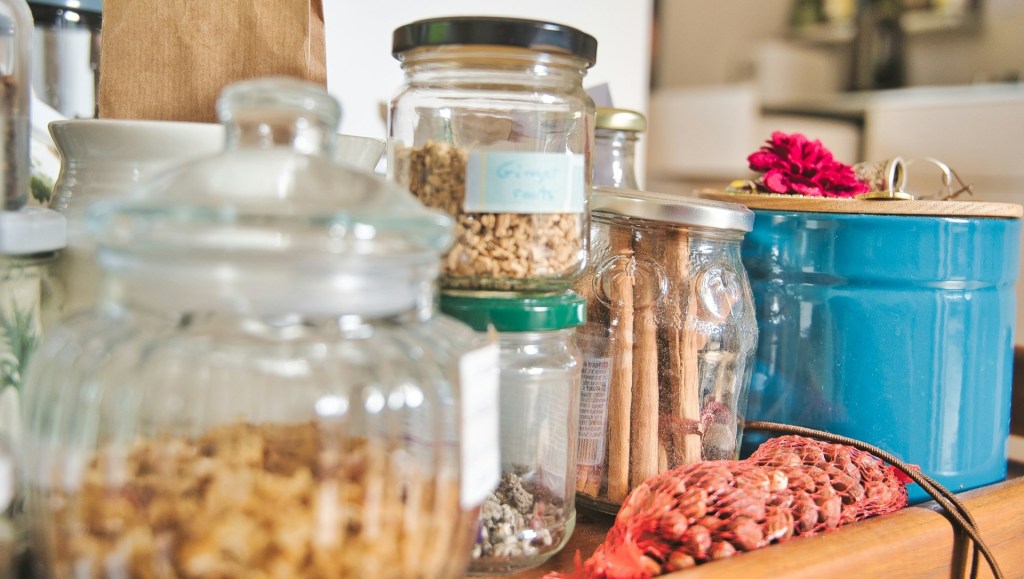
    In the kitchen, avoid heating food in plastic containers and choose glass or stainless steel for food storage. Reducing bottled water and minimizing highly packaged or ultra-processed foods can significantly lower plastic intake.

    Plastic cookware, cutting boards, and food utensils can also shed microplastics over time. Choosing alternatives such as wood, bamboo, stainless steel, or cast iron can further reduce exposure.

    Synthetic clothing made from polyester or nylon sheds microplastics during wear and washing. When possible, opt for natural fibers like cotton, linen, or wool, and wash synthetic garments less frequently.

    For a deeper dive into practical, research-based ways to reduce exposure, you can read this consumer guide from the Natural Resources Defense Council (NRDC) on microplastics and everyday exposure reduction.

    On a personal note, I have also switched my dental floss to one made from silk to avoid the plastic found in most flosses. Make changes where you can, but don’t stress about changing everything at once—even small steps can make a meaningful difference over time.

    Gut Health: A Critical Foundation for Microplastic Detox

    Gut health plays a central role in preventing microplastic accumulation.

    Most ingested microplastics are eliminated through the digestive tract. When digestion is functioning well, these particles pass through the body efficiently. However, poor gut motility, inflammation, or damage to the intestinal lining may increase the likelihood that microplastics enter the bloodstream rather than being eliminated.

    Supporting digestion and elimination is therefore one of the most important steps in any microplastic detox strategy.

    Preventing Constipation and Supporting Elimination

    Regular bowel movements help carry waste, toxins, and environmental contaminants out of the body.

    Adequate hydration, fiber-rich whole foods, regular physical activity, and responding promptly to the urge to have a bowel movement all support healthy elimination. Ideally, bowel movements should be comfortable and occur at least once daily.

    When elimination slows, toxins may be reabsorbed rather than removed, placing additional stress on the body’s detoxification systems.

    Leaky Gut, Food Sensitivities, and Microplastic Detox

    A healthy intestinal lining acts as a barrier, allowing nutrients to enter the body while keeping unwanted substances out. When this barrier is compromised—commonly referred to as leaky gut—larger particles and inflammatory compounds may pass into circulation instead of being eliminated.

    Food sensitivity reactions can play a major role in the development and persistence of leaky gut. Identifying and avoiding foods that trigger immune reactions can significantly reduce intestinal inflammation and support gut repair.

    One commonly used supplement for leaky gut support is L-glutamine, an amino acid that serves as fuel for intestinal cells and helps maintain the integrity of the gut lining.

    If you’d like a deeper look at how food sensitivities affect gut health and how to support healing, you can read my earlier blog post here:

    Steps to Heal the Gut From Food Sensitivities

    Herbs and Supplements That Support Microplastic Detox

    In addition to reducing exposure and strengthening gut health, certain herbs and supplements may support the body’s natural detoxification pathways.

    Microplastic particles can release chemicals into the body, including bisphenol A (BPA) and phthalates. By supporting liver detoxification pathways, we can help the body neutralize and eliminate some of these compounds.

    Milk thistle is one of the most well-known herbs for liver support. It has a long history of use in helping the liver process toxins, including pathways involved in the elimination of BPA, phthalates, dioxins, and other environmental chemicals.

    Another supportive nutrient is N-acetylcysteine (NAC). NAC helps the body produce glutathione, a powerful antioxidant that the liver uses to neutralize many toxins, including BPA.

    Calcium D-glucarate supports detoxification through a liver pathway known as glucuronidation, which plays a role in eliminating phthalates and other plastic-related chemicals. It also helps prevent certain gut bacteria from reversing this process, reducing the likelihood that toxins are reabsorbed and recirculated.

    Chlorella has been shown to remove microplastics from bodies of water so this popular toxin binder might be able to bind microplastics in the gut to prevent their absorption.

    These natural supports are most effective when combined with regular elimination, a healthy gut lining, and reduced exposure to environmental plastics.

    A Practical, Sustainable Approach to Microplastic Detox

    Microplastic exposure is a modern reality, but detoxification does not require extreme measures. By reducing exposure, supporting digestion, addressing leaky gut and food sensitivities, and using targeted herbal and nutritional support, the body is better equipped to eliminate what it does not need.

    A steady, foundation approach to microplastic detox supports resilience and long-term health without fear or overwhelm.

    Written by Dr. Laurell Matthews, N
    Last edited by Bill Ryan; Yesterday at 00:02. Reason: added formatting for easier reading
    Each breath a gift...
    _____________

  24. The Following 4 Users Say Thank You to onawah For This Post:

    Bill Ryan (7th February 2026), East Sun (Yesterday), Ewan (Yesterday), Harmony (Yesterday)

+ Reply to Thread
Page 4 of 4 FirstFirst 1 4

Posting Permissions

  • You may not post new threads
  • You may not post replies
  • You may not post attachments
  • You may not edit your posts