-
30th July 2025 19:43
Link to Post #181
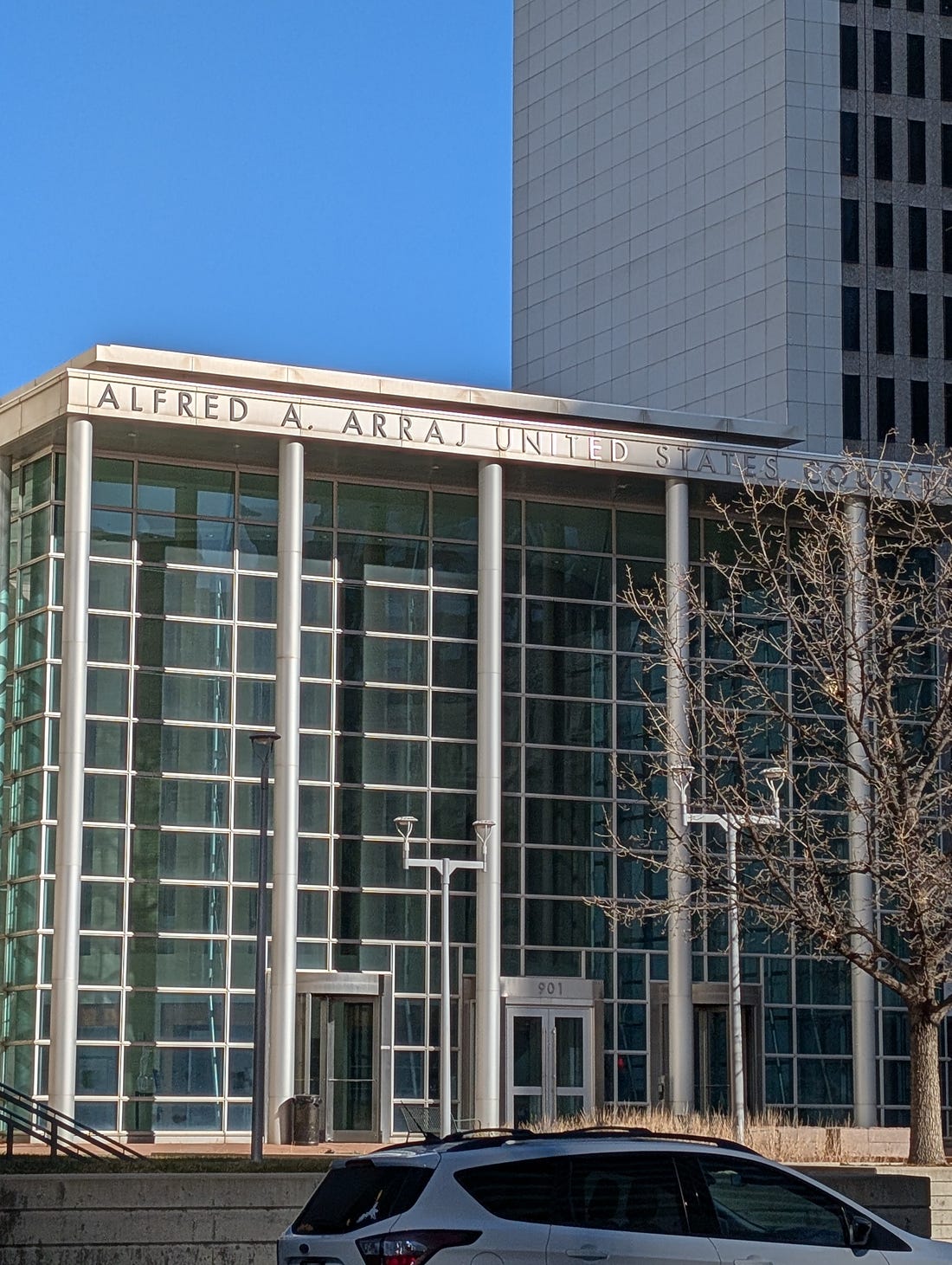
On December 30th, 2025, Corey Goode’s evidentiary hearing ordered by the Judge in November took place at the federal courthouse in Denver, CO. I attended the court live, in-person. In fact, I was the only member of the public attending the hearing-everyone else in the courtroom was either a party in the case or an employee of the court. Just as the hearing start time was about to strike on the clock, Corey walks into the courtroom…and proceeds to sit 3 feet away from me. He was so close I could have reached out and stroked his hair (note: I didn’t touch Corey nor engage with him). Corey must have been mentally occupied, as he was a party in this case and shouldn’t have been sitting with the public (e.g. me). Eventually he figured things out and took his proper seat in the courtroom while fanning himself from ostensible heat exhaustion (it was 55 degrees F in Denver that day). The judge was 15 minutes late herself, and the beginning of the proceedings were marred by another 15 minute delay due to technology issues.
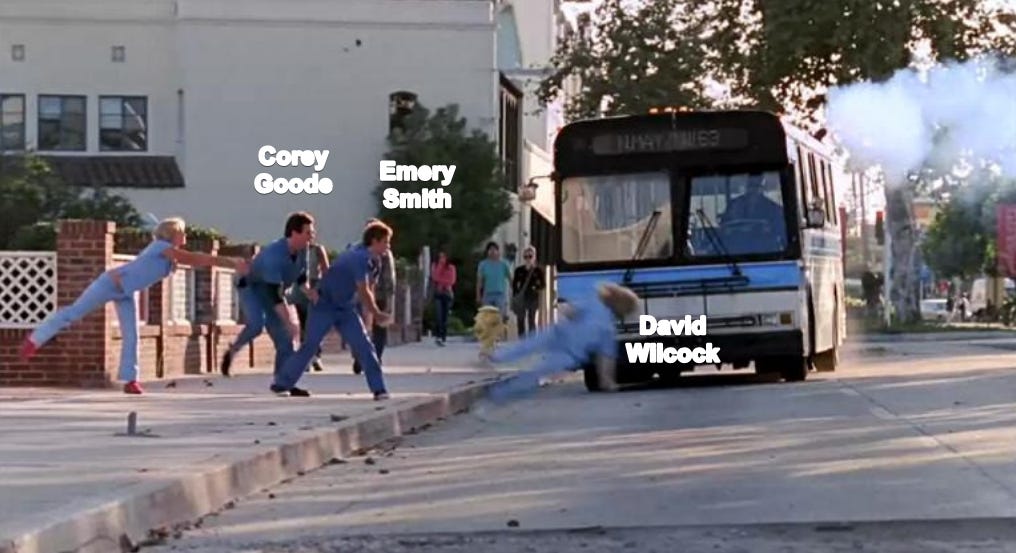
The beginning of the hearing began with what was already known: Gaia had essentially made an oral motion to hold Corey in contempt of court due to Corey’s disclosures on an October 23rd YouTube livestream. The judge informed the court that the hearing would discuss the prima facie evidence in the form of that livestream, and determine what the next steps would be. The judge had to decide if Gaia’s evidence would meet the evidentiary standard of “clear and convincing,” a higher evidentiary standard than “balance of probability” but lower than “beyond a reasonable doubt.” Gaia’s examination began with the judge obtaining Corey Goode’s sworn oath and placing him on the witness stand where he would be questioned by Gaia’s counsel. After a substantial amount of questioning regarding his disclosures on the YouTube livestream and whether or not the information came from private settlement talks between the parties, Corey offered a defense: he claimed he did not obtain the disclosed information from private settlement talks, but rather got the information 3rd or 4th hand from an espionage scheme involving Emery Smith and David Wilcock. Corey stated on the witness stand that Emery Smith was obtaining intelligence or reconnaissance regarding Gaia’s business with certain PR firms. Emery would disclose his findings to David Wilcock personally, where David would allegedly electronically record Emery and his conversations. Finally, David would relay some of Emery’s intel to Corey verbally, but Corey stated under oath that he never had direct access to the Emery recordings.
The defense put forward by Corey may appear byzantine or astonishing to some, and certainly his defense boils down to a network of hearsay. However, when examined patiently, Corey’s defense is typical with respect to the things he has said in the past. Corey has in the past tried to paint his adversaries, including Gaia, as essentially scheming against him and/or his community in some form or fashion. Even David Wilcock, in response to criticism he received from Jay Weidner and Steven Cambian, has implied that Gaia has orchestrated a conspiracy or at least some scheme around himself and Corey. Against this background of alleged Gaia subterfuge, Corey’s lackluster “opposition espionage reporting scheme” defense seems reasonable and, Corey hopes, a likely and convincing excuse to the court.
However, the whole defense simply lacks credibility as argued by Gaia’s counsel. Corey has no actual recordings and stated under oath that he never had access to any recordings. The other individuals involved, Emery and David, have their own history of credibility issues. The idea of these three passing gossip, rumors, and ultimately hearsay between one another hardly establishes anything. But most importantly, as Gaia argued during the hearing, are Corey’s words and statements which clearly indicate that he got the information he disclosed from confidential settlement talks or discovery, not from a likely fabricated corporate counter intelligence operation. Gaia even moved to strike Corey’s defense from the court record as hearsay, but considering that Corey uttered the hearsay in his defense, the judge decided to keep Corey’s statements on the record.
Apart from Corey’s examination and defense, Corey would make a statement on the witness stand which obviously irked the judge and would put a color over the rest of the hearing. For whatever reason or no reason at all, Corey informed Gaia’s counsel, the judge and entire courtroom that he has not looked at any of the documents regarding this matter. It’s one thing to think about or practice ignorance, but to nonchalantly inform the entire court of your ignorance is another matter. The judge made a point to bring up Corey’s ignorance on this matter later on in the hearing.
While still on the witness stand, Gaia’s counsel also examined Corey regarding Corey’s communication with David Wilcock. According to Corey, he and David have met in 2025, in Nederland, and apparently dined together at a food truck. It is worth noting that David Wilcock disagreed with Gaia’s assertions back in July that he had been meeting with Corey in recent years, although David’s dispute lacks credibility considering that he and Corey were publicly at a UFO conference in April 2024. Corey’s witness stand testimony at this hearing is perhaps the final nail in David’s denying communications with Corey since 2018.
After Corey left the witness stand, Gaia’s counsel proceeded to play the YouTube livestream video segments - the prima facie evidence - for the whole court to see. The judge asked Gaia’s counsel what they thought the court’s remedy should be, assuming she found clear and convincing evidence for Gaia’s motion. Gaia informed the court that they favor more than simple admonishment against Corey Goode, that some form of monetary sanctions seemed necessary to deter Corey from future bad-faith actions. Gaia’s counsel also informed the court of Corey’s other recent transgressions that contradict Corey’s witness stand testimony. Whereas Corey said on the witness stand that he was making good faith efforts to comply with the court and was “shocked and horrified” to find out he had made mistakes, Gaia’s counsel showed the court multiple examples of Corey not acting in good faith. Probably the most prominent example is an X post Corey made regarding Laura Eisenhower’s deposition. At the time Corey made the post, Laura’s deposition was recent and still labeled confidential, thus Cory had broken legal confidentiality at that time. Apparently five days later, Laura’s deposition was no longer labeled confidential, and Corey has since deleted this X post. This incident was one of multiple examples of Corey’s bad-faith provided to the court.
With Corey visibly nervous and uncomfortable in the courtroom, the end of the hearing saw the culmination of Corey’s hopelessness in this case. Corey’s usual attorney Valerie Yanaros had decided not to show up in person but rather attend the hearing remotely (note: all of the other parties in the case-her client Corey, Gaia President Kiersten Medvedich and Gaia counsel Daniel Dingerson all attended the hearing live in person). When the judge asked Valerie if she had any arguments to defend her client, Val offered a weak defense in the form of “he showed up to court today so he should get some slack.” The judge was not convinced by Val’s arguments, and at this point of the hearing Corey was visibly growing irritated. Judge gave Corey the opportunity to make some final statements and arguments, and Corey took the opportunity to complain about his infamous leaked deposition from a different federal lawsuit he was involved in. The deposition had nothing to do with the matter at hand.
The judge concluded the hearing, stating that she is taking the matter under advisement. The judge stated that there are two separate considerations in the matter - one being whether she, as a magistrate judge, would recommend to the district judge that a Contempt of Court finding is “recommended,” and the other being whether she as a magistrate judge would issue an Order under her own authority regarding the separate issue of any discovery sanctions (e.g. fines) should she find discovery sanctions merited. The judge provided no timeline for a decision but in all likelihood that decision will probably come sometime in January 2026.
The Following 6 Users Say Thank You to Bill Ryan For This Post:
HopSan (3rd January 2026), Mark (Star Mariner) (31st December 2025), Mike (1st January 2026), onevoice (1st January 2026), skogvokter (1st January 2026), Yoda (31st December 2025)
Tags for this Thread
Posting Permissions
- You may not post new threads
- You may not post replies
- You may not post attachments
- You may not edit your posts
Forum Rules
Bookmarks