 Re: Up At The Ranch And Beyond
Presidents (Cont'd)
Donnie
A source within the Trump administration has provided the prepared full text of President Trump's historic announcement regarding UAP/non-human intelligence.
https://x.com/uBF2fV1cVQxRjQo/status...83913634513305
Maybe someone can tell me what the heck this is on the right hand side.
https://x.com/uBF2fV1cVQxRjQo/status...57615479971887
Trump's Greenland Grab is Part of a New Space Race
– and the stakes are getting higher
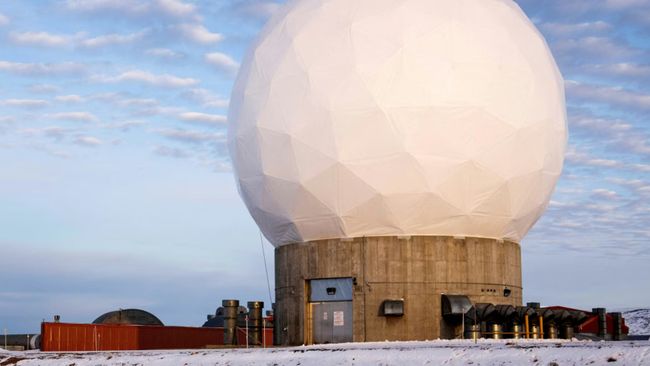 Pituffik Space Base, formerly Thule Air Base, in northern Greenland
US President Donald Trump's position on Greenland has shifted almost daily, from threats to take it by force to assurances he won't. But one thing remains consistent: his insistence the Arctic island is strategically vital to the United States.
Within hours of the president's speech at this week’s Davos summit, Reports began circulating that Washington and Copenhagen had quietly discussed giving the US small, remote patches of Greenland for new military sites. Nothing confirmed, everything whispered, but the speed of the speculation said a lot.
What once felt like Trumpian theatre suddenly looked like a real geopolitical move. It was also a hint Arctic power plays are now bleeding into the politics of outer space.
This all happened very quickly. The notion the US might buy Greenland from Denmark (which resurfaced in 2019) was at first treated like a late-night comedy sketch. But behind the jokes lay a growing unease the Trump administration's fixation with Greenland was part of a wider geostrategic ambition in the "western hemisphere" – and beyond.
That's because Greenland sits at the crossroads of two fast-shifting frontiers: a warming Arctic that will change shipping routes, and an increasingly militarised outer space.
As global tensions rise, the island has become a geopolitical pressure gauge, revealing how the old international legal order is beginning to fray.
At the centre of it all is Pituffik Space Base, formerly known as Thule Air Base. Once a Cold War outpost, it's now a key part of the US military's Space Force hub, vital for everything from missile detection to climate tracking. In a world where orbit is the new high ground, that visibility is strategic gold.
Trump has leaned hard into this logic. He's repeatedly praised Thule as one of the most important assets for watching what happens above the Earth, and has urged the US to "look at every option" to expand its presence.
Whether by force, payment or negotiation, the core message hasn't changed: Greenland is central to America's Arctic and space ambitions.
Published 15th February 2026 by Anna Marie Brennan – Space.com
https://www.space.com/astronomy/eart...getting-higher


 Reply With Quote












Bookmarks