+ Reply to Thread
Page 74 of 74 FirstFirst 1 24 64 74
Results 1,461 to 1,472 of 1472

Thread: The Multipolar World Order (yes, it's here)

  1. Link to Post #1461
    Avalon Member Ravenlocke's Avatar
    Join Date
    28th September 2011
    Posts
    26,129
    Thanks
    14,562
    Thanked 216,470 times in 26,122 posts

    Default Re: The Multipolar World Order (yes, it's here)

    Russia's Pivot to Asia

    Mar 19

    St. Petersburg Exchange Opens Office In Beijing

    https://russiaspivottoasia.com/st-pe...ce-in-beijing/
    The St.Petersburg International Mercantile Exchange (SPIMEX) has established a Representative Office in Beijing to assist develop Russia-China commodities trade. It has already signed cooperation agreements with various Chinese exchanges in Shanghai, Qingdao and Xinjiang. SPIMEX trades in oil and petroleum products, petrochemicals, gas, coal, timber, metals, construction materials, agricultural products, and mineral fertilizers.

    https://x.com/RussiasPivot/status/2034629614157562284


    https://russiaspivottoasia.com/st-pe...ce-in-beijing/

    St. Petersburg Exchange Opens Office In Beijing

    Published on March 19, 2026

    The St. Petersburg International Mercantile Exchange (SPIMEX) has opened a representative office in Beijing, saying that “establishing a representative office will facilitate developing bilateral exchange cooperation.” Our Chinese partners confirm the importance of past cross-border transactions, including a pilot export deal in the Timber and Construction Materials section for delivery to China via OTP Russian Railways in August 2025.”

    SPIMEX also said that a number of working meetings with Chinese partners have recently been held in Beijing, particularly with the China-Russia Chamber of Commerce during which logistical aspects of cross-border deliveries were discussed in detail. Chinese businesses have shown sustained interest not only in forest products but also in trading in petrochemicals, petroleum coke, and bitumen.

    SPIMEX has signed memorandums of understanding with the Shanghai Petroleum and Gas Exchange (SHPGX), the Hainan Exchange, the Qingdao International Energy Exchange, and the Xinjiang Asia-Europe International Trade Center, as well as agreements with industry associations, including the China Timber & Wood Products Distribution Association.

    SPIMEX is Russia’s largest commodity exchange, accounting for 99% of the country’s organized trading volumes in oil and petroleum products, petrochemicals, gas, coal, timber, metals, construction materials, agricultural products, and mineral fertilizer.
    "Hope is the thing with feathers that perches in the soul and sings the tune without the words and never stops at all."
    - - - - Emily Elizabeth Dickinson. 🪶💜

  2. The Following 6 Users Say Thank You to Ravenlocke For This Post:

    Bill Ryan (23rd March 2026), bojancan (23rd March 2026), Chip (23rd March 2026), Ewan (23rd March 2026), pounamuknight (23rd March 2026), Yoda (23rd March 2026)

  3. Link to Post #1462
    Avalon Member Ravenlocke's Avatar
    Join Date
    28th September 2011
    Posts
    26,129
    Thanks
    14,562
    Thanked 216,470 times in 26,122 posts

    Default Re: The Multipolar World Order (yes, it's here)

    Russia's Pivot to Asia

    Mar 17
    Russia and China To Collaborate In Biotech Production

    https://russiaspivottoasia.com/russi...ch-production/
    Russian and Chinese businesses are collaborating in the biotechnology sector, an industry set to quadruple in size over the next decade and recognised as a key economic pillar by the Russian government. The Russian Agriculture Minister and a business delegation are currently in China looking at potential joint venture projects.

    https://x.com/RussiasPivot/status/2033877167654998447


    https://russiaspivottoasia.com/russi...ch-production/

    Russia and China To Collaborate In Biotech Production

    Russia intends to implement joint projects with China’s Eppen Group in amino acid production, as well as to cooperate in other areas of the agricultural industry. Oksana Lut, the Russian Agriculture Minister, has been on a working visit to China and stated that the respective Russian and Chinese parties discussed the prospects for collaboration.

    She said that “One of today’s priorities of Russia’s agricultural sector is developing biotech production, including collaboration with international partners. China’s Ningxia Eppen Investment Group has in-house expertise in strain selection, fermentation, downstream processing, and technology transfer, as well as implementing projects in this area.”

    Lut met with Ningxia Eppen Investment Group’s chairman of the board of directors, Yang Xiaoping, during the visit. Lut added that “The parties discussed implementing joint projects in amino acid production, as well as prospects to collaborate in other areas of the agricultural sector going forward. Our Chinese partners have confirmed their readiness to bolster collaboration in biotech and to promote developing scientific, engineering, and industrial bases in Russia and China.”

    Biotechnology is a multidisciplinary field that combines biology, chemistry, physics, engineering, and computer science to harness living organisms or their components for practical applications. It involves manipulating biological systems—such as bacteria, yeast, plants, or animal cells—to produce useful substances, solve problems, or create new technologies. Modern biotechnology often relies on genetic engineering, which allows scientists to modify an organism’s DNA to achieve desired traits or produce therapeutic proteins.

    The global biotech market was worth about US$1.77 trillion in 2025, with a growth trajectory to US$6.34 trillion by 2035. China is rapidly advancing in the biotech sector, driven by government incentives and a growing number of collaborations in biological sciences.


    Russia's Pivot to Asia

    Mar 17
    China’s Popular Tank SUV To Be Produced In Kaliningrad

    https://russiaspivottoasia.com/china...n-kaliningrad/
    Russia's Avtotor and China's Great Wall Motors are establishing a Joint Venture in Kaliningrad to manufacture the popular Chinese Tank 300 SUV for the Russian market. The vehicle has attracted a 7.2% share of the Russian new premium car market. Production will commence in Q2 this year

    https://x.com/RussiasPivot/status/2033880205320982790


    https://russiaspivottoasia.com/china...n-kaliningrad/

    China’s Popular Tank SUV To Be Produced In Kaliningrad

    Published on March 17, 2026

    Russia’s Kaliningrad-based Avtotor and the Chinese automaker Great Wall Motors have agreed on a strategic partnership and will produce the first localized model, the premium SUV Tank 300 in Kaliningrad.

    The car, already known on the Russian market, will be produced in Drive, Premium, City Drive, and City Premium equipment packages with a 2-liter turbocharged gasoline engine producing 218 hp and a torque of 380 Nm, paired with an eight-speed automatic transmission. Two interior trim options (black and black-red) and five exterior colors are available. Sales of the vehicles will be carried out through the official dealer network.

    Zhang Junxiue, the president of Great Wall Motor Russia, said, “We have begun joint work with the technological partner Avtotor with the production of the Tank brand of premium SUVs. This strategic cooperation will allow us to ensure the availability of Tank 300 SUVs for Russian car enthusiasts and strengthen the company’s position in the Russian market.”

    Yevgeny Petukhov, the general director of Avtotor Auto Holding, said that the start of contract production of the Tank 300 is scheduled for Q2 2026, saying that “cooperation involves a phased deepening of the brand’s car production technology and increasing the level of localization.”

    Great Wall Motor Russia is the exclusive distributor of Haval, Poer, Tank, Wey, and Ora cars and spare parts in Russia and has been operating in Russia since 2014. The Tank brand of premium SUVs, part of the Great Wall lineup, was first introduced in 2021. The brand’s dealer network includes 49 Russian cities.

    Russia’s Pivot To Asia uses the Tank 300 when travelling to countryside destinations in Russia and can attest to its quality and ruggedness for comfortable highway driving, off-road capabilities, and significant interior space for passengers and cargo. According to Autostat, the Tank 300 was the best-selling new premium vehicle in Russia in 2025. Nearly 9,400 such cars were sold, equating to a 7.2% share of the Russian new premium car market.
    "Hope is the thing with feathers that perches in the soul and sings the tune without the words and never stops at all."
    - - - - Emily Elizabeth Dickinson. 🪶💜

  4. The Following 5 Users Say Thank You to Ravenlocke For This Post:

    Bill Ryan (23rd March 2026), Chip (23rd March 2026), Ewan (23rd March 2026), pounamuknight (23rd March 2026), Yoda (23rd March 2026)

  5. Link to Post #1463
    Avalon Member Ravenlocke's Avatar
    Join Date
    28th September 2011
    Posts
    26,129
    Thanks
    14,562
    Thanked 216,470 times in 26,122 posts

    Default Re: The Multipolar World Order (yes, it's here)

    Russia's Pivot to Asia

    Mar 1
    Logistics Companies Revisit Eurasian Routes Via Russia As Middle East Supply Chains Contract

    https://russiaspivottoasia.com/logis...ains-contract/
    The crisis in the Middle East has disrupted maritime logistics between China and Europe, with operators reconsidering Russian and Eurasian overland routes. But these too face difficulties as Russian Railways is close to full capacity and political divisions have closed off EU-Russian borders. While there are options for Russia-Asia supply chains, the Eurasian routes remain problematic for European importers. We discuss what could be done to allieviate the situation.

    https://x.com/RussiasPivot/status/2033538012840390996


    https://russiaspivottoasia.com/logis...ains-contract/

    Logistics Companies Revisit Eurasian Routes Via Russia As Middle East Supply Chains Contract

    Published on March 16, 2026

    An interesting set of trade dynamics is playing out as market demand for Chinese products has recovered throughout Eurasia, while at the same time the Middle East is experiencing significant logistics problems.

    In February 2026, business activity in China grew at its strongest pace in the last 5 years, with the composite PMI rising to 52.1 (+1.8 p. m/m), reaching its highest level since December 2020. The key driver behind this has been powerful growth in production volumes and demand, with new Chinese export orders showing the strongest dynamics since September 2020.

    Against this background of strengthening market demand and the launch of new production lines, business expectations jumped to an 11-month high. The strengthening of business activity and optimistic expectations of manufacturers indicate that high demand for export transport from China will be maintained.

    Demand for Asia-Europe sea transport is recovering after the Lunar New Year holidays in China and Asia, but continuing growth rates are not high. Manufacturing activity in Asia is growing, but counterbalancing this is that Eurozone economic growth remains modest or even static – ongoing inflation and weak consumer confidence restrain demand for imports. This is impacting Eurasian regional logistics.

    Based on the results of January–February—ongoing, the Iran conflict blew up—the volume of China-Europe-China rail container transport grew by 25% year-on-year, while the volume via the Central Eurasian Corridor increased by 31% over the year. The total volume of transport via all routes grew by 28% year-on-year, also increasing by 1% m/m.

    But against the backdrop of Middle Eastern volatility in the sea and aviation markets, individual forwarders are now recording increased demand for Eurasian rail connectivity.

    For example, for shipping Shanghai-Rotterdam, as of 5 March 2026, this was priced at US$2,052/FEU and had been decreasing. But as of 12 March, the Shanghai-Rotterdam indicator increased by 19% to US$2,443/FEU. For the second half of March, shipping lines have planned rate increases due to a sharp rise in fuel costs and insurance premiums, with average quotes now in the range of US$3,000 to US$4,000/FEU depending on the carrier.

    Fuel costs are also increasing despite signals of a possible end to the conflict with Iran. The bunker market continues to react to the previous jump in quotes. From 27 February to 10 March, the price of very low sulfur fuel oil (VLSFO) in Singapore doubled and broke the US$1,000/t level. Major container lines are introducing emergency fuel surcharges from 16 March.

    Kuehne + Nagel warns of airport congestion in Asia due to the closure of airspace over the Middle East. About 18% of global cargo capacity has effectively exited the market following the closure of regional airports. Against this backdrop, congestion is expected in China and Southeast Asia on routes to Europe, a situation that resembles the Covid pandemic imbalance of supply and demand and is seeing air carrier rates increase even more than shipping. In terms of predictions, most carriers are now looking at the following scenarios between Asia and Europe in terms of maritime routes:

    Short Term

    “High volatility in the market will most likely result in rate increases and further service deterioration for shippers. Increased market volatility against the background of the conflict in the Middle East. Delays will persist in key ports, and the operational environment will most likely continue to deteriorate.”

    Medium–Long Term

    “The escalation of tension in the Middle East has reduced the likelihood of resuming shipping through the Suez Canal. Insurance companies have begun to withdraw war risk coverage for the Persian and Oman Gulfs, which makes the operation of commercial vessels practically impossible without specialized insurance premiums at inflated rates. Even after the cessation of the conflict, up to six months may be required to assess the situation.”
    Against this background of disruptions, logistics companies are beginning to consider road transport as an alternative for urgent cargo. Road delivery on the China–Europe route via Central Asia currently takes about 14–18 days. Infrastructure development and the simplification of border procedures in Central Asia, primarily in Kazakhstan, make this corridor increasingly competitive for transporting high-value-added cargo.

    https://russiaspivottoasia.com/wp-co...ussia-Map-.jpg

    The Middle East conflict has hit global supplies of oil, gas, aluminum, and fertilizers, which has temporarily increased the attractiveness of Russian raw materials on world markets. Simultaneously, the halt of shipping in the Strait of Hormuz has paralyzed container transport in the region, causing an explosive growth in freight rates and insurance.

    For Russia, the escalation has become a double-edged sword: in the short term, it promises excess profits from rising energy prices, but the decisive factor is the duration of the conflict. A prolonged war risks collapsing global demand for raw materials and provoking a recession, which ultimately nullifies current benefits. Chaos on sea routes creates a window of opportunity for alternative routes: land corridors and the Northern Sea Route become more competitive against the backdrop of the unpredictability of traditional sea transport.

    Between January and February 2026, 1,224 million loaded and empty containers (TEU) were transported via the Russian Railways network in all types of communication, a decrease of 4.9% year on year. For February, the volume was 589,600 TEU.

    At the beginning of March, the CACI container index rose to US$6,778/FEU (+2% m/m). This increase is due to the rise in rates for direct container trains from China to Russia, as tariffs increased by an average of US$300/FEU (+6% m/m) against the background of a shortage of space on rail services, as well as mass delays in the departure of trains from Chinese stations. At the same time, sea freight rates from China to the western and southern ports of Russia showed weak dynamics in February and are set to decline further given the situation in the Middle East and Ukrainian attacks on shipping heading for Russian ports in the Black Sea.

    Current rates on Russian railways are as follows:

    Kazakhstan: (Altynkol/Dostyk–Moscow): US$3,350 FEU

    Mongolia: Zamyn-Uud – Moscow): US$3,700 FEU

    China: (Manzhouli–Moscow): US$3,500 FEU.


    Some logistics platforms record an increase in demand for spot shipments and are raising rates for such transport by US$500. The current situation with container trains from China to Russia is characterized by increasing delays, especially on eastern routes. The greatest problems are recorded for shipments via Manzhouli and Erlian, where delays reach 2–4 weeks and also affect rail connectivity for Chinese suppliers in Zhengzhou, Changsha, and Shijiazhuang.

    Routes via Kazakhstan (Alashankou/Khorgos) remain more stable with delays within 1–7 days; however, a deterioration of the current situation is also taking place there.

    According to forecasts, the volume of container transport via the Russian Railways network will reach 8 million TEU by 2027 (+5.3% from 2025) and will grow 1.5 times to 10–12 million TEU by 2035. Constraints remain the volatility of sea rates, dumping by Chinese road carriers, and sanction pressure, while growth drivers will be tariff discounts on North–South INSTC routes, the development of terminal infrastructure, and attracting transit from sea transport to the railway.

    However, the Railway Market Confidence Index remains in the negative zone for the fourth month in a row. The main reason was record snowfall, which, combined with Russian Railways regulatory restrictions, led to failures in European operators’ work. In the container transport segment, the situation was complicated by the introduction of new rules for train formation: the dispatch of trains from a number of stations to China via Kazakhstan now requires a length of at least 71 conventional wagons, which contradicts the technical capabilities of the adjacent side and increases downtime at the border. Market participants note that the current situation is characterized by a lack of short-term improvement prospects, and emerging from the crisis will require significant investment under conditions of long-term demand uncertainty.

    Summary

    In short, Russian Railways is operating at almost 100% capacity, with only deft logistics management able to service the demand. Some of this involves the use of non-Russian railways, such as those operating across Kazakhstan; however, the prognosis for Europe is not positive—even if they opened their borders to Russian railway connectivity (which appears unlikely in any event).

    While China and Russia have some shipping access via the Strait of Hormuz and potentially the Suez Canal, shipping insurance rates are making these supply chains prohibitively expensive for operators—unless governments step in to subsidize rates. Then there is the additional risk posed by Ukraine attacking ships, regardless of nationality, approaching Russia’s Black Sea ports.

    These negative dynamics mean that there are five alternative short-term solutions, although none solve the total logistics squeeze; combinations could be effective:

    Working with other Eurasian rail operators to squeeze more staggered TEU capacity onto Eurasian railways to relieve some of the pressure on the Russian network;
    Increase shipping via the Northern Sea Route;
    Increase shipping via the Russian River network and inland ports;
    Increase road traffic on Eurasian highways to and from Russia.
    Increase supply chains between Russia, East Asia, and South America.
    Either way, the intensity of the Middle East conflict has shown where supply chain weaknesses exist. With the world seemingly entering a prolonged period of volatility, both Russia and China and the Eurasian countries concerned, together with outliers such as India, will be looking to secure transit routes that bypass the Middle East. That means making deals with and placing investments into Afghanistan, better connectivity with Turkmenistan, and the further development of logistics infrastructure in Uzbekistan.

    As we pointed out here — new airport, road, and rail infrastructure can be expected to develop in Mary and Bukhara, while the need for the Trans-Afghan railway to be built and operational is starting to become a critical requirement.
    "Hope is the thing with feathers that perches in the soul and sings the tune without the words and never stops at all."
    - - - - Emily Elizabeth Dickinson. 🪶💜

  6. The Following 6 Users Say Thank You to Ravenlocke For This Post:

    Bill Ryan (23rd March 2026), Chip (23rd March 2026), Ewan (23rd March 2026), pounamuknight (23rd March 2026), Vicus (23rd March 2026), Yoda (23rd March 2026)

  7. Link to Post #1464
    Avalon Member Ravenlocke's Avatar
    Join Date
    28th September 2011
    Posts
    26,129
    Thanks
    14,562
    Thanked 216,470 times in 26,122 posts

    Default Re: The Multipolar World Order (yes, it's here)

    Russia's Pivot to Asia

    Mar 16
    Russia Resumes Barley Exports To Tunisia As Agricultural Pricing Competition Increases

    https://russiaspivottoasia.com/russi...ion-increases/
    Russia has recommenced barley exports to Tunisia after recording zero exports of the commodity in 2025. Significantly higher European prices are shifting the supply chain market to Russia's grain exporters.

    https://x.com/RussiasPivot/status/2033518366355538391


    https://russiaspivottoasia.com/russi...ion-increases/

    Russia Resumes Barley Exports To Tunisia As Agricultural Pricing Competition Increases

    Published on March 16, 2026

    Russia has resumed exporting barley to Tunisia this year, after no barley exports occurred in 2025. About 55,000 tonnes of barley worth nearly US$13 million were shipped to Tunisia in January and February this year, according to the Russian Agroexport Federal Center.

    Previous shipments date back to 2024. That year, a total of 365,000 tonnes worth more than US$64 million were exported. Russia also exported more than 470,000 tonnes of barley overseas in January-February 2026—not including the main Eurasian Economic Union exports.

    Tunisia typically imports barley from the European Union (Romania, France, and Germany) as well as Ukraine; however, rising production costs have made Russian barley a more attractive proposition. Tunisia recently purchased 25,000 tonnes of barley at €277 per tonne, while in Russia the same delivered commodity can be purchased for the equivalent of €257 per tonne. That represents a saving of about €1 million based on the 55,000 tonnes imported from Russia the past two months.

    Russia is also negotiating a Free Trade Agreement with Tunisia via the Eurasian Economic Union, in moves that would likely decrease Tunisian import duties on Russian agricultural products.

    With EU fuel prices significantly increasing due to the Iran war, Russia looks set to increase its cost-competitive differential over European agricultural exports still further as the year progresses.

    Russia's Pivot to Asia

    Mar 19
    The Philippines Becomes Russia’s Third Largest Buyer Of Pork

    https://russiaspivottoasia.com/the-p...buyer-of-pork/
    The Philippines has become the third largest importer of Russian pork after Vietnam and China, and ahead of Hong Kong and Mongolia. The world's largest pork consumers per capita are in Europe, with Russia's supplies to Asia adequately showcasing the changing supply chains in global markets.

    https://x.com/RussiasPivot/status/2034604878366978134


    Russia's Pivot to Asia

    Mar 19
    Russia To Export Groats To South Asia
    https://russiaspivottoasia.com/russi...to-south-asia/
    Russia's Rosatom and Resurs of Chelyabinsk have signed agreements to exports and supply groats to several Asian markets due to increasing consumer demand. delivery will be by rail to Vladivostok and by shipping to Asian ports although overland deliveries are also being worked out. Global consumption of groats is rapidly increasing.

    https://x.com/RussiasPivot/status/2034620376043720815

    "Hope is the thing with feathers that perches in the soul and sings the tune without the words and never stops at all."
    - - - - Emily Elizabeth Dickinson. 🪶💜

  8. The Following 7 Users Say Thank You to Ravenlocke For This Post:

    Bill Ryan (23rd March 2026), Chip (23rd March 2026), Ewan (23rd March 2026), Kryztian (23rd March 2026), pounamuknight (23rd March 2026), Vicus (23rd March 2026), Yoda (23rd March 2026)

  9. Link to Post #1465
    Avalon Member Ravenlocke's Avatar
    Join Date
    28th September 2011
    Posts
    26,129
    Thanks
    14,562
    Thanked 216,470 times in 26,122 posts

    Default Re: The Multipolar World Order (yes, it's here)

    Russia's Pivot to Asia

    Mar 19
    Russia Eyes Increased Zirconium Concentrate Exports To Asia

    https://russiaspivottoasia.com/russi...ports-to-asia/
    Russia’s Tugansk Mining and Processing Plant in Tomsk is investing over US$500 million to upgrade its production of zirconium concentrate to both dominate the domestic Russian market and become an exporter to Asia. Zirconium concentrate is a valuable mineral resource with a wide range of applications across various new tech and energy industries.

    https://x.com/RussiasPivot/status/2034625550728470950


    https://russiaspivottoasia.com/russi...ports-to-asia/

    Russia Eyes Increased Zirconium Concentrate Exports To Asia

    Published on March 19, 2026

    Russia’s Tugansk Mining and Processing Plant Ilmenite (TMPP Ilmenite, Tomsk region, part of Rosatom Nedra) is to implement the second stage of its Titan project at the Kuskovsko-Shiryaevsky site, allowing the company to increase its market share of zirconium concentrate in Russia from 21% to 84%, according to General Director Konstantin Sheptalin. He was speaking at the “Mining. Enrichment. Metallurgy” forum in Novosibirsk.

    Sheptalin said that “In some years, there will be a production surplus. The Asian market is ready to consume zirconium concentrate of today’s quality without any additional refinement. By 2032, we plan to reach a production level of about 17,000 tonnes of zircon concentrate per year. We plan to eliminate surplus in the Russian market and export our excess concentrate.”

    The Tugansk Mining and Processing Plant was established in September 2002 to develop the Tugan deposit of ilmenite-zircon sands. In May 2022, the plant reached its design capacity of 575,000 tons of sand per year. Currently, the project of large-scale development of the deposit is being implemented by involving the resources of the Kuskovo-Shiryayevsky licensed area in production and increasing production capacities to 6.9 million tons of ore sands per year. The project provides for the design and construction of a mining and processing complex for the production of zircon, ilmenite, rutile-leucoxene, and quartz sand for the glass industry; new infrastructure facilities; and a transport and logistics terminal. In total, the facility intends to launch three lines with a capacity of 2.3 million tons of ore sands per year by 2030. The investment in the second stage of the Ilmenite facility production is estimated at ₽42.4 billion (US$503 million).

    Zirconium concentrate is a valuable mineral resource with a wide range of applications across various industries. It is known for its high heat resistance, chemical stability, and corrosion resistance, making it suitable for use in ceramics, refractories, nuclear energy, and specialty alloys. The concentrate appears as light brown to grayish granules and is processed to extract zirconium and hafnium for industrial applications. It is used in ceramic glazes and tiles to enhance durability and whiteness, in high-temperature refractory materials for furnaces, kilns, and foundries, and in glass manufacturing to improve resistance to thermal shock. Additionally, zirconium concentrate is the primary source of zirconium metal, used in nuclear fuel cladding due to its low neutron absorption, and plays a vital role in nuclear reactor components for enhanced safety and efficiency.
    "Hope is the thing with feathers that perches in the soul and sings the tune without the words and never stops at all."
    - - - - Emily Elizabeth Dickinson. 🪶💜

  10. The Following 6 Users Say Thank You to Ravenlocke For This Post:

    Bill Ryan (23rd March 2026), Chip (23rd March 2026), Ewan (23rd March 2026), pounamuknight (23rd March 2026), Vicus (23rd March 2026), Yoda (23rd March 2026)

  11. Link to Post #1466
    Argentina Avalon Member Vicus's Avatar
    Join Date
    6th October 2020
    Location
    Europa
    Language
    Spanish
    Posts
    3,462
    Thanks
    25,644
    Thanked 31,389 times in 3,442 posts

    Default Re: The Multipolar World Order (yes, it's here)

    Explosive Lula Colonize Hemisphere Warning: US Seeks Renewed Colonial Control Over Americas


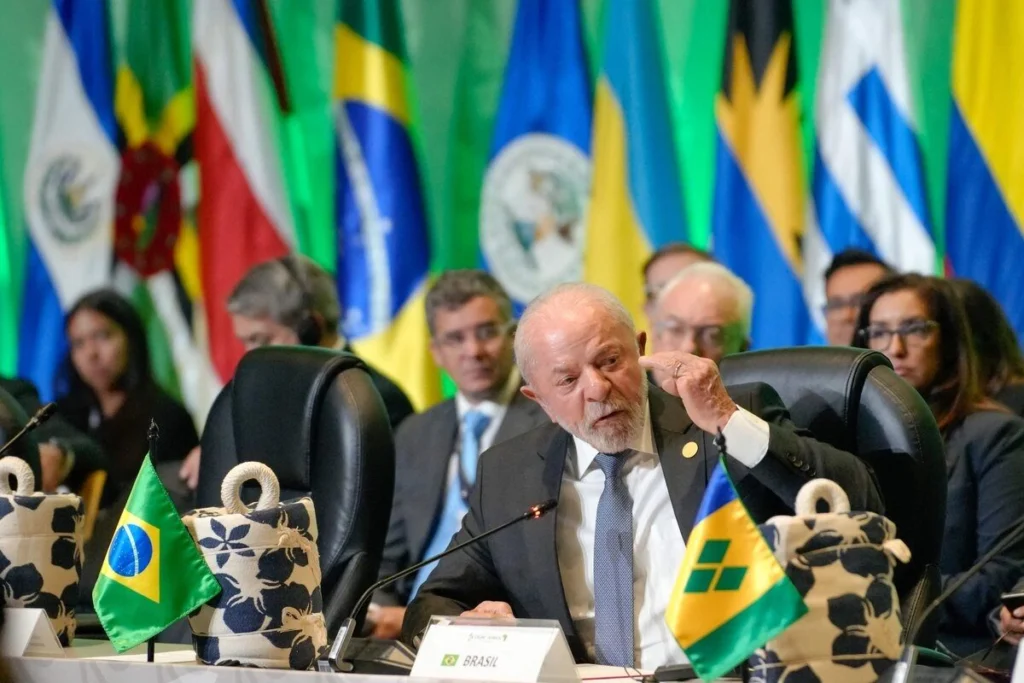
    Lula Colonize Hemisphere emerged as a central theme when Brazilian President Luiz Inácio Lula da Silva delivered a forceful speech at the CELAC-Africa High-Level Forum in Bogotá on March 21, 2026. Before heads of state and delegations, Lula issued one of his sharpest critiques of US foreign policy in recent years.

    He described current military and diplomatic moves as part of a deliberate plan to reimpose colonial dominance across the Western Hemisphere. “They want to colonize us again,” Lula declared, linking recent interventions to a broader erosion of self-determination.

    The address came during a pivotal summit uniting Latin American-Caribbean and African leaders. Lula positioned the forum as a platform to resist external tutelage and affirm Global South autonomy.
    His words resonated amid escalating tensions: the January 3, 2026 US capture of Venezuelan President Nicolás Maduro, persistent economic blockade on Cuba, and the ongoing US-Israeli offensive against Iran that has ignited wider Middle East conflict.

    Lula condemned these as interconnected expressions of coercive power. He accused Washington of fabricating “lies” to justify regional destruction and maintain control over sovereign nations.

    Lula Colonize Hemisphere Critique Targets Resource Control

    Lula highlighted the strategic interest in critical minerals and rare earths as a driving force behind external pressures. Latin America holds vast reserves essential for global technology and energy transitions.

    Brazil ranks second worldwide in rare earth reserves after China. Lula warned that foreign powers aim to “own” these resources, echoing historical extraction patterns.

    He revealed ongoing talks to boost defense cooperation with South Africa and other partners. This aims to safeguard sovereignty against potential threats tied to mineral access.

    The president’s remarks reflect Brazil’s strategic positioning. Lula has resisted US pressure for exclusive agreements on critical minerals, preferring diversified partnerships that preserve national control.

    For summit context and declarations: Vice Presidency of Colombia – CELAC-Africa Forum 2026.
    Additional background on Brazil’s rare earth strategy: Government of Brazil – Mineral Resources Policy.

    Human Cost of Militarization in Pacific and Caribbean

    Geopolitical and Regional Implications

    Defense of Sovereignty and Regional Unity

    continue: https://www.telesurenglish.net/lula-...ze-hemisphere/

  12. The Following 5 Users Say Thank You to Vicus For This Post:

    Bill Ryan (23rd March 2026), Ewan (23rd March 2026), Kryztian (23rd March 2026), Ravenlocke (27th March 2026), Yoda (23rd March 2026)

  13. Link to Post #1467
    Argentina Avalon Member Vicus's Avatar
    Join Date
    6th October 2020
    Location
    Europa
    Language
    Spanish
    Posts
    3,462
    Thanks
    25,644
    Thanked 31,389 times in 3,442 posts

    Default Re: The Multipolar World Order (yes, it's here)

    Corruption

    After reading some comments about Lula President article...

    _ Good luck, Lula, in trying to unify Latin america against this Empire of Evil called USA. You would have to remove so much rot (rich, old families controlling all business life in Latin America) and reeducate (deprogram) the whole society - it takes many, many years! Kind of a joke, such a super rich continent cannot achieve high technological living standard because all the time there are political and economical upheavals there caused by actions of external actors (USA)

    _ But as a matter of fact, South America is already conquered - through corruption. The Maduro coup was only possible because the US bribed enough high-ranking Venezuelan officials and officers.

    _ Anyway, I don't know too much about the politics of South America. Sounds like they are not entirely independent?
    But from what I hear, they are rather "entirely not independent" ...

    Sad, but there are all right! I asked myself many times why is that possible?

    Until one day saw a TV show : https://en.wikipedia.org/wiki/Barbar...2020_TV_series)

    Romans not only toke heavy taxes from the tribes,but children from the Chieftain as hostage to Rome, educate as Romans (language,customs,etc) and serve as Roman soldiers until they got some ranking as
    Commanders and then back to "home" to continue impose Roman law...

    The TV show is good and sadly about real events, 3 brothers confronting each other, against their origin tribes as Roman solders ...

    One of them retake his origins and inflicted the biggest military defeat the Romans knew at that time...

    Well, old colonial family's in Latino America act similar...their kids go to study "outside" and come back with "brainwashing", with none contact with their origin country in any way...
    That is why corruption is rampant , everything is business... everything can/will be manipulate...no matter what! everything/everybody got a price tag...

    Common folk? we don't know about, we are "Elite"...just making business, that is all folks...

    That corruption story began already during the independence wars ...and then civil wars between the new independent country's against the corrupted "old family's" in each of them...

    That is why for me is like a continue Deja Vu, nothing change,same old story...

  14. The Following 5 Users Say Thank You to Vicus For This Post:

    Bill Ryan (23rd March 2026), Ewan (24th March 2026), Hym (26th March 2026), Kryztian (24th March 2026), Yoda (23rd March 2026)

  15. Link to Post #1468
    Brazil Avalon Member White Cedar's Avatar
    Join Date
    21st December 2024
    Language
    Portuguese
    Age
    35
    Posts
    36
    Thanks
    96
    Thanked 241 times in 35 posts

    Default Re: The Multipolar World Order (yes, it's here)

    Lula is a scammer, a terrible leftists president. He was in jail and they got him out.


    Brazil always went into low levels when he was in charge, he obeys the illuminati's, full 2030 agenda, vaccination and stuff, and leftism/wokesim.

  16. The Following 6 Users Say Thank You to White Cedar For This Post:

    Bill Ryan (23rd March 2026), Ewan (24th March 2026), grapevine (24th March 2026), Ravenlocke (27th March 2026), sdv (27th March 2026), Yoda (23rd March 2026)

  17. Link to Post #1469
    UK Avalon Founder Bill Ryan's Avatar
    Join Date
    7th February 2010
    Location
    Ecuador
    Posts
    39,116
    Thanks
    283,322
    Thanked 519,538 times in 37,650 posts

    Default Re: The Multipolar World Order (yes, it's here)

    Pepe Escobar's new film, The Golden Corridor, documenting his North-South travel through Iran last year.

    https://preview.presstv.ir/ptv///sit...encorridor.mp4


  18. The Following 7 Users Say Thank You to Bill Ryan For This Post:

    bojancan (27th March 2026), Elainie (27th March 2026), Ewan (27th March 2026), Hym (27th March 2026), Ravenlocke (27th March 2026), Vicus (27th March 2026), Yoda (27th March 2026)

  19. Link to Post #1470
    Avalon Member Ravenlocke's Avatar
    Join Date
    28th September 2011
    Posts
    26,129
    Thanks
    14,562
    Thanked 216,470 times in 26,122 posts

    Default Re: The Multipolar World Order (yes, it's here)

    Pepe Escobar

    https://sputnikglobe.com/20260326/pe...123899050.html

    This is a killer.

    Includes a detailed explanation of how the Strait of Hormuz toll booth works - and the consequences of the petroyuan in effect.

    Some technical ****-up left out the key to the column:

    The Dylanesque epigraph.

    You will see why it matters so much:

    "Pointed threats, they bluff with scorn
    Suicide remarks are torn
    From the fool’s gold mouthpiece the hollow horn
    Plays wasted words, proves to warn
    That he not busy being born is busy dying"

    Bob Dylan

    It’s Alright, Ma (I’m Only Bleeding)

    https://x.com/RealPepeEscobar/status...30612306944321


    https://sputnikglobe.com/20260326/pe...123899050.html

    Pepe Escobar: New World Busy Being Born While Old One is Busy Dying

    It’s an imposed capitulation: a surrender document disguised as “negotiation”.

    The non-plan plan – imposing demands while begging for a one-month ceasefire - includes zero uranium enrichment on Iranian soil; full dismantlement of Natanz, Isfahan and Fordow installations; all enriched uranium out of Iran; the missile program extremely restricted; no funding for Hezbollah, Ansarallah and Iraqi militias; the Strait of Hormuz totally opened.

    All that in exchange for a vague “cancelling the threat of reimposing sanctions”.

    The only realistic Iranian response to this accumulated wishful thinking might be Mr. Khorramshahr-4 showering his business card across selected targets – consistent with leveraging economic and military deterrence to dictate the real terms.

    And the real terms are harsh:

    Closure of ALL US military bases in the Gulf; guarantee of no more wars; end of the war on Hezbollah; lifting of ALL sanctions; war damage reparations; a new order in the Strait of Hormuz (already in effect: collecting fees just like Egypt in Suez); missile program intact.
    Conclusion: the infernal escalation machine keeps rolling.

    A Member’s Club With an Entrance Fee in Petroyuan
    Meanwhile, oil and gas prices are mired in a kaleidoscope of volatility, affecting currencies, equities, commodities, supply chains, inflation scares. This is already an out-of-control global economic shock with devastating consequences in progress.
    Before the war, Iran was producing a little less of 1.1 million barrels of oil a day, sold at $65 a barrel with a $18 discount: thus, in practice only $47. Now, Iran has increased production to 1.5 million barrels a day, selling at $110 (and counting), mostly to China, with a maximum $4 discount.
    And that does not even include petrochemical sales: on the up and up, and for an array of extra customers. To round it all up, all payments are conducted via alternative mechanisms. Which brings us to a startling fact: for all practical purposes, this is sanctions relief in effect.
    Now for the Holy Grail in the war: the Strait of Hormuz. It is de facto open, but with a toll booth controlled by the IRGC. A toll booth with a twist: veto power over the guest list. Like entering an exclusive private club.
    To get the IRGC clearance, a tanker needs to pay the toll: $2 million per vessel. This is how it works. You contact an IRGC-linked broker. The broker relays to the IRGC the essential info: vessel ownership, national flag, cargo manifest, destination, crew list, and AIS transponder data.
    The IRGC runs background checks. If you are not US-linked, not shipping any Israel-linked cargo, and your flag is not part of “aggressor states”, you’re in. Japan and South Korea, for instance, still have not been cleared.
    Then you pay the toll. In cash – whatever currency you have – but preferably in yuan. Or in crypto.
    It’s a complex mechanism. The IRGC uses multiple addresses; cross-chain bridges to other networks; over-the-counter desks in jurisdictions way beyond American reach; and integration with all sorts of yuan settlement channels.

    After the toll is paid, the IRGC issues a VHF radio clearance – complete with a specific time window linked to a narrow 5-mile nautical corridor through Iranian territorial waters, between Qeshm and little Larak island, where the IRGC Navy can visually identify your vessel. You’re free to go. No need for an escort ship.

    All of the above applies, for now, to tankers from China, India, Pakistan, Turkiye, Malaysia, Iraq, Bangladesh, Russia. Some don’t need to pay the full toll. Some get exemptions – on government-to-government basis (as in Sri Lanka and Thailand, both described as “friendly nations”). And some don’t pay anything.
    So welcome to a member’s club with an entrance fee mostly in petroyuan. It took a single move from Iran to achieve what endless global summits could not: establishing an alternative settlement system – under fire, tested under supreme stress, and on top of it applied in the most consequential chokepoint on the planet.
    Each toll paid in petroyuan bypasses the petrodollar, SWIFT and US sanctions – all in one go. The Iranian parliament will approve legislation institutionalizing the toll booth as “security compensation.” No one saw this coming – and so fast: legalized chokepoint monetization. Without firing a shot. This is what de-dollarization trade is really all about.

    The problem is what is not transiting Hormuz: fertilizers. Over 49% of urea for export comes from the Persian Gulf. Ammonia needs natural gas; but Qatar declared Force Majeure after the Epstein Syndicate attack on South Pars and the Iranian counter-strikes. The IRGC is focused on oil because oil finances the tool booth and long term, is at the heart of the post-dollar energy settlement system, fully supported by the Russia-China strategic partnership.

    So it’s no wonder the Empire of Chaos and Plunder has gone bonkers. In a flash, in three weeks, we have the petroyuan ruling over the – de facto privatized – most important naval connectivity corridor on the planet. So CENTCOM will go all out Terminator to demolish the tool booth, attempting everything from bombing IRGC installations along the coast and setting up naval escorts for allied tankers to a tsunami of sanctions on toll booth brokers.
    What CENTCOM cannot bomb is the precedent of the petroyuan in effect. The whole Global South is watching and doing the math. The whole demented war is actually helping a new payment infrastructure to come to light. The war’s financial dimension is even more crucial than missile breakthroughs.
    What Awaits the GCC
    Qatar warned Trump 2.0, over and over again, that attacking Iran’s energy infrastructure would destroy Doha’s own energy infrastructure. That’s exactly what happened. Qatar's energy minister al-Kaabi revealed that he warned the US Secretary of Energy, Chris Wright, as well as executives at ExxonMobil and ConocoPhillips day after day.
    To no avail. Qatar ended up losing 17% of its LNG capacity: $20 billion in lost revenue, and as many as 5 years to fix it. Al-Kaabi: oil could hit $150 a barrel, and this war could "bring down the economies of the world."
    We reach absurdist territory when it’s clear that striking Iran’s South Pars generated less than zero strategic advantage. On the contrary: the counterpunch hit the Persian Gulf energy sector. Yet perversity actually rules. Who ultimately benefitted? American gas companies.
    Iran is betting – and that is immensely ambitious - that the Gulf monarchies will eventually do the math. It’s as if Tehran is making it quite clear: if you learn to do business with us, we will let you continue to do your own business.

    The new rules include everything from the GCC bypassing the petrodollar to getting rid of US data centers. And if the GCC wants a new security arrangement, better talk to China. All that while the GCC also has to learn how to deal with this oil shock permanently repricing the risk premium on their energy supply. Structural reset does not even begin to describe it.

    As it stands, there’s only one certainty: the GCC will be instrumental in the international financial system implosion as it gets ready to pull at least $5 trillion out of the US market so they may be able to fund their survival.

    The Long and Winding Petro-Gold Road
    To sum it all up: after the attack on the South Pars gas field – the largest on the planet - and the toll booth in the Strait of Hormuz, it’s yuan-gold settlements, all across the spectrum, that are giving the Russia-China strategic partnership an upper hand unthinkable only a few weeks ago.
    The strategic partnership is locking in no less than a new, rising global settlement mechanism, where petroyuan trades flow straight into physical gold.
    As Russia sells massive volumes of oil and gas not touched by the war on its ally Iran, China as the top refiner buys Russian energy while at the same time trying to support its Southeast Asian partners outside of the US dollar.
    Russia is converting yuan payments into physical gold at the Shanghai Stock Exchange. Iran is accumulating yuan payments in Hormuz - boosting yuan oil contracts that are convertible to gold. And China is building overseas gold vaults and corridors. The new Primakov triangle, RIC (Russia-Iran-China) is in control via real physical energy and gold.
    So this is the major take away of the Epstein Syndicate war on Iran. Russia-China reach the Holy Grail: energy dominance and a gold-backed yuan settlement that bypasses the petrodollar to Kingdom Come.

    For all practical purposes, the architecture set up by the “indispensable nation” since the 1990s is showing structural cracks for everyone to see, with global markets updating every possible model variation in real time.

    It's as if the Persians had reinterpreted Sun Tzu, Clausewitz and Kutuzov (the conqueror of Napoleon) into a whole new hybrid. And as a bonus, accomplishing in only three weeks what years’ worth of summits could not.
    The petrodollar is on the way out. Alternative payment systems are up and running. And the Global South is watching in real time how the Empire of Endless Bombing can be brought to a standstill by a decentralized war of attrition engineered by a sovereign nation with one-fiftieth of the imperial defense budget.
    Multipolarity won’t be born by suits reading papers in executive rooms. Multipolarity will be born in the battlefield, under fire, against all odds.
    "Hope is the thing with feathers that perches in the soul and sings the tune without the words and never stops at all."
    - - - - Emily Elizabeth Dickinson. 🪶💜

  20. The Following 8 Users Say Thank You to Ravenlocke For This Post:

    Bill Ryan (27th March 2026), bojancan (27th March 2026), Elainie (27th March 2026), Ewan (27th March 2026), sdv (27th March 2026), Vicus (27th March 2026), White Cedar (Yesterday), Yoda (27th March 2026)

  21. Link to Post #1471
    Avalon Member Ravenlocke's Avatar
    Join Date
    28th September 2011
    Posts
    26,129
    Thanks
    14,562
    Thanked 216,470 times in 26,122 posts

    Default Re: The Multipolar World Order (yes, it's here)

    ASHES of POMPEII

    Who Gets a Seat at the Multipolar Table?

    The unipolar club is closed. A new table is being set in global politics, and the question isn't whether the world is becoming multipolar. It is: who actually gets a seat? Not who is invited. Not who is hoped for. Who earns it.

    For decades, there was no table. There was only a throne. The United States sat alone at the head of the global order. Everyone else stood below - either as vassals secured by American protection or as enemies targeted by American power. There were no peers, only subjects and adversaries. But that hierarchy is crumbling. Look at the Philippines. For decades, a treaty ally, a strategic outpost in the American empire. Now, in light of developments in the Persian Gulf, Manila is in direct talks with Beijing to co-develop gas fields in the South China Sea. This isn't hedging. It's a recognition that the throne is, if not vacant, certainly vacillating. When a vassal starts negotiating with the hegemon's rival over disputed territory, it's not because the protection is "insufficient." It's because the hegemon can no longer fully enforce the hierarchy.

    The lesson is being written in fire as we speak in the Gulf. The Gulf monarchies, all hosts to American forces, are being pummeled, not despite the bases, but because of them. US air defenses could not stop it all. The message was brutal: alignment with Washington doesn't always buy safety. It can buy a target. The security umbrella has holes. The guarantee is no longer valid. For now, the Gulf states are sticking with USA, but for how long?

    So, who sits at the new table? The United States, China, and Russia are already seated. They have the nuclear arsenals, the economic mass, the global reach. They are poles by default, by history, by capability. But multipolarity demands more than three. It demands regional centers of gravity that can shape their neighborhoods without asking permission.

    Enter Iran. Iran isn't asking for a seat. It is taking one. Through active war, it is proving the criteria. A pole isn't defined by GDP or population alone. It is also defined by will, resilience, and reach. Can you absorb a blow and strike back? Can you project power beyond your borders without a patron? Can you impose costs on a superpower that make escalation politically unsustainable? Iran, under direct attack, has done all three. It has kept its missile forces operational, activated proxy networks across the region, and triggered the largest global energy shock since the 1970s by closing the Strait of Hormuz. That is leverage. That is pole behavior. Iran looks likely to emerge from the chaos in the Gulf as the regional superpower. A compariuson can be made to Prussia in the 19th century - smaller population and economy, but its punching power meant it was a full player in the concert of European nations of the time.

    And speaking of them, what of Europe? The UK, France, Germany, Italy - the EU as a whole? Europe is an economic titan, a regulatory superpower, a cultural beacon. But is it a pole? France has nuclear weapons and expeditionary ambitions, but it is overextended and domestically constrained. Germany has industrial might but remains a military lightweight, dependent on American security. The UK talks of "Global Britain" but lacks the resources to back the rhetoric. The EU can set standards for smartphones, but it cannot agree on a unified response to a war on its doorstep. Europe has wealth, but not unity; capability, but not will. It remains within the American orbit, even as that orbit weakens. Can we say it is a stakeholder, but not entirely a sovereign actor? If the need is a new USB connector, Europe is the first to get the call. But resolve a geopolitcal issue? Until and unless the current crop of leaders are replaced, Europe might get invited to the dinner, but they will only be allowed into the building through the servant’s entrance.

    Now consider who else doesn't get a seat, despite their wealth or alliances. Japan is an economic giant, a technological powerhouse, a key US ally. But it remains a protectorate, not a pole. Its military is constitutionally constrained; its foreign policy echoes Washington's. It has influence, but not autonomy. The Arab states, Saudi Arabia, the UAE, Egypt, have petrodollars and ambition. They broker deals, invest globally, and posture as regional leaders. But when the missiles flew, their US-backed defenses faltered. Wealth without will, or weapons without independence, does not earn a seat. They are customers, not architects.

    Then there is Turkey. Ankara desperately wants in. It plays all sides: NATO member, buyer of Russian systems, mediator in Ukraine, power broker in the Caucasus. But no one fully trusts it. Its ambitions outpace its reliability. In a world where poles must be predictable to their allies and formidable to their adversaries, Turkey's volatility keeps it on the periphery. It is a swing state, not a center of gravity.

    And Africa? For politeness, for the optics of inclusion, South Africa or Nigeria might be invited to the multipolar dinner. They have populations, resources, and regional voices. But at a global scale, they remain observers. Neither can project power beyond its subregion, nor shield its neighborhood from external intervention. They are important, but not yet indispensable. Their time may come. But the table being set today is not waiting.

    Which brings us to the other contenders. Brazil and Indonesia have massive populations, growing economies, and regional influence. They speak loudly at BRICS and the G20. But influence is not the same as imposition. A pole can set the rules in its neighborhood; a regional power often negotiates them. Can Brazil prevent external powers from intervening in South America if they choose? Can Indonesia deter great-power coercion in Southeast Asia? Currently, they remain arenas where the big three compete, not independent centers of gravity that can dictate terms. They are waiting for an invitation. But at this table, invitations aren't sent. Seats are taken.

    Then there is India. The wildcard. It has the raw materials: a booming economy, a large military, strategic location. It practices autonomy, buying Russian oil while partnering with the US on technology. But true pole status requires more than balance. It requires the capacity to enforce regional stability without outside help. India is moving in that direction, but it remains cautious, hesitant to fully shoulder the burdens of leadership. It is watching, calculating. But in a world where power is proven in real time, hesitation can cost you a seat. For now India is at the table, but as the junior member, whose major leverage is as swing state, not center of power.

    So, what actually makes a pole? Iran's example clarifies the test. It is less about raw totals and more about three things: resilience (can you take a hit and keep fighting?), reach (can you project influence beyond your borders?), and will (are you willing to pay the price for autonomy?). Economy, population, and military strength are the entry fee. But the seat is earned by how you use them under pressure.

    By that measure, Iran has earned its place. Japan and the Arab states have the wealth but not the will. Turkey has the ambition but not the trust. Africa has the potential but not the projection. Brazil and Indonesia are still preparing their applications. India is in, but not really a fully consolidated member. Europe assumes it will have a place of honor at the table, but that requires that the others respect it, even if grudgingly. Does Europe currently have that respect? The old rules no longer apply. In this new order, autonomy is the ultimate currency - and it is earned, not given. The question isn't who wants a seat. It's who is willing to do what it takes to claim one. The table is being set. The chairs are limited. And the world is watching to see who stands, and who finally sits.

    Substack 👇👇👇

    https://x.com/Ashesof_Pompeii/status...66218206351651

    "Hope is the thing with feathers that perches in the soul and sings the tune without the words and never stops at all."
    - - - - Emily Elizabeth Dickinson. 🪶💜

  22. The Following 6 Users Say Thank You to Ravenlocke For This Post:

    Bill Ryan (27th March 2026), bojancan (Today), Ewan (Yesterday), Vicus (Today), White Cedar (Yesterday), Yoda (27th March 2026)

  23. Link to Post #1472
    Argentina Avalon Member Vicus's Avatar
    Join Date
    6th October 2020
    Location
    Europa
    Language
    Spanish
    Posts
    3,462
    Thanks
    25,644
    Thanked 31,389 times in 3,442 posts

    Default Re: The Multipolar World Order (yes, it's here)

    The Inevitability of Collapse

    What the World's First Globalized Economy And Its Destruction Tell Us About Our Future...


    Vicus note:

    This is a very long article...BUT a fantastic voyager trough Time... a placer to reed , if you like it, a travel from obscure past times until arriving to our dark times...for understanding it better.
    There is NO escape...just the cyclist humanity story...


    In 1200 BC, the entire Bronze Age world collapsed - not because of earthquakes, invasions, or climate change, but because its elite class grew too large, extracted too much, and left every society so hollowed out that any shock could shatter it.
    The same pattern has repeated in every fallen civilization since. It cannot be prevented. And it might be the only reason progress happens at all.


    "The fall of empire,the demise of whole societies,- these are not accidents. They are appointments." Chris Hedges

    Sometime around 1200 BC, give or take a few decades that nobody alive can be bothered to pin down with any precision, the known world caught fire.
    Not in the poetic sense. In the literal, archaeological sense - palaces reduced to carbon, trade networks severed like arteries, entire populations vanishing into the indifferent dust of the eastern Mediterranean.

    Scholars, with their infinite talent for naming catastrophes in the driest possible language, call this the Bronze Age Collapse.

    It is one of the great unsolved murders of human civilization: a thriving, interconnected, shockingly sophisticated global order snuffed out in what amounts to an eyeblink of historical time. And the reason nobody can agree on who killed it is because the answer is too ugly, too familiar, and too inconvenient for a species that has spent the subsequent three thousand years doing the exact same thing over and over again with depressing enthusiasm.

    But let us set the scene, because you cannot appreciate the scale of the catastrophe without first appreciating the scale of what was lost.

    Picture the world as it existed in 1200 BC...

    At its center - geographically, economically, and in every way that mattered to the people who lived and died there - sat Mycenaean Greece, that collection of fortified warrior-palaces perched on the western edge of the Aegean Sea. Across from it, separated by a shimmering, treacherous stretch of water, lay Anatolia - what we now, with our genius for geopolitical rebranding, call Turkey.

    Anatolia was the seat of the Hittite Empire, a military and diplomatic powerhouse that most people today couldn't identify in a lineup if their mortgage depended on it, which is a shame, because the Hittites were running one of the most formidable state apparatuses on the planet while your ancestors were probably chewing on bark somewhere in a forest.

    South of Anatolia, hugging the coastline of the eastern Mediterranean, was a place called Canaan - a name that should ring a bell if you have ever cracked open a Bible or sat through a particularly tedious Sunday school lesson, because... Canaan is the birthplace of the Israelites.

    Today it is the territory we carve up and call Lebanon, Syria, and Israel, which tells you everything you need to know about how much progress the region has made in the intervening millennia.
    Canaan, in 1200 BC, was a province of the Egyptian Empire, because of course it was - Egypt had its fingers in everything, the way empires do when they have enough grain to feed half the known world and enough soldiers to remind the other half who was in charge.

    Further east lay Mesopotamia - modern Iraq - the cradle of civilization and the graveyard of approximately every foreign policy adventure attempted there since.

    Beyond that, Persia - Iran - and then Afghanistan, and then India, stretching the trade routes to a length that would make a modern logistics executive weep into his spreadsheet.

    To the west, across the Mediterranean, the islands of Cyprus and Crete floated like copper-rich jewels in the sea. Further still: Iberia, and then, at the cold, rain-soaked edge of the world, Britain - a place that even in 1200 BC was mostly notable for having tin, bad weather, and not much else...

    This was the Bronze Age world...!

    And the critical thing to understand about it is that it was, by any reasonable definition of the term, globalized. These were not isolated pockets of humanity grunting at each other across impassable distances. They were trading. They were communicating.

    They were writing letters to each other - we have the diplomatic correspondence to prove it, scratched into clay tablets in a language called Akkadian, the English of its day, the lingua franca of international bullying and flattery.

    This was a world knit together by commerce, and the thread that held the whole tapestry together was bronze. An alloy of copper and tin.
    That is all it was - two metals melted together - and yet it was the petroleum of the ancient world, the silicon, the rare earth mineral, the everything.

    Bronze was weapons. Bronze was tools. Bronze was the economy itself, the material foundation upon which every palace and every empire and every petty chieftain's ambitions rested.

    And here is the part that makes the whole arrangement both miraculous and fatally stupid: copper and tin do not occur in the same places.

    Tin was found in Britain, in Iberia, in Anatolia, in Afghanistan - scattered across the earth as if some malicious deity had deliberately ensured that no single civilization could be self-sufficient.
    Copper came mainly from Cyprus and Crete and parts of Anatolia. Which meant that to make bronze - to make the one thing your entire economy depended on - you had to trade with half the planet.

    You had no choice. You were locked into a system of mutual dependence whether you liked it or not, and the moment any link in that chain broke, the whole thing was liable to come apart like a cheap necklace. There were, broadly speaking, four ways to make money in this world.

    The first was mining - digging copper and tin out of the earth, the original extractive industry, performed then as now by people who had no realistic alternative.

    The second was manufacturing - smelting the metals, alloying them, and turning the resulting bronze into weapons, tools, pottery, and anything else that could be sold at a markup.

    The third was trade, and this is where the geography becomes deliciously ruthless, because if you happened to control the spot through which all trade had to pass, you could sit there collecting tolls like a glorified highway bandit with a crown.

    That spot, the chokepoint of the ancient world, the logistics hub through which every caravan and every ship had to navigate, was a place called Troy.
    Troy - yes, that Troy, the one with the horse and the Helen and the whole sordid, blood-soaked epic that Homer would later immortalize.

    For centuries, wars were fought over Troy, not because of any woman's face, however lovely, but because controlling Troy meant controlling the flow of wealth across the known world. If you held Troy, everyone paid you. It was the toll gate of civilization.

    The Greeks who eventually sacked it were not, despite what the poets would have you believe, engaged in some noble rescue mission. They were pirates.

    Which brings us to the fourth way of making money in the Bronze Age: piracy... theft, raiding... the honest profession of taking what other people had earned, by force, because you had ships and swords and a flexible attitude toward property rights.

    When we read the Odyssey, when we swoon over the heroes of the Iliad, we are romanticizing a class of armed robbers who happened to speak Greek and whose descendants had the good fortune to produce some excellent literature about it.

    So this was the world: interconnected, wealthy, dynamic, violent, and spectacularly unequal. Mycenaean Greece grew rich through trade and piracy.

    The Hittite Empire grew rich through territorial control and military muscle.

    Egypt grew rich because it was the breadbasket of the known world, the place where the grain was, and grain is the one commodity that never goes out of style.

    Canaan grew rich because it sat between all of them, skimming a percentage off every transaction like a well-positioned middleman.

    It was globalization avant la lettre - all the interdependence, all the inequality, all the fragility, wrapped in bronze and lashed together with the fraying ropes of diplomatic correspondence.

    And then, in the space of a few decades, it all came crashing down...!

    Mycenaean Greece was destroyed. Not damaged, not diminished - destroyed, burned to the ground, its population reduced by roughly a quarter.
    The Hittite Empire, that colossus that had stood toe-to-toe with Egypt for centuries, simply ceased to exist.
    Canaan dissolved.
    And Egypt, though it survived the immediate onslaught, was so weakened that it would never again be a true power; within a few generations it was conquered by outside forces and relegated to the status of a historical monument, impressive to visit but no longer capable of frightening anyone.

    After 1200 BC, the entire structure of Bronze Age civilization was gone.

    The trade networks collapsed. The diplomatic channels went silent. The clay tablets stopped being written. Darkness - actual, documentable, centuries-long darkness - descended over the eastern Mediterranean.

    For decades, scholars have been chewing on this mystery the way a dog chews on a bone that has long since lost its marrow. What happened?

    How does an entire interconnected civilization simply evaporate?

    The Egyptian records - because the Egyptians, bless their obsessive bureaucratic hearts, wrote everything down - tell us about something they called the Sea Peoples...

    Over the course of several decades, waves of invaders came from the west, attacking by sea, assaulting Egypt with a persistence that suggests genuine desperation rather than mere opportunism.
    These were not a single nation or ethnic group. They were a motley coalition - pirates, displaced populations, refugees, the hungry and the armed - crashing against Egypt like surf against a seawall.

    Egypt managed to repulse them, but the Hittites did not. Mycenaean Greece did not.

    The Sea Peoples, whoever they were, rolled over the great civilizations of the Bronze Age like a tide over sandcastles. But this only pushes the question back one step. What drove the Sea Peoples?

    What turned settled populations into desperate, seaborne marauders willing to attack the most powerful states on earth for a chance at survival?

    They attacked Egypt because Egypt had food. These were hungry people - people whose crops had failed, whose cities had burned, whose social order had fractured beyond repair.

    They joined pirates because pirates had ships, and ships meant the possibility of reaching somewhere that still had grain.

    The Sea Peoples, were not the cause of the Bronze Age Collapse. They were a symptom. They were the fever, not the disease...

    https://www.bibliotecapleyades.net/c...manidad434.htm

    Vicus comment:

    Now is up to you, the surprise and better part from this long article come next, that part concern US today!

  24. The Following 4 Users Say Thank You to Vicus For This Post:

    Bill Ryan (Today), bojancan (Today), Ewan (Today), Yoda (Today)

+ Reply to Thread
Page 74 of 74 FirstFirst 1 24 64 74

Posting Permissions

  • You may not post new threads
  • You may not post replies
  • You may not post attachments
  • You may not edit your posts