-
30th May 2026 23:58
Link to Post #1
 SpaceX: Destroyer of Worlds?
SpaceX quietly admits to a threat it helped create, and can't stop
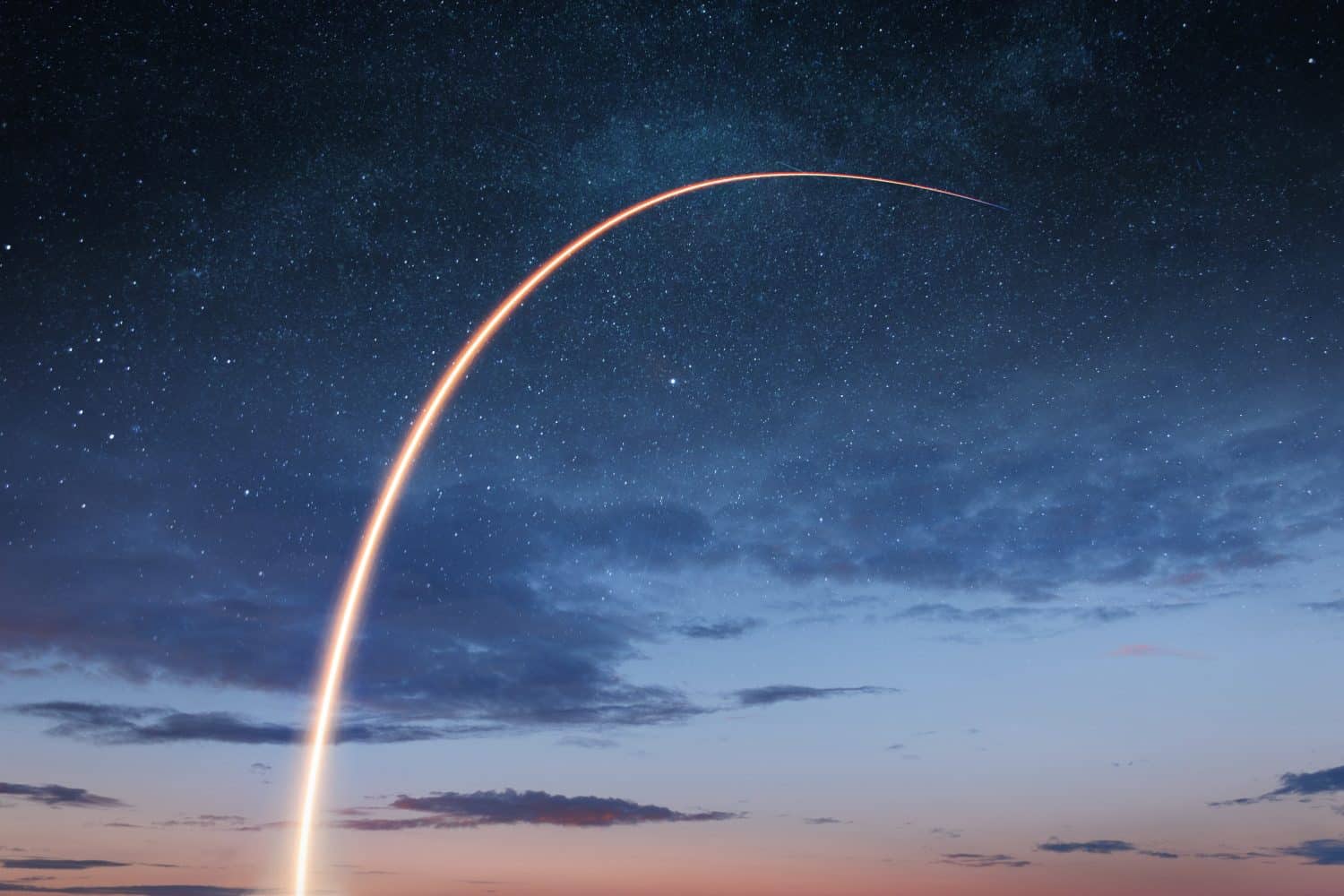
Published 30th May 2026 by Jeremy Phillips – 24/7 Wall St.
https://247wallst.com/investing/2026...and-cant-stop/
Buried deep in SpaceX's freshly filed IPO paperwork sits one of the strangest risk disclosures I've read in years. It describes a threat that could limit launches, ground satellites, and force expensive course corrections in orbit. SpaceX itself is the single biggest contributor to this threat.
I've been following the commercial space race for over a decade now, and this is the first time I've seen the company quietly concede, in black and white legalese, that its own success may be building the wall it eventually runs into.
The Admission Hiding in Plain Sight
The pre-IPO disclosures lay it out cleanly. SpaceX warns that "the continued proliferation of satellite constellations in Low-Earth Orbit, as well as the risk of collisions with space debris or other spacecraft, could limit or impair our launch flexibility and satellite deployment."
The company goes further, acknowledging that as more objects crowd LEO, "the probability of accidental collisions, fragmentation events, or other in-orbit incidents increases, which could result in the loss or degradation of our satellites, increased costs for collision avoidance maneuvers, or the need to replace or reposition assets on an accelerated schedule."
A worst-case scenario is flagged: a strike that could "trigger a cascading collision event that renders our licensed orbits, and potentially other orbits, unusable for an extended period."
The Irony Nobody at SpaceX Wants to Underline
Here is the uncomfortable part. SpaceX is the proliferation.
As of March 31, 2026, Starlink operated over 9,600 broadband and mobile satellites in Low-Earth Orbit, a figure that accounted for approximately 75% of all active maneuverable satellites in orbit. Roughly three out of every four steerable satellites circling Earth carry a Starlink badge.
The plan is to go much bigger. The company tells prospective shareholders that its orbital ambitions, including AI compute platforms in space, "will require the operation of very large satellite constellations, potentially numbering up to one million satellites."
On top of that, a single Starship launch will be capable of deploying up to 60 V3 satellites, representing a twenty-fold increase in Starlink downlink capacity deployed relative to a Falcon 9 launch, with deployment expected to begin in the second half of 2026.
What This Means for an IPO Investor
SpaceX also flags regulatory blowback, warning that "failure to meet debris requirements could result in monetary penalties or loss of licensing authority" and that liability regimes resembling environmental Superfund laws are being explored for orbit.
Translation: the toll bridge SpaceX built over LEO has become the busiest road in the sky, and SpaceX is the one paying to widen it while warning regulators may start charging passage.
If you believe Starlink's 10.3 million subscribers across 164 countries is the floor of a global utility, the congestion risk is a tax you accept. If you think one cascading collision could freeze deployment for years, the IPO paperwork just told you exactly where the trapdoor is. The threat SpaceX helped create is the same one it now has to outrun.
-
The Following 9 Users Say Thank You to Bluegreen For This Post:
Bill Ryan (31st May 2026), Denise/Dizi (31st May 2026), Ewan (3rd June 2026), JackMcThorn (31st May 2026), Johnnycomelately (31st May 2026), kudzy (31st May 2026), mountain_jim (31st May 2026), Sunny (31st May 2026), The KMan (31st May 2026)
-
31st May 2026 00:04
Link to Post #2
Re: SpaceX: Destroyer of Worlds?
SpaceX Is Conducting a Giant Chemical Experiment on Our Atmosphere Without Realizing
Hello and welcome! My name is Anton and in this video, we will talk about SpaceX's mega constellations and the ozone layer risks.
Published 16th May 2026 (14:18)
Links:
https://theconversation.com/musks-sp...o-do-so-280271
https://www.nature.com/articles/s43247-025-03154-8
https://www.pnas.org/doi/epdf/10.1073/pnas.2313374120
-
The Following 7 Users Say Thank You to Bluegreen For This Post:
Bill Ryan (31st May 2026), Denise/Dizi (31st May 2026), Ewan (3rd June 2026), Johnnycomelately (31st May 2026), mountain_jim (31st May 2026), Sunny (31st May 2026), The KMan (31st May 2026)
-
31st May 2026 00:30
Link to Post #3
Re: SpaceX: Destroyer of Worlds?
Research paper warns there’s a massive experiment at work to geoengineer the Earth’s climate

Published 23rd May 2026 by Frank Landymore – Futurism
https://futurism.com/science-energy/...ing-experiment
The idea of manually tampering with our atmosphere to combat climate change, such as by seeding clouds with reflective particles to dim the Sun, remains extremely controversial. These acts of geoengineering could deliver us from climate doom, the thinking goes, or backfire spectacularly in ways we never anticipated — which is why scientists are proceeding with caution.
But to an extent, something like this is already happening on a global scale. In a new study published in the journal Earth’s Future, researchers warn that the air pollution caused by satellites burning up in the Earth’s atmosphere is already decreasing the amount of sunlight reaching the Earth’s surface. And if the space industry continues growing at its current pace, the impact could eventually become significant enough to alter the entire climate.
Project lead and coauthor Eloise Marais, a professor of atmospheric chemistry and air quality at University College London, laid out the stakes in a striking comparison: “The space industry pollution is like a small-scale, unregulated geoengineering experiment that could have many unintended and serious environmental consequences,” she warned in a statement about the work.
Space launches have accelerated in the past decade and have tripled in the past five years, spearheaded by companies like Elon Musk’s SpaceX. A good chunk of the launches are to bring satellites into the Earth’s orbit. SpaceX’s Starlink internet service boasts nearly 12,000 of them (and Musk wants to launch a million more). These huge networks are referred to as megaconstellations, signaling a new paradigm in how satellites are used and deployed. Competitors are racing to build their own megaconstellations, including Jeff Bezos’ Blue Origin, which plans to deploy over 5,000 satellites.
These satellites are expendable. They’re designed to deorbit after a few years and then burn up — harmlessly, we’re told — in the Earth’s atmosphere, and constantly need to be replenished. But scientists have begun paying closer attention to the environmental impact of treating the atmosphere like a crematorium for satellites, with early studies finding that they release metals like lead and aluminum. Other research has raised the ominous possibility that some of these metal pollutants could trigger a chain reaction that lays waste to the ozone.
In this latest work, the researchers modeled the major pollutants from de-orbited megaconstellation satellites between 2020 and 2022. In 2020, the satellites accounted for 25 percent of the total climate impact from the space industry and will climb to 42 percent by 2029.

Radiative Forcing and Ozone Depletion of a Decade of Satellite Megaconstellation Missions | by Connor R. Barker, Eloise A. Marais, Eric Y. P. Tan, Sebastian D. Eastham, Glenn S. Diskin, Joshua P. DiGangi, Yonghoon Choi, Andrew W. Rollins, Eleanor Waxman, et.al.
https://agupubs.onlinelibrary.wiley....9/2025EF007229
-
The Following 10 Users Say Thank You to Bluegreen For This Post:
Bill Ryan (31st May 2026), bobme (31st May 2026), Denise/Dizi (31st May 2026), Ewan (3rd June 2026), Harmony (31st May 2026), Johnnycomelately (31st May 2026), mountain_jim (31st May 2026), samsdice (31st May 2026), Sunny (31st May 2026), The KMan (31st May 2026)
 Posting Permissions
- You may not post new threads
- You may not post replies
- You may not post attachments
- You may not edit your posts
Forum Rules


 Reply With Quote
Bookmarks