+ Reply to Thread
Page 19 of 19 FirstFirst 1 9 19
Results 361 to 363 of 363

Thread: God Save Canada

  1. Link to Post #361
    Netherlands Avalon Member ExomatrixTV's Avatar
    Join Date
    23rd September 2011
    Location
    Netherlands
    Language
    English, Dutch, German, Limburgs
    Age
    60
    Posts
    29,842
    Thanks
    44,831
    Thanked 167,150 times in 27,863 posts

    Exclamation Re: God Save Canada


    source


    • New World Order Carney: Canada incorporated into European project without referendum:
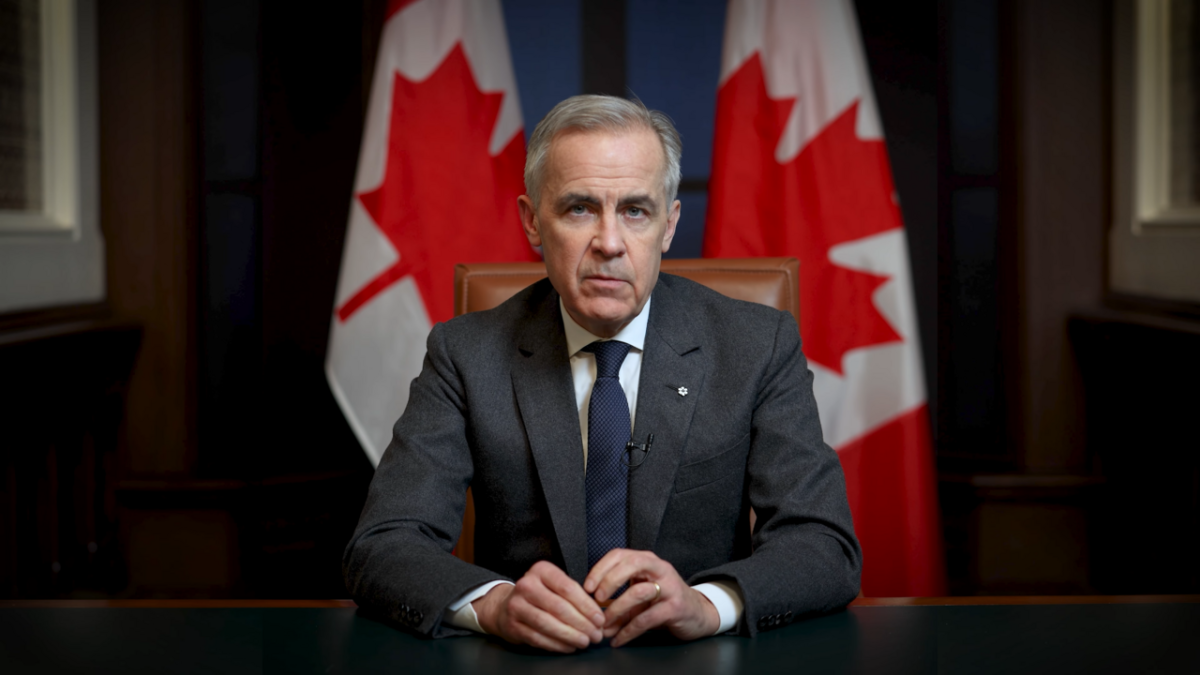
    The new world order is no longer a conspiracy theory — it is now an openly stated political objective. On Friday, Canadian Prime Minister Mark Carney made a striking statement in Paris following a closed meeting with French President Emmanuel Macron: Canada will be part of the emerging world order being built from Europe. No referendum, no public debate — simply a factual statement to the Canadian people.
    • Exactly what Carney said — and why it matters
    During a joint press conference with Macron, Carney referred to an earlier meeting of the European Political Community in Yerevan, where he stated that “the next world order will likely be built from Europe” and that Canada will be part of it. Not as a possibility, not as a wish — but as an established fact. Journalist Dan Dicks of Press For Truth calls this “a betrayal of Canadian sovereignty.”
    • Carney and the Bilderberg Connection
    Who is Mark Carney really, and how did he end up in this position? The former governor of both the Bank of Canada and the Bank of England has been viewed by critics for years as a figure selected by the global elite. Dicks claimed more than two years ago—well before Carney’s official candidacy for the leadership of the Liberal Party—that he had been chosen by the Bilderberg Group. A similar pattern occurred with Stephen Harper, who attended the Bilderberg meeting in 2003 and became Prime Minister two years later.
    • Macron: from Rothschild banker to 'Jupiter President'
    Macron's background also deserves closer examination. Before entering politics, he worked as a banker at Rothschild — the same Rothschild dynasty that has historically been closely linked to the Bank of England, the institution Carney would later lead. Macron once described himself as a “Jupiterian president” — a head of state elevated above ordinary politics. That says something about how he views his own role in relation to the population he represents.
    • Censorship disguised as child protection
    During the Paris meeting, Carney explicitly praised Macron for his policy of restricting social media for children under the age of sixteen. Canada announced similar legislation at the same time. On the surface, that sounds sympathetic. But critics point out that the same infrastructure that “protects children” also lays the foundation for digital identity systems, extensive online monitoring, and ultimately social credit systems such as those already operational in China. Whoever is given the authority to review online content effectively determines what citizens are allowed to see, say, and share.

    The irony is sharp: Carney appears in photos next to Ghislaine Maxwell, Jeffrey Epstein's convicted accomplice, taken when he was Governor of the Bank of England. Macron began his relationship with his current wife Brigitte when he was fifteen years old and she was a 39-year-old married teacher. That these two men are now publicly presenting themselves as protectors of children online feels like a particularly bitter joke to many critics.
    • Secret meetings with Soros and Obama
    Adding to this, Carney was recently spotted at an unpublic meeting in Toronto with Alex Soros and Barack Obama. No press conference, no public agenda — just behind closed doors. For proponents of transparency in democracy, this is precisely the kind of “open conspiracy” they warn against: powerful figures shaping the contours of the future out of public view.
    • The acceleration of the global agenda
    The collaboration between Carney and Macron appears to be part of a broader strategy known as the “Great Reset”—a restructuring of the global economic and political order in which national sovereignty gives way to supranational control by institutions such as the WEF and the UN. In multiple speeches, Carney has explicitly spoken of a “new world order” and the end of the old order.

    The question is no longer whether a shift is taking place. It is well underway. The question is whether citizens — in Canada, but also in Europe — will allow themselves to be swept along without ever being asked. Carney has already provided the answer: you are coming along. Whether you like it or not.
    • Dutch 🇳🇱/English source
    No need to follow anyone, only consider broadening (y)our horizon of possibilities ...

  2. The Following 7 Users Say Thank You to ExomatrixTV For This Post:

    Bill Ryan (14th June 2026), Eva2 (16th June 2026), Ewan (15th June 2026), Harmony (15th June 2026), Johnnycomelately (17th June 2026), truthseek (24th June 2026), Yoda (14th June 2026)

  3. Link to Post #362
    Canada Avalon Member Johnnycomelately's Avatar
    Join Date
    14th January 2022
    Location
    Edmonton, Alberta, Canada
    Language
    English
    Age
    67
    Posts
    2,040
    Thanks
    26,164
    Thanked 12,556 times in 2,012 posts

    Default Re: God Save Canada

    Some good news: a bill introduced in Ottawa aiming to enable treatment of chronic pain, and some chronic mental suffering such as from PTSD, using magic mushrooms.

    Seems there is ample solid proper medical research backing the benefits of it. Dec 2016 double-blind study (dead link in text below):

    https://pubmed.ncbi.nlm.nih.gov/27909165/

    Personal examples in this story, one is heartbreaking (re cancer, the fellow whom the bill is named for) and the other (the experience of a vet dealing with PTSD) ends up heartwarming.

    https://www.ctvnews.ca/regina/articl...reatment-bill/


    [b] Conservative MP introduces magic mushroom treatment bill

    By Daniel Reech
    Published: June 16, 2026

    Quote A Conservative MP has introduced a bill that would allow physicians to more easily prescribe magic mushrooms to treat mental health and addiction issues.

    Saskatoon-University MP Corey Tochor introduced Thomas’ Bill in the House of Commons on Tuesday.

    Magic mushrooms contain hallucinogens like psilocybin and psilocin, which are illegal unless authorized by Health Canada.

    If passed, Tochor’s bill would allow proponents of psilocybin molecules to access priority review, meaning a decision on the substance would be made within 180 days.

    Tochor says Thomas’ Bill is named after a constituent of his who suffered from anxiety after being diagnosed with stage four cancer.

    “His physician couldn’t treat his cancer because his mind was everywhere else,” Tochor told media Tuesday.

    “His physician prescribed psilocybin counseling – which is the active ingredient in magic mushrooms – and with that counseling it calmed his anxiety, so that his body could fight cancer.”

    Tochor says Thomas was feeling more like himself thanks to three years of psilocybin treatment until he was cut off by the government.

    Under current regulations, doctors can only legally prescribe psilocybin counselling with approval from Health Canada’s Special Access Program.

    “Unfortunately, those same bureaucrats that aren’t doctors at the three-year mark cut him off of his legal supply, and he had to travel to the Caribbean three times a year for his counseling, and that’s when he reached out to me,” Tochor said.

    Speaking alongside Tochor was Kamaya Lawrence, a clinical researcher with a master’s in neuroscience. Lawrence strongly urged the house to pass the legislation.

    “My work has brought me close to people living with chronic illness – people who are brave, exhausted, and living in the space between what medicine can do and what they still need,” she said.

    “That proximity is why I’m here today. The people that this bill is designed to protect are not people waiting for better quality of life, these are often people that are waiting for the end of their lives, and far too often they’re waiting in the grip of depression, anxiety, and an existential dread that our current pharmacological toolkit was not designed to treat.”

    Lawrence said conventional antidepressants can take four to six weeks to take effect – a timeframe that can rob terminal patients of the chance to find peace.

    Lawrence cited a 2016 double-blind study in which 80 per cent of participants showed clinically significant decreases in depressed mood and anxiety among cancer patients.

    She added that 80 per cent of participants within the study also reported increased well-being and life satisfaction.

    “The evidence is replicated, it is peer-reviewed, and is published in the most rigorous clinical academic journals in the world, pointing consistently towards dignity, towards relief, and towards autonomy and choice in palliative care,” Lawrence said.

    “What remains is legislation that matches the courage and the compassion the science has already demonstrated.”

    Tochor said psilocybin treatment would be especially helpful in light of the upcoming expansion of medical assistance in dying (MAID), which has been met with strong opposition, including from the Conservative Party.

    “It’s going to be expanded to people that have mental health issues, and I think it’s wrong that we are, right now, as a state helping patients end their life, but they are not granted access to a plant that is non-toxic, non-addictive, and that has the science behind it that shows that is effective treatment for mental health, addiction, and [PTSD],” Tochor said.

    Josh Veinotte is a veteran of the Canadian Armed Forces (CAF) who developed post-traumatic stress disorder in 2006 following his first combat tour in Afghanistan.

    Veinotte says he took prescribed medication and went to therapy but nothing seemed to work, eventually releasing from the CAF in 2016.

    After nearly five years of continuing to try to manage his PTSD, Veinotte says he decided to engage in psilocybin-assisted therapy following conversations with clinicians and extensive research.

    “For the fist time in nearly 15 years, I felt peace,” he told media.

    “I was able to finally integrate and solidify everything I’d learned through the years of psychotherapy. It didn’t erase my trauma, it changed my relationship with it. But the real value is not in the medicine alone. The preparation therapy beforehand and the support during and after treatment are equally important.”

    Veinotte added that it was also important to work with trained professionals and receive support during and after treatment.

  4. The Following 5 Users Say Thank You to Johnnycomelately For This Post:

    Bill Ryan (23rd June 2026), Ewan (18th June 2026), Harmony (18th June 2026), truthseek (24th June 2026), Yoda (18th June 2026)

  5. Link to Post #363
    Avalon Member rgray222's Avatar
    Join Date
    24th September 2010
    Language
    English
    Posts
    3,510
    Thanks
    14,162
    Thanked 32,412 times in 3,398 posts

    Default Re: God Save Canada

    The video below was not part of the article I posted, but it covers much of the same information.

    Canada’s top-skilled workers are leaving for the U.S. in droves for lower taxes and higher pay: TD study


    A new report from TD Economics warns that Canada is losing its highest-skilled workers, entrepreneurs, and STEM graduates to the United States through a slow, largely invisible syphoning—calling the phenomenon a “silent brain drain.” The crisis, it argues, is less about who Canada can attract than who it fails to keep.

    Much of the outflow never registers in Statistics Canada’s emigration data because it occurs through U.S. employer-sponsored work visas—temporary and semi-permanent pathways that conventional brain drain metrics simply don’t capture. Of the partial data Statistics Canada was able to retrieve, the agency determined that, in 2023, 18,590 Canadian residents emigrated to the U.S. permanently, with 30 percent of those people not being born in Canada.

    Despite net migration to the U.S. lowering in recent years, the trend of top talent—which helps drive GDP growth—leaving Canada has not.

    “Canada is not hollowing out; it is spilling out at the top,” the TD report states. “Absent progress on this front, Canada will continue to be a feeder system for the U.S. innovation economy.”

    Canada doesn’t have trouble attracting top talent for education—it has difficulty anchoring the highest-performing immigrants and graduates to stay. By 2024, foreign-born Canadian citizens accounted for about 60 percent of Canadian applicants for U.S. labour certification. Among Canadian-born students at top universities, exit rates at the top of the skill distribution are roughly double those at the bottom.

    The TD report cites a 2025 report from Signal49 Research, which found that within 25 years, immigrants to Canada with higher education had emigrated out of the country at alarming rates: 34 percent of those with doctorates, 32 percent holding master’s (or some graduate), and 24 percent of those with bachelor’s degrees.

    The TD report found the cumulative effect means Canada struggles to grow GDP through innovation. “Talent loss compounds these weaknesses. High skill exits reduce managerial capacity, entrepreneurship, and knowledge spillovers,” the report concludes. “Over time, this helps explain why sustaining Canada’s living standards has a growing reliance on population growth rather than productivity growth.”

    Why Canada’s business structure pushes talent out
    The TD report found that another critical issue is the lack of medium-sized businesses capable of hiring and retaining top talent. In Canada, fewer than 3,500 large businesses account for 4.5 million employees—roughly 34 percent of the entire workforce. In the U.S., only 12 percent of employees work for large businesses, while 57 percent work for small businesses, and 25 percent for medium-sized companies. The hyperscalers and high-growth SMEs that anchor ambitious talent are far more common south of the border.

    The report’s co-author and TD Economics managing director Francis Fong told The Hub that the missing middle is not purely a tax problem. “Creating the incentive for Canadian firms to grow and remain in Canada requires not just addressing high personal marginal rates and the gap between small business rates and the general corporate income tax rate, but also fixing the relative lack of venture capital, poor commercialization of R&D done at the post-secondary level, and the high regulatory burden.”

    C.D. Howe Institute vice president Alexandre Laurin agreed that the tax architecture “disincentivizes” growth. He told The Hub that lowering the general corporate rate from 15 to 10 percent would be a good start in making Canada competitive again.

    Full Story: https://thehub.ca/2026/05/28/canadas...-pay-td-study/

  6. The Following 4 Users Say Thank You to rgray222 For This Post:

    Bill Ryan (23rd June 2026), Harmony (24th June 2026), truthseek (24th June 2026), Yoda (24th June 2026)

+ Reply to Thread
Page 19 of 19 FirstFirst 1 9 19

Tags for this Thread

Posting Permissions

  • You may not post new threads
  • You may not post replies
  • You may not post attachments
  • You may not edit your posts