Harmony (1st July 2026), Sue (Ayt) (2nd July 2026), The KMan (4th July 2026), ThePythonicCow (2nd July 2026), Yoda (1st July 2026)
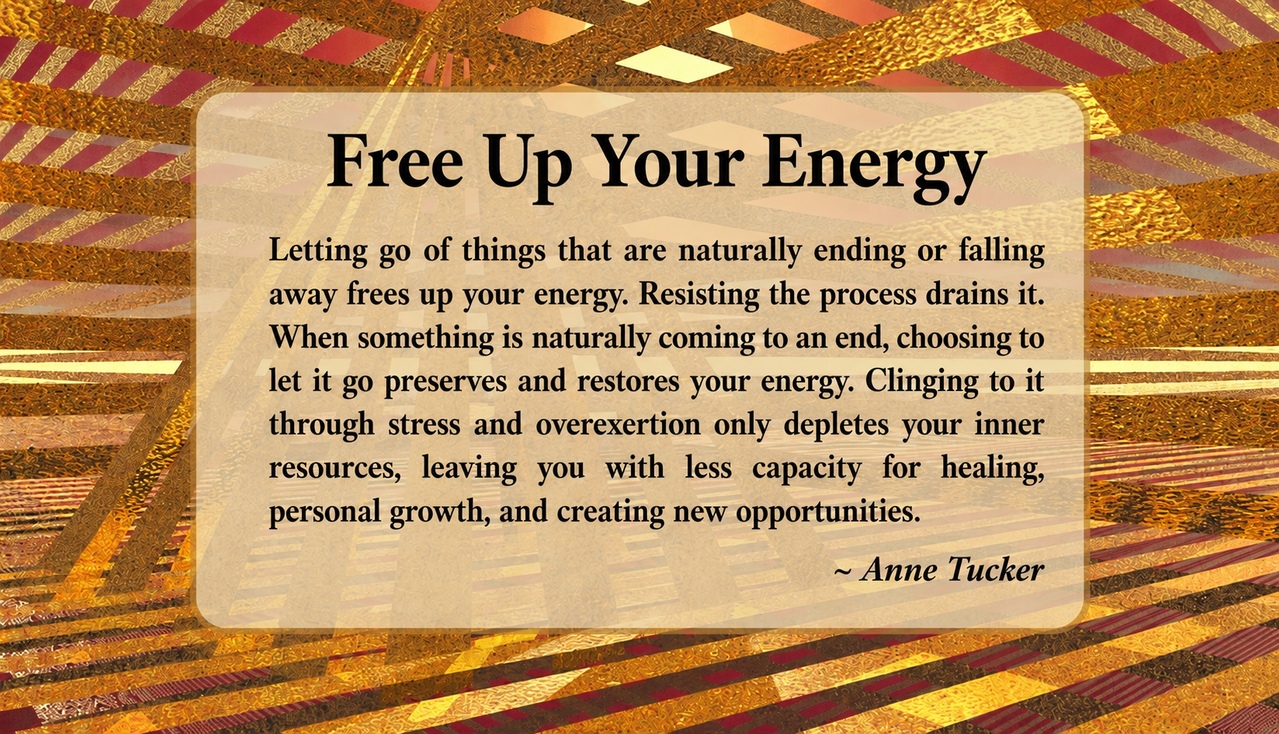
- Every habit, relationship, or job requires a certain amount of your energy.
- When something begins to slip away, trying to hold onto it through worry, stress, or overwork uses even more energy.
- Instead of gaining energy from letting go, you end up exhausting yourself by fighting to keep what is leaving.
- This leaves you with less energy to heal, grow, or create new opportunities.
- Since personal change and healing come from within, conserving your energy is essential.
- Holding on too tightly means losing the potential to invest that energy in a better future.
Harmony (1st July 2026), Sue (Ayt) (2nd July 2026), The KMan (4th July 2026), ThePythonicCow (2nd July 2026), Yoda (1st July 2026)
The Mitochondria Scientist Dr Martin Picard reveals why stress is secretly burning 60% of your daily energy, the science behind reversing gray hair, and why your mitochondria - not your genes - determine how fast you age!
- The Diary of a CEO
- July 2, 2026
Dr Martin Picard is a Professor of Behavioral Medicine and Director of the Mitochondrial Psychobiology Group, who specialises in how stress, emotions and lived experiences affect your mitochondria. He recently published the world's first map of mitochondria in the human brain and is also the author of the upcoming book, ‘Energy’.
He explains:00:00 Intro
- Why depression is really an energy problem, not just in your head
- Why eating more food won't give you more energy, and what actually will
- How training for a marathon can double the mitochondria in your muscles
- Why people with a strong sense of purpose have more powerful mitochondria
- Why cancer cells abandon their mitochondria, and what it means for treating them
03:36 Why Everyone Is Talking About Energy Right Now
04:35 Why I Dedicated My Life to Studying Mitochondria
05:51 The Fascination With Mitochondria—and What a PhD in Them Really Means
08:46 How Understanding Energy Can Help You Feel Better Every Day
10:03 Where You Should Start If You Want More Energy
14:26 Why Mitochondria Are the Foundation of Your Health
16:42 How Mitochondria Made Complex Human Life Possible
19:04 What Insulin Resistance Reveals About Your Body's Energy System
20:36 How Mitochondria Influence Cancer Risk
23:17 What Really Causes the Warburg Effect?
24:43 Why Diabetes Raises Your Risk of Cancer
26:10 The Real Reason Smoking Causes Cancer
31:04 Why Hair Turns Gray—and Whether It Can Be Reversed
39:57 What Cortisol Is Really Doing to Your Cells
42:47 Does a More Resilient Mind Save Cellular Energy?
45:20 Acute vs. Chronic Stress: Why the Difference Matters
45:54 Understanding Resistance—and Why It Drains Your Energy
48:18 What Happens Inside Your Body When the First Gray Hair Appears?
51:43 The Real Secret to Healthy Aging
53:37 How to Make Your Body More Energy Efficient
55:34 How Food Changes the Way Your Cells Produce Energy
01:01:02 What the Energy Crisis in Your Cells Means for Alzheimer's Disease
01:05:32 Is Dementia Really "Type 3 Diabetes"?
01:12:07 Why Some Communities Avoid Dementia—and What This Means for Alzheimer's Risk
01:13:54 Ads
01:15:56 How to Eat for Optimal Energy and Health
01:17:27 Why We Overeat Even When We're Not Hungry
01:20:46 Is Breakfast Really the Most Important Meal of the Day?
01:22:43 How to Stop Scattered Energy From Running Your Life
01:30:58 How High Performers Filter Signal From Noise
01:39:52 How Energy Resistance Shows Up in Parenting
01:41:54 Why Meaningful Goals Become Magnets for Your Energy
01:42:35 Does Having a Purpose Improve Mitochondrial Function?
01:46:22 What Being Judged Does to Your Body's Energy System
01:51:07 Why Stress Causes Visceral Fat Gain
01:51:30 What Happens When Chronic Stress Turns Into Disease?
01:53:03 How to Reduce GDF-15—and Why It Matters
01:56:28 Can Supplements Actually Improve Mitochondrial Health?
02:00:23 How to Trust the Wisdom of Your Body
02:02:22 Ads
02:03:26 Can Red Light Therapy Really Support Your Mitochondria?
02:05:12 What You Need to Know Before Trying Red Light Therapy
02:10:33 How to Listen to What Your Energy Is Telling You
02:27:11 The Best Exercise Routine for Healthier Mitochondria
02:28:11 Which Blood Tests Can Reveal Your Mitochondrial Health?
02:30:14 The Personal Loss That Changed Everything
Last edited by RunningDeer; 2nd July 2026 at 11:01.
Last edited by RunningDeer; 3rd July 2026 at 07:08.
Eva2 (3rd July 2026), Harmony (3rd July 2026), Raskolnikov (13th July 2026), Sue (Ayt) (3rd July 2026), The KMan (4th July 2026), ThePythonicCow (3rd July 2026), Yoda (3rd July 2026)
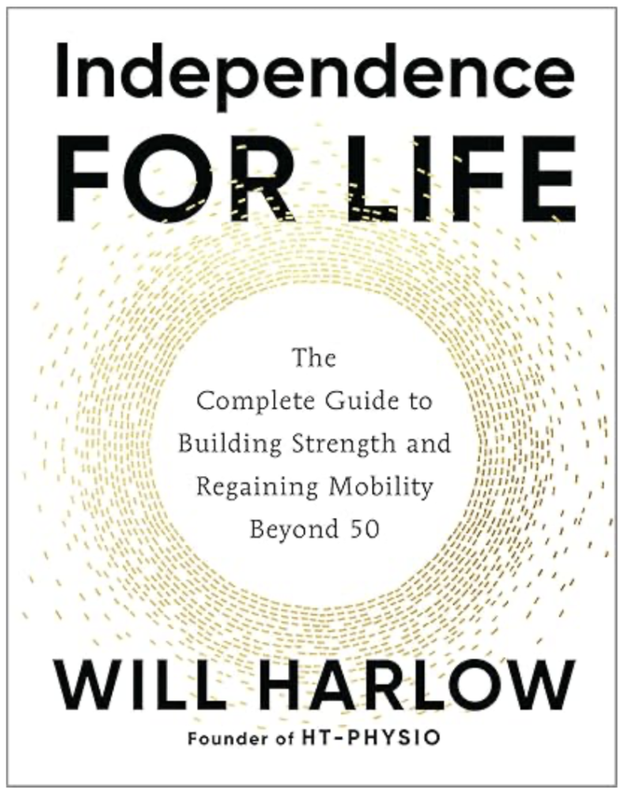
“The progressive loss of muscle mass, strength, and function as we age is called sarcopenia. It is a natural part of the aging process that typically begins in our 30s or 40s and can accelerate after age 60, often leading to weakness, poor balance, and loss of independence.
Getting older doesn’t have to mean slowing down. Discover how to create a personalized plan to build strength, protect bone health, restore balance and improve mobility at any age.
Physiotherapist and over-50s health specialist Will Harlow, who has helped millions through his YouTube channel, shows you how to build your own transformative, step-by-step plan based on his Four Pillars of Independence – strength, mobility, balance and skeletal health. First, you’ll assess your starting point, then choose exercises to target your weak areas and create a routine that grows with you. This isn’t about fixing one issue at a time – it’s about building a plan to keep your whole body strong, mobile and independent for years to come.
Inside, you’ll find science-backed strategies, easy-to-follow exercises and simple self-assessments to help you track your progress and stay motivated, whatever your starting point.
You’ll learn how to:Independence for Life is more than a collection of exercises – it’s your complete guide to building a clear, personalized roadmap for ageing well. You’re not too old and it’s never too late – you just haven’t had the right plan. Until now.
- Build muscle and stability safely at any age, even if you’ve never trained before.
- Improve balance and coordination to prevent falls and move with confidence.
- Protect and strengthen your bones to reduce the risk of fracture.
- Maintain and restore mobility with targeted stretching and movement routines.
- Reduce pain so you can stay active and get back to doing the things you love.
- Create a structured routine you can follow week by week and adapt as you improve.
'Itzhak Bentov - The Illusion of Our Separation
Itzhak Bentov was an amazing teacher, inventor, mystic and much much more who unfortunately was killed in a plane crash in 1979. He was however very far ahead of his time.
There is very little of him and his work available for our consumption unfortunately in this age of Technology Luxury. But, this short clip is profound. He explores the connection we all have to one another on another level. And, the privilege of a disconnected experience Earth offers us.'
grapevine (14th July 2026), Harmony (6th July 2026), Raskolnikov (5th July 2026), Satori (11th July 2026), Sue (Ayt) (5th July 2026), The KMan (6th July 2026), ThePythonicCow (5th July 2026), Yoda (13th July 2026)
"We're all bozos on this bus"
David_K (13th July 2026), grapevine (5th July 2026), Harmony (6th July 2026), Raskolnikov (5th July 2026), RunningDeer (5th July 2026), Satori (11th July 2026), The KMan (6th July 2026), ThePythonicCow (5th July 2026), Vicus (5th July 2026), Yoda (13th July 2026)
Developing greater presence means strengthening your ability to notice what's happening right now—your thoughts, emotions, surroundings, and actions—without being constantly pulled into memories, worries, or distractions. It's a skill that improves with practice rather than a permanent state.
Here are some effective ways to cultivate it:
Train your attention
A simple mindfulness practice is one of the most direct methods.The goal isn't to stop thinking. It's to notice when your attention has drifted and consciously bring it back.
- Sit comfortably for 5–10 minutes.
- Focus on your breathing.
- When your mind wanders (and it will), gently notice where it went and return your attention to the breath.
Engage your senses
When you notice yourself lost in thought, reconnect with your immediate experience.
For example:This anchors attention in the present instead of abstract thinking.
- Notice five things you can see.
- Listen for three distinct sounds.
- Feel your feet on the ground or your hands resting where they are.
- Pay attention to the temperature of the air or the texture of an object you're holding.
Do one thing at a time
Multitasking often fragments attention.
Whether you're eating, walking, washing dishes, or talking with someone, experiment with giving that activity your full attention. Notice details you normally overlook—the flavors of food, the rhythm of your steps, or the other person's facial expressions and tone.
Create small "awareness pauses"
Choose a few recurring moments during the day—before opening your laptop, answering the phone, or entering your home.
For just 10–20 seconds:These brief check-ins help interrupt autopilot.
- Notice your posture.
- Observe your breathing.
- Ask yourself, "Where is my attention right now?"
Notice thoughts instead of becoming them
A helpful mental shift is to observe thoughts rather than immediately identifying with them.
Instead of:Try noticing:
- "I'm anxious."
This creates a bit of psychological distance, making it easier to respond intentionally rather than react automatically.
- "I'm noticing anxious thoughts."
Reduce unnecessary distractions
Constant notifications, endless scrolling, and switching between tasks train the mind to seek novelty.
Setting aside periods of uninterrupted time—for work, reading, conversation, or rest—helps rebuild sustained attention.
Spend time in environments that naturally encourage presence
Many people find it easier to be present while:Activities that fully engage your senses often quiet the mental chatter that pulls attention away from the present.
- Walking in nature.
- Looking at the night sky.
- Listening attentively to music.
- Creating art or playing an instrument.
- Gardening or cooking.
A simple daily practice (5–10 minutes)Over time, presence becomes less about trying to "stay in the moment" and more about recognizing when your attention has wandered and returning it gently. That process of noticing and returning is the practice itself.
- Sit quietly and notice your breathing for 2 minutes.
- Spend 2 minutes observing sounds without labeling them as good or bad.
- Spend 2 minutes noticing bodily sensations from head to toe.
- End by asking, "What is actually happening right now, as opposed to what I'm imagining?"
- Meditation and mindfulness: Practices that cultivate sustained attention and awareness of thoughts, emotions, and sensations without immediately reacting to them. Many people report greater clarity, emotional regulation, and a broader perspective over time.
- Self-inquiry: Examining your assumptions, beliefs, and automatic reactions. Questions such as "Why do I believe this?" or "What evidence supports this view?" can reveal unconscious patterns and reduce habitual thinking.
- Learning from diverse perspectives: Reading philosophy, science, history, psychology, and spiritual traditions broadens your mental models. Exposure to differing viewpoints can make your own thinking more flexible and nuanced.
- Reflection and journaling: Writing about experiences, decisions, and emotions helps identify recurring patterns and blind spots. Reflection can deepen self-understanding and improve judgment.
- Experiencing awe and novelty: Spending time in nature, engaging with art and music, traveling, or learning new skills can expand your sense of connection and challenge familiar ways of seeing the world.
- Compassion and relationships: Many traditions argue that expanding consciousness isn't only about introspection but also about cultivating empathy, listening deeply, and recognizing the perspectives of others.
- Healthy habits: Sleep, regular exercise, stress management, and balanced nutrition support cognitive function and emotional well-being, making it easier to sustain attention and insight.
Resources:
Last edited by RunningDeer; 13th July 2026 at 16:54.

grapevine (14th July 2026), Harmony (13th July 2026), Raskolnikov (13th July 2026)
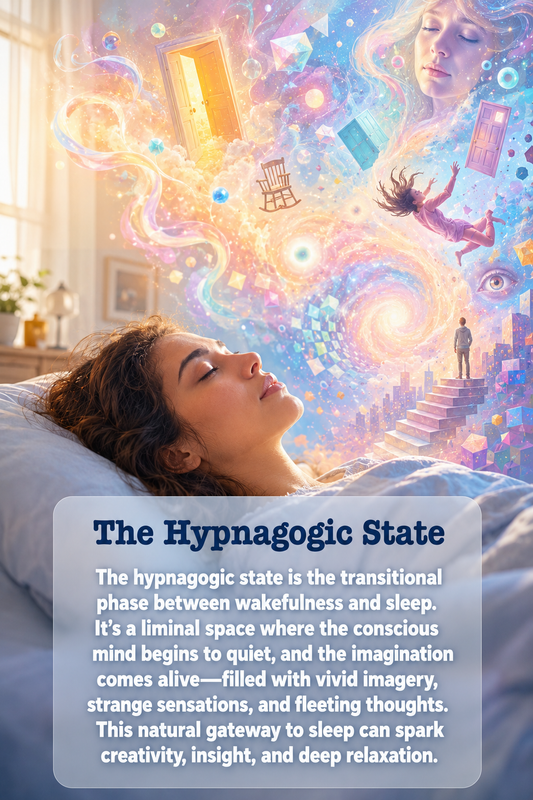
The hypnagogic state is the brief transitional period between being awake and falling asleep. It's a perfectly normal state that everyone experiences every night, although most people pass through it so quickly they don't notice it.
During hypnagogia, your brain is gradually shifting from wakefulness into sleep. Because parts of the brain involved in dreaming begin to activate before you're fully asleep, your conscious awareness and dream imagery can briefly overlap.
What it can feel like
People commonly report experiences such as:Most of these experiences last only a few seconds to a couple of minutes.
- Vivid geometric patterns or flashes of light behind closed eyes
- Brief, dream-like scenes or faces
- Hearing someone call their name or hearing music that isn't actually playing
- The sensation of falling, often accompanied by a sudden body jerk (a hypnic jerk)
- Feeling as though they're floating, spinning, or becoming very heavy
- A strong sense that they're "still awake" even though sleep has already begun
Why is it interesting?
Researchers think hypnagogia is a unique state because:Many well-known creators reportedly used this state deliberately. For example, Thomas Edison, Edgar Allan Poe and Salvador Dalí described techniques for drifting toward sleep while holding an object so that, when they dropped it, the sound would wake them and allow them to capture ideas that arose during hypnagogia.
- The logical, analytical mind becomes quieter.
- Visual imagination becomes much more active.
- Creative insights can appear spontaneously.
- Dreaming begins before you're fully unconscious.
It is Related to Lucid Dreaming
Many lucid dreamers intentionally try to remain mentally aware while entering hypnagogia because it can become a gateway into a lucid dream.
People practicing meditation, yoga nidra, or "wake-induced lucid dreaming" (WILD) often learn to observe the images and sensations of hypnagogia without reacting to them.
While many people also associate hypnagogia with ideas like astral projection or reality shifting, those interpretations are personal or spiritual rather than established scientific conclusions. The underlying sensations themselves, such as vivid imagery, floating feelings, and hearing voices or sounds, are well documented in sleep research.
Your brain starts "dreaming" before you're asleep
Dreaming isn't an all-or-nothing event.
Even before entering deeper sleep stages, parts of your visual cortex and memory systems begin generating imagery.
Meanwhile, your prefrontal cortex—the region heavily involved in logic, planning, and self-monitoring—starts reducing its activity.
That means:This is one reason artists, inventors, and writers have long valued this state.
- Imagination increases.
- Critical thinking decreases.
- Odd combinations of ideas feel surprisingly natural.
Sensory processing changes
As you fall asleep, your brain gradually stops prioritizing incoming sensory information.
Instead of building a picture of the external world, it begins generating its own internal experience.
That's why people may:These experiences are considered normal features of the transition into sleep.
- Hear their name being called
- See flashes of light
- Feel like they're floating
- Experience the sensation of falling (often followed by a hypnic jerk)
Why creativity often peaks
Neuroscientists think creativity benefits because two systems are balancing each other:
- Executive control hasn't completely shut off.
- Associative networks have become much freer.
The result is that your brain forms connections it might reject during normal waking thought.
This is why people sometimes wake with solutions to problems they couldn't solve the night before.
********************
How to intentionally notice the hypnagogic state
You can't force hypnagogia. The more you try to "make something happen," the more your brain stays in an alert, beta-wave state. The skill is learning to observe the transition without interfering with it.
Here's a practical approach that's grounded in sleep science and overlaps with techniques used in meditation and lucid dreaming.
Step 1: Set yourself up for sleep
The best time is:Lie comfortably on your back or side in a dark, quiet room. Don't try to stay awake with effort; instead, simply become curious about what your mind does as it falls asleep.
- At your normal bedtime, or
- During an afternoon nap when you're already sleepy.
Step 2: Pick a gentle anchor
Choose one thing to pay light attention to, such as:The key is light attention, not intense concentration.
- Your breathing
- The feeling of your body against the mattress
- A simple mental phrase like "I'm noticing."
Think of it like watching clouds drift across the sky rather than chasing them.
Step 3: Notice the first changes
As your brain shifts toward alpha and theta activity, you may notice:These are called hypnagogic images.
- Random thoughts that don't quite make sense.
- Brief flashes of color or light.
- Faces appearing for a split second.
- Fragments of conversations.
- A sudden feeling that you're somewhere else.
- Your sense of time becoming fuzzy.
The important thing is not to analyze them.
- If you think,
- "Oh! It's happening!"
- you'll often wake yourself back up.
Step 4: Observe without participating
Meditators sometimes describe this as sitting on the riverbank watching the water flow.
Instead of following a thought, simply notice:The less you react, the longer the state often lasts.
- "Interesting... there's a face."
- or
- "Now there's a sound."
- Then let it pass.
Step 5: Expect your body to feel strange
Many people become alarmed because their body begins behaving differently.
You might notice:
- Your hands feel enormous or tiny.
- You're floating.
- You're gently spinning.
- Your body disappears.
- Vibrations or buzzing sensations.
- A loud "bang" or whooshing sound (a harmless phenomenon some people experience).
These are all reported during the transition into sleep and don't necessarily indicate anything unusual.
Articles
Last edited by RunningDeer; 16th July 2026 at 11:01.
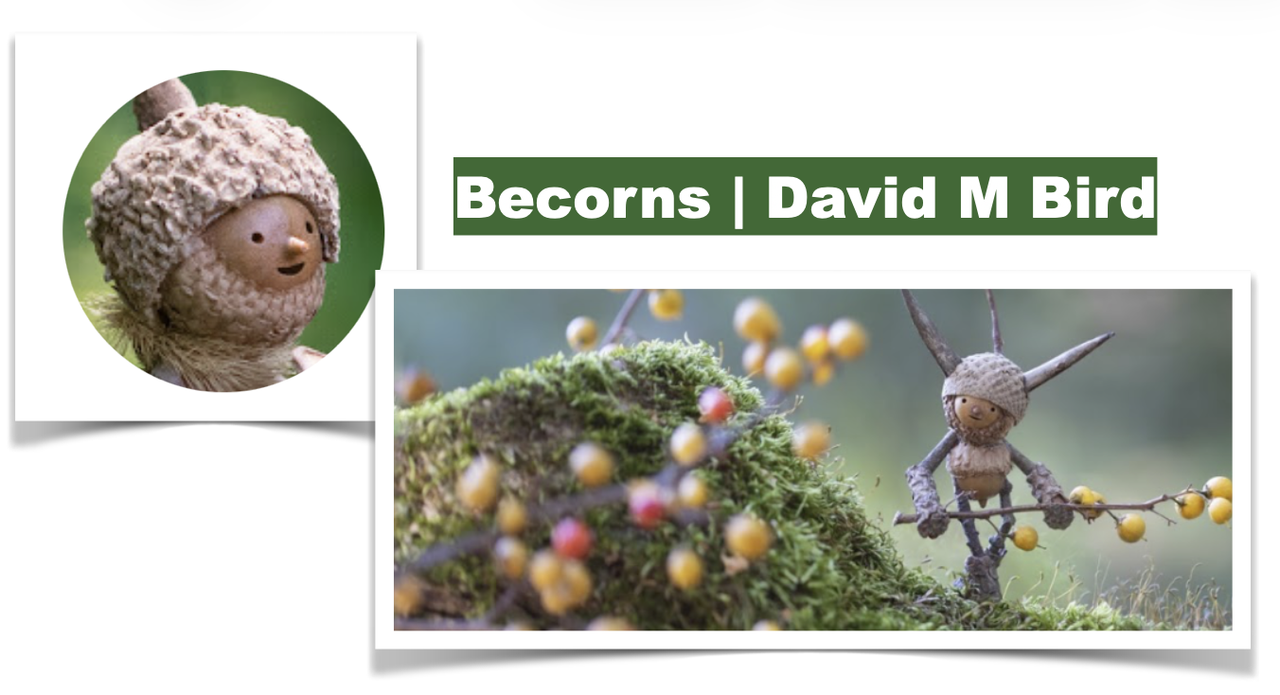
I build little people out of acorns and sticks, then photograph them in the wild with real animals. Join me as I share my process of building and photographing. Learn more and buy prints at davidmbird.com.
- Becorns | David M Bird
- 456K subscribers
grapevine (16th July 2026), Harmony (17th July 2026), JackMcThorn (16th July 2026), kudzy (16th July 2026), Sue (Ayt) (16th July 2026), ThePythonicCow (16th July 2026), Yoda (17th July 2026)
Bookmarks