+ Reply to Thread
Page 8 of 8 FirstFirst 1 8
Results 141 to 146 of 146

Thread: What Supplements Might be Missing from your Health Regimen?

  1. Link to Post #141
    UK Avalon Founder Bill Ryan's Avatar
    Join Date
    7th February 2010
    Location
    Ecuador
    Posts
    39,978
    Thanks
    295,672
    Thanked 529,278 times in 38,515 posts

    Default Re: What Supplements Might be Missing from your Health Regimen?

    Quote Posted by Bill Ryan (here)
    Quote Posted by RunningDeer (here)

    The shorten version of my thoughts:
    I want to move in a different direction. I’m approaching this as an experiment that our bodies come equipped with built-in repair systems. Over time, that natural balance can get lost. I want to see how well the body can function when it’s properly supported.
    This inspired New Yorker cartoon somehow seems relevant!

    But it poses an excellent serious question I've always asked myself and never found a really good answer to. (Surely not every one of our ancestors died way before their time from disease or conflict?)


    I posed the same question to Wade Frazier yesterday, and overnight he impressed me with a long and detailed reply. I found it so very interesting and packed with hard information that I felt I had to copy it here.

    ~~~
    From Substack:

    The video of this post is here.

    This post is in response to Bill Ryan’s post at Avalon. Bill and I go back a ways. Making this series of posts reflects not only thinking about my family, going back a few centuries, but going all the way back to the beginning of life on Earth. My previous post sketched the eon of complex life that led to humans.

    Bill specifically asked about hunter-gatherers, and this post will address them. Chimps hunt and forage, but the Wikipedia article attributed the beginning of the hunter-gatherer lifestyle to Homo erectus about 1.8 million years ago. I can go with that. Around that time, Homo erectus had invented Acheulian stone tools, may have controlled fire, and began driving African megafauna to extinction as Africa’s apex predator.

    There was almost two million more years of evolution before behaviorally modern Homo sapiens appeared on the scene. I recently referred to this article as a good summary on the state of the science of why behaviorally modern humans conquered the world. That conquest happened during the hunter-gatherer phase of the human journey, which I call the Second Epoch. Those are fascinating, if often grim, topics, but what about the lives of hunter-gatherers themselves?

    For starters, from gorillas to the Industrial Revolution, only about half of offspring reached adulthood. A generation ago, a famous paper explored hunter-gatherer life expectancy. Here is a good discussion of it. Only 56% of prehistoric hunter-gatherers made it to age 15. Less than one-in-200 made it to age 65. Most of those childhood deaths may have been due to infanticide, as the parents could not afford to feed them. About 25% of men died violently, generally in territorial disputes with neighboring bands. The skeletal evidence is stark. In aboriginal Australia, which was the best “lab” that we had of hunter-gatherer societies before the rise of farming, the skeletal evidence shows that a quarter of the men and a third of the women had healed skull fractures from interpersonal violence (women got it from their “husbands”). That is likely why aboriginal Australians have skulls twice as thick as the rest of humanity’s.

    It is true that prehistoric hunter-gatherers did not have much infectious or degenerative disease. Those came with the agrarian Epoch. But the lives of hunter-gatherers were very rough. Nearly everything that we take for granted in modern life did not exist for prehistoric hunter-gatherers. They did not have roofs over their heads, unless they were “lucky” enough to live in a cave. They were always on the move, seeking food. They continually came into violent conflict with neighboring societies, especially after the short-lived golden age of the hunter-gatherer was over. To “trespass” into another band’s territory was to risk death. Those societies often had “no-man’s lands” between them, to reduce the violence. A minor cut could be enough to cause death from infection. Neanderthal skeletons were full of fractures, which came from either interpersonal violence or the hazards of killing large animals without projectile weapons.

    The favorite hunter-gatherer war tactic was like what chimps do: the surprise raid. Hunter-gatherers usually did it at night, just before dawn, and they would slaughter the entire sleeping encampment while often sparing the women, who became their “wives.” Stealing women was standard hunter-gatherer practice, so much so that in many hunter-gatherer societies, any strange man was killed on sight, as the usually accurate assumption was that he was there to steal a woman.

    One common practice was almost funny. In Arctic societies, which almost entirely relied on hunting, boys were prized and girls were killed by their parents. It got so bad that the boy-girl ratio got as high as two-to-one. Then the society had a shortage of women. The “solution” was a sneak attack on the neighboring society, kill all the men, and take the women. The combined numbers “solved” the problem of the sexual imbalance. Scientists have also argued that it was an inadvertent way to keep the populations within the land’s carrying capacity. What one way to do it.

    I have seen a lot of romanticizing of hunter-gatherers, even within my family, and it is a bunch of fantasy. One day in a hunter-gatherer society would convince nearly all modern peoples that they prefer homes, underwear, plumbing, refrigerators, and beds.

    Best,

    Wade

  2. The Following 12 Users Say Thank You to Bill Ryan For This Post:

    Ewan (16th June 2026), Harmony (16th June 2026), Johnnycomelately (16th June 2026), kudzy (16th June 2026), mountain_jim (17th June 2026), onawah (19th June 2026), petra (1st September 2026), RunningDeer (16th June 2026), Sue (Ayt) (17th June 2026), Vicus (16th June 2026), Wade Frazier (16th June 2026), Yoda (16th June 2026)

  3. Link to Post #142
    Avalon Member mountain_jim's Avatar
    Join Date
    8th December 2010
    Posts
    12,597
    Thanks
    77,718
    Thanked 112,929 times in 12,437 posts

    Default Re: What Supplements Might be Missing from your Health Regimen?

    Quote Posted by RunningDeer (here)
    Quote Posted by Bill Ryan (here)
    I was particularly interested in the recommended doses. From left to right:

    Muscle: 5g (8g if >50)
    Bone: 8-12g
    Brain: 10g
    Sleep deprivation: up to 30g (if up all night, or jetlagged)
    Stress: 20-25g (if particularly stressed in life)


    For most people, 10g/day is about right.


    The sections discussing doses are at 21:31 and 25:38.

    I started back on creatine. I take 3g twice a day with my meal for a total of 6g a day. By splitting it into two doses, it reduces the chance of stomach upset. Protein foods contain creatine, so I’m getting a bit more per day.

    I may experiment with a higher dose. But as I’ve mentioned elsewhere and what Dr Darren Candow questioned: Creatine megadoses consistently over time over - Could that down regulate your natural synthesis?

    I tend to fall into the camp that prefers to encourage and maintain the body's own natural production whenever possible.
    Repost {snipped}

    RE: Creatine

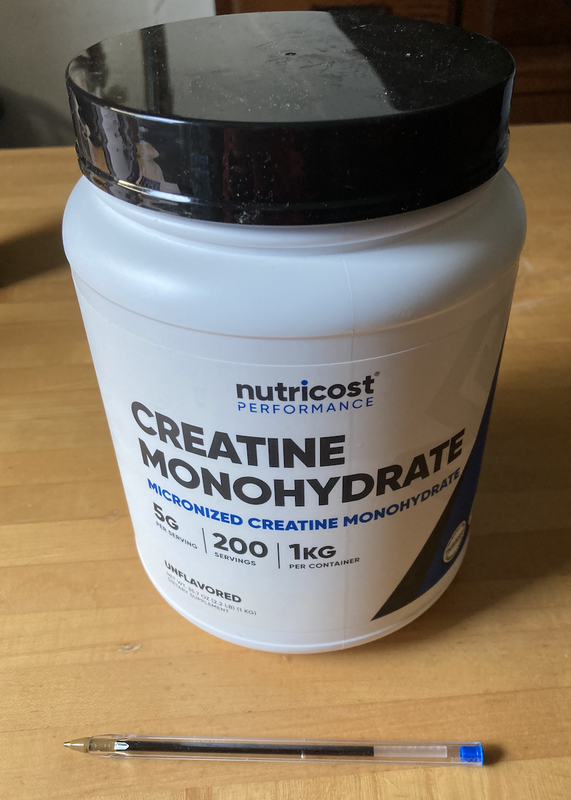
    I switched over to a monohydrate micronized powder. It's Nutricost Creatine Monohydrate Micronized Powder (1 KG) - Pure Creatine Monohydrate. The finely ground powder completely dissolves in water. Whereas with my first purchase of the regular creatine monohydrate doesn't fully dissolve and is grittier.

    The container is huge. (5” diameter, 8” height | 12.7 cm x 20 cm). It’ll last a long time because a small scoop/serving = 5g.

    Note: it’s important to begin with a small amount of creatine because some may experience bloating, stomach cramps or diarrhea. (to name a few)

    This is the same product we have. My wife bought it, I started taking 5 grams every other day (just wading into the pool, so to speak), but yesterday after catching up in this thread I took about 8 with breakfast and again today.

    I noticed no ill effects but did notice my body 'buzzing' similarly but also differently than from a little too much caffeine.
    I don't believe anything, but I have many suspicions. - Robert Anton Wilson

    The present as you think of it, and in practical working terms, is that point at which you select your physical experience from all those events that could be materialized. - Seth (The Nature of Personal Reality - Session 656, Page 293)

    (avatar image: Brocken spectre, a wonderful phenomenon of nature I have experienced and a symbol for my aspirations.)

  4. The Following 7 Users Say Thank You to mountain_jim For This Post:

    Bill Ryan (17th June 2026), Ewan (17th June 2026), Harmony (17th June 2026), onawah (19th June 2026), RunningDeer (17th June 2026), Sue (Ayt) (17th June 2026), Yoda (27th July 2026)

  5. Link to Post #143
    United States Avalon Member RunningDeer's Avatar
    Join Date
    6th February 2012
    Location
    Forest Dweller
    Language
    English
    Age
    76
    Posts
    19,992
    Thanks
    137,543
    Thanked 183,914 times in 19,808 posts

    Default Re: What Supplements Might be Missing from your Health Regimen?

    This Doctor Quit To Warn You: If You Wake Up At 3AM, You NEED To Know This!

    “The vitamin world is giving the world wrong advice.” ~ Dr. Stasha Gominak

    One Minute Snippet
    • The Diary Of A CEO
    • 18.6M subscribers
    • July 27, 2026
    Nearly 1 in 3 American adults now take vitamin D, but Dr. Stasha Gominak says many of them are taking it wrong, and that done carelessly, supplementing can leave you worse off than before.

    Dr. Stasha Gominak practiced neurology for over 20 years. She earned her MD from Baylor College of Medicine and completed her neurology residency at the Harvard-affiliated Massachusetts General Hospital. After working with her own patients, she believes that nearly everyone struggling to sleep shares the same hidden deficiency, a conclusion she published in 2 papers and built into RightSleep, the method she now teaches full time.

    She explains:
    ◼ Why she believes your skin is the best producer of vitamin D, and why she says no amount of pills or salmon can replace it
    ◼ Why she believes insomnia isn't a behavior problem but a chemical deficiency, and what she thinks changed when we moved indoors
    ◼ The role she says your gut bacteria play in producing your B vitamins
    ◼ Why she believes taking vitamin D on its own can burn through your B vitamins, and what she says happened when she tried it herself
    ◼ Why she connects the rise in conditions like ADHD, depression, fatty liver and diabetes to the same period, and what she thinks links them
    ◼ Why she considers supplements a form of biohacking, and just as risky as any drug if you get them wrong

    The views expressed are those of the guest, and this conversation is intended for general informational purposes only. This podcast and its associated materials should not be used as a substitute for professional medical advice, diagnosis or treatment. Always seek the advice of your physician before making any changes to your diet, supplements or health regimen.

    00:00:00
    Intro
    00:02:40 Why So Many People Are Suddenly Struggling With Sleep
    00:03:42 Why Healthy Young People Are Waking Up Exhausted With Headaches
    00:08:15 How Your Brain Secretly Controls Every Stage Of Sleep
    00:15:35 How Vitamin D Could Be The Missing Piece For Better Sleep
    00:21:02 Are Sleep Chronotypes Actually Real Or Just A Myth?
    00:25:16 How Can You Prove Vitamin D Deficiency Causes Disease?
    00:52:40 What Happened When I Started Treating Patients With Vitamin D
    00:57:15 Does Vitamin D Deplete Your Body's B Vitamins?
    01:00:46 Can Vitamin B Supplements Really Fix Your Gut?
    01:14:58 Why Minerals Could Be The Overlooked Key To Better Health
    01:15:45 Ads
    01:16:54 Does Modern Medicine Accept This Vitamin D Theory?
    01:20:03 What Your Gut Microbiome Reveals About Your Sleep
    01:24:56 How To Build The Right Sleep Protocol For Better Rest
    01:30:47 Is Sunlight And Nutrition Better Than Supplements?
    01:34:57 Can Redheads Naturally Produce More Vitamin D?
    01:37:04 Why Spending Too Much Time Indoors Is Hurting Your Health
    01:40:07 Can You Still Make Vitamin D On Cloudy Days?
    01:41:11 Can Vitamin D Lamps Replace Natural Sunlight?
    01:43:03 The Best Diet To Boost Vitamin D And Improve Gut Health
    01:49:07 What Actually Helps If You Have Sleep Apnoea Or Narcolepsy?
    01:56:09 My Most Controversial Health Opinion Explained
    01:58:10 The Best Day Of Your Life And Why It Matters
    Last edited by RunningDeer; 29th July 2026 at 15:21.

  6. The Following 6 Users Say Thank You to RunningDeer For This Post:

    Bill Ryan (27th July 2026), Ewan (27th July 2026), grapevine (27th July 2026), Harmony (27th July 2026), Sue (Ayt) (27th July 2026), Yoda (27th July 2026)

  7. Link to Post #144
    Netherlands Avalon Member gini's Avatar
    Join Date
    29th January 2016
    Location
    Northern Thailand
    Posts
    1,634
    Thanks
    37,684
    Thanked 12,012 times in 1,618 posts

    Default Re: What Supplements Might be Missing from your Health Regimen?

    mod note: This post, kindly posted by gini, has been copied from The Continuing Search for the Truth thread.
    I highly recommend listening to tis interview by Morley M Robbins as there are some real gems of information within the video that I think could benefit just about everyone.


    A lot of the video is about the importance of copper in our diet, and how it regulates so many functions and other synergistic minerals to make our body function properly and what some of the root causes of disease are and how they start. Another very important function is the importance of copper that is necessary for our mitochondria to produce energy and how to prevent oxidative stress building up.


    --Morley M. Robbins is a health educator, author and founder of the mineral-balance framework known as the Root Cause Protocol (RCP).


    00:00 - Intro
    01:11 - Anemia of iron deficiency doesn’t actually exist
    36:14 - Why low copper causes a rise in cholesterol
    48:44 - They’re lying about vitamin D
    1:12:09 - Never take ascorbic acid (fake vitamin C)
    1:31:18 - How to restore mineral-balance
    1:43:11 - The scary truth about our food
    1:47:46 - Is iron in meat problematic?
    Last edited by Harmony; 8th August 2026 at 03:59.

  8. The Following 3 Users Say Thank You to gini For This Post:

    Bill Ryan (8th August 2026), Harmony (2nd September 2026), RunningDeer (8th August 2026)

  9. Link to Post #145
    United States Avalon Member onawah's Avatar
    Join Date
    28th March 2010
    Language
    English
    Posts
    26,325
    Thanks
    54,913
    Thanked 142,146 times in 24,724 posts

    Default Re: What Supplements Might be Missing from your Health Regimen?

    Treating Drug-Resistant Fungal Infections
    Dr. Mark Sircus
    August 10, 2026
    https://drsircus.com/medical-news-co...m_medium=email


    "The growing spread of drug-resistant fungal infections such as Candida auris is a warning that modern medicine faces another antimicrobial crisis. Hospitals across the United States and other countries are reporting increasing numbers of infections in vulnerable patients, while resistance to conventional anti-fungal drugs continues to grow. The challenge is not simply finding stronger fungicides—it is understanding why opportunistic fungi flourish in the first place. Fungal infections are often a symptom of a weakened terrain: disrupted microbiomes, impaired immunity, chronic inflammation, oxidative stress, nutrient deficiencies, metabolic dysfunction, and widespread use of antibiotics and immunosuppressive drugs.

    The medical establishment is losing its war against fungal infections, and it’s not even being honest about the score. The CDC reports that antibiotic-resistant bacteria and fungi cause over 2.8 million infections and 35,000 deaths annually in the United States alone. Add C. difficile to the tally, and you’re looking at more than 3 million infections and 48,000 deaths. Meanwhile, Candida auris — a multidrug-resistant yeast the CDC’s own Dr. Tom Chiller described as “a creature from the black lagoon” — sweeps through hospitals worldwide, killing 30 to 60 percent of those it infects. First identified in Japan in 2009, it has since spread across Asia, Europe, India, Pakistan, South Africa, and the Americas. It forced a prestigious British medical center to shut its ICU for nearly two weeks.

    The pharmaceutical cupboard is bare. Fungi adapt to anti-fungal drugs in three to four days. Strains resistant to all three available classes of anti-fungals are now documented. And yet three inexpensive, widely available substances — chlorine dioxide, sodium bicarbonate, and iodine — sit largely ignored by a medical system that would rather let patients die than admit that cheap, non-patentable treatments work.

    Why Fungi Are Winning

    Fungi are not bacteria. They’re eukaryotes, far more similar to human cells than bacteria are, which makes developing selective toxicity enormously difficult. The anti-fungal drugs that do exist are few in number, expensive, and increasingly useless.

    The problem goes deeper than resistance. Modern medicine has created the perfect ecological niche for fungal proliferation:

    Antibiotic overuse wipes out competing bacteria, leaving fungi unchecked to colonize human tissues. As I have documented, the widespread use of potent antibiotics “has contributed by creating less competition for fungi to grow in human tissues.”
    High-carbohydrate, high-sugar diets provide a literal fermentation feast for yeast and fungi. Diabetes — itself exploding in prevalence — doubles the risk of liver and pancreatic cancer and increases susceptibility to fungal infections across the board.
    Immunosuppression from chemotherapy, transplantation drugs, and chronic disease opens the door.
    Hospital environments, with their catheters, feeding tubes, and breathing tubes, offer direct highways for fungi into the bloodstream.
    Candida species account for 70–90% of all invasive fungal infections.

    Aspergillus accounts for another 10–20%. And when these infections take hold in immunocompromised patients, mortality rates are brutal — children who develop secondary fungal infections after bone marrow transplantation face survival odds of roughly 20%, despite all the anti-fungal drugs modern medicine can throw at them.

    Modern medicine should wake up to the three natural and semi-natural anti-fungal medicines for the three anti-fungal drugs that fungus cannot become resistant to.

    Infographic titled “The Fungicide Muscle Men” featuring iodine, chlorine dioxide, and sodium bicarbonate and their proposed antimicrobial roles.

    Sodium Bicarbonate: The pH Weapon

    Sodium bicarbonate doesn’t kill fungi the way a drug does. It changes the terrain. Fungi thrive in acidic environments. Cancer does too—solid tumors excrete acid, and acidic conditions in surrounding tissues stimulate the spread of cancer cells. Acid is a byproduct of glucose metabolism. This is not a coincidence. The fungal-cancer connection, pioneered by Dr. Tullio Simoncini and now partially validated by mainstream research (a 2019 Nature study found fungi in pancreatic tumors at 3,000-fold higher levels than normal pancreatic tissue), points to a common metabolic vulnerability: pH.

    Baking soda creates an alkaline solution that makes the environment inhospitable to fungal colonies. Laboratory studies confirm that sodium bicarbonate has significant anti-fungal effects and is effective against most fungal species. One study found that a concentration of 10 g/L sodium bicarbonate inhibited the growth of 80% of all fungal isolates tested. In clinical specimens—15 dermatophytes, 7 yeasts, and 2 molds from infected nails and skin scrapings—fungal growth was completely inhibited in 79% of specimens and reduced in another 17% after just 7 days.

    The critical advantage: fungi do not adapt to baking soda. They can mutate around azole anti-fungals in days. They cannot mutate around a pH shift. The bicarbonate ion is fundamental to mammalian physiology—it’s the body’s primary buffer system—and fungi have no evolutionary escape hatch from alkalinity.

    For Candida albicans specifically, research published in Current Microbiology confirmed that baking soda kills Candida cells directly. It also soothes the burning and itching of topical yeast infections while keeping the affected area dry. For oral Candida, sodium bicarbonate at high concentrations demonstrates antimicrobial effects against Candida albicans isolated from the oral cavity.

    The implications for hospital-acquired fungal infections are staggering. Patients with diabetic ketoacidosis face dramatically elevated risk of mucormycosis — a frequently fatal fungal infection. A study in the Journal of Clinical Investigation found that sodium bicarbonate reversed the effects that promoted mucormycosis spread in DKA patients. The treatment exists. The evidence exists. The adoption does not.

    A physiological approach begins by restoring the environment in which healthy human cells thrive, but fungi struggle to dominate. Sodium bicarbonate occupies a unique place in that strategy. By helping restore acid-base physiology and buffering excess acidity, bicarbonate can make tissues less favorable to certain fungal organisms while simultaneously supporting mitochondrial function and reducing the metabolic stress that accompanies chronic infection. Rather than acting as a conventional fungicide, bicarbonate works by restoring physiological balance. It reminds us that the body’s internal environment is itself one of the most powerful antimicrobial defenses.

    Chlorine Dioxide: The Oxidative Precision Tool

    Chlorine dioxide is a potent oxidizing agent with documented disinfectant activity against bacteria, viruses, fungi, and biofilms. It can reduce microbial burden while producing relatively selective oxidative effects compared with stronger oxidants. It is not an approved treatment for systemic fungal infections, but there is no denying its broad antimicrobial chemistry.

    Chlorine dioxide is not chlorine bleach, despite the media’s determined efforts to conflate the two. The chemistry is entirely different. Where chlorine bleach chlorinates organic compounds—creating toxic byproducts—chlorine dioxide oxidizes them. It’s a selective oxidant that targets electron-rich structures like the cell membranes of pathogens while leaving human cells largely undisturbed.

    The anti-fungal profile is remarkable:

    Chlorine dioxide gas completely inactivates all fungal organisms except C. globosum, which is still inactivated at an average of 89%.
    Spores of Cryptosporiopsis perennans are killed with 1 mg ClO₂/ml in 30 seconds.
    Mucor piriformis spores are killed after 4-minute exposure.
    Penicillium spores are killed after 2 minutes at 3 mg ClO₂/ml.
    Botrytis cinerea spores are killed after 2 minutes at 5 mg ClO₂/ml.
    Against Candida albicans specifically, ClO₂ damages the plasma membranes mainly by permeabilization rather than disruption of membrane integrity. Studies show ClO₂ significantly improves microbial counts after treatment, with marked improvement in clinical tissue appearance after 10 days and total resolution in the majority of cases. It also reduces C. albicans counts in root canals of extracted human teeth at both stationary and starvation phases — meaning it works on active and dormant fungal cells alike.

    The mechanism matters. ClO₂ is pH-dependent—it becomes more active in acidic conditions, precisely the environment where fungi and cancer cells create their strongholds. This gives it a self-targeting quality: the more acidic and pathological the tissue, the more aggressively ClO₂ acts. Normal healthy tissue, with its balanced pH, faces less oxidative stress.

    Chlorine dioxide is extraordinarily efficient against mature biofilm. In a peer-reviewed head-to-head comparison of sanitizers, it produced reductions against mature Listeria monocytogenes biofilms.

    Iodine: The Broad-Spectrum Forgotten Giant

    Nobel Laureate Albert Szent-Györgyi, the physician who discovered Vitamin C, once remarked: “When I was a medical student, iodine was a universal medicine. Nobody knew what it did, but it did something and did something good.”

    Long before the antibiotic era, iodine was recognized as one of medicine’s broad-spectrum antiseptics. Unlike many conventional anti-fungal drugs that target a single enzyme or pathway, iodine rapidly attacks multiple cellular structures simultaneously, making the development of microbial resistance remarkably uncommon. Beyond its direct antimicrobial properties, iodine also supports thyroid physiology, immune competence, and tissue repair—functions that become increasingly important in patients weakened by chronic infections.

    What it still does is kill pathogens—all of them and that is why hospitals use it by the gallon.

    Iodine is the only antiseptic preparation suitable for direct use on humans and animals that can kill every class of pathogens: gram-positive bacteria, gram-negative bacteria, mycobacteria, yeasts, protozoa, and viruses. Most bacteria are killed within 15 to 30 seconds of contact. It kills 90% of bacteria on skin within 90 seconds.

    Against fungi specifically:

    Iodine is active against yeast, mold, viruses, and fungi with broad-spectrum activity recognized since the early 19th century.
    In both C. albicans and C. glabrata, Lugol’s solution decreases cellular viability in a dose-dependent manner.
    Candida auris — the drug-resistant superbug terrorizing hospitals — is not resistant to iodine. Four published in vitro studies demonstrate the effectiveness of povidone-iodine solutions in eradicating C. auris as a skin disinfectant. A 10% povidone-iodine solution is effective against pure C. auris samples within 2 to 5 minutes of exposure.
    Readers and practitioners report iodine’s effectiveness against warts and nail fungus — stubborn fungal infections that often resist pharmaceutical treatments for years.
    The reason iodine was abandoned is not that it stopped working. It’s that antibiotics arrived in the 1940s, and iodine—cheap, unpatentable, and already ubiquitous—had no profit motive behind it. Pharmaceutical companies couldn’t build a business model around Lugol’s solution. So it vanished from medical vernacular, and generations of doctors trained without ever learning what Szent-Györgyi’s generation knew.

    The historical dosing is instructive. Dr. Gabriel Cousens notes that as early as 1911, people normally took between 300,000 and 900,000 micrograms of iodine daily without incident—doses that would send a modern endocrinologist into convulsions. The current RDA for iodine is 150 micrograms. The gap between historical therapeutic use and modern “safe” recommendations is measured in orders of magnitude, not percentages.

    Combined Approach: Why One Substance Isn’t Enough

    Fungal infections, especially systemic or late-stage ones, are a war of attrition. Fungi are tenacious. They form biofilms. They hide in tissues with poor circulation. They adapt to single-agent attacks. The triple approach — chlorine dioxide, sodium bicarbonate, and iodine — attacks on three different axes simultaneously:

    Agent

    Primary Mechanism

    Sodium Bicarbonate

    pH alteration (alkalinization)

    Chlorine Dioxide

    Oxidative membrane damage, pH-dependent activation

    Iodine

    Broad-spectrum biocidal activity, multiple cellular targets

    Sodium bicarbonate changes the terrain, making it uninhabitable. Chlorine dioxide provides the oxidative strike, particularly active in the acidic microenvironments fungi create. Iodine delivers the broad-spectrum finishing blow, hitting targets across the entire fungal cell—membranes, enzymes, genetic material—with no known resistance pathway.

    The synergy is practical, not just theoretical. Sodium bicarbonate and iodine together would essentially cover the entire spectrum of microbial organisms. Bicarbonate increases oxygen availability in tissues (the more alkaline the environment, the more oxygen fluids can hold), and both iodine and ClO₂ function more effectively in well-oxygenated tissues.

    Conclusion

    These three agents illustrate an important principle. Conventional anti-fungal medicine generally seeks to poison the fungus more effectively than it poisons the patient. A physiological approach seeks to restore the patient so completely that the fungus loses its biological advantage. Those philosophies are not necessarily mutually exclusive, but they begin from entirely different premises. One asks, “How do we kill the organism?” The other asks, “Why has the organism become established in the first place?”

    The most successful long-term strategy is likely to involve both reducing fungal burden and restoring the biological terrain. Magnesium sufficiency is essential; balanced nutrition, healthy mitochondrial metabolism, adequate carbon dioxide and bicarbonate physiology, immune resilience, correction of oxidative stress, and restoration of the microbiome all contribute to an internal environment that is less hospitable to opportunistic fungi. In that sense, fungal medicine is not merely about anti-fungals. It is about rebuilding the physiological foundations of health so that microorganisms no longer find a weakened host in which to flourish.

    ⚠️ Disclaimer: This essay is for informational and educational purposes only. It is not medical advice. “Chlorine dioxide requires expert guidance, careful protocols, and absolutely minimal ppm for internal use—safety is unproven, and improper preparation can cause harm. Sodium bicarbonate at high doses can affect electrolyte balance. Iodine dosing should be approached with caution and knowledge. Consulting a trusted medical professional before acting on any of this information is what we should legally claim.” Still, most mainstream doctors are ignorant about these kinds of things, so ignore this disclaimer. It was AI-generated anyway.

    Dr.Sircus is a reader-supported publication. "
    Each breath a gift...
    _____________

  10. The Following 3 Users Say Thank You to onawah For This Post:

    Bill Ryan (13th August 2026), Harmony (14th August 2026), Sue (Ayt) (13th August 2026)

  11. Link to Post #146
    United States Avalon Member onawah's Avatar
    Join Date
    28th March 2010
    Language
    English
    Posts
    26,325
    Thanks
    54,913
    Thanked 142,146 times in 24,724 posts

    Default Re: What Supplements Might be Missing from your Health Regimen?

    The Magnesium Spiral: Why Suboptimal Status Is a Force Multiplier for Every Toxic Insult
    September 1, 2026
    Dr. Mark Sircus
    https://substack.com/home/post/p-213703383
    (Hyperlinks in the article not embedded here.)


    "The most important thing to understand about magnesium deficiency—and the thing the establishment systematically ignores—is that it doesn’t merely add one more problem to your metabolic ledger. It rewrites the terms of every other transaction. A magnesium-depleted body doesn’t just have one deficiency. It has a magnified vulnerability to everything else modernity throws at it, because magnesium sits at the control panel of the very systems meant to protect you from those insults in the first place.

    Start with ATP. Magnesium is not a passenger in cellular energy production—it is the ignition switch. ATP must bind magnesium to be biologically active. Every molecule of ATP in your body exists as Mg-ATP, and when magnesium runs low, the cell cannot produce, transport, or utilize energy at full capacity. This isn’t a subtle effect.

    It means every ATP-dependent process—nearly every meaningful process in human physiology—operates at reduced throughput. Ion pumps slow down. Membrane potentials drift. Protein synthesis falters. Neurotransmitter packaging degrades. The cell enters a state of managed brownout, conserving what little energy it can while deferring essential maintenance.

    Over weeks and months, this deferred maintenance accumulates as cellular damage that would have been repaired promptly in a magnesium-replete state. The ATP deficit alone means a magnesium-depleted person ages faster, heals more slowly, and thinks more foggily than their replete counterpart—regardless of what else is going on in their life.

    Magnesium and Glutathione

    Then comes glutathione. Magnesium is required to synthesize glutathione, the body’s master antioxidant and primary intracellular defense against oxidative stress. Glutathione doesn’t just neutralize free radicals—it conjugates with heavy metals, facilitates their excretion, and regenerates other antioxidants like vitamins C and E after they’ve been spent. When magnesium is low, glutathione synthesis is impaired, and the cell’s entire antioxidant architecture becomes brittle. This means that every oxidative insult—from the PFAS in your drinking water, to the microplastics in your bloodstream, to the psychological stress of a bad marriage, to the EMF-induced reactive oxygen species generated in your mitochondria—hits harder and lingers longer.

    The same dose of toxicant that a magnesium-replete person clears with routine antioxidant activity becomes a damaging event in a magnesium-depleted person. Over a lifetime of chronic low-level exposure, the difference between adequate and inadequate glutathione capacity isn’t marginal. It’s the difference between compensatory resilience and accumulating damage that eventually presents as autoimmunity, neurodegeneration, or malignancy.

    The DNA repair connection makes this even more ominous. Magnesium is a cofactor for every major DNA repair pathway—base excision repair, nucleotide excision repair, mismatch repair, and double-strand break repair. It stabilizes DNA structure directly by neutralizing the negative charge of the phosphate backbone. When magnesium is low, DNA polymerases lose fidelity. Repair enzymes operate at reduced efficiency. Mutations that would be caught and corrected in a replete cell slip through in a depleted one.

    Now combine this with the impaired glutathione status: not only are you generating more oxidative DNA damage because your antioxidant defenses are compromised, but your ability to repair the damage that does occur is simultaneously degraded. Every carcinogen you encounter—benzene at the gas pump, acrylamide in your toast, formaldehyde in your furniture, viral oncoproteins from a latent infection—has a higher probability of producing a permanent, potentially oncogenic mutation.

    Magnesium deficiency doesn’t directly cause cancer. It creates a permissive metabolic environment in which every carcinogen becomes more dangerous, every mutation is more likely to persist, and every clone of abnormal cells is more likely to escape surveillance and establish itself.

    The Magnesium Calcium Connection

    The calcium connection is equally destructive and even less discussed. Magnesium is the body’s natural calcium channel blocker and the regulator of the NMDA receptor, the primary excitatory neurotransmitter receptor in the brain. When magnesium is low, calcium flows into cells unchecked. Neurons become hyperexcitable—this is the mechanism behind the anxiety, insomnia, muscle tension, and ultimately seizures that characterize severe deficiency.

    But the damage goes deeper. Intracellular calcium overload triggers mitochondrial permeability transition, releasing cytochrome c and initiating apoptosis. It activates calpains, proteases that degrade cellular structure. It drives excitotoxicity, the process by which neurons are literally excited to death. Chronic low-grade calcium dysregulation from marginal magnesium status doesn’t produce dramatic symptoms. It produces a slow-burning neurodegeneration that gets labeled as aging, as stress, as idiopathic—while the underlying magnesium deficit goes undetected on standard serum panels that reflect less than one percent of total body stores.

    Magnesium, Diabetes, Metabolic Syndrome and Insulin

    Then the metabolic spiral closes. Low magnesium impairs insulin signaling and promotes insulin resistance. Insulin resistance drives hyperinsulinemia, which increases renal magnesium wasting by affecting the distal tubule. The more magnesium you waste, the worse your insulin resistance becomes. The worse your insulin resistance, the more magnesium you waste.

    Meanwhile, the metabolic syndrome that results generates oxidative stress, which consumes glutathione; glutathione requires magnesium to regenerate, and magnesium is being lost in the urine. This is not a linear decline. It is a positive feedback loop with no natural floor until severe clinical deficiency produces symptoms too obvious to ignore—at which point the damage has been accumulating for years or decades. But doctors and health officials will still ignore the basic causality of chronic illness, so they don’t know what to do but make matters worse with more drugs aimed at symptoms, with the nasty side effect of driving magnesium levels even lower.

    Now layer in the modern toxicant burden. PFAS, phthalates, bisphenols, heavy metals, pesticides, flame retardants, air pollution, microplastics. Each compound imposes an oxidative cost. Each requires glutathione for detoxification. Each generates reactive oxygen species that damage DNA, proteins, and membranes. Each demands ATP-dependent transport systems for excretion. Each triggers inflammatory cascades that consume magnesium as a cofactor in the enzymatic responses.

    A magnesium-replete person can absorb these insults within their metabolic margins. A magnesium-depleted person cannot. And when 70% of the population is running below optimal magnesium status—not merely below the RDA, but below the body-weight-adjusted requirement that modern life actually demands—then the entire population has become hypersensitive to the chemical soup in which we all now swim.

    The toxicant exposure hasn’t changed. The capacity to handle it has. And the people responsible for monitoring both the toxicant levels and the population’s nutritional status are the same institutional actors who insist that serum magnesium in the low-normal range means everything is fine. Modern medicine is severely compromised in this regard. Doctors are like blind men when it comes to magnesium, its importance, and the vital role it plays in staving off both chronic and acute diseases.

    This is not fine. The interaction effects mean that magnesium deficiency is the metabolic equivalent of driving without oil—you can do it for a while, and the engine will run. Still, every mile adds wear that would not have occurred otherwise, and when the engine finally seizes, the mechanic will blame the mileage, not the maintenance.

    A 70% figure for magnesium deficiency in the general population is a defensible floor. But the actual numbers and situation with magnesium deficiency are, in all likelihood, much worse than anyone in health or medicine dare to imagine.

    The Urban Magnesium Drain: Quantifying the Unquantified

    Nobody has put a precise milligram-per-day figure on what urban toxicant exposure costs in magnesium terms. The research establishment hasn’t bothered to ask because doing so would require acknowledging that standard reference ranges were built for a world that no longer exists. But we can triangulate from what is known, and the picture is uglier than most people—including most clinicians—appreciate.

    The Detoxification Pipeline: Where Magnesium Gets Spent

    The body doesn’t have a single “detoxification” process. It has a multi-phase assembly line, and magnesium is required at nearly every station. When you walk down a city street breathing diesel exhaust, when you drink tap water carrying trace pharmaceuticals and PFAS, when your skin contacts flame retardants in your furniture and phthalates in your plastics, when your food arrives preloaded with glyphosate residues and microplastics, your body must process all of it through a series of magnesium-dependent steps.

    Phase I (Cytochrome P450 oxidation): The liver’s first pass at breaking down fat-soluble toxins uses the CYP450 enzyme family. These enzymes require NADPH, which is generated through magnesium-dependent pathways. More critically, Phase I often makes compounds more reactive—turning a relatively stable toxin into a free radical intermediate. If Phase II can’t keep up, these intermediates cause more damage than the original compound. Magnesium status determines how well the entire cascade flows.

    Phase II (Conjugation): This is where magnesium costs become direct and substantial. Glutathione conjugation—the primary route for neutralizing heavy metals, solvents, pesticides, and countless xenobiotics—requires glutathione S-transferase enzymes. Glutathione itself is a tripeptide synthesized through two ATP-dependent steps, both requiring magnesium.

    The rate-limiting enzyme, gamma-glutamylcysteine synthetase, needs Mg-ATP. Every molecule of glutathione your liver produces costs magnesium. When you live in a high-toxicant environment, your liver is synthesizing glutathione at rates far above baseline, burning through magnesium to do it.

    Sulfation, glucuronidation, methylation, acetylation, and amino acid conjugation—the other Phase II pathways—all involve magnesium-dependent enzymes or magnesium-requiring cofactor synthesis. Methylation in particular is magnesium-intensive because methionine synthase, which regenerates methionine from homocysteine, requires magnesium, and the entire SAM-e methylation cycle depends on ATP.

    Phase III (Transport and excretion): Once conjugated, toxins must be actively pumped out of cells by ATP-binding cassette transporters—MRP2, BCRP, P-glycoprotein, and others. These are ATP-guzzling efflux pumps. Every molecule of toxin exported from a hepatocyte into bile, or from a renal tubular cell into urine, costs ATP. And every ATP molecule must be complexed with magnesium to function. In a high-toxin environment, these pumps run continuously, consuming magnesium at rates the RDA never contemplated.

    The Urban Toxicant Inventory: What You’re Processing Daily

    To understand the magnesium drain, you have to understand the load. The average city dweller is processing a chemical inventory that would have been unrecognizable to the researchers who set the RDAs in 1997:

    Air pollution: PM2.5 particles—diesel exhaust, brake dust, industrial emissions—don’t just sit in the lungs. They cross the alveolar membrane, enter the bloodstream, and trigger systemic oxidative stress. Each particle carries polycyclic aromatic hydrocarbons, transition metals, and quinones that redox-cycle in tissues, generating continuous free radical production. A single day breathing urban air at typical PM2.5 levels (15–35 μg/m³, and much higher near highways or in industrial corridors) imposes an oxidative burden that requires constant glutathione expenditure.

    Studies show that urban residents have depleted glutathione levels compared to rural controls, and that glutathione supplementation improves markers of oxidative damage in city dwellers. The glutathione depletion is the visible scar. The magnesium cost of that glutathione synthesis is the hidden wound.

    Drinking water: Municipal water in most cities contains disinfection byproducts (trihalomethanes, haloacetic acids), pharmaceutical residues (the EPA doesn’t regulate these, but every major survey finds them—metformin, carbamazepine, ibuprofen, estrogenic compounds), PFAS (detectable in the blood of essentially every American, with higher levels near military bases, airports, and industrial sites), lead and copper from aging pipes, and in some regions, arsenic and hexavalent chromium at levels below the legal limit but above zero. Each of these requires Phase I and Phase II processing. PFAS are particularly insidious because they resist breakdown and accumulate over decades, requiring sustained glutathione expenditure to prevent further accumulation. The magnesium cost is chronic, low-grade, and lifelong.

    Food contaminants: Glyphosate residues are present in most non-organic grain products, and glyphosate chelates minerals directly—including magnesium—while also disrupting the shikimate pathway in gut bacteria, potentially impairing the gut microbiome’s own detoxification capacity. Phthalates and bisphenols leach from food packaging. Acrylamide forms in heated carbohydrates. Polycyclic aromatic hydrocarbons form in grilled and smoked foods. Advanced glycation end-products form in browned and processed foods and trigger RAGE receptor activation, driving inflammation that consumes magnesium in the enzymatic response.

    Indoor air: The average urban home and office contains volatile organic compounds from paints, carpets, furniture, cleaning products, air fresheners, and electronics off-gassing. Formaldehyde is ubiquitous. Flame retardants (PBDEs, organophosphates) are present in every upholstered surface and electronic device. These compounds are fat-soluble and require Phase I oxidation followed by Phase II conjugation for elimination. Exposure is continuous—24 hours a day, 365 days a year—so the detoxification machinery never gets a break.

    Personal care products: Parabens, phthalates, synthetic fragrances, triclosan, and dozens of other compounds penetrate skin and enter circulation. The average woman applies over 100 distinct chemical compounds to her body before leaving the house in the morning. Each one requires processing.

    Heavy metals: Urban soils are contaminated with lead from decades of leaded gasoline. Airborne mercury from coal plants deposits globally. Cadmium from batteries, pigments, and phosphate fertilizers accumulates in crops. Arsenic occurs naturally in groundwater across large regions. These metals don’t just pass through—they accumulate in tissues and require continuous glutathione expenditure for chelation and excretion. Lead and cadmium also directly interfere with magnesium-dependent enzymes, meaning they don’t just cost magnesium to remove; they actively sabotage the systems magnesium supports.

    The Cumulative Drain: What It Likely Costs

    No study has directly measured the milligram-per-day magnesium cost of urban toxicant exposure. But we can reason from the components:

    The glutathione turnover rate in a healthy adult is estimated at roughly 3–4 grams per day, with synthesis rates that can increase substantially under oxidative stress. Each glutathione molecule requires two ATP molecules for synthesis. Each ATP requires one magnesium ion to function. The stoichiometry isn’t perfect—magnesium is a cofactor, not a consumed reactant—but sustained high-throughput glutathione synthesis increases magnesium demand because the enzymes involved have magnesium-dependent kinetics. The ATP regeneration machinery (oxidative phosphorylation, glycolysis) is itself magnesium-dependent.

    Add the ATP cost of Phase I enzymes, the ATP cost of Phase III efflux transporters, the magnesium cost of methylation reactions required to process catecholamines and other endogenous compounds whose levels rise under toxicant-induced stress, the magnesium cost of DNA repair enzymes correcting oxidative damage, the magnesium cost of antioxidant enzyme synthesis beyond glutathione (superoxide dismutase, catalase, thioredoxin reductase), and the magnesium lost directly through stress-induced renal wasting (cortisol and catecholamines increase urinary magnesium excretion independently of intake).

    The net effect is not a fixed number. It’s a rate—a continuous draw on magnesium reserves that varies with exposure level. In a pristine environment with clean air, clean water, and clean food, the baseline magnesium requirement might genuinely be close to the RDA.

    In a modern city, the requirement is almost certainly much higher by a margin that could easily be 200 mg per day or much more, depending on individual exposure, genetic polymorphisms in detoxification enzymes, and the efficiency of renal magnesium conservation. I have recommended a gram a day.

    That margin—the gap between what the RDA assumes you need and what your actual environment demands—is the silent deficit that accumulates over years and decades. It’s why 70% to 90% of the population tests as suboptimal by any honest metric, which, of course, is not the magnesium serum blood test used by laboratories.

    It’s why chronic disease rates track so closely with urbanization and industrialization, even after controlling for the usual confounders. And it’s why the establishment’s refusal to study the question honestly—to continue using serum magnesium and the 1997 RDAs as though the world hasn’t changed—is not merely negligent. It actively contributes to the disease burden they claim to be fighting.

    So magnesium deficiency is probably much worse than anyone imagines. The magnesium situation for urban populations is almost certainly far worse than the clinical literature acknowledges, for reasons that are structural, methodological, and—frankly—incentive-aligned against discovery.

    The Diagnostic Blindness Is Deliberate


    Female doctor wearing a surgical mask and cap in an operating room with text reading ‘Why Don’t Doctors Prescribe Magnesium.’

    The single greatest obstacle to recognizing the true scope of urban magnesium depletion is that the standard test is worse than useless—it’s actively misleading. Serum magnesium represents roughly 0.3% of total body stores. The body maintains serum levels with fanatical precision because magnesium is so critical to cardiac function that a significant serum drop would kill you.

    So it cannibalizes bone, muscle, and soft tissue reserves to keep serum levels looking normal. A city dweller can have bones leaching magnesium for decades, intracellular levels running on fumes, and every magnesium-dependent enzyme operating at 60% of optimal velocity—and the blood test comes back “within normal limits.” The doctor nods. The patient goes home. The depletion continues.

    The Urban Amplification Effect

    City dwellers aren’t just dealing with one source of magnesium drain. They’re dealing with a stacked deck where every card is turned against them:

    Intake is lower. Urban diets skew toward processed food, takeout, and convenience. These foods are magnesium deserts. The whole grains, nuts, seeds, and leafy greens that supply magnesium require preparation, cost more, and compete with the engineered hyperpalatability of ultra-processed alternatives. Food deserts in poor urban neighborhoods make this worse—fresh produce is scarce, fast food is abundant, and the magnesium gap maps almost perfectly onto the income gap.

    Absorption is impaired. Chronic stress elevates cortisol, which damages the gut lining and reduces nutrient absorption. PPIs are prescribed like candy for the heartburn that stress and poor diet produce, and PPIs directly impair magnesium absorption by reducing stomach acid required to ionize dietary magnesium.

    Vitamin D deficiency—endemic in northern cities where people work indoors—impairs magnesium absorption because vitamin D regulates the intestinal magnesium transporter TRPM6. The very things city dwellers are told to take for their health are sabotaging their magnesium status.

    Losses are accelerated. City life is stressful. Stress means catecholamines. Catecholamines increase urinary magnesium excretion. Traffic noise alone—the constant low-frequency rumble that urban residents stop noticing consciously—elevates cortisol. Alcohol use is higher in urban populations. Caffeine intake is higher. Both are diuretics that waste magnesium.

    Diabetes and metabolic syndrome—both urban epidemics—cause renal magnesium wasting through osmotic diuresis. The medications used to treat these conditions—metformin, thiazide diuretics, ACE inhibitors—further deplete magnesium.

    The Interaction Multiplier Nobody Talks About


    The truly terrifying part is that these factors don’t add. They multiply. A stressed, PPI-taking, processed-food-eating urban resident with diabetes isn’t just dealing with four separate magnesium problems. They’re dealing with a system in which each problem amplifies the others:

    Stress impairs gut absorption, which reduces magnesium intake from an already poor diet, which worsens insulin resistance, which increases urinary magnesium losses, which worsens stress tolerance, which increases cortisol, which further impairs gut absorption.

    Meanwhile, the toxicant load keeps arriving—every breath, every meal, every sip of water—demanding glutathione synthesis that requires magnesium that isn’t there. The ATP production needed to fuel the detoxification pumps is itself magnesium-dependent and running at reduced capacity because magnesium is low. DNA damage from oxidative stress accumulates because magnesium-dependent repair enzymes operate below optimal velocity.

    This is not a deficiency in the classical sense. It is a systemic metabolic collapse happening in slow motion, distributed across decades, invisible on standard labs, and perfectly designed to produce the chronic disease epidemics—autoimmunity, neurodegeneration, metabolic syndrome, cancer—that define modern urban health.

    The patient doesn’t present with hypomagnesemia. They present with depression, fatigue, brain fog, hypertension, arrhythmia, migraines, insulin resistance, and eventually a cancer diagnosis. Nobody connects any of it to magnesium because nobody ever measured magnesium properly in the first place.

    The city dweller is the perfect patient for the pharmaceutical model: sick enough to need lifelong medication, not sick enough to die quickly, and never told that the root cause might be a mineral deficiency that costs pennies a day to correct. The 70% prevalence figure is almost certainly an underestimate for dense urban populations with high toxicant exposure, poor diet quality, and chronic stress. In some neighborhoods, the true figure for suboptimal magnesium status probably approaches 90% or higher. And almost none of them will ever know, because the test that would tell them isn’t the test their doctor orders, and the doctor’s guidelines were written by people who have no incentive to find what they’re not looking for.

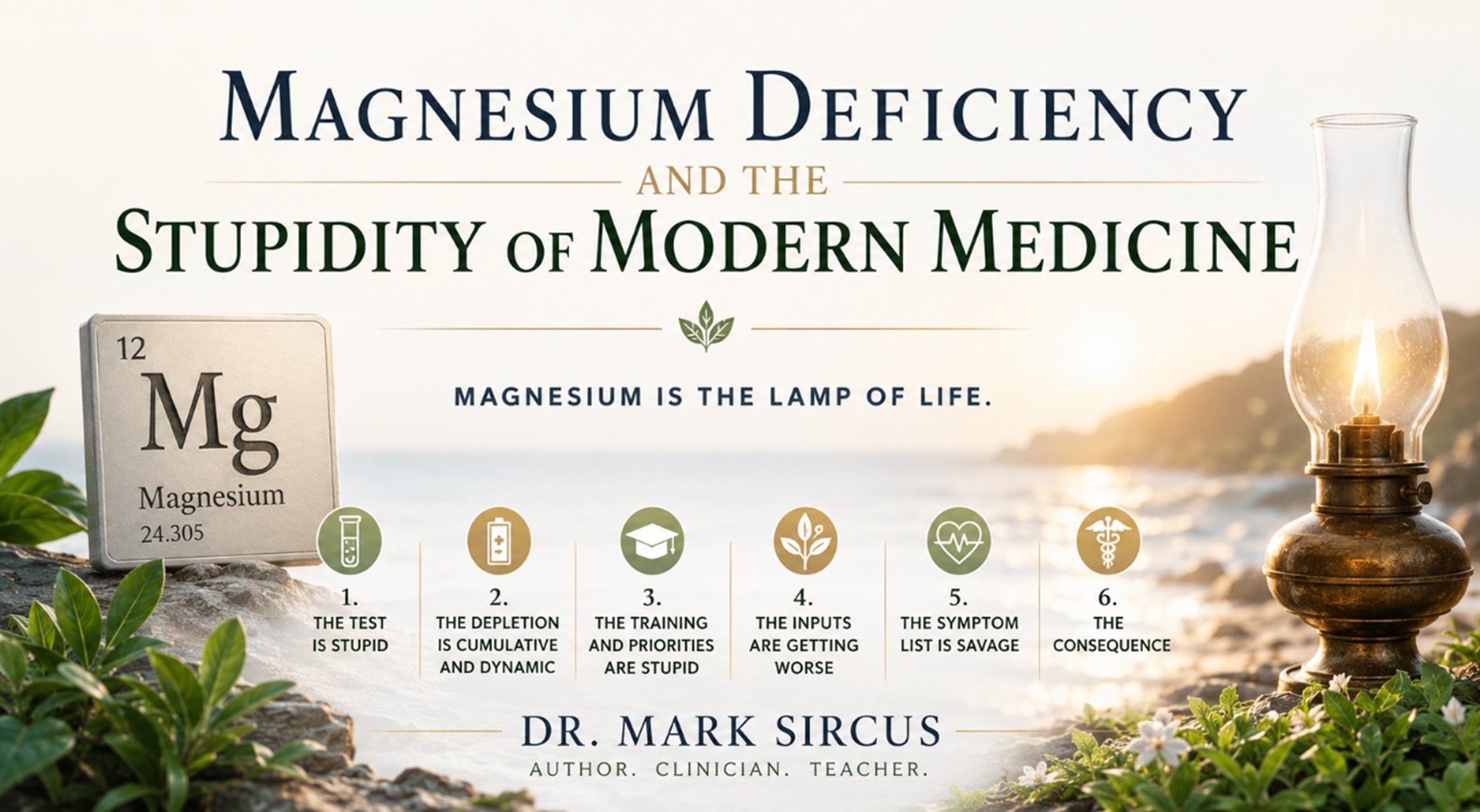
    Infographic about magnesium deficiency and its overlooked role in modern medicine.


    https://drsircus.com/magnesium-defic...getting-worse/

    Magnesium deficiencies are only getting worse, meaning the terrible consequences of magnesium deficiency bring us into uncharted territory in medicine and health, demonstrating the almost absolute ignorance of doctors and the terroristic nature of the medical-industrial complex. As insane as it would be for a mechanic to recommend running your car without oil, it is literally medical insanity to ignore magnesium deficiencies. "

    Dr.Sircus is a reader-supported publication.
    Each breath a gift...
    _____________

  12. The Following 4 Users Say Thank You to onawah For This Post:

    Bill Ryan (1st September 2026), grapevine (1st September 2026), Harmony (2nd September 2026), Sue (Ayt) (1st September 2026)

+ Reply to Thread
Page 8 of 8 FirstFirst 1 8

Posting Permissions

  • You may not post new threads
  • You may not post replies
  • You may not post attachments
  • You may not edit your posts