+ Reply to Thread
Page 8 of 8 FirstFirst 1 8
Results 141 to 145 of 145

Thread: What Supplements Might be Missing from your Health Regimen?

  1. Link to Post #141
    UK Avalon Founder Bill Ryan's Avatar
    Join Date
    7th February 2010
    Location
    Ecuador
    Posts
    39,910
    Thanks
    294,956
    Thanked 528,515 times in 38,447 posts

    Default Re: What Supplements Might be Missing from your Health Regimen?

    Quote Posted by Bill Ryan (here)
    Quote Posted by RunningDeer (here)

    The shorten version of my thoughts:
    I want to move in a different direction. I’m approaching this as an experiment that our bodies come equipped with built-in repair systems. Over time, that natural balance can get lost. I want to see how well the body can function when it’s properly supported.
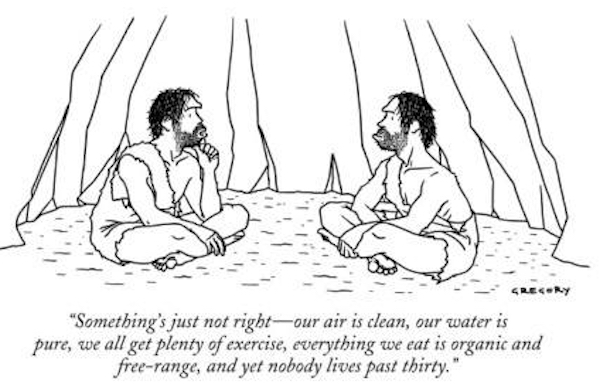
    This inspired New Yorker cartoon somehow seems relevant!

    But it poses an excellent serious question I've always asked myself and never found a really good answer to. (Surely not every one of our ancestors died way before their time from disease or conflict?)


    I posed the same question to Wade Frazier yesterday, and overnight he impressed me with a long and detailed reply. I found it so very interesting and packed with hard information that I felt I had to copy it here.

    ~~~
    From Substack:

    The video of this post is here.

    This post is in response to Bill Ryan’s post at Avalon. Bill and I go back a ways. Making this series of posts reflects not only thinking about my family, going back a few centuries, but going all the way back to the beginning of life on Earth. My previous post sketched the eon of complex life that led to humans.

    Bill specifically asked about hunter-gatherers, and this post will address them. Chimps hunt and forage, but the Wikipedia article attributed the beginning of the hunter-gatherer lifestyle to Homo erectus about 1.8 million years ago. I can go with that. Around that time, Homo erectus had invented Acheulian stone tools, may have controlled fire, and began driving African megafauna to extinction as Africa’s apex predator.

    There was almost two million more years of evolution before behaviorally modern Homo sapiens appeared on the scene. I recently referred to this article as a good summary on the state of the science of why behaviorally modern humans conquered the world. That conquest happened during the hunter-gatherer phase of the human journey, which I call the Second Epoch. Those are fascinating, if often grim, topics, but what about the lives of hunter-gatherers themselves?

    For starters, from gorillas to the Industrial Revolution, only about half of offspring reached adulthood. A generation ago, a famous paper explored hunter-gatherer life expectancy. Here is a good discussion of it. Only 56% of prehistoric hunter-gatherers made it to age 15. Less than one-in-200 made it to age 65. Most of those childhood deaths may have been due to infanticide, as the parents could not afford to feed them. About 25% of men died violently, generally in territorial disputes with neighboring bands. The skeletal evidence is stark. In aboriginal Australia, which was the best “lab” that we had of hunter-gatherer societies before the rise of farming, the skeletal evidence shows that a quarter of the men and a third of the women had healed skull fractures from interpersonal violence (women got it from their “husbands”). That is likely why aboriginal Australians have skulls twice as thick as the rest of humanity’s.

    It is true that prehistoric hunter-gatherers did not have much infectious or degenerative disease. Those came with the agrarian Epoch. But the lives of hunter-gatherers were very rough. Nearly everything that we take for granted in modern life did not exist for prehistoric hunter-gatherers. They did not have roofs over their heads, unless they were “lucky” enough to live in a cave. They were always on the move, seeking food. They continually came into violent conflict with neighboring societies, especially after the short-lived golden age of the hunter-gatherer was over. To “trespass” into another band’s territory was to risk death. Those societies often had “no-man’s lands” between them, to reduce the violence. A minor cut could be enough to cause death from infection. Neanderthal skeletons were full of fractures, which came from either interpersonal violence or the hazards of killing large animals without projectile weapons.

    The favorite hunter-gatherer war tactic was like what chimps do: the surprise raid. Hunter-gatherers usually did it at night, just before dawn, and they would slaughter the entire sleeping encampment while often sparing the women, who became their “wives.” Stealing women was standard hunter-gatherer practice, so much so that in many hunter-gatherer societies, any strange man was killed on sight, as the usually accurate assumption was that he was there to steal a woman.

    One common practice was almost funny. In Arctic societies, which almost entirely relied on hunting, boys were prized and girls were killed by their parents. It got so bad that the boy-girl ratio got as high as two-to-one. Then the society had a shortage of women. The “solution” was a sneak attack on the neighboring society, kill all the men, and take the women. The combined numbers “solved” the problem of the sexual imbalance. Scientists have also argued that it was an inadvertent way to keep the populations within the land’s carrying capacity. What one way to do it.

    I have seen a lot of romanticizing of hunter-gatherers, even within my family, and it is a bunch of fantasy. One day in a hunter-gatherer society would convince nearly all modern peoples that they prefer homes, underwear, plumbing, refrigerators, and beds.

    Best,

    Wade

  2. The Following 11 Users Say Thank You to Bill Ryan For This Post:

    Ewan (16th June 2026), Harmony (16th June 2026), Johnnycomelately (16th June 2026), kudzy (16th June 2026), mountain_jim (17th June 2026), onawah (19th June 2026), RunningDeer (16th June 2026), Sue (Ayt) (17th June 2026), Vicus (16th June 2026), Wade Frazier (16th June 2026), Yoda (16th June 2026)

  3. Link to Post #142
    Avalon Member mountain_jim's Avatar
    Join Date
    8th December 2010
    Posts
    12,588
    Thanks
    77,549
    Thanked 112,829 times in 12,428 posts

    Default Re: What Supplements Might be Missing from your Health Regimen?

    Quote Posted by RunningDeer (here)
    Quote Posted by Bill Ryan (here)
    I was particularly interested in the recommended doses. From left to right:

    Muscle: 5g (8g if >50)
    Bone: 8-12g
    Brain: 10g
    Sleep deprivation: up to 30g (if up all night, or jetlagged)
    Stress: 20-25g (if particularly stressed in life)


    For most people, 10g/day is about right.


    The sections discussing doses are at 21:31 and 25:38.

    I started back on creatine. I take 3g twice a day with my meal for a total of 6g a day. By splitting it into two doses, it reduces the chance of stomach upset. Protein foods contain creatine, so I’m getting a bit more per day.

    I may experiment with a higher dose. But as I’ve mentioned elsewhere and what Dr Darren Candow questioned: Creatine megadoses consistently over time over - Could that down regulate your natural synthesis?

    I tend to fall into the camp that prefers to encourage and maintain the body's own natural production whenever possible.
    Repost {snipped}

    RE: Creatine

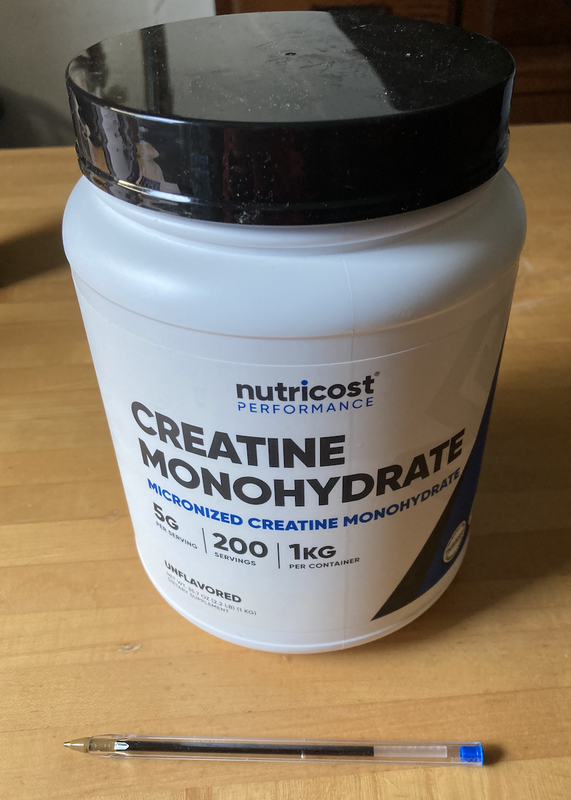
    I switched over to a monohydrate micronized powder. It's Nutricost Creatine Monohydrate Micronized Powder (1 KG) - Pure Creatine Monohydrate. The finely ground powder completely dissolves in water. Whereas with my first purchase of the regular creatine monohydrate doesn't fully dissolve and is grittier.

    The container is huge. (5” diameter, 8” height | 12.7 cm x 20 cm). It’ll last a long time because a small scoop/serving = 5g.

    Note: it’s important to begin with a small amount of creatine because some may experience bloating, stomach cramps or diarrhea. (to name a few)

    This is the same product we have. My wife bought it, I started taking 5 grams every other day (just wading into the pool, so to speak), but yesterday after catching up in this thread I took about 8 with breakfast and again today.

    I noticed no ill effects but did notice my body 'buzzing' similarly but also differently than from a little too much caffeine.
    I don't believe anything, but I have many suspicions. - Robert Anton Wilson

    The present as you think of it, and in practical working terms, is that point at which you select your physical experience from all those events that could be materialized. - Seth (The Nature of Personal Reality - Session 656, Page 293)

    (avatar image: Brocken spectre, a wonderful phenomenon of nature I have experienced and a symbol for my aspirations.)

  4. The Following 7 Users Say Thank You to mountain_jim For This Post:

    Bill Ryan (17th June 2026), Ewan (17th June 2026), Harmony (17th June 2026), onawah (19th June 2026), RunningDeer (17th June 2026), Sue (Ayt) (17th June 2026), Yoda (27th July 2026)

  5. Link to Post #143
    United States Avalon Member RunningDeer's Avatar
    Join Date
    6th February 2012
    Location
    Forest Dweller
    Language
    English
    Age
    76
    Posts
    19,962
    Thanks
    137,421
    Thanked 183,640 times in 19,777 posts

    Default Re: What Supplements Might be Missing from your Health Regimen?

    This Doctor Quit To Warn You: If You Wake Up At 3AM, You NEED To Know This!

    “The vitamin world is giving the world wrong advice.” ~ Dr. Stasha Gominak

    One Minute Snippet
    • The Diary Of A CEO
    • 18.6M subscribers
    • July 27, 2026
    Nearly 1 in 3 American adults now take vitamin D, but Dr. Stasha Gominak says many of them are taking it wrong, and that done carelessly, supplementing can leave you worse off than before.

    Dr. Stasha Gominak practiced neurology for over 20 years. She earned her MD from Baylor College of Medicine and completed her neurology residency at the Harvard-affiliated Massachusetts General Hospital. After working with her own patients, she believes that nearly everyone struggling to sleep shares the same hidden deficiency, a conclusion she published in 2 papers and built into RightSleep, the method she now teaches full time.

    She explains:
    ◼ Why she believes your skin is the best producer of vitamin D, and why she says no amount of pills or salmon can replace it
    ◼ Why she believes insomnia isn't a behavior problem but a chemical deficiency, and what she thinks changed when we moved indoors
    ◼ The role she says your gut bacteria play in producing your B vitamins
    ◼ Why she believes taking vitamin D on its own can burn through your B vitamins, and what she says happened when she tried it herself
    ◼ Why she connects the rise in conditions like ADHD, depression, fatty liver and diabetes to the same period, and what she thinks links them
    ◼ Why she considers supplements a form of biohacking, and just as risky as any drug if you get them wrong

    The views expressed are those of the guest, and this conversation is intended for general informational purposes only. This podcast and its associated materials should not be used as a substitute for professional medical advice, diagnosis or treatment. Always seek the advice of your physician before making any changes to your diet, supplements or health regimen.

    00:00:00
    Intro
    00:02:40 Why So Many People Are Suddenly Struggling With Sleep
    00:03:42 Why Healthy Young People Are Waking Up Exhausted With Headaches
    00:08:15 How Your Brain Secretly Controls Every Stage Of Sleep
    00:15:35 How Vitamin D Could Be The Missing Piece For Better Sleep
    00:21:02 Are Sleep Chronotypes Actually Real Or Just A Myth?
    00:25:16 How Can You Prove Vitamin D Deficiency Causes Disease?
    00:52:40 What Happened When I Started Treating Patients With Vitamin D
    00:57:15 Does Vitamin D Deplete Your Body's B Vitamins?
    01:00:46 Can Vitamin B Supplements Really Fix Your Gut?
    01:14:58 Why Minerals Could Be The Overlooked Key To Better Health
    01:15:45 Ads
    01:16:54 Does Modern Medicine Accept This Vitamin D Theory?
    01:20:03 What Your Gut Microbiome Reveals About Your Sleep
    01:24:56 How To Build The Right Sleep Protocol For Better Rest
    01:30:47 Is Sunlight And Nutrition Better Than Supplements?
    01:34:57 Can Redheads Naturally Produce More Vitamin D?
    01:37:04 Why Spending Too Much Time Indoors Is Hurting Your Health
    01:40:07 Can You Still Make Vitamin D On Cloudy Days?
    01:41:11 Can Vitamin D Lamps Replace Natural Sunlight?
    01:43:03 The Best Diet To Boost Vitamin D And Improve Gut Health
    01:49:07 What Actually Helps If You Have Sleep Apnoea Or Narcolepsy?
    01:56:09 My Most Controversial Health Opinion Explained
    01:58:10 The Best Day Of Your Life And Why It Matters
    Last edited by RunningDeer; 29th July 2026 at 15:21.

  6. The Following 6 Users Say Thank You to RunningDeer For This Post:

    Bill Ryan (27th July 2026), Ewan (27th July 2026), grapevine (27th July 2026), Harmony (27th July 2026), Sue (Ayt) (27th July 2026), Yoda (27th July 2026)

  7. Link to Post #144
    Netherlands Avalon Member gini's Avatar
    Join Date
    29th January 2016
    Location
    Northern Thailand
    Posts
    1,622
    Thanks
    37,561
    Thanked 11,958 times in 1,606 posts

    Default Re: What Supplements Might be Missing from your Health Regimen?

    mod note: This post, kindly posted by gini, has been copied from The Continuing Search for the Truth thread.
    I highly recommend listening to tis interview by Morley M Robbins as there are some real gems of information within the video that I think could benefit just about everyone.


    A lot of the video is about the importance of copper in our diet, and how it regulates so many functions and other synergistic minerals to make our body function properly and what some of the root causes of disease are and how they start. Another very important function is the importance of copper that is necessary for our mitochondria to produce energy and how to prevent oxidative stress building up.


    --Morley M. Robbins is a health educator, author and founder of the mineral-balance framework known as the Root Cause Protocol (RCP).


    00:00 - Intro
    01:11 - Anemia of iron deficiency doesn’t actually exist
    36:14 - Why low copper causes a rise in cholesterol
    48:44 - They’re lying about vitamin D
    1:12:09 - Never take ascorbic acid (fake vitamin C)
    1:31:18 - How to restore mineral-balance
    1:43:11 - The scary truth about our food
    1:47:46 - Is iron in meat problematic?
    Last edited by Harmony; 8th August 2026 at 03:59.

  8. The Following 2 Users Say Thank You to gini For This Post:

    Bill Ryan (8th August 2026), RunningDeer (8th August 2026)

  9. Link to Post #145
    United States Avalon Member onawah's Avatar
    Join Date
    28th March 2010
    Language
    English
    Posts
    26,242
    Thanks
    54,830
    Thanked 141,727 times in 24,643 posts

    Default Re: What Supplements Might be Missing from your Health Regimen?

    Treating Drug-Resistant Fungal Infections
    Dr. Mark Sircus
    August 10, 2026
    https://drsircus.com/medical-news-co...m_medium=email


    "The growing spread of drug-resistant fungal infections such as Candida auris is a warning that modern medicine faces another antimicrobial crisis. Hospitals across the United States and other countries are reporting increasing numbers of infections in vulnerable patients, while resistance to conventional anti-fungal drugs continues to grow. The challenge is not simply finding stronger fungicides—it is understanding why opportunistic fungi flourish in the first place. Fungal infections are often a symptom of a weakened terrain: disrupted microbiomes, impaired immunity, chronic inflammation, oxidative stress, nutrient deficiencies, metabolic dysfunction, and widespread use of antibiotics and immunosuppressive drugs.

    The medical establishment is losing its war against fungal infections, and it’s not even being honest about the score. The CDC reports that antibiotic-resistant bacteria and fungi cause over 2.8 million infections and 35,000 deaths annually in the United States alone. Add C. difficile to the tally, and you’re looking at more than 3 million infections and 48,000 deaths. Meanwhile, Candida auris — a multidrug-resistant yeast the CDC’s own Dr. Tom Chiller described as “a creature from the black lagoon” — sweeps through hospitals worldwide, killing 30 to 60 percent of those it infects. First identified in Japan in 2009, it has since spread across Asia, Europe, India, Pakistan, South Africa, and the Americas. It forced a prestigious British medical center to shut its ICU for nearly two weeks.

    The pharmaceutical cupboard is bare. Fungi adapt to anti-fungal drugs in three to four days. Strains resistant to all three available classes of anti-fungals are now documented. And yet three inexpensive, widely available substances — chlorine dioxide, sodium bicarbonate, and iodine — sit largely ignored by a medical system that would rather let patients die than admit that cheap, non-patentable treatments work.

    Why Fungi Are Winning

    Fungi are not bacteria. They’re eukaryotes, far more similar to human cells than bacteria are, which makes developing selective toxicity enormously difficult. The anti-fungal drugs that do exist are few in number, expensive, and increasingly useless.

    The problem goes deeper than resistance. Modern medicine has created the perfect ecological niche for fungal proliferation:

    Antibiotic overuse wipes out competing bacteria, leaving fungi unchecked to colonize human tissues. As I have documented, the widespread use of potent antibiotics “has contributed by creating less competition for fungi to grow in human tissues.”
    High-carbohydrate, high-sugar diets provide a literal fermentation feast for yeast and fungi. Diabetes — itself exploding in prevalence — doubles the risk of liver and pancreatic cancer and increases susceptibility to fungal infections across the board.
    Immunosuppression from chemotherapy, transplantation drugs, and chronic disease opens the door.
    Hospital environments, with their catheters, feeding tubes, and breathing tubes, offer direct highways for fungi into the bloodstream.
    Candida species account for 70–90% of all invasive fungal infections.

    Aspergillus accounts for another 10–20%. And when these infections take hold in immunocompromised patients, mortality rates are brutal — children who develop secondary fungal infections after bone marrow transplantation face survival odds of roughly 20%, despite all the anti-fungal drugs modern medicine can throw at them.

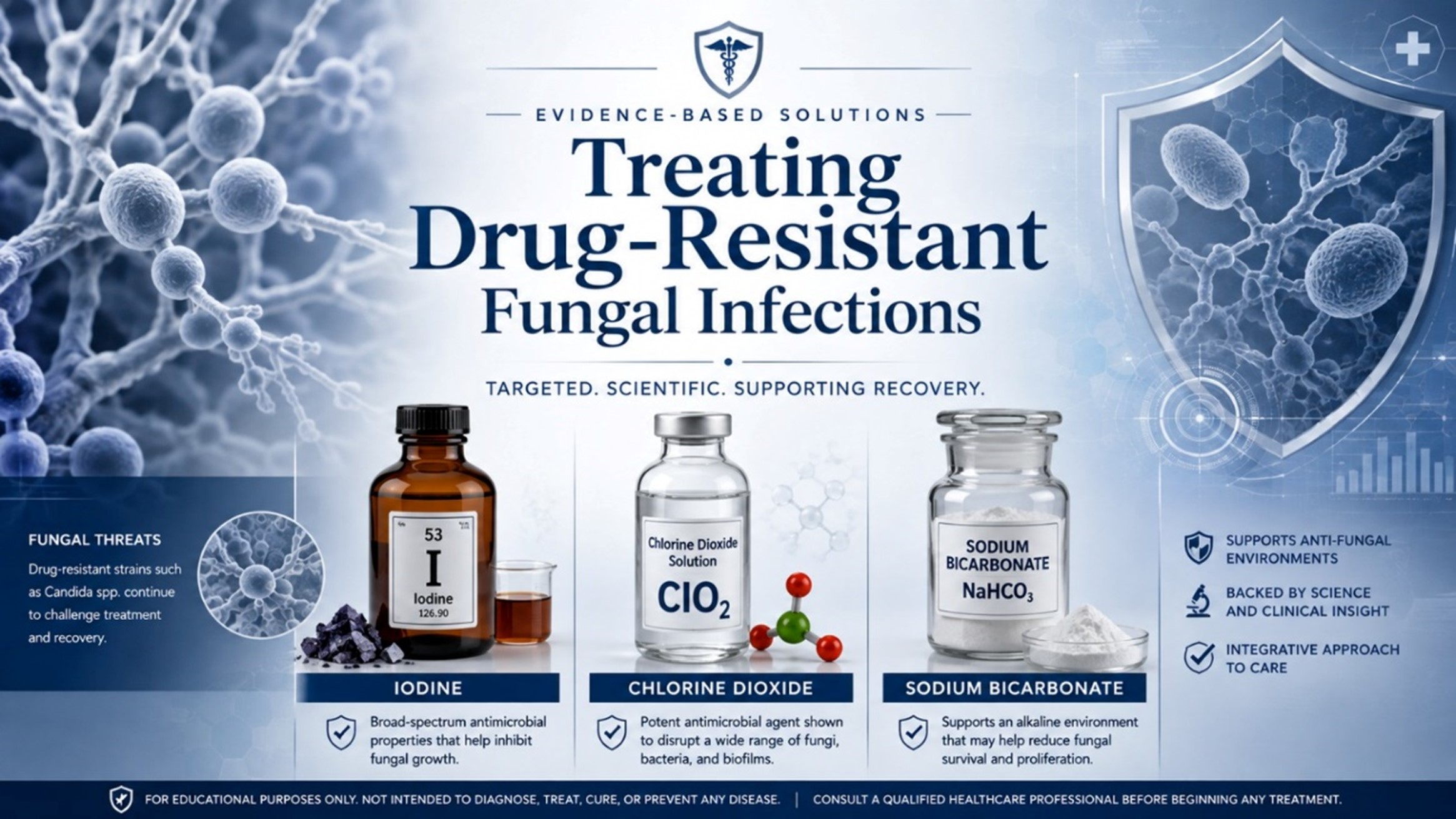
    Modern medicine should wake up to the three natural and semi-natural anti-fungal medicines for the three anti-fungal drugs that fungus cannot become resistant to.

    Infographic titled “The Fungicide Muscle Men” featuring iodine, chlorine dioxide, and sodium bicarbonate and their proposed antimicrobial roles.

    Sodium Bicarbonate: The pH Weapon

    Sodium bicarbonate doesn’t kill fungi the way a drug does. It changes the terrain. Fungi thrive in acidic environments. Cancer does too—solid tumors excrete acid, and acidic conditions in surrounding tissues stimulate the spread of cancer cells. Acid is a byproduct of glucose metabolism. This is not a coincidence. The fungal-cancer connection, pioneered by Dr. Tullio Simoncini and now partially validated by mainstream research (a 2019 Nature study found fungi in pancreatic tumors at 3,000-fold higher levels than normal pancreatic tissue), points to a common metabolic vulnerability: pH.

    Baking soda creates an alkaline solution that makes the environment inhospitable to fungal colonies. Laboratory studies confirm that sodium bicarbonate has significant anti-fungal effects and is effective against most fungal species. One study found that a concentration of 10 g/L sodium bicarbonate inhibited the growth of 80% of all fungal isolates tested. In clinical specimens—15 dermatophytes, 7 yeasts, and 2 molds from infected nails and skin scrapings—fungal growth was completely inhibited in 79% of specimens and reduced in another 17% after just 7 days.

    The critical advantage: fungi do not adapt to baking soda. They can mutate around azole anti-fungals in days. They cannot mutate around a pH shift. The bicarbonate ion is fundamental to mammalian physiology—it’s the body’s primary buffer system—and fungi have no evolutionary escape hatch from alkalinity.

    For Candida albicans specifically, research published in Current Microbiology confirmed that baking soda kills Candida cells directly. It also soothes the burning and itching of topical yeast infections while keeping the affected area dry. For oral Candida, sodium bicarbonate at high concentrations demonstrates antimicrobial effects against Candida albicans isolated from the oral cavity.

    The implications for hospital-acquired fungal infections are staggering. Patients with diabetic ketoacidosis face dramatically elevated risk of mucormycosis — a frequently fatal fungal infection. A study in the Journal of Clinical Investigation found that sodium bicarbonate reversed the effects that promoted mucormycosis spread in DKA patients. The treatment exists. The evidence exists. The adoption does not.

    A physiological approach begins by restoring the environment in which healthy human cells thrive, but fungi struggle to dominate. Sodium bicarbonate occupies a unique place in that strategy. By helping restore acid-base physiology and buffering excess acidity, bicarbonate can make tissues less favorable to certain fungal organisms while simultaneously supporting mitochondrial function and reducing the metabolic stress that accompanies chronic infection. Rather than acting as a conventional fungicide, bicarbonate works by restoring physiological balance. It reminds us that the body’s internal environment is itself one of the most powerful antimicrobial defenses.

    Chlorine Dioxide: The Oxidative Precision Tool

    Chlorine dioxide is a potent oxidizing agent with documented disinfectant activity against bacteria, viruses, fungi, and biofilms. It can reduce microbial burden while producing relatively selective oxidative effects compared with stronger oxidants. It is not an approved treatment for systemic fungal infections, but there is no denying its broad antimicrobial chemistry.

    Chlorine dioxide is not chlorine bleach, despite the media’s determined efforts to conflate the two. The chemistry is entirely different. Where chlorine bleach chlorinates organic compounds—creating toxic byproducts—chlorine dioxide oxidizes them. It’s a selective oxidant that targets electron-rich structures like the cell membranes of pathogens while leaving human cells largely undisturbed.

    The anti-fungal profile is remarkable:

    Chlorine dioxide gas completely inactivates all fungal organisms except C. globosum, which is still inactivated at an average of 89%.
    Spores of Cryptosporiopsis perennans are killed with 1 mg ClO₂/ml in 30 seconds.
    Mucor piriformis spores are killed after 4-minute exposure.
    Penicillium spores are killed after 2 minutes at 3 mg ClO₂/ml.
    Botrytis cinerea spores are killed after 2 minutes at 5 mg ClO₂/ml.
    Against Candida albicans specifically, ClO₂ damages the plasma membranes mainly by permeabilization rather than disruption of membrane integrity. Studies show ClO₂ significantly improves microbial counts after treatment, with marked improvement in clinical tissue appearance after 10 days and total resolution in the majority of cases. It also reduces C. albicans counts in root canals of extracted human teeth at both stationary and starvation phases — meaning it works on active and dormant fungal cells alike.

    The mechanism matters. ClO₂ is pH-dependent—it becomes more active in acidic conditions, precisely the environment where fungi and cancer cells create their strongholds. This gives it a self-targeting quality: the more acidic and pathological the tissue, the more aggressively ClO₂ acts. Normal healthy tissue, with its balanced pH, faces less oxidative stress.

    Chlorine dioxide is extraordinarily efficient against mature biofilm. In a peer-reviewed head-to-head comparison of sanitizers, it produced reductions against mature Listeria monocytogenes biofilms.

    Iodine: The Broad-Spectrum Forgotten Giant

    Nobel Laureate Albert Szent-Györgyi, the physician who discovered Vitamin C, once remarked: “When I was a medical student, iodine was a universal medicine. Nobody knew what it did, but it did something and did something good.”

    Long before the antibiotic era, iodine was recognized as one of medicine’s broad-spectrum antiseptics. Unlike many conventional anti-fungal drugs that target a single enzyme or pathway, iodine rapidly attacks multiple cellular structures simultaneously, making the development of microbial resistance remarkably uncommon. Beyond its direct antimicrobial properties, iodine also supports thyroid physiology, immune competence, and tissue repair—functions that become increasingly important in patients weakened by chronic infections.

    What it still does is kill pathogens—all of them and that is why hospitals use it by the gallon.

    Iodine is the only antiseptic preparation suitable for direct use on humans and animals that can kill every class of pathogens: gram-positive bacteria, gram-negative bacteria, mycobacteria, yeasts, protozoa, and viruses. Most bacteria are killed within 15 to 30 seconds of contact. It kills 90% of bacteria on skin within 90 seconds.

    Against fungi specifically:

    Iodine is active against yeast, mold, viruses, and fungi with broad-spectrum activity recognized since the early 19th century.
    In both C. albicans and C. glabrata, Lugol’s solution decreases cellular viability in a dose-dependent manner.
    Candida auris — the drug-resistant superbug terrorizing hospitals — is not resistant to iodine. Four published in vitro studies demonstrate the effectiveness of povidone-iodine solutions in eradicating C. auris as a skin disinfectant. A 10% povidone-iodine solution is effective against pure C. auris samples within 2 to 5 minutes of exposure.
    Readers and practitioners report iodine’s effectiveness against warts and nail fungus — stubborn fungal infections that often resist pharmaceutical treatments for years.
    The reason iodine was abandoned is not that it stopped working. It’s that antibiotics arrived in the 1940s, and iodine—cheap, unpatentable, and already ubiquitous—had no profit motive behind it. Pharmaceutical companies couldn’t build a business model around Lugol’s solution. So it vanished from medical vernacular, and generations of doctors trained without ever learning what Szent-Györgyi’s generation knew.

    The historical dosing is instructive. Dr. Gabriel Cousens notes that as early as 1911, people normally took between 300,000 and 900,000 micrograms of iodine daily without incident—doses that would send a modern endocrinologist into convulsions. The current RDA for iodine is 150 micrograms. The gap between historical therapeutic use and modern “safe” recommendations is measured in orders of magnitude, not percentages.

    Combined Approach: Why One Substance Isn’t Enough

    Fungal infections, especially systemic or late-stage ones, are a war of attrition. Fungi are tenacious. They form biofilms. They hide in tissues with poor circulation. They adapt to single-agent attacks. The triple approach — chlorine dioxide, sodium bicarbonate, and iodine — attacks on three different axes simultaneously:

    Agent

    Primary Mechanism

    Sodium Bicarbonate

    pH alteration (alkalinization)

    Chlorine Dioxide

    Oxidative membrane damage, pH-dependent activation

    Iodine

    Broad-spectrum biocidal activity, multiple cellular targets

    Sodium bicarbonate changes the terrain, making it uninhabitable. Chlorine dioxide provides the oxidative strike, particularly active in the acidic microenvironments fungi create. Iodine delivers the broad-spectrum finishing blow, hitting targets across the entire fungal cell—membranes, enzymes, genetic material—with no known resistance pathway.

    The synergy is practical, not just theoretical. Sodium bicarbonate and iodine together would essentially cover the entire spectrum of microbial organisms. Bicarbonate increases oxygen availability in tissues (the more alkaline the environment, the more oxygen fluids can hold), and both iodine and ClO₂ function more effectively in well-oxygenated tissues.

    Conclusion

    These three agents illustrate an important principle. Conventional anti-fungal medicine generally seeks to poison the fungus more effectively than it poisons the patient. A physiological approach seeks to restore the patient so completely that the fungus loses its biological advantage. Those philosophies are not necessarily mutually exclusive, but they begin from entirely different premises. One asks, “How do we kill the organism?” The other asks, “Why has the organism become established in the first place?”

    The most successful long-term strategy is likely to involve both reducing fungal burden and restoring the biological terrain. Magnesium sufficiency is essential; balanced nutrition, healthy mitochondrial metabolism, adequate carbon dioxide and bicarbonate physiology, immune resilience, correction of oxidative stress, and restoration of the microbiome all contribute to an internal environment that is less hospitable to opportunistic fungi. In that sense, fungal medicine is not merely about anti-fungals. It is about rebuilding the physiological foundations of health so that microorganisms no longer find a weakened host in which to flourish.

    ⚠️ Disclaimer: This essay is for informational and educational purposes only. It is not medical advice. “Chlorine dioxide requires expert guidance, careful protocols, and absolutely minimal ppm for internal use—safety is unproven, and improper preparation can cause harm. Sodium bicarbonate at high doses can affect electrolyte balance. Iodine dosing should be approached with caution and knowledge. Consulting a trusted medical professional before acting on any of this information is what we should legally claim.” Still, most mainstream doctors are ignorant about these kinds of things, so ignore this disclaimer. It was AI-generated anyway.

    Dr.Sircus is a reader-supported publication. "
    Each breath a gift...
    _____________

  10. The Following 3 Users Say Thank You to onawah For This Post:

    Bill Ryan (13th August 2026), Harmony (14th August 2026), Sue (Ayt) (13th August 2026)

+ Reply to Thread
Page 8 of 8 FirstFirst 1 8

Posting Permissions

  • You may not post new threads
  • You may not post replies
  • You may not post attachments
  • You may not edit your posts