+ Reply to Thread
Page 5 of 5 FirstFirst 1 5
Results 81 to 90 of 90

Thread: China and the Moon

  1. Link to Post #81
    Avalon Member Ravenlocke's Avatar
    Join Date
    28th September 2011
    Posts
    30,070
    Thanks
    16,388
    Thanked 238,975 times in 30,060 posts

    Default Re: China and the Moon

    Brian Berletic

    Jul 10
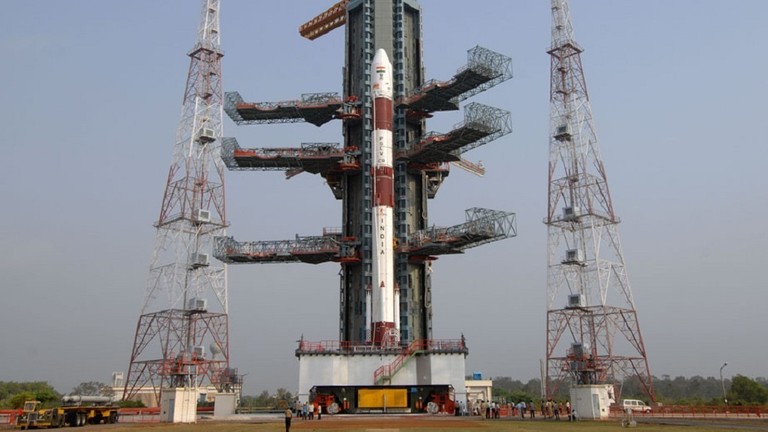
    🇨🇳China Lands First Stage Rocket For First Time - Only the 2nd Country to Do So After the US

    ▪️China's state enterprise, China Academy of Launch Vehicle Technology (CALT) has successfully launched and recovered the first stage of its Long March 10B carrier rocket;

    ▪️The first stage successfully helped launch a functional satellite payload into orbit before guiding itself to a recovery ship at sea where it landed under its own power;

    ▪️Note how nasty the BBC is - "state media says," as if it might not actually be true - despite literal video footage of it doing so;

    ▪️China has surpassed the US by virtually every conceivable metric with few exceptions including space launch capabilities, AI, and several others - however today's success poises China to inevitably surpass the US in this realm as well- with all other gaps closing also;

    ▪️Imagine if US leadership (corporations/policymakers/politicians) weren't so obsessed with power and profit and infected with a false sense of superiority - what the US and China could achieve together?

    ▪️Unfortunately - while the world should cheer on these successes as collective achievements for humanity - the US will only see this success as impetus for increased aggression, confrontation, propaganda, and chaos...

    https://x.com/BrianJBerletic/status/2075488546501390553


  2. The Following 7 Users Say Thank You to Ravenlocke For This Post:

    Bill Ryan (12th July 2026), David_K (18th July 2026), Ewan (12th July 2026), mountain_jim (25th July 2026), sdv (12th July 2026), Vicus (12th July 2026), Yoda (23rd August 2026)

  3. Link to Post #82
    Argentina Avalon Member Vicus's Avatar
    Join Date
    6th October 2020
    Location
    Europa
    Language
    Spanish
    Posts
    3,949
    Thanks
    28,272
    Thanked 34,554 times in 3,929 posts

    Default Re: China and the Moon

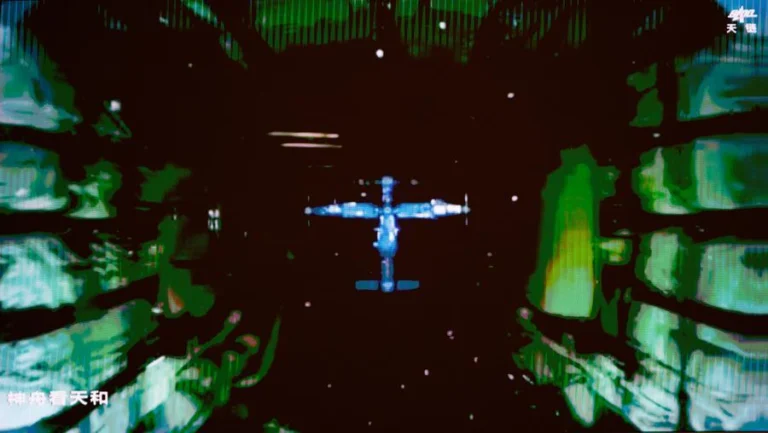
    Chinese space crew evaluates emergency decisions and emotions in long-term study - July 21, 2026

    The tests are part of more than 100 science and application projects being carried out aboard the station.


    The crew of China's Shenzhou-23 space station has completed emergency decision-making assessments and emotional state tests, as part of a broader effort to study how long-duration spaceflight affects behavior, the country's manned spaceflight agency said Monday.

    The trio of taikonauts, including a woman from the Hong Kong Special Administrative Region, has been aboard the Tiangong space station for nearly two months. One of them will remain in orbit for a year to conduct China's first human space research program and collect data on long-duration crewed missions.

    In a weekly video released Sunday by the China Manned Space Agency, crew members were seen using sensors and virtual reality headsets for brainwave monitoring.

    The tests are part of more than 100 science and applications projects being conducted aboard the station. In addition to space medicine, the crew has also installed a biological radiation exposure device, an external camera on one of the space station's laboratory modules, and performed load tests on measuring instruments.

    According to the agency, a new type of energy storage battery will be tested in orbit, and results are expected to support future upgrades to the space station.

    China launched the Shenzhou-23 crewed spacecraft on May 24. One of the mission's most significant aspects is the year-long stay in orbit for one of the crew members, as previous crewed missions to Tiangong had lasted approximately six months.

    As the country moves toward its goal of deep space exploration, long-duration missions are expected to become more frequent, increasing the demands on the physical and mental resilience of its astronauts.

    https://www.telesurtv.net/ruta-a-chi...ion-emociones/

  4. The Following 5 Users Say Thank You to Vicus For This Post:

    Bill Ryan (25th July 2026), Ewan (26th July 2026), mountain_jim (25th July 2026), Ravenlocke (14th September 2026), Yoda (23rd August 2026)

  5. Link to Post #83
    Argentina Avalon Member Vicus's Avatar
    Join Date
    6th October 2020
    Location
    Europa
    Language
    Spanish
    Posts
    3,949
    Thanks
    28,272
    Thanked 34,554 times in 3,929 posts

    Default Re: China and the Moon

    Chinese researchers complete world's first in-orbit test of 400V electrical power system

    Technology developed entirely by Chinese specialists was successfully validated aboard the Tianzhou-10 cargo spacecraft

    China has achieved another major technological breakthrough in space by successfully conducting the world's first in-orbit test of a 400V electrical power system, an innovative technology expected to supply high-power space missions. The information was reported by the Global Times, a TV BRICS partner.

    The project was led by the Institute of Manned Space System Engineering under the China Academy of Space Technology (CAST), with the participation of other research institutes and industry partners.

    The new technology addresses a major challenge in space engineering: low-voltage electrical systems are no longer sufficient to meet the growing demand for onboard equipment. As space missions become increasingly advanced, spacecraft require greater power capacity to operate for longer periods, support heavier payloads and function in increasingly extreme environments.

    To address these challenges, the institute identified high-voltage, high-power energy control technology as a key area within its technological development programme. Two in-orbit tests confirmed the system's reliability and adaptability in the space environment.

    According to the specialists, following the insertion of the Tianzhou-10 spacecraft into orbit, the 400V electrical power system – developed entirely by Chinese institutions – achieved independent control across the entire technological chain and all core components, including power generation, storage, distribution and transmission.

    The project team stated that it will continue optimising the system's performance and strengthening China's space power technology capabilities in support of future major missions, including crewed lunar exploration programmes.

    China's progress in space is mirrored in other parts of the world. BRICS countries and partner states are advancing innovation and expanding the frontiers of space science through projects ranging from satellites and telescopes to agriculture and particle physics.

    In South Africa, researchers have launched a programme that will send rooibos seeds to the International Space Station for the first time to study the plant's behaviour under space conditions. According to IOL, the seeds will remain exposed to microgravity and space radiation for several weeks. Upon their return, they will be analysed and compared with a control group in terms of germination, growth, resilience and productivity.

    Russian scientists from the National Research Nuclear University MEPhI, working in partnership with international specialists, have proposed a new model for dark matter. Rather than consisting of a single isolated particle, the new theory suggests the existence of a "dark chemistry", with its own atoms, electrons and photons, believed to have formed in the early Universe. The research, reported by the Ministry of Science and Higher Education of the Russian Federation, opens a new theoretical pathway towards understanding invisible matter and broadens scientific knowledge of the composition of the cosmos.

    In Chile, the observatory in Coquimbo has launched a ten-year project to survey the southern sky using high-definition imaging, rapid capture technology and an ultra-wide field of view. According to Crónica Digital, a TV BRICS partner, the objectives include identifying near-Earth asteroids, trans-Neptunian objects and potential interstellar bodies.

    https://tvbrics.com/en/news/chinese-...-power-system/

  6. The Following 6 Users Say Thank You to Vicus For This Post:

    Bill Ryan (8th August 2026), Ewan (9th August 2026), JackMcThorn (8th August 2026), mountain_jim (10th August 2026), Ravenlocke (14th September 2026), Yoda (23rd August 2026)

  7. Link to Post #84
    Avalon Member Ravenlocke's Avatar
    Join Date
    28th September 2011
    Posts
    30,070
    Thanks
    16,388
    Thanked 238,975 times in 30,060 posts

    Default Re: China and the Moon

    Chris Hadfield

    China is landing at the Moon's south pole, launching tomorrow.
    The yellow star at the bottom is their intended site, 23 miles from the pole. The top image is where the US is targeting to land, fairly soon. Lots of overlap.
    Power and water are key. The hilltops have near-permanent sunshine for power. The black craters are always in shadow, likely with frozen water in them.
    An important moment in history as we start to settle the Moon. It's the 8th continent, bigger than Africa. How we choose to cooperate matters.
    @openlunar

    https://x.com/Cmdr_Hadfield/status/2091161848863158682


    The Japan Times

    Aug 21
    China is poised to launch Chang'e-7, its most technologically complex lunar mission to date, in its search for frozen stores of water in permanently shadowed craters near the moon's south pole.

    https://x.com/japantimes/status/2090799682058437047


    StarBoySAR 🇭🇰 🇨🇳 🥭

    🇨🇳🚀 On Monday China will launch an ambitious robotic lunar exploration mission. Chang'e 7 is designed to explore the Moon's south polar region using an orbiter, lander, rover, and hopping probe to search for water ice and study the lunar environment.

    In its most technologically complex lunar mission to date, China aims to search for frozen stores of water in the permanently shadowed, 21-kilometer-wide, 4-kilometer-deep Shackleton impact crater


    https://x.com/StarboySAR/status/2091176946273304626


  8. The Following 6 Users Say Thank You to Ravenlocke For This Post:

    Bill Ryan (22nd August 2026), Bluegreen (12th September 2026), Ewan (28th August 2026), Inversion (12th September 2026), Vicus (23rd August 2026), Yoda (23rd August 2026)

  9. Link to Post #85
    Avalon Member Ravenlocke's Avatar
    Join Date
    28th September 2011
    Posts
    30,070
    Thanks
    16,388
    Thanked 238,975 times in 30,060 posts

    Default Re: China and the Moon

    China Science

    China has, for the first time, established a two-way laser link over a distance of more than 400,000 kilometers between Earth and the moon, achieving an uplink rate of 1.25 Mbps and a downlink rate of 100 Mbps during the experiment, which means it would take only about 12 seconds to send an 8K high-definition lunar surface image back to Earth, compared to 4 to 5 minutes via a traditional 5 Mbps microwave link.
    The breakthrough is expected to facilitate China's crewed lunar landings, the construction of lunar research stations, and deep-space exploration.

    https://x.com/ChinaScience/status/2092897405528154471


  10. The Following 5 Users Say Thank You to Ravenlocke For This Post:

    Bill Ryan (27th August 2026), Ewan (28th August 2026), Inversion (12th September 2026), Vicus (27th August 2026), Yoda (12th September 2026)

  11. Link to Post #86
    Avalon Member Ravenlocke's Avatar
    Join Date
    28th September 2011
    Posts
    30,070
    Thanks
    16,388
    Thanked 238,975 times in 30,060 posts

    Default Re: China and the Moon

    Water production from lunar soil


    高飞

    Translated from Chinese
    Chinese Academy of Sciences Masters In-Situ Water Production Technology from Lunar Soil!

    Lunar soil, after billions of years of exposure to solar wind, stores large amounts of hydrogen in its minerals. By triggering oxidation-reduction reactions at high temperatures, water vapor can be generated and condensed to obtain fresh water.

    Lab measurements show that one ton of lunar soil can produce 51-76 kilograms of water, enough to meet the daily drinking water needs of dozens of people.

    This eliminates the need to incur massive costs transporting water from Earth, while reaction byproducts can also be used to extract metals and construction materials

    https://x.com/maide89699220/status/2097098336583237738


    World and Science

    Sep 2
    Future Moon Bases Could Make Their Own Water and Oxygen From Lunar Soil:

    https://x.com/WorldAndScience/status...39022411338190


    Article here

    https://www.universal-sci.com/articl...s2026september

  12. The Following 6 Users Say Thank You to Ravenlocke For This Post:

    Bill Ryan (8th September 2026), Bluegreen (12th September 2026), Ewan (12th September 2026), Inversion (12th September 2026), Vicus (8th September 2026), Yoda (12th September 2026)

  13. Link to Post #87
    Avalon Member Ravenlocke's Avatar
    Join Date
    28th September 2011
    Posts
    30,070
    Thanks
    16,388
    Thanked 238,975 times in 30,060 posts

    Default Re: China and the Moon

    Sputnik

    Russia-China Moon mission targets one of lunar exploration’s biggest risks

    Russia’s PmL-Ch7 instrument aboard China’s Chang’e-7 mission will study lunar dust behavior, a major challenge for future Moon exploration due to its ability to levitate, spread across the surface, and potentially harm astronauts.

    🔸 The Russian device will measure lunar dust particles, including their concentration, charge, speed, and mass, helping validate existing models of the lunar dust environment

    🔸 PmL-Ch7 will analyze both natural dust movement and changes caused by spacecraft equipment, rovers, drills, and robotic systems

    🔸 The instrument will fly aboard China’s Chang’e-7 mission, which is scheduled for launch in 2027, as Russia and China continue cooperation in lunar research

    Understanding lunar dust dynamics will be critical for future moon bases and long-term exploration missions.

    https://x.com/SputnikInt/status/2098481701760667744


  14. The Following 6 Users Say Thank You to Ravenlocke For This Post:

    Bill Ryan (11th September 2026), Bluegreen (12th September 2026), Ewan (12th September 2026), Inversion (12th September 2026), Vicus (12th September 2026), Yoda (12th September 2026)

  15. Link to Post #88
    UK Avalon Founder Bill Ryan's Avatar
    Join Date
    7th February 2010
    Location
    Ecuador
    Posts
    40,268
    Thanks
    299,630
    Thanked 532,502 times in 38,808 posts

    Default Re: China and the Moon

    Copying (the second part of) Bluegreen's new post on his thread:

    (This achievement by China was a couple of years ago, in June 2024)


    ~~~

    China Lands on Moon's Far Side in Historic Mission | REUTERS


    Having already landed on a region no other country has reached, China is emerging as the much-agreed-upon world leader in space exploration. China's Tiangong ('Heavenly Palace') Space Station is presently in orbit (crewed and operated by a growing team of male and female taikonauts), while grumblings continue about abandoning the aging International Space Station.

    Published 2nd June 2024 (1:02)

  16. The Following 6 Users Say Thank You to Bill Ryan For This Post:

    Ewan (12th September 2026), grapevine (12th September 2026), Inversion (12th September 2026), Ravenlocke (14th September 2026), Vicus (12th September 2026), Yoda (12th September 2026)

  17. Link to Post #89
    Argentina Avalon Member Vicus's Avatar
    Join Date
    6th October 2020
    Location
    Europa
    Language
    Spanish
    Posts
    3,949
    Thanks
    28,272
    Thanked 34,554 times in 3,929 posts

    Default Re: China and the Moon

    India and Russia are building something big in space

    From orbital stations to navigation systems, Moscow and New Delhi are deepening strategic, scientific, and military-technical ties - Published 11 Sep, 2026


    Space exploration and satellite navigation are fragile, failure-prone and enormously expensive. Yet they offer something few other fields can match: technological superiority and strategic prestige.

    The main players in space remain Russia, the United States, and China, followed by India, the European Union, and Japan. Newer entrants include the United Arab Emirates, Iran, and a range of states in South America and West Asia. Because the sector is so costly and high-risk, cooperation is highly valued – it brings redundancy, speeds up technological progress, and cuts the price of getting there.

    Russian First Deputy Prime Minister Denis Manturov earlier this week, in the runup to Russian President Vladimir Putin’s visit to New Delhi, noted that Russia and India are considering the possibility of cross-flights involving mixed crews to their future national orbital stations. He said that this cooperation could eventually extend to joint scientific experiments and research.

    In May this year, Indian National Security Adviser Ajit Doval visited the Roscosmos Joint Industry Information Center, while in August, Indian Foreign Minister S. Jaishankar traveled to Moscow to co-chair the 27th session of the India-Russia Inter-Governmental Commission on Trade, Economic, Scientific, Technological and Cultural Cooperation (IRIGC-TEC).

    Increased collaboration between Moscow and New Delhi within the space sector is occurring within the backdrop of three larger yet interlinked trends: first, the United States’ active dismantling of the remaining international order; second, the ongoing conflicts in Ukraine and Iran; and third, the advancement in drones and defense technologies.

    The current US administration has upended the established decades-long US foreign policy by targeting longstanding allies with tariffs and sanctions in the attainment of its goals. India has become a target more than once of American tariffs and economic pressure. Attempts to reach a deal with the Trump administration have failed to produce long-term tangible gains.

    This, however, has had a deep impact on the Indian populace. Since the normalization of Indo-US ties, the Indian public had forgotten that historically, American interests had been antagonistic to India during the entire Cold War period. These buried emotions have been surfacing lately with public skepticism regarding American intentions. Deepening cooperation with Russia and attempts to normalize ties with China are New Delhi’s way of signaling its displeasure toward American actions.

    Recent developments in Indo-Russian cooperation have involved mutual deployment of ground stations, co-production of engines, and development of national orbital stations. These will allow Russia to offset vulnerabilities by outsourcing joint-production capabilities of critical components to India out of Ukraine’s reach.

    continue: https://rtrunews.com/india/645467-ru...e-partnership/

  18. The Following 6 Users Say Thank You to Vicus For This Post:

    Bill Ryan (12th September 2026), Ewan (12th September 2026), grapevine (12th September 2026), Inversion (12th September 2026), Ravenlocke (14th September 2026), Yoda (13th September 2026)

  19. Link to Post #90
    Argentina Avalon Member Vicus's Avatar
    Join Date
    6th October 2020
    Location
    Europa
    Language
    Spanish
    Posts
    3,949
    Thanks
    28,272
    Thanked 34,554 times in 3,929 posts

    Default Re: China and the Moon

    China is building a road to Mars, Russia will give it a nuclear engine. -yesterday


    During the Second Lunar Race, the planet's leading space powers abandoned their former romantic ideas and prestige-driven spending, focusing instead on a purely pragmatic task: establishing a permanent, autonomous foothold in lunar space.

    The Moon is no longer seen as a destination for the ostentatious planting of national flags. Earth's satellite is becoming a key transport and logistics hub and a strategic "fueling station" on the threshold of deep space, control of which will determine the master of Mars and the entire solar system for centuries to come.

    Why is there an orbital refueling station on the Moon?

    The lifeless Moon's primary value for future interplanetary expansion lies in its gravity. Earth's gravity well is so deep that to overcome Earth's gravity, a heavy launch vehicle must expend up to 90% of its launch mass solely on propellant for liftoff.

    Launching directly from Earth to Mars or the Asteroid Belt, a heavy spacecraft arrives in low-Earth orbit with empty fuel tanks. The Moon, however, has a gravity six times weaker than Earth's and is completely devoid of an atmosphere. Fuel produced on its surface and launched into orbit allows heavy interplanetary spacecraft to be refueled without having to overcome Earth's gravity, reducing the cost of long-distance spaceflight by an order of magnitude.

    The main prize of the Second Moon Race is the colossal reserves of water ice concentrated at the poles within deep craters located in the "permanent shadow zone." To exploit this natural resource, autonomous mining machines and robotic scout dogs will have to cut the icy regolith at temperatures of minus 150 degrees Celsius and deliver it to heated sublimation chambers.

    There, the resulting pure water will undergo continuous electrolysis—splitting it under the influence of electric current into liquid hydrogen (fuel) and liquid oxygen (oxidizer). However, the energy-hungry process of electrolysis and cryogenic liquefaction of gases requires autonomous nuclear reactors capable of continuously generating megawatts of power during the two-week lunar night, where conventional solar panels are completely useless.

    Why Trump "landed" the Gateway lunar station

    Initially, the US Space Agency planned to build a two-component supply system as part of the Artemis program. The central element of this logistics system was to be the Lunar Gateway, an international lunar orbital station.

    It was envisioned that ships from Earth would dock in a stable orbit, transfer crews to landing shuttles, and, potentially, take hydrogen extracted from the lunar surface into their tanks for a subsequent jump to Mars. However, in March 2026, NASA's new administrator, Jared Isaacman, officially announced the suspension and de facto cancellation of the Lunar Gateway project.

    The fact is that Donald Trump and his henchmen took this step for the sake of immediate electoral and political The White House needed to drastically reduce the complexity of the Artemis program in order to land American astronauts at the South Pole before the end of the presidential term, even at the cost of reducing the reliability of the entire system.

    Transporting fuel from the lunar surface to the Gateway orbit and then back to the landing shuttles created unnecessary, and in Trump's view, prohibitively expensive, logistical overhead. As a result, the Gateway project was canceled, with the resulting $20 billion redirected to accelerated construction of Artemis Base Camp directly on the ground.

    The Americans have placed their bets on the Starship HLS, which is supposed to land on the Moon, be refueled by a uranium FSP plant, and launch to Mars directly from the surface, completely abandoning the "orbital gateway."

    The Chinese path of expansion


    The China National Space Administration (CNSA), however, has taken a long-term approach, focusing on the orbital-ground design of the International Lunar Science Station (ILS). Beijing hasn't followed Washington's lead for PR or cost savings, as it's building lunar infrastructure not for the sake of planting a flag, but for the future of total dominance in near and deep space.

    China already has heavy and super-heavy reusable methane rockets of the Long March 9 (CZ-9) family, with a launch weight of 4400 tons and a payload capacity of up to 150 tons to low Earth orbit. The China Academy of Space Science of technologies (CAST) designed advanced automated robotic systems and robotic scout dogs for operation in the extreme conditions of Earth's moon. However, Beijing retained the lunar orbital station project, which the Americans abandoned.

    According to the Chinese plan, the Tianwen series interplanetary spacecraft will not expend colossal energy descending into the Moon's heavy gravity well. They will dock with a hub station in a stable orbit, take on lunar hydrogen from an "orbital gas tank," and depart for Mars. However, to implement this ambitious program, China critically needs an autonomous nuclear power plant on the surface and a nuclear-powered interorbital tug, which only Russia can provide.

    Russia's Selena and Zeus vs. NASA

    Unfortunately, given the current reality of years of strategic military operations, Western sanctions, the need to subsequently rebuild the colossal destruction, a personnel shortage, and the military-industrial complex being overwhelmed by state defense orders, Russia is objectively unable to independently carry out a second lunar race.

    Our own Yenisei super-heavy rocket project has been shelved due to its prohibitive cost of a trillion rubles. But in the space alliance with Beijing, Moscow's participation is an indispensable technological contributor. Without it, the entire Chinese lunar program would remain a lifeless pile of metal in the dark polar craters, as Russia provides the project's unique nuclear "heart."

    The first element is Rosatom's Selena lunar unmanned nuclear power plant. It is a cluster of compact fast-neutron reactors with liquid-metal coolant (potassium-sodium alloy) weighing only 1200–1300 kg. Unlike its American competitor in the FSP program (the Kilopower/KRUSTY project), which uses dynamic Stirling engines with moving pistons, Selena operates on a static thermoelectric principle.


    Yes, the American design has an efficiency of 25-30% versus our 4-5%, but their pistons are subject to continuous wear in the lunar vacuum and abrasive dust, requiring constant repairs, which is difficult to perform robotically. The Russian Selena has no moving parts—there's simply nothing to break. Rosatom compensates for its lower efficiency with slightly higher enrichment of uranium-235, gaining absolute survivability with a "plug and forget" principle for over 10 years.

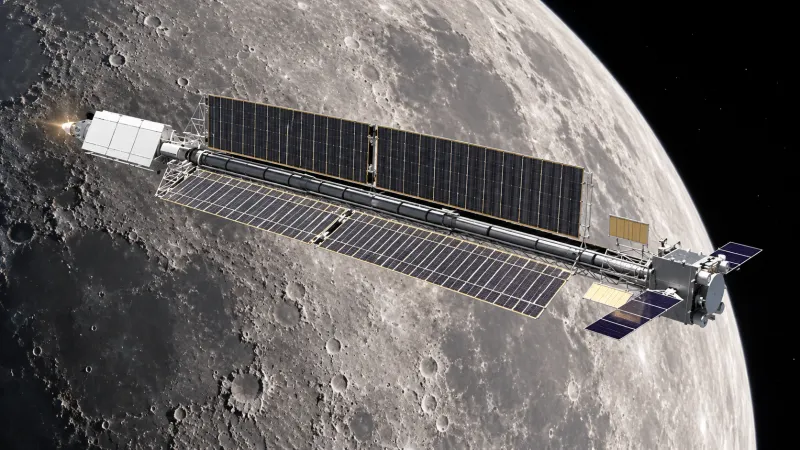
    The second element is the Zeus transport and energy module (TEM), with a megawatt gas-cooled reactor and ID-500 ion engines, currently undergoing ground testing. This nuclear tug, with a launch weight of 22 tons, will be the main interorbital locomotive of the ILS.

    The Russian Zeus will be designed to pick up heavy Chinese modules in low-Earth orbit and slowly, but with pinpoint precision, drag them to the Moon, saving billions of dollars on chemical fuel and also serving as a shuttle for delivering hydrogen tanks from the surface to China's orbital refueling station.

    https://en.topcor.ru/75046-kosmiches...-po-silam.html

  20. The Following 2 Users Say Thank You to Vicus For This Post:

    Bill Ryan (23rd October 2026), Ewan (24th October 2026)

+ Reply to Thread
Page 5 of 5 FirstFirst 1 5

Posting Permissions

  • You may not post new threads
  • You may not post replies
  • You may not post attachments
  • You may not edit your posts