____________
Healthy Coral Reversed Sickness in Its Neighbor With Just 1 Week of Contact
Corals cannot survive long without the algae that live inside their bodies. But under stress from factors like heat, pollution, and UV exposure, these algae can become toxic to the coral, which evicts them.
Without their algal symbionts, corals turn white, in what is known as coral bleaching. A 'bleached' coral has limited time to acquire new algal symbionts before it starves to death.
With the threat of coral bleaching events growing each year, Stanford scientists have found a technique that could help rescue corals on the brink of death.
"While bleached corals may be dying, they are not dead yet," says Stanford marine scientist Danny Collins. "The question we wanted to answer is, once a coral has bleached, what can we do?"
A clue came from his colleague Steve Palumbi, who had noticed something interesting in a lab tank.
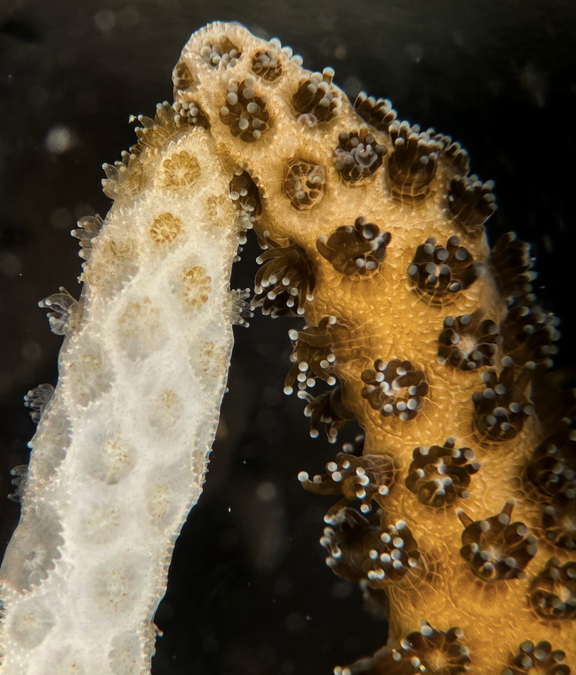
Two pieces of Pocillopora damicornis coral collected from the same colony had fallen onto each other. One was bleached, and the other was healthy. But at the point where they were touching, color was returning to the bleached fragment.
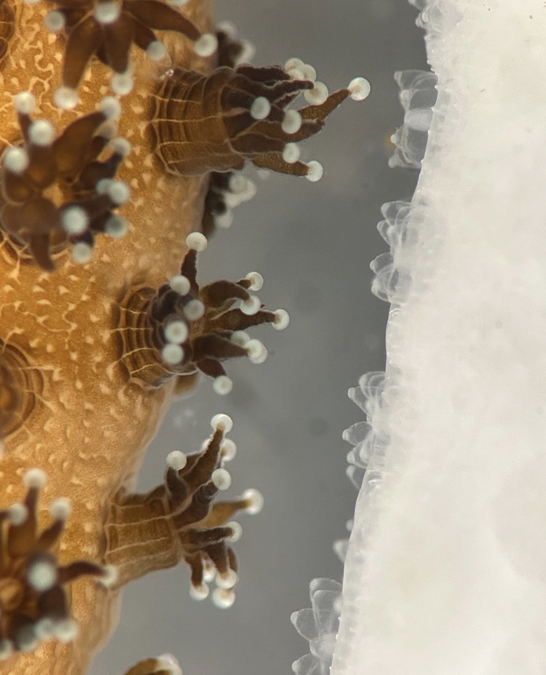
The healthy coral was transferring its symbiotic algae to its neighbor.
"What we've found is that if we put a healthy coral in contact with a bleached coral, the healthy coral actually sends over algal symbionts and nutrients to the bleached coral, fully recovering it in a short period of time," Collins says.
"I was blown away watching the actual color of this healthy coral slowly spread over into this bleached coral."
"Their tissues are growing and creating a nutrient bridge, allowing for the flow of nutrients and symbionts between those cells," he says.
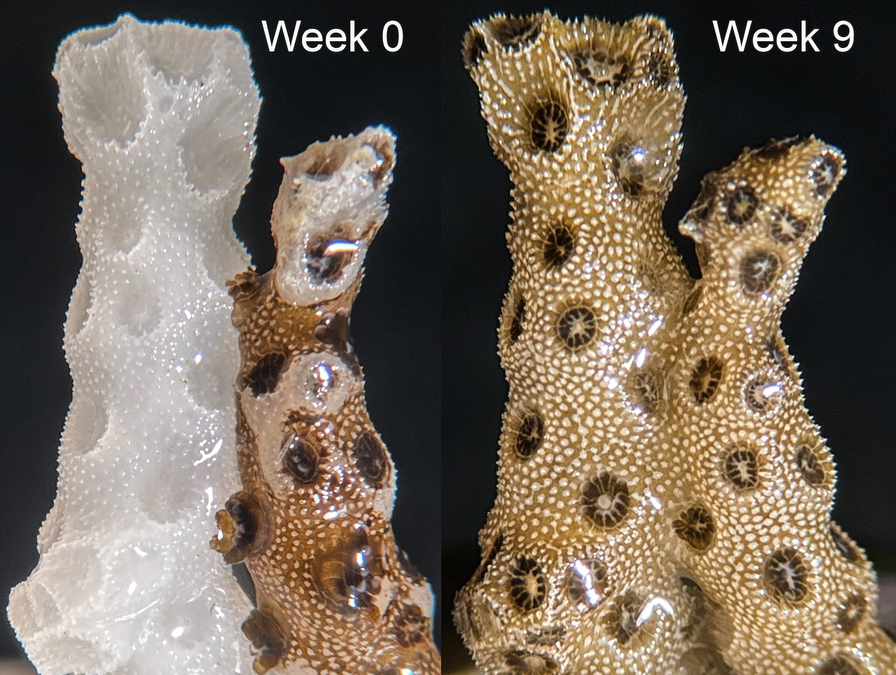
"The healthy coral can jump-start the recovery of the bleached coral, by sending over these symbionts… We can take away the healthy coral, and the bleached coral can now recover itself."
Just one week of contact with healthy coral was enough to jump-start a complete recovery in the bleached pieces, which took up to seven weeks in total. This is an order of magnitude faster than recovery times seen in wild bleached populations.
"These new insights into how corals can naturally recover give us hope for the future," says marine ecologist Fiorenza Micheli.
"They open the door to what's possible and may lead to the breakthrough we need to accelerate reef restoration."
Published 15th October 2026 by Jess Cockerill – Science Alert
https://www.sciencealert.com/healthy...eek-of-contact
The Super El Niño is Cooking Coral Reefs
Can lullabies and probiotics save them?
Researchers are trying everything they can to help coral reefs to survive severe heat stress from climate change, including playing sounds underwater.
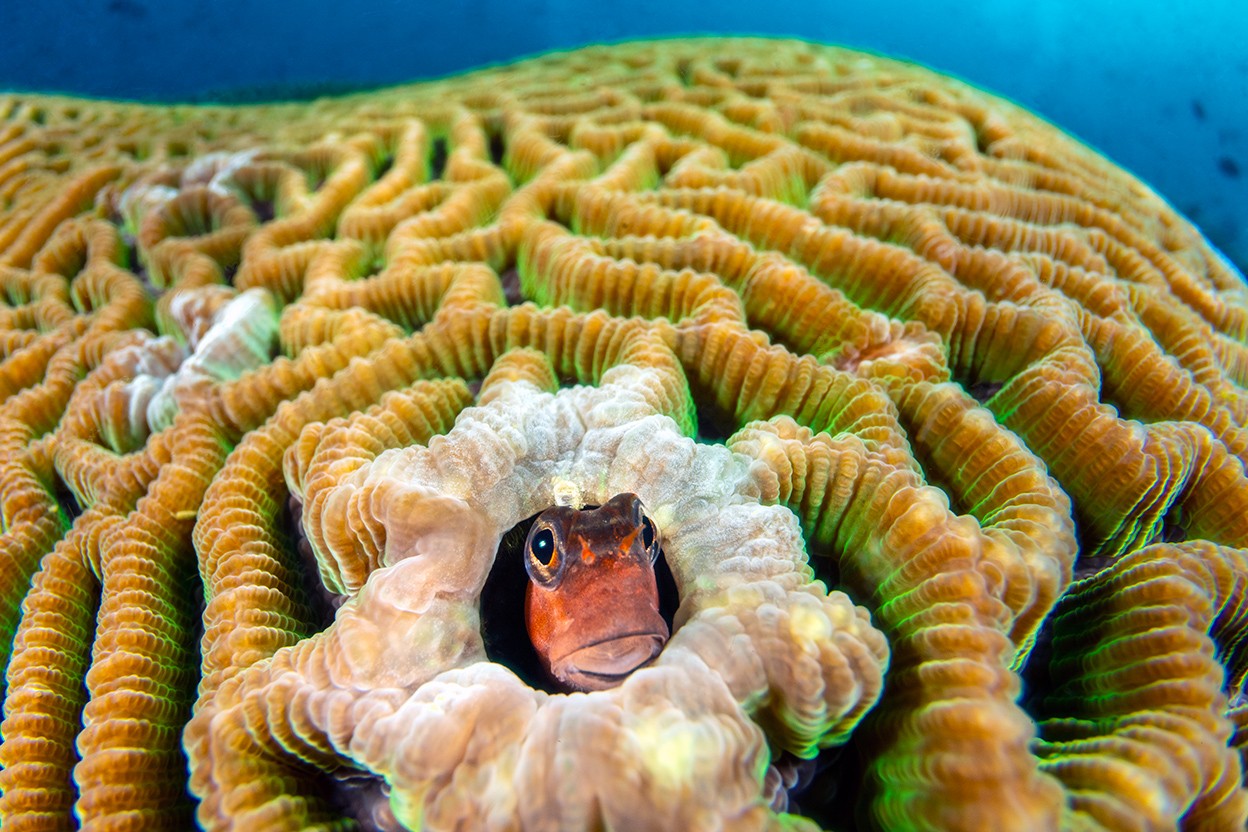
Coral reefs in the Philippines are still recovering from the last El Niño, even as another one gains strength. Credit: Alex Mustard
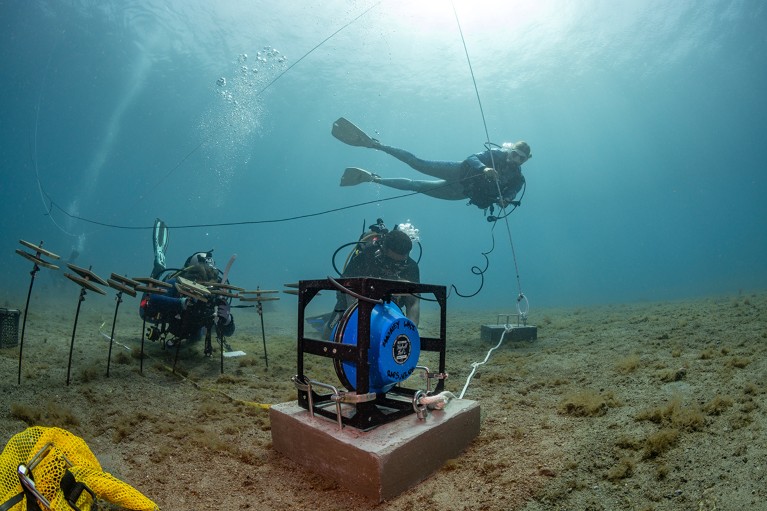
It’s peak spawning time for coral in the Caribbean Sea and there’s something new in the water this year. Underwater speakers at several locations are serenading clouds of floating larvae as they search for a place on the reef to permanently settle. Sounds recorded at vibrant reefs — such as the clicks of snapping prawn and the thrum of fish — fill the water at spots where coral reefs are struggling because of high temperatures, pollution and other stresses.
The hope is that these sea songs will lure floating coral larvae into settling on the degraded reefs and help them to recover. This project, run by researchers at the Woods Hole Oceanographic Institution (WHOI) in Massachusetts, relies on the discovery that coral larvae can sense sound and use it as a cue to follow as they search for a permanent home.
“Healthy reefs are naturally broadcasting sound all over the place,” says Aran Mooney, a marine bioacoustician at WHOI who leads the project. He’s part of a small army of researchers stepping up their efforts to save threatened corals. In addition to playing lullabies to restore damaged reefs, they are implementing other emergency measures, such as moving corals from shallow locations to deeper, cooler water and inoculating reefs with protective microorganisms.
The planet’s corals need all the help that they can get. This year’s record-breaking ocean temperatures, resulting from human-caused climate change and a super-strong El Niño brewing in the Pacific Ocean, have spurred fresh alarm about the future of coral reefs. Elevated water temperatures can cause coral bleaching, which happens when the usually richly coloured organisms expel the symbiotic algae that they rely on for nutrients; this can ultimately kill the coral.
Researchers test a system in Dominica that plays sounds of a healthy reef to help corals grow
As of late August, coral bleaching had been observed in corals around Florida, the Pacific coast of Panama and Kiribati in the Central Pacific. The Coral Reef Watch of the US National Oceanic and Atmospheric Administration found that, in large swathes of the oceans, the water had reached temperatures that placed corals at risk of bleaching and heat mortality. Temperatures are expected to rise even further in 2027 as the El Niño reaches its full strength, and that will raise the risks for corals.
Coral reefs can recover from bleaching and their ability to bounce back has often surprised scientists. But recovery takes time and corals can’t catch a break: this year’s bleaching event comes less than a year after the last global one ended in 2025.
Michael Sweet, a coral biologist at the University of Derby, UK, says that, despite the depressing outlook, many researchers are focusing on what they can do to help. “You swing between almost giving up, to going, ‘I’m going to fight to my dying breath to try and make things a bit better’.”
Published 30th September 2026 by James Dinneen – Nature.com
https://www.nature.com/articles/d41586-026-02965-9