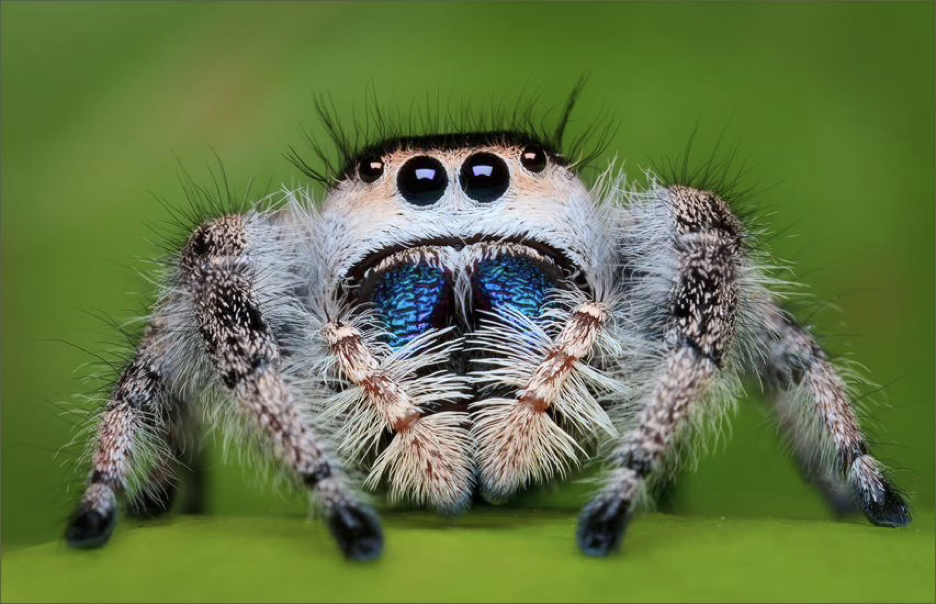
Fun video, grapevine. 🕷️
I learned that you can buy a jumping spider at major chain pet stores like PetSmart and Petco, as well as local exotic pet shops and reptile specialty stores.
A Few Facts:
Jumping spiders typically live for 1–2 years, although their lifespan depends on the species, sex, and living conditions.
Here's a general breakdown:
- Male jumping spiders: Usually 6–12 months.
- Female jumping spiders: Usually 1–2 years.
- Some species: Can live 2–3 years, especially females.
What affects their lifespan?
- Temperature: Warmer conditions can speed up their metabolism and development.
- Food: Consistent access to appropriately sized insects helps.
- Hydration: Access to water droplets is important.
- Stress: A safe enclosure and minimal handling can help.
- Species: Some jumping spiders naturally live longer than others.
Female jumping spiders generally live longer than males, partly because males often die earlier after reaching adulthood.🕷️
*********
Male jumping spiders often die earlier after reaching adulthood because their adult lives are heavily focused on finding and mating with females, while females generally invest more energy in feeding, surviving, and producing eggs.
There are several biological reasons for this:
- Mating becomes their main priority
- Once male jumping spiders reach adulthood, they begin actively searching for females.
This can involve:
- Wandering extensively in search of potential mates.
- Spending less time resting and feeding.
- Taking risks while crossing exposed areas.
- Encountering predators more frequently.
This increased activity can use up their energy reserves and expose them to danger.
2. They often eat less
Adult males in many jumping spider species become less focused on feeding once they mature. Their attention shifts toward finding females.
Some males may even pass up feeding opportunities while searching for mates, which can shorten their lifespan.
3. They face greater competition and danger
Males sometimes encounter other males competing for the same female. They also risk being attacked or eaten by females, particularly if courtship goes wrong.
4. Females have different survival priorities
Adult females often spend more time:
- Feeding and building up energy reserves.
- Finding safe places to shelter.
- Producing and protecting egg sacs.
- Remaining in a relatively small territory.
This can make their adult lifestyle less dangerous than the roaming lifestyle of males.
5. Their biology may be programmed for a shorter adult lifespan
In many spider species, males mature earlier than females and have a shorter adult lifespan.
Evolution tends to favor males that successfully reproduce rather than necessarily those that live the longest.
An interesting thing: Male jumping spiders can sometimes live for months after their final molt, but their adult lifespan is often much shorter than the time they spent developing.
In a sense, their biology prioritizes reproductive success over longevity. 🕷️