


 Whistleblowing Now Akin to Treason
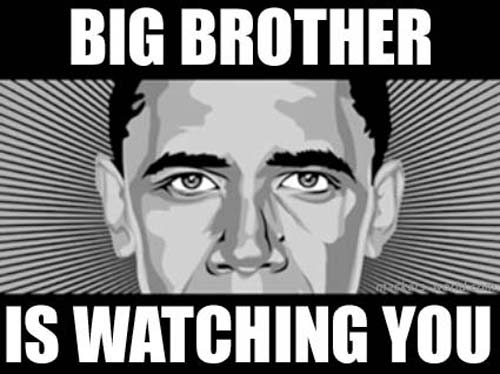
The Obama administration has set out to brand those who share information publicly as spies, even asserting sharing of information with the public is worse than sharing it with our worst enemies. But underneath that demonization, there’s an entire apparatus of invasive investigative tools that mean any national security insider can have his or her life ripped apart, under the guise of law, as retaliation for trying to expose wrongdoing.
When Thomas Drake, then an official at the National Security Agency, realized that the agency’s decision to shut down an internal data analysis program and instead outsource the project to a private contractor provided the government with less effective analysis at much higher cost, he tried to do something about it. Drake’s decision to join three other whistleblowers in asking the agency’s inspector general to investigate ultimately made him the target of a leak investigation that tore his life apart.
In 2005, the inspector general of the Department of Defense, of which NSA is a part, confirmed the whistleblowers’ accusations of waste, fraud and security risk.
Earlier this year, former NSA Director Michael Hayden even conceded that TrailBlazer, the program for which the NSA paid over $1 billion to the Science Applications International Corporation, had failed. The agency, after killing its own program (called ThinThread) “outsourced how we gathered other people’s communications,” he said in response to a question from investigative journalist Tim Shorrock. “And that was a bridge too far for industry. We tried a moonshot, and it failed.”
Nevertheless, Drake’s efforts to expose that waste and abuse would ultimately lead to his being charged under the 1917 Espionage Act — a law intended for the prosecution of spies, not whistleblowers.
Drake, a subject of a new documentary, War on Whistleblowers: Free Press and the National Security State, could have been put away for the rest of his life. “Speaking truth to power is now a criminal act,” Drake told filmmaker Robert Greenwald.
The investigation that would ensnare Drake began in 2006, under the Bush administration. But he wasn’t charged until 2010, when the Obama administration accused him of providing information to Baltimore Sun reporter Siobhan Gorman. In 2006 and 2007, she wrote a series of articles on NSA inefficiencies sourced to as many as 18 people, including Drake, who contends that he did not provide any classified information to her.
Rather than charging him with leaking classified information, the government charged him with retaining classified information. Over the course of the investigation, however, the government admitted that some of the documents in question had subsequently either been declassified or were never classified to begin with. Between that embarrassing revelation and the attention of good government groups, the case against Drake fell apart.
In 2011, the government dismissed all espionage-related charges against Drake, and he pleaded guilty to one misdemeanor charge: unauthorized use of a government computer. The judge in the case, Richard Bennett, said the case against Drake “doesn’t pass the smell test,” when he sentenced him to probation. Today Drake works at an Apple retail store rather than serving the country in a high-level national security role.
In a speech at the National Press Club last month, Drake talked about being charged with a crime originally targeted at people who sold sensitive information to our enemies.
“When you’re painted with the Espionage Act, it’s the worst thing,” Drake said, “because you’re immediately put into the same category historically as the Aldrich Ameses of the world, or the [Robert] Hanssens of the world — the real spies.”
“That’s how that World War I statute was originally designed,” Drake continued. “Troubled as it is, in terms of the Constitution, it was designed to go after spies, not truth-tellers, not whistleblowers, and not people having contact with the press. It was not designed for that. But that’s what it’s turned into.”
Equating Whistleblowing With Spying
Thomas Drake’s prosecution is just the most egregious of a series of cases the Obama administration has pursued against whistleblowers. While a number of the cases were initiated under the Bush administration, the Department of Justice under President Barack Obama has used the Espionage Act far more expansively than his predecessors. All told, Obama’s DOJ has prosecuted six whistleblowers and a researcher under the Espionage Act (in addition to Drake, the Obama administration has charged Shamai Leibowitz, Jeffrey Sterling, Stephen Jin-Woo Kim, Jeffrey Sterling, Bradley Manning, and James Hitselberger).
“The government, backed by the national security state influence, is using its powers and influence to threaten, scare and try to silence whistleblowers and journalists,” said Greenwald, whose film is a joint project with the War Costs project of the Brave New Foundation, which he founded. “Using its unlimited legal and financial resources the effort to scare [people] into silence even before going through the judicial process is a serious miscarriage of justice and democracy.”
The government effectively maintains that sharing information about American policies with the American public is as bad as secretly dealing top-secret information to one of our enemies.
In both the Sterling case, in which a former CIA officer allegedly provided information on a botched operation targeted at Iran, and the Manning case, in which Bradley Manning leaked information to WikiLeaks, the government has even said as much.
In the Sterling case, the government argued that providing information to the New York Times was “more pernicious than the typical espionage case where a spy sells classified information for money” because by just giving information to the press, “every foreign adversary stood to benefit from the defendant’s unauthorized disclosure of classified information.”
In the Manning case, the government justified charging Manning with “aiding the enemy” — a charge that can carry the death sentence — by contending that passing information to either WikiLeaks or the Times still amounted to indirectly handing information to al Qaeda.
And it increasingly appears the government is extending that logic — whistleblowing equals espionage — in its investigative approach.
The government’s investigation of Drake began not for his role as a source for the Baltimore Sun series, but because it was searching for sources for the devastating 2005 New York Times story, broken by James Risen and Eric Lichtblau, revealing the Bush administration’s widespread use of warrantless wiretaps.
Drake was not a source for that story; he wasn’t even “read into” the program. However, the FBI appears to have identified Drake, the former NSA whistleblowers with whom he had complained to the inspector general, and Diane Roark, a former House Intelligence Committee staffer, as people who had complained internally about ThinThread and TrailBlazer, as related programs. Once they did so, the FBI interpreted actions taken to submit the IG complaint as well as information given to the Intelligence Committee — which has oversight in such matters — as proof they were leaking classified information about ThinThread and TrailBlazer.
The investigation clearly ignored the extensive whistleblowing about ThinThread — whose rejection by NSA, Drake says, laid the groundwork for the warrantless wiretapping that the Bush administration initiated after the terrorist attacks of September 11, 2001.
An affidavit justifying a December 2007 warrant for Drake’s emails makes almost no mention that Drake and his colleagues were sharing information, in large part, in an effort to report fraud, waste and abuse — waste the NSA Inspector General (and, ultimately, Congress) affirmed. Instead, it suggests Drake and the people with whom he was accused of conspiring were in search of profit. While the affidavit treats with skeptism their views that ThinThread performed better than TrailBlazer, it doesn’t appear to mention that the inspector general had investigated the issue and confirmed their views. It presents Drake’s printing of specifically unclassified documents as suspicious: “Drake was then seen rolling up [unclassified] documents … and placing the documents in the glove box of his vehicle, where they would not be visible to others,” the affidavit alleges, as part of the case for probable cause.
Fishing Expedition
Once the FBI discovered a group of people who had warned the appropriate congressional oversight committee, as well as the Pentagon, that NSA had made costly, ineffective choices, the bureau kept digging into their lives until it found something.
“My life was turned upside down.” Drake said at his National Press Club speech.“I know for a fact that everything you could find out or anything you could possibly imagine in your life — any transaction, all your e-mails, any and all subscriber information with any concern, including telecommunication concerns — was all exposed to the government. Because they were looking for what was necessary to indict me.”
When the government designates whistleblowers as espionage targets, Drake said in an interview, that designation gives them “free rein to tear your life apart.”
Drake and most of the others charged by the Obama administration under the Espionage Act still either worked directly for or were contracted to the government at the beginning of the investigation, which means the government had broad access to information on them as part of their security clearance. Then the investigation proceeded using Title III (criminal, not intelligence) warrants.
But for investigative targets who don’t hold a security clearance, the label “espionage” may serve to give the government the same kind of investigative license it has with clearance holders.
Once the attorney general deems an investigation to be a counterintelligence (that is, espionage) probe, the government gains access to a whole set of secretive investigative tools, such as National Security Letters, which require recipients, such as telecom companies, retail outlets and even libraries, to turn over records of a target’s transactions — without notifying the target. Other tools include orders, authorized under Section 215 of the USA PATRIOT Act, to turn over business records, up to and including cell phone GPS data. These tools effectively allow the government to camp out on someone’s life — read their e-mails, search their dwellings and computers, review their financial information — until the government discovers evidence of a crime.
Is Supporting WikiLeaks a Crime?
That may be what happened with WikiLeaks. On Dec. 6, 2010, Eric Holder confirmed what had been reported a week earlier in the media: among other theories, DOJ was considering prosecuting WikiLeaks under the Espionage Act. Holder announced this at the beginning of the investigation, not after finding evidence that anyone from WikiLeaks had solicited information from Bradley Manning.
In the same comments, Holder tied such theories to aggressive investigative techniques: “I personally authorized a number of things last week and that’s an indication of the seriousness with which we take this matter and the highest level of involvement at the Department of Justice.”
In a statement before his court martial on February 28, Bradley Manning insisted that no one had solicited him to send information. “The decisions that I made to send documents and information to [WikiLeaks] were my own decisions, and I take full responsibility for my actions.”
Not long after Holder made his statement, the government reportedly reached the same conclusion. Yet the government continues its investigation into known associates of WikiLeaks. It appears that without having acquired any information showing evidence that WikiLeaks solicited the information in question, the government labeled WikiLeaks a spying entity, allowing the government expansive investigative powers.
To be clear, any investigation of Julian Assange — who is not an American citizen and not in the US — could easily use such tools. But to pursue, in the same heavy-handed way, any Americans involved, the “espionage” designation provides a very valuable tool.
Jacob Appelbaum, an American who is a security researcher and volunteer for WikiLeaks, has been heavily surveilled for two and a half years in actions apparently related to the WikiLeaks investigation. He has been stopped and interrogated at borders more than four times, subjected to physical surveillance, and had his communication metadata collected by administrative subpoena. The information collected ranges from the unique identifier assigned to every Internet user, the identifying number assigned to one’s Internet provider, cell phone service provider, general local information, phone numbers of recipients of the target’s calls and texts, e-mail addresses to which communications were sent, and more. And, the FBI once hinted, a National Security Letter was likely served on his Gmail account. Appelbaum has also talked about the danger the investigation has done to those associated with him, which in his case includes democracy activists in authoritarian countries.
Guilt By Association
The other thing that comes with some of these counterintelligence investigative techniques is a very expansive standard for collection: information need only be “relevant to” an investigation to require a third party to turn over the information requested by the government. In this way, the government can also collect information on associates of a whistleblower who may have no evident ties to a leak or crime. This permits the government to collect personal information on associates of a target or whistleblower, on the theory of guilt by association.
In Drake’s case, the government, using ordinary Article III search warrants, investigated everyone who had ties with him, Drake said in our conversation, undermining their First Amendment right of assembly.
“Everybody that was associated with me, either because they used to work for me or had links to me or had ties to me by mere association — assembly, that freedom to do so under the First Amendment — were investigated, were interrogated,” Drake said. “And some of those same people lost their jobs and their livelihood because of their association with me. Mere association meant they were guilty. And they were going to be punished — punished — because of that association.”
Worse may have happened in the WikiLeaks investigation. In response to a Freedom of Information request from the Electronic Privacy Information Center for information on investigation into supporters of WikiLeaks, the government refused to turn over information, in part, because it was statutorily prohibited from doing so. Yet it wouldn’t reveal the statute in question, because “to disclose which statute or further discuss its application publicly would undermine interests protected by [the ongoing investigation into WikiLeaks], as well as by the withholding statute.”
The government went so far as to plead with the judge not to reveal the statutes under which the government was investigating WikiLeaks supporters, writing: “Defendants respectfully request that the Court not identify the Exemption 3 statute(s) at issue.”
That the government clearly doesn’t want to reveal what statutory theories it is using to investigate not just Bradley Manning, but mere supporters of WikiLeaks, strongly suggests it is relying on one of the national security statutes that would be triggered by an espionage investigation, which would come with a gag order.
Your Data in a Driftnet
The government has three other relatively new tools it could wield against whistleblowers.
As the ACLU’s senior policy counsel Mike German pointed out in an interview, the government’s compilation of massive databases of information on U.S. persons data makes it possible to find evidence of “wrongdoing” on a person as soon as they expose themselves as whistleblowers. These databases are assembled through what is known as a “driftnet” process, where the government just collects everybody’s metadata, much as the fishing industry uses mile-long driftnets to catch everything that wanders into the net.
“A big part of the problem of the driftnet collection is that the information just sits in a pool waiting for a reason to exploit it,” German told me. “So whistleblowers are at great risk because, as they used to say in the FBI, no one is ‘administratively pure.’ Once a person becomes a whistleblower, agents have deep databases they can reach into to find anything that justifies firing them.”
Additionally, in 2011, the FBI changed its Domestic Investigations and Operations Guide to make it easier to identify any government officials who might be talking to the press. Previously, the government had required attorney general approval before accessing a journalist’s communications. But with the new DIOG, the FBI held that the policy only applied to journalists’ communications accessed via a search warrant. As the DIOG makes clear, the FBI asserts the right to access a journalist’s toll records (a record of everyone a person has called or e-mailed) using National Security Letters. And since those aren’t warrants, they don’t fall under the previous policy.
While the DIOG redacts most of the details about under what circumstances FBI agents can use NSLs to get journalists’ contact information, it makes it clear it is permissible in at least some situations. “If the NSL is seeking telephone toll records of an individual who is a member of the news media or news organization … there are no additional approval requirements other than those set out in DIOG Section 18.6.6.1.3.”
In other words, even as the government has increasingly been targeting whistleblowers as spies, it has made it easier — potentially far, far easier — for law enforcement to access the contact information of journalists the government deems to be witnesses, via their communication with sources, to a “crime.”
Then, last year, the director of National Intelligence added a question to the polygraph personnel with security clearances would undergo, that asks specifically about contacts with “unauthorized recipients,” including the media. As with Drake, this raises the likelihood a national security official will be fired solely for sharing unclassified information with the press.
The effect of demonizing whistleblowers and throwing invasive investigative techniques at both the whistleblowers and journalists who report on them is to sow fear.
“This arbitrariness in enforcement serves as a serious deterrent to whistleblowing because all employees know that if you become a target they will find something, even though all other agents who engage in the same act or omission aren’t punished at all,”said the ACLU’s German.
The Obama administration has set out to brand those who share information publicly as spies, even asserting sharing of information with the public is worse than sharing it with our worst enemies. But underneath that demonization, there’s an entire apparatus of invasive investigative tools that mean any national security insider can have his or her life ripped apart, under the guise of law, as retaliation for trying to expose wrongdoing.
Now that the AP story has broken along with the three Fox Employees, this story is much more pertinent and relevant.
Source
- Home
- Forum
- Chat
- Donate
-
Site Links

-
Avalon Library
-
External Sites
- Solari Report | Catherine Austin Fitts
- The Wall Will Fall | Vanessa Beeley
- Unsafe Space | Keri Smith
- Giza Death Star | Joseph P. Farrell
- The Last American Vagabond
- Caitlin Johnstone
- John Pilger
- Voltaire Network
- Suspicious Observers
- Peak Prosperity | Chris Martenson
- Dark Journalist
- The Black Vault
- Global Research | Michael Chossudovsky
- Corbett Report
- Infowars
- Natural News
- Ice Age Farmer
- Dr. Joseph Mercola
- Childrens Health Defense
- Geoengineering Watch | Dane Wigington
- Truthstream Media
- Unlimited Hangout | Whitney Webb
- Wikileaks index
- Vaccine Impact
- Eva Bartlett (In Gaza blog)
- Scott Ritter
- Redacted (Natalie & Clayton Morris)
- Judging Freedom (Andrew Napolitano)
- Alexander Mercouris
- The Duran
- Simplicius The Thinker



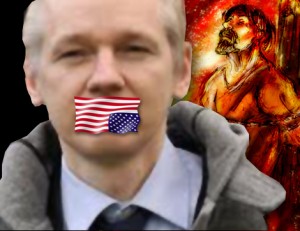


 The Justice Department did more than seize a Fox News reporter's emails while suggesting he was a criminal "co-conspirator" in a leak case -- it did so under one of the most serious wartime laws in America, the Espionage Act.


Bookmarks