Results 1 to 10 of 10

Thread: Monsanto GMO Scandal Rocks Famous Walla Walla Agri Region, Outrages Local Farmers

  1. Link to Post #1
    Unsubscribed
    Join Date
    20th November 2012
    Location
    gone
    Age
    42
    Posts
    4,873
    Thanks
    15,814
    Thanked 18,722 times in 4,284 posts

    Default Monsanto GMO Scandal Rocks Famous Walla Walla Agri Region, Outrages Local Farmers

    Then. http://www.infowars.com/monsanto-inv...ht-starvation/

    Now:

    MONSANTO: KILLERS IS WHAT THEY ARE

    For 5 years, I unknowingly drove past a Monsanto plant in Nitro, WV, on the way to my military workplace. Some decades ago, this site was used to manufacture the deadly chemical cocktail known to the public as "Agent Orange". The residents of Nitro suffer a range of maladies attributable to the gross contamination of the "white reservation" that comprises the Appalachian region.

    Now, Monsanto has engaged in another deadly and unauthorized release of an agent of biological warfare: genetically modified wheat that is immune to modern weedkillers. Within our lifetimes, if this rogue multinational entity is not stopped, we will see the complete and utter destruction of life-sustaining agriculture on the face of the planet, and the only safe place to grow food will be in hermetically sealed greenhouses and in places underground.

    Now we understand the terrible cycle of population and depopulation by which the elite of the ages have destroyed everything we ever loved and stood for. Will you stand idly by while Monsanto destroys our present and future? The planet itself is at stake in this war against illegal GMO crops.


    http://union-bulletin.com/news/2013/...ttles-markets/

    Altered wheat on Oregon farm rattles markets
    The Associated Press and The Washington Post As of Friday, May 31, 2013


    The European Union is urging its 27 member states to test certain wheat shipments from the United States after unauthorized genetically modified grains were found growing on an Eastern Oregon farm, officials said Friday.

    #The move came after Japan halted imports Thursday of some types of wheat from the U.S. following the discovery of an experimental strain that was tested by Monsanto but was never approved.

    #The EU’s consumer protection office said it was seeking “further information and reassurance” from U.S. authorities and had asked Monsanto for help in developing a reliable test for GM grains in soft white wheat, a variety widely grown in the Pacific Northwest.

    #Shipments that test positive should not be sold, but current information from the U.S. Food and Drug Administration indicated the wheat posed no threat to human health, it said.

    #The European Union imports more than 1.1 million tons of U.S. wheat each year. Eighty percent of that was soft white wheat, the majority of which is exported to Spain, officials said. The EU has a zero-tolerance policy toward genetically modified foods.

    #Japan, the largest market for U.S. wheat exports, suspended imports from the United States and canceled a major purchase of white wheat on Thursday after the discovery of the unapproved genetically modified wheat in an 80-acre field in Oregon.

    #The USDA has not disclosed the owner of the farm or its location. How the altered crop made its way to the field aslo remains a mystery.

    #The strain was developed by Monsanto to make wheat resistant to the company’s own industry-leading weed killer. Monsanto tested the type of altered seed in more than a dozen states, including Oregon, between 1994 and 2005, but it was never approved for commercial use.

    #Yet the Agriculture Department reported that recent tests identified the strain after an Oregon farmer trying to clear a field sprayed Monsanto’s herbicide, Roundup, and found that the wheat could not be killed.

    #The report rattled U.S. wheat markets and focused attention on St. Louis-based Monsanto, a $56 billion company with more than $13.5 billion in sales of seeds, services, weed killer and biotechnology.

    #In the face of mounting protests, including a series of public demonstrations in multiple cities last weekend, including a small one in Walla Walla, the company has stood behind its other genetically modified products.

    #Many food safety and environmental groups say more testing needs to be done to ensure that genetically modified seeds don’t harm human health. In addition, they say, the genetic engineering of crops has encouraged the more widespread use of herbicides and led to the development of weeds more resistant to those herbicides.

    #The United States already relies heavily on genetically modified crops. Genetically engineered corn, cotton and soybeans have gone from 5 to 17 percent of the U.S. market in 1997 to between two-thirds and more than 90 percent in 2012. By some estimates, more than 70 percent of processed foods sold in the United States contain ingredients and oils from genetically engineered crops.

    #A 2008 Government Accountability Office report estimated the value of the global market for genetically engineered seeds was $6.9 billion. Though altered seeds are made by four other leading agricultural businesses, Monsanto relies most heavily on such products, experts said.

    #Monsanto said in a statement that it ended commercial development of the strain of wheat found in Oregon nine years ago. The company said that about 58 million acres of wheat is planted in the United States every year, and that while the Agriculture Department’s test results in Oregon “are unexpected, there is considerable reason to believe that the presence of the Roundup Ready [herbicide-resistant] trait in wheat, if determined to be valid, is very limited.”

    #But food safety groups drew the opposite conclusion. “This was not from a recent trial, which means it’s been sitting there in the environment,” said Andrew Kimbrell, executive director of the Center for Food Safety, a nonprofit group. “It’s highly doubtful that it’s just on one farm. If it’s out there, it’s out there.”
    #The center’s science policy analyst, Bill Freese, added, “It’s been 12 years since this wheat was grown officially in Oregon. It doesn’t just disappear and magically appear 12 years later.”

    #Freese added that Monsanto has 15 new permits, issued in 2011, to test herbicide-resistant wheat in Hawaii and North Dakota, including an unusually large 300-acre field in North Dakota. Freese said the size of that field would make it difficult to prevent accidental spread.

    #Tom Helscher, a Monsanto spokesman, said the new field tests involve “different herbicide traits” than the genetically modified strain found in Oregon. He said they are “focused on preventing yield loss due to disease and other environmental stressors.” He said the company has a project in early development that would boost yields and provide crops with a “strong tolerance” to existing herbicides.

    #Helscher said that “we talk to people in the wheat industry and they say they need tools to help deal with problems they face, whether weed or insect control.” He added, “We wouldn’t expect to have a product for quite a number of years,” but that Monsanto thought the research was “worthwhile.”

    #In its statement, Monsanto said it would help the Agriculture Department “get to the bottom of the reported genetically modified wheat detection,” but it insisted that “there are no food, feed or environmental safety concerns associated with the presence of the Roundup Ready gene if it is found to be present in wheat.”

    #Part of the battle over genetically modified seed has been taking place in Washington.

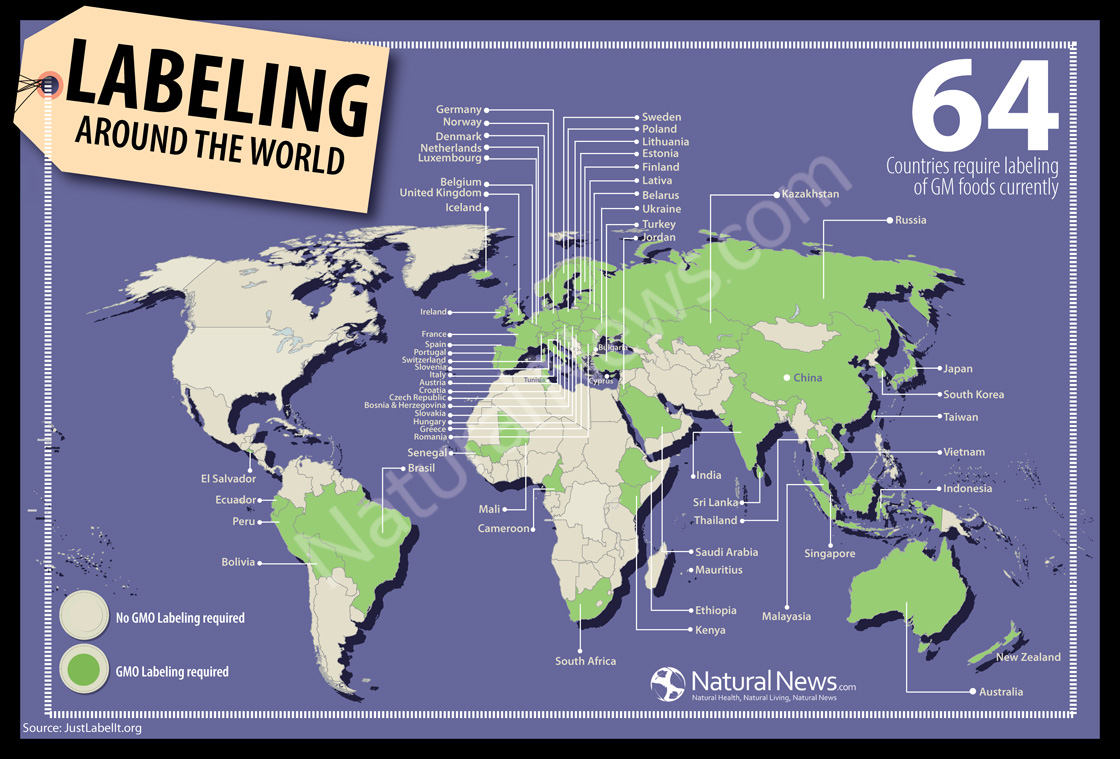
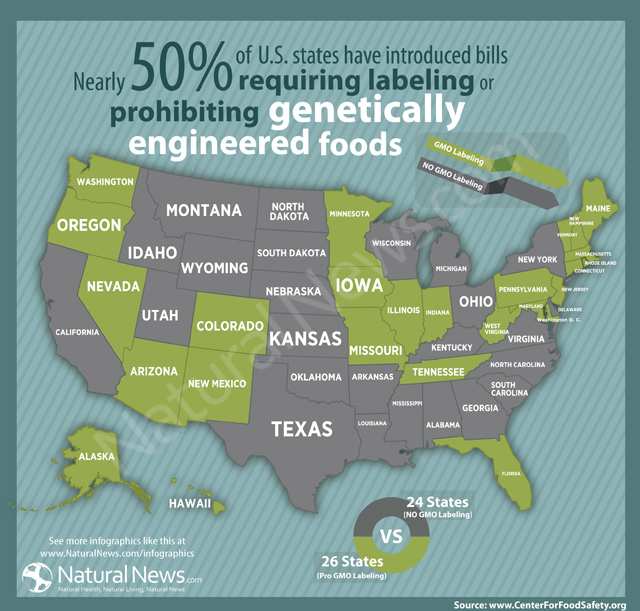
    #Monsanto and other companies in the industry have been pressing members of Congress to vote against measures that would require disclosure for food made with genetically modified or engineered crops. Friends of the Earth, an environmental group, says that 64 countries have similar rules and that, this year, 37 bills have been introduced in 21 states proposing that genetically engineered foods be labeled in stores.

    #Monsanto is also urging lawmakers to vote for a rider in the Senate continuing resolution that would strip federal courts of the power to provide injunctive relief to environmental and food activists seeking to stop the spread of such crops.

    #Genetically modified crops have a history of provoking bans by trading partners. In 2006, the Agriculture Department announced that trace amounts of a regulated variety of genetically engineered rice had been commingled with supplies of conventional rice. That led several U.S. trading partners to refuse U.S. rice exports, causing losses for U.S. farmers and exporters.

    #The 2008 GAO report described six “unauthorized releases” of genetically engineered crops into the U.S. feed and food supplies over the previous eight years.

    If I die young, you'll know who killed me.

    http://inhabitat.com/monsanto-being-...nge-chemicals/

    http://forum.prisonplanet.com/index....=202491.0;wap2 **letter to general tacket wv about human experimentation on troops** The Mefloquine Letter


    Save our troops! Stop MONSANTO!


    Does Bill Gates invest in this child's misery?


    Before the Anthrax Vaccine there was Agent Orange


    You can't handle the truth!
    Last edited by Tesla_WTC_Solution; 2nd June 2013 at 19:56. Reason: links

  2. Link to Post #2
    Unsubscribed
    Join Date
    20th November 2012
    Location
    gone
    Age
    42
    Posts
    4,873
    Thanks
    15,814
    Thanked 18,722 times in 4,284 posts

    Default Re: Monsanto GMO Scandal Rocks Famous Walla Walla Agri Region, Outrages Local Farmers


    What we did to them:


    They called us Communists....


    We were patriots...

    and KILLERS IS WHAT THEY ARE.

    Last edited by Tesla_WTC_Solution; 2nd June 2013 at 20:00.

  3. Link to Post #3
    Canada Avalon Member northstar's Avatar
    Join Date
    11th March 2013
    Location
    True North
    Posts
    485
    Thanks
    3,131
    Thanked 3,410 times in 466 posts

    Default Re: Monsanto GMO Scandal Rocks Famous Walla Walla Agri Region, Outrages Local Farmers

    Thanks Tesla.
    I drove hours to the closest city near my home that was holding a "March Against Monsanto" on May 25.
    I am very happy I went. There was a very wide cross-section of people there (not just young radicals).
    There were people of all ages, all ethnic backgrounds, all abilities, etc.

    When you really start doing research into the predatory and parasitic business practices of Monsanto, it is really shocking and mind boggling. There is no "evil villain" in any movie that can top the pure psychopathic evil of this company.

    Monsanto has committed repeated crimes against humanity in the past decades and their reward for this psychopathic attack on humanity is record profits. (and the full support of the US government at all levels - so I can only assume those elected officials are totally bought and paid for by the Monsanto corporation)

    This weekend I went grocery shopping and most of the food that went into my cart today is "organic".
    I was doing some research this week about the presence of GMO in the food chain and that toxic organ damaging, tumor triggering GMO garbage is IN MOST PROCESSED FOODS. It will take a while, but my goal in the next few months is to get ALL GMO foods out of my diet completely and utterly.
    Last edited by northstar; 2nd June 2013 at 20:18.

  4. The Following 11 Users Say Thank You to northstar For This Post:

    Cidersomerset (2nd June 2013), Dennis Leahy (22nd June 2013), fifi (3rd June 2013), Gardener (21st June 2013), naste.de.lumina (2nd June 2013), Nothingness (2nd June 2013), Orph (3rd June 2013), Swanette (29th June 2013), Tesla_WTC_Solution (6th June 2013), ulli (3rd June 2013), william r sanford72 (3rd June 2013)

  5. Link to Post #4
    Brazil Unsubscribed
    Join Date
    4th April 2013
    Age
    56
    Posts
    1,453
    Thanks
    11,308
    Thanked 7,529 times in 1,350 posts

    Default Re: Monsanto GMO Scandal Rocks Famous Walla Walla Agri Region, Outrages Local Farmers

    This subject Monsanto can make me angry.
    I will not comment on what I want to happen with the people responsible for it because I'm afraid that karma would come in the same proportion, if not already come because thinking. I really hope that soon some catalytic event occurs in global scope so that we can have a chance to turn this game addict.
    I need to think positive.
    Hug.

    ¤=[Post Update]=¤

    Quote Posted by northstar (here)
    Thanks Tesla.
    I drove hours to the closest city near my home that was holding a "March Against Monsanto" on May 25.
    I am very happy I went. There was a very wide cross-section of people there (not just young radicals).
    There were people of all ages, all ethnic backgrounds, all abilities, etc.

    When you really start doing research into the predatory and parasitic business practices, it is really shocking.
    This company has committed repeated crimes against humanity in the past decades and their reward for this psychopathic attack on humanity is record profits. (and the full support of the US government at all levels - so I can only assume those elected officials are totally bought and paid for by the Monsanto corporation)

    This weekend I went grocery shopping and most of the food that went into my cart today is "organic".
    I was doing some research this week about the presence of GMO in the food chain and that toxic organ damaging, tumor triggering garbage is IN MOST PROCESSED FOODS. It will take a while, but my goal in the next few months is to get ALL GMO foods out of my diet completely and utterly.
    You are a hero friend northstar.
    Congratulations.


    Last edited by naste.de.lumina; 2nd June 2013 at 20:22.

  6. Link to Post #5
    United States Avalon Member william r sanford72's Avatar
    Join Date
    17th February 2013
    Location
    rural southcentral iowa
    Age
    53
    Posts
    2,977
    Thanks
    69,045
    Thanked 11,797 times in 2,871 posts

    Default Re: Monsanto GMO Scandal Rocks Famous Walla Walla Agri Region, Outrages Local Farmers

    i cant hardly stand the wait.monsanto.sygenta..etc.best start testing the water table.i think the results would freak people out.good job everyone for keeping this going.
    TRUTH and BALANCE

  7. The Following 7 Users Say Thank You to william r sanford72 For This Post:

    Corncrake (21st June 2013), Dennis Leahy (22nd June 2013), naste.de.lumina (3rd June 2013), northstar (4th June 2013), Reinhard (23rd September 2013), Swanette (29th June 2013), Tesla_WTC_Solution (6th June 2013)

  8. Link to Post #6
    Unsubscribed
    Join Date
    20th November 2012
    Location
    gone
    Age
    42
    Posts
    4,873
    Thanks
    15,814
    Thanked 18,722 times in 4,284 posts

    Default Re: Monsanto GMO Scandal Rocks Famous Walla Walla Agri Region, Outrages Local Farmers

    PBS aired a documentary on the situation in the Walla Walla region,
    called it the "Harvest of Fear".

    http://www.pbs.org/wgbh/harvest/
    Quote In "Harvest of Fear," FRONTLINE and NOVA explore the intensifying debate over genetically-modified (gm) food crops. Interviewing scientists, farmers, biotech and food industry representatives, government regulators, and critics of biotechnology, this two-hour report presents both sides of the debate, exploring the risks and benefits, the hopes and fears, of this new technology.
    it's truly Us against Them this time.
    our reproductive rights are under siege.

  9. Link to Post #7
    Unsubscribed
    Join Date
    20th November 2012
    Location
    gone
    Age
    42
    Posts
    4,873
    Thanks
    15,814
    Thanked 18,722 times in 4,284 posts

    Default Re: Monsanto GMO Scandal Rocks Famous Walla Walla Agri Region, Outrages Local Farmers

    http://www.reuters.com/article/2013/...anyNews&rpc=43

    UPDATE 1-Monsanto says GMO wheat find in Oregon 'suspicious'

    Fri Jun 21, 2013 2:59pm EDT
    By Carey Gillam

    (Reuters) - Monsanto officials said Friday that continued extensive testing of U.S. soft white wheat supplies shows that the presence of the company's unapproved, experimental genetically altered wheat in an Oregon wheat field is highly suspicious and was an isolated incident that could not have happened through normal farming practices.

    Company officials said more investigation is needed to determine how the genetically engineered wheat, which Monsanto said it stopped field testing in 2005, was growing in April in the Oregon farm field.

    "What happened in this field... is suspicious," said Monsanto Chief Technology Officer Robb Fraley in a conference call with reporters.

    Fraley said the evidence indicates someone intentionally introduced the biotech wheat seed into the Oregon field.

    Monsanto said Friday that testing it had conducted, in addition to testing conducted by Washington State University, found no sign of contaminated wheat outside that one field. The sampling represents over 97 percent of Oregon wheat acres, Monsanto said.

    "The grain is clean," Fraley said. "This situation is extremely isolated, with all the testing data again concluding that this is isolated to a single field in Oregon."

    The U.S. Department of Agriculture announced May 29 that it was investigating the discovery of genetically engineered wheat plants developed by Monsanto to tolerate dousings of Roundup herbicide. The "Roundup Ready" wheat was found on an Oregon farm in April, several years after Monsanto stopped field testing the wheat, which was never approved for commercial use.

    Over the last month, exports of U.S. western white wheat have been curtailed as foreign buyers shun the U.S. supplies and demand assurances that none of the biotech wheat has contaminated the marketplace.

    One area of inquiry has been what happened to GMO wheat seed sent to a government seed storage facility in Colorado when the field trials ended in 2005. Monsanto officials have said that some of the experimental wheat was shipped to the Colorado facility, called the National Center for Genetic Resources Preservation.

    The center uses high-tech methods to keep seeds viable for decades, much longer than they typically would remain viable. Officials with the center said this week that they were not certain if they had received the GMO wheat seed and if so what might have happened to it.

    USDA said it was investigating that issue, but Monsanto said Friday that all the seed sent to the Colorado storage site was destroyed.

    "We have documentation of what seed was sent to the Colorado facility and documentation of its subsequent destruction," spokesman Thomas Helscher said. "At our direction, the seed was destroyed (incinerated) as it was old material and we had no plans for its future use."

    Millers, grain handlers, exporters, wheat growers and others have complained that USDA/APHIS officials are not disclosing enough information about their findings, and until they do, the market for western white wheat will remain limited.

    On Friday, USDA spokesman Ed Curlett said the investigation was proceeding and that so far the testing has focused on the three varieties of soft white wheat seed that the farmer in Oregon who found the Roundup Ready wheat had planted on his farm since 2009.

    Investigators obtained samples of the same varieties of wheat seed sold to the farmer and other growers, and obtained samples of the farmer's wheat harvests, Curlett said. Investigators have also identified over 250 farmers who purchased and planted the same seed varieties and conducted nearly 230 in-person interviews with these farmers who all said they had not found any glyphosate resistant wheat volunteers on their farms.

    The government has tested eight samples of seed and four grain samples and none of the more than 100 tests conducted have turned up positive for the experimental genetically engineered trait, according to Curlett.

    Curlett said the government tested nine "pools" from each of the 12 samples for detection of as small a contamination level as 0.003 percent, or roughly one in about 30,000 kernels.
    __________________________________________

    ...Bull****.

  10. Link to Post #8
    Unsubscribed
    Join Date
    20th November 2012
    Location
    gone
    Age
    42
    Posts
    4,873
    Thanks
    15,814
    Thanked 18,722 times in 4,284 posts

    Default Fort McClellan Troops Poisoned by Monsanto

    http://www.prisonplanet.com/fort-mcc...-monsanto.html

    Fort McClellan Troops Poisoned by Monsanto

    Prison Planet.com
    June 23, 2013

    Between 1933 and 1999, Fort McClellan was constantly exposed to major biochemical health hazards, including ionizing radiation and polychlorinated biphenyls (PCBs).


    http://www.prisonplanet.com/explosiv...h-defects.html

    Explosive: Monsanto ‘Knowingly Poisoned Workers’ Causing Devastating Birth Defects

    Anthony Gucciardi
    Prisonplanet.com
    Wednesday, April 11, 2012

    In a developing news piece just unleashed by a courthouse news wire, Monsanto is being brought to court by dozens of Argentinean tobacco farmers who say that the biotech giant knowingly poisoned them with herbicides and pesticides and subsequently caused ”devastating birth defects” in their children. The farmers are now suing not only Monsanto on behalf of their children, but many big tobacco giants as well. The birth defects that the farmers say occurred as a result are many, and include cerebral palsy, down syndrome, psychomotor retardation, missing fingers, and blindness.

    The farmers come from small family-owned farms in Misiones Province and sell their tobacco to many United States distributors. The family farmers say that major tobacco companies like the Philip Morris company asked them to use Monsanto’s herbicides and pesticides, assuring them that the products were safe. Through asserting that the toxic chemicals were safe, the farmers state in their claim that the tobacco companies ”wrongfully caused the parental and infant plaintiffs to be exposed to those chemicals and substances which they both knew, or should have known, would cause the infant offspring of the parental plaintiffs to be born with devastating birth defects.”

    The majority of the farmers in the area used Monsanto’s Roundup, an herbicide with the active ingredient glyphosate that has shown to be killing human kidney cells. What’s more, the farmers say that the tobacco companies pushed Monsanto’s Roundup on the farmers despite a lack of protective equipment. In other words, these farmers — many in dire economic conditions — were being directly exposed to Roundup in large concentrations without any protective gear (or even experience or skills in handling the substance). Still, the farmers say the tobacco giants required the struggling farmers to ‘purchase excessive quantities of Roundup and other pesticides’.

    Most shocking, the farmers were ordered to discard leftover herbicides and pesticides in locations in which they leached directly into the water supply. With Monsanto’s Roundup already known to be contaminating the groundwater, this comes as a serious threat to pure water supplies.

    The farmers end their landmark case with an explanation as to why the tobacco companies allowed Monsanto’s herbicides and pesticides to be unloaded on the small family farms in such vast quantities and purchased in excessive amounts. In their claim, the farmers state that the tobacco companies were ”motivated by a desire for unwarranted economic gain and profit,” with zero regard for the farmers and their infant children — many of which are now suffering from severe birth defects from Monsanto’s products.

    ¤=[Post Update]=¤

    Once again,
    I personally drove by Nitro WV every day, then later learned about the Monsanto scandal that poisoned the entire town....

  11. Link to Post #9
    Unsubscribed
    Join Date
    20th November 2012
    Location
    gone
    Age
    42
    Posts
    4,873
    Thanks
    15,814
    Thanked 18,722 times in 4,284 posts

    Default Re: Monsanto GMO Scandal Rocks Famous Walla Walla Agri Region, Outrages Local Farmers

    http://www.infowars.com/over-30m-spe...dden-in-foods/

    Over $30M spent last year on lobbying to keep GMOs hidden in foods

    Mike Adams
    NaturalNews
    June 28, 2013

    Guess who spends the most money lobbying on agricultural lobbying? If you answered, “Monsanto,” you’re correct. Most of their efforts, of course, are focused on lobbying for GMOs — to keep them legal and keep them hidden in foods.

    Do you know how much money Monsanto spent on lobbying in 2012?
    The answer is nearly $6 million!
    And in a close second, the American Farm Bureau spent $5.7 million on lobbying in 2012.

    The Natural News infographic shown below reveals even more details about who’s spending the most money lobbying for GMOs and other conventional agriculture “favors” from Washington.

    In 2012 alone, companies spent over $30 million ”influencing” Congress on agricultural issues, including making sure they didn’t pass legislation that would label GMOs or outlaw them altogether. Is it any wonder that the United States of America is one of the very last nations in the world to either ban GMOs outright or require their labeling on foods?
    As the second infographic below shows, 64 countries require GMO labeling.

    And so far, fifty percent of U.S. states have introduced GMO labeling bills of one kind or another. So the states want it, but the federal government keeps blocking it.
    Why is the USA the big holdout on honest food labeling? Could it be because the biotech industry keeps paying off all the politicians?
    Share and enjoy these powerful infographics, all created by the Natural News art department:


    See more amazing infographics at:
    http://www.naturalnews.com/Index-Infographics.html

    This article was posted: Friday, June 28, 2013 at 6:28 am


    KILLERS
    IS
    WHAT
    THEY
    ARE!

  12. Link to Post #10
    Unsubscribed
    Join Date
    20th November 2012
    Location
    gone
    Age
    42
    Posts
    4,873
    Thanks
    15,814
    Thanked 18,722 times in 4,284 posts

    Default Re: Monsanto GMO Scandal Rocks Famous Walla Walla Agri Region, Outrages Local Farmers

    http://www.fool.com/investing/genera...ther-crop.aspx

    Quote Will Monsanto Destroy Another Crop?
    By Rich Duprey | More Articles
    September 22, 2013 | Comments (41)


    The U.S. wheat industry was nearly brought to its knees after the discovery of a genetically modified strain Monsanto (NYSE: MON ) had tested years ago was inexplicably found growing in an Oregon farmer's field. Because most of the rest of the world rejects GM wheat and the wheat from the Pacific Northwest is mostly targeted for export, the ramifications of the discovery were massive.

    Now it's deja vu all over again. A Washington State farmer had his alfalfa crop rejected by a broker after it tested positive for the presence of genetic modification. The implications for this recurrence are just as profound as they were for wheat.

    Several countries immediately imposed bans on the import of U.S. wheat and an investigation that's still ongoing was launched to figure out how a strain of genetically modified wheat that Monsanto said it completely destroyed except for the small amount the U.S. government supposedly has under lock and key in its vaults made it into the wild.

    According to the U.S. Department of Agriculture, alfalfa, with a value of around $8 billion, is the fourth-most widely grown field crop in the country, surpassed only by corn, wheat, and soybeans. Alfalfa hay, which the Washington farmer was selling, is a valuable export and hit a record high of $1.25 billion last year. Washington is one of the country's largest export alfalfa producers.

    Like the runaway wheat strain, the tainted alfalfa was found to contain the genetic presence of the Round-Up Ready trait. That's the powerful and deadly herbicide that kills any plant life its sprayed on unless Monsanto has rejiggered its genetic code to withstand its onslaught. You can spray the herbicide on Round-Up Ready seed all day long, and it will still grow because of its genetic modification.

    The only difference between alfalfa incident and the wheat one earlier this year is the U.S. government permits farmers to grow genetically modified alfalfa; it prohibits GM wheat from being grown because of the global opposition to it.

    And that highlights one of the biggest risks opponents of GM foods have pointed out: once you start growing a genetically modified crop, you can't protect non-GM fields from being contaminated. One farmer can grow GM alfalfa -- or corn or soybeans -- and another across the road can choose not to, but wind and bees can can cause the fields to be cross-pollinated, and the non-GM farmer is left without recourse.

    The episode raises some far-reaching fears. Farmers now are at risk if they practice the time-honored tradition of seed saving, and not just here, but all around the globe. DuPont (NYSE: DD ) just acquired South Africa's largest seed company that owns a large storehouse of maize germplasm, one of the most important crops on the continent where Monsanto already owns 50% of the market. Once they start accepting GM seed, they'll quickly learn they're no longer allowed to save it as the chemical giants own the food chain.

    Not only should alfalfa farmers be worried because many countries including China don't allow any imports of GM crops, but alfalfa hay might not be able to be fed to domestic livestock because the introduction of GM contaminants can ruin their sales. And no just of beef, but organic dairy and other animal-based products. Monsanto says all is well as other importers like United Arab Emirates, have no restrictions on genetically modified crops and negotiations are under way with China too.

    Once again the livelihood of farmers is being threatened by the pursuit of Monsanto to expand its reach over agriculture. We continue to be assured there's no harm to come from eating GM food,s but we are continuously reminded why such foods need to be labeled at a minimum.

    As this looks like it's going to become a recurring nightmare for our nations farmers, let's all take bets on which crop will be next to threaten their futures and put the country's economy at risk, all for Monsanto and the biotech industry's benefit.

    Even More Premium Stock Picks
    Dividend stocks can make you rich. It's as simple as that. While they don't garner the notoriety of high-flying growth stocks, they're also less likely to crash and burn. And over the long term, the compounding effect of the quarterly payouts, as well as their growth, adds up faster than most investors imagine. With this in mind, our analysts sat down to identify the absolute best of the best when it comes to rock-solid dividend stocks, drawing up a list in this free report of nine that fit the bill. To discover the identities of these companies before the rest of the market catches on, you can download this valuable free report by simply clicking here now.

    Fool contributor Rich Duprey has no position in any stocks mentioned. The Motley Fool has no position in any of the stocks mentioned. Try any of our Foolish newsletter services free for 30 days. We Fools may not all hold the same opinions, but we all believe that considering a diverse range of insights makes us better investors. The Motley Fool has a disclosure policy.


    ¤=[Post Update]=¤

    http://realchangenews.org/index.php/site/archives/7956

    Community & Editorial
    Gates Foundation’s support of Monsanto reveals it has put ending hunger on the back burner
    Printer-Friendly Version

    Like it? Share it!

    Last month, more than 2,000 people in Seattle joined protestors in more than 400 cities and 50 countries to collectively speak out against Monsanto, one of the world’s biggest agricultural biotechnology corporations, which specializes in genetically engineered (GE) seeds. But in a sense, those people were also protesting the Bill & Melinda Gates Foundation, since the world’s wealthiest nonprofit supports the biotech giant.

    This is an unfortunate connection that perpetuates hunger around the globe.

    From its beginning, Monsanto has been responsible for manufacturing and distributing highly toxic and carcinogenic products such as polychlorinated biphenyls, known as PCBs, and Agent Orange. In the 1940s Monsanto was one of 15 companies that produced the insecticide DDT, the use of which was criticized in Rachel Carson’s landmark environmental book “Silent Spring.” In 1972, U.S. officials banned the agricultural use of DDT.

    Now, the company claims it has left chemical manufacturing behind and is exclusively focused on sustainable solutions to food production promoting the use of GE corn, soy, cotton and other crops. And this is where the Gates Foundation comes in: A financial donor to Monsanto, the Gates Foundation advocates for the use of GE foods to solve hunger in developing countries. However, history has shown that instead of eradicating hunger, GE seeds perpetuate food insecurity.

    For instance, Monsanto’s GE corn is modified so that Roundup, the company’s herbicide, can be sprayed on the crop to kill weeds while leaving the corn plants intact. Those crops with poisonous residue are later ingested by humans and animals. Plus, the use of Roundup has resulted in new strains of super weeds that are now resistant to the herbicide. Moreover, the company’s GE seeds require synthetic fertilizer, which must be purchased each year from Monsanto or its subsidiaries. This completely contradicts any claims Monsanto makes about promoting sustainable agricultural practices.

    Monsanto’s aggressive tactics also hurt many farmers. Traditionally, farmers have saved seeds and, over generations, developed seeds to fit their local conditions. The corporation’s strict contractual agreements prohibit farmers from saving GE seeds and require them to purchase new seeds every year.

    In India, Monsanto’s insect-repellant Bt cotton wreaked havoc on that country’s farmers. Those seeds cost twice as much as conventional ones and require greater inputs of water and costly herbicides and pesticides. Unable to escape the debt treadmill, thousands of Indian farmers committed suicide.

    In Haiti, Monsanto donated $4 million worth of hybrid fruits and vegetables to farmers after the destructive 2010 earthquakes. But because hybrid seeds cannot reproduce the same traits year after year, farmers were obligated to continue purchasing the same costly seeds and maintain them with expensive chemicals.

    Closer to home, hundreds of North American farmers have been sued for violating the company’s technology licensing agreement. Farmers whose fields had been contaminated with Monsanto’s GE seeds by neighbors’ plots have been taken to court and ordered to pay thousands of dollars for patent infringement. In May, news agencies reported Monsanto’s unapproved, experimental GE wheat had infiltrated an 80-acre field in Oregon; the company called the altered wheat “suspicious.”

    These are just a few examples of how Monsanto practices its business. But this seems lost on the Gates Foundation, which has a goal to “reduce hunger and poverty … by increasing agricultural productivity in a sustainable way.” The nonprofit’s continued investment and support of Monsanto’s profit-driven, anti-farmer agenda runs counter to increasing global food security.

    There are solutions for small farmers here and in poorer countries. Numerous reports from nonprofit, governmental and international organizations have concluded that food can be produced sustainably by bringing ecological principles to agriculture through a practice known as agroecology. The practice supports small-scale, traditional methods of farming and promotes crop diversity over a single-food crop, often referred to as a monoculture. Practicing agroecology also enables farmers to become independent and self-sufficient producers of natural, healthy foods.

    Industrial agriculture continues to fall short of feeding the world but provides tremendous financial gains to Monsanto’s shareholders. It’s a shame the Gates Foundation, which many consider a local leading light, can’t see this. Until Monsanto and the Gates Foundation realize that sustainable agriculture, not GE seeds, is the solution to feed the world, many people around the globe will remain hungry.

    ----
    Guest writers Saba Samadani and Bobby Righi are members of AGRA Watch, a campaign of Seattle’s Community Alliance for Global Justice.


    http://www.infowars.com/bill-gates-d...s-of-monsanto/

    Bill Gates Dodges Questions on Why He Owns 500,000 Shares of Monsanto
    The Alex Jones Channel Alex Jones Show podcast Prison Planet TV Infowars.com Twitter Alex Jones' Facebook Infowars store
    Anthony Gucciardi
    Infowars.com
    Feb 12, 2013
    Bill Gates is primarily known as the multi-billionaire who Microsoft, the company behind the most popular computer operating system known as Windows. With this massive wealth, he has retired from leading Microsoft and now instead focuses his money and time on furthering genetically modified technology, geoengineering, experimental vaccinations, and preaching about how Monsanto is the answer to world hunger.
    It should come as no surprise, then, that Gates owns 500,000 shares worth 23 million US dollars (or more) of Monsanto stock. The very same company that has been caught running slave rings in Argentina in which workers were forced to work 14+ hours a day while withholding payment, has used their massive finances to fund organizations that literally fake FDA quotes to support GMOs, and of course peddling through GMOs that have been linked to numerous health concerns.
    This is not even taking into account the farmer suicides that occur around every 30 minutes due to Monsanto’s failing GMO crop yield bankrupting small-time farmers in India’s notorious ‘suicide belt‘.
    Bill Gates Funding Corporations Caught in Child Slave Rings
    And if that’s not enough, The Bill and Melinda Gates Foundation has even teamed up with Cargill to pump GMO soy into the third world. Cargill, of course, is the the 133 billion dollar corporation that also has been found in direct violation of human rights laws. Cargill was sued by the International Labor Rights Fund for trafficking children from Mali and forcing them to work on cocoa bean plantations for around 12 to 14 hours each day without pay, food, or sleep. The company even continues to purchase cotton from Uzbekistan, where it is well known that child slave labor is used in the cultivation.
    Bill Gates himself even filmed commercials for Monsanto’s GMOs, propping them up as the ‘solution’ to world hunger despite even the United Nations admitting that GMOs cannot fight hunger as effectively as traditional farming. Headed by an entity known as the International Assessment of Agricultural Knowledge, Science and Technology for Development (IAASTD), a team of 900 scientists and researchers studied the issue of world hunger. The results of the major study were very simple: 900 scientists agreed that GMO crops were not the answer to the world hunger, and revealed this in 2008 — long before Bill Gates began claiming that GMOs were the answer while ignoring this readily available information.
    Even the Union of Concerned Scientists examined the true yield of GMO crops, only to find that the GM crops do not produce increased yields over the long run — despite their excessive cost and extreme danger to health and environment. The lack of scientific support behind the GMO crops was so startling to the Union that they documented all the details in a 2009 report entitled ”Failure to Yield.”
    Watchdog groups have criticized Gates’ support of these corporations after finding out about his massive funding. One such group, a part of the Community Alliance for Global Justice, stated:
    “Monsanto has a history of blatant disregard for the interests and well being of small farmers around the world… [This] casts serious doubt on the foundation’s heavy funding of agricultural development in Africa…”
    So why is Bill Gates, a man who is propped up by the media as an angel of philanthropy, pumping millions (if not billions) into these operations? And why is he claiming that GMOs can fight world hunger when we know this is not true due to decreased yields and other problems?
    I Asked Bill Gates Why
    In a unique opportunity to ask Bill Gates himself why he has purchased 500,000 shares of Monsanto behind the scenes (expelled into the news thanks to tax information) and teamed up with Cargill to expand GMOs worldwide, myself and several others asked him ourselves.
    Yesterday Gates opened himself up to questions from online users via the social sharing site Reddit, in which he posted an open interview of sorts known as an ‘Ask me Anything’ post. This is essentially an invitation for questions that the subject will answer via text. While I had a large number of questions for Gates, such as if he actually eats GMOs himself, I simply asked him:
    “Why did you buy 500,000 shares of Monsanto stock?”
    Unsurprisingly, the comment received a large degree of feedback. Users asked Gates to please respond to the question, and several others posed similar variations to Gates that all went unanswered (as to be expected). Some quotes from users in response to my question included:
    User Lawfairy replied: “I wish he’d answered this one — to me, this is one of the most curious things about Mr. Gates, whom I otherwise respect as one of the foremost humanists of our generation… Mr. Gates’ relationship with Monsanto is, in my mind, simultaneously the most morally troubling thing about Mr. Gates”
    Another user posted (with links intact): “Would you be willing to take some time to give us some insight with your investments in Monsanto? Despite having the headlines of “ending world hunger”, this company has done some despicable things in the past 100 years and I don’t believe they have the public’s best interest in mind. Having a single company or entity trying to “control”, “manipulate” or “own” the world’s food supply, in my opinion, is not the way to end world hunger.”
    Another user answered with: “Because he is supporting the Bilderberg group!”
    None of these received a response nor did the many others I could not include in this article. The answer, it seems, is to bring this topic to the mainstream. The very same mainstream that seems to think Bill Gates is some sort of philanthropic super star that can do no evil. I am opposed to all wrongdoing at every level, and I find it absolutely disturbing that someone funding the GMO agenda and slave-labor-linked companies has been met with applause.
    This post originally appeared at Natural Society
    This article was posted: Tuesday, February 12, 2013 at 5:40 am
    Tags: food, gmo, health, natural health, science

Tags for this Thread

Posting Permissions

  • You may not post new threads
  • You may not post replies
  • You may not post attachments
  • You may not edit your posts