Results 1 to 15 of 15

Thread: Electrical Anomalies in Nature, from Eels to ESP

  1. Link to Post #1
    Unsubscribed
    Join Date
    20th November 2012
    Location
    gone
    Age
    42
    Posts
    4,873
    Thanks
    15,814
    Thanked 18,722 times in 4,284 posts

    Default Electrical Anomalies in Nature, from Eels to ESP


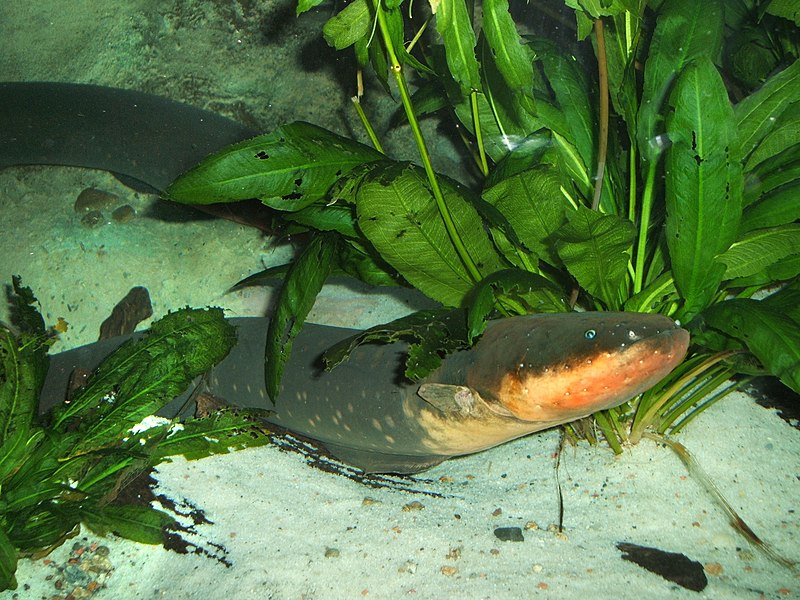
    Quote The electric eel (Electrophorus electricus) is an electric fish, and the only species of the genus Electrophorus. It is capable of generating powerful electric shocks of up to 600 volts, which it uses for hunting and self-defense. It is an apex predator in its South American range. Despite its name, it is not an eel, but rather a knifefish.
    Quote Telepathy or telepathically (from the ancient Greek τηλε, tele meaning "distant" and πάθη, pathe or patheia meaning "feeling, perception, passion, affliction, experience")[3][4] is the transmission of information from one person to another without using any of our known sensory channels or physical interaction. The term was coined in 1882 by the classical scholar Frederic W. H. Myers,[1] a founder of the Society for Psychical Research,[2] and has remained more popular than the earlier expression thought-transference.[2][5]
    Hello all!

    Not sure of exactly how to approach a huge topic like this one,
    but I wanted to start a thread to get people thinking about how life on earth absolutely revolves (and evolves!) around electrical interactions.

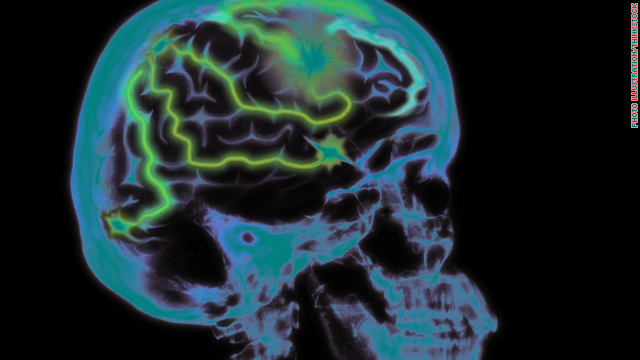
    Whether you are lifting your arm, winking your eye, or simply entertaining a daydream, electrical impulses are streaming through your body, from your brain to your muscles and organs and back, etc.!


    Now, when I Googled "how did electric eels evolve", the first thing I learned was that the animals aren't actually eels, lol. But needless to say, they generate an abnormally strong electrical charge that pretty much shoots out of their butt muscles into the water behind them. There is a hilarious thread on GLP that I don't recommend reading, but wanted to mention because the OP raised a very good question, "how did electric eels evolve and is that proof of creationism"?

    The wikis say, the animal evolved to deliver electric shock when the muscles in the tail lost the ability to provide mobility.


    I guess what I am wondering is, can this happen in brain tissue -- can human or animal brains evolve (like autism maybe?) toward the exclusion of some abilities in order to facilitate other ones?

    For example, a person who has epilepsy has abnormal discharges of energy in the brain. This could also be true of people in a psychotic state, as happens with diseases like bi-polar disorder.

    But what if -- and you know that this is a BIG IF -- what if some rare person out there in the world has evolved in such a way that these abnormal electrical impulses are actually beginning to accomplish something?

    There has to be some explanation for ESP and other paranormal phenomena, and starting with the study of electrical impulses seems to make sense.

    Some studies suggest that telepathy is not affected by a Faraday cage, however, and that would likely pop the bubble of my hypothesis if proven to be true.

    What do you guys think?
    Does raw electricity explain everything about science that we wonder about at night?

    I'd love to hear opinions/experiences/ideas/links!

    ~TWTCS

    http://www.cnn.com/2012/06/18/health...epilepsy-myths
    http://www.thenakedscientists.com/HT...question/1859/
    http://www.abovetopsecret.com/forum/thread892045/pg1
    http://en.wikipedia.org/wiki/Plant_p...on_(paranormal)
    http://www.autismspeaks.org/family-services/epilepsy

    "In order that the intensity of a sensation may increase in arithmetical progression, the stimulus must increase in geometrical progression." ~Gustav Fechner

    Quote The Society for Psychical Research (SPR) is a non-profit organisation in the United Kingdom. Its stated purpose is to understand "events and abilities commonly described as psychic or paranormal by promoting and supporting important research in this area" and to "examine allegedly paranormal phenomena in a scientific and unbiased way."[1] It does not however, since its inception in 1882, hold any corporate opinions: SPR members have a variety of beliefs or lack thereof about the reality and nature of the phenomena studied, and some sceptics have been active members of the Society.[2][3]

    ...The SPR gained a reputation for being scientific and highly critical. Mrs Salter recorded W. B. Yeats as saying "It's my belief that if you psychical researchers had been about when God Almighty was creating the world, he couldn't have done the job".[12]

    The SPR is frequently referred to in Victorian and Edwardian literature as "the Psychical Research Society". The term psychical was adopted to distinguish the purported phenomena from those classified as psychic, (that is simply mental processes such as thought, memory, etc.) and the SPR were to introduce a number of other neologisms which have entered the English language, such as 'telepathy', which was coined by Frederic Myers.[13]
    Quote The Odic force (also called Od [õd], Odyle, Önd, Odes, Odylic, Odyllic, or Odems) is the name given in the mid-19th century to a hypothetical vital energy or life force by Baron Carl von Reichenbach. Von Reichenbach coined the name from that of the Norse god Odin in 1845.[1]

    As von Reichenbach was investigating the manner in which the human nervous system could be affected by various substances, he conceived the existence of a new force allied to electricity, magnetism, and heat, a force which he thought was radiated by most substances, and to the influence of which different persons are variously sensitive.[2] He named this vitalist concept Odic force. Proponents say that Odic force permeates all plants, animals, and humans.[3]
    Last edited by Tesla_WTC_Solution; 15th May 2013 at 05:40.

  2. Link to Post #2
    United States Avalon Member william r sanford72's Avatar
    Join Date
    17th February 2013
    Location
    rural southcentral iowa
    Age
    53
    Posts
    2,977
    Thanks
    69,045
    Thanked 11,797 times in 2,871 posts

    Default Re: Electrical Anomalies in Nature, from Eels to ESP

    tha sanford tribe cant wear watches.we sometimes screw up electrical equip.by just touching them.we have shut down computers lights and gps etc.hope it isnt being discharged from our butt muscles!!!..cool thread tesla..and really good food for thought.
    TRUTH and BALANCE

  3. The Following 2 Users Say Thank You to william r sanford72 For This Post:

    seko (15th May 2013), Tesla_WTC_Solution (16th May 2013)

  4. Link to Post #3
    Avalon Member Carmody's Avatar
    Join Date
    19th August 2010
    Location
    Winning The Galactic Lottery
    Posts
    11,389
    Thanks
    17,597
    Thanked 82,374 times in 10,236 posts

    Default Re: Electrical Anomalies in Nature, from Eels to ESP

    There are threads on this forum that cover this subject.

    here's one:

    https://projectavalon.net/forum4/show...ans-have/page2
    Interdimensional Civil Servant

  5. The Following 3 Users Say Thank You to Carmody For This Post:

    seko (15th May 2013), Tesla_WTC_Solution (16th May 2013), william r sanford72 (15th May 2013)

  6. Link to Post #4
    France Avalon Member Flowerpunkchip's Avatar
    Join Date
    17th February 2011
    Location
    UK
    Posts
    316
    Thanks
    3,536
    Thanked 1,574 times in 286 posts

    Default Re: Electrical Anomalies in Nature, from Eels to ESP

    this all reminds me of this old fascinating video

  7. The Following 6 Users Say Thank You to Flowerpunkchip For This Post:

    Holly Lindin (27th June 2013), pine boy (16th May 2013), seko (16th May 2013), TargeT (16th May 2013), Tesla_WTC_Solution (16th May 2013), william r sanford72 (15th May 2013)

  8. Link to Post #5
    Unsubscribed
    Join Date
    20th November 2012
    Location
    gone
    Age
    42
    Posts
    4,873
    Thanks
    15,814
    Thanked 18,722 times in 4,284 posts

    Default Re: Electrical Anomalies in Nature, from Eels to ESP

    Thanks for the thread link and for that cool video!

    I was reading the Remote Viewing thread that someone else started today,
    and it got me rolling on Wikipedia some.

    Does anyone know what "narrow band electric field" is, and whether it can account for signals that penetrate human tissue without causing too much damage?
    I suppose it is possible that the military missed something that they assumed was an intrusion or flaw in their experiments.

    I read that narrow band can bypass a cell membrane and cause damage to the DNA, but that was at the MHZ level.

    What about other frequencies?

    Thanks to all!

    ~TWTCS

  9. Link to Post #6
    Avalon Member Carmody's Avatar
    Join Date
    19th August 2010
    Location
    Winning The Galactic Lottery
    Posts
    11,389
    Thanks
    17,597
    Thanked 82,374 times in 10,236 posts

    Default Re: Electrical Anomalies in Nature, from Eels to ESP

    wideband would be like many adjacent keys on a 88 key keyboard all being pushed at the same time, all those frequencies at once.

    narrow band is like only one key, only one frequency.

    Certain frequencies are capable of transmitting through materials and some other materials will stop the same said wave or frequency of wave.

    Thus, it may be possible to find a frequency (of electromagnetic waves) that transmits through most objects but might target and impact DNA.

    Most modern communications systems transmit and receive electromagnetic waves in certain fairly narrow bands. Whether or not this can impact DNA or cells in the body, or in what exact way, remains to be seen by medical research.

    As we well know, the stop sign only goes in at the given street corner..... after the child has been killed by a car. I've seen this exact all too real scenario - many times. Humans are lazy and reactive - not very progressive in their thinking. Unless they are being devious, in many cases.

    So don't expect any research into electromagnetic waves and people's health being affected..any time soon.

    The situation is exacerbated by the fact of there already being a few trillion dollars of cash flow that would be interfered with by any level of discovery in the considered medical and research fields.
    Last edited by Carmody; 16th May 2013 at 03:29.
    Interdimensional Civil Servant

  10. The Following 2 Users Say Thank You to Carmody For This Post:

    Tesla_WTC_Solution (16th May 2013), william r sanford72 (16th May 2013)

  11. Link to Post #7
    United States Avalon Retired Member
    Join Date
    27th April 2010
    Language
    English
    Age
    40
    Posts
    2,126
    Thanks
    4,589
    Thanked 14,768 times in 1,967 posts

    Default Re: Electrical Anomalies in Nature, from Eels to ESP

    Quote Posted by Tesla_WTC_Solution (here)
    can human or animal brains evolve (like autism maybe?) toward the exclusion of some abilities in order to facilitate other ones?
    Maybe we're talking apples and oranges, but yes I think so. You should check out that documentary on the real rainman. Can't think of his name but damn was he fascinating (RIP).

    Quote Posted by Tesla_WTC_Solution
    Does anyone know what "narrow band electric field" is, and whether it can account for signals that penetrate human tissue without causing too much damage?
    I suppose it is possible that the military missed something that they assumed was an intrusion or flaw in their experiments.

    I read that narrow band can bypass a cell membrane and cause damage to the DNA, but that was at the MHZ level.

    What about other frequencies?
    For the names narrow band, wide band and broad band (I know, I know) think of it like small wire, medium wire and big wire. The bigger the wire the more the power. For arguments sake, you could also think of it like small radio tower, medium radio tower and tall radio tower (/cell tower).

    Narrow, wide, and broad band (heard that one before haven't you) all permeate our beings. 100 years from now (if not sooner) this is going to be a serious problem. Tin foil hat problem.

    This problem is going to continue to snowball unless everyone collectively agrees that 4G will work fine. But that's like trying to tell everyone to settle with XBOX 360. Graphics will get better, better processors will be needed and more power will be needed to run all of this.
    Last edited by Strat; 16th May 2013 at 07:45.

  12. The Following 2 Users Say Thank You to Strat For This Post:

    Tesla_WTC_Solution (16th May 2013), william r sanford72 (16th May 2013)

  13. Link to Post #8
    Unsubscribed
    Join Date
    20th November 2012
    Location
    gone
    Age
    42
    Posts
    4,873
    Thanks
    15,814
    Thanked 18,722 times in 4,284 posts

    Default Re: Electrical Anomalies in Nature, from Eels to ESP

    Here guys, lol!
    this is why I asked about narrow band

    http://en.wikipedia.org/wiki/Remote_viewing

    UK government research [edit]

    In 2001–2002 the UK Government performed a study on 18 untrained subjects. The experimenters recorded the E field and H field around each viewer to see if the cerebral activity of successful viewings caused higher-than-usual fields to be emitted from the brain. However, the experimenters did not find any evidence that the viewers had accessed the targets in the data collection phase, the project was abandoned, and the data was never analyzed since no RV activity had happened. Some "narrow-band" E-fields were detected during the viewings, but they were attributed to external causes. The experiment was disclosed in 2007 after a UK Freedom of Information request.[21]

  14. Link to Post #9
    Unsubscribed
    Join Date
    20th November 2012
    Location
    gone
    Age
    42
    Posts
    4,873
    Thanks
    15,814
    Thanked 18,722 times in 4,284 posts

    Default Cancer-Sniffing Dolphins?

    Please read this amazing article on the ability of dolphins to detect illness in human beings.

    http://www.takepart.com/article/2013...ncer-in-humans


    Can Dolphins Really ‘Hear’ Human Tumors?

    A Florida woman says a dolphin saved her life by detecting her lung cancer—but is such a thing even possible?


    By David Kirby

    May 17, 2013


    Can dolphins detect cancer in people? To some scientists, it’s not even a legitimate hypothesis; and to many animal-rights activists, “swim-with-the-dolphin” cancer diagnostic centers would be no less objectionable than any other form of captivity.

    “Thank God to this little dolphin, Keppler. He saved my life,” Stoops says.

    But what if the rather far-fetched idea were true? What if we tested dolphins and discovered they can detect tiny tumors and abnormal growths in humans, perhaps even those missed by state-of-the-art technology? Instead of X-rays, MRIs and CAT scans, will patients one day be clamoring for cetacean-grams?

    Probably not. But I, for one, believe the hypothesis is plausible. Others are positively convinced it is fact, including Patricia Stoops of Panama City, Florida, who claims that a captive dolphin named Keppler saved her life after a chance meeting at a swim-with program in the Caribbean.

    Stoops was on a Carnival cruise in the British Virgin Islands when she eagerly signed up for the “dolphin excursion” on the island of Tortola.

    She and about 15 others entered the water as a group of captive dolphins approached them and began interacting as normal. But one dolphin, Keppler, took a keen interest in Stoops and refused to leave her alone.

    “He did a flip in front of me,” she told WJHG-TV news in Panama City. “He kept running into me and I explained to the trainer that the dolphin had hit me. He said, ‘Oh, that’s unusual.’ The dolphin trainer said the dolphin detected something wrong with me.”

    Stoops was taken aback by what the trainer’s said next: He asked if her trip was sponsored by the Make-A-Wish Foundation, to fulfill a final wish of swimming with dolphins.

    “He asked if I’d ever had cancer. I said, ‘no way!’ ” she said. In fact, she had never been healthier in her life. But, she would soon discover, that was not true.

    A week after returning home, Stoops noticed some pain in her chest. Thinking it had something to do with the dolphin encounter, she went to the doctor, who discovered a spot on her lung and diagnosed her with lung cancer. Now cancer free, she hopes to visit the animal in the fall.

    “Thank God to this little dolphin, Keppler. He saved my life,” Stoops says.

    Of course, the chain-of-events are likely coincidental, even though eerily similar, unverified accounts are posted online. Michael T. Hyson, Ph.D., research director at the Hawaii-based Sirius Institute, which advocates captive dolphins as therapy for people with autism and other disorders, writes about a dolphin named Dreamer possessed with seemingly miraculous abilities to heal and diagnose humans.

    “A woman swimming with Dreamer thought she had been rammed,” Hyson writes. “The woman was taken to hospital for examination. The woman had a large bruise. X-ray revealed that under the ribs, near the center of the bruised area, there was a small tumor. It is my feeling that Dreamer likely ‘zapped’ the tumor with a powerful sound pulse, perhaps to heal it, and the high intensity sound left bruising from hydrostatic shock. At the least, the bruising called medical attention to the tumor.”

    Meanwhile, “Dolphins have been known to detect certain types of cancer and pregnancy in some people,” WJHG reports, “But experts say there is no clinical research to back up those behaviors.

    There has been no research in this regard, though it would be fairly simple. Dolphins could be put in the water with people with various stages of cancer and healthy controls. You could have, say, 15 controls and one patient. If a dolphin displayed unusual behaviors around that person, it’s possible the animal detected something.

    Most experts I asked didn’t really know how to answer the question, “Is this possible?”

    Michael Miller, spokesman at the National Cancer Institute, tells TakePart that NCI “has never conducted research of this type and I don’t know of anyone we could point you to for more information.” A search of the published literature turns up nothing.

    Neuroscientist and dolphin expert Dr. Lori Marino of Emory University and The Kimmela Center for Animal Advocacy, rules out the idea.

    “This is all a coincidence and nothing more,” says Marino, an outspoken opponent of dolphinariums and other forms of captivity. “Despite the mythology, there is no evidence that dolphins can detect cancers and other diseases in the human body,” she says. “Why was the dolphin ramming the woman and getting excited? It could be for a number of reasons—agitation, play, but none of them show the dolphin detected the cancer.”

    There is evidence to suggest that dogs, and cats, can be trained to detect certain forms of cancer in the breath or urine of people, though the science on that is slim. “We are not aware of any convincing evidence to show that dogs can detect cancer in patients,” says Andrew Becker, director of media relations at the American Cancer Society.

    There are few published studies on dogs, cancer and diagnosis. A literature review published last year in an “effort to determine whether dogs have a role to play in modern health care as an alert tool or screening system for ill health,” especially cancer, seizures and hypoglycemia, highlighted “weaknesses in the work” and proposed “directions for future studies,” hardly a decisive conclusion.

    As for low blood sugar (hypoglycemia), in one study of 138 diabetes patients with dogs, 65.1 percent of respondents said their pet “had shown a behavioral reaction to at least one of their hypoglycemic episodes, with 31.9 percent of animals reacting to 11 or more events.”

    If dogs can detect human cancer, they do so with their keen sense of smell. But dolphins have little or no ability to smell. Underwater, their world is informed primarily by sound and electric waves.

    The ability of whales and dolphins to emit and receive high-frequency sounds, called echolocation, has long baffled and awed scientists. Even today, we do not fully understand the remarkable process, which literally lies outside our own brains’ ability to perform.

    I became fascinated by echolocation when researching Death at SeaWorld, a book about killer whales, the world’s largest dolphins.

    Dolphins have a sac atop their skulls called the “melon,” filled with a fine, waxy oil. They can manipulate nasal sacs behind their melon to make clicking noises, which sound like fingers running over a comb, and each last from one to five milliseconds. As I wrote in the book:


    Sound travels through water about four and a half times faster than air - around one mile per second. When each click pings off an object, part of the sound wave is sent back toward the dolphin, where it is received through fatty tissue located in the lower jaw. From there it is transmitted to the middle ear and the brain.


    Each click is exquisitely synchronized so that outgoing sounds do not interfere with incoming ones: each echo is received before the next sound is dispatched. The amount of time that lapses between a sound and its echo tells the dolphin how far away an object is. By sending and receiving a continuous string of clicks, all dolphins can follow moving objects (like food) and home in on them.

    The visual and auditory regions of dolphin brains are highly integrated, allowing them to construct visual images based on echoes. Their accuracy is astonishing.

    Dolphins can differentiate between objects with less than 10 percent difference in size, down to a few millimeters. They can do this in a noisy environment, even while vocalizing. And they can echolocate on near and distant targets simultaneously, something that boggles the imagination of human sonar experts. Even a modern supercomputer using thousands of times more energy could never produce such an accurate visual image based merely on the echoes of pings.

    For example, resident orca populations in the Pacific Northwest covet Chinook salmon, which are large and energy-rich. Thanks to echolocation, they can “distinguish a species of salmon by its size, or by echolocating inside the fish’s body to determine the dimensions of its air bladder,” I wrote in the book.

    Researchers wonder how female dolphins discover they’re pregnant, and some believe other dolphins detect the fetus through echolocation and communicate that to the mother. In killer whales, such information would be crucial for mothers to prevent sexually mature daughters from mating with the bulls who sired them.

    Even Marino agrees that, “There is some anecdotal evidence that dolphins may be able to detect pregnancy.” But, she adds, “in that case, it is plausible because they can use echolocation to examine a woman’s anatomy and determine if there is another body inside of her moving about. That is not the case with cancer and disease.”

    But maybe dolphins can “read” our electromagnetic waves, and tell if something is wrong. The new issue of Science News reports on the recently discovered ability of dolphins to sense electrical signals from other animals in the water, such as those emanating from heartbeats, muscle contractions or gills. Believed to be the only mammals capable of “electroreception,” dolphins are equipped with unusual sensory organs on their rostrums (snouts) called crypts that can detect electric impulses.

    One former dolphin researcher, who asked not to be identified because it’s sensitive, “and I put it in the highly suspect category,” did admit that cancer detection by cetaceans was “possible,” albeit through intelligent observation, not echolocation or electroreception.

    “If Make-a-Wish takes people down there, the dolphin could’ve figured out that some people get special treatment and attention from others, such as help in swimming, and decided to figure out what sets the special people apart,” my source said. “The dolphin may have made a game of seeing what is different about the swimmers, then pointing it out.”

    The ex-researcher, and many other cetacean activists, couldn’t justify captive dolphins for detecting human illness. I have not made up my mind. If I knew my mother might be saved through early detection by a dip with some dolphins, would I try to stop her? It’s a hypothetical topic for another day.

    We may never know if dolphins can “hear” our cancers. But we do know their echolocation is exquisite enough to copy. Researchers at Tel Aviv University are studying echolocation in bats, moles and dolphins to help develop sophisticated ultrasound machines for prenatal care and cancer detection.

    “But,” they caution in a press release, “when it comes to more accurate sonar and ultrasound, animals’ ‘biosonar’ capabilities still have the human race beat.”

  15. Link to Post #10
    United States Avalon Retired Member
    Join Date
    27th April 2010
    Language
    English
    Age
    40
    Posts
    2,126
    Thanks
    4,589
    Thanked 14,768 times in 1,967 posts

    Default Re: Electrical Anomalies in Nature, from Eels to ESP

    Interesting. I heard a story a while ago about a cat that would know if someone is about to die. It lived in a hospice, originally just to give some comfort and add to the homely feeling of the place. People noticed that this cat would hang out with people like 24 hours before they died - or something. It would detect this with extreme accuracy (I think 100%).

    And on another note, dolphins are just awesome. I was fishing last year and there were so many dolphins (in the river) that it was just incredible. I stopped fishing and just watched them. It's really neat to see them in the river and not in the ocean.

  16. The Following 2 Users Say Thank You to Strat For This Post:

    Tesla_WTC_Solution (19th May 2013), william r sanford72 (26th June 2013)

  17. Link to Post #11
    Unsubscribed
    Join Date
    20th November 2012
    Location
    gone
    Age
    42
    Posts
    4,873
    Thanks
    15,814
    Thanked 18,722 times in 4,284 posts

    Default Re: Electrical Anomalies in Nature, from Eels to ESP

    http://seattletimes.com/html/nationw...orpedoxml.html

    Originally published Saturday, May 18, 2013 at 4:49 PM

    Navy dolphins discover rare old torpedo off Calif. coast near Coronado

    The so-called Howell torpedo was discovered by bottlenose dolphins being trained by the Navy to find undersea objects, including mines, that not even billion-dollar technology can detect.

    By Tony Perry

    Los Angeles Times

    SAN DIEGO — In the ocean off Coronado, a Navy team has discovered a relic worthy of display in a military museum: a torpedo of the kind deployed in the late 19th century, considered a technological marvel in its day.

    But don’t look for the primary discoverers to get a promotion or an invitation to meet the admirals at the Pentagon — although they might get an extra fish for dinner or maybe a pat on the snout.

    The so-called Howell torpedo was discovered by bottlenose dolphins being trained by the Navy to find undersea objects, including mines, that not even billion-dollar technology can detect.

    “Dolphins naturally possess the most sophisticated sonar known to man,” said Braden Duryee of the Space and Naval Warfare Systems Center Pacific.

    While not as well known as the Gatling gun and the Sherman tank, the Howell torpedo was hailed as a breakthrough when the U.S. was in heavy competition for dominance on the high seas. It was the first torpedo that could truly follow a track without leaving a wake and then smash a target, according to Navy officials.

    Only 50 were made between 1870 and 1889 by a Rhode Island company before a rival copied and surpassed the Howell’s capability. Until recently only one Howell torpedo was known to exist, on display at the Naval Undersea Museum in Keyport in Kitsap County. Now a second has been discovered, not far from the Hotel del Coronado.

    Meant to be launched from above the water or submerged torpedo tubes, the Howell torpedo was made of brass, 11 feet long, driven by a 132-pound flywheel spun to 10,000 rpm before launch. It had a range of 400 yards and a speed of 25 knots. Its specifications seem primitive today, but in the late 1800s, it was a leap forward in military armament.

    “Considering it was made before electricity was provided to U.S. households, it was pretty sophisticated for its time,” said Christian Harris, operations supervisor for the biosciences division at the Systems Center Pacific.

    Marine mammals have been trained at the Navy’s Point Loma facility since the 1960s.

    Several species were tested before the Navy settled on the bottlenose dolphin and the California sea lion. Dolphins, in particular, have deep and shallow diving capability, great eyesight and a biosonar system that scientists admire but don’t fully understand.

    At the Point Loma facility, 80 dolphins and 40 sea lions are being trained for mine detection, mine clearing and swimmer protection. When the U.S. led an invasion of Iraq in 2003, dolphins were rushed to the Persian Gulf to patrol for enemy divers and mines. Dolphins guard U.S. submarine bases in Georgia and Washington state.

    To train the dolphins, Navy specialists sink objects in various shapes in rocky and sandy undersea areas where visibility is poor. The shapes mimic those of the mines used by U.S. adversaries.

    A dolphin is then ordered to dive and search. If it finds something, it is trained to surface and touch the front of the boat with its snout. If it has found nothing, it touches the back of the boat.

    When a dolphin named Ten surfaced from a shallow-water dive last month and touched the front of the boat, Navy specialists were nonplused. “It went positive in a place we didn’t expect,” said Mike Rothe, who heads the marine mammal program.

    A week later, a dolphin named Spetz did the same thing in the same area. This time, the dolphin was ordered to take a marker to the object. Navy divers and then explosive-ordnance technicians examined the object, which was in two pieces, and determined that the years had rendered it inert. On one piece was the stamp “USN No. 24.”

    “We’ve never found anything like this,” said Rothe, his voice full of admiration for the marine mammals. “Never.”

  18. Link to Post #12
    Unsubscribed
    Join Date
    20th November 2012
    Location
    gone
    Age
    42
    Posts
    4,873
    Thanks
    15,814
    Thanked 18,722 times in 4,284 posts

    Default Re: Electrical Anomalies in Nature, from Eels to ESP

    http://www.livescience.com/21196-dol...elligence.html

    Article:
    Dolphin Genes Hold Clues to Animal Intelligence
    Jennifer Welsh, LiveScience Staff Writer
    Date: 26 June 2012 Time: 07:01 PM ET

    Evolution-wise, bottlenose dolphins have left their mammalian brothers in the dust, and new research is showing what genes they changed to do it. These genes include those involved in brain and metabolism.

    These changes could be why dolphins are known to be exceptionally smart, able to use tools, recognize themselves and even communicate with each other and with trainers.

    "We are interested in what makes a big brain from a molecular perspective," study researcher Michael McGowen, of Wayne State University School of Medicine in Michigan, told LiveSCience. "We decided to look at genes in the dolphin genome to see if there are similarities in the genes that have changed on the dolphin lineage and those that have changed on the primate lineage."

    The researchers compared about 10,000 genes from the bottlenose dolphin with nine other animals. (These included the cow, horse, dog, mouse, human, elephant, opossum, platypus and chicken — cows being the dolphin's closest relatives with a sequenced genome.)

    By studying its mutations, they pinpointed which genes were "evolving" or what scientists call "being selected for" — genes that underwent changes and were passed on to future generations of dolphins — by comparing them to the analogous genes from the other species. If a dolphin gene has more protein-changing mutations than the cow version, for instance, that means it was actively evolving in the dolphin population at some time. [Animal Code: Our Favorite Genomes]

    Brain changes

    More than 200 of the genes in their survey were drastically changed in the dolphins. Twenty-seven of these were involved in the nervous system (like the brain and sensory organs). There were also many changes in the genes related to metabolism (similar to changes seen in primates), which McGowen said are important because, "brain tissue uses much more energy than other tissues."

    While we know these genes are associated with the brain, and this study says the genes are different in smarter animals, the researchers caution against linking them directly. Differences in the gene's "code" doesn't mean the gene actually acts any differently in the animal.

    "We may not know exactly what they do yet even in humans or mice (the two most well-characterized mammals from a genetic perspective), much less dolphins; however, their function in the brain points to their importance," McGowen said. "Probably, changes in these genes could have led to the amazing cognitive capacity seen in dolphins — it definitely points in that direction."

    Set apart

    Unexpectedly, the researchers also saw that the dolphins were evolving more slowly than some of the other animals, a trait also seen in other mammals with big brains.

    "Over time (since the split between dolphins and cows about 70 million years ago), we observe many more mutations or changes in the DNA along the cow branch (and indeed horse and dog branches) than we do along the dolphin branch," McGowen told LiveScience in an email. "This is exactly what we see in primates and elephants."

    This is probably because these animals are using a different life-history approach — investing more in their offspring, but having fewer babies — which leads to slower evolution.

    "It is striking that we see such similar molecular rates between all of these lineages and they have all such comparative large brains," McGowen said of the dolphins and primates.

    The research is detailed in the June 27 issue of the journal Proceedings of the Royal Society B: Biological Sciences.

    Follow Jennifer Welsh on Twitter @microbelover or LiveScience @livescience. We're also on Facebook & Google+.
    _________________________________________________________________________________________

    http://news.discovery.com/animals/wh...ain-120626.htm

    Whales & Dolphins
    Dolphins, Humans Share 'Brainy' Genes
    Jun 26, 2012 03:00 AM ET // by Jennifer Viegas


    THE GIST

    - Genetic similarities exist between dolphins, humans and other brainy animals.

    - The similarities could help to explain why cetaceans, humans, non-human primates and elephants all have such big brains along with complex cognition.

    - A high metabolic rate and other changes to energy usage in the body likely preceded the evolution of big brains in animals.

    A close look at the dolphin genome reveals striking similarities between dolphins and humans.

    The new study, published in the latest Proceedings of the Royal Society B, suggests that certain genetic features have led to the convergent evolution of large brains and complex cognition in a handful of species, including dolphins and humans.

    "It has long been realized that dolphins rank among the most intelligent mammals, and they can do many things that great apes can do such as mirror self-recognition, communication, mimicry, and cultural transmission," lead author Michael McGowen told Discovery News, adding that dolphin brains are also "distinct and different."

    McGowen is a researcher in the Center for Molecular Medicine and Evolution at Detroit's Wayne State University School of Medicine. He and colleagues Lawrence Grossman and Derek Wildman compared approximately 10,000 protein coding genes culled from the dolphin genome with comparable genes from 9 other animals: a cow, horse, dog, mouse, human, elephant, opossum, platypus and chicken. Out of that group, cows are most closely related to dolphins. The two animals are separated by 70 million years of history, however.

    Similarities immediately became evident between dolphins, humans and elephants. All are animals known for their big brains and intelligence.

    First, the scientists determined that the big brained trio have genes supporting a slow molecular rate. McGowen explained that this feature "has been connected to mammals with similar life histories, such as species with large generation times, large parental investment, and small effective population size. It happens that many of these species also have large brains, such as apes, elephants and cetaceans."

    The researchers also found that these brainy animals had an adaptive evolution of their nervous system genes, proving that quality and not just quantity is important. In other words for brain function, size isn't everything. McGowen said that, in the brain, "folding, number of synapses, ratio of white matter to gray matter," and other factors appear to be predictable measures of intelligence.

    The scientists also identified molecular signatures of metabolic evolution. This leads to a chicken and egg-type question: Which came first, the big brain or the changes to metabolism?

    McGowen believes the latter evolved first.

    "The big brain needs fuel, so we would guess that the changes to metabolism enabled the evolution of a big brain," he explained. "It's interesting that we are seeing the same modifications to the same groups of genes in lineages with large brains—primates, cetaceans, elephants. These include metabolic genes that provide the fuel for a brain, seeing as nervous tissue requires a lot more energy than other cells."

    How Stuff Works: Dolphins

    Dolphins additionally were discovered to have genes involved in human intellectual disorders and sleep. The former strongly suggests that those same genes are tied to intelligence, and "could be involved in the amazing cognitive capacity of dolphins," McGowen said.

    As for sleep, the scientists found that a particular gene shared with humans and involved in wakefulness is altered in dolphins.

    "Dolphins have an unusual form of sleep, in which only one side of the brain goes to sleep at a time, and during this state they continue to swim and have some awareness," he said. "This is exciting that we found a gene that could be related to this unusual distinctive feature."

    All of these findings could strengthen the claim that dolphins are the world's second most intelligent animals.

    "If we use relative brain size as a metric of 'intelligence' then one would have to conclude that dolphins are second in intelligence to modern humans," Lori Marino, Lori Marino, a senior lecturer in neuroscience and behavioral biology at Emory University, told Discovery News.

    The findings about elephants might also help to explain why these big-brained pachyderms sometimes outwit humans who are trying to study them. Elephants often figure out tasks quickly, ignore human rules, and then cheat to earn the maximum food rewards.

  19. Link to Post #13
    Unsubscribed
    Join Date
    20th November 2012
    Location
    gone
    Age
    42
    Posts
    4,873
    Thanks
    15,814
    Thanked 18,722 times in 4,284 posts

    Default Re: Electrical Anomalies in Nature, from Eels to ESP

    There is a Starbucks petition going around the internet where 10,000 people's signatures will go to President Obama,

    re: ocean-based seismic experiments that will leave whales and dolphins deaf or worse.

    it's not fair to deprive a sentient species of the ability to communicate or think...

  20. Link to Post #14
    Unsubscribed
    Join Date
    20th November 2012
    Location
    gone
    Age
    42
    Posts
    4,873
    Thanks
    15,814
    Thanked 18,722 times in 4,284 posts

    Default Re: Electrical Anomalies in Nature, from Eels to ESP

    "Psychic" Orcas Recognize Boat Carrying Chief Seattle's Tribal Artifacts

    you guys should love this one -- it's thread-worthy but I didn't want to start 10,000,000 threads in one day:

    http://seattletimes.com/html/localne...prmid=obinsite

    Originally published October 31, 2013 at 12:01 PM | Page modified November 1, 2013 at 11:10 AM

    Puget Sound orcas circle ferry carrying artifacts

    By DOUG ESSER
    Associated Press

    A large pod of orcas swam around a Washington state ferry in an impressive display as it happened to be carrying tribal artifacts to a new museum at the ancestral home of Chief Seattle, and some people think it was more than a coincidence.

    Quote SEATTLE —

    A large pod of orcas swam around a Washington state ferry in an impressive display as it happened to be carrying tribal artifacts to a new museum at the ancestral home of Chief Seattle, and some people think it was more than a coincidence.

    Killer whales have been thrilling whale watchers this week in Puget Sound, according to the Orca Network, which tracks sightings.

    But they were especially exciting Tuesday when nearly three-dozen orcas surrounded the ferry from Seattle as it approached the terminal on Bainbridge Island. On board were officials from The Burke Museum in Seattle who were moving ancient artifacts to the Suquamish Museum.

    The artifacts were dug up nearly 60 years ago from the site of the Old Man House, the winter village for the Suquamish tribe and home of Chief Sealth, also known as Chief Seattle. The Burke, a natural history museum on the University of Washington campus, is known for Northwest Coast and Alaska Native art.

    Also on board the state ferry was Suquamish Tribal Chairman Leonard Forsman who happened to be returning from an unrelated event. As the ferry slowed near the terminal, it was surrounded by the orcas, Forsman said Wednesday.

    "They were pretty happily splashing around, flipping their tails in the water," he said. "We believe they were welcoming the artifacts home as they made their way back from Seattle, back to the reservation."

    The killer whales have been in Puget Sound feeding on a large run of chum salmon, he said.

    "We believe the orcas took a little break from their fishing to swim by the ferry, to basically put a blessing on what we were on that day," he said.

    Forsman believes there's a spiritual tie between the tribe and the orcas. "They are fishermen like we are," he said.

    It was an auspicious arrival for about 500 artifacts that The Burke Museum had held for nearly 60 years, Suquamish Museum Director Janet Smoak said.

    They include tools, decorative items and bits of bone and rock that date back 2,000 years.

    The Old Man House -- the largest known longhouse on the Salish Sea -- was located at Suquamish on the shore of Agate Passage, about 13 miles northwest of Seattle. Chief Sealth, for whom Seattle is named, is buried there.

    The longhouse was burned down by the U.S. government in the late 1800s. The artifacts were collected by a University of Washington archaeological investigation in the 1950s, according to the Burke museum.

    In 2012, the tribe completed its new museum, which includes a climate controlled environment. The artifacts will be displayed to illustrate Suquamish culture in an exhibit called Ancient Shores Changing Tides.

    Everyone was talking about the orcas at the Tuesday museum blessing ceremony and feast, Smoak said.

    "Everyone was really excited and moved by the event," she said.

    The orcas, identified from their markings as members of the J and K pods, were seen this week along several routes between the Seattle area and the west side of Puget Sound, according to Howard Garrett of the Orca Network at Freeland.

    He thought their intersection with the ferry carrying tribal artifacts was uncanny.

    "I can't rule out somehow they could pick up on the mental energy that there is something special there. Or it could be a coincidence," he said. "I don't know."
    _________________________________________________________

  21. Link to Post #15
    United States Avalon Member gripreaper's Avatar
    Join Date
    2nd January 2011
    Posts
    3,979
    Thanks
    9,625
    Thanked 29,694 times in 3,744 posts

    Default Re: Electrical Anomalies in Nature, from Eels to ESP

    This is as real as it gets, to illustrate subtle energies and the connectedness of all life. Chief Seattle and the indigenous tribes of the Northwest are paramount in this display from the Orcas.

    "Lay Down Your Truth and Check Your Weapons
    The Next Voice You Hear Will Be Your OWN"
    https://www.youtube.com/watch?v=IhS69C1tr0w

  22. The Following 2 Users Say Thank You to gripreaper For This Post:

    Alekahn2 (4th November 2013), Tesla_WTC_Solution (2nd November 2013)

Tags for this Thread

Posting Permissions

  • You may not post new threads
  • You may not post replies
  • You may not post attachments
  • You may not edit your posts