+ Reply to Thread
Page 2 of 2 FirstFirst 1 2
Results 21 to 32 of 32

Thread: Ancient Aliens: Mysterious Places (Season 2: Episode 1)

  1. Link to Post #21
    Portugal Avalon Retired Member
    Join Date
    11th July 2010
    Location
    Planet Earth
    Posts
    2,322
    Thanks
    1,009
    Thanked 3,776 times in 1,173 posts

    Default Re: Ancient Aliens: Mysterious Places (Season 2: Episode 1)

    See the relation with MAAT the goodess of egipt that is present in the jugment of the soul...that's the «Adjuster of consciousness» of each person(soul/conscience).


    Last edited by MariaDine; 12th December 2010 at 16:03.

  2. Link to Post #22
    Portugal Avalon Retired Member
    Join Date
    11th July 2010
    Location
    Planet Earth
    Posts
    2,322
    Thanks
    1,009
    Thanked 3,776 times in 1,173 posts

    Default Re: Ancient Aliens: Mysterious Places (Season 2: Episode 1)

    The Feather symbol of the spirit/soul and with the feather one writes life in each person 's «Book of Life».


    According to ancient Egyptians, humans require a specialized body of knowledge to prepare for and survive in the afterlife. The Egyptian Book of Life (often mistakenly translated as "The Book of the Dead") is the only living record of the twofold mystery of life and death.

    There is an accurate and complete translation, Ramses Seleem emphasizes The Egyptian Book of Life's vitality and relevance. Accompanied by fascinating commentary that places the work in historical and religious context and featuring superb computer-generated renditions of hieroglyphics from a unique program of the author's own design, this guide offers prayers, breathing meditations, and other interactive techniques that draw the reader fully into the spiritual experience.
    Last edited by MariaDine; 12th December 2010 at 17:10.

  3. The Following User Says Thank You to MariaDine For This Post:

    Deega (12th December 2010)

  4. Link to Post #23
    Portugal Avalon Retired Member
    Join Date
    11th July 2010
    Location
    Planet Earth
    Posts
    2,322
    Thanks
    1,009
    Thanked 3,776 times in 1,173 posts

    Default Re: Ancient Aliens: Mysterious Places (Season 2: Episode 1)

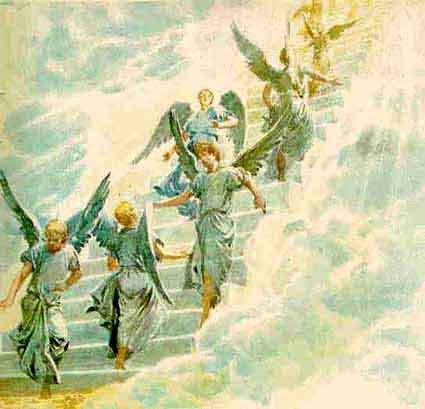
    The ladder. That is also a symbol. Although one can make conexions with «Alien ships»... it is an ascension symbol for the soul.


  5. The Following User Says Thank You to MariaDine For This Post:

    Deega (12th December 2010)

  6. Link to Post #24
    Portugal Avalon Retired Member
    Join Date
    11th July 2010
    Location
    Planet Earth
    Posts
    2,322
    Thanks
    1,009
    Thanked 3,776 times in 1,173 posts

    Default Re: Ancient Aliens: Mysterious Places (Season 2: Episode 1)


    [/COLOR]
    Last edited by MariaDine; 12th December 2010 at 17:49.

  7. Link to Post #25
    Portugal Avalon Retired Member
    Join Date
    11th July 2010
    Location
    Planet Earth
    Posts
    2,322
    Thanks
    1,009
    Thanked 3,776 times in 1,173 posts

    Default Re: Ancient Aliens: Mysterious Places (Season 2: Episode 1)


    Genies are all toguether a diferrent thing. Beings from a close earth dimension.

  8. Link to Post #26
    Portugal Avalon Retired Member
    Join Date
    11th July 2010
    Location
    Planet Earth
    Posts
    2,322
    Thanks
    1,009
    Thanked 3,776 times in 1,173 posts

    Default Re: Ancient Aliens: Mysterious Places (Season 2: Episode 1)

    For the Chinese DJINN / Genie ............is a supernatural or immortal being, anyone who is lighthearted in nature. Any incorporeal supernatural being that can become visible (or audible) to human beings).

    So one must be carefull with the same/similar names in diferent cultures.


    Domain category:

    Islam; Islamism; Mohammedanism; Muhammadanism; Muslimism (the monotheistic religious system of Muslims founded in Arabia in the 7th century and based on the teachings of Muhammad as laid down in the Koran)

    Hyponyms (each of the following is a kind of "genie"):

    shaitan; shaytan ((Islam) a rebellious jinni who leads men astray)

    eblis ((Islam) the principal evil jinni in Islamic mythology)
    Last edited by MariaDine; 12th December 2010 at 16:41.

  9. Link to Post #27
    Portugal Avalon Retired Member
    Join Date
    11th July 2010
    Location
    Planet Earth
    Posts
    2,322
    Thanks
    1,009
    Thanked 3,776 times in 1,173 posts

    Default Re: Ancient Aliens: Mysterious Places (Season 2: Episode 1)

    http://www.philipcoppens.com/metal_libr.html

    The Quest For The Metal Library

    A system of tunnels and caves beneath Ecuador and Peru is reputed to hold an ancient treasure-house of artefacts including two libraries, one containing inscribed metal books and the other storing tablets of crystal.

    Philip Coppens


    --------------------------------------------------------------------------------

    It's not what you know, but who you know. In 1973, Erich von Däniken, at the height of his fame following the success of Chariots of the Gods?, claimed that he had entered into a gigantic subterranean tunnel system in Ecuador, which he was told spanned the length of the continent—surely evidence that our ancestors were highly advanced, if not extraterrestrial? The structure was believed to house a library in which books were made out of metal—this in an area where today there is nothing but "primitive" Indian tribes with no written language. Evidence of a lost civilisation? It was a major claim, and it did not go unchallenged.

    Neil Armstrong, inside the Tayos Cave, 1976 - SEEFOTOS on the LINK

    The story centred around Janos "Juan" Moricz, an aristocratic Argentinian-Hungarian entrepreneur who claimed that he had discovered a series of tunnels in Ecuador that contained a "Metal Library". In a signed affidavit dated 8 July 1969, he spoke about his meeting with the Ecuadorian president, where he received a concession that allowed him total control over this discovery—provided he could produce photographic evidence and an independent witness that corroborated the discovery of the underground network. Newspapers reported on the expedition that Moricz had organised.
    In 1972, Moricz met with von Däniken and took him to a secret side-entrance through which they could enter into a large hall within the labyrinth. Apparently von Däniken never got to see the library itself, just the tunnel system. Von Däniken included the event in his book The Gold of the Gods:
    "The passages all form perfect right angles. Sometimes they are narrow, sometimes wide. The walls are smooth and often seem to be polished. The ceilings are flat and at times look as if they were covered with a kind of glaze… My doubts about the existence of the underground tunnels vanished as if by magic and I felt tremendously happy. Moricz said that passages like those through which we were going extended for hundreds of miles under the soil of Ecuador and Peru."

    However, one of the world's potentially biggest discoveries soon turned sour. Journalists from the German publications Der Spiegel and Stern interviewed Moricz, who now denied ever having been in the cave with von Däniken. It undermined von Däniken's credibility (though some would argue he had none to begin with), branding him a liar.
    For many, the incident proved that von Däniken was a fabricator of lies—a much more damaging assertion than being known to make outlandish claims that the gods were ancient astronauts. No one pointed out that if von Däniken had been lying, he would not have left such an easy trail to Moricz. He could have claimed that he could not reveal his source, and Der Spiegel and Stern would have been none the wiser. Instead, it seemed that something was amiss with Moricz, who had landed von Däniken in an international controversy from which his career never really recovered.

    There are several oddities with this story. First, Moricz merely denied having taken von Däniken there; the existence of the network itself he did not deny. In Der Spiegel, 19 March 1973, we can read:
    Der Spiegel: "How did you discover the [metal] library?"
    Moricz: "Somebody took me there."
    Der Spiegel: "Who was this guide?"
    Moricz: "I can't tell you."
    Moricz further stated that the library was guarded by a tribe.
    So, in short, Moricz claimed to von Däniken that he had discovered caves, and he showed these to him. Now he claimed to have seen the caves, led there by a guide whom he could not identify, but denied having taken von Däniken there.
    The logical conclusion seemed to be that Moricz had shown something to von Däniken, was now caught by the fact that everyone seemed to know that he had done so, and had to make sure that whoever had shown him did not bear any grudges against Moricz, no doubt because Moricz himself would most likely have been asked not to show anyone else the site.

    A small step for Armstrong, a major step for mankind

    By 1975, the story had killed the career of one notorious author, so who would dare to tread in his footsteps? The answer: Neil Armstrong, the first man on the Moon—or rather, a Scotsman who wanted to change the precarious status quo in which the Metal Library controversy had found itself.
    Stanley ("Stan") Hall had read von Däniken's book and subsequently befriended Moricz. The latter confirmed that he had met von Däniken in 1972 and had taken the Swiss author from Guayaquil to Cuenca, where they met Padre Carlos Crespi and saw his collection of enigmatic artefacts. There was insufficient time to take von Däniken to the "true location", so instead they decided to show him a small cave some 30 minutes from Cuenca, claiming it connected to the network. This seemed to clear up the von Däniken–Moricz controversy, but not the Metal Library itself.

    Gastón Fernández inside the Tayos Cave, 1969

    Where was it? Moricz's 1969 expedition had ventured into the Cueva de los Tayos, which Moricz identified as the cave that led into the Metal Library. But in 1969, no Metal Library had been uncovered. So Hall decided to organise an Ecuadorian–British expedition that would explore the Cueva de los Tayos; it would be a purely scientific expedition.

    I had met Stan Hall a few times over the course of a decade, without knowing that the person I was speaking to was Stan Hall. He was a member of the audience at the Scottish Saunière Society conferences. Stan blends into the background and is unlikely, if not unwilling, to stand out. It's by pure accident that I found out I knew Stan Hall—the Stan Hall, who furthermore lives nearby… It provided me with an opportunity to get a personal perspective on this story, and one I was willing to take with both hands.
    Originally set up to take place in 1977, the 1976 expedition occurred at a time when von Däniken's public profile had been damaged by Moricz—and Hall was apparently about to endorse Moricz's claim. It left von Däniken feeling wary about Hall for more than 20 years, until both men realised they were kindred spirits rather than mortal enemies.
    Why did he do it? Hall wanted to create a framework: if there was indeed a Metal Library of a lost civilisation, the first step would be to map the site. That was the main and only goal of the expedition; there was no treasure-seeking. Hall used his professional expertise to create a three-week exploration of this famous cave: a joint venture of the British and Ecuadorian armies, supported by a team of geologists, botanists and other specialists.

    How did Neil Armstrong get involved? "The expedition needed an honorary figurehead," Stan Hall said. "The name of Prince Charles, who had recently received a degree in archaeology, was proposed, but I knew Neil Armstrong had Scottish connections. My mother was an Armstrong and via another Armstrong in Langholm, where Neil Armstrong had been made an honorary citizen, I made contact. Months later, I got a reply that Neil Armstrong was more than willing to join us on this mission. It's when the expedition suddenly became a life's challenge."
    On 3 August 1976, when the expedition was winding down, Armstrong entered the tunnel system. Even though they were not looking for it, the team members did not stumble upon a Metal Library. Had they done so, the discovery would have altered mankind's perspective on our history and origins. For Amstrong, it could have been his second great contribution to mankind's exploration. However, the team did catalogue 400 new plant species as well as a burial chamber inside the cave, in which a seated body was found. The chamber was later dated to 1500 BC, and it was believed that at the time of the summer solstice the sun illuminated this tomb.
    The story had gone from ancient astronauts to astronaut par excellence, but what would be the next step?

    The third man

    Stan Hall with Petronio Jaramillo 1996

    Everyone and everything had revolved around Juan Moricz, but in retrospect he was the wrong centre of the universe. From 1969 until 1991, the year he died, the Metal Library eluded him. So what next?
    That Moricz was not the originator of the story was clear, as von Däniken himself noted on page 53 of his book. In the 1973 interview with Der Spiegel, Moricz confirmed that an unnamed person had shown him the cave. But who was this person?
    After Moricz died, Hall decided to track down this "third man", who had disappeared into the shadows. Hall had a name—Petronio Jaramillo—but nothing more.
    "Moricz died in February 1991," said Hall. "I had a name and a telephone directory. But there were an awful lot of Jaramillos in Quito. Finally, I found him—or, rather, his mother. It was September 1991 when she gave me the phone number of her son. I phoned him. He told me that it had taken 16 years before our paths crossed. He was willing to meet me, and stated that he needed three days to fill me in."

    Jaramillo confirmed that when Moricz arrived in Guayaquil in 1964, he teamed up with lawyer Dr Gerardo Peña Matheus. Moricz told Matheus of his theory about how Hungarian people have been at the root of practically every civilisation. Through acquaintances, Andres Fernandez-Salvador Zaldumbide and Alfredo Moebius, Moricz met Jaramillo in Moebius's house, and from there Moricz ran with Jaramillo's story. Hall was annoyed with himself, for various people had tried to direct him towards Jaramillo as early as 1975, but it took until 1991 before the two met.
    Jaramillo and Hall realised that had it not been for Moricz, who focused attention on the Cueva de los Tayos (which was not the actual location of the library), the 1976 expedition could have resulted in the discovery of the century—and what a track record for Armstrong it would have been! But it's a two-edge sword because, had it not been for Moricz, the story would never have come about like this. And today, Hall's biggest desire—if he were able to turn back time—is to sit down at one table with both Moricz and Jaramillo. At the same time, he realises that Moricz had been intent from the beginning that the Metal Library would be his legacy. When Hall showed Moricz a manuscript about the 1976 expedition, Moricz point-blank refused to return it. It ended their friendship, but Hall never understood why until 1991, when he realised that the manuscript mentioned Jaramillo. It was a name Moricz did not want to see published—as he had confirmed in the 1973 German newspaper interview. Moricz was incredibly stubborn and, equally, incredibly loyal, but obviously was the wrong man and was sadly mistaken if he thought he could ever pull off the discovery of the century.

    Subterranean treasures

    Jaramillo and Hall became friends, though both agreed Jaramillo would not prematurely reveal the location of the site. Still, he was willing to talk in detail about its contents and any other aspect Hall wanted to discuss.
    From Jaramillo, Hall was able to learn the true story of the Tayos library—which was not in the Cueva de los Tayos at all! Jaramillo stated that he had entered the library in 1946, when he was 17 years old. He was shown it by an uncle, whose name has gone unrecorded but who was known as "Blanquito Pelado" (a loving description of the man's appearance). He was apparently on friendly terms with the local Shuar population, who invited him to see a secret in gratitude for the kindness and goodness he had shown towards the tribe.

    Stan Hall with Neil Armstrong during the 1976 expedition

    Jaramillo entered the system at least once after that. On that occasion, he saw a library consisting of thousands of large, metal books stacked on shelves, each with an average weight of about 20 kilograms, each page impressed from one side with ideographs, geometric designs and written inscriptions. There was a second library, consisting of small, hard, smooth, translucent—what seemed to be crystal—tablets, grooved with parallel encrusted channels, stacked on sloping shelves of trestled units covered in gold leaf. There were zoomorphic and human statues (some on heavy column plinths), metal bars of different shapes, as well as sealed "doors"—possibly tombs—covered in mixtures of coloured, semi-precious stones. There was a large sarcophagus, sculpted from hard, translucent material, containing the gold-leafed skeleton of a large human being. In short, an incredible treasure, stored away as if hidden in preparation for some upcoming disaster.
    On one occasion, Jaramillo took down seven books from the shelves to study them, but their weight prevented him from replacing them. It also meant that they were too heavy to remove from the library and reveal to the world. Jaramillo never produced any physical evidence for his claims, which may explain why he wanted to live in the shadows of this story.
    Hall did ask him why he never took photographs. "He said that it would not prove anything." Other discoveries, such as the infamous Burrows Cave in the United States, prove that seeing actually isn't believing. Still, Jaramillo stated that he had left his initials in these seven books so that, if the library were ever discovered, it could be proved that it was he who had entered it.

    Expedition plans and setbacks

    Jaramillo and Hall wanted to combine forces to see whether the Metal Library could be opened; one knew the location, the other had a proven track record in organising proper expeditions. It would be the "expedition of occupation".
    First, contact with various ambassadors and politicians was established; then the scientific community was brought in. The plan was for Jaramillo to lead the team to the site, where they would remain for a period of three to four months (during the dry season), cataloguing the contents of the site and guaranteeing that nothing went missing. Everything would remain in situ. A report with recommendations would be the only outcome of this expedition, which would involve UNESCO. But in 1995, Peruvian jets bombed an Ecuadorian military base and the project had its first setback.
    In 1997, Hall used a major anthropology conference to promote the idea. Six anthropologists came to meet him, interested in what he was trying to accomplish. But that same year, Ecuador's political regime changed (in Hall's opinion, for the worse); Hall felt that his family could not live in the new political reality, so he moved back to Scotland with them. (Shortly afterwards, our paths would cross anonymously). This was nevertheless not a setback; planning for the expedition continued.
    However, it was in 1998 that the expedition had a major setback. Hall received by telephone the sad news from the mother of Petronio Jaramillo that he had been assassinated. Was he murdered because of the plans that were afoot? Life in South America is cheap, as anyone who has visited or lived there knows. That day, Jaramillo was carrying a large amount of money on him. It was a street robbery, close to his home. Random violence stopped one of the world's biggest discoveries dead in its tracks.
    It seems that fate only allowed for Jaramillo and Hall to meet, but never to work together—as if their combined efforts would break the spell of the cave and turn a dream into a reality.

    Location, location, location

    Moricz and Jaramillo had both died. Hall was in his sixties. Would he go it alone and claim the Metal Library for himself? Hall isn't a treasure-seeker. He emphasises that the region is a—if not the—veritable El Dorado. There is gold everywhere; the roads are quite literally paved with it. Even if the library books are made out of gold—though Jaramillo never spoke of gold but of "metal" (in fact, it seems copper was an ingredient, as Jaramillo had seen a green colour on the books)—there is more gold outside the library than inside. The presence of Moricz in the region was because he held extensive gold concessions; his interest in the library was not for its monetary value but for its historic importance.
    Still, various treasure-hunters in the past had tried to open the cave. Count Pino Turolla made contact with Jaramillo in the 1960s through the same channels that later brought Moricz to him. Turolla was obsessed with Cayce's Hall of Records, and the Metal Library would be absolute proof of Cayce's prophecies. But Turolla's attitude and sense of organisation meant that the two never got along. Turolla pressed Jaramillo for details that the latter was unwilling to offer. So Turolla opted to search around the Cueva de los Tayos and came up empty-handed.
    The most active Indiana Jones today is Stan Grist, who also knew Juan Moricz as well as his confidante, Zoltan Czellar, also a good friend of Hall. In 2005, Grist wrote: "As I write these words, I am in negotiations with the native Shuars who live near the Cueva de los Tayos, whose permission is necessary to enter and explore the area of the caves. I plan to mount an expedition in the coming months to search for the secret entrance to the cave from which the alleged metallic library can be accessed. Many people have entered the cave by the well-known, vertical entrance near the top of the mountain. However, I calculate that it is nearly impossible or is impossible to reach the metallic library through this well-known entrance. The secret entrance is only accessed from underwater!"
    I confronted Hall with Grist's opinion. "Jaramillo always said that the entrance was under the river," he said. But that river is not near the Tayos Cave. That river is the Pastaza River.

    Aerial photograph of the area where the real cave is located. The marked area is the bend in the Pastaza River, which Hall visited in 2000 and which has all the required characteristics.

    Though Hall never learned the location from Petronio Jaramillo himself, after Jaramillo's death in May 1998 Hall organised a trip with Mario Petronio, Jaramillo's son, in which both combined their knowledge about the site. The trip had to be abandoned before "point zero" could be reached.
    In May 2000, Hall returned.
    "When we were preparing the expedition in the 1990s, whenever diving equipment was discussed as a necessity Petronio would say that even though it [the entrance to the cave] was under the river, it did not mean we would get wet."
    Hall showed me aerial maps, pointing out a bend in the river that meets a fault line, which is known to open up into a cave system that runs for several miles. His suggestion is that the fault line—evidence of an ancient earthquake—opened up the underground network, which someone at some stage in the distant past then discovered and used as a place to install the metallic library. Hall had visited this location and deduced that it fits Jaramillo's description perfectly.

    The need for cooperation

    So, what happened next? Hall was 64 years old when he last travelled to the region; now he is seventy. When he was 68, he decided that more than likely he would not see this story come to its conclusion. However, he does not consider it to be his story, and he does not want to make the same mistake that Moricz did. So, on 17 January 2005, Hall informed the Ecuadorian government of the location of the cave that fits Jaramillo's description, and which he hopes will become the focus of an expedition.
    For anyone who is interested, the location is at 77º 47' 34" west and 1º 56' 00" south. GoogleEarth brings you very close and can satisfy any initial curiosity. But knowing the location doesn't mean it will be easy finding it. Hall thinks it will take decades or a paradigm shift before people can work together in a manner that will result in a successful "occupation". He argues that the 1976 expedition only succeeded because a military regime was in power; "a democratic bureaucracy will swamp the expedition before it crosses any swampy river".
    What is required is a sense of cooperation and openness. Too many people have tried to use the library as evidence for their own theory, whether involving aliens, globe-conquering Hungarians or Edgar Cayce and his Hall of Records. Perhaps that is why the missions were doomed. Perhaps we should just let the library speak for itself. The answers to questions as to who built it, where they came from, what they accomplished, etc. may all be found inside the structure itself. After all, it is a library.

  10. The Following User Says Thank You to MariaDine For This Post:

    Deega (12th December 2010)

  11. Link to Post #28
    Portugal Avalon Retired Member
    Join Date
    11th July 2010
    Location
    Planet Earth
    Posts
    2,322
    Thanks
    1,009
    Thanked 3,776 times in 1,173 posts

    Default Re: Ancient Aliens: Mysterious Places (Season 2: Episode 1)

    Metal and Crystal Library is a system of tunnels and caves situated between Ecuador and Peru, according to the mystical traditions, save a precious treasure of artifacts, among them, a wonderful library of books, and stone tablets of crystal.

    In 1973, Erch von Daniken, author of publishing successes like the gods were astronauts and Chariots of the Gods (Carragens of the Gods?), Said it had entered a tunnel system in Ecuador, whose giant extension crossing the continent, certainly shows a that our ancestors were possessed highly advanced engineering technologies. Are extraterrestrials? It's what Daniken been asking for decades.

    These underground abrigravam a structure similar to a home where there was a library whose books were made of metal. Today, that region of Ecuador, is inhabited by natives of primitive culture that does not have lingugem writing. It is postulated, then, that there in the past, lived an ancient civilization.

    Juan Móricz, Hungarian aristocrat, Argentina was among the first to draw attention to the archaeological wonder, he claimed to have discovered a series of tunnels in Ecuador who contunham Matal a library. In July 1969, Móricz talked about his finding to the Ecuadorian president and received a grant which provided for him, Móricz, total control of discovery. The operator has committed to provide credible eyewitnesses and photographic records to prove the existence of the underground.

    In 1972, Móricz met with von Daniken in which revealed that the secret entrance to the tunnel was in a maze. Apparently Daniken never saw the library itself, only the tunnel system that included the story of this adventure in his book The Gods of gold.


    The passages form perfect right angles, are sometimes narrow, in other passages, wide. The walls are smooth and appear polished. The roof is flat and in some points seems glazed ... Móricz says that these passages extend for miles under the soil of Ecuador and Peru.


    In 1976, the Scottish researcher Stanley ("Stan") became interested in the Library Hall. Could not count on the assistance of Móricz but found Petronio Jaramillo. Jaramillo had been the Library in 1946, when he was 17 years, guided by an uncle who had obtained information from local people, the Shuar.

    The library consisted of books, large metal, each weighing about 20 pounds, with idogramas, geometric shapes and other characters, writing, printed on one side. A second library will small meeting tables of polished crystal, who also had very translucent inlays. There were human statues and zoomorphic and metal doors, coloridass and adorned with semiprecious stones, similar buildings by sealing the tomb. A sarcophagus, carved in translucent material also contained a gold-plated skeleton of a man of stout physique.

    http://sofadasala.vilabol.uol.com.br...a/03122006.htm - SEE FOTOS HERE


  12. The Following User Says Thank You to MariaDine For This Post:

    Deega (12th December 2010)

  13. Link to Post #29
    Portugal Avalon Retired Member
    Join Date
    11th July 2010
    Location
    Planet Earth
    Posts
    2,322
    Thanks
    1,009
    Thanked 3,776 times in 1,173 posts

    Default Re: Ancient Aliens: Mysterious Places (Season 2: Episode 1)

    Many may not be familiar with what we call the Crespi Collection, but it was/is one of the more amazing collection of artifacts from South & Central America that has every been brought together.

    Father Carlos Crespi was a Silesian-monk who lived in Ecuador. He did missionary work among the Indian population in remote valleys during his lifetime.

    Crespi received or bought many artifacts from the indigenous people in Ecuador.

    When questioned, they told him they had found them in subterranean cave systems in the jungles. As time progressed, many of these relics were brought together and kept in the courtyard of the church Maria Auxiliadora.

    Unfortunately, many of the artifacts were destroyed in a fire in 1962 or later when the church was restored. Also, many were lost or wound up with treasure hunters.

    After Father Crespi passed away, the remaining artifacts of the original collection were removed and made inaccessible to the public.
    http://www.goldlibrary.com/[COLOR="red"]

    http://www.goldlibrary.com/sun-born.html

    Tayos Caves on the History Channel

    The Tayos Caves and Gold Library story will feature in the fourth episode of the Ancient Aliens series on the History Channel. The program will air on thursday the 18th of November 2010 at 9/10pm in US and Canada. The episodes will also be loaded on You Tube a few days later. Footage and photos from the 1976 expedition headed by Stan Hall will also feature in the episode.
    Last edited by MariaDine; 12th December 2010 at 18:19.

  14. The Following User Says Thank You to MariaDine For This Post:

    Deega (12th December 2010)

  15. Link to Post #30
    Portugal Avalon Retired Member
    Join Date
    11th July 2010
    Location
    Planet Earth
    Posts
    2,322
    Thanks
    1,009
    Thanked 3,776 times in 1,173 posts

    Default Re: Ancient Aliens: Mysterious Places (Season 2: Episode 1)

    A video from Equador - spanish .

    The chief of the expedition talks about his adventure.

    Last edited by MariaDine; 12th December 2010 at 19:05.

  16. Link to Post #31
    Avalon Member truthseekerdan's Avatar
    Join Date
    18th March 2010
    Location
    Unite and Love One Another
    Posts
    2,375
    Thanks
    1,591
    Thanked 4,625 times in 1,307 posts

    Default Ancient Aliens 2010: Unexplained Structures

    SEASON 2: Premiered Dec 16th 2010

    Examines 75 million years of the most credible alien evidence here on Earth, from the age of the dinosaurs, to ancient Egypt, to the skies over the western desert in the present day United States. This new season will include sightings and phenomena from ancient times all the way up to the present, exploring possible connections between overall UFO phenomena and information included in ancient texts and decoded from ancient artifacts.

    Unity Consciousness
    [SIGPIC][/SIGPIC]
    Free your mind, and open your heart to LOVE.
    You'll then become enlightened able to just BE.

  17. The Following User Says Thank You to truthseekerdan For This Post:

    Ross (19th December 2010)

  18. Link to Post #32
    United States Avalon Member kudzy's Avatar
    Join Date
    19th April 2010
    Location
    Western North Carolina
    Language
    English
    Age
    57
    Posts
    182
    Thanks
    13,610
    Thanked 1,387 times in 162 posts

    Default Re: Ancient Aliens 2010: Unexplained Structures

    This is a screen shot I took from Ancient Aliens S02E08 Unexplained Structures at 25:07.

    Weird how they inserted a graphic of a stone age man onto one of the stones of Carnac. Why? Subliminal?


+ Reply to Thread
Page 2 of 2 FirstFirst 1 2

Similar Threads

  1. THE BOOK OF DZYAN - The story of Aliens in Ancient India
    By MariaDine in forum Books & Literature
    Replies: 33
    Last Post: 22nd May 2022, 19:11
  2. Ancient Aliens
    By derek in forum Archeology and Anthropology
    Replies: 25
    Last Post: 29th July 2013, 22:12
  3. Genesis Egypt - Arrival of humanity in celestial ship - Ra UFO Ancient Aliens
    By ascendingstarseed in forum Ufology, Extraterrestrial Contact
    Replies: 0
    Last Post: 2nd August 2010, 12:15
  4. Replies: 0
    Last Post: 10th May 2010, 16:15
  5. Ancient Aliens part 1/4
    By Enlightenment101 in forum Movies, TV, and Games
    Replies: 2
    Last Post: 23rd April 2010, 03:24

Posting Permissions

  • You may not post new threads
  • You may not post replies
  • You may not post attachments
  • You may not edit your posts