+ Reply to Thread
Page 1 of 2 1 2 LastLast
Results 1 to 20 of 39

Thread: Heroes, Anti-Heroes, Villains and Fools... Research, Discussion and Thoughts on Heroism

  1. Link to Post #1
    Moderator (on Sabbatical) Cara's Avatar
    Join Date
    12th February 2014
    Location
    Dubai, United Arab Emirates
    Language
    English
    Posts
    1,431
    Thanks
    9,850
    Thanked 7,510 times in 1,331 posts

    Default Heroes, Anti-Heroes, Villains and Fools... Research, Discussion and Thoughts on Heroism

    I have noticed that across mainsteam, niche and this alternative culture we participate in, the rise and fall of various "hero" figures.

    Perhaps not all these people are universally regarded (either as heroes or as villains) but there certainly seemed to be a few individuals I have noticed rising and falling - or rising and staying aloft - in my personal experience.

    Here, I am not only referring to figures in the alternative media but also to mainstream personages such as sports stars, celebrities, etc. Here are two examples from the world of sport:

    Lance Armstrong, cyclist: Much lauded and was positioned as a figure of hope and inspiration in the world against cancer - witness the Livestrong campaign. Then it was discovered he took performance enhancing drugs and, worse, that he took them while riding the "pinnacle" cycling race, Tour de France. He quickly became arch villain with much vitriol and hatred directed at him. (In my opinion - it's likely the majority of the riders in the cycling racing world were doing much the same drugs at the time).

    South African Cricketer, Hansie Cronje: Also very well regarded, in this case for his seemingly down-to-earth, "regular guy" style, consistent level-headedness and earnest intent. Became somewhat of a national hero for cricket-watching folks in South Africa. Then it was revealed that he was involved in match-fixing and betting.... and all the good regard turned into national outrage and calls for public humbling and humiliation.

    I am sure others can think of many other examples from different cultures and contexts.... I myself have seen the creation and downing of heroes in work, school, college/university, and political environments... and have seen a couple come and go here on Avalon.


    The main intention of this thread is to explore the why? and what? of heroes and heroism.

    One of the things I've noticed is the emotional upset and devastation this whole cycle seems to cause people. They look up to someone and then have these aspirational feelings dashed when the person turns out to be all too human.

    Of course, there are those heroes who remain heroic, not falling into villain-hood.

    I also wondered why we seem to need and create heroes.

    Having worked in corporate communications and marketing, I also know that in some cases we deliberately created heroes and saw some of the consequences - negative and positive - of that for both the individual and their teams / group. So another avenue to explore is the deliberate creation and management of heros, villains and fools.

    So, I decided to do a little research into this area of Heroes.

    I will post here a couple of the items I have found so far and invite others to share items they come across or insights they have about Heroes, Anti-Heroes, Villains and Fools.

    Thank you in advance for knowledge shared.
    Last edited by Cara; 25th October 2016 at 10:08.
    *I have loved the stars too dearly to be fearful of the night*

  2. The Following 16 Users Say Thank You to Cara For This Post:

    Ashy67 (25th October 2016), Bill Ryan (25th October 2016), BMJ (28th October 2016), ceetee9 (27th October 2016), Eram (25th October 2016), Flash (26th October 2016), genevieve (25th October 2016), Heartsong (26th October 2016), joeecho (26th October 2016), kirolak (25th October 2016), Matthew (26th October 2016), peggy englebrake (25th October 2016), Shannon (25th October 2016), StandingWave (19th December 2016), Star Tsar (10th November 2016), The Freedom Train (20th March 2017)

  3. Link to Post #2
    Moderator (on Sabbatical) Cara's Avatar
    Join Date
    12th February 2014
    Location
    Dubai, United Arab Emirates
    Language
    English
    Posts
    1,431
    Thanks
    9,850
    Thanked 7,510 times in 1,331 posts

    Default Re: Heroes, Anti-Heroes, Villains and Fools... Research, Discussion and Thoughts on Heroism

    To start, here are excerpts from the research paper by Orrin E. Klaff called "Heroes, Villians and Fools, As Agents of Social Control", published in American Sociological Review, Vol 19, No 1 (Feb 1954) pp. 56-62.

    Full paper is available here:
    http://www.jstor.org/stable/2088173?...n_tab_contents

    Quote This article is concerned with three especially significant generic figures, the hero, villain and fool
    Quote their role goes beyond the theatre, that they have a part to play in institutions, movements, political regimes, historical periods and everyday life.
    Quote When a person is called a hero, villain or fool, this has important implications for his status, influence, and the kind of treatment he will receive.
    Quote One may begin with the observation that epithets [definition: a characterizing word or phrase accompanying or occurring in place of the name of a person or thing] are sanctions indicating social approval or disapproval, and that many of these, especially the strongest, can be rather readily classified into three generic categories.

    ...

    Hero________________Villain________________Fool
    underdog________________bully________________crackpot
    champ________________liar________________fanatic
    big shot________________cheat ________________simpleton
    smart operator________________traitor________________sissy
    Robin Hood________________two-timer________________cheapskate
    father-of-his-country________________bad n****r________________blowhard
    protector________________racketeer________________butterfingers
    emancipator________________Red________________sap
    he-man________________grafter________________yes-man
    race hero________________dictator________________sucker
    Uncle Bim________________Bluebeard________________Mutt
    Lone Ranger________________Fu Manchu________________Happy Hooligan
    Superman________________Simon Legree________________Sad Sack
    Language and word connotations have changed quite a bit since this article was written - some of the epithets the author uses seem to be referring to cultural ideas that are no longer current (e.g. Fu Manchu, Uncle Bim) and some are no longer tolerated (n*****r - which I redacted). Others have changed tone and where the author lists them as one category, they may now more readily fit into another (e.g. big shot listed under hero but perhaps might now it better under villain?). However, I think the general idea is helpful to see that there are in fact strong labels in use that characterise these three types - Hero, Villain and Fool.

    From this categorisation, I infer that language and labelling - i.e. how we talk about somebody - have a large role in the creation and enforcement of social type - hero or otherwise. It does mean that one's concept of someone can be shaped or manipulated by a writer or speaker substituting a different and/or stronger - and more meaning-laden - alternate term where it suits their purpose.

    This is probably well-known to most reading here, so is perhaps stating the obvious. But I think the list provides some detail to how easily it is done - simply switch from one column to the next to change the tone of the speech or article. It is in obvious use in the media with the use of terms like "nut", "conspiracy theorist" for alternate researchers (let's make them all out to be fools) and more recently with Hillary Clinton's attempt to use the epithet "deplorables" as a labeling and demeaning device (maybe she's driving for some kind of combination of villain and fool? I don't think it's working so well for her though).

    This is all from the first page of the article. I will post more from it.

  4. The Following 9 Users Say Thank You to Cara For This Post:

    Ashy67 (25th October 2016), Bill Ryan (25th October 2016), ceetee9 (27th October 2016), Eram (25th October 2016), Flash (26th October 2016), joeecho (26th October 2016), kirolak (25th October 2016), Shannon (25th October 2016), Star Tsar (10th November 2016)

  5. Link to Post #3
    Moderator (on Sabbatical) Cara's Avatar
    Join Date
    12th February 2014
    Location
    Dubai, United Arab Emirates
    Language
    English
    Posts
    1,431
    Thanks
    9,850
    Thanked 7,510 times in 1,331 posts

    Default Re: Heroes, Anti-Heroes, Villains and Fools... Research, Discussion and Thoughts on Heroism

    Here is a new (published 24 Oct 2016) set of thoughts on heroes:

    From We Can Be Heroes by Bernard Grover at Life on the Far Side blog (He's an interesting guy - has interviewed Joseph Farrell in the past on his Topological Metaphor)

    Quote The current superhero craze began with Sam Ramey's Spiderman, which came out in 2002, one year after 9/11. Since then, it has reached a fever pitch with Marvel and DC battling it out at the box office, with Marvel apparently kicking a good bit of ass in that regard. The fact that the superhero craze started post-9/11 will become important in a moment.

    Basically, superheroes are part of a very long tradition of human storytelling that includes the Indian Greek, and Norse myths. Humans apparently need to believe in god-like creatures that are both protagonists and antagonists. Humans generally feel so helpless in the face of Universe that we need superhuman beings to explain why bad things happen, and to protect us from the worst of Nature and ourselves.

    What I find most disturbing with the current craze is the fact that a great number of the characters are created by the government/military, and that nearly all of them work for the government. In a subtle way, we are being told that government is so powerful that it is capable of taming even demi-gods. The message is also that we little people are so helpless that we can only cower in the corner and let the government agents take care of us.

    This creates an image of dependency. Very subtly, we are told that we are incapable of handing our own affairs. We must submit to the greater wisdom of government and trust that it has everything under control, including all the mutants and demi-gods needed to handle the problems.

    The two superheroes I can tolerate, Batman and Ironman, are genius-level humans who are insanely rich. So far, I am down with it, but then both are portrayed as having become insanely rich via government contracts, developing technology us little people are incapable of handling. Furthermore, both characters have their government "handlers," such as Commissioner Gordon and Colonel Rhodes.

    Why not characters like Dick Tracey, who used a network of street kids to feed him information or set up traps for the bad guys? Suppose Batman or Ironman empowered these forgotten parts of society by putting them to work and giving them purpose. Why is government the only "safe" way to utilize superheroes?

    The answer is obvious. We are being programmed to submit to government as being the all-powerful entity that keeps us safe and secure by utilizing its control over superheroes.

    I do strange things - which is likely a shock to readers here - like watch superhero movies just to see how the masses behave. All those extras in the background tell a whole story in themselves. They are always screaming and panicking and don't have the sense to duck when necessary. They are all basically helpless sheep that are absolutely dependent on government and superheroes (one and the same really) to save them from just about everything.

    So, this is a rather jumbled set of thoughts, which closely follows the state of my brain at the moment. In any case, if you like superheroes and want to see the origin of many of them, go read the Mahabharata. My person favorite is Gatotkaca, who is basically the Incredible Hulk, with blue skin and the ability to change size, and who - unlike Superman - gets his power at night rather than during the day.
    My summary of the most mnteresting points here:
    1. Heroes and hero myths have been around for a long time
    2. We seem to "need" to believe in these super-human figures - is this really true?? or have we been programmed / engineered to "need" them (even as long ago as the Mahabarata, Norse Myths, Greek heroes etc.)??
    3. Recently with the superhero craze (which seemed to go into high gear post 9/11), we are being programmed by twisting/shaping our innate need for heroes (or programmed on top of our existing programmed-from-long-ago need), to be helpless in the face of danger and adversity.

  6. The Following 10 Users Say Thank You to Cara For This Post:

    Ashy67 (25th October 2016), Bill Ryan (25th October 2016), Eram (25th October 2016), Flash (26th October 2016), Heartsong (26th October 2016), joeecho (26th October 2016), kirolak (25th October 2016), Shannon (25th October 2016), sijohn (25th October 2016), william r sanford72 (25th October 2016)

  7. Link to Post #4
    UK Avalon Founder Bill Ryan's Avatar
    Join Date
    7th February 2010
    Location
    Ecuador
    Posts
    39,194
    Thanks
    284,446
    Thanked 520,639 times in 37,729 posts

    Default Re: Heroes, Anti-Heroes, Villains and Fools... Research, Discussion and Thoughts on Heroism

    .
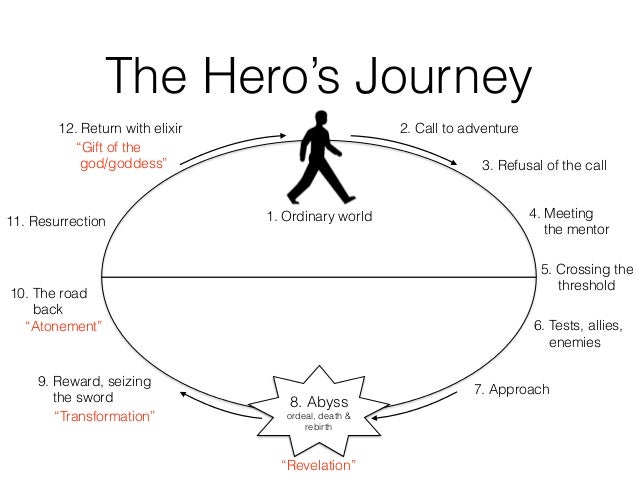
    Thanks, and a fascinating subject. JOSEPH CAMPBELL's The Hero's Journey may well have something to do with this.

    http://thewritersjourney.com/hero's_journey.htm


    Heroes are archetypal figures... present in every myth, in every culture, in all of recorded history. They appear to be indispensable for our senses of hope, aspiration, and maybe reached-for example. A huge topic.


  8. The Following 12 Users Say Thank You to Bill Ryan For This Post:

    Ashy67 (25th October 2016), Cara (26th October 2016), Eram (25th October 2016), Flash (26th October 2016), Heartsong (26th October 2016), kirolak (25th October 2016), Matthew (26th October 2016), nomadguy (30th October 2016), noprophet (25th October 2016), Shannon (25th October 2016), sijohn (25th October 2016), william r sanford72 (25th October 2016)

  9. Link to Post #5
    United States Unsubscribed
    Join Date
    30th March 2014
    Location
    Zero Sum
    Age
    64
    Posts
    2,937
    Thanks
    12,979
    Thanked 15,293 times in 2,822 posts

    Default Re: Heroes, Anti-Heroes, Villains and Fools... Research, Discussion and Thoughts on Heroism

    Other then when a hero is a physical focus of attention, heroes are images/ ideas to aspire to and that inspire. For an artist they can also play the role of a muse.

    The truest of heroes operate behind the scene without a ticker tape parade.

    Some of the heroes in history are actually a composite of more then one person (or so I have read) but described as one. Of course animals and even 'chance' can be viewed as a hero in certain circumstances.
    Last edited by joeecho; 26th October 2016 at 05:32.

  10. Link to Post #6
    Moderator (on Sabbatical) Cara's Avatar
    Join Date
    12th February 2014
    Location
    Dubai, United Arab Emirates
    Language
    English
    Posts
    1,431
    Thanks
    9,850
    Thanked 7,510 times in 1,331 posts

    Default Re: Heroes, Anti-Heroes, Villains and Fools... Research, Discussion and Thoughts on Heroism

    Thank you @Bill Ryan and @joeecho.

    The work of Joseph Campbell on the mythical hero figure and the role that this plays as an archetype is very interesting.

    Late last year, a colleague and I developed a self-discovery workshop (as a project on a leadership skills programme). We used the Hero's Journey as the structure to guide participants through a series of activities that allowed self-discovery. We combined various different tools including: physical movement, moving meditation, Sand-Painting, the embodiment of emotion and trauma in physical objects, ritual, and more. We got very good feedback on the experience. We called it "Walking the Path of your Soul". If anyone is interested in more details about the workshop, please PM me.

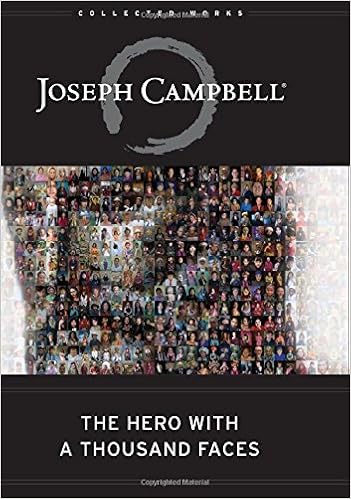
    For more about Joseph Campbell's Hero's Journey, there is his book:

    https://www.amazon.com/Thousand-Face...sap_bc?ie=UTF8

    If prefer a short and free read, there are a couple of summaries of the book available on the web, here is one
    http://rodpennington.net/Memo.pdf
    and here is the same on Scribd:
    https://www.scribd.com/doc/48145473/...THOUSAND-FACES
    There are many more if you search a little.

  11. The Following 3 Users Say Thank You to Cara For This Post:

    joeecho (26th October 2016), nomadguy (30th October 2016), william r sanford72 (8th November 2016)

  12. Link to Post #7
    Moderator (on Sabbatical) Cara's Avatar
    Join Date
    12th February 2014
    Location
    Dubai, United Arab Emirates
    Language
    English
    Posts
    1,431
    Thanks
    9,850
    Thanked 7,510 times in 1,331 posts

    Default Re: Heroes, Anti-Heroes, Villains and Fools... Research, Discussion and Thoughts on Heroism

    Quote Posted by joeecho (here)
    The truest of heroes operate behind the scene without a ticker tape parade.
    I really like this idea of "behind the scenes heros" - when people are doing heroic things with no fanfare about it. Perhaps it speaks to the distrust I have of the media and promotional culture we live in that I prefer the unsung hero.

    Quote Posted by joeecho (here)
    heroes are images/ ideas to aspire to and that inspire. For an artist they can also play the role of a muse.
    @joeecho, I think this is an important part of the "need" for heroes - they have a way of making the impossible seem more possible, of bringing into the realm of reality something that is noble, daring, challenging. There is the idea of striving for something beyond our usual capability.

    The idea of the overlap of hero and muse is fascinating. Do you think it's that quality of "going beyond the everyday" that is important?

  13. The Following User Says Thank You to Cara For This Post:

    joeecho (26th October 2016)

  14. Link to Post #8
    Moderator (on Sabbatical) Cara's Avatar
    Join Date
    12th February 2014
    Location
    Dubai, United Arab Emirates
    Language
    English
    Posts
    1,431
    Thanks
    9,850
    Thanked 7,510 times in 1,331 posts

    Default Re: Heroes, Anti-Heroes, Villains and Fools... Research, Discussion and Thoughts on Heroism

    If you'd like more about Joseph Campbell, there are quite a few lectures given by him available on iTunes.

    Here is a link to one of them:
    https://itunes.apple.com/us/album/le...ni/id725681003

    This lecture was recorded at the Esalen Institute in the 1960s (from my various readings, Esalen seems to have some interesting links with intelligence agencies.... perhaps that gives a slightly different context to the way one might read Joseph Campbell or how his thinking has been applied).

  15. The Following User Says Thank You to Cara For This Post:

    joeecho (26th October 2016)

  16. Link to Post #9
    Moderator (on Sabbatical) Cara's Avatar
    Join Date
    12th February 2014
    Location
    Dubai, United Arab Emirates
    Language
    English
    Posts
    1,431
    Thanks
    9,850
    Thanked 7,510 times in 1,331 posts

    Default Re: Heroes, Anti-Heroes, Villains and Fools... Research, Discussion and Thoughts on Heroism

    In researching this topic, I have come across a few researchers who are attempting to establish a cross-disciplinary study area in Heroism Science.

    The researchers involved have established a website - https://heroismscience.wordpress.com/ and have started publishing an academic journal - Heroism Science (it has one issue so far and the articles are available online).

    Here is some information from the "About" section of their website:
    Quote Heroism Science is an emerging multiple disciplinary innovative field of academic study. It seeks to reconceptualise heroism and reinvigorate its relevance in the 21st century by using a broad range of epistemological and methodological frameworks. Its study spans fields as diverse as social psychology, philosophy, digital humanities, creative arts, nursing, law and public policy, semiotics, neuroscience, leadership, organizational management, religion and spirituality, positive psychology, ethics and morality, political science, sociology, counselling, education, developmental psychology, evolutionary biology and more. It is a rapidly expanding field that seeks to promote an advanced understanding of the human condition and well-being across all facets of the human experience. Heroism science researchers are at the forefront of developing creative, sustainable and applied solutions to pressing social issues in an increasingly complex 21st century landscape.

    This website is aimed at being a resource for researchers, students, heroism activists, educators, professionals and everyday people interested in learning more about this innovative field, and re-discovering the endurance and widespread presence of the timeless phenomenon of heroism. It wishes to make accessible to the broader public the latest discoveries and discussions around heroism and its intersection with other optimal behaviours, and showcase the wide range of contexts in which heroism may manifest. In particular, the website advocates and promotes greater collaboration between the study of heroism and ‘hard’ science as a relatively unexplored avenue of research, as well as interaction between a wide range of disciplines, no matter how disparate. Greater informed debate and education within and between disciplines, especially the humanities and sciences, is the pathway to creative solutions that positively impact individuals and communities.

    Olivia Efthimiou, 28 March 2015

    10%: What Makes a Hero? Short Trailer. Dr Philip Zimbardo talks about the importance of research and community action in building heroic communities.
    This video is interesting in that it shows two in/famous social / psychology experiments of social engineering Milgram's Obedience Experiment (http://www.simplypsychology.org/milgram.html) and Zimbardo's Stanford Prison Experiment (http://www.simplypsychology.org/zimbardo.html)... and it is in fact Professor Zimbardo who is interviewed in this video.

    Which leads me to the following:

    Perhaps I am especially cynical but a couple of the phrases in there sounded a lot like social engineering.... for example the parts I highlighted in bold blue above:
    Quote It seeks to reconceptualise heroism and reinvigorate its relevance in the 21st century
    and
    Quote Heroism science researchers are at the forefront of developing creative, sustainable and applied solutions to pressing social issues
    and
    Quote Heroism science researchers are at the forefront of developing creative, sustainable and applied solutions to pressing social issues
    If it is a form of social engineering, is this an attempt to co-opt the popular culture of superheroes? (which may have run a little off script from the programmers intentions?)
    Last edited by Cara; 26th October 2016 at 10:43.

  17. The Following User Says Thank You to Cara For This Post:

    joeecho (26th October 2016)

  18. Link to Post #10
    Avalon Retired Member
    Join Date
    2nd January 2011
    Posts
    361
    Thanks
    1,006
    Thanked 1,379 times in 300 posts

    Default Re: Heroes, Anti-Heroes, Villains and Fools... Research, Discussion and Thoughts on Heroism

    Regarding the hero's journey, this is something David Wilcock mentions is the basis of just about every script in Hollywood.

  19. The Following 2 Users Say Thank You to Rex For This Post:

    Cara (27th October 2016), joeecho (27th October 2016)

  20. Link to Post #11
    United States Unsubscribed
    Join Date
    30th March 2014
    Location
    Zero Sum
    Age
    64
    Posts
    2,937
    Thanks
    12,979
    Thanked 15,293 times in 2,822 posts

    Default Re: Heroes, Anti-Heroes, Villains and Fools... Research, Discussion and Thoughts on Heroism

    Quote Posted by Searcher (here)

    The idea of the overlap of hero and muse is fascinating. Do you think it's that quality of "going beyond the everyday" that is important?
    I do. And it's not always physical but that is the one most people 'see' in the media. I have this theory that if a large number of people were not performing mental/ spiritual heroics within that that which we see without would be much more chaotic then it is.

    The spirit incarnate is a form of heroics in which all are experiencing.

  21. Link to Post #12
    Avalon Member Flash's Avatar
    Join Date
    26th December 2010
    Location
    Montreal
    Posts
    9,822
    Thanks
    38,367
    Thanked 55,257 times in 9,128 posts

    Default Re: Heroes, Anti-Heroes, Villains and Fools... Research, Discussion and Thoughts on Heroism

    What I read years ago and observed quite a few times on heroism is the following:

    1. There are events heroes, someone who saves a human life on the spur of the moment, the firefigthters in the twin towers in 2001, heroic actions needed on the given moment. Afterwards our heroes go back to the regular side of life, being remembered, but not on a daily recognition list. Those heroes are people usually quite accesible on a daily basis, who can be our neighbours, family, or else. However, their heroism is time based and event based, not social changers or very well known individually. The heroe here is pretty much like a regular folk.

    2. There are long term heroes, such as Gandhi, Mandela, Luther King, even Kennedy, Mohamed Ali, Einstein, Tesla, etc. They were heroes whom everybody loved when living and whom after death become legends. These were surrounded with an aura of admiration and difficult to access on individual basis while alive, the kind of heroe the regular folks look at from far, feeling somewhat they are something more than themselves. The saviors with a human face and values that are linked to people needs or the sportman who has incredible abilities but yet is in some parts human.

    3. There are the out of this world heroe, such as batman, superman, spiderman (moslty for boys) and the little mermaid or Mulan for the girls. Those adress the children world of building values, creating a wich to imitate them in the children, but completely inaccessible in real life - therefore always striving for more and never reaching it, regular folks ending feeling that they are more than themselves, in fact quite different. The ultimate savior.

    4. The corporate heroe, or the politician or the heroe who became heroe because he gather power over others (through money, kingdoms, whatever). In those you also have the figure head war heroes. Steve Jobs would be one of these, There is legends created around their success and all their personal flaws are kind of used to promote the ways they succeeded. Here they are unaccessible as well but still have regular folds traits through the power desire everyone has somewhere and through our own hang ups that may make us compulsively wanting power.

    The number 3 heroe has dominated our North American culture for the last 40 years.

    In other cultures, heroes are still, as they were in the past, linked to smaller social circles, like a grand father could have been a family's heroe, or a neighbor for the village. Heroism was recognized on a local and individualised basis, which is not the case anymore in America (the continent). Now, the recognitiion is for distant heroes, almost inaccessible or not accessible at all.

    This, in my views, stops real heroism on a local basis, like the policeman saying no to tyranny, the white collar denoucing corruption, etc. They will end up only with trouble, not being recognized for what they did. There is not benefits to be a heroe anylonger, Very few are doing like Edward Snowden anylonger, too costly.

    By having no more local accessible heroes, the social fabric gets diluted and the ones you can rely on to help your group gets sparse. I think that this is a whole social entrainment that could be undertaken only when the family units were about destroyed and the villages about gone. Anonymity has gone a step further still with the internet. You do not even know anymore who is who, less who are true heroes.

    During years, I had been teaching at least 2 hours a week to two little Turkish girls with their homeworks whose parents could not write French, despite my heavy schedule as a single mom of a child needing constnat treatment. These little girls knew my daughter, knew my worlk load, and yet they would call me for help in their homeworks, mainly for French from early primary school to the end or their highschool.
    AT one point, in the last year of high school, the French teacher asked them to write about their favorite heroe. They called me to help them again, we started to write and when I asked who is your heroe you want to write about, they said 'it is you we want to write about'. I was very touched, and then I understood that in their culture, local heroes were much more important than distant ones. Then they started to explain how they wanted to be like me later on. So we wrote the text on me. lollll

    In our actual cultures, we have very few local heroes because there is no incentive to be a heroe anymore and... we are dulled not to use our hearts or build personal values, since those of our heroes are innaccessible.

    My point of view of course,not cast in cement, so you can argue it, I will listen.

    Heroes are guides, on values, beliefs, inner development, social involvement, but they have to be accessible in order to be life changing or real guides. WE have lost the true usefulness of heroes, although I agree with Joecho below.
    How to let the desire of your mind become the desire of your heart - Gurdjieff

  22. The Following 5 Users Say Thank You to Flash For This Post:

    Bill Ryan (26th October 2016), Cara (27th October 2016), fourty-two (28th October 2016), joeecho (26th October 2016), Matthew (26th October 2016)

  23. Link to Post #13
    Moderator (on Sabbatical) Cara's Avatar
    Join Date
    12th February 2014
    Location
    Dubai, United Arab Emirates
    Language
    English
    Posts
    1,431
    Thanks
    9,850
    Thanked 7,510 times in 1,331 posts

    Default Re: Heroes, Anti-Heroes, Villains and Fools... Research, Discussion and Thoughts on Heroism

    Quote Posted by Rex (here)
    Regarding the hero's journey, this is something David Wilcock mentions is the basis of just about every script in Hollywood.
    Thank you @Rex.

    Regarding Hollywood movie scripts, I read somewhere that Joseph Campbell had been brought in to consult by George Lucas on Star Wars development. (Can't remember where I read it now sadly but it might have been Jay's Analysis or Vigilent Citizen)

  24. Link to Post #14
    Moderator (on Sabbatical) Cara's Avatar
    Join Date
    12th February 2014
    Location
    Dubai, United Arab Emirates
    Language
    English
    Posts
    1,431
    Thanks
    9,850
    Thanked 7,510 times in 1,331 posts

    Default Re: Heroes, Anti-Heroes, Villains and Fools... Research, Discussion and Thoughts on Heroism

    Quote Posted by joeecho (here)
    I have this theory that if a large number of people were not performing mental/ spiritual heroics within that that which we see without would be much more chaotic then it is.

    The spirit incarnate is a form of heroics in which all are experiencing.
    @joeecho - so if I understand you correctly, you're suggesting there are a number of "behind the scenes" / "not in the public eye" spiritual heroes whose efforts in the spiritual domain are keeping the world from outright chaos or further deterioration?

    If so, this is something that I've heard Joseph Farrell say on his members vidchats. In answer to a question from a member about "where are the good guys?", he said something along the lines of "people like us are the good guys. There are people working on a spiritual level, not making a big fanfare about it, but working everyday through prayer and such like".

    Did you mean the exercise of positive focused intention when you referred to spiritual heroes or something more / different?

  25. The Following User Says Thank You to Cara For This Post:

    joeecho (27th October 2016)

  26. Link to Post #15
    Moderator (on Sabbatical) Cara's Avatar
    Join Date
    12th February 2014
    Location
    Dubai, United Arab Emirates
    Language
    English
    Posts
    1,431
    Thanks
    9,850
    Thanked 7,510 times in 1,331 posts

    Default Re: Heroes, Anti-Heroes, Villains and Fools... Research, Discussion and Thoughts on Heroism

    Thank you @Flash for all the insights you shared here.

    I like the categorisation of different types of heroes into the four groups. If I may summarise and paraphrase, what I understood was that we have:
    (1) Local, context driven, can be regular folk or someone whose profession lends itself to heroism, eg firefighter
    (2) Big picture heroes of an age. Mostly a handful of people who achieved profound social change against enormous odds.
    (3) Fantasy heroes of the comic book type whose in-achievable deeds and un-reality somehow undermines types (1) and perhaps (2)
    (4) Children's storybook heroes who are also un-real and create some impossible, never-to-be ahieved ideal for children

    I agree with your comment about the promotion of type (3) heroes having a specific social engineering effect which seems to discourage everyday people from doing heroic things. And if this replacement or usurping of everyday heroes is an intentional programming, it certainly seems to fit in with an overall agenda of creating general apathy and unwillingness to act against the system / powers-that-be.

    Quote Posted by Flash (here)
    What I read years ago and observed quite a few times on heroism is the following:

    1. There are events heroes, someone who saves a human life on the spur of the moment, the firefigthters in the twin towers in 2001, heroic actions needed on the given moment. Afterwards our heroes go back to the regular side of life, being remembered, but not on a daily recognition list. Those heroes are people usually quite accesible on a daily basis, who can be our neighbours, family, or else. However, their heroism is time based and event based, not social changers or very well known individually. The heroe here is pretty much like a regular folk.

    2. There are long term heroes, such as Gandhi, Mandela, Luther King, even Kennedy, Mohamed Ali, Einstein, Tesla, etc. They were heroes whom everybody loved when living and whom after death become legends. These were surrounded with an aura of admiration and difficult to access on individual basis while alive, the kind of heroe the regular folks look at from far, feeling somewhat they are something more than themselves. The saviors with a human face and values that are linked to people needs or the sportman who has incredible abilities but yet is in some parts human.

    3. There are the out of this world heroe, such as batman, superman, spiderman (moslty for boys) and the little mermaid or Mulan for the girls. Those adress the children world of building values, creating a wich to imitate them in the children, but completely inaccessible in real life - therefore always striving for more and never reaching it, regular folks ending feeling that they are more than themselves, in fact quite different. The ultimate savior.

    4. The corporate heroe, or the politician or the heroe who became heroe because he gather power over others (through money, kingdoms, whatever). In those you also have the figure head war heroes. Steve Jobs would be one of these, There is legends created around their success and all their personal flaws are kind of used to promote the ways they succeeded. Here they are unaccessible as well but still have regular folds traits through the power desire everyone has somewhere and through our own hang ups that may make us compulsively wanting power.

    The number 3 heroe has dominated our North American culture for the last 40 years.

    In other cultures, heroes are still, as they were in the past, linked to smaller social circles, like a grand father could have been a family's heroe, or a neighbor for the village. Heroism was recognized on a local and individualised basis, which is not the case anymore in America (the continent). Now, the recognitiion is for distant heroes, almost inaccessible or not accessible at all.

    This, in my views, stops real heroism on a local basis, like the policeman saying no to tyranny, the white collar denoucing corruption, etc. They will end up only with trouble, not being recognized for what they did. There is not benefits to be a heroe anylonger, Very few are doing like Edward Snowden anylonger, too costly.

    By having no more local accessible heroes, the social fabric gets diluted and the ones you can rely on to help your group gets sparse. I think that this is a whole social entrainment that could be undertaken only when the family units were about destroyed and the villages about gone. Anonymity has gone a step further still with the internet. You do not even know anymore who is who, less who are true heroes.

    I love this story of you being the hero to the two Turkish girls It made my heart warm to read it. Thank you for sharing!


    Quote Posted by Flash (here)
    During years, I had been teaching at least 2 hours a week to two little Turkish girls with their homeworks whose parents could not write French, despite my heavy schedule as a single mom of a child needing constnat treatment. These little girls knew my daughter, knew my worlk load, and yet they would call me for help in their homeworks, mainly for French from early primary school to the end or their highschool.
    AT one point, in the last year of high school, the French teacher asked them to write about their favorite heroe. They called me to help them again, we started to write and when I asked who is your heroe you want to write about, they said 'it is you we want to write about'. I was very touched, and then I understood that in their culture, local heroes were much more important than distant ones. Then they started to explain how they wanted to be like me later on. So we wrote the text on me. lollll

  27. The Following 3 Users Say Thank You to Cara For This Post:

    Flash (27th October 2016), fourty-two (28th October 2016), joeecho (27th October 2016)

  28. Link to Post #16
    Avalon Member Flash's Avatar
    Join Date
    26th December 2010
    Location
    Montreal
    Posts
    9,822
    Thanks
    38,367
    Thanked 55,257 times in 9,128 posts

    Talking Re: Heroes, Anti-Heroes, Villains and Fools... Research, Discussion and Thoughts on Heroism

    Yes Searcher, your resume of my herors categorisation is excellent and your writing skills in English waaaayyy better than mine. Thank you

    May I know why you agree with number 3 only?

    Thanks for the comments on me, a local heroe for two little girls. By the way, mastering French for immigrant children here is a major hurdle since all schooling in all academic fields is in French, as well as work life, tv, radio, etc. Even if we are located in North America (Quebec), we are 7 millions French speaaking in one single province. For those who would not know. So learning a proper French ensured their success. They are now at College in Montreal, having started from a Turkish peasant background originally- boat refugees

    I think I am also my daughter's heroe, (or vilain when she was a teenager) but she never told me as such. I see it in her eyes. And she is mine definitely.
    Last edited by Flash; 27th October 2016 at 17:06.
    How to let the desire of your mind become the desire of your heart - Gurdjieff

  29. The Following 2 Users Say Thank You to Flash For This Post:

    Cara (27th October 2016), joeecho (27th October 2016)

  30. Link to Post #17
    Moderator (on Sabbatical) Cara's Avatar
    Join Date
    12th February 2014
    Location
    Dubai, United Arab Emirates
    Language
    English
    Posts
    1,431
    Thanks
    9,850
    Thanked 7,510 times in 1,331 posts

    Default Re: Heroes, Anti-Heroes, Villains and Fools... Research, Discussion and Thoughts on Heroism

    The story that @Flash shared above about her being a hero, reminds me a bit of some of the people I've met in my life.

    I am South African and lived there until five or six years ago (I followed my husband to Dubai, so here I am in the sand now :-)). Most of my childhood, teenage years and early adulthood were in the time of struggle against apartheid and transition to a new government.

    From one perspective, you could say that the years of the 80s ans 90s in South Africa were "hero generating" years. There were many everyday people doing extraordinary things.

    For some, the simple act of taking the train to work was the act of a hero as there was terrible train violence with people being thrown off daily by political activitists / freedom fighters.

    For others, like actors, their profession was a vehicle to be heroic: there was a whole outpouring of protest theatre, some overtly political, some more subtle but all quite risky as it could be shut down by the authorities at any time.

    There were of course the more famous people, such as Johnny Clegg, who defied apartheid rules, collaborated across race lines with musicians and created a means of bridging cultural gaps. He too could easily have been arrested and was definitely under constant harassment by the security police.

    And many more people did very heroic things daily.


    Some years ago, I was on a plane from Cape Town to Johannesburg and ended up sitting next to an elderly gentleman. I asked where he was going and he said he was flying back from a parliament meeting. It turns out he was working in the office of the president as a senior advisor. We got talking about his political life and he shared with me how he had been involved in the Codesa talks (these were talks held before the new government came into being in South Africa. They had representatives from lots of deeply divided factions and so were a momentuous meeting. Here is a view of them: http://www.sahistory.org.za/article/codesa-negotiations for those interested... like all history it has its biases).

    This gentleman shared, and I remembered from my own experience at the time, how on a knife's edge everything had been at the time. Many people were predicting bloody revolution, some who had the means were fleeing the country as emmigrants... it was a tense time. And then he shared how he himself had found the courage to be courageous in those meetings by the courage of people like Archbishop Desmond Tutu.

    And now that I think about that conversation in the airplane in the context of heroism, there is a kind of cascading heroism. Having people around you doing courageous and heroic things seems to inspire you, and you in turn inspire others.

    ¤=[Post Update]=¤

    Quote Posted by Flash (here)
    Yes Searcher, your resume of my herors categorisation is excellent and your writing skills in English waaaayyy better than mine. Thank you

    May I know why you agree with number 3 only?
    Thank you @Flash - I should have been more clear with my reply. I ESPECIALLY agree with (3).... I also agree with the other parts of what you said.

  31. The Following 2 Users Say Thank You to Cara For This Post:

    Flash (27th October 2016), joeecho (27th October 2016)

  32. Link to Post #18
    Moderator (on Sabbatical) Cara's Avatar
    Join Date
    12th February 2014
    Location
    Dubai, United Arab Emirates
    Language
    English
    Posts
    1,431
    Thanks
    9,850
    Thanked 7,510 times in 1,331 posts

    Default Re: Heroes, Anti-Heroes, Villains and Fools... Research, Discussion and Thoughts on Heroism

    I did some further digging through academic papers and research and found the post doctoral dissertation of Elaine Kinsella - A Psychological Perspective on the Features and Functions of Heroes.

    You can read / download it here: https://ulir.ul.ie/bitstream/handle/...pdf?sequence=5

    It was published in 2012, so is fairly recent from an academic perspective. She does a broad review of research done till date (which is interesting to see what different people have studied and concluded) and also includes the results of some primary research studies she conducted on the characteristics and functions of heroes.

    Here are a couple of interesting charts from the dissertation.

    1. Characteristics of Heroes - Here the study (one of several she describes in the paper) compares characteristics of Heroes, Role Models and Leaders. (From pg 54 (pg 66 of the PDF))
    Attachment 34462

    2. Functions of Heroes - (From pg 95 (pg 103 of the PDF))
    Attachment 34463

    3. Model of Heroic Influence - Kinsella develops a model of how heroes influence individuals. This is her model. (From pg 163 (pg 171 of the PDF))
    Attachment 34464

    I am not sure of the validity of this model (I have not done enough research to see what criticisms there have been or if it has been accepted by others).... However if you take it as relatively valid, one can see in a visual way how creation and social engineering of heroes can have a direct impact on individuals and society through shifting their perspective (for good or ill).

    What I particularly like is the way it demonstrates links through a chain from hero to aspects of self such as well-being, coping, memory, meaning, transcendence, and identity.

  33. The Following 3 Users Say Thank You to Cara For This Post:

    Bill Ryan (27th October 2016), Flash (27th October 2016), joeecho (27th October 2016)

  34. Link to Post #19
    South Africa Avalon Member
    Join Date
    11th January 2016
    Age
    54
    Posts
    60
    Thanks
    37
    Thanked 222 times in 57 posts

    Default Re: Heroes, Anti-Heroes, Villains and Fools... Research, Discussion and Thoughts on Heroism

    Another fallen hero from South Africa. The Blade Runner, Oscar Pistorius. Paralympic leg amputee who fought to run with the normal athletes...he now is a convicted murderer for shooting his GF on Valentine's Day a few years ago.

  35. The Following 2 Users Say Thank You to DbDraad For This Post:

    Cara (28th October 2016), Flash (29th October 2016)

  36. Link to Post #20
    United States Unsubscribed
    Join Date
    30th March 2014
    Location
    Zero Sum
    Age
    64
    Posts
    2,937
    Thanks
    12,979
    Thanked 15,293 times in 2,822 posts

    Default Re: Heroes, Anti-Heroes, Villains and Fools... Research, Discussion and Thoughts on Heroism

    Quote Posted by Searcher (here)

    Did you mean the exercise of positive focused intention when you referred to spiritual heroes or something more / different?
    Good question. I think, in part, yes, exercise of positive focused intention. Hard to encompass it all in words for me currently but I'll try a bit here.

    I think it also includes (re: Heros) those that are trying to starve off the bombardment of disinformation in the world no matter what its source is. I know there is a lot of government based disinformation whose primary mouth piece is the MSM but it seems plausible that there are other sources, other agendas, not sanctioned by government feeding the disinformation engine. Disinformation is the root of wide spread destructive action and could that be the engine being used for the agenda of depopulation of the planet? Sure seems that way to me.

    I think if people don't try to understand the root of what is going on in the world for themselves, not just giving a blank check to government, religions or other organizations to answer this for them, there will be more chaos then would be otherwise.

    People will say that ACTION is key to change for the better but what if that action is misguided? Wouldn't that action then, potentially, lend itself to more steps backward then forward?

    Saint Bernard of Clairvaux who wrote (c. 1150), "L'enfer est plein de bonnes volontés ou désirs" (hell is full of good wishes or desires). But Hell is also full of actions that seem good to uninformed/ unenlightened people. No?

    I sense this from my own internal struggles from young adult onward and my gut feeling is that I would have been much more easily swayed and manipulated if I hadn't done significant 'work' with my thought processes that included a large part spirituality but certainly not exclusively that. The drive was that I did not want to be part of the problem that was swayed to believe I was part of the solution to a better world when in reality, I wasn't. Do I think I am a hero because of these things? No, but the internal struggle with small victories here and there feel like heroic moments. There will always be those that judge differently but.....that's life and that will ultimately be what they have to work out for themselves.

    I typed this all on the fly as I thought these thoughts so forgive if it rambles.....
    Last edited by joeecho; 27th October 2016 at 21:24.

+ Reply to Thread
Page 1 of 2 1 2 LastLast

Posting Permissions

  • You may not post new threads
  • You may not post replies
  • You may not post attachments
  • You may not edit your posts