Thanks @joeecho for the thoughts... you put in quite a lot there to chew on...
Today is our weekend (weekends are Fridays and Saturdays in the UAE) so I will reply a bit later... now got to get on with the weekly shop.
Thanks @joeecho for the thoughts... you put in quite a lot there to chew on...
Today is our weekend (weekends are Fridays and Saturdays in the UAE) so I will reply a bit later... now got to get on with the weekly shop.
Thank you @DbDraad. The Oscar Pistorius hero-to-villain transformation is a particularly distressing story.Posted by DbDraad (here)
Another fallen hero from South Africa. The Blade Runner, Oscar Pistorius. Paralympic leg amputee who fought to run with the normal athletes...he now is a convicted murderer for shooting his GF on Valentine's Day a few years ago.
On this topic, I wonder about the shock and psychological trauma (my term for it) caused by these switches from hero to anti-hero or villain. In the case of social engineering, it could be the case that media-created heroes might be designed to fail in some catastrophic way in order to cause some kind of shock and disenchantment to people.
On the other hand, the idea of the hero with a fatal flaw was a key idea in all of Shakespeare's tragedy plays and was also part of Greek tragedy theatre.
Here is a brief outline of the tragic hero in literature (from a lecture on heroes in literature, here:http://www.deanza.edu/faculty/leonar...IT_17_Hero.ppt):
Tragic Hero Background
What Defines Shakespearean Tragedy?
- A tragic hero is often used in Shakespearean literature.
- This model of a hero may not always be a “good guy”.
- The tragic hero has made its way into more contemporary literature because audiences can relate to them.
- A tragic hero follows a twelve step pattern.
Tragic Hero Traits
- A Tragic Hero
- The Tragic Flaw-Hamartia
- Reversal of Fortune
- Catharsis
- Restoration of Social Order –Denouement
Reversal of Fortune
- The tragic hero is someone we, as an audience, look up to—someone superior.
- The tragic hero is nearly perfect, and we identify with him/her
- The hero has one flaw or weakness
- We call this the ‘tragic flaw’, ‘fatal flaw’, or hamartia
Catharsis
- The ‘fatal flaw’ brings the hero down from his/her elevated state.
- Renaissance audiences were familiar with the ‘wheel of fortune’ or ‘fickle fate’.
- What goes up, must come down.
Restoration of Social Order
- We get the word ‘catharsis’ from Aristotle’s katharsis.
- ‘Catharsis’ is the audience’s purging of emotions through pity and fear.
- The spectator is purged as a result of watching the hero fall.
- This is why we cry during movies!
- Tragedies include a private and a public element
- The play cannot end until society is, once again, at peace.
- This is why the Tragic Hero often dies!
@joeecho, I agree with your view of the disinformation problem. There is a vast amount of disinformation - the internet is awash with it. There seems to be too much for it to be coming solely from the mainstream media and the intelligence agencies. I tend to think of there being multiple factions and levels of power players (individuals and groups) who play out their agendas on the world stage. Sometimes these players may be aligned, and sometimes not. The net result is there are many different people trying to "control the narrative" and the proliferation of content platforms, devices and information channels has created a vast space for this information war to play out.Posted by joeecho (here)
Good question. I think, in part, yes, exercise of positive focused intention. Hard to encompass it all in words for me currently but I'll try a bit here.Posted by Searcher (here)
Did you mean the exercise of positive focused intention when you referred to spiritual heroes or something more / different?
I think it also includes (re: Heros) those that are trying to starve off the bombardment of disinformation in the world no matter what its source is. I know there is a lot of government based disinformation whose primary mouth piece is the MSM but it seems plausible that there are other sources, other agendas, not sanctioned by government feeding the disinformation engine. Disinformation is the root of wide spread destructive action and could that be the engine being used for the agenda of depopulation of the planet? Sure seems that way to me.
In this context, filtering disinformation for fact and truth and identifying disinformation itself has indeed become an act of resistance and (spiritual) warfare. One becomes a kind of guerilla fighter. And, like in any war, some people will act selflessly, with courage, bravery and sense of moral integrity - all things that are characteristics of heroes. Whether they are recognised as such by groups or larger societies does not detract from their heroic acts.
This here, I think is key. If one does not have information that is correct it is very difficult to act. If one recognises that there is huge uncertainty in the information one has then one may be paralysed and not act at all... on the other hand, if one does act, the outcomes may, at best, be ineffective and, at worst, make the situation more problematic.Posted by joeecho (here)
I think if people don't try to understand the root of what is going on in the world for themselves, not just giving a blank check to government, religions or other organizations to answer this for them, there will be more chaos then would be otherwise.
People will say that ACTION is key to change for the better but what if that action is misguided? Wouldn't that action then, potentially, lend itself to more steps backward then forward?
Saint Bernard of Clairvaux who wrote (c. 1150), "L'enfer est plein de bonnes volontés ou désirs" (hell is full of good wishes or desires). But Hell is also full of actions that seem good to uninformed/ unenlightened people. No?
[By the way, is this the Saint Bernard de Clairvaux who was involved in the establishment of the Knights Templar in their original quest to Jerusalem?]
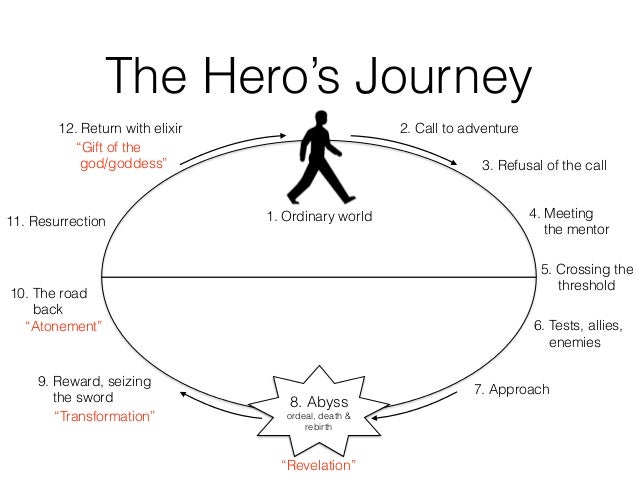
Thank you for sharing some part of your motivations and own journey. In some ways it is much like the Hero's Journey outlined by Joseph Campbell and referred to be @Bill in his post above - a journey from the known through the unknown, facing obstacles along the way:Posted by joeecho (here)
I sense this from my own internal struggles from young adult onward and my gut feeling is that I would have been much more easily swayed and manipulated if I hadn't done significant 'work' with my thought processes that included a large part spirituality but certainly not exclusively that. The drive was that I did not want to be part of the problem that was swayed to believe I was part of the solution to a better world when in reality, I wasn't. Do I think I am a hero because of these things? No, but the internal struggle with small victories here and there feel like heroic moments. There will always be those that judge differently but.....that's life and that will ultimately be what they have to work out for themselves.
I typed this all on the fly as I thought these thoughts so forgive if it rambles.....
So perhaps Joseph Campbell's theories of the heroic journey that all of us can take are very apt here.
Regarding this part of your journey:
This is an interesting aspect of heroism - I hope you don't mind being a "case study" here - thank you.Posted by joeecho (here)
Do I think I am a hero because of these things? No, but the internal struggle with small victories here and there feel like heroic moments.
Do the people who are held to be heroes by others judge themselves to be heroes? I would say people who are acting selflessly, with courage, bravery, and moral integrity - i.e., as heroes - do not see themselves as heroes while they are carrying out their heroic acts... they are too driven to "do the right thing" in that moment to be thinking "I am being a hero now". Maybe after the fact and in review, they may view their actions as heroic rather than that they are heroes. Sometimes it takes the mirror of others' perceptions to see that we might in fact be heroes (something also mentioned by @Flash with her story about the two Turkish girls)![]()
Bill Ryan (30th October 2016), Flash (29th October 2016), joeecho (29th October 2016), william r sanford72 (8th November 2016)
So here are some more thoughts on heroes. These excerpts are from the paper Personal Heroes, Religion, and Transcendental Metanarratives by Douglas V Porpora in Sociological Forum, Vol. 11, No. 2, 1996. I downloaded a copy from Scribd: https://www.scribd.com/document_down...pU5oIa+rkGJs/0.
So if heroes for part of the "landscape of the soul", does this explain to some extent the devastation and outrage experienced when one is disappointed by a person previously identified as a hero? Are we in this case experiencing a fracturing of our soul in some way?One may have personal heroes without worshiping them. In such capacity,
heroes are like moral beacons. They function in much the same way as,
according to Eliade (1959), sacred space and sacred time function for homo
religiosus. For homo religiosus, sacred time and sacred space center the
profane world around them. Similarly, heroes function to center the world
of moral space. They signal to what one is called or committed.
The word hero comes from the Greek heros, meaning "God-person,"
the person charged with the charisma of the holy and sacred, the very
ground of being (Hakanen, 1989b). It is from their connection with what
Tillich (1952) refers to as the ground and core of our being that heroes
derive their charismatic power to inspire (Weber, 1947). Thus, heroes are
not simply role models but charismatic role models (Fishwick, 1983). As
such, a person's heroes are better conceptualized not as idols of worship,
but as an idealized reference group. One seeks to stand with one's heroes
rather than to be one's heroes in actuality, and heroes thus are one mechanism
we use to tell ourselves what it is we stand for. For those who have
them, then, heroes are an important inner marker of identity. They are a
part of the landscape of the soul.
Last edited by Cara; 30th October 2016 at 12:43.
Bill Ryan (30th October 2016)
Here is some more speculation and insight from the same paper (Personal Heroes, Religion, and Transcendental Metanarratives by Douglas V Porpora in Sociological Forum, Vol. 11, No. 2, 1996. - https://www.scribd.com/document_down...pU5oIa+rkGJs/0)
If I understand the flow of argument here, what is said is that that our lives have lost a spiritual or transcendental dimension and that this is a fairly recent phenomenon: older cultures saw a "normal life" as necessary but not complete.There is another reason why the study of heroes is important. The
fate of hero identification has been closely linked with the disenchantment
of the modern world. According to Taylor (1989), one of the salient traits
of modernity is the recession of an orientation toward transcendental horizons
and the affirmation instead of "ordinary life." Up until modernity,
Taylor says, in one form or another, a distinction was always made between
our ordinary life of production and reproduction and a higher calling to a
life oriented around some notion of the transcendental good. Taylor notes
(1989:211) that while the ordinary life of family and work was always a
prerequisite for the pursuit of the transcendental good, a life devoted solely
to the affairs of human maintenance was never historically considered a
"fully human" life at all. Ordinary life was instead but the infrastructure
for the higher calling, distinctive to human beings.
What was considered to be the higher calling varied. In many societies,
it coincided with the honor ethic of a warrior class. For the Greeks, it was
a life devoted to contemplation and participation in the polis. For medieval
Catholics, it was a nonworldly devotion to God. In the enlightenment, it
was a commitment to truth.
Echoing Weber, Taylor argues that with the rise of capitalism and Protestantism,
and also with a pragmatic, technological turn in science, all this
changed. Notions of the good ceased to be located in a transcendental
sphere and began to be considered immanent in ordinary life itself. By
modernity, if the good was to be found, it was to be found in commerce,
in work, in family, and in recreation. A distinctly bourgeois sensibility began
to take hold, and in the process, transcendental concerns began to fade.
It may well be that an heroic orientation is part and parcel of an orientation
to transcendental notions of the good.
And so to continue the outline: according to the theories of Campbell (of the Hero's Journey mentioned earlier in the thread), we are all meant to undertake a heroic journey, to explore the the transcendent.According to Campbell's
(1968) heroic monomyth, for example, the hero is one who, in response to
a call, leaves the familiarity of ordinary life to enter a sphere of transcendental
conflict; in returning from which, the hero raises the level of ordinary
life itself. The existential implication of this myth is that the hero's journey
is one we are all, in one way or another, supposed to take. Becker (1973)
is certainly of this opinion. According to Becker (1973:1), "our central calling,
or main task on the planet, is the heroic." Hero identification, in this
view, is part of what helps lift us to the pursuit of transcendental horizons.
Thus, for Emerson (1940:1), the heroism of great individuals affirms the
potential for heroism in all of us.
This line:
reminds me of the alchemical / hermetic concept of "as above, so below"... the great heroes of the age reflect the heroism of us all and in each of us and vice versa.the heroism of great individuals affirms the
potential for heroism in all of us.
So, with a dwindling of the spiritual and transcendent in culture and with heroes an aspect of that spiritual/transcendent landscape, we should see fewer and perhaps less "powerful" / "resonant" heroes.... From the insights @Flash gave earlier about the shift from real heroes to unreal ones, this may well be the case.Yet, if in modern times there is no transcendental sphere to enter,
then for us perhaps the hero's journey is not a metaphor of psychic significance.
In that case, we might expect hero identification either to affirm
the values of ordinary life or if hero identification truly is linked to ideas
of transcendental calling, to be infrequent and peripheral to modern culture.
Perhaps today it will only be those in some sort of public life who
look to heroes for moral orientation.
And so we have drifted into an age where instead of aspiring to heroes, we aspire to celebrities... and these celebrities are morally ambivalent and empty vessels. Vessels that we fill. If our world is hum-drum, everyday, without a spiritual or transcendent aspect, little wonder then that our celebrity "heroes" are one-dimensional and many so easily disappoint and "go out of fashion".Modern culture has frequently been indicted for its absence or trivialization
of the heroic dimension. It is said to be a shallow, morally bankrupt
culture without ideals (Rollin, 1983). "We still agree with Carlyle,"
says Boorstin (1968:325), "that 'No sadder proof can be given by a man
of his own littleness than disbelief in great men."' Schlesinger (1968:341)
seconds this judgment: "Let us not be complacent about our supposed capacity
to get along without great men. If our society has lost its wish for
heroes and its ability to produce them, it may well turn out to have lost
everything else as well." "What is wrong with our age," says Glicksberg
(1968:357), "is that it has lost its faith in the greatness or the capacity for
greatness of man."
Perhaps, however, we have not so much lost our faith in human greatness
as altered our cultural notion of what greatness is. According to
Lowenthal's (1943) analysis of popular magazines, we no longer value "idols
of production" or "doers" but rather "idols of consumption," who relate
to our leisure life. Along similar lines, Boorstin (1968) maintains that heroes
in modern culture have been replaced by celebrities. Whereas heroes
were famous because they were great, celebrities, Boorstin tells us, are great
because they are famous. "The celebrity," says Boorstin (1968:334) in a
now well-known definition, "is a person who is known for his well-knownness."
As such, celebrities, unlike traditional heroes, are morally neutral.
According to Boorstin (1968:334), celebrities are "human pseudoevents,"
mere "spectacles." A celebrity as a celebrity stands for nothing.
Thus, Boorstin (1968:336) maintains, celebrities are not moral beacons that
"fill us with purpose," but empty "recepticles into which we pour our own
purposelessness." Celebrities, therefore, would seem to be fitting heroes
for an age that, as Lyotard (1984) claims, is without "metanarratives."
Last edited by Cara; 30th October 2016 at 12:43.
Bill Ryan (30th October 2016)
And finally, from the same paper (Personal Heroes, Religion, and Transcendental Metanarratives by Douglas V Porpora in Sociological Forum, Vol. 11, No. 2, 1996. - https://www.scribd.com/document_down...pU5oIa+rkGJs/0), here are the results of the primary research they did.
Overall, 44% of their sample said they had a hero and when the data was checked for validity, only 40% had heroes.
The first table here (Table II) shows what categories of hero people had and the second table (same image, Table III) is a regression analysis to understand the relationship of having a hero with respondent characteristics (e.g. age, income level, etc.) and psychographics (e.g. religiosity, certainty about the meaning of life).In both the spring and fall surveys, only 44% of the respondents said
they had heroes. When the heroes named were examined and invalid re-
sponses such as "I'm my own hero" were removed, it turned out, again
consistently, that only 40% of the respondents had heroes.
Attachment 34474
As I understand it (and statistics is not my strong point, so forgive the explanation any statisticians who are reading - please add your comments and corrections of what I get wrong) - the R, R-squared and adjusted R are all mechanisms by which to test if the model (i.e. a linear correlation) fits the actual data and the Beta:
from http://zencaroline.blogspot.ae/2011/...ficient-r.htmlThe beta value is a measure of how strongly each predictor variable influences the criterion (dependent) variable. The beta is measured in units of standard deviation. For example, a beta value of 2.5 indicates that a change of one standard deviation in the predictor variable will result in a change of 2.5 standard deviations in the criterion variable. Thus, the higher the beta value the greater the impact of the predictor variable on the criterion variable.
In multiple regression, to interpret the direction of the relationship between variables, look at the signs (plus or minus) of the B coefficients. If a B coefficient is positive, then the relationship of this variable with the dependent variable is positive (e.g., the greater the IQ the better the grade point average); if the B coefficient is negative then the relationship is negative (e.g., the lower the class size the better the average test scores). Of course, if the B coefficient is equal to 0 then there is no relationship between the variables.
So in the data in Table III, in the combined data the factors that have the strongest influence on whether a person will have a hero are:
- Education (Beta = 0.158) followed by
- Certainty about the meaning of life (Beta = 0.142) followed by
- Religiosity (Beta = 0.136)
with the strongest contra-indicator being
- Income (Beta = -0.124)
(which you could read as "more money, less need for heroes")
And in the Spring data only, the strongest influencing factors are:
- Certainty about the meaning of life (Beta = 0.214)
- Reflection about the meaning of life (Beta = 0.197)
- Religiosity (Beta = 0.122)
with no contra-indicators
Overall this seems to indicate that those people who have a view about what the meaning of life is and think about it are more likely to have heroes. So certainty about who you are in the world and why you are here (purpose) tend to lead one to have heroes.... at least in this study.
If this finding holds for other populations, this could suggest that the increased uncertainty that seems to be prevalent today is resulting in fewer people having heroes. i.e. If you are less sure about the world and your place in it (=uncertainty) you are perhaps more morally / spiritually confused or ambivalent and therefore have less inclination for heroes because heroes reflect a kind of moral benchmark, which is less and less possible in an uncertain world.
Hmmm... lots to think about in this.
Last edited by Cara; 30th October 2016 at 12:44.
Bill Ryan (30th October 2016)
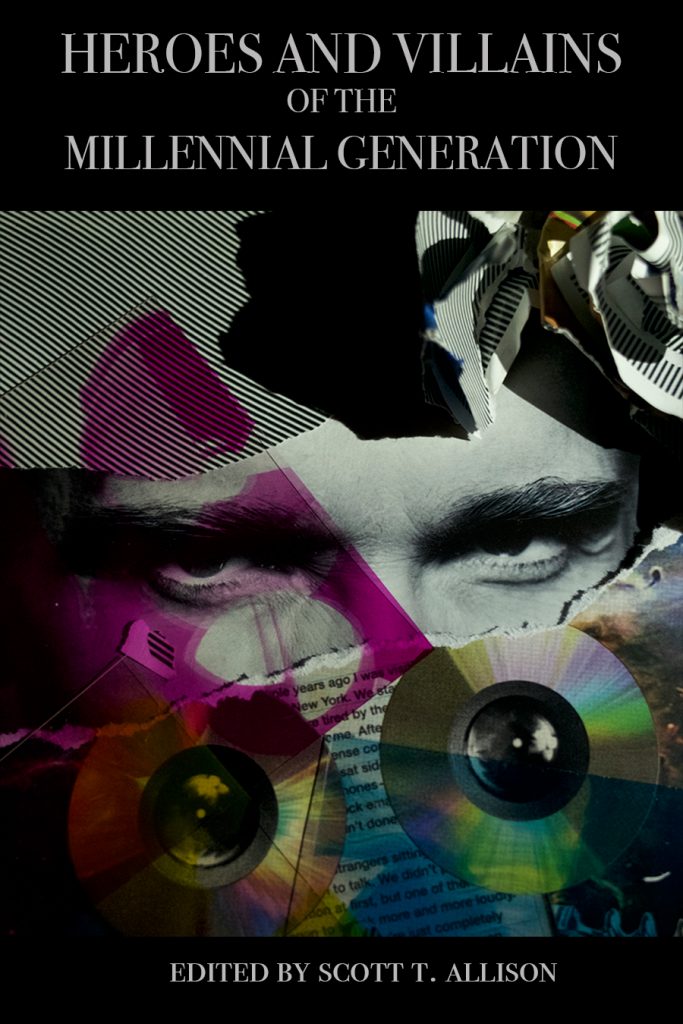
Here is some new research and a soon to be published book Heroes as seen by the Millennial Generation.
From the blog "Heroes: What They Do and Why We Need Them"
Heroes and Villains of the Millennial Generation
October 18, 2016
Our latest books on HEROIC LEADERS
This book explores the heroes and villains of an entire generation of Americans — the Millennial generation, defined as people born between 1982 and 2000.
Authored by Millennials at the University of Richmond, Heroes and Villains of the Millennial Generation is based on a survey of 215 Millennials across the United States who were asked to list their heroes, and their villains.
To our surprise, a large number of people were listed as both heroes and villains.
These complex individuals are the focus of this book. They are: Kanye West, Kim Kardashian, Donald Trump, Hillary Clinton, parents, teachers, Edward Snowden, Batman, Lance Armstrong, Mother Teresa, Severus Snape, Michael Jackson, and Mark Zuckerberg.
The questions that interested us were:
In what ways are these individuals heroes?
In what ways are they also villains?
Why did these individuals appear on lists of heroes and also on lists of villains?
What psychological processes are involved in perceptions of good and evil?
Heroes and Villains of the Millennial Generation provides an analysis of Millennials’ views of heroism and villainy, drawing from current research on heroism science. The book is scheduled for release in January, 2017.
It's interesting that they are surprised by the dual characterisation of people as both Hero and Villain.
After all, according to the classic drama definition of a Tragic Hero (see below), this is a person who has a fatal flaw... and in today's polarised culture, it is not surprising that different people will view different traits differently... as an old English saying goes "one man's meat is another man's poison".
From earlier in the thread:
I was particularly interested to see the moral ambiguity seemingly apparent in all the heroes:Tragic Hero Traits
- The tragic hero is someone we, as an audience, look up to—someone superior.
- The tragic hero is nearly perfect, and we identify with him/her
- The hero has one flaw or weakness
- We call this the ‘tragic flaw’, ‘fatal flaw’, or hamartia
(except perhaps Mother Teresa though there is a thread here on Avalon that disputes this).Kanye West, Kim Kardashian, Donald Trump, Hillary Clinton, parents, teachers, Edward Snowden, Batman, Lance Armstrong, Mother Teresa, Severus Snape, Michael Jackson, and Mark Zuckerberg
What does this indicate about the "Millennial Generation" and their views on what is Heroic behaviour?
william r sanford72 (8th November 2016)
Interesting comment about Trump's "Heroic Journey" from a member of Joseph Farrell's website:
The drama unfolds...Here’s a thought. The Trump journey to the presidency played out like a great movie script. And it did. Movies generally have three acts:
Act 1: The hero’s life abruptly changes.
Act 2: The hero encounters and solves one problem after another, in an entertaining fashion.
Act 3: The hero faces seemingly insurmountable problems.
Finale: Against all odds, the hero succeeds.
Was this the script all along? Only time will tell if Trump is able to survive what he has promised should he decide to deliver on it. JFK couldn’t do it, and he was much more experienced and knew what it might cost him.
A couple of months ago I listened to a Newsbud round-table on how the media is used to cast various figures as first "angels" (aka heroes in the context of this thread) and then re-cast them as "villains" when these people stop towing the party line / scripted agenda.
What I like about about this podcast is the documentation it provides in its show-notes of the media narrative: showing clearly how the tone of the publication changes over time.
http://www.newsbud.com/2016/08/29/the-rulers-angel-evil-making-process-from-egypts-hosni-mubarak-to-turkeys-erdogan/
//
The Rulers’ Angel-Evil-Making Process: From Egypt’s Hosni Mubarak to Turkey’s Erdogan
Can people turn evil overnight? Do angels become evil overnight? Were they angels in the first place? Not in the real world, but one ruled by evil forces working through their illusion-making tentacles, aka the media. Join us in this episode presenting the rulers’ angel-evil-making process, and take a trip down memory lane from the rise and fall of Egypt’s Hosni Mubarak to the current turmoil surrounding Turkey’s Recep Erdogan.
Show Notes
Time Magazine’s Top 10 Old Leaders: Hosni Mubarak
Bush Lauds Egypt Leader Mubarak
Hillary Clinton: “I really consider President and Mrs. Mubarak to be friends of my family"
American Tax-payers handsomely donning Mubarak with billions of dollars a year
Mubarak: Time Magazine Man of the Year
Hosni Mubarak: A Dictator who ruled Egypt for three decades
Anatomy of a Dictatorship: Hosni Mubarak
Hosni Mubarak’s Brutal Legacy
Egypt protests: America's secret backing for rebel leaders behind uprising
Was Washington behind Egypt’s coup d’etat?
John Bolton: U.S. ‘made big mistake’ pushing out Egypt’s Hosni Mubarak
Erdogan: Time Magazine Man of the Year
Erdogan: Turkey’s Man of the People
Erdogan: transforming Turkey in a way that no other leader has since Ataturk
Erdogan: The best model for Muslim Democracy, the Middle East and Arabs
Erdogan builds his secular, democratic & western friendly nation into a regional powerhouse
Erdogan: One of Obama’s Top 5 Buddies
Erdogan: Turkey’s Elected Dictator
Erdogan: Successful Leader or a Dictator?
Turkey’s Path to Dictatorship
Erdogan is turning his country into an Islam-tilted dictatorship
Erdogan: Despotism deepens in Turkey
Recep Tayyip Erdogan’s Despotic Zeal
//
Fascinating to see how the power players use the media to manipulate the public through the use of hero and villain characteristics.
*I have loved the stars too dearly to be fearful of the night*
Here is a short overview of the elements of culture.... in it, heroes are included as one type cultural of element.
What is interesting is how these elements articulate - often in a non-verbal way - what is important in a culture, what is valued, and what people care about.
http://changingminds.org/explanation...of_culture.htm
Elements of Culture
What are the visible attributes of culture? What are the elements that you can point to and say 'that is there to show and sustain this culture' ?
Artifacts
- Artifacts are the physical things that are found that have particular symbolism for a culture. They may even be endowed with mystical properties. The first products of a company. Prizes won in grueling challenges and so on are all artifacts.
- Artifacts can also be more everyday objects, such as the bunch of flowers in reception. They main thing is that they have special meaning, at the very least for the people in the culture. There may well be stories told about them.
- The purpose of artifacts are as reminders and triggers. When people in the culture see them, they think about their meaning and hence are reminded of their identity as a member of the culture, and, by association, of the rules of the culture.
- Artifacts may also be used in specific rituals. Churches do this, of course. But so also do organizations.
Stories, histories, myths, legends, jokes
- Culture is often embedded and transmitted through stories, whether they are deep and obviously intended as learning devices, or whether they appear more subtly, for example in humor and jokes.
- A typical story includes a bad guy (often shady and unnamed) and a good guy (often the founder or a prototypical cultural member). There may also be an innocent. The story evolves in a classic format, with the bad guy being spotted and vanquished by the good guy, with the innocent being rescued and learning the greatness of the culture into the bargain.
- Sometimes there stories are true. Sometimes nobody knows. Sometimes they are elaborations on a relatively simple truth. The power of the stories are in when and how they are told, and the effect they have on their recipients.
Rituals, rites, ceremonies, celebrations
- Rituals are processes or sets of actions which are repeated in specific circumstances and with specific meaning.
- They may be used in such as rites of passage, such as when someone is promoted or retires. They may be associated with company events such as the release of a new event. They may also be associated with everyday events such as Christmas.
- Whatever the circumstance, the predictability of the rituals and the seriousness of the meaning all combine to sustain the culture.
Heroes
- Heroes in a culture are named people who act as prototypes, or idealized examples, by which cultural members learn of the correct or 'perfect' behavior.
- The classic heroes are the founders of the organization, who are often portrayed as much whiter and perfect than they actually are or were. Heroes may also be such as the janitor who tackled a burglar or a customer-service agent who went out of their way to delight a customer. In such stories they symbolize and teach people the ideal behaviors and norms of the culture.
Symbols and symbolic action
- Symbols, like artifacts, are things which act as triggers to remind people in the culture of its rules, beliefs, etc. They act as a shorthand way to keep people aligned.
- Symbols can also be used to indicate status within a culture. This includes clothing, office decor and so on. Status symbols signal to others to help them use the correct behavior with others in the hierarchy. They also lock in the users of the symbols into prescribed behaviors that are appropriate for their status and position.
- There may be many symbols around an organization, from pictures of products on the walls to the words and handshakes used in greeting cultural members from around the world.
Beliefs, assumptions and mental models
- An organization and culture will often share beliefs and ways of understanding the world. This helps smooth communications and agreement, but can also become fatal blinkers that blind everyone to impending dangers.
Attitudes
- Attitudes are the external displays of underlying beliefs that people use to signal to other people of their membership. This includes internal members (look: I'm conforming to the rules. Please don't exclude me).
- Attitudes also can be used to give warning, such as when a street gang member eyes up a member of the public. By using a long hard stare, they are using national cultural symbolism to indicate their threat.
Rules, norms, ethical codes, values
- The norms and values of a culture are effectively the rules by which its members must abide, or risk rejection from the culture (which is one of the most feared sanctions known). They are embedded in the artifacts, symbols, stories, attitudes, and so on.
So what?
So notice these things, and how people react around them. Beware of transgressing cultural norms unless you deliberately want do to this to symbolize something (such as 'I do not agree with this').
Cultural rules are also very powerful levers. If you question whether people are conforming, they will assert that they are (and likely be concerned by your questioning their loyalty). They can also be used as safety bolt-holes where people will head for when threatened.
References
Brown, A. Organizational Culture, Pitman, London, 1995
*I have loved the stars too dearly to be fearful of the night*
So, with heroes viewed as cultural elements, we have the underdog hero dramas being played out in many cultural spheres around the world, but especially the political one....
... as articulated by Nigel Farage and posted in a couple of different places by @Cidersomerset, for example here:
What does this indicate about the culture of the culture that supports the "underdog hero"? For me, it seems to say that people are valuing heroes who:Posted by Cidersomerset (here)
...
Nigel Farage: 2016 is year of political revolution
Published on 9 Nov 2016
Nigel Farage: 2016 is year of political revolution
Reacting to Donald Trump's victory, interim UKIP leader Nigel Farage said: "The
political revolution of 2016 is that in two massive campaigns the underdogs beat the establishment. We did it in Brexit and Trump did it last night in the USA." Mr Farage said President Obama and former Secretary of State Hillary Clinton had been dismissive of the UK, while Mr Trump understood and valued the special relationship.He added that UK-US relations would be "better under Trump than they could ever be under Clinton".
- battle against the odds
- come from the perceived "outside"
- have a strong emotional and/or visceral charisma
- are unafraid of social sanction in expressing "unpopular" / "politically incorrect" views
Others may have different thoughts as to what is valued in these underdog heroes.
*I have loved the stars too dearly to be fearful of the night*
This is an interesting view of film heroes and super-heroes from the perspective of Indian audiences and Bollywood:
https://businessofcinema.com/bollywo...ollywood/15792
//
Super Heroes in Bollywood
by Abhijit Mhamunkar
2006/06/06, 9:43 pm
MUMBAI: The earliest films made in India centered round the legends of gods and goddesses, spirits, sages and demons. This mythology, through centuries of telling and retelling, grew into a “universal psyche” that allowed Indians to be comfortable with the existence of superhuman powers. It was also the most accessible source for creating new ways of storytelling about a new principle: the Indian film hero.
When one looks at the superheroes that have defined Hollywood, one can see a man vs. science themology. Spiderman getting his powers from a radio-active spider, the incredible hulk getting his powers via a nuclear accident. Japanese films have also brought for us the man vs. machine themology with stories like Godzilla and the birth of robotics gone awry. When we look at the Indian/Asian themology, we see a man vs. mythology themology.
Whereas in the west, heroes often charted out their own destinies, our cultural stories often find heroes dealing with issues of their fate, challenging it or alternatively facing it. This is increasingly a narrative structure is resonating even in the west. When one looks at some of the most popular stories and films of the last few years, The Matrix, Lord of the Rings, and Harry Potter Series, we see those sensibilities.
...
Why the need for Superheroes in Bollywood?
Noted Actor Director Tinnu Anand who gave us Shahenshah that had Amitabh Bachchan playing a larger than life title role of a Bollywood superhero says, “Indian audiences like to watch films which give them the feeling of fulfilling their dreams. They have always worshipped superheroes, right from the characters in Ramayan and Mahabharat to Bollywood stars. One thing they have always found common between the heroic characters in Ramayan, Mahabharat and Bollywood heroes is, both conquer evil and do it so in a larger than life manner. This is what appeals to them the most. They are not interested in seeing a movie totally based on a common man who solves the complexities of life in the most straightforward manner.
One can call Amitabh Bachchan as the greatest living superhero of Bollywood. He has always had a major fan following for the same reason that his onscreen characters most of the time had him successfully fighting the system singlehandedly. This is not possible in reality. He could beat up a gang of villains even if he was down in the hospital with multiple injuries. Whenever he did that the audience used to respond with appreciative applause n whistles.
Hollywood superheroes too have always found a cult fan following among Indian audiences. Vikramjeet Roy Head PR and Acquisitions, Columbia Tristar has an interesting observation. He says, “Indian audience like their Hollywood counterparts likes to experience an onscreen journey into a fantasy world. They like to imagine themselves doing the slam bang action stuff. They want to experience a larger than life experience. An experience which is giving them something that is more than their money’s worth. Superman, Spiderman and Batman etc. now have almost become brand names.
...
So is the Indian audience ready for an overdose of superhero films?
Tinnu Anand says, “Indian audience has always had an emotional attachment with the onscreen bollywood heroes as their superheroes so as long they do not stop fantasizing themselves in place of their onscreen heroes or do not stop hero worshipping they will never ever experience an overdose of superhero films of any kind.”
//
Full article here: https://businessofcinema.com/bollywo...ollywood/15792
This article seems to reinforce earlier posts citing academic papers - people have a deep emotional connection to their chosen heroes and experience the story of their hero as if they themselves were undertaking that story. A fact played on by the film industry to create emotionally resonant cinema and keep the audience coming back to watch more...
Interesting to see the thematic differences in the culture of superheroes outlined here:
US / Hollywood -> man vs. science
Japanese -> man vs. machine
Indian / Bollywood -> man vs. mythology (in the article used in mythology used in the sense of fate or god/goddess will)
*I have loved the stars too dearly to be fearful of the night*
Well, if this doesn't signal the idea "Trump, USA's hero", I don't know what does!
Original image from here.
Compare with the image of Captain America:
Given what was discussed earlier in the thread by @Flash about different categories of heroes, summarised by me as:
It seems this is painting Trump as type (3) - Fantasy Heroes of the comic book types whose in-achievable deeds and un-reality somehow undermines the first two types of heroes.we have:
(1) Local, context driven, can be regular folk or someone whose profession lends itself to heroism, eg firefighter
(2) Big picture heroes of an age. Mostly a handful of people who achieved profound social change against enormous odds.
(3) Fantasy heroes of the comic book type whose in-achievable deeds and un-reality somehow undermines types (1) and perhaps (2)
(4) Children's storybook heroes who are also un-real and create some impossible, never-to-be achieved ideal for children
@Flash also noted the strong shift towards the latter two types in society and how this reduced the possibility of everyday people acting heroically - see here for her original explanation.
Last edited by Cara; 15th November 2016 at 15:35.
*I have loved the stars too dearly to be fearful of the night*
In the last ~12 months, maybe longer, George Soros (and his Open Society Foundation) have been painted has been explicitly painted the VILLAIN - at least in the more alternative and independent media
Now, I don't want to defend the man; everything I have read about his dealings leads me to think he is a self-serving, power-hungry, callous person whose activities in the world have been damaging and in many cases devastating to those affected by them.
However, it really does seem as though he has become the "VILLAIN-DU-JOUR". Whereas previously, we might have read about the nefarious dealings of the Rockefellers, the Rothschilds, and other power player dynasties, it seems there is huge focus on George Soros in this recent period.
Now, this might be organic; a kind of "collective unconscious" process where we all move in agreement towards pinning pent up anger and frustration on one SUPER-VILLAIN, George Soros.
Or, it might be an intentional play by some faction in the power players..
If the second option - i.e. it is an intentional strategy - it's as if we are being encouraged to "look behind the curtain" at the single evil wizard (and as I said above, I do think he has acted despicably, so this is not an attempt to redeem him in anyway).
Another possible "positive" (for the power players) by-product, would be that we may be led to think that this villain "is everywhere and all-powerful, what can we do against him?" and hence we may give up any resistance and slide into apathy.
In contemplating this painting / spotlighting of George Soros as the SUPER-VILLAIN, I wonder if he is simply being "cast aside" by more powerful players, perhaps as a calculated loss in their war? Or perhaps they take turns to be the one without a safe place in their game of musical chairs?
Maybe I am speculating too wildly here, but it certainly seems the meme of George Soros the Villain is in full flow.
*I have loved the stars too dearly to be fearful of the night*
I came across an article that is considering social engineering aspects of the the US election.
Order Out of Chaos: The Defeat of the Left Comes with a Cost by Brandon Smith
posted at alt-market and ZeroHedge
According to the article, one of the tools used to good effect in the election cycle social engineering is the use of the Hero-Villain contrast and storyline:
Obviously, he writes from his own political perspective. Regardless of whether we agree or not, I think it is a useful analysis and could be equally true if the characters were reversed for the opposing political view."The other ingenious aspect of the Trump campaign is really who he is running against — Hillary Clinton, a rabidly liberal candidate even more hated than Barack Obama. A candidate with a potentially serious criminal record and a penchant for an outright communistic world view far beyond that of Bernie Sanders. Those of us who have been in the writing field for a long time and have dabbled in fiction know that in order to create a fantastic hero, you must first put even more work into creating a fantastic villain. The hero is nothing without the villain.
The unmitigated horror inherent in the prospect of a Hillary Clinton presidency is like adding jet fuel to the Trump campaign. (And yes, I am assuming according to the results of the primaries so far that the final election will be between Trump and Clinton)."
This prompted me to think further about the "story":
Watching the election drama from afar it was clear that it was a very emotional journey for most involved. If you are a fan of the social engineering is everywhere school of thought, then this emotional journey would have been created, co-opted, and/or guided.
Whichever side a person supported, his/her candidate was the "HERO" and the other side's candidate was the "VILLAIN". The one-dimensional media coverage of the two candidates further reinforced this, with:
- the controlled media showcasing the VILLAINY of TRUMP and
- the independent media - in large part - spinning the VILLAINY of Hillary CLINTON.
If you were able to view the whole "show" as being the plot-line of a movie, you might consider it to be the kind of HERO-VILLAIN battle seen in superhero, fantasy, and Bollywood films....
Earlier in the thread, I posted about the Tragic Hero device used in Shakespearean plays:
So, our Hero (Trump, the winner, in this case) certainly has his flaws - are any of them fatal?Tragic Hero Background
- A tragic hero is often used in Shakespearean literature.
- This model of a hero may not always be a “good guy”.
- The tragic hero has made its way into more contemporary literature because audiences can relate to them.
- A tragic hero follows a twelve step pattern.
What Defines Shakespearean Tragedy?
- A Tragic Hero
- The Tragic Flaw-Hamartia
- Reversal of Fortune
- Catharsis
- Restoration of Social Order –Denouement
Tragic Hero Traits
- The tragic hero is someone we, as an audience, look up to—someone superior.
- The tragic hero is nearly perfect, and we identify with him/her
- The hero has one flaw or weakness
- We call this the ‘tragic flaw’, ‘fatal flaw’, or hamartia
Reversal of Fortune...
- The ‘fatal flaw’ brings the hero down from his/her elevated state.
- Renaissance audiences were familiar with the ‘wheel of fortune’ or ‘fickle fate’.
- What goes up, must come down.
And will there be the inevitable "fall" and "reversal of fortune"?
Or is this a different kind of Hero drama?
*I have loved the stars too dearly to be fearful of the night*
In the thread about the bible (Here: The So-called "Word Of God"), @Hervé linked to an interesting article comparing David, hero of the bible, with the Classical Greek hero type:
It's interesting to consider the Greek Hero type.Posted by Hervé (here)
Check also this blog article: David, an Ideal Greek Hero — and other Military Matters in Ancient Israel
Example, Oedipus:
When he is a baby, his parents (king and queen) receive a warning from an oracle that he will one day kill his father and marry his mother. In order to prevent this fate, he is to be taken out to the hills and killed. The shepard who is tasked with this duty feels sorry for him and instead leaves him to the care of the wild. Oedipus grows up strong and resilient and finds his way to a different court where his abilities lead him to become the adopted son of the king there. When Oedipus comes of age, he wants to find out his true origins and sets out on a journey to "find himself". He goes through a "hero's journey" including facing a sphinx. He comes to his natural parents' kingdom, kills his father (not knowing who his father is) in an altercation. His mother, in her widowhood and grief, falls in love with him. When she finds out who he is, she puts her eyes out.
It's a terrible story really and certainly Oedipus is a tragic hero - no good comes from his or anyone's "good" intentions.
What does this say about David and other bible heroes if they are modeled on Greek hero archetypes?
Perhaps it says that in spite of people's good intentions, they are fated to the same miserable fate that was ordained somehow? That from good actions evil results?
What a peculiar juxtaposition of ideas - almost guaranteed to cause:
- cognitive dissonance,
- a schism in the psyche, and
- paralysis of any good intentions while the person unconsciously frets about possible evil outcomes
Is this what happens when we look for (sometimes constructed) heroes outside of ourselves?
*I have loved the stars too dearly to be fearful of the night*
Further to my post above ^^^^, for more on Greek Heroes, here is a document on Scribd on Greek Mythology and Heroes:
Part Three: The Great Heroes before the Trojan War from "Mythology: Timeless Tales of Gods and Heroes" by Edith Hamilton
This document includes the heroes:
- Perseus
- Theseus
- Hercules
*I have loved the stars too dearly to be fearful of the night*
Jung on archetypes, including the Hero archetype.... from That Old Blood Track posted on VISUP:
//
(Jung in "Synchronicity", pgs. 41-2).The archetypes too, as a priori [= coming before / going before - Searcher] forms of representation, are as much found as invented: they are discovered inasmuch as one did not know of their unconscious autonomous existence, and invented inasmuch as their presence was inferred from analogous representational structures...
...
Briefly, the collective unconsciousness was:
(Jung in The Archetypes and the Collective Unconscious, pg. 43).In addition to our immediate consciousness, which is of a thoroughly personal nature... there exists a second psychic system of a collective, universal, and impersonal nature which is identical in all individuals. This collective unconscious does not develop individually but is inherited. It consists of pre-existent forms, the archetypes, which can only become conscious secondarily and which give definite form to certain psychic contents.
In other words, a universal consciousness exists in all human beings and is handed down genetically generation to generation. Within this consciousness there exists beings Jung refers to as archetypes, figures that have appeared over and over again in the world's major religions and myths. To this very day modern man is still haunted by them in his sleep. The five main archetypes include the Self, the Shadow, the Anima or Animus depending upon whether an individual is man or woman, and the Persona. Other noted archetypes include the Great Mother, the Father and Child, the Trickster or Devil, the Hero, the Wise Old Man, etc. Archetypes may also include motifs such as the Creation, the Apocalypse, and the Deluge, or Great Flood. Some believe that twilight language, the language of symbolism, is what is used by the Collective Unconsciousness to communicate to man in his unconsciousness, especially in dreams.
//
Full post from which this is excerpted is at: https://visupview.blogspot.ae/2010/1...ood-track.html
*I have loved the stars too dearly to be fearful of the night*
Was reading an interesting commentary on Social Engineering and Control today - The War on Consciousness posted on VISUP. It includes a short section on the use of archetypes in social manipulation and propaganda:
//
...
According to social critic Jacques Ellul, a state of personal alienation makes an individual totally susceptible to propaganda ...:
(Propaganda: The Formation of Men's Attitudes, pg. 169)To be alienated means to be someone other (alienus) than oneself; it can also mean to belong to someone else. In a more profound sense, it means to be deprived of one's self. That is definitely the effect of propaganda. Propaganda strips the individual, robs him of a part of himself, and makes him live an alien and artificial life, to such an extent that he becomes another person and obeys impulses foreign to him. He obeys someone else.
Twilight language is used to manipulate men through their subconscious. People, so submerged in the collective, begin to identify with archetypes while their own personalities are savagely suppressed. Continuing with Ellul:
(Propaganda: The Formation of Men's Attitudes, pg. 172)In this process of alienation, the individual loses control and submits to external impulses; his personal inclinations and tastes give way to participation in the collective. But that collective will always be best idealized, patterned, and represented by the hero. The cult of the hero is the absolute necessary complement of the massification of society. We see the automatic creation of this cult in connection with champion athletes, movie stars, and even abstractions as Davy Crockett in the United States and Canada in 1955. This exaltation of the hero proves that one lives in a mass society. The individual who is prevented by circumstances from being a real person, who can no longer express himself through personal thought or action, who finds his aspirations frustrated, projects onto the hero all he would wish to be.
The Hero is of course one of Jung's prime archetypes and one that appears time and again in the twilight language of mass media. But this is nothing new. Despots throughout history have tried to get their subjects to identify with archetypes rather than finding themselves:
(The Masks of God: Primitive Mythology, Joseph Campbell, pg. 240)The highest concern of all mythologies, ceremonials, ethical systems, and social organizations of the agriculturally based societies has been the suppressing the manifestations of individualism; and this has been generally achieved by compelling or persuading people to identify themselves not with their own interests, intuitions, or modes of experience, but with the archetypes of behavior and systems of sentiment developed and maintained in the public domain.
On the flip side of the coin, public relations gurus also created negative archetypes, which Walter Lippmann referred to as stereotypes, to demonize before the public so that anger is misplaced. Historian Peter Levenda notes:
(Peter Levenda, Sinister Forces: Book One, pg. 127)Stereotypes can be created, and manipulated, by the gurus of mass communications and psychological warfare. Stereotypes are culturally-loaded and therefore not 'value neutral.' We make snap judgments based on the nature of the stereotype; in the hands of the psy-war expert, a stereotype does not contain much complexity or depth. The idea is not to make the target think too clearly or too profoundly about the 'text' but instead to react, in a Pavlovian manner, to the stimulus it provides.
That the mass man continue to identify with archetypes while fearing and loathing stereotypes is crucial to the American way of life. It is only through the total subjection of the individual to the collective consciousness that modern Americans could be expected to make the sacrifices that they have in terms of privacy invasions, loss of freedom, work, taxation, etc. For instance, Americans work more hours than any other peoples on Earth except for the Chinese and Japanese yet a common stereotype set forth by the media is one of a domestic population s riddled with doles and sloth that it general refuses to work. This in turn inspires the population to identify more with their righteous, hard working corporate overlords rather than the 'trash' that comprises the lower classes of this country. That corporations take more in doles via the Federal Reserve's 'quantitative easing' policies that all the common folks combined is never even allowed into the debate and would be a concept barely even understood or believed by most potential voters if it were.
...
//
*I have loved the stars too dearly to be fearful of the night*
Bookmarks