+ Reply to Thread
Page 24 of 61 FirstFirst 1 14 24 34 61 LastLast
Results 461 to 480 of 1219

Thread: Does Anybody Else Have Clear Body Experiences?
  1. Link to Post #461
    United States Unsubscribed
    Join Date
    24th May 2020
    Language
    English
    Posts
    668
    Thanks
    607
    Thanked 1,434 times in 639 posts

    Default Re: Does Anybody Else Have Clear Body Experiences?
    Quote Different cerebra-spinal centers or chakras emit different vibrations. For example, the coccygeal (mooladhara) chakra at the base of the spine emits a humming sound. The sacral centre or the swadhishthana chakra has a flute-like sound. Lumber centre (manipura chakra) sounds like a harp and the dorsal centre (anahata chakra) has a bell-like sound.

    Cervical (vishuddha chakra) sounds like rushing water and the medulla oblongata (ajna chakra) is the symphony of all sounds together.

    She did say the bodily chakras exist in the brain, which makes sense for something like Manipur, but, this list is implying that the ajna is the front face of the back brain, rather than the optic nerve area.

    Many diagrams represent the central channel as bent and going out the nose, and that is the ajna. That cannot be ultimately correct, since the central is straight and goes out the crown. I suppose it is provisionally true while working on breathing and to get through or beyond the ajna.

    I do not know how to categorize the sound I have started experiencing for a couple of years. I did notice that the moonlight meditation moved it into the center, whereas it is usually off to the side. It perhaps is more like a reed instrument like a bassoon or something, or possibly "humming" as used to describe the Muladhara. It is a little odd to say the base chakra emits a sound which seems to be coming from the attic, so, I am just not really sure what it is.
    Lots of thoughts on this. I did some experimentation back during my experiment time before the shaking became the direction in which I was headed, with "binaural beats". I still "enjoy" them sometimes while I'm working on other things. For me, using these beats, Muladhara needs a low note, low enough that I don't always find recordings that work. Something the frequencies of a bassoon would, for me, stimulate something higher, my heart or throat maybe.

    I have what is, in my notes, called a "humming shaking", which is very fast (for shaking) to the point of being a low hum. It's very low, but during the day there are times when a beat frequency note from something is low enough that is matches that tone and my body will start generating bliss like that for humming shaking. It's the shaking that produces the cellular shaking and decompose of the three that I told you about (dissolve, decay, decompose). But it's way lower than a bassoon, more like hearing a hummingbird up close.

    Off center for me usually resolves into a movement or a change of scenery (if it's during a vision).

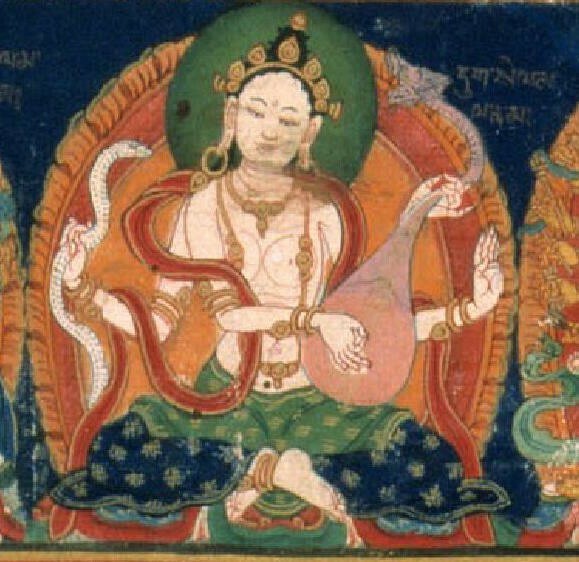
    Quote Although Janguli is not red, here is a Taklung Kagyu Krisna Yamari, who is usually accompanied by Vetali, who appears to be red in the lower right. So far so good, but, with expansion, it looks like she has a Naga Hood:
    Doesn't look very close, but I have never seen the one in my chest in great detail.

  2. Link to Post #462
    United States Avalon Member
    Join Date
    1st April 2016
    Posts
    6,637
    Thanks
    34,528
    Thanked 37,849 times in 6,287 posts

    Wink Re: Does Anybody Else Have Clear Body Experiences?
    Quote Posted by Old Student (here)
    It also illuminates a bit what is meant by the "worlds" in the sutras, if a thousand worlds is a sum total of a life.

    Yes. It is perhaps modeled after the solar systems and galaxies, but, according to Wiki's Buddhist Cosmology, a world is a Noumenal event produced by the beings themselves:

    The picture of the world presented in Buddhist cosmological descriptions cannot be taken as a literal description of the shape of the universe. It is inconsistent, and cannot be made consistent, with astronomical data that were already known in ancient India. However, it is not intended to be a description of how ordinary humans perceive their world;[8] rather, it is the universe as seen through the divyacakṣus दिव्यचक्षुः (Pāli: dibbacakkhu दिब्बचक्खु), the "divine eye" by which a Buddha or an arhat who has cultivated this faculty can perceive all of the other worlds and the beings arising (being born) and passing away (dying) within them, and can tell from what state they have been reborn and into what state they will be reborn.

    In the vertical cosmology, the universe exists of many worlds (lokāḥ; Devanagari: लोकाः) – one might say "planes/realms" – stacked one upon the next in layers. Each world corresponds to a mental state or a state of being". A world is not, however, a location so much as it is the beings which compose it; it is sustained by their karma and if the beings in a world all die or disappear, the world disappears too. Likewise, a world comes into existence when the first being is born into it. The physical separation is not so important as the difference in mental state; humans and animals, though they partially share the same physical environments, still belong to different worlds because their minds perceive and react to those environments differently.

    The vertical cosmology is divided into thirty-one planes of existence and the planes into three realms, or dhātus, each corresponding to a different type of mentality. These three realms (Tridhātu) are the Ārūpyadhātu (4 Realms), the Rūpadhātu (16 Realms), and the Kāmadhātu (15 Realms). In some instances all of the beings born in the Ārūpyadhātu and the Rūpadhātu are informally classified as "gods" or "deities" (devāḥ), along with the gods of the Kāmadhātu, notwithstanding the fact that the deities of the Kāmadhātu differ more from those of the Ārūpyadhātu than they do from humans. It is to be understood that deva is an imprecise term referring to any being living in a longer-lived and generally more blissful state than humans. Most of them are not "gods" in the common sense of the term, having little or no concern with the human world and rarely if ever interacting with it; only the lowest deities of the Kāmadhātu correspond to the gods described in many polytheistic religions.

    The term "brahmā; Devanagari: ब्रह्मा" is used both as a name and as a generic term for one of the higher devas. In its broadest sense, it can refer to any of the inhabitants of the Ārūpyadhātu and the Rūpadhātu. In more restricted senses, it can refer to an inhabitant of one of the eleven lower worlds of the Rūpadhātu, or in its narrowest sense, to the three lowest worlds of the Rūpadhātu (Plane of Brahma's retinue) A large number of devas use the name "Brahmā", e.g. Brahmā Sahampati ब्रह्मा सहम्पत्ति, Brahmā Sanatkumāra ब्रह्मा सनत्कुमारः, Baka Brahmā बकब्रह्मा, etc. It is not always clear which world they belong to, although it must always be one of the worlds of the Rūpadhātu.

    Beings in Kama Loka below the rank of Anangamin are said to be suffering there (under Mara). So, were you to witness it as a novice such as a Stream-enterer, you will suffer there. So this is pretty close to saying Anangamin is the victory state of Vajrabhairava or similar Trilokyavijaya practices. Until then it may be a battleground.

    All of those planes correspond to the Dhyanas.

    Obviously, Deva is not necessarily even a very nice term, whereas Devata is either an enlightened being, or, at the very least, something that does what its mantra says.

    The Eight Naginis mantra is interesting because they do not have their own names, they are just the "mukhi" of their male counterpart, and so you get ones like Ananta Mukhi, which is the same name as the Buddhist Dharani "Endless Gate". There, the same word for "mouth" also means "door or gate". The series has been closely copied by a syncretic Buddhist society that also includes Phuh--Padmavati, but also goes on to Sankhini Vayumukhi.

    Ananta is Sesha whose embodied radiance is Varuni. She is the light in the Talas or Underworlds, which increase by orders of darkness and density, as if they are anti or negative light. He claimed her when she was churned from the ocean of milk.

    One site even lists Bharati avatars such as Draupadi, and says:

    SAUPARNI ,VARUNI , PARVATI avatara

    Sauparni is wife of Garuda no avatara . [Garuda does not have avatars]
    Varuni is wife of SESHA
    REVATI is varuni avatara with SRIDEVI avesha
    Peya is also varuni with shanti avesha
    Parvati avatara is Sati Shailaja Girija .

    Revati and Varuni are also related to Balarama. There is a Gaudiya view which is slightly different than others as usual. Urmila is Revati and Varuni combined. So this is very intricate.

    Balarama is what we know as Hercules, i. e. Hari Kula or Vishnu's Family. This is the location of the Central Spiritual Sun according to Koothoomi. When it is revealed, Sesha will spew dark venom all over the planet and we will be no more.

    Anyone who could diagram the web of relationships based on what Balarama even is, is virtually an adept.

    Revati is the Ram's Horn or First Point of Aries, so, marks the beginning of that type of time cycle, whereas Varuni, or at least her husband, has to do with the end of one. Revati is the incarnation of Naga Lakshmi after Urmila.

    "Because she was from an earlier yuga, Revati was far taller and larger than her husband-to-be, but Balarama, tapped his plough (his characteristic weapon) on her head or shoulder and she shrunk to the normal height of people in Balarama's age."

    That Plough is really his "Hercules symbol" and winds up in the hands of one of the Gauris in Dakini Jala. Their sons were killed, but, their daughter marries Arjuna's son, and Arjuna's wife was a Naga Kanya.

    That is the relationship of Garudas and Nagas. Finite Time Cycles (Garudas) cutting up Infinite Time (Nagas). Obviously those are "natural enemies", yet basically immune to each other.

    Ananta was also the first Kirat king, followed by Vasuki and others.

    Boundless Gate--Nirhara--Anantamukhi is Dana or First Paramita, Generosity, according to Tson Khapa:


    As to living beings who dispute with others,
    It is tightfistedness that is the root cause.
    So renounce that which you crave.
    After you give up craving, the formula will work.

    In Namasangiti, it "is not" a Paramita, but, is the Dharani that corresponds to Prajnaparamita, which is kind of a "loop back to beginning" anyway. The Dharani is:

    (Arya ananta mukha sadhaka nama dharani)

    Tadhyata ane akhe ma-khe mukhe samanta-mukhe su me satya rame saudhi yukti nir-ukte nir-ukti. Prabhe hire hiri kalpe kalpasi sale. Saravati hire hire hire hire hire hire hiri hirile maha-hi hire cande javane cara carani acale ma-cale anante ananta-gati arani nir-mani nir-vapani nir-vartane nir-dante. Dharma-dhare nir-hare nir-hare vimale sila vi-sodhane prakrti-dipane bhava vi-bhavane a-sange a-sanga vihare dame. Vimale vimala-prabhe sam-karsani. Dhire dhi dhire maha-dhi dhire yase yasovati. Cale a-cale ma-cale sama-cale drdha sam-dhi su-sthire. A-sange a-sanga vihare a-sanga nir-hare. Nihara vimale nihara sodhane drdhasu me. Sthira sthame sthamavati. Maha-prabhe samanta-prabhe vipula-prabhe vipula-rasmi samanta-mukhe sarvatranugati anacchedye. Dharani dharma ni-dhana gotre samanta-prabhe. Sarva tathagata adhisthanadhistithe svaha.

    This is very rare and obscure; I cannot recall where I found it. Obviously in the medieval era it was well-known, and so, it is hard to imagine that they would be unaware it means Ananta Shakti as it is even used this way by Ganesh. It is probably in a Japanese study of a 1916 book wherein it is also Amida Dharani Sutra and the spelling used appears to be "mukha". It has a Jnanagarbha commentary, and so this thing was all over Nalanda.

    The best, or, in fact, only authority on it would be Jnanagarbha, and we would have to dig to find whatever he said. Right now it is hard to say if this means the serpent Ananta in any way. Evidently it is related to Sukhavati Pure Land in the Japanese records. If we could get those, they also have all of the seed syllables for Dakini Jala. But these are deep in academic reprints that typically cost a substantial price.

    I would lean towards disposing of the "mukhi" or goddess implication, except the dharani obviously uses Sarasvati and Vimala, so, she isn't leaving, even if it is supposed to be a male-based thing for monks.

    I don't know? Generic name Endless Door from ignoring a common correspondence? Or Varuni herself by way of adding connections that are not there?

    The same collection with the almost-Janguli woman also has this:


    which is Nine Nagas, which is similar to the syncretic site's version. The piece has no date, origin, or anything.

    As far as an "uncoiled" naga or Nag Kanya, those certainly exist:


    The most concrete things so far are Green Janguli and Sarvadurgati Parishodana, which has the Skorupski translation, or, Sanskrit original, which gives:

    anantaṃ
    takṣakaṃ caiva karkoṭaṃ kulikaṃ tathā||

    vāsukiṃ śaṃkhapālaṃ
    ca padmaṃ vai vāruṇaṃ tathā||


    When you use that list, you get Varuna whose shakti is obviously Varuni, except that one is Mother Varuni, and the one we use is Varuni, Daughter of Varuni, who I guess loops back to the beginning as Ananta Shakti. Hold on, what do you mean, the first one has the daughter of the last one?

    That converts me to Shentong just by even seeing it.

    "Phana" is the word for "Hood", whose definition links to:


    This bronze sculpture shows an image of Nagakanya (detail of head), from the 20th century A.D.—This image of Nagakanya is seated on Makara, under the canopy of a nine-hooded serpent (naga-phana) with her right hand holding a conch.

    It is Hindu from Nepal.

    This subject is full of circles, zeros, and infinity symbols, it just wraps all around and through itself.
    Last edited by shaberon; 3rd November 2020 at 23:24.

  3. The Following 2 Users Say Thank You to shaberon For This Post:

    Old Student (4th November 2020), william r sanford72 (5th November 2020)

  4. Link to Post #463
    United States Unsubscribed
    Join Date
    24th May 2020
    Language
    English
    Posts
    668
    Thanks
    607
    Thanked 1,434 times in 639 posts

    Default Re: Does Anybody Else Have Clear Body Experiences?
    Quote However, it is not intended to be a description of how ordinary humans perceive their world;[8] rather, it is the universe as seen through the divyacakṣus दिव्यचक्षुः (Pāli: dibbacakkhu दिब्बचक्खु), the "divine eye" by which a Buddha or an arhat who has cultivated this faculty can perceive all of the other worlds and the beings arising (being born) and passing away (dying) within them, and can tell from what state they have been reborn and into what state they will be reborn.
    There is a "them" in this statement that is anomalous -- "...can perceive...within them,...". I think given the context (Wiki) it is probably "within the other worlds", but if it were not, and were "a Buddha or arhat" being referenced, then it is a statement of why I had singled that quote out as clarifying what was meant by Buddhist worlds.

    In the (seemingly endless) sutra I'm reading, Avatamsaka, entire systems of worlds are within the body of a Buddha, to the extreme in places that there are infinite worlds within each of his pores.

    I singled it out because of a more aware feeling of embodying worlds upon worlds that is now part of some of the experiences in my shaking. I don't often have awareness of it "from the outside observer" point of view but on those occasions that I do, the inside of me appears vast, and contained in the Buddha or with boundaries like a huge meditating Buddha. The opposite feeling has only shown up in the past 3 nights, and that is a "pressing" of my clear body against the skin of my physical body so that they are coincident up to an infinitessimal layer of liquid (almost all liquids in my shaking are composed of bliss) between them, which is some kind of power "stance" -- it isn't a pose but it executes poses, and is sometimes clothed as a shaman. The two "visions" of body are ends of a spectrum, but ultimately the shaman body perception acts in a world that is inside of the Buddha body perception and the Buddha body perception is located in one of the layers between the skins of the shaman perception -- which doesn't make much sense but it is how it seems. I am being worked both on establishing internal "objects" which are all "Buddhist" and "power poses" which are all "shaman". All of these "workings" end with a requirement that I produce -- rather than just listen while they produce -- the pillar, which in this version is a silvery line along my centerline with two "fineals" at the ends which are what we would normally call 'drops' but in my notes are 'onions' -- red at my perineum, white at my crown. And the "manager" for this operation is Sukhasiddhi rather than Mandarava.

    Quote (Arya ananta mukha sadhaka nama dharani)
    It seems to have "riffs" of other mantras embedded in it.

    Quote I would lean towards disposing of the "mukhi" or goddess implication, except the dharani obviously uses Sarasvati and Vimala, so, she isn't leaving, even if it is supposed to be a male-based thing for monks.
    With respect to Nagakanya, that she is Vayumukhi and holds a conch seems to say she is the wind through the conch that produces the sound, and maybe that the sound calls her?

    Quote When you use that list, you get Varuna whose shakti is obviously Varuni, except that one is Mother Varuni, and the one we use is Varuni, Daughter of Varuni, who I guess loops back to the beginning as Ananta Shakti. Hold on, what do you mean, the first one has the daughter of the last one?
    So then does Shakti become Revati when looped back to the beginning? This seems to be a vision of a kalpa as a creation of shakti, which is an interesting way of seeing time.

  5. Link to Post #464
    United States Avalon Member
    Join Date
    1st April 2016
    Posts
    6,637
    Thanks
    34,528
    Thanked 37,849 times in 6,287 posts

    Default Re: Does Anybody Else Have Clear Body Experiences?
    Quote Posted by Old Student (here)
    In the (seemingly endless) sutra I'm reading, Avatamsaka, entire systems of worlds are within the body of a Buddha, to the extreme in places that there are infinite worlds within each of his pores.
    Yes, that is the primary source for the "infinitesimal" descriptions along the lines of "more numerous than sand grains of the Ganges" and so forth. There is, for example, an Amitayus, in each of whose pores is a Hayagriva with an un-named consort resembling him. There are many "applications" of what Avatamsaka has presented as "complete worlds". I suppose it is the same thing on a different scale.


    Quote All of these "workings" end with a requirement that I produce -- rather than just listen while they produce -- the pillar, which in this version is a silvery line along my centerline with two "fineals" at the ends which are what we would normally call 'drops' but in my notes are 'onions' -- red at my perineum, white at my crown. And the "manager" for this operation is Sukhasiddhi rather than Mandarava.
    Yours are self-arisen, whereas, for most of us, we would have to concentrate to get any image. I have never seen a Drop. I have felt them. I know at least something of what they can do, in the way that you could actually ride a bicycle with your eyes closed.

    What they do is something that can be seen, i. e. such as revealing the Void.

    This silvery line is perhaps the most important part, being thin and easy to crimp. Heat and getting it to rise to the head are not necessarily that difficult, but, this one may take some finesse.

    Quote (Arya ananta mukha sadhaka nama dharani)

    It seems to have "riffs" of other mantras embedded in it.
    Yes, many of them share parts. There are bunches that start like Mahakarunika, there are groups that have Kha Kha Khahi, there are ones that take Janguli's Illie Milie, and probably very few of them really start from scratch.

    The weird thing about Green Janguli is that she has no spawn sequence. Most of hers are pretty simple like just using a Jah, or, actually a Jam syllable, but this one is just there. It says this is the explanation of her Heart Practice, gives the mantra, says do ten thousand repetitions and something about that, and then there are no syllables or disks or any of the usual apparatus, just:

    prathamaṃ tāvan mantrī ātmānam īdṛśaṃ cintayet kumāryākāraṃ haritavarṇaṃ

    The title Mahayogeshvari is given to Durga and Parvati and since it is also on Durgottarini Tara, it is evident as meaning Durga there, and since Janguli is virtually called Parvati, then it can easily mean likewise for her. She is also called Haimavati and Kasmira, and everything is doubly odd since her name means Jungle Girl.

    It has been said that neither Janguli nor Cinnamasta ever gained popularity in Tibet.

    I like them. Janguli is a Dharani that we can use and we at least are able to praise her. Cinnamasta is a different state of being altogether.


    Quote With respect to Nagakanya, that she is Vayumukhi and holds a conch seems to say she is the wind through the conch that produces the sound, and maybe that the sound calls her?
    Wind, as Prana, most likely, the Conch is usually considered an intricate part of the brain, the Pineal or something, which gets touched by kundalini to produce samadhi. I was a bit puzzled by "Vayumukhi", which, in context, would suggest Shakti of Vayu, which would be difficult since he isn't a Naga. Sankhini is one of the "kinds of women" in Chakrasamvara literature, and, as a Dakini, continues through Vajradaka Tantra into the Big Heruka or Dakarnava.

    Here is an intense Kurukulla page which explains Vayumukhi as "gods dwelling at the speed of wind". Otherwise it has almost no existence. It is among 1000 Names of Maharajni who appears to be Raja Rajeshwari, whom I believe is Matangi, and if Buddhism does not show Janguli as Naga or Nag Kanya, she has erred in the direction of absorbing Matangi.

    Mahattari Tara is a different "kind of woman"...I was puzzled when I saw "Lady of the Bedchamber" but it is actually one of many of the kinds of Stri (Women) of a Royal Harem which is actually number thirteen and translated as Matron. The Mahattarika definition for some reason refers to Kadambari, a special kind of wine relished by Balarama, made from water accumulated in a Kadamba tree, with honey.

    Tara, Tari, or Tarika consistently has the meaning of a boat or "ferry-woman", and so how this is meaningful to the Matron of a Harem, I am not sure, I understand the one from the sadhanas better. Janguli is the type of Yidam which can probably give me personally the most comprehensive wisdom I can absorb, however, it is a Tara proceeding from Mahattari that I would seek as a guide to the Akanistha, a main form of Refuge, through Death itself.


    Quote So then does Shakti become Revati when looped back to the beginning? This seems to be a vision of a kalpa as a creation of shakti, which is an interesting way of seeing time.
    I guess Revati is really the last/27th lunar mansion mostly in Pisces but does mark the beginning of Aries as well. The beginning is opposite Spica. That is how the sidereal system keeps time.

    Ananta Shakti is Daughter Varuni who "would be" Ananta Mukhi if the same naming scheme applied.

    If Varuna is the last Naga, then Mother Varuni is the last shakti and would be Varuna Mukhi.

    That is what I meant by "loop", it is Varuni looping if one follows that particular Naga pattern. It wouldn't even matter what her synonyms are--Ananta has the daughter and Varuna the mother by definition.

    It is about as weird as Ekajati in Vajra Panjara Tantra, offspring becoming their own parents.


    Varuni is apparently related to Revati in that:

    Urmila = Naga Lakshmi = Varuni and Revati combined

    Revati = Naga Lakshmi next incarnation with Balarama

    The whole basis of Indian metaphysics is there, since it is giving the two main generations, i. e. Urmila is from the time of Rama and Lakshman, while Revati is from the time of Krishna and Balarama; these two generations being the two main/most popular/most informative Vishnu incarnations, associated with the two main national epics, Ramayana and Mahabharata.

    Since we were told Bharati is Draupadi in Mahabharata, the "common wife" of the Pandus, according to HPB, this means the human personality as the "common wife" of the senses. Perhaps it is slightly higher than just Rupa Skandha, since it takes more skandhas to create a personality. Maybe it is Vijnana Skandha.


    As a Lunar Mansion, Revati takes up thirteen degrees, but, as an asterism, is at the end of this or around Zeta Piscium, on the cusp, auspicious for beginnings:

    Śrī Kṛṣṇa started on his journey at the auspicious moment of Maitra on the star Revatī in the month of Kārttika.

    Revati is present in the Dharmadhatu Vagisvara mandala, is white; all of the Lunar Mansions are in it. This mandala is the Dharmakaya or is the "ceiling" to the Kalachakra "floor" which Buddha displayed together at Amaravati.

    DDV won't tell us anything more. If I ask Sadhanamala, there is only one possible response, which is in the weird Pancha Raksa 206 after giving Pratisara's items and faces and that she has many jewels, she is:

    mahābala%kramā raudraveśā vaṭavṛkṣopa-
    śobhitā saptamātrādidevatāsantrāsanakarī revatyādigrahāṇāṃ
    santrāsitamanāḥ vāsukyādyaṣṭanāgasantrāsanakarī vāta-
    pittaśleṣmādisaṃśodhanakarī raudratamo 'ndhakārameghasphuṭanakarī
    sarvvāpamṛtyunivāraṇakarī /

    This is before casting her retinue. Without being able to fully read it, one can still pick out:

    Mahabala Krama sounds like a way of adjoining wrathful deities, the Nadir, or Underworld, or Bali Offerings.

    Raudravesa means Possessed by Raudra.

    Seven Mothers and other Devatas Santrasanakari (protection syllable Tra as in Samtrasani and Mantra?)

    Revati Adi Grahan (Revati the first planet?)

    similar to the next line:

    Vasuki Adi Asta Naga Santrasanakari (Vasuki the head or chief of eight nagas?)

    Vata-Pitta sounds like Ayurvedic Humor.

    It is not like Pratisara is singing the alphabet of moon signs, she refers only to Revati in a way that may mean first, but, in the context of the next line, would almost make sense as Headmistress of Planets.

    Adi is a complicated term. If Adi Buddha was first, it made little difference to us, until a Buddha manifested, which means a human being awakened to the full samadhi of Adi Buddha. This offspring is its own parent? Something like that.

    Why would a Tathagata or Previously Established Buddha be inside what I would call my own personal Purified Jealousy?

    What we call the passages of time is simply a way for us to organize the apparent motion of transitional states of consciousness.

    Because they are under duality or Maya, none of those transitional states are real.

    Now if there is such a thing as an Event Horizon, what this means mathematically is that all of time would be compressed, all of eternity would reside there in a single instant. That, so to speak, is physical perception at light speed. Everything would appear simultaneous.

    If such a thing were physically real, the energy would of course vaporize any kind of being, "you" could not go there. But if such a thing were mentally real, you could do it.

    It is as if when consciousness becomes more refined, it perceives smaller and smaller instants, and at the same time, capable of picturing a larger and larger "now" or "moment" or continuity of consciousness. Instead of being able to recall the previous five hours of the day in ten minute parcels, you remember five hundred years broken down into attoseconds.

    In my experience, this sensation is in step with the changes in appearance to Light.
    Last edited by shaberon; 5th November 2020 at 06:47.

  6. The Following 2 Users Say Thank You to shaberon For This Post:

    Old Student (5th November 2020), william r sanford72 (5th November 2020)

  7. Link to Post #465
    United States Avalon Member
    Join Date
    1st April 2016
    Posts
    6,637
    Thanks
    34,528
    Thanked 37,849 times in 6,287 posts

    Default Re: Does Anybody Else Have Clear Body Experiences?
    Although Janguli is "not popular" in Tibet, she is significant to Krisna Yamari Tantra, as well as directly to Tara.

    From my experience, I am a bit bewildered by some of the actual presentations of "Buddhism for the West", such as Vajrayogini--Cinnamasta and Kalachakra. It seems a bit like going commercial, like an advertisement. However, "Tara for the West" was probably a much better thing, even I could use her successfully. That is in her common basic mode of Removing Fears, and/or quelling mental and emotional disturbances. Rather basic. Important, but, then, when asking about who she is or why she might have twenty-one forms, it got very confusing.

    However the "main basic" Green Tara is still very occultly advanced, even just starting with her and her common mantra. And so if I know that "this" is an effective power which I have already accomplished, why would she not carry me into the next stage?


    One small paragraph in Sadhanamala is equal to a major practice which continues to this day. Outside of Nepal, we have found Mahattari Tara with the title "Varendra Vana Iccha", and, as a potent figure in Kubjika Tantra, although we would have to find another copy of Sat Sahasra Samhita to back this up. Otherwise, she is non-existent, unknown, but is a type of Anuttara or Unsurpassed puja in Nepal. We have found the information, but not examined it much.

    This practice is intended to take place within Guru Yoga, and before Tara is summoned, you do Outer and Inner worship (bahyadhyatmyapuja), a Seven Limb practice, and establish Sunyata. Even Shiva's Guru Yoga explains Outer and Inner as Offerings and Manasa Japa, with the feeling of Bhava, which is what makes it real, instead of a routine. Shakta Yoni Puja based in the couple Mahamaya and Sadashiva is similar, and also shows an interesting group of Five Liquids starting from Yogurt--Earth Element and so on. At any rate, this Puja does not teach these preliminaries, you would have to implement your own before Tara is generated.

    Sri Arya Tara having Vajra Feet and a Flaming Blue Lotus, by herself, is Mahattari Tara.

    She is only there for a moment, and then is re-cast with a retinue.

    The second or likely Varada Tara uses Green or Syama Janguli which is the same color as herself--although this sounds darker than Harita or "green like priyangu fruit" as she is when alone. By the descriptions of the goddesses as "on the sides", then Mayuri is closer to Marici, and Janguli is closer to Ekajati.

    One does Adhisthana Consecrations and a bodily protection or Nyasa.

    Most of the Nyasa placements use Hum, but, there is:

    om vajrayaksa hum. sire thiye. om aryatara hrim. kathusa thiye.

    Further along is something similar to Pramardani, then Time and Death, and Dhanada Tara:

    om marasainyapramardanaya hum. nugale thiye. om hum kalamrtyuprasamanaya hum. javagu pull thiye. om hum dhanadayai hum. khavagu puli thiye. om vasudharayai hum. jadhu thiye.


    This does not go away, it makes a mandala, into which Akanistha Tara is Hooked:

    akanisthabhuvanasthittm sriaryataram mandale akarsanena bhavayet.


    It says to worship the Tathagatas and forty Taras without explaining what this means, it is just a strand of mantras, such as:

    om aryatarayai vajradhatumandale svaha. [she is not normally associated with the male-based Vajradhatu Mandala like this]

    om dharmadhatave namah svaha.

    aryavairocanaya svaha. om aksobhyaya svaha. om ratnasambhavaya svaha. om amitabhaya svaha. om amoghasiddhaye svaha.

    aryatarayai svaha.

    puspatarayai svaha. dhupatarayai svaha. dipatarayai svaha. gandhatarayai svaha. rasatarayai svaha. [Five Offerings]


    prasannatarayai svaha. suklatarayai svaha. dhanadatarayai svaha. [three explanatory Sadhanamala deities and second Dhanada]

    locanatarayai svaha. mamakitarayai svaha. pandaratarayai svaha. tarayai svaha. [Four Elements or Prajnas]

    bhrkutitarayai svaha. saptalocanitarayai svaha. [the second being an addition by Atisha]

    svetatarayai svaha. nilatarayai svaha. pitatarayai svaha. raktatarayai svaha. syamatarayai svaha. [Five Colors]

    siddhilocanitarayai svaha. vajratarayai svaha. ekajatitarayai svaha. yogatarayai svaha. bhuvanatarayai svaha. candratarayai
    svaha. suryatarayai svaha. mangalatarayai svaha.

    hasyatarayai svaha. lasyatarayai svaha. rasarangatarayai svaha. mahamangalatarayai svaha. sumangalatarayai svaha. sampurnaghatatarayai svaha. dviparajatarayai svaha. basantatarayai svaha.

    dharmatarayai svaha. punyatarayai svaha. sriaryatarayai svaha. vajratarayai svaha. [there is a synonym of Achi --Dharma Tara--and finally a second instance of Vajra Tara]

    om vajrapuspam praticcha svaha. [more flowers, not a name]


    Towards the end, there is Dance, Song, the Tathagatas, and two more named Taras:

    aryataramahadevimahattaritarayai namo namah/
    prasannataradevim Sri to to tare namastu to//

    Mahadevi happens to be the title for the Queen of the Harem, it is as if the Matron has become Queen by enduring this rite, followed by the second appearance of Prasanna, who is the quite powerful Amrita Locana.

    The end is innocuous enough:

    naivedya. mata. yedharma.
    thana makutapuja yaye. iti sriaryatara samadhi samaptam.

    But this Puja is the Crown Ceremony or Acharya Abhiseka.

    We would have to do it symbolicly, perhaps study the Diadem Initiation or how it is a seal to the Families. Because the rite has created an Akanistha or Sambhogakaya environment, then this part could perhaps be used for Dharmakaya.

  8. The Following User Says Thank You to shaberon For This Post:

    william r sanford72 (8th November 2020)

  9. Link to Post #466
    United States Unsubscribed
    Join Date
    24th May 2020
    Language
    English
    Posts
    668
    Thanks
    607
    Thanked 1,434 times in 639 posts

    Default Re: Does Anybody Else Have Clear Body Experiences?
    Quote Yours are self-arisen, whereas, for most of us, we would have to concentrate to get any image. I have never seen a Drop. I have felt them. I know at least something of what they can do, in the way that you could actually ride a bicycle with your eyes closed.

    What they do is something that can be seen, i. e. such as revealing the Void.

    This silvery line is perhaps the most important part, being thin and easy to crimp. Heat and getting it to rise to the head are not necessarily that difficult, but, this one may take some finesse.
    In the current exercises, I have to do the "quiet order" to make these things visible, and I have been let know that I am responsible for getting that done, and that they want it done during all of the power pose lessons, no exceptions -- the "quiet order" is a thing where they want me to quiet my "chatterer" but the quiet they taught and want me to impose is over my entire body from the inside -- kind of a meditational silence rather than a push hands silence. It took an eon in shaking time (a couple of weeks) to be able to keep moving while I was doing this -- several days just to not stop breathing.

    The most difficult part is the top one since I'm not yet very adept at "focusing" at my crown (they just moved to instructing on there with that vision I told you about with the hair on fire thing).

    The silver line is the "thin" version of the pillar. It is the pillar "of all souls" since it is filled with faces of people, seemingly a huge crowd of them. The "thick" version looks kind of like a very huge Greek pillar (Doric), it is grounded in my navel area after a dissolve into "brown skinned earth" and the appearance at its base of a bucolic scene worthy of some of the 19th century painters. I won't try to describe how it can be coming out of my waist and also a pillar between my perineum and crown. But moving upwards, there are clouds around it in the middle (my heart area and just above) with lightning in them, and at the top is a rainbow in which things can be seen in the droplets. That's the version that I can "walk into" (just kind of walk through the surface of it) and do lucid dreaming inside.

    This is the thin version. I'm not sure why they want it always lit up when I am working on their power poses, but they make various versions of the two drops, sometimes they are the two moons, sometimes the onions/drops. Always one is creation in this life and the other is a place that leads to, I guess, the Bardo on the inside, and a set of nature scenes illustrating the transition of decaying things to germinating ones on the outside.

    Quote The title Mahayogeshvari is given to Durga and Parvati and since it is also on Durgottarini Tara, it is evident as meaning Durga there, and since Janguli is virtually called Parvati, then it can easily mean likewise for her. She is also called Haimavati and Kasmira, and everything is doubly odd since her name means Jungle Girl.
    Always Durga! I've heard that for some people in Eastern India, she is what they mean when they say "Devi" and she is also what they mean when they say "Shakti".

    Quote Wind, as Prana, most likely, the Conch is usually considered an intricate part of the brain, the Pineal or something, which gets touched by kundalini to produce samadhi. I was a bit puzzled by "Vayumukhi", which, in context, would suggest Shakti of Vayu, which would be difficult since he isn't a Naga. Sankhini is one of the "kinds of women" in Chakrasamvara literature, and, as a Dakini, continues through Vajradaka Tantra into the Big Heruka or Dakarnava.
    Probably the hippocampus and surrounds. Westerners thought it looked like a seahorse. But conch works, too.
    Quote Here is an intense Kurukulla page which explains Vayumukhi as "gods dwelling at the speed of wind".
    Interesting page, this (Nath) version of Kurukulla has a trident with Kankan naga around it and a flower, but during the explanations, the author refers to her "hook". Also interesting the discussion about Moha and Viraha.

    Quote Ananta Shakti is Daughter Varuni who "would be" Ananta Mukhi if the same naming scheme applied.

    If Varuna is the last Naga, then Mother Varuni is the last shakti and would be Varuna Mukhi.

    That is what I meant by "loop", it is Varuni looping if one follows that particular Naga pattern. It wouldn't even matter what her synonyms are--Ananta has the daughter and Varuna the mother by definition.
    Two things come to mind, Ananta and Varuna are both forms of the infinite (infinite partitions of time, the ocean), and that in the West there is also a snake related to time, the Worm Ourobouros (hope I spelled that right).

    Quote What we call the passages of time is simply a way for us to organize the apparent motion of transitional states of consciousness.
    Interesting. In physics, it's a strange dimension altered by the speed of light.

    Quote Now if there is such a thing as an Event Horizon, what this means mathematically is that all of time would be compressed, all of eternity would reside there in a single instant. That, so to speak, is physical perception at light speed. Everything would appear simultaneous.

    If such a thing were physically real, the energy would of course vaporize any kind of being, "you" could not go there. But if such a thing were mentally real, you could do it.
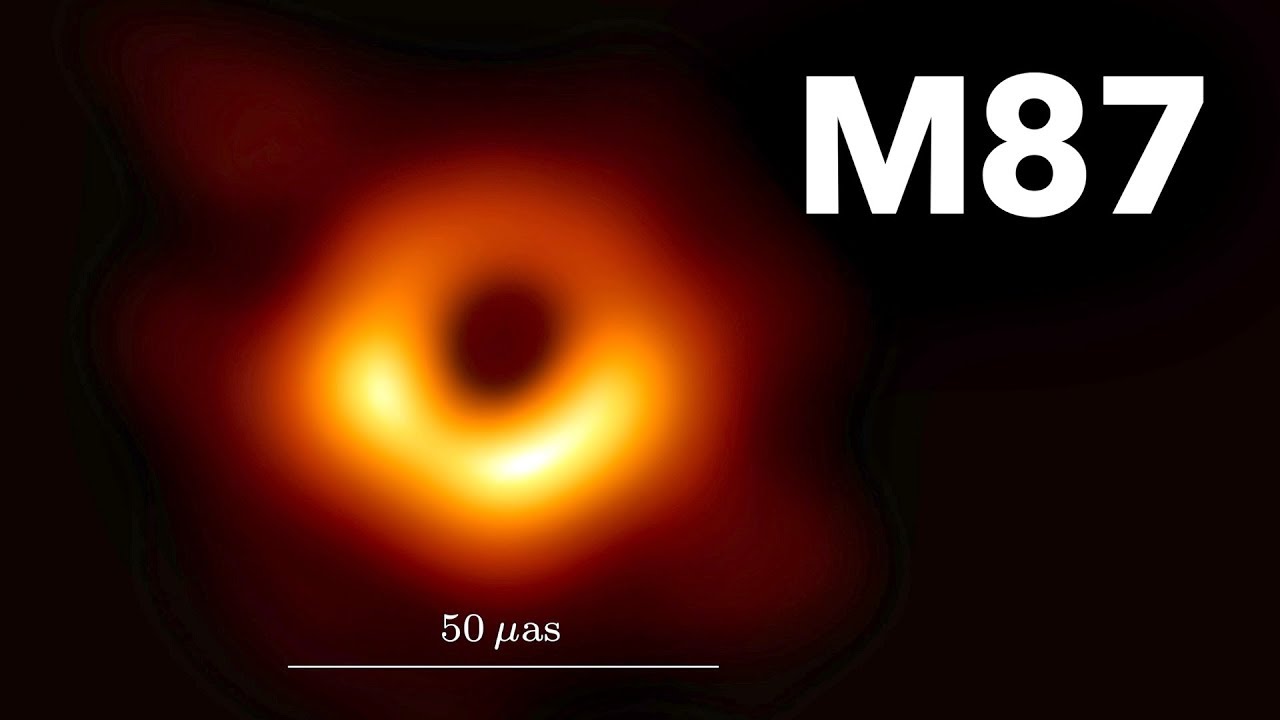
    The event horizon might have a "memory" of all things that passed through it with the advent of extensive theories of quantum entanglement. There's a new (2012) theory that multiple entanglements happen and a bunch of other stuff at the event horizon which looks like a "curtain of fire". That's to account for that memory bleeding off with a memory of something else instead. Somebody took a picture of a black hole last year:


  10. Link to Post #467
    United States Avalon Member
    Join Date
    1st April 2016
    Posts
    6,637
    Thanks
    34,528
    Thanked 37,849 times in 6,287 posts

    Default Re: Does Anybody Else Have Clear Body Experiences?

    Quote Posted by Old Student (here)
    Two things come to mind, Ananta and Varuna are both forms of the infinite (infinite partitions of time, the ocean), and that in the West there is also a snake related to time, the Worm Ourobouros (hope I spelled that right).
    Yes.

    In Chaldea it was called Tiamat, elsewhere Typhon, Chaos, and so forth.

    Varuni is also Makara Rider I believe, When we look at this form, it is like the rider from the unknown, in those terms.

    When we have looked at all the tantric subjects and all the things we say about Indra, those are all things we don't say about Varuna, and yet the mundane medicinal Indivara is unidentified but possibly is Indravāruṇī (Citrullus colocynthis).

    As a Dharani, Janguli is white and has two arms and her personal item is a poisonous flower bud according to Bhattacharya, but, he gave from his NSP the term Puspamanjari, which is Indivara as Blue Lotus. The word for poison is inscrutable.

    Mahattari Tara is sanālendīvaradharāṃ or Indivara sa (with) anala (fire), and her Indivara is always called a Blue Lotus. I am still unaware of anyone harping on the fact it is not nilotpala like any other Tara has.

    Her association to Varendra means North Bengal.

    Varuna is in what would be called in the Puranic Theosophical terms the Buddhic Plane. In other words "above the Voids" of the Manasic or Akashic Plane, and, indeed, is the Ocean which Tara for instance ferries one to.

    So we just don't talk about it hardly at all. That is why the Buddhist system of seven does not really match these planes, because it is talking about operative principles in Manas. What we are doing is joining Manas to Buddhi, which is the Occult Wedding of Ganesh to Siddhi and Dhatri (Ganapati Hrdaya).

    Makara Rider goes there and that is why we find her with Sri Devi Laksmi whom we have found is Kama Loka as a whole, or, rather, its Element and Prajna or Ishvari, which is Suffering to anyone below the rank of Anangamin.

    We personally require Varuna's offspring Varuni in order to do it.

    We are relying on volumes of tantra called "Jala".

    What is this to the Inverted Stupa...the White Circle of Citta Chakra, Varuna Mandala.

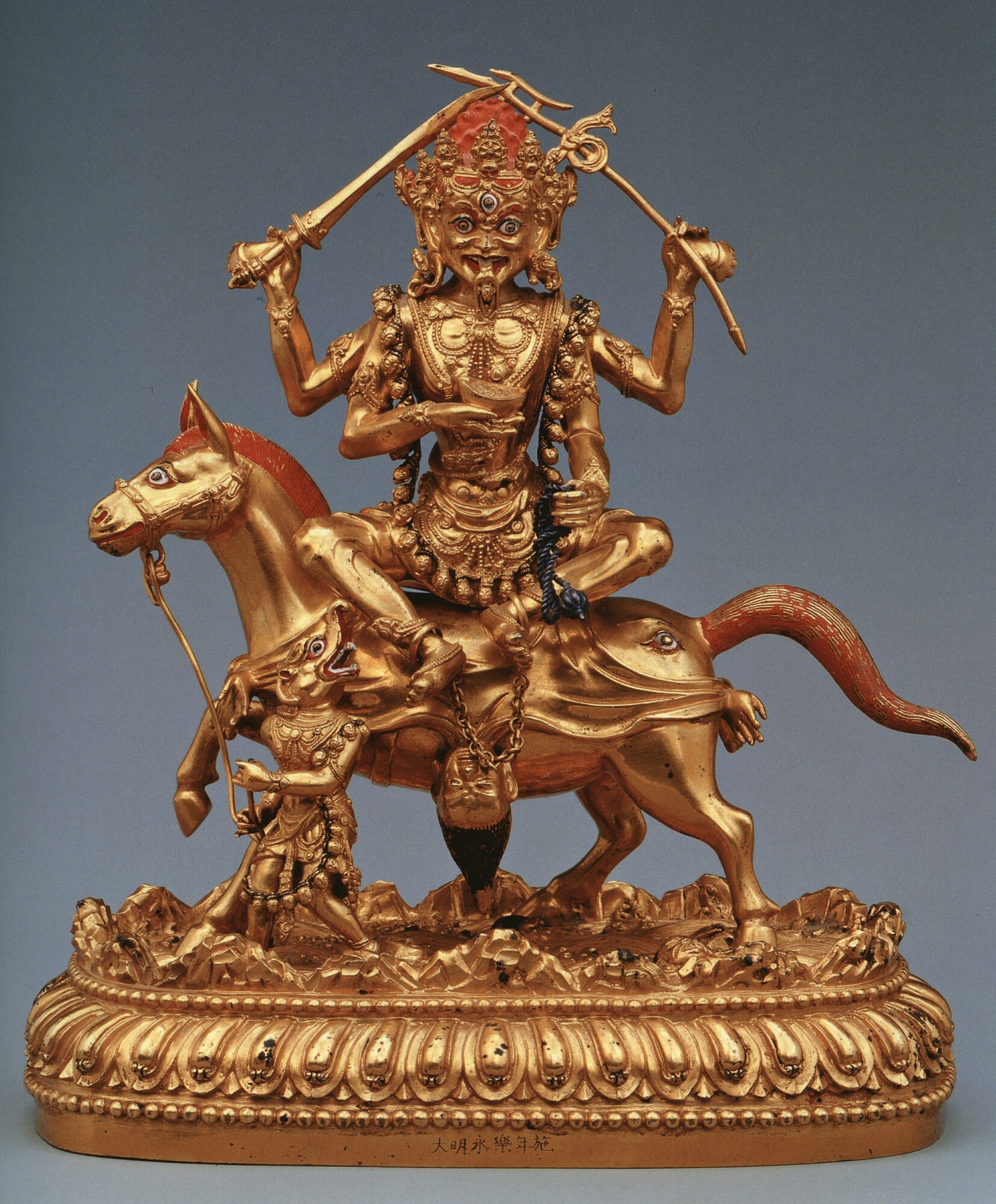
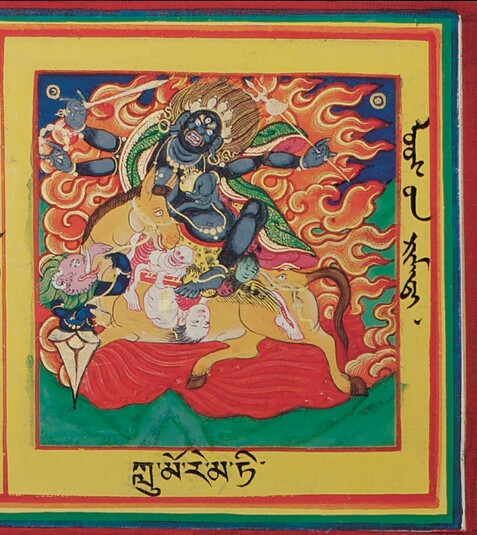
    Frequently, Sri as Palden Lhamo is shown with multiple attendants including Wrathful Sarasvati, but what is doubly bizarre about Makara Rider is that she is leading Sri's mule. Sri in this style (Kamadhatvishvari), has four arms. Only Makaravaktra is shown, the two kinds of Sarasvati have vanished:


    The creature is considered an Elephant Crocodile. And so if you get the gist of what these names and roles are saying, this particular statue is extraordinarily profound.

    That Chamunda-esque thing is the Shakti I am positive about, which makes it seem like others that work like a Mace or a Broom or something are just lying around to be taken.

    That is why it is like Sitayana or Book of Lakshmi from the first Namasangiti Dharani to this. That is why Mahasri Tara is the object of Mahattari's exercise, is the one called from Akanistha. Attainment along these lines produces Golden Light.

    Part of the meaning of the eyes on Sri's mule is they see the future. Here, Makaravaktra as part Kila leads Sri as Nagi Remati:


    I can't really say anything about the actual Varuna. I can say all of these practices lead there.

  11. The Following 2 Users Say Thank You to shaberon For This Post:

    Old Student (6th November 2020), william r sanford72 (8th November 2020)

  12. Link to Post #468
    United States Unsubscribed
    Join Date
    24th May 2020
    Language
    English
    Posts
    668
    Thanks
    607
    Thanked 1,434 times in 639 posts

    Default Re: Does Anybody Else Have Clear Body Experiences?
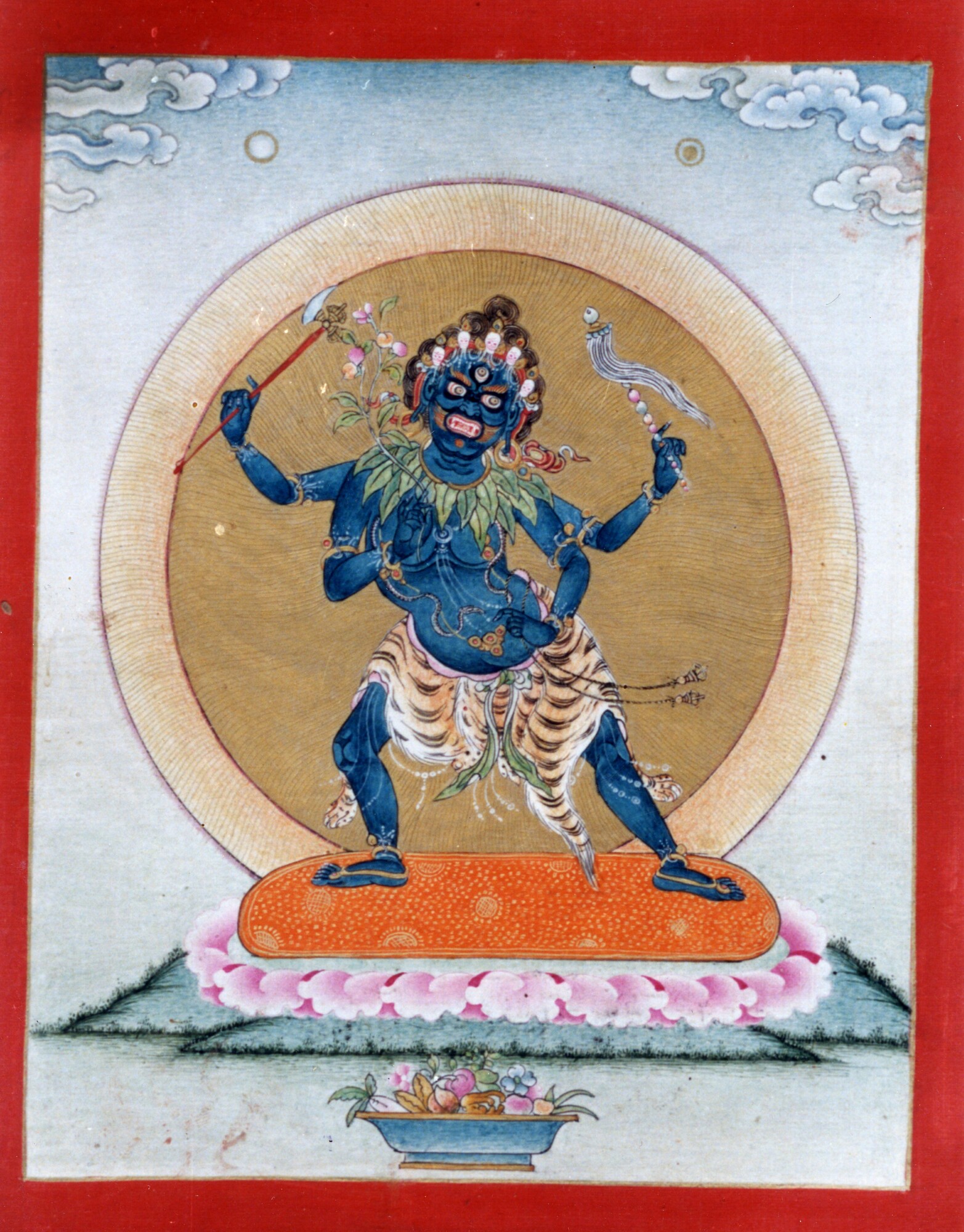
    Quote Mahattari Tara is sanālendīvaradharāṃ or Indivara sa (with) anala (fire), and her Indivara is always called a Blue Lotus. I am still unaware of anyone harping on the fact it is not nilotpala like any other Tara has.
    This sounds distinctly like it is not supposed to be all blue, but rather with fire (possibly more colors). Nilotpala is a light to dark indigo blue flower.

    Quote Varuna is in what would be called in the Puranic Theosophical terms the Buddhic Plane. In other words "above the Voids" of the Manasic or Akashic Plane, and, indeed, is the Ocean which Tara for instance ferries one to.
    This is an interesting twist. Tara ferries on to there how?

    Quote Frequently, Sri as Palden Lhamo is shown with multiple attendants including Wrathful Sarasvati, but what is doubly bizarre about Makara Rider is that she is leading Sri's mule. Sri in this style (Kamadhatvishvari), has four arms. Only Makaravaktra is shown, the two kinds of Sarasvati have vanished:
    I looked at the Sri Devi (Dudsol) page for Himalayan Arts, they say she should have either a trident or a mongoose in her upper left hand, this one has what looks like an ax.

    Quote That Chamunda-esque thing is the Shakti I am positive about, which makes it seem like others that work like a Mace or a Broom or something are just lying around to be taken.
    The top picture (sculpture) doesn't seem as conforming as the thangka below.

  13. Link to Post #469
    United States Avalon Member
    Join Date
    1st April 2016
    Posts
    6,637
    Thanks
    34,528
    Thanked 37,849 times in 6,287 posts

    Default Re: Does Anybody Else Have Clear Body Experiences?
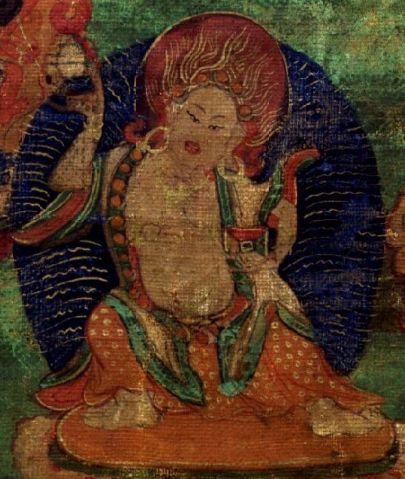
    I mis-spoke again horribly.

    I am trying to internalize everything I learn, and, when it comes out crooked, I have to figure it out. I overlooked his first wife.

    Ganesh is extremely important, as in the Three Reds of Sakya, he is in the top tier beyond Bharati. If Bharati is an indication of almost everything we can express about Yoga practice, what is left?

    Ganesh appears to have much to do with automatic/involuntary/natural law processes. He is why Jupiter is a mini-sun and is not really the Guru of people, but a necessary adjunct.

    Ganesh has much to do with Hayagriva, immortality, and the Aswins.

    He may have various individual practices in Buddhism, but, historically, Ganesh and the Gandharvas were Wrathfuls, who were subdued by Avalokiteshvara or Tara near Mathura. And then this "angry elephant" shows up riding a Mouse.

    His emphasis even on a Dharani basis is Ganapati Hrdaya, but, he is really having two wives.

    The first wife is Buddhi, which is Matangi, Ucchista Candali.

    The other wife is Siddhi, which is Gauri or Lajja Gauri, Siddhidhatri, Annapurna.

    Ganesh with both wives is called Lakshmi Ganesh.


    Because Matangi is enfolded into Buddhist Janguli, then, it should be up for consideration that perhaps Janguli is Buddhi and is Ganesh's first major destination. Gauri has more to do with upholding the Vow and producing Accomplishment. Like Varuna, I cannot say much about the real Annapurna, other than being the timeless goddess of Kashi--Benares, and being the main goal of an Inner Homa. If Kurukulla is like a saturation of one's head, Annapurna is like a billion billion of these filling Infinite Space. In her aspect as Gauri, it has to do with Vermillion Mark, Robed in White, and so forth, which Buddha calls "the first Gauri", not to be confused with "the Gauris" which are Generation Stage.

    Matangi comes from the same background as Parnasabari:

    Sabari was a yogini in the Ramayana who honored Ram and directed him to Hanuman. Her preceptor was Matangi. Satsahasra Samhita places five goddesses under Green Mahattari: Matangi, Pulindi, Sabari, Campaka, Kubjika: five Jnanas in the continuous stream of Kula and Akula (Shakti and Bhairava), corresponding to senses.

    That makes sense. Hanuman found Sita. Hanuman is the "organized, harmonious" Vayu, Maruts, or Prana; Sabari is dressed in Neem leaves and is medicine, so, would definitely "direct" someone to psychic health. Saying that Hanuman found Sita is almost exactly the same thing as saying Buddha's Wisdom is only found by harnessing the Life Winds. It is not mental in the ordinary Sarasvati sense of being a philosophy or regular learning, it is tantric Sarasvati, which is Matangi and Janguli.


    Ganesh is employed in Agni Homa, which combines everything, such as the Fire of Wisdom. Jnanagni resides at Arunchala, the fire lingam, the largest one, which is almost directly opposite Macchu Pichu. When Ahamkara (Ego) is burned in Jnanagni, the person becomes Nandi. Sacred form of Taurus, Shiva's Bull who is led by Shaila Putri. It was the Bull's Eye or Pleiades that stole Agni's seeds and became Maya in the first place.

    Ganesh is like Jivanmukta or the liberated blend of divine light and primordial sound: Generally, Jivanmukhta means liberated while in the body, instead of Videhamukhta, liberated at death. However its very first definition is Nirvikalpa Samadhi.


    Even as Hindu yoga, it is supposed to produce radiance from Tapas:

    Everything that is seen and experienced through senses and mind is called the known. jyoti light. While performing nadisuddhi the yogi meditates on vayu bija, accompanied with light, i. e. Vital Air, at the time of inhaling with the candranada (left nostril) and on the avani tattva and light accompanied with the repetition of vahni bija, at the time of inhaling with the surya nadi (right nostril). jyoti--2nd sign: jyotirdhyana—one of the three forms of dhyana, the other two being sthula (body or hatha) and suksma. This jyotir dhyana brings success in yoga and leads to self-realization.

    Tejodhyana (Fire by Friction dhyana) is said to be a hundred times superior to sthuladhyana. In this dhyana while the yogi is meditating, he sees a light and fixes his mind on that. The light which the yogi sees is an inner light and not a light outside which he can perceive. This light is neither, strictly speaking, an image nor a perception. It is an image only in so far as it is independent of retinal stimulation, but it lacks the characteristics of an image; viz., flicker and flow, unsteadiness and independence of spatial relations. It is steady like a perception but much more vivid than an ordinary perceived light and it is localized, ordinarily in the yogi’s head.

    A yogi who is successful in bhramari kumbhaka hears certain inner sounds which blend with the light that he sees; and the yogi’s mind is fixed on this blend (Celestial Solar Ganesh). Thus the sound, the light and the knowing mind become one jyoti. Lustre of purusa. Bhuh, bhuvah and svah refer to the jyoti in the sun which has the form of agnihotra in the orb of purusa.

    jyotirinavukha, ray of light. Rays of light are seen by the person who tries to fix his mind on the space in front of him. Yogis are advised to meditate on the big ray of light seen in the front part of the root of the upper palate.

    Such a person may see jvala for two days before dying.


    Tejas or Fire by Friction appears similar to Sarasvati and Nirmanakaya and an established mantra field. The other two Agnis of the Three-in-One relate to Lashmi--the ostensible one is Maha Maya, which is what she is, and what she teaches, is the magic for humans, and the other is the Dark or Deep Sleep or Nidra or Urmila, which is related to Kavacha or Armor.

    Yoga Maya is that of Tamas or Darkness Guna, generally governed by Parvati and Sesha. When Balarama married Revati, Yogmaya had to conceal this event. Lakshmana is also considered avatar of Sesha.

    There is no big explanation or practice of Yoga Maya, it is for Devas, and this is reflected by taking Jupiter or Deva Guru not too literally, but acquiring his power of Kavya or Poetry, which is in everything, potentially.


    During creation, garuḍa emanates as the abhimāni (presiding deity) of citta, śeṣa of cetana, and rudra of ahaṅkāra. Similarly, umā emanates as the abhimāninī of buddhi, and vāruṇī and sauparṇī [garuda consort] as that of manas-tattva.

    If it says Uma is Buddhi, and Uma is Parvati, and Parvati is Janguli, and Matangi is Buddhi and Matangi is Janguli, the worst we can do is wonder why tropical jungle goddesses have appeared in the mountains. If it says Varuni is Manas Tattva, she is the Akashic plane, meaning her "Kha--Sky Element" that is invoked into the Soma is not a physical one period, it is the Noumenal one with energy of the Voids.


    Ganesh is the antararupa (inner form) of Brihaspati. Ganesha is the lord of beginnings and represents the angirasa (messenger), between the lower pashava (animate) and the manava (kingdom) for linking them with the celestials. Ganesha himself also helps us to connect all languages together from their primal level of manas or the mind or mati (thought).

    Angirasa is also a proper name for the sage of Jupiter who summoned Pratyangira. Here, we are dealing with the first cosmic event:

    The Guru rivalry at First War in Heaven was Sukra studying under Angirasa, who favored his own son Brihaspati (Angiras; Indra also favored him). Sukra, who has better skills, then went to Sage Gautama and obtained Mrita Sanjivani mantra (can raise the dead). Bhrigu is the husband of Kavya Mata and curses Vishnu and uses the mantra on her. Then Tara left Jupiter for the Moon, i. e. descent into form.

    Indra favors the Jupiter line, and does not like Sukra or the low-born Aswins. So, again, we are not really listening to the default Indra, we are just setting him up into place as the humble reflection of Varuna.


    A little further along during manifestation, Vishnu's minor avatar was going to kill Hayagriva, who could only be killed by another Hayagriva. Vishnu was decapitated by his own bow string, and given a white horse head to do the job. So, it is not just for looks, it was a utilitarian, real, functional head, like with Dadhyan and Horse Head rite. This has to do with Pravargya, preparatory to Soma. It makes milk preparations such as Ghee and Yogurt, and consecrates milk/water with Solar Fire and Vital Air, and then is poured into a Horse's Head. Dadhyan is invoked first, followed by Ushas, the Aswins, and Agni.

    This is related to the Riddle Hymn of Rg Veda 1.164, which, itself, is worth about forty pages in this paper.

    Mipham's Wind Horse invocation has a stanza for Hayagriva followed by one for Ganesh.

    All of this concatenates. Once it is rendered in a Buddhist Manner, Agni Homa contains part and parcel the entire Vajrayana along with selective or refined knowledge and practice related to Lakshmi and the Epics, Puranas, etc.

    Once you add what Mipham calls "the root of all these sadhanas", i. e. the principle of Seven, everything becomes fully attached.

  14. The Following 2 Users Say Thank You to shaberon For This Post:

    Old Student (8th November 2020), william r sanford72 (8th November 2020)

  15. Link to Post #470
    United States Avalon Member
    Join Date
    1st April 2016
    Posts
    6,637
    Thanks
    34,528
    Thanked 37,849 times in 6,287 posts

    Default Re: Does Anybody Else Have Clear Body Experiences?
    Quote Posted by Old Student (here)
    This sounds distinctly like it is not supposed to be all blue, but rather with fire (possibly more colors). Nilotpala is a light to dark indigo blue flower.
    For this one, it was only a 13th-century Ayurveda book which offered six synonyms for different kinds of plants. In Pali or Sanskrit, the main sense of it is Blue Lotus. As such, it appears individually in Sadhanamala several times, and several more in compounds such as:

    nīlendīvaradhāriṇam

    Right before Mahattari is Khadira, who is:

    tāṃbījapariṇatendīvaraṃ

    So her seed syllable Tam becomes Indivara.

    Mahacina Krama Tara has:

    khaḍgendīvarakartrikarpitabhujā

    Sukla Kurukulla 180:

    hrīḥkārabījajanitendīvaraṃ

    Her seed syllable Hrih becomes an Indivara.

    The one with Mahattari is the only one where it is combined with fire. In that sense, there is some wiggle room, although I could argue that hydrogen flame is blue and it is the hottest part of a normal fire. It could easily be yellow or orange. There are not normally such things as red flames. But this is magical fire. Perhaps it is so strong the lotus cannot actually be seen? Maybe it is white, pink, or purple? When combined into the phrases meaning "fire at the end of the world", it could even be black.

    Just like arrows, different names of lotuses may mean different colors, such as Kamala. A Fiery Lotus would be a normal symbol for a chakra.

    Quote This is an interesting twist. Tara ferries on to there how?
    Well, if we say, specifically, to "the Buddhic plane?" Or "to Buddhi?" In the old days it would not have hit very hard; sometimes, buddhi is almost dismissed as part of intellect, or, as the slightly more exalted intuition, or just a Kosha or sheath of the aura. However, when asked what he was, at Enlightenment, Gautama Siddartha said "I am Awake", that is, Buddha. He had fully expanded (like a naga hood) the same thing which we may have awakened, but only partially expanded.

    Previous Yogas enabled one to attain Nirvana, but, his is the school which helps impart it to others.

    So it would be like saying, how does Tara awaken and expand me?

    A general concept is that the light of Vajrasattva is purifying, whereas the light of Tara fills one with Buddha Qualities.

    Om Tare Tuttare Ture Svaha

    Tare is the invocative form of Tara, and, Ture is "swiftly". She is fast, she will come to you. She is very eminent. If I was to go around suggesting...you shouldn't just try to pick up and use Dudsolma, or Mahakala, or Jnana Dakini, or anything like that, the opposite would be true of Tara. If you are not even Buddhist you can ask her.

    Repairing blockages in the Avadhut is what she does, her twenty-one forms are twenty-one aspects of Dharmakaya found by loosening the knots.

    Decades ago, the "for the west" trend presented her to us as the solace for mental and emotional problems. If you are a troubled person, she can straighten you out. I am living proof of this. I have troubles these days which are karma, i. e., something happens, whereas the others were self-arisen problems. Like at any moment, or, at all moments, your mind collapses into something insane or very disturbing. I mean, I understand all those things that...H. H. Dalai Lama does not--he said so.

    Nothing else helped me.

    Further along, even with the ability to line up tons of tantric information to show the staggering implications of Vidyujjvalikarali Ekajati and Marici Vajradhatvishvari, I would still say oh, that's Tara.

    She is the shakti of Amoghasiddhi, and he is the Master of Occultism.

    I am not really talking about Manjushri, I am gathering and relaying information about him. I am talking about Tara.

    If the Prajnas are Taras such as Pandara Tara or Mamaki Tara, then, there is nothing to be gained which isn't Tara. Having the Prajnas means you have the kind of shaktis Buddha has. If Prajna is Wisdom of Emptiness, then, it is a way to navigate the Voids, which, done successfully, is entrance to the Buddhic plane. Marriage to Matangi also implies this, and, if Matangi is Janguli, that is another Tara.

    Janguli really has nothing in terms of recorded music, but, Manasa does. This one is long and repetitive, it is a fair bit like a sadhana. It makes her root mantra sound a little weird to me, but, the pace is pretty good for the verses, which are her Maha Mantra:


    Namah Siddhi-swarupayai Varadayai Namo Namah
    Namah Kasyapa-kanyayai Sankararyai Namo Namah

    Balanam Rakshankartyai Naga Devyai Namo Nama
    Namah Astrika-matre Te Jaratkarvyai Namo Namah

    Tapas-vinyai Cha Yoginyai Naga-svasre Namo Namah
    Sadhvyai Tapasya-rupayai Shambu-shishye Cha Te Namah

    Om Hrim Shrim Klim Aim Manasa Devyai Svaha


    Manasa is actually worshipped as a Cactus in many places, but is with the Snake in Bengal. Bhattacharya contends that Manasa and Visahari are given the epithet Janguli in Hindu tantric texts.


    Quote I looked at the Sri Devi (Dudsol) page for Himalayan Arts, they say she should have either a trident or a mongoose in her upper left hand, this one has what looks like an ax.
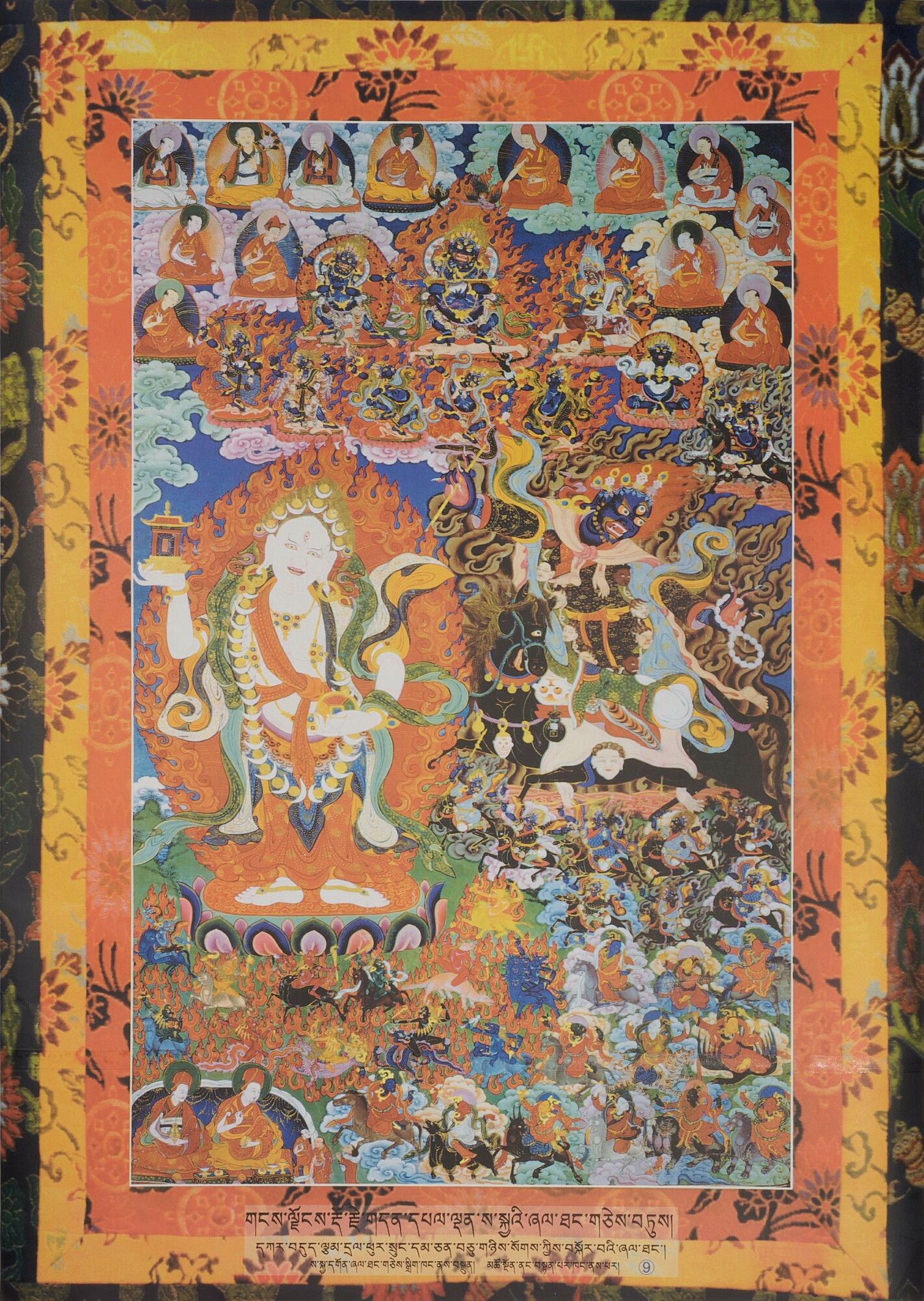
    There are many, many forms of Sri, such as Dudsol Wangchukma, or Mahasri Tara, or her White form, or a Golden one so far only found in Mongolia. Even in that wrathful Dudsolma class, there are probably five, ten, maybe even twenty variations with Remati and Palden Lhamo.

    Unfortunately a lot of those are very specific, like it may be a protector of a certain Kagyu lineage or of some Gelug monastery. But she becomes universalized when recognized as Kama Dhatu Ishvari. I may not have a lineage or any connection to a monastery, but no one can kick me out of Kama Loka. If I do well, I may be able to temporarily transcend it, but again, this is like the main crux for most people, it is Suffering which is the main theme of Buddhism.

    The Wangchukma figurine is Chinese. There are only a few examples that show Makaravaktra or a Makara Rider. And so the point here is to get an idea what that is about. Otherwise you won't find it.

    Dudsolma is partly talking about darkness that exists in Kama Loka, but, also, the Black Void and/or Deep Sleep. I cannot dwell there, because I cannot anything, because I am not. I think part of her meaning is to gather enough momentum so you kind of snap through it--now let's say an earthly observer sees you in that trance for an hour--but you just walk in and walk out cleanly with no apparent gap.

    It is possible to be conscious of black nothingness, but, it is not possible to be conscious of what is defined as a non-conscious state. However, it is the, to us, non-conscious, which is actually real, since we are not. In only a few short years, I will be blown to smithereens, there is no way that I can personally claim to be Absolute. No matter how dispersed or destroyed I may become, It, or That, will not be changed or affected in any way.

    The lower image of Nagi Remati is not a thangka, all of those yellow-framed ones are from Rinjung Lhantab or Icons Worthwhile to See, which is the stuff written out in the Tibetan Deities book. So those pictures are 90%+ accurate to what the sadhanas say.

    When calling her Wangchukma it means Initiation Goddess, similar to Jnana Dakini.


    Here is Grahamatrika with Marici in an unusually close location, and, I am not sure if below her is a second Marici with a Swan Chariot or if that is supposed to be Bhu or something else:


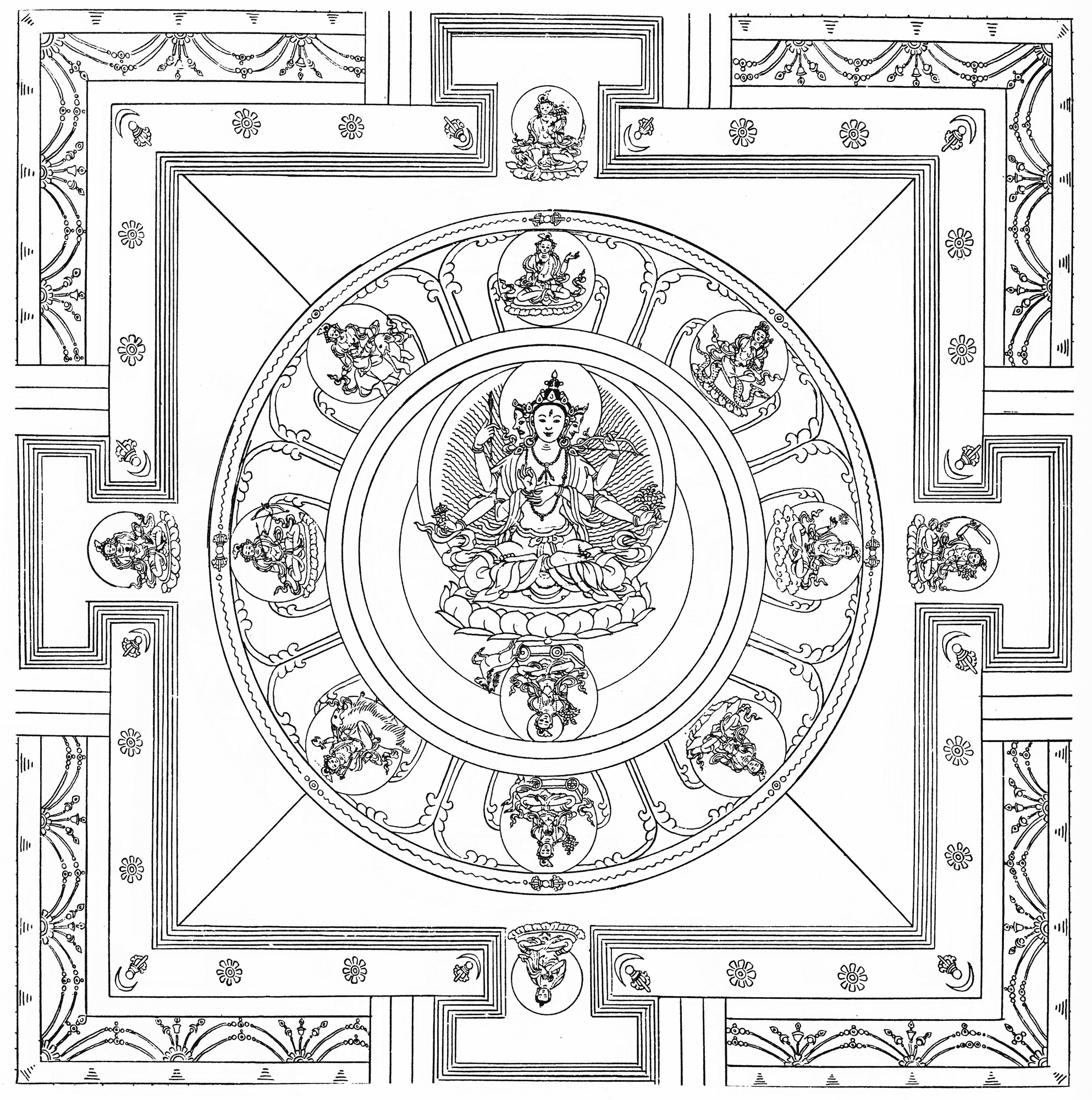
    Here is a block print that is not quite exact. It is supposed to be Sky Blue Parnasabari:


    But this version is closer:


    She is supposed to be crowned by Amoghasiddhi.

    Parnasabari "is" an Akshobya goddess, but, she is also a Duti or Messenger of Tathagata Family in Kriya tantra, which perhaps is born out by her actually having very weird emanations in all families. None of her colors are "correct".

    In this one, she has a scarf of leaves and a tiger-skin skirt, is on a sun disk with a solar back. She arises from blue Pam and her heart is a sun disk with blue Pam. She does not have a banner, it is supposed to be a camara or fly-whisk. Her main item is a deva or heavenly tree with fruit which pacifies diseases; her other forms just use a branch or bush. Her other items (axe and noose) are more aggressive and she is amorous and wrathful. She has jewel, bone, and snake ornaments.

    The tree is a unique item for Parnasabari. Some other deities have trees which are of a known kind; but this one is not named.

    This is the one I am thinking of adapting as a Wrathful deity; the tree seems to be to be the inner equivalent of her customary Broom. Her other stuff is simply to hack, bind, and eliminate, but she is part amorous and has one peaceful item, being a fairly magical one. She is still Pisaci in both her All-purpose or Sarvakarmika mantra and her Heart or Essence mantra. 220 in Tibetan Deities or 127 in Rinjung Gyatsa. The Heart mantra in both books gives the spelling Hri Hah, so, it is a quick or clipped equivalent of "Hrih", followed by a more resonant or echoing Hah than the Ha of Hundred Syllable mantra.

    The Akshobya version appears to be her Tri-kaya or Three Places Muttering version, which specifies her "hair jewel" is a white snake brahmin cord. Her hair styles and body change from family to family. Her Peaceful variety is a Green Ratna form on a Peacock with a corresponding plume, whereas her Black Vairocana form stands over a kanka bird or crane in an unusual manner.

    Recently Parnasabari has become a bundled transmission with Achi Chokyi Drolma. I believe some other schools are trying to promote her for obvious reasons. The Hindu ritual of her involves something almost the same as Refuge Vow, which is a bit unusual for them.

    Everyone needs a Broom, and, if you are suited for healing, her multiple aspects are used to heal a person's whole chakra field.

    These Parnasabaris are given right before Grahamatrika, who suggestibly carries the same motif forward into a more subtle or cosmic scene.
    Last edited by shaberon; 8th November 2020 at 04:49.

  16. The Following 2 Users Say Thank You to shaberon For This Post:

    Old Student (9th November 2020), william r sanford72 (8th November 2020)

  17. Link to Post #471
    United States Unsubscribed
    Join Date
    24th May 2020
    Language
    English
    Posts
    668
    Thanks
    607
    Thanked 1,434 times in 639 posts

    Default Re: Does Anybody Else Have Clear Body Experiences?
    Quote In her aspect as Gauri, it has to do with Vermillion Mark, Robed in White, and so forth, which Buddha calls "the first Gauri", not to be confused with "the Gauris" which are Generation Stage.
    Any idea what the etymology of this is? The vermillion mark is a sign of being married, a white sari is a mark of being a widow. Strange that they are together.

    Quote Generally, Jivanmukhta means liberated while in the body, instead of Videhamukhta, liberated at death. However its very first definition is Nirvikalpa Samadhi.
    When I went to look this up, one of the things I found was Patanjali and a theory of four samadhis. Is that also the source for what you are describing with the meditation on light?
    Quote During creation, garuḍa emanates as the abhimāni (presiding deity) of citta, śeṣa of cetana, and rudra of ahaṅkāra. Similarly, umā emanates as the abhimāninī of buddhi, and vāruṇī and sauparṇī [garuda consort] as that of manas-tattva.

    If it says Uma is Buddhi, and Uma is Parvati, and Parvati is Janguli, and Matangi is Buddhi and Matangi is Janguli, the worst we can do is wonder why tropical jungle goddesses have appeared in the mountains. If it says Varuni is Manas Tattva, she is the Akashic plane, meaning her "Kha--Sky Element" that is invoked into the Soma is not a physical one period, it is the Noumenal one with energy of the Voids.
    This seems to be a creation out of the mind. Which seems like it is related to the notion of a Buddhist world.

  18. Link to Post #472
    United States Avalon Member
    Join Date
    1st April 2016
    Posts
    6,637
    Thanks
    34,528
    Thanked 37,849 times in 6,287 posts

    Default Re: Does Anybody Else Have Clear Body Experiences?
    Quote Posted by Old Student (here)
    In her aspect as Gauri, it has to do with Vermillion Mark, Robed in White, and so forth, which Buddha calls "the first Gauri", not to be confused with "the Gauris" which are Generation Stage.

    Any idea what the etymology of this is? The vermillion mark is a sign of being married, a white sari is a mark of being a widow. Strange that they are together.
    Well, there is a lot of background to a lot of Gauris. "This aspect" referred to Annapurna (Viswamata), and she is usually dressed in red, and I am conflating a bunch of things by saying white, which is the common meaning of gauri.


    Lajja Gauri is Aditi Adi Shakti often shown with her legs splayed. The Durga form however is Maha Gauri, "Great White". One time Shiva turned Parvati black. She did a lot of penance and bathing and shucked off her black skin, which became another person. Cleansed Parvati was then Maha Gauri. Since then, she can swap skins with the other person and become Kali. She is a very young--eight years--girl dressed in white who rides the white Nandi bull. Maha Gauri (Ganesh's mother) is Annapurna the eighth Durga. Siddhidhatri (Ganesh's wife) is the ninth Durga.

    Gauri is part of the trinity (Kriya Shakti). In Pralaya, the trinity has a certain state, but, as Om sounds:

    She [Mahalakshmi] then orders Gauri to marry Rudra, Trayi to marry Brahma, and Padma to marry Vasudeva. Later commands Samkarsana and Gauri to break the Egg open. This makes avyakta, the unmanifest, into Water. Pradhana of the Egg, which is of the nature of void, becomes Water.

    Varuni, the elder of two wives of Varuṇa, who is the presiding deity of the invisible world and represents the inner reality of things. She is also known as Gauri (Udyoga Parva, Chapter 117, Verse 9).

    That level is so primal, nothing exists, until in this case it makes Water, or, more likely, Watery Fire, or the Buddhic plane itself. That would be like waking up without a body or without even a mind as we know it. This is already one change from inertia--the partner swapping--which begins more sets of shifts that institute Maya in denser and denser manifestations.


    Mahendra is one of the main Agnis or fires Buddha recommends, and, we also say there is such a thing as Indra Jala:

    Mahendrajala may be very strong black magic. Or, Lord of heavens - Indra, after performing a severe penance gets a vision of Mahakali in form of Maya. The goddess beats and humiliates him but in the meanwhile during the lashings, she reveals a peculiar tantra ritual combined with mantras to enable Indra get full control over heaven and hell. It is said that the mantra will be forgotten by Indra if he uses it for vested interest and against nature. Indra does misuse it, forgets the mantra and loses a decisive war with Ravana's son Meghnath, who is later known as Indra'jit. So as of today no one knows what exactly is the ritual and mantra in Mahendrajaal, but supposed to be the most powerful tantra in history, using which one can enslave gods and demons alike. Indra enslaves Agni and Varuna, the presiding deities of the Elements, who conduct with natural laws. He therefore forgets the mantra forever. Also note that Indra is not a person, but a status given to the presiding Lord of heavens. There were many of them and the greatest one among Indras, had the knowledge of the rare tantra (jaalam), therefore the ritual came to be known as Maha-Indrajaal.

    Mahendra is Great Indra, one of the holy mountains, place of Apsaras, represented by a cremation ground called Attattahasa, in Vajravarahi's cycle where you make her a dwelling place inside the cemeteries. It is related to Ghana or thick clouds, citta vajra monuments, and the serpent Mahapadma, protected by Ishana. A place with a swayambhu linga presided by Mahavrata (Great Observance), also kapalavrata, skull observance or lokatitavrata beyond the world: full assimilation to Bhairava. Performance of the vow, Maha Vrata, leads one to Gauri.

    So she has much to do with the Vow that would be useful in any marriage, terrestrial or occult.


    The Annapurna of the Agni Homa mainly consists of:

    Visarjana or sending forth the devas. Formal dismissal. Fifthly seed may be esoterically offered to a woman. Gauri Ganesha. That's how it works. We make a Great Oath to Gauri, and, traditionally the next day is for Ganesh's sending-away.

    If done, that kind of seed is supposed to be offered in a ritual way, Lata Sadhana, that aspect of the Path called Vira Chara.

    Maha Vrata. It is believed that Goddess Gauri comes to her parents’ house just like any other married daughter would come to her parents’ house and next day, her son Lord Ganesha, comes to take Her back to Kailasa.

    Akshina Gauri is Turmeric and Vermillion, and Jala Gauri is Water.

    From Surinam, here is her song:

    tikau mai gauri ganesa re tikau dharati maiya maga
    tikau mai gauri ganesa re tikau dhyuhare baba matha
    tikau mai gauri ganesa re tikau kaliya maiya matha
    tikau mai gauri ganesa re tikau satahu bahini matha
    tikau mai gauri ganesa re tikau yahi re pani matha tuhara re

    I mark Gauri and Ganesa with the tika, O Mother Earth, I mark the parting of your hair with the tika

    I mark Gauri and Ganesa with the tika, dhih baba I mark the parting of your hair with the tika

    I mark Gauri and Ganesa with the tika, Mother Kali I mark the parting of your hair with the tika

    I mark Gauri and Ganesa with the tika, Seven Sisters I mark the parting of your hair with the tika

    I mark Gauri and Ganesa with the tika, This Water, I mark the parting of your hair with the tika

    Tika is the vermillion mark.


    The Nepali royal virgin or Raj Kumari annually renews the king's right to rule. At Kanya Puja, the priest or purohita makes an oath to Gauri that after worshipping Ganesh and other deities, he will worship the living kumari. He reads the oath hymn sankalpa sukta and performs an elaborate service. The kumari is described like most temple effigies which have a gold mask and red robes. She is considered to embody svatantra shakti, which is independent or free from kleshas. It is also described as chetana, spanda or vibrational, hridaya, para, and jaganmata. The true nature of it is purno ham vimarsha (fullness of its own perfection), whereas ham vimarsha was the original vibration that triggered manifestation.

    Gauri oath is also done by brides before going to the altar. Shiva sankalpa suktam is one of the very few of the karmakanda or ritualized portions of the vedas which is considered an upanishad or explanatory of the inner teaching. Gauri also has a tale of Dhaval, who decapitated himself for her, then also his brother in law did, and they were fixed with their heads switched.

    Gauripatta or Yonipatta is Gauri's Plate or a pedestal for Shivaling.

    I am not sure, but, Svatantra Shakti sounds a lot like Paratantra which is the Other-Dependent Nature, or, the second void, to be dispelled by Thatness or Suchness. Paratantra is the chain of dependent arisings, the twelve nidanas, Tanha, Asava, Grasping, etc. When we quit projecting False Imagination (Parikalpita) into the Other-Dependent (Paratantra), we are a Buddha or are in Paramartha. That is the basic Yogacara attitude.

    In Hevajra, Vajra corresponds to Rupa Skandha, Gauri is the feeling aggregate, Vajrayogini to the perception aggregate, Vajradakini to the conception aggregate, Nairatmyayogini to the consciousness aggregate. When she is called Yogini or Dakini, this is emblematic of her power of flight, which is the undoing of subtle knots that improves the flow of energy.

    Hevajra states that Gauri is Form, Chauri is Sound, Vetali is Smell, Ghasmari is Taste, Bhucari is Touch, Khechari is Space. Those are to be purified continuously and completely. It is the same in Nairatmya mandala (Hevajra's consort), but also, in terms of Skandhas, Vajra is Rupa--Form, Gauri is Vedana--Feeling, Vajrayogini is Samjna--Perception, Vajradakini is Samskara--Conception, Nairatmya is Vijnana--Consciousness.

    Lajja Gauri is Aditi in Shaktism. She appears on a Buddha mural at Aurangabad, although she has a head.

    "The Gauris" begin with Gauri.


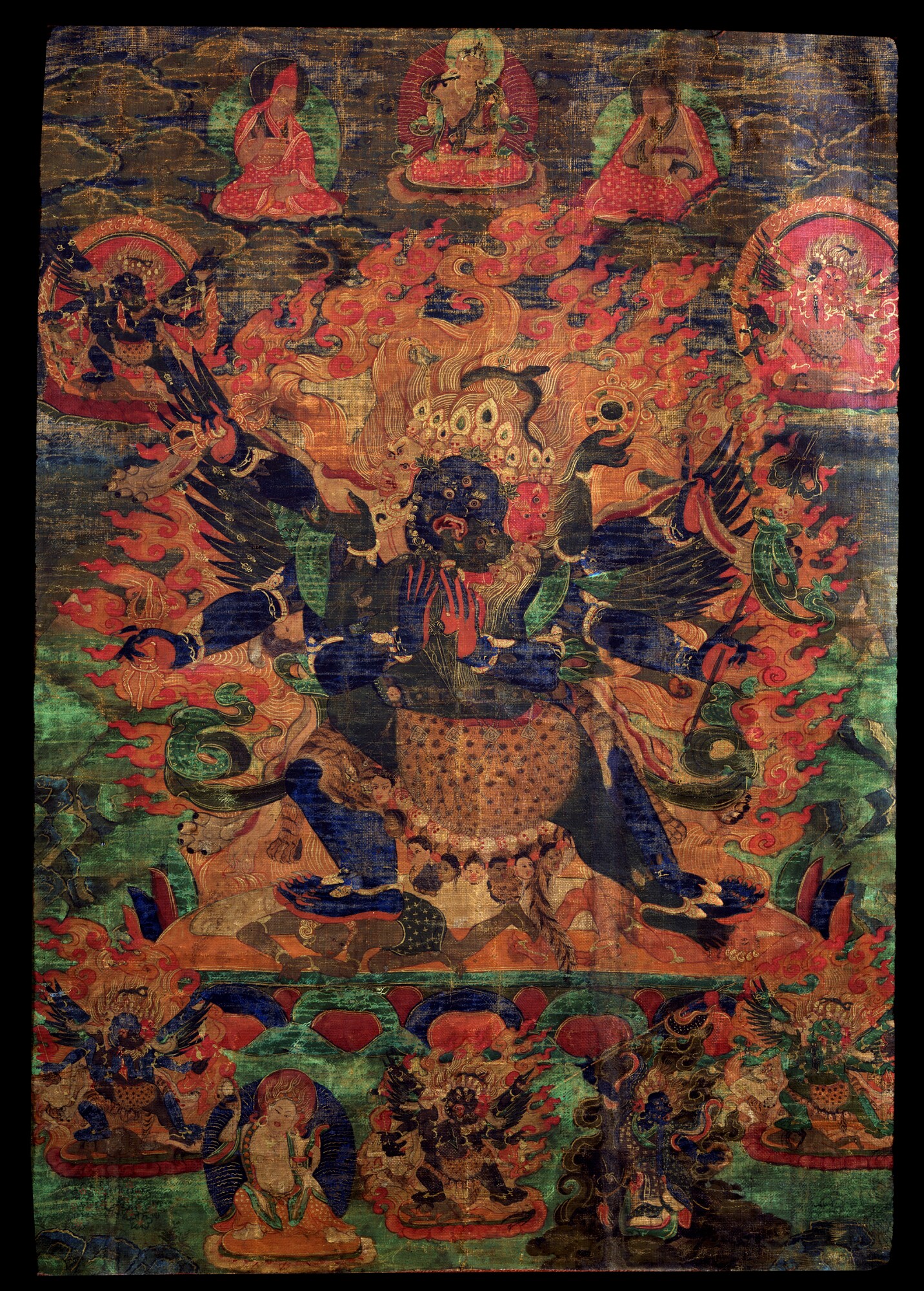
    Gauri is strongly interlaced with Kila or Phurba. There is a mysterious six-armed deity holding Sun and Moon on certain kilas. Considered to be Surya-Chandra Gauri, very close to a consort named Marajit. Sometimes she has two hands with Mt. Meru and the Four Continents. This is fairly specific to Vajrakilaya practice, where she is considered a Wrathful Protector. Originally she is White, this is old:


    Gauri and Marajit: wrathful, blue-black in colour, with one face and two hands. The right holds aloft a lance and banner and the left a garland of bones. Attired in flowing garments he rides atop a black horse surrounded by a cloud of dark billowing smoke:


    Headed by Vajrasattva and two lineage holders, Vajrakila with Five "Herukas" [Nyingma term for wrathfuls], Gauri and Marajit at the bottom:


    His consort is Black or Light Blue Diptachakra: the Flaming Wheel. She is a base-of-the-spine goddess; adding the root center is usually related to Amoghasiddhi and the Extremely Wrathful Vajra Kilaya.

    Gauri Tara is a retinue member for Kurukulla.

    Gauri is almost inexhaustible, and is tricky, since it has meaning from the core of the universe to Generation Stage. Sometimes it may mean "orange". I am unable to come up with a more sacred attainment than Annapurna since it has the dual meaning of saturating oneself with "occult food" while also having the same goal offered to and filling the world, even if it means you have to give a lot of mundane food before anyone even notices another kind is available.

    Our Yoga starts with Prathyahara: Control of Food. Ahara in Buddhism has a couple of classifications. Pali:

    material food (kabalinkārāhāra),
    (sensorial and mental) impression (phassa),
    mental volition (mano-sañcetanā),
    consciousness (viññāna).

    Dharma Samgraha:

    dhyānāhāra (nutriment of absorption),
    kavalīkārāhāra (nutriment of food),
    pratyāhāra (nutriment from withdrawal),
    sparśāhāra (nutriment of contact),
    sañcetanikāhāra (nutriment of intention).

    The point of the Agni Homa could perhaps be described as the attempt to make the most powerful Annapurna possible.

    They use blast furnaces which have been determined to be almost the same temperature as the sun's surface, over 3,000 degrees, to purify substances.

    Gauri and Ganesh have regional differences in their story and practice. Gauri Ganapati Puja is also called Mahalakshmi Puja.

    Evidently, Mahalakshmi pushed Gauri into a certain form of existence, which involved sending Ganesh into the world to gain Union with Buddhi (Matangi) and Siddhidhatri who is like a female Amoghasiddhi, knowing and having all possible powers. And so if Ganesh is in Buddhism, then, he is male, which refers to the mind of the meditator. So to me the language is clearly simple, it is an instruction, and the goddesses describe or are the experience.

    Dudsol Wangchukma for instance has the same Tibetan name as the twenty-four Yoginis of the body, Wangchukma, who initiate one via the Four Activities; the name is like Sanskrit Abhiseka. And so her Makara Rider is a close prodigal female equivalent of Ganesh. Meanwhile, Gauri at least in this instance is really a Virgin, and the meaning of Ganesh and his Hindu tantra is indeed psychologically transformative similarly to how we would use him, he is the source of Ucchista--Scraps and smoky color in their view.

    I, personally, do not think I can contend with him on that Gauri level any time soon, but, Matangi is another story, she is the Elephant, she has Varuni eyes--is drunk, Matta Matangi, passionate, and so forth. Nevertheless, she will respond to a very gentle root mantra:


    om hrīṁ klīṁ huṁ mātaṅgyai phat svāhā


    Quote Generally, Jivanmukhta means liberated while in the body, instead of Videhamukhta, liberated at death. However its very first definition is Nirvikalpa Samadhi.

    When I went to look this up, one of the things I found was Patanjali and a theory of four samadhis. Is that also the source for what you are describing with the meditation on light?
    It may be, Jivanmukta is a very ancient term most closely relates to the Vairajas. These are similar to the Buddhist Nirmanakaya in the sense of Historical Buddhas. It is like a Hindu heavenly choir of liberated souls, who act as transmitters of divine light and sound. I cannot remember much of the Patanjali stuff; once I figured out how our Yoga systems are contradictory, I had to choose one or the other, and it winds up kind of blocking him out.


    Here is an excellent one-page look at the difference between the person in meditation and the Buddha in all the worlds by looking at Kaya Chakra.

    In Vajradaka Tantra as a whole, it is the domain of Patala Vasini, and it works with the Tri-Kaya and a Chakrasamvara style of twenty-four Pithas.

    And so if one has the Four Dakinis, and opens a Mahasukha or Jnana Chakra, it is this one.

    I have tried to describe our most sublime perceptions of Sahaja as merely the outer edge of the Big Heruka in Dakarnava Tantra.

    And so if you look at the components of his Kaya Chakra, it begins with the six planes of Kama Loka. There is then a type of Brahma Kaya, followed by a bunch of stuff I am not familiar with, followed at twenty-three by Akanistha and the Four Formless Dhyanas. These lowest, basic deities of his are all of a Tri-kaya nature, they are body-word-mind-color (mixture of white, red, and black).

    That is quite close to saying that he is Celestial and that Akanistha is his lowest emanation; those other parts of Kama Loka should be considered "just there" and not having any of the ill effects. Therefor, this tantra would be appropriate for those who are like an Anangamin or are able to perform a Yamari "Defeating Death" type of practice.

    In other words, almost all of the other tantras have to do with transcending Kama Loka, and, it is "here" that represents stability with what lies beyond or is cosmic. I do not think it is a "dimension" if it is a means to occupy all space with no distinction as to parts or separate selves. There is nowhere to move and nothing to measure. "Motion" in this state is more like vibration or breath.
    Last edited by shaberon; 20th February 2021 at 10:25.

  19. The Following 2 Users Say Thank You to shaberon For This Post:

    Old Student (9th November 2020), william r sanford72 (8th November 2020)

  20. Link to Post #473
    United States Avalon Member
    Join Date
    1st April 2016
    Posts
    6,637
    Thanks
    34,528
    Thanked 37,849 times in 6,287 posts

    Default Re: Does Anybody Else Have Clear Body Experiences?

    Gauri is tremendous, and, in a certain understanding, Janguli is a close offshoot of hers.

    That is because Janguli is Matangi, who is something like the non-Buddhist answer about Smoke and Ucchista deities, and we know that this smoke frequently pertains to Wrathful Amoghasiddhi, and if Gauri is so important to Kila, this resounds.

    So far it is Hindu sources that seem to state that Manasa is Janguli, which Buddhism shows by capturing the snake hood on her famous forms; Manasa and others may be part snake; according to HPB, Nagas or Nag Kanyas refer to initiates. In the Buddhist texts, Janguli is called Matangi, which suggests less to do with snakes--and her minor form is like this and does not show the hood:


    I do not know if Hinduism would accept that Manasa "is" Matangi, and, to the extent Matangi is a tantric Sarasvati, then I am not sure why Buddhism has a separate line for Vajra Sarasvati, and that, although Janguli resembles her and carries the lute, by name she is more related to Parvati--Gauri. But in the Pisaci mantra, Gauri and Matangi are distinct; the corresponding Sarasvati is Vetali.

    Vetali is a malevolent corpse like a ghoul, whereas Pisaci is the most harmful type of being, the Devil, a body-less vampire which is worse since it cannot be destroyed by physical means. In both cases, one takes something that defaults to horrendous evil, and converts it.

    Matangi is also worshipped as Ellama and this is connected to the myth of Parasurama placing the head of Renuka on a recluse woman. Renuka was the daughter of Renu. She was married to sage Jamadagni and their son was Parasurama.

    She potentially has five or six forms, but two main ones. She is Blue in Kubjika Upanishad. She has extraordinarily versatile roles from accepting un-vowed, impure, and menstruating devotees, to being the one who arranges and secures the benefits of a household. Parnasabari is used to clean it; Matangi--Janguli helps fill in the "home" part.

    She is unusual because low-caste and potentially able to enter union, which is just not really done in Orthodox Hinduism.

    Matangi is considered Guru Tattva or Parampara. She is mainly revered in Mahavidya practice. Mantangi as a Mahavidya is ranked among the most powerful; for instance, at Guhawati, Ugra Tara is not part of the trinity--it is Tripura Sundari, Matangi, and Kamala. The general Mahavidya information says:

    Mother Matangi has two forms – the Rajarajeshwari form and the Ucchishta Chandali form. Her Rajarajeswari form is her more soft, benign form where she is depicted holding the veena. In her Ucchishta Chandali form she is ugra (fierce) and this is a destructive form of Mother. The Ucchista Chandal form of Mother Matangi is associated with the Chandal (outcaste) form of Lord Shiva. Lord Ganesh takes on many different forms and he is present wherever his parents Lord Shiva and Mother Parvati are, to protect them. The Ucchishta Matangi form of Mother is also associated with the Ucchishta Ganapati form of Lord Ganesh. Mother Matangi takes on the Ucchishta Chandali form when her devotees and in danger.

    Mother Matangi worship gives relief in marriage related problems. She is worshipped when there is delay in marriage or problems in marriage. She is also worshipped by childless couples to get children. When Mother Matangi is pleased Kuber (God of wealth) comes into our lives and we lack nothing. [she has just constrained the final and perhaps extraordinarily difficult member of the Four Kings]

    She has parrots [karma] around her and is adorned with the crescent moon. She is shown with one foot resting on a lotus and the other one is lifted onto the throne upon which she sits. One foot on the lotus shows her control on the terrestrial world in tranquility and serenity, and the other foot on to her throne shows her sovereignty over the celestial domains. The stem of the veena held in her hands symbolizes the sushumna (the subtle energy channel that traverses along the spinal cord) and the strings by the energy channels emanating from the sushumna. In the hands of Matangi, the sadhaka becomes the veena.

    Her clothes and all of Her ornaments are red. Around Her neck is a garland of kadamba flowers. She is sixteen years old and has very full breasts and a very slim waist. She holds a skull on Her left side and a bloodied chopping blade on Her right, And She plays a jewel-encrusted veena. Her hair is long and wild, and the disc of the moon adorns Her forehead. She perspires slightly around Her face, which makes Her all the more beautiful and bright. Below Her navel are three horizontal folds of skin and a thin vertical line of fine hair.

    Tara's pose, reversed:


    Mother Matangi reduces all the effects coming under the domain of Mother Dhoomavati – poverty, quarrels, misery, punishment, debts, attacks from evil spirits etc.

    Dhumavati does not really help you fix that. She can help you endure it and still ask for something nice. If you can not toss her a grain or a coin or something, you should be handcuffed to Kriya--Chara tantra.

    108 Names are unwieldy to deal with and frequently repetitive--hers are a bit more unique, and begins with her name as used by Janguli, Matta Matangi:

    1) Om Mahamattamatanginyai Namah
    30) Om Mahakaushikyai Namah
    41) Om Makarapriyayai Namah
    45) Om Lasyalilalayangyai Namah
    72) Om Kadambapriyayai Namah
    100) Om Mahasheshayagyopavitapriyayai Namah
    106) Om Japadhyanasantushtasangyayai Namah


    She has an Active form and an Om form. The Active Ucchishta-Matangini is seated on a corpse and wears red garments, red jewellery and a garland of gunja seeds. The goddess is described as a young, sixteen-year-old maiden with fully developed breasts. She carries a skull and a sword in her two hands, and is offered leftovers. She has a Blue form with noose, a sword, a goad, and a club. Emerald Raja Matangi accompanied by parrots plays the veena, or may have four arms with the same equipment as Sodashi (Tripura Sundari).

    At the worst she is waste, residue, pollution, outcasts. In some of her stories she is a Candala or outcast. She is Madhyamaka or middle moment of the translation of ideas to speech. She is prana of the Throat center added to that of the Heart moving to Ajna. She is the secondary Siddhi Vidya.

    She is also related to Ganesh and is uniquely referred to as having Elephant Power. She is an erotically dominant elephant woman whose name means "She whose limbs are intoxicated with passion”. Because her limbs tremble with passion, this represents the dark or laya mulaprakriti invested with the thrilling energy of the egg or Kushmanda.

    The consensus on her is based on Nada and the emergence of thought into word and its effect on the subtle body.


    Ganesh marries two wives, Buddhi and Siddhi, and then holds the triple fire Jnana, Iccha, and Kriya.

    The irony is perhaps wasted unless you see a trunk, which comes from between the throat and ajna, shown as using kundalini in a manner indicating Bliss, the Sambhogakaya, with an Elephant lady who shares his name, Scraps, who comes in with Varuni already flowing, and who herself is the energy from throat to Ajna.

    Ganesh is an important deity even to Atisha. He is a main figure in Agni Homa. And so if we cannot do the full thing, while we are learning what it is about, it seems reliable that Janguli can handle most of the roles seen as important to his "first wife" in his Ucchista form. His specific sadhanas may do things a little differently, but, at least, in a preparatory mantra-building stage, Janguli or Matangi sounds appropriate.

  21. The Following 2 Users Say Thank You to shaberon For This Post:

    Old Student (10th November 2020), william r sanford72 (15th November 2020)

  22. Link to Post #474
    United States Unsubscribed
    Join Date
    24th May 2020
    Language
    English
    Posts
    668
    Thanks
    607
    Thanked 1,434 times in 639 posts

    Default Re: Does Anybody Else Have Clear Body Experiences?
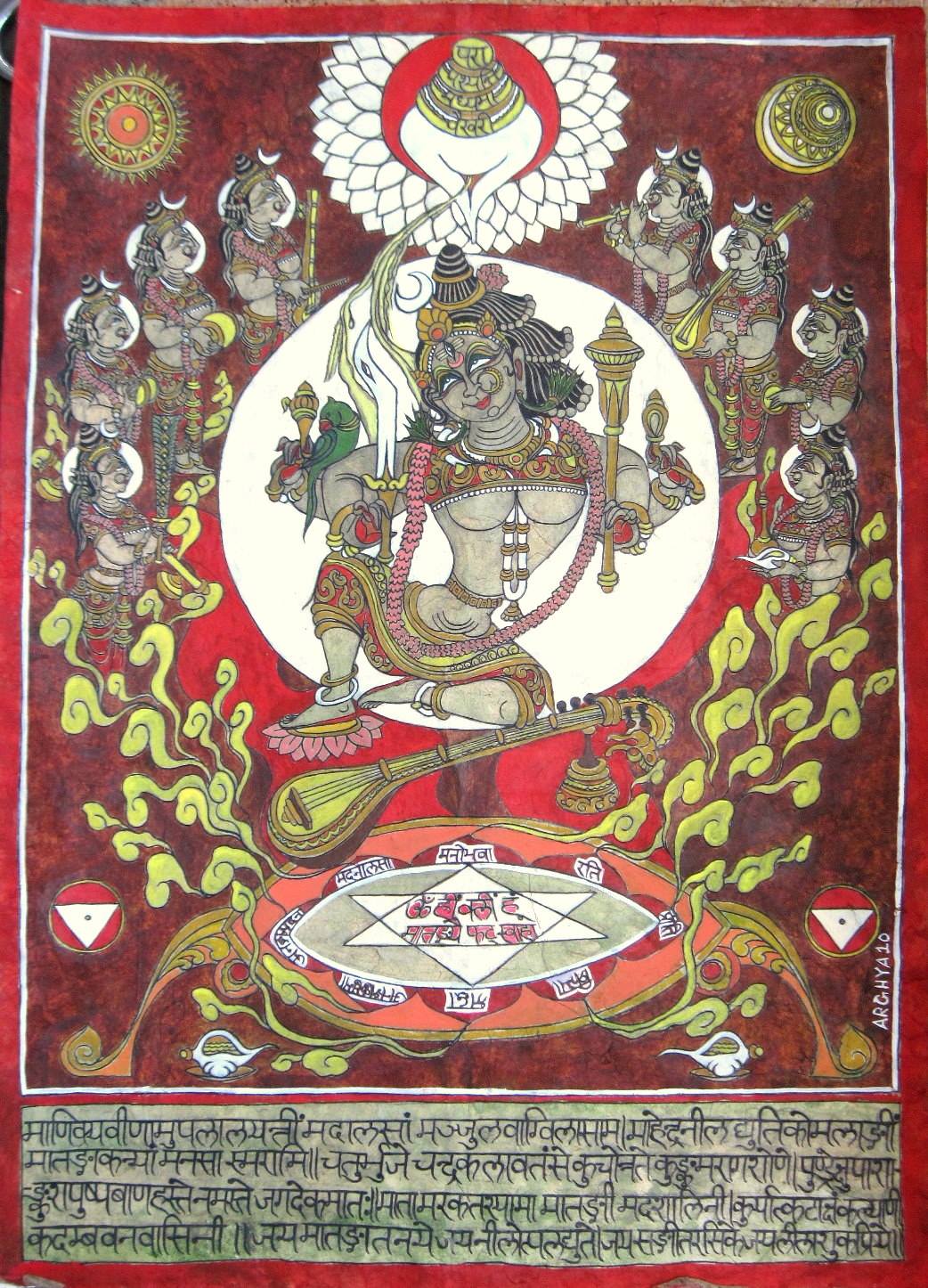
    Quote The one with Mahattari is the only one where it is combined with fire. In that sense, there is some wiggle room, although I could argue that hydrogen flame is blue and it is the hottest part of a normal fire. It could easily be yellow or orange. There are not normally such things as red flames. But this is magical fire. Perhaps it is so strong the lotus cannot actually be seen? Maybe it is white, pink, or purple? When combined into the phrases meaning "fire at the end of the world", it could even be black.
    My own experience with what could be called magical fire during shaking is that it doesn't need to be perceived as the same color all of the time, that it can be both blue and red, for instance. But if I was trying to make a picture of it for someone, in order that they saw it as fire, I would color it fire colors.
    Quote If the Prajnas are Taras such as Pandara Tara or Mamaki Tara, then, there is nothing to be gained which isn't Tara. Having the Prajnas means you have the kind of shaktis Buddha has. If Prajna is Wisdom of Emptiness, then, it is a way to navigate the Voids, which, done successfully, is entrance to the Buddhic plane. Marriage to Matangi also implies this, and, if Matangi is Janguli, that is another Tara.

    Janguli really has nothing in terms of recorded music, but, Manasa does.
    Is the connection here between Matangi and Manasa Janguli? I didn't follow this switch between paragraphs. Matangi is like Sarasvati only tantra, Manasa is the mother of the Nagas? Are they both forms of Janguli in Bengal?

    Quote It is possible to be conscious of black nothingness, but, it is not possible to be conscious of what is defined as a non-conscious state. However, it is the, to us, non-conscious, which is actually real, since we are not. In only a few short years, I will be blown to smithereens, there is no way that I can personally claim to be Absolute. No matter how dispersed or destroyed I may become, It, or That, will not be changed or affected in any way.
    Are you sure this is what is intended by blowing out? The state seems much more alive in the texts.
    Quote Everyone needs a Broom, and, if you are suited for healing, her multiple aspects are used to heal a person's whole chakra field.

    These Parnasabaris are given right before Grahamatrika, who suggestibly carries the same motif forward into a more subtle or cosmic scene.
    How does one tell one is suited for healing?

    Grahamatrika as planetary or as grasping?

  23. Link to Post #475
    United States Unsubscribed
    Join Date
    24th May 2020
    Language
    English
    Posts
    668
    Thanks
    607
    Thanked 1,434 times in 639 posts

    Default Re: Does Anybody Else Have Clear Body Experiences?

    Quote Hevajra states that Gauri is Form, Chauri is Sound, Vetali is Smell, Ghasmari is Taste, Bhucari is Touch, Khechari is Space. Those are to be purified continuously and completely. It is the same in Nairatmya mandala (Hevajra's consort), but also, in terms of Skandhas, Vajra is Rupa--Form, Gauri is Vedana--Feeling, Vajrayogini is Samjna--Perception, Vajradakini is Samskara--Conception, Nairatmya is Vijnana--Consciousness.

    Lajja Gauri is Aditi in Shaktism. She appears on a Buddha mural at Aurangabad, although she has a head.

    "The Gauris" begin with Gauri.


    Gauri is strongly interlaced with Kila or Phurba. There is a mysterious six-armed deity holding Sun and Moon on certain kilas. Considered to be Surya-Chandra Gauri, very close to a consort named Marajit.
    Gauri then is related to Annapurna in the sense of being related to food? The kilas I thought were to end ignorance and were derived from tent posts, not from knives.


    Quote I, personally, do not think I can contend with him on that Gauri level any time soon, but, Matangi is another story, she is the Elephant, she has Varuni eyes--is drunk, Matta Matangi, passionate, and so forth. Nevertheless, she will respond to a very gentle root mantra:
    This is still the same Matangi as in the previous post? She is then in Buddhist tantra rather than Mahavidya tantra someone who leads one to the truth by leading them through the illusion? The passionate drunkenness sounds similar to one of the mayas of Kurukulla.

  24. Link to Post #476
    United States Avalon Member
    Join Date
    1st April 2016
    Posts
    6,637
    Thanks
    34,528
    Thanked 37,849 times in 6,287 posts

    Default Re: Does Anybody Else Have Clear Body Experiences?

    Quote Posted by Old Student (here)
    Is the connection here between Matangi and Manasa Janguli? I didn't follow this switch between paragraphs. Matangi is like Sarasvati only tantra, Manasa is the mother of the Nagas? Are they both forms of Janguli in Bengal?
    Yes, I am pretty sure Manasa--Janguli is Bengali or from around Calcutta. That one is Naga Mother.

    I am not aware of a Hindu source that would combine Matangi and Manasa. In Sadhanamala, Matangi appears twice, once as a name for Janguli, and also in the Pisaci Mantra which was given by Heavenly King Dhritarashtra in Lotus Sutra.

    Quote Are you sure this is what is intended by blowing out? The state seems much more alive in the texts.
    On that, what I meant was death and that I do not believe that "I" will be the part that continues, it will only be the Most Subtle or Klista Manas. In other words there will be a struggle in Kama Loka which one may faint for most of, and the Manas will find its way to Devachan or Avichi to endure its fate, and at some point this will be over and a big eraser will come through.

    Whatever was me will not be seen or heard from again. Something new will be made from the Most Subtle Mind riding on the Non-Conceptual Wind.

    That is what I expect. The various rites or meditations stabilize the time of dying and the transition and remain helpful as Armor or Bindus and so forth, so that, roughly speaking, Samsara and Karma will be quelled as much as possible, and Lucidity can be maintained without Hindrances.

    This is like saying I definitely believe in continuity of consciousness and certainly not of personality.

    I hope that makes sense. The elements of personality can be magnetized back to the earth sphere and used for apparitions with the memory and character of the person, but, these are shells, no one is there. It is like another type of corpse to be discarded like the physical one.


    Quote How does one tell one is suited for healing?

    Grahamatrika as planetary or as grasping?
    I am not sure. I personally feel "semi-" towards it. I may be more like Grahamatrika, psychological and karmic. In this terminology, Grahas or Planets are able to "Seize" one with peculiar afflictions or diseases that are not just physical, more like fate.

    As well as "pisaci" terminology, Janguli and Parnasabari share Satya. It is not mentioned much in Sadhanamala, and nowhere else like with them. Janguli has the largest cluster of Satya in the book:

    sarvaṃ tat tathā avitathā nānyathābhūtaṃ satyatathyam / tathā
    yathāvadaviparītaṃ aviparyastaṃ buddhasatyam anusmara dharmasatyam
    anusmara saṅghasatyam anusmara satyavādināṃ satyam anusmara /
    anena satyena satyavacanena idaṃ viṣaṃ aviṣaṃ bhavatu, dātāraṃ
    gacchatu, daṣṭāraṃ gacchatu, agniṃ gacchatu, kuḍyaṃ gacchatu, jalaṃ
    gacchatu, stambhaṃ gacchatu, śāntiṃ gacchatu, svastyayanaṃ gacchatu,
    bhūmyāṃ nipatatu, viṣaṃ svāhā /

    Although it may be part of the Sutra saying "and this is true", Satya is Truth as in the truest kind of existence--Satya Loka is the highest or seventh loka, and the Ultimate Truth of Buddhist Yogacara is Paramartha Satya. And we see that she is Satya Vacanena, which is a similar phrase to Mrtyu Vacana or Explaining Death--so Janguli perhaps is Explaining Satya.

    Another attribute of hers is from Prajnaparamita Sutra:

    Satyavāda (सत्यवाद):—Truthful speech (satyavāda) is the root of all good (kuśala), the cause and condition of rebirth among the gods; it is believed and accepted by all people. He who puts it into practice does not pretend generosity (dāna), morality (śīla) or wisdom; merely by cultivating truthful speech, he wins immense merit (puṇya). Truthful speech is “acting as one says”.

    Parnasabari also uses Satya Vacanena, but, it may be in reference to Janguli, since it is followed by a weird form of Jah syllable:

    tad anena satyena satyavacanena satyavākyena jjaḥ jjaḥ jjaḥ jjaḥ
    ebhiḥ paṇḍitādhiṣṭhitair mantrapadair mama sarvasattvānāṃ ca rakṣāṃ
    kuru, paritrāṇaṃ kuru, parigrahaṃ kuru, paripālanaṃ kuru, śāntiṃ
    kuru, svasstyayanaṃ kuru, daṇḍaparihāraṃ kuru, śastraparihāraṃ
    kuru, yāvad viṣadūṣaṇaṃkuru, agniparihāraṃ kuru, udaka-
    parihāraṃ kuru, kākhorddacchedanaṃ kuru, sīmābandhaṃ kuru, dharaṇī-
    bandhaṃ kuru


    In Buddhism, Ganesh is almost always called Ganapati. Neither one of these is in Sadhanamala. It may be in the missing back part, but, he is not in the front, not even as a retinue member. However he is in the Tibetan basket.

    The large Maha Rakta Ganapati of Sakya is considered a wealth deity form of Avalokiteshvara, the kind that has taken the head of the original Ganesh.

    The context of Ganesh in Agni Homa is a bit different from his Buddhist sadhanas. In the top tier of the Three Reds, he is a solo deity, Kurukulla is solo, and the couple is Takki--Bharati. Takki is almost as Agni without using the name Agni as it can be. The idea of Agni Ganesh will boomerang in a moment.

    Taranatha's Rinjung Gyatsa begins with Tara, Sarasvati, Tara with a Dharani, Kurukulla crowned by Amitabha, and then Takkiraja with Sukha Vardhani Bharati, who use a dharani based on the consonants, as if it were implying the Second Void or Red Moon.

    Well, it is as if he is forking over the highest part of the Sakya canon right on the first few pages.

    Next is Blue Demon Subduer Ganapati who uses the typically corrupted Sumbha Nisumbha mantra, and then minor Red Wealth Ganapati.

    A unique Bhutadamara Vajrapani frequently accompanies Ganapati.

    The two main lineages are Atisha's, and Gayadhara who transmitted to the Sakya school.

    Strangely, if we look at a Sakya version, the presiding Dhyani is Ratnasambhava. Bhutadamara Vajrapani appears, along with Vaisravana, male Aparajita, Vasudhara and Jambhala, and a special group of three Pisaci Sisters called Yugu Chesum:


    If he handles them, is he not effective for the whole pisaci class, such as Parnasabari, Hariti, Sitala, Matangi, Gandhari, Gauri, and so on?

    Ganapati is Lord of Hosts, i. e. Gana Chakra, which seems to be another fairly plain meaning. One is supposed to accumulate wealth in order to host Gana Chakras. That has physical or inner meaning since wealth is the same Nidhis of the Yakshas or esoteric treasure.

    Like Jambhala, he is frequently phallic:


    His consort is "a monkey" who has a story that is really hard to find. I believe it does flips in the Cemeteries.

    However, in a Nepalese view, we should check out his hat, and what kind of throne it is:


    He is shown as an inner guide of pisacis, as well as able to gain a serpent hood.

    That is like simultaneous command of Matangi and Manasa.

    Buddha was mainly raised in a Ganesh temple.

    Ganesh is Buddhipriya.

    Ganesh is lord of hosts, however, the primary association is Ganesh and the Gandharvas. These are among the highest kind of Yakshas. In Vidyadhara terminology, the unknown kingdoms to be experienced are classed as Dakini, Yaksha, Gandharva. And so we might describe Vasudhara as the gate of the Yaksha Underworld and Shambhallah simultaneously, and yet, whatever is going on with Ganesh and especially Matangi, is strewn further within this.

    Tirumal is the site of Sapta Giri: a seven-peaked hill representing the seven heads of Adi Sesha. Venkatadri is thought to be Mt. Meru as brought to Earth by Garuda. Also called Venkata, this particular peak is the site of Venkateswara: Vishnu in his wealthiest form. Also called Govindha or Srinavas.

    He has a moderately long story involving Bhrigu, where he marries the daughter Padmavati of the King of the Akasha forever and Lakshmi just lives in his heart. From this marriage he went in debt to Kubera and has never gotten out and there is a legal petition currently about how much he's got and how long it will take. His Mongoose spits Gems, and it looks like too much is never enough.

    To us, the debt is about the Treasure Tower Dharmadhatu.

    Ganesha is the removal of obstacles threefold - material, spiritual and mental. He is also related to the dhanapati (lord of wealth), Kubera, of whom, along with several other hosts (ganas), he rules (as overlord of Kubera). His marriages maximize Matangi who is the Mantrini or celestial mantric mistress. He grants atmajnana.

    He is invoked first a result of him being connected to the Guru of the devas, Brihaspati as the Celestial Guru to be invoked for blessings before all others and for humans, represents this connection as noted between the animate and divine kingdoms. As the inner and celestial Guru, he should always be sought first, before looking for a worldly Guru.

    So Ganesh is pretty close to a Hindu Vajrasattva.

    The original Krodha Vinayakas [Anger, Remover of Obstacles] were Gandharvas.

    In Buddhism, Dhritarashtra is also considered a King of Gandharvas, and, was married to Gandhari.

    Gandharvas exist in Mahar Loka which is Kama Loka.

    He is really comprehensive, in a way that portraying him as a luck charm does not do justice to.

  25. The Following 2 Users Say Thank You to shaberon For This Post:

    Old Student (10th November 2020), william r sanford72 (15th November 2020)

  26. Link to Post #477
    United States Unsubscribed
    Join Date
    24th May 2020
    Language
    English
    Posts
    668
    Thanks
    607
    Thanked 1,434 times in 639 posts

    Default Re: Does Anybody Else Have Clear Body Experiences?
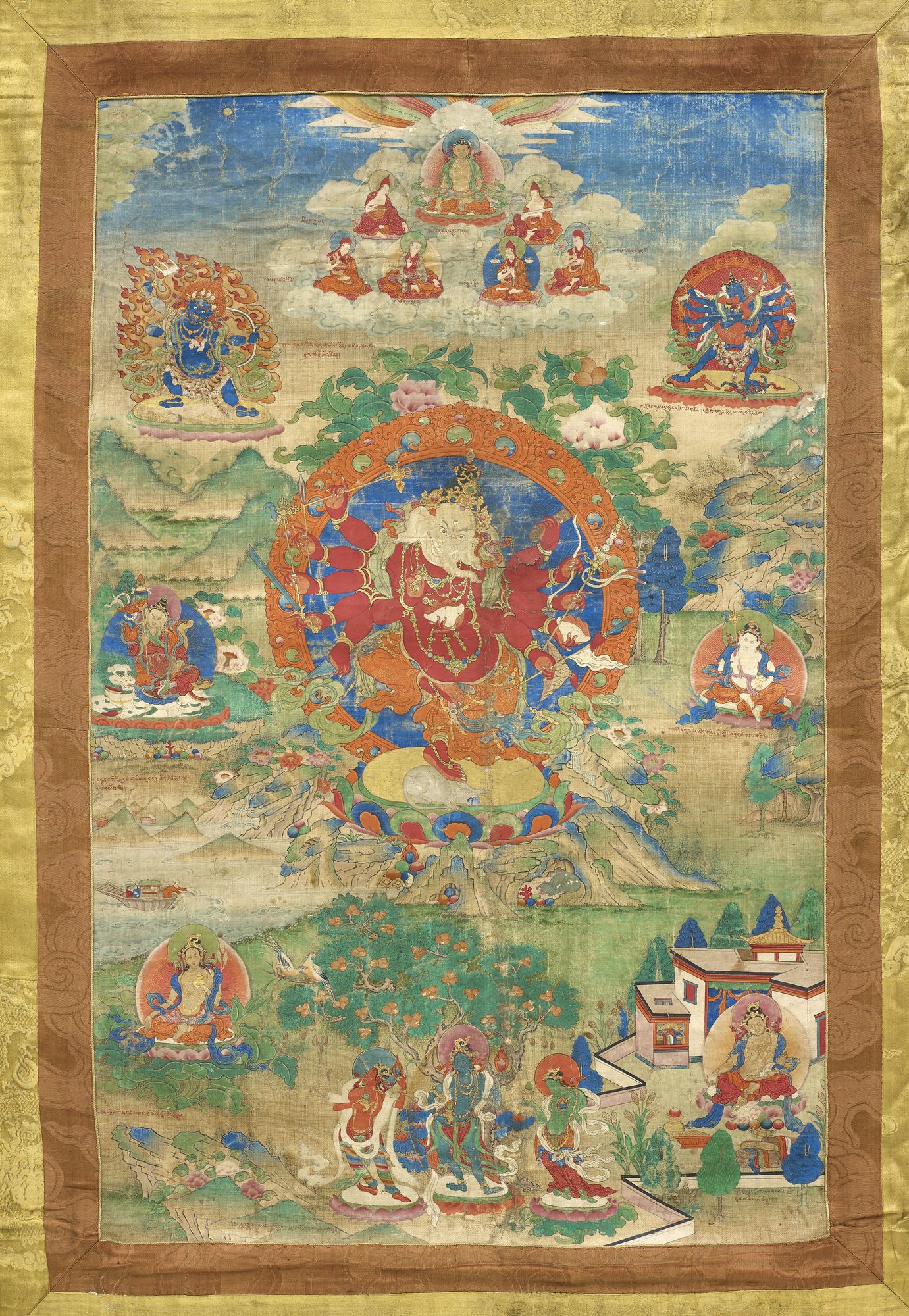
    I'm falling a bit behind and will strive to catch up tonight, I have this one and the next one you wrote to comment on. There has been a huge shift last night in my shaking. There was a completely formless bliss, I was taught to activate it somewhat at will, it emanated from my crown (or better phrased, the tweak or switch I needed to listen/push was at my crown), and I was sent to pretty much impart it to someone who seemed to be meditating and waiting for it somehow. But some of these things in this post of yours are too close to some of that experience and I need to comment on how that is the case, even though I did prepare by reading thoroughly and looking stuff up as usual.

    Quote She has parrots [karma] around her and is adorned with the crescent moon. She is shown with one foot resting on a lotus and the other one is lifted onto the throne upon which she sits. One foot on the lotus shows her control on the terrestrial world in tranquility and serenity, and the other foot on to her throne shows her sovereignty over the celestial domains. The stem of the veena held in her hands symbolizes the sushumna (the subtle energy channel that traverses along the spinal cord) and the strings by the energy channels emanating from the sushumna. In the hands of Matangi, the sadhaka becomes the veena.

    Her clothes and all of Her ornaments are red. Around Her neck is a garland of kadamba flowers. She is sixteen years old and has very full breasts and a very slim waist. She holds a skull on Her left side and a bloodied chopping blade on Her right, And She plays a jewel-encrusted veena. Her hair is long and wild, and the disc of the moon adorns Her forehead. She perspires slightly around Her face, which makes Her all the more beautiful and bright. Below Her navel are three horizontal folds of skin and a thin vertical line of fine hair.

    Tara's pose, reversed:
    I think I may have quoted from my notes and you would have seen me talk about doing the lute or thrusting into the lute or bending into the lute. If I quoted enough it would have been "Sarasvati's lute" in the notes, as that was the shape and it was very explicit in form and sort of in origin although I never envisioned Sarasvati. Suffice it to say it's a position, and since the past few days, since I think Friday or Saturday, these have been treated as and called "power poses". Up until last night, the lute was the most powerful of them, and overwhelmingly blissful in a very sexual way. The power pose training and all the stuff leading up to last night I do know I have mentioned has been managed by Sukhasiddhi. One part is entirely my job to do and that is to make sure the pillar is strong and extant, and to pull my spine and centerline straight and make sure both ends and the pillar are at least visible if not shining.

    All of which is to say that I know exactly what that means about the strings forming the nadi and the sadhaka becoming her veena. I stopped the quote on the phrase, "Tara's pose, reversed," Does tara have the knife and skull in the reverse hands?

    Quote She has an Active form and an Om form. The Active Ucchishta-Matangini is seated on a corpse and wears red garments, red jewellery and a garland of gunja seeds. The goddess is described as a young, sixteen-year-old maiden with fully developed breasts. She carries a skull and a sword in her two hands, and is offered leftovers. She has a Blue form with noose, a sword, a goad, and a club. Emerald Raja Matangi accompanied by parrots plays the veena, or may have four arms with the same equipment as Sodashi (Tripura Sundari).
    I had a place in my notes for last night where I was about to put down holding a sword and noose, and then thought that was silly it was a hook and noose so I wrote the latter. It was the former. It was this. I had only two hands, though so no goad and club. This was when I was being "readied" to go do the "imparting" of the formless bliss to someone else.

    Quote At the worst she is waste, residue, pollution, outcasts. In some of her stories she is a Candala or outcast. She is Madhyamaka or middle moment of the translation of ideas to speech. She is prana of the Throat center added to that of the Heart moving to Ajna. She is the secondary Siddhi Vidya.

    She is also related to Ganesh and is uniquely referred to as having Elephant Power. She is an erotically dominant elephant woman whose name means "She whose limbs are intoxicated with passion”. Because her limbs tremble with passion, this represents the dark or laya mulaprakriti invested with the thrilling energy of the egg or Kushmanda.
    Matangi can have the popular definition of "a Chandali woman", meaning chandala, meaning disheveled, but disheveled from living in the graveyard, an attribute of a female tantra practitioner in parts of greater Bengal who live in the charnel grounds and cover themselves with ashes and are "priestesses" of dark tantra. The Chandala class aren't just outcasts they are those who work in the charnel grounds.

    Quote The consensus on her is based on Nada and the emergence of thought into word and its effect on the subtle body.
    I read as much of the link as I had time to, and will go back to it. This is the second reference to the origin of sound impacting my shaking in as many days. The first was from your link about Kurukulla, which described her as one of three aspects of Kulla, whom it described as being the originating shakti of the universe and Kurukulla's bowstring as having made the svara varna the original vowel, and the reverberations of the string forming the closing nasal to create the original sound of Om which created the universe.

    The formless void bliss last night had a primordial sound, also formless, and the sound was linked to a seeping of liquid over my lips and an O shape in my mouth which had been part of what happened.

    When the formless things were over, I lay quiet for a minute and my body was doing the decompose cellular shaking which is in my notes sometimes humming shaking because it is so fast as to be near the audible range and in fact low notes around me -- beat frequencies from humming motors, low frequencies from thunder and so forth cause it to start, unlike all the other shaking things, this one starts by itself.

    I feel like I know this one quite well down to the red clothes and each string on the lute. She is the Matangi, the Mahavidya of Sarasvati, and her path intersects a lot of the shamanic parts of my shaking somehow.

  27. Link to Post #478
    United States Unsubscribed
    Join Date
    24th May 2020
    Language
    English
    Posts
    668
    Thanks
    607
    Thanked 1,434 times in 639 posts

    Default Re: Does Anybody Else Have Clear Body Experiences?
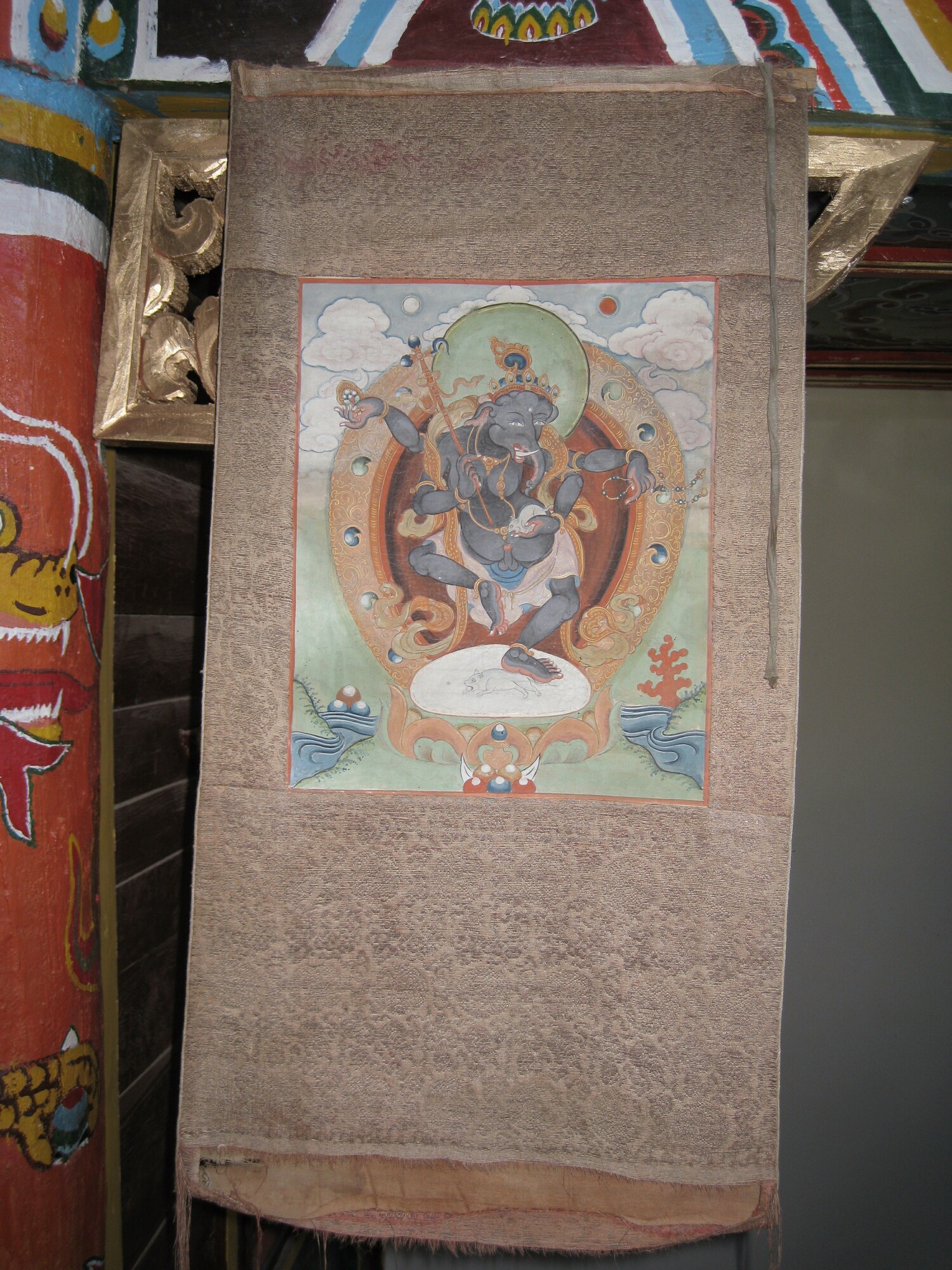
    Quote Yes, I am pretty sure Manasa--Janguli is Bengali or from around Calcutta. That one is Naga Mother.
    I asked the local Bengali native speaker. "Janguli" means jungle, and is in fact where the English word for jungle comes from. They were not very surprised that she cured snakes, that's the kind of goddess you need in the jungle was the thought.
    Quote On that, what I meant was death and that I do not believe that "I" will be the part that continues, it will only be the Most Subtle or Klista Manas. In other words there will be a struggle in Kama Loka which one may faint for most of, and the Manas will find its way to Devachan or Avichi to endure its fate, and at some point this will be over and a big eraser will come through.

    Whatever was me will not be seen or heard from again. Something new will be made from the Most Subtle Mind riding on the Non-Conceptual Wind.

    That is what I expect. The various rites or meditations stabilize the time of dying and the transition and remain helpful as Armor or Bindus and so forth, so that, roughly speaking, Samsara and Karma will be quelled as much as possible, and Lucidity can be maintained without Hindrances.

    This is like saying I definitely believe in continuity of consciousness and certainly not of personality.

    I hope that makes sense. The elements of personality can be magnetized back to the earth sphere and used for apparitions with the memory and character of the person, but, these are shells, no one is there. It is like another type of corpse to be discarded like the physical one.
    Yes, all that makes sense, thank you for writing it out, I understand your references to these things much better now. I'm not sure what I expect. I spent two hours getting decked out as a full-on brilliant green dakini with a sword and a noose and sent to impart total formlessness-bliss to someone like that last night. The formless bliss is very complete, it resembles either Lama Yeshe's description of visualizing Dharmakaya or his description of visualizing simultaneously born bliss.

    It is easily a state of non-conceptuality and has no self in it. You could do very much worse than a state in which your self did not continue but the Non-Conceptual Wind and the Most Subtle Mind are playing.

    My somewhat prejudiced reluctance to get very far into Ganapati/Ganesh, it has nothing to do with my studies or my practice or my shaking practice, I live like 0.7 miles from a Ganesh Mandir and the purpose there of worshipping him is solely about accumulating worldly riches so it's kind of seedy the way it is degenerated in my community.

    But I do have to take a look with an open mind, some of the things in my shaking are so close to some of those you say surround him. Reading your expose on Matangi after last night's shaking was eerie.

    I'm still trying to understand the water flowing from my lips. It was undoubtedly saliva in the physical world but it did not feel that viscous, not even as viscous as water, more like the way alcohol spreads on a surface. It was all over my lips several times over the past few nights, and it always presaged my mouth forming that O. The O led on previous nights to digging around trying to free or fix something above the plane over my palate and below the dancer, but last night it opened into the "sound" the way my body opened into the emptiness and the shaking bliss opened into the pervasive bliss of the formless bliss state. Sorry to keep going on about it but it was a huge experience, not like most of the visions, even the awesome ones.

  28. Link to Post #479
    United States Avalon Member
    Join Date
    1st April 2016
    Posts
    6,637
    Thanks
    34,528
    Thanked 37,849 times in 6,287 posts

    Default Re: Does Anybody Else Have Clear Body Experiences?
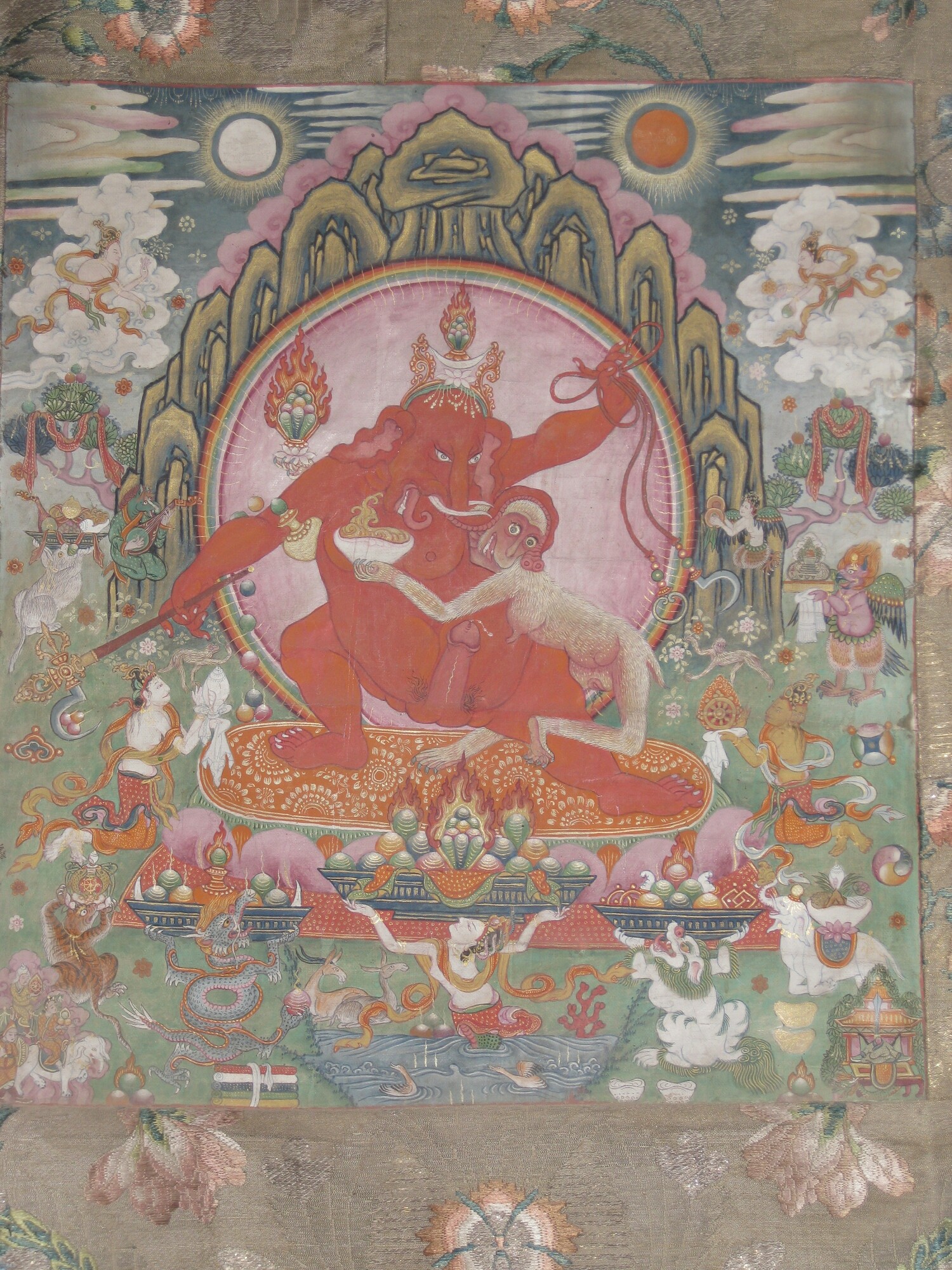
    That is how it works.

    You tap the Dharma and a bit of Mirror Wisdom and it rushes forth deeper than you realize and the Bodhisattvas have already delivered a much vaster message than we can keep up with.

    Since I have been doing this I have usually felt as if Vajrapani, Master of Secrets was doing the explaining, and he does not mind doing so through his own Vajrapani forms, or whatever will work for the listener.

    Although I do not get this kind of presence from Hayagriva, if we can figure out he is a Wrathful Avalokiteshvara, then, so is Ganesh. In that moment, I personally feel that now I could access Avalokiteshvara much more palpably, who was liberated by meditating on the Sound, Ganesh is the Sound.

    He is not really revealed in one place. He is like Makara Rider. You have to get a composite of a lot of lore, knowledge, and/or experience for them to emanate.

    Yes on the "mainstream" side, I am not that close, but, could get to a Venkateswara temple, the one with the governmental inquiry into the perpetual dowry. What we are saying about Kubera, Ganesh, Wealth, and so on, is only the Raja Yoga or Esoteric meaning. This is much more clear to me if I pick up Buddhist teachings on Vasudhara than probably if I was born in India itself.

    Once you have any self-knowledge of Jambhala's Lemons or Vasudhara's Yogurt, then it being described as secret treasure will make perfect sense.

    If you go to Japan and follow their Ratnasambhava Equality teaching, it will tell you to steal from the rich and give to the poor, and, this may help understand some "outlaw" or "secret society" behavior.

    Yes, the teaching is hidden in plain sight in the word "jungle" and, the whole timekeeping system. Candali is outright Untouchable, which is why this name is usually the leader of other low caste women.

    Matangi and Ganesh share a special Ucchista or Scraps relationship. It lies in clues that are scattered in various places. When one sifts the symbols for the inner meaning, it will fall into place.


    Buddhipriya is one of the most important epithets of Ganesh; he is also called Buddha.

    Buddhi itself does not have any specifically Buddhist definition.

    Even among Hindus, it is still unclear what comprises the Ahamkara, what are the different functions of Cit, Citta, Manas, Buddhi.

    I would tend to say Manas has a dual role, it can look down into Kama Manas and activate the Skandhas, or, it can merge into Bodhi Citta and look up into Buddhi and the Prajnas.


    There is a slightly different "mantric trinity" of Mahavidyas than the one at Guhawati. The instructional form for the Four-fold Om or Word or Speech is Tripura, Tara, and Matangi. The deities are simultaneously a cosmic, mental, or formless equivalent of the physical:

    According to the ancient writers on Phonetics, sound or word (वाक् (vāk)) which is constituted of air (वायु (vāyu)) originates at the Mulaadhaaracakra where it is called परा (parā). It then springs up and it is called पश्यन्ती (paśyantī) in the second stage. Thence it comes up and is called मध्यमा (madhyamā) in the third stage; rising up from the third stage when the air strikes against the vocal chords in the glottis and comes in contact with the different parts of the mouth, it becomes articulate and is heard in the form of different sounds. when it is called वैखरी (vaikharī);


    According to Shivashakti:

    Thanks to this resonance between Matangi and Ganesha, the Great Goddess is worshipped as the consort of Ganesha (at a certain level).

    Generally speaking, the two consorts of Ganesha are Buddhi (the sparkling intelligence) and Siddhi (the success and effective fulfillment of wishes through paranormal powers).

    Tara refers to the Superior Divine Logos (Pashyanti), that implicitly contains everything, Matangi represents the Inferior Divine Logos (Vaikhari), the so called “uttered word”.

    This is the lowest level of differentiation of the Divine Logos, the level of the effective utterance of words.

    From this point of view (of the expression of the Divine Logos) and compared to Tara and Matangi, Tripura Bhairavi represents the Great Cosmic Wisdom of the transcendent and un-manifested Divine Logos (Paravak).

    Therefore, Matangi represents the intermediary, medium level (Madhyama) of the Divine Logos as well. This level governs the ideas that eventually become the words we utter, that is, the process of thinking itself.

    At Her highest level, Matangi is Para-Vaikhari, the Supreme Logos that manifests through the means of effective (audible) speech. [I am not sure if they explain "highest level", but it probably means something like after interacting with Ganesh]

    Mata in Matangi is Buddhi. Ganesh is Para, she is Vaikhari.

    Ganesh has two wives since Vaikhari--Matangi is necessary before Para Vach or Gauri--Siddhi. It is like Entering the Samadhi of Sound and then progressing in it infinitely.

    Siddhidhatri means any/all siddhis which requires any/all shaktis, which is why Ganesh is not like most other deities who only get one shakti. In the Buddhist view, it would mainly be Generation and Completion Stages and the Six Dharmas of Naro, or Seven of Niguma. Plus it would always emphasize the Prajna quality.


    Ganapati Homa is self-promoting and gives reasons why anyone can do Homa and use Vedic mantras. It explains that Guru transmission of a mantra is good, it is like a father opening a bank account for his son with a large starting balance. On your own, you are starting with a zero balance. You can do it, citing Dnyaneshwar as an example, Those are very good details such as mantra explanation and it is a close parallel to any Homa. It is Hindu because it asks Varuna to bless the water, versus Varuni to bless the Soma. It agrees that the underlying principle is to make the personality a vacuum which is inhabited by the deity.

    If anybody can do that, I can do that, since it sits very well with what we have already studied. Similarly to using any Vedic mantras, we can use any Sutra mantras and Dharanis. With most of the outer deities, you can also open a "zero balance account", and so I do not have to be able to do a full Chakrasamvara Tri-samadhi Puja. I can muster my feeble attempts through Tara's Saptavidhanuttara or anything else that fits appropriately. The Homa for Ganapati still says to tribute your Ista Devata, so, it is supposed to be in conjunction with something else to begin with. He is supposed to be part of any Homa as an Obstacle Remover, like Amritakundalin or Khandaroha.

    Kila is always a Peg or Spike. Where it looks like or is called a dagger, it is confusion or a mistake.

    Matangi can be involved in a Homa, or stand alone:

    Through her grace, vaśīkaraṇa of the Trailokya i.e. Kāya, Vāk and Citta (which are already made strong and free from obstacles through the upāsanā of Mahāgaṇapati) can become possible. Thus then becomes possible the ākarṣaṇa of Manas, Prāṇa and Mantra so as to unite them within the field of pristine awareness, leading to mantra siddhi. Mantra siddhi of Mahārājñī is hence difficult without the grace of Mantriṇī who verily is the essence of Vāk and hence of every mantra. She is thus described as creating innumerable Sarasvatī-s with her mere side glance.

    For Tripura Sundari, Matangi serves as Prime Minister (i. e. her voice in the world), whereas Varahi is more like a General (marshall of yoginis). Tri Pura or Three Cities, Manipura and the lower chakras, or the Three Worlds, Bhur, Bhuvar, Svar, Tri Loka, Tri Dhatu, etc.

    That description of course suggests Protector Mantranusarini, who comes alive in the weird Pancha Raksa 206 in a way that is almost covered up.

    For some reason, the Hindu Matangi explanation refers to the Three Vajras as in Buddhist sadhanas along with the same vocabulary we use to say almost exactly the same thing.

    Janguli is a Tri-Kaya, I think she is the only one who bears this designation in the book.

    So if I am stalking Janguli like a wild animal, and when I hear Matangi I smell her, then, Ganesh is just going to do whatever he does, like a barnacle, I could not scrape him off.

    By "Tara pose" I mean with one foot hanging off the seat, it is usually the other foot. Sometimes this is called Seated Ardhaparyanka.

    Janguli is a Tara. Because Tara is reliable to me, I know she can basically just wave her Varada hand, and everything that is compressed in these centuries if not millenia of works will be conveyed. Ganesh is going to "swell" Janguli with the vast bulk of everything I can conceive of yogic knowledge or practice for the foreseeable future. Elephants in the Jungle.

    One can go in reverse, so to speak, and do any type of Matangi practice, and then, this will simply compress into the name Matangi as part of Janguli's major form. In other words I would not use Yellow Janguli for a long time. To all appearances, the green one emphasizes her Manasa aspect, and the White one emphasizes Matangi. You do that for a long time until the Six Arm version is able to manifest.

    The centrality of Bhutadamara Vajrapani is well expressed by the dead person in the lower right in a setting that is Rime' before there was Rime':


    The top is Buddha between a Historical Buddha and Maitreya the Future Buddha, there is Manjushri and representatives from all the schools, Tson Kha Pa, Sakya Pandita, Padmasambhava in the lower aura between a Karmapa and a Drikungpa, and then Jambhala is there.

    It is perfectly valid to use a death effigy such as this, or, one's cremation in a Homa. The donor is some unknown person who seemed to believe Vajrapani was a likely helping hand in the Kama Loka.

    That is what I did, I started using a death effigy, and the "stir of kundalini" I had been experiencing to a shallow Smoke or Marici stage took a parabolic swing into another world.

    Even one of those Hindu sources mentions that Nectar generated in sadhana is two kinds, Poisonous and Pure, and you are supposed to skim the dross. Buddhism has its particular way to do so, but, this appears to be more of an established physiological fact that some arbitrary ritual add-on. It is not the raw nectar but the Cool Mercury which is supposed to be purified. I know there is such a thing, and I know I did not do that.

    Why Ganesh is allied to Bhutadamara Vajrapani is "unexplained" according to the website, but, it seems pretty transparent to me.

    He is an Avalokiteshvara in the top tier of the Three Reds as is Kurukulla and what might be called Bodhisattva of Fire in Union with Vasudhara Vajrayogini.

    The Sakya school appears to strongly suggest this as Completion Stage for most disciples, although they also accept a handful of others, such as Amaravajra.

    Considering that my experience was not based from these scriptures, I would still have to say that the signs of Crown Center stability, a thin silver Sushumna, and a Quiet Order are very close to the conditions of the Fourth Joy or Sahaja that will create the Mercury. And it will involve Citta Chakra or the Hum Ho of Vajra Rosary Tantra, which appears to be quite similar to Kurukulla's abilities. When the Nectar reaches here and it opens a bit, you raise the Downward Wind to intercept the liquid and pull it down into the Vessel. One might think, well, it's Yoga, you just meditate on the Heart. Sort of, but not like that. It has inner petals. And so the Suksma Yoga will have us establish the capillary column of Mercury raised beyond the Brahmarandra and it is only around that point that the Inner Chamber and Heart Bindu or Indestructible Drop becomes useful--which is the Square of Inverted Stupa. At that point you are really ready to touch the Heart of the Ista Devata.


    I wish I had known how to purify the stuff and how to do that.

    My body already knows how to do it physiologically, no one can teach me that, but from the experience, I would say what I have found from studying Buddhism at greater length is of tremendous value.

    At the time being, a conscious ability to broadcast formlessness is remarkable, even I would probably not be so loutish as to mistake it for a preta and try to harm it with salt or some spontaneous weapon out of my mind.

    I have secured the area for the shrine and been given a Ganesh, so, I am doubly unable to get rid of him.

    Gandharvas are a weird circle around Ganesh and the First Keeper of Kama Loka.

    The associations of Matangi and Gandhari are here.

    It is extremely gruesome, or, pristinely beautiful, according to what one brings to the table. Much like a Mirror. That is why it is interesting that in Dakini Jala, some of the Gauris are like actresses or Moods. The dominance in Tibetan art of Palden Lhamo seems disproportionate to me. There are of course wrathful Lakshmis and Gauris, but, there is a huge point in the concept of Pisaci which means the worst disaster transformed into the greatest success.

    I believe it is in Shurungama Sutra where Matangi tempts Ananda, Buddha chides them for being addicted to eons of instinctual habits together, and Matangi is the easier one to relent and convert to Dharma. I suppose she will sensitively respond to whichever of her nine forms is asked for.

    She can be drunk, and it may even be the Kadamba wine that Balarama likes.

    And when we say Maitreya, it means a future age maybe four hundred thousand years from now, which will be the cycle of Amoghasiddhi. Maitreya's guru will be Parasu Rama, whose wife is Dharani the spell goddess, who is manifested by Amoghasiddhi as the Namasangiti Dharanis, starting with Vasumati Mahalakshmi.

    Maitreya is much like the "eighth consciousness" or "future condition". He is not really a major figure of sadhana practice and is not thought of as very interactive with the world. Ganesh would come first, for instance. There is no call for and possibly not even any reference to Maitreya when looking at those Taras and Vajrayoginis that explain the whole Deity Yoga.

    Since Ganesh has a Heart Bride, and, Avalokiteshvara has a Heart Bride--Guhyajnana Dakini--the suggestion is obvious. Realizing the nature of Matangi has direct bearing towards the power or existence of Guhyajnana. That means Janguli, who is not called a dakini, has some influence towards that dakini which, at a minimum, holds the power to arrange/organize/compose dakinis, who may otherwise be rude if not vicious.

    And so most of the stuff about the Sound is Four-fold Om, but, then it is the Bija of anything. If I am going to summon a deity based in Hum, Hrih, or whatever, that seed syllable goes through the same stages of utterance. So for instance if I want the Yellow Jupiter syllable Brim from Cintamani Vasudhara, then I bring her in and I am going to say Brim with awareness of the stages combined with the feeling of Bhavana and the intent or meaning of the sound. Once you do that, you gain a kind of vertical ability to obtain a more complex Vasudhara, or, a lateral ability to pass the syllable or combine it into something else.

    I will certainly look how to incorporate Matangi, it is easy to pick up syllables like Aim and Klim that have no further use in Buddhism. One option is that Kama is KAmala MAtangi as per the Guhawati trinity.

    Gayatri:

    Om Shukrapriyayai Vidmahe Shrikameshvaryai Dhimahi Tannah Shyama Prachodayat॥

    Shukrapriya is a pomengrante, or, on fruit:

    Names like 'Shyamala' and 'Shukrapriya' are also used for purple as they look like parrots.

    Maha mantra:

    Ucchista Chandalini Sri Matangeswari

    Sarvagyanavashamakari Swaha


    Sumukhi mantra:

    om ucchiṣṭacāṇḍalini sumuki devi mahāpiśācini hrīṁ ṭhaḥ ṭhaḥ ṭhaḥ

    Perhaps the Buddhist tabulation of her as a Pisaci is not unfounded and relates mainly to her Ucchista form.
    Last edited by shaberon; 10th November 2020 at 22:39.

  29. The Following 2 Users Say Thank You to shaberon For This Post:

    Old Student (11th November 2020), william r sanford72 (15th November 2020)

  30. Link to Post #480
    United States Avalon Member
    Join Date
    1st April 2016
    Posts
    6,637
    Thanks
    34,528
    Thanked 37,849 times in 6,287 posts

    Default Re: Does Anybody Else Have Clear Body Experiences?
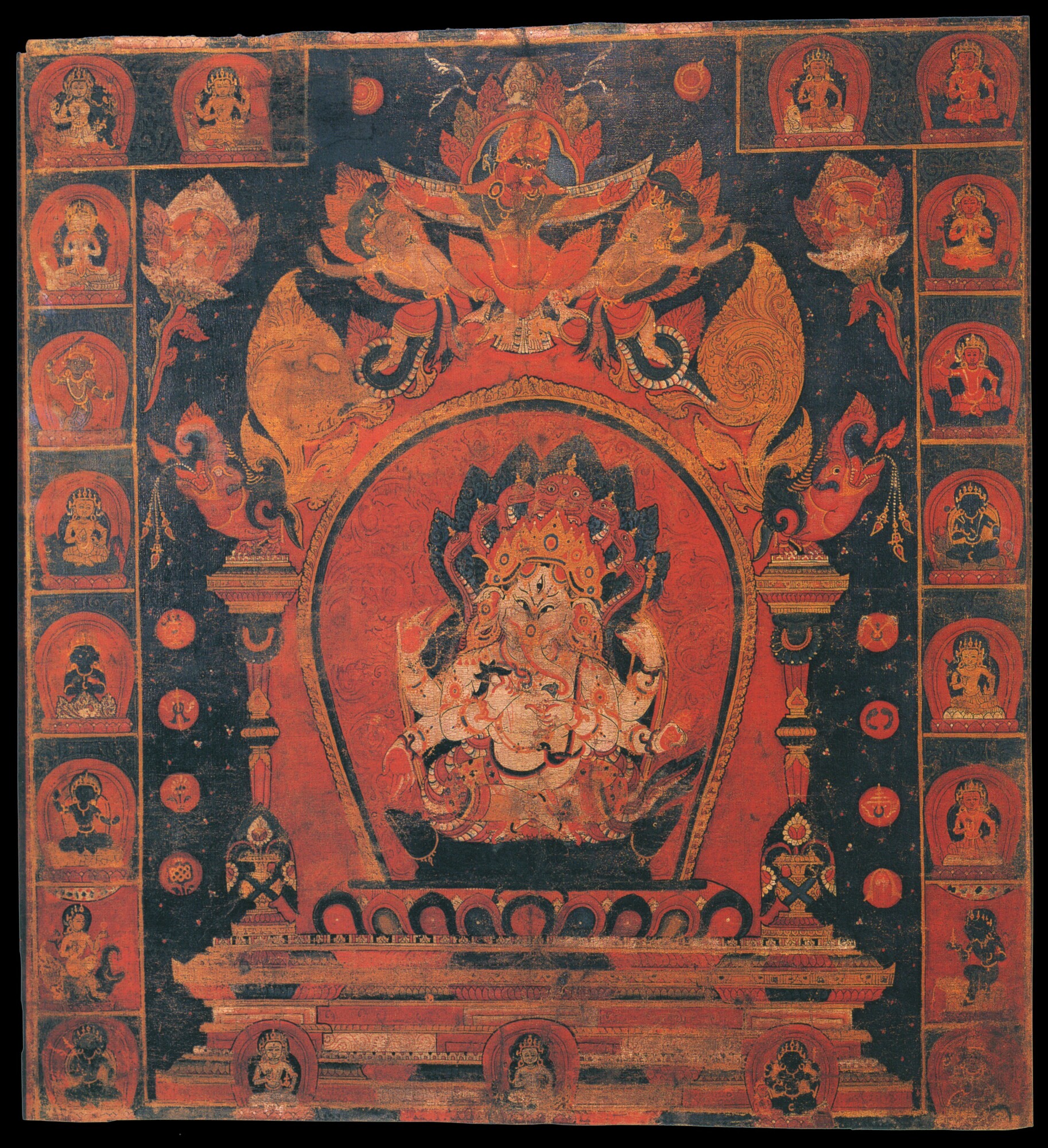
    It has been said that if Matangi seems to call to you, she is ready to come to you.

    I will tie that in to my Janguli plans, but, I still have only a crude idea of this significant aspect.


    It is customary to invoke Ganesh before Mahavidya practice, to clean the cobwebs out of your subtle body.

    When looking at Matangi, we will find her Seed Syllable is Aim, and if we want to know what this is, then it takes us back to Sarasvati. Nothing different about these seeds, considered the Sound syllable.

    Well, we do not quite have Aim in Buddhism. We do have a Red Vajra Sarasvati related to Hrih and the Cotton, Picu, or Prajnavardhani mantra, which is shared with Prajnaparamita, and used in the Namasangiti Dharanis.

    Mam Bija is understandably found with Manjushri, Maitreya (Maim), and Marici. It is also Mamaki, and therefor Varuni, who is never Vam or the Water syllable itself. However, Vajra Sarasvati 164 mentions:

    bibhratīṃ bījamaṃkāraṃ girām iva samuccayam //


    162 is a Mahamaya Sarasvati with:

    sanālasitasarojadharāṃ

    Sa Anala Sita Saroja [Lotus]

    and then a bit further along, a white Mom syllable has something to do with Avitchi:

    tataḥ svanābhipradeśe candramaṇḍale
    sitamoṃkāraṃ dhyātvā tato niścarantīm aśeṣa-
    vāṅmayamālām avicchinnapravāhāṃ cintayan mantram āvartayet /

    So I am not sure why she has weird, unrelated syllables thrust into her sadhanas. They are almost always something evident, and what she is doing with forms of Ma makes no sense offhandedly.

    Then if we really crunch it, a fairly regular view of Sanskrit syllable schemes will return something akin to the famous Evam or E Vam of Buddhist Sutra and Tantra.

    In an assortment of letters broken down by planets, Sarasvati has E or Ai as equivalents. Its use produces Jala Bija--which is Va or Vam for Vari, which is Water or Amrita.

    Aim is the "next thing to" Aum or Om. Om is not really a letter, but Ai or Aim is. And then if we ignore the "chanting" M, Ai or E at least is used in Buddhism quite extensively. When combined with M, something like Aim is pronounced like "I'm", and I do not know the grammar well enough to tell when it is more like E or "long a". The E, the short a in "apple", and the more familiar Ah are all fundamental. Generally, they all seem conducive to one sound producing all sounds, one guru or yidam producing whatever is needed, like a visible form of Om.


    The letters description then for whatever reason breaks down Matangi mantra by syllables, and:

    mā : Mother bīja

    taṁ : gives the power to attract, people will come to you, accomplisher of things capable of achieving all perfections (sarva siddhi) in combination with Saraswatī bīja.

    yai/ya : Vāyu bīja, peace giver, prostration

    ai : Saraswatī bīja, giver of vidyā (knowledge) and siddhi (perfection), origin of Jala bīja (from here the water starts flowing-creation, creative energy), ends enmity

    ya + ai = yai : Vidyā and siddhi for the purpose of peace

    mātaṅgyai: Attracting the Mother for knowledge and peace (Mataṅga means elephant, the person becomes as powerful as an elephant).

    I am not sure why they overlook the "g" that is in her name, but if we look into it, the first thing that will come rushing out is Ganesh.

    Suddenly she has an incredibly magic name:

    Ma [Mata] Tam [Tara] Gi [Ganesh?] Ya [Vayu] Ai [Sarasvati]

    The "g" could perhaps merely be a nasalization of the preceding consonant, and thereby indistinct. From here, we are pretty safe at least in considering "Ma" as meaningful to her, especially if it is half of Kama at Kamarupa--Guhawati.

    Or, if she is the Sound Ai or E, then we can use her as a vowel and look at how this may relate to the Buddhist E Vam. Normal Sarasvati cannot do that part, because it is tantric, so if anything, it would have to be Matangi--who has also lately been usually called Mantrini, which means the M is still good.


    Her practice revolves around the Third day of the moon, red, and northeast.

    She is also called Sosika in Gandharva Tantra. However there is some notion that Sosika is really Buddhist, and that the Matangi--Ananda story, being among the oldest in Buddhism, was a cover for Matangi to develop in tantric Buddhism and later be returned to the Mahavidyas. Her mother in the story is Mahavidya Dhari.

    She is also Jyestha which is a type of Alakshmi.

    She is still rather obscure, here is a long quote of Ganesh and Matangi which explains a few of their murtis:

    "Ganapati is associated with Matangi very deeply. So I had to clarify their differences before going to the story of Mohiniswar Ucchista Ganapati -the Ganapati of Matangi.

    Once upon a time, their was a great demon ,Vidyavana , who was very proud of his vedic knowledge and lifestyle. In his reigns, Brahmins were allowed to do their vedic sadhana and all the vedic rituals were done properly. But this vedic centric activities made the life of Sudras, Chandalas and all non vedic people hard to spend. They were tormented and suffered. Even the gods of heaven suffered due to this. Because, Vidyavana spread only Brahmavad, where Nirgun Brahma will be worshiped and other deities will be rejected. As the gods were used to drink wine and eating meat, Vidyavana proclaimed them Smleccha ( heretic) and stop the wine offerings to Indra and other gods. This made all gods suffer. So they prayed to Lord Shiva. Lord Shiva took Avatara as Rishi Matanga and did great sadhana of goddess Neela Saraswati. Pleased with him, the goddess born as his daughter from the yajnakunda of rishi Matanga. As Matanga's daughter she came to be known as Matangi.

    As Matangi blossomed her first flower, Rishi Matanga wanted to tie her knot with a perfect gentleman. But none of the vedic brahmin wanted to marry Matangi, nor the vedic influenced any Kshatriyas as she was dark in colour( black colour was associated with non vedic people). Matangi did sadhna of Lord Ganapati to have a husband. Rishi Matanga gave her intiation in 32 letter mahamantra of Ucchista Ganapati. Both the father and daughter did sadhna of this form of lord. Pleased with them, Lord Ucchista Ganapati appeared from the yajnakunda of Matangasrama. He was completely naked, red in colour, he had a head of an Elephant. This peculiar form impressed Matangi. She proposed to marry him. Lord Ganapati agreed to marry her. And they were married at the month of Chaitra in sukla sasthi.

    All gods then pleaded to lord Ganapati to kill demon Vidyavana as they came to know, only this half human half elephant form of Almighty can kill Vidyavana( Vidyavana was granted by lord Brahma that he will be killed only by that human , who has a head of animal , who will act like an animal but he will be a brahma-gyani. As for Vidyavana one who spend his life like an animal can not have wisdom of redemption ).

    Lord Ganapati promised them that he will do the job. Lord Ganapati then spread the non vedic path of Hinduissm which came to be known as Vamachara (actually Vamachara is vast. Ucchista Ganapati only spread its one part which is known as Ucchistacharam). This path was easy, and very unique. All the vedic rishis left their vedic ways to practice this left path. Lord Ganapati taught them this path, while he was in union with his spouse Matangi. When Vidyavana came to know this way of sadhana,he became furious. He wanted to destroy this path. He came before Ucchista Ganapati, and saw an Elephant headed naked man, was having sex with his wife, who was dark in colour. All the disciple of him, were in same state with their spouses. They were eating meat and fish. They were drunk but still they were chanting Vedic mantras without any wrong pronunciations. Vidyavana was shocked and asked Lord Ganapati to have a debate. So that vidyavan can defeat him. The condition was whoever will lose in battle, will be killed by the winner. Lord Ganapati agreed. And still in union with his spouse he started the war of the words with Vidyavana. This debate continued for 6 days. In the 7th day of krishna chaturdasi of Vaisakha month, Vidyavana was defeated in debate. Lord Ganapati proofed his vedic philosophy wrong, as he said: why can be anything wrong or right, sin or virtue, purity or impurity, high or low... if everything is brahma 'सर्वं खल्विदं व्रह्मासि' . How can you divide anything in this world as divine or non divine if everything is nothing but Brahma itself. It is Maya, my beloved Maya who has blinded you with this dualism. So that you can not understand what true Brahma is!...'

    Lord Ganapati described him the Ucchista Suktam of Atharva veda. And taught him the great Yoga of Ucchistachara. As vidyavana was defeated in the debate, he was immediately killed by lord Ganapati by his Ankusha.
    All the living and non living creatures praised him. All the gods and demons praised him. He then proclaimed, in the dark age of Kaliyuga , 'only my path can give salvation. Vedic path will be impossible to follow in that age, also will be fruitless. In Satyayuga Veda to be followed, in Treta Smriti to be followed, in Dvapara Purana should be followed but in Kaliyuga वाममार्गैक केवलम् . '

    After this, lord dissappeared with his spouse Matangi. From that day on, Lord Ucchista Ganapati of 32 letter mantra came to be associated with Matangi. Though this Matangi form, who is Ganapati's wife is none but Ucchista Chandalini.

    There is another Matangi, who defeated lord Shiva in debate by her beautiful song of vedic wisdom, later she got married to Lord Shiva. This form of Matangi is known as Laghu Shyama. For her Ananda Ganapati is to be worshiped.

    Raja Shyama is the minister of Sri Lalita. For her Trailokyamohana Ganapati is to be worshiped.

    Before going to battle against Ayodanasura, Bhubaneswari did great sadhana of Ganapati. As he granted her obstacle free victory, Bhubaneswari gave her two mind born daughters- Sumukhi( with whom lord came to be known as Sumukha) and Mohini ( with whom lord came to be known as Mohiniswar ) to lord Ganapati as Arghya.

    It is also said that Moda Ganapati was worshiped by Matangi ( Shiva patni), before going to battle against demon Kilakasura."


    It looks to me that Buddhism has harnessed the main two male prodigals, Mars is Manjushri and Ganesh is Avalokiteshvara. They are in a certain sense, "brothers", and the lore suggests that Red Avalokiteshvara emanated all the Hindu deities, Manjushri gave their mantras, and Vajrapani converted them to Buddhism.

    Sarasvati is female Manjushri, and, although it looks like she may continue and grow into Matangi and become the consort of Ganesh--Avalokiteshvara, he is not yet done, he just needs her to get to his ultimate destination--although it looks like he needs some Manasa as well, since he may gain her hood. There must be some kind of background to it, as here is a modern instance from Thailand:


    I would not have a problem if Mam was Matangi--Sound until it became Marici--Light, which actually makes a ton of sense compared to, for example, Avalokiteshvara means meditating on the Sound until the Light is seen. Matangi is much more immanent, whereas Marici, at least in her more powerful forms, requires a hypostasis. Nothing says in texts these are related, except for the whole idea that Primordial Sound is supposed to reveal light of a non-earthly nature. Nothing really explains how Janguli is involved. But when you contemplate the symbolism, compared with the fact that there is "nothing else like this", it is entirely feasible.

    Matangi is Priya of the Suka, "parrot", not Sukra--Venus, and also of the Kadamba.

    Her Ucchista form has its own Gayatri:

    Om Maatngyae Ch Vidhmhe Uchchhisht Chaandaalyae Ch Dhimhi Tanho Devi Prachodyat

    The old link went dead, here is another to Mangala Rupini, which is among the most musically immaculate of these songs. It is related to Matangi in thinking of her as part of Kamakshi or Meenakshi Madhurai. By the refrain, it is a bit more of a Gauri song, but, she does a Buddhist Karuna, which is Dukha Nivarana or removing suffering.


    Dhukka Nivarana Ashtakam
    ****************************
    Mangala roopini madhiyani soolini manmadha paaniyale,
    Sangadam neengida saduthiyil vandhidum shankari soundariye,
    Kangana paaniyan kanimugam kanda nal karpaga kaminiye,
    Jeya jeya shankari gowri kripakari dhukka nivarani kamakshi.

    Kaanuru malarena kadhiroli kaatti kaathida vandhiduvaal,
    Thaanuru thavaoli thaaroli madhioli thaangiye veesiduvaal,
    Maanuru vizhizhaal maadhavar mozhizhaal maalaigal soodiduvaal,
    Jeya jeya shankari gowri kripakari dhukka nivarani kamakshi.

    Shankari soundari chaturmukan potrida sabayinil vandhavale,
    Pongari maavinil ponn adi vaithu porindhida vandhavale,
    Yenkulam thazhaithida ezhil vadivudane ezhunthanal durgayale,
    Jeya jeya shankari gowri kripakari dhukka nivarani kamakshi.

    Dhanadhana dhann dhana thaviloli muzhangida thanmani nee varuvaay,
    Gangana gan gana kadhiroli veesida kannmani nee varuvaay,
    Banbana bam bana parai oli koovida pannmani nee varuvaay,
    Jeya jeya shankari gowri kripakari dhukka nivarani kamakshi.

    Panchami bhairavi parvatha puthri panchanal paaniyale,
    Konjidum kumaranai gunamigu vezhanai koduththanal kumariyale,
    Sangadam theerthida samaradhu seythanal shakthi enum maaye,
    Jeya jeya shankari gowri kripakari dhukka nivarani kamakshi.

    Enniyapadi nee arulida varuvaay en kula deviyale,
    Panniya seyalin palan adhu nalamaay palgida aruliduvaay,
    Kannoli adhanaal karunayai kaatti kavalaigal theerpavale,
    Jeya jeya shankari gowri kripakari dhukka nivarani kamakshi.

    Idar tharum thollai inimel illai endru nee solliduvaay,
    Sudar tharum amudhe sruthigal koori sugam adhu thandhiduvaay,
    Padar tharum irulil paridhiyaay vandhu pazhavinay ottiduvaay,
    Jeya jeya shankari gowri kripakari dhukka nivarani kamakshi.

    Jeya jeya bala chamundeshwari jeya jeya sridevi,
    Jeya jeya durga sriparameshwari jeya jeya sridevi,
    Jeya jeya jayanthi mangalakaali jeya jeya sridevi,
    Jeya jeya shankari gowri kripakari dhukka nivarani kamakshi.


    Matangi is certainly not mentioned by name, but, that actually never matters, because: she is the creation of this or any music. At the end, you see Chamunda and Mangala Kali, which is probably Bhadrakali, all of them being Sri.

    Sri is like the tenth Mahavidya, Kamala, who I'm not sure does much but display golden light, and so Matangi is perhaps the most active agent of these shaktis.

    Sumukhi as an epithet of Matangi refers to a Laukikya Apsara or Gandharva Daughter in the Vayu and Brahmanda Puranas; and then she is the mother of the serpent Asvasena (son of Taksaka) who has a convuluted adventure in the Mahabharata, although in his final act, he meets Krishna. He is a Kama Naga Arrow, or, more generally, Kama's Five Arrows.


    Blue Bhutadamara Ganapati is completely disingenuous because this is where the typically mispelled mantra is a variant of the Sumbha Nisumbha theme used in Chakrasamvara, which, as soon as you look into it, you have to deal with a victory of Durga and the stories of incarnations of Hindu entities. And eventually, Sumbha is the main male deity at the Nadir.

    This is parallel to Serpent Noose which seems to develop in goddess hands through Aparajita and perhaps Janguli until it becomes the identifying feature of the Nadir goddess.

    In some of the descriptions, Matangi is physically the lower energy rising to the throat, and, in others, the mental circulation of energy between throat and ajna.

    Janguli somewhat replicates this in her white form; 106 is after Sukla Tara, and 122 is the end of her batch after Mahasri Tara. They are virtually identical, except the second one does a little more.

    The difference is in the spelling of a phrase, the first having a gurudesvara, the second, garudesvaratvam. She is related to the lord of gurus, or of garudas, depending. The two other appearances of Garudesvara make it seem the likely choice.

    Both of them have an unusual Three Places, which is Ah Hrih Hum. And it winds up being her Throat syllable Hrih which becomes the magnet or Hook or Akarsya of her Jnana Sattva and the Tathagatas.

    If she has some weird lateral correspondence to Lotus Family Hrih goddesses, they are returning the favor by energizing her throat, which would be particularly handy if she is to remain a mistress of mantra and song. Since she is also called a Mahavidya, we can be fairly certain the wisdom of her is at least partially found within sounds emanated on her behalf.
    Last edited by shaberon; 11th November 2020 at 01:19.

  31. The Following User Says Thank You to shaberon For This Post:

    william r sanford72 (15th November 2020)

+ Reply to Thread
Page 24 of 61 FirstFirst 1 14 24 34 61 LastLast

Tags for this Thread

Posting Permissions

  • You may not post new threads
  • You may not post replies
  • You may not post attachments
  • You may not edit your posts