+ Reply to Thread
Page 2 of 3 FirstFirst 1 2 3 LastLast
Results 21 to 40 of 53

Thread: Hindutva, 1882, and the Vedas

  1. Link to Post #21
    United States Avalon Member
    Join Date
    1st April 2016
    Posts
    7,104
    Thanks
    36,235
    Thanked 40,638 times in 6,753 posts

    Default Re: Hindutva, 1882, and the Vedas

    Brahmanaspati; Bhrgu and Angiras; Purusha; Sadhyas and Dharma; Narayana; female Rishikas


    After the Vedas, there is a type of Dark Age where it is a bit harder to say what was written when, and why there are variations.

    For example, Kena Upanishad is based in Uma "Don't Cry" as virtually the opposite of Rudra, but, this is out of my league. I haven't followed any of the commentary, and have no initiative to use it. That is due to following the same subject as so far discovered.

    After the Vedas, it is also thought there was the development of a social caste system. It seems to be a bit in the Brahmanas, and moreso in Manu Smrti; and this is why Yoga in the guise of Aranyakas and Sravaka traditions (Jain, Buddhist, etc.) seems to work outside it, and, undermine the institution.

    Well, if you come from the view of the Warrior Caste, it is a little different than the Priest.


    In fact, there is the suggestion that Brahma was the original Sanskrit deity, onto whom Vedic Indra was imposed.


    I am not sure that is correct; more broadly, it implies the Upanishadic tradition pre-dates the Vedas. The Upanishads are the ways of Warriors. Necessarily, this is going to be the dominant, continuous league anywhere, priests rather depending on them for any form of stability. Even Bhimbetka clearly shows battles, where it would be hard to specify a priest was present.


    We are sure there is a whirlwind of difficulty streaming off King Santanu of Book Ten, it does not seem that Dattatreya has a Vedic basis, however Parasurama does. Through him converge many non-Vedic deities, i. e. Dattatreya, Renuka, Hingula Mata, and the general understanding he did something nearly genocidal to the Warrior Caste.

    Even if that is really not the best term for it, a somewhat hereditary military uses a kind of person that is not like others. Takes a certain understanding. And, of course, known history is based around kings who deployed thousands of warriors, regardless if they believed in the same Vedic or Hindu deities or whatever, clashes and conquests seem to be pretty normal.


    Here is a reference from D Kosambi ca. 1950s article series:


    Quote ...in the Anukramani citing Parasurama as the author of RV. X. 110. The only Rama mentioned in that Veda (RV. X.93.14) is a king described as asura, which is taken to mean ‘powerful’. The epic hero Rama is far more popular, but is nowhere mentioned in the older Brahmanical literature where his father-in-law, Janaka of Videha, figures so prominently. Whatever the real historical basis of the Rama legend, that hero was clearly a Ksatriya while his protagonist Ravana is a Brahmin who had proved superior in prowess to Indra himself.

    Does Rama replace Indra because he is a more charismatic role model for the same sin?

    Does he replace Vedas by promoting Upanishads?

    These are realistic questions, because we *don't* know an agreeable version of what came after King Santanu, but, there are multiple Yoga deities cascading from Parasurama who are most likely precursors if not confidants of Rama or Ayodhya. Plus, if it is a very ancient tale, then, Ayodhya is symbolic. Chances are, an actual settlement by that name was eventually made in honor of the heritage. I don't think either Ayodhya or Kashi could really claim to be that old, aside from, perhaps, a mainly agricultural development in their general areas. As cities or kingdoms, these are probably derivatives.


    They consider it para-Vedic:


    Quote Upanisads represent a long process of assimilation and adoption of foreign ritual as well as
    philosophy by the indigenous Brahmanas, who could not all have been associated with Ksatriyas from the earliest times; Both the yajna and its philosophy have clearly been acquired from Ksatriyas; for the Pancala oligarch Pravahana Jaivali says explicitly (Ch. 5.3.7, and Br. 6.2.8) that Gautama, who had begged this knowledge of him, would be the very first Brahmin to possess it. This would be incomprehensible if all Brahmins had always been Aryan priests.


    He is using "Br." = Brihadaranyaka Upanishad.

    I just speak of Conventional Yajnawalkya meaning the historic author of the main compendium. But in full he means a lineage:


    Quote Nevertheless, it is again a Ksatriya-like king Ajatasatru of Kasi who
    has to give the philosophical interpretation of Brahma (Br. 2.1, Kausitaki 4) to a Brahmana, the Gargya Balaki. We have referred to the various lines
    of tradition, as at the end of Br. 2, Br. 4, Br. 6, of which the first two are almost identical and contain two Tvastras, Visvarupa Tvas-tra being
    presumably the famous ‘three-headed’ purohita slain by Indra, Rg-veda 10.8.8-9. Yet Br. 6.3.7-12 gives another vamsa which seems distinct from
    the three main lines, namely Uddalaka Aruni to Vajasaneya Yajnavalkya to Madhuka Pairigya to Cula Bhagavitti to Janaki Ayasthuna to Satyakama
    Jabala. It is certain that several lines have been combined, and also clear that a tradition which reports the words of Ajatasatru (whom I am
    compelled to identify with the Magadhan emperor who ruled at the time of the Buddha’s death) cannot have come unchanged through a line of
    teachers that covers as many as 58 consecutive names, mostly older.


    Our simple answer is that there was a historical Ramayana with the same characters but no war.

    Mithila one or two centuries before Buddha.

    Again it is not a difficulty to say something like King Janaka I & II, what we don't want to do is turn II into I and convolute everything. It is possible the Ramayana genealogy is already an effort to do this. The structural mote is again the rarely-mentioned Tvastr is prominent in the background of Yajnawalkya.


    This may tell us less about the date, and more about the school of the Aranyaka or forest or wilderness domain:


    Quote The Atharva Veda is mentioned as such only in Ch. 7.1.2, 7.2.1,
    7.7.1 and Mundaka 1.1.5; in all other cases, it is not a Veda but called by its secondary appellation Atharvangirasa, which becomes significant as,
    in the same context, the Rk-, Yajur- and Sama- are called Vedas explicitly. The interpretation is that the Brahmanic tradition is still being crystallized
    in some parts of the country, ritual coming before philosophy, but both oriented towards assimilation of the Ksatriyas. The fourth Veda has not yet
    been accorded a regular place in the canon.

    Not sure it is a "secondary appellation", because there is a fundamental difference from Bhrgu Atharvan, which has no surviving texts. In other words, Yajnawalkya cleverly merges Tvastr's lineage with that of Angiras.


    He also encounters the fact that Indra is a violator, sinner, transgressor:


    Quote This passage is of the highest interest as an attempt to assimilate an Aryan tribal god who must at one time have actually been a hero and leader
    in battle. In Ch. 8.7 to 8.9 we have Indra from the gods and Viro-cana from the Asuras going to Prajapati to learn the true knowledge of the self. Only
    Indra completes the study while his rival returns with false understanding. On the other hand, this ruthless Indra who brags above about his
    exploits is definitely on the wrong side of the true Brahmanical tradition. In the first place the descendants of Tvastr are mentioned in Br. 2.6 and
    4.6 as in the direct line of tradition (vamsa) from Brahma. Secondly, the slaying of the three-headed Tvastra seems to be a definite historical incident
    quite apart from its mention in Vedic literature.

    In ravaged Mohenjo-Daro seals have been found with three-headed animals, along with the remains
    of a beautifully carved image with three head-sockets—whether meant for three separate heads or three positions of one head. The whole passage
    above runs in the same tone, for throwing ascetics to the wolves was certainly not an act calculated to win Brahmin hearts.

    We know from Puranic
    tradition that a Prahlada was the worshipper of Visnu whereas Indra boasts of having violated treaties with the tribe. These actions of Indra are
    systematically against whatever the ancient Brahmins cherished. Therefore, we need not be surprised when Brahma, the self-existent (svayambhu),
    nevertheless appears in Br. 1.4.6 as a mortal, inferior to the immortal Aryan gods created by him who are his superiors. The later pantheon has not
    yet been accepted; one may reasonably conjecture that the original cult of Brahma was dying out. Br. 1.4.1 admits quite frankly that the Kstrahood
    rules even in heaven—an obvious recognition of the facts visible on earth, and of new cults introduced by Aryan conquerors.

    I am not sure we can say IVC Chimera is Vedic Visvarupa.

    Depends on how much Tvastr lore would have been going around in order for Book Six to be comprehendible.

    My personal guess is that the additional details that can be found in Book Ten were pretty much already in existence before the first Bharadwaj hymn was kept/recorded. It may be that Atharvangiras is a superior recording system, perhaps because made by Tvastr.


    At the same time, it does not contradict the Veda to think of "brahm-" as a verb, which is primarily expanded to Brahmanaspati.

    But no it is not the Puranic trinity with Brahma:

    Quote This is not all; for we see further that the pre-occupation of Patanjali’ s Brahmins is the Veda while that of the Upanisads falls into several layers
    of which the most prominent is the interpretation of Brahma.

    The point would be of less interest were it not for the fact that both Yajnavalkya and Balaki expect substantial gifts from their royal patrons for
    the interpretation of Brahma. The main idea is to gain some sort of a livelihood, and it is generally precarious.


    "Interpreting Brahma" would not be meaningful in the Veda, it would be a sidetrack.

    Again the Upanishad cannot track its history the same way. Beyond the preserved versions, it is like Purana, nobody has anything other than a verbal claim to the possibilities. In general, you could probably lower-case "purana" and equate it to "folk myths, probably pre- or even non-Vedic", and "upanishad" may be similar, within the military. Not that every military chieftain would have automatically done the same thing, the rites and mantras may be different, although the inner yoga principles are similar.


    One basic rule for the concept of civilization is agricultural surplus, which is demonstrated by fermented beverages, which are found in IVC in the old layer of Mehrgarh. Brewing seems to have been universal or i. e. anywhere that surplus is believed to have appeared, you find alcohol at that same age. Here is a Brewers' response to Aswins I.116:


    Quote "O Hero, you gave wisdom to Kaksivan, from the lineage of Pajra, who sang your praises. From the hooves of your mighty steeds you poured out hundreds of jars of beer-surā (flowing) like from a colander.»


    Year after year, the earth gives birth to the stems from which the grains come out and are transformed into beer. The image of the strainer indicates that the surā beer can be filtered. Drilled with about 100 holes, it is a real used utensil (see the kārotara sieve-funnel and the Śatatranā sieve to filter fermented mash or surā-beer in brahmanic tradition).


    The mention of beer at the heart of the metaphor of agricultural abundance shows that the nomadic pastoralists (milk and mead drinkers) and the beer-drinking Indus cereal growers have merged whole sections of their respective mythologies. In a Hymn of Glorification to the Sun together with a ritual of protection, the surā-beer serves as an offering. The word "Poison" refers to it metaphorically.

    " I hang the poison in the sun, a leather sack hanging in the house of the one who has surā; he shall not die, nor shall we die: his way is far off: the one who is riding the bay horses [the sun] has turned you into sweet honey. " (RV I.191.10).

    The surā beer is here mixed with honey. Meadhu, mead, is an Indo-European beverage.

    Keeping honey in a wineskin exposed to the sun to accelerate the spontaneous fermentation of diluted honey is a technique of nomadic peoples. Whoever has surā also has honey/hydromel (madh). But Madh means by extension "joy, pleasure, euphoria, drunkenness", and in a more abstract sense, "enthusiasm, impulse towards". The boundaries are thin and permeable between alcoholic drunkenness and euphoria that opens the mind, between surā and madhu, between surā and soma.

    There we go. If we are thinking the "message" is about everyone's personal experience, everyone is not a priest, warrior, or craftsman, but everyone eats and drinks.


    So does the Brahman Caste:


    Quote The sacrifice Śrauta is part of the important Brahmanic rites. It includes the sacrifices of Soma and the havis-sacrifice. Among the latter, the sacrifice sautrāmani includes the preparation and offering of the beer surā. At the end of the ritual surā is drunk by the priest and the priests. The Satapatha Brāhmana describes the preparation of ingredients and beer in the caraka version of this ritual (V.5.4.1-35) and in its kaukili version (XII.7.1-9.3.16). The explanations of the brewing of the surā beer are complicated by the ritualisation of gestures, the terminologie of the procedure, and by an imitative codification of the sacrifices of the soma.

    In the list of brewing equipment, we find:


    Kārotara = filter vase with hairs of 3 animals: lion, wolf and tiger.


    That is a bit unusual, does not really match Vedic iconography, but it does sound like IVC.


    Quote The deity Surā Devi was born from the foam produced by the churning of the ocean by the devas and the asurās; the beer-surā comes from the foam of the fermentation of rice and barley. The parallel is striking. The addition of milk during this cosmic fermentation does not change the nature of the fermented beverage brewed, an authentic beer.

    Brewing the surā beers belongs to the sphere of daily consumption and celebrations. Only an Adhvaryu can be a brewer (a surākāra) for the sacrifice sautrāmani, but brewing surā beers is a common activity apart from the Vedic rituals and religious pursuits.


    Returning to the Tvastr presence.

    There is something that makes a sort of hierophantic archetype in Grtasamada's Brahmanaspati II.23:


    “Tvaṣṭā engendered you (chief) amongst all beings, (whence) you are the reciter of many a holy hymn: Brahmaṇaspati acknowledges a debt to the performer of a sacred rite; he is the acquitter (of the debt), and the destoyer of the oppressor.”


    viśvebhyo hi tvā bhuvanebhyas pari tvaṣṭājanat sāmnaḥ-sāmnaḥ kaviḥ | sa ṛṇacid ṛṇayā brahmaṇas patir druho hantā maha ṛtasya dhartari ||


    sāmnaḥ sāmnaḥ kaviḥ, the reicter or another of every sāma, sarvasya sāmnaḥ uccārayitā kartāsi; or kavi refers to tvaṣṭā, further explained as the sage who created Brahmaṇaspati by the efficacy of the sāma: sāmnaḥ sāreṇa tvam ajījanat; acknowledges a debt: ṛṇacit stotṛkāmam ṛṇam iva cinoti, he takes the intention of the praiser as if it was a debt, or obligation; acquitter of the debt: ṛṇaya is explained as the discharger or remover of the debt which is of the nature of sin: pāparūpasya ṛṇasya pṛthak kartā


    “When Bṛhaspati, descendant of Aṅgiras, for your glory, Parvata had concealed the herd of kine, you did set them free, and with thine associate, Indra, did send down the ocean of water which had been enveloped by darkness.”

    tava śriye vy ajihīta parvato gavāṃ gotram udasṛjo yad aṅgiraḥ | indreṇa yujā tamasā parīvṛtam bṛhaspate nir apām aubjo arṇavam ||


    Brahmanaspati follows in the bloc of Hymns 24, 25, 26.

    This deity is visibly important, and, an engineered design by the more mystical Tvastr, particularly at the level of Sama.

    But he is certainly not visible in modern terms, less so than Indra. What happened?


    Brahmanaspati is clearly deified across the Veda--and is unknown to Puranas except for:


    Siva Purana says that Shiva created Brahma, the Brahmanaspati, saying it is condensed from the Vedas as narrated by Shiva.


    Sounds like a near contradiction.

    It is fairly easy to find what has been shucked. Brahmanaspati is prevalent in Rg Veda, such as:


    VII.41 in a strand of invocations at dawn

    with Dadhikra and Vishnu in Lingokta VII.44

    Brahmanaspati Indra VII.97

    with Aditi in VI.75

    with Kaksivan, son of Usij and Dirghatamas in I.18

    with Maruts in I.40

    V.46

    Visvedeva X.65

    Brahmanaspati as Brihaspati 10.67


    Brahmanaspati commented as Aditi in 10.72

    as Tiksna Srna Brihaspati 10.155

    uses Tvastr's axe to shape drinking vessels in Suci 10.53


    We don't see "pair of bull horns", but, we do see Sharp Horn Brhaspati. Just one, the individual pointing device? To be an effective weapon, a horn does not need to be sharp. A buffalo can just pick you up by the ribcage and shake you, a dull horn is going to rip through your skin and scramble your organs in a matter of seconds. Ramming or puncture attacks are not what they really do, upper thrust against your own weight is devastating.


    It is correct that Brahmanaspati is given the epithet "ganapati" one time. Only appearance in the whole book. Whether that constitutes a name or form, I cannot really tell, but it is there.


    I have to question "Upanishadic Brahma", because that is practically backwards, since "brahma" is the word for a priest, or the word spoken by one.

    Moreover, at first, it is plebian, emphatically not an invocation, form of address, or epithet.

    In the Old Books, "brahma" is just a noun, with maybe one exception:


    VI.45

    brahmāṇam brahmavāhasaṃ gīrbhiḥ sakhāyam ṛgmiyam | gāṃ na dohase huve ||

    “I invoke with hymns Indra, our friends, who is Brahma, who is attracted by prayer and entitled to adoration, to milk him as a cow.”


    If you are influenced by that, Brahma becomes a name of Indra, unless it is still lower-case, Indra who is the priest.

    However it is much more prevalent as a generic term. It is a command from Bharadwaj to Indra:


    śrudhi brahma


    "Hear my prayer."


    brahmavāhaḥ = mantrairvahanīya, to be borne or conveyed by prayers


    a standard enemy is:


    brahmadviṣe


    hates the priest or the prayer itself.


    a running theme such as in Vamadeva's IV.20:


    brahma navyaṃ

    a new hymn


    Okay. The "noun" is together with one of the only post-Vedic references to Brahmanaspati, which is from Brihadaranyaka Upanishad on Prana:


    Quote eṣa u eva brahmaṇaspatiḥ; vāgvai brahma, tasyā eṣa patiḥ, tasmādu brahmaṇaspatiḥ || 21 ||

    21. This alone is also Brahmaṇaspati (lord of the Yajus.) Speech is indeed Brahman (Yajus), and this is its lord. Therefore this is also Brahmaṇaspati.


    How is it known that the words ‘Bṛhatī’ and ‘Brahman’ mean the Ṛc and the Yajus respectively, and nothing else? Because at the end (of this topic, in the next paragraph) the word ‘speech’ is used as co-ordinate with ‘Sāman,’ ‘Speech is indeed Sāman.’ Similarly in the sentences, ‘Speech is indeed Bṛhatī’ and ‘Speech is indeed Brahman,’ the words ‘Bṛhatī,' and ‘Brahman’, which are co-ordinate with ‘speech’, ought to mean the Ṛc and the Yajus respectively.

    Moreover, unless they are taken in that sense, there will be no difference between the two terms of each sentence. (In the next two paragraphs) ‘Sāman’ and ‘Udgītha’ clearly denote specific objects. Similarly the words ‘Bṛhatī’ and ‘Brahman’ ought to denote specific objects. Otherwise, not conveying any specific object, they would be useless, and if that specific object be mere speech, both sentences would be tautological. And lastly, the words Ṛc, Yajus, Sāman and Udgītha occur in the Vedas in the order here indicated.

    Much as in the comment to RV IV.22:


    Food, hymn, soma and prayhers: an allusion to the fourfold forms of offering worship, Brahmā, Stoma, Soma and Uktha: the first is the cakes steeped in butter-- offerings or obaltions; the second, the praise that is recited aloud; the third, the libation of the Soma; and the fourth, the praise or prayer that is repeated silently or in a lower tone not chanted or sung.


    One might say this already suggests a familiar Yoga sadhana.

    It is not a difficulty to say the Yajur is equivalent to the Saman, because Yajur is not really a type of mantra, but, the combination of verbal and physical activities, meaning it incorporates Saman on top of the Rk.


    Then we start finding things about Brahma like the comment to III.26:


    “Heaven and earth be kind to that sage who is as it were a many-channeled and inexhaustible stream (of knowledge); the parent (of his disciples), the collater of holy texts, rejoicing on the lap of his parents,, whose words are truth.”


    Sayana says:


    That sage: That is, Viśvāmitra himself; in consequence of his discovery that vaiśvānara is para-brahma the supreme spirit; perhaps, this hymn may be ascribed to Brahma.


    and the comment to VI.9:


    dhruvaṃ jyotir nihitaṃ dṛśaye kam mano javiṣṭham patayatsv antaḥ | viśve devāḥ samanasaḥ saketā ekaṃ kratum abhi vi yanti sādhu ||

    “A steady light, swifter than thought, stationed among moving beings to show (the way) to happiness all the gods being of one mind, and of like wisdom, proceed respectfully to the presence of the one (chief) agent (vaiśvānara).”


    Sayana says:

    A steady light: According to the vedāntins, the light is brahma, seated spontaneously in the heart as the means of true knowledge, to which all the senses, together with the mind and consciousness, refer, as to the one cause of creation, or paramātmā, supreme spirit


    And he gives us this brief bio using the name in a way that is unclear:


    Quote Viśvāmitra was a kṣatriya, of royal or military profession, and was also a monarch for some time; he descended from Kuśa or the lunar lineage and was the ancestor of many royal and saintly persons, who, like himself, were called after their common ancestor, Kuśikas, or Kauśikas. By the force of his austerities, he compelled Brahmā to admit into the Brāhmaṇa order. He sought this position to be equated with Vasiṣṭha, which whom he had disputed earlier. The circumstances of his dispute with Vasiṣṭha are detailed in the Rāmāyaṇa; the legend is also told in the Mahābhārata, Vāyu, Viṣṇu and Bhāgavata Purāṇas. Viśvāmitra and Vasiṣṭha had the patronage of hostile princes; but both had friendly relations with the royal family of Ayodhyā, or King Daśaratha and his son, Rāma.

    It may mean that Visvamitra compelled Brahma, or the order, to accept Kausikas.

    Continuing this explanation for I.24:


    “Of whom, or of which divinity of the immortals, shall we invoke the auspicious name? who will give us to the great Aditi that I may again behold my father and my mother.”

    Aditi =earth;

    Quote Adit = earth. Rāmāyaṇa, b.i, ch.61 presents Śunahśepas, son of the Ṛṣis Ṛcika and is sold for a hundred cows by his father to Ambaṛṣa, king of Ayodhyā, as a victim for a human sacrifice. He sees Viśvāmitra, near the lake Puṣkara and learns a prayer when repeated at the stake induces Indra to come and set him free. Aitareya Brāhmaṇa has the legend: the rājā is Hariścandra, who has no sons and worships Varuṇa to obtain a son and promises to sacrifice to him his first-born. He gets a son, named Rohita; when Varuṇa claims this son, the king delays the sacrifice using various pretexts, until Rohita attains adolescence. When Rohita is told of the rājā's commitment to Varuṇa, Rohina refuses to submit himself and moves into the forests. In the forest, Rohita meets a ṛṣi, Ājīgartta who is in great distress. Rohita persuades the ṛṣi to part with his second son, Śunahśepas, to be substituted for Rohita as an offering to Varuṇa. The deal is struck and Śunahśepas is about to be sacrificed. On the advice of Viśvāmitra, an officiating priest, Śunahśepas appeals to the gods and is ultimately liberated. This hymn is uttered by Śunahśepas when bound to the Yūpa, or stake, as the puruṣaḥ-paśuḥ, the man-animal (or victim), as the Bhāgavata terms him: "Of whom" (kasya) may also be rendered; of Brahmā or Prajāpati (also called ka): as ko ha vai nāma prajāpatiḥ (Aitareya Brāhmaṇa 3.21; 7.26)

    My reaction is that is hugely symbolic and the primary moral lesson is to be taken that way.

    Consequently if one is interested in Ramayana, maybe one pursues it in comparison to Vedic Visamitra and Sunhashepa.

    When an event becomes famous, then I suppose we should expect one or more of the names involved to be cycled again later.

    Except there is one that disappears.

    More precisely, Brahmanaspati is found as Brahma in II.1. This is composed by the fusionistic:


    āṅgirasaḥ śaunahotro bhārgavo gṛtsamadaḥ


    Agni is:

    adhvarīyasi brahmā cāsi gṛhapatiś


    three kinds of priests.


    Verse Three:


    tvam agna indro vṛṣabhaḥ satām asi tvaṃ viṣṇur urugāyo namasyaḥ | tvam brahmā rayivid brahmaṇas pate tvaṃ vidhartaḥ sacase puraṃdhyā ||

    “You, Agni, are Indra, the showerer (of bounties) on the good; you are adorable Viṣṇu, the hymned of many; you Brahmaṇaspati, are Brahmā, the possessor of riches; you, the author of various (conditions) are associated with wisdom.”


    Agni is then Varuna, Mitra, Amsa, and:


    aryamā satpatir

    whose (liberality) is enjoyed by all


    You, Agni, are Tvaṣṭā, (the giver) of great wealth to (your) worshipper

    is Rudra, Maruts, Draviṇodās, Savitr, Bhaga, Rbhus, Aditi, Bharati, Ila, Sarasvati (the destroyer of Vrtra), and:


    “The Ādityas have made you, Agni, their mouth; the pure (deities) have made you, Kavi, their tongue; the (gods), the givers of wealth, depdn upon you at sacrifices; they eat the offered oblation through you.”


    I think that is at least nine Adityas specifically named, and, has universalized Agni like opening an umbrella.

    This is another translation of the line:

    Thou, Brahmanaspati, the Brahman finding wealth...


    Because "brahma" has already been used generically for "priest", then, yes, it probably just reflexively means Brahmanaspati is the successful or effective priest. So far it is not splitting out "Brahma" as an additional, distinct deity.


    There is some Vedic expansion on it, such as in X.109:


    te 'vadan prathamā brahmakilbiṣe 'kūpāraḥ salilo mātariśvā | vīḻuharās tapa ugro mayobhūr āpo devīḥ prathamajā ṛtena ||

    “These spoke first about Brahmā's sin, the boundless (sun), the water- god (Varuṇa), the wind-god (Vāyu), the fierce, wide-consuming fire, the source of happiness, (Soma), the divine waters, the first-born sons of the truthful (Brahmā).”

    Sayana says:


    Legend: Juhū is vāc, speech, the wife of Brahmā. Vācaspati, the lord of speech, who is Bṛhaspati, is also said to be the husband of Juhū or Vāc. On some occasion, Bṛhaspati's sin resulted in her losing her husband's affections, and he deserted her. Afterwards the gods consulted together as to the means of expiation of Bṛhaspati's sin, and restorred her to her husband


    "Saunaka" is one of the most heavily-cycled names in the Vaisnavite ethos. In other words, a certain credence of authority into the vein of Mahabharata and Bhagavata Purana. Usually, I find myself working around these sources. The Vedic Rishi Saunaka is the author's father or lineage with Brahmanaspati as the potential Ganapati in II.23.1:


    gaṇānāṃ tvā gaṇapatiṃ havāmahe kaviṃ kavīnām upamaśravastamam | jyeṣṭharājam brahmaṇām brahmaṇas pata ā naḥ śṛṇvann ūtibhiḥ sīda sādanam ||


    “We invoke the Brahmaṇaspati, chief leader of the (heavenly) bands; a sage of sage; abounding beyond measure in (every kind of) food; best lord of prayer; hearing our invocations, come with your protections, and sit down in the chamber of sacrifice.”


    It doesn't quite go "We invoke Ganapati who is Brahma", but, that is exactly what you will get in the Upanishad or any Ganapati Purana.

    If you formulate some kind of scheme to show how this arises from the foregoing, maybe we could follow it. If you say "It says so in the Vedas", everyone will mutely agree with you. I don't see anything about Rudra here. Next attempted translation of it:


    WE call thee, Lord and Leader of the heavenly hosts, the wise among the wise, the famousest of all,
    The King supreme of prayers, O Brahmanaspati: hear us with help; sit down in place of sacrifice.


    using the vocabulary:

    tanū́nāṃ

    bodies


    For Tvastar, he who knows each sacred song, brought thee to life, preeminent o' er all the things that be.


    Then Brahmanaspati operates Rna.

    Just from experience, I personally can see this in 1400s Tibetan exegesis, i. e. the Lhas. The simpler format adds, so to speak, a category, Pitrs, who receive offerings as well as Devas. Then you can find a system of Five Rnas, and as far as I can tell it is the same thing Tibetans are doing in the advanced version of Wind Horse. We have damaged, troubled, and abused various kingdoms of nature, so we try to restore a balance. However it has the dual meaning of also being internal, i. e. one's mind and life force consist of these natural kingdoms. That is why this is Yoga and not superstition.


    This sounds practically backwards for the author of most of the hymns of [Ṛg-veda ii]:

    Gṛtsamada (गृत्समद):—Son of Suhotra (son of Kṣatravṛddha). He had a son whom he called Śunaka. (see Bhāgavata Purāṇa 9.17.1-3)


    not surprising:


    There is the following story about him in Gaṇeśa Purāṇa...Gṛtsamada went and did penance to propitiate Gaṇapati and got Brāhmaṇya.


    Frequently we see "Brahmanaspati" parallel to "Brhaspati" which would seem to be the next step in pursuit of investigation.


    Along with calling Tvastr a form of Agni, such deities are typically placed in the lineage of:


    Āṅgirasa (आङ्गिरस).—a. (-sī f.) Descended from or referring to Aṅgiras.

    -saḥ 1 Name of Bṛhaspati, son of Aṅgiras;

    4) the soul;

    4) especially Name of Bṛhaspati, [Ṛg-veda; Atharva-veda] etc.

    5) the planet Bṛhaspati id est. Jupiter


    and it has been said to be authoritative, or, to have pushed out some other method of ritual.

    Now, of course, at a certain level, Bhrgu Gotra is indispensible because:


    Śukra (शुक्र).—(ŚUKRĀCĀRYA)

    The planet Venus or its regent, the son of Bhrigu, and preceptor of the Daityas or Titans.

    8) clear or pure Soma, [Ṛg-veda]

    the son of the great sage Bhrigu and Ushana, daughter of Hirana-Kashipu. He went to the hermitage of Angirasa to learn the scriptures. Angirasa's son Brihaspati was a fellow student of his. Appalled by the favoritism shown by Angirasa towards his son, Shukra left his guru and became the disciple of the sage Gautama instead.

    Śukra achieved the knowledge of Saṃjīvanī by worshipping Mahādeva and by the grace of the Lord he was famous as Yogācārya.

    Śukra has another name, Kāvya. Kāvya means the son of Kavi. Some authorities say that Kavi was Bhṛgu’s son, while others think that Kavi was Bhṛgu himself. Śukra’s mother is referred to as "Kāvyamātā" in many places.


    Kavya could perhaps just be called the next, non-Vedic genre, i. e. Ramayana, especially since Valmiki is called Adi Kavya.

    In the above you rapidly get the sense of Solar + Soma.


    Evidently Bhrgu and his Gotra were Atharvana like the Angirases, and then there was some type of internal dispute and they moved westwards. This caused some amount of actual conflict, and, their remnants were defrayed into Zoroastrianism.

    This most likely concerns the "Iranian problem" that seems to have occurred *within* the Veda, particularly Book Two.

    Therefor, retaining or re-admitting some Bhargavas, is to maintain a type of mixture that seems to be by design.

    Within the Veda as well, we are trying to show the development of language itself.

    Kavi and Sama are twin attributes of Tvastr.

    Rik and Saman are Brhaspati and Brahmanaspati. They are somewhat identical.


    The Veda's time frame is such that it must approximate the Age of Aries, which, may have been a reason for associating Tvastr--Spica with marking the year. The opposing Aswini Nakshatra has thirteen degrees of equinoctical drift to present itself as an ideal "first sign". Slightly less than half an "age", it must have been valid for ~800 years or so.


    In Jaiminiya Brahmana's Tivrasoma, Tvastr is even behind Indra sneezing.


    He persistently shows up, at least prior to the Puranas, but then is described as being of multiple origins or Gotras.

    From Nakshatra Mythology:

    Quote As per the Ṛgveda, Tvastar, also known as Rathakāra, belongs to the clan of the Bhṛgus. Similarly, as mentioned in the epic Mahabharata, Tvastar or the Rathakāra is Śukrācārya's son, Śukrācārya (the mentor of the asuras) is Bhṛgu's grandson and Vāruṇibhṛgu's son. He is the father of Saranyu, who twice bears twins to Vivasvat (RV 8.26.21), including Yama and Yami, also identified as the first humans. Tvastar is a solar deity in the Mahabharata and the Harivaṃśa. He is mentioned as the son of Kāśyapa and Aditi and is said to have made the three worlds with pieces of the Surya.


    Voice of Dharma discovers Tvastr in Vedic Geography as to why the archaic Bhrgus seem a bit distant:


    Quote 1. The actual Soma-growing areas were distant and unknown to the Vedic Aryans in the early parts of the Rigveda, and became known to them only later after they expanded westwards.

    2. The Soma plant and its ritual were not originally known to the Vedic Aryans and their priests, but were introduced to them in very early times by priests from the Soma-growing areas.

    3. The expansion of the Vedic Aryans (and, by a chain of events, the dispersion of the Indo-Europeans, as we shall see in later chapters) into the west and northwest was a direct consequence of their quest for Soma.

    The detailed evidence is as follows:

    1. Soma is regarded as growing in distant areas: this area is so distant that it is constantly identified with the heavens (IV.26.6; 27.3, 4; VIII.100.8; IX.63.27; 66.30; 77.2; .86.24, etc.)

    The only specific thing known about the place of origin of Soma is that it grows on mountains (I.93.6; III.48.2; V.43.4; 85.2; IX.18.1; 62.4; 85.10; 95.4; 98.9, etc.). Nothing more specific is mentioned in the Family MaNDalas or the early upa-maNDalas of MaNDala I.

    The area of Soma is clearly not part of the Vedic area (nor is there even the slightest hint anywhere in the Rigveda that it ever was): it is constantly referred to as being far away (IV.26.6; IX.68.6; X.11.4; 144.4). This area is also known as the "dwelling of TvaSTR" (IV.18.3); and this is what the scholars have to say about TvaSTR: �TvaSTR is one of the obscurest members of the Vedic pantheon.


    citing fifteen hymns for what we would call Syena--Hawk:


    Quote That this place of origin is alien to the Vedic people is clear from the fact that this eagle is reported to have to hurry (IV.26.5) to escape the guardians of Soma, who are described as attacking the eagle (IV.27.3) to prevent it from taking the Soma away.

    TvaSTR is especially the guardian on Soma, which is called the mead of TvaSTR (I.117.22) and Indra is described as conquering TvaSTR in order to obtain the Soma.

    In his footnote to 1.43.8, Griffith refers to "the people of the hills who interfere with the gathering of the Soma plant which is to be sought there".

    The Family MaNDalas are generally ignorant about the exact details of the Soma-growing areas. Whatever specific information is there is in the later MaNDalas.

    I am not sure they have considered Vanaspati or Soma in "all plants".

    For "eagle", Rg Veda has possibly:

    garutmān

    I,164 "birds" or X.149 "Savitr's Eagle".


    Derived from garut "a wing", which, in a backwards comment since "garuda" is a later spelling:

    Garuda is also called as Garutman (गरुत्मन्) which means the stratosphere which surrounds the earth: When the Lord is identified as Sūrya Nārāyaṇa, then Garuda becomes the stratosphere which conveys and modifies the rays of the sun to the earth and thus prevents the destruction of life by the intensity of the heat.


    They trace this geographical foray through Parasurama as a Bhargava:


    Quote ...the names of ancient preparers of Soma; Vivasvat and Trita Aptya

    Both Vivasvat and Yama Vaivasvata are identified in the Rigveda as BhRgus (see the discussion on the YAmAyana group of RSis in our chapter on the composers of the Rigveda); and Manu Vaivasvata is identified in the AnukramaNIs of VIII.29 with KaSyapa.

    Trita Aptya is not clearly identified with any family in the Rigveda, but it is significant that he is described by the GRtsamadas (Kevala BhRgus) in II.11-19 as belonging to "our party".

    a. The word Soma, which occurs thousands of times in the hymns of the Rigveda, is found in the name of only one composer RSi: SomAhuti BhArgava.

    b. The word PavamAna, which occurs more than a hundred times in the Soma PavamAna MaNDala, is found only once outside MaNDala IX: in VIII.101.14 composed by Jamadagni BhArgava.

    That was not the best way of saying the author of VIII.29 is:


    Ṛṣi (sage/seer): manurvaivasvataḥ kaśyapo vā mārīcaḥ


    and what he has to say:

    “One (Soma) brown of hue, all-pervading, leader of the nights, ever young, decorates (himself) with golden ornament.”


    What is happening is he keeps talking to "Eka", "One", as if riddles that Sayana or someone has inserted answers into the line. No translator wants to trifle with where the second "One" is with the Devas:

    yónim


    The third "One" implies Tvastr because of a metal weapon or tool:

    vāśīm āyasīm


    So there are a handful of verses alluding to the pantheon without using their names, but making recognizable use of Pusan and Trivikrama Vishnu. It makes sense once you realize he is auto-completing, until the end when we might question:

    “Some (the Atris) when worshipping, call to mind the great Sāman, wherewith they light up the suṇ”


    They say the motive ("quest for Soma") is cued in III.33.5:

    ramadhvam me vacase somyāya ṛtāvarīr upa muhūrtam evaiḥ | pra sindhum acchā bṛhatī manīṣāvasyur ahve kuśikasya sūnuḥ ||


    “Viśvāmitra speaks: Rivers, charged with water, rest a moment from your course at my request, who go to gather the Soma; I, the son of Kuśika, desirous of protection, address with earnest prayer especially the river before me.”

    At my request: me vacase somyāya = to my speech importing the soma, i.e. the object of my address is, that having crossed over, I may go to gather the soma; cf. Nirukta 2.25; the river before me: that is, the śutudri


    That was the Red Sea moment.


    And we may combine this with the essence of Sama, which is Gandharva Veda:


    Quote The only place-name from Afghanistan that we find in the Rigveda is �GandhArI�, and this name occurs only once in the whole of the Rigveda: in the general and late upa-maNDalas of MaNDala I (I.126.7).

    But, the name is also found indirectly in the name of a divine class of beings associated with GandhAra, the gandharvas, who are referred to in the following verses:

    I.22.14; 163.2;
    III.38.6;
    VIII.1.11; 77.5;
    IX.83.4; 85.12; 86.36; 113.3;
    X.10.4; 11.2; 85.40, 41; 123.4, 7; 136.6; 139.4, 6; 177.2.

    As we can see, the gandharvas are referred to in 20 verses in 16 hymns, and all except one of these references are in the very latest parts of the Rigveda: MaNDalas VIII, IX and X, and the general and late upa-maNDalas of MaNDala I.

    The one reference in an early MaNDala (III.38.6) is not even an exception which proves the general rule, it is in itself strong corroboration of the late provenance of the gandharvas in the Rigveda: III.38 is one of the six hymns (III.21, 30, 34, 36, 38-39) which are specifically named in the Aitareya BrAhmaNa (VI.18) as being late interpolations into MaNDala III. As we saw in an earlier chapter, these hymns have been incorporated into MaNDala III in the eight-MaNDala stage of the Rigveda, and are contemporaneous with the hymns in MaNDala VIII.


    Despite the obscurity, Tvastr is of course Masonic and behind the art of Vimana:


    Quote In the ‘Manasara,’ II. 2-35, it is said that the four progenitors and prototypes of the four divisions of architects are born from the four faces of Visvakarman. They are Visvakarman, Maya, Tvastr, and Manu. Their descendants are the Sthapati, the master builder; the Sutragrahin or Sutradhara who hold the measuring rod or line, the surveyor or draftsman; the Vardhaki, the builder and painter (from vrdhi, to make grow) and the Taksaka, the carpenter. It is derived from His activity whose path ‘measures’ the wide heaven (AV. IV. 2.3.).

    Vimana is one's Heavenly Vehicle in the sense of how you exist in Swarga, composed primarily of Merit.

    Microcosm to macrocosm, it is also the temple structures and their stellar alignments.


    At a ratio of about 88 : 3, in Rg Veda, "Tvastra" has no "r", and therefor appears a simple etymology:


    Tvaṣṭa (त्वष्ट).—p. p. Made thin, pared, peeled &c.

    Pared, made thin. E. tvakṣ to make thin, affix kta.

    tvaṣṭa (त्वष्ट).—a S Pared, planed, thinned.

    Tvaṣṭa (ತ್ವಷ್ಟ):—[adjective] trimmed and smoothened with or as with an adze (said of wood).


    It makes sense, symbolicly of course by shearing 1/8 of Surya's rays (sometimes represented by a missing face/head).

    If you focus this spelling in Brahmanda Purana:


    Tvaṣṭā (त्वष्टा).—One of the four sons of Śukra;1 married Yaśodharā—Vairocinī, daughter of Virocana; father of Triśira, Viśvarūpa and Viśvakarma;2 Prahrādī, another wife; Samjñā, a daughter of his, was given in marriage to the Sun God;3 an Āditya in the month of Kārttika having 8000 rays; with the Śiśira Sun;4 reduced the Sun's tejas;5 made Viṣṇu's discus;6


    1) Brahmāṇḍa-purāṇa III. 1. 78, 86; Vāyu-purāṇa 65. 77, 85; Viṣṇu-purāṇa I. 15. 121.
    2) Brahmāṇḍa-purāṇa III. 14. 6; 59. 17.
    3) Ib. II. 24. 34, 39.
    4) Ib. II. 23. 20.
    5) Ib. III. 59. 44 and 65.
    6) Ib. III. 59. 71, 82.

    2c) The son of Bhauvana and Dūṣaṇā. His queen was Virocanā, and their son Virajā.*

    * Bhāgavata-purāṇa V. 15. 15. Brahmāṇḍa-purāṇa II. 14. 70. Vāyu-purāṇa 33. 59.


    So in that last case, it is likely to be talking about actual people.

    "Viraj" has to do with cycles of mental then physical creation, which I would argue is the main subject of Purusha Sukta X.90:


    From him Viraj was born; again Purusha from Viraj was born.

    virāj, the aggregate of all living beings, spirit embodied in the egg of Brahmā


    Purusha's planes of existence being:

    Nirguna Brahman, Isvara, Hiranya Garbha and Viraj.


    Hiranyagarbha is the subtle body, viraj is material, which makes sense the purusha is subsequently re-born through, and then burned by the devas in Purusha Sukta Verse Seven, summarized at the end:


    By sacrifice the gods worshipped (him who is also) the sacrifice; those were the first duties. Those great ones became partakers of the heaven where the ancient deities the Sādhyas abide.

    sādhyāḥ santi devāḥ ||


    Apava (who sports in the waters), formed two beings from his body, a male, Viraj, and a female, Shatarupa (the hundred-formed). After creating Shatarupa, Brahma lusted for her. “How beautiful you are,” he said to his daughter.


    Satarupa being an equivalent term for female Viraja.

    The Sadhya class is not a Puranic invention, although their specific application may be.

    The closest thing to "Brahma" in the hymn is the priest transformed from the mouth of Purusha.


    In the hymn, Purusha is sacrificed by a team of Devas, Sadhyas, and Rishis, and it is not until after that in Verse Eight:


    From that great general sacrifice the dripping fat was gathered up....

    “From that victim, in whom the universal oblation was offered, the mixture of curds and butter was produced, (then) he made those animals over whom Vāyu presides, those that are wild, and those that are tame.”


    Then the Vedas, then animals such as goats and sheep:

    ajāvayaḥ


    Only in Verse Twelve does it reach the humans, "four kinds of professions", which are among the major difficulties with the nationalistic or fundamentalist views.


    The hymn says more about what the Sadhyas dwell in, which is what the successful sacrificer attains, a rather typical Sanskrit construction of the forbidden "double negative":


    Nāka (नाक).—m.

    (-kaḥ) Heaven, paradise, æther. sky, atmosphere. E. na not with aka derived from ka happiness, and the privative a prefixed misery; in which there is no unhappiness. na kam akam duḥkham tat nāsti yatra .

    na + 2 -aka, ‘where there is no pain’

    vault of heaven (with or [scilicet] divas), firmament, sky (generally conceived as threefold cf. tri-diva, tri-nāka, and, [Atharva-veda xix, 27, 4]

    Happy, painless; celestial vault, heaven, sky (±divas); adj. painless, sorrowless.


    The line with Naka and Sadhya is quoted one way or the other in I.164.50 by:


    dīrghatamā aucathyaḥ

    Devatā (deity/subject-matter): sādhyāḥ


    which makes it unique, their purpose or duty being:


    dharmāṇi


    They qualify as the designants of that line, following the previous:

    “Sarasvatī, that retiring breast, which is the source of delight, with which you bestow all good things, which is the container of wealth, the distributor of riches, the giver of good (fortune); that do you lay open at this season for our nourishment.”


    Sadhya Mantra:

    yajñena yajñam ayajanta devās tāni dharmāṇi prathamāny āsan | te ha nākam mahimānaḥ sacanta yatra pūrve sādhyāḥ santi devāḥ ||

    “The gods sacrifice with sacrifice, for such are their first duties; those mighty ones assemble in heaven, where the divinities who are to be propitiated (by sacred rites) abide.”

    or:

    These Mighty Ones attained the height of heaven, there where the Sadhyas, Gods of old, are dwelling.
    Uniform, with the passing days, this water mounts and falls again.


    Sayana says:


    sādhyāḥ = karma-devaḥ, divinities presiding over or giving effect to religious acts, yajñādi sādhanavantaḥ; or, the term may mean those who have obtained the portion, or the condition of gods, by the former worship of Agni, or the sādhyās = ādityas, or the aṅgirasas, or deities presiding over the metres...


    He could have said, "such as the important Dharma Deva...", although the Veda does not specifically name any Sadhyas, again we would think something must have been said about them in order for the name to have any significance. To "karma devas", the standard Vedic term appears to be "Visvedevas", which, in the Purana, are simply sons of Dharma by a different woman.


    The "dharmani" phrase has been cycled from Verse Forty-three:


    ukṣā́ṇam pṛ́šnim apacanta vīrā́s tā́ni dhármāṇi prathamā́ny āsan

    The Mighty Men have dressed the spotted bullock. These were the customs in the days aforetime

    or:

    “I beheld near (me) the smoke of burning cow-dung; and by that tall-pervading mean (effect, discovered the cause (fire); the priests have the Soma ox, for such are their first duties.”

    Sayana says:

    The Soma ox: ukṣāṇam pṛśnim apacanta: pṛśni = Soma;

    Ukṣāṇam = the shedder or bestower of the reward of the sacrifice


    We found that Uksa is like an upgrade, so is Prsni, in yogic symbolism.


    This is one of the longest ones I have looked into. The hymn overall includes:

    Then the Calf lowed, and looked upon the Mother, the Cow who wears all shapes in three directions.
    Bearing three Mothers and three Fathers, single he stood erect: they never make him weary.


    There is some symbolism of Twelve with the Sun, and:


    The son who is a sage hath comprehended: who knows this rightly is his father's father.


    This altar is the earth's extremest limit; this sacrifice of ours is the world's centre.
    The Stallion's seed prolific is the Soma; this Brahman highest heaven where Speech abideth.

    ayáṃ sómo vṛ́ṣṇo ášvasya réto brahmā́yáṃ vācáḥ paramáṃ vyo |ma


    He specifically says Parama Vyoma, which is extraordinarily relevant to Yogacara exegesis. It could be called "infinite void" but "parama" has the connotation "every link in the chain". Such as to say Paramatma resides in all living beings. In this case, you get the sense that the "links" are going to be something like heaven, space, void, infinite void. Here, it means the Speaker and the Speech reside in Absolute Void.

    Cf. Brihadaranyaka Upanishad 6.4 mating mantra:

    He embraces her saying, ‘I am the vital force, and you are speech; you are speech, and I am the vital force; I am Sāman, and you are Ṛc; I am heaven, and you are the earth.


    Further along in the hymn:


    Three kept in close concealment cause no motion; of speech, men speak only the fourth division.
    They call him Indra, Mitra, Varuna, Agni, and he is heavenly nobly-winged Garutman.

    To what is One, sages give many a title they call it Agni, Yama, Matarisvan.
    Dark the descent: the birds are golden-coloured; up to the heaven they fly robed in the waters.


    So Purusha Sukta is more about Viraj and the Sadhyas, who are reflected identically in another Book.


    Otherwise, "sadhya" is only in a couple of comments, such as for X.130 on Human Sacrifice by, perhaps, an eminent authority:

    yajñaḥ prājāpatyaḥ


    “The sacrifice which is extended on every side by the threads (of created things) spread out by the worship of the Devas for a hundred and one (years), these Pitrs, who have preceded us, weave it, weaving forwards, weaving backwards, they worship (Prajāpati) when (the world) is woven.”


    Purusha is:


    pumān


    “The first man spreads out this (web), the first man rolls it up, he spread it above in this heaven; these his rays have sat down on the seat (of sacrifice), they have made the prayers serve as shuttles for weaving.”


    There are questions about authority and cause and the like, to which Sayana says:


    When the Sādhyas, assembled as agents of creation, offered sacrifice to Prajāpati, the question was: how should this Yajña be prepared?


    In other words, they are not named, but are considered by him the realm of necessary information.

    The answer is first given as Gayatri and other meters, and then Sayana says:


    Two of the other questions- those relating to the butter (ājya)and the enclosure (paridhi)-- have been answered, in the Puruṣa sūkta, 10.90; cf. Taittirīya Brāhmaṇa 3.12.9]. beholding them with the eye of the mind, I glorify those who of old celebrated this sacrifice.”


    Here again, Human Sacrifice reflects Purusha Sukta.


    The Sages also descend or originate from Pitrs:


    pitaro naḥ purāṇe

    manasā cakṣasā


    So by this knowledge men were raised to Rsis, when ancient sacrifice sprang up, our Fathers.
    With the mind's eye I think that I behold them who first performed this sacrificial worship.


    ṛṣayaḥ sapta daivyāḥ

    They who were versed in ritual and metre, in hymns and rules, were the Seven Godlike Rsis.
    Viewing the path of those of old, the sages have taken up the reins like chariot-drivers.


    And he uses it as an ordinary word describing different formats of recital in I.8:


    Uktha:

    ṛk-sādhyam śastram, the unsung praise to be accomplished by the ṛcā.


    Stoma:

    sāmasādhyam stotram, praise to be accomplished by the Sāmaveda


    śastra = hymn recited (audibly, or inaudibly)


    At least in our terminology, "accomplishment" is an "if" because it is not just "the performance of".

    From what is in the Puranas, I would say yes, accomplishment derives from Dharma and perhaps several if not most of the others. All I really know is the Veda says the Sadhyas are successful Dharmins. The Century at the beginning of this hymn must be that of Agni Vaisvanara. We might think of it in terms of, "he did it in the mental creation", which makes it our turn to restore and "incarnate the word". Unlike the Human Sacrifice, who gets away, Agni Vaisvanara died. That doesn't seem to matter much to him, personally, it interrupts the intended chain of offerings and mantras he was doing.


    Devi Bhagavata Purana invokes Sadhyas and Jaganath in the same area.

    It also describes during Indra's dethronement Nahusa takes over heaven and raises problems with Brhaspati.


    The following uses "Brahma" as equivalent to "Purusha". Near its beginning, Brahmanda Purana describes spiritual descent in terms of Dharma First:


    The Sādhyas, Viśvedevas and Vasus are remembered as the sons of Dharma.

    Twelve Sādhyas were born as the sons of Sādhyā and Dharma. Those conversant with the Devas affirm that they are superior to other Devas.

    His other offspring include:


    The ten famous Viśvedevas were born of Viśvā (i.e. the wife of Dharma). Including Purūravas.

    The Vasus were the sons of Vasu. They are remembered as the younger brothers of the Sādhyas.

    Marutvants were born of Marutvatī.

    These Muhūrtas are the different periods of time. They are remembered as Devatās.

    Ahirbudhnya of the Night somehow drags in the Adityas, and they appear as nighttime deities.

    All the objects on the Earth were born of Arundhatī. This is the scholarly permanent creation of Dharma. It has been thus narrated.


    At that point some grievous violation has been committed because Arundhati is chaste.

    Metaphysically she has spawned the class Compound Objects (Bhautika), i. e. the recombinations of Elements, their Mothers.


    There are not many other branches of progeny parallel to that of Dharma:


    Dakṣa gave twenty-eight (? twenty-seven) of his daughters (in marriage) to Soma (Moon).


    And:


    Fourteen other girls of great nobility and fortune, Kaśyapa accepted as his wives.

    Eleven Rudras were born of Surabhi as sons of Kaśyapa.

    Twelve Adityas including:


    Viṣṇu was born of Aditi (as the son) of Kaśyapa son of Marīci.


    who is particularly special because:

    He is born at the outset on account of the part of that body of Brahmā which has a predominance of Sattva Guṇa and which is called Pauruṣī. He was mentally born of Ākūti during Svāyambhuva Manvantara.

    He reincarnates in the other Manvantaras until:


    118. By means of three steps, Lord Viṣṇu incarnated as Trivikrama, conquered all these (three worlds) and handed them over to Indra accompanied by all the Devas.

    It is from Viṣṇu that this entire universe is born and it gets merged in him again. It is from Viṣṇu’s part that all the immortal ones, the lords of the three worlds are born. They flourish in brilliance, intellect, learning and strength. Understand that whatever is endowed with prosperity, whatever being is glorious and powerful, is born of a part of the splendour of Viṣṇu.


    For Eight Deva classes:


    The Ādityas, Maruts and Rudras should be known as the sons of Kaśyapa. The three sets (of gods) viz. Sādhyas, Viśvedevas and Vasus are the sons of Dharma. The Bhṛgus are the sons of Bhṛgu and the Devas (called) Aṅgiras are the sons of Aṅgiras.


    Kasyapa:


    4. He gave the overlordship of all the Aṅgiras to Bṛhaspati. He anointed Kāvya (i.e. Śukra) as the ruler over the kingdom of Bhṛgus.

    5. Then he made Viṣṇu, the leader of the Ādityas, Pāvaka (fire-god) as the leader of Vasus, Dakṣa chief of the Prajāpatis and Vāsava (Indra), as the head of Maruts.

    6. He made Prahlāda, the delighter of Diti, the king of Daityas, Nārāyaṇa, of the Sādhyas and the bull-bannered god as the king of Rudras.


    Adityas were Sadhyas in the previous Manvantara. Twelve Suns with Five Feet in the descent of Agni, also has Planets, Time, and Rays.


    As we saw in X.130, Devas were worshipped for a hundred years when only Pitrs existed. In this "mental time", it was Agni Vaisvanara being the one who was doing the honors. He died, and was blasted or shattered to pieces in our world, so, i. e. Samsya loved sixteen rivers up to at least Sita in the Tarim Basin.

    So when Vishnu is sort of awkwardly thrown in as both something solar and as the "creator", it is different because it is not in the material sense, but as consciousness. The Trivikrama is any and all consciousness which has arisen in the three worlds, and his overall hypostasis must have something to do with Dharma, which is not Rta, because it has more to do with interacting with other fields of consciousness.

    Vishnu is mostly Noumenal, and so Agni Vaisvanara is one's own type of intercessory priest who recovers and repairs "parts" of Agni to make it whole, at the same time awakening and developing the Dharmic intent of Vishnu consciousness.

    If successful, one has or joins Rudra.

    That is how a type of Trinity is meaningful and fairly simple. It does not exactly start with Brahma or Purusha, it definitely has Vishnu in the middle, and it ends with Rudra rather than Shiva. Who the "first person" should be is rather difficult to determine, they may all be metaphorical and allusive. Hiranyagarbha is not the worst idea, although it does not convey the sense of embodied mantra; the process is descending on levels that require new operatives such as Prajapati and Tvastr. It is correct that a Sage's name connects Manu Vaivasvata and Kasyapa, which, obviously, does not make him, personally, the "first person", that would be absurd.


    Buddhism definitely responds to the Tri Murti usually showing the rarefied third person, Rudra Mahesvara:


    When one has purified the tenth level, one acquires immense and infinite dhāraṇis and upāyas, one realizes all the pratisaṃvids and all the vaśitas, one becomes Maheśvaradevaputra, one is also the support of all the universes.


    I did not know this apparently is not Hindu, in Buddhism we use Brahmavihara:

    four limitless minds (apramānacitta)

    “four practices”

    'sublime' or 'divine abodes'


    where again the "brahma" is not really quite a personal name. It could be generic for "the practitioner" or "use of mantra" with the intent of "sadhya" or that these are benefits that can be accomplished. These are the necessary components of a divinized state of being.


    The Sadhya class has minimal literary depictions; they appear again while hooking to Vedic characters in the section on Pitrs:


    I shall describe the sets (of Pitṛs) having Prabhā (lustre) as their forms, O excellent Brāhmaṇa (?)

    85. Those Kāvyas, the sons of Agni Kavi (?), are the Pitṛs born of Svadhā. They are the Pitṛs in the celestial worlds shining with the luminary bodies. They have great brilliance.

    86. In holy rites causing the development and flourishing progress and fulfilment of all desires the Brāhmaṇas worship them. Their mental daughter is well known as Yogotpatti.

    87. She was given in marriage to Śukra by Sanatkumāra. She became well renowned as Ekaśṛṅgā. She caused the increase in the fame and renown of the Bhṛgus.

    88-89. Those worlds which have rays within are stationed in the heaven enveloping everything.

    These are the sons of Aṅgiras formerly nurtured and developed by the Sādhyas. Those Pitṛs are declared as Upahūtas. They shine in the heaven; seven groups of Kṣatriyas who seek benefit, worship them.

    90. Their mental daughter is well known by the name Yaśodā. She is considered as the queen mother of Khaṭvāṅga the noble-souled king.


    The supposedly Upanishadic Warriors have just been grouped with Angiras and the Sadhyas.

    Now it will take a swipe at Rg Veda and we want to be careful about whether this degrades everything:


    93-94. (?) The Pitṛs named Ājyapās are the sons born of Pulaha who was born of Kardama, the Prajāpati. They reside in those worlds which can go wherever one desires. They move about in the sky in various forms and shapes. The groups of Vaiśyas who seek benefit worship these Pitṛs in Śrāddha.

    95. Their mental daughter is well known by the name Virajā. She was the chaste wife of Nahuṣa and the mother of Yayāti.

    96. The Pitṛs named Sukālas are the sons of the noble-souled Vasiṣṭha, son of Hiraṇyagarbha (Brahmā). The Śūdras worship them.

    97. Those worlds where they stay in the heaven are Mānasa by name. Their mental daughter is Narmadā, the most excellent river.

    98. She sanctifies the living beings as she proceeds along the Dakṣiṇāpatha (southern tract and territory). She was the wife of Purukutsa and the mother of Trasaddasyu.

    99. It is after accepting these that Manu the lord of the Manvantara initiates the Śrāddha rites everywhere.


    It's of course a little weird, hard to tell who is intended to be human. Maybe weirder to think of Arya kings as "wedded" to the southern Narmada River.


    Rudra is reborn in each of these Manvantaras, and Agni and the Pitrs are the only thing that stays the same.

    Individuals change names, classes change jobs, for example Sadhyas are now Adityas, everything else is a flux besides Agni and Pitrs.

    So those are two branches that use his two wives, Svaha and Svadha, for the ending of mantras. They are his power or, i. e. Svaha carries mantras to Devas, Svadha to the Pitrs, Sraddha Rite, which upon examination is about Time rather than ancestors. Agni shows manifested units of time, the day, year, etc., whereas Pitrs are much like Father Time, duration in the abstract.


    Most streams of Purana have dissipated all this, such as:


    Sādhya (साध्य) refers to a group of deities that was once worshipped in ancient Kashmir (Kaśmīra) according to the Nīlamatapurāṇa.—Various groups of the deities like Ādityas, Vasus, Sādhyas, Viśvedevas and Maruts have their place in the pantheon of the Nīlamata but nothing significant is said about them.


    Or they may be found shuffled in to Shiva Ganas that have nothing to do with this.


    Where discussed, they may include:

    Arthasiddhi

    Brahmāṇḍa-purāṇa II. 24. 27; 38. 3.


    and importantly:


    Viṣṇu, Nārāyaṇa, lying in sleep in the vast mass of water.*

    * Vāyu-purāṇa 23. 108.

    live in Bhuvarloka; Nārāyaṇa, their overlord

    in the [Śatapatha-brāhmaṇa] their world is said to be above the sphere of the gods; according to Yāska [Nirukta, by Yāska xii, 41] their locality is the Bhuvarloka or middle region between the earth and sun;

    in the later mythology they seem to be superseded by the Siddhas


    The easily-copied rosters of Sadhyas are:


    Manas, Mantṛ, Prāṇa, Nara, Pāna, Vinirbhaya, Naya, Daṃśa, Nārāyaṇa, Vṛṣa, Prabhu

    Mana, Anumanta, Prāṇa, Nara, Apāna, Vīryavān, Vīti, Naya, Haya, Haṃsa, Nārāyaṇa, Vibhu, and Prabhu

    The latter, from Brihadaranyaka Upanishad, is in the context that they take birth at will, consciously. The same group of entities changes names and kingdoms; the twelve souls have continuity. And so they remember that they once were, on the ideal or ideational plane:

    Prāṇa, Apāna, Udāna, Samāna, Vyāna, Cakṣus, Śrotram, Rasa, Ghrāṇa, Sparśa, Buddhi and Manas.


    There for example is Mind's Eye, Caksus, which is unlike Indra, because ordinary vision requires a physical eyeball and a psychological response to stimulus, may be easily tricked. This is incorporeal vision that represents Perfect Sight.


    "Later mythology" means the Sadhyas appear in Mahabharata numerous times, but, barely have any references in Bhagavata Purana.

    "Narayana" is in Rg Veda as the author of Purusha Sukta. That's it.


    The famous name Narayana is split like a wishbone with substantially different lore in Bhagavata and Brahmanda Puranas.


    Devi Bhagavata Purana truncates the "race of Dharma" to:

    Hari, Kṛṣṇa, Nara and Nārāyaṇa

    And speaks of Sage Narayana, who was also a target of alarmed, paranoid Indra.

    However the name appears in over 140 chapters.


    Notice the osmosis of author:


    The notion of the Virāṭ Puruṣa is evidently a development of the idea in seed form, in Puruṣa sūkta of Ṛgveda. The Virāṭa Puruṣa is otherwise called Nārāyaṇa in the Bhāgavatpurāṇa.


    It was one person, who wrote one hymn, which can be shown as laterally attached to at least two more. Inter-textuality is the way to evaluate the entire Sanskrit ethos. It is not quite "plagiarism" as a type of theft, it is a way to confirm, support, or antagonize and reject. It is an intentional re-use, rather than an attempt to appear as the original.

    Of course, in many cases, the name of the author is because they are an ardent follower of the subject deity. Because Narayana has not contributed any other hymns, then, that is a decent argument that Narayana is an identity of Purusha, perhaps even a better personal name of it.

    That is pretty much what Narayana Upanishad of Krishna Yajur Veda says:


    The Ṛgveda teaches this.


    Nārāyaṇa is the only one that is stainless, sinless, changeless, and unnameable, and that is pure and divine. There is no second. Whoever knows Him thus, becomes Viṣṇu Himself. The Yajurveda teaches this.


    It does not clearly mention Sadhyas or Visvedevas.

    Narayana is also substantial in Chandogya Upanishad. The chronology and authorship of Chandogya Upanishad, along with the Brihadaranyaka and Kau****aki Upanishads, is further complicated because they are compiled anthologies of literature that must have existed as independent texts before they became part of these Upanishads.

    Scholars have offered different estimates ranging from 800 BCE to 600 BCE, all preceding Buddhism.


    The more intricate Mahanarayana Upanishad, whose largest edition is also in Krishna Yajurveda, is later, and functions similarly to a Saman:


    These relative chronology estimates date the text to second half of 1st millennium BCE.

    The text extracts, repeats and integrates the hymns from the Vedic texts. For example, its first ten chapters reference and include hymn fragments or entire hymns from Rigveda 1.18, 1.22, 1.164, 2.3, 4.58, 5.82, 9.96 and 10.81, Yajurveda 32.1 through 32.4, Atharvaveda 10.8.13.

    The chapter 2 of the text gives, for example, an elaborate version of the Rigvedic Gayatri mantra.

    Stating the obvious, the major effort of the work is balance with Rudra, and the general page omits I.99 and Durga Sukta.


    So, yes, one could reasonably speculate the Upanishad must have had some kind of background by 1,000 B. C. E.; as to whether you can stretch that to archaically beyond the Vedas, I am not sure. If we think about this for a minute, it means Mahanarayana Upanishad was quite possibly cutting-edge when Ashoka took over India.


    If Rg Veda does not go into enough detail to explain any of this, and, Brahmanda Purana does, this is how it would characterize the second person of the Trinity, the sustainer and protector:


    Vishnu is an Aditya and the youngest Deva.

    Narayana is a Sadhya, a Deva that is so supreme it is beyond the Thirty-three Devas, it has a continuous memory through the Manvantaras. In our world, he is a son of Dharma.


    It is also possible that Sage Narayana was a sadhya, that is, a highly realized practitioner, an Atharvan.


    In terms of identity, nothing is more potent than Devi Suktam--*I* am...she starts with four classes, i. e. Rudras, Vasus, Adityas, Visvedevas, then names a few individuals, then a trio of Adityas:


    tváṣṭāram utá pūṣáṇam bhágam


    Written by Vak, who is Vak, or Vak Viraj, counterpart of Brahma Viraj or Purusha or Purusha Suktam.

    That is why these male and female sounding hymns are both simultaneously true, and so is the Hiranyagarbha Suktam.


    She is counted in a compilation of Vedic RshikA:


    GhoshA (Kakshivati, Rgveda 10, 39),

    Sraddhã (KAmAyanI,10, 151),

    SikatA (NivAvarI, 9, 86),

    Agastya-svasãA(10. 60),

    SArpa rAjñI (10, 189),

    IndrasnushA(Vasukra-patniI 10, 28),

    GodhA (10, 134),

    Nadi (3,33),

    LopAmudrA (1, 179),

    ViSvavArA (AtreyI , 5, 28),

    VAk (AmbhranI, 10, 125),

    YamI (VaivasvatI, 10, 10),

    SASvatI (AngirasI, 8, 1),

    SaramA (DevaSunI, 10, 108),

    SUryA (SAvitri, 10, 85).

    SachI (PulomI, 10, 159),

    JuhU (Brahma-jAyA, 10, 109),

    DakshinA (PrajApatyA 10, 107),

    Aditi (DAkshAyanI, 10, 72),

    RAtri (Bharadvaji, 10,127),

    RomaSA (Brahma-vAdiinI, 1, 126 and 1 27) and

    ApalA (8, 7)


    A few of those are a little sketchy; Nadi are the deities of III.33 who have this modest translation of Deva Yoni:

    we are flowing to the receptacle which has been appointed by the deity


    As soon as we tap in to what is going on with Rishika Vak, this metastasizes and magnifies and will bring us back to where we are. Will newly post what this is so far.

  2. The Following 2 Users Say Thank You to shaberon For This Post:

    Bill Ryan (27th January 2024), pounamuknight (15th February 2024)

  3. Link to Post #22
    United States Avalon Member
    Join Date
    1st April 2016
    Posts
    7,104
    Thanks
    36,235
    Thanked 40,638 times in 6,753 posts

    Default Re: Hindutva, 1882, and the Vedas
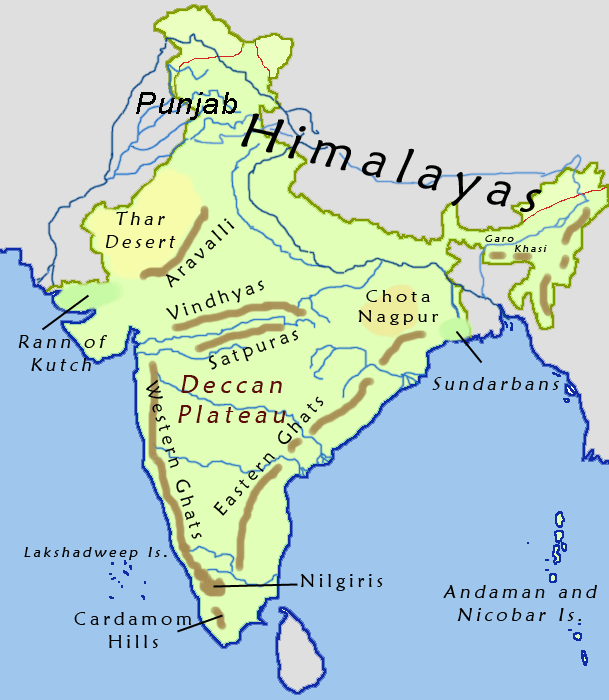
    As I suspected, this would be rather arcane when examined.


    I had previously studied Honey Doctrine in Puranas and Upanishads and found it led to the Atharva Veda in an unusual way.

    I decided to ask the Rg Veda, because no one has.

    It turns out to be what it is about.


    First we have to point out this is particularly because of Tvastr who begins in the beginning and gathers momentum all the way through.

    Part of the additional meaning is represented by Grtasamada in Book Two:


    tvaṣṭā, further explained as the sage who created Brahmaṇaspati by the efficacy of the sāma


    That is one of the main underlying principles of the Veda, and, it is exactly these deities that have been discarded since then, along with the Sadhyas.


    In the previous post, we looked at the popular Purusha Suktam and what it may have to do with Narayan, and then Devi Suktam already throws us into deeper waters by giving us multiple Deva kingdoms. This is like a geometric stamp on forever.

    From her we then found Vedic support for Kadru who is probably Ila Devi.

    No one has asked about honey, but someone did say are there any women, and uncovered a decent quantity. This is somewhat manual work because nothing says "Kadru" with any link, because it is in combinations like kadreva-, and you have to assess all this stuff. Even Sayana, he is, maybe, about 70-30 on having something useful to say, and it is obvious he is not in touch with a substantial part of the basis.


    Working from the list, Apala is filed under the wrong number; her hymn turns out to be autobiographical in a way that is elaborated in Śāṭyāyaṇa Brāhmaṇa. She is a daughter of Atreya who in VIII.91:


    “A young woman going to the water found Soma in the path; as she carried it home she said, I will press you for Indra, I will you for Śakra.”

    ...drink this Soma pressed by my teeth together with fried grains of barley, the karambha, cakes and hymns.

    ...often hated by our husband and forced to leave him, may we be united to Indra.

    “These three places-- do you cause them all to grow-- my father's (bald) head, his (barren) field, and my body.”

    Crop: i.e., make them all hairy, romaśani


    Thrice did you purify: Indra dragged her through the wide hole of his chariot, the narrower hole of the cart, and the small hole of the yoke, and she cast off three skins. The first skin became a hedge-hog, the second an alligator, the third a chameleon.


    The citation is crisp for V.28:

    Viśvavārā = feminine

    Ṛṣi (sage/seer): viśvāvārātreyī;
    Devatā (deity/subject-matter): agniḥ ;


    “Agni, when kindled, spreads lustre through the firmament, and shines widely in the presence of the dawn; Viśvavārā, facing the east, glorifying the gods with praises, and bearing the ladle with the oblation, proceeds (to the sacred fire).”


    She is interested in this kind of Agni:


    amṛtasya rājasi


    Three kinds of sacrificial fires, according to the Taittirīya are: havyavāhana, which receives the oblation intended for the gods; the kavyavāhana, that intendended for the pitara; and the saharakṣas, that intended for the asuras; the worshipper is directed to select the first, on this occasion.


    She is probably the first of her kind, or, we see "daughter of Atreya" in Books Five and Eight.

    Old Books only came from a few hands, so, it is not really a huge deal to say "all the women are in Late Books". I would think it shows the "concentrated" phase of development that shows more people are participating in a stable affair.


    As to it, or, experience, being somewhat schizophrenic, Sasvati does not show up until the end of VIII.1.34:


    Ṛṣi (sage/seer): śaśvatyāṅgirasyāsaṅgasya patnī;
    Devatā (deity/subject-matter): āsaṃṅgaḥ


    This is a hymn that has transitioned authors a few times. She is talking to her husband, author of the previous lines:


    Asanga, descendant of Yādu


    but it is unclear if this may be an epithet of the author from Verse Three to here:

    medhātithimedhyātithī kāṇvau


    You have broken to pieces the moveable city of Śuṣṇa...

    two peacock-tailed, white-backed horses

    “When Sūrya harassed Etaśa, Śatakratu conveyed (to his aid) Kutsa, the son of Arjuni, with his two prancing horses (swift) as the wind, and stealthily approached the irresistible Gandharva.”

    may our libations, flowing through the filter, dropping quickly, and diluted with consecrated water


    filter:

    pavitraṃ


    It starts as a fairly normal Indra hymn, until you get to the part where the Sage explains his name:


    Praise (me), praise (me), Medhyātithi, for among the wealthy we are the most liberal donors of wealth to you...


    “(So praise me, saying), "Asaṅga, the son of playoga, has given more than others, Agni, by tens of thousands; ten times the (number of) vigorous and brilliant oxen (given by him) to me, issue forth like the reeds of a lake.”


    and because it is a mostly normal hymn, it is out of the blue for the woman to come in and say:


    “Śaśvatī, perceiving that the signs of manhood were restored, exclaims, "Joy, husband, you are capable of enjoyment".”


    he is capable of:

    arya bhojanam

    Playogi has no meaning other than these four lines,


    Plāy (प्लाय्):—(pla = pra and √ay = i; cf. pla-√kṣar and pla-yoga) [Ātmanepada] plāyate, to go away, go along


    asaṅga (असंग).—a (S) Lone, solitary, wanting a companion.

    Solitary, unassociated. E. a neg. saṅga with.


    So this Sage in the Kanva line seems, to me, at least, to be calling himself Wealthy Benefactor, and the other may simply be Solitary on the Yoga Path.


    The same author refers to Asanga being turned into a woman in VIII.33.17-19:


    strī hi brahmā


    a woman from a brahma priest, yes, it literally says this.

    I would assume it to be a colorful expression.

    First of all, whether the name is "Asanga, son of Prayogi"--which may be unlikely because this may be the very introduction of yoga--he may just be introducing the term yoga or yogi in this capacity.

    Part of his yoga is intended to be sexual, to which, he, effectively, has become a woman.

    Regardless of whether it is a real name, or a descriptive title, the net result is clearly the wife celebrating the restoration of virility.

    Many forms of "yoga" are *everywhere* in the Veda, generically, without being visible as its own subject. If anything, this may loosen up with X.114 from the lineage of Tapas:


    What sage hath learned the metres' application? Who hath gained Vak, the spirit's aim and object?
    Which ministering priest is called eighth Hero? Who then hath tracked the two Bay Steeds of Indra?

    káš chándasāṃ yógam ā́ veda dhī́raḥ kó dhíṣṇyām práti vā́cam papāda
    kám ṛtvíjām aṣṭamáṃ šū́ram āhur hárī índrasya ní cikāya káḥ svit


    Two bay horses: The Ṛk and the Sāman are intended


    Here the proximity yoga--veda becomes "learned the application", which is a bit underwhelming. Although the meaning is right, or, this does not sound different from what we would mean by Yoga, to evoke Vak. Otherwise, there is no context about "playoga", whether a person, thing, or thing to do.


    So in just a couple of hymns, we find a woman with hair or skin problems, and a man with no power, therefor wrecking their love lives.

    Of course, the rest of the women have clan names and you would understand the network better by focusing them.


    The other one that may not be a normal fit is sārparājñī sūryo vā X.189:

    Deity Sārparājñī: i.e., Kadru, the mother of the serpent race; Yajuṣ3.6-8


    ending by including:


    Stations = muhūrtas


    and briefly would appear directed towards:

    gauḥ pṛśnir


    moving many-coloured (Sun)


    who, seated with Mother in the East, moves towards Pitr in the:


    svaḥ ||


    or Svar Loka.


    Nothing has merited the nomination of Kadru yet.

    The author's name fits in the only place where this is discussed, or, rather, practiced, in Bharadvaja Srauta Sutra:


    1. After having recited the formula pertaining to the setting up of the sacred fire in accordance with the gotra of the sacrificer, he should utter the two Vyāhṛtis, bhūḥ bhuvaḥ.

    2. Then the two sārparājñī verses, “Thou art the earth in depth, sky in breadth, midregion in greatness. In thy lap, O goddess Aditi, I place Agni, the food-eater for the eating of food.—The spotted bull has come and reached again the mother and the father faring to the heaven.”


    ...the third, “He rules thirty places; speech resorts to the bird; do thou bear it with the days.


    also:


    One should deposit the fire of the sacrificer, who is desirous of Brahman-splendour, when the sun has fully risen.

    3. After having recited the formula pertaining to the setting up of the sacred fire in accordance with the gotra of the sacrificer, the Adhvaryu should utter the three Vyāhṛtis, bhūḥ, bhuvaḥ, and suvaḥ.

    4. Then he should recite the two sārparājñī verses—the first, “Thou art the earth in depth... and the fourth, “From his expiration she wanders between the worlds with her inspiration; the bull discerns the heaven.”

    12. (With the formulas,) “O Agni, thy form, being purified and dear, which is in the cattle, in the earth, in the fire, in the Rathantara Sāman, in the Gāyatrī metre,I hold fast that thy form for that to thee, svāhā.—O Agni, thy form, purifying and dear, which is in water, in the midregion, in the wind, in the Vāmadevya Sāman, in the Triṣṭubh metre, I hold fast that thy form; for that to thee, svāhā.—O Agni, thy form, shining and dear, which is in the sun, in the heaven, in the sun, in the Bṛhat Sāman, in the Jagatī metre, I hold fast that thy form; for that to thee, svāhā.


    “The wave rich in honey has emerged from the ocean; it has fully attained ambrosia through the Soma-stalk. It is the secret name of clarified butter, the tongue of the gods, the navel of ambrosia.—We praise the name of clarified butter; we support it in this sacrifice with praise. May the Brahman hear the Veda being recited. The four-horned buffalo has vomited this.—He has four horns, three feet, two heads, and seven hands. The bull tied at three places bellows. The great god has entered the mortals.”


    To me, that sounds more like a Vedic lineage than forgetting King Santanu.

    Sarparajni is something particularly for the Householder:


    One should deposit the Gārhapatya fire with all the sārparājñī verses.

    “If I have scattered thee in anger, in rage or through misfortune, that of thee, O Agni, be in good order. We relight thee,” he should deposit the Anvāhāryapacana fire.

    10. With the verse, “Whatever of thee scattered in rage was spread over the earth, that the Ādityas, Viśve Devas and the Vasus gathered together,” he should deposit the Āhavanīya fire.


    If we follow Sayana to Yajur Veda, this is something popular because it is the scientific argument about orbital mechanics:


    Yajurveda 3.6 & Markandey Puran 78.9 clearly describes Earth shape as Spherical (like egg) and says that it moves (turns) around Sun

    The similar verse occurs in Atharva-veda 6.31.1


    That is what is being drawn from this, but, what we will find is the whole hymn is stuffed in anonymously to a longer compound hymn in White Yajur Veda:


    6 This spotted Bull hath come and sat before the Mother and
    before
    The Father, mounting up to heaven.

    7 As expiration from his breath his radiance penetrates within:
    The Bull shines out through all the sky.

    8 He rules supreme through thirty realms. Song is bestowed
    upon the Bird
    Throughout the days at break of morn.


    O Brahmanaspati, make him who presses Soma glorious,
    Even Kakshîvân Ausija.

    May Jamadagni's triple life, the triple life of Kasyapa,
    The triple life of Deities—may that same triple life be ours.


    It is a related but very different application, certainly nothing about Kadru there.

    AV VI.31 is *only* the hymn as it is in Rg Veda.

    There is a Vedic Kadru from another Kanva in an Indra hymn after:


    Soma mixed with milk

    VIII.45.26:


    “Indra drank the Soma offering of Kadru, (he smote the enemies) of the thousand-armed; there did his might shine forth.”


    or:

    In battle of a thousand arms Indra drank Kadru's Soma juice:
    There he displayed his manly might.


    apibat kadruvaḥ sutam indraḥ sahasrabāhve | atrādediṣṭa pauṃsyam ||


    “Well-knowing those (sacrificial) deeds of Turvaśa and Yadu, he overcame Anhavāyya in battle.”

    “I praise our common (Indra), the deliverer of your families, the slayer (of your enemies, the bestower) of riches in cattle.”


    When given the name, Sayana does not know if it is "a Rishi" or Puranic Kadru. The dictionary thinks it is no one:


    a cert. Soma-vessel

    a brown Soma-vessel, [Ṛg-veda viii, 45, 26]


    Because it generically means a color, tawny or spotted, it might be the color of a cup, or a snake.

    There is not a male Sage Kadru suggested anywhere.


    There is a female in the layer of Brahmanical commentary on Vedic Soma:


    Quote We find the myth of the Soma-theft in the following texts of the later Veda, mostly in texts belonging to the black and white Yajurveda. These different versions present certain variations. Some of these passages briefly state that the Soma is in the third heaven.

    Other versions[16] present a more developed and complete form of the story, which can be summarized as follows: Kadru (the Earth) and Suparni (Speech;sometimes the Sky) hold a bet. Which Suparni loses. Kadru tells her to get for her the Soma, which is kept in the third heaven, to pay for her freedom. Suparni sends one after the other her three children, the meters Jagati, Trishtubh and Gayatri. (Alternatively, the Gods and rishis request the meters to get the Soma which is in heaven). Only the Gayatri, although she is the smallest meter, manages to bring back the Soma, holding two pressings in her feet and one in her beak. Some of these versions have one common point with the Rigvedic account, namely that a Soma-guardian (a Gandharva named Vishvavasu or Krishanu) cuts off either a Soma-leaf, or a feather (or claw) of the Gayatri, as she flies away with the Soma. This leaf / feather/claw undergoes certain transformations when it falls down.


    [16]:

    Taittiriya Samhita. 6.1.6;

    Kathaka Samhita 23.10;

    Shatapatha Brahmana. 3.2.4.1-7;

    Aai.Br. 3.25-26;


    That is a broad agreement, which brings us to the tiniest piece of definition for Kadru:


    6) f. (ūs) a particular divine personification (described in certain legends which relate to the bringing down of the Soma from heaven ; according to the Brāhmaṇas, ‘the earth personified’), [Taittirīya-saṃhitā vi; Śatapatha-brāhmaṇa iii, vi; Kāṭhaka etc.]


    We have heard of the Moon considered as a Soma Vessel, and, this may be saying the Earth is one too.

    It may be the color of soil, or autumn leaves, I am not sure. I am fairly sure Vedic Kadru is not Sarparajni, who remains ambiguous.

    YV would leave her flummoxed, so, the Bharadwaj corpus is showing us something pretty specific by porting pieces and then the whole thing.


    By now, I would hope that someone would get the idea that it is not "a higher direction up", but, the Third Heaven, Svar Loka or Swarga, which only has a mental existence. This is easily distinguishable by Vedic Sarparajni in AV:


    To Sūrya the Sun-God

    1This spotted Bull hath come and sat before his mother in the
    east.
    Advancing to his father Heaven.
    2As expiration from his breath his radiance penetrates within.
    The Bull shines out through all the sky.
    3He rules supreme through thirty realms—One winged with song
    hath made him mount
    Throughout the days at break of morn.


    āyaṃ gauḥ pṛśnir akramīd asadan mātaram puraḥ | pitaraṃ ca prayan svaḥ ||

    antaś carati rocanāsya prāṇād apānatī | vy akhyan mahiṣo divam ||

    triṃśad dhāma vi rājati vāk pataṃgāya dhīyate | prati vastor aha dyubhiḥ ||


    Sayana is oblivious to "winged" or "flying" and says "voice of praise", but, this is Vak:

    Pataṃga (पतंग).—[adjective] flying; [masculine] bird, insect, [especially] grasshopper, butterfly, or moth (also pataga).

    Pataṅga (पतङ्ग):—[pata-ṅga] (ṅgaḥ) 1. m. A grasshopper, a bird; the sun; rice.


    Name of the author of [Ṛg-veda x, 177] and of this hymn itself

    That is true and it begins the first two lines of X.177 where nothing is said about upward motion or flight:


    “The wise behold their mind; (seated) in their heart the Sun made manifest by the illusion of the asura; the sages look into the solar orb, the ordainers (of solar worship) desire the region of his rays.”

    “The Sun bears the (sacred) word in his mind the Gandharva has spoken it, (abiding) within the womb; sages cherish it in the place of sacrifice, brilliant, heavenly ruling the mind.”

    “I beheld the protector (the Sun), never descending, going by his paths to the east and to the west; clothing (with light) the (four) quarters of heaven and the intermediate spaces, he constantly revolves in the midst of the worlds.”


    The links in Book One *do* translate as winged or flying. So the AV translation "one winged with song" probably is a good fit for Vak Patanga.

    Those verses are gayatris so people could easily do them somewhat correctly. Even I could do that. Those are Sarparajni Gayatris. We have no clue that she would be intended as Kadru or any other affiliation.


    X.189 in the more basic literal translation:


    THIS spotted Bull hath come, and sat before the Mother in the east,
    Advancing to his Father heaven.

    Expiring when he draws his breath, she moves along the lucid spheres:
    The Bull shines out through all the sky.

    Song is bestowed upon the Bird: it rules supreme through thirty realms
    Throughout the days at break of morn.


    If unfortunately we couldn't find "Sarparajni" to mean anything related to Kadru, could it be related to something, probably so, the author of X.94:


    Ṛṣi (sage/seer): arbudaḥ kādraveyaḥ sarpaḥ [arbuda kādraveya sarpa];
    Devatā (deity/subject-matter): grāvāṇaḥ;


    He definitely calls himself a snake in the brood of Kadru.

    We think this is the earth named for its color.

    There are victorious Kadrus in Book Eight, so, this guy is part of something more than his own selection.

    In the Fauna report. Talageri did nothing with snakes, so we have no tip. Well, in a few words, snakes are also named for their color. In this case, they are being named for their mode of conveyance, i. e. close to Kadru. That this is so in terms of a regular verb is easily shown in a quick vocabulary polish from VIII.17 by the Tamil irimbiṭhiḥ kāṇvaḥ who at first used Brahma and Brahmanaspati in the manner just studied:


    “May this Soma, invested (with milk), approach you, observant Indra, like a bride (clad in white apparel).”

    Like women, let this Soma-draught, invested with its robe, approach,
    O active Indra, close to thee.


    sarpatu

    “crawl; spread; wander.”

    this being another gayatri:

    ayam u tvā vicarṣaṇe janīr ivābhi saṃvṛtaḥ | pra soma indra sarpatu ||


    It is not "Indra the snake", but "Soma approach Indra".

    Crawling, in the Puranas, is the result of a curse, but there are not enough snakes in the Veda to do much but rationalize the term "sarpa".


    “(Indra), who was the offspring of Śṛṅgavṛṣa, of whom the kuṇḍapāyya rite was the protector, (the sages) have fixed (of old) their minds upon this ceremony.”

    Napat = apatya, offspring


    With head uplifted like a serpent:

    pṛdākusānur


    So, that is another expression, Prdaka, as a better option for a snake with raised head as compared to crawling.

    Otherwise, there are a few instances of "sarpa" either in its verb form, or, as a snake in general context. Nothing particularly special until you try to figure it as Ahi. So, here, it does not seem Kadru "is" a snake, but obviously is "close" to them since they lack legs.


    Another Sarpa composed a hymn for the same deity, Grava X.76. This one is from the less-intuitive Airavata clan. If it is weird to think of a snake as born from Mother Earth, it perhaps is weirder to think of them as related to Elephants. These names do not seem to be species-to-species equivalents.


    By these Sarpas, we find Grava apparently deified.


    According to Viswamitra, Tvastr produces one's son who wields it--copied by Vasistha.


    According to Atri:

    he whose stone is uplifted, whose Soma juice is effused

    yuktagrāvā sutasomo


    Medatithi Kanva to:


    Neṣṭā (= Tvaṣṭā), with your spouse (gnāvo = grava?)

    Tvaṣṭā assumes the functions of Neṣṭṛ as the priest at a sacrifice


    Neṣṭra (नेष्ट्र).—[neuter] the Soma vessel or office of the Nestr


    Given in II.1.2by:


    āṅgirasaḥ śaunahotro bhārgavo gṛtsamadaḥ


    The anatomical view was suggested for Sunhashepa:


    grāvā pṛthubudhna ūrdhvo


    having a broad sole or under-part

    broad in the hinder part (as a worm)


    That is because in the adjustable meanings of Sanskrit, the next line has "jaghana", which *could* mean hips or buttocks, but, with two platters, boards, or bowls, adhi savanya, is shifted towards its other potential meaning, vagina lips. Because "grava" consistently refers to base, bottom, then this first line does appear to be a big behind. Yes, of course, physically it can still be a Pestle, or a stone-lined hole in the ground, etc., which is where most of the desired product would be. This hymn has a repeated refrain where enjoyment is found by drops dripping from the Mortar, which again sounds slightly less than physically literal.

    Savana apparently being "juice", adhi "towards", Adhi Savanya is the receiver that juice is pressed towards, the Jaghana.


    In a non-deified manner, grava is mentioned by Gautama:

    may the stone (that bruises the Soma) attract, by its sound, your mind towards us.


    Parucchepa Divodas:


    “Pass, (Vāyu), by the many sleeping (worshippers) and go (with Indra) to the house where the stone resounds; Indra (and Vāyu), go to that dwelling; (go where) the (word of) truth is manifest; (go where) the butter flows; go both well-fed horses to the sacrifice; Indra (and Vāyu), repair to the sacrifice.”


    aśvattha = the religious fig tree; explained here as the Soma found spread through mountains and the like,


    I am not sure what is the difference between sleepers and "noisy stones", but, moderately suggestive.


    purified by the stones:

    adribhi


    to the reservoir, flows clad in its refulgent light:


    pari kośam arṣati = kośa-sthānīyam grahamprāpnoti, it goes to the ladle

    śukrā vasāno arṣati


    sutānām adribhir


    Need to watch how we translate:


    Adribhid (अद्रिभिद्).—m. (-bhit) A name of Indra. E. adri, and bhid who breaks; the splitter of mountains, (with his thunderbolt.)

    splitting mountains or clouds, [Ṛg-veda vi, 73, 1]


    Adri (अद्रि) refers to a “stone”

    2) A stone, especially one for pounding Soma with or grinding it on.


    pavitram is a term applied to bundle of kuśa grass, which is supposed to purify the Soma or the butter poured upon it; it is here explained the receiver of the Soma placed slopingly or obliquely, or a filter or a strainer made of wool.


    Likely receptacles:

    The juhū is a sruc, a spoon, the sruva, a ladle.


    Juhu:


    A crescent-shaped wooden ladle used for pouring the sacrificial ghee into the fire.

    personified as wife of Brahmā and goddess of speech (author of [Ṛg-veda x, 109])

    a tongue ([especially] of Agni; 7 are named, [Ṛg-veda i, 58, 7])


    A few stray remarks:


    “The mighty winged (Soma) whose father is Parjanya has placed his dwelling on the navel of the earth among the mountains; the sisters, the waters flow to (the produce of) the kine; he meets with the stones at the beloved sacrifice.”

    somaḥ is implied in mahiṣasya parṇinaḥ (The mighty winged)

    The mountains are the grinding-stones; the navel of the earth is the oblation.


    May the stone be uplifted, gods, when I make the libation; disperse all my secret adversaries

    ūrdhvo grāvā


    AV VI.3:


    Guard us the Maruts! Guard us well, O Indra, Pushan, Aditi.
    Guard us, O Waters' Child, and Rivers Seven. May Vishnu
    guard us, and the Sky.
    2May Heaven and Earth take care of us for victory, may Pressing-
    Stone and Soma save us from distress.
    Sarasvati, auspicious Goddess, guard us well: preserve us Agni
    and his kind protecting powers.
    3Preserve us both the Asvins, Gods and Lords of Light, and let
    the Dawns and Night bring us deliverance.
    The Waters' Child protect our house from every harm. Do thou,
    God Tvashtar, make us strong for health and wealth.


    It would read, as deities of (2), Dyava, Prithvi, Grava, Soma, and I can imagine how they might ease distress.


    Visvedeva X.109 turns out to be a woman's story that is pre-told by Sayana. I get certain ideas when a woman names herself for a Spoon:


    juhūrbrahmajāyā, ūrdhvanābhā vā brāhmaḥ


    The Spoon that is "Brahma's Wife", raised from the navel of Brahma. It almost sounds Trinitarian but also reverts well to meaning the brahman, the priest. This obviously is her name and the favor is:


    First, the royal Soma, without being ashamed, restored Brahmā's wife (brahmajāyām) (to Bṛhaspati)


    Or the Devas:


    ...exclaimed against the outrage on a Brahman.

    King Soma first of all, without reluctance, made restitution of the Brahman's consort.


    Arguably we find female Bhima:


    The terrible wife of Brahma has been brought back (to her husband); (penance) elevates into the highest heaven.”

    bhīmā jāyā brāhmaṇasyopanītā durdhāṃ dadhāti parame vyoman ||

    Thus spake of her those Gods of old, Seven Rsis who sate them down to their austere devotion:
    Dire is a Brahman's wife led home by others: in the supremest heaven she plants confusion.


    Here is the analogy of her name:


    tena jāyām anv avindad bṛhaspatiḥ somena nītāṃ juhvaṃ na devāḥ ||

    Bṛhaspati obtained his wife (formerly) brought him by Soma, as the gods receive an offering.

    Through him Brhaspati obtained his consort, as the Gods gained the ladle brought by Soma.

    Jāyā (जाया).—[feminine] wife, consort


    Getting a wife/consort is like getting a Spoon.

    It does not say an "offering" like "havya", etc., it says the object, Juhu.


    Happily ever after:


    “The gods gave her back again, men also gave her back, and kings confirming (the gift) gave Brahmā's wife back again.”


    She negates Brahma's original crisis:


    nikilbiṣam


    One would not think this is the same Brhaspati as the antecedent of Book Six, and, the line with the slight innuendo is the only place Brhaspati is explicitly identified, and says how this works:


    brahmacārī carati veviṣad viṣaḥ sa devānām bhavaty ekam aṅgam | tena jāyām anv avindad bṛhaspatiḥ somena nītāṃ juhvaṃ na devāḥ ||


    “He leads the life of a Brahmacārin, even adoring all the gods; he becomes a portion of the gods; therefore, Bṛhaspati obtained his wife (formerly) brought him by Soma, as the gods receive an offering.”

    The Brahmacari goes engaged in duty: he is a member of the Gods' own body.
    Through him Brhaspati obtained his consort, as the Gods gained the ladle brought by Soma.


    This is the same Juhu saying it, evidently she is aware that the deity, Brhaspati, is with her, because present in her husband.

    Notice all of these tales end in victory and success. I don't think anywhere in the Veda misery prevails.


    We have shifted the view of Kadru because it means she must have been around Parasurama's time, and is probably an alternym of Ila Devi.


    Sarparajni is Sun Gayatris intricately involved with Saman according to Bharadwaj Gotra.

    No doctrine is given, although Devi Suktam is clear that the Thirty-three Devas are quintessential, plus Visvedevas, who themselves have numerous hymns. I don't think it is usually brought up that Subjectivity and Objectivity are the spawn of Dharma. Kasyapa is the "bed of nature", the organisms and natural processes, and then there is Soma.

    If it is evident that the Sadhyas are the most perfected type of Deva, I am not sure why you would obliterate the memory.

    That opposes their ethos.

    This is very interesting about a Vedic Kadru, and we may be able to find something about the Rishikas of the more famous clans or Gotras.

  4. The Following 3 Users Say Thank You to shaberon For This Post:

    Bill Ryan (27th January 2024), Ernie Nemeth (27th January 2024), pounamuknight (21st February 2024)

  5. Link to Post #23
    Canada Avalon Member Ernie Nemeth's Avatar
    Join Date
    25th January 2011
    Location
    Toronto
    Age
    68
    Posts
    6,158
    Thanks
    28,032
    Thanked 40,949 times in 5,884 posts

    Default Re: Hindutva, 1882, and the Vedas

    These posts, are they a train of thought, written in one sitting? Or a compilation or synopsis of a treatise?

    Whatever the case, it is mesmerizing to read it, a sort of literary salve for the mind.

    I don't understand it, yet some words, phrases, and titles are familiar. They seem to evoke a sense of familiarity based merely on a symbolic level of commonality, perhaps. A place before intellect and reason, yet intrinsically related to both. Is it the level where the yoke is introduced to the mind? So much fanfare and pomp are recounted, and other accoutrements attributable to the flesh. Even the gods are comparable based on physical distinctions, lineage, and accomplishments.

    When reading I always think of the yoga. The principles of which are designed not to break, but to illustrate through the use of the postures the existence of, the yoke.
    I get the same sense when reading these posts.
    Thanks.
    Last edited by Ernie Nemeth; 27th January 2024 at 20:51. Reason: moved a comma
    Empty your mind, be formless, shapeless — like water...Now water can flow or it can crash. Be water, my friend. Bruce Lee

    Free will can only be as free as the mind that conceives it.

  6. The Following 3 Users Say Thank You to Ernie Nemeth For This Post:

    Bill Ryan (27th January 2024), pounamuknight (27th February 2024), shaberon (30th January 2024)

  7. Link to Post #24
    United States Avalon Member
    Join Date
    1st April 2016
    Posts
    7,104
    Thanks
    36,235
    Thanked 40,638 times in 6,753 posts

    Default Re: Hindutva, 1882, and the Vedas

    Quote Posted by Ernie Nemeth (here)
    These posts, are they a train of thought, written in one sitting? Or a compilation or synopsis of a treatise?

    Well, a combination.

    Like a thirty-year project of combining multiple thirty-year projects.

    For example, on the Rig Veda particularly, besides the English translations, the only real "studies" of it in its own light were Sri Aurobindo (ca. 1930s), and then just a few in the modern era such as David Frawley and Srikant Talageri. To an extent, I am re-compiling the salient points I have gotten from them.

    Unfortunately, I was forced to find out the "opposite camp" was partly established by Dayanand Saraswati who quarreled with the Theosophical Society, then the guy who literally wrote the pamphlet on Hindutva. In actuality, the country, India, has some serious problems, one of which might be that they are ignorant of the Veda.

    Secondly as you next said, making the posts is a form of yoga, for example in the Buddhist view we would say part of the Bodhisattva Path is to "study, internalize, and re-distribute scriptures". I personally am not claiming to be non-sectarian, while at the same time my own teachings tell me to find and use anything good from Hindu lore. And so for the most part I am going into the whole Sanskrit language.

    Any valid yoga is a Yogacara, the difference in "sects" being mostly minor, so I wanted to post on the Vedas and some related Sanskrit materials separately from Buddhism, itself.

    You can't trust what anyone says about the Rg Veda and so I will return with the rest about the references to women Sages. It is partly true but it is not like some authors like Wendy Doniger might say, this isn't about "women's rights" or anything like that, actually I think they are going to give a perfect explanation of Yoga. I would suggest the Rg Veda represents a time frame of language developing from first *mentioning* praises on mythology that has a yogic ring to it, up to illustrating a somewhat detailed view.

    Yes I use a lot of tabs and it takes a while to make those kind of posts, but, I am just a student, I don't have a pre-conceived answer that told me what to do. It turned out that Tvastr goes through each book, continues in the lineage of Yajnawalkya, and then is fairly clear in the Brahmanda Purana and less so in others. The narrative has already framed itself, I am only tracing what that is.

    Sanskrit is a fairly easy, and fun, language. For example, this gathers like wool:


    eka, dvi, tri, chatur, pancha, shad, sapta, asta, nava, das


    Doesn't really require translation, does it?

  8. The Following 4 Users Say Thank You to shaberon For This Post:

    Bill Ryan (30th January 2024), Ernie Nemeth (30th January 2024), pounamuknight (27th February 2024), wegge (30th January 2024)

  9. Link to Post #25
    United States Avalon Member
    Join Date
    1st April 2016
    Posts
    7,104
    Thanks
    36,235
    Thanked 40,638 times in 6,753 posts

    Default Re: Hindutva, 1882, and the Vedas

    Part Three


    It is a famous enough group of women in the Rg Veda, however the raw list is somewhat misleading because they are not all Sages in terms of uttering a complete hymn.

    The articles on Voice of Dharma sound like Talageri and look better than his blogging, because, it turns out, it is his published book.


    So we will pass the Rishikas listed above through his Composers article and try to finish it.

    He has done some great work, but is not asking the same questions as a devotee. Such as ignoring snakes. So he has not picked up on this one that appears to be named "Marut Gana", whom he places in the line of Uru ANgiras (joint composer of IX.108):


    AriStanemi TArkSya (1 hymn): X.178.
    a. The only other hymns to horses are by ANgirases
    (I.162-163; IV. 38-40) and a VasiSTha (VII. 44).
    b. The word TArkSya, outside this hymn, is found only
    in one verse by an ANgiras, Gotama RAhUgaNa
    (1.89.6).


    He should realize that "asura" does not fit:


    A word meaning asura-slayer, asurahan/asuraghna,
    occuring in X.170. 2, is found elsewhere only in
    hymns by a BharadvAja (VI. 22. 4) and a VasiSTha
    (VII.13.1).


    We just found there is an asurya, "sunless" person, however, Talageri is correct that the word is certainly present. Bharadvaj is talking to Indra:


    pitaro navagvāḥ sapta viprāso

    the seven sages, our ancient progenitors, performing the nine days' rite


    Indra, subduer of foes, invoked of many, abounding in wealth, what is the portion, what the offering (due) to you who are the slayer of the asuras?


    Vasistha says:


    BRING song and hymn to Agni, Asura-slayer, enlightener of all and thought-bestower.
    Like an oblation on the grass, to please him, I bring this to Vaisvanara, hymn-inspirer.


    X.170 is to Surya:


    He rose, a light, that kills Vrtras and enemies, best slayer of the Dasyus, Asuras, and foes.


    Indra slew Vrtra once, but there you have Surya killing multiple Vrtras.


    Aside from whatever that is, the Veda makes a value judgment, and "Dasyus" are against that. So besides quibbling over what tribes/kingdoms these are, if you look at what is in the Veda, it is really criticizing certain people. That is, it goes against some "kinds" of people, such as either those who have no rites, or, those who attempt to honor Indra and do it horribly.

    "Dasyu" may be a category, of the rude, ugly, or dull, which is the context "Asura" is being used in here.

    Much more frequently the following would be true:


    The Brāhmaṇas state that Prajāpati created Asuras with the breath (Asu)


    which is why in Rg Veda, we would say Asuras are deities. It is never a race, it is a condition, "loser", from the Ocean of Milk, but in the Veda, a "deity" is a form of light propelled by divine breath.


    To be fair, it does seem to include the other meaning, but not in the way people think.

    You have to trickle through the definitions to find:


    Asūra (असूर).—a. Ved. Devoid of praise or worship; असूरेः सन्ति सूरयः (asūreḥ santi sūrayaḥ) Ṛgveda 8.1.4. (stotrarahita). ind. In the night.

    -ram Ved. Absence of a person to extract the Soma juice; a place devoid of praise.


    That starts to make sense, because it equates to "no rites", and we understand how sura is involved with Soma. It does not require the legend of Churning the Ocean, it already has this meaning from ordinary brewing. This may include milk, so, as a familiar activity, the idea has legs.

    Then if we fix the attribution, this is how it is used for the Aswins in VIII.10.4:


    Upon whom (all) sacrifices are dependent,

    yayor adhi pra yajñā


    of whom there are worshippers in a place where is no worship,

    asūre santi sūrayaḥ


    Another Vedic occurrence said to be "evil spirits, demons" also is a misprint because it is really in II.30.4:


    “Pierce, Bṛhaspati, with a radiant shaft, as with a thunderbolt, the sons of the asura guarding his gates; in like manner as you did formerly slay Vṛtra by your own prowess, so do you now destroy our enemy.”

    Sayana says:


    Bṛhaspati = Indra


    Nice of him, I suppose, but "asura" is "our current enemy" in Book Two. Doesn't have to be a nationality. Could be any place that Indra rites are not done properly or at all.

    The Rg Veda has Danavas, but, I do not think it has Daityas. I do not think it says "race of demons born from Diti". It does, however, know of such a thing as Diti and recognizes her in the following way:


    Savitr, Bhaga, Diti (Vasistha)

    Diti and Aditi (Vamadeva)

    Aditi and Diti


    also:

    Indra, the son of Niṣṭigrī

    Niṣṭigrī = a name of Aditi


    dakṣasyeḻā

    Iḷā (the daughter) of Dakṣa


    Diti is not in there much, and so far I don't see "the mother of our enemies" or anything like this.


    Generally:


    The daityas are frequently assimilated to the Vedic asuras...

    Ṛigveda (1.32.9) speaks of Vṛtra as the son of Danu." However, in books 2-7 of the Rig Veda, Vrta is not considered an asura or demon, and there is no mention of Danu or the danavas at all.


    As Talageri puts it following his argument that, before him, the actual contents of Rg Veda was important to no one:


    Quote India contained many folk of rude culture or aboriginal stock such as NiSAdas, DAsas and Pulindas. Powerful races of hostile character are often mentioned, such as DAnavas, Daityas, RAkSasas, NAgas, and Dasyus. Some of these were partly civilized, while others were rude and savage.

    I.112.5: Rebha and Vandana: Rebha and Vandana are said to have been thrown into wells by Asuras.


    From a view of metaphysical asura in a positive light, this is true:


    Quote In the Rig Veda, there are no two feuding classes Devas vs. Asuras, but only the Devas who are also Asuras. The most common reference is of the singular ‘Asura’ in the sense of ‘one supreme power’. Moreover, the Asura symbol is part of a great and profound metaphysical doctrine and mystical experience. For a modern-day practising Hindu, who has been educated in the myths of the religion, it is very hard to believe that in the oldest and most sacred book the terms mean the very opposite of what he/she may be used to. This is due to the fact that classical Hinduism draws more inspiration from the Puranas and Epics than the ancient Vedic literature.

    But this--which I believed until a few minutes ago--is not:


    Quote A tectonic shift occurs in the later Vedic literature (Yajur Veda, Atharva Veda, Brahmanas, etc) where only ‘Deva’ is used for the Vedic gods, and ‘Asura’ is now used for the anti-gods. The derivation of ‘Asura’ now changes to ‘A-sura’ i.e. “not sura”, and “sura” now becomes a synonym of ‘Deva’. This is totally unknown in Rig Veda, where “Asura” has absolutely no negative connotation.


    It has a very negative connotation. It is just a different derivation and context than the same letters/word used in other situations. One is Asur--Breath, the other is No Sura = no Soma rites. Nothing lost if it was never there.


    You might presume Vedic Asuras, even as enemies, are quite distanced from Diti. If she is a deity, someone with no rites has not heard of her.

    There are over twenty references to Adityas, none of them are Dityas or Daityas, nothing like that seems present.


    There is a phenomenal lack of Demon Family. There is a general lack of adversity, much more is put into recovery from misfortune. Problems happen and then they are fixed. Hardly anything about hell or angry ghosts, if it is in here at all.


    Now, back to what is actually in there.


    The "families" mean the lineages corresponding to the ten Apri Hymns:

    The ten AprI-sUktas, and the ten families of composers to whom they belong, are:

    1. I.13 KaNvas (Kevala-ANgirases)
    2. I.142 ANgirases
    3. I.188 Agastyas
    4. II.3 GRtsamadas (Kevala-BhRgus)
    5. III.4 ViSvAmitras
    6. V.5 Atris
    7. VII.2 VasiSThas
    8. IX.5 KaSyapas
    9. X.70 Bharatas
    10. X.110 BhRgus


    Details are not given for all of them; here are a few notes.


    Among Angirases:

    a. Agni SaucIka is identifiable with the BharadvAja
    RSi Agni BArhaspatya (joint composer of VIII. 102).
    b. SUcI is a BharadvAja gotra.


    GRtsamada (a descendant
    of BharadvAja)


    All Prajapatyas are Visvamitras, and for them:

    All the above hymns deal with the subject of
    creation. The only other hymn dealing with this
    subject is X.190, composed by AghamarSaNa
    VaiSvAmitra; and the only other verse to which the
    AnukramaNIs assign the same subject is I.24.1,
    composed by SunahSepa AjIgarti (VaiSvAmitra).

    NArAyaNa is a ViSvAmitra gotra.


    Vasistha:

    3. Manyu TApasa (2 hymns): X.83-84
    a. Manyu TApasa is identifiable with Manyu
    VAsiSTha (joint composer of IX.97).

    4. PurUravas AiLa and UrvaSI (1 hymn): X.95.


    Urvasi is also mentioned:

    once in a hymn by a VasiSTha
    (VII.33.11) where UrvaSI is referred to as the
    mother of VasiSTha.

    Indra is a VasiSTha gotra.


    Bhrgus:

    VivasvAn Aditya


    a. YAmAyana or YAmyAyaNa is a BhRgu gotra.
    b. Mathita is also a BhRgu gotra.
    c. The alternative names given in the AnukramaNIs
    for the composer of X.19, Mathita YAmAyana,
    are BhRgu or Cyavana BhArgava.
    d. Yama is mentioned along with ancient, mythical
    BhRgu RSis, AtharvaNa and USanA KAvya
    in I.83.5.
    e. Hymn X.14.5 states: �Our fathers are ANgirases,
    Navagvas, AtharvaNas, BhRgus.� BhRgu hymns
    in MaNDalas IX and X often identify with both
    ANgirases and BhRgus (see, for example,
    IX. 62.9, and the comment on it in Griffith�s
    footnotes).
    f. All the above hymns deal with the topics of
    funerals and death. Tradition ascribes the
    initiation of funeral rites and ceremonies to
    Jamadagni BhArgava.


    That is notable, that Visvamitra and the Bhrgus, both having quarreled with the "central order", are re-instated with near exclusive say on Creation and Death. Seems a little odd to say there were no funerals before Jamadagni, but, I suppose, it is not really our main motive, it might not be something you would naturally do. The Rg Vedic period as a whole starts in a Family theme, and adds these two somewhat paranormal subjects at the end.

    Well, that is probably why the book was complete, and, it is arranged in the way it is.

    So it is a bit astonishing that it includes information not only on wars with future repercussions, but, we were able to extract some amount of personal detail, such as the Sarpas and Kadru, that gives me, at least, the sense of swinging from a few straggling shepherds to an enormous flock whose purpose was, in part, to add something new.


    All the attempts to find "Brahma" revert to the human, the priest, whereas the importantly-related deity is Brahmanaspati.

    This--whether in the mundane sense or esoterically--has a mating or mated aspect.


    The simplest and most expressive hymns would be Purusha and Devi Suktas, which are found to interlace with the other material in a particular way.

    Correspondingly, Tvastr had been working on something the whole time, and Vak Devi is the first to make a complete self-identification with the divine at the end.

    Not "may we join each other", "may I go there", she speaks with conviction like an Atharvan.


    The first women appeared to be daughters of Atreya; and these are the remaining names after having looked into the ones that were slightly off:


    GhoshA (Kakshivati, Rgveda 10, 39),

    Sraddhã (KAmAyanI,10, 151),

    SikatA (NivAvarI, 9, 86),

    Agastya-svasãA(10. 60),

    IndrasnushA(Vasukra-patniI 10, 28),

    GodhA (10, 134),

    LopAmudrA (1, 179),

    SaramA (DevaSunI, 10, 108),

    SUryA (SAvitri, 10, 85).

    SachI (PulomI, 10, 159),

    DakshinA (PrajApatyA 10, 107),

    Aditi (DAkshAyanI, 10, 72),

    RAtri (Bharadvaji, 10,127),

    RomaSA (Brahma-vAdanI, 1, 126 and 1 27)


    Some have reputations that precede them:


    Lopamudra, wife of Sage Agastya:


    E. lopa losing, (reputation,) amudrā sad, not happy.


    Godha:


    Name of the authoress of a Sāman.


    Romasa:

    A daughter of Bṛhaspati. The reply given by Romaśā to her husband when he teased her, is given in Ṛgveda, Maṇḍala 1, Anuvāka 19, Sūkta 126.

    The pudenda; न सेशे यस्य रोमशम् (na seśe yasya romaśam) Ṛgveda 10.86.17, x, 86, 16.


    And, the next-to-last, Ratri or "night" is perhaps a little cutting-edge for "sun worship".


    The likely earliest one,Lomasa, is famous not because she is the authoress, but has a one-line reply to this:


    “She, who, when her desires are assented to, clings as tenaciously as a female weasel, and who is ripe for enjoyment, yields me infinite delight.”

    Bhāvya says this to his wife Lomaśa;

    Weasel: Kaśīkā = sutavatsā nakulī, the female, mongoose, having brought forth young


    She says:


    “Approach me, (husband); deem me not immature; I am covered with down like a ewe of the gandhārins.”


    Her "meaning" is one we will have to salvage from the translators, who do not know how to deal with the phrase employed in the other reference:


    kapṛt

    “penis.”

    īśe

    “govern; command; master; dominate; can; reign; control; own.”

    romaśaṃ

    “vulva.”


    which appears in a perplexing twist:


    na seśe yasya rambate 'ntarā sakthyā kapṛt | sed īśe yasya romaśaṃ niṣeduṣo vijṛmbhate viśvasmād indra uttaraḥ ||
    na seśe yasya romaśaṃ niṣeduṣo vijṛmbhate | sed īśe yasya rambate 'ntarā sakthyā kapṛd viśvasmād indra uttaraḥ ||


    “The man who is impotent begets not progeny, but he who is endowed with vigour; Indra is above all(the world).”
    “[Indra speaks]: He who is endowed with vigour begets not progeny, but he who is impotent; Indra is above all (the world).”

    [Indrāṇī speaks]...


    The hymn she fully composed, I.179, Lopamudra's deity is:


    Dampati (दम्पति) denotes ‘the master of the house’ in the Rigveda, but is more often used in the dual to designate ‘the master and the mistress’, an expression that may legitimately be deemed to show the high status of women at the time of the Rigveda.


    Mostly equivalent to the sign Mithuna (Gemini).


    She gripes about old age and decay; the "student" eavesdropping the conversation absolves sin by:


    Soma, which has been drunk in my heart

    What has been drunk in my heart: antito hṛtsu pītam, drunk mentally, not actually


    The main point here is that Sage Agastya practiced both Varnas:


    kāma and tapas, desire and devotion; the duties of domestic as well as ascetic life


    The citation for Book Nine appears to use a woman's name as a partial composer of a long hymn; nothing unusual is said.


    Verse X.60.6:


    agastyasya svasaiṣāṃ mātā


    beseeches help:

    for the nephews of Agastya


    I believe says "Agastya's mother's sister", i. e. his aunt, explained by the text.

    Then a healing occurs.


    Here is one I would guess is going to tell us something.

    Ghoṣā (घोषा).—A tapasvinī famed in Ṛgveda. She was the grand-daughter of Dṛgata maharṣi and daughter of sage Kakṣīvān. As she contracted leprosy in her very childhood nobody came forward to marry her. Ultimately she composed a mantra in praise of Aśvinīdevas. They cured Ghoṣā of leprosy and she got married. (Ṛgveda, Maṇḍala 1, Anuvāka 7, Sūkta 117).


    This is who she knows of in Aswins X.39:


    “You made the aged Cyavana, when like a worn out chariot, again young and able to go; you bore the son of Tugra above the waters; all these your (exploits) are to be celebrated at our sacrifices.”

    Son of Tugra: i.e.,Bhujyu

    “You brought, Śundhyu, the daughter of Purumitra to (her husband) Vimada; you came at Vadharimati's invocation, and gave excellent offspring to her who was full of wisdom.”

    Śundhyu: the Aśvins heard her invocation in battle when her hand was cut off and gave her a golden hand


    “You made young again the life of the sage Kali, when approaching old age, you rescued Vandana from the well; you quickly enabled Viśapalā to walk.”

    Kali: cf. RV 1.112.15;

    Vandana: cf. RV 1.112.5; Vandana had thrown himself into the well through grief for the death of his wife;

    Viśpala: cf. RV 1.116.15


    “Aśvins, shedders of rain, you extricated Rebha when he was placed in a cave and was dying; you made the heated fire-pit cool for Atri; you gave (liberty) to Saptavadhri.”


    Rebha: RV 1.116.24; he was saved from a guhā, a secret place or a cavity; was dying = dead; Atri; cf. RV 1.116.8;

    Saptavadhri: cf. RV 5.78.5 and 6

    “You gave, Aśvins, to Pedu a strong white horse with nine-and-ninety (other) steeds, (a horse), active(in combat), putting to flight the friends (of the foe), worthy to be invoked, a source of deligght, like wealth to meṇ”


    “Do you two, Aśvins, climb the path to the mountain with your triumphant chariot; you have renovated for Śayu (barren) cow; you liberated by your acts the quail that had been seized from the jaws of the wolf.”

    Jayuṣā: cf. RV. 6.62.7;

    Śayu: cf. RV 1.118.8; you liberateḍ..wolf: cf. RV 1.116.17]. this praise like a son, the eternal performer of rites, we have decked (with ornaments, your laudation) among men, as if had been a wife.

    We have prepared this laud for you, O Asvins, and, like the Bhrgus, as a car have framed it,
    Have decked it as a maid to meet the bridegroom, and brought it as a son, our stay for ever.


    Sarama is a deity who tracked Vala. Bitch of the Devas. Śyāma and Śabala, sons of Saramā, were two prominent messengers of Yama and they possessed four eyes each. The offsprings of these dogs are called Sārameyas. The Ṛgveda and Mahābhārata contain a story about Saramā cursing Janamejaya.

    In Verse Two, she takes over:


    Ṛṣi (sage/seer): saramā devaśunī;
    Devatā (deity/subject-matter): praṇayaḥ


    She is having a conversation with:


    Ṛṣi (sage/seer): paṇayo' surāḥ


    Pani Asura.

    She also equates Indra to Brhaspati:


    Kine which Brhaspati, and Soma, Rsis, sages, and pressing-stones have found when hidden.


    grāvāṇa


    X.85 is the feminized sun god.

    This is a wedding hymn and the marriage described is mainly to Soma, but there is more. The trend of ideas is:


    Soma is stationed in the vicinity of these Nakṣatras.

    He who has drunk thinks that the herb which men crush is the Soma; (but) that which the Brāhmaṇas know to be Soma,, of that no one partakes.

    “Concealed by means of coverings, protected by the Bārhats, O Soma, you abide listening to the grinding-stones; no terrestrial being partakes of you.”

    Vāyu is the guardian of Soma, the maker of years and months.


    As forms of songs:


    “Raibhi was her companion; Nārāśaṃsī her slave; Sūrya's lovely dress was adorned by Gātha.”

    “Citti (mind) was the pillow, the eye was the collyrium; heaven and earth were the box [kosa] when Sūrya went to her husband.”

    “Mind was her chariot, and heaven was the covering, the two shining (orbs) were the oxen when Sūrya went to (her husband's) dwelling.”

    “Those two oxen yoked by the Ṛk and the Sāman march equally; the two wheels were your ears; the moving path (was) in heaven.”

    Vāyu was the fastened axle, Sūrya mounted the chariot of the Mind, going to her lord.

    “Sūrya's bridal procession which Savitā despatched has advanced; the oxen are whipped along inthe Magha (constellations); she is borne (to her husband's house) in the Arjunī (constellations).”

    “When, Aśvins, you came in your three-wheeled car soliciting the marriage of Sūrya, then all the gods, assented and Pūṣan (your) son chose (you as) his parents.”

    “I offer this adoration to Sūrya, to the gods, to Mitra and Varuṇa, (and to all those) who are considerate to created beings.”

    ...prepare the happy world of the immortals, your marriage procession to your husband...


    I worship Viśvāvasu with reverence and with hymns; seek for another maiden still dwelling in her father's house, decorated with ornaments; that is your portion.

    Viśvāvasu: a gandharva

    “Rise up from here, Viśvāvasu, we worship you with reverence; seek another maiden, one with large hips; leave the bride with her husband.”


    “I set you free from the noose of Varuṇa, wherewith the adorable Savitā had bound you; in the place of sacrifice in the world of good deeds I unite you, unharmed, with your husband.”

    Savitā employs Varuṇa to make bonds. The ṛca is recited when the bridegroom undoes the bride's girdle.


    nīlalohitam bhavati kṛtyāsaktir vy ajyate | edhante asyā jñātayaḥ patir bandheṣu badhyate ||

    “Blue and red is (her form); devoted (to her) is left behind; her kinsmen prosper, the husband is bound in bonds.”

    Closely unite thy body with this; man, thy lord. So shall ye, full of years, address your company.
    Her hue is blue and red: the fiend who clingeth close is driven off.

    “Put away the garment soiled by the body; give wealth to the Brāhmaṇas; this Kṛtyā having become endowed with feet, enters the husband's heart as his wife.”

    “The (bridegroom's) body is lacking in beauty; shining with this wicked (Kṛtyā), when he wishes to clothe his own limbs with his wife's garments.”

    “Behold the forms of Sūrya, the āśasana (bordercloth) the viśasana (headcloth), the adhivikartana(divided skirt); of these the Brāhmaṇa relieves her.”

    “Pūṣan, inspire her who is most auspicious, in whom men may now seed, who most affectionate may be devoted to us, and in whom animated by desire we may beget progeny.”

    “Soma first obtained the bride; the Gandharva obtained her next. Agni was your third husband; your fourth (husband) is born of man.”

    Gandharva: the Sun


    Saci triumphs over rival wives, we have seen this before.

    my husband must conform to my will

    “Triumphant, I conquered these my rivals so that I might rule this hero and his people.”


    Sarama returns in X.107. It says this is written by:

    divya dakṣiṇā vā prājāpatyā


    but the translation does not match the text; it copies the Sarama we just posted. The alternate listing for X.107 is something else entirely.

    X.72 is by:


    bṛhaspatirbṛhaspatirvā laukya aditirvā dākṣāyaṇī


    Based on this parable:


    Dakṣa was born from Aditi, and afterwards Aditi from Dakṣa.

    Eight sons (there were) of Āditya who were born from her body; she approached the gods with seven, she sent forth Mārtāṇḍa on high


    And seems to confirm that the small group of Adityas was not full manifestation:


    “With seven sons Aditi went to a former generation, but she bore Mārtāṇḍa for the birth and death(of human beings).”


    X.127 appears to be a pen name:

    kuśikaḥ saubharo, rātrirvā bhāradvājī


    Sayana says for X.28:

    Legend: Indra came in disguise to a sacrifice celebrated by Vasukra, whose wife, not recognizing him, prayed for his presence; to satisfy her that he had actually come, the following dialogue occurs.


    Sraddha certainly mentions this conflict:


    As the gods had faith in (their fight with) the Asuras


    From them, you get a socio-personal ethos, and a yoga view of Soma. And there was something weird in a marriage. There was a conversation with Indra and Indrani. It was a paradox or moebius strip. This is the Sage and tone of rhetoric for X.86:


    vṛṣākapiraindra indrāṇīndraśca


    Indrāṇī speaks:...

    ...Indra is above all (the world).


    broad-hipped

    pṛthujāghane


    sharp-horned bull

    vṛṣabho na tigmaśṛṅgo

    (or: pointed)


    The weird revolving thing has been analyzed by someone in terms of a rebellion or power change with a less prudish translation of Indrani:


    ná mát strī́ subhasáttarā ná suyā́śutarā bhuvat |

    ná mát práticyavīyasī ná sákthy údyamīyasī víśvasmād índra úttaraḥ ||10.86.06||

    “No woman would have a better behind than me, or would be better at sex than me. Or pressing closer or thrusting her thighs higher. I’ndra is superior to all.”


    Then the difficult phrasing about "impotence" is thought to mean having successfully wrestled the throne from the opponent. It could be this metaphor. But the actual male problem coincides with the preceding translation:


    rambate 'ntarā sakthyā


    the penis hangs between the thighs, i. e., it has no sexual activity.

    This is juxtaposed with:


    niṣeduṣo vijṛmbhate


    Nisedha "prevention" of the vagina:


    Vijṛmbhaṇa (विजृम्भण).—

    1) Gaping, yawning.

    2) Blossoming, budding, blowing, opening; वनेषु सायंतनमल्लिकानां विजृम्भ- णोद्गन्धिषु कुड्मलेषु (vaneṣu sāyaṃtanamallikānāṃ vijṛmbha- ṇodgandhiṣu kuḍmaleṣu) R.16.47.

    3) Exhibiting, displaying, unfolding.

    4) Expanding.

    5) Pastime, amorous sport.


    so it is saying the same thing, no activity of her.

    I don't know if that is really a political symbol. It is closer to what the people are really saying than anyone would write in the nineteenth century.

    Additionally:


    Shikhandini Kasyapi IX.104

    Prsniyojäh IX.86.31-40


    The latter means Pavamana IX.86 is a joint project that includes Sikata Nivavari and Prsnaya Ajah. Followed by Three Kings as a composer.


    List by their subjects.

    List with verses:

    4.18 Aditi

    8.91 Apala atreyi

    9.104 Shikhandinyava Psarasau Kashyapan
    10.142 Jarita Sharngah


    Jarita may be "female singer, female bird", but otherwise this example is a normal Agni hymn.


    Further:


    Kashyapa Rishi (Tarksya)


    Kashyapa Rishi had 21 wives including Vinata (Suparna), Kadru, Patangi and Yamini.

    10.184 Tvashta Garbhakarta

    10.142 Jarita Sharngah

    8.71 Suditirangirasah

    10.153 Indra Mataro


    in most cases they have complete names such as:

    Romasha Svanya, AangirasI Sarasvathi, Apala Athri


    including:

    Sulabha Maitreyi

    10 are accredited to Maitreyi

    (must be in the Upanishad)

    The Sama Veda adds Nodha, Akrishtabhasha, Sikatanivavari and Gaupayana.

    Another:

    Lopamudra Vaidarbhi


    The above would be an adjustment to Tvastr X.184:

    Ṛṣi (sage/seer): tvaṣṭā garbhakarttā viṣṇurvā prājāpatyaḥ
    Devatā (deity/subject-matter): liṅgottāḥ (garbhārthāśīḥ)


    If understood as feminized, then she is invoking female Tvastr.

    That would mean Tvastri, or Vairocani.


    She also includes goddess Sinivali. This is a brief "womb artisanry" hymn.

    I am not yet going to claim that Tvastri is the real recipient of most of these hymns, but we have enountered the ambiguity.


    In terms of creation, no one could be saying that more than Yami Vaivasvati in X.X, such as "my womb".


    The authoress is only called "Yami" for Funeral X.154 where Sayana says:

    Those who offer Soma to their pitṛs are the students of the Sāmaveda, those who offer ghī are students of the yajurveda, and who offer honey are students of the Atharvaveda.

    IV.18 is by Vamadeva with:


    Devatā (deity/subject-matter): indrāditī

    in the dwelling of Tvaṣṭā Indra drank the costly Soma from the vessels of the offerers.


    It is a conversation; Aditi enters as Indra's Mother and scoffs at Indra interrupting the Soma or slaying Vrtra, that does not matter to her. Then she says:


    Indra and Viṣṇu, my friend (if you) purpose slaying Vṛtra exert your greatest prowess.


    So she does not reallt represent a female Sage there.


    VIII.71 does not clearly involve a woman although it finds this kind of person objectionable:


    adevo


    X.153 is simply plural, a collective, "mothers of Indra", matara deva:

    Jamāyattu (ಜಮಾಯತ್ತು):—

    1) [noun] an administrative division of a state; a district.

    2) [noun] a division of an army; an organised body of soldiers.


    X.142 is unclear than anything other than a female singer is involved.

    Sikhandini is given as a co-author of IX.104, along with Parvata Narada; she is most likely "pea hen".


    It takes a few tries to figure out who is a regular person rather than a feminized potency.


    If we rewind to the first few women making a historical debut:


    5.28 Vishvavara Atreyi
    8.1 Sashvatyangirasi (one line to Asanga)
    8.91 Apala atreyi


    If the Veda resembles the Purana, at all, it is not unlikely those two Atreyis may be sisters, and, sisters of Dattatreya, who is not in the Veda. In this case, rather than a vast inflation, we will find mental creation truncated through the Vedic Sages into the Mahabharata in an incredibly compressed format from Brahmanda Purana on offspring of Atri:


    Datta is considered to be the eldest, Durvāsas was his younger brother. The youngest of all was a lady who expounded the Brahman.

    In this context the persons well-versed in the Purāṇas cite this verse.


    additionally:


    86. The following four (also) are remembered as belonging to the side (family) of Atris. They are of very great power.


    Kāśyapa, Nārada, Parvata and Arundhatī.

    87. These were the mental progeny (of Atri). Understand (the progeny) of Arundhatī.

    Nārada gave Arundhatī in marriage to Vasiṣṭha.

    91. Vasiṣṭha begot his son Śakti of Arundhatī. Śakti procreated his bosom-born son Parāśara of Adṛśyantī.

    92. The holy lord Kṛṣṇadvaipāyana was born of Kālī, by (her union) with Parāśara. From Dvaipāyana, Śuka, equipped with all good qualities was born of the Araṇī (the holy wooden stick used to produce fire by attrition).


    As to this marriage, see a hymn by a VasiSTha
    (VII.33.11) where UrvaSI is referred to as the
    mother of VasiSTha.

    later:

    Kīrtimatī. She was the mother of yogic power. She maintained all the holy rites. She was the wife of Anuha and mother of Brahmadatta.


    It is almost nonsensically kaleidoscopic. The Rg Veda apparently already relies on a Seven Sages myth without, I don't think, naming them, or, stating that any current authors were their incarnation.


    The chick with one line and Apala are mostly making personal statements, whereas in Book Five you already have a woman composing a fairly normal theological Agni.


    If we look at what Visvavara is physically handling:


    eti prācī viśvavārā namobhir devām̐ īḻānā haviṣā ghṛtācī ||


    Ghritaci may have the meaning of ghee, or the ladle it goes in; although it potentially is divinizable, like Juhu or Spoon would normally be anyone's name, or Pounding Stones, and so the line is fairly close to a self-identity for her.

    It may auto-suggest itself, if the Atris in the Purana are remotely accurate since from his beginning:


    I shall recount the family of Atri the third Prajāpati (among sages).

    74. He had ten beautiful wives who were very chaste. All those ten were the children of Bhadrāśva begot of Ghṛtācī the celestial damsel.


    There is also the epithet:

    Kapiñjalī (Taittirī bird) Ghṛtācī


    If the actual, historical Atris had any clue about this Puranic myth attributed to them, then you might think they would have something to say about Ghrtaci.

    Yajur Veda 15:


    18 This one on the left, Lord of uninterrupted riches; the leader of his host and his chieftain are Tarkshya and Arishtanemi, and Visvachi and Ghritachi his Apsarases.


    That says Kasyapa just got Atri's wife, or, one of them.

    In most views, she just keeps going:


    A beautiful apsara. She excelled at seducing sages and giving birth to their sons. Her ‘victims’ included Vyasa, Kushanabha, Bharadwaja and she had a prime position among apsaras.

    Vishwakarma had a daughter with her named Chitrangada.

    Puru and Bhrgu.


    Others:


    Once Ghritachi, an apsara and Viswakarma have exchanged curses, because of which they both took birth as humans on the earth. Viswakarma as Brahmin and Ghritachi as a cowherd girl. Both together given birth to five sons who expanded the clan of professionals in Gold (kamsalis), wood (carpeters), Iron (blacksmiths), Stone (sculptors) and Bronze (bronzesmiths).

    Manu, Maya, Tweshta, Shilpi, and Devagya

    Nala and Neela construct Adam's Bridge in Ramayana.


    So far in Rig Veda I do not see "ghrtaci" deified, as Juhu for example. She is common for "ghee offering" but not found as an Apsaras.


    The Purana just said Kasyapa was a mental son of Atri, which actually does resemble the physical fact, in the sense of "spiritual son". Mentally, Kasyapa is supposed to be all creatures including man. It is like that in every Purana without exception, I think. The Veda strongly suggests he was elevated by Atri.


    Talageri did not notice the peculiar thing that is Kasyapa's only contribution to Book One:


    8. KASYAPAS (1 hymn, 1 verse): 99


    Again, that would be used in Durga Suktam. It shows the attribution to:


    kaśyapo marīciputraḥ


    They come in with Atris in Book Five.

    V:

    8. KaSyapas (11 verses): 44.1-9, 14-15
    11. Joint Atris and KaSyapas (3 verses): 44.10-12


    VIII:

    8. KASYAPAS (6 hymns, 74 verses): 27-31, 97


    IX:

    8. KASYAPAS (36 hymns, 300 verses): 5-24, 53-60,
    63-64, 91-92, 99-100, 113-114

    X:

    8. KASYAPAS (3 hymns, 24 verses): 106, 136, 163


    That is, maybe, a little weighted towards Soma of Book Nine.

    In terms of sole authorship on Soma, it is more than anyone, twenty per cent more than Angirases. Not sure what to say about the "mixed" composition, although this is rather interesting:

    Joint ANgirases and VasiSThas
    (11 verses): 67.22-32
    Joint SaptaRSis (19 verses): 107. 8-26


    Talageri says IX.104-5 are by a Kanva.


    105 is just:

    parvatanāradau


    who is in 104 "and/with":


    śikhaṇḍinyau vā kāśyapyāvapsarasau


    which may be calling her an Apsaras.

    To pick at random 100 for comparison, it is by:

    rebhasūnū kāśyapau


    which, now, we see Kashyapa in the gotra/descent of Rebha. So, you can usually tell how this works.


    Apsarases are considered a reference to Urvasi and Vasistha:


    “By the wisdom seated in the heart the Vasiṣṭhas traverse the hidden thousand branched world, and the Apsarasas sit down wearing the vesture spread out by Yama.”


    born, Brahmā, of the will of Urvaśī, after the seminal effusion

    “He, the sage, cognizant of both worlds, was the donor of thousands; he was verily donation; wearing the vesture spread spread by Yama, Vasiṣṭha was born of the Apsaras.”

    apsarasaḥ pari jajñe vasiṣṭhaḥ ||


    Vena to Vena X.123:


    “The pious, knowing his form, praised him, for they followed the city of the great deer; approaching him with sacrifice, they reached the flowing (water), for the sustainer of the waters knows the ambrosial (fluids).”


    “The Apsaras, smiling affectionately like a wife at her lover, cherishes him in the highest heaven; she wanders in the abodes of her beloved; he, Vena, being loved, sits, down on his golden wing.”


    Great deer: i.e., Vena, whose cry is the thunder;

    sustainer of the waters: gandharva

    vidad gandharvo amṛtāni nāma ||


    I could imagine IX.104 implies a Celestial Maiden in the Kasyapa line because:


    Rishi Kashyapa is said to have married thirteen daughters of Daksha. In companionship with his thirteen wives he fathered the Devas, Asuras, Nagas, Gandgarvas, Apsaras, flora, fauna and all of humanity. The Apsaras are said to be the daughters of Rishi Kashyapa and his wife Muni.


    Again, at least in popular symbolism, Kasyapa is the "nature/objective" half of what the progeny of Dharma is the subjective, senses and higher intellection and so forth. That summarizes all of existence except for Soma or the Moon, obviously more related to Time.


    As to why the author may be a Kanva, I am not sure, Parvata and Narada obviously have a suggestive tone. From a total list of composers, they are two separate people, both Kanvas.

    It is an unusual sequence in Book Nine by Trta and Dvitya Aptya, then Parvata, Narada, and Sikhandini.

    Book Ten begins with Trta, then Trisiras, and Yami Vaivasvati.


    These are identifiable names:


    VIII.27-31, Kasyapa Marica or Manu Vaivasvata.

    X.178 Pratardana Kashiraja


    Being a slight error, X.178 has:

    Tārk.sya: i.e.,suparṇa, the son of Tṛkṣa, commissioned by the gods to bring the Soma from heaven; cf. Nirukta 10.28


    Kasyapa, son of Trksa (?), does bear the most Soma of them all. Contribution of some families is only single digits. The Kasyapas outpace the Angirases. That's very adaptable compared to the idea of a single family trying to dictate their own contrivance. At the same time, there is no room to suggest that later families simply replaced the older. Like most of the hymns, the actual Vedic Gotras seem to display specific problems, and repair it or use Indra properly who does all the fixing.


    Tṛkṣa (तृक्ष).—Name of the sage Kāśyapa.

    Comment in I.89:

    Tārkṣya, son of Tṛkṣa is Garuḍa. He is Ariṣṭanemi, he who has unharmed or irresistible (aṛṣṭa) weapons (nemi, circumerference of a wheel). Ariṣṭanemi is a Prajāpati (Vāyu Purāṇa). Tārkṣya = Aruṇa, the personified dawn

    Tārkṣya (तार्क्ष्य).—A sage. He was a member of the court of Indra. He was known as Ariṣṭanemi also.

    Married four daughters of Dakṣa. These were Vinatā, Kadrū, Patangī, and Yāminī, who were mothers of birds, snakes, etc.

    a patronymic of Tṛkṣi, who is known from the Rigveda onwards as a descendant of Trasadasyu


    X.179 actually does have:


    Ṛṣi (sage/seer): pratardanaḥ kāśirājaḥ


    Cf. IX.96:


    Ṛṣi (sage/seer): pratardano daivodāsiḥ


    In Book Eight, the published Hymn 27 just says "Manu", but Talageri says:


    KASYAPAS (6 hymns, 74 verses): 27-31, 97


    Kasyapa Marica has I.99, IX.64, 93, and 113-4.


    It seems likely that Pratardana Kasiraja is the same as the author of Pavamana IX.96; Rg Veda inherently has Puranic and Ramayana Divodasa II:


    A King of the line of Pūru. Pratardana who was the son of the daughter of King Yayāti ruled the country after making Kāśī his capital. Pratardana’s mother was Mādhavī, Yayāti’s daughter, and father, Divodāsa.

    Name of a king of KāŚi (son of Divo-dāsa and author of [Ṛg-veda ix, 96])


    Qv. Paruchhepa Daivodasi, Book One.


    Sudas Paijavana of X.133 would probably then be Sudas II.


    Even if it is "Sudas II", all these other authors lack a "raja" title, so, I am guessing "Kasi" may not be a "country", but, again, symbolic, like Ayodhya. Its generic sense in the Veda is something like "grasp".


    So, Kasyapa Gotra appears to have been invited by Atri, but, on a personal level, is expressed differently:


    Mārīca (मारीच).—Kaśyapaprajāpati. Marīci was the father of Kaśyapa and so Kaśyapa was known as Mārīca also. (Sarga 46, Vālmīki Rāmāyaṇa).


    which does match the full credit in VIII.29:

    Ṛṣi (sage/seer): manurvaivasvataḥ kaśyapo vā mārīcaḥ


    Could this, perhaps, coincide with the inhabitation of Manali?

    At that point, you could legitimately say First Arya, and describe the birth of a new civilization, compiled there after the end of Book Ten by Veda Vyasa.

    "Marica" is not reflected around the Rg Veda. This aspect is out of nowhere.

    You have apparently the most influential family on Soma, who otherwise is barely known, who are staking their heritage on someone not known at all.


    Is this reconcilable, yes, with what is called the Late Atharva Veda Period:


    Quote The Caraka Samhita, the greatest of the works on medicine purports to be the final embodiment of Atreya’s teaching. Every chapter opens with the words ‘Thus spake the worshipful Atreya’.

    Agnivesha and other disciples are greatly attached to him and hold him in supreme veneration. He is the first systematic teacher of the science of medicine after it was brought from Indra and imparted to the noble galaxy of sages by Bharadvaja.

    The Caraka Samhita does not say explicitly that Atreya learnt the science from Bharadvaja, but it just mentions that Bharadvaja, having brought the sacred wisdom from Indra, imparted it to the sages Marici and others, among whom Atreya is one. We are then introduced to a situation wherein Atreya, the compassionate one, taught this holy science of life to his disciples for the ultimate benefit of all creatures. (Carakasaṃhitā Sūtrasthāna 1.30).

    In the Caraka Samhita, we find from various references that Marica (Mārīca), Kashyapa (Kāśyapa), Varyovida (Vāryovida), Marici (Marīci) and Kashyapa (Kaśyapa) were contemporaries of Atreya.

    Marica and Kashyapa are mentioned as Risis who attended the Himalayan conference in company with Atreya.

    Here Marici Kashypa (Mārīci Kaśyapa) is quoted by Atreya as the propounder of the theory that the spirit is unthinkable it is not the object of direct observation.

    These references in the Caraka indicate that Atreya. Marici Kashyapa, Varyovida, Nimi of Videha and Kankayana of Bahlika flourished at the same period. If we can fix up with certainty the date of any one of them, the dates of all others can be decided by the process of synchronism.
    Kasyapa Samhita is child care.


    I'm still not sure if anyone is aware of the problem in saying Manali might be the landing site of the surviving man of a universal deluge.

    It appears to be territory gained by the early Rg Vedic battles.

    It now appears to have been occupied by Atreya, Marici, and Kasyapa.

    In that sense, yes, Kasyapa could effectively be child of both.

    He calls himself Manu.

    Is this a distinguishing mark, yes:


    coming from the sun, relating to Yama or Manu

    so i. e., there is Manu Vaivasvata Kasyapa, and Yama Vaivasvati (Bhrgu).


    It is a Vedic epithet of the New Books as in X.14:

    yamaṃ vaivasvatam mano


    X.58:


    Worship with oblations from Yama, king (of the Pitṛs), son of Vivasvat

    Kasyapa says in IX.113:


    “Where Vivasvat's son is king, where the inner chamber of the sun (is), where these great waters (are), there make me immortal; flow, Indu, for Indra.”


    Soma flows from:


    Ārjikā; the country of the ṛjikās (also in VIII.7)


    “The daughter of Sūrya brought the vast Soma large as a rain-cloud; the gandharva seized upon it and placed the juice in the Soma; flow, Indu, for Indra.”

    Daughter of Sūrya: śraddhā vai sūryasya duhitā


    I think Kasyapa may have created a fusion name. "Vaivasvata" becomes frequent in the New Books, although it was not quite "new", it was not prominent. In most cases, the translators did not consider it a name. Among older references, there using Vivasvan:


    Generic in VI.8 with Vaisvanara.

    Disregarded in VII.9 along with a strand of known names.

    Found in III.34 after Carsani.

    Vivasvan in III.51 as an activity related to sadana.

    Seven Sages have few literary references, and nothing from the Vedas is included, considering the links are made by algorithms.


    Manu is replete in all books, but, more evidently a principle than a personal name. From what I have found, yes, it is attached as an antecedent of Nahusa and so forth, but otherwise, there is no legend of Manu Vaivasvata or anything that suggests, to me, anything more than a mental and subjective basis for the spiritual practice being developed. If it appears as something else, that does not seem evident among numerous examples:


    01.031.17a 12 manuṣvád agne aňgirasvád aňgiro

    01.052.08b 12 índra vṛtrám mánuṣe gātuyánn apáḥ

    01.059.04b 11 gíro hótā manuṣíyo ná dákṣaḥ

    01.080.16a 8 yā́m átharvā mánuṣ pitā́

    01.105.14a 8 sattó hótā manuṣvád ā́

    01.112.18c 12 yā́bhir mánuṃ šū́ram iṣā́ samā́vataṃ

    01.130.09f 12 sumnā́ni víšvā mánuṣeva turváṇir

    01.164.45d 11 turī́yaṃ vācó manuṣyā̀ vadanti

    02.002.05b 12 tám u havyáir mánuṣa ṛñjate girā́

    02.002.06d 12 ágne havyā́ mánuṣo deva vītáye

    01.139.09b 12 priyámedhaḥ káṇvo átrir mánur vidus

    02.010.01b 11 iḷás padé mánuṣā yát sámiddhaḥ

    03.002.01c 12 dvitā́ hótāram mánuṣaš ca vāgháto

    03.004.08b 11 íḷā deváir manuṣíyebhir agníḥ

    03.026.02c 12 bṛ́haspátim mánuṣo devátātaye

    05.021.01a 8 manuṣvát tvā ní dhīmahi

    05.029.01a 11 trí aryamā́ mánuṣo devátātā

    06.004.01a 11 yáthā hotar mánuṣo devátātā

    07.009.04a 11 īḷéniyo vo mánuṣo yugéṣu

    08.019.21a 8 ī́ḷe girā́ mánurhitaṃ

    08.027.07d 8 manuṣvád iddháagnayaḥ

    08.046.17e 12 višvámanuṣām marútām iyakṣasi

    08.049.08c 12 yébhir ápatyam mánuṣaḥ parī́yase

    06.010.02b 11 ágne agníbhir mánuṣa idhānáḥ

    08.063.01c 8 yásya dvā́rā mánuṣ pitā́

    10.063.06b 12 víšve devāso manuṣo yáti ṣṭhána

    10.065.04d 12 devā́ stavante mánuṣāya sūráyaḥ

    10.080.06b 11 agním mánuṣo náhuṣo ví jātā́ḥ

    10.098.08b 11 ārṣṭiṣeṇó manuṣíyaḥ samīdhé

    10.110.08b 11 íḷā manuṣvád ihá cetáyantī


    Kasyapa seems to have fused a common First Principle, if you will, with a little-used epithet of Surya.


    This is in conjunction with the medical aspect of Atharva Veda, said to be "Himalayan".

    After him, we seem to find kings that actually are the ones in Epic and Puranic lore, which, of course, add numerous stories to push "Manu Vaivasvata" to the pre-creation of the world, and, stretch out the descent of kings into unfathomable ages.

    All of that is physically compressed in the New Books themselves.


    I was wrong, the Rg Veda does also have its own use of Seven Sages, which of course are also crucial for the "dawn of time" thing.


    Saptarishis have three credits. IX.67 with Pavitra Angiras, IX.107, and Visvedeva X.137.


    The first is interpretive, including the term:


    The battle-axe: paraśuḥ = chedakaḥ pavamānaḥ, as if Soma were metaphorically called a battle-axe and implored to turn his edge against foes only


    Jamadagni is a partial composer of it, and Pavitra Vasistha, along with Bharadwaj, Kasyapa, Gotama, Viswamitra, Atri:

    “May the goat-borne Pūṣan in all his paths be our protector; may he bestow maidens on us.”


    So this may be the Veda naming Seven Sages. It does not quite seem to say "saptarishi".

    The last example is by:


    sapta ṛṣaya ekarcāḥ

    (eka-ṛca) n. a single verse


    Short--only a few verses about divine breath and the purging of sin--but they are listed for each verse.

    As a subject, Seven Sages appear in X.82:


    Mighty in mind and power is Visvakarman, Maker, Disposer, and most lofty Presence.
    Their offerings joy in rich juice where they value One, only One, beyond the Seven Rsis.


    X.109 on Bhima:


    Thus spake of her those Gods of old, Seven Rsis who sate them down to their austere devotion:
    Dire is a Brahman's wife led home by others: in the supremest heaven she plants confusion.


    IV.42:


    Our fathers then were these, the Seven his, what time the son of Durgaha was captive.
    For her they gained by sacrifice Trasadasyu, a demi-god, like Indra, conquering foemen.


    This one is patently a legacy builder. Here it is in full for context.


    Ṛṣi (sage/seer): trasadasyuḥ paurukutsyaḥ [trasadasyuḥ paurukutsya];
    Devatā (deity/subject-matter): ātmā;


    Quote “Twofold is my empire, that of the whole kṣatriya race, and all the immortals are ours; the gods associate me with the acts of Varuṇa; I rule over (those) of the proximate form of man.”

    “I am the king Varuṇa; on me (the gods) bestow those principal energies (that are) destructive of the asuras [asuryani]; (they) associate me with the worship of Varuṇa; I rule over (the nets) of the proximate form of man.”

    “I am Indra, I am Varuṇa, I am those two in greatness; (I am) the vast, profound, beautiful, heaven and earth; intelligent, I give Tvaṣṭā-like animation to all beings; I uphold earth and heaven].”

    “I have distributed the moisture-shedding waters; I have upheld the sky as the abode of the water; by the water I have become the preserver of the water, the son of Aditi, illustrating the threefold elementary space.”

    “Warriors well mounted, ardent for contest invoke me; selected (combatants invoke) me in battle; I, the affluent Indra, instigate the conflict, and, endowed with victorious prowess, I raise up the dust (in the battle).”

    “I have done all these (deeds); no one resists my divine, unsurpassed vigour; and when the Soma juices, when sacred songs, exhilarate me, then the unbounded heaven and earth are both alarmed.”

    “All beings recognize you (Varuṇa), and your, worshipper, address these (encomiums) to Varuṇa; you, Indra, are renowned as slaying Vṛtra; you have set the obstructed rivers free to flow.”

    “The seven ṛṣis were the protectors of this our (kingdom) when the son of Durgaha was in bonds; performing worship they obtained for (his queen) from the favour of Indra and Varuṇa, Trasadasyu, like Indra the slayer of foes, dwelling near the gods.”

    “The wife of Purukutsa propitiated you two, Indra and Varuṇa, with oblations and prostrations, and therefore you gave her the king Trasadasyu, the slayer of foes dwelling near the gods.”

    “May we, glorifying you both, be delighted by riches; may the gods be plural ased by oblations, the cows by pasture; and do you, Indra and Varuṇa, daily grant us that same cow, (riches) free from any imperfection.”

    Sayana says:


    Trasadasyu: Purukutsa, son of Durgaha, being a prisoner, his queen propitiated the seven ṛṣis to obtain a son who might take his father's place; they advised her to worship Indra and Varuṇa, in consequence of which Trasadasyu was born.


    She did? Why?? this appears to be the earliest point the Seven Sages are mentioned at all.


    The line does not say "protectors", it says "fathers", as per the first translation:

    asmākam atra pitaras ta āsan sapta ṛṣayo daurgahe badhyamāne | ta āyajanta trasadasyum asyā indraṃ na vṛtraturam ardhadevam ||


    "Fathers of the kingdom" by means of causing Trasadasyu to be born.

    Presumably, this was before Kasyapa, etc., were born, and because the limpid phrase here just says "fathers of it/that", then mostly the key word must be Pitrs.

    It may simply mean the court of Purukutsa. They haven't done much but suggest to the queen the normal thing for what is supposed to become a thriving system.

    That resoundingly matches the time frame for Book Four, if we think of Atri and Kasyapa being something like an explosion of this system rolling out.


    So if we suspend the Puranic myths, it is the site of Manu:

    The Manu Temple is located in old Manali, at a distance of three kilometers from the main market. The temple is one of the prime attractions in Manali and is believed to be the same place where sage Manu meditated after stepping on earth. This place has a distinct historical background that appeals to most of the people who visit Manali.


    Veda Vyasa:


    Vyas or Beas temple in Rohtang, Manali


    Female:

    Rakshasha Hidimba and Bhima.


    In the Epics:

    Male Bhima slew male Hidimb.


    As we have found, eventually the area doubles in importance by making a shortcut of the Silk Road through Ladakh.


    The Rg Veda traces nothing to the beginning of time. It is almost certainly a Before and After Manali.

    It contains the nucleus of vaster lore in Kasyapa and a few late kings.


    One might consider the Old Books as the Age of Aries, which, in Sanskrit, would equate to Tvastr and the Aswins as Naksatras.

    The New Books as the Age of Manali, so to speak. Less physical, more of a cultural wave.

    The New Books might be relatively young, and, upon reflection, it is not necessary for the whole Rg Veda to have been compiled prior to the Syrian inscriptions. Only the vocabulary of Book Six is needed. That does not account for why Indian deities would be considered in equal stature to the middle eastern.


    This will take some review, it is a lot of information and slightly different from Talageri's investigation. To summarize, a woman has told us how Soma is thoroughly symbolic, and then, Kasyapa, the near Aquarius of Soma, is obviously very pivotal in an objective way.

  10. The Following 2 Users Say Thank You to shaberon For This Post:

    Bill Ryan (31st January 2024), pounamuknight (27th February 2024)

  11. Link to Post #26
    United States Avalon Member
    Join Date
    1st April 2016
    Posts
    7,104
    Thanks
    36,235
    Thanked 40,638 times in 6,753 posts

    Default Re: Hindutva, 1882, and the Vedas

    Endless Beginning


    We are working under the view that several elements of western scriptures, such as the First Man and Great Flood/Noah, are not present in the Vedas; but India seems to have imported the ideas and worked them in to some Puranas.


    In the Rg Veda, prior humanity is said to have been going on for "ages and ages", and the "Vedic founder", Manu, is a myth or figurehead applied more or less to the grandfathers of the humans involved. He marks the beginning of Arya culture, not necessarily the Sanskrit language.


    We can find Manu worked in to the important lineage heads such as Sudas and Nahusa, which at a certain level, represent the alliance of Gangetic and Haryana kingdoms.

    Rather than a one-time setup, it seems the intent may be for this to recur more or less generationally. As a "scripture", the Veda may sound a little unusual because it encourages "new praise", and perhaps even new deities, but of course it is not inherently a "scripture" because it was not put in that format for a thousand years or so. At first, if you had to memorize fifty hymns, becoming a priest would not be such a big deal, but when it is up to multiple hundreds, this would be a different affair.

    It would be fine to accept a New Manu, if you understand this as the well of inspiration, and not if you think of it as a single, sacrosanct primeval man.


    We practically positively find this, in a way such that the Rg Veda Old Books and New Books are divided a bit like the Old and New Testaments, except in this case, the "new" is not overthrowing the "old", but, rather, ensuring that it continues.


    It was like flailing to pull out the ways in which Kasyapa is named. He is a devotee of Sage Marica, who is in the Atharva Veda; Kasyapa seems to be personally designated as Manu Vaivasvata. In this capacity, he most likely is the origin of all related legendry, and, in the same place, Manali, Vyasa will compile the Four Vedas, shortly after the events of Book Ten.

    As any possible way he might have been called "Vaivasvata", this author has no line of Adityas as precursor:


    Vivasvan Aditya X.13


    but does seem to have the descendants, Manu Vaivasvata (Kasyapa), and Yama and Yami Vaivasvata.

    Comparatively, no, this does not seem to linguistically correspond to "Manu of Nahusa", and there is no ostensible reason to select "vivasvan" out of any potential solar epithets. Atri and Kasyapa walk right in as sources for Atharva Veda, whereas most prior Rg Veda Sages are not known for doing this.

    The change that is taking place is also much like "Vedic knowledge and practice" emerging out of the close grip of the Priest and King, and moving into all the houses.


    To some extent, Rg Veda gives the myth of Manu and Seven Sages. It is not obvious what that may be, but we can find what is there.


    I realized that Book Four is *not* the beginning of Seven Sages, since they trace through Bharadwaj as the Vedic Sanskrit Vipra:


    1. A Brahman. 2. The Aśwattha tree.

    1. A poet, or singer of vedic hymns, Chr. 292, 11 and 3 = [Rigveda.] i. 85, 11; 86, 3.

    Vipra (विप्र).—[adjective] stirred inwardly, inspired, wise, learned, clever; [masculine] seer, poet, singer, priest, a Brahman.

    In his commentary to the Ṛgveda, Sāyaṇa considers vipraḥ to be a wise Brāhmaṇa (prājñaḥ brāhmaṇaḥ);again in the Taittirīya Saṃhitā, he explains the term [Vipra] as “the wise man who is skilled in the production of the juices (of herbs) and strengths”.


    Under this name, we can easily place additional references to Seven Sages in chronological order:


    06.022.02b 11 saptá víprāso abhí vājáyantaḥ

    03.007.07a 11 adhvaryúbhiḥ pañcábhiḥ saptá víprāḥ
    03.031.05b 11 prācā́hinvan mánasā saptá víprāḥ

    04.002.15a 11 ádhā mātúr uṣásaḥ saptá víprā

    05.043.01c 11 mahó rāyé bṛhatī́ḥ saptá vípro

    01.062.04a 11 sá suṣṭúbhā sá stubhā́ saptá vípraiḥ

    09.092.02d 11 úpem agmann ṛ́ṣayaḥ saptá víprāḥ


    As the first one, Bharadwaj says:


    “To him the seven sages, our ancient progenitors, performing the nine days' rite, were offerers of (sacrificial) food, celebrating with hymns the very strong (Indra), the humiliator of foes, the traverser of the heavens, the dweller in the clouds, whose commands are not to be disobeyed.”


    He calls the Seven Sages:


    pitaro navagvāḥ


    Navagva (नवग्व).—The Navagvas are a group of the Aṅgirases. In Ṛgveda, mention is made about them in several places.


    Such as in III.39:


    The faithful friends: the aṅgirasas; ten months' rite: navagvaḥ and daśagvaḥ

    “A friend, accompanied by the faithful friends who had celebrated the nine months rite, and tracking the cows upon their knees, and in like manner accompanied by those ten who had accomplished the ten months' rite, Indra made manifest the true (light of the sun) (theretofore) dweling in (the) darkness (of the cave).”


    Are they days, or moths, what is this rite, something is taken for granted by them which is unknown to us.


    These sages are doing something, which we can arrange in a similar treatment:


    06.006.03c 11 tuvimrakṣā́so diviyā́ návagvā
    06.022.02a 11 tám u naḥ pū́rve pitáro návagvāḥ


    03.039.05a 11 sákhā ha yátra sákhibhir návagvair

    04.051.04c 11 yénā návagve áňgire dášagve


    05.029.12a 11 návagvāsaḥ sutásomāsa índraṃ
    05.045.07b 11 ā́rcan yéna dáša māsó návagvāḥ
    05.045.11b 11 yáyā́taran dáša māsó návagvāḥ

    01.033.06b 11 áyātayanta kṣitáyo návagvāḥ
    01.062.04b 11 svaréṇa ádriṃ svaríyo návagvaiḥ


    09.108.04a 12 yénā návagvo dadhiáňň aporṇuté


    10.014.06a 11 áňgiraso naḥ pitáro návagvā
    10.061.10a 11 makṣū́ kanā́yāḥ sakhiyáṃ návagvā
    10.062.06c 12 návagvo nú dášagvo áňgirastamo
    10.108.08b 11 ayā́siyo áňgiraso návagvāḥ


    Fairly consistent beginning to end.

    For "ten" as well:


    03.039.05c 11 satyáṃ tád índro dašábhir dášagvaiḥ

    05.029.12b 11 dášagvāso abhí arcanti arkáiḥ

    01.062.04d 11 valáṃ ráveṇa darayo dášagvaiḥ

    08.001.09a 8 yé te sánti dašagvínaḥ
    08.012.02a 8 yénā dášagvam ádhriguṃ


    Sayana does most of the etymology the first time something comes in sequential order; for this, he says:


    Kṣitayaḥ navagvāḥ = men whose practices were commendable; the men may be the aṅgirasas offering libations to Indra for nine months


    He doesn't know who they are or what it is.

    They could have easily said "Navamasa" or any kind of symbolic metaphor to say "months" and they haven't. Let's help him out.

    In order for Gva to mean anything, it must be compared with:


    Atithigva

    Divodāsa was a king; he is called atithigva, the cherisher of guests (atithi); Trasadasyu was the son of Purukutsa.


    So, the Navagva is itself nine cherishings or nine rites, or the cherishing of nine of something, but no time period is implied.


    There being two kinds of cherishings as in X.62:


    “Among those who have sprung from Agni in many forms, (and spring) from heaven, the chief Aṅgirasa, the celebrator of the nine-month rite, the celebrator of the ten-month rite, accompanied by the gods bestows (upon me wealth).”


    Without pulling up all the listings, the one that jumps out as paramount is IX.108:


    “(You) through whom Dadhyañc the offerer of the nine days' rites opened (the cave), through whom the ṛṣis recovered (the stolen cows), through whom under the protection of the gods the worshippers obtained the sustenance of the delicious (ambrosial water).”


    Whatever it is, Nine = Dadhyan = the practice of Seven Sages, his Pitrs, prior to Bharadwaj.


    V.45 somewhat clarifies it because it does say "month":


    anūnod atra hastayato adrir ārcan yena daśa māso navagvāḥ | ṛtaṃ yatī saramā gā avindad viśvāni satyāṅgirāś cakāra ||

    “At this sacrifice the stone (set in motion) by the hands (of the priests) makes a noise, whereby the nine-months ministrants celebrated the ten-months worship; when Saramā, going to the ceremony, discovered the cattle, and Aṅgiras rendered all the rites effective.”


    and:


    dhiyaṃ vo apsu dadhiṣe svarṣāṃ yayātaran daśa māso navagvāḥ | ayā dhiyā syāma devagopā ayā dhiyā tuturyāmāty aṃhaḥ ||

    “I offer to you, (gods), for the sake of water, an all-bestowing sacrifice, whereby the nine-months ministrants have completed the ten-months rite; may we, by this sacrifice, be the protected of the gods; may we, by this sacrifice, cross over the boundaries of sin.”


    Although it is saying Ten Months, Nine Gvas.

    The group of Ten may simply be those Navagvas who have successfully performed the practice for ten months.


    Dasagva in VIII.12:


    ...you have defended Adhrigu, the accomplisher of the ten (months rite)

    This is at least an epithet from VI.45. Kutsa makes it a personal name in I.112. Same in VIII.22. Sayana says:


    Adhrigū = adhṛtagamanau, whose going is unwithheld


    but we see him related to Gvas, not months.


    Navagva is blended with Manu as an operative principle in V.29:


    “In the adoration of the gods by Manu there are three effulgences, and they, (the Maruts), uphold three luminaries in heaven; the Maruts of pure energy worship you, for you, Indra, are their intelligent ṛṣi”


    ...filled (Vṛtra), like a deer, with terror, stripping off his covering, Indra, slew the Dānava...

    Indra, for the destruction of Vṛtra, has at once quaffed vessels of Soma, offered by Manu.

    Indra, you and Uśanas


    Here:


    navagvāsaḥ sutasomāsa indraṃ daśagvāso abhy arcanty arkaiḥ | gavyaṃ cid ūrvam apidhānavantaṃ taṃ cin naraḥ śaśamānā apa vran ||

    “The observers of the nine month's celebration, those of the ten months, pouring out libations, worship Indra with hymns; the leaders (of rites), glorifying him, have set open the cave (concealing the cattle).”


    Again, none of it says months, masa.


    This eldritch thing is finally welded into Book Ten as if the industry standard.

    If we are not sure how ten is an upgrade, we see that Nine is actually the wisdom of Dadhyan. This is also indicated merely by name in the first book; Dadhyan occurs there, and, obviously, it is this which is the practice of the inscrutably archaic Seven Sages.

    Those ideas do sound a bit like pregnancy terms, nine or ten months.


    This very thing is Aurobindo's theology on Angirases. He strongly gives it the interpretation "Rays", i. e. navagva = new rays. Yes, "nine" and "new" may appear to be the same word, so it is only nine because of the suggestion of being followed by "ten". But it is only "ten" that is definitely called "months". Then you get a glaring lack of any real idea what it is, no matter what those titles mean.

    Sri Aurobindo says:


    Quote ...they are also brought before us as heavenly seers, sons of the gods, sons of heaven and heroes or powers of the Asura, the mighty Lord, divas putrāso asurasya vīrāḥ (III.53.7), an expression which, their number being seven, reminds us strongly, though perhaps only fortuitously, of the seven Angels of Ahura Mazda in the kindred Iranian mythology. Moreover there are passages in which they seem to become purely symbolical, powers and sons of Agni the original Angiras, forces of the symbolic Light and Flame, and even to coalesce into a single seven-mouthed Angiras with his nine and his ten rays of the Light, navagve aṅgire daśagve saptāsye, on and by whom the Dawn breaks out with all her joy and opulence. And yet all these three presentations seem to be of the same Angirases, their characteristics and their action being otherwise identical.

    or:


    Quote a~Ngiras-es are remembered as first institute the fire ritual:

    vipram padam a~Ngiraso dadhAnA yaj~nasya dhAma prathamam mananta ||

    These ancient a~Ngiras ritualist
    clans who founded the yaj~na were known by the mysterious terms navagva & dashagva...


    He did just use Asura as the One Power.

    Translators outfit the same line as "heroic destroyer of asuras", but I, at least, get the sense that Aurobindo is using here.


    From an Encyclopedia, Navagvas as Pressing Stones and Rays (V.45 and VI.6)


    Dasagvas are "the first" in II.34. reach the sun in III.36, has seven mouths in IV.51.

    Seven Hotrs with Manu X.63

    Atharvan and Vaivasvat X.21

    Article mentions most references to Atharvan and Dadhyan.

    Tilak writes on this at considerable length. Same information but unfortunately he decides ten months *must* mean the Sages lived in the Arctic.


    IX.108 on one page

    Also thought of as "heads" in the context of Ravana.


    From a linguistic study of part of Book Nine:


    Although pāda a treats the mythological past—the opening of the Vala
    cave (Navagva) and Dadhyañc’s presumably similar exploit (see his connection with
    cow pens in X.48.2)—the verb is present tense aporṇuté.

    Also:

    Occurs in several passages of the Rigveda as a man, an Añgiras in the highest degree (Angirastama), appar­ently being the type of the Navagvas, who appear as a mystic race of olden times, coupled with, and conceived probably as related to, the Añgirases. They are often associated with the Daśagvas.

    Also Virupa in X.62.

    Apparently anyone who has studied this is well aware of the absentee theocracy.


    Inconclusive as to who or what is happening, but aware of Dadhyan.

    Nothing relates them to the stars of the great bear, or, a wild bear for some reason (as in Satapatha Brahmana), it is an outburst of Angirases before and during the Veda.

    Scholars have been puzzled about this since the first translations.

    To me, it makes perfect sense.

    Any type of "pre-Vedic Manu and Seven Sages era" has one characteristic, a practice of Dadhyan. In the original Book Six of Rg Veda, Dadhyan is already present as if understood by the listener.

    All the Rg Veda books are shaped by Tvastr.

    Practices that do not refer to them nevertheless use Amrita--Immortality as a staple ingredient.


    Anything else is speculative.

    You do not know if "dasagva" is another, different rite besides that of Dadhyan, while the context is more that it is a continuity or accomplishment of the same.

    Further, from the view of Buddhism, this is why I would suggest the goal is Tvastr Shakti, rather than the approximation, Indra Shakti, that Aurobindo and Frawley leave off at. Moreover, this could be considered as compiled into goddess Cinnamasta, who is very similar in Hinduism and Buddhism, with these select and specific differences.


    We can ponder on our own what is the "asura" from an Atreya in III.53:


    ime bhojā aṅgiraso virūpā divas putrāso asurasya vīrāḥ | viśvāmitrāya dadato maghāni sahasrasāve pra tiranta āyuḥ ||

    “These (sacrificers) are the Bhojas, of whom the diversified Aṅgirasas (are the priests); and the heroic sons of the expeller (of the foes of the gods) from heaven, bestowing riches upon Viśvāmitra at the sacrifice of a thousand (victims), prolong (his) life.”


    Sayana says:

    These sacrificers are the Bhojas: ime bhojā aṅgiraso virūpā: bhojā = kṣatriya descendants of Sudās, sudāsaḥ kṣatriya, yāgam kurvāṇaḥ, instituting the sacrifice at which the latter, Medhātithi, and the rest of the race of aṅgiras were their yājakas, or officiating priests; the expeller: rudra, his sons are the maruts; sacrifice of a thousand victims: sahasrasave = the aśvamedha


    Seems to be Angiras Virupa, the divine son heroically wielding Asura power, of course not if you think this is impossible.


    As "Seven Sages", I will more carefully copy the authors in order from IX.67:


    bharadvājaḥ

    kaśyapaḥ

    gotamoḥ

    atriḥ

    viśvāmitraḥ

    jamadagniḥ

    vasiṣṭhaḥ


    with ending verses by:


    pavitro vasiṣṭho vobhauḥ vā


    "Filtered Vasistha".


    If nothing else, here, we see that Honey drips from Purified Soma.

    There are different vocabularies here internally, i. e. "pressed by stones" = adribhir (Bharadwaj), or gravna (Atri).

    So I am not sure if this is a compilation of quotes, or, new stuff.


    However, it is relatively easy to negatively exclude Bharadvaja, his lines do not appear in Book Six. In fact, they are somewhat reminiscent of Vajrasattva Mantra in its first part where we give him the commands, Drdho, Sutushyo, Suposhyo, which is similar to what he tells Soma.


    tvaṃ somāsi dhārayur mandra

    tvaṃ suto nṛmādano

    tvaṃ suṣvāṇo adribhir


    Kasyapa frequently refers to Soma as Indu, which probably has acquired a double meaning as the Indus River.


    It may have been the "river of Indra", of various tribes or sects, who were not doing it the way Kasyapa promotes.

    Other than placing Bharadwaj first, this hymn has not attempted to go in chronological order.


    Jamadagni Bhargava is a contemporary/co-author with Viswamitra Gathina; the co-author of X.110, Rama Jamadagni, is considered to be his son, Parasurama. Note that in the Seven Sages hymn, the battleaxe, parasu, is Soma.


    Bharadwaj uses it as a metaphor for the Tongue of Agni:

    ...darting forth his tongue like a hatchet, and burning timber to ashes, like a goldsmith who fuses (metal).


    Tvastr's axe is:


    svāyasaṃ

    Su + ayas = "good metal", and, our late date issue depends on whether "Aya" may or may not be iron in the Rg Veda. It could go either way.


    So the parasu is always a weapon or tool, until VIII.6:


    śatam ahaṃ tirindire sahasram parśāv ā dade | rādhāṃsi yādvānām ||

    “I have accepted from Tirindira, the son of Paraśu, hundreds and thousands of the treasures of meṇ”


    Yādvānām, from yadu = a synonym of manuṣya, yādava eva yādvāḥ; or, yadukulajānām, of those born of the race of Yadu, who have been despoiled by Tirindira; or, "I among men have accepteḍ.."


    Only place this "son of Parasu" appears.


    What's this?

    Name of a woman, [Ṛg-veda x, 86, 23.]


    We began studying X.86 without noticing:


    “The daughter of Manu, Parśu by name, bore twenty children at once; may good fortune, O arrow of Indra, befall her whose belly was so prolific; Indra is above all (the world).”


    Someone would try to tell us she's the Persians, but, it is a standard equivalent for "axe" and also "rib".


    Going on about Soma, Ferreira 2019 is not fully posted but based on this idea:


    Quote This work attempts to do this by postulating a connection between Soma the bull and the Harappan horned-figure; this connection is suggested by utilizing iconographical, archaeological and textual evidence. There is reference to Thomas McEvilley's hypothesis of a sexo-yogic fertility ritual in the Indus Valley, and an argument is provided to support it by arguing for Soma's association with sex, semen, and immortality. Again, this is done by using archaeological evidence and reconciling it with textual evidence that portrays the connections between Soma, the bull, fertility, seminal retention, and sexual drive. Lastly, by observing and analyzing South Asian Sanskrit sources dating from roughly 1500 BCE-1500 CE, the theory is put forward that Soma and its association with semen, fertility, immortality, and seminal retention has survived since the time of the Harappans and has influenced Tantric ritual since the eighth century CE.


    We know it cannot fully bear out to reduce Soma to a Psychedelic Mushroom:

    [IMG]https://miro.medium.com/v2/resize:fit:720/format:webp/1*Bgyg8Q8rO_rwgAhD4CbGzA.jpeg[/IMG]


    [IMG]https://miro.medium.com/v2/resize:fit:720/format:webp/1*w6-ri1yPl4szqR27qR2_qA.jpeg[/IMG]


    Quote The revelation of the Divine Mushroom theme in the terracotta models of the Harappan development gives an astonishing hint into the genuine idea and character of the Harappan progress per se. The Harrapans knew Soma, an archetypically Rig Vedic idea, and addressed it in their speciality and symbolism. This scores up one more striking similitude between the supposed Indus Valley custom and the Rig Vedic culture. In the arrangement of outlines underneath, the Soma mushroom is displayed as a crown around the head of a female goddess of ripeness. The female richness goddess. from Mohenjo-Daro with Soma mushrooms exhibited about her head.

    The presence of this heavenly mushroom in the imperial headdress of a richness goddess figure from Harappa is a huge pointer maybe to the actual character of the Harappan individuals.

    This exceptionally huge hint about Soma gives a reasonable sign that the Harappan progress was maybe similar to the Rig Vedic Aryan development. The Aryans along these lines were not attackers/transients from Central Asia. The Indus-Sarasvati tracts were possibly the centre region and the unique home of the Indo-Aryans. It was the eco-fiasco of the drying out of the Sarasvati that constrained portions of these unique Aryans to relocate out to Afghanistan, Central Asia, Southern Russia, Eastern Europe and even the Middle East.


    Kalyanaraman denies it is a drink at all, because it is a metallurgical metaphor. To begin with, he uses a few lines from the piece I quoted at great length where a woman explains Soma is symbolic. She was there, she was the Rishi, not him, so we should rely on the hymn itself. He is impressed enough that Tvastr is a dominant deity that he has posted every line and hymn on one page. Might be good for a resource. Reading everything in its linear sequence is much more difficult.


    Both of those at least deny Aryan Invasion, but stick to their own conclusions, i. e. Soma is an entheogen, or metal.


    Before posting the many Tvastrs, he suggests the following for "writing":


    A synonym of 'visible language' is 'incised speech' takshatvAk, (a metaphor used in what is possibly the oldest human document, the Rgveda.


    Forms of taksa- may mean carve, fashion, etc., which is ordinarily clear in VI.32.


    It is not clear from his example IX.97, apparently in relation to mental speech, yet he says:

    T. P. Verma seems to be quite justified in taking ‘takshat vAk’ (in Rigveda 9.97.22) to stand for incised writing.


    The phrase is not actually in this line, nor evident from what passes for translations:


    takṣad yadī manaso venato vāg jyeṣṭhasya vā dharmaṇi kṣor anīke |

    What time the loving spirit's word had formed him Chief of all food, by statute of the Highest,

    When the praise of the zealous worshipper sanctifies him as that of a noisy (crowd) in front (praises) a distinguished (prince) for the support (he affords)...


    The "fashioning" of Book Six also appears to be done vocally.

    Both these citations appear to reverse the "writing" interpretation.


    Another paper from Kosambi 1956:


    Quote There is an old craftsman-god
    Tvastr, unknown outside India, who appears at times as the creator,
    a concept which was not needed in primitive times when what was
    manufactured was of far less importance to man than what came from the
    fertile mother-goddess, the earth. I have shown elsewhere
    that this
    craftsman-god was adopted from the pre- Aryans, presumably along
    with their craftsmen.

    Perhaps the most important of these common myths which may
    be collated with the seals is that of India’s decapitation of the threeheaded son of Tavstr. The feat is described in RV. 10.8 by the ‘ son’
    himself, though he is supposed to have been killed. This son Tvastra
    appears, nevertheless, as one of the earliest UpaniSadic teachers. His ‘
    killing’ left an indelible mark upon brahmin myth, as the first case of
    a king’s decapitation of his own fire-priest, a dangerous precedent.
    The three heads became three varieties of partridges, of which at least
    two have left brahmin clgn-names behind them. This legend
    gains in
    significance with the discovery of a three-faced god on Indus seals (fig.
    18) ;

    means he is not talking about the Chimera, he thinks the main "Shiva--Pasupati" seal is Viswakarman. In light of which he continues:


    Quote The chariot of the specially benign Nasatyas is drawn by
    asses, which has a foreign pre-Aryan flavour

    A calendar (whose importance will be
    brought out later) first developed.

    The caste tension between priest and king (expressed by the Tvastra
    legend) also belongs to this period.

    The foodproducer’s year is solar, which requires constant adjustment of the
    lunar months. The urgent need for a working almanac lay at the root
    of astronomy, algebra, the theory of numbers, all of which were
    conspicuous Indian (specifically brahmin) achievements. The season
    could then be foretold even when the sun and the moon obliterated
    their starry background, or were invisible because of clouds.

    It is comic to read long,
    meaningless arguments today about a certain king being ‘Hindu’ or
    Buddhist when Harsa, for example, could not have understood the
    meaning of the word Hindu, and found no difficulty in dedicating a
    Buddhist play like the Nagananda to the goddess Gauri.

    Iconographically, the deity is called Tri-siras, not Tri-mukha or "three faces" which would describe the seal.

    But, yes, working in the solar calendar seems to be a riddle of the age.


    According to Dark Skies after telling us Seven Pleiades were visible 100,000 years ago:


    Quote The horned motif is intricately linked to lunar veneration, fertility, and harvest
    and may have been older than the Indus tradition. Pre-Harappan pieces of pottery from the site of Kot Dijian also depict a horned head. Both horns are marked
    with white paint marks corresponding to the lunar count, with the size of marks
    decreasing from the bottom to the tip to signify the phases of the moon.


    And it gives us the reminder that lunations/a month is approximately a menstrual cycle, which is why "fertility" may be tracked this way.

    Those articles prove nothing, and, if you can't find Shiva in the Vedas, it is disingenuous to push it back to IVC.


    A Soma Filter that includes Tiger hair may be among the more direct connections, as the Veda does almost nothing with tigers and has almost dropped this IVC figure as if it were taboo.

    The Object from IVC may very well be this filter. It may have been a standard brewing device, which the Aryas saw as being used in an unholy manner, and re-directed the idea of the thing.


    All of this "proto" stuff cannot be "tantric", because you cannot have tantra until you have mantra. If I don't know the mantra for Harappan Figurine, she is useless. But then the Rg Veda is only made of mantras. And it uses visualized mental deities. So it already begins as Dhyana, or perhaps even Kriya Tantra or Kriya--Charya. Plus, it adds rising through Three Worlds into Parama Vyoma and descending back, which, actually is the same framework as in our most advanced Buddhist Tantras.


    Moreover, Rg Veda and Buddhism share this goal, to come back from the Void with Wisdom to provide Benefits.

    Most other Yogas go to the Void with the intent of releasing from manifestation altogether.

    The Veda talks about Immortality and liberation from sin. One can do that while reincarnating. We would call it the Bodhisattva Path.

    Coming from the view that I have a lot of experience in Void and with Shakti, it is easy for me to understand those yoga teachers who must have had a difficult time expressing it to other people. These are not philosophical ideas, they are physiological facts in the human body, which remain hidden until doing those practices based on a belief in life force.


    No wonder that giving certain objective explanations is always fraught with inconsistencies.


    As what I would call the subjective side, one of the main parts of Tvastr's work, Amaravati, is approximately the same in all Dharma:


    Amaravati (Sanskrit: अमरावती, romanized: Amarāvatī, lit. 'city of the immortals') is the capital city of Svarga, the realm of Indra, the king of the devas, in Hinduism, Buddhism, and Jainism.


    This part may be a little confused:


    In Hindu tradition, Amaravati was built by Vishvakarma, the architect of the devas, a son of Brahma, but sometimes also depicted as a son of Kashyapa.


    As it is in Skanda Purana:


    Once, for the sake of progeny (subjects) the excellent sage Kaśyapa, the son of Marīci, as instructed by Brahmā, performed a very severe penance, very difficult to be performed, in the beautiful Mahākālavana of divine features.


    There is an encounter with Formless Vak Devi, and then:


    Quote Ever since then, O Vyāsa, Kaśyapa resorted to the excellent city Kuśasthalī along with the daughter of Dakṣa, maintaining the holy fires. His progeny including the Devas, Asuras and human beings also flourished.

    12. Kaśyapa was born of Marīci and all are established henceforth (from him).

    18. The human beings stationed here had all those powers of the soul. Their diet and activities, their features and exploits were the same as those of the Devas.

    19. They roam about like the immortal beings in this city. The people of the earth were on a par with the Amaras mingling with one another.

    20. The women were always on a par with the celestial ladies in permanent youth. O Vyāsa, such an eternal city was seen on the earth.

    21. Inhabited by Devas, Dānavas and Gandharvas, Kinnaras, Uragas and Rākṣasas, this city is eternal, the bestower of worldly pleasures and salvation and perpetual benefit lasting for a long time.

    22-24. There is the permanent camp of Amaras here.

    Hence it became Amarāvatī.

    This place may not have stayed around:


    The Mahabharat and the Puranas often refer to Kushasthali or Dwaraka as the capital of Anarta or Anartadesha (Kośala, Vāyu-purāṇa.).

    It was emperor Revata, son of Ānarta, the grandson of Vaivasvata Manu, who first built a city in Kuśasthalī and ruled the country. Their genealogy; Descended from Viṣṇu thus: Brahmā—Marīci—Kaśyapa —Vivasvān—Vaivasvata Manu—Śaryāti (Śayyāti)-Ānarta—Revata. Certain Purāṇas state that it was Ānarta, who first built forts at Kuśasthalī. It would not be incorrect to say that Ānarta built forts in this city first founded by his son Revata. The city was sunk in the sea after a few years. Afterwards the region remained as a forest for long years. It was later on that Śrī Kṛṣṇa built Dvārakā there.

    (Devī Bhāgavata, 7th Skandha)

    Comparable once to Amarāvatī, disappeared; and in its place came Dvārakā; finding Kakudmi, its king not returning from brahmaloka, Rākṣasas like Puṇyajanas entered it and his 99 brothers fled to different directions in fear, and established small kingdoms there.

    The suffix sthala or sthalī is significant: it suggests a high-lying country, an eminence, tableland, or dry-land as opposed to a damp low-land.


    Only to be reborn.

    In Buddhism, Amaravati cannot be given any higher accolades historically:


    Amaravati - Also called Amara. A city in the time of Dipankara Buddha.

    Amaravati - A city in the time of Kondanna Buddha eighteen leagues in extent. It was in the Devavana, near the city, that Kondanna preached his first sermon (v.l. Arundhavati). BuA.108-9.


    Although that probably was subjective or symbolic, because we are fairly certain the idea was transplanted to Orissa ca. 300 B. C. E.:


    Amarāvatī (अमरावती) is a relatively recent name for this site and its environs. The ancient name, Dhānyakaṭaka and its variant Dharanikoṭa, appears in numerous inscriptions. Perhaps the earliest reference to Dhānyakaṭaka appears on a pillar with several narratives, now in the Amarāvatī Site Museum. Along with several episodes from the life of the Buddha, the pillar in question, dated to the first century BCE, includes a depiction of a village scene and a river, which is labeled “Dhamnakada.”

    Amaravatī (अमरवती) was a great centre of Buddhism. An inscription from Amaravati, dated Ś. 1102, states that “there isa city named Dhānyakaṭaka..., where god Buddha, worshipped by the creator, is quite close, (and) where (there is) a very lofty Caitya, well decorated with various sculptures”. The great Caitya, mentioned here, seems to be identical with the famous Amaravatī-stupa.

    It is stated that the Buddha in one of his previous births as a Brahmin youth named Sumedha was born in that city. It is identical with modern city of Amaraoti close to the rivers of Dharanikotta (a mile west of ancient Amarāvatī on the Kriṣṇa famous for its ruined stūpa).

    Amaravati was during the Satavahana dynasty (200 BC) an important region where now artificats (metal images) have been found.—The Satavahanas who ruled in the Deccan and the South had a long reign of about 400 years (circa 200 BC to AD 200). The fine workmanship of the carvers reveals the high standard of efficiency of these craftsmen. The metal images found at Buddham, Amaravati, Kolhapur show the high watermark of metal work in the Satavahana period. The Ikshvakus succeeded the Satavahanas towards the end of the 2nd century AD and they were great patrons of art. The metal work of their period was equally good as their stone carving.


    Or, the site is far south enough to be in modern AP:


    After the decline of Satavahanas, Andhra Ikshvakus and later Pallava kings ruled Krishna river valley.


    It was still mentioned in Sri Lanka and Tibet as a centre of Esoteric Buddhism as late as the 14th century.

    From what I can tell, Taranatha was still able to get a sadhana of tantric goddess Mamaki from there in the 1500s, or, possibly from Tamil Nadu or Lanka, but somewhere around this area of south India.

    In folklore, the Tamil language was given by Sage Agastya, which Buddhists say was Avalokiteshvara.

    The historical Agastya would have been enveloped within the Sanskrit epoch, so, I am not sure this is literally true, if both languages are related and pre-date the Vedas.


    That was doubly helpful, because now it makes more sense:


    Kasyapa -- Dwarka I

    Krishna -- Dwarka II


    It was "land reclaimed from the sea", ca. 1,000 B. C. E., and yet even after whatever happened to Krishna, there was a Dwarka III possibly up to the 1500s.

    From what I can tell, the archaeology would support a Vedic Kasyapa founding the first Dwarka by around 1,300 B. C. E.


    Losing the second one, which must have taken more energy to set up, would be particularly infuriating. After that it seems to have been abandoned or sunken until much later, i. e. not before Buddhist Amaravati on the east coast.

    If we juggle the lineage names a little bit, since Vivasvan and Vaivasvata Manu are probably more in a triangle than a long line, then, the early settler, Anarta, might be the near equivalent of a grandson of Kasyapa. So, it would be getting close to the end of material that is accepted into the Rg Veda.


    My guess would be that is a big part of the real objective picture, that Kasyapa was involved with the transmission of the "system of Manali" to an erstwhile Amaravati on Dwarka.

    It may have been attractive with an ideal, mesa-type formation, which turned out to be vulnerable to monsoons or earthquakes.

    Despite that, the gap in the archaeology is relatively small, suggesting that whatever Krishna did was within about ~200 years of the first disaster.


    Now, having realized that the Late Rg Veda actually *is* entangled with the knotwork of the Puranas, it would be nice if this had a ready-made answer. It does not.

    Referring to a previously-cited work, the Purana Samhita project is decent, because it points out some common problems, such as Pancala and Iksvaku are both five contemporary dynasties, not one long one.

    He thinks the Carakardhvarus of Krsna Yajur Veda pre-date the Rg Veda.

    It is possible some Atharva Veda does as well.


    The fatal flaw however is that he denies any special status to the Rg Veda, its seeers were normal mortal poets. The word of the Purana is superior because more objective, and, older.


    I don't think he has quite gotten the Puranic style which is to repeat things in more detail.

    Firstly, he follows the degrees of creation as:


    Naimisiya Rishis and King Pururavas

    Naimiṣīya (नैमिषीय).—An inhabitant of the forest, called Naimiṣa

    Hiranyagarbha

    Earth


    on Earth, man's three prehistoric ages:


    Nothing, Honey and Huts, Tribes.


    And now our fourth age or Kali.


    Then he gives fourteen dynasties which he calls "actual history" which are really the subjective creation from Akuti to Daksa.

    That is the whole point of the Purana, to attempt to teach this subjectively, and instead he uses it as a record back to 4,000 B. C. E.; but even after this series is "mental creation related to our planet", such as:

    Dhruva, Vena, and Prthu


    He mentions the essentially twin streams of Dharma and Kasyapa.

    Not their significance, but at least you see them. No, the theoretical Kasyapa, mind-born sage who produces nature is not the Rg Vedic author, Kasyapa. Whether that name would even be possible before he used it, is unlikely.

    The Veda is really just going to wave a magic wand and not care about the thousands or millions of years from the first human being to now. And so we will find the turning point, not to the "first human beings", but to the first Rg Veda characters, with:


    Vaivasvata and Ikshvakas, Ida and Ailas


    Then he basically thinks the Purana ends at this stage of the Vedic founding father:


    Srnjaya...c. 2200-1900


    He has actually captured the mythic background inspirational to the Veda, and none of the historic events that may have happened after it.

    If one takes the Veda as a scriptural authority, then yes, his vision mostly works in terms of the subjective, not the "actual history" as he thinks. He stops where it starts.

    Nimi and King Yalambar of the Kirats probably do qualify as historic people tied to the Vedic period or close.

    This study found that the Brahmanda and Vayu Puranas appear to be the least redacted and probably closer to "the Puranic Ur-text".

    I, personally, found them to be more explanatory, meaning the others are not really necessary, except those that exalt Devi and for that reason. It is like putting Purusha and Devi Suktam together, a handful of male and female Puranas is enough. The Skanda Purana is good as a late "net" to catch a few things that might not be in the older ones.


    When looking at the Seven Sages and finding the net result to be Purified Vasistha, that already calls to mind the medieval text:


    Yoga Vasistha Maha Ramayana


    which is, perhaps, the largest yoga book. Also supposed to be a Valmiki tradition.

    As with most, it is supposed to have been accreted over a core, until compiled ca. 800. Obviously a long break from Vedic Vasistha.


    Vasistha has a list of Sages that match the Veda, source not given:


    The seven seers are Vasiṣṭha, Kaśyapa, Atri, Jamadagni, Gautama, Viśvāmitra and Bharadvāja

    Vasiṣṭha (वसिष्ठ) married Ūrjā: one of the daughters of Dakṣa and Prasūti: one of the two daughters of Manu-svāyaṃbhuva and Śatarūpā

    Vasiṣṭha (वसिष्ठ) married Arundhati

    Arundhatī was known by the name Ūrjā also.

    married Kardama's daughter, Arundhatī


    "I consider mountains, earth and heaven as elements in which I live, only after considering my husband as the element in which I live. My husband is the first and foremost element in my life. Moreover I conform (anurodha) with the mind of my husband. So know me as Arundhatī."


    We almost find the Astrological Great Year in Bṛhatsaṃhitā (chapter 13):

    The Ṛṣis take a period of 100 years to go over each of the 27 asterisms. They rise in the north-east and are accompanied by the chaste Arundhatī—the consort of Vasiṣṭha.


    RigVeda 7:33 mentions Vashistha rishi as son of MitraVaruṇa and Urvasi.

    Vashistha and his family are glorified in RV 7.33, extolling their role in the Battle of the Ten Kings, making him the only mortal besides Bhava to have a Rigvedic hymn dedicated to him. Another treatise attributed to him is "Vashistha Samhita" - a book on the Vedic system of electional astrology.

    In the Vinaya Pitaka of the Mahavagga (I.245) section the Buddha pays respect to Vashistha by declaring that the Veda in its true form was declared to the Vedic rishis "Atthako, Vâmako, Vâmadevo, Vessâmitto, Yamataggi, Angiraso, Bhâradvâjo, Vâsettho, Kassapo, and Bhagu" and because that true Veda was altered by some priests he refused to pay homage to the altered version.

    Heard the brahmāṇḍa purāṇa from Indra and narrated it to Sārasvata


    kulaguru of the Ikṣvākus; narrated Paraśurāma's story to Sagara; blessed Sagara who enjoyed rule after world conquest; consoled him on the death of Sāgaras; agreed to anointing Aṃśumat as yuvarāja. Gave Prathiṣṭhāna to Sudyumna. Took Ikṣvāku to task for getting hare's flesh already tasted by Vikukṣi; was in charge of the kingdom when Trayyāruṇi went to the forest; met Kalmāṣapāda's queen for Aśmaka's birth; Purohita of Daśaratha and Rāma.


    Born in the vāruṇi-yajña from the centre of Vasu (sacrificial fire), and hence Vasumat; progenitor of Pitṛs, Sukātas.

    Vasiṣṭha who died at the sacrifice of Dakṣa took birth again from the sacrificial fire of Brahmā. Akṣamālā was the wife of this Vasiṣṭha. Akṣamālā was the rebirth of Arundhatī. So, in some Purāṇas, both are shown as one. This birth of Vasiṣṭha was terminated by the curse of emperor Nimi of the Ikṣvāku dynasty.

    Third birth. In the third birth Vasiṣṭha was born from a pot as the son of Mitrāvaruṇas. In this birth Vasiṣṭha was the brother of Agastya. In this birth the wife of Vasiṣṭha was an Arundhatī, who was the sister of Nārada. Thus according to the Purāṇas, it took three births for Vasiṣṭha to complete his life. It is difficult to ascertain, in which particular birth, a particular story, stated in the Purāṇas, took place.


    As to the Puranic daughter of Chhaya:


    Vasiṣṭha was his Guru and he taught Saṃvaraṇa the Vedas along with the Aṅgas.

    The celebrated emperor Kuru was the son born to Tapatī of Saṃvaraṇa. (Chapter 21, Vāyu Purāṇa).

    Tapatī becomes river Narmadā.


    VII.33 is started by:


    Ṛṣi (sage/seer): vasiṣṭhaputrāḥ


    and mostly talks about "the Vasisthas"; if there is a patriarch, probably intended here:

    Tṛtsus are the same as the Bharatas. Saṃvaraṇa, the son of Ṛkṣa, the fourth in descent from Bharata, the son of Duṣyanta, was driven from his kingdom by the Pāñcālas, andobliged to take refuge with his tribe among the thickets on the Sindhu until Vasiṣṭha came to them and consented to be the rājā's purohit, when they recovered their territory


    Then he comes in and gives his own legend:


    Ṛṣi (sage/seer): vasiṣṭhaḥ


    whose lines include:


    “When Mitra and Varuṇa beheld you, Vasiṣṭha, quitting the lustre of the lightning (for a different form),then one of your births (took place), inasmuch as Agastya bore you from your (former) abode.”

    Vasiṣṭha was born of the Apsaras.

    ...the water-jar, from the midst of which Māna arose, and from which also, they say, Vasiṣṭha was born.


    Sayana says:

    Māna: a name of Agastya with reference to his being of the measure of a span at his birth

    thence arose the great ascetic Agastya of the measure of a span, as measured by a measure (māna)

    Pratṛts, Agastya comes to you


    means that, apparently, Agastya also joins the Trtsus by virtue of the presence of Vasistha.


    RV Agastya is credited as the author of I.165 to the end of Book One.

    Manya Maitravaruni for VIII.67, Manyu Vasistha for part of a Soma Hymn. This one has a wide swath of Vasistha Gotra, plus Parasara Saktya, and Kutsa Angiras. IX.97 is nearly sixty verses starting with Vasistha.


    Agastya, Vasistha, and/or Manya are the Mitra--Varunas, implying resolution of the east/west conflict.

    Also considered to represent Brahmanical resurgence against royalty favoring the warrior/craftsman Viswamitra.


    Books Three and Seven together take only one generation, Sudas.

    So not only the famous battle, but, this theological dispute, are supposed to be resolved in one course.

    Second author in the Vasistha Soma is:


    Indrapramati (इन्द्रप्रमति).—The sage and a Vāsiṣṭha who came to see Parīkṣit practising prāyopaveśa. Learnt ṛk saṃhita from Paila and taught it to the sage Māṇḍukeya; (Markaṇḍeya) Also known as Kuṇi.


    Is this possible? Not really. This Vedic author is called a descendant in a Puranic view of the Four Vedas from Vyasa:


    He accepted Paila to study Ṛgveda, Vaiśaṃpāyana to study Yajurveda, Jaimini to study Sāmaveda and Sumantu to study Atharvaveda. Besides these he selected the highly intelligent Romaharṣaṇa alias Sūta to study the Itihāsas and Purāṇas.

    He arranged the performance of Adhvaryu as Yajus, that of hotṛ as Ṛks, that of Udgātṛ as Sāmans and that of Brahmā as Atharvans.

    Paila divided Ṛgveda into two saṃhitās and gave one each to Indrapramati and Bāṣkala. Sage Bāṣkala divided his Saṃhitā again into four and taught it to four of his disciples, Bodhi, Ādimāḍhava, Yājñavalkya and Parāśara. Indrapramati without splitting his saṃhitā taught it to his renowned son, Māṇḍūkeya. The branch of Indrapramati thus went down into circulation through the disciples of Māṇḍūkeya and the disciples of the disciples and so on.

    Brahmanda Purana:


    Vasiṣṭha, Śakti, Parāśara, the fourth one Indrapramati, the fifth one Bharadvasu, the sixth one Maitrāvaruṇi and the seventh one Kuṇḍina—these seven members of the family of Vasiṣṭha should be known as expounders of Brahman.


    Manu the son of Vivasvān (Sun) and King Pururavas the son of Ilā, these two excellent Kṣatriyas should be known as expounders of Mantras.


    where it seems to be giving the seven main mantra families as:


    Bhṛgu

    Aṅgiras

    Kāśyapa

    Atri

    Vasiṣṭha

    Viśvāmitra

    Agastya


    Next, enumerated among the elder sons, we again see:


    Adhvaryus of the Caraka Branch of Black Yajurveda, —Jaimini, Bharadvāja, Kāvya,...Bhārgava.

    The preceptor of those who sing Sāman Mantras is King Pururavas, the son of Ilā. (not known in Caraka Samhita)

    and of course:

    The saintly lord accepted me as the disciple for Itihāsas, Purāṇas and Kalpavākyas.


    Only after that do we see the secondary mention of Indrapramati after Vyasa.


    From a fairly good article on how and why the chronology is what it is:


    Quote The six Family MaNDalas II-VII form the oldest core of the Rigveda.

    MaNDala IX was meant to be a kind of appendix in which hymns to Soma, ascribed to RSis belonging to all the ten families, were brought together.

    An examination of the MaNDala shows that it was compiled at a point, of time when a Rigveda of eight MaNDalas was already in existence as one unit with the eight MaNDalas arranged in their present order: it is significant that the first four RSis of both MaNDala I as well as MaNDala IX are, in the same order, Madhucchandas (with his son JetA in MaNDala I), MedhAtithi, SunahSepa and HiraNyastUpa.

    ...it is definitely much earlier than MaNDala X, but equally definitely later than the other eight MaNDalas.

    That seems reasonable and you might be able to make a case for three Vyasas involved.

    If what he did was select Riks to go into their own particular school, that says nothing as to how many. There could be a first, another for I and VIII, and the last for IX and X.

    What seems to be required for Vyasa to have any meaning, would be the conquest of the Beas River, accomplished by the time of the Six Family Mandalas.


    As to Book One:


    Quote The Kutsa and Agastya upa-maNDalas are ascribed to the eponymous RSis Kutsa and Agastya themselves, but they are obviously late upa-maNDalas composed by their remote descendants. Among other things, the only references to these eponymous RSis within the hymns prove this:

    The composers in the Kutsa upa-maNDala refer to the RSi Kutsa as a mythical figure from the past: I.106.6;112.9.

    The composers in the Agastya upa-maNDala repeatedly describe themselves as descendants of MAna (Agastya): I. 165.14,15; 166.15; 167.11; 169.10; 169.8; 177.5; 182.8; 184.4, 5; 189.8.

    Aware that Seven Sages cannot possibly work, he thinks most of the names in Book Nine are being cycled:


    Quote Ultimately, the only two hymns which can be ascribed to RSis belonging to the five earlier Family MaNDalas, and only for want of clear contrary evidence, are:

    IX.71 (ascribed to RSabha VaiSvAmitra of MaNDala III)

    IX.90 (ascribed to VasiSTha MaitrAvaruNI of MaNDala VII)

    As to the recycled Agastya:


    Quote MaNDala VII is also unique in its reference to three contemporary RSis to whom upa-maNDalas are ascribed in MaNDala I:

    Agastya (VII.33.10,13)
    Kutsa (VII.25.5)
    ParASara (VII.18.21)

    However, all these references make it very clear that these RSis are contemporaries of VasiSTha and not figures from the past:

    a. Agastya is VasiSTha's brother.
    b. The Kutsas are junior associates of the VasiSThas.
    c. ParASara is VasiSTha's grandson.


    MaNDala II does not refer to any composer from any other MaNDala, earlier or later. And, for that matter, no other composer from any other MaNDala refers to the GRtsamadas of MaNDala II.


    For Solar Kings:


    Quote Trasadasyu is referred to as a patron and contemporary by only three RSis:
    Atri Bhauma (V.27.3)
    SamvaraNa PrAjApatya (V.33.8)
    Sobhari KANva (VIII.19.32)

    Using ViSvAmitra and MaNDala III as a base, we get the following chronological equations:

    a. SudAs is many generations prior to Trasadasyu, since SudAs is contemporaneous with ViSvAmitra, while Trasadasyu is contemporaneous with ViSvAmitra's remote descendent SamvaraNa.


    Trasadasyu may then be close to Atri and Kasyapa.


    Is this possible?


    Saṃvaraṇa (संवरण).—A son of Ṛkṣa; and husband of Tapatī, and father of Kuru.


    Here is a later expression from a Kanva in VIII.51:

    Manu, the descendant of Saṃvaraṇa


    comment to VII.33:

    People of the Tṛtsus: Tṛtsus are the same as the Bharatas. Saṃvaraṇa, the son of Ṛkṣa, the fourth in descent from Bharata, the son of Duṣyanta, was driven from his kingdom by the Pāñcālas, and obliged to take refuge with his tribe among the thickets on the Sindhu until Vasiṣṭha came to them and consented to be the rājā's purohit, when they recovered their territory.


    So, he was obviously established generations prior to Book Five; here, we perhaps being the use of names on a second round with no obvious "II", but here is what is attributed to Samvarana Prajapatya:


    “May those ten bright homes, the gift to me of the pious gold-possessing Trasadasyu, the son of Purukutsa, of the race of Girikṣita, convey me (to the sacrifice) and may I proceed quickly with the rites.”

    the donation of Vidhata, the son of Marutaśva

    Vidhata is a Bhrgu, cycled from VI.50. These have no precedent:


    dhvanya, the son of Lakṣmaṇa


    I, Arya, Agni, praise Śatri, the son of Agniveśa


    Seems to me he has mixed the old and reliable with the new and unheard of. In its proper setting, there would be nothing mysterious about that at all.

    The famous Laksman is father of Angada and Citraketu, which does not hold a resemblance to this one.


    Arvind says:


    Though, Dadhyach (dadhyāč) is not a Ṛgvedic mantradṛṣṭā ṛṣi, he is a major mantradṛṣṭā ṛṣi for Śukla Yajurveda (Vājasaneyi-Saṃhitā), he visualized last five chapters of Vājasaneyi-Saṃhitā, where he is known as Dadhyang Atharvan.

    V.29:


    Navagva-s who pressed Soma, Da´sagva-s
    praise Indra with hymns of illumination.
    Exerting themselves men discovered just that —
    related to cows, wide, providing shelter [place].


    da´sagva is, probably, “a commander of ten men"


    Maybe, but, gva seems more like "way of going", i. e. Atithi Gva = way of going to the guest, then, navagva would be nine ways of going or nine-fold.


    Rg Veda does not seem to go much beyond that. We are left with a practice related to Dadhyan, who is only occasionally referenced.

    Presumably, Carakas might not have always been great experts on Saman or vice-versa, so it is possible there is more information in some pocket.

    Well, if the Rg Veda does not necessarily contain all the oldest stuff, here is what we find in a Yajur Veda with attributions; first, there is recognition of "the practice":


    50. (Pitarah Devata, Shamkha Rshi)

    Angiraso nah pitaro navagva’atharvano
    bhrgavah somyasah. Tesam vayam sumatau
    yajniyanamapi bhadre saumanase syama.

    Our parents and seniors, guardians of the nation,
    are seers and sages of the facts of holistic knowledge
    and law, scholars of the latest sciences, and experts of
    technology and engineering, all dedicated to universal
    love, non-violence and spiritual values and settled in
    mind for the peace and prosperity of mankind.

    Let us concentrate and dedicate ourselves to their
    wisdom, grace and excellence, and magnanimity and
    benevolence, for the reason of their devotion to yajna
    and their contribution to the progress of society.


    Again we find the connection to the first Rig Vedic Rishi:


    33. (Agni Devata, Bharadwaja Rshi)

    Tamu tva dadhyahhrsih putra ’ idhe ’atharvanah.
    Vrtrahanarh purandaram.

    Then ‘Dadhyang’, man of science and
    technology, and son-like disciple of the man of vision
    and science, ‘Atharva’, further lights and develops you,
    Indra’, i.e., electric energy, breaker of the clouds and
    shatterer of the hidden sources.


    But...it turns out to be correct there is a stack of the guy before him.


    CHAPTER-XXXVI

    1. (Agni Devata, Dadhyang-atharvana Rshi)

    2. (Brihaspati Devata, Dadhyang-atharvana Rshi)

    7. (Indra Devata, Dadhyangatharvana Rshi)

    8. (Indra Devata, Dadhyangatharvana Rshi)

    9. (Mitra & Others Devata, Dadhyangatharvana Rshi)

    10. (Vatah & Others Devata, Dadhyangatharvana Rshi)

    11. (Aharadaya Devata, Dadhyangatharvana Rshi)

    12. (Apah Devata, Dadhyangatharvana Rshi)

    17. (Ishvara Devata, Dadhyangatharvana Rshi)

    18. (Ishvara Devata, Dadhyangatharvana Rshi)

    19. (Ishvara Devata, Dadhyangatharvana Rshi)

    21. (Ishvara Devata, Dadhyangatharvana Rshi)

    22. (Ishvara Devata, Dadhyangatharvana Rshi)

    23. (Soma Devata, Dadhyangatharvana Rshi)

    24. (Surya Devata, Dadhyangatharvana Rshi)


    CHAPTER-XXXVII


    1.


    (Savita Devata, Dadhyangatharvana Rshi)

    3. (Dyava-prithivi Devate, Dadhyangatharvana Rshi)

    4. (Yajna Devata, Dadhyangatharvana Rshi)

    5. (Yajna Devata, Dadhyangatharvana Rshi)

    6. (Yajna Devata, Dadhyangatharvana Rshi)

    8. (Yajna Devata, Dadhyangatharvana Rshi)

    9. (Vidvan Devata, Dadhyangatharvana Rshi)

    10. (Vidvan Devata, Dadhyangatharvana Rshi)

    11. (Savita Devata, Dadhyangatharvana Rshi)

    12. (Prithivi Devata, Dadhyangatharvana Rshi)

    13. (Vidvans Devata, Dadhyangatharvana Rshi)

    14. (Ishvara Devata, Dadhyangatharvana Rshi)

    15. (Agni Devata, Dadhyangatharvana Rshi)

    16. (Ishvara Devata, Dadhyangatharvana Rshi)

    18. (Ishvara Devata, Dadhyangatharvana Rshi)


    Nothing particularly anachronistic there that might make us challenge this. Probably is by the original of what it says it is.

    So I think we could say there was a bit of the Yajur and Atharva before Bharadwaj.

    This presentation however is very normal, and does not quite seem to offer Horse Head Rite explicitly.

    In Rg Veda, he is the subject, not the composer, which is why the hints are there.


    Of him, Brahmanda Purana tells us:


    Formerly the fire Edhiti was gathered by Atharvan in the ocean Puṣkara.[4]

    Hence the secular fire is considered Dadhyaṅ, the son of Atharvaṇa.

    [4]:

    The concept of Saptarṣis (seven sages)


    Well, I thought it was symbolic, Lotus in Water, and while that is probably still true, it is a location:


    Pushkar, seven miles north of Ajmer


    Generally:


    Pushkara has been known as a holy place for millennia, and today various sites around Pushkara honor well-known Vedic sages who performed penance there, including Agastya, Pulastya, and Markendeya. It was at Pushkara that the heavenly maiden Menaka distracted Vishvamitra, a warrior performing meditation to become a brahma-rishi, a brahmana sage. Later Vishvamitra attained his goal at Pushkara.

    Brahma Temple—The Lord Brahma temple is situated on the west side of town. Next to the four-headed deity of Brahma sits Gayatri Devi on the left and Savitri (Sarasvati) Devi on the right. Throughout the temple compound are shrines of demigods, such as Indra, Kuvera, Siva, and Durga, and saints and sages, such as Dattatreya, Narada Muni, and the Seven Rishis.


    and:


    The hermitage of sage Agastya is also situated at Pushkar. There are many other pilgrimages in and around Pushkar area like, the hermitage of the seven sages, the hermitages of different Manus of different Manvartars...

    or:

    Previously Pushkar had a hermitage of Saptrishis (the seven sages) too.


    Out of about Twelve Vasisthas:


    It is said that Ikshvaku attained the accomplishment of Sun God by doing rigorous penance for 100 nights and made his own separate kingdom and capital Ayodhyapuri by making sage Vashishtha a guru through his teachings. Since then sage Vashishta often started living there. Vashishta was the first teacher of Prajapita Brahma’s Yagya at Pushkar. Sage Vashishtha had performed many yagyas from Ikshvaku and Nimi...

    So, that is all word of mouth with no references.


    Later there are Seven Aravali Sisters defeated by the power of Vana Bhadrakali Amman (Mahabharata).


    Skanda Purana likes it:


    If (a pilgrimage to) Arbuda could be (performed) by persons who are miserable due to frequent births and they can resort to it, why should they remember Vārāṇasī and Kedāra? It is not necessary.

    Arbuda is Mount Abu in the Aravali range in Rajasthan. Vasiṣṭha’s hermitage was here...


    Ajmer and its temples are medieval, ca. 1100-1300. Here is an idea of where this really is:


    Quote The Aravalli Range is arguably the oldest geological feature on Earth...

    The Aravalli Range has been site of three broad stages of human history, early Stone Age saw the use of flint stones; mid-Stone Age starting from 20,000 BP saw the domestication of cattle for agriculture; and post Stone Age starting from 10,000 BP saw the development of the Kalibangan civilization, 4,000 years old Aahar civilization and 2,800 years old Gneshwar civilization.

    The Tosham hills have several Indus Valley civilization sites in and around the hill range as the area falls under copper-bearing zone of Southwest Haryana and Northeast Rajasthan of Aravalli hill range.

    Investigation of IVC network of mineral ore needs for the metallurgical work and trade shows that the most common type of grinding stone at Harappa is of Delhi quartzite type found only in the westernmost outliers of the Aravalli range in southern Haryana near Kaliana and Makanwas villages of Bhiwani district. The quartzite is red-pink to pinkish grey in colour and is crisscrossed with thin haematite and quartz filled fractures with sugary size grain texture.

    ...scientific studies of the material found prove that the Khanak site was inhabited by the IVC metal-workers who used the locally mined polymetallic tin, and they were also familiar with metallurgical work with copper and bronze. The lowest level of site dates back as far the pre-Harappan era to Sothi-Siswal culture (4600 BCE or 6600 BP) tentatively.

    That is about as IVC Copper Age as you could get, and here, combined with the pre-Vedic Seven Sages. Then combined with individuals perhaps more than once.


    In this case, it seems the Purana and the folklore are not too wide of the Veda. Initially, in VI.16, Atharvan extracts Agni from Pushkara.

    Vasistha and Puskara in VII.33

    Sunhashepa finds him there in I.24.

    Used as the Lotus of the Aswins by Tvastra.


    upon the lotus-leaf prajāpati made manifest the earth

    since it supported the earth, it may be termed the head, mūrdhan, or the bearer, vāghata for vāhaka, of all things; atharvan means prāṇa, vital air extracted fire or animal heat from the water, prāṇa udakasakāśād Agnim niśeṣaṇa mathitavān


    “The ṛṣi, Dadhyañc, the son of Atharvan, kindled the slayer of Vṛtra, the destroyer of the cities of Asuras.”


    He says Agni has operated in every age of man:


    mānuṣā yugā


    He mentions Soma Offering, but it is not elaborated.

    Book Six already has Dadhyan, Tvastr, Navagva, Seven Sages.


    So, you have a type of theological crisis, where Indra has killed a Brahman and hides in this Pushkara Lotus.


    We're not questioning his strength; Indra comparatively turns out to be closer to the art of illusion or Indra Jala:


    Quote Indrajala is mentioned in Atharva Veda (8.8.5-8) and jala did mean a net or a snare. In the hymn, we call upon Indra to cast his net and enmesh the hostile army. He is invoked to conjure up the illusion of a formidable army with his net and annihilate the enemy.

    In case you want a translation of the verses 8.8.5 – 8, here they are:

    5. Air was the net; the poles thereof were the great quarters of the sky. Sakra therewith enveloped and cast on the ground the Dasyus’ host.
    6. Verily mighty is the net of mighty Sakra rich in wealth: Therewith press all the foemen down so that not one of them escape!
    7. Great is thy net, brave Indra, thine the mighty match for a thousand, Lord of Hundred Powers! Holding them, with his host, therewith hath Indra slaughtered Dasyus a hundred, thousand, myriad, hundred millions.
    8. This world so mighty was the net of Sakra, of the Mighty One: With this, the net of Indra, I envelop all those men with gloom.


    Indra represents the mind and our mind is what creates the expansive mesh of thoughts. Our mind ambushes us into whatever we feel. It is the net of infinite desires that has us entrapped. You slash one desire and there it is, another one ready, right there.

    It is also interesting to note that the concept of Indrajala was later adopted by Buddhism...

    This is pretty much how we see it:


    Quote The Net of Indra is an old metaphor in Buddhism that talks about the unspoken reality of interdependence.


    Indra is one of the gods of Indian mythology that has been integrated into Buddhism as one of the deities and guardians of the dharma. There is this legendary tale of the god Indra having this palace on the top of mont Sumero high in the heavens. Suspended from the roof of this palace was this net, the net of Indra. The net stretched out endlessly in the ten directions. So, it was a net that was infinite in its dimensions, in its reaching out as it covered the whole of space. As all nets, the net of Indra was built through an infinite number of nodes. At the intersection of all these nodes, there was a jewel, the mani jewel, that was multi-faceted, and the different threads of the nets would go through each one of these jewels connecting them to all other jewels.


    Now, in that net, as all these jewels in infinite numbers are shining like myriad stars in the sky, you can see the reflection of all the different myriad jewels in every single jewel, and each jewel reflecting back the multifaceted radiance of all the other jewels across the net. This is an infinite process of mutually reflecting and being reflected back, simultaneously.

    What each jewel does not necessarily see is the thread that connects one to another and I think that’s a very beautiful metaphor, that bright jewel of Indra, about our condition, the way we are all connected to one another and to all things. We can see that we are all a jewel, we have that capacity to mirror, we reflect back, but often we forget that there’s this invisible thread that runs through us, that connects us with the infinity of this net. This is a metaphor for the process we call life. When we get too absorbed in our own thinking process or issues, when we are too self-centered, centered around our own radiance or lack of, we feel like we are suspended alone as a single jewel in the infinity of this universe.


    Now the whole point of practice is for us to feel the vibrancy of that invisible thread of the net of Indra that is running through each one of us. That’s what practice awakens us to. To find our place in the infinity of this existence, spatially, temporarily, seeing that we belong to something much vaster than ourselves yet that this tiny little jewel called us is not separated from the infinity of life but is an integral part of it.


    So he mostly has to do with form, and, although he consumes Soma, the point there is another step that purifies it and mixes or adds honey. That, I think, is why Dadhyan and Tvastr are there.

    The first Vedic authors would most likely be:


    Atharvangiras -- Atharva Veda

    Dadhyan -- Yajur Veda

    Bharadwaj -- Rg Veda

  12. The Following 2 Users Say Thank You to shaberon For This Post:

    Bill Ryan (2nd February 2024), pounamuknight (5th March 2024)

  13. Link to Post #27
    United States Avalon Member
    Join Date
    1st April 2016
    Posts
    7,104
    Thanks
    36,235
    Thanked 40,638 times in 6,753 posts

    Default Re: Hindutva, 1882, and the Vedas

    Veda and Buddhism


    As a Buddhist, through the years I have found the same thing that people in a few fields have found: the Rg Veda has routinely been used as a source of stray quotes to support some or other idea, but we don't really know anything about the book itself.


    One of the more accurate ideas is that Buddha does not support aspects of Brahmanism, but never "rejected the Vedas". Secondly, you might say that many of the post-Vedic Brahmins were converts to Buddhism, and if that was "out" of anything, it would probably just be orthodox repetition of the rites.


    Well, from having trotted through the historical Veda at some length, that makes it easy to see what is going on and what is admired in the Buddhist Mahamayuri Vidyarajni:

    Quote “Ananda, you should recite the names of all these great sages, for they have gained spiritual attainment by keeping strict precepts, and observing austerity. They are imbued with dignity and virtue, radiate great light, and they either live in the mountains or along rivers, or reside in the forest. Should they wish to generate any good or evil mantra, or wish for anything good or bad, it is accomplished simply by their utterance. They have gained mastery of the five transcendental powers, and roam the space freely and unhindered, as in everything they do. You should recite their names as follows...


    “These sages were ancient great sages who had written the four Vedas, proficient in mantra practices, and well-versed in all practices that benefit themselves and others."


    The Mayuri is a set of multiple retinues like that, e. g., these are mentioned after the Planets.

    Almost all of these retinues are two things, unwieldy, large, excessive, but also containing entities who are notably important before and after this text.

    And so you get a list of what approximates ninety original sages. It includes some of the famous ones, and others such as:


    Maharishi Ekasrnga


    It is rapidly obvious that the majority of the list is contrived, and, in a way that cannot plausibly match the Veda. In that sense, the list is heavily Puranic, except mostly they are not coming from any known source. It might be difficult to get an educated Arya to even take it seriously--i. e. the same Brahmin class that is converting, compiling, and disseminating this literature. Moreover, the additions consist of ones that obviously concern interest in south India such as:


    Maharishi Matanga

    Maharishi Janguli

    Maharishi Potalaka


    and if it was to have a type of Puranic hand:


    Maharishi Markandeya


    At the time period Mayuri was composed (by 400), Buddhism was thriving in Orissa and attempting to expand into the southern tip of India. Mount Potalaka is at the border of Tamil Nadu and Kerala and:


    It is the traditional residence of Siddhar Agastya at Agastya Mala.


    If anything is true to the Veda in the Mayuri mantra, it would be the Seven Sages, but if we attempt to validate this, we do not find Rishi Agastya.


    Agastya is not in his Pali quote either.


    This is really a frontier, Kerala was not Brahmanized until the eighth century.

    We also just heard he was at Pushkar, Rajasthan. Of course, there is more than one Agastya.

    It would not be due to "lack of personage", because earlier from ca. year 100, Asvaghosha knows him:


    The brahman seer Viśvāmitra cultivated the path for tens of thousands of years. He became deeply attached to a celestial queen and was suddenly destroyed in one day.

    36. “The seer Agastya practiced asceticism for a long time, but because he wanted a celestial queen his wishes were consequently unrealized.

    37. “The seer Bṛhaspati and the celestial son Candramas, the seer Parāśara and Kapiñjalāda, all such, out of many others, were ruined by women.


    which seems to relegate us to one of two possibilities.

    There was no ancient legend of Agastya at Potalaka, it was added after Buddhism.

    There was an ancient legend of Agastya at Potalaka, which Buddhism has attempted to consume from the inside.


    To be equitable, we can say the Mayuri is specifically welcoming "Dravidian" not simply on a human level, but, as an allowable language for mantras.

    Tamils say that Agastya learned Tamil from Shiva, which sounds like a late Sanskrit name. If it was an ancient Tamil name, it is not Vedic Rudra. The problem with Tamil is that it has legitimate headroom to claim a spoken legacy of thousands of years, and that's it. There aren't any kinds of written evidence until a late period, ca. 300 B. C. E..


    Buddhism says Agastya learned Tamil from Avalokiteshvara, who, of course, is from Mount Potalaka.

    That would suggest there being some interest to highlight or promote his appearance, but, Mayuri functions differently from Avalokiteshvara. It is more notable for containing the Seven Historical Buddhas plus Maitreya, as if they were a corollary to the Vedic Sages.


    Buddhism contains a more condensed version in Manjushri Mula Kalpa:


    Also, the sages and the great sages gathered there. They were: {1.82}

    1.­83

    Ātreya, Vasiṣṭha, Gautama, Bhagīratha, Jahnu, Aṅgirasa, Agasti, Pulasti, Vyāsa, Kṛṣṇa, Kṛṣṇagautama, Agni, Agnirasa, Jāmadagni, Āstika, Muni, Munivara, Ambara, Vaiśampāyana, Parāśara, Paraśu, Yogeśvara, Pippala, Pippalāda, Vālmīki, and Mārkaṇḍa. {1.83}


    MMK is much more definitive and informative for an era, post-500. Here we find Agastya, Atharva Veda, and a pretty significant exaltation of Ramayana and Markendaya Purana. It is not quite saying "these are the authors of Rg Veda", but it does appear to reject the little people/young sages tag that designates later people as being of a lesser status. I'm not sure anyone ever attempted to say Valmiki wrote any part of any Veda, so it would be obvious he is not the "same kind" of author as Agastya, the only real clue being that there must be those who did not participate in the dominant mode of the Brahman caste.


    What also comes to mind would be the existence of more Vedic material than is recorded. If we look at Book Five at what appears to be a profusion of Atreyas, it does not follow that some minor author composed one hymn in his whole life; like the senior Atreya, he probably composed a whole songbook. Similarly, there were probably others who were not recorded at all. Some small portion of the compiled Rig Veda is thought to have been lost. Buddhism does not really go any further, and just leaves some pool that "may be the Seven Sages and others". It does not make any claim such as "IX.75 by Rishi Potalaka" or invent or subvert a Vedic Samhita or anything devious like this. More obviously, it is just trawling common knowledge, as the suggestion of Vyasa, Valmiki, or Dwaipayana being Vedic authors is rather humorous.

    Almost like saying, if you are laboring under this mistake, don't worry about it.


    For some reason, this is not detected by Mayuri's Indian review, which focuses on her retinues and attempts to find Vedic comparisons. He extracted:


    an old list of goddess invoked in the ritual to the gnA-s and patnI-s in R^igveda:

    uta gnA vyantu devapatnIr indrANy agnAyy ashvinI rAT |
    A rodasI varuNAnI shR^iNotu vyantu devIr ya R^itur janInAm || (RV 5.46.8); See also (RV 1.22.12).


    for which the term "goddess" is:


    gnā


    and this one:


    sapta svasAro abhi mAtaraH shishuM navaM jaGYAnaM jenyaM vipashchitam | RV 9.86.36ab


    which is most likely "seven rivers", so, I am not sure he has given the greatest examples. Rg Veda is stuffed with adjustable mini-retinues up to, I would say, illustrating the major basis of all yoga deity pantheons in Devi Suktam. Yes, the idea of ringing deities around the east, south, west, and north directions is Vedic. Most of the Riks are talking about the configuration that would happen in a temple setting, but the well-known Pancha Jina or five-deity format can be found.


    We found that Indra is sometimes also called "Indu", which may simply be the Indus River, or, Soma. The same is again Vastospati "lord of the dwelling" in VII.54:


    vāstoṣ pate śagmayā saṃsadā te sakṣīmahi raṇvayā gātumatyā | pāhi kṣema uta yoge varaṃ no yūyam pāta svastibhiḥ sadā naḥ ||


    And as posted previously, in Buddhism we do seem to keep Indra somewhat more prominently than in Puranic Hinduism. In general use, "indrajala" became more synonymous with jugglery, conjuration, phantasm, i. e. human misdirectional arts of maya, whereas we have it as a name for a Bodhisattva in the Vimalakirti Nirdesa Sutra, from the list in the translation by Thurman:

    Indrajala, Jaliniprabha...


    and the illustration of the principle in the edition by Luk:


    Quote A son of an elder (grhapati), called Ratna-rasi, came with five hundred sons of elders, with canopies decorated with the seven gems to pay respect and offer them to Him. By using His transcendental powers, the Buddha transformed all the canopies into a single one which contained the great chiliocosm.

    With Mount Sumeru and all the concentric ranges around it, great seas, rivers, streams, the sun, the moon, planets and stars, and the palaces of devas, dragons, and holy spirits appeared in the precious canopy, which also covered all the Buddhas who were expounding the Dharma in the ten directions.


    We see they give us varying amounts of the original Sanskrit, so we find "Householder", Grhapati, which is part of the essence of this Sutra:


    Finally, there was the fourfold community, consisting of Bhikkhus, Bhikkhunis, laymen, and laywomen.


    So, yes, both here and Golden Light Sutra, you get a mystical catharsis on the part of the ordinary person.

    Not as in Asvaghosha's "worldling", but any of them who has turned to the Dharma.


    Coupled with the philosophical comment about non-duality, that is how the performance of the Indra Jala is gauged:


    Quote At that time, the Buddha pressed the toes of His (right ) foot on the ground and the world was suddenly adorned with hundreds and thousands of rare and precious gems of the great chiliocosm, like the precious Majestic Buddha’s pure land adorned with countless precious merits, which the assembly praised as never seen before; in addition each person present found himself seated on a precious lotus throne.

    The Buddha said to Sariputra: “Look at the majestic purity of this Buddha land of mine.”

    Sariputra said: “World Honoured One, I have never seen and heard of this Buddha land in its majestic purity.”

    The Buddha said: “This Buddha land of mine is always pure, but appears filthy so that I can lead people of inferior spirituality to their salvation. This is like the food of devas which takes various colours according to the merits of each individual eater. So, Sariputra, the man whose mind is pure sees this world in its majestic purity.”


    Again, to us, it may be revealed, but to actually use it as Buddha does is another story.

    In simple terms, you might think of it as those thoughts, behavior patterns, and nervous reactions that have clouded and distorted our perception compared to the pristine experience of early childhood. That is why we are not seeing the Indrajala to begin with. Most yogas will make it shine in one way or another.


    As said Bhela Samhita of Atharva Veda:


    He mentioned the place of Manas as behind the Tālu.


    In that sense, the mind of form is said to be centered over the Talu or Khecari Point at the soft palate. This corresponds to where most of the inputs come in from the spine and mix with activity from the brain. So in the yoga view, this would be that Indra related to Soma. Therefor, detecting it is a difficult step; stopping it and transforming it even harder.

    What lineage is this through?


    Bhela is the disciples of Punarvasu and Ātreya. Agniveśa's friend's name is Bhela. Agniveśa and Bhela were in the same period. They received the knowledge of Āyurveda from Punarvasu and wrote Bhela Saṃhitā

    In his text, Bhela mentioned that Candrabhāgā and Ātreya were the same.


    It does look that for some time, Atharva became its own large established school but:


    Out of these, only the Saunakiya and Paipplada Sakhas are available now. It is believed that the Saunakiya Sakha is available in Gujarat, the Paippalada Sakha is available in Odisha.


    Rather than Ghee Offerings, it works with Four Activities, and appears to move an expensive royal rite to within a householder's means.


    According to its modern publication:


    Pippalada redacted them into nine recensions and five kalpas. Out of the nine recensions, two have survived: Saunaka (Sau.) and Paippalada (Paip.). Paippalada preserves the older tradition and has better readings.


    It is like a special class of priest, mixed with folk magic everyone did before the Vedas, with surgery.


    So you could call Buddha anti-Brahmanical to this extent:


    His opposition against the most cherished concepts prevalent — Vedas (specifically the Karma Kanda section)...

    karma kanda (ritual portion)

    a Vedic passage that enumerates the performance of rituals and sacrificial rituals performed by Brahmins


    Dr. Ambedkar:

    He condemned karma kanda and yajnas as sites of violence and inequality.


    But:


    Karma-kanda is the section of the Vedas that many consider the most essential part of Vedic teachings.


    or:

    Karma Kanda is Bhakti and it turns into gnanam. When he reaches the gnana margam, he leaves the karma Kanda.


    Brahmana is simultaneously a caste and their genre of commentarial literature:


    The Brāhmaṇas and Araṇyakas are ritual texts based upon the practical application and usage of the Saṃhita portion in rituals (yajñas).

    A portion of the Vedas, that which comprises the precepts that inculcate religious duties, the maxims which explain those precepts and the arguments which relate to theology; it is, however, now often blended with other portions.

    That portion of the Veda which states rules for the employment of the hymns at the various sacrifices, their origin and detailed explanation, with sometimes lengthy illustrations in the shape of legends or stories. It is distinct from the Mantra portion of the Veda.

    The Brāhmaṇas were entrusted with the duty of preserving the intellectual and spiritual culture of the society. Of course one cannot dogmatise whether the Brāhmaṇas carried on Vedic studies, in the period under reference, with the same spirit of selflessness as was expected of them in earlier times or not, it seems certain that for officiating as priests at the sacrifices they had to study the Vedas and the Sūtras dealing with ritualism.


    ...rules for the employment of the Mantras or hymns at various sacrifices, with detailed explanations of their origin and meaning and numerous old legends; they are said by Sāyaṇa to contain two parts: 1. vidhi, rules or directions for rites; 2. artha-vāda, explanatory remarks; each Veda has its own Brāhmaṇa, that of the [Ṛg-veda] is preserved in 2 works, viz. the Aitareya, sometimes called Āśvalāyana, and the Kauṣītaki or Śāṅkhāyana-Brāhmaṇa; the white Yajur-veda has the Śata-patha-Br°; the black Yajur-veda has the Taittirīya-Br° which differs little from the text of its Saṃhitā; the [Sāma-veda] has 8 Br°s, the best known of which are the Prauḍha or Pañca-viṃśa and the Ṣaḍviṃśa; the [Atharva-veda] has one Br° called Go-patha), [Nirukta, by Yāska; Gṛhya-sūtra and śrauta-sūtra] etc.


    In other words, we have been posting about the Rg Veda Samhita, i. e. the hymns or mantras themselves and their header stamp, such as the author and meter.

    Sayana's comments are from the 1300s and some of them are useful, but just as frequently he seems to be regurgitating misinformation. He uses Aitareya Brahmana, and so we have only been dealing with that indirectly because of him. To a lesser extent the Taittiriya and some Puranas. Most obviously he is cleanly snapped from any direct, continuous memory of the actual Vedic times. He has gotten a job to study it with what is available to him.


    The main mistake is there is no caste in the Veda Samhita. In Purusa Suktam, Brahmin is a varna, a profession. So, yes, we are heavily suspicious that in the 500 or so years between the compilation of the Vedas and the life of Buddha, "varna" had become re-interpreted as "birth status", and so you get an hereditary privileged elite that wound and wended its way in this karma kanda apparatus. It must have become institutionalized to some extent.


    It becomes clear that we are less interested in the inheritance of rituals, but are interested in the inner meaning of mantras that are also used in ritual.

    To us it is certainly a transfer of the Chakravartin symbol as might be appropriate for example for Emperor Bharata.

    There are no results yet but a computerized study of IVC seals has been launched to seek any patterns that might be consistent with Atharva Veda which is the main way the Chakravartin is being taken. We would strongly suggest this is the original location of "Ayodhya" in Rg Veda, as a symbolic place being a yoga view of the human body, and Bharata is probably simply synonymous with Agni.


    It would seem to me necessarily, Atharva Veda was first and included all that other stuff in it.

    Then we see Dadhyan specifically uses a Yajna Devata.


    So, in order for it to be sensible, there must have been some sort of extant purana, brahmana, and so forth, that would account for the Seven Sages, aspects of Manu, and this, which is already evidently Honey Doctrine, which is simply the Buddhist Yoga we are referencing back through the Veda.

    At the very least, this would seem to say it is impossible that IVC did not interact with Sanskrit speakers during its time of producing its seals. At the same time, they begin growing rice. The main expansion is in Haryana, which Rg Veda also involves.

    I suppose the reason the Syrian Sanskrit should be considered post-Vedic, is not because of the significance of the deities in the contract, but the fact of it being concurrent with elaborate horse breeding and training material and the appearance of new chariots. This observation is not water tight, but is only indicative.


    Because it turns out there is actually Puranic material within the Rg Veda itself, and, this came bubbling up like a cauldron, it is difficult. I am thinking each Mandala is probably worth its own post and the whole thing can be master linked to a smaller table. The advantage is things can be added or changed any time, unlike static web pages or books. Currently information is strewn around due to the nature of searching.

    I have a thesis, which is to use the Rg Veda to refute Puranic Manali.


    This will exactly fly in the face of ordinary reviewing. On an objective basis, people can understand the background generally:


    According to one theory, the lost city of Dwarka was built on reclaimed land roughly 3500 years ago and was drowned in water when sea levels rose. Scientific studies have revealed that the sea level in the area has risen and decreased numerous times before reaching its current levels in 1000 CE. These changing sea levels could be caused by anything from geological disturbances to coastal erosion.


    or:

    ...the city was rebuilt at least 7 times. The archaeologists believe that the city was submerged sometime during 2000 BC due to heavy floods for over a period of time which lead to the submergence of the city...over centuries, as the water receded, many civilizations had flourished in the same place where Dwarka once stood. The present city is believed to be the 7th city built on the same place. Many evidences and excavations suggests that various civilizations flourished in the same place which dates back to 15 Century BC.


    or:


    The last one was undertaken in 2007, and it recorded several findings dated to around 1528 BCE – the period of the Late Harrapan Civilization.

    Marine archeologists found stone anchors similar to ones used in Syria and Cyprus (1400 – 1200 BC) and it’s been proven that the trade existed between these lands as far back as 2000 BC. The other anchors they’ve found date as far back as 2500 BC.

    Just by accident, they found new structures while monitoring the seafloor for pollution. This time the structures lay underwater in the Gulf of Cambay.

    14,500 years ago, sea level along the west coast of India was about 100m lower as compared to the present, and rose to 80m depth around 12,500 years ago with a rate of ~10m/1,000 years. It was followed by a quiet period when the level remained unchanged for about 2,500 years, thus providing time for civilization to flourish before being engulfed by the sea again. From 10,000 to 7,000 years ago, the sea level rose at a very high rate (~20m/1000 years) and after approximately 7,000 years B.P. it has fluctuated to more or less the present level.


    But:


    Quote The survivors of the flood run to the north, to the mountains. Here, the legend of Manu (the First Man who rescued people from the flood and helped to rekindle the civilization) comes into play. It is also said that he was the carrier of the Vedas which he received from Matsya, one of the Avatars of Vishnu.


    This would be the Gospel According to Matsya Purana. There is no Matsya in the Veda. What is in the Veda is telling us that the "mountains"--Manali--were in the hands of hostiles who were defeated. The Rg Veda does have a vague Manu mythos which is almost entirely symbolic, a mental influence to an actual founder figure. Certainly not a universal flood and survivor.

    Pre-Vedic activities that would be revered are mantras and Soma.

    Or, I think we can say pre-Rg Veda, there was Atharvan and Yajus. A type of mantra master and a training system that is mixed with ritual techniques. The Rg Veda shows us that those who mainly worked on the hymns gained royal support and transmitted through stable chains of disciples. Then Atreya is a big change from that.

    Then if there is a better case that Kasyapa took this new, robust system *from* Manali *to* Dwarka, it is not necessary he made the absolute first settlement there. It would have seemed very new and been big.


    The Rg Veda probably also makes this repair before the time of Atreya:


    Quote The members of Angiras and Bhrigu families originally formed a single unit and were great philosophers, leaders and religious teachers. The Atharvanic texts represents an attempt of the Brahmanic orthodoxy led by the Angirasas and Bhrigus to enlist the sympathy of the masses whose beliefs and traditions are faithfully recorded in the Atharva Veda. The Bhrigus and Angirasas were jointly responsible for the final redaction of the Mahabharata and supported the Vaishnava religion and used the Mahabharata as a vehicle of instructing the people in the new and simplified forms of the Vedic religion devised by them.

    Talageri thinks the passed-down/"traditional" Bhrgu hymns are reliably credited to their ancient namesakes, and that all of the Anigrases that look like re-namings have *no* other reliable attributions to antecedents.

    Yes, the Mahabharata probably is an attempt to shape or devise something.

    Book Eight of the Kanvas primarily shows the "reunion", or, blends in both Angirases and Bhargavas. The same names centuries later working with Mahabharata does not ensure the same integrity.


    The last two Rg Veda books so far are more like "subjects" than eras marked by battles or towns, which is Soma for Book Nine characterized by Kasyapa, and you could perhaps say metaphysics in Ten characterized by Death--Bhrgu and Creation--Angiras. And if we cannot yet be sure about Potalaka, there is a northern Vasistha as when we found before:


    Arbuda is Mount Abu in the Aravali range in Rajasthan. Vasiṣṭha’s hermitage was here...


    which becomes relevant to what might possibly be the brood of Kadru in X.94:

    Ṛṣi (sage/seer): arbudaḥ kādraveyaḥ sarpaḥ [arbuda kādraveya sarpa];
    Devatā (deity/subject-matter): grāvāṇaḥ


    who perhaps derives from the unusual author of X.175:


    Ṛṣi (sage/seer): ūrdhvagrāvārbudaḥ
    Devatā (deity/subject-matter): grāvāṇaḥ;


    “May the divine Savitā urge you, stones, by his sustaining (action), be yoked to the chariot-poles, express (the Soma).”

    “Drive away, stones, the malevolent (folk), drive away evil intention, make our cattle a remedy (against distress).”

    “The stones consentient with the central pivot are honoured, giving energy to the sprinkling (Soma).”

    “May the divine Savitā quickly urge you, stones, by his sustaining (action) for the sake of the worshipper, who makes the libation.”


    I may have said that backwards, i. e. this author's last name shows his likely influence by the previous who has it as a first name.

    Even if they are only in late books, this still qualifies Arbuda as having a Vedic origin. But I am not sure we can say Potalaka has been "discovered" by Vedic Rishis yet. Even if some Tamils became Sages, this does not tell us much about their distant border. Simply a few routes of contact in central India and a language related to Sanskrit.


    Agastya's southern migration is described as early as Ramayana.


    Tamils do not really accept any Agastya on a mission from Shiva:


    Quote The name Agastya first appears explicitly in Thevaram. This myth was plausibly created for religious/political reasons to establish a divine relationship between Lord Siva and Tamil-speaking masses. This is also the period of the political alliance between Vedics and Saivites. This is also the period when Murugan became Subramaniam and Siva was Sanskritized. Most likely the story of Agastya got introduced in the 7/8th century (coincides with the commencement of Sanskritization during the Pallavas) and solidified in the 13/14th century (coincides with the fag end of Tamil kingdoms).

    There is no Agathiyam today. Not even morsels. Interestingly, many grammar books, like Tholkappiam and Nannool, exist today. In all likelihood, if Agathiyam were a real book, our ancestors would have preserved it at any cost, just like they saved Thirukkular, Thirumandhiram, and Tholkapiam.

    This myth is kept afloat even today only to maintain a millineum-old cultural hegemony of Sanskrit loyalists over Tamil. They derive pleasure in boasting that Tamils are barbarians, and had no culture, no language, no literature and no religion until they civilized us. We see this same-old stale narrative among the white nationalists across the world.


    Quote ...it is beyond our comprehension why a north Indian legendary sage Agastya should have taken the trouble of arriving, in times of yore, from Mount Kailasam(!!!!) crossing rivers, valleys and hills, in our land, that is Tamil Nadu, for the sake of teaching our own language to us. He could have done this service to any other people on his way. Why did he come this far , to the southern most corner of the Indian continent, is our question. The absurdity of the Agasthiyar story becomes plain in the light of the report on the genetic study made, by the Centre for Cellular and Molecular Biology ( CCMB), Hyderabad, the state of Telangana, on the current Indian population. The study has conclusively proved that Kerala ( it was a part of ancient Tamil Nadu till the 14th century CE) and by extension, the present Tamil Nadu, were the first settlement of the fully-evolved modern humans from Africa, 60,000 years BCE. These people multiplied in number and spread ( may be thinly) all over the sub-continent in course of time, before being joined by another wave of humans who left Africa twenty thousand years later ( 40,000 BCE) to settle in the Eurasian part of the globe and a part of whom slowly moved from there towards the south-east to settle in today’s Afghanistan,and, finally, in the Indus Valley.

    ...the narrative on Agasthiyar is a 10th or 11th century CE creation of the Tamil commentators who had a Sanskrit-leaning ( Sanskrit, by this time, had gained a foothold in the Tamil land ).

    Quote The famous Arab traveller Al’ biruni mentions Brahmins had not written Vedas till 10th century, nor anyone ever heard what they sounded like because women and all other castes were not allowed to hear it. So essentially no one knew what sanskrit was or what the sanskrit literature sounded like. The people who could not listen to vedas consisted of more than 90% of the population.

    All other chinese travellers before Al’Biruni have only mentioned Buddhism, faxian took 10000 books with him to china, but not a single vedic text. He lived in India for around 30 yrs but not a single mention of brahminism or vedas or classical sanskrit in his notes.

    And he was a scholar who travelled countries in search of knowledge completely missed the so claimed great source of knowledge “Vedas” in India inspite of living here or 30 yrs ?

    Nor did he ever encountered a Brahmin in his life sounds strange to me. But he is not alone of the 17 or so chinese travelers not a single one mentions vedas.


    Of course it is not true there was "no Sanskrit" because of the closed nature of the Vedas in the Puranic era. Just a bit strange that the system has been buried in another system.

    The main point is that this language is magical to begin with, and is Speech, not writing.

    So, because I am forced to absorb Rg Veda as a book, I certainly find that the yoga explanation would be the dominant paradigm of its own origin. The language or the Speech is finding opportunities via sages and kings to express itself. Some kind of ritual structure was similarly a vehicle. The way we see it is that ritual may be the limit of a being's ability, and the meaning of yoga has to do with discovering the symbolic inner meaning of what is being performed.

    The qualification for priesthood is memorizing and being able to recite and perform, so, this could still be called a job, to which yoga is the inner portion.

    The license is deities that act as one's priest.

    I think it will be useful to make posts on an individual Mandala basis. The information is kind of scattered and anything else will just keep scattering it.


    If Atharvan is primordial to the Veda, even if there are later traditions giving his antecedents, there is really no answer on the symbolic lineage of Atharvan. They are not historical entities.

    Honey Doctrine however is in the two Major Upanishads, in one case given with something like the retinue of Indra's Heaven in Candogya Upanishad Chapter Three:


    The tenth khanda states about the meditation on the Sadhyas.


    So, yes, we can say this progeny of Dharma is at least remembered somewhere.


    We will get a more detailed version along the lines of Aurobindo's adherent R. L. Kasyap:


    Quote The very basis of Kashyap’s thesis is that current interpretations of Samitha portions have been clouded by scholars taking a too “literal” view. This “literal” view that Kashyap refers to ignores the concept of “experience” in traditional Indian scholarship, whereby it was mandated that the disciple reach a certain level of consciousness to understand the scripture. This phenomenon is known as Anubhuva, a Sanskrit word that means direct experience or personal knowledge. In relation to the Vedas, Kashyap explains that the Rig Veda is not merely a text of hymns and prayers but rather deep philosophical poetry clouded by symbolism which, due to colonial scholarship, has not been unearthed yet.

    Kashyap takes a different line of thinking that is built on the belief that these Rigvedic Gods are not actual “Gods” but rather representations of other planes of existence. Kashyap takes the example of Agni, the God of fire and the second most famous God in the Rig-Veda Samitha. Utilising his theory of God’s being symbolic representations of different planes of existence, Kashyap presents the idea that Agni’s symbolism stands “for the principle of higher aspiration in man to achieve higher things than his present state.”

    Evidently, the doctrine of Madhu Vidya (mystic honey), a parable presented in the Brihadaranyaka Upanishad that describes the connection of all beings to the self, is something already expounded in the Samitha portion of the Rig-Veda. Kashyap substantiates his theory that the philosophy of the Upanishads is in direct harmony with the Samitha, evidencing the quotes of the Rig-Veda verses (1.116.12;1.117.22,6.47.18.) These verses state that this exposition was already known to the sages of the Rig-Veda, specifically Dhadrayan Atharvan, who was taught this exposition by the twin healers, the Ashvin. Through drawing key quotes and philosophical connections, Kashyap goes against the mainstream narrative that the Samitha portions were mere barbaric indictments, instead proposing that they were the guiding philosophy of what later became the Upanishads.


    Yes, and to the extent the Veda insists the Seven Sages have always been doing this, the scriptures themselves hadn't started anything. And then you would take it as why Tvastr is such a recurrent character who has a bizarre rivalry with Indra. It would not make sense in the "literal view". You might say that Dadhyan Rishi has the secret knowledge that is Amrita, whereas Tvastr's dwelling has an abundant supply of the highest quality Nectar.

    In other words, mankind might swipe a drop from a Garuda, but is not at the table of fine quality.

    So, it is not speculation, the words of the Veda *do* convey Immortality as the main guide. It is built on liberation from sin and material well-being. It does *not* specify liberation in terms of escape from rebirth or permanent egress to the Vaikunthas or Brahma Loka. It *does* say that Soma and the Devas are primarily mental. Therefor, its use of rituals is a didactic or learning device, rather than the ultimate fulfilment of the Veda's intent.


    For myself as well that was the case. I had done various neo-pagan western exercises, which have a huge devotion to Ceremonial Magic. That is what you can get from Golden Dawn and most offshoots, their own definitions accompanied by ritual injunctions, and you do some arbitrary thing. I had to change the questions I was asking, and then it literally started in the Springtime with the Bees. After about six months or by the end of the year, with just a very meager patchwork of eastern ideas, everything completely changed.

    Unfortunately there is a big difference between the raw energy of Subtle Yoga, and that which would constitute a Spiritual Path. The one is simply the door to the other. So we don't want those posts that just "activate" something. We do want what is educational towards the Vedic mantras, with the means to exclude that which is found to be unnecessary and extraneous, especially a high caste doing rituals on auto-repeat and otherwise generally preventing the public any access to the inner meaning.

  14. The Following 2 Users Say Thank You to shaberon For This Post:

    Bill Ryan (8th February 2024), pounamuknight (14th March 2024)

  15. Link to Post #28
    United States Avalon Member
    Join Date
    1st April 2016
    Posts
    7,104
    Thanks
    36,235
    Thanked 40,638 times in 6,753 posts

    Default Re: Hindutva, 1882, and the Vedas
    Pre-Vedic internal legendry -- not Genesis


    This will start to expand the physical summary post on the Rg Veda from the previous page.

    Each Mandala has enough material to fill a post of its own, so that is what we will make. But first, we want to introduce the pre-existing lore that the Veda must have been composed within, and not by taking the assertions of later works.


    I cannot find anything in the Rg Veda that vaguely resembles Adam and a given descent of human families.

    It has this, relative to its own participants, who are of three major groups. Two are most commonly known as the Solar and Lunar Dynasties, and the third is the main player of the Veda itself, i. e. Sudas and those Purus who are descendants of Bharata.

    They are all manifestations of Manu, which is something far more like a mentality or mental principle than an ancient person. In other words, the lineages "enter the realm of myth", when traced to the grandfathers of the first recorded people. Like asking how the Greek Olympians could possibly be related to human beings.

    There is the corresponding assertion that elder bygone generations also venerated Indra and drank Soma and so on, and so there is a complete lack of revelation. There is no founder. Sage Atharvan is the main initiator of what we have in the known Veda, and nothing specifically given about any precursors of him. Just the expression this has always been done.


    Nahusa and the Lunar Dynasty are mostly to the west and south, descent from a Manu-like figure has nothing to do with being good or evil, these tribes at various times are in conflict with or join the Purus. This is a substantial part of the material that is in the Rg Veda.

    Mandhatr and the Solar Dynasty is rather considered "foreign", i. e. from the east or Gangetic doab. Material about them is quite small, but they are considered extremely important.


    We can be fairly sure that the first Rg Vedic Sages were "recorded" because of working for the Bharata Purus.

    Here, we have the sympathetic view that Speech itself is using these opportunities as gateways to express something profound. It is not a session of cheerleading. Some of it necessarily has that tone, but what is it saying besides what some other authors claim it does?


    One of the striking things about the Vedas--which is also true of Pali literature--is that there is no "development of writing". We go from zero evidence to a massive, intricate web of subtly-nuanced philosophy and esoterism, some of which is done in the most technically gifted verse forms known to man.

    Also, it teaches practically nothing. It appears the audience must have a broad based understanding in order for the verses to even make sense. I have been calling this "a purana", however the technically correct mode is likely expressed in this study by Lubin on Oxford:


    Quote The earliest Vedic ritual texts ordain a complex priestly “high cult” involving multiple fires and priests, later called Śrauta ritual (referring to śruti, “what is heard,” regarding the mantras and ritual injunctions of the Veda). Parallel to and ultimately presupposed by the Śrauta ritual system were the simpler, less theorized rites performed in the household (gṛha), mainly by the paterfamilias himself. These “domestic” (Gṛhya) Vedic rites comprised fire offerings (homa), fireless offerings (bali), rites of the life-cycle (saṃskāra), and a wide variety of rites believed to confer blessing, protection, healing, power over others, and other practical purposes. Such rites are alluded to in passing in the Rig Veda, an anthology of the oldest compositions in Sanskrit and the basis for Śrauta liturgy, and are described more extensively in the Atharva Veda. But we find the first formal, systematic treatment of them in the Gṛhya sutras, a genre of ritual codes modeled on the more extensive Śrauta sutras. These first promulgations of these domestic ritual codes mark the moment when the Vedic priesthood began to extend its professional functions into a wider range of society and into more areas of everyday life. Indeed much of the interest of the Gṛhya texts lies in the detailed (if idealized) picture they present of household customs, everyday concerns, gender roles, familial and social relations, and prevailing beliefs about the divine and supernatural forces that affect human welfare.

    The topic of Vedic domestic ritual has never received as much attention as the Śrauta “high cult” of the Vedic tradition.


    Lubin 2010 makes a case for seeing the canonization of a Gṛhya liturgy as a strategy for the Brahman priesthood both to expand its lay clientele and to promulgate a this-worldly religious system predicated upon ascetical modes of self-discipline.


    The handful of Grhya studies is pioneered by Oldenberg 1892, who crashes in to the same logical inconsistency we have found from texts imparting "ancient origins" to the Vedic mythical characters:


    Quote It is certain indeed that a number of the most important of those ceremonies are contemporaneous with or even earlier than the most ancient hymns of the Ṛg-veda, as far as their fundamental elements and character are concerned, whatever their precise arrangement may have been. However, in the literature of the oldest period they play no part. It was another portion of the ritual that attracted the attention of the poets to whom we owe the hymns to Agni, Indra, and the other deities of the Vedic Olympus, viz. the offerings of the Śrauta-Ritual with their far superior pomp, or, to state the matter more precisely, among the offerings of the Śrauta-Ritual the Soma offering.


    Many of these verses are found in the more recent Vedic Saṃhitās, especially in the Atharva-veda Saṃhitā which may be regarded in the main as a treasure of Gṛhya verses; others finally have not as yet been traced to any Vedic Saṃhitā, and we know them from the Gṛhya-sūtras only.

    We often find in the Brāhmaṇa texts also mention of the terminus technicus, which the Gṛhya-sūtras use many times as a comprehensive term for the offerings connected with Gṛhya ritual, the word pākayajña. For instance, the Śatapatha Brāhmaṇa, in order to designate the whole body of offerings, uses the expression: all offerings, those that are Pākayajñas and the others. It is especially common to find the Pākayajñas mentioned in the Brāhmaṇa texts in connection with the myth of Manu. The Taittirīya Saṃhitā opposes the whole body of sacrifices to the Pākayajñas. The former belonged to the gods, who through it attained to the heavenly world; the latter concerned Manu: thus the goddess Iḍā turned to him. Similar remarks, bringing Manu or the goddess Iḍā into relation with the Pākayajñas, are to be found Taittirīya Saṃhitā VI, 2, 5, 4; Aitareya-Brāhmaṇa III, 40, 2. However, in this case as in many others, the Śatapatha Brāhmaṇa contains the most detailed data, from which we see how the idea of Manu as the performer of Pākayajñas is connected with the history of the great deluge, out of which Manu alone was left. We read in the Śatapatha Brāhmaṇa:


    'Now the flood had carried away all these creatures, and thus Manu was left there alone. Then Manu went about singing praises and toiling, wishing for offspring. And he sacrificed there also with a Pāka-sacrifice. He poured clarified butter, thickened milk, whey, and curds in the water as a libation.' It is then told how the goddess Iḍā arose out of this offering. I presume that the story of the Pākayajña as the first offering made by Manu after the great flood, stands in a certain correlation to the idea of the introduction of the three sacrificial fires through Purūravas. Purūravas is the son of Iḍā; the original man Manu, who brings forth Iḍā through his offering, cannot have made use of a form of offering which presupposes the existence of Iḍā, and which moreover is based on the triad of the sacred fires introduced by Purūravas; hence Manu's offering must have been a Pākayajña; we read in one of the Gṛhya-sūtras: 'All Pākayajñas are performed without Iḍā.'


    So, yes, SB refers to a flood and begins an idea about Manu that simply won't work.

    No Flood or Manu back-traced to this origin point is in the Veda.

    Therefor, our thesis is that the story of Manali is basically true, except there was no flood and it happened *during* or within the events recorded in the Rg Veda.

    Concurrently, Grhya practice moved to the forefront, becomes espoused by the New Books. There are apparently numerous ways of teaching or performing these; Greenmessage examples:


    1. Rig Veda:

    Ashvalayana Grihya-Sutras
    Kausitaki Grihya-Sutras
    Samkhayana Grihya-Sutras

    2. Sama Veda:

    Drahyayana Grihya-Sutras
    Gobhila Grihya-Sutras
    Jaiminiya Grihya-Sutras
    Khadira Grihya-Sutras

    3a. Krishna Yajur Veda:

    Agniveshya Grihya-Sutras
    Apastamba Grihya-Sutras
    Baudhayana Grihya-Sutras
    Bharadwaja Grihya-Sutras
    Hiranyakeshi Grihya-Sutras
    Kathaka Grihya-Sutras
    Manava Grihya-Sutras
    Vaikhanasa Grihya-Sutras
    Varaha Grihya-Sutras

    3b. Shukla Yajur Veda:

    Paraskara Grihya-Sutras

    4. Atharva Veda:

    Kaushika Grihya-Sutras


    Aside from later complications of how this may have been used to manipulate the House Dwellers, it appears there is momentum *from* the Atharva Veda *through* the Rg Veda into everyone's home, or personal experience. Therefor, it would accumulate or gather meaning rather than suppress it. We are interested in the meaning, not forcing someone to go through a routine rotely without any sincerity or personal absorption.


    Individually, verses are tiny compared to the conversations people could have, which is why we would suspect that even the first Mandala is only a hint of a vast panorama.


    I would suggest the whole Rg Veda is written backwards. The last book, Mandala Ten, is where we find all the antecedents--important lineage heads such as Mandhatr or Prithu, three kinds of Creation myths, Parasurama, and Pururuvas, who personally appears to be the head of the whole system.

    The End is The Beginning, particularly compared to the way Genesis is written. My conservative guess is that the last book is five hundred years after the first, but it may have been double that. So, for example, Pururavas and his story may have been known in a non-verse form, and Book Ten "professionalizes" this.


    Purus or "many" appear to be the mainstream people of Haryana and perhaps Uttar Pradesh, who invite Gangetic denizens to an alliance which works so well, they are considered their own divine dynasty and receive a type of extra adulation.


    India's two major dynasties, Lunar and Solar, would be more accurately expressed as:


    Aila Pauravas and Ayodhya Prithus


    which is completely symbolic.

    Along with these, Emperor Bharata.


    We are saying these are an inflection point where you might say there was a "first man" at the head of the dynasties, who does not even attempt to trace himself to an actual "first man". That whole arena is left to indefinite "ages". Its closest tie to this otherwise unspoken history is found in the summary of Mandala Six:


    22

    Appears to be one of older hymns
    Reference to Navagvas and seven sages of old
    Indra is known to dwell on heights and also referred to as Asura slayer
    The Dasas are not yet subdued and Indra is asked to let the arms of Nahusa to be mighty


    That's it. The Veda just says there have always been Seven Sages; it does not pin them to the stars of Ursa Major (as in Satapatha Brahmana), and at most it simply identifies them in Book Nine. Otherwise it is only been saying they spread this Navagva rite and no one knows what it is. The nearest estimation is that it is Soma Purification or Honey Doctrine.


    Sayana does not know, just like he really does not know the Veda's internal history or kingdoms, etc., which I suppose makes it easy for someone to inject *any* story about them. We will refrain from that, and start with what the Veda forces us to find out.


    At the same time, we must consider that Bharata, Pururavas, and Prthu probably were not human beings.

    They are spiritual allegories that inspired and motivated their "sons". Nahusa probably was such a person, even though he may already be a memory by the time of Book Six.

    Similarly, the Sages move from the subjective to the objective plane, and there is no way to consider Bharadwaj as being the first. It is likely that parts of Atharva Veda and Krsna Yajur Veda are older than him. I would say what we have is Atharva Veda with Trayi or the Rks, Samans, and Yajurs split off as branches of learning modes. The Atharvan is the knowledge holder or accomplished yogi, who thereby becomes gifted at "atharva" or "explanation".


    For Atharvan's disciple Dadhyan, what happens is that we unlace this extraordinarily cryptic statement from Brahmanda Purana with symbolic Bharata:


    Quote The good son of Brahmadattāgni (the fire handed over by Brahmā) is well known by the name Bharata. Vaiśvānara was his son, and he carried Havya for a hundred years.

    ŚBr. (Śatapatha Brāhmaṇa) I.4.2.2 explains that Agni is called Bharata as he supplies Havya to gods.

    9-10. Formerly the fire Edhiti was gathered by Atharvan in the ocean Puṣkara. Hence that secular fire is Ātharvaṇa. Darpahā is remembered as the son of Atharvan. Bhṛgu was born as Atharvan and Fire is remembered as Ātharvaṇa (son of Atharvan). Hence the secular fire is considered Dadhyaṅ, the son of Atharvaṇa.

    11. Pavamāna, the son of Atharvan, is remembered by the wise as one that should be generated by churning.


    Although more detailed in the New Books, Dadhyan is a significant contributor to Atharva Veda, as well as already being himself in the Rg Veda Old Books. The Puranic passage is quite close to the first Rg Vedic instance where Pushkara = Lotus in VI.16:


    “The sage, Atharvan, extracted you from upon the lotus-leaf, the head, the support of the universe.”

    “The ṛṣi, Dadhyañc, the son of Atharvan, kindled the slayer of Vṛtra, the destroyer of the cities of Asuras.”


    Dadhyan is invoked first and in every line by Vasistha's VII.44, particularly with Ila Devi. This sounds meaningful to the lineage of Aila Vartas or that the "Lunar Dynasty" is perhaps really the "Earth Dynasty".


    Subsequently:


    ......in the Vedic stream of the Bharatas, the school of Prajapatya Vaishvamitras instituted instituted a rite to commemorate the twelve month year also known as Prajapati. The end of the year was marked symbolically by the beheading of Prajapati by Rudra. The restoration of his head in the new year was through the surgery of the Ashvins. The myth of the cephalic surgery on Prajapati and Dadhici served as the fusion point of these rites during the early settlement of the Bharatas in the sub-continent. This resulted in the Pravargya rite which marks the restoration of the head of yajña or the Prajapati also called Makha’s head in the Brahmana literature.


    Pravargya worship is thus associated with Dadhici (also known as Dadhyanc – dadhya ‘curd’ PLUS anch (ams’a?) ‘parts’). Dadhici is associated with the making of the weapon called ‘vajra’ from his bones. Dadhici is the son of sage Atharvan. Dadhici’s son was Pippalada. Dadhici is a master of Brahmavidya or Madhuvidya.


    These Sages must have transmitted something through Pururavas that became the Arya system.


    Pururavas


    If Pururavas had developed a system centuries before the first recorded events, then, no, there was no need of writing anything down about it.

    Pururavas is merely named in I.31 where, with the Bhasya or commentary, it is evident that he is indeed the Vedic system.


    “You, Agni, has announced heaven to Manu; you have more than requited Purūravas doing homage to you. When you are set free by the attrition of your parents, they bear you first to the east, then to the west (of the altar).”

    Allusion to the agency of Purūravas, the son of Budha or Soma to generate fire by attrition and to emply in three sacrificial fires: sukṛte sukṛttaraḥ, doing more good to him who did good; the fires is first used to kindle the āhavanīya fire and then the gārhapatya


    Similarly for his Mother:


    Taittiriya Brahmana 1-1-4-4

    Ida, the daughter of Manu, was a revealer of sacrifice. She heard, ‘The Asuras are placing fire’... Ida said to Manu, ‘I shall so place thy fire that thou shalt increase in offspring, cattle and twins; thou shalt be firmly established in the world and shalt conquer the heavenly word’. She first placed the Garhapatya fire. It was through the Garhapatya she produced for him offspring.


    Mandala Ten has the Hymn of Pururavas and Urvashi:


    Quote It is the first Indo-European love-story known, and may even be the oldest love-story in the world. Its history throughout the whole range of Sanskrit literature is astonishing. The story itself can be regarded from several points of view—all of them interesting. Firstly, it is a tale of a great love, full of deep feeling and real pathos. Its beauty is quite sufficient to immortalise it, whatever else we may read in it. Secondly, it contains incidents which strike one as distinctly symbolical, and immediately open up that ever-fascinating pursuit of theorising. Thirdly, it has a distinct historical and anthropological value, and is without doubt the earliest example of nuptial taboo in existence.

    So, he did not write the hymn and people started talking about a new thing; he wrote it towards something already known.

    He is still used to teach the magic of Agni and Ashwattha.


    Here, we have not been able to distinguish Arya symbolism from IVC pottery at Nausharo ca. 2,300 B. C. E., which bears the Fig or Pipal leaves and a few kinds of Bull. But we forbid ourselves the opportunity to say those words match this art.


    Aurobindo translates him as:


    the mind of many cries (lit. to Manu Pururavas)


    contrasted with Nahusa who is called "mortal"


    according to, [Nirukta, by Yāska x, 46] he is one of the beings belonging to the middle region of the universe


    The "Lunar" branch is not of "different origin" than the "Solar", but the daughter's descent:

    Pururavas was the son of Budha (himself often described as the son of Soma) and the gender-switching deity Ila (born as the daughter of Manu).


    "Manu" here might be mind, or the sun--perhaps both--but it isn't a person. Next is the Planetary Intelligences of Mercury and Earth. Then this Pururavas is born, who marries a Nymph, and they probably still live in the middle heaven. Their son is Life who is probably still not incarnate.

    Yajur Veda Kanda I:

    d O Brihaspati, guard wealth.
    e Let thy oblations taste sweet.
    f O god Tvastr make pleasant our possessions.
    g Stay, ye wealthy ones,
    h Thou art the birthplace of Agni.
    i Ye are the two male ones.
    k Thou art Urvaçi, thou art Ayu, thou art Pururavas.


    Brahmanda Purana on Sages:


    Manu the son of Vivasvan (Sun) and King Pururavas
    the son of Ila, these two excellent Ksatriyas should be known
    as expounders of Mantras.


    9-11. The preceptor of those who sing Saman Mantras
    is King Pururavas, the son of Ila.' Forty-six other sages, together
    with their disciples are also Srutarsis.


    Nahusa


    Aurobindo did not pick up on RV I.31 because if you wanted to make a "first man" argument, it is exactly in this place. This is speaking of Nahusa the individual, or else the "generations of Nahusa", who is a critically important patriarch. There is the clear statement of Agni as the Ayu of Nahusa in I.31.11:


    tvām ǀ agne ǀ prathamam ǀ āyum ǀ āyave ǀ devāḥ ǀ akṛṇvan ǀ nahuṣasya ǀ viśpatim ǀ

    iḷām ǀ akṛṇvan ǀ manuṣasya ǀ śāsanīm ǀ pituḥ ǀ yat ǀ putraḥ ǀ mamakasya ǀ jāyate ǁ


    The gods made thee, O Agni , the first, living for a living, the Lord of creatures, of man; {they} made Ila  a tutoress of man, when my son  is born from the father .

    Nahuṣa was the son of Āyus, son of Purūravas, who was elevated to heaven as an Indra. Iḷā institutes the first rules of performing sacrifices, hence she is Śāsanī = dharmopadeśakartrī, the giver of instruction in duty.


    From Ayus, it would appear the first human generation is Nahusa. He is variable; but in the Rg Veda, there is King Nahusa at the Sarasvati River, VII.95; similarly in VII.6.5; may also be an expression of Age; and may be an aggregate expression of mankind or humanity.

    Among the older Rg Vedic references to him:


    06.026.07d 11 trivárūthena náhuṣā šaviṣṭha

    07.006.05c 11 sá nirúdhyā náhuṣo yahvó agnír

    05.012.06d 11 prasársrāṇasya náhuṣasya šéṣaḥ


    So if he appears in any later books, he may be a "namesake" or a "II", unless it can be verified this first one is meant.

    I am not sure it has a "Harivamsa" or "Chandra Vamsa" or "Lunar Dynasty", but it does have Nahusa more closely descended from Ila, who looks, originally, like the real name of the lineage.

    Before "Lunar Dynasty" it may have been Earth as in the example of Prayaga:


    ...capital of the Aila Purūravas on the north bank of the Yamunā.

    “[The Goddess] went to Devīkoṭa, (arriving there) in a moment, and with a powerful look (āloka) (it became a sacred site. Then she went to) Aṭṭahāsa, (so called) because she laughed (there) loudly. (Then she went to) Kolāgiri, Ujjenī, Prayāga, Varṇā (i.e. Vārāṇasī), Viraja, Ekāmra and other (places) and (then on to) another universe”.

    Harṣa’s assemblies at Prayāga, every five years, speak of the religious sanctity of the place and the benevolent attitude of the emperor.

    Prayaga (प्रयग) is a synonym (another name) for the Horse (Aśva)


    In Brahmanda Purana Chapter Two, Pururavas is overcome by greed and killed.

    That does not mean he does not share an important teaching in Chapter Twenty-eight:


    1. O Sūta! King Purūravas, the son of Ilā, used to go to the heaven on the New Moon day in every month. How was it? How did he propitiate the Pitṛs (Manes).


    If those pieces go together correctly, it would mean that Pururavas established both of the main kinds of rites, i. e. Fire Offering for Agni/Svaha, as well as Soma/Sraddha/Pitrs. Chapter Two depicts Ayus as causing Pitrs' Offering and all the rest to be performed. The ultimate question of this Assembly is to Vayu who explains himself as the Maruts and Prana.


    He is considered to have transmigrated to the Regency of Mercury, and is mantrified accordingly.

    Compared to Hermes, etc., yes that would sound significant as "one initiator" of humanity.


    An idea from Pathak 1920 on Astrology:


    [Draco] was called
    Nahush by the ancient Indo-Aryans and was figured, as if
    it was riding on a chariot, vide Rig Veda III-53-6 & VIII-46-27;. The constellation of Bears aud Auriga were then
    named chariot and charioteer respectively.


    I have not been able to personally verify that.


    Next--and part of why I want to be able to break apart these Rg Vedic timelines--is because Nahusa and descendants are "repeated" in the Epics and Puranas which looks misleading, but to some extent they are already repeated in the Veda.


    From the Son of Ila, one line of descent is Pururavas, Ayu, Nahusha, Yayati:

    Yayati (Contemporary to Demon King Vrishparva) had two wives and five sons. Yadu, Turvasu, Druhyu, Anu and King Puru were the five sons of Yayati. Devayani and Sharmishtha were the two wives of Yayati. Yayati, later, became the most powerful ruler of his era.

    Another more important descent is Pururavas-->Emperor Bharata, by whom the term "Lunar Dynasty" seems to be applied. Meaning that, intended to be a human, a Bharata II is usually placed at the beginning of the Kuru era before Mahabharata, and called Lunar Dynasty.


    The extensive Lunar Kings lists are very extensive. But in a concise and relevant beginning:


    Yadu was the Founder of Yadu Dynasty and Yadava Kingdom (contemporary of God Parashurama)

    Yadu had five sons, Sahasrada, Payoda, Kroshtu, Nila and Anjika. Yaduvamsa was hourned by all royal saints.

    Sahasrada had three righteous sons Haihaya, Haya and Venuhaya. In the kingdom of the Haihayas there was a descendant Kanka whose sons where well known as Kritavirya, Kritouja, Kritavarma and Kritagni. Kritavirya’s son was Arjuna also called Kartaviryarjuna who had worshipped Lord Dattatreya and was blessed with one thousand arms and immense strength. He had defeated many asuras, had performed several sacrifices and ruled his subjects righteously for years. But once when he began to terrorise the sages and religious people in Sage Jamadagni’s ashrama over the desire for a divine cow, he was killed by Parashurama. Kashtriyas who were righteous were spared by Parashurama. Among the Haihaya descendents Shura, Shurasena and Shuravira passed by the name of Haihayas.


    Some escaped by taking shelter with Hingula Mata. After all, she is remote. But she soon becomes quite spiritually influential to India.


    That means Yadu II at the time of Parasurama, because Yadu is at the beginning of VI.45. Some remarks from Talageri's site about Yayati in the late books:


    The Druhyu, Anu, Puru (including the king Bharata, remembered in Book 6), Yadu and Turvasu are there from pre-Rigvedic times.


    Rigveda only refers to these five tribes as "Panchajana".There is no mentioning of these five coming from same father.

    Thereafter, in puranic literature we find they had a common father "Yayati".It seems that the authors of later puranic literature were seeking some sort of cultural unification through these stories, just like the story of "Manu Vaivasvat" and his ten sons.


    X.63:

    “May the gods who, (coming) from afar proclaim their affinity (with men), and beloved by men, (support) the generations of (Manu, the son of) Vivasvat; may they who are seated on the sacred grass of Yayāti, the son of Nahuṣa, speak favourably unto us.”

    I.31:

    “Pure Agni, who goes about (to receive oblations), go in your presence to the hall of sacrifice, as did Manu, and Aṅgiras, and Yayāti, and others of old; bring hither the divine personages, seat them on the sacred grass, and offer them grateful (sacrifice).”

    the composers of sukta IX.101: Andhīgu Śyāvāśvi (1–3), Yayāti Nāhuṣa (4–6), Nahuṣa Mānava (7–9).


    Here, we just want to point out that it appears very important that there is some kind of mental descent from Mother Earth and Life into mortal man, which is the main meaning, and we can figure out the descent through the rest of the Mandalas.

    The "second wave" of the late books has probably mixed up this later use of "Manu" in the descent:

    Samvarana -- Manu--- Nahusa-- Yayati-- Madhavi-- Viswamitra and so on.
    .


    Ayodhya


    First of all we want to deny this was an actual place or kingdom, but is an Atharva Veda symbol for the human aura.

    This adjunct dynasty, the Solar, may perhaps resemble its namesake a little more closely.


    Not the personal name "Sugar Cane". There is nothing in Rg Veda that personalizes Iksvaku at all, but there are multiple Clan or Sage lines that are named for Manu.


    It does involve Mandhatri X.134 or perhaps Chakravartin. Mandhatri, an Ikshvaku ruler, is described in the Rigveda to have annihilated the Dasyus, and seeks the help of the Ashvin twins, the divine physicians of the Vedic religion.


    As per Ramayana:

    Vashistha, the family priest of the dynasty of Ikshvaku...


    Vasistha says:

    Manu, who life to mortals gave,
    Begot Ikshváku good and brave.
    First of Ayodhyá's kings was he,
    Pride of her famous dynasty.


    comparing the lineage of Rama:


    02. Ikshvaku (originally Rishabha, became Ikshvaku after surviving with SugarCane juice)

    03. Bharata : He is the son of King Rishabha and founder of the Sun Dynasty (Suryavansha). Among the hundred sons of king Ikshvaku, Bharata is the eldest one. Because he has very broad chest of a warrior, he was also called as Kushki. Ikshvaku‘s another son, named Nimi, founded the Videha dynasty.

    04. Vikukshi (Shashad) (he who eats the meat of a rabbit so he named Shashad) (contemporary to King Pururava who was founder of Chandravansh)

    05. Baan (contemporary to 2nd Chandravanshi King Aayu andVijaya-1)

    06. Kakutstha (Puranjaya or Indrahomi or Indravahu) ruled 10,900 years (contemporary to 2nd Chandravanshi King Aayu)

    07. Anena (Anaranya or Suyodhana) (contemporary to 3rd Chandravanshi King Nahusha)

    08. Prithu (contemporary to 4th Chandravanshi King Yayati and demon king Vrushaparva)

    09. Vishvarandhri (Vishvagandhi or Vishvamshaha) (contemporary to 5th Chandravanshi King Yadu, Puru, Suhotra)


    However, Mandhata is represented by the Trksi or tribe and descendants. Mandala VI therefor speaks of an alliance of Nahusa tribes, Trksi, and Puru.

    Mandhāta is clearly a distant ancestral king in this line, since he is not referred to in any contemporary sense.


    They say that the Trksis are interpolated into the Old Books, and misunderstanding this has caused "Indologists" to believe they were Purus. It is, so to speak, an honorific tribute to the Solar kings.


    Quote Mandhātā (half a Pūru himself) had reason to be friendly with the Pūrus, who were his maternal relations.

    The Puranic accounts of the Ikṣvāku dynasty associate all the early kings with the east, but in the case of Mandhātā, they relate his movement westwards in support of his Pūru kinsmen who were under assault from the Druhyus to their west in a pre-Rigvedic period.

    Later, Mandhātā returned to his own kingdom in the east, and there is little record in traditional history of the activities of his successor kings in the east having much to do with the northwest (until the much later period of the Epics). However, it is clear that some of his descendants remained in the northwest and originated a new northwestern branch of Tṛkṣi or Ikṣvāku kings distinct from the eastern ones.

    Thus the Ramayana genealogy omits many kings, such as Purukutsa, Trasadasyu, Hariśchandra and Rohita, who are well-known in Vedic literature as Aikshvāku kings.

    Purukutsa and Trasadasyu were not known to the eastern traditions as ancestors of Rama, because they were not ancestors of Rama: they were kings of the northwestern branch of the Ikṣvākus.

    ...the Puranas retain lists of all the Ikṣvāku kings, while the Vedic texts name only kings from the northwestern branch line, and the eastern traditions (though also in the manner of the Puranic records) name only kings from the main eastern line.

    RV X.60 is not to a deity, it is to King Asamati , and combines this "manu person" with an article "who/which/that":


    yasyekṣvākur


    which is more like the expression "yonder sun".

    Rg Veda clearly does not say that Ikshvaku is the son of Manu who landed in the mountains with a boat.

    Asamati Rathpraushta had for his priests, the Gaupayanas. The Gaupayanas were sons of the sister of Agastya, according to RV 10.60.6.

    It is highly probable that Agastya might have managed to secure the priestly offices for his nephews given his friendship with the Vasiṣṭha of Sudasa’s time, which was immortalized in the seventh book of RV as mythology when both Vasiṣṭha and Agastya were said to have been born of the joint deity, Mitra-Varuna (RV 7.33.10).


    Where Talageri says Iksvaku is the Sun, a list of "Seven Solar Kings" beginning with Mandhata may be derived:


    Purukutsa

    Trasadasyu

    Trivṛṣan

    Tryaruṇa

    Trāsadasyava

    Kuruṣravaṇa

    The rest of the kings are clearly kings contemporary to the period of the New Books.


    among the later references:


    The composer is Nābhāka Kāṇva: incidentally, in the Ikṣvāku dynastic lists in both the Puranas and Epics, Nābhāga is the name of one of the far descendants of Mandhātā. In VIII.40.12, he positions himself close to Mandhata or at least related.


    Here is actually a Vedic "code" for two dynasties:


    Quote Trtsu and Trksi are found only in the Rigveda, and they clearly refer to the Bharatas and the Iksvakus respectively.

    Ikṣvāku are referred to in the Rigveda by another name: as the Tṛkṣi: this word is found twice in the Rigveda: VI.46.8; VIII.22.7.

    The first reference, VI.46.8, is one of those directional references which names tribes as references of direction. The two verses VI.46.7-8 are as follows:

    "All the manly powers of the Nahuṣa Tribes, all the Glory of the Five Tribes, bring it together, O Indra!
    All the Strength with Trikṣi, with Druhyu, and with Pūru, bestow it all on us, O Indra, that we may conquer all our enemies in battle".


    Purukutsa and/or Trasadasyu


    Quote It is clear therefore that the 4 interpolated references in the Old Books are special memorial references to the two Tṛkṣi kings of the period of the New Books, who saved the Bharata Pūrus or the Pūrus in general from total defeat and destruction in some unspecified wars. They were inserted into the Old Books by late composers of the respective families since the Old Books represented the special period of the Bharata Pūrus.


    IV.38.1

    VII.19.3

    I.63.7

    VI.20.10


    Verse IV.38.1 is definitely totally out of place in the hymn. Hymns 38-40 are hymns in praise of Dadhikrās, the deified war-horse, and this one verse, out of the 21 verses in the three hymns, is the only verse which stands out from the other 20 verses in deifying Trasadasyu (who is not mentioned at all in the other verses) rather than Dadhikrās.


    IV.42.8-9 twice refers to Trasadasyu as an ardhadeva or "demi-god", an extraordinarily adulatory phrase found nowhere else in the Vedic texts. It glorifies his birth in a manner reminiscent of the glorification of the birth of later divine heroes not only in India but all over the world, but without parallel in the Rigveda: the Seven Great Sages (sapta ṛṣi) gather together, Purukutsa's wife gives oblations to Indra and Varuṇa, and the two Gods are pleased to reward her with the birth of Trasadasyu "the demi-god, the slayer of the foe-men".

    In the case of IV.42.8-9: the idea of Seven Sages (sapta ṛṣi), is a very late one, common in the Atharvaveda, but otherwise found in the Rigveda only in two verses in the very late Book 10...

    Another divine war horse, named in two late verses, I.89.6 and X.33.4, is named Tārkṣya, which is literally derived from the name Tṛkṣi: i.e. "of the Tṛkṣi".


    He has a literal belief in Soma and thinks there is a Tamil Agastya. Does not seem to be aware that Mahi = Bharati in some Apri Hymns. Or that the Sages are not only called "Rishis", particularly "vipra" and also "hotr", it is not a late idea, it is an old one said to go back through all ages.


    What he is saying is that Mandhata was in the northwest a long time ago, and left progeny, who were not named until:


    Purukutsa, Trasadasyu and their descendants in the Rigveda were late descendants, in the period of the New Books of the Rigveda, belonging to this northwestern branch.


    Allright. He has more details, but, for the time being, it seems like he may be correct, the Ikshvakus have been somewhat deified by being written in to Old Books. Exactly what happened, if, they were allies and neighbors, but not important enough to be eulogized, where do we find them?


    Trasadasyu: V.27.3; 33.8; Paurukutsa: V.33.8

    Trivṛṣan: V.27.1

    Tryaruṇa: V.27.1-3.
    Trasadasyu: V.27.3.


    and then on through the late books.

    Drawing from his chronology, it implies to me, at least, this middle time period represents the conquering of Himachal Pradesh and therefor the first instance where Aryas physically emigrate into the Kullu Valley and Manali. Something really did happen there, because this different atmosphere readily visible in Book Five is Atreya and Kasyapa bringing out of Manali an advanced system including Atharva Veda, and most likely settling Dwarka. Kasyapa is called both Tarksya and Manu Vaivasvata, and seems to be particularly valued for hymns on Soma.

    If Sambar was a Kiratic king knocked out of the way, our hunch is that remnants of his legion eventually entered Nepal and became Kirat Kings beginning with Yalambar. Kiratic history could tangibly place him at around 1779 B. C. E..

    If the above constitutes the revived "Ikshvaku Dynasty", and, Kasyapa is personally Manu Vaivasvata, perhaps the timing makes sense.


    In the late Solar Dynasty, where one finds names like Divodas and Sudas being re-used, one finds in IX.96, Pratardana Kasi Raja, which again may even be a symbolic Kasi. And again, he must also be separated from a prior namesake in VI.26:


    Kṣatraśrī, the son of Pratardana

    This hymn also includes Kutsa, Atithigvan, Vrsabha, and Nahusa.


    There is the earlier Kutsa Arjuneya and a later Kutsa Angirasa, for whom Talageri observes:


    The Vārṣāgira battle is described in the Kutsa upa-maṇḍala of Book 1 (I.94-115). This is the only part of the New Books which maintains a historical continuity with the ethos of the period of the Old Books. It may be noted that the word Bharata itself, which is otherwise found only in the Family Books 2-7, is found in only one place in the non-Family Books (Books 1,8-10): in the Kutsa upa-maṇḍala, in I.96.3.


    while dealing with potential interpolations such as:


    words where the r is replaced by l (playoga and pulu for prayoga and puru)

    and explaining that *many* old words which were generic, become names in the New Books. Something like "Adrighu" becomes a person or deity, and yes, this seems to be the case. But this is the whole issue starting from "Asva". It may not have been "modern horse" but meant "something that goes fast". So as well as names obviously being repeated, we must watch because many names were generic words or adjectives, and many generic words may have had a different meaning.

    By this analysis, we would strongly suggest that "Purukutsa" did not live until Book Five, whereas "Kutsa" was a legendary figure in Book Six, who is both re-told, and used as a namesake for at least one later individual.


    People think the Puranas give useful information on pre-Vedic history, but those names are all late Sanskrit of the New Books, and, they are oblivious to the scene as given by Bharadwaj. In just that one hymn, he rattles off multiple careers that must have been known to all, and you will never find anything about this.


    Oppositely, in the Rg Veda you do not find this next one.

    The astrological work Surya Siddhanta places this person second to only the Seven Sages:


    "The royal sage Trishanku, our paternal grand father, born in the high-souled Ikshvaku dynasty, is purely shining (as a star) in front, along with his family-priest."

    Trisanku becomes the Southern Cross in:


    Rāmāyaṇa i, 57 (59 G.)

    So it is in Bala Kand which is most likely an interpolation to Ramayana (its first and last chapters are probably later additions).


    Along with Mandhata, there is also the legendary Prthu involved in the lineage of Trisanku:


    Trishanku was a King in the Solar dynasty, the son of Prithu. His original name was Satyavrata. His son was Dhundumara. Satyavrata committed three sins, and hence he got the name Trishanku. First, while a prince, he misbehaved in the kingdom and was temporarily exiled. Next, he killed the milch cow of his perceptor Vasishta. His third sin was that he used the unsanctified meat of his kill as food.

    He wished to ascend to heaven in his mortal body, and asked his perceptor Vasishta to do the needful rights. Vasishta refused, for it was against the laws of nature. He then approached the sons of Vasishta. They were angry that the King had asked them, deeming it an insult to their father, so the cursed the King to become afflicted with a debilitating disease.

    He, therefore, called them cowardly and impotent, and was, in return for these insults, cursed and degraded by them to be a Chāṇḍāla. While he was in this wretched condition, Viśvāmitra, whose family Triśaṅku had in times of famine laid under deep obligations, undertook to celebrate the sacrifice, and invited all the gods to be present. They, however, declined; whereupon the enraged Viśvāmitra. by his own power lifted up Triśaṅku to the skies with his cherished mortal body. He began to soar higher and higher till his head struck against the vault of the heaven, when he was hurled down head-foremost by Indra and the other gods. The mighty Viśvāmitra, however, arrested him in his downward course, saying 'Stay Triśaṅku', and the unfortunate monarch remained suspended with his head towards the earth as a constellation in the southern hemisphere. Hence the wellknown proverb:-त्रिशङ्कुरिवान्तरा तिष्ठ (triśaṅkurivāntarā tiṣṭha) Ś.2.]


    or:

    Satyavrata (s.v): the son of Tribandhana and father of Hariścandra


    or:

    Triśaṅku (त्रिशङ्कु).—(SATYAVRATA, MATAṄGA). A celebrated King of the Solar dynasty. Genealogy. Descending in order from Brahmā—Marīci—Kaśyapa—Vivasvān—Vaivasvata Manu—Ikṣvāku—Vikukṣi—Śaśāda—Purañjaya (Kakutstha)-Anenas—Pṛthulāśva—Prasenajit, Yuvanāśva—Māndhātā—Purukutsa—Trasadasyu—Anaraṇya—Haryaśva Vasumanas—Sudhanvā—Trayyāruṇa—Satyavrata (Triśaṅku).

    Brahmanda Purana section with Trisanku


    We see why that can't work for at least a couple reasons, such as you would have to put a 300 year gap between Mandhata and Purukutsa. Or, you might cut most of it out and say Marici and Kasyapa Vaivasvata Manu were influential Sages around the time of Purukutsa.

    Obviously, it harps on the real conflict between Visvamitra and Vasistha.

    King Prthu was already a legend in VI.27:


    Quote In aid of Abhyavartin Cayamana, Indra destroyed the seed of Varasikha.
    At Hariyupiya he smote the vanguard of the Vrcivans, and the rear fled frighted.

    He, whose two red Steers, seeking goodly pasture, plying their tongues move on' twixt earth and heaven,
    Gave Turvasa to Srnjaya, and, to aid him, gave the Vrcivans up to Daivavata.

    Two wagon-teams, with damsels, twenty oxen, O Agni, Abhyavartin Cayamana,
    The liberal Sovran, giveth me. This guerdon of Prthu's seed is hard to win from others.

    He is also an author in X.148, or, i. e. most likely inspirational towards someone who took on his personage, pṛthurvainyaḥ.

    The story of Pṛthu and his milking of the earth is a Purāṇic transformation of the Vedic conception of milking of the Virāj cow. The Virāj Sūkta (AV. VIII 10) forms the basis of the Purāṇic legend. This purāṇic legend records the right of the sages (public leaders) to do away with a wilful tyrant.


    So the Puranic list includes two pre-Vedic legends as well as the Brahmanical conflict, which is where it is at least clear this "family" wants to be associated with Vasistha. If this has any historical merit, it would almost certainly have to be the one at Pushkar, Rajasthan. The Rg Veda never deals with much more than the southern frontier, while Ramayana is about going far south.


    Prthu is a pre-Vedic legend; Trisanku is not found.


    Bharata


    This mystical ancestor is mentioned in VII.8.4 which talks about “Bharata’s Agni” conquering the (other) Pūru-s, and VII.18.13 which talks about conquering “in sacrifice” the scornful Pūru-s (who failed to come to the aid of the Bharatas in the Battle of the Ten Kings).

    Bhāratī, the deity of the Bharata subtribe of the Pūru-s is one of the three Great Goddesses (like Sarasvati) praised in the family hymns of all the ten families of composers in the Rigveda. Of those ten families of composers, while nine are priestly families, the tenth is a family exclusively consisting of composers from the royal dynasty of the Bharata subtribe of the Pūru-s, whose āprī sūkta is X.70.


    The major line of Bharata-descended kings are:


    Devavāta, Sṛñjaya, Divodāsa, Sudās,

    Sahadeva and Somaka.


    The Rigveda in its Old Books (Books 6,3,7,4,2) was a Book of

    the Bharata Pūrus.


    More or less. They eclipse the other Purus-or-Aryas, and defeat the rival Tribes of Nahusa, starting in the first Battle of Hariyupiya:


    The Turvasus and the Yadus (Vṛcīvants) appear to have

    invaded up to Haryana, and the Bharata Pūrus (under

    Sṛñjaya) and their western neighbours the Anus (under the

    Pārthava king Abhyāvartin Cāyamāna) jointly defeated the

    Turvasus and Yadus.

    • This battle is important only because it shows that in the

    early period, the Bharata Pūrus and the Anus were allies, in

    contrast to the situation in later times. Also it explains early

    references to Haryana (Lake Manusha) in the Avesta.


    I would say that is far from the only reason it is important. "Hariyupiya" is again most likely a symbolic name where what is being revealed are the magic powers of Indra, not the military might of some new coalition.

    I would argue that Hariyupiya is about Magic Indra in about the same way I would say Mahayana is about Magic Buddha.

    And so this was fought by Srnjaya, most likely the first concrete actor of them all, who may be mentioned with his real father, Devavata. I am not terribly sure. Talageri is perfunct at calling this lineage the "Bharata Purus" and he never tells me who is Bharata? Isn't this important if he is some first emperor, founder of a cultural legacy, or something? What is going on??


    That is because Emperor Bharata is Nemo or No One:


    Quote The Rig Veda knows of him only as an ancestor of contemporary dynasties, tribes and clans. There is nothing in the Rig Veda about Bharata the person, let alone Bharata the emperor. There is absolutely no mention of any wars that he may have fought, enemies that he vanquished or territories annexed, not even the wealth he may have amassed or gifted (as danastutis). But nevertheless, he was important, for what reason we do not know, but he was important. For every family of priests that represent the composers of Mandala II to VII, seem eager to showcase their association and allegiance to a descendant of the Bharatas. There are several references to “sons of Bharatas” or where contemporary kings or chiefs are referred to as a “Bharata”, always suggestive of a virtue or praise.

    So why Bharata and why not someone else? Clearly, Bharata must have been an extraordinary person of his time, that his name echoes throughout the Rig Veda. Unfortunately, there is nothing in the Rig Veda that reveals what made him extraordinary.


    We don't know.

    He is unavoidably an honored name in the beginning, as in VI.16:


    tvām | īḷe | adha | dvitā | bharataḥ | vāji-bhiḥ | šunam | īje | yajñeṣu | yajñiyam


    Thee, too, hath Bharata of old, with mighty men, implored for bliss.
    And worshipped thee the worshipful.


    and then in some cases, the translation slips off of any significance:


    pra | devam | deva-vītaye | bharata | vasuvit-tamam | ā | sve | yonau | ni | sīdatu


    In Jatavedas kindle ye the dear guest who hath now appeared
    In a soft place, the homestead's Lord. [?]


    I.112:


    yā́bhiḥ kṛšā́num ásane duvasyátho javé yā́bhir yū́no árvantam ā́vatam
    mádhu priyám bharatho yát saráḍbhyas tā́bhir ū ṣú ūtíbhir ašvinā́ gatam

    Wherewith ye served Krsanu where the shafts were shot, and helped the young man's horse to swiftness in the race;
    Wherewith ye bring delicious honey to the bees, -- Come hither unto us, O Asvins, with those aids.


    I.173:


    árcad vṛ́ṣā vṛ́ṣabhiḥ svéduhavyair mṛgó nā́šno áti yáj juguryā́t
    prá mandayúr manā́ṃ gūrta hótā bhárate máryo mithunā́ yájatraḥ

    Let the Bull sing with Bulls whose toil is worship, with a loud roar like some wild beast that hungers.
    Praised God! the glad priest brings his heart's devotion; the holy youth presents twofold oblation.


    I don't know who Emperor Bharata is, and again in this case we essentially take someone's power by taking his wife.

    In Buddhism we certainly retain Goddess Bharati:


    [according to] to [Nirukta, by Yāska viii, 13] a daughter of Āditya


    In fact she is The Vessel, the "most important point to get" in Mahamudra.


    Reading between the lines, we find there is no such thing as Bharata Gotra any more. In other words, it was a lineage of royalty, which fell out of power or perished. Bharatas being the dominant Purus of whom the Rg Veda is about, here is vocabulary that formed under their influence:


    The Rigveda itself, in no uncertain terms, identifies the PUrus in VIII.64.10 with mankind: PUrave mAnave jane.

    In fact, the Rigveda goes so far as to coin a word PUruSa/PuruSa (descendant of PUru) for man, on the lines of the word manuSa (descendant of Manu).

    While the word ManuSa for man is representative of a general Indo-European word with counterparts in other Indo-European branches (Germanic, as in English man), the word PUruSa/PuruSa is purely Rigvedic in origin: the word is found in the Rigveda in 28 verses, of which 17 are found in the late MaNDala X. Of the 11 verses in the other nine MaNDalas, 9 are by the priests of SudAs and his descendant Somaka (i.e. by ViSvAmitra, VasiSTha, Kutsa and VAmadeva). The word, therefore, was clearly coined during the period of SudAs, and gained increasing currency during the period of composition of the Rigvedic hymns.


    Ok--that would mean it is a vehicle for developing an Upanishadic philosophy, which is not readily apparent because the hymns are mostly praise.

    The existing Sage Gotras span the spectrum of dedicated to hostile, i. e. such as Viswamitra, and some are not really Arya such as:


    ...in I.117.3, where Atri is characterised as pAñcajanya (belonging to all the five tribes).


    Concerning the Solar Dynasty:


    Purukutsa and Trasadasyu are eulogised to the skies by the priestly families affiliated to the Bharatas, for their rescue-act performed for the PUrus. A VAmadeva even calls Trasadasyu an ardhadeva or demi-god (IV.42.8, 9). But nowhere is either Purukutsa or Trasadasyu called an Arya.


    So the main core of the Veda is the Bharata Purus and then we find their Gotra lineage spontaneously disappears, along with, perhaps, knowledge of the Vedas themselves. These Bharatas must have been well-known to all, and then the Epic throws everything into confusion with Bharata II:


    The Kuru clan was formed (c. 1200 – c. 900 BCE) as a result of the alliance and merger between the Bharata and other Puru clans.

    The Kurus figure prominently in Vedic literature after the time of the Rigveda.

    Atharvaveda (XX.127) praises Pariksit, the "King of the Kurus", as the great ruler of a thriving, prosperous realm.

    A historical Kuru King named Dhritarashtra Vaichitravirya is mentioned in the Kathaka Samhita of the Yajurveda (c. 1200–900 BCE) as a descendant of the Rigvedic-era king Sudas.

    Within the frame story of the Mahabharata, the historical kings Pariksit and Janamejaya are featured significantly as scions of the Kuru clan.


    It seems the Epic is attempting to bond itself in some way to what was probably public domain or common knowledge in the late Vedic period and the kings of Book Ten, and disengage with the rest of it.

    Then the whole Bharata system that is in the Rg Veda is replaced by that of the Kurus.

    With some prestidigitation, Bharata, descendant of Sudas, becomes part of a new universe of hundreds of Devas and Sages with all sorts of ancient humanity. Considerably above and beyond what is in the Vedas.


    Tacitly, the Rg Veda is admitting that Bharadwaj is certainly not the first Sage. This credit goes to Atharvan and Angiras. Buddha was an Angiras, so, if you are Buddhist, this gives you a link to the actual Rishi Gotra. And so if we look at the Atharva Veda system, it includes Dadhyan, was emphasized by Atreya and Kasyapa who most likely acted as Manu Vaivasvata exporting a system from Manali to Dwarka, and, the text continues to accrete until it picks up a Kuru king.

    The Rg Veda is "within" this, and, uses Tvastr in a significant way in every Book, as well as every Apri Hymn.

    When understood as a chronology, it appears that ideas that must have been known and discussed were given a final form. Or, perhaps it was a matter of selecting the best quality hymn. In the late books, we find a female Sage using the majority of a hymn to explain to us that Soma is symbolic. In the last book, you have the whole story of Pururavas--which is a bit unusual since most hymns say very little about any persons. It sounds selectively purposeful to use this, while it is hard to imagine that none had been written before. Similarly, the subject of Creation is only given at the end, which occurs in multiple levels. There is Hiranyagarbha which is the mental world and subtle body, and there is Purusha and Devi. Out of all the hymns it would be hard to say the most powerful one is not Vak Devi.


    This one addresses both the problem and the meaning.

    One line from the Purusha Suktam has been taken out of context to be the "Vedic basis" for the caste system.

    Then we can only imagine why public knowledge of the Veda faded away and there would be a system that Buddha would criticize. He could have used his Princely power to make a Reformed Vedic Church or something, but he hasn't. He does however place a positive value on the Sages and their mantras.

    And it turns out there is something that has been "kept", or, forms a part of popular practice, which is the next layer of literature or history for schools of mantra. As per R Harish:


    1. Firstly, as mentioned earlier, it is evidently the earliest hymn about a universal mother goddess, from a time much before the conceptualization of the three principal female divinities – Mahalakshmi, Mahasaraswati and Mahakali. To explain, Devi Suktam is from Rig Veda, which is much earlier (perhaps by a thousand years) to Devi Mahatmya/Markandeya Purana and other sources which refer to a universal female deity or a trinity of female deities. Devi Suktam is in fact the vedic basis for Devi Mahatmya. Devi Suktam expounds on the idea that this entire universe emerges from one primeval source, and visualizes this universal power as a female, rather than as a male.

    2. Also, the seer of this hymn is a rishika (a female rishi) by name Vaak. Further, the hymn also relates to a female deity, whose name too is Vaak (literally means speech). It is one of the few hymns where both the seer and the divinity are female. It is also perhaps the only hymn where the seer and the divinity have the same name.

    3. A very unique feature of this hymn is that unlike other hymns, it is not addressed by a seer (rishi) to a divinity (deva). On the contrary, the devi (Vaak) herself explains about her own glory (i.e., atmastuti) in this hymn. It is explained that this hymn was rendered by the rishika (Vaak) in a state of ecstasy, when she had identified herself as being one with the goddess (Vaak), and hence spoke as the goddess herself.


    C Bhattacharya 2021 adds it in a study of Markendaya Purana.


    It can be explained from a fairly lucid discussion including a recent translation:


    Quote This sUktaM is known as Devi SUktaM and is chanted at the conclusion

    of Devi MAhAtmya (Devi SaptashatI) reading.


    This means a full-fledged, so to speak, goddess practice. We would argue the one-line RV I.99 is part of Durga Suktam, which is "bridging" or adds a goddess in to Agni mantras. Here, it means the Puranic Devi made from a fusion of multiple deities, the slayer of Mahishasura. For her, we want to point out the original iconographic form and legend, which is Viraja of Jaipur. This has to do with her acting as half of Satarupa or universal form, or the Androgyne or Ardhanarishvar.


    She has a page under the spelling Biraja, and this is a simple form with a Spear. If there is anything detailed about her, it is the headgear:


    The basic form also has to do with being related to Bhadrakali, Lankesvari, and Bhima.

    One has to read the Devi Mahatmya carefully, but, it does say that Mahalakshmi is the Adi Shakti "who is behind all these shaktis".


    So, we can think of Vak Devi marching forward from the Veda, bringing the pantheon of Tvastr, or i. e. a vastly important deity from pre-Vedic times who seems to have disappeared with the Bharatas. Because this actually is a living tradition, here are some remarks about it:


    Quote "The seer of this famous sukta from RigVeda, Vak, daughter of Rishi

    Ambhrini, having achieved unity with Brahman, the cause of this

    Universe, utters these mantras to express her unity. In me only the

    whole of Universe, illusory and subject to suppression like the

    silver seen in an oyster, seems like existing. The Maya seems to be

    generated as the World by modification. All these described in these

    mantras are generated with aloof Brahman as the basis due to this

    Maya."


    [daughter of Rishi ambhRRiNa = AmbhRRiNI]


    Quote There were many women like

    Gargasya Putri =Gaargi,who learned to recite the Veda from thier father-

    But Vaag AmbhRRiNi was one had the "Dharsana"-in a crude sense- a "creator" and not a "learner" of Veda

    Mantra -just as many other ladies-pointed out by sri.Tony-She was said

    to have the "Siddhi" of moving around the Tri Lokas among the Dieties-

    Somayaji.


    Quote The Devisukta (RV 10.125) declares that the Goddess is the power

    expressed through all the gods, that they are united in her who

    shines with consciousness, that her presence is all-pervading, that

    she supports all of creation, that she is the source of righteousness

    and the revealer of truth, that she is the source of all worlds, yet

    that she shines transcendent beyond them. Among Shaktas this Vedic

    hymn is held in high esteem and is considered to be the source from

    which the entire Chandi sprang.


    This hymn, though the name vac does not appear in it, is the most

    magnificent chant to this feminine principle, the devi of the supreme

    power, which later on would be known under the name of shakti.


    Vac was before all creation, preexisting before any being came to be.

    It was she who initiated the creative process. The first two stanzas

    require a total immersion into the Vedic world in order for their full

    meaning to be grasped. With a beauty of their own, they say in solemn

    cadences that the Word is not only the First of the whole Vedic

    pantheon, but that she has a unique place, for her nature is not to be

    compared with that of any other being, whether created or uncreated.


    The Word is not only an integral part of the sacrifice; she is also the

    Queen who commands homage in every sphere and who, expressing herself

    under different forms, remains essentially the unique Word that

    preserves the unity of all worship. Vac is the lifegiving principle

    within all beings, even if they do not recognize this fact; she is the

    wind, the breath of life. She is the mother, attentive to the needs of

    both Gods and Men. She bestows her gifts and favors graciously and

    freely. She, existing from all eternity, reveals the Father and for the

    sake of creatures "begets" him who otherwise would remain utterly

    disconnected and nonexistent....."


    Here is the translation with an inter-textual relationship:


    Quote RV.X.71.4:


    'One man hath ne'er seen Vak, and yet he seeth: one

    man hath hearing but hath never heard her.

    But to another hath she shown her beauty as a fond

    well-dressed woman to her husband.


    Her Sacred Formless Form


    I who am one with the totality of existence, consciousness, and bliss


    I wander with all the Gods of the earth, sky, and heaven.


    I am the Sustainer of the Lords of the Sun, the Seas, the Thunder and


    Fire (Mitra, Varuna, Indra, and Agni).


    I am the Sustainer of Soma, the ever-flowing mystic Water of the

    Universe


    that streams through space.


    I am the One who bears fruit for all who seek Divine Love.


    I am the One who offers Grace to those who sacrifice


    and honor the Divine Beings.


    I am the Lady ruling the whole Universe.


    I am the One who brings wealth of joy to my worshippers.


    I am the dominant One among those who are united with


    the Divine Reality.


    In all these various forms I have manifested only Myself, I have

    entered


    all the elements of the Universe.


    It is I to whom all the deities give service.


    Whoever consumes Food does so only by my Grace and Power.


    Whoever sees, breathes, hears, utters a cry, receives these


    experiences through my Divine aid.


    Those, who do not know Me in this Power, in this Glory, through their


    ignorance, they fall very low in the levels of existence.


    Therefore, oh learned beings, I teach you this Essential


    Knowledge, which can be gained only through deep faith in Me.


    I shall teach you this Essence of Reality which is followed both by


    human beings and by the gods.


    *Whomsoever I wish to protect, him I protect and make powerful with


    my Grace.


    For he attains the Unity with the Creator and finds the Knowledge that


    is hidden from beyond one's eyes.*


    I am the Creator of all the Spaces that are the progenitors of this

    earth.


    In the Ocean from which all the beings are born and in all the Waters


    of the mind,


    It is because of Me that the Unity of the spiritual force flows.


    It is I, who fill this whole Universe, touching even the highest

    heaven


    with my Body.


    When I, the First Cause of the Universe, begin to create


    without any other source impelling me,


    like a self-propelled wind,


    I move forward by my own Volition.


    For, I am beyond both earth and heaven.


    Oh, indeed such is my Glory.


    This is the most ancient statement of the divinity of an incarnate

    being in the literature of the world spoken by a woman.


    We might say it takes the entire set of Vedas to produce this one (1) piece of work.

    The idea is that Honey Doctrine is built in to the pre-Vedic legendry, because it is the only thing close to an identification of the Navagva of the Seven Sages. There are no stories about their pre-incarnations or mental birth from the deity; it does say they have dwelt and practiced this in every age of man.

    Visually, it is as present in IVC Seals and Bhimbetka as it could be. We can't put words in their mouth, but it at least looks like the cultivation of honey, which also became used in brewing.

    If this is a mystical practice among the more knowledgeable Sages who revealed the Vedas, then, the selected hymn is appropriate for practices that focus the Honey Doctrine itself.


    There is a bi-lingual version by R Mishra 2009 from Orissa.

    There is a dual script Devanagari and Roman
    .


    Devi described as Candi or Parashakti with some translations.


    Griffith 1896


    The meaning of the Veda is in the mantra, and we are just learning the context about it. So here is X.125 or Devi Suktam in a listenable format. I have copied the Sanskrit lyrics.


    Several half versions are recorded. There are several versions. You have to call it Aham Rudre, or there are other pieces sharing "devi suktam" for the title. Here is a fairly clear relaxed version.


    aháṃ rudrébhir vásubhiš carāmi
    ahám ādityáir utá višvádevaiḥ
    ahám mitrā́váruṇobhā́ bibharmi
    ahám indrāgnī́ ahám ašvínobhā́
    aháṃ sómam āhanásam bibharmi
    aháṃ tváṣṭāram utá pūṣáṇam bhágam
    aháṃ dadhāmi dráviṇaṃ havíṣmate
    suprāvíye yájamānāya sunvaté
    aháṃ rā́ṣṭrī saṃgámanī vásūnāṃ
    cikitúṣī prathamā́ yajñíyānām
    tā́m mā devā́ ví adadhuḥ purutrā́
    bhū́riṣṭhātrām bhū́ri āvešáyantīm
    máyā só ánnam atti yó vipášyati
    yáḥ prā́ṇiti yá īṃ šṛṇóti uktám
    amantávo mā́ṃ tá úpa kṣiyanti
    šrudhí šruta šraddhiváṃ te vadāmi
    ahám evá svayám idáṃ vadāmi
    júṣṭaṃ devébhir utá mā́nuṣebhiḥ
    yáṃ kāmáye táṃtam ugráṃ kṛṇomi
    tám brahmā́ṇaṃ tám ṛ́ṣiṃ táṃ sumedhā́m
    aháṃ rudrā́ya dhánur ā́ tanomi
    brahmadvíṣe šárave hántavā́ u
    aháṃ jánāya samádaṃ kṛṇomi
    aháṃ dyā́vāpṛthivī́ ā́ viveša
    aháṃ suve pitáram asya mūrdhán
    máma yónir apsú antáḥ samudré
    táto ví tiṣṭhe bhúvanā́nu víšvā
    utā́mū́ṃ dyā́ṃ varṣmáṇópa spṛšāmi
    ahám evá vā́ta iva prá vāmi
    ārábhamāṇā bhúvanāni víšvā
    paró divā́ pará enā́ pṛthivyā́
    etā́vatī mahinā́ sám babhūva
    Last edited by shaberon; 15th February 2024 at 04:43.

  16. The Following 2 Users Say Thank You to shaberon For This Post:

    Bill Ryan (15th February 2024), pounamuknight (23rd March 2024)

  17. Link to Post #29
    United States Avalon Member
    Join Date
    1st April 2016
    Posts
    7,104
    Thanks
    36,235
    Thanked 40,638 times in 6,753 posts

    Default Re: Hindutva, 1882, and the Vedas
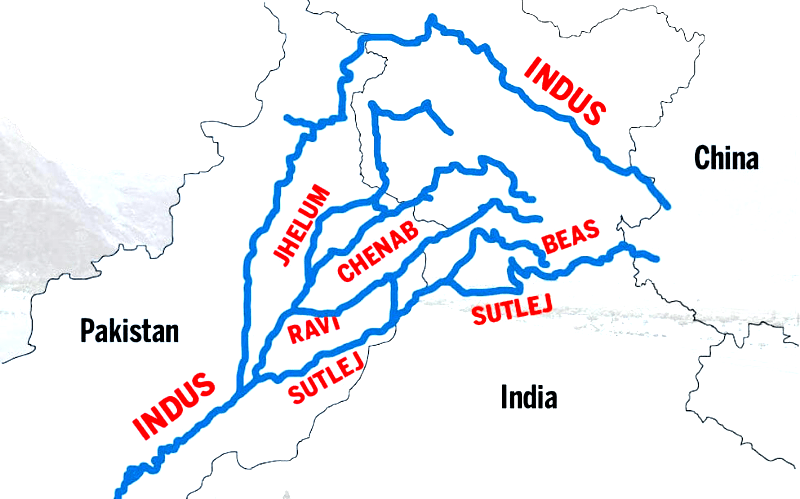
    Book One: Mandala Six


    Sanskrit version on one page.


    Index version.

    Analysis

    Rg Veda Sages, complete, in order, with patronymics; reveals multiple authorships


    These are the earliest Sanskrit recordings.

    As to what part of history they are recording, my reasoning is as follows. From IVC we find cross-culturalization from Elam to Bactria by ca. 2,300 B. C. E. And then there was Sargon of Akkadia, generally held to be the first empire-conqueror, whose son Rimush was far worse, inventing genocide as we know it, ca. 2,270 B. C. E.; and shortly past him, within about a hundred years, Akkadia or Babylon is thought to have been withered by drought, at the onset of the Meghalayan Age. And so this is remarkably close to the background of the main Vedic enemies, the Panis, who do not seem to be thought of as Sargon-like conquerors, but, western chieftains whose own misfortunes drove them to the recourse of stealing Indian cattle.


    If the Veda records raids and battles around 2,100 B. C. E., this is also the same as the onset of the Age of Aries.

    There is nothing to me that suggests the ancients knew of an Astrological Great Year, but, there is a lot to say that from around 3,000 B. C. E., that Taurus was used to mark the Vernal Equinox, and Thuban was the Pole Star. But then these both go obsolete and quit working. This seems to have been problematic for mythologies and anything that resembled an "agricultural almanac" because suddenly your deities are not absolutely fixed, and time and the directions warp.

    If you were bringing in a new clock system, so Aries marks the equinox, then in the Indian view at least, this "first point of Aries" may be defined as the region *opposite* Spica, or Citra, the star of Tvastr.

    And then if you remain based in the lunar and sidereal system, you quit caring if the equinox moves, because you plan on adjusting your solar calendar by adding extra days, changing the length of months. That does not necessarily affect the Sunday-Saturday days of the week, which are the same everywhere.


    Somewhere around what looks like the Vedic era, you could physically re-invent the year by having New Year visibly marked by the Aswins, two stars of Aries, who are somewhat clandestinely marked by Tvastr.

    That matches the mythology that appears to run through the whole Rg Veda.


    The first book definitely includes specific people essential for anything to be passed down:


    Sage Bharadwaj, raised by the Maruts

    King Srnjaya and Hariyupia (VI.27 5-8)


    King Divodasa and Sambara (VI.18, 31, and 43), with Divodasa mentioned five other times


    Following Talageri's advice that "Purukutsa" is an interpolation, we can still find the presence of several concrete personages:


    Pratardana VI.26.8

    Kutsa VI.18.13, 20.5, 26.3, 31.3

    Yadu VI.20.12, 45.1 (past tense/historical)

    Nahusa VI.22.10, 26.7, 46.7 (past tense, "heroes of", "plural descendants of", "five tribes of")


    On the mystical side, this book lacks Prajapati; it has "brahma" as a generic word, and the deities Brahmanaspati and Aditi; Vaisvanara; Marut Gana; Vivasvata; Vishnu and Pusan, who has a block of hymns, 53-58.

    VI.69 repeats "indravisnu" followed by a hymn referring to Dharma.

    Ye, Indra-Visnu, when ye fought the battle, produced this infinite with three divisions.

    Indra Jyestha is in VI.46.5 and 51.15, plausibly meaning "Elder" or that he is the first-born of the Adityas, which is both his importance, and his defective personality particularly in terms of clash with Tvastr.


    Some rather occult subjects are drawn:


    Ahir Budhniya in VI.49.14, 50.14.

    Navagva in VI.6.3, 22.2 with saptá víprāso (Seven Sages).


    There happen to be seven sevens in it including:


    saptárašmim

    saptásvasā

    saptádhātuḥ

    saptá rátnā


    In order to figure it out, we inevitably must contend with future fingers reaching back towards it. So there are a few tangents from the other Books or Mandalas.


    In terms of an Alpha or origin point, I think it has something, which comprehensively infers more than is in the rest of the Book.


    It has a very distinct primordial stamp in:


    VI.16 Dadhyan, Atharvan, Pushkar, Purandar


    The subject is really Agni, and so if we start here, the first line will tell us his function exactly:


    “You, Agni, have been appointed by the gods, the ministrant for men, the descendants of manu, at all sacrifices.”


    He is like the link of mind to matter. He takes mantras and offerings from the mortal world to the Devas, using it to move them forward to here. You are inviting deities to manifest at your event. Agni is the conduit for the entire affair.

    It mentions the ancient Patriarch:


    bharato vājibhiḥ


    whose mode of worship:

    īḻe


    Angiras (coals):

    yaviṣṭhya -- youngest (of the gods)


    Agni is the "youngest" because kindled.

    This exercise takes us several levels further:


    “The sage, Atharvan, extracted you from upon the lotus-leaf [Puskara], the head, the support of the universe.”

    “The ṛṣi, Dadhyañc, the son of Atharvan, kindled the slayer of Vṛtra, Purandar.


    Nothing here is about Asuras--it is about Raksasas.

    If Purandar is Indra, it can only be that Indra begot by this Agni. Indra kills Vrtra, the son of Tvastr, and hides in the Pushkara Lotus. In those same lines you have the founders of anything Veda and Immortality. These are cherished memories while the hymn as a whole is towards Divodasa and then, by extension, to Bharadvaja himself. Another part of the past:


    (The ṛṣi) Pāthya, the showerer (vṛṣā), kindled you the destroyer of the Dasyu


    Agni operates:

    upon whatsoever your mind is directed

    mano dakṣaṃ


    and has done so in every age of man:


    mānuṣā yugā


    And very similar to Purandar Indra:


    have destroyed the cities

    agne puro rurojitha ||


    As far as I know, that already is the spine of the whole Yoga system and Honey Doctrine.

    You are faced with Indra being a type of office, which in these early episodes is occupied by Purandar, whom, upon drinking Soma, enters the victorious and wealth-spreading condition Maghavan.

    He is here with those primal Rishis who convey Immortality or Deathlessness as Amrita or Nectar.


    The hymn implies prior knowledge, whereas the Vedic process, itself, appears to be in discovering how to build Saman on top of the Rik.

    VI.46.1 will be the beginning of Brhat Saman. According to Brihadaranyaka Upanishad:


    The preceptor of those who sing Saman Mantras
    is King Pururavas, the son of Ila.


    From the map we found that Kauthuma (Chandogya Upanishad branch of Sama Veda and Rktantra) is the neighbor of Paippalada (primary recension of Atharva Veda).


    VI.48 is inter-textual. It is by:


    śaṃyurbārhaspatyaḥ


    but refers to Bharadvaja as the priest. It tells us that an important person loses his normal grandfather to Agni because:


    ...may he be our benefactor and the grandsire of our offspring.

    when kindled by Bharadvāja


    Agni is:


    The lord of the dwelling: gṛhapati, master or protector of the house


    "Old" is celebrated, but, we already have the importance of "new":


    “Approach, friends the milk-yielding cow with a new song, and let her loose unharmed.”

    Dhenu: this is the first of a series of ṛcas in which the Maruts are the deities, either with reference to the milk which is their appropriate offering at sacrifices, or to Pṛśni, the mythological mother of the Maruts, in the form of a cow


    except it is not a "song", as in a saman, bhajan, metre, or anything like that, what is new is:


    vacaḥ


    Speech, or, convertibly, Vak.


    Prsni:

    “She who yields immortal food to the powerful, self-irradiating band of the Maruts, who (is anxious) for the gratification of the self-moving Maruts, who traverse the sky with (the passing waters), shedding delight.”


    the Maruts doing their yogic obligation:


    ...may that (company) make hidden wealth manifest


    which, for our purposes, is the Sapta Ratna just mentioned above. I would say this gives some 80% of the skeleton of Buddhist Tantra already in this Book. The Maruts are simply the fact that one's Life Winds are not in proper yogic harmony, and that they are very sensitive to any disturbances. So the true personal wealth, that is, inner or symbolic, is buried and covered by their dissension. Hence the Debts and Offerings.


    After the Maruts, Pusan:


    Uproot not, Pūṣan, the forest lord [Vanaspati] with its progeny of crows...


    “May your friendship be unbroken, like (the surface) of a skin without a flaw, containing curds.”

    Skin containing curds: said to be always carried in Pūṣan's chariot


    which gives us the same etymology as for Sage Dadhyan, "Curds Ward":


    dadhanvataḥ


    Pusan is, so to speak, beyond the Maruts and related to Curds.


    The hymn ends with a verse to:


    pṛśnirvā bhūmī vā


    Once, only once, the heaven was made, once only once, the earth was formed-
    Once, only Prsni's milk was shed: no second, after this, is born.


    Bhrgus are unclear in the early Veda. There is the mysterious VI.50 Apam Napat:


    May this God Savitar, the Lord, the Offspring of Waters, pouring down his dew be gracious,
    And, with the Gods and Dames accordant, Tvastar; Dyaus with the Gods and Prthivi with oceans.

    May Aja-Ekapad and Ahibudhnya, and Earth and Ocean hear our invocation;
    All Gods who strengthen Law, invoked and lauded, and holy texts uttered by sages, help us.


    It begins discussing Three Worlds in VI.51.

    Here in the sense of Three Waters and authors such as Dvitya and Tritya Aptya, we found Water and Son of Water as peculiar stars near Tvastr or Citra.

    This is the principle that, as Agni may illuminate the deities into our world, at times we too may enter their world or Swarga. This triple potency runs through the Veda like a torch. That is the main view in which I, at least, am studying, as the use of mantras for evocation and yoga.


    VI.61 Sarasvati gives away Divodas, who cancels the debt. He is given to Vadhryasva, which is why this is considered an epithet of Srnjaya. In the very next hymn is a vadhrimatī , "the wife of an impotent husband", a theme repeated in other books.

    The actual "debt" may have a dual meaning, first, literally, and, in the sense of "five debts" (rna) that man is in, with respect to consuming resources and making a mess. These are owed to the Devas and other kingdoms of nature, which is why there is a process of Offerings.


    Srnjaya is probably the first valorous victor for the Aryas, and it is likely his father is mentioned, depending on how you read VI.27.7:


    yásya gā́vāv aruṣā́ sūyavasyū́ antár ū ṣú cárato rérihāṇā
    sá sṛ́ñjayāya turvášam párādād vṛcī́vato daivavātā́ya šíkṣan


    He, whose two red Steers, seeking goodly pasture, plying their tongues move on' twixt earth and heaven,
    Gave Turvasa to Srnjaya, and, to aid him, gave the Vrcivans up to Daivavata.

    or:


    “He whose bright prancing horses, delighted with choice fodder, proceed between (heaven and earth), gave up Turvaśa to Sṛñjaya, subjecting the Vṛcīvats to the descendant of Devavāta (Abhyāvartin).”

    Vamadeva is more precise in IV.15 for Sṛñjaya, the son of Devavāta. The parentheses there are Wilson's suggestion; it may be possible for both of them.

    Neither the translators nor Sayana really know anything about these original people, and are kind of swatting at air.


    There is Puranic information on original Bharadvaja, which can be considered more seriously, as it is one of the few cases where, we might say, Puranas of split traditions mostly agree:


    Dīrghatamas is the son whom Bṛhaspati illegitimately got of Mamatā, his brother’s wife. There was then another legitimate child in the womb of Mamatā. Knowing this the devas told her 'Bharadvāja' meaning 'bear the brunt of two' and so the son of Bṛhaspati got the name of Bharadvāja also. The real name of this son was Dīrghatamas or Vitatha. Dīrghatamas is not the Bharadvāja who was the father of Droṇa. The famous Bharadvāja was the son of Atri. Dīrghatamas or Vitatha was the adopted son of Bharata, son of Duṣyanta.


    There is a lot of confusion because some Puranas go on to invent a "King Marutta", when what is meant here is more like Marut Gana since Bharadvaja is:


    A son of Bṛhaspati and Maruttā; born when Dīrghatamas was already in the womb; brought by the Maruts to Bharata and became his son Vitatha.

    Vāyu-purāṇa 99. 140-156


    related to Atharva Gotra:


    the father of Āyurveda which he compiled in eight parts and imparted them to his pupils


    Bharata, a King of the Pūru line of kings, had no sons and as he was spending his days in sorrow Marutta gave Bharata this Bharadvāja as a son. Bharadvāja who was by birth a brahmin from then onwards became a Kṣatriya. (Matsya Purāṇa 49. 27-39 and Vāyu Purāṇa 99. 152-158).

    The Bṛhadāraṇyaka Upaniṣad refers to this sect of preceptors as disciples of Bhāradvāja, Pārāśarya, Valāka, Kauśika, Aitareya, Āsurāyaṇa and Baijavāpāyana.

    Bhāradvāja (भारद्वाज).—A grammarian. According to the Ṛktantra, prātiśākhya of Sāmaveda, it was Brahmā, who first composed the science of grammar. This science was taught by Brahmā to others in the following order: Brahmā to Bṛhaspati, he to Indra, Indra to Bhāradvāja and he to his disciples.


    At one point he says to Bharata:


    Why have your descendants come to be known as Śūdras?

    His Āśrama still exists at the holy Prayag.

    E. bharat upholding and vāja a wing


    In those descriptions, we see that Brhaspati got a pregnant woman pregnant, let the child be raised by the Marut Gana, who transferred it to the legendary Emperor Bharata, and this becomes our first composer of hymns--or more likely, his original namesake. The writer interacted with Divodasa.


    Bharadwajas were said to be proliferous around Rajgriha in Buddha's time and were very accommodating to him.

    I have not yet noticed whether the Veda will confirm or deny the Puranic allegations. We will keep these for brevity.


    Talageri is saying Bharadvaja Barhaspatya was not the first:


    Quote About Bharadvaja and the ancestral Bharata, it is clear from the hymns that Bharadvaja (perhaps the eponymous one, or maybe again a descendant of the eponymous Bharadvaja) may have been the priest of the ancestral king Bharata, who is referred to as "Bharata of old" in VI.16.4. The eponymous Bharadvaja cannot have been the priest of Divodasa, since the association of the royal and priestly families go back many generations as per the references in the hymns. In Book VI, it is (as I have pointed out in my books) the tradition for almost all the composers to write in the name of the eponymous rishi, a practice which changed only in the New Books (from Book V).

    Also:

    Quote Book 6, the Oldest Book in the Rigveda, shows itself to be so old as to be in many ways distinct and isolated from the whole rest of the Rigveda: the book is of course part of the Rigveda, but it goes back long before the developments in the rest of the Rigvedic period. The next two books, Books 3 and 7 both, in their earliest core period, belong to the period of the Bharata Pūru king Sudās, but Book 6 goes far back into the past, and spans a large period beyond the period of Sudās' father Pijavana, his ancestor Pratardana, his father or ancestor Divodāsa, his father Sṛñjaya (nicknamed Vadhryaśva or "impotent" until, by the grace of the river Sarasvati in answer to his prayers, he begot Divodāsa), his ancestor Devavāta, and perhaps many earlier generations, going back to the ancestral semi-mythical figure of Bharata (who is mentioned only once as a person, in VI.16.4). It may even be that the eponymous sage Bharadvāja was the priest of this ancestral Bharata...

    Add up all the different words from all the above categories which are missing in Book 6, and compare the religious picture it conjures up with the picture of the total Vedic religion as we know it, and it becomes clear that Book 6 represents a very pristine and ancient period which even repeated redactions failed to camouflage.

    He has done a lot to trace out the Rg Veda kings but makes a mistake I believe. He takes "Pratardana Daivodasi" of Book Nine as a re-naming of the original from Book Six. He then says this is identical to Pratardana Kasiraja of Book Ten. The mire is that he takes Kasi or Kashi literally, and so the ancient Pratardana must have been king of the city/state of Kashi. However its archaeology does not bear tremendous age, and, moreover, we believe it to be symbolic like Ayodhya. As a clue to the symbol, none of the other kings have the title "raja". So we think he may have been the king of its subjective meaning.

    Pratardana is in VI.28 only as a figurehead:


    Kṣatraśrī, the son of Pratardana

    prātardaniḥ kṣatraśrīr


    He is the last possible Bharata King in Book Six.

    Sudas and Paijavana is not in it.

    Talageri writes "Pijavana" as if *that* king were an actor, but the only term used is Paijavana, meaning his son.


    This is fairly easy because we ought to nullify his second attestation, that this is *not* a direct reference to Pratardana in VII.14, which starts in a snafu of the highest order:


    Pratṛts, Agastya comes to you


    Who knows why he put that. It is obviously:

    pratṛdo vasiṣṭhaḥ ||


    Sayana says:


    Pratṛts = Tṛtsus


    And that's it. Not evidently an individual name, or even the same spelling. Bharadwaj was dealing with Ksatra Sri, whose father was Pratardana. Nothing more from him. The verse more accurately rendered:


    He brings the bearer of the laud and Saman: first shall he speak bringing the stone for pressing.
    With grateful hearts in reverence approach him: to you, O Pratrdas, Vasistha cometh.


    Sudas is barely mentioned in Book Three:


    When Visvamitra was Sudas's escort, then Indra through the Kusikas grew friendly.

    Come forward, Kusikas, and be attentive; let loose Sudas's horse to win him riches.
    East, west, and north, let the King slay the foeman, then at earth's choicest place perform his worship.


    while Visvamitra appears interested in a Bharata king, Devasravas, who does not appear again:


    Both Bharatas, Devasravas, Devavata, have strongly rubbed to life effectual Agni.

    Praise Devavata's Agni, thou Devasravas, him who shall be the people's Lord.


    Qv. III.23:


    Ṛṣi (sage/seer): devaśravā devavātaśca bhāratī


    Sudas is significant in Book Seven, and there are no more until Somaka and Sahadeva of Book Four.


    So to clarify the other mistake, if we look at how "Paijavana" is used in the only place it is found, VII.18, he is in a few verses.

    Are these three names the same person?

    22:

    I move around the altar, earning Paijavana's reward

    paijavanásya dā́naṃ

    Two hundred cows from Devavan's descendant, two chariots from Sudas with mares to draw them.

    dvé náptur devávataḥ šaté gór dvā́ ráthā vadhū́mantā sudā́saḥ


    Two names of the same person?


    23:

    Gift of Paijavana, four horses
    Sudas's brown steeds

    paijavanásya dā́nāḥ


    25:

    Sudas's father Divodasa

    dívodāsaṃ ná pitáraṃ sudā́saḥ


    Further Paijavana's desire with favour. Guard faithfully his lasting firm dominion.

    aviṣṭánā paijavanásya kétaṃ dūṇā́šaṃ kṣatrám ajáraṃ duvoyú


    Vasistha is working with Paijavana who is Sudas.


    The Rg Vedic kings are not quite as stretched out as Talageri asserts. "Pijavana" if anything would be Divodasa, and there is no need to interpose Pratardana as another generation. It seems to be simply by ascent:


    Sudas --> Divodasa --> Srnjaya --> Devavata --> Bharata.


    Again we do not see a reason to assume several generations between Bharata and the others.

    If he was human.


    If Visvamitra, at the time of Sudas, had a friend who was related to Devavata, that would still be an old lineage even without making the list too spongy. That is what it sounds like because he has a triple name, i. e. "Devavata Bharati" sounds like "The House of", rather than the usual name which would sound like "son of Divodasa". One of those is here:


    Jaiminlya BrAhmaNa (§ 205) calls SudAs KSatra,
    while KaTha SaMhitA 21.10: 50.1 has Pratardana and
    MaitrAyaNI SaMhitA 37.7 Pratardana
    DaivodAsl.


    There is also Parucchepa Daivodasi.

    Sudas might be "Ksatra" if you thought he was the son of Pratardana. That was the sole reference we were given.


    "Ksatrasri" is used generically in I.125.


    "Ksatra" is in a roster of Sages from V.44:

    thoughts of Kṣatra, Manasa, Avada, Vajada, Sadhri and Avatsara

    or:


    thought of Ksatra, Manasa, of Yajata, and Sadhri, and Evavada

    kṣatrásya manasásya cíttibhir evāvadásya yajatásya sádhreḥ


    Swift is the excessive and girth-distending inebriation of Viśvavārā, Yajata and Māyin

    Mada = intoxication, is the devatā of the verse


    or, adding himself:

    With Avatsara's sweet songs will we strive to win the mightiest strength which even he who knows should gain.
    The Hawk is their full source, girth-stretching rapturous drink of Visvavara, of Mayin, and Yajata.


    There is a Yajata Atreya and Visvavara Atreyi, brought together here by Avatsara Kasyapa.

    Some Sages are not known for anything, like some of the Kings. This gives us nothing more towards the verse in Book Six. Pratardana is not much more than a name there, possibly another for Divodas.


    Book Six does have some suggestions about Maruts.

    VI.66:

    They who are Sons of the rain-pouring Rudra, whom the long-lasting One had power to foster:
    The Mighty Ones whose germ great Mother Prsni is known to have received for man’s advantage.

    VI.56:

    To whom the Goddess Rodasi clings closely, whom Pusan follows bringing ample bounty.


    The first book also has a very symbolic VI.47 Soma by Rishi Garga, who bemoans the fact he has entered a desert (as does hymn 34), while the territory taken from Sambar was full of flowing streams.

    The first line on Soma:

    svādúṣ kílāyám mádhumām̆ utā́yáṃ tīvráḥ kílāyáṃ rásavām̆ utā́yám


    Here, another term for Ambrosia or Amrita is:


    pīyūṣa


    Indra and Soma are identical with "refuge" as in Buddhism:


    śaraṇā


    This is called "divine protection":


    devávantam


    This is a saga of Bharata Purus rising to eminence over all other Purus, and, we found that "Purusha" reflects this in a peculiarly Vedic manner. In this hymn is perhaps an equally important synonym of visvarupa, "many forms", Puru Rupa:


    “Indra, the prototype, has assumed various forms, and such is his form as that which (he adopts) for his manifestation; Indra, multiform by his illusion, proceeds (to his many worshippers), for the horses, yoked to his car are a thousand.”

    Indra presents himself as Agni, Viṣṇu, or Rudra, or any other deity who is the actual object of worship, and is really the deity to be adored; he is identifiable with each.


    which includes Hara or perhaps Hari:


    indro māyābhiḥ pururūpa īyate yuktā hy asya harayaḥ śatā daśa


    “Yoking his horses to his car, Tvaṣṭā shines in many places here in the three worlds; who (else), sojourning daily among his present worshippers, is their proector against adversaries?”

    In this ṛca, Tvaṣṭā is an appellative of Indra, the ancient artificer!


    The subject switches to the obscure:


    liṅgoktāḥ


    “Prastoka has given to your worshipper, Indra, ten purses of gold, and ten horses, and we have accepted this treasure from Divodāsa, the spoil won by Atithigva from Śambara.”

    Atithigva: prastoka, divodāsa and atithigva, are different names of the same person, a rājā, the son of Sṛñjaya.

    prastokasya sārñjayasya dānastutiḥ


    which is why Divodasa is considered the son of Srnjaya, who was equivalent to "lame horse" unable to have one.

    Even when we line up these kings, it still sounds a little weird that Bharata and Srnjaya were *both* impotent, receiving children by some trans-mundane means. And it is not actually Srnjaya who was present at the battle--he gets the Turvasus by what sounds like surrender or treaty. What mainly happens in VI.27 is that Indra defeats the Varasikhas by sound:


    svanāc -- Svana


    which was for the benefit of:


    Abhyāvartin, the son of Cāyamāna...descendant of Pṛthu (pārthavānām)


    in a region of Yavya (barley, or grain in general).

    Srnjaya would appear insignificant if it were not for VI.47; here, the important Hariyupia is someone else's act at about the same time. It gives us a reason to accept Prthu as a pre-Vedic legend, and, reasons to think of the Yupa or "Post", which is in both "the lump" mode of creation, and, the Sacrificial Post onto which man, such as Sunhashepa, may be condemned and seek liberation.

    Talageri says the Cayamanas were Anu kings defending against the Yadus, and the loss of this alliance later was by Kavi, who became Zoroastrianism; he thinks this is the "Kavasa" a few verses further along:


    (or kavaṣa ailūṣa) Name of a Ṛṣi (son of Ilūṣa by a slave girl, and author of several hymns in the tenth Maṇḍala of the Ṛg-veda; when the Ṛṣis were performing a sacrifice on the banks of the Sarasvatī he was expelled as an impostor and as unworthy to drink of the water, being the son of a slave; it was only when the gods had shown him special favour that he was readmitted to their society)

    But there is no identification of Cayamanas or Varasikhas. Kavasa Ailusa is probably not Kavi Cayamana. No Yadus are here. In other hymns, they are described as accepting Indra along with the Turvasas. Therefor the actors at Hariyupia are almost no one. The actual point of it being that Bharadwaj says:


    “The opulent supreme sovereign Abhyāvartin, the son of Cāyamāna, presents, Agni, to me two damsels riding in cars, and twenty cows; this donation of the descendant of Pṛthu cannot be destroyed.”


    At first the Yadus appear less important than the Turvasas, especially if thinking of "all three directions" from VI.18 where Indra:


    Laidest low Kutsa, Ayu, Atithigva, and boldly didst deliver Turvayana.


    Sayana says that Turvayana is Divodasa. Srnjaya somehow "gained" the Turvasas, which, perhaps, Divodas was a member of, and therefor considered an "adopted" son.


    Book Six is more concerned with Divodasa, and Garga comes along after his success, as in directly after it and probably still during his lifetime. Divodasa's main quest being the defeat of Sambar, we believe it may have led to the first Kirat King Yalambar, as retained in a real thing known as Kirat Yele Samvat:

    "According to historical documents on the genealogy of the Gopal Dynasty, altogether 32 Kirant kings ruled Nepal for 1964 years. Yalam (Yalambar) ruled Nepal as the first Kirant king circa 1779 BC. If you count the years after the reign of Yalambar, as many as 3,790 years have passed as of 2011 AD. So 2011 AD is the year 3790 in Kirant Yele Sambat calendar."


    Kirats had been around since the Stone Age, and, only recently, a few generations of Indian Ahir Guptas had founded a kingdom in the Kathmandu Valley. Sambar was most likely Kiratic, and perhaps only a few generations before the Samvat. The critical piece of evidence here is that they have been there since 30,000 B. C. E., in Yajur and Atharva Vedas:


    The Lichhavi dynasty dethroned the Kirat rulers in 158AD (evidence: statue of Jaya Barma found in Maligaun of Kathmandu).


    It has nothing to do with when the Licchavis may have established continuous power. After the dethronement, there were no more Kirats.


    Back to Garga's hymn 47, this is perhaps "money", but actually, ten "lumps of gold":


    daśo hiraṇyapiṇḍān


    which is also suggestive of that mode of Creation called "the lump", which involves the Central Pillar or Post separating earth from the firmament, which may have to do with "Hariyupia" in this book, since "yupa" is the pillar or post, and so far my guess is this is a pillar of sunshine, which is why Indra's Bow is a Rainbow. Actual, historical battles are being used as messengers for symbolism.

    It is the same in this hymn for the Divine Chariot:


    daśa rathān praṣṭimataḥ śataṃ gā atharvabhyaḥ | aśvathaḥ pāyave 'dāt ||


    “Aśvattha has given to Pāyu ten chariots with their horses, and a hundred cows to the priests.”

    To the priests: atharvabhyaḥ = ṛṣis of the atharvagotra; pāyu is the brother of Garga

    Aśvattha = Prastoka


    He's up to four names. Divodasa is Asvattha. In the lore, so is Bharata, or Pururavas.

    The next subject is the car:


    rathaḥ

    “Worship with oblations the chariot constructed of the substance of heaven and earth, the extracted essence of the forest lords; the velocity of the waters; the encompassed with the cow-hide; the thunderbolt (of Indra).”


    indrasya vajro marutām anīkam mitrasya garbho varuṇasya nābhiḥ | semāṃ no havyadātiṃ juṣāṇo deva ratha prati havyā gṛbhāya ||


    “Do you, divine chariot, who are the thunderbolt of Indra, the precursor of the Maruts, the embryo of Mitra, the navel of Varuṇa, propitiated by this our sacrifice, accept the oblation.”


    garbha of Mitra: the car is said to be contained by Mitra, the ruler of the day, as moving by day; nābhi of Varuṇa: it is a fixed point or centre for the deity ruling over the night, when the car of Indra or Sūrya stands still.


    The hymn ends with Lord of the Drum:


    sa dundubhe

    dudumbhi indraśca


    So far, Book Six is primarily by a Bharadvaja who has named himself after a legendary Bharadvaja, tied to other legends about Agni and unnamed Sages, and then most likely his ashram, or a generation of disciples. Sunahotra Bharadvaj is the ancestor of Grtasamada. Rjisvan is testified many times later:


    in X.99.11, AuSija is an epithet of RjiSvan, who
    belongs to the BharadvAja branch of the ANgiras family.


    which will actually make sense, "son of Usija".

    This Book does not seem to "go forward" very far at all, there is little implication that its composers are a sequence, they are probably mostly concurrent. The contents of it seem to demand a century or more of widespread backstory. I don't think it would have been recorded unless, for example, Dadhyan conjured up the same image for anyone who heard it.


    Because Nahusa is in the past, presumably this means Pururavas must be, although he is not mentioned until late books. If he is really in the past of the Yadus, then we would expect the lore to be less influential to the earlier parts of the recorded Veda. We also notice his name is never said to be related to the Puru tribe. As to whether this should qualify him as a human being, there is a scene from the dramatist Kalidasa:


    Here it is related how the
    nymph Urvasi, while acting in a drama before the god In
    her thonghts fixed on her lover had spoken in one of he
    name, Pururavas, instead of Purushottama, as her text required.
    Due to this she had been condemned by the heavenly stage-manager
    Bharata to wander on the earth, but Indra had mitigated the curse, gave
    her permission to dwell with her lover, king Pururavas until he
    should see a child which she should bear him.


    And, from his strong point which is demolishing Caste by showing how the Puranas deviate from the Vedas, Dr. Ambedkar:


    Quote According to the second theory Ila married Pururavas who had
    six sons the eldest of whom was Ayus. From Ayus to Kshatravridha,
    from him Sunahotra, from him Gritsamada. The four varnas were
    originated from Gritsamada. The Vayu Purana does not admit this.
    It says that the four varnas were born from Saunaka the grandson
    of Gritsamada.

    These explanations are like effusions of the imbeciles. They show how
    hard the Brahmins were put to for the defence of the Varna system.
    The question is why were the Brahmins not able to give a consistent
    and uniform unimpeachable, convincing and rational explanation of
    the Varna system of which they have been such strong protagonists ?


    He found at least four versions of Pururavas, mixed in various ways with ideas about Purusha Sukta.

    If one looks at how heavily Saunaka appears to be relied by Mahabharata, Srimad Bhagavatam, etc., there is suspicion perhaps not towards the Vedic Rishi, but to his followers.


    It seems plain already in the first Book that the Devas operate by a type of mental cash, that it is the consciousness of the invoker that causes the transaction, which has a mental result. It implies knowledge about lore that may or may not even be written in it, and, over time, the additional books serve to convey at least something from the Sages into the household. I can't imagine that would not, in fact, be the main purpose. Don't we want to provide avenues of support to anyone who wishes to transition into a state of divinity?


    If Pururavas, Ayu, Nahusa, and Yadu were already historical, Talageri says:


    The AiLas are further divided into five main branches: the Yadus, TurvaSas, Druhyus, Anus and PUrus.

    Atri is characterised as pAñcajanya (belonging to all the five tribes).


    Talageri and the Veda do not say they have this common father as in the Ramayana genealogies:


    Yayati (Contemporary to Demon King Vrishparva) had two wives and five sons. Yadu, Turvasu, Druhyu, Anu and King Puru were the five sons of Yayati. Devayani and Sharmishtha were the two wives of Yayati. Yayati, later, became the most powerful ruler of his era.

    Prithu (contemporary to 4th Chandravanshi King Yayati and demon king Vrushaparva)


    There is a Yayati, son of Nahusa in the New Books IX and X, which is probably where they should be cycling most of these names as Nahusa II and so on, probably more related to calling Samvarana a Manu (as in IX.101, who perhaps reflects Samvarana Prajapatya of V.33-34). The earliest concrete reference to Yayati is in an Angiras hymn I.31, whereas Yadu is historical to Book Six. I.31.4 is also where we find Pururavas related to the kindling of fire. The point of the hymn being that Agni is the first Angiras Rishi, it also refers to Nahusa, Ila, and Manu. Nothing about Yadu or Yadava.

    Yati is generally a monk, sage, ascetic, probably placed in combination "yasya yati".

    Yayati--crammed back to ages past--is called both the father of Puru *and* the Kuru kingdom in various texts.

    I.31 very nearly implies it is an alternym of Yadu.


    One person?


    Kuru prince, of the Chandra dynasty

    a king of the solar dynasty, the son of Nahusha


    Puranas place him above Yadu, generating the Five Tribes:


    Yadu being the son of Devayānī, daughter of Uśanas or Śukra, and Puru of Śarmiṣṭhā, daughter of Vṛṣa-parvan.

    Devayānī gave birth to Yadu and Turvasu, while Śarmiṣṭhā gave birth to Druhyu, Anu and Pūru.


    Yādu (यादु):—[from yād] m. water


    For the "solar" Yayati:

    Nabhaga is his son.


    Whereas for the Vedic Solar Mandhatr:


    The composer who refers to him in VIII.39.8 and VIII.40.12 is NAbhAka KANva. According to tradition, NAbhAka is a King from the IkSvAku (TRkSi) dynasty who joined the KaNva family of RSis. He is, therefore, a descendant of MandhAtA, whom, indeed, he refers to as his ancestor.


    I.31 definitely is symbolic with Agni as the first Rishi, and:


    Ila they made the teacher of the sons of men...


    In I.108, Kutsa Angirasa iterates the Five Tribes as "five kinds" of people.


    Instead of Yayati--who persists in the comments--we find Yadu has certain accompaniment mentioned as early as IV.19:

    Turvīti and Vayyā


    Similarly in II.13:


    ...the easy crossing of the flowing waters for Turvati and Vayya


    In I.112 by:

    kutsaḥ āṅgirasaḥ

    With those aids by which you, who are worshipped in many rites, protected Kutsa, the son of Arjuna, as well as Turviti, Dhabhiti, Dhvasant, and Puruśanti...


    In I.54:


    You have protected Narya, Turvaśa, Yadu and Turvīti, of the race of Vayya...

    or:

    Thou helpest Narya, Turvasa, and Yadu, and Vayya's son Turviti...


    In I.36:


    “We invoke from afar, along with Agni, Turvaśa, Yadu and Ugradeva; let Agni, the arrester of the robber, bring hither Navavāstu, Bṛhadratha and Turvīti.”


    And finally a loop in V.79, present tense:


    Ṛṣi (sage/seer): satyaśravā ātreyaḥ


    says:


    satyaśravas, the son of Vayya.

    the powerful son of Vayya, Satyaśravas.


    Satyasravas has three fathers in the Puranas (Vitihotra, Manduki, or Markendaya). In Rg Veda, he is the son of or in the line of Atreya (which would be appropriate for Book Five), or, the son of Vayya, who was historical to Book Four.


    From Sama Veda to comment Stanza Eight, Hastaamalaka Stotra:


    Ever resplendent Usha Devi! As even before,
    kindly turn us to the direction of ‘jnaana’. Dyuloka Vaasini, Satya Swarupi! You had in the past, blessed
    Suneet the son of Shuchidratha granted light from darkness; now as Satyashrava the son of Vayya too do
    kindly grant me the same blessing. (1740-42)


    In the Puranas, Paila made two Samhitas of Rg Veda, transmitting one to:


    28. Indrapramati, the excellent sage taught one (undivided) Saṃhitā. He taught the highly fortunate and famous Māṇḍukeya.

    29-30. That sage of great fame taught his eldest son Satyaśravas.


    There is a Vedic correspondence among the authors of IX.97, including:


    Indrapramati Vasistha, Manyu Vasistha, Shakti Vasistha, Parasara Shaktya, Kutsa Angiras


    Puranas give Kapinjali Ghrtaci as the wife of Vasistha, mother of Indrapramati. From Rg Veda, Talageri says:


    PurUravas AiLa and UrvaSI (X.95):


    I, VasiSTha, call UrvaSI to meet me. The name
    VasiSTha is translated by Griffith as her best love.


    (VII.33.11) where UrvaSI is referred to as the
    mother of VasiSTha.

    Indra MuSkavAn: X.38

    Indra MuSkavAn is identifiable with Indrapramati
    VAsiSTha (joint composer of IX.97).

    The word muSka (X.38.5), which gives the RSi
    his epithet MuSkavAn, is found only once outside
    this hymn, in X. 102.4, composed by a Bharata.

    The only hymns, other than X.38, in which Indra
    is named as composer, are hymns in which the
    God Indra is depicted as speaking in the first
    person. But X.38 does not depict Indra speaking
    in the first person, and it is clear that Indra here
    is the name of the composer, who is the patriarch
    of the Aindra group of RSis in MaNDala X.

    Indra is a VasiSTha gotra.

    X.38.5 refers to the RSi Kutsa. The Kutsas are
    very close associates of the VasiSThas: the only
    reference to Kutsas by non-Kutsas are in hymns
    by VasiSTha (VII.25.5; X.29.2); the only references
    to VasiSTha by a non-VasiSTha is in a hymn by
    a Kutsa (I.112.9); and the only hymn in which a
    Kutsa figures as a joint composer is IX.97, which
    is jointly attributed to eleven VasiSTha RSis
    (including Indrapramati) and a Kutsa.

    Manyu TApasa is identifiable with Manyu
    VAsiSTha (joint composer of IX.97).


    For this name:

    Muṣka (मुष्क) refers to the “lower genitals”, [masculine] testicle, [dual] the vulva.

    Two of the Brahmanas for X.38.5 say:

    Kutsa and Luśa summoned Indra at the same time to their respective sacrifices; Indra first went to Kutsa, who detained Indra, fastening him by the scrotum with a hundred leatherpieces.

    This is never discussed and is mirrored in Talageri's Historical Analysis text on one archived page, i. e. minus tables and graphics. Also mentioned in passing in Vedic Culture 1947. Talageri severs the "other Rishi Indra":


    Indra VaikuNTha (3 hymns): X.48-50

    Saptagu ANgiras, the composer of X.47, is clearly the composer
    of these three hymns, which constitute a continuation of the theme in
    hymn 47. Hymn 47 is addressed to Indra as Indra VaikuNTha, and
    these three hymns, in the manner of a dialogue-hymn, constitute
    Indras reply to Saptagu.


    Because this does not seem to be an actual Rishi, it would be considered that the two who have Indra as their first name are identical and the originator of the Aindra clan of Book Ten, which makes them a branch of Vasisthas.


    Although the Agastyas of Mandala One are namesakes, there must be a primal authenticity to their Apri Hymn I.188:


    This, incidentally, also explains why the AprI-sUkta of the
    Agastyas, whose other hymns were certainly composed in the
    Middle and Late periods of the Rigveda, clearly shows that it was
    composed in the Early period of the Rigveda.


    Although the Visvamitra and Vasistha Apris appear in their respective Mandalas, that of the Angirases does not appear until I.142 by:


    dīrghatamā aucathyaḥ


    who sounds related to Ucathya Angiras of Book Nine. That would perhaps be why an inappropriate-sounding person is composing the Angiras Family Hymn.

    Talageri gives the equivalent:


    MAmateya (DIrghatamas) (IV4.13)

    DIrghatamas,
    the father of KakSIvAn


    I am not sure that is parallel--Book Four refers in past tense to the Blind son of Mamata which we already encountered:


    Mamatā (ममता):—She was the wife of Utathya (brother of Bṛhaspati). Bṛhaspati made her pregnant by force and the demigods (sura) named the child Bharadvāja.


    "Utathya" is about the same as "Ucathya", and so it appears we are looking at the name, Dirghatamas, son of the brother of Brihaspati. The brother is the son of Angiras, therefor Brhaspati is the son of Angiras.

    That would almost make sense, the Family Hymn is composed by Dirghatamas Aucathya, who is the brother of the first Rg Veda author, Bharadvaja Barhaspatya, if they are different people.


    This is sensed by Brahmanda Purana, who names Brhaspati's brother as Usija, says Brhaspati has intercourse with the pregnant Mamata but does not explain the second child, does say that Dirghatamas emerges, who becomes sexually interested in the daughter of his brother:


    Śaradvān Autathya

    who must have been the second, or first, or the embryo or something.


    Next, Dirghatamas has children with Bali's wife's maid:


    The sage of great Self-control with a pious soul begot two sons viz. Kakṣīvān and Cakṣus of her in the womb of a Śūdra lady.

    In this context the following verse regarding the family is cited by the people who know future events.

    —“This family of Ikṣvākus shall continue up to Sumitra. Having reached Sumitra in the Kali Yuga it will become extinct.”

    107-110. Thus the Kṣatriya clan originating from Manu and Aila (Pururavas) has been recounted.


    The actual phrase in the Vedic hymn is:

    pāyavo māmateyaṃ


    which quite possibly means Payu:

    Name of a man, [Ṛg-veda vi, 47, 24] (with bhāradvāja, author of [vi, 75; x, 87])

    VI.75 as authored by him; and the other reference to Hymn 47 we just mentioned, Asvattha--Divodasa donates to Payu (Garga's brother) and the Atharva Gotra.

    Payu is presumably an honorific re-naming in X.87, which is completely destructive, focusing one particular enemy, Yatudhanas:

    “Regard, beholder of men, the rākṣasas among the people; cut off his three heads; cut off his flanks with your might; cut off the triple foot of the Yātudhāna.”

    ...like Atharvan with celestial radiance burn down the ignorant (rākṣasas), who assails truth with falsehood.


    one thing he protects is:

    mithunā


    foolish people believe in a:

    mūradevāñ


    paya -- milk


    is virtually equivalent to

    pīyūṣam -- nectar


    and the additional enemy:

    Kimīdins: a kind of rākṣasas; Nirukta 6.11: those who wander about saying kimidānīm, what now? or kim idam, what is this?


    For the name Mana:


    Vaśiṣṭha and Agastya were born of Urvaśī’s mana, and the energy effused by Mitrāvaruṇa—

    tatte janmotaikaṃ vaśiṣṭhāgastyo yatvā biśa ājabhāra.

    utāsi maitrāvaruṇo vaśiṣṭhorvarśyā manaso’dhijātaḥ;

    drapsaṃ skannaṃ brahmaṇā daivyena viśve puṣkare tvādadante. (7.33.10-13)

    Agastya was born inside a kumbha, that is, he could be measured by a kumbha, so, he was also known by the name Māna (Mana), meaning measure. He was called Māna also because his structure resembled the yoke of a temperate plough. However, these are arguments of later scholars; it is difficult to accurately determine why Agastya came to be known as Māna. Still, Ṛgveda bears clear evidence of the fact that Agastya and his family were known by the title ‘Māna’.


    Ghrtaci and Vak in Agastya's I.167.

    Manyu Suktam (X.83-84) says Manyu is primarily "Vajra", is other deities, is allied to Tapas. The Sage Manyu confesses to anger and lack of practice. Includes a Buddhist phrase:


    sahajā vajra


    And, realistically, it is an intensity that could veer either way:


    Manyu (मन्यु).—[masculine] mood i.e. temper of mind, [especially] high spirit, ardour, zeal; passion, wrath, anger


    While almost the same as Agastya's title:


    Māna (मान):—Weights and measures / metrology

    A measure of capacity or of weight, a maund.

    Māna (मान) refers to:—The sentiment that prevents the lover and beloved from meeting freely and which gives rise to transient emotions like anger, despondency, doubt, restlessness, pride and jealousy.


    From there, of course, manas, anything mental, consciousness, heart, conscience, etc.


    VII.33.10 has "Agastya" and three verses later "Mana". Vasistha calls himself "you" and "he" in this hymn. It starts off by:


    vasiṣṭhaputrāḥ


    who speaks in past tense about "the Vasisthas" aiding Sudas and the Trtsus who are the Bharatas.


    vasiṣṭhaḥ

    starts v. 10 which revolves around the legend:

    Agastya was born of the contents in the vessel; the overflowing fluid being collected together, Vasiṣṭha remained in the lake, tato apsu gṛhyamāṇāsu vasiṣṭhāḥ puṣkare sthitaḥ; Puṣkara is also the name of a lake in Ajmer; Padma Purāṇa cites it as the hermitage of Agastya (Sṛṣṭi khaṇḍa).


    ...thence arose the great ascetic Agastya of the measure of a span, as measured by a measure (māna); he is therefore, called upon earth Mānya.


    It ends with the mistake about Pratardana, who is a brother of Sudas or is Sudas.


    Vasistha himself says that Agastya is his brother, even his cause, in the phantasmagorical manner of Urvasi causing Mitra and Varuna to ejaculate by her appearance. The Rg Veda goes on to contain nothing that is by Agastya, unless by implication he must have originated the Apri Hymn. I.179 is by his wife:


    Lopamudra Vaidarbhi


    who praises Dampati, who in earlier days might be thought of as "lord of the house", an individual male such as Agni or Indra, but this definitely changes to have the connotation of a married couple. Consequently, in Kannada or language of the Vidarbha region:


    the third sign of the zodiac, entered by the sun about 21st day of May; the Gemini.


    which in India is Mithuna, the Couple.


    She, personally, may not have literally penned this. We notice that Vasistha ties in "legendary Agastya" as if it were a medical fact, he does not become a Vedic Rishi in any legitimate sense, however his wife is clearly remembered for causing husbands to go to their wives.

    In one sense, Urvasi is a necessary pre-Vedic legend, and then, she is said to be necessary to the Veda by one of its most important Sages in terms of himself.


    What we see is that there is something majestic about Puskara in Book Six between Atharvan and the deities, and it recurs in Seven due to this thing that is actually said by Vasistha about him and Agastya.

    Among its symbolisms we would say are state of embryo in the womb, and spiritual metamorphosis, particularly via the Indra Jala.

    As a Buddhist, I drifted in to this by examining 1400s artwork of Ngor Monastery and the real Sita Tara, and it "sounds like" what is in the Puranas, but is actually vital to the entire foundation of the Rg Veda. It equates to the reigns of Divodasa and Sudas, who "established India" to an extent.


    So the Ailas are really the Five Tribes, including the Bharata Purus, other Purus, and four others such as the Lunar Dynasty who may have all revered Indra, but they are in shifting relationships to the Bharatas.


    Among them, Yadus become more closely related to Purus for just two reasons:


    Quote The first incident is clearly a very old one, in which Indra is credited with bringing the Yadus and TurvaSas safely over flooded rivers.

    The second incident, in which the Yadus came to the aid of the KaNvas in fighting their enemies, in response to an appeal contained in I.36.18 (in which they are called 'from afar' to come to the aid of KaNva)...

    The KaNvas are even associated with the Yadus and TurvaSas in the context of a battle, in which the Yadus and TurvaSas came to their aid in response to an appeal by the KaNvas.


    VItahavya is a Yadu, and he is referred to in VI.15.2, 3 and VII.19.2 (and also in the Atharvaveda VI.137.1). However, nothing more is known about him in the Rigveda; and it may be noted that he is associated in VI.15 with BharadvAja, the priest of the Bharata king DivodAsa, and again remembered in passing (though not in Griffith's translation) in the context of the Bharata king SudAs' battle with the ten kings.

    This is contrasted with Kavi CAyamAna, who turned the Anu tribe into enemies of the Aryas/King Sudas in VII.18.9.


    To strip and re-use an epithet of Divodasa, there is:


    ...the third Atithigva who is referred to in four hymns: I.53.10; II.14.7; VI.18.13; VIII.53.2.

    This Atithigva is clearly not the hero of the references. All the four references relate to the defeat of Kutsa, Ayu and Atithigva at the hands of (according to I.53.10 and VI.18.13) TUrvayANa.


    Quote VI.46.7-8

    Indra give us the strength and power of the tribes of NahuSas: the five tribes (Yadus, TurvaSas, Druhyus, Anus, PUrus). Give us the strength and power of all the tribes: the TRkSis (in the east), the Druhyus (in the west) and the PUrus (in the centre), that we may be invincible in battle.

    Here, clearly the TRkSis in the east, the Druhyus in the west, and the PUrus in the centre, when named together, signify all the tribes.

    The same symbolism is probably expressed in the naming together of Kutsa, Ayu and Atithigva. The three names probably represent the common epithets of the Kings of the TRkSis, the Druhyus and the PUrus (i.e. Bharatas); and when taken in combination, they mean all the tribes.

    Therefore, what the four references mean is: Indra is the Lord of all peoples and lands; or, in two of them: Indra made TUrvayANa (DivodAsa) the sovereign of all the tribes.

    VI.46 is pretty close to giving Nahusa the "father" role usually held by Puranic Yayati:


    ...in tribes of Nahusas, and all the splendid fame that the Five Tribes enjoy...


    VI.18 shows Turvayana as I suppose the fifth name of Divodasa, but thinking it is "for/with" those other three kings. VI.18 in the other translation follows the grammar that they were felled.


    If this spelling "Ayum" represents a father or tribe of the Ailas, it is also in VI.11:


    Whom as the Living One rich in oblations the Five Tribes, bringing gifts, adorn with homage.


    "Kutsa" appearing in the Rg Veda well over two hundred times:


    In the later literature he is seldom mentioned...


    Near the end of the Book is a mixed entendre in VI.68 where we might conceive of Honey Doctrine present as Madhu Matta. The translators lose this by thinking it is madhu + uttama meaning "sweetest":


    indrāvaruṇā madhumattamasya vṛṣṇaḥ somasya vṛṣaṇā vṛṣethām | idaṃ vām andhaḥ pariṣiktam asme āsadyāsmin barhiṣi mādayethām ||


    “Drink, Indra and Varuṇa, showerers (of benefits), of the most sweet Soma, the shedder (of blessings); this your Soma, is poured forth by us; sitting on the sacred grass, be exhilarated (by the draught).”


    However, the expression "matta" is exactly that meaning in the last line:


    mādayethām

    “delight; enjoy; intoxicate.”


    So even though it may be "sweetest", the intended effect is still "intoxicated".


    Now, for a look at Vedic vocabulary enhancement. It is not unusual to find madhu "sweet" used routinely as in VI.41:


    drinkest streams of sweetness

    píbasi mádhva ūrmím


    which sounds off, because the last word would be expected in phrases more like in VI.10:

    night's thick darkness

    táma ū́rmyāyās


    So, we would expect "night or darkness" as it is used here. But that is apparently only one option.

    Bursting Vrtra in VI.17:

    the rushing wave of waters

    ūrmím apā́m


    VI.44:

    like waves exulting

    ūrmayaḥ | madantaḥ

    VI.47:


    like a torrent down a declivity

    ūrmír giro


    Then we find this ancient Sage Clan again in the secondary composer of X.127:


    rātrirvā bhāradvājī


    which is often called "Ratri Suktam" although the indicated subject is:

    rātristavaḥ


    and we find an invocation to goddess Ratri or Night addressed as:


    Keep off the she-wolf and the wolf, O Urmya, keep the thief away...


    I am not sure there is a Kali or Kalaratri in the Rg Veda, however, Rishika Ratri gives the invocation Urmi:


    Ūrmi (ऊर्मि) refers to “waves” (i.e., māyā—the variety and changes of phenomena)

    Ūrmi (ऊर्मि) refers to “waves (of the universe)”, according to verse of the Ciñcinīmatasārasamuccaya.—Accordingly, “The Void that rests in the (one) empowered reality emerges from the waves of the universe (viśva-ūrmi). The supreme goddess is born there. She is a passionate young woman and is passion itself. The Virgin Goddess (Kumārī) resides in the sacred seat of Kaula and rains down the great Divine Current”.

    Ūrmi (ऊर्मि) refers to the “wave” (of the ocean of consciousness), according to Abhinavagupta’s Tantrāloka verse 3.247-249 and 250cd-251ab.—Accordingly, “(This vibration is that) subtle movement which is the pulsing radiance (of self-luminous consciousness that shines as all things). Independent of all else, it is the wave (ūrmi) of the ocean of consciousness, and consciousness is (never) without it. Indeed, it is the nature of the sea to be (at times tranquil) without waves and (at others) full of waves. [...]”.

    Ūrmi (ऊर्मि) refers to “waves” (of Amṛta)


    Those representations sound consistent with original Vedic hymns. It does not quite sound like a personification of Night Goddess. This would be an apparently underrated avatar from Ramayana:


    Sita's sister Urmila, who is goddess Varuni and Sleep or Deep Sleep.


    Ūrmila (ऊर्मिल) [Also spelled urmil]:—(a) wavy; undulating/undulatory.


    Most Puranas ignore her, except Padma, Devi Bhagavata, and Skanda Purana.

    In this incarnation, she marries Lakshman. On a permanent basis, this couple is Sesha and Varuni.

    Ahirbudhnya is perhaps Vedic Sesha. Budhna can mean "lowest part or sky". The Vedic context usually seems to be "sky", although at one point Sayana adds the remark "the deep dragon". Sesha is the earth's core.


    Varunani as Varuna's wife is in VII.34 with Rodasi and Tvastr, but I am not sure we have looked into any modes of descent of Ganga or the River Ganges from the Celestial Plane. The idea being what we call Varuni is the daughter of Varunani.


    What used to be a king is apparently now a "demon" in an acclamatory telling of the Yadavas in Harivamsa:


    Quote The powerful Lord Vishnu, having brought Cupid (the limbless god, Ananga) under his subjection as one of his limbs, has created him as his son, extracting the very essence of the world (24). He was stolen away, in his childhood, by the sinful demon Shamvara: having slain him and kept his character unscathed he learnt all his illusory powers (25). All the accomplishments, that are worthy of being sought for in the three worlds, and all those that you can imagine, exist in Pradyumna. In his effulgence he is like fire, in patience he is like earth, in lustre he is like a lake.

    I had heard before how Pradyumna was born and how the powerful Shamvara was killed by him.

    I had gone to the charming city of Dwārakā protected by the Bhaimas. O you of sweet smiles and beautiful eyes, I saw Pradyumna there secretly and told him about your love for him, O you having lotus eyes.


    O king, Vajranābha's illustrious brother Sunābha had two beautiful and accomplished daughters—one of them was named Chandravati, and the other Gunavati. They daily used to go to Prabhāvati's house (33–34). One day seeing Prabhāvati engaged in love affairs in her house they asked her about it on account of their confidence in her love for them (35). She said:—"I possess a learning which can soon bring a desired-for husband and gives prosperity. It has such a wonderful power, that whoever, may he be a Dānava or god, is thought of he at once comes losing all control over himself. By the power of this learning I sport with the son of a god. See, by my power, Pradyumna has become my most favourite."

    ...those leading Yadus lived there happily with Asura girls.


    The goddess sleep, informed of the true character of the rainy season and Hari, having saluted the most beautiful Sree, has sought refuge with Upendra, the lord of the world, lying down for rest in the celestial region.

    The Brāhmanas celebrate the glories of the great Soma in sacrifice with Sāman verses (30). When the sacrificial fire was being brought by Pururavā from the region of the Gandharvas it was spoiled on the way. While searching that place a fig-tree was seen. Collecting fuels from that tree the three fires were engendered. So it is that the moon, the lord of trees and herbs, revived the spoiled fire from the fig-tree. Chandra (the moon) is the father of Budha, the author of most excellent deeds whose son was the king Pururavā (31). O beautiful lady, formerly when his ambrosial body was drunk by the dreadful Munis the high souled Soma desired for Urvasi, the foremost of Apsaras (32). In his family the intelligent Ayu attained to the celestial region, through the tips of the Kusa grass and secured the dignity of a demi-god and the heroic Nahusa acquired the dignity of the king of gods (33). The moon, in whose family, the Divine Lord Hari, the creator of the world is born, for a work of the gods, as a Bhaima chief, remains always encircled by the daughters of Daksha (34). In his family was born the high-souled Vasu, as if the flag of his race, who, by his deeds, attained to the dignity of a Lord Paramount; the king Yadu, the foremost of the lunar race, in whose family, the Bhojas, resembling the king of gods, were born and who became the Lord Paramount, was also born in the family of the moon (35–56). O you having lotus eyes, in Yadu's family, born in the lunar race no king has been born who is wily, atheistic, unrespectful, ugly and coward (37).


    In Rg Veda, it appears the Yadavas do not have much recognition until Kanva involves them.

    Most literature requires it for the glorification of Krishna. At the same time, it retro-fits Yayati. This does not really match the scripture. Fossil records show us a Gangetic Rice culture which slowly expanded westward. And again where the Puranas are very elaborated, it turns out the Veda has a very simple "descent of Ganges":


    By contrast, the Indus and its western tributaries, as we saw, are
    named in only six MaNDalas, which do not include the three oldest
    MaNDalas of the Rigveda.

    But even more significant than these bare statistics is the
    particular nature of the four references to the GaNgA, the
    easternmost river of them all:

    a. The nadlstuti begins its enumeration of the rivers with the
    GaNgA and moves westwards.


    GaNgA: the Ganges is
    mentioned, indirectly, in only one other verse of the Rgveda, and
    even there, the word is said by some to be the name of a woman.
    See Vl.45.31.

    b. The reference in Vl.45.31 is definitely significant: the composer
    compares the height of a patrons generosity to the height of the wide
    bushes on the banks of the GaNgA.

    This makes it clear that even in the oldest MaNDala in the
    Rigveda, the GaNgA is a familiar geographical landmark, whose
    features conjure up images which are very much a part of traditional
    idiomatic expression.

    c. The reference in 111.58.6. is infinitely more significant.

    The correct translation of 111.58.6, addressed to the ASvins, is:
    Your ancient home, your auspicious friendship, O Heroes, your
    wealth is on (the banks of the JahnAvl.

    What is noteworthy is that the phrase PurANamokah ancient
    home is used in the second oldest MaNDala in the Rigveda, in
    reference to the banks of the GaNgA.

    d. The reference in 1.116.19 associates the JahnAvl with
    BharadvAja, DivodAsa and the Gangetic dolphin (all of whom are
    referred to in the earlier verse I.116.18). It is clear, therefore, that the
    river is specially associated with the oldest period of the Rigveda, the
    period of MaNDala VI (which is also the only place, outside the
    nadlstuti, where the GaNgA is referred to by that name).


    The first mention of Ganges comes in comparison to the inscrutable Brbu, perhaps a Pani himself, who gives gifts to bharadwaj and his son Sayu, author of this and other hymns. So it makes sense that Bharadwaj is later attributed by memory around the Ganges.


    That is almost secretive and symbolic, because more visibly:


    The references to Haryana are fairly distributed throughout the
    Rigveda, right from the oldest MaNDala VI: VI.1.2 refers to Agni
    being established at ILaspada. Even more significantly. III.23.4 tells
    us that DevavAta (an ancestor of DivodAsa of the oldest MaNDala
    VI) established Agni at that spot. (Incidentally this appears to reflect
    an ancient custom of maintaining a perpetual fire, a custom still
    preserved by the Zoroastrians.)


    BhAratl is the deity of
    the still extant BhAratl-tIrtha of Kopar or Koer in the middle of
    KurukSetra, 22 miles east of Kaithal and 12 miles south-southwest of
    Thanesar.

    Haryana therefore clearly occupies a central position in the
    Rigveda in more ways than one.


    The only individuals specifically referred to as "Arya" are Divodasa and Sudas.

    Of course, we are unable to get any good maps that illustrate these events. Here is "Out of India" with the Five Tribes of Nahusa. The key here is Puranic, as the Veda doesn't mention this. Druhyus originally inhabited the Punjab, caused problems for their neighbors, and were driven out in the pre-Vedic period by Mandhata:


    After their continued defeats in the Rg Veda, Talageri supposes they became the Indo-European migrations. Right now we don't actually care if the Phrygians were Bhrgus. What we would like to see is that the Druhyus are now placed in the heartland of Lapis Lazuli, which had long been transported through Balochistan and probably the Yadu territory. And by the time these Vedic events are starting, there would be a coastal route extending all the way to Kerala. In the midst of all that must have been IVC.


    Divodasa of Book Six appears to be an ordinary human who left a legacy, while as soon as we turn to anything before him, everything is questionable as to how literal it could be. But with him, we don't get a "my son is born", a transition of power, or a funeral, or anything, just his memory in an honorable position for the rest of the Veda. Otherwise it is a cold, clean snap where you just go to another book that is only about Sudas, who takes a karmic boomerang from displaced kings and shifting alliances and probably *does* make something that is "a map", a larger, stable Indian political unit.


    Before him was clearly the "Five Tribes of Nahusa".

    After him, starting in the next book, we will find the conflation as passed through Samvarana Prajapatya in Book Five:


    “May those ten bright homes, the gift to me of the pious gold-possessing Trasadasyu, the son of Purukutsa, of the race of Girikṣita...


    obviously significant to the "Solar Kings"--as well as two other donors--the chain of descent is readily apparent in the following Vedic Rishis:


    Gathina Kaushika --> Viswamitra Gathina --> Prajapati Viswamitra --> Samvarana Prajapatya --> Manu Samvarana --> Nahusa Manava --> Yayati Nahusa --> no one named after him.


    Three people use the name "Manu" in the New Books, which makes sense if Manali had just been settled/established, and it is outside the boundaries of Book Six.

    This crushes the Puranas almost categorically, as what they seem to be doing is enhancing the actual late Vedic personages and moving them back as pre-Vedic legendry.

    Is that an innocent mistake because someone used the name Nahusa?


    And what happened to the "Solar Kings" in this rare use of the triple format:


    Quote Trasadasyu Paurukutsya Gairiksita

    ...the first is the personal name and that the second part of the unit, Paurukutsya, is a derivative from Purukutsa, the father’s name. The last member of the name is a derivative showing that the person belonged to the Giriksita gotra, and was thus what is now spoken of as the family name or sur- name.

    Thus the famous King Harischandra is spoken of as Hariscandra Vaidhasa Aiksvaka, that is Hariscandra, the son of Vedhas, belonging to the Iksvaku family.

    This system, however, was either confined to certain regions or was restricted to formal occasions.


    There is only one way to figure this out. We must go to I.154 from Dirghatama Aucathya:


    prá víṣṇave šūṣám etu mánma girikṣíta urugāyā́ya vṛ́ṣṇe
    yá idáṃ dīrghám práyataṃ sadhástham éko vimamé tribhír ít padébhiḥ


    Let the hymn lift itself as strength to Visnu, the Bull far-striding, dwelling on the mountains,
    Him who alone with triple step hath measured this common dwelling-place, long, far extended.


    “May acceptable vigour attend Viṣṇu, who abides in prayer, the hymned of many, the showerer (of benefits), who alone made, by three steps, this spacious and durable aggregate (of the three worlds).”


    Sayana says:

    Who abides in prayer: girikṣit, who dwells in speech, or who abides in high places


    That's immediately recognizable to me, Man on the Mountain remains symbolic and is the source of some confusion in the Buddhist transmission to Tibet.

    I did not know Sayana said it about Vishnu.

    It is the only detectable source for "gotra of Giriksita".

    Theoretically, it would have to be a Kshatriya not a Brahmin. On the surface it sounds contradictory, since the Ganges is on one of the largest flattest areas, it is so large and flat. So a literal "mountain dweller" does not quite register as any king of the place. As a likely reference to Vishnu, it might make more sense as a lineage name.

    We just quoted the preceptor of "Manu" most likely making an oblique reference to this other line from the holder of the Angiras Apri Hymn, who is or is named for the "brother" of Bharadvaja.

    This, apparently, is what the Veda has in lieu of Ikshvaku or "Solar Dynasty". After Trasadasyu, it may be plausible to say that "battle" was no longer such a focus, and Indra might decline in interest. During peaceful times, individuals might be more predispossessed to something like Vishnu and the Adityas. After all, those two deities are supposed to be friends and allies.


    As to these attributes of Shiva showing up here, all I know is the Veda just gave them to Trivikrama Vishnu.

  18. The Following 2 Users Say Thank You to shaberon For This Post:

    Bill Ryan (21st February 2024), pounamuknight (1st April 2024)

  19. Link to Post #30
    United States Avalon Member
    Join Date
    1st April 2016
    Posts
    7,104
    Thanks
    36,235
    Thanked 40,638 times in 6,753 posts

    Default Re: Hindutva, 1882, and the Vedas

    Book Two: Mandala Three


    Sanskrit

    Index


    This is a tight, small Book centered on Visvamitra and King Sudas.


    Opposite to the first Book, which has perhaps a couple of generations and a backstory, the career of Sudas is divided over two Books. Superficially one should not overestimate it is a Sage and his band of disciples. They are not many and it is short. However it does depend on this additional figure:


    Kusika


    who is not mysterious at all, but, rather, over-elaborated in all sources who never agree. A general Puranic genealogy would place him in about the right time period, while sticking in names that are perhaps other Vedic Rishis:


    Bharata-Suhotra-Bṛhatputra-Ajmīḍha-Jahnu-Balākāśva-Kuśika.


    He and the name of his descent are ubiquitous:


    Kauśikā (कौशिका).—(GOMATĪ). A river. The hermitage of Viśvāmitra stood on the bank of this river. The modern name of river Kauśikā is Kosī. The river Kosī flows through Bihar.

    Kauśika (कौशिक) (lit. “one which resides in Kuśa [grass] or in Kośa [holes]”) is a synonym (another name) for the Owl (Ulūka)

    Name of a teacher (author of the Kauśikasūtra, brother of Paippalādi)


    Who--with his wife Ghrtaci--are followed by:


    Gāthin (गाथिन्) (or Gādhi)


    who in most accounts is the father of Visvamitra.


    For patrons, Visvamitra also deals with:


    a. DevaSravas is a contemporary clansman

    (brother/cousin/ uncle) of SudAs.

    b. DevaSravas is another name for SudAs himself.


    Besides his own clan, he meticulously attaches material from a namesake Angiras and Bhrgu--Ghora Angiras and Jamadagni Bhargava.


    In this Book we have:


    the Gayatrl mantra
    (111.62.10) is regarded as the holiest mantra in the Rigveda


    which is certainly not "the" Gayatri, which is simply a meter, but probably one of the simplest, and easiest for householders. It's one verse to Savitr. I do not know why it has been exalted. It's not the beginning of anything, it's not a grand culmination, it is a small piece of a larger hymn, which has something else that is probably more significant.

    If you can peel something out arbitrarily, and, this constitutes a "practice" or spiritual belief or something, what about the other ten thousand verses?

    The whole thing is more or less about the Sun. It is a bit more intricate than merely giving it a personal name. But, yes, that is probably one of the first Sanskrit things that anyone with the least curiosity about India will encounter, and, it legitimately is from the Rg Veda, and one of the oldest portions at that.


    There was, at least temporarily, some type of unification:


    When Visvamitra was Sudas's escort, then Indra through the Kusikas grew friendly.


    Does that mean they were not previously on good terms with Indra?

    Here is a dialogue quote from III.33.5 by:


    gopavana ātreyaḥ saptavadhrirvā

    “Viśvāmitra speaks: Rivers, charged with water, rest a moment from your course at my request, who go to gather the Soma; I, the son of Kuśika, desirous of protection, address with earnest prayer especially the river before me.”


    This is still the case, Visvamitra is known as Kausika. This part is not remotely in question, but the "who" of Kusika is again quite bare in the Veda. Again the case may be for "Grandson" because the authors flow like Gathina Kausika --> Visvamitra Gathina. In the sense this was probably a line of royalty, then, yes, it may be justifiable to say "Visvamitra Gathina Kausika", and then someone scratched out the middle name they do not understand because they do not know what the Veda says. The Veda does not specifically say he is a Kshaytria or use three names.


    First of all, that Rishi of III.33 has somehow got stuck to the header information and is repeated all across the hymns, so, it is probably an error. The Composers list does not mention it at all. That one is not perfect, either, but is useful because it is condensed. If we follow the etiquette, then, Book Ten is not "the person", but has Kusika Saubhara with Ratri Bharadvaji.

    In other words, we assume Book Ten to be honorific re-namings of ancient people or legends, so that the Rg Veda is verifying there was an important Kusika, pointing it out. Many of these "Sages" may be artificial, i. e. this is not a hymn he personally passed down, but was done in mental communion with him by a far later person. The whole idea is that a stable, perpetual sound has been "seen", that is the credence we are giving to the Sages as an authority. A mantra is what it says it is, and it affects Devata, which are forms of light.


    Kusika's surname Saubhara or son of Su-Bhara may refer to Suhotra or Sunahotra Bharadvaj. Talageri says Grtasamada descends from Sunahotra (GRtsamada Saunahotra). The Purana suggests Kusika descends from Suhotra. There is no other indication about who "Subhara" may be, so, I think the contraction may work, it means Suhotra Bharadvaja. His name has been re-used so many times, it is almost impossible to find the ones that may have any relation to the Veda:


    a son of Vitatha

    Suhotra (सुहोत्र):—Son of Kṣatravṛddha (son of Āyu). He had three sons named Kāśya, Kuśa and Gṛtsamada

    Suhotra married Suvarṇā, a princess of the Ikṣvāku dynasty. Three sons, Ajamīḍha, Sumīḍha and Purumīḍha were born to them.


    If the first were possible, you would have Kusa Sauhotra which may be Kusika Saubhara, and in the second there is an actual match.

    "Sauhotra" is the *only* similar construction in all the Vedic Rishis' names, being in Vamadeva's book. Their first names, Purumilha and Ajamilha, are exactly suggestive of the Bharatas' belief that neither family nor tribe directly defines an "enemy" since they may be on both sides:


    The Bharatas, in short, are the protagonist Aryas of the Rigveda
    who disregard both severance {apapitvam: i.e. non-relationship with
    the aJAmi, niSTya, DAsas, non-kinsmen, non-PUrus) as well as close
    connexion {prapitvam: i.e. relationship with the jAmi, sanAbhi, Aryas,
    kinsmen, PUrus) when they set out to do battle.


    We might want to reflect on that, because it sounds like the way Talageri explains "three directions = three tribes = all tribes", particularly because this would immediately place Purumidha in the middle. As to whether this is possible with the names of sons of Suhotra such as "Kusa", it may be. We might guess Kasya is in the middle and Kusa in the east.


    Visvamitra has taken someone considered a descendant of Bharata even in the Puranas, and perhaps elevated him to a position too close to rivaling Bharata or another lineage head.

    It doesn't quite say "a couple", but Book Ten does say Kusika with Ratri, not Ghrtaci.


    Up to this point, I have noticed Night mentioned a few times as the Sister of Dawn and they function like weavers, which would be significant for Hingula Mata, who may have been at the time of King Sudas or shortly after. Book Six in fact uses a different term, Nakta, to say Agni is luminous at night.


    Correspondingly, there was an Atiratra or overnight ceremony.

    A satisfactory explanation is provided along with the suffix "-uttama" by Sayana:


    the opulent uṣas

    uṣā indratamā


    Most prominent in movement: aṅgirastamā = gantritamā, most going; may also be a reference to aṅgirasas, of whose race the Bhāradvājas, a branch, are said to be cognate with the night: aṅgiro gotrair bhāradvājaihsaha ratrerutpattiḥ, hence night is elsewhere termed bharadvāji, rātrirvā bhāradvāji (rātrī kuśikahsaubharo rātrirvā bhāradvājī: RV. 10.127). aṅgirastamā, most aṅgirasa, is applied to the dawn because it is the same thing as the end of the night


    This again puts "Saubhara" as suggestive of "Bharadhvaja", and that this family characterizes the Night becoming More and More Angiras.


    As well as retaining Jamadagni, the progenitor of all remaining Bhrgus:


    NArAyaNa is a ViSvAmitra gotra; and the hymn by
    NArAyaNa, who is not given any patronymic, is
    placed immediately after a hymn by a ViSvAmitra:
    Renu VaiSvAmitra (X.89).

    The Prajapatyas are Visvamitras, who collectively have authority on the subject of Creation.

    Faintly echoing here, Bhrgus are authors on Death:


    The BhRgus are clearly not the priests of the Bharatas, and,
    equally clearly, they are associated with a particular other tribe: the
    Anus.

    The names Anu and BhRgu are used interchangeably: compare
    V.31.4 with IV.16.20, and VII.18.14 with VII.18.6.


    Visvamitra in some weird way winds up being responsible for the baskets of Creation and Death.


    Well, again, coming from the view of mantra and yoga schools, we would say it is a little more in-depth, because it means the Houses of Jupiter and Venus.

    We might say the second has the Sanjivani which is a resurrection power similar to Amrita.


    The internal relationships are such that:


    Agastya was VasiSThas brother, and Jamadagni
    was ViSvAmitras nephew.

    In the Early Period, we find only 3 verses (111.62.16-18) by
    a BhRgu (Jamadagni), all of which are jointly composed with
    ViSvAmitra, the eponymous RSI of the MaNDala. Jamadagni,
    by all traditional accounts, is the nephew of ViSvAmitra, his
    mother being ViSvAmitras sister.


    So, yes, what looks like a "son" or "grandson" may more accurately be "nephew". Aside, perhaps, from reproduction, the Veda does not care if your "real" father is your "real father", because it believes in environment and conditioning more than heredity. Whoever influenced you most is your father.

    Satyavati is Visvamitra's sister in later literature.

    She is recycled probably at least four times in the Epic, but is only in the Veda in a Sayana comment about Usa:


    Mistress of the sacrifice: ṛtāvarī = yajñavatī, satyavatī, truthful


    Kusa's first wife is Vaidarbhi, and from his second wife, for Gadhi there is this ambitious idea:


    Son of Kuśika, wife Paurukutsi.

    Brahmāṇḍa-purāṇa III. 66. 35. 58.


    Then his daughter is supposed to be Satyavati, but, while "satya" is a very abundant term in the Rg Veda, it does not seem to amount to a name anywhere. There are a few compounds such as the Pitrs' Satyamantra:

    The Fathers found the light that lay in darkness, and with effectual words begat the Morning.


    and also a "Satyavak" as used by Visvamitra to himself.

    Then, similarly to Sayana's comment, in the previous verse by Prajapati Visvamitra Vac:


    Heaven and earth, endowed with truth, they who are the ancient declarers of the truth

    ṛtāvarī rodasī satyavācaḥ |


    So, those are almost epithets of Rodasi, and it is seen one more time by Vasistha on Asura:

    We will extol at sacrifice for ever, as men may do, Agni whom Manu kindled,
    Your very skilful Asura, meet for worship, envoy between both worlds, the truthful speaker.

    dūtáṃ ródasī satyavā́cam


    Jamadagni's father Rcika is not in the Veda but in several Puranas:


    Ṛcīka (ऋचीक).—(AJĪGARTA). A famous sage. Genealogy. From Viṣṇu were descended in the following order-Brahmā-Bhṛgu-Cyavana-Ūrva-Ṛcīka. Ṛcīka was the father of Jamadagni and grandfather of Paraśurāma.

    Ṛcīka (ऋचीक).—The son of Nāhuṣi (Aurva) and father of Jamadagni by Satyavatī; the sage who married Gādhi's daughter by paying a price of a thousand white horses with one black ear. (See satyavatī). A mantrakṛt compared to Dhiṣṇi fire. Blessed his wife with a caru and his mother-in-law with another for the birth respectively of a Brāhmaṇa and a Kṣatriya son. His wife wrongly took that intended for her mother. She gave birth to Jamadagni and became converted as Kauśikī river; father of two other sons Śunahśepa and Śunahpuccha; had 100 sons who in turn had 1000 sons—all Bhārgavas.


    We do not find those parents in the Rg Veda, but this is simple enough:


    Kauśikī (कौशिकी).—Also see Kauśika.

    1) Name of a river in Bihar.

    (commonly Kosi or Koosa, created by Viśvā-mitra, or identified with Satyavatī, the sister of Viśvā-mitra)

    Mercury presides over the western half of the Lohitya river, the Indus, the Sarayū, the Gāmbhīrika, the Ratha, the Ganges and its tributary the Kauśi [i.e., Kauśikī].


    The river is notable for Jamadagni and Visvamitra.


    I am not sure if I should call it "my thesis", because we are just looking objectively about 150 km from Simla to Nirmand:


    This village has been in existence since the early Vedic period, making it one of the oldest rural settlements in India.


    which is associated with Parasurama and Ambika or Bhadra Kali.

    Further away at 270 km out of Simla, Manali:


    Manali is the beginning of an ancient trade route through Lahaul (H.P) and Ladakh, over the Karakoram Pass and onto Yarkand and Hotan in the Tarim Basin of China.


    When they say "ancient", they mean around 300 B. C. E., without much research put into this labyrinthine pass. Manali is the height of Kullu Valley and was called "World's End", is the lair of Hidimba Devi. And so we think it is here that Sages using the name "Manu" worked on the New Books. And it is these same rivers going across the Punjab where Visvamitra used his powers.


    The modern names of the rivers involved are Sutlej and Beas:


    SudAs with his earlier priest ViSvAmitra is associated with the
    SutudrI and VipAS, and with his later priest VasiSTha is associated
    with the ParuSNI which is to the west of the two other rivers.

    The SutudrI and VipAS are not referred to in a casual vein.
    They are referred to in a special context: hymn 111.33 is a special ode
    to these two rivers by ViSvAmitra in commemoration of a historical
    movement of the warrior bands of the Bharatas led by SudAs and
    himself, across the billowing waters of these rivers.


    The battle is fought on the ParuSNI and the enemies of SudAs
    (who is referred to here as the PUru) are described in VI 1.5.3 as the
    people of the AsiknI. The Asiknl is to the west of the ParuSNI hence
    it is clear that the enemies of SudAs are fighting from the west of the
    ParuSNI while SudAs is fighting from the east.


    This crossing, and the successful foray into the northwest,
    appears to have whetted the appetite of SudAs and the Bharatas for
    conquest and expansion: shortly afterwards, the ViSvAmitras
    perform an aSvamedha sacrifice for SudAs, described in 111.53.11:

    Come forward KuSikas, and be attentive; let loose SudAs's horses to
    win him riches. East, west, and north, let the king slay the foeman.


    ...then at earths choicest place {vara A pRthivyA = KurukSetra)
    perform his worship.

    While some expansion took place towards the east as well
    (KIkaTa in 111.53.14), the main thrust of the expansion is clearly
    towards the west and northwest: the first major battle in this long
    drawn out western war is on the YamunA, the second (the
    DASarAjha) on the ParuSNI, and the final one in southern
    Afghanistan beyond the Sarayu.

    VasiSThas predecessor was ViSvAmitra, and under his priesthood
    SudAs had fought a battle, considerably to the east of the Punjab,
    with the KIkaTas of Bihar.


    While SudAs was still the leader of the Bharatas in the battles on
    the YamunA and the ParuSNI, the battle beyond the Sarayu appears
    to have taken place under the leadership of his remote descendant
    Sahadeva in the Middle Period of the Rigveda.

    SudAs himself
    has the Kutsas also as his priests (besides the new families of
    priests: the ViSvAmitras and the VasiSThas); and SudAs's
    descendants Sahadeva and Somaka have the Kutsas and the
    VAmadevas as their priests.


    Being careful about redactions, the following negates, for example, the appearance of "gandharva" in III.38.6:


    According to the Aitareya BrAhmaNa (VI. 18), six hymns (111.21,
    30, 34, 36, 38-39) were seen (i.e. composed) by ViSvAmitra at a
    later point of time to compensate certain other hymns which were
    seen by ViSvAmitra but were misappropriated by VAmadeva.


    Not many others involved here:


    non-ViSvAmitras are present as junior
    partners with the ViSvAmitras in two hymns (1 out of 11 verses in
    hymn 36; and 3 out of 18 verses in hymn 62)


    ViSvAmitra, whose junior associate is
    Ghora ANgiras


    We might wonder if Kusika was perhaps pushing a Bharata-like status as in III.26:


    We of the race of Kuśika offering oblations, desirous of wealth, having contemplated him in our minds, invoke with praises the divine Vaiśvānara...

    Vaiśvānara is kindled in every age by the Kuśikas...

    Age after age Vaisvanara, neighing like a horse, is kindled with the women by the Kusikas.


    Vaisvanara was clearly reverenced by Bharadvaja, who calls him a Sage, Chakravartin, and Guest:


    kaviṃ samrājam atithiṃ


    But he seems to know nothing of any Kusa or Kusika.


    They take a dramatic tone in III.29:


    The Kuśikas, the first-born of Brahmā...


    They have already drank Soma:


    pibadhvaṃ kuśikāḥ somyam madhu ||


    Vaisvanara may have the honored status of a Simha in III.2:


    He stirs with life in wombs dissimilar in kind, born as a Lion or a loudly-bellowing Bull...


    Navagva are found in III.39 which also praises Mithuna.


    Unusual expression in III.54:


    Deft worker, skilful-handed, helpful, holy, may Tvastar, God, give us these things to aid us,
    Take your delight, Ye Rbhus joined with Pusan: ye have prepared the rite with stones adjusted.

    ūrdhvágrāvāṇo


    Supreme dominion is Asura:


    Tvastar the God, the omniform. Creator, begets and feeds mankind in various manner.
    His, verily, are all these living creatures. Great is the Gods' supreme dominion.


    III.61 begins with:


    purāṇī́ devi yuvatíḥ púraṃdhir ánu vratáṃ carasi višvavāre

    Thou, Goddess, ancient, young, and full of wisdom, movest, all-bounteous! as the Law ordaineth.


    To Usas:

    ṛtā́varī divó arkáir abodhy ā́ revátī ródasī citrám asthāt


    We have seen it a few times; in Book Six, Rtavari was perhaps collective for "Sisters of Sarasvati".


    We are not sure the script should be de-sexualized as in III.5:


    ā yonim agnir ghṛtavantam asthāt pṛthupragāṇam uśantam uśānaḥ | dīdyānaḥ śucir ṛṣvaḥ pāvakaḥ punaḥ-punar mātarā navyasī kaḥ ||

    “Agni has taken his station in an asylum, brilliant, much-lauded, and as desirous (of receiving him) as he is (to repair to it); radiant, pure, vast and purifying, he repeatedly renovates his parents, (Heaven and Earth).”


    Here is one of the few things that could be said to be different or unique:


    Tradition ascribes the
    initiation of funeral rites and ceremonies to
    Jamadagni BhArgava.


    Notable from this hymn III.62:


    ...may the delightful (wives of the gods) shelter us with dwellings; may Hotā and Bhāratī (enrich) us with gifts.

    varūtrīḥ

    f. a female protector, guardian goddess (applied to a [particular] class of divine beings)

    may the delightful (wives of the gods) shelter us with dwellings; may Hotā and Bhāratī (enrich) us with gifts.


    “Be pleased by this my praise, and incline to this food-supplicating laudation as an excessively submissive (husband) to his wife.”

    ...his own light, which, from its consuming influences on ignorance and its consequences, is termed Bhargas:


    Bhargas (भर्गस्).—i. e. bhrāj, or bhṛj, + as, n. 1. Light

    4. Cooking, frying. E. bhrasj to fry, aff. lyuṭ; having scorched Kamadeva to ashes, with a look.


    Savitr assists with:


    bhagasya rātim īmahe ||


    For Jamadagni v. 16, his first line is:


    “Mitra and Varuṇa, sprinkle our cow-stalls with butter; performers of good works, (sprinkle) the worlds with honey.”


    He does not do very much. But that is the funeral director sneaking into the end of the Book.


    What is interesting is that Talageri suggests, for the Bhrgus or Bhargavas, most of their hymns that have ancient attributions really are ancient:


    This is confirmed also by the fact that the BhRgu hymns in
    MaNDalas VIII and IX are all old hymns (with the exception of IX.62,
    65, which are composed by late descendants of Jamadagni), the
    overwhelming majority of them even attributed to pre-Rigvedic
    BhRgu RSis, all of which were kept outside the Vedic corpus and
    included in it Only in the Late Period.

    The word PavamAna, which occurs more than a hundred
    times in the Soma PavamAna MaNDala, is found only once
    outside MaNDala IX: in VI11.101.14 composed by Jamadagni
    BhArgava.


    So probably except for a couple times in Book Nine, wherever it says Jamadagni is really him.

    Talageri does not pick up on the fact this would attach Rama, that is, Parasurama, to original Jamadagni even though his hymn is not used until it becomes Apri Hymn X.110, having the following sense where one cannot but smile:


    “Expanding wide, let the doors give access as gracefully decorated wives give access to their husbands, divine doors, spacious and admitting all, be easy of entry for the gods.”


    Sayana says:


    Vanaspatī = the deified yūpa, or sacrificial post

    Śamitā: immolator of the victim. The post, the immolator and the fire are here deified as the chief instruments or agents of the sacrifice


    and Rama makes the mantric point:


    ...the oblation presented with the svāhā


    This would mean historical Parasurama lived around the time of King Sudas.

    This would also mean the Apri does *not* come from an elder Bhrgu, it comes from him.


    There is, undoubtedly, a bizarre subterfuge that takes place via the Bhrgus in the Rg Veda. They are held to be primordial, but they are not major authors in the Old Books, and stage a resurgence. I am not sure they are the exclusive origin of fire rites or Soma Offerings, like the battles fought are probably not really "for Soma", but there is reason for it to appear so.


    "Solar Kings" were important soon as they joined up in Book Five, while the legend, Mandhata, was important to Nabhaka Kanva of Book Eight. He is doubly important because the story is he drove out the Druhyus prior to Book Six. This is not said by the Veda itself. But it seems to be the necessary context.

    Talageri suggests that Ayu was a Druhyu king.

    Also:

    This identity of the Anus and BhRgus is clear in VII.18: verse 14
    refers to the Anus and Druhyus, while verse 6 refers to the BhRgus
    and Druhyus.


    However, I think we should see a Bhrgu lineage that is easily traceable:


    AbhyAvartin CAyamAna, is identified in VI.27.8 as a PArthava

    PRthus or PArthavas (VII.83.1)


    King Prthu is certainly well-known:

    Pṛthu (पृथु).—(Vainya) the son got out of Vena by the churning of his right arm by the sages to save him from falling into hell


    Composer in the late Books:


    Vena Bhargava


    simply does not work with the Puranas.


    They go back before him to "Anga" and a heap of names not found in the Rg Veda.

    So far we would say Prthu or Parthava looks like a Bhrgu lineage.


    Vena --> Prthu --> ... --> Abhyavartin


    Then the next king switched sides:


    Kavi CAyamAna: VII. 18.8


    Even though he may have became a military enemy, he may still be equivalent to "Kavi Bhargava" of the late Books, because, he is a Bhargava.


    And, they may be referring to the most primordial of all, Matitha Yamayana, Bhrgu, or Cyavana Bhargava.

    What don't they say about this last one:


    Chyavana was a great sage, the son of sage Bhrigu. He was also known as Aurva.

    Cyavana (च्यवन) refers to the “fall (from heaven)”

    a sage who was in the company of Bharata

    Son of Suhotra

    son of Śukra and Paulomi

    son of Devāpi

    Father of Āpravānam and Dadhica.

    father of Sudāsa

    Cyavana married Āruṣi daughter of Manu. Aurva was the son born to Āruṣi from her thigh. In descending order from Aurva were born Ṛcīka—Jamadagni—Paraśurāma.

    Kikata is:


    ...noted for the sacred Gayā and the garden park rājagṛha, also for the āśrama of Cyavana.

    Book Seven already has legendary Cyavana and Atri.


    So yes but--which legend?


    Bhrgu is reverenced by an unusual Yadu (enemies as of VI.27) who speaks in VI.15:


    “Wonderful Agni, whom, adorable and upward flaming, the bhṛgus regard as a friend, deposited in the wood of (attrition), be pleased with vītahavya, since you are glorified by (his) praise everyday.”


    But if we look at a "fused" hymn by Bhargavas and Barhaspatyas, Prayoga refers to Agni as:


    “The gods, as mothers, have borne you Aṅgirasa, the seer, the immortal, the bearer of the oblation.”


    and:

    “Like Aurva Bhṛgu and like Apanvān, I invoke the pure Agni, dwelling in the midst of the sea.”


    The Rg Veda characterizes Prthu as a forefather of Yadu and Anu, which would make this attribution extremely difficult:


    Prithu is a King of the Solar dynasty and an ancestor of Rama. He is the son of Anaranya and the father of Trishanku.


    Yoga Vasistha almost makes sense in a passage that says the Mahabharata is obsolete and will be forgotten (because edited seven times):


    I keep in my mind the remembrance of the renowned Sibi, Nyanku, Prithu, Vainya, Nala, Nabhaga, Mandhata, Sagara, Dilipa and Nahusa kings of men and rulers of earth.


    The other significant claim is that goddess Prthvi received her name from Prthu:


    E. The feminine form of pṛthu, or pṛthu the king so named, and ṅīp aff.; the domain of king Prit'Hu.


    The Rg Veda does not have a book where Bharadvaja has not already stated that Agni sweeps over prthvi, the earth.

    He then relates "her" to Ghrtavati and Madhu.

    That strongly suggests an actual Prthu would have to be in the backstory near Bharata.


    Yes, you could probably say that Prthu, Mandhata, and Nahusa are roughly equivalent in time and nature.


    This quickly becomes a concern because:


    However, in the post-Rigvedic period, there is a sudden
    miraculous transformation in their status and position.

    In fact,
    before long they took charge of the whole Vedic tradition, and
    became the most important of all the families of Vedic RSis.

    The extent of their domination is almost incredible, and it starts
    with a near monopoly over the Vedic literature itself: the only
    recession of the Rigveda that is extant today is a BhRgu recession
    (SAkala): one (and the more important one) of the two extant
    recessions of the Atharvaveda is a BhRgu recession (Saunaka); one
    (and the most important one) of the three extant recessions of the
    SAmaveda is a BhRgu recession (Jaiminlya); and one (and the most
    important one among the four KRSNa or Black recessions) of the six
    extant recessions of the Yajurveda is a BhRgu recession (Taittirlya).

    The BhRgus are the only family to have extant recessions of all
    the four Vedas (next come the VasiSThas with extant recessions of
    two; other families have either one extant recession or none).

    Not only is the only extant recession of the Rigveda a BhRgu
    recession, but nearly every single primary text on the Rigveda, and
    on its subsidiary aspects, is by a BhRgu.

    a. The PadapAtha (SAkalya).

    b. The all-important Ar?ty/cra/77aA//s or Indices (Saunaka).

    c. The BRhaddevatA or Compendium of Vedic Myths (Saunaka).

    d. The RgvidhAna (Saunaka).

    e. The ASTAdhyAyl or Compendium of Grammar (PANini).

    f. The Nirukta or Compendium of Etymology (YAska).

    Later on in time, the founder of the one system (among the six
    systems of Hindu philosophy), the PUrva MImAMsA, which lays
    stress on Vedic ritual, is also a BhRgu (Jaimini).


    The dominance of the BhRgus continues in the Epic-Puranic
    period: the author of the RAmAyaNa is a BhRgu (VAImIki).

    The author of the MahAbhArata, VyAsa, is not a BhRgu (he is a
    VasiSTha), but his primary disciple VaiSampAyana, to whom VyAsa
    recounts the entire epic, and who is then said to have related it at
    Janamejayas sacrifice, whence it was recorded for posterity, is a
    BhRgu. Moreover, as Sukhtankar has conclusively proved {The
    BhRgus and the BhArata, Annals of the Bhandarkar Research
    Institute, Pune, XVIII, p.1-76), the BhRgus were responsible for the
    final development and shaping of the MahAbhArata as we know it
    today.

    In the PurANas, the only RSi to be accorded the highest dignity
    that Hindu mythology can give any person - the status of being
    recognised as an avatAra of ViSNu - is a BhRgu (ParaSu-RAma,
    son of Jamadagni).

    The BhRgus are accorded the primary position in all traditional
    lists of pravaras and gotras; and in the BhagavadgItA, Krishna
    proclaims: Among the Great RSis, I am BhRgu; and among words I
    am the sacred syllable OM (BhagavadgItA, X.25).

    In fact, down the ages, it is persons from BhRgu gotras who
    appear to have given shape to the most distinctive and prominent
    positions of Hindu thought on all aspects of life: KAma, Artha,
    Dharma and MokSa; from VAtsyAyana to KauTilya to Adi
    SankarAcArya.


    Why would this be common knowledge, and the actual Bharata clan and larger Angiras family almost covered up?

    The point of the Veda seems to be figuring out how to work together, as in Book Nine:


    IX.67 and IX. 107 are artificial hymns ascribed to the
    SaptaRsi or Seven RSis: BharadvAja, ViSvAmitra, Jamadagni,
    VasiSTha, Gotama, KaSyapa and Atri. (Incidentally no other
    hymn is ascribed to BharadvAja or ViSvAmitra, and of the two
    other hymns ascribed to VasiSTha, one ascription is clearly
    fictitious.)


    But the plot is thickened by:


    The AnukramaNIs classify the GRtsamadas as Saunahotra
    ANgiras paScAt Saunaka BhArgava: i.e. ANgirases of the
    Saunahotra branch who later joined the Saunaka branch of the
    BhRgus. However, the hymns clearly show that the GRtsamadas
    identify themselves only as Saunahotras (11.18.6; 41.14, 17) and
    never as Saunakas. They refer only to ANgirases (11.11.20; 15.8;
    17.1; 20.5; 23.18) and never to BhRgus. They refer only to the
    ancestral ANgiras RSi BRhaspati (who is deified in four whole
    hymns, 11.23-26, as well as in 11.1.3; 30.4, 9) and never to the
    ancestral BhRgu RSis AtharvaNa, Dadhyanc or USanA.


    Because I, at least, have noted a heavy presence of Saunaka in the questionable parts of revisions through literature.


    The Rishi in Book Three who does not appear to fit is Utkila Katya, which is immediately recognizable as Katyayana.


    Kātya (कात्य):—m. = kātyāyana [gana] gargādi, [Pāṇini 4-1, 105.]


    But it is just because he is named after Kata Visvamitra:

    Kata (कत).—A Kauśika and a sage.*

    * Brahmāṇḍa-purāṇa II. 32. 118.


    We can see this in the Puranic Angiras lineages, because these are tangible since this is the way in which close inter-marriage is forbidden, starting from the mythic level:


    These ten sons of Aṅgirā was supposed to be the gods who drank somarasa .


    with what looks like its own iteration of Seven Sages:


    Bṛhaspati, Gautama, Sanvarta, Utathya, Vāmadeva, Ajasya and Ṛṣija were the Gotra Pravartaka (tribe promoter).


    and then the first identifiable human group is founded by:


    The Pravara of these sages were Aṅgira Suvacotathya and Maharṣi Uśija.


    whose disciples or descendants include:


    Utathya, Gautama, Kauṣṭiki, Kairati, Bhargavata, Soma, Atrāyani, Kauśalya, Parthiva...


    collectively, the Gora Pravartaka, probably meaning the same as Ghora Angiras.


    Followed by the next wave, as if Book Six:


    the Aṅgirā, Bṛhaspati and Bhardvāja Pravara


    then increasing waves:


    the Aṅgira, Bṛhaspati, Bharadvāja, Garga and Saitya.


    the generation with Katya:

    the Aṅgira, Damavāhya and Urukṣaya Pravara .


    with Katyayana:

    the Aṅgirā, Bṛhadasva and Jivanāsva Pravara .


    then:

    There were three Pravara named Aṅgirā, Sadastu and Purukutsa in the Kutsa gotra .


    later:

    the Aṅgirā, ajamīda and Katya Pravara .

    Ṛkṣa, Bharadvāja, Ṛṣivān, Mānava and Maitravara these five sages were called as Arṣeya. The five sages all were in the Aṅgirā, Bharadvāj, Bṛhaspati, Maitravara, Ṛṣivān and Mānava Pravara.


    Sayana's comment to the first verse of Book Three attempts to summarize his plight:


    Viśvāmitra was a kṣatriya, of royal or military profession, and was also a monarch for some time; he descended from Kuśa or the lunar lineage and was the ancestor of many royal and saintly persons, who, like himself, were called after their common ancestor, Kuśikas, or Kauśikas. By the force of his austerities, he compelled Brahmā to admit into the Brāhmaṇa order. He sought this position to be equated with Vasiṣṭha, which whom he had disputed earlier. The circumstances of his dispute with Vasiṣṭha are detailed in the Rāmāyaṇa; the legend is also told in the Mahābhārata, Vāyu, Viṣṇu and Bhāgavata Purāṇas. Viśvāmitra and Vasiṣṭha had the patronage of hostile princes; but both had friendly relations with the royal family of Ayodhyā, or King Daśaratha and his son, Rāma.


    That may be almost entirely wrong.


    The translators neglect an important idea in the first verse of Book Three that was not used in Book Six:


    Samaya


    It also uses the new expression Virupa:


    03.001.13b 11 vánā jajāna subhágā vírūpam

    03.038.09c 11 gopā́jihvasya tasthúṣo vírūpā

    03.053.07a 11 imé bhojā́ áňgiraso vírūpā


    The last reference being to:

    Bounteous [Bhoja] are these, Angirases, Virupas: the Asura's Heroes and the Sons of Heaven.
    They, giving store of wealth to Visvamitra, prolong his life through countless Soma-pressings.


    Usija overlooked in III.2:


    rātim bhṛgūṇām uśijaṃ kavikratum agniṃ


    We found "son of" or Ausija in Book Six.


    And this next reference from III.5 probably has nothing to do with geography or distance:


    “The mighty Agni, being the best of the heavenly luminaries, sustained the heaven with radiance, when the wind kindled the bearer of oblations, (till then concealed) in a cave from the Bhṛgus.”

    ud astambhīt samidhā nākam ṛṣvo 'gnir bhavann uttamo rocanānām | yadī bhṛgubhyaḥ pari mātariśvā guhā santaṃ havyavāhaṃ samīdhe ||


    Sayana says:

    Concealed from the Bhṛgus: yadi bhṛgubhyaḥ guhā santam: bhṛgubhyaḥ = ādityasya raśmibhyaḥ, from the rays of the sun


    In this book, there is a similar expression from VI.63:


    rātír eti jūrṇínī ghṛtā́cī


    in III.19:

    sudyumnā́ṃ rātínīṃ ghṛtā́cīm


    A possible source of the name Mathita in III.9.


    There should always be another river:

    On man, on Apaya, Agni! on the rivers Drsadvati, Sarasvati, shine richly.


    Here we may recall that the closest thing to a theological argument in the Veda is opposition to Devas having a Mura quality:


    Agni, infallible, lights Earth and Heaven, immortal Goddesses gracious to all men,-

    devī́ amṛ́te ámūraḥ


    Mūra (मूर).—a. Ved.

    1) Stupefied, bewildered.

    2) Foolish, silly, stupid.

    Mūra (मूर).—1. [adjective] stupid, dull.

    Mūra (मूर).—2. [adjective] rushing, impetuous.


    It very nearly says to quell Tamas and Rajas. Those sound like its two main meanings.


    Also in this Book is a Vimana:


    I am light threefold, measurer of the region exhaustless heat am I, named burnt-oblation.

    arkás tridhā́tū rájaso vimā́nó 'jasro gharmó havír asmi nā́ma


    It is also with Asura in III.3. But it is not apparent in Book Six.


    Dadhikra is in III.20 by:


    gāthī kauśikaḥ


    III.31:


    “The seven intelligent sages (the aṅgirasas) having ascertained that (the cows) were concealed in the strong (cavern), propitiated (Indra) by mental devotion; they recovered them all by the path of sacrifice; for Indra, knowing (their pious acts), and offering them homage, entered (the cave).”

    The sages freed them from their firmbuilt prison: the seven priests drove them forward with their spirit.
    All holy Order's pathway they discovered he, full of knowledge, shared these deeds through worship.

    vīḻau satīr abhi dhīrā atṛndan prācāhinvan manasā sapta viprāḥ | viśvām avindan pathyām ṛtasya prajānann it tā namasā viveśa ||


    having this composer:


    aiṣīrathīḥ kuśiko


    which is just sitting there. It would have to do with "son of":

    Isi (इसि) (Prakrit; in Sanskrit: Ṛṣi) refers to “seers”


    that probably has more use in Pali:

    ...(in brahmanic tradition) the ten (divinely) inspired singers or composers of the Vedic hymns (brāhmaṇānaṃ pubbakā isayo mantānaṃ kattāro pavattāro), whose names are given at Vin. I, 245; D. I, 104, 238; A. III, 224, IV. 61 as follows: Aṭṭhaka, Vāmaka, Vāmadeva, Vessāmitta, Yamataggi (Yamadaggi), Aṅgirasa, Bhāradvāja, Vāseṭṭha, Kassapa, Bhagu.


    Aiṣīrathi (ऐषीरथि):—m. Name of Kuśika (author of a Vedic hymn), [Sāyaṇa on Ṛg-veda i, 10, 11.]


    His comment is near the beginning; Book One starts with Visvamitras:


    Viśvāmitra, the sage, is the son of Kuśika;

    Legend: Kuśika, the son of Iṣirathi, was desirous of a son equal to Indra; he did penance and Indra was born as the son of Gāthi (Gādhi)


    Parallel from an article on Gayatri and Soma:


    Visvamitra – earlier known as Visvaratha – it is said, was the son of King Kaushika-Ushiratha (meaning, Ushiratha the son or the descendant of Kushika) who was valorous as the thousand-eyed Indra himself (sahasraksha-dyuti).

    8.4. The Visvamitra and his sons mentioned in several other passages of the Rig-Veda are also described as Kausika-s, the descendants of Kushika. This Kushika is a mythical figure. And the term Kushika is also an epithet for Indra.

    The later Rishis, the Kapileya-s and the Babhrava-s are mentioned in the Aitareya Brahmana (7.17) as descendants of Sunahsepa Devarata Vaisvamitra.


    Rg Veda already has this origin explained, which has been lost and replaced by volumes. If you ever read it like a book, in order as presented, you would see this in two minutes. I just now heard of it.


    A few more turns of phrase from III.53:


    ...this prayer of Viśvāmitra protects the race of Bharata.


    from among other denouncements:

    maganda = kusidin, or usurer


    instead taking on:


    “The daughter of Sūrya given by Jamadagni gliding everywhere and dissipating ignorance, has emitted a mighty (sound), and has diffused ambrosial imperishable food among the gods.”

    jamadagnidattā

    daughter of the sun: pakṣyā, the daughter of Pakṣa


    What pathway leadeth to the Gods? Who knoweth this of a truth, and who will now declare it?
    Seen are their lowest dwelling-places only, but they are in remote and secret regions.

    kó addhā́ veda ká ihá prá vocad devā́m̆ áchā pathyāā | kā́ sám eti
    dádṛšra eṣām avamā́ sádāṃsi páreṣu yā́ gúhyeṣu vratéṣu


    That is Sanskrit, Guha "Cave" <--> Guhya "Secret".


    Those are a few things from glancing through it. It sounds to me like employing a slightly enhanced vocabulary over the previous Book, not disputing dogma. Visually it does have a gravity for the Kusikas. He has insinuated they were not in favor with Indra before. But, there are things which place Kusa or Kusika on a pedestal. This seems difficult because we have reason to believe that it would be Mandhata who deserved any such role rivaling Bharata. If he had assisted the pre-Vedic Purus, then, perhaps a reason for the events is for the express purpose of bringing "Solar Kings" into the fore.

    Later Bhrgus consistently connect themselves with Angirases.


    Vasistha is not mentioned, and Mitravaruna is used very selectively. It is in III.20 after Dadhikra with:


    the Vasus, the Rudras, and Ādityas.


    which is unclear or not stated in Book Six.


    Mitravaruna is also in III.56 by Prajapati Visvamitra Vac, and in III.62. It perhaps is somewhat recalcitrant, because a corresponding argument was about a rift between Mitra Angirases and Varuna Bhrgus. I am not trying to answer or explain Zoroaster, since the desired result remains the balance as usually printed, Mitravaruna.

    This author even has Mitra in his name, and, upon closer inspection, there are several examples of "Mitras" or "Mitro" in a line with Varuna. The acquisition of any actual Bhrgus has not led to a flurry of Varuna crusades here.


    I am not convinced they had an archaic reign over Soma, either. There may have been regular, external, objective beverages involved, as it could hardly be symbolic if there was no symbol. The fact of it being less of a resource to be gained, and, more of something to be felt and understood:


    The KaSyapas are indeed very closely associated with Soma: not
    only are 70.60% of the verses composed by them dedicated to
    Soma PavamAna, but the AprI-sUkta of the KaSyapas is the only
    AprI-sUkta dedicated to Soma (all the other nine AprI-sUktas are
    dedicated to Agni).


    Sunashepa is also greatly distorted and again, we want to think of him as mainly symbolic, Human Sacrifice and how he found Redemption while on the Post. Here, the Veda discusses liberation from sin, not from cyclic existence, such as:


    In Rig Veda (I.24.12-13), he is said to have been seized by the bonds of Varuna to whom he offers prayers for his release. In Rig Veda V.2.7, he is said to have been released by Agni from the thousand-fold bonds with which he was fettered.


    He has two (or more) similar stories about being forced into this debacle, which is being performed by this group:


    Visvamitra was his Hotr, Jamadagni his Adhvaryu, Vasistha his Brahma and Ayasya his Udgatr.


    So would we allege Visvamitra normally took part in killing and burning a young human being, until some upstart foils his plans?

    That sounds wonky to me, whereas the oldest Big thing drawn at Bhimbetka is the Boar, we go to a Hariyupia "battle" and then another Yupa for "human sacrifice", with the post remaining related to the boar in later art based from "the lump" of creation.


    It sounds more realistic these hymns are layers, i. e. Hiranyagarbha is mental and subtle, Purusha and Devi are projected beings/individualization, and the Post is material.


    Well, we have to concede the Rg Veda implies the prior existence of the foreigner, Mandhata. Going from the site with the Composers list, they have collected every iteration of Visvamitra and Vasistha on one page. In this case, it means Visvamitra I is the son of Gadhi, so i. e. is Vedic. However, considering Vasisthas are Ikshvaku priests, the Vedic Rishi is fourth--we can ignore most of what is on this page, but the compilation results in Vasistha III as the priest of Ikshvaku, who caused Nimi of Videha to become Bodyless, leading to the creation of Vasistha & Agastya and of Janaka, founder of Mithila. This is the Nimi of Pali Buddhism.


    Visvamitra adopts a son from...someone. Sayana refers to two legends--son of Rcika or of Hariscandra.

    The Rigveda, however, contains merely the statement of Śunahśepa’s deliverance from peril of death by the divine help, and the Yajurvedas simply say that he was seized by Varuṇa (perhaps with dropsy), but saved himself from Varuṇa’s bonds.


    We find the discrepancy in the oldest layers of non-Vedic texts; Hariscandra is from Aitareya Brahmana, and Rcika is in Ramayana. The Rg Veda is silent on the matter.


    Likewise, just because both Sages talk about "enemies", that has no connotation they mean each other.


    Talageri says:


    Quote There is absolutely nothing in the Rigveda or in any other Vedic text or in any reference from the Puranas or the Epics to suggest that Vasiṣṭha and Viśvāmitra were antagonists in this battle, or that Viśvāmitra was anywhere in the picture in the battle, and no-one has been able to produce the slightest evidence for such a claim.

    The only fact that can be ascertained from the Rigveda is that Viśvāmitra was the earlier priest of Sudās when he started out on his campaign of conquest, and he was later replaced by Vasiṣṭha.

    Viśvāmitra may have been replaced by Vasiśṭha either because differences arose between Sudās and Viśvāmitra, or because Sudās under Viśvāmitra failed to conquer the Paruṣṇī territory after crossing the Vipāś and Śutudrī and consequently he felt that Vasiṣṭha was a better bet. This is confirmed by the fact that the eastern battles on the Yamunā are also mentioned only in book 7 and not in book 3, and perhaps it was Sudās' eastern conquests under his new priest Vasiṣṭha that convinced him to resume his western campaign from the point where he had earlier left off after crossing the Vipāś and Śutudrī, There is no specific data and we can only speculate. But none of this indicates that Viśvāmitra fought against Sudās in this battle, and if he did do so, there is no reason why such an important fact would have remained unmentioned in the Rigveda.

    Viśvāmitra has no connection at all with the dāśarājña battle.

    From a thorough analysis by others, any serious adversity between the two Rishis is a concoction.

    Sunashepa composed a fair number of hymns, there was plenty of opportunity to reveal any important skullduggery, or even his biological parentage if that was meaningful in any way.


    Chandigarh is in the Sivalik foothills, near the border of Punjab and Haryana. It is about 100 km to Simla via Solan, which is a site of Sulini Devi. Then Nirmand is another link. Finally there is Manali.


    What is curious is the Kirats do not speak much of Yalambar, however, Sambar is one of their most common names.

    This does seem to make the actual reflection to Divodasa of the Rg Veda according to Subba 2023:


    Kirat, the Kashi dynasty, entered from the south, the southwestern direction of Nepal, according to Kirat history. They were also known as Khambongba. They invaded Nepal from the Terai region via the Indus, Ganga River, and Simraungadh/ Simangadh.

    Kirat and Mongol races were widely mixed, especially during the battle of Devasur in the Indus Valley. After the Aryans conquered the Kirats, the Kirats marched east to the Himachal Pradesh region of India.

    During the Devasur battle, after being beaten by Indra, Samba/ Shambar fled the plains and took refuge in the hills. He waged a 40-year-long guerrilla war against Indra to recover control. According to Thulung, the final phase of the Devasur War after Persia and Arabia occurred in Sapta Sindhu (Thulung, 1985). Meanwhile, history tells that the Sapta Sindhu, a Marut, Asura, Das, and Dasyu lineage, mingled with Mongols and evolved into the organized Kirat race. They fled to Nepal during and after the fight with Devasur. The ancient words Sab, Saba, and Samba with Kirat entered Nepal simultaneously from the west and south. Recent historical studies and research have provided significant support for this historical fact. Archaeology, genetics, history, and linguistics in-depth analyze the Chinese-Tibetan and Tibetan-Burmese language families. According to this research, a group of Tibeto-Burmese-speaking people from Xinhua, China, entered the Himalayan region (Nepal) via Sapta Sindhu and the plains from the west of Nepal during the Neolithic period.


    Another Tibeto-Burmese-speaking group appears to have entered the Himalayas (Nepal) from the north and east of Nepal in the Neolithic period via the Brahmaputra Sikkim and Assam.


    The facts above are supported by ancient history from India and Nepal. Between 1700 and 1500 BC, Arya traveled to Sapta Sindhu and India. They arrived at the East Sindh River's banks. At that point, the Kirat Asuras had already established a prosperous kingdom. Samba was an eminent Kirat-Asura king then (Nahar, 1956b; Mabohang & Dhungel, 1990). It is stated in Rigveda Richa 2.13.6. "Yah Shatan Shambarsya" refers to destroying one hundred Samba- Shambar and Namuchi. Those were samba-related events. In a battle, the Aryas vanquished Kirat Asura King Samba. The Kirat-Asura monarch and his followers fled east after being defeated in battle. They created a Kinnar State there (Sankritiyan, 1951). Kinnar is currently known as Himachal Pradesh in India which is seen west of Nepal on a map. Many Mongols arrived from the north during the Devasura War. Kirats and Mongols shared ancestors such as Asuras, Das, and Maruts. As a result, a massive Kirat race arose. They spread southward after migrating from there (Chemjong, 1961). Naturally, the Ganges River was the primary route for human migration to the Ganga Plain and Assam. Because of the lush terrain, the population spread quickly. The Kirat took this route and eventually settled in Nepal (Chemjong, 2003a).

    That is how the Samba ancestors' voyage was demonstrated by history and genealogy.

    Samba's ancestors settled in Mewa Khola and Tamber Khola between the first and fifteenth centuries BC (SenChobegu, 2007; Pandeya, 2013)


    Kirat history says that the Samba king and his followers entered Nepal after being displaced by Arya. By then, the Mongols had mixed with the Kirat race, known as Maruts, Asuras, Dasas, and Dasyus. History tells us that the Mongol- blooded Kirat dynasty was transformed into an organized Kirat dynasty.


    He says associated artifacts have been discovered at:


    Jumla Sambalol


    He is making an understatement because HP is not Indic. Kirats were the inhabitants of Trans-Himalaya. It is entirely likely they expanded into Punjab and became some of the Dasas in the Rg Veda adversaries.


    One does not expect Kirats to be Druhyus. Logically, if Mandhata must have been before the Veda, but, it was in a similar format where Vasisthas are his family priests, then Vedic Vasistha is named for non-Vedic Vasistha. There may even be a way they arrive from this grey zone. Here is a bit on Mandhata from general Itihasa:

    His Campaigns

    Mandhata on assuming power organized a strong army and led a series of expedition against his neighbouring kingdoms. The rulers of Kashi and Maithila and his uncle Tansu, the ruler of Prathisthan accepted his suzerainty. Other important rulers whom Mandhata vanquished were Janmejaya the king of Anavas, the Yadava king Sasabindu of Mahishamati and Marutta a king described as one of the five great emperors of ancient India and ruling over territory around North West India. The Asura kingdoms of Varshikha and Narmani were also subdued. Mandhata had a long war with the Druhyu king Angara who ruled over Punjab and finally killed him and conquered his kingdom. Angara’s son Gandhara accepted the suzerainty of Mandhata, moved towards North-West (Afghanistan) and gave his name to that region.


    He is said to have a certain relation to a Vedic Rishi:


    Saubhari saw two fishes engaged in coition, while he was doing penance on the banks of the Yamunā. This sight aroused matrimonial thoughts in the hermit’s mind. He instantly approached Māndhātā and informed him of his desire to marry a princess.

    Māndhātā did not like to give his daughter in marriage to the old hermit. Concealing his thought, he told the hermit as follows:—"Out of my fifty daughters, she who wishes to be your wife, shall be given to you." Saubhari, who had already read the thought of Māndhātā entered the harem in the shape of a handsome fine youth, and all the fifty damsels liked him. Thus Saubhari married all of them, and begot hundred sons of each of them.

    This matrimonial life lasted for some time. At last the hermit grew weary of this life. Discarding everything, Saubhari went to the forest. His wives, who also had become disinterested in worldly enjoyment, followed him.


    But here I think they have mixed up one of a later period.


    Trasadasyu is referred to as a patron and contemporary by only
    three RSis:

    Atri Bhauma (V.27.3)

    SamvaraNa PrAjApatya (V.33.8)

    Sobhari KANva (VIII.19.32)


    Sobhari is the only KaNva RSI to pay homage
    to the memory of DivodAsa (VI11.103.2) and to call him an Arya.


    And we know he probably had an interest in making Solar Kings have an ancient appearance. Therefor a few "demi-god" lines were altered into older books. That may be the beginning of why these Solar dynasties look drawn out and redundant at the same time. It would be like taking this late "Sobhari" and placing him in Mandhata's era.


    The similarity is also found by Ram Abloh working on the same project of Rishi lineages:


    Sobhari Kāṇva is possibly the father of Kuśika, who is the grandfather of Viśvāmitra. So essentially, even Viśvāmitra belongs to the ancient Āṅgirasa lineage. On the other hand, there is also a Kuśika Aiṣῑrathi mentioned in the third maṇḍala. So it is not fully clear what the complete lineage could be...

    Sobhari Kāṇva (RV 8.19–22, 103)

    Kuśika Saubhara (RV 10.127) or Kuśika Aiṣῑrathi (RV 3.31)


    Of course, rather than being older, Kusika Saubhara could be the disciple of Sobhari Kanva in the late period, while Kusika Aisirathi has no choice but to be ancient.

    [URL="https://en.wikisource.org/wiki/The_Rig_Veda/Mandala_8/Hymn_19"]VIII.19[ /URL] has "We Sobharis" coming to the sovereign, the friend of Trasadasyu.
    Last edited by shaberon; 27th February 2024 at 07:01.

  20. The Following 2 Users Say Thank You to shaberon For This Post:

    Bill Ryan (27th February 2024), pounamuknight (1st April 2024)

  21. Link to Post #31
    United States Avalon Member
    Join Date
    1st April 2016
    Posts
    7,104
    Thanks
    36,235
    Thanked 40,638 times in 6,753 posts

    Default Re: Hindutva, 1882, and the Vedas

    Book Three: Mandala Seven


    Sanskrit


    Index


    This is an extraordinarily compact Family Book, which, besides its main author, has a partial contribution from Shakti Vasistha and from the first instance of a pattern of descent being known:


    KumAra Agneya (a member of the Agneya group
    of BharadvAja RSis), a descendant of BharadvAja of MaNDala VI.


    What happens here is the beginning of India as we know it:


    SudAs's priest in the battle of ten kings was VasiSTha.


    The ParuSNI and AsiknI, also, are not referred to in a casual
    vein: they also are referred to in a special context. The context is a
    major battle fought on the ParuSNI by the Bharatas under SudAs
    and VasiSTha (who replaced ViSvAmitra as the priest of SudAs).

    In VII.83.1, two of the tribes fighting against SudAs, the PRthus
    and the ParSus, are described as marching eastwards {prAcA).


    We just don't know anything about why Vasistha spontaneously appears in this role. I am surprised that no one has accused Visvamitra as being the same as Vasistha. You might think that if you hadn't always been told they were fighting. But, the Veda names them differently and we will suppose them different. The former was perhaps a bit overzealous about:


    indra kauśika


    but, this concerns Bihar, as does the background of the Ramayana.


    The Ramayana concerns Solar Kings, such as Mandhata, whom we have ascertained as a pre-Vedic legend who did the very objective deed of driving the Druhyus out of the Punjab.

    So it is probably a fair claim that this Vasistha composing Mandala Seven is named for an earlier one who was the priest of Mandhata.


    Certainly the Vedic one is Mitravaruna:


    Mitrāvaruṇa (मित्रावरुण).—The combined name of two of the Dvādaśādityas (twelve Sūryas) Mitra and Varuṇa. These two are always seen together. Agastya and Vasiṣṭha were born as sons of Mitrāvaruṇa. It was due to a curse by Mitrāvaruṇas that Urvaśī had to marry King Purūravas, a man of the earth. Manu had no children and he performed a yāga to placate Mitrāvaruṇas. But since there were many faults in the ceremony a girl was born to him. (For details see under Ilā, Nimi, Urvaśī, Vasiṣṭha and Mitra).


    Mitravaruna may be said to be the rebirth of the Vasistha at the time of Nimi.

    The articles of folklore may be worthy of consideration when they reflect the scripture without contradicting it; and this is the case in a limited number of circumstances. Here, the timing and dynasty may not be fully possible, but the general idea of pre-Vedic Mandhata and Vasistha seems unavoidable.


    In terms of humanity or primordial man:


    Purusha

    Of the 11 verses in the other nine MaNDales, 9 are
    by the priests of SudAs and his descendant Somaka (i.e. by
    ViSvAmitra, VasiSTha, Kutsa and VAmadeva).


    In VII. 18.3, VasiSTha, speaking on behalf of the Bharata king
    SudAs, addresses Indra with the plea: May we, in sacrifice,
    conquer (the) scornful PUru(s).


    The Purus--which seems to mean "the many"--were partly aligned to the Bharatas, and others not.

    They do seem to be broadcasting the message that family and other relationships are not the real basis of friendship. They will just as soon do battle with such people:


    Aryas of the Rigveda: of the 34 hymns in which
    the word is used, 28 hymns are composed by the Bharatas,
    ANgirases and VasiSThas.


    There are nine hymns which refer to Arya enemies in the
    Rigveda.


    Birth karma meaning less than current behavior, I suppose. No favoritism. It is suggested that:


    VasiSTha wearing the vestments spun by Yama, who represents
    the BhRgus who are his enemies in the battle, can be understood
    only in the sense of a figure of speech indicating victory over his
    enemies.


    Therefore, this must also be the meaning of the only other
    references, in these hymns, to the vestments of the VasiSThas or
    the TRtsus: they are twice referred to as wearing what Griffith
    translates as white robes (VII.33.1; 83.8).

    The word Svityanca, which occurs only in these two verses in the
    whole of the, Rigveda, clearly has some unique connotation different
    from the commonplace meaning of white.

    On the lines of the references to the vestments spun by Yama, it
    is clear that the word Svityanca refers to the identity of the enemies:
    to the Spitamas, the particular priests of the enemies of SudAs and
    VasiSTha.


    Perhaps. Sayana just calls it:


    white-complexioned


    But due to the lack of a real argument, the closer-to-unity view is found in the "plagiarism" of the Apri Hymn itself:


    In the case of the Rigveda it is significant that every single
    repetition pertains to a literary or liturgical phrase. In fact, the more
    literary or liturgical the reference, the more the likelihood of
    repetitions: the longest repetition of three consecutive verses is in
    the liturgical AprI-sUktas of the ViSvAmitras and VasiSThas: 111.4.8-
    11 = VII.2.8-11.

    Not a single repetition pertains to any historical reference: even
    when the same historical reference is found in four different verses,
    the phrasing is different: 1.53.10; 11.14.7; VI.18.13; VIII. 53.2.


    One more who repeats Vasistha phrases is:


    X.133.1 (SudAs Paijavana)


    They have a low representation in Soma Book Nine:


    VASISTHAS (1 hymn, 6 verses): 90


    And now I do notice something extraneous which will re-trace our steps in the previous book:

    ANga Aurava: X.138

    HavirdhAna ANgi: X. 11 -12

    The patronymics of these RSis show them to be descendants of
    Uru ANgiras (joint composer of IX. 108).

    This has obviously mixed the name "Anga", who has been re-interpreted as an ancient ancestor of "Aurva", which may be a conflation of phonetic similarity--obviously the name "Aurva Bhrgu" has been given separately (and previously) from this group. Should be a slightly different spelling "Aurava" for Anga "son of Uru".


    Concerning the relative chronology and that Book One is accreted:


    Kutsas are
    very close associates of the VasiSThas.


    The following is the situation in the MaNDalas and upa-maNDalas
    which we have classified as belonging to the Early Period:

    1. The two oldest MaNDalas VI and III do not refer to a single
    composer from any other MaNDala.

    2. The third oldest MaNDala VII refers to one composer from the
    older MaNDala III: Jamadagni (VII.96.3)

    MaNDala VII is also unique in its reference to three contemporary
    RSis to whom upa-maNDalas are ascribed in MaNDala I:


    Agastya (Vll.33.10,13)

    Kutsa (Vll.25.5)

    ParASara (VII.18.21)

    However, all these references make it very clear that these RSis
    are contemporaries of VasiSTha and not figures from the past:

    a. Agastya is VasiSThas brother.

    b. The Kutsas are junior associates of the VasiSThas.

    c. ParASara is VasiSThas grandson.

    The upa-maNDalas ascribed to Agastya and Kutsa, as we have
    already seen, consist of hymns composed by their descendants,
    while ParASara is himself a descendant of VasiSTha.

    Therefore, the references to these RSis in MaNDala VII not only
    do not show that MaNDala I is older that MaNDala VII, they in fact
    confirm that MaNDala VII is older than MaNDala I.

    3. The early upa-maNDalas of MaNDala I (i.e. the
    Madhucchandas, SunahSepa and ParASara upa-maNDalas) do not
    refer to any composer from any other MaNDala.

    Thus the three oldest MaNDalas and the three early upa-
    maNDalas are completely devoid of references to composers from
    the periods of any of the other MaNDalas, thereby firmly establishing
    their early position and their chronological isolation from the other
    MaNDalas.


    Agastya and Kutsa are contemporaries of VasiSTha, but the
    upa-maNDalas which bear their names were composed by their
    descendants, and therefore figure as general upa-maNDalas which
    come later in time.


    Still resulting into something Puranic and mystical in character:


    However, it is clear that there is a mythical
    Atri in the Rigveda distinct from the historical Atri, and, for that
    matter, a mythical Kutsa distinct from the historical Kutsa: Macdonell,
    in his Vedic Mythology, classifies Atri and Kutsa along with Mythical
    Priests and Heroes like Manu, BhRgu, AtharvaNa,
    Dadhyanc, ANgiras, Navagvas, DaSagvas and USanA, whom he
    distinguishes from several other ancient seers of a historical or semi-
    historical character... such (as) Gotama, ViSvAmitra, VAmadeva,
    BharadvAja and VasiSTha.


    Yes, roughly put, it means the composers and the lore base they were drawing from. The question remains, which lore. For instance by including the love story of Pururavas and Urvashi, we must take this as part of the same Speech that said Urvashi in the first place.

    Beyond that, there is not much personal material about deities or humans that are praised in the hymns.

    If one thinks the Navagvas are practicing Honey Doctrine, and Dadhyan does not really have a lot of conflicting variations under the rubric of nationalism, both the pre-Vedic background and the Rg Veda itself seem much more sensible and coherent.

    And yes, it is noticeably head shy towards what would have been widely known as an icon of non-Bharata IVC:


    And even in the
    Rigveda, while the word vyAghra does not occur even once in the
    text, it occurs in the name of one of the composers of IX.97:
    VyAghrapAda VAsiSTha.


    Talageri senses there may have been a "taboo" on the inclusion of the tiger. But then many scholars *do* get attracted to what we would think would be Bactrian Eagle. This is probably not just Elamitic, but, also shared westwards into Bogazkoy and Hittite country. The Vedic Gayatri or Soma Bird is most likely a Hawk of a different species that was not used as a mascot or national or dynastic seal. We might expect some friction if Mandhata had driven the Druhyus towards Bactria. Also, it seems like there probably was an Aryan Invasion, but, it was limited *to* Bactria, and is also in part what India successfully repelled.

    Internally, India quit using any seals, and to whatever extent they may have been similar to IVC mythology, they drop the tiger completely.


    Let's see. Sudas had just taken over Bihar. Vasistha was already the royal priest lineage in regions near Bihar. Sudas defeated people called Kikatas, who are not thought to be the same as the people of Ayodhya. We said Ayodhya was symbolic, and even so, it is not as far away. And so, there is a mini-arc from Mandhata's time, when the Gangetic area must have been powerful, and then we don't know what happens until Sudas takes over the neighboring state, which really had to do with Visvamitra.


    He replaces a guy who may have been inclined to give non-Bharatas too much power, with a guy who is hardly of this world who is a product of an ancient non-Bharata lineage. The implication would be he is furthering the submission of any local rulers. I do not know if it really says that.

    But Vasistha is freaking weird and so when you pull this switch, you get a kind of revolution.


    There is an event virtually identical to the Parting of the Red Sea in VII.18:


    What though the floods spread widely, Indra made them shallow and easy for Sudas to traverse.
    He, worthy of our praises, caused the Simyu, foe of our hymn, to curse the rivers' fury.

    “The adorable Indra made the well-known deep waters (of the Paruṣṇi) fordable for Sudāsa, and converted the vehement awakening imprecation of the sacrificer into the calumnation of the rivers.”


    We are not sure if Vasistha cursed the river so that it flooded the enemies, or, the enemies began cursing when the river flooded them. I don't know grammar so I have no idea. I do know this verse contains terms which become names of people:


    árṇāṃsi cit paprathānā́ sudā́sa índro gādhā́ny akṛṇot supārā́
    šárdhantaṃ šimyúm ucáthasya návyaḥ šā́paṃ síndhūnām akṛṇod ášastīḥ


    gādhāny < gādhāni < gādha

    fordable

    ucathasya < ucatha

    “praise.”


    meaning Gadhi, father of Visvamitra, and Ucathya Angiras.

    The event obviously happened after they had these names. It is just a place where we see the verbal meaning of those names, particularly because the Sanskrit idiom in these old books is mostly lost before long. Moreover, the word being the same as Ucathya's name, it should be in the phrase "hew praise".


    Vasistha claims Jamadagni's influence in VII.96:


    “May the auspicious Sarasvatī bestow auspicious fortune upon us; may the faultless-moving food-conferring (goddess) think of us; glorified (as you have been) by Jamadagnī, (be now) glorified by Vasiṣṭha.”

    So may Sarasvati auspicious send good luck; she, rich in spoil, is never niggardly in thought,
    When praised in jamadagni's way and lauded as Vasistha lauds.


    Weren't they both eastern? Didn't Jamadagni sound like an Ayodhya or Bihar Bhrgu? Wasn't original Vasistha around Ayodhya or Bihar?

    They go west, are going west in this book, perhaps they are just blazing the trail for Trasadasyu? He doesn't come out of nowhere. Sudas and his descendants must have had some relationship with the eastern territory, even if it is not what is recorded. Here, we are only going to get the Bharata version, which of course is going to lack details on whatever the Solar Kings and their country had been up to.


    Talageri's review on VII.33 is underwhelming because most of it is written by a lineage:


    vasiṣṭhaputrāḥ


    who say there was some type of priestly rivalry:


    The sons of Vasiṣṭha had undertaken a soma sacrifice to Indra on behalf of Sudāsa. They found that he was present at a similar solemnity instituted by the rājā Pāśadyumna, the son of Vāyata, on which they abused the rājā, broke off his sacrifice, and by their mantras, compelled Indra to come to that of their patrons.


    About Vasistha:


    A legend in the Taittirīya Saṃhitā tells us that among the sages it was Vasiṣṭha alone who could see Indra. The god taught him the Stomabhāgas with the charge that any king who had him as purohita would thereby flourish if Vasiṣṭha did not tell the Stomabhāgas to other sages. “Therefore—teaches the text—one should have a descendant of Vasiṣṭha (a Vāsiṣṭha) as one’s Brahman priest”. The Brahman was the priest who silently monitored the ritual. He was associated with the Atharvaveda and with the office of the family priest, the purohita of the patron of the sacrifice, the yajamāna. We may connect with these Vedic passages the tradition that Vasiṣṭha or several Vasiṣṭhas were the purohitas of the kings of Ayodhyā, the members of the Ikṣvāku—or Sūryavaṃśa.


    returning to the hymn:


    “In the same manner was he, (Sudāsa) enabled by them easily to cross the Sindhu river; in the same manner, through them he easily slew his foe; so in like manner, Vasiṣṭhas, through your prayers, did Indra defend Sudāsa in the war with the ten kings.”

    supported (by the Tṛtsus) in the war with the ten rājās


    Evidently there had been a low point:


    “The Bharatas, inferior (to their foes), were shorn (of their possessions), like the staves for driving cattle,(stripped of their leaves and branches); but Vasiṣṭha became their family priest, and the people of the Tṛtsus prospered.”


    How could this be?

    Aren't we saying the Rg Veda is basically the book of the Bharatas and they just rolled through victories according to two sages??

    It may be that until the actual Battle of Ten Kings that some of those kings had already got the upper hand. It probably wasn't a plot by Visvamitra, but Sudas may be staging a comeback, so to speak.


    The Rg Veda is not really about an empire or nation per se. Talageri thinks the salient point is that the Bharatas have some other criteria for friendship that is not socio-political, and right now it is working especially well with what may be a non-Arya Ikshvaku priest.

    It appears the hymn is from a chorus of "the Vasisthas".

    Arcane topics are raised:


    “Three shed moisture upon the regions, three are their glorious progeny, of which the chief is night; three communicators of warmth accompany the dawn; verily the Vasiṣṭhas understand all these.”


    Sayana says:

    Three shed moisture: Śātyāana is cited: the three who send rain on the three regions of earth, mid-air, and heaven, are Agni, Vāyu and Āditya; they also diffuse warmth; their offspring are the Vasus, the Rudras, the Ādityas, the latter of whom are the same as Jyotiṣ, light.


    You would have to find "chief is night" in this unusual construct:


    āryā jyotiragrāḥ


    and then we might want to re-consider Yama:

    ta in niṇyaṃ hṛdayasya praketaiḥ sahasravalśam abhi saṃ caranti | yamena tatam paridhiṃ vayanto 'psarasa upa sedur vasiṣṭhāḥ ||


    “By the wisdom seated in the heart the Vasiṣṭhas traverse the hidden thousand branched world, and the Apsarasas sit down wearing the vesture spread out by Yama.”


    The hidden thousand-branched world: niṇyamsahasravalśam abhisañcaranti, they completely go over the hidden, tirohitam, or durjñānam, ignorant, sahasra valśam, thousand-branched, that is, saṃsāram, the revolving world of various living beings, or the succession of many births; the allusion is to the repeated births of Vasiṣṭha, who is the first of the Prajāpatis, or mind-born sons of Brahmā, who is the son of Urvaśī; hṛdayasya praketaiḥ prajñānaiḥ, internalconvictions or knowledge; this may imply the detachment of Vasiṣṭha or his sons from the world. The apsaras sit down: yamena tatam paridhim vayanto apsarasa upasedur vasiṣṭhāḥ: te vasiṣṭhāḥ, those vasiṣṭhas or that vasiṣṭha;

    Yamena = sarvaniyantrā, by the restrainer or regulator of all; kāraṇātmanā, identical with cause, that is, by acts, as the causes of vital condition; the garb paridhim, vastram, spread, tatam, by him, is the revolution of life and death; janmādipravāhāḥ, weaving, vayantaḥ; connecting this with apsarasaḥ, the nymphs, or, the nymph Urvaśī, who sat down or approached in the capacity of a mother, jananitvena, wearing that vesture which he was destined by former nets to wear.


    The actual or individual Vasistha concludes the hymn with only a few lines including Puskara Lake:


    viśve devāḥ puṣkare tvādadanta ||


    re-iterating his manifestation:


    “He, the sage, cognizant of both worlds, was the donor of thousands; he was verily donation; wearing the vesture spread by Yama, Vasiṣṭha was born of the Apsaras.”


    But he personally is mostly talking about:


    ...thence arose the great ascetic Agastya of the measure of a span, as measured by a measure (māna); he is therefore, caled upon earth Mānya.


    Pratṛts, Agastya comes to you [erroneous: should read "Vasistha"]

    Pratṛts = Tṛtsus


    As Talageri puts it:

    ...although SudAs and his descendants are
    Bharatas, the DASarAjna hymns refer to them as TRtsus, and the
    VArSAgira hymn refers to them as VArSAgiras.


    But he does not respond to this "Pratrts" note, which may be important depending on whether it should involve Pratardana.

    This one is challenging because Puranas make him a son of Yayati. In Rg Veda:


    Pratardana is referred to as a descendant of DivodAsa
    (AnukramaNIs of IX.96), the father of an unnamed King (VI.26.8),
    and ancestor of SudAs (VII.33.14).


    "Unnamed" is really "Ksatrasri"--he missed that. "Kasi Raja" is the title of Pratardana in Book Ten. That would mean a fairly old Bharata already ruled Kasi; except we think this neither happened nor existed. It is possible by the time of Book Ten, there may have been the foundations of the *actual* Kasi, and it may have gained its objective meaning. For the later confusion about Battle of Ten Kings:

    JB 3.244 which speaks of PratRd
    instead of his descendant SudAs.


    For context, here is a cognate in VII.18:


    E' en with the weak he wrought this matchless exploit: e' en with a goat he did to death a lion.
    He pared the pillar's angles with a needle. Thus to Sudas Indra gave all provisions.

    Yamuna and the Trtsus aided Indra. There he stripped Bheda bare of all his treasures.
    The Ajas and the Sigrus and the Yaksus brought in to him as tribute heads of horses.

    prā́tra bhedáṃ

    Pratar in VII.41 is nearly synonymous to Usas:


    at dawn


    I'm going to guess those are two different words, "pratr" and "pratar" may have been confused by someone post-Veda, but it appears the stem pratr- is almost specifically the "conquerors of Bheda" as in VII.83:


    With your resistless weapons, Indra-Varuna, ye conquered Bheda and ye gave Sudas your aid.
    Ye heard the prayers of these amid the cries of war: effectual was the service of the Trtsus' priest.

    apratí bhedáṃ


    Bheda is also in the "identity mantra" VII.33:


    07.033.03a 11 evén nú kaṃ síndhum ebhis tatāra
    07.033.03b 11 evén nú kam bhedám ebhir jaghāna
    07.033.03c 11 evén nú kaṃ dāšarājñé sudā́sam


    And the tribe of Pratrts--Bheda vanquishers:


    Born at the sacrifice, urged by adorations, both with a common flow bedewed the pitcher.
    Then from the midst thereof there rose up Mana, and thence they say was born the sage Vasistha.

    He brings the bearer of the laud and Saman: first shall he speak bringing the stone for pressing.
    With grateful hearts in reverence approach him: to you, O Pratrdas, Vasistha cometh.


    Vasaistha only speaks of Dasarajna here and in VII.83.


    Bheda is a person or people in Rg Veda Book Seven, and otherwise is the opposite of "Eka" or "unity" and the problem, challenge, or illusion of the body and multiplicity--but unknown as a human.


    Well, if Vasistha was the fulcrum that made the Ten Kings victory possible, then, we would give credence to what he says more than anything else.


    He perhaps is applying his own vocabulary to people who were known otherwise.

    For instance, "Trtsus" and "Pratrts" as the Bharatas and perhaps allies.


    Knowing that "Sambara" is an equivalent to "ancient reference", the main work of Vasistha is done in VII.18. Sayana says:


    Bheda: one who breaks or separates; may mean an unbeliever, a nāstika; or, the name of the enemy of Sudāsa


    “Your numerous enemies, Indra, have been reduced to subjection, effect at some time or other the subjugation of the turbulent Bheda, who holds men praising you as guilty of wickedness; hurl, Indra, your sharp thunderbolt against him.”

    “The dwellers on the Yamuna and the Tṛtsus glorified Indra when he killed Bheda in battle; the Ajas, the Śigrus, the Yakṣas, offered him as a sacrifice the heads of the horses (killed in the combat).”

    “Your favours, Indra, and your bounties, whether old or new, cannot be counted like the (recurring) dawn; you have slain Devaka, the son of Mānyamāna, and of thine own will, has cast down Śambara from the vast (mountain).”


    dévakaṃ cin mānyamānáṃ jaghanthā́va tmánā bṛhatáḥ šámbaram bhet


    bhet < bhid

    “break; incise; burst; divide; cut; cleave; destroy; cure; disturb; lance; break; distinguish; disclose; pierce; tear; separate; transgress; break open; scratch; penetrate; sever; bribe; grind; betray; fester; strike.”


    Bheda is someone who does not have multiple Puranic versions--he is almost entirely forgotten except for:


    1b) A son of Ṛkṣa; had five sons, Mudgala and others among whom were distributed the kingdom later known as Pāñcāla.*

    * Vāyu-purāṇa 99. 195.


    The more accessible name is kept in the Puranas as "father of Devaki", not a victim of Sudas.


    Vedic Devaka is the son of Manyamana:


    the proud one, [Ṛg-veda vii, 18, 20] ([literally] ‘the son of the proud’ [Sāyaṇa]‘the son of Manyamāna’).


    which has a generic meaning to think of, to be desirous of, as possibly in III.53 in the "conflict that didn't happen"; a bound Visvamitra is supposedly released. But it may be metaphorical.

    It potentially is a person's name or person in VI.19:

    humble that man who looks upon himself as the greatest


    That sounds reasonable for a Manyamana at the time of Sambara, and then the campaign against Bheda being the major accomplishment by Sudas with Vasistha's help.


    Talageri does nothing with this other than refute it means the Bharatas coming from Iran. We are no longer concerned with this argument, which was never really an argument, but a false premise that the Veda was written to document the conquering of India by literate, superior outsiders.

    We are concerned with why post-Vedic literature is oblivious to, or intentionally altering, the Veda's contents.


    In Book Seven, we also find the first appearance of "Apsaras", which was not mentioned by Bharadvaja or Visvamitra. It is not like he is trying to start a rumor that there is such a thing as a "celestial nymph", he is drawing from the idea that there are some and "my mother is one".

    Not in a way that anyone might confound for a legend of some lucky hunter or king or something, but, the reaction of two male Devas to her.

    He says so for himself and Agastya, who is also coming out for the Bharatas.

    Well, if we decide he is an organic human being, it is like being raised by Marut Gana, except it is conceived by three deities.

    I rapidly come to the conclusion "he knows something we don't". Some kind of awareness about being a piece of the sun that has shone from a prior lifetime.


    In other words, a bit beyond a successful practitioner of mantra, he is other-worldly.


    Curiously, he refers to "jyoti" about twice as much as his predecessors, his first instance in VII.5 being that of the first in VI.3:


    urú jyótir

    abundant light


    At the end of Book Seven, Hidden Light is combined with Satyamantra by the Pitrs.

    They were the Gods' companions at the banquet, the ancient sages true to Law Eternal.
    The Fathers found the light that lay in darkness, and with effectual words begat the Morning.


    This uses "Kavi" as the highest class of sages, above a Vedic Rishi.


    It may still be used as "poet", generally, but the passage above is as in the reasoning of Yaska who:


    Quote ...interprets kavi as one who can see the unseen (kavihi_krantha_darshano_bhavathi) . Here again it is the intuition that inspires the kavi to expand his consciousness and express himself spontaneously. Yaska suggests a close empathy, unison between the creator and his creation, and that each tends to become a part of the other.

    4. The Rig Veda further enlarges this concept and addresses the Creator as the Supreme Poet (kavir manishi paribhu swayambhuh) who conceives the grand design and expresses himself spontaneously through his creation. He is the seer, the thinker who expands his consciousness to encompass the entire Universe (Vishwa_rupaani_prathimancha_kavihi). The creator, the kavi, through his all-pervasive consciousness becomes one with his creation. That undoubtedly is the most sublime concept of a poet.

    Kavi is the forerunner of Rishi in the Rig Veda. He is the wise seer. One cannot be a Kavi unless one is a Rishi (naan rishir kuruthe kavyam). However, not all Rishis are kavis. A Kavi is a class by himself.

    The Kavi, the seer is the Sun (savitr, Agni) who shines by himself (swayabhu), who spreads light and life to benefit all beings. He is the great inspirer (sarvasya prasavita). The Kavis (mantra drastarah) envisioned the entities beyond the range of human senses and realized the Truth by direct intuition. They were the ones who had the direct intuitional perception and who conceived the self-evident knowledge (svatah pramana). The Kavis, the seers were “the hearers of the Truth” (kavayah satya_srurtah).

    Vamadeva, an unusual Rishi, in one of his hymns (RV 4.3.16) describes himself as illumined; expressing the Truth reveled to him (ninya vachasmi).


    Because we know at least one old example, where "kavi", at least, beheld Dawn from Darkness, it perhaps could be considered synonymous to Atharvan and Jivanmukta:


    Quote In classical Sanskrit, the word “kavi” generally translates as poet.

    However, during the Vedik period, kavi held a more mystical significance. In the Vedas, a kavi is referred to as the seer of vibration and light.

    A kavi is one who has perfected his/her inner vision. He/she has the ability to listen to the realm beyond manifestation. In other words, the kavi feels the living experience of being beyond body and mind. For the kavi the teaching is not an idea, nor is it an intellectual concept. The kavi has a body and a mind, but no longer identifies him/herself with the body and mind. He/she moves about throughout the day like an ordinary being, but he/she sees the day and his/her own experiences within it very differently. Through years of sadhana, yogic practice, the kavi cultivates contact with his/her inner wisdom and the devas, the cosmic forces. All of his/her actions are connected with these two.

    What is the illumination of a kavi? The kavi sees (and hears) beyond the senses, krānta-darshi.

    The kavi spends considerable amounts of time immersed in and contemplating the world beyond form and thought. When you spend long periods of time experiencing what you are beyond form and thought, you shift your identity from being solely individual and personality based. You shift to a place of unity within and see vibration and light.

    A kavi, due to his/her intense sadhana, can then translate the world of the vibration and light for others. Kavis, in their inner absorption, become inspired by their union with the divine forces within. The inspiration they receive manifests through them into what’s called a kāvya, literary composition. But literary composition is perhaps a general term and is not sufficient to describe its import. During the time of the RV, kāvya meant the seer-vision or the wisdom that was revealed by supra-yogic-vision.


    I would not press the case too hard about it being mundane poetry, since already at the beginning of Book Six, it was an epithet of Varuna and of Emperor Divodasa:


    kavíṃ samrā́jam átithiṃ


    Here, we do not see a human such as Sudas becoming Samraja, however, Vasistha furthers "emperor" as divine power:


    Asura

    Varuna, Mitra, Aryaman

    Rudra


    "Asura" is used similarly three or four times in Book Seven, so it seems if you understood Vasistha you would understand this.

    Moreover, there is another expression that describes "multiple enemy races". Comparatively, we find Kavi as the antithesis of Mura which is perhaps the "theological argument" being made in VII.9:


    ámūraḥ kavír áditir vivásvān susaṃsán mitró átithiḥ šivó naḥ
    citrábhānur uṣásām bhāty ágre 'pā́ṃ gárbhaḥ prasva | ā́ viveša


    Wise, ne.' er deceived, uncircumscribed, refulgent, our gracious guest, a Friend with good attendants,
    Shines forth with wondrous light before the Mornings; the young plants hath he entered, Child of Waters.


    There, he gives the generic meaning of divinites Aditi "unbounded" i. e. infinite, and "refulgent" where some would see the father of Manu. On the other hand, the Veda does not ever expand "sivo" --> Shiva, it is regularly "auspicious or beneficial" applied to any deity.


    Involving Grhapati in VII.15:


    yáḥ páñca carṣaṇī́r abhí niṣasā́da dáme dame
    kavír gṛhápatir yúvā

    Who for the Fivefold People's take hath seated him in every home
    Wise, Youthful, Master of the house.


    Comparatively, we have to go as far as Agastya's wife Lopamudra to ensure that such a thing becomes more like "Damapati", i. e. is not just an external male deity giving orders, but, is really the living wisdom of the couple in the household.


    It may be that this became a type of "institution", such that "orders" so to speak were given by a higher class to suppress a lower, it is entirely possible that over centuries it was tampered with. In the Veda, there perhaps is a "system of rites" which is a teaching vehicle for the symbolic truth encompassed by those rites, the symbolism of which is the vastly real state of a Kavi.


    More powerfully in VII.59:


    ihéha vaḥ svatavasaḥ kávayaḥ sū́ryatvacaḥ
    yajñám maruta ā́ vṛṇe


    Here, Self-strong Maruts, yea, even here. ye Sages with your sunbright skins
    I dedicate your sacrifice.


    Thanks to translation, English loses the meaning, if we want to say Sages are Rishis. In Rg Veda, it has, at least, the synonyms Hotra, which might not tell us much, and Vipra, which welds it to the legend of Navagva and Seven Sages. Here, it is talking about the Kavis, which the dictionary might tell us is anyone who writes a verse, but the Rg Veda just said they are made of Surya.


    And again as "wise" in one of the most pre-eminent Varuna hymns, VII.87:


    VARUNA cut a pathway out for Surya, and led the watery floods of rivers onward.
    The Mares, as in a race, speed on in order. He made great channels for the days to follow.

    The wind, thy breath, hath sounded through the region like a wild beast that seeks his food in pastures.
    Within these two, exalted Earth and Heaven, O Varuna, are all the forms thou lovest.

    Varuna's spies, sent forth upon their errand, survey the two world-halves well formed and fashioned.
    Wise are they, holy, skilled in sacrifices, the furtherers of the praise-songs of the prudent.

    To me who understand hath Varuna spoken, the names borne by the Cow are three times seven.
    The sapient God, knowing the place's secret, shall speak as' twere to teach the race that cometh.

    On him three heavens rest and are supported, and the three earths are there in sixfold order.
    The wise King Varuna hath made in heaven that Golden Swing to cover it with glory.

    Like Varuna from heaven he sinks in Sindhu, like a white-shining spark, a strong wild creature.
    Ruling in depths and meting out the region, great saving power hath he, this world's Controller.

    Before this Varuna may we be sinless him who shows mercy even to the sinner-
    While we are keeping Aditi's ordinances. Preserve us evermore, ye Gods, with blessings.


    VII.63 calls Surya the Divine Eye:

    cákṣur mitrásya váruṇasya


    which is a near repetition of VI.51.


    Also as from Book Six:


    paramé víoman


    So the point is, even if Vasistha came from Mandhata's realm and was arguably different from the Bharatas, he seems to cooperate and agree with their methods seamlessly. It is indistinguishable.


    I think it may be a little tuned-up and more intense.

    The Veda has his son who will more or less be the basis for contradictions in altered sources, Shakti Vasistha:


    The fight between Sage Vasistha and Kausika, later known as Vishwamitra is well known and was described in the Bala Kanda of Ramayana and in Mahabharata. Shakti was the eldest son of Sage Vasistha. Adrisyanti was the wife of Shakti.

    The son born to Adrisyanti was named Parasara. He learned the scriptures under the guidance of his grandfather. Parasara is the father of Veda-Vyasa, who composed the Mahabharata.


    Yes, they are using the names of the actual Rishis, but we do not agree the Mahabharata events happened shortly after Book Seven. We think more likely there was a Dwarka I with Rishis and no Krishna.

    Vasistha's manner of reproducing himself is also other-worldly:


    Shakti was the eldest of the hundred sons of sage Vasishta and Arundhati.


    Chances are, we want to ignore almost all re-tellings of Vasistha except what has been more carefully sifted:


    Vasistha was the Rajguru of Ayodhya; famous as Rama's Guru. The Mind blowing conversation between Vasista and Rama were compiled as Yogavasista by Valmiki show his brilliance.

    30 Suktas by Vasistha is found in A.V.

    Once sage Vasistha cursed Nimi to depart from his body, Nimi responded with same curse upon Vasistha also.


    There is the view of the Veda as rudimentary yoga and dhyana as developed in Yoga Vasistha:


    We have it explicitly mentioned in the Gayatri hymn of the Rig Veda, which is daily recited by every Brahman, and wherein its author Viswamitra "meditated on the glory of the Lord for the illumination of his understanding" ~~. But this bespeaks a development of intellectual meditation "jnana yoga" only, and not spiritual as there is no prayer for ( ~~) liberation.


    Ok. We are saying this is the same intent as with Sunashepa, and perhaps the symbolism called Human Sacrifice.

    What we find at first glance is what continues to be developed by furthering this train of inquiry wherein Vasistha might be called the Most Vipra:


    Quote Vasishta is the only seer to whom some kind of divinity is attributed in the Rig Veda...

    A critical study of the Varuna suktas in the seventh mandala shows that Vasishta must be regarded as the pioneer of the bhakti cult. These hymns are some of the loftiest and the most inspired in the whole of the Rig Veda. The poet approaches Varuna in all surrendering humility and pleads for forgiveness of his sins. The hymns in general are full of pathos and are more devout in tone than any others. They are surcharged with a deep sense of complete self-surrender and a passionate longing for close personal communion with god- the two important characters of true bhakti.

    The Vasishta family was connected with the kings of Ayodhya from the earliest times and the Vasishtas were their hereditary priests. But some kings of Ayodhya like Satyavrata and Trishanku due to their feud with the Vasishtas appointed Vishwamitras as their royal priests.

    A critical study of the Rig Veda shows that in the beginning, the Vedic religion centred around the worship of Asura Varuna and Vasishta was originally a great champion of the Varuna cult and regarded Varuna as the supreme god and Indra as his subordinate. Indra was originally a human hero who led the Vedic tribes in their victorious march towards Sapta Sindhu. In course of time history was transformed into mythology and the human hero Indra became the national war god and Indra cult became popular. This led to the suppression of all religious cults including the Varuna cult by the followers of Indra cult. Some Vedic tribes continued to adhere to the old Varuna cult in spite of the growing popularity of the Indra cult. Instead of either giving up the Varuna religion altogether or dogmatically sticking to it in the face of the prevailing Indra cult, they very wisely tried to bring about an honorable compromise between the two cults. They argued that after victory is won by the war god Indra, Varuna is needed to establish law and order. ‘Indra conquers and Varuna rules’ seems to be their slogan. Such attempts at a religious compromise seem to have been made more particularly by the Vasishtas.

    Apart from the seventh mandala of Rig Veda which contain 102 hymns of the Vasishtas, the first and tenth mandala of the Rig Veda also contains nine and twenty-six hymns respectively of this family and one each in the fifth and ninth mandala. Vasishta was an expert in Atharvanic practices and was therefore regarded as being specially qualified to officiate as purohita. In the ritual of the Brahmanas, the office of Brahmana was usually assigned to a Vasishta. A critical study of the role of Vasishta as represented in the Rig Veda and Atharva Veda would establish the remarkably prominent position which that seer and his family occupied in respect of both the religion of the classes and the religion of the masses.


    That sounds close to the right story.

    It is possible he is the Oldest Attested Divinization.


    From Vasistha River:


    Quote These hymns are particularly significant for four Indravarunau hymns. These have an embedded message of transcending "all thoughts of bigotry", suggesting a realistic approach of mutual "coordination and harmony" between two rival religious ideas by abandoning disputed ideas from each and finding the complementary spiritual core in both. These hymns declare two gods, Indra and Varuna, as equally great. In another hymn, particularly the Rig Vedic verse 8.83.9, Vasishta teaches that the Vedic gods Indra and Veruna are complementary and equally important because one vanquishes the evil by the defeat of enemies in battles, while other sustains the good during peace through social-ethical laws. The seventh mandala of the Rigveda by Vasishta is a metaphorical treatise.

    Vasishta hymns in the Rig - Veda are among the most intriguing in many ways and influential. Vasishta emphasizes means to be as important as end during one's life, encouraging truthfulness, devotion, optimism, family life, sharing one's prosperity with other members of society, among other cultural values.


    It is not so much that Varuna was a western or Bhrgu deity, especially since it is indicated that Jamadagni was eastern. The thesis is correct because of Asura Varuna, the leading or chief Aditya. The Rg Veda gives seven or eight Adityas grouped with Martanda, which is talking about mental and subtle creation and the Mundane Egg. We do not think it actually has Twelve Adityas as the Year in the terrestrial sense. It is broken and reborn as Form to make Twelve.


    But yes, of course, that is why it "looks" to be about Indra so much at first, and this is incomplete.


    From a few appearances of Vasistha in AV Samhita:


    I.29 Amulet for Success of a Chieftain


    obviously an accretion, III.20:


    It includes (vss. 2-7) a whole RV. hymn (x. 141), with a single
    RV. verse (iii. 29. 10) prefixed, and only the last two verses occur nowhere else.


    IV.22, hymn for Indra and King


    Here is a type of Rg Vedic concordance in IV.29:


    3. Ye who favor Angiras, who Agasti, Jamadagni, Atri, O Mitra-and-Varuna, who favor Kasyapa, who Vasishtha — do ye free us from distress.

    4. Ye who favor Syavasva, Vadhryasva, Purumidha, Atri, O Mitra-and-Varuna, who favor Vimada, Saptavadhri — do ye free us from distress.

    5. Ye who favor Bharadvaja, who Gavishthira, Visvamitra, Kutsa, O
    Varuna [and] Mitra; who favor Kakshivant, also Kanva — do ye free us from distress.

    6. Ye who favor Medhatithi, who Trisoka, who Usanas Kavya, O
    Mitra-and-Varuna ; who favor Gotama, also Mudgala — do ye free us from distress.


    Interestingly in the Sanskrit Samhita on GRETIL, Vasistha's IV.29 is followed by the opening line of Devi Suktam:


    (AVŚ_4,30.1a) aháṃ rudrébhir vásubhiś carāmy ahám ādityáir utá viśvádevaiḥ |
    (AVŚ_4,30.1c) aháṃ mitrā́várunobhā́ bibharmy ahám indrāgnī́ ahám aśvínobhā́ ||1||


    Vasistha is in other subjects, including Medicine:


    AVŚ_6,21.2a) śréṣṭham asi bheṣajā́nāṃ vásiṣṭhaṃ vī́rudhānām |
    (AVŚ_6,21.2c) sómo bhága iva yā́meṣu devéṣu váruṇo yáthā ||2||


    Vaisvanara:


    (AVŚ_6,119.1c) vaiśvānaró no adhipā́ vásiṣṭha úd ín nayāti sukr̥tásya lokám ||1||


    Vital Airs or Prana Apana:


    (AVŚ_7,53.2a) sáṃ krāmataṃ mā́ jahītaṃ śárīraṃ prāṇāpānáu te sayújāv ihá stām |
    (AVŚ_7,53.2c) śatáṃ jīva śarádo várdhamāno 'gníṣ ṭe gopā́ adhipā́ vásiṣṭhaḥ ||2||

    (AVŚ_7,53.3a) ā́yur yát te átihitaṃ parācáir apānáḥ prāṇáḥ púnar ā́ tā́v itām |


    Soma and Pitrs:


    (AVŚ_18,3.46a) yé naḥ pitúḥ pitáro yé pitāmahā́ anūjahiré somapītháṃ vásiṣṭhāḥ |


    A sharper view of the discrepancies comes through in Bloomfield's Atharva Veda Contrast about why "Atharvas" are considered lower or non by Srauta Ritualists:


    AV. 9
    Vasiṣṭha was a celebrated Brahman and Purohita, and these qualifications were
    said for a time (probably by the descendants of Vasiṣṭha themselves) to be
    hereditary in this family. But the Brāhmaṇas say explicitly that this is an obsolete custom...

    ...in the stomabhāga-legend, TS. 3. 5. 2. I ,
    the G[opatha] B[rahmana]. 2.-3. I 3 omits, tasmād vāsistho brahmā kāryah, because its ideal of
    a Brahman-priest is a Bhṛgvaṅgirovid. Other adaptations of this sort, at times
    quite clever, more often superficial and bungling, will appear in the analysis
    of the text that is to follow...

    ...which is, of course, contrary to the doctrine of the Atharvan ritualists.


    In Gayatri Upanishad:


    The son of the
    great Rishi Vasiṣṭha recited the hemistich A V 11. 5. 2 5
    a b (11. 5. 24c d in the vulgata) into the mouth of a shell, in order that a cold and a hot
    spring should issue therefrom. Then in the middle of the river Vipāś
    there arose the first hermitage Vasiṣṭhaśilā by name. This was followed
    by others: the names of the hermitages are for the most part original.


    Even the AV Translation is just the Samhita or Hymns, there is no Anukramani except in Hindi, so it is hard to derive composer information such as for RV. As we see, among other things, there was a challenge to promote these RV Priests as the "highest office" and to marginalize Atharvans as sorcerors. That, so to speak, is an internal Indic conflict, which is not particularly apparent in the Old Books.


    Pargiter found this enmeshed with Aurva Bhargava and Sagara versus five tribes such as Haihaiyas and Yadavas.


    Similar to the title of Usanas Sukra, Mallinatha explains Atharvan as a title of Vasistha, who may therefor be called at Sagara's time, Atharvanidhi Apava.


    Accordingly,


    The Atharvans are descended from Vasiśṭha Rṣi. Vasiśṭha's dedication to Atharvan is demonstrated in the Rig Veda wherein after being filled with anger, he calms himself by reading the Atharva Mantra. Vedic scholar Mallinatha writes in his commentary of the Kiratarjunya that the Śāstras declare that the mantras of Atharva Rṣi are preserved by Vaśiśṭha.


    Ikshvaku fortunes are being restored from a low point:


    Quote Sagara was educated by sage Aurva and when he reached adulthood, with the material assistance provided by Aurva defeated the Talajanghas and regained Ayodhya. He then extended the campaign and subdued all north India, marched south and crushed the Haihayas in their own territories and their capital Mahishmati was reduced to ashes. The foreign tribes who had allied with the Haihayas and helped them drove away Bahu from Ayodhya had settled down in Ayodhya and were called kshtriyas. They respected Brahmins, observed Brahmanical rites and rituals and had a member of the Vasishta family acting as their priest. After defeating the Haihayas, Sagara completely crushed the Shakas, Yavanas and other foreign tribes and was about to annihilate them. But on the intercession of sage Vasishta he spared their lives after imposing certain signs of symbolical defeat and disgrace and rendering them unfit for Vedic ceremonials.

    Sagara had subjugated all contemporary powers and was the emperor of the whole of north India. The Vedic culture and sacrificial cult were introduced all over his domain. Sagara was very pious and popular and celebrated the Ashvamedha sacrifice. He had two queens, Sumati, daughter of Arishtanemi Kasyapa and Kesini. The latter was the daughter of Vidarbha, the Yadava king who sought peace with Sagara by offering his daughter to him and retired towards deccan into the country named after him.


    Not to understate Aurva:


    He thus asked the Pitrs as to what should be done with the fire of his wrath as unless he did something with them, it would consume him. The Pitrs then advised him to shed the fire of his wrath in the ocean. He did so and this fire came to be known as Badavamukha – the shape of a horse which emits fire from its mouth in the middle of the ocean.


    Sagara is considered a large number of generations after Mandhata, although the next or second Samrat or Cakravartin or Universal Emperor.

    He is not known to the Rg Veda.

    Trisanku and Visvamitra are said to be between those two.

    Obviously, they would have to be almost simultaneous, and then you would have to have a Sagara at the time of Sudas who has the same story as Sudas, but is not mentioned by Vasistha, despite the proclivity for eastern alliances.

    Samudra is used over a hundred times, is mainly governed by Varuna, and:


    There are other Sanskrit terms in the Rigveda that appear to mean "Ocean" or have similar meanings. Among them are the terms Salila, Arnas, Apas, Purisha. The waves are called Urmi in the Rigveda, and the lakes are called Saras, Kula, Hrada or Hlada.


    In Vedic Sanskrit, "sagara" is a newer expression that is not really found. It does not seem to be in the early lore. Instead here is VII.35:


    šáṃ no áhir budhníyaḥ šáṃ samudráḥ


    Alternately:

    Agastya is associated with King Alarka, contemporary of Vaidarbha whose daughter was Lopamudra. King Alarka is just few generation below Ikshvaku King Sagara.


    So, yes, you can have more than one Agastya if need be, as long as we can figure out the different lifetimes or individuals.


    Alarka is claimed to be a grandson of Divodasa and:


    A Rājaṛṣi of Kāśī; attained longevity through the grace of Lopāmudrā. Killed the Rākṣasa Kṣemaka and recovered his capital. Two ancient verses in his praise.


    That is approximately the right time frame. We do not see that much Agastya in the Rg Veda, however, he is reinforced by Lopamudra. Conversely, while there is no shortage of Vasistha, there is no appearance of Arundhati:


    Quote Arundhati is absent, she is absent in Rig veda also, while Vasishtha is present. In testing them answer was sought for why and when, then, Arundhati got a place and mention with Saptaṛṣi and got involved in answering ‘the unknown from that which is known’ after her “Darshana“. When did the use of such condition became more precise and prevalent while observing the sky. Answer to this pertinent question is, after Arundhati darshana observers were constantly missing pole star, this made more inquisitive and detailed observation of Arundhati herself. I found that she is mentioned “ṛṣiṇām arundhati” in Taittiriya Aranyakā-3.9.2. That suddenly makes sense since Nirukta says ṛśi raśmayaḥ, the one who pulls. At one point of time during no pole star condition the observation via Nyāya succumbed till Arundhati and interestingly, it was Arundhati who was pulling all the Riśis.

    According to the second Rishi Lineage post:


    Lopāmudrā has RV 1.179.1–2 (i.e. first two mantras). Arundhati doesn’t have any mantras.


    Arundhati and the Rishis as Stars is not present in Rg Veda.

    Yes, this may concern it being observed that pole stars slip around, but that does not equate to thousands of years of such cycles being encoded.

    Agastya's scenario is almost plausible if Alarka (Kasi) and Sagara (Ayodhya) are very nearly simultaneous, and, they have almost the same story as Sudas, and, according to me, those place names are symbolic, in the sense that so far, archaeology does not discover anything big until maybe around 1,200-1,000 B. C. E..


    It appears more the case that:


    Regardless of the particular ancestry of a rishi, all rishis considered Aṅgirā (अङ्गिरा), Bhṛgu (भृगु), Atharvā (अथर्वा) and Trita Āptya (त्रित आप्त्य) as their common primordial ancestors. Evidence of this comes from the mantras themselves. Only these four rishis are included in the mantras along with the gods. In fact, these four rishis are considered almost gods. However, Aṅgirā (अङ्गिरा) is by far the most important and most revered personality. In many mantras, the reference is to a plural number, i.e. not one Aṅgirā (अङ्गिरा) but several Aṅgirases (अङ्गिरसः). They are most commonly called Navagvas (नवग्वाः) and Daśagvas (दशग्वाः).


    This is probably reasonable for Sudas:


    Quote Archeologists found the cemetery H culture at Harappa. This new culture appeared at about 2000 BC and lay on top of a seemingly older culture. Harappa lay on the banks of the Ravi river. This is also the same Ravi river on whose banks the great king Sudas fought the famous Dasarajna war and defeated a confederation of more than 10 opponent kings. These opponents comprised of the Pakhtoons, Bhalanas, and other Iranian and Afghan tribes. He took over the cities they ruled. Thus the cemetery H culture found at Harappa must be the new culture that Sudas brought in those regions. Since this culture was dated to 2000 BC timeframe, we must therefore date the Dasarajna war too at the 2000 BC timeframe. Therefore, here we have the dates for the older Mandalas of the Rig Ved.


    That is written along with a Druhyu and Bactrian "outflow", rather than incursions into India.

    We have found the more succinct way to put it is that, during "decline", the IVC in Haryana actually *grew* around 2,000 B. C. E. and forward, which is the same area we are saying the Bharatas secured and a lot of the Rg Veda was recorded in.

    Difficultly, in the Seals, it appears to show the Eagle basically taking over, and the older ones fall out of use. It suggests a Bactrian dominance in Indian territory. A study on that series of late seals might match what we are able to find in the written word.


    The second trouble for Arundhati is that:


    Puranas give Kapinjali Ghrtaci as the wife of Vasistha, mother of Indrapramati.


    because this includes another Rishi.

    In Book Seven, I am not sure this is an individual or son:


    vasiṣṭhaḥ śaktirvā


    It has the same construction as "ratrirva bharadvaji", which does not seem to be a name, but, "night explained as related to bharadvajas". This composer (?) has only a single line, and does not match the individual as recorded in IX.97 and 108:


    śaktirvāsiṣṭhaḥ

    śaktiḥ


    while this has to do with a more immediately prominent member:


    Kapiñjalī (कपिञ्जली).—(Ghṛtācī)—wife of Vasisṭha, and mother of Indrapramati (Indrapratima, Vāyu-purāṇa)*

    * Brahmāṇḍa-purāṇa III. 8. 97; Vāyu-purāṇa 70. 88.


    Quoting Matsya Purana:


    The second section of the genealogy (lines 12-16) says that
    ' Vasistha ' had by his wife Kapinjali Ghrtaci a famous son Indra-
    pramati,^ well known as Kunin or Kuniti.* He married Prthu^s
    daughter and had a son Vasu,' and Vasu had a son Upamauyu,*
    the progenitor of the Upamanyus or Aupamanj'avas. Indrapramati
    was a well-known rishi,' and there were more than one rishi named
    Upamanyu, as will appear. These two and Sakti and six other
    Vasisthas, as mentioned above, each composed three verses of
    Rigveda ix, 97, all independently, so that Upamanyu's contribution
    must have been some time after Indrapramati's, if the order of the
    rishis is chronological; and Indrapramati later than Maitravaruni
    Vasistha, if the opening verses were composed by the latter.

    The third section of the genealogy (lines 17-18) says that from
    Mitra and Varuna sprang the Vasisthas who were called Kundins,
    Kundineyas or Kaundinyas.' This deals with the Vasistha who
    was called Maitra varuna or Maitravaruni.


    Brahmanda Purana attempts to detail eleven classes of Vasisthas, separating Arundhati and Ghrtaci, which does not clearly imply that Mitravaruna is different from the father of Shakti or Indrapramati. Just an additional listing.

    "Kundins" suggests Kuniti = Indrapramati.


    As for Ghrtaci's epithet:


    Kapiñjala (कपिञ्जल) is the name of a bird mentioned in the Ṛgveda .—The Sūkta 190 of the first Maṇḍala of the Ṛgveda popularly known as Viṣaghnopaniṣad, has been uttered by Agastya. [...] Agastya also records that a small bird (identified as Kapiñjala; Francoline Partridge) has swallowed the poison; as a result neither she nor the victim would die of poison: thus, the poison becoming nectar. Scholars opine that the following hymn is a mystical antidote for poison. It also mentions the Kapiñjala bird which decimates viṣa (Ṛgevada I.191.11).


    Also:


    Visvarūpa had three heads, called respectively, the Soma-drinker the Wine-drinker, and the Food-eater. On one occasion he declared in public that the sacrifices should be shared by the gods only; but in private he said the asuras (demons) should share them too.

    And as it is customary to keep promises that are privately made, Indra was afraid that the asuras,
    obtaining a share of the sacrifices, would be so strengthened as to be able to overthrow his kingdom; he
    therefore cut off the heads of Visvarūpa with his thunderbolt. The three heads were turned into birds:
    the Soma-drinker became a Kapinjala (a Francoline partridge), for Soma was of a brown colour the
    Wine-drinker became a Kalavinka (sparrow), because when men are intoxicated they make a noise like
    a sparrow; the Food-eater became a Tittiri (partridge), which consequently has a great variety of colour,
    for its body appears to be sprinkled with glut-and honey.


    Vasistha I is considered the source of a river called Saryu, Ikshvaki, and Vasisthi.


    Vasistha refers to the odd Horse Sage in VII.41:


    To this our worship may all Dawns incline them, and come to the pure place like Dadhikravan.


    VII.44 is probably the first thing *to* him and invokes him in each verse, although this is listed as:


    Devatā (deity/subject-matter): liṅgoktāḥ


    in its strand of deities we find:


    ...with the Aṅgirasas.


    In VII.35, which has four kinds of Indra, Tvastr is with the Gnas:


    Gnā (ग्ना).—Ved.

    1) A divine woman; a kind of goddess; ग्नावो नेष्ठः पिब ऋतुना (gnāvo neṣṭhaḥ piba ṛtunā) Ṛgveda 1.15.3.


    Gnā (ग्ना).—[feminine] a superhuman female, a kind of goddess or female genius

    1) Gnā (ग्ना):—f. (nom sg.? gnās, [Ṛg-veda iv, 9, 4]) ‘wife’ (=γυνή, √jan), a divine female, kind of goddess


    They are known from Book Six, such as with Sarasvati Virapatni and sarana or "refuge".


    In VII.34, Tvastr works with:


    rodasī varuṇānī

    varūtrībhiḥ


    varūtrī female defender, guardian goddess

    (applied to a [particular] class of divine beings)


    corresponding examples:


    varūtrī yad rātiṣācaś

    may the protectress, (Sarasvatī) and the liberal (wives of the gods)


    rātiṃ divo rātiṣācaḥ pṛthivyā́ḥ

    áhir budhníya utá naḥ šṛṇotu
    várūtri' ékadhenubhir ní pātu

    the protectress: varutra = vāgdevatā


    Varutri has only come previously in one particular place, III.62, i. e. the co-Jamadagni hymn and sarana:


    ...may the delightful (wives of the gods) shelter us with dwellings; may Hotā and Bhāratī (enrich) us with gifts.


    and in that Book we think the authoring is damaged. It most likely should be a Visvamitra line. Maybe his fault was not so much "Kusika" but support of other kings unfavorable to the Solar Dynasty. Or, perhaps Kusika was the "cult of Indra" that unbalanced things in a particular way. Vasistha throws him right into four conjunctions, where Vishnu is mentioned around the middle of it all:


    šáṃ na indrāgnī́ bhavatām ávobhiḥ šáṃ na índrāváruṇā rātáhavyā
    šám índrāsómā suvitā́ya šáṃ yóḥ šáṃ na índrāpūṣáṇā vā́jasātau


    further:


    šáṃ no víṣṇuḥ šám u pūṣā́ no astu šáṃ no bhavítraṃ šám v astu vāyúḥ

    May Visnu give felicity, and Pusan, the Air that cherisheth our life, and Vayu.


    It is probably quite meaningful the way those are associated there.

    Further:

    šáṃ no ajá ékapād devó astu šáṃ nó 'hir budhnya |ḥ šáṃ samudráḥ
    šáṃ no apā́ṃ nápāt perúr astu šáṃ naḥ pṛ́šnir bhavatu devágopā

    May Aja-Ekapad, the God, be gracious, gracious the Dragon of the Deep, and Ocean.
    Gracious be he the swelling Child of Waters, gracious be Prsni who hath Gods to guard her.


    ādityā́ rudrā́ vásavo juṣantedám bráhma kriyámāṇaṃ návīyaḥ

    So may the Rudras, Vasus, and Adityas accept the new hymn which we now are making.


    There are a couple more references to Apam Napat:


    tám ūrmím āpo mádhumattamaṃ vo 'pā́ṃ nápād avatv āšuhémā

    May the Floods' Offspring, he whose course is rapid, protect that wave most rich in sweets, O Waters,


    our friend, the grandson of the waters


    It is not until near the end that we find the particular combination as in VII.99:


    índrāviṣṇū dṛṃhitā́ḥ šámbarasya náva púro navatíṃ ca šnathiṣṭam
    šatáṃ varcínaḥ sahásraṃ ca sākáṃ hathó apraty ásurasya vīrā́n

    Ye have destroyed, thou, Indra, and thou Visnu, Sambara's nine-and-ninety fenced castles.
    Ye Twain smote down a hundred times a thousand resistless heroes of the royal Varcin.


    which is followed by Vamana or Trivikrama in VII.100:


    Three times strode forth this God in all his grandeur over this earth bright with a hundred splendours.
    Foremost be Visnu, stronger than the strongest: for glorious is his name who lives for ever.

    Over this earth with mighty step strode Visnu, ready to give it for a home to Manu.
    In him the humble people trust for safety: he, nobly born, hath made them spacious dwellings.


    To-day I laud this name, O sipivista, I, skilled in rules, the name of thee the Noble.
    Yea, I the poor and weak praise thee the Mighty who dwellest in the realm beyond this region.

    What was there to be blamed in thee, O Visnu, when thou declaredst, I am Sipivista?
    Hide not this form from us, nor keep it secret, since thou didst wear another shape in battle.

    O Visnu, unto thee my lips cry Vasat!

    An enemy given is:

    Vṛsaśipra


    but the Vishnu epithet is:


    Śipiviṣṭa (शिपिविष्ट) refers to one who is “pervaded by rays”


    only found here.


    The following hymn is quite intense about three worlds/three lights and trinitarian aspects, and 103 adds Manduka or Frogs (which are its deity). This is notable because it is the beginning of the use of Samvatsara for the Year.

    There are two kinds of frogs:

    pṛśniḥ sampṛṅkte haritena

    the bellowing of a cow, another the bleating of a goat


    and they celebrate Atiratra of the Bharadvajas and Angirases.

    gavām ayanam, sacrificial session, which commences and ends with the atirātra and lasts a whole year


    Vasistha knows the seasons divided into twelve months:


    dvādaśasya ṛtuṃ

    “May the cow-toned, the goat-toned, the speckled, the green (frog, severally) grant us riches! May the frogs in the fertilizing (season of the rain), bestowing upon us hundreds of cows, prolong (our) lives!”


    This is the first "Twelve" in the Rg Veda. It does not say "Adityas", but this is a forced conclusion from "twelve times of the sun", put together with the smaller group of Martanda being immaterial.

    In hymn 7.99 of the Rigveda, Indra-Vishnu produces the sun, his discus a vestige of his solar creation, equivalent to the sun. The Vishnu Purana identifies the discus Sudarshana Chakra with the following: 'thoughts, like the chakra, flow faster than even the mightiest wind.'


    One of the few references to the role of Adityas is given in X.72:


    Sāyaṇa cites Taittirīya Saṃhitā 6.5.6.1, which omits Tvastr, Pusan, Vishnu, and even Martanda; the Vedic hymn says Martanda is a special case, the previous Adityas for "former generations", but Martanda for mortal people. This is in the process of bringing the sun (Surya) out of the ocean (samudra)--"uncreated water" is understood here. It is "generations of gods":


    “Brahmaṇaspati filled these (generations of the gods) with breath as a blacksmith (his bellows); in the first age of the gods the existent was born of the non-existent.”

    Brahmaṇaspati: the lord of food; the same as Aditi


    “In the first age of the gods the existent was born of the non- existent; after that the quarters (of the horizon) were born, and after them the upward-growing (trees).”


    “The earth was born from the upward-growing (tree), the quarters were born from the earth; Dakṣa was born from Aditi, and afterwards Aditi from Dakṣa.”


    So there are a few "creations" *before* the Adityas are born, and the Veda does not name them here, only Martanda.

    Book Two names three Adityas, not eight. Same kind of line as from Bharadvaja. This group may be indistinct, but has a better start than "the Rudras" and most others, since we have just been told everything up to Martanda is ideal and subjective, and the twelve-fold year of man can only be after this. Vasistha seems to be cutting edge along with the first known:

    The ancient Sumerian calendar, roughly dated to 2,100 BC, divided a year into 12 lunar months of 29 or 30 days. Each month began with the sighting of a new moon ... Sumerian months had no uniform name throughout Sumer because of the religious diversity.


    Basically the same, twelve months without fixed names. Same as "the Adityas". Probably around the same time as Vasistha. Probably also marking the need for a new equinox and pole star.


    Book Seven does say:


    For these, even Aryaman, Varuna and Mitra, are the chastisers of all guile and falsehood.
    These, Aditi's Sons,...

    Bhaga, the Son of Aditi...


    Implicitly, any "sun god" could be counted. It may be the same thing, but, we are interested in a heightened sensitivity to its different times, aspects, moods, this in fact being the real point of "Vedic Astrology", the Sun itself as more important than external stars used as a template.


    "Ratri" has not been born yet, since Dawn and Night are still:


    uṣā́sānáktā


    Is this "just" Rain?

    “He who is the cause of impregnation of plants, of cows, of mares, of women.”


    It appears what we have with Vasistha is *both* Asura Varuna as chief of the Adityas, and Vishnu as perhaps the youngest, not necessarily called a "dwarf" here, but filling the Three World in Three Steps.

    Book Six is similar having "indravisnu" towards the end. Visvamitra does not have it.


    An example of what may be "symbolic Bharata" is from VII.8:


    Far famed is this the Bharata's own Agni he shineth like the Sun with lofty splendour.
    He who hath vanquished Puru in the battle, the heavenly guest hath glowed in full refulgence.


    being part of this trend:


    a. In many verses, even Gods are referred to as Bharatas: Agni in
    1.96.3; 11.7.1, 5; IV.25.4, and VI.16.9; and the Maruts in 11.36.2.


    b. In other verses, Agni is described as belonging to the
    Bharatas: 111.23.2; V.11.1; Vl.16.45: VII.8.4.


    There is not a single reference even faintly hostile to the Bharatas
    in the whole of the Rigveda.


    The Frog is easily symbolic of the Year due to it burrowing during the heat and coming out for the Monsoon. Mandukya is an Upaniṣad of the Atharva Veda. Varuṇa, the Lord of the Seas, assuming the form of a frog praised Hari with the hymns of this poem.

    This (Māṇḍukya) Upaniṣad contains twelve verses.


    Begins by quoting RV I.89.8 and 6.

    As says the Padma Purāṇa:—

    “Varuṇa in the form of a frog praised the changeless Hari by the verses of the Upaniṣad beginning with Om: while meditating upon the God Nārāyaṇa with mind concentrated on Om.”


    Varuna guided/formed the whole solar track. Then he apparently is satisfied with this result.

    The Veda however is saying Manduka is the Twelve Month Year, perhaps clearly for the first time.

    The divinized Vasistha has already divinized multiple Frogs.

    In terms of astronomy, then, yes it becomes interesting what the monsoon becomes timed to. In that sense, Rain is right after Summer:


    Varsha is the Hindu season corresponding to “monsoon” / “rainy season”. The rains or the rainy season is marked by two months called Nabhas and Nabhasya (Shravana and Bhadra).

    Varṣa (वर्ष) refers to the “rainy” season and represents the months Āṣāḍha to Bhādrapadā (mid July to mid September)


    This may not be like the floods of the Nile, there isn't much fuss about prediction of exactly what day it starts. Usually, India heats up and dries out until some time in July. The almanac-type deliberations have not really focused on the day, but on the annual Variability:


    Quote Year to year variation of Indian monsoon rainfall is described qualitatively in some ancient Sanskrit texts. Interestingly, these are cyclic with periods of 3, 5, 7, 18 and 60 years. Time series analysis of actual sea-sonal rainfall data shows that at very near the above periods the spectrum has significant peaks.


    Five-year cycle

    In the Vedic period the country followed luni-solar calendar. While the original form and evolution of this is not known in all its details, what has come down to us from the Vedānga Jyotiṣa is a calendar comprising five years as a unit, called the Yuga. It appears that this calendar was used till about 4–5 century CE, when the yearly calendar of the siddhāntic astronomy became popular. Varāha-mihira, in his Brhat-samhitā, presents the older five-year division for rainfall prognosis.

    The five years of the Vedic calendar with their names, regent deities and rainfall character are said to be: Samvatsara–Fire; Parivatsara–Sun; Idāvatsara–Moon; Anuvatsara–Prajāpati and Idvatsara–Rudra. Rainfall would be evenly distributed in the first year. The second year gets good rainfall in the beginning of the season only. Rainfall will be excessive in the third year. In the fourth year of the cycle rainfall will be delayed. Rainfall will be deficient in the fifth year. This type of variability attribution should have been in vogue since ancient times, the roots of which are lost. This also gives raise to a question about how to decide the position of a year in the cycle. The ancient Vedānga Jyotiṣa definition is quite unambiguous that the Samvatsara started with the winter solstice at the star Dhaniṣṭhā (~Beta-Delphini). This would have been the case around 1400 BCE.

    The Vedic Yuga is no attempt to account for millions of years since creation, it is a rough estimate that one in five years will not get adequately wet.

    The other time periods are later attempts to figure out why it is not exactly or always one in five.


    Now where is this?

    Delphinus, a very small constellation located between Pegasus and Aquila


    Already knowing that Surya Siddhanta contains errors, here is an argument that results in a 650 year correction:


    There is a very specific observation in the Vedāṅga Jyotiśa that makes it straight forward to calculate the date of its composition. It is mentioned in the verses 6–8 of the Yajur-Vedāṅga Jyotiṣa that the winter solstice was at the beginning of the Śraviṣṭhā (Dhaniṣṭhā) nakṣatra and the summer solstice was at the midpoint of the Āśleṣā nakṣatra at the time of its composition. Figure 1 shows the position of the solstices in the background of the nakṣatras as mentioned in the Vedāṅga Jyotiṣa.

    [IMG]https://miro.medium.com/v2/resize:fit:640/format:webp/1*sy39TYSze9afU7arQqsWfA.png[/IMG]


    After snipping assumptions and making adjustments:

    From this figure, it can be seen that the date of winter solstice being at the beginning of the Śraviṣṭhā (Dhaniṣṭhā) nakṣatra was ~1832 BCE.

    [IMG]https://miro.medium.com/v2/resize:fit:720/format:webp/1*9e7ioqH5Zfiuehz6Z1M66w.png[/IMG]


    We have to describe this as "observational", in order to move from a description of a twelve-month year, to get five-year cycles of rainfall. In other words, no such tracked and recorded observations are apparent before Vasistha, and, he gives us reason to suspect they would have been started shortly after him.


    So, we want to hold this over Siddhanta literature, which is much later:


    Vasishtha Siddhanta is one of the earliest astronomical systems in use in India, which is summarized in Varahamihira's Pancha-siddhantika(6th century).

    Vriddha Vasishta Siddhanta


    Siddhantas are, so to speak, schools or branches of Astrology or Vedanga Jyotisa:


    Among them only five siddhantas were extant during the time of Varahamihira namely, Saura (or Surya) Paitamaha (or Brahma), Vaishishta, Romaka and Paulisa.


    Would it seem likely that Vaistha was an anchor point, around which a wider "system of Manali" grew? Quite possibly. The Astrologers bear a strong resemblance. Generally:


    According to Kasyapa, the 18 pravarthakas are Surya, Pitamaha, Vyasa, Vasishta, Atri, Parasara, Kasyapa, Narada, Garga, ,Mareechi, Manu, Angeerasa, Lomasa, Poulisa, Chyavana, Yavana, Bhrigu and Saunaka.

    Vasishta siddhanta has an important place among the Panchasiddhantas. It is more in depth than Pitamaha Siddhanta. Varahamihira quotes 13 slokas from Vasishta Siddhanta. During Brahmagupta’s time there were two Vasishta Siddhantas, one old and another relatively new.


    and:


    Quote Vashishtha Siddhanta describes about the motion of sun and moon in the solar system. The motion of Mars, Jupiter, Saturn , and Mercury has been mentioned. These books are capable to tell that what was the motion of planets in previous years, and how did these planets revolved in past ages.

    Vashishtha Siddhanta has been mentioned briefly in Pachsiddhantika. In this Siddhantha other than motion of the planets , planetary signs have also been mentioned. It is similar to Pitamaha Siddhantha , but has more pure principles in many levels. Just like Pitamaha Siddhantha , Vashishtha Siddhanta has also believed that when the sun rises , then it is increased equally each day.

    Other than this, Vashishtha Siddhantha also describes about ascendants.

    But, these are much later compendiums, such as one involving the Zodiac must be from around the year 200.


    Corrections and revisions were probably again made around 900.


    So, no, you wouldn't try to put all those details in Vedic Vasistha's mouth.

    Twelve months, or, Indian Seasons or Rtus of two months each, yes.

    Delphinus in Crete is thought to be within "a few days" of the Solstice around 750 B. C. E..


    To be careful, we must always ask about which part of the sign, or, the individual star, Beta Delphinus:


    In this case, it turns out that India resembles Greece, except it resembles archaic India too because:


    Dhaniṣṭhā (धनिष्ठा).—The constellation on the Siṃśumāra

    four stars of Delphini

    Indian zodiac: |23°20' Makara| – |6°40' Kumbha|

    Dhaniṣṭhā is the Sanskrit equivalent of Chinese Wei, Tibetan Mon-gru and modern Delphini.


    Dhanistha is "famous", Simsumara is Gangetic Dolphin or Garhial.

    It has to do with Indra's reasons for being born in X.73:


    Mother: Dhaniṣṭhā, another name of Aditi; Yajus. 33.64


    Again, we are looking not exactly where the Rg Veda says, but, the branch school, Vedanga Jyotisa, claims to begin. This would begin a Samvatsara cycle, originally observed in five-year epochs, which, upon further observation, is re-configured to five twelve-year cycles.


    In this case, it also directly leads to Apollo's Theophania at Delphi, now Christmas.

    The rising is estimated in When to Consult the Oracle:

    (for 750 BC it rose around the days equivalent to
    December 27-30)


    The famous oracle at Delphi was originally only consulted on one particular day in one particular month of the year. So how did the different cities of Greece know when this was? We have found a correlation between festivals devoted to Apollo Delphinios, the major god of Delphi, and the movement of the constellation Delphinus. With so many stars in the sky this is perhaps not surprising. However, we also believe that we can show that this correlation is meaningful in explaining the timing of the consultation of the Oracle at Delphi.


    This idea is carried significantly farther by the same author who next suggests it may not have been so bitter for Pythia.


    In India, it is already thought possible that Varuna and problems with the Pole Star may have absorbed the phallic garhial or "Sky God" of the IVC Seals.

    The Old Books of the Rg Veda were probably facing the difficulty that observed markers of north poles and equinoxes had proved to run or slip away.


    In Astrology we run into uncertain names of sages or a Sage:


    stars (ṛkṣa)

    constellations (ṛkṣa)


    but on this subject:


    Shravishta (Dhanishtha) is the
    best of Nakshatras

    The best Pancha Varsha or the Period of FiveYears called a ‘Yuga’ is what starts from Dhanishta to
    Shravana.


    The alignment of Dhanistha in various ways may refer to Brahma--Earth = Venus transit, five years; or Sani--Saturn being thirty; or as discussed in a recent Collection:


    Barhaspatya Yuga and it is 60 years long.


    and as individual idea about the timing of the Solstice:


    Quote "It is stated that Bhisma died on Maga S 8 on the winter solstice day, i.e. at the start of Uttarayana.
    At present, this tithi occurs between 20 January and 20 February, which differs from the date of
    winter solstice, 22nd December, by 29 to 60 days. This difference is caused by the precession of the
    earth's axis around the ecliptic poles in the retrograde circuit in 25,725 years, as stated earlier. It
    causes a slow backward shift of equinoxes and solstices with respect to the nakshatras and the
    lunar months at the rate of one day in 71 years. As it would take 2060 to 4260 years to produce a
    shift of 29 to 60 days, the date of Bhisma's death would be 1200 ± 1000 BC. This date can be
    pushed back to the Krtttika epoch of 2300 BC, if we put the beginning of Dhanistha exactly opposite
    to Magha (Alpha Leonis)."
    Quote If we take it that the winter solstice occured in Dhanistha Nakshatram in Vedic times and that it
    slipped back to Moola Nakshatram now, I am looking at a date of roughly 4000 years ago or about
    2000 BC. There are many people who believe that the Harappan civilization was about 2000 BCE.

    The crux of Astrology is almost certainly Dhruva and Simsumara:


    Mystery of ‘Jyotishmandala’, ‘Sishumara’, Dhruva, Clouds and Chariots of ‘Grahaas’ :

    Dhruva, the illustrious son of Prajapati Uttanapada

    Aouttanapaada as his upper jaw , Yagna Deva as the
    lower jaw and Dharma Deva as the head; Narayana as his heart; Ashwini Kumars as his forelegs; Varuna
    and Aryama were his inner thighs; Samvatsara is his private part and Mitra his anus; Mahendra, Maricha
    and Dhruva are in his tail.


    and it is reasonably understandable by a basic focus on these names:


    Quote The list of these stars or nakSatra (নক্ষত্র; by which one wishes to attain) is very old, but their numbering has changed. Due to the precession of earth's axis of rotation, the vernal equinox (defining the tropical year of 365.24219 days) shifts back by about one nakSatra every 1000 years. It was in mRgashiras (মৃগশিরঃ) in about 4500 BC, in kRttikA (কৃত্তিকা) in 2500 BC, in ashvini (অশ্বিনী) about 500 BC, and is currently in bhadrapada (ভদ্রপদ) (revatI (রেবতী) was closest to the vernal equinox, within 10', in 572 A.D.), and correspondingly, the counting could begin at any of these positions. In fact, the counts from kRttikA (কৃত্তিকা) dominate the early literature, and those from ashvinI (অশ্বিনী) the later ones. Sometimes, it is also counted with sraviSThA (শ্রবিষ্ঠা) as the first.

    shraviSTHA or dhaniSThA (শ্রবিষ্ঠা, ধনিষ্ঠা)
    These words mean ‘most famous’ or ‘richest’ respectively. It is represented by a drum or tabor and is presided over by the vasus (বসুঃ) (meaning the bright ones). It consists of α, β, γ, δ, and ε-Delphini (called shishumAra or simshUmAra (শিশুমার, শিংশুমার), words meaning ‘the gangetic porpoise’; the first of these words seems to mean ‘killer of babies’, but since the latter is found even in the earliest texts in India, the derivation ought to be considered uncertain). β, among these, forms the junction with shatabhiSak.


    siMsumAra referred not only to Capricorn, but also to Dolphin and to Draco.

    citrA (চিত্রা)
    The word is related to the meanings ‘conspicuous’ or ‘bright’, and the asterism is represented by a lamp or a pearl. It is visualized as the head of prajApati (see under hastA above) and is presided over by the deity tvaSTR (ত্বষ্টা) (fabricator). It consists of α (spica) Virginis.


    Other individual stars which were named include agastya (অগস্ত্য) (traditionally derived as one who throws the unmoving, i.e. a mountain) which is α (Carinae or Canopus) of argo navis, brahma hRdaya (ব্রহ্মহৃদয়) (heart of brahma, the eternal principle, related to a word for growth) which is α-Aurigae (Capella), AryamaNa (আর্যমণ) (belonging to aryaman (অর্যমা) meaning a friend, word ultimately related to a word for straight) which is either α-Aurigae (Capella) or α-Boötes (arctaurus)...

    The entire nether world is the night sky with varuNa (বরুণ) holding the tree that is at plakSa prasravana (প্লক্ষ প্রস্রবন) (‘source of the fig tree’; it is where the river sarasvati (সরস্বতী), i.e. the one with lakes, arises) with its roots in this nether world: as night turns to day, the world flips over to face the day sky. In some mythology, it is the sun that flips instead after moving from west to east with its dark side facing us. In any case, at night the entire sky turns counterclockwise about the pole star with this tree as the axis and the Ursa Major is seen as a ladle (কোশ) that pours out every night.


    Ghrtaci?

    Ghrtaci is a wife of Vasistha and "ladle of ghee".

    E. ghṛta ghee, añca to worship

    juhū

    ghṛtakumbha (घृतकुंभ).—m S (Ghee-pot.) A poetical figure for an enraptured lover


    or generically:

    the measure kumbha


    i. e., a liquid measure or volume, from which Agastya was "measured".


    Ghrtaci is said to be "in the chariot" for the month of Kumbha. Visually it is of course a Jar, but, in the view that the Jar is the Goddess:


    The Katha-sarit-sagara 70.112 - equates the kumbha or ghata explicitly to the uterus.


    and from Creation to Death:


    Quote There are two different conceptions of death in the Rgveda, which gives several distinct
    funerary rites in its later book, namely x. 14, x. 18, x. 35. The earlier concept of death in
    the RV is unquestionably going to sleep, the long sleep from which there is no
    awakening. Many of the demons killed by Indra sink down into this eternal sleep. The
    Vasigtha hymn vii. 55 seems to have begun as a funeral hymn; then mistaken for and
    further transformed into a lullaby. Correspondingly, we have the lower level of the
    cemetery H at Harappa with extended burials. The dead sleep peacefully, furnished with
    grave goods and supplied with jars that must once have contained the drink of
    immortality, Soma. This cemetery is undoubtedly Aryan, and the city itself to be
    identified with the Hariyupiya of vi.27.5-6, though the battle mentioned there might refer
    equally well to conflict between two waves of Aryan invaders as to the first Aryan
    conquest of the city. When we come to the top layer of cemetery H, however, the
    character of the burials changes abruptly. The dead adults survive only in jars, where
    their remains are placed after the body had been cremated or decarnated by birds of prey.

    The custom is mentioned in all the major ritual books, such as those of Agvalayana,
    Katyayana, and so on, and the jar where the bones are placed is specifically called the
    kumbha. This corresponds to the later Rgvedic concept of death (i. 164.32, sa matur yona
    parivito ontar bahupraja nirrtim a vivesa), namely return to the mother's womb, and is
    proved very dearly in the case of cemetery H by the crouched position in which dead
    infants are placed within the jar; apparently, the bodies of children could be sent back to
    the mother directly, without being stripped of later fleshy accretions by fire or carrioneaters.

    They picture, but perhaps do not understand, this:


    ...one peculiar decoration in this later Harappan grave pottery, namely, the peacock
    (Fig. 2.9) containing a recumbent human figure within the disc that forms the bird's body.


    We understand it as Gandharva Sattva from Buddhist Tantra.

    Like Agni Born in Water:


    Vasistha is apparently clad in
    the lightning vidyuto jyotih pari samjihanam (vii. 33.10)


    Being born
    from or because of the apsaras Urvasi and brought to human beings by the similarly born
    Agastya was Vasitstha's origin as a Brahmin, obviously un-Aryan as we shall see later.

    In RV, x. 10. 4-5, Yama and his twin sister Yami the first humans are
    born of the Gandharva and the, water-woman (apya yosa) being fashioned by Tvastr,
    even in the womb, to be husband and wife. In x. 85, the Gandharva seems to have special
    rights over all women, especially the virgins. This partly accounts for the apya kamyani
    of x. 95.10, and the child born from the waters, janiso apo naryah. Of course, there is a
    dear physiological exotic factor also present, Psychoanalysts have maintained that
    "drawn from the waters" is an old representation for just ordinary human birth.


    Yes, of course, or it is the State of Being in a Womb, the point of which is a state of consciousness--do you remember it?

    Before this, the peacock-encased Bardo being?


    It seems likely that Visvamitra also related Ghrtaci to the Year:


    The months, the half months, (the gods) who are the receivers of oblations, with the butter-yielding kine [ghṛtācyā]...

    The months: pra vo vājā abhidyavo haviṣmanto ghṛtācyā: vājā = māsāḥ, months


    or, the first line is for Agni related to the Rtus.

    It is sneaky, but, yes, in its third context, Vaja:


    1) A month.


    We are not sure if meant this way by Vasistha:

    “Invoke, (worshippers), the unresisting earth, and the adorable hero, Pūṣan; (invoke) Bhaga, the protector of this our sacrifice, and Vāja, the sustainer of old, the liberal of gifts to our solemnity.”


    In Book Six there is a "vajasata" in the Solar Gayatri of Pusan Pathaspati:


    06.053.01a 8 vayám u tvā pathas pate
    06.053.01b 8 ráthaṃ ná vā́jasātaye
    06.053.01c 8 dhiyé pūṣann ayujmahi


    Instead of ending customarily like "dhimahi, tanno Pusan prachodyat", it is almost the same, dhiye, meditate intelligently, ayuj mahi, to practice great yoga.

    It goes on to mention:


    Conduct us to a gracious householder

    soften the heart of the miser


    This repeatedly equates "Pani" to "miser", and Pusan to "Kavi".


    Mostly, "vaja" appears to be "steeds" or "might" as in VI.22:


    tám u naḥ pū́rve pitáro návagvāḥ saptá víprāso abhí vājáyantaḥ

    Our sires of old,. Navagvas, sages seven, while urging him to show his might, extolled him


    One could try to contend the Seven Sages invoked the Twelve Month Year.

    So far, there is nothing directly in the text that shows me Bharadvaja specifically means this.

    Vasistha does, and then, it is not a tremendous leap of faith to think of a "first almanac council" where people might agree that, usually, every five years the rain is not good. Obviously, you have to observe a lot of five-year cycles to try to determine why this doesn't always work, and over time you would get a lot of mini-schools of agricultural and astronomical variation.

    And, this most likely did take mathematical influence from Alexandria and perhaps Harran or Chaldea. That is why in the Puranas, we find a Zodiac and myths similar to Babylonian or Semitic.

    If Vedanga Jyotisa was "Vedic Astrology" it did not have this, and emphasized minor stars such as in Auriga, Simsumara or Delphinus, and Lord of Water and Son of Water near Tvastr--Spica.

    It had to be invented, since Draco and Taurus were no longer reliable.

    It can only have this purpose if it was in the ca. 2,000 B. C. E. time frame.

    Again, it looks to me like humanity did a fairly poor job of recording observations (e. g., Supernovae), cataclysms (Santorini), weather patterns, or a few generations of kings, I am not prepared in any way to accept that tiny details mean any extraordinarily ancient details about precession and pole star shifts. One could probably say there was a "Mark I" developed from around 3,000 B. C. E., and its lack of permanence caused confusion and great concern.

    Vasistha was an exponent of Asura Varuna, meaning later terminology is not accurate, and he has to do with, quite possibly, the older Sky God Garhial of IVC. Subsequently, with the Adityas.

    And, I would strongly suggest this is the allusion or metaphor in VII.35, which began with hybrid Indras, to Agni, Varuna, Soma, and the striking:


    śaṃ na indrāpūṣaṇā vājasātau ||


    having as its main meaning:

    be wiḥ us: The leading refrain is the same in 13 ṛcas: śam na bhavatām, sometimes slightly varied: may they two be our happiness;

    Śam = śantyai, for our peace of happiness

    It has four suns and then it has numerous other likely suns, and then it seems to recall Varuna as chief of the Adityas in this characteristic line:


    śaṃ na indro vasubhir devo astu śam ādityebhir varuṇaḥ suśaṃsaḥ | śaṃ no rudro rudrebhir jalāṣaḥ śaṃ nas tvaṣṭā gnābhir iha śṛṇotu ||

    “May the divine (Indra), with the Vasus, grant us happiness; may the justly-praised Varuṇa, with the Ādityas, be (friendly to) our happiness; may the grief-assuaging Rudra, with the Rudras, be (for) our happiness; may Tvaṣṭā, with the wives of the gods, be (with us) for our happiness, and hear us at this solemnity.”


    Then it recalls Pusan in an unusual way with Vishnu, Aditi, and Life Wind.

    Towards the end it says the standard, Vasus, Adityas, and Rudras.


    To understand it, Sayana says that Samsa is:


    Narāśaṃsa (नराशंस).—[masculine] [Epithet] of Agni or Pūṣan.

    Name of Agni ([especially] in the Āprī hymns, besides or instead of Tanū́-nápāt q.v.)

    Pūṣan e.g. [Ṛg-veda i, 164, 3; x. 64, 3]


    Aside from Varuna and Pusan combined with Indra at the beginning of VII.35, this is who it also mentions that could be considered individual Adityas:


    Bhaga

    Śaṃsa

    Purandhi

    Aryaman purujāto

    mitrā́váruṇā

    sū́rya urucákṣā

    tváṣṭā gnā́bhir

    víṣṇu (with Pusan)

    Savitar

    Parjanya

    kṣétrasya pátir šambhúḥ


    It doesn't say; it just names them as sources of happiness.


    After so much tribulation over "what is an Arya?", I am not sure why there isn't a response based on Aryaman:


    His name literally means 'companion'.

    1) Aryaman (अर्यमन्):—[from arya] m. a bosom friend, play-fellow, companion, (especially) a friend who asks a woman in marriage for another


    So far we are able to tell that Bharadvaja approached the Householders, and an intent of Grhapati is certainly present. So there was at least an attempt to involve the public with a degree of awareness. The expression "pani" becomes generic, if indeed it was the proper name of a group. Soon, it describes cheats, frauds, and persons whose motive is profit.

    I certainly get the sense the Sages are trying to promote and grow a moral value system based on generosity and the Guest or Atithi. I don't think Bharadvaja was just collecting taxes for the church. I think it is more along the lines of general welfare. That is, the civilization is supposed to achieve prosperity and produce excess, within which is supposed to be a culture of friendliness. Slightly utopian. Perhaps completely. Practically everything in these Books is a success story. That of course does not sound realistic to a Householder these days.

    Vasistha is not exactly "realistic".

    We are confronted by a human spawned from Ghrtaci, and a non-physical or Kavi state of being.

    He has some kind of a cult based on Asura Varuna, which if anything is a sign of a "previous cycle", and, it probably is intended to expand to Twelve Adityas including Vishnu.
    Last edited by shaberon; 4th March 2024 at 07:40.

  22. The Following 3 Users Say Thank You to shaberon For This Post:

    Bill Ryan (4th March 2024), pounamuknight (22nd April 2024), Vangelo (4th March 2024)

  23. Link to Post #32
    United States Avalon Member
    Join Date
    1st April 2016
    Posts
    7,104
    Thanks
    36,235
    Thanked 40,638 times in 6,753 posts

    Default Re: Hindutva, 1882, and the Vedas
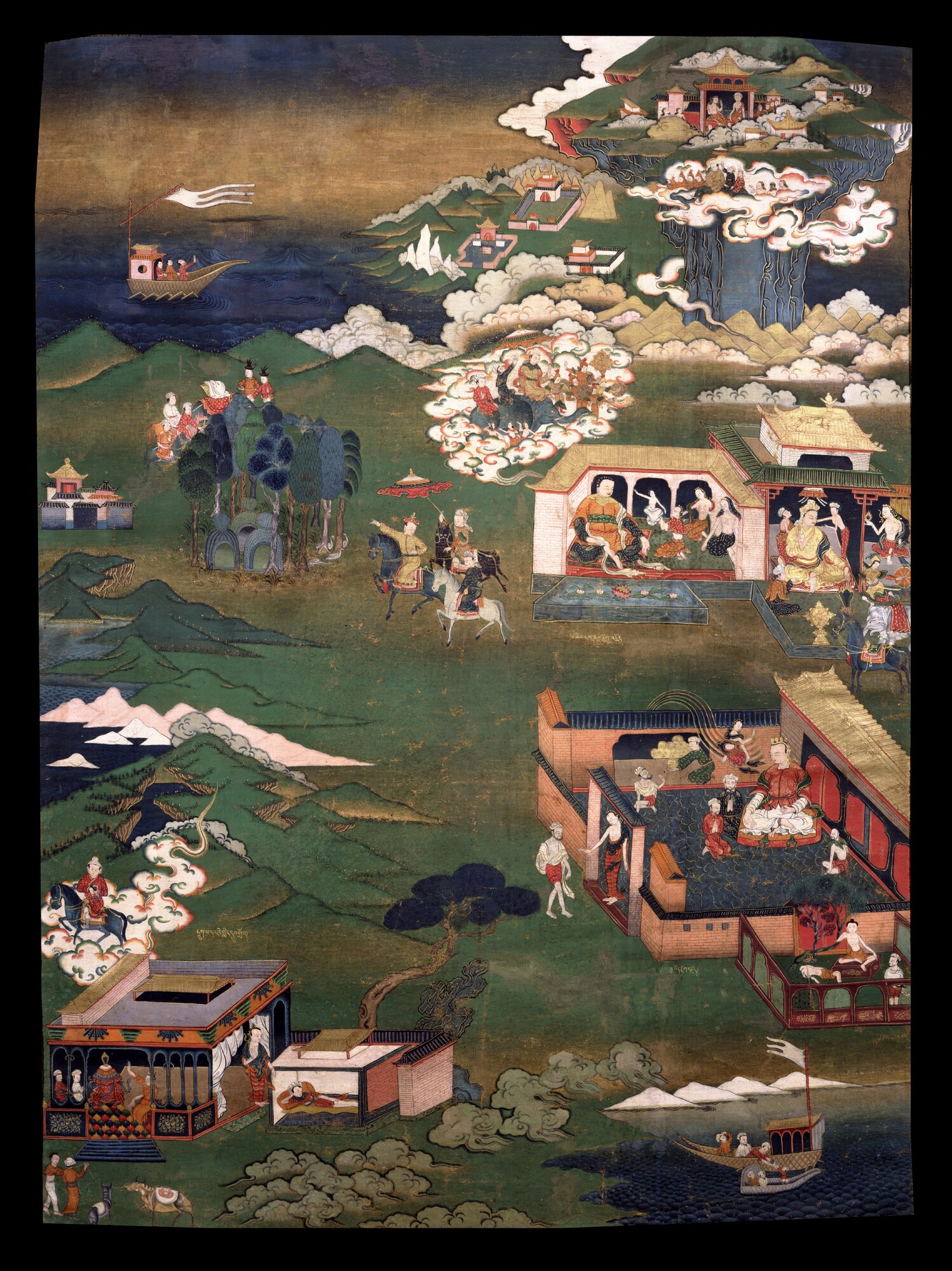
    Book Four: Mandala Four


    Sanskrit

    Index


    The main event and characters:


    the battle beyond the Sarayu appears
    to have taken place under the leadership of his remote descendant
    Sahadeva in the Middle Period of the Rigveda.

    Sahadevas son (referred to by his priest VAmadeva in IV. 15.7-
    10), who also appears to have been a participant, in the above battle
    beyond the Sarayu...Somaka

    SudAs's
    descendants Sahadeva and Somaka have the Kutsas and the
    VAmadevas as their priests.


    Elsewhere in Rg Veda as related family authors:

    Nodhas Gautama

    BRhaduktha, named in V.19.5, has the patronymic
    VAmadevya

    (author of X.54-56)


    X.88 Murdhanvan Vamadevya

    X.126 Amhomuk Vamadevya


    And the other contributors in Book Four:


    Purumilha and Ajamilha Sauhotra


    The first references to the Indus are in the middle upa-
    maNDalas (1.83.1) and in MaNDala IV (IV.30.12; 54.6; 55.3). There
    is, perhaps, a westward movement indicated even in the very identity
    of the composers of the hymns which contain these references: 1.83
    is composed by Gotama RAhUgaNa who does not refer to any river
    west of the Indus, while the references in MaNDala IV are by his
    descendants, the VAmadeva Gautamas, who also refer to two rivers
    to the west of the Indus (IV.18.8: 30.18).

    Thus, we have a clear picture of the westward movement of the
    Vedic Aryans from their homeland in the east of the Sarasvati to the
    area to the west of the Indus, towards the end of the Early Period of
    the Rigveda: IV.30.18 refers to what is clearly the westernmost point
    in this movement, a battle fought in southern Afghanistan on yonder
    side of Sarayu.


    Appears to be also the first mention of this place:

    RasA (IV. 43.6)


    As for the enemies:

    in all those cases, the references are general references to both
    Arya and DAsa enennies, and no specific persons identifiable as
    Aryas are named as such. In this unique reference (IV.30.18),
    however, we find two specific individuals named as Arya enemies.

    The reference to the battle beyond the Sarayu in IV.30.18
    refers to ArNa and Citraratha, both Aryas, who were killed in the
    battle by (the grace of) Indra.


    According to IV. 28.4, the Dasyus are a section among the
    DAsas.

    abrahma (prayerless): IV. 16.9.


    For Indra:

    Two entire hymns, namely 111.48
    and IV. 18, deal with the subject of his birth.


    This is very telling:


    AriStanemi TArkSya (1 hymn): X.178.

    The only hymns which have repetitions in common
    with X.178 are by VAmadeva Gautama:

    X.178.2: IV.23.10
    PRthvI bahule gabhire
    X.178.3: IV.38.10
    SavasA pahca kRSTIh sUrya iva
    jyotiSApastatAna.


    One finds Srnjaya and Devavata in:

    IV. 15.4


    Divodasa:


    IV. 26.3; 30.20

    Somaka is referred to as the son of Sahadeva (IV. 15.7-10).
    (SRnjaya and DevavAta are referred to in verse 4 of the hymn.)

    Sahadeva, a descendant of SudAs (as per all traditional
    information) is referred to as a contemporary in hymn 1.100; while his
    son Somaka is referred to as a contemporary in IV.15.


    One notices that none of the intervening Bharatas are present, not even Sudas. There is the trio of almost legendary patriarchs, and flash forward to the present.


    The
    BhRgus are credited in the Rigveda with the manufacture of Indras
    thunderbolt: in IV. 16.20, they are described as the manufacturers of
    Indras chariot.


    It appears to have the first mention of:

    Turviti and Vayya: IV. 19.6


    IV.42 is credited to Trasadasyu, who has no "Raja" title, although he calls himself one. The hymn is most likely an interpolation, as he lived later than Vamadeva, and perhaps it should have gone to Book One. It is in here before the Sauhotra hymns. His claim is:


    The seven ṛṣis were the protectors of this our (kingdom) when the son of Durgaha [Purukutsa] was in bonds...


    Strongly sensing interpolation about the Trksis:


    VAmadeva even calls Trasadasyu an
    ardhadeva or demi-god (IV.42.8, 9)

    In respect of IV.42.8-9, Griffith tells us that Grassmann banishes
    stanzas 8, 9 and 10 to the appendix as late additions to the hymn.

    IV.38.1 refers to Trasadasyu in the first verse; the rest of it is a Dadhikra hymn, with a few odd expressions such as:


    turayann ṛjipyo

    ṛñjan

    ṣīm ayodhīd


    Keep in mind "Trksi" with respect to "Tarksya" as mentioned above--the first being the eastern or Ayodhya tribe, the latter, their likely namesake, is an individual possibly Kasyapa.


    What is evident here is that Vamadeva is not the lineage head, but a follower of:


    gotamo rāhūgaṇaḥ

    who composed I.74-93. Nodhas Gautama has about another six hymns there. So a portion of Book One must be contemporary to Vamadeva's Book Four.

    Gotama must have been approximately contemporary to Sudas, so then "the Gautamas" would be like Sudas's sons, or in their generation. Vamadeva has been split or is not traveling with his pack--one presumes for a reason, but whether of his own or that of the compilers, we do not know.


    We just found Vasistha uses jotir/jyotisa about twice as much as his predecessors, and has a twelve-fold year that possibly implies the Adityas.

    There are multiple external reasons to think of a "new clock", and, we may be forced to live with the fact that there is one that defines itself and in so doing, may press the 2,000 B. C. E. mark; it may not be that far; we want to stay in "relative" terms, i. e., we can show a sequence which might vary in its exact dates by a few hundred years. Several of our sources are confident it goes to 3,000 B. C. E., but, for the time being, I put its upper bound at Rimush of Akkadia, around 2,270 B. C. E., mostly because we can find the occurrence of Drought, and multiple reasons for sour human relations.


    Astrology or Vedanga Jyotish is for some reason in the Yajur Veda. Vedangas are subjects that are sub-knowledges, i. e. mundane arts and sciences to be developed. Given its own internal evidence, it most likely is a tool to observe Precession from this point:


    The Sun begins moving northward at the winter solstice, which 4,000 years ago was when the Sun entered Shravishtha.


    Quote Vedic culture spanned a very long period of time, it appears at least from 4k B.C. to about 1k B.C. During this time the equinox seems to have been NOTED to drift against the stars, and thus the stars associated with the “first” position and the solstices and equinoxes were updated, up till the relative decline of knowledge in Kali-Yuga around 0B.C. at which point we became locked into thinking that the tropical measurements and the stars were identical, and Asvini seems to have been forever deemed the “first star” and the center point of Mula (beginning of sidereal Capricorn) is forever deemed (erroneously) to be the beginning of the Sun moving northward (uttarayana). Thus it seems that ancient Vedic Indians were aware of equinotical precession, but later lost their knowledge of it with the general decline of culture that occurred entering the “A.D.” historical era.

    So, yes, India listened to Alexandrian math and science and wound up with *part* of western astrology, minus the actual tropical system because it still tracks through the Days of the Moon.

    Of course, for various reasons, previous examinations of this subject did not delve so far into antiquity--the last post found a 650-year correction by some fairly simple arguments. This is easy to do, because you just deny conclusions--such as Aryan Invasion--and just look at the same information some famous author used, and then keep reminding yourself "this does not mean they lived in the Arctic region" or something like that.


    From a view favoring the date 1340 B. C. E.:


    Quote The Rgvedic hymn 1.164, on the cosmic times-wheel by sage Dirghatamas, speaks of a wheel of time, with a year consisting of twelve lunar months and 360 lunar days (RV 1 164.1) and starts the year with the autumn star Agni (Krittika, Alcyone, long. 59°.5) which on calculation gives a date c 2350 B C.

    In another Rgvedic hymn 3.99, which also mentions Krittika as the autumn star (c. 2350 B C.), sage Visvamitra worships 3339 (371 x9) devas and apparently refers to a period of 30 years consisting of 371 lunar months. This would give a year of 371 lunar days, working out to 365.19 solar days. Then, comes Vedangas.


    The full set of observations for this "zero point" are:


    1. The winter solstice in the beginning of Shravishtha, (divisional) ;
    2. The vernal equinox in 10 of Bharani;
    3. The summer solstice in the middle of Ashlesha, and
    4. The autumnal equinox in 3 20' of Vishakha.


    Even with relatively crude instruments, you would be able to measure this. However, long-term calculations carried out from this system are of course inaccurate. Even the later Siddhantas are not that great. Anything said, other than what is directly observed, should be considered imprecise.

    The above quotes may not withstand analysis--after all, we thought Krtikka was all about the Spring Equinox.

    Not sure how Visvamitra "apparently" refers to an equation--he either gives one and it works or not.

    We don't need to get it sorted right now, but, for the most part, it sounds like the "Vedanga" had started in a relatively early period of the Veda.

    Since, at the very least, observational astronomy in a spoken tradition must have been around well before anything that I, at least, think of as the Vedic time frame, then yes, I think we have to go to IVC Garhial right away. You would almost have to say that it was an ancient legend based on Draco, that physically had to adapt to Delphinus.

    The difference between the two cultures is time? New clock maybe??

    The harsh incongruity would be to ask ourselves if the Naksatras are really that old. It is not possible to determine if the Solstice at Dhanistha may have been an oral legend about a particular star, that the Vedanga later re-defined in Naksatra terms. Or, exactly how and when their exact division was given. Fortunately, the question about what stars are involved is answerable.

    The Naksatra is not a constellation, but, a 13 deg.20' arc based around a constellation or noteworthy star.


    This is slightly unfamiliar territory, since I have never had much call to refer to Book Four and I have no instinct about new mystical revelation or any clue why Vamadeva might be split from his lineage head.

    It just so happens that there is at least one pattern which someone has already found.

    This is coming from a different kind of thesis, but, it will home in on Vamadeva:


    2.8. THE DAWN-GODDESS IN THE RGVEDA
    The most important of Urvasi associations has been lost in most translations. This is
    with Usas, the goddess of the dawn and possibly the brhaddiva of v. 41. 19. In x. 96.2,
    Urvasi says that she has passed over like the first of the dawns, and this seems a mere
    simile. The problem then is to explain away the uso in 4, and this is done in many
    different ways, none convincing. The explanation I offer is that Urvasi has readied the
    status of an Usas...

    In x. 95. 8.9, we noted that the apsaras and her companions strip off their clothing; that
    was also the way in which Menaka and others seduced the sages. Quite remarkably, it is
    the goddess Usas who most often bares herself to the sight of men in this way. In i. 123.
    11, she reveals her body like a young woman decorated by her mother : avis tanvam
    krtiuse drse kam In i. 124.7 usa hasreva ni rinite apsah, she reveals her secret charms
    like a lascivious woman, or like a smiling one, as you take hasia. But in the same rk she
    goes towards men like a brotherless woman, mounting the throne, platform, or stage for
    the sake of wealth : abhrdteva pumsa eti pratici, gartarug iva sanaye dhandnam, where
    the meaning of gartaruk is not clear. Obviously the reference is to one who has no brother
    to make a match for her, hence must display herself upon some high place to collect a
    dowry. Perhaps v. 80.4-6 contain the oftenest repeated mention of this self-exposure of
    the dawn goddess, but her revealing her bossom and charms to men is quite common.
    Remarkably enough, this performance is seen often on Syro-Hittite seals (W. H. Ward :
    Sect Cylinders of Western Asia. chap. L) where the Indian humped bull is shown : at
    times as her pedestal. (Fig. 2.3) There is no shame attached to this : nodha ivavir akrta
    priyani, like a girl with yet immature breasts (nodha iva, after Grassmann's suggestion).
    We can understand the bewitching apsaras doing this, for it is her function to attract men.
    But why Usas?


    There are at least twenty one complete hymns dedicated to her, and she is
    important enough to be invited in the special sacrificial chants known as apri-hymns. In
    these hymns, with their rigidly fixed structure, Usas comes just after the opening of the
    divine doors, to be mentioned either together with the night (usasa-nakta) or in the dual,
    which would again mean the same pair. That is too high an honour for a mere witch, or
    one who behaves like a hetaera.

    She is the sun's wife on occasion, as in
    vii. 75.5 suryasya yosa, but perhaps his sister and also his mother iii. 61.4 svarjananti.
    Yet this is not enough to explain her importance. In i. 113.19, she is the mother of all the
    gods, a numen of Aditi : mata devanam aditer anikam. Her real status slips out in a most
    important reference, which is in a hymn dedicated to Agni (iv. 2 . 15).


    adha matur usasa sapta viprah jayemahi prathma vedhaso nrn
    divas-putra angiraso bhavema adrim rujema dhaninam sucantah.

    "We seven sages shall generate (or be born) from mother Usas, the first men sacrificers;
    we shall become Angirasas, sons of heaven, we shall burst the rich mountain, shining
    forth."

    Usas was, therefore, a high mother goddess, literally Mater Matuta. How did she
    come to lose this position ?

    Vasistha says abhiid usa indratama maghoni (vii. 79.3), where the aorist past tense
    seems to me to indicate that Usas had once been but was no longer superlatively Indra's
    equal. The support for this is from the tale of conflict between the two deities. The
    mention is not isolated, for we find it in ii. 15.6, x.138.5, x.73.6, but with greatest detail
    in iv. 30.8-11 :


    etad ghed uta viryam indra cakartha paunsyam
    striyam yad durhanayuvam vadhir duhitaraw divah (8)
    divas cid gha duhitaram mahan mahiyamanam; ussam indra sam pinak (9)
    apa usa anasah sarat sampistad aha bibhyusi; ne yat sim sisnathad vrsa (10)
    etad asya anah saye susampistam vipasya; sasara sim parvatah (11)

    ‘This heroic and virile deed didst thou also do, O Indra, that thou didst strike down (or
    kill) the evil-plotting woman, the daughter of heaven. Usas, verily the daughter of
    heaven, the great, to be regarded as great didst thou crush, O Indra. Usas fled from the
    shattered wagon in fright, when the Bull (Indra) had rammed her. Her wagon lay
    completely smashed to bits on the Vipas (river), she (herself) fled to the furthest
    distance".

    There is no reason or explanation given for this conflict...


    In 11.15.6, the reference is to a mythical clash between Indra and
    USas on the banks of a river (Griffiths translation: With mighty power
    he made the stream move upward, crushed with his thunderbolt the
    car of USas.). And which is this stream or river? No guesswork is
    required: the Rigveda refers to this myth in one more hymn,
    Vl.30.11, as well (Griffiths translation: So there this car of USas lay,
    broken to pieces, in VipAS, and she herself fled away.).


    His displacement of Varuna is just
    barely to be seen in a dialogue (iv. 42). Indra and the older chief god Tvastr (whose
    position I have traced elsewhere) have no such open conflict at this.


    Above, Usas has:

    the wagon
    (anas)

    She is ascribed only
    an ordinary horse-chariot (ratha) in most later hymns. The ox-cart, like the archaism sim,
    must represent great antiquity. At the same time, she is an ancient goddess in spite of her
    virginity and youth, which are preserved by her being born again and again : punah punar
    jaya-mana purani (i.92.10).

    in i.72.5, it is clear that the father is the sky-god,
    while Usas is emphatically the daughter of heaven as both commentators and translators
    point out here; the progeny are the Angirasas. In iii. 31.1. seq. we have much the same
    theme, as also in x. 61.7, while in i. 164.33, the daughter has become the Earth.


    Her connection with later hetaerism may
    be seen from Sayana's comment upon the word vra, which he takes as a name of Usas, as
    for example in i. 121.2, and iv. 1.16; in the latter hymn, it would make much (better sense
    to take Usas as the cow-mother, the goddess whose thrice seven secret names were
    known only to the initiates.

    There is only one more reference to Urvasi in the Rgveda (iv. 2.18; AV. xviii. 3.23),
    just after the striking mention of Usas with the seven seers:


    a yutheva ksumati pasvo akhyad devanam yaj janim anty ugra
    martanam cid urvasir akrpran vrdhe cid arya uparasyayoh

    The Urvasis are here in the plural; ayu can again be taken as the legendary son, or some
    adjective, Grassmann makes Urvasi also into an abstraction 'der Menschen heisse
    Wunsche', but seeing that the Usas do also occur in the plural, and that Urvasi had
    become an U§as before finishing with Pururavas, there is no reason
    why we should not take the word as still referring to the nymphs. The proper translation
    of the second line, therefore, would be something like "The Urvasis have taken pity upon
    mortals, even to helping the later kinsman Ayu". Presumably, the son and successors of
    Aila Pururavas were not sacrificed...

    The only male
    god with wings as well as arms is explicitly Visvakarman in x. 81.3. There is a winged
    demon suparnayatu against which the Vasisthas pray for protection in vii. 104.22. But i.
    22.11 hopes that the gods' wives would be with unbroken wings, acchinna-patrah
    sacantam. That the dawns, or the dawn-night pair were winged seems quite clear from
    two prayers in distress: i. 105.11 suparna eta asate and ma mam ime patatrini vi
    dugdham (i. 58.4). These goddesses reduce man's life day by day, and so are deathgoddesses themselves as probably were also the terrifying bird-headed Indus terracottas.
    All the more natural if, as mother-goddess, one of them were to cause the death of her
    consort in a sacrifice...


    dearly her husbands in iv. 43.6 [ambitious; hymn addresses the Aswins, lords of Surya]

    RV. i. 167.4, where the goddess Rodasi is common to all the Maruts, under the title of
    sadharani (plus the incomprehensible yavya= fertile?). Whether this indicates fraternal
    polyandry (as I incline to think) or a form of prostitution is not clear; the question is
    further complicated by Rodasi (with a displaced accent) being elsewhere equated to the
    combination of earth and sky, hence two goddesses rather than one

    The bridegroom in x. 85.36 takes his bride by the hand at the crucial stage of the
    wedding, yet in the very next rk the woman is spoken of as she who receives the seed of
    (many) men : yasyam bijam manusya vapanti

    Men seem always to have monopolized ploughing (iv. 57)


    So in that view, we find something happened to Usas at the Beas River--and, we are anticipating it is the heights of this thing that are some kind of quest resulting in Manali.

    In the more normative view of Indra, Vamadeva is the first to take him west of the Indus.


    I.79, v. 10 sounds normal for yoga:

    O Gotama, desiring bliss...


    I am not sure we have scouted for precursors of Avadhut, such as in I.80:


    maṛ́tvām̆ ávadhīr

    Marut-girt


    each thing both fixed and moving shook,
    E' en Tvastar trembled at thy wrath...


    yā́m átharvā mánuṣ pitā́ dadhyáň dhíyam átnata
    tásmin bráhmāṇi pūrváthéndra ukthā́ sám agmatā́rcann ánu svarā́jyam

    Still as of old, whatever rite Atharvan, Manus sire of all,
    Dadhyach performed, their prayer and praise united in that Indra meet, lauding his own imperial sway.


    Further in Gotama's works, I.83:


    yajñáir átharvā prathamáḥ pathás tate tátaḥ sū́ryo vratapā́ vená ā́jani
    ā́ gā́ ājad ušánā kāvyáḥ sácā yamásya jātám amṛ́taṃ yajāmahe

    Atharvan first by sacrifices laid the paths then, guardian of the Law, sprang up the loving Sun.
    Usana Kavya straightway hither drove the kine. Let us with offerings honour Yama's deathless birth.

    I.84:


    Struck nine-and-ninety Vrtras dead.
    He, searching for the horse's head, removed among the mountains, found

    At Saryanavan what he sought.
    Then verily they recognized the essential form of Tvastar's Bull,

    Here in the mansion of the Moon.
    Who yokes to-day unto the pole of Order the strong and passionate steers of checkless spirit,

    With shaft-armed mouths, heart-piercing, health-bestowing?
    Long shall he live who richly pays their service.


    In the next hymn, he equates Rudras to Marut Gana, sons of Prsni.

    When Tvastar deft of hand had turned the thunderbolt, golden, with thousand edges, fashioned more skilfully,
    Indra received it to perform heroic deeds. Vrtra he slew, and forced the flood of water forth.


    In the next hymn:


    Conceal the horrid darkness, drive far from us each devouring fiend.
    Create the light for which we long.

    Jyotir opposes Tamas.


    He invokes together Pusan and Vishnu.

    It is in the "sam nah" style like the one we saw from Vasistha:


    Be Mitra gracious unto us, and Varuna and Aryaman:
    Indra, Brhaspati be kind, and Visnu of the mighty stride.

    víṣṇur urukramáḥ


    a "mighty" sage:

    dákṣaḥ sacate kavíḥ


    Sounds conciliatory:


    Like tints that deck the Post at sacrifices, Heaven's Daughter hath attained her wondrous splendour.


    The Gotamas have praised Heaven's radiant Daughter, the leader of the charm of pleasant voices.

    Bending her looks on all the world, the Goddess shines, widely spreading with her bright eye westward.
    Waking to motion every living creature, she understands the voice of each adorer.


    Allright. To visually comb Vamadeva's Mandala Four, we see this kind of Lion:


    siṃhó ná bhīmá


    and this kind of self-reference:


    ghorā́ yád arya sámṛtir bhávāty ádha smā nas tanvo | bodhi gopā́ḥ

    When, Faithful One, the dread encounter cometh, then be thou the Protector of our body.

    Further the holy thoughts of Vamadeva be thou a guileless Friend in fight for booty.


    with the identity reinforced in IV.4:


    Through words and kinship I destroy the mighty: this power I have from Gotama my father.


    Oh. So, the personalization given here is very destructive.

    They are still countering this kind of fort:


    púro dā́sīr


    And "they" are mentioned also as:


    Indra, Lover of the Song,
    Thou wroughtest when the Soma flowed.
    Indra, the Gotamas who bring thee praises have grown strong by thee.


    Originally, the primordial sages are Vipra in IV.2:


    May we, seven sages first in rank, engender, from Dawn the Mother, men to be ordainers.
    May we, Angirases, be sons of Heaven, and, radiant, burst the wealth-containing mountain.

    As in the days of old our ancient Fathers, speeding the work of holy worship, Agni,
    Sought pure light and devotion, singing praises; they cleft the ground and made red Dawns apparent.

    Gods, doing holy acts, devout, resplendent, smelting like ore their human generations.
    Enkindling Agni and exalting Indra, they came encompassing the stall of cattle.

    Strong One! he marked them-and the Gods before them-like herds of cattle in a foodful pasture.
    There they moaned forth their strong desire for mortals, to aid the True, the nearest One, the Living.

    We have worked for thee, we have laboured nobly-bright Dawns have shed their light upon our worship-
    Adding a beauty to the perfect Agni, and the God's beauteous eye that shines for ever.


    Then we see Sapta Rishi in the Trasadasyu interpolation.


    They are definitely trying to get in your house in IV.7:


    HERE by ordainers was this God appointed first Invoker, best at worship, to be praised at rites:
    Whom Apnavana, and the Bhrgus caused to shine bright-coloured in the wood, spreading from home to home.

    Vivasvan's envoy living men have taken as their ensign, swift,
    The ruler over all mankind, moving like Bhrgu in each home.

    Him the intelligent have they placed duly as Invoking Priest,
    Welcome, with sanctifying flame, best worshipper, with sevenfold might;

    In his Eternal Mothers, in the wood, concealed and unapproached,
    Kept secret though his flames are bright seeking on all sides, quickly found.


    Puranic Aditi shrugs off Indra's behavior as irrelevant. The story is indicated here, but I am not sure about the exact words, and the intent may be different in IV.18:


    THIS is the ancient and accepted pathway by which all Gods have come into existence...


    He bent his eye upon the dying Mother: My word I now withdraw. That way I follow.
    In Tvastar's dwelling Indra drank the Soma, a hundredworth of juice pressed from the mortar.


    Deeming him a reproach, his mother hid him, Indra, endowed with all heroic valour.
    Then up he sprang himself, assumed his vesture, and filled, as soon as born, the earth and heaven.

    With lively motion onward flow these waters, the Holy Ones, shouting, as' twere, together.
    Ask them to. tell thee what the floods are saying, what girdling rock the waters burst asunder.

    Are they addressing him with words of welcome? Will the floods take on them the shame of Indra?
    With his great thunderbolt my Son hath slaughtered Vrtra, and set these rivers free to wander.

    I cast thee from me, mine,-thy youthful mother: thee, mine own offspring, Kusava hath swallowed.
    To him, mine infant, were the waters gracious. Indra, my Son, rose up in conquering vigour.

    Thou art mine own, O Maghavan, whom Vyamsa struck to the ground and smote thy jaws in pieces.
    But, smitten through, the mastery thou wonnest, and with thy bolt the Dasa's head thou crushedst.

    The Heifer hath brought forth the Strong, the Mighty, the unconquerable Bull, the furious Indra.
    The Mother left her unlicked Calf to wander, seeking himself, the path that he would follow.

    Then to her mighty Child the Mother turned her, saying, My son, these Deities forsake thee.
    Then Indra said, about to slaughter Vrtra, O my friend Vishnu, stride full boldly forward.

    Who was he then who made thy Mother widow? Who sought to stay thee lying still or moving?
    What God, when by the foot thy Sire thou tookest and slewest, was at hand to give thee comfort?

    In deep distress I cooked a dog's intestines. Among the Gods I found not one to comfort.
    My consort I beheld in degradation. The Falcon then brought me the pleasant Soma.


    There is someone in an Ant Hill other than Valmiki:


    Lord of Bay Steeds, thou broughtest from the ant-hill the unwedded damsel's son whom ants were eating.
    The blind saw clearly, as he grasped the serpent, rose, brake the jar: his joints again united.


    There turns out to be a substantial amount of eulogy based on Rbhus, the Year, and Tvastr:


    The Gods' expert artificer was Vaja, Indra's Rbhuksan, Varuna's was Vibhvan.

    Not without toil are Gods inclined to friendship.


    Next they are revered by goddess Dhisana:

    Rbhus, rejoice together with the Rtus.

    even the two elder-Vajas.


    Rbhus are:

    gnāḥpatnībhiḥ

    Children of Sudhanvan


    and:

    Since by dexterity and skill as craftsmen ye made the single chalice to be fourfold...


    Ye, whom your artist skill hath raised to Godhead have set you down above in heaven like falcons.
    So give us riches, Children of Sudhanvan, O Sons of Strength; ye have become immortal.


    IV.38-40 are mainly about Dadhikras.


    IV.51:


    O Goddesses, is this your car, I ask you, ancient this day, or is it new, ye Mornings,
    Wherewith, rich Dawns, ye seek with wealth Navagva, Dasagva Angira, the seven-toned singer?

    Which among these is eldest, and where is she through whom they fixed the Rbhus' regulations?
    What time the splendid Dawns go forth for splendour, they are not known aparto alike, unwasting.

    Blest were these Dawns of old, shining with succour, true with the truth that springs from holy Order;
    With whom the toiling worshipper, by praises, hymning and lauding, soon attained to riches.


    "Rbhu's regulations" are probably summarized in IV.52 as:

    ṛta-varī

    Thinking of thee, O joyous One, as her who driveth hate away,


    Usas seems to be frequently addressed with Order in the translations.


    Rbhus and Rtus are different groups but both subject to Rta.

    It is apparent that, as they are mentioned in Book Six, have few hymns in the next ones, Rbhus have a section or are a subject with Vamadeva. There is a Rbhus section, a Dadhikra section, and I suppose multiple Usas sections. It does not attempt to compete on the Adityas--it has "Indravishnu" twice. As they are named in VI.50:


    May Rudra and Sarasvati, accordant, Visnu and Vayu, pour down gifts and bless us;
    Rbhuksan, Vaja, and divine Vidhatar, Parjanya, Vata make our food abundant.


    Vamadeva's only expression of Vishnu outside of the story:


    kathā́ mahé puṣṭimbharā́ya pūṣṇé kád rudrā́ya súmakhāya havirdé
    kád víṣṇava urugāyā́ya réto brávaḥ kád agne šárave bṛhatyái

    How to great Pusan who promotes our welfare,-to honoured Rudra what, who gives oblations?
    What sin of ours to the far-striding Visnu, what, Agni, wilt thou tell the Lofty Arrow.


    That seems semi-coherent, to me, at least, if it is plausible that Vasistha has more on Vishnu, Vamadeva has the Rbhus and Usas.


    The regular Vedic expression in IV.53:


    Savitar the God, the sapient Asura


    Vamadeva ends in a somewhat remarkable way. This is not quite the Churning of the Ocean, but, it is at least the Ocean of Waves of Honey Doctrine in IV.58:


    samudrā́d ūrmír mádhumām̆


    having as holy oil:

    ghṛtásya


    I think this would be really difficult to give an external meaning. It has become much easier to say he must be talking about a yoga experience.

    It is hard not to read this as what in Buddhism we would like to call Melted Bodhicitta. On the other hand, it also states what the enemies are ignorant of:


    FORTH from the ocean sprang the wave of sweetness: together with the stalk it turned to Amrta,
    That which is holy oil's mysterious title: but the Gods' tongue is truly Amrta's centre.

    Let us declare aloud the name of Ghrta, and at this sacrifice hold it up with homage.
    So let the Brahman hear the praise we utter. This hath the four-horned Buffalo emitted.

    Four are his horns, three are the feet that bear him; his heads are two, his hands are seven in number.
    Bound with a triple bond the Steer roars loudly: the mighty God hath entered in to mortals.

    That oil in triple shape the Gods discovered laid down within the Cow, concealed by Panis.
    Indra produced one shape, Surya another: by their own power they formed the third from Vena.

    From inmost reservoir in countless channels flow down these rivers which the foe beholds not.
    I look upon the streams of oil descending, and lo! the Golden Reed is there among them.

    Like rivers our libations flow together, cleansing themselves in inmost heart and spirit.
    The streams of holy oil pour swiftly downward like the wild beasts that fly before the bowman.

    As rushing down the rapids of a river, flow swifter than the wind the vigorous currents,
    The streams of oil in swelling fluctuation like a red courser bursting through the fences.

    Like women at a gathering fair to look on and gently smiling, they incline to Agni.
    The streams of holy oil attain the fuel, and Jatavedas joyfully receives them.

    As maidens dock themselves with gay adornment to join the bridal feast, I now behold them.
    Where Soma flows and sacrifice is ready, thither the streams of holy oil are running.

    Send to our eulogy a herd of cattle bestow upon us excellent possessions.
    Bear to the Gods the sacrifice we offer the streams of oil flow pure and full of sweetness.

    The universe depends upon thy power and might within the sea, within the heart, within all life.


    This one gets a lot of Sayana commentary. He is on the level of external symbols. In general we agree but we say it also has an inner meaning:


    that which is the secret name of clarified butter is the tongue of the gods, the navel of ambrosia.


    Quote samudra is the ocean of ghī, from which it rises as its wave, and, having so risen, it pervades immortality by Agni, as the life of the world with whom it is combined.

    That which is the secret name, i.e., the material of sacrifice commonly called ghī is, in the mantras of the Veda, designated the tongue of the gods.

    Since ghī is the secret name for Soma, the object for which it is solemnized is Soma.

    the four cardinal points of the horizon; morning, noon, evening; the two heads of yajña are two particular ceremonies termed brahmaudanam and pravargya; of Āditya, day and night; the seven hands of yajña are the seven metres; of Āditya, the seven rays, or the six seasons and their aggregate, or the year, the seventh

    the three forms or states in which the ghī was deposited in the cow were milk, curds and butter, of which Indra engendered jajāna, milk, Sūrya butter, and the god (devāsaḥ) fabricated (tatakṣuḥ) curds from the shining, venāt, that is Agni; another rendering is devāsaḥ dvijātayaḥ, the twice-born

    these words originate from the ocean of the water of faith, purified by the metres and other supplementary portions of the Vedas, amidst which words the ṛṣis see the golden form of Agni, for Agni is the deity presiding over speech, or holy texts

    purified by the mind that is seated in the heart

    “The whole world, (Agni), finds an asylum in your effulgence, whether it be in the ocean, in the heart (of man), in the life (of living beings), in the assemblage of the waters, or in warfare; may we attain the sweet-flavoured wave which is established in your (essence).”

    the purport is to identify all things with Agni, present in the ocean as submarine fire, in men as vaiśvānara, an etymological pun from viśva, all and nara, man; in life, āyuṣi, as the vital principle, or āyus. may mean food, anna, when the digestive fire is intended; in the assembled waters or the firmament, as lightning; in war, as the metaphorical fire of valour; that sweet-flavoured wave: ūrmiḥ ya ābhṛta


    He is not apparent in all translations:


    venād < venāt < vena

    “Vena.”


    This name is not well-remembered:


    Vetasa (वेतस).

    2) The citron.

    3) Name of Agni.

    the araṇi, the stick of vetasa of aśvattha, or other trees

    goat willow (vetasa)

    Vetasa is a medium sized tree, growing 10-30 ft. in height. It is found in Kashmir, Persia, Iran and the North-West Frontier Provinces. The plant grows near water and its yellowish red flowered, drooping infloresence presents a beautful look to the river banks.


    The other translation of the hymn tells us:


    We celebrate the name Ghṛta...


    which actually appears in the list of Devatas:


    agniḥ sūryo vā'po vā gāvo vā ghṛtaṃ vā


    whereas the expected name "Ghrtaci" is overlooked in IV.6.


    Rbhus are very unusual--"Rbhuvan and brothers". Unusually for Rg Veda, their deeds are recalled in a Puranic fashion, similar and repetitively. They are repeatedly called sons of Sudhanva. From general information:


    ...they are supposed to take their ease and remain idle for twelve days [the twelve intercalary days of the winter solstice] every year in the house of the Sun [Agohya]; after which they recommence working


    In the Rg Veda, they are described as a class having birth.

    They are also used by Dirghatamas Aucathya and in I.161:


    Ṛbhus are identified in this and following hymns with the rays of the sun, as the instruments of the rain and the causes of fertility.

    Also in I.110.


    Kutsa is a kinsman of Ṛbhus of a former period


    Working on Tvastr's work:


    that ladle for the sacrificial viands which the Asura had formed single, you made fourfold.

    They have a prior hymn in III.60, are named in Book Six, and also used as maker of Maruts.


    Quite problematic is the consistent--almost every time--description of Rbhus as sons of Sudhanvan, who is a lacuna.


    Or, he has numerous Puranic versions, but little that gives the origin of Sudhanvan or "Archer":

    4) [v.s. ...] of Tvaṣṭṛ or Viśva-karman, [cf. Lexicographers, esp. such as amarasiṃha, halāyudha, hemacandra, etc.]

    5) [v.s. ...] of an Āṅgirasa, [Śatapatha-brāhmaṇa; Mahābhārata]


    There is also in IV.40:

    Jiṣṇu, the son of Aṅgiras


    The Rbhus weird interaction with Tvastr is noted on a page of Contradictions in I.161:


    ...when Twashtri observed the one ladle become four, he was immediately lost amongst the women. When Twashtri said, Let us slay those who have profaned the ladle, (designed) for the drinking of the gods; then they made us of other names for one another, as the libation was poured out…


    "Visvakarman" may refer to Tvastr himself, or, to his surviving son, such as in Downson's Dictionary.


    Taittiriya Samhita:


    "This universe was formerly waters, fluid On
    it; Prajapati, becoming wind, moved; He saw this(earth). Becommg
    a boar, he took her up. Becoming Visvakarman, he wiped the
    moisture (from) her. She extended. She became the extended one
    (Prthvi). From this the earth derives her designation as 'the
    extended one'."

    with Ghrtaci:

    Brahma Vaivartta Purana attributes the origin of some of the mixed
    castes to her issue by the sage Visvakarman.

    Second Saubhari:

    A daughter of King Gadhi, wife of the brahmana Rcika, mother
    of Jamadagni and grandmother of Parasurama. She was of the
    Kusika race, and is said to have been transformed into the
    Kausiki river. (see Rcika and Visvamitra)

    Vidhatr 'Creator.' A name of Brahma, of Vishnu, and of Visvakarma.


    Visvakarman:

    ...is described in
    two hymns of the Rgveda as the one "all-seeing god, who has on
    every side eyes, faces, arms and feet, who, when producing
    heaven and earth, blows them forth (or shapes them) with his
    arms and wings; the father, generator, disposer, who knows all
    worlds, gives the gods their names, and is beyond the
    comprehension of mortals". In these hymns also he is said to
    sacrifice himself or to himself.

    In his creative capacity he is sometimes designated Prajapati.
    He also has the appellations Ka.ru, 'workman'; Taksaka,
    'woodcutter'; Devavardhika, 'the builder of the gods'; Sudhanvan,
    'having a good bow'.


    A version of him in a Puranic descent is such as:


    Pariksit I the eldest, Jahnu and Sudhanvan. The account
    deals first with Sudhanvan's descendants, an offshoot, in which was Vasu who conquered and founded anew the kingdoms of Cedi and Magadha.

    being the origin of:

    Kusa, Yadu, Maruta


    also saying:

    Ksemadhanvan of Ayodhya as Sudhanvan


    Similar hymns, probable copies are in Atharva Veda.

    XII.1:

    60. She whom Visvakarman (the creator of all) did search out by means of oblations, when she had
    entered the surging (flood of the) atmosphere, she, the vessel destined to nourish, deposited in a secret
    place, became visible (to the gods) and the (heavenly) mothers.
    61. Thou art the scatterer of men, the broadly expanding Aditi that yields milk according to wish. What is
    wanting in thee Pragâpati, first-born of the divine order (rita), shall supply for thee


    XIII.1:

    14. Rohita arranged a sacrifice for Visvakarman; from it these brilliant, qualities have come to me. Let
    me announce thy origin over the extent of the world!

    18. O Vâkaspati, the five seasons that we have, which have come about as the creation of Visvakarman

    In RV:

    Visvakarman, 'all-creating', appears as the name of an independent deity to whom two hymns (x. 81. 82)
    are addressed.

    From the Rbhus' own hymns:


    1. HE who sate down as Hotar-priest, the Rsi, our Father, offering up all things existing,-
    He, seeking through his wish a great possession, came among men on earth as archetypal.
    2 What was the place whereon he took his station? What was it that supported him? How was it?
    Whence Visvakarman, seeing all, producing the earth, with mighty power disclosed the heavens.
    3 He who hath eyes on all sides round about him, a mouth on all sides, arms and feet on all sides,
    He, the Sole God, producing earth and heaven, weldeth them, with his arms as wings, together.
    4 What was the tree, what wood in sooth produced it, from which they fashioned out the earth and
    heaven?
    Ye thoughtful men inquire within your spirit whereon he stood when he established all things.
    5 Nine highest, lowest, sacrificial natures, and these thy mid-most here, O Visvakarman,
    Teach thou thy friends at sacrifice, O Blessed, and come thyself, exalted, to our worship.
    6 Bring thou thyself, exalted with oblation, O Visvakarman, Earth and Heaven to worship.
    Let other men around us live in folly here let us have a rich and liberal patron.
    7 Let us invoke to-day, to aid our labour, the Lord of Speech, the thought-swift Visvakarman.
    May he hear kindly all our invocations who gives all bliss for aid, whose works are righteous


    also:

    2 Mighty in mind and power is Visvakarman, Maker, Disposer, and most lofty Presence.
    Their offerings joy in rich juice where they value One, only One, beyond the Seven Rsis.

    the Deities' narne-giver, him other beings seek for information.


    Rbhu to us is Indra freshest in his might

    Indra, the Rbhus' Lord, I invocate for aid, the Rbhus, Vajas, Maruts to the Soma draught.


    Another version of their main achievement:


    Tvastar, when he viewed the four wrought chalices, concealed himself among the Consorts of the
    Gods.
    5 As Tvastar thus had spoken, Let us slay these men who have reviled the chalice, drinking-cup of Gods,
    They gave themselves new names when Soma juice was shed, and under these new names the Maiden
    welcomed them


    Dynamics:


    3 Friendship with Indra have the Rbhus, fully gained: grandsons of Manu...


    Descent from Angiras is only found in Brihadaranyaka Upanishad:


    1. Then Bhugyu Lahyayani asked. 'Yagnavalkya,' he said, 'we wandered about as students, and came to
    the house of Patanikala Kapya. He had a daughter who was possessed by a Gandharva. We asked
    him,'Who art thou?' and he (the Gandharva) replied: 'I am Sudhanvan, the Angirasa.'


    In the modern Dictionary:


    kabandha atharvaṇa Is mentioned in the Brhadāranyaka Upanisad along with Sudhanvan Añgirasa, as a teacher, but is semi-mythical. His son was Vicārin Kābandhi.

    suhotra, name of a son of Sudhanvan


    Is that enough to say Sudhanvan <--> Bharadvaja?

    Maybe he was a Gandharva that possessed a girl. Gandharvas are usually Archers.

    We are told that Gandhari, the place, is mentioned one time in:

    1.126.7


    And that Gandharva, the creature, is a redaction in:


    III.38.6


    because the Vamadevas somehow locked down material belonging to the Visvamitras that must have been misrepresented in the first iteration of the Rg Veda--Book Four was after Three because it was longer. Later Visvamitras must have convinced the Bharatas or "Vyasa" that something was wrong, and added the Afghan name in the process of re-working Book Three.

    As to what that means, whether it was something intentionally done since Gotama's time, I have no idea. Maybe they really are Vamadeva's. I am not sure how you abscond with another family's New Praise even temporarily. That is what it says in Aitareya Brahmana. To appearances' sake, this is one case where it does seem that "Gandharva" most likely is an anachronism, and so the hymn is newer or has been edited than those in Book Three.


    Gandharva would then show up in Book One:

    1.22.14; 163.2


    which are from Kaksivan and Dirghatamas.


    The area and what Talageri thinks is happening includes:


    (the SohAn and HAro,
    northeastern tributaries of the Indus, in the extreme north of the
    Punjab and northwest of Kashmir) and SaryaNAvAn (a lake in the
    vicinity of these two rivers)

    In another place, the best Soma is said to be growing on the
    MUjavat mountains. The MUjavat tribes are identified (Atharvaveda
    V-XXII-5, 7, 8, 14) with the GandhArls.

    From Sarvarkar:

    The Vidyadharas, Apsaras,
    Yakshas, Rakshas, Gandharvas and Kinnaras were not all or
    altogether inimical to the Aryans as at times they are mentioned as
    being benevolent and good-natured folks.


    At no point can we define enemies by race/tribe/nation, at all points we can define them by attitude and way of life.


    Book Four focuses the Rbhus, which is complex with possibly two Visvakarmans. As said in Epic Mythology:


    In R 4, 40, 38, however, Visvakarman builds "the house of V a i n a t e y a " beside the R e d Sea.

    The Seven Seers are the most important group of Devarsis. Like the Devas they have their maids, Devarsikanyas, nymphs who welcome the Devarsis to heaven (13, 107, 130).

    In R 5, 20, 13, r u p a k a r t a s a V i s v a k r t m u s t b e ViSvakarman.


    As to the birth of Rbhus, from Epics:


    Prahlada appears as deciding a dispute of Virocana with a Muni (Sudhanvan).

    The sons of the other two ancestors of the human race vary. Angiras, to whom the genealogy of 1, 66, 5 gives but three sons, here has eight, Brhaspati, etc. to Sudhanvan (who is "even better than Virocana", with whom he converses, 5, 35, 5f.).


    and the page for Vibhu:

    They carried the luminous power of knowledge to this world, which knowledge pervaded the world as nectar. Ribhu or Ribhukshan was skillful at handling knowledge; Vibhu or Vibhawa was skillful in pervading and diffusing, and Vaja handled embodied plenitude with similar skill; all three dwelled in the solar-region and are considered to be the rays of the sun.


    Aitareya Brahmana has them mediating between Visvedevas and Savitar:


    'Let Vena here impel those born of Prishni'


    From Brahmanda Purana:


    Atharvan + Pathyā, the daughter of Manu = Dhrsni


    107. Sudhanvan was the son of Dhṛṣṇi. Ṛṣabha was the son of Sudhanvan. Rathakāras (? Charioteers) are remembered as the Devas. They are well renowned as Ṛbhus.


    Vena is a Bhargava, who appear to have this split in History:

    It must be noticed that Cyavana's family and Usanas-Sukra's family appear to have occupied different regions. Cyavana is
    always connected with the west of India, the country around the Gulf of Cambay, in or near Saryati's territory Anarta (Gujarat) as shown by the story of his marrying Sukanya, and by the statement that he performed austerities near the Vaidurya Mts
    (the west portion of the Satpara range) and the R. Narmada. Usanas-Sukra is connected rather with the central region of
    N. India.


    Significantly there is Vena in IV.58:


    trídhā hitám paṇíbhir guhyámānaṃ gávi devā́so ghṛtám ánv avindan
    índra ékaṃ sū́rya ékaṃ jajāna venā́d ékaṃ svadháyā níṣ ṭatakṣuḥ


    Usually the right questions were asked by Aurobindo:


    Quote "Dhanwan" in this name does not mean "bow" but the solid or desert field of Matter otherwise typified as the hill or rock out of which the waters and the rays are delivered.

    The Ribhus, it has been suggested, are rays of the Sun. And it is true that like Varuna, Mitra, Bhaga and Aryaman they are powers of the solar Light, the Truth. But their special character in the Veda is that they are artisans of Immortality. They are represented as human beings who have attained to the condition of godhead by power of knowledge and perfection in their works. Their function is to aid Indra in raising man towards the same state of divine light and bliss which they themselves have earned as their own divine privilege. The hymns addressed to them in the Veda are few and to the first glance exceedingly enigmatical; for they are full of certain figures and symbols always repeated. But once the principal clues of the Veda are known, they become on the contrary exceedingly clear and simple and present a coherent and interesting idea which sheds a clear light on the Vedic gospel of immortality.

    The Ribhus are powers of the Light who have descended into Matter and are there born as human faculties aspiring to become divine and immortal. In this character they are called children of Sudhanwan,1 a patronymic which is merely a parable of their birth from the full capacities of Matter touched by the luminous energy. But in their real nature they are descended from this luminous Energy and are sometimes so addressed, “Offspring of Indra, grandsons of luminous Force.” For Indra, the divine mind in man, is born out of luminous Force as is Agni out of pure Force, and from Indra the divine Mind spring the human aspirations after Immortality.

    For Twashtri, the Framer of things, has given man originally only a single bowl, the physical consciousness, the physical body in which to offer the delight of existence to the gods. The Ribhus, powers of luminous knowledge, take it as renewed and perfected by Twashtri’s later workings and build up in him from the material of the four planes three other bodies, vital, mental and the causal or ideal body.

    Because they have made this fourfold cup of bliss and enabled him thereby to live on the plane of the Truth-consciousness they are able to establish in the perfected human being the thrice seven ecstasies of the supreme existence poured into the mind, vitality and body. Each of these they can give perfectly by the full expression of its separate absolute ecstasy even in the combination of the whole.

    The Ribhus have power to support and contain all these floods of the delight of being in the human consciousness; and they are able to divide it in the perfection of their works among the manifested gods, to each god his sacrificial share. For such perfect division is the whole condition of the effective sacrifice, the perfect work.

    Such are the Ribhus and they are called to the human sacrifice to fashion for man the things of immortality even as they fashioned them for themselves.


    R.V. IV.36.6-9


    “He becomes full of plenitude and strength for the labour, he becomes a Rishi by power of self-expression, he becomes a hero and a smiter hard to pierce in the battles, he holds in himself increase of bliss and entire energy whom Vaja and Vibhwa, the Ribhus foster…. For you are seers and thinkers clear-discerning; as such with this thought of our soul we declare to you our knowledge. Do you in your knowledge moving about our thoughts fashion for us all human enjoyings,—luminous plenitude and fertilising force and supreme felicity. Here issue, here felicity, here a great energy of inspiration fashion for us in your delight. Give to us, O Ribhus, that richly-varied plenitude by which we shall awaken in our consciousness to things beyond ordinary men.”

    2. Dhanvan (धन्वन्, ‘desert’) is repeatedly mentioned in the Rigveda and later. Death from thirst in the desert was not rare, and the value of a spring in the desert was fully appreciated. The great desert east of the Sindhu (Indus) and the Śutudrī (Sutlej) is possibly referred to in one hymn of the Rigveda.


    It does have that meaning in Book Six, and, one of the side benefits we have seen so far, is that Indra sends streams to turn deserts into pastures. But this type of meaning does not seem to mix with a "su-" combination. I think Aurobindo is basically correct about matter, but this is not because of the term "sudhanva".


    If, perhaps, "Dasagva" had anything to do with "ten months' rite", that is like a prequel for Rbhus and the Year in IV.33:


    saṃvatsam ṛbhavo

    “Inasmuch as for a year the Ṛbhus preserved the (dead) cow, inasmuch as for a year they invested it with flesh, inasmuch as for a year they continued its beauty they obtained by their acts of immortality.”

    As for a year the Rbhus kept the Milch-cow, throughout a year fashioned and formed her body,
    And through a year's space still sustained her brightness, through these their labours they were made immortal.


    and:


    “The men, (the Ṛbhus), spoke the truth, for such (ladles) they made, and thereupon the Ṛbhus partook of that libation; Tvaṣṭā, beholding the four ladles, brilliant as day, was content.”


    men here literally being:

    nára

    The men spake truth and even so they acted: this Godlike way of theirs the Rbhus followed.


    satyam ūcur nara evā hi cakrur anu svadhām ṛbhavo jagmur etām |


    It has explained men who have already completed the Vedic process, Immortality. That is not what makes a Buddha, but it is involved.


    Vamadeva supports a pre-Vedic Vena, as well as Sudhanva and the Rbhus.


    This soon becomes problematic, not just in the two Visvakarmans but also Visvarupa, whether this involved mortal kings, or becomes a caste, or marks the Iron Age.

    Talageri just mentions:


    X.87.8, where Trita kills the three-headed dragon TriSiras


    But we get schizophrenia when Trisiras, author of X.8, honors Trita. It is Trita Aptya who slays Trisiras to free Tvastr's cows. The next line specifies that Indra slew Visvarupa, son of Tvastr.

    He co-authors the next hymn with:

    sindhudvīpo vāmbarīṣaḥ

    Bheṣajam = happiness driving away sin

    It then copies I.23.

    It is still a daily washing mantra.


    From general information:

    Gautama, husband of Ahalyā, who made Sūkta 58, Anuvaka 11, Maṇḍala 1 of Ṛgveda.

    father of Śatānanda


    Once this Gotama tired of thirst asked the Maruts for some water. The Maruts took a huge well to his side and poured water into a big pot.

    Vāmadeva was a hermit who had praised the Aśvinīdevas when he was in his mother’s womb. (Ṛgveda, Maṇḍala 1, Sūkta 119).

    People in IV.30


    Susna

    Kulitara's son Sambara


    Susna was already exploited in IV.16:


    For Kutsa, with thy thousand, thou at day-break didst hurl down greedy Susna, foe of harvest.
    Quickly with Kutsa's friend destroy the Dasyus, and roll the chariot-wheel of Sarya near us.

    “For Kutsa, you have slain the unhappy Śuṣṇa and in the forepart of the day, attended by thousands (you have slain) Kuyava with the thunderbolt; you have swiftly destroyed the Dasyus, and you have cut them to pieces in the battle, with the wheel (of the chariot of) the sun.”


    No chariot. Just Sun Wheel:

    sūraś cakraṃ


    Talageri calls this mythical Kutsa and SuSNa, the
    demon of drought whose other epithet is kuyava, bad grain.


    all the gods, with you (for) their strength, have warred

    wherefore you have destroyed by day and by night

    for the sake of Kutsa and his allies, you have stolen, Indra, the (wheel of the car) of the sun.

    You have stolen: the text has muṣāya sūryam, you have stolen the sun

    In which (contests), Indra you have, for the sake of a mortal, discomfited the sun

    have slain the son of Danu


    So, we get chariots and wheels tossed in where that was not what was said. Then, in this controversial fight with Usas IV.30, when it gets to the relevant area, similarly to Vasistha's Indravisnu, Vamadeva invokes:


    indrauṣāśca


    you have slain the woman, the daughter of the sky, when meditating mischief.

    The daughter of the sky: the dawn, extinguished by the ascendancy of Indra throughout the day


    What he did next was:


    “You Indra, who are mighty, have enriched glorious dawn, the daughter of heaven.”

    uṣāsam indra sam piṇak ||


    Spontaneously:


    “The terrified Uṣas descended from the broken wagon when the (showerer of benefits) had smashed it.”


    “Then her shattered wagon reposed (on the bank) of the Vipās' (river), and she departed from afar.”


    First of all, when the showerer smashed it:


    śiśnathad vṛṣā


    The word SiSnadeva (X.99.3) is found only once
    outside this hymn in VII.21.5, composed by
    VasiSTha MaitrAvaruNI.

    The word SiSnA by itself occurs only thrice in
    the Rigveda, once in a hymn by a VasiSTha,
    Vasukra Aindra (X.27.19), and once in a hymn
    by a VasiSTha associate, Kutsa ANgiras
    (1.105.8). The third occurence, in X.33.3, is in a
    hymn by a RSi whose family cannot be identified.


    Śiśna (शिश्न) or Śiṣṇa refers to an “erection”

    Śiśnatha (शिश्नथ):—[from śiśna] m. piercing, perforation, [Ṛg-veda]


    What was he doing in her car?

    He, the Bull, the Sprinkler.


    Now it is the car that really receives two lines:


    apoṣā anasaḥ sarat sampiṣṭād aha bibhyuṣī | ni yat sīṃ śiśnathad vṛṣā ||

    etad asyā anaḥ śaye susampiṣṭaṃ vipāśy ā | sasāra sīm parāvataḥ ||


    Two kinds of vehicles are already classified by Visvamitra with good advice:


    anasā rathena

    remain, rivers, lower than the axle (of the wheel) with your currents.


    This is what happened to her wagon, twice:


    sampiṣṭād

    susampiṣṭaṃ

    “grind; knead; jam.”


    What happened to her initially was:

    durhaṇāyuvaṃ vadhīr


    Book Six has a very comparable phrase:


    ...the most powerful and indestructible Nirṛti destroy us...

    nirṛtir durhaṇā vadhīt

    Durhana (दुर्हन):—[dur-hana] (naḥ-nī-naṃ) a. Hard to kill


    Going with the motif that misfortune is "hard to kill", what Usas was doing was:


    Durhaṇāyu (दुर्हणायु).—[adjective] meditating evil.


    and then it is "vadhir" that would have a normal meaning of killing or striking. I can see how this might mean Indra kills Usas's bad thoughts, but, she is not dead or destroyed. After whatever happens, the result is that she is:


    Gha

    Mahīyamāna (महीयमान) or Mahīyyamāna.—mfn.

    (-naḥ-nā-naṃ) To be worshipped, to be reverenced, to be treated with respect.


    And in the next line, Usas and Indra:


    “sam; together; together; saṃ.”

    piṇak

    “grind; knead; paste; crush; press out.”


    Then, a couple lines about her worn-out car, and she appears to go upriver.

    So, of course, higher up the river are more Devi presences such as Sulini and Hidimba, and Manali will eventually be on the far side of that. It happens that in Book Ten, a wagon is still the metaphor for sexual energy. In the hymn above, nothing says that Usas died or was personally destroyed, although it does appear she was struck forcefully and perhaps amazed and overwhelmed. The Veda does not quite track any "cult wars" or explain how some Bhrgus might have deviated, or what rival institutions may have come up, and so I don't think we can say that there was a separate "cult of Usas" that was kicked out by the Bharatas. Something about her left the Beas lowlands in Punjab, and, the mountainous source of this river is inseparable from devis and yoginis, which simply do not have historical markers in Rg Veda. We will see if there are more details in later Books.

    The emphasis here was on how far into Afghanistan the Bharata campaign advanced, and then we know that the western edge does not quite remain in Indian control forever. The Himalayan excursion that adds Nirmand and eventually Manali, does.


    Book Four has elevated Usas to a place of importance, if this was not established previously.

    According to a comment on Vasistha:


    Upon the paths: pathyājanānām: pathyā is taken as a nominative sing. agreeing with Uṣas


    Pathyā (पथ्या).—A daughter of Maru and wife of Atharva Angiras; father of 101 sons of whom were Ayāsya, Vāmadeva, Utathya, Uśiti, and Dhṛṣṇi.*

    * Brahmāṇḍa-purāṇa III. 1. 103-5; Vāyu-purāṇa 65. 98.

    Of Bhārgava gotra.*

    * Vāyu-purāṇa 65. 96.

    Pathyā (पथ्या):—[from pathya > path] f. a path, way, road (with revatī, ‘the auspicious path’, personified as a deity of happiness and welfare)

    [feminine] pathyā path, way; [with] revatī & svasti the rich path (personif. as the goddess of fortune).

    Pāthya (पाथ्य):—[from pātha] mfn. ([probably]) being in the air, heavenly, [Ṛg-veda vi, 16, 15] (Name of a Ṛṣi, [Sāyaṇa])


    Sayana takes this for a male Rishi:


    pāthyo vṛṣā


    although he says for Usas:


    aṅgirastamā pathyā ajīgaḥ = gantritama padavir udgirati, she throws up the paths that are to be most traversed, i.e., prāṇinām vyavahārāya prakṣayati, she gives light for the transactions of living beings


    and much later, associated with Ghee:


    gā́ndharvīm pathyāā

    Races of human birth pay Agni worship, men who have sprung from Nahus' line adore him.
    Stablished in holy oil is Agni's pasture, on the Gandharva path of Law and Order.


    Then we see "Pathya" vanishes from the forthcoming Books Two, Five, and Eight, except for a single generic usage as "the paths".

    There is no such person given as a Vedic Rishi.


    Vasistha develops it somewhat, and if "Vajin" is a "follower of "Vaja", they must be Rbhus:


    Deep-skilled in Law eternal, deathless, Singers, O Vajins, help us in each fray for booty.
    Drink of this meath, he satisfied, be joyful: then go on paths which Gods are wont to travel.


    or:

    ROUSING the lands where men's Five Tribes are settled, Dawn hath disclosed the pathways of the people.


    As a generic word, it is always something beneficial, and as an epithet, appears most relevant to Vishnu and Usas.


    I would say with Vamadeva, Sanskrit theology is about eighty per cent complete. There is perhaps a small amount of core to be revealed, but most of Hinduism is an unnecessary deviation or alteration, with all kinds of memory lapses replaced by new substitutions. Yes, the Veda contains conundrums and contradictions, of a sort, the kind that lead us to ask how two things may be simultaneously true, or how death or destruction may just be a metaphor for certain natural phenomena. It does not really have nationalistic or sectarian conflicts, which are, I think, the by-product of non-Bharata, post-Vedic groups vying for power.


    Book Four is where we have to start looking at the accreted Books One and Nine. Pieces of them are of this age. Talageri does not think any Soma hymns besides perhaps Bhrgus are old, with two possible exceptions:


    IX.71 (ascribed to RSabha VaiSvAmitra of MaNDala III)


    IX.90 (ascribed to VasiSTha MaitrAvaruNI of MaNDala VII)


    There, we share a name with the founder of Jainism, which is:


    Ṛṣabha (ऋषभ) refers to the Gir breed of the Bullock (Bos Taurus)


    He may have overlooked:


    IX.31: Gotama Rahugana

    IX.37-38: Rahugana Angiras


    Gotama is notable in Book One because:


    The word TArkSya, outside this hymn, is found only
    in one verse by an ANgiras, Gotama RAhUgaNa
    (1.89.6).


    Others that *may* have the age of the Gautamas:


    Madhucchandas upa-maNDala: 1.1-11. [Vaishvamitra]

    SunahSepa upa-maNDala: 1.24-30. [Vaishvamitra]

    ParASara upa-maNDala: 1.65-73. [Vasistha]

    KakSIvAn upa-maNDala: 1.116-126. [Dirghatamas]

    Parucchepa upa-maNDala: I.127-139. [Daivodasi]

    DIrghatamas upa-maNDala: 1.140-164. [Aucathya]


    But again he presumes Book Four is *centuries* after the beginning. We think the Old Books are more or less three generations, Divodasa, Sudas, and Sahadeva. There is of course time for Somaka to at least be born, and, there may be a couple centuries of legendary backstory *before* Divodasa, but the main events are probably a bit compressed compared to the way he writes.

    Somaka is clearly installed in IV.15, but it does not go on to any of his valorous deeds. Talageri thinks:


    ...there is a strong likelihood that the SurAdhas of
    1.100.17 is the same as the Somaka of IV. 15.7-10.


    Somaka merely makes a donation; nothing specifically connects him to the Sarayu or any other battles.

    Vishnu Purana says:


    Somaka; son of Saudāsa (also called Sahadeva).

    or:

    Vāyu-purāṇa 99. 207

    According to the Matsya and Brāhma P. the race of Ajamīḍha became extinct in the person of Sahadeva, but Ajamīḍha himself was reborn as Somaka, in order to continue his lineage, which was thence called the Somaka family.


    and this is pulled into pieces by the Mahabharata under the following Rubric:

    Somaka seems to be a name used to denote all the tribes of Panchalas. The word Somaka, means “the one who belonged to the Lunar Dynasty”.


    whereas Sahadeva:

    Name of a Ṛṣi (with the [patronymic] vārṣāgira), [Ṛg-veda i, 107]


    The insidious part is the Epic contains faint mention of the actual Vedic Sahadeva and Somaka, but then, these contemporaries of Book Four are then equated to the Kurus and Panchalas of, at most, late, and more likely, post Vedic composition.


    Looking at what the Veda probably intends as contemporary to Book Four, I.100 is by an apparently rather complicated king:


    vṛṣāgiro mahārājasya putrabhūtā vārṣāgirā ṛjrāśvāmbarīṣasahadeva bhayamānasurādhasaḥ


    Hymn 1.100 is ascribed to RjrASva and the VArSAgiras; but the
    hymn is clearly composed by a Kutsa RSi, as it is included in the
    Kutsa upa-maNDalas.


    Well, the Kutsa hymns are interrupted by two, Kasyapa Maricha and Rujrasva Varasirga. I would not say those are "clearly composed" by Kutsa.

    Sayana counters with the even more troubling:


    Ṛjrāśva was one of the sons of Vṛṣāgir; a she-wolf

    or in the definition:


    Ṛjraśva (ऋज्रश्व).—A muni (sage) celebrated in the Ṛgveda. Some details. (1) Ṛjrāśva was made blind by his father (Ṛgveda, 1st Maṇḍala, 16th Anuvāka, 112th Sūkta) (2) Ṛjrāśva was the son of the royal sage, Vṛṣāgīr. Once the donkey which is the vehicle of the Aśvinīdevas assumed the shape of a she-wolf and went to Ṛjrāśva. Ṛjrāsva gave it 100 sheep belonging to the people of the country and cut them to pieces and offered the same as food to the she-wolf. This plunder of the people’s wealth enraged Vṛṣāgīr. He cursed Ṛjrāśva and made him lose his eye-sight.


    Vrki is the she-wolf of I.117, which is consistent with the story, although it means the recipient of Rjrasva's donation is Kaksivan.


    Sayana equates him to Paravrj of II.13:


    ...the name of Ṛjraśva is understood, as the individual who was made to see; Sroṇa was the name of him who was made to walk; prāndha (blind) and śrona (lame) were epithets of Parāvṛj


    Talageri's reasoning that Suradhas is an epithet of Sudas is because:

    The word SurAdhas is found only twice in the Early MaNDalas
    and upa-maNDalas, in 111.33.12; 53.12, and these are the only two
    hymns in MaNDala III which deal with ViSvAmitras relationship with
    SudAs.


    This potential clustering of the Bharatas has not considered the fact that the progenitor in this hymn is:


    Maharaja Vrsagir


    whose progeny or followers include Sahadeva and perhaps Sudas (or Suradhas), Rjrasva, Ambarisa, and Bhayamana.

    Gir is almost the same as "brahma".


    I.100 continues the value on:


    aṅgirobhir aṅgirastamo


    and the Bharatas' principle:


    Invoked by many, he goes to battle with his kinsmen, or with (followers) not of his kindred; he secures the (triumph) of those who trust him


    ignores:

    ṛbhvā


    and also like Agastya:

    May he, of whom the excellent measure

    mānam


    for the enrichment of Ṛjrāśva, and is recognized amongst human hosts (nāhuṣīṣu)


    meaning this five-fold group:


    the Vārṣāgirās, Ṛjrāśva and his companions, Ambariṣa, Sahadeva, Bhayamāna, and Surādhās

    who:

    attacked the Dasyus and the Śimyus


    This battle hymn contains the only reference (in 1.100.18)
    in the whole of the Rigveda outside the DASarAjna hymns
    (VI 1.18.5) to the Simyus, who figure as the enemies in both the
    references.


    and finally this, which I cannot see as Spitamas or Iranic adversaries:


    the thunderer then divided the fields with his white-complexioned friends

    śvitnyebhiḥ

    sakhibhi svitnyebhiḥ: winds or Maruts; allusion to earthly friends or worshippers of Indra, who were white (śvitnya)


    When it gets to Yama's vesture and whether white is skin, clothes, and so on, I stop thinking the purpose of the hymn is entirely political symbols, like the thing with Usas.

    The upswing from a fairly balanced view of Indian History:


    The SHimyus are one of the enemy tribes in the Battle of the
    Ten Kings; the Dasyus are the priests of the enemy camp.

    The result of this “victory” is that the Kings of both sides survive
    the battle (as we shall see), that the division of territory remains
    the same, and that the chroniclers of both sides can give their
    own versions to claim victory. So, with the benefit of hindsight,
    the war in this case seems to have been pointless. In the Vedic
    account, it does indeed conclude the period of conflict. Bharata
    expansionism into Afghanistan seems to have been overstretched,
    and subsequent generations left it to the Iranians: “Good fences
    make good neighbours.” This way, the battle ushers in a period
    of peaceful coexistence forming the setting of books 2, 5 and
    8.

    A related Vedic hymn could be read as mentioning King
    Vishtaspa:”kimistashva istarashmireta ishanasastarusa rnjate
    nr na” (RV.I.122.13). Wilson, like the medieval commentator
    Sayana, identifies it as a name: “What can Istashva, (what
    can) Istarashmi, (what can) those who are now lords of the
    earth, achieve (with respect) to the leaders of men, the conquerors
    of their foes?”


    The Vedas contain numerous puns and
    metaphors, many of them unidentified or not understood. This
    passage may be one such not-yet-understood pun.


    Yet if we attempt to track the protaganist Vrsagira, we may draw options from the version written as word salad:

    Vrsadarbha

    King Vrsanasva


    for Book Five:

    VRSa JAna Atreya


    grouped:


    Playoga

    KaSyapa MArIca

    King Vrsagir


    Pratardana DaivodAsI, Indrapramati, VAsiSTha, VRSagaNa V.


    and this suggestion:

    Trtsu (Rksa)


    There is also Vrsagana Vasistha as a sub-composer in the Soma Book.


    "Vrsa" is such a proliferous term, it is nearly impossible to track and decide who may have it as a personal name. For example, commonly "might" as in IV.21:


    When sitting pondering in deep devotion in Ausija's abode they ply the press-stone,
    May he whose wrath is fierce, the mighty bearer, come as the house-lord's priest within our chambers.

    Surely the power of Bharvara the mighty for ever helpeth to support the singer;
    That which in Ausija's abode lies hidden, to come forth for delight and for devotion.


    Applied in certain constructions in IV.2:


    ṛṣva ṛjumuṣkā́n vṛ́ṣaṇaḥ


    You see "Rjrasva" by making a slight twist there.

    IV.6:


    ṛju-añcaḥ

    vṛ́ṣaṇa ṛjumuṣkā́


    Might/strength may also be Rju:


    Comparat. ṛjīyaṃs, and ved. also rajīyaṃs; superl. ṛjiṣṭha, and ved. also rajiṣṭha.

    Ṛjumuṣka (ऋजुमुष्क):—[=ṛju-muṣka] [from ṛju] mfn. having strong testicles


    Unfortunately for Book Three, "suradhas" is a word as in a verb, and where it might be mistaken for a name Suradhasa, this is where Sayana gives away the crux of the theological madness:


    The bharatas, or descendants of Bharata, are descendants of Viśvāmitra; Bharata is the son of Śakuntalā, the daughter of the sage, Visvāmitra (Mahābhārata Ādiparva)


    In other words, that is explicitly stated by the Mahabharata, whereas the Rg Veda does not even suggest it.

    So you are stuck with a Suradhas of I.100 that is not known from older books.

    It *possibly* could be Somaka.


    Vamadeva personally interacts with Somaka in IV.15, while the only action is taken by Sahadeva in I.100, where he is a secondary associate of Maharaja Vrsagir.

    It was more significant to link the Bharatas to Divodas, Sudas is not even mentioned in the spot where he easily belongs. No Emperor Bharata was included either.

    You might then think that Vrsagir could be Sudas.

    Ambarisa is also listed before Sahadeva, and the two after him may include Somaka or else have no recognition whatsoever.


    Talageri believes one of the Soma hymns should be correctly attributed to Rjrasva and Ambarisa Varasirga.


    This Ambarisa has, if anything, one descendant who is a co-author in Book Ten:


    Sindhudhvipa Ambarisa with Trisiras Tvastra.


    I am not sure Vak Ambhrini is named for Ambarisa, resembling more closely this phrase by Parucchepa:


    ambhṛṇam piśācim

    fearfully-roaring, piśāci


    So the most powerful people in Book Four are most likely given in Book One, Maharaja Vrsagir, Rjrasva, and Ambarisa.

    The only real act of the Bharatas is Somaka donating to Vamadeva.

    And, for purposes of simultaneity, this is what Vamadeva says in the womb in IV.26:


    I WAS aforetime Manu, I was Surya: I am the sage Kaksivan, holy singer.
    Kutsa the son of Arjuni I master. I am the sapient Usana behold me.

    I have destroyed the ninety and nine cities of Śambara, the hundredth I gave to be occupied by Divodāsa when I protected him, Atithigva, at his sacrifice.

    “May this bird, Maruts, be pre-eminent over (other) hawks, since with a wheelless car the swift-winged bore the Soma, accepted by the gods, to Manu.”


    He hasn't quite said his birth mother is a Celestial Nymph, but he may be the first talking embryo.

    Sounds like the same principle, i. e. a conscious re-birth of one who had succeeded in rites previously. And, he is the first to mention Kaksivan:


    The son born of Dīrghatamas to Bali's slave girl: Followed his father Gautama afterwards to Girivraja...

    Name of a renowned Ṛṣi (sometimes called Pajriya; he is the author of several hymns of the Ṛg-veda, and is fabled as a son of Uśij and Dīrgha-tamas)

    Girivraj, Magadha, "fenced by mountains" sounds exactly like the Rajgriha, etc., we have kept in Buddhism.

    Dirghatamas is not mentioned in any older books, although the stem "dirgha-" is frequently found. However, the stem "kaksi-" has only been used once, in VII.104:


    as a girth (encompasses) a horse


    So "kasksi-" is almost another way of saying "-vraj". Both have the connotation of a "girdle" or a "fence".

    Dirghatamas was blind; Paravrj was blind. Dirghatamas was just very nearly equated to Gotama, unless one means a physical and one a role-taking father. Dirghatamas has been styled as a son of Ucathya/Utathya, as well as of Usija, both remembered as "brother of Brhaspati".


    Uśij (उशिज्).—m. (-śik) 1. Fire. 2. Ghee or boiled butter.

    Usija is called the father of Kaksivat, as if that is the proper name, and of dirghatamas, or his condition due to being cursed.

    Utathya is called father of Bharadvaja, also called dirghatamas.


    Dirghatamas circulates back to Rjrasva, the difference being Rjrasva was not blind at birth. Vrsagir has no lore or context other than this parenting of Rjrasva.

    If all Varsagiras are sons of Vrsagir, and, Sahadeva is among them, he would have to be Sudas.

    After all, we seldom see the title "raja" actually used, and here is a Maharaja who otherwise comes from thin air and evidently leads the Bharatas.


    Vamadeva does make some extraordinary claims, and, upon inspection, the first verse of this breaks into two sayings in the past tense:


    I have been Manu and Sūrya

    I have befriended Kutsa, the son of Arjuni


    followed by two "now, I am" in exactly the way that reveals two levels of Sages:


    āhaṃ kakṣīvām̐ ṛṣir asmi vipraḥ

    'haṃ kavir uśanā


    A priest may simply listen and learn from a Rishi, who is capable of "seeing" a mantra that, as far as we know, has no script or any possible letters. They're not seeing it like they're reading it. And this is a special state when Agni enters the body.

    The Kavi lives in that.

    This is a certain "block" in that there were several eleven-syllable mantras, and we reach an area consisting of eight and fewer. It begins with a familiar ka/ko style including:


    ka ādityām̐ aditiṃ jyotir īṭṭe |


    and describing people he does not like:


    contract no friendship with the wealthy trader who offers not any libation

    revatā paṇinā


    Then he speaks on a personal basis, an "aham" mantra similar to Devi Suktam, that Sayana calls:


    the statement of the pantheistic basis for Vedānta


    The brief hymn finishes with what looks like a few typical Soma verses about a Hawk bringing it from the mountains, and in the next he goes back to himself:


    “Being still in the germ, I have known all the births of these divinities in their order; a hundred bodies of metal confined me, but as a hawk I came forth with speed.”

    “That embryo did not beguile me into satisfaction, but by the keen energy (of divine wisdom), I triumphed over it; the impeller of all, the sustainer of many, abandoned the foes (of knowledge), and, expanding, passed beyond the winds (of worldly troubles).”

    “When the hawk screamed (with exultation) on his descent from heaven, and (the guardians of the Soma) perceived that the Soma was (carried away) by it then, the archer of Kṛśānu, pursuing with the speed of thought, and stringing his bow, let fly an arrow against it.”

    “The straight-flying hawk carried off the Soma from above the vast heaven, as (the Aśvins carried off) Bhujyu from the region of Indra, and a falling feather from the middle of the bird dropped from him wounded in the conflict.”


    Sayana thinks he is taking birth by Yoga.

    Vamadeva has validated the embryonic state of consciousness for Indra's heroic deeds related to Soma.

    I would not anticipate that he suddenly switches from intra-uterine to aerial combat over the mountains of Afghanistan. It may have to do with the confinement of blissful consciousness due to embodiment and degradation of the pristine consciousness.


    If "Dasyu" is a type of priest, it would be the materialist atheist kind:


    you have made these Dasyus devoid of all (good qualities); you have made the races without rites abject

    apraśastāḥ


    This post will become too large because the previously unknown Vamadeva has thrown us into a realm of new information because of taking into consideration the chronology of Book One. Here is where I, at least, as a devotee of Sanskrit yogic texts, am able to see through it, because the contents themselves are not linear or chronological. They sort of are. It is a similar pattern as in for instance the twelfth-century Subhasita Samgraha or the Dharani Samgraha, or even still in Tibet like the Icons Worthwhile to See. Arranged more like a bunch of grapes.

    I will split this and segue' because it forms a particular argument that combines the archaelogical findings with the internal structure of the Rg Veda, that structure sounding now a bit different than anyone else seems to have noticed. Book One may not wind up with a post since we will probably just dissect it as we go.


    .

  24. The Following 2 Users Say Thank You to shaberon For This Post:

    Bill Ryan (10th March 2024), pounamuknight (23rd April 2024)

  25. Link to Post #33
    United States Avalon Member
    Join Date
    1st April 2016
    Posts
    7,104
    Thanks
    36,235
    Thanked 40,638 times in 6,753 posts

    Smile Re: Hindutva, 1882, and the Vedas

    Book Five: Mandala One


    Sanskrit

    Index


    Mandala One is not necessarily the "next book", because it is multi-generational, multi-family. However, we have found its older parts are contemporaries of the older books, and, moreover, this information shapes the view coming from the previous. It does not have a main event or character of its own. I think it follows an intentional design, trying to show something, which seems fairly easy to me with a little review. Of course, this means things no one has noticed before. We will figure out what is authentic versus that which has been forgotten or altered.


    Argument from Mandala One through Mandala Four


    This is where we have run into something that doesn't really affect the chronology, but, may be giving a different picture on what happened in that time frame. It would concern what was happening within India, which goes with the questions I am asking, which are about the origin of Sanskrit mantras, which is not what Talageri was asking.

    At the same time, how a lot of what is in the Epics and Puranas is not even possible, if we take Veda as authoritative.

    It looks to me like this would shift Talageri's "relative chronology" forwards a bit further than he would like it, because in every case we are finding almost all the physical evidence closely matches what would be the story that is coming to life now.

    Then when we start looking at Book Four, not in isolation, but, with what he says would be simultaneous from Book One, we start having some issues such as whether the Bharatas are even involved any more. They may have become a legacy after Sudas.


    Nothing actually says that Sahadeva is Sudas's son. At least in Rg Veda; it does in Bhāgavata, Skandha 9, and some other Puranas.

    In Talageri's assessment, he is "the next known Bharata king" which does not mean "son". And so I suppose that does leave a question how far removed Vamadeva is from the older books. Here he is not exactly known as a Bharata; Sahadeva:


    Name of a Ṛṣi (with the [patronymic] vārṣāgira), [Ṛg-veda i, 107]


    That may be because of Sudas, himself, or, a generation is missing that we have not been told of.

    In fact, their relation to the Bharatas is such that:


    SRnjaya and DevavAta are referred to in verse 4 of the hymn.


    And then Talageri has actually taken the Puranas' word that Sahadeva is a descendant of Sudas. The Rg Veda does not say that. It says he is a Varsagira.

    There are not more Bharata kings to come back and explain this away.

    Vamadeva has only referred to those Bharatas as previous practitioners of the same tradition.

    Likewise, he refers to Divodasa as an event of the past, and then uses the same thing for something he, personally, did:


    I have bestowed the earth upon the Arya, and rain upon the man who brings oblation.
    I guided forth the loudly-roaring waters, and the Gods moved according to my pleasure.

    In the wild joy of Soma I demolished Sambara's forts, ninety-and-nine, together;
    And, utterly, the hundredth habitation, when helping Divodasa Atithigva.


    I really do not see any language that confirms any relation or lineage through these people. It confirms the relative chronological sequence.

    In the Rg Veda, Sahadeva is only called a Varsagira, and this is under the aegis of a Maharaja title.

    I do not agree with Talageri's assumption that this is a minor nick-naming of the Bharatas.


    Now, here, he has missed Vamadeva when tracing the camaraderie of Kutsa and Usana in later Vedic books. He thinks it goes back to this further origin. But this is the same place where he claims "Purukutsa" is an interpolation in VI.20:


    What time the thunder fell and Susna perished, all life's support from the great Druh was taken.
    Indra made room for his car-driver Kutsa who sate beside him, when he gained the sunlight.


    May we, O Indra, gain by thy new favour: so Purus laud thee, with their sacrifices,
    That thou hast wrecked seven autumn forts, their shelter, slain Dasa tribes and aided Purukutsa.

    Favouring Usana the son of Kavi, thou wast his ancient strengthener, O Indra.
    Thou gavest Navavastva. as a present, to the great father gavest back his grandson.


    This is highly suspect, because, it is in the line immediately following an anachronism, and, it states the relationship:


    kāviyā́ya


    and if this was struck, there would be no references to Usana before Vamadeva claims to be the Kavi Usana, not Usana, son of Kavi.


    And so the pairing of Kutsa and Usana in the rest of the books comes from Vamadeva. It does not say anything about ancient Bhrgus. Vamadeva personally claims to be a Rsi and a Kavi, neither of which are past tense or have antecedents.

    The way he says it sounds like he might be naming himself after a legend, and all we can say is that if VI.20 is invalid, nothing about it is in the Veda previously. We saw Vamadeva mentions Bhrgus in an unusual way, without any connection to himself or Usana.

    He may mean he was Usana in a previous life, or, stating his new or current name or condition.

    If Vasistha is a tale of Divine Birth, Vamadeva is one of Reincarnation.

    Blue Lotus and Lake Puskara "sound" like the embryonic state, and Vamadeva clearly is that.

    Both speak of something significant about the Year, the first Devic and related to Vishnu and the Adityas, the second, mortal and related to the Rbhus.


    In looking back for antecedents, here is a bonus from III.3:


    dhármāṇi sanátā


    Same as "Sanatana Dharma", which is what many "Hindus" would say they really practice.

    According to Talageri, "Gandhar" is a late word and no "gandharvas" should be present yet--Vamadeva skips this intermediate stage and names one personally:


    krsanu

    Krsanu is also in Kutsa's I.112, a Purukutsa redaction, with the comment:

    Kṛśānu are somapālas, vendors or providers of Soma; hasta-suhasta-kṛśānavaḥ, te vaḥ somakrayaṇaḥ (Taittirīya Saṃhitā 1.2.7)


    ...you defended Kṛśānu in battle...


    IV.27 is the archer taking a shot at the hawk.

    IV.57 reverts to a generic usage:


    phā́lā ví kṛṣantu bhū́miṃ

    let the shares turn up the ploughland


    I.126 has Dasaratha as a personal title and "krsanvato" somehow diffused in this phrase:

    Reeling in joy Kaksivan's sons and Pajra's have grounded the coursers decked with pearly trappings.

    I.155 is again the archer as in IV.27.

    I.35 seems to use it as Pearl on Savitr's chariot, with, perhaps, word plays on "krsna" for "dusky regions" that the sun brightens. This has a certain expression and idea:


    Surya Asura

    Three heavens there are; two Savitar' s, adjacent: in Yama's world is one, the home of heroes,
    As on a linch-pin, firm, rest things immortal: he who hath known it let him here declare it.


    So Krsanu is first definitely stated by Vamadeva, while he is in the womb, and it may mean "incarnating" moreso than Afghan sentries. This is a clue that "Dirghatamas Aucathya", composer of I.155, is *not* the archaic one, but, a later person picking up Vamadeva's term and using it in a way related to Vishnu Trivikrama. He tells us:


    A mortal man, when he beholds two steps of him who looks upon the light, is restless with amaze.
    But his third step doth no one venture to approach, no, nor the feathered birds of air who fly with wings.


    In this sense, Asura is much like the earth's axis of rotation, which is, of course, fixed or permanent. Relative to the stars, it is found, at some point, that the corresponding location Dhruva is simply a station that various constellations enter, while the Great Bear or Seven Rishis wanders, watches, or goes round them all.


    Now. If we are losing track of the Bharatas, and, Parucchepa Daivodasi is one, we might consider his upa-mandala. It starts after Kaksivan, the question being, are these old hymns, or a later Sage who has assumed the identity. Kaksivan's section ends with a hymn involving:


    Bhāvya = Svanaya

    Pajras, the kinsmen of Kakṣīvat


    where the last two lines are dialogue between Bhavya and Lomasa, who claims she has soft pubic hair:


    romaśā gandhārīṇām ivāvikā ||


    Either "Gandhar" is older than thought, or, this Kaksivan is a re-cycled name. So far, we surmise it is a Kaksivan who lived after Book Four, or else Vamadeva's claim to be Kaksivan is literal not figurative. This would almost certainly qualify him as the reincarnation of the original. Relatively speaking, this part of the text was almost certainly written well after Book Six. It may be an alias of Vamadeva himself, or, a follower.

    What started this was the simple fact that "Bharata" seems to have gotten mis-applied, but it was a real dynasty that was behind the very first books of the Rg Veda. The little it indicates about them includes having Pratardana Daivodasi in the Soma Book. If we are saying that Divodasa had become an old, that is, grandfather's generation and beyond, at the time of Book One, then in the ripple or bracketing view, one sees Parucchepa between the Dhirgatamases. That makes it like a module, or mini-Book Six, and we are just saying it is a later composition. I am not aware that any of these editorial remarks ever have anything to do with it being untrue. Just misleading in the objective timeline.


    Parucchepa writes in an old style that looks like Book Six. He refers to:


    The descendants of Bhṛgu


    and then puts this in the present tense:


    As you, sage Indra, come from afar to the succour of Uśanā, so do you come quickly, bearing all good things (to us) every day.


    He generally speaks in terms of:


    Divodāsebhiḥ = by us

    the descendants of Divodāsa


    He provides rites for the household couple:

    mithunā


    There is this unusual allusion:


    hear our supplications; verily the heaven is in sorrow like the earth, through fear, wielder of the thunderbolt, (of famine), as (formerly through fear of) Tvaṣṭā

    Tvaṣṭā: ghṛṇān-na bhīṣa: ghṛṇā is a name of Tvaṣṭā, or of blazing fire personified;

    Legend: the world being enveloped by thick darkness, the gods prayed to Agni, on which he burst forth suddenly from heaven and earth, in the shape of Tvaṣṭā, to the dismay of both regions


    Clearly:


    Soma are mixed with curds; they are expressed and mixed with curds


    And he does some witnessing in his last hymn I.139:


    a new (hymn) has been addressed (by us) to the radiant navel

    vivasvati nābhā


    with the old word for night:

    naktaṃ


    and finally discloses his legendary background:


    “The ancient Dadhyañc, Aṅgiras, Priyamedha, Kaṇva, Atri, Manu, have known my birth; they who were of old and Manu have known (my progenitors); for of them is long life amongst the gods, and in them is our existence; for the sake of their nigh station, I adore (the gods) with praise; I worship Indra and Agni with praise.”

    In them is our existence: asmākam teṣu nābhayaḥ, in them are our 'navels'; explained as vital airs, in connection with life

    “Gods who are eleven in heaven; who are eleven on earth; and who are eleven dwelling with glory in mid-air; may you be pleased with our sacrifice.”


    Usana is part of "us"--does this mean Vamadeva?

    Also, what is significant there is that in most legends of a magical Manu, Priyamedha is the first physical man who multiplies generations.

    When you heard this hymn, you'd want to make families named for Kanva and Atri, which is exactly what happens.

    Vamadeva is simultaneously Rishi Kasksivan and Kavi Usana, meaning two different levels. We find Tvastr used as a form of raw energy in two worlds. This is really coming from the Rahu Gana. There may be some confusion when it comes to the descent of Usana.


    The name similarly appears in I.51, in the capacity of making Indra more intense, in language that says he may do it in the current moment.

    However:

    uśanā kāvyaḥ

    is in a Gotama hymn as a friend of Atharvan.


    Whereas "Kavi" is a poet, Kavya is poetry, not "son of", which would be this format:


    Kāvyāyana (काव्यायन):—[from kāvya] m. a [patronymic] [from] kāvya [gana]


    Gotama's Usana is certainly past tense, compared to which, another Usana, presumably Vamadeva, is present.


    Usana Kavya, the Vedic author, is therefor not clearly a descent from Kavi Bhargava, the Vedic author. The latter speaks of:


    kavir vidhartari

    Indra, the granter of wishes: vidhartari = vidhātarindre


    and:

    suparṇo

    Hawk: cf. RV 4. 026.07


    This is how the hawk or bird "brings" Soma:


    suparṇo avyathir bharat ||

    vir bharat ||


    and part of what it does is:


    The purifier (the Soma) flows forth destroying the rākṣasas

    IX.89 does not give family information:


    uśanāḥ


    VIII.84 has:


    uśanā kāvyaḥ


    The Soma book only gives one name to:


    gotamoḥ

    and for his predecessor in IX.37:

    rahūgaṇaḥ


    Nothing there says he is an Angiras.

    The rather strange name is confirmed by Gotama:


    avocāma rahūgaṇā agnaye madhumad vacaḥ | dyumnair abhi pra ṇonumaḥ ||


    “The descendants of Rāhugaṇa have recited sweet speeches to Agni; we praise him repeatedly with commendatory (hymns).”

    Otherwise, no one has attempted to question the rather strange Rahu, which is not observable.

    Rahu is a calculation.

    It, perhaps, may have once referred to an observed eclipse, before it meant the Node; you would have to observe many in order to calculate it, I would think. Most people don't see a single one.

    It's not present here because:


    Rahu dominates atharvana veda

    Frawley says:

    Svarbhanu in Vedic astronomy was a name for Rahu.


    Arya Akasha cites a later book:


    The Svarbhanu attestation we find in the RigVeda (V 40) presents a narrative of the Sun (Surya) being darkened via baleful magics wielded by the fiend, afore this situation is reversed by the sage Atri undertaking proper rites which enable the Sun to become ‘found’ again and cast off the gloom which has settled upon it. The noted modern Vedic commentator Manasataramgini has read this as Atri undertaking “astronomical observations” which then confirm the Sun’s eventual return from behind the Eclipse, and it is certainly plausible.

    ...Rahu prominently mentioned in AtharvaVeda XIX 9...

    Svarbhanu was later equated to Rahu:


    Note: This is the only occurrence of Svarbhānu in the Ṛgveda and there is no evidence that this demon was identified as graha.

    It is a pretty unusual name considering the original construction from verse five:


    yát tvā sūrya sva |rbhānus támasā́vidhyad āsuráḥ

    sva |rbhānor

    sva |rbhānor

    sva |rbhānus támasā́vidhyad āsuráḥ


    It is a way of Atri connecting himself to legendary Atri who stops the eclipse.

    So, this is backwards, Gotama Rahugana has got to be a more meaningful and powerful, as well as older, expression, even if "Rahu" cannot be discovered prior.

    In an appraisal of the internet, it is denied that Rahu is in Rg Veda and that Atharva Veda re-names Svarbhanu, who is only "approximately" in RV--although this passage is transferred rampantly to other literature. That is only from reading the Samhitas; obviously, Rahu is not only "in" the RV, but is a Gana at that--the only comparable one being Vrsagana Vasistha, attested in Book Nine. So in actual terms, Rahu Gana is one of the most powerful yet mysterious names that could be created at the time, being actual people rather than debatable deifications.


    Places to prod:


    One reference to astronomy in the Atharva Veda is found in book 19, hymn 7. The hymn is called "The Star" and describes the motions of various celestial bodies, including the stars, the Sun, the Moon and the planets, a prayer to the lunar mansions.

    Another reference is found in book 20, hymn 131, which describes the eclipses of the sun and the moon, and their effects on the earth. Also, in book 19, hymn 1, it describes the creation of the universe and the positions of the stars and planets.

    Of course:

    Books xix. and xx. are later additions


    Bloomfield's Samhita is only half online, so we are relegated to Griffith's translation. Book XIX after Sacrifice of Purusha goes to astronomical entities. Rahu is in Hymn IX, mostly just as the name.

    If you have a satellite, eclipses actually occur quite regularly, even total ones--but an earthling would have to travel to remote places to find them. Wherever you are:


    On average, any particular spot on Earth sees a total solar eclipse only once every 375 years...


    So even if we axe the calculated Node, and just take Rahu for an observed eclipse, it would be pretty difficult to cobble together a family based on observations in order to derive the calculations.

    A simpler explanation would be, for example, Gotama and his associates may have observed a total eclipse in Haryana, which upon discussion with others in Bihar or Afghanistan may have revealed they only saw a partial one. Then you would have a kind of elect, the "True Rahu Seeers" or something like that.

    The more mystical explanation is that Sun Gazing Yoga can enable you to see the solar corona at will.

    The further implication is that if Rahu meant anything at all, there is a fair chance that some or all of the Naksatras had been set up, there could be a depth of field to observational astronomy that simply isn't written in the Rg Veda because it is a songbook.


    With others involved in Book One around this time, we will have to decide how their names are crafted from:


    1) Śepa (शेप):—m. (said to be [from] √1. śī, and connected with śiva and √śvi) the male organ, penis, [Ṛg-veda; Atharva-veda; Vājasaneyi-saṃhitā; Taittirīya-saṃhitā]

    Śepa (शेप).—śepha śepha, and sepha sepha, m. The penis.

    2) a tail (cf. paru-cchepa, śu-naḥ-śepa), [Ṛg-veda]


    The first one is too weird if we are on our own for:


    Paru


    The second, Suna, backtracks to something tangible:


    Śvan (श्वन्) in the Rigveda and later is the word for ‘dog’, the feminine being Śunī. The dog was a tame animal, and used to guard the house from thieves or other intruders. He was also employed in hunting the boar (varāha-yu), but was no match for the lion. A hundred dogs are mentioned as a gift in a Dānastuti (‘Praise of Gifts’) in a Vālakhilya hymn. Elsewhere the dog is regarded as unfit for sacrifice, as being unclean, and is driven away from the sacrifice.


    Divodasa and Parucchepa are footnotes on a page for what should probably be called "Divodasa II". It's disappointing considering that the only reason we can speak of original Divodas is because countless generations of devotees spent their lives memorizing exactly what is in the Veda, and now we just push paper around and assert that any "new praise" is either the same as the Vedic, or actually superior to it, while basically having either no or the wrong idea about it.


    If it is possible for Rahu to have any meaning at all, then it is not hard to say Tvastr is Citra, Varuna is Simsumara or it is a composite of deities, Brahma's Heart is in Auriga...again, yes, in context, there must have been a knowledge of observational astronomy for centuries, and it becomes time for a "new clock" for the Pole Star, Dhruva, and for the Equinox/Solstice shifting.

    Vedanga Jyotisa gives the Five Year Vedic Yuga based on Rain.

    Moreover, compared to Western Esoteric Astrology which may contend that the galactic core is the Central Spiritual Sun, the Veda hates this, Mula Naksatra is the least favorable direction and akin to the experience:


    Fall in a Well


    and so it is very strongly and vehemently teaching the opposite.

    If you look at Book One at face value, it begins with Vaishvamitras, to whom Sunashepa becomes adopted, and Parucchepa is quite further along, so if you thought that basic thing was the structure of civilization, Bharatas are descended from Vaishvamitras. I do not think it is designed that way, and if it was remotely close, then it is closer to backwards.

    I would guess the first eleven hymns are there as a tribute, and then it is a Kanva design following Medhatithi "generous patron". Right after him is Sunashepa.

    The rest of the Book scintillates, goes through a fairly full variety that would appear to involve close associates out to distant legendary figures and several families. Composers is a pretty good bird's eye view. The Rg Veda is totally not what it appears to be, Book One is definitely not the "first book", although it is probably the first "intentional design" in an Eight Mandala Rg Veda compiled during the Kanvas' period.


    Because this Medhatithi Kanva is there, the thing cannot have been collected for centuries after Vamadeva.

    As close contemporaries of Book Four, there would be Gotama, Nodhas, and Parasara.

    The mythical Kutsa Angiras frames individual hymns by Kasyapa and Rjrasva.

    Then the remainder are theoretically older to far older.

    Talageri suggests the actual hymns and their authors are not, that they are enacting historically-known characters such as Agastya. It is not original Agastya material that has been passed down. It is Agastya's reputation a few generations later used as a source of inspiration. Most likely by a Rishi in his family, maybe even using the same personal name, perhaps even being a reincarnation, but not old hymns by original Agastya of Book Seven.


    In that sense, we can disregard the 100s of Mandala One after those two single-hymn authors.

    That is strictly my own opinion. I think that Kanva is on the receiving end of something that was tangibly launched probably by Gotama, which resulted in Rjrasva and the Varsagiras becoming the dominant warriors, and a type of spiritual revival through Kasyapa. Exactly the Manu force and from Manali.


    As for the pattern:


    it is significant that the first four RSis of both MaNDala
    I as well as MaNDala IX are, in the same order, Madhucchandas
    (with his son JetA in MaNDala I), MedhAtithi, SunahSepa and
    HiraNyastUpa.


    and these are most likely the older or authentic part because:


    ...the Madhucchandas, SunahSepa and ParASara upa-maNDalas do not
    refer to any composer from any other MaNDala.


    But then for example, Dirghatamas of Book One makes a reference to MaNDala IV:
    PurumILha (1.151.2).

    So, it is not actually written by the figure it is named for, who would have been considerably prior to Book Four.

    For Gotama and Nodhas, they only speak of BharadvAja (1.59.7).

    So for the most part, the things that look equivalent to Books Three and Four, are. That pretty much locks down Parasara, who is crucial for the lineage of Vyasa. He is Vasistha's grandson, and no anachronism appears to violate this. There is no way he is anywhere near the stage of "compiling the Rg Veda" as Ten Mandalas. It may be there was a Vyasa who compiled a smaller number (blieved to be six, then eight). But it's not possible to work in the way the Epics say.

    He is the only Vasistha, sandwiched between the Gotamas.

    Rjrasva is placed in the "perfect" number 100, and turns out in a certain sense to be the main actor in Book Four, and I think you have to conclude that makes it a Varsagira Book.

    You don't have to be rude to the Bharatas, or wipe their memory, but the Veda does say Sahadeva Varsagira, which means the Puranas are contradicting it. The Vedic lack of information about the descent of Sudas is probably because they lost importance.


    The Bharata character in Book One is not a Saudas or anything like that, he is either the son of Divodas, or, Bharata has already been replaced in the dynasty name. It is, of course, possible to heavily scrutinize the Bharata or Daivodasi material to see if it might be a passed-down original. We cannot categorically deny everything because of the generalization. Those are different because, for one thing, they are not ancient sage names that could possibly be copied. It is their own names as sons of Divodasa. That does not mean someone could not have done it later. But, if it is to be considered that most of the Bhrgus actually *are* passed-down originals, the same exception may be true for the Bharatas and perhaps a few others.


    Sayana describes how technical Parucchepa is:


    Atyaṣṭi is a stanza of four lines, and has 68 syllables.

    In this sūkta, the hymns are arranged in three verses and the number of syllables vary from 57 to 70, the average being 65 to 67.

    In his final piece enumerating his "ancient history", he may be putting the Gir in Vrsagir:


    gīrbhir girvāhaḥ

    ā name girendrāgnī ā name girā ||


    In other words, I personally had never noticed this as even being a word, until it has been drawn to my attention, here.

    Comparatively, Sunashepa's very first word is:

    kásya


    “Of whom, or of which divinity of the immortals, shall we invoke the auspicious name? who will give us to the great Aditi that I may again behold my father and my mother.”


    It is considered the only "Creation Hymn" appearing outside of the standard set (primarily by the Prajapatis).


    He is easy because almost everything is eight syllables. I suppose this is a normal expression:

    gīrbhír


    which just had no notice before.

    It turns out he knows Twelve Months:


    véda māsó dhṛtávrato
    duvā́daša prajā́vataḥ


    he uses this, which has been debated as to whether the South Node or not:


    dhūmáketuḥ


    Sunashepa ends a hymn with a phrase that escaped attention:

    vṛkṣi devāḥ

    Vṛkṣā (वृक्षा).—Sacred as houses for the primitive man and supplied him with honey, fruits and clothing; Gandharvas live in them; these kalpavṛkṣās deteriorated and man who took to caves began to build houses on the model furnished by the trees with the upward, downward and crosswise trees; milked the cow-earth; the essence was tender leaves; the vessel was of pālāśa wood and the plakṣa tree acted as the calf.

    Vṛkṣa (वृक्ष) is the ordinary term for ‘tree’ in the Rigveda and later. In the Atharvaveda it denotes the coffin made from a tree, no doubt by hollowing it out.


    I.28 is one of the first places, on someone else's lead, we found a likely sexual symbolism.


    Likewise, this is thought of as a metaphor for death (never awakening):


    sasantu tyā arātayo bodhantu śūra rātayaḥ |

    May those who are our enemies, slumber, and those, O hero, who are our friends, be awake


    Interestingly, you have the person liberated from sin who nevertheless proceeds to express sex and killing, it looks like.

    That is like a point of a non-point. These things, physically, are not what determines sin or not.


    His final hymn was speaking to the Aswins:


    High on the forehead of the Bull one chariot wheel ye ever keep,
    The other round the sky revolves.


    And ends this way on Usas:


    kás ta uṣaḥ kadhapriye bhujé márto amartye
    káṃ nakṣase vibhāvari

    tváṃ tyébhir ā́ gahi vā́jebhir duhitar divaḥ
    asmé rayíṃ ní dhāraya


    What mortal, O immortal Dawn, enjoyeth thee? Where lovest thou?
    To whom, O radiant, dost thou go?

    Hither, O Daughter of the Sky, come thou with these thy strengthenings,
    And send thou riches down to us.


    Sunashepa as the survivor of Human Sacrifice did so in a way that resembles Crucifixion, aside from the fact that he simply walked away from The Post after having been given a tour de force of pantheism. He does this, combined with likely the first Creation story and some other primal symbolism, and Varuna Asura. So he is a very spiritually meaningful individual.


    It makes sense, to me, to see Book One arranged from the view of Medhatithi Kanva. He iterates the era of Visvamitra's son, Sunashepa, and then Vasistha's grandson, Parasara Shaktya. Then the appearance of single-hymn authors at 99 and 100 is very telling. Kasyapa and Rjrasva Varsagira. After them come only ancient legendary figures if we take Parucchepa simply as the son of Divodas. It is possible, but not necessary, to take such names as "distant descendant of", while it is not impossible that Parucchepa personally did compose those hymns, which would not really have to "drift" for that long before being "recorded" in this stuff the Kanvas have.


    As to whether the Vedic story starting at Sutlej has a significant progress important internally to India and Sanskrit lore, it's not really an idea of mine. First there was a Nirmand and then eventually a Manali. This seems physically correct.

    My idea, or thesis, is that the new "Manali system" is in the Rg Veda as Kasyapa transferring it externally, particularly to Dwarka I.

    Medhatithi would come in as an important donor to this system.

    Implicitly, he is a follower of Kanva Ghaura, who in turn would be from Ghora Angiras. Talageri uses this to stack the chronology but I am not sure why he says this:


    ViSvAmitra, whose junior associate is
    Ghora ANgiras


    The handmade Composers list credits III.36 to Visvamitra and Ghora. One might attempt to say he merely quoted Ghora from the past, but then there is Kanva Ghaura, who would therefor approximately be the same era as Sunashepa or Visvamitra's sons/direct followers.

    The published Anukramani I suspect might be damaged, because it does give most of Book Three to Gopavana, but it seems to kick in on these small authorship changes. In this case we find a single verse attributed to Ghora:


    “Opulent Indra, receiver of the spiritless Soma, give to us riches in universally desired quantity; grant us to live a hundred years; bestow upon us, Indra with the handsome chin, numerous posterity.”


    Does that mean he was ninety when he said it? Or it was a folk saying from pre-Vedic times? I don't know, but, I would question what type of "associate" this really indicates.

    The stronger case that he was a current person influential in any way, would mean that Kanva would be approximately the generation of Visvamitra's grandsons. Medhatithi would be next.

    There is just the one single line as the antecedent for a family which has its own Book Eight, and almost certainly had an Eight Book Rg Veda in which they also had massive influence on Book One and the Grtasamadas are not in it; neither is Atri.

    My guess it that Atri has more to do with expansion, most likely Dwarka and Orissa. Not necessarily military conquests; the concurrent notion is that education, craftsmanship, etc., such as the Vedangas, would have been as important as priesthood. That would mean the point there wasn't any caste. Harmonious growth was the sole motive. Kanva was behind it and Atris were the ones doing it. Half of the Sages taking ancient names is nothing new. Kasyapa, which is a new name, and Manali, happen to represent this actual time period, rather than the dawn of humanity or a Great Flood.


    The Rg Veda is not necessary to discuss or even have an elaborate system of Naksatras. To even be recorded as Vedanga Jyotish means that there must have been a knowledge base for a while.


    The Vedic Yuga is five years, and, most likely the Day of a Deva is as given for the Solstice, Uttarayana, in Surya Siddhanta:


    According to the Hindu tradition the six month period of Uttarayana is equivalent to a single day of the Gods, while the six month period of Dakshinayana is equal to a single night of the Gods. Thus a year of twelve months is single day of the Gods.


    And, before anyone got confused about how a "Sign" is fixed in space while stars rotate, there was certainly an understanding not of a whole observed Great Year, but the Ages of Precession:


    Yavana Jataka (from 191 AD)

    Chapter 79
    V. 30. One should find that the northern course of the Sun begins at the beginning of Capricorn...


    From Brihat Samhita (500 AD):

    “There was indeed a time when Dakshinayana began from the Middle of Aslesha and Uttarayana from the commencement of Dhanishta. For it has been stated so in ancient works.

    – a time at least 2000 years earlier (approximately).

    At present, Dakshinayana (Southern Course – first day of Summer) starts from the beginning of Cancer and the other (Northern Course – Uttarayana – first day of Winter) from the initial point of Capricorn. This actual fact, which goes against the old statement can be verified by direct observation.”


    Currently, Uttarayana happens when the Sun is in the middle of Mula (6:40 Sagittarius) Dakshinayan happens at 0 Ardra (6:40 Gemini).


    So, we keep coming to Dhanistha as the first recorded moment, which does not answer how many Naksatras previously did man know there was such a thing or observe the Solstice. Because there was long-distance travel and maritime navigation since around 3,000 B. C. E., there is clear motive for such discussions.


    There are a lot of Naksatras, and it would be really difficult to comb the Rg Veda for every single "Revati" trying to find any stellar clues, and so on for the rest. There is a negative expectation towards finding much substantial. Like most of the other material, it seems to be "mentioned" at least partially in this same principle:


    Rigveda has reference to a few Nakshatra (lunar asterisms or groups of stars). They are Ashwayujau, Pushya, Magha, and Phalguni.

    Rigveda refers to Sun and Moon moving during the year with reference to the Nakshatras.


    This is thought to be a reference to the astronomical fact that during its journey across the skies, Jupiter appears to be so close to the star Pushya that they are indistinguishable from each other. Then, as it moves away from the conjunction, it is said to have been “born” from Pushya.


    Sayana believes Sunashepa speaks of Varuna governing the night sky Rksas and Naksatras two verses before his personal self-liberation by Varuna.


    And then it is somewhat later that you do see the whole Naksatra assembly in Atharva Veda, where each also corresponds with a Sage and Deva. I'm going to copy this, and when we see what is in it, we can go back through the post in terms of "a new clock":


    kR^ittika |agnivesha |agni
    rohini |anurohI |prajapati
    mR^igshiras |shvetAyI |soma and maruts
    Ardra |bhArgava |rudra
    punarvasu |vAtsyAyana |aditI
    pushya |bharadvAja |bR^ihaspati
    Alshlesha |jatukarNa |ahi
    magha |vyAghrapada |pitarah
    purva-phalguni |parAshra |bhaga
    uttara-phalguni |upashiva | aryama
    hasta |mAnDvaya | savitA
    chitra |gotama | tvashTa
    svati |kauNdiNya | vAyu
    vishAkhA |kapi | indrAgni
    anurAdhA |maitreya | mitra
    jyeshTha |kaushika | indra
    mUla |kutsa | NirR^iti
    purva-ashADhA |harita | ApaH
    uttara-ashADhA |kashyapa | vishvedevAH
    abhijit |shaunaka | brahmA
    shroNa |atri | vishhNu
    shravishTha |garga | vasavaH
    shatabhishak |dakshAyaNa | indrAvarunA
    pUrva-proshThapadA |vatsa | aja-ekapAda
    uttara-proshThapadA |agastya | ahirbudhnya
    revatI |shA~nkyAyana | pUshA
    ashvayuja |kAtyAyana | ashvinau
    bharanI |R^ishi-patnya| yama


    We can't conclude this proves that Atharvan or the Atharvans had this complete system prior to the Rg Veda, in fact, some of these are only AV Sages and there is a deity named Brahma, along with "son of Sunaka". It is interesting that "combined Indras" are listed individually. It is perhaps suggestive that the Naksatra set is ancient. It does not even have all the main Rg Veda composers, such as Visvammitra and Vasistha, or Kanva. It is not about Twelve Adityas, it is the moon's motion in the context of the actual belt of stars, and not signs that have to be projected and defined.

    We are forced to concede that the beginning of the Years--Samvatsaras and Ages--Yugas was at a fixed moment probably at least 1,300 and probably more like 1,800 B. C. E., and Astrology in India is like a pearl strand of the moon's days/phases since then. Impervious to what month or year you call it. So, for instance, there may have been something as simple as Maharaja Vrsagira really did have a vast, peaceful, progressive nation, and even if something like Vrsagir Samvatsara was begun, shortly after he is gone, someone would try to replace it.

    If the above represents the Rg Vedic Rishis, we found that Bharadvaja is "related to night", and Gotama is plausibly the inspiration for Vedanga Jyotir, or, that is, marking or explaining the year and, I suppose, an evolving accumulation of astronomical observances. This takes dedication because it is unusual for that many ancient peoples to have done much at night. We might say Varuna took a clock or calendar from Garhial, and Tvastr reset it. The future system flowed through Kasyapa, which is evident here. If Dwarka I was, in fact, its main investment, then the loss of Vedic expertise may be understandable.


    For the "structure" of Mandala One, ignoring everything past 100 as legacy, the "current/recent" clans look like raindrops making ripple patterns:


    Medhatithi bracketed by Visvamitra's son Madhucchandas and adopted son Sunashepa

    Kanvas bracketed by Angirases

    Parasara bracketed by Gotamas bracketed by Angirases


    followed by the single-hymn authors:


    Kasyapa Marica and Rjrasva Varasirga


    The first one:


    kaśyapo marīciputraḥ


    is spelled out more thoroughly in VIII.29:


    manurvaivasvataḥ kaśyapo vā mārīcaḥ


    and as a family peculiarly attenuated to Soma, he is in:


    three areas in Book Nine.


    Nine is similarly structured to One, but even more intricately.

    In some cases I have seen that the "-putra" convention means "nation of". And we may notice Sage Marica or Marici is not Vedic. He is not one of the Seven Sages. If he is mentioned at all, he has not come up as important. The first reaction would be, well, he is probably non-Arya, such as an Ikshvaku priest.


    I am not sure you would say the composer of 100 is Rjrasva:


    vṛṣāgiro mahārājasya putrabhūtā vārṣāgirā ṛjrāśvāmbarīṣasahadeva bhayamānasurādhasaḥ


    Line seventeen says that it is Rjrasva and his companions doing the praise, not their father.

    So far, in the Rg Veda Samhita, the text, I have not seen any kind of "maharaja". We see "samrat" and a few other things intended as "universal emperor" in terms of the gods, but not someone who steps in from nowhere as a king with at least five sons or allies. When he does, the "samrat" in his first line is:

    vṛṣā vṛṣṇyebhiḥ


    He does not have a last name, and does not seem to be spoken about anywhere else whatsoever.

    I do not know if that presumes he is a Bharata, or, someone who deleted their parental lineage as if they used to be a pauper. Can't say. I am pretty sure that we only discover a "maharaja" by looking at the Anukramani in its original publication. I guess that is too obscure for anyone to have noticed.

    The objective view we get from authors like Talageri would tell us the kings and battles are important, but, starting from Hariyupia, the Veda to me at least, is telling the battle is just an opportunity to meet Magic Indra. And so when we get here, the "maharajah" is mainly a vehicle for whatever Kasyapa is doing, which has more to do with inside India and the development of mantras through the minds of these Sages.

    This is another "putra" which may be saying "nations of Varsagiras".

    Here, this one is perhaps similar to "Emperor Bharata", symbolic. That is the conclusion we frequently seem to be drawing about famous persons. Nobody there. The "father" of the Varsagiras or "the maharaja" may just be symbolic for Indra.

    There would still not be anything that names Sahadeva as a Bharata.

    The only reason he is more than only a name on a list is because Vamadeva receives donation from his son Somaka.

    The only ways I know of to track whatever happened here would be Rjrasva and Ambarisa.


    My personal hunch is that Medhatithi purposefully designed Book One to do the same thing as Mahabharata and other texts claim, to trace the generations of Visvamitra.

    So we open this like an umbrella, and, can add in whoever was apparently living at the same time, according to the Rg Veda, and a careful examination of the fact that many hymns are not physically by their original namesakes. After Hymn 100, Book One is myth or legend in terms of who appears to be writing it. 1-100 is Medhatithi recalling his and prior generations of normal people.

    To start, we would find:


    Visvamitra, Ghora Angiras, Jamadagni Bhargava, Vasistha, Agastya, King Sudas and other Daivodasis (Parucchepa, Pratardana)


    Visvamitra's "sons":


    Madhucchandas, Sunashepa, Kata and Prajapati Visvamitra, Kanva Ghaura, Gotama Rahugana, Sahadeva, Shaktya Vasistha, Suhotra Bharadvaj, Ananata Paruchhepi, Trivrsna, Parasurama


    "Grandsons":

    Aghamarsana Madhucchandas, Samvarana Prajapatya (Vaishvamitra), Vamadeva Gautama, Somaka, Nodhas Gautama, Purukutsa, Parasara Shaktya, Purumilha and Ajamilha Sauhotra, Trayaruna, Vrsna, Trasadasyu, Atri Bhauma, Sobhari Kanva


    It is significant, because, removing the interpolations, we are left with a certain template.


    Trasadasyu is referred to as a patron and contemporary by only
    three RSis:

    Atri Bhauma (V.27.3)

    SamvaraNa PrAjApatya (V.33.8)

    Sobhari KANva (VIII.19.32)


    Unless it can be argued that Samvarana is *not* effectively a grandson of Visvamitra, then that layer of Book Five cannot be all that late. It's Rishis, so, a "generation" might be thirty or forty years, which makes it plausible they could be slightly after Vamadeva, but I can't see why it would be a huge jump.

    Then it almost looks like Book Five begins with Varsagiras as we see the name "Vrsa Jana", but this is a misprint. What should be given as the composer of V.2:


    kumāra ātreyo vṛṣo vā jāra ubhau vā


    Sayana asserts this three-verse hymn refers to a particular commentary.


    Legend from Śāṭyāyana Brāhmaṇa: Rājā Trayaruṇa, the son of Trivṛṣṇa, of the lineage of Ikṣvākus had Vṛṣa, son of Jāra, as his purohit.


    When the Rājā and his purohit went out in the same chariot, the latter driving. The chariot ran over a brāhmaṇa boy who was lying on the road and killed the boy. A dispute arose as to who was the murderer; Rājā accused the purohit because the latter was the driver; the purohit retorted that the chariot-owner was the Rājā and hence the latter became responsible. The dispute was referred to an assembly of Ikṣvākus, who decided that the purohit was the murderer. Vṛṣa restored the boy to life by the prayer hence-forth called the Varṣa-sāman. Offended by the biased verdict of the Ikṣvākus, the fire ceased to perform its functions in the dwellings of the ikṣvākus; thus cooking of food ceased in the ikṣvāku households. The ikṣvākus respectfully invoked the presence of the ṛṣi; using the same mantra, the ṛṣi prayed that the energy of fire be restored to them; this energy or activity is designated by the unusual term: haras = agner haras. So singing, the Ṛṣi, having seen distinctly the brahmanicide became the wife of king Trasadasyu, in the garb of a piśācī; she, having taken the Haras away from the fire-chamber, was concealing it in her regal clothing (kaśipau) he, having propitiated that Haras by the Varṣa Sāma, reunited it with Agni, upon which the offices of fire, in cooking and the like, were discharged as before.


    Obviously, that implies that Vrsagira was an Iksvaku priest.

    Then, we get to Trasadasyu, at what seems to me to be a much closer time period after Sudas.

    Usually we are not using Brahmanas to over-write the Veda, but here we have as the composer and subject of V.27:


    trayaruṇastraivṛṣṇastrasadasyuśca paurukutsa aśvamedhaśca bhārato'virvā


    Tryaruṇa, the son of Trivṛṣṇa


    Trayaruna Tri Vrsna, and Trasadasyu Paurukutsa.


    The implication of the verses is that Trayaruna *has* given Atri donations, and *now* Trasadasyu does the same.

    In terms that these are two different families that are simultaneous, not a continuous strand.

    Trasadasyu is also called Paurukutsa in:

    V. 33.8 (by Samvarana)


    and his father also happened to get mentioned.


    Purukutsa: I. 63.7; 112.7; 174.2


    The first of those falls in the range of what we think are the tangible, current people, Nodhas Gautama:


    This aid of thine, O Godlike One, was ever to be implored in deeds of might in combat.
    Warring for Purukutsa thou, O Indra, Thunder-armed! breakest down the seven castles;


    There is this untranslated bit from Parasara Shaktya:


    vi rāya aurṇod duraḥ purukṣuḥ pipeśa nākaṃ stṛbhir damūnāḥ ||


    Then we find him again from those whom we think are probably later re-namings from older people, such as Kutsa Angiras:


    Wherewith ye gave Sucanti wealth and happy home, and made the fiery pit friendly for Atri's sake;
    Wherewith ye guarded Purukutsa, Prsnigu, -- Come hither unto us, O Asvin;, with those aids.


    Agastya Maitravaruna:

    Indra, thou humbledst tribes that spake with insult by breaking down seven autumn forts, their refuge.
    Thou stirredst, Blameless! billowy floods, and gavest his foe a prey to youthful Purukutsa.


    For the rest of the Rg Veda, we cannot be beguiled by names, because a lot of it is written as if it would be something from the mists, but it is New Praise, which is half of the point. For example this last one is considered someone in the Agastya lineage. As to whether these are intended to represent reincarnations, I am not sure the Veda says that. Either way, it is a different incarnation of someone period-appropriate for Purukutsa.

    At this point we should probably admit:


    I.100 is the accession of Ikshvaku priests in a major way.


    This means that Mandhata drove the Dasyus into Afghanistan, and then the Solar Dynasty conquered Afghanistan.

    They are never called Aryas.

    Again, no, I don't see future Bharatas in the rest of the Rg Veda, to the point I am not sure there is anything after Sudas.

    The name listed above suggests that, upon performing Asvamedha, Trasadasyu became like the Bharatas, in the way that Bharadvajas are like night. It may mean he was totally accepted into the clan, or, it may mean the horse covered a vast area. I am not exactly sure, but, it seems like a merging of some sort.

    This may suggest the Purus were "rescued". Twice.

    It may be the Ikshvakus are literally life-savers, minus the brief era of Divodasa and Sudas.

    Talageri's analysis suggests that some descendants of Mandhata lived in the northwest, others in Bihar, which is why Ramayana shows very different lineages, because it only knows the eastern side. Appropriately enough, the Old Books specifically state that Bihar was taken over. This would have been outside the borders of the eastern Iksvakus. So, the Bharatas, in a sense, were perhaps returning the favor.


    Trivrsna is thoroughly neglected.

    The same portion is copied in Original Sanskrit which also quotes the interpolation of Trasadasyu, son of Durgaha, and makes the suggestion:


    The follow¬
    ing hymns, also, are said by tradition to have had the undermentioned
    kings for their rishis, viz.: vi. 15, Vitahavya (or Bharadvaja); x. 9,
    Sindhudvipa, son of Ambarisha (or Trisiras, son of Tvashtri); x. 75,
    Sindhuksit, son of Priyamedha; x. 133, Sudas, son of Pijavana;
    x. 134, Mandhatri, son of Yuvanasva (see above, p. 225); x. 179,
    S'ibi, son of Usinara, Pratardana, .son of Divodasa and king of Kasi
    (see above, p. 229), and Yasumanas, son of Rohidasva; and x. 148 is
    declared to have had Prithi Vainya as its rishi.


    Trivrishna is interpreted into a similar attempt to historicize the Ramayana lineage:


    19. Mandhata )R. V. IV. 42. 8-9 ; VIII 39-40;

    I. 1 12.) B. C. 2460 to 2300,

    It 'appears that Mandhata was the title meaning.
    "The Indian Indra." The Rig-Veda gives his nam
    as Durgaha and a Puran calls him Suvindu.

    About this time, the ancient
    Afghans grew very powerful and turbulent. They
    often invaded N. India and harassed the people
    Mandhata defeated them and conquered Gand-
    hara. He was a just and vigorous ruler, It is
    said that under him, the land was rid of robbers.
    Unluckily, as the consequence of a long drought,
    a famine broke out in N W. India.

    However, he combatted it successfully. The
    pious field of Kurukshetra (Carnal) was the site
    of his numberless sacrifices. Here he performed his
    Imperial and Horse Sacrifices with great pomp.
    He gave numberless cows and gold fish to Brah-
    mans. To relieve the famine-stricken people, it is
    said, he raised hills of boiled rice and curry &c,
    excavated tanks of ghee, curd, honey, milk &c.
    Src. The Rig-Veda has honored him in VIII.
    39-40, I 1 12 and elsewere.


    20. Purukutsa.

    About 2300 B. C. Purukutsa succeeded his fa-
    ther on the throne. Though he was brave and
    resolute, yet he lacked the tact and skill of a con-
    summate general. The Gandharvas (ancient Af-
    ghans) rose in rebellion. He speedily led an ex-
    pedition against them and was successful in putt-
    ing it down. The Afghans gathered strength and
    again raised the standard of rebellion. Nay, they
    even dreamed of conquering N. India. Purukutsa
    again marched against them at the head of a
    strong and large army. But unluckily he was
    defeated and made captive. This is the only in-
    stance of a Solar king’s captivity in the enemy’s
    lands and hands. This earned the late king the
    opprobrious name of Purukutsa i. e. one of much
    ill repute, from Yuru = much and kutsa = censure.
    As the queen was then pregnant, the ministers
    and the people could not place any of his brothers
    on the throne. Prince Muchukunda was a very
    brave general. He repeatedly defeated the Gan-
    darvas and delivered his brother Purukutsa from
    their hands. He even helped the Devas of the
    North against their enemies. In the meantime, the
    queen gave birth to a son. They declared the
    infant prince king. Prince Ambarisha and Mu-
    chukunda were Regents. Purukutsa was set aside
    from the throne on account of his captivity. He
    was however, given a small kingdom to rule on
    the north bank of the river Narmada.

    21. Trasaddasyu.


    Purukutsa ruled for some 5 years only. Then
    his infant son Trasaddasyu was placed on the
    throne (2295 B. C ). During the king’s minority,
    the ministers and his uncles conducted the state.

    He grew up a valiant monarch. Early in
    life, he had conceived the idea of being amply re-
    venged on the authors of his father’s disgrace. So,
    he led several expeditions against the fierce Gand-
    harvas and shattered their power. The very terror
    of his name was enough to keep off foreign enemies
    to attack India for some time. Within India itself,
    there were still Non-Aryan and Daitya and Da-
    nava Aryan Powers, inimical to the Aryans, But
    all of them kept quiet now. The kingdom of
    Oudh was highly prosperous under him.

    He ruled some 70 years (2295
    to 2225 B. C ) Towards the latter part of his reign
    the great sage Agastya came to him for some
    money to make ornaments for his wife But know-
    ing that the income and expenditure of the state
    of Oudh were equal, he refused the king’s gift.
    Agastya next went to the Danava king Iivala of
    Central India, who enjoyed the ’reputation of
    immense wealth at that time. The great sage
    and his works in the Deccan deserve special notice
    here. He was the most distinguished sage of India
    in the twenty-second century B. C. He and his
    brother Vasista, were sons to Mitra-Varuna and
    a prostitute Urvasi by name. His true name was
    Mina [Vrihad sanhita). He is highly honored in
    the Rig-Veda and all other traditions. He first
    built his hermitage in the Chhapra district (Behar
    but afterwards repaired to the Vindhya mountain.
    He spent his whole life to spread Hindu civilisa-
    tion in the Deccan. With the aid of his brother
    and disciples, he was highly successful in his mis-
    sion. The South bowed to the North, attracted
    by the latter’s superior civilisation The works of
    Agastya in the field of politics were not less im-
    portant. About this time, the western coasts of
    South India were constantly oppressed by the pir-
    ates. It is said that after the fall of Vritra, the
    great Assyrian monarch, the Assyrians of the
    Mekran coast, being afraid, took to sea and began
    piracy.

    The Indian coasts and merchantmen were of-
    ten attacked and looted by these people known
    to the Hindus by the name of Kiilakeyas. These
    men gradually settled in the islands A large co-
    lony of them finally settled in the Malabar Coast.
    Thus, centuries passed amidst the alternate states
    of peace and war, In the twenty-second century
    fresh troubles arose. It would be wrong to sup-
    pose that the new northern Mission was universally
    hailed in the South. There were small but power-
    ful communities who allied with the Kalakeyas
    to strongly oppose the New Mission. The her-
    mitages were attacked, missionaries killed, cows
    stolen and lots of harms done. Agastya now ap-
    plied to the kings, received their aid in men and
    money, formed a strong army and navy by which
    the enemies were crushed and the sea-pirates
    hunted out and driven from the islands of the Ara-
    bian Sea. After a stay of some 25 or 30 years
    near the Vindhyas, Agastya left for still further
    South, on the same holy mission, and settled per-
    manently somewhere beyond the Godavari and
    Krishna. His mission in the new sphere went on
    with full vigor. While Agastya was busy, civilising
    the southernmost peninsula, a political disturbance
    arose in the north. It appears that some Solar
    king of the north led an expedition for the poli-
    tical conquest of the Deccan. But the Dravi-
    dians of the Vindhyan states checked his course,
    and resolved to turn the table. They formed an
    alliance and invaded the north. Fight went on
    for sometime with success and reverse. At last
    the Dravidians had the better of it The Nor-
    therners sent an envoy to Agastya to intercede.
    The great sage came from the south and bade
    the Dravidian allies desist from further warfare.
    They obeyed him and stopped,

    There is no evidence to show that Agastya
    had filled any part of the Deccan with the Aryan
    settlers. True, some Solar and Lunar princes had
    already penetrated into the south and built small
    kingdoms there ; but they were mere drops in the
    ocean of the Dravidians, The only Aryan state
    that had attained importance and distinction was
    Vidarbha ( Now Berar and its neighbourhood ).
    Agastya married princess Lopamudra of Vidarbha.
    She was one of the 16 ideally chaste Hindu wives.
    Her only son was Idhmavaha. (Rig-Veda and the
    Purans.)


    Prishadaswa is our next king. He
    is honored in the Mahabharata as a worthy king,
    but nothing in particular is known. As the wars
    of Trasaddasyu emptied the treasury, the king
    was therefore compelled to reduce the army ex-
    penditure by minimising the cavalry. His reign
    was probably very short. The next king was Tri-
    dhanva called in the Rig-Veda as Tri-vrishna.
    “He was a great patron of learning, protector of
    the good, wise, brave and wealthy ” (R. V. V.
    27.) His son Tryaruna was the next king. He
    was a great Vedic scholar. Like his father he
    also was a patron of learning. The seer Atri says
    “The royal saint Tryaruna, son to Trivrishna, has
    attained great distinction by giving me a cart
    with two bullocks and ten thousand gold coins."
    (R V. V. 27.)


    I am not sure it works to say Trivrishna was after Trasadasyu. Nor why the interpretation is given. The list does not really work because the next king was affected by Visvamitra:


    25. Satyavrata (Trisanku)


    That one is not in the Rg Veda, although it might be apt to think of it coming in with Astrology.

    For example, you can see the Southern Cross, in South India. The legend of Trisanku would probably be irrelevant to observations made from Haryana or UP.

    The reason for posting that is because it shows that someone who is trying to track the Solar Dynasty on its own terms has made a reasonable estimate towards the epoch and bothered to specifically cite material from the Rig Veda. This seems to be one of the only inquiries about "Trivrishna", aside from the fact of the text stating such kings has been noted.

    The Rig Veda does not attempt to provide the Solar Dynasty as it was in Ayodhya or Bihar.

    It does, however, think so highly of Trasadasyu that he is believed to be edited anachronistically into the older Mandalas.

    It does not actually connect Sahadeva to Sudas or the Bharatas. We cannot quite say what is connected, because Vrsagira is arguably a priest or Sage or deity represented thereby (Indra).

    Without further Vedic recording, the Varsagiras cannot really be determined to be brothers, allies, or what, aside from being the tangible persons involved.

    There are multiple streams of thought about Sahadeva:


    1b) A son of Jarāsandha of the Māgadha line; father of Somāpi(a) and Mārjāspi; his son Somāpi (Somādhi, Matsya-purāṇa) ruled for 58 years, at Girivraja. The latter's son was Śrutaśravas.

    1d) A son of Sudāsa, (Sandāsa, Viṣṇu-purāṇa), and father of Somaka.


    So Vishnu Purana is held to be one of the first written (ca. 200-400) Puranas, and, we see where a presumably obvious name would go, appears differently.

    Considering that everything was spoken before this, in the phonetics, "Sandasa" is perhaps a bit like "-sandha". We can't say these are exactly the same names but they are pretty close:


    1) Surādhas (सुराधस्):—[=su-rādhas] [from su > su-yaj] mfn. granting good gifts, liberal, bountiful, [Ṛg-veda]


    1) Sudās (सुदास्):—[=su-dās] [from su > su-tanaya] mfn. ([probably] [from] a √dās = dāś) worshipping the gods well (bestowing rich gifts, [Sāyaṇa]), [Ṛg-veda]


    In the Maghada version, 1b, for Jarasandha:


    According to a legend, he was born divided in two halves which were put together by a Rākṣasī called Jara, whence the boy was called Jarāsandha.

    E. jarā a female demon, and sandha connection, union; he was born in two halves, which were put together by the Rakshasi Jara.

    Born to Bṛhadratha in two parts and cast away by the mother. Jarā (s.v.) joined them together, saying in sport ‘Live, Live’. It was Jarāsandha. He was father of Sahadeva. King of Magadha...


    There are external attempts to connect Brhadratha to Vedic Devarata or Cyavana.

    Additional Brhadratha lore:


    The Lamsuras, a forest tribe of the mountain of Gṛddhrakūṭa, saved this King from the attempt of extermination of the Kṣatriyas by Paraśurāma.

    Though he had married two daughters of the King of Kāśi he was childless. The sorrowful king went with his wives to a hermit named Caṇḍakauśika [Kakṣīvān or Caṇḍakauśika, the son of Gautama] and pleased him by giving him precious stones. The King told the hermit about his sorrow due to lack of children. The hermit gave them a mango fruit and said that the King should enthrone the son who would be born by eating the mango, and return to the forest for penance. The hermit gave eight boons for the son who was to be born.

    The King and his wives returned to the palace and divided the mango fruit into two and both of his wives ate the fruit and became pregnant. Each of them gave birth to half of a child. The lifeless forms of these half children were thrown out. A giantess called Jarā put them together and instantly the pieces joined together and became a living child. The giantess took that child and made a present of it to the King. That child grew up and was known by the famous name Jarāsandha. From that time onwards Giantess-worship began in Magadha.

    6) Bṛhadratha (बृहद्रथ).—An Agni (fire). As this Agni is the son of Vasiṣṭha he has got the name Vasiṣṭha also. A son named Praṇīti was born to this Agni.

    The kings of Magadha with Girivraja as capital; 32 in number, and ruled altogether for 1000 years...


    Bṛhadratha (बृहद्रथ) is mentioned twice in the Ṛgveda, in both cases beside Navavāstva. The name may thus be an epithet of Navavāstva.

    Bṛhadratha (बृहद्रथ).—

    1) an epithet of Indra.


    The "non-mention" is in V.80 as generic for "vast".


    The named individual is in X.49:


    I, the slayer of Vṛtra, am he who crushed Navavāstva and Bṛhadratha, (who crushed) Dāsa like a Vṛtra, when I drove to the distant shore of the shining world


    Mentioned as an adversary by Kanva:


    ...let Agni, the arrester of the robber, bring hither Navavāstu, Bṛhadratha and Turvīti.


    That doesn't necessarily mean "destroyed", they may have been broken as individuals and started a new life paying tribute to Indra.

    Viz. Turviti:


    2) Turvīti (तुर्वीति).—A King. But since in some places he is mentioned as a sage, it must be presumed that he must have been a King who had become a sannyāsin during the latter part of his life. Once this sage was drowned and Indra came in time and rescued him. (Sūkta 61, Maṇḍala 1, Ṛgveda).


    Kanva listed "Turvaya" with what sound like "distant friendlies"; however, the rejoinder of Turviti is given, possibly with Turvaya, as the rescue from a river of Turviti and Vayya in IV.19.

    In IV.30, the same favor is given to Turvasa and Yadu:


    utá tyā́ turvášāyádū asnātā́rā šácīpátiḥ


    after overwhelming Usas, in the process of destroying two Aryas.

    "the unwedded damsel's son, the castaway"


    On yonder side of Sarayu,
    Thou, Vrtra-slayer, didst conduct those two forlorn, the blind, the lame.

    dvā́ jahitā́ nayo 'ndháṃ šroṇáṃ


    We just found some kind of catharsis happening to the lame, blind person, or i. e. Rjrasva, cursed by Vrsna.

    Out of all of the Varsagiras, the one most remembered is Ambarisa. The name is used for sons of Mandhata and Nabhaga. Also there are the versions of Ambarisa as the cause for Sunashepa. I am not convinced any of those work.

    More specifically for Ambarisa:


    1c) An Aṅgirasa and mantrakṛt.*

    * Brahmāṇḍa-purāṇa II. 32. 108; Vāyu-purāṇa 59. 99.
    1d) A kādraveya nāga.*

    * Brahmāṇḍa-purāṇa III. 7. 36; Vāyu-purāṇa 69. 73.


    The latter is just to note that "Kadrevya" is also Vedic, but late.

    Out of the whole page, one detail matches the Veda on the Ikshvaku Dynasty:


    Ambarīṣa was his son and Sindhudvīpa was the next king.


    Yes, or, at least according to the Parampara or lineage as it appears in Rg Veda.


    But if we keep following this, we run into those who would have to have "II" attached:


    175. Sarvakāma, the lord of the people, was the son of Ṛtuparṇa. King Sudāsa, his son, became a friend of Indra.

    176. Sudāsa’s son, the king named Saudāsa became well-known as Kalmāṣapāda. He is known by the name Mitrasaha also.

    177. For the perpetuation of the line of Ikṣvāku, Vasiṣṭha of great brilliance, begot Aśmaka of the wife of Kalmāṣapāda.

    178-179. Mūlaka was the bosom-born son of Aśmaka. In this context too they cite this, concerning king Mūlaka:—

    “Indeed, because he was afraid of Paraśurāma, that king remained surrounded by women. Desirous of protection, the lord who was devoid of robes had women for his coat of mail.


    The Vedic Rishi would have to be after Sudas, maybe not terribly long, but after. It could even be that a late Book Ten Sudas such as Sudas Paijavana is not intended to be original Sudas, which is why his name looks so weird.

    Brahmanda Purana seems fairly accurate about the Rishi Gotras, such as among the Thirty-three Angirases:

    Purukutsa, Māndhātā, Ambarīṣa, Yuvanāśva, Paurakutsa, Trasaddasyu, Ajamīḍha, Kaṇva, Mudgala, Utathya, Vāmadeva, Asija, Bṛhaduktha, Dīrghatamas and Kakṣivān.


    It then perhaps makes sense Ayodhya was an important ally to the Bharatas because they are all Angirases.

    Emperor Bharata as "symbolic" is nearly indistinguishable from "symbolic" Angiras, so it is possible the "legendary emperor" actually *was* Mandhata.

    There is no reason to know the former as ever doing anything, and, inferentially necessary to place the latter as a pre-Vedic legendary emperor in the same place, except as the actual, objective human being.


    It is most likely Ambarisa and Rjrasva co-authored the Soma Hymn I.161, which at first has this unusual expression for "filter":


    “wood; tree; dru [word].”


    The legend: the three Ṛbhus were engaged in a sacrifice and about to drink the Soma; the gods sent Agni to see what they were doing. Agni noticed that they resembled each other; Agni assumed a like form. The hymn refers to this form, calling him brother, and questionign his comparative age. The next hymn states the purpose of Agni's visit is to order the conversion of one spoon or ladle, camasa, used for drinking Soma, or for libations, into four spoons


    The hymn is a Madhu Doctrine that uses an additional term for "exhiliration":

    haryataḥ


    And, since there is no linguistic root known for "Haryana", it may not be far from these Vedic hymns.


    As connected to Book Four, it seems quite meaningful that the full name is "Gotama Rahugana" and that he becomes astrologically related to Tvastr, out of all the random possibilities.

    Secondly, the historical epoch may not be that of the Bharatas, but of the Varsagiras.

    Most of the Rg Veda may even be the re-installing of Ikshvaku power, especially since Mandhata almost certainly must have been the overall precursor if not patriarch. The most likely unifying factor is that they are Angirases.


    We will temporarily overlook the rest of Book One and parse it where it may fit with the remaining books.


    I.100 has a near instantaneous geometrical look suggesting something pivotal about it.


    It sounds rather significant, if no one has ever examined it, and most Puranas say that Sahadeva is Sudas's son. This may be correct, only later, in Book Ten, where Rg Veda may have second generations of its own namesakes. "Paijavana" is a quite unusual surname, particularly if "Daivodasi" is to be found, and even though both of the kings have a few aliases, that is not one of them.

    Something intense happened to Usas at the Sutlej in Punjab in Book Four. It would then be a matter of time before its Kirat-occupied highlands could be settled by Indians at Nirmand and Manali. So far I am not aware that anything has spoken of moving in that direction.

    What is geometrically arranged with the Varsagiras by a single author turns out to be a very unusual one line hymn.


    We have implied it is a central thread of a "new system" which obviously must be born out in other books, if this is one line, anthemic.

    In terms of non-Vedic writings, I have found yes, this is the case.

    Book One has a single line by Kasyapa, I.99:


    jātavedase sunavāma somam arātīyato ni dahāti vedaḥ | sa naḥ parṣad ati durgāṇi viśvā nāveva sindhuṃ duritāty agniḥ ||

    FOR Jatavedas let us press the Soma: may he consume the wealth of the malignant.
    May Agni carry us through all our troubles, through grief as in a boat across the river.


    We see here an expression for "press out the Soma", sunavama:


    Śūna (शून).—p. p. [śvi-kta]

    1) Swollen.

    2) Increased, grown, prospered.

    3) Morbidly swollen.

    Sūna (सून).—p. p. [sū-kta ktasya naḥ]

    1) Born, produced.

    2) Blown, blossomed, opened, budded.


    Vama (वम).—Ejecting, vomiting, giving out.


    In context, then, Suna Sepa is most likely to press Soma through the swollen penis.


    Vrsa Gira is almost a male equivalent of Vak Ambhrini, both having surnames meaning "strong voiced". Vak is not clearly the daughter of any Rishi, but she provided one of the most powerful hymns I have found. In turn, this line from Kasyapa is going to trace the practice of Devi Yoga into a later song.

    Like the Human Sacrifice, we may need to liberate the Purusha Sukta, as it should be equal to Devi. But we think it is mainly this which has been used to establish male dominance and caste. It is the Purusha Sacrifice that has been enacted by Sunashepa. I would argue the Sukta is just a way of tuning to this, it is internally meditative, not the Laws of Manu.


    So we think shortly after the Rg Veda was compiled, it was rare to consider a "goddess". The more beneficial practices would not then be those of the institutions, but, rather, the inner meaning of the Veda or Yoga, which is what the mantras are about and do. Going up the Sutlej River would mean encounters with Sulini Devi and Hidimba Devi, and those associated with Parasurama. Because Rg Veda has Devi Suktam, there should be some amount of compatibility, although I do not think it refers to any of these stories.


    There is an oblique reference to Lakshmi in I.156:


    yáḥ pūrvyā́ya vedháse návīyase sumájjānaye víṣṇave dádāšati

    He who brings gifts to him the Ancient and the Last, to Visnu who ordains, together with his Spouse...

    The Sovran Varuna and both the Asvins wait on this the will of him who guides the Marut host.

    Visnu hath power supreme and might that finds the day, and with his Friend unbars the stable of the kine.

    sumajjānaye < sumat

    “together.”

    sumajjānaye < jānaye < jānī

    “wife.”


    The older White or Sukla Yajurveda means commentaries which are based on orderly, sensible groupings of verses, while Krishna Yajurveda deals with seemingly-random bursts of unrelated verses that have individual meaning. It is not really a theological or doctrinal disagreement that I am aware of, but, a historical cycle, as if they were big phases of the waxing and waning moon. The first is mainly characterized by Yajnawalkya and Brihadaranyaka Upanishad, ca. 700 B. C. E., which is excellent for Honey Doctrine and symbolic sacrifice. At this point, we can say there is such a thing as Yogacara.


    The dark phase is primarily found in Taittiriya Shakha, which is a lineage-based south Indian library, containing the Taittiriya Aranyaka:


    Taittiriya Aranyaka contains a Brahmana text of its own, the Pravargya Brahmana, as well as two Upanishads, the Taittiriya Upanishad (a Muktika or primary Upanishad) and the Mahanarayana Upanishad (a minor Vaishnava Upanishad).

    Taittiriya Upanishad is remarkable for its doctrine of Anandamaya Kosha:


    The Ananda valli is one of the earliest known theories in history on the nature of man and knowledge, and resembles but pre-dates the Hellenistic Hermetic and Neoplatonic theories recorded in different forms about a millennium later, such as those expressed in the Corpus Hermetica.


    Tattiriya Aranyaka Chapter Ten is actually Mahanarayana Upanisad.

    Mahanarayana Upanishad is notable because:


    ....the text references and integrates numerous hymns and their fragments from the Vedas, as it solemnizes Narayana and Rudra.


    As it was with Mitravaruna, and possibly others, the main idea is simply that Narayan and Rudra are different aspects which are supposed to work together and merge. So, of course, there were sectarian cults, and it is difficult to nominate a male deity without being associated with one.


    Durga Suktam is from Mahanarayana Upanishad.

    Taittiriya Aranyaka was the source of Viraja Homa mantra, and of Durga Suktam.


    What Durga Suktam does is take traditional Agni mantras and blend them with a verse for Devi.

    That sounds almost trivial, but the point is that she does so in a way specifically meaning the fiery heat of Tapas in Yoga.

    Because this is a physiological fact in nature, one is able to tell if one is entering what is called yoga.

    You don't have to worry about whether she is a river, or one of the seasons or something, because this Devi is not, she is inner fire.

    It is arguable whether "Durga" is a personal name here, or, a trait of hers that is being admired. One could read it either way. Similarly, she has almost the exact function of Buddhist Tara, whom also appears to be addressed here. She is a verb. Those two are almost the same goddess, an adjective and a verb of Devi who perhaps is not named as either one.

    This is thought to emerge from some of the first material that was physically written ca. 300 B. C. E.

    It copies Kasyapa's Agni I.99 as the first verse.


    Greenmessage translation:

    जातवेदसे सुनवाम सोममरातीयतो निदहाति वेदः ।
    स नः पर्षदति दुर्गाणि विश्वा नावेव सिन्धुं दुरितात्यग्निः ॥१॥
    Jaatavedase Sunavaama Somam-Araatiiyato Nidahaati Vedah |
    Sa Nah Parssad-Ati Durgaanni Vishvaa Naave[a-I]va Sindhum Durita-Aty[i]-Agnih ||1||

    Meaning:
    (We offer our oblations to the Fire of Durga to cross over this very difficult ocean of worldly existence)
    1.1: To that Jataveda (one from whom the Vedas are born) we press out the Soma (i.e. Invoke Her ardently); (We invoke that Jataveda) Who consumes by Her Fire of Knowledge (Veda) all the Adversities (within and without) (And frees us from the bondage of the world),
    1.2: May that Agni (Fire of Durga) carry us over this Ocean of the World which is full of Great Difficulties and beset with great Perils; like a Boat (carrying one over a very rough Sea),

    तामग्निवर्णां तपसा ज्वलन्तीं वैरोचनीं कर्मफलेषु जुष्टाम् ।
    दुर्गां देवीँशरणमहं प्रपद्ये सुतरसि तरसे नमः ॥२॥
    Taam-Agni-Varnnaam Tapasaa Jvalantiim Vairocaniim Karma-Phalessu Jussttaam |
    Durgaam Devii[ngu]m-Sharannam-Aham Prapadye Su-Tarasi Tarase Namah ||2||

    Meaning:
    (We offer our oblations to the Fire of Durga to cross over this very difficult ocean of worldly existence)
    2.1: To Her, Who is of the colour of Fire (Agni Varna) and blazing with Tapas (Tapasa Jwalantim); Who was born of that Fire (of Tapas) (Vairochinim), and Who is worshipped through Fruits of Actions (Karma Phalas) (offered to Her Fire as oblations),
    2.2: To that Durga, to that Devi, I take Refuge (Sharanam Aham) by falling at Her Feet (Prapadye); (O Mother Durga, I Prostrate before You) Please ferry me mercifully (over this Ocean of the World full of great Difficulties and Perils),

    अग्ने त्वं पारया नव्यो अस्मान् स्वस्तिभिरति दुर्गाणि विश्वा ।
    पूश्च पृथ्वी बहुला न उर्वी भवा तोकाय तनयाय शंयोः ॥३॥
    Agne Tvam Paarayaa Navyo Asmaan Svastibhir-Ati Durgaanni Vishvaa |
    Puush-Ca Prthvii Bahulaa Na Urvii Bhavaa Tokaaya Tanayaaya Shamyoh ||3||

    Meaning:
    (We offer our oblations to the Fire of Durga to cross over this very difficult ocean of worldly existence)
    3.1: O Agni (Fire of Durga), You Who are eulogized (for carrying one across this Samsara); Please ferry us (too), by carrying us (i.e. our Souls) over Your Auspicious Nature, and make us cross this World full of Great Difficulties (Samsara), ...
    3.2: ... (and also spread Your Auspicious Nature over the) Land and Earth, (so that the Earth) becomes abundantly Fertile and Green (and we feel Your presence in external Nature); And fill us, (We who are) Your Children with Your Bliss (so that we feel Your presence internally),

    विश्वानि नो दुर्गहा जातवेदः सिन्धुं न नावा दुरितातिपर्षि ।
    अग्ने अत्रिवन्मनसा गृणानोऽस्माकं बोध्यविता तनूनाम् ॥४॥
    Vishvaani No Durga-Haa Jaatavedah Sindhum Na Naavaa Durita-Ati-Parssi |
    Agne Atrivan-Manasaa Grnnaano-[A]smaakam Bodhy[i]-Avitaa Tanuunaam ||4||

    Meaning:
    (We offer our oblations to the Fire of Durga to cross over this very difficult ocean of worldly existence)
    4.1: O Jataveda (one from whom the Vedas are born), You remove (grave) difficulties in all the Worlds; Please carry us like a Boat in this very difficult Ocean of the World (Samsara),
    4.2: O Agni (Fire of Durga), our Minds are invoking You (ardently) like sage Atri (who continuously chants the mantras), and our beings are (now) filled with Your Consciousness (by continuously invoking You),

    पृतनाजितँसहमानमुग्रमग्निँ हुवेम परमात्सधस्थात् ।
    स नः पर्षदति दुर्गाणि विश्वा क्षामद्देवो अति दुरितात्यग्निः ॥५॥
    Prtanaa-[A]jita[ngu]m-Sahamaanam-Ugram-Agni Huvema Paramaat-Sadhasthaat |
    Sa Nah Parssad-Ati Durgaanni Vishvaa Kssaamad-Devo Ati Durita-Aty[i]-Agnih ||5||

    Meaning:
    (We offer our oblations to the Fire of Durga to cross over this very difficult ocean of worldly existence)
    5.1: (She is) the (Great) Fire Who is Invincible in Battle, and charges ahead in a Terrible manner conquering (the Enemies); We invoke Her together from the Highest Assembly (i.e. ardently invoke Her together with the greatest reverence),
    5.2: May that Agni (Fire of Durga) carry us over this World full of Great Difficulties, by (charging ahead and) Burning to ashes the very difficult Enemies (within us) with Her Divine Fire,

    प्रत्नोषि कमीड्यो अध्वरेषु सनाच्च होता नव्यश्च सत्सि ।
    स्वां चाग्ने तनुवं पिप्रयस्वास्मभ्यं च सौभगमायजस्व ॥६॥
    Pratnossi Kam-Iiddyo Adhvaressu Sanaac-Ca Hotaa Navyash-Ca Satsi |
    Svaam Ca-Agne Tanuvam Piprayasva-Asmabhyam Ca Saubhagam-Aayajasva ||6||

    Meaning:
    (We offer our oblations to the Fire of Durga to cross over this very difficult ocean of worldly existence)
    6.1: You are lauded for spreading Bliss in the Sacrifice since ancient times (The Bliss resulting from killing the inner Enemies); You act as a Hota (Invoker of Bliss) by abiding as a New Maiden (Who is eternally young and free of decay) (in the Sacrificial Altar within the Hearts of the Devotees),
    6.2: Your own Conscious Form, O Agni (Fire of Durga) is a source of Happiness (Bliss) for us, and a source of Welfare for our Sacrifice,


    गोभिर्जुष्टमयुजो निषिक्तं तवेन्द्र विष्णोरनुसंचरेम ।
    नाकस्य पृष्ठमभि संवसानो वैष्णवीं लोक इह मादयन्ताम् ॥७॥
    Gobhir-Jussttam-Ayujo Nissiktam Tave[a-I]ndra Vissnnor-Anusamcarema |
    Naakasya Prssttham-Abhi Samvasaano Vaissnnaviim Loka Iha Maadayantaam ||7||

    Meaning:
    (We offer our oblations to the Fire of Durga to cross over this very difficult ocean of worldly existence)
    7.1: With Senses (i.e. Mind and Heart) Pleased (by Your Blissful Presence) and becoming Unattached (to the external world), we are Infused with Your (Devotion), O the Highest One; May we Follow (i.e. Immerse ourselves in) Your All-Pervading (Blissful Consciousness) ...
    7.2: ... within the Spiritual Sky (Chidakasha), and dwell here in this Vaishnavi Loka (World of Your All-Pervading Consciousness), being Intoxicated (by Your Blissful Nature),

    ॐ कात्यायनाय विद्महे कन्याकुमारि धीमहि
    तन्नो दुर्गिः प्रचोदयात् ॥
    Kaatyaayanaaya Vidmahe Kanyaakumaari Dhiimahi
    Tan-No Durgih Pracodayaat ||

    Durga Gayatri:
    1: Om, (Let our mind contemplate) on Devi Katyayani to know Her (Conscious Form); (And then) Meditate on that Kanyakumari deeply (Who is the Universal Mother),
    2: May that (Fire of) Durga awaken (our Consciousness).

    ॐ शान्तिः शान्तिः शान्तिः ॥
    Om Shaantih Shaantih Shaantih

    Om, (May there be) Peace, Peace, Peace
    Last edited by shaberon; 13th March 2024 at 23:07.

  26. The Following 2 Users Say Thank You to shaberon For This Post:

    Bill Ryan (13th March 2024), pounamuknight (9th May 2024)

  27. Link to Post #34
    United States Avalon Member
    Join Date
    1st April 2016
    Posts
    7,104
    Thanks
    36,235
    Thanked 40,638 times in 6,753 posts

    Default Re: Hindutva, 1882, and the Vedas

    Book Six: Mandala Two


    Sanskrit

    Index


    This Book is neither original nor named for a legendary Sage:


    Grtsamada, the eponymous RSi of MaNDala II is
    a descendant of Sunahotra BhAradvAja, a composer in MaNDala VI.


    So in his own terms he is called Grtsamada Saunahotra, although the first implication would be as a direct disciple of Sunahotra. It is possible he is later or indirect.


    Not sure anything important happens here:


    ...the only kings referred to by the KaSyapas (as patrons) are the
    PUru or Bharata kings Dhvasra and PuruSanti (IX.58.3), and the
    only prominent king remembered by the GRtsamadas is DivodAsa
    (11.19.6).


    There is only one additional follower:


    Kurma Gartasamada


    and one more composer, Somahuti Bhargava:


    ...in
    the very first of these hymns, he identifies himself with the
    GRtsamadas (11.4.9).


    Trita Aptya is not clearly identified with any family in the Rigveda,
    but it is significant that he is described by the GRtsamadas (Kevala
    BhRgus) in 11.11-19 as belonging to our party (Griffiths translation).


    Let's take that as "most significant", or characteristic, here.

    My guess is this is probably the simplest and most straightforward Mandala.

    It is the shortest and smallest.

    Mostly by one person, who is a Kevala Bhrgu or understood as an Angiras who wound up joining a Bhrgu order. This should not be surprising considering Jamadagni from before.

    It is probably the closest thing to a "normal book", that is, in a mostly linear order with blocks of subjects. In several cases, one hymn runs right on into the next. You would think it was the same.

    We will get back to perhaps mapping it, but this should become evident through the verses cited.


    To prevent Astrologers from thinking the wrong way, you have to discard Varuna with respect to "Waters". More likely what is being represented here are two faint stars near Tvastr--Citra--Spica. It's incomprehensible without considering it as a multiple symbol, including Astrological, Terrestrial or Agricultural, and personal or perhaps Yogic.


    The area of Hymn Eleven with Trta more precisely:

    Upon the great Trikadruka days, Hero, rejoicing thee, O Indra, drink the Soma.
    Come with Bay Steeds to drink of libation, shaking the drops from out thy beard, contented.

    Hero, assume the might wherewith thou clavest Vrtra piecemeal, the Danava Aurnavabha.
    Thou hast disclosed the light to light the Arya: on thy left hand, O Indra, sank the Dasyu.

    May we gain wealth, subduing with thy succour and with the Arya, all our foes, the Dasyus.
    Our gain was that to Trta of our party thou gavest up Tvastar's son Visvarupa.

    He cast down Arbuda what time his vigour was strengthened by libations poured by Trta.
    Indra sent forth his whirling wheel like Surya, and aided by the Angirases rent Vala.


    From the last line you see Indra abandoning his Vajra in favor of Vishnu's Sun Disc, i. e. "they are friends".

    Here, it is essentially on behalf of Trta that Indra has overcome Visvarupa and Arbuda.


    This is perhaps unimportant in the sense it has been forgotten. But this is like an original, a source. Our guess is that this is very important, for what it is actually talking about, and of secondary importance as latter-day misunderstandings.


    Considering Suhotra and Sunahotra of Book Six, one might expect the Grtasamadas are parallel to the Sauhotras of Book Four:


    The AnukramaNIs classify the GRtsamadas as Saunahotra
    ANgiras paScAt Saunaka BhArgava: i.e. ANgirases of the
    Saunahotra branch who later joined the Saunaka branch of the
    BhRgus. However, the hymns clearly show that the GRtsamadas
    identify themselves only as Saunahotras (11.18.6; 41.14, 17) and
    never as Saunakas. They refer only to ANgirases (11.11.20; 15.8;
    17.1; 20.5; 23.18) and never to BhRgus. They refer only to the
    ancestral ANgiras RSi BRhaspati (who is deified in four whole
    hymns, 11.23-26, as well as in 11.1.3; 30.4, 9) and never to the
    ancestral BhRgu RSis AtharvaNa, Dadhyanc or USanA.


    What was the "Sunaka" branch?

    Most of the Puranas say he is the son of Grtasamada.

    The primary Rishi's name looks backwards:


    āṅgirasaḥ śaunahotro bhārgavo gṛtsamadaḥ


    As does their Apri Hymn:


    The GRtsamadas reverse the order and place BhAratl last; but, in
    another hymn, they make amends for it by naming all the Three
    Goddesses in the original order: BhAratl, ILA, Sarasvatl (11.1.11).
    This, incidentally, is the only hymn, apart from the AprI-sUktas, to
    refer to the Three Goddesses by name.


    It is not only not a legendary name, "grtsa" as a synonym for "wise" is not found in Book Six. It shows up in a few spots, such as Gadhi to Agni:

    gṛtsaṃ kaviṃ viśvavidam amūram |


    Vasistha describes Varuna:

    devo aryo gṛtsaṃ rāye kavitaro

    Twice:


    gṛtso rājā varuṇaś


    Vamadeva on Agni:


    gṛtso amṛto vicetā vaiśvānaro


    if it has any lineage, it would appear as:


    Gārtsamada


    Or, something named from Kurma.


    At first glance, it does get metaphysical.

    There is a mantric revelation in II.36 about Vasat and Svaha and the sons of Bharata:


    WATER and milk hath he endued, sent forth to thee: the men have drained him with the filters and the stones.
    Drink, Indra, from the Hotar's bowl first right is thine-Soma hallowed and poured with Vasat and Svaha.

    Busied with sacrifice, with spotted deer and spears, gleaming upon your way with ornaments, yea, our Friends,
    Sitting on sacred grass, ye Sons of Bharata, drink Soma from the Potar's bowl, O Men of heaven.

    Come unto us, ye swift to listen: as at home upon the sacred grass sit and enjoy yourselves.
    Tvastar, well-content be joyful in the juice with Gods and Goddesses in gladsome company

    sumádgaṇaḥ


    This is the closest thing in the Book to calling the Bharatas people and what they are doing:


    bharatasya sūnavaḥ


    They are Divo Nara, that is to say their existence as an earthly dynasty is denied--although because we know there are Rbhus, then, we should know it would be possible to say that they *were* men perhaps from a dynasty, who had achieved Immortality. Otherwise, it would refer to Indra, Tvastr, etc., as invoked.


    The next hymn recognizes he is introducing a batch of deities in block fashion:


    Drink, Draviṇodas, along with the Ṛtus: somam draviṇodaḥ piba ṛtubhiḥ: this is the refrain of the next two hymns also and of the last hymn;

    Ṛtus = the seasons


    Since "bharata" is relatively common for "to bear, hold, to carry", in the Vedic sense it has been particularly applied to Fire and Soma. That is exactly what we find in two sets of hymns from II.7:


    VASU, thou most youthful God, Bharata, Agni, bring us wealth,
    Excellent, splendid, much-desired.

    bhāratā́gne


    Where he has the rare epithet Pavaka:


    šúciḥ pāvaka vándyó 'gne bṛhád ví rocase
    tváṃ ghṛtébhir ā́hutaḥ

    Thou, Purifier Agni, high shinest forth, bright, adorable,
    When worshipped with the sacred oil.

    Ours art thou, Agni, Bharata, honoured by us with barren cows,
    With bullocks and with kine in calf

    Wood-fed, bedewed with sacred oil, ancient, Invoker, excellent,
    The Son of Strength, the Wonderful.


    and II.14:


    bháraténdrāya

    MINISTERS, bring the Soma juice for Indra, pour forth the gladdening liquor with the beakers. logeth ever
    To drink of this the Hero offer it to the Bull, for this he willeth.

    Him who did Urana to death, Adhvaryus! though showing arms ninety-and-nine in number;
    Who cast down headlong Arbuda and slew him,-speed ye that Indra to our offered Soma.

    Ye ministers, to him who struck down Svasna, and did to death Vyamsa and greedy Susna,
    And Rudhikras and Namuci and Pipru,-to him, to Indra, pour ye forth libation.


    The repeated offering of ghee from a spoon:

    juhota

    This does have the tone of being composed after multiple battles, also mentioning:


    Who quelled the valiant men of Atithigva, Kutsa, and Ayu,-bring to him the Soma.

    We will get back to what "quelled" may be.


    There are numerous relations of Indra to the Vasus including such expressions as:


    vasavya


    There is a repetition of the context we just found in Books One and Four next in Hymn Fifteen:


    Now, verily, will I declare the exploits, mighty and true, of him the True and Mighty.
    In the Trikadrukas he drank the Soma then in its rapture Indra slew the Dragon [Ahi].

    High heaven unsupported in space he stablished: he filled the two worlds and the air's mid-region.
    Earth he upheld, and gave it wide expansion. These things did Indra in the Soma's rapture.

    From front, as' twere a house, he ruled and measured [mima and mana]...


    That being Creation, he proceeds to the riverine rescue of Dabhiti, and then:


    With mighty power he made the stream flow upward, crushed with his thunderbolt the car of Usas,
    Rending her slow steeds with his rapid coursers. These things did Indra in the Soma's rapture.

    Knowing the place wherein the maids were hiding, the outcast showed himself and stood before them.
    The cripple stood erect, the blind beheld them. These things did Indra in the Soma's rapture.

    Thou, with sleep whelming Cumuri and Dhuni, slewest the Dasyu, keptest safe Dabhiti.
    There the staff-bearer found the golden treasure. These things did Indra in the Soma's rapture.

    Loud may we speak, with brave men, in assembly.


    Again, the tale of Rjrasva brings in "blind and lame", so this may be the same thing or may be about the Varsagiras.


    Hymn Sixteen has several iterations of "vrsa-" and "vrsna-".


    Grtsamada has put Dabhiti in the past, he first appears only with Cumuri in VI.26, with Cumuri and Dhuni in the likely redaction VI.20, with both as spoken of by Vasistha, with thirty thousand by Vamadeva, untranslated or generic by Vamadeva, and in Kutsa's I.112:


    “With those aids by which you, who are worshipped in many rites, protected Kutsa, the son of Arjuna, as well as Turviti, Dhabhiti, Dhvasant, and Puruśanti; with them, Aśvins, come willingly hither.”

    It also has Adrigu, and in the present tense, Dhvasra/Dhvasanti and PuruSanti: I. 112.23; IX. 58.3 (patron).

    We were just told only the Kasyapas referred to these kings, which is incorrect. I am not sure if Kutsa Arjuneya was really "thunderbolt" that he would need protecting.


    The root Dabh has a likely context:


    —to hurt, injure, destroy, [Ṛg-veda; Atharva-veda; Taittirīya-saṃhitā; Śatapatha-brāhmaṇa; ṢaḍvBr.; Bhaṭṭi-kāvya];

    —to deceive, abandon, [Ṛg-veda i, 84. 20; Vājasaneyi-saṃhitā iv f., viii] :—[Causal] ([subjunctive] and p. damebhayat; 2. sg. yas, ya)

    —to destroy, [Ṛg-veda; Atharva-veda]


    Dabhiti with two adversaries is finally repeated in X.113 but overlooked.

    He perhaps is the most persistent and repetitive "minor king". Something pre-Vedic that is nevertheless the Indra the Veda is based on.

    Therefor Rjrasva is repeating something.


    II.18 gets to the Ten-sided Chariot.


    In Twenty-three, Ganapati and Kavi.


    I don't yet see anything about an important king in his current era, or a "samrat", nothing seemingly that powerful.


    There is a "samraja" in II.41 along with the combination:

    índravāyū


    samrā́jā ghṛtā́sutī ādityā́ dā́nunas pátī

    Fed with oblation, Sovran Kings, Adityas, Lords of liberal gifts.
    They wait on him whose life is true.

    This also equates Grtasamadas to Sunahotras.

    So that is actually plural, the Adityas are Samrajas, as if that had any possibility of change.


    It mentions Divodasa, once, in a formulaic manner in II.19:


    To him who worshippeth hath Indra given many and matchless gifts. He slayeth Vrtra.
    Straight was he to be sought with supplications by men who struggled to obtain the sunlight.

    To him who poured him gifts he gave up Surya,-Indra, the God, the Mighty, to the mortal;
    For Etasa with worship brought him riches that keep distress afar, as' twere his portion.

    Once to the driver of his chariot, Kutsa, he gave up greedy Susna, plague of harvest;
    And Indra, for the sake of Divodasa demolished Sambara's nine-and-ninety castles.


    There is no Sudas, nor any stated connection to the Bharatas, who are not said to be a dynasty but unearthly.

    Neither is there Sahadeva or the Varsagiras.

    Atri is used one time as a name of Agni.


    It appears largely correct that it is devoid of references to Bhrgu, Dadhyan, Kavi, the Seven Sages, Navagvas, Mandhata, and almost anything we have found for pre-Vedic legendry. All possible legends and the powerful dynasty seem to have collapsed into symbolic Bharata.

    The major exception would be Dabhiti, and also the Angirases, such as in II.11:


    He cast down Arbuda what time his vigour was strengthened by libations poured by Trta.
    Indra sent forth his whirling wheel like Surya, and aided by the Angirases rent Vala.


    The beginning of II.17:


    LIKE the Angirases, sing this new song forth to him, for, as in ancient days, his mighty powers are shown,
    When in the rapture of the Soma he unclosed with strength the solid firm-shut stables of the kine.


    II.20:


    áňgirasām ucáthā

    He, Indra whom the Angirases' praise delighted, strengthened their prayer and made their goings prosper.
    Stealing away the mornings with the sunlight, he, lauded, crushed even Asna's ancient powers.


    II.23:


    The mountain, for thy glory, cleft itself apart when, Angiras! thou openedst the stall of kine.
    Thoul O Brhaspati, with Indra for ally didst hurl down water-floods which gloom had compassed round.


    From those quotes, the turning point is "Arbuda", because we will later have the Rishi Arbuda Kadrevya Sarpa.


    He uses in the Vedic sense:


    Deva Asura

    Varuna Asura

    Rudra Asura


    and with an accent mark, may show its re-appearance as a foe:


    vṛ́kadvaraso ásurasya

    As with a bolt, Brhaspati, fiercely flaming, pierce thou Vrkadvaras', the Asura' s, heroes.


    There are a couple mentions of Tvastr in II.23:


    For Tvastar, he who knows each sacred song, brought thee to life, preeminent o' er all the things that be.


    and II.31:


    Or may this Tvastar, God who rules the world with power, one-minded with the Goddesses speed forth our car


    And we found something new and unique.

    Grtasamada deals with Tvastr's son Visvarupa.


    The word only appears one other time in a hymn to Rudra and his curative vegetables. At first, Rudra is a Babhru and then:


    śvitīce

    White-complexioned: śvitīce = śvaityam añcate, he who goes to or obtains whiteness


    He is also a Dhanvan--Archer and "Visvarupa" is applied to "niska":


    árhan bibharṣi sā́yakāni dhánvā́rhan niṣkáṃ yajatáṃ višvárūpam

    Niṣka (निष्क) is frequently found in the Rigveda and later denoting a gold ornament worn on the neck, as is shown by the two epithets niṣka-kaṇṭha and niṣka-grīva, ‘having a gold ornament on the neck’.


    “Maruts, I solicit of you those medicaments which are pure; those, showerers (of benefits), which give great pleasure; those which confer felicity; those which (our) sire, Manu, selected; and those (medicaments) of Rudra which are the alleviation (of disease), and defence (against danger).”


    So, from a few uses from previous books, "visvarupa" seems interchangeably synonymous with "pururupa", meaning the deities take many forms. Grtasamada appears to be the fist to use Visvarupa as a name, in the sense of being distinguished from Vrtra, but then the standard mythos of them being separated by ages or aeons collapses. A few hundred miles maybe.


    He has also coined a phrase that is used in later books, but not older.

    II.11:


    Upon the great Trikadruka days

    II.15:


    In the Trikadrukas he drank the Soma then in its rapture Indra slew the Dragon.


    II.22:


    At the Trikadrukas the Great and Strong hath drunk drink blent with meal. With Visnu hath he quaffed the poured out Soma juice, all that he would.


    Trikadruka (त्रिकद्रुक).—[masculine] [plural] three cert. Soma-vessels.

    1) Trikadruka (त्रिकद्रुक):—[=tri-kadruka] [from tri] m. [plural] (tri-) the 3 Soma vessels, [Ṛg-veda 1 f., viii, x]


    What is this? There is such a thing as a "trika", but not a "druka". Therefor the combination has been made from "tri-" and:


    1) Kadruka (कद्रुक):—[from kadrū] See tri-ka.

    2) Kadrūka (कद्रूक):—n. the hump on the back of the Indian bullock


    Sayana comments it elsewhere:


    Trikadruka days: these are the first three days of the ābhiplava, a religious ceremony which lasts six days and is a part of the gavāmāyana sacrifice. The first three days are severally called: jyotiṣ, go, āyus; the latter three: go, āyus. and jyotis

    Which doesn't tell us what it means as of 2023:


    Trikadruka-s: A mysterious appellation for a group of deities accompanying Indra (when he together with Viṣṇu), and Yama. Given that the primary companions of Indra are the Marut-s, some have proposed that it was a term for them. The meaning of this term and its triadic nature still remain an unresolved issue for me (see below)

    But:


    As T.Y. Elizarenkova
    comments, “Trikadruka (trikadruka- lit., “three vessels for Soma”) is the name of the first three days
    of a six-day festival of squeezing Soma”. (10) See also: “On (the festivals of) Trikadruka he drank
    the squeezed Soma” (II.15.1); “On (the festivals of) Trikadruka, the bull with a powerful impulse got
    intoxicated with the Soma squeezed by Vishnu, mixed with barley, which he drank as much as he
    wanted.” (II.22.1)


    Also from 2023. Currently, we get confusion, or the same basics we can already find. Nothing more.

    Kadru may be named for the hump.

    I am not sure that makes sense, but the earthy affiliation does--brownish, snakes live on the ground.


    As a student of Yoga, it turns out to be instantaneous to discover a "new feature". Then that turns out to be the main subject from a post where Talageri has more to say on the Grtsamadas as wordsmiths:


    the gṛtsamadas went further: they coined a special new word, ṛc (ṛk/ ṛg), for the verses of the Rigveda

    ṛc (ṛk/ ṛg):

    OLD RIGVEDA:

    II. 3.7; 35.12.


    In other words, the hymns had previously been called Suktas and Mantras; there could not have been a Rg Veda before Grtasamada. Talageri thinks he may have even made a five book compilation.

    He has a mountain of raw data which shows that Book Two has a preponderance of using terms that were rarely mentioned before (such as Grtsa), as well as introducing things that had not been said at all. New vocabulary. They have whisked a lot of the ancient legends, except for Bharata, and delivered new language applicable to the Rg and Sama Vedas. Among the examples of terms newly emphasized in Book Two are:


    brahmaṇas-pati

    brahmā cāsi gṛhapatiśca

    brāhmaṇa

    dhīmahi

    ṛtvij

    potar

    the praśāstar, the agnīdh, and the neṣṭar

    udgātar

    Quote All this, and more, point to the fact that the priestly class of the udgātar, which was introduced by the gṛtsamadas, set off a major transition from mere chanting to singing in Rigvedic ritual while organizing and categorizing the chanting.

    However, the specifically gṛtsamada origin of the funeral rites is shown by the fact that the vessels used in the rituals are uniquely gṛtsamada vessels (three vessels together called trikadruka) referred to thrice by them in the Old Rigveda, although later they are also referred to thrice by aṅgiras composers in the New Rigveda.

    The only three hymns to Rudra in the whole of the Rigveda are VII.46 and II.33 in the Old Rigveda (which are also the only two hymns in the Old Rigveda which mention the words bhiṣaj or bheṣaja), and I.114 in the New Rigveda.

    Well, of course, the Saman is more complex. I am not sure how "singing" may be different from "chanting", other than the use of what is truly the fifth or Gandharva Veda of musical instruments, whereas the Riks are a capella.

    Although "udgatr" may be a new word, that does not quite tell us when singing to music started. There's no tale of the invention of the lute, or simpler harp-like instruments, we just see a new job title here. As to how much Grtasamada may have "invented"--versus using vernacular he had heard--we also cannot be too sure. Overall, yes, this makes the output of Book Two noticeably different than those from before. But we should be thinking he got most of his knowledge base from Sunahotra.


    Here is one of the most lasting Grtasamada coinages:


    maṅgala


    Quote But is the word Rudra in any way connected to astronomy in the Rigveda? The answer is yes: in X.64.8, the composer in one verse lists three heavenly bodies: kṛśānum astṛn tiṣyam sadhastha ā rudram rudreṣu rudriyam havāmahe, translated by Jamison as: "(we call upon for help) Kṛśānu, Tiṣya (the Dog Star) and Rudra the Rudrian among the Rudras". Clearly, like Kṛśānu and Tiṣya, Rudra in this hymn is regarded as a heavenly body, very likely a planet and specifically the planet Mars (since Rudra is always identified with the red color like the planet Mars). In later times, the planet came to be called maṅgala.

    Although Krsanu and Rudra are both Archers, they are apparently distinct.

    Or, it may be a way of saying that the only manifestation of Rudra is the final guardian before Soma.

    To the degree of pacifying the Marut Gana, it is less "guardian" and more "vendor".


    Noticeably, Grtasamada does not speak about east or west, but appears to be in the middle of it all:


    Quote The most significant indicator of the gṛtsamada connection here is that hymn X.184, a short hymn of three verses, specially addresses the Goddesses Sarasvati and Sinīvālī for the protection and successful birth of the child. The importance of the river and Goddess Sarasvati to the gṛtsamadas (who do not speak of any other river in Book 2, and call her ambitame nadītame devitame "the best of mothers, the best of rivers, the best of Goddesses" in II.41.16) can be overlooked, but not the fact that outside this hymn, the Goddess Sinīvālī is known only to one other hymn in the Rigveda, i.e. to II.32.6,7,8, and is very much a Goddess of the gṛtsamadas.

    Later, nobody talks about Sinivali or the Grtasamadas.

    It is possible the family was overhauled to "Saunaka" during Book Nine. Obviously, as Saunahotras, there is no reason to suspect that Grtasamada is not closely contemporaneous to the Sauhotras of Book Four.

    There is only one follower, Kurma Gartasamada.

    This "Garta" is not linguistically related to Sunashepa's biological father:


    Ajīgarta (अजीगर्त).—

    1) (One that has a hole to go into) a serpent.


    "Garta" on its own is a hole, ditch, etc., which is a different meaning than "derived from Grtsa", or "gartasa".


    So there is only one Gartasamada, named Turtle, and right now we won't fuss with why Kasyapa is associated with this animal.

    Another linguistic change is "visvarupa" into a personal name. The generic sense is fairly common from before, such as in III.56:


    tripājasyo vṛṣabho viśvarūpa


    which includes the expression "Triple Belly". With this, we might inquire if Sudas Paijavana is not descended from the meaningless "Pija", but, more likely, from "Paja" as seen here. Sudas, son of the stomach. Not yet sure what that may be relevant to, but at least it is a word.

    PD Navathe says that the Visvarupa of II.11 is the Triple Bull of III.56. Avesta says he is also Ahi. All I am saying is that it is not clear, here, that this is a personal name as the Bull may be Indra, whereas in Book Two it is personal.


    A couple of times in older books, we find Sayana commenting the name Visvarupa where it was not used. In one of these hamfisted remarks, he makes the common error of taking Vrtra and Visvarupa as the same.


    He also makes weird comments on what is supposed to be an epithet of Tvastr, Brsaya which by definition:


    Bṛsaya (बृसय) is mentioned twice in the Ṛgveda, being in the first passage connected with the Paṇis, and in the second with the Pārāvatas and the Paṇis.


    In my view, "first" means "first in time", and this is spoken by Bharadhvaja:


    Destroy, Sarasvatī, the revilers of the gods, the offspring of the universal deluder, Bṛsaya; giver of sustenance, you have acquired for men the lands...


    and then next by Gotama:


    ...you have slain the offspring of Bṛsya and you have obtained the luminary (the sun), for the benefit of the many.


    That is reasonable. We don't know of fighting directly against Tvastr. He is so animatory he is called "savita", it is his offspring who are slain. The only thing I can think of where Tvastr is not busy working on something is watching the Rbhus quadruple the Chalice.

    The important thing is two offspring--Visvarupa being intentionally created to challenge or defeat Indra.

    The first, Vrtra, is considered Drought in the aspect of a cloud that does not release rain, but manages to block the sunlight.

    He has a universal meaning in the sense of Creation, but appears to rebound and may be slain by many individuals at different points in time. I take it like the Greek Hydra that kept regenerating, and if it is metaphorical, then everyone has their Vrtra.

    Another view is that Vrtra is an Ice Age Cataclysm. Physically however we would have to say the Meghalayan Age is measurable at around 2,200-1,900 B. C. E., which is entirely consistent with Drought.


    In Yajurveda, there appears the reason for Ghee Pouring:


    Viçvarupa, Tvastr's son, vomited over the beast from above; therefore they do not cut off (portions) from the beast above; in that he anoints the beast from above, verily he makes it pure.

    The Puranas very clearly place Visvarupa much later, in a new round of creation, giving the impression he must be thousands of years after Vrtra. In Rg Veda, he is merely in the next line. In the context of "recent victories", Grtasamada lists in II.11:


    ...you have crushed Vṛtra, the spider-like son of Dānu...

    ...you have slain Viśvarūpa, the son of Tvaṣṭā, through friendship of Trita.

    ...you have annihilated Arbuda...

    Indra, aided by the Aṅgirasa, has whirled round his bolt, as the tun turns round his wheel, and slain Vala.


    Personally, when I saw that, I was gobsmacked, because Arbuda is still a major Pitha in almost every system of Tantra.

    Quite well-known:


    Mount Ābu in the Ārāvallī range, now included in the Sirohi state of Rājputana (Rajasthan). In the Kāvyamīmāṃsā this part of the country surrounding Mount Abu is also called Arbuda, because Rājaśekhara makes Arbuda both a mountain and a Janapada.

    Arbuda is “free from sins, destroyer of all sins and exempted from the touch of vices of the Age of Kali through the influence of Sage Vasiṣṭha.” (Skanda Purāṇa, VII. 3. I. v5-7)

    Arbudādri or Arbuda mountain is the Mountain Abu in the Aravalli Range in the Sirohi State of Rajputana. It contains the hermitage of Ṛṣi Vasiṣṭha and the famous shrine of Ambā Bhavānī.

    Arbuda (अर्बुद):—m. [Vedic or Veda] a serpent-like demon (conquered by Indra, a descendant of Kadrū therefore called Kādraveya)


    It is inside India, and yet Grtasamada is possibly the first, and one of the few, to mention it.

    This may be approximately contemporaneous from I.51:


    “You have defended Kutsa in fatal fights with Śuśna; you have destroyed Śambara in defence of Atithigva; you have trodden with your foot upon the great Arbuda; frm remote times were you born for the destruction of oppressors.”


    And, guess what--the only other person to refer to Arbuda is Medhatithi:

    “Pierce the rain-holding domain of the vast Arbuda; achieve, Indra, this manly exploit.”


    Again using this name of Indra:

    ṛcīṣama

    “The brilliant Indra slew Vṛtra, Aurṇavābha, Ahiśava; he smote Arbuda with frost.”


    We only find it again a second time by Grtasamada in II.14:

    “Priests, propitiate, by the offering of the Soma that Indra, who slew Uraṇa, displaying nine and ninety arms; and hurled Arbuda down headlong.”


    Even if we are not that great of meteorologists, we might imagine this has a lot to do with rain since Aravalli has to its west, India's largest desert:


    The Aravalli Range (also spelled Aravali) is a mountain range in Northern-Western India, running approximately 670 km (420 mi) in a south-west direction, starting near Delhi, passing through southern Haryana, Rajasthan, and ending in Ahmedabad Gujarat. The highest peak is Guru Shikhar on Mount Abu at 1,722 m (5,650 ft). The Aravalli Range is arguably the oldest geological feature on Earth...


    Abu is the later, derivative name:


    Quote The mountain forms a rocky plateau 22 km long by 9 km wide. The highest peak on the mountain is Guru Shikhar at 1,722 m (5,650 ft) above sea level. It is referred to as 'an oasis in the desert' as its heights are home to rivers, lakes, waterfalls and evergreen forests.

    It is believed that sage Vashistha retired to the southern spur at Mount Abu following his differences with sage Vishvamitra. There is another history story according to which a serpent named "Arbuda" saved the life of Nandi (Lord Shiva's bull).

    According to a legend, the sage Vashistha performed a yajna at the peak of Mount Abu, to seek from the gods a provision for the defense of righteousness on earth. In answer to his prayer, a youth arose from the Agnikunda (fire-altar) — the first Agnivansha.

    The Arbuda Mountains region is said to be original abode of the famous gurus like Atri and Vashishtha. The association of the Gurus with the mountain is noticed in many inscriptions and epigraphs including Tilakamanjari of Dhanpala.

    It is named Guru-Shikhar or 'the peak of the guru' after Dattatreya, an incarnation of Vishnu, and of a cave at the summit contains a temple dedicated to him, plus one dedicated his mother, Anasuya, wife of sage Atri nearby.

    When Anushuya's husband Atri came back home, Anusuya called them the secret of three children. Atri had already seen the entire development with his divine vision. Atri embraced the three children and with their power, they converted three children into one child, with three heads and six hands.

    Dattatreya's other two brothers were Chandra Deva and Rishi Durvasha.

    The specific area is around the middle of the southern border of Rajasthan with Gujarat.

    Rishi Atri pretty clearly named himself for a legendary Atri of the Seven Sages.

    Dattatreya is not found in the Vedas.

    The story requires the normal three deities or Tri-murti of modern Hinduism, which we also do not really see in the Rg Veda. Everything *does* become tri-partite or triplified, which so far sounds based on the Adityas, Maruts, and Vasus. We see a quote that says the Devas are eleven on each of the three planes, which would not match the usual Eight Vasus and Twelve Adityas. Our known system leaves two spots open, which have variably been filled by the Aswins, or by Prajapati and Indra.

    It does say Eleven Rudras, and one might imagine Eleven Adityas plus the Sun itself as a central, but trying to come up with Eleven Vasus would be a bit tricky.

    Rg Veda principally equates the Rudras to the Marut Gana, Varuna the Aditya, and Indra as a leader of Vasus.


    Grtasamada's Book is similar to Vasistha's, in that he includes limitedly a Bhargava, who we cannot say was not fairly close in time to Jamadagni.

    He is almost certainly the first to reveal Visvarupa and Arbuda.

    This is interior to India, right after and where Agastya is supposed to have been active. We can't discount Lopamudra as non-Vedic. I am not sure it specifically names her Vaidarbhi, which is Konkan or Maharastra, which is a secondary meaning of Arbuda.

    Correspondingly, I am not sure we can refute that Vasistha may have settled there.

    Grtasamada confirms that whatever happened must have been at least somewhat successful.

    Agreeably, he would have been after them, but I don't see grounds to say he *must* have been much later than Book Four.

    Because of the mutual exclusions, we are unable to directly compare him to Book One.

    Even though what looks like "Agastya" explains itself as "followers of Agastya" in Book One, it might still be expected that they are not far removed in time and are probably in the swath from Arbuda to Konkan. Being final in the Book, this may perhaps be the reason for not including Grtasamadas.


    So far, I think these concentrated Family Books are collected because they emphasize different subjects; there is Vishnu, and the Rbhus, and here it is the Rtus, Rudra, and Visvarupa. Book Two may not need to re-iterate anything about the Navagvas, etc., if there is nothing to add. Importantly it is a Sunahotra lineage, which is like an assurance that none of that is being refuted.


    He says nothing about "Navavastva", who must only be in the later books, giving us two reasons in one verse to suspect redactions in VI.20:


    kāvyāya

    “Desirous of opulence, you, Indra, have been an ancient benefactor of Uśanas, the son of Kavi; having slain Navavāstva, you have given back his own grandson, who was (fit) to be restored o the grandfather.”


    It is basically true, but, perhaps due to phonetics, "kavya" got converted into a lineage. Perhaps it was intentional. Most likely, all later references, such as perhaps from Book Ten, seem to carry this verbatim. Navavastva is as much of an anachronism as Purukutsa of the next line. Again, we might agree that the main "revision" done on any old hymns are these additional praises in about four of them. You could call that "highly indebted", or something, to the Ikshvakus. However, that did not take the form of being given the lineages as in the Ramayana. I of course have concluded that Ayodhya and Kasi were symbolic. There could have been power, in the provincial region, but unlikely to have been those actual places yet.


    And, actually, we have to revise the stance, because I had not asked it the right question yet. It turns out there are two "Gvas" and the telling one is in II.34:


    Well-known, ye Maruts, is that wondrous course of yours, when they milked Prsni's udder, close akin to her.
    Or when to shame the bard who lauded, Rudra's Sons, ye O infallible brought Trita to decay.

    We call you such, great Maruts, following wonted ways, to the oblation paid to Visnu Speeder-on.
    With ladles lifted up, with prayer, we seek of them preeminent, golden-hued, the wealth which all extol.

    They, the Dasagvas, first of all brought sacrifice: they at the break of mornings shall inspirit us.
    Dawn with her purple beams uncovereth the nights, with great light glowing like a billowy sea of milk.

    The Rudras have rejoiced them in the gathered bands at seats of worship as in purple ornaments.
    They with impetuous vigour sending down the rain have taken to themselves a bright and lovely hue.

    Soliciting their high protection for our help, with this our adoration we sing praise to them,
    Whom, for assistance, like the five terrestrial priests. Trita hath brought to aid us hither on his car.


    He doesn't need to elaborate on the Dasagvas, since, theoretically, if we were there in context, we should have already gotten it from existing material. This is arguably an enhancement, as the epithet of Vishnu is quite similar to Etasa, he is obviously working in conjunction with Rudra, and we see Trita must have faced some terrible ordeal or personal trial.

    This is followed by a hymn to Flood's Child and Apam Napat.


    That intrigues multiple audiences due to being included in Zoroastrianism as per a review using Apam Napat II.35.


    The other "Gva" hooks to one of the few ancient legends he refers to, although his syntax is troublesome in II.14:


    ...who destroyed the assailants of Kutsa, Āyu and Atithigva.

    kutsasyāyor atithigvasya vīrān ny āvṛṇag bharatā somam asmai ||


    Taking "Kutsa" as a legendary Rishi, he is described in II.19:


    Indra subjected to Kutsa, his charioteer...


    In himself, he is a clear marker of tributary re-naming:


    The composers in the Kutsa upa-maNDala refer to the RSi Kutsa
    as a mythical figure from the past: 1.106.6:112.9.

    The composers in the Agastya upa-maNDala repeatedly describe
    themselves as descendants of MAna (Agastya).


    In the general and late upa-maNDalas of MaNDala I, the Indus,
    but not the Sarasvatl, is enumerated with other deities in the refrain
    of the Kutsas which forms the last verse of nineteen out of their
    twenty-one hymns.

    SudAs himself
    has the Kutsas also as his priests (besides the new families of
    priests: the ViSvAmitras and the VasiSThas); and SudAs's
    descendants Sahadeva and Somaka have the Kutsas and the
    VAmadevas as their priests.


    Except Sahadeva is a Varsagira.

    In his personal view:


    Hymn 1.100 is ascribed to RjrASva and the VArSAgiras; but the
    hymn is clearly composed by a Kutsa RSi, as it is included in the
    Kutsa upa-maNDalas.

    But this particular hymn, 1.100, appears to be
    the oldest hymn in this upa-maNDala, and perhaps constituted the
    nucleus around which Kutsas of a later period formed their upa-
    maNDalas.


    We would agree it was probably "nuclear", for the reason the hymn itself says: the western campaign was fronted by Rjrasva Varsagira. He is followed in descending order by another famous Sage whom several things are said about, then by Sahadeva whom in some sources is a Sudasa but otherwise unknown, followed by two unknowns.

    If that speculation is exactly right then he just said Kasyapa was also composed by Kutsa. Let's not re-author I.100 in any way; Maharaja Vrsagir may be symbolic like the Bharatas, however, the Varsagiras are supposed to be five Indian kings. Perhaps they were heavily conditioned by Kutsas. The Kutsas seem to like the Indus River, or the namesake of "India". The only other appearance of this particular author is in Book Nine with eleven Vasisthas such as Indrapramati and Vrsagana.

    Vrsagana Vasistha sounds exactly like a derivative or surrounding of Vrsagira.

    All things considered, I would suggest Book Nine is a Kasyapa redux on Book One. They go from one line to this is their topic. It is not necessary if the hymns are handed down or made by their original namesakes at all, from the view of it simply expressing the family or gotra relationships. As the relevant example, there is something by Trayaruna Traivrsna and Trasadasyu Paurukutsa, followed by Divodasa's grandson. He is unknown in the world of kings; Ananata:


    Name of a Ṛṣi of the [Sāma-veda]


    In other words, in the internal Vedic history, Ananata is the only effectively known grandson of Divodasa. We are considering the Parampara or apostolic succession, so, of course, it doesn't have to be biological, in fact if a natural son was forgettable, then we should say the degree of influence that results in being remembered is more important. Divodasa is honored in all the Books. His nominal grandson and the last Bharata kings or even the last kings of any kind are alien to non-Vedic Itihasa or stories of Epics and Puranas.


    I.100 is "bracketed" by Kutsa, regardless of why. If he gave words to the Varsagiras, then he was living at the same time. Is he a later re-naming?

    This is not one of the ethereal Seven Sages, but, nevertheless, a historically-known figure. Talageri says there is only one old mention of the "person" Kutsa:


    Vll.25.5


    In this case, he is willing to take a "legendary sage" as "symbolic":


    However, the word Kutsa existed before the period of this RSi, as
    a name or epithet of Vajra, the thunderbolt, which was the original
    meaning of this word. The RSi of this name came later.

    We will, again, be concerned here only with the references to this
    mythical Kutsa, the thunderbolt. These references are found in 24
    hymns.


    Kutsa is given the epithet Arjuneya in four of the above hymns
    (1.112.23; IV.26.1; VII. 19.2; VIII.1.11). This is wrongly interpreted as
    a patronymic of the RSi Kutsa. Actually, this is an epithet signifying
    the white flash of the thunderbolt.

    In another verse, 111.44.5 (which does not refer to Kutsa),
    arjunam, the Bright, is given as a synonym of vajram.

    In two of the references, Kutsa is even referred to as the
    charioteer of Indra: 11.19.6; VI.20.5.

    The connotation of Indras chariot is clear in the Rigveda: Indras
    chariot is the thunderbolt on which he streaks across the sky. The
    BhRgus are credited in the Rigveda with the manufacture of Indras
    thunderbolt: in IV. 16.20, they are described as the manufacturers of
    Indras chariot.


    The sense of Kutsa being Indras charioteer is therefore clear: the
    thunderbolt is Indras chariot, and the anthropomorphised form of the
    thunderbolt is Indras charioteer.

    The only other name in the Rigveda identified by Griffith in his
    footnotes as that of a friend of Indra, in a similar manner, is that of
    USanA KAvya: the especial friend of Indra (1.51.10; IV.16.2): Indras
    special friend (V.29.9); a favoured friend and companion of Indra
    (X.22.6); Indras friend (X.49.3).

    What is significant is that USanA is referred to five times in the
    same verse as Kutsa (VI.26.1; V.29.9; 31.8; X.49.3; 99.9) and five
    times in the same hymn (Kutsa: 1.51.6; 121.9; IV. 16. 10-12; VI.20.5;
    X.40.6; USanA: 1.51.10-11; 121.12; IV.16.2; Vl.20.11; X.40.7).

    When we consider that there are 1028 hymns and 10552 verses
    in the Rigveda, and that the mythical Kutsa and USanA are referred
    to in only 29 verses and 19 verses respectively, the number of
    hymns and verses they share in common is too significant to be
    coincidental. Clearly, Kutsa and USanA share a close and special
    relationship.

    And what is this close and special relationship? The Rigveda is
    very clear at least about the nature of the close and special
    relationship between Indra and USanA: USanA KAvya is mythically
    credited with being the (BhRgu) person who manufactured the Vajra
    or thunderbolt, and gave it to Indra for his weapon (1.51.10; 121.12;
    V.34.2).


    The nature of the close and special relationship between USanA,
    Indra and Kutsa is therefore clear: they are, respectively, the
    manufacturer, wielder, and personification of the thunderbolt.


    Curiously, in a clear case of imitation of the Atris, we find here
    also a blatant attempt by the Kutsas to transform the myth so as to
    connect it up with their eponymous ancestor.

    But while the transformation by the Atris is effected by bifurcating
    the original Atri myth into two different myths, the transformation by
    the Kutsas is effected by taking the original Kutsa myth, and the
    more successful of the two transformed Atri myths, grafting them
    together, and then bifurcating them into two different myths:

    In the original Kutsa myth, Indra aids the mythical Kutsa in a
    celestial battle.

    In the transformed Atri myth, the ASvins rescue the RSi Atri from
    a pit.

    In the two transformed Kutsa myths:

    a. Indra rescues the RSi Kutsa from a pit: 1.106.6 (which is also
    the only hymn which emphatically calls Kutsa a RSi).


    b. The ASvins aid the RSi Kutsa (in a battle? But this is not
    specified. Note: this is the only hymn in which Indra is replaced by
    the ASvins): 1.112.9, 23.


    This transformation of the original myth by the Kutsas is too
    clumsy, and too late in the day, to influence other references in the
    Rigveda, unlike the transformation of the Atri myth by the Atris,
    where the transformed myth becomes the basis for all subsequent
    references.

    And the objective behind this transformation is far more modest
    than the objective of the Atris: while the Atris seek to glorify their
    eponymous ancestor by usurping the original deed of the ASvins and
    crediting their ancestor with supernatural powers, the Kutsas seem
    content merely with identifying their eponymous ancestor with the
    mythical Kutsa of earlier references.

    Besides the RSi Kutsa and the mythical Kutsa, there is a third
    Kutsa in the Rigveda who is referred to in four hymns: 1.53.10;
    11.14.7; VI.18.13; X.83.5.


    Atithigva is compulsorily to be taken in
    combination with a Kutsa (obviously a different one from the RSi
    Kutsa as well as the mythical Kutsa, the thunderbolt) and an Ayu
    (otherwise the name of an ancestral figure).

    These references present an insoluble problem for all scholars
    engaged in a historical study of the Rigveda. SAyaNa, for example,
    tries to twist the meaning of the references in order to bring them in
    line with other references: Griffith notes, in his footnote to Vl.18.13,
    that SAyaNa represents the exploit as having been achieved for
    Kutsa, Ayu and Atithigva, but this is not the meaning of the words of
    the text.


    SAyanas attempt to twist the meaning of the references is partly
    based on his knowledge of the identity of TUrvayANa: as Griffith
    notes, according to SAyaNa, tUrvayANa, quickly going, is an epithet
    of DivodAsa. But Atithigva is also an epithet of DivodAsa. Hence
    SAyaNa finds what he probably considers to be an internal
    contradiction within the references; and the only way he can resolve
    this contradiction is by assuming, against the actual meaning of the
    words of the text, that Kutsa, Ayu and Atithigva must be the heroes
    of the references.


    We have the following rational (if speculative) solution to offer
    towards the elucidation of these seemingly senseless references:

    a. Atithigva, as we have seen, is the epithet of an ancestor of
    SudAs (i.e. DivodAsa), as well as of a descendant. A natural
    inference is that Atithigva was a common epithet of Kings of the
    Bharata dynasty.

    b. The word Kutsa (apart from its identity as a synonym of the
    thunderbolt) is found in the Rigveda in the names of two persons: the
    King Purukutsa and the RSi Kutsa. Purukutsa is a King of the TRkSi
    (IkSvAku) dynasty; and the RSi Kutsa, as per tradition (outside the
    Rigveda), was also the son of an IkSvaku king. On the analogy of
    Atithigva, Kutsa may then have been a common epithet of Kings of
    the TRkSi dynasty.


    The three names probably
    represent the common epithets of the Kings of the TRkSis, the
    Druhyus and the PUrus (i.e. Bharatas); and when taken in
    combination, they mean all the tribes.

    Therefore, what the four references mean is: Indra is the Lord of
    all peoples and lands; or, in two of them: Indra made TUrvayANa
    (DivodAsa) the sovereign of all the tribes...

    The word TUrvayANa occurs four times in the Rigveda,
    and in two of the verses it refers to the person for whom Indra
    conquered all the tribes from east to west (i.e. Kutsa-Ayu-
    Atithigva). About TUrvayANa, Griffith notes in his footnote to
    Vl.18.13: According to SAyaNa, tUrvAyANa, quickly going is an
    epithet of DivodAsa.


    I am not sure about the grammar or phrasing that may make Kutsa appear as Indra's adversary. What we notice is that through it all, Talageri concludes that Kutsa most likely originates with the Ikshvakus.

    Well, again, we just found that Bharata is symbolic, and the only potential pre-Vedic Emperor that is mentioned in the Rg Veda would be Mandhata. Then, there is this powerful movement to elevate Purukutsa and Trasadasyu who appear to be arriving externally, and there are no more Bharatas.

    The best explanation is that Mandhata and the Kutsas are allied to the Bharatas because they are both Angirases. In effect, the Ikshvakus are probably more powerful, and the Rg Veda is perhaps about the Bharatas helping conquer Bihar, which further cemented the alliance. The larger campaign in Afghanistan does not result in, for example, the acquisition of territory. It probably temporarily got rid of invaders from the northwest. However, this pivot across Arbuda seems to be a very close kindred to "sealing" the east in the older books. The Veda must have begun incorporating the south, since we will find Rishis with Tamil names. This appears to be what was begun by Vasistha, Agastya, and Grtasamada. Therefor it will probably be someone else who explains the Sutlej heights.


    Also it may sound like Indra has a habit of going through a Triple Battle, as for instance we would compare versions with Susna or Arbuda. We don't know if it is the same thing with Ayu re-told as Arbuda, and multiple epithets of Divodas. The incident of making a river temporarily fordable seems to be used more than once.


    Grtasamada avoids Trasadasyu, which on the one hand might be an argument to say he was earlier, however it may simply be a sign of geography. They basically went in opposite directions, and Grtasamada appears to be composing authentic ideas in newish Sanskrit perhaps on behalf of people in the unexposed areas. Neither Sudas nor Trasadasyu would seem important to people in Vaidarbha. Why would he bother the audience with kings other than their own?


    Following him, we might wonder if Kurma or Kasyapa were influenced by Arbuda's Turtle-shaped rock:


    Kutsa has a primary meaning of blame, vileness. A terrible reputation. Its possible symbolic use has a limited spectrum:


    4) lightning, thunderbolt, [Naighaṇṭuka, commented on by Yāska; Nirukta, by Yāska]


    E. kuts to despise


    Going from what we are told is the tangible person, in VII.25, only one of the translations seems to be aware of the people in these verses by Vasistha:


    God of the fair helm, give Sudas a hundred succours, a thousand blessings, and thy bounty.
    Strike down the weapon of our mortal foeman: bestow upon us splendid fame and riches.

    Here are the Kutsas supplicating Indra for might, the Lord of Bays for God-sent conquest.
    Make our foes ever easy to be vanquished: may we, victorious, win the spoil, O Hero.


    It makes perfect sense. Traced through the Rg Veda, the Kutsas appear to be non-Arya Ikshvaku priests. In Ramayana, Vasisthas are Ikshvaku priests. The two are either identical, or Kutsa is an adopted branch.

    Subsequently, Vasistha projected something with Agastya and probably Grtsamada and then Atri to the southwestern area, that is, interior to India and the ongoing Vedic practice. Of course, once Gujarat and Konkana are involved, settlement of Dwarka becomes possible. Perhaps I should say major, fortified settlement.

    This is somewhat indistinguishable from the "late move" of IVC to for example Dholavira, ca. 1,600 B. C. E., and the Hingula Mata legend which results in immigration from Bactria. All headed the same way, Gujarat and Maharastra.

    There were supposedly migrations due to droughts, but also we have seen that rice agriculture also made a few western footholds, and the IVC architecture obsolesced. Rakigarhi and Haryana grew. Only slightly later, west India had a surge coming from what might be called extreme western Indians of abandoned parts of IVC. Some was perhaps due to climate, others, violence. It has crossed my mind that the non-Vedic Ikshvaku stories of Parasurama fill the lacuna for the Varsagira Battle and whatever else happened, that must have been quite well-known, to the Purus, for a while.


    To consider just a moment the patterning of Book Two, the arrangement as given is:


    1-3 Grtsamada

    4-7 Somahuti Bhargava

    8-26 Grtsamada

    27-29 Kurma Gartasamada

    30-43 Grtsamada


    In terms of the transmission, we would tend to think, well, the descendant must be the one who ratified the contents and perhaps added a touch of his own. Is this the case? Yes, I would think so.

    Kurma begins with the Adityas, naming five, giving them aspects such as they know your inmost thoughts, and they are legal dischargers of debt:


    ṛtāvānaś cayamānā ṛṇāni ||


    Here, he literally changes the occult principles:


    They uphold the three worlds, the three heavens


    In other words, he has tripled heaven. Sayana says:


    the three heavens: trīḥ dyūn, the three luminous objects, dīptan; the three lokas above the sky: mahar, jana, satya; or the three luminous deities: agni, vāyu and sūrya

    in the verse expressed as:


    tisro bhūmīr dhārayan trīm̐r uta dyūn


    and stated again in the next verse:

    trī rocanā divyā


    It is still confusing for people, but as of now, there are "three worlds", such as earth, sky, and space or heaven, and then again something like three heavenly lights, three more or three kinds of heavens. Sayana has committed an error by ignoring Tapa Loka. Mahar is a middling Loka which I would suggest is the real location of Mahabharata events; subjective; the three mentioned as Dyun or Rocana being divine states of subjectivity.


    The next hymn is for Varuna with a misspelling of "samrat":


    “Discharge, Varuṇa, the debts (contracted), by my progenitors, and those now (contracted) by me; and may I not, royal Varuṇa, be dependent (on the debts contracted) by another; many are the mornings that have, as it were, indeed not dawned; make us, Varuṇa, alive in them.”

    i.e., persons involved in debt are so overcome with anxiety that they are not conscious of the dawn of day, to them the morning has not dawned, they are dead to the light of day


    And the last one stated the attitude towards Devas:


    You, gods, are intelligence, you are vigour;


    probably corresponding to this division:


    mitrāvaruṇādite ca svastim indrāmaruto


    So, yes, Kurma has followed the original sense and added refinements. His Varuna hymn is wholesome although I am not sure he is as great a writer as we have found in a few exemplary cases. He regales something that is still true today. The Rg Veda has already pointed out both money lending at strong interest or investment only for the purposes of high profit are sinful behaviors, and is aware of those caught in its woes.

    At this point we have a description of multiple worlds and we have also just been given a six-day festival based on Three Lights, Forward and Reverse, in a candelabra style similar to the drop-and-ripples that is more apparent in Book One. Here, Grtsamada has personally "bracketed" whatever Kurma submitted to the wider Brahmanical community.

    The lights and the pattern are Yoga. That is it right there. At least I recognize it immediately. In Buddhism we call it Pranayama. This is not the breathing exercises of most other schools. One might be able to say breathing as related to the Three Lights. This is the Method, or Upaya, is for the most part the male deity.

    I suppose it could be construed, argued, or rationalized some other way, but my inescapable conclusion is that such yoga siddhis must have been the experience of those having rarefied titles such as Atharvan or Kavi.

    What I am referring to is a natural process which is experienced when going to sleep.

    A passive subtle yoga which somnambulates the body but the yogin is using it to transcend the senses. Then one can perhaps describe altered states of consciousness.


    Presumably, this would have Astrological and Agricultural equivalent symbolism, and this turns out to be the case. This is extraordinarily technical:


    Trikadruka days: these are the first three days of the ābhiplava, a religious ceremony which lasts six days and is a part of the gavāmāyana sacrifice. The first three days are severally called: jyotiṣ, go, āyus; the latter three: go, āyus. and jyotis.


    The days are really named for Kadru, this is the only place it is ever mentioned, and this is the only place that "abhiplava" is commented in to the Rg Veda. This is easy to see through because the answer is of course The Year:


    Gavāmaya (गवामय).—A kind of sacrifice (satra) lasting for a year; Mahābhārata (Bombay) 13.16.46.


    That's it.

    In at least some of the editions of Mahabharata, and, in Padma Purana, it is listed as a name.


    The actual meaning of it is quite involved and framed by the nocturnal rite Atiratra:


    The last part is just reverse order of the first part. In the first part it starts with Atirātra and ends with Svarasāman where as in the last part it starts with Svarasāman and ends with Atirātra.


    Again, it is booked, mirrored, appears as ripples or a candelabra, which I guess would give you two Atiratras in a row. That page draws a table of the unusual configurations bundled together.

    Its entire text comes from the Satapatha Brahmana extensive commentary.


    It is used more than once in the book and ends with the user themselves becoming the entire Pantheon starting with:


    1. Now, when they are initiated they indeed offer sacrifice to the deities Agni and Viṣṇu: they become the deities Agni and Viṣṇu, and attain to fellowship and co-existence with Agni and Viṣṇu.


    The Rg Veda has nothing to compare to all that--not even the word. It gives a tiny little piece of the Year named for Kadru, which may make sense after something happening to Arbuda Kadrevya.

    You might, plausibly, have some formula of The Year in mind, if you were going to specify them starting at a particular alignment of the Winter Solstice. For this, I, at least, would tend to follow the arguments that start it around 1,800 B. C. E., which compared to the Rg Veda, sounds related to the Rahuganas. In Book Two is a noticeable reference to the Rtus and then this quite obscure expression linking the Year and the Three Lights.


    If Kirat King Yalambar was in the slightly post-Sudas era, that would probably be like Vamadeva and Grtasamada, making his year, ca. 1,759 B. C. E., that is as close to anything as an actual timing of it. Why would that type of "puranic" lore be of value? Because it is just one dynasty that sat in one relatively small place.


    So, Kurma is probably the most elaborate here.


    Going from the idea he is probably the most technically advanced, and the rest of the book is framed around that, does this seem to be the case, yes. I would contend it is very highly organized at a textbook standard. We will guess it is straight enough that the first deity in each hymn is probably its subject. Seen this way, the whole thing is built to a design.

    Sectionally, Book Two begins with Grtasamada doing three hymns for Visvedevas, Agni, and then the family's Apri Hymn which coordinates (?) with others like:


    May the bright Narāśaṃsa, illuminating the receptacles (of the offering) making manifest by his greatness the three radiant...

    Narāśaṃsa: in the preceding sūktas, tanūnapāt is the second personification of Agni addressed; in this sūkta, he is omitted.


    having the expression:

    divine doors

    dvāro devīḥ

    the older term for night:


    “In regard of our good deeds, Day and Night, perpetually reverenced, are interweaving in concert, like two famous female weavers, the extended thread, (to complete) the web of the sacrifice, liberal yielders (of rewards), containers of water.”

    uṣāsānaktā


    an unusual description of the goddess:


    bhāratī viśvatūrtiḥ


    Those three sound like an "intentional beginning", i. e. linear order. It's not a lesson, but, it sounds like what you would start with. The main noticeable part is that Grtasamada is entitled to make an individual Apri Hymn.


    The next three hymns are by a Bhrgu, who says the Bhrgus manifested Agni twice, first as Ocean Fire or lightning. It does not say exclusively, or before anyone else, or anything, but it certainly says they did this unusual thing.

    He uses a strange term for his "colleagues":


    panantośigbhyo

    Pāṇaṉ is a name related to the historical geography and rulers of ancient Tamil Nadu

    1. An ancient class of Tamil bards and minstrels


    Tamil:


    Paṉantāmaṉ

    Paṉantār

    Paṉantāḻai

    Paṉantuvacaṉ


    It's not only not Sanskrit, but, in a very poignant way. Pana is an untouchable caste. At later times, yes, this has everything to do with Brahmanical institutions and how people are treated; here, all we know is an apparently Sanskrit Bhargava Rishi has acquired what should be Agastya's disciples.


    and is almost certainly initiating or inducting at least two people:


    ...may the Gṛtsamadas, repeating your praise, become masters of the precious secret (treasures); so that they may be possessed of excellent dependents, and be able to resist (their) enemies...

    guhā vanvanta


    Maybe I am getting carried away with the Tamil, since Patan, Gujarat, is one of the nearest settlements on what is perhaps a lovely hike from Mount Abu. However, if the most likely connotation is Tamil Bards, that may well fit the Vedic mantra. The Tamil language claims to be from Rishi Agastya. That would fit the situation, even if the legends of him personally dwelling hundreds of miles away in southern places is not literally true, it is true in character that descendants of Agastya (as in Book One) probably physically located themselves along with Grtasamada at Arbuda and the regions beyond. It is established by the time of Book Two that there is at least a vague, indirect Agastya to Tamil connection, which may have strongly influenced their philosophy. I doubt they were being taught to speak like children.

    Of course, this is not even Agastya saying it, the expression comes from a Bhrgu.

    It may even mean this Bhrgu *was* a Tamil who had a Sanskrit name, and/or perhaps Grtsamada as well, since the meaning of "colleagues" and who is "joining us" might apply to everybody. Hard to tell, but it is weird Sanskrit and therefor most likely a foreign reference.


    It appears that the "new kinds of priests" are Bhrgus as Somahuti says:


    “In whom, as conductor of the sacrifice, the seven rays are manifested, and who, as a human Potā, officiate in the eighth place to perfect every divine (rite).”

    Conductor of the sacrifice: Netā, and presnetly afterwards Potā, two of the sixteen priests; the rays are explained to mean the seven priests, engaged in their respective functions

    and with this kind of "wise":


    bodhi


    It appears likely that weird, "newish Sanskrit" as seen in Book Two is Bhrgu-speak.

    It doesn't sound like Somahuti "joined" the Grtasamadas, but made them Bhargavas.

    We had just about decided Jamadagni must have been eastern, and then Somahuti and Grtasamada probably move south-westward and Parasurama moves north-westward.


    Grtasamada returns with a slab of eighteen hymns, beginning with three short ones to Agni, then Eleven is Indra, and we are given three twists of the same tale for II.12:


    Gṛtsamada,by his devotions, acquired a form as vast as that of Indra, visible at once in heaven, in the firmament, and on earth; the two asuras, Dhuni and Cumuri [Bṛhaddevatā 4.66-67), mistaking him, therefore, for Indra, were proceeding to attack him, when he arrested their advance by repeating this hymn, intimating that he was not Indra


    That is said about him, not what he says.

    From II.22:


    All the hymns in this sūkta occur in the Sāmaveda


    There is a change at Brahmanaspati II.23:

    gaṇānāṃ tvā gaṇapatiṃ havāmahe kaviṃ kavīnām upamaśravastamam | jyeṣṭharājam brahmaṇām brahmaṇas pata ā naḥ śṛṇvann ūtibhiḥ sīda sādanam ||


    This continues as a block also addressing him as Brhaspati.


    Then there are Kurma's three hymns.

    Grtasamada finishes with thirteen more.

    They are very similar to a burst of Visvedevas; those who were named or given a verse in prior hymns now each get their individual praises:


    Indra

    Visvedevas

    Dyavaprithvi

    Rudra

    Maruts

    Apam Napat

    Indra Madhu

    Dravinoda

    Savitr

    Aswins

    Somapusan, Immortality

    Vayu

    Kapinjala or kanimatarūpi Indra

    (same)


    It would make sense if he had followed Sunahotra in the east or north and then you have this "adoption" by Bhrgus, who apparently have Tamils as friends. Chances are, the Tamils are similar to bards, or Vedic chanters, even ones that are probably adding music and song.

    Does that necessarily make them Yadus or a prior Sanskrit name, I don't know. It does make it sound like Agastya opened some doors. We don't have much from him personally, like practically nothing is said about Parasurama. It sounds like Agastya opened the door and Bhrgus went through it.

    It may be about the same time as Book Four, and, instead of wars in Afghanistan, it speaks of peace through music inside India.

    It has transitioned to a high degree of complexity, which from the view of Buddhist Yoga, we would say it is not necessary to follow all the details of those festivals during the year, let alone have a whole town based on parades acting it out. Yet we should still be interested in learning about it. One can slowly develop one's metaphysical Year.

    I would probably have to say Grtasamada represents what is considered the dividing line, that is, what we call Pranayama is already here as the Three Lights, you do not actually have to depend on Aryadeva to know about this. It is pretty similar to Divinity School with this ability as the judge.

    I would then be compelled to say, in our training, yes eventually it is a blend of Agni Yoga too. Whatever we pick up from the Veda will empower our Agni. If we are honest we would have to agree it is an Angiras Agni Yoga. We can't possibly use a different One Power from other yogis. It's not possible. That is why the systems are compatible to the point you ask what Buddha is asking for that might be any different. And, no, it is not to immediately pick up the Satapatha Brahmana and attempt to imitate it.


    Grtsamada says nothing about the Brahmanical legends attached to him. The opposite, he says nothing about supernatural birth or anything about himself or a perplexing connection to an ancient person-or-not. The legend involving his supposed foes is already in Book Six, which also tells us:


    “He, who discovered Śambara dwelling in the mountains for forty years; who slew Ahi, growing in strength, and the sleeping son of Dānu; he, men, is Indra.”

    Um = son of Dānu; both are epithets of Śambara


    crushed Rauhiṇa when scaling heaven


    which would be a son/follower of Rohini. So that is unusual. The closest thing to legacy-building is perhaps that he mentions the "minor king" Dabhiti twice. Is this in a personal way? It sounds generic in II.13.9:


    Thou boundest up the Dasa's hundred friends and ten, when, at one's hearing, thou belpest thy worshipper.
    Thou for Dabhiti boundest Dasyus not with cords; Thou wast a mighty help. Worthy of lauds art thou.

    The six directions hast thou fixed, a five-fold view...

    The life-support of conquering Jatusthira...

    Thou for Turviti heldest still the flowing floods, the river-stream for Vayya easily to pass
    Didst raise the outcast from the depths, and gavest fame unto the halt and blind.


    Considering the verse, it may be possible that:


    turvī́taye ca vayyāā |

    Put together as one person, Turvaya, as lame and blind are put into one Rjrasva or Paravrj.


    That suggests "Turviti and Vayya" are Turvaya, in the way that curing two infirmities turns into two strengths, of one person, the empowered king, Divodasa. The result would be the Bharatas are Maharaja Vrsagira, the Varsagiras, and the Vrsa Gana.

    I wouldn't want to come to any conclusions yet, and just say that, as written, the Puranas contradict the Veda, because Sudas has nothing to do with it, it is Sahadeva Varsagira.

    The "minor king" other than Sudas is mentioned again in II.15.4:


    Compassing those who bore away Dabhiti


    The two infirmities are again healed beyond the debauchery that happened to Usas's car, just after the Indus River was moved:


    Knowing the place wherein the maids were hiding, the outcast showed himself and stood before them.
    The cripple stood erect, the blind beheld them.


    or:


    Conscious of the disappearance of the damsels, the (ṛṣi) Parivṛj, becoming manifest, stood up; the lame man overtook (them), the blind man beheld (them)

    parāvṛk < parāvṛj


    If they "ran" upriver, they hid in Kullu Valley.

    It still sounds impersonal and past tense:


    Praised by the Angirases he slaughtered Vala

    Thou, with sleep whelming Cumuri and Dhuni, slewest the Dasyu, keptest safe Dabhiti.


    Adversaries here are:


    pravoḻhṝn

    pravoḍhṝn


    Translated as "great river" is a named adversary:


    mahīṃ dhunim

    dhuni = paruṣṇi or irāvatī river


    Oh. Well, of course it also means the people living near it, or their king. He might not have cared what their own personal name was of themselves. Another adversary is:


    vivṛścan


    and as perhaps Five Tribes:


    Cumuri, Dhuni, Pipru, Śambara, and Śuṣṇa.


    It's very mild. Difficult to find anywhere that Grtsamada puts himself on par with wizards like Agastya. He seems to have the humility of being fascinated by them so that he wouldn't dare infringe. Like a normal man who is gladdened by the opportunity to participate. It may have danastutis where he directly thanks someone important, but this also does not loom large. Not much here besides "Grtsa" or wisdom based on elucidating the Devas and how to associate.

    The conflict that it lacks has been arbitrarily retro-fitted to it. The nearest thing is "recent conflicts", some of which are unique, Arbuda and Visvarupa. It would be reasonable to surmise that Arbuda had been swept out of the way in the time of Agastya, for which there are not Vedic mantras. One reaction to "Visvarupa" is to take it as "caste of iron workers", but I am not sure we have found any tips geographic or otherwise. Symbolicly, yes, I am pretty sure it is new sets of stars as India's attempt to shift with the moving Pole Stars and Equinoxes. This is thought by some scholars to also take place in the Egyptian and Sumerian myths, and realistically, if I were farming or sailing in 2,300 B. C. E., and some guy came out saying that my Bull God had fallen off his throne, I would probably disbelieve him to the point where I would think he was an enemy and kill him on the spot. It's doubly difficult because with a few centuries' worth of observations, you would find this a difficult subject to begin with, and then trying to teach what you had found might be more difficult.


    Rather than throwing his own battles into the Saga of Indra, Grtsamada adds a certain one to existing material.

    Of course, most of the praises are "for us" and "for our benefit", but otherwise there is not a Big Us or the mystery and drama of older books considering they are not products of ordinary human birth. I might be missing something, but, overall I would have to say Book Two *is* more textbookish, compared to the previous which are much more romantic. In the relative silence of this Book, "I" do something one time:


    With eulogy I call on Raka swift to hear may she, auspicious, hear us, and herself observe.
    With never-breaking needle may she sew her work, and give a hero son most wealthy, meet for praise.

    All thy kind thoughts, O Raka, lovely in their form, wherewith thou grantest wealth to him who offers gifts-
    With these come thou to us this day benevolent, O Blessed One, bestowing food of thousand sorts.

    O broad-tressed Sinivali, thou who art the Sister of the Gods,
    Accept the offered sacrifice, and, Goddess, grant us progeny.

    With lovely fingers, lovely arms, prolific Mother of many sons-
    Present the sacred gifts to her, to Sinivali Queen of men.

    Her, Sinivali, her, Gungu, her, Raka, her, Sarasvati, Indrani to mine aid I call, and Varunani for my weal.


    From the end of that, I see a Hexagram immediately.

    One river, five branches? Or?

    We are told Grtsamada concentrates on the Sarasvati River, which is like the Downtown of this whole thing. Is he also trying to say Ganga? I am not sure.


    Not this time. Beginning as addressed to Dyavaprithvi, there is a switch to a new deity in II.32:


    indrastvaṣṭā vā


    having this adversary:


    ripa


    guile

    “deceiver.”


    Sayana gives away what we believe to be sexually suggestive in Soma symbolism:


    Wide-hipped Sinivālī

    Pṛthuṣṭuke = pṛthu jaghane


    And no, this is certainly not the Ganges River. In fact, this is something very singular and specific:


    Gaṅgū = kuhu, the day of conjunction, when the moon rises invisible; these phases of moon were perhaps, identifiable with Indrāṇī or Varuṇānī, or with both


    As to his "personal Devis", something minor or incidental, nope, these are more like the spine. Seems obscure or irrelevant to experts. We notice this is kept in material aimed for householders:


    The Grihya Sutras, Part 2 (SBE30)

    Sinīvālī (सिनीवाली) refers to the “new moon which falls on the fourteenth day”.—Corresponding to these two kinds of Paurṇamāsī there are also two kinds of Amāvāsyā. That which falls on the fourteenth day is called Pūrvā-amāvāsyā, or Sinīvālī, the ἕνη καὶ νέα; that which falls on the pratipad, the first day of the new phase, is called Kuhū, Uttarā-amāvāsyā. Śvoyuktā. See also Ait.-Brāhm. II, 4; Nir. XI, 31-32.


    Sinīvālī (सिनीवाली).—The day preceding that of new moon, or that day on which the moon rises with a scarcely visible crescent

    It is mentioned in Atharva Veda that Sinīvālī is a wife of Mahāviṣṇu.


    Is that so?

    Yes, from a summary, these are the goddesses which are Digits of the Lunar Month:


    viṣṇoḥ patnī … / Ibid., 7.48.3


    Quote In the Vedic pantheon, there are four such deities, viz. Sinīvālī, Kuhū, Anumati and Rākā, who are connected with the moon. These deities represent four different lunar days. Sinīvālī, in sight of the Vedic seers, is the deity who presides over the day that precedes new moon day, while Kuhū is known as the presiding deity of the new moon day. Anumati is, again, the deity who presides over the preceding day of the full moon day and Rākā is the presiding deity of the full moon day.


    In the Atharvaveda, Sinīvālī is observed as connected with procreation. She is called bahusūvarī, i.e. the progenitrix of all people. Along with Sarasvatī, she is prayed to let a woman to give birth to or to procreate offspring, being favoured by Bhaga.Sinīvālī, Sarasvatī and the Aśvins are asked together in the Ṛgveda as well as in the Atharvaveda too, to place the embryo into the womb of a woman.


    Kuhū is another goddess related to the dark half of a lunar month. She is regarded as the presiding deity of amāvāsyā, i.e. the new moon day when the moon becomes totally invisible.

    kuhūrdevānāmamṛtasya patnī … / Atharvaveda, 7.49.2

    Kuhū is called amṛtasya patnī. Sāyaṇācārya has given a three-fold interpretation of the term. Firstly, as the sustainer of water, secondly, as the wife of the god, who is eternal among the gods and thirdly, as the sustainer of all beings.

    The deity who presides over the day that comes prior to the full moon day is Anumati.

    As indicated by her very name, her approval is desired for the fulfilment of a sacrifice. She is viśvavārā, i.e. worthy to all. It is stated that the act of shaping the foetus with the limbs like hands, feet, etc., is known to Prajāpati, Anumati and Sinīvālī...Anumati is also asked to remove the evil marks from one’s body. Amongst all the female deities, she is only asked to do so. In one context of the Atharvaveda, she has been elevated to the status of a Supreme deity, who dwells in entire creation, viz. whatever stands like the plants; whatever moves like the insects, etc., and whatever is associated with intelligence like human beings, animals, etc., 7.21.6.


    Like the new moon day, the full moon day also is associated with one female deity, viz. Rākā.

    The Aitareyabrāhmaṇa knows her as dwelling on the male generative organ, where she sews the semen in the womb.

    It's a strand of pearls.

    Drops of semen, lunations, and you get a clock that is invariant...Day Fourteen is always fourteenth regardless of the weekday, Lunar Mansion, independently of everything else, physically counted by a very easily observable thing.

    These goddesses are barely known in the Rg Veda. There is one more Sinivali in X.184 by:


    tvaṣṭā garbhakarttā viṣṇurvā prājāpatyaḥ


    which makes complete sense, it is about fashioning the embryo.

    Atri invokes Raka one time.


    That's it.

    Oddly this is something the Puranas broadly agree on:


    Smṛti or Śraddhā and Aṅgiras had four daughters—Sinivalī, Kuhū, Rākā and Anumati.


    Grtsamada is inexplicable without pre-supposing a very intricate year and month scheme.


    Taking Sinivali from AV VII.46:


    Thou who as Queen of men art Indra's equal, a Goddess
    coming with a thousand tresses,
    To thee our sacrifices are performed, O Consort of Vishnu
    Goddess, urge thy Lord to bounty!


    or as from the Samhita:


    (AVŚ_7,46.3a) yā́ viśpátnī́ndram ási pratī́cī sahásrastukābhiyántī devī́ |
    (AVŚ_7,46.3c) víṣṇoḥ patni túbhyaṃ rātā́ havī́ṃṣi pátiṃ devi rā́dhase codayasva ||3||


    Similarly to the way Vamadeva was talking, I would suggest the internal yogic reference also means the state of consciousness of Being in a Womb. This is, so to speak, "to be remembered", or, if one would think there is a state of consciousness beyond the mortal, then Being in a Womb is like a boundary zone between the two.


    I would say he slipped a very profound esoteric doctrine into the hymn that possibly names Six Adityas:


    THESE hymns that drop down fatness, with the ladle I ever offer to the Kings Adityas.
    May Mitra, Aryaman, and Bhaga hear us, the mighty Varuna Daksa, and Amsa.

    ...

    Mother of Kings, may Aditi transport us, by fair paths Aryaman, beyond all hatred.
    May we uninjured, girt by many heroes, win Varuna's and Mitra's high protection.

    With their support they stay three earths, three heavens; three are their functions in the Gods' assembly.
    Mighty through Law, Adityas, is your greatness; fair is it, Aryaman, Varuna, and Mitra.

    Golden and splendid, pure like streams of water, they hold aloft the three bright heavenly regions.
    Ne' er do they slumber, never close their eyelids, faithful, far-ruling for the righteous mortal.

    Thou over all, O Varuna, art Sovran, be they Gods, Asura! or be they mortals.
    Grant unto us to see a hundred autumns ours be the blest long lives of our forefathers.

    Neither the right nor left do I distinguish, neither the east nor yet the west, Adityas.
    Simple and guided by your wisdom, Vasus!

    may I attain the light that brings no danger.


    When we think of that, are there more Adityas than were listed here, yes, he also invokes:


    Pusan, Savitr, Vishnu, Tvastr


    So there are at least nine or ten if Daksa is an individual.

    He does not use "Rocana" anywhere else.

    This translation also detects three worlds (Bhumis) distinguished from Three Heavens, which are called in the next verse, Lights, or Luminaries, Rocana.

    Not expecting to find this, I have not tried to seek whether this or a parallel example exist in older books. But yes it is a form of handcuffing, I am bound to say it only has one meaning as far as I know. It is a metaphysical condition brought on by subtle yoga practices. In this sense, although, like death, the process is the same for anyone, Buddhist Yoga is specifically different in its application. For the normal person, it is considered tremendously difficult to experience, however, when you do, you will know it.


    If we stand any chance of ever comprehending Book Ten, then, Three Heads is entirely significant, because the first author is Trita Aptya just described as significant to Grtasamada, followed by Visvarupa re-told as:

    triśirāstvāṣṭraḥ

    as author of X.8.

    His co-author in X.9:

    sindhudvīpo vāmbarīṣaḥ


    being part of what little may be shown about the Varsagiras, as the lineage of Ambarisa.

    Its deity is Waters or Apah. On the first few parts:


    This and previous three ṛcas are repeated at the daily ablutions of the brāhmaṇas


    On the parts with "Bhesaja":


    This and the following ṛcas of the sūkta are repetitions from RV.1. 23, 20-23; in maṇḍala 1, Soma speaks to Kaṇva; in this present maṇḍala, Soma speaks to Āmbarīṣa Sindhudvīpa, a rājā


    Proceeding along through the Book:

    That man pleases the gods at every sacrifice who, being most versed in protracted texts...


    Until we reach Arbuda Kadrevya Sarpa, who composed the suggestive Gravana X.94.

    their delightful whirling goes round

    ādhānam pary eti haryatam |

    ādhānam < ādhāna

    “pouring; sexual intercourse.”

    pary < pari

    “from; about; around.”

    eti < i

    “go; travel; enter (a state); return; walk; continue; reach; ask.”

    haryatam < haryata

    “desirable; delightful.”

    “Splitting, but unsplit, you, O stones, are untiring, unrelaxing, immortal, free from disease, undecaying,rising and falling, powerful, unthirsting, not genitive rating thirst.”

    “Your progenitors (the mountains), stable from age to age, desirous of repose, seek not to mix with(religious) assemblies; exempt from decay, enjoying the Soma, flowing green (with Soma), they made heavenand earth resound with their clamour.”


    let the honoured stones revolve

    vartantām adrayaś cāyamānāḥ


    Surya Siddhanta has Citra's position wrong, but uses it to locate "Child of the Waters", Apam Vatsa. The Surya Siddhanta is the only text that mentions a third star, as if repeating that same line, Apas (or Apa), Delta Virginis.

    Mentioned right after Auriga.

    Translator is baffled why such faint stars as Prajapati and Apa would be particularly revered.

    SS:


    20. Situated five degrees eastward from Brahmahrdaya is
    Prajapati : it is at the end of Taurus, and thirty-eight degrees
    north.

    21. Apamvatsa is five degrees north from Citra : somewhat
    greater than it, as also six degrees to the north of it, is Apas.


    In JAA 2019:


    Āpa and Apāṃvatsa – enigmatic stars catalogued in Sūryasiddhānta

    The study of the stars that have been listed in the text appears relatively easy for the 27 stars of the zodiac. However, there are other stars for which optical identifications are not easy. Here we present possible identifications for two stars called Āpa and Apāṃvatsa, in the constellation of Virgo. We use the NASA Skyview Survey and other catalogues to see if these two correspond to variable stars.


    In other words, because the longtitude in SS is too mushy, the position is not good for really defining the stars. So, we don't know. Whereas it is noted that certain fairly dim stars have been granted unusual importance, in the case of the Brahma stars, it is at least evident what it is about. This group is scarcely explainable without the hypostasis of Trita Aptya and Tvastr that is in the Rg Veda.


    "Vatsa" is fairly straightforward for "child/calf/year". Apam Napat is considerably more complex because it may be two words, not a compound, having a sense that water generates trees, which are a source of fire. It may have been overlooked that Ocean Fire is Lightning, i. e. Agni is also a spontaneous child of the firmament, as well as one ignited by man. The only substantial reference is II.35.


    The Zoroastrian cognate is pretty close to the Sanskrit meaning.

    Khotanese Buddhists used the Avestan Mt. Hara instead of Mt. Meru. It is of course said to be where Haoma--Soma grows, and the Simorgh extracts and delivers it:

    There too the yazata Haoma, as priest of the gods, offers sacrifice...


    very similar to Somahuti of Book Two.

    They also feel they are Aryas.


    The "source fountain" is a goddess called Ardvi Sura Anahita:


    The first record of the worship of Ardvi Sûra is in a cuneiform inscription by Artaxerxes Mnemon (404-361), in which her name is corrupted into Anahata.


    So, yes, of course that is heavily detailed and surprisingly similar to the Rg Veda. It was beyond modern Iran, near the Oxus, Bactria, Uzbekistan, etc., and lacks any provenance of transmission. It may be fascinating to link the similarities and what happened, and the difficulty I will have is that it introduces the doctrine of Soioshant or Savior, unlike the Greek Soter, who could be multiples or anybody, this meant Zoroaster personally. He said he would return to lead the final battle of good versus evil. This is not a part of Sanskrit heritage until the much later idea of Kalkin or Kalki Avatar, which almost certainly was responding to western influences. And we bump into a huge difference when we get to a cult figure spilling out rites, rules, and proclamations, with intentions of future violence. Even if it were true, mankind would ape and ruin it. So this is very dangerous.


    I personally suggest forgetting all that, and looking to how the same phrase throws one back into the darkness of one's own subconscious.

    What is clamored by the Avestas is really quiet in India.

    Apam Vatsa is scientifically imprecise:


    The name of a star (3º N. L. 183º Long. or 3º N. L. 180º Lat.)


    But humanly known well after the Vedas.

    It is still in Varamihara's sixth century Brhat Samhita:

    To the due north of Citrā there is a star known as Apāṃvatsa. If the moon should pass near it mankind will be happy.


    This is like the second writing of it, some two thousand years after naming it. The SS refers to it physically, and here is a slight metaphysical twist.

    Sarasvati:


    The mother of the Sindhu: sindhu mātā = apam mātṛbhūtā, being the mother of the waters

    Goddess Apah is widely extrapolated in the Atharva Veda.


    And so I think I have pointed this out multiple times now, of all the Devas, Tvastr is the most strongly associated with the Gnas or "wives of the gods", probably at least once in all ten Mandalas, and this is immediately obvious considering his star:


    The best way to locate Virgo is by finding its brightest star, Spica.

    The bright star Spica makes it easy to locate Virgo, as it can be found by following the curve of the Big Dipper/Plough to Arcturus in Boötes and continuing from there in the same curve ("follow the arc to Arcturus and speed on to Spica").

    In the Babylonian MUL.APIN (c. 10th century BC), part of this constellation was known as "The Furrow", representing the goddess Shala and her ear of grain. One star in this constellation, Spica, retains this tradition as it is Latin for "ear of grain", one of the major products of the Mesopotamian furrow. For this reason the constellation became associated with fertility.


    She is among the minority of astrological entities that are almost the same in all times and places.


    So this has all these outside corollaries, and when I type in "Apam" all I get is Tamil.

    Several studies have narrowly focused on II.35, which, if we think this may be an advanced invocation, we would want to figure out the components first. This is why I would say Grtsamada is not "original" because Apam Napat is at least detectable in older sources. He has added a period-appropriate level of detail that is obscure.

    He gives the relevance of the star or deity in II.23:


    “Tvaṣṭā engendered you (chief) amongst all beings, (whence) you are the reciter of many a holy hymn: Brahmaṇaspati acknowledges a debt to the performer of a sacred rite; he is the acquitter (of the debt), and the destoyer of the oppressor.”


    finishing with an unusual expression for "locked waters":


    apā́m aubjo


    If in SS, Tvastr is listed after Brahma, that perhaps reflects this type of verse. It happens to say that Tvastr crafted Brahmanaspati, who in turn becomes a Prajapati, even a Ganapati, to living beings. There is no "Brahma" deity, but there is this.


    And again, in the sense of continuity from a prior knowledge base of "Rbhus", we find it used very limitedly. They are in a verse from Hymn One, which is Agni expressed in multiple aspects:


    A Rbhu art thou, Agni, near to be adored thou art the Sovran Lord of foodful spoil and wealth.

    ṛbhu = bhāsamānaḥ, shining


    and one more time in the fusion of II.31:


    Your blessing as a boon for suppliants we desire: the Dragon of the Deep, and Aja-Ekapad,
    Trita, Rbhuksan, Savitar shall joy in us, and the Floods' swift Child in our worship and our prayer.

    'pā́ṃ nápād


    or:

    ... may Ahirbudhnya, Aja ekapād, Trita, Ṛbhukṣin, Savitā, bestow upon us food, and may the swift-moving grandson of the waters, (Agni, be gratified by) our praises and our worship.

    This is a difficult verse that ignores Usija and has a particular commentary from Sayana. It has the scent of being perhaps re-shaped by the Brahmanas. The context of it is again much closer to what itself says, seen in the light of those hymns that were already used at the time.

    Obviously, Trita is slightly distinguished from Apam Napat. Trita and the chief of the Rbhus are sandwiched between aspects of the Sun. They have everything to do with incarnation and the upliftment of the human into the divine state.

    To me, at least, the similarities of the Zend Avesta, and how the Mittanis got there, is not of consequence to what appears to be happening by or in Book Two, an intra-Indian merger with Tamils. One can say the legend of Trisanku would not be possible without this. If there was a Soma Quest, it can be said that Arbuda is perhaps the only one who deifies Gravana, or, that the Aravalli Mountains may be no less a source than the Himalayas or Pamirs. Certainly in terms of Agastya and how, exactly, Tamil lore must have got inveigled with the Ikshvakus, there is a significance.

    At the time, this must have been interested in the spread of practices based on friendliness, and I think they would shudder with horror to find it turned into a manipulative tax burden of superstitious repetition.

  28. The Following 2 Users Say Thank You to shaberon For This Post:

    Bill Ryan (22nd March 2024), pounamuknight (10th May 2024)

  29. Link to Post #35
    United States Avalon Member
    Join Date
    1st April 2016
    Posts
    7,104
    Thanks
    36,235
    Thanked 40,638 times in 6,753 posts

    Default Re: Hindutva, 1882, and the Vedas

    Book Seven: Mandala Five


    Sanskrit


    Index


    Unlike Book Six, where Bharadvaja begins, and substantially frames, the text, here, the principal Rishi is merely interspersed in a total of eighty-seven hymns:


    27 Atri Bhauma

    37-43

    76-77

    83-86


    Most of it is by an unreasonable amount of Atreyas, most of whom are single-hymn authors. We also see:


    Angirases

    Gaupayanas

    Samvarana Prajapatya (Vaishvamitra)

    Avatsara Kashyapa


    At first we are told:


    MaNDala II goes one generation further down than MaNDala
    IV


    6. MaNDala V, as we saw, has hymns by descendants of RSis
    from two of the Early Family MaNDalas: III and VII.

    In addition, it also has a hymn by descendants of a RSi who
    (although not himself a composer) is contemporaneous with
    MaNDala VII: hymn V.24 is composed by the GaupAyanas who are
    descendants of Agastya, the brother of VasiSTha of MaNDala VII.


    There is a contemporaneous reference to these kings in the following way:


    c. Dhvasra/Dhvasanti and PuruSanti: I. 112.23;

    IX. 58.3 (patron).

    (The composer of IX.58 is AvatsAra KASyapa, who is also the
    composer of V.44.1-9, 14-15.)


    KaSyapa is later than VAmadeva, but he is also earlier than
    Atri (his descendant AvatsAra KASyapa being a senior RSi in V.44),
    and he must therefore be placed in the period of MaNDala I between
    the middle and late upa-maNDalas.


    The single line of I.99 does not quite help much with the chronology. But it is the only possible thing in the Rg Veda that might say how Kasyapa's follower gets into Book Five. Or, we would have to conjecture he personally started Soma Book Nine. It is misty. Moreover, he is a devotee of Marica or Marici, who is also not from the Rg Veda. I believe we found he is expressed in the Atharva Veda.

    So the actual Kasyapa is in a missing gap, and the trouble is that all the Puranas make of him a mentally-born Adam and Noah from the dawn of time. This is hooked to Manali, which, as we have to insist, would have been impossible before the Varsagiras. Because Kasyapa and Marici are not from the Rg Veda Old Books, it is possible they were involved with a Manali that had not been taken yet.

    We would suggest it was slightly before Book Five, without knowing how long that might be after the other ones.


    If we filter the Manu material out of normal information on Kasyapa, we are left with:


    ...a descendant of Marīci and author of several hymns of the Ṛg-veda, [Ṛg-veda; Atharva-veda; Śatapatha-brāhmaṇa]


    Kaśyapā (कश्यपा):—[from kaśyapa] f. a female Ṛṣi (authoress of a verse in the White Yajur-veda).

    m. a tortoise (kacchapa), [Vājasaneyi-saṃhitā xxiv, 37; Aitareya-brāhmaṇa; Śatapatha-brāhmaṇa]

    Pāñcajaṇya was born from the five Agnis, Kāśyapa, Vasiṣṭha, Prāṇa, Aṅgiras and Cyavana, all of whom were sons of Kaśyapa.

    A son of Suhotra.*

    * Viṣṇu-purāṇa IV. 8. 5.


    (Kāśapas)—the lines of kings commencing with Sannuhotra Kāśa, ruled at Kāśī. Six of them were brahmavādins. Among them were Brāhmaṇas and Kṣatriyas whose sons were righteous, powerful and strong.*

    * Brahmāṇḍa-purāṇa II. 32. 112; III. 67. 79; Vāyu-purāṇa 92. 74.


    Awarded Madhyadeśā by Paraśurāma.9

    9) Bhāgavata-purāṇa IX. 16. 22.

    Kāśyapa (काश्यप).—A saṃhitā-kartā officiated as adhvaryu at Paraśurāma's sacrifice and got the whole earth as fee;1

    1) Brahmāṇḍa-purāṇa II. 35. 63 and 66; III. 8. 86; 47. 47 and 60; IV. 9. 3.


    His sons were Nārada and Parvata, as also Ādityas, Maruts and Rudras.12


    There in its own terms if you look carefully is a second Kasyapa:


    85. Among the descendants of his (i.e. Atri) four are well renowned on the earth viz. Śyāvāśvas, Mudgalas, Vāgbhūtakas and Gaviṣṭhiras.

    86. The following four (also) are remembered as belonging to the side (family) of Atris. They are of very great power. They are Kāśyapa, Nārada, Parvata and Arundhatī.

    87. These were the mental progeny (of Atri). Understand (the progeny) of Arundhatī.

    Nārada gave Arundhatī in marriage to Vasiṣṭha.


    In other words, it says there is a Kasyapa born in the Gotra of legendary Atri, not necessarily to the primary Rishi of Book Five who is named for this figure. Except some of the others are also this Rishi's descendants--line 85 matches the Rg Veda in two cases. The parentage of Narada and Parvata does not.


    The "first" Kasyapa is layered in:


    12) Brahmāṇḍa-purāṇa II. 27. 104; 32. 98, 112; 35. 92-95: 38. 3; III. 1. 53; 4. 34; 8. 1 and 27; Matsya-purāṇa 145. 92; Vāyu-purāṇa 1. 138; 3. 2: 65. 53; 84. 26 and 31.


    whose son or disciple is:

    Āvatsaram (आवत्सरम्).—ind. For a year, during a year.


    This would match the Vedic Parampara, except for the dissertation as the mentally-produced All Kingdoms of Nature. I mean this is perhaps a viable legend, but is not from the Rg Veda, where if anything you would probably attach it to Purusha. The "first" Kasyapa is the same as the "second", concerning the followers who are found in the Veda. The Veda indicates, but tells nothing about, legendary Atri from ancient times. I still have not found any mention of Kasyapa that would be prior to the known Rishi.

    The Puranas appear to have "split" Kasyapa, and given Atri a status that does not bear out.

    As placed in the Ascent of Brihadaranyaka Upanishad:


    He from Asīta, the son of Varṣagaṇa. He from Harita Kaśyapa. He from Śilpa Kaśyapa. This one from Kaśyapa, the son of Nidhruva. He from Vāc. She from Ambhiṇī. She from the sun. These white Yajuses received from the sun are explained by Yājñavalkya Vājasaneya.


    Strangely, "Varsagana" may actually be relevant to the Veda, and then you just have a chain of mental gnosis without creating the world. If you remove "Dawn of Time", the Upanishad is simply worked out of Kasyapa Gotra.

    We have also seen that "Tarksya" and "Aristanemi" have been drawn into the web.

    Also that among Kasyapa's legendary wives is Kadru, which has probably become newly and recently meaningful around the likely time of Vedic Kasyapa.

    There is some confusion with "Kasa", and a potential connection to Suhotra. Takes work to figure out what is non-viable, that is, later re-namings, copying, and artistry taking place in the post-Vedic period. Some Puranic information is probably partially accurate. Overall it takes away a lot of important things like a scalpel, and brazenly repeats mis-information, and Kasyapa is among the top misrepresentations.


    We will try to suspend disbelief for a moment and just consider Avatsara as being present here in Book Five.

    This is a Gotra Book with their own Apri Hymn, nominally collated by an Atreya descendant but which one?

    It is a magnamanious starburst, something like fireworks, which, rather than a chain of transmission, looks like a mini-city of Atreyas.

    That cripples the main idea of scanning for patterns. Their names even look like the intent to avoid scrutiny. Clandestine. No titans of old memories, no heroes of current days, almost nothing recognizable. When we find "Isha" and "Dvita" and so forth, we may even doubt these are actual people.


    Well, if we just look how it starts, it appears to be by a girl:


    buddhagaviṣṭharāvātreyī


    She makes the "visvarupa" synonym:


    Virupa <--> Dyavaprithvi


    tells us the expression:

    sapta ratnā


    and this sounds like a Thousand Horned Bull:


    sahasraśṛṅgo vṛṣabhas


    At the end, she uses her personal name, Gavisthira:


    Name of a Ṛṣi of Atri’s family, [Ṛg-veda v, 1, 12; x, 150, 5; Atharva-veda iv, 29, 5]


    The suggestion she may be female sounds like parts of Matsya Purana:


    Dākṣi, Bali, Parṇavi, Ūrṇunābhi, Śilārdani, Bījavāpi, Śirīśa, Mauñjakeśa, Gaviṣṭhira and Bhalandana these Ṛṣi were in Atri, Gabiṣṭhira and Pūrvātithi Pravara . They also were prohibited to marriage each other. Atreyī was the daughter of Atri. There were also some Pravarakarta who were born from Atreyī. Kāleya, Vāleya, Vāmrathya, Dhātreya and Maitreya were the Pravarakarta who were born from Atreyī. Their Pravara were Atri, Vāmarathya and Poutri. They were also prohibited to marriage each other.


    Her status is recalled by Mrliko Vasistha X.150:


    “May Agni protect in war Atri, Bhāradvāja, Gaviṣṭhira, ourselves, Kaṇva, and Trasadasyu; Vasiṣṭha as the purohita invokes Agni, the Purohita for our felicity.”


    Vasistha is equivalent to a "Kutsa", and here we see two rounds of Atris in conjunction with other Families with Trasadasyu taken as a Rishi.


    The sub-structure we are not being told about is evident from the start of Book Five.

    Hymn Two is by a Sage to whom Sayana adds the explanation of Trayaruna and Tri Vrsna from Satyayana Brahmana:


    kumāra ātreyo vṛṣo vā jāra ubhau vā


    If Jara is the more robust explanation, then Vrsagira is an Ikshvaku in the league of Trasadasyu.

    The only reason to attach the legend is because of the Anukramani. I am not sure why what looks like "Son of Atri" seems to be using Vrsa as a co-author, or, dialogue-esque, be speaking as him.

    This bit did not come from the Satapatha or Jaminiya Brahmanas, i. e., the mainstream.

    It is largely similar to the Ramayana, but, even there, the main problem is perhaps that Vedic Sudas has been pulled "down" and conflated with a second Sudas of Book Ten or else post-Vedic times, and so the history, events, and meaning that is in the Rg Veda is clipped and replaced as an Epic or Purana sees fit. It is obvious that Sudas has two whole books centered on him, but let us ask ourselves. The Books don't have that many authors. Is the fact that they are visually arranged into "separate books" much different from having "guest Rishis" in a "Family Book"? Because there are Vasisthas in Books One and Five, are they noticeably different from Seven? Just because Visvamitra is in Book Three, nothing actually told us he was "removed". It is just a larger version of other areas where we find a given king interfacing with more than one Gotra. Ideally, this is not even a "shift of allegiances", but, the notion that more is better. Some famous people have fourteen gurus.

    Book Five essentially begins with an Ikshvaku explanation from outside the Aryas, the Bharatas, or the original Bharadvaja Rg Vedic transmission. It qualifies as that of Vasistha.

    This did not begin "featuring" Atri, and you have to go through a good deal in order to even get to it.


    After Atri 27, Visvavara Atreyi is understood as his daughter. She is followed by Gauriviti Shaktya (Vasistha).


    After Atri 77, Saptavadhri Atreya also seems to be associated with further explanations in the Anukramani.


    Concerning the contents, Hymn Two uses a musicalized:


    šúnaš cic chépaṃ

    “Enemies have secreted among mortals, the king of living beings, the asylum of men; may the prayers of Atri set him free; may those who revile be reviled.”

    “You have liberated the fettered Śunahśepa from a thousand stakes, for he was patient in endurance; so Agni, free us from our bonds, having sat down here (at our sacrifice), intelligent offerer of oblations.”

    “Agni, shines with great and varied radiance; he makes all things manifest by his might; he overcomes undivine malignant delusions; he sharpens his horns for the destruction of the rākṣasas.”


    with a multiple-necked bull:

    tuvigrīvo vṛṣabho


    Firstly, we might think that is inspiring, Book Five says Atri is trying to do what Sunashepa did.

    Just this time and there is nothing more about him.


    Dharuna Angiras in V.15 is inducting the Rishi Atri:


    ...and do you considering (the means of acquiring) great riches, like a thief keeping concealed the article (he has stolen), be propitious to Atri.


    Atri himself is not a composer until a single hymn before Visvavara's.

    This is where he is a reflection of the Ikshvakus of V.27:


    trayaruṇastraivṛṣṇastrasadasyuśca paurukutsa aśvamedhaśca bhārato'virvā


    Tryaruṇa, the son of Trivṛṣṇa, has become renowned, Vaiśvānara, in that he has bestowed upon me a pair of cattle with a wagon, and with them thousands of treasure.

    As Tryaruṇa, pleased by the eulogies of me who has many children, presses with earnest (mind, gifts upon me), so does Trasadasyu...


    “When Aśvamedha gives to him who solicits of him as a benefactor, saying (bestow wealth) upon me, and comes (to him) with a verse (in your praise), do you, Agni, grant intelligence to (the Rājā) who wishes to offer sacrifice (to you).”

    “Indra and Agni, bestow upon the munificent Aśvamedha infinite wealth with excellent posterity, undecaying as the sun in heaven.”


    Asvamedha Bharata is being used as a personal name here. It seems like maybe a verb. But that is how it is taken. More importantly, Atri is on the receiving end from all of them. Here he is repeating what was mentioned in Hymn Two. He seems to have three of the most powerful patrons of the time.


    Atri appears to have been accepted by an Angiras, and the hymns by Visvavara and Samvarana are followed by Angirases.

    There is another typo on the Composers page because V.29 is a Tri Rocana hymn by:


    gaurivītiḥ śāktyaḥ


    which has Danava as enemy and Etasa as friendly.


    So this is really a Vasistha hymn, the Vasisthas are Kutsas or are indistinguishably parallel Ikshvaku priests. The Rishi should be approximately the same time as Parasara Saktya, "grandsons". Part of what he says is:


    “When, Indra, you and Uśanas, with vigorous and rapid courses went to the dwelling of Kutsa, then destroying his foes, you went in one chariot with Kutsa and the gods, and verily you have slain Śuṣṇa”

    “You have formerly detached one wheel (of the car) of Sūrya; another you have given to Kutsa wherewith to acquire wealth; with the thunderbolt you have confounded the voiceless Dasyus, you have destroyed in battle the speech-bereft (foes).”

    “May the praises of Gaurivīti exalt you; you have humbled Pipru for the son of Vidathin; Ṛjiśvan preparing dressed viands, has, through your friendship brought you (to his presence), and you have drunk of his libation.”


    And he does mention the legendary figures:


    navagvāsaḥ sutasomāsa indraṃ daśagvāso


    The same king donates to Atri as to Samvarana:


    “May those ten bright homes, the gift to me of the pious gold-possessing Trasadasyu, the son of Purukutsa, of the race of Girikṣita, convey me (to the sacrifice) and may I proceed quickly with the rites.”

    Or may those bay, well-actioned horses, the donation of Vidhata, the son of Marutaśva...

    Or may the bright and active steeds bestowed upon me by dhvanya, the son of Lakṣmaṇa...

    I, Arya, Agni, praise Śatri, the son of Agniveśa, the bestower of thousands...


    Whatever rift may have been for the Visvamitras is gone. Again the attached legend says even the Ikshvakus committed a grievance and had to be atoned. There must be a prosperous India of some size for these things to be happening. So far we have mended Angiras and Iksvaku to Kutsa, and there is nothing on Bhrgu, Dadhyan, etc., leading to a first guess of geographical separation.


    Atri comes around again after Prabhuvasu Angiras who refers to:


    Śrutaratha, the possessor of abundance, who has bestowed (upon us) two bay steeds accompanied by three hundred (cattle).


    Atri's next series of hymns clearly introduces Indra's Queen.


    He fuses Svarbhanu as one word in V.40:


    “When, Indra, you were dissipating those illusions of Svarbhānu which were spread below the sun, then Atri, by his fourth sacred prayer, discovered the sun concealed by the darkness impeding his functions.”

    “Sūrya speaks: Let not the violator, Atri, through hunger, swallow with fearful (darkness) me who am yours; you are Mitra, whose wealth is truth; do you and the royal Varuṇa both protect me.”

    “Then the Brahman, (Atri), applying the stones together, propitiating the gods with praise, and adoring them with reverence, placed the eye of Sūrya in the sky; he dispersed the delusions of Svarbhānu.”

    “The sun, whom the Asura, Svarbhānu, had enveloped with darkness, the sons of Atri subsequently recovered; no others were able (to effect his release).”


    Although from the text we see alternate suggestions such as "sva rbhanu" and "suvarbhanu", so this is a bit fuzzy. Similarly, it is unclear from the other translation:


    ...O Surya, when the Asura's descendant Svarbhanu...


    that this is not actually Surya Asura, *and* Svarbhanu is a descendant thereof.


    The oldest possible origin Svarbhanu's Puranic legend gives is through Kasyapa making him:


    A son of Danu, and father of Suprabhā (Prabhā, Vāyu-purāṇa); his daughter Prabhā was married to Āyu.


    We see the name "Rahu Gana" from the early days. In other words, there may be some origin of Rahu/Svarbhanu that went missing. The elder Rahu Gana may perhaps have said the Eclipse was the son of Surya Asura. Presumably they were prior to Kasyapa and to the Ocean of Milk, so, they could not possibly have cratered to either belief.

    Chandogya Upanishad thinks Rahu even causes Lunar Eclipses. That suggests the separation of Ketu had not occurred, that Churning the Ocean of Milk had not been devised, which is the reason for thinking of "asuras" as "losers".

    Bhanu is the sun and it is hard to conceive svar- or suvar- as "eating" it. Also "Citrabhanu". It is somewhat common in the Rg Veda, including in this Book, such as in the first verse of Maruts V.59:

    svam bhānuṃ

    "own radiance"

    If the freeing was done by the "sons of Atri", and, this is not an eclipse because "Svarbhanu" is actually "Surya", which is obscured by illusions and darkness, then the Atris would be parting the clouds as most others intend to.

    In this hymn, it is still fairly difficult to comprehend "asura" as "a race of demonic entities". I cannot find any corresponding ideas, whereas there are many in the normal Vedic sense:


    Agni Asura in V.12

    Agni Asura Bliss Giver in V.15 from the Angirases

    Asura of Heaven in V.41

    Rudra Asura in V.42

    Savitr Asura in V.49

    Mitravaruna Asura in V.63

    Pitr Asura in V.83


    As for Atri, we are trying to start from this paradigm.


    Trasadasyu is referred to as a patron and contemporary by only three RSis:

    Atri Bhauma (V.27.3)
    SamvaraNa PrAjApatya (V.33.8)
    Sobhari KANva (VIII.19.32)


    While we found that VI.20 had not only a redacted line, it was probably the whole hymn, because there was more than one inconsistency.

    We ignored another due to Talageri's assessment it was "too kind", but, this is not the word "demi-god", we need to look at the Anukramani for IV.42:

    Ṛṣi (sage/seer): trasadasyuḥ paurukutsyaḥ

    Devatā (deity/subject-matter): ātmā


    This is placed right before the Sauhotra material in Book Four. Does it contain ostensible anachronisms? No. It does perhaps bring the linguistic confusion with:


    asuryāṇi


    which as a-surya or "sunless" seems reasonable to apply to any dark, cold "enemies". So that is not an issue. The hymn is schizophrenic because he says "I am" Indra and Varuna, and then addresses them as "you". And he gives his own origin:


    Purukutsa, son of Durgaha, being a prisoner, his queen propitiated the seven ṛṣis to obtain a son who might take his father's place; they advised her to worship Indra and Varuṇa, in consequence of which Trasadasyu was born.


    “The wife of Purukutsa propitiated you two, Indra and Varuṇa, with oblations and prostrations, and therefore you gave her the king Trasadasyu, the slayer of foes dwelling near the gods.”


    He doesn't really say anything outward-bound, to refer to anything that might help us decide before or after. So we are not sure that he is not of the time of Vamadeva, which would obviously make those later books near-parallel, at least in terms of those certain authors. Atri could be of that age, and, Book Five much later, after having marshalled so many Atreyas, yes, that is more of a clue of lengthy time, than to presume gaps between people who appear to be direct disciples.

    Trasadasyu does claim the Seven Rishis spontaneously manifested during the Vedic period. Does it just mean Seven Families? Obviously that would mean Atri was part of it. No argument about that.

    The plot is somewhat similar to Sunashepa in a different situation.

    The worst-case scenario is that a follower of Vamadeva had already completed a Book, and, later, another one simply stitched a later hymn into it. We hardly ever have tried to say the contents of a hymn are untrue. I see multiple reasons in VI.20 to say that it must not have been original to a small Bharadvaja Family Book. I don't see this problem in Book Four, and, even if we try to insist IV.42 must have been "after or later", it probably wasn't too far off.


    More and more, it would appear the Rg Veda is really about Trasadasyu.

    In that case, it comes down to his mother's magical manifestations.


    Is this in context, yes, along with other examples of the "vadhri asva" or "lame horse", usually an impotent king, where, somehow, by Vedic practices, a child is conceived.

    This obviously started with Bharadvaja, who could almost claim normal parentage, except it is not normal to impregnate a pregnant woman. One could perhaps say, well, she was already pregnant with twins, and so the second sexual episode was irrelevant.


    V.40 is difficult because you might be able to say, it is still about Clouds like the older hymns, except here it talks about light rather than rain.

    We don't want to over-dwell on it, since this is simply amidst several pieces given by the nominal progenitor of a Gotra. No, he is not the legendary one from before Book Six, however Trasadasyu has probably just counted him among the Seven Sages whom he claims guided his mother. It sounds less like she is talking to mental men of heaven, and more like it was seven people accessible to the House of Purukutsa.


    Atri continues the inclusion of Rudra and the Rbhus in Visvedeva V.41:


    “May those divinities, Mitra and Varuṇa, Aryaman, Āyu, Indra, Ṛbhukṣin, the Maruts who accept pious praise, be pleased by our adorations, partaking of the gratification afforded to Rudra, the showerer (of benefits).”


    This comment seemed to be necessary:


    Asura = prāṇadātā, the giver, of life, when it will imply Sūrya or Vāyu


    Atri is in a league:


    May the divine accepter of sacrifice, of whom the Kaṇvas are the priests, Tṛta, Vāyu and Agni, concurring in satisfaction with (the ruler of) heaven, or (Sūrya and) Pūṣan and Bhaga...


    He just spoke of Kanvas like others seem to speak of Bhrgus.

    He says of himself:


    may the ministrant priest, (Atri), of the son of Uśij (Kakṣīvat)

    auśijasya hotā


    And, yes, it looks like he is enhancing a particular deity:


    “Prevail, (priests), by your prayers, on Vāyu, the divine, the fulfiller of desires, the adorable, to harness his chariot; may the light-moving accepters of sacrifice, the lovely and excellent wives (of the gods), come hither to our rite.”


    He also invokes:


    uṣāsānaktā

    vāstoṣ patiṃ tvaṣṭāraṃ

    vanaspatīm̐r oṣadhī

    parvatāḥ


    As lightning:


    the embryo of the earth-fertilizing rain, the grandson of the waters, Agni, who is threefold

    napātam apāṃ


    We think this is the root for "Sosaling" or "Sosadvipa":


    śuṣa = drying up


    A particular title:


    ūrjām patir

    the lord of vigour, (Vāyu)


    other Atri-isms:


    varūtrī vā śakrā

    pāyubhiś

    mātā mahī rasā

    “Rasā; Earth; Earth.”


    Ahirbudhnya

    may Nirṛti, on this occasion, sustain my body with salutary food, and keep off decay.

    Iḷā, the mother of the herd, and Urvaśī with the rivers

    “May she cherish us (as the servants) of our patron Ūrjavya.”


    That is a bunch of lorecraft invested into one section of his life, working with someone subliminally named after Vayu. He then turns around and does the same thing differently in Visvedeva V.42:


    pṛṣadyoniḥ pañcahotā śṛṇotv atūrtapanthā asuro mayobhuḥ ||


    the ministrant of the five (vital airs, Vāyu), the dweller in the dappled (firmament), he whose path is unimpeded, who is the giver of life


    I tend to read it as Dweller in the Best Quality Yoni. You can substitute "vyoman" or "antariksa" to get "firmament", but we see this is not in the verse.


    Other expressions:


    The most prophetic of the prophets: kavitamam kavīnām: kavi = krānta dar'ī, a seer or shower of the past, whence may be inferred the application of his knowledge to the future


    Ṛbhukṣin: a name of Indra, but here it implies Ṛbhu, while Purandhi = Vibhu, making, with Vāja, the triad.

    the first donor of precious treasure, Bṛhaspati, the distributor of riches, the bestower of great happiness upon him who recites or chants (his praise), who comes laden with ample wealth to his invoker.

    Put apart from the sun: sūryād yavayasva, make them separate, condemn them to darkness

    Send, Maruts, into darkness with (cars) devoid of wheels, the man who invites the rākṣasas to the food of the gods


    Rudra is:

    sudhanvā

    “May the dexterous-handed, humble-minded artist (of the gods, the Ṛbhus); may the wives of the showerer (Indra); may the rivers carved out by Vibhu; may Sarasvatī and the brilliant Rākā, the illustrious granters of desires, be willing to grant us riches.”


    Indra is:


    iḻas patiṃ


    A point is plainly made in Visvedeva V.43:


    ...first offer to Vāyu the delightful and brilliant (Soma); and do you, divine Vāyu, like the Hotā, first drink of this sweet juice...


    and, he is much more accessible to mixed company:


    gnāṃ devīṃ namasā rātahavyām |

    Gnā = strī, a woman, a wife; commonly expresses the wife of a deity; here, it is a proper name, gnām = etannāmikām devatām


    The vessel: gharma


    Pusan and Vayu:


    pūṣṇa uta vāyor


    When did they change "the showerer"?


    the goddess, the showerer of water

    devī jujuṣāṇā ghṛtācī


    Bṛhaspati, the creator whose back is dark blue

    Whose back is dark blue: that is, who is enveloped in smoke, from this and other attributes specified and his presence in the sacrificial chamber, the inference is that Bṛhaspati is Agni


    Three Horns -- Dhatus:


    gnā vasāna oṣadhīr amṛdhras tridhātuśṛṅgo vṛṣabho vayodhāḥ ||


    and is a practice for couples:


    mithunāsaḥ


    The published Anukramani just says "Atri" whereas others give him a surname that is not a Vedic word:


    Bhauma (भौम) refers to the “son of the Earth” and is used to describe the planet Mars, also called Angāraka and Kumāra


    It is not in Book Five. The Book as a whole is not even by its founder; this is what would make it a "Family Book":


    SyAvASva Atreya has the largest number of hymns and
    verses (17 hymns, 186 verses) among the Atris in the Rigveda,
    more than those ascribed to the eponymous Atri Bhauma (13
    hymns, 126 verses). Apart from these two Atris, all the other
    Atri RSis have one, two, three, or at the most four hymns.

    Sobhari KANva and SyAvASva Atreya are also two RSis
    associated (VIII. 19.32, 36; 36.7; 37.7) with Trasadasyu.

    ...according to SAyaNas interpretation of V.54.14,
    SyAvASva was himself a Bharata. He is also the only Atri to
    pay homage to the memory of SudAs (V.53.2).


    These three RSis are the only RSis, belonging to the Atri and
    KaNva families, whose descendants have a place in the Rigveda:
    Andhigu SyAvASvl (IX.101.1-3), Bharga PrAgAtha (VIII.60-61), Kali
    PrAgAtha (VI11.66), Haryata PrAgAtha (VI11.72) and KuSika
    Saubhara (X.127).


    So there would be the apparent line of descent Atri --> Syavasva --> Andhigu.

    We have a handful of things from Atri that elaborate Vayu and the Gnas, and then we are given something from Kasyapa Gotra which perhaps is more noticeable for Soma. Its Rishi seems to be a higher quality poet, such as with the expression:


    sūryaḥ kaviḥ


    "The Rishis" are described as Us:


    Kṣatra, Manasa, Avada, Vajada, Sadhri and Avatsara


    “Swift is the excessive and girth-distending inebriation of Viśvavārā, Yajata and Māyin; (by drinking) of these (juices) they urge one another to drink; they find the copious draught the prompt giver of intoxication.”

    Mada = intoxication, is the devatā of the verse


    Sadāpṛṇa, Yajata, Bahuvṛkta, Śrutavit, Tarya


    He has named at least three Atris.

    It is not impossible that "Ksatra" is entangled with Bharata king-ness because it is in a grey zone between a personal name and an epithet. More precisely, we find Visvavara, which tells us the daughter of Atri knows this son or disciple of Kasyapa. Seems to be a honeycomb of offspring working together.


    So, you must have at close to the same time, Atri, Kasyapa, Purukutsa, and Trasadasyu.

    Book Nine is not necessarily later than Atri's grandson's time which probably isn't "centuries".


    This main batch of Atri's is before someone who may be explanatory, Saptavadhri.

    He says he was in dire need of Rescue:


    Open, Vanaspati, like the womb of parturient female

    Ancient chroniclers, purāvidaḥ tell this story: the sons of the brothers of Saptavadhri being determined to prevent his having intercourse with his wife shut him up every night in a large basket, which they locked and sealed, letting him out in the morning; in this dilemma the ṛṣi prayed to the Aśvins, who came to his succour; and enabled him to get out of his cage during the night, he returning to it at day-break; in this verse he first addresses the basket, peṭkā, as a form of Vanaspati, lord of forests, and then invokes the Aśvins


    Again here appears something like an occult maxim:


    yathā vātaḥ puṣkariṇīṃ samiṅgayati sarvataḥ | evā te garbha ejatu niraitu daśamāsyaḥ ||


    “As the wind ruffles the lake on every side, so may your womb be stimulated, and the conception of the months come forth.”


    The last group from Atri is less bold, it is short hymns to standard deities in the usual way. He does however heavily invoke Parjanya. Not all showers are rain:


    parjanyaḥ pṛthivīṃ retasāvati


    and he gives this credit:


    “Indra and Agni, the mortal whom you both protect scatters the substantial treasures (of his enemies), as Trita (refutes) the words (of his opponents).”


    We see that Atri fairly specifically mentioned:


    urvášī vā bṛhaddivā́


    without any context of Pururavas. He is not in this whole Book.

    This is perhaps a dual-sexed name:


    (with atharvaṇa) Name of the author of [Ṛg-veda x, 120; Anukramaṇikā]

    Bṛhaddivā (बृहद्दिवा):—[=bṛhad-divā] [from bṛhad-diva > bṛhad > bṛṃh] f. Name of a goddess (associated with Iḻā, Sarasvatī and others)


    Following his own logic, he has slipped Urvasi into V.42:


    May the House-friends, the cunning-handed Artists, may the Steer's Wives, the streams carved out by Vibhvan,
    And may the fair Ones honour and befriend us, Sarasvati, Brhaddiva, and Raka.


    Then in the next hymn, there is male Brhaddivo which is Tridhatusrngo and the Gnas:


    May the Sustainer, high in heaven, come hither, the Bounteous One, invoked, with all his favours,
    Dweller with Dames divine, with plants, unwearied, the Steer with triple horn, the life-bestower.


    I am not sure why he would suddenly mean "a river", instead of in Vasistha's and Agastya's sense.

    According to Trasadasyu, Atri was most likely one of the Seven Sages. If we look at the format from Book Nine, then we can see why the thing might be dependent on Kasyapa:


    BharadvAja, ViSvAmitra, Jamadagni,
    VasiSTha, Gotama, KaSyapa and Atri.


    He has possibly pre-empted Agastya or someone else who might appear in the list. We say this mainly because we don't know of "kasyapa" as being an archaic term.

    This may not be a terribly unlikely combination:


    IX. 86. is ascribed Jointly to Atri and GRtsamada


    We don't know if they personally met or if these are copied quotes, however, it implies that if there was any significant conflict between the Soma traditions of Kasyapa and the Bhrgus, it has been worked out. This hymn has almost fifty verses and a different composer out of the gate, so, we will get back to it.


    He can be found in Book One:

    Atri (1.45.3; 51.3; 139.9;
    183.5)


    Talageri does not have any sense of "eclipse" as that is not evident from within the hymn. He says however that this was "parked" and another one re-circulated:


    In V.40.6-9, the Sun has been pierced through and through with
    darkness by a demon called SvarbhAnu (literally sky-sun), and all
    creatures stand bewildered and frightened by the sight. Atri,
    however, by his Brahmanic powers, discovered SUrya concealed in
    gloom, and, with the same powers, established the eye of SUrya in
    the heavens. The hymn smugly concludes: The Atris found the Sun
    again... This none besides had power to do.

    All the eleven references (in nine hymns) in the later MaNDalas
    (i.e. in late upa-maNDalas of MaNDala I, and in MaNDala X) reflect
    one of the two transformed versions of the myth:

    They refer to the RSi Atri being rescued (X. 143.1, 3) from a fiery,
    burning pit (1.112.7, 16; 116.8; 11 8.7; 119.6; 180.4; X.39.9; 80.3), or
    simply a pit (1.117.3), by the ASvins.


    That makes less evidence for "a demon called sky-sun" since the theory has not been repeated by them.

    There's nothing "smug" about persuading medieval kings to pledge gifts--and again I think this may be a story about using Magic Indra to open the way for sunshine. Not very different or spectacular than any of the other hymns.


    There is something siftable from Book Five's geography:


    MaNDala V knows the western rivers from the KubhA (Kabul) in the
    north to the Sarayu (Siritoi) in the south, but its base is still in the
    east. Sarasvatl is still the most important river in the MaNDala: it is
    referred to by the eponymous RSi Atri (V.42.12; 43.11) who also
    refers to the RasA (V.41.15). All the other references to the western
    rivers (Sarayu, KubhA, Krumu, AnitabhA, RasA, Sindhu) occur in a
    single verse (V.53.9) by a single RSi SyAvASva, obviously a very
    mobile RSi who also refers elsewhere to the ParuSNI (V.52.9) and
    even the YamunA (V.52.17).


    Atri, and, the somewhat more substantial composer, Syavasva, are the ones who speak of this Rasa River.


    Rasa is first on the list of unidentifiable, probably legendary or symbolic, rivers.


    A recent review, 2023 X.95 Nadi Stuti Suktam skips it completely.

    The Atris were not quite "east" because that would be Ganges, and, we still have seen nothing putting them in the Arbuda direction. Considering "Kubha" = Kabul River, then, they are "east of the battlefields" as perceived to be the story.


    He has raised Urvasi Brhaddiva as well as Vayu. In mythology, Ghrtaci reaches a very similar existence, i. e. an Apsaras who causes semen to fly onto her. This is fainter in the Rg Veda as it seems to have a parallel arising as Juhu or Spoon. In one way it is talking about the ladle, and the other, its contents.


    His daughter Visvavara introduces herself employing Ghrtaci in V.28:


    éti prā́cī višvávārā námobhir devā́m̆ ī́ḷānā havíṣā ghṛtā́cī


    Atri uses the expression "ghrtaci" in V.43.11.


    I am not sure Ghrtaci is deified to the point of personal invocation, however, Urvasi certainly is. And so I think we can say Atri deals with important and multiple goddesses. With Vata = Vayu, this is laced with the Gnas in V.46:


    May Visnu also and Vata who injures none, and Soma granter of possessions give us joy;
    And may the Rbhus and the Asvins, Tvastar and Vibhvan remember us so that we may have wealth.

    May the Gods' Spouses aid us of their own freewill, aid us to offspring and the winning of the spoil.
    Grant us protection, O ye gracious Goddesses, ye who are on the earth or in the waters' realm.

    May the Dames, wives of Gods, enjoy our presents, Rat, Asvini, Agnayi, and Indrani.
    May Rodasi and Varunani hear us, and Goddesses come at the Matrons' season.


    I am not terribly sure this should have been included as a name:


    Raṭ (रट्).—1 P. (raṭati, raṭita)

    1) To shout, scream, yell, cry, roar, howl


    but we are not accustomed to the Aswins having a wife or wives.


    The hymn after this, at least off the cuff, appears to be of a high caliber.


    “Arousing (men to their labours), the adorable (Dawn) comes from the heaven, a mighty mother, the awakener of her daughter (earth); pious, ever young, and glorified (she comes), when invoked, to the chamber of sacrifice with the protecting (gods).”


    Awakener of her daughter: duhitur bodhayantī


    Swift in their motion, hasting to their duty, reaching the central point of life immortal,
    On every side about the earth and heaven go forth the spacious paths without a limit.

    Steer, Sea, Red Bird with strong wings, he hath entered the dwelling-place of the Primeval Father.
    A gay-hued Stone set in the midst of heaven, he hath gone forth and guards mid-air's two limits.


    suparṇaḥ pūrvasya yonim pitur

    Four bear him up and give him rest and quiet, and ten invigorate the Babe for travel.
    His kine most excellent, of threefold nature, pass swiftly round the boundaries of heaven.

    or:

    the ten (regions of space) invigorate him, their embryo, to travel (his daily course); his three elementary rays swiftly traverse the boundaries of the sky.

    tridhātavaḥ

    Wondrous, O people, is the mystic knowledge that while the waters stand the streams are flowing:
    That, separate from his Mother, Two support him, closely-united, twins, here made apparent.

    For him they lengthen prayers and acts of worship: the Mothers weave garments for him their offspring.
    Rejoicing, for the Steer's impregnating contact, his Spouses move on paths or heaven to meet him.

    Be this our praise, O Varuna and Mitra may this be health and force to us, O Agni.
    May we obtain firm ground and room for resting: Glory to Heaven, the lofty habitation!


    Syavasva


    Syavasva is used in Book Nine near Prabhuvasu Angiras, who is also in Book Five. It is Gotama, IX.32 Shyavasva, Trita Aptya, Prabhuvasu, Rahugana Angiras. Not far past them is Avatsara Kasyapa, who single-handedly has the largest number of hymns.

    Syavasva is also in Book Eight 35-38.


    It is V.52-61 and 81-82.

    For one thing I would say that implies teamwork between the sons of Atri and the sons of Kasyapa. Syavasva is everywhere from Uttar Pradesh to Kabul, so to speak.

    Given that several of the rivers are disputable in terms of their correct identity, going with Vipas and Sutudri as Beas and Sutlej, we can see that anyone dealing with both was probably around their conflux near modern Amritsar:


    Here is the estimate at one point in time, "India" included part of the Sutlej course but not the Beas highlands:


    Syavastva has minorly interesting things from the Book of Soma:


    the fingers of Trita express this green-tinted Soma with the stones


    Swift: taktaḥ; i.e. mixed with milk; in RV 9.069.15, this is explained as swift


    His material kept by the Kanvas is fairly standard Soma Offerings to Indra and Agni. He adds a sage and deity in VIII.35:

    ...the thrice-eleven deities at this ceremony, with the waters, with the Maruts, with the Bhṛgus...


    Associated with Mitra and Varuṇa, with Dharma, with the Maruts

    Associated with the Aṅgirasas, with Viṣṇu

    Associated with the Ṛbhus

    Soma, consecrated with the exclamation svāhā


    Here, this again is particularly in the Brahmanda and Vayu Puranas, because the point of "Dharma" is not grammar or vocabulary, it is the Sadhya class:


    The twelve sons of Dharma and Sādhyā; superior to Gods; Nārāyaṇa, their overlord; requested Soma to give up Jārā to Bṛhaspati; with Angirasa's sons spread themselves in the world of Marici Garbha.


    Jara is possibly meaningful to Rg Veda, and, so far we are forced to say Marici is not one of the Seven Sages but he is the Guru of Kasyapa, and so "spreading in this world" would be exactly the course being followed.

    Intuitive is correct here, because, these deities are not natural forces, but psycho-social. You could easily enough say Justice, or Balance, in general, and there may be something more to it, but the basic view is the point. Asoka called those practices which shared this view, Dharma. That is what India has rather than "religion". It has a reason to place Narayana with the Sadhyas and Vishnu with the Adityas, which is a connection or relation between different aspects, which is something than can be discovered and experienced.


    He says in VIII.36:

    “Hear (the praises) of Śyāvāśva offering the libations, as you have heard (those) of Atri engaged in holy rites; you alone, Indra, have defended Trasadasyu in battle, animating his prayers.”


    (repeated in the next, similar hymn)


    The end of Book Five consists of brief, standard pieces; we find he says in Savitr V.81:


    trīṇi rocanota


    The main portion of Syavasva 52-61 is all rather large.

    If he starts with using:


    ṛkvabhiḥ


    that means he is supposed to be after Grtsamada.


    His main subject is Marut Gana:


    The paths that lead us: āpathayaḥ vipathayaḥ antaspathāḥ anupathāḥ: may also be considered as the proper names of these four orders of the Maruts


    ...some of them (invisible) as thieves, have been my defenders; some have been (obvious) to view through the light (of life)...

    “To me, inquiring of their kindred, the sage (Maruts) have uttered a reply; they have declared Pṛṣṇi (to be their) mother; the mighty ones have declared the food-bestowing Rudra (to be their) father.”


    I am not sure we have seen this yet, but he is referring to a story about Indra slicing a fetus:


    Seven times seven: there are seven toops of Maruts, each consisting of seven, making up the number of forty-nine

    saptá me saptá šākína


    This area also mentions the Yamuna which is *assumed* to be a river, although usually only spoken of this way:


    on Yamuna


    In VI.45.31, it physically says "banks of the Ganges". That is not present here. Yes, the sentence *does* sound a bit like sometimes we say, on the river, itself, but let us at least note there is no clarification.


    Syavasva has not really said anything about a supernatural birth; instead, it is very obvious he is one of the presumably few who can see, talk to, and command the Maruts:


    “To me have they spoken; they have come to me with radiant steeds to (drink) the exhilarating beverage; to them (they have said), when, beholding them, who are the formless leaders (of rites), and friends of man, repeat our praise.”

    Formless: arepasaḥ alepa = intangible


    svábhānavaḥ

    self-luminous

    He may not have heard of Atri's duel with an Eclipse. Does an Eclipse last long enough to disqualify someone else's spell from affecting it? Can't you easily tell a partial eclipse is moving right along??

    They set the storm-cloud free...

    parjányaṃ


    Has he already forgotten Svarbhanu was Rahu? Here is a suggestive remark telling us he would have known about such things. More precisely he makes a clear astrological statement using Tisya:


    Tiṣya (तिष्य) or Puṣya (पुष्य) includes the somewhat faint group in the body of the Crab, γ, δ, and θ Cancri.


    It is a group of stars, an asterism, and also a Naksatra, the eighth and most important or fortunate.


    O Maruts, let that wealth in thousands dwell with us which never vanishes like Tisya from the sky.

    ...of wealth that vanishes not, as Tiṣya (declines not) from the sky...


    We find in V.56:


    the food-laden chariot of the Maruts, in which Rodasi stood with the Maruts, bearing the delicious (waters).”


    The rain-bestowing goddess: mīḷhuṣī is another name of Rodasi, the wife of Miḍhvat, an appellation of Rudra


    and Sayana feels compelled to explain:


    ...the allusion is to the legend of the well brought by the Maruts to Gotama when suffering from thirst.


    We can take that as likely enough, especially if both are astrologers or at least somewhat aware of it. Gotama's name is not in it. That does not make it incorrect as there are multiple lines which seem to point at it. Also, repeated mentions of watering a desert, which has been significant to Book Six. So, this could be about significant climate change after Meghalayan Droughts. The Thar Desert grew from the Ice Age and the monsoon system was dead until about 2,000 B. C. E., and so you literally would tell a big difference if one year the monsoon came back. Geology isn't quite detailed enough to tell us who was particularly happy this may have happened, but, there seems to be a perfect match for the basic gist of the Rg Veda presuming it was around that time.


    Syavasva repeatedly calls them:


    sons of Pṛṣṇi

    sons of Rudra


    Adorable Maruts, you cause (a son) to be born to the man (who worships you), a ruler, an over-comer of foes, and modelled by Vibhvan.


    He says this which has a yogic meaning:


    agnitapo


    Tapa (तप).—A Deva of fire-like splendour. Born of the power of penance of five sages named Kaśyapa, Vasiṣṭha, Prāṇaka, Cyavana and Trivarcas, this Deva has got a name Pāñcajanya (born of five) also. He did severe penance (tapas) and got the name Tapa. His head is like fire, his hands like Sun, his skin and eyes are of golden hue and his waist, blue.

    1a) Tapa (तप).—A part of Vibhu.*

    * Brahmāṇḍa-purāṇa III. 4. 24.


    (also Tapoloka) a celestial world, forming the forehead of Virāṭpuruṣa; the sixth loka, the residence of Ṛbhu

    -pī The Tāptī river (also Yamunā)


    The "river" may be as vaporous as "Ayodhya".

    You have to go through the entire batch to get Syavasva's personal testimony in V.61:


    “She, (Śaśiyasī), who has thrown her arms round the hero Taranta, who was eulogized by Śyāvāśva, has given me cattle comprising horses, and cows, and hundreds of sheep.”


    Devatā (deity/subject-matter): śaśīyaśī


    “For she discerns one who suffers pain, one who is in want, or one desirous (of any thing), and directs her mind towards the gods.”

    “And, eulogizing (him), I proclaim that the man, her (other) half is, (as it were), uncommended, for he is ever the same in munificent donations.”


    He blew her secret or something and maybe she was praised for starting an extra-marital affair.

    She is perhaps more influential than Atri:


    “Young and affable, she has explained to me, Śyāvāśva, the road, and two ruddy horses have borne me to the valiant and renowned Purumīḷha.”

    Devatā (deity/subject-matter): purumīḷaho vaidadaśviḥ


    Him who, like Vaidadasvi, like Taranta, hath bestowed on me...

    “Who, the son of Vidadaśva, has given me a hundred (head) of cattle, and, like Taranta, many precious gifts.”

    Devatā (deity/subject-matter): taranto vaidadaśviḥ


    You see the standing contradiction. "Vaidadasvi" is either a third person, or, more likely applied to Taranta, but, through some deviously narrow threading, the Anukramani has also applied it to Purumilha from the previous verse.

    We would expect there to be a famous Purumilha Sauhotra from Book Four. However, it does sound more like a king than a sage. Anyway, Sasiyasi has given directions, this may be the first time something of this nature has been said. The end of this hymn, then, invokes telepathy over distance:


    “Bear to Dārbhya, oḥ night, turning away (from me to him), this my eulogy (of the Maruts); convey my praises, goddess, as a charioteer (conveys the contents of his vehicle to their destination).”

    Oh night: upon concluding the praises of the Maruts and thus having attained the rank of a ṛṣi, Śyāvāśva summons the night, here called, Urmya, to convey the intelligence to Rathavīti, who gives him his daughter, with many valuable presents, but at the end of the ceremony the ṛṣi departed for the woods to resume his austerities

    Devatā (deity/subject-matter): rathavītirdālbhyaḥ

    “And say on my behalf to Rathavīti, when the libation is poured out, my love (for your daughter) does not depart.”

    “This opulent Rathavīti dwells upon the (banks of the) Gomatī (river), and has his home on (the skirts of) the (Himālaya) mountains.”


    Sayana says:


    ...it may be the river rising in Kulu, a feeder of the Beyaḥ or Vyāsa.

    I wish it were that simple.

    There is no "banks of" and there is no "river" or "Himalayas". It just says:


    This wealthy Rathaviti dwells among the people rich in kine,
    Among the mountains, far withdrawn.


    This wealthy person being the son of:


    Dārbhya (दार्भ्य):—[from dārbha] dārbhya or dārbhya, m. idem ([gana] kurv-ādi), [Ṛg-veda v, 61, 17] (applied to śyāvāśva)


    which does not seem to be self-reflexive (applied):

    O Urmya, bear thou far away to Darbhya this my hymn of praise,
    Songs, Goddess, as if chariot-borne.


    darbhyā (दर्भ्या).—m (darbha) The officiating Brahman at funeral rites.


    Such a person is only known in Tamil:


    ...the muni in the Rg Veda and kesins in the Atharva Veda— the long haired muni—a mortal becoming godlike—thanks to his austerities; perhaps the munis are the followers of the path of Bhakti and Yoga and the knowledge of the imperishable man. A story in the Kausitaki Brahmana confirms this suggestion.

    Note:

    It is stated therein that a golden bird flew up to Kesin Darbhya who had sat down, not being consecrated (i.e., not having gone through the ceremonies needed to entitle one to perform the sacrific). The bird said, “Thou hast not been consecrated; I know the consecration; let me tell it to thee; I have sacrificed once; I am afraid of it perishing; thou dost know the imperishableness of that which once has been offered; it, do thou (tell) me.” The Brahmana proceeds thus: “He said, yes”. They two discussed together...... He said, “the bodies are consecrated by that sacrifice; but the man is consecrated indeed whose gods within are consecrated.”..... Now the imperishableness of what has once been offered is faith; he who sacrifices with faith, his sacrifice perishes not. Imperishableness is the waters, both those which are in these worlds, and those which are about the self. He, who, knowing, “In me there is imperishableness; sacrifices, his sacrifice perishes not. This imperishableness of what has once been offered Kesin Darbhya proclaimed to the golden bird”.


    So it only says "gomati" in aggregate, and mountains are "parvatas" so that too is indeterminate.

    We can be pretty sure Syavasva had a romantic adventure.

    It *may* have involved the Kullu Valley, *and* it does not have to be an Afghani river despite any linguistic similarities. It does not have to be a river.


    Rathaviti:


    Once the maharṣi called Śyāvāśva invited Rathavīti to perform a homa at the yajña conducted by King Taranta, and when he came for the homa with his daughter the father of Śyāvāśva asked him to marry his daughter to Śyāvāśva. Rathavīti not only refused, but also dismissed Śyāvāśva from the yājñic platform. At last Rathavīti married his daughter to Śyāvāśva at the request of King Taranta. (Ṛgveda, Sāyaṇabhāṣya).

    Purana:

    Arcanānas (अर्चनानस्).—A muni born in the Ātreyagotra of the dynasty of Atri. He desired to marry Rathavīti. But her father had decided to give her in marriage only to a Maharṣi, and, therefore Arcanānas became a Maharṣi with the help of the Marutta and wedded Rathavīti. Maharṣi Śyāvāśva was their son.


    In Book Five is also a rare appearance of the powerful Tvisimat:


    vā́caṃ sú mitrāvaruṇāv írāvatīm parjányaš citrā́ṃ vadati tvíṣīmatīm
    abhrā́ vasata marútaḥ sú māyáyā dyā́ṃ varṣayatam aruṇā́m arepásam

    Refreshing is your voice, O Mitra-Varuna: Parjanya sendeth out a wondrous mighty voice.
    With magic power the Maruts clothe them with the clouds. Ye Two cause Heaven to rain, the red, the spotless One.


    As seen in one of the few previous usages III.31:


    pitre cic cakruḥ sadanaṃ sam asmai mahi tviṣīmat sukṛto vi hi khyan | viṣkabhnantaḥ skambhanenā janitrī āsīnā ūrdhvaṃ rabhasaṃ vi minvan ||

    “They (the aṅgirasas) performing pious acts made for their protector a spacious and splendid abode which they celebrated; seated (at the sacrifice) and supporting with the pillar (of the firmament) the parents (of all things heaven and earth), they established the rapid Indra on high (in heaven).”

    Ṛṣi (sage/seer): gāthino viśvāmitraḥ, aiṣīrathīḥ kuśiko vā


    where again is an individual with a "Ratha" name, which I am not sure if anyone has studied as provincial rulers or the like.


    Tvisimat is particularly enshrined in Vayu Purana:


    79. In this Manvantara, the planets reside in aerial cars.
    In the Vaivasvata Manvantara the Sun is born of Aditi and is
    called Vivasvat

    80. Tvisimat, the son of Dharma, known as Vasu is the
    lord Moon. The lord Sukra, king of Asuras, is known as Bhargava
    (Venus).

    81. The excessively refulgent lord Brhaspati, son of
    Angiras, is the preceptor of Devas. Budha is charming and is
    known as the son of Tvisi.

    82. Agni was alternatively born as the youthful lord of
    Lohita (Mars). The daughters of Daksa resort to the stars
    and constellations.

    83. Svarbhanu is the son of Simihika, who, being a demon,
    harasses all living creatures. Thus the deities identifying them¬
    selves with the Moon, the Sun, planents and stars have been
    recounted.

    Also:


    97. Escutem a narração da família de Angiras, o filho inteligente de Agni. Foi na
    família de Angiras, o filho inteligente de Agni, que nasceu Bhãradvãjas junto com
    Gautamas. Os Devas mais importantes pertencentes à família de Angiras são
    Tvisimants (?) de grande bravura.


    It is most likely a twist on Maruts.


    The Rg Veda is fairly precise, once you put together the right matching pieces. The mystery in some cases is, a few individuals have multiple names, like Divodasa appears to be called five or six different things. Atri unmistakably places himself as either a son or servant of Ausija. We have already encountered this line causing confusion about Dirghatamas and Bharadvaja in Book Six.


    What is difficult is the name "Ausija" is not common until Book One.

    This, or, "Usija", probably does have generic meanings of "praising", etc., but the dictionary does not list them. It only knows these two as personal names.

    Atri says in V.41:


    ...may the ministrant priest, (Atri), of the son of Uśij (Kakṣīvat)...

    auśijasya hotā


    So, yes, that it pretty direct, the priest is "of" Ausija, which does not really prove a physical son or a distant descendant. However, I tend to err on the conservative, that it probably means a direct disciple unless there is good reason to show otherwise. For example, a "third name" would do it. But Kaksivan is not a Gotra. Instead, he must be famous enough to be known under the reputation, son of Usija, and yes we could easily imagine such a person to be famous for fifty or a hundred years perhaps.

    This is delicate with respect to Bharadvaja.


    There is also the follower Ghosa Kaksivati of X.39-40, and perhaps Sukirti Kaksivata of 131 and Sabara Kaksivata of 169.

    Kaksivan is in a particularly dedicated section of Book One. Doubtlessly, this is prominent for not being a Gotra.


    Atri has personally connected himself with Kaksivan, and we also find Dharuna Angiras, apparently, donating to him.

    It also seems to me he is affiliated with Purumilha of Book Four. Maybe not. We just don't know of another one.

    He may not have meant Svarbhanu was an Eclipse. There might be a reason this material was put out of use if it led to confusion. It is his Aswins hymn that has been re-distributed. I don't think "the Atris" are doing anything unusual to make him look powerful, whereas, in actuality, Book Five must have been compiled at least a generation after him, and his son or follower Syavasva tells us about union over a distance. Moreover, it is about him claiming "powers" for himself, not ancestor worship. And this guy is also the most re-distributed, appears to be as if not more important than Atri. That is, in terms of the hymns. Historically, probably nothing was as significant as Trasadasyu, whom both of them worked with.

    If he does mention a single Naksatra, then, it becomes more difficult to imagine there was not a full set. The tone I get suggests to me it means the House, not the stars.


    This Book overall would be very finicky, most of the minor composers have quite small hymns. Like the Gaupayanas (or Laupayanas). Talageri says they are in Agastya Gotra. Sayana comments a legend to them.

    In this case, they act it out in Book Ten.

    It was a fight with Magicians and Subandhu was killed. In reverencing him, we are given another word for "deified human", or, that is, one worthy of offerings:


    nārāśaṃsena

    nārāśamsaḥ


    In this set of hymns they go on to cast a Resurrection. Here is perhaps also a newer expression:


    yat te marīcīḥ pravato


    They worship this goddess:


    Asunīti: liṭ,conductress of breath or souls, i.e., who prolongs life


    additionally:


    may Pūṣan restore to us speech, which is prosperity.

    The word for "spirit" or "reincarnating soul" is Manas.

    They deal with the living:


    asamātī rājā

    Descendant of Bhajeratha


    Who has generated auspicious Merit:


    “In the good government of whose (realm) the opulent and victorious Ikṣvāku prospers (so that) the five orders of men (are as happy) as if they were in heaven.”

    the Rathaproṣṭha Asamātis


    Almost at the end is the very obscure connection:


    “Yoke the two red horses to your chariot, for the nephews of Agastya, and overcome, rājā, all the [Panis]...

    Ṛṣi (sage/seer): agastyasya svasaiṣāṃ mātā


    which, again, most likely means Agastya's sister is the nephews' mother.

    In that case, the seeers' name as "Laupayana" might make sense for Lopamudra.


    gaupayānā laupayānā vā


    The question would be, since these are followers in the last book, does that mean the king is a later figure? I don't think it does. "They" have cribbed a name to re-tell a story that happened to their "originals". We are trying to find the contents of the hymn to be true, while it may have been physically composed with newer vocabulary by other people.

    I mean, the final deity is "Hands" which would be useless in most liturgical situations, because these people were literally laying on hands in this act of resurrection. Happens once. Singing about it is bard-like, honoring the memory. This is the same group that existed at least as early as Book Five. If the kings were intended to be current with the other actors, then, no, it is not really a king of Book Ten.


    The reason I was surprised to hear it was through Agastya, and, why Lopamudra makes more sense, is that, surprisingly, Gopaya is not anyone's name anywhere:


    —to hide, conceal, keep secret, [Pañcatantra; Ṛg-veda i, 11, 5; Sāyaṇa]

    —to guard, protect, preserve, [Ṛg-veda vi, 74, 4 & x, 154, 4]


    Not in the Puranas, etc., and I would not be surprised if someone tried to rationalize why an "L" was involved. And in the context of spoken transmissions going to some new person, over centuries before any writing, then we think in some cases there might be accidents on a phonetic basis. What we are calling a "Book" is a surviving transmission.


    "Laupayana" makes better sense because the reference specifically excludes Agastya, this is not about him, and so far I would have to throw her forward as a big political shift. Then the Laupayanas adhere to Ikshvaku. That is the extraordinary thing, it reinforces the idea that conduits opened from north to south India during the Vedic events.

    So far, I have not seen that anything in Afghanistan was particularly significant to the Rishis.


    As a single-hymn author, Atri is "framed" by Laupayanas and Vasistha's grandson.

    He is in a kernel with most likely his daughter, and, another, who correspondingly is not his son because it is Plural:


    vasūyavaḥ

    we Vasuyus


    Spoken as "we". There's no way to extrapolate an "author". It's "the Atris". Same.

    Atri, the individual, in his first hymn is juxtaposed with Trasadasyu.


    This may be a radical concept, it is a very different style. The source may not be "a" Rishi and there may be an intent of dialogue. This is a vital change to make if one is going to accept Sarama the Dog as an author in Book Ten. That's not what it means. It's about Sarama, spoken by someone who sees clearly, i. e. clairvoyance and I suppose telepathy in some sense of the word. Clairsentience. You don't have a constant repeat of one man saying the most important thing about Indra.

    Grtsamada is very different, it fairly obviously makes a few changes in terms of Bhrgu-speak. Yet it is quite lucid. I'm not sure we can say Atri is the first to use devices, but, it is like a baseline here, and starts to stretch the ways you think in how speech is being used.

    Atri next follows Visvamitra's grandson and Prabhuvasu Angiras; after him, Avatsara Kasyapa.


    Right after him, Sadaprna says he is in "that place":


    Manu conquered Visisipra, wherewith the wandering merchant gained heaven's water.

    Here, urged by hands, loudly hath rung the press-stone wherewith Navagvas through ten months sang praises.
    Sarama went aright and found the cattle. Angiras gave effect to all their labours.

    When at the dawning of this mighty Goddess, Angirases all sang forth with the cattle,-
    Their spring is in the loftiest place of meeting,-Sarama found the kine by Order's pathway.

    I lay upon the Floods your hymn, lightwinning, wherewith Navagvas their ten months completed.
    Through this our hymn may we have Gods to guard us: through this our hymn pass safe beyond affliction.


    Viśisipra: manur viśisipram jigāya = Manu conquered the enemy without a chin, or as śipra means also a nose, it might mean noseless; by which the merchant: vaṇij vaṅkur āpā purīṣam: an allusion to the legend of kakṣīvān


    “I offer to you, (gods), for the sake of water, an all-bestowing sacrifice, whereby the nine-months ministrants have completed the ten-months rite; may we, by this sacrifice, be the protected of the gods; may we, by this sacrifice, cross over the boundaries of sin.”


    Here, "nine months" is a presumption; it does say "ten months' rite", but, nowhere does it ever say nine *months* related to this.

    As, again, in several cases, there is no "river" or "riverbanks". Most research seems to have been based from these foregone conclusions. Again, for example, we might say "Ayodhya" was a long-time symbol for the human aura, until, one day, a new place was named for it. From this last quote, we're not in Afghanistan, it's territory taken by Sarama in the old books. That is the power center. It has to do with Kaksivan, which makes full circle to Atri.


    We are told another meaning for Usija:


    King Kaliṅga did not have children for a long time. The King, therefore requested the sage Dīrghatamas (Gautama) to get a son for him by his queen. The sage consented. But the queen did not like to sleep with the old sage. She therefore requested her servant maid, Uśī, to lie with the sage. Kakṣīvān was the son born to Dīrghatamas of Uśī. (Sūkta 125, Anuvāka 18, Maṇḍala 1, Ṛgveda).


    Dīrghatamas had another wife named Uśik. (Ṛgveda, 1st Maṇḍala, 16th Anuvāka, 112th Sūkta.)


    I.125 is not about that. Just the additional commentary. On the way to the other in 112, we find this:


    Viśpalā was the wife of Khela, son of Agastya.


    whose assistance was:


    atharvyaṃ


    and then this:


    “With those aids by which, beauteous donors, the cloud (was made to) shed its sweet (water), for the sake of the merchant Dīrghaśravas, the son of Uṣij, and by which you protected the devout Kakṣīvat; with them, Aśvins, come willingly hither.”


    comment:

    Dīrghaśravas, a ṛṣi, was the son of Dīrghatamas; in a time of famine, he became a trader to obtain a livelihood, hence he was a vaṇik a merchant, too


    This is readily possible if Dirghatamas = Usij, Dirghasravas = Kaksivan.


    The Rg Veda forces us to either identify or separate them. There is in Book One Samhita:


    kakṣī́vantaṃ yó aušijáḥ


    Anukramani:


    kakṣīvān dairghatamasaḥ


    So that is "who" Atri was influenced by, with, it sounds like, Angiras as an enhancement or upgrade.

    The gist of Book Five is completely different, it's "urbanized" and giving the tales of "our numerous descendants". It has, for example, a plural author who is essentially nameless, and so I think you would have to say it challenges the nature of what speech is or what a quote is. More like an element of Theater.


    There was definitely a major establishment welded by Atri and Trasadasyu, and then something else by Syavasva and Rathaviti, sort of a sub-module like with Visvarupa and Arbuda.


    In terms of how this is forming "India", Kutsa has the closest thing to a "Kings list", with Sudas kind of stashed away, and the three most prominent given together:


    “With those aids by which you encompassed the sun, when afar off, (to extricate him from eclipse); by which you defended Mandhātā in (the discharge of) his sovereign functions, and by whicḥ you protected the sage Bharadvāja; with them, Aśvins, come willingly hither.”

    “With those aids by which you defended the mighty and hospitable Divodāsa, (when, having undertaken) the death of Śambara, he hid himself in the water (through fear of the asuras); by which you protected Trasadasyu in war; with them, Aśvins, come willingly hither.”


    To go with "their" parentheses, we see that "eclipse" and "asura" are putting words in someone's mouth that were not there. And this forms the major basis of Puranic study, or, is education "about the Vedas or Vedic culture".

    What is actually said here is Divodasa bracketed by Mandhata and Trasadasyu, the non-Arya Ikshvakus.

    The Rg Veda gives more weight and importance to this than seems to be recognized.

    Trasadasyu is very accessible; his importance is due to a normal human being, his mother followed yogic practices while pregnant and to achieve pregnancy in the first place. In Book Five, "the Atris" are like a model image of The Angirases, who include Mandhata and all this, Arya or Gangetic.

    That is consistent with saying Atharva is the original, primal practice of the Rishis, split into three Veda branches in order to be more easily taught.


    There is not a very strong case for banishing Trasadasyu from Book Four; he is also in Hymn Thirty-eight. A westerner thinks Forty-two "was" an Indravaruna hymn, to which the personal testimony of Trasadasyu starting in v.8 has been added.

    He is given as the composer of IV.42 and V.27.

    In IV.38, Vamadeva says:


    pūrubhyas trasadasyur


    meaning, Trasadasyu distributed wealth among the Puru clans. Then he appears to be deified:


    “Dadhikrā has spread abroad the five classes of beings by his strength, as the sun (diffuses) the waters by his radiance; may he, the giver of hundreds and thousands, associate these praises with agreeable (rewards).”


    It is mostly a "battle" hymn, although it says nothing about rivers, enemies, or lands taken, it is just about the fighting.


    So, is there any better reason for asserting Vamadeva and Atri could not have both known Trasadasyu in the present tense? That it would also be possible for descendants of Kanva and Visvamitra? Which means Grtsamada and Kasyapa must have also existed around the time of Book Four.


    The question from IV.42 would be is Durgaha the son or grandson of Mandhata. He is instead connected to Giriksit, which has the meaning of Vishnu dwelling in the mountains. It is also spoken by Dirghatamas. Gairiksita lineage means Trsadasyu and some of the Yaskas. Based from Yaska and Sayana, you get nothing other than Transcendental Vaisnavism:


    His two steps are visible to men, but the third or the highest step is mentioned as beyond the flight of birds or mortal ken.

    The highest step of Viṣṇu is regarded as his ultimate abode. He is called giriṣṭhā, girikṣit, etc., which mean dwelling in the highest position.

    Viṣṇu, in his heavenly form is conceived as an eye fixed on the heaven.


    So it seems 100% symbolicly possible that Magic Angirases could have inhabited the ancient "spring", which appears, physically, to have been "discovered" during early Rg Veda events.


    Fairly clearly, Purukutsa got messed up, meaning there would have been a phase where the Bharatas' help would have saved them.

    What look like Vedic battles are more like reciprocal assistance between Angirases.

    The main theme is that it is not about the countries or bloodlines, that it is about friendliness and a certain amount of shared values.

    Part of the value I would agree is "householder service". No, of course the divinity of universal life is not really locked away in any temple. Anyone can do their meditations, and, if you want to add external items, that is fine. We approach this like it is about Mantras, which was the original name not Rks, and on this behalf we find a progression in Book Five including:


    Vayu, Dharma, Urvasi


    So, we are trying to contend with or press a certain issue.

    Dr Ved Kumari’s Nilamata :


    [6. 2.1] There is an indication here that Kashmira was a new country in the Puranic times. The parable is intended to sensitize its late emergence. The later period has been referred to as Vaivasvata Period, meaning Vaivasvata Manvantara. That is how Gonanda has been made to ask Brihadasva this question about emergence of Kashmir.

    [6. 2.2] Brihadasva’s explanation on emergence of Kashmir includes the Pralaya Episode which is common to all puranas.


    That means that it inculcates the flood myth, which is then proposed to be a great flood cycle of the Indian rivers. Of course it proceeds to the non-Vedic Matsya Avatar. So we will sift that out as interpolations, over the raw data, that Kashmir was "new" at the time of Vaivasvata Manu. That *does* seem to work with the Vedic Paramparas in the Anukramani, it just means the flood myth had nothing to do with it. Or, we could say, the Rg Veda actually features a "flood weapon" used against an enemy.


    And:


    The present day Kashmir is believed to have got its name from Kashyapa. Kashyapamira, which corrupted over time to become Kashmir, was a vast high altitude lake which was drained by Kashyapa, to make it inhabitable, out of which the beautiful valley of Kashmir emerged.

    As mentioned in the story of Parashurama, after defeating all kshatriyas thereby conquering the entire world, he organized an ashwamedh yagna. At the end of the yagna, he ought to donate all his wealth, as per the custom. Parashurama gave away the entire earth under his possession to Kashyapa.

    ...the sage is believed to be the author of several treatises including:

    1. Kashyapa samhita (aka Vriddhajivakiya tantra), a tutorial between the medical sage Kashyapa and his student named Vriddhajivaka, and mostly related to caring for babies and diseases of children is considered as classical reference book on Ayurvedic pediatrics, gynecology and obstetrics. it was revised by Vatsya...


    ...It is very likely that since there were many Kashyapas, not all of the above works could be attributed to the sage Kashyapa.


    In the view of Kasyapa Samhita, Kasyapa is Kashmir:


    ...its inhabitants
    are depicted like those of China and Apara
    China.

    It is said to have been originally
    colonised by Kasyapa whose hermitage is
    still pointed out in the Hari mountain near
    Srinagar. He gave his name to Kasgar and
    Kasmir, and to the people originally called
    Kassias or Kasas.

    Kasmir once formed a part of Kingdom of
    Gandhara (Jataka).

    ...the westernmost and
    highest of the three snowy peaks situated
    to the west of Banihal pass in the eastern
    portion ofthe Pir Panchal range; hence this
    peak is called Naubandhana tirtha. It is the
    Navaprabhramsana of the Atharvaveda and
    the Manoravasarpana of the Satapatha
    Brahmana. At the foot of this peak is the
    Kramasara lake (now called Konsarang)
    which marks a foot step of Visnu (Satapatha
    and Mahabharata).


    Khasa

    Khasa is mentioned along with China
    and Kashmir. The country of the Khasa
    was on the south of Kashmir and extended
    from Kishtvar in the south east to the
    Vitasta in the west and it included the hill
    states of Rajpuri and Lohara.


    Only hints about the direction of Manali:


    Geographers are confused about
    the identification of Bahlika. There are two
    schools, among them, one opines on the
    basis of epics, that it was located between
    the rivers Beas and Satluj of Punjab and
    the others place it outside India. Prof.
    Majumdar, discussing all the views,
    concludes that it can be identified with
    Bactria (district round Balakh in northern
    Afghanistan beyond the Hindukush
    Mountain).

    Vipata:

    Since it is juxtaposed with Sindhu, it
    seems to be located in the north region of
    India and adjoining the place of river Beas
    (Vipasa) may be identified with it.


    Downtown:


    Madhya Desa

    As stated above, the Kasyapa Samhita
    mentions Madhya desa, at the outset of
    geographical description. This region was
    bounded by the river Saraswati in
    Kuruksetra, Allahabad, the Himalaya and
    the Vindhya.


    And other hints about the gateway of Grtsamada towards Dwarka:


    Pattana (itself
    of synonym of city) occures with Kaling
    and river Narmada (Kalp.) and it seems to
    be Prabhasa Pattana near Verawal in
    Gujarat.

    The
    south-eastern portion of Gujrat about the
    mouths of Narmada was called Abhira the
    Abaria of the Greeks

    The Taratantra
    says that the country of Abhira extended
    from Konkana southward to the western
    bank of the river Tapti


    Kalinga = Orissa:

    Directly only two mountains are
    referred to in the Kasyapa Samhita, and
    they are Sisiradri and Purva Saila signifying
    the Himalayas and Mahendragiri of Orissa
    respectively.


    Kasi:

    At the time of
    Atharvaveda, it formed the south-east
    extrimity of the then Aryan settlements.


    Considering the text accretes over millennia, it has more about south India, but I would not say extensively so.

    Compiled reportedly in this manner:


    ...the two strata
    varying from 2000 B.C. to 1st century A.D.
    by Kasyapa (Marica), Vrddha Jivaka and
    Vatsya as expounder, compiler and redactor
    respectively,


    So far, no, I cannot say Kasyapa personally had to do with Manali or Dwarka. The first is closer and they both still have the sense of probably arising, shall we say, in his wake.


    The Purana is not particularly old and the first written evidence for him comes from Pali Buddhism. Kasyapa is almost the story of them both. Differently, but important. And, about the same age of the Purana, the main reference to Kasyapa Gotra is Telugu (Dravidian).

    I cannot say Atri necessarily was in HP either. There is a corollary of the Vipas River in V.81:

    vipašcítaḥ

    holy thoughts


    I am a little hard to convince that "Kas-" equates to founding of a state. Talageri does not remotely question the link of Kasyapa to Kashmir, in fact describing these "foreigners" as Anu or Anava and Iranian. The likelihood that they are not "Indian" but perhaps influenced, is observable in the strange case of Kashmiri Dardic:


    Kashmiri is an Indo-Aryan language and was heavily influenced by Sanskrit, especially early on.

    Some vocabulary features that Kashmiri preserves clearly date from the Vedic Sanskrit era and had already been lost even in Classical Sanskrit. This includes the word-form yodvai (meaning if), which is mainly found in Vedic Sanskrit texts.


    Talageri's penchant is to use a western argument "against" them when it suits his purposes, so he followed the speculation:


    Arjikiya – Blažek identifies with Haro. Witzel speculates it to be Poonch or Tawi


    Arjikiya:


    a Soma vessel ([Boehtlingk’s Sanskrit-Woerterbuch in kuerzerer fassung]), [Ṛg-veda viii, 64, 11]


    Name of a river (vipāśā.); आर्जीकीये शृणुह्या सुषोमया (ārjīkīye śṛṇuhyā suṣomayā) Ṛgveda 10.75.5.


    Arjika:


    A lake in the ऋजीक (ṛjīka) country; (according to others) perhaps a milk-vessel or celestial-vessel in which the heavenly Soma is purified.

    Where?


    “The leaders of rites have proceeded with downward chariot-wheels to the Ṛjīka (Ārjīka) country, where lies the Śaryaṇāvat, abounding in dwellings, and where Soma is plentiful.”

    suṣome śaryaṇāvaty ārjīke pastyāvati


    [from śara] m. ‘reedy’, a pond (also [figuratively] of a receptacle for Soma

    Śaryaṇāvant (शर्यणावन्त्).—[masculine] pond, lake (cf. [preceding]), [figuratively] of the Soma-vat.


    Sayana says it is *near* Kuruksetra, the hymn says it is in the "mountains"--parvatas.


    The reason it sounds like Soma Vessels is because according to Gotama in I.84, it is the location of Dadhyan's Horse Head:


    “Wishing for the horse's head hidden in the mountains, he found it in Śaryaṇāvat.”

    “The (solar rays) found on this occasion the light of Tvaṣṭā verily concealed in the mansion of the moving moon.”

    A. Adhikari 2019 reviews this with respect to madhu vidya.


    It may have an external, objective reference, which seems mainly to be used as a convenient symbol for a yogic meaning.

    If it may be a place, in I.32, Sayana says:


    ārjīkīya (vipāsā) and suṣomā (sindhu)


    This hymn refers to the Trikadrukas and:


    ṛjīṣam < ṛjīṣa

    “Indra.”

    Ahi has been prostrated beneath the feet of the waters, which Vṛtra, by his might, had obstructed.

    Danu, mother of Vrtra


    Same in Nadi Suktam X.75.

    Correct on HP Quiz.


    Notice who comes first in the process of Book Four "bootstrapping":


    MaNDala IV refers to one composer from the older MaNDala
    VI: RjiSvan (IV16.13).

    It also refers to two composers from the early part of the general
    upa-maNDalas of MaNDala I:

    MAmateya (DIrghatamas) (IV4.13)

    KakSlyAn (IV26.1)

    This is matched by a cross-reference in the DIrghatamas upa-
    maNDala by way of a reference to a composer from MaNDala IV:
    PurumILha (1.151.2)


    But I think we find this view may be inadequate:


    There is no reference in MaNDala IV to any composer from any
    MaNDala which follows it as per our chronology.


    Meaning, he is not taking any consideration of Gotama, or of the other cross-links which seem to pull all the other Pravara Rishis back to this same era.

    Thinking Sahadeva is a grandson of Sudas has got him spacing these things out as "distant descendants", whereas it seems between Sudas and Trasadasyu was some kind of incident. It may have been Sudas, or, the Bharatas, lost their fortune, and at any rate we have no clear chain of succession or fate of Sudas or anything like that. There is a blur and then the influential Rishis gravitate to Trasadasyu.


    Rjika country is mentioned never by no one.

    The similarly-named sage, Rjisvan, is a subject in the likely-redacted VI.20.

    Mentioned similarly in Book Five by Gauriviti Shaktya.


    He is the composer of four Visvedeva hymns starting at VI.49, with no patronymic. He uses expressions such as Visvavara, Vayu and the Niyut Steeds, Sarasvati Virapatni and the Gnas, Pathaspati Pusan, Tvastr with overlooked Rbhus, Rudra, Naro Angiras, Vishnu and Three Steps, Parvata as a deity paired with Savitr.

    the luminous deities, who have Dakṣa for their progenitor

    (extricate us) from thick darkness, as you did extricate Atri

    Ribhukṣin, and Vāja, and the divine Vidhātā

    Ahirbudhnya, Aja-ekapād


    He does say:

    my sons, of the race of Bharadvāja


    and eventually gets to another line where Bharadvaja sounds like the junior associate, or being inducted. Maybe it is a way of showing kindness to your Guru. Also:


    Ṛjiśvan pronounces an imprecation upon Atiyāja, a rival priest


    The series of entities seems to be based from:


    E. ṛj to fry


    I do not see anything from him about "Rjika country". The connection seems implicitly suggested, it has a strong probability if within a generation or two. The river of this place is rather firmly stated to be the Beas--yes, of course they might have two names for it. Here, I would follow Sayana more than a nineteenth-century German who says it is in Pakistan.

    The first river, he was sort of guessing might be a Beas feeder; this analogue name has little other meaning unless it had been affected by Rjisvan.

    Sayana got it from Yaska and Frawley thinks the "country" might be Kashmir.

    Gotama is supposed to be *before* Vamadeva, suggesting that taking Afghanistan is not necessary to reach the place. Moreover, he has tied it to a pre-Vedic legend. The head is only a discarded artifact, and it says it was sought for and found, so this does not mess up the chronology. Indra does this for the weapon to kill Vrtra. Close but not the same as a Vedic raja taking over a specific territory.


    Vamadeva puts him in past tense:


    You have subjugated Pipru and the mighty Mṛgayā for the sake of Ṛjiṣvan, the son of Vidathin...


    and has about the same description as Gauriviti, who was involved with him personally. He says so at a very specific point:


    The lauds of Gauriviti made thee mighty to Vidathin's son, as prey, thou gavest Pipru.
    Rjisivan drew thee into friendship dressing the sacred food, and thou hast drunk his Soma.

    Navagvas and Dasgvas with libations of Soma juice sing hymns of praise to Indra.


    That might be one of the finest tunings possible, if Gotama and grandsons of Vasistha are slightly before Vamadeva. Gotama tied a legend to a "place" or Saryanavat which is then physically claimed by Rjisvan. That seems to make it necessary that Book Six was still "open" for Rjisvan to be included in it. Most likely it wasn't a "book" until a five or six volume compendium was made. Rjisvan has an unusual relation to Bharadvaja.

    He sounds similar to Divodasa in I.53:


    “You have slain Karañja and Parṇaya with your bright gleaming spear, in the cause of Atithigva; unaided, you did demolish the hundred cities of Vaṅgrida, when besieged by Ṛjiṣvan.”


    A "device" we have seen prior to Atri is for example Blind and Lame apparently sounding like two persons, but, being two infirmities of the same person.


    And right after "the Varsagiras" in the first line of I.101:


    with Ṛjiśvan, destroyed the pregnant wives of Kṛṣṇa

    Vangrda is just called "a demon, asura", with this sole line to testify to his existence. Is it really a different hundred cities as spoken of before?


    On behalf of Divodasa, we are told that after his major battle, there was forty years of guerilla resistance from the warriors of Sambara's side, which almost certainly means in Himachal Pradesh. That is like a footprint for "more Vrtras" and perhaps some of the "minor kings" are dealing with "Arjika country" and Kashmir. That would be a reason to closely re-tell the same story.

    Because Yaska identifies Arjikaya with the Beas River, that is pretty hard to argue with. I can get around him using Buddhist Hybrid Sanskrit, which is unfair, since it is really a different language. On most of the nuts and bolts like this, he is usually accurate. Plus there are no other suggestions about it from any other Indian sources.

    The root of its name either refers to Rjisvan or is the same stem, i. e., such as "Rjisa" for "Indra".

    Why, exactly, Gotama may have known about it, if it was inaccessible, remains to be determined.

    We can't eliminate the possibility that Indics had previously been trading with Kirats and already seen the Kullu Valley.

    Obviously then this was already the goal of the Quest for Soma, if that is what these battles are supposed to be about. It is Horse Head and the Navagvas doing the Ten Months' Rite at Saryanavat. That is a very generic name but it is repeated by Gotama's followers.


    A tour guide will be glad to give me mountains near Kurukshetra:


    1. Sach Pass
    2. Dhauladhar Range
    3. Baralacha La
    4. Kunzum Pass
    5. Kunzum Pass (Lahaul Valley)
    6. Spiti Valley
    7. Trishul Peak
    8. Kinnaur
    9. Jalori Pass
    10. Rohtang Pass
    11. Kinnaur Kailash (View from Sangla)
    12. Jibhi
    13. Rashol Pass
    14. Dronagiri Parvat
    15. Nehru Institute of Mountaineering
    16. Chandrashila Rudraprayag
    17. Garg Parvat
    18. Zanskar
    19. Pensi La Pass


    Among the Hill Stations:


    29. Shimla
    30. Manali
    31. Dharamshala


    Vedic "Arjika" is most likely this.

    It makes sense to me that an older name would involve The Destroyer in some capacity, with a reputation later shifting to a vipa- or "wise" connotation.

    That's certainly not where I was looking when I started this Book. If someone thinks Afghan and Pak rivers are more relevant than Yaska, I'm not sure what to say.

    We are trying to accept a historical Vyasa who compiled the Ten Mandala Rg Veda at Manali. It is possible that prior "Vyasas" may have compiled smaller sets, and, it is likely that momentum was being made towards Kullu Valley by the time of Rjisvan in Book Six. That does not quite establish when in the Vedic period they may have reached Manali, and Kasyapa seems to elude it with Kashmir.

    In context, the saga seems to be of how and why Manali is aligned to Bihar Ikshvakus.

    It does say the Hero destroyed Usas's car on the Beas and she fled, and eventually the Blind and Lame found where she and "the maidens" were hiding.

    The similar-looking "Rjrasva" is compounded from Rju, "straight", figuratively, honest.

    As soon as we take restoration from impotence as a kind of tertiary healing, there is plausibly a Triple Bull.


    "Kanva" is a legendary name of indeterminable age, but, Sobhari Kanva is contemporary to Atri, so Rishi Kanva is likely slightly before him. In that view, Book Eight would be older than Five. But it appears that it may have continued to accrete longer.

    All of the named Family Books must have been started around the time of Vamadeva, i. e. Grtsamada, Atri, Kanva, plus the Kasyapa Gotra. Gotama however is in Book One, and Rahugana Angiras is in Nine. It may be possible to say this part of One is "the real Book Four" because it has Gotama and also Nodhas Gautama, i. e., as far as we know, effectively a "brother" of Vamadeva. Nodhas curiously re-appears in Book Eight.

    In Book One, Gotama and Nodhas are aimed right at Kasyapa and the Varsagiras.

    Book One also has Kanva Ghaura, who is not in Book Eight, shortly before them.

    This node is reflected in Book Nine:


    Kasyapa Marica

    Nodhas Gautama

    Kanva Ghaura

    Pratardana Daivodasi


    We have not yet figured out whether Pratardana and Devasravas refer to Sudas or another person.

    The similar sequence in Book One is close to Parucchepa Daivodasi.

    Sudas of Book Ten uses a surname that comes from nowhere.

    What I am seeing is that Kasyapa, Gotama, and Kanva were around the time of original Sudas or sons of Divodasa generation. Atri is not present because he was "after Kasyapa", which probably means after them all, and maybe why he splits a Soma Hymn with the reticent Grtsamada.

    I guess that so far, the presumption has been since these Rishis are not found in their own Family Books, they were artificially re-constructed later. I am not sure. What if Gotama, Kanva, and Kasyapa had an agreement amongst themselves and sent their personal material into these fractal nodes. I am not sure what grounds can say Book One does not have original Gotama's authentic material. We can probably accept that retrospective, "legendary" authorship is a nom de plume, but all that needs to be said here is that Gotama was slightly after the main events of the Old Books.

    The pattern is furthered by Vaivasvata Manu--Kasyapa Marica and Nodhas in Book Eight, Kanva exempted. The re-assuring case for the perhaps newer Atris is the set from Syavasva in Book Eight.

    The more accurate picture might be to say Book Four is far less accreted; it does not mean Vamadeva was centuries before the first authors in Book Eight. It does mean Eight is more like an ongoing Kanvas' library with friends. Because this has a descendant of Atri, we will get to it next.

    So far it seems to me the whole collection is an ongoing Kanvas' project. Rahugana and Kasyapa strongly imply the Atharva Vedic practices of Astrology and Medicine, etc., running in the background. I mean why else would you select them. Atri probably rose to importance because of Trasadasyu.

    It has been considered significant that Books One and Nine begin the same way based around Sunashepa, and this is a straight corollary of Kasyapa nucleus in those same Books as well as Eight.

    I am not sure anyone has yet tried to call Book Six "the Barhaspatyas", because it also has Bharadvaja's brother Samyu. As to the possible age and origin of parts of Book One, Hiranyastupa Angiras invokes Samyu. So does Kanva. Implicitly, his guru Ghora Angiras pre-dates Book Six.

    If anything, it sounds like Visvamitra was *quoting* Ghora, who was not a "junior associate". There must have been several influential Angirases very nearly simultaneously, i. e., Brhaspati, Rahugana, Ghora, Dharuna, Hiranyastupa, Priyamedha, Ucathya, and Kutsa nearly equivalent to Vasistha, have already distinguished themselves through the force of text alone.
    Last edited by shaberon; 1st April 2024 at 03:08.

  30. The Following 2 Users Say Thank You to shaberon For This Post:

    Bill Ryan (1st April 2024), pounamuknight (21st May 2024)

  31. Link to Post #36
    United States Avalon Member
    Join Date
    1st April 2016
    Posts
    7,104
    Thanks
    36,235
    Thanked 40,638 times in 6,753 posts

    Default Re: Hindutva, 1882, and the Vedas

    Book Eight: Mandala Eight


    Sanskrit


    Index


    This area of the Rg Veda is a citadel of Byzantine intrigues.

    We have already been forced to conclude that its origin is about the same as Book Four. In fact, what they have in common is that the *actual* Rishis which would have been the Family heads of each, are instead moved together into Book One, Gotama Rahugana and Kanva Ghaura. This Kanva is also attributed with IX.95.

    Each of them in turn would be descended from an Angiras, of around the same generation as Brhaspati Angiras, who similarly is not present in Book Six. He is in X.71-72. Ghora and Rahugana are Angirases. The number of these exceeds Seven Sages rather easily. So I don't think those are exactly identical in meaning.


    The impression I have from Book One is that it is Medhatithi Kanva giving a panoramic witness of a large sphere that includes his Gotra chief, Kanva Ghaura. Book Eight looks like this, more intricately and difficult, from a subsequent Kanva who perhaps has waived the use of the patriarch due to an existing Book One.


    As a basic view, Talageri tells us:


    Among the KaNvas, PragAtha KANva and Sobhari KANva
    are closely associated with the PUrus: PragAtha identifies
    himself as a PUru directly in VI11.64.10, and also indirectly in
    VI11.10.5 (where he asks the ASvins to abandon the other four
    tribes, who are named, and come to the PUrus, who are not
    directly named).

    PragAtha KANva does not have the largest number of
    hymns among the KaNvas in the Rigveda, but, MaNDala VIII,
    associated with the KaNvas, is called the PragAtha MaNDala,
    and the dominant form of metre used in this MaNDala is also
    named after PragAtha.


    Sobhari is the only KaNva RSI to pay homage
    to the memory of DivodAsa (VI11.103.2) and to call him an Arya.

    Sobhari KANva and SyAvASva Atreya are also two RSis
    associated (VIII. 19.32, 36; 36.7; 37.7) with Trasadasyu.

    These three RSis are the only RSis, belonging to the Atri and
    KaNva families, whose descendants have a place in the Rigveda:
    Andhigu SyAvASvl (IX.101.1-3), Bharga PrAgAtha (VIII.60-61), Kali
    PrAgAtha (VI11.66), Haryata PrAgAtha (VI11.72) and KuSika
    Saubhara (X.127).

    It is the eighth
    MaNDala which bears the most striking similarity to the
    Avesta. There and there only (and of course partly in the related first
    MaNDala) do some common words like uSTra and the strophic
    structure called pragAtha occur.


    Also, there is a unique use of a word speculated to be Akkadian or Babylonian, Bekanata, in VIII.66:


    ...the huckstering usurers who see only this world's days.


    I have not seen enough from the cuneiform readers to find out if anything similar to this is attested in their records. It is not Sanskrit, nor Indic under any dialect that I know of.


    What happens seems to be prior to and necessary for the Iron Age to occur, since, in all cases, we find it discovered/worked by mountain "tribes", who at first sampled and traded small amounts to "kingdoms".

    Some of the deliverers of "Soma from the mountains" were Syenas and Sarpas. So far this would appear to represent denizens of the Himalayas and Arallis.


    In the vagueries of Vedic commerce, "merchant" was sometimes a risky job that was respected (i. e. Kaksivan), and sometimes not:


    Quote According to the evidence of Vedic literature, the Panis were a rich and enterprising merchant class solely devoted to the cause of gain, either through trade or through usury. They have been designated Bekanatas or usurers’ and Rigvedic evidence shows that with the exception of a few of them like Brbu, they were the objects of popular dislike.


    Most older research seriously underestimates the volume of trade. We can readily show Lapis Lazuli and Brahmin cattle moved to the western extremes of civilization at 3,000 B. C. E., and the use of astrology to determine directions for navigation is of course essential. This seems established by other written evidences we think pre-date the Vedas. Here we are looking for an external source that would validate the use of the strange word in Book Eight by:


    kaliḥ pragāthaḥ


    who is followed by someone with two names suggestive of Agastya:


    matsyaḥ sāmmado mānyo vā maitrāvaruṇirbahavo vā matsyā jālanadhdāḥ


    Now, having encountered an additional, I suppose, factor, we find their proximity to Rjisvan in VIII.49 by Praskanva:


    “As you, Maghavan, did give abundant kine and gold to Kaṇva and Trasadasyu, to Paktha and Daśavraja; as you did give them to Gośarya and Ṛjiśvan.”


    "His" geography appears in VIII.7 by Punarvatsa:


    “The leaders of rites have proceeded with downward chariot-wheels to the Ṛjīka (Ārjīka) country, where lies the Śaryaṇāvat, abounding in dwellings, and where Soma is plentiful.”


    and VIII.64 from Pragatha:


    “This is your beloved most exhilarating Soma which grows in the Śaryaṇāvat lake by the Suṣomā river in the Ārjikīya country.”


    So far the context has been "mountains" involved with the Indus System:


    Emerging from a spring at Verinag, situated at the foothills of the Pir Panjal range in the southern part of the Kashmir valley, the Jhelum, a significant tributary of the Indus, originates. It flows through Srinagar...

    The Chenab, the largest tributary of the Indus, is formed by the confluence of two streams, the Chandra and the Bhaga, near Keylong in Himachal Pradesh.

    Another notable tributary of the Indus is the Ravi, which originates west of the Rohtang Pass in the Kullu Hills of Himachal Pradesh. It traverses the Chamba Valley, draining the region between the southern Pir Panjal and Dhauladhar ranges, before merging with the Chenab near Sarai Sidhu. The Beas, another significant tributary, takes its source from the Beas Kund, located at an elevation of around 4,000 meters close to the Rohtang Pass.

    As it flows through the Kullu Valley, it creates canyons at Kati and Largi in the Dhauladhar Mountain. Upon reaching the Punjab plains, it joins the Satluj River near Harike.


    We might expect that most of the elaborate introductions have already been made in the Rg Veda. Book Eight was, if anything, last, when created, and is only followed by "non-Family Books". We have already gotten tips on the Vedic Year and Yuga, the Naksatras, most of the deities, most of the framework, and as subject material, there would seem to be little for this Book to add.

    Rather than giving different ranks of "Gvas", it identifies one in VIII.12 by Parvata Kanva:


    Adhrigu, the great Dasagva


    Again by Sobhari Kanva in VIII.22:


    The aids wherewith ye helped Paktha and Adhrigu, and Babhru severed from his friends,-


    And cross-referentially by Kutsa Angiras in I.112:


    Bhujyu and Adhrigu


    It makes this unusual theological relation in VIII.26 partly by Vyasva Angiras:


    Wonderful Vayu, Lord of Right, thou who art Tvastar's son-in-law,
    Thy saving succour we elect.

    To Tvastar's son-in-law we pray for wealth whereof he hath control:
    For glory we seek vayu, men with juice effused.


    It does not seem to have any Dadhyan or Horse Head; there is in Medhyatithi's VIII.3:


    Bhrgu and the Yatis and Praskanva

    The Bhrgus are like Suns, like Kanvas, and have gained all that their thoughts were bent upon.
    The living men of Priyamedha's race have sung exalting Indra with their lauds.


    Priyamedha is in here multiple times. Let us see who else. In VIII.9 by Sasakarna:


    As erst Kaksivan and the Rsi Vyasva, as erst Dirghatamas invoked your presence,
    Or, in the sacrificial chambers, Vainya Prthi, so be ye mindful of us here, O Asvins.


    And again from Visvamanas Vaiyasva in VIII.23:


    Vyasva the sage, who sought the Bull, hath won thee, finder of good things:
    As such may we enkindle thee for ample wealth.

    Usana Kavya stablished thee, O Agni, as Invoking Priest:
    Thee, Jatavedas, Sacrificing Priest for man.


    Rishi of VIII.84:


    uśanā kāvyaḥ


    There are a few other identifiers, such as in Vaivasvata's VIII.27:


    Asuras, when ye have sheltered the worshipper who goes to sacrifice, at eve


    Syavasva's VIII.35:


    Mitra, Varuna, Dharma, and the Maruts

    With Visnu and the Angirases attending you, and with the Maruts


    Nabhaka's VIII.39:


    Agni who liveth in all streams, Lord of the Sevenfold Race of men,
    Him dweller in three homes we seek, best slayer of the Dasyus for Mandhatar, first in sacrifice. Let all the others die away.

    Agni the Wise inhabiteth three gathering-places, triply formed.
    Decked as our envoy let the Sage bring hither and conciliate the Thrice Eleven Deities. Let all the others die away.


    and VIII.40:

    Thus have we sung anew to Indra-Agni, as sang our sires, Angirases, and Mandhatar.


    Srustigu's VIII.51:


    mánau sā́ṃvaraṇau


    is likely referring to Samvarana Prajapatya.


    Prayoga Bhargava's VIII.102:


    aurvabhṛguvác


    Manu Vaivasvata as author of a few hymns starting at VIII.27 is not revealed until VIII.29:


    manurvaivasvataḥ kaśyapo vā mārīcaḥ


    "Vivasvan" also has multiple entries like "Priyamedha".

    The more difficult multiplicity stems from the composer of two hymns starting at VIII.60:


    bhargaḥ prāgāthaḥ


    Well, we have been told this is literally called the Book of Pragatha, obviously Rishi Kanva cannot be a choice of it. It physically starts with Pragatha, Medhatithi, and Priyamedha. There are additionally the followers:

    Kali and Haryata Pragatha.


    If this is a pattern in "the Book of", then, we would expect these others to then be followers of Bharga:


    Krutnu Bhargava

    Nema Bhargava

    Jamadagni Bhargava

    Prayoga Bhargava


    The expected spelling with a "U" is found in VIII.35:


    With all the Deities, three times eleven, here, in close alliance with the Maruts, Bhrgus, Floods;


    and VIII.43:


    O worshipped with oblations, pure Agni, we call on thee as erst,
    Did Bhrgu, Manus, Angiras.


    Prayoga's VIII.102:


    Like Aurva Bhṛgu and like Apanvān

    Apnavāna: mentioned as one of the Bhṛgus in RV 4.7.1


    Vamadeva says:


    apnavāno bhṛgavo

    Apnavāna and other Bhṛgus


    I am not sure that Jamadagni's presence in Book Three gets him closer to "Bhrgu" than to Bharga Pragatha.

    The surname of a single "Bhrgu" may just be "Bhrgu", i. e. "Aurva Bhrgu" rather than "Aurva Bhargava". Even their plural appears to use a "Bhrgav-" stem, not "bhargav-".

    Since you can hear the difference, this kind of thing is perhaps a judgment based on the written form. Like "Gaupayana or Laupayana". In the spoken tradition you could always figure it out.


    Particularly in Book One, we can find what I guess could be called a "Raindrops" pattern, i. e. rather than linear order, you have multiple simultaneous drops, and the ripples merge with others around them. Here, there is the same sort of thing, but much more diffuse, less obvious. Considering the "Drops" are probably in the middle of the groups, Book Eight appears to have numerous such seed patterns:


    Pragatha Kanva, Medhatithi Kanva, Priyamedha Angiras

    Sobhari Kanva, Vyasva Angiras, Kasyapa, Medhatithi Kanva

    Syavasva Atreya, Nabhaka Kanva, Arcananas Atreya

    Trita Aptya, Pragatha Kanva

    Pragatha Kanva, Manya Maitravaruni, Priyamedha Angiras

    Suditi Purumilha, Haryata Pragatha, Gopavana Atreya

    Priyamedha Angiras, Nodhas Gautama, Apala Atreyi

    Rebha Kasyapa, the Bhargavas, Sobhari Kanva


    Kusika Saubhara is most likely a disciple of Sobhari rather than the anagram I made.

    If these arrangements are association by proximity, then, Medhatithi is the re-broadcaster of something intellectually shaped by Pragatha, whose influences were Priyamedha Angiras, Agastya, and Trita. His outcome or descendants include the Bhargavas.


    Nabhaka is supposed to be an Ikshvaku.

    Nabhāka (नभाक).—

    1) Darkness.

    2) An epithet of Rāhu.


    or from Epics and Puranas:


    Nābhāga (नाभाग).—A son of Vaivasvata Manu and father of Ambarīṣa.

    The grandson of Bhagīratha, son of Śruta: and father of Ambarīṣa.

    Nabhāga gave birth to Sindhudvīpa from whom was born Ayutāyu.


    If that were true in Rg Veda, Rishi Nabhaka would be Maharaja Vrsagir. I don't think we have enough to agree with this yet, maybe ever. What we see visually is that he appears close to the influential Syavasva Atreya. He never appears again. I am suggesting that in some cases like this, it probably means they personally knew each other, and maybe some of the other groupings are more broadly by time/place/subject/etc., but see how it explains the Kanvas. It implies Medhatithi knew Kasyapa, and then Sobhari is partially related and knew Rebha Kasyapa. Pragatha would be early, and Nabhaka would be late.

    Kanva Ghaura would have been before Agastya, Ghora Angiras before him would press the cusp of the Veda, may be a parallel to Brhaspati Angiras, "father of Bharadvaj".

    Kanva would be sort of a third name, like Angiras, potentially kept unchanged in future generations, rather than switching with each new Guru.


    If the Vedas are a "system of Angiras", that is almost calling it a "system of Kanva". They are not newcomers or novices in the Late Books, this is not a spontaneous take-over or a derelict co-opting of days gone by, they are about as archaic as Book Six, but larger.

    It would be a "system of Angiras" because the foreign Trasadasyu appears to be more important than the Bharatas.


    Also, of course, it is not only his northwestern campaign that is significant, but, the interior of future India. Well, Kashmir is not small, I think you would have to call it "territory taken", but it is not Afghanistan. Some kind of fence goes up, inside which the Rg Veda begins circulating, which again is unduplicated in terms of its consistency. In Book Eight, there is, for example, Irimbitha Kanva. That is a Dravidian name probably Tamil. We can't say for sure if he was an individual refugee, or, the result of Vedic transmission in the wake of Agastya and Grtsamada.


    The complementary, southern geography is found in Medhyatithi's VIII.3:


    Thou from the lofty plains above, O Indra, hurledst Vrtra down.
    Thou dravest forth the kine of guileful Mrgaya and Arbuda from the mountain's hold.


    Medhatithi's VIII.32:


    Thou broughtest down the dwelling-place, the height of lofty Arbuda.
    That exploit, Indra, must be famed.

    He, meet for praise, slew Vrtra, slew Ahisuva, Urnavabha's son,
    And pierced through Arbuda with frost.


    So, if we consider Kanva as a "third name", Medatithi is not necessarily a son or direct disciple of Kanva Ghaura. He is talking of the events at Arbuda as a thing of the past, which, if we are not really sure what happened, it only makes sense as the leverage through which the ashrams of Agastya and Vasistha may have flourished at the mountainous border of Gujarat.

    Same idea as with Manali. Territory gained. Maybe not all of these are done by battle.


    We were told that Trasadasyu was a contemporary patron of Atri, Syavasva, and Sobhari. This is a good piece of concrete information for someone who is new to something as voluminous as the Rg Veda. However, on the linguistic points of what has been interpolated into the hymns by later editors, this is another issue completely. A prime example being VI.20, then, yes, I would tend to agree that it is not the contents of the hymn that are false, but, attributing it to Bharadvaja if we are sure the events did not happen in his lifetime.

    I personally don't think it was a line of praise for Trasadasyu that someone tried to sneak in, I think it is the whole hymn, has perhaps been misplaced. The Anukramani is a device derived from the need to organize and describe the collected Veda, the hymn itself doesn't say "and Bharadvaja wrote this for Trasadasyu", the transmitted hymn is only the lines that are in it. It wasn't in Book Six. They don't have titles.

    Trasadasyu of Book Four is a bit more persistent.

    I am not sure we can upset the chronology Divodasa, Sudas, Trasadasyu. We simply don't know the exit strategy of Sudas or what may have happened to the Kingdom of the Bharatas. Emphasis shifts. The story is something else.


    Atri is probably the last Pravara Rishi, and, obviously significant to Trasadasyu x the Rg Veda becoming a thing.

    Relative to the Kanvas, Trasadasyu is current to Sobhari, and past to some.

    This will make it obvious the timeline of a Vedic Mandala is not in linear order.

    Sadhvamsa in VIII.8:


    Aid us, O Heroes, for those hymns for which ye helped GoSarya erst,
    Gave Vasa, Dasavraja aid, and Kanva and Medhatithi:

    And favoured Trasadasyu, ye Heroes, in spoil-deciding fray:
    For these, O Asvins, graciously assist us in acquiring strength.


    Sobhari in VIII.19:


    We Sobharis have come to him, for succour, who is good to help with thousand powers,
    The Sovran, Trasadasyu's Friend.


    A gift of fifty female slaves hath Trasadasyu given me, Purukutsa's son,
    Most liberal, kind, lord of the brave.

    And Syava too for me led forth a strong steed at Suvastu's ford:


    Sobhari again in VIII.22:


    Come to us, Lords of ample wealth, by paths of everlasting Law,
    Whereby to high dominion ye with mighty strength raised Trksi, Trasadasyu's son.


    Syavasva Atreya in VIII.36:


    Stone-hurler, glorify the Atris' hymn of praise. O Satakratu, drink Soma to make thee glad.
    Hear thou Syavasva while he pours to thee, as erst thou heardest Atri when he wrought his holy rites.

    Indra, thou only gavest Trasadasyu aid in the fierce fight with heroes, strengthening his prayers.


    Praskanva in VIII.49:


    “As you, Maghavan, did give abundant kine and gold to Kaṇva and Trasadasyu, to Paktha and Daśavraja; as you did give them to Gośarya and Ṛjiśvan.”


    But Rjisvan is a so-called "minor actor" in Book Six. Would he hold on to something trivial for centuries in order to be able to add a name in a hymn with the New Emperor? Probably not. It was probably *more* significant, *and* relatively recently.

    It is understandable he might be talking about his grandfather's generation; anything beyond that stretches credibility.

    Why wouldn't he be singing the renowned Bharatas here?

    If we look at the whole kings' list from Kutsa Angiras it will be embarrassing for Sudas.


    If we turn to the relevant area of Book One, who is there, Kanva Ghaura, Praskanva Kanva, and Savya Angiras.

    Kanva almost immediately quotes Medhatithi:


    01.036.03b (ditto 01.12.1b)


    but remember that is probably backwards because these are not in order.


    We will have to say the relationship is direct:


    Bearer of offerings, whom, best sacrificing Priest, the Gods for Manu's sake ordained;
    Whom Kanva, whom Medhyatithi made the source of wealth, and Vrsan and Upastuta.


    Actually the addition of a "y" makes this a different person from "Medhatithi":


    Agni hath given heroic might to Kanva, and felicity:
    Agni hath helped our friends, hath helped Medhyatithi, hath helped Upastuta to win.


    We call on Ugradeva, Yadu, Turvasa, by means of Agni, from afar;
    Agni, bring Navavastva and Brhadratha, Turviti, to subdue the foe.


    Those similar names appear to be two different people who were probably in the early Kanvas, which is why they are in the beginning of Books One and Nine. Primarily judging by his name and the sequences of hymns, then, it seems he was a vital and influential benefactor, sort of in the position of combining New and Many with Old and Reliable.


    Atri is a generic verb.

    Svabhanavah is "self-luminous".


    Kanva says similarly to the name Rjrasva:


    ṛjúnā pathā́

    the path direct


    In the section from Praskanva:


    O Jatavedas, great in act, hearken thou to Praskanva's call,
    As Priyamedha erst was heard, Atri, Virupa, Angiras.


    and:


    The sons of Priyamedha skilled in lofty praise have called for help
    On Agni who with fulgent flame is Ruler of all holy rites.


    also:


    Ye dwellers with Vivasvan come, auspicious, as to Manu erst;
    come to the Soma and our praise.

    Remember:


    O Mighty Ones, ye gave Sudas abundant food, brought on your treasure-laden car;
    So now vouchsafe to us the wealth which many crave, either from heaven or from the sea.


    We find Naksatra.


    The only "Gotra" of Book One is in the section from Savya:


    gotrám áňgirobhyo


    Thou hast disclosed the kine's stall for the Angirases, and made a way for Atri by a hundred doors.
    On Vimada thou hast bestowed both food and wealth, making thy bolt dance in the sacrificer's fight.

    With wondrous might thou blewest enchanter fiends away, with powers celestial those who called on thee in jest.
    Thou, hero-hearted, hast broken down Pipru's forts, and helped Rjisvan when the Dasyus were struck dead.

    Thou savedst Kutsa when Susna was smitten down; to Atithigva gavest Sambara for a prey.
    E' en mighty Arbuda thou troddest under foot: thou from of old wast born to strike the Dasyus dead.


    also:


    When Indra hath rejoiced with Kavya Usana, he mounts his steeds who swerve wider and wider yet.
    The Strong hath loosed his bolt with the swift rush of rain, and he hath rent in pieces Susna's firm-built forts.

    To old Kaksivan, Soma-presser, skilled in song, O Indra, thou didst give the youthful Vrcaya.
    Thou, very wise, wast Mena, Vrsanaiva's child: those deeds of thine must all be told at Soma feasts.


    So, yes, I would think that is telling us the "culture", that we may not know exactly what a "Soma feast" was, but there was a type of Itihasa or Purana that was like an ongoing conversation. Most of these hymns are composed for an audience that would have mostly understood them in further detail than one name on a line indicates. The difficulty is that "scripture" is always adding a process of "new praise"; and because there is no "founder", there is no reason to hang on to Divodasa, eternally, as the ultimate champion. We are just interested in the chain of continuity. It would not be surprising that whoever was living at the time a hymn was composed would be more meaningful to the audience. Consequently, figures like Kutsa and Rjisvan loom larger than the Bharatas.


    Further from Praskanva:


    To him, as in wild joy he fought with him who stayed the rain, his helpers sped like swift streams down a slope,
    When Indra, thunder-armed, made bold by Soma draughts, as Trta cleaveth Vala's fences, cleft him through.

    The hymns which magnify thee, Indra, reach to thee even as water-brooks flow down and fill the lake.
    Tvastar gave yet more force to thine appropriate strength, and forged thy thunderbolt of overpowering might.


    This:

    Thou hast struck down in death Karanja, Parnaya, in Atithigva's very glorious going forth.
    Unyielding, when Rjisvan compassed them with siege, thou hast destroyed the hundred forts of Vangrida.

    With all-outstripping chariot-wheel, O Indra, thou far-famed, hast overthrown the twice ten Kings of men,
    With sixty thousand nine-and-ninety followers, who came in arms to fight with friendless Susravas.

    Thou hast protected Susravas with succour, and Turvayana with thine aid, O Indra.
    Thou madest Kutsa, Atithigva, Ayu, subject unto this King, the young, the mighty.

    Thou helpest Narya, Turvasa, and Yadu, and Vayya's son Turviti, Satakratu!
    Thou helpest horse and car in final battle thou breakest down the nine-and-ninety castles.


    And curiously, he uses the word Ramayan in a verse with Susna and "ayo" bonds. Technically it is 50/50 whether this means "iron" or some other alloy, which makes it verbally useless, we can only rely on carbon-dated artifacts.


    By way of review, it seems the closest thing to a "kings list" is Aswins I.112 by Kutsa Angiras. This happens, for multiple reasons, to be one of the most frequently referred-to hymns by scholars. We just found Talageri saying its rescue of Kutsa by the Aswins was a "late invention", i. e. only happened to this Rishi, and should not be considered part of the original legend. He thinks it had no influence.


    I'm not sure it can mess up the timeline either. Edits become an issue when it is on purpose to hide or change something. I don't think it is a case of editing when a hymn clearly indicates:


    The composers in the Kutsa upa-maNDala refer to the RSi Kutsa as a mythical figure from the past: I.106.6;112.9.


    So, the person who wrote it is named for someone else. Allright. There are the following streams of influence:


    ...the only
    reference to Kutsas by non-Kutsas are in hymns
    by VasiSTha (VII.25.5; X.29.2); the only references
    to VasiSTha by a non-VasiSTha is in a hymn by
    a Kutsa (I.112.9); and the only hymn in which a
    Kutsa figures as a joint composer is IX.97, which
    is jointly attributed to eleven VasiSTha RSis
    (including Indrapramati) and a Kutsa.


    Ghosa Kaksivati gives a similar reverence of Blind and Lame in Aswins X.39 via numerous persons.

    This particular hymn has the following cross links:


    01.112.24d (ditto 01.34.12d) [Hiranyastupa Angiras]

    01.112.25c (ditto 01.94.16c) [Kutsa]
    01.112.25d (ditto 01.94.16d)


    In Book One, Kutsa frames Kasyapa and Rjrasva. As if attempting to express their influence. The actual time of the Rishi appears to be shared with Avatsara Kasyapa:


    in the present tense, Dhvasra/Dhvasanti and PuruSanti: I. 112.23; IX. 58.3 (patron).


    Unless we find anything to the contrary, we will accept this as definitive. The hymn is supposed to be historical and has another Kutsa in there.


    First of all we can be pretty sure we are in the age of Avatsara and Rebha Kasyapa in I.112:


    Quote To give first thought to them, I worship Heaven and Earth, and Agni, fair bright glow, to hasten their approach.
    Come hither unto us, O Asvins, with those aids wherewith in fight ye speed the war-cry to the spoil.

    Ample, unfailing, they have mounted as it were an eloquent car that ye may think of us and give.
    Come hither unto us, O Asvins, with those aids wherewith ye help our thoughts to further holy acts.

    Ye by the might which heavenly nectar giveth you are in supreme dominion Lords of all these folk.
    Come hither unto us, O Asvins, with those aids wherewith ye, Heroes, made the barren cow give milk.

    The aids wherewith the Wanderer through his offspring's might, or the Two-Mothered Son shows swiftest mid the swift;
    Wherewith the sapient one acquired his triple lore, -- Come hither unto us, O Asvins, with those aids.

    Wherewith ye raised from waters, prisoned and fast bound, Rebha, and Vandana to look upon the light;
    Wherewith ye succoured Kanva as he strove to win, -- Come hither unto us, O Asvins, with those aids.

    Wherewith ye rescued Antaka when languishing deep in the pit, and Bhujyu with unfailing help.
    And comforted Karkandhu, Vayya, in their woe, -- Come hither unto us, O Asvins, with those aids.

    Wherewith ye gave Sucanti wealth and happy home, and made the fiery pit friendly for Atri's sake;
    Wherewith ye guarded Purukutsa, Prsnigu, -- Come hither unto us, O Asvins, with those aids.

    Mighty Ones, with what powers ye gave Paravrj aid what time ye made the blind and lame to see and walk;
    Wherewith ye set at liberty the swallowed quail, -- Come hither unto us, O Asvins, with those aids.

    Wherewith ye quickened the most sweet exhaustless flood, and comforted Vasistha, ye who ne' er decay;
    And to Srutarya, Kutsa, Narya gave your help, -- Come hither unto us, O Asvins, with those aids.

    Wherewith ye helped, in battle of a thousand spoils, Vispala seeking booty, powerless to move.
    Wherewith ye guarded friendly Vasa, Asva's son, -- Come hither unto us, O Asvins, with those aids.

    Whereby the cloud, ye Bounteous Givers, shed sweet rain for Dirghasravas, for the merchant Ausija,
    Wherewith ye helped Kaksivan, singer of your praise, -- Come hither unto us, O Asvins, with those aids.

    Wherewith ye made Rasa swell full with water-floods, and urged to victory the car without a horse;
    Wherewith Trisoka drove forth his recovered cows, -- Come hither unto us, O Asvins, with those aids.

    Wherewith ye, compass round the Sun when far away, strengthened Mandhatar in his tasks as lord of lands,
    And to sage Bharadvaja gave protecting help, -- Come hither unto us, O Asvins, with those aids.

    Wherewith, when Sambara was slain, ye guarded well great Atithigva, Divodasa, Kasoju,
    And Trasadasyu when the forts were shattered down, -- Come hither unto us, O Asvins, with those aids.

    Wherewith ye honoured the great drinker Vamra, and Upastuta and Kali when he gained his wife,
    And lent to Vyasva and to Prthi favouring help, -- Come hither unto us, O Asvins, with those aids.

    Wherewith, O Heroes, ye vouchsafed deliverance to Sayu, Atri, and to Manu long ago;
    Wherewith ye shot your shafts in Syumarasmi's cause. -- Come hither unto us, O Asvins, with those aids.

    Wherewith Patharva, in his majesty of form, shone in his course like to a gathered kindled fire;
    Wherewith ye helped Saryata in the mighty fray, -- Come hither unto us, O Asvins, with those aids.

    Wherewith, Angirases! ye triumphed in your heart, and onward went to liberate the flood of milk;
    Wherewith ye helped the hero Manu with new strength, -- Come hither unto us, O Asvins, with those aids.

    Wherewith ye brought a wife for Vimada to wed, wherewith ye freely gave the ruddy cows away;
    Wherewith ye brought the host of kind Gods to Sudas -- Come hither unto us, O Asvins, with those aids.

    Wherewith ye bring great bliss to him who offers gifts, wherewith ye have protected Bhujyu, Adhrigu,
    And good and gracious Subhara and Rtastup, -- Come hither unto us, O Asvins, with those aids.

    Wherewith ye served Krsanu where the shafts were shot, and helped the young man's horse to swiftness in the race;
    Wherewith ye bring delicious honey to the bees, -- Come hither unto us, O Asvins, with those aids.

    Wherewith ye speed the hero as he fights for kine in hero battle, in the strife for land and sons,
    Wherewith ye safely guard his horses and his car, -- Come hither unto us, O Asvins with those aids.

    Wherewith ye, Lords of Hundred Powers, helped Kutsa, son of Arjuni, gave Turviti and Dabhiti strength,
    Favoured Dhvasanti and lent Purusanti help, -- Come hither unto us, O Asvins, with those aids.

    Make ye our speech effectual, O ye Asvins, and this our hymn, ye mighty Wonder-Workers.
    In luckless game I call on you for succour: strengthen us also on the field of battle.

    With, undiminished blessings, O ye Asvins, for evermore both night and day protect us.
    This prayer of ours may Varuna grant, and Mitra, and Aditi and Sindhu, Earth and Heaven.


    I don't see Dhvasanti and Purusanti in the "present tense", but we can suggest some of these events are "recent", or, i. e. in the composer's lifetime.

    It either has a brand new "Atri in the pit" line, or, that is part of the original legend.

    Sudas is in no way prominent if he was a recent, highly revered individual. Rather, this hymn would be meaningless if the typical person did not know twenty or more myths, or, in this case, biographies.

    Kutsa and Atri are mentioned twice.

    In some cases, we cannot be sure the same person is not known by two names, e. g. Dirghasravas <--> Kaksivan.


    Pragatha's VIII.I gives the time of Kutsa:


    When Sura wounded Etasa, with Vata's rolling winged car.
    Indra bore Kutsa Arjuneya off, and mocked Gandharva, the unconquered One.


    That would be anachronistic, if he was a legendary Rishi then "Gandharva" was not a conquered territory. However, we don't need to think it was a meaningless word before the battle. Mandhata may have previously conquered it. Or it would have had perfect opportunity to be well-known from the trading routes, or, it may be a Sanskrit word to begin with. In these phrases, Talageri claims that "Kutsa Arjuneya" is "lightning", so if we followed his logic, then "Gandharva" would be symbolic of something unconquered at the time of the incident. This line of course matches one of the last verses of Kutsa's I.112.


    IX.58 is patronage to Avatsara; here, Sayana says:


    Dhvasra and Puruṣanti: two kings who conferred great wealth on Taranta and Purumiḷha, to ṛṣis of the family of Vidadaśvin


    Nothing to conclude they are Bharatas. Sayana has said something that at least makes sense with respect to the Atris, especially Syavasva. It may be that Purumilha was physically Vidadasvin's son, and became a disciple of Suhotra.


    There are more additional references to their associate Dabhiti.


    The only reason we are able to say there is a Ghora Angiras, whom, I would say, Visvamitra quotes, which is far from enough to say that Ghora was a "junior associate". It is one verse in all of Book Three. All it really does is testify to his existence by or before the time of Visvamitra. That means the first Kanva must be more in the era of Sudas than later, perhaps about equal to Visvamitra, or even Bharadvaja.


    Book One reflects progress from Kanva Ghaura, to Medhatithi, to Praskanva.

    Book Eight fails to convey its lineage head, and appears to progress another generation to Nabhaka and probably some of the others.

    Book Nine appears to be most heavily conditioned by Avatsara Kasyapa. It reflects the sphere of One and Eight and goes beyond; and I would think the whole point is to show the comprehensive venture of multiple Families. It is more or less the same hymn, re-iterated through an extremely complex variety of sources.


    It seems to me the point here is more about the people. Most of the subject matter has already been given. For example, we have found several suggestions about the Dasagvas, and here, one of them is simply identified. The final Book Ten still gives details on the beginning, i. e., such as the story of Pururavas and Urvashi is not new, only the level of detail in the hymn is. It perhaps deals a lot with Creation, however, even this has been traced to Sunashepa.


    Jamadagni as often classed as one of the Seven Sages, appears, not to be a Bhrgu, but a Kanva.

    Book Eight does not have a term formed like "Kavyaya", to signify a lineage derived from someone named Kavi. It just has Usana Kavi. In the words of his VIII.84:


    Divine Agni Aṅgirasa, son of food...


    Indra says:


    “"When the lovers of sacrifice ascended to me sitting alone on the back of my well-loved (firmament), then my mind verily proclaimed to my heart, ' my friends with their children are crying to me' ".”


    that wealth of Pārāvat, collected by many; you have opened to Śarabha, the kinsman of the Ṛṣi.


    Vedic "Aya":


    “Suparṇa, rushing swift as thought, passed through the metal city; then having gone to heaven he brought the Soma to the thunderer.”

    He brought the Soma to the thunderer: Legend : Gāyatrī as a bird fetched Soma from heaven. āyasīm = metal, hiraṇmayīm, golden; an allusion to the cities of the demons as made of metal on earth, silver in the firmament and gold in heaven (Aitareya Brāhmaṇa 1.23)


    Thunder:


    “When Vāk, the queen, the gladdener of the gods, sits down (in the sacrifice) uttering things not to be understood, she milks water and food for the four quarters (of the earth); whither now is her best portion gone?”

    “The gods produced the goddess Vāk; her do animals of every kind utter; may she, Vāk, theall-gladdening cow, yielding meat and drink, come to us, worthily praised.”

    The thunder entering into all beings,becomes the speaker of moral truth, eṣā mādhyamikā vāk sarvaprāṇyantargatā dharmābhivādinībhavati; animals of every kind: whether their utterance be articulare or inarticulate


    “O Viṣṇu my friends, stride forth lustily; O heaven, give room to contain the thunderbolt; let us smite Vṛtra, let us open the rivers; let them flow, set free, at the command of Indra.”

    Give room to contain the thunderbolt: Bṛhaddevatā is cited: Vṛtra had enveloped the three worlds and stood there in his fierce energy; Indra could not conquer him, and he went to Viṣṇu and said, "I will smite Vṛtra, do you stride forth and stand by my side, and let the heavens give room for my uplifted thunderbolt". Viṣṇu consented and did so, and the heavens gave an open space. All this is related in this ṛca


    Jamadagni does not say much unusual, although Surya destroys:


    asuryaḥ


    not "the Asuras". He does, however, conclude with a couple of verses on Gauh:


    “(She who is) the mother of the Rudras, the daughter of the Vasus, the sister of the Ādityas, the home of ambrosia-- I have spoken to men of understanding-- kill not her, the sinless inviolate cow.”

    “The divine cow, who herself utters, speech and gives speech to others, who comes attended by every kind of utterance, who helps me for my worship of the gods-- it is only the fool who abandons her.”


    The next composer, Prayoga Bhargava, has been considered the likely namesake for Playoga Asanga, the latter showing an accent slip from "r" to "l". I am not sure if this is a co-author, or, alternate name for himself:


    agnirvā pāvako bārhaspatyaḥ


    He *does* mention the Bhrgus Aurva and Apnavan, and:


    The gods, as mothers, have borne you Aṅgirasa, the seer, the immortal...


    At the end of the Book, Sobhari has an exclusive praise of:


    “Agni, when invoked by Divodāsa, ran along the mother Earth as with might, towards the gods; he took his place in the height of heaven.”


    I would take that as a way of saying the totality of Book Eight is consistent with the raison d'etre of Book Six.


    But we think it "began" at almost the same time, that is, I am not strictly looking at "Books", but, the Guru Parampara, that is, just the descending waves of Sages and their knowledge base. If Visvamitra worked with Ghora Angiras, then, he is of that age, but, if it may be a quote, he could have been the previous generation. He could perhaps even be the first quotable Rishi, before Bharadvaja. The point is that the Rg Veda supports the existence of such a person, by or before the time of Sudas.

    Implicitly, his clearest descent would be through Kanva Ghaura. Ostensibly, there are many Angirases, beyond the head of each Family Book. Brhaspati Angiras --> Bharadvaja Barhaspatiya, Rahugana Angiras --> Gotama Rahugana, Dharuna Angiras --> Atri Bhauma, Kutsa Angiras <--> Vasistha.

    Although Ghora Angiras is practically hidden in a single instance of someone else's hymn, he must have been important to know about.


    The meteoric shift here is jaw-dropping.


    Ghora Angiras is in Chandogya Upanishad teaching to Krishna. This, of course, has been taken as the famous Krishna of the Mahabharata. This neglects multiple Vedic hymns by Krishna Angiras, and one of Krishna Kanva.


    Nabhaka gives this opinion of Krishna:


    Firm is the seat of Varuna: over the Seven he rules as King.
    Who, after his decree, o' erspread the Dark Ones with a robe of light;


    Not only is it not a Vedic name of Vishnu, it has its regular, opposite meaning, dark.

    Some Vaisnavas say the Upanishad cannot be using the normal Lord Krishna, although this is due to a lengthy rationalization.

    Some think it is mixed with Bhrgu-ization of the Mahabharata, while typically conflating the name "Bhargava".


    Let's help them out. Chandogya Upanishad is part of Sama Veda, its main subject is Saman, and in this vein, we are given the sub-title that Ghandarva--Music is the "fifth Veda". Not Purana or Itihasa as claimed in all these later...puranic itihasa texts.


    Ghora Angiras is more directly linked to Goddess Bagala of Atharva Veda:

    Bagala Vidya is traced back to Atharva Veda that describes two forces ie.,

    Ghora Angiras & Atharva Angiras.


    It is the basics of AV, Atharvan gives peaceful/santi hymns, and forceful, destructive ones are categorized as "ghora". And again this would be a similar story for Goddess Pratyangira.


    So, in its generic meaning, ghora angiras is half the subject of an entire Veda.


    Sensing a tug-of-war between Brahmanical texts and Atharvanic ones, Bloomfield reminds us of:


    ...when KS. 16. 13 mentions a Rishi Bhisaj Atharvana, the KB.
    30. 6 a Rishi Ghora Angirasa; or when PB. 12. 8. 6 states that Dadhyanc
    Angirasa was the chaplain {purodhaniya) of the gods.


    I didn't know he had a last name. Some Bhrgu-izing Brahmana has just called Dadhyan an Angiras.

    The Brahmanas are not scripture, but, they are based on something, which in many cases is of course appropriate, but in other ways, they seem to inculcate personal views, or, even more likely, a struggle with the Atharvanic class.

    The Rg Veda does seem to indicate that Kasyapa was inveigled with a swell of Atharvanic knowledge.


    Ghora of Chandogya Upanishad is called "too isolated to be significant". That's quite harsh if it is a lynchpin of Krishna faith, and, probably, the earliest reference to his existence. I wouldn't argue against a historical Krishna slightly before the oldest Upanishads. That much is probably true. And it would be fine if you said "descendant" of Vedic Ghora, or, in the "energetic branch of Atharva Veda", it would work if you said it was distributed traditions. But, of course, it is backwards, the Upanishad is used to assert that Krishna was about 3,000 B. C. E. and the first Vedic events.

    The Rg Veda in its entirety is after Atharvan, whom we think is more primordial, and, more powerful. A Rk-chanting priest may be someone who is able to memorize things. An Atharvan is a higher level of being. Quite a significant portion of the Rks invoke Indra to slaughter thousands of human beings. I don't think this is the main point, this is not what it is really about, or we would see more about the kings and their establishments. This is not to deny that battles happened, but, even these are also reverted to symbolism. Not a crusade to continue taking over the world beyond Afghanistan. If a large Indian country developed during the Vedic period, it disintegrated anyway.


    Gopatha Brahmana makes a pentad by assigning the vyahritis om = atharvan and janat = ghora, which frame the traditional Three Vyahritis or Worlds--Lokas, i. e., om, bhuh, bhuvar, svar, janat.


    What has been confusing to me, I guess, is that I didn't turn to the Puranas for any kind of personal, national, or sectarian reason, it was just to try to extrapolate the mysticism of it. That is what landed me in the Brahmanda Purana. It does have a type of Vedic sub-structure, for example, it is where I first found out about the Vedic Yuga. This in turn has its original source in Vedanga Jyotish, which is the non-mantric knowledge transmitted along with the Samhitas. This is an actual timer from Day Zero going forward. The Age based on the death of Krishna is like a prophecy, dealt through a calculation which itself shows little probability of being performable until ca. year 200. The "ancient texts" which include this themselves call Jyotish an "ancient text".

    The Vedic Yuga consists of Vedic deities, which this particular Purana does a decent job of magnifying. It is interesting in terms of its esoterism, such as the manifestation of a chain of creations and worlds prior to ours. So, this part cannot possibly come from the Vedas, and this is the part that is very different in various streams of Puranic literature. Their human histories are also different. However, it could be said that Brahmanda Purana has a reasonably approximate tale of Vedic Rishis as to that of the actual Vedic Rishis.

    That part, of course, would only come from knowledge of the Vedas.

    If you had this, you would know that the stories of ethereal worlds is non-Vedic, and, so would be any magical chain of emanations from a primordial man. When the Brahmanda comes around to giving a necessary non-Vedic source, this is what it uses for Bhrgu and Angiras:


    The story of the births of Bhṛgu, Aṅgiras and Atri is based on Bṛhad devatā V. 97-101 and the etymologies of these names follow that text though grammarians offer different derivation.


    Ok. Brhaddevata is supposed to be an atlas-like commentary:


    Bṛhaddevatā (बृहद्देवता):—[=bṛhad-devatā] [from bṛhad > bṛṃh] f. Name of a large [work] (enumerating and explaining the deities to which each hymn of the [Ṛg-veda] is addressed).

    Bṛhaddevatā (बृहद्देवता):—attributed to Śaunaka.


    and so we must pause and consider, why has this lineage caused the Anukramani to be revised to say Grtsamada joined them, or even this does not have clear continuity to the deities' commentary, and seems to be heavily used by Puranic genres other than the Brahmanda.

    If we pick through this section with that in mind, we can point out several obvious flaws.


    Elsewhere, Brahmanda has a much better version of the creation myth, i. e., the non-Vedic part that is as good or valid as the compiler's use of Speech. The simple explanation is, I think, very cool, because it is like an obligatory handshake to Vedic Sunashepa. In the final, perhaps, astral, world before ours, Varuna is making an Offering in order to produce physical form, which sounds reasonably related to his Vedic course of charting the paths for all the wanderers in sky and sea, etc., and so this is like a description of who and what was there to "liberate" Sunashepa.


    Varuna is doing a Vedic rite, and, the Gnas show up, and then:


    Brahmā, with a desire for begetting children, was performing the Homa in the fire by means of his semen.


    This imitates Vasistha's personal testimony.

    There are Celestial Women and Brahma ejaculates prodigious quantities that sounds like it must run into the gallons, and, this becomes the next round of Offerings and is how he mentally produces Rishis in our world.


    There were the eight sons of Brahmā[1]—viz. Bhṛgu, Aṅgiras, Marīci, Pulastya, Pulaha, Kratu, Atri and Vasiṣṭha.


    [1]: Apart from the discrepancy in number (here actually eight sons of Brahmā are enumerated instead of seven under Saptarṣis), the names of the Saptarṣis of this Manvantara as given Supra I. 11.38.26-29 are different viz. Viśvāmitra, Jamadagni, Bharadvāja, Śaradvāna (of Gautama gotra), Atri alias Brahmā Kośa, Vasumān (son of Vasiṣṭha), Vatsara (son of Kāśyapa).

    This previous list tallies more closely with VP. III.1.32 if the names there-in are taken as gotras of the sages.


    Ghora:


    The Brahmaveda (Atharvaveda) was (present there) accompanied by terrible rites. Due to the accompaniment of Pratyaṅgirasas, it appeared as if it had two bodies and heads.


    The first mind-born son:


    When the semen was once poured into the fire by way of Homa, Kavi came out of the flame. On seeing him coming out after splitting the flame, Hiraṇyagarbha (i.e. Brahmā) said—“You are Bhṛgu”. Since it was said, so he became Bhṛgu.


    He is considered a son of Varuna, adopted by Mahadeva.

    Next:


    (For a) second (time) the lord performed Homa over the burning charcoal (aṅgāra) by means of semen virile.

    We have heard that the descendants of Aṅgiras are Āgneyas.


    Angiras is considered a son of Agni. So these two have some kind of prior mention before a sixfold group:


    The semen virile was further divided into six by Brahmā, the maker of the worlds and deposited into the fire by way of Homa.

    Quote Marīci rose therefrom at the outset from the rays.

    44 In that Kratu (sacrifice), Kratu the sage was born. Hence he is (called) Kratu. The sage Atri was born (saying) “I am the third (Ahaṃ-Tṛtīya)”. Hence he is named as Atri.

    45. (The fourth sage) was born with overspreading hairs. Hence he is remembered as Pulastya. (The fifth sage) was born with long hairs. Hence he is remembered as Pulaha.

    46. (The sixth sage) was born from among the Vasus and was himself self-controlled and master of Vasu (wealth). Hence, he is called Vasiṣṭha by the expounders of the Brahman (Veda) who are conversant with reality.

    47 Thus, these are the six great sages, the mental sons of Brahmā. They are the cause of the continuance of worlds. It is because of them that these subjects flourish and grow.


    Others named Pitṛs have been procreated by these great sages...


    They are well-known as Mārīcas, Bhārgavas, Āṅgirasas, Paulastyas, Paulahas, Vāsiṣṭhas and Ātreyas.


    Different kind of Kingdom or class, obviously similar names. But then, inexplicably there are more mental progeny:


    There are other Prajāpatis. Listen to their (enumeration) attentively. They are Kaśyapa, Kardama...Suśravas...Vivasvān...Pracetas, Ariṣṭanemi...


    Here is a para-Vedic view:


    Quote Śukra himself was Uśanas. He was always known by the name of Kāvya.

    77. The mental daughter of the Manes named Somapās (imbibers of the Soma juice) was well-known by the name of Gau. She became the wife of Śukra and gave birth to his four sons.

    78. They were Tvaṣṭṛ, Varatrin, Śaṇḍa and Marka.


    Triśiras alias Viśvarūpa was the great (elder) son of Tvaṣṭṛ. He was born of Yaśodharā, daughter of Virocana. He became very famous. He who is remembered as Viśvakarman was the younger brother of Viśvarūpa.

    Of course, we also have Tvastr pictured as an Aditya. However, this is one of the few areas that clarifies Tvastr's wife as Vairocani--Yasodhara. The lineage goes on to incarnate Bhrgus, most of whom are unknown, although we find:


    ...Vyāsa...


    which already sounds like Bhrgu-ization of the Mahabharata.

    Then it comes to Bhrgus-or-Bhargavas resembling the Vedic ones. Here, it may be possible that "Apravana" <--> Apnavana. This seems to be a common Puranic view, but, it may be a contradiction to Book Eight:


    Quote Paulomī gave birth to a son engrossed in Brahman. He was a Brāhmaṇa of perfect self-control. (While he was in the womb) in the eighth month, he was swallowed by a cruel Rākṣasa. He slipped off and is therefore known as Cyavana. He is Pracetas as well, because he was conscious and alert. Cyavana alias Pracetas burned the man-eaters (demons) due to anger.

    93. That scion of the family of Bhṛgu begot two sons of Sukanyā. Those two sons, viz. Āpravāna and Dadhīca were honoured by good people.

    94. Sārasvata the son of Dadhīca, was born of Sarasvatī. The mighty virtuous Ṛcī, daughter of Nahuṣa, was the wife of Āpravāna.

    95. The sage Āurva of great renown was born of her after piercing through the thigh.[9] Ṛcīka was the son of Aurva. He shone with a brillance equal to that of fire.

    96. Jamadagni was born of satyavatī as the son of Ṛcīka, formerly when the Carus (sacrificial offering) pertaining to Rudra and Viṣṇu (? prepared by) Bhṛgu were interchanged.

    97-98. Jamadagni was so called because he devoured the fire pertaining to Viṣṇu. Reṇukā gave birth to Rāma the son of Jamadagni. He had unlimited splendour. He had the valour on a par with that of Indra. He had the inherent characteristics of both Brāhmaṇas and Kṣatriyas.

    Aurva had a hundred sons beginning with Jamadagni.

    99-100. Due to inter-alliance, the families of Bhārgavas had thousands of sons. External Bhārgavas, it is remembered, are born amongst other sages also. They are many such as Vatsas, Vidas, Ārṣṭiṣeṇas, Yāskas, Vainyas, Śaunakas and the seventh group the Mitreyus. These clans are to be known as Bhārgavas.

    So, there, we may have unraveled the underlying intent, something like a claim on Saunaka as a Bhargava, as if that cemented the likely-erroneous Bhrgu information.


    This part may be a little better. Here, it may be that "Usiti" <--> Usija.


    Quote 101. Now, listen to the family of Aṅgiras, the intelligent son of Agni. It was in his family that Bhāradvājas along with Gautamas were born.

    102-104a. The most important Devas belonging to the family of Aṅgiras are the Tviṣimants of great prowess.

    Three girls became the wives of Atharvan viz., Surūpā, the daughter of Mārīca, Svarāṭ, the daughter of Kardama, and Pathyā, the daughter of Manu. In them were born the heirs and successors of Atharvan. They uplifted the family. They are sanctified by means of great penance.

    Separating that as a legendary, i. e., employs ethereal or mental Rishis, from here it begins resembling the Rg Veda:


    Quote 104b-106. Bṛhaspati was born of Surūpā. Svarāṭ gave birth to Gautama, Ayāsya, Vāmadeva, Utathya and Uśiti. Dhṛṣṇi was the son of Pathyā. Saṃvarta was the mental son. Kitava was the son of Ayāsya. Śaradvān was born of Utathya. Dīrghatamas was born of Uśi (i.e. Uśiti?) Bṛhaduktha was born of Vāmadeva.

    107. Sudhanvan was the son of Dhṛṣṇi. Ṛṣabha was the son of Sudhanvan. Rathakāras (? Charioteers) are remembered as the Devas. They are well renowned as Ṛbhus.

    108. Bharadvāja of very great fame, was born of Bṛhaspati. Gods junior to Bṛhaspati are known as Āṅgirasas.

    109-113a. They are the bosom-born sons of Āṅgiras born of Surūpā viz. Ādhārī, Āyus, Danus, Dakṣa, Dama, Prāṇa, Haviṣyān, Haviṣṇu, Ṛta and Satya. They are ten in number.

    The groups of families of Aṅgiras should be known as fifteen in number viz. Āyāsyas, Utathyas, Vāmadevas, Auśijas, Sāṃkṛtis, Gargas, Kaṇvas, Rathītaras, Muḍgalas, Viṣṇuvṛddhas, Haritas, Kapis, Rūkṣas, Bharadvājas, Ārṣabhas and Kitavas.

    Many external Āṅgirasas, it is remembered, are born amongst other sages also.

    So, those include a fair few unknowns, approximately replacing other Vedic Angirases that are not found here. It does manage to place Kanva in close proximity to the Rishis of Book Six and Four.

    Finally it gives a resemblance to the "nodes" in Books One and Eight:


    Quote 113b. I shall narrate the family of Marīci consisting of excellent men.

    114-115. It is in his family that the whole universe consisting of the mobile and the immobile beings, was born. Marīci loved the waters. With a desire for progeny, he began to contemplate and ponder over them. Thinking “Let a son endowed with all good qualities and having children for himself be born” He engaged himself in Yogic union. The holy lord was sanctified by means of penance.

    116-117. Thereupon, all the waters were struck. The holy lord procreated a son in them whose soul had been en grossed (in meditation). The son was unequalled. He was a Prajāpati, Ariṣṭanemi by name. Marīci who was engaged in penance, got the son who performed a penance amidst waters.

    118 Desirous of a son, he stationed himself in water contemplating on the chaste Vāk (speech). He stayed there for seven thousand years. Hence, he became unequalled.

    119. Kāśyapa was on a par with Savitṛ. He was equal to Brahmā in brilliance. He was a scholar. In every Manvantara, he is born by means of a part of Brahmā.


    The "Family" suddenly stops, there are etymological guesses about kasya- as "wine" or "a whip", and then nothing about Atri or other Kasyapas. Obviously, Avatsara Kasyapa should have been very well-known. Where did he go??


    Its next page is for offspring of Daksa and:


    31. Kāśyapa, Dharma, Soma, the lord (Moon) and other great sages took those daughters as wives.


    The following page explains the Sadhyas and reverts us to a mythical Kasyapa at the beginning of time. From there we get the equation that Kasyapa + Aditi = Tvastr.

    It does remember at least two other Kasyapas:


    Quote After procreating these sons for the purpose of perpetuating the line, the lord of the subjects, the holy lord Kaśyapa of great grandeur, performed great penance with a a desire for his own lineage (Gotrakāma).

    28-29. “Let two sons be born unto me, two who will perpetuate my lineage.” As the noble-souled Kaśyapa was contemplating thus, two sons, the parts of Brahmā, appeared in front of him. They were extremely powerful. They were Vatsāra and Asita, both of whom were expounders of Brahman.

    30. Nidhruva was born of Vatsāra. Rebhya of very great fame was also born of him.

    Raibhya should be known (as the son) of Rebhya.

    Nidhruvas, Śāṇḍilas and Raibhyas—these are the three branches of the line of Kaśyapa.

    In effect, that suggests something like the way we think the Vedic Anukramani works. Kasyapa's son is called Avatsara Kasyapa, and then his son is called Rebha Kasyapa, mainly because original Kasyapa is important enough to be transmitted as a "third name". So you don't get Rebha Avaitsarya. I would think this is especially visible with the Atreyas and Kanvas.


    And, that is where it wrecks Atri and Vasistha:


    He had ten beautiful wives who were very chaste. All those ten were the children of Bhadrāśva begot of Ghṛtācī the celestial damsel.


    We don't know. We do know it just involved a Vedic deity. We already posted what it has to say on her.

    The text continues with things that appear to be mis-understandings, or, intentional distortions:


    When the sun was hit by Svarbhānu (Rāhu)...

    ...the noble-souled son of Atri (named) Dattātreya...


    Then it goes para-Vedic, for instance, now suggesting that Rishi Kasyapa was initiated by Atri:


    Quote 85. Among the descendants of his (i.e. Atri) four are well renowned on the earth viz. Śyāvāśvas, Mudgalas, Vāgbhūtakas and Gaviṣṭhiras.

    86. The following four (also) are remembered as belonging to the side (family) of Atris. They are of very great power. They are Kāśyapa, Nārada, Parvata and Arundhatī.

    87. These were the mental progeny (of Atri). Understand (the progeny) of Arundhatī.

    Nārada gave Arundhatī in marriage to Vasiṣṭha.


    The holy lord Kṛṣṇadvaipāyana was born of Kālī, by (her union) with Parāśara.

    The child named Kuni who was born of Kapiñjalī (Taittirī bird) Ghṛtācī is called Inḍrapramati.

    Kuṇḍineyas are reputed to have been originated from Mitra and Varuṇa. Ekārṣeyas as well as others are well-known as Vāsiṣṭhas. Thus these eleven sections of Vāsiṣṭhas are declared.

    You see what happens.

    As soon as I attempt to make the point "well, there is a difference between a human Rishi and a Mind-born Son of Brahma", it has already framed the answer. But this answer is the *reverse* of the Rg Veda, as far as we know.

    Even if not, we find Atri raised to a position he did not really occupy. If anything, in the Veda, we are able to detect Rishi Atri as distinguished from his legendary namesake, more than once. When we look at the human one, he obviously was important, in terms of working with Trasadasyu. Where is that here?

    Kanva happened to be mentioned, once, which makes it appear this text is not even talking about the same thing as Rg Veda.

    The Veda has Narada and Parvata Kanva, which is a contradiction to the above.

    Kanvas and Kutsa Angiras have everything to do with Vasistha and the Ikshvakus, just like Trasadasyu. Is that here?

    It has para-copied IX.97 by Eleven Vasisthas including Indrapramati, Shakti, and Parasara, with Kutsa Angiras. The Veda does not mention the author of Mahabharata. This is supposed to be among the latest Soma hymns, you would think it would be most current or most refreshed in memory to anyone who was around Book Nine, but it's not quite the same Vasisthas.


    It has implied that Bhadrasva is the father of Indrapramati. We have guessed they may have "corrected" the name "Vadhryasva"; however, if this has to do with impotence, that would be one of the Vedic "healings" which are probably important to be aware of.


    So, we are determining the "lens" that has read the Veda for us and transcribed it to something else.

    The above replicates Saunaka's Brhaddevata, no telling what recension or how many generations after the Rishis.

    I wouldn't say Sayana is the ultimate authority either, in fact he is nearly useless about some of the details that need help, but he shows us a type of pan-commentary that was accessible by the 1300s. He turned to the lesser-known:


    Śāṭyāyana Brāhmaṇa


    to give us the crucial, perhaps, doctrinal tale of Tri Vrsna and Varsa Saman of V.2:


    A variant version of the legend also occurs in the Bṛhaddevatā


    He doesn't say what those variances are.

    Axiomatically, we have to start by saying it is not identical to some of the most important material we are trying to organize and understand. It teaches Immortality, Reincarnation, and Resurrection. This is already Vedic practice, such as Goddess Asuniti:


    That she guides the vital force of each sense organ to the respective presiding deity of the senses, like Sūrya of the eyes is mentioned in both the Vedas. In the Ṛgveda, it is categorically mentioned that after death, the eyes of the same go to Sūrya and the breath to the wind. In the Ṛgveda, Asunīti is spoken of as taking the asu of the dead person to the three regions, viz. earth, atmosphere and the heaven. In the same Veda, the forefathers are spoken of as having asu. In the Atharvaveda, Asunīti is regarded as svarāṭ, i.e. autocratic and is prayed to give bodily shape to the forefathers who have entered the wide atmosphere. Similarly, in the Ṛgveda also, she is beseeched to prolong one’s life, to enable the dead one to look at the sun-shining again and to return the vital air for the continuation of life.

    Thus, it is observed that the character of Asunīti is delineated with the same characteristic features in the Ṛgveda and the Atharvaveda...

    As to the commentary of important information on V.2:


    śāṭyāyana, 'Descendant of śāṭya,' is the patronymic of a teacher mentioned twice in the śatapatha Brāhmaṇa and often in the Jaiminiya Upaniṣad Brāhmaṇa.

    However, although traceable by experts in the 1300s, this Brahmana is now lost. Its absence has also been found to obscure a hymn on Apala. We have already found this in the published Apala Atreyi VIII.91. And so if we think about that, the real meaning of V.2 was restricted in a particular school, driven out of the main discussion into an archived library find, and then apparently purged.


    The Brhaddevata comes from someone who is not a Rishi Composer and is not in the Rg Veda.

    Exactly "which" someone is hard to say, since, this may be the "real Vyasa", that is, the first and subsequent compilers of the Vedas. The original individual would potentially "fit" the Vedic scene more than most of the other stuff in Puranas. But, it is another case that probably a re-named later follower was not the same type of person as the elders.

    You can't even guess how many redactions might be attributable to Saunaka:


    Shaunaka (शौनक) is the name applied to teachers, and to a Shakha of the Atharvaveda. It is especially the name of a celebrated Sanskrit grammarian, author of the Ṛgveda-Prātiśākhya, the Bṛhaddevatā, the Caraṇa-vyūha and six Anukramaṇīs (indices) to the Rigveda. He is claimed as the teacher of Katyayana and especially of Ashvalayana, and is said to have united the Bashkala and Shakala Shakhas of the Rigveda. In legend, he is sometimes identified with Gritsamada, a Vedic Rishi. According to the Vishnu Purana, Shaunaka was the son of Gritsamada, and invented the system of the four levels of human life.

    A son of Śunaka

    a pupil of Pathya; divided the Atharva Samhitā between his two disciples Babhra and Saindhavāyana.

    four castes were formed under him

    2) Saunaka (सौनक).—A Bhārgava gotra.


    The easy explanation of his father:


    2) Śunaka (शुनक):—Son of Gṛtsamada (son of Suhotra). He had a son whom he called Śaunaka. (see Bhāgavata Purāṇa 9.17.1-3, Brahmāṇḍa-purāṇa III. 67. 4; Vāyu-purāṇa 92. 4.)


    Grtsamada at least says he is a follower of Suhotra. That part is correct. Or, not quite, because it should really be Sunahotra.

    The Anukramani half-explains re-naming him as Grtsamada Saunaka, which, at a certain level, might be understandable as a way of saying the only surviving Grtsamadas are the Saunakas. That could also be possible.

    I am just not sure we found any kind of descent of Grtsamada, physically or otherwise.


    Saunaka is just like Dattatreya, the Rg Veda has nothing on them in the areas where they ought to be, or, at all.


    Brahmanda Purana carries this forward by placing them in the greater lineage of Ayus to Dhanvantari:


    3. Kṣatravṛddha’s son was Śunahotra of great reputation. Śunahotra had three sons who were very much righteous.

    4. They were Kāśa, Śala and lord Gṛtsamada. The son of Gṛtsamada was Śunaka from whom Śaunaka was born.


    That would, roughly, match an Atharvanic disposition. That is to say, all of Ayurveda is Atharvanic, contrasted to Ghora, which are the Two Heads of Atharva Veda.

    It isn't a Puranic or Vaisnavite or anything like that, but, rather, the Vedic module growing around Honey Doctrine.


    I am not sure whether "Kurma" is in the Rg Veda as an "animal", but, it is the stated follower of Grtsamada. Talageri tells us:


    There are also some animal names which, in the Rigveda (or in the names of its composer ṛṣi-s), appear only in or as personal names of particular persons rather than in references to the animals themselves (though they appear as animals in the Yajurveda and Atharvaveda): kaśyapa (tortoise), kapi (monkey), vyāghra (tiger), pṛdāku (leopard).


    It is intriguing, because, IVC Seals show a clear distinction of Tiger and Leopard, which appear to be relevant to its realm. However, in Vedic mythology, they are ignored, suppressed, or banned. Similarly, there doesn't seem to be any appearance of "kasyapa" in any back story before the Rishi.

    Sunaka has one more appearance along with a few Vedic characters from the massive slab on Dynasties. Here it begins with Angirases:


    Quote 34. All those sons of his were Kṣetrajas (born of his wife to another). They were born to a sage. Those sons of great prowess were born to Suḍeṣṇā by Dīrghatamas.


    37. The younger brother of Uśija was the priest of heaven-dwellers named Bṛhaspati. He had a great deal of effulgence. He approached Mamatā.

    38. Mamatā who did not like Bṛhaspati said to him—“I am the wife of your elder brother and I am pregnant too.


    Now, Dirghatamas will re-enact almost the same sexual karma as Brhaspati:


    Quote 58. Thereafter, as ill luck would have it he became deluded in his mind and so he sexually desired the wife of his younger brother (or son?) Autathya, although she struggled and cried in protest.

    59. It was by resorting to Godharma that he desired his daughter-in-law. Śaradvān did not brook it, as he considered it an outrage and insult.


    O sage of exalted dignity and fortune, O bestower of honour, I am desirous of progeny. It behoves you to beget sons of my wife, sons endowed with virtue and wealth.

    On being told thus, the sage said to him—“So be it”.

    70. The king sent his wife named Sudeṣṇā to the sage. On seeing him blind and old, the queen did not go to him.

    71-73. She beautified her maid with ornaments and sent her to him. The sage of great Self-control with a pious soul begot two sons viz. Kakṣīvān and Cakṣus of her in the womb of a Śūdra lady.


    The delighted cow Surabhi spoke these words to Dīrghatamas.

    91. “O sage, you pondered over Godharma and did like this. Therefore, I am pleased with your single-minded devotion to us.

    92-94. Hence, I shall dispel your chronic darkness. You will be able to see. By sniffing and inhaling the air from your body, I shall dispel the sin of curse imprecated by Bṛhaspati, which lingers yet in your body. I shall dispel the fear of old age and death in you.”

    The moment he was sniffed and smelt, he became competent to see as the darkness was dispelled. He became a young man endowed with longevity and power of sight. He became Gautama because his Tamas (darkness) was removed by a cow.

    95. Kakṣīvān went to Girivraja along with his father and performed elaborate penance as directed by him.


    After attaining the status of a Brāhmaṇa, Kakṣīvān begot a thousand sons. Those sons are remembered as Kūṣmāṇḍas and Gautamas.

    These are said to be the descendants of Ikṣvāku.


    Thus the Kṣatriya clan originating from Manu and Aila (Pururavas) has been recounted.


    Well, that would be the wrong tribe or race, since Aila Pauravas are the Purus.

    The Vedic Gautamas are not known as sons of Kaksivan, it is the lineage of Gotama.


    Then it gets to the eastern or Ayodhya or Trksi tribe or race which actually does resemble Vedic Vrsagira:


    Quote Henceforth, I shall narrate to you the lineage of king Bṛhadratha of Magadha, especially the kings of the past, present and future, born in the race of Jarāsandha, in the family of Sahadeva, in accordance with their importance.

    Understand the same as I recount.

    Sahadeva was vanquished and killed in the Bhārata battle. The saintly king Somāpi was his son. He ruled the kingdom of Girivraja for fifty-eight years.

    111. His son Śrutaśravas ruled for sixty-seven years. His son Ayutāyu ruled the kingdom for twenty-six years.


    When the Bṛhadrathas pass away, when there will be no slayers of heroes, Śunaka will kill his master and crown his son. Even as all the Kṣatriyas remain watching, he will kill his master the king and crown his son Pradyoti by his might.

    He will be made to do like this by the (inevitability of the) future. All the vassal kings will bow down to him. That excellent person will rule as a king for twenty-three years.


    So, Sunaka masterminded a revolt. Such is the claim and on such events we don't pass judgment, particularly if the outcome was good.

    A bit further along, it eventually reaches the historically-verifiable person, whom Buddha dealt with:


    Ajātaśatru will be the king for twenty-five years


    After the impending devastation:


    Like the sages of olden days, they will make for themselves different garments of leaves, barks of trees and hides of deer and wear them.


    Finally we notice it has a late-model astrological clock, including the Zodiac and a Great Year not based on Equinoxes:


    Quote When the Sun, Moon, Bṛhaspati (Jupiter) and Tiṣya constellations meet together in one Rāśi (sign of zodiac), the Kṛta Yuga will set in.

    230-231. The stellar zone consists of twenty-seven stars. The Saptarṣis are seven sages (Ursa Major). During the period of Parīkṣit the Saptarṣīs were in the Pitrya constellation (i.e. Maghā) where they stayed for a hundred years. They will stay for a hundred years in each of the constellations by twins. Hence, the period of dynasty of Āndhras will be two thousand seven hundred years.

    Thus there had been hundreds and thousands of saintly kings in the past in the current Manvantara of Vaivasvata Manu. Many of the children born to them are remembered. But understand that it is impossible to describe them in detail and in the proper order even in hundreds of years.

    It is not precise, since the Age of a Naksatra is about ninety years, but the periods fluctuate. Therefore, as a general remark based on observations, you could call it a hundred as it moves through each constellation. This material for one thing practically proves the Purana cannot be older than ca. 200, and, most likely probably the 600s for all this. That means it would have been almost a whole Great Year since the beginning of Vedanga Jyotish. And, because the Naksatras are in the Rg Veda, at least implicitly, it is not impossible that the shifting ages had already been somewhat tracked.

    The Puranic genre is of course all this cast in reverse with multiple Yugas and so forth.

    Notice we do not have this level of difficulty with Vedic Vaivasvata Manu. We are talking about a relatively small number of lineages before and after a human Rishi Kasyapa, which is objectively related to Manali and Dwarka being inhabited by his actual system, which is more along the lines of Atharva Veda.


    Talageri's basic chronology is unassailable, but, he is not asking about what the Rg Veda is really about, and it is not that. It is not a dynasty or multiple kingdoms banding together through song. Vedic mantras just use these as reasons for praise, and, the point is doing the praise, not giving the extended story, which must have existed in folklore.

    When he gets to the Prajapatis and their hymns on Creation, he says:


    The only other hymn dealing with this
    subject is X.190, composed by AghamarSaNa
    VaiSvAmitra; and the only other verse to which the
    AnukramaNIs assign the same subject is 1.24.1,
    composed by SunahSepa Ajigarti (VaiSvAmitra).


    That is partially misleading. If true, it means this is the rare use of a deity in I.24:

    Devatā (deity/subject-matter): prajāpatiḥ


    Aitareya Brāhmaṇa: Prajāpati said to Śunahśepas: 'Have recourse to Agni, who is the nearest of the gods...


    which means Prajapati sent him to Agni, which starts the wheel of him turning successively to different deities, which is important for dealing with *why* there are different deities. They are all called Asura, and they have all been called simply different forms of Indra, Varuna, and Agni. So you have the whole paradox of the One and the Many. This is a theological challenge. The assurance is that Sunashepa is seeing something Truly.

    When he does, the second point is that he is not just seeing, he is not just becoming illuminated, but, undergoes a spiritual transformation based on the ending of sin. This is while being Sacrificed at the Post, which, again, I would think reflects the first Vedic battle, Hariyupia, through the "Lump" mode of Creation found with the Prajapatis.


    Talageri is correct that a Puranic shell of Creation is found in X.190:


    Devatā (deity/subject-matter): bhāvavṛttam


    “Truth (of thought) and truthfulness (of speech) were born of arduous penance, thence was night generated, thence also the watery ocean.”

    “From the watery ocean was the year afterwards produced, ordaining nights and days, the ruler of every moment.”

    “Dhātā in the beginning created the sun and moved the heaven, the earth, the firmament, and the happy (sky).”


    He didn't tell us anything about Dhata.

    It is even used this way by the lineage "rival", Vasistha:


    śaṃ no dhātā

    May the creator...


    He also uses it as a generic verb in an Aswins hymn where he mentions:


    ...you extricated Atri from torture and darkness...


    so, I would think that would be the right legend for pre-Vedic Atri.

    This usage of "Dhata" is not common, for instance Visvamitra doesn't say it. So that is a little weird.


    The Prajapatis may have composed a brace of hymns in further detail to something that is Old, if not pre-Vedic.


    But it is Sunashepa who undergoes a very important Catharsis.


    He will help us disentangle the competition of different views imposed on the source material.

    It turns out to be an academic puzzle. People have studied it and don't think Sunashepa "fits", in terms of either the language used or the subjects. I think they are making it too difficult. The motivation is a moral value. They read everything too objectively. It makes less sense that way. So we would look at the following in terms of various reactions that cloud the message of Sunashepa:


    Quote (1) Sunassepa is immortalised in the Aitareya Brahmana. It is mysterious,
    however, that neither the famous Vedic seer nor the story of his deliverance is
    ever referred to in any other Brahamna.

    It is important that there is no allusion to the episode in the
    mandalas of the Visvamitras or the Vasisthas, whereas an unconnected Atreya,
    Rsi Sadaprna, (RV 5.2.7) praises Agni for the great act.

    That is correct, it is relatively quiet in the Rg Veda itself, there is nowhere to go besides certain mantras of Book One.

    These are the schools of reactions:


    Quote The Brhaddevata does not contribute much to the historical study of the
    legend. Thrice, in different contexts, the name of Sunassepa occurs in the text,
    twice in the introductory portion and once while describing the gods of the Rgveda
    (1.24-30).

    Yaska does not give more details of the legend except the
    slender thread pointing to Sunassepa’s being sold for price.

    Saunaka, author of the Brhaddevata, follows his example and refers only to
    Indra’s gift of the golden chariot to Sunassepa, which need not necessarily be on
    the occasion of his life’s ordeal. If the incident really belonged to the famous
    sacrifice, Indra, who was manasa pritafi, should have ordered his release at once.
    It is not advisable to hypothesize, but, may it be that Yaska and Saunaka, both
    of them accredited exponents of the Veda, did not much regard the colourful
    tapestry of the Aitareya ? After all, the legend was the outcome of the Yajnika
    School; the Nairuktas had their own opinions in the matter.

    The Ramayana records the Sunassepa legend in a very different form.

    One common divergence that really
    matters is that Sunassepa is the son of Rcika not of Ajigarta. That is, the family
    itself is differently stated, for Rcika is a Bhargava, Ajigarta is an Angirasa.

    This immolation-legend becomes severed into two essentially distinct
    versions , the oldest forms of which are ‘respectively represented by the stories
    in the Aitareya Brahmana and the Ramayana.

    (iv) The latter becomes eventually the predominant one, but its proper
    central point is no longer the deliverance from immolation but the incorporation
    of Sunassepa, or (with a change of persons) of Rcika, into the family of the Kusikas.
    It thus becomes in the end a family legend of the race of Visvamitra.

    It was stated above that the Legend of Sunassepa was prescribed to be recited at the
    Coronation ceremony of Kings.

    Those ideas could be summarized as Ignore, Atri, and Kusika.

    However, we also understand that there is a lack of each other's histories, between, say, Haryana and Bihar. The important part is that they became allied. It was medieval times, they would have been lucky to even speak of Divodasa and Trasadasyu in both places. There is no reason they would particularly care or even be aware of each other's internal affairs.

    Sunashepa is again in a large modern study which at the beginning refers to the Coronation along with Astronomy and IVC Seals:


    Rajasuya Ritual


    I would suggest it is very significant that Medhatithi Kanva is beside Sunashepa in the composite Books One and Nine, and then he is also in a gigantic Family Book. And then we see that later Saunaka commentaries practically strip Kanva out of the knowledge base, leaving only the name, whereas they seem to have participated in, if not dominated, the entire Vedic sequence. Probably because it does, intellectually, point to Atharvans as operative masters, this did not suit a more formal group of priests who were more driven by "elaborate Srauta ritual".

    Book Eight is the Book of Pragatha, having the follower Bharga Pragatha, who must be the namesake of the Bhargavas, conflated with Bhrgus.

    What this means is that *no* Indian literature does a particularly good job of reflecting the contents and inner meaning of the Rg Veda; at most, they define their own orthodox rituals developed from it.

    The Ramayana and the Vayu and Brahmanda Puranas seem less distorted than the rest of it.

    But there is a pretty massive erasure of Trasadasyu and the Kanvas, which seems to be the most substantial part of what the Rg Veda is about.

    Significant changes have been made to Grtsamada, Atri, and Kasyapa, that it does not support.


    What it does say about a difficult lineage is not found until the thirteenth verse of Trita's VIII.47:


    Trita Āptya is the ṛṣi of the hymn. Trita Āptya was a deity dwelling in remote distance, and consequently evil was sought to be transferred to him; keep it far from us in Trita Āptya.


    It can only be understood schizophrenically. It begins as an Adityas hymn, and then has a section still used in the Grhya Sutras as Nightmare mantras, as well as:


    “Uṣas, bear (elsewhere) the ill-omened dream for Trita and Dvita, who eat and do (in dreams) that(which is eaten and done amiss when awake) and who obtain that (inauspicious) portion; your aids are void of harm, your aids are true aids.”

    “May we be today victorious, and obtain (happiness); may we be free from evil; Uṣas, may that ill dream depart, of which we were afraid; your aids are void of harm, your aids are true aids.”


    The Aptyas are possibly symbolic of two faint stars near Tvastr--Spica. In the Rg Veda, then, he also implies Arbuda. It calls him more than once "all the animating forces in nature". It is significant why he is in a rivalry with Indra and why he is amazed by the Rbhus making his Chalice into Four Chalices. Talageri didn't find any Gotra or Family information on Aptyas. They continue as composers in Books Nine and Ten. It should be obvious they are named for a legend long prior to themselves.


    Atri is perhaps a way of saying Aham Trita:


    Trita (त्रित).—General information. A son of the sage Gautama. He had two brothers called Ekata and Dvita. (See under Ekata). Other details.

    (i) Ekata, Dvita and Trita were born to clean the hands of the devas when they become smeared with the sacrificial butter during the yāgas. Of these Trita once fell into a well while drawing water and the asuras closed the well. But Trita escaped opening the top. (Sūkta 52, Anuvāka 10, Maṇḍala 1, Ṛgveda).

    (ii) Once Ekata, Dvita and Trita were stranded in a desert and desperately needed water to quench an increasing thirst. At last they found a well and Trita after getting down and quenching his thirst brought water to his brothers. The cruel brothers, after drinking the water pushed Trita into the well and covered the well with the wheel of a bullock-cart. Trita prayed to the Aśvinīdevas for help and they appeared before him and rescued him from the well. (Sūkta 105, Maṇḍala 1, Ṛgveda).

    Name of a Vedic deity (associated with the Maruts, Vāyu, and Indra; fighting like the latter with Trita, Vṛtra, and other demons; called Āptya q.v., ‘water-deity’, and supposed to reside in the remotest regions of the world, whence [Ṛg-veda viii, 47, 13-15; Atharva-veda] the idea of wishing to remove calamity to T°, and the view of the Tritas being the keepers of nectar [Ṛg-veda vi, 44, 23]

    ...fallen into a well he begged aid from the gods [i, 105, 17; x, 8, 7]; as to this last myth, [Sāyaṇa on i, 105] relates that 3 Ṛṣis, Ekata, Dvita, and Trita, parched with thirst, looked about and found a well, and when T° began to draw water, the other two, desirous of his property, pushed him down and closed up the well with a wheel; shut up there, T° composed a hymn to the gods, and managed miraculously to prepare the sacrificial Soma, that he might drink it himself, or offer it to the deities and so be extricated: this is alluded to in [Ṛg-veda ix, 34, 4] cf. [32, 2; 38, 2; 102, 2]


    The citations from Book One are by Savya and Kutsa Angiras; Samyur Barhaspatya's VI.44 is rather the generic sense:


    “This Soma made the dawns happily wedded to the sun; this Soma placed the light within the solar orb; this (Soma) has found the threefold ambrosia hidden in heaven in the three bright regions.”

    Ayam tridhātu divi rocaneṣu, triteṣu, triteṣu vindat amṛtam nigūḷham = Soma becomes as it were ambrosia when received or concealed in the vessels at the three diurnal ceremonies, which ambrosia is properly deposited with the gods abiding in the third bright sphere, or in heaven

    “This (Soma) has been fixed heaven and earth; this has harnessed the seven-rayed chariot (of the sun); this Soma has developed of its own will the mature deeply-organized secretion in the kind.”

    This has fixed heaven: these functions are ascribed to the Soma as being the source of the energies of Indra, who is the real agent, both in this and the preceding verse; this Indra has made the heavens etc.; deeply-organized secretion: daśayantram utsam = a well with ten machines; Utsa = utsaraṇaśīlam, having the property of flowing forth, payas, milk; the epithet daśayantram is intriguing: it may imply aggregated bodily existence, or organs and functions of the body...I consider the eye, the ear, the mind, the speech, the two vital airs, the form, the body, the two creations inverted and direct, as the tenfold utsa, or state of being.


    We just saw Apala press Soma with her teeth. This is something other than the forbidden liquor guarded by a violent king. Returning to Book Eight, we find "saranam" or "refuge" used once in VIII.27:


    E' en without war he gathers wealth, and goes his way on pleasant paths,
    Whom Mitra, Varuna and Aryaman protect, sharing the gift, of one accord

    E' en on the plain for him ye make a sloping path, an easy way where road is none:
    And far away from him the ineffectual shaft must vanish, shot at him in vain.


    And again with "Tridhatu" more potently in VIII.47:


    yád devāḥ šárma šaraṇáṃ yád bhadráṃ yád anāturám
    tridhā́tu yád varūthya |


    “Grant to us, deities, that happiness which is a refuge, auspicious, and free from sickness, which is threefold and fit for a (secure) shelter; your aids are void of harm, your aids are true aids.”


    Rg Veda contains an upgrade to its own basic teaching. Everywhere throughout, you find references to Three Worlds, symbolicly based on the easily-observable ground, atmosphere, and outer space. They are said to be metaphysical states which are simply represented by the physical locations and their apparent differences. But if you keep reading, you find a few times the reference is to "Lights", or "Luminosities", which are three kinds of Heaven or heavenly states too sublime to have any obvious external symbol.


    The whole thing is nearly given away in the comment to Haryata Pragatha in VIII.72:


    Three-hued: red, white and black; or, tridhātu = three elements


    “The three-hued fresh impetuous (blaze) goes swiftly round the sacrifice, the priests anoint it with butteṛ”


    Understood esoterically, that is the advanced Subtle Yoga. I would suggest the entire Sanskrit Buddhist exegesis through Dakarnava Tantra is an extension from this. Buddha is an Angiras who recommends an Inner Homa, which is largely the same as the portable Atharvanic practice.

    The original verse even uses a form of Anjana or Collyrium which is the occult transmission of commands:


    pari tridhātur adhvaraṃ jūrṇir eti navīyasī | madhvā hotāro añjate ||


    That is "anointing" in the Sanskrit yogic context.

    Here, it would have to do with experiencing what we call the Three Lights and Melted Bodhicitta, although the natural or inherent yoga ability is not itself the property of Buddhism.

    We see "threefold" may be "three-hued" depending on the whim of the translator; it has one meaning with respect to the Worlds, and another with Lights.

    In order for the Veda to teach anything, it has to set up a ritual, in order for there to be a symbol. This is something far more ephemeral than the concept of how Space is like a world or state of being. Yeshe Tsogyal turned into a Snow Girl without being able to get it (Melting). The Veda is not concocting an intellectual pseudophilosophy; it is attempting to utter something concrete and profound. This is, at least for me, the reason for being a devotee of Sanskrit mantra in the first place. It's not being taught at the level of detail as in later texts, but I would have to say it is definitely established in most of its operative principles. Subtle or Suksma Yoga.

    Moreover, this seems to be what it is about, from beginning to end.

    It is not really about kingdoms and history, and it does not even prove writing, although on a visual basis, the major theme is discovered in Balochistan:


    zebu bull, pipal tree

    These are among the most splendid objects ever found from the area, and show how vibrant the use of color was. They convey the sophistication of symbolism and art in the 4th and 3rd millenniums (4000-2000 BCE).

    "This late Kulli occupation to which the largest number of sites in southern Balochistan belong, co-existed with the Indus Civilization (Kanri Buthi).The presence of quite a number of town-like settlements added a new and unexpected dimension to this cultural complex and to an area which so far had remained in the shadow of the Indus Civilization. These new and exciting findings require a rethinking of models of interaction and center-periphery relations between these two areas."


    Nausharo absorbed the fading Mehgarh, and, it shows art that is indifferentiable from the roots of Sanskrit mantra. Comparatively, the Veda removed the Tiger and would have had to change the nature of the Simsumara. But at least some of the pottery is compatible with Pururavas and Urvashi of Book Ten, which, we think, must simply be recording a far older story.


    The point in making the posts is that once we see what is in the Veda, there is nothing to add or take away. For example in the recent findings of others, there was a discussion on female Sages such as Ratri Bharadvaji. But all you have to do is look, and that is not anyone's name, it explains how the Bharadvaj Gotra are practitioners of nocturnal rites. I don't think anyone looked, they swallowed it and took "her" as a new saint, but more importantly, these rites mark the New Year; and refreshing the knowledge base about clocks/calendars is why they would have had to change the story of Simsumara.

    If anything, the additional "stuff" would concern the Atharvans, of whom it appears that Kasyapa is an important exegete. We find no Vedic information that places him at the point of creation, and, although he is not even one of the "first" Rishis, I don't see why it would be accurate to say he was "several centuries" after Divodasa. It would probably be closer to something like Kanva Ghaura opening a huge umbrella, using Kasyapa more as intellectual and commentarial development with Soma and Medicine and so forth, with Atri more significant on the social level for the good graces of Trasadasyu.

    I, personally, don't think that sounds like anyone's birth name, Terror of the Dasyus, although it sounds like his mother was advised by an incarnate Seven Sages including Atri, perhaps Kasyapa. In turn, that would justify the Sapta Rishis composers in Book Nine.

  32. The Following User Says Thank You to shaberon For This Post:

    Bill Ryan (11th April 2024)

  33. Link to Post #37
    United States Avalon Member
    Join Date
    1st April 2016
    Posts
    7,104
    Thanks
    36,235
    Thanked 40,638 times in 6,753 posts

    Default Re: Hindutva, 1882, and the Vedas

    Book Nine: Mandala Nine


    Sanskrit


    Index


    Book Nine is not a Family Book, because it selects over a hundred hymns sharing the common subject:


    Soma Pavamana


    which means "purification" of Soma, rather than the obtaining of it.


    It begins by re-using the composers' nucleus at the beginnings of Books One and Eight, and then gives the Kasyapa Gotra's Apri Hymn IX.5.

    Book Six has no such hymn, and some of the Family Books make it obvious by placing an Apri within their first five hymns. The placement is suggestive, and then hymns 5-24 are composed by Asita (or Devala) Kasyapa.


    The rest of Book Nine is weighted towards them:


    53-60 Avatsara Kasyapa

    63 Nidhruvi Kasyapa

    64 Kasyapa Marica

    93 Kasyapa Marica

    99-100 Rebhasunu Kasyapa

    113-114 Kasyapa Marica

    (end)


    Rg Vedic Kasyapa has the single-verse I.99 used in Durga Suktam, and, a light scattering of hymns on the same subject. He does however form the conclusion on that subject at the end of Book Nine.

    Four children or followers are evident here.


    It has conflicting Anukramanis in a vulnerable area.

    We want to see some sort of descent of Grtsamada, and, like the Composers list, Talageri says:


    IX. 86. is ascribed Jointly to Atri and GRtsamada


    It doesn't work and I am not sure he double-checks his own material:


    ...twelve hymns are ascribed to
    remote ancestral BhRgu RSis of the pre-Rigvedic period, who
    are already ancient and mythical even in the oldest MaNDalas:
    Vena BhArgava (IX. 85), USanA KAvyA (IX. 87-89) and Kavl
    BhArgava (IX.47-49, 75-79).


    Those are the kinds of things he thinks are probably "ancient, passed-down", while except for maybe two, the other composers in Book Nine are all namesakes writing later hymns out of nowhere. He is thinking Soma hymns aside from the Bhrgus could not possibly have been done until conquering Afghanistan. First, the published Anukramani attributes the "Grtsamada" block of hymns to Usana:


    “The ṛṣi, the sage, the foremost of men, the far-shining intelligent Uṣanas-- he verily by his poetic gift discovered the secret milk of those cows which was hidden and concealed.”


    So I don't think Atri or Grtsamada are in this book. The latter has yet to reveal any more descendants in the Veda. Here, the former shows his only name-changing line of descent:


    32 Syavasva Atreya

    101 Andhigu Syavasvi with Yayati, Nahusa, Manu Samvarana, and Prajapati Visvamitra


    Contextually, we would expect the arising Kasyapa Manu Vaivasvata --> Manu Samvarana --> Nahusa Manava --> Yayati Nahusa. Clearly this cannot be the same Nahusa from the Old Books and Five Tribes. Likewise there is no "Yadu" mixed in here. This is something about the beginning of the Prajapatyas of Book Ten. Samvarana is crucial to mainstream Puranas that place him as the son of Rksa and father of Kuru, who appointed Vasistha in order to regain his throne. That of course does not fit the Ramayana's Rksa.

    VII.33 describes the "shorn" Bharatas accepting Vasistha. Samvarana is commented as the divested Bharata king, but is not mentioned in the verse. VIII.51 has "manau samvarana", i. e. Manu who is a son or descendant of Samvarana. It sounds past-tense, that such a Manu was a story known to the Kanvas. It would probably make more sense that Samvarana Prajapatya of Book Five is therefor an outcome of the above group with Prajapati Visvamitra.


    This intra-Vedic Atri-ism is reason enough to support a commentarial branch that emphasizes Sunashepa out of so many Hymns.


    In the possibility Atri may also signify "Trita":


    Trita Aptya is not clearly identified with any family in the Rigveda,
    but it is significant that he is described by the GRtsamadas (Kevala
    BhRgus) in 11.11-19 as belonging to our party (Griffiths translation).


    The word Soma, which occurs thousands of times in the
    hymns of the Rigveda, is found in the name of only one
    composer RSi: SomAhuti BhArgava.

    The word PavamAna, which occurs more than a hundred
    times in the Soma PavamAna MaNDala, is found only once
    outside MaNDala IX: in VI11.101.14 composed by Jamadagni
    BhArgava.


    If we re-think this, Somahuti of Book Two is evidence the Grtsamadas came in under Bharga Pragatha.

    Similarly, we would think other followers are also in Book Nine:


    47-49 Kavi Bhargava

    62, 65 Jamadagni Bhargava

    75-79 Kavi Bhargava

    85 Vena Bhargava


    It doesn't look like there is anything to tie Kavi Bhargava to Usanas Kavi or Bhrgu.

    Book Nine Samhita has no "bharg-" stems, however "bhrg-" is used one time by Prajapati:


    Let not the power of men restrain the voice of the outpouring juice:
    As Bhrgu's sons chased Makha, so drive ye the greedy hound away.


    Their target is not intelligible as a name; it is not intelligible:


    “yajña; Makha; festival.”


    The metaphor has not been translated well, I suppose, but the actors are "Bhrgus":


    bhṛ́gavaḥ


    while the author of IX.47 is a "Bharga":


    kavibhārgavaḥ


    There is no reason to cunfuse the two names in the context of the time, but, later, if someone told you "Bhargava" was equal to "Bhrgava" and you believed it, that may have been a way of downgrading Bharga Pragatha. In a few cases we can understand scribal errors, but, this one has an inkling of intent.


    Book Nine probably does not have a lot of new details on interesting metaphysics.

    There is one "Gva" as spoken by Uru Angiras:


    By whom Dadhyac Navagva opens fastened doors, by whom the sages gained their wish,
    By whom they won the fame of lovely Amrta in the felicity of Gods.


    Outside of the Apri Hymn, Tvastr appears one time in a long invocation by Vasu Bharadvaja that also includes Vidhata. This is perhaps a more formal address to Dhata, as we find it also used for instance by Rjisvan.


    Kavi says:


    Apsarases who dwell in waters of the sea, sitting within, have flowed to Soma wise of heart.
    They urge the Master of the house upon his way, and to the Eternal Pavamana pray for bliss.


    Otherwise there are no "Gnas".


    Does the compilation have an ancient origin other than Kasyapa, yes. There is no Kutsa, but there is Vasistha through Gauriviti Shaktya.


    That is fairly solid in the text. Related to Book Six:


    Rjisvan

    Kasu Bharadvaja

    Pratardana Daivodasi


    There is an enigmatic:


    Caksu Manu, Manu Apsava


    And we would have to decipher the Angirases of Book Nine, who may span a range of generations:


    Hiranyastupa

    Nrumedha

    Priyamedha

    Bindu

    Prabhuvasu

    Rahugana

    Brihanmati

    Ayasya

    Ucathya

    Amahiyu

    Pavitra

    Uru

    Urdhvasadma

    Krutayasa

    Runancaya

    Sisu


    also the arcane:


    Agni Dhisnya Aishvarya


    That is a lot of Angirases without Bhrhaspati--however it appears to have his brother Ucathya. Some of them such as Pavitra are probably more recent, of around the time Book Nine was compiled, but they also go back.

    We have just seen Priyamedha and Rahugana ratcheted backwards, as informative to the Kanvas and Gautamas. Ucathya Angiras is probably the highest traceable layer, brother of Brhaspati, father of Dirghatamas Aucathya of Book One.

    Note that you do not have a recording of Brhaspati Angirasuntil Book Ten, but, here is one, apparently, of his brother. It would mean the Angirases were purifying Soma before the Veda was recorded at all. These are definitely related to the Ikshvakus, not necessarily the Bhrgus.


    To my eye, Ucathya's hymns have the older appearance of Book Six. Sayana says:


    9.50.4

    Repetition of RV 9.025.06 [Dhrulacyuta Agastya]


    but the possible anachronism is that he uses "Avya" for "fleece", which I only find having a precursor in Medhatithi VIII.2. Talageri tells us:


    The following is the distribution of the word ávi-, with the meaning "sheep", in the Rigveda:

    Old Books: IV. 2.5.

    New Books: V. 61.5. I.126.7. X.26.6; 90.10.

    That the sheep in the Rigveda are indeed the sheep of Afghanistan is confirmed by the reference in I.126.7, which directly calls them "gandhārīṇām avikā": the sheep of Gandhara.


    The more processed Sanskrit Samhita gives the other repetitions in Ucathya:


    09.050.03b (ditto 09.26.5b) [Idhmavaha Dharlacyuta]

    09.050.05c (ditto 09.30.5c) [Bindu Angiras]

    09.051.01b (ditto 09.16.3b) [Asita Kasyapa]

    09.051.05c (ditto 09.1.4c) [Madhucchandas Vaisvamitra]

    09.052.01c (ditto 09.6.3b) [Asita Kasyapa]


    This Book copies from itself over two hundred times, such that 106 quotes 1, having a relatively free area only around:

    68 up to 86 which copies 68 and 72, up to around 95 it starts again.


    I am not sure that is excessive. This is almost the same hymn being re-hashed over and over. You are going to say "the Soma rushes over the filter" many times, so a lot of those quotes are small, incidental, or trivial. Far less significant than a divine name or esoteric term being misunderstood.


    I have browsed all the auto-links for Avi in the Old Books, and it is always part of another word, or, used in the sense of "cover/uncover". Nowhere is it used as "fleece or sheep". This would be an anachronism, unless one were to contend that Ucathya used a Sanskrit term for Indian Sheep that for some reason was kept secret in Book Nine in a few other hymns.


    Another point is that sheep may not have been distinguished from goats.

    We have heard of strainers made of three kinds of hair.

    I'm not prepared to say why Indians forgot sheep or would not have known of Afghani sheep. The hymn may be redacted or ghost-written. The main thing we need it for is to say the Rg Veda validates the lineage Ucathya --> Dirghatamas --> Kaksivan.


    Now as for this hymn and how much the rest of Book Nine is interlaced to itself, we want to ask how much of it is too simple like "mitra varuna aryaman" to be disqualified. According to Sayana's comment there are three lines equal to Dhrulacyuta Agastya:


    09.025.06a 8 ā́ pavasva madintama
    09.025.06b 8 pavítraṃ dhā́rayā kave
    09.025.06c 8 arkásya yónim āsádam


    Is that the case? Yes, same as Ucathya's IX.50.4.

    That's "a Gayatri". Is this particular Gayatri copied anywhere else?

    No.

    The corresponding previous lines 2, 3, and 4, are strewn around.

    It's not easy to be more identical than that. Ucathya and a son of Agastya are relying on each other one way or the other.


    Ucathya is equivalent to at least four other composers in Book Nine.


    The rest of the copied articles are smaller. Let's see how they work in Ucathya's hymn starting from Agastya's grandson.


    Quote:

    09.026.05b 8 háriṃ hinvanti ádribhiḥ


    This is a Fleece verse:

    avyo vāre pari priyaṃ hariṃ hinvanty adribhiḥ | pavamānam madhuścutam ||


    “(The priests) effuse with the stones into the fleece the beloved green-tinted purifying honey-dropping (Soma).”


    Bindu Angiras:

    09.030.05c 8 índav índrāya pītáye

    This hymn quotes the next line of the grandson's quote. Ucathya is talking about Anointment with Milk and Curds:


    sa pavasva madintama gobhir añjāno aktubhiḥ | indav indrāya pītaye ||


    Asita Kasyapa:

    09.016.03b 8 sómam pavítra ā́ sṛja
    09.016.03c 8 punīhī́ndrāya pā́tave


    Ucathya:

    adhvaryo adribhiḥ sutaṃ somam pavitra ā sṛja | punīhīndrāya pātave ||


    Madhuchhandas:

    09.001.04c 8 abhí vā́jam utá šrávaḥ


    Ucathya:


    abhy arṣa vicakṣaṇa pavitraṃ dhārayā sutaḥ | abhi vājam uta śravaḥ ||


    The same line is used in other places:


    09.006.03b 8 svānó arṣa pavítra ā́
    09.006.03c (ditto 09.1.4c)


    09.063.12b (ditto 09.62.12b)
    09.063.12c (ditto 09.1.4c)


    And here is one of them, quoting Asita Kasyapa:


    09.006.03b 8 svānó arṣa pavítra ā́


    Ucathya:

    pari dyukṣaḥ sanadrayir bharad vājaṃ no andhasā | suvāno arṣa pavitra ā ||


    Sāmaveda has svano for suvāno.


    What to make of this? Ucathya would nominally represent, I think, the oldest recorded Rishi, although this seems highly unlikely due to the Fleece. There are fifteen verses. Some of them are copied, but most closely the Agastyas and a Gayatri, and the very Fleece which seems to render archaic origin impossible. Secondarily he quotes a son of Kasyapa. Evidently this has further dynamics.


    So, of course, the Gayatri is the motor. Nowhere else do you find such a coherent and complete conveyance. Shortly after the beginning, you see this Book quotes some lines, and if you scroll along, you will see it starts making double quotes of lines from different areas. It never quotes three lines as in Ucathya's IX.50. It has a lot of mixed quotes, however, we can find a series of quoted couplets:


    09.042.03b (ditto 09.13.3a)
    09.042.03c (ditto 09.13.3b)

    09.051.01b (ditto 09.16.3b)
    09.051.01c (ditto 09.16.3c)

    09.062.19b (ditto 09.16.6b)
    09.062.19c (ditto 09.16.6c)

    09.063.14b (ditto 09.33.2b)
    09.063.14c (ditto 09.33.2c)

    09.063.17b (ditto 09.53.4b)
    09.063.17c (ditto 09.53.4c)

    09.065.16b (ditto 09.63.8b)
    09.065.16c (ditto 09.63.8c)

    09.065.24b (ditto 09.13.5b)
    09.065.24c (ditto 09.13.5c)

    09.066.13b (ditto 09.2.4b)
    09.066.13c (ditto 09.2.4c)

    09.067.03b (ditto 09.63.29b)
    09.067.03c (ditto 09.63.29c)

    09.067.19b (ditto 09.20.7b)
    09.067.19c (ditto 09.20.7c)

    09.101.12a (ditto 09.22.3a)
    09.101.12b (ditto 09.22.3b)

    09.107.14a (ditto 09.23.4a)
    09.107.14b (ditto 09.23.4b)


    And, there is the middle area which doesn't really quote anything at all. Around 68-94. This clear part begins after Sapta Rishis/Pavitra Angiras quote, among other things, Ucathya:


    09.067.09b (ditto 09.50.3c)


    It goes smoothly until we find Kanva Ghaura quoting Usana:


    09.095.05d (ditto 09.89.7d)


    and Pratardana quoting another line from his own hymn. The Eleven Vasisthas only quote 90. Ambarisa/Rjrasva barely manage to quote Asita Kasyapa:


    09.011.08a 8 índrāya soma pā́tave


    but, i. e., three common words, I am not sure qualifies.

    The effect seems to kick in full force with 99 Rebhasunu Kasyapa. Some of the ending is not too severe and some of it is infested. It takes some judgment because something small like the above would be inevitable considering everything is the same subject. One could possibly exempt where the final Sisu Angiras and Kasyapa Marica copy Caksusa Manu:


    09.106.04b 8 índrāyendo pári srava


    Kasyapa 93 copies nothing, 64 does.

    Books One and Eight have a larger number of quotes, but, that is because it is usually repetition of a single verse, or, quoting oneself, or, the works of closely-related others. Abundant but not very strange. Book Nine is like a booby trap of things that seem aberrant and remarkably inappropriate.


    In this middle area, contrasted to the handmade extraction, the published Anukramani gives authorship as Usana 89, Vasistha 90, Kasyapa 91 and 92, Nodhas 93, Kanva 94, Praskanva 95, and blends back together in Pratardana 96. The Eleven Vasisthas is one of the largest hymns, 58 verses. At its end, Kutsa refers to Jamadagni and to the impossible "Avyam".

    Kutsa of Book One already claimed not to be original Kutsa.

    As to whether secondary Kutsa is period-appropriate for Vasistha through his grandson Parasara Shaktya, this does not seem to be an issue. Rather, it seems that those known as Vedic Rishis are *supposed* to reflect pre-Vedic Ikshvakus.


    To attempt to train its own periscope, we find a couplet of IX.101:


    manuḥ sāṃvaraṇaḥ

    ete pūtā vipaścitaḥ somāso dadhyāśiraḥ | sūryāso na darśatāso jigatnavo dhruvā ghṛte ||

    “These filtered Soma juices, intelligent, mixed with curds, swift-moving, firm in the water (are) brilliant as suns.”


    quotes 22 Asita Kasyapa:


    eté pūtā́ vipašcítaḥ sómāso dádhyāširaḥ
    vipā́ vy āā |našur dhíyaḥ

    These Soma juices, blent with curds, purified, skilled in sacred hymns,
    Have gained by song their hearts' desire.


    That is easily recognizable to me, both are simultaneously true. In Yoga we might say Luminous Curds are mental fuel from the cosmos, not necessarily the kind that expends itself. The Sage, Dadhyan, is something akin to a Warden or Custodian of such matter. It has an astrological and an inner meaning.

    The shared couplets use the expression Vipascita or perhaps "holy minded", whose linguistic arising is scarcely discernable from the Vipas--Beas River. We suppose it may have been the Arjikya River conquered by Rjisvan, which then had the teaching, so to speak, of "vipas" implemented along it.


    This expression "vipascita" is in the Soma Book about eight times, and in the other books, scarcely at all.

    We are going to "find it" in IX.65:


    bhṛgurvāruṇirjamadagnirvā


    The Soma juices which have been expressed afar or near at hand,
    Or there on Saryanavan's bank,

    Those pressed among Arjikas, pressed among the active, in men's homes,
    Or pressed among the Races Five-


    and Kasyapa's IX.113:


    LET Vrtra-slaying Indra drink Soma by Saryanavan's side,
    Storing up vigour in his heart, prepared to do heroic deeds. Flow, Indu, flow for Indra's sake.

    Lord of the Quarters, flow thou on, boon Soma, from Arjika land,
    Effused with ardour and with faith, and the true hymn of sacrifice. Flow, Indu, flow for Indra's sake.

    Hither hath Surya's Daughter brought the wild Steer whom Parjanya nursed.
    Gandharvas have seized bold of him, and in the Soma laid the juice. Flow, Indu, flow for Indra's sake.


    For one thing, that would make it appear that Bhrguvaruna would be an alternative first name for Jamadagni.

    It is also a potential excuse for his son Rama to wander up the Beas River.

    Kasyapa is the only other person specifically aware of it.

    I had no clue about that name when I proposed the Manali thesis, but, that sounds like exactly it, right there.

    Very clear in this whole Book, Jamadagni and Kasyapa have both articulated the crucial point.


    Sayana gives no notice that the refrain in the last three hymns:


    flow, Indu for Indra


    may have been lifted from Caksusa Manu's 106. The four verses of 112 by Sisu "child" do not designate him as an Angiras nor does the hymn seem separate from Kasyapa's. In 106, Manu Apsava is simply unrecognizable. Its ultimate author is just Agni. This one may be talking in complete symbolism, i. e. the previous Manvantara.


    What appears to be an alias of Jamadagni is remembered as:


    The father in the Taittiriya Upanishad is Varuna and the student is his son Bhrigu.


    where, rather than raw life force, reality is developed in Tapas.


    It's not very flexible. In Brahmanda Purana, Bhrgu or Kavi is the son of Varuna in the sense of the whole Yajna being performed. A slightly different description is given in Aitareya Brahmana, in a study on incest and ejaculations of Agni. The sexual approach requires you to accept penis and sperm as the real translations of some of the verses. Here, Jamadagni appears to be re-using Bhrgu Varuna as if it were a prior myth. It is not far from the idea of Caksusa Manu.


    For a diversion, one of the more interesting parts in Caksusa Manvantara is Marisa and the Trees.


    Or, there is the father Caksusa and:


    wife Vāruni (Puṣkarini) and father of Cākṣuṣa Manu.*

    * Vāyu-purāṇa 62. 88-9; 100. 26; Viṣṇu-purāṇa I. 13. 2. 3.


    Mentioned in X.82:


    cakṣuṣaḥ pitā

    The maker of the senses: liṭ, the father of the eye


    That, of course, makes sense for someone living in a mental creation intending to produce organic beings. There are so many deities in this area of the Purana, it is, in a sense, terrible as a piece of writing. The underlying mechanism is impeccable. Nilalohita Rudra is, so to speak, the "soul" who experiences the evolution of multiple world-systems. In every world, Agni and the Pitrs are forever the same. All other beings change names, karma, and classes of existence; for example the Caksusa Sadhyas are currently our Adityas. So, yes, very complex in their total number, but elegantly simple according to that principle.

    I still do not really see a "mental creation" in the Rg Veda, but I know of no other application of Caksusa Manu and Bhrgu Varuna. Jamadagni did not say "a descendant", he did not say "a Bhrgu", he *is* Bhrgu, or at least the reincarnation or apotheosis thereof. That would mean at least some of "the Bhrgus" are the same as "the Bhargavas"...because if we streamlined his epithets, we would get Bhrgu Bhargava.

    I have not seen original Bhrgu as anything other than legendary/mythical, not an actual Vedic Rishi. Not sure there is one.


    We found another testament to the legend, that is, the composer of X.19:


    mathita yāmāyana bhṛgurvā vāruṇiścyavanoṃ vā bhārgava


    Mathita Yamayana, or Bhrgu Varuna, or Cyavana Bhargava


    Mathita is rarely mentioned. In Brahmanda Purana, he is just one of the Swans. This is Matsya Purana on human history and prohibited marriages:


    Quote After these Bhṛgu produced some inferior Brahmins from the womb of Paulamī. Their names are great fortunate Cyvana and Āpnuvāna. Āpnuvāna’s son was Ourva and his son was Jamadagni. Ourva became the originator of Bhṛgu’s dynasty. Bhṛgu’s tribe promoters’ names were–Bhṛgu, Cyavana, Āpnuvnā, Ourva, Jamadagni, Vātsya...Paila, Śounaka...

    Generally, these five sages were called as the Pravara –Bhṛgu, Cyavana, Āpnuvāna, Ourva and Jamadagni.

    The other sages were Yaska, Vītihavya, Mathita...

    Among them the Pravaras were Bhṛgu, Vaddhryaśva and Divodāsa. And the last some sages were Ekāyana, Yajñapati, Matsyagandha, Pratyaha, Souri, Oukṣi, Kardamāyani, Gṛtsamada and Sanaka. In these sages the Pravaras were Bhṛgu and Gṛtsamada.

    Although spelled "Vitahavya", the Rg Veda does have such a Bhrgu among the Yadus who was not thought to have any further descent.

    If we are told Divodasa is a Bhrgu, we wonder where did that come from. And where did Usana go.

    The lists are much longer and of course provide for "Grtsamada Saunaka" to "become", however that may have happened.


    This is a bit weird, because, again, both things are true. Book Eight is rather persuasive that "Bhargava" ought to be "from Bharga Kanva", and, that is irrelevant, if it is fully distinguished, that Bhrgu Varuna is entirely separate, likely its own kind of title shared between Jamadagni and Mathita.


    Talageri does not make the best case for stating the Yamayanas to be Bhrgus. Part of it is in this area from Gotama:


    First the Angirases won themselves vital power, whose fires were kindled through good deeds and sacrifice.
    The men together found the Pani's hoarded wealth, the cattle, and the wealth in horses and in kine.

    Atharvan first by sacrifices laid the paths then, guardian of the Law, sprang up the loving Sun.
    Usana Kavya straightway hither drove the kine. Let us with offerings honour Yama's deathless birth.


    Sayana does not see Yama's personal name there, and uses "to restrain the asuras", and adds:


    kāvyaḥ kaveḥ putra uṣanā bhṛguḥ, meaning that only Uṣanās was of the family of Bhṛgu


    Matsya Purana omits Usanas and Kavi.


    As for the Yamayanas, Talageri adds that Mathita is a Bhrgu, and that Yama Vaivasvata says:


    Our fathers are ANgirases,
    Navagvas, AtharvaNas, BhRgus.


    What the hymn clearly states is Yama Raja:


    son of Vivasvat, the aggregation of mankind

    vaivasvataṃ saṃgamanaṃ janānāṃ


    Somehow, the aggregate of humanity is going to arise as an individual deity, in the main points from this hymn which are not what he says:


    Quote “Yama, the chief (of all), knows our well-being; this pasture no one can take from us; by the road by which our forefathers have gone, all who are born (proceed) along the paths they have made for themselveṣ”

    “Mātalin prospers with the Kavyas; Yama with the Aṅgirasas; Bṛhaspati with the Ṛkvans; they whom the gods augment, and they who augment the gods, these rejoice in Svāhā, those in the Svadhā.”

    Mātalī is the name of the charioteer of Indra; so Mātalin (having Mātalī) is a name of Indra.


    “Yama, who are associated with the Aṅgirasa Pitṛs, sit down at this sacrifice; may the prayers recited by the priests bring you here; be exhilarated, Sovereign, (Yam), by this oblation.”

    “Come here, Yama, with the venerable multiform Aṅgirasas, and be exhilarated; I summon Vivasvat, who is your father, to this sacrifice; be seated on the sacred grass (delight the sacrificer).”

    “The Aṅgirasas, the Atharvas, the Bhṛgus, who are entitled to the Soma, are our recent progenitors; may we ever have a place in the favour of these venerable (pitrṣ); may we be ever held in their auspicious regard.”

    Our recent progenitors: navagvā = having recently arrived, or inspiring affliction, as something new


    “Depart, depart, by the former paths by which our forefathers have departed; there shall you behold the two monarchs Yama and the divine Varuṇa rejoicing in the Svadhā.”

    “Be united with the Pitṛs, with Yama, and with the fulfilment of your wishes in the highest heaven; discarding iniquity, return to your abode, and unite yourself to a luminous body.”

    This and previous ṛca are addressed to the spirit of a dying person.


    “Pass by a secure path beyond the two spotted four-eyed dogs, the progeny of Saramā, and join the wise Pitṛs who rejoice joyfully with Yama.”

    Devatā (deity/subject-matter): śvānau


    “The messengers of Yama, broad-nosed, and of exceeding strength, and satiating themselves with the life (of mortals), hunt mankind; may they allow us this day a prosperous existence here, that we may look upon the sun.”

    yamasya dūtau


    “Offer to the royal Yama this most sweet oblation; (let) this our adoration (be addressed) to the ancient sages, the first followers of (virtuous) paths.”

    “(Yama) acquires the three trikadruka sacrifices; the six earths, the one great (moving world); the triṣṭubh, gāyatrī, all the sacred metres converge in Yama.”

    Did he Bhrgu-ize it? Nothing could be further from the truth! The hymn is the total opposite of a line quoted out-of-context.


    Devasrava Yamayana gives away the whole thing:


    “Tvaṣṭā celebrates the marriage of his daughter; therefore, the whole world is assembled; but the mother of Yama, the newly-married wife of the mighty Vivasvat, disappeared.”


    meaning Saranyu Samjna and why the final hymn of the Rg Veda is for Samjna.

    The Yamayanas at that point have extruded more occult knowledge and yogic Tapas than the typical person would be able to bear.

    We also recognize Yama's Messenger in the advanced stages of yoga.

    Here is how it works. This "Vaivasvata" is not a reference to Vaivasvata Manu--Kasyapa. It is from the preceding deity Vivasvan Aditya:


    Ṛṣi (sage/seer): vivasvānādityaḥ [vivasvānāditya];
    Devatā (deity/subject-matter): havirdhāne


    so it is the deity speaking to the Rishi of the prior verses:

    havirdhāna āṅgiḥ


    wife, Āgneyī-Dhiṣaṇā


    who sounds like a feminized author of IX.109. Makes sense, the wagon is "married" to the stations it travels to. The "Dhisnya" hymn describes the infant Sisu as fresh filtered Soma. That perhaps is how "he" becomes the author of IX.112.

    Havirdhana is commented into Grtsamada:


    May the two: The objects addressed are the two śakaṭas, carts or barrows

    havyavāhanam

    according to Kātyāyana, these are also termed havirdhānas, oblation-containers, and part of the ceremony consists in dragging them into different positions at different periods


    Is one of the two heads of Vamadeva's Triple Bull.

    Or Vena's Golden Bird reposing on earth.

    Havirdhana's invocation includes:


    Agni, who understands Yama's nature easy to be understood...


    and he uses "vivasvata" for "the sun".

    So this is "his name" and it means "a pair of carts", and the deity's response begins with:


    I load you two with sacred offerings...

    When you two came, like twins...[yame]


    The surname "Angi" is "limb or part", which makes sense, "parts" of the implied "pair" of carts.


    The first Yama/Yami hymn uses a wagon as a metaphor for repressed sex drive from Tvastr.


    So I don't think there is any Guru for Yama Vaivasvata. Those are both deity names, the one being the son of the other. He may even be Varuna, if Bhrgu Varuna is a disciple of his. Without further details, we cannot say if Matitha possibly had two gurus, he may have received Angiras and Bhrgu lineages individually.


    That severs the connection to Kasyapa I expected.

    In that case, there is little to show his influence as Manu Vaivasvata. The implication would be parallel, i. e. as a devotee of Vivasvan like Yama. Of course, Manu and Yama are more or less brothers in this regard.


    Book Nine does not have "Arbuda" so I don't know if it deals with south India. It appears unlikely that Kasyapa had anything personally to do with Dwarka. All I am suggesting is that a Kasyapa-guided Vedic culture fortified it perhaps ca. 1,300 B. C. E.. and that it was not there very long before it was demolished by earthquake or flood. It was then re-made in Krishna's era ca. 900 B. C. E.


    Thinking in terms of what, by naming convention, would forcibly land as the last or latest part is IX.101 with Andhigu Syavasvi, Atri's grandson, with Manu Samvarana. This may be or is at least similar to Samvarana Prajapatya of Book Five. The hymn is like "Atri and the tribes". Most of this Book is filled with names readily visible as old, and several that indeterminably are probably not this young.


    Shortly past that, we get an interesting end section; let us look at it as if stacked upon the shoulders of Kasyapa Marica. It begins with what appears to be a previous creation, and pass to this with other symbols:


    106 Caksu Manava

    107 Seven Sages

    109 Agni

    112 Soma


    The people remaining near Kasyapa are significant recalling the geography:


    Ananata Parucchepa -- Divodasa's grandson

    Tryaruna Trivrsna and Trasadasyu Paurukutsa -- probably the main figures of the entire effort

    Rjisvan with Vasisthas and Angirases.


    If Rjisvan enters Arjika country--Soma territory, which most likely is the Beas, his co-author Uru Angiras is the only one in Book Nine to mention a "Gva":


    the Navagva Dadhyan


    he says:

    vārebhiḥ

    or "strainer" rather than "avya" or necessarily wool.


    Does this possibly fit any information on Uru?


    Ūru (ऊरु).—A son born to Manu Cākṣuṣa by his wife Naḍvalā.

    Six great sons were born to Ūru by his wife Ātreyī. They were Aṅga, Sumanas, Svāti, Kratu, Aṅgiras and Gaya. Vena was born to King Aṅga by his wife Sunīthā and the famous emperor Pṛthu was born as the son of Vena. (Agni Purāṇa, Chapter 18).


    Ūru (ऊरु).—A son of Cākṣuṣa Manu; wife Āgneyī; father of six sons.*

    * Brahmāṇḍa-purāṇa II. 36. 79, 106-8


    He married Vidarbhā (Markendaya Purana)


    Yes, I think it does, it justifies Uru in proximity to Caksu. It is some kind of unit being attached to the present moment in the hands of Rjisvan. Out of the whole Rg Veda he is put specifically here for two verses. Right after Navagva Dadhyan as preached by the son of a former Manu. Rjisvan is in the process of taking over Rjika.

    Here is Matsya Purana on the descent from Uru:


    Quote Daughter of Pitar Sunīthāna gave birth to a son named Ben in connection with Anga. Ben was a very unjust ruler. After Ben’s death, the Brahmins shook his hand and gave birth to a son named Pṛthu. Pṛthu had two sons named Antardhāna and Habirdhāna. Among them Antardhāna gave birth a son named Mārīc from the womb of Śikhaṇḍinī. Agni’s daughter Dhisān gave birth to six sons named Prācīnbarhiṣa, Sānga, Yama, Śukr Bala and Śubha in connection with Habirdhāna. From the womb of daughter of seo Savarṇā, Prācīnbarhiṣa gave birth to ten sons. The all ten sons were famous as Prachetas. After that the daughter of moon named Māriṣa became wife of Prachetas. Māriṣa gave birth to a son named Dakṣa.

    Now Yama is the son of Havirdhana, according to that.

    They are trying to spell Vena:


    Quote Bṛhatī gave birth to Cakṣus with all splendour (as the son) of Ripu. Manu, the great scholar, who made the race of Brāhmaṇas and Kṣatriyas function, was his son. Puṣkariṇī (otherwise known as) Vāruṇī gave birth to Cākṣuṣa Manu.

    The sages said:—
    103. Wherefore is the daughter of Prajāpati, O sinless one, is called Vāruṇī? Mention this along with the underlying fact. Indeed, you are an adept in detailed narration.

    Sūta replied:—
    104. Udaka, the son of Araṇya, attained the status of Varuṇa. Therefore, she was known as Vāruṇī. She became well-known thus, on account of her brother.

    Sunīthā gave birth to a single child of Aṅga (named) Vena.

    109. There was a great commotion on account of the fault and crime of Vena. For the sake of a progeny, the sages churned his right hand.

    110-112. When his hand was churned, the handsome Pṛthu was born. After producing his son Pṛthu of famous valour, the sages said—“O subjects (be) joyous. This is your king. He is born with an armour, wielding a bow. He appears (as if) burning on account of his splendour. This king will bestow sustenance on you all”. Pṛthu, the son of Vena, the ancestor of all Kṣatriyas protected all the worlds then.

    113. That king was the first among those who were crowned and anointed after the Rājasūya sacrifice.


    Talageri thinks this is the right descent from Uru Angiras:


    ANga Aurava: X.138

    HavirdhAna ANgi: X. 11 -12


    He says this is an Angiras:


    AriStanemi TArkSya (1 hymn): X.178.

    b. The word TArkSya, outside this hymn, is found only
    in one verse by an ANgiras, Gotama RAhUgaNa
    (1.89.6).


    Sayana takes him as a Trksi in the Gotama hymn:


    tārkṣyo ariṣṭanemiḥ

    But the hymn is to Tarksya, a deity on par with Indra and Pusan.

    Same in X.178. They are Suparna or Garuda. Because of this, it may also be a name of Kasyapa or of offspring of Kaśyapa by Vinatā.

    Aristanemi is also in Agastya I.180.


    Potentially, if Trasadasyu is the "father" of the Trksis or as per Sobhari:


    tṛkṣiṃ vṛṣaṇā trāsadasyavam


    Tṛkṣa (तृक्ष).—Name of the sage Kāśyapa.


    I am not completely positive that is saying Rishi Kasyapa is the offspring of Trasadasyu, but, these are the only lines with no further information. It might be he is of the Trksi tribe, or, it may just be association with the Hawk.


    As for the meaning:


    Tṛkṣ (तृक्ष्).—[tṛkṣa] r. 1st. cl. (tṛkṣati) To go, to move or approach.


    Concerning what we might call the "kept in India" Bird Symbol:


    In Cemetery H culture a small human figure was drawn inside a traditionally painted peacock and probably symbolized the soul.


    But the question about Kasyapa and a Golden Bird probably a Hawk of necessity would have to compete with the Bactrian Eagle:


    2300 BC to 1700 BC...extensive trade contacts with ancient Elam and the Indus Valley (Harappan) Civilisztion.


    The influences of proto-Elamites were already evident in the 3500 BC Geoksyur site of Central Asia.


    Physically they are, and Indians are not, mixed with Europeans:

    Quote The BMAC was eventually overrun by the Indo-Iranian migrations from the Andronovo Culture and Sintashta Culture and became Indo-Europeanized. The Indo-Aryans pursued their Southward expansion, invading Northern Pakistan and Northwest India from 1800 BC to 1200 BC.

    The sequencing of ancient Harappan genome revealed that the people of the Indus Valley Civilization were the primary ancestors of most living Indians (modern South Asians). It lacked the genetic input from European Steppe Pastoralists (WSH). That Yamna related genetic input appears only in post-1400 BC Gandhara Grave Culture samples from Swat Valley, Pakistan.

    That, of course, is an estimation, since there aren't any peace treaties or stone monuments about it. The hometown can probably somewhat accurately be shown to become uninhabited around 1,700 B. C. E., so we don't know that Bactria really continued any plundering attacks all that long.

    During its prime, it must have been really serious.

    You have to go on Christie's to see the exquisite Gold Seal:


    Quote While composite creatures are well known across the ancient Near East, the only close parallel to this piece occurs in a bronze axehead in the George Ortiz collection, cf. Exhibition catalogue, Afghanistan, une histoire millénaire, Barcelona and Paris, 2001-2002, p. 204, said to come from Daulatab, near Balkh in northern Afghanistan. Here the same man-eagle giant wearing kilt and pendant necklace appears holding, in each massive hand, an ibex by the horns. The date of the axehead is given as circa 2000 B.C.

    The script on the above seal is clearly a form of the so-called Elamite linear script, which was used in Elam for a short period only, circa 2200-1900 B.C. Four of the five symbols written here have a parallel in Elam. The variation in angle and number of strokes is to be expected in scripts from such widely separated places.

    Someone paid over 97k Pounds for that.

    One would have to call it a very intentional character. The axe is on the previous link. The works are perhaps master craftsmanship. The Eagle was very important to someone who left nothing to say about it. Chances are, it is pretty similar to Elam.

    Considering the following to be concurrent with writings since the time of Sargon, from a page finding Indic influences strewn across the Gulf such as the Elamite Zebu:


    With respect to Bactria:


    Quote The semi-precious stone lapis lazuli occurs in this area, which may account for the presence of Harappan artifacts. But the earliest evidence of contact is the appearance of pottery with a stepped cross motif, a pattern later found both in Central Asia and in the Indus Valley. From the Mature Harappan period, there is a stamp seal with two Indus signs from Altyn Depe in Turkmenia. Another stamp seal is clearly of Indus origin, bearing both signs and the motif of the elephant, this object coming from Gonur Depe. Moving in the opposite direction, one seal from Harappa bears an eagle that closely resembles seals from Gonur Depe. The other side of the Harappan seal shows the stepped cross already cited.


    We find this and an Eagle Glyph, and, after about 700 years of being universally the same, IVC script turns into this new "power bird" design, and then the use of seals is discarded altogether relatively soon, in about 200 years or so.

    Physical history appears to support the trading network and then a military situation. We would think the Veda is pretty specifically *not* using the Eagle in about the same way it ignores the IVC Tiger. I don't think we would dispute that Animal Glyphs were probably a lingua franca across all the ancient world, compared to which, the speakers of the Veda must have impressed their own brand. Obviously it still has the Bull in common and maybe a few other things, but I think we would have to say it is rejecting the personal symbolism of Bactria as well as IVC.

    We found someone trying to describe contra-Eagle defense like this:

    Quote That this place of origin is alien to the Vedic people is clear from the fact that this eagle is reported to have to hurry (IV.26.5) to escape the guardians of Soma, who are described as attacking the eagle (IV.27.3) to prevent it from taking the Soma away.


    But that is not clear from those hymns. I am not sure of an easy way to make the Veda state an Eagle as the "enemy symbol". The clearest part is that Syena is almost certainly "Hawk".

    As the external evidence, it seems necessary to say that after Rimush, Bactria became aggressive. They were powerful enough to get Indians to begin using their Eagle, but this abruptly stops, and the main Bactrian city seems to have fallen, around the time Yalambar began the Kirat Dynasty of Nepal.

    From that view, it would then be necessary to say there were decisive India-defensive battles around 1,800 B. C. E., which we would think were committed by Mandhata, Divodasa, Sudas, and Trasadasyu.

    Only a tiny amount of European genetics begins to trickle into India *after* 1,400 B. C. E., and it is so small that it never really happened.


    It is so devious it is almost numbing. With the textual "Arjika", western academics decided it was phonetically similar to an Afghan name of one of their own rivers. So we have "believed" that since we "discovered" Sanskrit. But Yaska says it is the Vipas River. He is fairly neutral and probably the first Sanskrit "dictionary". The next step is from context that the name was given because it referred to the exploits of Rjisvan, who was going outside of "India" or the native Sanskrit region. And, of course, it is exactly this which is required for there to be any kind of Vedic Manali in the heights of Himachal Pradesh.

    Within the Rg Veda itself, Rjisvan appears to be more than a stray mention of a minor figure.

    Soma has never been a mystery, especially since the Navagvas became Dasagvas in the Arjika country.

    It has been a symbol, not a special kind of beverage important to traders. That would be a necessary "vehicle" or outer symbol, but the Veda isn't about "stuff", it is about immortality and liberation from sin.

    The statement of symbolic non-materiality was plainly spoken by presumably female Surya Savitri in X.85. So, yes, there was *both* the mundane kind and the yogic kind.


    In fact it is hard to distinguish The Object of the IVC Seals from a Soma filter of the commercial kind.


    The symbolic one does have something to do with the Arjika country, if the Rishis of relatively recent times had achieved success there. When they speak of "Trikadruka days", it turns out there must have been a Soma vessel named "kadru", which would not be noticeable until the Soma symbolism of the late Rg Veda.

    Vedic Kadru does not seem to have any affiliation to Kasyapa, however, from the Yajur Veda, she does have an allegory with Suparni, the Gayatri. This, at least, gives her a semi-wife-ish character to him. In the Rg Veda, she can be somewhat re-constructed, and would be more like the wife of Agastya's system.

    She is commented this way in what we might call a Breath Yoga hymn X.189:


    Ṛṣi (sage/seer): sārparājñī;
    Devatā (deity/subject-matter): sārparājñī sūryo vā

    Deity Sārparājñī: i.e., Kadru, the mother of the serpent race; Yajuṣ 3.6-8;


    That is of singular importance because we have also found the Sarparajni verses are for the Garhapatya, i. e. Householder Fire.

    It defines the experience of Luminosity as based from Prana.


    The ambiguity of her as a person or a Soma vessel is seen where Indra drinks "the offering of" by Trisoka Kanva:


    apibat kadruvaḥ sutam indraḥ sahasrabāhve | atrādediṣṭa pauṃsyam ||


    The idea here seems to be "brownish or earthen color", like unfinished pottery, close to Ila Devi. If she is "the ground", then, yes, of course snakes are the "closest" animal to it, and some of their coloration may bear a similar name. But their physical, personal name is a form of "to crawl". Her progeny or brood arises with a certain kind of deity in X.94:


    Ṛṣi (sage/seer): arbudaḥ kādraveyaḥ sarpaḥ
    Devatā (deity/subject-matter): grāvāṇaḥ;


    The Arbuda mountains, however they resisted Indra, are forced to yield a special set of pressing-stones.

    The mountain was the lair/spawn of Kadru.


    There are, indeed, more "Sarpas" as Vedic Rishis (e. g., Jaratkarna Sarpa Airavata), and, a next generation as in X.175:


    Ṛṣi (sage/seer): ūrdhvagrāvārbudaḥ
    Devatā (deity/subject-matter): grāvāṇaḥ;


    And so if the implication is that Vedic Kasyapa had anything to do with Vedic Kadru, there would be a limited scope of results.

    She has no personal story, or existence other than as the implied head of an Arbuda lineage, that I know of. She dissolves into "the Trikadruka days" because we cannot distinguish the meanings, even though this seemed to indicate a different mountain range. Then we are stuck with a special set of press-stones, which we have already found may have a very personal meaning.


    The amazing thing is that Arbuda is still a major Pitha in almost all of the Tantras.


    This leg of continuity I would suggest is critical for even approaching Book Ten.


    So far, what we have found the Grtsamadas say about themselves is that they "are" Saunahotras who "joined" Trita Aptya.


    Book Eight has Trita Aptya near Pragatha and Syavasva. In Book Nine there is Trita and also Dvita, near Andhigu Syavasvi. Book Ten begins with Trita in a "nucleus" with Tvastr and the Varsagiras.

    Here, following the Varsagiras, Kasyapas, and son of Syavasva, in the language of Trita:


    śiśur

    the child of the great (waters)


    And what is unusual is that following Trita and Dvita, Parvata and Narada have the epithet:


    śikhaṇḍinyau vā kāśyapyāvapsarasau


    bearing an unexpected phrase:


    Śikhaṇḍin (शिखण्डिन्).—m. (-ṇḍī) 1. A peacock. 2. A peacock’s tail. 3. A cock. 4. An arrow. 5. A Rishi, either of the seven represented by the stars of the greater bear: see citraśikhaṇḍin .


    Then we get what appears as Kasyapa and an Apsara. Following this is what seems to be the "finale section" from Caksu Manava through Kasyapa again.

    I am not sure what it means to say the Soma hymns could not have been "held out" from the Family Books and thereby transmitted since "ancient times", and that the entirety of Book Ten could only have been composed "centuries later".

    They perhaps are "mixed" or "misrita". The variety perhaps called "conversational" has to be stretched past the limit, otherwise, you would get a magical Talking Dog of a pre-Vedic legend as a then-current Rishi. All we are looking for is a before-and-after relative chronology to clarify internal events.

    So far this seems to confirm Arjika and Arbuda as gained within the Veda's events, and something of this is ported through Book Ten by Trita and the son of Ambarisa Varsagira. They are followed by a sunburst of Yamayanas, who are really Angirases, in the line also of Vivasvan, who happen to end with Bhrgu.

    That summarizes the first nineteen verses, which is the only kind of a "block" in it.

    It perhaps is why Ambarisa is the best-remembered Varsagira.

    There is just a minority of Puranas where anything corresponding is said of Sindhudvipa:


    A son of Ambarīṣa, and father of Ayutāyu.


    The Veda seems to be saying he is Trisiras, and the deity is Apa.

    It is still a daily purification-by-water hymn, with the intentions of sun yoga.

    It is the next thing to saying Ambarisa is Tvastr. I would just reserve judgment since we can't always tell what refers to physical fathers, and, what may be "Vedic" fathers entirely separate in nature. Like we could probably say Kasyapa was trained by the human Rishi Marica, and he was also a devotee of the deity, Vivasvan. He may, physically, be the son of Trasadasyu, or, from the Trksi "tribe", or, that he was a husband of Kadru, or, none of those.


    Of course, for the most part, Yama Vaivasvata would simply be considered the brother of Manu Vaivasvata (Kasyapa).


    Manu has a reciprocal relationship with Yama:


    The son of Sureṇu and Vivasvan; ill-treated by stepmother Chāyā, was about to kick her when she cursed him that he would lose his leg; he became Dharmarāja, lord of Pitṛs and Protector of the world.*

    * Vāyu-purāṇa 84. 22, 56-61.


    Quote Yama is the son of the resplendent Sun god —Vivasvat (Rig Veda 10.14.5), the embodiment of social morality represented as one of the aspects of the Sun and envisaged as the progenitor of humankind. Yama's brother is the Lawgiver, Manu, who shares with him the title of progenitor of humankind.

    ...he is regarded as the first of men and born from Vivasvat, ‘the Sun’, and his wife Saraṇyū; while his brother, the seventh Manu, another form of the first man, is the son of Vivasvat and Saṃjñā, the image of Saraṇyū; his twin-sister is Yamī, with whom he resists sexual alliance, but by whom he is mourned after his death, so that the gods, to make her forget her sorrow, create night; in the Veda he is called a king or saṃgamano janānām, ‘the gatherer of men’, and rules over the departed fathers in heaven, the road to which is guarded by two broad-nosed, four-eyed, spotted dogs, the children of Śaramā q.v.; in Post-vedic mythology he is the appointed Judge and ‘Restrainer’ or ‘Punisher’ of the dead, in which capacity he is also called dharmarāja or dharma...

    So he is a bit similar to Varuna or the inevitable karma of whatever one does with one's energy under the Law.

    The idea of Manu is therefor to inculcate that understanding of the Law that leads away from Suffering and into Bliss.

    That suggests that Yama Vaivasvata of Book Ten would be from the same time as Kasyapa. Obviously these human Rishis are not mental deities at the dawn of physical time. But the Sacrifice of Varuna appears implicit, and then we find Bhrgu Varuna. So they are probably manifesting an ancient story. The main difference is we cannot find Kasyapa as an intended legendary name prior to the human Rishi, who nevertheless could have joined the Seven Sages leading to Trasadasyu. Depending, he could be the son, or, mother's advisor. I wouldn't want to jump to a conclusion, just to realize he is fairly close, one way or the other.


    The semantic difficulty I have with Book Nine is, I can't tell if Pavamana Soma is a "subject", i. e. just a generic verb for filtering a beverage, from which the skiff or Urdhva may be a special part, versus the fact that Pavamana appears to be invoked as a deity in its own right. There is this generic term:


    1) Pavamāna (पवमान):—(naḥ) 1. m. Air. a. Purifying.

    Pāvamāna has the following synonyms: Pāvamānya.


    So it is this root:


    Pava (पव).—[pū-bhāve-ap]

    1) Wind. Purification.


    with -mana or -manya, a "measure" thereof.


    But identically, it is the terrestrial form of Agni:


    1a) Pavamāna (पवमान).—(Pāvamāna)—a son of Svāhā and a Laukikāgni; thought of as nirmanthya by poets; it is the gārhapatya.*

    * Bhāgavata-purāṇa IV. 1. 60. Brahmāṇḍa-purāṇa II. 24. 15. Vāyu-purāṇa 29. 2, 10. Viṣṇu-purāṇa I. 10. 15.


    2b) The mantra of the Ṛg Vedins, to be recited in tank ritual relating to the digging of tanks.*

    * Matsya-purāṇa 58. 34.


    which sounds nearly redundant to his watery form, Pavaka:

    Pāvaka (पावक, “purifier”):—One of the three sons of Agni and his first wife Svāhā.


    It is the same name except ending "-ka", which is "the hand", in the sense of "maker or doer of".


    That interposes itself as an epithet in what looks to be the "first hymn", VI.1:


    pāvakaṃ rājantam agniṃ


    Both "Pavas" interlope in the unwieldy, massive, Eleven Vasisthas hymn. This one begins by placing the improbable "Avya" in the words of Vasistha; Indrapramati doesn't really say anything of a clarifying/identifying nature; and then probably the more "active agent" here is Vrsagana, whom we suspect is likely in alliance with "the Varsagiras". That is also because he refers not to "the Vasisthas", but to his own kind in IX.97:


    mahivrataḥ śucibandhuḥ pāvakaḥ


    “Reciting sacred praise like Uṣanas the praiser (Vṛṣagaṇa) proclaims the births of the gods; assiduous in pious observances, of brilliant radiance, purifying (from sin), he approaches the filter making a noise (as) a wild boar (makes a noise) with its foot.”


    The boar:

    varāhaḥ = effused on a good (vara) day (ahan)-- epithet of Soma


    “The Vṛṣagaṇas (walking like) swans, (alarmed) at the strength (of the foe), having repaired to the house of sacrifice, to the swift-shooting foe-despising (Soma), the friends sound the flute to the praiseworthy irresistible Pavamāna.”

    Walking like swans: haṃsāsaḥ = wounded by the enemy


    Refraction perhaps:


    Soma appears green-tinted by day, and clearly visible at night...

    Ṛjra = straight going, ṛju-gāmī, i.e., clearly visible, vispaṣṭaḥ = red or brown


    According to him, it has the appearances "Hari" and "Rjra".


    Vrsagana is with many Vasisthas and Kutsa Angiras, and follows Usanas, the Bhrgu, in the same breath.

    Yajnawalkya does something awkward here:


    He from Asīta, the son of Varṣagaṇa. He from Harita Kaśyapa. He from Śilpa Kaśyapa. This one from Kaśyapa, the son of Nidhruva. He from Vāc. She from Ambhiṇī. She from the sun. These white Yajuses received from the sun are explained by Yājñavalkya Vājasaneya.


    He won't allow a vanilla "Kasyapa", unless that is who Varsagana is. From Rg Veda, we would say Asita is the son of Kasyapa.

    His lineage reaches its mystical source in what sounds like the meeting of two Rishis:


    IX.63 Nidhruvi Kasyapa

    X.125 Vak Ambhrini


    There is a Vrsagana gotra dated to about ca. 325 at Dehra Dun.


    There is nothing about kings or sages from Nidhruvi. It is a Triple Offering for Indra, Vishnu, and Vayu, although he does not mention Vishnu again. Some of his lines have an entirely yogic sense, starting with the paradox of how the Moon shares "sunlight" to the Sun, which perhaps as liquid enters man:


    “Flow with that stream with which you, Soma, light up the sun, urging on the waters beneficial to man.”

    “The purified (Soma) harnesses the horse of the sun to travel through the firmament to man.”

    “And Indu exclaiming 'Indra!' harnesses the (horse of the) sun to go towards these ten regions.”


    It is interested in a change from "Hari" color to "Babhru", and, including that which enhances Self-Luminosity at Night:


    Soma-juices mixed with curds...


    wealth (your juice)

    “The purified (juices) are poured forth from heaven and from the firmament upon the summit of the ground.”


    At this point, we would think "Avya" is appropriate for the material, but there is almost no way to read this kind of hymn objectively.

    It would more easily be sensible when read as an "inner Indra".

    As frequently with others of this kind, "raksasas" are the enemies being destroyed, as if they are the stuff eating holes within you, draining your luminosity, increasing darkness.


    The other segue' from Book Nine to Ten is via Eleven Vasisthas:


    The only hymns, other than X.38, in which Indra
    is named as composer, are hymns in which the
    God Indra is depicted as speaking in the first
    person. But X.38 does not depict Indra speaking
    in the first person, and it is clear that Indra here
    is the name of the composer, who is the patriarch
    of the Aindra group of RSis in MaNDala X.

    b. Indra is a VasiSTha gotra.

    c. Indra MuSkavAn is identifiable with Indrapramati
    VAsiSTha (joint composer of IX.97).

    Vasukra Aindra is identifiable with Vasukri
    VasiSTha (joint composer of IX.97).

    VasukarNa VAsukra calls himself a VasiSTha
    (in X.65.15), and, in verse 12 of the same hymn,
    he refers to Vimada (Aindra).


    Following his own reasoning, Vasistha and Kutsa Angiras are traditional names of Ikshvaku priests, who must therefor be traceable to Mandhata. If we take a look at the lineage of Book Six, as soon as we get to Brhaspati Angiras, we are reverse-engineered into a symbolic hierarchy, which does not have "a Bharata" as a tangible someone acting a role. There *may* have been, but, it is quite indefinite. Meanwhile, Mandhata is basically required to have been an Emperor or Cakravartin for Book Six to even occur.

    If historical Vasistha of Book Seven never knew the word "Avya", and, IX.97 was composed by someone no earlier than Vrsagana, that does not cause us a problem. You would still have the actual chain of Vasisthas just as it is. That means it is significant to guide us from its back history into Book Ten. So there is definitely a legacy from pre-Vedic Mandhata through the final stages. If the Kanvas make this easily visible, they have been scrubbed from almost all Puranic literature down to a wisp.

    He was wrong about the Yamayanas. The Yamayanas are Angirases as are the Vasisthas.


    The instances of Seven Sages as composers use "Avya", so we do not expect them to be prior to Book Four. It includes Kasyapa and asks Atri to bestow daughters, which might make sense, in light of Rishi Atri, who appears to have had one or more famous daughters. The Sages were perhaps given voice by the additional composer, Pavitra Angiras, who has two other stand-alone hymns. His name of course means "Filter" and its inner meaning--Pavitra on Pavitra--appears to be entirely self-reflexive:


    trī ṣa pavitrā hṛdy

    he places in his heart the three purifiers

    the three purifiers are agni, vāyu and the sun


    Or, the Agnis, Pavamana, Pavaka, Suci. Close to the same thing. It wouldn't do you any good to try to understand this any other way but symbolicly.


    We reasoned from the inside that Indrapramati must have been an influential person, even if his composition is not notable, or not in that dogpile. Talageri believes Rishi Indra of Book Ten is the same person. If "association by proximity" is a similarly reasonable lead to attempt, Indra Muskvan is followed by Ghosa Kaksivati, being one of the only recognizable authors in the whole thing, then Suhastya Ghausheya. She also apparently has two brothers there.


    This new-ish word "suhastya" is translated Dextrous in the hymn by Ayasya, and Fair-fingered by the Sapta Rishis.


    With the Seven Sages, we only find them named in one place, which includes Kasyapa. Because they use the term "avya", the hymn, itself, probably post-dates Kasyapa, moreover, it is probably "conversational", and, actually by the "co-author" Pavitra Angiras. His name is practically the same as Book Nine's subject, Pavamana, or Purification. He just explained what this really is.

    It seems the line of Kaksivan must be from around the generation of Sudas, Books Three and Seven. Therefor parts of Book Ten are not necessarily that "new". At least in terms of the personages referenced. If it says "Ghosa Kaksivati", then, it means "daughter of Kaksivan" regardless of whether the hymn was revised or wholly composed by someone else later.

    Would it make sense for the daughter of Kaksivan to live around the time of a son of Vasistha, i. e. know Indrapramati or someone like that, yes, probably so. In that way, Books Nine and Ten probably are co-involved to some extent. Book One seems to be a somewhat simple way of looking at a "Raindrops" pattern, Nine is difficult, and Ten is very nearly intimidating.


    What the internal saga seems to be about, summarized by Family Books, is that in Book Six, Rijisvan leads to the Arjika country, in Three, Visvamitra adopts Sunashepa, in Seven, Vasistha and Agastya lead to Arbuda, in Four, Trasadasyu is paramount, and in Two, Grtsamada joins Trita. This is in conjunction with certain additional figures, such as Trivrsna, the Varsagiras, and Rjrasva, who have mostly been overlooked.

    The whole thing seems dependent on the fact of the Trksis and their priests, and, perhaps the only reason the Bharatas are significant is because of Vasistha. From Bharga Pragatha, we can see Book Eight probably would have clarified a lot of things that have fallen into confusion or distortion. The story of Seven Sages from Book Nine seems to pretty clearly delineate a human group including Kasyapa who were influential around the time of Trasadasyu.

    The final enigmatic obstacle is that Book Ten, if supposed to be later, or, that is, nearer in anyone's memory when it comes to other varieties of literature, other sources are oblivious to it. What little there is does not really match. The effect in secondary literature is that Kasyapa is whooshed to the dawn of creation, then Book Ten is an unknown domain of ages, and then the Family Books are used to scrawl in some details about ancient history.

    The final Book continues to explain the beginning. If it has Pururavas and Urvashi, this is because it has the most technically developed version, not because it was launching the story. In fact it is classed as "literature" because it is probably the first love story. And we can see it partly re-enacted by Vasistha's birth. So that principle, or idea, was never absent.

    In the relative chronology, I do not find anything that would compel Book Nine to be later than Medhatithi and Atri's grandson.

  34. The Following User Says Thank You to shaberon For This Post:

    Bill Ryan (21st April 2024)

  35. Link to Post #38
    United States Avalon Member
    Join Date
    1st April 2016
    Posts
    7,104
    Thanks
    36,235
    Thanked 40,638 times in 6,753 posts

    Default Re: Hindutva, 1882, and the Vedas

    Book Ten: Mandala Ten -- two-part post


    Sanskrit


    Index


    Santanu as one of the only remembered, and completely misrepresented, current kings in this Book.


    This is unusual, since Book Ten is considered the last or latest Book, put together as late as perhaps 1,200 B. C. E., in some thoughts anyway. It contains the most recent history, none of which is known at all. That casts our first suspicion at other literature--how come there is no visible connection to these last events? Something is hugely missing when you tell me you remember the beginning of time, and then, the more recent the actual recordings, the less is known about it.


    There is so much in here, it has to be split in two posts; we will break it after a difficult etymology. Book Two was almost a textbook. This is a kaleidoscope.

    If the Book is designed similarly to its companions, then, it should have a kind of mini-tale of at least a few historical characters. From this view, it would start based in a very distinct lineage:


    Trita Aptya, Ambarisa <--> Tvastr, Sindhudvipa <--> Trisiras


    and, we can see that it includes some related branchlets:


    Bhuvana Aptya --> Visvakarma Bhauvana


    which would also resemble the Book's descendants of the "nucleus" of Books One and Nine:


    (I, IX) Madhuchhandas Vaisvamitra --> Aghamarshana Madhuchhandas

    (I, IX) Hiranyastupa Angiras --> Arcan Hairanyastupa


    It may even do so with the proper original name of the Rishi of Book Five:


    Sankha Yamayana --> Atri Sankhya


    In the sense of parallel first names, we have already contemplated Indra Muskvan <--> Indrapramati Vasistha, Vasukra Aindra <--> Vasukra Vasistha, and similar cases. I could not find "Bhauma", a later name of "Mars", anywhere in the Rg Veda, and this hymn in Book Ten is an Aswins hymn about rescuing Atri; so it is virtually identical in character. It perhaps was Atri Sankhya, "later re-named" to Atri Bhauma.


    One can proceed to find growth tips of other implied lineages:


    Vitahavya --> Aruna Vaitahavya

    Prthu Vainya --> Tanva Parthya

    Priyamedha Angiras --> Sinduksit Praiyamedha


    In other cases, it uses what would seem to be famous or historical characters:


    Estasa, Rishi Asrnga

    Four Vairupas

    Rama Jamadagnya

    Bishak and Brhaddiva Atharvana

    Devapi Aristisena

    Sharyata Manava

    Sumitra Vadhryasva

    Gaupayanas


    in others, deity names:


    Satyadhrti Varuni, Vatsya and Syena Agneya, Budha Saumya


    and then some important names, which, on the other hand, may require a "II" if they are re-namings from older times in the "recent" epoch of Book Ten:


    Sudas Paijavana

    Mandhata Yauvanasva

    Pratardana Kasiraja


    In other words, we should probably think, this is not a hymn passed down from original Mandhata, and, it is not a Rishi re-incarnatng or re-living this figure, but, someone entirely new. It may be an entirely new, different Sudas, and, the title "Kasi Raja" may be symbolic and have nothing to do with a country.


    The main problem with the "latest known" king from the Rg Veda, Santanu, is that his sense is almost entirely inverted in popular literature:


    During his kingship, the kingdom of Kuru prospered around Hastināpura.

    Synonyms used of him in the Mahābhārata:—Bharata...


    In other words, those are post-Vedic events. Hastinapura is like Kasi, something that may have been an area or idea, but not yet the important capitals of famous kingdoms. The vision as above is fairly narrowly restricted to that Epic and the Bhagavata Purana. In Brahmanda Purana, Santanu is only somewhat incidentally referred to, in the legend of River Acchoda becoming Satyavati, who has sons with Parasara and Santanu. Otherwise, this does not go on to the founding of "Bharata Kuru" kingdom or anything extensive through humanity.


    In the academic sense, Santanu has been minorly noticed or included in a study on Vedic Kingship:


    Quote Information of kingly succession from father to son is mentioned in the Ṛgveda-saṃhitā also, and it states that king Svanaya succeeded his father Bhavya or Bhavayavya and was crowned as the ruler. Again, when king Purukutsa was taken as prisoners by the enemies, then the Saptarṣis helped his wife to get a son and that son was Trasadasyu, who became a samrāj.

    In the Atharvaveda-saṃhitā, king Purukutsa and Trasadasyu have been referred to as—

    pra paurukutsiṃ trasadasyumāvaḥ kṣetrasātā vṛtrahatyeṣu pūrum/

    The Śatapathabrāhmaṇa refers to a kingdom ruled by ten generations of kings. In this context, it is noteworthy that, if there was more than one son then the senior one had the right to become a king, as the title jyaiṣṭha or jyeṣṭha has been referred to in the Vedic texts. But when the elder one could not be accepted as a king due to some reason, then the junior prince became the king. For instance, Devāpi and Śantanu were sons of Ṛṣṭiṣeṇa. Among these two brothers, Śantanu, though a younger brother, became king, as Devāpi was not willing to beome a king. The name of the kings such as, Vadhryaśva, Divodāsa, Pijavana, Sudās; or Purukutsa, Trasadasyu, Mitrātithi, Kuruśravaṇa, Upamaśravas, etc., indicate that monarchy was hereditary during the Vedic period.

    There were also sometimes "rajakrtas" or electors of kings, as seen if continuing further on Devapi.


    They are also mentioned in an article on Yajna and Somayaga:


    A hymn of the Ṛgveda narrates the all pervading nature of Yajña through the story of Devāpi and Śantanu. As stated in this hymn, during the periods of drought, vrṣṭikāma Śantanu performed Yajña in his kingdom where Devāpi played the role of priest. As soon as Devāpi performed the sacrifice, the sacrifice reached out to heaven and brought down the blessings of the gods in the form of rains from the atmospheric region which inundated the earth and saved the kingdom from drought. Performance of Yajña on the earth means to provide food to the gods.


    On X.98, Sayana says of them:


    sons of Ṛṣṭiṣeṇa of the Kuru family


    the Anukramani only says:


    devāpirārṣṭiṣeṇaḥ

    There aren't any Kurus, and the hymn also mentions:

    the Aulāna (Śantanu)


    although we are really told nothing of "aulana".


    Atri's hymn is Aswins X.143:


    “You made this Atri, ever diligent in worship, (swift) to run to the goal like a horse, and you renewed Kakṣīvat as (a wheelwright renews) a car.”

    “This Atri, whom the irresistible (asuras) dragged bound like a swift horse, you unloosed like a strong knot, (setting him) the youngest born upon the earth.”

    “Leaders (of rites), of goodly aspect and radiant, design to accept Atri's praises, and so the praise of your worshipper (is) to be sung again to you leaders (of rites).”

    “Munificent Aśvins, my offering and praise (is) for your recognition, because, leaders (of rites), you protect us at the sacrifice in the spacious sacrificial hall.”

    “You came with winged (steeds) to Bhujyu (immersed) in the ocean, at the world's end, perturbed; and, leaders, of truth, you restored him to your worship.”

    “Prosperous,, most adorable, all-knowing, come to us and decorate us with blessings, as a (cow's)udder is adorned with abundant food.”


    There, "youngest" makes sense, if he knew that, after Kasyapa, he was the last Sage to have a Gotra named for him. We can tell it is a type of marker if someone mentions Kaksivan.

    "Arjikya" is known well enough from the River Hymn or Nadi Stuti X.75 by Sindhuksit Praiyamedha. Elsewhere, we find its potential namesake as:


    Rjisvan Ausija, X.99 -- Vamra Vaikhanasa


    against the likely foes Pipru or Asura, X.138 -- Anga Aurava.


    "Usija" is nearly identical to Ucathya:


    Usija, a son of Ūru, elder brother of Bṛhaspati, the father of Kakṣīvat.

    The Rg Veda does appear to say Ucathya Angiras --> Dirghatamas Aucathya --> Kaksivan Dairghatamas.


    The offspring of Dirghatamas given in the enhanced version in Brahmanda Purana:


    Kakṣīvān and Cakṣus


    which also uses Usija in the rank of Rishis produced by penance of the mind-born sons of Brahma.


    The second citation, "Aurava", i. e. of the lineage of Uru Angiras.


    The antiquity of the potential lineage of Uru is found in the interpolated VI.20, Pipru vs. Rjisvan.

    Also among the enemies of VI.18:


    Cumuri, Dhuni, Pipru, Śambara, and Śuṣṇa.


    In more detail from IV.16:


    “You have subjugated Pipru and the mighty Mṛgayā for the sake of Ṛjiṣvan, the son of Vidathin, you have slain the fifty thousand Kṛṣṇas; and, as old age (destroys) life, you have demolished the cities (of Śambara).”


    Similar enemies are listed in II.14.


    In V.29, Gauriviti nearly repeats Vamadeva's verse.

    Also found in VIII.32 by Medhatithi, I.101 and I.103 by Kutsa.


    The Brahmanda also gives the lineage Uru, Anga, Vena, Prthu and the first Rajasuya.

    But I think we could say that Rjisvan vs. Pipru was widely-known throughout the whole Vedic background. This seems to be agreed by a study on the contests:


    Pipru vs. Rjisvan

    Sarat vs. Purukutsa

    Namuci vs. Babhru

    Vitahavya vs. Sudas and Bhrgu


    Uru is in IX.108, where it looks like Vasistha would go, followed by Rjisvan. Or, they are in a primal place above Vasisthas and Angirases. His line through Havirdhan Angi appears to dovetail with the Yamayanas of Book Ten. This is like saying Uru's grandson is around the time of Kasyapa.


    Brhaspati is usually considered the first generation from "Angiras" who has no first name.


    Vedic Brhaspati deals with the dawn of Speech in X.71:


    WHEN-men, Brhaspati, giving names to objects, sent out Vak's first and earliest utterances,
    All that was excellent and spotless, treasured within them, was disclosed through their affection.


    This is a well-written hymn having the basis of Vak in friendship, and that some Brahmans have wandered off. It is followed by a type of Creation Hymn:


    Daksa was born of Aditi, and Aditi was Daksa's Child.


    which goes on to Martanda as a re-incarnating Eighth Aditya. So this is a polishing touch on a Vedic metaphysical idea, saying nothing about the birth or descent of the Rishi.


    Similarly to Varuna and the Caksusa Manvantara, these Eight Adityas can be cordoned off as pertaining to a mental creation. It is similar to X.121 Hiranyagarbha Prajapatya. A Cosmic Egg is broken to form the material cosmos. Same as Brahmanda Purana. Again we have found at least three "modes" of creation, including the Egg, Primordial Man or Purusha, and the "lump" and/or "Post". Rather than a theological standoff, our idea is to accept the varieties as all true simultaneously.

    Likewise, this hymn says there are Eight Adityas. Other hymns say Eleven. We found the Rg Veda establishes the use of Twelve Months but stops shy of saying "there are Twelve Adityas". However, if we get something from the Atharva Veda, it is the same thing, Vedic, so the mantras are accurate.

    So, I think, to a student, this Brhaspati Angiras is somewhat advanced, but, actually, it is not, if the success of Navagvas becoming Dasagvas and so on is old in the Veda, and, itself, claiming to be from prior continuity. There isn't a reason *why* Brhaspati could not have used a large and detailed pantheon and yogic techniques that are not quite described, instead, there are bits and pieces stashed here and there that have it.

    Book Ten is a lot about The Beginning, more than the Old Books are.

    Moreover, I would suggest that even if something like "Brhaspati" was totally composed by a new hand, I do not think it is possible for it to mean someone coveting the name in order to steer the teaching in an unintended direction.

    It would be an anachronism, if we thought, Brhaspati could only know what was written in the Rg Veda in a sequential order, which, if he lived before it, would be nothing. If there was a real Brhaspati whose knowledge base Bharadvaja was simply drawing from, then it is entirely possible he knew the contents of this hymn. It should be more likely, since he is supposed to be important.


    In turn, his knowledge must closely mirror that of Uru, who presumably would be of the time of "Emperor Bharata", who is still absent. Again, this is simply like describing the "grandfather" generation of the first recorded Rishi, Bharadvaja. Except it appears closer to the Vasisthas/Ikshvakus.


    There may be a reason why we get the dualized, brotherly names Bharadvaja Barhaspatya and Dirghatamas Aucathya, rather than simply transmitting "Angiras", as may have been done in other cases.


    One might surmise there was a "direct" Angiras line, with re-named branches such as perhaps "Kanvas" who seem to be ignored despite being massive, and "Atreyas" who seem to have been re-worked and distorted.

    In the Anukramani for Book Five, we found "Atri Bhauma", which would mean "Mars, son of Earth", which appears may be a post-Vedic legend since "bhauma" isn't found anywhere in the text. In Book Ten, we find "Atri Sankha", which is reasonable to ask if this perhaps is the correct original name for the main Rishi of Book Five. Comparatively, we would reverse engineer the one here. He is a disciple of a Yamayana, and so if we look at what this Guru says, it discusses three levels of Pitrs in Sankha X.15:


    avara ut parāsa un madhyamāḥ pitaraḥ


    Sayana says:

    Pitṛs: three chief classes of the Pitṛs or manes are enumerated. RV 10.14.6 enumerated aṅgirasas, atharvas and bhṛgus


    Ok. It is hard to be more relevant than citing the previous hymn, particularly because it is from Sankha's Guru. By following him, Sankha says:


    I have attained the gracious-minded Fathers, I have gained son and progeny from Visnu.


    Addressed in v. 4:


    Barhiṣads


    Some of them we know, some we don't, yet Agni does. They are invited to come and listen and speak. Yama is their King as in Verse Eight:


    ye naḥ pūrve pitaraḥ somyāso 'nūhire somapīthaṃ vasiṣṭhāḥ | tebhir yamaḥ saṃrarāṇo havīṃṣy uśann uśadbhiḥ pratikāmam attu ||


    “May Yama, being propitiated, desirous (of the offering), partake at pleasure of the oblations along with those our ancient progenitors of the Saumyas, the possessors of great wealth, who also desire it, and who conveyed the Soma (to the gods and to the Pitṛs) in order.”

    Our ancient progenitors: pūrve pitaraḥ, who, as progenitors when living, offered the Soma, and now, as Pitṛs, partake of it;

    Vasiṣṭhāḥ = vastṛtamāhkṛtācchādanā dhanavattamā vā, covering or most wealthy; or, of the race of Vasiṣṭha (Yajus. 19.51)


    Along with an unknown contingent, we are also given the paradox:


    Come, Agni, with thousands of Pitṛs, of both past and future...


    another class:


    Agniṣvātta


    may they partake of them with the Svadhā


    Yajus. 19.66: jātavedas = kavyavāhana;


    “May those who are agnidagdhas, and those who are not, be satisfied with svadhā in the midst of heaven; and do you supreme lord, associated with them, construct at your pleasure that body that is endowed with breath.”

    Agnidagdhas: those whose bodies have been burnt by the obsequial fire; supreme lord: svarāt. =Agni; or Yama (Yajus. 19.60); asunītim tanvam = the body that leads to life-- a divine body; or long-lived


    We have already looked, and found "Yama" as the son of Vaivasvata, "the aggregate of humanity". That is what it says in the hymn. The reason he is King of Pitrs is as in Yama X.14:


    Yama first discovered the path for us


    which refers to two portions of mantra:


    they whom the gods augment, these rejoice in Svāhā

    they who augment the gods, those in the Svadhā


    gives the qualification that defines Navagvas:


    aṅgiraso naḥ pitaro navagvā atharvāṇo bhṛgavaḥ somyāsaḥ |


    The Aṅgirasas, the Atharvas, the Bhṛgus, who are entitled to the Soma


    explains:


    Yama and the divine Varuṇa rejoicing in the Svadhā


    The end of this hymn contains the only "kadr-" stem in Book Ten:


    trikadrukebhiḥ patati ṣaḻ urvīr ekam id bṛhat | triṣṭub gāyatrī chandāṃsi sarvā tā yama āhitā ||


    Bow down before the Rsis of the ancient times, who made this path in days of old.
    Into the six Expanses flies the Great One in Trkadrukas.


    or:

    “(Yama) acquires the three trikadruka sacrifices; the six earths, the one great (moving world); the triṣṭubh, gāyatrī, all the sacred metres converge in Yama.”

    Acquires the three trikadruka sacrifices: trikadrukebhiḥ patati = trikadrukam prāpnoti, he obtains the trikadrukas, the three sacrifices called jyotiṣ, gau, and āyu; the six earths (or substances) are: heaven, earth, water, plants, the sun, and truth


    Navagvas are also found in X.61:


    “The Aṅgirasas, who were engaged in the nine months;' ceremonial, reciting the praise suited to the rite, quickly attained the friendship of the maiden; those who seated in the two seats (heaven and earth) came to their protector, as they had no donation, milked forth the inexhaustible (waters).”


    and X.108 between Sarama and the Panis:


    Rsis will come inspirited with Soma, Angirases unwearied, and Navagvas.
    This stall of cattle will they part among them: then will the Panis wish these words unspoken.


    That is, of course, a threat, and the rest is the promise. One of the largest hymns in Book Ten is X.61 which is by:


    nābhānediṣṭho mānavaḥ


    meaning son of the or a Manu.


    He has two hymns, which are a personal story, and their order is backwards. 61 is the completion and 62 is the greeting. What happens is that he helps "the Angirases" complete their rite and enter Swarga. This is in part due to Rudra and Raudra Kanaya. They are presented in the cosmic sense:


    ...again the irresistible (Rudra) concentrates (the energy) which was communicated to his maiden daughter.

    When the deed was done in mid-heaven in the proximity of the father working his will, and the daughter coming together...


    In this case we may finally see the "birth of Brahma":


    'janayan brahma devā vāstoṣ patiṃ


    Sayana for some reason adds the idea that Rudra was born for the purpose:


    Rudra wounds Prajāpati, who had assumed the form of a deer, and flying to heaven becomes the asterism mṛgaśīrṣa, the doe into which the daughter had been changed becomes the asterism rohiṇī. Rudra follows and becomes mṛgavyādha...


    I am not sure that is evident from the hymn, while this may be more relevant:


    Pṛs;'ni;kamanīyayaḥ stuteḥ = kanyaḥ


    The Brahmanical version says Nabhanedistha got cattle from the Angirases, Rudra appeared and demanded them, he offered up the cattle, and then out of compassion Rudra offered them back.


    He speaks of something from the past:


    ...(the asuras) dwelling in many regions sought to destroy the son of Nṛṣad, but the irresistible (Indra) found the well-knit mail of Śuṣṇa, whose offspring was numerous, which was hidden in the cave.


    This seems to be more tangible than symbolic:


    Nṛṣad (नृषद्).—A maharṣi, who was the father of sage Kaṇva.


    Is that a distortion? Probably not. Elsewhere in Book Ten, Kavasa Ailusa gives the identity and also calls Kanva "Krsnaya".

    Kaksivan uses "Kanva" and "son of Nrsad" in a blind-and-deaf analogy.


    Commenting Vamadeva, Sayana says:


    Nṛṣad = the dweller among men is explained caitanya, consciousness or prāṇa, vitality, or sight or the eye, thus explaining the text, 'the sun, becoming the eye (of the world), entered into the two eyes (of man)'


    So far, nothing says that Nrsad is equivalent to Ghora Angiras, but that would be the logic applied. Kanva Ghaura seems to be famous by or before the time of Kaksivan.


    X.61 then perhaps gives us a reason to think of Bharga Kanva:


    “Whether Bharga is the name of that radiance, on the triple seat of which those who are gods are seated, as if in heaven, or whether it be Agni, or Jātavedas; invoker (of the gods), who are the ministrant priest of the sacrifice, hear our guileless invocation.”


    As well as the daughter:


    ...two brilliant sons of Rudra, the Nāsatyās


    another marker in time:


    ...he made Kakṣīvat tremble...


    There is no claim of originality as in the first man produced by Manu, the Sun:


    ...the (heaven) our most excellent bound (is the site) of the (sun), and I was after many (degrees) descended from hiṃ.


    Manu on earth receives the additional name:


    Aśvaghna


    He says the Angirases have already accomplished their Atirata or nocturnal rite:


    ...by means of your sacrifice when the year was ended, demolished (the asura) Bala; welcome, sages, the son of Manu.


    and uses that last bit as a refrain for several verses.

    There is no getting around the fact that he presents himself as considerably more advanced than the current ring of Angirases, who are not individually named, nor are they the first because Angirases are already known as forefathers. Here, they are "Virupas", sometimes seen as "vairupas" elsewhere:


    “These Ṛṣis, however different in form, were verily of profound piety; they are the Aṅgirasas who have been born as the sons of Agni.”


    Angirastama or the Most Angiras:


    “Among those who have sprung from Agni in many forms, (and spring) from heaven, the chief Aṅgirasa, the celebrator of the nine-month rite, the celebrator of the ten-month rite, accompanied by the gods bestows (upon me wealth).”


    So, there must be an established practice, which some have succeeded at. Perhaps shortly after the time of Susna and Kaksivan, we find these highly-trained individuals realizing it doesn't automatically work. Nothing exactly says what Rks within the rite or anything technical that particularly helped them. It just seems like the power of personal presence gave them the final push.


    Savarni is supposed to be all the future Manus, but what it says here:


    May this Manu (Sāvarṇi) quickly be born, may he increase like (well- watered) seed...


    “No one succeeds in reaching him; (elevated) like the summit of heaven, the liberality of Sāvarṇi has broadened out like a river.”

    No one succeeds: i.e., no one can equal Sāvarṇi in munificence. It is possible that the term sāvarṇi is a veiled reference to suvarṇa, gold


    along with the return of:


    “Yadu and Indra speaking auspiciously, and possessed of numerous cattle, gave them like (appointed)servants, for the enjoyment (of Manu Sāvarṇi).”


    “May the donor of a thousand (cows), the head of the district, the Manu, never suffer wrong, may his liberality go spreading (in glory) with the sun; may the gods prolong the life of Sāvarṇi (from whom) unwearied(in his service) we enjoy abundant food.”


    One may want to read it in the light of Golden Hawk.

    He is semi-recognizable among the various re-tellings:


    Sāvarṇi (सावर्णि).—(Srutaśrava)—a son of Mārtaṇḍa and Chāyā; pupil of Sūki, became Manu Prajāpati

    A student of atharva saṃhītā.

    A Paurāṇika: learnt the mūla saṃhitā from the disciple of Vyāsa.

    One of the sages of the Naimiṣa; learned in Śruti; an able speaker, addressed Vāyu; wife Sāmudrī.

    Of śyāma colour; represents Ṛkāra.


    I do not think the Veda supports that "Manu"; IX.101 has Manu Samvarana *and* Prajapati Visvamitra.


    It suggests one descent of Nahusa Manava --> Yayati Nahusha.

    It is neighbors with another descent:


    IX.106 Manu Apsava --> Caksusa Manava.


    I would say it is correct that if Kasyapa is re-dubbed "Manu Vaivasvata" that he perhaps also has a "Manava" lineage. The hymn above shows that "Savarni" already did. That he, perhaps, was born, and was "propagating" during the time of X.61.

    Otherwise, Book Ten has another of yet-to-be-determined placement, X.92 Saryata Manava:


    “The Maruts, the sons of Rudra, mixing with men, the hawks of the sky, the inhabitants of the cloud,(are) performing (their functions); with those horse-owning deities, Varuṇa, Mitra, Aryaman, and Indra, the lord of horses contemplates (the rite).”

    Horse-owning: or, possessing Soma


    Here, along with universal vision of the sun, another ability is possible:


    vajraṃ nṛṣadaneṣu

    (acquire) the thunderbolt as their ally in the dwellings of men.


    “Inasmuch as Bṛhaspati, the showerer (of benefits) and the kindred of Soma (the Visvedevās), bestow food (for the support) of people, Atharvan was the first to invigorate (the gods) with sacrifices; with strength the gods and Bhṛgus discovered (the cattle).”

    “They the heaven and earth, abounding with waters, the Narāśaṃsa rite with its four fires, Yama, Aditi, the divine Tvaṣṭā, (Agni) the giver of wealth, the Ṛbhus, Rodasī, the Maruts, and Viṣṇu are worshipped (by us).”


    Ahir Budhnya:


    uta sya na uśijām urviyā kavir ahiḥ śṛṇotu budhnyo havīmani | sūryāmāsā vicarantā divikṣitā dhiyā śamīnahuṣī asya bodhatam ||

    “And may the wise Ahi of the firmament hear the copious (pulse) of us eager (worshippers) at the offering of oblations. May the revolving sun and moon dwelling in heaven, the earth and sky, comprehend by their intelligence (the purport) of this (our praise).”


    Vāyu, the friend of the Viśvedevās, the grandson of the waters

    Worship the wind, the soul of all

    ātmānaṃ vasyo


    Urdhva Gravana:

    Aṅgirasa, the prior in birth, praises (the gods, here); the uplifted stones behold (the Soma of) the sacrifice...


    Nothing much about mortals from him. Atharvan first succeeded at "yajna", whereas Yama "found the path". This is actually kind of hard to distinguish. Both of them are in a very primordial position. Yama has, however, distinguished himself from any literal first man or, i. e., this is denying any first man knew the path. Earlier it was denied he could speak. As Speech and Soma practices arose, mankind developed and in turn is eligible for Soma Offerings, and Yama is the King of these.

    The Rbhus are a very similar principle.


    The setting is framed by Devasravas Yamayana in X.17:


    TVASTAR prepares the bridal of his Daughter: all the world hears the tidings and assembles.
    But Yama's Mother, Spouse of great Vivasvan, vanished as she was carried to her dwelling.

    From mortal men they hid the Immortal Lady, made one like her and gave her to Vivasvan.
    Saranyu brought to him the Asvin brothers, and then deserted both twinned pairs of children.


    It then changes and has a few mantric teachings on The Drop and Vasat.


    Multiple hands appear to shape Agni in X.46:


    That Agni, him whom Heaven and Earth engendered, the Waters: Tvastar, and with might, the Bhrgus,
    Him Matarisvan and the Gods have fashioned holy for man and first to be entreated.


    Tvastr as a Pitr in X.64:


    And let Brhaddiva, the Mother, hear our call, and Tvastar, Father, with the Goddesses and Dames.
    Rbhuksan, Vaja, Bhaga, and Rathaspati, and the sweet speech of him who labours guard us well!


    Compare X.120:


    Ṛṣi (sage/seer): bṛhaddiva ātharvaṇaḥ


    Visvedevas of X.65:


    Tvastar and Vayu, those who count as Rbhus, both celestial Hotar-priests, and Dawn for happiness,
    Winners of wealth, we call, and wise Brhaspati, destroyer of our foes, and Soma Indra's Friend.


    And back again in X.101:


    WAKE with one mind, my friends, and kindle Agni, ye who are many and who dwell together.
    Agni and Dadhikras and Dawn the Goddess, you, Gods with Indra, I call down to help us.


    It seems to still be the case that Book Ten is saturated with Tvastr and this lore.

    I might be a bit over-zealous in saying the last hymn is about Samjna, wife of the Sun, because the hymn is rather a word play on the root syllables. As above we see Saranyu is appropriate for her. This is the point where intellectually learning the words has to give way to the experience promoted. I think when you figure out what makes the symbolism tick, it starts "working" and something will happen to you, Saranyu being this lever or fulcrum. Faculty of Perception.


    If we hold off on metaphysics for a moment and try to consider Book Ten's "objective" authors, we will not get very far. We would be curious if they are "broken", i. e. contain anachronisms which will not work for their namesake, or, if there is any identification of them as earlier or later personages. The names do not comfortably match what else has been transmitted.


    The first one is Sudas Paijavana X.133, seven verses.


    One type of clue is perhaps this:


    Chandas (meter): śakvarī


    and only one foe is named:


    ...you have slain Ahi...


    I don't see anything that would disprove these are the personal words of historical Sudas, but, also, nothing to tie it to him. His last name matches nothing. It is inconceivable as an honorary epithet. Maybe it is included because Sudas and Divodasa are not celebrated in any of the text. It uses a refrain about destroying enemy bowstrings.


    He is followed by Mandhata Yauvanasva X.134, seven verses. This has a refrain celebrating Indra's mother, but, otherwise, nothing of note. We do see what looks like an archaic term in the last verse which is by Godha:


    mantraśrutyaṃ

    we follow the teaching of the mantra


    which makes sense if pre-dating "Rk" as applied by Grtsamada. Originally this was all Mantra Vada.


    This has the opposite problem because the surname is famous and absolutely loopy in its application:


    Yuvanāśva (युवनाश्व).—A King of the Ikṣvāku dynasty who was the grandson of Māndhātā. There is reference to him in the Ṛgveda. (Ṛgveda, 10; 134).


    His grandson is his father by that logic.

    Yuvanasva is drastically different in the Ramayana and Bhagavata versions.

    He is not in the Rg Veda. Talageri says it is "late" because there are no "-asva" names in the Old Books; but, Mandhata pre-dates these, and, comes from another region.


    The other one apparently does, too. "Pratardana" is already known as a contemporary, perhaps a cousin or something of Sudas, or, it may be Sudas. We know there was an eastern campaign and "Kasi" never appeared. Excavations have not uncovered any corresponding settlement until maybe around 1,200 B. C. E., so, we do not think it was a "place" at the time of Sudas.


    For any kind of late or important king, we find attributed to Pratardana Kasiraja X.179.2, one verse.


    It is slipped between verses by:


    śibirauśīnaraḥ


    and:

    vasumanā rauhidaśvaḥ


    Those Rishis are obscure, and are descendants, where from we cannot tell. It does not quite match the stature of Sudas having patronized Visvamitra and Vasistha. We challenged the title because we never see anything like "Arjikyaraja" used in the Rg Veda. It does not typically say king of such-and-such a place. Kasi may be parallel to "Ayodhya", something like a symbol of knowledge that some day anchors itself on earth.


    If this is not explained, one thing it certainly does not have is any grand establishment or elaborate dynasty of Kasi.


    Among its Sphinxlike nuclei, Book Ten begins with one affiliated to Grtsamada, and it does so in the famous 7x7 pattern of verses. It is as if one continuous hymn, with meter changes. This part is entirely for Agni and in the mantric sense, specifically for Svaha. And so if we look into what is actually said at the beginning by the elusive Trita:


    May he, who as soon as manifested is vast and wise, and thus (universally) pervading, defend (me),his third (manifestation);


    His third manifestation: tṛtīyam asya = manifestation of Agni as the third of ekata, dvita and trita


    There is the obvious sense that a great deal of the deities' pantheon describes how solar energy is dispersed throughout Form, enters the Plants and becomes Food and Soma. Here, "me", is, of course, "universal", meaning anyone is a form of Terrestrial Agni. The Sage is clearly seeing and expressing this, so, the hymn is preserved.

    Part of the meaning of "svaha" is that Agni bears its fruit into the Court of Heaven, one of whose descriptions runs:


    The priests: daivyā ṛtvijaḥ: Agni the hotā, Aśvins the adhvaryus, Tvaṣṭā the agnīdh and Mitra the upavaktā (Āśvalāyana Gṛhyasūtra 1.23.8-9)


    Part of solar Agni is the Year and the Rtus:


    ...let him prescribe the ceremonies and the seasons.


    Also Water and Mundane Agnis:


    “Do you, Agni, whom the earth and heaven, whom the waters, whom Tvaṣṭā, the glorious creator, engendered, who are cognizant of the path, the road of the Pitṛs, shine brilliantly, being kindled.”


    There is an invocation to transmute our confused state into divine illumination:


    mūrā amūra


    As the link of mind and matter:


    “The two observers of truth, the two possessors of wisdom, (heaven and earth) sustain (this Agni); measuring the time, they have brought forth and reared a son; and (men), pondering in their minds on that navel of the universe, movable and immovable, the thread of the sage (Agni, are blessed with happiness).”

    The thread of the sage: kaveścit tantum = agneḥ tanitāram vaiśvānarākhyam aṃśam, the thread or connector of Agni--the portion called vaiśvānara


    Yoga:


    parame vyoman

    “Non-existent, and existent (is Agni) in the supreme heaven, in the birth-place of Dakṣa, and in the presence of Aditi; Agni is elder born to us (who enjoy the fruit) of the sacrifice; in the olden time he was the bull and the cow.”

    Non-existent and existent: asacca sacca, both unevolved and evolved, identifying Agni with the first cause and first effect, with a reference to such texts as asad eva idam agra āsit (Chāndogya Upaniṣad3.19.1), the non-existent (or unevolved) was verily before this (Creation); in the birth-place of Dakṣa: dakṣasyajanman, in the birth of Dakṣa, i.e., Prajāpati, the creator; Dakṣa may be the sun: he divided himself into three, one-third was the wind: Śatapatha Brāhmaṇa 10.6.5.3;

    Aditi = the earth; he was the bull and the cow: he is both male and female; Agni is identified with all things


    “O Agni, in whom all treasures are brought together as fleet horses are brought together in battle; bestow upon us protections even more effective than those of Indra.”


    Solar:


    ...engendering Mitra from your own person


    and:


    apāṃ napāj jātavedo

    when you proceed to the rite, you are Varuṇa; you are the grandson of the waters, Jātavedas;


    After the seventh of these, there is a change to a nine-verse format, and, I would suggest, a "conversational" hymn written "as if" deity Trisiras is speaking:


    Quote “Trita by (his own), desiring a share (of the sacrifice), for the sake of taking part in the exploit of the supreme protector (of the world), chose (Indra as his friend); attended (by the priests) in the proximity of the parental heaven and earth, and reciting appropriate praise, he takes up his weapons.”

    “He, the son of the waters, incited by Indra, skilled in his paternal weapons, fought against (the enemy), and slew the seven-rayed, three-headed (asura); then Trita set free the cows of the son of Tvaṣṭā.”

    “Indra, the protector of the virtuous, crushed the arrogant (foe), attaining vast strength; shouting, he cut off the three heads of the multiform son of Tvaṣṭā (the lord) of cattle.”


    And so we don't get a sense of "I am this legendary figure, who has been multiply-decapitated". Rather, the actual author and intent are given separately in the next hymn, X.9:


    Ṛṣi (sage/seer): triśirāstvāṣṭraḥ sindhudvīpo vāmbarīṣaḥ

    Devatā (deity/subject-matter): āpaḥ


    In other words, it comes from the son of Ambarisa, who is a Varsagira. Maybe the most important one. It does not seem to have been Sahadeva, who was not a son of Sudas. The internal structure of the Rg Veda *does* seem to be about the Varsagiras, and this part is a next-generation carrying the memory of Trita.


    So if we have limited space to inquire the Varsagira philosophy, it would be like this:


    Great and delightful perception: mahe raṇāya cakṣase = samyajñānam, perfectknowledge of brahman; the ṛca solicits happiness both in this world and in the next; the rapturous sight of the supreme god; to behold great joy


    Purification by Water is:


    Bheṣajam = happiness driving away sin


    Further along:

    This and the following ṛcas of the sūkta are repetitions from RV.1. 23, 20-23; in maṇḍala 1, Soma speaks to Kaṇva; in this present maṇḍala, Soma speaks to Āmbarīṣa Sindhudvīpa, a rājā


    Not exactly. The material is actually the end of this part of the "nucleus" of Book One at I.23:


    Ṛṣi (sage/seer): medhātithiḥ kāṇvaḥ

    Devatā (deity/subject-matter): āpaḥ


    This reinforces the idea that Medhatithi was definitely backing a "system". Going from a verse prior to the citation:


    apsv antar amṛtam apsu bheṣajam apām uta praśastaye | devā bhavata vājinaḥ ||

    “Ambrosia is in the waters; in the waters are medicinal herbs; therefore, divine (priest), be prompt in their praise.”


    What is Medhatithi doing here and is the quote too large to be coincidence:


    Legend: Agni hides himself through fear, an allusion to subservience of waters to Agni


    apsu me somo abravīd antar viśvāni bheṣajā | agniṃ ca viśvaśambhuvam āpaś ca viśvabheṣajīḥ ||

    āpaḥ pṛṇīta bheṣajaṃ varūthaṃ tanve mama | jyok ca sūryaṃ dṛśe ||

    idam āpaḥ pra vahata yat kiṃ ca duritam mayi | yad vāham abhidudroha yad vā śepa utānṛtam ||

    āpo adyānv acāriṣaṃ rasena sam agasmahi | payasvān agna ā gahi tam mā saṃ sṛja varcasā ||


    The only minor adjustment is that Trita put the first verse in a different meter:


    apsu me somo abravīd antar viśvāni bheṣajā | agniṃ ca viśvaśambhuvam ||

    āpaḥ pṛṇīta bheṣajaṃ varūthaṃ tanve mama | jyok ca sūryaṃ dṛśe ||

    idam āpaḥ pra vahata yat kiṃ ca duritam mayi | yad vāham abhidudroha yad vā śepa utānṛtam ||

    āpo adyānv acāriṣaṃ rasena sam agasmahi | payasvān agna ā gahi tam mā saṃ sṛja varcasā ||


    It ends there. What has been omitted is an additional verse for Indra in Kanva's hymn. Moreover, if we follow the logic, because the first part of this hymn *is* used for daily ritual bathing, that means that this part has been *forgotten*. This would again fulfill the purpose of making the Kanvas look like minor, almost stray beings.

    Otherwise, by accepting Trita, it would mean the Grtsamadas were accepting a portion of the "Kanva system", if we want to put it that way. However this area of the Veda is about transcending Indra. We just saw Agni mentioned as more important. We also see some normalized adaption of Tvastr which implies some of Indra's behavior ought to be curtailed. This, obviously, must be in conjunction with using Indra's powerful nature, so it is not a dismissal. It has more to do with the Pitrs and Svadha mantras, closely related to Bhrgu, Kavi, Usanas, in terms of Sukra--Venus.

    The rest of Book Ten places Tvastr in a significant light over a dozen times.


    That was unintentional on my part. If we look at what appears to be the "nucleus" of Book Ten, it directly borrows from Medhatithi, whom so far appears significant in the "nucleus" of Book One and to the threadlike-nucleus of the Rg Veda overall. Here, it is almost saying Grtsamada plus Kanva gives Yamayanas.


    What we are finding in the "unstudied" Veda is that it promotes Sunashepa in a liturgical sense, like an Aesop's fable, as he can be shown to be a poignant character in terms of Human Sacrifice and The Post, and correspondingly in relation to what might be called the Justice of Varuna through All Deities.

    The internal saga seems to heavily revolve around lineages of Rjisvan, Kaksivan, Vrsagira, Tryaruna Trivrsna and Trasadasyu.


    The committee of Book Ten sounds off the wall if not eerie, and it would not really be until Hymn Thirty-nine that we would seem to arrive on solid, familiar ground. We have toured through strange, derivative branches that nevertheless included "Bhrgu", and we go to Indra Muskvan that again I am just not sure is a person. Indra Vaikuntha is not, Agni Saucika probably is not. Suddenly there is a brief section by Ghosa Kaksivati.

    The presence of her follower is too brief to determine anything other than the Book must be at least as new as "grandson of Kaksivan". However, that may be an older part of the Book. Ghosa is doing an Aswins hymn, which also looks like it is one thing split in two. Here, we may want to think in terms of symbolism, she may not literally have had Leprosy. Just as "Blind" may be a metaphor for "Ignorance". What sound like miracle cures may refer to spiritual diseases.

    She has a few remarks of a theological nature:


    “Come, Aśvins, with the chariot that is swifter than thought, which the Ribhus made for you; in connection with which the daughter of heaven, (the dawn), is born and both the auspicious day and night from Vivasvat.”


    ...like the Bhrgus, as a car have framed it,
    Have decked it as a maid to meet the bridegroom, and brought it as a son, our stay for ever.


    ...as Kutsa(made his chariot approach) men, the fly carries your honey, Aśvins, in its mouth as a woman carries purified(honey).

    As Kutsa...men: Kutsa and Indra ride in the same chariot; cf. RV 4.16.11; as a woman: cf. RV 1.119.2


    This is one case where, to interpret her, Sayana has usefully cross-referenced a considerable portion of the Rg Veda itself, primarily in Book One. That is mainly the case for a flock of recipients of Aswins' aid, which makes her highly informed of the same events of Book One. Does that make it a Kanvas' Book because Kaksivan is in it and she is not? Something like that.

    Comparatively, there is considerably less we can gather from her "spiritual brothers". There is a type of theological assertion in X.131:


    sukīrtiḥ kākṣīvataḥ


    “You, O Aśvins, lords of light, having drunk the grateful (libation), jointly preserved Indra in battle against the Asura Namuci.”


    “Both the Aśvins defended (you), Indra, like two fathers (defending) a son with glorious exploits; when(triumphing) through the deeds of valour, you drank the grateful libation, Sarasvatī approached you, O Maghavat.”


    So for instance we are able to give examples of select hymns wherein Agni, Aswins, even Tvastr, are clearly exalted in their own Offerings rather than Indra. It may be the battles of Indra are facets, such as Namuci is the incident remembered for the Aswins, and so on. Book Ten obviously considers Visvarupa in something a bit more subtle than "a demon to be killed". Perhaps Kaksivan is important for the Aswins, which sounds like Book One.


    The other one is X.169:


    śabaraḥ kākṣīvataḥ


    Devatā (deity/subject-matter): gāvaḥ


    MAY the wind blow upon our Cows with healing: may they eat herbage full of vigorous juices.
    May they drink waters rich in life and fatness: to food that moves on feet be gracious, Rudra.


    These cows are:


    sarūpā virūpā ekarūpā

    or those whom the Aṅgirasas created in this world by penance.


    These last ones are Tapas which is Yoga, which does, indeed, have magical cows. So, that is what is used by the Kakshivatas and Angirases.


    The way Sayana explains the previous hymn Indra Muskvan:


    Kutsa and Luśa summoned Indra at the same time to their respective sacrifices; Indra first went to Kutsa, who detained Indra, fastening him by the scrotum with a hundred leatherpieces. Luśa addresses this ṛca to Indra, exhorting him to free himself.


    which, going backwards, shows the lineage:

    Lusa Dhanaka --> Kavasa Ailusa


    and then to "the Aindras" who "are Vasisthas", Vimada Aindra and Vasukrit Vasukra/Vasukra Aindra.


    This concerns a ball of hymns 20-38.

    There is the erratic Abhitapa Saurya.


    This almost certainly refers to the later section X.85 with Surya Savitri and Vrsakapi Indra and Indrani.

    There is also X.158 Caksu Saurya before Saci Paulomi.


    It seems like Raindrops of multiple Indras. The one at present would mean Ghosa Kaksivati leads to Indra Vaikuntha.

    That is not exclusively the case, we might say there are "nodes" bounded by Agni, or, the second half of the Book is mostly punctuated by Aindra devotees, four individuals with single hymns ranging from 96 to 179.


    I seem to be finding pairs or perhaps groups of hymns that appear to flow backwards.


    We may have done this before; to extract historical figures to consider Ghosa as a Witness of Book One:


    Cyavana

    Son of Tugra: i.e.,Bhujyu

    Śundhyu, the daughter of Purumitra to (her husband) Vimada (m. Kamadyu)

    Śundhyu: the Aśvins heard her invocation in battle when her hand was cut off and gave her a golden hand

    Vadhrimati's invocation

    Kali: cf. RV 1.112.15;

    Vandana: cf. RV 1.112.5; Vandana had thrown himself into the well through grief for the death of his wife; Duvasyu Vandana X.100

    Viśpala: cf. RV 1.116.15


    ...you made the heated fire-pit cool for Atri...

    Rebha: RV 1.116.24; he was saved froma guhā, a secret place or a cavity; was dying = dead; Atri; cf. RV 1.116.8;

    Saptavadhri: cf. RV 5.78.5 and 6


    Pedu (Ankasva)


    ā tena yātam manaso javīyasā rathaṃ yaṃ vām ṛbhavaś cakrur aśvinā | yasya yoge duhitā jāyate diva ubhe ahanī sudine vivasvataḥ ||


    Jayuṣā: cf. RV. 6.62.7;

    Śayu (Boa): cf. RV 1.118.8; [the quail] you liberateḍ..wolf: cf. RV 1.116.17].

    bhṛgavo


    She has this reverence for the Aswins:


    ...as on her couch a widow (brings) her husband's brother...

    Kāpayā = the song of the bard or herald, who awakens (a great man) at dawn

    I, Ghoṣā, the daughter of king (Kakṣīvat)

    be able, (to grant favour) to the son of my brother

    Bhujyu

    Vaśa

    Śiñjāra: cf. RV 8.5.25; Śiñjāra was an Atri; Aśvins came to rescue him from a fire-pit

    Kṛśa

    “The husbands who weep for the life (of their wives), make them sit down at the sacrifice, hold in a long embrace, (and) send the Pitṛs this desirable offspring, upon these husbands the wives (bestow) happiness in order to be embraced.”

    Weep for the life of their wives: jīvam rudanti = liṭ, they weep for the living; i.e., weep forthe life (of their wives); by their very weeping they desire to (pray for) their wives' lives


    Rather than an injury, Kaksivan calls Hiranyahasta her son. Again it is not unusual for a man to know his grandson, which is why the pulses in the Veda are what they are. Equal to Suhastya of Book Ten? Perhaps.


    The scenario resembles Vasukarna Vasukra X.65:


    “You, Aśvins, extricated Bhujyu from calamity, you gave to Vadhrimatī her son Śyāva; you gave Kamadyu (as a wife) to Vimada; you restored (the lost) Viṣṇāpu to Viśvaka.”

    Meaning Krsna Visvaka, composer of VIII.86.


    Bharadvaja refers to Vadhrimati and Sayu.


    This perhaps is a long-term Aswins transmission Bharadvaja --> the Aindras.

    Going from this logic, we still did not find any Adam-like descent of a First Man; in fact, Manu may be contemporaneous. It is possible that Book Nine refers to Caksusa Manvantara and Varuna's Ritual. In other words, a story from another world. But nothing in between.

    If we go through this theological swing, instead, the Veda refers to the dawn of Speech, which makes more sense. Speculation? Or do they actually remember the birth of language?

    If there was a First Man, he, therefor, could not have transmitted a hymn. He wouldn't have a name.

    The Veda records or establishes Speech as Sanskrit Mantras. Nothing before this. Presumably there is a difference from older non-mantric speech.

    Its point of both is they are motivated by affection and friendliness. That is where the value lies.


    So then, yes, you could probably say that is the way it is self-organized, certain instances of Indra meld to other deities, so the battles and names in the foregoing can be distinguished from those of Arbuda, and so on, or other deities. Ghosa says Kaksivan is a king. Not of a place. Just king.

    Pursuing this primarily as a student of mantra, one finds that mantra is the first subject and actually the contents of Speech in the originally known form to a high degree of precision. That means it is about Mind Protection. The methods indicated are Dharma, not "a religion". As far as I can tell, our most advanced Subtle Yoga is based on the Trikadruka. This is, of course, symbolic, rather than a ceremony passed down by kings.


    So, if Buddha is an Ikshvaku Angiras, and, his Jataka or re-birth tales could have been told to taint or seize the Puranic ideas of lineages--was he another famous sage or king? Is he meddling with the Rg Veda?

    Out of at least 547 such stories, only a tiny few of them would be perceptible in Indian history, at all. That is, most of them are not sages and kings. However, a few of his previous incarnations are said to be:


    Sibi, similar to the Mahabharata, although we just found a "Sibi" in the line before Pratardana Kasiraja

    Dasaratha of the Ramayana

    Vessantara, son of Sañjaya, king of Sivi (probably referring to the above)


    Well, we don't see an attempt to re-brand the Kurus as someone a thousand years previously. None of these tales are really trying to argue or fix objective history, or explain why the Mahabharata does not sound like the Rg Veda. They are also quite much like Aesop's fables, the point being the lesson learned. But we do not have to look very far to find something remembered in Tibet.

    Near the beginning of Avadanas of Kshemendra, 11th century:


    (1) The Awakening of King Prabhasa.
    (2) The Generosity of King Srisena.
    (3) King Manicuda's Perfection of Giving.
    (4) The Fall of King Mandhata.


    Rather than being a more familiar Vedic Rishi, Buddha was Mandhata.

    The fourth in line comes at the top of the painted series of three scenes.

    Fall of Mandhata from 1800s Karma Kagyu in the Palpung/Situ style:


    Pali Mandhata is a little different:


    A primeval king, descended from Mahasammata, Roja, Vararoja, Kalyana, Varakalyana and Uposatha, the last named being his father.

    Mandhata is identified with the Bodhisatta (J.ii.314). His son was Varamandhata, whose son was Cara and grandson Upacara (or Apacara) (J.iii.454; Dpv.iii.6). Mandhata ruled at Rajagaha (SNA.ii.413; DA.i.132), and is named as one of the four persons who attained, while yet in their earthly bodies, to the glory of the gods. Mil. 115, 291; MA.ii.737f.; the others being Guttila, Sadhina and Nimi.


    Also appears somewhat differently in Narayana Pariprccha Sutra.


    If anything could be called objective or not, Rajgrha is the undatably-ancient name of Vulture Peak Mountain in Bihar. It is not Ayodhya or Kasi, it is a natural feature. So, we think Mandhata arising from Bihar to conquer the western flank, is the necessary prequel for Trasadasyu to do the same thing *during* the Vedic events.

    Placing Buddha as the first, shall we say, objectively-manifested Vedic character is a lot more informative than calling him an avatar of Vishnu.


    The rest of over a hundred tales only touch Indian Itihasa perhaps very lightly:


    (33) The Integrity of Prince Vishakha, a story about morality, cannibalism and deceit.

    (44) Hiranyapani's Hands of Gold, a story about actions in a previous birth.
    (45) Ajatashatru's Treachery, the evil deeds of a king and the consequences.

    (65) Ekashringa's Decision

    (76) The Sea Monster Vidura, the results of past and future actions.


    Here are a few Vedic citations of Indra, beginning with Savya Angiras, possibly Syava, son of Vadhrimati:


    Sage Aṅgiras began worshipping the Devas, hoping to have a son who will be equal in glory to Indra. Indra who did not like another person to be his equal, took birth himself as the son of Aṅgiras. Savya is the name of that son. Once Savya assumed the form of a goat and ate up the soma plant of a sage called Medhātithi. The sage then called him Meṣa (goat). Indra is still known by the name, Meṣa. (Ṛgveda, 1st Maṇḍala, 1st Anuvāka, 51st Sūkta).


    Once Indra took birth as the daughter of a king named Vṛṣaṇāśva and assumed the name Menā. (Ṛgveda, 1st Maṇḍala, 1st Anuvāka, 52nd Sūkta).

    Once Indra helped a King named Ṛjiśvā to defeat the Asuras, Karañja, Parṇaya and Vaṃgṛda. (Ṛgveda, 1st Maṇḍala, 1st Anuvāka, 53rd Sūkta).

    A King named Svaśva offered prayers to Sūrya to bless him with children. Sūrya himself took birth as his son. Once a great sage called Etaśa got involved in a fight with this son (Sūrya). When the sage was about to collapse, Indra came to his rescue. (Ṛgveda, 1st Maṇḍala, 11th Anuvāka, 62nd Sūkta).

    With that horse-head Dadhyaṅ taught the Aśvinīs Madhu Vidyā. After they had learnt the knowledge, they replaced his own head after removing the horse-head. (Ṛgveda, 1st Maṇḍala, 17th Anuvāka, 116th Sūkta).

    Hiraṇyastūpa, a sage, has composed a work entitled "Indrastuti" which celebrates many of the heroic deeds of Indra. Indra was Vajrapāṇi who had slain the Asuras like Ahi, Tuṣṇa, Śaṃbara, Vala, Vṛtra and others.


    "Syava" and "Svasva" are a little different from other names we have used, however, we must allow for the re-printing and so forth to consider whether they are the same in intent as "Savya" and "Syavasva".


    Buddha also claimed to be Ekasrnga.


    Suggested as a composer for X.136, the publication only gives:


    munayo vātaraśanāḥ


    Sages, or Munis, of the Wind, Skyclad.

    Then, circularly, for Vata Rasana:


    [patronymic] of seven Ṛṣis (viz. of Ṛṣya-śṛṅga, Etaśa, Karikrata, Jūti, Vāta-jūti, Vipra-jūta, and Vṛṣāṇaka), [Ṛgveda-anukramaṇikā]


    It is not so much right or wrong, but, various strands of Sages representing multiple deities. Like the Varsagiras are perhaps Rain, these Vatarasanas are Vayu or Wind, which has been a minor or narrow subject in the Rg Veda. There is a larger block dealing with the Aswins. Rahuganas are perhaps Time or Astrology. The solar deity involved with Wind is Kesin, also a name for long-haired Atharvanas.


    Etasa was past tense to Bharadvaja.


    (said of Brahmaṇas-pati), [Ṛg-veda x, 53, 9]

    ([especially] said of the Sun’s horse); One of the horses of the Sun. (Sūkta 122, Anuvāka 18, Maṇḍala 1, Ṛgveda)

    The son of King Svaśa fought with this sage and it was Indra who saved Etaśa then. (Sūkta 62, Anuvāka 11, Maṇḍala 1, Ṛgveda.).


    Except for Book Three, Etasa is in everything.


    Neither this:


    Ṛṣyaśṛṅga (ऋष्यशृङ्ग) according to the Mahābhārata.—Once, the sage Vibhāṇḍaka Kāśyapa was bathing in a lake. Seeing the Apsarā Urvaśī there, he spilled his seed in the water. A thirsty doe stopped by the lake and drank the water. It became pregnant and gave birth to a boy, Ṛṣyaśṛṅga, “the deer-horned.” Ṛṣyaśṛṅga was raised in the forest, and he saw no other human being apart from his father.

    Ṛṣyaśṛṅga (ऋष्यशृंग) or in Pali, Isisiṅga (“deer-horned”), also named Ēkaśṛṅga.—Rishyasringa was a boy born with the horns of a deer in Hindu-Buddhist mythology who became a seer and was seduced by a king’s daughter, which had various results according to the variations in the story.

    Note: The story of the hermit unicorn, Ṛṣyaśṛṅga or Ekaśṛṅga, seduced by a maiden (princess Nalinī, the courtesan Śātā or the goddess Alambuṣā) belongs to universal and Indian folklore. The characteristic feature of the story is that of the victorious woman, perched on the back of the ascetic she has seduced.


    nor Ekasrnga appear to come from any Veda.

    What is suggestive about Book Ten is that these Vatarasanas are before a Seven Sages hymn which doesn't give them any names.


    Secondly we have come to what Talageri would call a "new word" except he hasn't said anything about it. This is the Puranic concept, female:


    Muni (मुनि).—A daughter of Dakṣa and one of the 13 wives of Kaśyapa; a mother goddess; mother of groups of munis and sages, Apsaras and Gandharvas; given to Gandha śīlā.


    From the brief X.136:


    “Wandering in the track of the Apsarasas and the Gandharvas, and the wild beasts, the radiant (Sun),cognizant of all that is knowable, (is my) sweet and most delightful friend.”


    So, that is late-sounding language, as spoken by or attributed to the "class" of Munis. The hymn describes them on an individual basis:


    by the might of their penance they become gods

    “Exhilarated by the sanctity of the Muni we have mounted upon the winds; behold, mortals, (in them)our forms!”

    “The Muni flies through the firmament, illumining all objects, the friend of each deity, appointed for pious works.”


    This disconnected-seeming group who may have invented a word, did not, because it is very rare, but we find it used in the individual sense by Vasistha.


    Then we find this group, "the Munis", with Irimbithi Kanva.


    In other words, these "sons of Kasyapa" are recorded for the first time, chronologically, by a Tamil.


    Muni (मुनि).—

    1) A sage, a holy man, saint, devotee, an ascetic;

    2) Name of the sage Agastya.


    If it is Vasistha-speak, it is close to Agastya. If it comes back from Tamil country, it is close to Agastya.


    Here, the Anukramani gave alternates Gaupayana or Laupayana.

    Comparatively, V.24 by them is four verses, sandwiched between two heaps of Atreyas.


    We cannot find a person named Gopaya, only the word:


    —to hide, conceal, keep secret, [Pañcatantra; Ṛg-veda i, 11, 5; Sāyaṇa]

    —to guard, protect, preserve, [Ṛg-veda vi, 74, 4 & x, 154, 4]


    So it may be possible "Laupayana" refers to Lopamudra. This section observes a power and a mode of creation:


    yamaṃ vaivasvatam

    Devatā (deity/subject-matter): mana āvarttanam


    having this example of Marici:


    Thy spirit, that went far away to beams of light that flash and flow,


    and this idea of wealth and svasti or well-being:


    may Pūṣan restore to us speech, which is prosperity


    It has this narrative frame:


    “To Asamāti, the destroyer (of foes), radiant, a quick-moving chariot, (for the bringing of benefits),(the descendant) of Bhajeratha, the protector of the good.”

    “In the good government of whose (realm) the opulent and victorious Ikṣvāku prospers (so that) the five orders of men (are as happy) as if they were in heaven.”

    the Rathaproṣṭha Asamātis


    And includes a verse from Agastya's Sister.


    Towards the end, maybe this is because he is a Pitr worthy of Soma:


    “(Agni speaks). I bring the spirit of Subandhu from Yama, the son of Vivasvat, for life, not for death,but for security.”


    As for Asamati:


    The story of the quarrel between Asamāti, the Iksvāku prince of the Rathaprostha family, and his priests, the Gaupāyanas, is found only in the later Brāhmanas. It appears to be based on a misreading of the Rigveda, where asamati is merely an adjective. The later story is that the king was induced to abandon his family priests by two Asuras, Kirāta and Ákuli, who by their magic com¬passed the death of Subandhu, one of the brother priests, and that the others revived him by the use of the hymns.


    Well, not exactly, Asamati is a person, but again, like Vasistha, the quarrel is not present.

    The reduced authority of the Brahmanas should be considered by Aryan Thought:


    Tradition does record a certain Rathaprota Darbhya, who however belongs to a far later period, as we would see in a future article about the Darbhyas. Nevertheless, ‘Ratha’ seems to be a popular prefix in the names of Darbhyas (Rathaprota, Rathaviti of RV 5.61 who gives away his daughter to Syavasva Atreya in marriage) and thus it would not be surprising if there was indeed an older Rathaprota. Notably, the Yajur Veda, in both the Taittiriya and Vajasaneya recensions (VS 15.17, TS 4.4.3), speak of “Rathaprota and Asamaratha” together as overlords in a ritual context. It is possible that Asamaratha stands for Asamati Rathapraustha. Although, this is not clinching evidence, the correspondences strongly imply a connection between Asamati and the Darbhyas. The Darbhyas are descendants of the Iksvakava who became Angirasa Brahmanas but continued to be rulers in their own right.


    So, yes, anything from other Vedas should be considered more prominently than the other works of commentarial lineages, as on most of the rest of that page.


    From KC Gupta on the Ikshvakus:


    Bhajeratha in our view is the exact and correct form of Bhagiratha of the Purāṇas...


    i. e., "source of the Ganges", from where Ikshvaku moved to Bihar, in this view.

    It is a decent highlighted link; some of the newer, 2,000s reviewing is, indeed, less Puranic, and more avid about what the Veda itself actually says. In this sense, several points I am making show up in other places. *Many* of them still carry vestiges of western scholarship, or inflation from the Brahmanas, to which it is only fair to say these were probably "split geographically" and thereby evolved in individual ways. So, we hold them out for comparison, and salvage perhaps a handful of information that remains useful.

    In the process of studying mantras, I soon realized the impossibility of Puranic Manali, and now we see why the Veda cannot contain any legacy from First Man. That is because it knows the invention of Speech, which was not done by the First Man. It may have been "Indo-European"; it had a quasi-Vedic intent, in that it was an outpouring of affection. But it is not mantra. Therefor, you might say Sanskrit is the attempt to strengthen and amplify the rudiments of First Speech. It shows no course of development from "this is a stick" to "entry of Heaven". It begins--as far as the "recording" shows--at the advanced level.


    So what we have gotten from arranging the "Books" format is semi-useful. It is a weird way of grouping subjects and authors, in a bunch of "nodes" that mostly run backwards. This almost certainly, in the explicit, visible sense, has been managed by the Kanvas, while there is a sub-current of Atharvanic processes probably induced by Kasyapa. The inclusion of south India is more important than battles in Afghanistan. This simple maxim is probably the main difference from the Old Books to the New Books:


    Indra conquers.

    Varuna rules.


    To try to teach it to those who do not understand, that may be the best way, particularly since Varuna also shows the necessary astronomical re-launch of the time. On a personal theological level, this is why Sunashepa is of great meaning. It perhaps also is a reason for the Varuna Ritual and Caksusa Manvantara legend. The most superficial level of Indra conquering Drought would be accomplished by the end of the Meghalayan phase, and would have become "normalized" as an occasional factor.


    Guessing the Gaupayanas and Nabhanedistha Manava are in a time bubble bracketed by a deity, it would begin with a "conversational" set of hymns at X.51:


    Ṛṣi (sage/seer): devāḥ;
    Devatā (deity/subject-matter): agniḥ saucīkaḥ


    which tells of Agni hiding in the waters due to fear of:


    Hotrā: i.e., havirvāhana, who seems here to be a person


    and goes on to the restitution of the office, and eventually to Tvastr and the Rbhus. So that is highly theological and synthetic.


    The section would end on the same deity in X.79:


    agniḥ saucīko, vaiśvānaro vā, saptirvā vājambharaḥ


    and what it gathers would include Brhaduktha Vamadevya, Vasukarna Vasukra (Vasistha or Aindra), and appear to reach back into the elder Sumitra Vadhryasva, Brhaspati Angiras, and Sindhuksit Praiyamedha. It is this Brhaspati which tells the Dawn of Speech.

    Vājambhara (वाजम्भर):—[=vāja-m-bhara] [from vāja] mfn. carrying off the prize or booty, [Ṛg-veda]


    This area also has Jaratkarna Airavata Sarpa--which to me, sounded like it was about Indra's Elephant. But Indra does not have this elephant in the Rg Veda--in fact the name is nowhere else to be found. The explanation is that it has a buried minor meaning:


    Airāvata (ऐरावत).—Name of a serpent born to Kaśyapa and his wife Kadru.

    Airāvata (ऐरावत, “born-of-the-ocean”)

    Irāvatī was Kadrū’s daughter. (Vālmīki Rāmāyaṇa, Araṇya Kāṇḍa)

    Name of river Rāvi in the Panjab (= irāvatī)


    Here, Airavata Sarpa would be like a brother or cousin to any Sarpa or Kadrevya. Moreover, he matches the Kadrevya subject in X.76:


    Devatā (deity/subject-matter): grāvāṇaḥ


    including a subtle detail:


    “May this (sacrificial) work of this grinding-stone the effusion of the Soma, spread as it went formerly along the path to Manu; when the son of Tvaṣṭā, hidden by the (stolen) cows, and assuming the form of a horse, (was to be slain), the worshippers had recourse at the sacrifices to the inviolable (upper grinding-stones).”


    Since we found the "stones" in a mundane sense were extracted from "conquered mountains", but, most mundane events and objects are symbolic for something, this is given in X.78:

    Having streams for mothers like the grinding-stones which send forth moisture...

    grinding stones: clouds


    as well as the explanation of Sarpa:


    “Longing for the abundant creepers of the maternal (earth, longing for) their more excellent concealed(root), he creeps like a child; he has found the tree shining like ripe grain, upon the lap of the earth, tasting (the ether).”

    The last hymn of the section appears to condense as one name, the Sun, and man as the Plasma Individual:


    agniḥ saucīko vaiśvānaro


    and, of course, we find the deity related back to a Rishi in the section:


    “Agni verily has protected Jaratkarṇa; he has consumed Jarūtha with his flames; Agni rescued Atri in the hot fissure; Agni furnished Nṛmedha with progeny.”

    “The races who are of human birth praise (Agni, so do the men descended from king Nahuṣa; Agni,(hears) the voice which is fit for the path of sacrifice; Agni's path lies everywhere in ghī.”


    The above would also descend to X.132:


    Ṛṣi (sage/seer): śakapūto nārmedhaḥ


    Here, we can particularly scrutinize the "Books" format. Book Four hasn't got many people. By connection, it should show its origins from:


    Rahugana Angiras --> Gotama Rahugana, who appears to be paralleled with Tvastr in the first Astrology

    Vamadeva Gautama of Book Four importantly is joined by Trayaruna Trivrsna and Trasadasyu Paurukutsa.


    So, we have probably the first evidence of a science of Time, blended with the near-emperor who must have had more to do with the Rg Veda than the Bharatas did. And then we find the Book kind of marginalized. The Gotra seems to fade. We had to turn around and re-build Book One to find that it also must have started in that same era.

    Halfway through Book Ten, after Solar Agni, we finally resume with Brhaduktha Vamadevya. Well, just because of the Book, there is no reason to expect this Sage would not snap fit the wave of Book Four. In fact, here is the reaction to Vamadevya:


    The name of a Sāma or Vedic chant, the cult of which involved promiscuous relations with women


    The only other place it is mentioned is a comment on Dirghatamas:


    vāk, speech, was created fourfold, three kinds of which are in the three regions, the fourth amongst the paśus; the form on earth, associated with Agni is in the rathantara; the form in the firmament, associated with Vāyu, is in the Vāmadevya mantras; that which is in heaven, with Āditya, is Bṛhatī, or in the thunder (stanayitnau); whatever else was more than this was placed amongst the paśus, liṭ, animals; here the brāhmaṇas are implied: atha paśuṣu tato yā vāg atiricyate tām brāhmaṇeṣu adaduḥ; thus, the brāhmaṇas speak both languages, that of the gods and that of man


    Vata is nearly the same as Vayu, where, again, one of the descriptions is the same as "skyclad", and, this idea is extremely relevant in Yoga.

    We say Wind pertains to the sense of Touch. Then, there are only a couple of other Vamadevyas, in X.88:


    Ṛṣi (sage/seer): mūrdhanvānāṅgiraso vāmadevyo vā

    Devatā (deity/subject-matter): sūryavaiśvānarau


    and X.126:


    kulmalabarhiṣaḥ śailūṣiḥ, aṃhobhugvā vāmadevyaḥ


    The first of those is a larger hymn which appears to synthesize or combine multiple ideas. Then it winds up connecting the Sun, or Murdhan of the cosmos, to the Murdhan or brow or head of man, this connection being Agni Vaisvanara, the first to make Offerings.


    That makes a divine prototype Agni, who hid in the Waters, and effectively died until being raised by those men who began making Offerings. The human is qualitatively the same as the better parts of universal deity.


    Neither the translators nor Sayana know what to do with Naksatra:


    The Ancient Star that wanders on for ever, lofty and strong, Lord of the Living Being.


    or:

    he overcame (with his light) the ancient swift-moving Nakṣatra, the overseer of the adorable (deity), mighty and great

    Overseer: yakṣasyādhyakṣam


    They are not sure if it is the Moon as "lord" or the Yaksas.

    The majority of the hymn is an almost-obvious feedback loop of solar energy going into nature and then "up" due to the use of the Mind of man. This verse is tough. In the archaic sense, it may be that "naksatra" means the asterisms or constellations, rather than the specific Mansions of the Moon. All beings and bodies are illuminated by deities, so of course you could say Agni lights up stars. Exactly what kind of "overseer" or "lord" the Naksatra is, presents a challenge.


    Adhyakṣa (अध्यक्ष).—a.

    1) Perceptible to the senses, visible


    is the combination:

    adhi-akṣa


    Either this, or, "overlord", "superintendent", etc., has a different derivation than the beginning of this compound, Yaksa:


    E. yakṣ to worship


    Have you wondered what the Yaksas are in Rg Veda? It is like "brahma", generic. Like other synonyms of "praise", "worship", and so on, its use is limited, but has this meaning by:


    Agastya

    Vamadeva


    with one, possibly, adjusted meaning in Adbhuta Yaksa, V.70.


    Like that of Virupa Angiras:


    viśāṃ rājānam adbhutam adhyakṣaṃ dharmaṇām imam

    the sovereign of men, the wonderful, the superintendent of holy acts


    The tail of the compound is also used by Prajapati Paramesthin in X.129:


    iyáṃ vísṛṣṭir yáta ābabhū́va yádi vā dadhé yádi vā ná
    yó asyā́dhyakṣaḥ paramé vyo |man só aňgá veda yádi vā ná véda

    He, the first origin of this creation, whether he formed it all or did not form it,
    Whose eye controls this world in highest heaven, he verily knows it, or perhaps he knows not.


    Vasistha uses "yaksa" twice in the generic sense, and also says:


    “The dwellers on the Yamuna and the Tṛtsus glorified Indra when he killed Bheda in battle; the Ajas, the Śigrus, the Yakṣas, offered him as a sacrifice the heads of the horses (killed in the combat).”


    They do not appear as a class of elementals or other creature here.


    This amorphous meaning goes with Naksatra in a Vamadevya mantra, the realm of Vayu, evolved from Gotama, who is used in the first available set of Naksatras.


    Yaksa creatures may be needed as it may be unclear from the Veda what "three levels" of Vayu might be.


    (continues next post)

  36. The Following User Says Thank You to shaberon For This Post:

    Bill Ryan (9th May 2024)

  37. Link to Post #39
    United States Avalon Member
    Join Date
    1st April 2016
    Posts
    7,104
    Thanks
    36,235
    Thanked 40,638 times in 6,753 posts

    Default Re: Hindutva, 1882, and the Vedas

    Book Ten: Mandala Ten -- continued from previous


    So far, we have seen that the definition of "Purana" is correct -- to qualify, a work must have a Creation Myth including the total world history, and its production after kinds of worlds. None of that is a part of the Rg Veda. Instead, we found that Brhaspati reveals the Creation of Speech. This is axiomatically different from the Puranas. To me, at least, it makes far more sense to talk about how "our system" was evolved out of some forgotten gibberish language, than to claim you know anything because "your language" glided effortlessly from the deity into a First Human from whom everything is known.


    The Veda is telling us that Sanskrit Mantra was practiced before these recordings took place.

    Not forever. If we were to claim Sanskrit was 500+ years old by the time of Book Six, that would still be trivial compared to the age of humanity and non-Sanskrit languages. The oldest physical markers I am comfortable with is IVC Tiger Goddess, who appears to have been "banned" from Vedic symbolism, while keeping the Garhial or Simsumara in a record of astronomical/pole star changes, as Varuna. Whereas the Bull was virtually Indra as Baal Hadad in Ekron. I would think Sanskrit is responding to this kind of Animal Hieroglyphics, which was "the same but different" in all the areas that have been found where civilization made something. The actual meaning of Mantra however is Yoga, so, what it is trying to teach and promote by language and symbolism, is not that of any other areas. Mantra Veda would be the appropriate name during the period of Books Six, Three, Seven, and Four. It's redundant; the original recordings are Mantra; there are no examples of mundane speech and "how" mantra was drawn from it.


    What is surprising to me, as a Buddhist, is in consequence of us having the belief in Indra Heaven. We have this and Agni Homa and so for me, personally, this has all been in my metaphysical purview for decades. From trying to accurately examine the Rg Veda, so far I am persuaded it is this basic idea built to a slightly higher level in Book Ten. Manjushri would tell us it is a Kriya Tantra we should seek the beneficial aspects of. For the most part it is identical to Buddha Dharma. We would be compelled to call it "incomplete", which is what we do with 70-80% of the Buddhist scriptures. Only the Rg Veda is in a position to assert anything. I think we should take it very seriously, whatever was going on here, that led to fragmentation of cults and castes, which gave Buddha something to talk around.


    The important part is that it "does something" to a human being, it is not merely a recital.


    It must use multiple meanings, for example Tvastr must be understood as Shaper of the Embryo. He probably has an Agricultural meaning, and Astrologically, is Spica. Although he hasn't "shaped" any Books, that might be the case for Book Ten. He has mostly replaced a "nucleus" which had been attached to Sunashepa and to Soma.


    He bars the path of successful practice of whatever the rites and Soma are really about. It must be symbolic. The outer acts are assistants and props. There are descriptions of those people who have passed, such as the "Kavi" ought to mean a "Rishi" who has permanently entered the clairvoyant state.

    What we have heard is that Tvastr is capable of being stunned by those who do divine quality work.


    Part of what is behind the obscurity is the relation of Rbhus to Trikadruka.

    A major aspect of the teaching is men going to Heaven in a state of Immortality, also evidenced by Kavis and Navagvas doing "rites" that must utilize the Trikadruka.

    It is inseparable from "kadru" in linguistics or concept.

    Then we realize that we have a bevy of "missing wives or daughters of Kasyapa", such as Kadru, Iravati, and perhaps Muni, whose existence is indicated by the lineages. It may be that the last is installed as X.146:


    Ṛṣi (sage/seer): devamunirairammadaḥ

    Devatā (deity/subject-matter): araṇyānī


    “I praise the musk-scented, fragrant, fertile, uncultivated Araṇyāni, the mother of wild animals.”


    Nothing yet to discern whether "muni" is a person, woman, though we plainly see a Forest Goddess who hurts no one. The hymn does say, in the wilderness, you may be hurt by someone else. So there is a nurturing commune with nature taking place here. This is supposed to be one of the "latest" hymns, so you would think it would be current in memory to post-Vedic literature. This most definitely is not the case.


    Well, we get a double answer, because it is in the "applying the mantras" section of Agni Purana. We may allow this to be among the older works, ca. 400 C. E. or so, and it is explaining how to use some of the Rg Veda, in a way that appears both ceremonial and otherwise. Some mantras may not be part of a ritual. However, it is cumbersome and disjointed. There are examples like "such-and-such a category has sixty-two mantras", which is not much of a guide for why we might be interested in them.

    It is an intellectual sculpting of the Veda, much as we are trying to do here, to get some organization and relationships. And within this ball of twine called Rgvidhani:


    One should repeat (the hymn) araṇyānī in the forests to destroy the fear therein.


    That makes sense. Maybe "Muni"'s mantra above was not intended to be part of a formal procedure, but, was the Speech of the Wilderness itself, for peaceful and Dharmic purposes. And--not in order--we find other accurate renderings of Book Ten:


    A person who (recites the hymn) ahaṃ rudra becomes an eloquent speaker.

    The person who recites the rātrisūkta in the night spends the night safely.


    Book Nine:


    The six hundred and ten hymns of pāvamānya when repeated and used for making oblations will enable one to conquer the dread of death.


    Kasyapa:

    One’s pathway becomes safe by the repetition of (the hymn) jātavedasa [I.99]. One gets free from all fears. That person enjoying auspicious things will get houses. This (hymn) destroys the bad dream of the previous night.


    However it cannot identify this Rk almost at the very beginning:


    One who is a captive or being obstructed should repeat (the hymn) śunaḥśepaṃ ṛṣiṃ. One becomes free from all sins (by this). One who is sick becomes free from sickness.


    It also does not know what "Adhyatmika" or "Kautsa" mean.

    Inevitably, it has a portion of what we would call the useful truth, with gaps of omissions, and some directions that are less important than we are able to find in the Veda. The overall compendium appears designed to force Sunashepa to the foreground, and here there is not even a suggestion about it. All you have to do is look up a simple thing, or, read the very first few pages, and you would be on to it. Pretty easy to find. Not if you don't look.

    The public in the medieval era was getting some sort of "forwarded advice", which is actually reducing the Rg Veda towards what the Atharva Veda is criticized of, i. e., merely a spellbook.

    The Purana does however know one of the final mantras of Book Ten, which it gives at the beginning with "the Gayatri" and Om:


    The aghamarṣaṇa (sūkta) (destroyer of sins) should be repeated (while remaining) in the water.


    That is library-ish organized, the end of the whole Rg Veda represents continuity of the "nucleus".


    While we found the Brhaddevata is repeated in Brahmanda Purana, it turns out that this subject is not present in any other Puranas. It, too, is sourced among the works attributed to Saunaka:


    (11) Ṛgvidhāna.


    which is cited by Sayana one time, to comment Vasistha:


    Tryambaka: also identified with mahatva (Ṛgvidhāna)


    Vasistha spent eleven verses on the Maruts, and this final one is for Rudra. We have just been given a synonym for generic "siva":


    Mahātva (महात्व).—

    1) extreme good fortune, great good luck, prosperity.

    2) great excellence or merit.


    The "generic synonym" appears to be personalized in the Purana, or the Rgvidhana referring to this same hymn:


    One should fast for three nights with self-control, boil sweat gruel and cast one hundred oblations with that with (the repetition of) the hymn tryambaka in honour of (Lord) Śiva. One will thus live happily for hundred years.


    Vasistha does have "a pumpkin" but he does not have "Shiva":


    tryambakaṃ yajāmahe sugandhim puṣṭivardhanam | urvārukam iva bandhanān mṛtyor mukṣīya māmṛtāt ||


    Tryambaka we worship, sweet augmenter of prosperity.
    As from its stem the cucumber, so may I be released from death, not reft of immortality.


    This is a form of "Moksa" or "liberation".

    This particular mantra is taught in the minor Linga Purana in a Saivite fashion.


    The transmission of Aranyaki is coming from:


    Airaṃmada (ऐरंमद):—[from aira] mfn. ([from] iraṃ-mada), coming from sheet-lightning

    a descendant of Agni, Name of Devamuni (author of a Vedic hymn)


    or, commented as an epithet of Indra:


    possesses (dhārayati) spiritous liquor (iram)


    It appears "both are true" when reverted to Irammada:


    Irammada (इरम्मद).—a. [cf. P.III.2.37] Delighting in drinking, an epithet of Agni

    1 A flash of lightning, the fire attending the fall of a thunderbolt

    2) The submarine fire.

    Name of Agni (in the form of lightning and Apāṃ-napāt)


    E. irā water, here also watery clouds, and mada what plays or shines.


    The individual is scarcely cognizable:


    Devamuni (देवमुनि) (“divine saint”) is the epithet of Tura in the Pañcaviṃśa Brāhmaṇa (xxv. 14, 5). The name is given in the Anukramaṇī to the author of a hymn of the Ṛgveda (x. 146).


    It is not clear to me whether this should be a name of Agni, or Tura, or Kasyapa's wife.

    In some way, a Celestial Sage of Lightning is speaking to Forest Maiden. As we can tell, the hymn has been relegated to a mere mention, which is superfluously obvious just from looking at it. Redundant if simply titled X.146 Aranyaki.


    The following hymn does not help explain this; its composer clarifies his clan as the Suris:


    a presser or extractor of Soma, Soma sacrificer, [Ṛg-veda]

    Name of Bṛhas-pati

    Name of the wife of the sun.


    Aranyaki is clearly a Dryad, or, the yogic inhabitant of the slopes of Meru:


    What time the grasshopper replies and swells the shrill cicala's voice,
    Seeming to sound with tinkling bells, the Lady of the Wood exults.


    This may not seem to go with the flow of the Veda, if taken as a process of urbanization and technological updates. It's not a battle or a new kingdom. Usually, Dharma is associated with the urban center, where the mind can control the elements and debate social matters; comparatively, the woods are a-dharmic, beyond control, and dangerous.


    From Aranyaki, we cannot initially say what kind of lineage spawned "lightning". The antecedent is not found. As we find a Rishi associated with Lightning, we find an expected term for it, Agni Pavaka, as the composer of X.140. It has nothing to clarify this, but, it does have the implication that the "descendants of Manu" are those who make Offerings.

    In that sense, it would not really be possible to be his physical descendant. It is a mental idea that can be removed from a biological son and taught to an adopted one.


    The following hymn is by:


    agnistāpasaḥ


    And the next hymn rues lightning as starting forest fires and mainly talks about this.

    Then there is the odd Atri Sankhya who praises the Aswins and mentions Bhujya.


    After him at X.144 is someone who has simply escaped our attention in terms of the full implication:


    Ṛṣi (sage/seer): suparṇastārkṣyaputra ūrdhvakṛśano vā yāmāyanaḥ


    “The soma whom Suparṇa, the son of the falcon, brought from afar, the bestower of many boons, who is the stimulator of Ahi.”


    Which is followed by Indrani and Devamuni.


    This may be dealing with a "convert". From his scant definition:


    Kṛśānu (कृशानु).—The sage who stood guard over Soma at the Yajña conducted by sage Kutsa. (Ṛgveda, Maṇḍala 1, Anuvāka 16, Sūkta 112).


    and in an allied manner, we find invoked in X.64:


    Kṛśānu, the archers, and Tiṣya


    which is similar in the passage from Kutsa, not exactly as described, but there.


    However, we also find Krsanu described as an interference in passages by:


    Kavi

    Vamadeva


    There is also the root of the name, Krsa, in Ghosa's X.40. From this we find the proper spelling for VIII.55:


    Ṛṣi (sage/seer): kṛśaḥ kāṇvaḥ


    who appears to be on the receiving end of generosity from Praskanva.

    He is paired with Samvarta (X.171) in VIII.54, which is also friendly to Praskanva.


    He is also known in VIII.59:


    Ṛṣi (sage/seer): suparṇaḥ kāṇvaḥ


    that saying of Kṛsa's, 'the seven sacred voices distil a stream of honey'

    I have seen what you formerly gave to the seers


    I am not yet sure "this" Krsa is "that" Krsanu, or "this" Suparna" is "that" Suparna Tarksyaputra.

    Among the Kanvas, there is certainly the descent Krsa --> Suparna, who is in an auspicious place right before Bharga and Pragatha.


    Suparna Kanva does not say much that defines him one way or the other; Sayana for some reason wants to correlate this phrase:


    tribhiḥ sāptebhir


    to I.133, which has something more noticeable:


    (formerly through fear of) Tvaṣṭā

    Tvaṣṭā: ghṛṇān-na bhīṣa: ghṛṇā is a name of Tvaṣṭā, or of blazing fire personified;

    Legend: the world being enveloped by thick darkness, the gods prayed to Agni, on which he burst forth suddenly from heaven and earth, in the shape of Tvaṣṭā, to the dismay of both regions


    Here in Book Ten, we just found that Agni Pavaka is dreaded for forest fires; and a short while later, the Lightning-spoken appearance of Forest Maiden, who i. e. would not have been too well off if the previous disaster had struck.

    That is not too different than protecting Saranyu Samjna from the raw power of Surya.


    Surrounded by this Lightning allegory is a mini-node of, at least, superficially, Atri and Kasyapa. If that does represent Kasyapa, it is meshed with Kanvas and Yamayanas quite thoroughly. In other words, the simplish presentation in Book One is extraordinarily intricate here.


    In Book Eight, those Kanvas are soon followed by a Big Fish in VIII.67:

    Ṛṣi (sage/seer): matsyaḥ sāmmado mānyo vā maitrāvaruṇirbahavo vā matsyā jālanadhdā


    before Priyamedha Angiras.


    which again we think is narrow, tight, or funneled down towards the origin of Vedic transmissions.


    This will come up from a page on Madhu Vidya, where, according to Saunaka:


    The blatant meaning of madhu that rests on tvaṣṭā, is known as tvāṣṭram madhu which is none other than the solar light.

    Tvaṣṭā is a Vedic god related to the sun, the moon and fire. He is known as the revealer of forms (rūpa-vikartā), the keeper of the divine honey. The ‘honey’ that he guards is nothing other than ‘light’ that gets reflected on the moon, which delights the gods and soothes the mortals. The Bṛhaddevatā thus explains this concept. Thus, “the one of the thousand parts of the solar rays that gets reflected on the moon and that which resides in the earth in fire is the honey (madhu) that rests on tvaṣṭā.” Bṛhaddevatā, 3.17.


    Here, it is saying the more proper name would be such as:


    Dadhyañc Ātharvan


    From some of the snippets:


    Yamatharvā manuṣpitā dadhyañc dhiyamatnata/

    1.80.16


    where Gotama says:


    Atharvan or father Manu, or Dadhyañ

    Sayana:


    Manu being the progenitor of all mankind; dadhyañc or dadhīcī, a ṛṣi, son of Atharvan


    It may be Vaivasvata is the "progenitor", Manu is the leader of rites and offerings, as Yama, Atharvan, and Dadhyan.


    and:


    Yuvaṃ dadhīco mana, 1.119.9b


    where, referring to the Aswins' benefits to others in the past tense, Kaksivan says of himself presently:


    the son of Usij invokes you


    Reflected from the Old Books:


    “Tamutvā dadhyañggṛṣiḥ putra Īdhe atharvaṇaḥ/ Vṛtrahaṇam purandaram//” Ṛgveda, 6.16.14


    and then more tellingly:


    “Dadhyañc ha me ganṣaṃ pūrvo añgirāḥ priyamedhaḥ kaṇvo atrirmanuviduste me pūrve manurvidu/ Teṣāṃ deveṣvāyatirasmākaṃ teṣu nābhayaḥ/ Teṣāṃ padena mahyā girendrāgnī ā name girā//” ibid.,1.139.9


    There, Paruchhepa Daivodasi says:


    The ancient Dadhyañc, Aṅgiras, Priyamedha, Kaṇva, Atri, Manu, have known my birth; they who were of old and Manu have known (my progenitors)


    So this is the main reason for the Aswins lineage or practice more visibly passed down by the group.

    The point here is that Priyamedha and Kanva *are* ancient Rishis, and, if not the authors of the hymns that are attributed to them, the meaning of those hymns is that the rishis were ancient. By or before the time of Divodasa.

    Atri is likewise an ancient legend, but, the meaning of his hymns is that he is the "youngest" Rishi, born within the Vedic events.

    Similarly, Kasyapa is never mentioned at all in any of these memories.


    For the original Rg Vedic Angirases, we mostly have reason to put Uru Angiras at or near the summit, his offspring being Brhaspati and Ucathya, of whom Priyamedha, Kutsa, Rahugana, and Ghora appear to be in the same generation. If IX.108 may have a "descent", it is Uru, Rjisvan, then:


    Ṛṣi (sage/seer): ūrdhvasadmā


    which I believe has been *mistakenly* transferred into the author of X.144 on the Composers page.


    IX.108 may not be a "descent" of people, but of principles given as Rishis:


    Ūrdhvasad (ऊर्ध्वसद्):—[=ūrdhva-sad] [from ūrdhva] mfn. sitting or being above or on high

    Aurdhvasadmana (और्ध्वसद्मन):—[from aurdhva] n. ([from] ūrdhva-sadman), Name of a Sāman

    Kṛtāyāsa (कृतायास):—[from kṛta > kṛ] mfn. labouring, suffering.


    ṛṇañcayaḥ

    ṛṇa (ऋण).—n (S) Debt. Three departments of man's debt are reckoned, viz. dēvaṛṇa, ṛṣiṛṇa, pitṛṛṇa, q. v. in loc.


    The only reason it is convincing to be "human" at all, is because it starts with Gauriviti, followed by Sakti, who would have been readily known as his father. Because they are Vasisthas, we expect they would likely refer to Uru Angiras and Rjisvan, next, but then there is this abstract group, until it ends with Sakti again.

    Those are not anyone's names, and, the *title* of a Saman is not its author. As "subjects", it would be suggestive that the role of a king or priest is in discharging man's debts.

    Conversely, Gauriviti and Rjisva do not really have generic meanings, and virtually have to be taken as personal names. There is more weight towards "Uru Angiras" because "thigh" would not quite be as profound of an operating principle (also because of the "aurava" derivative). To me, at least, that section of abstracts sounds like it is discussing the reign of Rjisvan. You could try to force them to be individuals, but, if so, it is clearly not the same as Urdhvakrsanu of Book Ten.

    X.140-146 makes some type of "Lightning node", and then, for the rest of the Book, I am not sure what is even possible. Not in terms of coherence. Just looking at it is enough to make your brain explode out your eyes and ears. Really scattered. Short pieces by single-hymn authors.


    There are forms of Indrani and goddesses. Bhuvana Aptya beside Caksu Saurya. Vibhrat Saurya. Gharma Saurya. Vatsa Agneya --> Ula Vatsyana. Syena Agneya perhaps as a "hawk" related to Suparna.


    The "important person" may be the triply-named:


    Ṛṣi (sage/seer): ṛṣabho vairājaḥ śākvaro vā


    Ṛṣabha: According to the Śatapatha Brāhmaṇa he was a king of Śviknas and had performed an aśvamedha. He is also mentioned there as having probably been the source of a saying of gauravītiśāktyas. He is probably identical with the mantrakṛt Ṛṣabha of the Vāyu-purāṇa. But whether he can be identified with any of the Ṛṣabhas mentioned in the Purāṇic tradition is a moot point.


    Perhaps, but there are some contenders as possibilities:


    The son of Nābhi (by Merudevī), who was a son of Medhātithi

    A son of Indra and Paulomī.

    A son of Aṅgiras

    A son of Sudhanvan.


    And so we have already extracted most of the interesting points from Sarparajni and others given at the end. One of them is:

    śacī paulomī


    who is kind of repeating Indrani's hymn, with the added detail that she is going to dominate her husband, and, in fact, the country:


    virājāni


    This, perhaps, may mean to dominate Rsabha Viraja.


    Her name is "wife of Indra" or:


    the wife of Bhṛgu (cf. pulomā), [Vāyu-purāṇa]


    Puranic Puloman is Indra's father-in-law, which is circular. Does not appear as a character in the Vedas. So although this Rishi does have a human-esque name, nothing quite says who she would be the daughter of. In this case, it is what she is saying that is rather astounding.

    I see an easy paradigm shift. The Rg Veda begins steeped in legendry of an impotent king, whom by magic the woman procures a son, this act being repeated in the example of Trasadasyu, using then-incarnate Seven Sages including Atri and Kasyapa. Indra conquers.

    Now, Varuna rules, in that even a mighty king may simply be subordinated to the woman.


    There is a "Kumara Agneya" with Vasistha in Book Seven.


    So nearly everything in here has its antecedent, is tied to other Books, and, if anything, the lineage newly-arising here is female-inspired and by far the largest hymn at forty-seven verses, X.85:


    Ṛṣi (sage/seer): sūryā sāvitrī


    Earth is upheld by truth...


    We have used this before, because it is "symbolic Soma" mixed with "a wedding". It is also about Solar and Lunar calendars, and also the Year, which is "concealed", or "known to Sages". This is suggestive about knowing circular cycles, rather than watching days pass.

    As to the symbolism:


    Soma is stationed in the vicinity of these Nakṣatras.


    He who has drunk thinks that the herb which men crush is the Soma; (but) that which the Brāhmaṇas know to be Soma, of that no one partakes.

    “Concealed by means of coverings, protected by the Bārhats, O Soma, you abide listening to the grinding-stones; no terrestrial being partakes of you.”

    Vāyu is the guardian of Soma, the maker of years and months.


    She positions herself as the *daughter* of the Sun:


    “Soma was desirous of a bride; the two Aśvins were the two groomsmen when Savitā gave Sūrya, who was ripe for a husband, (to Soma endowed) with intelligence.”

    Sūrya mounted the chariot of the Mind, going to her lord.

    Magha (constellations)

    Arjunī (constellations)


    to the Aswins:


    Pūṣan (your) son chose (you as) his parents.

    “These two (the sun and moon) wandering in thought one after the other, youthful, sportive, approach the sacrifice; one (of them) looks over all worlds, the other regulating the seasons is born repeatedly.”


    cutely:


    Gandharva: the Sun

    “Soma gave her to the Gandharva; the Gandharva gave her to Agni; Agni has given her to me and wealth and sons.

    give her ten sons, make her husband the eleventh.


    and she concludes referring to the obscure:


    Dhātā


    It is a quite close match for not simply spitting out the whole Vedanga Jyotish in one spot.

    As we see, she does not concretize the mundanities of her personal father or husband. Surya's dress was Gatha, i. e. her term for "song" is not Saman or anything else, but, related to the name Gathin. That doesn't necessarily make her "a Gathina". And no male personage comes to mind who has a reputation of being "Surya". I would guess her point is universalism. This has Agni is the Year, from Grtsamada for example, together with Maithuna, not as just sex but more like householder union. So of course this is an attempt to transfer, channel, gate, the symbolism, or that which is "concealed" but known, into anyone's home and personal practice.


    There is a commentary on her personal existence:


    Prajāpati Savitā had offered his daughter Sūrya to Soma: AitareyaBrāhmaṇa 4.7

    Surya:


    ...in the Veda the name Sūrya is generally distinguished from Savitṛ [q.v.], and denotes the most concrete of the solar gods, whose connection with the luminary is always present to the poet’s mind ; in [Nirukta, by Yāska vii, 5] he is regarded as one of the original Vedic triad, his place being in the sky, while that of Agni is on the earth, and that of Indra is in the atmosphere...


    ..the daughter of Sūrya or the Sun (See, [Ṛg-veda i, 116, 17]; also described as daughter of Prajāpati or of Savitṛ and wife of the Aśvins, and in other places as married to Soma; in [Ṛg-veda i, 119, 2] she is called Ūrjānī, and in [vi, 55, 4, vi, 58, 4] the sister of Pūṣan q.v., who is described as loving her, and receiving her as a gift from the gods.


    Commenting Syavasva:


    Savitā is the sun before rising; Sūrya is the sun in general


    “either you traverse, Savitā, the three regions, or combine with the rays of Sūrya; or you pass between the night on either hand; or you, divine Savitā are Mitra, through your (benevolent) functions.”


    We want to see the citations, because, as a text hound, "surya" is useless among its hundreds of mentions, we won't know where "daughter of" is intended. Vedic Prajapati means a Visvamitra lineage that has no "Savita".


    VI.55 does not specifically say "Usas" as the comment suggests:


    the sister of Pūṣan is the dawn, with whom he, as the sun, may be said to associate amorously

    VI.58 rather specifically does not give Pusan to Usas:


    yaṃ devāso adaduḥ sūryāyai


    Bharadvaja plainly says the Devas set up Pusan and Surya.

    Then we find from Kaksivan:


    Ūrjāni, (the daughter of the sun), has ascended, Aśvins, your car.


    The parentheses in this case are valid, as this next comment closely matches the verse of I.116:


    Sūrya was desirous of giving his daughter Sūrya to Soma, but all the gods desired her as a wife; they agreed that he who should first reach the sun, as a goal should wed the damsel. The Aśvins were victorious, and Sūrya, well pleased by their success, rushed immediately into their chariot


    Oh. No Divine Marriage to Soma yet.

    Nothing said Surya was a virgin. What may have already been established with Pusan and the Aswins does not limit her adventures. She has to be born on earth.


    Implicitly, Surya's daughter is Yami, who is sister-ish to the Aswins.

    Among Vedic Rishis, Yami Vaivasvati would have to be closely parallel or sister-ish to Surya Savitri.


    Again, I think this has given us some of the most basic but crucial tenets.

    We see a feminine sun responding to a male moon, which is certainly how our yoga is based.

    It makes the point that just because I may be the "new incarnation of Agni", that does not make me a copy of a Deva or that everything I go around doing is already divinized. It merely means we have the capability of accessing those functions which could make such a state possible. Surya's hymn has eliminated any need for a specific "Soma quest"--it can't be found. Not by looking. It can only be recognized.


    In Book Ten, her would-be father is first an arcane power spoken by Yami Vaivasvati:


    dámpatī kar devás tváṣṭā savitā́ višvárūpaḥ


    He emerges to the front in X.36, Lusa's Visvedevas:


    Universal gods, who (take part) in the functions of Savitā, the parent of truth...


    “May Savitā on the west, Savitā on the east, Savitā on the north, Savitā on the south, may Savitā send us all desired wealth, may Savitā bestow upon us long life.”


    He is the Deity of X.149, Arcan Hairanyastupa, having the son Suparna Garuda, crediting his Guru for the practice.

    And also the impelling force of X.175, Urdhvagravarbuda's Gravana.


    "Surya" does not seem to be feminized in other areas such as X.49.7:


    aháṃ sū́ryasya pári yāmy āšúbhiḥ práitašébhir váhamāna ójasā

    I travel round about borne onward in my might by the fleet-footed dappled Horses of the Sun.


    X.64.3:

    To Narasamsa and to Pusan I sing forth, unconcealable Agni kindled by the Gods.
    To Sun and Moon, two Moons, to Yama in the heaven, to Trita, Vata, Dawn, Night, and the Atvins Twain.


    Right before the Pitrs create Naksatras.


    or overlooking the following in X.92.12:

    ušíjām urviyā́ kavír áhiḥ šṛṇotu budhnyo |


    Perhaps notably in the next-to-last hymn X.190.3:


    Dhatar, the great Creator, then formed in due order Sun and Moon.
    He formed in order Heaven and Earth, the regions of the air, and light.


    Looking in Yami's own words, she used "savita" as her personal creator from a germ. Her first hymn confines "incest" to the deities, because it specifically says that mortals don't do this. The sibling relationship is described as:


    gandharvó apsv ápyā

    Gandharva in the floods, the Dame of Waters-such is our bond


    and here, for the Sun, she says:


    May Surya's eye with days and nights...


    The likelihood of this being personal is that later in Book Ten, her other hymn has the appearance of being his funeral, which says:


    kavayo ye gopāyanti sūryam |


    the sons of penance, who protect the sun


    So in Yami-speak, at least, Surya is the visible sun, Savita is personal solar energy.

    Surya Savitri means a visible person, with an unknown father other than that energy.

    Kaksivan used "daughter of Surya" without a specific name where we would expect Usas. According to Sayana, feminine Surya is an acceptable name. In the next verse, he really does not know what this means:


    “When, Aśvins, being invited, you went to his dwelling (to give due rewards) to Divodāsa, offering oblations, then your helping chariot conveyed (food and) treasure, and the bull and the porpoise were yoked together.”

    The bull and the porpoise: the Vṛṣabha and Śiṃśumāra.


    Yes, of course they are "stars" or something. But first of all, this is the only Simsumara in the Rg Veda. They don't go around talking about crocodiles or porpoises on the Ganges. There is exactly one Heavenly Object. Nature physically broke it around the time IVC diminished while Sanskrit culture thrived. This is one of the few things we can be sure about tracing that far back, observations of stars. I am not sure we should jump to the conclusion that Divodasa was alive on Day Zero of Vedanga Jyotish. Vedic Simsumara has something to do with him personally.


    Finally to dismiss the worst mistakes.


    Puranic Devapi is a contradiction to X.98 Devapi Rstisena.


    This is not obscure. Devapi repeats his own name several times. All that we can really tell is that Santanu appears to be king. He is also called "Aulana" without further explanation, which could perhaps refer to Ula Agneya of Book Ten. The hymn doesn't claim they are brothers. It is such a familiar kind of "Rainmaker" hymn, that I am not sure we should demand its origin be "late".

    He does not securely fasten to anything in the Book's area. Shortly before him are "subjects"; one of these being Yellow:


    haristutiḥ


    makes us doubt "aya" meant "iron" in the Rg Veda:


    yellow, made of iron


    And then there is Bhesaja Atharvan, who eulogizes Plants:


    oṣadhīr iti mātaras


    which, aside from a spiritual atonement with Varuna and Yama, is all herbs, Aswattha first.

    Vamra Vaikhanasa has the meaning of a "hermit", such as Prthu or Agastya. Here, we continue to question "iron" in the remark on Trisirsa and Trita with the "iron finger". This uses "ancient" examples such as Kutsa, Kavi, and:


    Ṛjiśvā, the son of Uśija with Indra's praises shattered the cow pen of Pipru


    so, there is nothing "late" about it, unless you were to insist that "aya" is "iron". You can perhaps say that of late portions of other Vedas when called "black aya", which is not found here. From the top of the post, we may have to equate Vidathin, to Usija, to Ucathya.

    You get something primarily on Yellow Indra, Herbs, Devapi, a compound of Indra battles, and then a Visvedevas hymn emphasizing Savita and Aditi.


    Depending which broken or biased "dynasty" you decide to look at, some requisite kings are Vedic, at least in terms of existence. Those necessary for the Vishnu/Bhagavat/Mahabharata are:


    Bhimasena of KASI (Yajurveda, KAThaka SaMhitA, VII. 1.8)
    ParikSita I (Atharvaveda, XX. 127.7-10)

    Pratipa (Atharvaveda, XX. 129.2)


    or for Ramayana:


    RkSa (Vlll.68.15, 16; 74.4, 13)


    There's not enough to re-create what they claim.

    There is reason to look at Rjisvan and "Arjika country", Usas's car being shattered, but then perhaps also as "daughter of Surya" going to the Aswins' chariot.


    To compress who he is and they are, although there is some ambiguity to V.29:


    “May the praises of Gaurivīti exalt you; you have humbled Pipru for the son of Vidathin; Ṛjiśvan preparing dressed viands, has, through your friendship brought you (to his presence), and you have drunk of his libation.”


    it is tightened by Vamadeva:


    You have subjugated Pipru and the mighty Mṛgayā for the sake of Ṛjiṣvan, the son of Vidathin...


    These are probably not late, minor Bharata kings with Indra Vaikuntha X.49:


    “I smote Atka with many weapons for the defence of the sage [kavaye]; with those protections I preserved Kutsa;I am the slayer of Śuṣṇa; I grasped the thunderbolt I who have not given the water (nāma) of the Āryas to the Dasyu.”

    “Like a father (for a son), I brought under subjection to Kutsa, at his desire, the Vetasūs and Tugra and Smadibha I have been in place of a sovereign to the worshipper when I bring (to him) as to a son acceptable(gifts) for assailing (his enemies).”

    “I have brought Mṛgaya under subjection to Śrutarvan; when he came to me, (he was) earnestly engaged in supplication. I humiliated Veśa for Āyu; I subjugated Padgṛbhi for Savya.”


    The dual victimization of Mrgaya is resolved by Gopavana Atreya VIII.74:


    Śrutarvān, the mighty son of Ṛkṣa

    “Summoned before Śrutarvān, the son of Ṛkṣa, the humbler of the pride of his enemies, (I stroke) with my hand the heads of the four horses (which he has given me), as (men stroke) the long wool of rams.”


    Rams are not "Avya" here because they are not anything, the only reference is to tufts of hair or wool, could be a fleece as well as an animal. It is not impossible "the Gaupayanas" refer to this Atreya.


    So we just finish with the fact that some characters have numerous aliases, such as Divodasa is Atithigva. Culminating in Priyamedha VIII.68, who has a double then triple patronage:


    “I receive two straight-going steeds from Indrota, two from the son of Ṛkṣa, two from the son of Aśvamedha.”

    Indrota: these princes with their respective fathers are the six mentioned in the previous ṛca. The sons of Ṛkṣa and Aśvamedha had originally commenced the sacrifice, but Indrota and his father Atithigva came to see it and added their gifts.


    “(I receive) two steeds with excellent chariots from the son of Atithigva, two with excellent reins from the son of Ṛkṣa, two with excellent ornaments from the son of Aśvamedha.”


    Following the logic, we find these likely identifications:


    Indrota -- Sudas

    Ucathya or Dirghatamas -- Usij -- Vidathin -- Rksa

    Rjisvan -- Srutarvan


    The reprise for Sudas starts in VI.47:


    Ṛṣi (sage/seer): gargaḥ [garga];
    Devatā (deity/subject-matter): prastokasya sārñjayasya dānastutiḥ


    Here, Prastoka is called son of Srnjaya:


    “Prastoka has given to your worshipper, Indra, ten purses of gold, and ten horses, and we have accepted this treasure from Divodāsa, the spoil won by Atithigva from Śambara.”


    Atithigva: prastoka, divodāsa and atithigva, are different names of the same person n, a rājā, the son of Sṛñjaya


    atharvabhyaḥ = ṛṣis of the atharvagotra; pāyu is the brother of Garga


    “The son of Sṛñjaya has reverenced the Bharadvājas who have accepted such great wealth for the good of all men.”

    “Do you, divine chariot, who are the thunderbolt of Indra, the precursor of the Maruts, the embryo of Mitra, the navel of Varuṇa, propitiated by this our sacrifice, accept the oblation.”


    So that is Divodasa, and here, in Book Ten, Sudas's surname turns out to have been used by Vasistha:


    Praising the liberality of Sudāsa, the grandson of Devavat, the son of Paijavana

    Sudāsa, the son of Paijavana

    The seven worlds praise (Sudāsa) as if he were Indra

    Divodāsa, the father of Sudāsa; favour the prayers of the devout son of Pijavana


    In the first two, the translator has "son of" where it is uncalled for; the second one does not even say "Sudas", so, Sudas *is* Paijavana. The last is correct, in other words, Pijavana is Divodasa.

    Indrota is used one time by Sudas's brother Paruchhepa, so, it is not inconceivable that the epithet transferred to Sudas. The Puranas fervently say it means Saunaka. That is possible, later, but here we do not have him.

    Sudas and Divodasa have so many names, that what we find for Rksa and Rjisvan should not be too surprising.
    Last edited by shaberon; 9th May 2024 at 01:41.

  38. The Following User Says Thank You to shaberon For This Post:

    Bill Ryan (9th May 2024)

  39. Link to Post #40
    United States Avalon Member
    Join Date
    1st April 2016
    Posts
    7,104
    Thanks
    36,235
    Thanked 40,638 times in 6,753 posts

    Default Re: Hindutva, 1882, and the Vedas

    Cumulative Impression


    Pretty sure I have dredged up more than a few things that have escaped modern man's review.

    Just in time, as what I linked as the "composers" on one page will not re-load. Maybe we can find another one. It was more of a convenience, since we can get individual citations in the published Anukramani, but I thought the list was quite useful in contemplating the "design" of the Books. I think we can be certain there is a structure to it, which is more like "Raindrops" than linear order.

    I started this mainly because parts of the Puranas not only do not seem to come from the meaning of the Vedic mantras, but, the creation and history they give is basically physically impossible. Considering the personalities and events that are in the Rg Veda, I do not see how any Puranic Sage could be considered a scholar of it. It is rare that they get anything right. My current standing is that they are modestly useful on, say, divine or yogic details such as Brahmanda Purana gives on the Varuna Creation and the manifestations of Agni. On the matter of objective people and their history, it is all highly suspect.


    Chances are, there is more value in seeing the Mahabharata as a fiction, which uses narrative to press some exquisite philosophical and moral analysis. You won't really get that if you just record events. It needs to be "invented" in order to say what it wants to say. It is a single piece of literature for that purpose. The Rg Veda is nothing of the kind.


    I found it very interesting, despite the fact that none of it is really a "book" in any coherent way. The only exception is that some individual hymns are pieces of a continuous liturgy. For some reason, non-Vedic Saunaka has intervened and dominated the commentaries, which we find extrapolated, e. g. Brhaddevata in the Brahmanda Purana, or Rigvidhana in Agni Purana. So far, that is the closest thing to a "table of contents" or "study guide", although it is saying what it wants to, rather than clarifying the Veda as a whole. In several cases, the hymns it is referring to are no longer identifiable.


    As a relatively new student, it seemed to me that Grtsamada is probably the closest one to a "normal book", and it is for him that we must look at the Anukramani and say, why does "someone", later, want to call him Saunaka?

    That's them. On a personal level, I would be more interested in, who is Grtsamada? And we will get back to that.


    Book Ten is so scattered that there is no way you can even say anything about it without requiring something on the scale of Brahmanda Purana to even begin.


    A large part of what is happening, is to try to gain an awareness and understanding of polytheistic, or, pantheistic, "deities", including the odd ones such as Tvastr and Yama. This is a bit like Alchemical Quintessence, you have to go into the "multiplicity" and "extract" something pure. If you look at a simpler one such as perhaps Rudra, then, the answer is along the lines of there "should" be a Rudra for every human being, and then, it may just be certain ones who are experts or put additional time and work into this particular deity.


    Book Ten convinced me of a couple things. For instance the aliases. It has to be pointed out that Vaisistha uses the name "Sudas Paijavana", and that "Divodasa" is "Pijavana", not "Pajavana", and none of those are probably his birth name, Prastoka Sarnjaya.

    Prastoka, tributing Payu and the Atharvans, is also Asvattha in VI.47 by Garga. This hymn is all about the Bharadvajas getting set up by Divodasa. It is fairly long, and moves through a couple paradoxes, such as bad things happening to good people, and that Tvastr is Indra.


    According to Sayana, Payu is Garga's brother, for whom we find the following ideas. As an Angiras:


    Garga (गर्ग).—A son of (Bhuva) Manyu

    Garga (गर्ग):—One of the five sons of Manyu (son of Vitatha, another name for Bharadvāja). He had a son named Śini.

    A son of Pratardana. (this one is about post-Vedic Dhanvantari)

    Also present in the time of Parasurama.


    Without tracing him personally through the Veda, in the cited hymn, it lays the foundation for the symbolic Chariot, Ratha:


    ...divine chariot, who are the thunderbolt of Indra, the precursor of the Maruts, the embryo of Mitra, the navel of Varuṇa...


    The Rg Veda is never about whether this was a two or four-wheeled chariot, whether it had bits of iron, or if literally thousands of them were deployed in battles. Man's invention compounds several kingdoms of nature, and, metaphysically, it contains or is the metaphysics itself, essentially the same as a Vimana. But it is more specific, and involves a Charioteer, known as Kutsa and other names.


    It is directly relevant to where we are going.


    All we have done is cleaned up some leads. We took the "female Sages" and challenged it, we took Talageri's objective "OIT" and challenged it, and of course they are largely true, but also misleading due to errors.


    So after this heavy scrutiny, we are cornered into this Vedic "origin":


    Atharvan, Yama, and Dadhyan may refer to the same individual. Or, perhaps, to Bhrgu, since Dadhyan Atharvan appears to mean the first successful follower. If there is a Bhrgu. Yama and Atharvan have a lot of Vedic support towards being "the first"


    We have been given the interpretation Vaivasvata "aggregate of humanity" Manu, "mental father of those who make Offerings".


    The above makes sense as "First Manu", whereas the Rg Veda clearly says that Savarni, the "future Manu" of the Puranas, has incarnated and is growing in influence.

    Yama Vaivasvata writing in Book Ten is a human being.


    We expect he is honorarily re-named for a distant legendary figure. That is because the structure of the hymns indicates he would not be the first of his kind. Book Six of course makes it look like the Bharadvajas are important to Brhaspati, but, this is not all-inclusive. We are able to trace a different lineage from Uru, father of Brihaspati.


    Uru Angiras --> Anga Aurava --> Havirdhana Angi


    This short lineage is important, because, otherwise, there is only a brief glimpse of Uru as a composer. He has nothing to do with Brhaspati. He appears in a Soma hymn, positioned in a group where we would expect Vasistha:


    Gauriviti, Sakti, Uru, Rjisvan, some principles, Sakti.


    The historical figures mentioned by Uru IX.108:


    navagvo dadhyaṅṅ

    viprāsa [sages]


    and there is a form of "Avya" with "strainer":


    suto 'vyo vārebhiḥ


    The standard response is to say, well, this "late word" for "Afghan sheep" means the hymn was entirely composed by its latest member, Gauriviti, and he does so "conversationally" by speaking as his influences. This would be saying the teaching of Dadhyan comes through Uru. Perhaps that Sakti met him or acquired the mantra separately from Vasistha.

    Then we found the success of the Navagvas increased thanks to the "Arjika country", which probably was taken by Rjisvan, after a wreck of Usas's car.


    We think it is less important what word someone used for "sheep" than the existence of an Atharvan Gotra which perpetuates the Navagvas' practice.


    Does it then make sense how history is apparently meted out to Uru's disciple Anga Aurava X.138? The figures he knows are:


    Vala, Kutsa, Ahi, Rjisvan and Pipru, Ayasya


    Rjisvan and this incident have taken place:


    “(Indra), leading an irresistible army, slaying Vṛtra with the pervading piercing (bolt), gives (wealth to his worshippers), thins the (hosts of the asuras) which have to be attacked; (the whole host of the enemy) was afraid of Indra's wide-destroying thunderbolt, the purifying (sun) came forth, Uṣas left her cart.”


    veiled references to Time:


    ...you have placed in the sky the regulator of the months...


    Actually this brief hymn is quite primeval. Given the tone of the first verse, this is probably not the *person* that the "event" is about, but, is more likely legendary Kutsa, Indra's charioteer perhaps, vs. Ahi:


    desiring to give the dawns to Kutsa

    When they bestowed the Dawns and let the waters flow, and when thou didst chastise dragons at Kutsa's call.


    It is some hazy wording, but, "they", the practitioners (called Angirases or priests by the translators), have done something to Usas when legendary Kutsa is revealed in action.

    When this begins, as for Surya:


    The sun unyoked his chariot in the midst of the sky


    and as a result:


    ...the sun as if with the (aid of the) moon has seized upon the wealth of the cities...


    The sage-like name of the person involved here, Ayasya, is near the top of the Brihadaranyaka Upanishad lineage near Visvarupa, and:


    A son of Pathyā and Atharvan.

    1 A mystical name for the chief life-wind; सोऽयास्य आङ्गिरसोऽङ्गाना (so'yāsya āṅgiraso'ṅgānā)हि रसः (hi rasaḥ) Bṛ. Up. 1.3.8.


    The one sounding as if the mortal or terrestrial enemy, having some ten other Vedic citations, is Pipru; Sayana says:


    Pipru = avratam, not performing or opposing vratas


    And although "Rjisvan Ausija" is fairly common, in his Pipru verse, Vamadeva calls Rjisvan the son of:


    Vidathin


    which resembles a Bharadvaja alias just given.


    This hymn is too short to graphically depose her:


    ...the purifying (sun) came forth, Uṣas left her cart...


    and then we have to consider the end:


    Thou in the heavens hast set the ordering of the Moons: the Father bears the felly portioned out by thee.


    The correct phrase is "masa", "months", which are:


    ...through your aid the paternal (heaven) upholds the circumference of the wheel (of the Sun's car) which has been shattered (by Vṛtra)


    This hymn has something peculiar happen to the chariot of Surya, not Usas, who is actually being re-located.

    The last line is really giving the sun's wheel of twelve months to the Pitrs, which makes sense in their interpretation as Time.


    To me, it sounds like a simple, early version of what happens in Book Six.


    After this, we get to the combination that spawns Yama Vaivasvata.


    This is in part because "havirdhana" is "Twins", i. e. a pair of carts, which is also covered by the expression "yama".

    It is effectively the stage of "Uru's grandson", combining the "father of Yama" Vivasvan Aditya and Havirdhana Angi X.13, who uses the expression:


    pathyeva sūreḥ


    Pathya of the Suris (Rishis)


    Perhaps generically, it mentions "sacred syllable":


    akṣareṇa


    as deities:


    Brhaspati, Yama


    i. e., honoring a legendary Yama, King of the Pitrs, prior to historical Yama entering this lineage.


    Puranas place Yama in a way to be a sibling of Manu:


    A son of Vivasvat (Sūrya) and Samjñā; explains the nature of dharma and the glory of Hari to his messengers (Yamadūtas).


    or by a different wife:


    The Sun-god had four wives—Saṃjñā, Rājñī, Prabhā and Chāyā. Saṃjñā gave birth to Manu from the Sun-god in whose race were born the kings. Rājñī gave birth to Yama, Yamunā and Revanta.


    however:


    A son of Havirdhāna.*

    * Matsya-purāṇa 4. 45.


    The Yamayanas are very interesting, and we can see how they are interwoven with others. This is not the case for what appears to be a stand-alone in Book Ten, Surya Savitri X.85.

    There are four Saurya devotees in Book Ten, not in other Books.

    "Savitr" is not a Rishi lineage, and, she is named for the daughter of the Sun. Like Yami, the actual "she" in this case is almost certainly meant as a human being, in this case perhaps expressing legends that were not possible without the early Vedic events.


    Historians have latched on to "Usas's car" as proof of enemy cults from different cities or something, but, if we look, it actually is complementary to another event which has gone under-reported.

    The significance of the spontaneously-arising Rishi Surya--similar to saying Havirdhan merged with Vivasvan--is that she quite blatantly says that Soma is symbolic, and then she goes on to using a Mental Chariot.

    It is the icing on the cake of the Aswins' lineage, expanding somewhat on the same teaching presented by Ghosa Kaksivati X.39-40.


    Then we are compelled to use at least three levels of goddess Surya:


    in [vi, 55, 4, vi, 58, 4] the sister of Pūṣan q.v., who is described as loving her, and receiving her as a gift from the gods

    wife of the Aśvins, and in other places as married to Soma


    It is difficult to see, but, female Surya is accepted as "daughter of the Sun" indistinguishably from "Usas". There is one specific example of her other name Urjani by Kaksivan:


    “Upon its moving, our minds have been raised on high in praise; our hymns reach (the Aśvins). I sweeten the oblation; the assistants come nigh; Ūrjāni, (the daughter of the sun), has ascended, Aśvins, your car.”


    In a sense, that is her "best name", because the example is in a line with the secondary or obscure legend, the daughter's adventures besides the "demolition" most frequently said of her. It is like Tvastr, something subtle is being drawn out in these rivalries.

    Difficultly, however, there is a similar woman's name in use by the Puranas:


    Urja is a daughter of Daksha, and was married to the sage Vasishta. More common accounts say that Arundhati was the wife of Vasishta.

    E. ūrja to live


    4) [v.s. ...] power, strength, vigour, sap

    5) [v.s. ...] life, breath


    Ūrjā (ऊर्जा) refers to the “vital essence”


    The problem is that "urja" and "surya" are very common words on their own, which makes it nearly impossible to rake the Veda to find out when a goddess is meant. Without any more clues, we cannot be sure how much to add. That makes Kaksivan's verse rather pivotal.

    Puranas are basically silent on Saurya as a lineage.


    Her potential descendants have smaller, more standardized hymns:


    Abhitapa Saurya X.37 (to Surya)

    Caksu Saurya X.158
    (Surya, Vayu, Agni, Savitr, Parvata, Dhata)


    Vibhrat Surya X.170 (Surya)


    The last one is actually mixed in X.181:


    “Vasiṣṭha, whose (son) is Pratha by name, and whose (son) is Sapratha, has (with them) borne away from Dhāta, and from the radiant Savitā, and from Viṣṇu, the rathantara portion of the oblation which is offered with the anuṣṭup verse.”


    Sapratha says:


    “They discovered (the Bṛhat) which has been put away, the most excellent substance of the sacrifice which was hidden; Bharadvāja took the Bṛhat from Dhātā, the radiant Savitā, Viṣṇu, and Agni.”


    then:

    Ṛṣi (sage/seer): dharmaḥ sauryaḥ

    “Those brilliant deities discovered by their intelligence the principal means of sacrifice which has to be effused, which leads to the gods; these (priests) have taken the Gharma from Dhātā, the radiant Savitā and Viṣṇu.”


    This exalts certain Anustup portions of Rks and Samans, the Brhat Saman, and Gharma. We see some sort of typo with the Anukramani. To check if this is a name, for Gharma:


    Gharma (घर्म).—A King of the Aṅga royal dynasty.

    9) Name of Tāpasa (author of [Ṛg-veda x, 114])

    10) of Saurya (author of 181, 3)


    Gharma is the first word of X.114, but the Anukramani says:


    Ṛṣi (sage/seer): sadhrirvairupo dharmo vā tāpasaḥ


    It has the same glitch. Even if this was definitely a mistake, it would give "Gharma Tapasa", not "Gharma Saurya". Moreover, this is from a strand of Vairupas, whom we suppose to be Angirases. None of the others have additional names. This hymn has some interesting technicalities such as Thirty-six and four Grahas, and Lokas:


    There are fourteen other great developments of him, seven sages conduct him by prayer


    Whom do they call the eighth of the priests, the independent?

    kam ṛtvijām aṣṭamaṃ śūram


    “Some (horses) proceed to the limit of the earth; they stand still harnessed to the yoke of the chariot;(the gods) apportion among them the alleviation of fatigue, when the charioteer is placed (ready to drive them) to their dwelling.”

    Charioteer: yama = niyantā restrainer, i.e., sūrya, the sun


    We find this epithet for the Maruts:


    gaṇapate gaṇeṣu


    In this case, relevant to Book Ten, the additional name appears to have an antecedent, but Manyu Tapasa is a deity, the Fierce Vajra. Or more likely, two of them:


    Come to us Manyu, who are the strongest of the strong; with Tapas as your ally...


    Near whose section is Syumarasmi Bhargava, a person also known to Kutsa I.112.

    So far, the only connection that seems to be made for the Sauryas, is that they may have merged in the line of Pratha and Sapratha Vasistha.


    Curiously, they are omitted from "Eleven Vasisthas". In their place, IX.97 includes:


    Ṛṣi (sage/seer): manyurvāsiṣṭhaḥ


    It has another composer also found in Book Ten, Mrlika Vasistha X.150:


    “May Agni protect in war Atri, Bhāradvāja, Gaviṣṭhira, ourselves, Kaṇva, and Trasadasyu; Vasiṣṭha as the purohita invokes Agni, the Purohita for our felicity.”


    while Book Ten also has the detached or solitary Citramaha Vasistha X.122:


    tvāṃ stomebhir bhṛgavo vi rurucuḥ ||

    the Bhṛgus have glorified you with hymns


    Sarparajni's short hymn with a Breath Yoga verse is understood as having Surya for the deity.


    So far, I did not find anything that would validate a Vedic extension to Manali or Dwarka.

    We did find that it entered Himachal Pradesh, readily understandable to anyone who might consider the well-known Yaska seriously. Something happened to Usas's car. Then there are further details that may not emphasize "Usas" but some other term.

    The majority of hymns I have studied, seem like they might be most easily divisible into before-and-after Kaksivan. And with his presence, there is avid dedication to the Aswins. Logically, his daughter Ghosa is able to give a bevy of old and new Aswins incidents. She has this particular epithet for them:


    rudravartanī


    and the main operative principle is indeed the Chariot:


    12 Come on that Chariot which the Ṛbhus wrought for you, the Chariot, Aśvins, that is speedier than thought,
    At harnessing whereof Heaven's Daughter springs to birth, and from Vivasvān come auspicious Night and Day.


    Her mantras are made:


    like the Bhṛgus, as a car have framed it


    The Rbhus are approximately Bhrgus.


    Ghosa says:


    5 To you, O Aśvins, came the daughter of a King, Ghoṣā, and said, O Heroes, this I beg of you:
    Be near me in the day, be near me in the night: help me to gain a car-borne chieftain rich in steeds.

    6 O Aśvins, ye are wise: as Kutsa comes to men, bring your car nigh the folk of him who sings your praise.
    The bee, O Aśvins, bears your honey in her mouth, as the maid carries it purified in her hand.


    And then we found that Usas, in some places, is a consort of Pusan, and another time, the Aswins won her in a race, thanks to the Chariot. Suhastya Ghauseya clearly invokes the Chariot at Dawn.


    Usas is then passed in a chain of consorts according to Surya:


    Soma --> Gandharva --> Agni --> human


    Sayana in this instance read "Gandharva" as "sun" which is perhaps a remote possibility:


    5) The soul after death and previous to its being born again; तस्यासीद्दुहिता गन्धर्वगृहीता (tasyāsīdduhitā gandharvagṛhītā) Bṛ. Up.3.3.1.

    6) The black cuckoo.

    7) The sun.


    We could definitely say that Surya X.85 is an answer to Ghosa's prayers.


    Whether that means it is by the same hand is hard to say.


    The bulk of the hymn is with Surya going to Soma. Here are two things. Sanskrit essentially calls Man "Manas", the mind, whether living or dead. It is the same for "mental". Surya is travelling in a "Mind Cart" because she uses the same kind as Usas, which has been scolded as a smaller or cruder vehicle than a "chariot":


    mano asyā ana


    and again:


    ano manasmayaṃ sūryārohat prayatī patim ||


    Sūrya mounted the chariot of the Mind, going to her lord.


    The hymn has selected this, because it *does* know the term "Ratha" for the Aswins:


    hastagṛhyāśvinā tvā pra vahatāṃ rathena


    Surya curiously has "Ana" in common with Usas. That is where Anga Aurava put her.


    Gandharva and Agni receive little but a conveyance role, most of the end of the hymn appears to concern human marriage. Most of Surya Savitri is an Anustup, and it concludes on a beautiful example:


    “May the universal gods unite both our hearts; may the waters unite them; may Mātariśvan, Dhātā
    and the bountiful (Sarasvatī) unite both our hearts.”


    sam añjantu viśve devāḥ sam āpo hṛdayāni nau | sam mātariśvā saṃ dhātā sam u deṣṭrī dadhātu nau ||


    Pururavas and Urvashi, i. e. a "love story", occurs exactly ten hymns after this.


    For reference purposes, in this case, for some reason the Monier-Williams Dictionary has given a fairly precise Vedic rundown on Gandharva:


    Quote Gandharva (गन्धर्व):—m. a Gandharva [though in later times the Gandharvas are regarded as a class, yet in [Ṛg-veda] rarely more than one is mentioned; he is designated as the heavenly Gandharva (divya g, [Ṛg-veda ix, 86, 36 and x, 139, 5]), and is also called Viśvā-vasu ([Ṛg-veda x, 85, 21 and 22; 139, 4 and 5]) and Vāyu-keśa (in [plural] [Ṛg-veda iii, 38, 6]); his habitation is the sky, or the region of the air and the heavenly waters ([Ṛg-veda i, 22, 14; viii, 77, 5; ix, 85, 12; 86, 36; x, 10, 4; Atharva-veda ii, 2, 3]); his especial duty is to guard the heavenly Soma ([Ṛg-veda ix, 83, 4 and 85, 12]), which the gods obtain through his intervention ([Ṛg-veda; Atharva-veda vii, 73, 3]; cf. [Ṛg-veda i, 22, 14]); it is obtained for the human race by Indra, who conquers the Gandharva and takes it by force ([Ṛg-veda viii, 1, 11 and 77, 5]); the heavenly Gandharva is supposed to be a good physician, because the Soma is considered as the best medicine; possibly, however, the word Soma originally denoted not the beverage so called, but the moon, and the heavenly Gandharva may have been the genius or tutelary deity of the moon; in one passage ([Ṛg-veda ix, 86, 36]) the heavenly Gandharva and the Soma are identified; he is also regarded as one of the genii who regulate the course of the Sun’s horses ([i, 163, 2; x, 177, 2]; cf. [135, 5]); he knows and makes known the secrets of heaven and divine truths generally ([x, 139, 5 and 6; Atharva-veda ii, 1, 2; xx, 128, 3; Vājasaneyi-saṃhitā xi, 1; xxxii, 9]); he is the parent of the first pair of human beings, Yama and Yamī ([Ṛg-veda x, 10, 4]), and has a peculiar mystical power over women and a right to possess them ([Ṛg-veda x, 85, 21 and 22; 40 and 41]); for this reason he is invoked in marriage ceremonies ([Atharva-veda xiv, 2, 35 and 36]); ecstatic states of mind and possession by evil spirits are supposed to be derived from the heavenly Gandharva (cf. -gṛhīta, -graha); the Gandharvas as a class have the same characteristic features as the one Gandharva; they live in the sky ([Ṛg-veda; Atharva-veda; Śatapatha-brāhmaṇa xiv]), guard the Soma ([Ṛg-veda ix, 113, 3; Śatapatha-brāhmaṇa iii; Aitareya-brāhmaṇa i, 27]), are governed by Varuṇa (just as the Apsarasas are governed by Soma), [Śatapatha-brāhmaṇa xiii; Āśvalāyana-śrauta-sūtra x, 7, 3], know the best medicines ([Atharva-veda viii, 7, 23; Vājasaneyi-saṃhitā xii, 98]), regulate the course of the asterisms ([Atharva-veda xiii, 1, 23; Bhāgavata-purāṇa iv, 29, 21]; hence twenty-seven are mentioned, [Vājasaneyi-saṃhitā ix, 7]), follow after women and are desirous of intercourse with them ([Atharva-veda; Śatapatha-brāhmaṇa iii]); as soon as a girl becomes marriageable, she belongs to Soma, the Gandharvas, and Agni ([Gṛhyāsaṃgraha ii, 19 f.; Pañcatantra; Suśruta]); the wives of the Gandharvas are the Apsarasas (cf. gandharvāpsaras), and like them the Gandharvas are invoked in gambling with dice ([Atharva-veda vii, 109, 5]); they are also feared as evil beings together with the Rākṣasas, Kimīdins, Piśācas, etc., amulets being worn as a protection against them ([Atharva-veda; Suśruta]); they are said to have revealed the Vedas to Vāc ([Śatapatha-brāhmaṇa iii]; cf. [Pāraskara-gṛhya-sūtra ii, 12, 2]), and are called the preceptors of the Ṛṣis ([Śatapatha-brāhmaṇa xi]); Purūravas is called among them ([ib.]); in epic poetry the Gandharvas are the celestial musicians or heavenly singers (cf. [Ṛg-veda x, 177, 2]) who form the orchestra at the banquets of the gods, and they belong together with the Apsarasas to Indra’s heaven, sharing also in his battles ([Yājñavalkya i, 71; Mahābhārata; Harivaṃśa] etc.; cf. [Religious Thought and Life in India p.238]); in the more systematic mythology the Gandharvas constitute one of the classes into which the higher creation is divided (id est. gods, manes, Gandharvas, [Atharva-veda xi, 5, 2]; or gods, Asuras, Gandharvas, men, [Taittirīya-saṃhitā vii, 8, 25, 2]; cf. [Śatapatha-brāhmaṇa x]; or gods, men, Gandharvas, Apsarasas, Sarpas, and manes, [Aitareya-brāhmaṇa iii, 31, 5]; for other enumerations cf. [Nirukta, by Yāska iii, 8; Manu-smṛti i, 37] [Religious Thought and Life in India p.237] [&iii, 196; vii, 23; xii, 47; Nalopākhyāna] etc.); divine and human Gandharvas are distinguished ([Taittirīya-upaniṣad ii, 8]; the divine or Deva-Gandharvas are enumerated, [Mahābhārata i, 2550 ff. and 4810 ff.]); another passage names 11 classes of Gandharvas ([Taittirīya-āraṇyaka i, 9, 3]); the chief or leader of the Gandharvas is named Citra-ratha ([Bhagavad-gītā x, 26]); they are called the creatures of Prajāpati ([Manu-smṛti i, 37]) or of Brahmā ([Harivaṃśa 11793]) or of Kaśyapa ([11850]) or of the Munis ([Mahābhārata i, 2550; Harivaṃśa 11553]) or of Prādhā ([Mahābhārata i, 2556]) or of Ariṣṭā ([Harivaṃśa 234; Viṣṇu-purāṇa i, 21]) or of Vāc ([Padma-purāṇa]); with Jainas the Gandharvas constitute one of the eight classes of the Vyantaras]


    In this thread I'm not sure we mentioned that the oldest written Sanskrit is not from India, but is found near Aleppo, Syria, by the time of Tusratta c. 1358 BC – c. 1335 BC:


    Issue

    Shattiwaza Hittite treaty

    Tadukhipa Amarna Letters


    Six of the Tushratta letters, including EA 24, were subjected to Neutron Activation Analysis to match the clay composition to potential sites for Waššukanni. The results ruled out a Tell Fakhariyah location.


    The treaty clearly places Vedic deities as "witnesses" at par with similar local deities:


    Quote A Rev 35-53: the Storm-god, Lord of Heaven and Earth, the Moon-god and the Sun-god, the Moon-god of Harran, heaven and earth, the Storm-god, Lord of the kurinnu of Kahat, the Deity of Herds of Kurta, the Storm-god, Lord of Uhušuman, Ea-šarri, Lord of Wisdom, Anu, Antu, Enlil, Ninlil, the Mitra-gods, the Varuna-gods, Indra, the Nasatya-gods, Lord of Waššukanni, the Storm-god, Lord of the Temple Platform (?) of Irrite, Partahi of Šuta, Nabarbi, Šuruhi, Ištar, Evening Star, Šala, Belet-ekalli, Damkina, Išhara, the mountains and rivers, the deities of heaven and the deities of earth.

    It appears Indra would be understood as "Storm God" just like multiple others.

    He must have had an enclave; does not seem to be famous for an entire kingdom.

    The fact he is between a famous group with Enlil, and, the local source of the tablets, is suggestive.

    The tablet is older than we think any Upanishadic or Brahmanical text might be, so, it is "Vedic" in that sense. On its own, this does not prove the whole Rg Veda was complete in its final edition, although it seems the events and indicated lineages have probably already happened. It does not prove Vedic practice was conjoined on any colonized populace. We would say it is more suggestive of traders, especially since Sanskrit is also found in a Mittani horse training manual. There is a possibility the Indians were interested in the Hittite "discovery" of iron which had already happened. The Mittani are thought of as innovative towards the light chariot and probably the spoked wheel by the time this Sanskrit evidence appears. The treaty cannot be older than 1,330 B. C. E., however between horse books and cow genetics, there necessarily was some kind of Indian arc for probably a thousand years before that. Perhaps longer. Hard to say how much trade is necessary for there to become "permanent outposts" of some of the foreign traders. The cattle could have been moved third-hand. Indian people may not have been that extensive, but, they had a mission or chapel or something, which would have been publicly known.

    Same as Mittani Teshub, Nanna Sin, and others, except for some reason the Aswins are also invoked. Indra is not at all surprising, the tablet itself says "Storm god" repetitively, which is perhaps why the Bull and Indian IVC Bull may be fairly generic and universal.

    Because the horse manual is a little older, it is expected that Sanskrit may have been influential at the height of the Mittani Empire before 1,500 B. C. E.; it may have had some influence to Kassite Babylon, but the traces seem to vanish, it certainly was no longer "important" after this Hittite takeover.


    Although the dust has not yet settled, we have certainly found that within the Rishi Gotras is a thriving Aswins devotion. In fact, they are extraordinarily significant deities, to the extent that it is hard to imagine any "follower" of this not reverencing them. Moreover, this is recognizable, internationally, at a definite point in time, and, inferentially, prior. It has inserted itself near the ancient crossroads of east and west, Harran, right around the era beginning the Iron Age and use of the Spoked Wheel. It is possible, even likely, this may show up in the latest portions of Atharva Veda. Iron would have been "discovered" in India, so, on an intellectual basis, it is possible the Indians were interested in prospecting the Mesopotamian highlands. It is thought the Hittites followed a similar process of obtaining workable iron from "hill tribes".


    This is the same range we found reason to concede that Astrology began its current form on a certain Zero Day, which was probably at least 1,350 up to perhaps 1,800 B. C. E.. The "sciences" are not, themselves, scriptures, but, scriptural supplements. I am not sure why it results in this comment:


    Quote Although it is unclear when the list of the six Vedangas was collated, it is likely around the middle of the 1st millennium B.C.E. They were possibly necessary because, by this time, the language of the earlier Vedas would have been archaic and difficult for scholars of the time to understand.


    One might say that, because, out of six subjects, four of them are the linguistics, grammar, syllables, meter, meaning, and the Kalpa are the ritual instructions. So if we look at the "sciences", there is only one that seems somewhat independent in the Vedanga:


    jyotiṣa, ‘astronomy’, or rather the Vedic calendar


    This, then, makes it significant that the Aswin's Three-Wheeled Chariot includes the Sun and Moon, by which mortals mark the days on a linear basis, and then, the third is The Year, known only to Sages.


    Agni is The Year.


    So there seems to have been Divodasa who, according to most, waged a forty-year suppression of Himachal Pradesh. This most likely was before, and, directly responsible for Kirat King Yalambar around 1,738 B. C. E.. The "chariot" of Usas has a forceful encounter, which we think may be somewhat of a theophany. The "maidens" are later found. Usas marries the Aswins and gains their Chariot. From the explanations primarily from female Rishis, we are told the Chariot is Mental and that the real Soma Offering is not of this world. Whereas several of the male characters are probably names of the same person.


    Here is something that just presented itself to me.

    In Book One, the ending is a batch of "ancient sages", beginning at I.100 with a first line referring to Rjisvan, the Rishi is spelled as:


    kutsaḥ āṅgirasaḥ


    Fair enough. The "Angirasa" tells me, at least, that although "Kutsa" may have been the pre-Vedic name of Indra's mythical charioteer, this is a sage taking the name personally, at a time that is "within" Book Six, stepped down from its early days. Looking for something else, out of fifteen hymns, I landed on one that has a certain explanation, I.105:


    āptyastrita āṅgirasaḥ kutso vā


    It is the only one listed this way, and the contents make it quite clear that it is Trita speaking:


    “Those which are the seven rays (of the sun), in them is my navel expanded; Trita, the son of the waters, knows that (it is so), and he praises them for his extrication (from the well). Heaven and earth, be conscious of this (my affliction).”

    Nābhi = navel; teṣu sūryaraśmiṣu adhyātmam saptaprāṇarūpeṇa varmāneṣu, identifying the solar rays with the seven vital airs abiding in the ruling spirit; this is perhaps an allusion to the navel as the seat of the soul. Son of the waters: āptya = āpya = apām putra, son of the waters


    legend: a wolf was about to swim across a river to devour Trita, but was deterred by the brightness of the solar rays;

    Vṛka = the moon;

    Āpaḥ = the firmament; the passage is therefore rendered as: 'The rays of the sun prevent the moon from appearing, or being visible, in the firmament'

    Trita, fallen into the well, invokes the Gods for succour; Bṛhaspati, who liberates many from sin, heard (the submission)


    If vṛka = moon and mā sakṛt (me once) is rendered māsakṛt (month-maker), the rendering is: the moon, having contemplated the constellations going along the path of the sky, became united with one of them; paying, therefore, no attention to Trita in the well.


    I am pretty sure this hymn is giving us the equivalency Trita Aptya <-->Kutsa Angiras.

    That means he "joined" Grtsamada.


    This is a Visvedeva hymn which is particularly lamentation:


    O Satakratu, biting cares devour me, singer of thy praise, as rats devour the weaver's threads. Mark this my woe, ye Earth and Heaven.

    Where those seven rays are shining, thence my home and family extend.
    This Trta Aptya knoweth well, and speaketh out for brotherhood. Mark this my woe, ye Earth and Heaven.


    When you remove the refrain:


    vittám me asyá rodasī

    be conscious of this: the text has, 'heaven and earth, know of this of me' (vittam me asya rodasi), i.e. 'be aware of this my affliction', or, 'attend to this my hymn'


    this verse makes a particular remark about Brhaspati:


    Trta, when buried in the well, calls on the Gods to succour him.
    That call of his Brhaspati heard and released him from distress.

    tritaḥ kūpe 'vahito devān havata ūtaye | tac chuśrāva bṛhaspatiḥ kṛṇvann aṃhūraṇād uru


    One might tend to think this is about Brhaspati Angiras. The "well", here, apparently becomes rather subjective.

    "Veda" is used in the Veda with the meaning "To Know Sorrow".

    Archaic language:

    Aṃhūraṇa (अंहूरण).—a. (Ved.) distressing, troublesome; sinful; straitened; Ṛgveda 6.47.20.

    -ṇam A sin, distress; Ṛgveda 1.15.7.

    Sin, evil. E. aṃhūra (aṃh, uṇ. aff. ūra)


    The additional reference is nothing less than the character stamp of Garga:


    “We have wandered, gods, into a desert where there is no track of cattle; the vast extant earth has become the protectress of murderers; direct us, Bṛhaspati, in our search for cattle; show the path, Indra, to your votary being astray.”


    agavyūti kṣetram āganma devā urvī satī bhūmir aṃhūraṇābhūt | bṛhaspate pra cikitsā gaviṣṭāv itthā sate jaritra indra panthām ||


    In the desert are those who inflict "amhurana" on "bhuts", living beings.


    As we see, this also is in reference to Brhaspati, and so we are going to contend that Trita--Kutsa is a close parallel to Garga.


    We think the main idea is the use of Trikadruka to attain the Three Lights:


    Ye Gods who yonder have your home in the three lucid realms of heaven

    amī́ yé devā sthána triṣv ā́ rocané diváḥ


    and having this expression:


    bring thou the Gods for sacrifice

    devā́n yakṣi


    This perhaps is equal to the five years of a Yuga:


    pañcokṣaṇo


    and vaguely similar to the Varuna Creation prior to this one:


    Varuṇa performs the rite of preservation

    brahmā kṛṇoti varuṇo


    Well, if we find something that may never be literal, a...well...it is peculiar that Trita uses a very rare or perhaps singular expression of it. Hard to find in the Rg Veda, it is used in the negative sense by Atri:


    Akupāra = dūrapāra, mahāpara, having a distant or great opposite boundary, also an appellative of the sun and of the ocean; it also means a tortoise, one who does not go into a well, kūpa


    which is used again as Boundless by Juhu Brahmajaya.


    If the basic stem is the negative of the negative, then, besides a "well", there is also this meaning of Kupa:


    3) The navel.


    and this again seems to be fairly consistent. Interpretations like "seat of the soul" are slightly perplexing, since, there is only one term, Manas, which transmigrates or experiences any aspects of life and death. The Veda has indicated the "seat" of Manas is in the Heart, and of course it is clear and joyful. This is a verse of lamentation and regret. There are hints about the "vital airs", and so we would tend to see this as a depressing, painful fall into the "navel region", meaning one's nervous energies, reflexes, etc., are in a turmoil, forming a barricade against the true or permanent Manas of the Heart.


    In that sense, the Aswins are physical and mental health issues blocking the realization of Immortality.

    This, of course, is basic Yoga of most schools.

    That makes perfect sense to me as a type of "secondary cult" behind the boisterous and showy Indra, which takes a more careful review of the mythos and symbolism within the mantras. At that point, it is less "universal" or not the same "Storm god" as in other cultures, because the Indian meaning is a thoroughly different practice. It doesn't need a huge polished marble monument, it's taking a little bit of the unknown from the Himalayan and Aralli events.

    There is little to show that India was interested in imitating western temples until the Puranic era. We find they had consecutive resistance to wheat, writing, and monuments. Very different orientation that does not bear hurling presumptions at it.

    Scholars and devotees have long pondered "Aswins shakti" but it is right there. To me, it sounds like momentum, since we have found a momentum of Dawn or the Daughter of the Sun or Heaven in love with, sequentially:


    Pusan by conditions; the Aswins by deed; Soma by desire; Gandharva and Agni as a type of Path; the mortal or human individual.


    The Wife of the Sun, meanwhile, Saranyu, remains critical for showing the "shearing of the rays" (by Tvastr), and of course motherhood towards the Aswins, the Yamas, and in her fuller interpretation as Perception.

    Frawley and others have found the significance of Indra shakti, which, I would strongly suggest, extends to the more subtle Tvastr shakti.


    The Rg Veda only grants Kutsa a minor pair of followers, Sumitra and Durmitra. The Kautsas of Book Ten portray themselves as survivors of an ordeal. They do not give any historical details, but they say:


    “Of glorious strength (associated) with the glorious (maruts) he was renowned; the hero abiding in the firmament wrought with his strength as the Ṛbhus with their wonderful works.”


    prāstaud ṛṣvaujā ṛṣvebhis tatakṣa śūraḥ śavasā | ṛbhur na kratubhir mātariśvā ||


    Here, the Rbhus cooperate with Matarisva in some veiled, or, untranslated manner.


    Kutsa of Book One is shortly after Parasara, and, directly after him in the Vasisthas' Soma Hymn:


    Three outstretched filters: the three are the fire, wind and sun; the one is the woollen filter

    make our sacred prayer (sweet) as Jamadagni

    and note the mind-and-car connection via Jatavedase:


    To him who is worthy of praise, and all-knowing, we construct, with our minds, this hymn, as (a workman makes) a car


    Then it takes two descriptions of Visvedevas:


    Ādityas: sons of Aditi, i.e. all the gods

    Deva: all gods are but portions or members of Agni


    The Kutsa upa-mandala has a short beginning, and then the verse of Kasyapa and the hymn of Rjrasva Varsagira, before a bulk of his other hymns. The first batch is to Agni. There is a metaphor of the "Ten Sisters" (fingers) near the beginning, based on the Virupas Hari and Agni:


    “The vigilant and youthful Ten beget, through the wind, this embryo Agni, inherent (in all beings), sharp-visaged, universally renowned, shining among men; him they conduct (to every dwelling).”

    Ten: the ten regions of space, which generate lightning, as an embryo in the clouds, using the winds: agner hi vāyuḥ kāraṇam, vāyor agniḥ, wind is the cause of fire, fire of wind. Tvaṣṭuḥ = wind or its agency: diptānmadhyamād vāyoḥ sākaṣāt, the brilliant central proximity of wind.


    daśemaṃ tvaṣṭur janayanta garbham atandrāso yuvatayo vibhṛtram | tigmānīkaṃ svayaśasaṃ janeṣu virocamānam pari ṣīṃ nayanti ||


    He has expressions for the "three levels", such as Samudra, Divya, and Apsu:


    “They contemplate three places of his birth; one in the ocean, one in the heaven, one in the firmament; and, dividing the seasons of the year for the benefit of earthly creatures, he formed, in regular succession, the eastern quarteṛ ”


    "like the sun":

    ud yaṃyamīti saviteva


    This basic view:


    (Propitiated) by the primitive laudatory hymn of Āyu, he created the progeny of Manus

    Āyu = Manu


    another expression:


    the offspring of food, the sustainer of (all men)

    ūrjaḥ putram bharataṃ


    on a higher plane:


    the dweller in the firmament, the nourisher with abundant benefits, the bestower of svarga

    mātariśvā puruvārapuṣṭir vidad gātuṃ tanayāya svarvit


    Using this expression for "priests" or "gurus":


    sūrayaḥ

    (in like manner as, among these your worshippers, Kutsa) is the pre-eminent panegyrist, so are our encomiasts (of you) the most distinguished


    That is from a handful of large, complex hymns, which collapse into a three-verse hymn to Vaisvanara.


    I.99 and 100, Kasyapa and the Varsagiras are included, and then Kutsa returns discussing Rjisvan and Indra.


    “The radiant Indra proceeds (along the firmament) with the manifestation of the Rudras; through the Rudras, speech spreads with more expansive celerity, and praise glorifies the renowned Indra; him, attended by the Maruts, we invoke to become our friend.”

    Indra is radiant through identity with the sun; Rudras are radiant identified with Maruts in their character of vital airs or prāṇa;

    Rudra = from rud, to weep; when the vital airs depart fromt he body, they cause the kindred of the deceased to weep, hence they are called rudras


    Ahi and Vṛtra are differently-formed clouds. Rauhina = an asura, possibly, a red cloud


    He distinguishes Three Realms from Three Luminaries:


    triviṣṭidhātu

    trīṇi rocanā


    makes a historical mention including Rotten Grain:


    Śuṣṇa, Pipru, Kuyava and Vṛtra


    and we might question if the following is a bit Victorian in translation:


    The altar has been raised, Indra, for your seat; hasten to sit upon it as a neighing horse (hastens to his stable)

    yoniṣ ṭa indra niṣade akāri tam ā ni ṣīda svāno nārvā |


    Returning to the previous adversary:


    the two wives of Kuyava bathe with the water; may they be drowned in the depths of the Śiphā river.

    “The abiding-place of the vagrant (Kuyava) was concealed (in the midst) of the water; the hero increases with the waters formerly (carried off), and is renowned (throughout the world); the Añjasī, kuliśī and Vīrapatni rivers, pleasing him with their substance, sustain him with their waters.”

    Vagrant: Aya is an appellative of Kuyava; from ay, to go--one going about to do mischief to others


    After Indra, the subject changes to:


    Sons of Aditi, come with all (your hosts)

    Devatā (deity/subject-matter): viśvedevā


    including:


    pūṣaṇaṃ

    Bṛhaspati, always confer happiness upon us, we solicit that faculty of both (alleviating pain and obviating peril) implanted in you by Manu


    Back to the metaphor and Sayana understands who it means:


    Kutsa, the ṛṣi, thrown into a well

    kāṭe

    Kutsa = Trita;


    Sense Faculties and vital airs or winds:


    indra indriyair maruto marudbhir ādityair no aditiḥ


    Then we find some combination of a mental chariot and youth:


    Indra and Agni, sitting together in your car

    indrāgnī manase yuvabhyām


    "Kutsa" is supposedly "Indra's charioteer", and here we do not really know if Agni is a driver or passenger, but there is some kind of teamwork.

    He speaks by name of "five tribes", of which Sayana explains:


    the allusion may be to proper names or many families: yadus, turvaṣas, druhyus, anus and purus, descendants of the five sons of yayāti (Mahābhārata I.138);

    Yadu = ahimsaka, non-injurious;

    Turvaṣa = himsaka, injurious;

    Druhyu = upadravecchu, tyrannical;

    Anu = prāṇair yukta, having breath or life;

    Puru = kāmai purayitavya, to be filled full of the objects of desire


    Then we find a type of "young family" or "youthful lineage":


    yuvābhyāṃ devī dhiṣaṇā madāyendrāgnī

    Devi dhiṣaṇā = divine speech (sacred prayer)


    Kutsa refines his subject in Rbhus I.110:


    “When, Ṛbhus, you who are amongst my ancestors, yet immature (in wisdom), but desirous of enjoying (the Soma libations), retired to the forest to perform (penance), then, sons of Sudhanvan, through the plenitude of your completed (devotions), you came to the (sacrificial) hall of the worshipper Savitā.”

    Sudhanvan, father of the Ṛbhus, was a descendant of Aṅgiras; so is Kutsa;

    Prāñcaḥ = pūrva kālīna, of a former period; Kutsa is a kinsman of Ṛbhus of a former period


    Sudhanvan may be an Archer, or a name:


    of Tvaṣṭṛ or Viśva-karman

    of an Āṅgirasa

    of a king vanquished by Māndhātṛ, [Mahābhārata]

    of a son of Śāśvata

    of a son of Satya-dhṛta

    or else Rudra, Dhanvantari, Gandharva or Krsanu.


    For the Rbhus:


    “Then Savitā bestowed upon you immortality, when you came to him, who is not to be concealed, and represented (your desire) to partake of the libations; and that ladle for the sacrificial viands which the Asura had formed single, you made fourfold.”


    That is not quite what it says. The important part is that Tvastr made the "single ladle". The verse is most likely calling him "the one who hasn't got any priests":


    asurasya


    It quickly becomes the revelation of Samvarta or The Year:


    “Associated with the priests, and quickly performing the holy rites, they, being yet mortals, acquired immortality and the son of Sudhanvan, the Ṛbhus, brilliant as the sun, became connected with the ceremonies (appropriated to the different season) of the year.”


    “Ṛbhus, you covered the cow with a hide, and reunited the mother with the calf; sons of Sudhanvan, leaders (of sacrifice), through your good works you rendered your aged parents young.”

    yuvānā


    That is a power similar to the Aswins, and it is pointed out the Rbhus made the Aswins' Chariot. Becoming the subject, it is under their rubric that Kutsa makes numerous historical points. He sounds about parallel to Ghosa Kaksivati. The first one he mentions is quite old:


    To the cow of a ṛṣi, named Śayu, to which, although barren, the Aśvins, at his entreaty, gave abundance of milk


    According to Sayana:


    Trimantu = Kakṣīvat


    He returns to the metaphor with a son of Kasyapa:


    “With those aids by which you raised up from the water, Rebha, who had been cast bound (into a well), and also Vandana (similarly circumstanced), to behold the sky; by which you protected Kaṇva, when longing to see the light; with them, Aśvins, come willingly hither.”


    “With those aids by which you rescued Antaka, (when cast into) a deep (pool), and about to be destroyed; by which, inflicting no distress, you preserved Bhujyu, and by which you relieved Karkandhu and Vayya; with them, Aśvins, come willingly hither.”

    Bhujyu = son of Rājā Tugra. Bhujyu had embarked on a maritime expedition against the enemies of his father, but encountered a storm, in which his vessel was lost; he was saved, and brought back to his father by the intervention of the Aśvins; Karkabandhu and Vayya: asuras whom the Aśvins extricated from misfortunes; cf. RV. I.116.3


    That area elaborates Bhujyu, but only otherwise tells us:


    Pajras = Aṅgiras; Kakṣīvat was a descendant of this family


    and that "asva" might physically be "a donkey":


    rāsabho nāsatyā


    Continuing with Kutsa:


    “With those aids by which you enriched Śucanti, and gave him a handsome habitation, and rendered the scorching heat pleasurable to Atri, and by which you preserved Pṛśnigu and Purukutsa; with them, Aśvins, come willingly hither.”

    “Showerers (of benefits), with those aids by which you enabled (the lame) Parāvṛj (to walk), the blind (Ṛjraśva) to see, and (the cripple) Śroṇa to go, and by which you set free the quail when seized (by a wolf); with those aids, Aśvins, come willingly hither.”


    “With those aids by which you caused the sweet stream to flow, by which you, who are exempt from decay, gratified Vāsiṣṭha, and by which you protected (ṛṣis Kutsa, Śrutarya, and Narya; with them, Aśvins, come willingly hitheṛ ”

    “With those aids by which you enabled the opulent Viśpalā, when she was unable to move, to go to the battle rich in a thousand spoils, and by which you protected the devout Vaśa, the son of Aśva; with them, Aśvins, come willingly hither.”

    Viśpalā was the wife of Khela, son of Agastya.

    “With those aids by which, beauteous donors, the cloud (was made to) shed its sweet (water), for the sake of the merchant Dīrghaśravas, the son of Uṣij, and by which you protected the devout Kakṣīvat; with them, Aśvins, come willingly hither.”

    Dīrghaśravas, a ṛṣi, was the son of Dīrghatamas; in a time of famine, he became a trader to obtain a livelihood, hence he was a vaṇik a merchant, too


    From the sense of the verse, it is possible Dirghasravas Ausija <--> Kaksivan Dairghatamas. At the very least, we should conclude this Rishi Kutsa cannot be earlier than Kaksivan. That means this area of Book One must be going backwards. In one of his next mentions:


    by which you drove the chariot, without horses, to victory

    Triśoka was a ṛṣi, the son of Kaṇva


    And now revealing his Iksvaku heritage:


    “With those aids by which you encompassed the sun, when afar off, (to extricate him from eclipse); by which you defended Mandhātā in (the discharge of) his soverign functions, and by whicḥ you protected the sage Bharadvāja; with them, Aśvins, come willingly hither.”


    “With those aids by which you defended the mighty and hospitable Divodāsa, (when, having undertaken) the death of Śambara, he hid himself in the water (through fear of the asuras); by which you protected Trasadasyu in war; with them, Aśvins, come willingly hither.”


    Rishi Kutsa cannot be before Trasadasyu. He may be saying something which associates "kasi" with Divodasa:


    atithigvaṃ kaśojuvaṃ


    “With those aids by which you preserved Vamra, praised by all around him, when drinking (the dews of the earth); by which you protected Kali when he had taken a wife, and Pṛthi, when had lost his horse; with them, Aśvins, come willingly hither.”


    “With those aids, leaders (of sacrifices), which you afforded to Śayu, to Atri, and formerly to Manu, anxious (to show them) the way (to escape from evil); with those by which you shot arrows (upon the foes) of Syūmaraśmi; with them, Aśvis, willingly come hither.”


    Rishi Kutsa has implicitly given this lineage:


    Kanva Ghaura --> Bharga Kanva --> Syumarasmi Bhargava


    Saryata Manava of Book Ten:


    “With those aids by which Paddarvan shone with with strength of form in battle, like a blazing fire piled up (with fuel); by which you defended Śaryāta in war; with them, Aśvins, come willingly hither.”


    paṭharvā


    Sustained Manu: By making him aware of the grain hidden in the earth, or teaching him, in fact, agriculture

    “With those aids by which you gave a wife to Vimada, by which you recovered the ruddy kine, by which you conferred excellent wealth upon Sudās; with them, Aśvins, come willingly hither.”

    Purumitra's daughter was obtained as a wife for the ṛṣi Vimada


    “With those aids by which you are bestowers of happiness upon the donor (of oblations), by which you have protected Bhujyu and Adhrigu, and by which you have granted delighting and nourishing (food) to Ritastubh; with them. Aśvins, come willingly hither.”

    “With those aids by which you defended Kṛśānu in battle, with which you succoured the horse of the young Purukutsa in speed, and by which you deliver the pleasant honey to the bees; with them, Aśvins, come willingly hither.”

    purukutsa was the son of Mandhātā and husband of Narmadā, the river; the text has only 'of the young', Purukutsa is added [to yuno, a form of yuvan]


    That may give some credence to "Mandhata Yauvanasva", if that comment is correct, and Purukutsa is more or less a member of "Youthful Family", some form of "yuvan", where "asva" may not have to be, physically, a horse.


    Is this a myth or self-reflexive?


    “With those aids by which you, who are worshipped in many rites, protected Kutsa, the son of Arjuna, as well as Turviti, Dhabhiti, Dhvasant, and Puruśanti; with them, Aśvins, come willingly hither.”


    His next hymn is for Usas and Ratri. Night being like the mother of dawn, who then in turn:


    Mother of the gods: the gods are awakened at dawn by the worship they then receive, and hence the dawn may be said figuratively to be their parent (mātā devānām), and in that character she is the enemy, or rival, of Aditi, who is their mother.


    We are back in the paradox, the Daughter of Heaven is the Mother of the Gods, but, as we can see, these are different roles, phases, or aspects of her existence. Something like the simple observance of Nature improved by Vedic knowledge.


    He goes on to Rudra in a medicine--disease axis:


    Rudra, the father of the Maruts


    bestow happiness on me, my son, and my grandson


    By the time he composes this, there are the Kautsas of Book Ten, and, another generation we cannot specify. It may not be unusual to think of him as perhaps young and training at the time of Vasistha, and famous perhaps in the time of Trasadasyu.


    His final work is a shorter one to Surya:


    “The sun follows the divine and brilliant Uṣā, as a man (follows a young and elegant) woman; at which season, pious men perform (the ceremonies established for) ages, worshipping the auspicious (sun), for the sake of good (reward).”

    Ages: yugāni, also meaning 'yokes for ploughs'; at this season (dawn), men seeking to propitiate the gods by the profit which agriculture yields, equip their ploughs, or engage in the labours of the field


    It has this Agricultural meaning, which is the same as the Astrological one, the Five Years of the Vedic Yuga.


    Following the backwards order of Book One, past Kaksivan, we get to Dirghatamas Aucathya, who would be the follower of Ucathya Angiras of Book Nine. One may try to argue this as an anachronism, as if he could not talk about Soma Purification, let alone with an "Avya" filter.


    The line of Uru is, as far as we know, bifurcate, with the more famous Brhaspati who upholds Speech or Vak, and Ucathya and Kaksivan who heavily discusses the Aswins.

    Rishi Kutsa--Trita must be after Kaksivan, and, is a companion of Grtsamada. Does this resemble the rest of the chronology implied here?

    By position, he may likely be contemporary to Parasara, Vasistha's grandson. Another one is likely shown by Indrapramati Vasistha --> Vimada Aindra. He reflects Vasistha in his heritage, and, if we can collect what we can to show where he must fall compared to other Gotra descendants:


    Jamadagni and Syumarasmi, Kanva's "great-grandsons"; Kali, a "grandson"

    Rebha, Kasyapa's "son"

    Vispala, Agastya's Daughter-in-law

    Trasadasyu


    We may ponder that Rishi Kutsa is aware of legendary Atri, but, not apparently of Rishi Atri or any Atreyas.


    Kutsa is aware of Vamra, composer of X.99, which reflects back. Vamra is called Vaikhanasa, which is a "class" similar to Aranyaka, represented by Prthu and Agastya.


    According to Matsya Purana, it is the class of Yati, first son of Nahusa, beginning yoga while young. This idea is examined in greater detail in an article on Munis, Yatis, and Tapasas. This is based in the Pururavas & Urvashi lineage of the Ikshvakus, for whom we may note that Kutsa has mentioned Ayu, and, probably, Prthi--Prthu. It also pertains to Kasi. Again, we have suggested that Ayodhya and Kasi are symbolic origins similar to "mental Manu", or, i. e., the states of being of the practitioners.


    The translators do not agree whether Vamra is talking about his "parents" or his "consort":


    vamrásya manye mithunā́ vívavrī ánnam abhī́tyārodayan muṣāyán


    What is unusual is that it almost looks like using "Manya" as a surname, i. e. Agastya. Maybe they take it as a "measure" of food being portioned. The hymn praises Indra in a general, familiar sense at first, and then it praises his exploits, beginning with Trita in Verse Six. where what happens is:


    damanyat


    to someone answering this title:


    dāsaṃ tuvīravam patir


    and having this form of Visvarupa:


    ṣaḻakṣaṃ triśīrṣāṇaṃ


    Trita:

    struck down the boar

    Water-laden cloud:liṭ, the boar


    So, that is an interpretation to Vedic "varaha". Different etymology than the animal.

    As soon as Trita is announced, the hymn returns to what Indra did for Vamra personally, which may be against "the Druhyus" or as rendered:


    druhvaṇe


    ...for us he shattered the forts of Nahus when he slew the Dasyus.

    sá nṛ́tamo náhuṣo 'smát sújātaḥ púro 'bhinad árhan dasyuhátye


    He has just evidently overwhelmed a major figure of the lineages. Except, we must also think symbolicly, as in the next, another personal verse:


    ...he found the way to our dwelling when he approached the Soma with his limbs, like a hawk with heel of metal he smites the Dasyus.


    Soma--Hawk is here working against the Dasyus, as it is elsewhere said to do against Gandharvas or Krsanu.


    Vamra makes only a few more brief historical reverences:


    He led the lauded Kavi, he delivered Atka as prey to him

    he destroyed Śuṣṇa for the sake of the liberal Kutsa

    auśija ṛjiśvā


    and concludes with another personal invocation.


    Kutsa speaks of Kutsa externally, he juxtaposes Dirghasravas and Kaksivan who may be the same, and so here, putting Kutsa separately from Trita, may not necessarily mean they are separate. It is possible a young Rishi Kutsa became known as Trita Aptya due to the Indra exploits. I think that is a part of understanding how some characters legitimately have multiple names. Like Sunashepa is Devarata; in some cases it is plainly stated. In others, it may take some work to see how the same event is expressed differently.

    Trita is not in Book Five; however, we find his material physically placed beside Syavasva Atreya and Andhigu Syavasvi. Finally at the Beginning of Book Ten with Trisiras--Sindhudvipa Ambarisa.

    Kutsa is beside the Varsagiras in Book One; so is Trita in Book Ten. Atri appears to be personally closer to Trasadasyu, who is simply "known" here. These are probably geographic distances of things happening about the same time.


    The difference in the Chariot is perhaps like this. Normally the expression, dawn, might be taken as "the sun comes up". This is like a default Chariot. By "outgrowing" the idea, the car is lost. The reason would be that the Aswins' Chariot, made by the Rbhus, has to do with the final moment of darkness and the pre-dawn twilight. Usas grafts onto this, which is, of course, only a more subtle and sensitive meaning than the basic "dawn". Motion and solar energy, etc., are already existing, even during the appearance of vanishing.


    This simple point shows how *most* publications are a bit off. Book Ten is supposed to be the latest and so forth, but, Anga Aurava is among the first generations of recorded Rishis, and, his hymn is a very fundamental, and unelaborated, type of beginning. It seems to have legendary Kutsa, and the person, Rjisvan. The internal subject is actually the whole secret knowledge of the sages. Simple.

    Peoples' interpretations seem forced or contrived, often taken out of context. I recall "men may now seed in her" taken as a law that prima nocta is given to five brothers, who all impregnate a woman simultaneously. The actual context is just a flowery way of speaking, like someone referring to themselves in the third person, or as "we". I would take that line as being the abstract "men" meaning "the one we are talking about". Compared to the weight of the rest of the Rg Veda, there is nothing particularly about forcing new brides to go to multiple brothers, or villages, or anything like that. But there is a lot of "we" or "they" where the actual case is just singular.


    Someone's fuses almost blew out discovering catharsis or moral in the middle, "Ring Composition", such as Yama--Yami, or X.129; we can show the same thing graphically in Bengalese Illuminated Prajnaparamita Manuscripts of the eleventh century. This is like a cultural standard. Trikadruka and Tri Rocana.

    There is also "beginning at the end", and other geometry.

    There is some consensus that the Veda slipped in to a Dark Age:


    Quote We have only preserved those verses from the very few generations coinciding with the age when sages came to be thrust off the society, and kings began to transform them to a class of priests who would repeat the old verses merely in the rituals.


    The sage formulator who spontaneously could create the spiritual concepts in yajña by his Vāk, the Brahmā, became a thing of past. In late Rigveda and Atharvaveda, we find this doom being painfully spoken by the sages of the time. The aris, the lord chiefs, came to mean “enemies”, as they discouraged sages and just wanted their rituals to be done with people who could memorize old verses. The dichotomy between Brahmins “who know” (viduḥ, manīṣiṇaḥ) and Brahmins “who don’t know” (na vidvān, pākaḥ, acikitvān) became more and more significant. People began to compose Brāhmaṇas (literally “after the Brahmā” - specially made so that the memorized verses could be somehow used for the rituals kings and elites wanted) and also collect the verses of the ancestors they knew by heart. (into the saṃhitās) The new class came to be called Brāhmaṇas, and they referred to themselves as “avaras” (later ones) in order to show their humility towards the sage ancestors.

    This is true from within the Rg Veda itself, with at least one higher degree known as Kavi:


    Quote Yasca_charya makes a significant classification even among the Rishis. He draws a clear distinction between a Sakshath_krutha_Rishi , the seer who has the direct intuitional perception; and , the Srutha_rishi , the one heard it from the seers and remembered what he heard...

    So, yes, whereas the Brahmanas are probably the "oldest texts", we can be pretty sure that it is more about forming an "institution"--while the Rg Veda appears to show the migration of "magic" from the secrets of the Sages and Indra's distant exploits, into the hands of the householder. The importance here is inner meaning, moreso than ritualistic repetition or, i. e. the memorizing and reciting as just explained. The purpose is to move you "up" the levels.


    The page with the big Rishis chart seems to be gone. Along the lines of what we are working on, we can find a 2023 computer alpha on an advanced Anukramani paying attention to things like the occasional line changes, and, cross-linking the index to the information. So what I am trying to come up with, will most likely be readily accessible in twenty years.

    We can get almost the same list from Talageri's extracted Anukramani, which isn't aligned too well, and we are forced to take his decisions. For instance the part called "Fictitious Composers". Now some of the things he says are right, particularly when he has a good explanation. But he accepts his own conclusions and builds off of them. And when double-checked, I think some of it is mistaken. Some of it is true, but, Manu Vaivasvata = Kasyapa is apparent from the Anukramani itself, not from him. Trita is not exactly a "fiction" of Kutsa either.

    The Rg Veda is not a text, the Books are, most likely, an intentional, artistic design, whereas what actually happened was something that ancient Sages such as Anga pushed to a mass of population, and the influence passed to a chain of disciples. If this is "about" something, part of that is certainly the story of Rjisvan inspiring later actors, such as Rishi Kutsa.


    The Veda doesn't quite say your "ancestors" were Pitrs. They could have been, if, they were so advanced at Soma Offering, that they became immortal and qualified to receive it themselves. Of course some of the Sages can put that as literally true. For most of us it won't be.

    Yama is not the "first person", but the first of all people to travel the Path.

    We will sift our findings, and overlook the Books or Kings, and see what we have if it is almost certainly Mandhata as the first historical figure, and then it is actually lineages of Aurvas and Ausijas bearing profound practices such as Usas and the Aswins. So far, everyone has overlooked Yaska's explanation that this is the Beas River. If we start looking at Rjisvan and Kaksivan, as well as how Trasadasyu comes around, this is what the hymns really seem to be about.


    For now, having lost the easy-to-read chart, it looks like it was a copy of Talageri, which means the problem is that his interpretations are given precedence over the scripture. If we dig through this, it is nearly impossible to say the Rg Veda is about "the Bharatas", you can barely find this unless it is your specialized mode of inquiry. Similarly, it is my personal guess that Medhatithi Kanva was probably the backer of a "compilation" or a "Vedic system", which is just derived from the context of his placement. Here is Book One split by what appear to be its related sub-sections:


    MaNDala I

    1-10 Madhucchandas VaiSvAmitra
    11 JetA MAdhucchandas
    12-23 MedhAtithi KANva
    24-30 SunahSepa AjIgarti later DevarAta VaiSvAmitra
    31-35 HiraNyastUpa ANgiras


    36-43 KaNva Ghaura
    44-50 PraskaNva KANva
    51-57 Savya ANgiras


    58-64 NodhAs Gautama
    65-73 ParASara sAktya
    74-93 Gotama RAhUgaNa


    94-98 Kutsa ANgiras
    99 KaSyapa MArIca
    100 RjrASva VArSAgira (with AmbarISa, Sahadeva, BhayamAna, SurAdhas)
    101-115 Kutsa ANgiras


    116-126 KakSIvAn Dairghatamas
    127-139 Parucchepa DaivodAsI
    140-164 DIrghatamas Aucathya
    165-191 Agastya MaitrAvaruNI


    You can see how Kutsa "contains" Kasyapa and the Varsagiras.

    The beginning "nucleus" is most likely to highlight Sunashepa, whom otherwise is confined to only one lineage, the Aitareya Brahmana. It was probably selected out of hundreds of hymns for its message. I can't remember whether that is ontology, or whatever we call the science of motivation, but let's say this is for an entirely moral and philosophical reason, not political or personal.


    Here are a few highlights of his "corrections", and some of the patriarchs.

    Book Three should list:


    31 KuSika AiSIrathI (instead of ViSvAmitra GAthina)


    Book Four shows:

    1-42 VAmadeva Gautama


    because he did not want to allow:

    42 Trasadasyu Paurukutsa


    Book Five begins with someone who returns the idea of Varsagiras:


    1 Budha/ GaviSThira Atreya
    2 KumAra/VRSa JAna Atreya


    and we should be reminded of:


    27 Trasadasyu, TryaruNa, ASvamedha (instead of Atri)


    Book Six should have:


    15 VItahavya (instead of BharadvAja)


    Book Eight ("Pragatha") will show its similar design to Book One:


    1 PragAtha KANva, MedhAtithi KANva,
    MedhyAtithi KANva

    2 MedhAtithi KANva, Priyamedha ANgiras


    27-31 Manu Vaivasvata or KaSyapa MArIca
    MedhAtithi KANva

    47 Trita Aptya
    PragAtha KANva
    PraskaNva KANva


    including the apparent head of the "Bhargavas", not "Bhrgus":


    60-61 Bharga PrAgAtha
    62-65 PrAgAtha KANva


    Agastya:

    67 Matsya SAmmada or MAnya MaitrAvaruNI
    68-69 Priyamedha ANgiras

    87 KRSna ANgiras, DyumnIka VAsiSTha,
    Priyamedha ANgiras
    88 NodhAs Gautama


    Book Nine begins with almost the same "nucleus" as Book One, and has Gotama's antecedent:


    37-38 RahUgaNa ANgiras


    and Dirghatamas's antecedent in this group:


    41-43 MedhAtithi KANva
    44-46 AyAsya ANgiras
    47-49 Kavi BhArgava
    50-52 Ucathya ANgiras


    Kutsa re-appears in this group again reminiscent of Varsagiras:


    97 VasiSTha MaitrAvarunI, Indrapramati
    VAsiSTha, VRSagaNa VAsiSTha, Manyu
    VAsiSTha, Upamanyu VAsiSTha,
    VyAghrapAda VAsiSTha, Sakti VAsiSTha,
    KarNaSrut VAsiSTha, MRLIka VAsiSTha,
    Vsukra VAsiSTha, ParASara SAktya,
    Kutsa ANgiras.


    Here he has "corrected" Rjrasva Varsagira:


    98 AmbarISa VArSAgira, RjiSvan ANgiras


    going back to Ucathya's antecedent:


    108 GaurIvIti SAktya, Sakti VAsiSTha, Uru ANgiras,
    RjiSvan BhAradvAja


    and:

    110 TryaruNa TraivRSNa, Trasadasyu Paurukutsa


    Book Ten has a beginning nucleus with a Varsagira descendant:


    10 TriSirAs TvASTra, SindhudvIpa AmbarISa


    going into this conjunction:


    13 HavirdhAna ANgi
    14 VivasvAn Aditya


    the elders:


    69-70 AyAsya ANgiras

    73-74 BRhaspati ANgiras

    85 SUryA SAvitrI


    and shows probably the earliest forefather known:


    134 MAndhAtA YauvanASva
    135 KumAra YAmAyana
    136 JUti, VAtajUti, ViprajUti, VRSAnaka,
    Karikrata, EtaSa, RSyaSRnga (VAtaraSanas)

    138 ANga Aurava


    which reflects us back to the first section and the many Yamayanas.


    Also with the triply-named:

    155 RSabha VairAja SAkvara


    and probably a Vatarasa descendant:

    168 Anila VAtAyana

    186 Ula VAtAyana


    Towards the end, we are given Hawk, Serpent, and the son of the first Rishi in Book One:


    188 Syena Agneya
    189 SArparAjñI
    190 AghamarSaNa MAdhucchandas


    So we don't get much sense of "the Bharatas" or "the Bhrgus" carrying as much seeming importance as historians have been wont to give. They are present, but somewhat inconclusive.

    Instead we find several Vedic "clans" that have mostly escaped attention:


    Rahugana, Varsagira, Vatayana, Yamayana, Saurya, Sarpa, Agneya


    It seems to me the Veda is more about Mandhata and how his descendant Trasadasyu became so important, since they were "foreigners" compared to the area where most of these recorded Rishis lived.

    The importance is findable with Rjisvan and the Aswins' Chariot, and what the Navagvas were doing, and how Soma works in relation to the Year. The development of Sama Veda and Gandharva Veda is probably much, much more significant than the installation of priestly orders. These are all natural aspects of Yoga anyone can do. No wonder it is really difficult to figure out the Kasyapa and Hawk story!

    The Rg Veda consistently fails to mention Kasyapa in any "primordial" slot around Rjisvan or Dirghatamas, etc., and where he appears in the list of Seven Sages, we may consider these are supposed to be current Rishis who advised Purukutsa's wife in begetting Trasadasyu.

    Atri is the opposite, is an ancient legend, who does not seem to have been a human being until this time.

    One way to do it might be to say that hymns that lack Kaksivan are really old, hymns that include Kasyapa or Atri are late. That would be saying Trasadasyu is the late Rg Veda, except, he is only a couple generations away from the "middle period". Again, I would not take the academic presumption that "language changes every 200 years" to have any bearing on the context of the Srutis. If their internal evidence provides for multiple generations, but not several centuries, there is not much reason to make its events seem too big.

    Externally, Rimush and the onset of Meghalayan drought *does* sound, physically, like the closest background for the need of a Mandhata, around 2,000 B. C. E..

    Kirat King Yalambar is probably the best representative of the success of Divodasa, which would imply Book Six happened by or before the 1700s B. C. E..

    Day Zero of Vedanga Jyotish is probably at least from the 1300s, along with which, the Syrian treaty pretty plainly means that *something* of Vedic Sanskrit culture had been well established by then.

    Since the last one is cast in stone, the way scholars like, and, it is somewhere it does not belong, and, even there, it has the Aswins, then there is reason to say they are not minor, obscure, or trivial.


    Physically, the Puranic notions of Manali, Dwarka, Kasi, Ayodhya, and Hastinapura do not seem to be possible. Almost certainly they were begun after this 1300s evidence, which then vanishes from Syria. We are left with the definition of "a Purana" is to fill this Creation gap where the Rg Veda does not contain, and, virtually prohibits, such discussion. Puranic "Manu" as any kind of First Man or Adam is not found; oppositely, what the Veda says is that "future" Manu Savarni *has* incarnated and is spreading influence. The Vedic Manu is more mental, is more like a Sage who has become elevated in status and "sees" well, and inspires a rite or practice for mankind.

    That is, of course, being a "son of the gods", or "mental son of Brahmanaspati", but it means currently, happening now, "new" rather than "original".

    The Veda is more about new Manus spreading a form of Yoga, than it is an exaggerated memory projected over an institution of rites.

    It may be that "Purusa" is generic, "the many", and Manusa is cultivated within that.

    Teaching that the world was formed from a higher plane would not contradict it, but, otherwise, the Veda's thread is in X.95:


    PurUravas AiLa, UrvaSI


    which, again, would skew everything into the Ayodhya or Gangetic domain, with Mandhata and Trasadasyu.


    This is the east, domain of Usas, Purve or first direction, and obviously something happens when she goes west.

    Overall, we are pretty safe to say that Bactria was Elamite and it did mix with Andronovo European steppe ancestry, that it did not take over Indian territory of any significance, and, that it drops from the archeological record.

    Whatever was done in Afghanistan had the somewhat satisfactory result of India not being plundered from the northwest until Alexander the Great.

    "India" internally absorbed Himachal Pradesh, which is mandatory for Puranic Manali. It may not be obvious at first glance that one of the most basic considerations is given in six verses in X.138, by someone who takes a bit of careful study to realize how integral they are. Here, we deal with Usas, mythical Kutsa v. Ahi, and the humans Rjisvan and Ayasya.

    In the same Book Ten, Ghosa Kaksivati gives the exploded version of it, a hundred hymns prior.

    Its conclusion seems to tell us to use Syena for northern Soma, as in those lineages, and Sarpa for "southern" Soma, a smaller group apparently from Agastya in the Arbuda range that manages to attach Tamil Sages.


    There is mixed Vedic--Puranic information on Gotras used to shape marriages, or, a copy of Rishis with what it takes to be females such as Syumarasmi in red, but, from available Vedic analysis, I am not aware of any easy-to-find track that deals with its own internal subjects, which, we might say, are first cued by X.138.

    Again, this is to look at it how Gurus are usually seen, what are the lineages and how do they develop various deities, such as Usas, Tvastr, or Vishnu, Vayu, and so on. How do you load the full palette.

    Chronology makes a few Rg Veda Parampara charts, unfortunately they are in pop-up windows, and don't have the detail we are seeking. He actually gives antecedents for Uru, and, if we check, it begins by explaining the Brhat Saman. All the Nrmedha hymns are very basic to Asura Indra, and, if any quoting occurs, the opposite direction occurs. Because he says "Rk" and "Saman" he is using post-Grtsamada speech.

    Even if he has a disciple, I can't find any connection from the Narmedhas to Uru, or, to anyone. There may be a mistaken impression for singing which yokes the chariot:


    gāthayorau ratha uruyuge |


    which is not "Uru" as a proper name. He has stuck this stuff on there and published it without explaining it. He is using it as an example of how Book Ten is derived from precedents. That is also what we want to do and this part appears wrong. Rather, Uru may not have anyone name-able before him, and he has three lines of descent, to Anga, Brhaspati, and Ucathya. And as soon as we follow Anga, we get "twins", yama, or two carts, and the close approximation of Brhaspati and Ucathya to "twins"--or the difficult meaning of "Dirghatamas".

    We will have to make our own lineages of Uru and others from the same material.

  40. The Following User Says Thank You to shaberon For This Post:

    Bill Ryan (27th May 2024)

+ Reply to Thread
Page 2 of 3 FirstFirst 1 2 3 LastLast

Posting Permissions

  • You may not post new threads
  • You may not post replies
  • You may not post attachments
  • You may not edit your posts