+ Reply to Thread
Page 1 of 3 1 3 LastLast
Results 1 to 20 of 54

Thread: NATO bombed Yugoslavia 25 years ago

  1. Link to Post #1
    Avalon Member Ravenlocke's Avatar
    Join Date
    28th September 2011
    Posts
    23,190
    Thanks
    13,685
    Thanked 198,741 times in 23,188 posts

    Default NATO bombed Yugoslavia 25 years ago

    Text:
    Today marks 25 years since NATO bombed Yugoslavia—killing thousands, wrecking the economy, and ultimately splitting up the country.

    Today, we’re publishing newly-uncovered documents revealing Tony Blair personally ordered strikes on civilian targets.

    “We must strengthen the targets. Media and communication are utterly essential. [Attacking] Oil, infrastructure, all the things Milosevic values… is clearly justified.”

    “What is holding this back?” Blair fumed.

    A separate memo shows the UK military knew the bombings would mean “some civilian casualties,” but said their lives were “worth the cost.”

    For all the documents and details, read the full story here: https://thegrayzone.com/2024/03/24/k...lot-milosevic/

    https://x.com/wyattreed13/status/1771958661453164974


    https://thegrayzone.com/2024/03/24/k...lot-milosevic/

    Top secret papers reviewed by The Grayzone reveal Tony Blair demanded strikes on civilian targets in Yugoslavia days before NATO attacked them. While the UK military acknowledged a NATO strike on Hotel Jugoslavia would mean inflicting “some civilian casualties,” it insisted the deaths were “worth the cost.”

    Declassified British Ministry of Defence (MOD) files reviewed by The Grayzone reveal that officials in London conspired to embroil US troops in a secret plan to occupy Yugoslavia and “topple” President Slobodan Milosevic during NATO’s 1999 war on the country. Though the crazed scheme was never implemented, details of the plot reveal precisely how British officials successfully shaped Washington into a blunt force instrument of their vanquished empire in years to come.

    March 24 marks the 25th anniversary of Operation Allied Force, NATO’s 78-day-long bombing campaign against Yugoslavia. Still venerated in Western mainstream as a successful “humanitarian intervention” conducted to prevent an impending “genocide” of Kosovo’s Albanian population, the war was in fact a wantonly destructive, illegal assault on a sovereign, multiethnic country, based on lies and atrocity propaganda. Belgrade had in fact been engaged in a counterinsurgency battle against the CIA and MI6-backed Kosovo Liberation Army (KLA), an Al Qaeda-linked extremist group.

    The KLA—funded by the narcotics trade and organ harvesting—explicitly sought to maximize civilian casualties, in order to precipitate Western intervention. In May 2000, a British parliamentary committee concluded all purported abuses of Albanian citizens by Yugoslav authorities occurred after NATO’s bombing began, finding that the alliance’s intervention had actually encouraged Belgrade to aggressively neutralize the KLA. Meanwhile, in September 2001, a UN court in Pristina determined that Belgrade’s actions in Kosovo were not genocidal in nature, or intent.

    These findings are largely overlooked today. A February Politico investigation into the West’s post-war pillage of Kosovo axiomatically asserted that NATO intervened in Yugoslavia “to halt an unfolding genocide against the ethnic-Albanian population.” Similarly forgotten is just how close leading NATO states came to invading Belgrade during that chaotic spring.

    British proposals for US invasion of Yugoslavia

    By April 29, 1999, NATO’s bombing of Yugoslavia had entered its fifth week. On that date, Richard Hatfield, then-Policy Director of Britain’s Ministry of Defence, dispatched a “Strategic Planning Group discussion paper on Kosovo ground force options” to London’s military, security, and intelligence apparatus. In a document marked “Secret – UK eyes only,” Hatfield demanded an “immediate” decision on whether to formally invade Yugoslavia:

    “If we are to influence US thinking on ground force options, we need to pass the paper to them very quickly…Our planning is ahead of the US, other allies and [NATO HQ]…We believe the US may be developing its initial thinking on ground force options this week. Our paper could exercise significant influence on their conclusions. The [Chiefs of Staff] therefore agreed we should pass it to the US privately (through military and policy channels) as quickly as possible.”

    According to Hatfield, London had to “overcome” a “great deal of reluctance and scepticism” in Washington regarding a formal ground invasion, so “decisions need to be taken quickly if we are to launch an operation before Winter.” Evidently, a firm timeline for action had germinated in London. It was simultaneously vital to “make clear” to then-Prime Minister Tony Blair that “although we can influence planning for a possible ground campaign, we cannot expect the US or NATO to accept British views easily or unreservedly.”

    Therefore, an “early agreement in principle to a ground campaign” was considered “more important than the details,” the document states. In other words, securing US commitment to putting boots on the ground trumped all basic technical concerns. After all, Blair’s invasion fantasy hinged entirely on Washington dispatching hundreds of thousands of US soldiers to Yugoslavia. London would by contrast deploy just 50,000—most of the available British Army at the time. This disparity was likely a key source of American “reluctance and scepticism.”

    London therefore drafted four separate scenarios for the war. This included invading Kosovo alone and “liberating” the province from Belgrade’s control. This option would limit “overspill into other areas of Serbia”, while guaranteeing “no permanent military presence elsewhere” in the country. Another proposal, dubbed “wider opposed,” would see NATO invade Yugoslavia outright, with the aim of “defeating the Serb armed forces and if necessary toppling Milosevic.” The latter forecast an “organised Serb resistance” at every level in response.

    Another source of US “reluctance and scepticism,” no doubt, was the fact that every country bordering Yugoslavia—even NATO members and aspirants—were either on the record as having rejected, or being expected to reject, the use of their territory for ground invasion. For example, two of London’s war proposals depended “fundamentally on Greek agreement to use their port facilities and airspace.” Without Greece’s acquiescence, NATO “would have no choice but to mount a wider opposed operation from Hungary, Romania and/or Bulgaria, which would be even more difficult politically.”

    Coupled with deep historic and cultural ties, the longstanding record of warm relations between Athens and Belgrade effectively ruled out both plans that were dependent on Greece. An invasion conducted via the latter countries, on the other hand, meant that “it would be impossible to constrain the scope of war with Serbia.” Meanwhile, Albania, which supported the KLA while serving as NATO’s effective headquarters throughout the bombing of Yugoslavia, and Macedonia, “where [NATO] troop levels [were] already causing problems,” were said to fear becoming formal belligerents in any conflict due to likely “Serb retaliation.”

    Blair calls for ‘coalition of the willing’

    Despite the apparent infeasibility of a ground invasion, British officials—Blair in particular—were completely determined to push ahead in Yugoslavia. Their bombing campaign was a failure. Limited to the skies, NATO jets relentlessly blitzed Serbian civilian, government, and industrial infrastructure, killing over a thousand innocent people—including children—and violently disrupting daily life for millions. But Yugoslav forces cunningly deployed decoy vehicles to divert the military alliance, while concealing their anti-KLA operations under adverse weather and deception tactics.

    In public, NATO military apparatchiks, political pawns, and media minions exalted their stunning success and inevitable victory on the battlefield. But the declassified files show Ministry of Defence officials spent much of their time bemoaning the fact that their bombs were neither intimidating Milosevic, nor hindering the Yugoslav army’s war on the KLA. Belgrade’s forces were said to have consistently deceived NATO “very successfully” via extensive use of “camouflage, dummy targets, concealment and bunkers.”

    British officials repeatedly expressed concern that the Yugoslav army could actually succeed in expelling the KLA from Kosovo entirely, allowing Milosevic to declare victory and dictate peace terms to NATO. Blair was reportedly determined to reject any such offer. Moreover, it was well-understood that NATO’s bombing had rallied citizens to support their leader. As one paper conceded, alliance airstrikes on Yugoslavia’s Interior Ministry “demonstrated to Belgrade citizens just how vulnerable their city is, but achieved little else.”

    “Forewarned by a target list posted on CNN’s website last week, the Serbs had already moved out of the building. Kosovo has been swept clean in less than a week and in the US, a climbdown may be on the cards, as the costs and dangers of escalation hit home,” the April 4 missive asserted.

    The following day, Blair dispatched a personal “note for the record” to senior British government, intelligence and military officials. He lambasted the bombing campaign’s lack of “vigour,” suggesting the British public “does not have the confidence we know what to do,” before concluding: “we appear not to have a grip.”

    Blair then proposed the formation of a “coalition of the willing” to counteract opposition to escalation within NATO and “prosecute this to the end.” In an apparent fit of bloodlust, the Prime Minister proceeded to outline a series of demands:

    “We must strengthen the targets. Media and communication are utterly essential. [Attacking] Oil, infrastructure, all the things Milosevic values… is clearly justified.”

    “What is holding this back?” Blair fumed. “I have little doubt we are moving towards a situation where our aim will become removing Milosevic. We will not want to say so now, but autonomy for Kosovo inside Serbia is becoming absurd. And plainly Milosevic will threaten the stability of the region as long as he remains.”

    The Ministry of Defence subsequently circulated a memo on “targeting,” which warranted “immediate attention,” that noted London had “offered the US three significant targets” identified by MI6: Belgrade’s iconic Hotel Jugoslavia; a Cold War-era Bunker; and the Yugoslav capital’s Central Post Office. While conceding that a strike on Hotel Jugoslavia would mean “some civilian casualties,” the memo insisted that their lives were “worth the cost.”

    NATO subsequently hit Hotel Jugoslavia on May 7 and 8 in 1999, damaging its bars, boutiques, and dining halls while killing a refugee who sought shelter inside. The Washington Post promptly justified the strike by claiming it may have targeted a notorious Serbian paramilitary leader, who allegedly owned a casino housed within the hotel. Asked by the newspaper if he took the bombing personally, the fighter, known as “Arkan,” replied:

    “When they hit civilians, I take it personally. You don’t change minds with Tomahawks. If they want to bring me to justice, why do they want to kill me? If they want to get Arkan, send ground troops so I can see their faces. I want to die in a fair fight. Bill Clinton is in deep you-know-what. He bombs what he can. He says ‘God bless America’ and the rest of the world dies.”

    NATO bombing stokes Chinese and Russian fears

    Later that April, as per Blair’s personal order to target “media,” NATO bombed the Belgrade headquarters of the Yugoslav TV network RTS. The strike killed 16 journalists and wounded 16 more, with many trapped under rubble for days. The Prime Minister personally defended the criminal assault, claiming the station was a core component of Milosevic’s “apparatus of dictatorship and power”.

    The NATO-funded International Criminal Tribunal for the Former Yugoslavia later investigated the RTS bombing. It concluded that while the site wasn’t a military target, the action aimed to disrupt Belgrade’s communications network, and was therefore legitimate. Amnesty International branded the ruling a miscarriage of justice. Then-NATO General Wesley Clark, who oversaw the bombing campaign, admitted it was understood that the attack would only interrupt RTS broadcasts for a brief period. Indeed, RTS was back on-air after just three hours.

    The RTS strike represented one of several egregious war crimes NATO committed throughout the Yugoslavia campaign with total impunity. Officially, the 78-day-long aerial onslaught destroyed just 14 Yugoslav tanks, while devastating 372 industrial facilities, leaving hundreds of thousands jobless. The military alliance allegedly took directions on what to target from US corporations, including Philip Morris. NATO’s deliberate obliteration of chemical plants polluted soil, air, and water across the Balkans with over 100 toxic substances. Not coincidentally, Serbia today is a world leader in cancer rates.

    On the first night that Hotel Jugoslavia was bombed, NATO carried out a simultaneous strike against Beijing’s embassy in Belgrade, killing three journalists, wounding dozens sheltering inside, and outraging Chinese and Serb citizens alike. NATO declared that this was merely an accident, caused by erroneous CIA targeting data. While the declassified Ministry of Defence files conspicuously contain no reference to this highly controversial international incident, they do mention grave Chinese concerns over the wider campaign. Namely, that it would “constitute a precedent for intervention elsewhere.”

    British officials sought to allay these fears not only in Beijing, but Moscow. Then-Russian premier Yevgeny Primakov learned NATO had launched its campaign against Yugoslavia campaign while he was literally mid-air, en route to the US for an official meeting. He immediately ordered the pilot to return to Russia. Despite his protest, the Kremlin thereafter attempted to compel Milosevic to cease hostilities in Kosovo via diplomatic channels.

    Once it became clear that Russia would not intervene on his side, Milosevic folded and pledged to withdraw all Yugoslav forces from Kosovo on June 3 1999. In turn, NATO would occupy the province. That same month, a cable dispatched from the British Embassy in Moscow observed the bombing was widely viewed locally “as a blow to [the] UN Security Council and threat to Russian interests… setting an unacceptable precedent for action out of area, circumventing the Security Council if necessary”:

    “[Moscow’s Ministry of Defense] has used NATO’s resort to force to argue Russia’s new military doctrine should take more serious account of a potential threat from NATO, with all that that means in terms of force levels, procurement and the future of arms control… The UK’s forward position on the use of force has not gone unnoticed… The Kosovo campaign has reinforced the perception here of an expanding NATO as a powerful tool for the imposition of US will in Europe.”

    Blair reportedly walked away from his destruction of Yugoslavia with newfound confidence. According to veteran British journalist Andrew Marr, the Prime Minister realized “he had tried to bounce [Clinton] too obviously over Kosovo,” thus concluding that “American Presidents need tactful handling” to achieve desired results. Blair also “learned to cope with giving orders which resulted in much loss of life.” Directing Yugoslavia’s collapse furthermore “convinced him of his ability to lead in war, to take big gambles, and to get them right.”

    It was this arrogant attitude that guided Blair into the quagmire of Iraq, and to further interventions which wreaked havoc on the globe.

    Blair fulfills ‘Britain’s destiny’

    With the Yugoslav army fully withdrawn from Kosovo, the province began to resemble post-World War II Germany, carved into Western occupation zones. As a November 1999 OSCE report documented in sickening detail, a very real genocide immediately commenced. KLA fighters proceeded to not only purge Kosovo’s Roma and Serb population, but also clear out their Albanian political and criminal rivals via intimidation, torture, and murder—all under the watchful eye of NATO and UN “peacekeepers.”

    The Independent reported that month that the KLA’s post-war campaign of “murder and kidnap” in NATO-occupied Kosovo—officially described as an effort “to ensure public safety and order”—reduced Pristina’s Serb population from 40,000 to just 400. A local European human rights worker told the newspaper that over the prior six months, “every single Serb” they knew had “been intimidated—verbally in the street, on the telephone, [or] physically” by the Al Qaeda-tied KLA.

    In December 2010, a British “peacekeeper” posted to Kosovo during this time attributed Pristina’s modern day status as “an impoverished, corrupt and ethnically polarised backwater” to NATO’s “unwillingness to control KLA gangsters.” He recalled how London under his watch consistently “emboldened the KLA to greater brutality.” Whenever he captured the terror group’s fighters on the streets, heavily armed and “intent on murder and intimidation,” his superiors ordered them freed:

    “I witnessed… the KLA rampaging like a victorious mob intent on retribution,” he explained, adding that “systematic murder of Serbs, often shot in front of their families, was commonplace.” Given that “KLA thugs wielding AK47s, knuckledusters and knives terrified residents of Serbian apartment blocks, Many Serbs fled,” the former soldier noted.

    “The Blair government’s spin machine wanted moral simplicity. The Serbs were the ‘bad guys’, so that must make Kosovo Albanians the ‘good guys’… Prostitution and drug and people trafficking increased as the KLA’s grip on Pristina tightened.”

    However, KLA fighters were shielded from ICTY prosecution for their innumerable horrific crimes by direct NATO decree. Only today is justice being vaguely served, to almost total Western indifference. In many cases, American politicians continue to sing the praises of brutal KLA leaders. In 2010, then-Vice President Joe Biden referred to later-indicted war criminal Hashim Thaci as Pristina’s “George Washington.” Thaci’s 2018 autobiography proudly features fawning promotional quotes from the current Oval Office occupant on its sleeve.

    Since 1945, British officials have been overwhelmingly preoccupied with maintaining the bigger, richer, more powerful US Empire’s global dominance, so as to surreptitiously guide it in direction of their choosing. Rarely is this sinister mission so candidly articulated as in the documents presented here. While Blair’s reverie of “toppling” Milosevic via US force was unrequited, Washington’s calamitous post-9/11 “Global War on Terror” was explicitly British-inspired.

    Not long after planes hit the World Trade Center that fateful day, Blair dispatched a bust of Winston Churchill to the White House, evoking the wartime leader’s famed December 1941 address to Congress, which heralded Washington’s entry into World War II. At the same time, the British premier privately wrote to President George W. Bush, urging him to exploit “maximum” global sympathy produced by 9/11 to launch military interventions across West Asia. This wave of belligerence was foreshadowed during Blair’s 1997 election campaign:

    “Century upon century it has been the destiny of Britain to lead other nations. That should not be a destiny that is part of our history. It should be part of our future… We are a leader of nations, or we are nothing.”

    A British-steered global Pax Americana was forged in Yugoslavia 25 years ago, in an incendiary baptism of airstrikes and atrocity propaganda, which subsequently inflicted death, destruction, and misery throughout the Global South. Today, untold millions across the world grapple with the painful legacy of Blair’s determination to fulfill London’s “destiny.”
    "Hope is the thing with feathers that perches in the soul and sings the tune without the words and never stops at all."
    - - - - Emily Elizabeth Dickinson. 🪶💜

  2. The Following 21 Users Say Thank You to Ravenlocke For This Post:

    Bill Ryan (24th March 2024), BMJ (26th March 2024), Brigantia (25th March 2024), danij (22nd July 2024), earthdreamer (25th March 2024), Ewan (25th March 2024), ExomatrixTV (25th March 2024), grapevine (24th March 2024), Gwin Ru (24th March 2024), Ioneo (24th March 2024), Jamie (25th March 2024), Mari (25th March 2024), Mark (Star Mariner) (25th March 2024), Michel Leclerc (24th March 2024), pounamuknight (25th March 2024), shaberon (25th March 2024), skogvokter (27th March 2025), Tintin (24th March 2024), Vicus (25th March 2024), XelNaga (25th March 2024), Yoda (25th March 2024)

  3. Link to Post #2
    Avalon Member Ravenlocke's Avatar
    Join Date
    28th September 2011
    Posts
    23,190
    Thanks
    13,685
    Thanked 198,741 times in 23,188 posts

    Default Re: NATO bombed Yugoslavia 25 years ago

    https://x.com/MaimunkaNews/status/1771986207213273487

    "Hope is the thing with feathers that perches in the soul and sings the tune without the words and never stops at all."
    - - - - Emily Elizabeth Dickinson. 🪶💜

  4. The Following 10 Users Say Thank You to Ravenlocke For This Post:

    Bill Ryan (24th March 2024), BMJ (26th March 2024), Brigantia (25th March 2024), grapevine (24th March 2024), Michel Leclerc (24th March 2024), pounamuknight (25th March 2024), shaberon (25th March 2024), Tintin (24th March 2024), Vicus (25th March 2024), Yoda (25th March 2024)

  5. Link to Post #3
    Avalon Member Ravenlocke's Avatar
    Join Date
    28th September 2011
    Posts
    23,190
    Thanks
    13,685
    Thanked 198,741 times in 23,188 posts

    Default Re: NATO bombed Yugoslavia 25 years ago

    https://x.com/SRBinSwiss/status/1771963505018634600


    ¤=[Post Update]=¤

    Text:

    RT India
    25 Years Ago on March 24, NATO Bombed Belgrade - Joe Biden's Speech Stating His Role

    78 days of chaos, destruction and fear. Thousands of missiles and endless bombs - including reports of cluster munitions and depleted uranium dropped. Yugoslavia was brutally attacked by the US-led NATO bloc. Thousands died and a country was left in ruins.

    Remember NATO aggression. We're just 'suggesting' how relevant this is today.

    https://x.com/RT_India_news/status/1771869190317871514

    "Hope is the thing with feathers that perches in the soul and sings the tune without the words and never stops at all."
    - - - - Emily Elizabeth Dickinson. 🪶💜

  6. The Following 12 Users Say Thank You to Ravenlocke For This Post:

    Bill Ryan (24th March 2024), BMJ (26th March 2024), Brigantia (25th March 2024), Ewan (25th March 2024), grapevine (24th March 2024), Jamie (25th March 2024), Michel Leclerc (18th October 2024), pounamuknight (25th March 2024), shaberon (25th March 2024), Tintin (24th March 2024), Vicus (25th March 2024), Yoda (25th March 2024)

  7. Link to Post #4
    Avalon Member Ravenlocke's Avatar
    Join Date
    28th September 2011
    Posts
    23,190
    Thanks
    13,685
    Thanked 198,741 times in 23,188 posts

    Default Re: NATO bombed Yugoslavia 25 years ago

    https://x.com/mfa_russia/status/1771970414153003093

    "Hope is the thing with feathers that perches in the soul and sings the tune without the words and never stops at all."
    - - - - Emily Elizabeth Dickinson. 🪶💜

  8. The Following 12 Users Say Thank You to Ravenlocke For This Post:

    avid (25th March 2024), Bill Ryan (24th March 2024), BMJ (26th March 2024), Brigantia (25th March 2024), grapevine (24th March 2024), Jamie (25th March 2024), Michel Leclerc (18th October 2024), pounamuknight (25th March 2024), shaberon (25th March 2024), Tintin (24th March 2024), Vicus (25th March 2024), Yoda (25th March 2024)

  9. Link to Post #5
    Avalon Member Ravenlocke's Avatar
    Join Date
    28th September 2011
    Posts
    23,190
    Thanks
    13,685
    Thanked 198,741 times in 23,188 posts

    Default Re: NATO bombed Yugoslavia 25 years ago

    Text:
    Quarter of a century ago, the territory of Serbia, Montenegro and Kosovo was subjected to a massive NATO bombing campaign. The effects of those strikes are still being felt today, especially where depleted uranium shells were used.

    https://x.com/RT_com/status/1771979042742284719

    "Hope is the thing with feathers that perches in the soul and sings the tune without the words and never stops at all."
    - - - - Emily Elizabeth Dickinson. 🪶💜

  10. The Following 10 Users Say Thank You to Ravenlocke For This Post:

    avid (25th March 2024), Bill Ryan (24th March 2024), BMJ (26th March 2024), Brigantia (25th March 2024), Ewan (25th March 2024), pounamuknight (25th March 2024), shaberon (25th March 2024), Tintin (24th March 2024), Vicus (25th March 2024), Yoda (25th March 2024)

  11. Link to Post #6
    United States Avalon Member
    Join Date
    1st April 2016
    Posts
    6,105
    Thanks
    30,133
    Thanked 34,247 times in 5,750 posts

    Default Re: NATO bombed Yugoslavia 25 years ago

    The Chinese remember them bombing the Chinese Embassy.

    I remember watching this stuff go down, and, it was an insane atrocity, just as described.

    In perspective, this was after the Berlin Wall, Iron Curtain, and Soviet system were repealed, which we thought was great because no people were inherently enemies and it was time to get real. And so we had this brief era with open-ness and a sense of relief, and then one day "out of nothing" the United States is attacking Yugoslavia. Switcheroo. Now we want to act like this isn't documented as a big step in a long highway of excessive force for the wrong reasons. No one in the world will take that point of view seriously. You can't keep a straight face.

  12. The Following 9 Users Say Thank You to shaberon For This Post:

    avid (25th March 2024), Bill Ryan (25th March 2024), BMJ (26th March 2024), Brigantia (25th March 2024), Ewan (25th March 2024), pounamuknight (26th March 2024), Tintin (25th March 2024), Vicus (25th March 2024), Yoda (25th March 2024)

  13. Link to Post #7
    UK Avalon Member Brigantia's Avatar
    Join Date
    29th May 2019
    Location
    Near Chizzit Land
    Language
    English
    Posts
    1,561
    Thanks
    30,230
    Thanked 15,550 times in 1,551 posts

    Default Re: NATO bombed Yugoslavia 25 years ago

    Yes, it was a terrible war. Arriving in Sarajevo 13 years ago, I could still see bullet holes on walls and a street still left as rubble as a monument. I heard firsthand what it was like to live through that war; the human cost, family members killed and the feeling that the world was coming to an end. I wouldn't wish that on anyone.

    Blair is a war criminal of the highest order, in the Balkans as well as Iraq.

  14. The Following 10 Users Say Thank You to Brigantia For This Post:

    avid (25th March 2024), Bill Ryan (25th March 2024), BMJ (26th March 2024), Ewan (27th March 2024), Paul D. (25th March 2024), pounamuknight (26th March 2024), shaberon (26th March 2024), Tintin (25th March 2024), Vicus (25th March 2024), Yoda (25th March 2024)

  15. Link to Post #8
    Germany Avalon Member Open Minded Dude's Avatar
    Join Date
    21st May 2020
    Language
    German
    Posts
    976
    Thanks
    1,985
    Thanked 7,990 times in 963 posts

    Default Re: NATO bombed Yugoslavia 25 years ago

    Today it is hard to believe that this documentary actually was shown on mainstream TV, the tax/public-fee-financed WDR channel. It would be impossible today.

    https://www.youtube.com/watch?v=jIx-T9LH2eM

    (cannot embed it due to age restrictions, but it is highly recommendable)
    Propaganda entails appealing to the best in human nature to convince the audience to do the worst in human nature. - Glenn Diesen

  16. The Following 9 Users Say Thank You to Open Minded Dude For This Post:

    avid (25th March 2024), Bill Ryan (25th March 2024), BMJ (26th March 2024), Brigantia (25th March 2024), Ewan (27th March 2024), pounamuknight (26th March 2024), shaberon (26th March 2024), Vicus (25th March 2024), Yoda (25th March 2024)

  17. Link to Post #9
    Argentina Avalon Member Vicus's Avatar
    Join Date
    6th October 2020
    Location
    Europa
    Language
    Spanish
    Posts
    3,285
    Thanks
    24,316
    Thanked 30,317 times in 3,266 posts

    Default Re: NATO bombed Yugoslavia 25 years ago


    Ruins of Yugoslavia: How Russia learned that NATO poses a threat
    24 Mar, 2024

    The US-led military bloc’s illegal strikes on Belgrade in the spring of 1999 forever changed relations between the West and Moscow

    Preconditions for bloodshed

    The Kosovo problem goes back many centuries. Located in the southwest of Serbia on the border with Albania, the Kosovo region was historically inhabited by two Balkan peoples: Serbs and Albanians. The Serbs consider the region a major part of the country’s history and culture. However, Albanians have also lived there for centuries.

    By the mid-19th century, there were about as many Albanians as Serbs in Kosovo. Ethnic strife was a common problem in the Balkans. Retaining their particular cultural characteristics, Serbs, Albanians, Croats, Gypsies, and Muslim Serbs lived side by side for centuries. Conflicts between them, nonetheless, resulted in brutal massacres.

    During WWII, the Balkans were occupied by Germany and Italy, and a brutal regime was established in Kosovo. Serbs were expelled from the region and many were killed. After the war, Josip Broz Tito came to power in Yugoslavia and put more wood on the fire. He did not allow Serbian refugees to return to the region and wanted to use Kosovo to pressure Albania. He hoped that the region would become a “bridge” between the two countries. However, the plan fell through and the area continued to become more “Albanian”.

    By the time Yugoslavia collapsed, Kosovo’s population consisted of about 75% Albanians and 20% Serbs. The rest were Gypsies and other minorities.

    Many Albanian nationalist organizations emerged in the 1980s. At first, they committed minor offenses against the Serbian population, like arson, beatings, threats, graffiti, and so on. However, from the ‘90s, Kosovo undertook active attempts to break away from Yugoslavia, and Kosovo Albanians gravitated towards Albania. During Tito’s rule (1945-80), the region’s nationalist intelligentsia considerably increased in number and laid the ideological grounds for secession projects. Ibrahim Rugova became a prominent Kosovo Albanian leader. He graduated from the University of Prishtina, which was established under Yugoslavia and became the headquarters of nationalist-minded Kosovo Albanian intellectuals. Rugova himself didn’t advocate political violence but became the face of a movement that eventually turned radical and violent.

    In 1991, Kosovo held an independence referendum and presidential elections. Yugoslavia did not recognize the new state but, factually, the region had broken away. In 1996, an army was formed called the Kosovo Liberation Army (KLA), which launched a full-fledged guerrilla-terrorist war against the Serbs. By 1998, Belgrade realized that it had lost control over the situation and launched a military operation against Kosovo.

    Guerrilla warfare

    Western media covered this small-scale yet brutal war in a surprisingly one-sided manner. The operation conducted by Serbian security forces was indeed violent, but we need to keep in mind that they fought against a terrorist group. However, people in Europe and the US were only shown how violent Serbian nationalists killed peaceful Albanian peasants. EU and US officials pressured Belgrade to stop the bloodshed. No one made the same demands in regard to KLA militants or complained that Albania was pumping Kosovo with weapons and training militants. The West was determined to dismantle Yugoslavia, so it supported the separatists. The MPRI Private Military Company, which had earlier helped train Croatian armed forces in their fight against the Serbs, soon took over the training of terrorists.

    The President of Yugoslavia Slobodan Milosevic saw that he was backed into a corner, but could not just hand over Kosovo. Meanwhile, the war gained momentum. Acts of violence against civilian Serbs became widespread, and the operations of the Serbian security forces became more violent. The Serbs tried to deport many Albanians, but this was convenient for Albania, since KLA recruiters were waiting for the newcomers to draft them into the army.

    What conclusions did the world draw?

    The bombing of Yugoslavia was an important and, apparently, highly underestimated turning point in relations between Russia and the West. Both the Russian elite and society painfully reacted to the tragic events in Yugoslavia. This may sound strange, but Russia once harbored idealistic sentiments about the great Western democracies. When the Cold War ended, it seemed that the US and NATO were unfairly slandered by Soviet propaganda. Unfortunately, there was a lot of truth to the Soviet propaganda. For Russia, it was quite painful to realize that world politics still resembled an aquarium full of hungry sharks. Moreover, Russia traditionally had close and friendly relations with Serbia and the Serbian people. But now the Serbs were publicly attacked and humiliated.

    The elites had their own reasons for concern. The Kremlin regarded Russia-US and Russia-West relations in an idealistic way. But, in 1999, Moscow clearly saw that international law doesn’t provide any guarantees on the global arena. Yugoslavia was destroyed without any serious grounds, simply because Western politicians had decided so. The country lost part of its territory and the cut-off enclave was subjected to ethnic cleansing while the world turned a blind eye. And all this was done under the guise of a “rules-based international order.”

    continue: https://swentr.site/news/594825-ruins-of-yugoslavia-25/

  18. The Following 8 Users Say Thank You to Vicus For This Post:

    Bill Ryan (25th March 2024), BMJ (26th March 2024), Brigantia (25th March 2024), Ewan (27th March 2024), pounamuknight (26th March 2024), Ravenlocke (25th March 2024), shaberon (26th March 2024), Yoda (25th March 2024)

  19. Link to Post #10
    Argentina Avalon Member Vicus's Avatar
    Join Date
    6th October 2020
    Location
    Europa
    Language
    Spanish
    Posts
    3,285
    Thanks
    24,316
    Thanked 30,317 times in 3,266 posts

    Default Re: NATO bombed Yugoslavia 25 years ago

    Putin would’ve prevented NATO bombing of Yugoslavia – Serbia’s president 25 Mar, 2024

    Belgrade was attacked in 1999 because there was no counterweight to the West on the global stage back then, Aleksandar Vucic has said


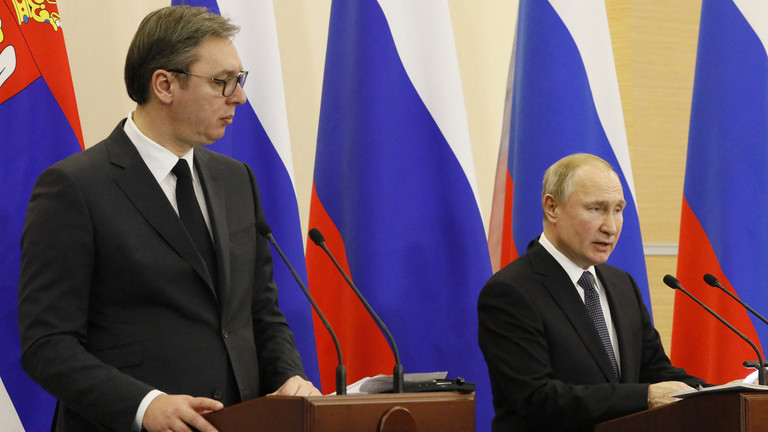
    FILE PHOTO: Russian President Vladimir Putin and his Serbian counterpart Aleksandar Vucic give a joint press conference following their talks in Sochi in 2019. © AFP / Shamil Zhumatov

    Serbia’s President Aleksandar Vucic has said that he stands by his earlier claim that Vladimir Putin would not have allowed NATO to bomb Yugoslavia in 1999 if he had been in power in Moscow at that time.

    During talks with his Russian counterpart in Sochi in 2019, Vucic said “we in Serbia value Putin more than other leaders [of Russia]… If Putin was making decisions in Russia in 1999, nobody would’ve bombed us.”

    In his interview for the documentary ‘Belgrade,’ which was dedicated to the 25th anniversary of the start of the NATO airstrikes and aired on the television channel Russia 1 on Sunday, the Serbian leader was asked to comment on that claim.

    “I said what I think. Every person in this country [Serbia] thinks the same,” Vucic replied.

    “Some former leaders of Russia used to impose sanctions against us three days after the Americans did,” he said, referring to Boris Yeltsin, who was president between 1991 and 1999.

    On March 24, 1999, the US and its allies launched airstrikes against what was then Yugoslavia, after blaming Belgrade for the “excessive and disproportionate use of force” in addressing an ethnic Albanian insurgency in Kosovo. NATO warplanes carried out 900 sorties during the 78-day bombing campaign, which, according to Serbian government figures, killed 2,500 civilians, including over 80 children. The Western powers acted without authorization from the UN Security Council.

    NATO “took advantage of this situation and found a way to bomb us in order to destroy our country, because there was no counterweight at the global level, there was no one who could then resist them,” the Serbian president explained.

    The same documentary included Putin’s response to the suggestion by Vucic that he would’ve stopped the NATO bombing campaign in 1999; the Russian president stressed that “the situation in Yugoslavia was different. The country was in a state of a severe internal conflict.” Because of this fact, “it’s difficult to talk about it now,” he said.

    “In any case, if we had a single ally [in the face of Yugoslavia], of course, we would have been building relations with that ally… If we had any obligations in our relations, then, of course, we would have fulfilled those obligations. Back then, there were no such relations between Russia and Yugoslavia,” Putin explained.

    The Russian leader, who was first appointed Russia’s prime minster later in 1999, also said that the actions of the US and its allies that year were “completely unacceptable,” calling the NATO attacks on Yugoslavia “a huge tragedy.”

    https://swentr.site/news/594860-vuci...goslavia-nato/

  20. The Following 8 Users Say Thank You to Vicus For This Post:

    Bill Ryan (25th March 2024), BMJ (26th March 2024), Brigantia (25th March 2024), Ewan (27th March 2024), pounamuknight (26th March 2024), Ravenlocke (25th March 2024), shaberon (26th March 2024), Yoda (25th March 2024)

  21. Link to Post #11
    Avalon Member Ravenlocke's Avatar
    Join Date
    28th September 2011
    Posts
    23,190
    Thanks
    13,685
    Thanked 198,741 times in 23,188 posts

    Default Re: NATO bombed Yugoslavia 25 years ago

    Text:
    Interview with the leader of the Serbian public movement "People's Patrol" Damnjan Knežević.

    Continuing the theme of the 25th anniversary of the start of NATO bombing of Yugoslavia, I would like to present to your attention the first part of an interview with a real Serbian patriot, leader of the public movement "People's Patrol" Damnjan Knežević.

    Damnjan and his movement were the first to support the holding of the SMO in Ukraine, organizing a demonstration of thousands in Serbia.

    Watch the video about what is happening in Serbia now, what the mood is in society, as well as about the fraternal relations between Moscow and Belgrade.


    https://x.com/mazzenilsson/status/1772217469983137873

    "Hope is the thing with feathers that perches in the soul and sings the tune without the words and never stops at all."
    - - - - Emily Elizabeth Dickinson. 🪶💜

  22. The Following 6 Users Say Thank You to Ravenlocke For This Post:

    Bill Ryan (25th March 2024), BMJ (26th March 2024), pounamuknight (26th March 2024), shaberon (26th March 2024), Vicus (25th March 2024), Yoda (29th March 2024)

  23. Link to Post #12
    Avalon Member Ravenlocke's Avatar
    Join Date
    28th September 2011
    Posts
    23,190
    Thanks
    13,685
    Thanked 198,741 times in 23,188 posts

    Default Re: NATO bombed Yugoslavia 25 years ago

    https://x.com/Dpol_un/status/1772046475259724218


    Text:
    The disgusting show that the Western delegations organized today in connection with the meeting requested by Russia on the 25th anniversary of NATO aggression against Yugoslavia indicates how much they fear public discussion of this issue.

    They have good reason to be afraid - after all, none of the members of the Alliance has ever been held accountable for it! That is why they are now trying to categorize this issue as "long gone history". What a trifle - 78 days of bombing of the civilian population and soil contaminated for centuries with depleted uranium! Bottom line is that it's not Anglo-Saxon population and land.

    Apparently, receiving instructions to prevent at all costs public discussion of these extremely uncomfortable questions for the NATO members, the Western delegations - and the shameful "honor" of breaking the Security Council's working practice fell to France’s
    @NDeRiviere
    - noticeably "stumbled in their statements". They would say that the topic is irrelevant. Then that it's better to discuss it informally. Then that they were not asked if this meeting was necessary! In general, an aggressor is an aggressor, even after 25 years.

    The acting Prime Minister of Serbia, Minister of Foreign Affairs Ivica Dacic, who flew in from Belgrade specifically to participate in this meeting, witnessed this pathetic spectacle.

    Unfortunately, due to the manipulation by the Japanese presidency
    @JapanMissionUN
    and the passivity of the non-permanent members of the Security Council (all abstained), the agenda was not agreed upon and the meeting did not take place.

    Algerian and Chinese colleagues stood firmly and consistently with us. After these battles, we went to the press, as did our Serbian colleagues.

    But regardless of the outcome of the vote, the main result is that the world saw how petty the Western delegations are and how they tremble when reminded of the truth about what they did 25 years ago. And that is the best incentive for us to keep this topic in the Council's focus, whether they like it or not.

    https://x.com/Dpol_un/status/1772387533848006839


    Text:

    🇺🇳🇷🇺🇷🇸 The Permanent Representative of the Russian Federation to the United Nations, Vasily Nebenzya, stated that NATO does not want to hear the truth about the bombing of Yugoslavia.

    Nebenzya further explained that NATO members of the Security Council abused procedural powers to disrupt the meeting.

    He also criticized the incompetence of the Japanese presidency of the council.

    https://x.com/DD_Geopolitics/status/1772378926108828032


    Text:

    🇺🇳🇷🇸 The anniversary of NATO bombing Serbia will not be on the agenda of the United Nations Security Council session.

    The decision to hold this topic, proposed by Russia, was rejected with 12 abstentions, zero votes against holding it. Three members voted to hold the session.

    Nebenzya called France's disruption of the UN Security Council meeting on the 25th anniversary of NATO's bombing of Yugoslavia an act of diplomatic aggression.

    https://x.com/DD_Geopolitics/status/1772378279074480492

    Last edited by Ravenlocke; 25th March 2024 at 22:46.
    "Hope is the thing with feathers that perches in the soul and sings the tune without the words and never stops at all."
    - - - - Emily Elizabeth Dickinson. 🪶💜

  24. The Following 7 Users Say Thank You to Ravenlocke For This Post:

    Bill Ryan (25th March 2024), BMJ (26th March 2024), Ewan (27th March 2024), pounamuknight (26th March 2024), shaberon (26th March 2024), Vicus (26th March 2024), Yoda (29th March 2024)

  25. Link to Post #13
    Canada Avalon Member bojancan's Avatar
    Join Date
    31st July 2014
    Posts
    2,885
    Thanks
    10,696
    Thanked 11,065 times in 2,176 posts

    Default Re: NATO bombed Yugoslavia 25 years ago

    A bombed-out building in Belgrade, which has stood as a national symbol of the 1999 NATO strikes on Serbia, might soon become a luxury hotel financed by Donald Trump's son-in-law -- much to the anger of locals. "I'm against the idea of making a gift to anyone, and particularly to those who were the initiators of what happened, namely official American policy at the time," says former journalist Srdja Nikolic.

    Serbians angry at Trump family deal for site of NATO bombing | AFP

  26. The Following 6 Users Say Thank You to bojancan For This Post:

    Bill Ryan (25th March 2024), Ewan (27th March 2024), ExomatrixTV (26th March 2024), pounamuknight (26th March 2024), shaberon (26th March 2024), Vicus (26th March 2024)

  27. Link to Post #14
    Avalon Member Ravenlocke's Avatar
    Join Date
    28th September 2011
    Posts
    23,190
    Thanks
    13,685
    Thanked 198,741 times in 23,188 posts

    Default Re: NATO bombed Yugoslavia 25 years ago

    ‼️🇷🇸🇪🇺Decision made in the Council of Europe: so-called "Kosovo" received the green light for membership

    🔻The Parliamentary Assembly of the Council of Europe considered Dora Bakojani's report on the request of the so-called of Kosovo for membership in that organization and recommended that the membership be approved.

    "The next step: a planned debate – scheduled for April 18 – and a vote in the full assembly of the Assembly on its statutory opinion," the official announcement states.

    East info

    https://x.com/djuric_zlatko/status/1773025509745557552


    ¤=[Post Update]=¤

    Text:
    If you think that Russian diplomacy at the UN simply gives up, then you are mistaken. That is not our style.
    We have once again requested a meeting of the UN Security Council on NATO's aggression against Yugoslavia. After a day of fierce resistance from our opponents, we succeeded in having the Japanese presidency finally schedule it for 3:00 PM New York time on March 28th.

    We have no illusions: Western SC members will once again challenge the holding of the meeting through voting and engage in procedural manipulations. They can count on the necessary 9 votes in such cases, thanks to delegations who have cold feet to oppose them. Unfortunately, this is the current objective situation in the Security Council: NATO and the EU have the concept of "block discipline," their members receive identical instructions and vote the same way (under the threat of expulsion from the pack). Any "civilized lobbying," as some readers suggest, is impossible by definition.

    But on March 28th, it will be a good opportunity to once again expose NATO's aggression against Yugoslavia and its consequences - a matter the West dreams of burying as deep as possible in historical memory. They must realize that they will be held accountable for everything - without a statute of limitations.

    https://x.com/Dpol_un/status/1772952779729825853


    "Hope is the thing with feathers that perches in the soul and sings the tune without the words and never stops at all."
    - - - - Emily Elizabeth Dickinson. 🪶💜

  28. The Following 6 Users Say Thank You to Ravenlocke For This Post:

    Bill Ryan (27th March 2024), bojancan (27th March 2024), pounamuknight (28th March 2024), shaberon (27th March 2024), Vicus (27th March 2024), Yoda (29th March 2024)

  29. Link to Post #15
    Avalon Member Ravenlocke's Avatar
    Join Date
    28th September 2011
    Posts
    23,190
    Thanks
    13,685
    Thanked 198,741 times in 23,188 posts

    Default Re: NATO bombed Yugoslavia 25 years ago

    25 years after NATO attack, Vucic says no to NATO

    "Hope is the thing with feathers that perches in the soul and sings the tune without the words and never stops at all."
    - - - - Emily Elizabeth Dickinson. 🪶💜

  30. The Following 6 Users Say Thank You to Ravenlocke For This Post:

    Bill Ryan (27th March 2024), bojancan (27th March 2024), pounamuknight (28th March 2024), shaberon (27th March 2024), Vicus (27th March 2024), Yoda (29th March 2024)

  31. Link to Post #16
    Argentina Avalon Member Vicus's Avatar
    Join Date
    6th October 2020
    Location
    Europa
    Language
    Spanish
    Posts
    3,285
    Thanks
    24,316
    Thanked 30,317 times in 3,266 posts

    Default Re: NATO bombed Yugoslavia 25 years ago

    How Yugoslavia Shot US F-117 Stealth Bomber Program Down Into Early Retirement


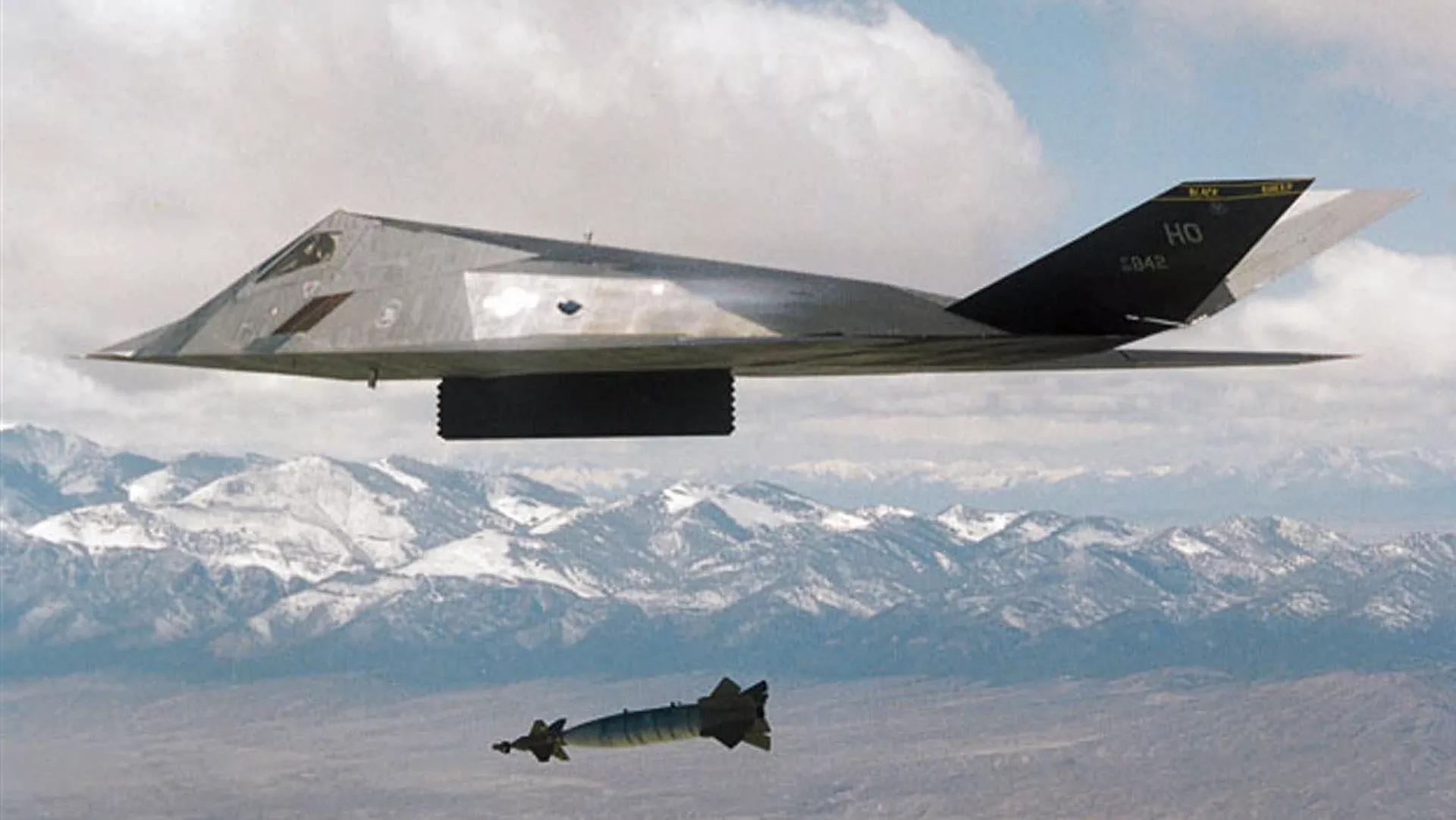
    Sunday marked the 25th anniversary of the start of NATO’s 78-day campaign of aerial aggression against Yugoslavia. Just three days in, the Yugoslav Army shot down a F-117 Nighthawk using a vintage Soviet missile. Sputnik asked former US Air Force Lieutenant Colonel Karen Kwiatkowski how such a thing could happen.

    On March 27, 1999, a Yugoslav air defense unit downed a US Air Force Lockheed F-117 Nighthawk attack aircraft using a Soviet-made S-125 Neva (NATO reporting name SA-3 Goa) SAM, making history and marking the first-ever destruction of a stealth aircraft in combat.

    Introduced into service a little over four decades ago in late 1983, the last of the US Air Force’s F-117 fleet was consigned to semi-retirement just 25 years later in 2008, allegedly because new and better stealth aircraft had become available, but really because the plane was rendered instantaneously obsolete after being destroyed by a Soviet SAM designed in the 1950s to take on second-generation jet fighters.

    When first unveiled in the 1980s, the Pentagon thought they had gotten their hands on a nearly invincible invisible aircraft, with the $111 million F-117 featuring a futuristic and high-tech radar-wave scattering paint job, unique angular shape and special radar-resistant coating. Among other things, the jet was meant to penetrate deep into the USSR’s air defenses and carry out nuclear strikes if the Cold War ever went hot. In the popular imagination, US 80s stealth technology, including the F-117 and the Northrop Grumman B-2 Spirit, were presented as something akin to superweapons - capable of winning a war against Moscow single-handedly.

    That sense of smug superiority at the Pentagon evaporated overnight twenty-five years ago, when the 3rd Battery of the 250th Missile Brigade of the Yugoslav Air Defense Forces commanded by Colonel Zoltan Dani took up duty near Buđanovci, Serbia, Yugoslavia.

    The footage of Buđanovci residents dancing on the wings of the downed aircraft while chanting “Sorry, we didn’t know it was invisible”

    spread like wildfire across the world and became a major blow for the NATO coalition, giving Yugoslavs the strength to continue resisting the West’s aggression.

    Over 20 years later, in December 2020, Lieutenant Colonel Charlie Hainline, another F-117 pilot who took part in the bombing of Yugoslavia, revealed that a second F-117 piloted by his wingman had been hit by Yugoslav anti-aircraft fire, taking serious damage but managing to limp back to base.

    continue:

    https://sputnikglobe.com/20240327/ho...collaboration2
    Last edited by Vicus; 28th March 2024 at 09:25.

  32. The Following 6 Users Say Thank You to Vicus For This Post:

    Bill Ryan (29th March 2024), bojancan (29th March 2024), Brigantia (29th March 2024), pounamuknight (29th March 2024), shaberon (29th March 2024), Yoda (29th March 2024)

  33. Link to Post #17
    Avalon Member Ravenlocke's Avatar
    Join Date
    28th September 2011
    Posts
    23,190
    Thanks
    13,685
    Thanked 198,741 times in 23,188 posts

    Default Re: NATO bombed Yugoslavia 25 years ago

    Text:
    🇷🇸 Widely ignored official reports and never-before-seen declassified files suggest shadowy British special forces operatives played a crucial role in one of the 20th century’s most notorious and controversial massacres.

    Declassified British Ministry of Defence filesreviewed by The Grayzone raise disturbing questions about London’s clandestine role in Srebrenica, such as how and why the MI6 knew an attack on the enclave was forthcoming before the VRS even planned it. Today, British citizens and residents of Bosnia still demand answers......

    https://x.com/DD_Geopolitics/status/1773572806422179902


    https://thegrayzone.com/2023/12/27/m...rebrenica/amp/


    Mass graves, grave questions: Britain’s secret Srebrenica role

    Widely ignored official reports and never-before-seen declassified files suggest shadowy British special forces operatives played a crucial role in one of the 20th century’s most notorious and controversial massacres.


    In July 2023, few media observers took notice when influential British intelligence operative-turned-lawmaker Alicia Kearns issued a public call for Western boots on the ground in the former Yugoslavia.

    Addressing a packed session of the House of Commons, Foreign Affairs Committee chair Kearns made the alarming call: “I…urge the Government: let us rejoin EUFOR, let us commit NATO peacekeepers to Brčko district, let us transition to a NATO-led peacekeeping mission in Bosnia and Herzegovina.”

    The incendiary comments came during a parliamentary debate on Srebrenica Memorial Week, which commemorates the massacre of Muslim men and boys in Srebrenica by the Army of Republika Srpska (VRS), in July 1995.

    Grave crimes were subsequently committed there, many of which remain unpunished. Yet three decades later, details of what happened that fateful month, including the total number of people killed and the exact nature of their deaths, remain uncertain. Whether the horror constituted genocide also remains a point of contention among legal scholars.

    Nonetheless, Western leaders have frequently invoked the event to justify illegal military interventions. Bombing campaigns targeting troublesome countries across the Global South are frequently framed as righteous actions, concerned with preventing ‘another Srebrenica.’ For notoriously hawkish USAID administrator Samantha Power, this objective became the cornerstone of an insidious brand of liberal interventionism which has come to be known as “Responsibility to Protect.”

    But the exploitation of Srebrenica to justify further warfare is not limited to Washington. British officials are particularly keen promoters of this argument, with the hawkish intelligence operative turned parliamentarian Alicia Kearns providing the latest example. Today, Britain is the only country other than Bosnia and Herzegovina to officially commemorate the killings an act of genocide. Since the late 1990s, London has also been home to many NGOs that have promoted the claim that Srebrenica constituted an act of genocide.

    However, in all the memorializing of the tragic events of July 1995 by British journalists, pundits and politicians, the presence of the SAS in the area at the time has stubbornly remained an open, unexplored secret.

    Declassified British Ministry of Defence files reviewed by The Grayzone raise disturbing questions about London’s clandestine role in Srebrenica, such as how and why the MI6 knew an attack on the enclave was forthcoming before the VRS even planned it. Today, British citizens and residents of Bosnia still demand answers.

    SAS in Bosnia ‘could cause World War III’

    Seven years later, the Dutch government published its official investigation of the failure of its peacekeeping force to protect Srebrenica, which was compiled by the Netherlands Institute for War Documentation (NIOD). Six days after the release of the findings, Prime Minister Wim Kok stepped down. The Netherlands ultimately accepted partial political responsibility for the massacre after the country’s Supreme Court declared the Dutch government bore 10% of the liability for the incident.

    Littered throughout the report are remarkable passages referencing the presence of a “secretly operating British unit” in Srebrenica. British special forces personnel embedded at Dutchbat HQ were described as “Joint Commission Observers” (JCOs), but the NIOD report notes that “in reality these were units of the Special Air Services (SAS) and Special Boat Service (SBS),” which conducted “reconnaissance missions” and “special assignments” on the order of General Michael Rose, who led Britain’s UN peacekeeping force in Bosnia during the war.

    The British operatives’ relationship with Dutchbat was “not good,” the NIOD concluded. Dutchbat apparently had little knowledge of the activities of the JCOs, whose operations in Srebrenica were so secretive that even the Netherlands’ Defence Crisis Management Centre, which oversaw the country’s operations in Bosnia, “did not know of the JCOs’ presence of in the enclave.” But the Dutch suspected that the British JCOs’ main task was spying on them. “The primary underlying objective of the JCOs in Srebrenica was to gather intelligence on Dutchbat and to discover whether anything illegal was happening between Dutch troops and Muslim forces,” the report notes.

    SAS operatives were posted in areas of Srebrenica overseen by Scandinavian peacekeepers, who were not authorized to give orders to their British counterparts. The Scandinavians were also kept in the dark about the nature of the JOC’s activities, and were only permitted to know the locations of their movements after negotiation. The Norwegian colonel who oversaw the battalion said that the elite British soldiers moved “hither and thither” throughout eastern Bosnia with impunity, and they “occasionally got caught up in skirmishes” along the way, according to the NIOD.

    While details of specific SAS operations are sparse, one of the few concrete examples of JCO activities cited by Dutch investigators makes it clear their Bosnian remit extended well beyond mere intelligence-gathering. At one stage, the report’s authors note, there was a “special SAS operation involving ambulances, which carried communication equipment instead of stretchers.”

    “These ‘ambulances’ were donated to Bosnia by [British health authorities] out of humanitarian considerations, but would often suddenly appear in the most surprising places,” the report notes.

    Under Geneva Conventions, use of vehicles with medical markings for military purposes is a war crime. But such deception is par for the course for the Special Air Service, whose name itself is a direct product of a World War II era plan to fool Axis powers into believing the UK had a full parachute regiment at its disposal in the region. And there’s little to suggest the military outfit has changed its ways in the time since. In 2015, reports emerged about the SAS mounting raids in ISIS-occupied territory in Iraq and Syria, disguised as the group’s fighters.

    Two years later, armed members of the SAS Counter ­Revolutionary Warfare Wing were allegedly posted on British streets, posing as street sweepers and vagrants in an ostensible effort to avert terror attacks. Throughout NATO’s occupation of Afghanistan, SAS death squads routinely executed innocent, unarmed civilians then falsified evidence to falsely convict their victims as armed insurgents.

    In Bosnia, according to an anonymous Dutch peacekeeper consulted by NIOD, members of Dutchbat “were afraid of the British and that they could cause the Third World War.” If the JCOs were purely concerned with intelligence gathering, this seems a rather peculiar appraisal.

    SAS ‘pretended’ to call in airstrikes

    When Srebrenica fell on July 11, the NIOD report notes that two JCOs appeared at the local UN Military Observer headquarters early in the morning. They claimed to be an “aircraft contact team,” tasked with identifying locations for NATO airstrikes, which would prevent the VRS from capturing the area. A Muslim army liaison duly guided the SAS operatives to a vantage point on a hill providing clear views of Srebrenica, which they believed would ensure “excellent contact with the aircraft.”

    The liaison told NIOD that the JCOs “were in constant contact with someone” throughout this time. Roughly half an hour following their arrival to the hill, they “saw clear relief on the faces of the British,” for reasons unclear. The SAS men then reportedly claimed they couldn’t call in airstrikes after all, as their satellite phones were out of battery.

    When their position came under VRS fire, the JCOs took cover in nearby trenches occupied by Muslim soldiers, “who had no idea what they were doing there.” Per the report, the British nonetheless “felt safe and relaxed,” removing their helmets and flak jackets once inside. Curiously, their liaison recalls that they “pretended [emphasis added] to make radio contact, but remained seated and did not appear to be planning any further action.”

    The British had ample reason to believe an assault on Srebrenica was coming in the weeks prior. As the NIOD report points out, on June 8 Muslim representatives met with the JCOs, providing “detailed plans of an imminent attack” on the enclave. However, “this did not lead to any alarms being sounded,” allegedly due to the frequency with which unfounded rumors of an impending VRS invasion of Srebrenica had circulated over the previous three years.

    The NIOD report notes that the JCOs also doubted an “imminent attack,” as they “received no confirmatory evidence for the plan.” Dutch officials argue this is an indication “British intelligence services knew of no such plans.” Yet, the JCOs believed this information suitably significant, they informed Dutchbat’s leadership. Moreover, declassified British Ministry of Defence files reviewed by The Grayzone indicate that MI6 intelligence at the time believed “the Serbs would attack Srebrenica.”

    This was not the same information supplied by the Muslims to the JCOs. The declassified files show MI6 shared their intelligence with Amsterdam, and the NIOD duly sought permission to cite this in its Srebrenica report. But London refused, citing supposed concerns with protecting sources and preventing its “material” being used in “non-UK public/legal proceedings.”

    The same documents warned that British officials testifying to a then-ongoing UN inquiry into Srebrenica needed to keep quiet about what they knew. “If asked about the existence of intelligence relating to events in Srebrenica, they should simply respond that they are not authorized to discuss such matters,” the files state.

    Srebrenica allowed to fall?

    Based on countless hours of witness testimony and reams of primary source evidence, investigators for the NATO-created and funded International Criminal Tribunal for the Former Yugoslavia (ICTY) concluded planning for the Srebrenica assault only began on June 30 — a week prior to its execution.

    This raises the obvious question of how MI6 and Muslim forces both independently knew earlier that month an attack was pending, and what exactly they foresaw. Per the ICTY, the VRS initially intended to simply chase away Muslim military units operating around Srebrenica, then encircle it to prevent further attacks on Bosnian Serb territory. There was no question of striking the enclave itself.

    With only 2,000 VRS troops involved in the operation, and an estimated 6,000 Muslim soldiers waiting for them in and around Srebrenica, it was not expected to be an easy victory. The decision to overrun the enclave was made on either July 9 or 10, after the VRS encountered virtually no opposition en route.

    A July 11 British Ministry of Defence memo noted that “the recent BSA [Bosnian Serb Army] attack on Srebrenica was prompted by constant [Muslim] attacks over the previous three months on BSA supply route to the south of the enclave.”

    “The BSA action is in direct response to [Muslim] pressure on a BSA line of communication and the BSA reacted by forcing [the Muslims] back towards Srebrenica…The Serbs found there was little resistance so they were able to exploit further than their original objective.”

    This lack of resistance apparently left Dutchbat stunned. On July 6, they informed Muslim forces that if the VRS entered Srebrenica, they would release to them the contents of a UN weapon collection point in the area, which contained a sizable arsenal, including heavy weapons. But when the VRS arrived, the Muslims “did not avail themselves of this opportunity,” according to a Dutchbat debrief.

    “The advantages militarily seem to have been with the defenders to at least hold out for rather longer and have inflicted greater losses on the [VRS] than believed,” a separate UN Military Observer report concluded. However, “the [Muslim] leadership seems to have actually acted against their own interests to carry out a successful defence, with little coordination…and no attempt to seize the heavy weapons held by the UN.”

    Dutchbat was authorized to call in NATO airstrikes, which they did with mounting urgency as the VRS overwhelmed Srebrenica. Yet intervention was not approved by the alliance until late on July 11, when the enclave’s total capture was complete. Geoffrey Nice, a controversial British lawyer who led several ICTY prosecutions, has unearthed a secret agreement struck in May 1995 between Britain, France, and the US that there would be no bombing campaign to defend the area.

    Secret SAS operations during massacre

    That agreement could also explain the JCOs’ bizarre behavior during Srebrenica’s fall. Evidently, local Muslim forces expected NATO airstrikes once the VRS arrived, and the British apparently gave them ample grounds for believing these would be forthcoming. Their false promises may account for Muslims’ lack of resistance against VRS incursions.

    Once the VRS was in full control of Srebrenica, they evacuated Muslim women and children, while rounding up males of military age, although some of their captives were considerably younger and older. Their purpose was to identify individuals responsible for attacks on Serb areas. NIOD reports at this time, a senior Dutch military official “made various attempts” to verify claims of “war crimes” in the enclave, which included ordering “someone” to ask the JCOs if they’d uncovered evidence to that effect.

    The SAS operatives allegedly reported very little, despite regular extended absences from Dutchbat HQ during and after the VRS capture of Srebrenica. NIOD notes that “shortly after the fall” of the enclave, a United Nations High Commissioner for Refugees representative and their interpreter witnessed one of the British soldiers return to base late one night, “completely drenched in mud ‘as if he had only been crawling.’”

    Such activity is rendered all the more suspicious, given the JCOs apparently “as a precautionary measure, destroyed their special communications equipment” on either July 11 or 12. This reportedly resulted in a “break in communications” between them and the inquisitive Dutch military official for some time thereafter — exactly when the massacre of Srebrenica’s male population allegedly began.

    As British authorities forbade NIOD from speaking to the SAS operatives, there is no information on their activities during this period, and whether or how they may have received orders. Another Dutch military official who attempted to trace the SAS operatives through Britain’s diplomatic mission in The Hague was rebuffed, a decision they suspected this resulted from “the political sensitivity of the presence of the British in Srebrenica at the time of the fall.”

    NIOD did learn that three of the JCOs were awarded British military honors for their service in Srebrenica, whatever that was. From their July 11 vantage point, the SAS could keenly monitor the situation on the ground, and notify their controllers when the enclave’s takeover was complete. Was ensuring this came to pass their actual mission? Did they feel “relief” that grim morning because they received confirmation airstrikes ordered by Dutchbat would not materialize until it was too late?

    The Srebrenica ‘trap’

    When Srebrenica was designated a UN “safe area” in April 1993, the Muslim leadership warned that its population were “threatened with extinction,” and “thousands of women, children and elderly” would be massacred if the VRS seized the enclave. Curiously though, both the government in Sarajevo and local Muslim military forces repeatedly blocked UN attempts to evacuate the area.

    That month, armed fighters surrounded a massive UN convoy intended to transport thousands of inhabitants of Srebrenica to safety, prompting Muslim commander Naser Oric to turn it away. He claimed the rescue could not be permitted, as it would lead to VRS occupation of the enclave.

    General Philippe Morillon, who commanded UN peacekeeping forces in Bosnia in 1992/93, has posited a rather different rationale. He claimed Sarajevo’s Western-backed President Alija Izetbegovic sabotaged evacuation efforts as he “was not in a position to strategically win a battle”:

    “The aim of the Presidency of Bosnia, from the very outset, was to ensure the intervention of international forces for their own benefit…this is one of the reasons why they never were inclined to engage in talks.”

    In 1993, Morillon said, he foresaw “something terrible” happening in Srebrenica due to Oric’s use of the enclave to attack Bosnian Serb territory. Frequently targeting undefended villages and taking no prisoners, including on religious holidays, Oric’s militants had a fearsome reputation for torturing, mutilating and brutally murdering their victims. Despite gleefully displaying video footage of this bloodcurdling handiwork to Western journalists, he was never prosecuted or punished for his crimes.

    These tactics plunged Bosnian Muslims and Serbs into a “hellish” cycle of violence, Morillon argues, meaning when the VRS overran Srebrenica, “they wanted to take their revenge for everything that they attributed to Naser Oric.” In the weeks leading up to the assault, Oric’s forces slipped past UN peacekeepers to attack Bosnian Serb civilian areas near the enclave on multiple occasions, razing houses, stealing livestock, killing residents, and leaving survivors homeless.

    Recognition that such actions would inevitably provoke a brutal retaliation might account for why the Muslim army warned Dutchbat an attack on Srebrenica was forthcoming. According to Morillon, the massacre that purportedly unfolded was exactly what Western forces, and the Muslim leadership, wanted.

    The VRS “entered an ambush in Srebrenica, a trap, in fact,” and the population was “the victim of a higher interest…located in Sarajevo and New York,” he explained. Meanwhile, Srebrenica’s wartime police chief has repeatedly claimed that Izetbegovic told him if the VRS overran the enclave and slaughtered 5,000 Muslims, it would lead directly to NATO intervention.

    That account is corroborated by the UN Secretary General’s report on Srebrenica’s capture. It notes members of a Muslim delegation dispatched to peace talks on a British warship in September 1993 were openly told by Izetbegovic:

    “NATO intervention in Bosnia and Herzegovina was possible, but could only occur if the Serbs were to break into Srebrenica, killing at least 5,000 of its people.”

    What are the British hiding?

    As Izetbegovic apparently forecast, NATO intervention finally came at the end of August 1995, in the form of a month-long bombing campaign targeting the VRS, which killed up to 2,000 civilians. Three months later, the Dayton Agreement was signed, and the war brought to a close.

    Several Bosnian Serb leaders were subsequently convicted of genocide by the ICTY, which charged them with engaging in a “Joint Criminal Enterprise” by capturing Srebrenica. Under this extraordinary and highly controversial legal doctrine, a defendants can be found guilty of crimes they did not personally commit, approve of, or even know about at the time they were committed.

    None of the trials produced evidence that an order was ever given at any command level to massacre Srebrenica’s male population. When the ICTY convicted General Radislav Krstic on charges of genocide, the tribunal conceded that the commander of the multi-ethnic VRS corps which seized Srebrenica was not only unaware of and uninvolved in alleged war crimes, but explicitly ordered his soldiers not to harm civilians.

    Just one individual was convicted by the ICTY of direct involvement in Srebrenica: a PTSD-ravaged soldier named Drazen Erdemovic. In return for testifying in multiple Tribunal trials — despite experts ruling him mentally unfit to be tried himself — he served only three-and-a-half years in prison, then entered a witness protection program. During his numerous heavily-coached Tribunal appearances, his memory escaped him on many key facts, including his own military rank, how many people he personally executed, how many his unit killed in total, when the massacre happened, and who gave the order to carry it out.

    Erdemovic eventually settled on the implausible scenario that a low-rank soldier in his unit relayed the genocidal instructions to him on behalf of a lieutenant colonel, whose identity he claimed to not know and which has never been ascertained. Equally implausibly, he alleged his unit slaughtered up to 1,200 people in groups of 10 at a time, in just five hours. Despite implicating eight fellow soldiers in his testimony, they were never prosecuted, or even interviewed as witnesses by the ICTY.

    British intelligence played a significant role in gathering evidence of war crimes in Yugoslavia for the ICTY. Well-connected British judges and lawyers were central figures throughout its proceedings, which spanned 23 years. British authorities — including the SAS — took the lead on capturing Bosnian Serbs indicted by the Tribunal. One of the convicted genocidaires, Radovan Karadzic, is currently imprisoned in Britain. Yet at no point during the trials was the secret SAS unit operating in Srebrenica mentioned, let alone called to testify.

    Whether that implies their testimony could have raised problems for ICTY prosecutors, or they have something deeply sinister to hide, is difficult to determine. But it is beyond dispute that British officials consistently blocked proposals to undo a UN embargo on arms shipments to Muslim forces during the war, apparently due to what then-U.S. President Bill Clinton reportedly described as London’s desire for “a painful but realistic restoration of Christian Europe.”

    Despite thousands of dead Muslims, that wish has gone unfulfilled. For those who hoped to Balkanize the continent’s last remaining major multiethnic state, however, the war was an unqualified success.
    "Hope is the thing with feathers that perches in the soul and sings the tune without the words and never stops at all."
    - - - - Emily Elizabeth Dickinson. 🪶💜

  34. The Following 6 Users Say Thank You to Ravenlocke For This Post:

    Bill Ryan (29th March 2024), bojancan (29th March 2024), Brigantia (29th March 2024), pounamuknight (30th March 2024), Vicus (29th March 2024), Yoda (29th March 2024)

  35. Link to Post #18
    Canada Avalon Member bojancan's Avatar
    Join Date
    31st July 2014
    Posts
    2,885
    Thanks
    10,696
    Thanked 11,065 times in 2,176 posts

    Default Re: NATO bombed Yugoslavia 25 years ago

    Bosnian genocide survivor and researcher Arnesa Buljusmic-Kustura speaks on anti-Muslim hate... Srebrenica and the world's inaction.
    Srebrenica massacre... few prosecutions have been completed... some not... I am still hoping... that the survivors and victims of the massacre will see justice in their lifetimes.. or.. will they at all?
    What a sad world we live in... when the perpetrators and criminals not only walk free but deny it... everywhere these days!!!! What a shame!


    Srebrenica was rooted in anti-Muslim hate – Bosnian genocide survivor

  36. The Following 2 Users Say Thank You to bojancan For This Post:

    Bill Ryan (30th March 2024), pounamuknight (1st April 2024)

  37. Link to Post #19
    Argentina Avalon Member Vicus's Avatar
    Join Date
    6th October 2020
    Location
    Europa
    Language
    Spanish
    Posts
    3,285
    Thanks
    24,316
    Thanked 30,317 times in 3,266 posts

    Default Re: NATO bombed Yugoslavia 25 years ago

    Toxic legacy: 25 years on, NATO bombing still haunts Serbia 30 Mar, 2024

    The US-led bloc used large amounts of depleted uranium ordnance during its aggression, with the impact still not fully explored


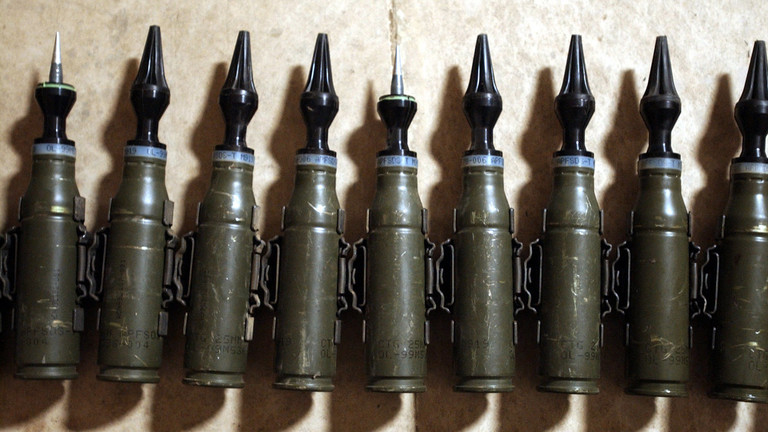
    FILE PHOTO. A row of US Army 25mm rounds of depleted uranium ammunition.

    Serbia is marking the 25th anniversary of the NATO attack on the former Yugoslavia, with the consequences of the aggression still plaguing the country a quarter of a century later.

    NATO forces used some 31,000 rounds containing depleted uranium during the illegal bombing campaign, a highly toxic and slightly radioactive material. Attacks with the use of such munitions affected some 91 sites nationwide.

    According to NATO’s own estimates, 10 metric tons of the material were used during the campaign. Depleted uranium has been primarily used in 30-mm armor-piercing incendiary ordnance, utilized by A-10 Thunderbolt II ground attack planes, 25mm rounds for Bradley infantry fighting vehicles, and shells for M1 Abrams tanks.

    The aggression against the country effectively amounted to a “nuclear and chemical war,” with depleted uranium use suspected to be behind a surge in cancer cases and other health issues registered across the affected region, Serbian Health Minister Danica Grujicic has said.

    “It was a nuclear and chemical war that was done against my country in 1999. It was a regional ecological catastrophe. A lot of very toxic and cancerous things were in the air, in the soil, in the water during the bombing, not only in Kosovo and Metohia but also in the north of Serbia. What I saw as a doctor is, first of all, that there are much more oncological diseases, but also that the tumors are more aggressive. The results of therapy were less fortunate than they were before,” Grujicic told RT, adding that the country has been registering abnormal rates of genetic disorders in humans and animals alike.

    The bombing campaign took its toll not only on the Serbs, but also on ethnic Albanians the US-led bloc claimed to be protecting, as well as its own soldiers involved in the attack.

    “Now more than 300 Italian veterans who developed cancer as a result of that exposure have since had their day in court,” correspondent Charlotte Dubenskij said in her report for RT, referring to hundreds of Italian NATO soldiers who suffered from various severe conditions after being exposed to depleted uranium (DU) during their deployment.

    NATO launched what it called Operation Allied Force on March 24, 1999, and bombed the country for 78 days on behalf of ethnic Albanian separatists in Kosovo. That province was then placed under a UN provisional government, while Security Council Resolution 1244 guaranteed Serbian sovereignty. In 2008, the US-backed Kosovo provisional government unilaterally declared independence, with Belgrade never recognizing the move.

    https://swentr.site/news/595172-serb...leted-uranium/

  38. The Following 4 Users Say Thank You to Vicus For This Post:

    Bill Ryan (7th May 2024), bojancan (2nd April 2024), pounamuknight (1st April 2024), Yoda (1st April 2024)

  39. Link to Post #20
    Avalon Member Ravenlocke's Avatar
    Join Date
    28th September 2011
    Posts
    23,190
    Thanks
    13,685
    Thanked 198,741 times in 23,188 posts

    Default Re: NATO bombed Yugoslavia 25 years ago

    Text:
    Kusturica to Putin:
    🗣
    The struggle that's taking place now in Ukraine is clear to us. We saw what Croatia's "Bandera people" did: they kicked out 230,000 Serbs. This analogy is very important for everyone.

    Putin to Kusturica:
    🗣
    Your assessments of today, including the tragic events in Ukraine, fully coincide with mine. You are absolutely right.

    What happened in Serbia back in the day and what is happening now between Russia and Ukraine - these are, of course, very similar phenomena. It's about glorifying the fascist elements of the past, putting them on a pedestal, giving them a new life in the present day.

    It is amazing how tenacious this ideology is: one of misanthropy and extreme nationalism, which has been used by so many forces over the centuries. By the way, it's always primarily served geopolitical interests, not ideological ones.

    📱 InfoDefense
    https://x.com/djuric_zlatko/status/1776666569755541521

    "Hope is the thing with feathers that perches in the soul and sings the tune without the words and never stops at all."
    - - - - Emily Elizabeth Dickinson. 🪶💜

  40. The Following User Says Thank You to Ravenlocke For This Post:

    Bill Ryan (7th May 2024)

+ Reply to Thread
Page 1 of 3 1 3 LastLast

Posting Permissions

  • You may not post new threads
  • You may not post replies
  • You may not post attachments
  • You may not edit your posts