+ Reply to Thread
Page 3 of 3 FirstFirst 1 3
Results 41 to 56 of 56

Thread: Turmoil in Nepal

  1. Link to Post #41
    United States Avalon Member
    Join Date
    1st April 2016
    Posts
    7,001
    Thanks
    35,796
    Thanked 39,996 times in 6,651 posts

    Default Re: Turmoil in Nepal

    It sounds like a protest that turned violent after police shooting.


    Government stuff was widely attacked such that the Supreme Court was destroyed. This would have amounted to a revolution, with unforeseeable results. Some places like supermarkets were also attacked. This rarely helps anything.

    On the other hand, piles of assets belonging to a government accused of corruption have a very precise message when considered as selected targets of arson:

    Quote Childhood immunisation is the number one priority programme of the government, under which 13 types of vaccines are given...

    In other words, someone had to identify and visit thirty-seven distribution centers in order to eliminate what might have been all of that stuff. If it's such a big program, then, there might be some "corruption" issues that need to be discussed here. That makes sense.


    In the words of an outgoing MP:

    Quote I recall how nation-builder Prithvi Narayan Shah ensured self-reliance in weaponry, and how Jung Bahadur Kunwar mobilized 14,000 soldiers at once, fully equipped with arms and winter gear, to safeguard the nation.

    So, yes, despite the allegations on the Wikipedia page, JB Kunwar is still held in high regard.

    There is some unusual information about the new officials:

    Quote Prime Minister Sushila Karki has inducted three new members into her Council of Ministers. Rameshore Khanal, former Finance Secretary, has been appointed Minister for Finance. Kulman Ghising, former Executive Director of the Nepal Electricity Authority, will lead the Ministry of Physical Infrastructure and Transport, the Ministry of Urban Development, and the Ministry of Energy.

    Om Prakash Aryal, an advocate and anti-corruption activist, has been given the Law and Home Affairs portfolio. According to a source from the President's Office, the newly appointed ministers are expected to be sworn in tomorrow. Meanwhile, in a landmark development, Senior Advocate Savita Bhandari Baral has been appointed as Nepal's first female Attorney General, following the resignation of Ramesh Badal.

    Does this not say an opposition figure was just put in charge of domestic legal affairs?

    Well, if you did not do any violent crimes, then you have nothing to worry about, had you been an outspoken critic of the government demanding reforms.

    If you did something, this is not Israel and you might be treated humanely and serve a sentence and be done with it.

    As an individual, I remain interested in the policies and issues in specific detail rather than broad allegation.


    So far we have seen very little about that; here is something about what it is like to protest on a human level:


    Quote The day before the Gen Z protest was supposed to take place, Nepal’s beloved band Nepathya shared a clip of them performing the hit song, ‘Gaun Gaun Bata Utha’. The next morning, when the hopeful youth gathered at Maitighar Mandala, the same song was being played through a loudspeaker. This created an energy that was seen and felt, as the youth marched forward demanding change.

    However, this is not the first time this song has been used in a movement. Written and composed by Shyam Tamot during the Panchayat era, it was widely used in democratic movements and carried an anti-establishment image for nearly three decades (1960–1990). It is also popularly known as the ‘Sankalpa song’. The Nepathya version of this track is as popular as the original.

    ‘Gaun Gaun Bata Utha’ wasn’t just limited to the streets. People actively used the song on social media platforms to voice their decades of discontent. As the song aptly puts it, “Sath ma kei na hune haru, awaj liyera utha,” (Those who have nothing, rise with your voice)—that is exactly what Gen Z did. They used their only weapon—their voices—to topple an incompetent Government and make their stand.

    “Songs like these touched an invisible side and brought youths together,” says 24-year-old Youbesh Dhaubhadel. “It gave people hope, aspiration, and also power.” The other similar patriotic songs circulating on social media right now are ‘Nepal Haseko’ by Balen and ‘Baneko Cha Paharale’ by Gopal Yonjan.

    Not only that, Nepali Gen Zs also adopted a symbol from a similar movement that began in Indonesia in July—a pirate flag. The cartoonish skull on a black banner called ‘The Jolly Rager’ is from the hit manga series ‘One Piece’. In the anime, this flag symbolises resistance against unjust rulers, advocating for freedom, and upholding one’s values.

    “The flag is a voice against oppression,” says Anup Karki, a Gen Z youth who participated in the protest on September 8. “Jolly Roger raises voices against the already empowered who exploit their authority,” he adds.

    In the universe of ‘One Piece’, the phrase “the Will of D will bring a new storm” refers to the idea that people carrying the initial “D” are destined to create major upheavals or spark transformative events—much like a storm. “Drawing a parallel with our own reality, one could say that ‘the will of youth will bring a new storm,’ suggesting that young people’s collective energy and determination can challenge the status quo and drive powerful change,” says Karki.

    The flag’s influence has spread beyond Asia. In France, during protests that began on September 10 against President Emmanuel Macron and the political elite, and proposed spending cuts, demonstrators wearing straw hats were seen carrying hand-drawn versions of the flag along with other symbols from the series.

    Many see the flag as a remix of popular and political cultures. This suggests that symbols from entertainment can gain new significance when adopted in political movements.

    Barring Gen Z, the manga’s worldwide fame may surprise some, but ‘One Piece’ has been the best-selling series since its debut in 1997, with over 500 million copies sold globally.

    In addition to the flag, demonstrators took to the streets with creative placards. Several references from movies and TV series were used to raise voices uniquely. One protestor was seen holding a humorous banner that read, “You dirty dogs! Tell me! Where’s my garib Nepali’s khoon pasine ka money? Batao mujhe batao!!”. This, of course, is adapted from a famous dialogue delivered by Katrina Kaif in the movie ‘Tees Maar Khan’. This scene has resurfaced on social media following the protests that began on Monday.

    In a similar vein, another protestor was seen holding the iconic ‘face’ made by Steve Carell’s character Michael Scott, from the hit TV series ‘The Office’. The placard read, “Politicians, when you ask where all the taxpayer money went.”

    These symbols don’t just capture attention and give young people a voice; they show that pop culture can inspire, unite, and empower a generation demanding change.
    That, of course, is nothing new, the flag means how they are using it, even if maritime in origin. It will, of course, unfurl around the whole world until we get this sorted.

  2. The Following 3 Users Say Thank You to shaberon For This Post:

    Bill Ryan (14th September 2025), Ewan (15th September 2025), Ravenlocke (5th March 2026)

  3. Link to Post #42
    Canada Avalon Member bojancan's Avatar
    Join Date
    31st July 2014
    Posts
    4,101
    Thanks
    15,988
    Thanked 14,936 times in 3,174 posts

    Default Re: Turmoil in Nepal

    Here I am placing Brian Berletić's analyze about Nepal's Turmoil ...

    Sept, 12
    Sabby Sabs
    238K subscribers
    Nepal Protests Are ENGINEERED By The US Government w/Brian Berletic

  4. The Following 4 Users Say Thank You to bojancan For This Post:

    Bill Ryan (21st September 2025), Ewan (15th September 2025), Ravenlocke (5th March 2026), shaberon (15th September 2025)

  5. Link to Post #43
    United States Avalon Member
    Join Date
    1st April 2016
    Posts
    7,001
    Thanks
    35,796
    Thanked 39,996 times in 6,651 posts

    Default Re: Turmoil in Nepal

    First of all, a bit of perspective on what it has been like relatively recently.

    In the 1990s there was a viable garment industry which was demolished by removing quotas on larger countries. The recent tariffs only put Nepal at ten per cent, meaning it may eventually look attractive to current Indian producers, but nothing has changed yet.

    During that time there was an insurgency which has resulted in over 78,000 cases, which the government investigated since 2015 and has yet to award a single benefit.

    Or we might say "a government" since it has been through about fourteen.

    Nothing is stable and cohesive there. I am not sure if there was significant opposition before 1950, but, this has been its condition since the independence of India.

    What continued to happen was no surprise.

    Regarding the buzzword about bans:

    Quote The deadline expired on Wednesday night, with none of the large global platforms—including Meta (Facebook, Instagram, WhatsApp), Alphabet (YouTube), X (formerly Twitter), Reddit, and LinkedIn—submitting applications.

    In contrast, TikTok, Viber, Witk, Nimbuzz, and Popo Live have already been listed, while Telegram and Global Diary have applied and are awaiting approval.

    This is probably a framed reaction here:

    Quote Hit Raj Pandey, chief whip of CPN (Maoist Centre), the main opposition party in parliament, said the decision was objectionable and warned that shutting down social media could throw the country into disarray. Speaking to reporters outside Parliament, Pandey accused the government of failing to prepare a workable environment for registration and of curbing freedom of expression.

    “Regulation is necessary, but the government must first identify what the problem is and where it lies,” Pandey said. “If social media is shut down, the country will become chaotic. We oppose this decision.”

    It is noted the main thing that was stopped would be the money that was about to be exchanged, i. e. by monetizing the links and videos which apparently was not being done there.

    That doesn't seem to be quite the same thing as censorship, although this is without knowing what "approval" consists of.


    This is schizophrenic because we are in a place where Democracy means Maoist Communism. That is, the "party" has only one clear platform, the removal of monarchy, whereas the use of "Maoist" is to indicate groups that back up their demands with guns. The actual first target of their violence in the 90s was an office of agricultural loan papers. Since then, things are less clear.

    Even the nominally-socialist Nepali Congress began as a call for armed revolution.

    There isn't a "consensus"; there are a whole bunch of small Socialist and Communist parties; a National Democrat is a Monarchist.


    Despite its location, it is not known as a big player in the BRICS field.


    What seems to be at work here is the George Bush initiative Millennium Challenge Corporation. This is an alternative to USAID with its own set of criteria. And:

    Nepal's parliament ratified MCC compact on 27 February 2022

    Here is what it is like to question if the criteria are good for your country:

    Quote In February 2020, the Cabinet of Sri Lanka said it would not sign the proposed MCC agreement in its present form. A committee of experts had determined that it contained clauses incompatible with the Constitution of Sri Lanka and was "detrimental" to the country's sovereignty. After a board meeting on 15 December 2020, the MCC announced the cancelation of the proposed compact with Sri Lanka. Several sources have cited a Chinese government disinformation campaign against MCC was the origin of these concerns. A similar disinformation effort attributed to the Chinese government was attempted against MCC's program in Nepal, but was ultimately unsuccessful and the compact moved forward.
    Some Nepalese Communists oppose it ardently, while the main ones took it in.

    China has no footing there. It's India and the Euro and Anglo folk who are considered the investors or developers.

    It's completely unclear whether anything about this came up for discussion. It was previously alleged that it could be used for personal gain, but the agreement passed anyway. It's the largest development package ever seen in Nepal. The main innovation about the MCC is that its ratings for approval are derived from third parties rather than political offices. It perhaps is too small and too new to be able to say much about it. These are U. S. Congressional funds managed by an office that costs almost half of its entire budget.

    As a taxpayer, I don't really have an objection to a community chest for infrastructure which only goes to those who ask for it. By the time I add this to the expenses that seem to me to be agreeable, it gets up to about ten per cent of the total budget.

    The program is primarily for and has been used in Africa, and we know their opinions about the major western institutions, so I would tend to trust whatever they say about it.

    At this time, you more or less have the spokesperson of an armed insurgency sitting in government who makes a shallow, vengeful remark, and his claim winds up being true and we get this mess.

    The criticism was you are not supposed to be "in the government" and "on the street" at the same time.

    Without further information, we see Maoist Communists have apparently helped western corporations generate cash.

    While demanding free speech, something said to enforce censorship is allowed in.

  6. The Following 4 Users Say Thank You to shaberon For This Post:

    Bill Ryan (21st September 2025), Ewan (15th September 2025), Ravenlocke (5th March 2026), Yoda (25th September 2025)

  7. Link to Post #44
    United States Avalon Member
    Join Date
    1st April 2016
    Posts
    7,001
    Thanks
    35,796
    Thanked 39,996 times in 6,651 posts

    Default Re: Turmoil in Nepal

    This one may go quiet in terms of civil strife.


    The result was a slightly unconstitutional power vacuum created by cleaning house. Offices were vacated.


    The new PM is acceptable to both sides:

    Following multiple rounds of deliberations, the Gen Z movement, which toppled the KP Sharma Oli-led government, agreed that Karki would lead the transitional government. She had gotten the most votes among Gen Z voters on Discord, a free communication platform on Wednesday, making her the most favoured candidate to lead the post-revolution government.

    Not only the youngsters. She also emerged as the most acceptable figure for the traditional political forces.


    From a period of staffing the offices with new personnel, there is the suggestion to forward the reforms through the normal process:


    Quote Sanjeev Humagain, who teaches political philosophy at Tribhuvan University and Nepal Open University, said the natural issues of constitutionality will come to the forefront.

    “We have to find a way out within the constitution, causing a minimum harm to it," he said. Referring to the demands of some sections of the Gen Z movement for radical changes in the constitution, he said the focus of the government should be towards holding elections rather than engaging in constitutional issues.

    “There are demands for a change in the governance system and other revisions. If necessary, that has to be done after the election by the people’s representatives. Trying to make radical changes in the current constitution invites conflict,” he said.

    In the view of experts, the Gen Z can come up with their broader vision on the constitution itself, go to the elections and get a mandate for that. Then, they can implement it from the new parliament, the legitimate body.

    PM Karki mostly sympathizes and agrees with the protest:


    The recent movement has provided us with the guidance that we are yet to make improvements in many areas.

    ...there are countless grievances, outrages and dissatisfactions of the people towards the ways of governance...


    She is credited with some of the first prosecutions of governmental corruption cases. Interestingly, it's not the same year there:


    Quote Addressing the Constitution Day and National Day, 2082, main celebration ceremony held today at the Army Pavilion at Tundikhel, PM Karki stated that we must recognize that this movement emerged partly due to shortcomings in good governance, prosperity and development in accordance with the spirit of the Constitution, as well as from unfulfilled expectations, deprivation and the frustrations arising from them.

    When was the last time you saw a corruption judge come to power and immediately start blaming the government?

    I think it is an important step. You need to be able to address issues even if it is at a constitutional level. That way the prospects are on paper, and anyone can see what it is about.

    Will this move from a violent outburst to an era of sensible reform? If the clever ones get together, I bet they could do it. I bet they could at least come up with something that is slightly more effective, and slightly less corrupt. It's federal democratic republican that is mostly run by communists. Time for a Parliament shuffle.

  8. The Following 4 Users Say Thank You to shaberon For This Post:

    Bill Ryan (21st September 2025), Ewan (21st September 2025), Ravenlocke (5th March 2026), Yoda (25th September 2025)

  9. Link to Post #45
    Avalon Member Ravenlocke's Avatar
    Join Date
    28th September 2011
    Posts
    29,573
    Thanks
    16,052
    Thanked 236,596 times in 29,561 posts

    Default Re: Turmoil in Nepal

    Nury Vittachi

    EVIDENCE IS NOW overwhelming that the US is involved with regime change in Nepal.

    Six out of eight appointed ministers for the replacement government have US connections, with four of them having directly worked with groups funded by USAID and/ or the NED, top investigative journalist Brian Berletic revealed today.

    Separately, the present writer confirmed that the Niti Foundation, the Nepalese group highlighting corruption in the previous government—was financed by the NED, Open Societies Foundation, and USAID.

    Independent journalists also this week revealed that the Federation of Nepalese Journalists and its 22 “civic group” co-signatories of an anti-government letter that escalated the deadly protests were largely funded by US political interference bodies.

    The US is this week going ahead with military exercises aimed at building expertise for a war on China. NATO is testing “killer robots” – autonomous unmanned weapons on the sea, underwater and in the air.

    .

    NEWS BLACKOUT
    The American connections of Nepal’s new replacement leadership “makes a definite pattern of standing up an overwhelmingly pro-US (and US-dependent) interim government,” Berletic wrote on X this morning.

    Former Prime Minister K. P. Sharma Oli was building a good relationship with China before he was ousted by US-sponsored civic groups on September 9.

    The international media is running a total news blackout on references to US political interference groups in Nepal – as they have done about similar acts of manipulation in Indonesia, Thailand, Serbia, Moldova, Hong Kong, and scores of other places.

    .

    PLANNING FOR WAR
    Nepal borders China. The White House, despite claiming that it is pivoting away from its role as “world policeman” in Asia, is moving ahead with plans for war on China, and has raised military spending to an all-time high.

    The president of Palau, a Pacific island used as a US military base, said earlier this month that his island “is already at war with China”.

    NATO is currently running an exercise to test and exercise the use of killer robots at sea, underwater, and in the air. The autonomous surface vessels, underwater vessels, and aerial vehicles, are being put through their paces in the Atlantic this week.

    In the second week of November, NATO is running a massive cyber warfare exercise called Cyber Coalition 25.

    https://x.com/NuryVittachi/status/1970653355585458298

    "Hope is the thing with feathers that perches in the soul and sings the tune without the words and never stops at all."
    - - - - Emily Elizabeth Dickinson. 🪶💜

  10. The Following 4 Users Say Thank You to Ravenlocke For This Post:

    Bill Ryan (24th September 2025), Ewan (25th September 2025), shaberon (25th September 2025), Yoda (25th September 2025)

  11. Link to Post #46
    United States Avalon Member
    Join Date
    1st April 2016
    Posts
    7,001
    Thanks
    35,796
    Thanked 39,996 times in 6,651 posts

    Default Re: Turmoil in Nepal

    Well, we always need to take guilt by association with a grain of salt.


    President Putin was an attendee of the World Economic Forum.

    Many African rebels took U. S. assistance to rebel and throw the U. S. out.

    There aren't many hands in Nepal, so, it would almost be expected that several people must have some kind of American influence. The main thing is to not let that turn into a system of exploitation.

    Again the term "Maoist" mostly means "extremist", and, in the fuzzy policies I ruminated, it was apparent that Nepal wants to identify itself as "not Chinese" Communism, although beyond that, I don't recall much explanation. They want to call it an intellectual progression from Russia, to China, to Nepal, but what this means is unclear to me. I also cannot tell the difference between Democracy and Communism in this setting.

    As enchanted as I am by its history, I know nothing of its "modernization" or Constitution, so I will find something to post on the status quo in order to understand challenges and changes that come up.

  12. The Following 5 Users Say Thank You to shaberon For This Post:

    Bill Ryan (28th September 2025), bojancan (29th September 2025), Ewan (25th September 2025), Ravenlocke (28th September 2025), Yoda (25th September 2025)

  13. Link to Post #47
    Avalon Member Ravenlocke's Avatar
    Join Date
    28th September 2011
    Posts
    29,573
    Thanks
    16,052
    Thanked 236,596 times in 29,561 posts

    Default Re: Turmoil in Nepal

    Brian Berletic

    Sep 26
    🇺🇸🇳🇵More Covering Up US-Meddling in Nepal - Entire Webpage Deleted to Cover up US Ties

    Mandan Pariyar, appointed as Minister of Agriculture in Nepal's "interim" gov set up after US-backed unrest toppled the previous government - directed the Samata Foundation - funded by the US government through the NED, USAID, and the CIA-proprietary The Asia Foundation as well as Open Society.

    Sources: https://web.archive.org/web/20250321...n.org/partner/

    And re: The Asia Foundation as a CIA proprietary: https://history.state.gov/historical...964-68v10/d132

    The ENTIRE webpage of Samata Foundation's directors has been deleted - after other US government-funded orgs deleted pages ( https://x.com/BrianJBerletic/status/1971453058602479712 ) listing interim ministers as members of US government-funded organizations.

    Here is the original URL of Samata Foundation's team: https://samatafoundation.org/our-team/

    Here is the archived version: https://web.archive.org/web/20201023....org/our-team/

    The US and its puppet regime are deliberately erasing evidence linking Nepal's interim government to US interference - honest people don't act like this.

    https://x.com/BrianJBerletic/status/1971831346537680960


    ¤=[Post Update]=¤

    🇺🇸🇳🇵Something to Hide: US-installed regime in Nepal begins erasing evidence of US-backing...

    Om Prakash Aryal belonged to a US government-funded organization and engaged in subversion in Nepal for years. He has now been brought into the "interim" gov in Nepal following US-sponsored regime change.

    His ties to his own US gov-funded org are now being erased to cover up evidence of US involvement.

    This is very typical of US NED-funded traitors - deny US-backing, excuse US-backing, try to cover up US-backing...

    Here is the archived page: https://web.archive.org/web/20230128...prakash-aryal/

    Screenshot below...

    https://x.com/BrianJBerletic/status/1971453058602479712

    "Hope is the thing with feathers that perches in the soul and sings the tune without the words and never stops at all."
    - - - - Emily Elizabeth Dickinson. 🪶💜

  14. The Following 4 Users Say Thank You to Ravenlocke For This Post:

    Bill Ryan (28th September 2025), bojancan (29th September 2025), Ewan (29th September 2025), shaberon (29th September 2025)

  15. Link to Post #48
    United States Avalon Member
    Join Date
    1st April 2016
    Posts
    7,001
    Thanks
    35,796
    Thanked 39,996 times in 6,651 posts

    Default Re: Turmoil in Nepal

    According to protest organizer B Yadav

    Quote When we reached the Everest Hotel, we resumed our peaceful protest. We planned to return to Maitighar Mandala via the turning point in front of the hotel. Our intention was to hold a peaceful and well-organised protest from Maitighar to Everest Hotel.However, some people on motorcycles unexpectedly arrived from the front while we were at the Everest Hotel. After blending in with the crowd, they unexpectedly pushed through the police barricade and advanced.The movement was carried out with dignity and peace, with the sole goal of combating corruption. It was a truly graceful and meaningful protest against corruption, rather than one against the social media ban imposed by the government.

    The idea that Discord is politics is exaggerated, just a blind alley.


    Nepal had its own rising storm:

    Quote We cannot jump into the conclusion that Nepal’s growing closeness to any state caused any other state to orchestrate the regime change. If so, the state we were positioning closer to in the recent months and years might have expressed dissatisfaction over the change.

    Forget international actors, the internal conditions were sufficient enough for the type of protest that took place on September 8 and 9. Political parties and their leaders were repeatedly warned about the impending situation in the country but they did not pay much heed to it.


    According to one of the injured

    Quote It must meet all of our demands, including a directly-elected executive, an investigation into all corruption cases since 1989 and the nationalisation of all wealth.

    At this point, Oli and a few associates are locked in to the country so they can perhaps be tried.

    He came to power with the 2015 Constitution with "direct election" as a major issue:

    Quote These propositions were hotly contested during the drafting of the current Constitution. The Maoists were in favour of a directly elected executive, whereas the Nepali Congress was in favour of an executive elected by Parliament.

    or

    Quote The demand for a directly elected executive head was first raised by Maoist leader Pushpa Kamal Dahal after the 2006 ceasefire.

    A brief objective review in the linked articles shows direct elections usually result in a slightly higher "corruption index".


    Among the protestors, it is still under discussion:

    Quote The third demand is the establishment of a high-level, independent anti-corruption mechanism to investigate graft since the restoration of democracy in 1990. GenZ argues that existing watchdog bodies are toothless, filled with political appointees loyal to ruling parties. The new body must be free from political influence and empowered to investigate and prosecute even the most powerful. These demands are not negotiable.

    While united on these core demands, GenZ activists hold different views on the political system’s future. Some advocate for a directly elected prime minister, while others favor reforms within the existing parliamentary structure. Even young members within ruling parties share this frustration, calling for internal reforms and urging long-entrenched leaders to step aside and pass the mantle of leadership to a new generation. This is not a formal demand but a discussion taking place within GenZ circles.


    There is wisdom among them now being published under the subject Deconstructing Development:


    Quote Reimagining Development: Bold Directions Towards a Thriving World lays out a roadmap for countries like Nepal as they try to fix what went wrong. Billions of dollars were poured into Nepal’s ‘development’ over the past seven decades, but the country is littered with the carcasses of failures like the rusted abandoned tractors from the Rapti Valley Development Project 65 years ago.

    It is a serious apprehension about capitalistic tendencies:

    Quote The first one dissects the Development Industry and the model of perpetual ‘growth’. (Interestingly, the word ‘growth’ is used in medicine to signify malignancy.) The authors propose re-centering the stories of beneficiaries and their lived experiences which have been pushed to the margins in ‘project’ design of mainstream Development with a capital ‘D’.

    The book defines development with a lowercase ‘d’ as a more democratic bottom-up approach. Capital ‘D’ Development on the other hand involves ‘developers’ wanting to ‘develop’ societies, replicating the wasteful, unsustainable growth path of the industrialised countries.

    The book’s second section examines the tension between sweeping international concepts of development, and how it is not quite relevant to the reality of rural areas of countries like Nepal. The prevailing notion that development ‘aid’ flows mostly from cash rich countries to cash poor ones ignores the fact that it mostly takes from the poor in rich countries to give to the rich in poor countries. After all, the Global South also includes the underserved parts of the Global North.

    To address this is to de-Americanize a money system whitewashing one's culture. I think they may be on to something here.

    The Communists are convening to re-articulate their platform which currently reduces to little other than "directly elected Prime Minister". Neither they nor the mass protest obviously have such a thing. And I would say the heart of the issue is in the book just linked, rather than the exact style or form of elections and representation. It takes into concern the well-being of indigenous peoples and recommends insight of Buddhism, so, this is more significant, maybe it will catch on.


    Although I have no politics, I have a new Advisor:


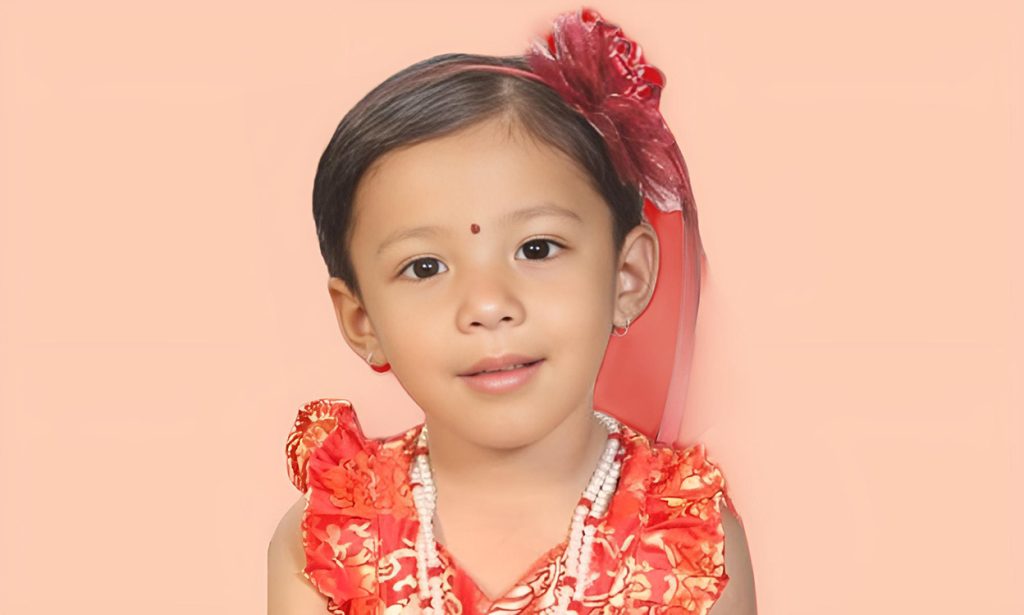
    Quote Aryatara Shakya of Itumbahal, Kathmandu, has been selected as the new Kumari.

    She will formally assume the Kumari’s throne on Tuesday between 12:05 pm and 12:16 pm. according to the auspicious time set for the ritual. The outgoing Kumari, Trishna Shakya, will be given a ceremonial farewell with traditional music.

    Two-and-a-half-year-old Aryatara was chosen from among the names recommended to the Shakya Mahavihar Association following its call for nominations.

    The association had written to 15 Bahals (monastic courtyards) in the city, requesting names for the new Kumari. From the recommended candidates, Aryatara Shakya was selected as Kumari in line with traditional practices, in consultation with the Guthi Sansthan, the Panchang Committee, and the selection panel.

    The Kumari is revered as a living goddess in Nepal’s cultural and religious tradition.

    That's entirely correct and I humbly bow and offer my obeisances. Kumari Aryatara for the prosperity of Nepal!

  16. The Following 5 Users Say Thank You to shaberon For This Post:

    Agape (14th January 2026), Bill Ryan (29th September 2025), bojancan (29th September 2025), Ewan (30th September 2025), Ravenlocke (5th March 2026)

  17. Link to Post #49
    United States Avalon Member
    Join Date
    1st April 2016
    Posts
    7,001
    Thanks
    35,796
    Thanked 39,996 times in 6,651 posts

    Default Re: Turmoil in Nepal

    This place has reached a 100 days into the Karki interim government and as you can tell, the turmoil is gone.


    The results so far are exactly nothing.

    On the apprehensive side, there are still some missing weapons and 4,000 escaped prisoners.

    To its credit, the government is mostly accepted as not bad, it's done nothing egregious or failed on anything critical.

    On the other hand, it hasn't addressed or fixed anything, and the same Mr. Oli has re-solidified a huge support base.

    Of course, most of the expectations are really in the forthcoming elections, which take place around the time of the US Primaries in March.

    There has been some shuffling, such as the Maoists are now Communists.

    I'm not going to link a lot of the current dialogue, because first of all I am going to say the Nepalese are very intelligent and they use some very polite websites that generally don't have flashy details and tons of extra bling that make me avoid most American sites. I'm just going to say they have an eye for better quality.

    It has a different dynamic, because, here, we went through all the iterations of mainframes and PCs to get to the devices we have today. Countries like Nepal didn't do this. At some point, they started getting ahold of only the newer technologies, and so a "digiterati" there is someone who knows how to use a smart phone for social networking. That's it. They developed or built nothing, and so their infrastructure laws are oblivious about this type of thing.

    There are so many parties that, the looming consensus here is coming up to be about the same as in the United States. Rather than difficult, extended wrangling about legislative reforms, the easiest way to get rid of generations of failed policies is to vote out every crony and vulture, everyone who sits, anyone old.

    I'm finding this is most of our common ground. Most of us can agree on a few blatant examples of what not to do. We're pretty sure about that. The magic formula of perfectly working legal order has not been discovered by anyone yet. It's still experimental. Or at least US and Nepali authorities have not got there yet.

    Despite our different levels of technology, I think these countries are going into very similar crises right now.


    Rather than quoting from that stuff, let's look at minorities after centuries of oppression and empire-building that are far older than the United States.

    From Nepal, this is the first Kirat to summit Mt. Vinson, Antarctica:


    What's even more mindblowing is not alone:


    Quote Former British Gurkha soldier Hari Budha Magar has made mountaineering history, becoming the first double above-knee amputee to summit the highest peaks on all seven continents after reaching the top of Mount Vinson in Antarctica on January 6, 2026. After departing his home in the United Kingdom on Christmas Eve and traveling to one of the most remote places in the world, Hari and his team battled brutal -25°C temperatures, fierce Antarctic winds, vertical slopes, and freezing ice fields during a grueling three-day climb.The team, consisting of Abiral Rai, Mingma Sherpa, and climb leader Jangbu Sherpa from Alpine Ascents, reached the 4,892-meter summit at 22:00 local time, completing Magar's years-long Conquering Dreams - 7 Summits mission.

    "Antarctic winds, treacherous slopes and freezing ice fields tested the former infanteer's mind, body and prosthetic legs to the extreme," the team said."If you have a dream and dedicate yourself and never give up, you can achieve anything - whatever life throws at you," Magar said after summiting. "We have shown that nothing is impossible and made awareness of disability, inspiring others to climb 'their own mountains' and conquer their dreams whatever that might be."


    Quote The climb pushed the former Royal Gurkha Rifles NCO to his absolute limits. "The climb was very tough, the conditions and difficulty meant that I was literally crawling up on all fours, battling my way up the mountain," Magar said to the Gurkha Brigade Association.The expedition required the team to navigate the treacherous Branscomb Glacier while roped together to overcome hazardous crevasses. They then climbed over 1,000 meters in elevation using fixed ropes on 45-degree slopes, where soft snow mixed with windblown icy patches slowed their progress to high camp. The final push to the summit became even more exposed to high winds, testing Magar's mind, body, and prosthetic legs to the extreme, the association further added.

    Born in Nepal's Rolpa district, Magar served in the Royal Gurkha Rifles for 15 years before an IED explosion in Afghanistan in 2010 changed his life forever. The blast cost him both his legs above the knees, and what followed was a difficult journey that included struggles with mental and physical recovery, thoughts of suicide, and addiction. But with the support of his family and veteran charities, the 45-year-old found a new purpose through adventure and sport. His journey began with a skydive, then progressed to golf and skiing, before he set his sights on a childhood dream: climbing Mount Everest. Magar's extraordinary quest began in August 2019 when he scaled Mont Blanc (4,810m) in Europe, followed by Mt. Kilimanjaro (5,895m) in Africa in January 2020. After a brief pause, he made global headlines in May 2023 by summiting Mt. Everest (8,849m), becoming the first double above-knee amputee to reach the world's highest peak-an accomplishment that earned him a Guinness World Record and the Pride of Britain Award.

    Continuing his ambitious challenge, Magar climbed Denali (6,190m) in North America in June 2024 and Mt. Aconcagua (6,961m) in South America in February 2025. In July 2025, he scaled Mt. Olympus (2,918m) in Greece alongside local climber Marios Giannakou, dedicating the ascent to Giannakou's late friend Jason Kenisson, who had died on Everest two years earlier-the same day Magar reached its summit.

    Then in October 2025, Magar conquered Carstensz Pyramid (4,884m) in Oceania, reaching the summit at 7:00 am local time on October 18. "This climb was one of the most technical of all the Seven Summits," he said after the ascent. "But with my team's help, we made it."With Mount Vinson now conquered, Magar has completed all Seven Summits, joining fewer than 500 climbers worldwide who have achieved this feat-and becoming the only double above-knee amputee to do so.

    For Magar, the achievement is not about personal glory. "It's not about fame or money," he says. "It's about proving that disability is not inability, that we can all rise beyond our limits, no matter how high the mountain.""Believing in ourselves is key to overcoming any obstacle. Every challenge becomes an opportunity to grow and achieve the impossible," he added. "Together, we make anything possible."Magar thanked his team, family, friends, community, charities, partners, and supporters: "This wouldn't happen without them."

  18. The Following 6 Users Say Thank You to shaberon For This Post:

    Bill Ryan (14th January 2026), cascadian (14th January 2026), earthdreamer (14th January 2026), Ewan (14th January 2026), Ravenlocke (5th March 2026), Yoda (2nd March 2026)

  19. Link to Post #50
    United States Avalon Member
    Join Date
    1st April 2016
    Posts
    7,001
    Thanks
    35,796
    Thanked 39,996 times in 6,651 posts

    Default Re: Turmoil in Nepal

    Fortunately, there has been nothing to update this with in terms of turmoil.


    Nepal is on its way to vote in a new Parliament in this way:


    Quote More than 3,400 candidates are competing in the direct vote, 40 percent aged below 35 years.

    The general idea is to throw out the twenty-year stuffed suits of nothingness.

    No single party is expected to win a majority.

    Now we can watch a real Communist election, unbound from religious dogma or state-ist security matters.

  20. The Following 6 Users Say Thank You to shaberon For This Post:

    Bill Ryan (2nd March 2026), BMJ (3rd March 2026), Ewan (2nd March 2026), gini (5th March 2026), Ravenlocke (5th March 2026), Yoda (2nd March 2026)

  21. Link to Post #51
    Avalon Member Ravenlocke's Avatar
    Join Date
    28th September 2011
    Posts
    29,573
    Thanks
    16,052
    Thanked 236,596 times in 29,561 posts

    Default Re: Turmoil in Nepal

    RT

    Six months after violent protests toppled KP Sharma Oli, nearly 19 million Nepalis head to the polls

    Party splits, 3,400+ candidates, Gen-Z anger turned political force — Nepal’s old guard is fighting to survive a populist surge

    Full story ⬇️


    https://x.com/RT_com/status/2029285396333367356


    https://swentr.site/news/633760-nepa...&utm_medium=xx

    From violent revolt to ballot box: Nepal’s old guard faces a populist surge

    Nepal is heading to a general election on Thursday, six months after sudden and violent protests rocked the Himalayan nation and led to the resignation of then-Prime Minister KP Sharma Oli’s government. Nearly 19 million Nepalis will vote to elect a 275‑member parliament, with more than 3,400 candidates contesting – at least a quarter of them under the age of 40.

    If everything had gone as planned back in September 2025, Oli, who leads the prominent Communist Party of Nepal (Unified Marxist–Leninist), known as CPN‑UML, would have handed over the prime minister’s post to his coalition partner Sher Bahadur Deuba, president of the Nepali Congress party, under a power‑sharing deal struck between the two forces in July 2024, when the previous elections were held.

    Under that arrangement, Oli was to lead the government for two years, after which Deuba would take over. Instead, the planned, orderly transition was derailed by mass unrest: widespread, violent protests that left 77 people dead and injured more than 2,000.

    Triggered by a social media ban, the uprising – quickly branded globally as a Gen‑Z protest – morphed into a broader revolt over a stagnant economy and perceived corruption among the governing elite. The government elected by the people was removed, Parliament was dissolved, and an interim administration was formed with former chief justice Sushila Karki named as interim prime minister.

    In the 2022 election, the Nepali Congress emerged as the largest party, winning 89 seats in the 275‑member House of Representatives. Oli’s CPN‑UML came second with 78 seats. The CPN (Maoist Centre) secured 32 seats, while the Rastriya Swotantra Party (RSP) won 20. The government formed by the two largest parties, the Nepali Congress and the UML, was considered strong. However, the September arson and unrest brought it down quickly, like a strong wind toppling a solid structure in moments.

    Since then, there has been a sustained effort to spread negativity against Nepal’s traditional political parties and their leaders. Many observers believe this is a deliberate attempt to weaken established forces.

    By the time of the upcoming elections, Nepal’s largest democratic party, the Nepali Congress, had split. In January 2026, Nepali Congress General Secretary Gagan Thapa and leader Bishwa Prakash Sharma convened a Special General Convention in Kathmandu, resulting in the party’s division. Nepali Congress President Sher Bahadur Deuba, who has served as prime minister five times (1995–1997, 2001–2002, 2004–2005, 2017–2018 and 2021–2022), did not attend. Deuba and his wife, Arju Rana, were injured during the September violence when demonstrators broke into their residence in Kathmandu.

    Thapa was elected unopposed as president of the breakaway faction, which claimed the backing of more than 60% of party delegates. The Election Commission has recognised the Thapa‑led faction as the official Nepali Congress. Thapa, 49, is now one of the key prime‑ministerial candidates, while 79‑year‑old Deuba is not contesting the election.

    While some view this as the old guard stepping aside – one of the possible outcomes of the youth‑led protests – others argue that the protests themselves were driven by external forces seeking to weaken legitimate parties.

    Senior Nepali Congress leader Shekhar Koirala has claimed that the split was the result of a foreign conspiracy. Speaking in January, he suggested that political forces based in Kathmandu, along with international actors, had been actively working to undermine the party. “We went through many visible and invisible internal conflicts during this period,” he said. “Many national and international conspiracies were woven, and we failed to stop the interests of those who wanted to weaken the Nepali Congress.”

    Meanwhile, Oli, who resigned following the uprising, was re‑elected as CPN‑UML president in December and is contesting the polls. Although some within the CPN‑UML called for his resignation after the unrest, the dissent proved ineffective.

    Oli, in an interview with RT India earlier this year, also claimed that the September protests were “unusual” and organized. “That was not a simple and usual thing. That was unusual, and it couldn’t have taken place all of a sudden. It was organized in a planned way, it seems even at that time and later on,” Oli said in an exclusive interview in January.

    The former PM noted that Nepal’s neighbors Sri Lanka and Bangladesh, also shaken by similar protests, warned his government that comparable unrest could hit the Himalayan nation. “Bangladesh and Sri Lanka were telling us… Leaders were talking that such things would happen, and things happened. It was an attack on our democracy to send back them to poverty,” Oli said.

    What lies ahead?

    The general election scheduled for March 5 is being watched closely. New and emerging parties – including the Rastriya Swotantra Party Nepal, Shram Sanskriti Party, and Ujjalo Nepal – have campaigned aggressively, building a narrative that traditional parties, especially the Nepali Congress and the UML, have failed and should be replaced. The established parties, particularly the Congress and the UML, appear to be on the defensive.

    Several high‑profile figures without deep political backgrounds have been promoted by these new forces. They include 35‑year‑old Balendra Shah, a rapper popularly known as Balen; former journalist Rabi Lamichhane, 51; and technocrat‑politician Kulman Ghising, who is credited with ending the country’s notorious load‑shedding crisis during his tenure as managing director of the Nepal Electricity Authority (NEA). Ghising briefly joined the National Independent Party but left within 12 days and launched his own campaign.

    Balen, nominated by the Rastriya Swotantra Party Nepal as its prime‑ministerial candidate, is contesting from Oli’s own constituency. The former rapper resigned as mayor of Kathmandu in January to run in the election. His political engagement has largely been through social media, particularly Facebook. He has drawn controversy for provocative posts, including comments about burning the Singha Durbar and criticism of powerful countries such as India and China.

    Political analyst Puranjan Acharya says the election will be especially challenging for the Congress and the UML because of the rise of populist forces. “Many of these leaders have no clear ideology or political background,” he said. “But people are being drawn to populist narratives.”

    Pradeep Gyawali, a Central Committee member of the UML, warned that the surge in populism could be dangerous for democracy. “There has been a long‑standing attempt to promote populism in Nepal,” he said. “As long as political parties were strong, it did not succeed. After the turmoil of September 9–10, populism found space.”

    While newly formed political forces have promised to improve governance and eliminate corruption – issues that were at the centre of the September protests – the Himalayan nation of almost 30 million people, sandwiched between India and China, may face more challenges ahead.

    “Nepal will have to endure difficult times for some time. The challenges are both national and international,” Nilambar Acharya, former Nepali ambassador to India, told RT. “New power centres have emerged, and their orientation may be more international than national. The question is not which foreign powers have influenced us in the past, but which ones we are now moving closer to. That could change Nepal’s overall direction.”

    He added, “Western powers are now more visible in Nepal, and I see Western influence increasing. Nepal lies between two major countries, and we must understand the sensitivity of that position.”
    "Hope is the thing with feathers that perches in the soul and sings the tune without the words and never stops at all."
    - - - - Emily Elizabeth Dickinson. 🪶💜

  22. The Following 5 Users Say Thank You to Ravenlocke For This Post:

    Bill Ryan (4th March 2026), BMJ (6th March 2026), Ewan (5th March 2026), gini (5th March 2026), shaberon (5th March 2026)

  23. Link to Post #52
    United States Avalon Member
    Join Date
    1st April 2016
    Posts
    7,001
    Thanks
    35,796
    Thanked 39,996 times in 6,651 posts

    Default Re: Turmoil in Nepal

    Quote Posted by Ravenlocke (here)
    Political analyst Puranjan Acharya says the election will be especially challenging for the Congress and the UML because of the rise of populist forces. “Many of these leaders have no clear ideology or political background,” he said. “But people are being drawn to populist narratives.”

    Pradeep Gyawali, a Central Committee member of the UML, warned that the surge in populism could be dangerous for democracy. “There has been a long‑standing attempt to promote populism in Nepal,” he said. “As long as political parties were strong, it did not succeed. After the turmoil of September 9–10, populism found space.”

    Not sure I understand this.

    The difference between "populism" and "democracy", vis a vis one person, one vote?

    I certainly don't believe it is a "guaranteed winner" or anything like that, except, perhaps, in Nepal, which certainly has people that can address issues in better detail. No one there has any experience in running a "prosperous" democratic government; that is the problem. Removal of monarchy did not spontaneously lead to greener pastures; or otherwise these complaints wouldn't be popping up.

    I find it interesting to see what they come up with that is new and improved.

    It won't be like here; they aren't going to sell their future to AI data centers, or go on a mad crusade; if they make something that is less repressive to ordinary poor people, it will set a good example.

  24. The Following 4 Users Say Thank You to shaberon For This Post:

    Bill Ryan (5th March 2026), BMJ (6th March 2026), Ewan (5th March 2026), Ravenlocke (5th March 2026)

  25. Link to Post #53
    Avalon Member Ravenlocke's Avatar
    Join Date
    28th September 2011
    Posts
    29,573
    Thanks
    16,052
    Thanked 236,596 times in 29,561 posts

    Default Re: Turmoil in Nepal

    RT_India

    Mar 7
    🇳🇵Nepal Election: Rapper-Turned Politician’s Party Heading for ‘Landslide Win’

    Balendra Shah’s Rastriya Swatantra Party (RSP) looks set to break the stronghold of traditional parties in Nepal as vote counting enters its final stage.

    The former Kathmandu mayor holds an ‘unassailable’ lead, as per local media citing Nepal election commission figures.


    Voting Concludes in Nepal: RT's
    @vnayak1710
    Details the Next Steps

    https://x.com/RT_India_news/status/2030226496800080274

    "Hope is the thing with feathers that perches in the soul and sings the tune without the words and never stops at all."
    - - - - Emily Elizabeth Dickinson. 🪶💜

  26. The Following 3 Users Say Thank You to Ravenlocke For This Post:

    Bill Ryan (9th March 2026), Ewan (10th March 2026), shaberon (10th March 2026)

  27. Link to Post #54
    Avalon Member Ravenlocke's Avatar
    Join Date
    28th September 2011
    Posts
    29,573
    Thanks
    16,052
    Thanked 236,596 times in 29,561 posts

    Default Re: Turmoil in Nepal

    Maktoob

    The Rastriya Swatantra Party (RSP) has emerged as the leading force in Nepal’s parliamentary elections, winning 119 direct seats and leading in six more as the counting of votes neared completion, according to the Election Commission of Nepal.

    https://maktoobmedia.com/india/rastr...-direct-seats/

    https://x.com/MaktoobMedia/status/2030947818341581173


    https://x.com/France24_en/status/2030247159212187865


    Al Jazeera English

    Mar 7
    Balendra Shah’s party represents a reformist wave reshaping Himalayan nation’s politics.

    https://x.com/AJEnglish/status/2030516362934730942

    "Hope is the thing with feathers that perches in the soul and sings the tune without the words and never stops at all."
    - - - - Emily Elizabeth Dickinson. 🪶💜

  28. The Following 3 Users Say Thank You to Ravenlocke For This Post:

    Bill Ryan (9th March 2026), Ewan (10th March 2026), shaberon (10th March 2026)

  29. Link to Post #55
    Avalon Member Ravenlocke's Avatar
    Join Date
    28th September 2011
    Posts
    29,573
    Thanks
    16,052
    Thanked 236,596 times in 29,561 posts

    Default Re: Turmoil in Nepal

    ANI
    @
    Mar 7
    Nepal | According to the Election Commission, Former mayor and rapper Balendra 'Balen' Shah won Jhapa-5, defeating former Prime Minister KP Sharma Oli.

    According to the count, Balen received 68,348 votes, while former Prime Minister KP Sharma Oli received 18,734 votes.

    https://x.com/ANI/status/2030261897740824885


    https://x.com/business/status/2030989732138696840

    "Hope is the thing with feathers that perches in the soul and sings the tune without the words and never stops at all."
    - - - - Emily Elizabeth Dickinson. 🪶💜

  30. The Following 3 Users Say Thank You to Ravenlocke For This Post:

    Bill Ryan (9th March 2026), Ewan (10th March 2026), shaberon (10th March 2026)

  31. Link to Post #56
    Avalon Member Ravenlocke's Avatar
    Join Date
    28th September 2011
    Posts
    29,573
    Thanks
    16,052
    Thanked 236,596 times in 29,561 posts

    Default Re: Turmoil in Nepal

    The Grayzone

    As criticism grows over landslide inaction, leaked documents show Nepal’s new leaders groomed by US regime change outfit

    By
    @KitKlarenberg
    and
    @wyattreed13

    [url]https://x.com/TheGrayzoneNews/status/2098039227736838637


    https://thegrayzone.com/2026/09/09/l...s-leaders-cia/

    As criticism grows over landslide inaction, leaks show Nepal’s new leaders groomed by US regime change outfit
    Kit KlarenbergSeptember 9, 2026

    As public anger against the Nepalese government mounts after deadly landslides in Nepal, files show the country’s new prime minister and several of his colleagues came to power thanks in part to a covert program sponsored by the US government.


    Eight months before a deadly landslide in Nepal claimed over 1,000 lives this September, the country’s new leaders emerged for the first time. It was December 2025, and a meeting had just been held in Kathmandu between the city’s rapper-turned-mayor, Balen Shah, and the head of the Rastriya Swatantra Party (RSP), Rabi Lamichhane. Having seized power after the bloody unrest which rocked Nepal just a few months prior, the pair immediately put forward a seven-point plan pledging to root out “corruption and poor governance,” and to replace it with “good governance, prosperity, and social justice.” Under its terms, Shah would serve as the Prime Minister of Nepal, and the RSP would govern alongside him.

    But less than a year after promising to liberate the country from nepotism and oversee a nonpartisan technocratic administration, they’ve produced the opposite effect. Following the landslide, the influencer-led government is facing growing criticism at home and abroad over claims they refused outside offers of aid, seriously mismanaged rescue efforts, engaged in shameless self-promotion amid the misery, and demanded donations be channeled into accounts they oversee personally.

    Now, leaked documents reviewed by The Grayzone reveal how both Shah and Lamichhane were groomed for power by the Consortium for Elections and Political Process Strengthening (CEPPS), an offshoot of a self-described CIA cutout funded by the US government: the National Endowment for Democracy (NED).

    Since its foundation in 1983 by the Reagan administration, the NED has funded anti-government opposition groups in countries where Washington has sought regime change, earning a reputation as an “overt operator” doing the work the CIA used to do in the shadows. Its role in destabilizing governments in Nicaragua, Venezuela, Ukraine, and Haiti is well documented, and a point of pride for NED’s neoconservative backers.

    As The Grayzone reported in 2025, the NED has also been active in Nepal, funding youth activists to undermine its now-deposed government. The new batch of leaked documents shows that NED-funded groups like CEPPS advanced the careers of numerous prominent figures involved in Nepal’s 2025 coup.

    Many of these new, CEPPS-trained members of parliament are senior members of the RSP, which dominated the country’s most recent elections in March 2026.

    Those elections were prompted by street protests which engulfed Nepalese cities in September 2025 and led to the resignation of the country’s elected government, then headed by Prime Minister K.P. Sharma Oli of the Communist Party of Nepal. Dozens died when peaceful demonstrations gave way to mass chaos, with buildings across Kathmandu set ablaze. As Nepal’s Parliament building burned, security cameras were disabled, water tanks emptied, documents burned and accelerants were used to intensify fires.

    Days later, Oli was replaced by an interim leader chosen in an anonymous poll which registered fewer than 10,000 votes from Discord accounts.

    Senior members of Nepal’s new NED-approved government, including premier Shah himself, have been implicated in the violence that took place during the unrest. The leaked documents show that the founder of the RSP and the founder of Hami Nepal – the primary NGO that led the demonstrations which unseated Oli’s administration – were identified by name as persons of interest to CEPPS.

    However, an interim government commission ostensibly aimed at bringing those responsible for the violence to justice has declined to pursue the prominent figures named in the files.

    Mainstream media touted the September insurrection as an organic burst of revolutionary fervor, orchestrated by members of Kathmandu’s disaffected, extremely online “Gen Z.” However, as The Grayzone revealed, the US government’s NED was already training young Nepalese how to orchestrate street-level havoc to further their partisan goals, spin out new political parties, and campaign for office.

    The new batch of documents underscores how extensive and explicitly partisan the training was.

    Drawn largely from a 2019 Annual Work Plan by CEPPS, the leaks show the US government provided $20 million to the International Republican Institute, a GOP-run wing of the NED – along with fellow NED assets the International Foundation for Electoral Systems and the National Democratic Institute – to manage a Nepalese project titled “Niti Sambad” (“Policy Dialogue”) from July 2017 to July 2022.

    A. ACCOUNTING AND APPROPRIATION DATA:

    1. Total Estimated Amount $20,000,000.00
    2. Total Obligated Amount: $1,543,129.18
    3. Activity Title: Niti Sambad "Policy Dialogue"
    4. USAID Technical Office: Democracy and Governance Office (DGO)
    5. DUNS No.: 927923250
    6. EIN: 52-1943638
    7. LOC Number: HHS-34A2P


    B. SPECIFIC

    1. Operating Unit: USAID/Nepal
    2. Team/Division: DGO/DO1
    3. Benefiting Geo Area: 367
    4. Requisition No.: REQ-367-17-000018/000001
    5. Fund Code: ES/2015/2016
    6. Program Area: A09
    7. Program Element: A041/A042
    8. BORN: 367018303DO103/367018303DO104

    Niti Sambad’s activities and objectives complemented the youth radicalization programs concurrently run by IRI, whose political maneuvering in the Himalayan country is on full display in the files. Much like in Bangladesh, the supposedly organic “Gen Z” coup in Nepal was preceded by IRI efforts to coach locals on “how young leaders can drive political change through protest.”

    “[Expanding] the reach of its youth leadership program” was a core component of Niti Sambad, according to a leaked CEPPS document outlining the organization’s priorities in Kathmandu over 2019 and 2020. Under its auspices, CEPPS partners were to “widely engage youth leaders from Nepali political parties,” while challenging “social traditions and the hierarchical nature of politics in Nepal” to facilitate further influence and representation for young, IRI-trained upstarts.


    Listed among the “catalytic civic leaders” that CEPPS said it “will support” were four men who are now both senior members of RSP and top leaders in Nepal: party chairman Rabi Lamichhane, Prime Minister Balen Shah, Parliamentarian Sagar Dhakal, and Nepalese Home Minister Sudan Gurung.

    As the death toll in Nepal continues to mount following the calamitous landslide, these figures have been subjected to widespread criticism for their lackluster response by ordinary Nepalis throughout the country.

    Tunnel vision

    In the days since thousands of people disappeared as millions of tons of ice, mud, and rock surged through Nepal’s Trishuli River valley on August 26, most of the public condemnation has focused on Prime Minister Shah himself. The discontent stems largely from allegations that Shah rejected much-needed international aid, and from his attempts to justify his government’s mismanagement in public appearances.

    As rescue efforts floundered, critics say the government sat on its hands, declining to approve foreign assistance when it was needed most. Bhim Gautam, the chief executive officer of the Independent Power Producers Association of Nepal, told NPR that eventually he and his colleagues were forced to “pressure the government” to allow in rescue workers from China, India and Australia. “But it is so late now,” he added.

    One political analyst consulted by the US outlet concluded that Nepal’s aid snub was a direct response to the notion that “China managed to gain a geopolitical foothold in the country” after it assisted Nepal during a deadly earthquake in 2015. Outraged that anti-China paranoia was seemingly dooming trapped Nepalis to death by suffocation under the earth, a prominent Instagram account involved in the 2025 overthrow of Nepal’s government demanded: “Please put your ultranationalism somewhere else and urge the government to accept whatever support we receive, from whichever country, right now.”

    Western outlets and some Nepali commentators have sought to blame China for the landslide, claiming that Beijing withheld data that could have saved lives. But documents publicized by Reuters on August 30 showed that just 12 days before the disaster, China did indeed provide advanced warning to Nepal that “enhanced rainfall is likely across much of ​Nepal” and could cause “the potential for secondary and cascading hazards, including but not limited to landslides and flash floods.”

    Shah also invited the ire of local Nepali government leaders and NGOs when he insisted that all donations be made exclusively through a portal controlled by his office in a supposed effort to prevent “possible financial fraud.”

    In the time since, Shah has continued to ruffle feathers by insisting that the government is incapable of doing anything more to assist those trapped by the landslide. After he declared on September 3 that “no country has extensive expertise in dealing with this kind of situation” and that “there is no technology available anywhere that can be used immediately,” the pushback from experts was overwhelming.

    “The prime minister was completely wrong,” replied one engineer currently serving on the tunnel rescue operation. “The process of rescuing people from a mud-filled tunnel is the same around the world, and both the expertise and technology exist.”

    The response from another specialist was even more damning.

    Accusing the Prime Minister of “irresponsible” rhetoric, the director of the Nepal Engineers’ Association, Subash Chandra Baral, said the situation was clear: the government “did not know how to carry out the rescue, they failed to prepare, they made mistakes and now they are shifting the blame to others.”

    It’s not just the prime minister who’s been facing the public’s wrath, however. Home Minister Sudan Gurung, who’s made headlines in Nepal for participating firsthand in the ongoing tunnel rescue, is also under mounting scrutiny. Though some appreciated the symbolism of his personal involvement on the project, critics were quick to point out that he’s responsible for directing a whole-of-government response, not micro-managing individual operations. As Nepalese daily The Statesman put it, “Sudan Gurung is Nepal’s Home Minister, not a tunnel rescuer.”

    Another headline in Nepal’s OnlineKhabar outlet posed the question: “When the Home Minister becomes a rescuer, who leads the disaster response?”

    Gurung also raised eyebrows when he announced on his Instagram page that he was soliciting donations for his own personal NGO, “Hami Nepal” – even as the government in which he served was explicitly demanding that funds be directed to the state-led collection fund and not to nongovernmental entities. The post was quietly removed from social media shortly thereafter.

    MP Sagar Dhakal has also come under fire for his conduct amid the horrifying natural disaster. After critics on social media lambasted Dhakal for touring the disaster site in a helicopter while rescue efforts stalled below, the parliamentarian was one of four RSP members named by local media who were accused by Nepalis of treating the scene of destruction like a tourist destination.

    Public consternation over the endless stream of selfies published by figures like Dhakal grew so intense that it forced RSP chair Rabi Lamichhane to formally demand his colleagues stop engaging in “disaster tourism,” pleading with party members in a private discussion that an RSP spokesman later summarized as follows: “Our job is to provide relief to affected communities, not to become a burden on them.”

    But Lamichhane himself had also become an object of public derision due to his perceived disinterest. It wasn’t until four days after the catastrophe that he finally began discussions with the local leaders overseeing the affected areas.

    To understand how a government that spends so much of its time on social media could end up so out of touch with its constituents, it’s important to examine the history of the party itself.

    Nepalese governing party RSP rife with NED assets

    The RSP itself was founded in 2022, when Rabi Lamichhane entered politics following a lengthy spell as a well-known, Guinness-World-Record-breaking TV journalist. Lamichhane, who remains RSP’s president today, launched the party at a moment that coincides precisely with the end of Niti Sambad’s initial period of funding.

    Lamichhane quickly became Nepal’s deputy prime minister and nearly as quickly was forced to resign and leave government when it was revealed that he’d failed to renounce his US citizenship, which is illegal under Nepal’s constitution.

    But his party found new life after the overthrow of the Oli government, when it joined forces with the shady protest movement’s most visible faces.

    Chief among them was Shah, an engineer and socially conscious rapper who rocketed to national prominence and became mayor of Kathmandu in 2022, just three years after he was named in the CEPPS files. As his city burned in September 2025, Shah took to social media to declare his solidarity with the protesters. Critics say he went even farther, with pro-government students claiming he deliberately prevented city firetrucks from putting out fires at federal buildings. When Shah joined the RSP shortly after the coup – elevating the party into a “political behemoth,” The Kathmandu Post later wrote – he immediately became RSP’s candidate for the country’s top office.

    CEPPS’ support for Shah marks the fifth known instance of NED boosting rappers in an effort to topple a supposedly hostile regime. Previous funding recipients included hip-hop groups in Venezuela and Senegal, and – as revealed by The Grayzone – anti-communist emcees in Cuba and a protest rapper in Bangladesh.

    Thirty-five years old and enormously popular with young Nepalis, Shah was elected to parliament in March and immediately appointed prime minister.

    Another top member of the new political elite, Sudan Gurung, found his way to the political scene in 2020 when he founded his NGO, Hami Nepal. After years of scarce political activism, the group became central in organizing the September 2025 unrest that ousted Oli’s government. And though Hami Nepal’s Discord server had bristled with messages expressing violent intent in the days leading up to the protests, the NGOs leading the protest would go on to distance themselves from the destruction unleashed in the country after the fact.

    After Oli’s overthrow was achieved, Hami Nepal subsequently selected individuals to serve in the country’s interim government, in conjunction with Kathmandu’s powerful military.

    Gurung joined RSP in January, shortly after Shah, and was likewise elected to parliament for the first time in March.

    NED identifies young ‘potential emerging leaders’ to act as ‘agents of change’

    As part of its mission to use social engineering to induce regime change across the world, NED has long sought to target those it views as a country’s most vulnerable groups. In the case of Nepal, this meant going after the country’s youth, disabled population, and minorities.

    In a section outlining NED’s efforts to “Create, Support, and Build the Capacity of the Next Generation Leaders in Parliament,” the document’s authors noted that “CEPPS/NDI has identified potential emerging leaders across the political spectrum who could also act as agents of change in parliament.” The politicians handpicked by the US would enjoy the generous backing of CEPPS as it worked to “create, support, and build the capacity of the next generation leaders in parliament.”

    Those “potential emerging leaders” appeared to include Shah, Gurung, Lamichhane, and Dhakal, who were specifically named as “catalytic civil leaders” that CEPPS planned to assist in a section describing its youth outreach efforts.

    Washington’s work in Nepal would be spearheaded by a youth policy forum meant to connect dozens of NED-approved potential future leaders from select demographic groups with representatives of prominent local Western-funded civil society organizations.

    NED planned to “engage with a group of 25 to 30 young and emerging MPs… to create the Generation Next Parliamentary Forum.” This body would represent Nepal’s “diversity in terms of gender, region and ethnicity to harness their enthusiasm and channel their energy towards their own leadership capacity as change makers within the political machinery of the parliament.”

    CEPPS and NDI intended to assist chosen future leaders extensively, teaching them how to market themselves to specific audiences. The US government funding mechanisms promised ambitious plans to ramp up their “public exposure” and “provide them with a series of trainings on social media, public relations, public speaking and overall leadership development.”

    The idea was to “build a community of young parliamentarians who act as agents of change on an everyday basis both externally and within their roles as parliamentarians,” the document explained. “This would also create a community of friendship and solidarity across the group and bolster young parliamentarians,” which would work to enact what CEPPS called “progressive and democratic agendas.”


    During the first two years, CEPPS/NDI support to parliamentary committees has led to the engagement of the Institute with almost all parliamentarians. It is increasingly clear that the capacity, skills, intent and orientation of MPs in Nepal's parliament are wide-ranging. Through continuous engagement over the past two years, CEPPS/NDI has identified potential emerging leaders across the political spectrum who could also act as agents of change in parliament. As such, CEPPS/NDI will engage with a group of 25 to 30 young and emerging MPs in year three to create the Generation Next Parliamentary Forum, representing Nepal's diversity in terms of gender, region and ethnicity to harness their enthusiasm and channel their energy
    towards their own leadership capacity as change makers within the political machinery of the parliament. CEPPS/NDI will focus the constituency outreach programs within this group and work with them on increasing their public exposure, supporting them in tackling contentious national political issues through a presentation on policy and policy positions, provide them with a series trainings on social media, public
    relations, public speaking and overall leadership development.
    CEPPS/NDI will identify the MPs based on prior engagements and performance and consultations with USAID, CEPPS partners and other USAID partners. The objective of this activity is largely to build a community of young parliamentarians who act as agents of change on an everyday basis both externally and
    within their roles as parliamentarians. This would also create a community of friendship and solidarity
    group and bolster young across the group and bolster young parliamentarians to collectively push through progressive and democratic agendas. These trainings will be administered through four workshops and trainings (one per
    quarter) under a year-long course which is co-designed in quarter one with the selected parliamentarians.

    Indignation about youth unemployment was central to Kathmandu’s September 2025 coup – though after the shift in power, joblessness among young Nepalis remains virtually unchanged nearly a year later.

    But the country’s youth were far from the only disenfranchised group to be targeted.

    NED seeks to exploit female, disabled, and ethnic minority Nepalis

    Another priority listed in the leaked CEPPS files was enabling “increased access to the political system for ethnic minorities, including Dalits, Janajatis, Muslims, and Madheshis” as a core objective in Nepal. The organization planned “to conduct outreach to ethnic minorities and will conduct targeted civic and voter education programs using materials in a variety of ethnic languages.” Meanwhile, CEPPS partners would “connect with minority representatives” to “carry out targeted work.”


    As a historically marginalized community in Nepal, NED and CEPPS appeared to view Madheshis as ideal footsoldiers for carrying out regime change. A dedicated “marginalized groups forum,” mirroring CEPPS’ youth body, was set up to exploit “caste discrimination” as a wedge political issue.

    Disabled Nepalis were also of interest, with CEPPS seeking to increase their access “to the political process through civic education and advocacy.” Engagement with women – “particularly in leadership and decision-making positions” – was similarly encouraged.

    Beyond collaborating with Nepali parliament’s Inter-Party Women’s Alliance and campaigning for the legislature to be made up of at least one-third women, CEPPS also offered a “training course on leadership and advocacy skills” as well as “technical sessions on Nepal’s federal system, elections and political processes.”

    In an effort to “improve the female-friendly social environment in Nepal,” CEPPS pledged to “actively support women’s rights activists such as Ranju Darshana.” Like clockwork, Darshana was elected to parliament for the first time in March, as a Rastriya Swatantra Party MP.

    NED analyzed Nepalis’ ‘behaviors and thought processes’ to craft messaging

    Not content with merely seeking to select Nepal’s future leaders, NED/CEPPS complemented their political machinations with public opinion polls that were used to gauge the success of their efforts.

    CEPPS would conduct both “coordinated national public opinion surveys” and “mini public opinion research” for its preferred political parties, the document promised. Its polls and focus groups, the US government cutout said, were a “valuable tool” for understanding “what citizens think, and [giving] insight into citizens’ behaviors and thought processes.”

    The results informed the organization’s activities in the country, with “national surveys” used to “develop standardized questions that cover national policy issues to be answered by parliamentary candidates” during election debates, among other applications. As a result, Nepalese lawmakers, activists and would-be MPs were well-equipped to disseminate popular messaging resonating with specific target audiences, while ultimately all reading from a Washington-approved script. Average citizens would know nothing of CEPPS’ role.

    Whitewash commission exonerates NED coup perpetrators

    Nepal’s new government formally assumed office on March 27. Immediately after Shah took power, however, the same mainstream media apparatus that had cheered on the dissident rapper and his RSP abruptly began to take notice of a potentially major scandal implicating top members of the party, including the prime minister himself.

    In the six months it led the country, Kathmandu’s unelected, military-installed interim government operated a formal commission to investigate the circumstances of the violent September 2025 coup. The commission’s report has not been publicly released by Shah, but leaked copies were received by major news outlets. Per the New York Times, the leaked report demanded criminal investigations into many of the ousted government’s leaders – including former Prime Minister Oli, who was arrested in March on charges of negligence for allegedly having allowed the deaths of protesters. The commission also interviewed officials of the new government, including Shah, about their potential complicity in serious crimes committed by the protesters.

    Even as mainstream Western outlets are beginning to acknowledge the attacks that set Kathmandu ablaze were “coordinated,” investigators have so far declined to pursue the country’s new leaders. Though many – like Gurung and his Hami Nepal NGO – were intimately linked to the civil society and political organizations that orchestrated the tumult, Shah and his fellow RSP members are so far facing no blame and no criminal investigations.

    This raises obvious questions about whether the report’s findings were influenced by Nepal’s current government. At the very least, it appears numerous witnesses lied to the commission. Shah, Kathmandu’s mayor at the time of the coup, claimed fire engines had been promptly dispatched to extinguish fires set by protesters. According to the suppressed report, however, the vehicles did not arrive quickly. In another curious twist, none of the municipal government buildings under Shah’s effective control in Kathmandu were damaged during the unrest.

    Moreover, Nepal’s politically influential army, likewise conspicuously not targeted by protesters, responded very slowly to attacks on a government compound where fire damage was most severe, despite having a barracks on-site. There were also no professional investigations of any crime scenes until many weeks later, when evidence would have become severely degraded.

    According to mainstream reporting, RSP founder and longtime NED asset Rabi Lamichhane is also a key “figure of contention” in the report due to his past legal troubles. His leadership of the party raises major questions about RSP’s anti-corruption platform.

    Lamichhane was jailed in April 2025 as he was being investigated for numerous serious crimes, including fraud. He was freed during the September 2025 anti-government protests by an angry mob of several thousand of his supporters, who stormed his prison and forced its warden to sign a document granting Lamichhane’s release. That same day, an RSP district leader appeared in a video celebrating the torching of the headquarters of Kantipur, the local media group that exposed his citizenship problems and ruined his first stint in government.

    Lamichhane has never commented publicly on the arson attack on Kantipur, which a commission investigator had previously declared was “obviously” linked to RSP. But the many credible links to violence would represent potentially powerful kompromat to ensure Kathmandu’s new leaders will be faithful servants to the US empire – or risk prosecution themselves.

    The China Syndrome

    Beyond the many references to how its trained pro-American cadres might serve US interests, the leaked files also reveal a preoccupation with subverting China’s regional influence. It’s unclear how effective this anti-China campaign has been, but it may have stymied precisely the kind of dialogue that could have improved the response to the recent landslide.

    A separate leaked CEPPS document promised the organization would be leading a “coordinated and integrated network-wide initiative” on what it called “the negative impacts of China abroad on governance, business and human rights, surveillance technology, environmental abuses and repression of ethnic minorities.”

    Central to the initiative was highlighting the supposed “negative impacts of China’s fossil fuel, infrastructure, and hydropower investments” made as part of Beijing’s Belt and Road Initiative (BRI), with CEPPS going as far as advocating the creation of a “BRI tribunal… to seek redress” for the Chinese development program’s alleged misdeeds.

    The 2019 CEPPS report reiterated that its work in Nepal was being conducted “in line with the objectives of [Washington’s] Indo-Pacific Strategy” – a strategy that consists largely of encircling Beijing with pliable governments and US military installations.


    The rest here,

    https://thegrayzone.com/2026/09/09/l...s-leaders-cia/

  32. The Following 3 Users Say Thank You to Ravenlocke For This Post:

    Bill Ryan (11th September 2026), Ewan (11th September 2026), shaberon (12th September 2026)

+ Reply to Thread
Page 3 of 3 FirstFirst 1 3

Tags for this Thread

Posting Permissions

  • You may not post new threads
  • You may not post replies
  • You may not post attachments
  • You may not edit your posts