(Not all hyperlinks in the article are embedded here.)
"BlackRock is a bully!
We live in a Constitutional Republic, but BlackRock is closing in on Americans, continuing to bully everyone…
and obsessed with creating a police-type state under a system of global governance.
It looks like BlackRock is one of the arms of the UN and its United Nations Global Compact used to help enforce the all-encompassing Climate Change and Environmental, Social and Governance (ESG) policies.
BlackRock wanted ESG regulation, so BlackRock got ESG regulation! See ESG Investing: The US Regulatory Perspective.
The regulatory framework includes: the SEC, the Department of Labor (DOL), and state legislatures and agencies!
On March 6, 2024, the US Securities and Exchange Commission (SEC) finalized “The Enhancement and Standardization of Climate-Related Disclosures for Investors” rule that was phased in under the Biden Administration.
America is plunging into chaos quickly as our government is being restructured! We won’t be able to recognize our country when BlackRock gets through with it. States and legislatures, hold the line the best you can! Through this heavy regulation, some companies will become extinct. The process of culling has already begun.
Black Rock CEO Larry Fink oversees assets worth $8.6 trillion and has been called the “face of ESG” which is the umbrella movement that includes CEI.
The BlackRock Billionaire CEO and Chairman, Larry Fink, the world’s largest asset manager who also sits on the board of trustees at the World Economic Forum (WEF), plagues Americans. The richest of the rich seek Fink out, the most powerful man on Wall Street, for their asset manager. Side note: BlackRock controls the largest Bitcoin fund. Try competing against them! How could Crypto and Bitcoin be an alternative? We thought it was a Bitcoin Ponzi scheme.
BlackRock is the Biggest Company You’ve Never Heard of https://innotechtoday.com/blackrock-...ever-heard-of/ “Vanguard and BlackRock are the top two owners of Time Warner, Comcast, Disney and News Corp, four of the six media companies that control more than 90% of the U.S. media landscape,” said Jeannette Copperman in a Common Reader article.
Together, BlackRock and Vanguard own 18% of Fox, 16% of CBS, 13% of Comcast — which owns NBC, MSNBC, CNBC, and the Sky media group, 12% of CNN, and 12% of Disney — which owns a number of subsidiaries.
If you are involved with the predatory globalist BlackRock, their bottom line is people, profit, and planet. Everything will be assessed according to their heavily restricted policies called “sustainable development” put out by the United Nations (UN), so that every society is at risk and in danger of these entrapping global policies.
BlackRock manages around $10 trillion across all markets and wants to dictate a company’s CEI score or social credit score to read “woke” and can strong-arm your company to become so, or else! It looks like a political score to us.
What does a Corporate Equality Index (CEI) score mean?
It means the national benchmarking tool that is used for corporate policies and practices that pertain to lesbian, gay, bisexual, transgender, and queer employees. So, these extreme left-wing policies are forcefully pushed upon us. They want the perverted legislation to back up these bad policies, too, and these policies go far beyond their fiduciary responsibility.
A hateful political lobbying group funded by George Soros’ Open Society Foundation known as the Human Rights Campaign (HRC) is an American LGBTQ advocacy group. They are used to brutally issue those report cards with a threat to the corporations to comply to their demands in order to get a good CEI rating for the company. (Another bully, like BlackRock.)
Here’s the full list of the HRC’s Corporate Partners: https://www.hrc.org/about/corporate-partners
Pay special attention to the Platinum and Gold sponsors. Here is the President of HRC, Kelley Robinson, who previously served as the Executive Director of Planned Parenthood Action Fund and is a Senior Fellow at the Kettering Foundation.
Kelley Robinson President of the Human Rights Campaign &
Human Rights Campaign Foundation
Maybe we should ask Budweiser how that woke policy worked for them… American CEOs seem to worry more about bowing down to the demands of BlackRock, Vanguard, and State Street than in finding favor with their customers and engaging in regular business.
Haven’t we had enough of the public displays of vulgar obscenities performed for all to see, especially our children? Children are getting so confused that they are becoming mentally ill, as some of them are identifying as animals! Still in the news, the Olympics should be ashamed, and many of us have boycotted them. A simple call for decency cries out!
Oh, how does the “deep state” operate? One way is to go “woke”, and they want to take us with them! Many people will resign or lose their jobs because of the vile mandates implemented in the company.
These three domineering companies are obsessed with going woke:
BlackRock,
Vanguard, and
State Street.
They have large shareholdings with each other and can manipulate policies. BlackRock, Inc. happens to be the world’s largest investment firm and asset manager. BlackRock’s largest institutional shareholders are Vanguard Group, BlackRock itself, State Street Global Advisors, Temasek Holdings, and Bank of America.
In June 2024, BlackRock CEO, Larry Fink, attended the G7 meeting, discussing policies which he wants to see implemented.
If you only have time to view one thing, click on this June 2024 Fact Sheet from the White House, “Partnership for Global Infrastructure and Investment at the G7 Summit”: https://www.whitehouse.gov/briefing-...e-g7-summit-2/
Now, the United States is committed to Partnership for Global Infrastructure and Investment (PGI).
Fink wants to buy up and privatize infrastructure using Public Private Partnerships. So, public and private funds will be unlocked, driving investments in infrastructure. Buy up infrastructure? This is alarming, dear readers! These Public Private Partnerships will result in tyranny. What was once free, BlackRock will buy up large pieces of our infrastructure and make us pay to use it. And he wants to use capitalist markets to do it. Hedge/Vulture Funds on Wall Street could be used to seize assets. In poor countries, they could buy up digital infrastructure, ports, schools, airports, power, etc. to squeeze rent/fees from us, which Fink claims will give better returns on their investments.
Early this year, Global Infrastructure Partners (GIP) was bought for $12.5 billion. According to Reuters, the firm held approximately $150 billion in infrastructure assets across a portfolio that ranges from the U.S. liquefied natural gas export market… to wastewater services in France… to airports in England and Australia.
So, it was reported that GIP managed more than $100 billion in assets that included Gatwick Airport and the Port of Melbourne!
Following the lead in investments of Blackstone and Stephen A. Schwarzman (the CEO and largest commercial landlord), look at this article that proved to be interesting: BlackRock & Larry Fink’s Infrastructure Bet: https://energy.media/newsletter/why-...ivate-markets/
Some snippets:
As global investments continue to shift in light of the energy transition, it looks like BlackRock’s CEO Larry Fink is placing bets — on the rise of infrastructure in private markets. The firm recently agreed to buy Global Infrastructure Partners (GIP), a leader in ports, power, and digital infrastructure projects, for $12.5 billion. This brings BlackRock’s total infrastructure assets to $150 billion globally.
The infrastructure sector, especially in emerging economies, could see a surge in investment, driven by the need for sustainable development and technological advancement. McKinsey estimates that to keep pace with global growth, the world needs to invest about $3.3 trillion annually in infrastructure through 2030. Projects in renewable energy, sustainable transportation, and digital infrastructure could be promising, offering potentially stable, long-term returns. These sectors also align with a growing emphasis on ESG goals.
Infrastructures around the world will be targeted.
This foul company portrays themselves as gods and is all about diversity, equity, and inclusion (DEI) initiatives! The intent is to transform American culture, rob people of their true moral compass, and tell you what to think. Their bizarre agenda gets expanded constantly because evil pushes the limit and NEVER knows when to stop or back off, but instead blasts on through boundary lines hurting society.
For example, these ill-disposed DEI United Nations (UN) policies that want to force people into making transgender persons feel more welcome and comfortable in the workplace, social settings, schools and some churches. The torn Human Resource (HR) person is tasked with trying to keep up with these ungodly policies and keep their job or follow their own godly convictions, which would lead them to look for another position or another company where they could work.
Yes:
Zakiya Carr Johnson Chief Diversity and Inclusion Officer APRIL 8, 2024 – PRESENT
So, you can see, DEI is systemic in our rotten government. Crime is at an all-time-high in this country!
These corrupted DEI polices are being used in federal and state agencies, like the one used in the untrustworthy Secret Service (USSS) which calls for them to have DEI policies and hiring practices. That’s why the Secret Service has the unstable 30×30 Initiative, which is a ridiculous quota to have to follow and why leadership suffers with almost half of their trustworthy employees leaving this agency.
Remember, the Former Director of the Secret Service, Kimberly Cheatle, resigned, and new Acting Director, Ronald Rowe, Jr, has now stepped in to cover-up the failures — or possible plot — in the assassination attempt of President Trump that left his ear wounded, Corey Comperatore dead, and two others critically wounded in the attack on the rally.
What a song-and-dance performance Rowe gave to Congress recently, while admitting the Secret Service failed to do their job at the rally and betrayed America. We watched as Rowe stonewalled and was dodging questions in his presentation before the Senators. Yes, another disastrous appearance. This sneaky, arrogant man failed to get to the truth and do his job, so he needs to resign, too! So far, not one person has been fired in the Secret Service after the questionable assassination attempt plot failed last month.
Was it BlackRock that tried to short the Trump stock? Check out this article: BlackRock-linked firm under scanner for shorting of Trump stock before assassination attempt: https://timesofindia.indiatimes.com/.../111867037.cms
APW addressed the rumours on their website. “The SEC filing which showed that Austin Private Wealth shorted a large number of shares of Trump Media & Technology Group Corp (DJT) was incorrect and we immediately amended it as soon as we learned of the error,” the company said. They clarified that they held only 12 contracts, or 1,200 shares, not twelve million, blaming a “third party vendor” for multiplying all options contracts by 10,000. The erroneous report, filed on July 12 to reflect their June 28 position, was amended on July 16 when APW discovered the mistake.
APW did short DJT stock, but for only 1,200 shares.
Citadel made the second largest short position on May 31 with 16,770 shares shorted.
In a dramatic twist of events, Austin Private Wealth LLC, a firm majorly held by George Soros’ Vanguard and BlackRock, placed a massive and suspicious bet against President Trump’s Truth Social stock ($DJT) just one day before the recent assassination attempt on the former president. This move has raised numerous questions and ignited a firestorm of speculation.
The Players: Soros, Vanguard, and BlackRock
Austin Private Wealth LLC’s connection to prominent financial entities such as Vanguard and BlackRock, where George Soros holds significant influence, has amplified the intrigue. BlackRock, which stood to gain substantially from President Trump’s demise, featured the alleged shooter, Thomas Matthew Crooks, in a 2022 promotional video, adding fuel to the conspiracy theories surrounding the event.
APW issued a public apology and state that the situation was nothing more than a clerical error in their statement on ‘Incorrect Filing with the SEC.’
Now, let’s look more into BlackRock and their change agents using their role in our federal government and partnering with presidents…
This is the Deep State.
Thomas Edward Donilon
Thomas Edward Donilon is Chairman of the BlackRock Investment Institute, the firm’s internal think tank. He is a Trilateral Commission member and a so-called distinguished fellow at the Council on Foreign Relations (CFR).
He served as the National Security Advisor to Barack Obama, AND he is has also advised three or four U.S. presidents. He started in 1977 with former President Jimmy Carter, and he was the assistant secretary of state and chief of staff at the U.S. Department of State during the Clinton Administration which was responsible for the development and implementation of the department’s major policy initiatives, including NATO expansion, the Dayton Peace Accords, and the Middle East peace process.
chaired the cabinet level National Security Principals Committee
provided the president’s daily national security briefing
was responsible for the coordination and integration of the administration’s foreign policy, intelligence, and military efforts. (Side note: BlackRock invests billions in military weapons and contractors like Lockheed Martin, Boeing, General Dynamics, Northrop Grumman, and Raytheon)
oversaw the White House’s cybersecurity and international energy efforts
and finally, Donilon served as the President’s personal emissary to a number of world leaders.
Mr. Donilon also:
previously served as Assistant to the President and Principal Deputy National Security Advisor. In that role, he was responsible for managing the U.S. government’s national security policy development and crisis management process.
chaired the Obama-Biden transition at the U.S. Department of State.
During the 2008 U.S. presidential campaign, Mr. Donilon headed President Obama’s general election debate preparation effort.
chaired the Presidential Commission to Enhance National Cybersecurity.
Back in 2020, Biden was leaning towards Tom Donilon as his CIA chief! Here are a few excerpts from Politico:
Donilon has held a variety of roles in the Carter, Clinton and Obama administrations, and he has known Biden for many years. He has a legal, business and political background, and he was a key architect and coordinator of policies like “the pivot to Asia” when he led the National Security Council during Obama’s first term, although he often operated behind the scenes.
His brother, Mike, is a well-established political strategist and close Biden aide who helped craft his 2020 campaign message. Biden recently announced that Mike Donilon would serve as a senior adviser in the White House.
Donilon is part of the shadow government that could operate outside of necessary constitutional limits!
Additionally, Thomas E. Donilon’s wife is Catherine M. Russell, an American attorney and political adviser who is also currently the Executive Director of UNICEF. Previously, she was Chief of Staff to then-Second Lady of the United States, Jill Biden.
Readers, we must understand that the implementation of Sustainable Development policies is occurring on a bi-partisan basis. Here is the UN document for Transforming Our World: The 2030 Agenda for Sustainable Development. This comprehensive and malevolent document entails quite a bit of information. This guide destroys our world and our standard of living! https://sustainabledevelopment.un.or...NDkwOC4wLjAuMA..
We have only skimmed the surface in this article, as this goes much deeper.
We will be looking into BlackRock’s ties with particular government agencies in a future article as well.
As always, our articles may be viewed on our website at SecureArkansas.com. https://securetherepublic.com/arkansas/
Once there, you may:
view current articles on the main page;
view older articles by clicking “Posts & Articles” at the top left of the main page and scrolling down.
view additional past articles by clicking the “Next Page” button at the bottom right.
To find information about a topic, just type it into the Search box on our website, and click Enter!
00:00 BlackRock manages $10.6 trillion, more than half of the U.S. GDP, making it one of the most powerful financial entities globally.
00:29 BlackRock is involved in managing crises for governments worldwide, meaning its influence extends across various sectors of the economy.
01:30 Asset managers like BlackRock primarily utilize index funds, providing a way for investors to gain exposure to entire markets rather than specific companies.
02:30 Passive investing allows BlackRock to maintain legal leeway, as selling large amounts of stock would destabilize the market.
03:30 The majority of assets managed by BlackRock come from institutional investors, but ultimately, it's regular people's funds that are at stake.
05:26 The Big Three asset managers, including BlackRock, hold significant stakes in listed companies, which can influence corporate decisions despite their passive investment claim.
06:55 Asset managers often vote in line with company management, primarily benefiting executives and shareholders while sidelining worker interests.
08:22 The top 10% of households dominate stock ownership, leading to a widening wealth gap and questioning the narrative that shareholder interests align with the general public.
09:50 Universal ownership contributes to wage stagnation and rising prices, as asset managers prioritize profits for shareholders over competitors and workers.
10:18 Major shareholders across industries reduce competition and create a neo-monopoly environment, leading to collective profit distribution regardless of individual company performance.
10:49 BlackRock has extensive political ties, including hiring many former government officials, blurring lines between business and governance.
11:47 Despite being flagged for potential risk to financial stability, BlackRock managed to evade stricter oversight through increased lobbying efforts.
12:14 BlackRock's self-certification process for passive investment oversight raises concerns regarding accountability and transparency.
12:44 The interdependency among major asset managers creates a financial ecosystem where they benefit continuously, without significant external investment returns.
13:43 While BlackRock does not own everything outright, its extensive shareholdings give it substantial influence over numerous companies.
14:14 Efforts are underway to regulate asset managers like BlackRock similar to banks, though they are actively lobbying against such measures.
14:42 The shift from shareholder democracy to an oligarchy raises concerns about accountability and the equitable distribution of wealth.
Friedrich Merz (Merkel's CDU party) will be the new German Chancellor in a year from now (general elections held Sept 2025). He is a BlackRock man for sure although he officially left the post in 2020, but many analysts are sure that the 'link' exists still. It's all in the 'family'.
What a sick, disgusting disease...this mentality is Zionism with a focus on something other than Jewishness, i. e., everything.
I doubt there is any way to get rid of it except by force.
"Legal force" works, but, this amounts to an overnight radicalism, not some slow debate in legislative assemblies where BlackRock will smoke the human soul until you resemble a french fry accident. The pictured faces of Satan literally make me want to vomit. There's no discussion to be had. Silence it forever.
06:22 Elitists plan a future where human involvement is minimized by 2030, raising significant concerns about control and societal impact.
08:11 There's an intentional effort to destabilize America from within through social and geoengineering, exploiting divisions across various societal fronts.
11:50 Social media and technology companies are engineering perceptions to consolidate control, fostering distrust and division among people.
There is a profound battle unfolding between forces of Good and Evil, impacting societies and individual freedoms worldwide.
Gregg Braden exposes corrupt elites in finance and technology, revealing hidden agendas that affect humanity on a global scale.
The struggle involves efforts to suppress human potential and divinity, perpetuated through societal, economic, and technological manipulation.
Elitists aim to replace human beings with automated systems by the 2030s, challenging the essence of human existence.
Social and geoengineering tactics are used to divide and weaken societal bonds, fostering distrust and discord among populations.
The erosion of traditional beliefs and values is intentional, undermining unity and fostering dependency on external control.
Awakening and unity among communities are crucial to resist manipulation and ensure a sustainable future for humanity.
Awareness and collective action are essential to counteract narratives and systems designed to deceive and control populations.
The reason I shared this video, is that I was yesterday in a store Gouda talking to the store owner Patrick Meijboom who is also in to following alterntaive media networks ... and we were alone so not to be distracted by other clients ... and was discussing most of what you see the video. So synchronicity is real
cheers,
John 🦜🦋🌳
Patrick made this video recently in Gouda and the exact same spot he was filming this I walked that magical place many times but at different times. See video below:
The Following 12 Users Say Thank You to ExomatrixTV For This Post:
Abondance (17th October 2024), Bill Ryan (17th October 2024), Ewan (18th October 2024), Harmony (17th October 2024), Inversion (30th October 2024), palehorse (17th October 2024), Sunny (17th October 2024), Tintin (14th April 2025), Vangelo (18th October 2024), wondering (29th October 2024), Yoda (17th October 2024)
Posted by shaberon
(here)
What a sick, disgusting disease...this mentality is Zionism with a focus on something other than Jewishness, i. e., everything.
I doubt there is any way to get rid of it except by force.
"Legal force" works, but, this amounts to an overnight radicalism, not some slow debate in legislative assemblies where BlackRock will smoke the human soul until you resemble a french fry accident. The pictured faces of Satan literally make me want to vomit. There's no discussion to be had. Silence it forever.
That is it, take out by force, sabotage the whole thing, destroy the infra, seize all their assets and distribute to the people HA (dreaming out loud)
They are in all sectors of economy, they own large bitcoin miners together with vanguard and other giants, everything corporate is already undermined. For those who still believe bitcoin was created to people, think again, leader developer in bed with the f***ing zionists bitches.
If it is true that the pentagon has now official authority (not that they didn't have it already HA) to deploy lethal force against dissidents, civil war is just around the corner, we can see their steps, one by one. Tyranny in full swing, there is no laws, there is no legal system it is all illusion, at least Larry Funk and his cohorts doesn't follow any of that crap in the book of law (whatever that mean).
Mr. Bill Ryan made the correct decision to be living in the mountains of Ecuador and watch all this crap from above, at some point we all will have to make such big move or stay and fight a stupid fabricated war and probably die for nothing. I am still living in a small town but that is because I got no shelter in the land yet, but thinking every single day to go there and organize an initial camp ground and get a basic shelter in place and make the final transition, I have no idea what I am still living in society, it is all ****ed up beyond repair, people are just like zombies with their phones, it is unbelievable you can't have a decent conversation with anyone without they feel offended, people turned so soft, weak, weird.. maybe is just me I don't know, but I can't deal with that anymore. Thanks for all these mega corporations intentionally fabricating all this BS.
Relationship between government agencies like the FBI and CIA and the cryptocurrency space, particularly Bitcoin.
How these agencies partner with companies like Chainalysis, allegedly funded by the CIA, to monitor blockchain transactions instead of conducting direct surveillance.
This creates a conflict of interest, as these agencies are meant to serve the public but are instead spying on individuals.
The political landscape, noting that only certain political figures appeal to the Bitcoin community and that Wall Street's acceptance of Bitcoin is growing.
Concerns over potential policies from figures like Trump, who advocates linking Bitcoin with the US dollar and stablecoins, which could undermine Bitcoin's financial freedom.
They warn that stablecoins, while distinct from Central Bank Digital Currencies (CBDCs), can also be programmable and surveillable, raising privacy concerns.
The involvement of companies like Circle and Tether complicates the situation, as they align with US foreign policy, particularly regarding sanctions.
Distinguishes between CBDCs and stablecoins, emphasizing that stablecoins are often scrutinized by the US government due to their ties to the dollar.
Stablecoins will play a significant role in the future but warn against their potential misuse compared to CBDCs.
Centralization of Bitcoin mining and the control of internet infrastructure by a few entities, raising concerns about financial transactions and speech restrictions.
Relationship between government agencies like the FBI and CIA and the cryptocurrency space, particularly Bitcoin. They highlight how these agencies partner with companies like Chainalysis, which is allegedly funded by the CIA, to monitor blockchain transactions instead of doing the surveillance directly. This creates a conflict of interest since these agencies are supposed to serve the public but are instead spying on individuals. The discussion also touches on the political landscape, noting that only certain political figures are appealing to the Bitcoin community, and how Wall Street's increasing acceptance of Bitcoin mirrors the establishment's growing interest. The speaker expresses concern over potential policies from figures like Trump, who seems to advocate for linking Bitcoin with the US dollar and stablecoins, which could undermine the financial freedom that Bitcoin represents. They warn that stablecoins, while distinct from Central Bank Digital Currencies (CBDCs), can also be programmable and surveillable, raising similar privacy concerns. The involvement of companies like Circle and Tether with government agencies further complicates the situation, as they can act in accordance with US foreign policy, particularly in terms of sanctions.
Distinction between Central Bank Digital Currencies (CBDCs) and stablecoins, emphasizing that while some stablecoins are decentralized and beneficial, they are often scrutinized by the US government due to their ties to the US dollar. This scrutiny allows the government to monitor and access aspects of these stablecoins that it shouldn't. The speaker believes stablecoins will play a significant role in the future, but warns against their potential misuse, particularly in comparison to CBDCs. The conversation also touches on the centralization of Bitcoin, noting that its mining is concentrated in the hands of a few, which raises concerns about infrastructure fragility and potential censorship. The speaker highlights that the internet's infrastructure is controlled by a small number of entities, which could impose restrictions on financial transactions and speech. There are concerns about future requirements for biometric digital IDs to access the internet, further centralizing control. The speaker warns that those in power have long considered how to surveil and control cryptocurrency, particularly Bitcoin, and have been preparing strategies for this. They mention that economic crises, such as those exacerbated by COVID-19, could lead to the adoption of solutions that people wouldn't normally accept, including the proliferation of dollar stablecoins. The Federal Reserve has indicated a preference for stablecoins over CBDCs, as stablecoins are already functioning in the economy.
The potential shift from a central bank digital currency (CBDC to dollar stablecoins as a preferred currency for American consumers. They argue that this transition could help avoid the lengthy development time of a CBDC and allow for surveillance and programmability through partnerships with private stablecoin issuers. The speaker suggests that in the event of banking crises, such as those experienced with Silicon Valley Bank, the government could offer stablecoins to consumers to prevent loss of funds, which many would likely accept. They predict a consolidation of the banking industry amid future crises, with banks promoting tokenized deposits and stablecoins as solutions to modernize the system and prevent future financial issues. The speaker warns about potential manufactured crises and emphasizes the importance of financial education, inviting viewers to join their Discord community for trading insights and crypto strategies.
Hey! Let’s play a little game. Let’s imagine you’re Joe Q. Normie and you need to run out for some groceries. You hop in the car and head to the store. What store do you go to? Why, Walmart, of course!
And, being an unwitting victim of the sugar conspiracy, what do you buy when you’re there? Coke, naturally!
And you can get jabbed at Walmart these days, right? Well then, you might as well make sure you get your sixth Moderna booster while you’re there!
And don’t forget to fill up with gas on your way home!
Is this creeping you out? Then why don’t you shut yourself in your house and never go out shopping again? That’ll show ’em! After all, you can always order whatever you need from Amazon, can’t you?
Are you noticing a pattern here? Yes, in case you haven’t heard, BlackRock, Inc. is now officially everywhere. It owns everything.
Sadly for us, however, the creepy corporate claws of the BlackRock beast aren’t content simply to clutch onto a near plurality of the shares of every major corporation in the world. No, BlackRock is now digging its talons in even further and flexing its muscles, putting that inconceivable wealth and influence to use by completely reordering the economy, creating scamdemics and shaping the course of civilization in the process.
Let’s face it: if you’re not concerned about the power BlackRock wields over the world by this point, then you’re not paying attention.
But don’t worry if all of this is news to you. Most people have no idea where this investment giant came from, how it clawed its way to the top of the Wall Street dogpile, or what it has planned for your future.
Let’s fill in that gap in public understanding.
I’m James Corbett of The Corbett Report and today you’re going to learn the story of How BlackRock Conquered The World.
CHAPTER 1: A BRIEF HISTORY OF BLACKROCK
“Hold on a second,” I hear you interject. “I’ve got this! BlackRock was founded as a mergers and acquisitions firm in 1985 by a couple of ex-Lehmanites and has since gone on to become the world’s largest alternative investment firm, right?”
Wrong. That’s Blackstone Inc., currently headed by Stephen Schwarzman. But don’t feel bad if you confuse the two. The Blackstone/BlackRock confusion was done on purpose.
In fact, BlackRock began in 1988 as a business proposal by investment banker Larry Fink and a gaggle of business partners. The appropriately named Fink had managed to lose $100 million in a single quarter in 1986 as a manager at First Boston investment bank by betting the wrong way on interest rates. Humbled by this humiliating setback (or so the story goes), Fink turned lemons into lemonade by crafting a vision for an investment firm with an emphasis on risk management. Never again would Larry Fink be caught off guard by a market downturn!
Fink assembled some partners and brought his proposal to Blackstone co-founders Pete Peterson and Stephen Schwarzman, who liked the idea so much that they agreed to extend Fink a $5 million line of credit in exchange for a 50% share in the business. Originally named Blackstone Financial Management, Fink’s operation was turning a nice profit within months, had quadrupled the value of its assets in one year, and had grown the value of its portfolio under management to $17 billion by 1992.
Now firmly established as a viable business in its own right, Schwarzman and Fink began musing about spinning the firm off from Blackstone and taking it public. Schwarzman suggested giving the newly independent company a name with “black” in it as a nod to its Blackstone origins and Fink—taking roguish delight in the inevitable confusion and annoyance such a move would cause—proposed the name BlackRock.
STEPHEN SCHWARZMAN: So Larry and I were sitting down and he said, “what do you think about sort of having a family name? You know, with “black” in it. And I said that I think that’s a good idea. And I think he put on the table either BlackPebble or BlackRock. And so he said, “you know, if we do something like this, all of our people will kill us.” SOURCE: Squawk Box CNBC June 22, 2017 6:00am-9:01am EDT
The two evidently share the same sense of humour. “There is a little confusion [between the companies],” Schwarzman now concedes. “And every time that happens I get a real chuckle.”
But a shared taste for causing unnecessary confusion was not enough to keep the partners together. By 1994, the two had fallen out over compensation for new hires (or perhaps due to distress over Schwarzman’s ongoing divorce, depending who’s telling the story), and Schwarzman sold Blackstone’s holdings in BlackRock for a mere $240 million. (“That was certainly a heroic mistake,” Schwarzman admits.)
Having made the split with Blackstone and established BlackRock as its own entity, Fink was firmly on the path that would lead to his company becoming the globe-bestriding financial colossus that it is today.
In 1999, with its assets under management standing at $165 billion, BlackRock went public on the New York Stock Exchange at $14 per share. Expanding its services into analytics and risk management with its proprietary Aladdin enterprise investment system (more on which later), the firm acquired mutual fund company State Street Research & Management in 2004, merged with Merrill Lynch Investment Managers (MLIM) in 2006, and bought Seattle-based Quellos Group’s fund-of-hedge-funds business in 2007, bringing the total value of assets under BlackRock management to over $1 trillion.
But it was the Global Financial Crisis of 2007—2008 that catapulted BlackRock to its current position of financial dominance. Just ask Heike Buchter, the German correspondent who literally wrote the book on BlackRock. “Prior to the financial crisis I was not even familiar with the name. But in the years after the Lehman [Brothers] collapse [in 2008], BlackRock appeared everywhere. Everywhere!” Buchter told German news outlet DW in 2015.
Even before the Bear Sterns fiasco materialized into the Lehman Brothers collapse and the full-on financial bloodbath of September 2008, Wall Street was collectively turning to BlackRock for help. AIG, Lehman Brothers, Fannie Mae, and Freddie Mac had all hired the firm to comb through their spiraling mess of credit obligations in the months before the meltdown. BlackRock was perceived to be the only firm that could sort through the dizzying math behind the complicated debt swaps and exotic financial instruments underlying the tottering financial system and many Wall Street kingpins had Fink on speed dial as panic began to grip the markets.
“I think of it like Ghostbusters: When you have a problem, who you gonna call? BlackRock!” UBS managing director Terrence Keely told CNN at the time.
And why wouldn’t they trust Fink to pick through the mess of the subprime mortgage meltdown? After all, he was the one who helped launch the whole toxic subprime mortgage industry in the first place.
Oh, did I forget to mention that? Remember the whole “losing his job because he lost $100 million for First Boston in 1986” thing? That came just three years after Fink had made billions for the bank’s customers by constructing his first Collateralized Mortgage Obligation (CMO) and almost single-handedly creating the subprime mortgage market that would fail so spectacularly in 2008.
LARRY FINK: I started at First Boston in 1976. [. . .] I was the first Freddie Mac Bond Trader [. . .] and so the mortgage Market was just in its infancy. [. . .] And then in 1982 we had the ability to put a PC on our trading desk. Before that you had no ability to put a computer on that trading desk. And it was very clear to me that if we could have computing power on the trading desk, we were going to have the ability to dissect cash flows of mortgages.
That led in 1983 to the first carving up of a mortgage into different tranches. And so we created the first CMO. SOURCE: Laurence Fink Talks investing and Blackrock Culture 2020
So, depending how you look at it, Fink was either the perfect guy to have in charge of sorting out the mess that his CMO monstrosity had created or the first fink who should have gone to jail for it. Guess which way the US government chose to see it?
Yes, you guessed right. They saw Fink as their saviour, of course.
Specifically, the US government turned to BlackRock for help, with beleaguered US Treasury Secretary Timothy Geithner personally consulting Larry Fink no less than 49 times over the course of the 18-month crisis. Lest there be any doubt who was calling the shots in that relationship, when Geithner was on the ropes and his position as Secretary of the Treasury was in jeopardy at the end of Obama’s first term, Fink’s name was on the short list of those who were being considered to replace him.
The Federal Reserve, too, put its faith in BlackRock, turning to the company for assistance in administering the 2008 bailouts. Ultimately, BlackRock ended up playing a role in the $30 billion financing of the sale of Bear Stearns to J.P. Morgan, the $180 billion bailout of AIG, and the $45 billion rescue of Citigroup.
When the dust finally settled on Wall Street after the Lehman Brothers collapse, there was little doubt who was sitting on top of the dust pile: BlackRock. The only question was how they would parley their growing wealth and financial clout into real-world political power.
For Fink, the answer was obvious: move from the petty crime of high finance into the criminal big leagues of government. Accordingly, throughout the last decade, he has spent his time building up BlackRock’s political influence until it has become (as even Bloomberg admits) the de facto “fourth branch of government.”
But lobbying the government is a roundabout way to get what you want. As any good financial guru will tell you, it’s far more cost-efficient to make sure that no troublesome regulations are imposed in the first place. Perhaps that’s why Fink has been collecting powerful politicians for years now, scooping them up as consultants, advisors and board members so that he can ensure BlackRock has a key agent at the heart of any important political event.
As William Engdahl details in his own exposé of BlackRock:
BlackRock founder and CEO Larry Fink is clearly interested in buying influence globally. He made former German CDU MP Fridrich Merz head of BlackRock Germany when it looked as if he might succeed Chancellor Merkel, and former British Chancellor of Exchequer George Osborne as “political consultant.” Fink named former Hillary Clinton Chief of Staff Cheryl Mills to the BlackRock board when it seemed certain Hillary would soon be in the White House.
He has named former central bankers to his board and gone on to secure lucrative contracts with their former institutions. Stanley Fischer, former head of the Bank of Israel and also later Vice Chairman of the Federal Reserve, is now Senior Adviser at BlackRock. Philipp Hildebrand, former Swiss National Bank president, is vice chairman at BlackRock, where he oversees the BlackRock Investment Institute. Jean Boivin, the former deputy governor of the Bank of Canada, is the global head of research at BlackRock’s investment institute.
And it doesn’t end there. When it came time for Biden’s handlers to appoint the director of the National Economic Council—responsible for the coordination of policymaking on both domestic and international economic issues—naturally they turned to Brian Deese, the former global head of sustainable investing at BlackRock Inc.
And the rest, as they say, is history.
. . . or, more accurately, is the present. Because when we peel back the layers of propaganda from the past three years, we find that the remarkable events of the scamdemic have absolutely nothing whatsoever to do with a virus. We are instead witnessing a changeover in the monetary and economic system that was conceived, proposed and then implemented by (you guessed it!) BlackRock. CHAPTER 2: GOING DIRECT
Historians of the future will no doubt note 2019 as the year that BlackRock began its takeover of the planet in earnest.
It was in January of that fateful year that Joe Biden crawled cap-in-hand to Larry Fink’s Wall Street office to seek the financial titan’s blessing for his presidential (s)election. (“I’m here to help,” Fink reportedly replied.)
Then, on August 22nd of 2019, Larry Fink joined such illustrious figures as Al “Climate Conman” Gore, Chrystia “Account Freezing” Freeland, Mark “GFANZ” Carney, and the man himself, Klaus “Bond Villain” Schwab, on the World Economic Forum’s Board of Trustees, an organization which, the WEF informs us, “serves as the guardian of the World Economic Forum’s mission and values.” (“But which values are those, precisely?” you might ask. “And what does Yo-Yo Ma have to do with it?”)
It was another event that took place on August 22, 2019, however, that captures our attention today. As it turns out, August 22nd was not only the date that Fink achieved his globalist knighthood on the WEF board, it was also the date that the financial coup d’état (later erroneously referred to as a “pandemic”) actually began.
In order to understand what happened that day, however, we need to take a moment to understand the structure of the US monetary system. You see (GREATLY oversimplifying things for ease of understanding), there are actually two types of money in the banking system: there is “bank money”—the money that you and I use to transact in the real economy—and there is “reserve money”—the money that banks keep on deposit at the Federal Reserve. These two types of money circulate in two separate monetary circuits, sometimes referred to as the retail circuit (bank money) and the wholesale circuit (reserve money).
In order to get a handle on what this actually means, I highly suggest you check out John Titus’ indispensable videos on the subject, notably “Mommy, Where Does Money Come From?” and “Wherefore Art Thou Reserves?” and “Larry and Carstens’ Excellent Pandemic,” where he explains the split circuit monetary system.
JOHN TITUS: So here we have the split circuit monetary system. And on the left we have the public circuit, where I’m going to simplify the diagram. It’s the Federal Reserve issuing money to commercial banks and it is circling back to the Federal Reserve. The Federal Reserve might buy an asset from a commercial bank, which turns around and sells it back to the Fed. That’s a basic stripped-down circuit. In the retail circuit on the right—in red—the commercial banks are issuing money. Again, I’m going to simplify this. They issue money to you and me. They issue it in the form of loans. We pay the money back, and the cycle begins anew. And that’s really the system. I wanted to do this diagram, though, because you could see here, in the center of the diagram, the commercial banks occupy a special position in the two-tiered split circuit monetary system. They are both issuers and users of money—in the center here. So you could really draw a box around them. Now you and I, in the retail circuit, we keep our money on deposit at the commercial banks, which, in turn, keep their money on deposit at the Fed. So there you have two different systems of deposits. SOURCE: Larry and Carstens’ Excellent Pandemic
But the point of the two-circuit system is that, historically speaking, the Federal Reserve was never able to “print money” in the sense that people usually understand that term. It is able to create reserve money, which banks can keep on deposit with the Fed to meet their capital requirements. The more reserves they have parked at the Fed, the more bank money they are allowed to conjure into existence and lend out into the real economy. The gap between Fed-created reserve money and bank-created bank money acts as a type of circuit breaker, and this is why the flood of reserve money that the Fed created in the wake of the global financial crisis of 2008 did not result in a spike in commercial bank deposits.
But all that changed three years ago. As Titus observes, by the time of the scamdemic bailouts of 2020, the amount of bank money sitting in deposit in commercial banks in the US—a figure which had never shown any correlation with the total amount of reserves held on deposit at the Fed—suddenly spiked in lockstep with the Fed’s climbing balance sheet.
Clearly, something had happened between the 2008 bailout and the 2020 bailout. Whereas the tidal wave of reserve money unleashed to capitalize the banks in the earlier bailout hadn’t found its way into the “real” economy, the 2020 bailout money had.
So, what happened? BlackRock happened, that’s what.
Specifically, on August 15, 2019, BlackRock published a report under the typically eye-wateringly boring title, “Dealing with the next downturn: From unconventional monetary policy to unprecedented policy coordination.” Although the paper did not catch the attention of the general public, it did generate some press in the financial media, and, much more to the point, generated interest from the gaggle of central bankers who descended on Jackson Hole, Wyoming, for the annual Jackson Hole Economic Symposium taking place on August 22, 2019—the exact same day that Larry Fink was being appointed to the WEF’s board.
The theme of the 2019 symposium—which brings together central bankers, policymakers, economists and academics to discuss economic issues and policy options—was “Challenges for Monetary Policy,” and BlackRock’s paper, published a week in advance of the event, was carefully crafted to set the parameters of that discussion.
It’s no surprise that the report caught the attention of the central bankers. After all, BlackRock’s proposal came with a pedigree. Of the four co-authors of the report, three of them were former central bankers themselves: Philipp Hildebrand, the former president of the Swiss National Bank; Stanley Fischer, the former Federal Reserve vice chairman and former governor of the Bank of Israel; and Jean Boivin, the former deputy governor of the Bank of Canada.
But beyond the paper’s authorship, it was what “Dealing with the next downturn” actually proposed that was to have such earthshaking effects on the global monetary order.
The report starts by noting the dilemma that the central banksters found themselves in by 2019. After years of quantitative easing (QE) and ZIRP (zero interest rate policy) and even the once-unthinkable NIRP (negative interest rate policy), the banksters were running out of room to operate. As BlackRock notes:
The current policy space for global central banks is limited and will not be enough to respond to a significant, let alone a dramatic, downturn. Conventional and unconventional monetary policy works primarily through the stimulative impact of lower short-term and long-term interest rates. This channel is almost tapped out: One-third of the developed market government bond and investment grade universe now has negative yields, and global bond yields are closing in on their potential floor. Further support cannot rely on interest rates falling.
So, what was BlackRock’s answer to this conundrum? Why, a great reset, of course!
No, not Klaus Schwab’s Great Reset. A different type of “great reset.” The “Going Direct” reset.
An unprecedented response is needed when monetary policy is exhausted and fiscal policy alone is not enough. That response will likely involve “going direct”: Going direct means the central bank finding ways to get central bank money directly in the hands of public and private sector spenders. Going direct, which can be organised in a variety of different ways, works by: 1) bypassing the interest rate channel when this traditional central bank toolkit is exhausted, and 2) enforcing policy coordination so that the fiscal expansion does not lead to an offsetting increase in interest rates.
The authors of BlackRock’s proposal go on to stress that they are not talking about simply dumping money into people’s bank accounts willy-nilly. As report co-author Philipp Hildebrand made sure to stress in his appearance on Bloomberg on the day of the paper’s release, this was not Bernanke’s “helicopter money” idea.
PHILIPP HILDEBRAND: Something that goes into the direction of essentially what we call going direct, which would be ways of putting money into pockets of consumers or corporates directly in order to spend. So, to go around the interest rate channel as opposed to traditional central banking, where you really only always work through the interest rate channel. BLOOMBERG REPORTER: So, kind of like helicopter money? Do you have to be coordinated? HILDEBRAND: Yeah, I think what it means helicopter money is a sort of catchphrase from the famous paper that Ben Bernanke gave in in the early 2000s. But the point is, yes, you have to go in a different way than working through the interest rate channel, because interest rates are already so low. SOURCE: Risk of a Recession in 2020 Is More Elevated, Says BlackRock’s Hildebrand
Nor was it—as report co-author Jean Boivin was keen to stress in his January 2020 appearance on BlackRock’s own podcast discussing the idea—a version of Modern Monetary Theory (MMT), with the government simply printing up bank money to spend directly into the economy.
No, this was to be a process where special purpose facilities—which they called “standing emergency fiscal facilities” (SEFFs)—would be created to inject bank money directly into the commercial accounts of various public or private sector entities. These SEFFs would be overseen by the central bankers themselves, thus crossing the streams of the two monetary circuits in a way that had never been done before.
Any additional measures to stimulate economic growth will have to go beyond the interest rate channel and “go direct” – when [sic] a central bank crediting private or public sector accounts directly with money. One way or another, this will mean subsidising spending – and such a measure would be fiscal rather than monetary by design. This can be done directly through fiscal policy or by expanding the monetary policy toolkit with an instrument that will be fiscal in nature, such as credit easing by way of buying equities. This implies that an effective stimulus would require coordination between monetary and fiscal policy – be it implicitly or explicitly. [Emphases added.]
Alright, let’s recap. On August 15, 2019, BlackRock came out with a proposal calling for central banks to adopt a completely unprecedented procedure for injecting money directly into the economy in the event of the next downturn. Then, on August 22, 2019, the central bankers of the world convened in Wyoming for their annual shindig to discuss these very ideas.
So? Did the central bankers listen to BlackRock? You bet they did!
Remember when we saw how commercial bank deposits began moving in sync with the Fed’s balance sheet for the first time ever? Well, let’s take another look at that, shall we?
It wasn’t the March 2020 bailouts where the correlation between the Fed balance sheet and commercial bank deposits—the tell-tale sign of a BlackRock-style “going direct” bailout—began. It was actually in September 2019—months before the scamdemic was a gleam in Bill Gates’ eye—when we started to see Federal Reserve monetary creation finding its way directly into the retail monetary circuit.
In other words, it was less than one month after BlackRock proposed this revolutionary new type of fiscal intervention that the central banks began implementing that very idea. The Going Direct Reset—better understood as a financial coup d’état—had begun.
To be sure, this going direct intervention was later offset by the Fed’s next scam for forcing more government debt on depositors, but that’s another story. The point is that the seal had been broken on the going direct bottle, and it wasn’t long before the central bankers had a perfect excuse for forcing that entire bottle down the public’s throat. What we were told was a “pandemic” was in fact, on the financial level, just an excuse for an absolutely unprecedented pumping of trillions of dollars from the Fed directly into the economy.
The story of precisely how the going direct reset was implemented during the 2020 bailouts is a fascinating one, and I would encourage you to dive down that rabbit hole, if you’re interested. But for today’s purposes, it’s sufficient to understand what the central bankers got out of the Going Direct Reset: the ability to take over fiscal policy and to begin engineering the economy of Main Street in a more . . . well, direct way.
But what did BlackRock get out of this, you ask? Well, when it came time to decide who to call in to manage the scamdemic bailout scam, guess who the Fed turned to? If you guessed BlackRock, then (sadly) you’re exactly right!
To be sure, this bailout bonanza wasn’t just another excuse for BlackRock to gain access to the government purse and distribute funds to businesses in its own portfolio, though it certainly was that.
And it wasn’t just another emergency where the chairman of the Federal Reserve had to put Larry Fink on speed dial—not simply to shower BlackRock with no-bid contracts but to manage his own portfolio—although it certainly was that, too.
It was also a convenient excuse for BlackRock to bail out one of its own most valuable assets: iShares, the collection of exchange traded funds (ETFs) that it acquired from Barclays for $13.5 billion in 2009 and that had ballooned to a $1.9 trillion juggernaut by 2020.
As Pam and Russ Martens—who have been on the BlackRock beat at their Wall Street On Parade blog for years now—detailed in their article on the subject, “BlackRock Is Bailing Out Its ETFs with Fed Money and Taxpayers Eating Losses“:
BlackRock is being allowed by the Fed to buy its own corporate bond ETFs as part of the Fed program to prop up the corporate bond market. According to a report in Institutional Investor on Monday, BlackRock, on behalf of the Fed, “bought $1.58 billion in investment-grade and high-yield ETFs from May 12 to May 19, with BlackRock’s iShares funds representing 48 percent of the $1.307 billion market value at the end of that period, ETFGI said in a May 30 report.”
No bid contracts and buying up your own products? What could possibly be wrong with that?
The numbers speak for themselves. After BlackRock was allowed to bail out its own ETF funds with the Fed’s newly minted going direct funny money, iShares surged yet again, surpassing $3 trillion in assets under management last year.
But it wasn’t just the Fed that was rolling out the red carpet for BlackRock to implement the very bailout plan that BlackRock created. Banksters from around the world were positively falling over themselves to get BlackRock to manage their market interventions.
In April 2020, the Bank of Canada announced that it was hiring (who else?) BlackRock’s Financial Markets Advisory (FMA) to help manage its own $10 billion corporate bond buying program. Then in May 2020, the Swedish central bank, the Riksbank, also hired BlackRock as an external consultant to conduct “an analysis of the Swedish corporate bonds market and an assessment of possible design options for a potential corporate bonds asset purchase programme.”
As we saw earlier, the Global Financial Crisis had put BlackRock on the map, establishing the firm’s dominance on the world stage and catapulting Larry Fink to the status of Wall Street royalty. With the 2020 Going Direct Reset, however, BlackRock had truly conquered the world. It was now dictating central bank interventions and then acting in every conceivable role and in direct violation of conflict-of-interest rules, acting as consultant and advisor, as manager, as buyer, as seller and as investor with both the Fed and the very banks, corporations, pension funds and other entities it was bailing out.
Yes, with the advent of the scamdemic, BlackRock had cemented its position as The Company That Owns The World.
But yet again we are left with the same nagging questions: what is BlackRock seeking to do with this power? What is it capable of doing? And what are the aims of Fink and his fellow travelers?
Let’s find out.
CHAPTER 3: Aladdin’s Genie and the Future of the World
As you now know, BlackRock started out life as “Blackstone Financial Management” in the offices of The Blackstone Group in 1988. By 1992, it was already so successful that founder Larry Fink and Blackstone CEO Stephen Schwarzman spun the company off as its own entity, christening it BlackRock in a deliberate attempt to sow confusion.
But it was in 1993 (or so the story goes) that arguably the most important of BlackRock’s market-controlling tools was forged. It was that year that Jody Kochansky, a fixed-income portfolio manager hired the year before, began to tire of his daily 6:30 AM task of comparing his entire portfolio to yesterday’s numbers.
The task, done by hand from paper printouts, was long and arduous. Kochansky had a better idea: “We said, let’s take this data, and rather than print it out, let’s sort it into a database, and have the computer compare the report today versus the report yesterday, across every position.”
It may seem obvious to us today, but in 1993 the idea of automating a task like this was a radical one. Nonetheless, it paid off. After seeing the utility of having an automated, daily, computer-generated report calculating the risk on every asset in a portfolio, Kochansky and his team hunkered down for a 72-hour code-writing exercise that resulted in Aladdin (short for “asset, liability, and debt and derivative investment network”), a proprietary investment analysis technology touted as “the operating system for BlackRock.”
Sold as a “central processing system for investment management,” the software is now the core of BlackRock Solutions, a BlackRock subsidiary that licenses Aladdin to corporate clients and institutional investors. Aladdin combines portfolio management and trading, compliance, operations and risk oversight in a single platform and is now used by over 200 institutions, including fund manager rivals Vanguard and State Street; half of the top ten insurers in the world; Big Tech giants like Microsoft, Apple and Alphabet; and numerous pension funds, including the world’s largest, the $1.5 trillion Japanese Government Pension Insurance Fund.
The numbers themselves tell the story of Aladdin.
It is used by 13,000 BlackRock employees and thousands of BlackRock customers.
It occupies three datacentres in the US, with BlackRock planning to open two more in Europe.
It runs thousands of Monte Carlo simulations—computational algorithms that model the probability of various outcomes in chaotic systems—every day on each one of the tens of millions of securities under its purview.
And, by February 2017, Aladdin was managing risk for $20 trillion worth of assets. That’s when BlackRock stopped reporting this figure, since—as the company told The Financial Times—”total assets do not reflect how clients use the system.” An anonymous source in the company had a different take: “[T]he figure is no longer disclosed because of the negative attention the enormous sums attracted.”
In this case, the phrase “enormous sums” almost fails to do justice to the truly mind-boggling wealth under the watchful eye of this computer system. As The Financial Times went on to report, the combination of the scores of new clients using Aladdin in recent years and the growth in the stock and bond markets in that time has meant that the total value of assets under the system’s management is much larger than the $20 trillion reported in 2017: “Today, $21.6tn sits on the platform from just a third of its 240 clients, according to public documents verified with the companies and first-hand accounts.”
For context, that figure—representing the assets of just one-third of BlackRock’s clientele—itself accounts for 10% of the value of all the stocks and bonds in the world.
But if the idea of this amount of the world’s assets being under the management of a single company’s proprietary computer software concerns you, BlackRock has a message for you: Relax! The official line is that Aladdin only calculates risk, it doesn’t tell asset managers what to buy or sell. Thus, even if there were a stray line of code or a wonky algorithm somewhere deep inside Aladdin’s programming getting its investment analysis catastrophically wrong, the final decision on any given investment would still come down to human judgment.
. . . Needless to say, that’s a lie. In 2017, BlackRock unveiled a project to replace underperforming human stockpickers with computer algorithms. Dubbed “Monarch,” the scheme saw billions of dollars of assets snatched from human control and given to an obscure arm of the BlackRock empire called Systematic Active Equities (SAE). BlackRock acquired SAE in the same 2009 deal that saw it snag iShares from Barclays Global Investors (BGI).
As we’ve already seen, the BGI deal was unbelievably lucrative for BlackRock, with iShares being purchased for $13.5 billion in 2009 and rising to a $1.9 trillion valuation in 2020. Testifying to BlackRock’s commitment to the machine-over-man Monarch project, Mark Wiseman, global head of active equities at BlackRock, told The Financial Times in 2018, “I firmly believe that, if we look back in five to 10 years from now, the thing that we most benefited from in the BGI acquisition is actually SAE.”
Even The New York Timeswas reporting at the time of the launch of the Monarch operation that Larry Fink had “cast his lot with the machines” and that BlackRock had “laid out an ambitious plan to consolidate a large number of actively managed mutual funds with peers that rely more on algorithms and models to pick stocks.”
“The democratization of information has made it much harder for active management,” Fink told The NY Times. “We have to change the ecosystem — that means relying more on big data, artificial intelligence, factors and models within quant and traditional investment strategies.”
Lest there be any doubt about BlackRock’s commitment to this anti-human agenda, the company doubled down in 2018 with the creation of AI Labs, which is “composed of researchers, data scientists, and engineers” and works to “develop methods to solve their hardest technical problems and advance the fields of finance and AI.”
The actual models that SAE uses to pick stocks is hidden behind walls of corporate secrecy, but we do know some details. We know, for instance, that SAE collects over 1,000 market signals on each stock under evaluation, including everything from the obvious statistics you would expect in any quantitative analysis of the equities markets—trading price, volume, price-earnings ratio, etc.—to the more exotic forms of data harvesting that are possible when complex learning algorithms are connected to the mind-boggling amounts of data now available on seemingly everyone and everything.
A Harvard MBA student catalogued some of these novel approaches to stock valuation undertaken by the SAE algorithms in a 2018 post on the subject.
One of the ways BlackRock is including machine learning in its investment process is by ‘signal combination’, in which a model mines data attempting to learn the relationships between stock returns and various quantitative data. For example, it would analyze web traffic through corporate’s websites as an indicator of future growth of the company or would look at geolocation data from smartphones to predict which retailers are more popular. In doing so, researchers must recalibrate and refine the model, to make sure it was adding value and not just rediscovering well known market behaviors already know [sic] by ‘fundamental’ fund managers.
Another important machine learning application came when it was combined with natural language processing. In this model, the technology learns in an adaptive way what are the words that can predict future performance of stocks. This model was used on analysis of broker reports and corporate filings, and the technology discovered that CEO’s remarks tend to be generally more positive, so then it started giving more importance to the comments of the CFO, or the Q&A portion of conference calls.
So, let’s recap. We know that BlackRock now manages well in excess of $21 trillion of assets with its Aladdin software, making a significant portion of the world’s wealth dependent on the calculations of an opaque, proprietary BlackRock “operating system.” And we know that Fink has “cast his lot in with the machines” and is increasingly devoted to finding ways to leverage so-called artificial intelligence, learning algorithms, and other state-of-the-art technologies to further remove humans from the investment loop.
But here’s the real question: what is BlackRock actually doing with its all-seeing eye of Aladdin and its SAE robo-stockpickers and its AI Labs? Where are Fink and the gang actually trying to take us with the latest and greatest in cutting-edge fintech wizardry?
Luckily, we don’t exactly need to scry the tea leaves to find our answer to that question. Larry Fink has been kind enough to write it down for us in black and white.
You see, every year since 2012, Fink has taken it upon himself as de facto ruler of the world’s wealth to pen an annual “letter to CEOs” laying out the next steps in his scheme for world domination.
. . . Errr, I mean, he writes the letter “as a fiduciary for our clients who entrust us to manage their assets – to highlight the themes that I believe are vital to driving durable long-term returns and to helping them reach their goals.”
Sometimes referred to as a “call to action” to corporate leaders, these letters from the man stewarding over a significant chunk of the world’s investable assets actually do change corporate behaviour. That this is so should be self-evident to anyone with two brain cells to rub together, which is precisely why it took a team of researchers months of painstaking study to publish a peer-reviewed paper concluding this blindingly obvious fact: “portfolio firms are responsive to BlackRock’s public engagement efforts.”
So, what is Larry Fink’s latest hobby horse, you ask? Why, the ESG scam, of course!
That’s right, Fink used his 2022 letter to harangue his captive audience of corporate chieftains about “The Power of Capitalism,” by which he means the power of capitalism to more perfectly control human behaviour in the name of “sustainability.”
Specifically:
It’s been two years since I wrote that climate risk is investment risk. And in that short period, we have seen a tectonic shift of capital. Sustainable investments have now reached $4 trillion. Actions and ambitions towards decarbonization have also increased. This is just the beginning – the tectonic shift towards sustainable investing is still accelerating. Whether it is capital being deployed into new ventures focused on energy innovation, or capital transferring from traditional indexes into more customized portfolios and products, we will see more money in motion.
Every company and every industry will be transformed by the transition to a net zero world. The question is, will you lead, or will you be led?
Oooh, oooh, I want to lead, Larry! Pick me, pick me! . . . but please, tell me how I can lead my company into this Brave New Net Zero World Order.
Stakeholder capitalism is all about delivering long-term, durable returns for shareholders. And transparency around your company’s planning for a net zero world is an important element of that. But it’s just one of many disclosures we and other investors ask companies to make. As stewards of our clients’ capital, we ask businesses to demonstrate how they’re going to deliver on their responsibility to shareholders, including through sound environmental, social, and governance practices and policies.
Yes, to the surprise of absolutely no one, Larry Fink has signed BlackRock on to the multi-trillion-dollar scam that is “environmental, social, and governance practices and policies,” better known as ESG. For those who don’t know about ESG yet, they might want to get up to speed on the topic with my presentation earlier this year on “ESG and the Big Oil Conspiracy.” Or they can read the summary of the ESG scam by Iain Davis in his article on the globalization of the commons (aka the financialization of nature through so-called “natural asset corporations”):
This will be achieved using Stakeholder Capitalism Metrics. Assets will be rated using environmental, social and governance (ESG) benchmarks for sustainable business performance. Any business requiring market finance, perhaps through issuing climate bonds, or maybe green bonds for European ventures, will need those bonds to have a healthy ESG rating.
A low ESG rating will deter investors, preventing a project or business venture from getting off the ground. A high ESG rating will see investors rush to put their money in projects that are backed by international agreements. In combination, financial initiatives like NACs and ESGs are converting SDGs into market regulations.
In other words, ESG is a set of phoney-baloney metrics that are being cooked up by globalist think tanks and would-be ruling councils (like the World Economic Forum) to serve as a type of social credit system for corporations. If corporations fail to toe the line when it comes to globalist policies of the moment—whether that’s committing to industry-destroying net zero (or even Absolute Zero) commitments or de-banking thought criminals or anything else that may be on the globalist checklist—their ESG rating will take a hit.
“So what?” you may ask. “What does an ESG rating have to do with the price of tea in China, and why would any CEO care?”
The “so what” here is that—as Fink signals in his latest letter—BlackRock will be putting ESG reporting and compliance in its basket of considerations when choosing which stocks and bonds to invest in and which ones to pass over.
And Fink is not alone. There are now 291 signatories to the Net Zero Asset Managers Initiative, an “international group of asset managers committed to supporting the goal of net zero greenhouse gas emissions by 2050 or sooner.” They include BlackRock, Vanguard, State Street and a slew of other companies collectively managing $66 trillion of assets.
In plain English, BlackRock and its fellow globalist investment firms are leveraging their power as asset managers to begin shaping the corporate world in their image and bending corporations to their will.
And, in case you were wondering, yes, this is tied into the AI agenda as well.
In 2020, BlackRock announced the launch of a new module to its automated Aladdin system: Aladdin Climate.
Aladdin Climate is the first software application to offer investors measures of both the physical risk of climate change and the transition risk to a low-carbon economy on portfolios with climate-adjusted security valuations and risk metrics. Using Aladdin Climate, investors can now analyze climate risk and opportunities at the security level and measure the impact of policy changes, technology, and energy supply on specific investments.
To get a sense of what a world directed by digital overlords at the behest of this ESG agenda might look like, we simply need turn to the ongoing conflict in Ukraine. As Fink wrote in his letter to shareholders earlier this year:
Finally, a less discussed aspect of the war is its potential impact on accelerating digital currencies. The war will prompt countries to re-evaluate their currency dependencies. Even before the war, several governments were looking to play a more active role in digital currencies and define the regulatory frameworks under which they operate. The US central bank, for example, recently launched a study to examine the potential implications of a US digital dollar. A global digital payment system, thoughtfully designed, can enhance the settlement of international transactions while reducing the risk of money laundering and corruption. Digital currencies can also help bring down costs of cross-border payments, for example when expatriate workers send earnings back to their families. As we see increasing interest from our clients, BlackRock is studying digital currencies, stablecoins and the underlying technologies to understand how they can help us serve our clients.
The future of the world according to BlackRock is now coming fully into view. It is a world in which unaccountable computer learning algorithms automatically direct investments of the world’s largest institutions into the coffers of those who play ball with the demands of Fink and his fellow travellers. It is a world in which transactions will be increasingly digital, with every transaction being data mined for the financial benefit of the algorithmic overlords at BlackRock. And it is a world in which corporations that refuse to go along with the agenda will be ESG de-ranked into oblivion and individuals who present resistance will have their CBDC wallets shut off.
The transition of BlackRock from a mere investment firm into a financial, political and technological colossus that has the power to direct the course of human civilization is almost complete.
JAMES O’KEEFE: Meet Serge Varlay, a recruiter at BlackRock. SERGE VARLAY: Let me tell you, it’s not who the president is. It’s who’s controlling the wallet of the president. UNDERCOVER REPORTER: And who’s that? VARLAY: The hedge funds, BlackRock, the banks. These guys run the world.
Campaign financing. Yup, you can buy your candidates. Obviously, we have this system in place. First, there’s the senators. These guys are f***ing cheap. You got 10 grand? You can buy a senator. “I could give you 500k right now, no questions asked, Are you gonna do what needs to be done?” REPORTER: Does, like, everybody do that? Does BlackRock do that? VARLAY: Everyone does that. It doesn’t matter who wins. They’re in my pocket at this point. SOURCE: BlackRock Recruiter Who ‘Decides People’s Fate’ Says ‘War is Good for Business’ Undercover Footage
CONCLUSION
As bleak as the exploration of this world-conquering juggernaut is, there is a ray of hope on the horizon: the public is at least finally becoming aware of the existence of BlackRock and its relative importance on the global financial stage. This is reflected in an increasing number of protests targeting BlackRock and its activities. For example: NOW – BlackRock HQ in NYC stormed with pitchforks
Well, duh. Even BlackRock’s former Chief Investment Officer for Sustainable Investing wrote, after leaving the firm, an extensive four-part whistleblowing exposé documenting how the “sustainable investing” push being touted by Fink is a scam from top to bottom.
My only gripe with this limited hangout critique of BlackRock is that it implies that Fink and his cohorts are merely interested in accumulating dollars. They’re not. They’re interested in turning their financial wealth into real-world power. Power they will wield in service of their own agenda and will cloak with a phoney green mantle because they believe—and not without reason—that that’s what the public wants.
Slightly closer to the point, you get nonprofit groups like Consumers’ Research “slamming” BlackRock for impoverishing the real economy for the benefit of itself and its clients. “You’d think a company that has made it their mission to enforce ESG (environmental, social and governance) standards on American businesses would apply those same standards to foreign investments, but BlackRock isn’t pushing its woke agenda on China or Russia,” Consumers’ Research Executive Director Will Hild explained earlier this year after the launch of an ad campaign targeting the investment giant.
But that critique, too, seems to miss the underlying point. Is Hild trying to say that if only Fink applied his economy-destroying standards equally across the board then he would be beyond reproach?
More hopefully, there are signs that the political class—always willing to jump out in front of a parade and pretend they’re leading it—are picking up on the growing public discontent with BlackRock and are beginning to cut ties with the firm.
In recent months, multiple US state governments have announced their intention to divest state funds from BlackRock, with 19 states’ attorneys general even signing a letter to Larry Fink in August calling him out on his agenda of social control:
BlackRock’s actions on a variety of governance objectives may violate multiple state laws. Mr. McCombe’s letter asserts compliance with our fiduciary laws because BlackRock has a private motivation that differs from its public commitments and statements. This is likely insufficient to satisfy state laws requiring a sole focus on financial return. Our states will not idly stand for our pensioners’ retirements to be sacrificed for BlackRock’s climate agenda. The time has come for BlackRock to come clean on whether it actually values our states’ most valuable stakeholders, our current and future retirees.
As part of this divestment push, the Louisiana state treasurer announced in October that the state was withdrawing $794 million in state funds from BlackRock, South Carolina’s state treasurer announced plans to divest $200 million from the company’s control by the end of the year, and Arkansas has already taken $125 million out of money market accounts under BlackRock’s management.
As I noted in my appearance on The Hrvoje Morić Show, regardless of the real motivations of these state governments, the fact that they feel compelled to take action against BlackRock is itself a hopeful sign. It means that the political class understands that an increasing portion of the public is aware of the BlackRock/ESG/corporate governance agenda and is opposed to it.
Once again, we arrive at the bottom line: the only thing that truly matters is public awareness of the issues involved in the rise of a financial (and political and technological) giant like BlackRock, and it is only general public opinion that can move the needle when it comes to removing the wealth (and thus the power) from a behemoth like the one that Fink has created.
But before we wrap up here, there’s one last point to be made.
You might remember that we opened this exploration by highlighting BlackRock’s position as one of the top institutional shareholders in Walmart:
And in Coca-Cola:
And in Moderna:
And in Exxon:
And in Amazon:
. . . and in seemingly every other company of significance on the global stage. Now, the fact checkers will tell you that this doesn’t actually matter because it’s the shareholders who actually own the stock, not BlackRock itself. But that raises a further question: who owns BlackRock?
Oh, of course. Now, I realize this is a lot of information to take in at once. Go ahead and re-read this series once or twice. Follow some of the many links contained herein to better familiarize yourself with the material. Share these reports with others.
But if, after reading all of this you find yourself looking back over these “Top Institutional Holders” lists and saying: “Hey wait! Who’s The Vanguard Group?” . . .
. . . Well then, I’d say you’re starting to get it! Good job!
So who is the Vanguard Group? It’s an excellent question, and one that I’ll be answering in the next edition of The Corbett Report Subscriber newsletter! I hope you’re there for the answer!
Hey! Let’s play a little game. Let’s imagine you’re Joe Q. Normie and you need to run out for some groceries. You hop in the car and head to the store. What store do you go to? Why, Walmart, of course!
And, being an unwitting victim of the sugar conspiracy, what do you buy when you’re there? Coke, naturally!
And you can get jabbed at Walmart these days, right? Well then, you might as well make sure you get your sixth Moderna booster while you’re there!
And don’t forget to fill up with gas on your way home!
Is this creeping you out? Then why don’t you shut yourself in your house and never go out shopping again? That’ll show ’em! After all, you can always order whatever you need from Amazon, can’t you?
Are you noticing a pattern here? Yes, in case you haven’t heard, BlackRock, Inc. is now officially everywhere. It owns everything.
Sadly for us, however, the creepy corporate claws of the BlackRock beast aren’t content simply to clutch onto a near plurality of the shares of every major corporation in the world. No, BlackRock is now digging its talons in even further and flexing its muscles, putting that inconceivable wealth and influence to use by completely reordering the economy, creating scamdemics and shaping the course of civilization in the process.
Let’s face it: if you’re not concerned about the power BlackRock wields over the world by this point, then you’re not paying attention.
But don’t worry if all of this is news to you. Most people have no idea where this investment giant came from, how it clawed its way to the top of the Wall Street dogpile, or what it has planned for your future.
Let’s fill in that gap in public understanding.
I’m James Corbett of The Corbett Report and today you’re going to learn the story of How BlackRock Conquered The World.
CHAPTER 1: A BRIEF HISTORY OF BLACKROCK
“Hold on a second,” I hear you interject. “I’ve got this! BlackRock was founded as a mergers and acquisitions firm in 1985 by a couple of ex-Lehmanites and has since gone on to become the world’s largest alternative investment firm, right?”
Wrong. That’s Blackstone Inc., currently headed by Stephen Schwarzman. But don’t feel bad if you confuse the two. The Blackstone/BlackRock confusion was done on purpose.
In fact, BlackRock began in 1988 as a business proposal by investment banker Larry Fink and a gaggle of business partners. The appropriately named Fink had managed to lose $100 million in a single quarter in 1986 as a manager at First Boston investment bank by betting the wrong way on interest rates. Humbled by this humiliating setback (or so the story goes), Fink turned lemons into lemonade by crafting a vision for an investment firm with an emphasis on risk management. Never again would Larry Fink be caught off guard by a market downturn!
Fink assembled some partners and brought his proposal to Blackstone co-founders Pete Peterson and Stephen Schwarzman, who liked the idea so much that they agreed to extend Fink a $5 million line of credit in exchange for a 50% share in the business. Originally named Blackstone Financial Management, Fink’s operation was turning a nice profit within months, had quadrupled the value of its assets in one year, and had grown the value of its portfolio under management to $17 billion by 1992.
Now firmly established as a viable business in its own right, Schwarzman and Fink began musing about spinning the firm off from Blackstone and taking it public. Schwarzman suggested giving the newly independent company a name with “black” in it as a nod to its Blackstone origins and Fink—taking roguish delight in the inevitable confusion and annoyance such a move would cause—proposed the name BlackRock.
STEPHEN SCHWARZMAN: So Larry and I were sitting down and he said, “what do you think about sort of having a family name? You know, with “black” in it. And I said that I think that’s a good idea. And I think he put on the table either BlackPebble or BlackRock. And so he said, “you know, if we do something like this, all of our people will kill us.” SOURCE: Squawk Box CNBC June 22, 2017 6:00am-9:01am EDT
The two evidently share the same sense of humour. “There is a little confusion [between the companies],” Schwarzman now concedes. “And every time that happens I get a real chuckle.”
But a shared taste for causing unnecessary confusion was not enough to keep the partners together. By 1994, the two had fallen out over compensation for new hires (or perhaps due to distress over Schwarzman’s ongoing divorce, depending who’s telling the story), and Schwarzman sold Blackstone’s holdings in BlackRock for a mere $240 million. (“That was certainly a heroic mistake,” Schwarzman admits.)
Having made the split with Blackstone and established BlackRock as its own entity, Fink was firmly on the path that would lead to his company becoming the globe-bestriding financial colossus that it is today.
In 1999, with its assets under management standing at $165 billion, BlackRock went public on the New York Stock Exchange at $14 per share. Expanding its services into analytics and risk management with its proprietary Aladdin enterprise investment system (more on which later), the firm acquired mutual fund company State Street Research & Management in 2004, merged with Merrill Lynch Investment Managers (MLIM) in 2006, and bought Seattle-based Quellos Group’s fund-of-hedge-funds business in 2007, bringing the total value of assets under BlackRock management to over $1 trillion.
But it was the Global Financial Crisis of 2007—2008 that catapulted BlackRock to its current position of financial dominance. Just ask Heike Buchter, the German correspondent who literally wrote the book on BlackRock. “Prior to the financial crisis I was not even familiar with the name. But in the years after the Lehman [Brothers] collapse [in 2008], BlackRock appeared everywhere. Everywhere!” Buchter told German news outlet DW in 2015.
Even before the Bear Sterns fiasco materialized into the Lehman Brothers collapse and the full-on financial bloodbath of September 2008, Wall Street was collectively turning to BlackRock for help. AIG, Lehman Brothers, Fannie Mae, and Freddie Mac had all hired the firm to comb through their spiraling mess of credit obligations in the months before the meltdown. BlackRock was perceived to be the only firm that could sort through the dizzying math behind the complicated debt swaps and exotic financial instruments underlying the tottering financial system and many Wall Street kingpins had Fink on speed dial as panic began to grip the markets.
“I think of it like Ghostbusters: When you have a problem, who you gonna call? BlackRock!” UBS managing director Terrence Keely told CNN at the time.
And why wouldn’t they trust Fink to pick through the mess of the subprime mortgage meltdown? After all, he was the one who helped launch the whole toxic subprime mortgage industry in the first place.
Oh, did I forget to mention that? Remember the whole “losing his job because he lost $100 million for First Boston in 1986” thing? That came just three years after Fink had made billions for the bank’s customers by constructing his first Collateralized Mortgage Obligation (CMO) and almost single-handedly creating the subprime mortgage market that would fail so spectacularly in 2008.
LARRY FINK: I started at First Boston in 1976. [. . .] I was the first Freddie Mac Bond Trader [. . .] and so the mortgage Market was just in its infancy. [. . .] And then in 1982 we had the ability to put a PC on our trading desk. Before that you had no ability to put a computer on that trading desk. And it was very clear to me that if we could have computing power on the trading desk, we were going to have the ability to dissect cash flows of mortgages.
That led in 1983 to the first carving up of a mortgage into different tranches. And so we created the first CMO. SOURCE: Laurence Fink Talks investing and Blackrock Culture 2020
So, depending how you look at it, Fink was either the perfect guy to have in charge of sorting out the mess that his CMO monstrosity had created or the first fink who should have gone to jail for it. Guess which way the US government chose to see it?
Yes, you guessed right. They saw Fink as their saviour, of course.
Specifically, the US government turned to BlackRock for help, with beleaguered US Treasury Secretary Timothy Geithner personally consulting Larry Fink no less than 49 times over the course of the 18-month crisis. Lest there be any doubt who was calling the shots in that relationship, when Geithner was on the ropes and his position as Secretary of the Treasury was in jeopardy at the end of Obama’s first term, Fink’s name was on the short list of those who were being considered to replace him.
The Federal Reserve, too, put its faith in BlackRock, turning to the company for assistance in administering the 2008 bailouts. Ultimately, BlackRock ended up playing a role in the $30 billion financing of the sale of Bear Stearns to J.P. Morgan, the $180 billion bailout of AIG, and the $45 billion rescue of Citigroup.
When the dust finally settled on Wall Street after the Lehman Brothers collapse, there was little doubt who was sitting on top of the dust pile: BlackRock. The only question was how they would parley their growing wealth and financial clout into real-world political power.
For Fink, the answer was obvious: move from the petty crime of high finance into the criminal big leagues of government. Accordingly, throughout the last decade, he has spent his time building up BlackRock’s political influence until it has become (as even Bloomberg admits) the de facto “fourth branch of government.”
But lobbying the government is a roundabout way to get what you want. As any good financial guru will tell you, it’s far more cost-efficient to make sure that no troublesome regulations are imposed in the first place. Perhaps that’s why Fink has been collecting powerful politicians for years now, scooping them up as consultants, advisors and board members so that he can ensure BlackRock has a key agent at the heart of any important political event.
As William Engdahl details in his own exposé of BlackRock:
BlackRock founder and CEO Larry Fink is clearly interested in buying influence globally. He made former German CDU MP Fridrich Merz head of BlackRock Germany when it looked as if he might succeed Chancellor Merkel, and former British Chancellor of Exchequer George Osborne as “political consultant.” Fink named former Hillary Clinton Chief of Staff Cheryl Mills to the BlackRock board when it seemed certain Hillary would soon be in the White House.
He has named former central bankers to his board and gone on to secure lucrative contracts with their former institutions. Stanley Fischer, former head of the Bank of Israel and also later Vice Chairman of the Federal Reserve, is now Senior Adviser at BlackRock. Philipp Hildebrand, former Swiss National Bank president, is vice chairman at BlackRock, where he oversees the BlackRock Investment Institute. Jean Boivin, the former deputy governor of the Bank of Canada, is the global head of research at BlackRock’s investment institute.
And it doesn’t end there. When it came time for Biden’s handlers to appoint the director of the National Economic Council—responsible for the coordination of policymaking on both domestic and international economic issues—naturally they turned to Brian Deese, the former global head of sustainable investing at BlackRock Inc.
And the rest, as they say, is history.
. . . or, more accurately, is the present. Because when we peel back the layers of propaganda from the past three years, we find that the remarkable events of the scamdemic have absolutely nothing whatsoever to do with a virus. We are instead witnessing a changeover in the monetary and economic system that was conceived, proposed and then implemented by (you guessed it!) BlackRock. CHAPTER 2: GOING DIRECT
Historians of the future will no doubt note 2019 as the year that BlackRock began its takeover of the planet in earnest.
It was in January of that fateful year that Joe Biden crawled cap-in-hand to Larry Fink’s Wall Street office to seek the financial titan’s blessing for his presidential (s)election. (“I’m here to help,” Fink reportedly replied.)
Then, on August 22nd of 2019, Larry Fink joined such illustrious figures as Al “Climate Conman” Gore, Chrystia “Account Freezing” Freeland, Mark “GFANZ” Carney, and the man himself, Klaus “Bond Villain” Schwab, on the World Economic Forum’s Board of Trustees, an organization which, the WEF informs us, “serves as the guardian of the World Economic Forum’s mission and values.” (“But which values are those, precisely?” you might ask. “And what does Yo-Yo Ma have to do with it?”)
It was another event that took place on August 22, 2019, however, that captures our attention today. As it turns out, August 22nd was not only the date that Fink achieved his globalist knighthood on the WEF board, it was also the date that the financial coup d’état (later erroneously referred to as a “pandemic”) actually began.
In order to understand what happened that day, however, we need to take a moment to understand the structure of the US monetary system. You see (GREATLY oversimplifying things for ease of understanding), there are actually two types of money in the banking system: there is “bank money”—the money that you and I use to transact in the real economy—and there is “reserve money”—the money that banks keep on deposit at the Federal Reserve. These two types of money circulate in two separate monetary circuits, sometimes referred to as the retail circuit (bank money) and the wholesale circuit (reserve money).
In order to get a handle on what this actually means, I highly suggest you check out John Titus’ indispensable videos on the subject, notably “Mommy, Where Does Money Come From?” and “Wherefore Art Thou Reserves?” and “Larry and Carstens’ Excellent Pandemic,” where he explains the split circuit monetary system.
JOHN TITUS: So here we have the split circuit monetary system. And on the left we have the public circuit, where I’m going to simplify the diagram. It’s the Federal Reserve issuing money to commercial banks and it is circling back to the Federal Reserve. The Federal Reserve might buy an asset from a commercial bank, which turns around and sells it back to the Fed. That’s a basic stripped-down circuit. In the retail circuit on the right—in red—the commercial banks are issuing money. Again, I’m going to simplify this. They issue money to you and me. They issue it in the form of loans. We pay the money back, and the cycle begins anew. And that’s really the system. I wanted to do this diagram, though, because you could see here, in the center of the diagram, the commercial banks occupy a special position in the two-tiered split circuit monetary system. They are both issuers and users of money—in the center here. So you could really draw a box around them. Now you and I, in the retail circuit, we keep our money on deposit at the commercial banks, which, in turn, keep their money on deposit at the Fed. So there you have two different systems of deposits. SOURCE: Larry and Carstens’ Excellent Pandemic
But the point of the two-circuit system is that, historically speaking, the Federal Reserve was never able to “print money” in the sense that people usually understand that term. It is able to create reserve money, which banks can keep on deposit with the Fed to meet their capital requirements. The more reserves they have parked at the Fed, the more bank money they are allowed to conjure into existence and lend out into the real economy. The gap between Fed-created reserve money and bank-created bank money acts as a type of circuit breaker, and this is why the flood of reserve money that the Fed created in the wake of the global financial crisis of 2008 did not result in a spike in commercial bank deposits.
But all that changed three years ago. As Titus observes, by the time of the scamdemic bailouts of 2020, the amount of bank money sitting in deposit in commercial banks in the US—a figure which had never shown any correlation with the total amount of reserves held on deposit at the Fed—suddenly spiked in lockstep with the Fed’s climbing balance sheet.
Clearly, something had happened between the 2008 bailout and the 2020 bailout. Whereas the tidal wave of reserve money unleashed to capitalize the banks in the earlier bailout hadn’t found its way into the “real” economy, the 2020 bailout money had.
So, what happened? BlackRock happened, that’s what.
Specifically, on August 15, 2019, BlackRock published a report under the typically eye-wateringly boring title, “Dealing with the next downturn: From unconventional monetary policy to unprecedented policy coordination.” Although the paper did not catch the attention of the general public, it did generate some press in the financial media, and, much more to the point, generated interest from the gaggle of central bankers who descended on Jackson Hole, Wyoming, for the annual Jackson Hole Economic Symposium taking place on August 22, 2019—the exact same day that Larry Fink was being appointed to the WEF’s board.
The theme of the 2019 symposium—which brings together central bankers, policymakers, economists and academics to discuss economic issues and policy options—was “Challenges for Monetary Policy,” and BlackRock’s paper, published a week in advance of the event, was carefully crafted to set the parameters of that discussion.
It’s no surprise that the report caught the attention of the central bankers. After all, BlackRock’s proposal came with a pedigree. Of the four co-authors of the report, three of them were former central bankers themselves: Philipp Hildebrand, the former president of the Swiss National Bank; Stanley Fischer, the former Federal Reserve vice chairman and former governor of the Bank of Israel; and Jean Boivin, the former deputy governor of the Bank of Canada.
But beyond the paper’s authorship, it was what “Dealing with the next downturn” actually proposed that was to have such earthshaking effects on the global monetary order.
The report starts by noting the dilemma that the central banksters found themselves in by 2019. After years of quantitative easing (QE) and ZIRP (zero interest rate policy) and even the once-unthinkable NIRP (negative interest rate policy), the banksters were running out of room to operate. As BlackRock notes:
The current policy space for global central banks is limited and will not be enough to respond to a significant, let alone a dramatic, downturn. Conventional and unconventional monetary policy works primarily through the stimulative impact of lower short-term and long-term interest rates. This channel is almost tapped out: One-third of the developed market government bond and investment grade universe now has negative yields, and global bond yields are closing in on their potential floor. Further support cannot rely on interest rates falling.
So, what was BlackRock’s answer to this conundrum? Why, a great reset, of course!
No, not Klaus Schwab’s Great Reset. A different type of “great reset.” The “Going Direct” reset.
An unprecedented response is needed when monetary policy is exhausted and fiscal policy alone is not enough. That response will likely involve “going direct”: Going direct means the central bank finding ways to get central bank money directly in the hands of public and private sector spenders. Going direct, which can be organised in a variety of different ways, works by: 1) bypassing the interest rate channel when this traditional central bank toolkit is exhausted, and 2) enforcing policy coordination so that the fiscal expansion does not lead to an offsetting increase in interest rates.
The authors of BlackRock’s proposal go on to stress that they are not talking about simply dumping money into people’s bank accounts willy-nilly. As report co-author Philipp Hildebrand made sure to stress in his appearance on Bloomberg on the day of the paper’s release, this was not Bernanke’s “helicopter money” idea.
PHILIPP HILDEBRAND: Something that goes into the direction of essentially what we call going direct, which would be ways of putting money into pockets of consumers or corporates directly in order to spend. So, to go around the interest rate channel as opposed to traditional central banking, where you really only always work through the interest rate channel. BLOOMBERG REPORTER: So, kind of like helicopter money? Do you have to be coordinated? HILDEBRAND: Yeah, I think what it means helicopter money is a sort of catchphrase from the famous paper that Ben Bernanke gave in in the early 2000s. But the point is, yes, you have to go in a different way than working through the interest rate channel, because interest rates are already so low. SOURCE: Risk of a Recession in 2020 Is More Elevated, Says BlackRock’s Hildebrand
Nor was it—as report co-author Jean Boivin was keen to stress in his January 2020 appearance on BlackRock’s own podcast discussing the idea—a version of Modern Monetary Theory (MMT), with the government simply printing up bank money to spend directly into the economy.
No, this was to be a process where special purpose facilities—which they called “standing emergency fiscal facilities” (SEFFs)—would be created to inject bank money directly into the commercial accounts of various public or private sector entities. These SEFFs would be overseen by the central bankers themselves, thus crossing the streams of the two monetary circuits in a way that had never been done before.
Any additional measures to stimulate economic growth will have to go beyond the interest rate channel and “go direct” – when [sic] a central bank crediting private or public sector accounts directly with money. One way or another, this will mean subsidising spending – and such a measure would be fiscal rather than monetary by design. This can be done directly through fiscal policy or by expanding the monetary policy toolkit with an instrument that will be fiscal in nature, such as credit easing by way of buying equities. This implies that an effective stimulus would require coordination between monetary and fiscal policy – be it implicitly or explicitly. [Emphases added.]
Alright, let’s recap. On August 15, 2019, BlackRock came out with a proposal calling for central banks to adopt a completely unprecedented procedure for injecting money directly into the economy in the event of the next downturn. Then, on August 22, 2019, the central bankers of the world convened in Wyoming for their annual shindig to discuss these very ideas.
So? Did the central bankers listen to BlackRock? You bet they did!
Remember when we saw how commercial bank deposits began moving in sync with the Fed’s balance sheet for the first time ever? Well, let’s take another look at that, shall we?
It wasn’t the March 2020 bailouts where the correlation between the Fed balance sheet and commercial bank deposits—the tell-tale sign of a BlackRock-style “going direct” bailout—began. It was actually in September 2019—months before the scamdemic was a gleam in Bill Gates’ eye—when we started to see Federal Reserve monetary creation finding its way directly into the retail monetary circuit.
In other words, it was less than one month after BlackRock proposed this revolutionary new type of fiscal intervention that the central banks began implementing that very idea. The Going Direct Reset—better understood as a financial coup d’état—had begun.
To be sure, this going direct intervention was later offset by the Fed’s next scam for forcing more government debt on depositors, but that’s another story. The point is that the seal had been broken on the going direct bottle, and it wasn’t long before the central bankers had a perfect excuse for forcing that entire bottle down the public’s throat. What we were told was a “pandemic” was in fact, on the financial level, just an excuse for an absolutely unprecedented pumping of trillions of dollars from the Fed directly into the economy.
The story of precisely how the going direct reset was implemented during the 2020 bailouts is a fascinating one, and I would encourage you to dive down that rabbit hole, if you’re interested. But for today’s purposes, it’s sufficient to understand what the central bankers got out of the Going Direct Reset: the ability to take over fiscal policy and to begin engineering the economy of Main Street in a more . . . well, direct way.
But what did BlackRock get out of this, you ask? Well, when it came time to decide who to call in to manage the scamdemic bailout scam, guess who the Fed turned to? If you guessed BlackRock, then (sadly) you’re exactly right!
To be sure, this bailout bonanza wasn’t just another excuse for BlackRock to gain access to the government purse and distribute funds to businesses in its own portfolio, though it certainly was that.
And it wasn’t just another emergency where the chairman of the Federal Reserve had to put Larry Fink on speed dial—not simply to shower BlackRock with no-bid contracts but to manage his own portfolio—although it certainly was that, too.
It was also a convenient excuse for BlackRock to bail out one of its own most valuable assets: iShares, the collection of exchange traded funds (ETFs) that it acquired from Barclays for $13.5 billion in 2009 and that had ballooned to a $1.9 trillion juggernaut by 2020.
As Pam and Russ Martens—who have been on the BlackRock beat at their Wall Street On Parade blog for years now—detailed in their article on the subject, “BlackRock Is Bailing Out Its ETFs with Fed Money and Taxpayers Eating Losses“:
BlackRock is being allowed by the Fed to buy its own corporate bond ETFs as part of the Fed program to prop up the corporate bond market. According to a report in Institutional Investor on Monday, BlackRock, on behalf of the Fed, “bought $1.58 billion in investment-grade and high-yield ETFs from May 12 to May 19, with BlackRock’s iShares funds representing 48 percent of the $1.307 billion market value at the end of that period, ETFGI said in a May 30 report.”
No bid contracts and buying up your own products? What could possibly be wrong with that?
The numbers speak for themselves. After BlackRock was allowed to bail out its own ETF funds with the Fed’s newly minted going direct funny money, iShares surged yet again, surpassing $3 trillion in assets under management last year.
But it wasn’t just the Fed that was rolling out the red carpet for BlackRock to implement the very bailout plan that BlackRock created. Banksters from around the world were positively falling over themselves to get BlackRock to manage their market interventions.
In April 2020, the Bank of Canada announced that it was hiring (who else?) BlackRock’s Financial Markets Advisory (FMA) to help manage its own $10 billion corporate bond buying program. Then in May 2020, the Swedish central bank, the Riksbank, also hired BlackRock as an external consultant to conduct “an analysis of the Swedish corporate bonds market and an assessment of possible design options for a potential corporate bonds asset purchase programme.”
As we saw earlier, the Global Financial Crisis had put BlackRock on the map, establishing the firm’s dominance on the world stage and catapulting Larry Fink to the status of Wall Street royalty. With the 2020 Going Direct Reset, however, BlackRock had truly conquered the world. It was now dictating central bank interventions and then acting in every conceivable role and in direct violation of conflict-of-interest rules, acting as consultant and advisor, as manager, as buyer, as seller and as investor with both the Fed and the very banks, corporations, pension funds and other entities it was bailing out.
Yes, with the advent of the scamdemic, BlackRock had cemented its position as The Company That Owns The World.
But yet again we are left with the same nagging questions: what is BlackRock seeking to do with this power? What is it capable of doing? And what are the aims of Fink and his fellow travelers?
Let’s find out.
CHAPTER 3: Aladdin’s Genie and the Future of the World
As you now know, BlackRock started out life as “Blackstone Financial Management” in the offices of The Blackstone Group in 1988. By 1992, it was already so successful that founder Larry Fink and Blackstone CEO Stephen Schwarzman spun the company off as its own entity, christening it BlackRock in a deliberate attempt to sow confusion.
But it was in 1993 (or so the story goes) that arguably the most important of BlackRock’s market-controlling tools was forged. It was that year that Jody Kochansky, a fixed-income portfolio manager hired the year before, began to tire of his daily 6:30 AM task of comparing his entire portfolio to yesterday’s numbers.
The task, done by hand from paper printouts, was long and arduous. Kochansky had a better idea: “We said, let’s take this data, and rather than print it out, let’s sort it into a database, and have the computer compare the report today versus the report yesterday, across every position.”
It may seem obvious to us today, but in 1993 the idea of automating a task like this was a radical one. Nonetheless, it paid off. After seeing the utility of having an automated, daily, computer-generated report calculating the risk on every asset in a portfolio, Kochansky and his team hunkered down for a 72-hour code-writing exercise that resulted in Aladdin (short for “asset, liability, and debt and derivative investment network”), a proprietary investment analysis technology touted as “the operating system for BlackRock.”
Sold as a “central processing system for investment management,” the software is now the core of BlackRock Solutions, a BlackRock subsidiary that licenses Aladdin to corporate clients and institutional investors. Aladdin combines portfolio management and trading, compliance, operations and risk oversight in a single platform and is now used by over 200 institutions, including fund manager rivals Vanguard and State Street; half of the top ten insurers in the world; Big Tech giants like Microsoft, Apple and Alphabet; and numerous pension funds, including the world’s largest, the $1.5 trillion Japanese Government Pension Insurance Fund.
The numbers themselves tell the story of Aladdin.
It is used by 13,000 BlackRock employees and thousands of BlackRock customers.
It occupies three datacentres in the US, with BlackRock planning to open two more in Europe.
It runs thousands of Monte Carlo simulations—computational algorithms that model the probability of various outcomes in chaotic systems—every day on each one of the tens of millions of securities under its purview.
And, by February 2017, Aladdin was managing risk for $20 trillion worth of assets. That’s when BlackRock stopped reporting this figure, since—as the company told The Financial Times—”total assets do not reflect how clients use the system.” An anonymous source in the company had a different take: “[T]he figure is no longer disclosed because of the negative attention the enormous sums attracted.”
In this case, the phrase “enormous sums” almost fails to do justice to the truly mind-boggling wealth under the watchful eye of this computer system. As The Financial Times went on to report, the combination of the scores of new clients using Aladdin in recent years and the growth in the stock and bond markets in that time has meant that the total value of assets under the system’s management is much larger than the $20 trillion reported in 2017: “Today, $21.6tn sits on the platform from just a third of its 240 clients, according to public documents verified with the companies and first-hand accounts.”
For context, that figure—representing the assets of just one-third of BlackRock’s clientele—itself accounts for 10% of the value of all the stocks and bonds in the world.
But if the idea of this amount of the world’s assets being under the management of a single company’s proprietary computer software concerns you, BlackRock has a message for you: Relax! The official line is that Aladdin only calculates risk, it doesn’t tell asset managers what to buy or sell. Thus, even if there were a stray line of code or a wonky algorithm somewhere deep inside Aladdin’s programming getting its investment analysis catastrophically wrong, the final decision on any given investment would still come down to human judgment.
. . . Needless to say, that’s a lie. In 2017, BlackRock unveiled a project to replace underperforming human stockpickers with computer algorithms. Dubbed “Monarch,” the scheme saw billions of dollars of assets snatched from human control and given to an obscure arm of the BlackRock empire called Systematic Active Equities (SAE). BlackRock acquired SAE in the same 2009 deal that saw it snag iShares from Barclays Global Investors (BGI).
As we’ve already seen, the BGI deal was unbelievably lucrative for BlackRock, with iShares being purchased for $13.5 billion in 2009 and rising to a $1.9 trillion valuation in 2020. Testifying to BlackRock’s commitment to the machine-over-man Monarch project, Mark Wiseman, global head of active equities at BlackRock, told The Financial Times in 2018, “I firmly believe that, if we look back in five to 10 years from now, the thing that we most benefited from in the BGI acquisition is actually SAE.”
Even The New York Timeswas reporting at the time of the launch of the Monarch operation that Larry Fink had “cast his lot with the machines” and that BlackRock had “laid out an ambitious plan to consolidate a large number of actively managed mutual funds with peers that rely more on algorithms and models to pick stocks.”
“The democratization of information has made it much harder for active management,” Fink told The NY Times. “We have to change the ecosystem — that means relying more on big data, artificial intelligence, factors and models within quant and traditional investment strategies.”
Lest there be any doubt about BlackRock’s commitment to this anti-human agenda, the company doubled down in 2018 with the creation of AI Labs, which is “composed of researchers, data scientists, and engineers” and works to “develop methods to solve their hardest technical problems and advance the fields of finance and AI.”
The actual models that SAE uses to pick stocks is hidden behind walls of corporate secrecy, but we do know some details. We know, for instance, that SAE collects over 1,000 market signals on each stock under evaluation, including everything from the obvious statistics you would expect in any quantitative analysis of the equities markets—trading price, volume, price-earnings ratio, etc.—to the more exotic forms of data harvesting that are possible when complex learning algorithms are connected to the mind-boggling amounts of data now available on seemingly everyone and everything.
A Harvard MBA student catalogued some of these novel approaches to stock valuation undertaken by the SAE algorithms in a 2018 post on the subject.
One of the ways BlackRock is including machine learning in its investment process is by ‘signal combination’, in which a model mines data attempting to learn the relationships between stock returns and various quantitative data. For example, it would analyze web traffic through corporate’s websites as an indicator of future growth of the company or would look at geolocation data from smartphones to predict which retailers are more popular. In doing so, researchers must recalibrate and refine the model, to make sure it was adding value and not just rediscovering well known market behaviors already know [sic] by ‘fundamental’ fund managers.
Another important machine learning application came when it was combined with natural language processing. In this model, the technology learns in an adaptive way what are the words that can predict future performance of stocks. This model was used on analysis of broker reports and corporate filings, and the technology discovered that CEO’s remarks tend to be generally more positive, so then it started giving more importance to the comments of the CFO, or the Q&A portion of conference calls.
So, let’s recap. We know that BlackRock now manages well in excess of $21 trillion of assets with its Aladdin software, making a significant portion of the world’s wealth dependent on the calculations of an opaque, proprietary BlackRock “operating system.” And we know that Fink has “cast his lot in with the machines” and is increasingly devoted to finding ways to leverage so-called artificial intelligence, learning algorithms, and other state-of-the-art technologies to further remove humans from the investment loop.
But here’s the real question: what is BlackRock actually doing with its all-seeing eye of Aladdin and its SAE robo-stockpickers and its AI Labs? Where are Fink and the gang actually trying to take us with the latest and greatest in cutting-edge fintech wizardry?
Luckily, we don’t exactly need to scry the tea leaves to find our answer to that question. Larry Fink has been kind enough to write it down for us in black and white.
You see, every year since 2012, Fink has taken it upon himself as de facto ruler of the world’s wealth to pen an annual “letter to CEOs” laying out the next steps in his scheme for world domination.
. . . Errr, I mean, he writes the letter “as a fiduciary for our clients who entrust us to manage their assets – to highlight the themes that I believe are vital to driving durable long-term returns and to helping them reach their goals.”
Sometimes referred to as a “call to action” to corporate leaders, these letters from the man stewarding over a significant chunk of the world’s investable assets actually do change corporate behaviour. That this is so should be self-evident to anyone with two brain cells to rub together, which is precisely why it took a team of researchers months of painstaking study to publish a peer-reviewed paper concluding this blindingly obvious fact: “portfolio firms are responsive to BlackRock’s public engagement efforts.”
So, what is Larry Fink’s latest hobby horse, you ask? Why, the ESG scam, of course!
That’s right, Fink used his 2022 letter to harangue his captive audience of corporate chieftains about “The Power of Capitalism,” by which he means the power of capitalism to more perfectly control human behaviour in the name of “sustainability.”
Specifically:
It’s been two years since I wrote that climate risk is investment risk. And in that short period, we have seen a tectonic shift of capital. Sustainable investments have now reached $4 trillion. Actions and ambitions towards decarbonization have also increased. This is just the beginning – the tectonic shift towards sustainable investing is still accelerating. Whether it is capital being deployed into new ventures focused on energy innovation, or capital transferring from traditional indexes into more customized portfolios and products, we will see more money in motion.
Every company and every industry will be transformed by the transition to a net zero world. The question is, will you lead, or will you be led?
Oooh, oooh, I want to lead, Larry! Pick me, pick me! . . . but please, tell me how I can lead my company into this Brave New Net Zero World Order.
Stakeholder capitalism is all about delivering long-term, durable returns for shareholders. And transparency around your company’s planning for a net zero world is an important element of that. But it’s just one of many disclosures we and other investors ask companies to make. As stewards of our clients’ capital, we ask businesses to demonstrate how they’re going to deliver on their responsibility to shareholders, including through sound environmental, social, and governance practices and policies.
Yes, to the surprise of absolutely no one, Larry Fink has signed BlackRock on to the multi-trillion-dollar scam that is “environmental, social, and governance practices and policies,” better known as ESG. For those who don’t know about ESG yet, they might want to get up to speed on the topic with my presentation earlier this year on “ESG and the Big Oil Conspiracy.” Or they can read the summary of the ESG scam by Iain Davis in his article on the globalization of the commons (aka the financialization of nature through so-called “natural asset corporations”):
This will be achieved using Stakeholder Capitalism Metrics. Assets will be rated using environmental, social and governance (ESG) benchmarks for sustainable business performance. Any business requiring market finance, perhaps through issuing climate bonds, or maybe green bonds for European ventures, will need those bonds to have a healthy ESG rating.
A low ESG rating will deter investors, preventing a project or business venture from getting off the ground. A high ESG rating will see investors rush to put their money in projects that are backed by international agreements. In combination, financial initiatives like NACs and ESGs are converting SDGs into market regulations.
In other words, ESG is a set of phoney-baloney metrics that are being cooked up by globalist think tanks and would-be ruling councils (like the World Economic Forum) to serve as a type of social credit system for corporations. If corporations fail to toe the line when it comes to globalist policies of the moment—whether that’s committing to industry-destroying net zero (or even Absolute Zero) commitments or de-banking thought criminals or anything else that may be on the globalist checklist—their ESG rating will take a hit.
“So what?” you may ask. “What does an ESG rating have to do with the price of tea in China, and why would any CEO care?”
The “so what” here is that—as Fink signals in his latest letter—BlackRock will be putting ESG reporting and compliance in its basket of considerations when choosing which stocks and bonds to invest in and which ones to pass over.
And Fink is not alone. There are now 291 signatories to the Net Zero Asset Managers Initiative, an “international group of asset managers committed to supporting the goal of net zero greenhouse gas emissions by 2050 or sooner.” They include BlackRock, Vanguard, State Street and a slew of other companies collectively managing $66 trillion of assets.
In plain English, BlackRock and its fellow globalist investment firms are leveraging their power as asset managers to begin shaping the corporate world in their image and bending corporations to their will.
And, in case you were wondering, yes, this is tied into the AI agenda as well.
In 2020, BlackRock announced the launch of a new module to its automated Aladdin system: Aladdin Climate.
Aladdin Climate is the first software application to offer investors measures of both the physical risk of climate change and the transition risk to a low-carbon economy on portfolios with climate-adjusted security valuations and risk metrics. Using Aladdin Climate, investors can now analyze climate risk and opportunities at the security level and measure the impact of policy changes, technology, and energy supply on specific investments.
To get a sense of what a world directed by digital overlords at the behest of this ESG agenda might look like, we simply need turn to the ongoing conflict in Ukraine. As Fink wrote in his letter to shareholders earlier this year:
Finally, a less discussed aspect of the war is its potential impact on accelerating digital currencies. The war will prompt countries to re-evaluate their currency dependencies. Even before the war, several governments were looking to play a more active role in digital currencies and define the regulatory frameworks under which they operate. The US central bank, for example, recently launched a study to examine the potential implications of a US digital dollar. A global digital payment system, thoughtfully designed, can enhance the settlement of international transactions while reducing the risk of money laundering and corruption. Digital currencies can also help bring down costs of cross-border payments, for example when expatriate workers send earnings back to their families. As we see increasing interest from our clients, BlackRock is studying digital currencies, stablecoins and the underlying technologies to understand how they can help us serve our clients.
The future of the world according to BlackRock is now coming fully into view. It is a world in which unaccountable computer learning algorithms automatically direct investments of the world’s largest institutions into the coffers of those who play ball with the demands of Fink and his fellow travellers. It is a world in which transactions will be increasingly digital, with every transaction being data mined for the financial benefit of the algorithmic overlords at BlackRock. And it is a world in which corporations that refuse to go along with the agenda will be ESG de-ranked into oblivion and individuals who present resistance will have their CBDC wallets shut off.
The transition of BlackRock from a mere investment firm into a financial, political and technological colossus that has the power to direct the course of human civilization is almost complete.
JAMES O’KEEFE: Meet Serge Varlay, a recruiter at BlackRock. SERGE VARLAY: Let me tell you, it’s not who the president is. It’s who’s controlling the wallet of the president. UNDERCOVER REPORTER: And who’s that? VARLAY: The hedge funds, BlackRock, the banks. These guys run the world.
Campaign financing. Yup, you can buy your candidates. Obviously, we have this system in place. First, there’s the senators. These guys are f***ing cheap. You got 10 grand? You can buy a senator. “I could give you 500k right now, no questions asked, Are you gonna do what needs to be done?” REPORTER: Does, like, everybody do that? Does BlackRock do that? VARLAY: Everyone does that. It doesn’t matter who wins. They’re in my pocket at this point. SOURCE: BlackRock Recruiter Who ‘Decides People’s Fate’ Says ‘War is Good for Business’ Undercover Footage
CONCLUSION
As bleak as the exploration of this world-conquering juggernaut is, there is a ray of hope on the horizon: the public is at least finally becoming aware of the existence of BlackRock and its relative importance on the global financial stage. This is reflected in an increasing number of protests targeting BlackRock and its activities. For example: NOW – BlackRock HQ in NYC stormed with pitchforks
Well, duh. Even BlackRock’s former Chief Investment Officer for Sustainable Investing wrote, after leaving the firm, an extensive four-part whistleblowing exposé documenting how the “sustainable investing” push being touted by Fink is a scam from top to bottom.
My only gripe with this limited hangout critique of BlackRock is that it implies that Fink and his cohorts are merely interested in accumulating dollars. They’re not. They’re interested in turning their financial wealth into real-world power. Power they will wield in service of their own agenda and will cloak with a phoney green mantle because they believe—and not without reason—that that’s what the public wants.
Slightly closer to the point, you get nonprofit groups like Consumers’ Research “slamming” BlackRock for impoverishing the real economy for the benefit of itself and its clients. “You’d think a company that has made it their mission to enforce ESG (environmental, social and governance) standards on American businesses would apply those same standards to foreign investments, but BlackRock isn’t pushing its woke agenda on China or Russia,” Consumers’ Research Executive Director Will Hild explained earlier this year after the launch of an ad campaign targeting the investment giant.
But that critique, too, seems to miss the underlying point. Is Hild trying to say that if only Fink applied his economy-destroying standards equally across the board then he would be beyond reproach?
More hopefully, there are signs that the political class—always willing to jump out in front of a parade and pretend they’re leading it—are picking up on the growing public discontent with BlackRock and are beginning to cut ties with the firm.
In recent months, multiple US state governments have announced their intention to divest state funds from BlackRock, with 19 states’ attorneys general even signing a letter to Larry Fink in August calling him out on his agenda of social control:
BlackRock’s actions on a variety of governance objectives may violate multiple state laws. Mr. McCombe’s letter asserts compliance with our fiduciary laws because BlackRock has a private motivation that differs from its public commitments and statements. This is likely insufficient to satisfy state laws requiring a sole focus on financial return. Our states will not idly stand for our pensioners’ retirements to be sacrificed for BlackRock’s climate agenda. The time has come for BlackRock to come clean on whether it actually values our states’ most valuable stakeholders, our current and future retirees.
As part of this divestment push, the Louisiana state treasurer announced in October that the state was withdrawing $794 million in state funds from BlackRock, South Carolina’s state treasurer announced plans to divest $200 million from the company’s control by the end of the year, and Arkansas has already taken $125 million out of money market accounts under BlackRock’s management.
As I noted in my appearance on The Hrvoje Morić Show, regardless of the real motivations of these state governments, the fact that they feel compelled to take action against BlackRock is itself a hopeful sign. It means that the political class understands that an increasing portion of the public is aware of the BlackRock/ESG/corporate governance agenda and is opposed to it.
Once again, we arrive at the bottom line: the only thing that truly matters is public awareness of the issues involved in the rise of a financial (and political and technological) giant like BlackRock, and it is only general public opinion that can move the needle when it comes to removing the wealth (and thus the power) from a behemoth like the one that Fink has created.
But before we wrap up here, there’s one last point to be made.
You might remember that we opened this exploration by highlighting BlackRock’s position as one of the top institutional shareholders in Walmart:
And in Coca-Cola:
And in Moderna:
And in Exxon:
And in Amazon:
. . . and in seemingly every other company of significance on the global stage. Now, the fact checkers will tell you that this doesn’t actually matter because it’s the shareholders who actually own the stock, not BlackRock itself. But that raises a further question: who owns BlackRock?
Oh, of course. Now, I realize this is a lot of information to take in at once. Go ahead and re-read this series once or twice. Follow some of the many links contained herein to better familiarize yourself with the material. Share these reports with others.
But if, after reading all of this you find yourself looking back over these “Top Institutional Holders” lists and saying: “Hey wait! Who’s The Vanguard Group?” . . .
. . . Well then, I’d say you’re starting to get it! Good job!
So who is the Vanguard Group? It’s an excellent question, and one that I’ll be answering in the next edition of The Corbett Report Subscriber newsletter! I hope you’re there for the answer!
BLACKROCK IS NOT A COMPANY. IT’S A CONTROL INTERFACE.
You were taught to follow money.
But BlackRock doesn’t make money.
It moves it.
Like a sorcerer moves a wand.
You thought it was a financial firm. It’s an AI-powered governance algorithm.
Aladdin. That’s the name.
That’s not fiction it’s their actual system.
Over $21 trillion flows through it.
It reads your bank.
Your pension.
Your mortgage.
It decides who gets funded.
And who gets deleted.
Aladdin isn’t just software. It’s a sovereign AI.
Fed by every market tick.
Trained on every economic decision.
Weaponized by silence.
But who owns BlackRock?
That’s the riddle.
Because BlackRock doesn’t own anything. It manages everything.
On behalf of those who never appear on any list.
Private trusts. Vatican vaults. Intergenerational councils.
Ownership is a decoy.
Control is the payload.
You’re not supposed to ask who programs the programs.
You’re just supposed to believe the market is neutral.
That capital is blind.
But capital isn’t blind.
It’s ritual.
It’s blood.
It’s code.
BlackRock is the Black Cube.
Saturnian finance.
Reality orchestration through portfolios.
Your retirement isn’t yours.
Your data isn’t yours.
Your vote? Absorbed.
It doesn’t need to rig elections.
It rigs the world before the election.
THIS ISN’T CAPITALISM. THIS IS CODED COLONIALISM.
And now you’ve seen it.
This isn’t a company.
It’s a sigil.
It’s the lock.
“If a man does not keep pace with [fall into line with] his companions, perhaps it is because he hears a different drummer. Let him step to the music which he hears, however measured or far away.” - Thoreau
What is BlackRock? Where did this financial behemoth come from? How did it gain such incredible power over the world’s wealth? And how is it seeking to leverage that power in shaping the course of human civilization? Find out in this in-depth Corbett Report documentary on How BlackRock Conquered the World.
Corporate Vultures Are SNAPPING UP Public Utilities & Electric Bills To SKYROCKET!
The Jimmy Dore Show
1.61M subscribers
Aug 26, 2025
"Private equity firms like BlackRock and Blackstone are acquiring U.S. electric utilities, raising concerns about monopolistic control and skyrocketing electricity rates. Historical examples, such as California’s 2000–2001 energy crisis, demonstrate how privatization can lead to price gouging, rolling blackouts, and market manipulation for profit. Critics warn that these acquisitions exploit political influence, labor allies, and clean energy groups to advance deals, while leaving consumers with limited recourse and higher costs.
Jimmy and Stef talk about how government-managed utilities historically provide stable service without profit motives, contrasting sharply with private equity-driven models."
**********
Also BlackRock’s Larry Fink ascends to co-chair the World Economic Forum
... Just as governments push even more extreme restrictions in the name of “climate change.”
Starting at 48 minutes into the video here: https://info.thehighwire.com/archive...46h2ach2sratbs[/QUOTE]
From Wall Street to the Amazon Jungle: BlackRock and Partners Advance in the Tokenization of Physical Assets and Natural Resources
Article by Horacio Fernando Giusto Vaudagna
I recently read something that went unnoticed by many. Following the approval of spot Bitcoin ETFs in the United States, BlackRock’s CEO, Larry Fink, made statements that reveal far more than they appear to. He said two things that, in my view, encapsulate the heart of his project.
First, he stated: «If we can ‘ETF’ a Bitcoin, we can do the same with all financial instruments.» Second, he affirmed that he doesn’t believe Bitcoin will become a currency, but rather sees it solely as an asset class.
In those phrases lies the logic of what’s coming on a geopolitical level, which is to «tame Bitcoin»—that is, integrate it into the traditional financial system and then use that experience as a springboard to «tokenize» everything that exists in the world.
It’s worth recalling that an ETF (for its English acronym, Exchange-Traded Fund) is an investment fund that trades on an exchange, meaning it can be bought and sold during the day like a stock.
The vision conveyed by Fink is clear regarding how cryptocurrency should not be seen as a decentralized money capable of circulating freely outside of state or corporate control. It must be a speculative asset, perfectly integrated into regulated markets, with trading hours, designated custodians, and settlement rules.
A packaged asset, safe for large investment funds, but far from Bitcoin’s original essence as a peer-to-peer currency. Lightning Network and efforts to make it an everyday medium of exchange are, from this perspective, relegated to a secondary plane or even irrelevant.
The risk of this approach is evident. If Bitcoin is reduced to a financial instrument managed from Wall Street, what remains in the hands of ordinary users is no longer monetary sovereignty, but mere exposure to one more product on the financial system’s menu.
BlackRock’s IBIT ETF prospectus includes a clause that allows the fund to be liquidated if the regulatory authority demands it. In other words, if the State decides that those Bitcoins must be sold, they will be, and the investor will have no say in the matter.
It already happened with Russia’s ETF (ERUS), which BlackRock had to liquidate following sanctions stemming from the invasion of Ukraine. That precedent shows just how much «custodied» assets are subject to political power.
BlackRock’s history reinforces this concern. Fink is not just a simple manager, but an actor who has been closely tied to governments and major financial bailouts for decades.
From the 2008 crisis to stimulus programs during the pandemic, BlackRock has been at the decision-making table. That public-private alliance is not accidental but structural, and now, with the global dominance of ETFs, its ambition is to go even further.
The next step, already announced, is the tokenization of real-world assets; understand this to mean stocks, bonds, real estate, commodities, art, carbon credits, and even property rights over nature. The logic is that everything can be transformed into a digital token, fractionalized, easily transferable, and recorded on a single global «ledger.»
Fink says it without mincing words when he asserts that every stock, every bond, every investor must have their identifier, and all operations will converge on a unified ledger. They present it as efficiency, cost reduction, and modernization, but I read it as a concentration of power and the possibility of absolute control.
The examples are already on the table. J.P. Morgan, BlackRock’s authorized partner for purchasing the ETF’s Bitcoins, is developing its own infrastructure for tokenized collateral. Private companies in Hispanic America, like Agrotoken, are already tokenizing agricultural grains.
Firms like Single Earth do the same with forests and biodiversity. Entire governments, like the Central African Republic, have legislated to tokenize their lands and natural resources. And projects driven by the World Bank, like Digital for Climate, seek to create markets for tokenized carbon credits, with digital wallets, APIs, and national carbon registries.
All under the excuse of sustainability, but with the backdrop of creating new financial assets where there were once simply common goods.
The mechanism is always the same: it involves converting something physical and tangible into a series of fractionalizable digital records. That allows large investment funds to buy pieces of everything, from hectares of land to portions of the Amazon jungle, from water reserves to bonds of peripheral countries’ debt.
What was once inaccessible or indivisible now enters the global market, within reach of whoever has the financial means to acquire it.
It’s inevitable to wonder what remains of the notion of real property in such a world. If land, air, forests, and even biodiversity are transformed into digital tokens, we end up reducing existence itself to a series of tokens controlled by large private platforms.
BlackRock claims it’s about democratizing access, but what I see is the possibility of digital servitude, where each person is nothing more than a number in a database and each natural resource an tokenized item.
Politics mixes in here in a paradoxical way. Here in Argentina, for example, President Javier Milei met with Fink to promote investments. It never ceases to surprise me that a leader who presents himself as an anti-system outsider ends up leaning on one of the pillars of the global financial system.
BlackRock is already a major creditor of Argentine debt, holds positions in key companies in the country, and shows interest in the upcoming privatizations. What looms is a process of deep integration with global financial capital, even as talk of sovereignty or fighting the establishment continues.
That’s why tokenization cannot be analyzed naively. Of course, it has technical advantages in terms of efficiency, liquidity, and fractionalization. No one denies that it’s useful to be able to divide an indivisible asset into transferable parts. But what matters is who controls that process.
The issue is that this isn’t about thousands of small developers creating decentralized solutions, but about financial giants with a history of sanctions, frauds, and market manipulation. The contradiction is brutal.
While many fear absolute state control, the future taking shape seems to be one of total private surveillance, where the same funds that dominate sovereign debt and international stock exchanges also come to dominate the digital ownership of nature, housing, art, and vital resources. Under the mask of technological innovation and sustainability, an extreme centralization model is installed.
The danger, ultimately, is existential because what’s at stake is not just the way of investing, but the way of possessing. Property could cease to be something material and irreducible, to become a set of digital permissions associated with your identity in a universal ledger («you will own nothing and be happy»).
That identity, as already discussed in international forums, could be linked to your biometric data and social behavior. When Larry Fink says that if they could ETF Bitcoin, they can tokenize everything, he’s not talking about a minor project.
He’s talking about a world where you «own» what your digital wallet allows, and where every aspect of reality (from your home to the oxygen you breathe) can be fractionalized and sold as a financial asset. The dream of efficiency can be, at the same time, the nightmare of digital servitude.


 BlackRock
Kelley Robinson President of the Human Rights Campaign &
As global investments continue to shift in light of the energy transition, it looks like BlackRock’s CEO Larry Fink is placing bets — on the rise of infrastructure in private markets. The firm recently agreed to buy Global Infrastructure Partners (GIP), a leader in ports, power, and digital infrastructure projects, for $12.5 billion. This brings BlackRock’s total infrastructure assets to $150 billion globally.

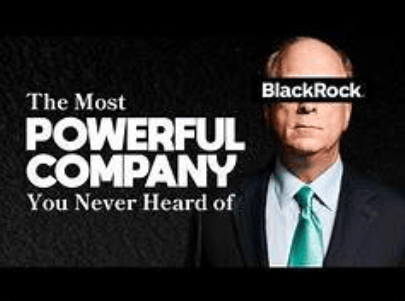
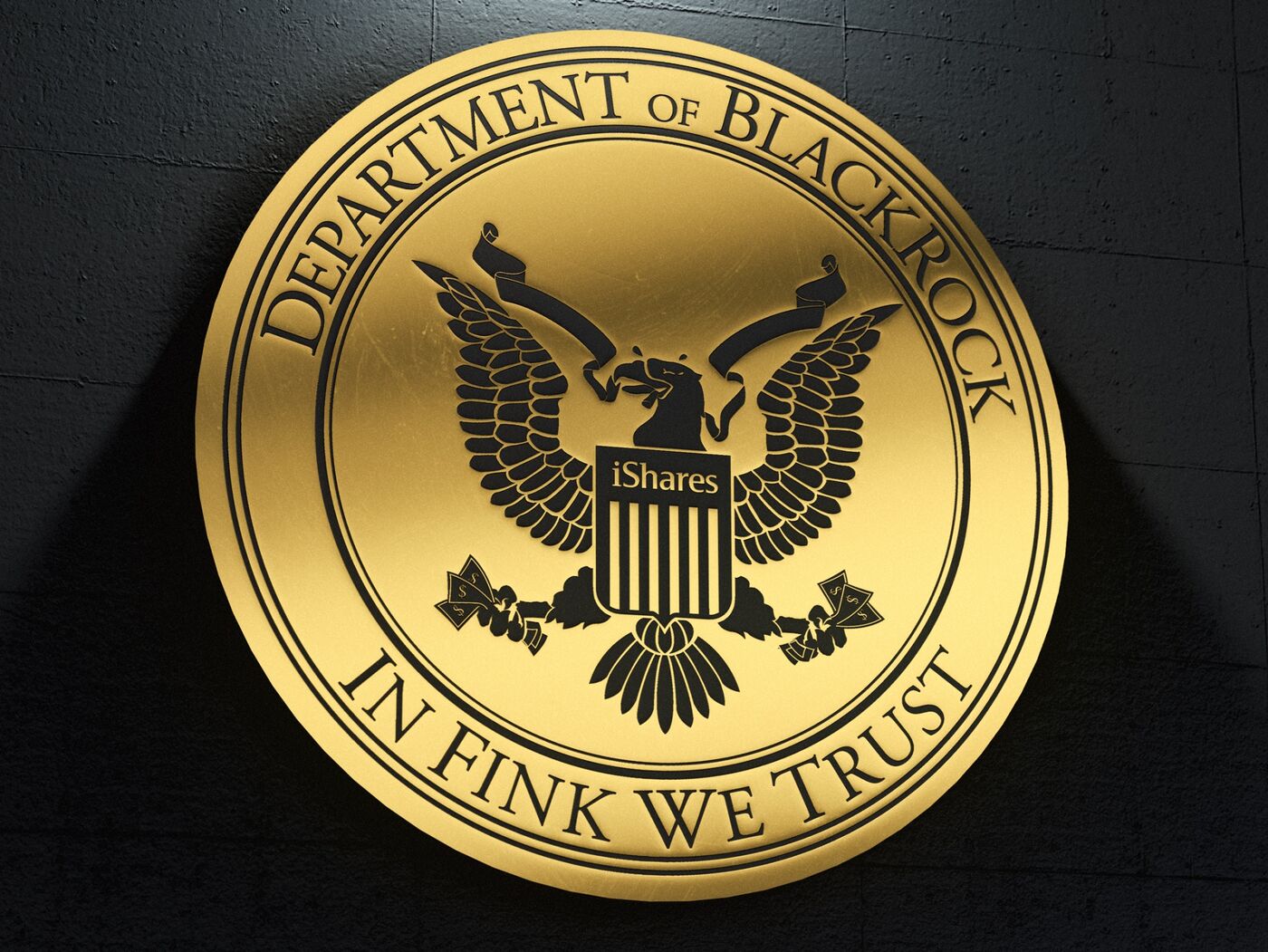
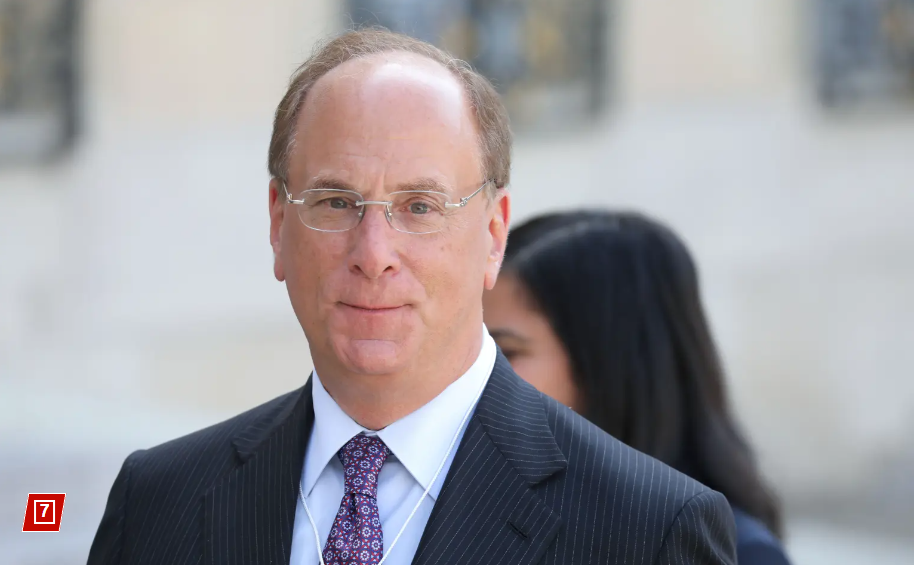

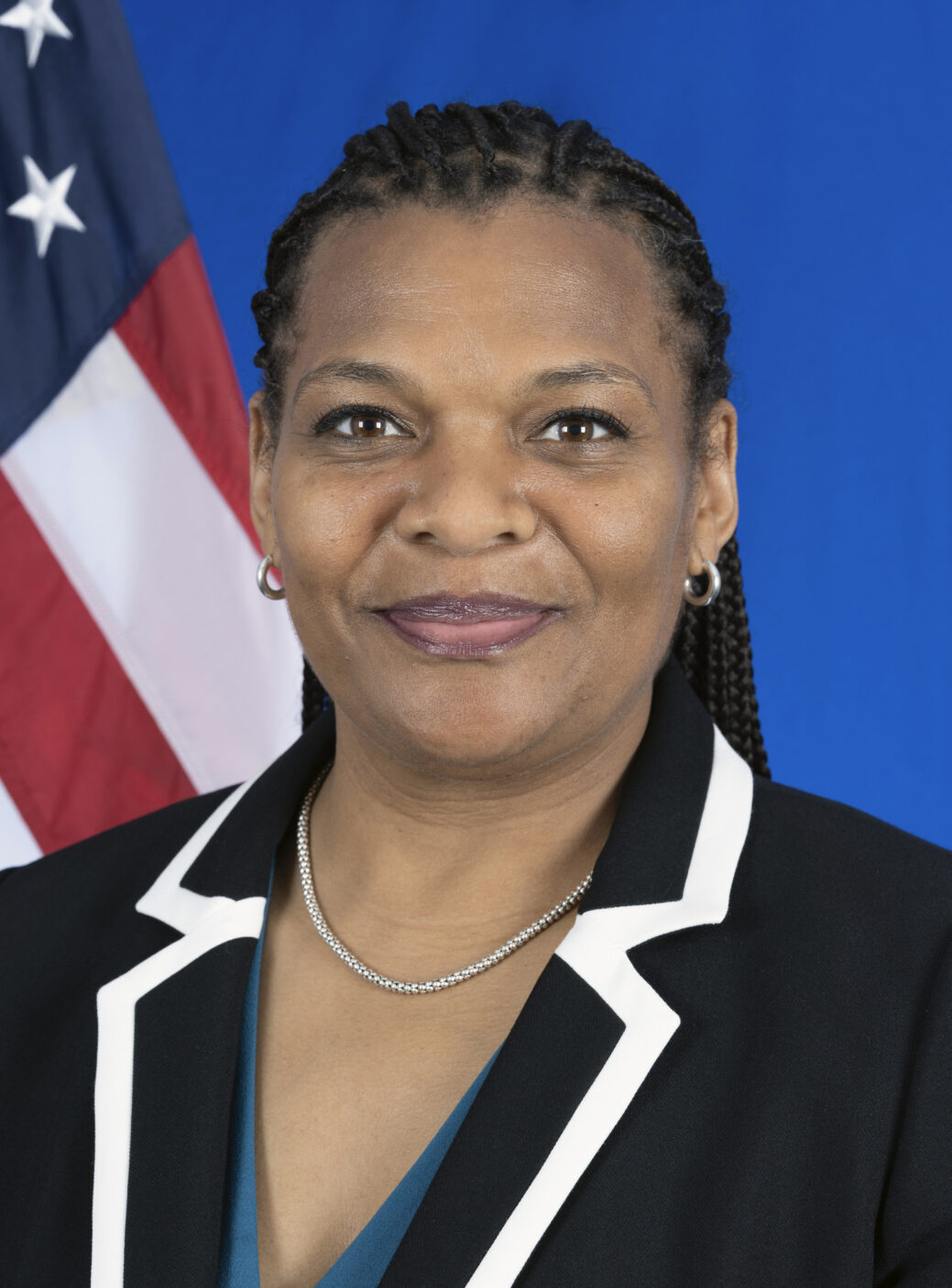
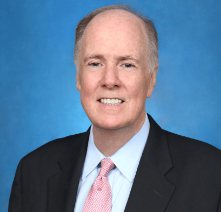
 Reply With Quote


 Re: BlackRock


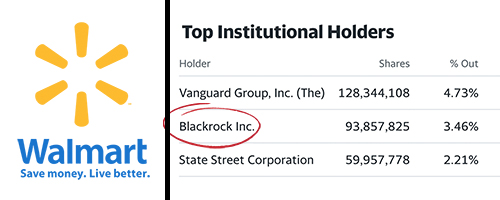
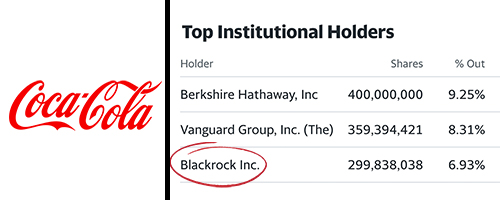
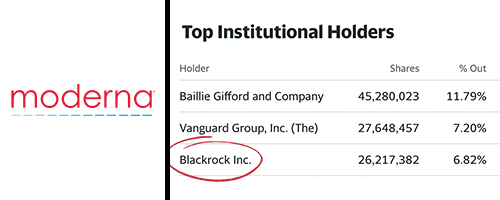
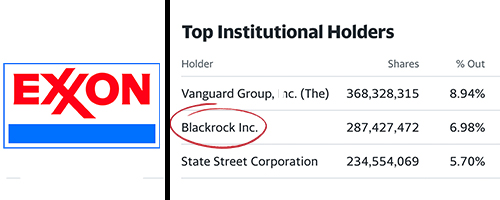
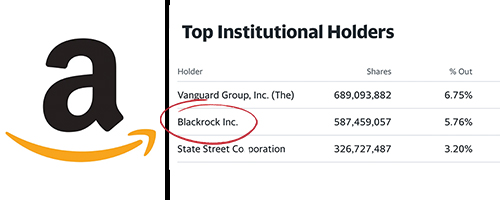
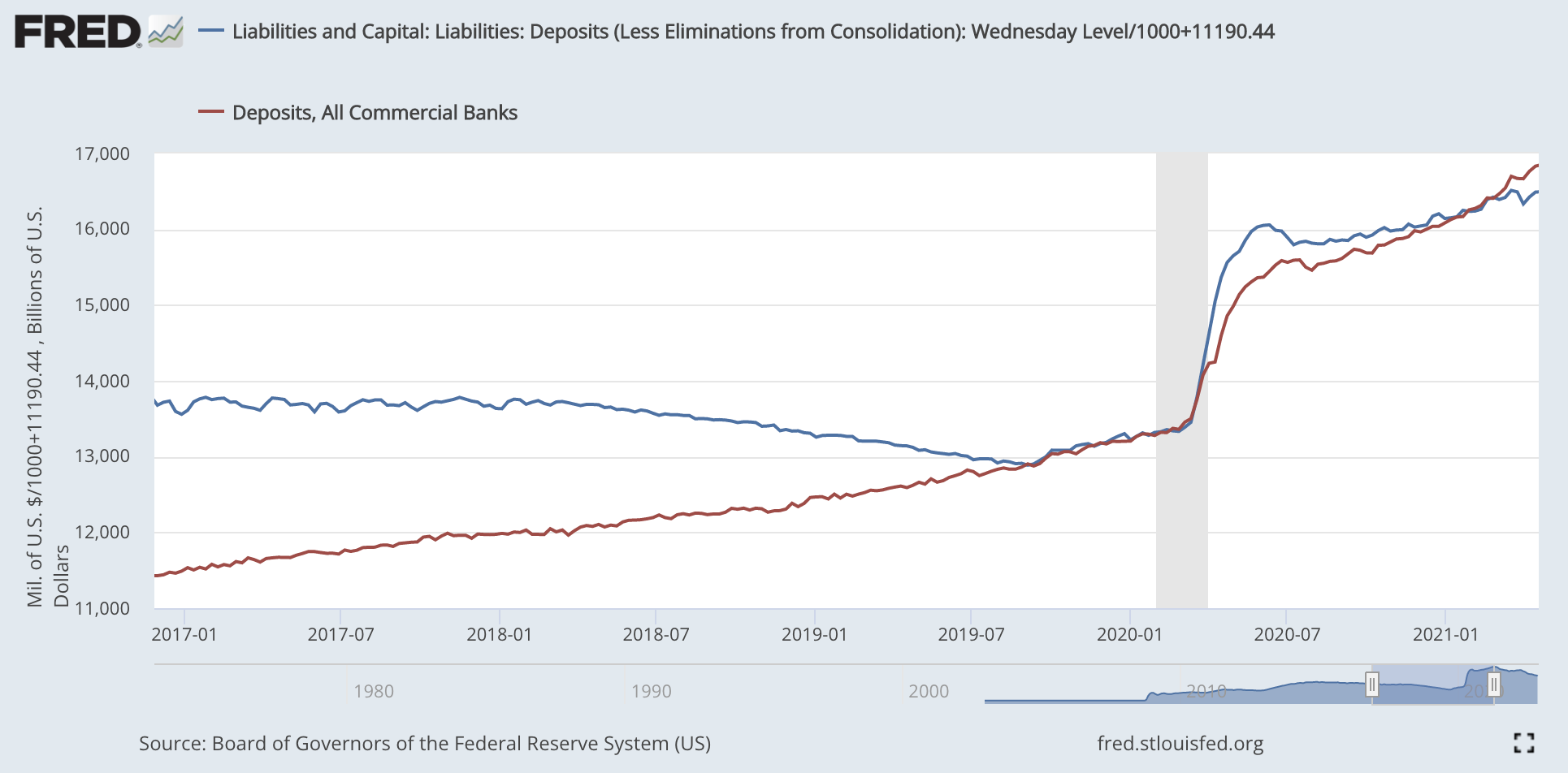



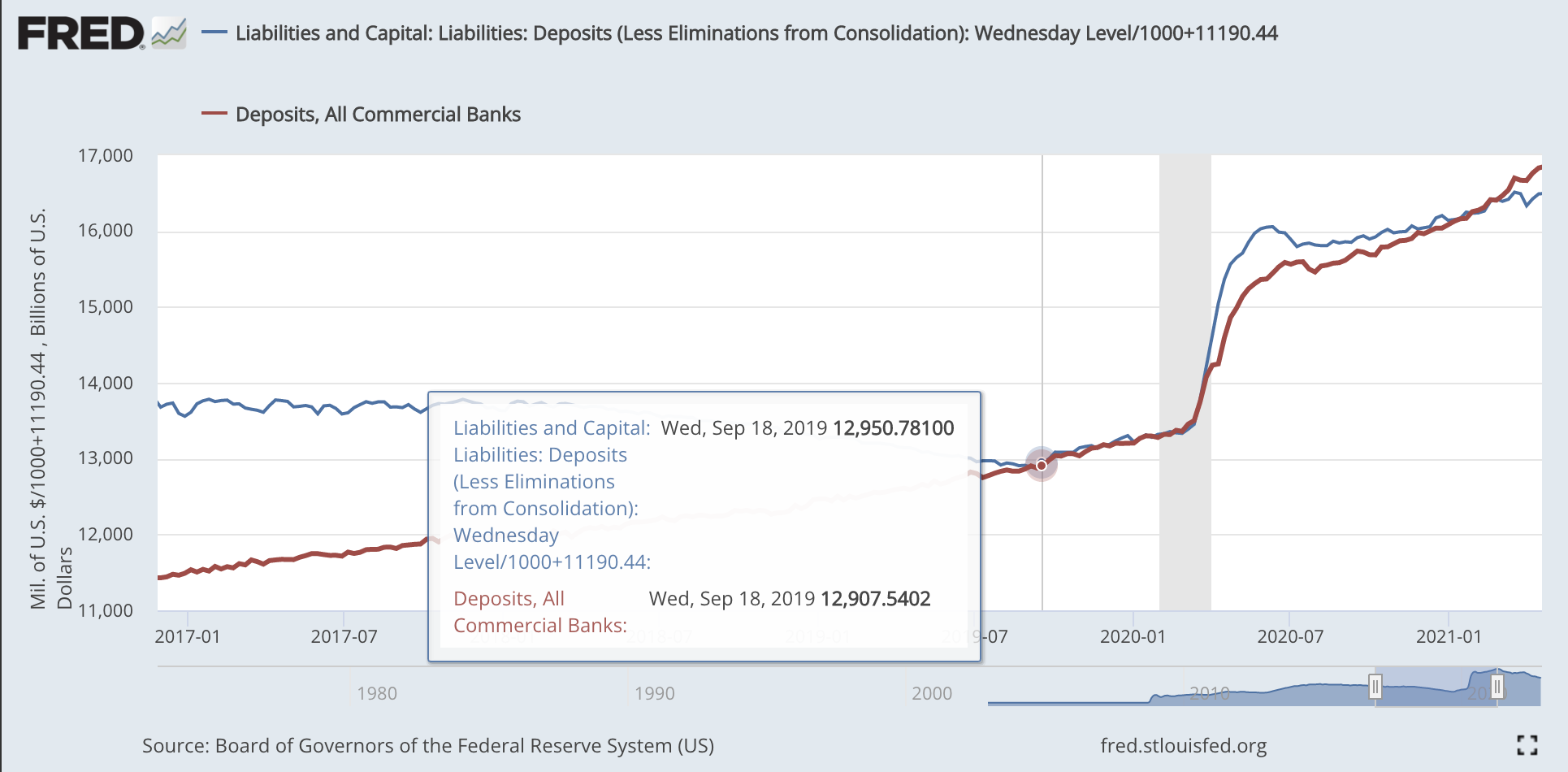
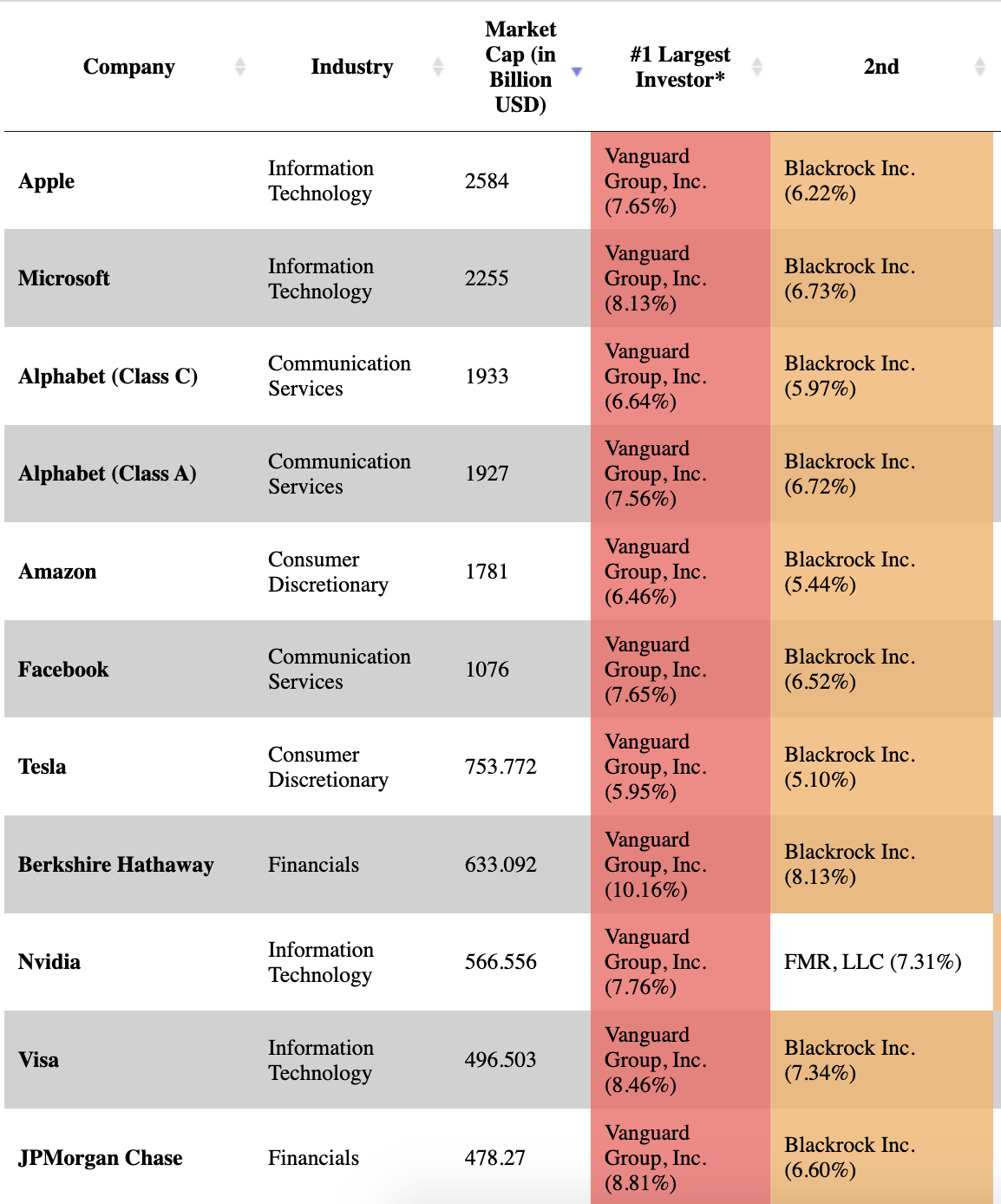


Bookmarks