+ Reply to Thread
Results 1 to 13 of 13

Thread: The Plasma Individual and the Sun

  1. Link to Post #1
    United States Avalon Member
    Join Date
    1st April 2016
    Posts
    6,178
    Thanks
    30,436
    Thanked 34,606 times in 5,825 posts

    Default The Plasma Individual and the Sun

    This is something that if you think it won't work, it won't.

    That's understandable because in the 1970s, the CIA reported that the Soviets were way ahead on what we now call Medical Plasma and it might do us some good to look into it. As anyone knows, the U. S. was interested in psychic power in any way that would weaponize it. And that's all it was. It was not until 2015, a panel of authors including Deepak Chopra were able to present a robust enough "proof of concept" that you could start getting research grants in universities.


    By "medical", it means we are talking about the human body. 99% of the mass of the universe is plasma; we have discovered at least sixteen forms of it. So in general we're not referring to the cosmos. Especially since, compared to everything else, the human has a particular dependence on the Sun.


    In that case, because plasma exists, it could be experienced, and if so perhaps ancient solar cults are expressing something about it in a purely subjective language. Like if people don't know what epilepsy is, they might call it "possession".


    On a personal level, I suggest the health aspect of how I subjectively understand this is like the opposite of a seizure, or its negative, harmony and balance.


    On a historical basis, we will run into the last exponent of solar language as Isaac Newton and it was all chased out by Dead Souls science.

    But what we are finding is like the physical manifestation of the soul. And the threads we have on plasma are external, or, the substance-as-it-is. The idea of this is to bring in information that concerns, at a minimum, a health-related physical reality, and, possibly, consciousness.


    We are not talking about electricity or Kirlian photography. Part of the discovery is biophotons, a weak luminescence of living cells. It's invisible but experimentally detectable.


    We rarely rely on a single source for anything. If the answer was out there, I would say "just go read this". I don't. I copy portions of others' work, but the advantage of the forum is that we can add, update, or change anything, so it is never static, unlike something published.


    And so of course there are a lot of sites that are just not very good on science. I know it well but that is from before these discoveries and emergent technology. Iona Miller has blogged this since the early 2000s in maybe a bit of a pulp fiction way; what is the basic idea?


    Quote Hypothesis: human microvibrations are transduced from, analogous to and/or resonantly entrained to micropulsations in the common plasma medium. Bioelectronic processes may be treated as a plasma state within the solid state of organic compounds.


    In other words, your personal plasma is affected by certain interactions particularly strongly. It doesn't work like electricity, it is immune to a lot of stuff, but is extremely sensitive to its own rules.

    The extension of the hypothesis would be to say the Sun is a critical factor in the common plasma medium. Her site is a bit astronomical. I am positive that sunlight has a greater effect on me than the existence of the Crab Nebula.


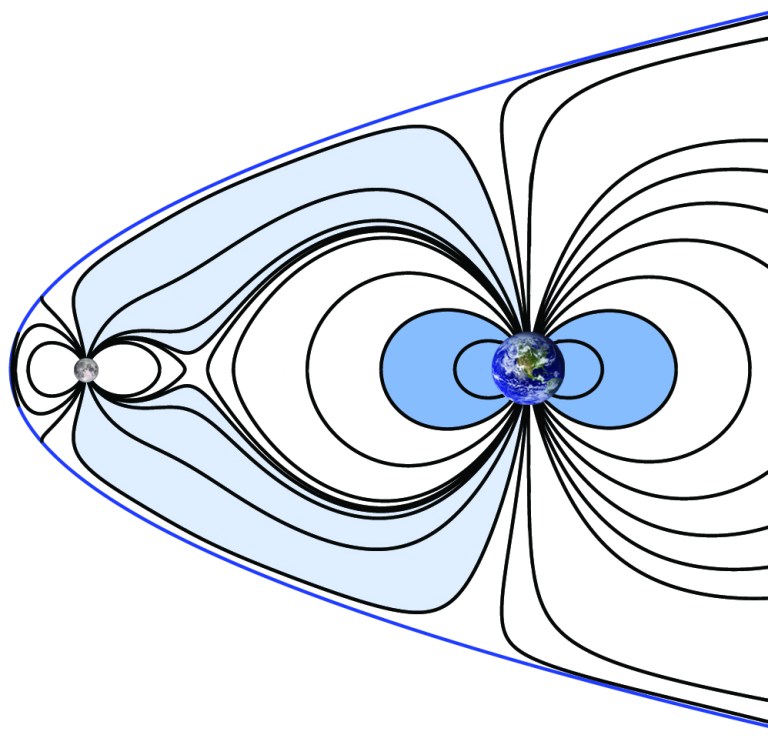
    Because Earth is in a Veil, it winds up working like a big drum, it keeps getting struck by something and passing a vibration towards the surface that we inhabit. The outer layer vibrates and transmits and then:


    Quote The magnetosphere itself functions as a resonant cavity and wave guide for waves that propagate through the system. These cavities resonate at discrete frequencies many of which have biological effects. The relation of magnetospheric micropulsations (Alven waves and SR) appears correlated with diurnal, circadian and other psychophysical rhythms in the human organism, in particular microvibrations.

    The earth "localizes" the Sun in a signature way that would be different on every planet, some of which do not have magnetospheres.

    This is something that almost any form of spirituality would say is subjectively true:


    Quote From an energy medicine perspective, the heart is the most powerful electromagnetic organ serving important regulatory functions. An ongoing dialogue takes place between heart and brain. The heart’s EM field extends 12 to15 feet beyond the body, 50 times more powerful than the brain’s EEG signals.

    The heart is our most powerful organ.
    The heart responds directly to the environment.
    The heart is the conductor of the energy of the body’s cells.
    The heart is a dynamic system.
    The heart is the body’s primary organizing force.
    The heart resonates with information-containing energy.
    The heart is the body system’s core.
    The heart speaks and sends information.
    All hearts exchange information with all other hearts and brains. (Pearsall)

    Every cell in the body is linked by electromagnetic contact with the toroidal-shaped magnetic field of the heart, mirroring the relationship of Earth with its organisms. Heart rate mediates stress response and balance of the relaxation response. The connective tissue matrix, with it semiconducting and liquid crystal holographic structure, resonates with these field changes.

    Cells are fractals embedded in a holographic energetic matrix that extends beyond the skin boundary. The body is an energetic event, a self-organizing electromagnetically unified matrix. The living matrix continuum or tissue tensegrity matrix reaches inside each and every cell, all systematically interconnected parts of the body, even more so than the nervous system.

    Plasma is a source of all types of waves, which feed back on the plasma and display mutual correlation. The manifestations of life may be ultimately summarized in terms of plasma and radiation. The secret of life lies in process control through small energy and with minimal noise. Plasma can be controlled only through fields, in particular magnetic fields.

    The plasma approach to life points out that life is electric, however, its control takes place magnetically. Plasma is revealed by the emission of an electromagnetic field and is obedient only to this field, even a very weak one. The electronic processes of metabolism may be treated as a plasma state within the solid state of organic compounds.

    Plasma -- the fundamental background for the processes of life -- is maintained in a constantly agitated state of generation and decay. This magnetohydrodynamic controlled state is correlated with metabolic process, such as anabolism-catabolism and oxidation. It is notably related to physiological currents and weakly luminescent effects (biophotons; bioluminescence).

    Sedlak (1993) discusses how a living organism is both an information detector and generator and a transformer of electromagnetic energy. Biological systems generate their own magnetic mediums or plasma fields. A plasma responds to magnetic and electric fields, acoustic waves, mechanical action, gravitational fields, and temperature; in addition to depending on chemical composition. Plasma is the ideal carrier system of information within living organisms because it alters its own state with exceptional selectivity and responsiveness.

    The biosemiconductor, together with the drift of charges, ions, and radicals, may be considered as a form of "bioplasma". Bioplasma may be subject to magnetohydrodynamic (MHD) control. The EM fields emitted by trained healers may be considered as coherent, resonant biomagnetic emissions by which a less coherent EM field of the patient is "tuned" to the specific frequency and phase, and through which homeostasis can be "aligned" to induce "healing".“ (Roffey)


    So you have a Bioplasma that is inherently fairly strong and durable, basically just needing re-charging by respiration. However it can become warped. On that hypothesis, there is a trial machine based on the description of "Assemblage Points" by Carlos Castaneda, and it seems to be accurate and therapeutic.

    My view is that solar-dependent Bioplasma is Agni Vaisvanara of the Vedas, and something similar was with the original Rosicrucians and Alchemists ending with Newton.

    Science is defined by measurements, whereas the only measuring device of subjectivity is the human being. I'd like to have an area that puts this together with the emphasis that plasma is very much of a medical or health related nature that is distinct from composing the external universe. It must be similar to descriptions of life force, which is why I said if you think it won't work, it won't. If you are at least open to the possibility that there is a life force, then it would work.


    Nothing from science is going to affect how I perceive that subjectively, however the technology may support what is being said. What I mean is this. I rarely get sick. The therapeutic devices based on medical plasma are going to cause you to not get sick, to self-heal before it happens. This is quite possibly to the extent of heavy-hitters like cancer and genetic mutation.

    At the very least, a simple cold plasma devices works like a perfect disinfectant.

    This is one of the few things I find that is good, even important, and a tiny drop compared to what is mostly going on these days.

  2. The Following 29 Users Say Thank You to shaberon For This Post:

    Agape (2nd February 2026), aoibhghaire (17th January 2026), Bill Ryan (17th January 2026), Blastolabs (3rd February 2026), Bo Atkinson (5th February 2026), bojancan (2nd February 2026), Casey Claar (17th January 2026), DustOff72 (18th January 2026), edina (17th January 2026), gini (17th January 2026), Hym (18th January 2026), Ioneo (18th January 2026), Irminsül (17th January 2026), Jad (17th January 2026), leavesoftrees (17th January 2026), meat suit (17th January 2026), Nasu (18th January 2026), onawah (17th January 2026), onevoice (22nd January 2026), pacificator (17th January 2026), Reinhard (1st February 2026), rgray222 (1st February 2026), samsdice (17th January 2026), Sunny-side-up (17th January 2026), Sunray (3rd February 2026), tessfreq (23rd January 2026), Vicus (17th January 2026), Violet3 (26th January 2026), Yoda (17th January 2026)

  3. Link to Post #2
    United States Avalon Member
    Join Date
    1st April 2016
    Posts
    6,178
    Thanks
    30,436
    Thanked 34,606 times in 5,825 posts

    Default Re: The Plasma Individual and the Sun

    There is one thing I will say about having gone through Science -- it's hard.


    Most other subjects you just read along with, but science is obstacles, challenges, where you have to learn something new in every lesson. Not by learning information, but by learning how a process works, intricate steps into the unknown. The fact remains that it cannot really explain anything, such as "consciousness". It is a set of repeatable experiments.

    That is why it is based on units of measurement. That is how I would describe it to someone around the world, I would say "I measured this and found that", and they can independently challenge it to see if it is really repeatable the way I described it.


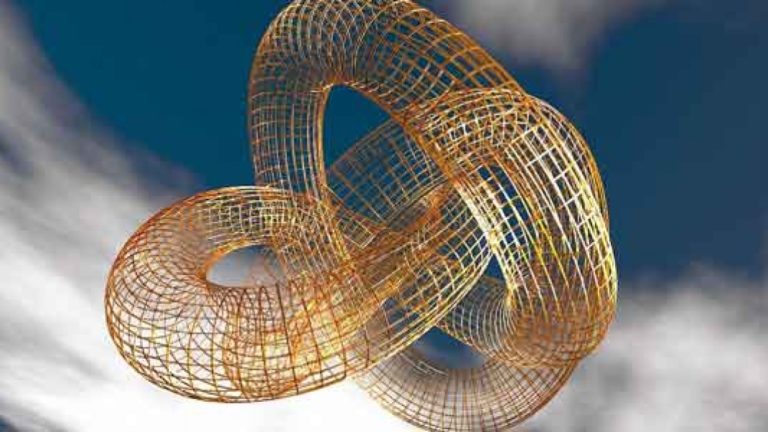
    If something like psychology is science, what are the units. I don't know. You can measure brain activity, and for a fairly long time we have known the brain runs at about twelve Watts, and there is direct current in the body that makes the muscles move. You can feel it. However, plasma is something else, more subtle. Its behavior favors a Torus or doughnut shape and we should think in terms of torque rather than linearly.

    Torque converts a rotating force into a linear direction, such as screws, nuts and bolts, when turned, press together.


    In this case, what we call a right-handed coordinate system is very simple. With your right hand, you wrap your fingers in the direction of rotation, and your thumb points in the direction torque will go.


    This is what I noticed in the language of Alchemy, hidden in the metaphor of Philosopher's Stone, or turning base metals into Gold, I don't know if it has any physical meaning, but it looks exactly like the process used in eastern tantric meditation.


    One can be positive Newton was a thoroughly dedicated Alchemist according to Legacy 2012:


    Quote Other than a verse entitled The Hunting of the
    Greene Lyon 1 found in the 1652 edition of Elias Ashmole’s Theatrum Chemicum
    Britannicum (Linden 278), hunting is not a common metaphor for alchemy.


    1 As a footnote, it was an annotated copy of Hunting of the Greene Lyon owned
    by Isaac Newton that led researchers to unveil his interest in the secret science.

    His manuscripts are extraordinarily difficult such as Chymystry with Green Lyon and Vulcan Lunatique.


    What is going on is a form of self-induced motion. Sort of like a bi-metal fan. I have one on the fireplace. The blades have different coatings on opposite sides, which makes them heat differently, which causes the fan to spin rather fast.

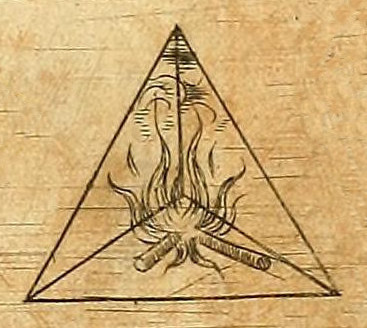
    First of all, they use Four Elements to orient you to the center in Rotation of the Elements:

    Quote `In the gold the four elements are contained in equal proportions.'' Thus the Quintessence was often symbolized by the hexagram (``Solomon's Seal'') because it unites the signs of the elements.


    Roughly speaking, the elements are covered in dross, and you purify them, and this begins a motion:


    Refinement Toward the Quintessence


    And then, they discover the third dimension with torque:


    Sublimation Toward Quintessence


    This makes sense, doesn't it? First they are showing the way you are sitting, and then the last vertical line is referring to the spinal column.

    If you think it is literally about sulfur. copper, tin, lead, and stuff like that, then it will be. But most of these people were Natural Philosophers, or had an approach similar to hylozoism or pantheism, such as the planet Jupiter also has a "regent" or "intelligence" of its own kind, fire is tended by Salamanders, and so forth. And they worked at a time when you couldn't print anything that would upset narrow religious dogma. But as soon as you think the above might pertain to a human being, then they have drawn Tantra of the eastern tradition.

    Correspondingly, they have probably also drawn the human plasma field.


    So, although there are many kinds of plasmas in all sorts of conditions, what they tend to share is "scaling geometry"; that the inner workings of a human bear this in common with galactic filaments.

    No matter the situation, it forms a Torus:


    Quote Just as planets do, individuals have an electromagnetic field encircling their particular node of spatial awareness. According to research from the HeartMath Institute, this field emanates primarily from the heart-center. As per their paper Science of the Heart:

    “The heart’s electromagnetic field – by far the most powerful rhythmic field produced by the human body – not only envelops every cell of the body but also extends out in all directions into the space around us. The cardiac field can be measured several feet away from the body by sensitive devices.”

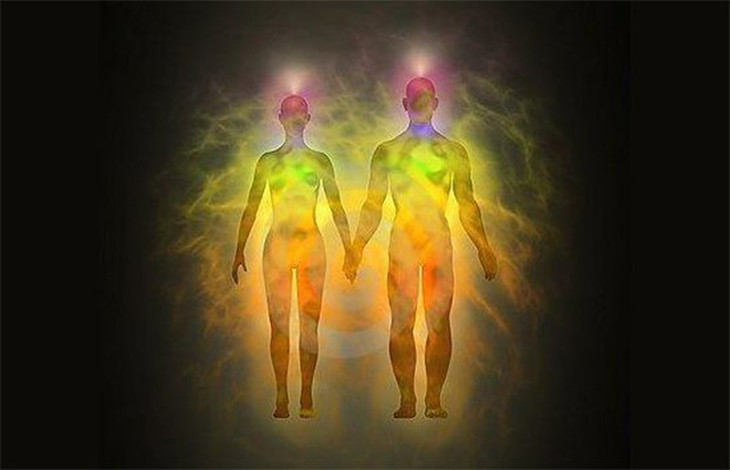
    Variable in size and coherence, here we have a template for understanding the elusive human aura. This personal torus defines the event horizon of our experience; it is the filter through which we view the world.

    A complete set of geometric structures arise within the torus. Predictable nodal points connect to create Archimedean and Platonic solids. These are the organizing force behind form as we know it. Such geometry governs the subtle chakra and meridian systems operating within, around and throughout the body.


    The Heart is used as the Stationary Point at the center of the human torus according to the design of a Russian device from Evtimova 2010:

    Quote There may be distinguished four Human Assemblage Points: the Stationary
    Assemblage Point (SAP) [1], the Moving Assemblage Point (MAP) [2], the Great Light
    Assemblage Point (GLAP) [2] and the Energy Cocoon Assemblage Point (ECAP) [3,
    4].

    Photon Sound Beam-instruments provide high quality nourishing plasma
    electrical energy delivered through glass tube applicators filled with noble gases. They are
    vehicles for biological plasma electricity as well as for Lakhovsky radio wave emissions,
    photons and subtle quantum energies provided by the plasma emission of the elements.
    The specific Rife Frequencies allow the action of very low micro-currents to disassociate
    bound matter and cells. In this way, all the primary (CAEC plus meridians) and subtle
    energy channels (nadis) are opened-up, so that frequency information and quantum
    correcting energies may be actually received and integrated by the human body
    effectively.


    The geometry of plasma would be amenable to taking the alchemical sketches as a formative approach to it.


    Rather obviously, Alchemy and Natural Philosophy were knocked out of position, and instead, Newton is known as a pioneer in Optics.


    That's a good enough link, because what we call "quantum physics" is a direct consequence of Optics.

    It was found in the property of Blackbody Radiation, meaning that a given substance, when heated to a certain temperature, gives off a certain color.

    Although this can be measured, it cannot be explained. The word "color" comes from Latin colere, "to conceal"; which is the basic meaning of "occult". From an article on color science:


    Henry E. Roscoe
    Spectrum Analysis: Six Lectures . . .
    London: Macmillan, 1869

    These colorful line diagrams reveal the chemical compositions of metals. When a pure metal is burned and viewed through a spectroscope, each element gives off unique spectra, a sort of color fingerprint. This method, called spectral analysis, led to the discovery of new elements, and marked the first steps towards quantum theory.


    However:

    Quote Goethe challenged Newton’s views on color, arguing that color was not simply a scientific measurement, but a subjective experience perceived differently by each viewer.

    We don't really know how we perceive it do we?

    The brain creates whatever it sees, and in fact dumps it back out in reverse through the optic nerve and the retina projects it out the eyeball.

    "Normally", this would be the instantaneous memory of what you just saw. In other words, the nerve is a two-way street, where the other lane usually resembles the incoming. If it does not, you can measure a hallucination as the eye projecting something which is not there.


    But then what is clairvoyance?


    There are subjective examples I will post later, but for now let us show what is concealed by color.

    That would be more colors, Complementary Pairs, which are plainly objective, not hallucinations.


    In the way we are used to seeing colors, Newton's prismatic spectrum is only a special case.

    Jordan 2013 is a dozen or so pages of lecture on how to make the experiments:


    Quote The experiments which show the two complementary images of the
    spectrum, are the main entrance to not only Goethe's but also to any
    other color studies.

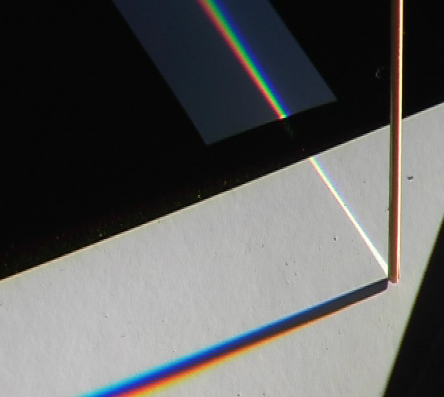
    Newton's prism appeared to be operating on a beam of light projected through a hole in a dark wall--but the prism is really projecting the wall as well. And so it carries or makes an inverted spectrum in the projected darkness at the same time:


    Image taken from Sallstrom 2016:

    Quote Goethes experiments set the agenda: we have in principle four types of spectra, pairwise complementary, and there are infinitely many intermediate cases between the ideal extremes, due to geometrical conditions, such as relative distance from prism to picture etc.

    From his lecture at Basel 2017:

    Quote Farbenlehre, in Goethe's sense, comprises by necessity much more than the physical side I have been elucidating in this lecture. Studies within perception psychology have intricate phenomena to contribute, as have the history of art and aesthetics, to be sure. Farbenlehre is essentially an interdisciplinary realm of research.

    Without copying all the details of the experiments, here are the results described as Boundary Colors:


    Ideal colors as followed by Schrodinger.

    Those are all brief pages by the same author showing that physical light is already made of complimentary pairs.

    Well, with a little effort, you can see "rainbow light" or, that is, look at a light source and see it as fringed with the spectrum. But this is something like a "default", or level one ability. There is something weirder in that light, similarly to how we are obviously run by electricity, but there is a weird plasma field beyond that.


    I want to make that point, because, as a being, the only things that I would really swear to are completely subjective. I don't consider myself as having smoking gun evidence for 9/11 or Covid or anything external that is evidence-based, I have no useful information and I cannot sit here and decide if someone's theory must be correct. But in terms of abilities such as clairvoyance, which I have experienced repeatedly, at will, on those sorts of things I'm completely confident that what I am talking about is real. It's a state of being, or, potentially, states of being, similarly to how the spectrum of light is not the only spectrum of light.

    Then, yes, if you do this, it is a positive feedback for Bioplasma health.

    Rather than a purposeless science of raw data, this is value-added, everything learned contributes not merely to knowledge, but improves the processes of health or wholesomeness.

  4. The Following 15 Users Say Thank You to shaberon For This Post:

    Agape (2nd February 2026), aoibhghaire (18th January 2026), Bill Ryan (22nd January 2026), bojancan (2nd February 2026), Casey Claar (26th January 2026), DustOff72 (18th January 2026), Hym (18th January 2026), Jad (18th January 2026), Johan (Keyholder) (19th January 2026), Mike Gorman (3rd February 2026), Reinhard (1st February 2026), Sunray (3rd February 2026), tessfreq (23rd January 2026), Violet3 (26th January 2026), Yoda (18th January 2026)

  5. Link to Post #3
    United States Avalon Member
    Join Date
    1st April 2016
    Posts
    6,178
    Thanks
    30,436
    Thanked 34,606 times in 5,825 posts

    Default Re: The Plasma Individual and the Sun

    Time for a trick.


    This is a newly-discovered plasma from Caltech:


    It defies expectation because it isn't using any big fancy electromagnetic equipment.

    It's a jet of purified water directed at a lattice crystal plate that can be quartz or niobium. The plasma levitates in standard atmosphere at will; it's very stable.

    Now what you can do is take your reply box and click on the double down arrow until you get a blank empty white space. Right-click on the image and open in a new tab. Stare at the expanded image, and then click over to the blank white tab.


    I am posting this in a kind of Alpha and Omega format, in the sense that the end part is a relatively limited set of studies from the twenty-first century. There is more predictive math about how the human medical plasma field works, than there are machines that can make the readings. It's still partially undetectable while partially detected.


    So far it appears to be vital for health, although it does not do your cardio-vascular workout for you.


    If it was knowable to someone, by sensitivity, without an objective reading by machines to verify it, how would it be expressed in pre-scientific literature by healers probably.


    The nineteenth century began with Schopenhauer and others deciding that the recently-acquired Zoroaster and the Upanishads were probably quite profound and wise and should be respected. Then HPB uses the term Ancient Wisdom Religion, which is somewhat of a tautology, because it would just mean a spoken tradition in existence before writing. And there were probably 5,000 years of inter-regional human exchange prior to writing. And, in that case, the self-designation of "Zoroastrianism" does have this name, Mazda Yasna. In Sanskrit, this has the cognate Mehda Yajna, which has an application in the phrase Asva Medha Yajna.


    Linguistically, the word "asva" does not literally mean "horse", it means one who goes fast, and so among animals, horse is given that connotation.


    The main subject of the Vedas is Time, the Year, which is the explanation of the symbolic Asvamedha by Dr. Kak of L. S. U.:


    Quote ...the a´svamedha, the so-called horse sacrifice, which actually represented
    the transcendence by the king of time in its metaphorical representation as
    horse. The primary meaning of a´sva as the sun is attested to in the R. gveda,
    Nirukta, and Satapatha Br¯ ´ ahman. a.


    The horse in Indian mythology stands for the Sun. The sea is taken to be it's stable and its birthplace. This reference is to the primal "waters" surrounding the earth from which the Sun emerges every day.

    The Asvamedha is the sacrifice of the annual renewal of the Sun at the New Year and that of the accompanying renewal of the king's rule. At the spiritual level, it is a celebration to get reconnected to the inner Sun.

    Of the principal animals conceived within the body, the horse represents time. The horse sacrifice is then the most mystical and powerful because it touches upon the mystery of time, which carries within it the secret of immortality.

    The sacrifice of the animals is the enactment of the killing of the mortal lower self for a transformation into the immortal higher self. Since the higher self cannot manifest itself without the lower one, one must settle for something less, a ritual rebirth of the individual. In other words, sacrifice deals with the mastery of time.

    From here, the next step is the cause of time or the Sun. The Rgveda (1.163.2) says that the horse is symbolic of the Sun.


    It uses a simple cosmology of Three Worlds, Terrestrial, Atmospheric, and Space. And yet these are what could be called Agricultural symbols for inner, personal, subjective existence. The theological connotation for using outer space to symbolize Heaven is where there is no night.

    Its values of goodness leading to immortality are an increasing relationship to the Sun.


    And I got into this medical plasma topic from a hook, which was somewhat related studies on the Veda which make it a system of genetic hygiene. One example is that its systems of permitted marriages ensure a seventh degree of separation, which is considered to be important to prevent re-combinations leading to genetic disorders. Another point looked at the fact that the actual practice of the hymns is heavily male-centric; but in the genetic sense it is the Y or male chromosomes that are more likely to break and cause mutation. And so this is being examined for the possibility that chanting possibly creates a harmonious resonant field on the double helix which is stranded like a sistrum, in a certain sense it is built like a little antenna or receiving dish, and these mantras maintain their integrity.


    If we jump from the fact of those mantras being the same for over three thousand years, to some of the newer acceptance of medical plasma in modern and western institutions, we find:


    2023 experiments showing intention affects cheap plasma lamps.

    Nova 2014, consciousness as a state of matter

    McGinn 2012, same, published by Oxford

    Ma 2018, Plasma Brain Dynamics


    And as stated again by Adamski 2020:


    Quote An important issue for science should also be the issue of bioplasma, which is particularly responsible for
    human psychosomatic states.

    That one is a good article to check out, just a few brief pages really.

    He says "life is in quantum processes", which, from personal research, I found is true not just with respect to the brain, but even in the process of respiration. Does not matter if you are talking about a bacterium or your own bloodstream: in order for oxygen to penetrate a cellular membrane, it has to use the famous quantum tunneling.

    So we find a fringe of acceptance, although it is not yet seen as important.


    To the level it is found at all, he has come up with a viable thesis:


    Quote Bioplasma is seated in the protein semiconductors, or piezoelectric organic compounds.


    Bioplasma is a tangible medium of life and is the ground of consciousness.


    First of all, the meaning of a piezo is something that converts mechanical vibrations into electricity, or, it converts electricity into physical vibrations, sound, heat, etc., it works either way. That puts bioplasma in communication with fields other than magnetic, which is what most directly affects it. And then by "ground" of consciousness, he goes on to explain this excludes the processes of consciousness, such as the senses, motion, reflex, brain activity; it's the raw power switch or "lights on" condition based around biophotons and coherent light.

    So I find research from another field proposing Vedic mantras might preserve the integrity of the gene pool, and we passed this idea to him:


    Quote 12 - You claim that the bioplasma process is based on piezoelectrics. Does this mean that chanting mantras has an effect on plasma and/or DNA?

    YES - Piezoelectricity and pyroelectricity are a permanent feature of biological systems, through them we can influence biological structures - DNA and RNA, which will allow us to control the functioning of a biological cell.
    This is in tandem with a warning that one of the worst dangers is free radicals.

    You are in a delicate position, because oxygen is required to re-charge the Plasma, but, if the body does not interact in a healthy manner, then your cells effectively rust, or slowly cook.

    Of course, that can largely be handled by a proper diet, and he says the best things are those which are free, such as sunlight and some exercise, and almost everything artificial is damaging. This seems pretty clear.


    The plasma ring pictured above may or may not give you a very strong effect; yet it should not be totally unfamiliar to most people. It's a subjective correspondence to an apparently objective fact, that the ordinary visible spectrum is equal to several permutations of pairwise complements.

    On a subjective basis, the experience may be called Accidental color:


    Quote (optics) A colour depending on the hypersensibility of the retina of the eye for complementary colours. They are purely subjective sensations of colour which often result from the contemplation of actually coloured bodies.

    The phenomenon has been studied, a certain way, from a site on Illusions:


    Quote “Although generally called ‘Benham’s top’, after C. E. Benham (1894), the basic effect goes back to a French monk, Benedict Prévost, who, in 1826, observed colours – like a heavenly light on his fingers – when he waved his hands about in the cloisters. Finding that this also happened with white cardboard, he realized that it has a physiological origin, in the eye, and attributed it to different rates of action of specific colour mechanisms of the retina. He was essentially correct. It is remarkable that Prévost’s discovery was forgotten, and the effect was rediscovered no less than twelve times: by Gustav Fechner in 1838 and then by others. John Smith, in 1859, thought that the effects were ‘objective’ by changing the light itself, and so he (incorrectly) challenged Newton’s account of light and colour. The third rediscovery was made by Sir David Brewster in 1861. (The history is given fully in Cohen and Gordon 1949.) Hermann von Helmholtz carried out systematic observations, noting that a white rotating sector is red on the leading edge and blue on the trailing edge, and in dim light the red becomes yellow and the blue violet. In very bright light the red becomes pinker and the blue greenish. … These subjective colours have been shown successfully on black and white television, but they are a little too weak for commercial uses. They are due to different time constants of the colour receptor systems of the eye, but they are rather too variable for precise measurements. The effects are interesting but not particularly useful.”

    So, they are talking about a subjective event, but it is induced by contrivances.

    In meditation texts, this has been well-known since at least Vishuddhimagga, and so it is closer to clairvoyance or natural vision without contrivances. This is something that Golden Dawn, so to speak, captured and re-branded, and more or less exploited it in their own way. If the original text deals with specific exercises, this is how the Mahatma described the sense to A. P. Sinnett:


    Quote And suppose, for one instant, I were to describe to you the hues of those colour rays that lie beyond the so-called "visible spectrum" -- rays invisible to all but a very few even among us; to explain, how we can fix in space any one of the so-called subjective or accidental colours -- the complement, (to speak mathematically) moreover, of any other given colour of a dichromatic body (which alone sounds like an absurdity), could you comprehend, do you think, their optical effect or even my meaning? And, since you see them not, such rays, nor can know them, nor have you any names for them as yet in Science, if I were to tell you: -- "My good friend Sinnett, if you please, without moving from your writing desk, try search for, and produce before your eyes the whole solar spectrum decomposed into fourteen prismatic colours (seven being complementary), as it is but with the help of that occult light that you can see me from a distance as I see you" . . . . what think you, would be your answer?

    What would you have to reply? Would you not be likely enough to retort by telling me in your own quiet, polite way, that as there never were but seven (now three) primary colours, which, moreover, have never yet by any known physical process -- been seen decomposed further than the seven prismatic hues -- my invitation was as "unscientific" as it was "absurd"? Adding that my offer to search for an imaginary solar "complement" being no compliment to your knowledge of physical science -- I had better, perhaps, go and search for my mythical "dichromatic" and solar "pairs" in Thibet, for modern science has hitherto been unable to bring under any theory even so simple a phenomenon as the colours of all such dichromatic bodies. And yet -- truth knows -- these colours are objective enough!

    So you see, the insurmountable difficulties in the way of attaining not only Absolute but even primary knowledge in Occult Science, for one situated as you are. How could you make your self understood -- command in fact, those semi-intelligent Forces, whose means of communicating with us are not through spoken words but through sounds and colours, in correlations between the vibrations of the two? For sound, light and colours are the main factors in forming these grades of Intelligences, these beings, of whose very existence you have no conception, nor are you allowed to believe in them -- Atheists and Christians, materialists and Spiritualists, all bringing forward their respective arguments against such a belief -- Science objecting stronger than either of these to such a "degrading superstition"!

    Thus, because they cannot with one leap over the boundary walls attain to the pinnacles of Eternity; because we cannot take a savage from the centre of Africa and make him comprehend at once the Principia of Newton or the "Sociology" of Herbert Spencer; or make an unlettered child write a new Iliad in old Achaian Greek; or an ordinary painter depict scenes in Saturn or sketch the inhabitants of Arcturus -- because of all this our very existence is denied! Yes; for this reason are believers in us pronounced impostors and fools, and the very science which leads to the highest goal of the highest knowledge, to the real tasting of the Tree of Life and Wisdom -- is scouted as a wild flight of Imagination!

    He's talking about sunlight and a natural ability to see it in spectrum with its complement.

    He speaks of something similar to the "ground" of consciousness as "that which can remain on the tip of a needle indefinitely".

    So when, etymologically, when we say color conceals something, that would be another color. Our word is derived from Latin, however the meaning is construed to be older, in Proto-Indo-European *kel-. But this is a theoretical root, which only shows this specific meaning in Italic, and the connotation "conceal" perhaps with Germanic and Greek. In most other usages it pertains more to "cover" something, and in the other direction drifted into Sanskrit Sarma and Sarana.

    What that suggests is that the connotation conceal -- color is Etruscan.


    When we fail to find that PIE language, there is a perhaps unrelated word for "color" in Old Armenian:

    Quote from Proto-Iranian *gauna (“hair; color”), perhaps related to Sanskrit गुण (guṇa, “thread, cord”), with further origin beyond Indo-Iranian uncertain.

    Akin to Avestan 𐬔𐬀𐬊𐬥𐬀 (gaona, “colour”), Pashto غونه (γūna, “colour”), Ossetian хъуын (qwyn, “hair”). Old Armenian գոյն (goyn) is an Iranian borrowing.

    But no the Rg Veda does not have the level of detail to describe the spectrum and its complement.

    The Latin-to-English derivation is singular and curious.

    For me, personally, I had already discovered what the Mahatma described as a very rare ability. I can't say I reached that stage where you can see someone from miles away, but I already knew what he was talking about when he said this. I got it from the more tedious process of "layers"; that is, I would say that clairvoyance has an onset of simple effects to the normal world. It is not unusual to see a basic type of aura, a normal spectrum, or in some cases I have had moments of x-ray vision. There might be colorings of a material nature, or other alterations, that you would still say are just an enhancement on where you objectively are.


    The idea that there is a "second spectrum" is a total shift. It's something that "opens". It seems to be "within" the prior type of vision, but perhaps you could say it is due to greater concentration. And so I would say we have a mixed set of abilities, some of which takes place in ordinary waking consciousness, from there to the point you would say it is no longer of this world.


    There was a period of studying Animal Magnetism which in some cases is said to induce clairvoyance.

    If that was mostly done by imperfect ideas and discarded because electrical machines could produce more immediate results, plasma technology is like a return to it with a more robust set of ideas.


    Now there is of course one major plasma, that anyone can see about once in a lifetime.


    Solar Corona


    This has a consistency like boiling spaghetti, if it were made of rubber bands. It makes loops that stretch out and fall back, and oscillate, until some break and there is a coronal mass ejection. The surface of the sun has combusting gases and an appropriate temperature of about 4,400 K, but the corona gets hotter with distance, up to a million degrees or more, and is mostly made of iron isotopes.

    Although they might not have had the math to computer map it, peoples for untold thousands of years would still have the same subjective experience of it.

    And this is a case where almost every legend attributed to the Rg Veda is wrong, because it actually says something different.

    Because it is a workshop of astrologer priests, we can easily find how this is, so to speak, encoded into their existence. In Sanskrit, Rahu, Dragon's Head or North Node of the Moon, is not a derived or compounded expression like dragon's head or north node of the moon. It's just Rahu, with no prior or other connotation than solar eclipse.

    And this is how it works in an early lineage of Vedic Sages or Rishis:


    Rahugana Angiras --> Gotama Rahugana --> Vamadeva Gautama


    "Gana" has to do with a gathering or host, and so the first name means circle of those who saw an eclipse.

    And yes, astrological ideas proceed to appear in this chain of transmission. But most of the legends refer to Rishi Atri as personally causing an eclipse, whereas the verses in question are built on a malleable compound, svarbhanu. This has a less-fixed meaning, "to devour the light of heaven", and so we think the real Rishi Atri is actually a very eloquent and well-informed composer who is making metaphorical laments about depression and other kinds of misery. Rather than supernatural feats of heroic might, it seems to be more of an anguished personal catharsis relying on divinity to rise above mortal plight.


    I'm not sure that Astrology is the best word, because that is seen later in Babylonian predictive astrology, which I find unreadable. The older science of Jyotish is more about the timing of a luni-solar year, which of course has one meaning with respect to agriculture and the seasons, and another for the schedule of Vedic rites. The most important one is for the New Year. The annual cycle of the sun is the crux of it all. That's not to say it's perfect -- because at this point everything is observational. It might have been eighty or a hundred years before there was a second rahugana. Likewise, everything but the Moon moves so slowly that it would take a really long time to make a whole lot of observations before you could attempt to calculate the motion. While it observes some things that generally go unnoticed, it remains the case that Spherical Trigonometry is Greek, and is the basis of physics.


    As for the subjective example of an eclipse, this also has its starting point from The Mahatma Letters to A. P. Sinnett:


    (9) Is the sun's corona, an atmosphere? of any known gases? and why does it assume the rayed
    shape always observed in eclipses?


    (9) Call it a chromosphere or atmosphere, it can be called neither; for it is simply the magnetic
    and ever present aura of the sun, seen by astronomers only for a brief few moments during the
    eclipse and by some of our chelas — whenever they like — of course while in a certain induced
    state
    . A counterpart of what the astronomers call the red flames in the "corona" may be seen in
    Reichenbach's crystals or in any other strongly magnetic body. The head of a man — in a strong
    ecstatic condition, when all the electricity of his system is centred around the brain, will
    represent — especially in darkness — a perfect simile of the Sun during such periods. The first
    artist who drew the aureoles about the heads of his Gods and Saints, was not inspired, but
    represented it on the authority of temple pictures and traditions of the sanctuary and the
    chambers of initiation where such phenomena took place. The closer to the head or to the
    aura-emitting body — the stronger and the more effulgent the emanation (due to hydrogen science
    tells us, in the case of the flames); hence — the irregular red flames around the Sun or the "inner
    corona." The fact that these are not always present in equal quantity shows only the constant
    fluctuations of the magnetic matter and its energy, upon which also depend the variety and number of
    spots. During periods of magnetic inertia the spots disappear, or rather remain invisible. The
    further the emanation shoots out the more it loses in intensity, until gradually subsiding it fades
    out; hence — the "outer corona," its rayed shape being due entirely to the latter phenomenon
    whose effulgence proceeds from the magnetic nature of the matter and the electric energy and
    not at all from intensely hot particles as asserted by some astronomers. All this is terribly
    unscientific, nevertheless a fact, to which, I may add another by reminding you that the Sun we
    see is not at all the central planet of our little Universe, but only its veil or it's reflection. Science
    has tremendous odds against studying that planet which luckily for us we have not: foremost of
    all — the constant tremours of our atmosphere which prevent them from judging correctly the
    little they do see. This impediment was never in the way of the ancient Chaldee and Egyptian
    astronomers; nor is it an obstacle to us, for we have means of arresting, or counteracting such
    tremours — acquainted as we are with all the akasic conditions. No more than the rain secret,
    would this secret — supposing we do divulge it — be of any practical use to your men of
    Science unless they become Occultists and sacrifice long years to the acquirement of powers.

    Only fancy a Huxley or a Tyndall studying Yog-vidya! hence the many mistakes into which they
    fall and the conflicting hypotheses of your best authorities. For instance: the Sun is full of iron
    vapours — a fact that was demonstrated by the spectroscope showing that the light of the
    corona consisted largely of a line in the green part of the spectrum, very nearly coinciding with
    an iron line. Yet Professors Young and Lockyer rejected that, under the witty pretext, if I
    remember, that, if the corona were composed of minute particles like a dust cloud (and it is this
    that we call "magnetic matter") these particles would (1) fall upon the sun's body, (2) comets
    were known to pass through this vapour without any visible effect on them; (3) Professor
    Young's spectroscope showed that the coronal line was not identical with the iron one, etc. Why
    they should call those objections "scientific" is more than we can tell.

    (1) The reason why the particles — since they call them so — do not fall upon the sun's body, is
    self-evident. There are forces co-existent with gravitation of which they know nothing; besides
    that other fact that there is no gravitation properly speaking; only attraction and repulsion. (2)
    How could comets be affected by the said passage since their "passing through" is simply an
    optical illusion; they could not pass within the area of attraction without being immediately
    annihilated by that force, of which no vril can give an adequate idea, since there can be nothing
    on earth that could be compared with it. Passing as the comets do through a "reflection" no wonder that
    the said vapour has "no visible effect on these light bodies." (3) The coronal line may not seem
    identical through the best "grating spectroscope," nevertheless, the corona contains iron as well
    as other vapours. To tell you of what it does consist is idle, since I am unable to translate the
    words we use for it, and that no such matter exists (not in our planetary system, at any rate) —
    but in the sun. The fact is, that what you call the Sun is simply the reflection of the huge "storehouse"
    of our System wherein all its forces are generated and preserved; the Sun being the heart
    and brain of our pigmy Universe, we might compare its faculae — those millions of small,
    intensely brilliant bodies of which the Sun's surface away from the spots is made up — with the
    blood corpuscles of that luminary — though some of them as correctly conjectured by science
    are as large as Europe. Those blood corpuscles are the electric and magnetic matter in its sixth
    and seventh state. What are those long white filaments twisted like so many ropes, of which the
    penumbra of the Sun is made up? What — the central part that is seen like a huge flame ending
    in fiery spires, and the transparent clouds, or rather vapours formed of delicate threads of silvery
    light, that hangs over those flames — what — but magneto-electric aura — the phlogiston of the
    Sun?

    Tell Science that even in
    those days of the decline of the Roman Empire, when the tatooed Britisher used to offer to the
    Emperor Claudius his nazzur of "electron" in the shape of a string of amber beads that even
    then, there were yet men remaining aloof from the immoral masses, who knew more of
    electricity and magnetism than they, the men of science, do now, and science will laugh at you
    as bitterly as she now does over your kind dedication to me. Verily, when your astronomers
    speaking of sun-matter, term those lights and flames as "clouds of vapour" and "gases unknown
    to science" (rather!) — chased by mighty whirlwinds and cyclones — whereas we know it to be
    simply magnetic matter in its usual state of activity — we feel inclined to smile at the expressions.


    There are two very strong clairvoyant doctrines in that book -- the sun, as it really is, objectively, as plasma -- and sunlight, in a way that is not apparent but can also be discovered in other sources.

    Dr. Crookes discovered "Radiant Matter" which we now call plasma. Out of all, this appears to be the main thing the Mahatmas were interested in, in Europe:


    So the great Mr. Crookes has placed one foot across the threshold for the sake of reading the
    Society's papers? Well and wisely done, and really brave of him. Heretofore he was bold enough
    to take a similar step and loyal enough to truth to disappoint his colleagues by making his facts
    public. When he was seeing his invaluable paper smothered in the "Sections" and the whole
    Royal Society trying to cough him down, metaphorically if not actually, as its sister Society in
    America did to that martyr, Hare — he little thought how perfect a revenge Karma had in store
    for him. Let him know that its cornucopia is not yet emptied, and that Western Science has still
    three additional states of matter to discover. But be should not wait for us to condense ourselves
    up to the stethescopic standard as his Katy did; for we men are subject to laws of molecular
    affinity and polaric attraction which that sweet simulacrum was not hampered with. We have no
    favourites, break no rules. If Mr. Crookes would penetrate Arcana beyond the corridors the tools
    of modern science have already excavated, let him — Try. He tried and found the Radiometer;
    tried again, and found Radiant matter; may try again and find the "Kama-rupa" of matter — its
    fifth state. But to find it's Manas he would have to pledge himself stronger to secrecy than he
    seems inclined to.

    The only great truth uttered by
    Siemens is that inter-stellar space is filled with highly attenuated matter, such as may be put in
    air vacuum tubes, and which stretches from planet to planet and from star to star.

    The latest theory of radiant energy which
    shows that there is no such thing in nature, properly speaking, as chemical light, or heat ray is
    the only approximately correct one. For indeed, there is but one thing — radiant energy which is
    inexhaustible and knows neither increase nor decrease and will go on with its self-generating
    work to the end of the Solar manvantara.


    Finally after explaining how most of the solar energy is blocked and filtered:


    What with such a waste must then be the recuperative power of our Father-Mother Sun? Yes; call
    it "Radiant Energy" if you will: we call it Life — all-pervading, omnipresent life, ever at work in its
    great laboratory — the Sun.


    That's from the 1880s and we see, indeed, machinery has verified the material aspect of the sun to an exorbitant degree. It has done nothing with the pantheistic assertion just given.


    Evtimova 2007 is a colorized handout which at first looks a bit like Iona's blog, but she is a Physics PhD, explaining the heart as a torus interacting with an inductor/solenoid and a time-dependent electric dipole.

    In this way, she appears to be running Physics through an older 1990s therapeutic technology from Whale Medical, which isn't specifically about plasma, but is using piezo gemstones and the concept of "assemblage point", which in this context is the same as "heart".


    Although the pdf is still a bit basic, she has for example published in 1993:


    Quote Energy-momentum tensor in phase space: a connection between Schrodinger energy-momentum tensor and Terletsky distribution function

    So, yes, she's literally a university professor in Sofia, Bulgaria; Jon Whale is an engineer who specializes in making devices. I should perhaps say "was" and she is probably really up in age and unlikely to be the one updating the technology any further.

    2025 does not appear to have updates along these lines. Drexel University is running a program about the applications of "disinfectant" plasmas by an external source. The approach of wholistic medicine towards the human aura is not being taken. It's a paradigm shift out of treating symptoms of diseases to a whole person functions normally.


  6. The Following 4 Users Say Thank You to shaberon For This Post:

    Bill Ryan (22nd January 2026), Casey Claar (3rd February 2026), Sunray (3rd February 2026), tessfreq (23rd January 2026)

  7. Link to Post #4
    United States Avalon Member
    Join Date
    1st April 2016
    Posts
    6,178
    Thanks
    30,436
    Thanked 34,606 times in 5,825 posts

    Default Re: The Plasma Individual and the Sun

    This is very unusual. I had brought in the following point soon after I joined Avalon. The timing was after a break from posting because I had been really busy going through things that met me to my first goat. And his life cycle was not able to reach its natural end, and we lost him last summer. And for me he joined that group of Di Manes or rather became the chief or principal of them, becoming a fusion of Vedic, Buddhist, and Zoroastrian figures and perhaps others. I don't know if you're allowed to say "Saint Goat", but, I don't have a personal guru or any such authority figure, I have him.


    That becomes relevant here because the goat is the mount of Vedic Pusan, an Aditya or solar deity. The common concept of him says he lost his teeth and has to suck mush and so he is given his own special kind of Offering. The Veda does not say this. Pusan is the guide across what we might generally call the bridge of death as found in almost any concept of the Afterlife. You have a shadow period where the soul has to get lighter and lighter in order to reach and enter Heaven. For some reason the deity has a goat, which doesn't have its own real word because it is Aja, Without Birth. And while something like Asva has an obvious implication, Aja -- Goat has no rationale other than what exists without being produced.


    Also the Rg Veda does not have Twelve Adityas. This correspondence to the months or the signs of the Zodiac is a far later adaptation. But it does have Pusan in its oldest layers, and the way in which it is used is one of the first things lost and forgotten.


    When I first studied The Mahatma Letters, I was doing so from the point of view of having become a Buddhist. In earlier times, I had maybe read some theosophists, and I figured the Letters must be some kind of introduction or transfer of Buddhism. And they're actually not. I can tell that they are written by persons knowledgeable of and possibly practitioners of Buddhism, and they are trying to extrapolate it to the English-speaking world in their own way, which is...less proselytic than a marshmallow, but viperish in its consistency. We found it made some interesting points about occult color and the solar corona and this is perhaps the circuituous route that brings us to Bioplasma:


    Quote ...we deny God both as philosophers and as
    Buddhists. We know there are planetary and other spiritual lives, and we know there is in our
    system no such thing as God, either personal or impersonal. Parabrahm is not a God, but
    absolute immutable law, and Iswar is the effect of Avidya and Maya, ignorance based upon the
    great delusion. The word "God" was invented to designate the unknown cause of those effects
    which man has either admired or dreaded without understanding them, and since we claim and
    that we are able to prove what we claim — i.e. the knowledge of that cause and causes we are in
    a position to maintain there is no God or Gods behind them.

    The idea of God is not an innate but an acquired notion, and we have but one thing in common
    with theologies — we reveal the infinite. But while we assign to all the phenomena that proceed
    from the infinite and limitless space, duration and motion, material, natural, sensible and known
    (to us at least) cause, the theists assign them spiritual, super-natural and unintelligible and
    un-known causes. The God of the Theologians is simply and imaginary power,un loup garou as
    d'Holbach expressed it — a power which has never yet manifested itself. Our chief aim is to
    deliver humanity of this nightmare, to teach man virtue for its own sake, and to walk in life
    relying on himself instead of leaning on a theological crutch, that for countless ages was the
    direct cause of nearly all human misery. Pantheistic we may be called — agnostic never...

    So, I don't know what it means. We know about Elohim and that for example Greek Theos has the meaning of Prime Motion, however "God" is a much later ca. sixth century expression which usually seems to be a placeholder for the unknown. I have not been able to get anyone to explain the understanding or use of it much on the forum. It however is correct that in Europe in the 1600s you had formation of anti-papal and in some cases anti-religion creeds. Whereas Dr. Crookes made an important discovery, it is among the anti-religionists that the Mahatma finds his closest match:


    Quote Strangely enough I found a European author — the greatest materialist of his times, Baron
    d'Holbach — whose views coincide entirely with the views of our philosophy. When reading his
    Essais sur la Nature, I might have imagined I had our book of Kiu-ti before me. As a matter of
    course and of temperament our Universal Pundit will try to catch at those
    views and pull every argument to pieces. So far he only threatens me to alter his Preface and not
    to publish the philosophy under his own name. Cuneus cuneum, tradit : I begged him not to
    publish his essays at all.


    He has probably referred to rgyud sde, Mahayoga, Tantra.

    The French title is a mistake becauseEssais is a different and noticeably earlier work. He's referring to the author and to his materialism, which, for example, Voltaire despised.


    This "school of materialism" is of interest, because it makes a new proposal about Matter:


    Quote In another sense, though, the heterogeneity of matter is helpful to Holbach’s project. Materialistic accounts of human nature are often thought to fail just because human beings seem to have properties, such as thought and freedom, that matter does not have. In making matter a genus of varied beings, Holbach creates a view flexible enough to accommodate an account of human nature more robust than that of many other materialists:

    …Man is, as a whole, the result of a certain combination of matter, endowed with particular properties, competent to give, capable of receiving, certain impulses, the arrangement of which is called organization, of which the essence is, to feel, to think, to act, to move, after a manner distinguished from other beings with which he can be compared. Man, therefore, ranks in an order, in a system, in a class by himself, which differs from that of other animals, in whom we do not perceive those properties of which he is possessed. [System of Nature 15]
    Holbach’s naturalism requires that human nature be understood in terms of laws and that human action be comprehended under universal determinism. But it allows that, in many ways, human beings may differ in kind from other bodies, even animals, and it allows that human beings may have many properties, notably thought, that have traditionally been denied to matter.

    The heterogeneity of matter in Holbach’s account contributes to the vagueness of that designation. Matter can to some extent be understood in the ordinary sense of anything that has extention, figure, and so on. However, because matter also may or may not have any number of properties not ordinarily understood to belong to matter, such as thought, it is not entirely clear what may not be matter. Motion is likewise and for similar reasons a vague term in Holbach. Where matter is understood simply as extension and some other very simple properties, motion may be thought of in similarly simple terms, as a velocity, acceleration or, perhaps, as an impulse with a certain direction. Once matter is thought of, after the manner of Holbach, as something with properties which are perhaps best not understood in spatial terms, its motion may be much more difficult to define.

    His atheistic intent turns out to work like Dharma. In the Indian system, Mimamsa is a very similar rational way of explaining the feeling of morality, and so this philosophy is as relevant for Carvaka Atheists, i. e. even if they just believe the body dies at death and no one is left. But, yes, in that sense, when I come to this from a Buddhist view of Dharma, we agree:


    Quote D'Holbach's objectives in challenging religion were primarily moral: he saw the institutions of Christianity as a major obstacle to the improvement of society. For him, the foundation of morality was to be sought not in Scripture or the moral teachings of the Catholic Church, but in happiness: "It would be useless and almost unjust to insist upon a man's being virtuous if he cannot be so without being unhappy. So long as vice renders him happy, he should love vice." D'Holbach's radicalism posited that humans were fundamentally motivated by the pursuit of enlightened self-interest, which is what he meant by "society", rather than by empty and selfish gratification of purely individual needs. Chapter 15 of Part I of System of Nature is titled "Of Man's true Interest, or of the Ideas he forms to himself of Happiness. – Man cannot be happy without Virtue."

    ...let him always recollect, that his solid happiness should rest its foundations upon its own esteem – upon the advantages he procures for others; above all, never let him for a moment forget, that of all the objects to which his ambition may point, the most impracticable for a being who lives in society, is that of attempting to render himself exclusively happy.


    D'Holbach believed that the state should prevent a dangerous concentration of wealth amongst a few individuals from taking place.

    I won't say all of his ideas are all that great, and some of then are redundant and unoriginal. But that one would be a basic Buddhist measuring stick. I go places and it doesn't seem to be working out, because what I mean by moral force is not the same as their understanding.


    This is just a section of what could be considered his treatises on Mind is Matter in System of Nature:


    Quote Although the word spirit is so very ancient among men, the sense attached to it by the
    moderns is quite new; and the idea of spirituality, as admitted at this day, is a recent
    production of the imagination. Neither Pythagoras nor Plato, however heated their brain, and
    however decided their taste for the marvellous, appear to have understood by spirit an
    immaterial substance, or one without extent, such as that of which the moderns have formed
    the human soul, and the concealed author of motion. The ancients, by the word spirit, were
    desirous to define matter of an extreme subtilty, and of a purer quality than that which acted
    grossly on our senses. In consequence, some have regarded the soul as an ethereal substance;
    others as igneous matter: others again have compared it to light. Democritus made it consist
    in motion, consequently gave it a mode of existence. Aristoxenes, who was himself a
    musician, made it harmony. Aristotle regarded the soul as the moving faculty upon which
    depended the motion of living bodies.

    The earliest doctors of Christianity had no other idea of the soul than that it was material.
    Tertullian, Arnobius, Clement of Alexandria, Origen, Saint Justin, Irenaeus, have never
    spoken of it other than as a corporeal substance. It was reserved for their successors, at a
    great distance of time, to make the human soul, and the soul of the world, pure spirits; that
    is to say, immaterial substances, of which it is impossible to form any accurate idea: by
    degrees this incomprehensible doctrine of spirituality, conformable without doubt to the
    views of theologians who make it a principle to annihilate reason, prevailed over the others:
    this doctrine was believed divine and supernatural, because it was inconceivable to man.
    Those who dared believe that the soul was material, were held as rash, inconsiderate
    madmen, or else treated as enemies to the welfare and happiness of the human race. When
    man had once renounced experience and abjured his reason, he did nothing more, day after
    day, than subtilize the ravings of his imagination: he pleased himself by continually sinking
    deeper into the most unfathomable depths of errour; and he felicitated himself on his
    discoveries, on his pretended knowledge, in an exact ratio as his understanding became
    enveloped with the clouds of ignorance. Thus, in consequence of man’s reasoning upon false
    principles, the soul, or moving principle within him, as well as the concealed moving
    principle of Nature, have been made mere chimeras, mere beings of the imagination.

    He avoided the main reason for missing it, that Resurrection is supposed to be that of the physical body -- which doctrine became surprisingly quiet at the time...it is toned down because it does not sound like science.

    That's theology. The spirit of a living body may have been a material force, but, an aerial body was heresy or was not immortality. Usually the Gnostic ideas of a soul are of this "imponderable material".

    The revelation as given above is that spirit, soul, or thought, is a form of matter "attenuated" or "ethereal", to which the Mahatma attaches plasma as the fourth state of matter, leaving three states more subtle than plasma. These may form super-structures on or within the solar orb, while at the same time they are consciousness and life.

    The Vedic response is opposite the theological one; it is indifferent, alive or disembodied, Manas is the human mind. Whatever the living substance is that is within the body, is qualitatively the same as that which outlives it. Whatever is "merely" plasma is conducive to finer material "beyond plasma", and again to the unearthly, a type of consciousness impervious to death or use of a material body, made of mind stuff. Its only connection to the physical realm is subjective. No way to measure it, not a part of science.

    Rather than Monad and Personality, HPB was instructed to use the Sanskrit terms Amrita and Pratyeka, and she never did; it would have contributed significantly if humanity had gotten accustomed to "Amrita" in the 1880s. A better translation than "Immortality" is "Deathless", from a-, as a negative prefix, and mrtyu or death. We only know this because the Mahatma explains the absence. Because he does, we would say yes, this is valid in Yoga, Buddhist or otherwise. This is to say the Manas does not taste or experience death, because of self-improvement. Without proper care, it becomes terrified and bewildered, and might go to hell or ghost lands, and so we, at least, train on improving this from within.


    What is interesting is that "one force" is apparent as geometry in plasma, because solar flares and inter-galactic filaments basically work the way it does on a small scale.

    This is combined with the Mahatma's tenet that motion never ceases, not even in final pralaya.

    Without even forming an atom, if we were to take an electron, and isolate it, and hold it in one spot, it will keep moving at the same speed because its existence is defined by the fact it always moves at the same speed.

    The macroscopic, visible behavior of plasma is akin to that of sub-atomic particles.

    Because angular momentum is quantized, in particle physics it is simply called Spin:

    Quote As a qualitative concept, the spin vector is often handy because it is easy to picture classically. For instance, quantum-mechanical spin can exhibit phenomena analogous to classical gyroscopic effects. For example, one can exert a kind of "torque" on an electron by putting it in a magnetic field (the field acts upon the electron's intrinsic magnetic dipole moment—see the following section). The result is that the spin vector undergoes precession, just like a classical gyroscope. This phenomenon is known as electron spin resonance (ESR). The equivalent behaviour of protons in atomic nuclei is used in nuclear magnetic resonance (NMR) spectroscopy and imaging.


    Although the direction of its spin can be changed, the magnitude of the spin of an elementary particle cannot be changed.
    The spin of a charged particle is associated with a magnetic dipole moment...


    An electron is something like a magnetic gyroscope.

    No matter what condition it is in, this motion and its magnetism are constant and invariant.

    Does it know when it has been plasmafied?

    Plasma does not have a clearly-defined "transition" (such as water to ice) and it is not tracked by knowing every particle individually, but to model approximations of the aggregate.

    It is actually rare for an electron to enter the "dense" states, solid/liquid/gas. Only about .01% of them are. Although there are many different kinds of particles besides electrons, they all work the same way, by a permanent or eternal Spin without increase or decrease.


    I think that sums up the main points in The Mahatma Letters that equate science and spirituality -- occult color, plasma, and mind as a form of matter. And we have not goetten much further except in terms of objective plasmas.


    In considering that European science came from something organic or wholesome, what I mean by "Medici Renaissance" is based in Pico della Mirandola producing a synthesis of Plato and Kabbala, acquired in Perugia, which is an ancient Etruscan town. Marcel Ficino found it in his estate. It was propagated in the 1500s and reproduced over a dozen times, having some accessible editions:


    Chaldean Oracles of Zoroaster, Westcott 1895

    1999 edition

    Stanley 1661


    It is, of course, an accretion, Zoroaster had nothing to do with Chaldea. However his name is appended on magical texts until around the 200s, so, it is not an unusual claim. What is more likely is that Babylonian astronomers informed the Zoroastrians. I have not personally reviewed the text, but it has those caveats. If viewed as a smorgasbord of ideas, it may have some value, but not as a single original document in the manner ascribed. The point is that it was the first time in ages Europe started thinking this way.


    The way I look at things is as a student of Mantra, which when pursued to its oldest source, the Rg Veda is nothing but mantras. Logically, the contents of this text are continuous through living traditions of today. There are several schools which give different interpretations and practices, and most of these are newer and non-Vedic, and as I pursued the Buddhist Path I began to realize we probably have more holdover from it than many systems do.


    For my part, I would say Buddhism has a deeply esoteric Sun like in these posts, but it is not summed up as key points or explained at all and will never be found unless you understand it.


    The Rg Veda either postulates it or defines it as spirituality. We will use some supporting information about that.


    It makes a very interesting point about the sun in linguistics, in terms of fixing a date in history.

    The Iranian government likes to think Zoroaster lived around 1,000 B. C. E. in west Persia, in the area of the Medes or Median Empire. This is because they have the oldest fire altar from around 700 B. C. E., but, otherwise, they left no known writing or even art of any kind. We think he was at least two hundred years earlier in Balkh.

    The reason is what we call Yaz Culture has a fixed date of origin around 1,500 B. C. E.. This is because it has a drastic shift in burial -- none. That is to say, the custom called air burial began. Bodies are left to scavengers, so what you get back is a pile of bones, that can simply be placed in a box or urn. This would be the Zoroastrian practice. He did not have to found it, only adopt and recommend it. And from an initial point, the custom spreads across new settlements, which means on this point, archeology supports what he said, but it is in Afghanistan.

    One of the Sanskrit solar deities is Bhaga. This is taken in Avestan, feminized and made possessive into Baxli, the native name for Balkh. Then, people who are not known in the Rg Veda, appear in the latest hymns of the Atharva Veda, ca. 1,200 - 1,000 B. C. E., Bhalikas, inhabitants of Balkh, who then become continuous in history. Early Zoroastrians then appear to begin a canal system and settle the Helmand River near Kandahar from 1,000 B. C. E. In these early times, fire altars simply were not part of it. It seems fairly clearly the case that pristine Mazda Yasna changed by adapting Median fire altars and evolving newer and larger bundles of literature that seem to have less and less in common with the original.

    Well, if you studied Zoroaster like a Veda because it is in practically the same language, would that work? Yes, it does. I would go so far as to say it is like Sukla Yajur Veda except I would go farther and say YV contains or at least refers to elegant solar mythology that is beyond Zoroaster's attempt. He is like a very basic Veda 101, and in fact it is very different because it is intentionally arranged to clearly deliver messages or teachings. Schopenhauer wasn't working with that, because, it is like India, what is used is a large accumulation of later literature, rather than the original tradition.

    So, according to the thesis, these systems would have to be making the right adjustments to a person's Bioplasma and whatever may be its proper relationship to the Sun. When we go to take this scientifically, with instruments and measurements, it can only confirm this is taking place; it wouldn't really give us new information. What would be new and what it does is correct damage and reveal or verify that something like we are saying is taking place. It is more beneficial for others who understand nothing about this.


    I have no problem saying, along with Baron D'Holbach, that consciousness in the physical body is a rarefied form of physical matter, and the best motive is that morality which leads to happiness.

  8. The Following 4 Users Say Thank You to shaberon For This Post:

    Bill Ryan (25th January 2026), Casey Claar (3rd February 2026), Sunray (3rd February 2026), Yoda (2nd February 2026)

  9. Link to Post #5
    United States Avalon Member
    Join Date
    1st April 2016
    Posts
    6,178
    Thanks
    30,436
    Thanked 34,606 times in 5,825 posts

    Default Re: The Plasma Individual and the Sun

    The Chaldean Oracles and Greco-Iranian syncretic deity


    This will be a walk back through how and why there is no western transmission of the subjective individual reality and the Sun like we have in Sanskrit.

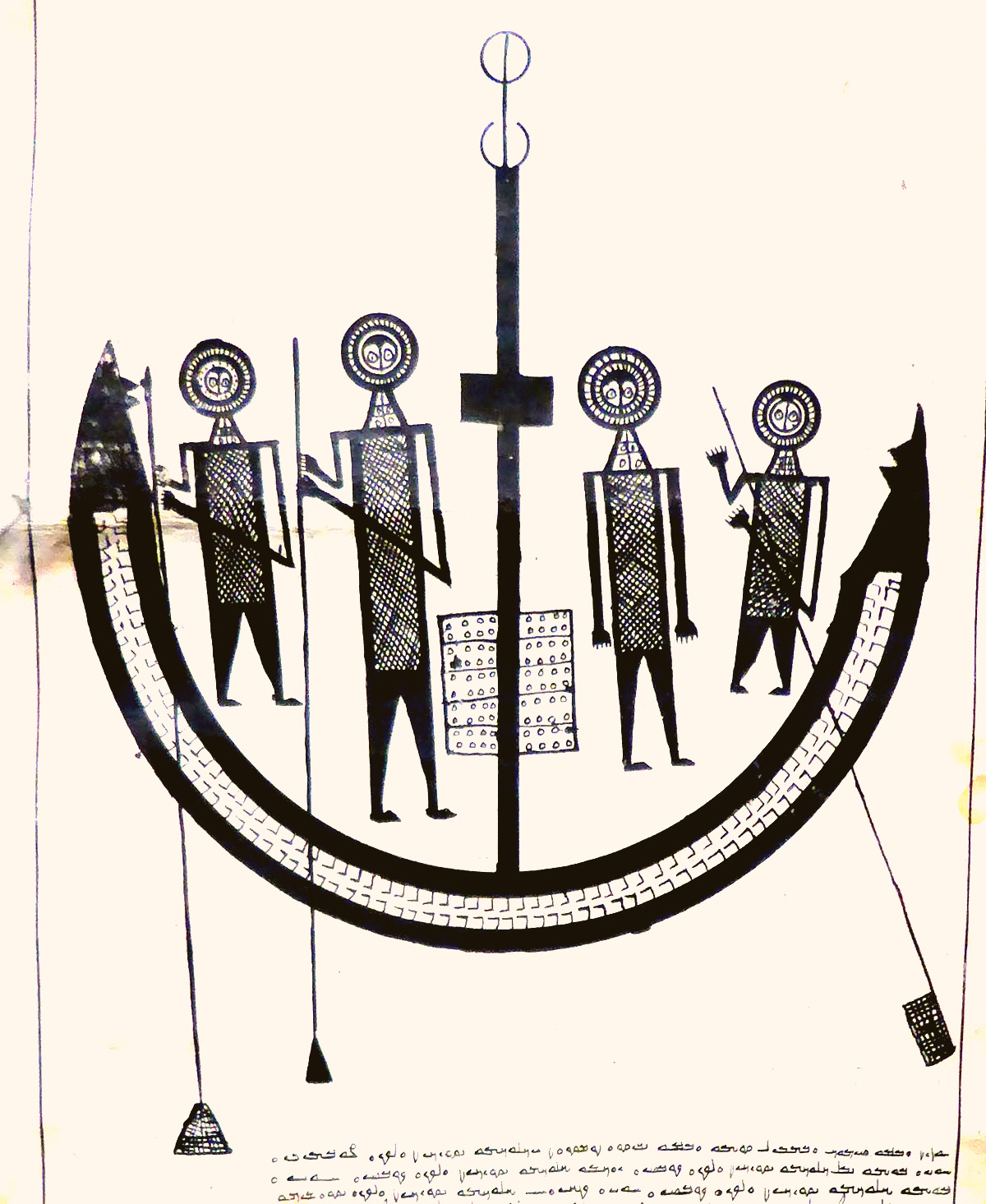
    There is a lot going on here, which is everything else other than the Mandean system, which is Aramaic. It exists as itself to the present day. Everything else are the things more familiar to readers. Or, in the sense that Greek mythology would seem to be broadly familiar. Was there something Chaldean or Iranic about it? My impression is that its primal legends based around the Golden Fleece have to do with the sign Aries, which did not exist until it was designed in Babylon around 1,200 B. C. E.; I would say this is obscured into Greek proto-history. That would imply a Babylonian or "Chaldean" influence prior to the oldest authors, Hesiod and Homer, who did not necessarily make valid historical documents.

    But they, or particularly Hesiod, are fundamentals of esotericism. Until it was disrupted, it became something rather extraordinary.


    Of course, all kinds of confusion has happened since its re-appearance.

    We found that Pico della Mirandola and Gemisthos Plethon brought forth the neo-platonic ideals of the Renaissance, which coughed and sputtered for a few centuries, until HPB comes up with a vast exposition based on primarily this.


    That it is a major root of her work is visible with another linguistic point. The phrase Akashic Records is not in Theosophy, however Chaldean Oracles are:


    Quote The Following, from Chapter 6 of Isis Unveiled I, is one of Blavatsky's first discussions of the mysteries of the astral plane and serves as a good introduction to the topic. Chapters 5-8 of Isis I are a rich source of information on this vast and complex subject.

    The Astral Light is a storehouse record of all thoughts and deeds on earth

    "The oracles assert that the impression of thoughts, characters, men, and other divine visions, appear in the aether. . . . In this the things without figure are figured," says an ancient fragment of the Chaldean Oracles of Zoroaster (Simpl. in Phys.," 143; "The Chaldean Oracles," Cory).

    The way she uses astral plane is as a non-physical double, eidolon, image, or blueprint of the physical world. It does not necessarily require a special state of consciousness, nor have realms that are uninvolved with the material orb. It transmits light that energizes the physical world virginally, and reflects and records objective facts, which too frequently are made of monsters and so it is the same as Levi's Hellfire. What we can say about her personality is she was a born adept at using this freely. That does not equate to an advanced understanding of spiritual metaphysics, which means she was a somewhat higher authority on what she personally knew.


    The Secret Doctrine could easily be described as an advanced re-working of The Chaldean Oracles.


    The actual Theosophy would be to continue the study, to find out what is more genuine about it and what may be spurious, not to go on to inventions like Akashic Records and all the other embellishments summarized as New Age.


    There are re-publications of the Oracles using notes from her. One of the Philalethian versions depicts Babylonian wisdom as derived from Sanskrit, and Hebrew not having the full version of it. They ought to try their hand at the library of Dilmun. The influence of India to the majority of middle eastern history is inestimable. It was there.


    Or it is re-titled Empyrean Exhortations:

    Quote ...if by magic is meant that ancient study within the
    sanctuaries known as the “worship of the Light,” or divine and spiritual wisdom as distinct from the worship of
    darkness or ignorance, which led the initiated High-priests of antiquity among the Āryans, Chaldæans, Medes.
    and Egyptians to be called Mahā, Magi or Maginsi, and by the Zoroastrians Meghistom (from the root Meh’al,
    great, learned, wide. — Blavatsky Collected Writings, (MAGIC) II pp. 31-39.

    Yes, at a relatively late period, Magi would have had a broad meaning to outsiders, who would not have been able to distinguish Medes from Kassites. She at least attempts to question the background:

    Quote Again we find the proof of it in Darius Hystaspes, shown in history to have
    crushed the Magi and introduced the pure religion of Zoroaster, that of Hormazd —
    he had, nevertheless, an inscription cut out on his tomb (recently found) stating that
    he, Darius, was “teacher and hierophant of Magianism.” But the greatest proof is
    found in the Zend-Avesta itself. Although not the oldest Zoroastrian Scripture, yet,
    like the Vedas in the case of the Deluge upon which they are completely silent —
    these ancient writings do not show the slightest sign of its author having ever been
    acquainted with any of the nations that subsequently adopted his mode of worship.


    That is correct in the oldest scriptures, there is no Flood.

    They are out of relation to any next-generation literature, as beginning perhaps about 800 B. C. E.. That is to say, a few generations around Zoroaster, and perhaps ten generations in the Rg Veda, show continuity of a known block of history, which is obviously forgotten and unknown in later times I would call non-scriptural. Both are scripture because they are hymns that have been transmitted precisely, that is, recorded. The Veda is too large and unwieldy for its objective history to be apparent, but it has one. It knows geography that is still known, such as in Himachal Pradesh and Arbuda, and it seems to presage a dark end for its system. This is reflected in the fact there are never any more Rishis.


    So, the point is we suppose there was a Byzantine Humanistic impulse starting in Florence, which must have been a counter-point to the stereotype of Catholicism, and if so, it had a purpose.

    Any version of The Chaldean Oracles is almost entirely drawn from Proclus:

    Quote Proclus’ system aims at a transformation of the philosopher, a gradual approach to the Intelligible and ultimately to the One / Good itself. This is every bit as much a return, a reversion (epistrophē) in Proclus’ terms, to an origin, as is the trajectory of the theurgist drawing inspiration from the Chaldean Oracles. Philosophy as practised by Proclus, however dry and plodding it may sometimes seem in the commentaries, is still intended to effect the transformation of the philosopher, to lead ultimately to likeness to god and reversion to the One. It is this shared purpose with a difference of means, I would add, which ultimately underlies the general conclusion reached by Spanu that ‘Proclus’ exegesis certainly agrees in spirit, even if not always in details, with the original Chaldean doctrine’.


    Even if the details of his system are trash, he is doing something that has the same inner meaning as Yoga, and this is not about a Monad, but One = Solus = Sol = the Sun. And I doubt his details are that bad.

    It doesn't have to be an original idea, or the best explanation of an old one; for it to be present at all makes it clear that some kind of personal alchemy is intended. It's no longer "a philosophy", but some kind of path that has philosophy. It's what I consider myself to be doing, but not by transmission of this.


    From an introduction at Stanford:

    Quote Proclus was eager to demonstrate the harmony of the ancient religious revelations (the mythologies of Homer and Hesiod, the Orphic theogonies and the Chaldaean Oracles) and to integrate them in the philosophical tradition of Pythagoras and Plato. Towards this end, his Platonic Theology offers a magisterial summa of pagan Hellenic theology.


    That is really difficult. It's multiple languages in several epochs of history. But it's not very Zoroastrian. The most likely source from a review of Spanu 2021:


    Quote attributed to Julian the Theurgist, roughly
    contemporary with Marcus Aurelius (121–180 AD)

    Hellenic Faith is a website dedicated to reviving this, believing that Julian uttered the Oracles and:

    Quote The word theourgia is coined in the Chaldean Oracles. While the Julians first use the word and develop its general use, it wasn’t until over a century later that theurgy was taken fully into Platonic practice.

    It has no direct continuity to a predecessor, but, it does have a new practice that comes from it, Theurgy. This is what should be understood as "Chaldean", rather than a language or historic country. It's relatively late in the syncretic period.

    Most of these articles don't fathom syncretism very well. The opposite is also the case. Greek ideas were distributed beyond Balkh to Sogdia and even China. The intermediate Zoroastrian philosophy heavily takes on the concept Apeiron or Boundless. Persian influence spread into Anatolia. So, yes, the period of roughly the Parthian Empire shows attempts to make a relatively profound understanding in a multi-lingual way, including Egyptian. That means it was forming syncretically, not centrally transmitted. It doesn't quite give you the sense that the dominant force was Zoroastrianism, but that would be to put it plainly. It absorbed Babylonian and Greek ideas, while the text under review is a later attempt to attach back to it.


    There is a book-length paper with the appropriate caveats from Madiarczyk 2025:


    Quote ...the Golden
    Dawn's confusion and presenting authentic, historically valid,
    information about the western magical and mystical tradition.

    Wynn Westcott and company, who gave the Oracles a
    Golden Dawn influenced meaning.

    Westcott, and
    Bullock, introduced changes into the material that took it far away
    from its original meaning, confusing the texts instead of clarifying
    them.

    It manages to function successfully as a framework for
    magic, and to a degree mysticism, but it has little to no continuity
    with any occult or mystical system that's come before it.
    Westcott and others believed that the Golden Dawn's jumbled
    together doctrine formed a secret key by which to understand all
    the occult philosophies of the past. Based on this belief, Westcott
    altered the English translation of the Oracles to conform to
    Golden Dawn ideas. Bullock, similarly, in his introduction to the
    Oracles, relied on Golden Dawn ideas in order to figure out what
    the Oracles meant, including ideas from the Tarot.

    Force-fit.

    That's generally the problem with Zoroastrian and Vedic studies as well, they project attitudes, definitions, or foregone conclusions into the matter, instead of reading it "as-it-is".

    Fortunately, I can say this blockage is mostly lifting in twenty-first century scholarship, that finally people are starting to ask the right questions.

    I love it, because I am not the one who has any archeological materials, what I said was we need to read it in its own light, and now they are doing it for me.

    That doesn't solve every mistake immediately, such as Helios. And, it is all patchwork. The neo-Platonic institutions shut down, aside from an ongoing presence at Harran which would have supported this restoration:


    Quote Then, in the 11th century, the Byzantine historian and polymath
    Michael Psellos collected a number of these quotations and
    commented on them.

    That is because he was a massive revivalist and synthesis of the total knowledge base. This part is not difficult due to the fact of proximity, the flexibility of Orthodoxy, and the lasting presence of Harran as a residence for every kind of belief. It is then found four hundred years later in Perugia along with Kabalism by Mirandola. The move or connection can only be speculated. The missing comment would be on the Crusades, because we find orders of knighthood discovering non-Christian practices and returning them as Rosicrucians, Templars, and Malta. There is easily a conduit for a move of the Oracles. But the 1400s attacks by the Turks caused Byzantines to directly flee to Europe. Since the text is not known in the other sources, this seems more likely.


    The Philalethian version gives us something else of linguistic value:


    Quote ...we find Alexander Polyhistor saying of Pythagoras
    (who lived about 600 years BC) that he was a disciple of the Assyrian Nazaratus.


    Zoroaster is often called by the Greek writers the Assyrian Nazaratus. [Cf. Clement, Stromateis, I, xv.] The
    term comes from the word Nazar and Nazir (set apart, separated), a sect of adepts very ancient and which
    existed ages before Christ. “They were physicians, healers of the sick by the imposition of hands, and initiated
    into the Mysteries” — See Mishnah Nazir in the Talmud, which has nine chapters and gives statutes concerning
    Nazarenes. — I.M. Jost, Israelite Indeed,* II, p. 238. They let their hair and beards grow long, drank no wine
    and pronounced vows of chastity. John the Baptist was a Nazarene...


    This has simultaneously described the Therapeutae, as well as the semitic root nzr for "priests". For instance, Mandean translated as "Gnostic" is a loose association; it simply means "householder" of a gnostic group, whose priests are the Nazars, who initiated John the Baptist.

    The Greeks might be talking about "Assyrian Nazaratus", but they don't exactly know who Zoroaster is. They have almost said Pythagoras was Mandean. But the Mandeans are syncretic with Zoroastrianism. John the Baptist was Mandean. They have actually said Pythagoras was initiated by an Assyrian Priest, which is probably how "Magi" was understood, even if they could have been Mandeans. This was all probably broadly synonymous to outsiders.


    HPB clearly says that esoteric Zoroastrianism is the universal secret doctrine.

    I'm not sure there is such a thing, or that it has any meaning other that the rituals and prayers it prescribes. I think it does have metaphysical and theological content and it probably can cause catharsis just directly as it is done. I don't know that it greatly resembles Yoga, other than, I suppose you could say it is a Bhakti Yoga.


    Greece doesn't really seem to know "Zoroaster", but there is a Greek attempt to carry the portrayal of multiple suns.


    Quote Listen to Plato:

    Know then, Glaucus, that when I speak of the production of good, it is the Sun
    I mean. The Son has a perfect analogy with his Father.
    Solus-Sol-Sun is “The One” and “The Most High” (Helios). But
    there is a great difference between our sun and its prototype —
    the Central Spiritual Sun.

    Iamblichus calls the Sun “the image of divine intelligence or Wisdom.” Eusebius, repeating the
    words of Philo, calls the rising Sun (ανατολή) the chief Angel, the most
    ancient, adding that the Archangel who is polyonymous (of many names) is the Verbum or Christ.
    The word Sol (Sun) being derived from solus, the One, or the “He
    alone,” and its Greek name Helios meaning the “Most High,” the emblem becomes
    comprehensible. Nevertheless, the Ancients made a difference between the Sun and
    its prototype.


    Well, the Central Sun is something else, in the vicinity of the solar apex, which is not necessarily a visible star. This is not the same doctrine as to say the visible solar orb has a normally-invisible plasma corona or that there is a higher magnetic correspondence to the sensory fire and light.


    It is in the Mandaic texts, and additional Greek explanations having use of Apollo. Most, if not all, pagan systems describe at least two kinds of sun and multiple creations. As outlined in the recent Oracles study:


    Quote (chapter 1) the Chaldean/primary triad; (chapter 2) the single divine “hypostases”, or
    principles generally speaking – for instance, from the goddess Hecate, to the
    Intellectual Fire, Chronus, Rhea, and so on; (chapter 3) the world’s intellectual archetype, and the creation of the material dimension; and (chapter 4)
    man and his final destiny

    Yes, that is the structure of The Secret Doctrine by HPB, but of course it also defines that genre called in India Purana. In this case, the Veda supports multiple creations, compatible to the above.

    Its ideas on what it means to live:


    Quote man’s creation by the Father (section 4.1; pp. 116–117); the vehicle of the soul (section 4.2; pp. 117–118); the
    material body (section 4.3; pp. 118–119); the liberation of souls from their
    material constraints (section 4.4; pp. 119–120); the soul’s transmigration into
    different bodies (section 4.5; pp. 120–121); the soul’s faculty of perception
    (section 4.6; p. 121); instructions, or declarations, from the “gods” generically (section 4.7; pp. 121–128); the love ( ) of the initiate for the gods
    (section 4.8; pp. 128–129); Hecate’s apparitions to the initiate (section 4.9;
    pp. 129–133); the methods that the Oracles prescribe to reach the divine
    world (section 4.10; pp. 133–139); and man and his relation to angels and
    daemons (section 4.11; pp. 139–141)

    Let's for a moment suppose the details of the philosophies are less important than what you do. Proclus lived about three hundred years after the Julians. And what he does is show the neo-Platonic accretion, that is, gives the stories of generations of philosophers and whether he agreed or disagreed with them, up to his master Syrianus who is held to be particularly complete and practically unerring. He hasn't really added anything to that. The important aspect of his existence was the practice of Theurgy:


    Quote As stated before (cf. 3.3), the human soul contains the principles (logoi) of all reality within itself. The soul carries, however, also sumbola or sunthêmata which correspond to the divine principles of reality. The same symbols also establish the secret correspondences between sensible things (stones, plants, and animals) and celestial and divine realities. Thanks to these symbols, things on different levels (stones, plants, animals, souls) are linked in a ‘chain’ (seira) to the divine principle on which they depend, as the chain of the sun and the many solar beings, or the chain of the moon. Of great importance in the rituals was also the evocation of the secret divine names. In his Commentary on the Cratylus, Proclus compares divine names to statues of the gods used in theurgy (In Crat. § 46), pointing to the fact that also language is an important means in the ascent to the divine.

    Proclus evokes the Platonic background of his theurgical beliefs, namely his theory of love (erôs) as expressed in the Symposium and the Phaedrus, in his treatise On Hieratic Art:

    Just as lovers move on from the beauty perceived by the senses until they reach the sole cause of all beautiful and intelligible beings, so too, the theurgists (hieratikoi), starting with the sympathy connecting visible things both to one another and to the invisible powers, and having understood that all things are to be found in all things, established the hieratic science.

    So, yes, a magical path, and a description of certain experiences on it.


    The first split in the Renaissance is that Plethon attributed primacy to Zoroaster and simply did not care. Patrizi in Venice further amalgamated it, that is, making it subservient to Christianity by placing the ancient wisdom entities after Noah. He used a forgery:


    Quote Annius of Viterbo made a name for himself in the mid-15th
    century by claiming to have discovered otherwise unknown
    writings by the Chaldean historian Berossus. Berossus was a real
    figure, and a number of short writings by him exist, preserved in
    Greek texts. This real Berossus appears in Patrizi's introduction to
    the Oracles, and in Stanley's history, as the figure who introduced
    Chaldean learning into Greece. Annius' Berossus claimed to have
    written a history of the peopling of Europe after the Flood, and
    fittingly it was claimed that the texts were discovered in a
    monastery in Armenia, whose Mt. Ararat is supposed to be the
    resting place of Noah's Ark. The writings were forged in
    manuscript form. The story that this Berossus told was quite
    incredible, both literally and figuratively.

    This is the basic format of Proclus:

    Quote Importantly, in the world of the Chaldean Oracles, the One and
    the Mind are not completely separate, but the One overlaps with
    the Mind in the form of the Father.

    Bringing this general cosmology into that of the Chaldean
    Oracles, the world of the Oracles is split into three: The Fiery
    World, also known as the Empyreal world, the Etherial world,
    which contains the planets, and the sublunary world, which
    contains the Earth.

    The Fiery World contains the Father and the Mind, but it also
    contains the goddess of the World Soul. Here, we can split the
    Fiery world into two different parts: the higher part that contains
    the Father and the Mind, and the lower part that contains the
    goddess of the World Soul along with other, related, gods.

    Similar to the "linking of mind to matter", e. g., Fohat, Agni, or plasma:


    Quote What the Teletarchs do is to provide a way for beings on those
    levels to ascend to and to commune with the beings of the
    Intelligible-Intellecutal level, in order to experience their divinity
    and energy, and be restored. They facilitate a more direct contact,
    as opposed to a contact that would be accomplished through
    rising through the spheres, than up to the World Soul, then up to
    the gods, to the Intellectual gods, and finally rising to the
    Intelligible-Intellectual level. They provide a shortcut, so to
    speak, to mystic communion with the higher levels of the divine
    mind. They are not, as the Golden Dawn writers allege, the minds
    or intelligences that rule over each of the realms in which they're
    placed.

    This is not specifically Zoroastrian but it is syncretic:


    Quote With regards to the Intellectual triad, Proclus links the semitic
    name "Ad" to Kronus and "Adad", which may be "Hadad" to the
    Demiurge, Zeus.

    Curiously:

    Quote Zeus, is
    identified with the Corypheus, which is a term for a leader, which
    was often applied to the leader of the Mysteries.

    It is found that Stanley is far more accurate than Golden Dawn, since he relied on Psellus who had the now-lost commentary of Proclus.


    Quote Proclus, on top of using the Chaldean term the
    "Flower of the Mind", also used the term "Flower of the Soul".
    "Flower of the Mind" refers to the part of the mind that can
    perceive the Intelligible level of the Nous. This is a power that the
    Oracles reference directly. The "Flower of the Soul" involves the
    powers of the soul being united together producing unity within
    the individual as a whole. This overall unity is said by Proclus to
    be better than the ability of the "Flower of the Mind" to perceive
    the Intelligible world, and, in fact is said to be the only way to
    perceive the One. This perception of the One, then, involves
    becoming One in your faculties.


    Spanu presents Proclus' five stages of prayer as follows: First,
    knowledge of the divine and of the way to approach it. Second,
    similarity to the divine "obtained through the practice of virtues",
    third, "touching the divine" through contemplative actions done
    after the "flower of the soul" has been obtained, fourth, a deeper
    touching of the divine, fifth, union with the divine.


    This is also accurate:


    Quote Unlike commentators in the
    19th century, Stanley was aware that there were several peoples
    that were called Sabeans--the actual Sabeans of Yemen, the
    pagans of Mesopotamia/Iraq, and the citizens of the city of
    Harran in the northwest of the Middle East. Stanley correctly
    identifies the true Sabeans as the Yemenites. Quoting
    Maimonides, he also cites the "Nabatean Agriculture" as a source
    for the Mesopotamian pagan Sabaeans, naming "Aben
    Vachaschijah" as a source. This is Ibn Wahshiyya, and the link
    between the Sabaeans and the pagan agriculturalists described by
    him has been treated in the recent book "The Last Pagans of Iraq,
    Ibn Wahshiyya and his Nabatean Agriculture" by Jaako Hämen-
    Antilla. Basing himself on Maimonides and Hottinger, Stanley
    gives an account of the Sabeans that's a mixture of the Harranian
    Sabeans and the Mesopotamian pagans, with this latter drawn
    from Maimonides' account of the "Nabatean Agriculture". The
    actual Sabeans of Saba in Yemen do not figure in much. Quoting
    "Said Vaheb" Stanley recounts much of the ritual calendar of the
    Harranian Sabaeans, the gods they worshipped, when they
    worshipped, what they did.

    This is also accurate:

    Quote ...he draws
    on Plutarch for his account of the Amesh Spentas, the seven gods
    around the throne of Ahura Mazda, whose attributes are named.

    Additionally, he mentions that they
    also had a goddess named "Anaitis", which is almost surely the
    real Zoroastrian goddess "Anahita".

    Starting with the Sun, he gives an extensive treatment of the
    various sun gods of Babylon and the middle east. This includes
    Adad and Adonis, as well as the mysteries of Adonis. Next is the
    goddess of the Moon. Here, Ada is said to be the moon goddess
    of the Babylonians, and to be the equivalent of Juno, which is
    discussed. After this come the other planetary gods, with Stanley
    repeating an especially interesting story about the worship of
    Mylitta, Venus, in Babylon.

    Stanley is better than the Golden Dawn because he mostly turned to authentic original sources.

    The study unfortunately cribs a few paragraphs discrediting HPB because of debunking secret masters, which is not what happened, let alone "ascended" masters, this is simply not correct. It is correct that the noise led to her career being viewed disparagingly by some. But it is not the right story. Her actual material is not slashed up the way Westcott is run through a grinder; it contains almost every defect there could be. And so whether her responses were better or worse than anyone else's have simply been ignored here.


    Pico and Ficino were Christian-syncretic, that is, they attribute Jesus with a central role in a basically pagan cosmos, with Paradise:

    Quote It is also the divine sun, the eternal sun, as Bonaventure styles it.
    Bonvanture develops many of these themes in his last work, the
    "Collations on the Hexaemeron". However, after introducing
    Jesus as Wisdom and sun mysticism, in the next "Conference"
    he's careful to transfer the quality of the eternal sun to all of the
    different members of the Trinity, saying that they're all eternal
    suns unto themselves, and that, collectively, these three make up
    one eternal sun.

    The soul's path is love and beauty, similar to Plato's, different details.

    In this case, what it means in the Medici era to call something Hermetic means that Christianity or Jesus has been accepted as a facet onto the older syncretism, and usually along with Kabala. This is not the same as Theurgy or anything from Zoroaster.


    With Theurgy, we are left with the personal inspirations of a relatively unknown Roman soldier stationed in Germany, having this general character:


    Quote ...the oracles are mainly a product of Hellenistic syncretism as practiced in the cultural melting-pot of Alexandria, embodying the principal features of "Chaldean philosophy".

    In charge was Marcus Aurelius, last good emperor of the Pax Romana, allowing the interpretation that attacking Germany is "good". He too has a collection of personal memoirs published as Meditations (his title being "To Myself"), which shows no vestige of Theurgy. He does not strongly expound any of his personal tutors. There is only about one such credit given by Aurelius:

    Quote He does, however, credit Fronto with teaching him about the vices of tyranny and the lack of affection in the Roman upper class (1.11); since the former were commonplaces, there may be a concealed reference to life under Hadrian, whom Fronto retrospectively claims to have feared rather than loved, but the latter is borne out by the master's remark that there is no Latin equivalent for the Greek philóstorgos, meaning "affectionate".

    If Julian had really saved a legion, you'd think the emperor might notice that, but the invocation of rain is a disputed event:


    Quote The Antonine-column attributes this to Jupiter Pluvius. Christians attributed it to the prayers of a Christian legion; some Heathens to an Egyptian Astrologer named Arnuphis, others to a Chaldaean named Julian. Christians invented a letter, professedly by the emperor, endorsing their account. This letter must have existed by the beginning of the third century, for Tertullian alludes to it. A copy of it has come down to us, appended by some scribe to Justin’s first Apology (Huidekoper, 1882, 167).

    Whether an Egyptian astrologer successfully invoked Isis, a Chaldean magician scored points with the weather gods, or an omnipotent Semitic deity jumped in and decided the Quadi needed to be erased from history, the modern historical interpretation would aridly declare that the only fact we can discern in two millennia of subsequent interpretation is that it rained, despite all odds. This is why it is so amusing when historians claim authoritative knowledge about what is possible and impossible, leveling charges of “pseudo-history” at any interpretation that deviates from the currently accepted gospel.

    That is like the letter professed to be that of the king of Edessa. Something miraculous supposedly proved a century or two later.

    That puts everyone under suspicion. It rained.

    The practice has several synonyms:

    Quote Other terms used were theogogia literally meaning ‘evocation of a god’, and photagogia, ‘evocation of light’. A more general application of a term was erga eusebeias, which indicated the sacred duty of theurgy. Judging from other terms that were applied to theurgy, such as orgia, mysteria, teletai, and mystagogia indicated that theurgy of Late Antiquity had acquired the status of the old mystery religions. For some, theurgy itself could be seen as the ultimate development of the mysteries as it represented an initiation into the greatest mystery of all, henosis.


    Eusebia is understood by us as Dharma.

    Henosis is effectively Greek for Yoga, iterated clearly by Plotinus around 250, merged with Theurgy by Iamblicus ca. 300, as the main influence to Proclus.

    It could be considered an extensive practice, not contradicting, but additional to, philosophy:


    Quote For Marcus, following Seneca (and going even beyond what the latter wrote) and the Greek philosophers, men were united by a universal brotherhood, as participants in the Logos, guided by the dáimon, "divine fragment that Zeus gave to each man as his defender or guide": this "humanitarian" vision of the Stoics would be one of the bases of the idea of human rights many centuries later, since for the Stoa (as for the Platonists, moreover) there is a law of nature that overrides the law of human nations, just as it is surprising to find in Marcus Aurelius an invitation to universalistic tolerance and forgiveness, not in a Christian sense but as fidelity to the so-called humanitas, which he sought to transfer from philosophy to practice.

    ...several references within Marcus’ Meditations of comparisons between wisdom and sunlight where he considers the mind as the sun, and wisdom and virtue as sunlight. Marcus felt that a wise mind casts out its virtues to illuminate the world just as the sun’s rays fall upon the Earth.

    Henosis closely parallels Orthodox Hesychasm, as primarily developed around Alexandria.


    This is all very difficult, for the main reason that every language, and usually every author, except unusually close matches like Proclus and Syrianus, gives an almost brand-new story. If we say a Doctrine of Emanations can be geometrically represented, all of its names and behaviors are different in almost every source. Persian literature does not use most of these but relies on Hesiod. So, there are many nuances between Plotinus, Valentinus, and others, and we would have to understand the basics before figuring out what tweaks or changes could be helpful.


    There is such a general system from Anatolia to Bactria:

    Quote In the kingdom of Commagene on the upper Euphrates, royal steles carved under Antiochus I between 62 and 37 BCE show the king clasping hands with “Mithra-Helios-Apollo-Hermes,” who is named in the accompanying Greek inscriptions; the god is dressed in Iranian costume, with rays radiating from a high curved Iranian tiara (which was later on to be adapted as a Phrygian cap in the iconography of the Greco-Roman Mithras). In the Kushan empire Mithra is among the deities most frequently depicted on the coinage, always as a young solar god. This type appears first on the obverse of coins of Soter Megas (ca. 80-100 CE), where his head in profile replaces that of the king, a choice which perhaps echoes the king’s (Mithraic?) title Soter Megas “the Savior, the Great” always used instead of his personal name.

    After an eclipse under Vima Kadphises, who promoted a Shivaite cult, Mithra reappears prominently under Kanishka I (127- ca. 153), when he is labeled first in Greek as Helios, then in Bactrian as Mihr (written Miuro, Miiro, Mirro, etc.); he keeps a similar position on the coinage of Huviška (ca. 153-91). On these coins he is never shown in a chariot, but standing, always with a rayed nimbus, an Iranian dress (tunic, cloak, boots) and warrior’s attributes (a sword, often a spear). He is most often brandishing a torque (FIGURE 2) or a ribboned wreath, both of which can be interpreted as symbolizing the royal investiture or perhaps more specifically the royal xvarənah.
    He gives the Caduceus to multiple generations of Parthian coins, and is Kushan Pharro.


    The main syncretic deities are two:

    Quote At Nemrud Dağı, a 1st-century BCE inscription identifies Mithra with the Greek divinities Apollo, Helios, and Hermes.

    A syncretistic onomastic, “Artagnes (Verethragna)-Herakles-Ares” at Nemrud Dağı, dating to the 1st century bce, denotes the identification of Verethragna with the Greek mythical hero Herakles. This connection is reiterated in the bilingual Greek and Parthian inscription of the Arsacid king Walγ‎aš (Greek, Vologeses), son of Mihrdāt (Greek, Mithradates), dating to 151 ce, inscribed on the bronze statue of the “god Verethragna” (Parthian, Warhraγ‎n baγ‎: Greek “Herakles”), which the king brought from Mesene, and placed in the temple of Tīr (Parthian, Tir: Greek Apollo).

    Messene is Mandean territory closer to the Persian Gulf.


    A possible alteration is in a Sassanian textbook from 232:

    Kitab al-maw

    which says that Zoroaster was born in:


    Adharbayjan, but came to Harran, where he associated with a wise ascetic named
    Iliytis a.y.l.y.w.s


    thought to be a cognate of Helios.

    I don't know if that is correct, but it circles back with Harran as the source of the Medicis' Corpus Hermeticum.


    As for Antiochus I Commagene, r. 70–31 BC:


    Quote In the 1st century BC, however, Iranian culture experienced a resurgence, intentionally supported by Commagene in order to highlight its ancient ancestry and refute Seleucid, Parthian and Roman claims over the area.

    The gods he worshipped were a syncretism of Greek and Iranian gods, such as Heracles-Artagnes-Ares, Zeus-Oromasdes, and Apollo-Mithras-Helios-Hermes.

    Antiochus practised astrology of a very esoteric kind, and laid the basis for a calendrical reform, by linking the Commagenian year, which until then had been based on the movements of the Moon, to the Sothic (Star of Sirius) cycle used by the Egyptians as the basis of their calendar. This would suggest that Antiochus was knowledgeable about, if not fully initiated into Hermeticism.


    The standard year of 365 1/4 days is Egyptian. The first meaning of Hermetic is a Greco-Egyptian school. The number of days is accurate and basically permanent, but the language barrier was high. Despite its age, there is practically no visible impact of Egyptian language percolating into its neighbors.


    Commagene is near Carrhae, so i. e. close to Harran:


    To say something is Hermetic means a class of literature wherein Hermes is equal to Thoth. These are not quite considered solar deities, so the synthesis to the Sun looks kind of unusual. In the sense they have separate origins, Helios -- Sol is not Apollo. They merge as distinct entities into the same pantheon. There is a relation to the next deity (or hero):

    Heracles sails across the sea in the cup-boat of the sun-god Helius. The hero wears a lion-skin cape and holds a club and bow in his hands.


    Confusingly, Apollo can be distinguished from Helios and Hermes, and it is far from clear why you would pour this together and call it Mithra as well.

    For his origin, Apollo's mother Leto is most likely Lycian:

    Quote Leto supports the Trojans, standing opposite of Hermes, who supports the Achaeans. Hermes refuses to challenge Leto, encouraging her to simply tell everyone she beat him fair and square. According to the scholium, Hermes here represents reason, rationality (λόγος, "logos") as opposed to Leto, who stands in for forgetfulness (λήθη, "lethe", perhaps a wordplay on Leto's name); or lotus (the fruit that brings oblivion to those who eat it). It would thus mean "the hidden one".

    He is quite possibly Hittite or Luwian:

    Quote Hittite Apaliunas is among the gods who guarantee a treaty drawn up about 1280 BCE between Alaksandu of Wilusa (Troy), interpreted as "Alexander of Ilios" and the great Hittite king, Muwatalli II.

    With Ilios taken as a spelling of Helios, Apollo is immediately distinguished as ideas associated with the sun.

    Quote The hill at Hissarlik in Turkey, where Schliemann had excavated and which is commonly thought to be the sight of the city described in Homer, had been settled by Aeolian Greeks from Lesbos in the late eighth century. The city they founded here was called Ilion (Troy), most likely – we assume – inspired by oral traditions about the Trojan War.

    It is a re-settlement -- the damaged site was restored to fortune in the late 9th century B. C. E..

    Its name as derived from Ilus is found in Homer but not in Hesiod. And his pronunciation is probably closer to Hittite:


    Quote In Classical Greek, the city was referred to as both Troia (Τροία) and Ilion (Ἴλιον) or Ilios (Ἴλιος). Metrical evidence from the Iliad and the Odyssey suggests that the latter was originally pronounced Wilios.

    It was Wilusa in far older documents, along with a deity, Apaliunas; Homer has Apollo build the walls of Ilion -- Troy. The deity's name was supposed to be extended:

    Quote In Homeric Greek his name is spelled Ἠέλιος, Ēélios, with the Doric spelling of that being Ἀέλιος, Aélios. In Cretan it was Ἀβέλιος (Abélios) or Ἀϝέλιος (Awélios)

    The standard guess for Homer's Trojan war puts it at 1,200 B. C. E. or slightly thereafter, which matches the site being obliterated by an earthquake.

    From a detailed layering saying Troy burned again ca. 950 B. C. E.:


    Quote Ilos / Ilus

    Son of Tros. Source of the Hittite 'Wilusa' or a construct?


    In other words, has Homer taken events from the second destruction, and rewound them to the first, to establish one of his heroes as the founder?

    Therefor if Wilusa was related to Helios, as it appears to be related to Apollo, he has removed that fact and cast the actual origin of Helios into the unknown.

    Would he really have better information about something four hundred years before his own time?


    Helios is paramount to Theurgy and syncretism; there is Helios -- Mithras, and:

    Quote Frequent joint dedications to "Zeus-Serapis-Helios" have been found all over the Mediterranean.

    Hesiod effectively describes Zeus's eye as the Sun. This perception is possibly derived from earlier Proto-Indo-European religion, in which the Sun is believed to have been envisioned as the eye of *Dyḗus Pḥatḗr (see Hvare-khshaeta).


    Apollo grafts him after having more to do with music and medicine:

    Quote Hesiod describes Leto as "dark-gowned" and the Orphic Hymn 35 to Leto describes her as "dark-veiled" and "goddess who gave birth to twins" (θεός διδυματόκος). In the Homeric Hymn to Apollo, she is described as golden-haired.


    Since Leto was unable to feed him, Themis, the goddess of divine law, fed him with nectar, or ambrosia. Upon tasting the divine food, Apollo broke free of the bands fastened onto him and declared that he would be the master of lyre and archery, and interpret the will of Zeus to humankind.

    Python was sent by Hera to hunt the pregnant Leto to death, and assaulted her. To avenge the trouble given to his mother, Apollo went in search of Python and killed it in the sacred cave at Delphi with the bow and arrows that he had received from Hephaestus. The Delphian nymphs who were present encouraged Apollo during the battle with the cry "Hie Paean".

    Paean was considered by Homer a distinct god of the Egyptians, which became grafted to both Apollo, and his son, Aesclepius. To discover the relation between Paean or Paeon, the healer-god, and paean in the sense of "song", it is necessary to identify the connection between ritual chant and the shaman's healing arts.


    In the near family are depictions of summer/winter sun, and waxing/waning moon:


    Quote Apollo rides on the back of a swan to the land of the Hyperboreans during the winter months, and the absence of warmth in winter is due to his departure. During his absence, Delphi was under the care of Dionysus, and no prophecies were given during winters.

    Apollo's sister Artemis, who was the Greek goddess of hunting, is identified with Britomartis (Diktynna), the Minoan "Mistress of the animals".

    The oldest evidence found for Hecate's worship is at Apollo's temple in Miletos. There, Hecate was taken to be Apollo's sister counterpart in the absence of Artemis. Hecate's lunar nature makes her the goddess of the waning moon and contrasts and complements, at the same time, Apollo's solar nature.

    Immediately after his birth, Apollo demanded a lyre and invented the paean, thus becoming the god of music. As the divine singer, he is the patron of poets, singers and musicians. The invention of string music is attributed to him. Plato said that the innate ability of humans to take delight in music, rhythm and harmony is the gift of Apollo and the Muses.

    Among the Pythagoreans, the study of mathematics and music were connected to the worship of Apollo, their principal deity. Their belief was that music purifies the soul, just as medicine purifies the body. They also believed that music was delegated to the same mathematical laws of harmony as the mechanics of the cosmos, evolving into an idea known as the music of the spheres.


    Daughters of the Sun

    Quote Aeschylus, Heliades (lost play) (Greek tragedy C5th B.C.) :

    Synopsis of the lost play by Smyth (L.C.L.): "The Daughters of Helios dealt with the legend of Phaëthon, whose rashness in diving the chariot of the Sun, his father, caused the parching of the earth, and thereby his punishment at the hands of Zeus, whose thunderbolt hurled him into the river Eridanus. In pity for the unceasing grief of Phaëthon's sisters, Zeus turned them into poplars, from which, it was believed, their tears oozed forth and became amber, the stone of light; a poetic fancy due to the association of êlectron ‘amber' with êlectôr ‘the beaming sun.’ The form assumed by the myth in Aeschylus is unknown; but it is certain that Euripides in his Phaëthon differed widely from the older poet. Aeschylus was in part dependent on Hesiod for the story; but whereas Hesiod knew of seven daughters of Helios, Aeschylus recognized only three--Lampetië, Aegle, and Phaëthousa--children of the sun-god and Rhode. Furthermore he transferred to Iberia the scene of the fall of Phaëthon."


    The Heliades may have once been envisaged as the stars of the constellation Eridanos (the River) whose heavenly tears fell to earth as amber. Another amber-coloured product, honey-dew or honey-sap, was popularly believed to be shed by the stars of heaven. The Heliades' brother Phaethon was associated with the constellation Auriga (the Charioteer) which stands at the head of the Eridanus stellar group.


    Meropê

    Phoibê

    Aiglê

    Dioxippê

    Hêliê

    Aethria

    Lampetiê


    That concatenates a handful of notable mentions. First of all, Phaeton is the science of the year. Then, you have the daughters of the sun producing electrons or electricity. And, even though names and legends get changed around, this basic meaning is true around the River Po in Italy from its original attestation through the late Roman Empire.

    For example, variations have Lampetia on an imaginary island, or mother of Aegle.

    She will be right back after some unusual astrological information from Hephaestio of Thebes:


    Quote Heracles is an analogue for the Sun (whose domicile is Leo) who
    must perform twelve works yearly (as the Greek hero did) through
    the zodiacal circle (so the allegorists say).

    Porphyry, De statuis 8


    Concerning Heracles and Gemini, the connection is supported by the
    name of one of the stars in the constellation, called ‘Heracles’
    according to many astrological texts, including the Tetrabiblos [Ptolemy].

    In fact, the constellation has been represented as Apollo and Heracles,
    as we read in Hyginus and other astrological texts. Vettius Valens
    perhaps is also thinking of this association when he relates the hero
    and Apollo (among other gods) to the sign.

    Eros and the Charites (Graces) are related to Taurus, Libra and
    Pisces, the domiciles and exaltation of Venus, because they are
    closely bound to the goddess of love and beauty.
    Indeed, in regard
    to Eros (according to the Liber Hermetis), the 1st to the 8th degrees
    of Taurus (exactly Venus’s terms) are called Cupido.

    As for the Graces, Hephaestio’s text agrees with Cosmas’ decans, where
    Χάρις appears as the first decan in Taurus.

    Is the daughter of the sun also the Lover of Helios?


    Quote AIGLE (Aegle) The nymph mother of the Kharites (Graces) by Helios

    That seems to be a modified view:

    Quote "Antimakhos [poet C5th B.C.], while giving neither the number of the Kharites nor their names, says that they are daughters of Aigle and Helios."

    Hesiod (Theog. 945) calls the Charis who is the wife of Hephaestus, Aglaia, and the youngest of the Charites. Hesiod distinctly mentions three Charites, whose names are Euphrosyne, Aglaia, and Thalia.

    This name for the Grace has a distinct form:

    Αγλαιη Αγλαια


    Among the references where we can at least say, this is a reference, the Health or Amber goddess is the same as the Heliad:

    Αιγλη


    The first version is elongated, like Helios = E-elios, except these are Aigle-e contrasted with Aigle.

    Aigle the Heliad is a separate individual according to Hesiod. The one among the daughters of Asclepios is only evidenced in later times, with Paian as the invocation used.


    What was confusing, is that the plural, Charites, does not mean daughters of Charis.

    Quote Hesiod, Theogony 907 ff (trans. Evelyn-White) (Greek epic C8th or C7th B.C.) :

    "And Eurynome, the daughter of Okeanos (Oceanus), beautiful in form, bare him [Zeus] three fair-cheeked Kharites (Charites, Graces), Aglaia (Aglaea), and Euphrosyne, and lovely Thalie (Thalia), from whose eyes as they glanced flowed love that unnerves the limbs : and beautiful is their glance beneath their brows."

    Hesiod, Theogony 945 ff :

    "And Hephaistos (Hephaestus), the famous Lame One, made Aglaia (Aglaea), youngest of the Kharites (Charites, Graces), his buxom wife."

    The namesake is the youngest sister, and the group increases to include her daughters. The wife of Hephaestos has three equivalent names:


    Quote Aglaia was also named Kharis (Charis, Grace) and Kale (Calé, Beauty).


    The Amber goddesses are named for their father:

    Hêliades, Hêliadai


    having for their mother:


    Quote CLY′MENE (Klumenê). According to Hesiod (ap. Eustath. ad Hom. p. 1689; comp. Ov. Met. i. 756, iv. 204), she was the mother of Phaëton by Helios.

    ME′ROPE (Meropê). A daughter of Oceanus, and by Clymenus the mother of Phaëton. (Hygin. Fab. 154.)

    This is again a little tricky -- those are equivalent, Clymene Merope, who in turn has a daughter Merope. In return, Clymene is the mother of:


    Quote [1.1] PHAETHON, THE HELIADES (by Helios) (Hyginus Preface & Fabulae 156, Ovid Metamorphoses 1.750, Nonnus Dionysiaca 38.108)
    [1.2] PHAETHON, THE HELIADES (by Klymenos) (Hyginus Fabulae 154)

    The Heliades include re-namings of their parents, as Helie and Merope. This later author (Hyginus) seems consistent with Hesiod, whereas most others lack the level of detail.


    From a review on Hesiod as upholding a tradition of Apollo and Seven Sages:


    Quote “Phoibos” is simply a name of Apollo Helios. But the Titan
    Phoibe here becomes the mother of Hecat-e; and neither of them is directly identified with the Moon.
    Hekat-e is said to have a “share” of both Earth and Sea, and “honor” in Heaven. Styx and Hekat-e are
    the Titans accepted into Hesiod’s Olympian order. It is not clear why Hecat-e is important to him;
    but the fact is evident enough

    They rejoin in Trismegistos:


    Quote This is a dialogue between the Delian statue of Apollo and an interlocutor who asks questions about the fact that he carries a statue group of the Graces in the left hand and a bow the right. Apollo explains that these attributes mean that he is slow to punish the bad and eager to reward the good.
    From a much longer article explaining his items and general lack of a wolf:


    Quote ...he has a threefold power in heaven, where he is called Sol; in earth, where he is named Liber Pater; and in hell, where he is styled Apollo; he is usually painted with these three things: a harp, a shield, and arrows. The harp shows that he bears rule in heaven, where all things are full of harmony; the shield describes his office in earth, where he gives health and safety to terrestrial creatures; his arrows show his authority in hell, for who ever he strikes with them, he sends them into hell.

    He was called Cynthius, from the mountain Cynthus, in the island of Delos; for the same reason, Diana also was called Cynthia.


    In essence, what went to Greece was Luwian Apollo, originally steeped in the traditions of Medicine Oracles and Dancing Girls. Its later descent is also seen in the Orphic Mysteries of Syria.


    The syncretic deity has an additional kind of substitution.


    Antiochus

    Quote ...was portrayed sitting amidst the Gods, crowned by a priestly headdress in the place normally occupied by Hermes-Mercurius. Other reliefs portray various scenes of Deixiosis, that is king Antiochus shaking hands with the Gods, including Mithra-Helios, Hercules-Artagnes, Zeus-Horomasde.

    The complex arrangement of terraces and altars likely reflects Antiochus’ belief in the afterlife amidst the Gods (on the Eastern terrace), and his priestly initiation (on the Western terrace, which was as such devoted to the most secret and mysterious rites).

    Conceivably, Hermes is the individual, whom via these processes fuses to the solar deity. But he may be a Gemini or twin of Herakles, or this may show three worlds.


    What is missing is the only native deity is Tyche who is discussed on a page having this mirror image east and west:


    additionally:

    Quote The relief depicts a lion with a magnificent full mane and a crescent moon slung below his neck against a low relief pattern of nineteen stars representing the constellation Leo. The three largest stars are identified by inscriptions as Jupiter, Mercury and Mars, and the brightest star on the lion’s neck is the basilisk, or royal star of Antiochus, while the crescent moon is the symbol of the national goddess of Commagene.

    These well-known deities are explained as foreign visitors in the Nomos:

    Quote Therefore as you see, I have set up these divine images of Zeus-Oromasdes and of Apollo- Mithras-Helios-Hermes and of Artagnes-Heracles-Ares, and also of my allnourishing homeland Commagene; and from one and the same quarry, throned likewise ’among the deities who hear our prayers, I have consecrated the features of my own form, and have caused the ancient honor of great deities to become the coeval of a new Tyche. Since I thereby, in an upright way, imitated the example of the divine Providence. which as a benevolent helper has so often been seen standing by my side in the struggles of my reign.

    His main instructions are about feasts for the multitudes.

    The territory of Tyche eventually reaches from Alexandria to Afghanistan.

    More commonly known as Fortuna, she extends through the world of art.

    So yes, he is very much on the map, because Tyche can be found only as a regional goddess, until she becomes the City Goddess of quite a few other places.


    In terms of the syncretic deity, Apollo is not identical to Helios, and when combined with Zoroastrian Mithra (Mihr), it happens to be doing the same thing.


    As said in Mihr Yasht:


    Quote 13. 'Who first of the heavenly gods reaches over the Hara, before the undying, swift-horsed sun15; who, foremost in a golden array, takes hold of the beautiful summits, and from thence looks over the abode of the Aryans with a beneficent eye.

    15. Mithra is closely connected with the sun, but not yet identical with it, as he became in later times (Pers. mhr, the sun; Deo invicto Soli Mithrae).

    He dovetails with Hvar or Khwarshed much like Apollo and Helios.

    The basic Avestan meanings of the deities are friend and sunshine. Mithra is much more like mentally harmonized ideas associated with the sun, and therefor is good advice to man or is a friend.


    The sun is considered subordinate to Jupiter, who is Avestan Ahura Mazda.

    While it is, so to speak, proudly announcing itself as a new independent polity, Commagene in heritage is the marriage of Seleucid culture from Alexander the Great, to Parthian culture from the Achemenids. It is a unity, a fusion, the very thing that since about the 300s has been ripped apart and we have the antithesis now.

    Although the total philosophy and pantheon might be extensive, the major focus was on Jupiter or Zeus, along with a complex solar deity, along with Herakles who is identified with Mars and Nergal, and the Iranian is an offshoot of Vedic Indra. His primary meaning is Victory, which since then has been reduced to only a power or military meaning. But the underlying moral force from pantheism is that which leads to happiness.

    The local Tyche is a bit unusual since she has no significant role as the wife or consort of a deity. Instead, wherever she goes, she is considered as the life cycle of that city itself.


    Eastern Terrace ziggurat:


    Western Tyche having a rounded crown:


    (images at Uncharted Ruins)


    This system was mostly unoriginal, except for one thing, a change to the calendar.

    When it was produced, Hermes would have already taken on the nature of Egyptian time-keeping, and most likely spread to nearby Harran.

    This kind of cooperation was superseded by competition and superiority, and we did not get a Yoga-like practice with an esoteric view of the Sun. I am not sure I am going to go into more detail about Apollo's oracles, and so forth, but we perhaps have clearer pictures in Mandaic and Vedic lore. Mandaic is part of Aramaic, which was a lingua franca before the spread of Greek. And something I, at least, consider to be a very important "Rosetta Stone" is a Rock Pillar of Ashoka, which, in its syncretic manner, equates Dharma to Eusebia and Aramaic Qst or Qusut, which is the term used by the Mandeans.

    They are not Hermetic in the sense they have a Semitic ethos that is non-Abrahamic.

    It is Zoroastrian enough to be connected to the syncretic pantheon.

    This is all included because the advent of machinery simply reads it, i. e. can help an individual to achieve normal health, which consists of hardly ever getting sick. That's part of spiritual practices, or, at least, what I follow. It takes such practices to go from basic wellness to a "transformation" such as described by Proclus, which would be a further advancement in one's personal plasma field.
    Last edited by shaberon; 29th January 2026 at 17:42.

  10. The Following 6 Users Say Thank You to shaberon For This Post:

    Agape (2nd February 2026), Bill Ryan (1st February 2026), bojancan (2nd February 2026), Casey Claar (3rd February 2026), Sunray (3rd February 2026), Yoda (2nd February 2026)

  11. Link to Post #6
    United States Avalon Member
    Join Date
    1st April 2016
    Posts
    6,178
    Thanks
    30,436
    Thanked 34,606 times in 5,825 posts

    Default Re: The Plasma Individual and the Sun

    Here we will return to the Omega side of considerations, that is, the more recent science on the subject.


    We were told we are missing the point by the CIA 1972:

    Quote Doctor A. Podshibyakin, an electrophysiologist at the
    Institute of Clinical Physiology in Kiev, has found that by charting
    acupuncture points a correlation exists between the "bio-plasma"
    and changes on the surface of the sun. At the exact moment solar
    flares (sun spots) occur, there are changes in the electrical
    potential of the skin's acupuncture points. These electrical
    charges are measured by a tobiscope (probably a simple wheatstone
    bridge device). In some way, the "bio-plasma" of the body is
    sensitive to these solar explosions the instant they occur even
    though it takes about two days for the cosmic particles to reach
    the earth.

    Maybe so. But we didn't take up on it. The gauntlet was raised elsewhere. Old Soviet or specifically Kazakh research was brought forward, re-examined, and presented under a certain theme in Paris 1977:


    Quote Biochemistry has brought an important contribution to our understanding of the
    living organism, and synthetic pharmaceuticals, which are the result of the development
    of biochemistry, now allow for a deep modification of life functions. However, due to
    numerous factors, we have now reached a point where the advances of pharmacology no
    longer meet our expectations, and are even harming the health and well-being of man. It
    appears that an attempt to emerge from this biochemical and pharmaceutical impasse
    may be looked for in biophysics and related physical methods of therapy.


    In objective history, we find that cancer dropped off the scene as "enemy no. 1" and was replaced by AIDS.

    Since then, chemistry has gotten weirder, to the point of mRNA vaccines. This very idea was replaced by scare tactics of a new plague every year, so to speak, and ever-evolving batches of drugs.


    What was the rest of this 1977 paper about?


    energetic homeostasis


    I'm not much of a biologist, but, I learned about this after our goat had emergency surgery which resulted in a lot of bleeding. There are two or three kinds of herbs that can be used to staunch bleeding; it turns out that Cayenne does this, as an aspect that it is a premier agent of homeostasis. That basically means to balance, to reset the normal parameters, so it will cause clotting where there is bleeding; likewise, it will cause thinning where there is excess clotting; and it will cause pressure to adjust in areas where it is too high or too low. And I wound up reading about these benefits in something like an 1820s materia medica, where it said millions of Americans have discovered this and are using it. And that was the first time I heard of it. And since then, I have been using it all the time.

    It works within about ten minutes, and the goat stopped bleeding so badly.

    That is great for blood, and, theoretically, plasma is important as an aspect of energetic homeostasis, which could more broadly be classed as the behavior of Heliades or electrons.

    The prospect of Bioplasma is the solution that combines the microscopic or molecular, with the macroscopic or whole organism or field ideas, when contemplating how electrons work in the human being. As I said, from unrelated research, I personally was able to run the equations that show respiration uses the "impossible" technique of quantum tunneling in order to accomplish electron transfer. I don't mean lungs, I mean the actual use of Oxygen molecules by cells. That's why you need this particular gas, or will suffocate.


    The main reason there is a plasma aspect is:


    Quote semi-conductors

    A. SZENT-GYÖRGYI considers the biosphere as a system which continuously draws solar
    energy through intermediate electronic excitations of appropriate molecules, biological
    dyes, autotrophs (1). The energy of this excitation is next transformed into the energy of
    chemical bonds, and again, with respiration chains, through intermediate electronic
    processes, transformed into different electronic processes and forms of work executed by
    living systems.

    There are several ways this could be happening:

    Quote ...it was established that not only proteins(5,6) and their complexes (4), but also
    nucleic acids (7,8), biological dyes such as chlorophyll (9), some carotenoids (10) are
    semiconductors in vitro.

    It would be like an "automatic switch", that is to say, a change such as in temperature or a chemical will cause them to transmit electricity or not.

    Therefore it is a bridge between large and small:

    Quote ...the macroscopic state of the organism appears to depend on
    well defined processes taking place with the help of submolecular particles, particularly
    electrons. The knowledge of this condition may be essential not only in the explanation of
    the electronic basis of illness, but also prevention, that is the maintenance of chronic
    health.

    If we don't know all the mechanisms, the following is still a maxim:

    Quote "each living being is simultaneously an emitter and receptor of electromagnetic radiation."

    The above statement vas justified by this researcher in the following manner: in every living system,
    and particularly within the cell (and its nucleus), we have the components of an electrical
    oscillator. These elements are composed of structures capable of gathering electrical
    charge (capacity C), and conducting parts responsible for induction (L). If there is an
    energy input into the system, either From nutritive compounds or from any other source,
    the system begins to oscillate with its own characteristic frequency. Illness, in
    LAKHOVSKY's view, is the transition of the entire system, or of its elements, into a state
    of disharmonic oscillations, and these perturbations, if not sufficiently attenuated, will
    extend to neighboring parts, finally inducing the breakdown (illness and death) of the
    system.

    According to LAKHOVSKY, the factors causing unbalanced, out-of-tune oscillations,
    are above all bacteria, which in their essence (as living beings), generate their own
    electromagnetic waves. The infection of an organism leads to a "radiation war", which
    may be lost by the organism. Another factor perturbing the harmony of electrical
    oscillations of the organism is a change in the chemical composition of the cells, which is
    the result of poor diet, environment and aging.

    This was the proposal:

    Quote 1. The study of semiconductive properties of biological material and the
    consideration of the role of semiconductivity in life processes,

    2. The plasma interpretation of the behavior of charge carriers in semiconductors,

    3. The search for similarities between selected functions of living systems and
    fundamental properties of physical solid state plasma.

    As mentioned previously, the fundamental kinds of biological material posses
    semiconductive properties, and the involvement of semiconductivity in life processes is
    very probable.

    In order to proceed to the question of existence of bioplasma and the basic
    parameters, it is necessary to indicate that the charge carriers in the biological
    semiconductor constitute a solid state plasma (22,23).

    On the basis of the rate of consumption of oxygen by tissues and the volume involved
    in the process of electron transfer, it is possible to estimate the density of charge carriers
    - one of the essential parameters characterizing physical plasma.

    To summarize:

    Quote ...the perturbation of a homeostasis is not a
    local perturbation, but encompasses the entire organism. Its restoration is a process of
    modifications of a perturbed oscillatory equilibrium within the entire system. This may
    be realized by chemical, physical or even psychical means, the latter apparent in the
    form of psychosomatic illnesses.


    A more complete approach, at least in the fundamental aspects, is the view of the
    organism as a system containing physical plasma. It combines the substrate and the field
    approaches to the organism. As has been previously noted, it is sensitive to variations in
    charge carrier densities, changes in electrical permeability, perturbations of molecular
    structures as well as field interactions. Deviations from an equilibrium state may result
    from chemical changes in the system, as well as field interactions - not necessarily
    electro- magnetic - from the outside. Therapeutic interactions may also take place along
    these lines.

    A particular case of such therapeutic interactions may be the interaction of low-
    intensity laser radiation on least-resistance (acupuncture) points.


    The work was known in India 2012:

    Quote What generates this bioplasmic energy?How do we replenish our energy body?The Kazakh Sceintistis discoverd its's the oxygen we breath that converts some of its surplus electrons and a certain quantum of energy into the enrgy body.In the silent high-frequency discharge,they could actually see this process as it occurred.


    "Breathing..Charges'


    Breathin- g.it seems,charges the entire bioplasmic body and renews our reserves of vital energy and helps to equalize disturbed energy patterns.Of couse,the Indian phiosophy of yoga has always maintained that breathing charges the whole body with "vital force" or "prana" and yoga prescribes specific breathing exercises for good health.


    The biologists at the Kazakh State University began to understand why berathing ionized air has "a high medicinal effect for many kinds of disease".


    Many Diseases were shown to begin when the supply of bioplasma deteriorated,the Soviets say.Soviets found even spraying a wound with ionized air would greatly speed healing as the negative ions healped restore the plasmic body to equilibrium.


    osho said "if you observe the breath 48 minutes continuously then you will understand the truth".


    And of course it is an easy parallel to Prana and homeostasis.


    A renewed effort was published by Deepak Chopra and others in the medical journal Global Advances 2015:


    Quote Evidence for the existence of the biofield now exists, and current theoretical foundations are now being developed. A review of the biofield and related topics from the perspective of physical science is needed to identify a common body of knowledge and evaluate possible underlying principles of origin of the biofield. The properties of such a field could be based on electromagnetic fields, coherent states, biophotons, quantum and quantum-like processes, and ultimately the quantum vacuum. Given this evidence, we intend to inquire and discuss how the existence of the biofield challenges reductionist approaches and presents its own challenges regarding the origin and source of the biofield, the specific evidence for its existence, its relation to biology, and last but not least, how it may inform an integrated understanding of consciousness and the living universe.

    It continues to criticize "medicine":

    Quote Even organismal biology, which concerns itself with addressing organisms as wholes, still relies on the reductionist approach of understanding the whole by analyzing how the parts fit together. These approaches, although very successful in specific scientific and medical applications, fail to address phenomena that by their nature are holistic—ie, they may need to be explained from a whole organism context, crossing boundaries of scale, and thereby including quantum and conventional fields, mind, and relationship to environment.

    It is however possible to pursue new research via:


    National Center for Complementary and Alternative Medicine

    NCAM site, subsidiary of National Institute of Health


    The paper of course says that biology, even taking into account electricity, is incomplete:


    Quote ...any electromagnetic-based definition is limiting, since it does not encompass quantum and holistic effects. EMF theories are also themselves special cases of quantum field theories, the latter being more natural and general, and therefore able to account for the properties of coherence, nonlocality, and entanglement, which are strikingly relevant to living organisms.

    and it goes a bit further, that "nothing", or potentials in vacuum, act:

    Quote The existence of a pre-physical, unobservable domain of potentiality in quantum theory, which forms the basis of the fundamental interconnectedness and wholeness of reality and from which arise the patterns of the material world, may provide a new model for understanding the holistic features of organisms, such as morphogenesis and regeneration, and thus provide a foundation for integral biophysics.

    Normal electric measurement shows similar principles to those proposed for plasma:


    Quote Coherence is often observed in EEG, which would indicate self-organizing systems. Such coherence has been shown to increase during meditative states of settled awareness.

    It continues to assert Biophotons:


    Quote All living organisms, including humans, emit a low-intensity glow that cannot be seen by the naked eye, but can be measured by photomultipliers that amplify the weak signals several million times and enable the researchers to register it in the form of a diagram. As long as they live, cells and whole organisms give off a pulsating glow with a mean intensity of several up to a few ten thousand photons per second and square centimeter,” also known as “cellular glow” or “ultraweak bioluminescence.” These biophotonic phenomena could point to long-range interactions between biological organisms. This possibility is supported by observations of intercellular signaling mediated by biophotons. via a field containing coherent states.

    which are thought to use quantum processes:


    Quote ...observations of the statistical coherence of biophotons, which produce emission spectra that are distinctly different from byproducts of biochemical reactions. This appears to be related to quantum mechanical squeezed states. Squeezed states of light belong to the class of nonclassical states of light and indicate quantum coherent states.

    Because the light and field of beings interact:


    Quote ...individual cellular or multicellular organisms, while temporally and spatially separate from each other when regarded from customary investigative points of view, actually have no strict and definable boundaries between themselves. In complex ways, living organisms form colonies and populations, merge with influences from the environment as they eat and breathe, behave according to shared genetic inheritance, and are inhabited by innumerable microorganisms known collectively as the microbiome, which makes even a marked visual boundary like the skin quite tenuous. It is just as important to consider the entire biosphere as a single evolving living structure comprising all seemingly separate “beings.”

    It works at zero strength:


    Quote The electromagnetipotential acts by modulating the phase of charged particle wave functions; field interactions can occur in regions of zero electric and magnetic fields, yet nonzero A and Ф. Thus the electromagnetic potential is itself a nonclassical field functioning through a modulation of quantum phase rather than via a classical field of force.

    Possibly provides input or information to vacuum:


    Quote In contrast to the transverse vector waves of classical EMF theory, such scalar waves are hypothesized to result from superposition of electromagnetic waves—eg, when 2 waves cancel each other, a transformation of energy into vacuum potentiality is thought to occur.

    leading to a lesser view of "the macroscopic":


    Quote ...a number of quantum physicists take participation to be an absolute requirement, holding that the world is primarily mental...

    That has always been the barrier. Macroscopic objects do not display quantum behavior. However, if the fields had quantum interactions, they might:


    Quote Today, the evidence of macroscopic quantum effects in biology has yielded a plethora of phenomena that can be understood through the application of quantum physics. They include understandings of the role of coherence in photosynthesis, the avian compass through which birds navigate, the sense of smell, quantum coherence in microtubules, regeneration, and quantum processes in brain dynamics.

    And if this is important:

    Quote Beyond a scope usually considered as peculiar to the quantum world and not occurring in the “real world” of classical physics, we suggest that if the observable universe at its foundation is quantum mechanical, as held in standard orthodox QM, then nonlocality could indeed be one of the signature aspects of an underlying mental world. This has been referred to as the “conscious universe.” Such a universe, where consciousness is primary, would entail qualia of experience, where the qualities of the experienced world describe reality with the validity of conventional science and yet go much further by including every aspect of mind.

    we may have everything backwards:

    Quote Tiller has suggested that these potential fields mediate between EMFs, the macroscopic quantum states of matter, and the physical vacuum. We agree with Bischof that “all the features of unbroken wholeness of reality implicit in quantum theory—non-separability, non-locality, fundamental connectedness—which are so fundamental for biological understanding, are an expression of the properties of the vacuum.” According to this view, the vacuum organizes the structure of space-time through macroscopic EMFs, and the phase-controlling property of the electromagnetic potentials plays a central role. The importance of phase-relations for complex biosystems, consisting of many oscillating fields coupled nonlinearly by their phase-relations, points to the importance of the vacuum for the biofield itself.

    This is outright bizarre:


    Quote This model characterizes the vacuum as a superfluid Bose-condensate of photons in which virtual fields in the vacuum state are involved.


    A Bose-Einstein Condensate is an unusual condition, which allows mass to act as if it were a single atom. If it applies to vacuum, then infinite nothingness acts like a single something.


    Quote Grandpierre, Chopra, and Kafatos have provided arguments for the fundamental role of the quantum vacuum in biology, in the autonomy or free choice of organisms and as the driver of biological evolution.

    At that point, life becomes a medium or substance:

    Quote Nature's forces invisibly affect us every day, and science has long searched for a bridge between the quantum and classical world. If these worlds turn out to be united in a very practical way through the phenomenon of life itself, the biofield will be far more than theoretical. It will redefine what human life constitutes, where we belong in the panoply of life on the planet, and ultimately how we should live in a wider, even cosmic, context.

    This paper was multiply-sourced; one of its most important inspirations was:


    Popp FA, Beloussov L, editors. Integrative biophysics: biophotonics. Dordrecht, the Netherlands: Kluwer Academic; 2003.


    " The International Institute of Biophysics"(IIB), in Neuss, Germany


    It's not an institution, just a network. The medical prospects at that time were again aimed at:


    Quote ...the responsible officials of industries and governments looking for non-invasive methods of investigating biological tissues.

    And although it sounds meager, the publication turns out to be over 400 pages:

    Integrative Biophysics: Biophotonics


    So I'm not sure if it can add anything to the salient points as given in the paper. Too long to glance through it. The paper's topics are still close to the same as in the 1977 conference.

    A newer type of device, other than the kind from Wale, debuted in Bucharest 2019 using infra-red, radar, and electrophotography so you can mostly self-repair and "avoid going to a doctor for every reason".


    Well, it won't prevent snakebite, but you don't get sick.

    As a person who doesn't -- and there were two in this house just laid out for a week with the flu -- I perceive something similar to the "Radiation war" as mentioned. Many times, if I see a sick person across the room, I sense an immediate reaction, shield-like in nature, that feels like radiation. It then invokes a "library" of anti-bodies; so far, at least, I mostly "know" what is going around. The symptoms are usually prevented from starting; disease is repelled. Correspondingly, this would seem to draw from another source, the gut flora. These must not be merely molecules, but a kind of electro-magnetic symphony, which would make them "knowable" or "tunable" as a smooth harmonic resonance.

    I would tend to suspect plasma as a "missing element" in this understanding, because of the capability to translate waveforms from different mediums to and from the electronic state. And I don't think I've seen this idea in any of the research so far.

  12. The Following 5 Users Say Thank You to shaberon For This Post:

    Bill Ryan (1st February 2026), Casey Claar (3rd February 2026), DeDukshyn (2nd February 2026), Sunray (3rd February 2026), Yoda (2nd February 2026)

  13. Link to Post #7
    Aaland Avalon Member Agape's Avatar
    Join Date
    26th March 2010
    Posts
    5,798
    Thanks
    14,814
    Thanked 27,059 times in 4,835 posts

    Default Re: The Plasma Individual and the Sun

    Thanks for all the magnificent presentation Shaberon. These "advanced plasma bodies" is who we were originally - I talked about it in my Bodhgaya extraterrestrial event report - and who we are meant to be again at the end of our spiritual recovery that mimicks - or rather goes alongside natural process of biological evolution on this planet .
    There's not much "evolution" in it at all or in fact , our "recovery" requires building up resistance against "natural adaptation" as "natural adaptation" involves all kinds of biological degradation of material and many other "side ways" to take us down .

    I was excited to hear that many teachers ( of East and West ) now refer to the "advanced plasma body" as the "Planetary Body" of our "Cosmic Evolution".

    One of the chief obstacles for recognizing the subtle existence of ours in current version of humanity are the "multitudes" hence also missing space and time for individualisation process to take place .

    Obviously and historically observed when we get under big "social pressure" and miss the personal time and space to recognize our true nature most entities build "group planetary structures" ,
    somewhat like ants do , or align selves with "giant body" of someone else's.

    In short the "individualisation process" of humans has always been staggered and suppressed on planet Earth .


    Our "plasma body" or "planetary body" could be best described as "lunar body" for most of it's practical functions at this point , awaiting "solar activation".
    The "lunar model" of our Planetary body may also be called Siddha - the Adept - like finely turned musician studying his instrument delivering cutting edge experience at the same time - is still our own Beta model. It looks the best, works the most of the chore, charms the audience but eventually burns itself to ashes.
    Failing to do that it experiences sense of profound loss, isolation or loneliness also known as "lunacy".

    Solar activation is important ritual for advanced plasma bodies of many ancient cultures .

    No matter how big "plasma body" we build in this cycle of regeneration its material gets reprocessed in the fire of Solar activation , rebuilt to "Solar body" as a higher form of "plasma body".

    Solar body activation involves more than one "ignition" and "sacrifice" and is somewhat painful process in general that's why it requires good preparation and energy accumulation from the participant .

    Due to our chronic human state of weakness we are struggling to repair the process of solar body activation has to happen by stages as each time quantum portion of our planetary body is purified.

    Symbolically we may see this as walking through deserted gates of ancient city on the way to the Temple.

    It's in the Temples cooling shade where our Solar plasma body heated to maximum , blazing like platinum sward in oven cools down in order to recollect its higher Galactic properties .

    The only way to cool the process again is in the darkness of the night , absence of solar bombardment finding alignment with our "Star" our "galactic body", the subtlest of all 3 is eventually activated.


    Ps. It's nearly impossible to detect any of the above "bodies" from human scientific perspective .

    Also, as I've said previously, most of our process has been repeatedly hijacked , stopped or suppressed if not straight diverted in the course of our personal , social and religious history.

    Even while temples and cathedrals of all faiths provide nearly perfect blueprint and opportunity for the advanced bodies to develop the priests themselves don't quite or always understand how is everything good for.

    It may also be for the risks involved on this fastly mutating planet.

    If this "planetary body" process goes wrong or is (again) suppressed due to various accidental circumstances , not understanding the process is a "PASSAGE" not a goal ,
    crystalized "planetary body" starts consuming most human energy and intelligence of its own time , in short , it's impractically self centered form of "super human".
    "Solar bodies" trapped here automatically act as "teachers" , dictators or "judges" of humanity.
    In either case and being so advanced while literally "burning alive" makes them distant from most living beings on the planet and annoyed with "small minded humans".


    Once the process of glorious "Solar activation" ( don't mistake for readers sunbathing experience ) is pacified and surpassed through "Galactic activation" , the "plasma body" is the most subtle and not easy to detect or self reflect on so relatively risk free as well.


    Many modern teachers and courses aiming straight at "galactic activation" unfortunately gather students without prior experience which means that even while it's relatively easy and risk free to achieve galactic plasma alignment with all it's subtlety,
    most of the "conscious plasma material" pressed to humanoid form has not been processed through planetary ( lunar ) and Solar activation .
    So it then remains a "luggage" to carry around .


    🪷🪷🪷
    Last edited by Agape; 2nd February 2026 at 06:17.
    The Principle of guiding intelligence is free of fear. Fear does not protect us from Knowing.

  14. The Following 4 Users Say Thank You to Agape For This Post:

    Bill Ryan (3rd February 2026), Casey Claar (3rd February 2026), shaberon (3rd February 2026), Sunray (3rd February 2026)

  15. Link to Post #8
    United States Avalon Member
    Join Date
    1st April 2016
    Posts
    6,178
    Thanks
    30,436
    Thanked 34,606 times in 5,825 posts

    Default Re: The Plasma Individual and the Sun

    Quote Posted by Agape (here)
    Our "plasma body" or "planetary body" could be best described as "lunar body" for most of it's practical functions at this point , awaiting "solar activation".
    The "lunar model" of our Planetary body may also be called Siddha - the Adept - like finely turned musician studying his instrument delivering cutting edge experience at the same time - is still our own Beta model. It looks the best, works the most of the chore, charms the audience but eventually burns itself to ashes.

    That sounds a good bit like Tarot.

    There is quite a bit that could be said about the Moon on a subjective basis, but what would make it a good description of plasma?

    What would be the difference in this detail:

    Quote Solar activation is important ritual for advanced plasma bodies of many ancient cultures .

    Physical science is presuming the individual is Bioplasma, which is a personal form of matter than the sun is mainly composed of, affected by it at perhaps the instantaneity of quantum entanglement, and it may be consciousness itself or how we perceive it while in a material form.

    Which ritual is an "activation"? The systems I am familiar with are Vedic and Buddhist. I am going to post more about Greek, because...well one thing is, if you try to study anything about it, you are basically given a lump sum, a blend of authors separated by centuries and hundreds of miles. It's very unclear, like how the Gospels contradict each other. Yet from the beginning, it would explain Apollo is the regent of the Sun, Helios, like Demeter is the regent of Selene, the Moon. These two are the most important; the more ancient records barely recognize any planets or stars. I, at least, do not accept Mahadevan's "Mina -- Fish" = "Min -- Star" to interpret the Indus Valley Seals; moreover, the Indian "Cutters" are not the Greek "Pleiades". But Sun and Moon are agreeably universal and vital in every tradition.


    Quote Due to our chronic human state of weakness we are struggling to repair the process of solar body activation has to happen by stages as each time quantum portion of our planetary body is purified.

    Symbolically we may see this as walking through deserted gates of ancient city on the way to the Temple.

    It's in the Temples cooling shade where our Solar plasma body heated to maximum , blazing like platinum sward in oven cools down in order to recollect its higher Galactic properties .

    The only way to cool the process again is in the darkness of the night , absence of solar bombardment finding alignment with our "Star" our "galactic body", the subtlest of all 3 is eventually activated.

    I capitalize it, Purification, such as when referring to the Yoga manual Vishuddhimagga, Path of Purification.

    It sounds like you are saying, Bioplasma can be purified by degrees, which is to repair or perhaps restore a Solar nature.


    My response to what I detect as theology in Rg Veda is that parts of it are not terribly difficult. And in the west we have often been told about "the Gayatri", which is preposterous, because it is a gayatri in a hymn that has seven or eight of them, out of a collection of hundreds, because it is simply a meter. It says something like reveal to us the true face of the sun, which is an example of its first rank of theology, Illumination.

    It's rather obviously a mix of the actual sun and a state of inner light.

    And my problem these days, is, I suppose i had kind of taken it for granted. That is, I subjectively experience what the mantras are talking about, which is normal to me. Unfortunately, I have been relegated into a situation that generally kills my concentration and thinking, and actually ruptures what I was used to as basically a steady state of something along the lines of Illumination. And, the opposite literally happens. My sense of vision goes dark and I begin to experience ignorance. It is the essence, Tamas, darkness and inertia. The stuff is like a glob of jelly and I can easily understand if this seemed natural to a person, they would become a very different personality from me.

    In the type of meditation school I follow, this is a step down into the most basic of gross impediments. When people start to practice, many of them will be Tamasic, heavy, and fall asleep, others Rajasic, flighty, unable to concentrate. I have never in my life had a Tamasic pall draped over natural Illumination, and right now I am a bit stuck with it.

    Usually when anyone goes to investigate the Rg Veda, they go from Book One, and so far I think they have missed a geometrical nucleus, like braided moebius strips, which is found there because it is very specifically arranged.

    That is because in the first few hymns, it gets to Sunahshepa Aijagarta, who is the second level of theology, Redemption from Sin.

    I say that to be assuring, because, if looked at from the view of its solar myths, it is intense, staggering, bewildering. That is why I want to prowl through the Greek, to see if it becomes comparable. Sanskrit has a great deal of intricacy, which, so far, I think fully supports that something of the Sun enters Man, and by a conscious act may return him to a Deva Loka or Indra Loka, in other words I follow Yama literally.

    From the Method I do, there is, indeed, a form of "cooling" referred to as Mercury, which is what I would say is my personal expertise.


    Now, having said everything Zodiacal is a relatively late development in the age of language, there are a few cases where the Rg Veda refers to individual stars. And one of them is quite interesting in relation to this. Greek is generally similar to, and sometimes cognate to, Sanskrit, and so it is held that Eos "Dawn" = Usas. And so to understand the purana or underlying legend, that the Rg Veda does not give, but praises, Usas is a major player. But she has one instance that is kind of a one off, it is not really in the story line, it is an example of Redemption from Sin. The ailment in this case, has led to insanity, madness, and the hymn is to Nightmare Usas. And it uses her as basically a delivery driver. She comes and lifts the nightmare out of your mind, and transfers it to a star. But it is not an important star. It is so minor, it is barely known. Understanding these stars would be what the Veda says for itself. Kind of unusual.

    We have forms of Day Yoga and Night Yoga, and, the "ritual" of the Rg Veda is nocturnal, that is, the performer stays awake overnight. I am just reading the text, because I cannot speak as to how the things that are in it may still be practiced or not. I take the inner meaning of it as the literal root of our much later practices, and Zoroaster is not very different.

  16. The Following 4 Users Say Thank You to shaberon For This Post:

    Agape (4th February 2026), Bill Ryan (3rd February 2026), Casey Claar (3rd February 2026), Sunray (3rd February 2026)

  17. Link to Post #9
    UK Avalon Member Mike Gorman's Avatar
    Join Date
    31st May 2010
    Location
    Perth, Western Australia
    Language
    English
    Age
    67
    Posts
    2,146
    Thanks
    6,667
    Thanked 16,964 times in 2,026 posts

    Default Re: The Plasma Individual and the Sun

    Very interesting - what can you concisely deduce from all of this, how does this plasma derived from the Sun (after all a Star is the principal source of all the energy present in a Solar System) affect our lives, can we use any of this insight to improve/advance our little lot, how does knowing about this fall out among the rank-and-file?

  18. The Following 5 Users Say Thank You to Mike Gorman For This Post:

    Bill Ryan (3rd February 2026), Casey Claar (3rd February 2026), Johnnycomelately (3rd February 2026), shaberon (4th February 2026), Sunray (3rd February 2026)

  19. Link to Post #10
    Aaland Avalon Member Blastolabs's Avatar
    Join Date
    3rd November 2020
    Language
    English
    Posts
    535
    Thanks
    1,774
    Thanked 3,987 times in 523 posts

    Default Re: The Plasma Individual and the Sun

    edit: I realize that just looking at that chart and reading it doesn't really "mean much" without a lot of extra time spent thinking.

    Quote In my own words,
    these experiments show that living cells release electromagnetic energy (often called biophotons, vibes, coherent photons) that can influence other cells nearby even if physically isolated from each other.

    This energy can be good or bad. For example, some onion root experiments showed positive health effects. But the Kaznacheev experiments found something darker: if you kill a group of cells with arsenic or viruses, they die in a specific way, and then another group of cells nearby will die the exact same way, even if they are physically separated and never touched the poison. When I say "die" here I mean the cell will break apart and stop living in a specific way. Cells die differently with arsenic compared to alcohol for example.

    Basically, it looks like symptoms of poisoning or disease can be transmitted non-physically.
    This is a huge reason to stay out of hospitals!
    Good news is that sunlight seems to completely stop this process. In the sun, the "death information" doesn't pass through, so the symptoms aren't transmitted. (I’d guess that positive effects still work in the sun, but that's just my hope for how it works).
    Russian scientist Vlail Kaznacheev conducted thousands of experiments in the 1960s-1980s that provide actual science based evidence for the idea that cells communicate via non physical methods. This image is an upgrade (and downgrade) to a well known diagram from Tom Bearden's (RIP) website.

    Quote The image was upgraded by ai, but I triple checked the information to ensure it remains true to the experiments. (Yes I saw the misspellings, but the information is true, and this provides MUCH more detail than the original diagram.

    Click image for larger version

Name:	kazinecheyev.jpg
Views:	1
Size:	135.3 KB
ID:	56547

    I think of plasma as any gas with extra electrons.
    The official definition is " a gas in which atoms have been ionized"
    We need much better language to describe this largely ignored realm of the universe.
    Last edited by Blastolabs; 3rd February 2026 at 22:34.

  20. The Following 4 Users Say Thank You to Blastolabs For This Post:

    Bill Ryan (3rd February 2026), Casey Claar (3rd February 2026), shaberon (4th February 2026), Sunray (3rd February 2026)

  21. Link to Post #11
    United States Avalon Member
    Join Date
    1st April 2016
    Posts
    6,178
    Thanks
    30,436
    Thanked 34,606 times in 5,825 posts

    Default Re: The Plasma Individual and the Sun

    Quote Posted by Mike Gorman (here)
    Very interesting - what can you concisely deduce from all of this, how does this plasma derived from the Sun (after all a Star is the principal source of all the energy present in a Solar System) affect our lives, can we use any of this insight to improve/advance our little lot, how does knowing about this fall out among the rank-and-file?

    On this, you are getting at the rationale for making the thread this way.

    That is to say, on the subjective aspect, there are multiple libraries about how one might choose to contemplate the inner connection. Like we could say the Assyrian Empire = simply named for the sun, and belt out all that goes along with this. Or why Stonehenge. Or that we just keep using the word, Solar, Sol = The One. That side of things could be said to have the intent of good mental health.


    For me, as a being, I've always had a "thing" that I assumed everybody had, except I found out they don't, and the past few years for physical reasons have begun causing me to feel the "don't", and so it is kind of explaining itself. I've never actually had a conversation with another person, where I said, look, this physiological thing that seems normal to me is not what I think other people are doing. Can I ask you a lot of stuff about that? So I have no experience with figuring this out. But the proposals about Bioplasma seem to be a good start.


    For example, I would ask what about the phosphenes?


    Here is perhaps another analogy. My Physics Chair did a study where he found the pancreas distributes insulin in the mode of a dampened harmonic oscillator. It's the mathematics of springing a spring, it rattles a moment, tapers away then stops. So when sugar is present, there is a spike of insulin, it drops, then a slightly smaller spike, and so on, until it is done.

    Then it is as is to say, going through you, at this very moment, are sets of tense springs, which, if they are flipped by something, are going to rattle around in a way you can feel.

    That would be the behavior of plasma, which prefers certain tubules, and if something fouls it, it is self-correcting.

    Is there a moment where these two references are not present? There is not.

    One symptom of what I am talking about is I don't get sick. Or headaches. Or anything. Even better, when I am not stuck in these darker circumstances, it feels good. The mathematics of resonance is tangible. Nothing I personally have to say is theoretical, it is definitely medical, and the only question would be if plasma really is the agent for what otherwise matches a lot of the subjective ideas, like Animal Magnetism or Assemblage Points.

    The answers and results I have gotten are precisely because I felt my lot was unimproved. It was like taking the disorganized instincts of a child and going through things I had to ask for, primarily out of starting to believe that life force is real.

    Because the technology for this is prototypes, I have only posted that there are such things. I do not yet know if they have been through a legitimate test drive, which means our objective information is rather minute compared to the subjective ways we might know we are experiencing it anyway.

  22. The Following User Says Thank You to shaberon For This Post:

    Bill Ryan (4th February 2026)

  23. Link to Post #12
    United States Avalon Member
    Join Date
    1st April 2016
    Posts
    6,178
    Thanks
    30,436
    Thanked 34,606 times in 5,825 posts

    Default Re: The Plasma Individual and the Sun

    Quote Posted by Blastolabs (here)
    Basically, it looks like symptoms of poisoning or disease can be transmitted non-physically.
    This is a huge reason to stay out of hospitals!
    Good news is that sunlight seems to completely stop this process. In the sun, the "death information" doesn't pass through, so the symptoms aren't transmitted. (I’d guess that positive effects still work in the sun, but that's just my hope for how it works).


    Principle of sympathy.

    That is what I mean about having a shield-like response. It would be a person about fifteen feet away, it is like they are stepping on an antenna, and a cascade of self-correcting processes begins. On most things I react and respond and it doesn't affect me like it does most other people.

    The exception is pinkeye, which is superficial.

    I definitely don't plan on dying in a hospital.


    Quote We need much better language to describe this largely ignored realm of the universe.

    Yes there are at least sixteen kinds of plasma, such as cold plasma, and dark plasma, and these are very technical, sometimes overlapping, and it's not truly standardized yet.

    It doesn't have extra electrons, so much as its own electrons are loose, like vapor over boiling water is the same water.

    The experiment as diagrammed is almost like saying the soul is a UV photon.

    I'm not sure what it means by "carries the virtual pattern". Generally, virtual has the meaning mirror image, and so it would have to be paired. I could believe that photon itself is a death message, which carries death in a proportional manner as shown. The healthy cells should have steadily emitted weak Biophotons, until it breaks, then you would eventually get the last one.


    The onion root article is quite good, and says the same thing, the growth principle is stimulated by UV photons. This is supported by a look at two forms of Benzyprene, and goes on to an unrelated treatment of a gangrenous foot. Here is another interesting point from it:


    Quote ...there is a constant turnover of cells coming and going: In every individual, every second, approximately 10 million cells die, and must be replaced in a short period of time, in order to prevent an entropic decay. It cannot be predicted where and when a cell will die, but if the replacement rate were to be only slightly lower (or higher), the body would disintegrate quickly. For example, if the growth rate of intestinal cells, which have a large turnover themselves, would exceed the cell death rate by only some percent, the body would rapidly die from obstruction of the intestines.

    The biophysicist Fritz Popp has pointed to the conditions which must be fulfilled such that all these complex processes occur in a controlled way. There must be an intimate coupling of cell-to-cell-communication, which, according to his calculations, can only be possible when the key control processes occur at the speed of light. Any other means of "information" transmission, including biomolecules, chemical messengers, and so forth, would not be sufficient. They would be too slow to guarantee the integrity of the organism. Already, from this simple calculation, it follows that light, or some electromagnetic action operating at the speed of light, must be involved in some form in the organization of living processes.

    It is a certain irony that Popp, after he had presented his ideas to leading cancer scientists in Germany, was first denied any research money, because he said he wanted to find light inside cells. For these people, this was a completely absurd idea! Only when he pledged to establish that there is no light in cells, did he receive some funding.

  24. The Following User Says Thank You to shaberon For This Post:

    Bill Ryan (4th February 2026)

  25. Link to Post #13
    United States Avalon Member
    Join Date
    1st April 2016
    Posts
    6,178
    Thanks
    30,436
    Thanked 34,606 times in 5,825 posts

    Default Re: The Plasma Individual and the Sun

    This post isn't science, but more like some refutations on language or the knowledge base.


    That means there will be sidebars about metals and various points in time. If our underlying thesis is true, that plasma explains human life better than reductionist approaches to molecules and basic electrical effects, then it is omni-present, all-encompassing, that includes one's personal experience as part of it. In pre-scientific times, it may have been the point of philosophy, in ambiguous or uncertain terms.

    It's still dealing with the sun and astrology. Especially when something is called Chaldean. This is rather specifically its own creation because of Aries.


    The older Zodiacal system from Mul.Apin has a completely different sign, Man with Plough. Criticism of the Zodiac stems from the fact it is not an intuitive design. In fact, Aries is just two faint stars that are ordinarily almost undetectable, and they are certainly not noticeable.

    So, the use of it might be knowledge coming from the east, with Chaldea as "east".


    And that may be the actual subject of Greek, Aries-based Zodiac. So far, I have not found a literature review that took into account the stars or the goat involved. We'll get to that later.

    What we get based from words is a bit of a meltdown, so, we are going to deal with some linguistic issues in the transmission of knowledge, and what this does is remove a lot of extraneous theories. A lot of work has been done on this, which usually builds from its own conclusions. What follows is like making a sculpture, things are discarded, until a clearer image prevails.


    One of the most important early parts of the Greek myths may have been a later development.

    The east coast of the Black Sea is the source of the Golden Fleece.

    In Greek, the area obtained the name Colchis:

    Κολχίς -- region

    Κολχίδα -- people, "Colchians"


    The region is unquestionable; it developed metallurgy and agriculture to a high level by or before 1,000 B. C. E., prior to any records of the legends. Moreover, it is not in the legend:


    Quote The earliest attestations of the name of Colchis can be found in the 8th century Greek poet Eumelus of Corinth as Κολχίδα and earlier, in Urartian records as Qulḫa mentioned by the Urartian kings, who conquered it in 744 or 743 BC before the Urartians and their territories were themselves conquered by the Neo-Assyrian Empire.

    Some believe it is derived from "Qulha", although this location cannot be definitely pinned to the same place.

    Colchis shows up later, while Hesiod, if he is familiar with it at all, locates it elsewhere:


    Quote Hesiod in the third book of the Melampodia called Chalcis in Euboea "the land of fair women."

    But this is indirect or compiled, and not as solid of a reference as his primary texts. Nor is it the same spelling. He is devoid of "Colchis" as a location. Looking at the Family of Helios, the personnel are apparent, but not the specific place name to Hesiod or Homer:


    Quote Hesiod, Theogony 956 (trans. Evelyn-White) (Greek epic C8th or 7th B.C.) :

    "And Perseis, the daughter of Okeanos, bare to unwearying Helios Kirke and Aeetes the king."

    Homer, Odyssey 10. 134 ff (trans. Shewring) (Greek epic C8th B.C.) :

    "Kirke, a goddess with braided hair, with human speech and with strange powers; the magician Aeetes was her brother, and both were the radiant sun-god Helios' children; their mother was Perse, Okeanos' daughter."

    Homer, Odyssey 12. 1 :

    "The ship [of Odysseus] in due course left the waters of the river Okeanos and reached the waves of the sea and the island of Aiaia [the home of Kirke daughter of Helios]; it is there that Eos (Dawn) the early comer has her dwelling-place and her dancing-grounds, and Helios the sun himself has his risings."

    Much later:

    Quote Pseudo-Apollodorus, Bibliotheca 1. 80 (trans. Aldrich) (Greek mythographer C2nd A.D.) :

    "The Kholkians who were ruled by Aeetes, the son of Helios and Perseis, and brother of Kirke and Minos' wife Pasiphae."

    Pausanias, Description of Greece 2. 3. 9 (trans. Jones) (Greek travelogue C2nd A.D.) :

    "Eumelos [poet C8th BC] says that Helios gave the Asopian land [i.e. Korinthos] to Aloios and Ephryraia to Aeetes."


    Eumelus survives only in fragments from Pausanias; those in turn may be redacted compared to their alleged ancient source; and so at the most, he did not mention Colchis, the country or kingdom, but Colchian people (Aeetes) in Ephyrae -- Corinth. Then Herodotus decides they are Egyptian.

    The specific name creeps in elsewhere:


    Quote According to Svante Cornell, "What could be conceived as the proto Georgian statehood emerged mainly in the Western parts of today's Georgia, with the kingdom of Colchis (Kolkheti) in the sixth century BC."

    Pausanias, a 1st-century BC Greek geographer, citing the poet Eumelos, assigned Aeëtes, the mythological first king of Colchis, a Greek origin.

    The Greek name Kolchís (Κολχίς) is first used to describe a geographic area in the writings of Aeschylus and Pindar.

    So, in fact, it is ca. 550 B. C. E. that it takes definitive meaning for the east coast of the Black Sea.

    And it is well-known the Greeks did not exactly "colonize" it, but made settlements as trading posts or factoria:


    Quote According to the classical authors, three cities were founded by the Greeks in the region known as Colchis: Phasis, Gyenos, and Dioscuria.

    All the above-mentioned Greek cities were established in the middle of the sixth century BC, and they functioned as trading centers for the local tribes.

    In Phasis the colonists were responsible for introducing the cult of Apollo, and a temple dedicated to that Greek god existed in the city. The city also minted its own silver coins - the so-called Kolkhidki.


    Greece does not have a great deal of agricultural land, so, the only way to support a growing population, is to network into other regions. And in that sense, Colchis is second-generation, since the "Grecian" founders were Milesian:


    Quote One of the oldest settlements in Ionia, which is mentioned not only in ancient Greek but also in Hittite texts, was the city of Miletus. The city developed and grew rapidly during the era of great Greek colonization. The Milesians founded up to seventy (according to Pliny the Elder, ninety) apoikiai and emporions, including Abydos in the Hellespont (Dardanelles) Strait, Sinop on the southern coast of the Black Sea, and Naucratis in Egypt. An apoikia was an independent city-state founded by people from a specific location, which usually retained strong links to its mother city, while an emporion was a trading outpost.

    To build ships, they get wood from one area, linen from another, wax from another, and so on, so this part is organized and very much on the map. The wild journey of the Argonauts becomes a well-navigated route; the unknown has been domesticated.


    The "Colchian" natives already had the skill that would place Gold as the highest and purest kind of metal. They would have had it in the "Golden Fleece" time. The only thing that could possibly be new was Iron.

    This is where we find an ironic similarity to the term for Copper, Khalkos:


    Quote Ultimately, Proto-Indo-European origin seems unlikely and the word is probably a borrowing from an eastern substrate.

    Cognate to Mycenaean Greek 𐀏𐀏𐀩𐀀 (ka-ka-re-a), 𐀏𐀒 (ka-ko, “copper”).

    Of course, Mycenean would have been the language and writing of the Heroic and Olympic Ages. Not enough of it survives to make much of a historical record.


    The Greek term for Gold is Semitic, and, not as ore, but as worked metal. Copper may have come from Phoenician:


    Quote The noun χαλκευς (chalkeus), literally meaning copper-man, but used to denote any metalworker, from refined goldsmith to iron-blasting blacksmith. This word occurs in the New Testament in 2 Timothy 4:14 only, as epithet of one Alexander the Coppersmith. Since Paul's writings are riddled with poetic code (and see our article on the names Philemon and Onesimus for a discussion on why this would be), Alexander the Coppersmith may very well have been a reference to the pernicious legacy of Alexander the Great and ultimately Aristotle and the Greek philosophical tradition.

    From Mycenaean:

    In the Linear B tablets, ka-ko is used to record inventory, alongside ka-we (bronze).


    on Chariots:

    Quote ...kakiya (genitive singular of kako) might mean copper, but is much more likely to mean “(made of) bronze” (gen. sing.), given that copper is a brittle metal, more likely to shatter under stress than is bronze.

    as primary components:


    Quote ...metallic fittings made of kako = bronze (rarely translatable as copper); kuruso = gold & akuro = silver...

    Of course it is Mycenaea that would have existed for Trojan War I and events ambiguous in the Classics.

    That appears to already have the Semitic derivation for Gold. The term for silver comes out as argyros.

    Kako has no seeming relation to Semitic nhs or Indo-Iranian aya that would have been abundantly used for copper/bronze/brass families for possibly millennia.


    However, we do see that Mycenaean has a pre-cursor for the Argo or King Argus, which we are told means the ship was "Swift", but again like King Minos, this is a lacuna, an important historical personality for whom there is no evidence.

    In this case however, there is at least a regional significance for Argos and House Argides:

    Quote Both the personal name and placename are linked to the word argós (αργός), which meant "white" or "shining";

    This clearly connects to the universal stem *arg-:


    Quote Sanskrit rajata-, Avestan erezata-, Old Persian ardata-, Armenian arcat, Greek arguron, Latin argentum, Old Irish argat, Breton arc'hant "silver;" Sanskrit arjuna- "white, shining;" Hittite harki- "white;" Greek argos "white."

    So, of course, it may have derived and associated meanings, becoming "swift" or "a field" or anything associated with glitter or shine. That is fine; what we don't want to do is invent something and throw it back centuries as if it were the same then.

    In fact, a whole library of such associations comes up with Sanskrit Arka, ranging from the sun or solar deva, its rays, to metal, to forms of worship or praise, and not only is it in the Rg Veda over forty times, it basically is the Rg Veda, according to Madhuchhanda Vaisvamitra:


    Quote indram id gāthino bṛhad indram arkebhir arkiṇaḥ

    The chanters extol Indra with songs, the reciters of the Ṛk with prayers

    In other words, Veda is based on mantra, a prior or preliminary practice, and within itself specifically creates Rik, which is a set of rules primarily based on meter, and this new expression appears to be derived from Arka.

    Argonauts may have had to do with Mycenaean silver, the sun, or even a mode of worship.


    Here is another instance of Arka in what Atma says about Agni or Atma:


    Quote arkas tridhātū rajaso vimāno 'jasro gharmo havir asmi nāma ||

    I am the living breath of threefold nature, the measure of the firmament, eternal warmth; I am also the oblation.


    Arkastridhātū: arka = jagatsraṣṭā prāṇaḥ, world-creating vital air, which, becoming threefold is vāyu, in the firmament, agni, on earth and āditya as the source of eternal warmth and life.

    Tridhāt = the three vital airs termed prāṇa, apāna and vyāna


    That equates threefold cosmology to the inner life force of the human being.


    In India currently, the six worshipable deities include Vishnu, Shiva, Shakti, Mars, Ganesh, and Surya:


    Quote The term "Arka" is found more commonly in temple names of north India and in the eastern parts of India. The 11th century Konark Temple in Odisha is named after a composite word "Kona and Arka", or "Arka in the corner". Other Surya temples named after Arka include Devarka (Deva teertha) and Ularka (Ulaar) in Bihar, Uttararka and Lolarka in Uttar Pradesh, and Balarka in Rajasthan.

    The caveat is that this is not like Greece. The oldest form already is wrapped in a very complex polytheism:


    Quote However, the usage is context specific. In some hymns, the word Surya simply means Sun as an inanimate object, a stone or a gem in the sky (Rigvedic hymns 5.47, 6.51 and 7.63); while in others it refers to a personified deity. Surya is prominently associated with the dawn goddess Ushas and sometimes, he is mentioned as her son or her husband.

    Surya's origin differs heavily in the Rigveda, with him being stated to have been born, risen, or established by a number of deities, including the Ādityas, Aditi, Dyaush, Mitra-Varuna, Agni, Indra, Soma, Indra-Soma, Indra-Varuna, Indra-Vishnu, Purusha, Dhatri, the Angirases, and the gods in general. The Atharvaveda also mentions that Surya originated from Vritra.

    The Vedas assert Sun (Surya) to be the creator of the material universe (Prakriti).

    The normal, modern Indian wedding is still based from a Vedic event of Ushas.

    Let's say this is a level one version easily learnable to most people. To get married, you may simply recite something, and have nothing to do with the context. You've re-enacted perhaps a single hymn, which is valid, but we see Surya is already in a complicated arrangement with his daughter (?) Usas.

    That is why I would say the Rg Veda is already a highly developed solar myth. The Sun is treated in multiple contexts that are a whole study unto themselves. The Brahmanical comments are barely aware of it. It's much more concise and self-explanatory than the whole Greek cycle from Hesiod through the neo-Platonists. It's like all that in one place, except it is using absolutely none of their input or influence.

    It's not in order, you can't read it like a saga.


    In the latest times -- not just after Alexander the Great, but, almost the whole Roman Empire -- we find a new attachment of Greece to India.


    In this idea, Helios:


    LOVED : Keto, sea nymph.
    FATHERED : Astris, star nymph.


    "Astris -- Star" has a more common rendering as Asteria, sister of Leto.

    The mother (Keto) is re-stated as Klymene. Their daughter, Astris, then meets Hydaspes, which is well-known as the Jhelum River in modern Pakistan:


    Quote Nonnus, Dionysiaca 26. 350 ff (trans. Rouse) (Greek epic C5th A.D.) :

    "[Deriades] the emperor of the Indians, son of [the River] Hydaspes the watery lover in union with Astris daughter of Helios, happy in her offspring--men say that her mother was Keto, a Naias daughter of Okeanos--and Hydaspes crept into her bower till he flooded it, and wooed her to his embrace with conjugal waves."

    Nonnus, Dionysiaca 17. 269 ff :

    "He [Orontes the Indian chief] stept back and turned his gaze to the eastern expanse, and uttered his last words to Phaethon [Helios the sun] opposite: ‘O Helios (Sun), cutting the air in your fiery chariot, pouring your light on the Kaukasian plowland so near, stay your car I pray, and announce to Deriades [king of the Indians and a grandson of Helios] how the Indian peoples are slaves [in the war with Dionysos] . . . And if you have not forgotten your Klymene's bed [mother of Astris], protect Deriades, a sprout of your own stock, who has in him the blood of Astris (Sidereal Maiden) [wife of Hydaspes and mother of King Deriades] said to be your daughter. I never obeyed Bromios [Dionysos] the womanhearted. I bring as witnesses Helios (the Sun), and boundless Gaia (the Earth), and India's god, holy Water [the river Hydaspes].’"

    Hydaspes, as far as we know, physically means a far eastern place and Indic peoples there. But the story is not about him; action passes to the son of Astris and Hydaspes.

    Deriades is fictional.

    He appears in this late legend, and, that's it, and, no correlation to any historical person is found.


    But, like his father was a "river", in turn, the alter-nym Orontes is meaningful:


    Quote Armenian Orontid dynasty (their name, also rendered as Orontas, Orondes, Aroandes, is the Hellenized form of an Iranian masculine name: Avestan: auruuant sometimes shortened to auruuat, Persian arvand, meaning "Of greatness, mighty"

    and again, it is also a river that rises from Mount Lebanon:


    Quote In the 9th century BCE, the ancient Assyrians referred to the river as Arantu, and the nearby Egyptians called it Araunti. The etymology of the name is unknown, yet some sources indicate that it might be derived from Arnt which means "lioness" in Aramaic; others called it Alimas, a water goddess whose name appears in Aramaic. Arantu gradually became "Orontes" in Greek.

    In the Greek epic poem Dionysiaca (circa 400 CE), the river is said to have been named after Orontes, an Indian military leader who killed himself and fell into the river after losing a single combat to Dionysus. According to the Greek geographer Strabo (in Geographica, circa 20 CE), the river was originally named Typhon, because it was said that Zeus had struck the dragon Typhon down from the sky with thunder, and the river had formed where Typhon's body had fallen; however, the river was later renamed Orontes when a man named Orontes built a bridge on it.

    Strabo is usually more accurate and reliable than many others, such as on River Phasis in Colchis. It is true in his time if that means it was "assigned" there after Hesiod.

    The Assyrians are more reliable than anybody on their era. And so this name for that river is that old. Whether or not Typhon ever had anything to do with it.


    Moreover, since at least from around 400 B. C. E., someone does take it over, the goddess at the river's mouth, Tyche of Antioch:


    Orontes swims under her feet.

    This is the base model of a goddess who takes over the known world. She perhaps is conveyed by Alexander the Great, but this design pre-dates him slightly.

    From the Aramaic Lexicon, I am unable to find the phoneme rnt or anything that would support the name Orontes, although Avestan usage is plain in Aramaic:

    bbr n.m.
    panther, tiger


    and the geography includes numerous rivers, such as:

    hndw n.f.
    Indus river


    Here is why the apparently-Armenian name is Avestan:


    Quote ...there is no direct evidence of the Orontids' religion prior to Antiochus I of Commagene. In particular, the inscriptions left by the Orontid king Antiochus I of Commagene (r. 70–31 BC) at Mount Nemrut contain the most information about the genealogy of the Orontids. Their presence as a ruling dynasty in Armenia can be traced back to at least 400 BC, at which time Orontes I appears as the Satrap of Armenia under the Achaemenid Empire.

    Orontes was the son of a Bactrian nobleman, Artasyrus, and claimed descent from Hydarnes, presumably through the maternal line. Hydarnes was one of the "Seven Persians" who overthrew Bardiya and placed Darius the Great on the Achaemenid throne in 522 BC.'' Artasyrus and Orontes I are the only Bactrians who are known to have occupied high offices under the Achaemenid Empire.

    But the river's first Assyrian record comes from ca. 870 B. C. E.:

    Quote Ashurnasirpal then crossed the
    Apre (modern Afrin) River, and continued on to Kunulua (Tell
    Ta'yinat, see below), 'the royal city' of Lubarna, where he received
    tribute. From Kunulua, he crossed the Arantu (modern Orontes) River
    and headed south through a series of mountain ranges before arriving at
    Aribua...


    and then from a large collection:

    Quote SHALMANESER III (858-824)

    I defeated Hadadezer of Damascus (Imêr[i]) together with twelve princes, his allies (lit.: helpers). I
    stretched upon the ground 20,900 of his strong warriors
    like Ju-bi, the remnants of his troops I pushed into
    the Orontes (Arantu) river and they dispersed to save
    their lives; Hadadezer (himself) perished. Hazael, a
    commoner (lit.: son of nobody), seized the throne,
    called up a numerous army and rose against me. I
    fought with him and defeated him, taking the chariots
    of his camp. He disappeared to save his life. I marched
    as far as Damascus (Di-ma-áš-qi), his royal residence
    [and cut down his] gardens.

    The Orontid dynasty had nothing to do with it. The river's name goes back much further; the Assyrians and Egyptians are picking up a resident Akkadian name:

    Quote From Akkadian 𒀀𒊏𒀭𒌓 (Arāntu, “Orontes; site of the Battle of Qarqar”) and also in Egyptian jrnt (Arantu/Araunti, “Orontes; river flowing by Qadesh”) attested at least from the period of Ramesses II:

    The meaning of which is contested with connections to: Akkadian 𒀀𒊏𒀭𒌓 (arantu, “a type of grass; fennel”), perhaps in connection to the region around the city of Ugarit, the ruins today being known as رَأْس شَمْرَة (raʔs šamra, “Headland or Cape Fennel”).

    Also connected to Akkadian 𒀀𒊏𒀭𒁺 (araddu, arantu, “wild ass; stubborn”), possibly related to the modern name for the river الْعَاصِي (al-ʕāṣī, “rebel, stubbornly in error, refusing to be corrected”) so-called for its flowing south to the north unlike the rest of the rivers in the region.

    Rameses II means it goes back to at least 1,300 B. C. E.. That would seem to give far more Akkadian provenance with almost no plausible tie to Avestan.


    Hesiod knows Tyche but has no river even resembling "Orontes".

    A comparative chart of Potamoi shows that, aside from the single late mention of Orontes, nothing else is known in the region "Syria".


    It's not that far away, and, we are certain that there were Greeks all the way to India since Alexander the Great. Its traffic and power increased. And yet when we figure out Syria, we then get some weird ideas about India. Hyginus begins in the style of Hesiod, with updates:


    Quote Of the same descent Rivers: Strymon, Nilus, Euphrates, Tanais, Indus, Cephisus, Ismenus, Axenus, Achelous, Simois, Inachus, Alpheus, Therodoon, Scamandrus, Tigris, Maeandrus, Orontes.

    also:

    Quote Indus, king in Scythia, first discovered silver which Erichthonius was first to bring to Athens.

    He's talking about inventors and discoverers. I'm not sure how much of it is exactly true, maybe some. The oldest known silverwork is from Isfahan ca. 3,500 B. C. E.; is that what he means?

    Anyway, the Indus River is in a group between the Euphrates and Syria.

    He's not talking about India. It's the same name of a river in Caria, western Anatolia, according to Pliny:


    Quote The river Indus, rising in the mountains of the Cibyratae, receives as tributaries 60 streams that are constantly flowing and more than 100 mountain torrents.


    Livius:


    Quote They then came to Thabusios, a fort standing on the bank of the river Indus, to which an elephant’s guide thrown from the animal had given its name.

    Plutarch:

    Quote Indus is a River in India flowing with a rapid violence into the Country of the Fish-devourers. It was first call'd Mausolus, from Mausolus the Son of the Sun, but chang'd it's name for this reason.

    At the time when the Mysteries of Bacchus were so∣lemniz'd, and that the People were earnest at their De∣votion, Indus one of the chief of the Young-Nobility, by force deflowr'd Damasalkidas, the Daughter of Oxyalcus the King of the Country, as she was carrying the Sa∣cred-Basket, or Canistrum; for which being sought for by the Tyrant, in order to bring him to condign Punishment, for fear he threw himself into the River Mausolus, which from that accident was afterwards call'd Indus.

    This is fraught with unlikelihood.

    The most correct thing about it is Fish eaters means stone-age coastal dwellers from Arabia to India. Their languages are unknown, they are not really trading partners, they don't have agriculture. But he has made some weird twist which is of such a late era that there are reams of information beyond what he says.


    He is actually talking about the founder of the Mausoleum:


    Quote Mausolus (Ancient Greek: Μαύσωλος or Μαύσσωλλος, Carian: [𐊪𐊠]𐊲𐊸𐊫𐊦 Mauśoλ) was a ruler of Caria (377–353 BCE) and a satrap of the Achaemenid Empire. He enjoyed the status of king or dynast by virtue of the powerful position created by his father Hecatomnus (Carian: 𐊴𐊭𐊪𐊳𐊫 K̂tmño), who was the first satrap of Caria from the hereditary Hecatomnid dynasty.


    The first part, *Ma-, may mean "much", similar to the same word in Hieroglyphic Luwian. The second part, *-uśoλ, meaning "blessed", is very common in Carian onomastics.

    Plutarch misinterpreted his name, which isn't Greek, but at least he referred to one relevant person for this river.

    There are scores of details about him, which are of no interest except as a review of despotism. What is useful is his evidence of the cultural intellect. We find the namesake of the Labyrys or double-headed axe, which was derived into "Labyrinth" of Crete.

    Head of Apollo facing, Zeus Labrandos standing, legend MAYΣΣΩΛΛO ("of Mausolus"). c. 377/6 – c. 353/2.


    Mausolus is part of an extremely weird dynasty, consisting of two sets of married siblings. These couples never had children, so, it is suspected it was a "symbolic" form of marriage. It more or less continued until:


    Quote Ada I, the final Hecatomnid ruler of Caria, adopted Alexander the Great as her son.

    It may be that Tyche, or the spread of her, is based on Ada I Hecatom.

    Passing to one of his Generals:

    Quote He also supported the Iranian colonists in Caria by increasing the position of local Zoroastrians.

    There are actually three kinds of Zeus syncretisms in Caria, presumably "the local deity" accepted as an aspect of Zeus. One however is kept individually separate, Sinuri who has no Indo-European correspondence and is not known or relatable in any other way.

    During the time of post-Alexandran Generals:

    Quote Various inscriptions tell us that the Phrygian cults were represented here by the worship of Sabazios; the Egyptian, by that of Isis and Osiris. There was also a temple of Nemesis.
    By saying "Bacchus" is a likely reference to the Roman era, for which, a non-existent king is given for the incident of "Indus" by Plutarch.

    Originally "Dionysus", did he have anything to do with India?


    Homer refers to an unspecified location, Nyssa:

    Quote A city in Caria, on the slope of Mount Messogis, the modern Nasli or Sultan-hissar, Plin. 5, 29, 29, § 108.

    A city in India, on Mount Meros, the birthplace of Bacchus, Verg. A. 6, 805; Mel. 3, 7; Plin. 6, 21, 23, § 79; Curt. 8, 10; cf. Just. 12, 7, 6; cf.: celso Nysae de vertice.


    It sounds like a handful of them might have heard of "Mt. Meru". Unfortunately, those are far from the only two suggestions. Dionysus was raised by Nysiades Nymphs, and it is as if everyone in the world tells a competing story.

    They are found just about everywhere depending on who you ask. The city in Caria can be traced to a woman ca. 280 B. C. E.. That would not be the origin, but a re-use of the name, "Nyssa".

    If we try to isolate it, we may first have to concur that "Red Sea" and "Ethiopia" are not confined to their current location, but seemed to be used for everything in the distant south. And if we can't be too specific about Greek knowledge of distant places, that changes because of Alexander the Great. From him is a report of Dionysus and "Meros". Possibly going with him, or, shortly thereafter, India was originally described by Megasthenes:


    Quote Other Greek envoys to the Indian court are known after Megasthenes: Deimachus as ambassador to Bindusara, and Dionysius, as ambassador to Ashoka.

    Pliny and Strabo think he is fanciful, but, there is general agreement that these emissaries really were sent by the Greeks to the Mauryans. They had taken over the northwest, while the Mauryan capital Pataliputra was far to the east, along the Ganges.


    Extracting from a batch of Essays:


    Quote Dionysus was three separate persons, who lived and did their good deeds at different times.

    The ambassador was not the first, who is attributed with inventing everything, which can hardly be realistic, although this is:


    Quote He taught the Indians to cultivate the soil and grow crops (including grapes, which he taught the Indians to plant, pick, press and make into wine and drink)

    The oldest known ploughed field is in India ca. 2,800 B. C. E., so, he did not do that. The Grape, that Armenian fruit, was introduced after about 1,000 B. C. E.. So this piece of knowledge may be authentic.

    That means it is "based on something". That is what I am getting from most of the Greek stuff. A powerful icon like the Grape or the Labyrys did indeed have a particular meaning at a certain time, while the full set of stories may not have any meaning.

    Further along:

    Quote Dahlaquist then proceeds to use verses in the Rig Veda to advocate a masterful thesis of the Hindu God Indra as Megasthenes’ Herakles.

    It's difficult, because these are records of Dionysus and Herakles as people. I don't know if the thesis is correct. But Herakles is accepted as a latter-day Indra, this much is accurate. When this happens, it may be only Buddhists that remember Indra. Whatever happened to the Veda, its system was largely replaced by a "Shiva cult" two or three hundred years before Buddha, and Indra is cast so far into the background, it seems unusual this would be a Brahmanic Indra. And Buddha has taken a complete syncretic Herakles as a friend, being also Wahram or Verethragna, that is, Zoroastrian.

    Those linked essays are interesting, but has, so to speak, added Vedic spam to Indo-Greek, by attempting to use it to explain the Puranas. I used to do this as well, until I realized it is backwards. The Puranas are basically like Greek Dionysus, every one is different, but nothing explains the Vedas. That kind of research is too hashed up. The point is to compare these things to external evidence.

    In this case, it could have been later, maybe 800 B. C. E. the Grape came to India, and this aspect of Dionysus is an actual memory of something.

    I wouldn't rely on those essays with claimed memories of 6,000 years, however, someone brought the grape to India, which may as well be Dionysus since there is no other information about it.


    More concrete terms come from Alexander the Great, and, the strongest proponent of "Indian Dionysos" is considerably later. This is from a marker at the end of Alexander's conquest from the story of Apollonius of Tyana:


    Quote “To Father Ammon and Brother
    Hercules, to the Providence Minerva and Olympian
    Jove, and to the Samo-Thracian Cabiri and the Indian
    Sun and Brother Apollo."

    His tale was transcribed again by Philosastrus in the 100s of the modern era. It's huge and very detailed and fits what we would expect for standards of any narrative. It's just a copy of hearsay of something with no other evidence, but it sounds like he compiled Apollo Surya in the way we have considered Apollo Helios.

    Apollonius is going to "Brahmans" who don't have any more specific titles. He meets Iarchas, a surprisingly Greek-speaking Brahman, and who was the group:

    Quote The king told him they were not; that Alexander’s
    Sophoi were the Oxydracse...

    i. e., these Brahmans are called Sophoi but distinguished from the first encounter. It seems possible that "Oxy-" among these names may derive from the Oxus River, such as Pliny from a concordance:


    Quote through the middle of whose territory the river Oxus runs, after rising in Lake Oxus, the Syrmatae, the Oxydracae, the Heniochi, the Bateni, the Saraparae, and the Bactri...


    "Iarchas" chief of the Brahmans is not a known figure; he gives the doctrine of five elements with aether, which, being known to Pythagoras, implies Pythagoras was initiated by Brahmans. The Indians of course say Dionysus was initiated by them, not vice versa. The tale is very solar-focused, and includes this unusual detail:


    Quote ...the fire which they drew
    down from the sun’s rays,—and which though it flamed on no altar and was confined by no hearth, took shape
    and body (aco/uiToeiSes) and floated in mid-air, where
    spite of the darkness, under the charm of their hymned
    praises it stayed unchanged.

    Not sure I've heard of that.


    This is shortly after he said they walked on air.

    Apollonius was largely canceled from history, so this is the first time I've noticed that quote. I suppose it's the only time I have heard of it at all. What would make you say that?


    Works starting from Hesiod's Theogony are a resurgence from the Mycenaean Dark Age, meaning that writing was developed by the Mycenaean Greeks, but they cease using it, and nothing is recorded until a new script is derived from Phoenician. The legends we get are perhaps obscuring the power of Phoenician overlords by replacing their existence with Olympians and Heroes, and assigning arbitrary and largely meaningless figures like Minos and Deriades to supplant whatever it really was.


    Starting from the view that the Golden Fleece myth must be accreted:


    Quote There is no evidence that the full complement of fifty some-odd Argonaut celebrities drawn from all over Greece were original to the myth. Homer knows nothing of them, nor does Hesiod’s Theogony. The Hesiodic fragments contain episodes with some of the famous Argonauts, such as the Boread twins’ encounter with Phineus, but there is no indication that they were part of a coherent Argonautic adventure at that time; some internal evidence suggests they were originally independent myths later folded together.

    Deligannis also errs in assuming that the destination for Jason’s trip was always Colchis. This is not established firmly until the Corinthiaca attributed to Eumelus but probably written in the 600s or 500s BCE (Pausanias, Description 2.3.8). The other early reference to his destination referred only to Aea, a mythical land of the dawn in the furthest east (Mimnermus, quoted in Strabo, Geography 1.2.40). The only truly early connection to Colchis is from Hesiod, where the scholiast on Apollonius of Rhodes writes at Argonautica 4.284 that Hesiod had said the Argonauts sailed along the Phasis. However, while the Phasis does appear in the Theogony, it is not likely the river of Colchis, which was not so named until the Greeks had colonized the area and named its features after the Argonaut myth. In Hesiod’s day, Martin West concluded a few years ago, the Phasis was simply the great (and mythic) river of the east.

    There is no evidence, though, that the Golden Fleece was originally part of the Jason myth, belonging as it does to the originally separate story of Phrixus.

    Hesiod's Theogony virtually does not have the story at all, only this frame:


    Quote [993] And [Jason] the son of Aeson by the will of the gods led away from Aeetes, [Medea] the daughter of Aeetes the heaven-nurtured king, when he had finished the many grievous labours which the great king, over bearing Pelias, that outrageous and presumptuous doer of violence, put upon him. But when the son of Aeson had finished them, he came to Iolcus after long toil bringing the coy-eyed girl with him on his swift ship, and made her his buxom wife. And she was subject to Iason, shepherd of the people, and bare a son Medeus whom Cheiron the son of Philyra brought up in the mountains. And the will of great Zeus was fulfilled.

    Adding from a Harvard Theogony on one page:


    Quote To the unwearied Sun the famous daughter of Okeanos, Perseis, bore Circe and king Aietes. And Aietes, son of man-enlightening Sun, 960 wedded beauteous-cheeked Iduia, daughter of Okeanos, perfect through golden Aphrodite, brought forth to him fair-ankled Medea.

    Hesiod is primarily writing on Theoi, divinities, so he is emphasizing that Circe and Aeetes are children of Helios. We're not missing much:


    The full Argonaut epic is found in Pindar's Fourth Pythian Ode. It had earlier been referenced in Homer's Odyssey, XII, 69-72...


    The addition from Homer is included in the view it is a pre-Homeric Solar myth where Jason means Healer:

    Quote We have called the Argonautic legends “pre-Homeric.” Two verses in the “Odyssey” are in themselves quite conclusive. In xii. 69-70 the poet says (speaking of the “moving rocks” through which Ulysses had to sail) that “ the only ship that ever yet passed them was the far-famed Argo in her voyage from King Aeetes.”

    The very full account we have of the adventures of Jason and Medea in the fourth Pythian ode of Pindar, the contemporary of Aeschylus, makes it quite certain that the Argonautic story was current in their time, while conversely, the marked discrepancies that exist between the accounts of Aeschylus and Homer of the murder of Agamemnon, and the vengeance taken by Orestes, tend to throw much uncertainty on the question, whether Aeschylus knew our poem of the Odyssey at all.

    That the story of Jason is really, as I have contended, a “Solar Myth” is very evident from another circumstance. He is ordered by King Aetes, as a condition of carrying off the Golden Fleece, to tame certain brazen-footed and fire-breathing bulls, and yoke them to a plough of adamant. This task he performs by the aid of the enchantress Medea. The bulls are expressly said to have been made by the god Hephaestus for the Sun, because when he had become weary in the conflict against the giants, the Sun had received him, the fire-god, in his car. “Therefore,” says the poet, “he made for him bulls with brazen mouths and brazen feet, and a plough of adamant.”

    Now, it is to be observed that Jason, in taming these bulls, throws them violently on their knees. It is an interesting fact that this very act is represented in a celebrated group, not uncommon in ancient art, of the Persian Sun-god Mithras. He is portrayed as “a handsome youth kneeling on a bull, which is thrown on the ground, and whose throat he is cutting.” Clearly, then, Jason is engaged in the same contest.


    So, there is only the implication, Argo as a ship not of the Argonauts or a major quest, but a vessel traveling from "Aeetes".

    The central figure is indeed derived from a verb:


    ἰάομαι (iáomai), "heal", "cure"


    The will of Zeus was evidently that Medea, daughter of Aeetes, has children with a Healer, "shepherd of the people". This is what we get from Hesiod.

    This supposedly happened before the Trojan War, although it is quite thematically close to what we find of Apaliunas -- Apollo.

    Homer uses "Argives" profusely, although it may even mean Pelasgian. He lots them in with "Greeks" who are attacking Troy.

    Argos, the area, has been continuously inhabited since about 5,000 B. C. E. and is favored by Argive Hera according to Homer. The Argead Dynasty of Macedon and Alexander the Great is at the very least fond of it:


    Quote The Argeads claimed descent from Heracles through his great-great-grandson Temenus, also king of Argos.

    Hard to prove, but, the place was important in Mycenaean times, and nothing says it was "destroyed" or anything like that.


    Hesiod invokes Hera of Argos, but Argo and Argive had meaning more abundantly to Homer. And yet when we take into consideration the full accretion about Argonauts:


    Quote The very full account we have of the adventures of Jason and Medea in the fourth Pythian ode of Pindar, the contemporary of Aeschylus, makes it quite certain that the Argonautic story was current in their time. It was known to antiquity by the title of Minyas poiesis. Pausanias, lib. X 28.

    There is a likelihood the Argonauts' point of departure Iolkos is Minyan, this region also being continuously inhabited, having the region's first wheel-turned pottery and massive works of engineering.


    Mycenaean Origin thinks that "Minyas" is an invented person for the "Minyan" ethnicity, whose first historical personality was Athamas, and the legend is based on cultic activity in the mountains above the power centers of Minya and Argos. The original, independent Phrixus -- Golden Fleece would be:

    Quote Athamas, his children by Nephele, Phrixus and Helle, their stepmother Ino, and their escape from the sacrifice, riding on the ram.

    The regions in question are the most heavily saturated with Mycenaean relics, but are absent from the myths, unlike Thebes or Corinth etc., are attributed with backgrounds:


    Quote This is a kind of riddle, but one may suppose that something happened here like that which seems to have happened at Midea, the Mycenaean fortress in Argolis which has the largest area of any but plays very little part in myths; viz., that the palace was inhabited for a short time only and abandoned so early that its memory was obliterated. This supposition is consistent with the lack of ceramics and other small finds.


    ...old mythology has not very much to tell about the Minyans. The great fame of the Minyans came in later days when the Argonauts were said to be Minyans. Hence it is inferred that the Argonauts are pseudo-Minyans, so called because many of them and especially Iason, were descended from Minyas' daughters.

    On the top of Mount Pelion there was a sanctuary of Zeus Acraeus to which a procession went in the severest heat of the summer, about the time of the rising of Sirius; the men were girt with sheep fleeces. This Zeus is the cloud-gatherer and rain-giver, and the procession is in accord with quite a number of similar customs the aim of which was rain-magic. That the fleece served as a means for weather-magic is proved by various known facts. Hence we are able to understand the curious fact that the Cloud, Nephele, is said to be the wife of Athamas. She is the longed for rain-cloud which in another instance of weather-magic, people saw rising from the well of Hagno on Mount Lykaion.

    Iolcus was the northernmost Mycenaean town.

    Mycenaean sherds and minor finds are reported from all Thessaly, just as they are from other provinces of Greece, but only scattered minor and unimportant finds have come from parts of the province other than from the neighborhood of Iolcus. There the remains are so numerous and important as to prove that Iolcus was an important center in the Mycenaean age.

    Theban Heracles eventually defeated the Minyans.

    We understand how fleece and electrostatic spark could be used to invoke lightning and thereby rain in a magical act.

    It could work with the amber drops, i. e. Heliades.


    The embellishments with Jason and so on may be making a new name for people who effectively were Mycenaean, but, it was that power system or economy that crashed, because it was oligarchic, the type of thing you'd want to replace with something new. And so right where there should be the most Mycenaean information, there is a blank, called, figuratively, "Minyas" and "Argos", which is like saying we speak English because of our patriarch Engl.


    Expressions for east were assigned to features in Colchis.


    The curious detail is summarized in a Bird:


    Quote Turang
    Persian name: Gharghāvol
    Order: Galliformes
    Family: Phasianidae
    Phasianus colchicus (L.); Ring-necked Pheasant
    Phasianus—L. phasianus pheasant, from Gr. phasianos pheasant; so named because the Phasian birds were first
    found by the Argonauts on the banks of the River Phasis in Colchis. In ornithology phasis is frequently used as a
    substitute for phasianus.
    These birds continued to be imported until becoming a symbol of decadence in the Roman Empire.

    Their name is, quite possibly, assigned, to a "cult of Argonauts" who found important business, while originally it may have been speculative about "the east".

    That is why the group of Heliades are able to be later said to be in Iberia, which does not mean the Iberian Peninsula of Spain, it is the next region to the east of Colchis.


    There is no image, but there is a recent report of a Helios Surya of Afghanistan:


    Quote a syncretic image of a Greek Helios and an Indian Sūrya

    In ancient India, the earliest representations of Sūrya (Āditya), the sun god, date back to the second century BC. One of the most important features of Indian iconography is the presence of Uṣā (Dawn) and Pratyuṣā (Dusk), the wives of Sūrya who shoot arrows with their bows to dispel nocturnal demons .

    The three Gandhāra palettes are characterized by a syncretism of two cultures : one Indian and the other Hellenistic. For the Indo-Greek sculptor of these objects, the struggle between the women of Sūrya and the demons of darkness reflects a genuine conflict between the forces of good and evil. This syncretic iconography of Greek Helios, Iranian Mithra and Indian Sūrya traveled from Gandhāra to Bāmiyān and beyond along the Silk Roads. The earliest representations of the sun-god in India, Central Asia and China take place in a Buddhist context. Through the sun god, whether Sūrya or Mithra, it is the Buddha himself who is evoked, celebrated for his momentous achievement in dispelling the darkness of ignorance and restoring human consciousness. When the solar god travelled the Silk Road, the similarity between the Buddha and the " great sun " was very explicit in Tantric Buddhism. Although the Greek Helios, the Iranian Mithra and the Indian Sūrya originated in different and distant geographical areas, as they traveled through space and time, their iconographies, at once distant and so close, developed in mutually fertile contexts, skilfully incorporating the sentiments and aesthetics of their respective populations while creating new art forms.

    There is no Indian iconography prior to about 200 B. C. E..

    It's Greek and Kushan.

    The first recorded Sanskrit is from Syria in a ca. 1,380 B. C. E. Mittani Treaty with the Hittites. The link has other examples of an obvious Sanskrit "substrate". Used just as evidence, most of these studies don't pay any attention to the treaty itself. They inform us it includes Indra, Mitravaruna, Nasatyas from the Rg Veda. It's not an "invocation". It's like a badge or a coat-of-arms. The treaty has about thirty witnesses, which appear to be villages, designated by a set of deities, mostly based on Sun, Moon, Storm. The Vedic deities show up in the list in an unremarkable way. This is considerably before the Greeks.

    It could have said "Surya", or, there are numerous ways it could have chosen to say "the Sun". Well, a couple of the most prominent Vedic Sages are Vasistha Maitravaruna and Agastya Maitravaruna. And this is one case where the Rg Veda does seem to say Agastya went west towards Maharashtra or Mumbai. Post-Vedic legends give him a saint status in south India. If Agastya was instrumental in bringing the Veda to west coast traders, then, it would be perfectly feasible for transmitting the Sun in his dual name of Mitra and Varuna.

    The whole treaty has 130 epithets, and there is a similar one with thirty-nine, using the Indic deities as well.

    That was the beginning of the end of them, vassalized by the Hittites. Previously, the Mitanni defeated the Assyrians in Assur. King Shaushtatar has a name related to Ishtar, who is somewhat discernable on his personal seal:


    The cuneiform legend reads "DUMU Par-sa-ta-tar" and "LUGAL Ma-i-ta-ni"


    The kingdom's name is thought to be Sanskrit for united kingdom. So far this suggestion doesn't have any convincing contenders.


    In other words, the Indian influence was the beginning of Mitanni, the treaties represent the end of its immediate presence, which recedes through Kassite Babylonia, down to the coast at Messene. That is why it is indirect to the Greeks and Romans.

    These are a couple of Mitanni seals:


    nude male, griffins, monkey, lion, goat, c. 15th/14th century BC, Mitanni:


    This has a very material explanation. Even the early kings can be found to have taken Indic throne names. The kingdom rapidly grew powerful by using chariot warriors named for Sanskrit Marya. Their horse training manual uses Sanskrit. Neither the horse nor chariot are native to India. Yet they have been acquired and taken to supreme mastery. In this sense, it is like a Sanskrit "court language" amidst a population whose language and culture was the extinct Hurrian:


    Quote There is evidence that they were initially allied with the Akkadian Empire of Mesopotamia, indicating they had a firm hold on the area by the reign of Naram-Sin of Akkad (c. 2254–2218 BC). A king of Urkesh with the Hurrian name Tupkish had a queen with the name Uqnitum, Akkadian for "girl of lapis lazuli".


    It is proposed that the Sumerian term for "coppersmith" tabira/tibira was borrowed from Hurrian, which would imply an early presence of the Hurrians way before their first historical mention in Akkadian sources. Copper was traded south to Mesopotamia from the highlands of Anatolia. The Khabur Valley had a central position in the metal trade, and copper, silver and even tin were accessible from the Hurrian-dominated countries Kizzuwatna and Ishuwa situated in the Anatolian highland.

    In physical terms, that is highly significant. The more well-known civilizations such as Assyria and Sumeria were dependent on Tin particularly. Whoever had Tin was strongly influential to the "Bronze Age".

    Storm-god Teshub is the main character, and it is here we will find the core or nucleus prior to any Greek editions:


    Quote The Hurrian myth "The Songs of Ullikummi", preserved among the Hittites, is a parallel to Hesiod's Theogony; the castration of Uranus by Cronus may be derived from the castration of Anu by Kumarbi, while Zeus's overthrow of Cronus and Cronus's regurgitation of the swallowed gods is like the Hurrian myth of Teshub and Kumarbi. It has been argued that the worship of Attis drew on Hurrian myth.

    Hesiod is primordial to classical Greek, but, a bit on the thin side. It is easy enough to argue certain differences and say Hesiod did not make a literal copy of Hurrian songs substituting Greek names. It is close; the suggestion came up immediately with the document's discovery. Over time, it seems Philo may have given it a tune-up to be closer to the Hurrian and gives the identification El-Cronus, which is triangulated by another tablet that has El-Kumarbi. This may have gone farther in the Orphic Hymns. Hurrian people spread all the way to the mouth of the Orontes River; and we can only really say their language descended into Urartian and went out of use.


    There are theories that Hurrian myths preserved in Hittite Bogazkoy refer to volcanic events, a local one or possibly Santorini. That's because of the phrase "cutting off his feet" might resemble the end of an eruption when the ash plume finally breaks off the planetary surface. The general problem is there are no records of the eruption of Santorini, despite strong evidence that it really did happen somewhere around 1,800 - 1,500 B. C. E.. I'm not sure that is what is meant in this Song.

    Moreover, the title is arbitrary. A very critical examination decides that Hurrian Theogony was generic to begin with:


    Quote The discovery of the title definitely confirms that the "Song of Genesis/Beginning"
    was the mythical account of the opening of the whole cycle.

    The initial myth, unlike the one thought of to date, was not dedicated to a particular
    divinity - and, I would like to stress that one could not know this if it was not for the title,
    but it reconstructed the succession of the divine generations in power and had been drawn up
    so that the ancient gods or, more likely, all the gods could listen and recall their origin. For
    this reason even the definition "Cycle of Kumarbi" may no longer have such solid
    foundations as held up to now and, indeed, one might speak of the "Cycle of Tesup" or the
    "Cycle of the Storm-God". We are therefore led to believe that the different accounts might
    bear one and the same epilogue: the advent of the Storm-God at the head of the Pantheon,
    thereby anticipating Hesiod's Theogony and the Orhpic theo-cosmogonies celebrating
    Zeus/Zas, and find a parallel in the Babylonian myth of the Enuma eliS with Marduk.

    The idea is to work in parallel rather than primacy, since, in physical terms, the Sun and the Seasons have to be a little different everywhere. Part of this has to be localized. There is a universal similarity, which is adaptable. That is to say, the Hurrian Song ought to generally correspond to Sumerian and Akkadian, and each ought to have a local variation.

    Much like Naram-Sin, one of the oldest Hurrian relics is a dedication to that syncretic deity who is the precursor of Herakles, Nergal:


    "Of Nergal the lord of Hawalum, Atal-shen, the caring shepherd, the king of Urkesh and Nawar, the son of Sadar-mat the king, is the builder of the temple of Nergal, the one who overcomes opposition. Let Shamash and Ishtar destroy the seeds of whoever removes this tablet. Shaum-shen is the craftsman."


    Attention is given to the individual entity, Mars, before it is listed in a set of planets, or, perhaps, that there even is such a thing as planets. Over 2,000 years later there is Herakles and Tyche in Afghanistan as the product of this. From our perspective, it is only since the 1,900s that we have gotten adequate evidence that relegates Greek and Genesis to much smaller bubbles that hardly have any objective meaning towards earlier history. The point is, somewhere within Greek is an art of healing and a certain affinity for the sun. The fact of that being a stem of something that is obviously bigger and older is what I have in mind for The Moon.

  26. The Following User Says Thank You to shaberon For This Post:

    Bill Ryan (6th February 2026)

+ Reply to Thread

Posting Permissions

  • You may not post new threads
  • You may not post replies
  • You may not post attachments
  • You may not edit your posts