+ Reply to Thread
Results 1 to 16 of 16

Thread: Are we in the Kali Yuga?

  1. Link to Post #1
    United States Avalon Member onawah's Avatar
    Join Date
    28th March 2010
    Language
    English
    Posts
    25,787
    Thanks
    54,266
    Thanked 139,301 times in 24,215 posts

    Default Are we in the Kali Yuga?

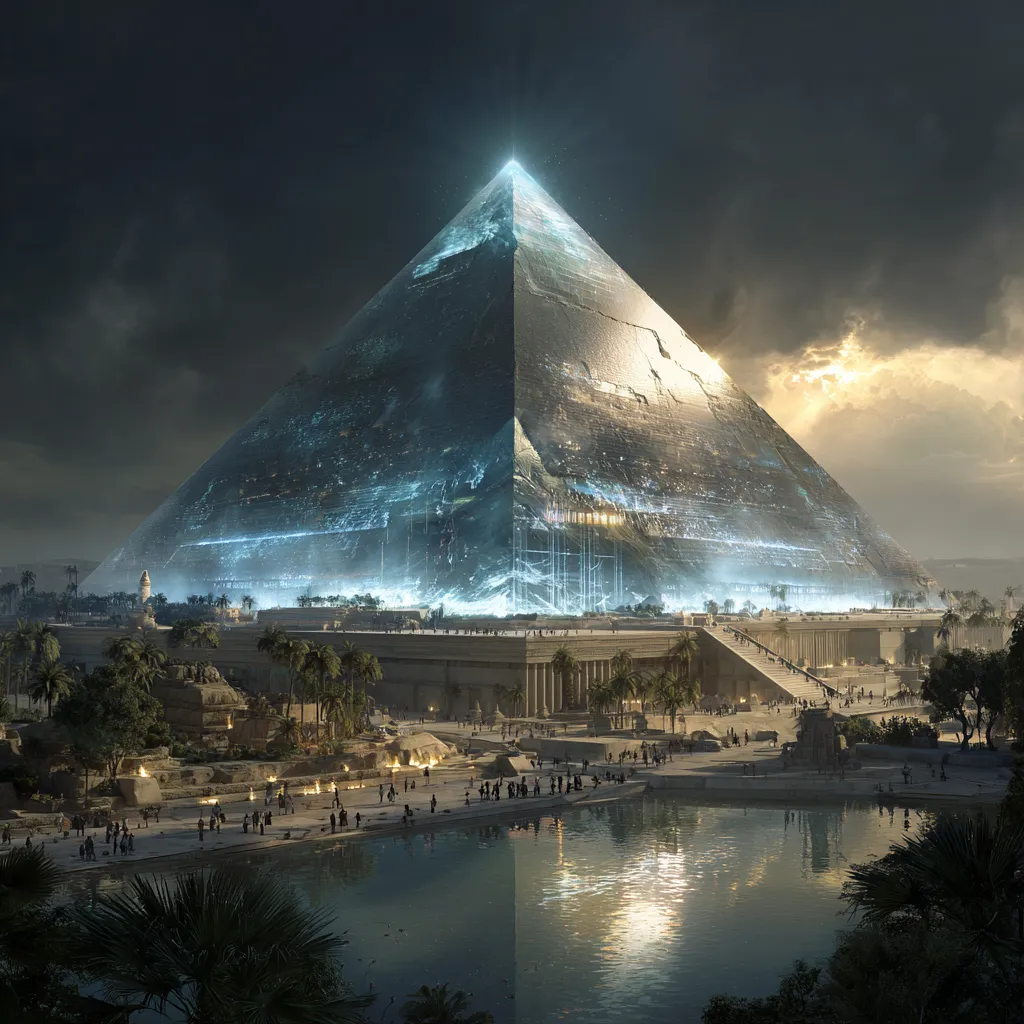
    The Yugas: How An Ancient Doctrine Of Cyclical Time Solves The Mystery Of the Great Pyramid
    The Hermetic Age #008: The Divine History of Sri Yukteswar
    Dan/World Astrology ReportDan
    Dec 08, 2025
    https://substack.com/home/post/p-181014000


    "The revision to the Indian yuga cycle doctrine of cyclical time by the Indian mystic Swami Sri Yukteswar Giri holds extraordinary explanatory power. It provides an elegant explanation for many of the enduring mysteries of history, including the greatest mystery of all: the Great Pyramid of Giza.

    Astrology’s greatest gift is its ability to confer meaning on the twists and turns of fortune, to help us perceive structure and purpose in life where otherwise we might see only chaos and contingency. In and of themselves, the succession of vicissitudes that make up the story of a life often mean little. When seen from the panoramic scale astrology provides, their purpose can come into sharp focus.

    A consulting astrologer is treated regularly to vivid demonstrations of how strokes of apparent bad luck—the ending of a relationship, the loss of a job, a debilitating illness—play a role in driving a life where it needs to go. A client might come to realise: “It hurt to get fired from the bar, but if it hadn’t been for that, I’d never have taken up meditation…” To perceive purpose in life, we have to zoom out.

    The same is true of history.

    In The Astounding Astrology Of The Axial Age, we saw how an extremely rare triple conjunction of Uranus, Neptune and Pluto around 577 BC coincided with the dawn of Karl Jaspers’ Axial Age, a time when the seeds of almost all the major faiths of the world today were sown. Remarkable figures, including the Buddha, Pythagoras and Confucius, walked the Earth at the same time, teaching human beings new ways of being, living together or achieving transcendence.

    But we might well ask: why then? Why 577 BC? An astrologer’s answer might simply be: because the planets said so. Because it was time. But we can do better—if we zoom out.

    This series was originally intended as a study of the 492-year Pluto-Neptune synodic cycle, something I’ve spent recent years thinking deeply about. I thought I could tell a compelling story about modernity through the lens of this single cycle.

    I’ve since come to feel that this tight focus would leave too much unsaid. The tale needed a more cosmic perspective. It needed context—and that context will come from understanding a far longer cycle, one embedded in the mythical traditions of ancient people across the world: the precession of the equinoxes.

    The doctrine of the Yugas
    The precession of the equinoxes, whereby the stars rising at a fixed time of year gradually slip backwards through the zodiac, is believed by contemporary astronomers to generate a cycle lasting some 26,000 years.

    As we saw in In Astrology, Think Spirals, Not Cycles, there are at least two primary systems for understanding how the quality of time changes over the course of this cycle. One is the astrological ages, favoured in the West, which divide this span of time into twelve sections, each allocated to one of the twelve signs of the zodiac. It’s this scheme that gives rise to the famed notion of the Age of Aquarius.

    The other is the Indian yuga cycle—or, to be more precise, the mapping of the yugas onto the precessional cycle by Swami Sri Yukteswar Giri (1855-1936), an Indian mystic who lived at the turn of the 19th century. It’s this system that we’ll focus on in this article—and see how it holds an incredible amount of explanatory power.

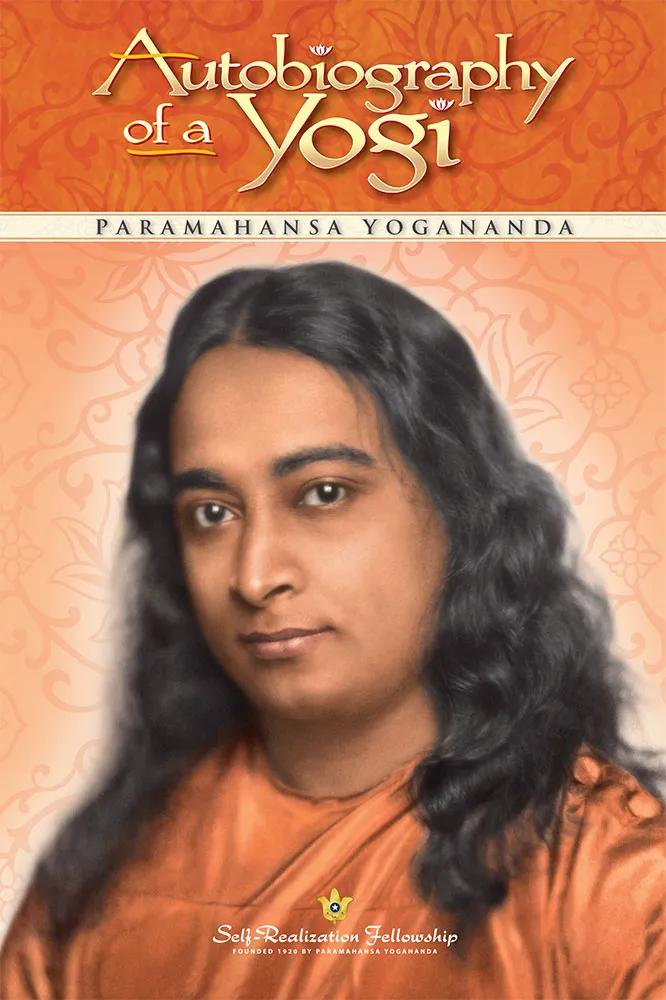
    Sri Yukteswar was the guru of Paramahansa Yogananda, best known as the author of the spellbinding book Autobiography of a Yogi and as the man who brought the powerful pranayama technique of Kriya Yoga to the West.

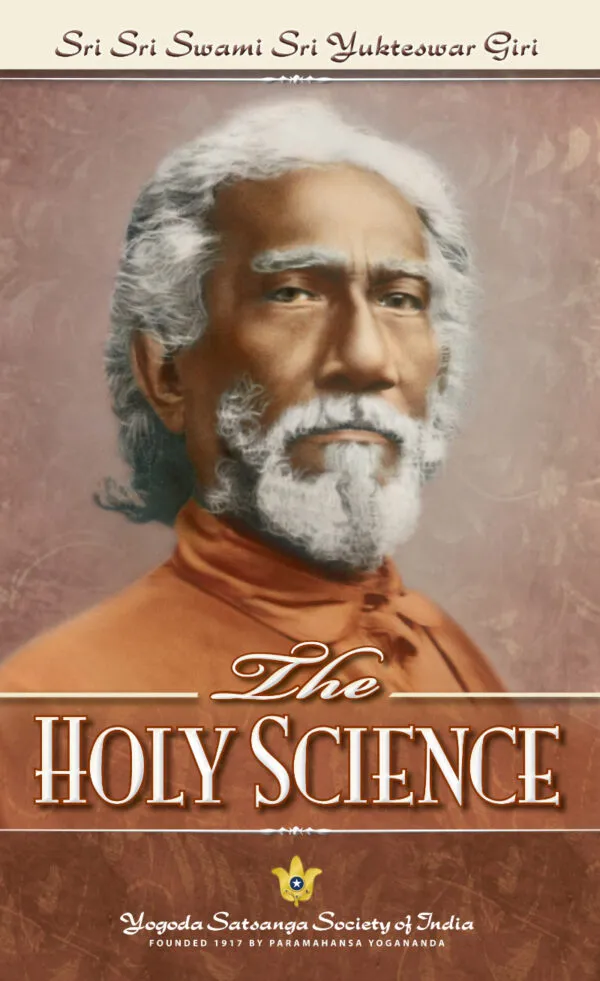
    Bringing Vedic wisdom to America was one of the great projects of Yogananda’s lineage, and with that goal in mind, in 1894 Sri Yukteswar published a book that was to become highly influential in astrological circles: The Holy Science. In that text Sri Yukteswar sought to show the many parallels between Vedic and Christian spiritual teachings.


    But the book is best known for remarks Sri Yukteswar makes in its introduction, which opened up a new perspective on India’s ancient yuga cycle doctrine, which sees history unfolding in an unending sequence of four great ages, during which consciousness, and connection to the divine, shift over vast stretches of time.

    The doctrine is laid out in various Vedic texts, including the great war epic, the Mahabharata, where it’s stated that the whole cycle, one Mahayuga, lasts 12,000 years. As we move from one yuga to the next, dharma, best translated as “virtue”, declines. The Satya Yuga, the “Golden Age”, when we’re in closest connection with the divine and dharma is at its highest, lasts 4,000 years; then comes the Treta Yuga, when dharma declines by one quarter, lasting 3,000 years; then the Dwapara Yuga, when dharma declines by another quarter, lasting 2,000 years; and finally the Kali Yuga, the lowest of the four ages, when dharma is at its lowest, lasting just 1,000 years. It’s generally supposed that after the Kali Yuga ends, there’s an instant return to the Satya Yuga, a quick shift from darkness to light—an usual idea when we consider that astronomical cycles never work like this.

    Similar doctrines are found across the ancient world and to this day, including among the ancient Greeks, Persians, Maya and the Hopi of the Southwestern United States. The Greek poet Hesiod spoke of not four but five “ages of man”, which chart a similar process of descent, from the Golden Age of Cronus, to the Silver Age, the Bronze Age, the Heroic Age and down into the benighted Iron Age, when humans live a life of toil and suffering.

    According to the yuga doctrine, each age is bookended by transitional periods called sandhi, which govern the shift from one period to the next. Each yuga begins with a “dawn”, lasting one-tenth of its length, and ends with a “twilight”, also lasting one-tenth of the major period. So, the Satya Yuga lasts 400 + 4,000 + 400 years = 4,800 years, the Treta Yuga lasts 300 + 3,000 + 300 = 3,600 years, the Dwapara Yuga lasts 200 + 2,000 + 200 = 2,400 years and the Kali Yuga lasts 100 + 1,000 + 100 years = 1,200 years.

    But here’s the rub. The Mahabharata speaks of this cycle in terms of “years of the gods” or “divine” years, each of which is said to last 360 human years. This brings the length of the entire yuga cycle to 4,320,000 years. In other words, we’re dealing with a cycle that’s commonly believed to play out over vast stretches of cosmic time, far too long to be genuinely meaningful for mere humans. The Kali Yuga alone is said to last 432,000 years, and according to traditional belief, it began in 3102 BC after the end of the Mahabharata War. Thus, we may as well forget about ever experiencing anything other than materialism, illusion and ignorance for the foreseeable future.

    Enter Sri Yukteswar. In his opening remarks to The Holy Science, he outlines what he believes to be the true formulation of the yuga cycle, claiming there had been mistakes in the transmission of the doctrine over the years, just as one might expect during the Kali Yuga, the age of illusion. Sri Yukteswar claimed the true cycle should be measured in human, not divine, years, and consists of both an ascending and descending phase, each lasting 12,000 years for a total of 24,000 years. This idea of a gently rising and falling cycle has much to recommend it, given that it more closely resembles cycles we see in nature, like that of the year and the waxing and waning synodic cycles of the planets.

    Of course, 24,000 years is very close to the length of the precessional cycle. Indeed, in The Holy Science, Sri Yukteswar explicitly ties the yugas to the cycle of precession, perhaps one of his greatest contributions. But the reader will note a discrepancy: Sri Yukteswar’s 24,000-year cycle is around 2,000 years short of the current measured speed of precession of almost 26,000 years. Was Sri Yukteswar—and the sacred texts he was drawing from—simply wrong? Or does the speed of precession change over the course of the cycle, as Walter Cruttenden writes in his book on the subject, Lost Star of Myth and Time? We simply don’t know.

    Here, some advice for the confused reader: I suggest taking Sri Yukteswar’s claims both seriously and lightly. People today, especially in the West, tend to demand certainty over the validity of ideas. We’re forever searching for the One, True System with all the answers. I’ve found that when it comes to spirituality, we’re better served by taking ideas more lightly, considering the strengths and weaknesses of different systems, and being comfortable with their contradictions. Look for confluence between different systems, rather than expecting one of them to explain everything.


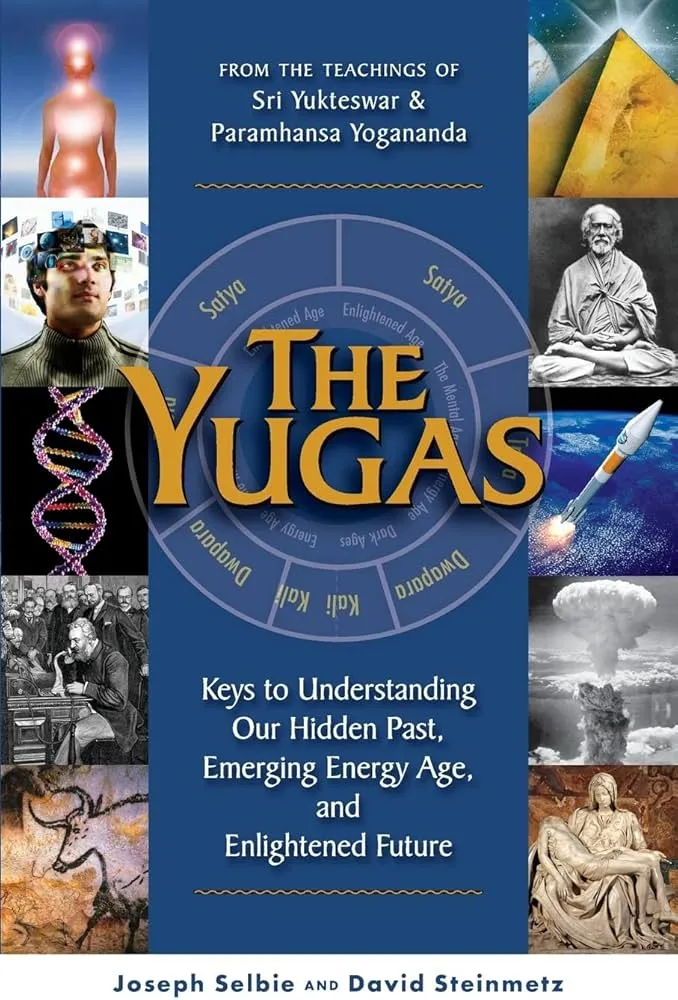
    In their excellent book The Yugas, Joseph Selbie and David Steinmetz explore Sri Yukteswar’s ideas in depth, and I’ll be drawing on their work in this piece.

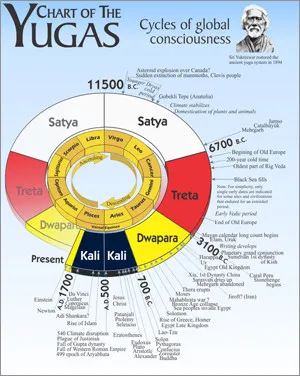
    Sri Yukteswar specifies the years when each age in the current cycle began, as follows: The peak of the Satya Yuga, which Selbie and Steinmetz call the “Spiritual Age”, came in 11500 BC, when the ascending Satya Yuga gave way to the descending Satya Yuga. The descending Satya Yuga gave way to the descending Treta Yuga, the “Mental Age”, in 6700 BC. That was followed by the descending Dwapara Yuga, the “Energy Age”, in 3100 BC. And finally, in 700 BC, came the start of the descending Kali Yuga, the “Material Age”. The “bottom” of the current cycle came in 500 AD, when the descending Kali Yuga gave way to the ascending Kali Yuga, and the transition from there into the ascending Dwapara Yuga arrived in 1700. Yes, for Sri Yukteswar, the dark age is already over.


    Most usefully for an astrologer, Sri Yukteswar describes the quality of life during each of the ages. In the Kali Yuga, the Material Age, “the human intellect cannot comprehend anything beyond the gross material of this ever-changing creation, the external world.” In the Dwapara Yuga, the Energy Age, “the human intellect can then comprehend the fine matters or electricities and their attributes which are the creating principles of the external world.” In the Treta Yuga, the Mental Age, “the human intellect becomes able to comprehend the divine magnetism, the source of all electrical forces on which the creation depends for its existence.” And in the Satya Yuga, the “Spiritual Age”, “the mental virtue is then in its fourth stage and completes its full development; the human intellect can comprehend all, even God the Spirit beyond this visible world.”

    The reader might wish to take some time to review the Chart of the Yugas diagram above. What may strike you is how the beginning of the descending Kali Yuga, in 700 BC, came just over a century before the triple conjunction of Uranus, Neptune and Pluto around 577 BC that we discussed in The Astonishing Astrology of the Axial Age. I believe this is no coincidence, and we’ll return to this later in the series.

    Before we go on, I want to address a crucial question: Why should the reader take Sri Yukteswar’s framework of history seriously?

    A great saint
    I assume readers are already open to the idea that the cycles of the planets are synchronised with the rhythms of history. I doubt you’d be reading a newsletter called “World Astrology Report” otherwise. But there’s clearly a qualitative difference between planetary cycles and Sri Yukteswar’s claims about the architecture of time. After all, well-established principles of astronomy and mathematics mean we can be pretty sure there really was a triple conjunction of Uranus, Neptune and Pluto around the year 577 BC. When Sri Yukteswar tells us that “the descending Dwapara Yuga began in 3100 BC”—well, we just have to take his word for it, and I can understand why some readers might find this more difficult to swallow.

    After all, all sorts of mystics, philosophers, renegade historians and, yes, certified cranks have proposed idiosyncratic metaphysical frameworks of cyclical history over the years, from the Renaissance abbot and occultist Trithemius, to traditionalist philosopher René Guénon, to Oswald Spengler in his The Decline of the West. Even an astrologically open-minded reader could be forgiven for giving a single long-dead mystic’s historical schema a good deal less credibility than the movements of the planets. So again, why trust Sri Yukteswar’s framework?


    Well, if you’ve read his student Paramahansa Yogananda’s spellbinding Autobiography of a Yogi, you won’t need much convincing that Sri Yukteswar was a remarkable human being. Yogananda, an extraordinary figure himself, revered his guru, who initiated him into the technique of Kriya Yoga, a powerful pranayama technique said to rapidly accelerate spiritual development. Sri Yukteswar himself learned it from his own guru, the householder Lahiri Mahasaya, who is said to have been initiated into the technique in a cave in the Himalayas by the legendary immortal yogi and guru Mahavatar Babaji.

    In Autobiography, Yogananda describes Sri Yukteswar performing many miracles. He heals a man using nothing but his intent. He controls the weather. He reads students’ minds. Perhaps most memorably, he appears to Yogananda long after death, describing to him the architecture of the spirit world.

    It’s up to the reader to decide how much credibility to give these accounts. I sense nothing but truth and earnestness from Yogananda, and take him at his word. Sri Yukteswar wasn’t just “some guy”—he was a man of astonishing abilities, as well as an extremely accomplished astrologer. (Oh, and he’s one of the luminaries who appears on the front cover of Sgt. Pepper’s Lonely Hearts Club Band, in the very top-left of the image, right next to Aleister Crowley, in case a Beatles endorsement helps.)


    Of course, I realise those arguments won’t convince everyone. Nor should they. What’s more important is the explanatory power of Sri Yukteswar’s yuga cycle. I’ve found that his framework explains certain facts about the broad sweep of history better than any other, including the remarkable advancement of certain ancient peoples—like the Egyptians.

    The Great Pyramid and the Dwapara Yuga


    There’s a controversy raging today over a problem of history, clear to anyone with a reasonably open mind: the linear model of history, which sees knowledge, technological advancement and social justice progressively improving as time goes by, doesn’t match reality. A growing number of renegade researchers like Graham Hancock, Robert Bauval and John Anthony West have engaged in deep studies of ancient cultures without feeling bound to the conclusions considered “acceptable” by mainstream academia. They’ve judged that ancient people were far more advanced than we’re generally led to believe, and knew many things we’ve forgotten today. With help from the modern podcast circuit, their arguments are finding a wide audience today, and I think that’s simply because the mainstream narrative stands on very shaky ground.

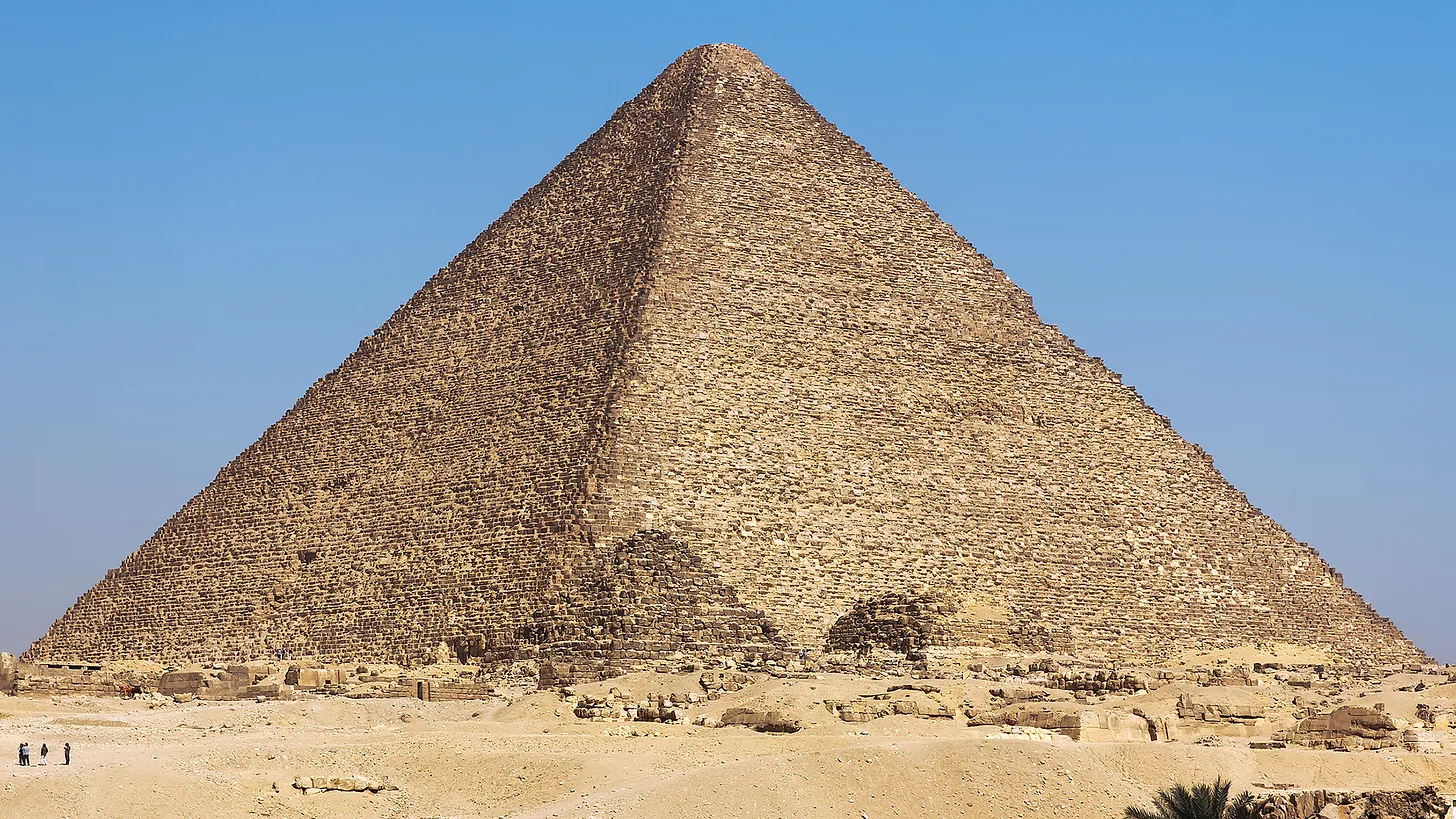
    Foremost among the many “inconvenient” truths of history is the existence of a singular structure: the Great Pyramid of Giza, conventionally estimated to have been constructed around 2500 BC. The first mystery we have to deal with when it comes to the Great Pyramid is how it was built at all. It’s composed of more than 2.3 million limestone and granite blocks. Some weigh as much of 100,000 pounds and were transported to the site from as far away as 500 miles.

    The Great Pyramid was also constructed with incredible precision. Its base deviates from being perfectly level around its entire circumference by less than 7/8ths of an inch. Selbie and Steinmetz quote Christopher Dunn, an engineer and author of The Giza Power Plant: “The bald fact is that the Great Pyramid — by any standard old or new — is the largest and most accurately constructed building in the world.” As more and more people are screaming from the rooftops these days, this structure could not have been built by so-called “primitive” people.

    What’s more, Dunn believes the pyramid had a very specific purpose. He argues that its dimensions and weight were perfectly calibrated to resonate with the seismic pulse of the Earth, which is generated by tiny shifts in its crust. Dunn argues that using the piezoelectric properties of quartz, the Great Pyramid could literally generate electricity. In other words, it was a kind of power plant. Of course, Dunn’s is just one of many wild theories about the true purpose of this remarkable structure. But many of them, perhaps most of them, hold that the Great Pyramid harnessed principles of frequency and resonance in some way we have yet to fully understand.

    This idea becomes particularly interesting in light of Sri Yukteswar’s timeline of the yugas. For him, the Dwapara Yuga began in 3100 BC with a 200-year “dawn”, which ended in 2900 BC, not long before the Great Pyramid was built. Again, the essence of the Dwapara Yuga, the Energy Age, is that we become able to comprehend “the fine matters or electricities and their attributes which are the creating principles of the external world.”

    What’s more, we need an explanation for the fact that over time, useful and potentially empowering knowledge was lost. Most scholars believe the Great Pyramid was constructed during the reign of the Pharaoh Khufu, in around 2580 to 2560 BC. Yet it’s inarguably the most advanced structure built over the entire span of Egyptian civilisation. Later pyramids stand today in ruins, while the Great Pyramid maintains its form.

    In Sri Yukteswar’s timeline, the construction of the pyramid would have come close to the start of the Energy Age, after descent from a higher age, the Treta Yuga or “Mental Age”. While the linear model of progressive history is troubled by the existence of the Great Pyramid, Sri Yukteswar’s model comes into its own. Such a feat was possible because, well, we were smarter back then. What’s more, we had abilities we eventually lost—magical abilities.

    Magic in the Dwapara Yuga
    Selbie and Steinmetz write that the Dwapara Yuga is characterised by three things: awakened intellect, self-interest, and energy awareness. Where Treta Yuga people had direct perception of how thoughts create reality, Dwapara Yuga people perceived and manipulated energy, a step down in potency.

    Nothing as imposing or impressive as the Great Pyramid had been constructed in earlier times, not because human beings hadn’t been able to, but because they hadn’t needed to. Selbie and Steinmetz say this: “If the ancient Egyptians understood the laws of energy yet did not have an established tradition of mechanical technology (not needed in Treta Yuga), harnessing the earth’s seismic power in this profoundly simple and ecologically harmonious manner may well have been the natural result.”

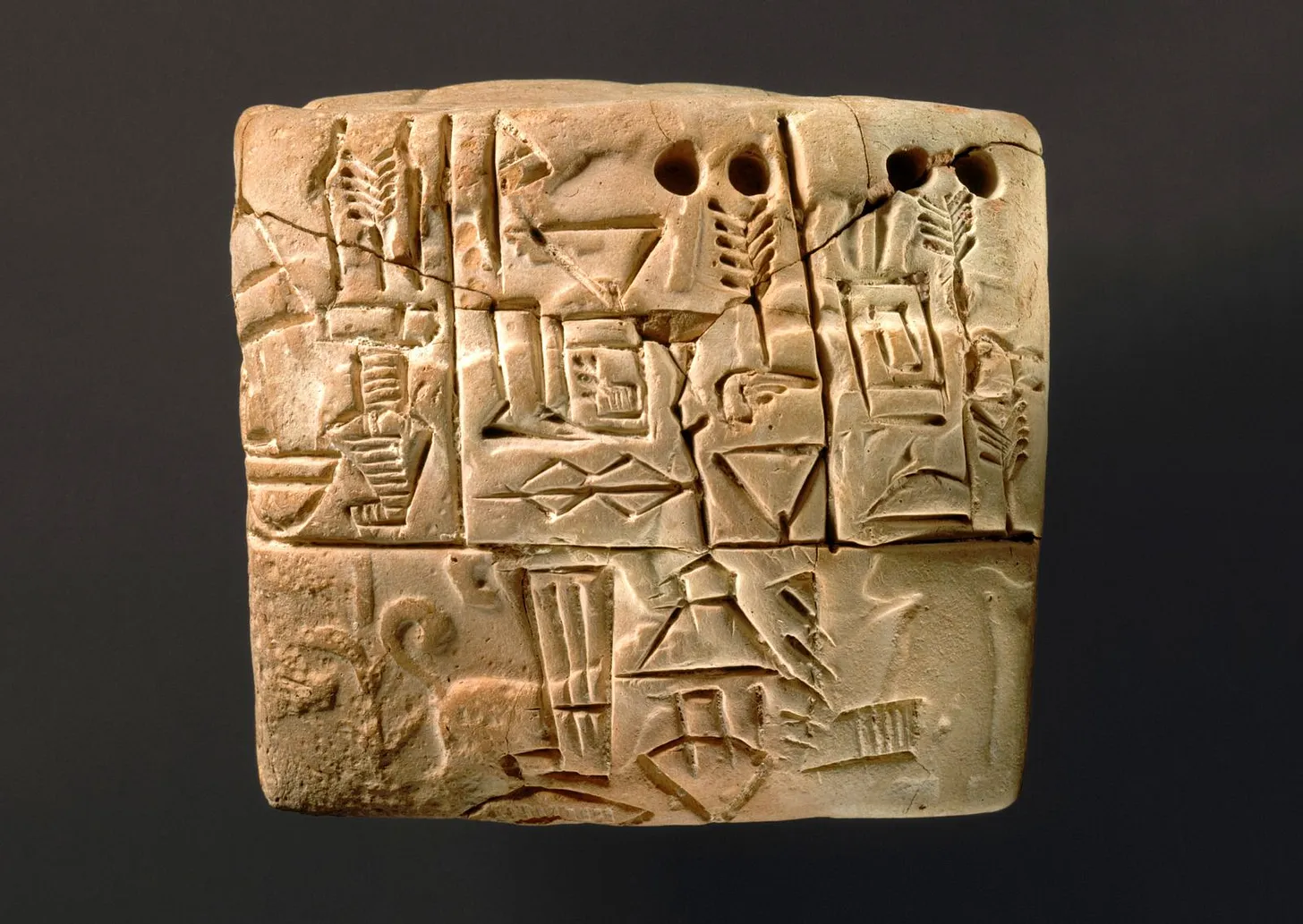
    The transition into Dwapara Yuga, from 3400 to 2900 BC, also saw the emergence of the first writing system, in the form of Sumerian cuneiform, which has been dated to about 3200 BC. Why might a technology like writing emerge at the transition between the Mental Age and the Energy Age? Well, bear in mind that for Sri Yukteswar, this transition involved a degradation of our mental abilities. Writing things down is what you resort to when memory fails you.


    During the same period, we also find evidence of the first large cities. This, together with the emergence of writing, has led mainstream scholars to conclude that “civilisation” began in the 4th millennium BC, around the time of the transition into the Energy Age.

    But again, is the building of cities really a sign of advancement? Selbie and Steinmetz argue that one of the developments that characterise the Dwapara Yuga is rising self-interest. Self-interest expresses itself in a particular human activity: commerce. That’s what cities are for—they’re centres of trade.

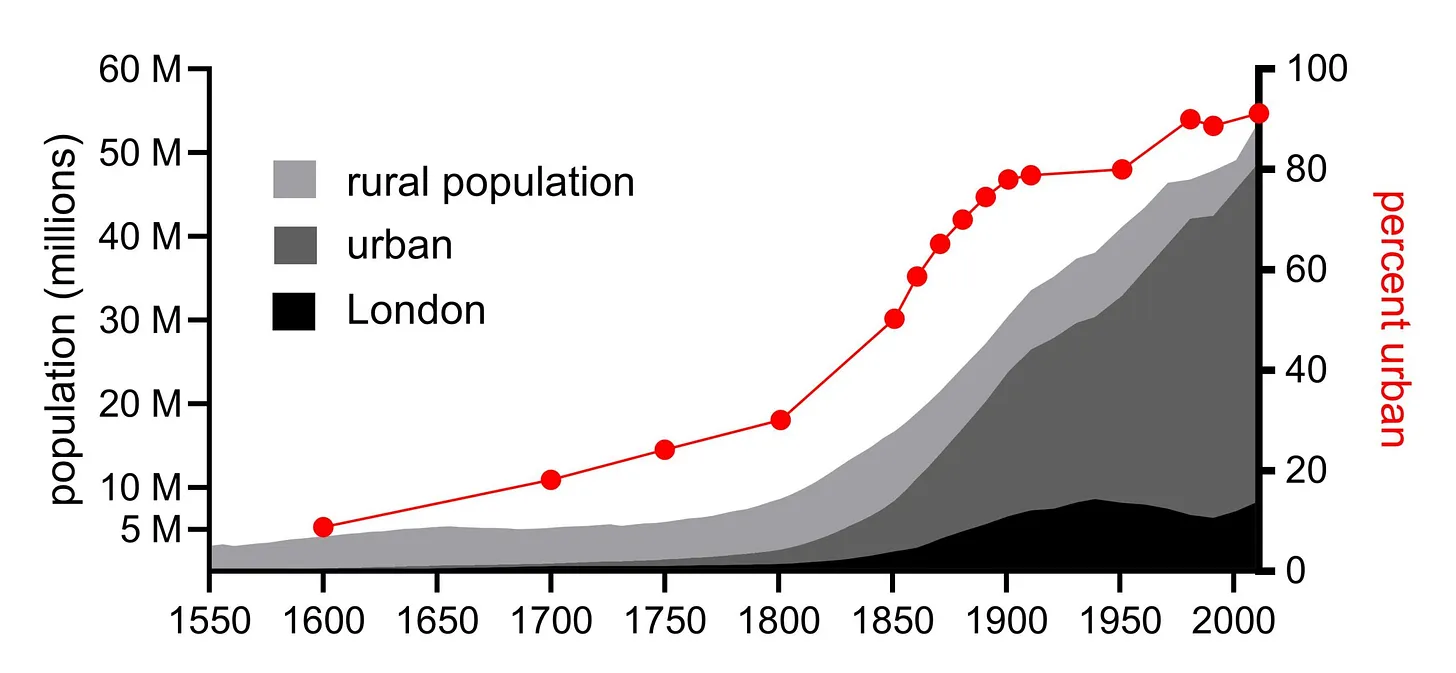
    Intriguingly, according to Sri Yukteswar the transition from ascending Kali Yuga into our current age, the ascending Dwapara Yuga, came between 1600 and 1900. We’d expect to see a rise in self-interest over that time—check—which would express itself in growth in the activity of trade and urbanisation—check. Here’s a chart showing the growth of the urban population over recent centuries:


    Sri Yukteswar’s model of time, and only his, elegantly explains why urbanisation first appears in the 4th millennium BC—and is soaring again now.

    The pursuit of self-interest aside, at the essence of the Dwapara Yuga is the awareness of energy. According to Sri Yukteswar, the full transition into the Energy Age ended in 1900. At that time, one of the world’s most famous people was the very master of electricity himself, the genius inventor Nikola Tesla. Consider what are probably his best-known words: “If you want to find the secrets of the universe, think in terms of energy, frequency and vibration.” Such figures tend to be exquisitely in touch with the times.

    Traditional practices that manipulate energy, like acupuncture and qigong, date to the descending Dwapara Yuga. Interesting, then, that in our own ascending Dwapara Yuga, they’re experiencing a revival today—as is another facet of life in Dwapara Yuga: the practice of magic.

    The ancient Egyptians are the very archetype of the magical civilisation. The occult and magical practices in huge swatches of the modern world can be traced back to them. Indeed, through the Hermetica, Egyptian magic drove a transformation of European society in the early modern era, ultimately leading to the birth of modern science. Later in the series, we’ll see how this happened when, and only when, the astrological time was right.

    You might well ask—if the Dwapara Yuga is characterised by the widespread practice of magic, why isn’t magic more popular in our own ascending Energy Age?

    I’d suggest thinking this question through. The famous magician Dion Fortune defined magic as “the art and science of causing change in consciousness in accordance with will”. Now consider the sheer ubiquity today of advertising and corporate logos. Then ask: what is advertising, but a spell that attempts to change the consciousness of the target, in accordance with the will of the advertiser? What is a logo, but an intentionally charged sigil?

    We live in a deeply magical age. That has only grown more true since the Dwapara Yuga began in 1900. Today, we’re seen less and less as objects to be compelled into action by force, more as energetic forces to be cajoled, deceived and manipulated. Yes, this is progress.

    The core claim to reckon with in Sri Yukteswar’s framework is that we’ve already left the Kali Yuga behind. By his reckoning, this is not the worst of times. How do you feel about that?

    In the next piece, we’ll think more about the Kali Yuga, from 700 BC to 1700 AD, a period that saw the birth of two major faiths, Christianity and Islam, best described as “salvation religions”. They oriented followers away from this world, and towards the next one, demanding sacrifice, self-denial and martyrdom. Astrologers might sense here the flavour of the zodiacal sign of Pisces, and they’d be right. In the next piece, we’ll take this thread further, and explore how the Kali Yuga and the Age of Pisces were one and the same. "
    Last edited by Sue (Ayt); 1st April 2026 at 14:13. Reason: format of one image
    Each breath a gift...
    _____________

  2. The Following 18 Users Say Thank You to onawah For This Post:

    Agape (9th December 2025), Arcturian108 (9th December 2025), Bill Ryan (8th December 2025), Chip (1st April 2026), GaelVictor (23rd December 2025), Harmony (10th December 2025), Ioneo (8th December 2025), Mark (Star Mariner) (9th December 2025), meat suit (9th December 2025), Mike (8th December 2025), mountain_jim (8th December 2025), petra (10th January 2026), rgray222 (10th December 2025), shaberon (9th December 2025), Sue (Ayt) (1st April 2026), The KMan (Today), wondering (9th December 2025), Yoda (9th December 2025)

  3. Link to Post #2
    United States Avalon Member
    Join Date
    1st April 2016
    Posts
    6,597
    Thanks
    34,305
    Thanked 37,593 times in 6,246 posts

    Default Re: Are we in the Kali Yuga?

    Quote Posted by onawah (here)
    embedded in the mythical traditions of ancient people across the world: the precession of the equinoxes.

    The doctrine of the Yugas
    The precession of the equinoxes, whereby the stars rising at a fixed time of year gradually slip backwards through the zodiac, is believed by contemporary astronomers to generate a cycle lasting some 26,000 years.

    As we saw in In Astrology, Think Spirals, Not Cycles, there are at least two primary systems for understanding how the quality of time changes over the course of this cycle. One is the astrological ages, favoured in the West, which divide this span of time into twelve sections, each allocated to one of the twelve signs of the zodiac. It’s this scheme that gives rise to the famed notion of the Age of Aquarius.

    The other is the Indian yuga cycle—or, to be more precise, the mapping of the yugas onto the precessional cycle by Swami Sri Yukteswar Giri (1855-1936), an Indian mystic who lived at the turn of the 19th century. It’s this system that we’ll focus on in this article—and see how it holds an incredible amount of explanatory power.


    I don't hold this doctrine for some precise reasons.


    Math


    This was a big part of the commodities market considering India imports almost nothing.


    The stamp of the Puranic Yugas is the Tetraktys:


    Planetary motion and music of the Spheres


    At the time, Indian calculations were more like an algorithm, whereas the Greeks developed Spherical Trigonometry. That is how you calculate the Great Year, which was derived "incidentally" by Hipparchus around 150 B. C. E..

    The Indians said the Romakas are wrong because the equinox will bounce back where it used to be. They believed it was oscillating. The term "Yuga" had a different meaning as found in the oldest strata of the Puranas:


    Quote A yugam of five years, commencing with śravaṇa and ending with dhaniṣṭhā nakṣatra—the five years are respectively Agni, Sūrya, Soma, Vāyu and Rudra; consists of Samvatsara, Parivatsara, Idvatsara, Anuvatsara and Vatsara; revolves like the wheel owing to the movement of the Sun.2

    2) Brahmāṇḍa-purāṇa II. 13. 115, 147; 21. 131; 24. 57 and 144; 28. 22; Vāyu-purāṇa 31. 28, 49; 32. 57-65; 50. 182; 53. 116; 56. 21; Viṣṇu-purāṇa II. 8. 72.

    That is because the science of Time Keeping, Vedanga Jyotish, actually was the secret of the Vedic Rishis. But it's about Agni and their view on rain and the seasons and so forth, and the Yuga was five years.

    This is ancient enough to have internal markers whose youngest possible occurrences would be about 1,350 B. C. E. and 2,000 B. C. E. that are certainly based on observational astronomy using the equinox itself.

    As time went by, they didn't update it for over a thousand years until matching the "Point of Aries" system from Greece around the year 200. Eventually you are forced to update because anyone can see it has moved, and the astrological Siddhanta texts are from around 500 and there are still arguments about whether it is going in a circle. That is the era most of the Puranas appeared. In conclusion, I find this is like taking Greek math and amplifying it to say "we are these thousands and millions of years old".

    The Puranas and Epics are probably low in objectivity.

    I remain agnostic as to whether there are such "Astrological Ages" that heavily condition major chains of events, but, I can see how the entities are natural timers and that this does relate to what we experience at present from moment to moment.

    I don't think we are in the Kali Yuga, I do think we are in Music of the Spheres.

    If something feels off, if it doesn't sound right, then, there's a reason that, for example, Mercury is wreaking havoc with me today, but it's something I said, or did, or forgot, and I just take it on myself as responsibility to straighten it out, rather than granting Mercury some excuse to have an indomitable era of evil.

    I hope that makes sense. India has not imported a lot of material, but it has taken on a lot of Greek and Babylonian intellect such as the Flood in Matsya Purana. Events that have happened don't necessarily need a portent or explanation, whereas the assertion of late Babylonian astrology is more like everything has to have one. This influence certainly affected India, where, prior, it is absent, and the Vedas certainly have nothing like this.

  4. The Following 7 Users Say Thank You to shaberon For This Post:

    Bill Ryan (9th December 2025), Chip (1st April 2026), Harmony (10th December 2025), onawah (9th December 2025), rgray222 (10th December 2025), The KMan (Today), Yoda (9th December 2025)

  5. Link to Post #3
    United States Avalon Member onawah's Avatar
    Join Date
    28th March 2010
    Language
    English
    Posts
    25,787
    Thanks
    54,266
    Thanked 139,301 times in 24,215 posts

    Default Re: Are we in the Kali Yuga?

    I believe this is just the sort of subject you are usually very focused on Shaberon, and go into great detail about, which you are welcome to do if you care to.
    ...But if that is the case, and if you would like to generate some scholarly discussion, then it might be better if you start your own thread.
    Hindu cosmology is not a subject I am well versed in, but I was always interested in Yogananda and his guru Sri Yukteswar, and their influence on the West.
    I think that it may be of interest to others here as well to see World Astrology's perspectives on Yukteswar's work, and on the subject of the Yugas in general, even if they don't align with your own.
    I hope you will allow space for that to occur without too much distraction on this thread. Thanks.


    Quote Posted by shaberon (here)
    I don't hold this doctrine for some precise reasons.
    Last edited by onawah; 31st March 2026 at 21:49.
    Each breath a gift...
    _____________

  6. The Following 8 Users Say Thank You to onawah For This Post:

    Agape (9th December 2025), Bill Ryan (9th December 2025), Ewan (10th December 2025), Harmony (10th December 2025), Le Fay (11th January 2026), Sue (Ayt) (1st April 2026), The KMan (Today), Yoda (9th December 2025)

  7. Link to Post #4
    Wales Avalon Member
    Join Date
    8th October 2012
    Location
    Wales, UK
    Language
    English
    Age
    57
    Posts
    1,068
    Thanks
    6,940
    Thanked 8,121 times in 1,034 posts

    Default Re: Are we in the Kali Yuga?

    The traditional Hindu view says we are in Kali Yuga (The Material Age), which lasts for lasts 432,000 years and we are only we are only ~5,000 years into it.

    A dark prospect! and fortunately one which Sri Yukteswar proves is not correct.

    In his book, Sri Yukteswar explains how ancient texts were misinterpreted and that the Yugas are much shorter than commonly believed:

    Yuga Duration (years)
    • Satya Yuga - 4800
    • Treta Yuga - 3600
    • Dvapara Yuga - 2400
    • Kali Yuga - 1200

    He also said each Yuga has an ascending and descending half, creating a 24,000-year cycle, tied to the sun’s motion around a companion star (a binary system hypothesis).

    His key assertion is that we are currently in the Ascending Dvapara Yuga and the timeline he provided are as follows:

    Descending Kali Yuga ended: A.D. 499
    Ascending Kali Yuga lasted: A.D. 499 – 1699
    Ascending Dvapara Yuga started: A.D. 1700
    Entering Dvapara Yuga proper: A.D. 1900

    Sri Yukteswar also gives a specific, compact explanation of how Kali Yuga hit its lowest point around A.D. 500, which he describes as a time of maximum darkness, ignorance, strife, and fixation on materialism. The human mind’s ability to perceive higher realities also diminishes during descending Kali Yuga and by its lowest point, this ability is almost completely gone. History indeed bears this out, with fall of the Western Roman Empire (A.D. 476), post-Roman fragmentation, massive population movements (Huns, Goths, Vandals), turmoil in India after the Gupta decline and the decline of classical learning across Eurasia.

    In his book he says that by A.D. 499:

    Quote The intellectual power of man was so diminished that he could not comprehend anything beyond the gross material world.
    This in turn leads to: dogmatism, ritualism replacing genuine understanding, superstition dominating religion, loss of scientific knowledge, decline of arts and philosophy etc.

    He then gives a very specific sequence of dates showing how humanity gradually improved after the lowest point of Kali Yuga in A.D. 499, He says noticeable improvements begin in: science, communication, mobility across continents, greater political cooperation, compared with the earlier chaos of Kali Yuga

    Historically, this also fits:
    • England and Scotland joined together and became a powerful nation.
    • Napoleon gave the Code Napoleon, a rational system of law.
    • Newton’s laws of gravitation and laws of motion became known.
    • People able to communicate instantly across the globe using electricity - whole continents become criss-crossed with railroads and telegraph lines.

    We are in the ascending Dvāpara Yuga (Age of Energy) now (since A.D. 1700), and Yukteswar says its full effects continue for 2,400 years until AD 4100.

    During this age: humans will better understand energy as the basis of matter, rapid global communication and fast travel, major advances in science, technology, electricity, and magnetism. More rational politics and less superstition. Growing awareness of life-force (prāṇa).

    During the ascending Tretā Yuga (Age of Mind) — telepathy, mental sciences, harmony, direct understanding of subtle mental laws; lasts between A.D. 4100 to A.D. 7700

    During the ascending Satya Yuga (Age of Spirit), (A.D. 7700 to A.D. 12,500) - — direct perception of Spirit, intuitive wisdom, perfect harmony, mastery of mind/energy/matter.

  8. The Following 9 Users Say Thank You to happyuk For This Post:

    Bill Ryan (9th December 2025), Brigantia (1st April 2026), Ewan (10th December 2025), GaelVictor (23rd December 2025), Harmony (10th December 2025), onawah (9th December 2025), Sue (Ayt) (1st April 2026), The KMan (Today), Yoda (9th December 2025)

  9. Link to Post #5
    United States Avalon Member onawah's Avatar
    Join Date
    28th March 2010
    Language
    English
    Posts
    25,787
    Thanks
    54,266
    Thanked 139,301 times in 24,215 posts

    Default Re: Are we in the Kali Yuga?

    What interests me greatly is how theories about the Yugas match up with what we know now about the 12,000 year solar cycles, which have regularly created an incredibly challenging global "restart" unmatched even by any astrological progression into a new stage of development.
    Although it does appear that, due to the discovery of ancient structures and underground cities, there must have been times when those restarts were anticipated in sufficient time to create safe havens from the hazards of pole reversal and geomagnetic excursion.
    Though precisely how creating those structures was accomplished in some cases is as mysterious as the puzzle concerning how the Great Pyramid was built...
    Last edited by onawah; 9th December 2025 at 09:11.
    Each breath a gift...
    _____________

  10. The Following 8 Users Say Thank You to onawah For This Post:

    Ba-ba-Ra (10th December 2025), Bill Ryan (9th December 2025), Ernie Nemeth (9th December 2025), Ewan (10th December 2025), Harmony (10th December 2025), petra (11th January 2026), The KMan (Today), Yoda (9th December 2025)

  11. Link to Post #6
    Canada Avalon Member Ernie Nemeth's Avatar
    Join Date
    25th January 2011
    Location
    Toronto
    Age
    68
    Posts
    6,074
    Thanks
    27,870
    Thanked 40,357 times in 5,798 posts

    Default Re: Are we in the Kali Yuga?

    Quote Posted by onawah (here)
    What interests me greatly is how theories about the Yugas match up with what we know now about the 12,000 year solar cycles, which have regularly created an incredibly challenging global "restart" unmatched even by any astrological progression into a new stage of development.
    Although it does appear that, due to the discovery of ancient structures and underground cities, there must have been times when those restarts were anticipated in sufficient time to create safe havens from the hazards of pole reversal and geomagnetic excursion.
    Though precisely how creating those structures was accomplished in some cases is as mysterious as the puzzle concerning how the Great Pyramid was built...

    That is an area of great interest to me.
    Empty your mind, be formless, shapeless — like water...Now water can flow or it can crash. Be water, my friend. Bruce Lee

    Free will can only be as free as the mind that conceives it.

  12. The Following 7 Users Say Thank You to Ernie Nemeth For This Post:

    Bill Ryan (10th January 2026), Ewan (10th December 2025), Harmony (10th December 2025), onawah (9th December 2025), petra (11th January 2026), The KMan (Today), ThePythonicCow (30th December 2025)

  13. Link to Post #7
    United States Avalon Member onawah's Avatar
    Join Date
    28th March 2010
    Language
    English
    Posts
    25,787
    Thanks
    54,266
    Thanked 139,301 times in 24,215 posts

    Default Re: Are we in the Kali Yuga?

    Astrology Needs Answers To Big-Cycle Questions
    The Hermetic Age #009: Uniting yugas, astrological ages and cultural epochs
    Dan/ World Astrology Report
    Jan 10, 2026
    https://substack.com/home/post/p-184101446


    "You could make the argument that improving our understanding of long cycles, especially the precessional cycle, is the most urgent task in mundane astrology today. As I pointed out in In Astrology, Think Spirals, Not Cycles, every cycle is embedded within a still-greater one. We run into trouble with our prognostications when we miss the wider context.

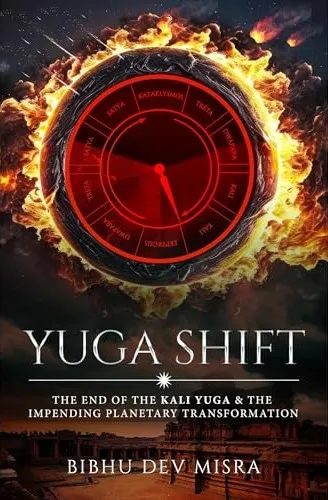
    An extreme example will illustrate the point: this year’s much-discussed conjunction of Saturn and Neptune at 0° Aries seems like the most significant thing in the sky right now. But if we’ve reached a point in the precessional cycle that reliably brings civilisation-ending cataclysms, as Yuga Shift author Bibhu Dev Misra argues, it hardly matters.


    Unfortunately, our collective knowledge of how times change over the course of the 24-26,000-year precessional cycle leaves much to be desired. It’s fragmentary, contradictory and contested. This applies to both primary systems for carving up the cycle: the Indian yugas and the astrological ages.

    In The Yugas: How An Ancient Doctrine Of Cyclical Time Solves The Mystery Of The Great Pyramid, we encountered Sri Yukteswar Giri’s vision of the yugas, which holds that the Kali Yuga ended in the year 1700. Vedic traditionalists continue to maintain that the Kali Yuga began in 3102 BC and will last 432,000 years. For them, Sri Yukteswar’s ideas are merely those of one man who mistakenly thought he knew better than millennia of Hindu tradition.

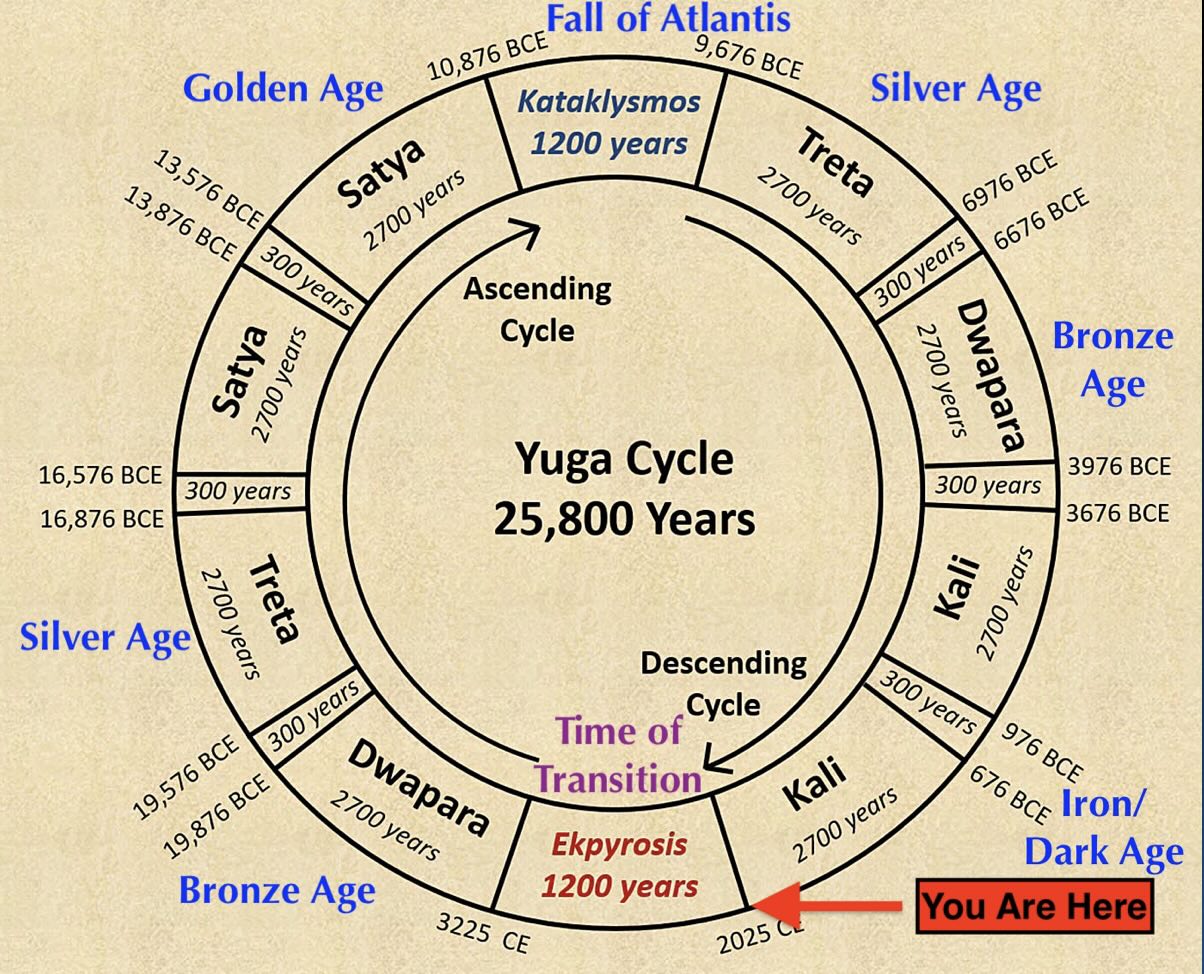
    More recently, another vision of the yuga cycle has emerged through the work of Bibhu Dev Misra, author of the fascinating Yuga Shift, which has had a huge impact on spiritual and New Age circles in recent years. Many of the astrologers and mystics appearing on YouTube’s biggest spirituality podcasts today take their cues from Misra’s work, and particularly his conclusion that the Kali Yuga ended on the spring equinox of 2025.

    Ominously, depending on your perspective, Misra believes that that milestone has initiated a long period of ekpyrosis, cleansing by fire, which will last some 1,200 years before the next age, the Dwapara Yuga, begins. The last such cataclysm was the Younger Dryas period, which began with devastating global floods around 12,900 BC. Many esoterically minded researchers believe the Younger Dryas saw the destruction of Atlantis, leading to the proliferation of flood myths told by ancient peoples the world over. Misra believes that that event was caused by a series of comet impacts—and that in the coming years, we may see a fresh round of them. For those of us yet to reach a level of spiritual advancement that allows us to face such prospects with total equanimity, Sri Yukteswar’s timeline holds more appeal.

    Who’s right? Bibhu Dev Misra, the dedicated modern researcher, or Sri Yukteswar, the great saint?

    I think we’re best served by taking a leaf out of science’s book and keeping both possibilities in mind as hypotheses. We’re still early in the process of reconstructing our understanding of shifting time and consciousness, particularly over long periods of time. There should be competing theories out there. I propose respectfully holding these ideas in mind and simply watching how history unfolds. If Misra’s theory about ekpyrosis is correct, it should become clear quite soon—cleansing waves of fire, whether literal or not, are rather hard to miss.

    The Age of Aquarius
    When it comes to the astrological ages, we face a similar problem. And we can summarise the debate in a single question: has the Age of Aquarius begun yet?

    Most astrologers believe the 12 astrological ages each last roughly 2,150 years, or one-twelfth of 26,000 years. Even this idea is contested, since some hold that the length of the ages should be proportional to the sizes of the actual constellations of the zodiac, which vary considerably.

    Leaving that issue aside, some astrologers fix the beginning of the Age of Pisces to the coming of Christ, and so believe the Age of Aquarius is due in about 150 years. Others base their calculations on the offset between the tropical and sidereal zodiacs. With the Aries point (the position of the Sun at the Spring Equinox) currently situated at roughly 6° Pisces in most sidereal ayanamshas (the offset with the tropical zodiac), we have around one-fifth of an astrological age to go before the Age of Aquarius begins, perhaps around 2500.

    I’ve gained a great deal of insight from the work of astrologers who suspect the Age of Aquarius is yet to begin, most notably Ray Grasse and his excellent book Signs of the Times, which explores the transition from the Age of Pisces to the Age of Aquarius. (And if you’re not subscribed to his Substack, well, you’re missing out…)


    Grasse argues that even if the Aquarian Age hasn’t officially started yet, its looming arrival is already influencing us. Consider, for example, the relatively recent birth and world domination of the United States, a country with the words Novus Ordo Seclorum, “new order of the ages”, on its Great Seal, as Aquarian a phrase as you could imagine. Grasse points to America’s democracy, capitalistic orientation and technological drive as Aquarian Age manifestations. So, too, is the country’s most characteristic art form: jazz music, with its Aquarian tension between the coherence of the group and individual expression.

    For Grasse, the spiritual zeitgeist is defined by a melding of the competing influences of Pisces and Aquarius—one fading, one struggling to be born. Consider American politics, and the unending battle between the Christian right (Pisces) and liberal left (Aquarius).

    Still, the astrologer whose timeline of astrological ages I find most compelling is Australia’s Terry MacKinnell, who has made the study of the ages his life’s work. I’ve written about MacKinnell’s research on Substack before, in The Age of Aquarius *is* modernity. MacKinnell believes that most timelines of the astrological ages are actually around half an astrological age out, and that the Age of Aquarius already began some 600 years ago—in 1433, to be precise. And he has compelling arguments for why this is the case.


    Most astrologers base their understanding of when an astrological age begins on the position in the zodiac of the Sun at the Spring Equinox. For MacKinnell, this is a mistake, for a simple reason: stars in a part of the sky hosting the Sun cannot be seen. What was most important to ancient people was the visible sky, not the abstractions that can be seen on charts. They were particularly interested in times when stars made their first visible appearance of the year, either just before dawn, or just after sundown. Astrologers call the moment a planet or star first emerges from the Sun’s rays and becomes visible to the naked eye just before dawn its heliacal rising. Famously, the Egyptians anchored the start of their year to the heliacal rise of Sirius, which coincided with the flooding of the Nile. As we’ll see later, their entire calendar was based on the heliacal rising of the stars of the zodiac.

    Thus, for MacKinnell, an astrological age can be said to have begun when the constellation that bears its name first becomes visible at dawn on the Spring Equinox. If MacKinnell is right, this shifts any timeline for the astrological ages backwards by around half an astrological age, or 1,075 years. Thus, the Age of Aquarius actually began when the Aries point reached about 15° of the sidereal constellation of Pisces, meaning we’re already deep into the Aquarian Age. The image below, take from Stellarium, shows the Sun at the Spring Equinox in 2026, shortly after dawn. Note how the Sun is in Pisces, but Aquarius will be the last constellation to rise from the horizon before the Sun’s light dissolves the night.

    MacKinnell arrived at his precise timeline for the ages through a process of astrological reverse engineering, which astrologers call rectification. Usually, rectification is performed for a client who doesn’t know their precise time of birth. The astrologer uses the known timing of events in their life to establish the correct time. MacKinnell performed a similar process but with history itself as the subject, establishing very precise years for the beginning of each age. His timeline of the ages looks like this:

    Age of Gemini: 7158 - 5010 BC

    Age of Taurus: 5010 - 2862 BC

    Age of Aries: 2862 - 715 BC

    Age of Pisces: 715 BC - 1433 AD

    Age of Aquarius: 1433 AD - 3581 AD

    Age of Capricorn: 3581 AD - 5728 AD

    Age of Sagittarius: 5728 AD - 7876 AD

    The idea that the Aquarian Age began in the 15th century may at first be confounding, especially if you envision it as some kind of New Age or futuristic utopia. But consider this: knowledge and technology have advanced precipitously since the 15th century, which it’s fair to say was a watershed century. Around 1450 Johannes Gutenberg invented his printing press, arguably launching the first phase of the “information age” we still live in today. Downstream of that invention were Copernicus’s development of the heliocentric theory, then the emergence of the scientific method, the Enlightenment revolutions of the 18th century and the emergence of the capitalistic, hyper-informational globalised world we live in today.

    Crucially, historians claim the “early modern” era began in the 15th century. If the astrological ages truly do something then their signature should be detectable in the historical record by people who aren’t looking for them. Ask 100 astrologers which of the 12 zodiac signs is the most “modern”. I’d wager most would point to Aquarius.

    From here I’m going to assume Terry MacKinnell’s timeline for the astrological ages is roughly correct. This series will focus primarily on the Pluto-Neptune synodic cycle, but his timeline of the astrological ages will give us more much-needed context and understanding.

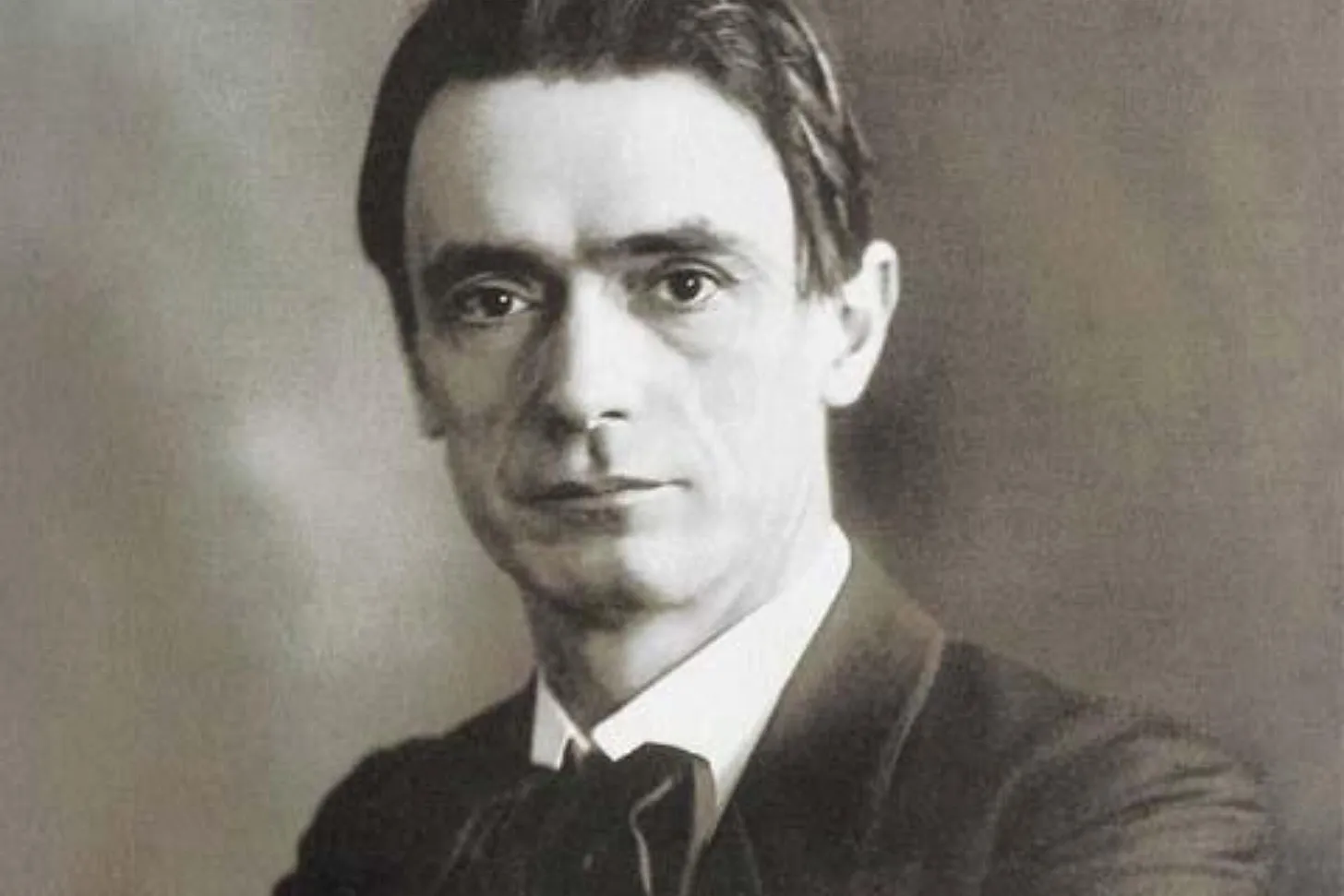
    Intriguingly, MacKinnell’s timeline of epochs closely matches that of a very different figure: the influential Austrian mystic Rudolf Steiner, founder of the Anthroposophical movement.

    The Age of Aries and ancient Egypt


    Given their anchoring to the stars, the astrological ages speak primarily to changes in humanity’s conception of the divine. What if certain civilisations serve as the principle vehicle for the spiritual impulses carried by each age?

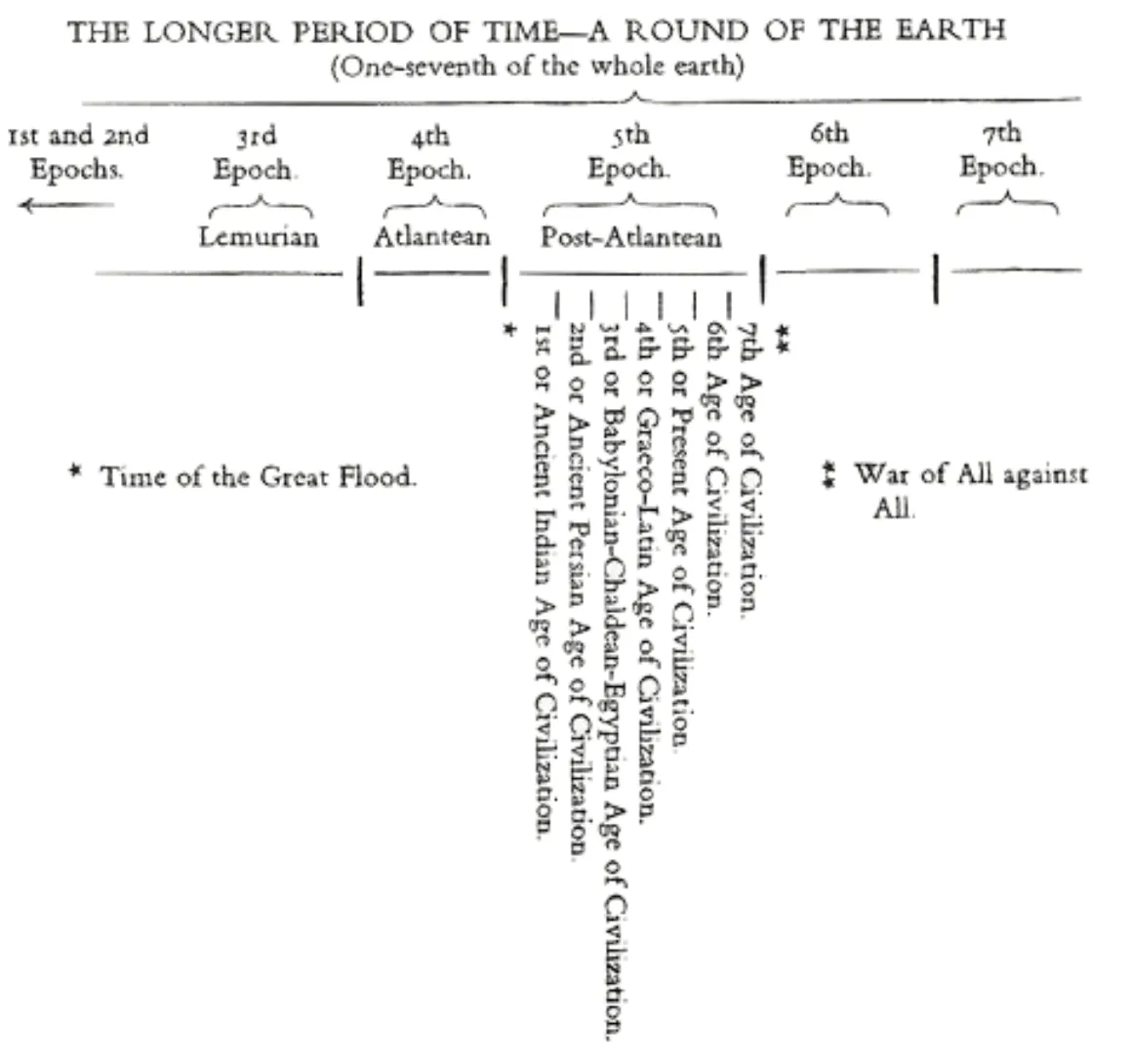
    Steiner divided the history of humanity into seven long epochs marking successive phases in the development of consciousness. The fourth of them was what he called the “Atlantean” epoch, followed by the current epoch, which he called “post-Atlantean”. In turn, he divided this epoch into seven shorter “cultural epochs”, sometimes called “post-Atlantean epochs”, in which a particular culture served as primary carrier of the impulse of the age:


    Steiner’s timeline of the entire Post-Atlantean Epoch was as follows:

    Ancient Indian culture (7227 - 5067 BC)

    Ancient Persian culture (5067 - 2907 BC)

    Egyptian-Chaldean culture (2907 - 747 BC)

    Greco-Latin culture (747 BC - 1413 AD).

    Anglo-German culture (1413 - 3573 AD, our present epoch)

    Slavic culture (3573 - 5733 AD)

    American culture (5733 - 7893 AD)

    To be clear, I don’t think Steiner’s claim is that these cultures are somehow better than their contemporaries, merely that they serve as the carrier of an important impulse at that time, which inevitably diffuses out to other world cultures. As with the ideas of Sri Yukteswar, Bibhu Dev Misra and Terry MacKinnell, I consider Steiner’s esoteric timeline to be another hypothesis worth holding in mind, nothing more or less.

    Needless to say, some readers will naturally balk at this rendering of history. In these egalitarian-leaning times, when many people like to think of all cultures—and the lives of those partaking of them—as equally important, such ideas raise eyebrows. To be clear, I don’t consider Steiner a source to read uncritically. He, like anyone else, could be wrong, and almost certainly was on many questions. And I wouldn’t personally go into bat for the idea that “Anglo-German culture”, and the United States, which is in important ways downstream of it, has been the primary vehicle for the spiritual development of our age since the 15th century, and will be until 3573. But I can’t be certain that’s wrong, either. For better or worse, Anglo-German culture has undoubtedly been unusually influential on the world since the 15th century, and could well remain so. I think we assume reality is politically correct at our peril.

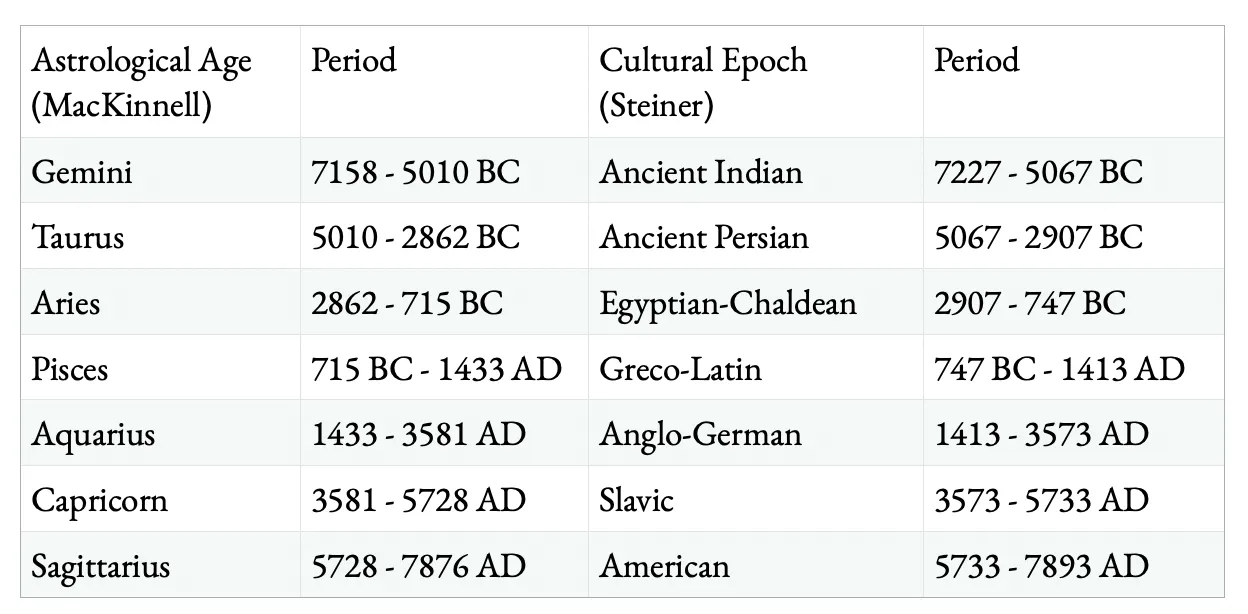
    Where I think this gets truly interesting is when we see how close Steiner’s timeline is to MacKinnell’s, as shown in the table below:


    MacKinnell is aware of these correspondences, making note of them in his book The Dawning. In a recent interview for my YouTube channel, MacKinnell told me that his Age of Aries, from 2862 BC to 715 BC, lines up rather well with the span of the Egyptian civilisation, often dated from roughly 3000 BC to 1000 BC. Steiner’s timeline says the same thing, associating that period with “Egyptian-Chaldean” culture.

    Interestingly, Steiner also associated his cultural epochs with the astrological ages, though his timeline is one entire sign out from MacKinnell’s. Thus, MacKinnell’s Age of Pisces is Steiner’s Age of Aries, and MacKinnell’s Aquarian Age is Steiner’s Age of Pisces, and so on. There’s a good explanation for why this actually makes sense, which we’ll get to a little later.

    One of MacKinnell’s most interesting innovations in thinking about the astrological ages is his division of them into shorter periods using traditional divisions of the zodiac signs, including the dodecatemoria (12th parts). This led him to develop the notion that each astrological age can be divided into 12 “sub-ages”, each allocated to one of the signs and lasting around 178 years. He even divides these ages further, into 15-year “micro ages”. Indeed, it’s using these divisions that MacKinnell was able to arrive at his very precise dating of the astrological ages.

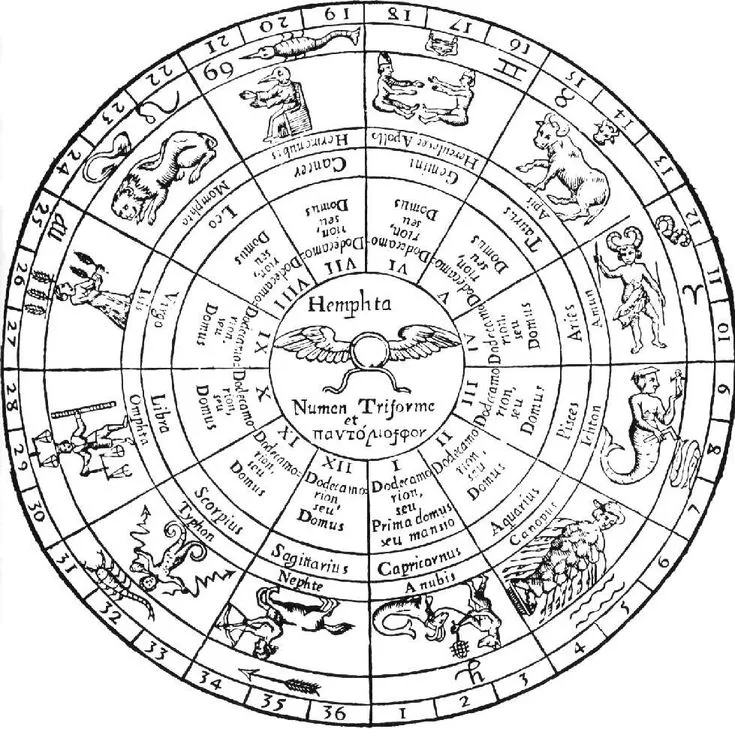
    He also makes great use of the 36 decans, the division of each of the zodiac signs into three 10° sections. The decans were an innovation of the ancient Egyptians, who used them for time keeping. For example, their year was divided into 36 ten-day weeks, each associated with a decan, according to the star making its heliacal rise at the time. Each of the decans was associated with a different god-form, whose influence rose as his or her decan was activated. Later, in the Hellenistic phase of Egyptian history, the decans were decoupled from the stars and tethered to the 12-sign zodiac. Thus, each of the signs can be divided into three decans, turning each into a three-act story.


    MacKinnell emphasises that, as with the signs, the astrological ages can and should be divided into three shorter periods lasting one-third of 2,150 years each, each assigned to the three signs of the same element. He calls these “Age-Decans”. For example, we’re currently living through the Libra Age-Decan of the Aquarian Age, one reason for the relative comfort of modern times and the rise of women. In 2149, the Gemini Age-Decan of the Age of Aquarius will begin, and then the Aquarian Age-Decan in 2865.

    If we divide MacKinnell’s Age of Aries into three, we get the Sagittarius Age-Decan (2862 - 2117 BC), the Leo Age-Decan (2117 - 1431 BC) and the Aries Age-Decan (1431 - 715 BC). Interestingly, they coincide rather well with the three kingdoms of ancient Egypt. The Old Kingdom (2700 - 2200 BC) coincides with the Sagittarius Age-Decan; the Middle Kingdom (2040 - 1782 BC) coincides with the Leo Age-Decan; and the New Kingdom (1570 - 1069 BC) coincides with the Aries Age-Decan. Ancient Egypt was exquisitely well connected to spiritual and magical undercurrents. It makes sense that such a civilisation would change form as the prevailing celestial influences shifted.

    When we consider the Age of Pisces, which MacKinnell dates from 715 BC to 1433 AD, we see something similar. His Piscean Age coincides remarkably well with the lifespan of the Roman civilisation.

    The Roman empire


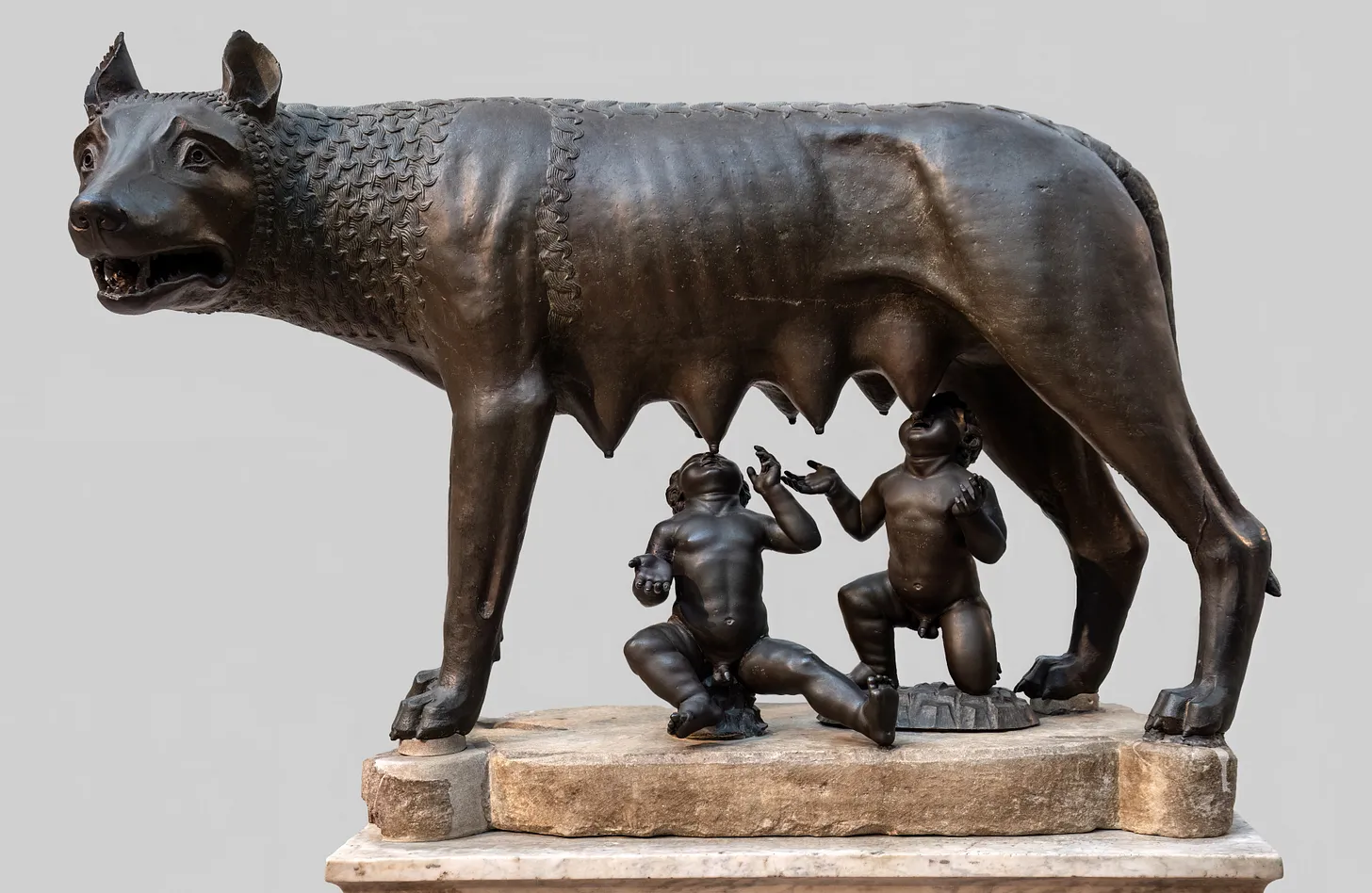
    Rome was traditionally said to have been founded in 753 BC by Romulus, the son of the war god Mars and the Vestal virgin Rhea Silvia. This would have come at the very end of the Age of Aries, a time when, for MacKinnell, the influence of that sign, which is ruled by Mars, had reached its maximum.

    In 330 AD, almost exactly half way through the Age of Pisces, the Emperor Constantine established Constantinople as his new capital of the Roman Empire. The Roman Empire became divided into Western and Eastern halves. Consider here the symbolism of Pisces: two fishes, linked by a cord.

    It’s notoriously difficult to settle on a single date for the fall of the Western Roman Empire, but the years 410, when Rome was sacked by the Visigoths, and 476, when the last Roman Emperor was deposed by the barbarian king Odoacer, are often cited. Either way, this places the fall at roughly half way through the Age of Pisces.

    The Eastern Roman Empire remained powerful for more than a millennium, eventually becoming known as the Byzantine Empire. It met its end with the fall of Constantinople on May the 25th, 1453, when the city was conquered by the forces of the Ottoman Sultan Mehmed II. As we’ll see later in The Hermetic Age, this geopolitical development would have massive spiritual consequences, and led, in a roundabout way, to the emergence of the modern world.

    Thus, the full span of the Roman Empire arguably takes us from 753 BC to 1453 AD, a period of 2,100 years, extremely close to the span of an astrological age. I consider this to be another piece of evidence that suggests MacKinnell’s astrological ages timeline is roughly correct. What’s more, Steiner linked this very period with “Greco-Latin” culture.

    The Abrahamic religions and the Age of Pisces
    MacKinnell’s timeline also tells an interesting spiritual story, for Rome had a critical role to play in the history of the Abrahamic faiths, especially that of Christianity. Christ’s disciples were fishermen, while Christ himself called himself a “fisher of men”. Early Christians identified themselves with the symbol of the fish. Still, the image of Pisces is two fishes joined by a thread. The Age of Pisces saw the emergence of what are today, by some distance, the two biggest religions in the world: Christianity and Islam, neither of which existed when the Age of Pisces began.

    Of course, Christianity and Islam are, along with Judaism, members of a triumvirate of Abrahamic religions. And when we divide the Age of Pisces into three periods allocated to each of the sign’s three decans, we see more confirmation of the power of MacKinnell’s timeline. Judaism was present in nascent form at the beginning of the Age of Pisces in 715 BC, the time of the Cancer Age-Decan. Christianity was born soon after the second decanic period of the Age of Pisces began, the Scorpio Age-Decan, around 0 AD. And the third, Islam, emerged a little before the beginning of the third decanic period, the Pisces Age-Decan, around 700 AD.

    Thus, as with the Age of Aries and Egypt, MacKinnell’s Piscean Age gives us a three-act story of the birth of the world’s three great monotheistic faiths. Rather than seeing emergent Christianity as marking the beginning of the Piscean Age, as many astrologers do, MacKinnell’s timeline acknowledges its status as a child of Judaism, and marks Islam as downstream of the first two Abrahamic faiths.

    But why should the Age of Pisces give birth to faiths such as these? Well, it seems to me that there’s something intrinsic to the sign of Pisces that relates to the Abrahamic religions. All of them are monotheistic, seeing God as alone and transcendent. None of them allow for reincarnation, at least in their exoteric forms.

    It’s Pisces’s status as the last of the twelve signs of the zodiac that is, perhaps, most telling here. The first sign, Aries, given to Mars, begins with the primal act of severance from our mother and entry into the world. Oceanic Pisces, on the other hand, is the sign of the return to the spiritual world. Pisces has one foot in the earthly realm and one in the next. It lives in expectation of the end of this life. Thus, it’s the sign of the mystic and his wayward cousin, the drunk, both of whom seek that return through the dissolution of the self. And it’s the sign of martyrs, those who sacrifice their lives for their faith. Both Christianity and Islam are religions that explicitly prize martyrdom and self-sacrifice.

    The reader might wonder: if this really is the Age of Aquarius and the Age of Pisces is long gone, then why do those same faiths remain so influential today? MacKinnell has an interesting answer. He believes that at the start of an astrological age, the spiritual influence of the governing sign is at its lowest. Over the course of the age, its influence streams into the world, building and building until it reaches a maximum at the end of the age.

    What’s more, a sign’s influence doesn’t abruptly end at the shift to the next age. Instead, it starts the next age with tremendous power and influence, which flows into the new age and gradually fades as the next sign takes over. MacKinnell calls this an “overflow”. It’s only around halfway through an age that the governing sign begins to dominate the previous one.

    With this in mind, MacKinnell gives each astrological age a double-barreled name. We live today in the Pisces-Aquarius Age, which captures the idea that Pisces is still the senior partner, and the influence of the Aquarian impulse is actually less pronounced, but growing. Many people, including Friedrich Nietzsche, have described modern left-liberalism as being fundamentally Christian in its assumptions—think of the concern for poor and outcastes of society—albeit generally stripped of the “God” part. This idea explains why.

    The Pisces overflow also explains why Steiner’s timeline of the astrological ages is one sign out from MacKinnell’s. Steiner names each age for the sign that’s most influential at its beginning. Thus, MacKinnell’s Age of Pisces-Aquarius is Steiner’s Age of Pisces, the age we continue to live in today. Perhaps, as a clairvoyant, Steiner named his ages for the influence he perceived to be strongest when each age began.

    MacKinnell believes Aquarius will only become the dominant influence halfway through the Age of Aquarius, in the year 2507 AD. Aquarian influence will be at its strongest at the dawn of the Age of Capricorn, in 3581 AD. Over the centuries, we might expect the Abrahamic faiths to gradually lose influence, eventually being superseded by new spiritual forces of an Aquarian nature.

    I hope you will agree that MacKinnell’s timeline of the ages compelling. What’s interesting, too, is the coincidence between his Age of Pisces, from 715 BC to 1433 AD, and Sri Yukteswar’s Kali Yuga, from 700 BC to 1700 AD. How can we reconcile these ideas?

    Well, the Kali Yuga is said to be the age of ignorance, a time when humanity is furthest from the divine and can perceive nothing but gross matter. What we saw, as the Kali Yuga took hold, was the systematic destruction of ancient wisdom. Often this was carried out by Christians who were bearing the impulse of the Piscean Age—and so, driven to expunge knowledge redolent of the fading Age of Aries. And we saw something else: the growing silence of the gods.

    We’ll consider this phenomenon in the next installment of The Hermetic Age."
    Each breath a gift...
    _____________

  14. The Following 5 Users Say Thank You to onawah For This Post:

    Bill Ryan (10th January 2026), Chip (1st April 2026), Ewan (1st April 2026), petra (11th January 2026), The KMan (Today)

  15. Link to Post #8
    United States Avalon Member onawah's Avatar
    Join Date
    28th March 2010
    Language
    English
    Posts
    25,787
    Thanks
    54,266
    Thanked 139,301 times in 24,215 posts

    Default Re: Are we in the Kali Yuga?

    Chat with astrologer Dan Waites
    Quote Posted by onawah (here)
    I've just chatted with the astrologer Dan Waites of World Astrology Report https://www.worldastrologyreport.com on his substack page.
    ..Whose article I featured in the post https://projectavalon.net/forum4/sho...=1#post1698129
    ... which correlates how astrology, spirituality, historical records, psychic predictions might converge to give us the clearest picture possible of where we are now and will be in the near future.
    I mentioned Ben Davidson's work to Dan in hopes he will write more about how current science figures into that list.
    Dan is familiar with Ben's work and I'm hoping that work will figure into his upcoming articles.
    I also added an update to the post here about the accomplishments of Sir Isaac Newton: https://projectavalon.net/forum4/sho...=1#post1687164
    Connecting more of the dots re my theory that Ben was Sir Isaac Newton in a past life.
    Each breath a gift...
    _____________

  16. The Following 5 Users Say Thank You to onawah For This Post:

    Bill Ryan (11th January 2026), Chip (1st April 2026), Ewan (1st April 2026), petra (11th January 2026), The KMan (Today)

  17. Link to Post #9
    France Avalon Member
    Join Date
    10th March 2026
    Language
    English
    Posts
    7
    Thanks
    0
    Thanked 34 times in 6 posts

    Default Re: Are we in the Kali Yuga?

    Putting it rather succinctly, The Great Pyramid was built just before the YDE (cataclysm/great flood) around 10,000BC, which was in the middle of the Satya Yuga (Virgo/Leo). It was built to provide us with proof that the cataclysm occurred (incredible as it is) and as a warning to us to prepare for the next one - a dozen millennia hence (ETA 2049) - in the middle of the Kali Yuga (Pisces/Aquarius).

  18. The Following 5 Users Say Thank You to Zod For This Post:

    Chip (1st April 2026), Ewan (1st April 2026), onawah (1st April 2026), Sue (Ayt) (1st April 2026), The KMan (Today)

  19. Link to Post #10
    United States Avalon Member Chip's Avatar
    Join Date
    12th August 2012
    Location
    Owasso, Ok
    Language
    English
    Age
    57
    Posts
    595
    Thanks
    13,167
    Thanked 4,624 times in 575 posts

    Default Re: Are we in the Kali Yuga?

    Quote Posted by Zod (here)
    Putting it rather succinctly, The Great Pyramid was built just before the YDE (cataclysm/great flood) around 10,000BC, which was in the middle of the Satya Yuga (Virgo/Leo). It was built to provide us with proof that the cataclysm occurred (incredible as it is) and as a warning to us to prepare for the next one - a dozen millennia hence (ETA 2049) - in the middle of the Kali Yuga (Pisces/Aquarius).
    Thank you Zod, I’m open to the broader idea here: that the Pyramid may be far older than we’re told, survived a prior reset, and may even function as a message across cycles. That’s at least a serious line of thought. But why 2049 specifically? Is that from yuga/precession timing, or is it more in line with Ben Davidson’s recurring cataclysm / solar event framework? The cyclical part I can track. The precise ETA is the part I’d want unpacked.

  20. The Following 4 Users Say Thank You to Chip For This Post:

    Ewan (1st April 2026), onawah (1st April 2026), Sue (Ayt) (1st April 2026), The KMan (Today)

  21. Link to Post #11
    France Avalon Member
    Join Date
    10th March 2026
    Language
    English
    Posts
    7
    Thanks
    0
    Thanked 34 times in 6 posts

    Default Re: Are we in the Kali Yuga?

    Quote Posted by Chip (here)
    But why 2049 specifically? Is that from yuga/precession timing, or is it more in line with Ben Davidson’s recurring cataclysm / solar event framework? The cyclical part I can track. The precise ETA is the part I’d want unpacked.
    That which causes the slow rotation of the celestial sphere (once per 24k) causes equinoctial precession (at a varying rate, a degree every 60-72 years). It also causes The Earth to undergo a momentum conserving axial inversion twice a great year - with cataclysmic consequences.

    The YDE (10,000BC) was the last one (of an uncountable number). Thus the next one is due.

    Our two periods of 12 hours per 24 commemorate the two terrestrial lifecycles of 12k per 24k. Thus 24×60 minutes to 24k, i.e. 24x60x60 seconds. And so 3,600 seconds=1,000 years, 360s=100y, 180s=50y, 90s=25y.

    Note the 'E' of ETA. It is not precise. In the last 70 years, the estimates have gone from wild fluctuations to fairly stable convergence.

    NB Ben Davidson is a ltd hangout.

  22. The Following 5 Users Say Thank You to Zod For This Post:

    Chip (1st April 2026), Ewan (1st April 2026), onawah (Yesterday), Sue (Ayt) (1st April 2026), The KMan (Today)

  23. Link to Post #12
    United States Avalon Member Chip's Avatar
    Join Date
    12th August 2012
    Location
    Owasso, Ok
    Language
    English
    Age
    57
    Posts
    595
    Thanks
    13,167
    Thanked 4,624 times in 575 posts

    Default Re: Are we in the Kali Yuga?

    Quote Posted by Zod (here)
    Quote Posted by Chip (here)
    But why 2049 specifically? Is that from yuga/precession timing, or is it more in line with Ben Davidson’s recurring cataclysm / solar event framework? The cyclical part I can track. The precise ETA is the part I’d want unpacked.
    That which causes the slow rotation of the celestial sphere (once per 24k) causes equinoctial precession (at a varying rate, a degree every 60-72 years). It also causes The Earth to undergo a momentum conserving axial inversion twice a great year - with cataclysmic consequences.

    The YDE (10,000BC) was the last one (of an uncountable number). Thus the next one is due.

    Our two periods of 12 hours per 24 commemorate the two terrestrial lifecycles of 12k per 24k. Thus 24×60 minutes to 24k, i.e. 24x60x60 seconds. And so 3,600 seconds=1,000 years, 360s=100y, 180s=50y, 90s=25y.

    Note the 'E' of ETA. It is not precise. In the last 70 years, the estimates have gone from wild fluctuations to fairly stable convergence.

    NB Ben Davidson is a ltd hangout.
    Thanks Zod

    That helps. What I respect is that you are not throwing out 2049 like a carnival prophet with a stopwatch, but as an ETA arising from a larger cyclical architecture. In that sense the date is secondary to the pattern convergence. I’m still kicking the tires on some of the premises, but I can at least see the skeleton of the system now.
    👍

  24. The Following 5 Users Say Thank You to Chip For This Post:

    Ewan (4th April 2026), onawah (Yesterday), Sue (Ayt) (1st April 2026), The KMan (Today), wondering (Today)

  25. Link to Post #13
    France Avalon Member
    Join Date
    10th March 2026
    Language
    English
    Posts
    7
    Thanks
    0
    Thanked 34 times in 6 posts

    Default Re: Are we in the Kali Yuga?

    It is a transition over the next couple of decades from a negative feedback loop (gyroscopic forces work to maintain axial stability) into a positive feedback loop (slightest axial deflection results in sufficient torque to overcome stabilising forces, further increasing torque, accelerating into axial inversion, and 12k of stability). Hence, such uncertainty is indicated in Matthew 24:36 . A swarm of satellites measuring the external magnetic field does provide a tad more info, of course: https://www.asc-csa.gc.ca/eng/satellites/swarm.asp and from this the ETAs can be improved.

    Even so, I suspect h sapiens has to be prepared a few years in advance - just in case.

  26. The Following 3 Users Say Thank You to Zod For This Post:

    Ewan (4th April 2026), onawah (Yesterday), The KMan (Today)

  27. Link to Post #14
    United States Avalon Member onawah's Avatar
    Join Date
    28th March 2010
    Language
    English
    Posts
    25,787
    Thanks
    54,266
    Thanked 139,301 times in 24,215 posts

    Default Re: Are we in the Kali Yuga?

    The Time of Transition: The End of an Age and the Birth of a New Humanity
    By Bernhard Guenther
    https://veilofreality.com/

    ( I don't agree with the theory expressed following that the next, upcoming cyclical cataclysm and micronova as described in the thread Geomagnetic Reversals and Ice Ages:
    https://projectavalon.net/forum4/sho...s-and-Ice-Ages
    ...can be avoided if humanity makes a sudden great leap in evolution.
    That would have to take place within the next 15-20 years, and there is no indication that such a leap might take place in such a short amount of time.
    In any case, the scientific data that has been collected, collated and corroborated now is conclusive, demonstrating that these "times of transition" are regular, cyclical and affect the entire galaxy, not just this small corner of space... data that was not available until recently.
    Proof of the incoming "Galactic Superwave" is visible now to some extent even in our own solar system, but even moreso in neighboring systems where the colossal wave of energy from the Great Central Sun on its way here has already manifested in full.
    Technology has not advanced nearly enough thus far to create anything that could protect the Earth from what is incoming, nor is it at all likely that that could manifest within the next 15-20 years, which is when the deadline/finale is estimated to be for Earth.
    However, I think much else of what is written following is relevant from the esoteric POV.
    In any case, to attend what spiritual growth can still take place within the estimated timeframe would certainly be wise!
    All text in bold, italic letters is my emphasis.)

    An Esoteric Exploration of Humanity’s Evolutionary Threshold
    By Bernhard Guenther, April 10, 2026

    This is a long-form piece that weaves together several esoteric traditions and frameworks, including the Esoteric Christian teaching of the Time of Transition, the Yuga Cycle, Ekpyrosis, and Sri Aurobindo’s revelation of the descent of the supramental consciousness.

    Through these lenses, I want to explore the evolutionary threshold humanity is standing at and what is being asked of us at this critical moment.

    It is meant to be read straight through rather than skimmed, as each section builds on the one before it.

    Contents

    The Collective Dark Night of the Soul
    What Is the Time of Transition?
    The Great Year and the Yuga Cycle
    The Ekpyrosis Phase of the Transition
    Climate Change, Geoengineering, and Cosmic Cycles
    A Dark Night of Civilization or the Fire of Inner Purification
    The Alchemy of Inner and Outer Transformation
    The Descent of the Supramental Consciousness
    The Split Within Humanity
    Spiritual Warfare & The Battle for the Human Being
    The Birth Canal of a New Humanity
    The Collective Dark Night of the Soul
    We are in the midst of the death of an old era and the birth of a new one.

    We can see the writing on the wall everywhere: increasing polarization, wars, economic instability, and the old world disintegrating before our eyes.

    But on a deeper level, what we are witnessing is not only political, economic, or social breakdown. It is also a crisis of meaning and, at its root, a spiritual crisis.

    The dominant worldview of our time is pure materialism, stripped of spiritual depth. Our connection to the sacred has been severed.

    The result is emptiness and despair in many people. Most are dissociated, numbed out, or in denial about what is happening. These are defense mechanisms. Many are also traumatized without realizing it.

    As a result, depression, mental illness, suicide, and addiction have risen sharply in much of the modern world as more and more people feel disconnected from God, from purpose, and from any higher meaning in life.

    In many ways, it is as if humanity is going through a collective dark night of the soul, a deep disconnection from the Divine and from the deeper meaning of existence.

    Instead of confronting this crisis within themselves, many people regress into old and empty religious forms and dogma, blame politicians and leaders, or project everything onto some outer enemy or cabal they believe to be responsible for it all.

    But these reactions only avoid the deeper issue. They keep attention fixed on outer effects while ignoring the inner roots of the crisis. Mistaking symptoms for causes, hardly anyone looks sincerely within.

    Yet none of this is happening by accident or because of bad politics. It carries a deeper meaning and purpose.

    What we are facing is the exposure of a humanity trapped in identification with the ego-personality and the material world, cut off from the Divine.

    But this time is also a threshold to cross. In other words, the chaos and drama we see around us reveal something deeper. It is not about trying to save the world. The old world is dying because it can no longer withstand the evolutionary pressure now acting upon humanity.

    Something deeper is seeking to be born through this disintegration and seeming chaos.

    What happens next is of critical importance because it will become the seed of the next cycle of life on Earth. Therefore, we must understand what being in a transitory period really means and how it affects us individually and collectively.y.

    What Is the Time of Transition?
    People have often asked me what I mean by this “Time of Transition.” I’ve seen more and more people use this phrase to describe these evolutionary times, and everyone has their own ideas about it.

    I first learned about the “Time of Transition” in 2006 when I studied esoteric Christianity and the Fourth Way teachings of Boris Mouravieff in his Gnosis trilogy. Long-time readers of my work know that I’ve quoted from these books extensively in the articles and essays I’ve written over the years.

    Mouravieff writes about the “Time of Transition” in Gnosis, describing the shift of the ages.

    According to the Esoteric Christian Tradition, not to be confused with mainstream dogmatic Christianity, human evolution, after a long prehistoric period, continues in a succession of three cycles: the Cycle of the Father, the Cycle of the Son, which is now reaching its end; and finally the Cycle of the Holy Spirit, which we are now approaching.

    The Time of Transition we are currently in is the transitory period between the Cycle of the Son and the Cycle of the Holy Spirit. It is a critical stage in humanity’s esoteric and spiritual evolution. According to Mouravieff, a successful transition is not guaranteed.

    It is an opportunity, but not a guarantee. It depends on a certain fraction of humanity, those with soul potential, consciously engaging in the Great Work to become individuated and spiritualized.

    Through this inner work and purification, they anchor the Divine Force, the Holy Spirit, and help transmute the world, getting it out of the clutches of the hostile anti-Divine forces.

    A failure of this evolutionary process would result in cataclysmic destruction similar to what befell ancient civilizations in previous cycles, such as Atlantis, and is symbolized in the biblical flood.

    The destruction would result from humanity not learning its lessons and the necessity of repeating the cycle, in other words, the Divine “pressing the reset button.”

    Mouravieff describes this transition as a period of immense danger, responsibility, but also possibility. His warning is worth quoting at length because it captures both the stakes of this moment and the deeper meaning of the crisis we are living through.

    In the following parts of this article, I will return to key aspects of his warning and connect them to other traditions, teachers, and cosmological frameworks, such as the Yuga Cycle, Sri Aurobindo’s teaching on the descent of the supramental consciousness, the idea that the human being is itself a transitional being, the necessity of a spiritualized humanity, and the deeper meaning of the purification process.

    “We have entered a period of transition whose purpose is to give us entry to the Cycle of the Holy Spirit. During this period, Faith will be progressively replaced by Knowledge, and Hope will end in Accomplishment….

    The transition from one state to another is not affected without conscious efforts, hard work, and a struggle. For the one who today decides to engage himself on the path leading to the Way should in principle become another [spiritualized] man…

    In case of failure, we cannot hope that the world will return to the status quo ante. The Era of the Holy Spirit has two faces, one of Paradise regained and the other a Deluge of Fire.

    We must not forget that God is also a Devouring Fire; in case of failure, the situation will rapidly lead to an eschatological cataclysm.

    This requires courage and humility. With the approach of the era of the Holy Spirit, everything must be gradually brought to the light of day, not only the secrets of the laboratory but the deepest meanings of esotericism. The same must happen with illusions, errors, and lies, which must also be revealed so that they can later be rectified.

    This process is already happening. It is this which to a large extent explains the political and social difficulties which characterize our time of transition.

    Yet only a few people know how to interpret the signs of our times.

    The world is suffering from a lack of harmony which gets deeper on every plane, and this is a serious danger to the moral and spiritual recovery of humanity.

    It also involves a serious risk of failure in the last stage of this Time of Transitionthat we are now entering. If this risk is not overcome, the Deluge of Fire awaits us.

    We will have to make an immense effort to ward off this fate, and we have very little time in which to do it.

    Man has only himself to blame for the greatness of the effort needed: this is a result of his obstinate refusal to heed the warnings that have been addressed to him time and again by the Divine Voice, just as he continues today to blind himself to the fact that the Deluge of Fire is being made ready; that it is now technically feasible and, it must be said, morally possible.

    This final cataclysm, towards which humanity is advancing so blindly, can only be avoided by the conscious super-efforts of the spiritual elite, especially by young and enthusiastic elements of the present generation and those which follow it, whose esoteric predispositions will make them fit to assume key positions in all races and in all nations.

    Neither the most marvelous technical progress nor a greater refinement of the intellectual faculties will be enough to enable us to remedy this state of affairs, which is still deteriorating.

    The remainder of the Time of Transition offers the last chance for humanity to reestablish the threatened equilibrium and so avoid a general cataclysm.

    Before the Earth can enter the Era of the Holy Spirit, the Time of Transition must reach a successful outcome, and this outcome will, in turn, depend on a positive answer to a whole group of problems which will be solved by the appearance of the New [spiritualized] Man.”

    – Boris Mouravieff, Gnosis

    Mouravieff’s warning is sobering, but it also points to a much larger cyclical and evolutionary process that has been described in different ways across esoteric traditions from the West and the East.

    This Time of Transition is not a short period confined to our current lifetime. It will last hundreds, possibly even thousands, of years.

    There is no need, then, to fixate on specific dates or predictions.

    What matters is who you are, your level of Being, consciousness, and soul potential, and the sincere self-work and soul lessons you engage in to realize the truth of your Being and embody the Divine Force through soul individuation.

    What you “see” beyond appearances through higher Knowledge, or Gnosis, and what you “do” in alignment with Divine Will in the Now helps shape the future timeline, both individually, in this lifetime and future incarnations, and collectively.

    Time is not linear but cyclical.

    It has all happened many times before, over and over again. But perhaps we can avoid the fate of Atlantis and other ancient civilizations of the past, when the Divine pressed the reset button through cataclysmic events brought on by humanity’s ignorance and refusal to heed the voice of the Divine.

    This is what I have called “The Great Reset,” not in the sense of a human cabal enslaving humanity, which many people get distracted by, but as a Divine or cosmic reset, versus “The Great Awakening,” which is not merely an informational awareness of conspiracies and psy-ops, but a deeper awakening to one’s true nature.

    "The Great Year and the Yuga Cycle
    There is an ancient map of time and consciousness that offers even more context and helps confirm Mouravieff’s insights into the Time of Transition we are currently in.

    This map helps us understand why the world is the way it is and what is now being asked of us as humanity moves into the next cycle.

    The ancients called it the Great Year, a 25,800-year cycle aligned with the precession of the equinoxes, consisting of a roughly 13,000-year descent and a 13,000-year ascent. It is also known as the Yuga Cycle, and we are now at the end of its darkest age: the Kali Yuga.


    From “Yuga Shift” by Bibhu Dev Misra

    Many ancient cultures saw this cycle as the great cosmic clock.

    This knowledge gives us a bigger-picture view of what is happening, because we are entering an intensified transitional phase that occurs between Yugas.

    This is a period marked by societal upheaval, increasing polarization, war, and cataclysmic natural events, just as many ancient civilizations before us have experienced. These cosmic forces are part of a much larger evolutionary process.

    Common Misconceptions About the Yuga Cycle
    There are many popular misconceptions about the Yuga Cycle, including the idea that we are already in the Dwapara Yuga, or that the Kali Yuga lasts 432,000 years.

    We addressed some of these distortions in our podcast, “Is the Kali Yuga Ending in 2025? The Great Turning and What It Asks of Us,” based on the book Yuga Shift: The End of the Kali Yuga and the Impending Planetary Transformation by Bibhu Dev Misra.

    Bibhu was also recently a guest on our podcast, where we explored these themes in more depth in the episode “The Yuga Shift and the Planetary Transition Ahead w/ Bibhu Dev Misra.”

    In my opinion, Misra cuts through much of the noise and presents a clear and coherent case for why the Kali Yuga ended around 2025 and why we are now entering an intense transitional phase.

    By removing chronological errors, symbolic exaggerations, and cultural distortions that have built up over thousands of years, he reconstructs the original Yuga doctrine in a way that is both cross-cultural and grounded in actual data, while remaining consistent with other ancient cosmologies and world-cycle teachings.

    The Descent From the Golden Age
    The Yuga Cycle moves downward from the Golden Age through the Treta and Dwapara Yuga into the Kali Yuga over 13,000 years.

    In this process of descent, consciousness gradually degrades, and human beings lose their natural unity with the Divine, becoming more ego-centered and materially oriented.

    As consciousness descends, lifespans shorten, intelligence and physical strength weaken, and illness, disease, and suffering arise more strongly. It is a long decline in human virtue, wisdom, intelligence, and higher capacities through the ages.

    It is interesting to note that spiritual rituals, scriptures, and formal spiritual practices only emerged after the end of the Golden Age, because human beings had lost their natural connection to the Divine.

    As inner guidance and divine alignment weakened, people began seeking external guidance, and with that came manipulation, distortion, and corruption born of ignorance, spiritual blindness, and the temptation of power.

    This arc of decline is what many myths describe symbolically as the fall from unity into separation, as reflected in the story of the Fall from Eden. By the time we enter the later ages, intuitive spiritual insight fades, materialism grows, and power is increasingly pursued for personal gain based on the illusion of separation.

    The cycle reaches its lowest point in the Iron Age, the Kali Yuga. This is the age of darkness and moral decline.

    As consciousness descends further, there is an increasing forgetfulness of our true nature and a loss, corruption, or distortion of ancient knowledge. This is also why it has been so difficult to reconstruct the original Yuga Cycle, as Misra points out.

    As ego-consciousness separated further from the Divine, it opened itself more and more to darker influences.

    The Rise of Evil and Hostile Forces
    This descent opened the door for the rise of evil and the influence of dark forces operating from subtler realms, feeding on suffering, polarization, fear, desire, greed, lust, hatred, violence, and the fragmentation of the human psyche.

    Humanity began engaging with dark spirits and entities in manipulative ways, even invoking hostile beings for power.

    By the time we reach the Kali Yuga, the spiritual senses are almost fully veiled, and hostile occult spiritual forces have the greatest access to humanity through the lower nature.

    Understanding the characteristics of the Kali Yuga and this descent of consciousness helps explain why evil has such a grip on humanity and why, as Sri Aurobindo pointed out, the forces of darkness often appear stronger and better organized than the forces of Light.

    This is also why sincere spiritual work and the bringing down of the Light is not merely a metaphorical battle, but an actual spiritual war acting through us, as I have written about before.

    It is much harder to engage in the inner psycho-spiritual work because we are the farthest removed from Essence, and the resistance of our ego structure and the hostile forces is at its peak.

    That’s why this work requires the sincerity, commitment, and courage of a spiritual warrior.

    This is what Sri Aurobindo called the Hour of God:

    “There are moments when the Spirit moves among men and the breath of the Lord is abroad upon the waters of our being; there are others when it retires and men are left to act in the strength or the weakness of their own egoism.

    The first are periods when even a little effort produces great results and changes destiny; the second are spaces of time when much labour goes to the making of a little result.

    It is true that the latter may prepare the former, may be the little smoke of sacrifice going up to heaven which calls down the rain of God’s bounty.

    Unhappy is the man or the nation which, when the divine moment arrives, is found sleeping or unprepared to use it, because the lamp has not been kept trimmed for the welcome and the ears are sealed to the call.

    But thrice woe to them who are strong and ready, yet waste the force or misuse the moment; for them is irreparable loss or a great destruction.”

    — Sri Aurobindo, The Hour of God

    The Double Kali Yuga
    As Misra clearly lays out, we have not been living through one Kali Yuga, but two back-to-back Kali Yugas: a descending phase followed immediately by an ascending phase, totaling roughly 5,700 years.

    The descending Kali Yuga marked the deepest fall into darkness, when consciousness hit its lowest point and humanity became almost fully cut off from higher spiritual realities.

    The ascending Kali Yuga marks a slow upward turn in which material progress increases and ancient knowledge begins to re-emerge. Science and technology advance, yet spiritual consciousness remains severely degraded.

    This is why the modern world displays such extreme technological advancement and unprecedented material comfort while so many people remain disconnected from the Divine and higher spiritual reality.

    The result is hyper-materialism, mental overstimulation, dissociation, disembodiment, ideological extremes, scientific and religious dogma, and a growing fixation on lower expressions of sex, money, and power. Success is reduced to material wealth and popularity.

    Material Progress Without Spiritual Maturity
    A vast gap has opened between material and spiritual development. This is one of the clearest signatures of the ascending Kali Yuga, and it should not be mistaken for a true rise in consciousness.

    Many people claim that humanity has evolved and is now at a higher level of consciousness, but they only look back a few thousand years, still within the Kali Yuga, rather than 13,000 years. They also mistake material progress for a rise in consciousness.

    Many ancient traditions described this back-to-back Kali Yuga as a “night within the night.”

    It also helps explain the splitting of humanity we are seeing now.

    One part of humanity is responding to the inner call, engaging in spiritual work, and seeking to align with Dharma in preparation for the next cycle.

    Another part is becoming further entrapped in the materialist religion of transhumanism and rebellion against Divine order.

    The signs of the Kali Yuga are all around us and can be seen clearly in the modern world:

    Spiritual disconnection and loss of inner guidance
    Moral inversion and normalization of pathologies
    Hyper-materialism and identification with the body
    Obsession with physical longevity, youthful appearance, and fear of death
    Hyper-sexualization and fixation on lower expressions of sex, money, and power
    Rising narcissism and superficiality
    Loss of attention span, declining intelligence, and mechanical thinking
    Loss of meaning, nihilism, atheism, and psychological fragmentation
    Corruption and distortion of spirituality and religion
    Polarization, conflict, and ideological splitting
    Rapid technological growth without wisdom or spiritual awareness
    Rising depression, mental illness, and suicide rates
    Dissociation and disembodiment
    Declining fertility and nervous system health
    Breakdown of authentic human relationships and community
    According to Misra, we are now at the end of the ascending Kali Yuga, around 2025. He explains in detail in his book why this marks the close of the cycle.

    We are not merely living through the end of an age, but standing at the threshold of a purificatory transition between world cycles. This is what the ancients referred to as the Ekpyrosis phase.

    The Ekpyrosis Phase of the Transition
    “I cannot promise that the Divine’s Will is to preserve the current civilization. The present civilization must change, but whether by destruction or a new construction on the basis of a greater truth is the issue.”

    — Sri Aurobindo

    Ekpyrosis is a Greek term meaning “burning up completely” or “purification through fire.” It describes the transitional phase between world ages, a period of roughly 1,200 years during which the old world breaks down and the conditions for the next evolutionary stage are seeded.

    This is not destruction for its own sake. Ekpyrosis signifies the burning away of the accumulated corruption of the Dark Age. It is the collapse of materialistic civilizations cut off from Spirit and the Divine, the exposure of moral and spiritual decay, and the beginning of the upward movement toward higher consciousness.

    It is also the decisive crossroads that intensifies the split within humanity, as vastly different levels of being determine how people respond to the evolutionary call.

    In Greek Stoic cosmology, Ekpyrosis was understood as the moment when the world is consumed in fire and then renewed.

    Misra connects this ancient teaching to actual cosmic cycles: periods of extreme solar activity, increased comet and asteroid danger, major earthquakes, pole shifts, volcanic upheaval, atmospheric and climatic disruption, and intensified worldwide conflict, religious wars, and socio-economic breakdown.

    The Deluge of Fire and the Time of Transition

    This is where the Yuga teachings tie directly to Mouravieff’s Time of Transition from the esoteric Christian perspective.

    Mouravieff warned that the era ahead has two faces: one of Paradise regained and the other a Deluge of Fire. What he called the Deluge of Fire corresponds directly to what Vedic and pre-Vedic traditions described as the fiery end-phase of the Kali Yuga, not a purification by water, but by fire.

    In this sense, Ekpyrosis is the cosmic backdrop of the Time of Transition.

    The Taurid Comet Stream and Cycles of Purification
    According to Misra’s research, the destructive phase at the end of the Kali Yuga aligns with real astronomical cycles, especially periods of intensified comet and meteor activity associated with the Taurid Stream, the debris field of a massive comet that fragmented in the distant past.

    Most of the time, Earth passes only through the outer edges of this stream, which appear as ordinary meteor showers. But every few thousand years, Earth appears to move through denser regions of this debris field, creating a window for more severe disruption.

    Misra points out that these destructive windows align with abrupt climate changes, civilizational collapse, and cataclysmic events in history. They also correspond in duration to the transitional phases between Yugas.

    In other words, the return cycles of the Taurid Stream may be one of the physical mechanisms through which these age-end purifications unfold.

    Ancient peoples did not describe these returning celestial forces in modern astronomical language. They experienced comets as divine powers, gods in the sky, forces that returned at intervals to cleanse or reset the world.


    There is also scientific evidence that points in this direction.

    The Younger Dryas event, beginning around 12,800 years ago and lasting roughly 1,200 years, is now associated by many researchers with meteor impacts, likely from cometary fragments.

    That period brought sudden ecological disruption, the loss of megafauna, major climate instability, and large-scale changes to the earth’s surface. Misra cites the work of comet researchers such as Clube, Napier, Asher, Steel, and Bailey, all of whom have argued for the periodic danger of the Taurid Stream and its recurring catastrophic potential.

    According to this view, we may now be entering another major Taurid crossing. Misra notes that the coming decades, especially the period from 2030 to 2040, with particular attention to 2032 and 2036, carry elevated risk as Earth aligns more closely with the denser Taurid stream.

    This does not mean a specific disaster is certain. The point is not to get lost in doom-and-gloom predictions or fear. The point is to understand the cosmic pattern, its deeper meaning, and ultimately what is being asked of us.

    What matters is that these myths, astronomical cycles, and esoteric teachings all point to the same larger truth: the transition between ages is not smooth like the change of seasons. It is purgative and far more disruptive.

    More importantly, this transition contains a deeper message and opportunity for real change. The good news is that we can actually mitigate potential cataclysms if we answer the call sincerely.

    Climate Change, Geoengineering, and Cosmic Cycles
    One of the biggest blind spots of the modern worldview is the belief that the natural disasters we see today, hurricanes, earthquakes, wildfires, and abnormal weather patterns, are caused only by human activity.

    Mainstream culture blames carbon emissions and pollution. Conspiracy culture blames geoengineering, chemtrails, directed energy weapons, and HAARP.

    While there may be partial truths in both views, they are short-sighted because they still place the human being at the center, as if humanity were powerful enough to fully shape and control nature and cosmic cycles. Ironically, the idea that humans control it all is itself a signature illusion of the Kali Yuga.

    Climate change is real, but not for the reasons most people assume.

    It goes far beyond man-made factors, whether framed through the carbon narrative or technological manipulation. It is part of a much deeper planetary purification process that intensifies during major cosmic transitions.

    On a deeper level, human consciousness also affects the Earth’s subtle and vibrational field.

    The instability we see in the outer world mirrors humanity’s inner chaos: our disconnection from Source, our shadow projections, repression, conditioning, and polarization. The outer climate reflects on some level the inner climate of a humanity profoundly out of alignment with its true nature during this dark phase of the cycle.

    The transitions between Yugas have always involved major shifts in solar activity, geomagnetic fluctuations, eath changes, and intensified encounters with cometary debris fields.

    These forces can trigger sudden climate swings, cooling or warming cycles, earthquakes, volcanic activity, pole shifts, and long-term environmental instability.

    This does not dismiss pollution, ecological destruction, or even the reality of geoengineering. But it does mean that far larger forces are at work, forces beyond human control, beyond human technology, and far more ancient and powerful than anything we can manipulate.

    Over a hundred years ago, Gurdjieff gave a stark description of what happens at the end of a civilizational cycle. His words describe our time the same way:

    “There are periods in the life of humanity, which generally coincide with the beginning of the fall of cultures and civilizations, when the masses irretrievably lose their reason and begin to destroy everything that has been created by centuries and millenniums of culture.

    Such periods of mass madness, often coinciding with geological cataclysms, climatic changes, and similar phenomena of a planetary character, release a very great quantity of the matter of knowledge.

    This, in its turn, necessitates the work of collecting this matter of knowledge which would otherwise be lost. Thus the work of collecting scattered matter of knowledge frequently coincides with the beginning of the destruction and fall of cultures and civilizations.”

    — G. I. Gurdjieff, In Search of the Miraculous by P. D. Ouspensky


    A Dark Night of Civilization or the Fire of Inner Purification
    This is why Mouravieff’s warning is so relevant. His Time of Transition is not merely a poetic metaphor for social change or something that can be reduced to superficial activism, conspiracy exposure, or external action.

    It describes an actual evolutionary threshold in which humanity is faced with a choice.

    If humanity refuses its spiritual task, if it continues to cling to ignorance and rebellion against Divine law, then purification comes more forcefully from outside.

    But if enough people respond to the call, engage in sincere inner work, and undergo the fire inwardly to purify themselves, then that same force becomes transformation rather than destruction.

    The fire will come either way. The question is whether it acts primarily as outer catastrophe or as inner purification.

    Like Mouravieff, The Mother (Mirra Alfassa), Sri Aurobindo’s spiritual collaborator, was clearly aware of the transition between ages and the potential cataclysms it carries.

    She also made clear that the course of events is not fixed, that we can mitigate potential catastrophes, and that even a relatively small number of people sincerely engaged in the Work can alter what unfolds:

    “At the moment we are at a decisive turning-point in the history of the earth, once again. From every side, I am asked, ‘What is going to happen?’ Everywhere there is anguish, expectation, fear. ‘What is going to happen?’

    There is only one reply: ‘If only man could consent to be spiritualized.’

    And perhaps it would be enough if some individuals became pure gold, for this would be enough to change the course of events. We are faced with this necessity in a very urgent way.

    This courage, this heroism which the Divine wants of us, why not use it to fight against one’s own difficulties, one’s own imperfections, one’s own obscurities?

    Why not heroically face the furnace of inner purification so that it does not become necessary to pass once more through one of those terrible, gigantic destructions which plunge an entire civilization into darkness?”

    — The Mother (Mirra Alfassa), Conversations with The Mother

    That is the real point.

    It is not about waiting for a collective awakening or the end of the world.

    It is not about obsessing over what others are doing or what you think they should be doing, as if you knew their karmic lessons or level of consciousness.

    It is not about getting hooked on dates, predictions, conspiracies, or fear porn.

    It’s not about falling into pure physical survival fear, stocking up and building bunkers.

    The real question is: What are you doing with your life? What is your inner orientation? What is your intention in life? Are you aligned with your true Self and dharma? What is your relationship to God?

    And ultimately, who are you behind this mask of personality?

    The deeper message behind all of these traditions is the same: when humanity refuses the work of conscious evolution, purification comes from outside. When it accepts the call, the fire turns inward and becomes the furnace of transformation.

    And that brings us to the deeper meaning of inner and outer purification during this Time of Transition.

    The Alchemy of Inner and Outer Transformation
    The accelerating energies will intensify in the coming times as the alchemical fire expands exponentially, fueled by the friction of seemingly opposing forces working through us and in the world.

    Anyone who keeps clinging to political, religious, or social systems, sides, and ideologies, to any “-ism,” including anarchism, the dual opposite of statism and another side of the same coin, to mental moralism and self-righteousness, and remains fixated solely on fighting the “shadows on the wall” of the 3D Matrix through mechanical reactionary activism, trying to “fix” the system, “save” the world, or get rid of “evil” by externalizing the process, or waiting for a savior, whether technological, political, or spiritual, will have a very difficult time.

    Sooner or later, suffering will force them to let go, face themselves, work on themselves, and surrender to the Divine, or they will begin to disintegrate, unable to withstand the Plutonian pressure of the necessary evolutionary process.

    What is being asked of us is far greater than creating a new system of government or striving only for freedom, sovereignty, and decentralization externally.

    This transition is about the necessity for a quantum leap in the evolution of consciousness and the need to spiritualize our being.

    But it is also not about avoiding daily responsibilities. It is not about non-action, denial of evil, or escaping the material world, which is itself a distortion based on corrupted religious ideas, such as the belief that the flesh is sinful, money is evil, and the aim of life is to escape earthly existence.

    It is about transforming our nature and spiritualizing matter, so that our actions and choices align with our higher being rather than being distorted by ignorance, projections, wounds, and conditioning.

    By its very nature, this is a process and will not happen overnight or within our lifetime.

    It is about our inner alignment with the Divine and the transformation of our mental, egoic, and materialistic consciousness. Otherwise, everything will continue to disintegrate again and again until we get the message.

    The old needs to die and be transformed before the new can emerge, above all the conditioned and programmed ego, the false personality we identify with and mistake for our true Self.

    Our wounds and traumas, accumulated over lifetimes, need to be healed and transmuted, and our shadow needs to be integrated rather than projected, through this inner alchemical process: the transmutation of lead (matter and ego) into gold (spirit and soul-being).

    This often difficult process of disillusionment ignites the fire within and helps grow the soul. Ego-identification is itself a trauma response, the original wound, the “fall from Eden,” the illusory separation from God. In that sense, everyone is traumatized.

    The Divine Gnostic Being

    From lead to gold, we aim to be reborn into the true Self. In the esoteric Christian tradition, this is the inner alchemical process of the “second birth.”

    Ultimately, this path points toward transcending and transforming death itself so that we may embody what Sri Aurobindo called the Divine Gnostic Being we are destined to become, no longer half-human and half-animal, subject to the lower nature, carnal desire, disease, aging, and death.

    The Divine Force is not only meant to transform the individual, but the earth as well. There is no escape into some imaginary “heaven out there.” Only corrupted dogmatic religion promises paradise in the afterlife through the Matrix religious savior program.

    However, we cannot skip any steps in this inner transformation and necessary work across lifetimes.

    As I have said many times before, it is very tempting to engage in spiritual bypassing, get lost in religious dogma or New Age fast-food spirituality, fall into the trap of spiritual narcissism and the Luciferic temptation, and overestimate one’s level of being by believing one has already “ascended to 5D,” been “raptured,” been “saved,” or “awakened” in the true sense of the word.

    This process also entails a descent into our own being and a confrontation with the darkness and evil within, which we so easily project outward and deny in ourselves.

    Ultimately, it is about both psychological and spiritual work, inwardly and outwardly.

    Nor will things improve on their own, by trying to fix them externally, or by desperately searching for a “safe place” in the world and falling into materialistic survival mode.

    As many other realized beings have tried to convey for hundreds and even thousands of years, we need to bring forth a true and grounded spirituality within ourselves, to seek the Kingdom within first.

    In other words, we must consciously engage in the Great Work of inner purification and alignment with Divine Will.

    Rudolf Steiner expressed this necessity over a hundred years ago:

    “Everything depends upon insight into the Spirit that is lying hidden in European and American culture, the Spirit from which men flee, which for the sake of ease they would fain avoid, but which alone can set the feet of humanity on the path of ascent.

    People like to put their heads in the sand, saying that things will improve of themselves. No, they will not. The hour of a great decision has struck.

    Either men will resolve to bring forth the spirituality of which I have spoken, or the decline of the West is inevitable. Hopes and fatalistic longings for things to right themselves are of no avail.

    Once and forever, man has passed into the epoch when he must manipulate his powers out of his own free will. In other words: it is for men themselves to decide for or against spirituality.

    If the decision is positive, progress will be possible; if not, the doom of the West is sealed and in the wake of dire catastrophes the further evolution of humanity will take a course undreamed of today.

    Those who would strive for true insight into these matters should not, nay dare not, neglect the study of the life of soul in mankind at large, and in the different peoples, especially of East and West.”

    – Rudolf Steiner, Cosmic Forces in Man "

    The Descent of the Supramental Consciousness
    Sri Aurobindo, the last avatar who incarnated at the dawn of this Time of Transition, helped through his Integral Yoga and divine revelation to establish the conditions on earth for the descent of the supramental consciousness.

    By supramental consciousness, Sri Aurobindo did not mean a higher or more refined mind or higher intellectual or rational capacities.

    He called it the Supermind, a “Truth-Consciousness” and divine level of existence beyond the ordinary human mind that acts as the intermediary between the ultimate reality of Sat-Chit-Ananda (Existence-Consciousness-Bliss) and the manifested created world.

    It is an omniscient and self-creative power that perceives absolute unity while embracing diversity of life and multiplicity in oneness. Its aim is to evolve humanity into a divine, supramental race.

    This supramental consciousness is now descending upon humanity in this next evolutionary ascending spiral. The task is to become internally receptive and anchor this Divine force within, becoming an instrument of the Divine Shakti acting out the Divine Will.

    The Aim Is Not Escape, but Transformation
    The core difference of Sri Aurobindo’s Integral Yoga is that the aim of life is not escape from the world, but the Divine transformation of mind, life, body, and the earth itself.

    It is not about escaping the body, withdrawing into samadhi, dissolving into nirvana, reaching some otherworldly heaven, or escaping the wheel of samsara as past traditions suggested. It is about fully and integrally embodying the supramental consciousness so that even matter and the physical body may eventually be transformed.

    In Sri Aurobindo’s vision, the end goal is not liberation away from earthly existence, but the manifestation of the Divine here in life, leaving nothing untouched, cutting nothing off, but transforming everything.

    This would culminate in what he called the Divine Gnostic Being, a fully embodied being no longer subject in the same way to ignorance, division, suffering, aging, birth, and death, as the transmutation of consciousness and matter reaches its fulfillment on a transformed earth.

    This is not just about your individual liberation, but the liberation of all of humanity and the earth in the far distant future.

    This is a radically different spiritual vision from the old ascetic and world-denying paths. It is not rejection of life, but its divinization.

    As The Mother put it:

    “The old spirituality was an escape from life into the divine Reality, leaving the world just where it was, as it was, whereas our new vision, on the contrary, is a divinization of life, a transformation of the material world into a divine world.

    It is not the old one transforming itself; it is a new world that is born. And we are right in the midst of this period of transition where the two are entangled.

    In the supramental creation, there will no longer be any religions. The whole life will be the expression, the flowering into forms of the divine Unity manifesting in the world.

    When the physical substance is supramentalised, to incarnate on earth will no longer be a cause of inferiority; quite the contrary. It will give a plenitude which cannot be obtained otherwise.

    But all this is in the future; it is a future… which has begun but which will take some time to be realized integrally. Meanwhile, we are in a very special situation, extremely special, without precedent….”


    Man as a Transitional Being
    Like the Esoteric Christian tradition, Sri Aurobindo also emphasized that we are in a transitional period, stating:

    “Man is a transitional being. He is not final. The step from man to Superman is the next approaching achievement in the earth’s evolution. It is inevitable because it is at once the intention of the inner spirit and the logic of Nature’s process.”

    This “Superman” Sri Aurobindo refers to, not to be confused with Nietzsche’s Übermensch, is the Divine Gnostic Being, the destined future of humanity’s evolution. It relates to what Mouravieff called the spiritualized “New Man” in the era of the Holy Spirit.

    We are still far from this ideal and from the completion of that evolutionary process, and must pass through several stages before the supramental consciousness can be fully embodied and transform life, mind, body, matter, and earth.

    According to Sri Aurobindo, we are currently in the age of mental man, deeply entrenched in materialism, a necessary stage before the supramental age. In other words, this corresponds to the dark age of the Kali Yuga, a necessary descent into matter and darkness that must be faced before the ascent and eventual supramentalization.

    However, nothing substantial will change unless humanity consents to be spiritualized, and merely mental, moral, or external revolutions are not enough:

    “All would change if man could once consent to be spiritualized; but his nature, mental and vital and physical, is rebellious to the higher law. He loves his imperfections.

    The Spirit is the truth of our being; mind and life and body in their imperfection are its masks, but in their perfection should be its moulds. To be spiritual only is not enough; that prepares a number of souls for heaven, but leaves the earth very much where it was. Neither is a compromise the way of salvation.

    The world knows three kinds of revolution. The material has strong results, the moral and intellectual are infinitely larger in their scope and richer in their fruits, but the spiritual are the great sowings.

    If the triple change could coincide in a perfect correspondence, a faultless work would be done; but the mind and body of mankind cannot hold perfectly a strong spiritual inrush: most is spilt, much of the rest is corrupted. Many intellectual and physical upturnings of our soil are needed to work out a little result from a large spiritual sowing.[…]

    The changes we see in the world today are intellectual, moral, physical in their ideal and intention: the spiritual revolution waits for its hour and throws up meanwhile its waves here and there.

    Until it comes the sense of the others cannot be understood and till then all interpretations of present happening and forecast of man’s future are vain things. For its nature, power, event are that which will determine the next cycle of our humanity.”

    – Sri Aurobindo, Thoughts and Glimpses

    Beyond Mind and the Higher Call
    Our ordinary mind, which we are so proud of and believe to be the pinnacle of human evolution with its intellectual and rational capabilities, is also an instrument of Ignorance, contributing to the darkness, suffering, and evil working through humanity.

    The mind can never perceive Gnosis, higher knowledge, or the Divine.

    At the same time, as Sri Aurobindo noted, a small spiritual elite has always worked tirelessly toward this great aim, at times exercising a powerful influence in civilizations such as Vedic India, ancient Egypt, and Atlantis.

    Now, more and more people whose souls are ripe for the Great Work are answering this higher call.

    “The mass of humanity evolves slowly, containing in itself all stages of the evolution from the material and the vital man to the mental man.

    A small minority has pushed beyond the barriers, opening the doors to occult and spiritual knowledge and preparing the ascent of the evolution beyond mental man into spiritual and supramental being.

    Sometimes this minority has exercised an enormous influence as in Vedic India, Egypt or, according to tradition, in Atlantis, and determined the civilization of the race, giving it a strong stamp of the spiritual or the occult.

    Sometimes they have stood apart in their secret schools or orders, not directly influencing a civilization which was sunk in material ignorance or in chaos and darkness or in the hard external enlightenment which rejects spiritual knowledge.

    The cycles of evolution tend always upward, but they are cycles and do not ascend in a straight line. The process, therefore, gives the impression of a series of ascents and descents, but what is essential in the gains of the evolution is kept or, even if eclipsed for a time, re-emerges in new forms suitable to the new ages.”

    — Sri Aurobindo, Letters on Yoga

    The dark forces are currently far better organized and more unified in their agenda than the forces of Light in humanity. Too many people are still driven primarily by conditioned desires, shadow projections, fear, and lower nature impulses.

    Any action arising from that foundation will eventually be usurped by hostile forces unless it is rooted in sincere aspiration and surrender to the Divine.

    The Pressure of the Descending Force
    The planet is being infused with ever more dynamic supramental energies of the Divine Force as the dark and light polarities increase, creating more friction for those caught in the current.

    The Light brings up everything that is not in alignment with who you truly are, or who you think you are.

    All your triggers and projections ignite until you own their source within yourself, stop externalizing and justifying your inner pain, step out of victimhood, blame, and grandiosity, integrate the shadow, and cut off the food source for anti-divine hostile forces that play humans like puppets and feed off projected emotional loosh.

    Hence, it is essential to engage in the Great Work on all levels, physically, psychologically, intellectually, and spiritually, in order to clear the vessel, purify your being, and bring forth essence, the soul or psychic being, as a transducer for Divine Will.

    This work is imperative if one is to hold the frequency of the descending supramental Divine Force during this transition.

    The Split Within Humanity
    However, not everyone in their current incarnation and evolutionary state is able to engage in this work deeply enough to embody and anchor these frequencies. Hence the necessity of the splitting of humanity, which Sri Aurobindo and the Mother also foresaw.

    Mouravieff speaks of this splitting during the Time of Transition through the lens of Esoteric Christianity, pointing to the difference between Adamic man and pre-Adamic man, which also relates to the topic of organic portals or soulless humans.

    It is important to understand that this splitting is a natural process in the evolution of consciousness before all of humanity can be spiritualized in some more distant stage.

    Many people have abused and misinterpreted knowledge about different levels of being and soul potential to demonize others, falling into superiority, while overestimating their own level of being.

    This means we can no longer spiritually bypass our inner work and shadow, nor can we bypass looking clearly at the darkness in the world and what must be resisted.

    Both inner and outer work are required.

    Sri Aurobindo was very clear that the supramental consciousness would not descend equally or uniformly into all of humanity at once. It would manifest through a few first, those inwardly prepared and able to receive it, and only then gradually spread into the earth-consciousness. In that sense, the split is part of a larger evolutionary process.

    “The object of the [Integral] yoga is to bring down the supramental consciousness on earth, to fix it there, to create a new race with the principle of the supramental consciousness governing the inner and outer individual and collective life.[…]

    It is first through the individuals that it [the supramental consciousness] becomes part of the earth-consciousness and afterwards it spreads from the first centers and takes up more and more of the global consciousness till it becomes an established force there.

    It does not follow that humanity as a whole will become supramental. What is more likely to happen is that the supramental principle will be established in the evolution by the descent just as the mental principle was established by the appearance of thinking Mind and Man in earthly life.

    There will be a race of supramental beings on the earth just as now there is a race of mental beings.”

    — Sri Aurobindo, Letters on Yoga

    Spiritual Warfare & The Battle for the Human Being
    One of the greatest battles of this Time of Transition is the human being itself.

    The most important part to understand is that the war is essentially through us, for there are forces in non-physical realms that have been manipulating humans increasingly throughout the descent over thousands of years, and we have now reached the “end game.”

    Transhumanism, artificial intelligence, and the growing push toward total technological mediation of life are expressions of a deeper anti-divine impulse that seeks to sever the human being even further from soul embodiment, nature, and the Divine.

    Technology itself is not the problem. The problem is the spirit and intention behind how it is being developed and used, and the deeper agenda driving it.

    The more people are pushed out of their bodies and into artificial, disembodied, and virtualized states of existence, the more vulnerable they become to manipulation and occult interference.

    Transhumanism is not just a social or political issue. It is a spiritual issue. It affects the future of the soul in relation to the body, the earth, and the evolutionary possibility of becoming a spiritualized being.

    The religion of Transhumanism is the end-game card of the hostile forces, an attempt to interfere with the process of spiritualization and entrap as many souls as possible.

    We can see this distortion and temptation in many forms already: the obsession with technological control, the fixation on artificial enhancement, the commodification of the body, and the fear of aging and death.

    The more human beings identify with the body as their true self, with image over essence, and with physical appearance over inner being, the more easily they can be seduced by the promise of artificial immortality, synthetic pleasure and beauty, or machine-based transcendence.

    At its extreme, this is the birth of what might be called silicon-based man in opposition to the true spiritual evolution of the human being. It is an attempt to counterfeit transcendence through technology rather than through the difficult inner work of purification, soul embodiment, and union with the Divine.

    We are being lured with the counterfeit of what we are actually yearning for, which is the Divine and true immortal soul being within us to come more forward.

    Yet this dark agenda, however real, is not the final word. It does not mean it will succeed in the way its matrix architects and anti-Divine forces intend. There is light at the end of the tunnel, especially for those already engaged in the Great Work.

    Soul integration and embodiment are imperative in this day and age. They are part of the antidote to the soul-harvesting agenda.

    It is up to each one of us to prepare the vessel through sincere inner work, to anchor the Light, to surrender to the Divine, and to spiritualize our being. This is difficult work for human beings who love their ignorance and imperfections, who remain addicted to their lower nature, image, and desires.

    Many are not yet ripe for this work in the present cycle. Others refuse the call and instead indulge their projections, blame, virtue signaling, entitlement, and victim consciousness, all of which serve as food for the anti-Divine hostile forces.

    Sri Aurobindo was very clear when he said that the work is a battle, and it requires a spiritual warrior attitude.

    “Accepting life, [the spiritual warrior] has to bear not only his own burden, but a great part of the world’s burden too, along with it, as a continuation of his own sufficiently heavy load.

    Therefore, his Work has much more of the nature of a battle than others; but this is not only an individual battle, it is a collective war waged over a considerable country.

    He has not only to conquer in himself the forces of egoistic falsehood and disorder, but to conquer them as representatives of the same adverse and inexhaustible forces in the world. Their representative character gives them a much more obstinate capacity of resistance, an almost endless right to recurrence.

    Often he finds that even after he has won persistently his own personal battle, he has still to win it over and over again in a seemingly interminable war, because his inner existence has already been so much enlarged that not only it contains his own being with its well-defined needs and experiences, but is in solidarity with the being of others, because in himself he contains the universe.”

    – Sri Aurobindo, The Synthesis of Yoga


    The Birth Canal of a New Humanity
    We are in a birth canal during this Time of Transition.

    We are emerging out of the long night of the Kali Yuga and standing at the fiery threshold of Ekpyrosis, the purificatory transition between world cycles.

    This is not merely the collapse of an old age, but the painful and necessary labor of a new one being born. The old cannot survive intact because it is no longer aligned with the evolutionary pressure of the supramental consciousness now acting upon humanity and the earth.

    Whenever I speak about this, some people assume I am promoting passivity, escapism, or spiritual bypass. But that reaction usually comes from those who have not sincerely faced themselves, or who have only intellectualized the work.

    This work is anything but passive. It confronts you with life and with yourself in the most demanding way. It forces you to stop blaming, projecting, and looking for outer enemies to explain everything. It compels you to take responsibility for your inner state, your life, your choices, and your alignment with Truth.

    Most people remain trapped in victim and blame consciousness, always needing a villain to point to, whether politicians, elites, governments, technocrats, the cabal, liberals, conservatives, communists, Zionists, or some other outer force.

    Most of us never grasp what evil actually is in the context of the evolution of consciousness, or what it means to face the “Dark Half of the Truth”: a teaching function that also requires facing the darkness within oneself. That is where the real solution begins.

    This does not mean there is no place for practical preparation or wise action in the world. But bunkers, wealth, physical strategies, and self-preservation plans rooted in fear and materialistic consciousness are not the solution. As Misra writes in Yuga Shift:

    “You cannot buy your way to the next Yuga and the ascending cycle. No matter how much wealth you have, or what a big shot you are, or how many underground shelters you have built, you will not be able to make it to the next Yuga unless you transform yourself and align with Dharma. Don’t waste time building shelters. Work on your consciousness.”

    The message is the same across esoteric traditions.

    The outer purification of Ekpyrosis is not God’s punishment, nor a reason for doom and gloom.

    It is a necessary phase in the evolution of consciousness.

    The more we resist it, the more destructive it becomes outwardly. The more we consciously participate in it inwardly, the more it becomes a force of transformation that helps humanity and the world.

    This is why I state it again: the most important thing you can do for yourself, your family, your community, and the world is to live in accordance with your Dharma, engage in conscious inner work, and willingly burn in the fire of transmutation.

    As Adyashanti said:

    “This authentic impulse can be a bit frightening, because when you feel it, you know it is real.

    When you have let go of all conditions, when you have let go of how you want your own awakening to be and what you want the journey to be like, you have let go of your illusion of control.

    How does one know if they are ready? One is ready when they are willing to be absolutely consumed, when they are willing to be fuel for a fire without end.”

    This is not the time to escape the world any further.

    It is the time to embrace life more deeply by anchoring the Divine Force within us.

    The great adventure of this cosmic yoga toward our divinity continues as we enter the birth canal of a new human possibility.

    We still have a long way to go, but it is also right here. And you have a choice to make.

    “The choice is imperative. Truth or the Abyss.”

    — The Mother, Mirra Alfassa
    MORE HERE:
    https://veilofreality.com/
    And Here:
    https://veilofreality.com/2026/04/10...-new-humanity/
    Last edited by onawah; Yesterday at 23:31.
    Each breath a gift...
    _____________

  28. The Following 2 Users Say Thank You to onawah For This Post:

    The KMan (Today), wondering (Today)

  29. Link to Post #15
    Australia Avalon Member
    Join Date
    6th March 2021
    Language
    English
    Age
    65
    Posts
    26
    Thanks
    7,169
    Thanked 302 times in 25 posts

    Default Re: Are we in the Kali Yuga?

    Quote Posted by shaberon (here)
    Quote Posted by onawah (here)
    embedded in the mythical traditions of ancient people across the world: the precession of the equinoxes.

    The doctrine of the Yugas
    The precession of the equinoxes, whereby the stars rising at a fixed time of year gradually slip backwards through the zodiac, is believed by contemporary astronomers to generate a cycle lasting some 26,000 years.

    As we saw in In Astrology, Think Spirals, Not Cycles, there are at least two primary systems for understanding how the quality of time changes over the course of this cycle. One is the astrological ages, favoured in the West, which divide this span of time into twelve sections, each allocated to one of the twelve signs of the zodiac. It’s this scheme that gives rise to the famed notion of the Age of Aquarius.

    The other is the Indian yuga cycle—or, to be more precise, the mapping of the yugas onto the precessional cycle by Swami Sri Yukteswar Giri (1855-1936), an Indian mystic who lived at the turn of the 19th century. It’s this system that we’ll focus on in this article—and see how it holds an incredible amount of explanatory power.


    I don't hold this doctrine for some precise reasons.


    Math


    This was a big part of the commodities market considering India imports almost nothing.


    The stamp of the Puranic Yugas is the Tetraktys:


    Planetary motion and music of the Spheres


    At the time, Indian calculations were more like an algorithm, whereas the Greeks developed Spherical Trigonometry. That is how you calculate the Great Year, which was derived "incidentally" by Hipparchus around 150 B. C. E..

    The Indians said the Romakas are wrong because the equinox will bounce back where it used to be. They believed it was oscillating. The term "Yuga" had a different meaning as found in the oldest strata of the Puranas:


    Quote A yugam of five years, commencing with śravaṇa and ending with dhaniṣṭhā nakṣatra—the five years are respectively Agni, Sūrya, Soma, Vāyu and Rudra; consists of Samvatsara, Parivatsara, Idvatsara, Anuvatsara and Vatsara; revolves like the wheel owing to the movement of the Sun.2

    2) Brahmāṇḍa-purāṇa II. 13. 115, 147; 21. 131; 24. 57 and 144; 28. 22; Vāyu-purāṇa 31. 28, 49; 32. 57-65; 50. 182; 53. 116; 56. 21; Viṣṇu-purāṇa II. 8. 72.

    That is because the science of Time Keeping, Vedanga Jyotish, actually was the secret of the Vedic Rishis. But it's about Agni and their view on rain and the seasons and so forth, and the Yuga was five years.

    This is ancient enough to have internal markers whose youngest possible occurrences would be about 1,350 B. C. E. and 2,000 B. C. E. that are certainly based on observational astronomy using the equinox itself.

    As time went by, they didn't update it for over a thousand years until matching the "Point of Aries" system from Greece around the year 200. Eventually you are forced to update because anyone can see it has moved, and the astrological Siddhanta texts are from around 500 and there are still arguments about whether it is going in a circle. That is the era most of the Puranas appeared. In conclusion, I find this is like taking Greek math and amplifying it to say "we are these thousands and millions of years old".

    The Puranas and Epics are probably low in objectivity.

    I remain agnostic as to whether there are such "Astrological Ages" that heavily condition major chains of events, but, I can see how the entities are natural timers and that this does relate to what we experience at present from moment to moment.

    I don't think we are in the Kali Yuga, I do think we are in Music of the Spheres.

    If something feels off, if it doesn't sound right, then, there's a reason that, for example, Mercury is wreaking havoc with me today, but it's something I said, or did, or forgot, and I just take it on myself as responsibility to straighten it out, rather than granting Mercury some excuse to have an indomitable era of evil.

    I hope that makes sense. India has not imported a lot of material, but it has taken on a lot of Greek and Babylonian intellect such as the Flood in Matsya Purana. Events that have happened don't necessarily need a portent or explanation, whereas the assertion of late Babylonian astrology is more like everything has to have one. This influence certainly affected India, where, prior, it is absent, and the Vedas certainly have nothing like this.
    Shaberon's post stood out to me and I think it deserved more engagement than it got.

    The point being made is something I have been chewing on for a while as someone genuinely fascinated by the Yuga cycles. Different teachers, gurus and modern researchers all claim to have the real timeline. Sri Yukteswar says one thing. Bibhu Misra says another. Traditional Vedic chronology says something different again. They cannot agree on when the Kali Yuga started, when it ends or even how long it lasts. Yet each version somehow finds historical events that conveniently fit its own dates.

    That makes me cautious.

    If a framework really described a cosmic clock, you would expect convergence over time, not increasingly different interpretations all claiming confirmation. What I see instead is a lot of shoehorning of history into preferred timelines.

    The same thing bothers me about the 12,000 year cycle claims that get repeated so often. The Earth is 4.5 billion years old. Human civilisation is only a tiny slice of that. The Younger Dryas is usually treated as the previous "reset" point, yet even the cause of that event is still debated. One possible data point is not really enough to establish a repeating cosmic cycle. It is a slice, not a clock.

    None of this means the deeper questions are not worth asking. I find all of it genuinely fascinating. Ancient cultures clearly observed long cycles in nature and astronomy. But I also think there is a difference between exploring these ideas with curiosity and treating modern interpretations as settled truth.

    I thought Shaberon raised a fair point about the history and evolution of these ideas and contributions like that, at least to me, add value to the discussion rather than detract from it.

  30. The Following User Says Thank You to The KMan For This Post:

    onawah (Today)

  31. Link to Post #16
    United States Avalon Member onawah's Avatar
    Join Date
    28th March 2010
    Language
    English
    Posts
    25,787
    Thanks
    54,266
    Thanked 139,301 times in 24,215 posts

    Default Re: Are we in the Kali Yuga?

    There is a LOT more scientific data that has led to the conclusions such as those drawn on the Geomagnetic Reversals and Ice Ages thread about the solar cycle than just reference to the Younger Dryas.
    Watching a couple of the documentaries on the SpaceWeatherNews channel can easily furnish enough to make that apparent, but there is always more coming in, as well.
    Quote Posted by The KMan (here)
    The same thing bothers me about the 12,000 year cycle claims that get repeated so often. The Earth is 4.5 billion years old. Human civilisation is only a tiny slice of that. The Younger Dryas is usually treated as the previous "reset" point, yet even the cause of that event is still debated. One possible data point is not really enough to establish a repeating cosmic cycle. It is a slice, not a clock.
    Each breath a gift...
    _____________

+ Reply to Thread

Posting Permissions

  • You may not post new threads
  • You may not post replies
  • You may not post attachments
  • You may not edit your posts