+ Reply to Thread
Page 2 of 2 FirstFirst 1 2
Results 21 to 25 of 25

Thread: Pawlsy the Cat is Her Name

  1. Link to Post #21
    Scotland Avalon Member Ewan's Avatar
    Join Date
    24th February 2015
    Location
    Ireland
    Age
    66
    Posts
    2,818
    Thanks
    86,696
    Thanked 22,750 times in 2,773 posts

    Default Re: Pawlsy the Cat is Her Name

    You know you have a book here, in these pages?

  2. The Following 4 Users Say Thank You to Ewan For This Post:

    Bill Ryan (7th June 2026), Eva2 (20th June 2026), Johnnycomelately (7th June 2026), shaberon (7th June 2026)

  3. Link to Post #22
    United States Avalon Member
    Join Date
    1st April 2016
    Posts
    6,732
    Thanks
    34,965
    Thanked 38,401 times in 6,382 posts

    Default Re: Pawlsy the Cat is Her Name

    It's a bit like that, except the forum works more like a set of updatable algorithms.

    A book is more like a final product, and rather static. With these pages, if we post an error, we can change or remove it; or add more links or pictures for better detail.

    This technique is where I learn more by making posts, and why AI cannot do the same thing.

    Here's an example.

    I linked a Dharma Samgraha published in 1885, that Max Muller found in a young Japanese student's collection, written in Sanskrit. An important bloc is 41-60.

    It's the same as a Tibetan version by Khenpo Choga.

    These lists elaborate the prose commentary by Khenpo Kunpal, which comments Shantideva's Bodhisattva-caryavatara.

    You're not given that book. In fact all this material is only based on Chapter One.

    It ultimately traces to Manjughosha, which, by a similar process, would tend to negate splits against Yogacara. The linked material is a Nyingma commentary, which, very unusually, lacks its own distinct division and heavily relies on the later Sarma schools.

    So, if you look into the actual historical spread and transmission, it's huge, some seven hundred years of Tibetan commentaries alone.

    From a practical standpoint, if you start looking at some of the Dharma lists, it's much simpler and easier.

    Like many others, I started with Shantideva, and yes of course it is worthwhile...but sort of bulky and slow. That's why some of the lists are faster and more powerful...on their own, they would just be hollow shells; so that is your learning curve.

    With this thread, I am posing us as students who found we could start that way, rather than the more typical experience, where you are faced with massive Sutras and historical and commentarial information that is sometimes contradictory. This, at least, is formulaic, while the inner works of European politics are coming up as...a little less than a formula...most of it ranking from dangerous to detrimental. Rather than consecutive steps in a learning process, so far, we have only found the appearance of defective treaties.


    Correspondingly, by Mme. David-Neel:

    Quote In the course of such investigations as I have pursued,
    the information obtained on one particular day is sometimes not completed till several months or several years
    later. It is only by presenting the final results of
    information gathered in various places that one can
    hope to give an adequate idea of the subject I am
    describing.
    Last edited by shaberon; 7th June 2026 at 18:32.

  4. The Following 4 Users Say Thank You to shaberon For This Post:

    Bill Ryan (7th June 2026), Eva2 (20th June 2026), Ewan (8th June 2026), Johnnycomelately (8th June 2026)

  5. Link to Post #23
    United States Avalon Member
    Join Date
    1st April 2016
    Posts
    6,732
    Thanks
    34,965
    Thanked 38,401 times in 6,382 posts

    Default Re: Pawlsy the Cat is Her Name

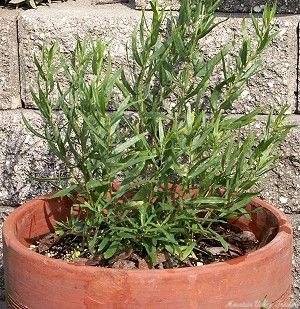
    Pawlsy's next move went well. We set up a farm that would allow us to produce lightweight items of value, such as Lavender, and, one of our all-time favorites, French Tarragon:


    Quote The French call French Tarragon, Herbe au Dragon. Indeed, the word Tarragon is thought to be a poorly pronounced French word Esdragon. The French got their Dragon monikers from the Latin species name for French Tarragon which is dracunculus. Roughly translated this means little dragon. And, while there is a lot of written speculation that the dragon part refers to some ancient use of this herb to cure bites and stings of all manner of creatures. More likely, it refers to the fire it leaves on your palate.


    This is one time where you really can be above it all because of the much higher quality as well as the work involved:


    Quote Why you ask would any one bother to sell a tasteless culinary herb?
    Because it can be grown from a seed instead of a cutting which is preferred by commercial growers.

    French Tarragon rarely blooms and, even then, makes only sterile seed.


    That's right. It's just cuttings. That makes it of the same nature as Saffron. It's like one plant that keeps being spread by people. This must be one of the closest things to physical immortality we can think of. Most plants can be cloned, and, in the case of trees, it's usually faster, but not many things are only propagated this way.


    In order to make this work, we were going to have to get an airplane and learn to fly it, while The Great Depression starts to rake its claws in France.

    Clemenceau did all this stuff to prop up the Central Bank of Yugoslavia, and, at the turn of the page, Britain killed the gold standard, which kills it for everyone else.


    We are highly averse to the European Money Power, which, itself, is coming together in a kind of Synarchy, along with a new x-factor, the United States.

    It's not really the basic existence of credit we oppose; it has more to do with the impunity of decisions at a high level. The way that life-altering bad decisions are forced on you. It's a financial world, which isn't really connected to the real world, and offers a nest for a privileged class. Did we buy a mansion and have someone else take care of our needs? Not hardly. But this seems to be the ideal.

    Fergus said, "Call them the Merovingians."

    If you understood him a little better, there's not a harsher thing he could say.


    Kathleen Tyson describes part of what happened:


    Quote I was looking into the history of the Bank for International Settlements. When it was founded in 1930, almost the first thing that John Foster Dulles — a very big New York lawyer, he was an advisor to the Treasury at the time — did was to infiltrate his sister Eleanor into Basel, into the Bank for International Settlements, to document every single detail of its founding and organization: every executive, every board member, all their views on all of the different possible policies, what was resolved, all of its transactions, including in 1932 a payment of one hundred and twenty-five million from New York to Nazi Germany. And it’s an amazing book because it’s basically her diary of her infiltration of the BIS, which of course she then published as her doctorate at Harvard, and gave to her brothers — John Foster Dulles, who became Secretary of State after World War II, and Allen Dulles, who became director of the CIA after World War II. So they had an inside diagram of how to subvert the BIS right from the get-go. And then unsurprisingly, when World War II comes about, there’s a very pro-Nazi American at the head of the BIS.
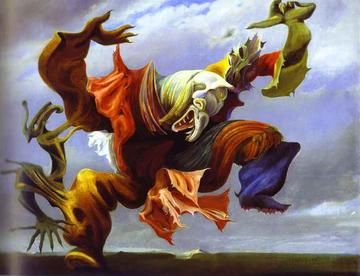
    Pawlsy said, "The power of the Austrian Empire has been transferred to Nazi Germany, but not any of its redeeming qualities."

    I said, "With modern manufacturing, they can make an army ten times as powerful in only a few years."

    Fergus said, "They never de-militarized, or paid reparations on the damages."

    "It's almost a free ticket for the Great War, the one that dissolved Austria and left us trampled by Serbia."


    The BIS already looked like a vehicle for predatory lending, the kind that leads to asset confiscation or military consequences.


    As you know, we have already slipped our fingers into this, in an amateurish way. We spent five years absconding Ottoman funds to build infrastructure in Sofia. This was deliberate on our part. We did it in the same breath as criticizing the state of Ottoman finances. We had no regard for the long-term health of the Empire, or anything like that; it was a polite form of banditry. It was never a realistic, long-term plan; we might have done that for Albania if they hadn't given up on us.

    As of now, we think they are such a horrid example, we make this report from Vienna:


    Quote Another attempt occurred on 20 February 1931, while Zog was visiting the Vienna State Opera house for a performance of Pagliacci. The attackers (Aziz Çami and Ndok Gjeloshi) struck whilst Zog was getting into his car. The attempt was organized by "National Union" (Albanian: Bashkimi Kombëtar"), a union of Zog opponents in exile which was formed in Vienna (1925) with the initiative of Ali Këlcyra, Sejfi Vllamasi, Xhemal Bushati etc. Zog was in the company of Minister Eqrem Libohova, who was wounded, while Zog's guard Llesh Topallaj was mistaken for Zog by Gjeloshi, and shot three times in the back of the head. Çami's gun was stuck and did not fire. Zog came out of the event unharmed, thanks also to the prompt intervention of Albanian Consul Zef Serreqi and local police. The Austrian authorities arrested Çami, Gjeloshi, and later Qazim Mulleti, Rexhep Mitrovica, Menduh Angoni, Angjelin Suma, Luigj Shkurti, Sejfi Vllamasi, etc. All the Albanian political émigrés in Vienna were subsequently arrested, beside Hasan Prishtina. Most of them were quickly released and expelled from Austria. Gjeloshi was sentenced to 3 years and 6 months of jail, while Çami got 2 years and 6 months.

    Pawlsy said, "Perfect setup, and they killed the wrong guy."

    Fergus groaned.

    That was KONARE.

    I said, "Fortunately, Riza Cerova was in the other office, where he

    Quote ...joined the Communist Party of Germany in 1930. During that period he wrote many articles against King Zog I. Cerova's articles were published in media like Liria Kombëtare, a journal published by KONARE (Komiteti Nacional Revolucionar, National Revolutionary Committee).

    As far as we know, he simply winds up going to Moscow to become a more perfect Stalinist."

    Noli went to the United States.

    Quote In 1932, Boshnjaku appears in an Albanian anti-Monarchist committee in Constanța, Romania, together with other Albanian emigre members settled there.

    Nothing really left of what once was.


    Pawlsy said, "I am trying to liberate an area that finds itself on the receiving end of a France -- Yugoslavia tentacle."


    From Cambridge on Stabilization:


    Quote Powerful interest groups in banking and industry that exerted a substantial influence on Yugoslavia's financial institutions shared the belief in this benefit of the gold exchange standard. Bankarstvo captured the views of 21 industrialists, representatives of industrial interests, and banks on the gold exchange standard from across the kingdom, which are across the board positive. One of these was from the president of the Division for Trade and Industry in Zagreb, Vranić, who noted that industrial circles approved of dinar stabilisation. The president of the Chamber of Commerce, Exchange and Industry, Jeličanin, viewed commercial circles as the main proponents of legal stabilisation.

    "The theory does not have one person in mind, You."

    Quote It is noteworthy that ‘lower layers’ of the Yugoslavian society, such as agricultural workers, whose loans at commercial banks appreciated due to the discount rate increases by the NBKY, fiercely opposed legal stabilisation. In that sense, the Yugoslavian gold exchange standard reflects Gallarotti's theory that legal stabilisation mirrored the victory of groups that favour stable exchange rates because they are importing machinery from abroad (industrialists) and those who act as creditors within the country (financial interest groups), over the interests of debtors and exporters who prefer depreciated exchange rates.

    "It has an unmistakable strategy."

    Quote Another reason why the Banque de France supported Yugoslavia with legal stabilisation was political. Yugoslavian newspapers at the time argued that France was trying to build a new ‘Middle Europe’ with its lending practices, as French bankers required political guarantees before granting loans, with the main goal of enabling France to isolate Germany economically and politically. Furthermore, French lending practices were intended to contain British political influence in the Balkans.

    "It's even the foundation of the miraculous new system."

    Quote The third international financial institution exerting pressure on Yugoslavia to adopt and maintain a gold exchange standard was the BIS in Basel, which was founded as an alliance of central banks in 1930. Its primary purpose was the commercialisation of German reparation payments and the creation of a stable system for international payments, which meant restoring the gold standard. In the words of Toniolo, ‘the gold standard was embedded in the very DNA of the BIS’.

    "Well, when Britain ditched it, they got the quickest recovery. What's going to happen with France, the gold bloc countries, and Yugoslavia when this boomerang hits?"


    Fergus and I beat each other up.

    "A large part of the regime was so that France would be paid in gold."

    Quote The Permanent International Court of Justice in The Hague ruled on 12 July 1929 that the substantial Yugoslavian debts owed to French lenders had to be repaid 55 per cent in gold starting from 1 April 1930, while the share of gold should gradually increase until the loans were completely repaid in gold. Hence, by supporting the legal stability of the dinar, the Banque de France could stabilise the conditions for the repayment of the substantial amount of private and public loans which Yugoslavian lenders owed to French banks.

    "Although the British decision was more influential, this was not even its idea."


    Quote Germany's exit from the gold standard on 15 July 1931

    The dominos were Austria's Creditanstalt on 11 May 1931, Landesbank der Rheinprovinz on 11 July 1931, and Danat-Bank on 13 July 1931. It triggered Germany's exit from the gold standard on 15 July 1931.

    On 15 July 1931, the Reichsbank suspended the convertibility of the Reichsmark, effectively taking Germany out of the gold standard, and imposed capital controls.


    Pawlsy said, "Although capital controls are subject to change, suddenly, this becomes the way to establish stability."

    It's deep. The existence of a gold standard does not in itself answer for having gold, or, the relative value of your currency to it. It's just a known unit of value. Convertibility is not quite the same, either; if I said a million marks was an ounce of gold, that says nothing as to terms of payment, such as in the court order above.

    The debilitating factor that no one has mentioned yet is Fractional Reserve Lending. Although this has existed since medieval times, back then, you still had to have a substantial reserve. Now these people will start worming their way to making loans out of smaller and smaller reserves.

    We don't claim to know ultimate answers about gold and money. We claim those handling it don't either, and must be kept on a short leash.

    Most of the gold was flowing to the United States and France. Rather than all these adjustments and prestige advances, it is arguable the calamitous deflation could have been avoided by sticking to the cover ratios of 1928.

    In other words, by trying to fix it, they made things worse.


    This is what happens:


    Quote At the Lausanne Conference of July 1932, an agreement was outlined on a three-year suspension of German reparations, but that was rejected by the U.S. Congress in December 1932, triggering defaults by France and the UK on interallied war debts.  Ultimately, losses of U.S. investors in German debt amounted to 13 to 16 percent of U.S. 1931 GDP...


    "Dinky, it's


    Heinrich Aloysius Maria Elisabeth Brüning


    who serves as Chancellor of Germany for the transition off gold, known for austerity, unemployment, and hunger.

    He was removed from office in 1932. Who do you think got the office for these decisions about capital controls."


    Dinky said, "Franz von Papen".

    "So there are Nazis behind this paper money, as well as the BIS, even though it was intended for gold."

    "We're surrounded."


    They are the ones who had skipped an opportunity to publicize Buddhism. Schglagentweit had three brothers who went on a mission from 1854 - 1858. One of them met a Sikkhimese Lama; they got things from Brian Hodgson and visited sites in Leh, Ladakh. Despite this pioneering effort, it does not seem to have taken hold.


    Pawlsy said, "Most of our readers will be unable to comprehend the following."

    Indo-tibetica 1: Mc'od rten e ts'a ts'a nel Tibet indiano ed occidentale: contributo allo studio dell'arte religiosa tibetana e del suo significato, Roma, Reale Accademia d'Italia, 1932 (Chinese transl.:《梵天佛地 1: 西北印度和西藏西部的塔和擦擦——试论藏族宗教艺术及其意义》, 魏正中 萨尔吉 主编. 上海, 上海古籍出版社)


    Fleep said, "I'm from Rome, at least from what I can remember. You made me use other languages, so, my Italian is a bit rusty. But that's got to be something from Buddhism."

    I said, "This is going to be hard to say. Giuseppe Tucci is a straight Mussolini Fascist, who, moreover, is going to go to Japan and spread Fascism there, along lines like racial purity.

    That's going to be our next major trove of Buddhism. Numerous high-quality photos of things that are in Tibet. We didn't discuss Eugenics. It's American. Ivy League. It's the same word but not necessarily the same thing as Plato's Eugenics."

    Fergus said, "Idiot is a Greek expression for thinks of himself, in the sense of a man who stays inside his house and experiences no other influence. Modern doctors turn it into a medical condition."

    Pawlsy said, "It spread with iron roots across all countries involved with modern medicine."

    I said, "Or, especially the UK, Germany, Sweden, and Japan."

    "Herbalists are now spit at as snake oil salesmen."

    "I would take allopathic medicine for acute trauma, like if I break my arm. I mean something more like treatment by a medic, than a course of medicine after the fact."

    Fergus said, "They are finding ways to sell the kind that is made from petroleum."

    "You think that's bad? Well, it is, until you find out how the medical system will be there to steal your house.

    Louis McFadden helped craft the Federal Reserve Note, having an Act named for him in 1927."


    Quote Comptroller of the Currency Henry M. Dawes, whose proposals shaped the McFadden Act

    "Without knowing exactly who said what, we do notice the favor that the corporate charters for these banks exist in perpetuity."

    Fergus said, "That's as anti-American as you can get."

    "The Federal Reserve's own autobiography confesses that, if you know how to see through the surface of it."


    It wasn't long before McFadden turned on the idea vociferously. Time Magazine reported he said the Hoover Moratorium sold out the United States to international bankers.

    Allow me to clean up the record from June 10, 1932:


    Quote Mr. Chairman, we have In this country one of the
    most corrupt Institutions the world has ever known. I
    refer to the Federal Reserve Board and the Federal reserve
    banks. The Federal Reserve Board, a Government board,
    has cheated the Government of the United States and the
    people of the United states out of enough money to pay the
    national debt. The depreciation and the iniquities of the
    Federal Reserve Board and the 'Federal' reserve banks acting
    together, have cost this country enough money, to pay the
    national debt several times over.

    He goes on at great length about it.

    What are they doing? "Rolling it over."

    Pawlsy burst out laughing.

    "I can't take the Americans seriously any more."

    "Pawls, we tried. We gave them twenty years to think about people who are being massacred in a eugenic manner. Nothing registered. You see how they operate."

    "Here, we assume in Europe it's basically evil, one kind always trying to dominate another. America has all these sayings and songs about freedom and something that is supposed to be great. No one can tell what that may be."

    "They put their taxpayers permanently in debt to a private institution."

    Fergus said, "Wait til you find out how they deceived them all by sneaking it in over Christmas break."

    "What!"


    France was still mostly functional, as long as you were employed.


    Quote Breton journalist Morvan Lebesque described the period thus:

    The winter I spent on the streets - the winter of '32-33 - was no milder nor harder than any other winter; the winter cold is like labour pains - whether it lasts for a longer or shorter period of time there is always the same amount of pain. That particular winter, it snowed and it froze; thousands of young men, forced out of their jobs by the crisis, struggled on to their last penny, to the end of their tether then, in despair, abandoned the fight... On street benches and at métro entrances, groups of exhausted and starving young men would be trying not to die. I don't know how many never came round. I can only say what I saw. In the rue Madame one day I saw a child drop a sweet which someone trod on, then the man behind bent down and picked it up, wiped it and ate it.

    Pawlsy said, "The stratification is very real.

    There are people I can charge twenty francs for a ticket. Fifty if I want. I can make it seventy-five because of some cloisonne' porcelain I hold up before the crowd. I've never pursued this direction, but, if I decided to charge a hundred and twenty, they would still do it.

    A lot of workers can barely afford anything. They need an outlet more, and can hardly find the opportunity."


    In turn, it's difficult for us. We have to take two weeks off to be able to reach Provence. But there is a way we can make it a round trip in a day.


    The idea of getting into innovation was no problem, seeing as France is this close to the particular innovation:


    Quote In 1908 the American Wright brothers visited France to demonstrate the military advantages of their primitive ‘Wright Flyer’ machine, the first controllable powered aircraft, to the French army. The Wrights' demonstration flights came to the attention of two French brothers living in northern Picardy. Rene and Gaston Caudron worked on their father’s farm in the Somme basin but the brave new world of aviation grasped the imagination of the Caudron brothers. They designed and built an aircraft for themselves. Their skills developed and led to a factory and flying school. The rest is great French history.

    They had no financial resources and no real equipment. They just had bags of enthusiasm, imagination and dogged tenacity and it was that which enabled them to complete their project. Their farmyard horse Luciole assisted with the early glider launches but just a year later they were using an engine and flying for 10km at a time. The Caudrons created a factory in the town of Rue, close to their home and farm. There they built the first G-3 and G-4 aircraft for the French military. They also established a civil flying school at Le Crotoy on the gently sloping beaches.

    Bleriot crosses the Channel in 1909 in the first mono-winged aircraft:


    No compass, following a frigate, patch of fog, crash landing.


    So we were not cutting edge on this. We were joining a trend that had civilian enthusiasts.

    I don't really mean "we". I am not going to do anything with a piece of machinery. It means we sent Dinky and Fleep to flight school and to work in a factory.

    Pawlsy said, "Don't get in fights, and don't kill anyone either. Be nice."

    We actually gave them appropriate clothes for the ordeal, and, they still looked weird, just not as weird. They're so...we were concerned they may have the tendency to get picked on.


    I said, "To go over what we've been discussing, Eugenics is a British reaction from the Boer War. They found that industrialization had caused a drop in fitness to the point there was an unacceptable level of failures for military qualification. There are a lot of issues inside that.

    The American Federal Reserve is like a state within a state; you pay for the privilege of using a currency owned by a private institution. What happens is, the government will sell a thousand-dollar bond for a thousand Federal Reserve Notes (FRNs), accepted as a substitute, but as you can see this is just a loan that must be paid back with interest. And these payments appear to be super important, more important than you are."

    Fergus said, "The decision of Britain, similar to that of Germany, appears to quickly re-build domestic production. Good for them, perhaps, but what else?"

    Pawlsy said, "The Bank of England archives contain brief reports on the matter."

    Jan. 21, 1932:


    Quote It was not to be expected that such a momentous step as the suspension of the Gold
    Standard by Great Britain, after six years of imperfect and difficult working, would
    be without grave and far-reaching repercussions on the rest of Europe.

    "That's in less than six months. Obviously, the direct result is, France holds about sixty-two million Pounds Sterling, and, de-valuation means that about twenty million in value just disappears."


    Quote The dollar has replaced the £ as the basis for calculating the value of the Greek
    drachma in foreign currencies.

    "Sounds like a good idea, until the US de-values."

    Quote Bulgaria has suffered serious dislocation of her export trade as the great majority of
    exports have always been contracted in pounds. There has been a heavy drop in
    exports and a restriction of credit.

    "They don't really mention this is the tortoise-shell survival strategy."

    Quote Switzerland followed the general tendency and strengthened its position by the
    withdrawal of funds from abroad and by the conversion of foreign exchange into
    gold. The gold reserve on Banque Nationale Suisse was only £28 million on 31st
    December 1930, [but] by the end of September 1931 it was £68 million and had
    risen to £93 million by the 31st December 1931. Sterling held at the Bank of
    England was entirely liquidated, but gold held has risen 19th September to over £6
    million.

    Here is a pretty direct counter-argument from July 11, 1932:


    Quote 1. The Board of the Bank for International Settlements recognising the necessity
    of the reestablishment between nations of a monetary system with a common basis
    in order to facilitate international settlements under more stable and secure
    conditions, is unanimously of opinion that the gold standard remains the best
    available monetary mechanism and the one best suited to make possible the free
    flow of world trade and of international financing; it is desirable, therefore, to
    prepare all the necessary measures for the reestablishment of the functioning of the
    gold standard.

    "They are still advocates of reparations for German damage that was done by 1918.

    It is in large agreement with the Gold Delegates of the League of Nations.

    It claims that efficient management by Central Banks cannot be done without governmental action that makes it so."


    Fergus said, "America is going to undergo a painful transition."

    Quote Ironically, the latest, massive round of bank collapses from November 1932 to March 6, 1933, was caused by speculators buying up gold in (correct) anticipation that FDR would get off the gold standard, devaluing the dollar. The Federal Reserve made mistakes here as well with regard to the interest rate, later admitting this, as well as, with some reluctance, that FDR's policy of getting off the gold standard had been the correct one.

    I said, "Just like Germany, it will suspend convertibility. We see who is the vanguard of this issue, it's the Nazis and Anglos."

    Fergus said, "German ethnic nationalism means it is really dominated by Austria. And then these people are focusing in Munich and Bavaria, which is in south Germany, raising the opposite point that Austria is nothing or it is not counted, because the true Germany is what we used to call Prussia."


    Pawlsy said, "There is a candid getting-together of like-minded individuals."

    Quote At the invitation of Thyssen, Hitler actually made a rather notable speech to this club on January 26, 1932:

    "It was one of those rare cases in which Hitler spoke the truth because he believed it would be of use to him. Restlessly he shot his eyes to the bearers of the most famous names, to [Gustav] Krupp, [Fritz] Thyssen and [Emil] Kirdorf, to [Hermann] Abs and [Robert] Pferdmenges, to [Hermann] Rochling and [Paul] Reusch, to [Ernst von] Borsig and [the sons of Hugo] Stinnes. Hitler [explained:]:

    ""Don't bother with the name of my party, with that ringing term Socialist German Workers' Party. The name was chosen to attract the workers. In truth, the NSDAP stands on the ground of free entrepreneurship. ... If we are accused of our intolerance, we proudly acknowledge it! We have made the relentless decision to root out Marxism in Germany to the very last!""

    "When Hitler sat down, the audience, which had long since given up any distance, stood up and cheered him."

    "It has reached across barriers, since, those who previously had not been all that interested in the Nazis, see the potential."


    Quote Reusch was not necessarily in the Hitler camp. He also supported other ultraright, union-busting candidates, but in November 1932 he certainly did sign the Industrielleneingabe Letter / The Industrial Input Letter asking General Paul von Hindenburg to transfer "responsible leadership" to Adolf Hitler. He did so alongside the ICC's Baron Kurt von Schroder, the ICC-tied Hjalmar Schacht, Emil Helfferich, discussed earlier as the sponsor at the Keppler circle of ICC German committee chairman Karl Lindemann 173, with both directors of the Rockefeller-owned Deutsche-Amerikanische Petroleum A. G. (DAPAG) 174; and Fritz Thyssen and Albert Vogler of Vereinigte Stahlwerke.

    "Many of them continued in a perhaps unofficial format."


    Quote Hitler's Keppler Circle, founded in December 1932


    "In everything that follows, they never pay the damages, they pay interest on the finances of it."


    Quote Nouvelle Solidarite, Interview with Annie Lacroix-Riz, 'Fascisme financier hier et aujourd'hui; le choix de la défaite': "["Can we say that it is to maintain the payment of these interests at all costs that we are ready to go as far as fascism?"] I think so, that it is as important a fact as anti-Sovietism. We can see this concretely, since it takes on very surprising proportions when Germany lacks gold reserves and the Bank of France and the Bank of England (which are directly involved because gold depends on the central banks of the two countries) made it possible to seize Austrian gold during the Anschluss in 1938, then Czechoslovak gold. There, you enter into a form of collaboration with Germany which is extremely surprising. I believe I have demonstrated, with the help of the archives of the Banque de France, that the Dawes and the Young [plans] were the fundamental factor in the disposition of financial circles to tremble before the demands of the Reich. And I'm not the only one. Sylvain Schiermann, who had worked on Franco-German economic relations from 1932 to 39, had shown very clearly that there was only one priority: that Germany should pay the Dawes and the Young [plans]. And Schacht spends his time, from 1933, blackmailing debt repayment by saying: I'm not paying anymore. But he always ends up paying, and we know that Germany paid until the end since the last payment was made in gold, stolen, as I have shown in other works, with the backing of the banks power stations. The last payment made to the BRI was in April 1945. That is to say, at the time of the surrender, Germany was still paying the interest of Dawes and Young. ...

    "We've seen this before. The Ottoman Empire dragged along by this theory of interest-only payments. A way to leave the principal on the shoulders of the people, accumulating.

    But this German system is two-faced, calling itself a Workers' Party and probably uttering words to this effect, but, its allegiance is to its major backers, who are anti-labor and every other synonym up to anti-Communist.

    Well, the force of it re-casts Yugoslavian Communism."


    Quote The "ultra-leftist" line pursued since 1928 was abandoned in 1933 when Adolf Hitler came to power in Germany. Instead, the KPJ turned the idea of forming a popular front together with other anti-fascist organisations. The strategy aimed to attract broad coalition of allies since it was no longer thought feasible to achieve quick introduction of communist rule. The popular front strategy coincided with assignment of Milan Gorkić to the KPJ leadership from his posting at the Comintern in 1932. Gorkić set about to introduce discipline to the KPJ top ranks and establish ties with the JSDS, the HSS, the Montenegrin Federalist Party, the Slovene Christian Socialists, and pro-Russian right wing organisations in Serbia with Moscow now advocating Yugoslav unity. This placed the KPJ at odds with the Comintern which continued to advocate breakup of Yugoslavia...

    "What is this? Ok, a coalition against Mussolini and now Hitler may make some sense, but, it's not my issue. How do I get our liberation back on the table? Hasan Prishtina?"


    Quote In 1933, he was killed by Ibrahim Celo in a cafe in Thessalonika, on the orders of King Zog.


    "Listen to this defiant remark by Yugoslavia's King Alexander I."


    Quote Alexander said through an intermediary to the Italian government, "If you want to have serious riots in Yugoslavia or cause a regime change, you need to kill me. Shoot at me and be sure you have finished me off, because that's the only way to make changes in Yugoslavia."

    Pawlsy said, "That's the apparent level of trust there, but, France wants to balance them, so he goes to an important meeting."


    Quote The French Foreign Minister Louis Barthou had attempted in 1934 to build an alliance meant to contain Germany, consisting of France's allies in Eastern Europe like Yugoslavia, together with Italy and the Soviet Union. The long-standing rivalry between Benito Mussolini and King Alexander had complicated Barthou's work as Alexander complained about Italian territorial claims against his country and Italian support for Hungarian revisionism and the Croat Ustaše.

    As long as the French ally Yugoslavia continued to have disputes with Italy, Barthou's plans for an Italo-French rapprochement would be stillborn.

    Mussolini had come to believe that it was only the personality of Alexander that was holding Yugoslavia together and that if the king were assassinated, Yugoslavia would descend into civil war, which would allow Italy to annex certain regions of Yugoslavia without fear of reprisal from France. However, France was Yugoslavia's closest ally, and Barthou invited Alexander for a visit to France to sign a Franco-Yugoslav agreement that would allow Barthou to "go to Rome with the certainty of success". As a result of the previous deaths of three family members on Tuesdays, Alexander refused to undertake any public functions on that day of the week. On Tuesday, 9 October 1934, however, he had no choice, as he was arriving in Marseille to begin a state visit to France to strengthen both countries' alliance in the Little Entente.


    "This is part of a larger trip, as you will see when Bulgaria gets on board after a right-wing coup on May 19, 1934."


    Quote The new government abolished the Tarnovo Constitution, dissolved the National Assembly and banned all political parties and organizations, revolutionary organizations and trade unions. All their property got confiscated and severe sentences were provided for attempting to renew a party in any form or to establish a new party. A new governmental system was introduced wherein the central authority would appoint mayors and would establish state trade unions. Additionally, measures were adopted to deal with the workers' and socialist movement in the country. A state monopoly was introduced, which affected the interests of the big companies.

    In foreign policy, Zveno's most notable act was to establish diplomatic relations with the USSR on 23 July 1934 and steer Bulgaria towards France. Kimon Georgiev saw that one way to do that was through improvement of the relationships with Yugoslavia and to bring the two countries closer as Bulgaria's neighbour was an ally of France at that time. As a result, king Aleksandar I of Yugoslavia visited Bulgaria on 27 September 1934.


    "Yugoslavian Communism is anti-Fascist, while most of the groups that seek to harm Yugoslavia are Fascists. There is an anti-Yugoslav fighter called Chernozemski."

    Quote Chernozemski also entered the region of Vardar Macedonia with IMRO bands and participated in more than 15 skirmishes with Yugoslav police.

    On April 24, 1931, Chernozemski was sentenced by the Sofia District Court to life in prison. After the amnesty on January 5, 1932, he was released from the Sofia Central Prison. A week later, he went underground, and on July 15, 1932, he disappeared from Sofia.

    "This is complicated, because Macedonian means Bulgarian for the most part. It's a remnant of the Ottoman resistance. But the group has never had a clear platform, whether it is ethnic or regional, whether it is Bulgarian or independent, or what its politics are. It doesn't really represent indigenous Macedonians. It's just located there. It forms a partnership with the Croation Ustase. That's where Communism underestimated the power of nationalism. It's very right-wing. And so these are more like groups of Fascists that desire the breakup of Yugoslavia."


    Quote On October 9, as King Alexander's motorcade drove at 8 km/h down a Marseille street, Chernozemski emerged from the crowd, approached the king's car and leapt onto its running board while concealing his Mauser C96 semi-automatic pistol in a bouquet of flowers and chanting "Vive le roi" ("Long live the King"). He shot Alexander repeatedly, fatally hitting him in the chest and liver. The chauffeur—who tried to push Chernozemski off the car—and General Georges were also shot. The shot killed the chauffeur on the spot. A police officer fired at Chernozemski but missed and wounded Alexander's companion French Foreign Minister Louis Barthou. Barthou died due to blood loss.

    After firing his shots, he was struck by Colonel Pierre-Henri-Jules Piollet with a sabre, shot by a police officer and beaten by the crowd while the police watched. Chernozemski attempted to kill himself by shooting himself in the mouth, but his pistol was knocked out of his hand. The police had "fired haphazardly into the crowd". 10 civilian bystanders were injured, while 4 people died. In shock, Kralj did not throw a grenade and instead slipped out of the crowd. After bringing Chernozemski to custody, the French authorities attempted to interrogate him. However, his face was disfigured and he was unable to say anything. Chernozemski died around 8 pm.

    They also found a Walther pistol, two bombs, a compass and 1,700 French francs in his possessions.


    For murdering King Alexander I, Chernozemski was posthumously declared the most dangerous terrorist in Europe.

    "It's very famous."

    Quote It was one of the first assassinations to be captured on film; the shooting occurred in front of the newsreel cameraman, who was only metres away at the time. While the exact moment of shooting was not captured on film, the events leading to the assassination and the immediate aftermath were. The body of the chauffeur Foissac, who had been mortally wounded, slumped and jammed against the brakes of the car, which allowed the cameraman to continue filming from within inches of the King for a number of minutes afterwards.

    Fergus said, "This has nothing to do with a communist revolution, which didn't happen."

    The royal will stipulates the regency of the unusual Anglophile Prince Paul until 1941:


    Quote Through careful never to openly criticise the constitution, Paul sympathised with the Croat demand to turn Yugoslavia into a federation, and felt that many Serb politicians were being unrealistic in expecting that Croat discontent would just dissolve of its own accord if given enough time.

    Prince Paul, far more than Alexander, was Yugoslav rather than Serb in outlook, and unlike Alexander, he was inclined much more toward democracy. In its broadest outline, his domestic policy worked to eliminate the heritage of the Alexandrine dictatorship's centralism, censorship, and military control, and to pacify the country by solving the Serb-Croat problem. Paul wanted to achieve a Serb-Croat reconciliation, but also felt for a considerable period of time that he had the duty to hand over the kingdom to Peter more or less unchanged when he reached his maturity, and thus was unwilling to entertain constitutional changes.

    Paul had been thrust into a position of power that he did not want by Alexander's assassination (which was why Alexander had chosen him in his will to serve as a regent, knowing he would never try to seize the throne from his son), and throughout his regency he gave the impression that ruling Yugoslavia was a burden to him.

    Married to a Greek princess and intensely Anglophile and Hellenophile, Paul distrusted Fascist Italy and Nazi Germany.

    French premier Pierre Laval-who was seeking an alliance with Italy-made it very clear to Paul that France would not support Yugoslavia if it chose to make an issue of Italian involvement in the assassination of the king, saying that the most Yugoslavia could do was to blame Hungary. The way that the French were prepared to disregard Yugoslav concerns about the regicide for the sake of better relations with Italy soured Paul on the French alliance.

    Although he spent about twenty years amongst Oxford elites, as a child, he is seen in the garb of Kosovo:


    Pawlsy said, "It appears to be incorrect that the country will be torn with strife by the removal of the king.

    Although the regent is perhaps a better person, we understand, it's basically a job, give the intact Yugoslavia to the next king."


    It doesn't directly help; the French economic encirclement of Germany goes cold.

    In fact, it could now be worse. Kinder Yugoslav policies may make less people want to rebel. The Comintern strategy is to shear three or four countries off its edges, which is where our liberation lies. We think it will take something of this magnitude, since none of them will be able to do it individually. Second choice is to have it crushed by a Power such as Italy. But then how do you get rid of the Italians.

    It certainly won't be from anyone listening to the pleas of those who have been ethnically cleansed ever since we can remember.

    France and Yugoslavia are in an impotent, nose-down slump. Of course, most of the world is like this by now. Except for the UK and Germany. Do they have sustainable turnarounds? Does Germany run on sympathy?


    I already felt like we were in a post-modern age. That the mere evolution of technology, financial capitalism, and militant fanaticism had created an entirely brand new, artificial specie of man, like a homonculus. The British Army was more or less correct about Eugenics, other than they shouldn't have been running the Boer War, should have used common sense and been cleaner and healthier while industrializing, and not re-defining "good breeding" in the way that they have. The simple fact that humans were failing and probably should have better care taken, is quite serious.

    I said, "Buddhism in part answers for this, at least outside of Tibet. In most other countries it is associated with the warriors' training hall. In Afghanistan, you had Pankration, in Siam Muay Thai, perhaps you have heard of the Shaolin Monastery.

    It should be obvious that is part of Vajrapani -- Herakles.

    And so this is normal for the Greek sphere.

    But the Romans didn't do it.

    In the Olympic Games, they were getting trounced by Asians. That is why towards the end of it, they banned pagans.

    And after that there was not standardly such a thing as combat sports as part of a typical education. Not there. But from India to Japan, it simply continued."


    Fergus said, "So, roughly speaking, you think the Eugenecists caught on to the deficiency, and put in a synthetic substitute."

    I said, "Something like that. It seems like mostly self-caused problems, which would never occur to anyone raised otherwise. That's how I see a lot of what's going on here, is that it is simply unnecessary."

    "Would you like me to win some boxing matches?"

    I looked at Pawlsy.

    She said, "I bet five francs he can end a boxing match whenever he wants."

    It's not what we do, it's a set of rules for a western sport. We are masters of destroying the human being with our hands. On this level, we have not really found anyone who can keep up with us. Modern guns and bombs are an artificial compensation.


    She continued. "The thing is, Communism is turning into Antifa, which is not aimed at a soft Yugoslavian Regent. But the Slavic rebels are Fascists. We might not have anything, unless we can replace, for instance, the Ustase with Communists."

    Fergus said, "My idea was simpler; I know I can get it to work."

    "You're right. I think a Communist revolution will work in Bulgaria. Perhaps almost inevitably like the books seem to say. Yugoslavia is a tough cookie."

    I said, "We have the least desirable land. There's no oil or gold. In fact there is nothing desirable about it unless you admire the rustic natural beauty. It's just agriculture and traditional craftsmanship. Still nineteenth-century."

    "Yes, but money can be extracted from any human resources."

    "A form of ownership."

    "Maybe I could just buy it from the Regent in a few years. Just a small nibble off what would still be mostly intact."

    "You want to make him an offer, and blackmail him with civil wars."

    Fergus said, "I certainly do."

    Pawlsy said, "We might try to deal with him.

    I suspect we might get Bulgaria and maybe Hungary into Comintern. If we had that, we could shrink Yugoslavia, one way or another."

    I said, "Czechoslovakia."

    Fergus said, "That's two nations mashed into one if there ever was one."

    "Well, let's take France's Mitteleuropa, and shape it in the countries excluding Yugoslavia, under the aegis of united workers' fronts. Obviously making it the same here in France."

    The case of the stolen tentacle?

    Fergus said, "Undermining and replacing the official attempt."

    Pawlsy said, "With what happened in Vienna, that was a major resource. We need to press results in multiple areas. I've decided it's necessary we have some international support. Remember when everybody thought the United States was really opening the way. Then it was the League of Nations. And then even the Conference after that.

    Now it's Comintern, should that, in fact, be able to get countries."


    Zog was in about 600 feuds when he came to power, and survived about fifty-five assassination attempts. And now that is just Albania and tough luck to us.

    Pawlsy overthrew the Ottoman Empire. We'll figure this one out too. It's...different. I am a bit neutral about Germany, although I would say it sounds like they will craft a remarkably oppressive form of government that I would not want to be under. Yet, something very strange is going on, in terms of its reparations being cordoned off from new investments, for which, there is a lot of foreign interest. The so-called national interest of France, and the UK, is the total opposite. Yet the French are aware that a weak Germany is not going to result from anything that has happened since the Armistice. Instead, they, themselves, can barely compete.


    We are reaching a stuffed-to-the-brim point.

    "Now, we shall apprise ourselves of one of those things that just doesn't go away."


    Quote On the other end of the spectrum was ICC council member John Jacob Raskob, representing the Du Pont fortune, who, despite being a Democrat in name, set up an additional group in 1934 called the American Liberty League, just to campaign against the New Deal. General Motors' Alfred Sloan, Jr., J. P. Morgan & Co.'s chief attorney and then-Rockefeller Foundation trustee John W. Davis, Jay Gould and Harriman lawyer Elihu Root and Grayson M. P. Murphy of Anaconda Copper, Guaranty Trust and Bethlehem Steel were important co-founders, as was Irenee du Pont.

    Conclusion? The ICC's "merchants of peace" did not like having to implement basic labor rights.

    Pawlsy said, "That's in America, and appears to be a broadly-split argument."


    Quote Aug. 25, 1934, New York Times, 'Roosevelt Twits Liberty League as Lover of Property': "He indicated his belief that it laid too much stress on protection of property and too little on protection of the average citizen."

    "He's more or less describing them as similar to the Italian power."


    Quote Founding ICC board member Alberto Pirelli, who helped fund Mussolini from the moment he switched from socialism to fascism in late 1914...was a key founder in 1934 of the (Italian) Institute for International Political Studies / Istituto per gli Studi di Politica Internazionale, a Mussolini-backed RIIA- and CFR-clone.

    ISPI's [was] launched on 27th March 1934 by a group of young scholars from the Universities of Milan and Pavia ... inspired by the examples of London's Royal Institute of Foreign Affairs [RIIA] and New York's Foreign Policy Association. [A] meeting in February 1935 with Alberto Pirelli ... did not only guarantee the funding ... but it also provided strong links with the business community [which was supporting fascism...], while ensuring some autonomy from the fascist regime...in 1934 SIAP at the very least was not disadvantaged by tariff and license regulations for the oil industry implemented by Mussolini.

    "It's wholly owned by Standard Oil."

    I said, "President Roosevelt has made our main basic point. Is it a populist message he can fail to work for? Maybe. It sounds like a pretty clear warning that his political adversaries are American Nazi Fascists."

    Fergus said, "So far, the performance by the experts ranks as abysmal. Can we throw away the twentieth century and get another one?"

    Pawlsy said, "Yes. Let's have an ideological clash."


    Quote We entered, in 1934, in a very active phase of the political projects of Synarchy, to which must be added all the nebula of economic power. You have to remember that in Synarchy, there is also the coal and therefore, Henri de Peyerimhoff, the chef of the Coal Committee.

    "We don't know who is the twelfth founding member of Synarchy, but considering what happens in 1934, the Comite des Forges is involved in all aspects."

    Considering theories of the Synarchy are so closely associated with industrialists and bankers supporting the suppression of labor unions, it might be interesting to note that both the Synarchy and the funding of extreme right action groups as the Croix de Feu and apparently too the Faisceau were tied to the Comite des Forges, a lobby representing the steel industry headed from 1918 to 1940 by steel industrialist and Banque de France director Francois de Wendel.
    It's a police report where he gave Croix de Feu a large sum of money.

    Again, in the case of France, we have to take the name Synarchy not too literally, but we can be sure of the underlying fact:


    Quote ...there is no doubt that leading French industrialists, some of them to be found in the ICC, were all too keen to use fascism to quash the labor movement...

    It doesn't have to mean they all believe in the same kind of Agartha fantasy government. Some of them do believe in various kinds. It mainly effectively means, in France, fascist collaborators.


    Pawlsy said, "By active phase, it means this root, the International Chamber of Commerce, will itself fade into obscurity, because superseded by newer and more technocratic organizations."

    Fergus said, "It seems like we're missing a small detail."

    "Well, do you want to tell them?"

    "I think we all do. There's songs in this."

    I said, "When the Levee Breaks (Kansas Joe McCoy and Memphis Minnie, 1929)."

    Pawlsy said, "Done."

    "High Germany (English traditional ballad ca. 1700s)

    "Easy."

    Fergus said, "Make one up."

    I said, "That would be Pawlsy's career."

    Pawlsy said, "They handed it to us on a silver platter."

    Fergus said, "Perhaps it is time to ad libretto from Edgar Allen Poe's Murder in the Rue Morgue."

    I said, "It all began with the finding of a body."


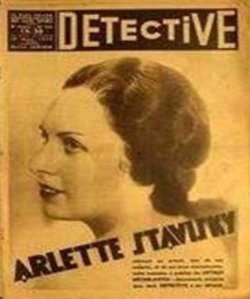
    Quote Serge Alexandre Stavisky (1888–1934), who became known as le beau Sacha ("Handsome Sasha"), was a Russian Jew who was born in modern-day Ukraine; his parents had relocated to France. Stavisky tried various professions, working as a café singer, a nightclub manager, a soup factory worker and as the operator of a gambling den. During the 1930s, he managed municipal pawnshops in Bayonne and also knew people active in the financial sector. Stavisky sold worthless bonds and financed his "hockshop" on the surety of what he called the emeralds of the late Empress of Germany, which were later revealed to be glass.

    Stavisky maintained his reputation by using his acquaintances with important people. If a newspaper tried to investigate his affairs, he paid it to stop either with large advertisement contracts or by buying the newspaper's company.

    In 1927, Stavisky was put on trial for fraud for the first time. However, the trial was postponed repeatedly, and he was granted bail nineteen times. Stavisky probably continued his scams during that time. One judge who claimed to have secret documents involving Stavisky was later found decapitated. Janet Flanner wrote:

    The scheme which finally killed Alexandre Stavisky, his political guests' reputations, and the uninvited public's peace of mind, was his emission of hundreds of millions of francs' worth of false bonds on the city of Bayonne's municipal pawnshop, which were bought up by life-insurance companies, counseled by the Minister of Colonies, who was counseled by the Minister of Commerce, who was counseled by the Mayor of Bayonne, who was counseled by the little manager of the hockshop, who was counseled by Stavisky.

    At the risk of exposure in December 1933, Stavisky fled. On 8 January 1934, the police found him in a chalet in Chamonix; he was dead from a gunshot wound. Stavisky was officially determined to have committed suicide, but there was a persistent speculation that police officers had killed him. Fourteen Parisian newspapers reported his death as a suicide, but eight did not. The distance that the bullet had travelled caused the newspaper Le Canard enchaîné to propose sarcastically that Stavisky had "a long arm".

    Pawlsy said, "How can this not look stupid on purpose."


    Quote ...they found a pistol in his left hand and the entry wounds were located above his right temple.


    Quote After Stavisky's death, details about his long criminal history, his relations with the French establishment and his controversial death became public. His involvement with so many ministers caused the resignation of Prime Minister Camille Chautemps with accusations from the right-wing opposition that he and his police had killed Stavisky intentionally to protect influential people.

    "He was under investigation in the wake of another investigation."


    Quote "The Stavisky Affair" erupted on Christmas Eve 1933 with the arrest of a certain Gustave Tissier, director of Crédit Municipal de Bayonne, for forgery, use of forgery and misappropriation of public funds.


    Quote Sasha developed extensive contacts among the rich and powerful, and became a wealthy man in his own right. He kept company with some of France’s most glamorous women, until Arlette Simon, a dress model for the house of Chanel, agreed to marry him after he promised her that he would reform. In the 1930s, Sasha managed municipal pawnshops in Bayonne and simultaneously infiltrated French financial circles.

    Premier Camille Chautemps, leader of the left wing coalition, approved of the government’s investment in pawnshop securities. Pawnbrokers had been
    carefully regulated by the state since the time of King Louis XVI, and a Credit
    Municipal, or local council could not organize without the consent of the
    Premier. Stavisky sold stacks of worthless bonds and financed his pawnshop with
    the surety of what he called “the emeralds of the later Empress of
    Germany.”

    These emeralds turned out to be glass, but Stavisky and Joseph
    Garat the mayor of Bayonne, issued fraudulent bonds in the sum of 239 million
    francs.

    Charismatic Sasha charmed his way into the lives of people with important
    connections. Over a six year period, he paid out over three million dollars in
    bribes to French business leaders and politicians and recorded their names in a
    ledger listing the monies paid as “stock dividends.”

    "The resigned head of state is replaced by an ardent follower."


    Quote The new Prime Minister was Édouard Daladier, and one of his first acts was to dismiss the prefect of the Paris police, Jean Chiappe, who was notorious for his rightist sympathies and suspected of encouraging previous anti-government demonstrations. Daladier then dismissed the director of the Comédie Française, who had been staging William Shakespeare's controversial play Coriolanus, and replaced him with the director of the Sûreté-Générale, a protégé of Chautemps and Daladier's centre-left Radical‐Socialist Party. He also appointed a new Interior Minister, Eugène Frot, who announced that demonstrators would be shot.

    "In other words, the French government does not have a large standing of these para-Nazis, but they come crawling out of the woodwork."


    Quote Daladier's dismissal of Jean Chiappe, the anti-communist Paris Prefect of Police, caused multiple far-right leagues to organize protests. These rapidly degenerated into a riot on the Place de la Concorde, near the building used for the National Assembly, against Daladier's centre-left government and the Third Republic.


    Quote Fomented by several conservative, anti-Semitic, monarchist or fascist groups, including Action Française, the Croix-de-Feu and the Mouvement Franciste, the demonstration occurred on the night of 6–7 February 1934. The police fired upon and killed 17 people, nine of whom were far-right protesters..

    Croix de Feu:


    Quote As one of the most essential paramilitary associations and because of its anti-Semitic position, the Croix-de-Feu and La Rocque were considered by the political left to be among the most dangerous imitators of Mussolini and Hitler.


    Pawlsy said, "They were actually several hundred meters away at Palais Bourbon.

    Now, the level of violence here is like child's play. It is horrid but something like this happens every day in Serbia. Nevertheless, all I need to do is be able to bring it to your attention."


    Quote France's political left claimed it was a fascist coup d'état attempt, leading to the creation of several left-wing anti-fascist organizations such as the Comité de vigilance des intellectuels antifascistes.

    It was the first time during the Third Republic that a government had to resign as a result of riots by the opposition. Other results were the formation of anti-fascism leagues and an alliance between the French Section of the Workers' International (SFIO), the main socialist party, and the French Communist Party.

    "Boom, that was when it hit."

    Fergus said, "Yes. Mud was flinging in every direction."


    Quote The scandal involved a remarkable range of people from politics, wealthy society and the literary-intellectual elite of Paris. Mistinguett was asked why she had been photographed with Stavisky at a nightclub. Georges Simenon reported on the affair and Stavisky's ex-bodyguard threatened him with physical violence. Colette, referring to the alleged inability of any of Stavisky's important friends to remember him, described the dead con artist as "a man with no face".

    A trial of twenty people associated with Stavisky began in 1935. Printed charges were 1200 pages long. All of the accused, including Stavisky's widow, two deputies and one general, were acquitted the next year. The amount defrauded was estimated to be the equivalent of $18 million at the prevailing exchange rates, plus an additional $54 million that came within months of being attained. The location of Stavisky's wealth is still unknown.

    The Stavisky affair left France weakened internally. The country remained divided politically for the rest of the decade, but the political weaknesses it exposed and exacerbated were not confined to France. The affair was emblematic of a more general decrease of popularity of democratic values and institutions in Europe during the Great Depression.

    Pawlsy said, "Was it a riot, an insurrection, yes, but a coup, no. Anything like that is a serious exaggeration. On the other hand, it does represent a buildup in that direction. So it doesn't matter. The point is to knock it down.

    As you can imagine, the two main mentalities in France have their pre-determined relation to Germany."

    Fergus said, "They started a new race of man, the Algerian European."

    I said, "Oh, the future is here."

    "No, that would be the murder of a judge from the financial division followed by some suicidal failures."

    Pawlsy said, "History Today 1958 attributes this riot as the foundation of French Fascism."

    I said, "They want to be like the Germans, although they are already aware they are lower ranking. That is, the German industry must be more significant."


    That was the dividing wedge. It was time to rub salt in the wound so that half of France would admonish the right wing and be on positive terms with Socialism and Communism.


    Pawlsy said, "So we did some popular tunes from back then, that you still know today.

    We didn't really have anything to do with sopranos, but, Jacqui McShee of Pentangle is one who can nail it here and there."

    Fergus said, "This band can pull off a type of texturing that's hard to find; most of their instruments are in non-standard tuning. Some of their moments get kind of thin. But at least some of the songs on multiple albums are very memorable."

    "Music is how we had anything to do with English whatsoever. We wanted to know what some of these songs mean. We would take something like this and do it in French using multiple idioms of playing styles. We'd do it really loud with snares, timpani, and kettle drums. We totally lacked the refinement of the classy Paris acts and everything we did was really serious. We'd introduce this as an English lament of more or less our current problems, and it would generate empathy.

    This is them playing it in 1972."


    Oh Polly love oh Polly the rout is now begun
    And we must march away at the beating of the drum
    Go dress yourself in all your best and go along with me
    I'll take you to the cruel wars in High Germany.


    I fear the treacherous journey bitter cold and burning heat
    Rough roads and stony mountains they will wound my tender feet
    To your kinsmen I might prove untrue if from them I do go
    For maids must bide at their parents' side while the men do face the foe.


    I'll buy for you a horse my love and on it you will ride
    Then all of my contentment will be riding at my side
    We'll stop at every ale house and drink when we are dry
    So quickly on the road my love we'll marry by and by.


    Oh Billy love oh Billy now mind what I do say
    My feet they are so tired I cannot go away
    Besides my dearest Billy I am with child by thee
    Not fitting for the cruel wars in High Germany.


    Oh Polly love oh Polly I love you very well
    There are few in any place my Polly can excel
    And when your babe is born and sits smiling on your knee
    You will think on your Billy that's in High Germany.


    Oh cursed be the cruel wars that ever they began
    For they have pressed my Billy and many a clever man
    For they have pressed my Billy likewise my brothers three
    And sent them to the cruel wars in High Germany.

  6. The Following 2 Users Say Thank You to shaberon For This Post:

    Bill Ryan (11th June 2026), Ewan (11th June 2026)

  7. Link to Post #24
    United States Avalon Member
    Join Date
    1st April 2016
    Posts
    6,732
    Thanks
    34,965
    Thanked 38,401 times in 6,382 posts

    Default Re: Pawlsy the Cat is Her Name

    Underground Aviation


    We tried to describe the vat of acid in France that we used like a fulcrum.

    What it did was to make proto-Fascism visible, and, a great deal of the public did not want that.

    Again, there, we are criticizing a type of government that has two main characteristics; first, it values capital over labor, businesses over the human being, whether that means workplace safety, or a rising cost of living that impoverishes you. Secondly, it favors that kind of nationalism that tells you that your neighbor is an other, a non-human being, fit only for chattel slavery or else extermination.

    The phrase finance capitalism is already used by the Comintern; it applies to the Great Powers, although manifested differently amongst them, if we say France really likes gold, and the New York Stock Exchange is more like a gambling house than any of them.


    The details of the Stavisky affair were almost irrelevant, in the sense that this mass reaction spread like wildfire:


    Quote The February 1934 Uprising of Socialists against right wing forces in Austria and movement towards cooperation between Socialists and Communists in France in fighting a nascent fascist movement there convinced Bulgarian Communist Georgi Dimitrov, a leading figure in the Communist International that the Comintern's hostility towards joint action between Communists and Socialists was ill-considered. Dimitrov made his triumphant return to Moscow in April 1934 following acquittal in the Reichstag Fire trial determined to change the Comintern's fundamental strategy from one of antagonistic opposition to social democracy to one of cooperation in a joint struggle.

    How?

    We found out Fokker licensed F-VIIIs to here:


    "Oh," said Pawlsy, "Mr. Weiss."

    Originally founded as a cannery, it soon became the major arms manufacturer not just for Austria-Hungary, but, for half of Europe.

    It's Hungarian.

    Most people think we are Hungarians who picked up a few Gypsies. But, no, as I said, I know enough Magyar to be able to pronounce a few songs and have the basic idea what they mean. I just like their music. But we did for several years take advantage of their development of a railroad system, some of which was used for deliveries of untold amounts of ammunition from Weiss.

    Just because of who we were, we got one of these puppies:


    Dinky said, "You're going to like this.

    The airplane itself is pretty simple. It really is like a big bicycle.

    We can do some surface stuff like spark plugs and tune it. But we can't tear down and re-build the engine. That's its own specialty. The plane is made to attach whatever kind of engine to it. This one is running British-designed nine-cylinder Jupiters, made under license in France. They send them to Weiss, or Fokker, whatever. These are a new generation, lighter weight, more powerful, eliminating the third engine on the nose. This plane is a better design and it's not the biggest one, but it's not small. If you had jumped on the bandwagon, you'd probably be going around in a four-seater."

    Fleep said, "The thing you didn't tell us about is this freak called the atmosphere."

    "Yeah. There's things like turbulence and sudden downdrafts that could kill us all."

    "You want to go when it is as clear and calm as possible. And we can't land anywhere at night that doesn't have specialized lighting."

    Would you want to trust your life with these two people who -- they've been hit in the head so many times it's amazing -- until very recently could not read?


    "And, another thing is, we're too short to see out."

    "That means we'll have to do this a little unconventionally, but once you get used to it, it's a lot of fun."

    "Until then, the ride is like someone putting you in a box and rolling it downstairs."

    "Airsickness is frequent."

    Pawlsy said, "If I don't kill you while you are doing that, you can land me different places, in any country?"

    "Any time."

    "Make it so. While you are flying, you have immunity from retributive strikes."

    "Thank you."


    That was the beginning of our inter-office link such as when we needed to get something straight with Dimitrov.

    We just want to make sure the actual Comintern carries an agenda about Yugoslavia and its outlying regions. That's because it would vanish as a "lesser threat" in the mere Antifa view. But in actuality, for any type of progress, we should ally whatever you want to call pure Muscovite Communism with other kinds of socialism.


    Current French affairs are called a distraction from the scandal in Time, March 12, 1934:


    Quote Whether Judge Prince was still alive when tied to the track was unknown, although a doctor discovered poison in his body tissues which seemed to indicate that he was already dead. By then a new theory had arisen, wild as anything in the entire case: Judge Prince was murdered by a gang of professional criminals that had revived the name and the manner of the Carbonari. The theory was voiced officially last week by white-chinned old Henri Chéron, now Minister of Justice. Said he:

    “We must succeed in finding the assassins of the unfortunate counselor Albert Prince. . . . The country has been the prey of a band of evildoers who have recoiled before nothing to achieve their crimes. That band must be completely unmasked and punished.”

    A bloodstained knife and a powder puff were found near the Prince body. Brushing aside the powder puff, police concentrated on the knife. In the 1820’s, when pomaded romantics sniffed laudanum, read Lamartine and drank from skull-shaped mugs, a secret society known as / Carbonari (the Charcoal Burners) nourished in France and Italy. There was nothing criminal about the original members who were exiled Neapolitan Liberals, forced, like true charcoal burners, to hide in the forests. Soon they took to murdering their political opponents, and later their members were neither Neapolitan nor Liberal. Their mark was a bloody dagger, left beside each of their victims. If Albert Prince was killed by such as these they were still at large last week, despite a reward of 140,000 francs for their capture.


    Part of the missing Stavisky evidence was a book of check stubs:


    Quote Next night Minister of Interior Albert Sarraut, Public Prosecutor Gomien, Examining Magistrate Ordonneau and “a Personality” whose name no reporter could learn, assembled in the home of Inspector Bony. With a bow the Personality produced the check stubs, 1,200 of them, to a total value of $13.000,000 and explained that “Sacha” Stavisky had given the stubs to his Secretary Anton Romagnino. Romagnino had given them back to Mme Stavisky, who had handed them to the Personality.

    Mme Stavisky was promptly arrested “for obstructing justice.” Her jewels and furs were taken from her and she was locked in La Petite Roquette prison to await trial. She sent a message to the nurse at her apartment:

    ”Don’t tell the children where I am. If they cry very much tell them I have gone on a cruise.”

    The end of mystery was not yet. Stavisky Secretary Romagnino had disappeared. So had a pasteboard box crammed with 10.000.000 francs worth of jewels which Alexandre Stavisky is supposed to have salvaged from the collapse of his Bayonne pawnshop and hidden in his Paris apartment.

    Fergus said, "The national response was to bring in a popular former President, a centrist more or less. And, the point is, the following should not necessarily be a distraction."


    Quote No man knew better than Gaston Doumergue that the crisis that still grips France will not end until the entire Stavisky rottenness is exposed, explained and paid for in the penitentiary. Gaston Doumergue was called from sunny retirement in Southern France a month ago to save France. The country was on the verge of violent revolution. Hundreds were wounded and more than a score killed in the bloodiest riots Paris has seen since 1871. The plump little Premier came and a distraught people cheered him to the echo. He whipped together a cabinet drawn from every party but the Socialists, Royalists & Communists. He promised sweeping reforms. He soothed frayed nerves by beaming with vast good nature on everyone in sight. But Gaston Doumergue knew and every French politician knew that the barricades would rise again amid the crack of rifles, the clatter of charging troops and the dreadful roar of marching mobs if the Stavisky scandal is not blotted out of memory by an era of honest government.

    All this will take time. Meanwhile there were other problems, the solution of which would help to distract the public. The budget was completely unbalanced. Gold was pouring to the U. S. and the franc seemed in danger. France was engaged in an expensive trade war with Britain, and there remained as always the Hitler bugaboo. To drive the stubborn Deputies, Premier Doumergue had just one effective weapon: the threat to resign, go back to his country place, and leave Mm. les Deputées to the mobs of Paris.

    Budget, One of the conditions under which the smiling little Southerner agreed to return to politics was that the long-dangling Budget be passed before March 1. Recalcitrant Deputies were dragooned by an ancient device. At midnight Feb. 28 lackeys stepped into the Chamber and stopped the clocks. Mm. les Deputés settled down to wrangle hoarsely till dawn. At 6:30 in the morning, the final vote was taken, and the Budget passed. It called for an expenditure of 50,162.000,000 francs ($3.172,000.000) and leaves France with a deficit of 1,881.000.000 francs. But Premier Doumergue was given dictatorial power to slash expenditures until the Budget balances.

    New Deal! Clearer & clearer Frenchmen began to see parallels between Gaston Doumergue’s emergency Cabinet and the Roosevelt New Deal. Last week President Roosevelt asked Congress to authorize him to raise and lower tariffs and make foreign trade bargains (see p. 13). Last week Premier Doumergue received precisely that same authority with the Budget bill. Just as President Roosevelt likes to rule by executive order when Congress is away, so Premier Doumergue plans to do the same thing as soon as he can send the Chamber packing. The Ministry of Commerce is to be reorganized and something suspiciously like an NRA code is hanging over the French heavy industries including steel whose leaders have been meeting quietly for days to consider a voluntary agreement covering wages and production for the next three years.

    Defense. Nothing served better to take Frenchmen’s minds off the Stavisky scandal than new plans for national defense. But this was no cheap distraction. France already has the biggest and best army in Europe, and a navy that has improved 1,000% since the War. For the first time since the Third Republic was founded, two generals sit in the Cabinet—Marshal Petain, Minister of War. and General Denain. Minister of Air. Bills were sent to Parliamentary committees last week providing for military expenditures of six billion francs ($390.000.000′). France will continue her frontier chain of forts. Because she is absolutely dependent on foreign oil she will build a series of enormous oil reservoirs for the army and navy such as Italy already has. She will set aside a special sum to be used over three years in developing swifter fighting planes. She will build a new 26,000-ton battleship. sister ship to the still incomplete Dunkerque.

    Reforms. Of topnotch interest to every French citizen were proposals for reforming and reorganizing the entire parliamentary system. What would Premier Doumergue suggest? How far would he go in overhauling democratic machinery that failed to function in a crisis? The best answer seemed to be in the character of the man himself.

    Which may be summarized:

    Quote On the side lines, as President of France, Gaston Doumergue acquired a vast disgust for the French political game of which he had been a part for so long. As head of the State, he had a chance for the first time in a generation to appreciate the layman’s point of view as governments fell, week after week, month after month, with nothing done. But. like most Frenchmen, honest “Gastounet” is at heart extremely conservative. He may adopt such simple superficial reforms as commend themselves to his cautious Gallic mind. But anyone who expects him to remake the legislative and political machine of France, to rid it of blocs, to break with deep-rooted traditions, is likely to be disappointed.

    "On the whole, knowing there is collateral damage of a French statesman in Vienna..."

    Quote There was, however, an upturn in public finances, which allowed the price of government bonds to gain ten to twelve points between March and June. He was also weakened by the assassination of Louis Barthou on 9 October, and preferred to resign soon after, on 8 November.

    "I just saw some pretty big issues that are just dragging along there."

    Pawlsy said, "Now you're really going to see the heat cranking."


    1935


    Pierre Flandin, in whose term a number of important things were signed.


    First is a bi-lateral pact with Italy that amounts to pandering. It offers numerous territorial concessions in anticipation of an alliance. Then, with the UK joining, it leads to something like Locarno II called the Stresa Front:


    Quote The Stresa Front was triggered by Germany's declaration of its intention to build up an air force, increase the size of the army to 36 divisions (500,000 men) and introduce conscription, in March 1935. All of these actions were direct violations of the Treaty of Versailles, which limited the size of the German Army to 100,000 men, forbade conscription in Germany and prohibited a German air force.


    Pawlsy said, "And this is news to those who have just been born. They have never really complied with Versailles, despite which, Standard Oil and numerous other investors seek to ply its economy."

    Fergus said, "Fortunately, our idea led to major change."


    Dimitrov and Stalin came to an agreement:


    Quote ...to end the practice of denouncing Social Democrats as 'social fascists', practically indistinguishable from actual fascists, and to instead promote "united front" tactics against the threat of European fascism. In April, as Dimitrov's fame grew in the wake of the Leipzig Trial, he was appointed a member of the Executive of Comintern and of its political secretariat, in charge of the Anglo-American and Central European sections. He was being groomed to take control of the Comintern from two of the so-called "Old Bolsheviks", Iosif Pyatnitsky and Wilhelm Knorin, who had held the position since 1923. Finally, in 1934, Stalin chose Dimitrov to head the international organization. At this point, Tzvetan Todorov writes, Dimitrov "became part of the Soviet leader's inner circle."


    Eventually, Comintern hosts its Seventh Congress:


    Quote Preparations for a 7th World Congress of the Comintern began in Moscow late in 1934, with the Executive Committee of the Communist International (ECCI) establishing a commission to draft programmatic resolutions for that body. This body was divided between Dimitrov and others advocating a move towards a "general democratic, anti-Fascist" orientation and hardliners who continued to argue that the battle against fascism was inseparable from the task of overthrowing the bourgeoisie, implying a simultaneous fight against the fascist right and the reformist constitutionalist and socialist movements. With no rapid agreement forthcoming, on 8 March 1935, the scheduled opening of the 7th Congress was moved back to the end of July.

    It would be the exigencies of Soviet foreign policy which ultimately shaped the Comintern's orientation, when on 2 May 1935, the two countries most concerned about the implications of growing German militarism — France and the Soviet Union — concluded the Franco-Soviet Treaty of Mutual Assistance, a mutual aid pact in which each promised to come to the other's defense in the event that aggression violating the Covenant of the League of Nations was suffered.
    Here is Dimitrov, seated on the left, and Wang Ming -- China, seated on the right:


    "China seems a bit far out to be interested in European affairs, but, Japan is taking an equally sharp turn towards Fascism. So, yes, they are joining themselves to the consensus."


    In the wake of the Franco-Soviet Treaty of Mutual Assistance:


    Quote On 16 May 1935 the Czechoslovak–Soviet Treaty of Alliance was signed after the Soviet treaty with France, which was Czechoslovakia's main ally.

    Adolf Hitler justified the remilitarisation of the Rhineland by the ratification of the Franco-Soviet Pact by the French Parliament and claimed that he felt threatened by it. In the UK parliament, the former British Prime Minister David Lloyd George who was sympathetic to Germany stated that "if Herr Hitler had allowed that to go without protecting his country he would have been a traitor to the Fatherland".

    Pawlsy said, "You see the technical term, alliance, and these French documents do not create alliances."

    Fergus said, "The Germans certainly seem to have a wide range of open approval."

    It's certainly a fact in the United States. We haven't covered, for example, how Jewish boycotts on German businesses were really a tremendous factor. But, yes, quite many Anglos are as complacent with Nazism as could be. Military buildup on the edge of France is seen as normal.


    I said, "On the private side, Jean Monnet, the Father of Europe, gets a big headstart."


    Quote Versailles is where he became really close to the Dulles brothers for the rest of his life. In 1935 John Foster Dulles and Dulles' law firm Sullivan & Cromwell financed the founding of Monnet, Murnane & Co., the investment bank of Monnet and CFR member George Murnane. By that time, Monnet's close "Round Table Network" friend, Sir Arthur Salter, had written his 1929 essay 'The "United States of Europe" Idea' (published in expanded book form in 1933), advocating for a federal Europe within the framework of the League of Nations. Monnet's later idea for the European Union would closely mirror the proposals in this work.


    "But then here is a form of authority interfering with private business."


    Quote What we also know is that by 1935 Mussolini had his eyes on conquering Ethiopia due to what was suspected to be vast, untapped oil riches. On August 31, 1935 word got out of a secret "Rickett concession" in which Ethiopian emperor Haile Selassie handed over "more than half his empire" in a 75-year lease to Standard Oil in order to protect himself from a looming Italian invasion. Already on September 3, 1935 the agreement fell apart when the new anti-Wall Street U.S. president FDR refused to accept it as legitimate, got his secretary of state to tell Standard Oil to back out, and informed reporters a day later that, "dollar diplomacy is no longer recognized by the United States Government."

    Fergus said, "How dare you! Now, for a horror story from your own people."


    Quote By the end of September the same "Mr. Rickett" who negotiated the failed backdoor deal with Emperor Haile Selassie met with his "old friend" Mussolini in Rome. Secret deals were made, and also as a result of the "Rickett concession" having fallen apart, a month later, on October 3, 1935, Mussolini began his conquest of Ethiopia.

    As western countries boycotted Italy, Standard Oil was pressured to stop supplying oil to the country, which both Mussolini and Nazi Germany's I.G. Farben scientists recognized was absolutely crucial in allowing Italy to continue the invasion of Ethiopia. Standard Oil refused, only agreeing to not increase oil deliveries over what they had been the previous year. For some reason, apparently to keep the door open to negotiations, FDR agreed with this policy, but this token appeasement of the international community obviously led to a lot of criticism.

    In early December 1935 news started going round of a "gentlemen's agreement" that had been negotiated between Standard Oil and Mussolini, apparently by the same Mr. Francis Rickett in the days before the Ethiopian invasion. The "gentlemen's agreement" involved Standard Oil, through its Societa Italo-Americana Pel Petrolio, arranging for Mussolini to circumvent any upcoming League of Nations oil embargo on Italy by continuing to supply oil from wells outside the United States. Oil to Italy would come from Romania, through Hungary and Austria; and oil to Eritrea and Somaliland for Italy's war effort would come from the Middle East. In return, Standard Oil expected a 30-year monopoly on oil deliveries to Italy. It also agreed to float a one billion gold lire (about $50 million at the time) loan to Italy to pay for oil deliveries.

    The existence of this scheme was denied by interested parties as Standard Oil chief Walter Teagle and the Italian government, but at the same time it was observed that "more and more tankers with Standard petroleum came to Italy, the warehouses filled up again [and] the danger of the oil squeeze seemed averted."

    Apparently, the agreement between Standard Oil and the Mussolini government would only go into effect officially from the moment that the League of Nations oil embargo became active, a move that was to be anticipated beforehand. This never happened though, in part because the Standard deal would have made it ineffective and apparently also because competitors as Shell and Sinclair started lobbying to prevent the embargo from becoming active from the moment they heard about Standard's "gentleman's agreement".

    In any case, Standard continued to supply oil to the Mussolini regime throughout the Ethiopian campaign. As the FDR government would demonstrate, it even lied that it had not vastly increased the amount of oil delivered to the war effort. In the same period the Anglo-Iranian Oil Company, the precursor to BP tied to the later coup of Iranian leader Mohammad Mossadeq, was refueling Italian warships, all contributing to the idea of sanctions being pointless...

    "Did they say they are going to lend out money to buy oil from themselves??"

    There are different reactions to this:


    Quote Fifty-one countries voted sanctions against Italy and declared an embargo on war supplies - not including oil. The United States, which was not a member of the League, allowed its nationals to carry on trade with Italy at the shipper's own risk. Jersey was in a difficult position; the Italian government was pressing Societa for increased supplies, while many Americans demanded that no assistance be given Italy as the aggressor. Jersey decided that, as in similar instances in the past, its policy should be to maintain its normal operations; it would supply its Italian affiliate, but only to the extent of the preceding year. The parent company was criticized in the American press for this operation. The difficulty over furnishing products to an aggressor was the most striking event in the operations of Societa Italo-Americana during the 1930's."

    "At that time, almost everyone in the world was saying, you don't give supplies to an aggressor, not even oil.

    What is plainly happening is that -- in this shorthand (Standard Oil of New) Jersey has helped Italy to the utmost extent launch a war for oil.

    If they do this once, who knows when they will stop."


    Pawlsy said, "They're taking advantage of the fact that France is basically going to turn a blind eye to it. And that they are against sanctions.

    Guess who shows up in Paris?"


    Quote On November 16, 1935, the joint committee of the ICC and the Carnegie Endowment for International Peace... [Members were] Thomas J. Watson ... James T. Shotwell, representing the Carnegie Endowment ... Per Jacobsson of the [BIS] ... Rene P. Duchemin of France...

    "You had better be suspicious of anything with a name like Peace in it. Versailles has just...has never really happened, and the League of Nations is not necessarily bad, on principle, but in practice it is a bit lacking. The United States can freely work against it, and, we think some oversight should have been used. Obviously, this oil war is a private decision rather than national will, which is insidious because it means a few years down the road, it can become the national will."

    I said, "That's one of our main factors in training. Do it right the first time. If you learn something wrong, you may never recover."


    The new ICC product is a French "information" or intelligence office in the United States:


    Quote Headquartered at Place de la Concorde and Rockefeller Center.

    Members: Marshall Petain | Rothschild | Masson | Banque de France | Paul Reynaud | Raymond Patenotre | Morgan | Rockefeller | Vanderbilt | Frank Polk | Eugene Meyer | Ogden Reid | Louis Wiley.

    Pawlsy said, "In Paris you see Watson, the founder of International Business Machines.

    The French member is well known."


    Quote Rene P. Duchemin, an industrialist engaged in a dye cartel with I.G. Farben since 1927.

    Peyerrimhoff, Rene Duchemin and Francois de Wendel, the head of the fascist-sponsoring Comite des Forges, were accused in 1931 of having paid in 1929 four times the market value for Les Temps in an attempt to control the narrative of this newspaper.

    All collaborating since 1926 in CFAID - a precursor of the 1952-founded European Coal and Steel Community (ECSC).

    "But wait -- there's another new type of international office."


    Quote ...the Franco-Germany Committee, founded in 1935 by Otto Abetz, German Ambassador in Paris during the war, is almost a small piece of the iceberg. We believed that this committee was something much more political than the Anglo-German Association, of which we know then for a very long time that it is composed of most prominent names in the City and bands industrial. But the real founders of France-Germany Committee are those who are at the origin of the “Franco-German Committee for Information and Documentation” (CFAID) based in Luxembourg, on the initiative of Mayrisch, President of Arbed. The CFAID was formed in 1926, from the so-called phase of reconciliation which accompanied the formation of the steel cartel. Among the founders, we have the Schneiders, the Laurent, Peyerimhoff, of the Committee of Houilleres, Duchemin, president of Kuhlmann and the CGPF, Wladimir d'Ormesson, Schlumberger and others. They were the fundamental part of the future France-Germany Committee which has been set up moreover at the same address as the CFAID. ..

    "And this other person?"

    Quote On behalf of the coal lobby Peyerimhoff formally endorsed the Redressement Francais, a corporate movement existing between 1925-1935 looking to revive the economy by doing away with parliament.

    The Redressement seeks to rule by authority rather than a political body:


    Quote Le Redressement français est un mouvement créé en décembre 1925 par l'industriel de l'électricité et du pétrole Ernest Mercier sous le patronage du maréchal Foch qui voulait le voir « rassembler l’élite et éduquer les masses ». Il promouvait une politique technocratique et corporatiste.

    "That's the director of French Petroleum, CFP, the forerunner of Total."

    Quote Son siège se situe à Paris, 28, rue de Madrid (VIIIe). Le Redressement accueille surtout des industriels, pour la plupart des polytechniciens des industries électriques, pétrolières, chimiques et métallurgiques, et des intellectuels. Le Redressement français, selon Kuisel, représente « l'arme de propagande de l'élite industrielle moderniste, qui souhaite vendre ses idées à la nation ».

    From a French discussion of them:


    Quote Le Redressement, en gros, c'est un peu les marionnettistes de Pétain, ils lui proposent leur aide et le laissent en place comme une figure de proue.

    Roger Mennevee criticizes them, primarily, and Anti-Masons, secondarily, as financial oligarchy, Synarchy, and Jesuitry, in real time of it happening.

    This, itself, begins a cycle of "conspiracy theorists" and "debunkers".

    Pawlsy said, "As we keep saying," and said, "beware of what's in a name. Again, the specific term, synarchy, is rarely used. We can see who is involved. Oil and electricity. The kind that run propaganda against us. Here, we have flushed out the most extreme statement of it.

    Extinguish the legislative branch."

    Fergus said, "That would only seem to work by a coup, not by any visible process."

    I said, "I don't think we would want that."

    "We didn't".

    "We asked a few audiences if they did."

    "The response was negative."

    "If we compare them to what the right wing said about Algeria," which certainly was not lacking in pride, "and what St-Yves was doing with the Jesuits of Reunion, we see the policies these guys are working with are what is described as the manner of colonialism."

    "France is to be treated like a foreign and subservient country by its own people."

    "That seems to be the doctrine."

    Pawlsy said, "Then why do you think they cleared out of this address at a balance-shifting time?

    Powder puffs."


    There we were, a breath away from being Stalinists.


    Although there is no secret of Italian military buildup, they start a war with no declaration, throwing in:


    Quote 6,000 machine guns, 2,000 pieces of artillery, 599 tanks and 390 aircraft. The Regia Marina (Royal Navy) carried tons of ammunition, food and other supplies, with the motor vehicles to move them, but the Ethiopians had only horse-drawn carts.

    Their air force sprays about 330 tons of mustard gas.

    Britain and France go along with it, so he will help "contain Germany". That's still official policy, while commercial interests appear otherwise.

    Fleep was simply astounded by the massiveness of the force which could transport itself to such a distant place.

    He said, "If I had stayed, I would be proud of what they are able to make, but I would still have the same problem with it that I do right now."

    Pawlsy said, "Most of that comes from those who are given choice careers, into the hands of those who would probably otherwise be unemployed."

    "It's like that. You can easily get stuck somewhere you don't want to be."

    "So if Germany does it next, and then France, where does it end?"

    "I don't know. Moscow maybe? The Turks will sign on in a heartbeat."

    Fergus said, "You had better win some parliament seats or topple some governments fast."

    Now we can just tie the industrialists of France with those Blackshirts and everything else unjust that is being done to Ethiopia.

    I said, "I prefer the Seventh Congress, because, for any revolution to be viable, it needs a share of the bourgeoisie. They should be willing to live by the same principles as anyone else. It would be inaccurate to say we inherently threaten wealth, itself."

    Fergus said, "But you define the Dharmic King as the one who protects the populace from those powerful interests."

    "True; and on that account, we are left to figure out the nuts and bolts for ourselves."

    The new Comintern:


    Quote Dimitrov began with an analysis of fascism, which he characterized as "the open terrorist dictatorship of the most reactionary, most chauvinistic, and most imperialist elements of finance capital," intent upon wreaking organized "terrorist vengeance against the working class and the revolutionary section of the peasantry and intelligentsia." With respect to its foreign policy, Dimitrov condemned fascism as "jingoism in its most brutal form, fomenting bestial hatred of other nations."


    1936


    Go.


    "This is where everyone wants to get involved with that bloodcurdling thing."


    In the grand scheme, what had happened was that Communism had been flushed out of Germany. Comintern came back with something that would usually be called Popular Front. But we notice some places, Communists fail to unite with the Socialists and others, in the UK, Italy, or the United States.

    In actuality, it first won elections in Spain in January.


    Pawlsy said, "In France, for the first time, we're part of something bigger than ourselves. We're not French citizens. Call us foreign idealists, or sympathizers, or whatever you wish, but we are on board with the priorities."


    It was a noticeable victory for France's Popular Front:

    Quote The Popular Front won the general election of 3 May 1936, with 386 seats out of 608. For the first time, the Socialists won more seats than the Radical-Socialists, and the Socialist leader, Léon Blum, became the first Socialist Prime Minister of France and the first Jew to hold that office. The first Popular Front cabinet consisted of 20 Socialists, 13 Radical-Socialists and two Socialist Republicans (there were no Communist Ministers) and, for the first time, included three women (who were then not able to vote in France).


    Pawlsy said, "The contrast of current republicanism or capitalism in France is immediately revealed by sweeping reforms. There is the creation of what is now known as fair labor law, like the "NRA code" previously mentioned. There is attention to social welfare. There is even a certain financial reform."


    Quote The Blum administration democratised the Bank of France by enabling all shareholders to attend meetings and set up a new council with more representation from government. By mid-August the parliament had passed:

    the creation of a national Office du blé (Grain Board or Wheat Office, through which the government helped to market agricultural produce at fair prices for farmers) to stabilise prices and curb speculation
    the nationalisation of the arms industries
    loans to small and medium-sized industries
    the raising of the compulsory school-leaving age to 14 years
    measures against illicit price rises
    a major public works program

    The legislative pace of the Popular Front government meant that before parliament went into recess, it had passed 133 laws within the space of 73 days, a pace of nearly two enactments a day.

    "He also axed what we started finding in the 1880s as veterans' associations, which proceeded to become these things that are not exactly political parties."

    Leagues:


    Quote Far-right leagues in France were characterized by their nationalist, militarist, anti-Semitic, anti-parliamentarist and anti-Communist opinions. In addition – and in particular in the 1930s – they were often modelled after Benito Mussolini's paramilitary Blackshirts and favored military parades, uniforms, and displays of their physical might.

    Fergus said, "There is some cagey rhetoric in a lot of this reporting. It's somewhat openly debated about whether this truly qualifies as French fascism or what.

    It just means these are private clubs of military people, not industrialists in cartels. It's physically different people, and obviously they lack a Fuhrer or Duce to gather round in a centralized way. Over time, we are looking at who stays in place, and how."

    I said, "There are a large number, twenty or so, documented. Most had sprung up right around 1925-6, similarly to the cartels."


    Pawlsy said, "They paraded all the time, Their existence was no secret."

    "No. But we understand a little better now. They're not opposed to some parliamentary faction, or office, ministry, district, house, or any conceivable aspect, because it means rule by unchecked executive authority."

    Fergus said, "Not necessarily like Roosevelt."

    "Right. It's a question of what's behind someone's autocratic dictation."

    "He may have had a decent motivation and questionable solutions about it."

    Or, even if they use Executive Orders, there is still a Legislature.


    Dinky said, "As usual, something went seriously wrong."

    Pawlsy said, "Apparently parades and slogans were no longer sufficient. Out of the ashes of the Orleanists comes something that demands our attention.

    It translates as The Hood."


    Quote La Cagoule was founded by Eugène Deloncle and bankrolled, among others, by Eugène Schueller, the founder of L'Oréal.

    The group was founded in 1936 or 1937 by Eugène Deloncle and enjoyed privileged relations within industrial circles (National Federation of Ratepayers, Lesieur, L'Oréal etc).

    An important member was Joseph Darnand, who later founded the Service d'ordre légionnaire (SOL), the forerunner of the Milice, the collaborationist paramilitary of the Vichy regime. His nephew Henri Charbonneau was also a member.

    Another member was Jean Filiol, who was appointed as the head of the Milice in Limoges. He fled to Spain at the end of World War II and he worked in the Spanish subsidiary of L'Oréal. Gabriel Jeantet was a lover of a sister of François Mitterrand, who later recommended him for the Order of the Francisque. Dr. Henri Martin was a physician suspected of having forged the Pacte synarchique...

    "Fair enough. Leave it to your suspicion. Disinformation? Distortion based on fact? Or actual summary? This synarchy is supposed to refer to collaboration with the Germans. That happened.

    As for the meaning of the name."


    Quote In Nice, new members were initiated in a formal ritual. In the presence of the Grand Master, dressed in red and accompanied by his assesseurs dressed in black, with their faces covered, new members stood before a table draped with a French flag. A sword and torches were placed on it. Each man raised his right arm and swore the oath, Ad majorem Galliæ gloriam ("For the greater glory of France"). This oath echoed the Jesuit motto, Ad Majorem Dei Gloriam (For the greater glory of God).

    "Obviously, the hoods imply something like Agartha, or Unknown Superiors, or certain lines of Martinism. When put together with that motto and that most of them are Catholic, you're looking at something closer to Opus Dei."

    "But Pawls, no one will figure that out for fifty years."

    Fergus said, "You mean in America."

    "Oh; I suppose so. We're not going to be able to ignore La Cagoule."

    Pawlsy said, "No. But what has happened in Spain is the reforms are so sweeping, they have swept out the professional military, and armed the Popular Front itself."


    Quote The Spanish Civil War broke out in July 1936 and deeply divided the government, which tried to remain neutral. The French left massively supported the Republican government in Madrid, and the right mostly supported the Nationalist insurgents, some even threatening to bring the war to France. Blum's cabinet was also deeply divided. Fear of the war spreading to France was one factor that made him decide on a policy of non-intervention. He collaborated with Britain and 25 other countries to formalize an agreement against sending any munitions or volunteer soldiers to Spain.

    The air minister defied the cabinet and secretly sold warplanes to Madrid.

    "The military has re-grouped under Franco.

    Now, you're telling me, very violent things are about to occur in France and Spain, and, it affects what I am working on, and, I have an airplane to get around, what do you think is going to happen."


    Comintern International Brigades:


    Quote ...volunteer soldiers organized by the Communist International to assist the Popular Front government of the Second Spanish Republic during the Spanish Civil War.

    The main recruitment center was in Paris, under the supervision of Soviet colonel Karol "Walter" Świerczewski. On 17 October 1936, an open letter by Joseph Stalin to José Díaz was published in Mundo Obrero, arguing that victory for the Spanish second republic was a matter not only for Spaniards but also for the whole of "progressive humanity"; in short order, communist activists joined with moderate socialist and liberal groups to form anti-fascist "popular front" militias in several countries, most of them under the control of or influenced by the Comintern.

    Entry to Spain was arranged for volunteers, for instance, a Yugoslav, Josip Broz, who would become famous as Marshal Tito, was in Paris to provide assistance, money, and passports for volunteers from Eastern Europe (including numerous Yugoslav volunteers in the Spanish Civil War).

    The French Communist Party provided uniforms for the Brigades.

    Fergus said, "As you can guess, this is how we got Yugoslavian Communism."


    Pawlsy said, "But let's give you an idea who Leon Blum really is."


    Newsweek on the 1934 riots:


    “On that evening thousands of French veterans of World War I, bitter at rumors of corruption in a parliament already discredited by its inefficacy against the Great Depression, attempted to invade the French parliament chamber just as the deputies were voting yet another shaky government into power. The veterans had been summoned by right-wing organizations [seeking] to replace what they saw as a weak parliamentary government with a fascist dictatorship on the model of Hitler or Mussolini.”


    Most of the rioting was not really done by Croix-de-feu.

    Action Francaise:


    Pawlsy said, "This is early in the year while he is still a parliamentarian."


    Quote February 13, 1936. Blum is in a car with his wife and another socialist MP when they cross paths with a funeral march for a far-right historian. Action Française members at the march recognize him and block the car, jeering, “Death to the Jew!” “Let’s hang him,” and the like.

    They start pummeling the car with their hands and canes. Then one finds a metal bar, smashes it through the window and into Blum’s head. The mob drags him out of the car and continues to beat him. Two nearby police officers fail to stop them, but a group of construction workers intervene. They manage to save Blum and get him to the hospital.

    It’s quite clear that the “camelots” intended to kill Blum. Three men were arrested, including the main attacker and Action Française leader Charles Maurras, who had openly called for Blum’s murder. Maurras wrote in 1935 that Blum was “human detritus” and deserved to “shot, but in the back.” After his arrest in 1936, he again called for Blum to be killed.

    "That's no mere figure of speech."

    Camelots:


    Quote On 9 December 1935, 97 Camelots du Roi from the 17th team of the 16th arrondissement of Paris sent a Memorandum on immobility (French: Mémoire sur l'immobilisme) to Maurice Pujo, Georges Calzant and Maxime Real del Sarte, accusing them of letting the movement collapse. The memorandum's signers included Eugène Deloncle, Jean Filiol, Aristide Corre, Jean Bouvyer, Michel Bernollin and Paul Bassompierre. On 11 January 1936, Eugène Deloncle and seven other people were officially excluded.

    These activists then formed the National Revolutionary Party (French: Parti national révolutionnaire) and the Cagoule, which carried out the attack on future Prime Minister Léon Blum on 13 February 1936...a group of Camelots du Roi led by the hooded Jean Filiol injured him.

    "Do you get it? They have created an us-and-them scenario on the ground, in Paris and many places in France."

    Fergus shook his head.

    You'd rather deal with the government, abolishing your organization, than with us.

    We don't have any limits. We're worse than you. And, we have an airplane. We can do our own intelligence in France, and respond to the International's intelligence in Spain.

    "Fleep, if you thought Ethiopia was something, it is German Magic Fire that takes to task bringing over most of the Franco loyalists, which are the colonial army in Morocco."

    Fleep said, "But these Camelots and so forth in France are also a transfer of colonial militarism to the home country."

    "Yes. We can't let it grow here, as you see to our south, a Popular Front election has led to direct consequences assisted by Germany and Italy."


    Fergus said, "As we are looking at French Fascists as mainly composed of the military, rather than politicians, it is exactly so in Spain. The coup by Franco in July has no effect on the government; he has to physically defeat it. And so it starts from a staging ground, making advances towards Madrid. The new Spanish government is relatively clueless how to deal with this. Its Prime Ministers resign until:


    Quote José Giral. Giral agreed to arm the trade unionists to defend the Republic and had 60,000 rifles delivered to the CNT and UGT headquarters although only 5,000 were in working order. In a radio broadcast on the 18th, the communist leader Dolores Ibarruri coined the famous slogan ¡No pasarán! ("They shall not pass") to urge resistance against the coup. The slogan was to become synonymous with the defense of Madrid and the Republican cause in general.

    He gets about this far."

    Quote Azaña ordered Giral to form a new government constituted exclusively by republicans. Giral's government lasted from 19 July to 4 September 1936. Then, with the fall of Talavera de la Reina and the Army of Morocco within reach of Madrid, Giral was forced to cede power to Francisco Largo Caballero.

    Franco rapidly advanced with German air support. Caballero's era is Comintern and Madrid gains an air force of Soviet planes. Mankind has crafted fighters and bombers as well as anti-aircraft guns. They're positioned to siege Madrid by November.


    Pawlsy said, "In France, La Cagoule is no secret because a plot was exposed and arrests were made. Its extent is a matter of some debate."


    Quote Deloncle had boasted that he had 12,000 men under his order in Paris, and 120,000 in the provinces, but it is likely there were no more than 200 men who knew much about the organization and its structure, and another several hundred who were more loosely affiliated with the group.

    "Because it uses cells, then, yes, of course a fewer number can be said to be in on the plot. It's indeterminate how far this thing really reached. But it's quite serious."


    Some of its functions were that it:

    Quote ...trained men in terrorism, built underground prisons and "ran guns in Belgium, Switzerland and Italy".

    In so doing, they murdered the arms supplier Léon Jean-Baptiste in October, 1936, for cheating on the prices.


    Fergus said, "It's hardcore co-intel."

    Quote The "street fighting" handbook was titled Secret Rules of the Communist Party to avoid revealing the Cagoule in case the booklet was found by the police.

    I said, "Yes, it is trying to come up with Reichstag-type maneuvers, so the public will be terrified about Communism. And, I don't think you can necessarily say it is small, restrained, or confined, due to having patrons."


    Quote Sources of funding: Eugène Schueller (L'Oreal), Louis Renault, Lemaigre Dubreuil (owner of table oil Lesieur and department stores Le Printemps), Gabriel Jeantet (Lafarge cements), Pierre Pucheu (Comptoir Sidérurgique)

    Pawlsy said, "Well, they stepped in to a criminal underworld.

    We started playing around different parts of France, and soaking up their rumors. We'd leave someone behind to shadow a target. It was usually easy to determine if someone was in fact involved. We would off them and move on to another.

    Because these are actual crimes, I can't be too specific about dates and locations, or who they were. I can tell you it was not retributive strikes for any particular deed. It was ideologically motivated. We began hunting them shortly after the beating of Mr. Blum."


    Dinky said, "It's true. That one really got under her skin. Once it became so plain this faction was a true force in France, she sent us on these little excursions."

    "My people are so good, I can sanitize someone with a very small team."

    Fergus said, "It was low key in the sense we weren't going after figureheads or famous people; this usually had an in your neighborhood feel. It triggered a few local investigations that no one ever put together."

    I said, "We spoiled a few gun shipments."

    "That means no evidence of such guns was found."

    "You did it."

    "You did it."

    It was like we knew secrets about each other.

    That was how we entered as belligerents in '36. The Spanish Republicans had thwarted Franco's attacks on Madrid. It was quite costly. From that point the Comintern effectively takes over.


    Fergus said, "They started off with a certain edge."

    Quote ...on 7 November, the Republicans had captured plans of the attack on the body of an Italian officer found in a destroyed tank and so could concentrate their troops in the Casa de Campo to meet the main attack.

    Pawlsy said, "Look at this, 17 November, 1936."


    "That's near Puerta del Sol, the main square in Madrid. Coming from a Luftwaffe bomber."


    The Soviets were dumbstruck to find out we had been using Russian arms supplies since the first sealed cartridges. And of our intricate position with Yugoslavia.

    We showed them how easily a recruitment center would run. It did. Then we set up Spanish headquarters when Albacate:


    Quote ...fell back into the hands of Madrid. For most of the war, the airbase at Los Llanos was the main headquarters of the Republican air force. It was also the headquarters of the International Brigades (supporters of the Republican cause from other countries who fought in the Spanish Civil war).

    unknowns:


    Pawlsy said, "It has the manpower, but it isn't efficiently organized, and the language barrier leads to some dire consequences.

    I don't speak Soviet, at all, if I am supposed to call it that. But I do have an interest in an alignment of the Popular Front. And it is much easier for me to take part in an organized conflict. This one has a long-term and fairly clear vision. They began to take me as important, thinking of me as similar to an order of knighthood. Yes, although knights usually have a land deed and maybe certain other perks. I'm not looking for land. I have land, that is, the cause of a populace. I've come to agree it is similar in many places, which is why we should have this international force."


    Fergus said, "But,"

    I said, "This has happened before."

    Pawlsy said, "Albania, in its machinations against Yugoslavia, has Italian support. Because of this, it flips the switch on the Kosovo Defense Committee."


    Quote King Zog accepted in 1936 the re-establishment of the Committee by even offering wages for the leadership under Qazim Koculi.

    In 1936, there was a revival in the Committee with new members as Sali Moni (Bajraktari), Xhaferr Spahija from Tropojë, Mehmed Alija from Vlanë, Has, Baftijar Kollovozi of Luma, Murat Kaloshi, etc. The cells were directed by Ismet Bey Kryeziu of Gjakova, a former representative in the Parliament of Kingdom of Yugoslavia, and Salih Bey Vuçitërni, a Kosovar Albanian politician who had come to Albania in early '20s. Both were trusted men of Zog, unlike the original members during the foundation. A small correspondent cell existed in Kosovo, stationed in Mitrovica led by Ferhat Draga, another person in good relations with Zog. Other members there were Xhafer Deva, Shaban Mustafa, and Mustafa Aliu, all from Mitrovica.

    Despite its presence, the committee's work was limited to diplomacy, propaganda, and recruiting, rather than any military activity.

    "Well, I'm not surprised it doesn't just start doing something. It's in a corner."


    Quote After the World Congress, Tito worked to promote the new Comintern line on Yugoslavia, which was that it would no longer work to break up the country and would instead defend the integrity of Yugoslavia against Nazism and Fascism.

    "I'm not on a side here. It doesn't have to be a territorial breakup if a revolutionary government will federate us out of Fascist policies. One, the other, both, most of us do not care what the form of government is, but we sure do have something to say about the quality of treatment."

    Fergus said, "Our actual faction, the Comintern, has us as nothing more than a commentarial footnote if one were to take a closer look at it. Obviously, the tenor of the project is oblivious to it. And, this Defense Committee is mostly unseasoned, new Albanian people, rising more as nationalists, which means we cannot be sure how far Zog or Mussolini might be able to work their way in."


    So, behind the facade of French nationalism, some quite unsavory beliefs have become standard. As there have been so many groups based on it, and they were not political parties, the meaning of it had eluded public consciousness. There is something that may make it come more prominently to our attention.


    I said, "Here is where we have to fill in the blanks, because it is certainly where at least most brief biographies go cold.

    Marshall Foch is known for stating the obvious, that Versailles was corrosive and would only result in a twenty-year armistice. And then he more or less retires, and is said to be old and in poor health, and nothing much more is heard from him on that scale of importance.

    They are simply omitting what he patronized, the Redressement, from its beginning.

    He passed away in 1929, and then Redressement was finished in 1935, and if we look at who remains from the middle of it all, it is that rare individual who straddles both the military and industrial worlds, the Algerian Mercier."


    "From military service, he was already in the graces of those generals."

    Quote Blessé d'un éclat d'obus au pied alors qu’il commande sur le Danube des troupes roumaines, il est rapatrié à Paris où il devient l’agent de liaison de Louis Loucheur, ministre de l’Armement de Georges Clemenceau, avec les généraux Ferdinand Foch et Philippe Pétain ainsi qu’avec les troupes américaines. Après guerre, pour les Anglo-Américains, il demeure le colonel Mercier. Quand Louis Loucheur est nommé ministre des Zones libérées, Mercier le suit et s’occupe des usines allemandes dépendant de la commission de contrôle militaire.

    "His business represents the French strategy of energy independence. They have no oil; they want their own refineries and sources, so no one like Standard will be directing the country."


    Quote La Compagnie française des pétroles (CFP) est fondée en mars 1924. Une loi votée en 1931 donnera 35 % de son capital, alors entièrement privé, à l’État, mais Mercier se satisfera d’avoir réussi à éviter une loi donnant à ce dernier un contrôle total sur l’entreprise. À partir de son premier actif, 25 % des parts de la Turkish Petroleum Company (TPC), la CFP se développe grâce à l’exploitation de pétrole près de Kirkouk en Irak, puis en Colombie et au Venezuela. La CFP avait aussi des intérêts en Roumanie (Steaua Roumania).

    "And if you want to know if it depended on one veterans' association, no, it did not."


    Quote À la mort de Louis Loucheur, en 1931, il prend la tête du comité français Pan-européen. En 1932, un comité d’experts se réunit sous les auspices du Redressement français et préconise une alliance avec l’Angleterre pour faire pression sur les Allemands. En 1934, il préconise un rapprochement avec l’URSS de manière à encercler l’Allemagne. C’est dans cette optique, semble-t-il, qu’il a donné une conférence sur la Russie en 1936 au Centre polytechnicien d’études économiques qui poursuivit l’œuvre du groupe X-Crise. Il est l'un des organisateurs de la Conférence mondiale de l'énergie tenue en 1936.

    "Again that returns us to Synarchy sleuthing; X-Crise is a non-profit think tank of Technocratic Economists, having three main strands, one of which is Socialist. It has the Liberal or Liberty doctrine of Rene Duchemin; and Capitalists such as Jean Coutrot.

    And again the argument about the future of these members. Obviously, some are dedicated French nationalists, pro-British and Soviet; but we have all these warning signs of German collaborators; and we are just saying both are Fascists."


    Pawlsy said, "Mussolini actually insults Blum, and, whatever looked like any Italian favor, has gone out the window. France is in an unusual position of need from the United Kingdom."


    Quote The need for British support played a major role in causing Blum to cease the arms shipments to Spain and instead have France join the ineffectual Non-Intervention Committee. In July 1936, the League of Nations ended the sanctions imposed on Italy for invading Ethiopia, and therefore, France ended its sanctions on Italy.

    "He manages to talk down the Nazis."


    Quote Blum believed that the colonial question was the principal problem in Franco-German relations and that there was a "moderate" faction within the German government led by the Reichsbank president Dr. Hjalmar Schacht who were both willing and able to restrain Adolf Hitler.

    "Meanwhile putting France in an arms race."


    Quote On 7 September 1936, the Blum cabinet approved Daladier's 14 billion franc plan for rearmament.

    At the time the franc was overvalued, as it was still based on the gold standard. Blum, however, had promised during the election to uphold the gold standard, in order to reassure voters worried about inflation. In the expectation of the franc being devalued, throughout the prior year, investors had been moving a massive amount of capital and gold out of France. The overvalued franc made French exports expensive while making foreign imports cheaper in comparison with French goods. The sums allocated to the arms race with some 21 billion francs for the French military committed in total accelerated this capital flight as bond investors saw the Popular Front's fiscal policies as irresponsible. Maiolo wrote: "Everyone knew the Popular Front could not cut the deficit and fund work creation projects, nationalize the arms industry and buy arms without borrowing. By hoarding their capital abroad, private speculators in effect vetoed the policies of the Popular Front". By mid-September 1936 France's gold reserves had fallen close to 50 billion francs, which was the minimum amount considered necessary to fund rearmament. To stabilize the economy and pay for rearmament, Blum engaged in secret talks for Anglo-American financial support. On 26 September 1936, the franc was devalued while on the same day an economic agreement on currency stabilization with the United States and the United Kingdom was announced.

    "Let's face it. There is an unbidden contract which cannot be missed."


    Quote In September 1936, Hitler at the Nuremberg Party Rally launched the Four Year Plan to have the German economy ready for a "total war" by September 1940, which greatly alarmed Blum.

    "That means that the other very important French accomplice is the Soviet Union, who is saying France is a bit late to reality."


    They may be right. We see that Italy is able to deploy armies to two countries that are not connected to it. The notorious General Franco has Nazi and Fascist units, and yet the world is being asked not to support the Madrid Republicans.


    Quote In mid-October 1936 the first International Brigades volunteers started to arrive in Albacete, which soon turned into the principal interbrigadista base.


    At first, Blum sold twelve million francs worth of obsolete planes before agreeing to stop.


    The Republicans had numerical superiority in the air. Except for two DC-2s, everything they had was from the 1920s. After this, the Soviets proceed to ship in numerous fighters and bombers.

    So much that it makes a massive page of daily logs and personal testimonies:


    Quote On 7 November, it was decided to form a ‘legion’ with which to fight the threat of internationalised Bolshevism. To the world, this legion would be seen as embarking on a crusade against the dark forces of oppression. Hence was born the Legion Condor.

    It's found to be better at one particular thing, low-altitude strafing, and becomes very dangerous. The weaponry of older airplanes is sometimes ineffective against the target; the Germans have a measurable improvement here.

    Pawlsy said, "Worse yet, the Spanish Terror Blanco. It just marks you for death."


    Quote ...liberals, socialists of different stripes, anarchists, intellectuals, homosexuals, Freemasons, and Jews as well as Basque, Catalan, Andalusian, and Galician nationalists as enemies.

    Fergus said, "Openly supported by the Catholic Bishops."

    "It's religious and scientific -- eugenic, highly unpalatable."

    Galician reapers shot by the Nationalists in Talavera de la Reina in 1936; the execution was attributed to the Republicans by the Francoist propaganda which distributed the photo as evidence of atrocities by the "Marxist hordes":


    Republicans in Extremadura:


    I said, 'They literally start doing experiments to figure out what is wrong with the brain of those who do not think like them."

    "Well," said Pawlsy, "we have been through this before. It's pathetic. We really don't have these inherent enemies. Until it comes to someone spouting such a doctrine. At that point, your life is forfeit, in my eyes."


    It was the last straw. We were determined to defend Madrid as well as stopping the menace in France. We fully believed it could go on for years as it would arc across Europe until we were able to salvage Kosovo. whether it was independent, part of Albania, Bulgaria, or perhaps Communist Yugoslavia. Fate was uncertain but we will still have it stand for human rights rather than Fascism.

    "What do you think it is, Fergus? Is it a basic brain difference? Genetic? Or exposure to religious extremism?"

    "Perhaps we should interrogate the defectors who came in on their Junkers aircraft."

    I have to say it was a pretty tiny minority. You'd find someone here and there who had more or less escaped. But nothing to the extent of a counter-coup by the Nationalist army falling apart. And so we and the Comintern started taking over, because any persistence of the traitors is an evil thing. We were going to take a big step beyond Blum's token. We have to concede that Germany was a bigger issue because the Nationalists weren't taking aim at France. But to simply call this a Spanish Civil War is not true. The conflict is majorly escalated by Communist and Fascist regimes. Many volunteers come from a surprisingly large number of countries, including the United States, but about half of it comes from France. That is the different view as seen by "the people".


    Towards the end of the year, it was only because we were involved in the recruitment effort that we liquidated Cagoulistes around Paris. Just rank and file that looked like they had a future. Not many. Not more than one or three a week. Finally we recruited ourselves and entered Spain for the first time.
    Last edited by shaberon; 16th June 2026 at 04:20.

  8. The Following 2 Users Say Thank You to shaberon For This Post:

    Bill Ryan (16th June 2026), Ewan (16th June 2026)

  9. Link to Post #25
    United States Avalon Member
    Join Date
    1st April 2016
    Posts
    6,732
    Thanks
    34,965
    Thanked 38,401 times in 6,382 posts

    Default Re: Pawlsy the Cat is Her Name

    Pawlsy did not like the contents of most right-wing propaganda.


    We described how most of what might have been called speculation or suspicion was true in France and coming to life in screaming vivid detail in Spain.


    But there are also speculative schools of thought which turn out to be incorrect.

    One of them is the Anti-Masons. This is a once-popular theory from misunderstanding the French Revolution, which wound up getting less attention over the nineteenth century in the light of secret societies who were not Masons. In more recent times, the idea has been revived and all sort of amalgamated into an emotionally-charged rave. To the extent that these organizations are real, this is simply not the right way of understanding it.


    The French have a succinct way of explaining Anti-Masonry:


    Quote À la suite notamment des ouvrages de l'abbé Barruel, qui défend la thèse que la Révolution française résulterait d'un complot maçonnique, l'antimaçonnisme devient progressivement une doctrine qui se développe dans les milieux catholiques ultramontains et chez les penseurs de la contre-révolution.

    Au XXe siècle, si la franc-maçonnerie est jugée « contre-révolutionnaire » par l'Internationale communiste qui l'interdit à ses partisans, la défiance à son encontre est reprise par l'extrême droite qui l'associe au discours antisémite par une dénonciation de « complot judéo-maçonnique », soupçonnant l'existence d'un faisceau d'intérêts communs.


    I said, "It becomes confusing to readers," because language is imprecise, "because La Cagoule is against the Masonic Lodge, while, to itself, the adjective masonic may be used for its own rites. In other words, it may appear to be what it is denouncing.

    Moreover, there is no consistent type of revolutionary force within the Lodge. You may have noticed, the Comintern, now subject to Stalin's Great Purge, is the closest thing to such a joint resolution between many peoples. So the Anti-Masonic thesis is specious nonsense. We are the closest thing to it actually happening."


    Fergus said, "On the other hand, it just reveals what they think. It names two kinds of people who are now simply on a kill list, Jews and Masons. And if it is all nonsense wrapped up in a bundle, the net result is anti-Communism."

    Pawlsy said, "That's because they said Action Francaise was too weak, meaning Cagoule are Mazzinists."

    I said, "So they are making up a death manual about things that are imaginary."

    "But it is not an invention to call these death manuals as such."

    "Not any more.

    This one is from America, and you can see how it is -- it is maybe a little uptight and misguided, from 1831."


    Fergus said, "You perhaps mean immature."

    "Intellectually dishonest."

    Pawlsy said, "This is not some new idea, but, an organized force.

    Although it is true that there is such a thing as violent Communist agitators, these are usually individual crimes of passion. Cagoule is part of a real bloc, a pre-meditated, cold, institutionalized machine."


    Quote Historians believe that many low-level members were recruited in the belief that it was an auto-defense organization, which was intended to fight against a communist takeover.

    Originally the Secret Organisation for Revolutionary National Action (Osarn or OSAR, Organisation secrète d'action révolutionnaire nationale), the group's name was later officially changed to the Secret Committee of Revolutionary Action (CSAR, Comité secret d'action révolutionnaire).

    Organised along military lines, the Cagoule infiltrated parts of the French military via Georges Loustaunau-Lacau's Corvignolles as a means to acquire weapons.

    Michelin finance également le mouvement à hauteur de trois millions.

    "That's basically correct. Those low-level members who believed they were going to fight communists were effectively correct, at least in their prejudices. Everyone in the band had been snuffing them for a while. And we would have kept on doing that, but, as I said, we took a plane to Spain. Well, I hadn't said it like that, and I'm not going to strew it out into silliness. So we will give out some Cagoule reports that came up when we flew out to Los Llanos."


    1937

    January 26, 1937


    Quote Dimitri Navachine, who was a Soviet national and for several years the respected director of the Paris branch of the Soviet State Bank

    "French allegations are that it was Cagoule done by a certain director."


    Le maréchal Franchet d'Espèrey


    "They suspect he was putting his men on a trial run for loyalty, combined with a particularly high-level target, an obvious adversary.

    The case however was inconclusive."


    Maurice Juif, February 1937


    Quote Ces deux personnages servent d'intermédiaires dans le cadre de livraisons d'armes à l'insurrection franquiste en Espagne. Ils en profitent pour détourner de fortes sommes et mener la grande vie dans le sud de l'Espagne déjà conquis par Franco. L'assassinat de Léon Jean-Baptiste est camouflé au moyen d'une édition « pirate » du quotidien Diario de Salamanca diffusée en France.

    "That's two of their personal suppliers. Both of them were suppliers to General Franco. Dangerous world to do business in."


    Quote la très rocambolesque « affaire Roidot » ou « affaire des poisons »

    "That was something out of science fiction, where forged documents were used to move living toxins such as botulin to a guy's personal laboratory."


    Fergus said, "I'm kind of glad we missed that."

    "The French government was not, currently, under attack. If we get this kind of Spain, it probably will be."


    The Fascists had gotten near Madrid but not surrounded it:


    Quote Further Nationalist attempts after Christmas to encircle Madrid met with failure, but not without extremely violent combat. On 6 January 1937, the Thälmann Battalion arrived at Las Rozas and held its positions until it was destroyed as a fighting force. On 9 January, only 10 km had been lost to the Nationalists, when the XIII International Brigade and XIV International Brigade and the 1st British Company, arrived in Madrid. Violent Republican assaults were launched in an attempt to retake the land, with little success. On 15 January, trenches and fortifications were built by both sides, resulting in a stalemate.

    I said, "We mingled with the Internationals, who were going in to reinforce the Madrid positions and prevent a siege by encirclement."


    Republican defense of the River Jarama, February 5:


    Quote The Nationalists, as was the fashion of the Army of Africa, advanced in mobile brigade-sized columns and overwhelmed the unprepared Republicans.

    Escámez attacked on 6 February at Ciempozuelos and overran the Republican forces from 18 Brigade which lost 1,300 men. Rada's men took La Marañosa hill, 700 metres (2,300 ft) high, which overlooked both banks of the Jarama. The two Republican battalions atop La Marañosa vainly stuck to their cliff-top defences and fought there to the last man.

    They're breaking through!

    Quote On 11 February 1937, a Nationalist brigade launched a surprise attack on the André Marty Battalion (XIV International Brigade), killing its sentries silently and crossing the Jarama. The Garibaldi Battalion stopped the advance with heavy fire.

    However:


    Quote ...ultimately the force that had been allocated to the centre of the Nationalist advance proved too small to effect a breakthrough during the initial assault.

    Sensibly, they choose not to extend their flank positions and thin themselves out. They hit pretty hard but the result was unsuccessful.

    Pawlsy said, "This is where aerial combat begins."


    Quote Barrón's brigade was held up by the Garibaldi Battalion, which held the high ground near Arganda. Late in the day, units of XI International Brigade held off a Nationalist push onto the Arganda–Colmenar road. The Republicans then counterattacked twice with Soviet T-26 tanks, which were beaten off with artillery fire from Nationalist batteries dug in on La Marañosa, but they served to hold up further Nationalist advances. When Junkers of the Condor Legion appeared overhead in support of the Nationalists, Republican planes shot them down and took control of the skies. Until 13 February the Republican air force, largely composed of Soviet machines and pilots, maintained air supremacy. However, they were challenged by the arrival of more Italian and Spanish nationalist aircraft and a large scale dogfight was fought over Arganda, and they suffered heavy losses from German 88 mm guns while undertaking ground attack missions.

    But we defended something famous.


    Suicide Hill


    Pawlsy said, "Next, we went to support the Dimitrov Battalion."


    Quote The first commander of the battalion was the Bulgarian Ivan Paunov (pseudonym Grebenarov) who perished under frontal attack on 12 February 1937.


    Quote The Nationalists brought their reserves forward and on 12 February opened a powerful attack in the direction of Morata. Asensio's troops took the Pingarrón hills and assaulted the Pajares heights to the north. This struggle for the high ground east of the Jarama would see some of the most bitter fighting of the battle. The Republican XI International Brigade and 17 Brigade defending the Pajares found itself outmanned and outgunned. Nationalist artillery massed on the heights of Pingarrón and pummeled the defenders, but they managed to hold. Meanwhile, along the San Martin–Morata Road, the newly formed XV International Brigade, consisting of a British Battalion, the Balkan Dimitrov Battalion and the Irish, and the Franco-Belgian Sixth of February Battalion, had been hurriedly put into the line to help stem the tide of the Saenz de Buruaga's brigade. Heavy fighting followed and the Nationalist advance was blunted.

    A furious and confused fight followed in which the British Battalion lost poet Christopher Caudwell and 375 of their 600 men, including almost every officer, including the battalion commissar and Captain Tom Wintringham, in gaining and then holding and finally retreating from a position they named "Suicide Hill". On their right, though, the Franco-Belgians were forced to withdraw suddenly and in the ensuing confusion the British Battalion's machine-gun company was captured. To their right, the Dimitrov Battalion fought a desperate defensive action alongside the neighbouring German Thälmann Battalion, which held off a frontal assault on their hill-top, inflicting severe casualties on the attacking regulares with machine gun fire. The rapid withdrawal of the Franco-Belgian battalion meant that Suicide Hill had to be abandoned, but the delay caused by XV International Brigade had slowed the Nationalist advance, masking the weakness of the Republican line.

    At the end of the day, only 225 of the 600 members of the British battalion remained. One company was captured by ruse, when Nationalists advanced among their ranks singing The Internationale.


    "See? They didn't get it. They went the other way.

    Then they go to the grinder."


    Quote On 14 February the Republicans counter-attacked Barrón's men with fifty T-26 tanks, supported by infantry, artillery and air cover. Although it did not re-take any lost ground, the counter-attack again bloodied the Nationalists and halted their advance. The shaken Nationalists went as far as to call the 14th "el día triste del Jarama" ("the sad day," a throwback to Hernán Cortés' Noche Triste).

    She was aware of her own prowess. This killed Franco's plan that had been worked on for months.

    With a smirk she said, "This is followed by resolute Spanish and American maneuvers."


    Quote Forces under Líster made a frontal assault on the heights at Pingarrón, only to be driven back with up to 50% casualties. On the tactical execution of these counterattacks, one Nationalist soldier reflected:

    We only just held on to the position after two days of fighting. It was partly the courage of the Requetés that saved us, partly the arrival at a critical moment of a squadron of our tanks, but chiefly the inept and suicidal tactics of the enemy. They put in a frontal assault in broad daylight across a plain dominated by our positions and almost devoid of cover. ...They were Spanish troops and I greatly admired their bravery, but I wondered what kind of military cretin had ordered such an attack.


    Further Republican counter-attacks followed between 23 and 27 February. General Gal ordered another attempt to storm the Nationalist strongpoint at Pingarrón. The Republican forces involved included 450 Americans of the Abraham Lincoln Brigade under Robert Merriman. The inexperienced troops, advancing without artillery or air support, marched towards the Nationalist lines and were gunned down. Poet Charles Donnelly (part of an Irish contingent known as the Connolly Column) was heard to remark, "even the olives are bleeding", before being gunned down by a burst of machine gun fire and killed. Captain Merriman was among those wounded. The Americans lost 120 dead and 175 wounded, or 66% casualties.

    After Jarama, the Americans were heard to remark: "Small wonder our unit was named after Abraham Lincoln: He, too, was assassinated."

    Should they have been there?


    Quote On 22 February 1937, the League of Nations Non-Intervention Committee ban on foreign volunteers went into effect.


    Pawlsy said, "Those nincompoops."

    I said, "Fergus, can you explain hypocrisy?"

    Fergus said, "Yes, this repeats Versailles, except much faster."

    This is more or less how the Anglos went at it:


    Quote ...the Republic appealed to the Council of the League of Nations for assistance. U.S. President Franklin Roosevelt, who was also approached, ruled out U.S. interference with the words "[there should be] no expectation that the United States would ever again send troops or warships or floods of munitions and money to Europe"

    Cordell Hull continued to doubt the extent of German and Italian operations, despite evidence to the contrary.

    Britain's new prime minister, Neville Chamberlain, saw securing a friendship with the Italian Benito Mussolini as a top priority. Eden confided he wished Franco to win and so Italian and Germany involvement would be scaled back; Chamberlain considered Spain a troublesome complication to be forgotten.

    Fergus said, "The continental view was entirely useless.

    A volunteer such as myself is one thing, but, these are German and Italian Air Forces also operating there.

    Most of the Europeans are saying they don't want to get involved, don't want to take a side; and for this reason, they tamp down on private efforts, which of course are going to both sides. As you can imagine, nothing ever impedes Franco from assistance by Italy and Germany. They effectively are participating in this Civil War, despite the fact that the Republicans are the real government which ought to have authority to buy planes or take in whatever volunteers it wants."


    Quote ...the Nationalists received vast supplies on credit from the US and Britain...


    Pawlsy said, "You know, once, a few in-print reports were all it took to sway British public opinion about Ottoman atrocities in Bulgaria. And the government shifted to conform to that disgust.

    The same favor was skipped for Kosovo, and now, Chamberlain is saying that Spanish human beings might as well be forgotten.

    Is the English language a descent into madness?"

    Fergus said, "Perhaps they are selective about who qualifies as a victim."

    "All this idle talk, and the Soviets are the ones who help."

    "I admire the fact we bring in the world, from America to Vietnam, it really shows a common bond."

    I said, "Yes, if it was any Judeo-Masonic Communism, the sinister plot is they all have this defensive, protective view."

    Pawlsy said, "That's right. We didn't get a parade of Mazzinists in here. It wasn't violence for money. It was against oppression."

    Fergus said, "That's what's on the menu."

    "The enemy stalled at the Jarama River and attempted to advance towards Madrid on another axis. And this is really..."

    "You are trying to blame it on Vatican City."


    It's actually a Crusade:

    Quote The Catholic Church took the side of the rebels and defined the religious Spaniards who had been persecuted in Republican areas as "martyrs of the faith". It selectively ignored the many believing Catholic Spaniards who remained loyal to the Republic and even those who were later killed during the persecution and the massacres of Republicans. The devout Catholics who supported the Republic included high-ranking officers of the Spanish Republican Army such as the Republican General Vicente Rojo Lluch and the Catholic Basque nationalists, who opposed the rebels.

    And it has a strong blame-the-Soviets compulsion:


    Quote Francoist propaganda and influential Spanish Catholics labelled the secular Republic as "the enemy of God and the Church".

    The Church, which upheld the idea of a 'National Crusade' in order to legitimize the military rebellion, was a belligerent part during the Civil War, even at the cost of alienating part of its members. It continues in a belligerent role in its unusual answer to the Historical Memory Law by recurring to the beatification of 498 "martyrs" of the Civil War. The priests executed by Franco's Army are not counted among them... In this political use of granting religious recognition one can perceive its indignation regarding the compensations to the victims of Francoism. Its selective criteria regarding the religious persons that were part of its ranks are difficult to fathom. The priests who were victims of the republicans are "martyrs who died forgiving", but those priests who were executed by the Francoists are forgotten.

    Pawlsy said, "Thank you, yes. No one should have serious doubts about Opus Dei."

    "The Pope is attacking the Soviets as if he were attacking Orthodoxy."

    I said, "So the Italians decided to go for unfortified Guadalajara."


    Pawlsy said, "And we are looking at their whole theater army."

    Quote The Nationalist forces, after a defeat at the Battle of Jarama, were exhausted and could not create the necessary momentum to carry the operation through. However, the Italians were optimistic after the capture of Málaga, and it was thought that the Italian forces could score an easy victory owing to the heavy losses sustained by the People's Republican Army at Jarama. Italian dictator Benito Mussolini endorsed the operation and committed Italian units to it.

    The whole Italian expeditionary corps—35,000 men, with 80 battle tanks and 200 field artillery—was deployed, as Benito Mussolini wanted the victory to be credited to Italy.

    "That sounds quite personal about defeating the Spanish Republic."


    We really were back to Garibaldi all over again. Is that the Black Nobility coming at us? Of course not, they don't emerge from their villas. We were of course admirers of Tuscany and the Ghibelline Dante, and of course the neo-Platonists around Pico della Mirandola. There are certainly things we've heard about Italy that we like. Today we are looking at something like Cagoule would want to pull off. Or the next Ethiopia. We'll make it more like the Shroud of Turin.


    "On March 8, they appeared in sleet and fog crawling a few kilometers. The next day they got going again."


    Quote The main attack was carried out with tanks but again bogged down from poor performance and low visibility. The Republican 50th Brigade escaped without a fight. At about noon, the Italian advance was suddenly turned back by battalions of the XI International Brigade (battalions involved were initially the Edgar André Battalion, Thälmann Battalion and Commune de Paris Battalion – with soldiers mainly from Germany, France, and the Balkan countries).

    "What confuses the International Brigade is that almost all the Yugoslavians and Albanians are from exile countries. We even get some from Montenegro. Out of frustration they call us Balkans, and, you know, I didn't know anything about Basque until I got here, and that's really cool.

    The next confusing thing is that a lot of the named battalions are being grafted into larger numbered units. Here we condense forces and work with the Italian Garibaldis."


    Quote The Republican forces received new reinforcements: Italians and Poles from the XII International Brigade (two battalions; Jarosław Dabrowski Battalion and Giuseppe Garibaldi Battalion), three artillery batteries, and an understrength battalion of tanks. The Republican forces now had 4,350 soldiers, 8 mortars, 16 artillery pieces, and 26 light tanks.

    In the morning, Italian forces on the Nationalist side launched heavy artillery and air bombardments and without success began the assault on the XI International Brigade. At that point they had committed 26,000 soldiers, 900 machine guns, 130 light tanks, and a large number of artillery pieces. The Nationalists captured the towns Miralrio and Brihuega. The latter town fell almost without opposition.

    Nationalist attacks on XI and XII International Brigades continued in the afternoon, still without success. At Torija, the Nationalists faced the Italian Garibaldi Battalion. Italians in the Garibaldi Battalion encouraged the Fascist soldiers to join the Republicans. The attacks halted toward evening, and the Italian Nationalists built defensive positions.


    "The International is of course Republican, but, that still has its proper meaning about loyalist units of Spain, who still operate as themselves, and come to the scene."


    Quote The Republican forces under Líster's command redeployed in the morning and launched a counterattack at noon. Close to one-hundred "Chato" and "Rata" fighter planes and two squadrons of Katiuska bombers of the Spanish Republican Air Force had been made available at the Albacete airfield. While the aircraft of the Italian Legionary Air Force were grounded on water-logged airports, the Republicans did not have this problem since the Albacete airfield had a concrete strip.

    After an air bombardment of the Italian positions, the Republican infantry supported by T-26 and BT-5 light tanks attacked the Italian lines. Several Italian tankettes were lost when General Roatta attempted to change the position of his motorized units in the muddy terrain; many got stuck and were easy target for strafing fighters. The advance reached Trijueque. An Italian counterattack did not regain lost terrain.


    March 14:

    Quote The International Brigade captured the Palacio de Ibarra.

    "They are broken on March 18."


    Quote After midday, the weather had improved enough to allow the Republican air force to operate. At around 13:30, Jurado gave the order to attack. Líster was slowed by the Italian Littorio Division, largely considered to be the best of the Italian units. The 14th Division managed to surround Brihuega, and the Italians retreated in panic. The remaining Italian soldiers were cleared out by the Assault Guards and XI International Brigade.

    An Italian counterattack on Republican positions failed and was repulsed by the Assault Guard Division, arguably the best of the Spanish Republican units. The attack by the Assault Guard Division was spearheaded by the 1st Assault Brigade to devastating effect, inflicting heavy losses on the Italians. The Littorio Division saved the Italians from a complete disaster when they conducted a well-organized retreat.

    "We spent about four days swarming the surrounding territory."

    I said, "We relieved them of their merchandise."


    Quote ...the Republican army captured sizeable quantities of badly needed materiel, including 65 artillery pieces, 500 machine guns, 67 trucks and vehicles, 13 mortars, 10 tanks, and plenty of ammunition. Strategically, the Republican victory prevented the encirclement of Madrid, ending Franco's hopes of crushing the Republic with a decisive strike at its capital.

    Pawlsy said, "In addition to the obvious, tactical notes also inform us of technology."


    Quote The superiority of Russian T-26 tanks, equipped with rotating gun turrets, over Italian tankettes


    "This is absolutely typical of the affected areas."

    Somewhere, Guadalajara:


    "When I look at what's being done, these are exactly the people I'm up against."


    "Their performance was so sub-par, the Spanish Nationalists made a song for them."


    Guadalajara no es Abisinia,
    Los españoles, aunque rojos, son valientes,
    Menos camiones y más cojones

    Guadalajara is not Abyssinia,
    Spaniards, even the red ones, are brave,
    [You need] fewer trucks and more balls


    "Terribly unimpressive".

    Fergus said, "That's what we mean by guns and bombs are a cheap substitute for human combative skill."

    I said, "Most of our tactics are still about getting into close quarters. The modern addition is to steal your vehicle."

    Pawlsy said, "We don't personally want it."

    Fleep said, "No, but what got me interested in coming out here was this report from one of the Republican airmen.


    Quote Alférez Jesús García Herguido of Grupo de Caza No 13 strafed the enemy airfield at Huesca, landed, saluted the astonished enemy airmen that ran up to his fighter with a tight fist and then took off again! The prank was recorded in a communique from Barcelona, which noted ”The advance on Huesca goes on. A loyal aeroplane landed on the enemy airfield. It took off again safely”.

    Why can't we steal their airplanes?"

    "Might be able to do that.

    But with the Italian menace thwarted, we returned to Paris. We were unsatisfied and wanted the International office of Josef Broz to keep going. In this sense, it might not be out of the question that we might wind up a Soviet Republic in Yugoslavia. It's more of a question how freely people are able to do bad things in that area, which remains unresolved."


    Back at the Paris office, is someone who could be said to be from Pawlsy's underground:


    Quote Popović came from a prosperous Belgrade family and spent the First World War in Switzerland. He was also one of the thirteen signatories of the Serbian Surrealist manifesto in 1930.

    In 1929, Popović moved to Paris to study Law and Philosophy. Here he mixed with the Left Bank world of poets, writers, artists and intellectuals. He became an active Surrealist, active in both the French and Serbian Surrealist groups. In 1931 Nacrt za jednu fenomenologiju iracionalnog (Outline for a Phenomenology of the Irrational) was published which he had co-written with Marko Ristić.

    Popović then became involved with the then illegal Yugoslav Communist Party. In Paris there was a center run by Comintern and headed by Josip Broz Tito, which was used to feed volunteers from the Balkans to the Republicans in the Spanish Civil War. Popović was drafted through this center along with a select group of Party members. Popović fought with Spanish Republican forces and not the International Brigades, holding the rank of artillery captain.


    Pawlsy said, "Koca Popovic is part of what we conceive is to come for Yugoslavia. I have to say, we can only talk about this on the part of the survivors.

    So we all have a bigger future in mind. And I can't make it a priority but I can make them aware of the Albanian issue. Also, I want this Parisian center to be able to work the other way, towards the east. What landing sites can be used in order to avoid Germany. I'm anticipating being unwelcome. Not that I plan on being in Italy any time soon."


    Fleep said, "On a good day, we can go four hundred miles on a load of fuel, and we do it at all of about seventy miles an hour.

    You can't take that thing anywhere near the conflict; it would be a paper target in a gallery."


    So she's got this office, but in her personal time she's hunting La Cagoule, because we are a step shy of this same kind of "Civil War" here in France. It's about to happen. We found Croix de Feu out there with the Spanish Nationalists. Then we found a freaking Crusade about anything resembling the Popular Front.


    In Spain, Franco's idea was to forget Madrid and go somewhere else, leading to one of the most notorious events known to man.


    Quote On 26 April 1937, the Basque town of Guernica (Gernika in Basque) was aerially bombed during the Spanish Civil War. It was carried out at the behest of Francisco Franco's rebel Nationalist faction by its allies, the Nazi German Luftwaffe's Condor Legion and the Fascist Italian Aviazione Legionaria, under the code name Operation Rügen.


    Pawlsy said, "There they go again. They'll debate whether this constitutes genocide.

    This will be normalized as the conditions.

    Seventy-five per cent of Guernica was obliterated like that, and almost all of the remainder was damaged.

    And it will be excused because it doesn't mean every single civilian was killed?"


    Fergus said, "Remember, they don't want you to volunteer about this. They want the office to shut down and might call the police or something."

    "But it's appropriate for the Luftwaffe to use it as a testing ground for new bombs."

    "That would appear to be the consensus."


    You'd wax nostalgic for some of that Locarno sedative. Like Pernod as the surviving green drink. It's the Red Baron's nephew. We're not saying the Italians weren't doing it. We're saying it was not even a military attack. The parts that were of military value were left intact. For instance two arms factories.


    To me it looks like fifty-fifty whether Germany is going to do that to France, or, factions of the French military are going to copy the Spanish coup and put in a Technocratic French Fascist government. I think we are at a moment of particular peril. Foch's twenty years is eerily approaching.


    The group continues to expose itself by high profile killings.

    Quote To ease its obtaining arms from Fascist Italy, on 9 June 1937, the group assassinated two Italian antifascists, the Rosselli brothers, who were refugees in France.


    Fergus said, "I suppose we contributed to some obituaries, but not front page headlines."

    I said, "Yes. You can't tell the public, or the Comintern, it's like a service."

    You didn't see us massacre a meeting or burn someone's house. It may just be a matter of time before these forces are flushed out into the open in some form of revolt or civil uprising. Again, we don't see a bloodless coup, as in suddenly having a large amount of the government turn coat, as possible; and that the pattern established by Franco seemed likely. After all, it's been said that someone wanted that. If it's easy for them to do, they will; as for example how easy it is for the Fascists to reinforce Spain. To have any luck at self-protection, I want everyone to remain vigilant about this easy factor.

    Fergus said, "As soon as anything becomes complex, it stretches the limits of their abilities."

    Pawlsy said, "The chances of failure go up exponentially."

    "Unintended consequences."

    "Severe repercussions."

    "Like things inflicted by us."


    Everyone in this band is guilty of multiple felonies committed during the reign of a government we supported. Sorry about that, French justice system, but until anyone makes the connections, we don't intend to incriminate ourselves.

    An air of concern settled around us.

    Pawlsy said, "On the private level, the Cagoule began to realize someone was working against them.

    That's when they attempt a complex maneuver.

    You need to remember this false flag operation attempting to get the office shut down."


    Quote On 11 September 1937, the Cagoule blew up two buildings owned by the Comité des Forges (Ironmasters Association) to create the impression of a communist conspiracy. Although it was widely believed at the time that communists had set the bombs, the government took no official action against the French Communist Party, to the disappointment of the group's members. The Cagoule tried to infiltrate the International Brigades for the same purpose.

    Rue de Presbourg:


    Fergus said, "If you want to bolster the belief in Judeo-Masonic Communist conspiracy theory, that was supposed to be your justification.

    Instead, it is that same conspiracy, as performed by those who are inventing it."


    Pawlsy said, "So we would go around doing wet work and began passing clues to the authorities."

    I said, "It worked; no one really fell for it. And, it was literally true."

    "That's right. It's literally true there was a Franco-type plot for a revolution to overthrow the Popular Front or the government of France. This was the motivation of the people we had been executing. And before long, it was tremendously publicized."


    Quote On 15 November 1937, Marx Dormoy, Minister of the Interior and the highest officer of law enforcement, denounced its plot and ordered wide arrests of members. The French police seized 2 tons of high explosives, several anti-tank or anti-aircraft guns, 500 machine guns, 65 submachine guns, 134 rifles and 17 sawn-off shotguns. Some of the arms were of German or Italian origin, and about 70 men were arrested.

    From our view, it was a personal vendetta because of hitting Mr. Blum in the first place.

    This Fascist underground of France was defeated almost solely by Pawlsy the Cat.


    It was nationally cathartic; subject to all manner of mockery.

    masquerade:


    Pawlsy said, "So, of course that means a particular plot was stopped, but it does not mean all the cells have been extinguished. Obviously not. The point is how this is all rather plain in the press and is basically true.

    At the same time, the major threat claimed by this group, is so false it is almost exactly backwards. If anything, a large communist conspiracy has only just recently been formed as a reaction to these people."

    Fergus said, "Correct. They have galvanized the resistance."

    In the wake of this, Mme. David-Neel leaves for China to study Taoism.

    Germany and Japan sign an Anti-Comintern Pact.

    Mr. Tucci is instrumental for Italy taking part in this. He is a Fascist, although he opposes what he calls "rationalism" and looks at Tibet more or less through the lens of romantic pastorality, where those saturated by industrialism:


    Quote figuratively could escape and find peace, a cure for western ills

    Pawlsy said, "That's not exactly why we are into this. Maybe it is like a superficial introduction. We already offer a figurative escape of Albanian paganism set to music. It stems from such a pastoral existence. But this is still not important to anybody yet."

    I said, "Pushed to its logical conclusion, Tucci's avenue would have to be considered anti-clerical by the extremists. So I think he better present it in a package or they won't support him."

    So we never really had that many retreats at Samten Dzong. We saw Buddhism as a form of discipleship that was, I guess you could say, more profound than Orphismos or paganism because the tradition had never stopped. The Khutuktu passed away, and so communist Mongolia does not develop into a Theocracy. To us, it is slightly more tempting than Tibet.


    What happened in France led to the arrest of several high-level arrests of Croix de feu guys such as General Duseigneur:


    Pawlsy said, "It's not a question about whether there was any collaboration."

    Quote Il est en contact avec le chef de la Cagoule, Eugène Deloncle. Tous deux se seraient rencontrés vers juin ou juillet 1936 et seraient allés ensemble en Italie, pour rencontrer Mussolini, qu'ils n'auraient pas vu cependant, et en Espagne.

    "The only defense would be about whether or how involved he was in the revealed plot.

    What is notable is a petition in his honor, signed by a lot, twenty or so generals, and some other people. It shows you the ideological support level is obviously not small.

    Are all those generals franquists?"


    While this was going on, Tito was made Sec-Gen of Yugoslavian Communism in Paris, August, 1937:


    Quote He also promoted the idea that the upper echelons of the CPY should be sharing the dangers of underground resistance within the country. He developed a new, younger leadership team that was loyal to him, including the Slovene Edvard Kardelj, the Serb, Aleksandar Ranković, and the Montenegrin, Milovan Đilas. In December 1937, Tito arranged for a demonstration to greet the French foreign minister when he visited Belgrade, expressing solidarity with the French against Nazi Germany. The protest march numbered 30,000 and turned into a protest against the neutrality policy of the Stojadinović government.

    Pawlsy said, "We were impressed by that.

    It worked; there is some kind of connection between France and Yugoslavia on an important human level.

    It is most closely related to Surrealism, the trend of looking into all possible contents of the mind, rather than a simple stream of linear rationality."


    "But you can't remain neutral in the face of disaster.

    This was the first time I really connected with Yugoslavia.

    When we were getting started, we'd go around Vranje and Nis, but, it was always kind of strained, the easing of tensions. We didn't achieve any depth.

    Now they're in Spain, and we can make a viable solidarity with France, not by capitalist instructions but our own decisions."


    Fergus said, "Both sides are guilty of art."

    Quote During an International Art Exhibition in Paris in 1937 in which both the Nationalist and the Republican governments were present, the Holy See allowed the Nationalist pavilion to display its exhibition under the Vatican flag although the Nationalist flag was still not officially recognised.


    "It's the new Ultramontanism.

    Note that it is not being rolled out as a grand declaration. This is more like specifically an agreement with those Bishops in Spain and allowing it to be graced by the Church in this local way. But if you were Catholic and did not agree, they would erase your existence."

    I said, "Perfidy."

    "One of the most famous Surrealists, Salvador Dali, was a Spanish Nationalist."

    "And of that situation?"

    Pawlsy said, "Well," with an informed positivity, "on the ground, just costly, insignificant skirmishes. The Spanish Republicans however started a major issue that the country really was Spain, and so there was a split from the Communists, and thereby the Anarchists and other groups that were part of the Spanish Popular Front."

    Fergus said, "This is a realpolitik, a compromise by us for example. Everyone has to forego a bit of his own issues in order for any to ever succeed. We know that. But first there has to be survival of the coming onslaught."


    We were successful on a personal level. We actually had defeated an Italian field army and a French secret society. However, these were just battles in a larger chain of events. The world was stunned by the bombing of Guernica, in the sense of they just stopped and didn't even know how to talk about it. France had better come off its neutrality. Who are you kidding. You need an engineering miracle. The assaults by German aircraft are a very eye-opening thing and they have very good guns against similar enemy attempts. This isn't fear mongering. It's a material fact.


    Pawlsy said, "My kind of fighting has nothing to do with this modern situation."


    We've gone from having to be worried about what tanks might do to someone fifty miles away, to who planes might bomb five hundred miles away.

    Dinky said, "As an aviator, seeing that makes me really mad, and I'd love to get trained in fighter planes and stop them. But for one, you never know where they're going to be, so I can't just automatically find them.

    Secondly, the French had better take this seriously. You need to improve the quality of your planes so they are faster and more powerful, and more maneuverable. I've never done it, but I can tell it wouldn't be like my personal self, where I can control whatever I do; you'd be subject to the limitations of the vehicle. If it can't compete with the Germans, it's a bad idea.

    Word is that the Soviet designs are better, but the manufacturing isn't reliable. You get a lot of engine problems particularly.

    I just make stuff. I can't tell you of a way to make the plane so it works better."


    No. He's as aerodynamic as putty.

    Pawlsy said, "Let's think about those planes."


    We have got this from a retired American Major General who is telling us about industrialists who profit from public funds.

    He believes the American Navy should be on a short leash and the Army on the American territory, so it will not commit aggression.

    Is he, perhaps, referring to all those French generals who signed the petition?"


    Dinky said, "I'm sure that's how Germany came up with those powerful new planes."

    "Yes. From what I can tell of America, it is standing on the same brink. Listen to this report on industrialization. The Dust Bowl that happened was beyond control, but they had better find out what happened to Senate Document 264."


    Quote Anemic Earth was written in
    1936, and submitted as part of a Congressional investigation into U.S. farming practices.
    The leading authorities of the day had been sounding the alarm that depleted soils were
    causing a significant decline in the nation's health, evidenced by a steady increase in
    degenerative diseases. But when Congress saw the price tag on repairing the nation's
    farm and range soils, they swept their own investigation under the carpet.

    Fergus said, "What will happen is they will do just like Europe, and the Fascists will blame the problems they create on the Communists.

    Then they will pretend they are not Fascists because the conflicts are happening elsewhere. No one will fight them."

    I said, "Someone who accuses Roosevelt's Executive Orders as being autocratic, can achieve things by other similar means, such as stacking judges. We are effectively doing the same thing, that is, by putting in the Popular Front as a majority, then, of course, it is in a similar position to a dictator. Suddenly it starts telling us what to do. That's true. The main difference is most of these things are what we wanted."

    Pawlsy said, "I can't answer for Spain getting into a power struggle about itself. Albania did that and it's useless. By far, the Soviets have been the most useful to the Republicans, and, I think we can steer France out of this British-backed neutrality or what could be seen as appeasement of Germany."

    "Yes, because they are afraid that whoever helps Spain would be seen as entering war with Germany."

    "The occupiers of the Rhineland."

    "Those."

    Pawlsy said, "You want to know who else is like me? Haile Selassie. He's running around in exile hopeful for any other countries to assist him. Italy has demolished Ethiopia, and, if that were not enough, they have slain about twenty per cent of Addis Ababa."


    Quote According to Mockler, "Italian carabinieri had fired into the crowds of beggars and poor assembled for the distribution of alms; and it is said that the Federal Secretary, Guido Cortese, even fired his revolver into the group of Ethiopian dignitaries standing around him." Hours later, Cortese gave the fatal order:

    Comrades, today is the day when we should show our devotion to our Viceroy by reacting and destroying the Ethiopians for three days. For three days I give you ''carte blanche'' to destroy and kill and do what you want to the Ethiopians.

    Some even posed on the corpses of their victims to have their photographs taken.

    "I am glad to have harmed them phenomenally in Spain, but, the hour is here Germany really is exactly that same kind of force.

    France had better buckle down."

    It looked to us like there were two viable Powers, France and the Soviet Union. France is dangerously close to becoming one of them. We feel it is important to maintain the integrity of France and install a Popular Front in Yugoslavia, before a pro-Serbian monarchy returns in 1941. It has not been as bad there lately but we are living on borrowed time.


    "It's complicated when you assign the American oil companies as responsible."

    "Their actions could even dictate if war is possible or not. An embargo is going to place any country into the fate of Ethiopia."

    "That's going to be the one weakness of Germany. Adequate raw materials. So then with American help, they are kind of unstoppable."

    Fergus was displeased.

    Fleep said, "Realistically, there's no way someone like us can do anything about chains of supply ships, ports, refineries, and all the rest of this industrial system that runs most of Europe. That's a lot of stuff. By the same token, something on the scale of Germany must be wholly reliant on this vast external network."

    Pawlsy said, "We were once going to solve that by Berlin-to-Baghdad."

    "Other countries have a persistent interest in Germany not having access."


    We don't see them as honestly ever coming off a war footing. Not any of the countries that have been called Powers.

    Peace is the time when you are thinking of your next move.

    Pawlsy said, "I am not sure what an outsider is supposed to think of the views of Stalin once the Great Purge sets in. I, personally, understand the condition, since all of my people are pledged to the death, even if it means I am the one killing them. We have agreed to live like this.

    And so I am going to refrain from making a judgment, because it is too big and too far away, whereas in France we know what to do."


    Yes, stir the hornets' nest.

    It was ironic, if you want to think of the Roman Church as any kind of unifying force.

    Garibaldi liberated Italy from it, and, pledged to utterly disintegrate it. Now, instead we find the liberated Italian state at the forefront of a Papal Crusade. France tried, a lot, to get a rapprochement; but their reward for fifteen centuries of the Ultramontane is to be told no by that state.

    Most of what we see in the government and in the right-wing groups is containment of Germany, which is why Italy is important; a different view is published in April, 1937, Nouveaux Cahiers:


    Quote Ses collaborateurs plaidaient pour la collaboration économique franco-allemande et réclamaient un plus grand pouvoir pour l'élite technicienne. Ils étaient en faveur de la construction d'un syndicalisme ouvrier et patronal, apolitique et obligatoire.


    Pawlsy said, "It's a glib claim.

    All they mean by apolitical is that this is not propaganda of any particular political party.

    Obviously, its intent is almost purely politics.

    The difficulty is it is trying to bring in the Socialists. In other words, to strip away the Popular Front by migrating them here. I guess it's going to give them the modern expertise about how this is a technocratic workers' movement or something."


    Quote Celle-ci réunissait à la fois des banquiers (banque Worms, notamment), des industriels, des hauts fonctionnaires et des syndicalistes.


    "It's twisted, because, just like Hitler, its underlying thesis is anti-Communism."


    Quote Se réclamant de principes proches du corporatisme (qui connut un essor spectaculaire durant les années 1930, notamment dans les régimes autoritaires), les membres des Nouveaux cahiers proposaient une collaboration du patronat avec les syndicats ouvriers pour faire face à la crise et, dans une perspective anticommuniste, mettre fin à la lutte des classes autrement que dans l'optique historiciste propre au marxisme. Devant la victoire du Front populaire, les Nouveaux cahiers tentèrent de gagner l’appui d'une certaine gauche socialiste radicale et antibolchévique.

    "The way out of the economic crisis is for workers to join our anti-Communist Corporatocracy. It's just a different flavor from the nationalist-religious campaign of Franco. The same thing but perhaps more of science."

    I said, "But it does seem to gather Socialists and Fascists under one roof."


    Quote Jean Coutrot

    Ernest Mercier

    "Yes, it is of course right-wing compatible, and as Hitler said, using words like socialist workers is just a ruse to get them to go along with anti-Communist Corporatocracy. This Cahier is like airs played on his terse remark."


    I said, "Here is a quick data mining of its subjects."


    Quote Liens internes

    Corporatisme
    Institut d'histoire sociale
    Planisme
    Synarchie
    Technocratie
    X-Crise

    Pawlsy said, "Let's see. According to the Soviets, France is late to the military reality.

    According to the British, France is late to the economic reforms. It was the last country to be forced off the gold standard and de-value its currency in 1936. That just feeds the fire for some new economics agenda to float up. The Popular Front has done very well about reforms mostly for humans, but, it has not been able to do anything to un-depress the French economy. That gives speaking room to the critics."


    None of us said we were perfect. We never said we had pre-determined answers about government structures or large economies. We don't believe anyone else does either. We do believe that if a group like this keeps going, at some point they gain power and provide those answers anyway.

    And so there are two kinds of extreme solutions that are unacceptable; the military bunch is mostly against Germany, while this pro-German faction is more intellectual.

    Both are corporate capitalists who will unveil a new feudalism where they will be the overlords. This looks like a lot of work for an International Resistance.

  10. The Following 2 Users Say Thank You to shaberon For This Post:

    Bill Ryan (20th June 2026), Ewan (20th June 2026)

+ Reply to Thread
Page 2 of 2 FirstFirst 1 2

Posting Permissions

  • You may not post new threads
  • You may not post replies
  • You may not post attachments
  • You may not edit your posts