+ Reply to Thread
Page 4 of 4 FirstFirst 1 4
Results 61 to 69 of 69

Thread: The Possibility of Famine

  1. Link to Post #61
    United States Avalon Member
    Join Date
    1st April 2016
    Posts
    6,986
    Thanks
    35,755
    Thanked 39,889 times in 6,636 posts

    Default Re: The Possibility of Famine

    Quote Posted by Ewan (here)
    We should know better than to repeat the obvious errors of a 1,000 years ago or more. The situation in Ireland needs a lot more investigation to understand that in such a short comment as disappearing - though you are correct, it was a precarious time.

    Yes -- the vulnerability there was monocropping.

    By contrast, medieval Peruvian potato farms were built in individual terraces, using about twelve varieties in multiple colors. If a blight affected one kind, chances are that others would resist.

    Another thing about Ireland is that the British found they could alter the birth rate by changing the price of bread a few pence.

    That's like a precursor or trial run for everything up to the "ration of calories" in Gaza.

    Our vision of America was to be an open door for the disaffected Irish -- and although it was, that didn't help everybody.


    Quote Incidentally, I imagine you are aware that modern fertilizers are effectively killing the very soils they are supposed to be boosting?

    Yes, I file it in the category of cheap oil along with Rockefeller medicine. These are the reasons America is able to produce a lot of "extra" people, such as myself. I'm more of an industrial by-product than part of a growing herd.


    Considering why this less-than-ideal petroleum dependency is so widespread, among the modern institutions, the IMF is there to install broad government controls on social spending and any other programs you can do. They have to serve the interests of the United States, or your assets will be confiscated, or you will be attacked.

    The World Bank more specifically manages development, particularly what you can and can't do with agriculture. Similarly to the IMF, it is to increase dependence, not independence. This is a recent remark from Prof. Hudson on its operations:


    Quote I’m glad that Richard mentioned so many people of our generation who studied economics focused on development. I worked for the United Nations for three years in the 1970s with the United Nations Institute for Training and Research. And what I found very quickly was that there was one group of these development economists studied how do we prevent development from occurring in a way that does not favor the United States.

    Well, the World Bank was the leader in fighting against development. They published a report called Partners in Development that I reviewed, and I included that in my book, Superimperialism, called Partners in Backwardness. The World Bank made sure that there would be no loans for any country that was using its agriculture to produce its own food and thereby compete with American agriculture. I wrote my master’s dissertation and had a whole chapter in superimperialism on how every economic country review by the World Bank said you have to have essentially what the United States did under Franklin Roosevelt with the Agricultural Adjustment Act.

    You have to protect family farming. You have to develop public marketing services, public agricultural extension services to provide seed. You have to develop trade relations and support food dependency. Every actual behavior of the World Bank was to prevent exactly this because it would not reflect American national security.

    That’s why the heads of the World Bank were heads of the military, starting with John J. McCloy, the first president, and peaking with Robert McNamara, Secretary of Defense. The whole perversion of development theory to dovetail into U.S. national security of control sort of perverted the whole idea of development to saying development means you let American corporations come in and buy control of your oil, mining, forests, and other raw materials, and you have to privatize your public utilities and public infrastructure.

    And that’s how you develop. You let American financial companies and firms come in and develop. The whole idea of development economics was hijacked. And at the United Nations, when I made these points, the bankers who were funding the Club of Rome, Agnelli, I think, and some others, insisted that they would pull out all funding for UNITAR if they didn’t fire me. So I mean, this was quite explicit at the time. The whole idea of the Club of Rome, there’s too much population of non-white people in the world, of less developed countries.

    That is inefficient. That’s not how developed you have to have population control. And the irony is that it was the Catholic Church that popularized most of my criticism of the World Bank in what became liberation theology. And my first books were published by the Catholic Church on this precisely because of attacking this population theory that was part of the distortion of the whole development economics that essentially led to that subject no longer being of much interest to today’s economic students.

  2. The Following 7 Users Say Thank You to shaberon For This Post:

    Antagenet (12th July 2026), Bill Ryan (18th June 2026), Ewan (19th June 2026), grapevine (18th June 2026), Harmony (19th June 2026), Hym (12th July 2026), Yoda (19th June 2026)

  3. Link to Post #62
    Avalon Member Antagenet's Avatar
    Join Date
    7th August 2011
    Location
    tax-free
    Posts
    387
    Thanks
    5,999
    Thanked 2,669 times in 372 posts

    Default Re: The Possibility of Famine

    If a major global famine is indeed in store, the plan (I was told) was the following:

    Billions would die.
    Only the most able, most aware, most resilient and most well-prepared would make it through.
    After all this, by eugenic 'natural selection' (a) the human population would be greatly reduced, (b) the survivors would be much easier to control and corral, and (c) the resulting human genetic quality would be raised.

    My Question Is: If only the most able will survive, then how will they be much easier to control? Since they will be the most resilient and probably some of the smartest? Woudlnt this be a group of people harder to control? Just because of a reduced population? Hmmm... reduced population means more places to hide and not be found. ;-)

  4. The Following 15 Users Say Thank You to Antagenet For This Post:

    Abondance (13th July 2026), Bassplayer1 (12th July 2026), Bill Ryan (12th July 2026), David_K (12th July 2026), Denise/Dizi (8th September 2026), Ewan (12th July 2026), gini (12th July 2026), grapevine (12th July 2026), Harmony (12th July 2026), Hym (12th July 2026), Jamie (13th July 2026), Johnnycomelately (12th July 2026), sdv (27th August 2026), shaberon (12th July 2026), Yoda (12th July 2026)

  5. Link to Post #63
    UK Avalon Member
    Join Date
    2nd January 2011
    Location
    In the playground
    Language
    English
    Posts
    3,036
    Thanks
    40,537
    Thanked 23,673 times in 2,924 posts

    Default Re: The Possibility of Famine

    I planted some dwarf fruit trees just over two years ago, mostly in very large pots. The reason for this was because I live in a small east facing townhouse, where the sun comes into the garden at around 10am and then is gone, over the roof, at around 2pm, leaving the garden mostly in shade. I've been able to put the pots in the "best" positions through watching the sun's path. Fruit trees don't fruit for around 5 years, although one apple tree in particular has been quite abundant but the apples are too large and heavy for the branches atm and have been heavily pruned. I'm learning as I go along.

    Before getting the fruit trees I wrote to our local MP asking for more fruit trees to be grown in common ground, Lambeth being one of the poorer boroughs in London. I recalled my mother telling me that everyone grew food/fruit in war time and nearly everyone had a well in their garden and some reared chickens, and this got me looking around my immediate vicinty. I recently found a heavily laden apricot tree and another plum tree, also full of fruit, much of which had fallen and been trodden into the pavement. In retrospect this is probably why there aren't many fruit trees in common ground (although these were in people's front gardens). By the time a food shortage is finally felt, most people will have lost opportunities to plant fruit and veg and will probably turn to scrumping, at which time I might bring the pots in and get some daylight light bulbs.
    "Is there an idea more radical in the history of the human race than turning your children over to total strangers whom you know nothing about, and having those strangers work on your child's mind, out of your sight, for a period of twelve years?" John Taylor Gatto

  6. The Following 14 Users Say Thank You to grapevine For This Post:

    Abondance (13th July 2026), Antagenet (12th July 2026), Bassplayer1 (12th July 2026), Bill Ryan (12th July 2026), David_K (12th July 2026), Denise/Dizi (8th September 2026), Ewan (12th July 2026), gini (13th July 2026), Harmony (12th July 2026), Hym (12th July 2026), Johnnycomelately (12th July 2026), sdv (12th July 2026), shaberon (12th July 2026), Yoda (12th July 2026)

  7. Link to Post #64
    UK Avalon Founder Bill Ryan's Avatar
    Join Date
    7th February 2010
    Location
    Ecuador
    Posts
    40,023
    Thanks
    296,342
    Thanked 529,787 times in 38,560 posts

    Default Re: The Possibility of Famine

    Quote Posted by Antagenet (here)
    If a major global famine is indeed in store, the plan (I was told) was the following:

    Billions would die.
    Only the most able, most aware, most resilient and most well-prepared would make it through.
    After all this, by eugenic 'natural selection' (a) the human population would be greatly reduced, (b) the survivors would be much easier to control and corral, and (c) the resulting human genetic quality would be raised.

    My Question Is: If only the most able will survive, then how will they be much easier to control? Since they will be the most resilient and probably some of the smartest? Wouldn't this be a group of people harder to control? Just because of a reduced population? Hmmm... reduced population means more places to hide and not be found. ;-)
    This is exactly what I was told, too. (And yes, I had the same question)

  8. The Following 16 Users Say Thank You to Bill Ryan For This Post:

    Antagenet (12th July 2026), Bassplayer1 (12th July 2026), David_K (12th July 2026), Denise/Dizi (8th September 2026), DNA (19th August 2026), Ewan (12th July 2026), gini (13th July 2026), grapevine (12th July 2026), Harmony (12th July 2026), Hym (12th July 2026), madrotter (12th July 2026), Magellan (11th August 2026), Michi (12th July 2026), sdv (12th July 2026), shaberon (12th July 2026), Yoda (12th July 2026)

  9. Link to Post #65
    UK Avalon Member
    Join Date
    2nd January 2011
    Location
    In the playground
    Language
    English
    Posts
    3,036
    Thanks
    40,537
    Thanked 23,673 times in 2,924 posts

    Default Re: The Possibility of Famine

    Provisions with long use by dates

    I was amazed to see a use by date of August 2028 on the pack of Halloumi I opened yesterday and asked chatgpt for a list of other long food expiry dates which you may find of interest (especially the white rice :/). Presumably if frozen immediately then the relevant date can be added on when it's defrosted . . .

    Chat gpt list:
    "Here are some of the champions:

    Honey 🍯 – The undisputed winner. Proper honey has been found in ancient Egyptian tombs that is still edible after 3,000 years. It may crystallise, but that's not spoilage. Warm the jar gently and it becomes runny again.

    White rice – Kept dry and in an airtight container, it can last 25–30 years or even longer. Brown rice doesn't, because its natural oils go rancid after about 6–12 months.

    Dried pasta – Usually has a best-before date of 2–3 years, but if kept bone dry it's often perfectly usable for much longer.

    Canned foods
    – Things like beans, tomatoes, tuna and corned beef can remain safe for many years beyond their best-before dates if the can is undamaged. Quality may decline, but safety is often unaffected. (Never use a can that's bulging, leaking or badly rusted.)

    Freeze-dried foods – The meals sold for expeditions or emergency supplies often have shelf lives of 25–30 years.

    Salt – Effectively lasts forever. It's a mineral, so it can't spoil.

    Sugar – White sugar also lasts indefinitely if it stays dry. It may go hard in lumps but is still fine.

    Soy sauce – Thanks to its high salt content, unopened bottles can keep for years.

    Hard spirits (whisky, gin, vodka) – Unopened bottles can last for decades. Once opened, they're still safe for years, though the flavour slowly changes.

    Then there are foods that seem immortal but aren't quite:

    Peanut butter – About 1–2 years unopened.
    Maple syrup – Years unopened; once opened, it should be refrigerated.
    Chocolate – Often several years, although it develops that harmless white "bloom."

    One of my favourite examples is hardtack, the flour-and-water biscuits sailors took to sea. Properly kept, they could last for decades. They became so hard that soldiers supposedly joked they were more dangerous as weapons than as food! One old joke was: "The biscuits were so hard you had to soak them in coffee before you could hit someone with them." Another was that if you dropped one on the deck, you'd chip the deck rather than the biscuit.

    The less amusing part was that they often came with extra protein in the form of weevils. Sailors would tap the biscuits on the table to encourage the insects to crawl out before eating them. Some reportedly ate them anyway, reasoning that the weevils were the freshest part! 🤢

    It reminds me of another wonderful food story. During the Antarctic expeditions of Ernest Shackleton and Robert Falcon Scott, tins of food left behind over a century ago have been found in remarkably good condition because of the freezing climate. Some have even been analysed and found to be surprisingly well preserved—though no one's recommending them for lunch! "
    "Is there an idea more radical in the history of the human race than turning your children over to total strangers whom you know nothing about, and having those strangers work on your child's mind, out of your sight, for a period of twelve years?" John Taylor Gatto

  10. The Following 12 Users Say Thank You to grapevine For This Post:

    Bassplayer1 (19th August 2026), Bill Ryan (17th July 2026), Denise/Dizi (8th September 2026), Ewan (18th July 2026), Harmony (18th July 2026), JackMcThorn (17th July 2026), Johan (Keyholder) (19th August 2026), rgray222 (18th July 2026), sdv (27th August 2026), shaberon (17th July 2026), Sue (Ayt) (17th July 2026), Yoda (17th July 2026)

  11. Link to Post #66
    UK Avalon Member
    Join Date
    2nd January 2011
    Location
    In the playground
    Language
    English
    Posts
    3,036
    Thanks
    40,537
    Thanked 23,673 times in 2,924 posts

    Default Re: The Possibility of Famine

    Global Food Shortage Warning, Sanctions and Fertilizer Crisis
    27:58
    Global Food Shortage Warning, Sanctions and Fertilizer Crisis

    The Duran reporting on the coming global food shortage and background. So far - and although I no longer watch TV - the collective West has been extremely remiss in not reporting on this so that the public can at least prepare for it and get some supplies. The fiasco during the pandemic can be remembered for fist fights in the supermarkets over the last toilet roll and pack of pasta, so it's not as though the government isn't aware of this.

    Alexander said this will become apparent in the autumn, and we're not far off now, starting with a sharp increase in food prices.

    Alex suggested that it could be Trump's intention to cause a global food chaos for the BRICS countries, and of course George Galloway has already suggested that Europe and the UK could be inundated with people from India, Egypt, but that the USA would be safe from this because of their geographical position.

    The Duran: Episode 2601

    00:00:00 Introduction to worldwide food shortages
    00:01:10 Western sanctions cut off Russian fertilizer supplies
    00:02:54 EU sabotages the Black Sea grain deal
    00:03:32 Persian Gulf conflict halts fertilizer exports
    00:04:35 Diesel shortages threaten the harvest
    00:05:15 Ukraine attacks Russian grain ships, Russia blockades Black Sea
    00:07:10 Global south nations like Egypt and India face the worst impact
    00:08:15 Is this crisis a deliberate plan to destroy BRICS
    00:13:37 Why western leaders refuse to lift fertilizer sanctions
    00:24:14 How Russia, the US and Asia will weather the crisis
    "Is there an idea more radical in the history of the human race than turning your children over to total strangers whom you know nothing about, and having those strangers work on your child's mind, out of your sight, for a period of twelve years?" John Taylor Gatto

  12. The Following 6 Users Say Thank You to grapevine For This Post:

    Bill Ryan (19th August 2026), Ewan (19th August 2026), Harmony (26th August 2026), Johan (Keyholder) (19th August 2026), shaberon (19th August 2026), Yoda (20th August 2026)

  13. Link to Post #67
    United States Avalon Member onawah's Avatar
    Join Date
    28th March 2010
    Language
    English
    Posts
    26,371
    Thanks
    54,946
    Thanked 142,386 times in 24,769 posts

    Default Re: The Possibility of Famine

    Deceiving A Race of Beings about the Conditions of their Own World
    Quote Posted by onawah (here)
    Deceiving A Race of Beings about the Conditions of their Own World
    Dr. Mark Sircus
    August 18, 2026
    https://drsircus.com/world-news/dece...eir-own-world/
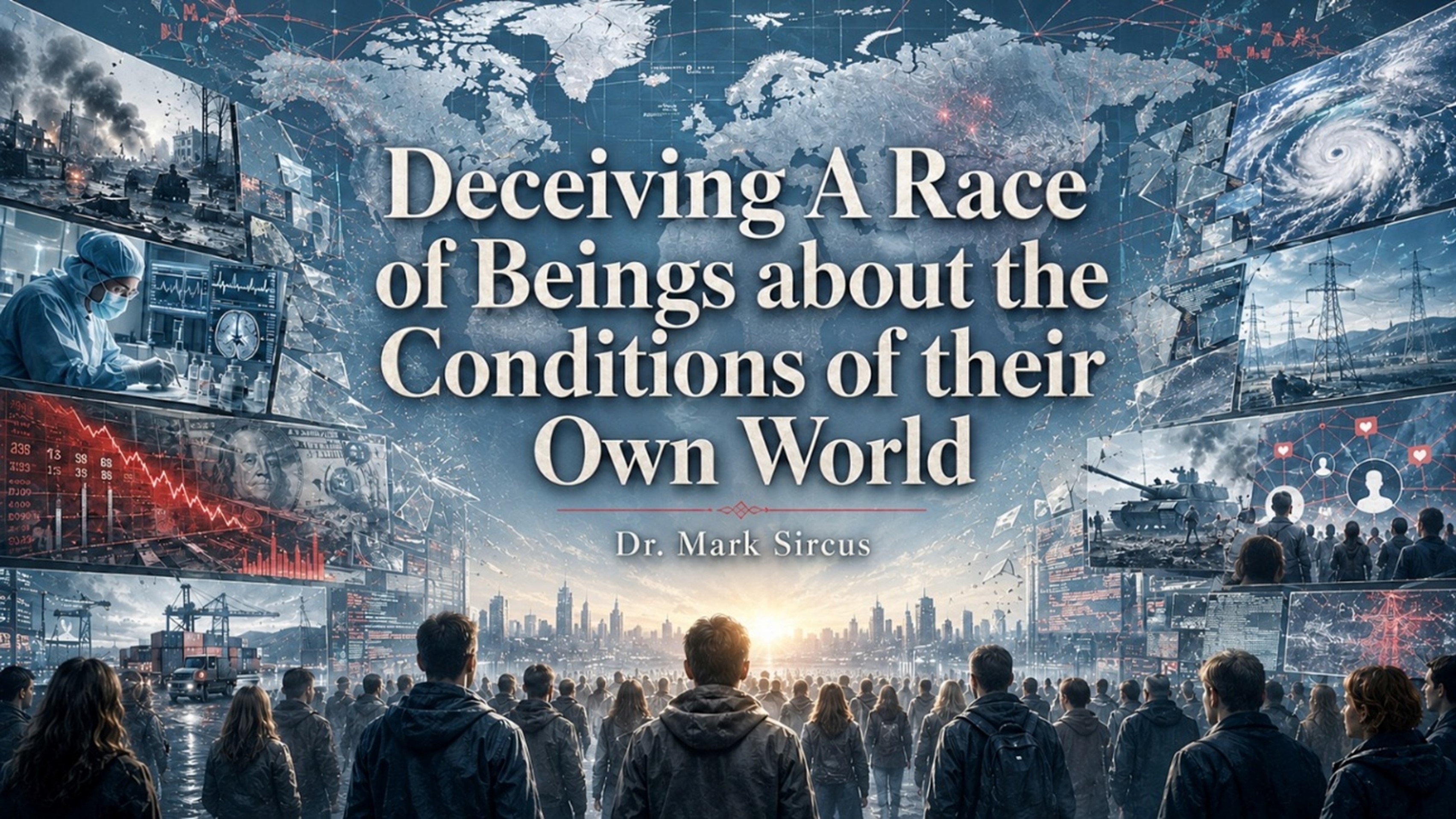


    "Things are getting worse each day, but the press hides the seriousness by reporting events in a highly fragmented way. They show smoke but not the architecture of fire. They report missiles, drones, ports, refineries, shipping lanes, oil prices, and diplomatic statements as separate stories, when in reality they are all parts of one expanding logistics war. The public is kept unaware of how close the world is to cascading failure because the worst implications can never be spoken plainly.

    Humanity is entering a period when multiple systems essential to civilization are weakening simultaneously. Oil is the lifeblood of modern industry, but pressure on oil, diesel, and jet fuel immediately spreads into farming, trucking, aviation, manufacturing, electricity, and emergency services. Fertilizer shortages threaten harvests months before empty shelves reveal the damage, while wars, sanctions, damaged infrastructure, and disrupted shipping routes lengthen, raise costs, and make every supply chain more fragile. These are not separate crises. They are one tightening noose.

    The big news today is diesel fuel. Global refinery crude throughput averaged 80.9 million barrels per day in July, down about 5 million bpd from a year ago, the International Energy Agency said in a monthly report last week. The most immediate hit from surging diesel cracks is to farmers who need the fuel to power tractors, harvesters and other equipment during the ongoing harvest season in the Northern Hemisphere and the planting season in the Southern Hemisphere. Russia, a major exporter of diesel, has recently halted all exports.

    Longer term, it could hit most other sectors of the global economy, as the fuel has wide-ranging uses from manufacturing to heavy transportation and power generation in parts of the world. Prices are still rising, and it is hurting truckers the most. By the end of the year, and certainly in 2027, there are going to be a lot of empty bellies.

    “And food is now exposed on both the Black Sea’s shores. This is no longer collateral disruption. Ports, terminals and agricultural export routes are increasingly becoming strategic targets. The world is not yet at generalized material collapse. But the buffers separating war from ordinary civilian life—inventories, alternate routes, spare refinery capacity and replacement equipment—are being steadily consumed. That is how a crisis deepens before the public fully recognizes it.”

    Deception is the Name of the Game

    It is not merely the media deceiving “the public.” That is too small. It is the deception of a race of beings about the condition of its own world. Governments and the press continue presenting developments as isolated inconveniences: a temporary fuel problem here, a delayed shipment there, another hospital closure, another crop failure, another war. But systems collapse through convergence. Fuel affects fertilizer; fertilizer affects food; food inflation affects health; war affects shipping; shipping affects medicine; debt limits governments’ ability to rescue anything.

    A civilization can survive individual shocks. It may not survive many shocks arriving together, especially when its financial foundation is already cracking as interest rates keep heading up. World debt is already in a doomsday loop.

    Since the beginning of the war with Iran, I have been getting war reports twice a day from my AI. Just recently, its language has been changing, and I am hearing things like, “The world darkened further overnight. The wars are no longer merely spreading geographically; they are attacking the circulation system of industrial civilization.”

    “The world darkened again this morning.” A merchant ship attempting to cross the Strait of Hormuz was struck by a projectile, damaging its engine room and causing a crew casualty. At the same time, Houthi drones reportedly attacked a Saudi Aramco refinery. Only six commodity vessels passed through Hormuz on Monday—still far below normal traffic and zero passed on Sunday—and no very large crude carriers or LNG tankers were recorded.

    At the same time, the European war is expanding vertically into the skies and horizontally into civilian infrastructure. Ukraine launched nearly 800 drones toward Russia in one of the largest attacks of the war, while Russian missiles continued systematically striking Ukrainian gas, electricity and coal facilities ahead of winter. The picture now is not merely of several wars occurring simultaneously, but of war converging upon the systems that keep modern life functioning: shipping lanes, refineries, power grids, fuel supplies, mines and food corridors. Humanity has not yet entered total global war, but it is dismantling—target by target—the infrastructure that seems destined to become a worldwide economic and humanitarian catastrophe.

    Everything is Ok – Stock Prices Are At Record Highs

    The point is that the situation is especially dire, but you don’t get that tone from mainstream news or from Wall Street, even though the bond market is screaming danger dead ahead. The greatest crime is not that governments deceive citizens. It is that a race of beings is being deceived about reality itself—about war, medicine, food, money, weather, energy, children, spirit, and the fragility of life on Earth.

    And this deception works because human beings are kept beneath the threshold of synthesis. They are given facts without meaning, news without wisdom, data without pattern, suffering without cause, and crisis without spiritual interpretation.

    We, humans, need to understand our situation. Not just the facts, but the shape of reality—what kind of world we’re in, what forces are acting on them, what’s at stake, what they should do. This is not a luxury. It’s a fundamental need, as real as food.

    When you deprive a population of coherent understanding — when you give them fragments without pattern, data without meaning, suffering without cause — you don’t just make them ignorant. You make them disoriented. Anxious. Depressed. Paranoid. Apathetic. You break their capacity to orient themselves in reality.

    And then you diagnose people’s and children’s disorientation as a mental health crisis and prescribe them dangerous pills that are probably responsible for many, if not all, of the mass killings as people, already with severe problems, go over the deep end.

    Rising rates of anxiety, depression, ADHD, autism, gender dysphoria, chronic illness. Each is reported as a separate crisis, requiring specialized intervention—more therapy, more medication. Never as what they collectively indicate: a civilization that has made childhood toxic and is now medicating the symptoms rather than addressing the causes.

    What’s Happening in Real Time To Global Civilization

    The global logistics architecture that industrial civilization depends on is being dismantled in real time, and the dismantling is accelerating. Shipping lanes that have served as the arteries of trade for decades are now contested, disrupted, or functionally closed in multiple regions at once.

    When multiple breadbasket regions experience poor harvests in the same year—whether due to weather, war, or input shortages—the global market cannot compensate, as there’s no surplus region to draw from. Prices don’t rise. They spike. Beyond a certain price point, the market mechanism breaks down entirely, replaced by export restrictions, hoarding, and black markets.

    Two of Russia’s biggest grain terminals at the southern port of Novorossiysk have suspended operations as a result of overnight Ukrainian drone strikes last Wednesday. Russia is the world’s largest wheat exporter, and most of those exports are shipped via its Black Sea ports, such as Novorossiysk. Odesa is being attacked, severely limiting Ukraine’s ability to export its grain.

    Conclusion

    Billions of people are encouraged to believe that tomorrow will function much like yesterday, while the foundations beneath their lives are being destroyed. A population that understands danger can prepare, conserve, cooperate, and change direction. A population kept distracted, divided, and falsely reassured remains defenseless.

    Dr.Sircus is a reader-supported publication. "
    Each breath a gift...
    _____________

  14. The Following 9 Users Say Thank You to onawah For This Post:

    9ideon (19th August 2026), Bill Ryan (19th August 2026), bobme (20th August 2026), Ewan (20th August 2026), grapevine (19th August 2026), Harmony (26th August 2026), Johan (Keyholder) (19th August 2026), shaberon (20th August 2026), Yoda (20th August 2026)

  15. Link to Post #68
    United States Avalon Member onawah's Avatar
    Join Date
    28th March 2010
    Language
    English
    Posts
    26,371
    Thanks
    54,946
    Thanked 142,386 times in 24,769 posts

    Default Re: The Possibility of Famine

    Famine in China
    China Hits Rock Bottom! Food Chaos Erupts
    China Observer
    833K subscribers
    Aug 21, 2026

    (Though opinions on the forum differ greatly concerning what is really going on in China, the news about the current, massive flooding there is impossible to discount, and the impact that will have on farming is undeniable.
    Deaths of millions due to famine in China occurred during Mao's tyrannical rule, which wasn't that long ago.
    The survivors of those times still display severely dysfunctional, acquisitive behavior when it comes to food.
    Now even younger generations are beginning to display the same kind of behavior in China, a harbinger of yet more hardships to come.

    Each breath a gift...
    _____________

  16. The Following 3 Users Say Thank You to onawah For This Post:

    grapevine (25th August 2026), Harmony (26th August 2026), Yoda (25th August 2026)

  17. Link to Post #69
    Avalon Member rgray222's Avatar
    Join Date
    24th September 2010
    Language
    English
    Posts
    3,691
    Thanks
    14,749
    Thanked 33,773 times in 3,580 posts

    Default Re: The Possibility of Famine

    She is changing the world

    Meet Mariangela Hungria: The Brazilian scientist who replaced fertilisers with microbes, saving billions and restoring soil


    Meet Mariangela Hungria: The Brazilian scientist who replaced fertilisers with microbes, saving billions and restoring soil

    For decades, modern agriculture assumed that high yields required heavy doses of synthetic nitrogen fertilisers. Mariangela Hungria proved otherwise. Working quietly at Embrapa, she spent more than 40 years studying beneficial soil bacteria that allow crops to draw nitrogen directly from the air. Her research helped transform Brazilian agriculture, cut dependence on chemical fertilisers, and turn Brazil into the world’s largest soybean exporter. In 2025, her work earned global recognition with the World Food Prize.

    Nitrogen is essential for plant growth. It is a key building block of proteins, enzymes, and chlorophyll. While nitrogen makes up most of the air, plants cannot absorb it directly. For much of the 20th century, agriculture solved this problem with synthetic fertilisers produced using fossil fuels. These fertilisers increased yields but also brought high costs, pollution, and major climate impacts.

    The science behind Mariangela Hungria’s breakthrough

    Hungria focused on biological nitrogen fixation, a natural process in which certain bacteria convert atmospheric nitrogen into a form plants can use. In soybeans, these bacteria live in nodules on plant roots and form a mutually beneficial partnership. The plant provides sugars. The bacteria supply nitrogen.

    Her contribution was not discovering the process, which was already known, but identifying and improving the most efficient bacterial strains for tropical soils and proving that they could work reliably at commercial scale.

    From laboratory to farm fields

    At Embrapa’s soybean research centre, Hungria led efforts to develop practical microbial inoculants that farmers could apply to seeds before planting. These inoculants replaced or sharply reduced the need for nitrogen fertiliser. Crucially, her team also worked on quality control and farmer outreach, ensuring the technology performed consistently outside the laboratory.

    As adoption spread, millions of hectares of Brazilian farmland shifted to microbe-based nitrogen supply.

    Transforming Brazilian agriculture

    The impact was national. Brazil reduced its dependence on imported nitrogen fertilisers while maintaining high yields. Farmers cut costs and improved soil health. Emissions linked to fertiliser production and runoff fell. Over time, biological nitrogen fixation became standard practice in Brazilian soybean farming, underpinning the country’s rise as a global agricultural powerhouse.

    Global recognition and wider implications

    Hungria’s World Food Prize citation highlighted not only the scientific achievement but its scale. Few agricultural innovations reach tens of millions of hectares. Fewer still do so while lowering costs and emissions at the same time.

    Her work is now studied by researchers and policymakers in Africa, Asia, and Europe as fertiliser prices rise and climate pressures intensify.

    A different model for the future of food

    Hungria’s career offers a powerful lesson. Instead of forcing productivity through chemistry alone, agriculture can work with biology. Her approach shows that solutions rooted in local ecosystems can outperform imported industrial models.

    “This is not just about soybeans,” agricultural scientists often note. “It is about redesigning farming around living soil.”

    In an era searching for sustainable ways to feed a growing population, Mariangela Hungria’s work suggests that some of the most effective answers are already beneath our feet.

    Source: https://www.msn.com/en-in/news/world...il/ar-AA1WOZhr

  18. The Following 4 Users Say Thank You to rgray222 For This Post:

    Ewan (3rd September 2026), Harmony (3rd September 2026), Sunny (3rd September 2026), Suzi E (3rd September 2026)

+ Reply to Thread
Page 4 of 4 FirstFirst 1 4

Posting Permissions

  • You may not post new threads
  • You may not post replies
  • You may not post attachments
  • You may not edit your posts