+ Reply to Thread
Page 3 of 3 FirstFirst 1 3
Results 41 to 57 of 57

Thread: Pawlsy the Cat is Her Name

  1. Link to Post #41
    United States Avalon Member
    Join Date
    1st April 2016
    Posts
    6,998
    Thanks
    35,786
    Thanked 39,982 times in 6,648 posts

    Default Re: Pawlsy the Cat is Her Name

    Aww...that's cute.

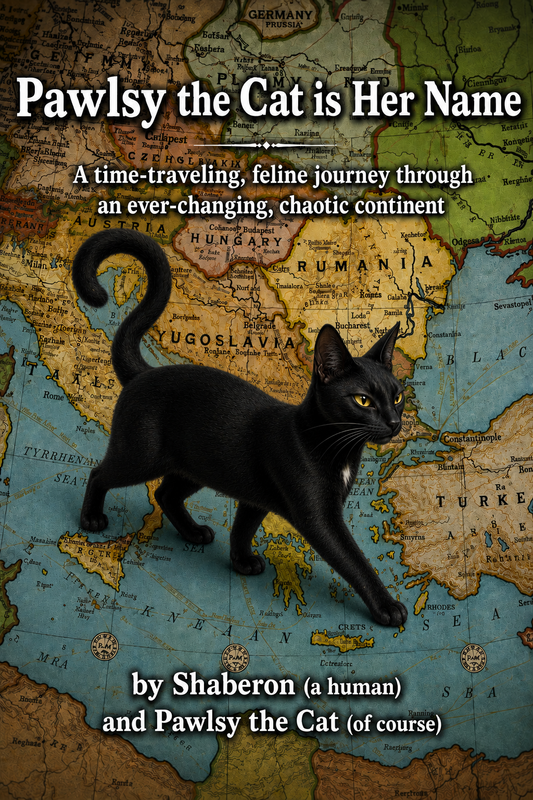
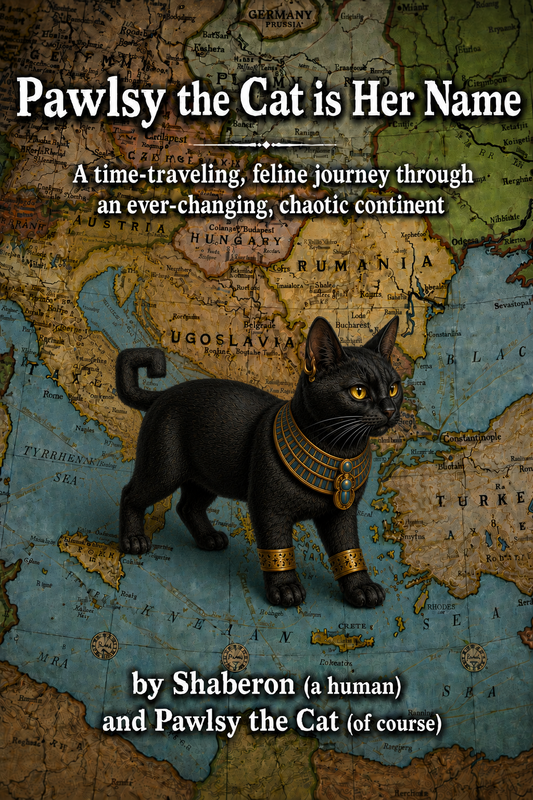
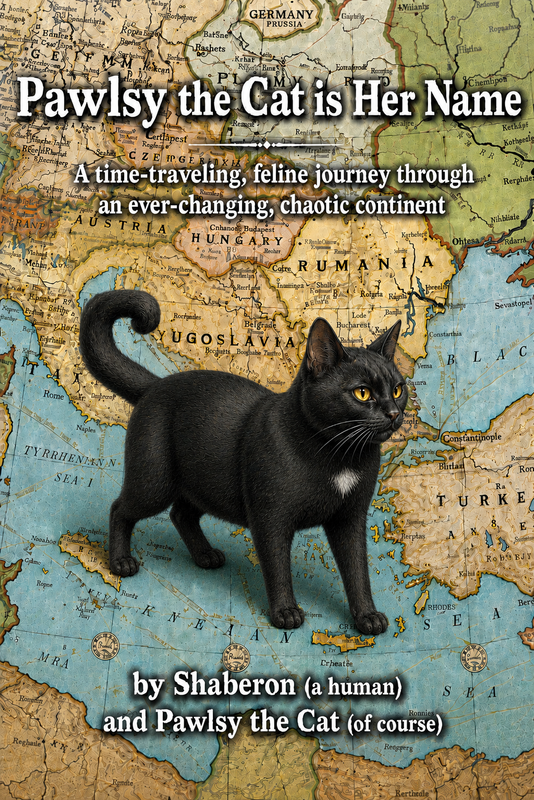
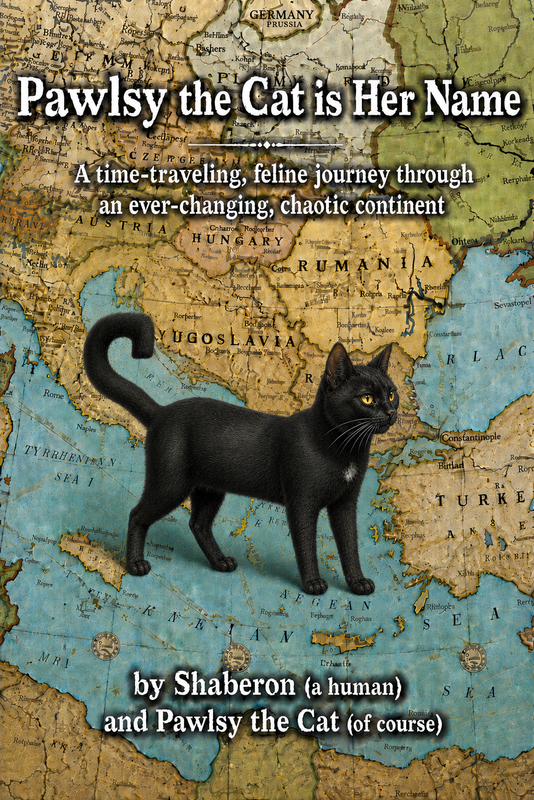
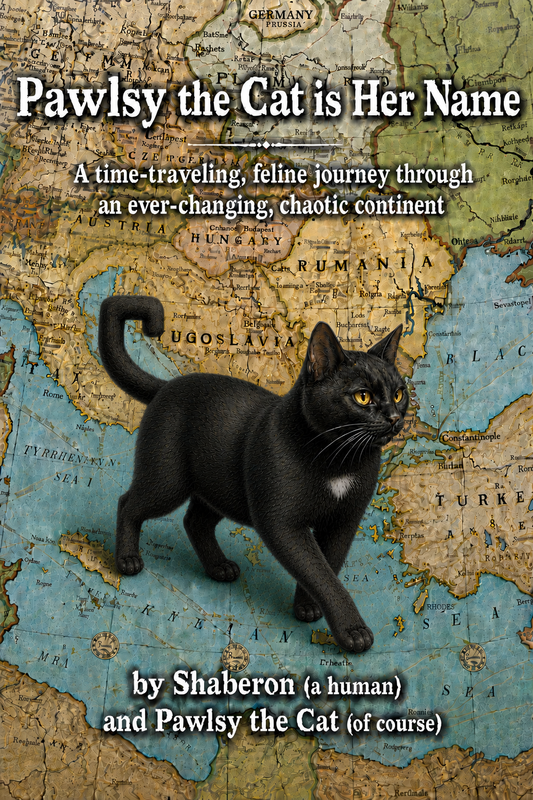
    Some of the things in here are true, Pawlsy is Egyptian because she has a question mark tail. She's also dark carbon black with just a tiny white spot on her chest.

    We are going to stick a few more adventures in here, until we sort of run out of history, and not get too close to the modern world.

    Pawlsy is also a longevity queen, she's been around longer than any animal companion I can remember in my whole life, and she's still the boss. So we have been through plenty of small personal struggles, which was the inspiration to look at modernization from a view that was silent and ignored in our actual upbringing. Thank you for the kind regards!

  2. The Following 8 Users Say Thank You to shaberon For This Post:

    Bill Ryan (23rd August 2026), Ewan (24th August 2026), grapevine (23rd August 2026), Johnnycomelately (23rd August 2026), mountain_jim (26th August 2026), RunningDeer (23rd August 2026), Tintin (23rd August 2026), Yoda (24th August 2026)

  3. Link to Post #42
    United States Avalon Member RunningDeer's Avatar
    Join Date
    6th February 2012
    Location
    Forest Dweller
    Language
    English
    Age
    76
    Posts
    20,025
    Thanks
    137,730
    Thanked 184,209 times in 19,841 posts

    Default Re: Pawlsy the Cat is Her Name

    Quote Posted by shaberon (here)
    Aww...that's cute.

    Some of the things in here are true, Pawlsy is Egyptian because she has a question mark tail. She's also dark carbon black with just a tiny white spot on her chest.

    We are going to stick a few more adventures in here, until we sort of run out of history, and not get too close to the modern world.

    Pawlsy is also a longevity queen, she's been around longer than any animal companion I can remember in my whole life, and she's still the boss. So we have been through plenty of small personal struggles, which was the inspiration to look at modernization from a view that was silent and ignored in our actual upbringing. Thank you for the kind regards!
    Shout out to Bill and shaberon for the ebook.

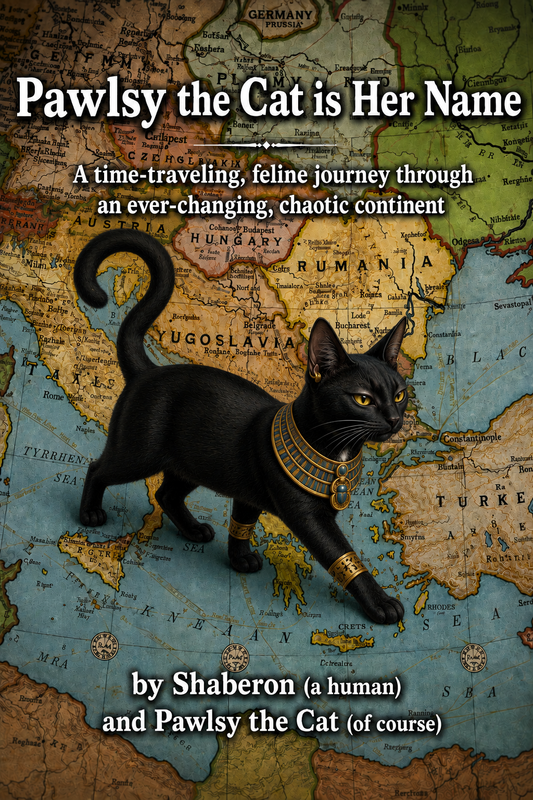
    Fingers crossed the updated cover is on its way to Bill. My internet & email are a bit wonky this weekend. Please let Bill know which one you prefer.
    ........................


    2nd option
    Last edited by RunningDeer; 24th August 2026 at 05:37.

  4. The Following 10 Users Say Thank You to RunningDeer For This Post:

    Bill Ryan (23rd August 2026), Casey Claar (28th August 2026), Ewan (24th August 2026), grapevine (23rd August 2026), Harmony (24th August 2026), Johnnycomelately (23rd August 2026), mountain_jim (26th August 2026), shaberon (25th August 2026), Tintin (23rd August 2026), Yoda (24th August 2026)

  5. Link to Post #43
    United States Avalon Member
    Join Date
    1st April 2016
    Posts
    6,998
    Thanks
    35,786
    Thanked 39,982 times in 6,648 posts

    Default Re: Pawlsy the Cat is Her Name

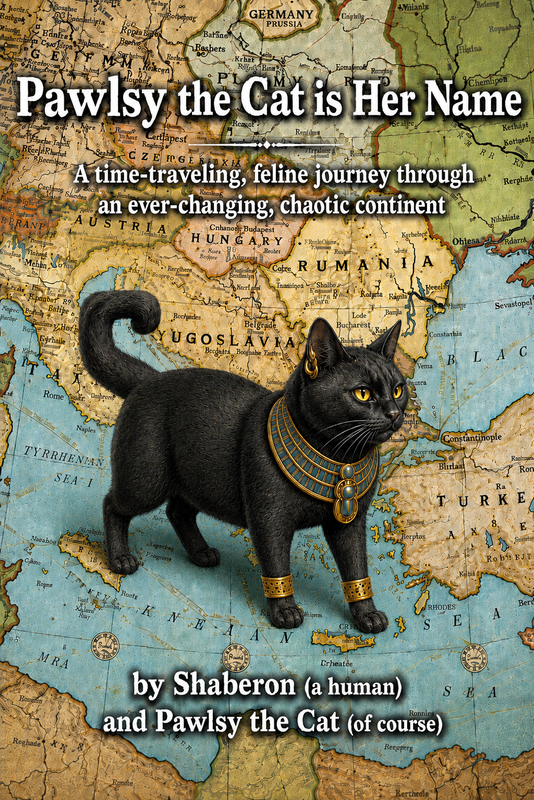
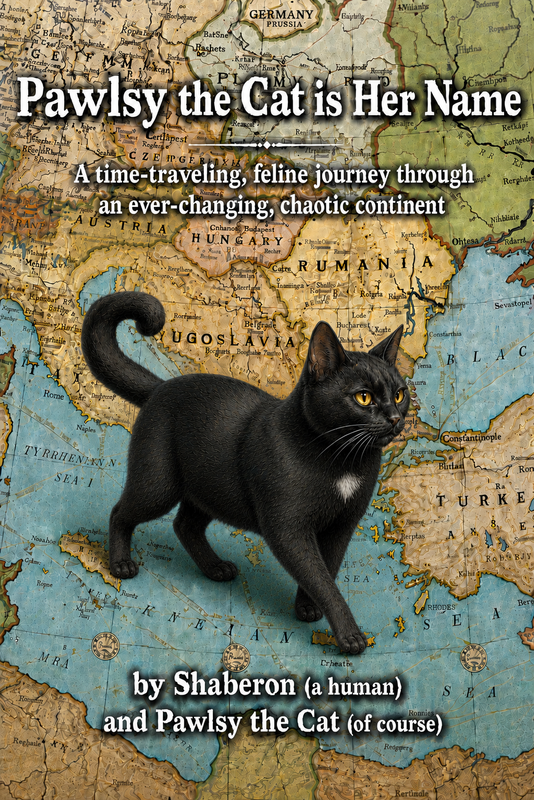
    Interesting. I would say the one with the Egyptian jewelry brings out the facial expression a little better.

    That's the other thing, Pawlsy has some intense expressions that a human is rarely allowed to see.

    The actual question mark is backwards, short, and squared off, and she's more stocky than sleek. I obviously don't do the likes of photo collections so I have nothing to add. But sometimes the look in her eyes will knock you to infinity.

  6. The Following 4 Users Say Thank You to shaberon For This Post:

    Bill Ryan (25th August 2026), Ewan (26th August 2026), Harmony (26th August 2026), RunningDeer (26th August 2026)

  7. Link to Post #44
    United States Avalon Member RunningDeer's Avatar
    Join Date
    6th February 2012
    Location
    Forest Dweller
    Language
    English
    Age
    76
    Posts
    20,025
    Thanks
    137,730
    Thanked 184,209 times in 19,841 posts

    Default Re: Pawlsy the Cat is Her Name

    Quote Posted by shaberon (here)
    Interesting. I would say the one with the Egyptian jewelry brings out the facial expression a little better.

    That's the other thing, Pawlsy has some intense expressions that a human is rarely allowed to see.

    The actual question mark is backwards, short, and squared off, and she's more stocky than sleek. I obviously don't do the likes of photo collections so I have nothing to add. But sometimes the look in her eyes will knock you to infinity.
    shaberon, I'll send off the copy you prefer to Bill.

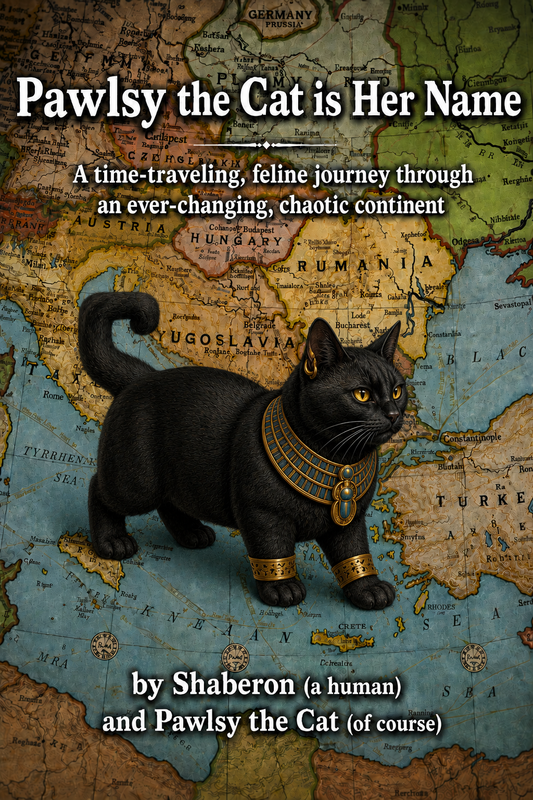
    RE: the tail - make the question mark backwards, short and squared off. Make the cat more stocky than sleek.

    more stocky than sleek


    less stocky


    shorter tail


  8. The Following 5 Users Say Thank You to RunningDeer For This Post:

    Bill Ryan (26th August 2026), Ewan (26th August 2026), Harmony (26th August 2026), mountain_jim (26th August 2026), shaberon (26th August 2026)

  9. Link to Post #45
    United States Avalon Member
    Join Date
    1st April 2016
    Posts
    6,998
    Thanks
    35,786
    Thanked 39,982 times in 6,648 posts

    Default Re: Pawlsy the Cat is Her Name

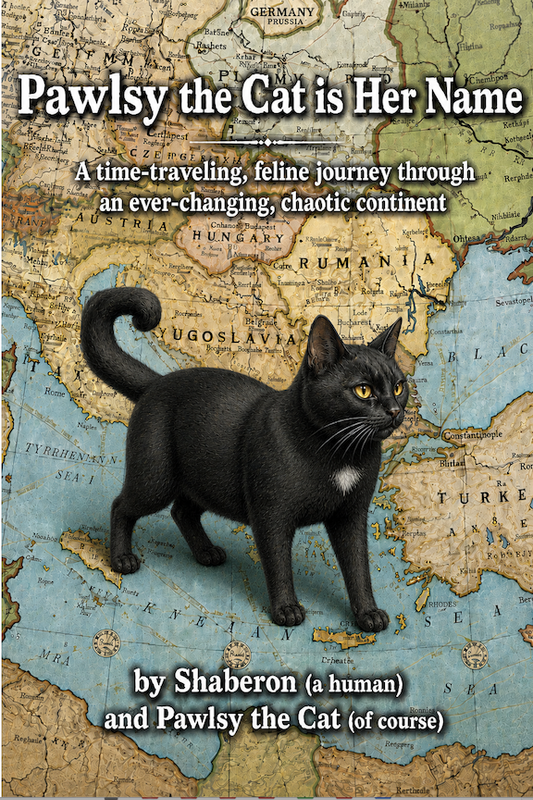
    Oh the tail on that top one is like a spitting image.

    If I was to be really technical, her forelegs are not oak trees. But for the most part, the fuller form gets the point across. She's not the biggest cat in the world, just a size up enough to say she is more than the typical slender cat. Definitely not the Egyptian breed, but associated with the Shepherd's Crook hieroglyph. It doesn't move like a normal tail, but she can still jump on a two inch wide porch rail like taking to a magnet.

  10. The Following 3 Users Say Thank You to shaberon For This Post:

    Bill Ryan (26th August 2026), Harmony (26th August 2026), RunningDeer (26th August 2026)

  11. Link to Post #46
    United States Avalon Member RunningDeer's Avatar
    Join Date
    6th February 2012
    Location
    Forest Dweller
    Language
    English
    Age
    76
    Posts
    20,025
    Thanks
    137,730
    Thanked 184,209 times in 19,841 posts

    Default Re: Pawlsy the Cat is Her Name

    Quote Posted by shaberon (here)
    Oh the tail on that top one is like a spitting image.

    If I was to be really technical, her forelegs are not oak trees. But for the most part, the fuller form gets the point across. She's not the biggest cat in the world, just a size up enough to say she is more than the typical slender cat. Definitely not the Egyptian breed, but associated with the Shepherd's Crook hieroglyph. It doesn't move like a normal tail, but she can still jump on a two inch wide porch rail like taking to a magnet.
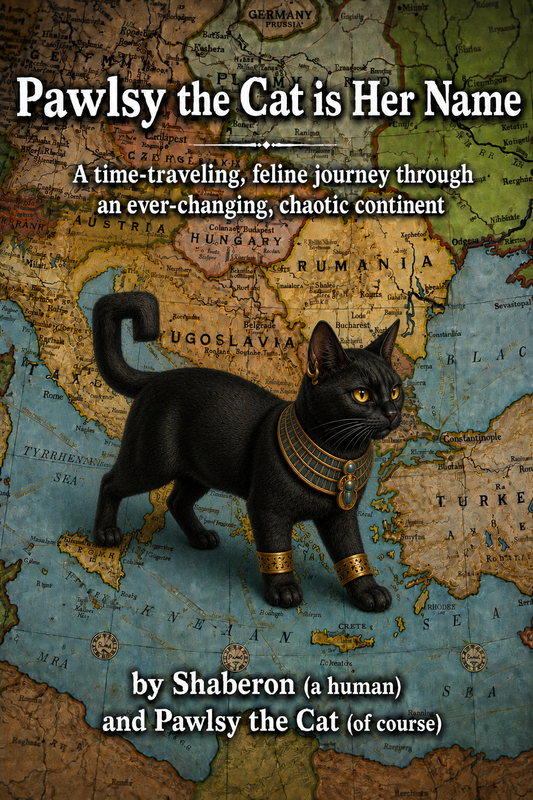
    Here's the update, shaberon.


    Last edited by RunningDeer; 26th August 2026 at 19:52.

  12. The Following 4 Users Say Thank You to RunningDeer For This Post:

    Bill Ryan (26th August 2026), Harmony (26th August 2026), mountain_jim (26th August 2026), shaberon (27th August 2026)

  13. Link to Post #47
    Argentina Avalon Member Vicus's Avatar
    Join Date
    6th October 2020
    Location
    Europa
    Language
    Spanish
    Posts
    3,856
    Thanks
    27,829
    Thanked 33,943 times in 3,837 posts

    Default Re: Pawlsy the Cat is Her Name

    Connoisseurs like beauty...

    Slender like a top model doing her cat walk...

    And the question mark come very good to ALL the mystery from those country's...


  14. The Following 5 Users Say Thank You to Vicus For This Post:

    Bill Ryan (26th August 2026), Ewan (27th August 2026), Harmony (28th August 2026), RunningDeer (26th August 2026), shaberon (27th August 2026)

  15. Link to Post #48
    United States Avalon Member
    Join Date
    1st April 2016
    Posts
    6,998
    Thanks
    35,786
    Thanked 39,982 times in 6,648 posts

    Default Re: Pawlsy the Cat is Her Name

    Quote Posted by RunningDeer (here)
    Here's the update, shaberon.

    Top one is pretty much true to life.

    With the Egyptian jewelry, I can't really say because you can't do anything like that to her, she'll knock your block off. Of course, it may be appropriate for the intended use. So either one of those is fine.

  16. The Following 5 Users Say Thank You to shaberon For This Post:

    Bill Ryan (27th August 2026), Ewan (29th August 2026), Harmony (28th August 2026), RunningDeer (27th August 2026), Vicus (27th August 2026)

  17. Link to Post #49
    United States Avalon Member RunningDeer's Avatar
    Join Date
    6th February 2012
    Location
    Forest Dweller
    Language
    English
    Age
    76
    Posts
    20,025
    Thanks
    137,730
    Thanked 184,209 times in 19,841 posts

    Default Re: Pawlsy the Cat is Her Name

    Quote Posted by shaberon (here)
    Quote Posted by RunningDeer (here)
    Here's the update, shaberon.

    Top one is pretty much true to life.
    Alrighty then... I've emailed the final copies to Bill.
    One last tweak...
    Pawlsy taking a step #1.


    Pawlsy taking a step #2.


    OR #3

    Last edited by RunningDeer; 28th August 2026 at 00:04.

  18. The Following 4 Users Say Thank You to RunningDeer For This Post:

    Bill Ryan (27th August 2026), Ewan (29th August 2026), Harmony (28th August 2026), shaberon (29th August 2026)

  19. Link to Post #50
    United States Avalon Member
    Join Date
    1st April 2016
    Posts
    6,998
    Thanks
    35,786
    Thanked 39,982 times in 6,648 posts

    Default Re: Pawlsy the Cat is Her Name

    I'm not sure the foot position matters; the tail on #3 looks more natural. That's quite close to realistic.

    There will be a few more posts of content to add to this, probably not ten, maybe five, but we'll keep it historical.

  20. The Following 3 Users Say Thank You to shaberon For This Post:

    Bill Ryan (29th August 2026), Ewan (29th August 2026), Harmony (30th August 2026)

  21. Link to Post #51
    United States Avalon Member RunningDeer's Avatar
    Join Date
    6th February 2012
    Location
    Forest Dweller
    Language
    English
    Age
    76
    Posts
    20,025
    Thanks
    137,730
    Thanked 184,209 times in 19,841 posts

    Default Re: Pawlsy the Cat is Her Name

    Quote Posted by shaberon (here)
    I'm not sure the foot position matters; the tail on #3 looks more natural. That's quite close to realistic.

    There will be a few more posts of content to add to this, probably not ten, maybe five, but we'll keep it historical.
    shaberon, #3 was your final pick. IIRC the tail was an important part of the changes made. There's now a check mark 'completed' on my to-do-list.

  22. The Following 4 Users Say Thank You to RunningDeer For This Post:

    Bill Ryan (30th August 2026), Ewan (29th August 2026), Harmony (30th August 2026), shaberon (30th August 2026)

  23. Link to Post #52
    United States Avalon Member
    Join Date
    1st April 2016
    Posts
    6,998
    Thanks
    35,786
    Thanked 39,982 times in 6,648 posts

    Default Re: Pawlsy the Cat is Her Name

    We are going to say a few things, before we get to how it all worked and what happened.

    It was important Pawlsy homed in on something.

    I didn't know it or it was accidental to me.

    Times changed because it was difficult to gain any interest in Mister Stalin, but now, in the long run, the key is we are not even in the Cold War:


    Quote After Stalin's death in 1953, Tito had to choose between a more Western approach to reforms or an agreement with new Soviet leader Nikita Khrushchev.

    Tito tried to reconcile with the Soviet Union, inviting Khrushchev to Belgrade in 1955. The Khrushchev trip to Belgrade is sometimes colloquially known as the "Soviet Canossa".

    This meeting resulted in the Belgrade declaration ending the Informbiro period, granting other socialist countries the right to interpret Marxism in a different way, and ensured more equal relationships amongst all satellite states and the Soviet Union.

    The declaration guaranteed noninterference in Yugoslavia's internal affairs and legitimized the right to interpret other forms of socialist development in different countries.

    The period had an impact on Yugoslavia's contemporary art and popular culture, as artists were encouraged to seek inspiration in the wartime struggle of the Yugoslav Partisans and the construction of new infrastructure. Decades later, many literary works and films covered the era's events.

    This was a tremendous relief since we had very nearly entered NATO during the Informbiro:


    Quote In February 1953, Yugoslav, Greek and Turkish foreign ministers signed the Treaty of Friendship and Cooperation in Ankara, later also known as the Ankara Agreement, formalising an agreement to cooperate in defence matters. A military alliance agreement building on the Ankara Agreement was signed by the three in Bled on in August 1954, but it did not attach Yugoslavia to NATO. Instead, it allowed Yugoslavia to retain an independent policy. Tito signed this pact to bolster the defense of Yugoslavia against a potential Soviet military invasion. It also made the option of Yugoslavia's NATO membership more plausible at its time. Under this pact, any potential Soviet invasion of Yugoslavia could also lead to NATO intervention to help defend Yugoslavia due to the NATO memberships of Greece and Turkey. However, the foreign policy disagreements between the three countries in the pact eventually crippled the alliance itself, thus ending the possibility of Yugoslavia's NATO membership.


    Fergus said, "Our main problem had been Stalinists; and while Operation Valuable was attempting the same kind of thing, Enver Hoxha tried to use Kosovar separatism and the Cominform for an ongoing Albanian border conflict:


    Quote After the sealing of the border with Yugoslavia, from 1948 to 1953, there were 7,877 border 'incidents', of which 142 were substantive clashes, which led to an armed conflict at the border.

    This initial dialogue paved the way for subsequent discussions, ultimately leading to the signing of separate agreements in Pogradec on December 9, 1953. These agreements established a joint commission to address border issues, dividing the border into three sectors and regulating it based on a protocol from 1926. The prompt implementation of measures to mark the border line, completed by December 1954, marked a significant step towards resolving territorial disputes and fostering future collaboration.

    Pawlsy said, "In 1953, there were even four infiltration attempts around Peja."

    I said, "Those times were definitely one of tension, but if you look at the nature of things, our involvement was not really called for. The competent authorities are able to handle these incidents on their own.

    With the passing of Stalin, the Greco-Turkish thing was effectively scrubbed, and there is at least a stand-down with the Soviets."


    Dinky said, "I'm not sure if people understand what kind of a see-saw it was.

    Our primary purpose is what you might call hunting the right battles. And we've spent a career about this and it just seems to have actually worked. We don't know of anything left to fight.

    Pawlsy, is it difficult to underestimate this point?"

    "No. For us, regionally speaking, a few years of what looks like normal stability is simply amazing.

    I'm looking at the possibility of going back to performing full time, maybe back out to Paris and a few places like that, and of course all over Yugoslavia and Bulgaria, but Ceylon and India have got me. I believe we can hold our edge until some point in the indefinite future when everything becomes too artificial."


    Genta said, "I can feel it coming."

    Fergus said, "Like a tidal wave."

    Fleep looked at me so I said, "That's right, from around that moment going forward, we were never anything like normal people again."

    Dinky said, "I don't believe so."

    I don't know why or if it was just due to circumstance. When Pawlsy followed the Dharma out to Kathmandu it started to sink in.


    It may be roughly comparable to us. Kosovar Albanians have the foreign government of Yugoslavia. Minority Newars are similarly concentrated in one area, which has had foreign rulers throughout its epoch. In this sense, the foreigner is seen as being neutral towards local sides of a feuding nature, like Albania had such problems with. It's how Kievan Rus started; it has been asked for many times, usually because it works.

    And yet Nepal was the place where we were unable to take interest in its modern government; but on the other hand, we had a high interest in Newar Buddhism. We're going to gather some information about that unless another emergency happens.


    The 600s were a huge gash leaving India unstable. Nepal doesn't have this difficulty. It has the Amsu Samvat which we will get back to. It gained quick importance to Pawlsy. And by previously talking about the discord in this period, we neglected one of the most important testimonies. This is how it plants roots.


    "We looked at things a certain way, because of Fish Justice, Matsya Nyaya, which took place for a long period until Gopala subjugated it.

    Perhaps Chakravartin Harsha was an overweaning epithet from sheer personality cult.

    But, I think it may be at least partly justifiable, from quite thorough records of the 600s by Xuanzang of Luoyan, which is the gateway to China for Han Buddhism with records from the early 100s. And he is stuck in the Chinese riddle."


    Quote He knew about Faxian's visit to India and, like him, was concerned about the incomplete and misinterpreted nature of the Buddhist texts that had reached China. He was also concerned about the competing Buddhist theories in variant Chinese translations. He sought original untranslated Sanskrit texts from India to help resolve some of these issues.

    "And then we can be positive Bengal had something to do with Buddhism prior to any dark age that may have happened, because King Harsha was visited by Xuanzang."


    Quote ...in 636, Xuanzang encountered 100 monasteries of 10,000 monks (both Mahayana and non-Mahayana), and was impressed by the king's patronage of both scholarship and Buddhism. Xuanzang spent time in the city studying early Buddhist scriptures, before setting off eastward again for Ayodhya (Saketa), homeland of the Yogacara school.

    "That's where Asanga and Vasubandhu started their independent viharas, which did not always have support.

    Life is relatively continuous all the way into Assam, such as under the Chinese spelling Hiuen Tsang."


    Quote From Nalanda, Hiuen Tsang traveled towards Bangladesh and found 20 monasteries with over 3,000 monks studying both the Hinayana and the Mahayana. In the Vasibha Monastery he found over 700 Mahayana monks from all over East India.

    He then travelled to Andhra Pradesh (then Andhradesa) and visited viharas in Amravati and Nagarjunakonda. In Amravati he studied the ‘Abhidhamma Pitaka’ texts. He continued traveling to Kanchi, the imperial capital of Pallavas, and a strong center of Buddhism. Before returning to Nalanda he travelled to Nasik, Ajanta, Malwa, Multan and Pravata.

    On the invitation of Assamese king Kumar Bhaskar Varman, Xuanzang went east to the ancient city of Pragjyotishpura in the kingdom of Kamarupa (now Guwahati).

    Before going to Kamarupa he visited Sylhet (modern city of Bangladesh) and gave a detailed account of the culture and people of Sylhet.

    At the request of the king Harshavardhana, Hiuen Tsang was escorted back to kannauj to attend a great Buddhist Assembly. The assembly was attended by neighbour kings, Buddhist monks, Brahmans, and Jains.

    King Harsha also invited Hiuen Tsang to Kumbh Mela in Prayag where he witnessed king Harsha’s generous distribution of gifts to the poor. He was then given a grand farewell by the king.

    "That's from a Civil Service exam.

    No matter how atheist, it's going to require you to have a modest familiarity with Vasubandhu to obtain an entry-level job in China.

    This is great but the answer we were looking for was with Fa Xian."


    Fleep said, "That's because it is a system of Seven, and everything else is like flights of fancy around it. The pattern of seven is upheld by the Tibetan Karmapas. It passed through like a thousand years while other things fluctuated.

    It may have been Fa Tsang, because you mean the Southern Tilun school."

    One of those.

    Fergus said, "Xuanzang gives rich detail including voluminous praise of King Bhaskar Varman and Assam and its people. Buddhism is said to be present but not dominant, similar to Nepal I suppose."


    I said, "It doesn't say where it says this."


    Quote He installed a stone Shivalingam, which he called Bateshwar Shiva, in modern-day Bondor Bazar which he obtained during a pilgrimage to Akshayavat in Prayagraj. It is said he did this to compete with the Buddhist Lokenath statue which a group of merchants installed in modern-day Kazir Bazar.

    "But, it has no unlikeliness, it means Avalokiteshvara, in the 600s. It's not specifically tantric, but then what would you call it.

    This has got to be the most serious effort ever made. It's the overland route.

    The red pen is Xuanzang, with entry through Samarkand and exit out Khotan."


    "Now I'm going to mitigate the fallout.

    China has already confessed the closest thing to the truth, 'Buddhism' appears to have many versions and/or doctrines, is titanic and appears inconsistent. Another one of their pilgrims, Paramartha, quite visibly adds his own artistic license. And Xuanzang is all over the place, but, spent most of his study with Silabhadra at Nalanda, where they had at least ten commentarial pools.

    Everyone was turning to Vasubandhu as an authority.

    He makes everything more difficult and obscure.

    According to Ratnakarasanti, it's the Agama of Asanga, not Vasubandhu.

    And as we said, Yogacara had left Nalanda and went to Vallabhi. So, Xuanzang is, in fact, in the line of logicians, Vasubandhu, Dignaga, Dharmapala, Silabhadra. The absence of Candragomin makes us want to place him around 650 and thereafter."


    Fergus said, "Vasubandhu is useful in a few summarizing moments.

    It's when he attempts to write that you cringe."


    I said, "Asanga had a spiritual catharsis that led to directly meeting Bodhisattva Maitreya in the Third Heaven."


    "Vasubandhu refuted him for decades and was finally converted by the Acintya Sutra or the Inconceivable. From that point, he could only begin to retrace the same footsteps without any guidance."


    Pawlsy said, "Most Oriental Mahayana is Vasubandhu but almost devoid of Asanga."

    Fleep said, "That saved me a lot of investigative work."


    It does. You might get something from it, but, even from a purely textual standpoint, Asanga is much more organized, and, well, better informed. Vasubandhu was perhaps like Olcott, a great manager of human resources, but less explanatory than his counterpart.

    I said, "Now a marriage of 624 or 632 is going to take place unifying Tibet and Nepal."


    Quote According to some Tibetan legends, however, a Nepali king named Go Cha (identified by Sylvain Lévi as "Udayavarman", from the literal meaning of the Tibetan name) was said to have a daughter called Bri-btumn or Bhṛkuti. "Udayavarman" was most likely the same king we know as Udaydeva, the son of Shivadeva I and later, the adopted son and heir to Aṃshuvarmā. He was also thought to be the father of Narendradeva (Tib: Miwang-Lha). If this is accepted, it means that Narendradeva and Bhrikuti Devi were brother and sister.

    It is believed that Udayadev was exiled to Tibet and his daughter, Bhrikuti, was married to the Tibet Emperor Tsrong-tsang Gompo. This event appears to have opened trade routes between Nepal and Tibet. Some early historians in Nepal had mistakenly concluded that the pictographic symbol used to name the father of Bhrikuti in Tang Annals stood for Amshu (which means the rays of the rising sun in Sanskrit, the language used in Nepal then), where as Udaya (the rise of the sun) would also be written with the same symbols. Bhrikuti could not have been Amshuverma's daughter simply because she would be too old to marry the Tibet Emperor. Bhrikuti was daughter of Udayadev and she had dispatched the Tibetan army to Nepal valley to reinstate Narendradev, her brother, as king in Nepal about 640 AD. Bhrikuti was instrumental in spreading Buddhism to Tibet and she later attained the status of Tara, the shakti in Mahayana Buddhism.

    The Chinese Buddhist monk Xuanzang, who visited India during the 7th century, described Aṃshuvarmā as a man of many talents.


    "In the Vamsavali, after Amsu Varman, are a couple of kings with a Buddhist sound."


    Quote Thereafter, the Solar dynasty ruled over Nepal again. Śrī Narendradeva initiated the festival of Śrī Lokeśvara of Bungamati and Śrī Bālārjunadeva offered his crown to Buṅga Lokeśvara Bhaṭṭāraka.


    Narendradeva's sister is Bhrikuti:


    Quote We do have some fairly detailed historical accounts of Narendradeva. The (Jiu) Tangshu, or Old Book of Tang, records that when the king of Nepal, the father of Licchavi king Naling Deva (or Narendradeva), died, an uncle (Yu.sna kug.ti = Vishnagupta) usurped the throne. "The Tibetans gave him [Narendradeva] refuge and reestablished him on his throne [in 641]; that is how he became subject to Tibet."


    Bhrikuti was a devout Buddhist as was her father, and she brought many sacred buddhist images along with expert Newar craftsmen to Tibet as part of her dowry. Songtsen Gampo and Bhrikuti built the great temple, the Tsulag Khang (or 'House of Wisdom') to house the images, which is now known as the Jokhang Temple ('House of the Lord') in the heart of Lhasa, and is considered to be the most sacred temple in Tibet. Her statue of Jowo Mikyo Dorje was then housed in the Jokhang. They also built the red palace of dMar-po-ri which shifted the ancient seat of government in the Yarlung Valley at Yungbulakang to the site of modern Lhasa. The Red Palace, or Red Fort (Mar-po-ri Pho-drang) on Marpo Ri (Red Mountain) in Lhasa that was later rebuilt into the thirteen storey Potala by the Fifth Dalai Lama, was originally constructed by Nepali craftsmen. She also had constructed the Tub-wang and other statues in Samye and the famous Nepali artist Thro-wo carved the revered statue of Chenrezig, Thungji Chen-po rang-jung nga-ldan.

    The famous statue Bhrikuti brought is called the Jowo Mikyo Dorje of Akshobhya Buddha which came originally from Bodhgaya and, according to the 8th Dalai Lama, the statue rested in Swayambhunath for seven months before being brought into Tibet. This statue is also called the Manuvajra, the Ramoche Jowo, or Jowo Chungpa. It is currently housed in the Ramoche Temple in Lhasa.

    'Thonmi Sambhota was sent by royal order [to India] in order to get the Indian doctrine and the model of the alphabet (yi ge'i dpe). . . ."

    Jokhang or Tsulag Khang:


    "So you understand."

    Fergus said, "Yes. Sanskrit has a full palette of nuances that make Amsu and Udaya completely different. Tibetan has a limited ability to mimic this."

    Ariana said, "At about the same time, from the view of Nepal, it was importing Lotus Family simultaneously while exporting Vajra Family, by, what in the most likely explanation, are brother and sister."

    "And what from Bhrikuti has been left and enshrined in Nepal?"

    Pawlsy said, "A Loom."


    "Then let me help you with the next thing that's strange.

    'Cina' is about to be taken by everybody to mean 'Tibet', while it has more to do with 'Chinese sphere of influence'. Please disregard anything that uses it as Tibet, which is everything, I think, that mentions it at all. In earlier times, there was no such country, and it certainly didn't have any spiritual practices. The thing in the 600s is probably some of the first substantial contact.

    Instead, very curiously, the deity Mahacinakrama Tara, almost certainly has her origins in Assam, reproduced in Nepal. Personally similar to Ekajati."

    Fergus said, "That sounds specific to something. A Krama is a cycle of yoga, like they might look at the Mahavidya system and call it a krama."

    Fleep said, "But you keep saying Assam is the source of Red Avalokiteshvara, not Ekajati."

    "So, we don't know what's intended here yet.

    The implication of an Akshobhya presence in Tibet is Akshobhya Abhiseka. You could probably call it a new system at the time. But what we see is Newar craftsmen, not Vajracharyas.

    A deity named Bhrkuti is a form of Tara. In fact she is a regular and familiar find at least from MMK onwards. The Princess may not have been born with this name, but, earned it by association with the goddess."

    Fergus said, "Alright. They seem to have added Chenrezig or Avalokiteshvara during her lifetime, via the Nepalese."

    Pawlsy said, "Tell me why she is like Ekajati."


    "Yes Pawls.

    The immediate difference is the hand symbol. A deity is mainly characterized by the item held in its right hand, a primary attribute. Because of this, Ekajati is a Spear Goddess, but frequently mis-interpreted as a trident. The point here is the point -- the spear is one-pointedness, as a substrate of Samadhi.

    This is shared with Viraja and Bhima Devi.

    In Nepal, you're going to find an unusual kind of manifestation, a Sword Goddess."


    Dinky said, "That's Guhyajnana Dakini."

    "Not exactly.

    You are right, so, we must be in another field where this is shared or passed around."


    Pawlsy said, "I didn't have anything to do with the Buddhist Lion on purpose. With this Sword I might."


    "We were able to find three Kramas in Sadhanamala. One is Dhanada Krama Tara, which is mostly directly of and to Tara, that is, her personal retinue and mandala realm. Another is Mahabala or Raudra Krama, which, actually appears to have agglomerated around Vasubandhu's Dharani system. I think transitionally in the 5-600s, you probably had Agricultural Magic with Pratisara and Vajratunda, Bhutadamara, and then a yoga Krama of fierce energy, Mahabala.

    Let's borrow someone's reaction to the third."


    Mahacina Krama Tara:

    Quote The goddess is named Mahācīna-Tārā and testifies to the syncretic Buddhist and Hindu tantric cults in Newar country. She is also known as Prajṅādevī. She is part of the group of 21 Tārā but is also assimilated to Prajṅāpāramitā. The legend that deals with the origin of her cult includes both Buddhist and Hindu elements. The wise Vasistha could not visualize the goddess Tārā and asked for the advice of his spiritual master, the god Brahmā. However, the goddess eventually appeared to him and ordered him to go to Mahācīna in order to meet Buddha, the ultimate avatara of Viṣṇu. Thus, at the place called Mahācīna, he was able to pay tribute to Tārā, which appeared to him under this specific iconography (Mahācīna Tārā). She is sometimes confused with the dreaded Ekajatī.

    Representations of this goddess are rare.

    "Some things are only half figured out.

    Yes of course it derives from Prajnaparamita, but she has really just invoked the commentarial system."


    Quote Prajñādevī (प्रज्ञादेवी) refers to the “wisdom Goddesses”, according to the Guru Mandala Worship (maṇḍalārcana) ritual often performed in combination with the Cakrasaṃvara Samādhi, which refers to the primary pūjā and sādhanā practice of Newah Mahāyāna-Vajrayāna Buddhists in Nepal.—Accordingly, “Goddesses having five colors, givers of five (kinds of) knowledge, Pañca Buddha wisdom goddesses (prajñādevī), Pañca Tārā, homage be to you”.


    "So, it is back to, on the simplest level, Hodgson's lists.

    So you begin to see why Prajnaparamita is Vajra Family. Gives you the sense that Akshobhya Abhiseka has the intent to gate you into the Wisdom realm of a Devi.

    This Buddhist goddess is reflected back into Hindu Yoga.

    The sadhana types such as in Sadhanamala are carbon copied into some of their books. Most of the technicalities in Yoga come from the Buddhist Amritasiddhi.

    Well, we think Buddhism must be indifferently using Hindu cultural elements. It would not make sense for them to have a vastly different set of Pitha sites, a lot of these are real parts of actual geography that have been known for ages.

    And so we have a lot of shared vocabulary with Indian literature of the 7-800s in the Yamala class; here we find Blue or Nil Sarasvati is virtually identical to Atharva Vedic Krtya."


    Quote For six thousand years he did Sadhana, but still the Daughter of the Mountains did not appear to him.

    She is attached to pure Cinacara (Shuddhacinacararata).

    She is in the form of the Atharva branch of the Vedas (Atharvavedashakhini).

    Go to Mahacina and the country of the Bauddhas and always follow the Atharvaveda (Bauddha deshe' tharvaveda Mahacine sada braja).

    Fergus said, "It's more of an adjective, not really the Buddhas or Buddhists; it seems to be calling Assam 'Buddhist country', which makes sense if some kings eventually tried to restore Hinduism. It may have had this reputation, leading to a story about Vasistha meeting the Buddha himself."


    In the Yamalas, Vasistha, agitated by finding wine and women, raises the objection:


    Quote How can there be Siddhi without Vaidik rites?

    Buddha said, "Oh Vashishtha, listen the while I speak to thee of the excellent Kula path, by the mere knowing of which one becomes in a short time like Rudra Himself. I speak to thee in brief the Agama which is the essence of all and which leads to Kulasiddhi. First of all, the Vira (hero) should be pure (Shuci)..."

    She:

    Quote ...is Raudri with eighteen arms...

    "We of course are not going to go in to the specific teaching in Yoga Vasistha.

    However you see the dawning of the same antinomian Vira ethos as in Dakini Jala. And, I think it is correct, we are doing an Atharvanic practice.

    You will notice similar names and forms. There is Blue Sarasvati; and there is Ugra Tara who is blue; and then there is Mahacinakrama Tara, who may look like other forms on the unpainted surface of a statue."

    Dinky said, "Without the color, it could be Guhyajnana Dakini."

    "Yes. But in this case, we are looking at something that was probably originated in Assam, that is in the Yoga Vasistha, and the Mahavidyas. This is probably a Kula or Family.

    Kurukulla and Vajravarahi are from the Sri Yantra system.

    The Sword is actually like the balance of that whole thing.

    This is a different one.


    So, Pawls, in conjunction with your interest in the Moods, those are used for Heruka's retinue by Anandagarbha. And it shows up with one of the three Shaktis. Ghasmari is a Black or Dark Mahesvari with a Sword in her Musti--Fist and an Agni Kunda which is a Dharmodaya. She's found in the West, the expected location of Lotus Family and Fire.

    In her case, we will re-consider the description eating a corpse as instead meaning a mood expression, eating death. Her hands are full. It would not be realistic.

    She gets special attention because she turns out to be the secret of the Samputa Tantra.

    This is almost exactly the science of Taste as applied to a Flask Ritual."


    Fergus said, "Almost no one has a Dharmodaya as a hand item."

    Dinky said, "That would mean the controlled application of something we might discover as very wild."


    "So Mahacina Krama must be something relatively explanatory, introductory, public, similar to Hinduism, which to us becomes Guhyajnana Dakini and Ghasmari. They are advanced states. Maybe the Mahacina and the Mahabala are about the same, about cultivating fierce energy until you get the results. And I want to talk about this because, yes, you could start getting results."

    Luminous Wisdom gives Hevajra's Ghasmari as the purified sixth principle, manas of self-grasping, or sakkaya-ditthi or what we have called Sixth Skandha and Gnosis Element. Her name literally means voracious, rapacious. So, yes, she only exists in the state of attainment. Something like a sister of Vajrasattva, sort of like Cunda and Parasol. But not as an outer invocative deity; a tantric component in Samvara and Hevajra systems.


    Alright. We found compelling enough reason to think Nepal got Red Avalokiteshvara from Assam in the 600s. In that case, there is a greater likelihood of an Ugra Tara following along. Is there any better reason for it not to?


    Pawlsy said, "In the most skeptical light of what might be non-Buddhist in Assam, there is still an interesting local culture of Kamakhya like in Chakrasamvara."


    Quote Ma Kamakhya’s temple, one of the ancient shakti peethas, is located on the Nilachala Hill in the Kamrup District of Gauhati. This is where the womb and yoni of Ma Sati are worshipped. Ma Kamakhya is also known as Siddha Kubjika. She is worshipped as Kali and Tripur Sundari as well.

    What many people don’t know is that apart from the main shrine there are temples of the Dashamahavidyas on the Nilachal Hill – Ma Kali and Tara temples are adjacent to the main Kamakhya temple. The Bhuvaneshwari temple is a little ahead, a km uphill from Kamakhya. The others being Ma Tripura Sundari, Matangi, Kamala, Bagalamukhi, Chinnamasta, Bhairavi & Dhumavati. There are five temples of Lord Shiva namely Kameswara, Siddheswara, Kedareswara, Amratokeswara and Kautilinga around the temple.

    The Ambubachi annual festival, known as the Mahakumbh of the East, is held at Kamakhya Temple to celebrate the menstruation course of the Goddess. This festival is celebrated in the month of Ashadha, around the solar ingress or sankranti, when the Sun traverses into the sign of Gemini. In Orissa too, a festival called Raj Parba is celebrated with the Sun moving into Mithuna or Gemini. This festival marks the worship of Bhudevi, the wife of Lord Jagannath. All agricultural work, digging, ploughing and sowing of crops are suspended in this period. Mother Earth is resting at this time.

    The Bhairav for Kamakhya is at the Bhasmachal hill in the middle of the Brahmaputra, on a small island. It is here that Shiva burnt Kamadeva with the krodhagni from his third eye – hence the name Bhasmachal/ Bhasmakuta. It is s Shiva temple named Umanand, the temple pujaris refer to Ganesha here as Umanand (Parvati or Uma’s son). It would have been Unmat/ Unmaad , going by the name of the Bhairava but it seems to have gotten distorted over the years.


    I said, "Yes, it is a close parallel. Most of those goddesses have been brought in from elsewhere, and, I don't know of any comparable gathering. I do know that Cinnamasta is a huge part of Chakrasamvara. And one of the most specific things HPB ever said was that initiation came from Cinnamasta tantrikas; no, it's not any specific school, because it is a major aspect of this genre, which is widely distributed, but not publicly taught.

    Well, what happens is we notice different parts of information here and there. Like Sadhanamala barely has anything on Parasol; but elsewhere, we have anything up to long Dharanis, Sutras and tantras. On the other hand, it has a tremendous amount not to be found elsewhere. And we realized this when we hit Mahacinakrama Tara.

    These are a few points on her from Sadhanamala."


    ātmānaṃ tāriṇīsamam //

    This is used with a few others, such as Ekajati, Dhvajagrakeyura, Sragdhara, Tarodbhava Kurukulla, Durgottarini. The same Tara is in all these forms.


    Mahacinakrama is two knowledges of Yogacara:


    dvāravidhiṃ vakṣye yogācārānusārataḥ /


    And we have found another pattern inside Sadhanamala, to which you would have to be familiar with Sage Narada's musical system to realize it is talking about the fourth note here:


    caturthasvarabhūṣitam //


    Fergus said, "We can't figure it out, or haven't.

    We can easily show a special Heruka retinue made of Moods, and others who are Vajraraudris doing Urging through Song, but a few of the sadhanas in here carry a note of the musical scale, a Svara.

    It also appears to have drop of moonlight or indu bindu."


    sphuraddīptamindubindusamanvitam /


    I said, "Yes. It has those notes, and something else like Blue and White Hum syllables, and many of these exercises should be seen as concentrations on a different seed syllable. This one seems to develop Tram and Ham syllables leading to:


    khaḍgasthāne vicakṣaṇaḥ /


    Ekajati also does this. Sword use.

    Mahacinakrama Tara develops the Poet or Mahakavi power, same as Nagarjuna's Ekajati 127 and White Ekajati 128.


    Fergus said, "Straight from the Veda."

    "The same.

    Everyone should think about what that is through all time. Here it is with deities so similar they are mistaken for each other.

    There are a few external non-Buddhist archives on Mahacinakrama Tara.


    Ekajati and Mahacina are not quite identical as she says: Mahacina uses Hrim Hum, Ekajata has Hrim Trim Hum (Trim being a Hindu syllable for Tara or Ugra Tara). Mahacina is the only Ugra Tara in Sadhanamala. My response is Buddhism usually selects other terms for 'fierce', so 'Ugra' is probably a tribute to the influence.

    She believes the author was relatively late."

    Quote Sasvatavajra, who is identified with Prajnaraksita, a disciple of Naropa

    "That would mean these particular exercises are from about the 1100s, probably among the last additions to the collection."


    Mahacina makes a skull pedestal, after a red lotus. Her explanation that Padmabhajana ("lotus vessel") = Skull is from Hevajra II.3.58, and says it is similar in Sadhanamala 260.12. She says that the Sword also transforms into a Bone Rosary.


    Some Hevajra synonyms are given in Indian Esoteric Buddhism:

    padmabhajana = kapala (lotus vessel = skull)


    From Yoga Nidra:


    Padmabhajana( lotus vessel) is the four wheels (cakra [of the
    is kapala (skull) body] [one of which] is either the

    wheel at the head or the wheel at
    the navel; or it is the kakkola of the
    karmamudra...the four wheels are
    the padmabhajana...

    And actually if we take an esoteric look at "kapala", it will also divert from "skull" and follow the stream of bliss. That will be Skeleton Yoga. So, yes, skull, bones, may be these different things, but we go one step at a time.


    Padmabhajana appears equivalent to skull on Nairatma 228, Varahi 224 appears to place the Five Nectars in it, Varahi 218 appears to stick a sword and Four Maras in it, White Ekajati appears to turn a Padma into it, Ekajati 125 stands on it, and Simhanada Lokesvara 25 appears to be holding it in his left hand. So Sadhanamala appears to only use "Lotus Vessel" as meaning "Skull", it is not like a plain Lotus, or a Red Lotus, or a Lotus Seat.


    The other thing not mentioned much about Mahacina and Ekajati is that they are Attahasa, loud, horse-like laughter. In conjunction with the science of Sound and the portrayal of Moods, that is a lot of power.


    Guhyajnana, comparatively, has the Four Dakinis which are the core of all the rest of the tantras, as well as the Padmabhajana when that is translated as Four Chakras. The dakinis are weird, they are lateral and vertical. They are the four major petals of the Mahasukha Chakra at the top of the head, or, they are the stack of the four basic chakras. Then, they are also four major petals of the heart, and Vajra Family mainly governs the heart. When its real energy is in play, then you are more readily apt to have more powerful manifestations, particularly the Six Arm deities. These are something like punctuation marks. Hindusim is averse to using six-armed forms. This difference is stashed in the expression Bhagavan.


    "So, Pawls, you've found the Laughing goddess.

    We have to stamp that impression on her visual description."


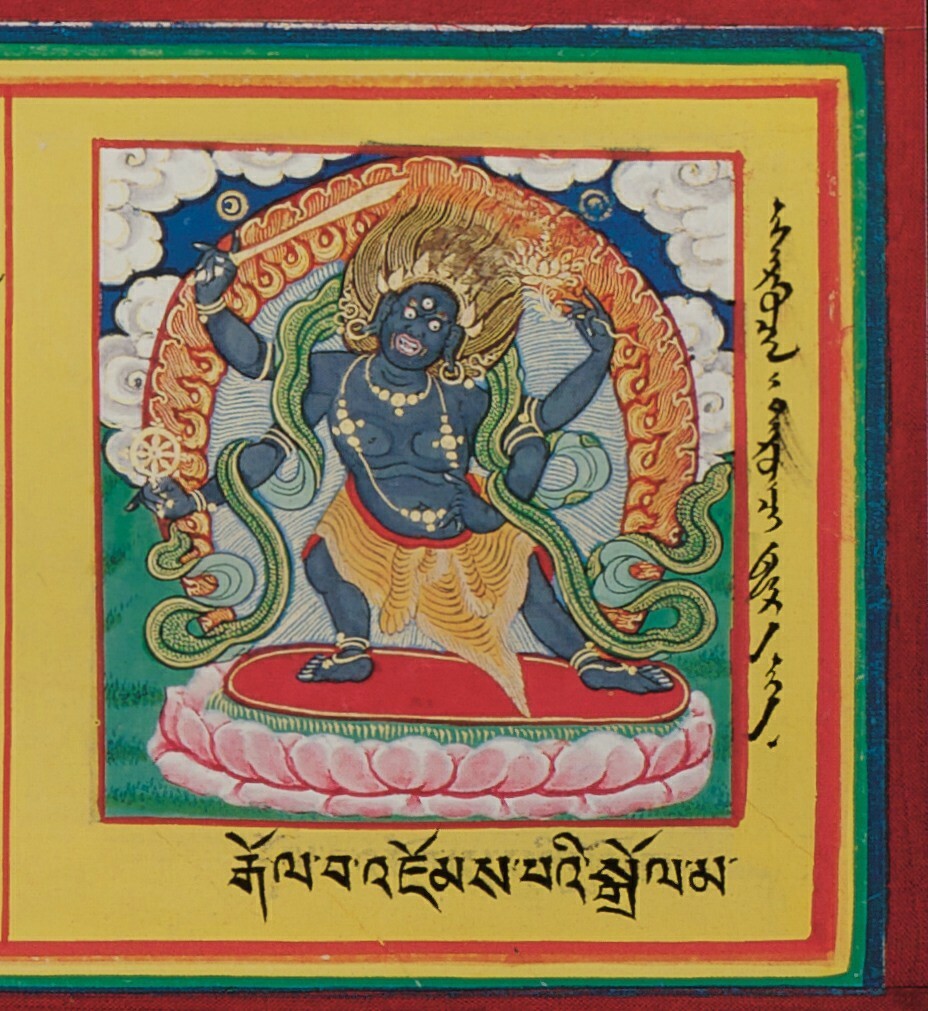
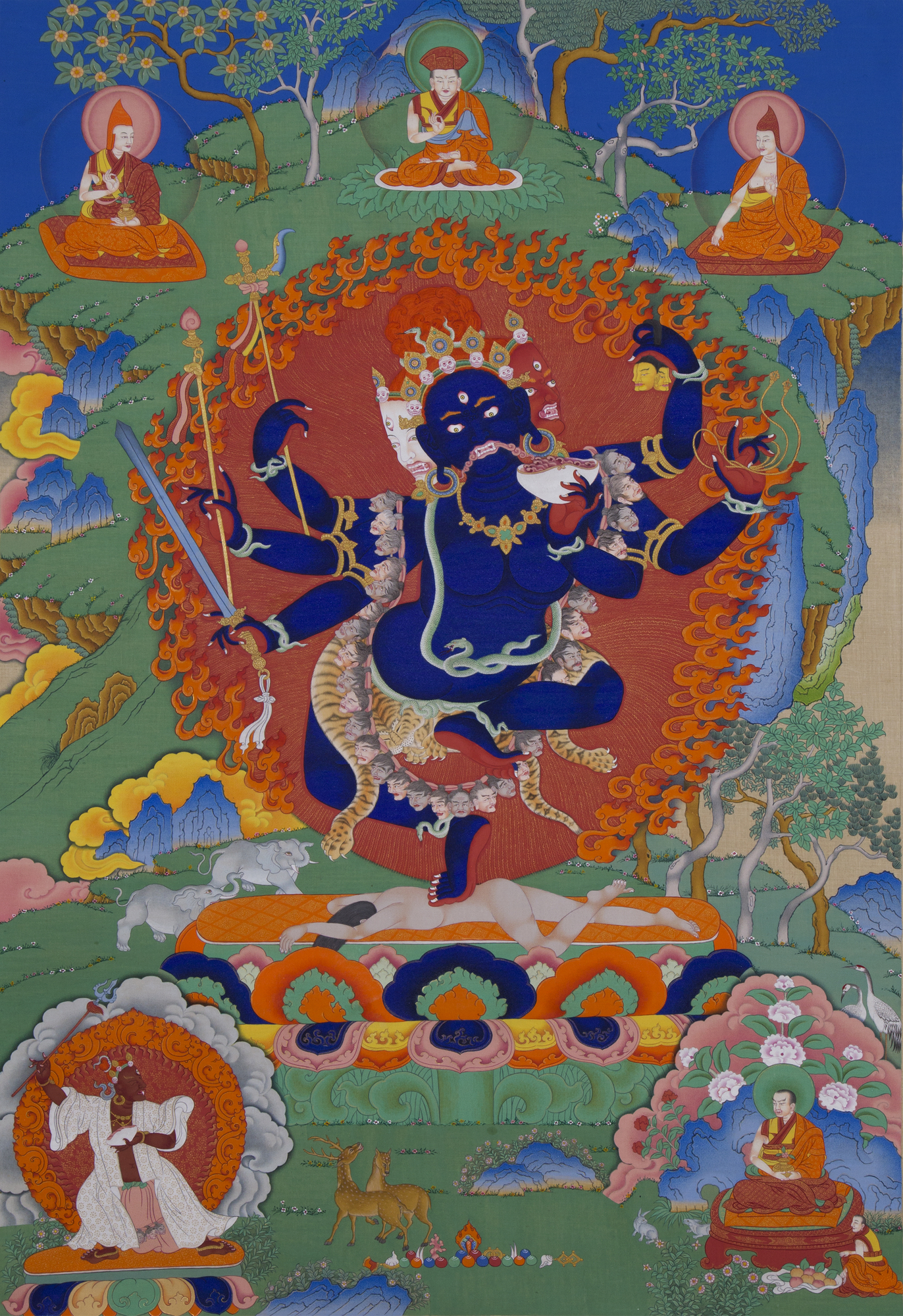
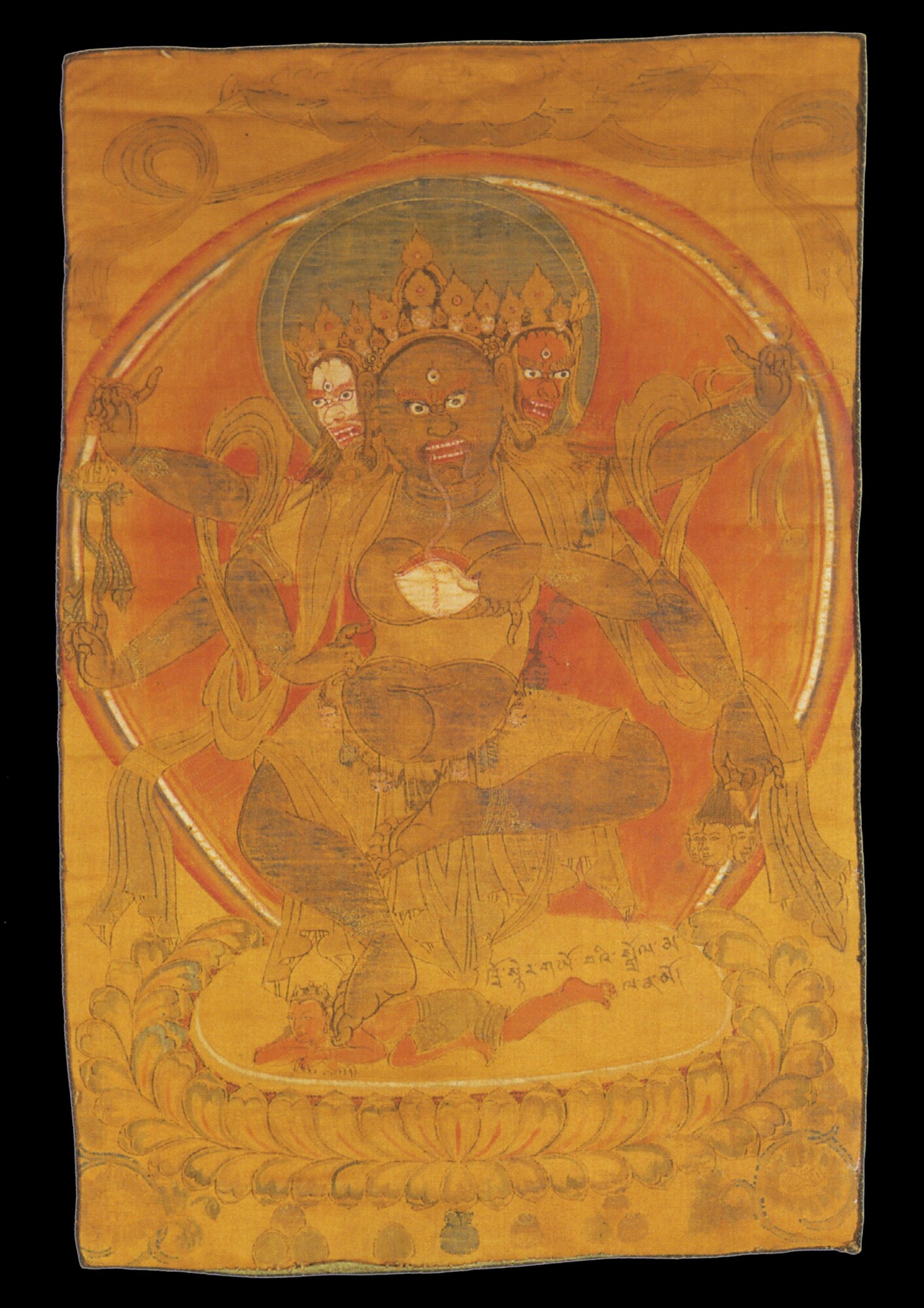
    Quote ...[she] stands in the Pratyalldha attitude, and is awe-inspiring with a garland of heads hanging from the neck. She is short and has a protruding belly, and her looks are terrible.

    Her complexion is like that of the blue lotus, and she is three-eyed, one-faced, celestial and laughs horribly. She is in an intensely pleasant mood, stands on a corpse, is decked in ornaments of snakes, has red and round eyes, wears the

    garments of tiger-skin round her loins, is in youthful bloom, is endowed with the five suspicious symbols, and has a protruding tongue. She is most terrible, appears fierce, with bare canine fangs, carries the sword and the Kartri in the

    two right hands and the Uptala and the Kapala in the two left. Her Jatamukuta of one coil is brown and fiery and bears the image of Aksobhya within it.

    He says that one was originally by Sasvata Vajra, and copied into the Hindu Tantrasara very literally including the crown of Akshobhya, which is not normally such a feature in Hindu Tantras as it is in ours. By comparison, a later Tibetan description says:


    Quote Mahachinakrama Tara (Tib.: gya nag gi rim pa drol ma).

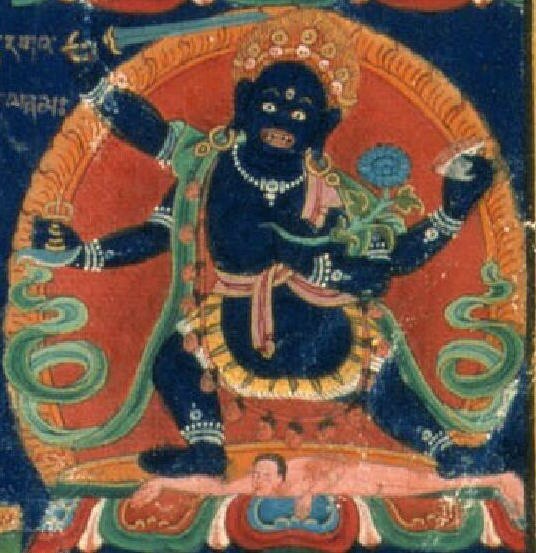
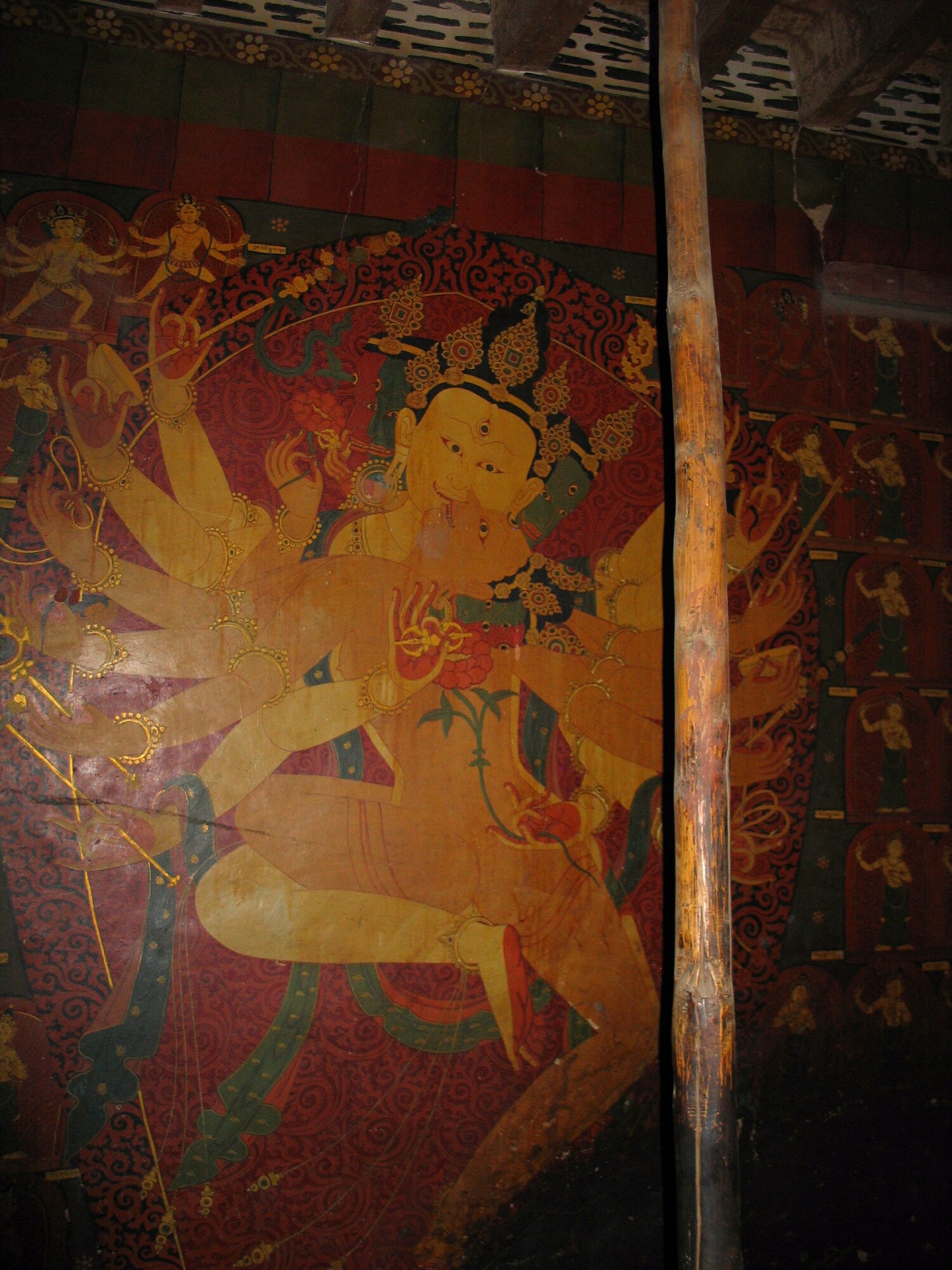
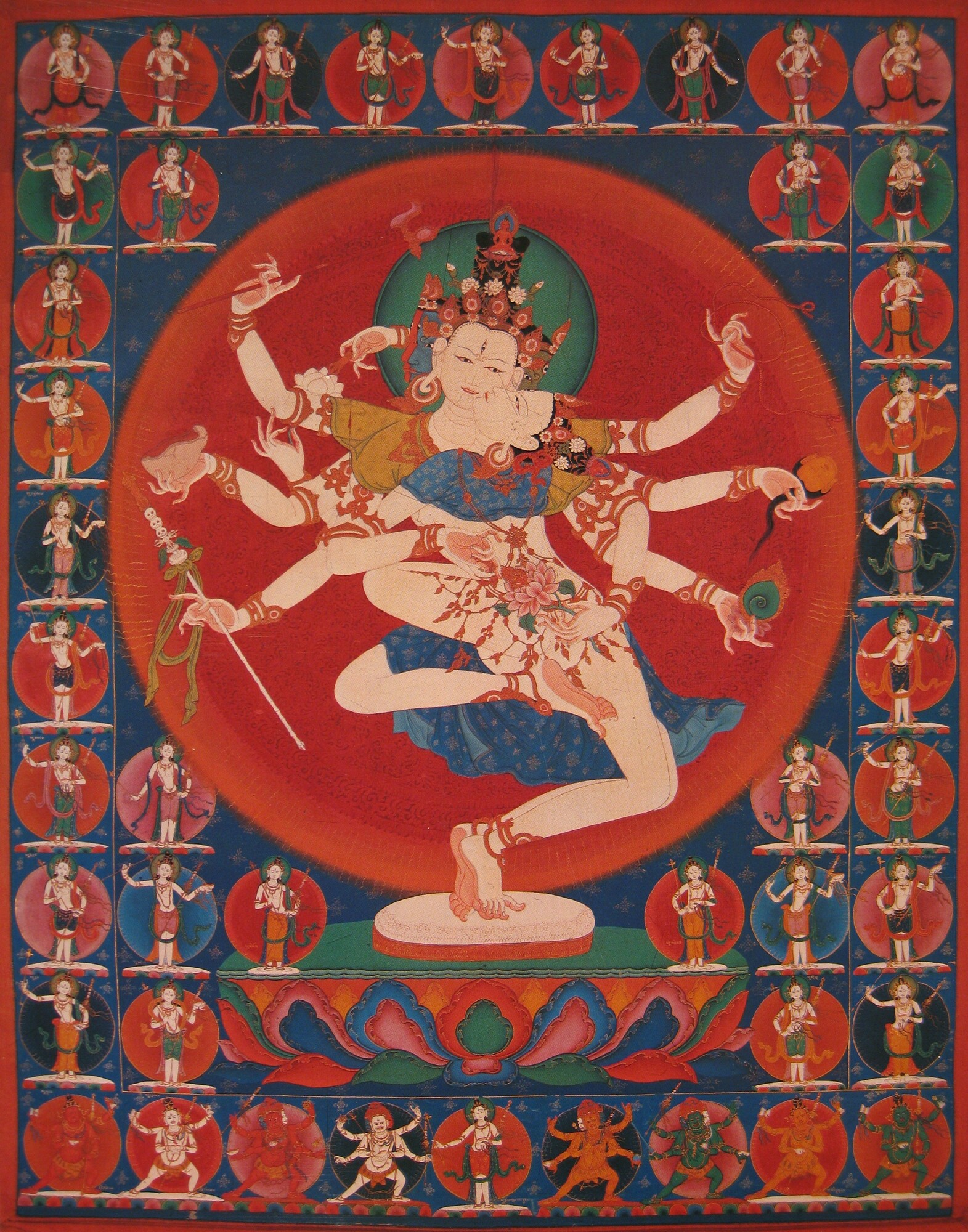
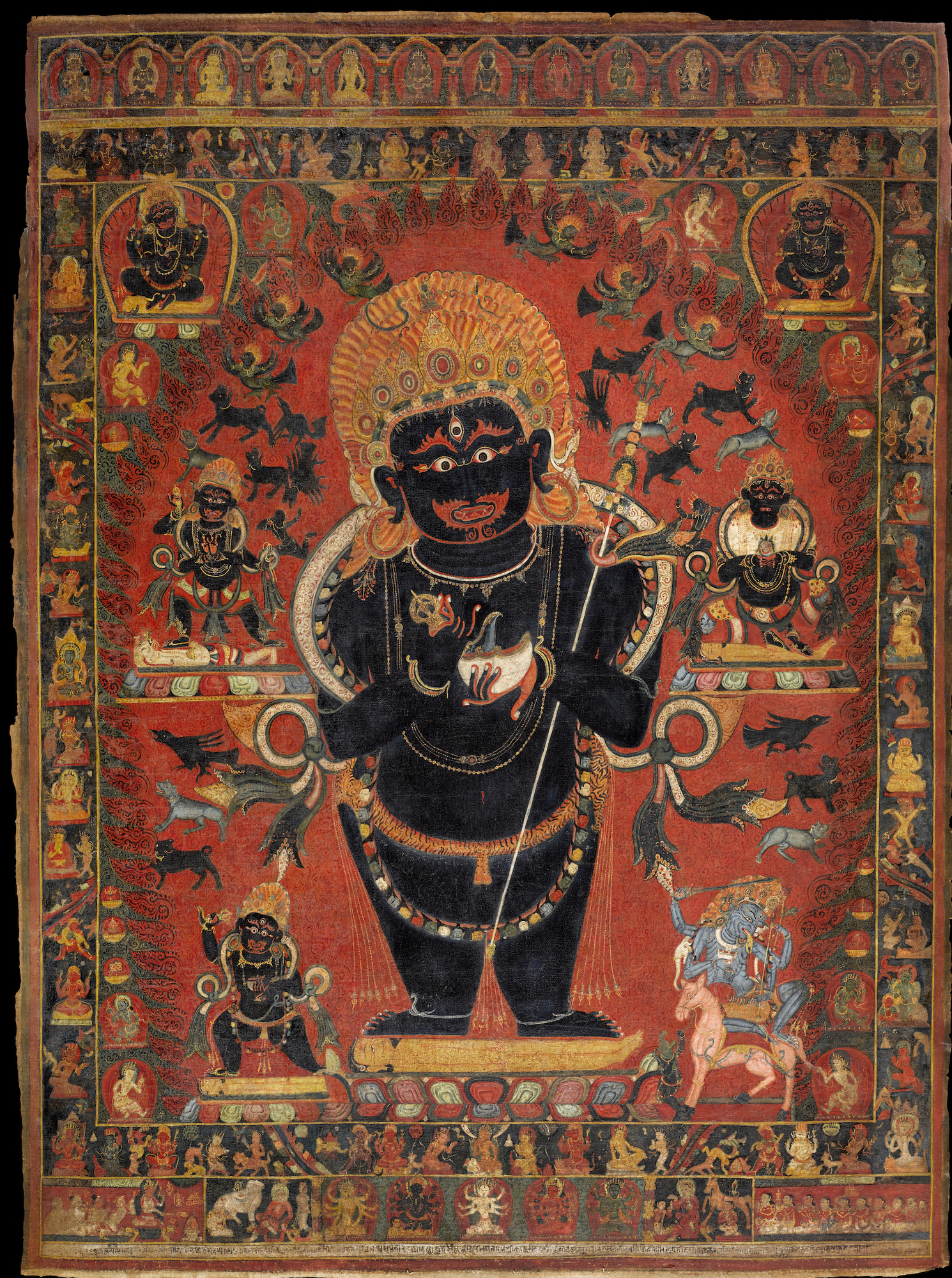
    "Tara, black, [with] one face and four hands. The first two [hands] hold a curved knife and skullcup. The lower right a sword and the lower left an utpala. [With] three eyes and bared fangs, brown hair bristling upwards, swelling breasts and a belly hanging down. Having a lower garment of tiger skin and adorned with skulls and snakes. Standing on a corpse seat in a manner with the left leg extended." (One Hundred Methods of Accomplishment, Konchog Lhundrub, 1497-1557).

    Ngor detail:


    Pawlsy said, "That's unusual."

    "What?"

    "They are fat."

    "Oh, yes, lambodara and similar expressions are often used with rakshasis and yakshis, like 'dwarf', so they are short and fat."


    They are short, fat, and laughing loudly.

    This is a note from Chapter Three on Assam:


    Quote Tara was worshipped as Mahacina Sweta Tara along with Sambara Heruka at
    Kamakhya in the seventh –eight century when Kamarupa developed as a center of
    Vajrayana. There are various Vajrayana pantheons such as Sambara Heruka,
    Kurukulla Vajravarahi and Vajra-Vairocini were prevailed in Kamahhya.

    Heruka was worshipped in Kamarupa (at Nilachala) in the form of
    Sambara Heruka along with its consort Tara Kurukulla.
    The concept of Heruka is revealed in Kamakhya tantra,
    which is an offshoot of Hevajra tantra.

    "In that example, 'sweta' has an expected meaning of white.

    But, they also mentioned something 'more tantric' than Lokesvara, that is, Samvara. It sounds like the development of Vajrayana, although we do not know the specific sources that gave these references."


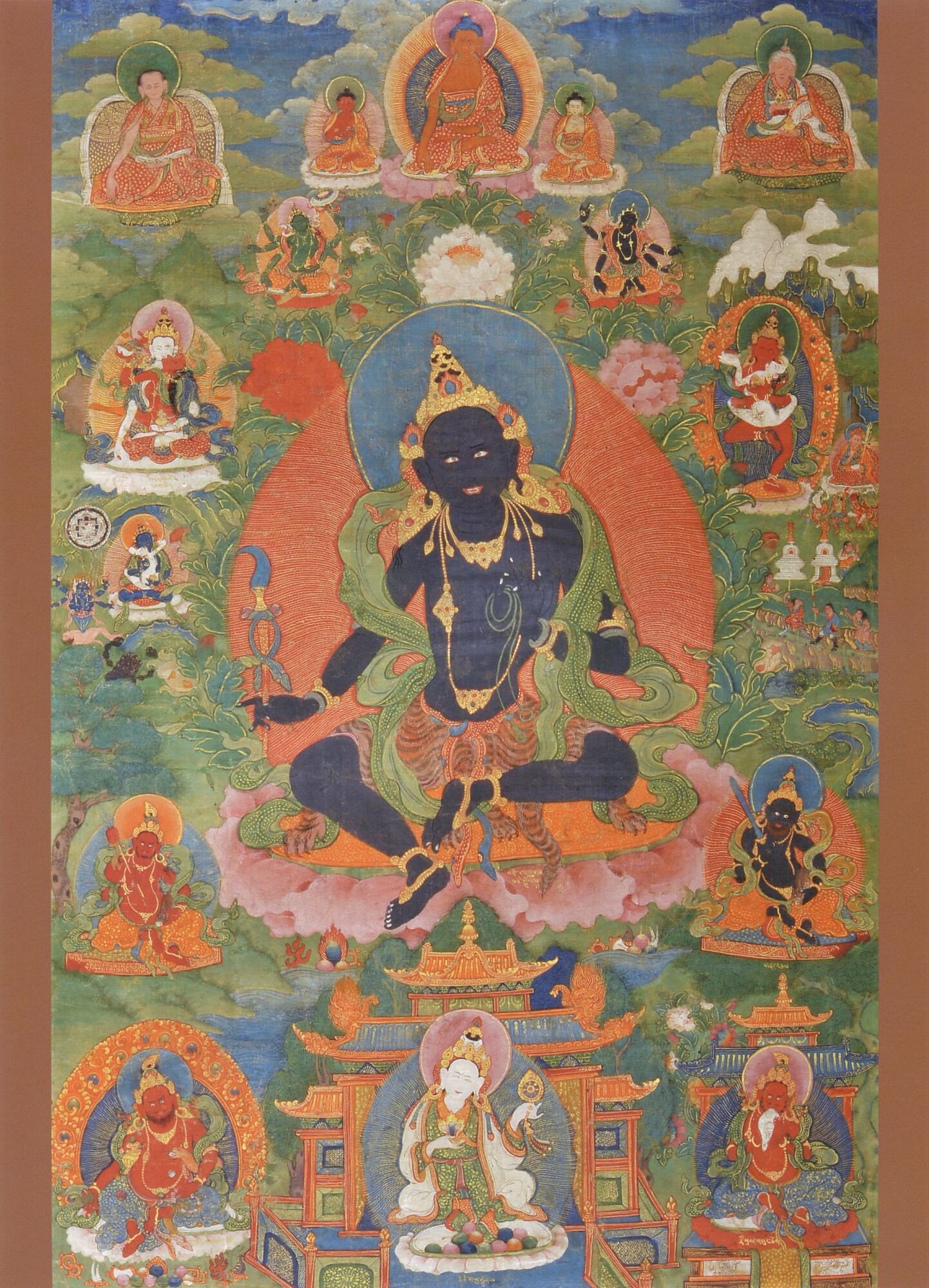
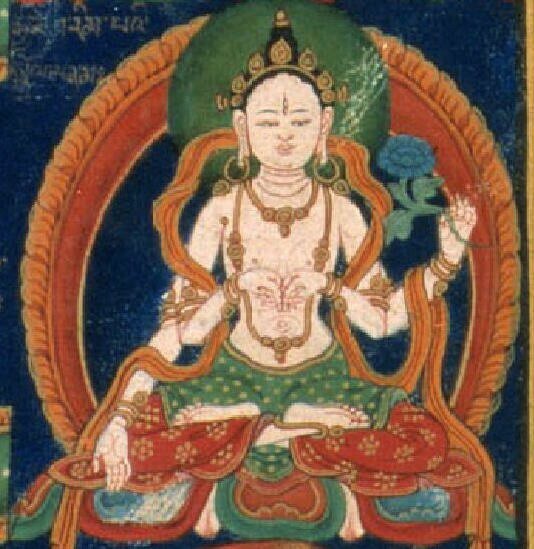
    Here is a vivifying Newar exposition of the color Green with an unusual selection of Taras, because the one we are looking at is otherwise quite isolated; but now she roams in the same pack.

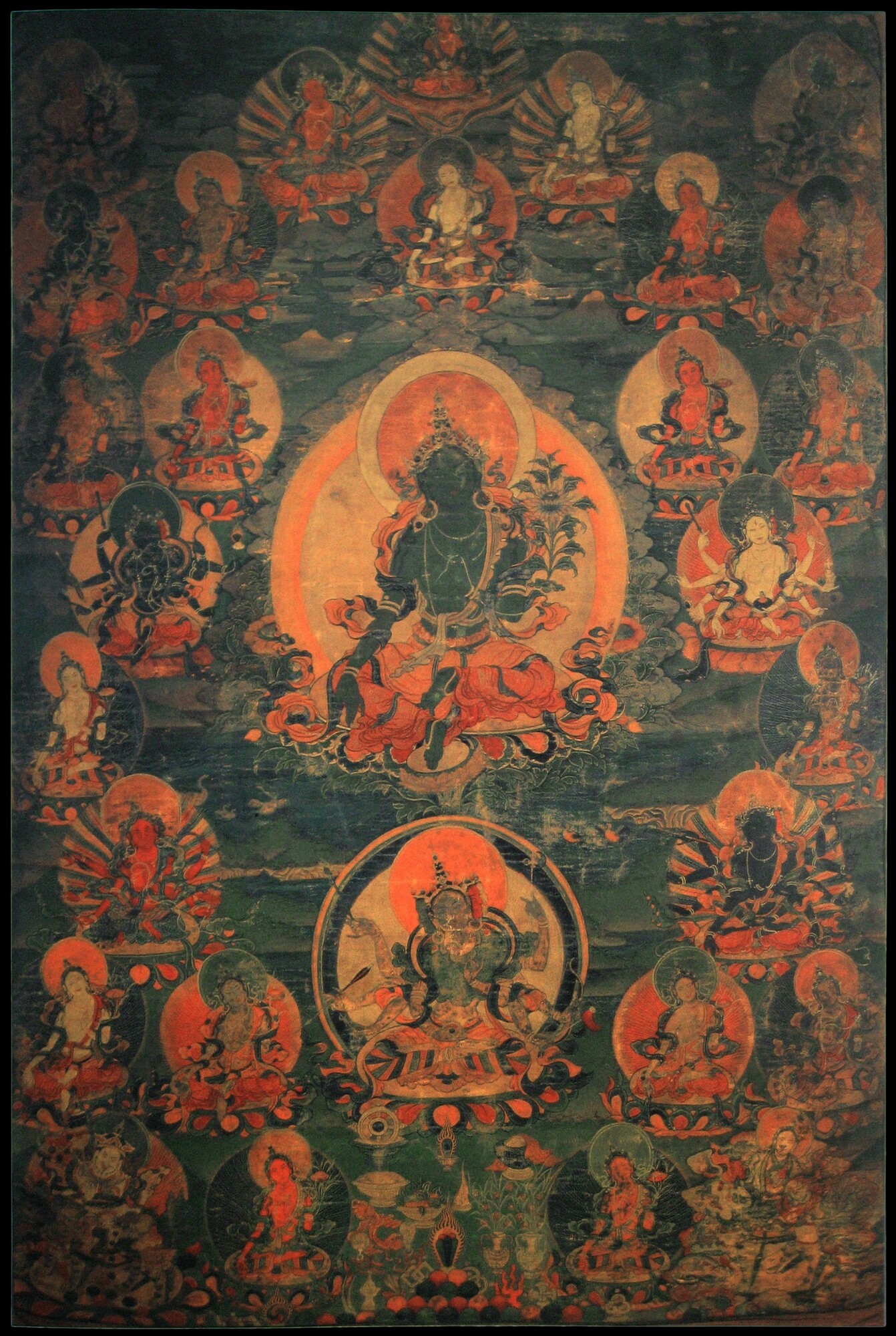
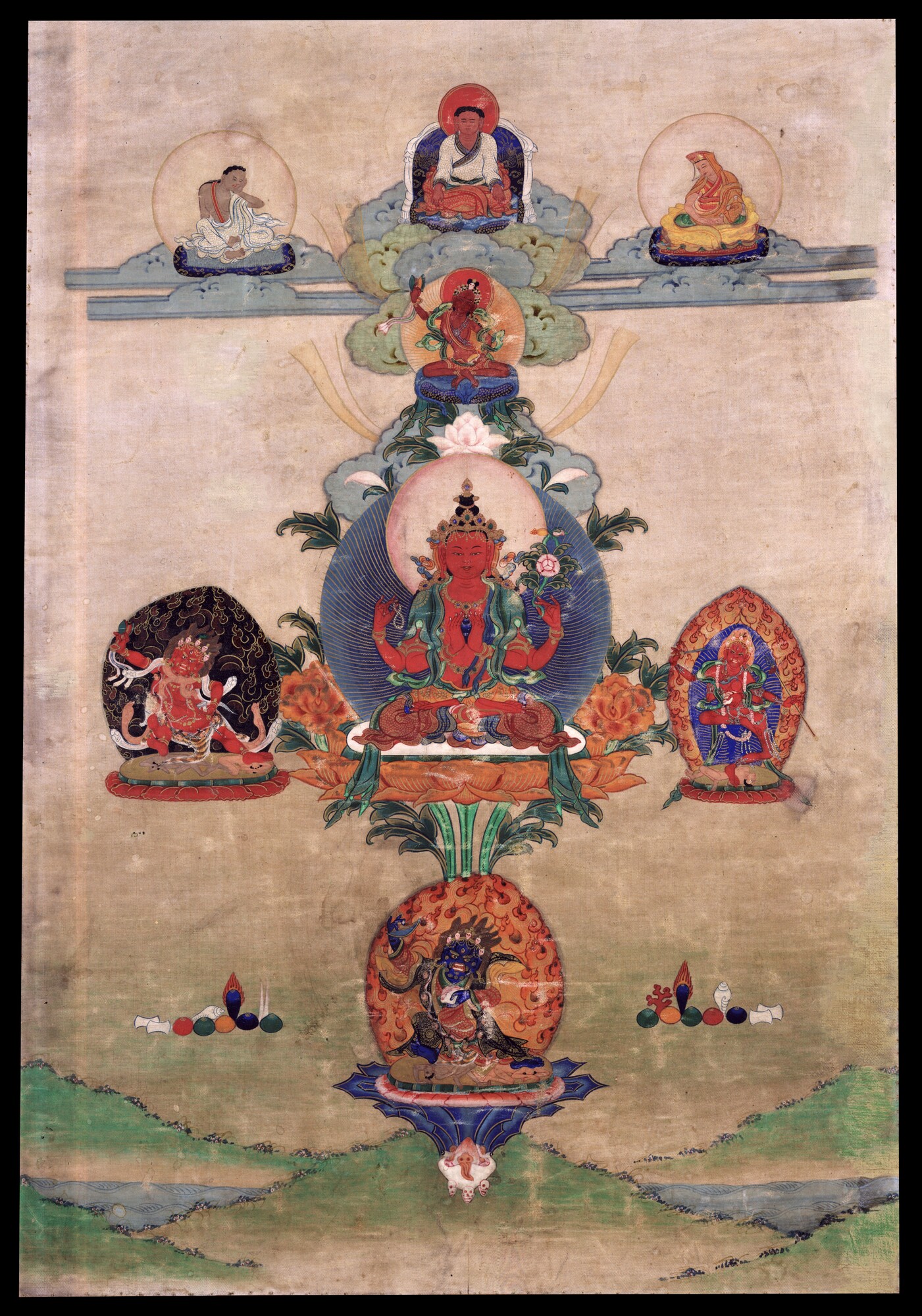
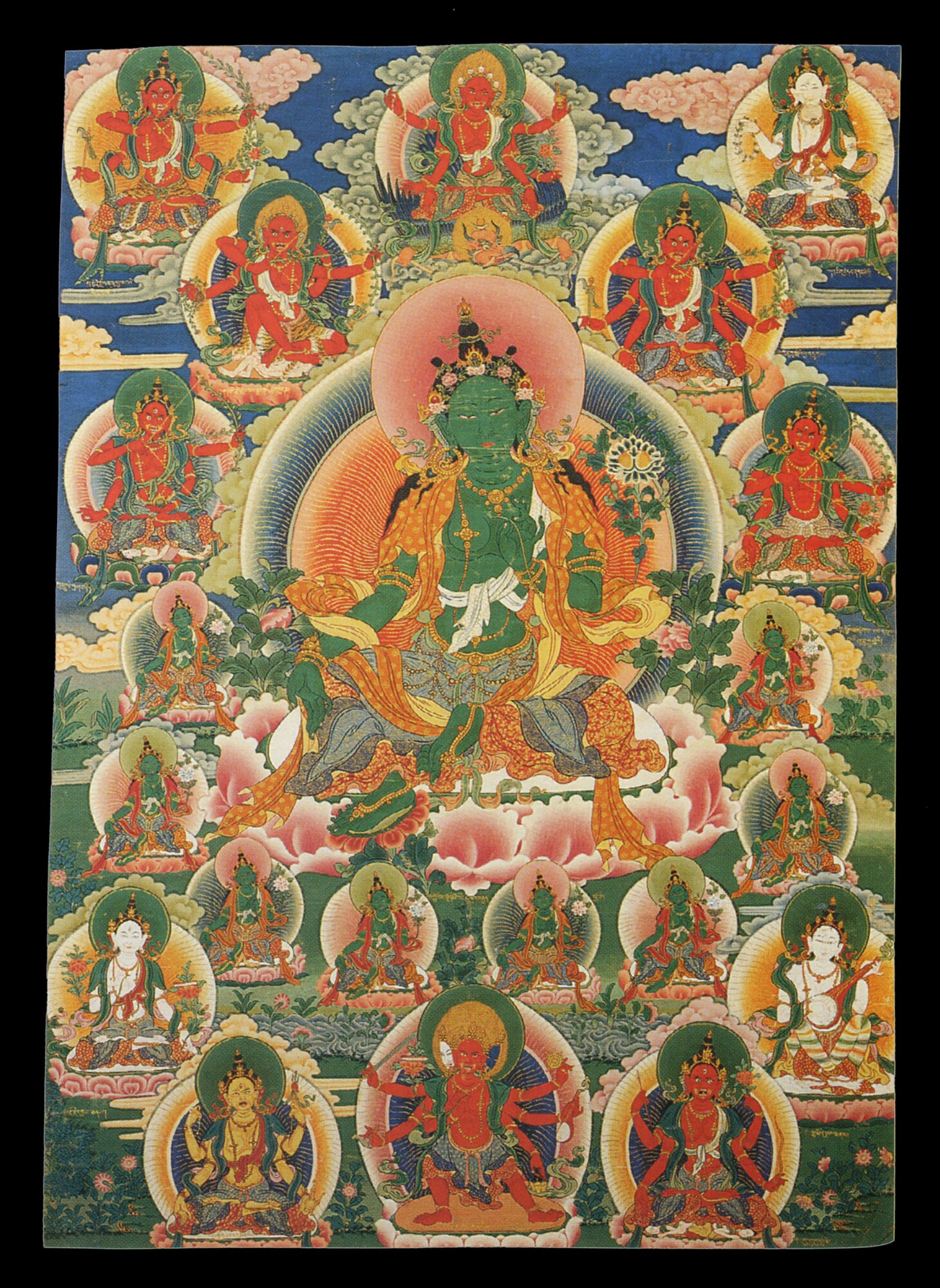
    Dhyani Buddha Amoghasiddhi is Haritam, lighter vegetative green, and Samaya Tara on the lower left is Syama or Dark Green. Sambhoga Kaya Tara in the middle is Blue-Green. Descending on the right are Dhanada, Three Eyed White Tara, Mahacinakrama Tara, and Vajra Tara:


    "There," said Fergus, "you have gotten ahead of yourself.

    If there is a tantric aspect to Asanga's Yogacara, it is the new appearance of the Sambhogakaya."


    "Yes," I said, "Sambhogakaya."

    Pawlsy said, "Sambhogakaya."


    We can also find:


    Quote ...a Prajnaparamita manuscript bearing the date A.D. 1071, is there in the holding of the Asiatic Society, Calcutta. Interestingly, this manuscript contains the illustration of a male divinity with the accompanying inscribed label reading: Mahacine Manjughosah.

    In the famous iconographic set in a Nepalese Astasahasrika (Cambridge 1643)
    Mahācīne occurs three times once for *Mañjughoṣaḥ *[folio 202v], once for
    *Samantabhadraḥ* [folio 127r], and once for* Buddharūpaka Lokanāthaḥ*
    [folio 123v].

    and in Dharani Samgraha:


    mahācīnasyaviṣaye maṁjuśrīḥ


    Fergus said, "That is unexpected to find Samantabhadra on a Prajnaparamita manuscript.

    He has maybe the one late Sutra or something, and is not generally circulated independently like the others. Instead he is a segue' to tantra."


    I said, "That's true.

    First of all, we start to find the illuminations usually have nothing to do with the manuscript.

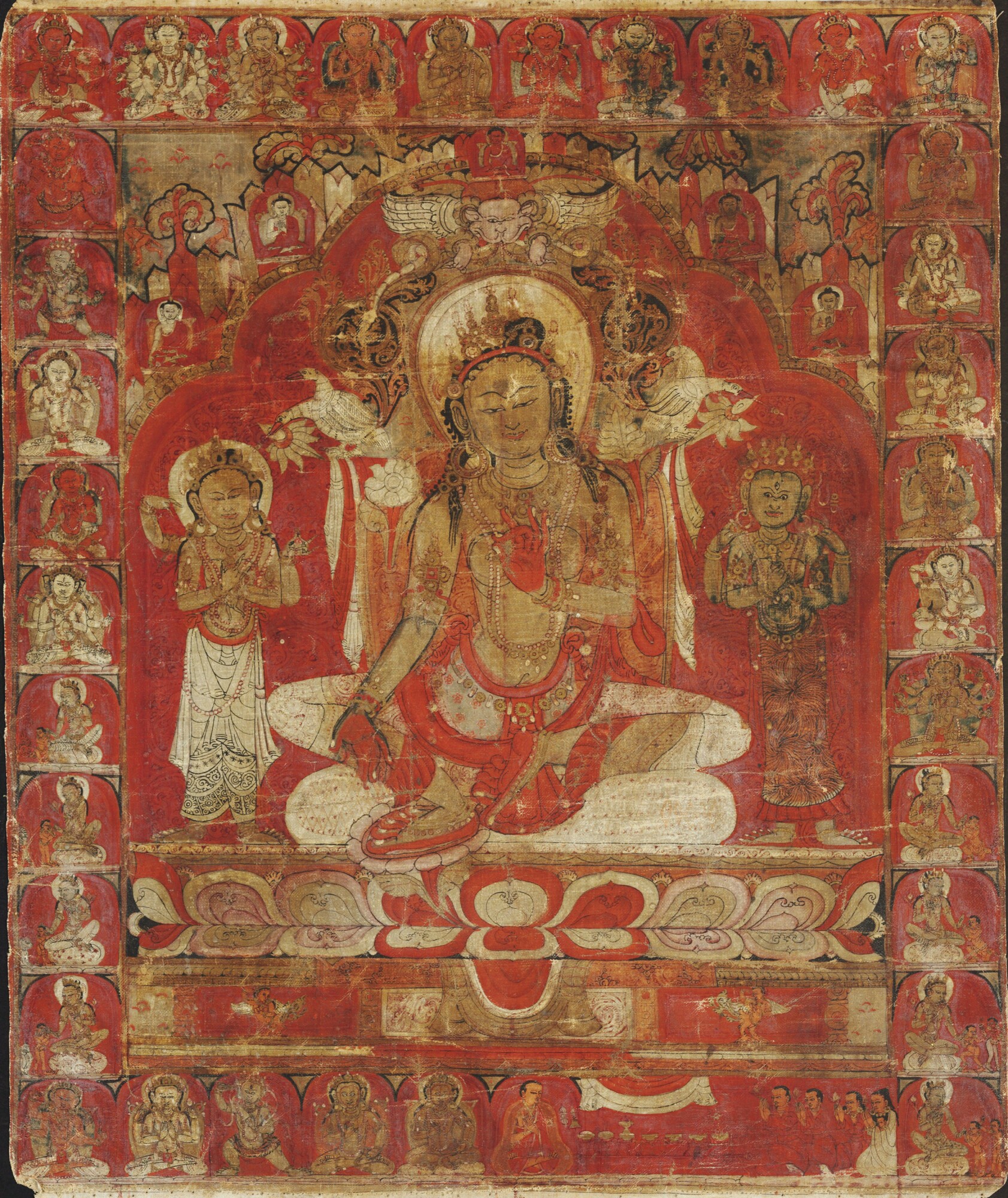
    Especially when an unusual deity appears, we are probably looking at a private commission to represent someone's personal practice. Like the Tara above; that's not from any particular work. It was selected from experience, possibly using Nyan's White Tara rather than Athisha's (it can often be hard to tell)."


    As for what we mentioned a while ago. There are two perfectly good names that tell us the 600s were a "new cycle."


    Nepal kept what India lost with its Harsha Samvat:


    Amsu Varman as Amsu Samvat


    which remained in use for centuries up until our year 879. The oldest known Skanda Purana is dated in Amsu Samvat 119. It probably grew with the migration of Pashupati into Kathmandu.


    And the oldest written proof of Nepalese Buddhism is his inscribed donation to Gum Vihara in 32 Amsu Samvat. This is at Sankhu, externally known as Vajrayogini, and internally as the red- and yellow-faced mothers:


    Hyaumkhvah maju and Mhasukhvah maju


    I said, "The Samvat is about the only system of keeping time when someone says 'go' and it starts. Everything else is a historically-projected date based on a guess about something that had not been tracked over time. Not counted going forward. Speculated.

    It's always bothered me that although we have developed mathematics to define a year within a fraction of a second, nobody's ever taken this and said, hey, let's start a calendar, now. The right of those kings to do it is really supposed to be by a Debt Jubilee.

    The first uses are in its year 29, meaning it either begins with the end of the Saka Era in 578, or, it means when Amsu Varman was born. He took power when he was about twenty-nine, and, installed the system.

    There was Gum Vihara at Sankhu, but not necessarily Vajrayogini. However she certainly arrives. Scherer does
    around twenty pages of closely-involved Genealogy and Soteriology of Tara. Here let us say her Introduction is practically perfect, I believe it summarizes our same thesis nearly exactly. She shows that Tara has an outer role, such as from Tara's Song and so forth, and inner and secret levels of Prajnaparamita and Vajrayogini, and that this hypostasis is fastened at Sankhu, Nepal.

    Then however her research is not quite complete. She makes the determination that Buddhist scriptures do not use the term "sakti", but, there are Nepali Buddhist scriptures that do. In fact, this seems to be intentionally neglected or avoided by others. It is almost entirely correct outside of Nepal. Although we have just quoted another one today.

    She does, however, catch the traveling companion nature of the Vimalakirti and Srimala Devi Sutras. That means Mahayoga or tantra and Tathagatagarbha, our argumentative form of literature for Yogacara. Or, Asanga is influential to Padmasambhava. This is significant. Out of thousands of Sutras, when you combine these two, that's the basis of our formula.


    When we said outer, inner, and secret levels of Tara, Prajnaparamita, and Vajrayogini, Pawlsy's mind was transfixed.


    What is Sankhu? A conch-shaped ridge like in Sikkhim? A receiver of selected texts?


    Sankhu arguably has external influence, such as (618 – 650) wife, Ashi Jaza (Bhrikuti) who introduced the backstrap loom and weaving traditional wear in Bhutan. Here's why.

    This is the current, cumulative Sankhu Vajrayogini:


    Quote The present temple was built by Raja Prakas Malla in 1655. It enshrines the main sacred representations of this site, Ugra-tara manifesting as Ekazati, which are said to give very powerful blessings, particularly the image in the upper temple. The image in the lower temple is red in colour with one face and four arms, two of which hold a skull-cup (kapala) and knife at her heart, and the remaining two hold a sword and an utpala lotus [Guhya Jnana Dakini]. In the upper temple is an identical image of Ugra-tara in bell metal, in which her left leg is outstretched. In the upper temple is the loom of the Nepali Princess Brhikuti, spouse of the Tibetan king Songtsen Gampo. In both the upper and lower temples, Vajrayogini is flanked Baghini and Singhini, the Tiger and Lion-headed Yoginis.


    "Pawls, the Kathmandu Valley is home to a handful of excellent Vajrayoginis or Dakinis.

    But the most well-known ones are at Bijeswori and Phampting, and the Dakini Practces of Naro and Maitri, King Indrabhuti, Marpa, Milarepa. What you might call the Orissa branch as known in Tibet.

    Together with Sankhu, these are the sub-yoginis of Guhyeshvari."

    "The one who reveals Chakrasamvara."

    "Yes."

    "The loom has been kept in a much later building, so the fierce yoginis do not have anything to do with Bhrkuti."

    "No, it would be the other way around; the person, Bhrkuti, by plying the international textiles market, helped spread practices of Vajrayogini. Remember, simple cotton has everything to do with this. It is mantrified as Picu for Sarasvati and Prajnaparamita, and is even Hevajra along with Triple Hum."


    Sankhu is its own legend or Mahatmya with a five-colored flame volcano goddess draining a lake, a manmade water works of ca. 400, and at the time of Amsu Varman:


    Quote The area where it is located is often referred to as Gunbaha, which can be roughly translated from Newari as ‘recreational forest place’.

    Another Yogini is in Patan; but here, she is often called Sword or Khadga Yogini.

    "Pawls, you've got to explain the double-edged simultaneous rejection and acceptance by, for lack of a better word, Hinduism."


    Quote Ugratara's necklace of skulls (mundamala) is composed of the heads of Sankaracarya's Brahmin followers. The sword that she carries was borrowed from her younger sister, Guhjeswori, (where did Guhjeswori keep this sword?), in fulfilment of Sankaracarya's petition after he had been humbled by her for arrogantly upturning a swayambhu stupa to demonstrate the his power to his Brahmin followers. The blood in her kapali is the blood of Brahma collected when she severed his head at the behest of a reluctant Mahadev after Brahma had lost his contest with Vishu to discover the height and depth of Siva's jyotir lingam.

    "Decapitation of Brahma is a famous motif that is actually the beginning of the Dakini Jala Heruka retinue. If you're going to read into these Moods, that's how it starts.

    The acceptance is because there is also Shiva Pashupati and Guhyeshwari."


    Quote The hole or the entrance of the Devi is encompassed by four petals which implies that it also denotes the Muladhara chakra because Muladhara chakra has four petals.

    Fergus said, "You mean the hidden natural site is a well with a four-petal design."

    Fleep said, "This is talking about the root chakra, and a local goddess that is basically the same with the Hindus. Ugra Tara and Guhyeshvari are shared, while the other yogini sites might be just Buddhist."


    "So, Pawls, Sankhu is a self-proclaimed early version of Swayambhu, although it has probably accreted the actual names Ugra Tara and Vajrayogini; again, some of the reference is simply to a yogini who lived here, so, it may be a kind of missing person being attached to imported descriptions."


    Quote According to a Tibetan source, a powerful and attained female lama used to live in Sankhu. She is said to have attained Enlightenment by relying on Vajrayogini and benefited countless beings. After she passed away, many auspicious signs are said to have manifested during her funeral, thus indicating her sublime nature. In the end, her sacred remains were inserted into this statue of Vajrayogini Ugra-tara.


    Pawlsy said, "They just as soon unload the name Ugra Tara on Ekajati, which is imprecise.

    It has a meaning of Ugra Tara of the Mahavidyas, or, Mahacina Krama Tara."


    "Yes.

    That is, so to speak, the most basic Sword Yogini, where you can see that Guhyajnana Dakini and Ghasmari are like a primordial refinement."

    "Yes. I can handle that, although the history or Newar liturgy may not be that specific."


    "Shiva has this leading to Guhyeshvari, whose temple is outfitted with a Turtle and Cinnamasta."


    Quote There is a small hole that is covered by a kalasha that is wrapped in gold and on top of the kalasha is an inverted triangle which implies shakti. The kalasha keeps the hole hidden. That hole is the entrance of the guhya garbha of Guhyeshwari Devi. Under the hole is the guhya garbha of Guhyeshwari Devi and nobody knows what is inside it.

    A big pillar is supported on turtle’s back and is erect.

    On the top of the pillar, a lion is portrayed standing on its two legs which is also the symbol of goddess and her divine vehicle. The temple also falls under “Mrigasthali” forest which means the forest where deer dwells and deer itself denotes kundalini shakti.

    "It's the root of Guhya Kali and all secret Kulas or secret vidya knowledge.

    Reciprocally, Buddhist Guhyeshvari is Mamaki, the ultimate destination of mystery and tantra and the dharani system, via the Flask Initiation."


    Fergus said, "You bastard."

    "Well, I didn't write this. Yes, of course, he means Mamaki is freaking weird, not directly approachable, perhaps intimidating or even dread-inspiring.

    She's a slice of reality a little different than the other two Arch-Prajnas, Parasol, and Vasudhara; these are like blends of Families."


    Dinky said, "Those are Kriya deities, Mamaki is not."

    "No."

    Pawlsy said, "There's a veil, something similar to Buddhist descriptions of obscurations and the beginning stage of Yoga."

    "Yes. And there's a reason ours is more intense.

    When we look at the resident Kamakhya Devi of Assam, it's different, because the identifying feature is menstruation. And so the specific way we are going to read the tantra, says, this refers to the reproductive organs, the uterus and ovaries. Kathmandu is the site of Sati's sexual organs, her vagina and cervix are the natural power here, and, I don't know how to paint a more cosmic symbol of bliss."

    Fergus said, "But you knew how to paint a verbal picture of it, starting from Sri Paramadya and Dakini Jala."

    "We are either going into a dissertation on it for five centuries, or we are tourists."


    Pawlsy said, "I take this as a kind of pilgrimage.

    I don't have to take anything too literally to accept the metaphor of the Sword as a violent action against anyone disturbing the faithful pursuit of the Swayambhu.

    Especially because the meaning of a Wrathful Deity in Buddhism is an appearance. It does not mean a deity is, itself, angry, but manifests a reaction against some hindrance, obstruction, or evil doer, which can use a weapon and do violence. Is everyone familiar with this?"

    Fleep knew that we were. We had destroyed more human beings than some countries, but, our emotional state could have only been considered strong energy, not anger.


    How could we keep Pawlsy away from anywhere like this?


    Sankhu


    Pawlsy said, "If I can get this to work right, my need to kill on the physical plane will evaporate into the psychological realm of memory.

    I believe this to be a relatively auspicious moment in time; we have steered into a sort of undefinable blob between NATO and the Soviets."


    "I think you can and here's an additional push why.

    We are going to subdue the Pisaci kingdom.

    Parnasabari is the ringleader of the following mantra:


    oṃ gauri gāndhāri caṇḍāli mātāṅgi pūkvasi svāhā


    This has its origins as early as Lotus Sutra.

    Those are all Pisacis, and the point is their subjugation and conversion; and in this case, Gandhari is from literature, one of the most miserable creatures from the Mahabharata, quite similar to the rage embodied in the Four Kings."


    The idea is somewhat present in other usages, such as in a "Mother of Avalokiteshvara Dharani", who is not named, and is presumed to be understood as "Tara":


    tadyathā | ili mili | cili mili | kuntule kuntule kuntule | śire śiśire viśire | vīrāyai gauri gāndhāri drāmiṭe mātaṅgi pukkasi kaṣṭaya māṃ | caṇḍāli huttu mālini hūṁ | dhu dhu mālini | cile mile | gṛhṇa saumyadarśani | kuru candra­mukhi | laghu­mānayante ārya­dakṣiṇa­bhuje | sarvavidyānām prasādhane | sarva­vidyānām īśvari svāhā ||


    Genta said, "Well, that should mean Pandara Vasini. The mantra isn't static; the single line previously given is the most common type. This is a slight variation, but, what is noticeable is that Gauri does not seem to fit the character type."

    "No; this thing is extensive. It comes from a Sutra, is used in various dharanis, and is part of tantra. This is actually really serious. As usual we want to catch the salient feature and plumb its depths later on. Right now this is just a greeting. They are Pisacis or Gauris.

    We're going to do an example now on behalf of Mahacina. You'll see the connection."


    Fergus said, "We found a defect in the archive. There is a Lotus Family goddess called Sitabani who uses a Rosary, then, part of a Pratisara, and then three pages are missing until we get the end of something else."

    I said, "Pawls, if we get good, we can probably do this dharani of Vajragandhari."


    [missing pages]

    ...cakrāṇi, vāmaṣadbhujeṣu khadvāṅgāṅkuśadhanuḥparaśupāśa-
    hṛttarjjanyaḥ, prathamamukhaṃ kṛṣṇaṃ aparāṇi mukhāni pañcavarṇāni
    viśvapadmasūryyāsanā ceti / oṃ huṃ huṃ huṃ svāheti
    jāpamantraḥ /

    atraiva bhavati dhāriṇī - namo ratnatrayāya, namaś caṇḍa-
    vajrapāṇaye mahāyakṣasenāpataye, namo bhagavati mahā-
    vajragāndhāri anekaśatasahasraprajvalitadīptatejāyai ugra-
    bhīmabhayānakāyai yoginīyai bhīṣmabhaginīyai dvādaśa-
    bhujāyai vikīrṇakeśīyai anekarūpavividhaveśadhāriṇīyai,
    ehy ehi bhagavati mahāvajragandhāri trayāṇāṃ ratnānāṃ
    satyena ākaṭa ākaṭa baladevādikaṃ ye cānye samaye na
    tiṣṭhanti tānāvarttayiṣyāmi, śīghraṃ gṛhṇa gṛhṇa gṛhṇa oṃ
    ala ala ala ala hulu hulu mulu mulu culu culu
    dhama dhama rakṣa rakṣa rakṣāpaya rakṣāpaya pūraya pūraya
    āviśa āviśa bhagavati mahāvajragandāri siddhacaṇḍa-
    vajrapāṇirājñāpayati hrīḥ haḥ huṃ svāhā / asyāḥ
    karmmaprasaro 'nekavidhiḥ /

    // iti vajragandhārīsādhanam //


    "This deity is not isolated, because she is the Northern member of a Kurukulla retinue that begins with Cunda, where she is a Sword Yogini with Four Arms."


    uttaradvāre vajra-gāndhārīṃ kanakaśyāmāṃ amoghasiddhimukuṭāṃ vikṛtamukhīṃ
    lambodarāṃ dakṣṇabhujābhyāṃ khaḍgāṅkuśadharāṃ vāmabhujābhyāṃ
    ghaṇṭāpāśadharāṃ cintayet /


    "And so you see the Sword is a symbol of Karma Family, because it has the shape of a Crossed Vajra. In that way, it could be meaningfully said to be loaned out by Guhyeshvari. The expected Bell is Gandhari's secondary item in her left hand.

    She has Hevajra's syllables as well as Mahacinakrama and Ekajati."


    On p. 166, Taranatha attributes Asanga's use of Gandhari mantra to enter Tusita and to "move through space". Think about that related to what we just said.


    Fergus said, "There are a few remarks that these particular dharanis also reflect back out into Hinduism, noting some epithets on Gandhari 205. Its main external use is, yes, for Pisacas."


    diptatejayai

    ugrabhimabhayanakayai yoginiyai bhismabhaginiyai

    anekarUpavividhavesadhariniyai

    An-eka, not one, many, Rupa (Form) Vividha (manifold) Avesa Dharini

    Her attributes include multiple types of Avesa or Possession, so, if we do not know one, we cannot really know her at all.


    The last line says it is the Vidhi, rite or performance of, Karma (Activity) Prasara (extending, spreading) Aneka, multiplicity. She has this multiplicity in terms of fiery brightness, and in terms of possession.


    I said "Avesa is perhaps the ultimate consequence of Moods.

    So this Gandhari is pretty advanced.

    But I found something that got my attention for Lotus Family.

    We slipped past a Lotus goddess who has about four lines and a shallow, generic presentation. She's not used in Tibetan sources; what is strange is we find in Dharani Samgraha that Sitabani is also a compound of:


    gorīgandhāri

    vetali mata

    kinnare

    hiraṇyagarbbhe


    and so we are holding out the possibility she may be the outer form of Guhyajnana Dakini. That's because Sitabani is a charnel ground that is right there in Bihar; the goddess inhabits the neighboring forest, or a nearby cave as Dungeswari. She's the local goddess of what, to some degree of likelihood, would include the initiation of Padmasambhava."

    Fleep said, "That is,"

    Dinky said, "Quack."

    I said, "sssssssufffficient,"

    Fergus said, "Stop driving my car on the weekends."

    Ariana said, "It means Cool Grove."

    I said, "-ing."

    Dinky said, "How about garbanzos?"

    Fleep flipped a coin.

    Genta said, "You'll go into Raudra Krama."

    I said, "If so, here's who Tibetans call Pha Dam Pa Sangye, a translation of Parama Buddha."


    Quote Following the death of his father when he was fifteen, Dampa was ordained with the name of Kamalaśīla by Kśemadeva at Vikramaśīla, a famous monastic institute of learning in contemporary northern Bihar. With fifty-four renowned siddhas, both male and female, he studied topics including Sūtra, Grammar, Tantra, and Mahāmudrā. Dampa travelled widely throughout his life and spent many years practicing meditation in places such as Bodh Gaya and Svayambhūnath Stūpa, as well as in jungles and cemeteries throughout south Asia, including the famous cemetery of Śītavana where many Buddhist adepts practiced.

    Fergus said, "Those are siddhas, not scholars."

    Fleep said, "Possibly both."

    "They are better at something than you are, and it's not airplanes."

    I said, "Probably so. Be careful, because they will instantly confuse him with the more famous Kamalasila of the 800s."

    Dinky said, "He's more likely involved with Machig and Chod. Talk about a heavy extension of the Kartri."

    "Notice where he lands in the contents, just before Abhayakara's compilations."


    Quote Volume 21. Vajrasattva Cakrasamvra with 37 deities from the Samputa, (the following Mahakalas are all Panjaranatha Kartaridhara Vajra Mahakala with 5 deities, Vajra Mahakala with 8 deities, Vajra Mahakala with 12 deities, Vajra Mahakala with 17 deities, Vajra Mahakala with 10 deities. (the non-dual tantras end with Mahakala).

    AMNAYA teachings: The twelve Istadevata Sugata of Pha Dampa Sangye, Samvara with 13 deities of Pha Dampa Sangye, Vajrayogini with five families of Krodhini of Pha Dampa Sangye, the five mandalas of Shangpa Kagyu, Cakrasamvara with 5 deities of Niguma, Mayakaya-Mahesvari of Shangpa Kagyu, Cakrasamvara and Vajravarahi of Rechungpa, Cakrasamvara with 10 deities, etc.

    "I'm not saying he's not weird; it's rare for anyone to be imported into the Mahasiddhas. Tson kha pa and Phadampa Sangye are some of the only ones. He's the only person to play two musical instruments, Drum and Bone Trumpet. He's in one of the oldest 1100s thangkas with multiple forms of Vajravarahi (including Indra Dakini). He's found with a wide variety of couples. Finally, in the 1200s with H. H. Karmapa (which may be the Sahaja Hevajra transmission lineage). He's fairly unique because he is southern and darker than most of the rest of them."


    Fergus said, "Technically they could have met while he was a small child; Phadampa lived to about 1117. But this has got to be about the most famous and influential person, that we know little of from the literature, like Machig and Rechung and several others are practically household words."

    "Yes. That is mostly discernable. There is a whole bunch of Vajrayogini, of which Vajravarahi is the specialized tantric version.

    Most critics are unable to accept Khadga Yogini as the same."


    Quote We have never come across a four-armed Vajrayogini before (or one holding a sword) and it seems to be specific to the Kathmandu Valley.

    It is not clear why this statue is meant to represent Vajrayogini since Vajrayogini doesn’t hold a sword and is always naked.

    The mis-appellation may be arbitrary:


    Quote ...she has been called Ugratara-Vajrayogini at least since 1775 when King Pratap Malla of Kathmandu put up that inscription after he built the present temple. Perhaps the most that can be said is the she is a peculiarly Nepalese form of the terrifying Blue Tara, possibly based on an iconographic source that has been lost. There is a story that this Ugratara was brought to Nepal by Bengali priests about A. D. 1350.

    In that article, she is presumed as Blue Tara, or one of the many forms of her.

    But what we have, on the level of folklore, is the first Yogini, of whom Manjushri is a copy with the lake-draining, at what physically is one of the oldest determinable establishments. Not in the sense of Mauryan, but in terms of this lore. Something has been going on at Gum Bahal independently for any of these associations to be made to it.

    Manjushri is most famous for a sword, "of wisdom"; Pratisara however has one that cuts the net of fear and suffering. In Buddhism, there is nothing about Manjushri draining a lake until you get to Swayambhu Purana. Try to find it in MMK.


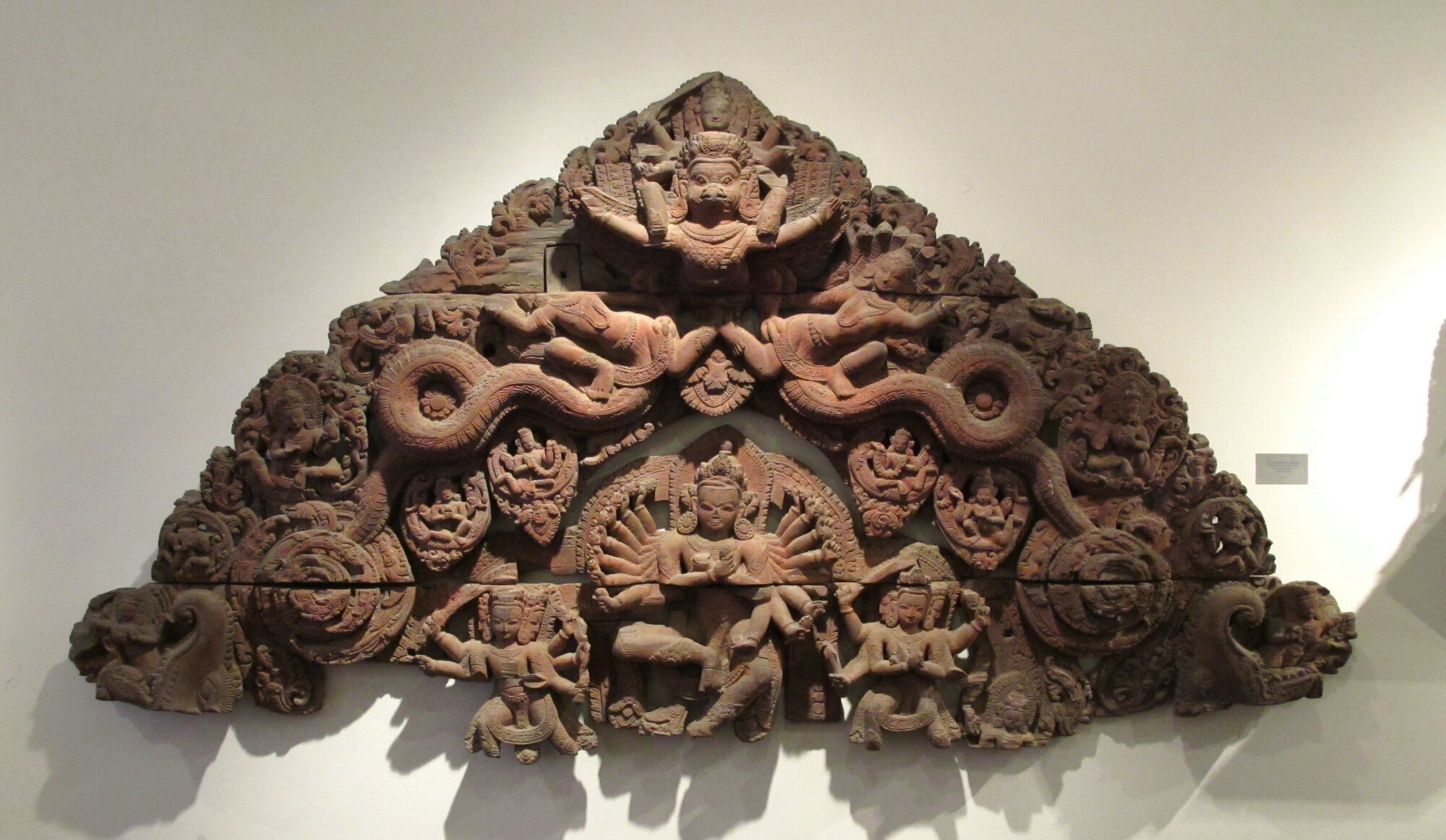
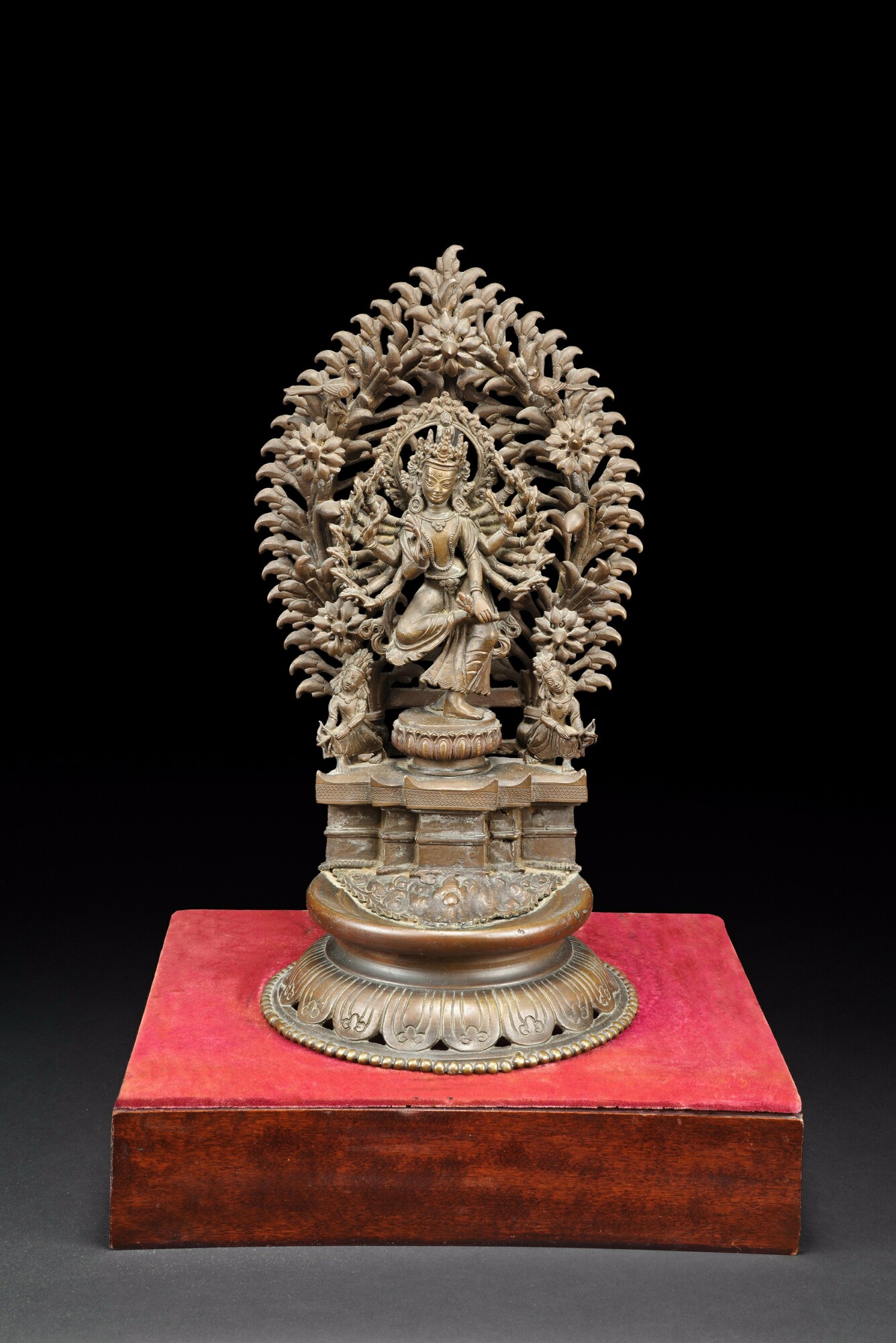
    Some of the larger, more elaborate deities are seen holding a sword; it is rarely their main item. The idea is we want to focus on every detail; study something, and contemplate it. Or, that is, use an item with a very basic deity, before working into something complex. In fact, it goes up to Dhvajagrakeyura, who is even bigger than the following 1654 sculpture.


    Pawlsy said, "I found it accommodating that the iconography of Sankhu represents multiple and emergent Sword Yoginis."


    Pawlsy said, "I reached a point where no one can argue with me, and the information tells me so much and that's it. It's kind of just a guide to what to me is an inner unknown destination. The archive gives me a progressive Dhyana in basic and intermediate levels. If I am getting this correctly, I am looking at a Wrathful Blue Tara in Vajra Family."


    100.

    pūrvoktavidhānena śūnyatābhāvanānantaraṃ raktaāḥkārajaraktapadmopari
    sitaṭāṃkārajapadmabhājane sūryasthanīlahuṃkāraja-
    sabījakartripariṇāmena kṛṣṇām āryatārābhaṭṭārikāṃ
    caturbhujaikamukhīṃ trinetrāṃ kharvalambodarāṃ daṃīṭrākarālavadanāṃ
    pratyālīḍhapadena śavārūḍhāṃ nāgāṣṭakabhūṣaṇāṃ vyāghracarmavasanāṃ
    avalambamānamuṇḍamālāṃ pañcamudrāvibhūṣitāṃ khaḍga-
    kartridhāridakṣiṇakarām utpalakapāladhārivāmakarāṃsākṣobhyanāthapiṅgalajaṭājūṭāṃ
    atighorāṭṭahāsabhīmarūpāṃ niṣpādya
    oṃ hrīṃ huṃ phaṭ iti mantraṃ viṣayaprjñādhikāreṇa japet /
    niraṃśumālikāṃ dhyātvā khaḍgasthāne vicakṣaṇaḥ /
    sphuratsaṃhārayogena saṃjapet mantram uttamam //

    // iti mahācīnakramāryatārāsādhanam //


    Fergus said, "Yes.

    This is crisp, in the sense that it attaches to a meditation whenever you realize Voidness, Sunyata, you become void for an interval or duration and then you do this exercise. The first two terms say basically first, enter voidness.

    If you, like me, are not well trained in this, then for us maybe it just means we are mentally quiet. You get to the Sunya of your current understanding and then there is a Red Ah syllable which opens into a Lotus, in which a White Tam syllable becomes a Padmabhajana as we discussed, which holds the Sun, in which there is a Blue Hum syllable that transforms into a Kartri, which becomes Mahacinakrama Tara.

    She laughs wildly while you mantrify her."


    Pawlsy said, "I like that.

    The basic concept is, you would do the Preliminaries, use that for your moment of Sunya, and then this is an optional extension.

    If you tried Dhanada Krama, you would get a very different effect, because here she is standing aggressively with bristled hair making noise."


    I could see where she was going with this.

    "You don't really know what Akshobhya is like, but this Blue Tara is a huge clue on the trail."

    "Yes. I can see it as a sword of a dharmapala; then, when you don't need to kill anyone, it has another magical or spiritual nature."

    "And because this sadhana is challenging, the fact that the usual coloration corresponds to Guhyajnana Dakini is like another level."


    "Yes. You also gave me a Dark Gold Vajragandhari and of course Ghasmari. This all fits together with the Heruka retinue and so on."

    "It does. It's why those lead to other rings of Gauris and Vajraraudris, and why this is all bound with the Six Yogas and Seven Factors of Awakening."

    "That's kind of a lot. But I can see how this is drawn from our base emotions and our senses and psychology, which makes Families, and, I guess, different levels of hierophany or theophany, in planes or modes of existence. And so yes, if I can get Vajra Family as Peace at the opposite pole of Anger or Hatred or Aversion, I have a lot of awareness of this. Who are they talking to?"

    "Well, her other entry is a Smasana or Cemetery Yoga. This is a samapta or summary, meaning it is like the first sadhana with material attached. You can sense a progression, since the dividing line has become om sunyatadi... which means to have practiced those certain purifying mantras beyond the normal Preliminaries.


    Mahacina Krama Tara -- Sasvatavajra's extensive version


    pratyālīḍhapadārpitāṅghriśavahṛdghorāṭṭahāsā parā
    khaḍgendīvarakartrikarpitabhujā huṃkārabījodbhavā /
    kharvā nīlaviśālapiṅgalajaṭājūṭogranāgair yutā
    jāḍyaṃ nyasya kapālake trijagatāṃ hantyugratārā svayam //
    mahācīnakramāṃ natvā tārāṃ tribhavatāriṇīm /
    tatsādhanam ahaṃ vakṣye yathā gurūpadeśataḥ //
    ekalṅge śmaśāne vā śūnyāgāre ca sarvadā /
    tatrsthaḥ sādhayed yogī vidyāṃ tribhavamokṣaṇīm //
    mṛdumasūraka(sa)māsīno 'nyeṣu komaleṣu vā /
    viṣṭareṣu samāśritya sādhayet siddhim uttamām //
    jhaṭity ākārayogena trivajraṃ sumamāhitaḥ /
    triṣu sthāneṣu taṃ dhyātvā raśmiṃ visphārayet tataḥ //
    tribhavacāriṇaḥ sattvānavabhāsyānayet punaḥ /
    saṃhāre ca punar dhyāyācchūnyaṃ viśvaṃ samantataḥ //
    tataḥ -

    paṭhet jinamantrakaṃ oṃ śūnyatādisvahāvakam /
    antarīkṣaṃ tato dhyāyād āḥkārād raktapaṅkajam //
    bhūyastasyopari dhyāyāt ṭāṃkārāt padmabhājanam /
    tasya madhye punar dhyāyāt huṃkāraṃ nīlasannibham //


    tato huṃkārajaṃ paśyet kartrikāṃ bījabhūṣitām /
    kartripariṇataṃ dhyāyād ātmānaṃ tāriṇīsamam //
    pratyālīḍhapadāṃ ghorāṃ muṇḍamālāpralambitām /
    kharvalambodarāṃ bhīmāṃ nīlanīrajarājitām //
    tryambakaikamukhāṃ divyāṃ ghorāṭṭahāsabhāsurām /
    suprahṛṣṭāṃ śavārūḍhāṃ nāgāṣṭakavibhūṣitām //
    raktavartulanetrāṃ ca vyāghracarmāvṛtāṃ kaṭau /
    navayauvanasaspannāṃ pañcamudrāvibhūṣitām //
    lalajjihvāṃ mahābhīmāṃ sadaṃṣṭrotkaṭabhīṣaṇām /
    khaḍgakartrikarāṃ savye vāmotpalakapāladhām //
    piṅgograikajaṭāṃ dhyāyāt maulāvakṣobhyabhūṣitām /
    bhāvanācalaniṣpattau bhaved yogī mahākaviḥ //
    jaḍo 'pi yadi mūrkhaḥ syād bhāvanārasatatparaḥ /
    labhate mañjuvāṇīṃ tu lakṣamantrasya jāpataḥ //
    tryakṣaro 'sau mahāmantraḥ huṃkārānto hṛdi sthitaḥ /
    pañcaraśmisamāyukto ajñānendhanadāhakaḥ //
    tasya dvāravidhiṃ vakṣye yogācārānusārataḥ /
    prathamaṃ haparaṃ dattvā caturthasvarabhūṣitam //


    rephārūḍhaṃ sphuraddīptamindubindusamanvitam /
    traṃkāraṃ ca tato dadyāt caturthenaiva bhūṣitam //
    dīrghakārasamāyuktaṃ haṃkāraṃ yojayet punaḥ /
    haṃkāraṃ ca tato dadyāt sampūrṇaṃ siddhamantrakam //
    niraṃśumālikāṃ dhyātvā khaḍgasthāne vicakṣaṇaḥ /
    sphuratsaṃhārayogena saṃjapet mantram uttamam //
    kalpayet sthiracittena paṇḍito 'haṃ mahākaviḥ /
    ajasrabhāvanābhyāsād bhavaty eva na saṃśayaḥ //
    tārāyāḥ sādhanaṃ kṛtvā yanmayopacitaṃ śubham /
    bhavantu prāṇinas tena paṇḍitā jinaśāsane //
    kṛtiḥ śāśvatavajrasya seyaṃ medhāprasādhanī /
    agādhāḥ paṇḍitā atra kṣantum arhanti sādhavaḥ //

    // mahācīnakramatārāsādhanaṃ samāptam //


    Pawlsy said, "Her hair is swept up in ekajati or one swoop."

    I said, "The instructions are Muttering. She's teaching Pranayama."

    Fergus said, "Which is what it means that a Hum syllable is placed in your heart, from the highlight."

    "Yes. This exercise is like the upper limit of all training until there are changes to your body and consciousness. That's deeper than where I've gotten, but, it is not all that far ahead in the learning process."


    We thought it was adequate and appropriate.

    I said, "Pawls, if you train in this, as you can see, it will laterally force you to gain the requisite mantras by way of inference or implication.


    Purity Mantra

    Emptiness Mantra

    Three Syllable Mantra


    The first is what we take as the real version of erroneous notions about Hodgson's Svabhavika school."


    "It means what I get if I add just that mantra to the Preliminaries."

    "Yes.

    These are things you should not just read.

    You should study the meaning of it first. Try to understand what you are doing. The notion of Paramadya Vajrasattva and Prajnaparamita in 150 Lines is Purification by replacing components of the mortal being with dharmas. All of these dharmas are pure, and, I am transferring my inner self-nature to these pure dharmas. You have to actually be doing this. Then the mantra will work."

    "I see.

    I see how this deity is adjunct to a universal method.

    Everybody take the mantra. You're all Svabhavikas now."


    I said, "Do you understand?

    It's a different Vajrasattva. You may have used him like a healing waterfall or something; there are various versions.

    Now you do your Confession and then Purify him and everything to Emptiness. We insist that you make this an actual goal in your learning. Now it is a one-line mantra and so with any regularity of practice, you might only focus this for a few months. But we want to put you in this before anything else."

    Pawlsy is mentally going on a journey in forbidden worlds.


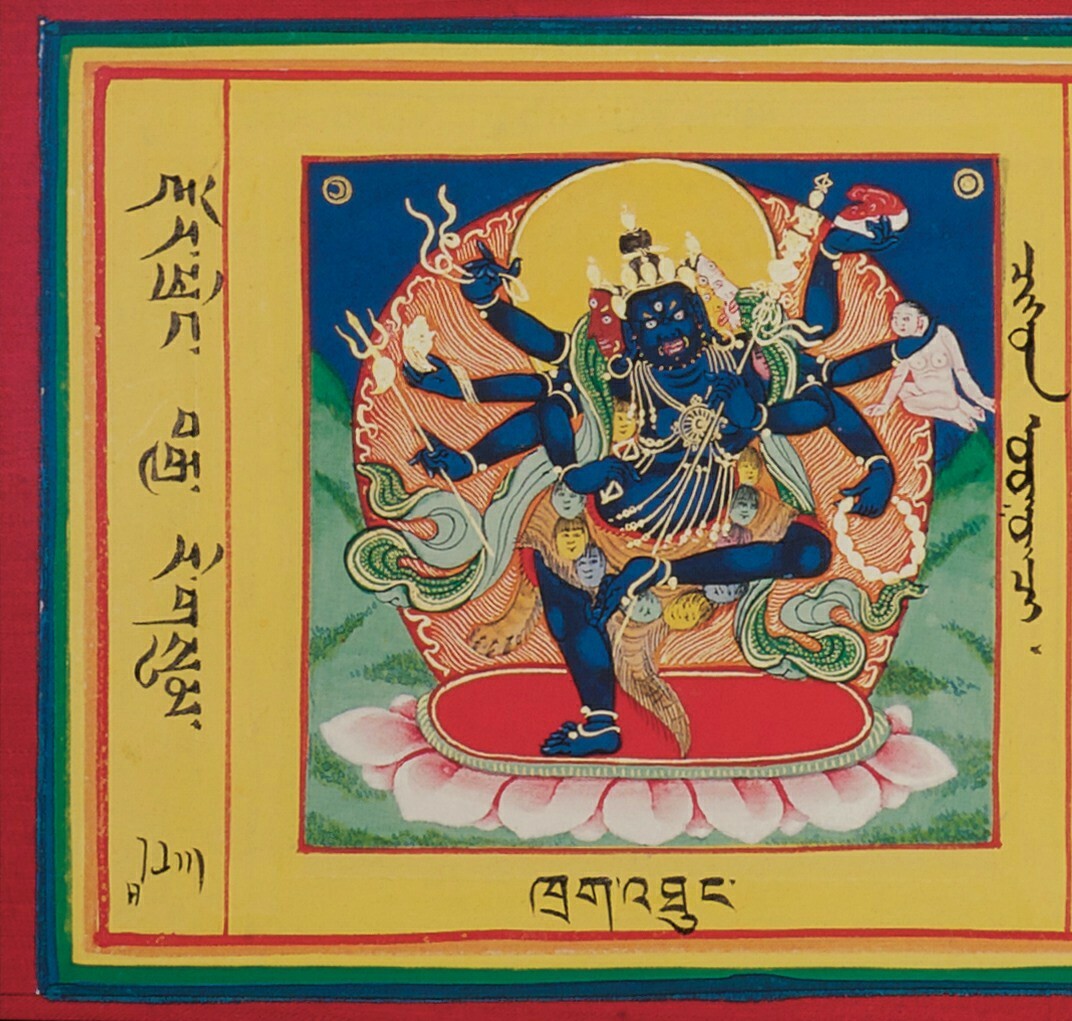
    Cemetery of Laughter


    Admittedly, this did not measure up to most of our understandings about Buddhism, but we thought it would work for the band. Visually there is a goddess with an extended tongue, which is quite famous as the Hindu Kali. In that sense, Guhyeshvari is equivalently referred to as Guhyakali. It turns out that the Cemetery is kept as a standard ring in Buddhist tantra, to which, we are going to study the adjunct subtle rings of Moods and I guess what you could call Musicians, which could have totally vanished except they are kept in the NSP version of Samputa.


    She had her thing. There were caves nearby, where for instance Nagarjuna is thought to have stayed -- possibly the first or Hayagriva Nagarjuna. But she was able to find caves set up with Khadga Yogini.


    She went there and learned the Purity Mantra:


    Om svabhava shuddha sarva dharma svabhava shuddhoh 'ham


    She said, "You're going to recite it, then you whisper it, then you do it mentally, and then you cease doing it at all. It's a long fade-out."

    We let her do that. We were nearby to make sure she was completely undisturbed.

    When I say, "learn", you might be able to memorize the mantra in sixty seconds; Pawlsy focused it like the meaning of life for two weeks underground. She didn't know Sanskrit, but she could easily learn mantras and find out what she was doing so it would be genuine. As you can see, this is a Sunyata Commitment; you could say Yogacara is identical to the Emptiness schools at this point. It really is like a mental detergent that eliminates distractions and questions and you become quite smooth and clear.

    Secondly, she's learning a weapon, a Tara mantra ending on Phat. This has a sound similar to "pet", although from Tibetans probably "pay"; but as you can tell, vocally, "pet" has a very spit-it-out feel, it's not a prayer, it's a projectile. From the basic exercise, the syllables Hrim Hum are the character of the deity, followed by a weapon, which she is obviously armed with. Even though this was written in the 1100s, it is next to impossible that anything was gotten from Assam then. Because that title of Mahacina is shared on other deities, it has more of a feeling that Assamese devotees of Tara and Manjushri simply moved for better times to Vikramasila and this had been passed down. So our literature has five hundred years of Bengal, but, Assam is so indirect and sparse that Pawlsy locked onto the Amsu Samvat and Vajra Family to supply the fabric.


    Fergus said, "Don't."

    Dinky said, "Do it."

    I said, "She's cutting her teeth with a deity who personally embodies a Kartri.

    This is a primary item of the higher deities.

    It's a 'chopper', in the sense of meat on a cutting board; similar to a western cleaver, but it is curved, so you smash it down and roll it through the piece."

    Fleep said, "It has no other purpose."

    "No. It's just a meat cutter."

    Dinky said, "The aspirant is to view themselves as transitory as meat being passed off for sale."

    "Pretty much. I think Pawlsy is on her way to becoming adept at these Kartri practices."

    Fergus said, "She'll realize it is, so to speak, 'behind' the sword."

    "Yeah. I'm kind of afraid she'll be really good at it. How is she supposed to go around like that without killing anybody?"

    "It's simply unfair."

    Dinky said, "Can you imagine Indian women competing with her skill at a fierce deity?"

    He snapped our minds that time. We all spontaneously entered a non-formative state.


    We tried to give her the chance to follow her instincts elsewhere if need be. But no. Whatever Pawlsy was not, before, she was, then, having become a pilgrim of Sankhu. She already has everything; this is her chance to have nothing. We may look around at other places. This one was for keeps.

    That was how we went in to the mid-1950s when things softened up with Khruschev. No, they didn't wind up going that great, but it was really important to remove the tension. I'm not saying that's what happened. I'm saying we were no longer pushed towards western 'Powers' at all.

    I said, "What do you think Fergus? Was it ideal?"

    "Let's see. The Albanian Fascists are not scratching at the door. The Albanian Communists are not scratching at the door. The Yugoslavian Stalinists have been liquidated. Stalin is dead. And our economical prospects are raising out of sheer survival into that communist bourgeoisie, the middle class.

    Yes, I think we could play music everywhere, turn it up louder, rock, and then get Pawlsy to Kathmandu before anyone gets killed."

    Fleep said, "That's just weird."

    I said, "I told you we would no longer be normal people. Are you ready to start?"

    "Oh. I...started."

    "Oh."

    Fergus said, "Oh."

    I said, "We're going to infiltrate the American market with everything that will make them accuse us of being Communists."

    "Agitprop?"

    "No, just everything that will make them go berserk."

    "Easily done."

    "Give them what they want to blame us for."

    "Who else could?"

    "No, if we just do it first then it's our domain."

    "Oh, I like that. Crushing competition like a Rockefeller."

    "Yeah, but nobody gets hurt."


    That was like a side project, a pseudo-Pawlsy run out of a bureau staffed by mostly teenagers, for entertainment purposes, our entertainment. Start with something similar to a box of comic books in New York, and cut a few 78s for San Francisco.

    Her real work, I think, was very successful. At this stage of the Iron Curtain, no, those hardcore communist countries are too repressive to deal with us. Yugoslavia works a little differently because Pawlsy makes it work differently. I don't mean she tells Tito what to do; but certainly since the time of the Partisans, her personal influence has seeped in to the collective subconscious of the country. It shows, because now we can do things across the whole place that were formerly impossible because Slavs and Albanians hated each other. It currently mostly works and is in an improved condition.

    Fergus said, "Aside from the commands of battle orders, this must be as much your work as hers."

    "You mean the music and the psychotic mode of promotion?"

    "That's my real job when I'm not being a slave."

    "You're not a slave."

    "Master."

    Pawlsy said, "It's true. I don't play the instruments."

    I said, "Pawlsy writes almost none of the lyrics she uses, and has a negligible effect on the musical arrangement."

    Dinky said, "It's the dynamics of her."

    "Yes. You take any of the standards, and Pawlsy's version will blow the rest away.

    When we create music, it does the same thing compared to if any of us were doing it."

    Pawlsy said, "The thing is, you have a certain feel for the music, that makes the instruments talk and the sounds sing."

    Fleep said, "That's why I wanted to start playing it.

    It was a last resort, but, not by choice. Or something."


    I looked at Fergus and said, "It was about then that we started..."

    "Going around, and around...and around...from Kosovo to Dalmatia to France to Ceylon to India to Nepal..."

    "And that was like..."

    "A really big party."

    "And..."

    "Decadent to beyond measure, from the view of having experienced this as nineteenth-century Gypsies."


    Pawlsy's career had its ups and downs, not because of her, but because of the world. By now, we had opened enough of it that it would keep your hands full. We had this sort of decisive turn around and just went for it. That's exactly what started happening. Originally I thought I could do this in a year. That turned out to be wrong. Now we are doing it in an airplane and it is the right idea.

    We took a certain role with Buddhism, being that Dakini Jala is a book of Vajrasattva, which *includes* Heruka as Wrathful Akshobhya.

    We were going to seize upon the fact that this is a very unusual retinue of Moods, which probably should have origin and continuity from the Harsha Samvat. What happens, when this "intensifies", so to speak, through Gauris and Vajraraudris. This is the language of a profound and subtle inner experience. And we knew that just like Pawlsy was a gateway, for example, of benefits to many people in Yugoslavia who were not her fans or had not even heard of her, Pawlsy of Sankhu would be a mental gateway for those of similar interest.

    Dinky said, "She did so much stuff."

    Fergus said, "We didn't have an off switch."

    I said, "You'd say it worked. If the Anglo countries were to boast of how great their systems are, we could claim the same in both western and eastern sections of the world that have no historical basis of contact. This is purely modern by way of agreement, nearly consensus, because when the things needed to make Pawlsy flourish are present, you must be having some basically decent times."

    "Yes, like a mini-United States distributed amongst various peoples due to an actual bridging process."

    "So we're going to do what we can for the performing arts and Yoga, while they disregard half or more of the world."

    "We were fighting for something."

    "Fair enough. Those are old, static systems, ours is basically brand new."

    Dinky said, "They want to know what happened."

    "Well, I'm trying to say how it worked. You were the pilot. You took us to distant places around the world so we could be stars with eccentric charities."

    "It never undermined the Oath we were bound to; it removed the need to use it."

    "So Pawlsy was a particularly good embodiment of Vajra Family. She was Peace because issues had been resolved, like a weathervane."

    Fergus said, "You mean various socio-economic ideas classed as Anti-Fascism."

    "The main meaning of the Partisans."

    "Let me give you the position of the mantra you are interested in, to Vajra Family.

    This is from the early part of Sadhanamala, and it is a basic meditation because it uses Buddha seated in Vajrasana meditation posture.


    The beginning sets up a retinue with Buddha Families. Let's move ahead with the process after they are displayed."


    ityādibhiḥ pūjāvidhiṃ kṛtvā maitryādibhāvanāpuraḥsaraṃ


    "So you have started with the Four Immeasurables, Maitri and others."


    019ḷ03 tataḥ svahṛdyakārapariṇataṃ candramaṇḍalaṃ tasyopari
    019ḷ04 huṃkāraṃ suvarṇavarṇaṃ tadraśminirgatān gurubuddhabodhisattvān
    019ḷ05 dṛṣṭvā snānapūjāmeghaprasaraiḥ sampūjya tataḥ pāpadeśanāṃ
    019ḷ06 puṇyānumodanāṃ pariṇāmanāṃ triśaraṇagamanaṃ
    019ḷ07 jinamārgaśrayaṇaṃ bodhicittotpādaṃ ca kuryād ratnatrayaṃ me
    019ḷ08 śaraṇamityādinā / tataḥ śunyatāṃ vibhāvayet / sarvadharmān
    019ḷ09 niḥsvabhāvarūpān vibhāvya akṣararūpaṃ bodhicittasvarūpaṃ
    019ḷ10 prabhāsvaram ātmānaṃ paśyet / dṛḍhīkaraṇārthaṃ
    019ḷ11 mantram uccārayet oṃ svabhāvaśuddhāḥ sarvadharmāḥ svabhāvaśuddho
    019ḷ12 'ham / tad eva jyotīrūpapariṇataṃ candramaṇḍalam /


    "Your heart holds a Moon Disk in which there is a Gold Hum syllable; transmuting Sin to Merit, Papa to Punya, is the Jina Path, generating Bodhicitta and taking Refuge; meditate on Voidness and the Akash; Prabhasvara is the true inner nature of Bodhicitta; and do the Purity Mantra, making the Moon Disk into a body of light.

    Then, you may be wrong about the musical scale, because Hum, A, and others are the Sodasa Svara, are sixteen sounds of the moon mandala."


    019ḷ13 tasyopari huṃkāram akārādiṣoḍaśasvarapariveṣṭitaṃ punar api


    "That all becomes a Gold Vajra, used in a meditation to defeat the Four Maras."


    019ḷ14 kakārādivarṇena pariveṣṭitaṃ śuklavarṇaṃ sakalasamastapariṇataṃ
    019ḷ15 candramaṇḍalarūpaṃ vicintayet / tasyopari huṃkārākṣarabījaṃ
    019ḷ16 tatpariṇataṃ vajraṃ pītavarṇaṃ tatrāpi
    019ḷ17 vajravaraṭake huṃkāraṃ samastam etat pariṇamya vajrāsanarūpaṃ
    020ḷ01 suvarṇavarṇaṃ tasya caturmārāsanam / te ca skandhakleśa-
    020ḷ02 mṛtyudevaputramārāḥ gauraraktakṛṣṇaśyāmavarṇāḥ / yathākrameṇa
    020ḷ03 mūrtim eṣāṃ vibhāvya ebhir māraiḥ parighāṭitasiṃhāsanaṃ
    020ḷ04 tasyopari viśvapadmaṃ vajraṃ ca tatra sthitaṃ bhagavanta dvibhujaṃ
    020ḷ05 vajraparyaṅkaniṣaṇṇaṃ savyakaraṃ bhūsparśam udrānvitam avasavyabhutsaṅgasthitaṃ
    020ḷ06 raktavastrācchāditagātraṃ śāntam ātmānaṃ
    020ḷ07 vibhāvayed yogī /


    "The Vajra goes on to belong to Vajrasana Buddha, doing Bhu Sparsha or Earth-touching Gesture, since the Earth or Bhu Devi witnessed his defeat of the Maras. That is what the gesture means. That is what Akshobhya does. Then there is a Peaceful or Santa outcome.

    There are some more intricacies, and then there is a section on Three Syllables and the Purifications of Body, Speech, and Mind."


    Fleep said, "That's the same pattern Pawlsy just got from another deity."

    "Yes, they are similar. This one is the original story of the Fourth Noble Truth, or that Buddha stopped Suffering by defeat of the Maras.

    The rest of this book does mot mention the episode whatsoever. Nevertheless, that is the moment of Buddha's Enlightenment. Nothing is higher, it's just more detailed, finer resolution."


    I said, "I find myself receptive to multiple forms, because it's like saying his teaching caught on and spread and others are testifying to it. I like the overflow effect. I think the above would work if you were the type of person who wouldn't meditate on anything other than the actual Buddha. The sadhana exercises go on to the major Bodhisattvas, to Tara and Vajrayogini, and even the tantric principals.

    Vajrayogini is even focused in her own Guhyasamaja Sadhanamala (GSS), which has forty-six exercises."


    Fergus said, "This is a protective way to experience the Fierce Woman as hinted in many of these manuscripts."

    "Yes. So if we start in Dakini Jala -- which it does -- those are Wrathful Deities, who will be used for Armor."

    "But what you are saying is sequential. There is an order involved here. You essentially want to take that cutting from Buddha Vajrasana and stick it on the end of the Preliminaries. You're taking the Four Immeasurables into a condition that could be described as Moonlight."

    "Yes; it's a similar process whether one was going to proceed with the scriptural Buddha's Enlightenment like above, or, anything taken as an appropriate deity. In fact, such a decision is not really necessary, because it very much is the quality of the Purity Mantra itself we want to establish. I couldn't exactly stop Pawlsy from digging into something that makes us explain this backwards."

    "But..."

    "Oh, of course I'll be telling you what comes along in the moonlight, Mrtyuvacana."

    "Explaining Death or the Maras."

    Fleep said, "You are really creepy."

    "Well, Pawlsy has tapped into Sankhu, which is a teaching on outer, inner, and secret levels, Tara, Prajnaparamita, and Vajrayogini."


    Fergus said, "Wait a minute. Then you're going to tell us there isn't a Blue Tara or one in Vajra Family."

    "Not really.

    We'll continue in a moment about this."

  24. The Following 2 Users Say Thank You to shaberon For This Post:

    Bill Ryan (30th August 2026), Ewan (30th August 2026)

  25. Link to Post #53
    United States Avalon Member
    Join Date
    1st April 2016
    Posts
    6,998
    Thanks
    35,786
    Thanked 39,982 times in 6,648 posts

    Default Re: Pawlsy the Cat is Her Name

    Pawlsy's Dark Side


    She's found something that makes her concentrate, possibly because the Sword got her attention, but certainly because for it to even make sense, you have to combine all these historical ideas into a psychodrama full of Buddhist principles.

    At the same time, no, there is not really such a thing as a Blue Tara who is simple and encouraging like Eight Fears Tara.

    There is one in the personal system of Suryagupta for the song of Twenty-one Taras.

    In fact, it has Blue Tara arising in two-, four-, and six-armed forms, like in the meditation manual for Six Chakravartins.

    Well, what he shows for a Four-Armed form is not identical to Mahacinakrama Tara, but they are close, since she is still a Sword Yogini.


    The two-armed form is syncretized here as 12 -- Removing Poverty or Clearing Misfortune.

    top:

    Directly below are green Mahamayuri and blue Mantramanudharani belonging to the set of five deities known as the Pancha Raksha.

    bottom:

    At the bottom center is Dorje Yudronma.


    The large form is also available in the miniscule area where Tara is Wrathful:


    And guess what. This is identified in Guge.

    Bhrikuti:


    Dinky said, "This is a little strange if you would bother to go through the Sutras and other forms to prove she is not 'angry, frowning'. She actually is not. So what is this?"

    MB Sakya:


    Quote The concept of Bhrikuti Tara is noted in the earliest text of
    Arya Manjusrimulakalpa. She appears along with Arya Tara
    and a host of other feminine divinities called Vidyarajnis in
    Chapter  named Mandalavidhana Parivarta of that sutra.
    Bhrikuti is also mentioned in Hevajra tantra (2nd chapter).
    She is generally depicted as a companion deity of some forms
    of Avalokiteshvara viz. Khasarpana, Padmanarteshvara,
    Amoghpasa, etc. Bhrikuti appears in different forms. When
    she appears in blue colour, she is depicted as three headed and
    a six armed form.


    Fergus said, "In other words there is not any normal Blue Tara in Vajra Family.

    Pawlsy has taken a pretty specific thing."


    "That's right.

    There are Taras who are in Vajra Family, such as Parnasabari, who comes in many colors but hardly if ever blue.

    In tantra they are blue."


    "You are doing this to track Ekajati as a distinct individual."

    "Well, it's in the details.

    Suryagupta is a specific practice, much more involved than the system of Atisha.

    Each of its forms has its own mantra and sadhana; and that's the main reason, we can't personally transmit the system, but we can use the idea and apply it to ones we can do.

    Suryagupta wants you to start with a basic Green Tara. And then, we find inside, Nagarjuna's Khadiravani Tara with Marici and Ekajati as Tara Nine."

    "Or, Nagarjuna took Suryagupta's Khadiravani Tara."

    "Well, there isn't much, by name, that corresponds to anything external; there is Usnisa Vijaya and Calad Bhrkuti, and the rest of them are named for colors or the action they perform.

    The series begins with a Dharmodaya and Pravira, a Red Tara, Fast Hero. Later on, another Tara has a Dharmodaya in her hand, Burning Suffering, which of course corresponds to the Four Maras."

    "If one studies Suryagupta closely, then, he does actually have what appears to be a stand-alone tantra of Green Tara."

    "Yes. The song is based in Karma Family, and, as an additional practice, he does a reversed mandala, so Tara dominates Amoghasiddhi."

    "That is rare, like Sri Devi reversing Bernagchen Mahakala."


    Pawlsy said, "I understand the difference; the song is a song, you can do it without knowing anything about it.

    But if you ask questions, then, the answers are going to be very literally, well, Suryagupta says this, and Atisha says that. And they are completely different, even though it is the same song. But those are almost entirely forms of Tara that have no outer correspondence. They're not from Sutras, they don't show up in tantras, or anything, which makes this kind of version extra difficult. If I am going to take the time to see how Ugra Tara of Assam seems to be taken up in Buddhism perhaps even earlier than Suryagupta, why can't I use this in the song?"


    "Pawls, that possibility is explained by the Jonang Foundation."


    Quote Another important source for the iconography of Tārā, of several so far unmentioned aspects, is the 12th century Indian Sanskrit manuscript known as the Sādhana-mālā or Sādhana-samuccaya. It contains the descriptions and short sādhanas of such rather obscure aspects as Mṛtyuvañcana-tāra, Durgottāriṇi-tāra, Caturbhuja Sita-tāra, Ṣadbhuja Sita-tārā, Prasanna-tārā, Mahāśri-tārā, Mahācina-tārā and others, some of which have never been known in Tibet.

    "They give a clean, brief list of Suryagupta's forms, but then encourage us to explore these additional resources of Tara. Okay. If we do that, we are going to find something about more Taras coming because of Tara with Marici and Ekajati.

    With the little that is known of Suryagupta, something is known of his disciple Sarvajnamitra, who lived in a facility built in the early 700s."


    Quote Besides 'Sragdharāstotra' other texts attributed to Sarvajñamitra are all in praise of goddess Tārā, viz.,
    1. Devītarākuvākyādhyesana nāma stotra
    2. Āryatārāsādhanā, and
    3. Aṣṭabhayatrānatārosādhanā

    "So he makes an early Kashmiri text, soon copied with Newar Commentary. This is a stand-alone published since 1908. And he is even referenced in the missing end part we don't have."


    Quote Sarvajñamitra (सर्वज्ञमित्र).—name of a man, described as a Kashmirian scholar (mahāpaṇḍita) and devotee of Tārā: Sādhanamālā 223.17.

    Fergus said, "Despite missing that, we do have Sragdhara in the Taras section, as well as other archives."

    Fleep said, "But this is a Lotus Garland, coming from Kashmir at the same time as Mahacinakrama and Lokeshvara from the opposite direction."

    I said, "Yes, that sounds rather wide and early, but the implication is, there must have already been a technical enough capability for Suryagupta to craft a highly specialized mandala for Karma Family in the previous generation.

    Candragomin is certainly Yogacara with a deific push, while Suryagupta is pretty close to the total meaning of all the advanced tantras. He's created the plane of the Dhyanis quite possibly before it is indicated in Guhyasamaja."


    Pawlsy said, "It's related to Eight Fears Tara, as, I suppose what means the Outer level, which you said you worked your way through."

    "I think so. I was not understanding how it worked. I did that as a Kriya deity just by itself. It was only later that I understood about Vajrasattva Preliminaries and how it fits with more Taras and other deities."

    Fergus said, "Then you find Tara with Marici and Ekajati both at the root of this song, and in a similar manner in the loose sadhana exercises. Both along with Sragdhara."

    "Yes, and so we're picking up on a definite pattern here. It has to do with contacting each Family, and, Ekajati has an assignment in this. But overall, this Song is Karma Family Yoga.

    Again, the main meaning of this, is, if you so to speak make friends with this Outer Tara, she is very immanent, and it becomes relatively easy to learn the next related forms. Like if I was to say that Sadanga Tara is just a basic outer Green Tara, she's just doing something different, and the difference is maybe her hair, but she's there to answer yoga questions. And my Tara is just a green blob anyway. I can see auras but I can't visualize a deity.

    And it turns out to be hard to find a basic Red Tara in Lotus Family. So we looked at the way Suryagupta started the song with a red form, and, from the resources, a near-correspondence is Sitabani. She uses an Aksasutra, a syllable string, which is at least suggestive of Sragdhara.

    The notes for that song only have one Vajra Family member; even Bhrkuti is in Karma Family. Curiously, the Tara Tantra is mostly about Vajra Family."


    Pawlsy said, "I don't want to use it.

    Too confusing. You are looking at Red Taras in Karma Family and it comes across as very stray. I want you all to focus on something more like a normal Quintessence, or, some kind of explanatory departure from that. We need the theme before we can put in a few variations on a theme. There is no set pattern of Taras. Learn it by the Abhisamaya Alamkara while we ponder this."


    I said, "I tend to agree.

    We will be able to find sources that give verse interpretations using Marici and so on. It can also be determined that there are other sets of Twenty-one Taras that do not match the liturgical ones. From the small amount of variant examples, here is a Jonang piece from Sichuan."


    "Beside the principal Tara, you can find Usnisa Vijaya. Opposite her is an eight-armed blue Sword Yogini.

    On careful inspection, Usnisa has three faces, while a couple of the others are Four Faced, like in Tara Tantra."


    Fergus said, "I'm going to feed it back to you. This is where we will ignore the details, such as every figure is individually inscribed on a 1300s Guge. If we look at this as Tara with Marici and Ekajati and its universal or generic components, every deity is an aspect of Muttering."


    Quote ...the three letters, OM, AH, HUM, written in black for each of the figures depicted. The three letters represent the enlightened body, speech and mind of the deities depicted on the front of the composition. The letters are written in Tibetan but represent the three Sanskrit language seed syllables (bija).

    (Inscriptions at the top of the stupa: om sarva vidya svaha. om tare tuttare ture svaha).

    (Inscriptions at the vase level of the stupa: om vajjra garveye svaha. om supratishta vajre svaha. om ye dharma hetu prabhava hetum tesham tathagato hyavadat tesham cha yo nirodha evam vadi maha shramanah svaha. om ah hum).


    I said, "That is a name for consort of Vajrasattva, Vajra Garvi."

    Pawlsy said, "So this is like the single meditation I am learning, spread across that entire field of deities."

    "Yes. This is dharani-based, like a series of cues, such as one practitioner might extensively follow Sragdhara, another Usnisa Vijaya, and so on, while Vajradhatu or Dakini Jala is more like a fixed format of everything."

    Fergus said, "You might know three or ten Taras in Lotus Family, but there is only one Pandara."

    "Maybe like tuning a string on an instrument; there are a lot of frequencies that are closer to the note A than to other notes, but, you have to keep adjusting until only the specific frequency of A establishes the geometric series desirable for that string."

    Pawlsy said, "I get that. I can see how Mahacina Krama pushes the envelope for me, relatively as a beginner, but then she effectively vanishes, and it is just the syllables and items that are passed to other deities. I can also understand in medieval times, this would need to be personally monitored by a guru, while modern educated people can pick up more of this at their own pace."

    "You don't have an issue doing the same meditation for a year, or more, before you add another one or five hundred."

    "No; I think it would be pretty straightforward for me to progress through bigger forms that are related. Right now I would find it difficult to throw in something like Kurukulla that seems very different."

    Fleep said, "I was impressed that it compares to normal religion.

    That is, Vajrasana Buddha. It's a focus on the Enlightenment itself.

    Well, I don't know how much of a copy it is, but, obviously, Jesus was said to meditate in the desert and resist these temptations. And then fighting the Klesas might be claimed by any religion; but then none of them begin to speak about the Skandhas. So you are obviously re-living Buddha's unique message here. If you were that kind of purist, you might be able to get through using nothing but Buddha.

    The system far from limits you from only using that method; it has doorways for so many mindsets."


    I said, "Yes. For modern people, we think you can delve into anything, and the boundaries of respect are to do the Yoga view like a conversation, don't self-generate as the deity, and find the appropriate start and progression, rather than attempting to use higher tantras cold off the page.

    We don't believe 'modern' has anything to do with altering the contents.

    We believe this is similar to liberal arts. That you develop habits of reading and meditation that remain part of your life. Realistically, that's not going to be near-constant and daily, like a monk, but you like to spend time doing it sometimes. And the difficulty is, yogic energy is not the property or invention of Buddhism, and what happens if you start activating the currents? And it is not very well set up from this point of view. At most it could be introduced in the senior year of college. And we're responding from the world of practices, generally, looking into what makes it the Buddhist way of doing it. You can't get Ghasmari from any other kind of yoga.

    I am positive things can happen to you that are not like reading about it, that affect the whole organism."


    If you achieve Pranayama, you will certainly know it.


    Here is a generic Quintessence called Jewel of Reality.


    Quote If the pilgrims turns from the main shrine to the smaller two-roofed temple to the right he begins a journey into the past and a much earlier tradition of Buddhism. The gilt torana over the main doorway depicts a late figure: the tantric form of Amitabha with three faces and twelve arms sitting in vajrasana on the peacock throne. He is flanked on his right by a four-armed female figure, Prajnaparamita and on his left by the Bodhisattva Avalokiteshvara. Together they symbolize the Three Jewels: the Buddha, the Dharma and the Sangha. Inside the temple, instead of an image, is a caitya over a thousand years old. This caitya points to the long history of this site and its other name: Gum Baha or Gum Vihara, “The Forest Monastery. An inscription of A. D. 608 put up by King Amsuvarma mentions a grant for Gum Vihara, one among many such institutions so favored by the king. The oldest and most reliable of the Nepalese chronicles, tells us that King Manadeva (A. D. 464-505) retired to Gum Vihara at one time to do penance. Later chronicles add that because of his penance a caitya arose there spontaneously, clearly a reference to this caitya which the people still call “a swayambhu catya” a self-existent caitya. A fragment of an inscription found at Sankhu. And from this same early period, refers to the “mahasanghika bhiksu sangha”, the community of Buddhist monks who follow the Mahasanghika tradition, the only reference from this period to a specific Buddhist school or sect.

    Scholars speculate that the monastery is probably even older than this period. Many Buddhist monasteries were founded in this early period when kings calling themselves “Licchavi” ruled Nepal. But the culture of the Licchavis was highly Sanskritised, and the monasteries founded in their day bear Sanskrit names. “Gum” is not a Sanskrit word, but a Tibeto-Burman would word meaning a “forest”. Chronicles tell us that the Valley was ruled earlier by Kirata kings. Perhaps it was in their time that this “Forest Monastery” was founded. If the pilgrim moves round the rest of the complex he will see tantalizing bit and pieces of the intervening history. North of the enshrined caitya are four small caityas datedfrom the fifth to the eight centuries. A short stairway leads up to another level and an enclosed, paved courtyard with a sunken fountain in the center and surrounded by rest houses and residential quarters. Here the current custodian of the shrine stays when he tends the shrine. He belongs to a still extant sangha of four lineages of Vajracaryas and Sakyas who since medieval times have lived here. They form the sangha of this monastery and still tend its shrines by turn. Today they live in the village below but must stay here in the traditional monastery during their period of service. On the ground floor of the building where this priest stays is a small room. To the left as one enters is a large gilt copper caitya about five feet tall. To the left of this is a colossal cast copper or bronze head of the Buddha. The image is partially buried and it is impossible to see how much more than the head there is. This has been dated to the fifth century A. D. On the floor above this is another shrine which contains a duplicate image of Vajrayogini and two other astonishing piece. The first is a solid cast bronze image of the Buddha standing with his right hand showing the gesture of granting a boon and his left hand clasping his robes at the shoulder. The image stands about 52 inches tall and has been dated to the eleventh century. Local people have forgotten who this image is and, for some long-forgotten reason, refer to is as “The Blacksmith’s Queen”. Near the Buddha stands an image of Padmapani Lokesvara, again of solid bronze and standing about three feet high. Also an exquisite piece, this has been dated to the thirteen of fourteen century.

    If the pilgrim should come to this shrine on the full-moon day of the month of Caitra (March-April), he could join the procession which takes the duplicate image of Vajrayogini down to the village below on her feast day, a celebration which links this shrine and its long history with the daily life on the Buddhists of Sankhu village. Should he comes at the time of the annual worship of lineage deities, he would find Sakyas and Vajracaryas from Patan, Kathmandu, Banepa and Panauti gathered here to worship the enshrined caitya as their lineage deity. This caitya (or the one along the stairway below) is worshipped by people from Wam Baha in Patan, by people from Jhwa Baha, Dhwaka Baha, Gam Baha, Makhan Baha, Itum Baha, So Baha, Ko Hiti Baha, Syangu Bahi, Na Bahi, Nhaykan Bahi, Cwakan Bahi, Arakhu Bahi in Kathmandu, Nhu Baha in Banepa and Nhu Baha in Panauti as their lineage deity. All of them have links to the ancient shrine and community of Gum Vihara, which they renew at least occasionally by returning to this the original site of their lineage deity. To the causal visitor Sankhu may seem a confusing place, but a little study of its treasures beings to unravel for the visitor some of the historical stands that make up the rich fabric of the culture of Nepal.

  26. The Following 3 Users Say Thank You to shaberon For This Post:

    Bill Ryan (30th August 2026), Ewan (30th August 2026), RunningDeer (30th August 2026)

  27. Link to Post #54
    United States Avalon Member
    Join Date
    1st April 2016
    Posts
    6,998
    Thanks
    35,786
    Thanked 39,982 times in 6,648 posts

    Default Re: Pawlsy the Cat is Her Name

    Nothing ever normal happened again.


    Most people are aware that some Communist regimes were repressive, there were tension and flare-ups in eastern Europe, but nothing all that serious was going on in terms of were the Nazis coming back or were they taking over our country. None of that. One way of putting it is we defeated Yugoslavia in order to join Yugoslavia. We're not politicians or the actual army or police. You might be able to call us something like a park ranger. We always spent part of our time around Peja but we were not normal.

    It has barely changed, because it was never devastated by bombing.

    Pawlsy already had some hotspots from way back, and, it is exactly this that is going to become the driver of the country.


    It was kind of slow, but, we began an era of prosperity based at the coast, which, slowly, returns something to Kosovo.


    Quote With heavy federal investment, tourism in SR Croatia was revived, expanded, and transformed into a major source of income. In particular, the 745-mile coastline of Dalmatia and Istria with its bright, sunny weather, beaches and more 1,000 islands, and Italianate architecture became extremely popular with tourists in the 1960s. In 1965, three million foreign tourists visited Dalmatia and by 1970 4.75 million foreign tourists came to visit Dalmatia. Some of the other tourists came from Czechoslovakia and Hungary, but the majority came from Western Europe, especially from Italy, Austria and West Germany as the low value of the dinar made vacationing in Yugoslavia extremely cheap. By 1969, the federal government made $275 million US dollars from tourism, which comprised some 10% of all revenue. Dalmatia and Istria, which had once been poor regions, were almost overnight transformed into wealthy areas as about 30% of all people in Istria and Dalmatia were employed in the tourism industry by the end of the 1960s.

    With these successful measures, the Yugoslav economy achieved relative self-sufficiency and traded extensively with both the West and the East. By the early 1960s, foreign observers noted that the country was "booming", and that all the while the Yugoslav citizens enjoyed far greater liberties than the Soviet Union and Eastern Bloc states. Literacy was increased dramatically and reached 91%, medical care was free on all levels, and life expectancy was 72 years.


    The German historian Marie-Janine Calic noted that the 1960s are remembered as the time of the "economic miracle" when living standards were rising for most Yugoslavs and the prosperity had "a politically pacifying and socially integrating effect". Some of the republics became more wealthier than others. In 1965, Slovenia had an index value of 177.3% of Yugoslavia's per capital income, followed by Croatia at 120.7%, and Serbia at 94.9% while Bosnia-Herzegovina had 69.1% and the poorest region being Kosovo at 38.6%. At least part of the reason for the regional differences was Tito's policy until 1965 of keeping the prices of raw materials and agricultural goods artificially low, which hurt the poorer republics in the south as most people there were employed in either agriculture or mining while Slovenia and Croatia were more industrialised. To address the regional disparity, Tito created a regional development fund in 1965 intended to help the poorer republics of Bosnia-Herzegovina, Montenegro, and Macedonia along with the Kosovo region of Serbia "catch up" with the richer republics to the north.


    In 1969, the University of Pristina was opened, becoming the first Albanian language university in Yugoslavia. Likewise, Tito allowed for a greater number of Albanians to be recruited into the League of Communists and into the government, which in turn caused complaints from the Serbs that the Albanians were dominating the political life of Kosovo at their expense.

    The same momentum has a loosening of strictness:


    Quote The socialist regime championed women's rights and allowed equal legal rights to both legitimate and illegitimate children. Abortion and birth control were both legal in Yugoslavia, which led to a rapid decline in population growth in 1960s-1970s. Between 1948 and 1981, the population growth rate fell from 14.7% in 1947 to 7.4% in 1981. In particular, the Communist regime attacked what it considered to be sexist traditions in the Muslim communities, banning polygamy, women being veiled and the "sale" of girls who were married off to the man best able to afford the bride-price. An young Bosnian Muslim women stated: "Things used to be very different. Girls were not free...Today a girl can chose whom she wants to be with and where she wants to go...When I cut off my braids and got a permanent wave there was a lot of disapproval and gossip. I was one of the first girls in the village to stop wearing dimija [harem pants] and put on a dress...And today almost every girl has modern cloths in addition to her dimija". The Partisan movement in the World War Two was very puritanical, which was carried on into the late 1940s and 1950s, but starting in the 1960s the regime embraced the values of the "permissive society" and the "sexual revolution". In the 1960s, pornographic magazines were permitted and the Yugoslav newspapers devoted much coverage to gossip about the sex lives of celebrities, through not senior members of the League of Communists. Likewise, the regime sought to encourage women to work and by 1964 about 29% of all Yugoslav women were working. The female labor participation varied sharply from region to region. In Slovenia, 42% of all women were working in 1964 while in Kosovo region only 18% of women worked in 1964. Western music was allowed in Yugoslavia, and music by groups popular in the West such as The Beatles and The Rolling Stones was frequently played on Yugoslav radio. Officially, Yugoslavia was neutral in the Cold War, but in a cultural sense, Yugoslavia belonged to the West as Western films, TV shows and music were all very popular in the 1960s. Because of the low value of the dinar, Western films were often shot in Yugoslavia in the 1960s.

    The story there has totally changed. We have nothing left to say about intrigues and arm twisting and battles.

    Nothing new.

    We have plenty to say in terms of an educational review.

    I had been recruiting people as musicians since an idea I got in my college days in 1860. No one exactly knew this, but they remember the band. We've been around a while. Naturally they start to wonder why we don't seem to age, how do you stay young-looking and energetic?

    Pawlsy said, "We don't have birthdays.

    We do music and exercise and don't eat things that bog us down."


    No one believed it. "Miss Pawlsy has the Philosopher's Stone!" was common. Other ideas were Lourdes, the Fountain of Youth, the Blarney Stone, or even that she was a manifestation of Isis.

    We haven't talked a lot about music, since Paris in the 30s when we started doing fusion, any kind of style or combo. Again, our main hype or excitement about international affairs is not politics, but music, food, and blankets. And we liked things that we had found from Spain and of course Valencia. And although it is influential to Latin America, each of those places has its own twist, its local spice, that I, at least, can hear.

    There is someone out there not too different from Pawlsy, except for being a four-and-a-half to possibly five octave soprano, from Peru. In her earlier days, she does Quechua or Inca themes, and moves on to new and different things.


    Yma Sumac

    Gopher Mambo 1954


    This totally is a stage name:


    Quote Zoila Emperatriz Chávarri Castillo known as Yma Sumac (from Quechua "Ima sumaq", meaning "how beautiful")

    Similar to Albanian paganism in that sense. Prende, Zoja Bukuris, for beauty. We didn't believe in it as a compliment to anybody, but, as an inner quality seeking expression.


    After doing music on her local scene:


    Quote She has also been called Queen of Exotica and is considered a pioneer of world music. Her debut album, Voice of the Xtabay (1950), peaked at number one in the Billboard 200, selling a million copies in the United States, and its single, "Virgin of the Sun God (Taita Inty)", was a big seller in the United Kingdom, becoming an international success in the 1950s.

    Pawlsy said, "That's what I wanted to happen.

    I don't know anyone in Peru or New York; and she goes straight to Broadway. This is great. I'm glad to know there are artistically sensitive people in that part of the world.

    On a musical level, part of what we do is always going to be considered barbaric, or, maybe I should start saying Fierce, like the Buddhist deities."


    That's always been in our bag. Of course, it was literal. If we were to re-frame it towards Buddhist Avesa or Possession, that would be like toning it down a notch. That is how she took it seeing Vajra Family or Heruka or Wrathful Akshobhya.

    I said, "We have to keep three distinct meanings for this.

    Heruka in our usage is Akshobhya.

    Generically, it means a two-armed form of a deity.

    And then Heruka is the tantric principal, which is more or less this Akshobhya plus a magically-activated Vajrasattva."


    Fergus said, "What the word actually means is subject to dispute.

    It's not a real word.

    It appears to have a construction like Hevajra, which is He-Vajra or Causal Vajra, because the first syllable stands for Hetu, 'cause'. That is easily understood, since at least a Vajra actually is something; Ruka is not. Most discussions take it as either the syllables Ru Ka with their own meanings, or, it is an altered form of Ruci.

    Pawlsy has the image and the music for it, yes. We'll get there."


    We'll bring Asia to Europe like we are about to bring Europe to Asia.

    We had gotten our bearings on a particular strip of it. And we would just tell the Govindas to spread word about us and where we were going and maybe some of the visitors would pursue it. Things are modernizing, after a fashion, and we are adding another leg to the tour. And this one's going to be harder-edged.


    1956


    The Communism for Ceylon tour


    This changed us around from the Perehera or Procession we liked going to (Esala). There's a coalition of no-contest between the two main communist parties along with a couple others. As you know, we formed a friendship with one of them due to the fact that, despite being Sinhalese, he was not born into Buddhism, but is a convert. And he seems to us to genuinely have the right motivations rather than doing it as a cover.

    And so when we think this is about to happen, it does:


    Quote The 1956 elections was a landslide victory for the MEP as it gained a two-thirds majority in parliament and Bandaranaike was invited by the Governor General to form a government as the fourth prime minister of Ceylon in April 1956. He formed his cabinet with a collection of senior members of the parties that made up the MEP and several independents.

    In keeping with one of his primary election polices, Bandaranaike had the Official Language Act (No. 33 of 1956) passed. known as the Sinhala Only Act, it made Sinhala language the sole official language of the country, replacing English which he had promised to do within 24 hours of coming to power.

    Remember we discussed this before.

    And so we put on a much more modern show as European Communists and the language issue. Tamils, of course, are going to complain they are disenfranchised, although this is nothing new to the Indian Tamils. It would only be a new constraint to Ceylonese Tamils -- the beneficiaries of the previous English system -- and it is that system the law is truly giving the axe.


    We went out to Colombo and picked up Paneer and he was weird.

    He said we looked weird.

    We made him search for an intra-Sinhalese answer that insures equity for Indian Tamils.

    He, of course, refused to do anything in front of a crowd.

    I said, "Look, it's not that much different from handing out flyers or pamphlets."

    That's exactly what he did. He looked.

    "We'll tell you what to say or you can write it down or something."

    Somehow he knew we would cue him with things that were like shotgun blasts. He wished it away.

    Dinky snapped his fingers and said, "I was illiterate. Now I fly an airplane halfway around the world."

    Fleep and Fergus said, "I was almost dead."

    He looked like Ekajati.

    I handed him a script, threw him out there, and had Fergus ram him with a set of Skanderbeg Horns and he read it.

    After our show, he did not know where he was going; we followed him briefly until he passed out.


    Sixteen hours later, he asked for a glass of water and told us:


    "I received something for the Pawlsy's Mutter Miscuits Tea Company that didn't fit in the mailbox."

    Pawlsy said, "What mailbox?"

    "The one I use because I handle it all through that corrupt English checking system."

    There was, actually, purple, on and around her.

    Fergus almost breathed.

    Fleep said, "That's what we call a paper trail."

    Paneer said, "I'm not sure you're aware of the level at which you're operating."

    "No, but I can sing a whole lot worse than I used to."

    Pawlsy said, "It's over when Fleep sings a pretty song."

    Paneer burst out laughing.

    "We don't always let him do it."

    Fergus said, "So what is different?"

    Paneer said, "It's an American offer to make some commercials involving the use of flour that might get a little messy."

    Pawlsy said, "Tell them to choke on it.

    Drop dead, and definitely don't try to talk to me."

    "It was sent by a courier because they don't know where to find the company. So I'm going to the box at the post office, and, they give me this really big suitcase. I can barely move it. Soon after I start scraping it down the street, the American guy sees me and tells me about this offer.

    You'd be going somewhere in the midwest. It's not New York and it won't be in any of the cities. You might be working in Illinois or Missouri. He said it was for the cause of securing small farms against big city conglomerates and thought you might be interested because of that."

    Dinky said, "That would help boost the gimmicks we are going to come up with."

    Pawlsy said, "Communist Flour for America?"

    Fergus said, "I'll run it past the bureau."

    Fleep said, "It's not something we could do on our own. They have to ask for it."

    "Tell them to f off, I'm busy. Negotiate later. Then tell them to f off completely, I'm not speaking English.

    Just whatever thing is needed to do to make it look like someone is using flour, and that's it."

    "Then he said something about a Watchyzynski..."

    "Well, I am sure he is in deep over his head about something he can't pronounce. F off forever, and distribute the cash into programs wherever we go."

    "I'll get that back to him."

    "Thank you Paneer."


    He had lined us up for an intellectual challenge.

    The events in Assam are literally the unfolding of New Buddhism, Navayana:


    Quote On October 14, 1956, Ambedkar formally converted to Buddhism in Nagpur along with approximately 500,000 Dalits. This mass conversion was a political and spiritual act, signaling a collective renunciation of caste slavery and a new identity rooted in dignity, reason, and equality. Ambedkar’s "22 Vows," recited by all converts, explicitly rejected Hindu deities, rituals, and the authority of the Brahminical order.

    That's what this is, entirely secular, that is, for the primary purpose of Dalits rejecting caste.


    Fergus said, "That's why we haven't said much about Indian nationalism until now.

    Here we are interested in something we believe from the 600s to be a kind of cross-cultural integration, minus and except for times where evil things wreck it.

    He's doing something else, which on the one hand is not exactly the Dharma, but is arguably a consequential outcome for it.

    In the secular or rationalist vein, we would say the flaw comes from the Purusha Sukta which happens to describe varna or professions.

    It's a description of one life in all forms like Viraj and Satarupa, Brahma, Avalokiteshvara.

    It says nothing about caste, which must be a later Brahminical interpretation."


    I said, "Yes.

    Or, it is an argument about karma. Does it mean stuck just how you are born, or does it mean behavior developed in life.

    You know, I like them all, we do Shudra work at times, we are also artists, but in the end we are especially Warriors by keen instinct, in a way the typical person lacks and probably could not be trained into.

    We tend to disagree with the idea of Divine Right Kings, and tend to think more in terms of a Warrior King with a Priest as an advisor.

    That's not intended to vest the priesthood with favoritism either.


    This is the undercurrent of criticism about Gandhi. Although on most issues he is seen in a favorable light, he still upholds a specialized Brahman caste. Showing up as opposition, Ambedkar is an architect of the Constitution."


    Quote Throughout his life, Babasaheb Ambedkar was opposed to the “division of labourers” because he thought it resulted in the denial of freedom for the non-Brahmin castes. The critiques of Ambedkarite scholars of the caste system are based on a similar logic that the rigidity of caste-based occupation puts individuals in chains and denies them to pursue the profession of their choice.

    Ambedkarite scholars further argue that birth-based division of labour not only kills individual talent but also cripples the progress of the nation. On this question, Ambedkar has differences with Gandhi.

    On the question of The Bhagavad Gita...Ambedkar differs from caste Hindu leaders. In his uncompleted work Revolution and Counter-Revolution which he was developing in the 1950s, Ambedkar argued that The Bhagavad Gita and Manudharmashastra were written post-Buddhist period.

    In the post-Buddhism period, Brahmanism rose and it launched deadly counter-revolutionary attacks on Buddhism. In that context, The Gita, according to Ambedkar, which appeared similar to the teachings of Buddhism, tried to justify the counter-revolution.

    Pawlsy said, "He has the communist atheist attitude about reducing contemplation and fixing worldly suffering by employable means.

    We see him as slightly unbalanced, in the sense both are true.

    We wouldn't give him the opportunity to deny something he is ignorant of."


    Over time, this community will drift to Maharastra and effectively be forgotten by northeasterners, who are Theravada and Mahayana, or, in the case of Sikkhim, Tibetan schools.


    I said, "He can be given partial credit. Let's suppose the Gita was not composed for such an ulterior motive, but, for its own merits. Then, later, in certain hands, in that aspect it becomes similar to what he says."

    Fergus said, "It is probably based on real events that took place in the ca. 900 - 800 B. C. E. range.

    That's why we would suggest Epic and Puranic lineages earlier than this point are not historically true, and why they are ignorant of the end of the Vedic period shortly before this."

    India will never figure this out in a way that works fairly for the downgraded castes.

    Fleep said, "The trouble with the Laws of Manu," grasping a shadow, "is they are from the Puranic period, and, may be a recommendation, but they are not a book of law, and nothing historical says this has ever been applied or anything like it has been applied.

    The British dug it up intentionally to give to the Indians to restore their national unity."


    Paneer said, "Little surprise for you there. But that's not what you came for. It was a misty shared characteristic of Hinduism and Buddhism. Kind of like Nepal. There is. They don't quite know it."


    I said, "Neither did we.

    But then we started thinking of the Dakini Jala Wrathful Amitabha."


    Padmanarttesvara


    "It says Lord of the Lotus Dance."


    Although we are critical of what Tibet makes confusing, in this case, Padmanarttesvara is influential to the ca. 1200 Mani Kumbum texts based from Karandavyuha Sutra, and to Mindroling 1676 and its Mani Rimdu festival. These focus Lotus Family in a way related to Dance that has effectively become Tibetan culture or Tibet itself. And that's what makes them wind up using this original Dakini Jala term.


    I said, "We're going to see something.

    That's because when we use this name, we are referring to a heruka, or, that is, a humanlike two-armed form.

    By name, this deity is publicly known in Nepal as shown on this 1600s torana related to Mani Rimbum."


    "He is popular with Sherpas and in fine detail on this Nepalese figurine."


    "You can't miss the dancing feature.

    Obviously this is a much greater deity than what I was describing.

    Here is a Sakya specimen from the 1400s."


    "Curiously he is using a Skull Staff.

    The following piece is unprovenanced and has the remark or Padmajala.

    Well then, yes, that, so to speak, is tantric Avalokiteshvara.

    Moreover, there is a reason why this is more important."


    Dinky said, "That's because it's a Six Arm form.

    Here, he is plainly crowned by Amitabha, who is Red."


    "Yes. It doesn't seem to work. Lotus Family is Fire and Red. But Avalokiteshvara is almost always White. Most White Taras are in Lotus Family.

    The name Pandara is dressed in white.

    That's what Yeshe Tsogyal said when she could not get Pranayama.

    It is also Parasol as like stage one of Mahamudra."

    "But she's obviously emanated in Buddha Family. And then you are saying she is also Pandara."

    "Yes, in the actual meaning or the Fire itself."

    "Everyone is like Yeshe Tsogyal at first."

    "We are.

    As you go through the Sadhanamala carefully enough, you will similarly find the Dharmadhatu emanated by Vairocana, but then, it soon has Pandara flowing over it.

    Usnisa Vijaya holds Amitabha in her hand.

    And I thought about this and it seemed to me, having Avalokiteshvara in the symbol of Brahma, and the total number of lives, and so on, is a vehicle, not just for existence but for Purpose. That is why it is Buddhist because it is Purposeful. And despite what is said in this in outer ways about Compassion, Karuna, it is Fire and Bliss experientially."

    Fergus said, "First Cause."

    "That was how I started getting sense of Lotus Family and the concept of Salvation."

    "Closing the Door to Hell and switching to Infinite Bliss?"

    Pawlsy said, "We didn't have this in the Zana system. I don't know it."

    I put everything together and said to her, "Pawls, I think everything we are putting together with Vajra Family, Heruka's retinue of Moods, and Musicians, this is all tending towards that energy, Fire. There is a lot of yoga sadhana material, intended to fill a good length of time, because, for example, in the case of Virupa, he says it was twelve years."

    "You are talking about the promoter of the Hevajra Tantra."

    "Sure. Emphasis on time spent before a personal epiphany."


    We were satisfied by that. A single Dakini Jala deity actually is known everywhere and is in use.


    We wanted to see what he had lined up, because we're not going to Tibet.

    First is something we might call classical.


    Paneer said, "Assam is reviving the Deva Dasi tradition of dance."


    Having such synonyms in India:


    Quote Matangi in Maharashtra

    Pawlsy said, "We just encountered her in that Gauris' mantra, as well as in the Mahavidyas."

    Yes, Matangi is in Sutras that were around by or before 300, so, she may be inscrutably older than that. For us, she is an aspect of goddess Janguli.

    Of course, she must be non-Buddhist in origin; and these dances are all Hindu.


    They are willing to accept that the performance probably did not originate here, but was likely brought from Orissa:


    Quote The Mahari dance of Jagganath temple(Puri) is quite analogous to the Nati nas of Assam. Both are forms of Devdasi dance.

    In other words, Matangi is on the wild side, and it is quite possible Puri is the first organized or stage-trained routine. That's what we mean by calling it "classical"; this is like European classical music with a scripted ballet. It appears to have a growth pattern from Puri to King Harsha to Assam.

    "Deva Dasi" has the intended meaning, deva's servant, although this would not be a desirable title in Vedic Sanskrit, with the Dasas being one of the main enemies. This is, so to speak, the highest rank of these performers.


    There is a second class with a Chowri, a fly whisk, or fan, which figures in our iconography. Also:


    Quote Assam has been referred to by the name Pragjyotish and it is known to be the land of mysterious tantric practices. The essence of an advanced Hindu civilization can be still felt in the sculptures of various ancient temples such as the Kamakhya Devi Temple(the greatest Shaktipeeth), Da Parbatiya, Madan Kamdeb Mandir, Haygrib Madhav Mandir, Tukreshwari Dewalaya and many more. The strong and rich cultural heritage echoes in these places of worship for ages. The Dev-Nati or Nati Nas is a devotional dance form of Assam which traces its history from ancient times.

    So classical dance is quite possibly south Indian in origin from perhaps the 400s, reaching Assam in the 600s:


    Quote Assam's Devadasi dance is a 1,000-year-old tradition, prevalent since the 7th century when the Devadasi system was in place. Girls were offered to Saiva, Sakta and Vaishnava temples to dance as part of a daily ritual. Ancient texts like the Kalika Puran and Jogitantra carry references to this ritualistic dance practice.

    It nearly disappeared during the English occupation:


    Quote "In the early 1950s, Ratnakanta Talukdar of Pathsala decided to revive the forgotten Nati dance tradition. He did not belong to any temple dancer's family. He was an outsider, but under the guidance of the legendary Kalaguru Vishnu Rabha, he dived into this revival mission and found the last two surviving Natis, Kaushalya Devi and Royabala Devi," Kakati said.

    The Natis had very faint memories of the dance they had performed once upon a time, and from what they could remember, a 10-minute performance was put together. But the next challenge was finding young girls whose families would allow them to perform the stigmatised dance form. But Talukdar was successful — he found four girls, one of whom was Dilip Kakati's sister.

    "That is how I got involved in the Devadasi dance revival mission," the 61-year-old flag-bearer says. The brother-sister duo was at the receiving end of societal rebuke, but they were undeterred. The revival mission had begun.

    "Pawls, it's just like Egypt. The more the Europeans pressed it, the less the actual temple dancers were seen, until you were left with only performers for common people which includes the prostitute type. And so then this makes an imbalanced, distorted view. The thing is simply repressed out of existence."


    More specifically:


    Quote In 1954, under the leadership of Kala Guru Bishnuprasad Rabha, Ratnakanta Talukdar recovered parts of the dance with the help of Dubi’s last two Devadasis, Raya Das and Kaishalya Das. This effort restored 22 dance postures and 12 rhythms. These efforts paved the way for the revival of Assam’s Devadasi dance.

    I said, "Thank you Paneer.

    This is an excellent regional variant. And we are going to find a Buddhist variant, that is, Vajrayogini dances resemble this very strongly. However, they do have certain codes with Gestures and Moods and so forth that refer to dharmic principles. Such a thing is related both to mandala practice and to visualizations based on dancing figures."


    So in India, there were things Pawlsy wanted to turn around and watch. We weren't thinking of picking it up to in any way compete with the Indians at their own thing. Here are a few examples of their different themes.


    Deva Dasi:


    Apsaras:


    Chali or Lasya:


    Quote Shyamhari Chakra, dance critic from Bhubaneswar, in his observations spoke eloquently about the Mahari tradition of Devadasis attached to temple of Jagannath at Puri, attempts of Swapnasundari in propagating reconstruction of Vilasini Natyam performing at a temple at Hyderabad, the issue of Odissi music seeking status of classical music on par with two major musical traditions of Hindustani and Carnatic, similar issues of Bargeet and Assamese music seeking status as classical music, need for similar seminars in other parts of India, including Mumbai, Kolkata, Delhi, Bangalore, Bhubaneswar and Chennai. As Sattriya dances are now well known in these cities, such additional information on Nati / Devadasi dances, Apsara dances, Chali dances and Bargeet music deserve to be widespread and known besides Assam in other parts of India.


    "Paneer, in our records we also see Lasya as an arch-mistress of dancing. This is heavily intertwined."

    Paneer said, "Thanks to Mister Tagore, we got you the underground."


    Baul


    Quote Bauls concentrate much of their mystic energies on the four body fluids, on the nine-doors (openings of the body), on prakṛiti as "energy of nature" or "primal motive force", and on breath sādhanā.

    Women were given the highest honor in Tantra as well as Baulism. One of the Panca-tattvas or Pañcamakāras (Madya-mamsa-matsya-mudra-maithuna) that is considered essential for Tantric sadhana is the lady, whom they used to call ma (mother), which they also adrresses their wives as. Some Tantras claim that even a prostitute might be a Tantric devotee's companion (Sadhana-sangini). A person's mother is their best teacher. Because a Sadhaka's (male practitioner) success in Sadhana is solely dependent on his Sadhana-Sangini (female consort), she is seen as superior to the man in terms of Sadhana. Instead of calling their spouses strī (wife), many Baul males used to refer to them as sangini (companion).


    In Tagore's view:


    Quote The Bauls are an ancient group of wandering minstrels from Bengal, who believe in simplicity in life and love. They are similar to the Buddhists in their belief in a fulfillment which is reached by love's emancipating us from the dominance of self.

    They could variously be described as:


    Quote ...a group of mystic minstrels of mixed elements of Sufism and Vaishnava Sahajiya from different parts of Bangladesh and the Indian states of West Bengal, Tripura and Assam's Barak Valley and Meghalaya...A mixed sect has been formed by the cooperation of Brahmanism, Shaivism and Buddhist Sahajiya sects, called Nathpanth.

    Fleep said, "That's what you've been calling Sahajayana."

    I said, "Yes."

    We have Dohas from Padampa Sangye back through Saraha. These have lyrical codes for the tantras, or, that is, for Hevajra and Chakrasamvara. But again, the songs pretty much went the way of the dances, and so we have an archive of stuff no one plays. The difference with the Bauls is they are a living tradition; it's specifically music, it's not Hindu or Muslim. It is however philosophical or even Yogic.


    Tagore himself is known for Rabindra Sangeet, wherein he composed over two thousand tunes including the national anthem.


    Paneer said, "He does the Bengali style. That's the guys who dress in white and look like sadhus. The greatest number of Bauls are Bengali.

    When you see orange and other colors, that's Assamese."


    Okay. We will get back to colorfulness in a moment.

    "Paneer, when we say Buddhist Yoga, we mean something similar to Nath."


    Quote ...a Shaiva sub-tradition within Hinduism in India and Nepal which emerged in the 12th and 13th centuries. It combines influences from Buddhism, Shaivism, Tantra and Yoga traditions of the Indian subcontinent.

    A notable aspect of Nath tradition practice has been its refinements and use of Yoga, particularly Hatha Yoga, to transform one's body into a sahaja siddha state of an awakened self’s identity with absolute reality.

    "It is para-historical, in that it claims to come from Matsyendranath.

    It has various ideas about its lineage, but commonly you find Buddhists such as Jalandhara (Balnath, Hadipa) and Kanhapa.

    However it is usually held to have its origins in Konkan, that is, the coastal area of Maharastra. That would be about the same time as Chakrasamvara."


    Quote The earliest Hatha yoga texts of the Naths, such as Vivekamārtaṇḍa and Gorakhshasataka, are from Maharashtra, and these manuscripts are likely from the 13th century. These Nath texts, however, have an overlap with the 13th century Jnanadeva commentary on the Bhagavad Gita, the Jnanesvari. This may be the result of mutual influence, as both the texts integrate the teachings of Yoga and Vedanta schools of Hindu Philosophy in a similar way.

    During East India Company and later British Raj rule, itinerant yogis were suppressed and many were forced into householder life. Many of their practices were banned in an attempt to limit their political and military power in North India.

    During colonial rule the term Yogi/Jogi became a derisive word and they were classified by British India census as a "low status caste". In the 20th century, the community began to use the alternate term Nath instead in their public relations, while continuing to use their historical term of yogi or jogi to refer to each other within the community.

    Fergus said, "Those texts are centuries behind what we have. If you generically say hatha, it is forceful. I doubt we would argue about that as fierce energy. But we are talking about it in conjunction with Raja Yoga, that is, something mental, so we are going to forego discussions of poses and breathing exercises found there."


    By referring to Sahaja Siddha, a specific text by Dombi Heruka is meant:


    Quote The practitioner is now a siddha, a realized soul. He becomes invulnerable, beyond all dangers, when all forms melt away into the Formless, "when surati merges in nirati, japa is lost in ajapā" (Sākhī, Parcā ko Aṅga, d.23). The meeting of surati and nirati is one of the signs of sahaja-siddhi; surati is an act of will even when the practitioner struggles to disengage himself from worldly attachments. But when his worldliness is totally destroyed with the dissolution of the ego, there is nirati, cessation of the mental flux, which implies cessation of all willed efforts. Nirati (ni-rati) is also cessation of attractions, since the object of attraction and the seeker are now one. In terms of layayoga, nirati is dissolution of the mind in "Sound," nāda.

    I said, "This is very true.

    Actually that is what Avalokiteshvara says about how he attained Samadhi, Nada.

    We would have to say there are other yogas that are similar to what we are doing."


    Quote It influenced the bhakti movement through the Sant tradition, exemplified by the Bauls of Bengal, Namdev, Dnyaneshwar, Meera, Kabir and Guru Nanak, the founder of Sikhism.

    Yoga in particular had a quickening influence on the various Sahajiya traditions. The culture of the body (kāya-sādhana) through processes of Haṭha-yoga was of paramount importance in the Nāth sect and found in all sahaja schools. Whether conceived of as 'supreme bliss' (Mahā-sukha), as by the Buddhist Sahajiyās, or as 'supreme love' (as with the Vaiṣṇava Sahajiyās), strength of the body was deemed necessary to stand such a supreme realisation.

    "Here's a basic English reaction to it."


    Quote Man is born with an instinct for naturalness. He has never forgotten the days of his primordial perfection, except insomuch as the memory became buried under the artificial superstructure of civilization and its artificial concepts. Sahaja means natural... The tree grows according to Sahaja, natural and spontaneous in complete conformity with the Natural Law of the Universe. Nobody tells it what to do or how to grow. It has no swadharma or rules, duties and obligations incurred by birth. It has only svabhava - its own inborn self or essence - to guide it. Sahaja is that nature which, when established in oneself, brings the state of absolute freedom and peace.

    Fleep said, "That's the same language.

    It's an English person reading it out of Shiva Yoga. He just used svabhava as a "guide" and Sahaja as a realization. Pawlsy just made us all into Svabhavikas. We're already doing that. It's a finishing touch on what most Tibetans call Preliminaries."

    I said, "Yes, and if you go along with our questing riddle based around Nagarjuna and Mahamudra, then, that is our response to Sahaja."

    Pawlsy said, "The Cemeteries are there to burn up the stuff between you and Samadhi."

    "Yes. And so Samadhi is like the beginning of Mahamudra."

    Fergus said, "Six Yogas and Four Seals."

    "I think so, because any way you talk of initiation or mastery of this or that, all comes down to this as the core reference. Like if you do this, you are going to see six or seven stages of the Bodhisattva, at least temporarily. Without following the teaching of Buddhist Samadhi, then, you are outside of our scope and would be relegated to one of those other things."

    "They are trying to revive what they...lost thanks to Europe..."

    "Well sir we are going to put you in the audience again."


    Baul Gaan:


    This is huge and we will pull from it again.

    Tagore was said to be Upanishadic, and, most of these songs are devotional. The way we looked at it is Bhakti is a very general devotional music, popularized out of Radha Krishna in the 1600s, which tends to re-write metaphysics as a romance novel. The Baul underground are devoted musicians not from popularity but by dedication.


    Paneer said, "We're going to put together your interest in Kirats with more music.

    We'll meet two kinds of non-Indic languages.

    First we're going up in the Meghalaya,"


    "The Garo Hills are among the wettest places in the world."


    Fergus said, "The Garo natives have one of the least-unbelievable things to say about themselves that I have ever heard."


    Quote According to oral tradition, the Garo people first migrated to the Garo Hills from Tibet (referred to as Tibotgre) around 400 BC, under the leadership of Jappa Jalimpa, Sukpa, and Bongepa, crossing the Brahmaputra River (Songdu Chibima) and temporarily settling in the river valley. The Garo finally settled down in Garo Hills (East-West Garo Hills), finding providence and security in this uncharted territory and claiming it as their own.

    Garos refers themselves A∙chik Mande (literally "hill people," from A∙chik "bite soil" and mande "people") or simply A∙chik or Mande, with the name "Garo" now being used by outsiders as an exonym.

    "The English are generally terrified."


    Quote The earliest written records about the Garo date from around 1800, and were described by officials of the East India Company as follows: "... looked upon as bloodthirsty savages, who inhabited a tract of hills covered with almost impenetrable jungle, the climate of which was considered so deadly as to make it impossible for a white man to live there. The Garo had the reputation of being fierce headhunters, the social status of a man being decided by the number of heads he owned".

    Pawlsy said, "Brutally honest isn't it."

    Fergus said, "Yes, in an amateur way. How exactly would I be supposed to display mine?"

    "The human eye doesn't have that capacity."

    I said, "I'd like to meet the owners."


    Paneer pointed east and up.

    He took us to the Hundred Drum Festival.


    Some flutes are also involved, but it's a lot of those big drums:


    Garo Wangala:


    "This is Tibetan shamanism, but, it gives us back some of the same basics we have heard."


    Quote The Supreme God in Songsarek religion is the Tatara Rabuga, described in oral tradition as "one so high that he cannot be reached." His deputy is Misi Saljong, who is the God of Sun, crops and fertility and is worshipped in Wangala festival. Susime is the Goddess of wealth. During the Wangala festival, women wear skirts crafted from handwoven cloth made on looms. These skirts feature a traditional pattern resembling a diamond, symbolizing the eye of Susime, the Goddess of Wealth.

    The Rokkime is the Mother Goddess of Rice and is worshipped in the Agalmaka festival.

    I said "Yes, Ila and Bhu, the two main kinds of Lakshmi. Sun as a type of subordinate Form deity. These are familiar pagan notions."


    Paneer said, "The Garo are the third largest minority in Assam.

    The largest group are Khasi."


    Quote Historians suggested that the Kamakhya temple of Assam's Nilachal Hills was an ancient sacrificial site for an Austroasiatic tribal goddess, locally called or known as "Ka Mei Kha" (literally: old-cousin-mother), of the Khasi tribe supported by the folk lores of these very peoples. The traditional accounts from Kalika Purana of (10th century) and the Yogini Tantra too recorded that the goddess Kamakhya is of Kirata origin, and It is said that the worship of Kamakhya goddess predates the establishment of Kamarupa in (4th century CE).

    I said, "Otherwise, Kamakhya is inexplicable. When they say "Austro-" this means "southern", and it is really a weak description for Mon-Khmer."

    Fergus said, "It refers to migration out of Yunnan considerably prior to the one just referred to. In that case, surely this is not as literal of a history."


    Quote Khasi mythology traces the tribe's original abode to 'Ki Hynñiewtrep ("The Seven Huts"). According to the Khasi mythology, U Blei Trai Kynrad (God, the Lord Master) had originally distributed the human race into 16 heavenly families (Khadhynriew Trep). However, seven out of these 16 families were stuck on earth while the other 9 reside in heaven. According to the myth, a heavenly ladder resting on the sacred Lum Sohpetbneng Peak (located in the present-day Ri-Bhoi district) enabled people to go freely and frequently to heaven whenever they pleased until one day they were tricked into cutting a divine tree which was situated at Lum Diengiei Peak (also in present-day East Khasi Hills district), a grave error which prevented them access to the heavens forever.

    He accused me of something. He said, "I'm going to give you a grade A challenge. Here is some of their landscape."


    I said, "It,"

    Fergus said, "Right there you bastard.

    It's a cross current, Master.

    India is a latecomer to the Megalith Culture. It has probably nothing older than 2,000 B. C. E., and, appearing to come from Europe or starting in Kashmir.

    Most of them don't rival the grandeur; such as the above is not Stonehenge.

    But these people are in a language group that extended to Hanoi since at least 1,800 B. C. E., as can be determined by similar bronzes and ceramics. You could plausibly call it the Eastern Tin Road.

    And so you start thinking about Burma and the like but let me give you a more balanced view of 'Australic' languages with Khasi almost in the middle."


    I said, "Dinky, read it for me please, while I shove my knee up his nose."

    Ariana said, "Although Bengal is conspicuously absent from the distribution, we see it proceeds into India as Munda or Kolari, and, at a distance, Korku.

    The point of rice being not just present, but, in fact, critical, in the Rg Veda, depends on its distribution from China through this eastern gateway probably sometime after 3,000 B. C. E..

    Relative to India, it is then considered Gangetic in origin. That is to say it was mixed with some Indian wild rices until we get the kinds that are cultivated today. As marked for the Santali branch. Expanding to Nepal and perhaps Haryana around 2,300 B. C. E.."


    My knee was in his nose because my foot was fully inserted into his trachea; he was flapping around like a loose sock, while I said, "You are going to be hard pressed to say what these Korku are doing way across India from what must be a somewhat early period. Then you're going to pick through the related cultures for signs of superstition and blood sacrifice. Finally, rattled out of your wits, you'll get back to the Khasi."


    Quote Weaving Ryndia is an art passed down through the generations and treated as an occupation, providing livelihood to families in the region. Traditionally a hand-spun, hand-woven fabric, worn with pride by both the men and women in Meghalaya, the fabric in its un-dyed off-white state, or maroon and mustard plaid design, is a cultural symbol of the Khasi people. Eri silk is also known as 'peace silk' as the production process is considered to be non-violent. Weaving is primarily done by women. Eri silk in Meghalaya is produced from start to finish by women working from home or in clusters.


    Pawlsy said, "Yes. The weavers. We keep going back to them as vessels of yoga and tantra."


    We had to make a second trip, because, this is unusual; the timing of it sounds solely related to Indian agriculture.

    Currently painted as most significant:


    Quote Also known as “the dance of peaceful hearts”, Shad Suk Mynsiem is an agrarian festival.
    It is a three-day cultural celebration.
    The festival is celebrated after the harvest and before the sowing season.
    The positioning of the dancers reflects the state’s matrilineal practice, with maidens in the middle and the turbaned men surrounding them.
    The festival displays the traditional attire of the Khasis and their unique ornaments made of gold, silver, and coral beads.
    The festival also showcases traditional artefacts such as the Waitlam (sword) and Symphiah (whisk).
    When & Where

    Celebrated in the month of April every year.
    Held at the Lympung Weiking, Jaiaw, Shillong.

    Now we are talking about east Assam, sixty some-odd miles from Guwahati.


    Named for its local deity:


    Quote The city lies in the center of the plateau and is surrounded by hills, three of which are revered in Khasi tradition: Lum Sohpetbneng, Lum Diengiei, and Lum Shyllong.


    We were a bit surprised to see relatively Chinese people and the presence of turbans.

    This is Dance of the Peaceful Hearts done to some creative and compelling music called Ka Shad Ka Kmen:


    It was probably the most audience we have ever been.


    Pawlsy said, "So this is behind Kamakhya Devi, of which you are telling me I have an archive in Nepal about Mahacina, or Assamese, this."

    Dinky said, "You're right, they've really got a number there.

    We tend to dislike some Indian music, generally, as outright bad. Same in our part of the world. This one really oiled and cranked our gears."

    "I have to have this, combined with horrid, maniacal laughter, with shrieking and moaning. How do you do it?"

    "I can't".

    Fergus looked at me so I switched it to something we could do.

    That's because Kathmandu was a place of a lot of Bhajans or popular songs. They have some standards and they write their own tunes.

    We can settle into it a little better and use Sanskrit and straighten out our archives. I mean the archives. Doing this and snooping out the local music scene is almost a little bit like doing it in Paris; almost.


    In Nepal, you can still hear a Chinese influence.

    We did a double take because we heard something that caught our ear, and we were right, they're saying Sanskrit Hariti in a Newar accent. This is remembered well enough to be meaningful in a song? Apparently so. This song is really weird.


    Yo Maa Harati


    The musical idiom is capable of changing directions to something very familiar like a "welcome home". This one is bright and sort of piercing.


    Na ho timro na mero


    Na ho timro, na mero, ishwor sabaiko

    Yo shrsti ho ishwara, haina kasaiko


    Fergus said, "It's Sanskrit Creole."

    I said, "Here's a very different drawn-down groove for Buddhist Lotus Family."


    Dhanya dhae lokeswora


    So, yes, they have or you can do things. Like if we took an extract of Sragdhara and played it, that would be fine. If we were to tell you about tantric Avalokitehvara, it's in one of his most popular dharanis, Mahakarunika. We'll give you the scribal mistake before we get back to it some other time.

    One of them is just an epithet error, but, the other is fatal. They have it as Vyuhara Jaya. Obviously it's supposed to mean victory of something. But it isn't a word. The proper spacing is Vyuha Rajaya, King of the Magical Array. That makes sense with what we just said. That is what it means. They do one verse which involves Vairocana, but the real version is supposed to repeat and cycle through each Family.


    Pawlsy said, "I love Assam but I don't want to live there. Too wet.

    Ceylon, the country, probably is capable of establishing commercial and even cultural ties with Yugoslavia. With these states of India, I can't really do that, except perhaps for the odd Buddhist who wants to fly to Bodh Gaya. I am sure that will always be more important to Asians."

    Fergus said, "Yes. Europeans will love Buddhism to the extent it satisfies intellectual appeal. Past that point, few will take it as the thing to do like we have."

    "Well, our combined intellect has landed us here, in Kathmandu, like Manjushri."

    "You don't think you will get superior texts in Japan or Indonesia?"

    "No. At best, good copies."

    "What about the Tibetan government-in-exile and the CIA?"

    "Chinese historical issues extend to the McMahon Line with India.

    The American State Department is run by an appointed official, unlike the elected and presumably accountable Foreign Minister of most countries. They have told their people to cheese it in terms of foreign policy. This is at the behest of the likes of organizations that we know as Fascists. And we believe it to be cloaking itself in new terms that sound like French and American excellence."

    "And do you think they're good at that?"

    "No, they suck, they are talent-less jingoism jockeys of the most banal sort. But by sheer weight and force of repetition, they will get their way, like what you said about studying paintings of Bunker Hill."

    "Lincoln's Empire."

    "I don't know if they're really going to take over Mexico; I doubt it. But we can imagine what they're attempting with the Tibetans is being carried out in the Caribbean and Latin America."

    "As we saw, Operation Valuable was considered worth it, if it caused any distraction to the Soviets whatsoever.

    That means if they think anything could possibly be a burden to China, they are going to back it."


    I've tried to bypass how displeased we were with what happened to Korea.

    It's tough. Me and Pawlsy are designed to stop a person. When it's ships and jets halfway around the world from someone who is in the other half of the world, this is a totally different situation. What we saw in Spain must pale in comparison to what was done there. A complete victory was turned into a disastrous genocide rather quickly. Now, Japan funds the United States like Germany funds Israel. This goes way beyond re-arming.

    Enough of Yugoslavia was wide open for British and American stuff that we didn't have to do anything about that. It was, indeed, changing, from a hotbed of internecine clash, to a world-class unbiased citizen. We continue to be unimpressed with the modernizing aspect of Communism, to focus on production and repress the arts, which might be understandable on an emergency basis. Instead, maybe we'll see modern Communism take birth in Ceylon as something that has not been seen yet. Ours was the result of a series of strongarm tactics. Ceylon is pretty close to a thing made just by verbal agreement. Although there are protests and riots, they have literally just finally ejected the colonial system.


    We didn't directly refer to the Assamese, Ahom, Thai or Shan, although:


    Quote Traditionally, Assamese was the language of the common folk in the ancient Kamarupa kingdom and in the medieval kingdoms of Dimasa Kachari, Chutiya Kachari, Borahi Kachari, Ahom and Kamata kingdoms. Traces of the language are found in many poems by Luipa, Sarahapa, and others, in Charyapada (c. 7th–8th century CE).

    Some of our oldest nameable Mahasiddhas we think to be eastern.

    As for what was going on around Vallabhi, Ellora, Konkan, I'm not sure we can quite put names to it.

    Here, our Vajra Gitas are effectively the earliest recording of Assamese, according to them. Kagyu is the braiding of this with for example Nagarjuna. Things that were geographically separate largely unified at Vikramasila. Then you have a nameable lineage with Tilo and Naro. That makes sense. It's like saying Luipa Chakrasamvara...over two hundred years of Vikramasila...Naro.


    Pawlsy said, "When it comes to the Mahasiddhas," glancing upwards and in a few directions, "some of them are just stories. Like Vinapa. That's not someone's birth name; it's Sanskrit Vina and Tibetan -pa.

    It persists with the use of Gauda, which, we found was more technically correct for Assam in the early period. Nevertheless, maybe this is a character type for you."


    Quote The only son of the king and heir to the throne of Gauda, Vinapa was loved by his parents and royal court who all planned for him to one day become king himself. Yet despite his privilege and royal duty, Vinapa’s only passion was music. He endlessly played the vina, a complex and enchanting stringed instrument, and was obsessed with the deep sounds of the tambura. Showing no interest in politics, his parents became worried that he would not grow to be a fit ruler. They requested that the holy Guru Buddhapa come and teach Vinapa the Dharma and eventually wean him from music. Although Vinapa was drawn to Buddhapa, he told him that he would never give up his vina, but that if there was a Buddhist sadhana he could learn without abandoning his music, he would surely practice it. Buddhapa taught him a practice where he was to calm his immature mind by meditating on the pure sound of his instrument, freeing his mind from all mental construct and judgment. Vinapa practiced this for nine years and attained the supreme state of Mahamudra. He then became a great teacher, instructing innumerable students on many techniques of Buddhist practice until he gave his last testament and his body passed into the Dakini’s paradise.


    I said, "Yes, it makes sense, nine years of meditation as we discussed."

    Fergus said, "And,"

    "Oh. And."

    "The Mahatma Letters rejected the English interpretation of Avalokiteshvara.

    They suggested the verb was reflexive and the noun is a quality, making it lordliness which is seen."

    "Yes. Of course, he does teach meditation on Primordial Sound. That would be the first thing to take into consideration.

    Secondly, maybe it is not a combination using Ishvara.

    If possibly it were about Sound, then, the combination would be from Svara, and you would have that Sound which is Seen, avalokita svara."

    Fergus said, "And you think the meditation is like that?"

    "Maybe."


    His Kriya resources include:


    - Arya Amoghapasha Kalparaja [Toh686] mandala 1 & mandala 2
    - Avalokiteshvara Padmajala Mulatantraraja
    - Avalokiteshvara Simhanadanama Dharani (two texts)
    - Simhanada Tantra


    "Generally in Nepal, a person with tantric inclination will be guided to Amoghapasha.

    Otherwise, the way we are looking at it, Vasudhara. She, of course, is overlooked in Tibet, at the popular level, but is found in the inner sanctum.

    Obviously, Lotus Family is considered the main gate or is more accessible to more people. Right now we just want to point out that Padmajala and/or Padmanarttesvara are the real Indian precursors. And that if you so choose, you could take this path which starts from Sound and moves to Dance.

    There are, of course, intervening meditations between basic Avalokiteshvara and those larger forms. And yes, it has something to do with the juxtaposition of Red and White."


    Fleep said, "That's a bit like Sun and Moon."

    "Yes, or the halves of a Bindu."

    Fergus said, "Or the Solar and Lunar nerves around the Central Channel."


    "Now, I'm going to explain why the missing consort, Fire, or Pandara, is something that arises in basically a different section of practices, other than what we are taking in learning mode.

    And this is like a tick on the big clock of all time.

    Well, roughly put, you may or may not start Yoga based on Avalokiteshvara. There is an indeterminate period of time wherein Lotus Family is only a concept. But, as we see, the Yoga itself is making a dividing line based on Fire. Correspondingly, that means that Lotus Family must come to life in full detail; it's unavoidable. The real thing is the Wisdom of seeing the Emptiness of Pure Fire.

    And so there is a very special transmission of Avalokiteshvara known via Rechung, Mitra, and Mindroling."


    Fergus said, "You are an unrelenting bastard.

    That represents a gap of five hundred years.

    You are talking about something almost secretively passed into Kagyu, that erupts in a deluge of popularity in the 1700s by taking over the Tibetan culture."


    Quote In the 17th century the Mindrolling Tradition of the Nyingma popularized a form of Jinasagara known as the Minling De Kun which resembles the Rechung iconographic appearance the closest. In the later part of the century Lelung Zhepa'i Dorje popularized an entire cycle of meditations and teachings focusing exclusively on the female consort deity Guhyajnana Dakini. A beautiful painting from this Lelung tradition is known to exist in a museum in Poland.

    Dinky said, "You've just been going through how Guhyajnana Dakini is a torch for the Chakrasamvara corpus initially. But now this is connected to the most popular deity."

    I said, "It's unbreakable.

    Same Dakini as from the most earliest records.

    Concerning how this was passed to us, it is how the Padmasambhava lineage was added by H. H. Karmapa II."


    Quote At the center of the composition is (1) Jinasagara Avalokiteshvara. At the left side (right of Jinasagara) is a wrathful red (2) Hayagriva. On the right side is a four-armed orange (3) Guhya Jnana Dakini. Above Jinasagara is (4) Siddhirajni, an Indian female Tantric siddha, representing the lineage (usually Padmasambhava is depicted). Below the central Jinasagara is (5) Bernagchen Mahakala.

    The five figures represent the (1) Ishtadevata (meditational deity) placed at the center. Representing wrathful deities is (2) Hayagriva on the proper right side of the Jinasagara. Representing the Dakinis is (3) Guhya Jnana on the left side. Representing the lineage Gurus is (4) Siddhirajni placed above. Representing the protectors is (5) Bernagchen placed below. Although appearing in the painting as a vertical hierarchy the five deity figures are understood to be present on a horizontal flat plane with only the Machig figure placed in the sky directly above the head of Jinasagara.

    At the top center of the painting is Marpa Lotsawa Chokyi Lodro. On the left is Milarepa and on the right Gampopa. These three Tibetan teachers form the earliest lineage and formation of the Marpa Kagyu Tradition of Tibetan Buddhism. They however are not part of the lineage of the Jinasagara Avalokiteshvara which became popular in the Karma Kagyu Tradition of Tibet at the time of the 2nd Karmapa. Their presence in the composition establishes the over-all religious and iconographic program of the painting which is Karma Kagyu.

    Lineage: Dharmakaya Amitabha, Sambhogakaya Avalokiteshvara, Nirmanakaya Padmasambhava, Siddhirajni (Machig Drupa'i Gyalmo), Tebu Drime Shenyen, Rechung Dorje Drag, Lama Zangri Repa, Drogon Repa Chenpo, Gyalse Punya Vajra, Drubchen Karma Pakshi - the 2nd Karmapa, etc.

    "In one of the oldest specimens from the 1400s, you still find Orange Guhyajnana Dakini in the lower right."


    Fergus said, "We can push that. Here is the Mitra version from the 1300s, virtually right after he provided it. Now you are looking at Guhyajnana and the Four Dakinis."


    "Yes, you have put it together.

    The most popular deity is from the sameness of Padmasambhava and Chakrasamvara.

    We are primarily dealing with the mantric and yogic aspect, which is why we have established the nature of Guhyajnana Dakini."

    Pawlsy said, "We're also seeing Red Avalokiteshvara. And if I see this and think of what is supposed to be a Quintessence, there's a problem. There are two Reds."


    I said, "You're right. Doesn't that give us the sense that this is not all-purpose, but, is an emphasis on something?"

    "Yes, Fire."


    We looked at this and considered the corresponding Fire Dakini is Khandaroha.

    We thought about that as what you don't have or are trying to get, if, like Yeshe Tsogyal, you attempt Pranayama. We took her as being the Generation Stage. Khandaroha.


    We thought of ourselves as different from Tibetan Buddhism in that we sought more of an image of Six Families, not just Avalokiteshvara. So we have something to say about the special retinue rings we discovered.

    Fergus said, "We changed a lot in those times.

    Our subjects changed from revolutionary, to more of a big party, like I said. And we looked at these meditations and said, well, Hayagriva is a fierce form, but, we see others that are still basically wrathful in nature. Except not only are they not horrible, they are even relatively peaceful. Something is going on that's a matter of degree. That's why we felt something had happened by not preserving the classical Indian Moods."

    Pawlsy burned it up from Valencia to Shillong.

    She said, "Tell that...person...that his people and companies are here all the time. We can just do the promotion in Yugoslavia."


    Dinky said, "Jinasagara is a brief series of two- and four-armed forms, that, understandably, would be practiced to reach the strange Six-Armed one as a result."

    I said, "Yes. Dakini Jala doesn't really specify its retinues; but the principle is explained in Six Chakravartins, which means this is effectively material for Lotus Family as the center. Mahakarunika and actually a rather limited number of tantric practices."

    Genta said, "You're more ambitious with it than that."

    "I would say there is ample cause to suspect the Peacock of Nausharo funeral ware is the Gandharva Sattva of the tantras.

    The reason of Amitabha's vehicle often being a Peacock is this.

    But you would contend our Peacock or Mayuri stories appear to involve Jewel Family.

    That's about circulation, that something from the Buddhist Jewel Family is important for Fire.

    The reference to the Gandharva has to do with transition into a purely mental existence that is very sensitive."


    Fergus said, "This Fire leads to an Alchemical change."

    "Vajradakini leads to the Fire."


    We still had in mind one thing that was different from Nepal.

    It's a very curious new government of Bhutan:


    Quote The National Assembly was originally decreed in 1953 by King Jigme Dorji Wangchuck. The National Assembly began as a unicameral parliament within the King's framework for democratization.

    It's unlike Nepal, in the sense that this is a Buddhist country, through and through.

    Fergus said, "Well, they identify themselves not with the origin, but, as a branch of the spread of Kagyu.

    Ties with Tibet are basically forgotten and have been for centuries. It obviously is India-aligned."


    Pawlsy said, "I was curious, because only in a few instances do we encounter a monarch any more.

    I noticed that one of the main Chinese grievances against Tibet was slavery, and, here, they certainly discuss indentured servitude as the subject for reforms.

    So you still have a functioning King and Buddhist teachers in positions of power, and what they are teaching must be rather close to what we are studying."


    Quote The king paid considerable policy attention on preserving Bhutanese culture so that Bhutan could always perpetuate itself as a culturally distinct nation, in particular with a flourishing Buddhist culture. He commissioned Buddhist monuments, including a large statue of the Buddha near the parliament building in Thimphu, as well as ornate copies of Buddhist texts such as the Kangyur and Tengyur.


    There's no knowledge or interest about when they came to Bhutan, or how they came from Tibet, or anything like that. They know about the establishment of their system in the Sarma era and the later nationalizing of it by Ngawang Namgyal:


    Quote Through his father’s line, Ngawang Namgyal was a direct descendant of Tsangpa Gyare (1161–1211), the founder of the Drukpa Lineage.

    In addition to unifying the various warring fiefdoms for the first time in the 1630s, he also sought to create a distinct Bhutanese cultural identity separate from the Tibetan culture from which it was derived.

    Zhabdrung Rinpoche consolidated control over western Bhutan, subduing rivals belonging to the Lhapa, a branch of the Drikung Kagyu sect, which had built some of the original dzongs in Bhutan. The Drukpa Kagyu, the Lhapa Kagyu, and the Nenyingpa had all controlled parts of western Bhutan since the twelfth century. Later, Zhabdrung Rinpoche would conquer and unify all of Bhutan, but would allow the ancient, Nyingma and some Sakya sect to continue in central and eastern Bhutan (today the Nyingmapa comprise approximately thirty percent of Bhutan's monks, even though they are privately funded while the Southern Drukpa Kagyu is supported as the established state religion of Bhutan).

    Sengge Namgyal, who ruled Ladakh from 1616 to 1623 and 1624 to 1642, was a devotee of the Ralung lineage of the Drukpa school. Like Bhutan, Ladakh then had differences with the new Gaden Photrang government of Tibet established by the fifth Dalai Lama, which attempted to annex Ladakh.

    An invitation was sent to Bhutan requesting that Zhabdrung Ngawang Namgyal become the state priest; as the Zhabdrung was occupied confronting an invasion from Tibet and consolidating the new Bhutanese state, he sent Choje Mukzinpa as his representative to the court of Ladakh. Several religious estates were offered to the Bhutanese in present-day Ladakh, Zangskar, and western Tibet (Ngari Korsum [mga' ris bskor gsum]), which was then part of Ladakh. One of them, Stakna Monastery or "Tiger's Nose," established by Choje Mukzinpa, became the main seat of the Southern Drukpa Kagyu tradition in Ladakh; this monastery still preserves artifacts and documents related to Bhutan, some of them said to have been gifted by Zhabdrung Ngawang Namgyal.

    It is likely Buddhism arrived via the Ngalop in perhaps the 800s, amidst natives more related to Assamese.

    Aside from hints of Bon and animism, there is nothing to say about religious clashes or revolting factions or that kind of thing.


    Quote The royal family practiced a combination of Nyingma and Kagyu Buddhism and many citizens believe in the concept of "Kanyin-Zungdrel," meaning "Kagyupa and Ningmapa as one."

    Pawlsy said, "This is like a unit of Sarma. It should look like Vikramasila and Abhayakaragupta, translated, but mostly parallel."


    "Pawls, this system didn't have an incarnational tulku office, that would result with a child holding the position. It's centered around a selected Je Khenpo who is determined by Yoga Masters."


    Quote ...the King appoints the Je Khenpo as the spiritual leader of Bhutan on the recommendation of the Five Lopons. In turn, the Je Khenpo appoints, on the recommendation of the Dratshang Lhentshog (Commission for the Monastic Affairs), monks with the nine qualities of a spiritual master and accomplished in ked-dzog (stages of development and completion in Vajrayana practice) as the Five Lopons.

    "Most of them are only there for three or four years. There must be a heavy supply of candidates."

    Dinky said, "Another Melchizidek-type of thing."

    "Yes. In the sense of what is necessary for office is something we have just begun to get a clue of."

    Pawlsy said, "India is welcome to advise him how to deal with me as an international affair.

    Paneer, don't be a drip; tell him the truth that I am coming from the Order of Zana, and, we are ignorant; I want to see how to run as a Lopon council."


    The Drukpa lineage runs effectively like this:


    Milarepa

    Rechung

    Phagmo Dru

    Kyungtsangpa

    Lingrepa

    Tsangpa Gyarepa:


    Quote When Tsangpa Gyarepa was deciding on a place for an extended retreat, Lingrepa had urged him not to go to Tise or Tsāri as was common in those days. He sent him instead to Kharchu (mkhar chu), a river valley that leads into what is today called Bhutan. There he discovered the text of a teaching said to have been authored by the Indian Tipupa (ti phu pa) that was granted to his disciple Rechungpa Dorje Drak (ras chung pa rdo rje grags, 1085-1161). According to legend, since there were no suitable vessels for the teaching at the time, Rechungpa concealed the text in Kharchu. The secret of its place of concealment was passed on through the lineage through Sumpa Repa (sum pa ras pa) to Lingrepa, who told Tsangpa Gyarepa where to look for it. This was the The Six Cycles of Equal Taste (ro snyom skor drug).

    They were all adepts.

    This however is very interesting when contrasted with the near-identical Drikung lineage:


    Phagmo Dru

    Jigten Sumgön (1143-1217) of the Kyura clan


    Quote Several sub-schools branched off from the Drikung Kagyü including the Lhapa or Lhanangpa Kagyü, founded by Nö Lhanangpa (Wylie: gnyos lha nang pa, 1164–1224) who came to Bhutan in 1194. This school was at one time important in Western Bhutan, particularly in the Thimphu and Paro regions, where they were rivals of the Drukpa Kagyü.

    Jigten Sumgon is notable for framing 1200s Sahaja Heruka with his footprints, in four varieties of a rather large pattern.

    The shortest notes of information give Drikung practice as Chakrasamvara and Mahamudra to the point of Transference.


    The conflict out here was not doctrine, but, the geographically different support for different earthly powers. In the 1600s, Drukpa ejected the ones who had assisted Tibetan Tsangpa invaders, and Drikung was relegated to Tibet and its other outposts.


    Quote Drikung Kagyu is one of the most prominent lineages in Ladakh where its main monasteries are Phyang and Lamayuru, with roughly 50 other monasteries spread across Ladakh region.


    The early Drukpa are also influential to Karma Kagyu:


    Quote Orgyenpa, who was also a disciple of Karma Pakshi, 2nd Karmapa Lama, became a great siddha who traveled to Bodhgaya, Jalandhar, Oddiyana and China. In Oddiyana he received teachings related to the Six Branch Yoga of the Kalachakra system known as the "Approach and Attainment of the Three Adamantine States" (Wylie: rdo rje gsum gyi bsnyen sgrub) and, after returning to Tibet, founded the Orgyen Nyendrup tradition and wrote many works including a famous guide to the land of Oddiyana. Ogyenpa had many disciples including Rangjung Dorje, 3rd Karmapa Lama...

    Mahamudra and tummo can fairly easily be found as significant here.


    Slightly unlike Tibet, Bhutan promotes an abbreviated Sadhanamala, the 142 deity Sadhanasamuccaya.

    They will give us some of the best examples illustrating it.


    Quote This painting is from a set of approximately seventeen paintings depicting the deities of the Sadhanasamucchaya text. This text was known in India in the 11th century and later translated into Tibetan in the 13th century. The painting set follows a Bhutanese Drugpa Kagyu editing of the original Sanskrit text. A popular Bhutanese version is said to have been edited by the 9th Je Kenpo of Bhutan, Shakya Rinchen, 1710-1759.


    Genta said, "This really illustrates one of the key concepts of Sadhanamala, Tarodbhava Kurukulla.

    That is to say, Buddhist Kurukulla is produced by certain Tara exercises."

    I said, "That's why the common Archer Kurukulla is something we have to avoid."

    "Yes. Seven Kurukullas fill the upper register, and another one is lower. There are several forms of Sarasvati, with the whole thing pointing at Six Arm Vajrasarasvati. Additionally, there is the rare presence of Yellow Bhrkuti."

    "So this is an example of how a standard Eight Fears Tara can go on to something beyond her introductory phase.

    Kurukulla is another example of Lotus Family that is not present in the ordinary human being. There is an arising based from a Flask and a class of vajradakinis. And I think we have about sixteen kinds of Kurukulla. She is probably at a power level beyond the cultivation of Fire."


    Fleep said, "Bhrkuti is an initiatory or Kamandalu goddess usually in Lotus Family. I'm guessing that makes her closer to something we could use any time soon."

    "That's how I see it. I've already done the main Tara here. That makes it relatively easy to be receptive to that suggestion.

    Pawls, put this on your plate for king of a Buddhist country.

    We briefly mentioned it was not a tulku system. However it was intended to be, for Ngawang Namgyal to emplace himself as the first Zhabdrung Rinpoche."


    Quote Successive incarnations of the Zhabdrung were to have ultimate authority over both spheres.

    However, after the death of Ngawang Namgyal in 1651, power effectively passed to the penlops instead of to a successor Zhabdrung. In order to forestall a dynastic struggle and a return to warlordism, they conspired to keep the death of the Zhabdrung secret for 54 years. During this time they issued orders in his name, explaining that he was on an extended silent retreat.

    "When the issue is forced, they beat it down further by proclaiming there are separate body, speech, and mind incarnations. Although these tulkus are announced, it never actually takes power, and, what you are calling the King is placed directly in its way."


    Quote In 1907, in an effort to reform the dysfunctional system, the penlops orchestrated the establishment of a Bhutanese monarchy with Ugyen Wangchuck, the penlop of Trongsa, installed as hereditary king, with the support of Britain and against the wishes of Tibet. The royal family suffered from questions of legitimacy in its early years, with the reincarnations of the various Zhabdrungs posing a threat. According to one Drukpa source, the Zhabdrung's brother Chhoki Gyeltshen (who had been to India) challenged the 1926 accession of King Jigme Wangchuck. He was rumored to have met with Mahatma Gandhi to garner support for the Zhabdrung against the king. The 7th Zhabdrung, Jigme Dorji was then "retired" to Talo Monastery and died in 1931, under rumors of assassination. He was the last Zhabdrung recognized by Bhutan; subsequent claimants to the incarnation have not been recognized by the government.

    "So, the original history of Bhutan is not different from Buddhism."


    Quote The Tibetan king Songtsen Gampo (reigned 627–649), a Buddhist convert, extended the Tibetan Empire into Sikkim and Bhutan. He ordered the construction of two Buddhist temples, Jambay Lhakhang in Bumthang in central Bhutan and Kyichu Lhakhang in Paro Valley. Buddhism was propagated in earnest in 746 under King Sindhu Rāja (also Künjom; Sendha Gyab; Chakhar Gyalpo), an exiled Indian king who had established a government in Bumthang at Chakhar Gutho Palace.

    "There is a never-to-be tulku."


    Quote When Ngawang Namgyal died in 1651, his death was kept secret for 54 years. After a period of consolidation, Bhutan lapsed into internal conflict. In 1711, Bhutan went to war against the Raja of the kingdom of Koch Bihar in the south. During the chaos that followed, the Tibetans unsuccessfully attacked Bhutan in 1714.

    During the 1870s, power struggles between the rival valleys of Paro and Tongsa led to civil war in Bhutan, eventually leading to the ascendancy of Ugyen Wangchuck, the penlop (governor) of Trongsa. From his power base in central Bhutan, Ugyen Wangchuck defeated his political enemies and united the country following several civil wars and rebellions during 1882–85.

    In 1907, an epochal year for the country, Ugyen Wangchuck was unanimously chosen as the hereditary king of the country by the Lhengye Tshog of leading Buddhist monks, government officials, and heads of important families, with the firm petition made by Gongzim Ugyen Dorji.

    Pawlsy said, "Well, I would have less problem with the Karmapa, who is head of a school, not a country.

    I don't really blame them for pushing off the reincarnation thing. I don't see a problem with a select spiritual advisor to someone else as the secular leader. However they have used a predictable hereditary king. I would be criticizing this more, if it were not for the fact they have got a seemingly wise one after all.

    I admire the revival of the exercises by the very Je Khenpo and during what became difficult times. I see that in the 1700s, just as Mindroling makes an exhibition of Guhyajnana Dakini, in Bhutan, it is Sadhanamala."


    Fergus said, "The same information, in two fields of emphasis."

    "Yes. With Avalokiteshvara, it is not immediately obvious you are seeing components of the Chakrasamvara system.

    Sadhanamala does not make it obvious those components are fused with Guhyajnana Dakini."


    Bhutan shows something that is usually in a three-fold design.


    A thrikhep (throne cover) from the 19th century. Throne covers were placed atop the temple cushions used by high lamas. The central circular swirling symbol is the gankyil in its mode as the "Four Joys".


    correspondingly on a large drum:


    "If you think in terms of the Gandharva Sattva and Kurukulla, that goes with what we mean as tantric Asraya Paravrtti and the Four Joys."

    Fergus said, "The intended use of Fire."

    "Yes."

    "Something like happened to the Drukpa founder after surviving possibly the plague."


    Quote Once he was well again, he tried to meditate based on Mahāmudrā, but had trouble getting started.

    So the brethren told him, “This problem is because when Napuwa (sna phu ba), a common epithet of Lingrepa, came to Ralung you failed to request a dharma connection.”

    In his later years Tsangpa looked back on this and said, “It wasn't that I only had esteem for the brethren and that I was lacking in veneration for the lama. What they said hurt me, and I thought, ‘Ouch! I must find out how much of this lama's blessings will enter in and by just how many of his good qualities I can be infected.”

    ‘Calling the day night,' as the saying goes, he applied himself with renewed energy to the spiritual practices and had such fine meditative experiences that he was unable to get off of his cushion. Telling his teacher about these experiences, Lingrepa said, "That's all. From now on you will be having unadulterated realizations."

    A little while later, he would have experiences in which the whole external world would turn into something like a thin shell or a mist, and this would make him extremely happy. Lingrepa said, “Well, that's what we call realization. It would be great if you could keep it up.”

    "Yes, Mister Fergus, that's how it goes.

    The experienced or accomplished person knows a certain energy to check. And, there was a certain point, obviously some distance from the starting point, when it clicked, and then the guru can only be confirming or approving."


    Drukpa has a monastery at Kardang near Kyelong, Lahaul, ca. 1100s.

    Another internal faction does have a tulku, "of the school", Gyalwang Drukpa who eventually takes birth while his parents are on pilgrimage to Rewalsar Lake or Tso Pema, the home of Mandarava.


    Where?

    Quote Mandi district is one of the central districts of Himachal Pradesh state in northern India. The town of Mandi is the headquarters of the district.

    The main native language is Mandeali.

    Mandi is the cultural capital of Himachal Pradesh. The people of Mandi are informally called Mandyalis.

    "Pawls, if we look closer here, we are going to find Bhimakali.

    We think this represents a fierce coastal yogini, Viraja or Ekajati, having arrived here possibly as early as the 100s."

    "Or these are the Kinnaris or, Dakinis or magic women since the dark ages."

    "They went to Nepal's Maratika Cave becoming Vidyadharas by doing the teaching of 'Dakini Sangwa' (Wylie: mKha' 'gro gSang ba) (Guhyajnana Dakini) and then Bhutan before they entered Tibet. This lake in HP must obviously be known aside from what is in the books. I'm not sure I literally believe the story, but I can believe Mandarava angered her father."


    Quote The Mata Kuan Rani Temple, consisting of a slate-roofed temple over a deep well which is dedicated to the 'Princess of the Well' and celebrates the time when, according to legend, Mandarava, the Princess of Sahor (Mandi), became a consort of Padmasambhava.

    Fergus said, "Padmasambhava is also known for an unlikely story about a lake.

    It may be a cue for an ethos such as Lake-Born Hevajra. As long as I may be allowed to take such stories as symbolic, then it is a herald for the teachings.

    Himachal Pradesh is not a Buddhist teaching, it is, indeed, a place claimed to be infested with magic throughout the environment and atmosphere. It most likely lured the Buddhists as soon as they could invent themselves."

    "The support is in Leh and Ladakh, where you have the oldest continuous Buddhist institution since about the 1000s.

    Because you find large development there, then, HP is like a traffic detour from it. We can even narrow down the time when a direct HP -- Ladakh route was opened.

    Mandarava's parents have unrealistic Indian names, although her mother is also called in Tibetan Wangmo Ogema, i. e. having to do with initiation. At a young age, she was already a leader of the Sangha, and Padmasambhava wanted to transmit Dzogchen. So that's what the fuss was about. They did that and became Vajravarahi and Hayagriva. It was because of them that Sangharaksita agreed to open Samye' in Tibet, that is, to give it an official institution."


    Paneer was not going to do anything.

    You could tell, because he looked like he was not going to do anything.

    Pawlsy said, "It can wait."

    Having saved him again, I told her Drikung was simply a region in Tibet, and for a while this center was also influential.


    Quote In the early years after the death of Jigten Sumgön the monastery grew quickly, rivaling the Sakya sect in political and religious influence. The monastery dispatched lamas across Tibet in the 13th century to found meditation colonies at pilgrimage sites including Mount Kailash, the Lapchi caves and the sacred Tsari Mountain.

    Pawlsy said, "Sounds amiable enough."

    I said, "Yes, but there is one thing that makes Drikung a particular branch.

    It's Jigten Sumgon's grandmother. She composed herself into a sadhana and is the Dharmapala of the lineage.

    Achi Chokyi Drolma."

    "Self-sainted?"

    "Successfully, according to them."

    "And these people are just Dharma; battles aren't involved."

    "Well, that's just not what's talked about; the Drukpa did not come out like the Pope against the Protestants to slay the infidel. It was a response after three attacks. A power shift in 1640 has no effect on, for example, what is in Mahamaya. It doesn't change the training. This is all ours, in the sense that all Kagyu comes from Gampo. When qualified as Drikung, it means, from this generic symbol, they make Achi Chokyi the regent of the white part."


    Fergus said, "The central Hum syllable is the seal of the Drikung Throne Holder."

    "Yes.

    Most generally, we are looking at White Om -- Red Ah -- Blue Hum. And, as they say, the Dhyani Buddhas are involved as parts of this syllable.

    Body, Speech, and Mind; and Outer, Inner, Secret."

    Quote Disguised as a hung syllable is the holder of the five primordial wisdoms. By the power of experiencing the unification, of the generation and completion stages, May I accomplish the state of Vajradhara in this very life.

    "So if we look at their explanation, which I, personally, have no idea about, it's virtually identical."


    Quote The founder of the Kagyu lineage was the Mahasiddha Tilopa (988-1069), who lived in Northern India. He is considered having received a direct transmission from the primordial Buddha Vajradhara. In this context the Kagyu lineage has originated from the very essence of reality itself and thus transcends all space and time.

    Viewed from another level of understanding he also had human teachers, from whom he received four special transmissions, The Four Oral Instructions (bka’ babs bzhi) for which he became the lineage holder.

    Some etymologies of the name “Kagyu” consider it as a abbreviation of Lineage of Four Oral Instructions (bka’ babs bzhi brgyud pa).

    When Tilopa’s transmission is linked directly to Vajradhara, it is called the “direct transmission” but when it is traced to his human teachers, it is referred to as the “indirect transmission.

    These teachings were passed from Tilopa to his disciple, the Mahasiddha Naropa (1016–1100) and they were systematized as the Six Yogas of Naropa, meditations that are considered an essential teaching of the Kagyu lineage.

    "He wasn't a founder.

    He was the source of what was received from Gampo.

    We'll see how the core bundle sits with respect to the Six Yogas."


    Quote Although there is some discrepancy in historical sources regarding the identities of the yoga masters associated with each of the four transmissions, the most common consensus indicates that their origins are as follows:

    The first of the four came from Lopon Ludrub (slob dpon klu sgrub, Skt. Acarya Nagarjuna) and consists of two tantras, the “Sangwa Dupa” Tantra (gsang ba dus pa, Skt. Guhasamaja) and the tantra called “Denshi” (gden bzhi). This transmission also incorporates the practices called “Illusory Body” (sgyu lus, Skt. Mayadeva) and “Transference” (pho ba, Skt. Samkranti).

    The second special transmission came from Nakpo Chopa (nag po spyod pa). It includes the tantra called “Gyuma Chenpo” (sgyu ma chen po, Skt. Mahamaya) and the practice called “Conscious Dreaming” (rmi lam, Skt: Svapna).

    The third special transmission came from Lawapa (la ba pa) and is called “Demchok” or, alternatively, “Khorlo Dompa” (bde mchog, khor lo sdompa, Skt. Chakrasamvara), and the practice called “Clear Light” (odgsal, Skt. Prabhasvara).

    The fourth was transmitted from Khandro Kalpa Sangmo (mkha gro bskal pa bzangmo) and includes the tantra known as “Gyepa Dorje” (dgyes pa rdo rje, Skt. Hevajra) and the practice called “Tumo” (gtum mo, Skt. Candali). These transmissions form the core of the precepts and secret instructions of the Kagyu lineage that is transmitted from generation to generation, uninterrupted from master to disciples. The contents of the Four Oral Instructions include both the path of means and the path of liberation.

    Pawlsy said, "It's right back to the Fierce Woman, Candali being perhaps the most frequent name."

    "Yes Pawls.

    Now, if you will bear with me for a moment, we'll say this Candali is the Third Yoga, Pranayama, and Prabhasvara is the Sixth Yoga, Samadhi.

    Terms in the other sections are from the Completion Stage, which should separately be called Six Dharmas. Only one of these terms is highlighted.

    That's because they're not really teachings, in the sense of a requisite, like the Preliminaries and the Six Yogas are a sequential development. Dream and Maya are incidental, with not much to say about them. The total outcome of the Yogas is Samkranti."


    Pawlsy pondered this.

    "So for one thing, I can say Nagarjuna gave us Guhyasamaja, and take up the Manjuvajra version.

    He should also be attributed with Catur Pitha Tantra. That's where Transference comes from."

    Fleep said, "You said it was limited."

    "I think it may be limited in its ability to explain. It is a phenomenal start to the Yoga process, which simply lacks sadhanas of the detail developed later; but by their yoga ability, they were able to find it leads to this destination. It's an ability equal to conscious dying. It is governed by Vajradakini."


    "You just saved me some more investigative work."

    "Vajra Dakini, to an extent, means a Dakini in Vajra Family; but then it means a class related to the subtle body. And in the long run, she is key to Naro and Tilo's tantra. And as you can tell, this is for the moment of death, but it is also the most powerful training in life. And even here, we have something in conjunction with Nath. And this has to do with the above-the-head center."

    Fergus said, "A psychic leash that does not want me to transfer out of my body."

    "Well, I'm going to give you the easy version, to go along with the symbol.

    We are facing a natural process that usually causes a swoon in consciousness. You black out and don't remember. Like you don't remember going to sleep."

    "I do so. It was just yesterday."

    "No, I mean, you have no memory or awareness of the moment of entering sleep."

    "Never. And don't know what you're talking about. Was that supposed to save Yugoslavia at the eleventh hour?"

    Dinky said, "I never have neither."

    "Well what you do is like controlling that loss of consciousness.

    And that's what the three colors are for.

    That's why we have things tuned to Void and Moonlight. That represents a state of being. And so you have to catch this and the other two colors so it is Three Voids. Beyond that is Greatly Void. From this state you behold Prabhasvara.

    So it is the Five Elements and then these Voids that are in the Hum syllable.

    But, that is, to say, you have to take something that would normally flit by in a split second, unnoticed, and stabilize it into a type of world that is not really sunlight but maybe like weak setting sunlight, sort of an orange glow. You have to sustain this moment, or, the process will pour you back out of it. First, you would have to find it through the Moonlight."

    Fergus said, "You mean by lack of mental activity."

    "Yes.

    So rather that Achi, we have a more universal explanation."

  28. The Following 2 Users Say Thank You to shaberon For This Post:

    Bill Ryan (6th September 2026), RunningDeer (6th September 2026)

  29. Link to Post #55
    United States Avalon Member
    Join Date
    1st April 2016
    Posts
    6,998
    Thanks
    35,786
    Thanked 39,982 times in 6,648 posts

    Default Re: Pawlsy the Cat is Her Name

    Pawlsy and the Running Commentary


    We said something about needing a substitute for the White Om of the Drikung, and it is one with no images.


    I looked at the Nath Sampradaya for almost equal inspiration. And I thought of our exercises and how they have things in common with other Yoga, and, this idea of successively subtle voids is found in a minority of places that use the term Parasunya. I came across it in Sadhanamala in only one place, on Mrtyuvacana Tara."


    iti svaparaśūnyaṃ vai dhyātvā yogī vidhānavit /
    sitāravindamadhyasthacandrabimbāsanopari //


    "It's a combination that happens a few times, Sita Tara, Sitara. And, it could hardly be more obvious this is yoga meditation on Parasunya.

    Well, as soon as we turn around and look, she is doing something very unusual."


    ābaddhavajraparyaṅkāṃ varadotpaladhāriṇīm //


    Genta said, "It's meditation using a knees-cloth, abaddha.

    It's known exactly what this is, but it would be called rare since it is found in Nepalese tantra."

    "Yes. This is a work by Vagisvara.

    Moreover, it appears to have sixteen sounds, at the level of a krama."


    ṣoḍaśābdavapuḥkramām //


    again:

    ṣoḍaśābdavapuṣmatīm //
    sarvasambuddhatatputramātaraṃ kāmarūpadhām /


    Along with the only Parasunya is the only Kamarupa.

    "This is such a basic Tara, she has the same mantra, it just becomes called ten-syllable mantra.

    She is summoned from void."


    ākṛṣya vyomani


    Fergus said, "Then you'll contend that vyoman is widely used similar to akash, which, along with perhaps other terms, are similar to sunya. None of these inherently imply the technical meaning of Parasunya."


    "This may be technical."

    turyavargādyasākāratviṣā


    "Turyavarga has the possibility of meaning the fourth state in the yoga sense."


    sakara -- with form --

    Tviṣā (त्विषा).—Splendour, lustre, light.


    "It's an unusual construction, and I can't think of any other way that would be the fourth kind of something else. This is the only turya or tvisa in the entire text.

    It is actually more common to see them handling prakriti."


    prakṛtisāmarthyād bodhicittākṣaraṃ bhavet //


    "Bodhicitta syllable, probably Hum.

    And so I found this unusual White Tara but I see the same mantra. So to me it has an accessible feel. And I did this and I got the sense that Tara does not care if that has been lying inert on a page without a specific transmission. The fact is it remains reliable and valid.

    That's a huge point. Achi Chokyi is far more impressive than that page, but that's a special thing based from having a connection, and you shouldn't use it for other reasons. Tara generally you can, that's what it's for. That's what Achi was doing.

    And if we think back over what we said about the voids, and death, then, Mrtyu Vacana, Explaining Death, makes double sense. It is more like life in or out of a body."


    Fergus said, "You neglected to tell me that this Vyoman is that Sunyata where we are using Purity Mantra."

    Pawlsy said, "This is part two."

    "That means he's going to do something."

    I looked at Paneer.

    "Something will happen to him. It will bear an uncanny resemblance to the things just discussed."

    I said, "I am trying to stick to this basic format.

    It's easily possible to look into commentaries that describe various numbers of Voids. That's not really what we need. Rather obviously we are talking about Fire but in a framework, rather than just raw energy.

    Your problem is you are so pure and wise that you mentally hit the Dharmakaya, but because you lack any foundation, it is just blurred memories of something you cannot control in flickering instants. You get it as a state of being, but you don't know anything in your body and you haven't seen Prabhasvara."

    "No, Master."

    "I value your input and thank you for not overstating the case."

    "Yes, Master. It is my expectation that the missing Fire would be of great assistance."


    "Pawls, is it time?"

    She said, "It could be time."

    "Paneer, there's a reason we've dragged you around India to get squirreled up in Nepal.

    The Drikung lineages referred to Candali, which is correct for example in Hevajra Tantra. However, other names are used in other places. Obviously those are advanced tantras. Did you know there is a Kriya deity for this?"

    "What's happening to me?"

    "It's a Puranic goddess we recently quoted from someone, Vairocani.

    She perhaps derives through Durga Suktam back to the Rg Veda.

    And so if you were handling a power of nature and it spontaneously manifested, that would be it. Vairocani is spontaneous Fire, in the similar way that Guhyajnana Dakini is mental. Except here we mean that Fire which is the agent for the subtle body."


    Fergus said, "I didn't believe him, and then I did.

    I was going to do a Dharmapala act for Pawlsy, and abolish the heretic, but it turns out I was unable to do that."

    Dinky said, "You were. You were at a complete loss there. It made up for so many times of revenge. But it wound up helping us."

    Fleep said, "Mister Fergus learned that Vairocani is used as Source of Samvara in Nepal, and then, in fact, she is continuous in all Vajrayogini and Cinnamasta."

    Pawlsy said, "I saw through that right away.

    There are some of these Yogini sadhanas where she is in sole appearance. But then, yes, this otherwise-unknown goddess enters and becomes strewn throughout the texts.

    I told everyone not to do Hatha Yoga, in fact, don't do anything that isn't basically passive. That is what you are trying to do, is stop, as cleanly as possible. Use the mantra and remain aware as a blank."


    That was the best we could do, since, not having Fire, we were still maybe as disoriented as anyone about this. We're just saying, if it manifests, then you have this Samvarodaya deity. We thought is was Nepali, however, going at eleven to Kashmir:


    Quote Naropa met the great master Gaganakirti there, became his lay disciple, and was given the name Gaganagarbha. Under this master’s tutelage, Naropa studied grammar, medicine, epistemology, dialectics and the arts. Later, he studied and mastered the Kalachakra Tantra, the Samvarodaya Tantra and the Sariputrapariprccha Sutra...


    Fergus said, "We wished that things would be specifically cited. A similar story is related from the Gyalwang Drukpa, which refers to it as Samvara-udbhava. It probably means the same thing; no other titles begin with Samvara like that. They mean he wrote a commentary on it. Also on another awkward title, Abhidharma-uttaratantra, which perhaps might be Abhidana Uttara or Abhidanottara."

    I said, "It is his Hevajra that has come to importance.

    It's also nice when telling us someone was a famous dharma master, howso? There is a Sakya inclusion of Gaganakirti in Suryagupta's Seventeen-deity Tara lineage, which is completely out of order.

    Although I explained her from the Puranas, from Elizabeth English, 'Turtle Stance' or Kurmapadi is a form of Vairocani."


    Quote In conclusion, our survey of the Vajrayogini tradition in this chapter has revealed the general unity of the cult: Its mantras are relatively stable, and most forms of the goddess receive the generic labeling "Vajrayogini." However, it has also indicated the existence of separate currents within the tradition, based on its historical roots and the influence of separate teachers. The two main streams in the tradition center on the goddesses Vajravarahi and Vajrayogini, and it is perhaps unsurprising that some forms in the Guhyasamayasadhanamala have been seen to draw on both these traditions. Thus, the raised-foot-pose goddesses manifest as a form of white Vajrayogini and as a form of red Vajravarahi; the same is true of Vilasini, who in one manifestation is related to Vajravarahi and in another to the Vidyadhari Vajrayogini; and both traditions are found to merge in the practice of the turtle-stance Vajrayogini.

    Fergus said, "You say that because we are not talking about an emanation of Buddha Vairocana."

    "No.

    Fire could be called Candali, Mahamaya, Vajravarahi, and so on, but these are mostly contained in their own practices. Vairocani has both individual and group applications. Obviously she is not an invocative deity like Tara. It's something we agree we don't have.

    If we were to gain it in this lifetime, then, the ultimate power of Yoga is Transference. Here it is from Tson kha pa where, if we could control the title, it would be Six Dharmas:


    Quote This instruction on the methods for transferring
    consciousness to a higher realm is a unique feature of
    highest yoga tantra. It is taught in the Sambhuta Tantra,
    which is an explanatory tantra shared by both the
    Chakrasamvara and Hevajra systems. It is also taught in
    The Diamond Sky Dancer Tantra (Skt. Vajradaka tantra),
    which is an explanatory tantra associated exclusively with
    Chakrasamvara. Further, we see it referred to in various
    root tantras, including both The Root Tantra of
    Chakrasamvara (Skt. Shri chakrasamvara mula tantra)
    and The Arising of Samvara Tantra (Skt. Samvarodaya
    tantra), as well as The Four Seats Tantra (Skt. Shri
    chaturpitha tarrtra). We also see it referred to in The Book
    of Manjushri's Direct Instructions and other such works.
    Those who wish to understand it fully would do well to read
    these authoritative sources and their commentaries.

    Fergus said, "There, it probably is a Tibetan word that comes back as 'Sambhuta', which would be an ordinary compound, whereas the title is really Samputa, which is in its self-defined language.

    Sky Dancer is probably also in Tibetan, but we can just as soon suggest it should be about drumming.

    The Mula Tantra is meaningless unless it means Dakini Jala. But he probably means it another way.

    The trouble is, he didn't help us because this is what we were already doing independently, according to its own internal meaning. From this perspective then, yes, he is largely correct."

    Pawlsy said, "Thank you Mister Fergus.

    Everything keeps pointing me in the same direction. I can understand the use of a large number of yoga sadhanas before those tantras would be appropriate. I can also see a lifetime purpose since after all, this concerns the moment of death. That's something we don't know how to do properly, either. I'll offer the opinion that traumatic death is not a heavenly experience. However, this practice would be of benefit to beings, in a way that I don't personally know. I don't know what it is, but I find myself agreeing with the purpose.

  30. The Following 3 Users Say Thank You to shaberon For This Post:

    Bill Ryan (6th September 2026), Ewan (6th September 2026), RunningDeer (6th September 2026)

  31. Link to Post #56
    United States Avalon Member
    Join Date
    1st April 2016
    Posts
    6,998
    Thanks
    35,786
    Thanked 39,982 times in 6,648 posts

    Default Re: Pawlsy the Cat is Her Name

    Ariana said, "We really had a blast, didn't we, Mister Fergus?"

    He said, "I think so. I mostly just go by memories that other people tell me I have."

    It was like the two ends of a belt coming together.


    1958


    The Brotherhood of Ceylon tour


    We were excited because the voice of Communism took hold of the status quo there.


    Quote ...the LSSP supported the reforms initiated by the new government, but strongly opposed the 'Sinhala Only' policy.

    The left bitterly opposed the Act, with N. M. Perera, leader of the LSSP, moving a motion in Parliament that it "should be amended forthwith to provide for the Sinhala and Tamil languages to be state languages of Ceylon with parity of status throughout the Island."

    Colvin R. de Silva of the LSSP famously argued against the Act:

    Do we want an independent Ceylon or two bleeding halves of Ceylon...? These are issues that in fact we have been discussing under the form and appearance of the language issue…One language, two nations; Two languages, one Nation…


    Prime Minister S.W.R.D. Bandaranaike passed the Tamil Language (Special Provisions) Act, No. 28 of 1958 in August that year. The bill allowed for the use of Tamil as a medium of instruction in schools and universities, as a medium of examination for admission into public service (with the proviso requiring Sinhala fluency within certain time period), and for official correspondence and administrative purposes in the Northern and Eastern provinces.

    Pawlsy said, "I thought that was fair.

    You'd be compelled to learn Sinhala mostly for purposes of taking an official job, but you actually don't have to have it beforehand.

    I was really with Bandaranaike about kicking English to the curb. And you knew that it would be softened up, even if just by common sense, relatively soon. There you have it. It's a communist message in that you don't let a dominant nationality push down someone else. We'll deal with things where there's a reason for some kind of struggle, like the way we have ditched what we think of as West Albania; differences emerged that were more substantial than the racial idea. I don't see myself in that much of a hurry to have anything to do with Albania or Greece.

    So we turned up the gain real high on our amplifiers."


    Dinky said, "It felt like the battlefield had moved to the instruments."

    I said, "Good. That's what you're supposed to say."

    Genta said, "Paganism was almost entirely about sending you into battle, the power of the Drangue. Yes there was more to it, but so far we can't tell you how it was anything beyond the Greek or Egyptian systems. Pawlsy's curiosity about Buddhism, particularly by digging in to Mahayana and Yoga, had given us a very different way of thinking. And yes, we no longer carried weapons, but the way we started making outright ferocious music on instruments cannot be overlooked."

    I said, "I liked it. I thought violence was a last resort I had been forced into too many times."

    Fergus said, "You got carried away. It's supposed to be another notch on our dial of adjustable shows, so we can cater to anyone's preference. Seventy per cent of our time is spent with these galloping drums and so forth. The nicest thing I can say is you've never played a tone row."

    "Are you trying to say we used a hexatonic scale?"

    "No. You'd send around these chord charts that you had worked up in secret and just surprise everybody because they didn't come up with your interpretation on the first go.

    Then you'd rail on the thing like using a chainsaw to cut a tree lengthwise.

    The only excuse for your enthusiasm is that it was worth it."

    Paneer said, "I made a high quality document and found a courier for Pawlsy."


    Quote The first Indian Prime Minister Jawaharlal Nehru made a historic journey to Bhutan in September 1958.


    Pawlsy said, "Thank you Paneer.

    It may be the only thing of its kind.

    There are no airports. We may be able to talk to them before they modernize without discretion."

    Fleep said, "You could use helicopters, but, that's a totally different way of flying. We can't do it."

    Dinky said, "I dream about that sometimes without knowing I don't know how."

    I said, "That's not what you're doing."

    "It's what I remember."

    "There isn't a helicopter; it's just you."

    Pawlsy said, "Flying to Kathmandu is a big change from how everything used to work. We can learn to do music that is more like mantras, and this archive seems to me more important than that of Alexandria. So I'm glad you can do that."


    She had gotten us into something that would make us think of the original Vajrasattva and Heruka in a musical way. Here is some of our Dharma talk about that. We're having an extensive contrast of Vajra and Jewel Families, historical and technical, trying to form an idea of the author Anandagarbha and the Samputa Tantra, and Gambhiravajra the sole author of Vajramrita Tantra, and the underlying structure behind a bewildering amount of yoga practices.

    We put this together with how certain things called Voids represented physiological changes of states of being.


    One example of how Chakrasamvara is an extension of Yogacara is that Bhavyakirti says that the Three Lights of Yoga are the 'continued explanation' of what is in Samdhinirmocana Sutra. That is to say, the transformed aspect of the Three Natures. It's like saying Parikalpita or Imaginary Nature dissolves into the White Void. That makes perfect sense; it's the hardest to break, or interrupt. Because we don't stop imagining things, we don't reach the void; it remains self-sealed by ourselves. Once you find it, then it will trigger a sensitive process bringing the rest. So we think the Chakrasamvara yogis have made a far more detailed explanation about what was discussed abstractly in the Sutras.


    "Pawls, when we turn to the subject of Moods, it is like that with respect to almost any intelligent thing ever written.

    I think it may be similar to the older English Humours, phlegm, sanguine, yellow and black bile. Those have character types and feelings.

    It's classified in perhaps the broadest Sanskrit topic."


    Rasa


    Quote According to the Nāṭyaśāstra chapter 6.15, the eight sentiments (rasa) recognized in drama are as follows:

    śṛṅgāra (Erotic),
    hāsya (Comic),
    karuṇa (Pathetic),
    raudra (Furious),
    vīra (Heroic),
    bhayānaka (Terrible),
    bībhatsa (Odious),
    adbhuta (Marvellous)

    Abhinavagupta mentions the śānta rasa as the major and basic rasa.

    ...haṭhapāka is a sudden and violent process that burns up all things (bhāva) in the fire of intelligence. It destroys duality and is likened by Abhinavagupta to the enjoyment (rasa) of devouring enough (alaṅgrāsa). The commentator notes that haṭhapāka is a forceful action (balātkāreṇa) that transgresses the normal order (kramavyatikramarūpa) and, as noted earlier, this connotation of haṭha is implicit in Haṭhayoga’s effect of raising the downward-moving breath (apāna) and the normally dormant Kuṇḍalinī.

    "Okay. We use the same thing.

    This is specific. Costumes and dances should make you instantly differentiate a Raudra from a Vira, for example. Because this is regional, the Orissa Vira might not be identical to an Assam Vira, but each should be identifiable within their own systems.

    Pawlsy has already exceeded the limits because she is visualizing an Attahasa, because it has a fierce energy similar to hatha. It's not normal laughter from an onstage joke.

    Overall, Rasa has very many meanings stemming from the connotation of Taste.

    That leads to liquids, and of course rivers, and in one of the most interesting parts of the Rg Veda, the Panis challenge Sarama about it. Most of the translation accidentally moved onto the next hymn."


    Fergus said, "You like it because it must be one of the first events in the relevant mythology, and, there is no Sage involved. You are asking me to believe in a scripture that's based on a talking dog."

    "All day.

    So she's crossed this Rasa River that everyone wants to use to mark territory. Is it in Pakistan or what. Sayana's comment calls it 'of the firmament'. For the time being, if we say the Rasa is probably symbolic, then probably all of them are. The Rivers Hymn is a psychopomp, not a map."

    Dinky said, "Some of it is real geography."

    "Yes, but none of it is an objective story on the level of the Iliad, or, even a poor memory. It says these things almost incidentally in order to talk about something else.

    A lot of that is Soma, and, as juice, you guessed it. Soma may be referred to as Rasa. It's fairly common in Book Nine, such as one example where it seems Indra enters it at the moment of Gharma.

    Feminized, it is in one of the only times the actual phrase mother earth appears."


    mātā mahī rasā


    Usually, it is just 'mother', such as in this verse from Dirghatamas:

    Quote “The mother, (earth), worships the father, (sun), with holy rites, for the sake of water; but he has anticipated (her wants) in his mind; whereupon desirous of progeny, she is penetrated by the dews of impregnation, and, (all) expectant of abundance, exchange words (of congratulation).”

    Fergus said, "I see. There, dews of impregnation translates the combination garbharasa."


    "Yes. Finally here is a very good example of its common use by Nidhruvi Kasyapah."


    Quote somo devo na sūryo 'dribhiḥ pavate sutaḥ | dadhānaḥ kalaśe rasam ||


    “Soma, like the radiant sun, when effused flows forth, depositing its juice in the pitcher.”

    Ariana said, "That's because Newar Chakrasamvara is based in a similar Kalasa Rasa."

    "Yes. The substance is even more enigmatic when you realize he said it emits something similar to sunlight.

    There are noises of grinding and boiling, which makes sense, but we are left with the fact that in a few places, light does not seem to be metaphorical. Here, he did not say radiant, he said it has the deva nature of the sun, which has radiance as an aspect. In the same way, the Moon has the Deva nature of the Sun, in the literal sense."

    Fergus said, "Perhaps it is what Apollonius means by drawing down the sun."

    "I don't know.

    I would say that seeing Sarama pass the Rasa, is like saying Indra defeating his enemies refers to a successful preparation of Soma."

    "It doesn't really say the rivers are Nadis, in the way you want it to mean. It might really mean that, but it doesn't say that."

    "No.

    Let's take some basic Buddhist definitions."


    Quote Rasa (रस, “taste”) refers to one of the Seventeen Viśuddhipadas (“stations of purity”) and is associated with the deity Rasavajra, according to the Prajñāpāramitānayasūtra: an ancient Buddhist Tantric text recited daily in the Japanese Shingon sect which is closely related to the Sarvatathāgatatattvasaṃgraha.—The visualization of the seventeen-deity maṇḍala, representing the deification of the seventeen Viśuddhipadas [e.g., rasa], was thought to facilitate the attainment of enlightenment through the sublimation of the defilements into the mind of enlightenment (bodhicitta).

    Rasa (रस) refers to the “(pure) essence” (of Buddha knowledge), according to the Ṭīkā Pot Worship [i.e., Kalaśapūjā] ritual often performed in combination with the Cakrasaṃvara Samādhi, which refers to the primary pūjā and sādhanā practice of Newah Mahāyāna-Vajrayāna Buddhists in Nepal.—Accordingly, “Rising out across the circle, that kindles the wind, of a hundred shining suns, A burning triad, infatuating the three worlds, an overflowing stream of nectar, Giving her own abundant bliss, having the pure essence of Buddha knowledge (buddhajñāna-rasa-anvitā), Free from traversing existence and non-existence, beloved sow, drink to you”.

    "The first definition is relevant to what we are about to get to.

    In other places, it is used for Alchemy or Mercury.

    Here's a minor twist."


    Quote 17. relationships defined in the performing arts and later in ontological theology

    "Then we have a second definition, which, I hope, is seen as completely distinct from all the outer kinds.

    The communion of Rasa to Bliss is found as Parama Ananda in Brihadaranyaka, Taittiriya, and Chandogya Upanishads."

    Fergus said, "Master! You bastard!"

    He threw Fleep at me.

    I shoved a typewriter key into each nostril and told him to hold it.

    While he was holding a typewriter nasally, he took a deep breath and said, "That's what you mean by the mysterious question in Mahamudra."

    He's right. Paramananda is the final key to our argument.


    So, while we start off with Rasa as Moods, there's not really a retinue standing for it on a one-to-one basis. They're not assembled. Moods are not strictly attached to particular individuals, such as this example by Bhattacharya:


    Quote Sunya manifests in different forms the nine "Rasas" or dramatic sentiments. For instance, Sunya will be Khadiravani or Lokanatha when benign (Karuna), Marici when Heroic (Vira), Vighnantaka, Heruka or Mahakala when awe-inpiring (Bhaya), Aparajita when wrathful (Raudra), Vajracarcika in its moments of disgust and loathsomeness (Blbhatsa), Prajnaparamita when peaceful (Santa), and so on.


    "Pawls, we're going to hit shades and variations.

    In Dakini Jala, for the Nava Rasa or Nine Moods, possession (Avesa) is equal to a Buddha."


    Quote Srngara corresponds to Vajrasattva, Vira to Hero Tathagata, Karuna to Vajradhara, Hasya to Lokesvara, Raudra to
    Vajrasurya, Bhayanaka to Vajrarudra, Bibhatsa to Sakyamuni, Adbhuta to Arali and Santa to Buddha.

    Genesis and Development does not list Buddha and instead uses Sasvata -- Vairocana there.


    "I can't give you Vajracarcika or you'll zoom away like a bullet. I can say there is a sadhana where the Moods are directly, individually manifested, but I can't give you that either. You have broached the subject, and, here, you would be more confronted in the difference between Tathagata, Sakyamuni, and Buddha. And, you know, they're not an all at once thing like the Families. You could look at this and say why did Karuna move to Vajradhara, and become confused about Lotus Family. So, no, we don't get a bold stamp of Moods like the original Families are permanently the Armor Deities.

    But you did a very clever thing.

    You got us looking at retinue rings.

    Now, what you have got us into, is not a roster of goddesses directly representing Moods. It is, in fact, Cemetery Goddesses who happen to have peculiar moods. Maybe a few of them are rough.

    They do not at all fit the mold that makes them to be a hundred per cent the most hideous things in the chiliocosm.


    The Gauri goddesses are difficult in Tibetan -- in some areas you see Keuri, which appears to be a transliteration, and in other places, there is Kye Rim or Generation Stage.


    Gauris are always about the same in their function, but change one to three members depending upon the lineage. You will usually find Sabari, Dombi, and Smasana Vasini, and I think these may be individual alterations such as by Dombi Heruka. After him, Dombi takes over the role held by Pukkasi in the original.


    Concerning the second retinue of interest, there are two kinds of Vajraraudris -- the Wrathful Seven Jewels of Enlightenment, and the Peaceful group which shares members with a retinue only found in the NSP version of Samputa Tantra, which usually replaces the Gauris. In other words, these are sequential events. You experience one and then the other.


    The members in common with the Peaceful and Wrathful aspects are Vajraraudri and Vajradakini.

    Fleep said, "You just implied Vajradakini is produced by the Gauris."

    "You're onto it."

    Fergus said. "In Tibetan, the Gauris are often called Mamos."


    According to Woodroffe:

    Quote These are the eight great Mātṛkās of the eight great Cemeteries, to whom prayer is made, that when forms are changed and entrance is made on the intermediate plane (Bardo), they may place the spirit on the clear light path of Radiance ['od sal]...

    Or in active mode from Khmer Hevajra:


    Quote There are eight of them in the eight points of the compass…They
    repeat a syllable of the Mantra of the four-faced deity and as each
    pada [syllable] is repeated they make a snapping sound with the finger
    and thumb of the left hand. By these means let him [the adept] think
    that he has expelled all mischievous spirits. Then in a flood of light
    issuing from the ‘hum’ in the heart, they proceed by stages to make the
    vajra-bhumi [ritual ground], next the wall, ceiling, ceiling curtain and
    network of arrows, and outside all a fence of divine flames.

    I said, "The Gauris are the Asta Vijnana.

    This means to talk about mind in terms of the senses.

    In this category, the Eye is not exactly the same as the Skandha of Form.

    Vision is not a cognitive process; it's just there.

    But, if you will allow our outlook, it means Vision since Beginningless Time.

    That, of course, includes trauma, which means some of the things you will see could be difficult."


    Pawlsy said, "The underlying idea of a Cemetery."


    Fergus said, "Really a charnel ground, meaning bodies strewn in the open."


    I said, "Yes, so that's Heruka, and quite possibly in Assam.

    The power of the Gauris is they are the real senses of the mind, rather than our distorted ones like when Fleep thinks he flies a helicopter."

    "Dinky."

    "We're all a little bit unclear; we have not lit these torches. They become psychic Drops that fall into the Fire.

    We're going to use the Gauris retinue from Anandagarbha, and so it may be useful to know he also comes up extensively for research on Vajrasattva, particularly the one most influential to Dakini Jala.

    Anandagarbha is much more famous for commenting on Sri Paramadya.

    The fact that his Purifications or Seventeen Vishuddhi Pada -- such as Rasa or Rasavajra as defined above -- match that taken to Japan by Amoghavajra, is perhaps the most authentic transfer of knowledge of this kind.

    It's the main Paramadya practice, and the template used in Dakini Jala.

    And in this dialect, there are usages of the Hindu Trinity."


    In Paramadya:


    Quote Vairocana has projected Vishnu, Avalokiteshvara is Brahma, and Candisvara is Vajrajvalanalankara.

    Visnu, Rudra, and Brahma (Narayan, Candesvara, Padmodbhava) and their consorts Vajrasri, Vajragauri, and Vajratara, join
    Akasagarbha and Khavajrini to form the retinue of Vajrasattva in the central section of the abridged Mandala of the Yogatantra Paramadya.


    "There, you have the basis of Four Families.

    Also, Vajrajvalanalankara is the summit of the Mahabala Dharanis and/or Trailokyavijaya. So that is very meaningful in context.

    We notice a slight change to them in Dakini Jala Heruka."


    Quote Pramoha is invoked as Vajranarayani, Cauri as Vajracandesvari, and Ghasmari as Vajramahesvari.

    "You have to sever any connection to Candisvara from before; here, the Mahesvari title has to do with Shiva -- Rudra, and Candesvari relates to Brahma. It may be because Tara has gotten involved and refers to her Wrathful aspect as Candi; not sure why. They are no longer with Shiva or any of those others. It is like Heruka has taken their Shaktis. This is of course suggestive he is related to, but a different condition of, Sri Paramadya.

    Its Vajrasattva definitely contains our main underlying format."


    Quote Anandagarbha comments Paramadya about the subject of Inner Guru which he calls presiding deity:

    “One’s presiding deity is kamadeva. The
    conviction that his diamonds of body, speech, and mind are one’s own —
    with a praxis that it is really so — is the meaning of yoga. The “presiding
    deity” appears to mean the same as the “tutelary deity” (ista-devata), or
    the deity which the disciple serves with daily devotions and enshrines in
    the heart."


    The tantra goes on to the Reality of the Hand Symbol (Vajra), and to the subject of Vajra in Lotus.

    When goddesses are present in the inner ring, they become able to confer the Diadem Initiation of the Four Families:


    Anandagarbha {op. cit. p. 129-3) identifies the set of four
    goddesses with Tathagatas in the sense that each goddess confers the
    diadem initiation going with the family (or lineage) of that Tathagata.

    Fergus said, "In the beginning, we are learning a single symbolic Diadem or Crown Initiation; obviously this is intended for All Families."


    "Yes.

    As to whether these Gauris clearly express Moods, it is close.

    For Ghasmari, Bhaksana is a deity's consumption of sacrificed food. Drsti has to do with eyes, view, wrong view, look, divine eye, or, in theater, 'has the look in her eye'. It sounds like she has a dramatic expression of eating the meditator's death. The point is, they have the look of something, rather than being entirely ferocious as they are in most Tibetan books.

    These Gauris are a bit strange. There is an inner ring of four with the three Hindu shaktis (Gauri, Cauri, Pramoha), completed by Vetali. Then there is apparently a second ring of eight, which has the rest of the Gauris at the Cardinal points. Ghasmari is mixed with outcastes (Pukkasi with a branch of the Kalpa Vrksa Tree, Candali, Ghasmari, Herukasamnibha).

    The intermediate corners are occupied by "Capa" Dharini is a Bow, she is an Archer, followed by Khatvanga, Chakra, and Citrapataka, or Multi-colored Banner, just named for their items.

    Cauri is E which in Brahmi script is the downwards-pointing triangle, or Yoni or Dharmodaya. Cauri is related to Sound and Speech Mandala and this important syllable. You can surmise that Gauri is Sight, Pramoha is Scent, and Vetali is Taste.

    Pawls, these are similar to Mahacinakrama Tara, since the color of the dark ones is krsna rather than black; and they are Smasana or Cemetery deities.

    Let's list them with their theatrical expressions. You have to use your mind entirely. We don't know a single visual example of this group.

    Anandagarbha gives it a specific name."


    Quote Srigauryadivajradakini gana

    "Here, it's a class; Sri Gauri and others are vajradakinis. That of course makes sense; they are the subtle transmutation of the senses."


    Quote Gauri (E) is fair in colour and tranquil-faced. Eight-armed, she cuts off each of the four heads of Brahma by simultaneously firing arrows from four bows.

    santadrstih saumyamukha

    Quote Cauri (S) is red and fierce-faced. Wearing a chaplet of skulls she holds a goad-hook (ankusah) in her left hand at her heart with a skull-staff in the crook of her left arm resting on her left shoulder, and holds aloft an eight-spoked discuss with the middle finger of her right, pressing down on the three worlds with her left foot.

    raudradrstimukha yajnopavitayogena

    Quote Pramoha (W) is black and four-armed, with the face of Visnu's boar-incarnation (adivarahamukha, or, according to Humkaravajra, boar above and a red head below. Moreover, he has her raise with her two lower hands a wheel ('khor lo) rather than the earth). In her first left hand she holds a skull-bowl full of wine and in her first right a Vajra. With her other two hands she imitates the boar-incarnation by raising up the earth.

    adivarahamukha pramohadrstih

    Quote Vetali (N) is white and joyful-faced. With her right hand she pours a stream of the nectar of immortality from a transparent skull-cup and with her left shows the Vajra banner gesture.

    harsamukhim mrtakotthapanadrstih

    Quote Pukkasi [E] is multi-coloured (visvavarna) and dancing in a smoky cremation-ground full of strings of skulls and the like. In her right fist she clasps a five-pronged Vajra and in her left a wind-buffeted tendril from the wish-granting tree of paradise (kalpavrksalata).

    nrtyamukhi nrtyadrstih

    Quote Candali (S) is dark blue and riding on a whirlwind (vatamandalika). In her right fist she clenches a Vajra-topped trident and with her left releases a whirlwind against her victims.

    (no particular look)

    Quote Ghasmari (W) is black [?] and eating a corpse [?]. In her left hand she holds a blazing sacrificial fire-vessel (agnikunda-) and with her right grasps a sword. She also represents Samputa Tantra, or, i. e., this later synthesis must be derived from her influence, Secret of Food.

    mrtacarvanamukhi bhaksanadrstih

    Quote Herukasamnibha (N), black like Heruka, holds a skull-cup [to her heart] in her left hand, with a skull-staff resting on her left shoulder, and a five-pronged Vajra in her right.

    herukarupa-samnibha


    "Notice the last fails to hold a Chopper but has the unexpected Vajra.

    Usually a corpse would be mrtaka, like with Vetali, so we think Ghasmari is saying death along with a word that may not be literally eating."


    Quote "Bhattauta, another scholar from Kashmir, in his treatise called Kavya Kautuka, also says that a dramatic presentation is not a mere physical occurrence. In witnessing a play we forget the actual perpetual experience of the individuals on the stage. The past impressions, memories, associations etc. become connected with the present experience. As a result, a new experience is created and this provides new types of pleasure and pains. This is technically known as rasvadana, camatkara, carvana."


    Carvaṇa (चर्वण) refers to “relish”, according to the Mahānayaprakāśa by 12-century Kashmiri Śitikaṇṭha.—Accordingly, “By its unfolding, the will arises which generates (all things). It is emanation (sṛṣṭi). The supreme and the first, she is called the Pervasive One (vyāpinī). Whenever this will falls spontaneously on (any) external object, that relish (carvaṇa) (of its essential nature) is persistence and is said to be the Equal One (samanā). Assuming its own essential nature, (that same energy is) withdrawn because (of the ensuing) indifference (to the object once known and experienced) and the contraction of the expansion (in the previous phases). Thus, due to the power of the Transmental, withdrawal (saṃhāra) takes place”.


    "Pawls, this starts with a Peaceful White Gauri, decapitating Brahma by firing four bows. Seems like a clear enough symbol of transcending Form. But you could also think of it like purifying the Eye Consciousness.

    The first ring goes around to a Laughing White Vetali, which is extremely unusual, being usually one of the most gruesome ones; her personal name is "corpse". Meanwhile, she pours Nectar of Immortality from a Crystal Skull, while making the symbol for Banner. That is Rasa or Taste here."


    She said, "Those and Pukkasi are miles from the homogenized versions."

    "They are. What is a Multi-colored Dancer?"

    "Something that leads to the Dharmodaya and Heruka-alikeness."


    "Interesting. Whirlwind, Fire, Heruki. If you want a clear look at what we are saying, most of the Sanskrit is p. 151 of Genesis and Development.

    Vetali's skull is glowing moonlight, and, yes, she is doing a 'kara' or 'hand', thereby, symbol of something, that is held in a multi-colored form by the last goddess in the second ring.

    The expression for banner, Vajrapataka, is only found once in MMK. The simple Pataka is a mundane term used thousands of times. I can only offer that the dharanis have Ornament on Victory Banner as a Samadhi from the Lotus Sutra. In the sense of Samadhi, let's call it the opposite, complimentary branch to Parasol.


    We are given many good leads here. Dakini Jala Vajrasattva is throughput into what I would call a critical Yogacara text."


    Quote The practice and the jargon are outlined by Aryadeva in his Caryamelapakapradıpa
    (pp. 82–60: prapancatacarya) on the authority of this Tantra. The Yoginıs personified here are the twenty that form the retinue of Vajrasattva, the eight peculiar to him being Samvarı...

    "They crashed into the same issue I did. Although this is the root scripture for something used in Tibet to this day, the knowledgeable form consisting of it did not cross the border."


    Quote There are numerous two-armed Herukas conforming to the iconographical prescriptions of these Sadhanas
    in surviving statuary from eastern India, though this connection with the tradition
    of the Sarvabuddhasamayoga has not been recognized to my knowledge. For examples from Ratnagiri in Orissa, Nalanda, Sarnath, and Subhapur..."


    Fergus said, "This has theriocephalic forms like Tibetan Tramen.

    The Wrathful aspect in some of its retinue members was found comparable only to Humkara's Heruka. But this is the Citta, Mind, or Yangdak, that ought to be the most straightforward and obvious thing."


    Additional information for the whole retinue:


    Quote Capadharini (SE) is red and, holding a Vajra bow with her left hand, fires Vajra
    arrows by drawing back the bowstring with her right. Khatvarigadharini (SW)
    is ash-white, wearing a chaplet of skulls and the Buddha on her crown, [holding
    a skull-staff with her left hand and] hurling a blazing fire-pronged Vajra from
    her right. Cakradharini (NW) is light green and holds aloft an eight-spoked dis-
    cuss on the middle finger of her right hand and threatens [the wicked] with her
    left fist clenched in anger. Citrapatakadharini (NE) is golden in colour, holding a
    multi-coloured banner in her right hand. The four offering-goddesses stand in the
    directions holding the offerings that they personify: flowers, an incense-burner,
    a lamp, and fragrant powder; and the four goddesses Turangama, Vajramukhi,
    Vajramamaki/Aloka, and Bhasmapralayavetali stand in the four gates of the en-
    closure to subjugate all hostile deities (krodhakulam), with the heads of a horse,
    a boar, a crow, and a dog, and holding a hook, noose, chain, and bell.


    In the Heruka-centred Mandala set out there each of the six
    deities presiding over the sub-Mandalas has a consort: Heruka + Isvari, Vairocana
    + Locana, Vajrasurya + Mamaki, Padmanartesvara + Pandaravasini, Paramasva
    + Tara, and Vajradhara + Samvari; and the total of deities is 135, since two extra
    goddesses, counted as one, Citrapadma and Citravajra, are found in front of the cen-
    tral deity in the sub-Mandala of Paramasva, and there are eight additional deities
    in the outer enclosure, since there too there are four offering goddesses within its
    corners and four animal-headed goddesses guarding its gateways.

    "Vajramukhi is the initiation name of Vajravarahi in STTS.


    When it comes to Heruka, then, we can say we are looking at a Yoga version of something slightly adjusted by Humkara, which becomes Mind Mandala of Completion Stage, or Citta Vajra or Citta Visuddhi.

    Anandagarbha's Heruka is used in the later part of Samputa Tantra.

    Near the beginning, the tantra uses the more common version of Gauris along with the somewhat more mystifying group of Vajraraudris.


    These two classes of goddesses reveal their function in Samputa Chapter Two. Essentially, the Cemetery Goddesses take him away, and the Vajraraudris bring him back."

    The Gauris do an Offering Ceremony, and the situation proceeds:


    Quote Then he should become the nature of all phenomena,
    Which is free from any reference.
    He should visualize the seed syllable between the moon and sun disks,
    Which emerge from the vowels and the consonants respectively. {2.3.21}

    “That cognition is precisely what is called the being
    Whose nature is the supreme joy.
    Forms of light identical to his own body emanate forth,
    Flooding the expanse of the sky. {2.3.22}


    These do Hook Rays and return, and then a new Heruka form arises:

    The lord frolics in a charnel ground,
    Surrounded by the eight goddesses.

    He has Four Arms representing the Four Joys. Now he is with Vajravarahi, surrounded by Eight Vajraraudris in Pleasant aspect.

    “The syllable hrīḥ of the goddesses
    Should then be placed on the petals.
    It should be joined with the four seed syllables
    That are the nature of the four types of offerings. {2.3.54}
    “It should be joined with the first sound (oṁ), and so forth,
    And placed on the female gatekeepers all around.
    Then the practitioner should insert
    His vajra into the bhaga. {2.3.55}

    "Hrih is the syllable that expands him from the STTS Heruka mantra.


    In Samputa Chapter Two, these Raudri goddesses are pleasant, but, 'of different colors'. In Chapter Three, their colors just match the directions, so White Vajraraudri in the East, followed by yellow, red, and green, and then the corner deities are two-toned.

    Exactly why this circle is completed by Sabda and Prithvi has not even been questioned."


    Fergus said, "It is a mystery between Sound and Touch centered on Akshobhya."


    "It is.

    They have a formulaic appearance.

    We'll find a slightly more specific list in the next chapter."


    In Chapter Three, four Gauris give verses of imploring Heruka or Hevajra--Nairatma to arise and fulfill their desires. It's 3.5 Pukkasi, followed by Savari, Candali, and Dombi.


    He comes back with Sixteen Arms and Nine Moods, using Shastras or Weapons, so this is not the typical skull or cup Hevajra (it's Shastradhara or Weapon Hevajra). The Eight Gauris appear in slightly different forms, where, for example, Gauri has a Chopper; and the Moods are not assigned, but just expressed by them.

    These are the Vajraraudris as Saumyas:


    Quote “White Raudrī in the east,
    Yellow Vajrabimbā in the south,
    Red Rāgavajrā in the west,
    And green Vajrasaumyā in the north. {3.4.48}
    “In the northeast there is white and yellow Vajrayakṣī;
    In the southeast, yellow and red Vajraḍākinī;
    In the southwest, red and blue Śabdavajrā;
    And in the northwest, green and white Pṛthivīvajrā. {3.4.49}

    They can be found in Mitra Yogin's Citta Hevajra 15 and in other Hevajras right before "Vajrasattva", which is really Samputa, which includes this ring and adds that the Dance Goddesses are from Paramadya Tantra.


    Pawlsy said, "I see the master pattern you are trying to make.

    The Gauris are Generation Stage, and, the Vajraraudris are the Seven Jewels of Enlightenment, which takes Samadhi as its basis. This means, I suppose, you confront the Gauris, and a whole lot of stuff, before you would reach or open the Seven Jewels. Here, we find a precursor appearance of Vajraraudris."

    "I think so.

    You have this version as Saumyas, and then, for some reason, the Seven are Wrathful. That's like the Six Yoginis are also wrathful."

    It would be easy to dismiss this as extraneous, generic forms, but then we see the only deified Seven Jewels of Enlightenment. The Jewels have symbols, the Minister, and the Horse, and so on, that are standard everywhere. Because there are common members, we want to explore this prelude as Saumyas.

    I got to this backwards, because this tantric material is rare, but they are more commonly distributed wrathfully in a sadhana of Avalokiteshvara. However, the Wrathful Vajraraudris as Seven Jewels of Enlightenment are problematic in Tibetan where they are with Avalokiteshvara.


    IWS 70 identifies his consort (Gegmo) as Lasya. Its retinue includes He ru ka ma (Blue Heruka/Heruki), Jigs ma (Yellow Bhima), Dragmo (Red Rudrani), dBan byed ma (Green), rNam [lhas] ma (Smoky), and White Vajradakini. This is Mitra's Avalokiteshvara, who is in an aspect of Vajradaka, or, this retinue is part of that sadhana.

    RG 23 is the same Heruka Avalokiteshvara, using Blue Herukama, Yellow Jigma, Red Dragmo, Green Wang jema, Smoky Nam ta ma, and White Vajradakini. In this case, they are seated.


    So it is Durjayachandra's Sanskrit that is more authoritative, where they operate with the Seven Syllable Deity, meaning a mantra shared with Heruka by this Avalokiteshvara. His Heruka is Vajradaka, having a much larger retinue, which I think may be the accumulation of all the pre-Chakrasamvara Dharma, that is, to focus on Generation Stage.

    You will be able to tell this Seven Syllable Deity is a weird looking form on Avalokiteshvara at Tibet House, New Delhi, taken from the third copy of the exercise in Mitra's Mandalas."


    "Its an almost unique design.

    Its mantra is a building block of Chakrasamvara, along with those of Vairocani. If you follow our train of thought, we speak of Vajradhatu as performable by dharani goddesses, and so the above is like saying when a male principal is needed. We'll work on this later.

    So what happens if we withdraw a couple of these deities, and place them with others who appear to be of mixed meaning?

    We're not sure yet. They come together as Saumyas. That concept is certainly present in Paramadya. His mind is pleased so he will not swerve from the thought of Enlightenment. This intensifies, so he becomes the Great Bliss, Mahasukha Vajramogha. That would be Dakini Jala Vajrasattva. And then we find that Bliss is an art with levels of practice.

    That's a contradiction to a retinue being named for its leader, in this case Vajraraudri, who by name and nature is not pleasant.

    The ring has human qualities leading to Vajrasaumya, and then, corner deities, being two kingdoms of nature, a sense, and an element which is not related. You could say the Yakshi has Hidden Treasures in the Earth. Would that lead to a reasonable conclusion about Dakinis and Sound?"


    Fergus said, "Your primeval Cauri."

    "Well sir that is valid or not erroneous according to the teaching.

    In total, Sound is not just Speech. For some people, it is possible in your minds you could hear something unpleasant. At the same time, there is a mystic Sound which is liberating. As musical types, we have a highly unfair advantage in this mode of thought. I mostly think in sound unless I want to think about something. I mentally prefer creating the sounds we play. I already have a powerful barrier against discursive thought and sonic hallucinations. My guess is the typical person is weak in this. It seems to me that Buddhism is trying to teach something we already have.

    I would then be forced to say the Yakshis have Hidden Treasures we don't have.

    There are nearly no examples of this retinue. One can find Hevajra mandalas where these are used; but only if drawn according to Abhayakaragupta -- NSP.


    Here is a Hevajra progression on a 1500s Ngor. It's not the clearest detail, but, is easy to distinguish, especially on the two lower mandalas. On those, you can easily see Red and Blue Sabdavajra in the Southwest, and Green and White Prithvi in the northwest. Nothing else is like this."


    "In the lower left, you see Green Tara with Marici and Ekajati.

    In the center over the lower register, there is quite possibly Four Arm Sita Tara doing Blue Lotus Mudra.

    This is a Sadhanamala deity said to be transmitted by Amoghavajra and Bari. Attendants are supposed to be Yellow Marici and Green-Yellow Mayuri, which is questionable in that example. They seem to be making Marici reddish, so that might be the answer.

    Only one other is known, also a detail from a 1500s Ngor."


    "This one has to do with Five Families and a specialized mudra."


    Is that a Crown Initiation in each Family?

    We thought so.


    It makes sense that this would be the way to enter a dedicated Hevajra practice as above.


    I said, "So, the Gauris, one way or another, are stock standard in every tantric genre. What we have done is examined Anandagarbha's ca. 800s version associated with Dakini Jala, which is also kept in the Samputa Tantra.

    It has two instances of the virtually unknown Vajraraudris."


    Fergus said, "Samputa 3.4 is a Vajradhatu based on Six Arm Vajrasattva.

    There, the Vajraraudris have no certain form, mantra, or activities; they are stated to be present as if familiar like the others. The others are fairly standard. By reverse implication, then, this ring should be just as well-known.

    In 2.3, Vajrasattva is the principal, and they occupy the inner ring. They have wrathful implements, but a different effect."


    Quote Their forms, of different colors, are pleasing to the mind

    And they each have one face and four arms.

    "They are cast in reverse so it would end on Vajradakini. You would have to manually pick through the forms to figure out which is which.

    No special feature or performance happens; seems to be focusing Hrih as the syllable of the goddesses.

    They are accompanied by Musicians, which is slightly rare."


    "Pawls, the Samputa gives mantras for Anandagrabha's Gauris, and they are all thoroughly violent and destructive, including the command murder if the translation is adequate. Her form may be nice, but her request is pure aggression.

    Aside from the homicidal tone, a few of them are addressed as Guhyesvari."

    She looked at me like I was a kite at two hundred feet and said, "That sounds rather Nepalese for a tantra."

    "Pukkasi is in it."

    "I can certainly see how their characters are similar to Mahacinakrama Tara. Yet the happy white ones certainly do not match, and, Pukkasi is the first I have heard of shown in, I suppose, five colors.

    What you are saying is, the Gauris or Mamos, any group of them, is our Asta Vijnana or Five Senses and three layers of Mind, by way of fire more or less cleaning out all the garbage in the cemeteries. If successful, we enter a heightened, sharpened state of being, that may itself be frightening to some."

    "Yes, I think they are like a warning label. Maybe like an airplane. If you didn't oil and tune the engine properly, disturbances may come your way. Even bombs are fun to be around until they get detonated. In Tibet, the whole class of Mamos is considered madness, the way anger erupts into conflict and even war rapidly and often out of control. They are rage and insanity and so forth. And so it is saying the meditator has turned this exact same force in the opposite direction."


    That is 100% Cemetery Yoga. To understand it, you have to start looking through it in terms of the Cemeteries themselves. We are giving a version that doesn't have to have a tantric principal; to us it was just Wrathful Akshobhya called Heruka.


    "Pawls, the most critical tantra for subtle yoga comes from Sitabani charnel ground and is not published and hardly even mentioned.

    So you remember something about Jewel Family in an intercessory way between what seem to be a plethora of Akshobhya practices, and Lotus Family as yogic Fire."

    "Sort of. It sounds like something that would easily be taken for granted.

    But I noticed Sri Paramadya appears to have just used the Hindu Trinity to produce Jewel Family through Akashagarbha and Khavajrini."

    "Deities of Void."

    "If you are saying it is Akasha, Prakriti, when handled by a Buddhist."

    "Yes, because you do not get our Sixth Family otherwise, or, you do not have Mind as used in the practices."

    Fergus said, "I think you are saying Vajrasattva is an Aspirational Bodhicitta, used to invoke, bond with, and retain Five Families, and then Five Families produce the true Vajrasattva on the plane of the Sixth Element."

    "Yes. You cannot have Vajrasattva's Gnosis Mind when you walk in the door. You don't have it by being human. You won't get it from yoga. However, if you were an adept at some of these yogas, you could get such a Vajrasattva quickly if you were sincere.

    If you are not an adept, then, we are trying to enter what is called Subtle or Suksma Yoga, which is the use of pranic currents.

    This is the subject of the Jewel Family tantra Vajra Amrita or Vajramrita."


    Dinky said, "So you mean compared to Lotus Family, which, although having a low number of actual tantras, is, nevertheless, prominently displayed all over Tibet, Jewel Family has one book that is kept hidden."

    Fleep said, "That would be a key between, what you might call devotional Lotus Family including all of its Sutras, and, the elusive Fire of Yoga. Akshobhya Abhiseka is the basis of all the Kriya practices, and Lotus Family is very obvious. But then, yes, going by visual order, the Jewel Family is supposed to be between them. Paramadya makes sense as inserting it, into the background of Akshobhya and Amitabha Sutras already then in existence."

    Fergus said, "After all, it is the Ratna Gotra Vibhaga that contains Seven Elements, and, in fact, accurate names for Seven Families."

    References and definitions are easy enough. But Ratna or Jewel Family doesn't have a Shiva or an Indra or anything particularly suggestive about Hindu cosmology; it doesn't associate with anything. However, Paramadya was one of the first things to come along after the Ratna Gotra Vibhaga.


    "I'll tell you how to find it everywhere."

    They shook their heads in disbelief.

    "When we keep encountering Guhyesvari, as the Adi Prajna of Nepal, in the more customary terms she is Mamaki. Prajna is the Dharma, wisdom, in any conventional sense, as well as all of the secrets of the tantras, for which she could be called Vast Explanation.

    Now, if we take up Jewel Family, there would be a corresponding question about consort of Ratnasambhava.

    And so you can look at stacks of images showing Pancha Jina with the Dhyani couples, and, ninety percent of the time, in the Yellow South quadrant, you will find an obvious Blue Mamaki.

    You can tell very easily on this Manjuvajra."


    Dinky said, "That's puzzling. But most of those are Akshobhya-centered, and, he has some consort other than Mamaki."

    "Yes. There's some kind of trade and motion going on.

    When you get to Vajramrita, it still visually appears to be Akshobhya-centered. Let's say it starts with Saumya and uses Mamaki."

    Fergus said, "Meaning the Vajraraudris you want to re-name?"

    I said, "Help me figure that out."

    "Oh no. You just give us the conundrum and fend for yourself."


    "Well, we found a cycle of vajradakinis that starts with Raudri and ends with Saumya. In its Fire quadrant, it put Ragavajra, which is almost generic, a typical expression for a Lotus Family member, lust object.

    That leaves us skipping something obscure for Jewel Family."


    Quote South: Yellow Vajrabimba

    Second, he should draw the goddess who has in her hands a spear,
    A skull cup filled with blood,
    A vajra scepter, and a noose.
    He should draw her on the southern petal.

    dvitīye śūlahastā tu raktapūrṇakapālaṃ ca || 2.3.41 ||

    "Bimba is a type of image that usually connotes reflection or projection. But this is not a Sword Yogini, is it?"

    "Stop it."

    "We put the Sanskrit to verify it."

    "Go to hell and be quiet without delay."

    "I am trying to tell you."

    Paneer screamed.

    Fleep said, "Om Vajrapani Hum."

    Dinky said, "I'm late for my appointment."

    Genta said, "Sasibimba."

    Pawlsy said, "I'm ready to cook something."

    I took the typewriter out of Fergus's nose.

    "Here's a Sadhanamala quote."


    Quote buddhabodhisattvakrodhavidyādevatyo-
    gaganatalatilakabimbam iva sūryāvasthitāścintayet / tair buddhādibhiḥ
    sattvān paripācya punar āgatya vajrabimbaṃ praviśantaṃ
    paśyet / tad eva vajrabimbaṃ dvādaśamukhāṃ mahākṛṣṇavarṇāṃ caturviṃśatibhujāṃ
    caturmārasamākrāntāṃ

    That's right.

    Ekajati


    This is like a stolen, looted, absconded version of Varapani, who is much more famous in the STTS section:


    Quote samaya-saṃbhava-ratnādhiṣṭʰānaṃ samādhi

    In STTS, Vajrapani is Maha Bimba. Around the middle of the text where we might first look for the main meaning, there is a turn of phrase after a dozen or so invocations and descriptions of Suksma, at:


    Quote sarva-tathagata-suksma-jnana-vajra-bimbam atmnam adhisthaya
    followed by a large batch no longer pertaining to suksma, but to Vajra Bimba, and what appears to be four heart seals:


    Quote vajra-ratn'atmaka'//hrdaya-vajra-surya'// tistha vajra-dhvajagravam'// hrdaya-vajra-hasa'//sarva-tathagata-vajrabhiseka-jana-mudrah/

    A couple other contexts:


    Quote vajrabimban nidʰistʰaṃ tu hr̥daye paribʰāvayet \\

    vajrāveśe samutpanne vajrabimbamayaṃ jalam \


    "The Maya Jala Net of Vajrabimba is Avesa.

    Comprehensively, we are making a dharani-based version of the Vajradhatu as in STTS Chapter Two, Guhyamandala composed of goddesses.

    They would have to say most of the same things Vajrapani says, which is mostly about death and the Kama Loka. The STTS and Sarvadurgati Parishodana are like clearing out the six planes of Kama Loka so you can get to Akanistha. That is what we are trying to replicate.

    Yoga is mainly based in Thirty-seven Point Enlightenment, such as with a rough description of 37 Deity Samputa Vajrasattva.

    Samputa's main formula of thirty-seven deities is also used by Avalokiteshvara (Thousand Arms), Kharamukha Chakrasamvara (Donkey Face or "can't be distracted"), Mahavarahamukhi (Red Varahi), Navoshnisha Shakyamuni, Sarvavid Vairochana, Vajradhatu Mandala (Samputa Tantra), Vajrayogini.

    It's going to reflect what I mentioned a moment ago."


    NSP gives the following unusual family information for Samputa:


    Quote Akshobya: Vajrasattva, Tathagatas, Mamaki, Sabdavajra, Gita, Sparshavajra, Dharmadhatuvajra

    Vairocana: Locana, Vajraraudri, Prithvivajra, Puspa, Hasya, Vamsa, Vajrankusi

    Jewel: Vajradakini, Vajrabimba, Dhupa, Lasya, Vina, Vajrapasi

    Lotus: Pandara, Vajraragi, Dipa, Gandha, Mukunda, Vajrasphoti

    Karma: Tara, Vajrasaumya, Vajrayaksi, Nrtya, Rasa, Muraja, Vajraghanta

    "Ratnasambhava emanates no Prajna."

    Fleep said, "He emanates Vajradakini, who you expected to be in Vajra Family."

    Fergus said, "Vairocana is on the Earth plane, leading me to suspect that Prithvivajra is intended as Scent, while this mandala is overpopulated by some esoteric Vajra sense objects."

    I said, "Yes, Sparshavajra and Dharmadhatuvajra, which is the generic name for Guhyajnana Dakini. Sparsha or Contact is involved with motion similar to Mamaki."

    Pawlsy said, "The first line reads like a sentence to me, Akshobhya has really emanated the entire thing. Mamaki is followed by Sound and Song. That happens to be the basis of what I am doing, He has emanated the Tathagatas, who in turn emanate their own Prajnas and Families, except Mamaki for some reason consorting Jewel Family even though she is not in it."


    And yes, other things look different when Vairocana is centered; if you ask about Locana, she "is" the consort of Vairocana, and she "is" the consort of Akshobhya, when really there is a trade in places by the Buddhas.

    In Kriya, it starts Vairocana-centered, with, obviously, Akshobhya Abhiseka implying a change.

    What Akshobhya does for Tri-kaya in the tantras is two versions:


    For Chakrasamvara, the principal needs to enter union with Varahi in three families, Buddha, Vajra, and Jewel.

    For Hevajra, the principal joins Varahi, Nairatma, and Shrnkala (Karma Family).


    So with Chakrasamvara, you are looking at one goddess in three Families. In Hevajra, it is two additional principal deities.

    Yet we were just asking what Jewel Family even is, and, it has this strange kind of hole and only one specific tantra.

    And that is why, if we follow the dharani system, then the gate to the tantras and Jewel Family is Vasudhara.

    By learning the Newar rite, you get to a point where the altar has to have Vasudhara.

    I hope you see what this means. Many of these Taras can sort of be at your discretion. Vasudhara is Not Optional."


    Fleep said, "That explains the three Adi Prajnas. Mamaki is all mystery. Vasudhara is required. And if we tried to say, Parasol, that's just one obscure text although it is interesting, if she is Pandara then she is the also-needed Fire."

    "Good way of putting it.

    Now if you want, Vasudhara can accommodate Vedic Luminous Cows and Dadhyan and so forth, or that is really how her dharani system goes. This is producing Curds that are the Milky Way or are the Akash. She has Nine Treasures which are the Nets or the Sampattis, the transformed Gauris.


    The Jewel Family's Vajrasurya Abhiseka is actually found with Vajra Tara."


    Fergus said, "You just did it. Obviously, that's Surya, a Hindu expression for the Sun."


    "Yes but this isn't Surya. It's not the orb, it's a secret about, through, and via the conventional sun.

    Think of the relevant naming scheme, and none of the others have vajra pre- or suffixed."


    "Let's move to another example where it is.

    Asa Saphu is a catalog of thousands of titles of loose Nepalese material; here, we find certain kinds of Vajrayogini."


    parabrahmasvarUpiNI vajrayoginI

    vajrayoginI mantrAnusArinI

    ugratArA vajrayogiNI

    vajrayoginIguhyeCvarI nairAtmAghyeCvarI

    vajrayoginyA CrImatmantrANusAraNI

    vajrayoginI parameCvara dhAraNI


    I said, "You see, twice, Maha Mantranusarani from the Pancha Raksha.

    Now you have a dharani or Sutra goddess at the foot of it all.

    Beware; dharanis are strange, or, at least the Nepalese ones are. For example, they have a copy of Twenty-one Taras. But when taken into Dharani Samgraha, it has a different opening."


    om namo bhagavatyai āryaikajaṭitārādevyai


    "It's a word play on ika- or eka- since it would normally be ekavimsati.

    Elsewhere, it has several Ugra Tara pieces. Again one has an odd opening."


    oṁ namaḥ śrī āryya ugra tārā yo ekajaṭāyai||


    "And one is inside a Vasudhara dharani."


    tāpasī ugratārācaṛddhi prarapradā ||


    "In India, an implied spelling mistake reveals that their Hindu Tara forms are recognized by having Kartari (Scissors) rather than Kartri (Chopper). Nevertheless, they make a similar association."


    Quote Kalika purana describes a Shakti peetha called Dikkara vasini. Dikkara vasini has two forms, Tikshna kantha and Lalitha kantha. Tikshna kantha is black and pot bellied, also called as Ugra Tara or Eka jata.

    Ugra Tara is considered being at the Navel Pitha, a pool of water

    Or from a personal response:


    Quote Ekjata is a name of devi tara another name for ugra tara, she is red in colour

    and is the goddess of sexual energy.


    This is the basic theory of ekajata, she is the goddess of the uncontrolable

    energy which is extremely volatile.


    Tara is the patron goddess of begali mystics, the only tara that has strong

    buddhist link is mechandari tara which basically still has links with assamese

    tantra. She is known as purna pishachini or the complete vampiress if translated

    losely.


    Pawlsy said, "That's a local opinion of Kamahya Devi; Ugra Tara is her close neighbor, not merely by bringing in a statue. He accepts this as both Ekajati and Pisaci."

    Ariana said, "Ekajati Vajrabimba you just quoted is her own breed."


    Quote tārām ekajaṭāmnāyāṃ

    I said, "Very good. Yes, there are only a tiny few Amnayas in here, which is a family or lineage. Ekajati is an entire class of Taras, who seems to lack a Six Armed form. Occasionally she is dark red. We have one that is white. She is also used in the Panjara along with Mahakala.

    What is interesting is she has a Peaceful aspect with hanging hair, or possibly one braid pulled to the side, and, moreover, it is Nectar Ekajati holding a Vase similar to Amitayus.

    This has its own quite strange story where she is Mother of All Mahakalas and found in an unusual place."


    Quote ...the inner retinue of Mahakala, a father and mother, Kala Rakshasa and Kali Rakshasi and their three offspring Putra, Bhatra, and Ekajati Rakshasi.

    "Panjara is really a Mahakala practice. Ekajati is usually on the right near the middle. This is one of the most relaxed and best tigerskin skirt."


    "These are Ngor productions but are not identified in detail. The image expands to significant detail. She is possibly repeated beside Vajradhara.

    He has his gandhi stick, like a cane which is resting across his forearms, which is really a magic wand that he uses to emanate more Mahakalas.


    Sometimes she has peaceful clothing or a white top."


    "On this, the items have a nicely jeweled effect"


    Standing specimen from Nepal:


    Opposite Ekajati is Bhutadamara Vajrapani.

    Quote In the center of the lower register are the Pancha Raksha female deities of auspiciousness, five in number. Situated to the right and left of the five goddesses are the Seven Jewels of Royal Power: 1. Wheel, 2. Jewel (atop the elephant), 3. Queen, 4. Minister, 5. Elephant, 6. Horse, 7. General.

    "So, that's fairly standard actually.

    I wanted to point it out because most later Tibetan sources say, Queen of Space, Mamo Botong, Wrathful Reflex of Akashagarbha. Everything shows her as terrible.

    Ekajati and Sri are paired on the lower spoke of the only other known thing in this pattern. Mahakala retinue arranged like Seven Syllable Deity."


    "This group is separated out in IWS sadhanas."


    duo


    retinue


    She is in the Maha Mayuri Sutra, and she is in Guhyasamaja Chapter Fourteen at its end:


    Fifteenth, Bhagavan enters Vajra Wisdom Emanating throughout Space, Samantavijrmbhitajnanavajra, and brings forth the Samaya of the King of Vak Vajra, who is Ekajata. Mantricly, she is Sulini. This causes Naga Kanyas to contemplate Buddha Bodhi. Then you capture and enjoy one.


    Sulini is a significant name.


    Maa Shoolini (Mahashakti), the form and formless, is the root of knowledge, wisdom, creation, preservation and annihilation. She is Kula Devi of Solan, Himachal Pradesh.


    Sulini is the right wing of Sarabha with Pratyangira as the left:


    Another view on her as formless. She is usually represented as a dark, violent, Lion-mounted Durga. As to her similarity to Ekajata, if we overlook most of the details of her practice, in Sarada Tilaka, it leads to Muttering Hrim. So that is the same. She is also Queen of the Himalayas.

    She is also described with a dark complexion, leading to the name Saloni.

    Her basic story is as protection of Prahlada.


    "Who is Buddhist Pratyangira in Nepal?"


    Parasol.

    Pratyangira.


    Back to Vajrasattva and Jewel Family.

    "So, taking Paramadya as a major input, it conjures Jewel Family, and produces Mahasukha Vajrasattva, which in turn becomes the input, for example, for Samputa."


    IWS 474 discusses Vajravali Samputa (Peaceful Sambara Vajrasattva) without anything about the retinue.

    Samputa is "Vajrasattva or Vajradhara" in a six-arm white ardha paryanka form with reddish tinge. He has vajra, sword, and hook, then bell, skull, and noose, copulating a consort (red and two armed, or similar to himself). He has a complex crown, but is an Akshobya deity. He has Concentration Hero, i. e. a Heruka in his heart, in whose heart is a black (probably blue) Hum. He is peaceful, but expresses all nine sentiments (somehow).

    His heart mantra is:

    Om Vajramrita Mahasukha Hum Ham Svaha


    "It's a lot like saying Vajramrita Tantra and Sri Paramadya.

    Now, more specifically, this is crafted straight through the same system.

    Gambhiravajra propitiated Vajrasurya by means of Sarvabuddha Samayoga Dakini Jala tantra in Sitavana cemetery. He obtained the vision of Vajramrita Maha Mandala and the sadharana siddhi.

    He was then sent to Dhumasthira to find a blue (utpala) woman with an emerald-colored tikka. She conferred to him the initiation of Catuh Vajra Amrita Mandala. She taught him the rest of the tantras, he meditated on Heruka, until attaining Mahamudra siddhi.

    Vajra Humkara was a yogi who lived in Sitavana charnel ground and empowered Padmasambhava with Vajrasattva. The article gives clear Sanskrit names for the Vidyadharas of this group and that Vajramrita was considered Wrathful Samantabhadra.

    That may be a slight confusion. Mahottara or Demchog is Tibetan Wrathful Samantabhadra, which is what they are trying to call Vajramrita. We just heard it came from Vajrasurya, Wrathful Ratnasambhava. It goes to Samputa.

    Vajra Humkara is the one who gives the all-important Yangdak Heruka or Mind or Citta Visuddhi, as passed through Sakyamitra.


    The very name Humkara is perhaps the most important gesture in Buddhism, along with Bhutadamara and Trailokyavijaya, used with the Ten Wrathful Ones.

    Well then what is going on in this tantra. It is very linear and organized.

    Vajrapani is in Union with Mamaki, then he has circles of yoginis, is asked to explain mantra and turns wrathful, does a Vajrahumkara sadhana and generates Heruka, and finally achieves Vetali and Five Nectars.


    So it is a Humkara wrathful rite and then Heruka Generation Stage, Utpatti. And then just this final part would really be Subtle Yoga."


    If you take the page for Vajramrita Tantra and mash on all the "full text" sources, it returns everything that has a blurb of information.


    So this is a Mahasukha that starts with goddess Saumya as the first retinue member.

    Only a few of these are especially meaningful, as we may note:


    Quote Ugrā (उग्रा) refers to one of the eight wisdoms (vidyās) described in the ‘śrīheruka-utpatti’

    Her ring includes Candali for Heruka Generation Stage. In the next part:


    Quote Amṛtalocanā (अमृतलोचना) refers to one of the eight wisdoms (vidyās) described in the ‘śrī-amṛtakuṇḍalin-utpatti’

    That is Prasanna Tara who is a rather large and powerful Jewel Family deity.


    IWS 488 starts the four Vajramrita mandalas; all of these deities have the red Jnanagni aura. In this first, Vajramrita's seed is Hah, and his consort Svabhaprajna is Ghri.

    It's not clear; some take it as a name, but, it is probably a phrase, "of his own making". And so we try to trace it by mantra, and I am completely baffled.

    There is Vajrahumkara who embraces Mamaki in an unusual way, from behind, lifting her breasts with his lower arms. He has Concentration Hero Hum, is crowned by a Vajramrita text, and her syllable is Ghi. Vajrahumkara is a type of Trailokyavijaya; he is encircled by four mudrās (Kelikilā, Vajrāstrā, Vajragarvā, Sparśavajrā), Umā, the Vidyās (Puṣpā, Dhūpā, etc.), the door-guardians, and the eight Bodhisattvas (Maitreya, Mañjuśrī, etc.). 481 Humkara is the same as Vajrahumkara. Here are additional tantric principal consorts, Vajragarvi and Sparshavajra. And, obviously, Mamaki moved, and has the only syllable even vaguely resembling the first one. The first reaction is dripping butter.

    Vedic ghrtapadi:


    Quote May Ila, she whose foot drops oil, the Goddess, taste, man-like, sacrifice and well-set presents.

    Sayana's thought is the phrase names the three:


    Quote havīṃṣīḻā devī ghṛtapadī

    Iḷā, radiant (Sarasvatī) and bright-footed (bhāratī)
    Elsewhere, we can find ghrnivan as personally glowing like the sun.

    I'm just saying that, because those are weird, unfamiliar, uncharted seed syllables, except of course Hah is Laughter and the Four Joys. And then we have basically the word for butter, sort of combined with gharma, heat, from which, ghri has this one recollection to my mind.


    The other two participants in the tantra are somewhat adjunct.

    Blue Vajraheruka is crowned by a Vajramrita text, but has no consort.

    Amritakundalin also crowned by Vajramrita tantra; he is alone but has a consort in IWS 214, which is Vighnantaka from Jnanapada Guhyasamaja, identified as Amrita Kundalin.


    Vajraheruka in a particular mantra is Wrathful Vajrasattva:


    Quote Hūṃ is the seed mantra of Vajraheruka and symbolizes and represents the five primordial awarenesses in the heart. The four ha-s represent and symbolize the four joys[xv] and five primordial awarenesses. Hoḥ represents purified of dualistic illusory appearances. With all the completely perfect qualities is bhagavān...

    In Chakrasamvara generally, it is Wrathful Akshobhya.


    The Vajraheruka mandala has an inscribed example as Vajravali 29 commissioned for China in the 1750s. It's a symbol mandala based on the Sword.


    Fergus said, "In our retrospective view, it has always been Heruka since the beginning of Dakini Jala. As far as we can tell, in Vajramrita Tantra this continues to simply be Akshobhya. This is his explanation."


    Quote Māmakī now asks why the Bhagavān assumes a wrathful aspect. The text does not provide any direct answer to this question. The Bhagavān starts by displaying his wrathful aspect: he is surrounded by a garland of flames, fierce, dreadful, a cause of fear; he has eight arms, four faces, and is embellished with a garland of skulls; he bears skulls and a khatvāṅga, is shaved, is endowed with a Vajra and a garland made of intestines, is fierce, and is encircled by his eight Wisdoms (vidyā); he dwells in the great cemeteries, roars while reciting mantras and the sound pheṭ, and plays with groups of demons, vetālas, and beings that abide in burning grounds.
    Heruka drawn from the sadhana:


    "Now, if we asked what a secret sun or Vajrasurya might be, in SDPT, it is a couple including female Vajramrita:


    Quote Vajrakundali and Vajramrita on a Seven Horse Chariot

    They already are someone.

    In STTS, Vajrapani as Vajrahumkara converts all the Hindu deities into what's called Outer Vajra Family.


    Quote Then, he bestowed (the names) on the commanders of all the gods
    wandering in space, for example, Amrtakundala was named as
    Vajrakundali (Vajra-Ear-Ring)...Thus, these gods were
    initiated as Vajra-Wrathful-Beings (vajra-krodha).

    Then, he bestowed (the names) on all the consorts (of the commanders) wandering in
    space, for example, the goddess Amrta was named as Vajramrta
    (Vajra-Immortal)...Thus, these goddesses were initiated as Vajra-WrathfulFemales
    (vajra-krodhini).

    ...

    Then, he bestowed (the names) on all the consorts (of the
    commanders) of living beneath the earth, (for example), the
    goddess Varahi was named as Vajramukhi (Vajra-Mouth), the
    goddess Camunda as Vajrakali (Vajra-Death), the goddess
    Chinnanasa as Vajraputana (Vajra-Disease), and the goddess
    Varuni as Vajramakari (Vajra-Sea-Monster). Thus, these
    goddesses were initiated as Vajra-Female-Servants (vajra-ceti).


    "Now we might be beginning to understand what is and is not in common with Nyingma Herukas."


    1. Yamari (Manjushri Krodha) - body - Manjushrimitra.
    2. Hayagriva - speech - Nagarjuna.
    3. Shri Vishuddha Heruka - mind - Humkara.
    4. Vajramrita - quality - Vimalamitra. (Often substituted with Mahottara)
    5. Vajrakila - activity - Padmasambhava. (Typically green in colour)
    -----
    6. Mamo Botong (Matarah) - Dhanasamskrita.


    "They are effectively saying those are Wrathful Families, which would be equivalent to Dakini Jala. Like, you ought to say something that tells us Vajrasurya is something taught at a high level almost exclusively by Vajramrita. On the other hand, Yamari, or, rather, Yamantaka summons every being in the universe in MMK. For Lotus Family, we have another emphasis entirely, dance. This is basically the same system, in a malleable sense, while parts three and four are virtually identical."

    Fergus said, "Their proposal of Mamo Botong sounds like the area for Wrathful Jnanadakini."

    "Yes. We would question whether a wrathful wisdom being is the same as the source of madness and evil.

    I think that is what we mean by Pisacis and Rakshasis. The original point was wrathful deities have no trace of anger. And so we have Pisaci mantras, but disruption comes from what we would ultimately call the tantric Gauris."

    Genta said, "To say that Vajramrita represents qualities is a bit of an understatement.

    Judging from the contents, it's of modest size, but it is actually understandable as a progression with an obvious finale as Subtle Yoga.

    We'll borrow someone else's reaction when compared as a subset of Hatha Yoga."


    Quote Vajrayāna sources relevant to the discussion of kuṇḍalinī include the ninth-century Hevajratantra and pre-tenth-century Guhyasamājatantra and Saṃpuṭatantra and eleventhcentury Kālacakra and Vimalaprabhā. This antecedent literature informs the interiorisation of sexual ritual and we may draw inferences on the relationship between kuṇḍalinī and women through the prism of caṇḍālī. In the next chapter I deal more systematically with the śaiva sources when I consider the material and cosmogonic role of kuṇḍalinī in relation to the dissolution of the individual.

    "So, cart coming before horse, it will go back and explain that the word kundalini did not come from this.

    But, we get to some basic facts of life."


    Quote Mainstream vajrayāna teaches sexual practice (orgasm and ejaculation) and a minority of vajrayāna schools, including Kālacakra, teach non-ejaculatory sexual ritual.

    The Amṛtasiddhi rejects sexual ritual altogether and adapts the stages of the practice—the blisses that mainstream vajrayāna and Kālacakra deploy to describe sexual pleasure—for a celibate context.

    Innate bliss arises through the reversal of the ejaculatory breath and sending it up the central channel (Amṛtasiddhi 22.2).

    The ritual sex inheritance of the Amṛtasiddhi is also seen in its incorporation of the ‘moments’ (kṣanas) which vajrayāna sources map onto the four blisses. The Amaraugha adopts the blisses and understands the ‘moments’ (kṣaṇas) as ‘sounds’ (kvaṇas). These four stages, associated with sexual affect in vajrayāna, are adopted by the Haṭhapradīpikā from the Amaraugha and from there into many texts and commentaries.

    "Moments are stages of arousal.

    Bliss is something producible by yoga alone as if it were sex."


    Quote The process of haṭha yoga is frequently described in terms of the production and consumption of nectars in the body and I wonder whether there is a link between bliss (ānanda) and nectar (amṛta)?

    "That is the long-range goal of what we described as Rasa. A Vase Initiation and Five Crowns perhaps."


    Quote Kuṇḍalinī derives from śaiva sources and is grafted onto the initially vajrayāna system of the Amṛtasiddhi. There are parallels in descriptions of external and internal rituals involving caṇḍālī that could suggest caṇḍālī derives from socialworld rituals.

    Caṇḍālī is the non-serpentine ‘goddess of fire, who burns at the navel’.

    In the body of the Hevajratantra avadhūtī is the central channel. Rakta or blood moves in the left, and śukra or semen moves in the right, and they enter avadhūtī at the base. Their contact arouses the ‘thought of enlightenment’ (bodhicitta) which is envisaged as caṇḍālī burning. Caṇḍālī, considered to be avadhūtī or ḍombī, moves upwards, consuming as she goes. When she reaches the bodhicitta in the head it melts and flows downwards (Hevajratantra 1.1.31). The movement upwards, consumption and the downward flow are important principles of the haṭha yoga body.

    "That is the definition of Bliss.

    It may be confusing, if we sit here and talk about Fire and you get this rising warmth and it actually is blissful. That is such a thing. It is when they say Melting, that is Bliss, Sukha, or the First Joy."


    Quote Extending these ideas and incorporating an interiorised snake, the pre-tenth century Saṃpuṭatantra is a yoginītantra deriving material from the Guhyasamāja and Hevajra. The Saṃpuṭatantra treats the bodhicitta in terms of psychic channels and winds, then in terms of mantra procedure. Here there is one thread (tantu) inside the navel with the shape of a thumb or a snake (nāgendra). There are important similarities in the body as alchemical chamber, saṃpuṭa or dvipuṭa, that undergoes transformations, sublimating the matter and emotion of the body, through alchemical procedures.

    The Vimalaprabhā, commenting on the Laghukālacakratantra teaching of haṭha yoga as holding back from ejaculation… having faced or forced the breath to fly in the central channel through the practice of resonance (nāda), the [yogi] should accomplish the unchanging moment by being without vibration, as a result of restraining the drops (bindu) of semen (bodhicitta) in the glans of the penis (kuliśamaṇi) in the vagina (prajñā)’.

    The mainstream order of the four blisses is ānanda, paramānanda, sahajānanda and viramānanda. It is the last two blisses that are reversed by a minority of schools that forbid ejaculation including the Kālacakra.

    "You have three, let's call them, possibilities. One is ejaculation, one is non-ejaculatory sex, and one is passive.

    Let's face it. To not get Mahamudra for nine years is maybe to ejaculate for nine years. Well, actually, there is commentary that expects this. So there is a Mahamudra system that conforms to the purpose.

    There is a change of state of being between that and a yoga master.

    And so this author has almost dug up the deepest mystery, because it is in the vein of what changes are being made. But while they are going to go on to Saivaite Hatha Yoga and dissolution, we are not."


    I said, "Yes, this is a little clearer because they did not ask anything about initiations, but energy.

    And yes, Fire is the cause of Bliss. Obviously that means a certain handling of it. You could get a fairly mundane fire, that is good to the body, and go through all Four Moments without any Bliss, not in the way specified. Some people will never pay attention to any idea there is anything better than ejaculation. But then it can't teach us anything we don't know. Like the Pisaci, what happens when that force goes opposite the default route."


    Fleep said, "It's also confusing the way this is presented to people. In objective terms, the first Amritasiddhi manuscript is dated 1160.


    Quote The Amṛtasiddhi is the earliest systematic and well-structured Sanskrit text about what came to be called Hatha yoga.


    Genta said, "Yes, it's not the first text, it is the first large systemic manual. Obviously that copy is from the very end of the Sarma period. So, to us, it could hardly represent the origin of anything.

    As to whether it is Buddhist, here's what we find in an extended compilation, the Amritasiddhimula."


    Quote Its other verses cover teachings not from the Amṛtasiddhi, including the idea that progress is tied to repeated practice of three mudras or seals for the body (karmamudrā, samayamudrā, and dharmamudrā)

    I said, "Yes, that is the system of Seals that works with the Anandas we just realized were not of a fixed nature. They are similar to the Four Moments, when that reaches the non-ejaculatory plateau, and the finesse is in the progression of the Blisses and the technical use of those Seals that are beyond Mahamudra."


    Dinky said, "I get it. If I'm trying to get One, the further details aren't really of any use to me, except knowing it goes on."


    Genta said, "The text is detectable in certain Buddhist lineages, such as a commentarial stream called Swastikasiddhi in Shangpa.

    More importantly, from the Buddhist view, its author is Not Virupa."


    Quote ...if one has confidence, based on the realization that the body itself has arisen as a mere mental projection, and that mind is devoid of birth and death, then the bodily form becomes fixed in the Mahāmudrā, the boundless expanse in which there is no erring due to bewildering appearances and phenomena, as the very embodiment of the divine. It is taught that through the application of even just some of these precepts, the embodiment of transcendent unity (zung ‘jug gi sku) may be attained during this lifetime, and that by merely hearing them, one may achieve Buddhahood in the Sambhogakaya-aspect of the Victorious Ones during the intermediate states.

    These instructions are a combination of the teachings on "Deathlessness of Mind" which Khyungpo Naljor received from the awareness dakini Niguma, and the "Infallible Nature of the Body" which are attributed to a certain Virupa. It must be noted that this Virupa is NOT the famous master who is the originator of the Lamdre teachings of the Sakyapa school! This particular Virupa, who was a teacher of the awareness dakini Sukhasiddhi, another of Khyungpo Naljor's teachers, is known as the Eastern Virupa [shar phyogs bir wa pa] or Later/Younger Virupa [bir ba pa phyi ma] and was a master of various Vajrayogini tantras, especially of the Severed Head Vajrayogini [dbu bcad ma]. Some of his works on his longevity practice, known as "Amritasiddhi" in Sanskrit, remain in the Tengyur. Interestingly, a later Shangpa master, Sangye Nyentön, aka Rigongpa Chökyi Sherab, was to receive these teachings much later from an Indian adept in Lhasa and brought them into the Shangpa tradition. He then combined them with Khyungpo Naljor's earlier teaching. According to Taranatha's "bka’ babs bdun ldan gyi brgyud pa’i rnam thar ngo mtshar rmad du byung ba rin po che’i khungs lta bu’i gtam" this Virupa was a student of the older Virupa.

    With these two instruction combined as one, the practice is also know in the tradition as "lus sems 'chi med chugs med." In the collected songs of realization of the Shangpa masters, one finds several songs by a number of lineage masters dealing with the subject matter. The only one however, who composed proper instructions on the practice was the Mahasiddha Thangtong Gyalpo. He had received these instructions, among others, from Niguma herself in a series of visionary encounters and practiced them until realization occurred.

    "So it means Virupa and Sukhasiddhi.

    Original Virupa is a major source of Hevajra practice. So these characters are nearly Alpha and Omega of the subject."


    I said, "Yes. The Amritasiddhi is almost like a re-modeling of Caturmudranvaya, which we would say underlies our explanation from, probably, a second tantric Nagarjuna around the early 800s. I don't quite think it's the same Hayagriva Nagarjuna with the Herukas."

    Fergus said, "Under the caveat that this is also a commentarial lineage, meaning it does not represent Yogacara, but, in fact, only itself."

    "Which we could say is at least present at Vikramasila and available in Kagyu.

    The fact of it taking a late comprehensive evaluation means, clearly enough, one or more other systems were still prevalent. So, it is very much like saying Nirakara is a refined argument within Yogacara, we are looking at an ideal refinement within Mahamudra, about mudras.

    The larger and more famous Amritasiddhi appears unaware of what we have to say. That's because it's not really Hatha Yoga, but Chakrasamvara and Mahamudra commentary. I suppose we could call it provisional, in the way that a lot of wisdom and yoga teachings are partially and temporarily useful, at a given stage."

    "Shangpa clearly says it was taken in combination with Deathlessness of Mind."

    "Yes. So I am relatively unaware of this text, other than knowing it uses many of the same technical terms. You could say it is a type of Buddhist Hatha Yoga copied for greater public consumption contemporaneously with Mahacinakrama Tara."

    Pawlsy said, "So that's an Assamese method which should probably be recognized as the Navel Pitha of an Ugra Tara, and then as soon as we turn to something that also has to do with Immortality, Vajramrita, we already have an Ugra who has been propitiated from Bihar.

    She is ranked similar to Candali; the explanation is obvious.

    Half of its space is for Humkara and the Ten Wrathful Ones. So there is a lot to do with Vajra Family and preparatory work.

    Then it speaks of Generation Stage and Subtle Yoga as Vetali and Five Nectars.

    Since we just looked at something with a quite special White Nectar Vetali, roughly comparable to Nectar Ekajati, I find this to be consistent and connected. Same as if there is Mahamudra and then there is a Four Seals riddle. There is Nectar and then there is a whole Rasa Yoga based on Flask rituals and Fire."


    They all had auras.

    I said, "I'll give you this.

    The iconographically remarkable thing about Anandagarbha's Gauris is, they are not really a ring of eight. The second four make another ring in the cardinal directions.

    Conceivably, this begins with a challenge, crisis, conflict, an avidya or moha, and guides you in a protected way to a destination of wisdom, some new realization, characterized by the final deity. In this way, the inner ring has a very clear picture going from the destruction of Brahma -- Form to Subtle Yoga or Nectar Vetali.

    And then what happens. We find Pukkasi and when she looks at you, you will dance to death.

    What is that?

    Karmic imprints of habit? Waves in the Alaya?"


    We had all been training for a while to find utter calm and something vaporous and dissoluted. With the discussion of Death being openly distributed within Hatha Yoga, I decided they were ready.

    I said, "By doing Purity Mantra, you have reached a point of knowing the Pure Dharma exists in a condition where your worldly contaminants are not, and that you do have an inner nature which purely dwells in that Dharma.

    What you are going to do now is effectively like a Samaya to that inner nature. It is real and inseparable by selves and concepts. You can reliably get realizations from it. To deepen and enrich this bond, you may add a second mantra we could call Void Gnosis mantra."


    Om sunyata jnana vajra svabhavatmako'ham


    "As you can see, it's a continuing use of svabhava.

    Jnana is the highest transcendental wisdom, I am the Vajra of That.

    This is a stand-alone mantra and you can just use it.

    Additionally, it is the personal mantra of the Explanation About Death, Mrtyuvacana Tara. So that is what I am going to do.

    In general, this mantra penetrates formlessness, nothingness, death, and so forth, which means you could broadly study whatever you want that is related. This is the culmination of the Preliminaries. You are trying to do Vajrasattva Guru Yoga with the use of these two additional mantras. You can otherwise learn whatever helps, but we want to stick to basically this format for a meditation session. You could maybe do it in twenty minutes if you had to. A longer period of time is better. If you can do something like that twice weekly, then, that would be about what we mean by lay persons' yoga in the working world. We want to take it as gradualism, from materials that are generally geared for daily complete dedication.

    Again we can say that Dharani Samgraha, Sapta Vara Dharani, and Sadhanamala are for this intended use, more sparingly, not daily commitments."

    Fergus said, "Meaning dharanis are portable enough you can sing them over the radio, while you keep using Rosary of Sadhanas to make rather precise points about Sanskrit and Yoga."

    "Failure to dance to death leads to a conclusion called Heruka Samnibha, just like Heruka. The second phase of Gauris is to perfect his consort to suit him. Does that sound like Mamaki is away in Jewel Family?"

    "It sounds like you have gone through a Whirlwind and a Dharmodaya."

    "Fair enough."


    "We'll quickly look at some additional evidence.

    This is a Vajravali relationship that begins with Humkara in the lower right. It adds three Dakinis as Vajravarahi."


    Quote There are two deities similar in appearance that can cause confusion in identification: Humkara and Avalokita Samvara.

    "So Humkara is summarizing a rather elaborate practice, while personally resembling Seven Syllable Deity."

    This is a Nepalese Krishnacharya Chakrasamvara, which contains one of the only known images of Vajramrita. The top register begins with both Guhyasamajas, and Vajramrita is light green just left of center. So, since we are thinking of combining Krishnacharya commentary with a Vajramrita framework, this appears to be appropriate."


    "Encountering Drukpa Bhutan would be like entering a Tibetan translation of all this.

    They have the Drukpa Sadhanamala, which has Humkara as an uppermost deity in the Mahabala Assembly.

    I mean, I think that's Vajrayana Humkara ingesting a whole Mahabala dharani system that pre-dates Vasubandhu. It's not a mandala; it shows the linkages within certain groups. Its second figure is Sahaja Hevajra, or, the ultimate commentarial system.

    In a moment, we will look at some more of those, returning us to the same topic.

  32. The Following User Says Thank You to shaberon For This Post:

    Bill Ryan (15th September 2026)

  33. Link to Post #57
    United States Avalon Member
    Join Date
    1st April 2016
    Posts
    6,998
    Thanks
    35,786
    Thanked 39,982 times in 6,648 posts

    Default Re: Pawlsy the Cat is Her Name

    We were figuring out the Bhutanese Drukpa Sadhanamala, without having talked to them yet, knowing hardly anything about Tibetan, but by being able to read the same images in Sanskrit.

    The collection has a large White Tara and immediately quotes:


    Quote ...Great Devi Tara, yellow in color

    with her name All-Accomplishing derived from Prasanna Tara. Usually, she is Yellow and considered in Jewel Family.

    She is accompanied by forms of Prajnaparamita, Sarasvati, and Parnasabari, and a couple of White Maricis.

    Vajrabimba Ekajati has colored Maricis.

    She has other goddesses considered minor and hardly found in Tibet, although there is a powerful Parnasabari over Janguli which is a bit more formal, because it is simply Vajra Family and looks like their implied relationship.

    Considering some of the Chakrasamvara is held by the Sakya school, there is a suitably large white goddess called Amaravajra. Obviously, this is Deathlessness, as a considerable progression of Mrtyuvacana. As you can understand, the Sanskrit original may have been Amritavajra.

    In addition, it is highly explanatory on Red Vasudhara which is found in IWS. This is for Manohara and Bharati, who you might think of as Hook and the Vessel.

    They have a Tinuma Vajrayogini that shapes it into their personal lineage.

    The illustration in Drukpa Sadhanamala of Vajrayogini has no Vajravarahi in it, while it is, in fact, Vajrayogini and the Four Dakinis. Same Four Dakinis as on Chakrasamvara above.

    It does have Maitreya in the top right, and the various Vajrayoginis are over Jambhala and Vasudhara. The top center one is holding a Vajra rather than Chopper.

    If you go back to the strange White Tara, then, you'd be compelled to say Marici is Vajravarahi."


    Dinky said, "You just said Vasudhara is a gate to tantra. That would seem obvious, and would also play into the question as to why this is all turned white and placed in Buddha Family."


    "It's at least a color change. Aside from a small sadhana, Prasanna is limitedly featured."


    Prasanna is also found with Indrabhuti's Kurukulla and in the Samputa Tantra.

    Samputa Chapter Six is Vasantatilaka.


    Quote This Vajrasattva possesses innate wisdom, Prajñā,

    Established by her nature as part of him.

    She is fanned by the activating winds

    And blazes in the area of the navel. {6.4.54}


    “She is called Nairātmyā,

    Also known as Vasantatilakā.

    Her body consists of hundreds of thousands of points of light

    As dazzling as a massive flash of lightning. {6.4.55}

    Chapter Seven appears to be more of a disarray of homas and mantric rites. These happen to include some useful points, like after heart mantras of Dhyani Buddhas and Prajnas, Prasanna is invoked at 7.163.

    It streams through more rites which include:


    Marici and Varahi

    Pancha Raksha and pregnancy


    and Prasanna is benedicted again at 7.221.


    I said "Sadhanamala's stand-alone Prasanna Tara does not convey specific family information. She is Hema -- Gold in color, has an upwards Smoky face, and her main item is a Sword. Her last couple of items are telling."


    brahmaśiroratnakalaśadharāṃ


    Genta said, "Brahma's Head and a Jeweled Flask.

    If we are starting from a point of firing arrows at Brahma in the first place, then, this Prasanna Tara is far beyond us currently."


    "Strangely, she has a minor form in Indrabhuti's Kurukulla, where they are standardized to basic Red Taras. It is the Wrathful Gatekeepers that are notable, Vajravetali, Aparajita, Ekajati, and Sword Vajragandhari.

    You can see how this is sequential or cumulative."

    Ariana said, "Yes, when understood as her mantric identity."

    Prasanna

    Quote amṛtamukhi amṛtalocane

    At its more basic level, it is the Mahabala Krama Raudra Avesa done by the Pancha Raksha. Pratisara."


    Quote amṛta-vare

    "Mayuri."


    Quote amṛtavilokini

    "Yes, I think that is it.

    Pratisara ostensibly and visibly switches between Buddha and Jewel Families. She also has the only form that is similar to Mrtyuvacana, except instead of a knees-cloth, she is crouching, ready to spring across the universe."


    Fergus said, "This is a switch from the Divine Eye or Omniscient Eye from Prajnaparamita Sutra. This is Nectar of Immortality Eye, and, I do not hesitate to say, you'll not see the universe this way if you have never tasted it to begin with."

    "So you can understand the Jewel Family is rather the teaching that takes place through the end of Vajramrita Tantra, and that you are making a substance from the Akash, which works various ways in Subtle Yoga."

    "The only other deities depicted as carrying Brahma's Head are Ekajati and especially Marici on their larger forms."


    In summary, the Mood in which this takes place is obvious.


    Quote Māmakī then asks for insights on the means to achieve (sādhana) the supreme Nectar of the Vajra (vajrāmṛta), which is defined as ‘the knowledge concealed in all Tantras’. This Nectar, corresponding to the ‘semen’ from which the three worlds arise, is said to be quickly achieved by means of amorous enjoyment, pleasure, sexual union, songs, music, dance, etc.

    The practitioner is immediately freed from the chain of transmigration after having known the supreme Nectar of the meditation on the (Devatā)yoga; this ‘great knowledge’ should not be revealed to the non-initiated. The Nectar of the Vajra is produced by the unions of Vajra and Lotus. As the text instructs, the practitioner should kiss the Lotus, whereas Māmakī should kiss the Vajra. Māmakī then asks about the arrangement of the deities in the maṇḍala, as well as the way in which the maṇḍala should be worshipped, the nature of this worship, and the means of its realization. The answer of the Bhagavān starts with stanza 14 and occupies the rest of the chapter. He states that, in this Tantra, the maṇḍala is taught in order to realize the body, speech, and mind of Vajrāmṛta; in other words, the aim of teaching the maṇḍala is the attainment of the liberation from transmigration.

    The second chapter, called Tattvayogajñānanirdeśa, starts by describing the amorous play between Māmakī, who is satisfied with the teaching she has just received, and the Vajra-holder, who, full of passion, strongly embraces her, kisses her, penetrates her, makes love to her, arouses passion in her by means of gentle words, squeezes her breasts, etc. Being satisfied in his turn, he is ready to give Māmakī whatever she desires.

    Chapter 7 (geyanṛtyābhiṣekatattvāvabodha-nirdeśa) starts with a praise of Vajrāmṛta sung by Māmakī, who is still involved in the love play with him, while joining her hollowed palms in reverence.

    "Returning to Amritakundalin, we may now say, his retinue seems to have Amrita, from them as a solar couple in SDPT, then, one that is likely equivalent to Amaravajra, while another is identical to Prasanna."


    Amṛtā,
    Amṛtavajrā,
    Amṛtā,
    Amṛtalocanā,
    Aprameyā,
    Surūpā,
    Vāruṇā,
    Sukhasādhanī.


    Pawlsy said, "This seems to be the progression here.

    Humkara and Heruka were not necessarily new, in fact are formulaic; we could more or less replace the latter with Anandagarbha's Heruka. Amritakundalin is not a new deity, but, has been brought to the foreground in a way commensurate with the other two. I would think the tantra is mostly about this and the Five Nectars."

    "I think so. And, of course, that is not unique or in isolation, but is a general instruction on more powerful Sadhanamala deities, such as Vajra Tara."


    Quote tatas tair buddhaiḥ herukarūpaiḥ pañcāmṛtabhṛtapañcatathāgatātmakaiḥ kalaśaiḥ pañcabhir abhiṣicyate /

    "Vajramrita's one known thangka at the Guimet has too poor a quality of photo to say anything about it.

    In Bhattacharya's para-Sadhanamala, he is thought to be the only male Karma Family deity."


    Quote Out of the deities emanating from the Dhyani Buddha Amoghasiddhi only one is a male,

    while all others belong to the female sex. The description of the only male deity, Vajramrta by name, comes from the Nispannayogavall of Abhaya* kara Gupta.
    But although his NSP traces out unusual Family information for Samputa, for this, you just get a retinue with no explanation. The original text seems to have none, and because he is green, he simply appears to be in Karma Family.

    What I am getting from the material, so far, seems to say he is Mahasukha Vajrasattva."


    Paramadya and Vajramrita are more like Vajrasattva handling the operations of Jewel Family. The main point here is Panchamrita, Five Nectars -- but that more or less is the whole Newar Flask Ritual as well.


    Fergus said, "Let me guess. You'll construct a sort of bare-bones version of extended Preliminaries with certain mantras, going to an interiorized Flask Ritual that may be complex."

    "Yes.

    From talking about so many things, I would like to refresh us that some of what we are talking about is variable or personal; some things are roles that can be chosen, such as an Ista Devata can be whatever you take as teacher, and you can select an appropriate local Protector, things like that. The rest of it is more like a map where we make certain assignments, such as Thirty-seven Point Enlightenment, or Hundred Deity Kagye', or let's take the basic Armor Deities. The Armor Deities are a set language that asserts there is Vajrasurya, and it goes on to something symbolic that is internal.

    And then the Six Yoginis...obviously close derivatives...can be taken as the Six Yogas.

    This makes whatever you had before into Vajrasattva Yoga.

    Me being the example, as a fan of Taranatha, when we started doing this, I was able to use it to get Tara to help me mentally on I guess what you would call a Sutra basis. Removing fears, somewhat, but really obstacles, inner disturbances, personal problems. And it worked but I didn't know anything about attaching it to Vajrasattva, putting me in the position of, say, some 700s person who practiced mantras and dharanis but was unaware of Vajrayana."


    "But because."

    "Oh yes. And because. The literal roots of the Families are Maiterya's Seven Vajra Pada, and if I were to have a Yana or basket of traditions, I might start with building it on the Pada or Root Words."

    "Meaning?"

    "Maitreya is a teaching, a Shastra; not mattering whether it was a true spiritual vision, or, fancy talk for an ordinary human teacher, it is its own Sutra Yana and commentarial system by around the year 500. What we just said is the Explanation of Ratna Gotra, jewel seed-lineage, which is capable of explaining the entire Guru Yoga or Preliminaries with multiple Families."


    Pawlsy said, "And you're saying this is consistent through the Pala Empire and into Kagyu."


    "Yes. In Tibet you would have to comb through some extraneous material, particularly about Nagarjuna. Especially Dharmadhatustava; you would have to treat it as something like four accretions. I mean, it winds up being a slightly different way of saying the same thing; it is orchestrated. The fault would be to attribute it all to original Nagarjuna and exaggerate the status of the final redaction."

    Fleep said, "You have a point that Maitreya's Words are pretty much the Peaceful equivalent of the Families we see in Dakini Jala."


    "Yes. So it is usually one of these that will be easily accessible to an individual. Like we see the broadspread version of Avalokiteshvara, except someone like me comes in by way of Tara, which is entirely different.

    The idea of both of those systems is that there is a complete cycle, for one to master them all, which is why there are standardized large assemblies representing the mind and pranic currents and so forth.

    What we are doing is going to fill in a gap, so to speak, for those starting to take it as a form of Yoga. That's because, for example, Ratnakarasanti is probably the most brilliant Yogacara commentator, in a thoroughly-institutionalized way. That is, it's a Prajnaparamita curriculum based on the system of Maitreya. Then he comments tantra mostly based on Hevajra, which, as we have said, would be advantageous if actually being there. We're not his tantric students in a university environment. And he doesn't deal very much with Generation Stage. For him, it would be in Mahamaya, which returns us to this exact same thing about Subtle Yoga and Five Nectars."


    Fergus said, "In part, you might be able to get some objective information from Taranatha, although the traveling sounds backwards from what we just heard."


    Quote The king of Odivisa, Viral Acharya. who looked upon Mahipala as
    his father invited Ananda Garbha to a Vihara at a place where King Munja
    lived formerly. He composed Sriparamadya-vivarana and commentaries on
    the Guhyasamaja and other Tantric texts.

    At that time lived Acharya Bhago. who mastered Vajramrta tantra
    and in Kashmir lived Pandita Gambhira Vajra, who conjured up in a
    cemetery Vajrasurya and at last he saw the Vajramrtamandala through
    Tantric sadhanas. He went to Udyana for further Tantric secret teachings.


    "The Vajramrita author is noted for something else in Indian Esoteric Buddhism."


    Quote Perhaps most interesting is Gambhiravajra’s scholarly commentary on the Mahamudra-tilaka.
    Although he does not even explain the lexical equivalents—as the Samputa
    commentaries at least do—he does provide a sense of a wider field of discussion. He indicates, for example, that Vilasavajra thought coded language arose
    from the taste of bliss, perhaps a Buddhist form of glossolalia or other spontaneous language. Other teachers, however, largely considered the language a
    manner for determining who was qualified to come to the tantric feast and
    who was not.

    I said, "Yes.

    Are they talking about something they, themselves, created? No.

    Well, Bhattacharya's Sadhanamala II is of course not really the back half of the book, but, a few things about it mixed with other information. He attempted to construct timelines for a group based around Padmasambhava and another about the Mahasiddhas. It's actually not a bad starting point, as an estimate; we would say his dates are probably about fifty years too early. Tweak that and you have a reasonably approximate timeline.

    The favor he did was to look at these authors and see what they had actually written that is preserved in the Tibetan canon.

    Some of it may be attributions, like Nagarjuna or Indrabhuti may be filing cabinets stuffed with clones, but if you look at the way some of it is organized, it is self-explanatory.

    We are forced to admit, on the archeological and linguistic side, the Chakrasamvara genre may have its origins around Maharastra in the 600s. Our evidence is traced to Saraha, who heads the second group in the timelines. We think what we have from him is from the late 700s, and, eastward, Bengal or possibly Assam.

    Now if you look at, instead, Sabara's archive, you will realize it is structured almost identically to Vajramrita Tantra.

    Similar to it, about half the space is given to articles on Wrathful Vajrapani. Tell me about what's left if we look around this and see something that begins as Vajrayogini Sadhana."


    Quote 2. Kurmapadasiddhi sadhana.

    5. Vajrayoginyabhi§eka samksepa.
    6. Vajrayogini ganacakra vidhi.
    7. Sunyata drsti.

    13. Sadangayoga.
    14. Citta guhya gambhlrartha giti.
    15. Mahamudra vajra giti.
    16. Raktavajrayogini sadhana.

    Pawlsy said, "I see it.

    It's contained in a series of goddesses, from Vairocani, whom you've mentioned, to Bharati, whom you've only just barely mentioned and that only recently.

    This container includes everything about the Six Yogas and Mahamudra that you need to say."


    Fergus said, "She's right. Master, you bastard, why didn't you just say--"

    "Because it's Luipa Chakrasamvara.

    The thing Saraha used is Buddhakapala and it is too powerful, we can't place it in your mind for the sake of convenience."


    Ariana said, "This Kurmapada is ganacakras and songs."

    I said, "So he is probably not starting, but, entering, something comparable to the Bauls and in the same area."


    "But this is how big it is in Nath and Sabar Tantra."


    Quote The Shakti pithas were the main place of pilgrimage and initiation. An old Bengali book refers to a journey of Mastyendranath and Gorakshanath from Kamakhya peetha to Hinglaj, where the later, on the orders of his Guru, was made to meditate inside a cave, where animal sacrifices used to happen, until he had a vision of the Goddess Hinglaj and was blessed with clairvoyance.

    Fergus said, "You think it represents symbolic, peaceful yoga going from Hingulaj to Puri in the Mahaprasad ca. 500s, to which, you associate Vajrasattva, along with the trend being carried as far as Assam probably before the time of Saraha."


    I said, "Then, along with Vajrasattva, isn't it also Vajrayogini whom the whole thing is effectively for? From some outer form to a Red one representing yogic Fire?"

    Pawlsy said, "Yes, I like that one better. The Buddhakapala system is bulkier and almost unwieldy. These would be the Buddhakapala Preliminaries."


    Quote 1. Sri Vajrayoginl sadhana.
    2. Kayakosa-amrtavajratika.
    3. Vakko§arucirasvaravajragita.
    4. Trailokyavasankaralokesvara sadhana .
    5. Cittako§a Ajavajraglta.
    6. Sarvabhutabalividhi.

    "From that, bali vidhi is what we recognize as Five Nectars. The Buddhakapala deity is a Svadhisthana Krama, which is the stage beyond the Six Yogas. And from what I see right there, I know, well, this is Cinnamasta, Tri-kaya Vajrayogini.

    The rest of it indicates a huge song system for purposes of Mahamudra.

    It seems institutional in scale, comparable to the following remark on what looks to us to be a very focused version."


    Quote The remarks contained in the Sadhanamala show further
    that Siddha Sabarapada was the ascetic responsible
    for the introduction of a new cult of Vajrayoginl.
    This fact shows that the cult of Vajrayoginl existed even before the time of Siddha Sabara who very
    probably flourished in cir. A.D. 657 as shown before
    in § 4. The origin of the deity may, therefore, be dated
    still earlier. At this stage it is also necessary to refer
    to the Mantras in question, which are likely to throw
    decisive light on this point.

    "The guess being too early, he may have introduced something westward that was a Mahacina Krama.

    He was in the Vindhyas I think.

    The clarity of his system on this matter compared to the others is actually worth changing a Gauri to Sabari. It shapes everything I know as a person who has not discovered Fire."


    "Yes Pawls.

    In this symbology, Smoke is Prana and Smoke is Samadhi. And so where you see Prasanna has an upwards Smoky face, that's also it. And if you look over a normal fire, you will find a clear zone that has a wavy appearance. If anything, that is smoky colored, but you realize it's talking about a kind of effect.


    When he used the place of Smoke or Dhumasthira, Taranatha was referring to what to him was basically current."

    Quote "Buddhaguptanatha (1514-1610 ?)...about 1580 AD Buddhaguptanatha locates Urgyan (Uddyana) in Ghazni, about 50 miles south of Kabul in modern Afghanistan, which is in contrast with the traditional location of Urgyan in the Swat area......Tāranātha (1575–1634) gives a detailed description of the country and Dumasthira, the capital city of Uddyana....the focal location of the magic dakini women...."

    "Buddhagupta-natha travelled to Uḍḍyāna in the north-west and beheld many miracles. While there, he visited the capital Dhuma-sthira and many sacred sites in the surroundig regions, such as the place where there is a reflection in the shape of a horse, known to be an emanation of the Master Ashva-ratna (Paramaśva), the place were Master Lawapa threw back a rain of stones sent by the ḍākinīs, and the temple that houses the personal Heruka statue of Master Padma-vajra. He visited most of the places associated with the former Māha-siddhas of great fame.......Buddhagupta describes the women of Uḍḍyāna as being of the various types of ḍākinīs, all posessing different types of magical abilities. A girl that he met upon the road threw a handful of sand into a rivers water. The flow of the water was cut off and she crossed safely. Thereafter the water resumed its flow. Another woman transformed herself into a bat and flew off into the sky, later to land safely in a far-off field. However, Tāranātha muses whether or not such occurences might not be beyond the scope of vision of rather more ordinary beings. While in Dhuma-sthira, Buddhagupta experienced the occurrence of signs of success in his practice and for three days and nights everything shone forth as the maṇḍala of Vajrayoginī.".....

    "It's known in Dzogchen for Lavapa:


    Quote Once when traveling through Uddiyana, he passed through Dhumasthira, the city of the Dakinis, and there he was presented a flower garland by some Shakta-Dakinis. Later, Buddha-Dakinis came to him saying, "Accepting this rosary was a mistake. You must now follow the Shakta path and serve those yoginis who gave you the flowers." Lawapa was undismayed, even when they told him that they had agreed with the Shakta-Dakinis not to interfere in each others affairs, so that they were unable to protect him. In the evening he settled down to meditation and entered his samadhi and at midnight he heard a great noise and saw a shower of boulders thrown by the Shakta-Dakinis descending upon him. The power of his visualized creative phase circle of protection was enough to keep the boulders suspended in the air while his fulfillment meditation shattered the stones into atoms. Today in the space above this acharya's meditation cave in Uddiyana is an unsupported boulder and on the side of the rock which is as smooth as a mirror are many broken rocks and you can actually see these things.

    and Vairocana:


    Quote Shri Singha wrote the eighteen tantras of the Mind Series in goat milk on white silk which would become visible when exposed to heat. Vairotsana was dissatisfied with the Mind Series instruction and asked for more. Shri Singha gave him the initiation and empowerment into the tantras and also all the teaching on the Space Series in the black, white and variegated modes. Still Vairotsana was not satisfied but Shri Singha would give him no more. The first of the transmission texts of the Mind Series is called "The Cuckoo: Total Presence" (Rikpai Kuchuk) otherwise known as "The Six Vajra Verses".

    Then Vairotsana found the Acharya Garab Dorje in the cremation ground called Place of Smoke, Dhumasthira, and he received the entire sixty-four hundred thousand Dzogchen verses.

    Hesitate to judge as specific places."

    Fergus said, "I will, when it comes to geographical anomalies and human agency."

    "Kukkuripa, the main human organizer of the tantras by following Vimalakirtinirdesha Sutra and Vajrasattva, gives a clear view of Six Families and Dakini Jala followed by Mahamaya Heruka."

    "Close friend and confidant of King Indrabhuti, the primary commentator on Dakini Jala and Vajrayogini. It would be a scholarly endeavor to de-couple material by his son, and, surely the author of the Kurukulla sadhana is later."


    Pawlsy said, "So you think the actual, original King Indrabhuti is the first author in this system."


    I thought it was. "Well, he is in any Padmasambhava legend, and, the Sarma materials include this first tantric exposition as paralleled by Kukkuripa virtually contemporaneously."

    "The library attributed to Nagarjuna is massive and highly unclear. It is very nearly more interesting he has sadhanas for Vajra Tara and Ekajati. But again this seems mixed from Hayagriva Nagarjuna to two or more other people. Sabara is supposed to have been his disciple. And Caturmudranvaya does not appear there."

    "The expression, going to see Sabara, is relevant for Maitri in the 1000s. He is the Old Man of the Mountain, representing the Peak, that is, Samadhi. This symbolism is true from folklore, until there is one, certain, Sabara who was fairly early. Not the origin, but, I think, perhaps, the conduit of Vajrayogini to us.

    Significantly, Assam is going to phase out Buddhism from around this point. That kind of gets it forgotten, while Bengal continues to rise in prominence. And you see why the name Vajrayogini can spread to Nepal before it really has written records.

    Rather than Fierce energy, she is Bliss."


    Pawlsy said, "I can see how a Heruka sadhana is a Cemetery Yoga, which, on that level of meaning, is a portable ring in related exercises, like Heruka in Vajramrita Tantra. Similarly, it could apply in the structure shown by Sabara. Then I see the part I understand is at least involved in the work of something I don't know, which is states described as Fire and Bliss. I see something that is a Nectar or Amrita Yoga. It probably is related to the sun. Fair enough. You perhaps internally bottle some sunlight.

    Vajrayogini herself is more like a Yidam above Guhyajnana Dakini. We take her to be mistress of the Subtle World."

    I said, "Yes. So we are looking in terms of a system of Tara and Vajrayogini."

    Fergus said, "And you find that Sabara is similar to using Vairocani of the Samvarodaya Tantra with Bharati from the Sakya Golden Dharmas."

    "Specifically."

    "Because the first is a Puranic Kriya devi, therefor a general fact in nature, and the second is like a Vajrayogini aspect of Vasudhara."

    "I think so."

    "Making me use Vasudhara whether or not that was ever in my plan."

    "The question is more if you ever can do that.

    My friend, I think you will have realization some day that will make some branch of the Dharma click inside you. I don't know if this will be it. But I really expect you to hit something that will make you cease these prognostications."

    Dinky said, "You'll just use me as the litmus test standard. And, I'm trying to fathom a personal experience of Void Gnosis. I'm not sure I'd call that what I'm getting. I get quietude and clarity and I appreciate it. But I think someone else is going to have to experience the reality of this mantra and tell me. I think I can learn Dharma formulas like the Families and Skandhas, but when you talk about states of being, Fire and Void are not something I really experience."

    "You do Vajrasattvas until you get it. And by the way how many Parasols did you get."

    "Nine million...and three."

    "That's pretty good. Otherwise you'd probably be in a dumpster somewhere."

    "You better believe it."

    Pawlsy said, "I noticed a detail.

    I personally am working on an exercise that involves that gruesome object, the Chopper. It, so to speak, is produced, and is then sent around a wide class of vajradakinis so it looks like their main specialty.

    But when we look at some of these detailed rings, we find they get an entirely different item.

    Drums."

  34. The Following 2 Users Say Thank You to shaberon For This Post:

    Bill Ryan (15th September 2026), Ewan (15th September 2026)

+ Reply to Thread
Page 3 of 3 FirstFirst 1 3

Posting Permissions

  • You may not post new threads
  • You may not post replies
  • You may not post attachments
  • You may not edit your posts