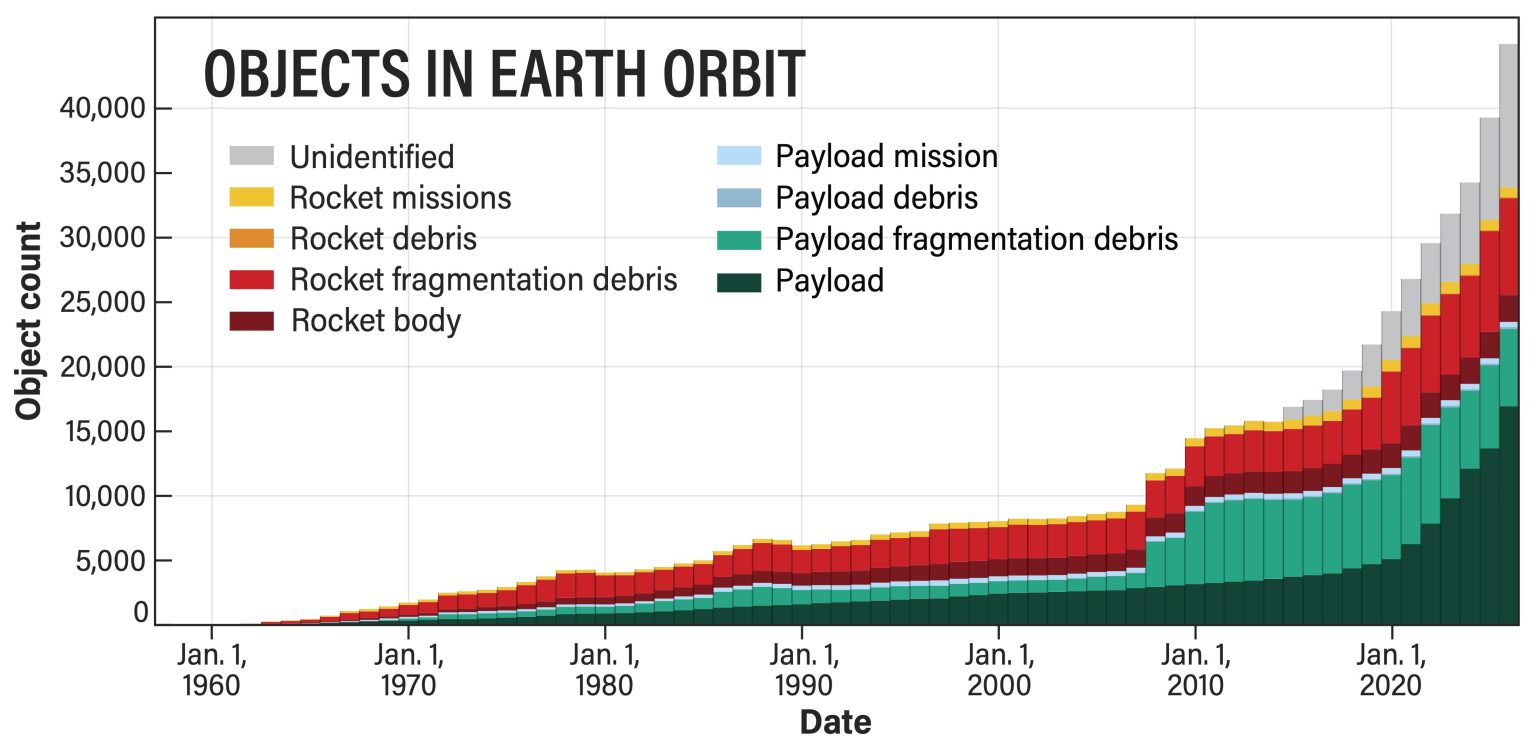
This chart from ESA’s 2026 Space Environment Report shows the number of tracked objects in all orbits over time. In addition to unidentified material, this includes leftover rocket stages (rocket bodies) and other pieces such as shrouds and engines (rocket missions).
Rocket fragmentation debris refers to debris generated by rocket-related objects that can be traced to a single unique event, such as a collision or explosion; rocket debris is debris that cannot be tied to a source. Payload mission material refers to objects carried to orbit for a specific function, such as satellites and observatories, as well as shrouds or covers ejected prior to operation.
As with the previous category, payload fragmentation debris is debris that can be traced back to a specific damage event involving a payload object, while payload debris cannot be associated with an event or source.
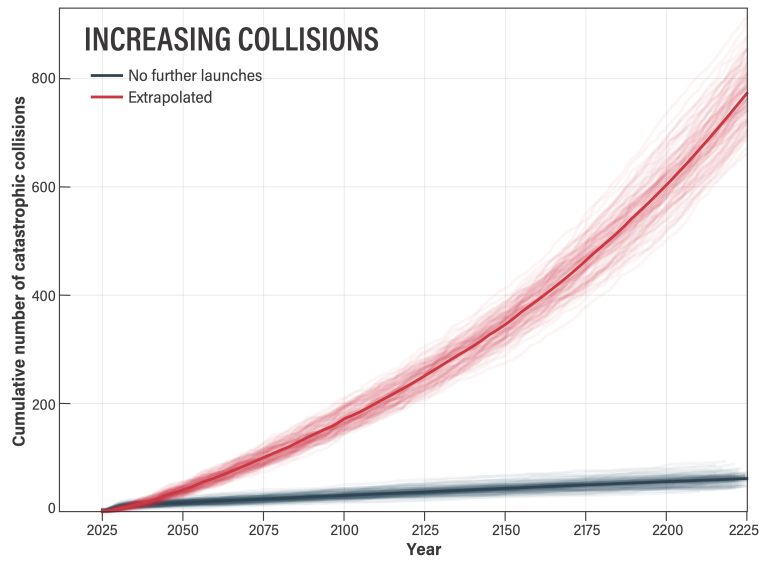
ESA’s 2026 Space Environment Report compares the cumulative number of future catastrophic collisions expected in LEO over time for two scenarios.
The top red line shows the projected cascading number of collisions expected if current trends continue regarding launch cadences, space debris fragmentation, and the lack of targeted debris removal as of 2025. The bottom blue line shows the case with no future launches from 2025 onward; even in this unrealistic scenario, some increase in collisions is expected.
https://www.astronomy.com/science/ou...uttered-skies/
_______
An Artificial CORTEX to Guide Satellite Rescue Missions
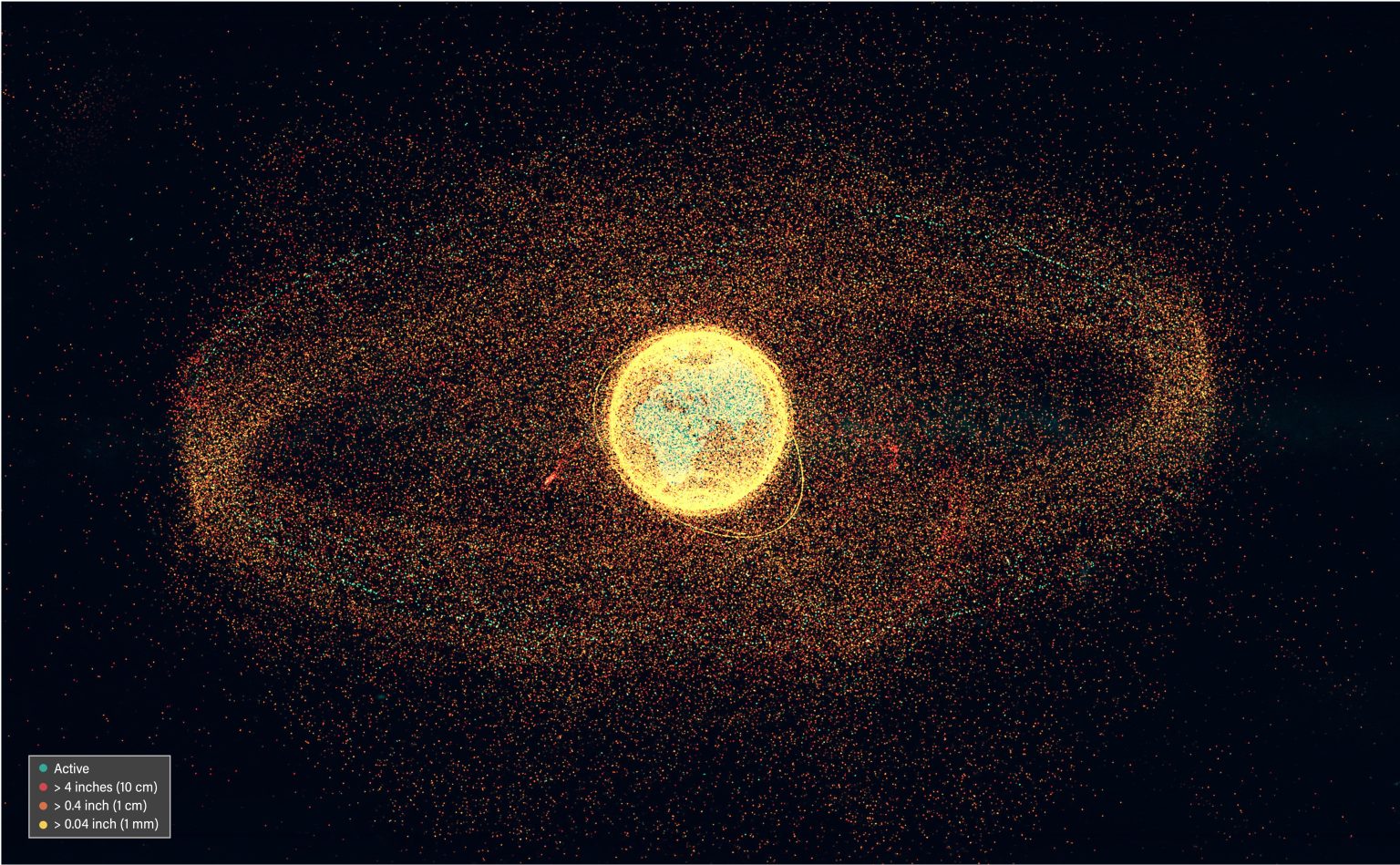
The growing problem of satellites crowding one another is generating concern in the space community, for good reason. Almost 20,000 satellites orbit Earth now, and with more satellite constellations and other satellites being launched every year, Low-Earth Orbit (LEO) is starting to look like it's reaching its limit. Of particular concern are the 3,500+ plus satellites that are basically zombies. They are either completely non-functional or not sending any signals alerting other satellites to their presence.
A collision between two satellites could be catastrophic. Satellite constellations have some built-in redundancy which would help deal with the loss, but there's an additional risk. A collision could also create a debris cloud, multiplying the ongoing risk. The Kessler syndrome (
https://en.wikipedia.org/wiki/Kessler_syndrome) describes a cascade of collisions generated from debris created in a single, initial collision, that goes on to create even more collisions. It's like a feedback loop that keeps getting worse.
Somehow, this problem must be dealt with. The existing debris is one thing, but intact zombie satellites are another. These have lost the ability to communicate and warn other satellites of their presence. These can be repaired, and that's the subject of new research in Acta Astronautica. It's titled "CORTEX: An autonomous, end-to-end, convex-based framework for close-range rendezvous trajectory design and guidance with hardware testbed validation," and the lead author is Minduli Wijayatunga, a new aerospace engineering faculty member in The Grainger College of Engineering, at the University of Illinois Urbana-Champaign.
CORTEX Companion Video
(1:41)
This work is all about the growing idea of Rendezvous and Proximity Operations (RPO). Spacecraft docking operations have been custom-designed solutions for individual situations, like docking with the ISS. But with thousands of zombie satellites, custom docking solutions aren't realistic.
"Rendezvous and Proximity Operations (RPO) are shifting from bespoke demonstration missions such as Northrop Grumman’s Mission Extension Vehicles, China’s Tianyuan–1, and Astroscale’s ADRAS-J, to routine missions due to the growth of in-orbit assets and the resulting demand for inspection, servicing, assembly, and debris mitigation," the authors write. They point out that while there were only about 13,700 tracked objects in LEO in 2019, there were more than 24,000 in 2025. That's a shocking increase, and there's no signs of it slowing down.
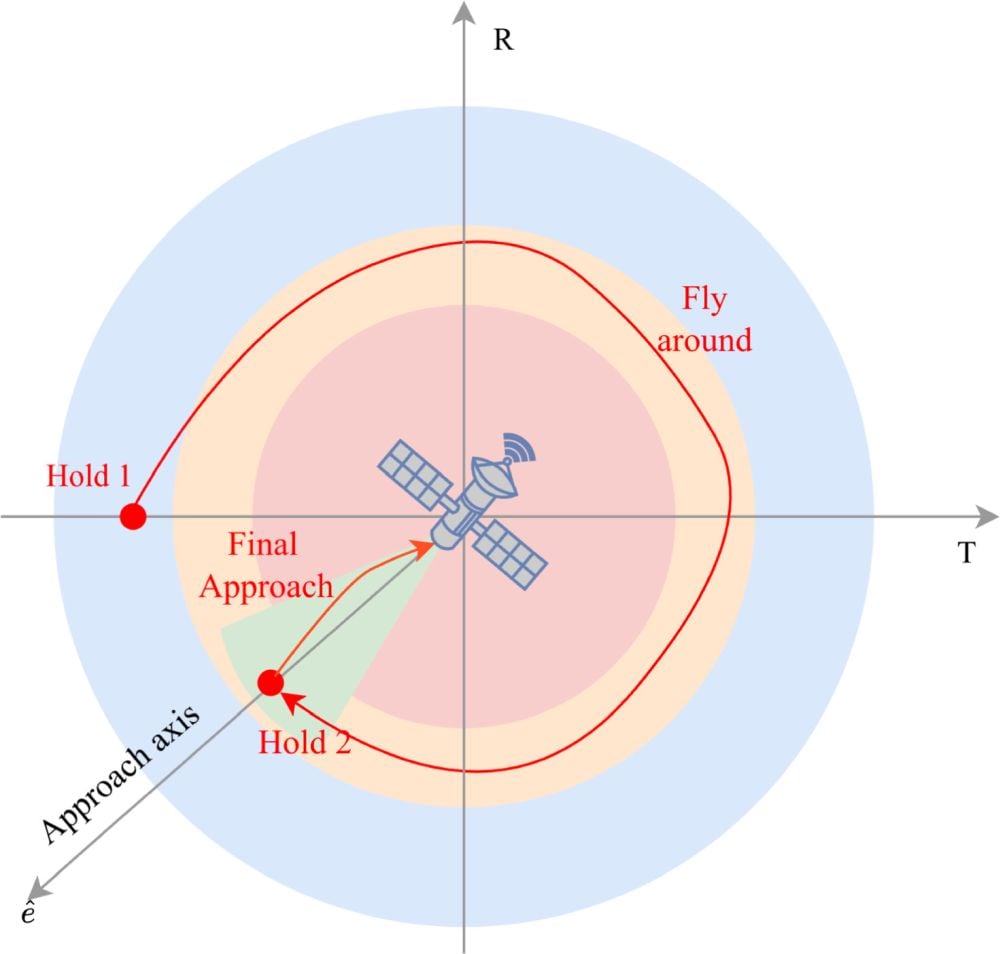
This figure shows some aspects of CORTEX controlling a servicing spacecraft while it approaches and rendezvous with a client satellite. Blue shows the Rendezvous Sphere, orange shows the Approach Sphere, and red is the Keep Out Sphere. The approach axes is identified as CORTEX's successful solution to the docking problem.
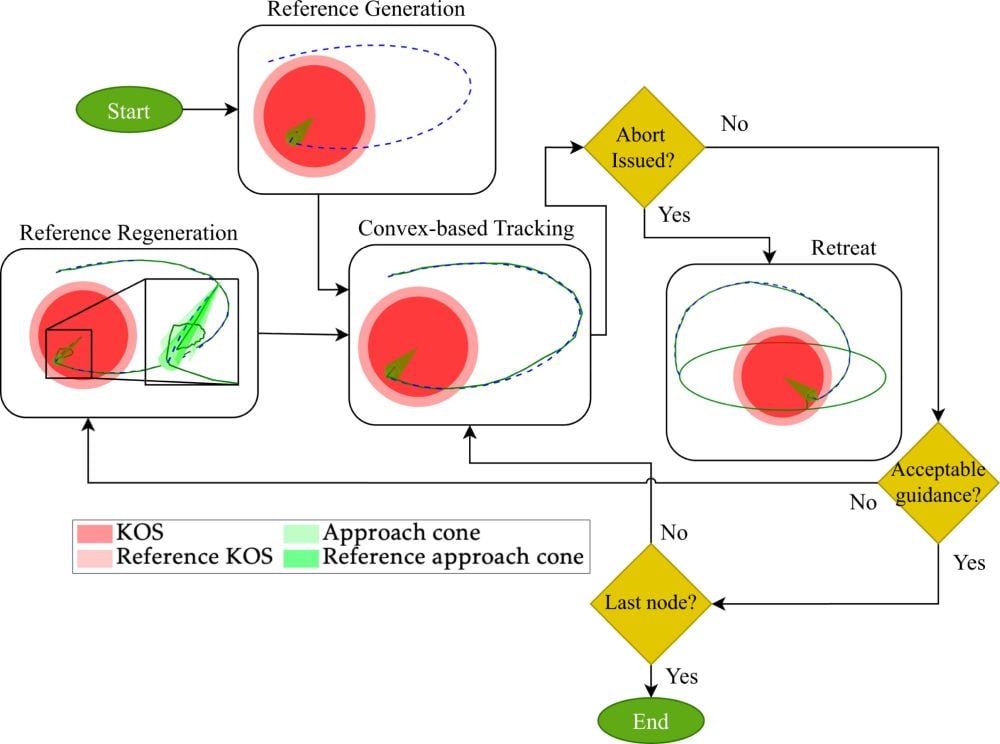
This schematic flow-chart shows how CORTEX works. CORTEX has the ability to abort its approach if necessary, and instead of giving up, it can determine how to re-approach its client.
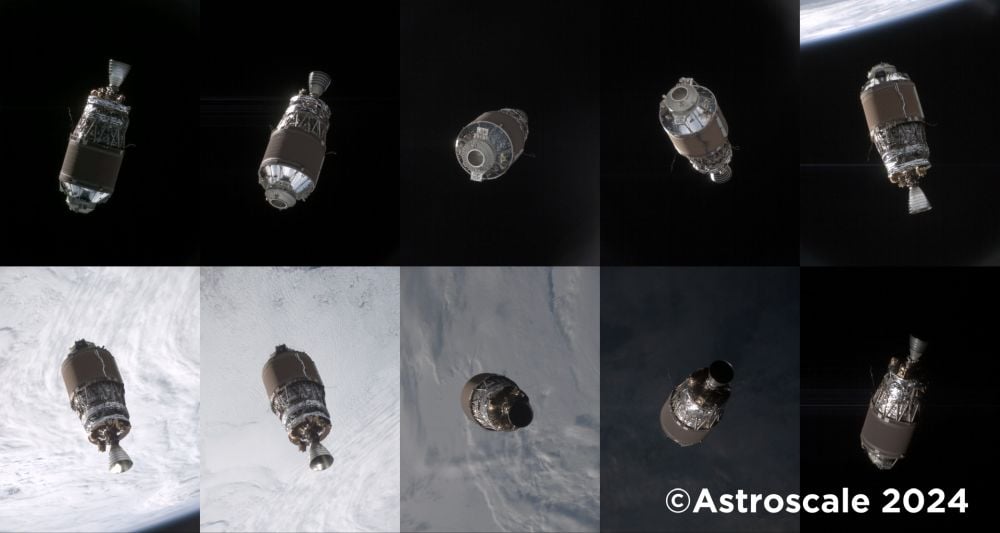
Astroscale's ADRAS-J autonomous spacecraft approached a spent rocket booster, a typical piece of space debris, and captured images of it from multiple angles. It's a step toward eventual servicing of zombie satellites.
Published 9th November 2026 by Evan Gough – Universe Today
https://www.universetoday.com/articl...escue-missions