
According to Richard Stone's book
Mammoth (2001), Russian zoologist Alexei Tikhonov (who figures in articles about the recent Siberian find) once tried a bite and said "it was awful. It tasted like meat left too long in a freezer."
With this in mind, it makes sense that the most legit claims of dining on prehistoric meat don't involve big juicy sirloins but rather the odd edible chunk or two. And so to dad's contention, Garth: The Explorers Club, a venerable association of heavy-duty scientists and adventure hounds, is best known to the public for its Annual Dinner, when members converge on New York, break out the finery, and tuck into a menu stocked with thrill-seeker fare - tarantula, scorpion, and the like. According to club archivist Clare Flemming, the 1951 fete did in fact feature mammoth, but only as part of the preprandial smorgasbord, not as an entree; a review of the event in the
Christian Science Monitor describes a morsel of meat supposedly recovered from Akutan Island, in the Aleutians. (Other delicacies included green turtle soup, giant Pacific spider crabs, bison steak, and cheese straws, which if nothing else suggests that in 1950s Manhattan cheese straws were considered a lot more exotic than they are today.) Flemming also found correspondence in which paleontologist Coleman Williams mentions (apropos of his tenure on the club's dinner committee) preparing a dish from balls of marrow found in the bones of a 50,000-year-old horse.
One of the best-documented accounts of a prehistoric meal comes at the end of
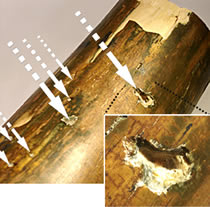
Frozen Fauna of the Mammoth Steppe (1990), by Alaska zoology professor Dale Guthrie. After successfully unearthing and preserving "Blue Babe," a 36,000-year-old steppe bison found near Fairbanks in 1979, Guthrie's team celebrates by simmering some leftover flesh from Babe's neck "in a pot of stock and vegetables." The author reports that "the meat was well aged but still a little tough, and it gave the stew a strong Pleistocene aroma." Now, I'm all for scientific esprit de corps, and I'm not by nature an incurious sort, but I'll say right now I don't see the appeal. Let's keep it simple: frozen meat from tundra = specimen; frozen meat from freezer = dinner. Study the mammoths and eat the burgers, and anyone who craves that great prehistoric taste can wash 'em down with Tab.
— Cecil Adams


 Re: Excavating The Empty Tomb - The Gospels based on Homer's Odyssey?

 Reply With Quote


 ) of an event like that occurring that I'm aware of...




Bookmarks