


 The HMS Hawke, Naval Ramming, Submarine Technology, and the RMS Titanic Disaster
Another user's amazing thread (DNA's "What is your craziest conspiracy") and today's date (Dec 7, the date that Pearl Harbor was messed up) compelled me to address a potential theory regarding what really happened to RMS Titanic and her sister ships.
As with many major economic and social disasters, not everyone buys the "official story" -- there were many strange circumstances surrounding the ship's demise -- and links to events experienced by her sister ships, the RMS Olympic and HMHS Britannic, raise more questions than they answer (unless you are into conspiracies).
Two years ago, on my silly blog (which was recently abandoned for a year due to fraudulent copyright claims attributed to ATS), I came up with the idea that RMS Titanic may well have been struck by another vessel, rather than the popular iceberg of the tall tales. At this time I had not read about RMS Olympic being rammed by a British warship called the HMS Hawke, nor was I even aware of the latter vessel's existence (silly me)!
I recall reading, in late 2010 or early 2011, that the moon was not visible on the night of 15 April 1912.http://en.wikipedia.org/wiki/RMS_Oly...awke_collision
Olympic's first major mishap occurred on her fifth voyage on 20 September 1911, when she collided with a British warship, HMS Hawke off the Isle of Wight. The collision took place as Olympic and Hawke were running parallel to each other through the Solent. As Olympic turned to starboard, the wide radius of her turn took the commander of the Hawke by surprise, and he was unable to take sufficient avoiding action.[29] The Hawke's bow, which had been designed to sink ships by ramming them, collided with Olympic's starboard side near the stern, tearing two large holes in Olympic's hull, below and above the waterline respectively, resulting in the flooding of two of her watertight compartments and a twisted propeller shaft. HMS Hawke suffered severe damage to her bow and nearly capsized. Despite this, Olympic was able to return to Southampton under her own power, and no-one was seriously injured or killed.[14][30]
“It was a dark night as well, with no moonlight... And the lookouts had no binoculars; the only pair was left back at Southampton.” Lookout Reginald Fleet. (Testimony at US Senate Inquiry investigation of "The Wreck of the steamship Titanic.")
This led me to wonder how people saw an iceberg in the first place. Then on another website, there was an account of passengers having seen "black ice" rather than a tall white iceberg.
Frederick Fleet, the lookout for The Titanic who spotted the iceberg and alerted the rest of the crew, spoke of a black iceberg in his testimony to the United States Senate Inquiry.
The fact that the HMS Hawke even existed, and had collided with Titanic's sister ship only months before April 15, 1912, should raise eyebrows when people closely examine the above statements. LOL, or open eyes, I should say.
Google Books: ""hms hawke" ramming prow"
RMS OLYMPIC- THE OLD RELIABLE EVALUATED
As you absorb these details, you see that the official story becomes increasingly suspect.
But, even before the Titanic disaster, the Olympic had been rammed by a Royal Navy cruiser, the HMS Hawke, An eighty foot gash had been torn in her hull. Ironically, her survival of this damage went a long way towards affirming the so called ‘unsinkability’ of the Titanic- with disastrous results the following year.
The "Naval Ram" is apparently the appropriate term for the weapon that may have compromised Titanic.
SOUTHAMPTON, Sept. 20---The White Star liner Olympic, bound for New York,
was run down and badly damaged in the Solent off Cowes, Isle of Wight,
today, by the British protected cruiser Hawke. Water rushed into the hold of
the Olympic through such a big hole in her starboard quarter and Capt.Smith
headed her for Osborne Bay with the intention of beaching her on a mud bank.
The cellular bulkheads held the water in the compartments immediately
affected by the collision and Capt. Smith found the expedient of beaching
the largest steamship afloat unnecessary. He brought his vessel back to
Southampton and unloaded upon the already congested avenues of transatlantic
travel the biggest boatload of passengers that ever embarked on a steamship.
The Hawke was badly damaged in the collision, but stood by until it was seen
that the Olympic was safe. Then she proceeded to the naval station at
Portsmouth under her own steam.
Twentieth century[edit]
During both world wars, there were several occasions when surfaced submarines were rammed and sunk by surface ships. If successful, such an attack could cut the submarine in two, such as the 1914 sinking of U-15 by HMS Birmingham. The only battleship-over-submarine victory in history occurred during World War I, when the battleship HMS Dreadnought rammed and sank a German U-boat. U-boats were strongly built to resist water pressure at depth so the ramming ship could be badly damaged by the attack. This happened to HMS Fairy, which foundered in 1918, after sinking the U-boat UC-75. In March 1943, the destroyer HMS Harvester (H19) was badly damaged after ramming German submarine U-444. She was sunk by another U-boat the next day as she sat helpless, without working engines.[15]
Ramming attacks during the Second World War included the ramming of U405 by USS Borie. The U-boat was not critically damaged and there followed a small-arms battle between the vessels as they were locked together and the U-boat was too close for Borie to bring her main guns to bear. The submarine eventually sank but Borie was too badly damaged by the ramming to be salvaged, so she was abandoned and deliberately sunk by Allied forces.
Other submarines sunk by ramming included U-100, U-224, U-655,[16] the Italian submarines Tembien[17] and Cobalto,[18] and the Royal Navy submarine HMS Cachalot.
As ramming was the only weapon available to unarmed merchant ships, there were occasions when they attempted to ram U-boats. In 1915, SS Brussels attempted, but failed, to ram U-33. Her captain, Charles Fryatt, was captured by the Germans a year later. He was court-martialled and executed as they considered his act to be that of a franc-tireur. The French steamer Molière sank the U-boat UC-36 in 1917.[19] In May 1918 SM UC-78 was sunk by the steamer Queen Alexandra,[20] and RMS Olympic rammed and sank U-103.[21]
During World War 2, U-46 was struck by the British tanker, SS Ensis. The submarine survived the ramming but had to return to port for repair.[22]
So. It was mainstream in 1909 (in Seattle) for firemen to possess a boat with ramming capabilities. You guys already know my opinion of Seattle firemen, lol. From my other conspiracy threads. Heh.
But indeed, naval ramming dates back at least to ancient Greek times, and maybe even earlier. It was rumored that Archimedes could burn the sail of an incoming ship using only a system of mirrors and lenses! Is it not conceivable that in the 20th century, even in the early decades, humans possessed the capability of equipping a vessel with a ram sufficient to disable even the mightiest of ships -- including the "unsinkable" Titanic.
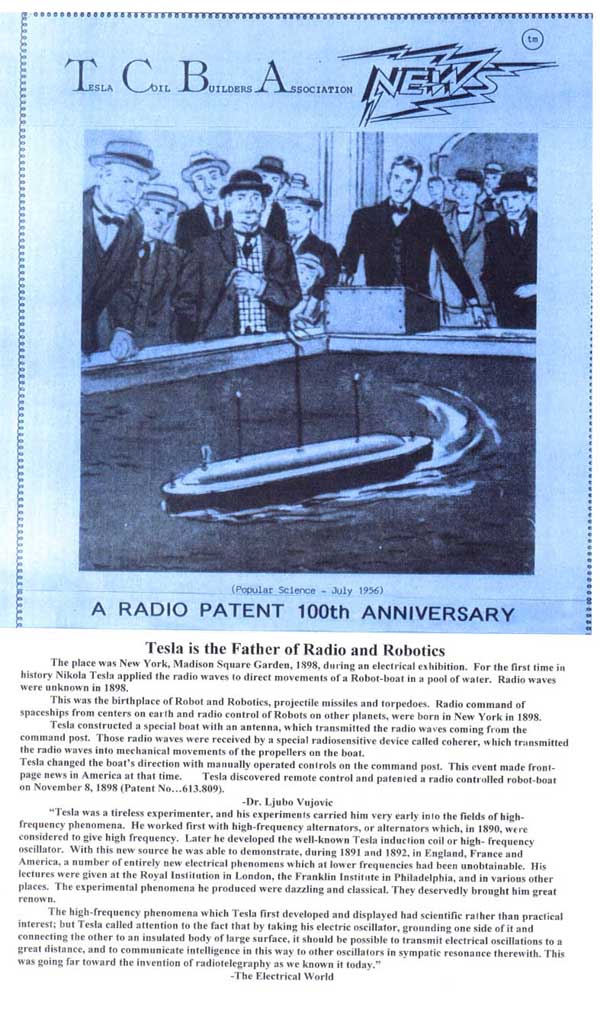
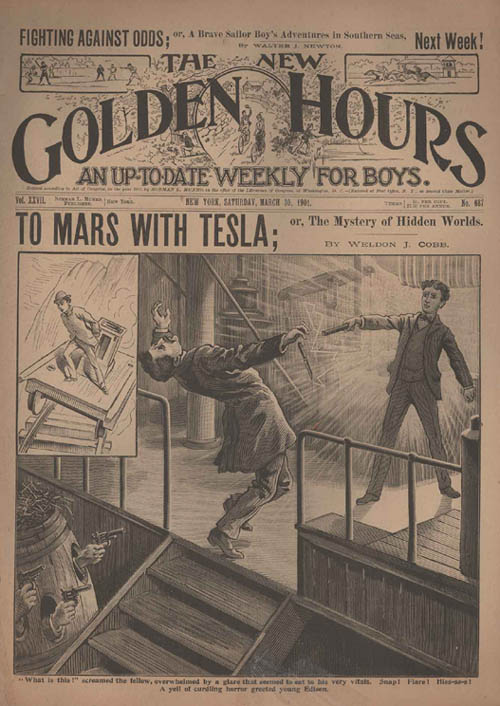
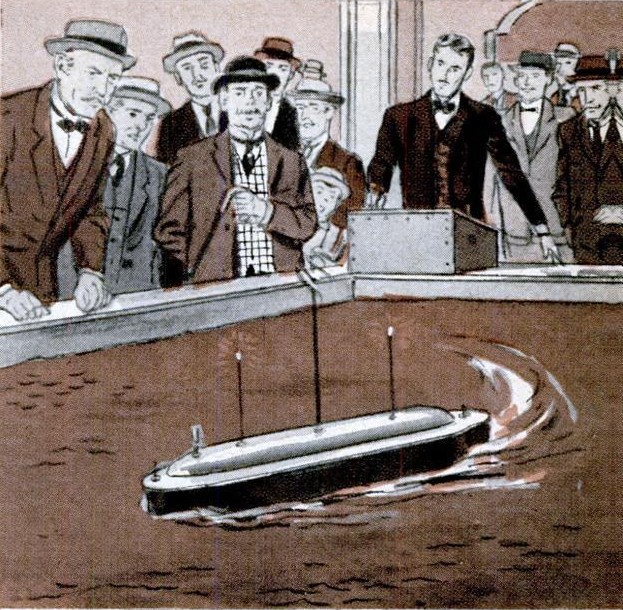
A user in DNA's thread wisely referred to the deaths of at least 3 important men who opposed the establishment of the Federal Reserve Bank in conjunction with the Titanic disaster. I mentioned that Nicola Tesla's chief financier, John Jacob Astor, went down on the ship. It was Tesla who first thought of remote-controlled submarine vehicles, and indeed conceived of radio controlled vehicles. Jules Verne, who was writing science fiction some forty years prior, referred to submarines powered by electricity. It is not beyond the scope of rationale that the watchman saw a submarine rise up from the sea and strike the vulnerable Titanic.
In memory of those souls lost aboard Titanic, and those lost at Pearl Harbor years ago, I wanted to put this story out there for those who care to read it.
Not to mention, 100 years after Titanic settled into her watery grave, the US tried to pass a law forbidding intrusion into the Titanic wreckage. That means researchers who want to check out the U-Boat and Naval Ramming theories won't have the opportunity to do so.
I have to run for now.
One hundred years after the Titanic sunk, a Senate bill looks to keep the famous ship intact
By BRIAN GREENE
April 13, 2012 RSS Feed Print
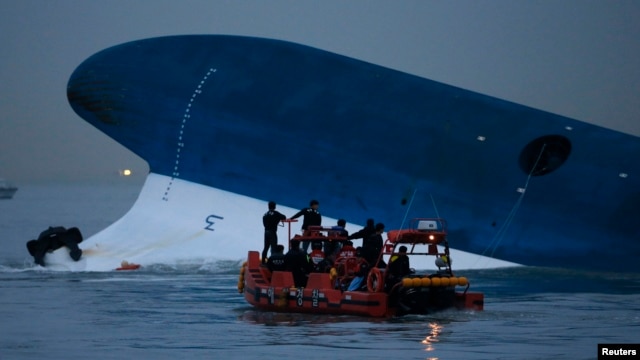
This weekend marks the 100th anniversary of the sinking of the Titanic, one of the worst maritime disasters in history. Over 1,500 people died after the ship—which had been designed to be unsinkable—hit an iceberg off Newfoundland and sank to the bottom of the North Atlantic.
[See pictures of a cruise commemorating the Titanic's voyage.]
But ever since the wreck was found in 1985, no one has figured out a way to protect the site.
The Titanic rests in international waters, leaving it in a grey legislative area since no country can claim full responsibility for it. Looting of the site has become an issue since Robert Ballard and his team discovered the wreck, with privately-funded teams taking paying customers down to the wreck in mini submersibles. Now, American lawmakers want to step in to protect the site.
The R.M.S. Titanic Maritime Memorial Preservation Act of 2012, introduced in the Senate by Massachusetts Democratic Sen. John Kerry and Georgia Republican Sen. John Isakson is aimed at updating protection of what they consider to be a maritime memorial and grave site of unique historical significance.
According to an official statement from Kerry, the bill would expand on 1986 legislation protecting the Titanic by giving the Department of Commerce authority to defend the wreck site from salvage and intrusive research.
"It's hallowed ground, not just some underwater area to be poked at or damaged for commercial reasons," Kerry said in the statement. "This bill provides the authority necessary to help ensure the site of the Titanic is kept intact."
The proposal also recommends the establishment of a Titanic-specific advisory council to conduct regular research on what to do about problems facing the site.
<3 Tesla
- Home
- Forum
- Chat
- Donate
-
Site Links

-
Avalon Library
-
External Sites
- Solari Report | Catherine Austin Fitts
- The Wall Will Fall | Vanessa Beeley
- Unsafe Space | Keri Smith
- Giza Death Star | Joseph P. Farrell
- The Last American Vagabond
- Caitlin Johnstone
- John Pilger
- Voltaire Network
- Suspicious Observers
- Peak Prosperity | Chris Martenson
- Dark Journalist
- The Black Vault
- Global Research | Michael Chossudovsky
- Corbett Report
- Infowars
- Natural News
- Ice Age Farmer
- Dr. Joseph Mercola
- Childrens Health Defense
- Geoengineering Watch | Dane Wigington
- Truthstream Media
- Unlimited Hangout | Whitney Webb
- Wikileaks index
- Vaccine Impact
- Eva Bartlett (In Gaza blog)
- Scott Ritter
- Redacted (Natalie & Clayton Morris)
- Judging Freedom (Andrew Napolitano)
- Alexander Mercouris
- The Duran
- Simplicius The Thinker


 Reply With Quote









 ultimately


Bookmarks