


 Social media as a control mechanism -as deep as humanity itself (study)
To be as a fine filter, between all people. Compartmentalized into individual boxes, with controlled input and output, for each individual.
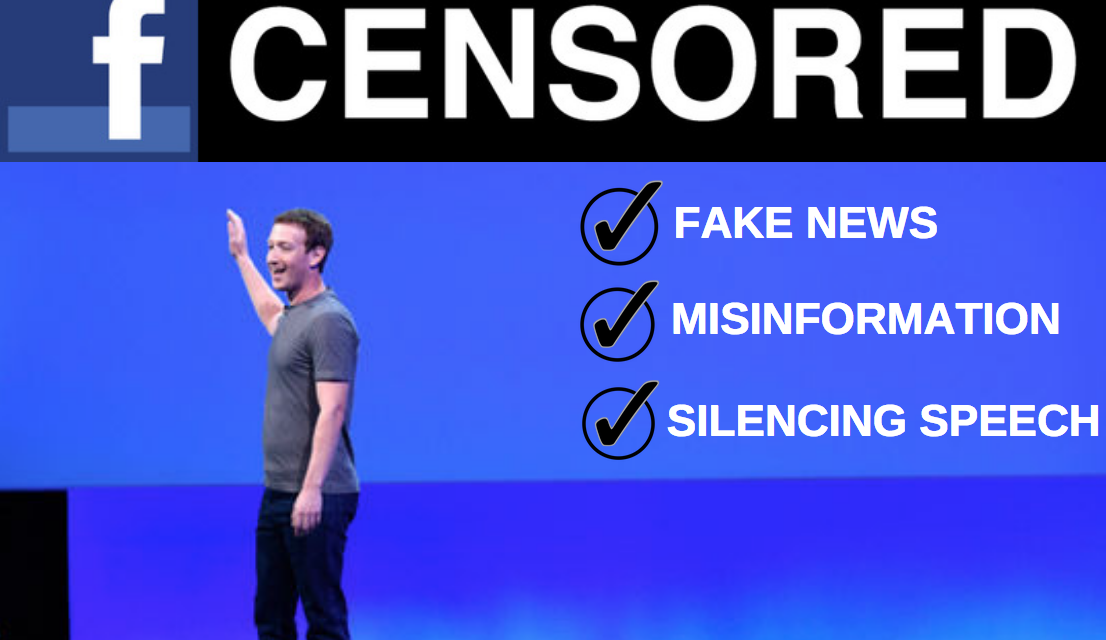
Tailoring the feeds. Google is accused of doing this. for good reasons. They are. Same for Facebook.
I was aware of it as a coming problem, with the advent of the BBS systems back in the late 80's and the early 90's, where I was a contributor to the genesis of all of that pre-internet build up.
I pondered that... in the future, we would find ourselves being drip fed and given our own tailored data. As the data pathway enlarged, as the pipe became faster, bigger..as the technology advanced..this was the inevitable end point. This would happen as a control mechanism, a filter, a sculpting of sorts, as a minimum -- simply due to the capacity being inherent in the situation, the situation that was looking to unfold.
It was obvious as this is what we were individually seeking out in that pre-internet. We were extending ourselves, our reach, our feedback..we tailored it all. To frame it (in time)..a year or so after those more defined realizations and 'filling in the blanks'...I had received a pre-release copy for programmers, of Windows Chicago (win 95) -- a full 18 months before it was available to the public.
The subject at hand, is this study showing how apes that view together, they bond. They bond together.
Not at all surprising. In hindsight, for some.
The great takeaway, is the separation, the divide and conquer that happens via social media. How social media is killing the functional fabric of human society and culture.
Social media is NOT your friend. it is the opposite. We yearn for connection, but the social media actually gives us less.
This is writ large across the core of this very real study.
~~~~~~~~~~~~~~~~~~~~~~~~~~~~
Great apes found to bond when watching videos together
A pair of researchers affiliated with Duke University and the Max Planck Institute for Evolutionary Anthropology has found that great apes tend to bond with one another when they watch a video together. In their paper published in Proceedings of the Royal Society B, Wouter Wolf and Michael Tomasello describe their work involving studying chimpanzees and bonobos as they watched videos together and how they behaved afterward.
Most people have experienced the feeling of bonding with another person, or even several people, when watching a movie or TV show together. Until now, behavioral scientists have believed such feelings were restricted to humans. In this new effort, Wolf and Tomasello have shown that great apes have similar experiences.
The experiments involved seating pairs of chimps together in front of a television so that they could watch a video, and the researchers took measurements of bonding-type behavior after the video was over. They then compared the behavior they observed with a control group. They report that chimps that watched the videos together engaged in more bonding-type behaviors.
The videos watched by the chimps were of other chimps engaging in various activities—prior research had shown it was their favorite subject. And the chimps were encouraged to remain in place watching the video by feeding them grape juice. Bonding-type interactions were described as touching, how long they stayed in proximity with one another and how much they paid attention to one another. The researchers also used eye-tracking systems to show that the chimps were actually watching the videos. The researchers also paired up bonobos in the same fashion, and also human-chimp pairs. They report that in all instances, increased bonding was observed for those participating in the shared social events.
The researchers suggest their results show that great apes are capable of social bonding when participating in shared events. They suggest that such types of social bonding have deeper evolutionary roots than has been realized. They also suggest that their findings hint at what is lost as humans cease participating in shared social events, preferring instead to engage privately in social media.
- Home
- Forum
- Chat
- Donate
-
Site Links

-
Avalon Library
-
External Sites
- Solari Report | Catherine Austin Fitts
- The Wall Will Fall | Vanessa Beeley
- Unsafe Space | Keri Smith
- Giza Death Star | Joseph P. Farrell
- The Last American Vagabond
- Caitlin Johnstone
- John Pilger
- Voltaire Network
- Suspicious Observers
- Peak Prosperity | Chris Martenson
- Dark Journalist
- The Black Vault
- Global Research | Michael Chossudovsky
- Corbett Report
- Infowars
- Natural News
- Ice Age Farmer
- Dr. Joseph Mercola
- Childrens Health Defense
- Geoengineering Watch | Dane Wigington
- Truthstream Media
- Unlimited Hangout | Whitney Webb
- Wikileaks index
- Vaccine Impact
- Eva Bartlett (In Gaza blog)
- Scott Ritter
- Redacted (Natalie & Clayton Morris)
- Judging Freedom (Andrew Napolitano)
- Alexander Mercouris
- The Duran
- Simplicius The Thinker
 Reply With Quote




Bookmarks